
Three Kinds of Lace You’ll Meet at Your First Appointment
Brides often fall for a gown before they know what its lace is, and the type changes how the dress wears. When I pull dresses for a first appointment, I put one of each in the room so the difference is obvious.
- Chantilly is fine, flat and floaty, with delicate outlined motifs. It suits sleeves and overlays but tears more easily, so keep jewelry and watch clasps away from it.
- Alençon has a corded outline that raises the pattern. It holds its shape on a bodice and is the lace most often cut into appliqués.
- Guipure is heavy, with motifs joined by bars instead of a net. It looks graphic and modern, but it is warm and stiff, so it’s a tough choice for a hot outdoor day.
Tulle has its own range. Soft silk-like tulle drapes close and moves beautifully, while stiffer nylon net holds volume in a ball gown. Ask to feel both. If you want a full skirt that stays full, you need the firmer net or plenty of layers.
1. Floral Lace And Tulle A-Line Wedding Dress
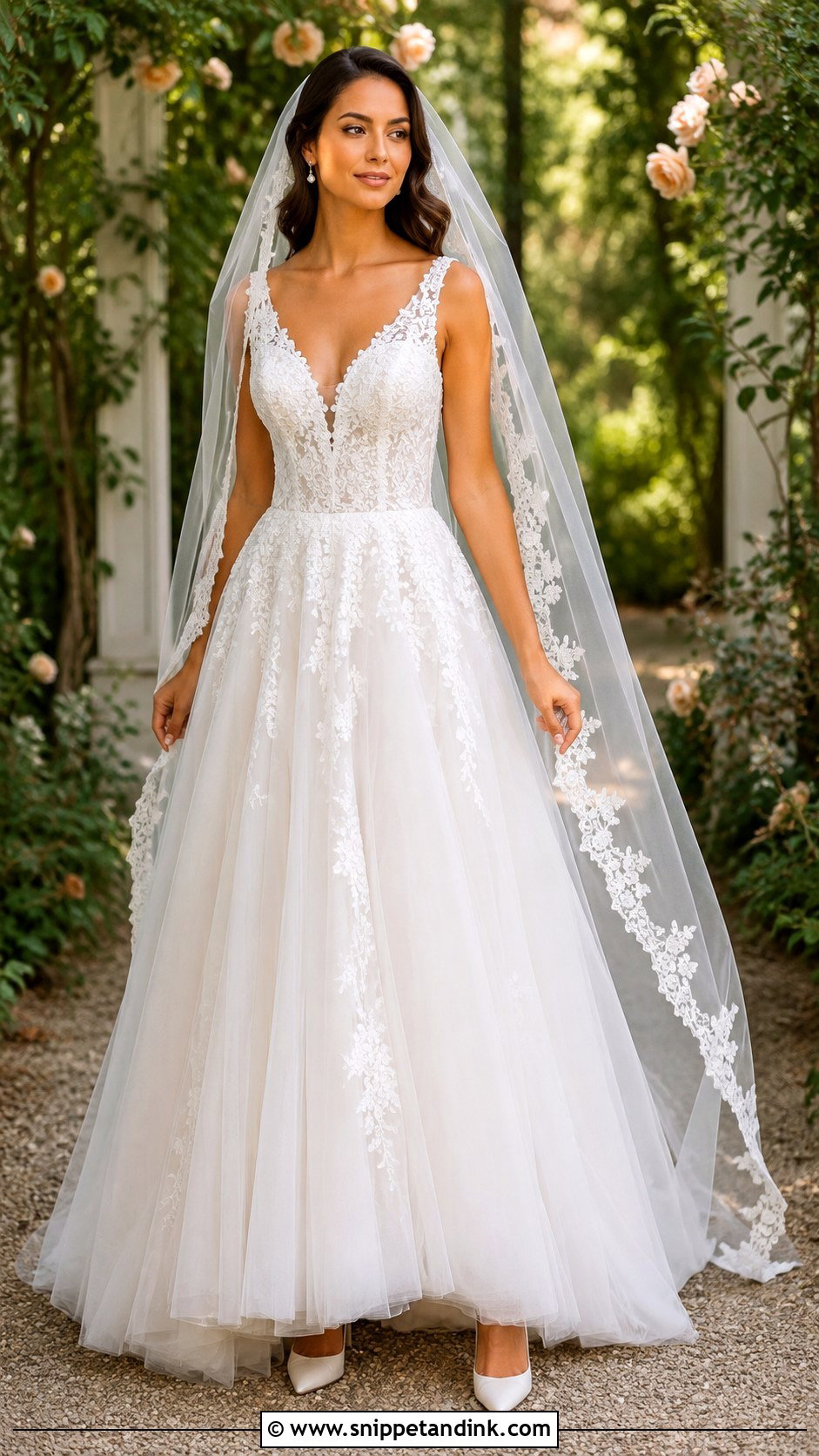
An A-line in floral lace and tulle is the gown I pull most often for a bride who isn’t sure what she wants yet, because it suits a garden, a ballroom and a field almost equally. The fitted lace bodice meets several layers of tulle at the natural waist, and appliqués drift down onto the skirt so the two fabrics blend instead of meeting at a hard line. Check where those appliqués stop: if they end abruptly mid-skirt, the dress looks unfinished in full-length photos. A medium train moves well without needing a bustle every hour. Pointed ivory pumps, pearl drops and a fingertip veil with a narrow lace edge finish it, and a loose low bun keeps the neckline clear.
2. Lace And Tulle Ball Gown Wedding Dress
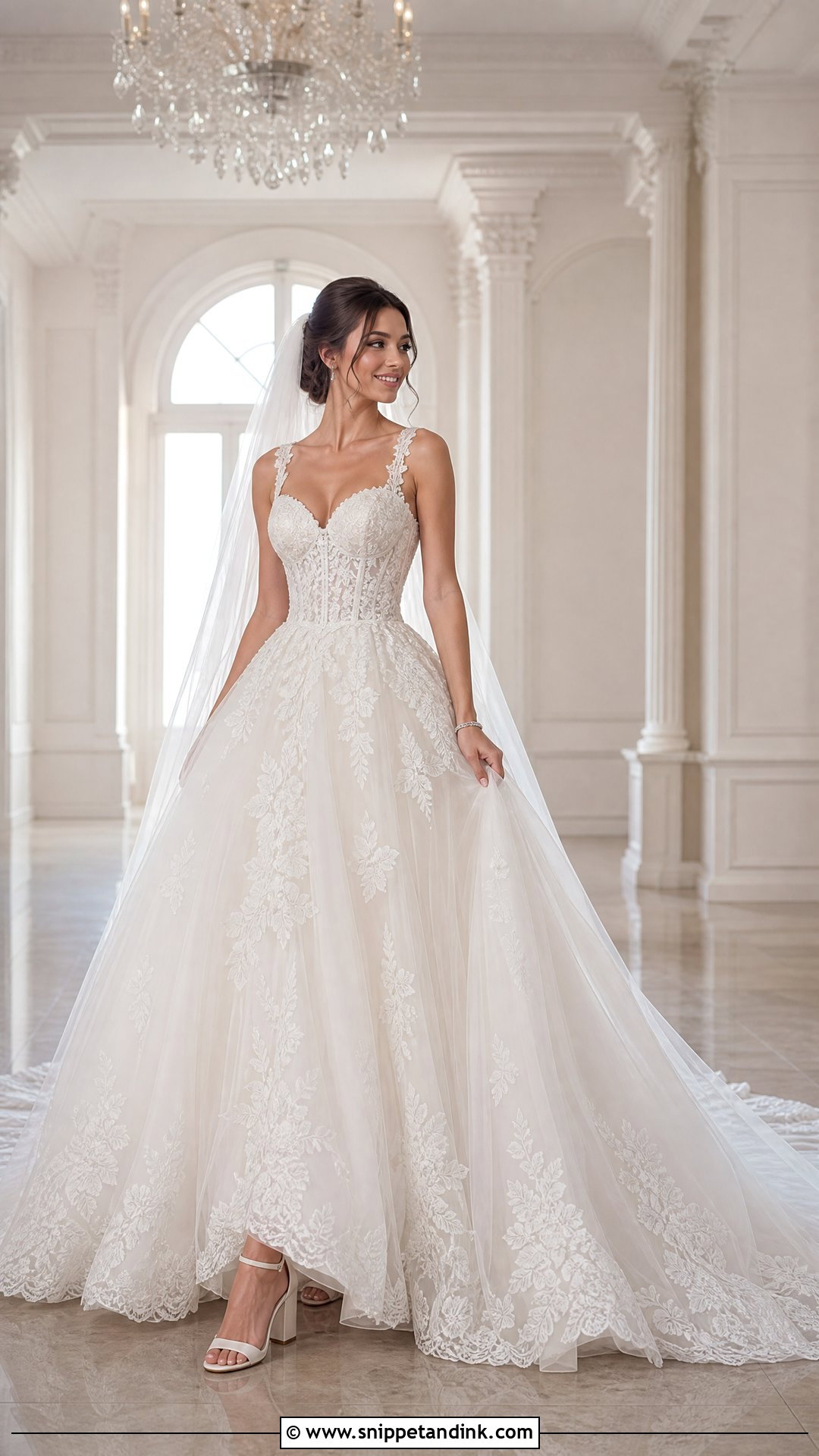
When the room is grand, the ball gown answers it. A structured lace bodice with supportive boning holds up a full skirt of light tulle, and a sweetheart or softly curved neckline keeps the volume from swallowing you. Satin block heels are the sensible shoe here, because you can’t see your feet under that much skirt. Crystal studs, a fine tennis bracelet and a long plain veil give sparkle without arguing with the lace. Carry a structured, medium-sized bouquet; a tiny posy disappears against the width. If there’s a cathedral train, ask for a bustle at the first alteration appointment rather than the last.
3. Long Sleeve Lace And Tulle Wedding Dress
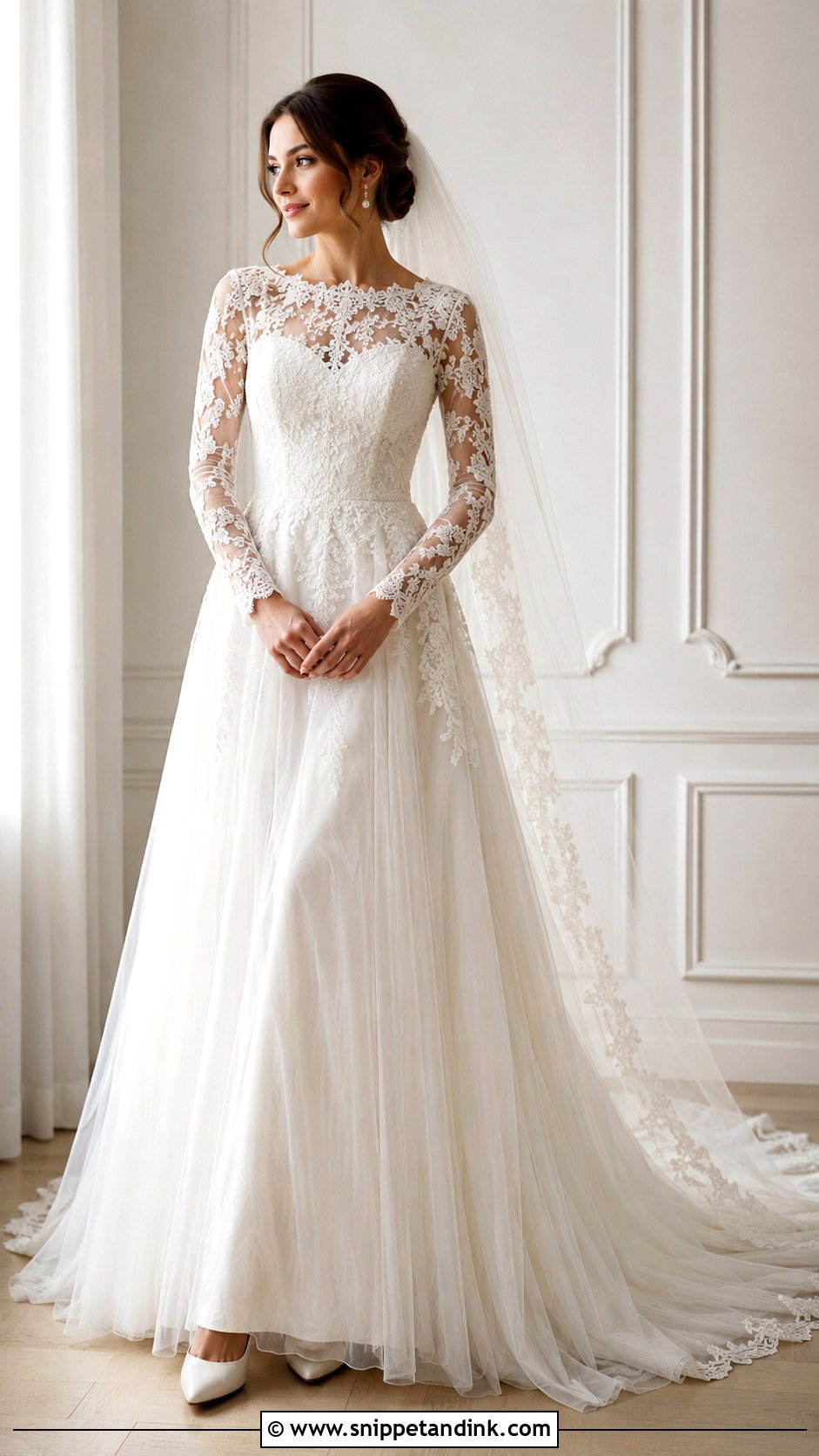
Cold months are when long lace sleeves earn their place. Sheer sleeves give coverage but still show the pattern, and a lined bodice with an A-line tulle skirt keeps the whole gown from looking heavy. The common fitting problem is sleeves cut too tight at the upper arm: they look sleek standing still and stop you hugging anyone. Ask for a little stretch mesh in the lining or a few discreet buttons at the wrist. Closed-toe ivory heels, small pearl earrings and a simple comb are enough, with a cathedral veil in plain, near-invisible tulle. Leave the necklace off if the neckline and sleeves are already patterned.
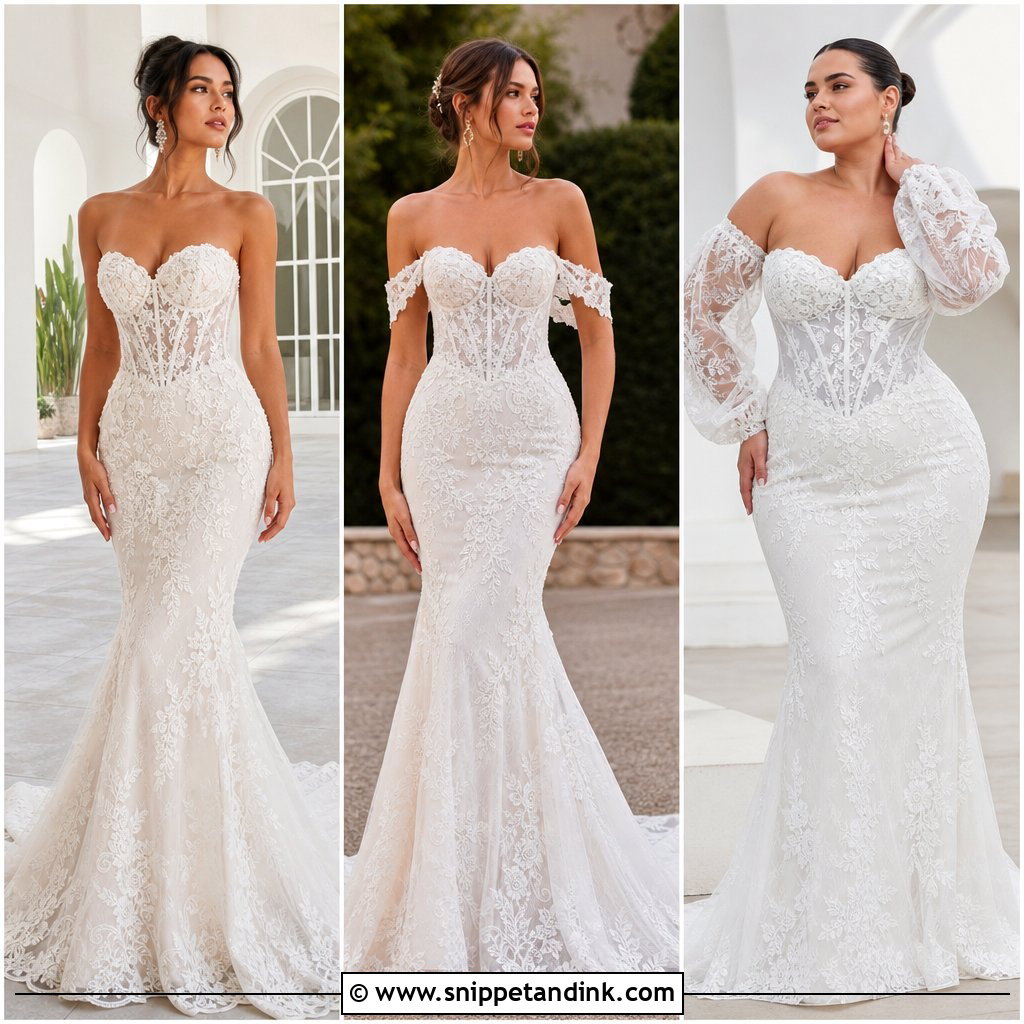
4. Strapless Corset Lace And Tulle Wedding Dress
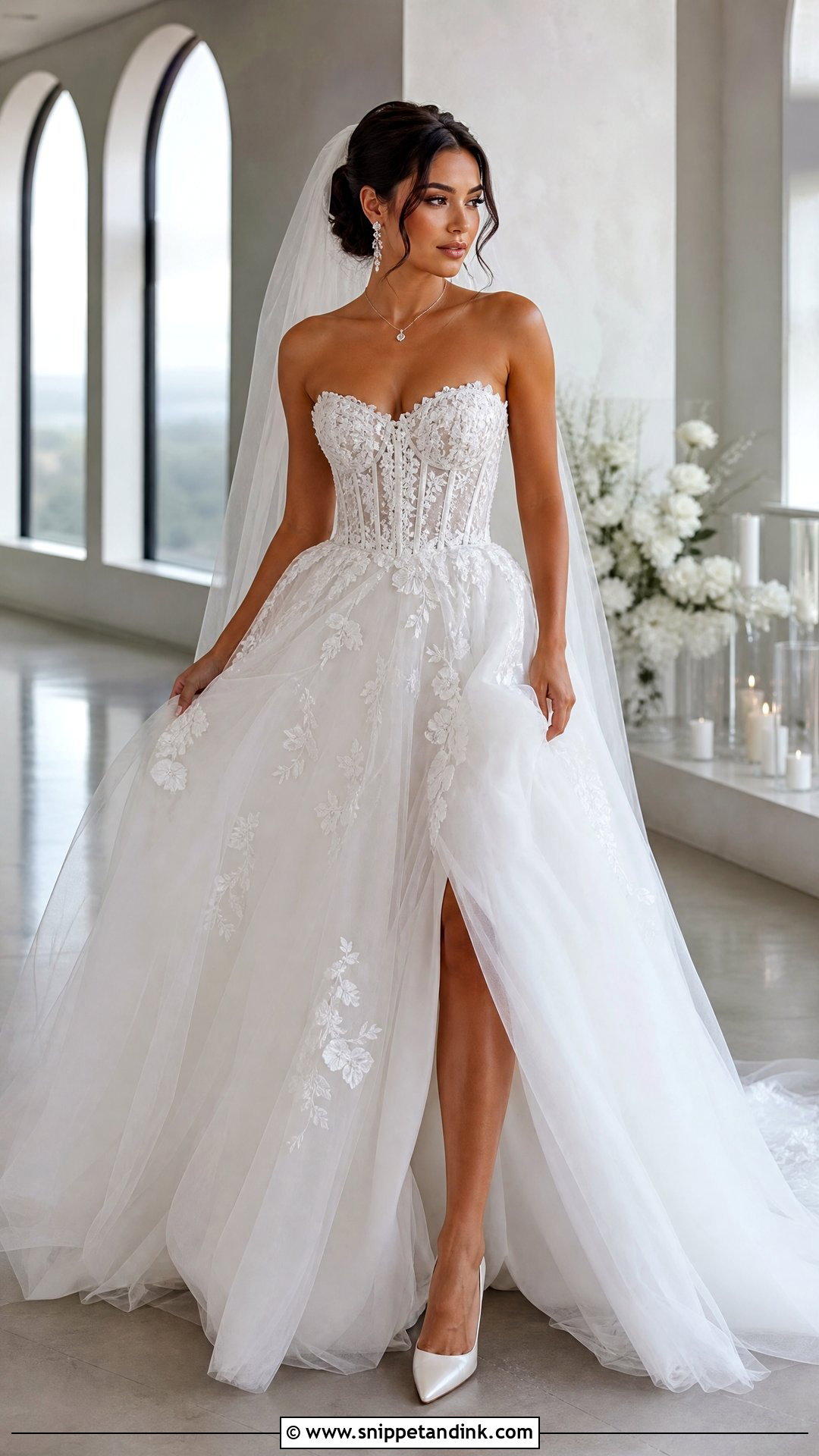
The strapless corset version mixes soft fabric with a hard, modern frame. A corset should hold at the ribs, not the bust, so you can breathe and eat without the top edge dropping. Exposed boning gives a fashion edge, and lace appliqués over it soften the lines. Balance it with a layered A-line or ball gown skirt. Pointed heels, a fine pendant and earrings that sit near the shoulders frame the bare neckline. A sheer chapel veil covers you through the ceremony without hiding the bodice, and a detachable tulle wrap helps later. I always make brides sit and raise their arms in it before I sign off the fit.
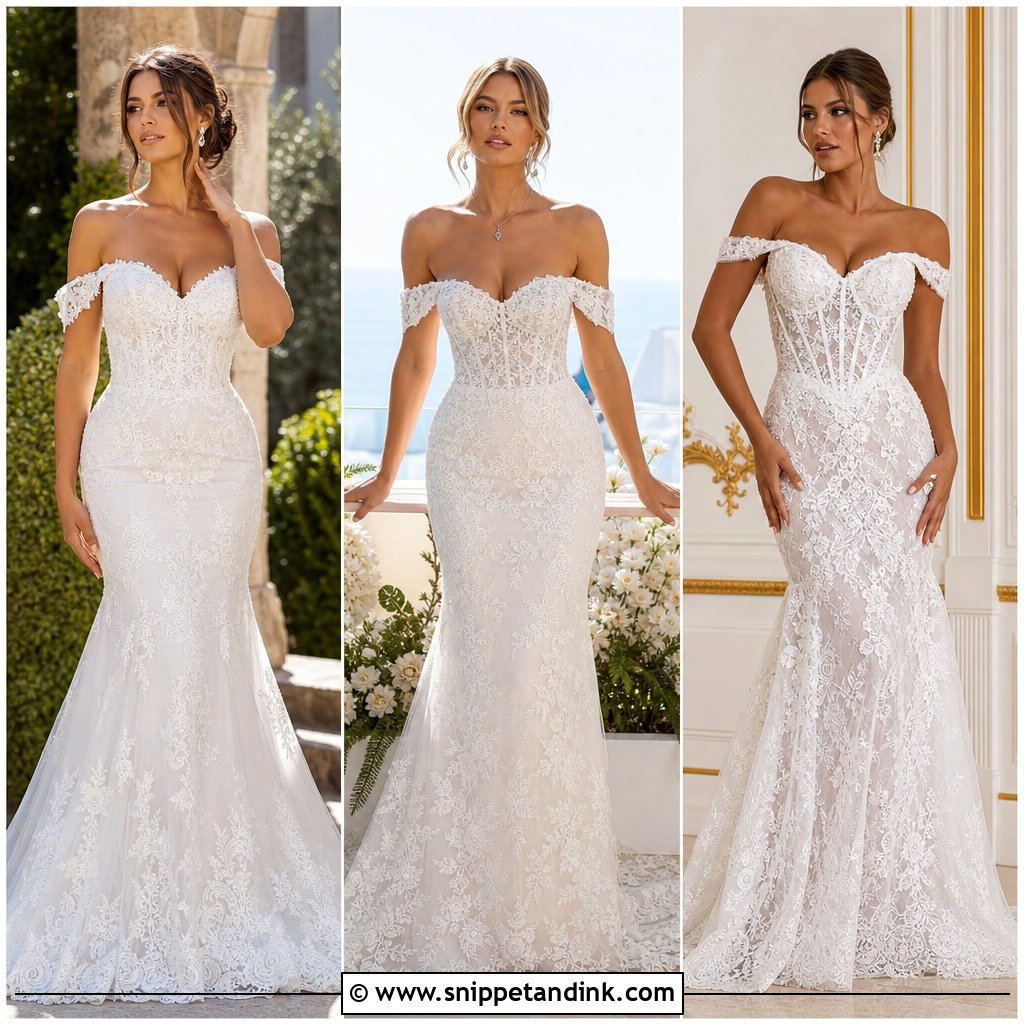
5. Off The Shoulder Lace And Tulle Wedding Dress
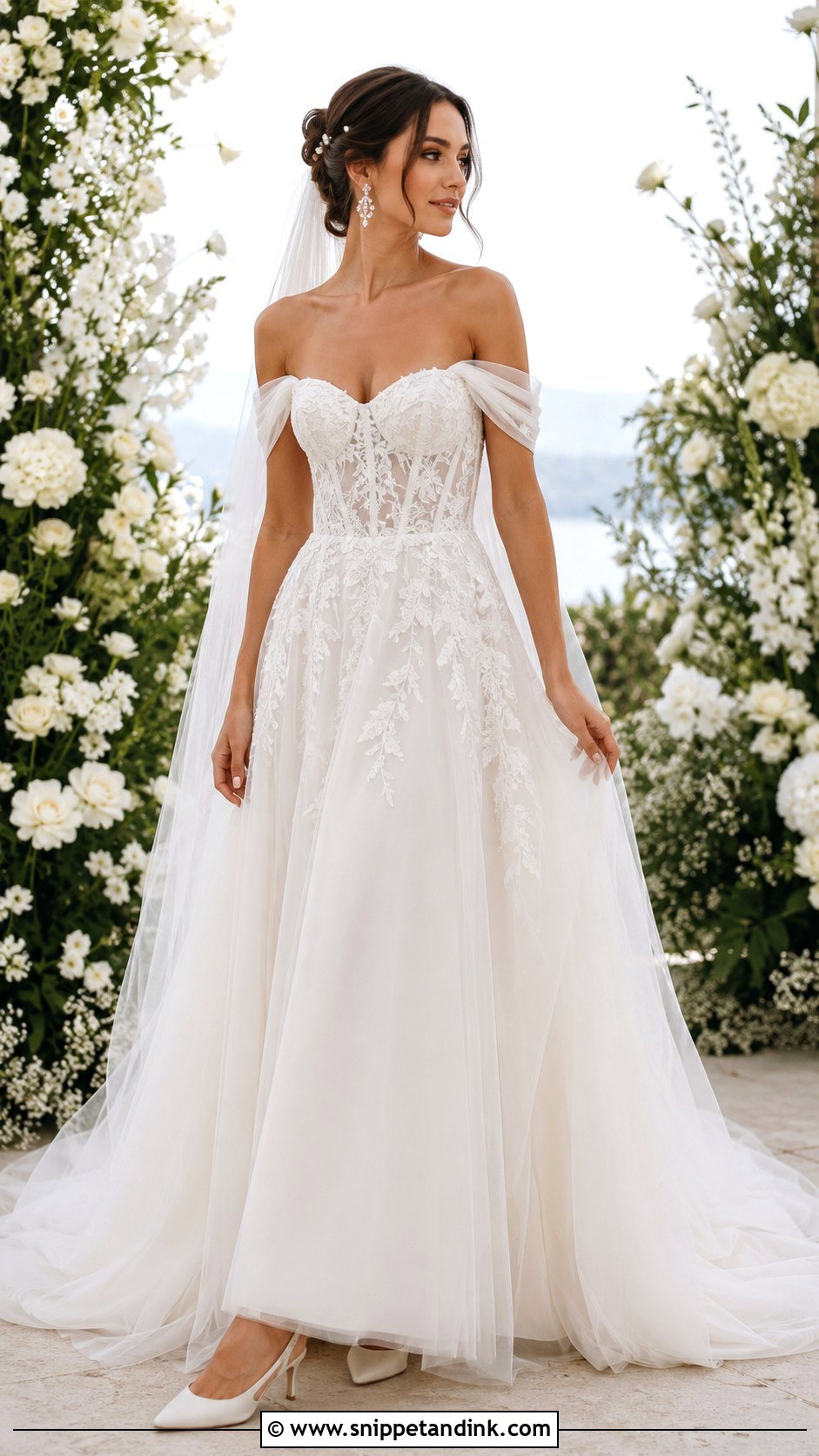
Off-the-shoulder sleeves are the most romantic detail in this collection, and the fussiest to wear. Draped tulle bands float; fitted lace sleeves feel more traditional. Either needs a structured bodice underneath, because the sleeves are not holding anything up. Since the shoulders are on show, wear chandelier earrings or a very fine necklace, not both. Ivory slingbacks, a pearl hairpin and a sheer veil keep the weight down, and a half-up style keeps hair off the neckline. At alterations, test the sleeves by waving and reaching forward; if they ride up, ask for clear elastic or a silicone grip inside the band.
6. Sweetheart Lace And Tulle Wedding Dress
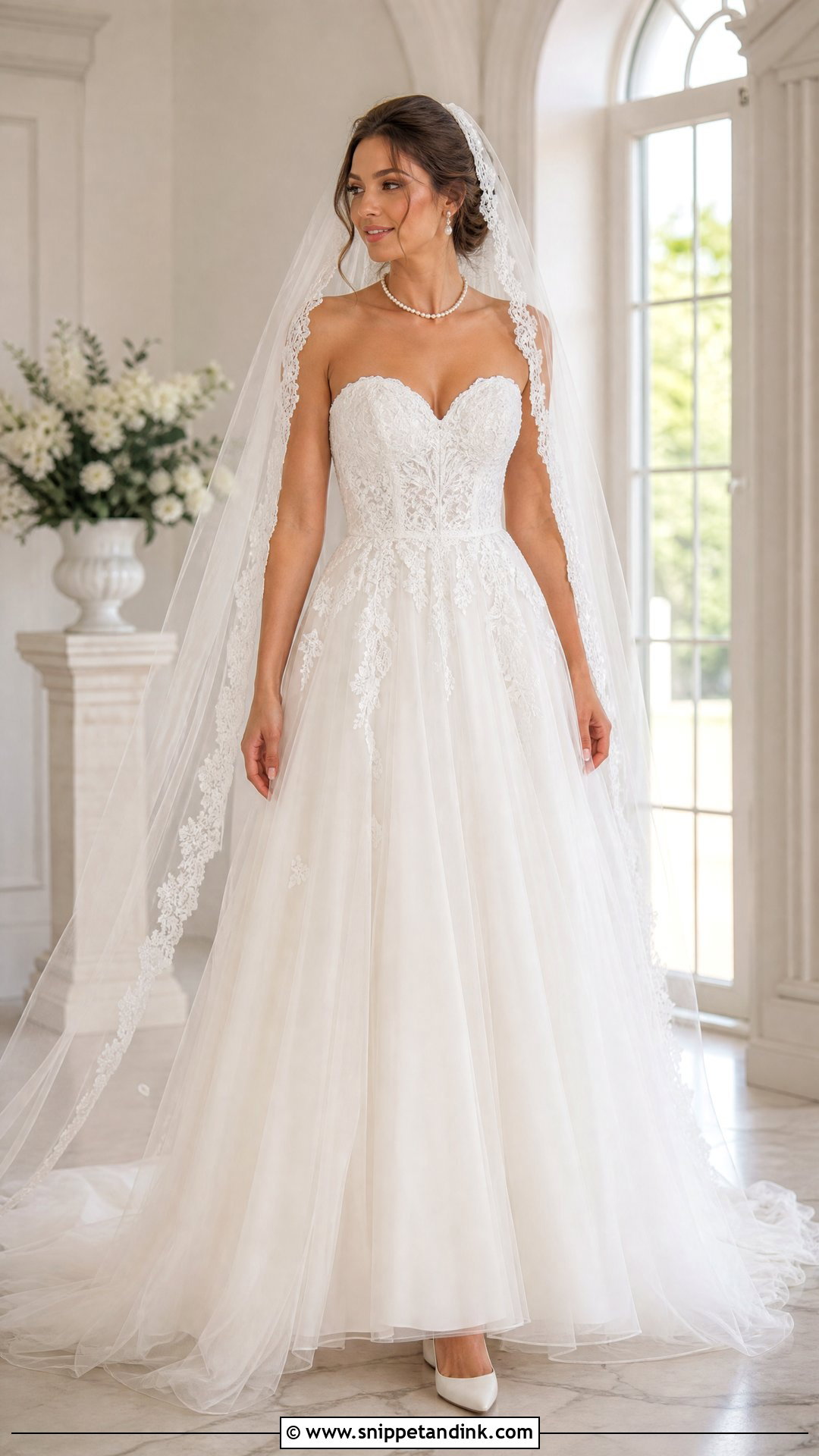
The sweetheart curve frames the face, and it holds its shape only if there’s real support inside. Fine floral lace reads delicate; larger appliqués read bolder, so decide which before you start trying veils. A flowing tulle skirt balances the fitted top. Almond-toe heels, a short pearl necklace and matching earrings suit it. If your veil has a lace edge, it should pick up the bodice lace without copying it motif for motif, which can look like a costume set. For brides who worry about the neckline shifting, a strip of illusion mesh along the top edge adds security and is almost invisible in photos.
7. Square Neck Lace And Tulle Wedding Dress
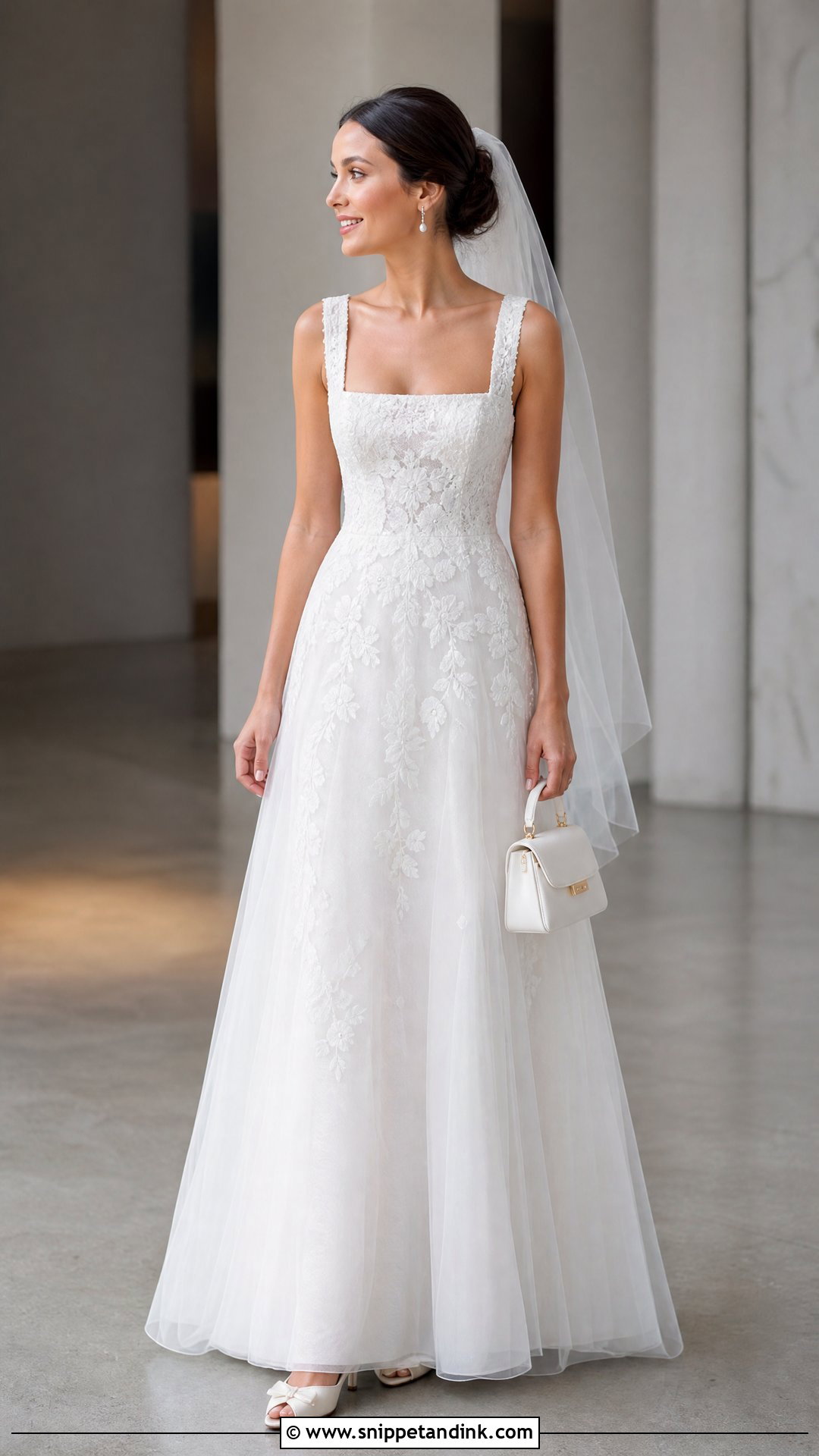
Square necklines bring clean lines to soft lace. Wide straps mean you are not managing a strapless bodice all day, and many brides relax visibly once they realise they can lift their arms freely. A simple A-line keeps the gown understated. Low ivory heels, small drops and a smooth low bun suit the geometry, and a plain tulle veil or short blusher is better than an embellished one. If the lace is very intricate, I trim back the accessories even further. One check at fittings: the corners of a square neck should sit flat on the chest, not lift away when you lean forward.
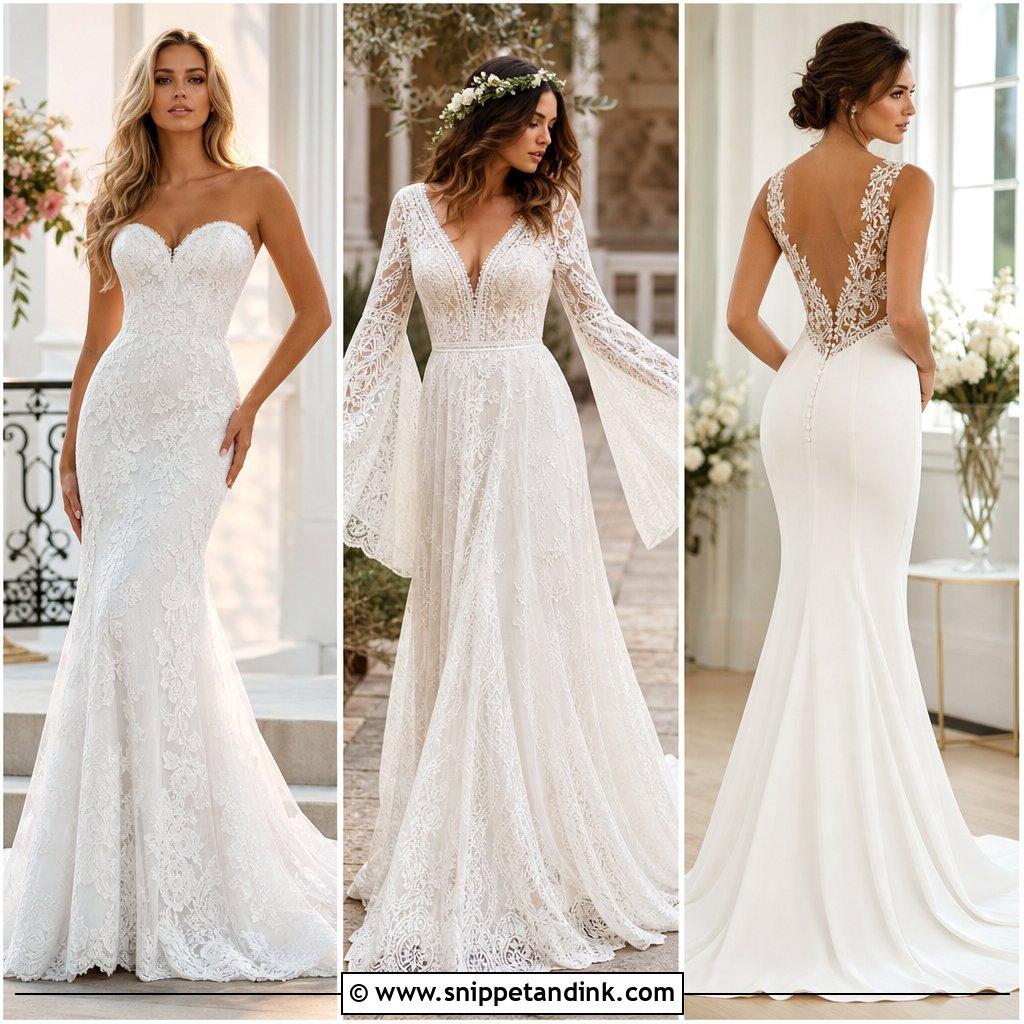
8. Boho V-Neck Lace And Tulle Wedding Dress
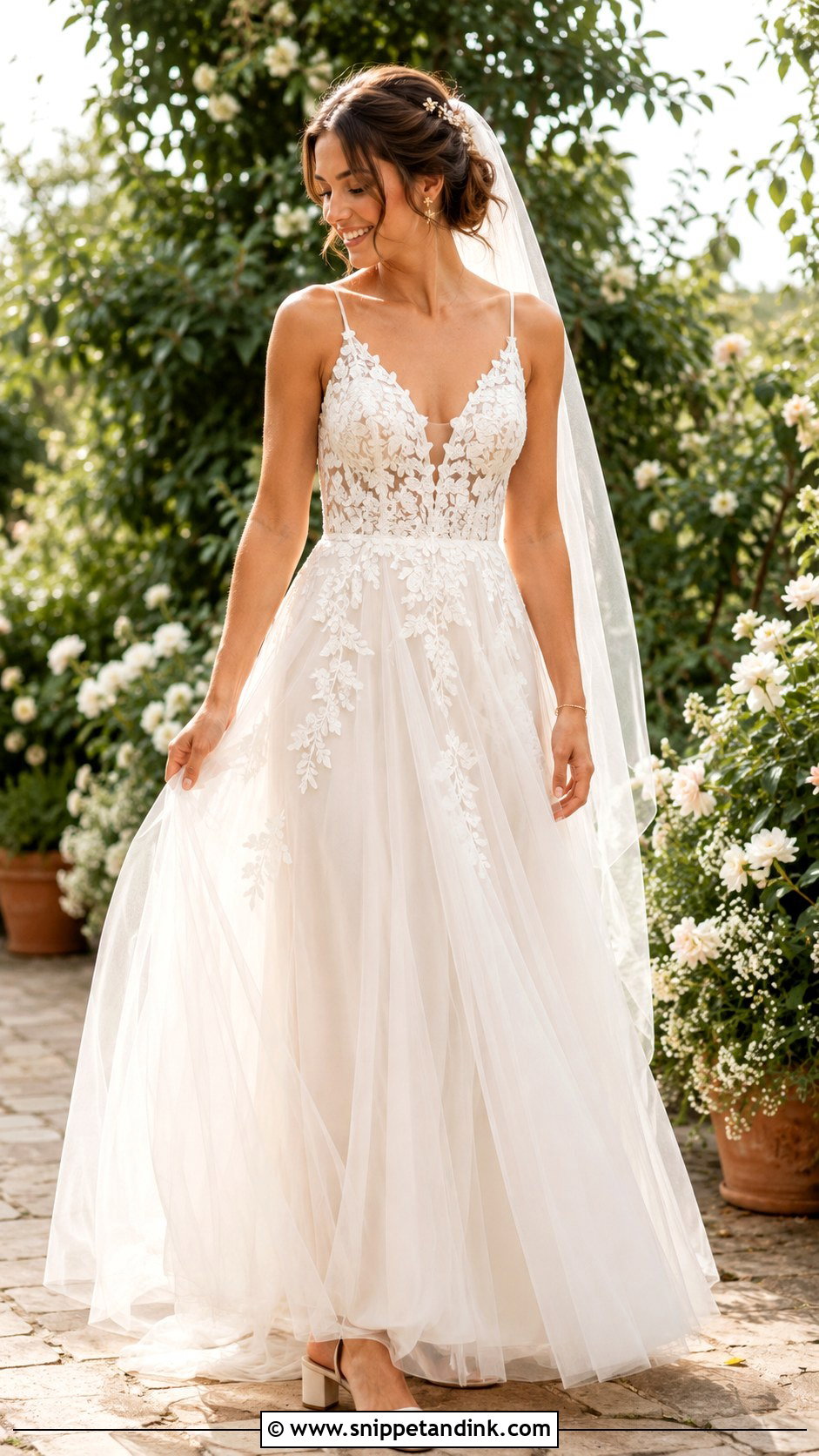
Outdoors or abroad, the boho V-neck feels relaxed without slipping into casual. Botanical lace, an open back and a softly gathered skirt move with the breeze. A deep V needs an illusion insert or tape if you’ll be bending to hug guests. Footwear depends on the ground: ivory sandals on a beach, low block heels on lawn, never stilettos on grass. Small gold earrings, a fine bracelet and a loose braided updo with floral pins suit the mood. A light veil or tulle cape adds movement. Keep the bouquet loose, with greenery and whatever flowers the season gives you.
9. High Neck Lace And Tulle Wedding Dress
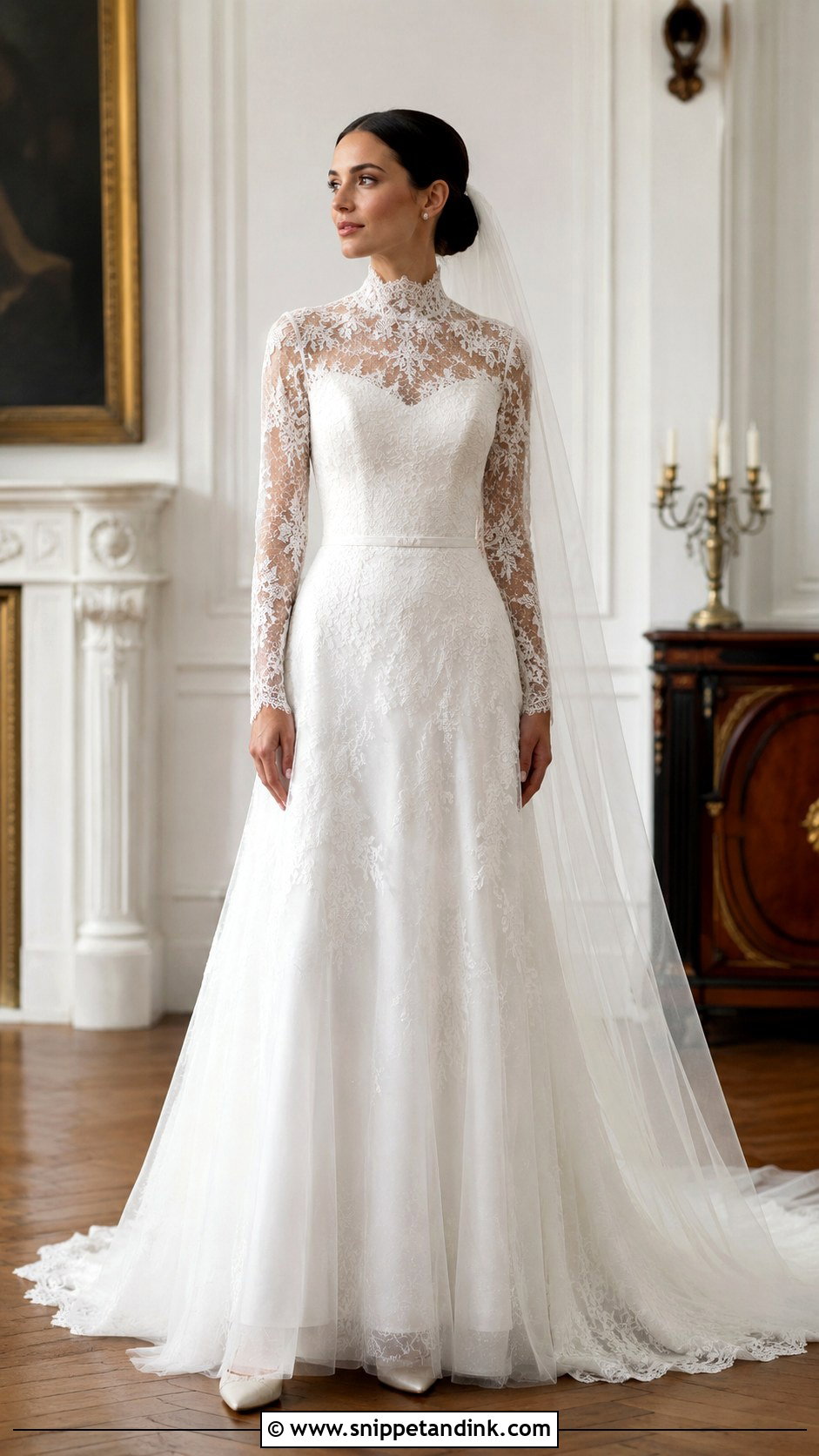
A high neck gives lace a vintage note while the rest of the gown stays light. Sheer lace over the neckline and shoulders shows detail without feeling covered up, and a fitted waist with a flowing tulle skirt stops the top half looking heavy. Small pearl buttons down the back finish it. Skip the necklace; pearl studs or slim drops are enough. Closed-toe pumps, a smooth bun and a plain chapel veil anchored beneath the hair complete it. Collars are where I see the most fitting complaints, so turn your head left and right at every appointment. It should sit flat and never pull.
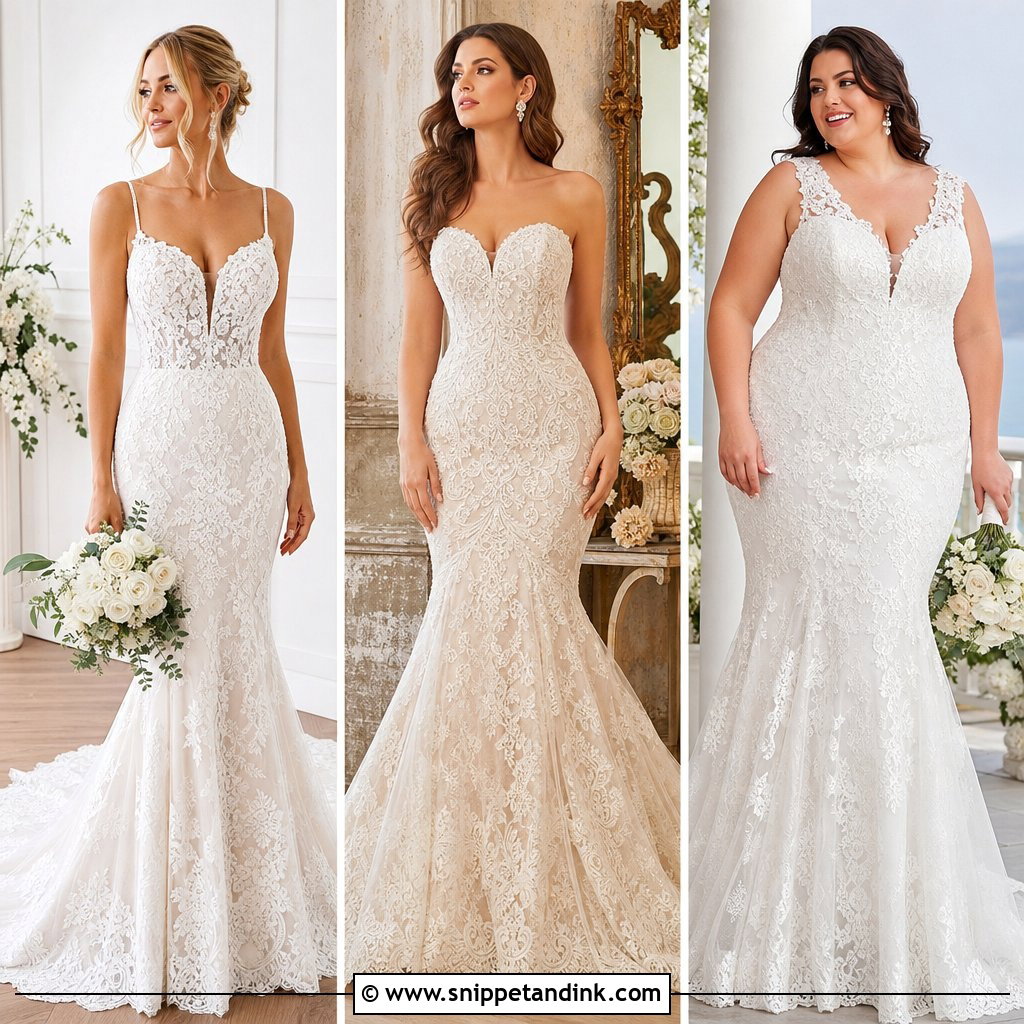
10. Mermaid Lace And Tulle Wedding Dress
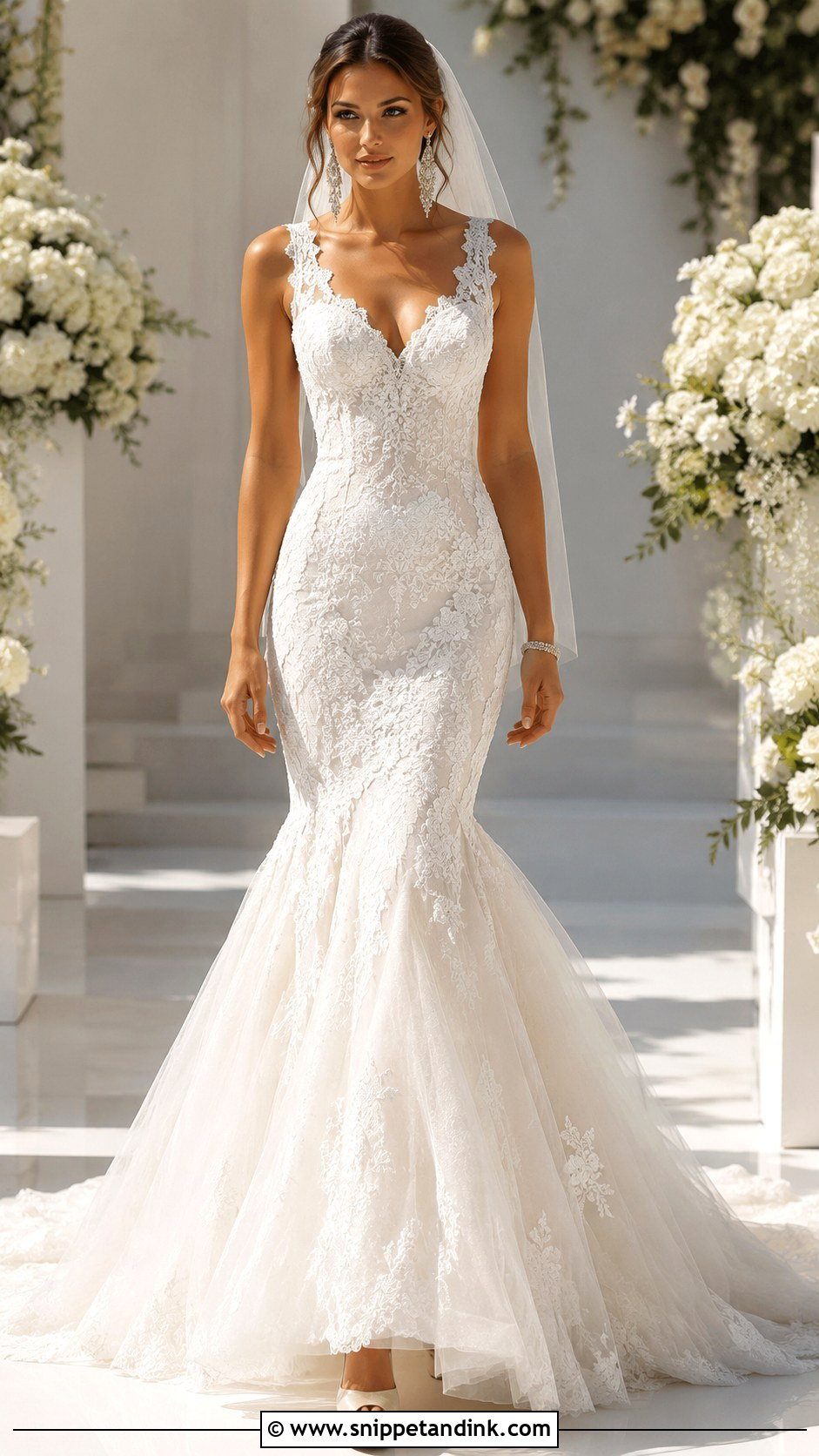
Mermaid gowns are about definition. The dress follows the bodice, waist and hips closely and releases into a tulle flare near the knee, with lace appliqués carrying the eye down into the skirt. Flare placement is everything: too high and it reads as a trumpet, too low and your stride shrinks to a shuffle. Wear platform heels or supportive pointed pumps so the hem falls correctly. Long earrings, a sleek bracelet and a simple veil avoid clutter, and a polished updo keeps the eye on the fit. At your appointment, practise sitting down and taking full steps before you commit.
11. Fit And Flare Lace And Tulle Wedding Dress
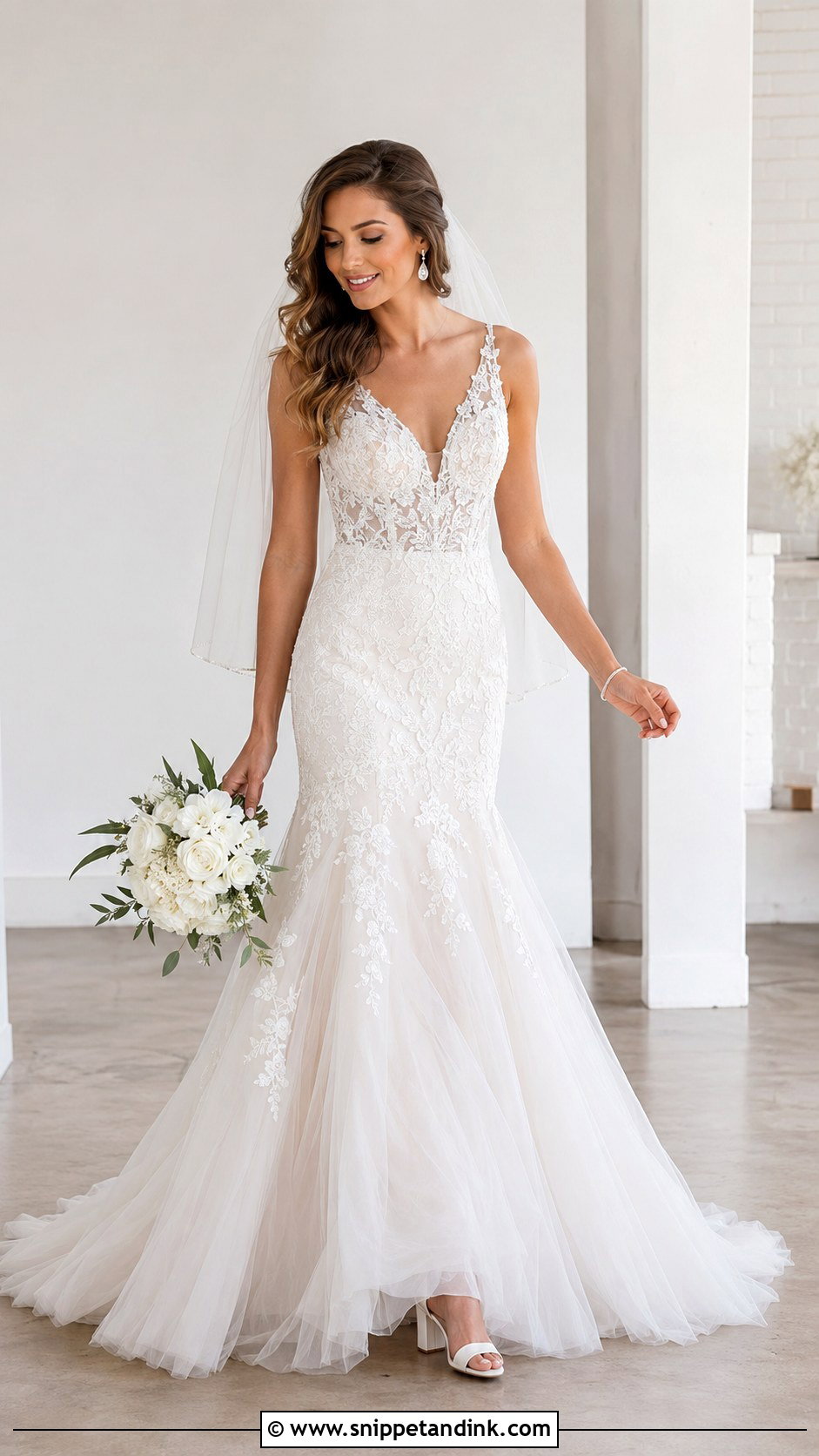
If a mermaid feels like a cage, fit-and-flare is the gentler cousin. It follows the upper body and widens gradually above the knee, which gives you room to walk and climb stairs. A lace bodice with supportive straps and a skirt of light tulle avoids bulk at the hip. A V or scoop neck lengthens the upper body. Block-heel sandals, teardrop earrings and a narrow bracelet are enough, with a medium veil that doesn’t hide the shape. Loose waves to one side soften it. Ask your tailor to watch the skirt while you walk; if it pulls across the hips, the flare needs to drop.
12. Basque Waist Lace And Tulle Wedding Dress
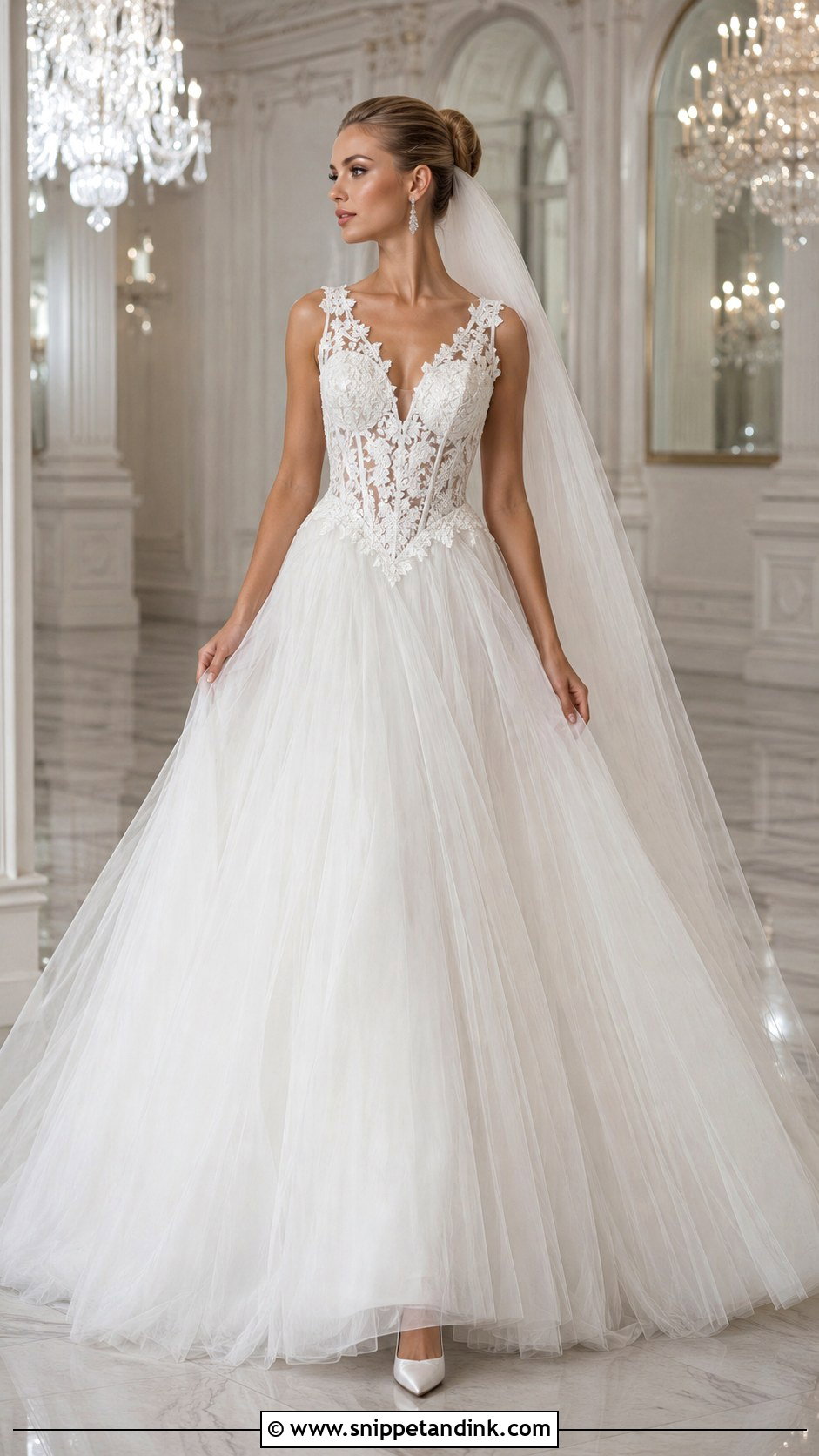
A basque waist dips into a V at the centre front, lengthening the torso and dropping straight into layers of tulle. Floral lace that follows the point shows off the construction. These basque and dropped waists pair especially well with corsetry and airy fabrics. Satin pumps, crystal drops and a long plain veil complete it, with hair smooth and lifted to balance the skirt. The point of the V has to land on your own proportions. Dropped too low, it digs in when you sit; pulled too tight, the lace ripples across the stomach.
13. Drop Waist Lace And Tulle Wedding Dress
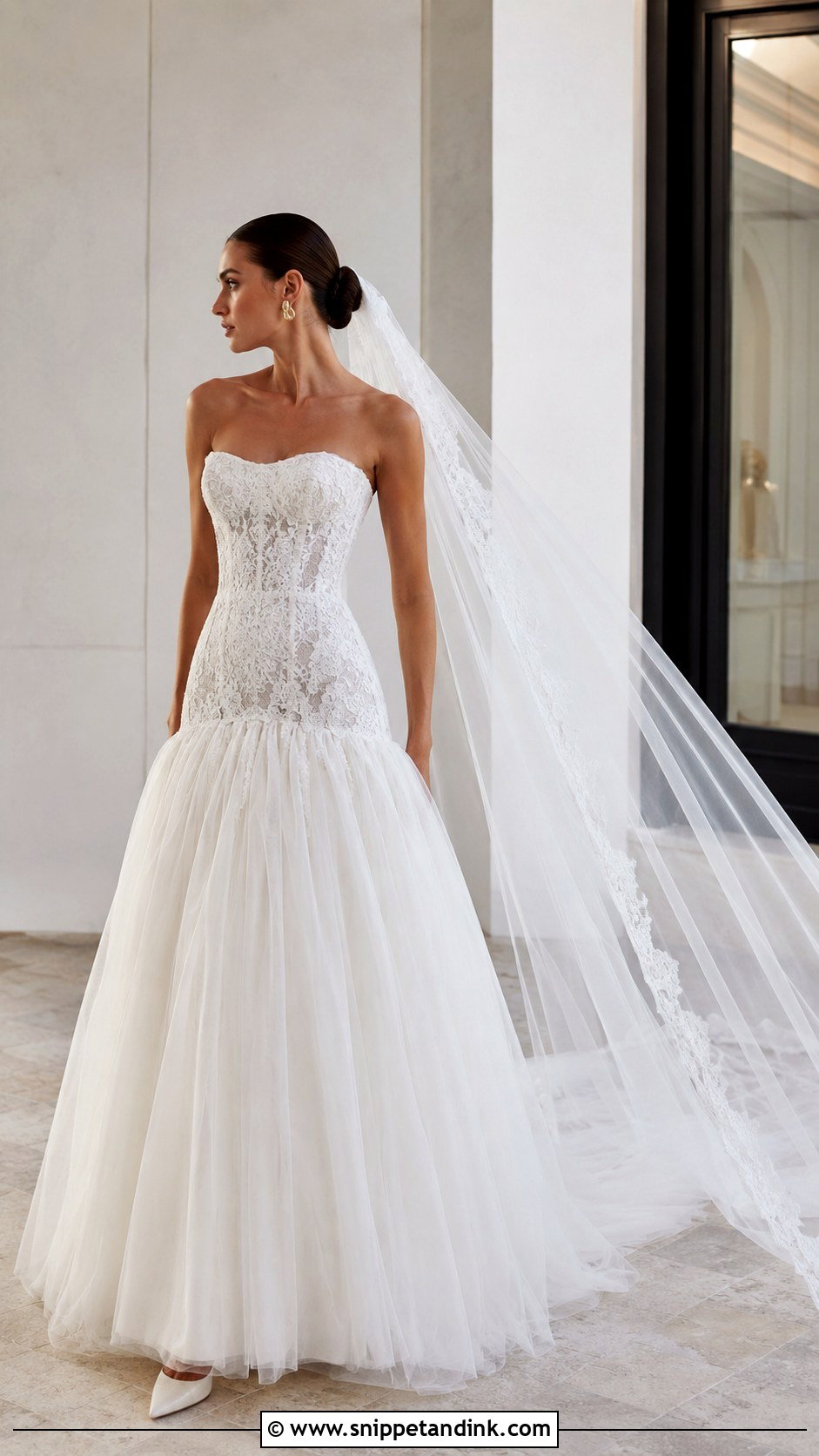
Drop waists give a sleek alternative to the classic natural-waist ball gown. The bodice runs to the upper hip before the tulle releases, drawing one long line through the torso. Lightly structured lace keeps the definition without stiffness. I don’t usually suggest this shape for a short torso, since the seam can make the legs look shorter. Strapless or narrow straps suit it best, with pointed heels, sculptural earrings and a plain cathedral veil. A smooth ponytail or low bun keeps it modern. Watch the skirt seam at fittings: it should lie flat and leave your stride free.
14. 3D Floral Lace And Tulle Wedding Dress
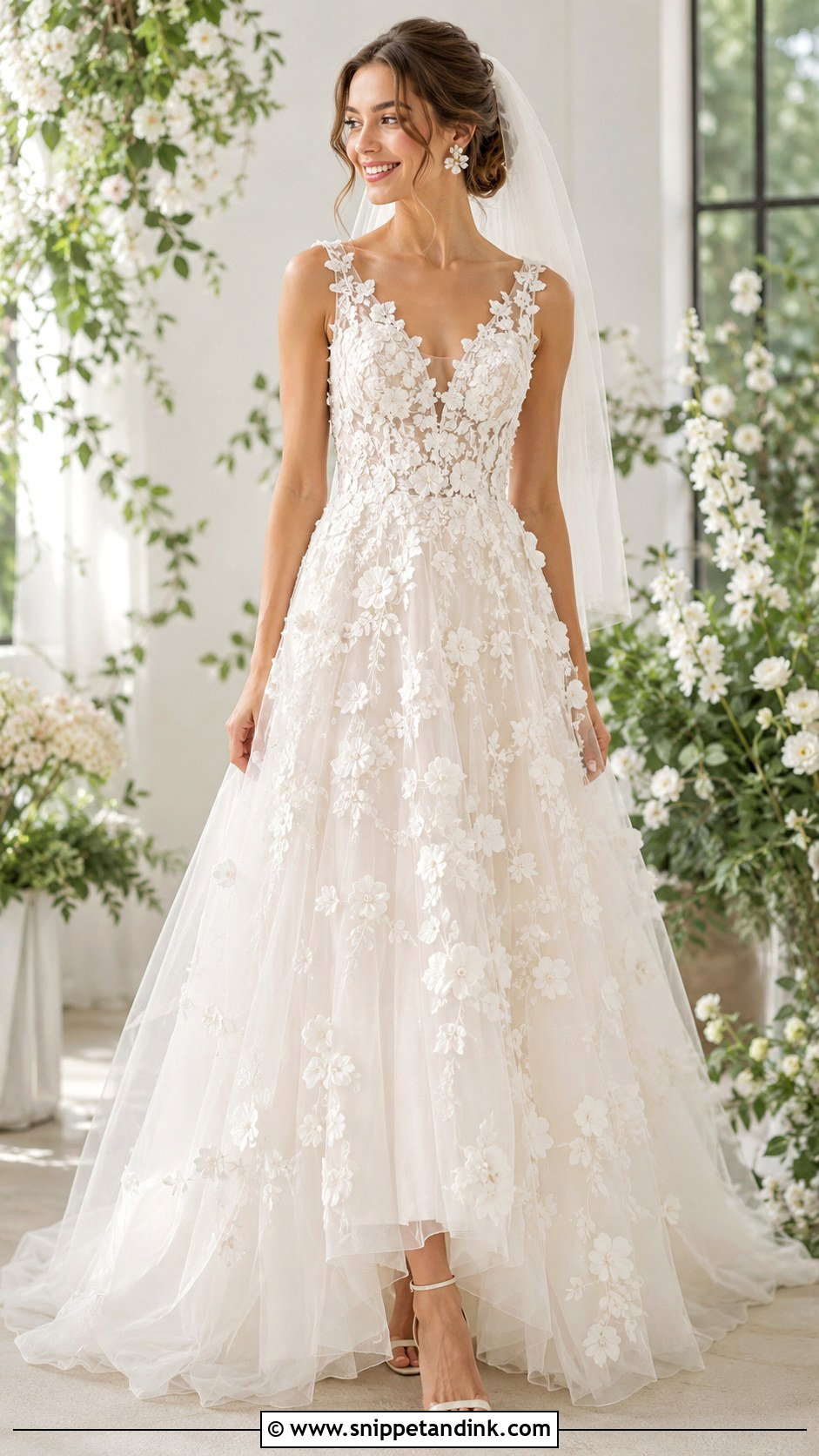
Raised flowers give lace real texture. The best placement is dense on the bodice and scattered on the skirt, so the tulle still floats. Pearls or clear beads at the flower centres add a little light. Plain ivory heels, floral earrings and a veil without its own decoration let the appliqués lead, and a softly twisted updo echoes their shape. Raised petals are the first thing to catch on veil combs and bouquet ribbon. Before you buy, tug gently at a few: they should be stitched through, not glued, and kept away from where your arms brush the bodice.

15. Beaded Lace And Glitter Tulle Wedding Dress
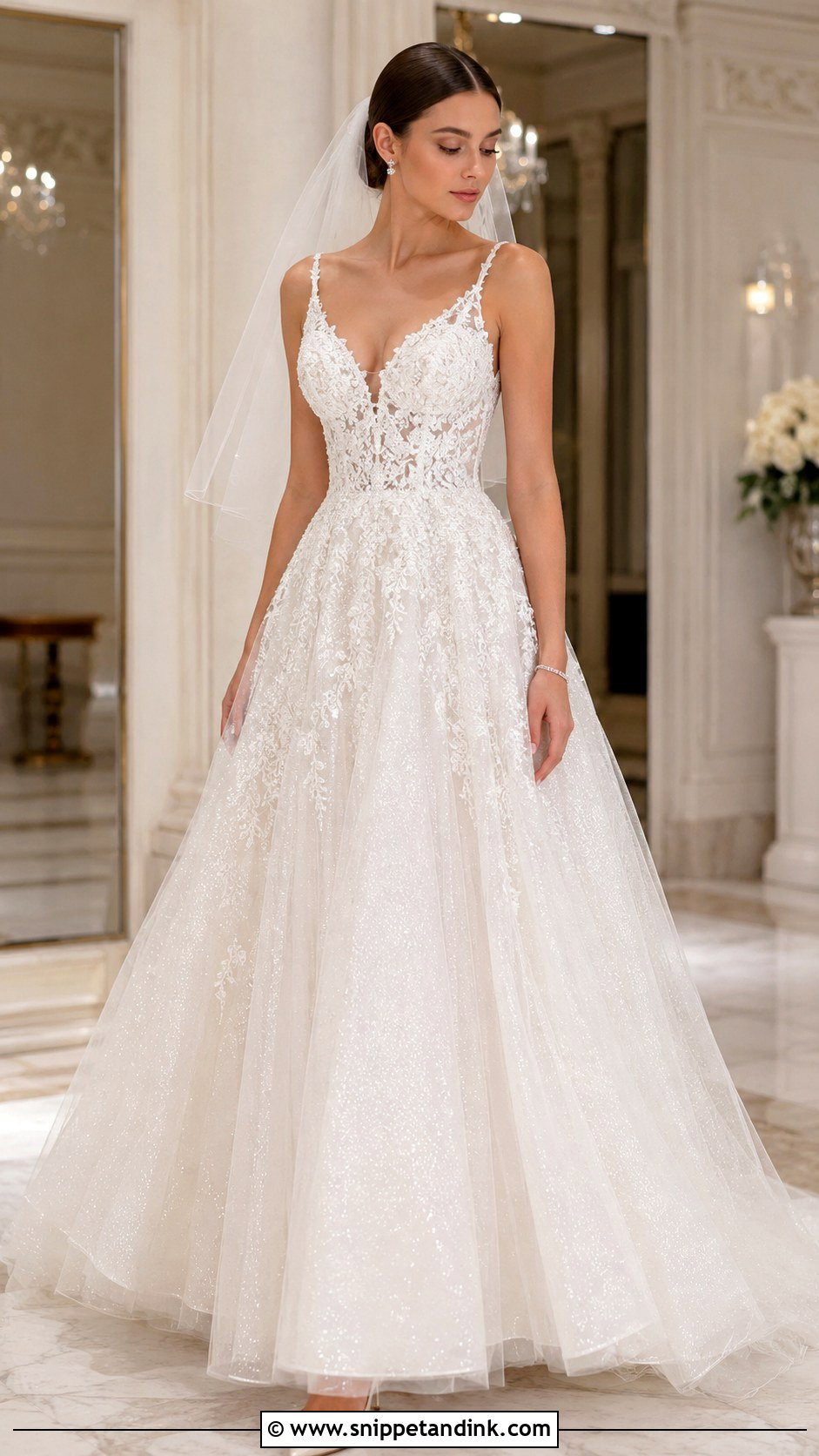
Beaded lace over glitter tulle throws light in a way plain tulle can’t. Fine beading on the bodice and a faint shimmer woven into the skirt keep it from tipping into costume. Under ballroom lighting, even subtle glitter tulle shows strongly, so a clean A-line is the safest shape. Plain metallic or ivory heels, crystal studs and a thin bracelet are enough, and the veil should be plain. A smooth hairstyle gives the eye somewhere quiet to rest. Run your inner arm along the bodice in the fitting room; beading that scratches there will scratch all night.
16. Blush Lace And Tulle Wedding Dress
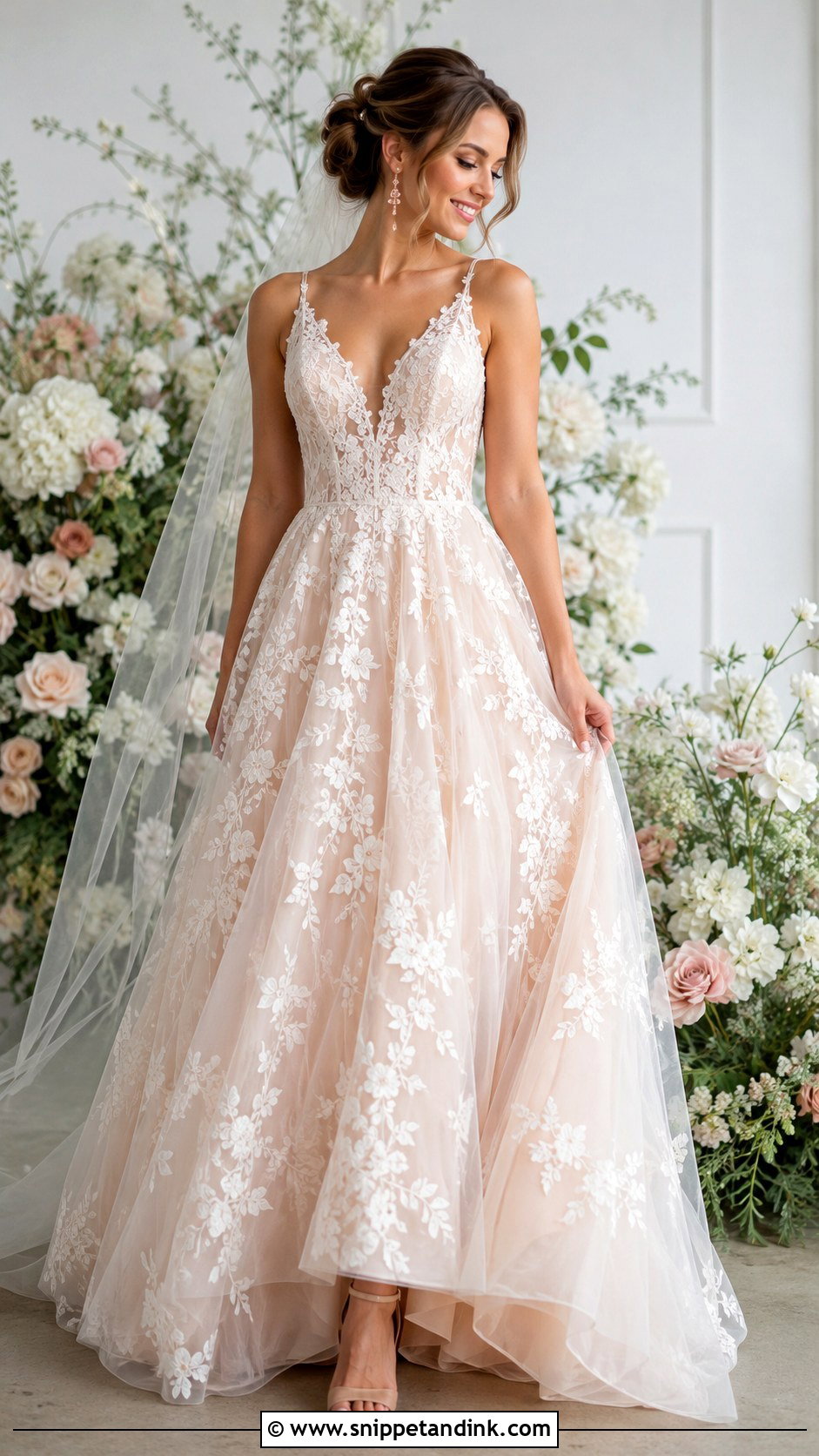
Blush still looks bridal but softer than bright white. Pale pink, nude or muted champagne linings make ivory lace stand out, and a layered A-line skirt gives the colour depth without saturation. The catch is that blush can wash out or go grey in some lights, so look at it by a window and under warm indoor bulbs before you decide. Neutral heels, rose-gold earrings and a sheer ivory veil connect it to tradition. A low textured bun and soft makeup suit it. Get fabric swatches before buying accessories; aim for shared undertones, not exact matches.
17. Tea Length Lace And Tulle Wedding Dress
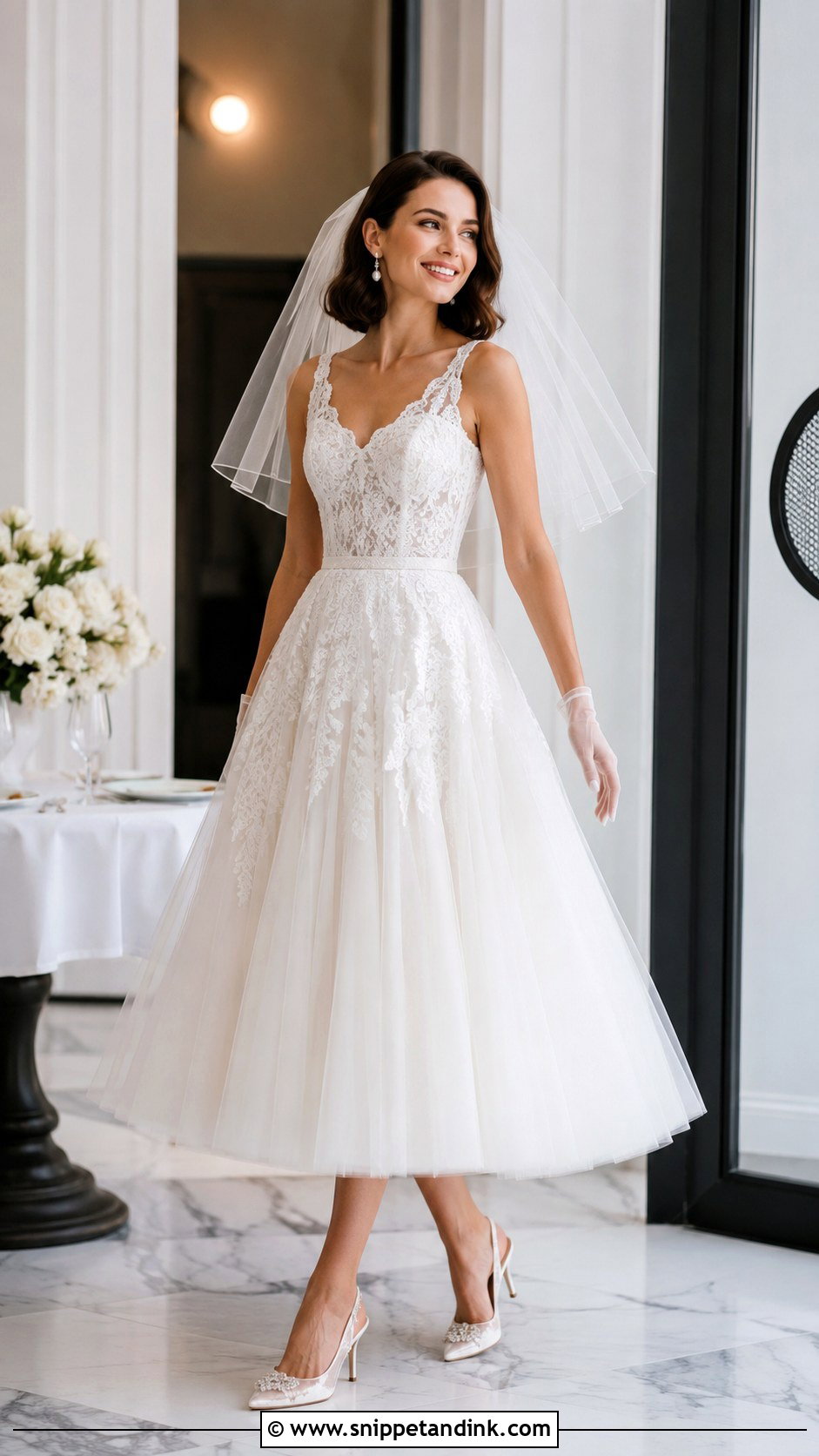
Tea length is the playful one, and easy to dance in. The hem lands between knee and ankle, which puts your shoes on full display. A fitted lace bodice and a softly structured tulle skirt give the vintage proportion. Pointed pumps, embellished slingbacks or neat block heels all work. Pearl earrings, short gloves if you like them, and a shoulder-length veil finish it, and a neat bun or softly waved bob suits the shorter line. Bring the exact shoes to every alteration; a centimetre of heel changes where that hem sits against the calf.
18. Plus Size Lace And Tulle A-Line Wedding Dress
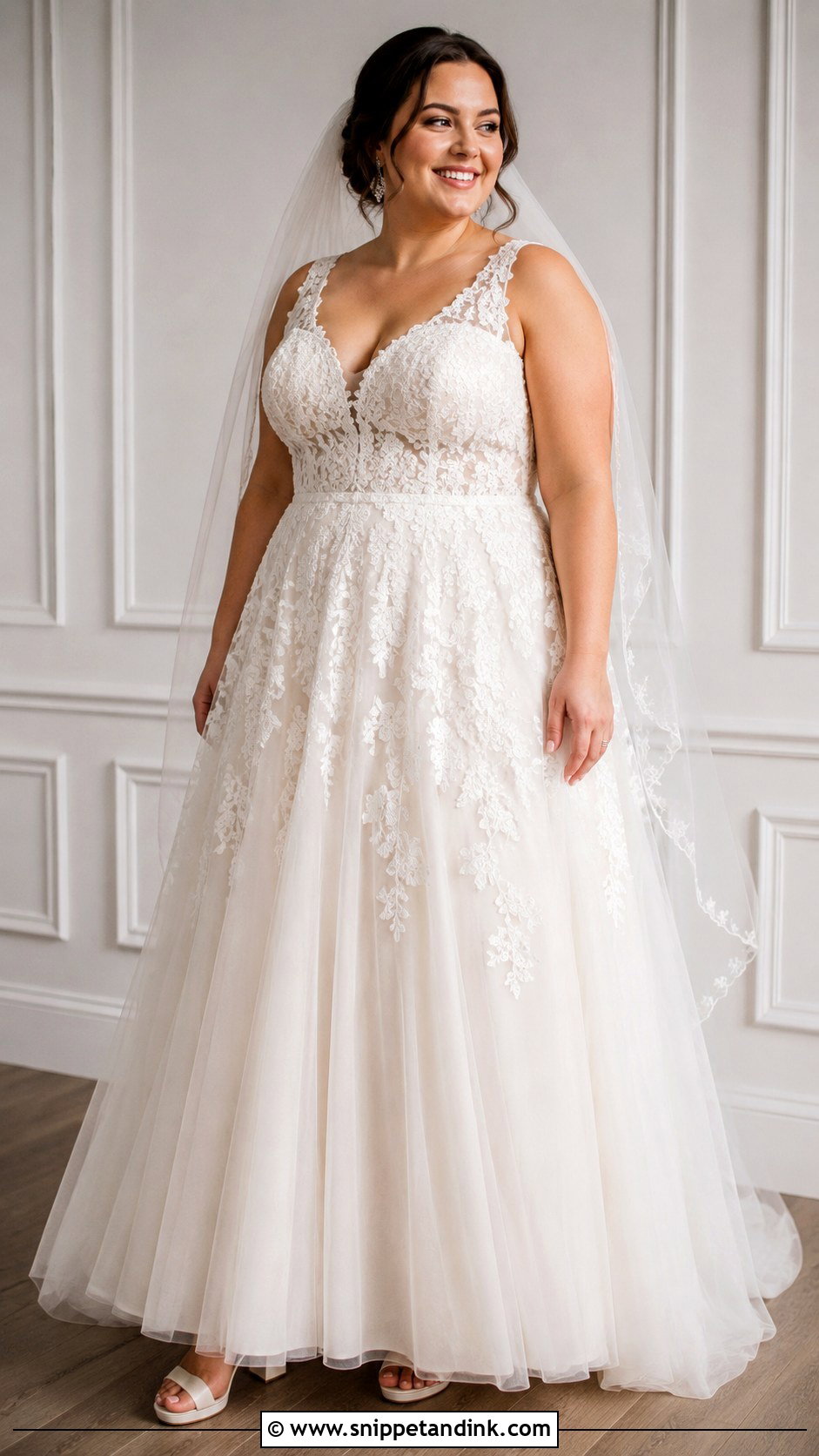
On a plus size bride, construction matters far more than any rule about silhouettes. A supportive bodice, comfortable straps and a waist seam placed at your real waist will do more than the number on the label. Lace over a lined base gives definition, and tulle leaves room through the hips. Supportive block heels, statement earrings and a light fingertip veil suit it, with a side-swept updo to show the neckline. Ask the salon for samples close to your size; trying a gown clipped at the back tells you very little. At alterations, sit, walk, raise your arms and breathe deeply before you accept the fit.
19. Modest Lace And Tulle Wedding Dress
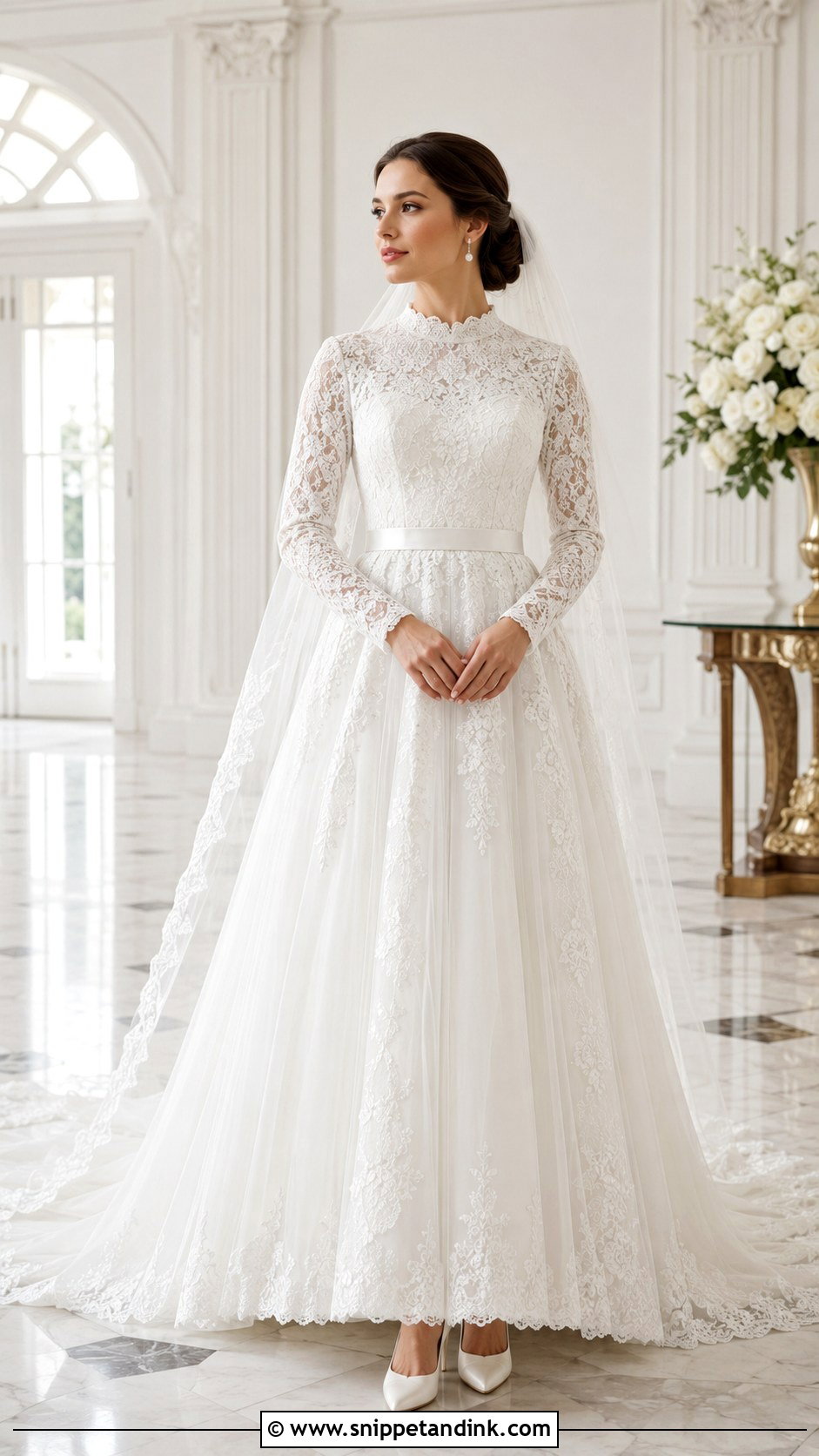
Modest doesn’t mean plain. A lined bodice, a higher neckline, full sleeves and an A-line skirt give coverage, while sheer lace overlays add depth. In warm months, ask for a lightweight, breathable lining; heavy acetate under long sleeves becomes uncomfortable fast. Closed-toe heels, pearl earrings and a long veil under a low bun complete it, and a ribbon belt can define the waist. Raise neckline, sleeve and back changes early. Matching lace often has to be ordered, and adding coverage that looks original takes more time than taking a dress in.

20. Lace And Tulle Wedding Dress With Detachable Sleeves
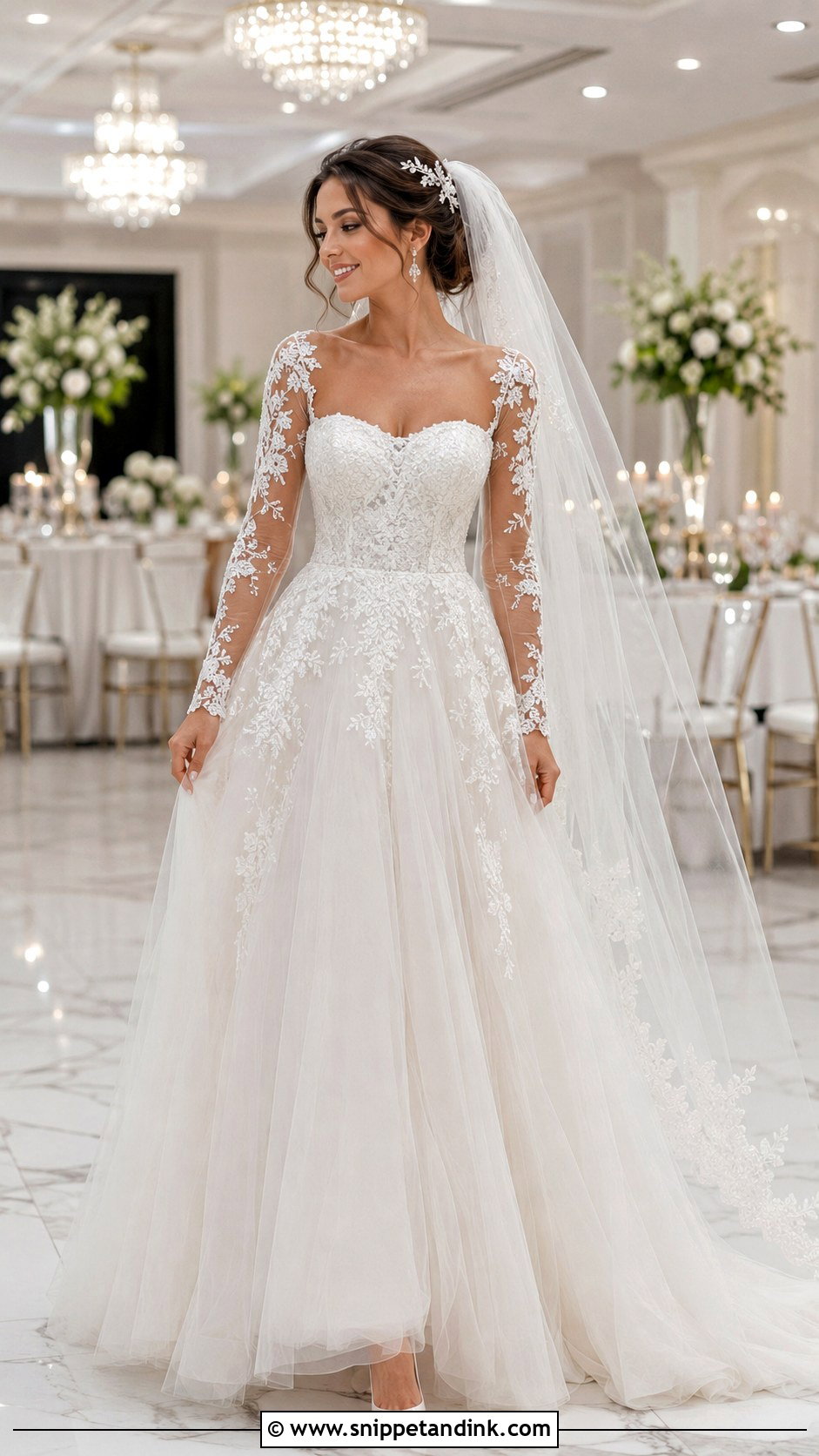
Detachable sleeves give you two looks from one gown. Long illusion lace sleeves for the ceremony come off to show a strapless or sleeveless bodice for the reception. The lace has to line up around the neckline so the sleeves look built in when attached. Wear a long veil, pearl earrings and closed-toe heels for the ceremony, then switch to statement earrings or a decorative comb once the sleeves and veil come off. Practise the fastenings with the person who’ll help you. Tiny hooks are fiddly with nervous hands, and snaps are usually quicker.
Snags, Grass and Crushed Layers on the Wedding Day
Tulle is light because it is mostly air, which also means it catches. Rough stone steps, chair legs, a groomsman’s cufflink and the Velcro on a camera bag are the usual culprits. A small snag can be trimmed or tucked; a pulled run across the skirt can’t, so steer around obvious hazards.
- Steam tulle, never iron it. Hold the steamer a short distance away and let the layers drop. Nylon tulle can melt under a hot iron in seconds.
- Pin or bustle the train before guests start walking around you outdoors. Damp grass marks the underlayer quickly, and lace hems pick up dust.
- Pack small sharp scissors and a few safety pins. A loose thread in lace should be snipped, never pulled.
After the Wedding, Keep It Flat and Dark
Get the gown professionally cleaned within a few weeks, even if it looks clean. Sugary drinks and sweat can turn into yellow marks months later. Tell the cleaner which parts are beaded or glued so they choose a gentle method.
For storage, I prefer a breathable box with acid-free tissue folded into the creases. Long hanging lets heavy lace pull on fine shoulder seams. Keep it away from plastic bags, damp basements and hot lofts, and open the box every year or so to refold it along new lines.
Lace Moves, Tulle Floats, You Lead
Lace and tulle forgive a lot, but they respond to good tailoring more than almost any other fabrics. Start with the silhouette, then compare necklines, sleeves, lace scale, tulle volume and train length. Let the shoes, jewelry, veil and hair support the texture rather than fight it. Alterations can change support, proportion and comfort far more than a sample on a hanger suggests, so try shapes you assumed weren’t for you. The right gown is the one you forget you’re wearing by the second hour.
You'll Like These Ideas:







Leave a Reply