
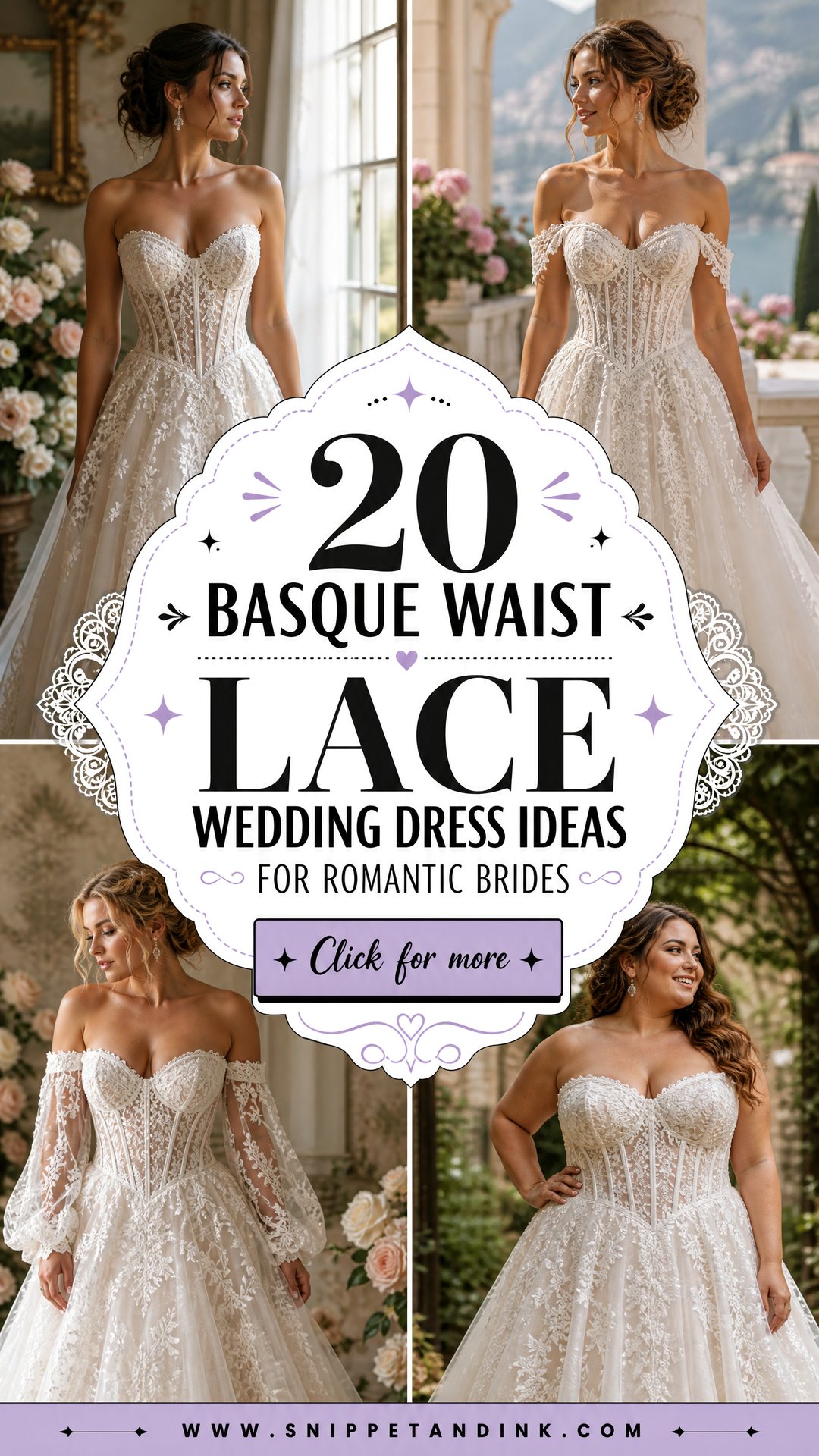
Lace and a Basque waist pull in opposite directions. The bodice dips below your natural waist into a V or soft point and wants clean, sculpted lines, while lace wants to be soft and busy. When they’re balanced, you get the romantic texture without losing the shape. That balance is what I look for in every gown below, along with the practical side: support, sleeves, train length and how big the lace pattern is. Venue and season matter too, so I’ve noted where each one is happiest.
Which Lace Behaves Best Over a Pointed Seam
Brides usually pick lace by the pattern they like. I’d also pick it by how it acts over structure, because a Basque bodice is curved, boned and pointed, and different laces handle that very differently.
Fine net laces
Chantilly is light and flat with outlined motifs on a fine net. It drapes, so it shapes nicely over the bodice, but it shows every ridge of boning underneath unless there’s a smooth lining between.
Corded laces
Alençon and other re-embroidered laces have a cord outlining each motif, which adds body and a slightly raised edge. They’re my usual pick for the seam itself, since the cord holds the shape of the point and motifs can be cut out and placed along it.
Guipure
Guipure has no net at all; heavy motifs are joined by small bars. It looks bold and modern and holds its own shape, but it’s stiff and can feel scratchy at the underarm. Ask for it lined there.
If you can, ask the salon for a swatch of the lace and the lining together. Rub it on the inside of your arm for a minute and hold it up to a window. You’ll learn more about how it will feel at hour eight and look in daylight photos than any hanger can tell you.
1. Strapless Basque Waist Lace Wedding Dress
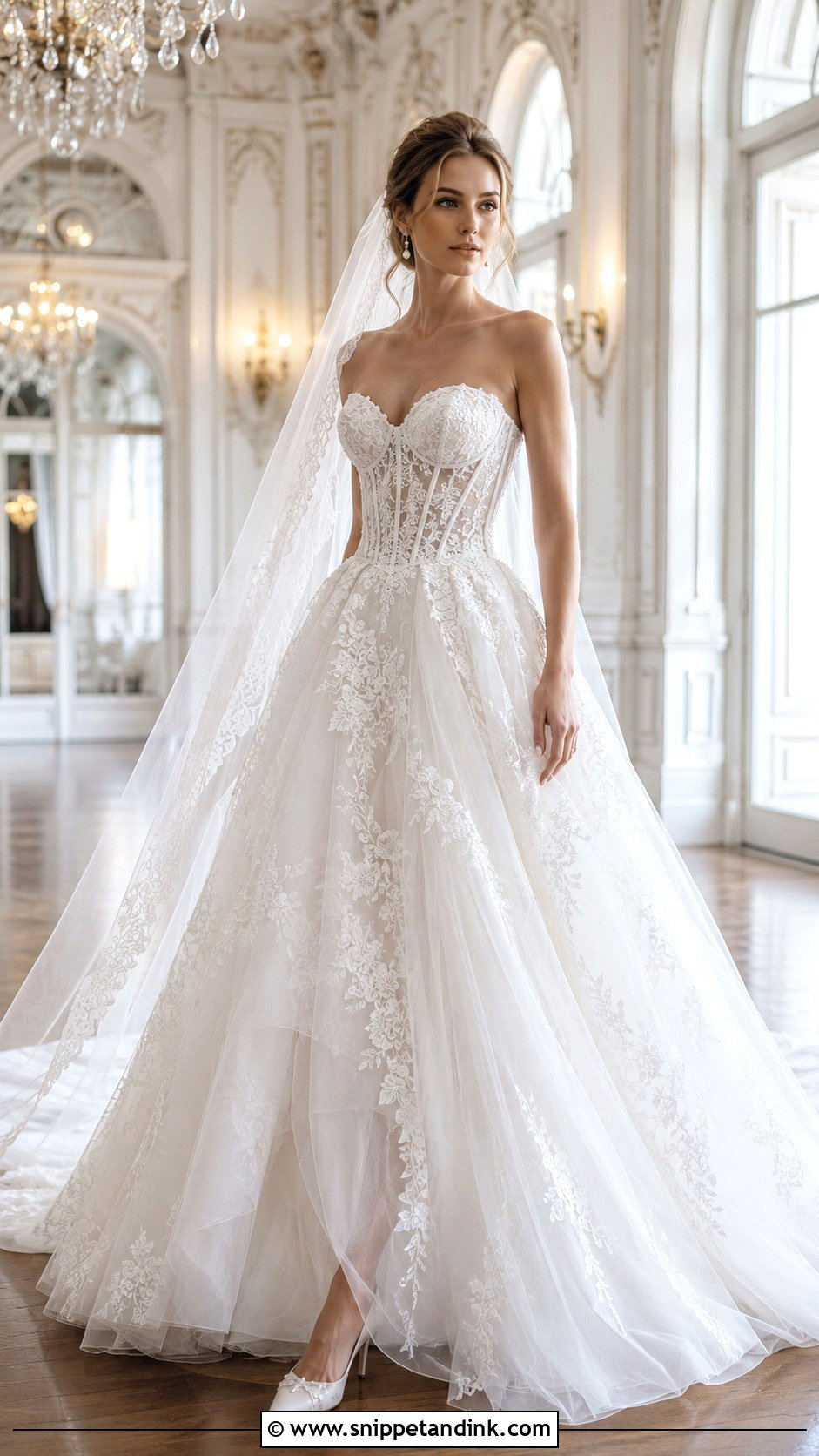
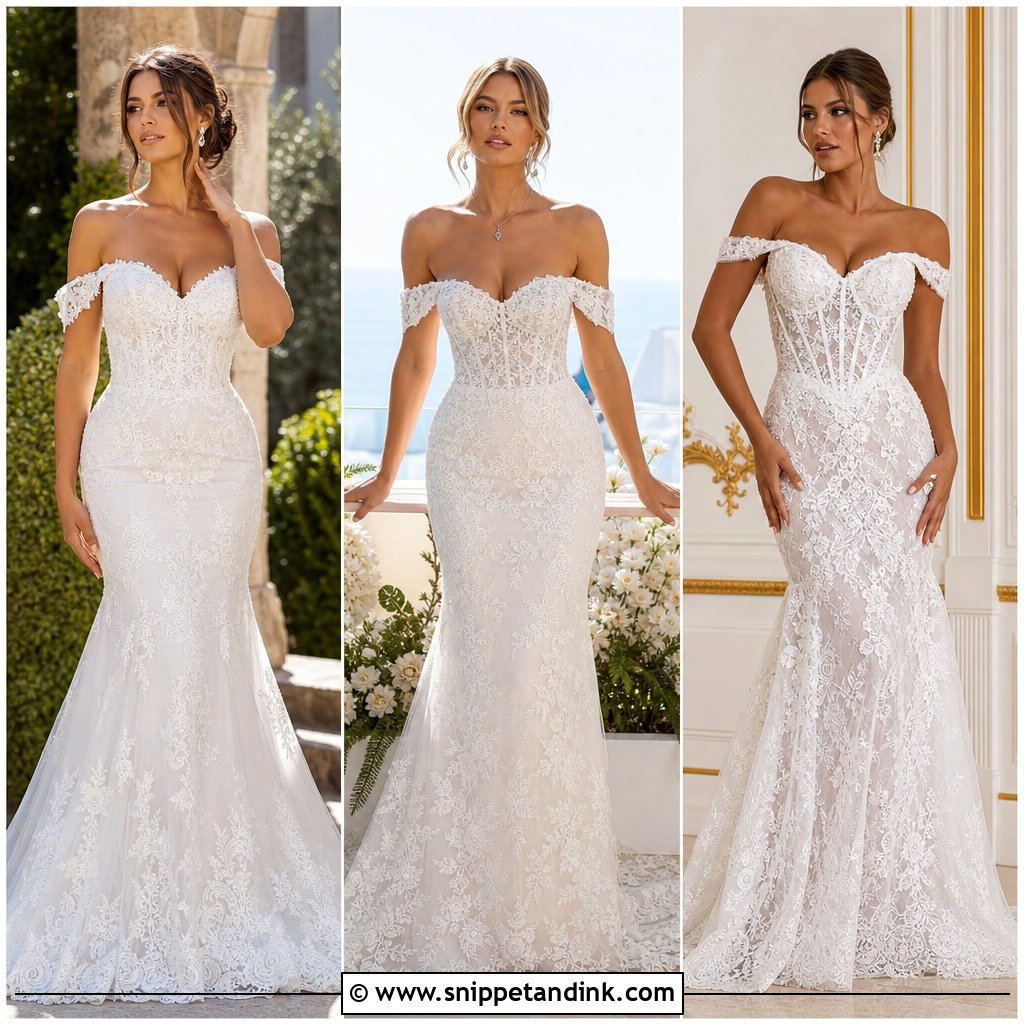
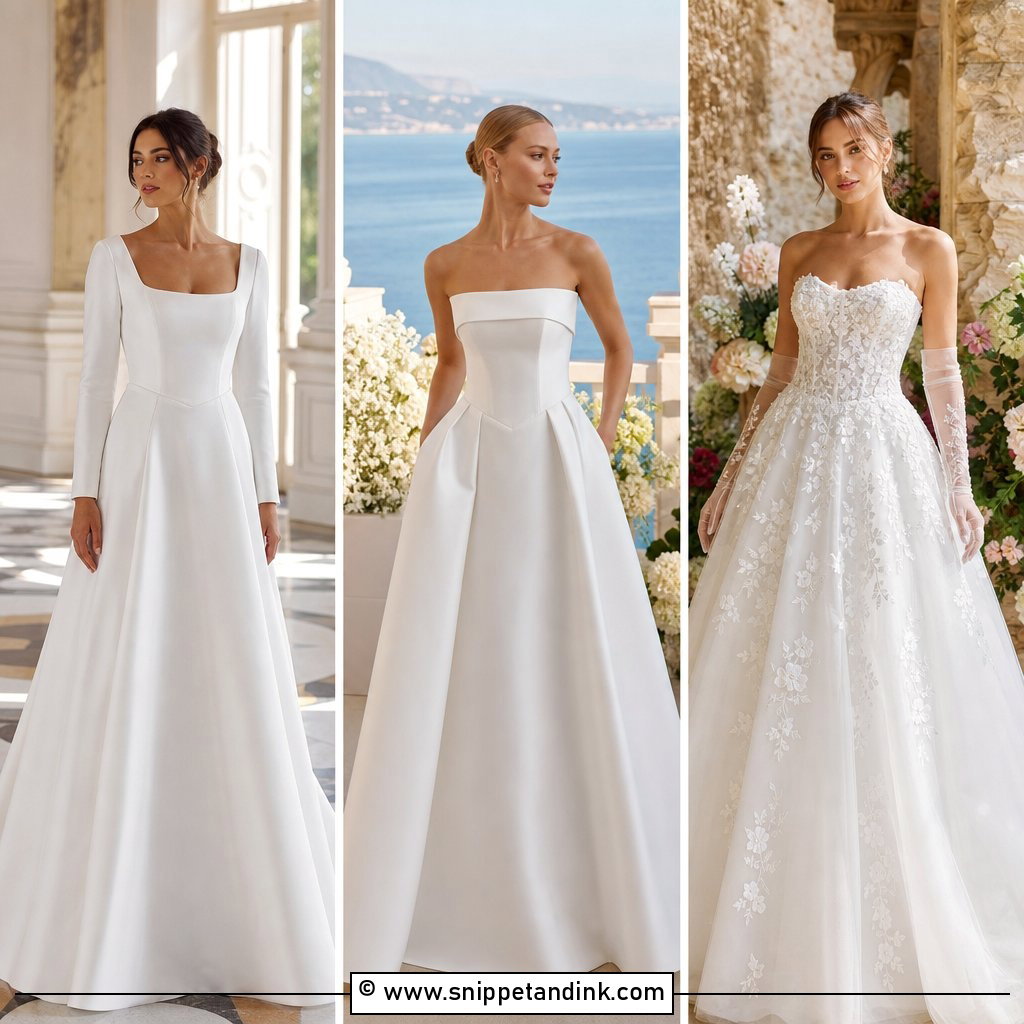
Strapless is the clearest way to show the point, provided the lace runs over the seam instead of stopping at it. Pick a firm corset bodice with a softly curved sweetheart neckline and lace and a full tulle or organza skirt. With no straps, ask three things: is there boning to the point, are there real cups, and does the back close with a corset lacing or a zip plus hooks? A corset back gives you more adjustment on the day. Pearl drops, a cathedral veil and pointed ivory pumps; skip the necklace.
2. Long Sleeve Basque Waist Lace Wedding Dress
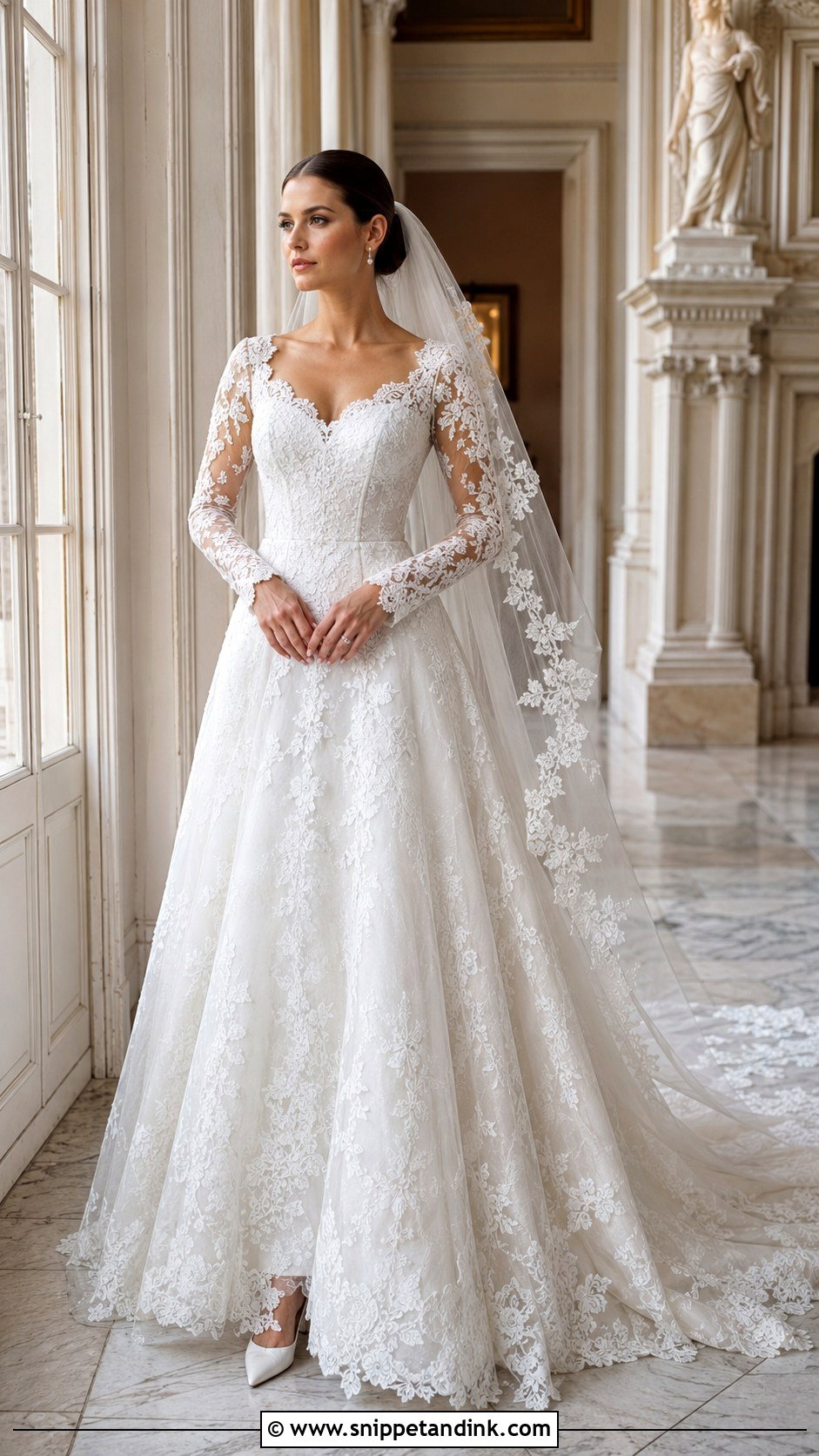
Long, sheer illusion sleeves scattered with appliqués that match the bodice give coverage without bulk. The problem I see most is lace bunching at the top of the shoulder, which happens when the sleeve is cut straight rather than curved to the arm. A soft A-line skirt keeps the point visible. Pair it with pearl studs, an embroidered fingertip veil and closed-toe satin heels, and keep a smooth ivory wrap for cold walks between venues. A low chignon shows off the sleeve work.
3. Off Shoulder Basque Waist Lace Wedding Dress
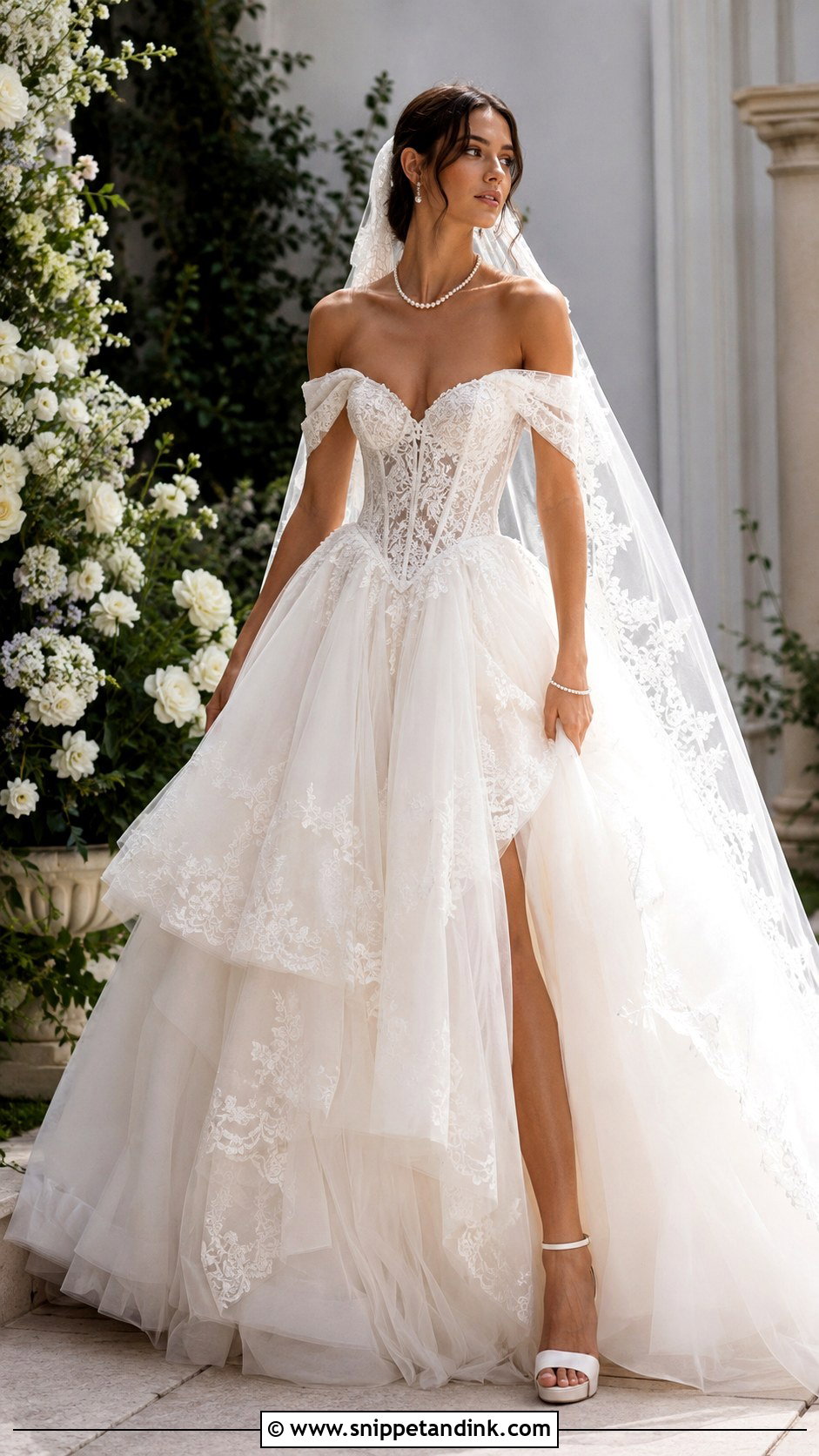
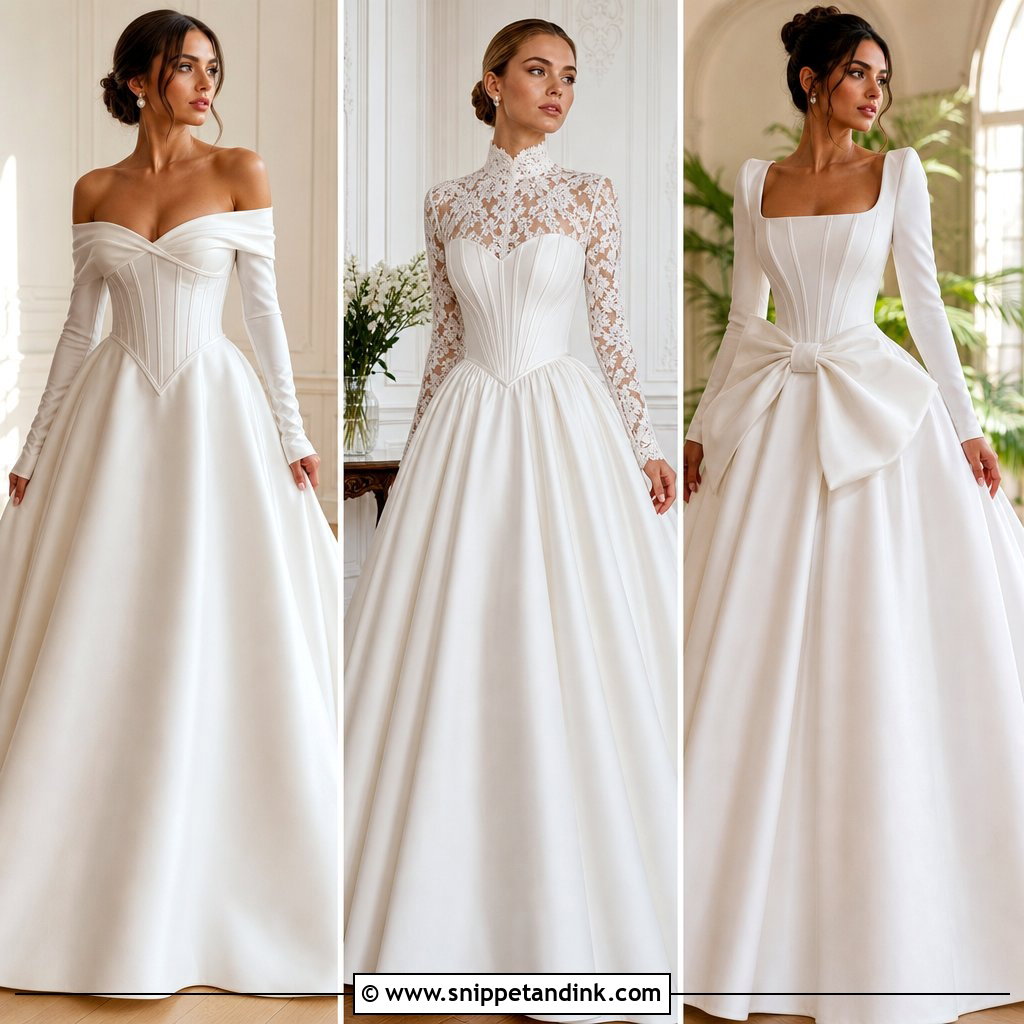
Off the shoulder frames the collarbone; the Basque waist anchors everything below it. Lace-covered sleeve bands should rest on the upper arm, not grip it. Here’s a tip I give a lot: if you love the look for photos but dread dancing in it, ask about detachable bands, which keep the ceremony shape and come off later. Lightweight tulle layers give volume without weight. A simple pendant, a lace-trimmed veil, ivory block heels and loose waves or a textured low bun suit it.
4. Square Neck Basque Waist Lace Wedding Dress
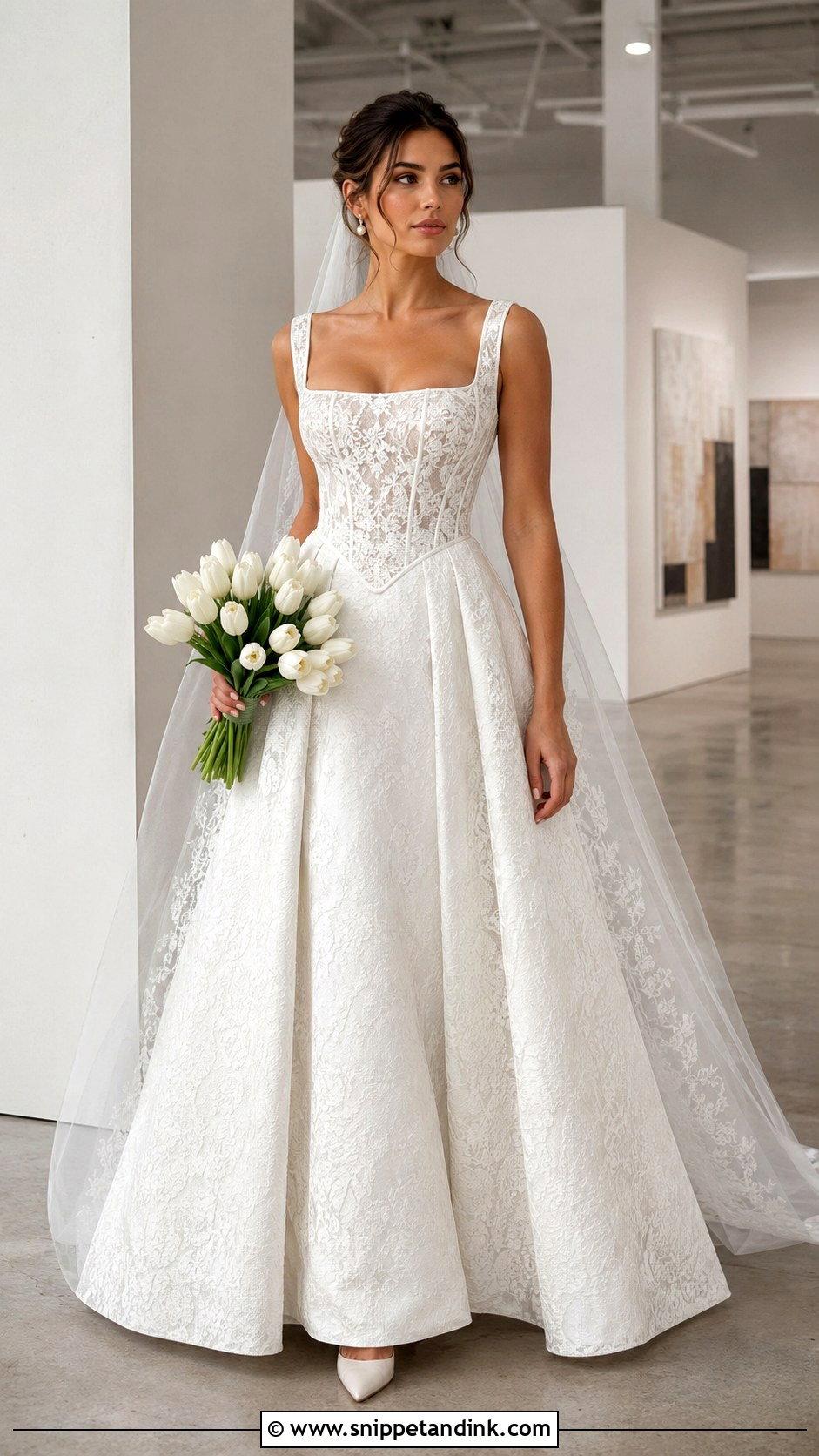
A square neckline sets a straight edge against curving floral lace, and that contrast is the whole appeal. It also covers more than a plunge or strapless. Wide straps and a supportive lining let the A-line skirt fall cleanly from the point. When the lace is bold, I’d always choose a veil with a plain raw edge; two busy laces stacked in photos read as noise. Pearl studs, a sleek bun and a structured bouquet of tulips or calla lilies match the geometry.
5. High Neck Basque Waist Lace Wedding Dress
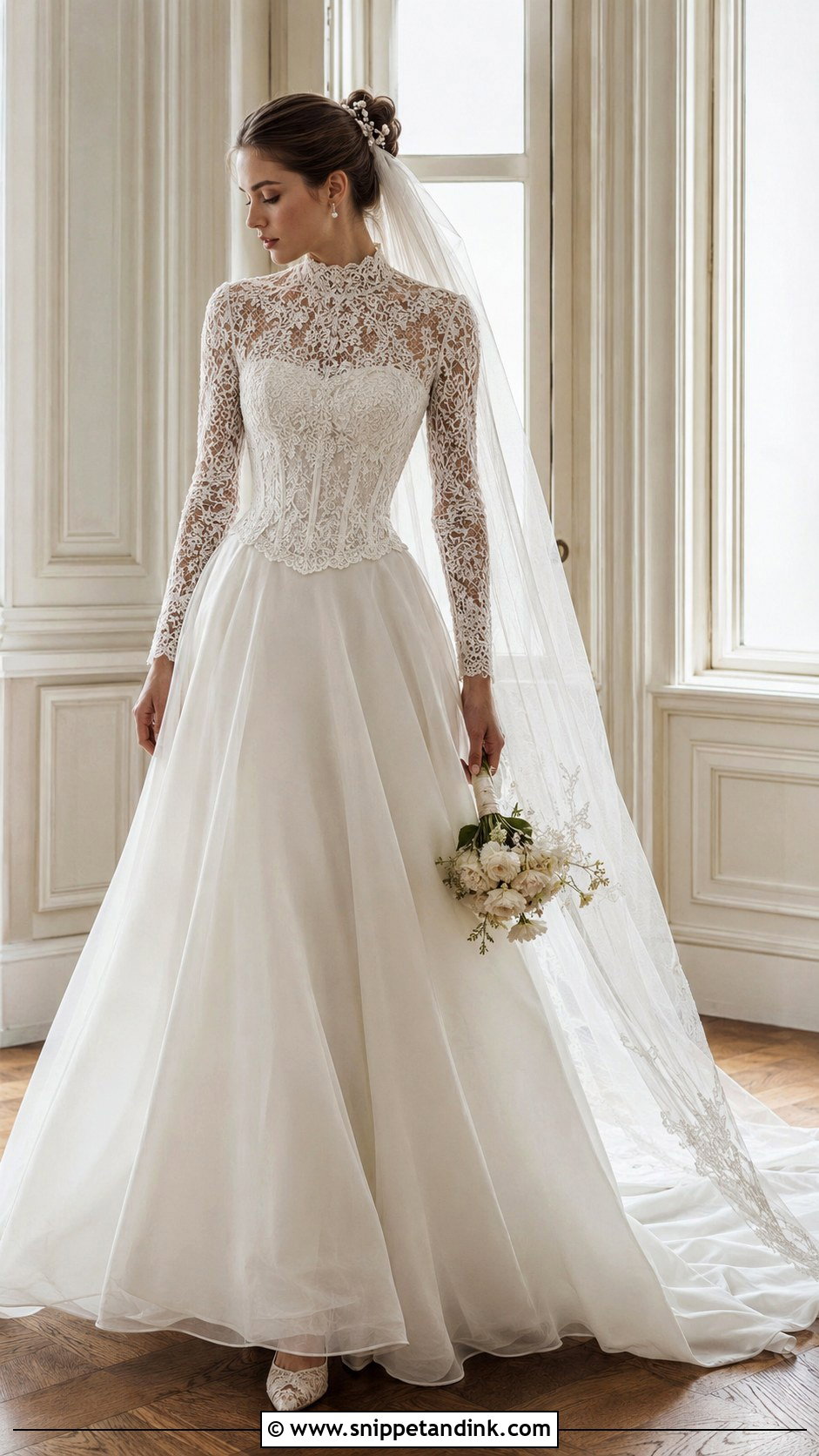
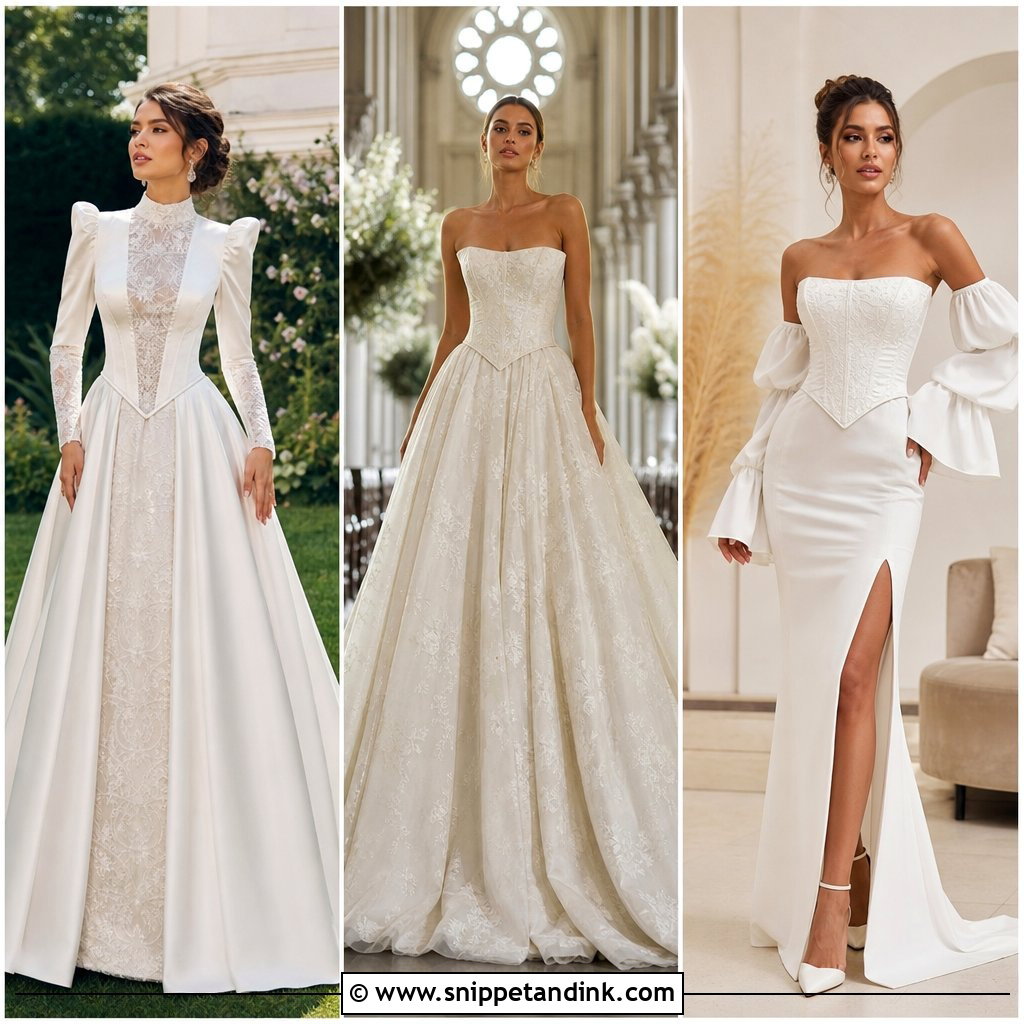
High necks bring a vintage feel to the dramatic waist. A sheer lace collar over a lightly lined center, plus long or bracelet sleeves and a flowing organza skirt, is the classic version. The collar is where comfort lives or dies. Stiff lace at the throat chafes after a few hours of photos, so look for a soft scalloped edge and check there’s a finger of room. No necklace. Pearl hairpins in a low bun and a cathedral veil pinned under it keep the front clear.
6. Scoop Neck Basque Waist Lace Wedding Dress
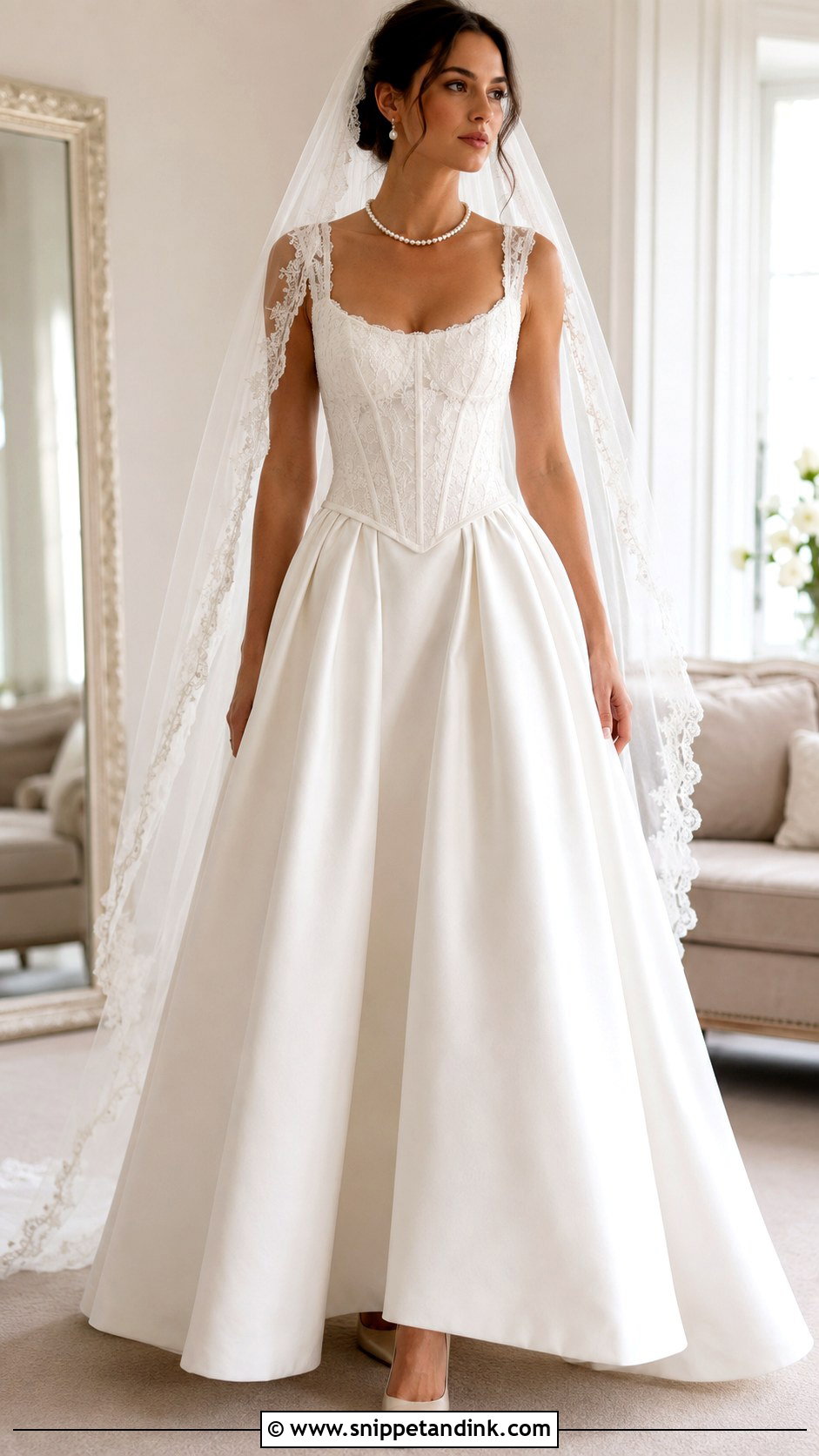
A medium scoop softens the point and feels approachable on most frames. Chantilly or a fine floral lace over visible corset seams is a common combination. I always lean the bride forward in the mirror to check for gaping, as scoops in lace tend to stand away from the chest because lace has less grip than satin. The lining color changes everything too: ivory lining makes the pattern quiet, a skin-tone lining makes it pop. Add a single strand of pearls, a fingertip veil and a half-up style.
7. V Neck Basque Waist Lace Wedding Dress
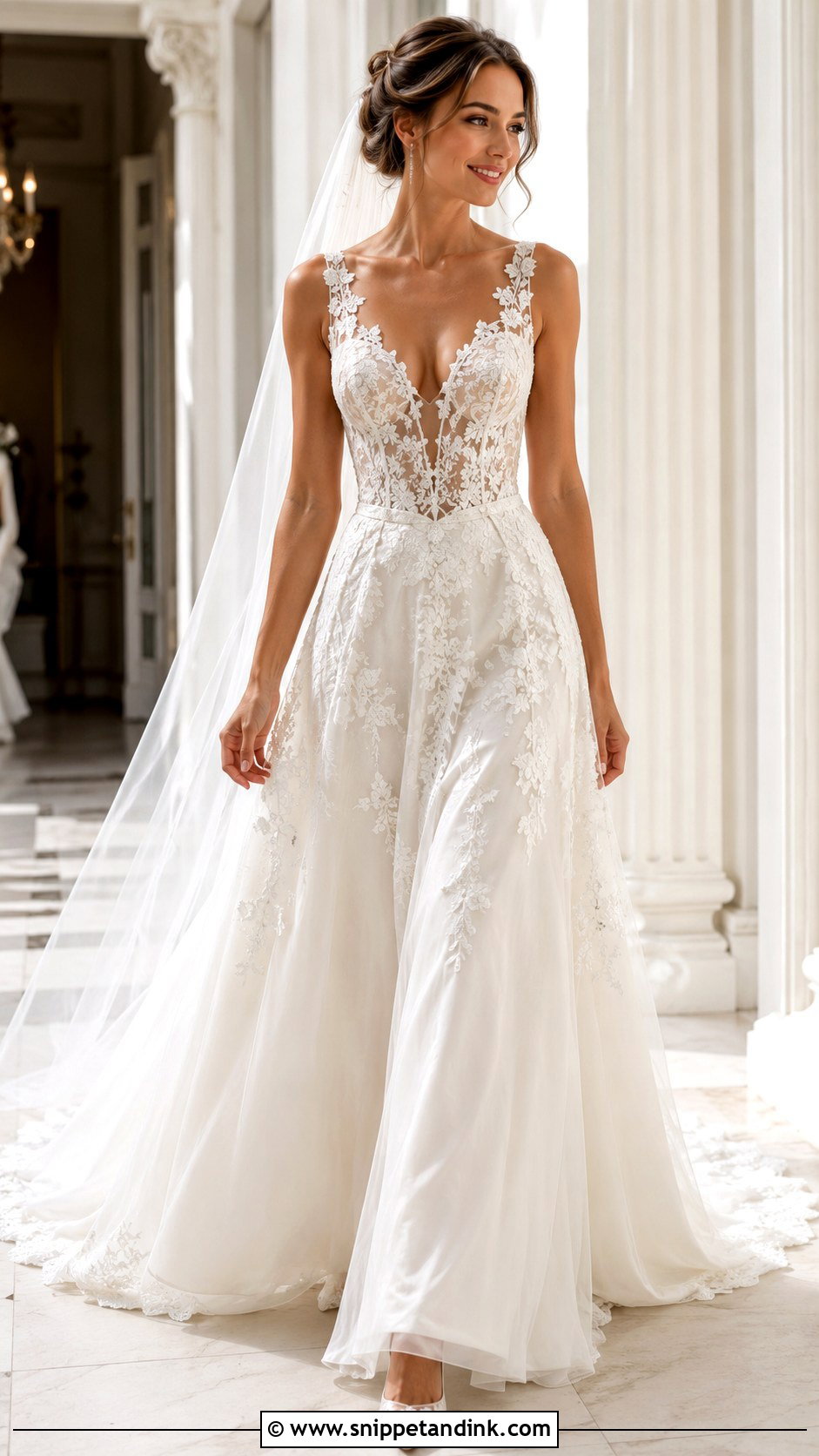
A V neckline points down, the Basque waist points down, and the two together make a long, lean line. Keep the V moderate and filled with illusion tulle rather than plunging. That way the lace along the neckline can guide the eye to the waist without needing tape all night. Then check support: cups and strap position matter more than how deep the V is. A soft A-line skirt with a chapel train, slim drop earrings and a low ponytail or bun keep it clean.
8. Cap Sleeve Basque Waist Lace Wedding Dress
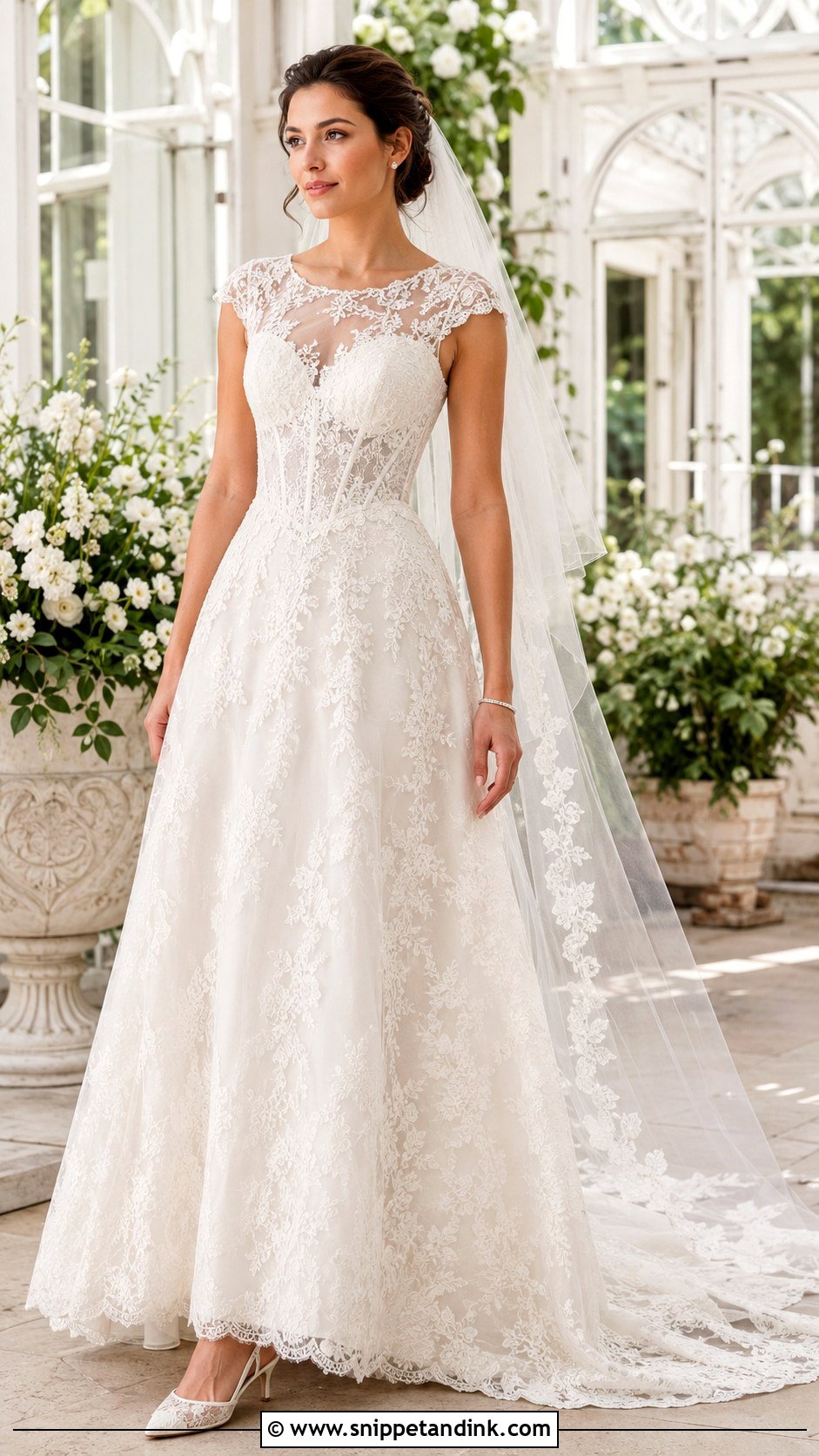
Light cap sleeves give the shoulders a little cover and keep a lace Basque gown airy. The catch is that cap sleeves pull when you lift your arms, and on a fitted bodice the whole dress can ride up with them. A small underarm gusset or a slightly stretchy lace fixes most of it, so ask for one. A shallow sweetheart or rounded neckline suits the sleeve, with an A-line skirt and a soft chapel train. Pearl studs, a fine bracelet and ivory slingbacks are enough.
9. Detachable Sleeve Basque Waist Lace Wedding Dress
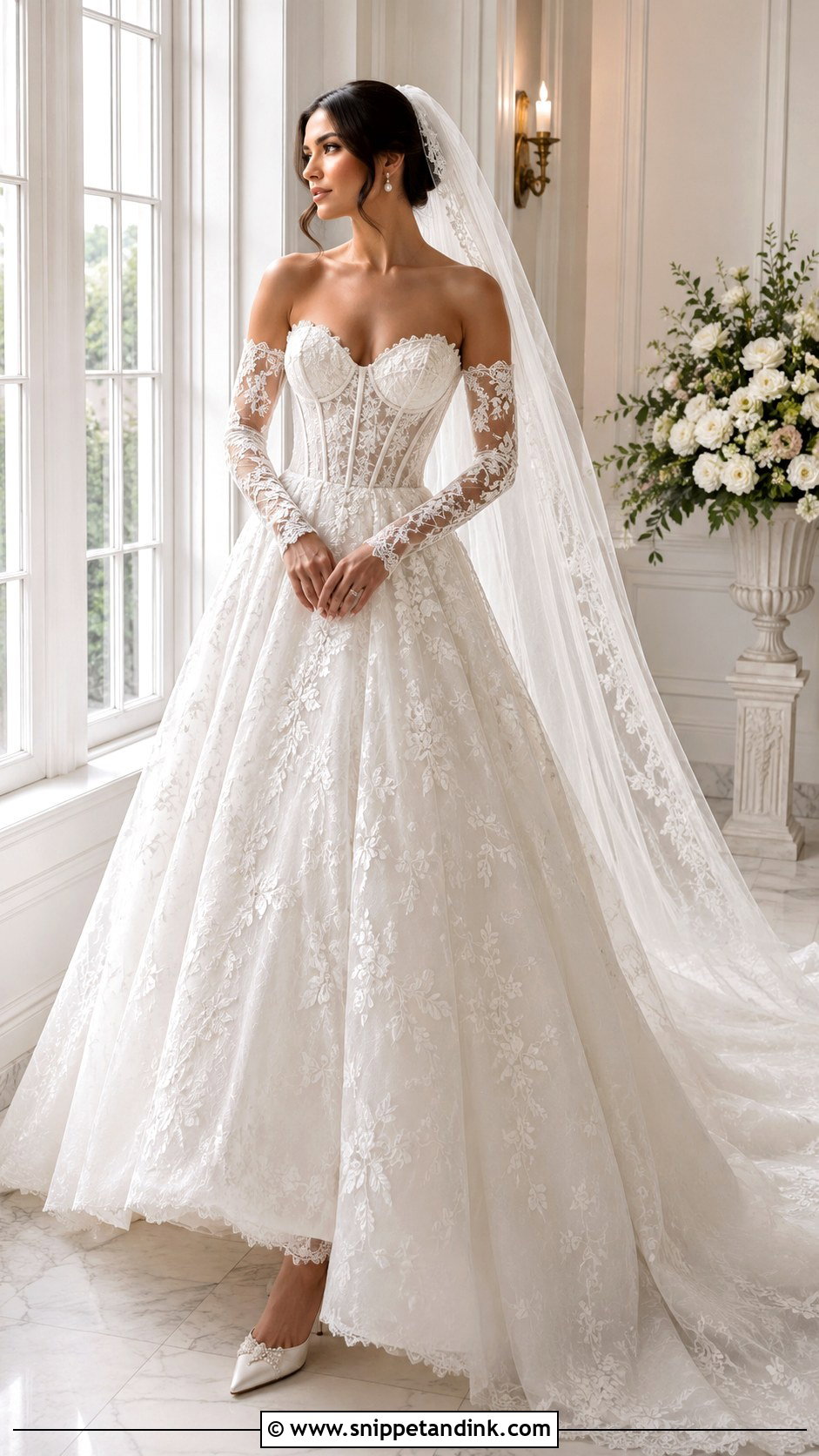
Detachable sleeves give you two looks from one gown: illusion sleeves for the ceremony, then the clean strapless sweetheart for dancing. The attachment points are what I inspect. Snaps or hooks should sit hidden under an appliqué, not as visible bumps along the neckline, and the sleeves shouldn’t shift when you hug someone. Swap the veil for a pearl headband or comb for the second look. Hand the sleeves to one person right away and have a labeled bag ready, since loose lace sleeves vanish in a busy bridal suite.
10. Lace Bodice Basque Waist Satin Wedding Dress
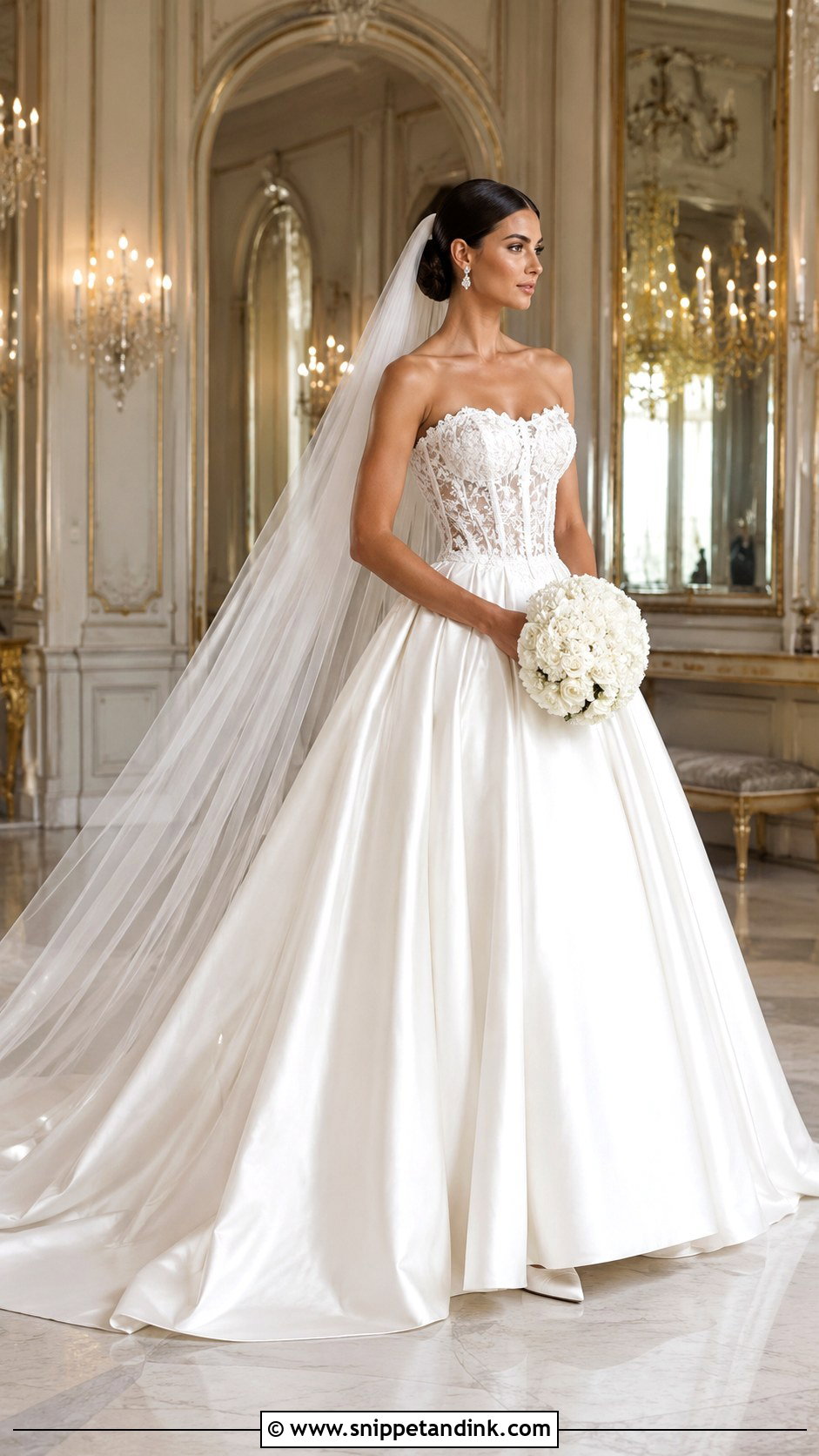
Lace on top, smooth satin below: you get definition without texture everywhere. A corseted lace bodice with a pointed waist meets a structured satin ball gown skirt. The join is the detail that separates good from cheap. On better gowns, a few motifs are cut out and stitched so they spill slightly onto the satin, which hides the seam and makes it look planned. Crystal studs, a plain cathedral veil and a sleek bun or polished waves finish it.
11. Allover Lace Basque Waist Wedding Dress
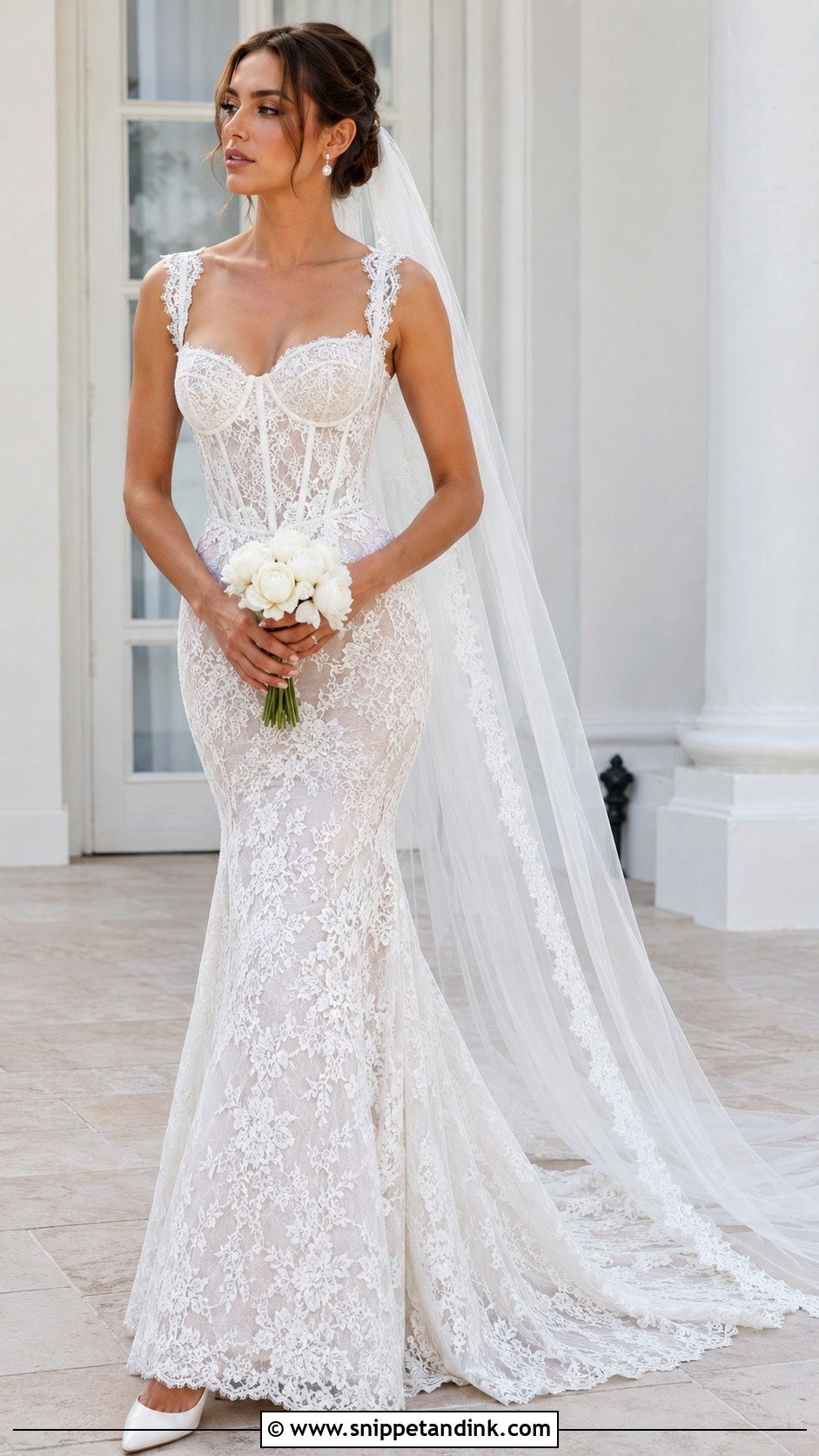
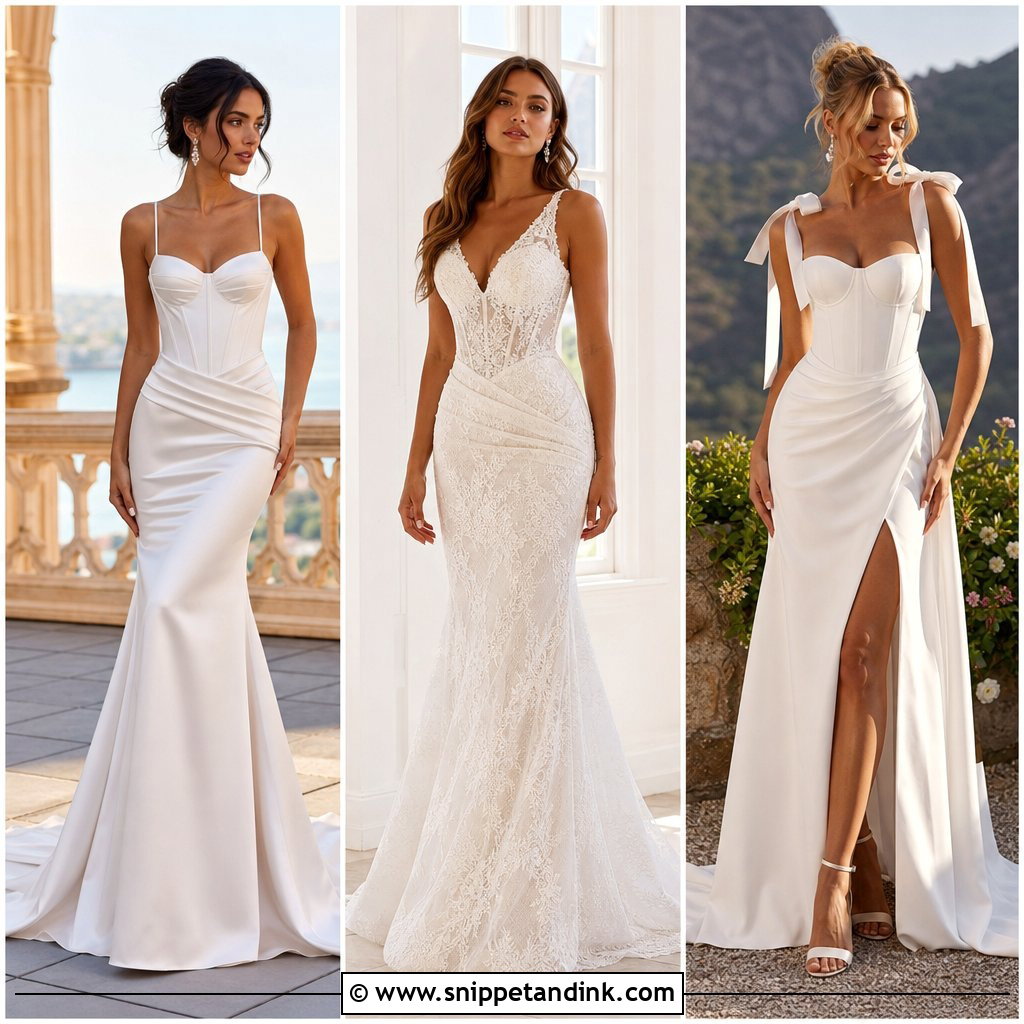
With lace from neckline to train, the Basque waist is what stops the dress from looking shapeless. Motifs should be matched across the pointed seam; a pattern that simply runs into the seam and stops looks unfinished. Look at the lace from across the room and up close, because big florals read as a statement while fine Chantilly lace softens into texture from a distance. Ivory, nude and blush linings change the contrast a lot. Keep accessories plain: pearl earrings, a raw-edge veil, ivory pumps.
12. Basque Waist Lace Wedding Dress With Overskirt
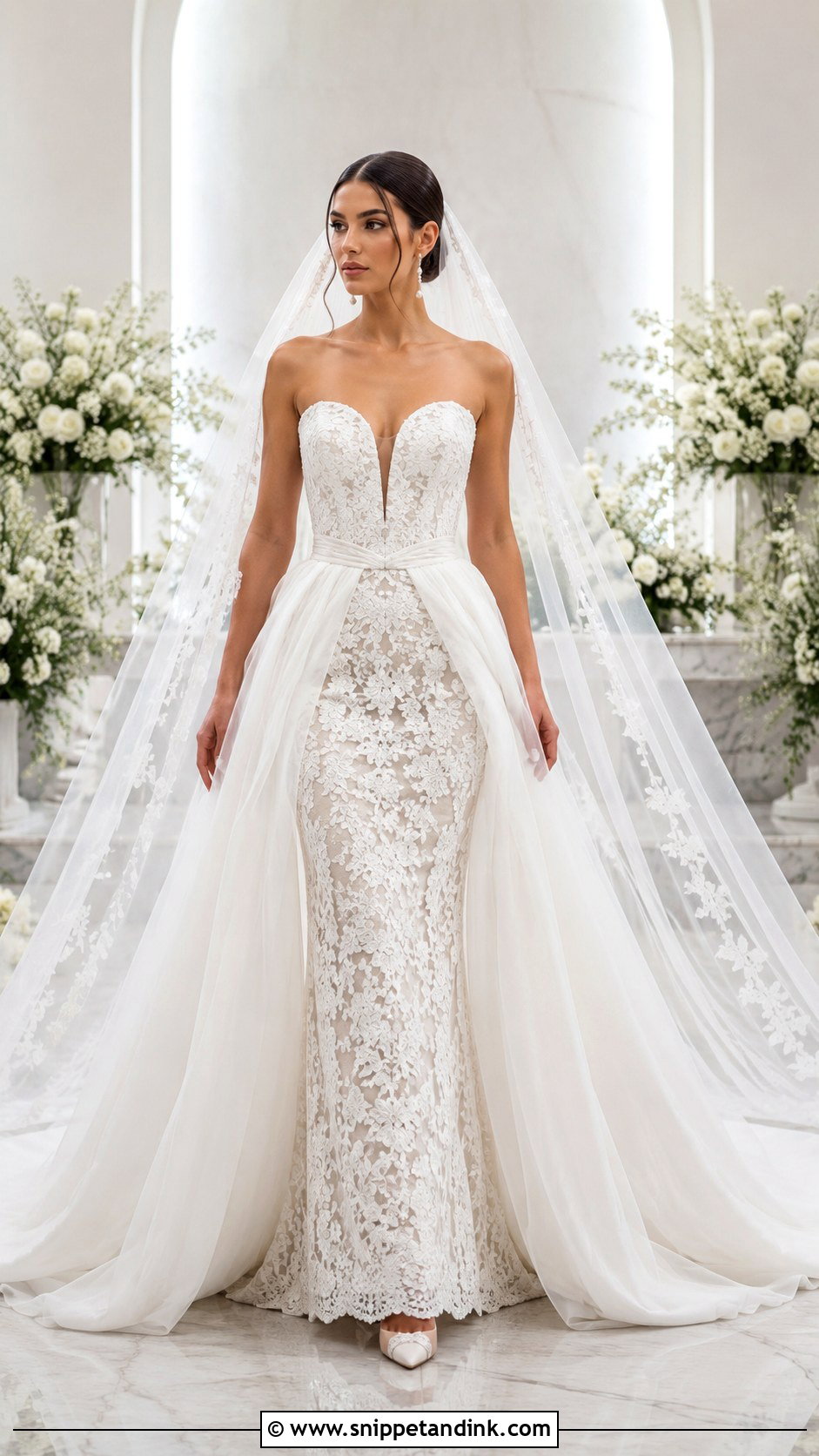
A removable overskirt turns a fitted Basque waist lace dress into a ceremony ball gown. Underneath, a lace fit-and-flare with a pointed waist, real cups and a manageable train. On top, lightweight tulle or organza attached at the waist. Lace is delicate, so the overskirt should fasten to a ribbon or band sewn into the waistline, never directly through the lace, which tears under the weight. Its opening should line up with the dress seams. Afterward, add a decorative comb and dance.
13. Beaded Basque Waist Lace Wedding Dress
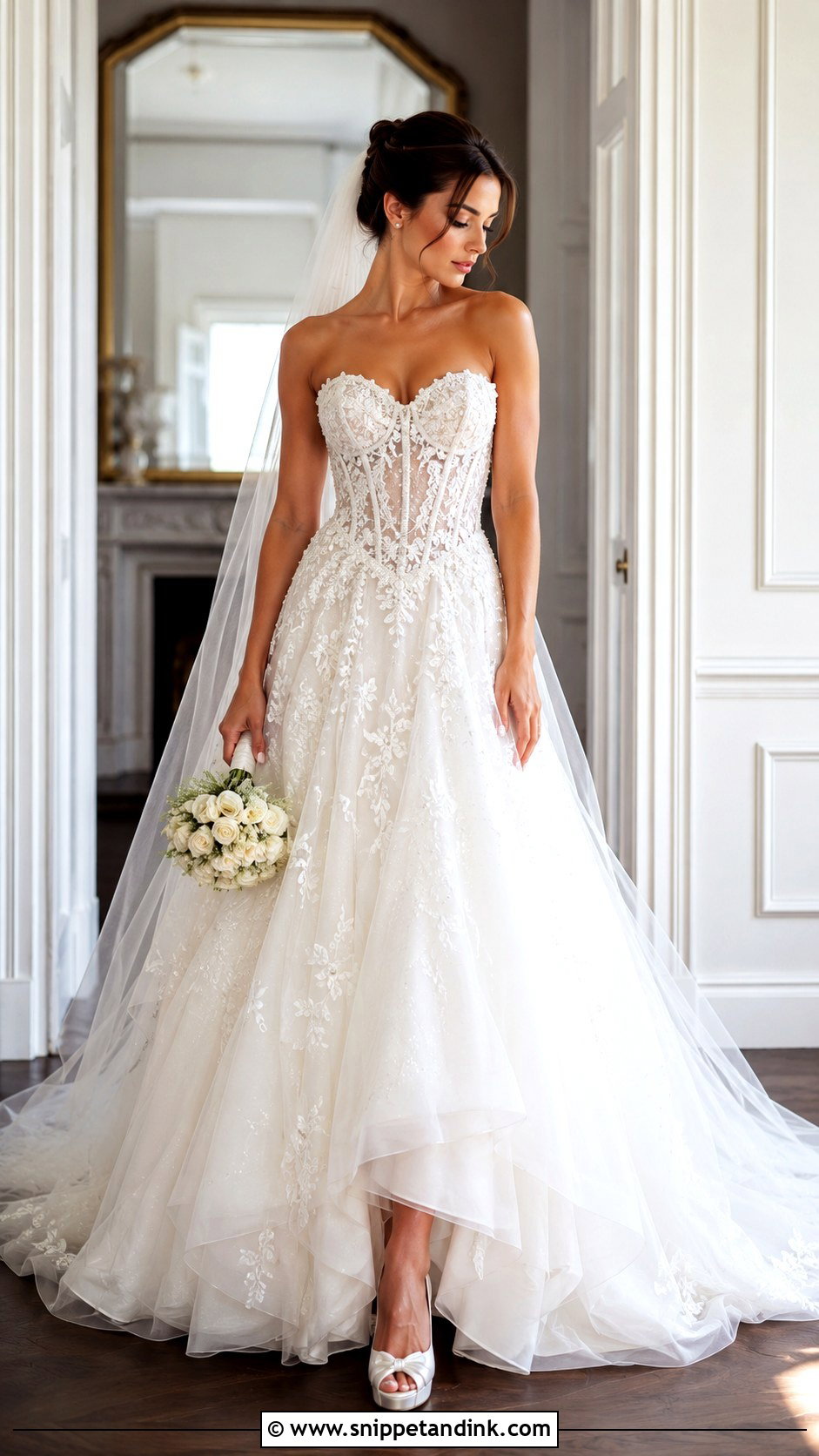
Beading makes floral lace shimmer, and it adds weight that the bodice has to carry. Small pearls, clear crystals or a few sequins spread evenly over the corset, with lighter beading in the skirt, keeps it from feeling heavy. Pick one embellishment, say pearls, and repeat it once in your jewelry. Check the gown in daylight too. Under a camera flash, every bead reflects, and a heavily sequined bodice can blow out to white in photos.
14. Floral Lace Basque Waist Wedding Dress
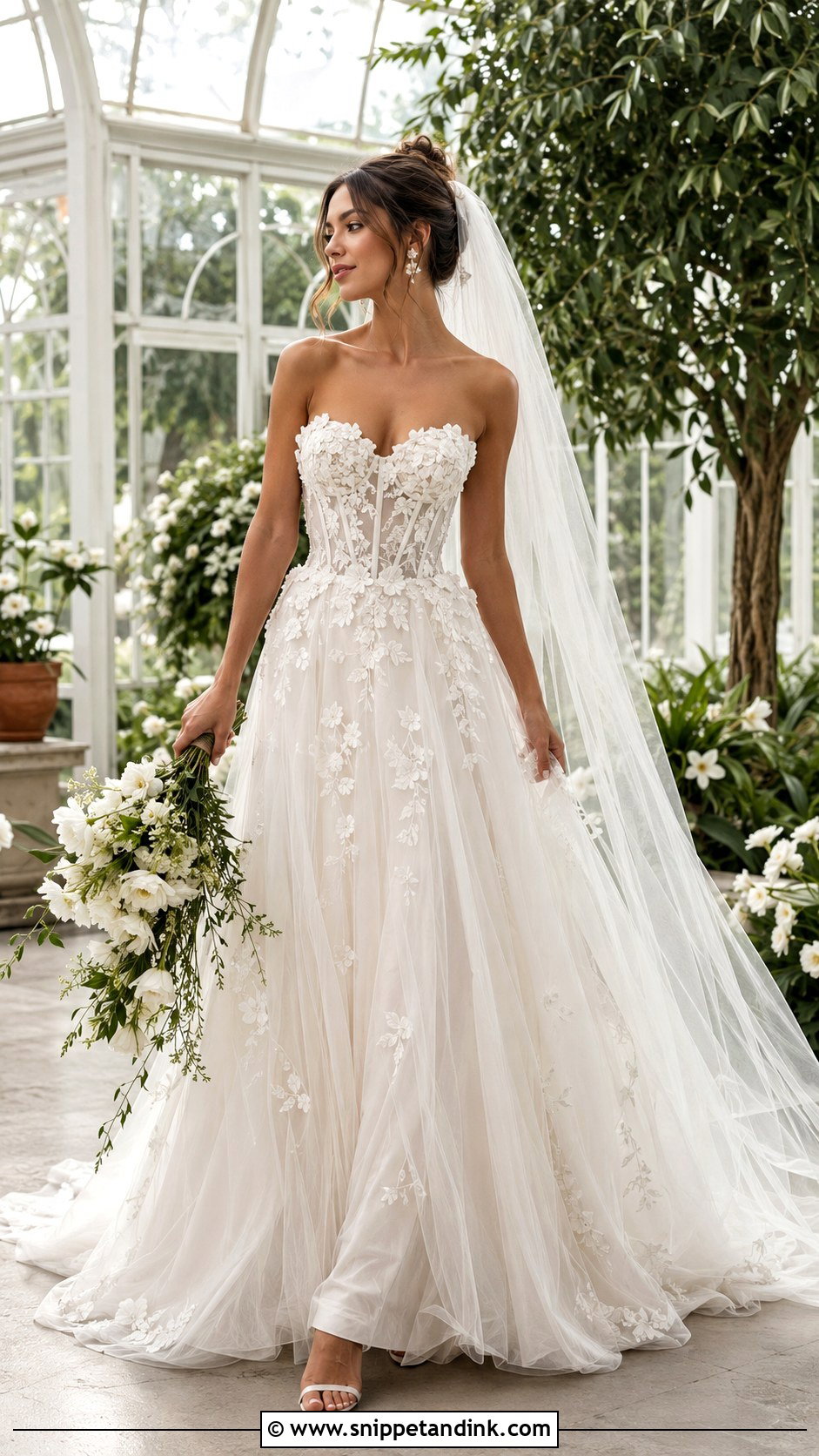
Large appliqués give the sharp waist some softness. The flowers should trace the neckline, flow over the point and scatter into a layered tulle skirt. Three-dimensional flowers catch veils and earrings more than flat lace does, so do one full try-on with everything you’ll wear. After steaming, fluff each appliqué back into shape by hand. Keep earrings small and hair pinned back in soft waves so nothing tangles.



15. Scalloped Lace Basque Waist Wedding Dress
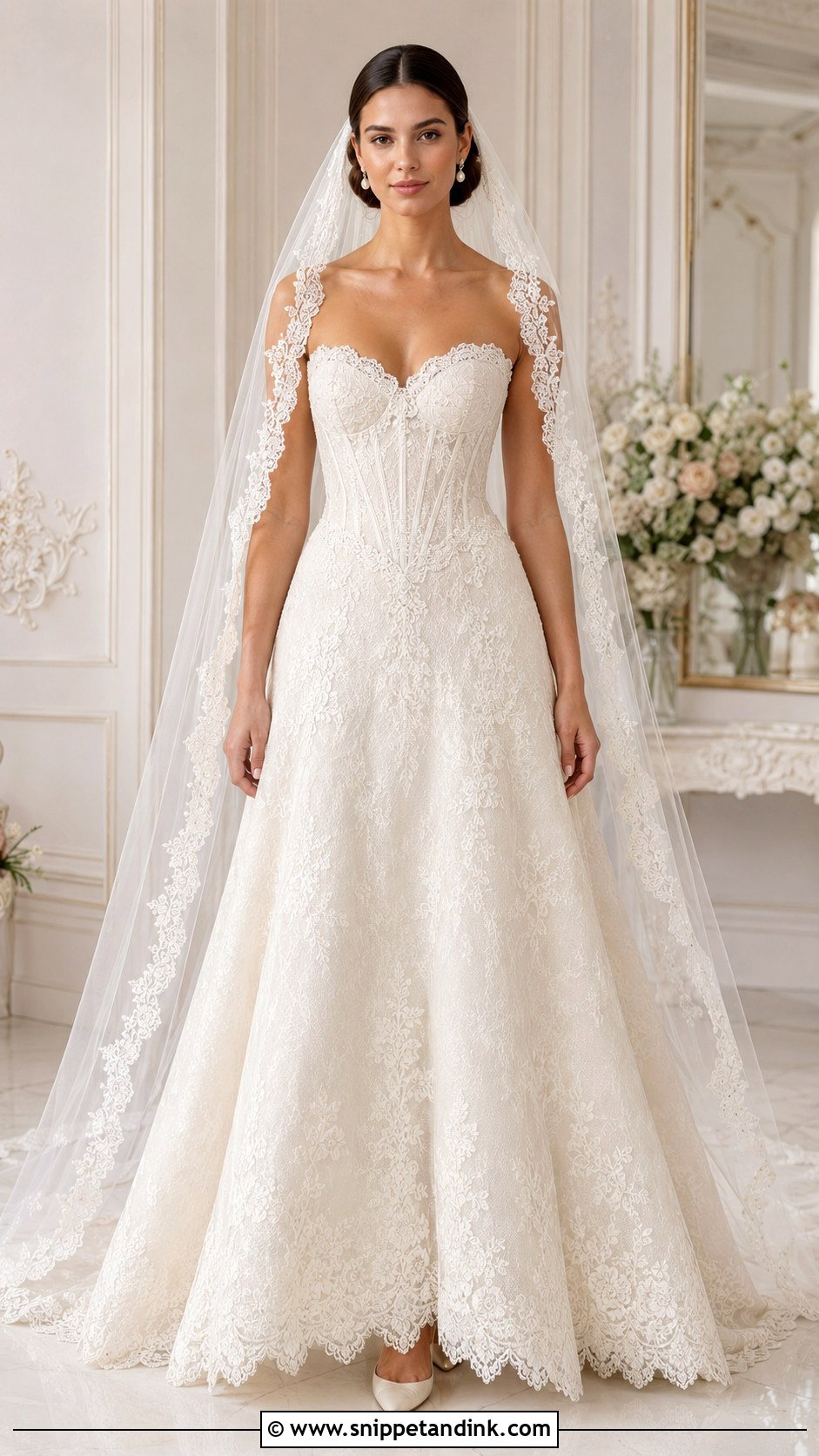
Scallops are the quiet finishing touch, as long as they appear on one or two edges, not all of them. A sweetheart neckline, the sleeve ends or the hem are the usual choices. The hem is where I’d plan ahead. A scalloped border can’t simply be cut shorter; the seamstress has to lift it, shorten the skirt underneath and reapply the lace, which takes time. Choose your shoes before the first fitting so the hem is only set once. Your veil can repeat the scallop on one border.
16. Cathedral Train Basque Waist Lace Wedding Dress
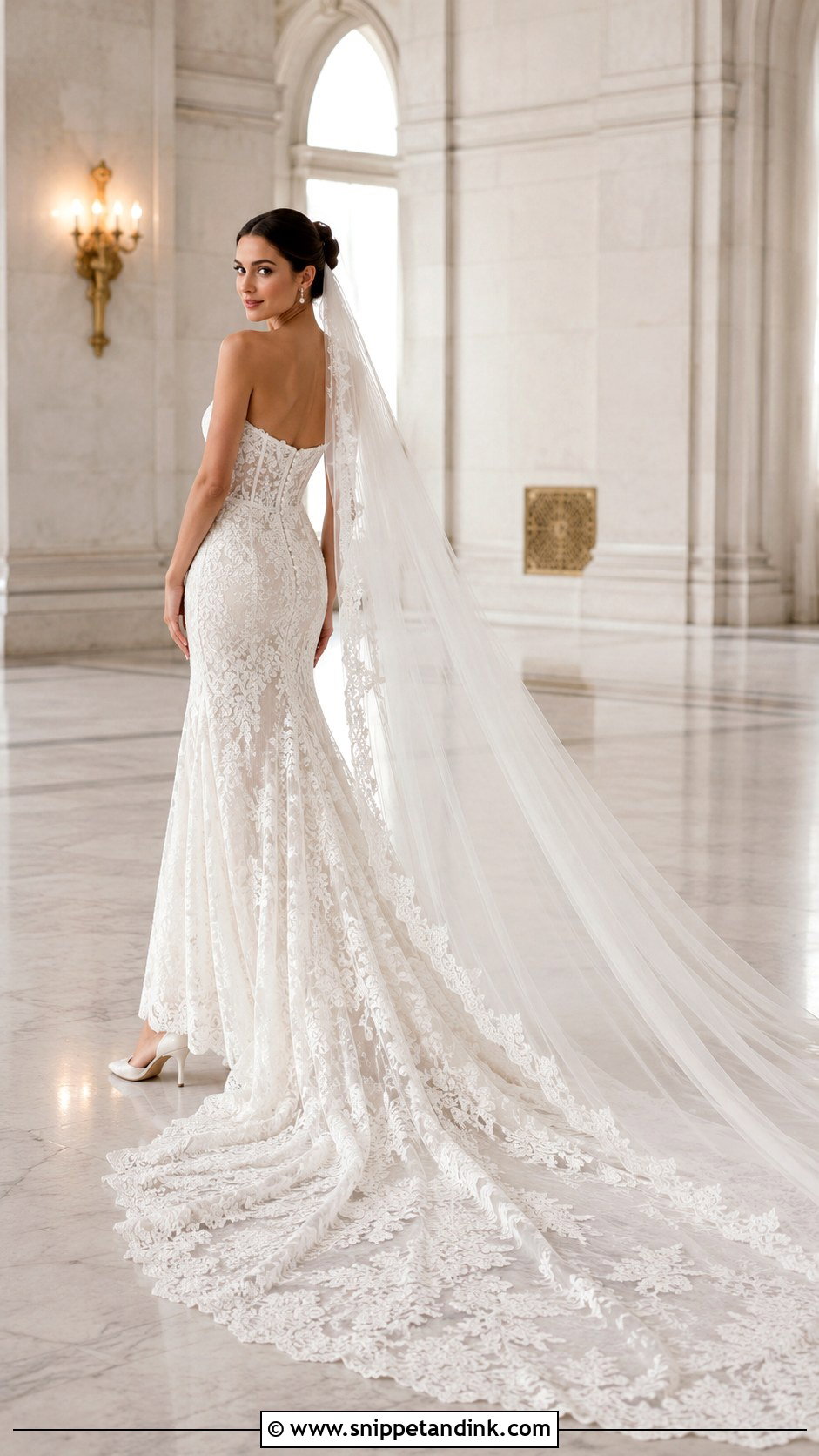
A cathedral train with lace that gets denser toward the hem gives you an entrance from behind as well as the front. The bustle is the thing to plan. Lace trains need bustle points anchored to a sturdy seam or tape, not to the lace itself, or the weight rips it during dancing. Ask for a wrist loop for short walks, practice the bustle at your last fitting with the person who’ll do it, and keep the veil only slightly longer than the train.
17. Simple Basque Waist Lace Wedding Dress
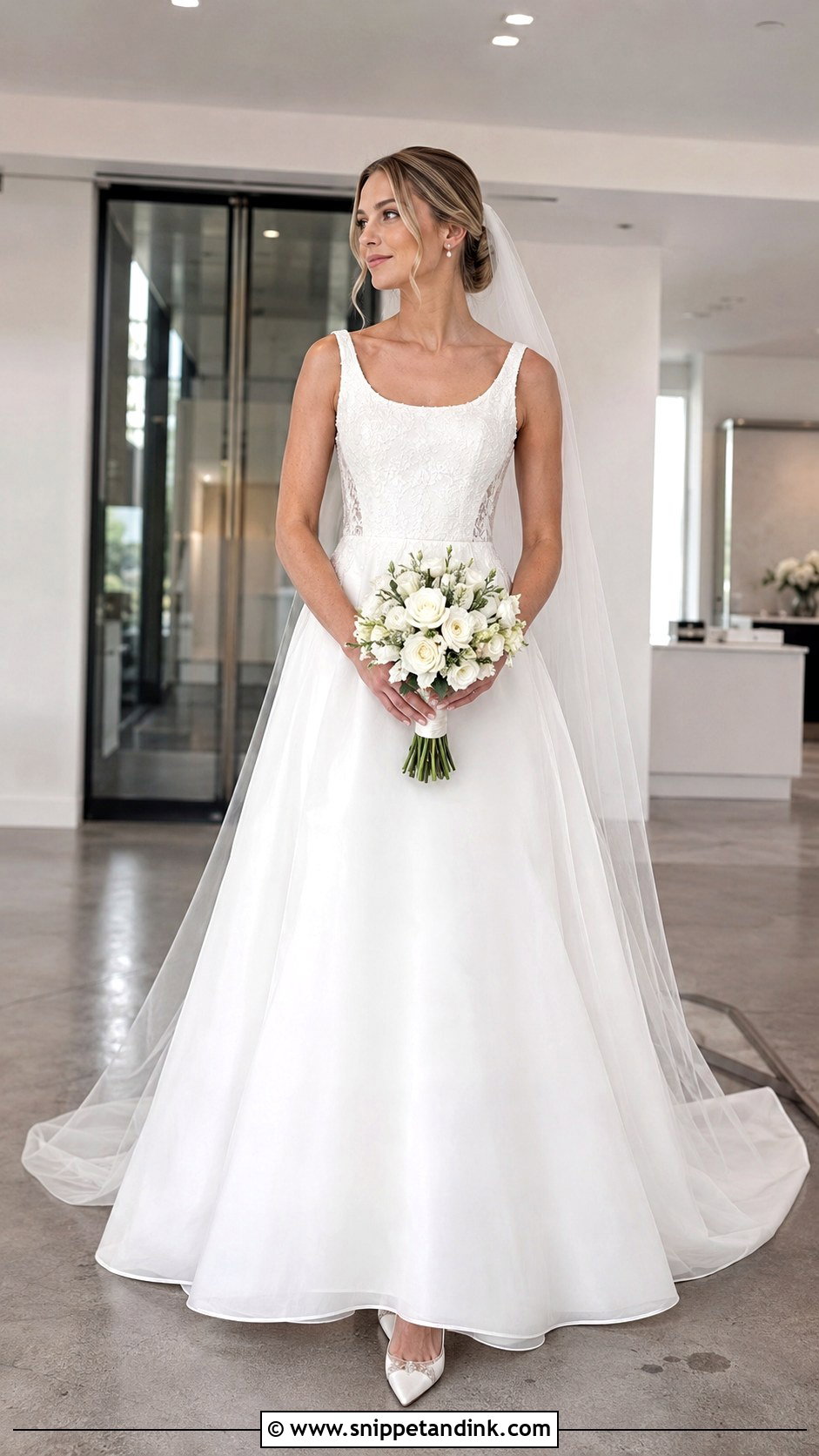
Less lace, cleaner lines. A fitted bodice with minimal visible boning, a shallow scoop, and lace kept to the waist or side panels, over a smooth crepe, satin or organza A-line skirt. Simple gowns expose tailoring, so a wavy neckline or an uneven hem is obvious in a way it wouldn’t be on a busier dress. Two or three pieces of jewelry, a plain fingertip veil and a structured bouquet are plenty.
18. Plus Size Basque Waist Lace Wedding Dress
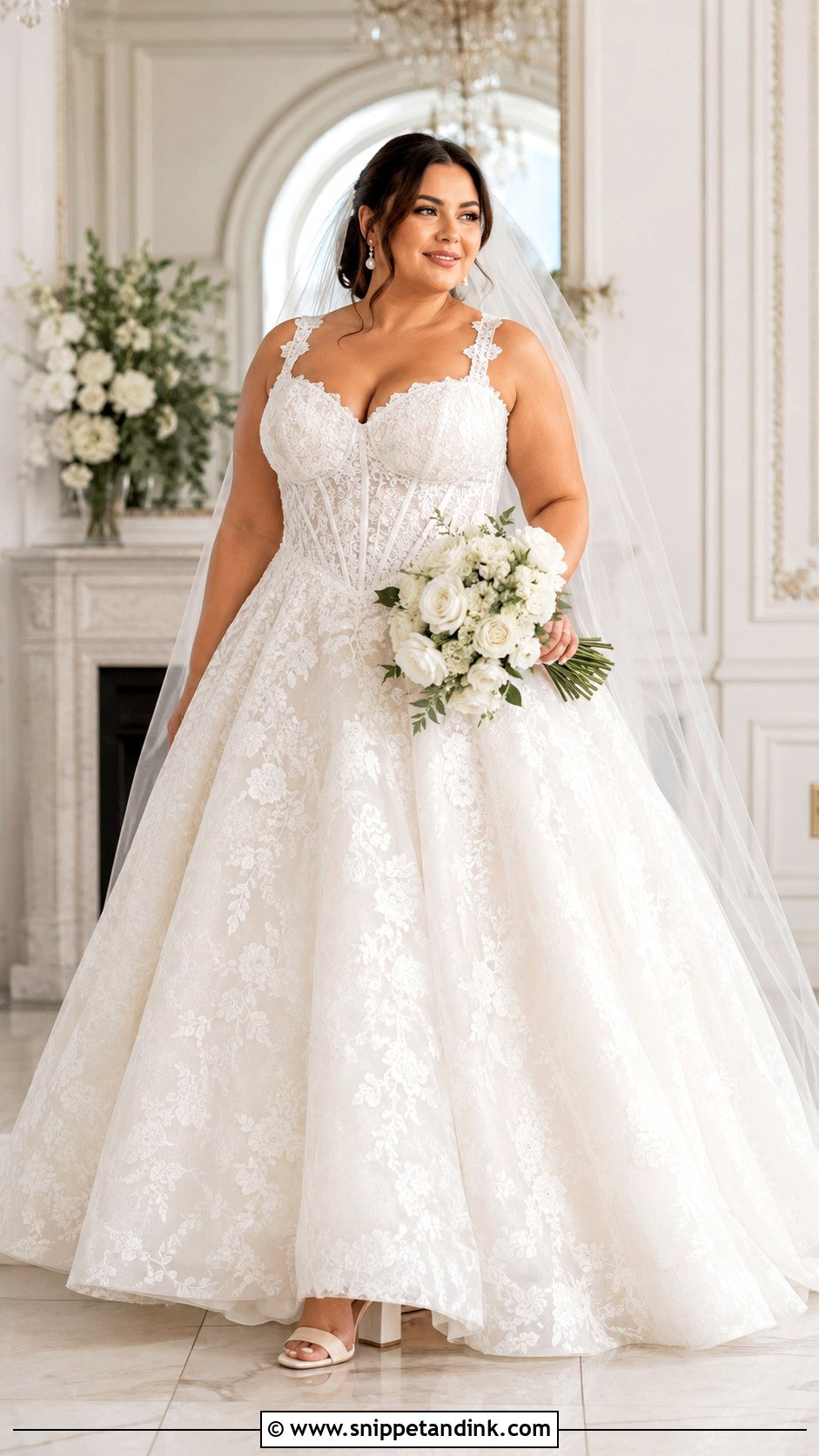
A Basque waist can define a body at any size; the engineering just needs to match. Look for substantial boning, correctly sized cups, wide straps or stable sleeves and a back closure that spreads tension rather than pulling at one zip. Lace over a lined corset keeps the surface smooth. Samples are often cut smaller than the size you’ll order, so ask the salon whether a sample in your size range is available, because pinning a too-small sample won’t show you the real support or waist placement.
19. Petite Basque Waist Lace Wedding Dress
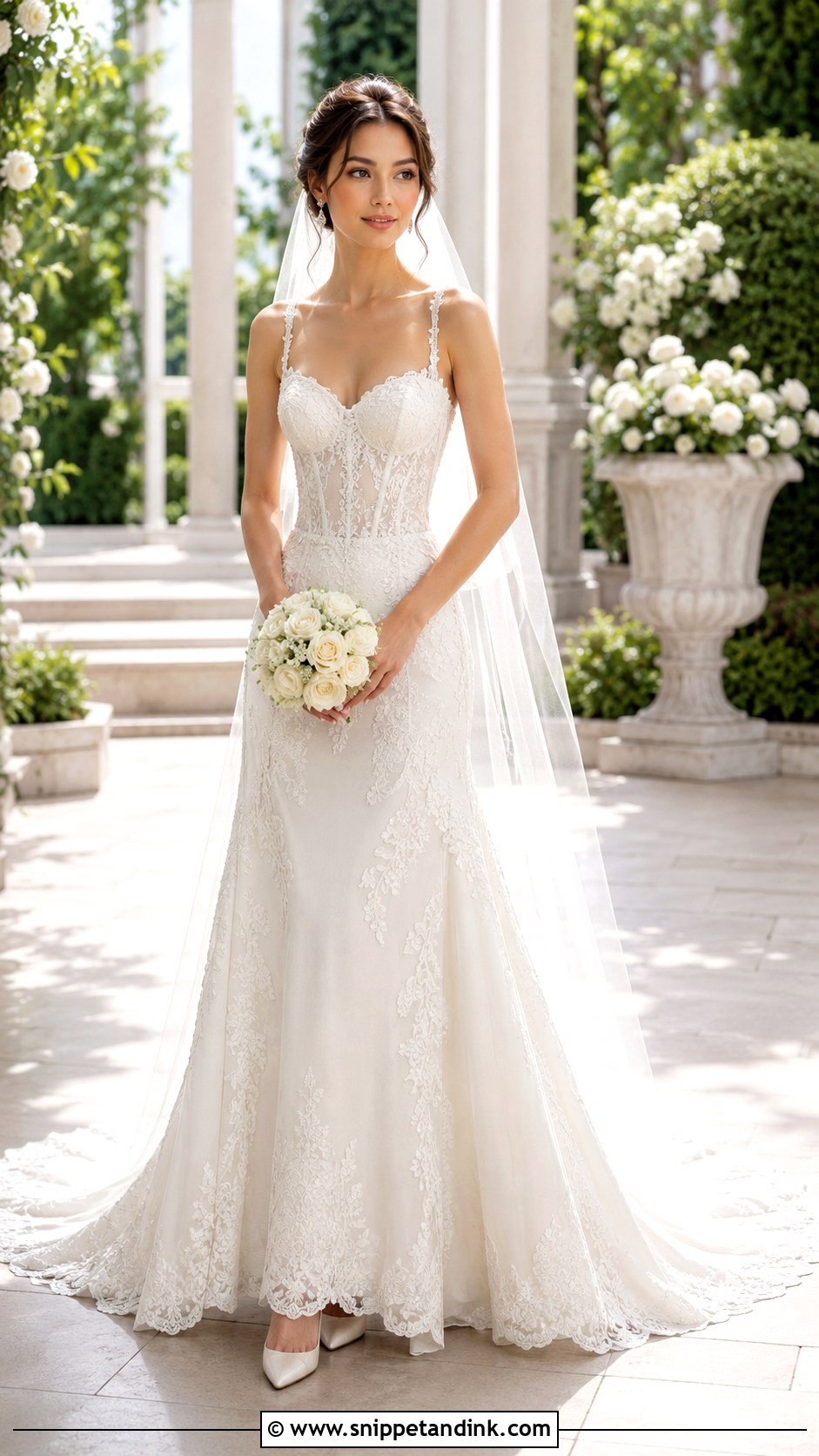
On a petite frame, the danger is a bodice that looks longer than your legs. A soft point instead of a deep V, narrower lace motifs and a chapel train keep everything in scale. A high bun adds a bit of visual height. If the bodice is too long, shortening it means re-cutting the point, not just hemming, so raise this at the first fitting. Wear your actual shoes every time and ask to see the silhouette from the side as well as the front.


20. Modest Basque Waist Lace Wedding Dress
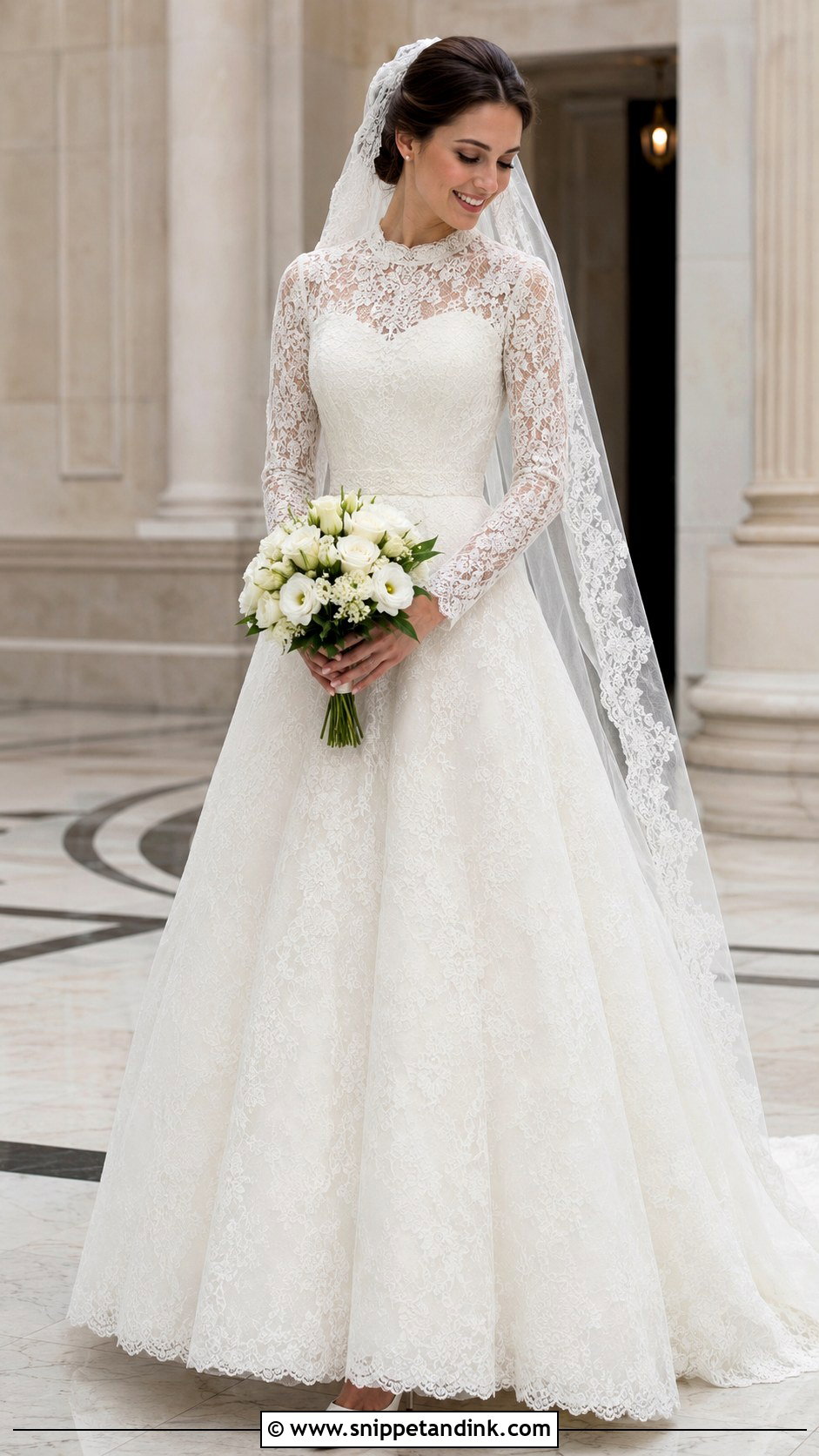
Modest coverage and a dramatic waist go together well: an opaque lining, a bateau or high scoop neck, full-length lace sleeves and a flowing A-line skirt over a structured bodice. Lining color is the thing to check. If the bodice lining is ivory and the sleeves use a nude illusion mesh, the difference shows clearly in daylight photos. Ask for matching linings throughout. Pearl studs, a lace-edged veil and closed-toe pumps complete it.
Lace Snags, Spilled Drinks and Torn Scallops on the Day
Lace is tougher than it looks, but things happen. A bracelet catches the sleeve, someone steps on the train, a glass of red wobbles. Most of it is fixable in five minutes if someone has the right things to hand.
For a snag, don’t cut the pulled thread. Ease it back through from the inside with a needle, or tie it off on the back. A torn scallop on the hem can be tacked down with a few stitches in ivory thread until after the wedding. Spills should be blotted, never rubbed, with a clean white cloth and cold water, because rubbing pushes the stain into the net and frays it.
Put a small sewing kit, a white cloth, fashion tape and some safety pins in the bag of whoever is helping you dress. And when it’s all over, take the gown to a cleaner who handles bridal lace within a few weeks, before invisible sugar spots from champagne or cake turn yellow.
Lace Is the Detail, but the Seam Is the Dress
One sculpted silhouette can carry a strapless corset, high lace collars, beading, satin skirts and detachable layers. Start with support and where the point lands on you, then choose neckline, skirt volume and train. Bring your real shoes and undergarments to every alteration appointment so the tailor sees the finished outfit, not a guess. And make sure you can sit, walk and dance in it, since that’s what you’ll actually be doing for most of the day.
You'll Like These Ideas:




Leave a Reply