
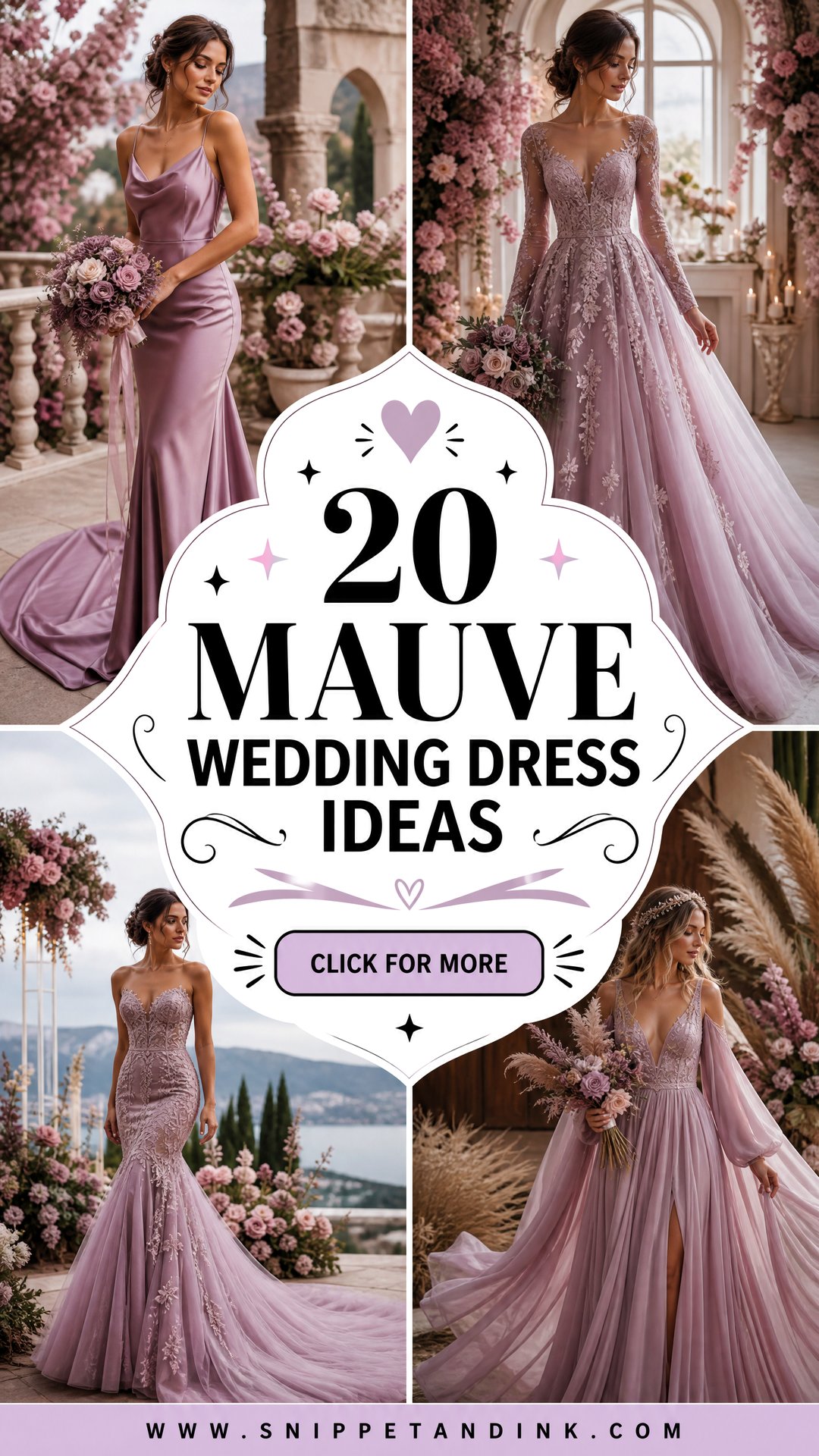
A mauve wedding dress gives you colour while still reading as bridal the moment you walk in. Mauve sits somewhere between dusty pink, lilac and grey, and which of those wins depends on the fabric: tulle softens it, satin throws light across it, crepe flattens it into something quieter. I treat accessories as the supporting cast. Pearls warm the shade slightly, crystals keep it cool, and gold jewellery pulls out the pink. Below are twenty gowns, from layered ball skirts to bias-cut slips, with notes on what I’d actually check before you buy each one.
Why Mauve Looks Pink in One Room and Grey in the Next
Mauve is a mixed colour, so it reacts to light more than ivory or blush do. Under cool daylight the grey comes forward and the dress can look almost silver. Under warm reception bulbs the pink takes over. Bridal shop lighting is usually bright and cool, which is why a gown can look different at home.
I always ask for a fabric swatch and take it outside, then hold it under the kind of light your venue has after dark. Check it against your skin, too. Warm or olive skin tends to suit mauve with more pink in it, while very fair, cool skin can carry the greyer versions without looking tired. If the colour drains your face, keep ivory near the neckline and move the mauve lower down.
- Hold the swatch at your jawline in daylight, not at arm’s length.
- Photograph it with your phone flash; flash often pushes mauve toward lilac.
- Compare it with your bridesmaid colour and flowers before you order, not after.
1. Mauve Lace A-Line Wedding Dress
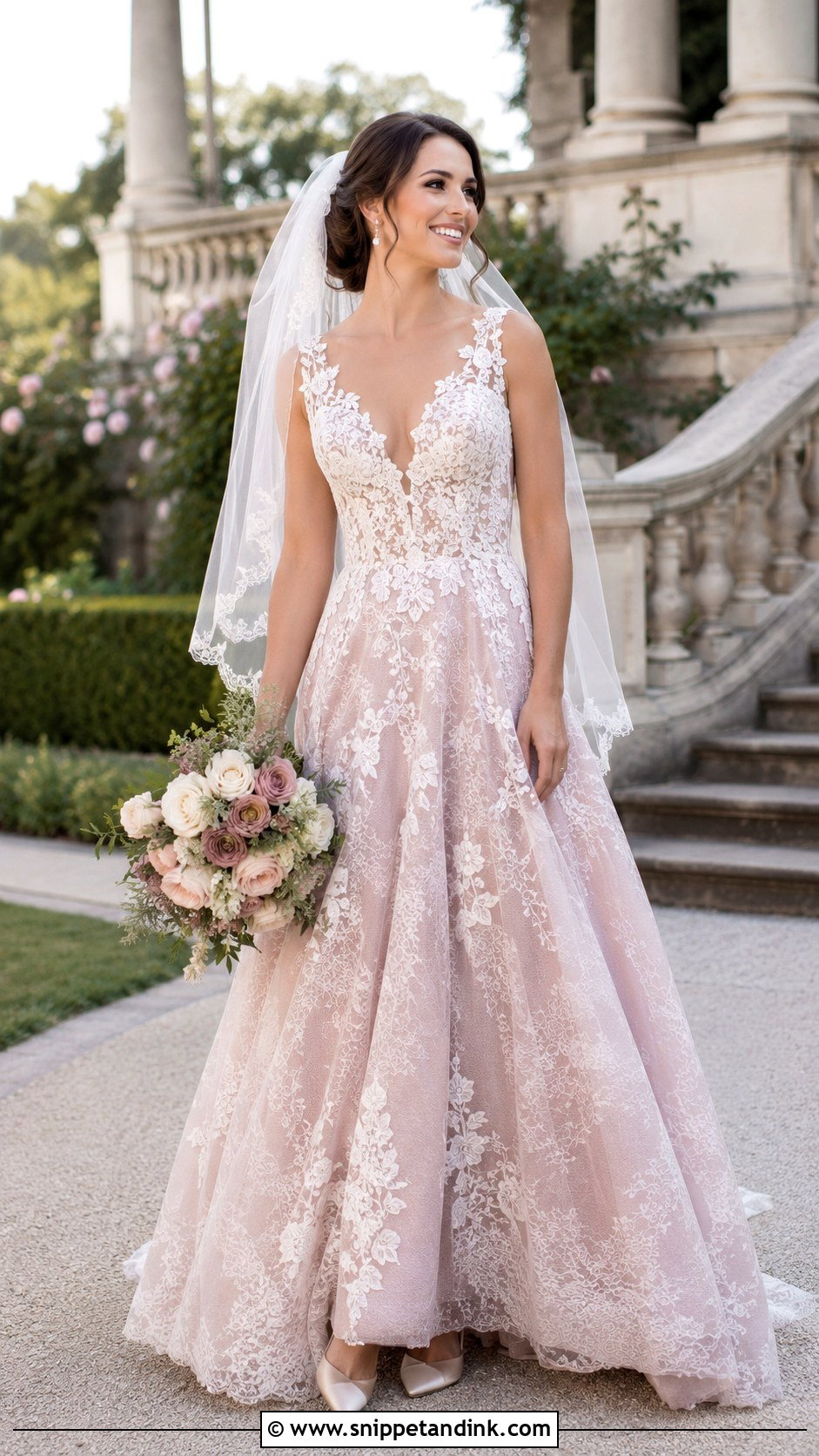
Ivory lace over a mauve lining is the gentlest way into colour, and it’s the version I suggest most often to brides who are nervous about it. The lining does the work: under daylight you see a pink glow through the lace, and indoors it reads almost ivory. Ask to see the lining fabric on its own, because a cheap polyester lining can turn the whole bodice slightly shiny under flash. Pearl drops, a fingertip veil and a loose low bun keep the neckline clear, and ivory roses with dusty pink flowers pick up the undertone for a garden or estate ceremony in spring or early fall.
2. Mauve Satin Slip Wedding Dress
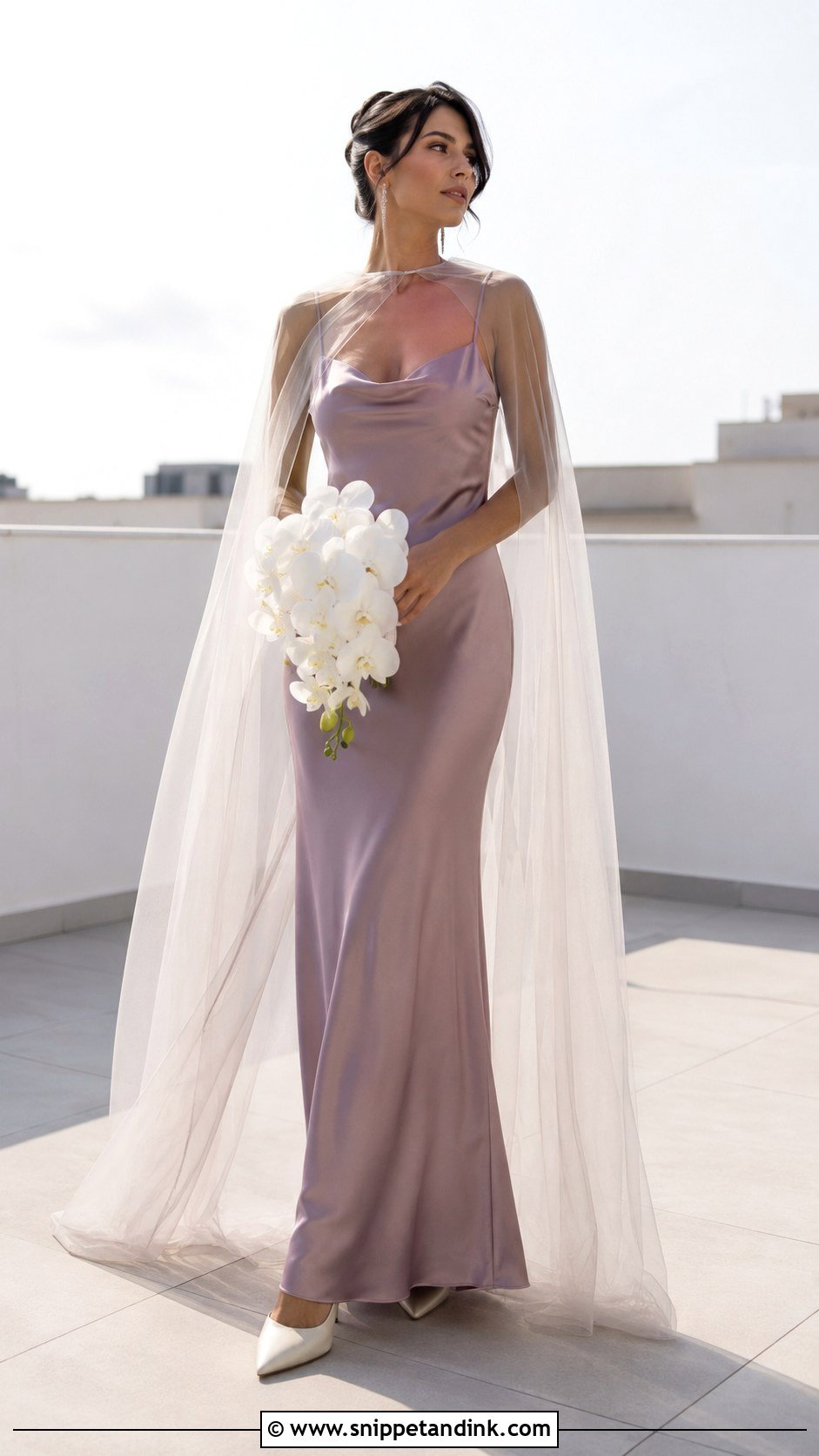
Satin cut on the bias is unforgiving, so I’m honest about it at the first fitting. It skims the body and shows every line underneath, which means smooth, invisible underwear isn’t optional and the bride needs to sit down in it before we pin anything. In return, mauve satin looks lit from within, in daylight and under warm reception bulbs alike. Slim straps, a softly draped neck and a detachable sheer cape for the ceremony give you two looks in one. Silver drops, ivory pointed heels, a sleek bun and a small bouquet of calla lilies or orchids suit a rooftop or an evening reception.
3. Mauve Tulle Ball Gown Wedding Dress
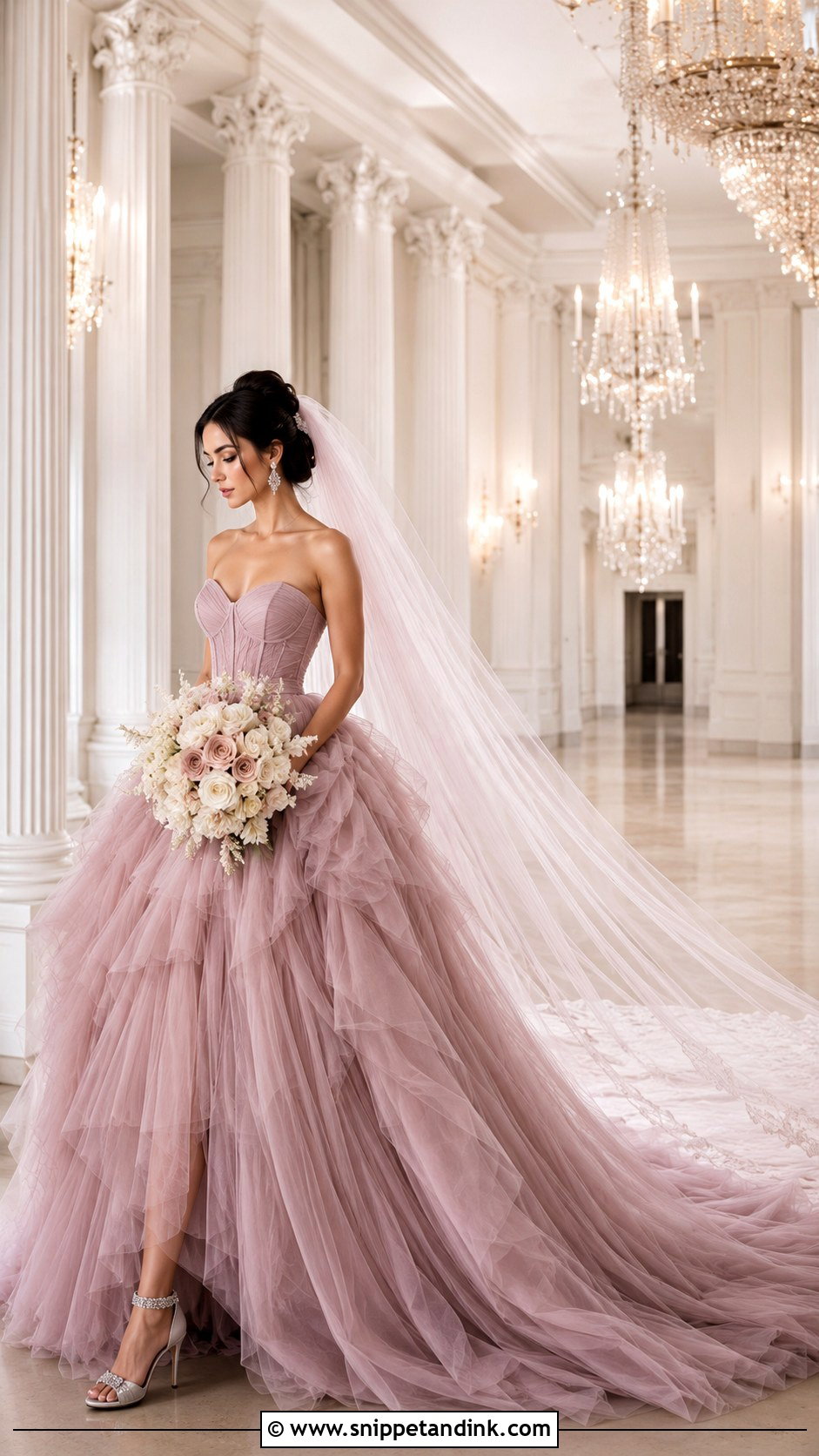
A full tulle skirt carries mauve better than almost any fabric, because each layer is sheer and the colour builds up gradually instead of sitting flat. The weight sits on the waist, so I check the boning and the waist stay first; if the bodice slips, you’ll be hitching it all night. An ivory-to-mauve gradient through the layers softens the overall effect. Crystal studs, a tennis bracelet and pale heels under the skirt are enough. Add a cathedral veil and a neat updo, carry ivory peonies with blush and mauve roses, and save it for a ballroom or historic estate where the skirt has room to move.
4. Mauve Floral Appliqué Wedding Dress
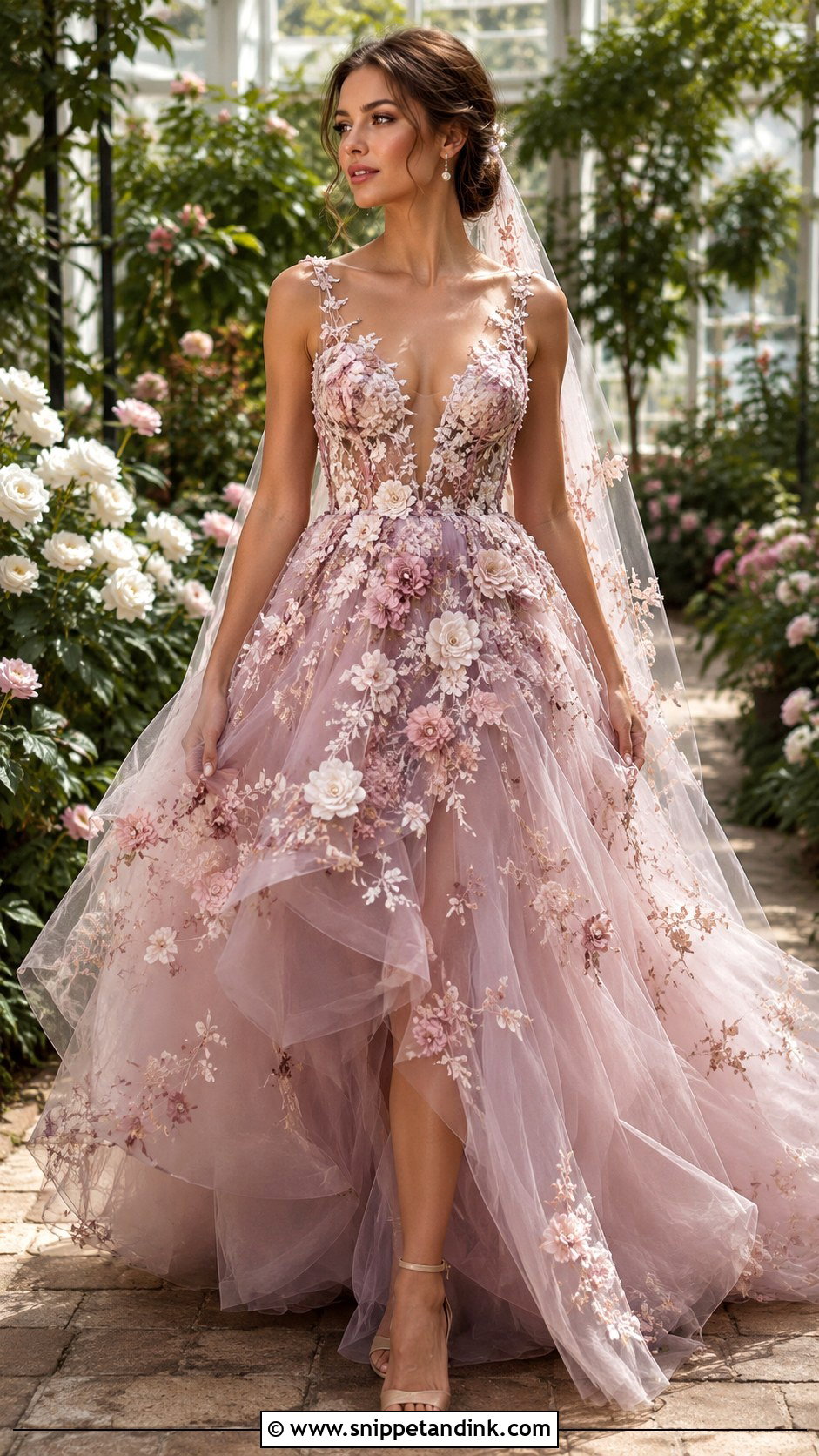
Dimensional flowers on a bodice catch shadow, so in photos they show up as texture rather than flat pattern. That only works if the appliqués are stitched down at the centre and left loose at the petals; glued pieces lift and flatten after a day of hugging. I like them fading out as they travel down the tulle skirt, in ivory, dusty rose and muted mauve. Keep jewellery small: pearl studs, a thin rose-gold bracelet, neutral ankle-strap heels. A sheer veil with a few matching flowers, a relaxed low twist and a loose bouquet of pale roses and greenery belong outdoors in spring.
5. Mauve Off-Shoulder Wedding Dress
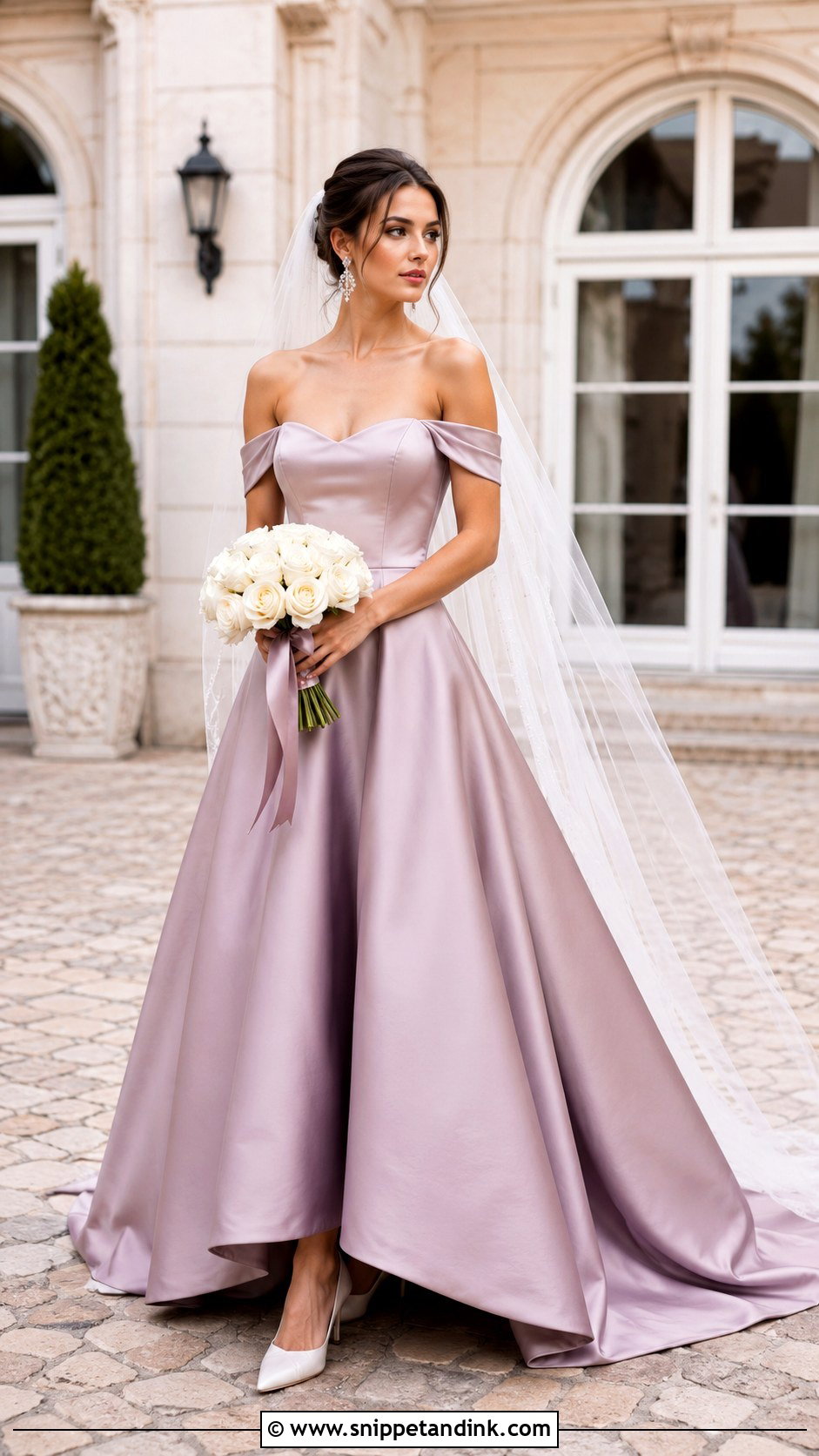
Off-shoulder necklines look graceful standing and can creep upward the second you raise your arms to hug someone. At the fitting I have the bride lift both arms and reach forward; if the bands ride up, they need a stronger elastic or a silicone grip along the inside edge. A fitted bodice with folded satin bands, a gently flared skirt and a low chignon show off the collarbone. Skip the necklace unless the neckline feels empty and wear statement earrings instead. Ivory pumps, a sheer long veil and ivory roses tied with mauve ribbon belong in an estate or hotel.
6. Mauve Long-Sleeve Wedding Dress
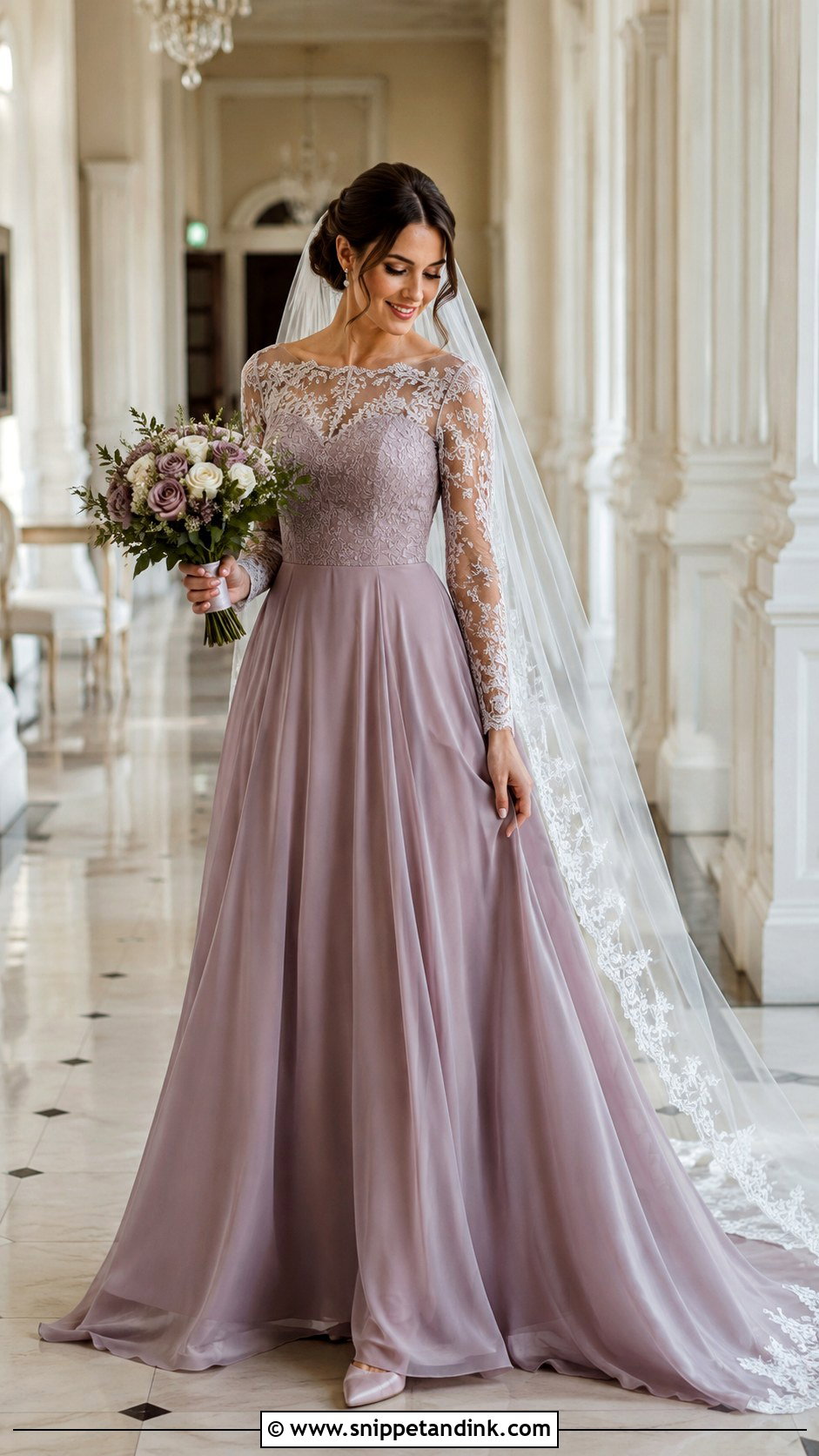
Long sleeves are what I steer cold-weather brides toward first, and mauve makes them feel less heavy than ivory sleeves can. Choose illusion sleeves decorated with lace vines or scattered beading over a fitted bodice. The mauve lining behind the lace is what makes the pattern visible from a distance. Do a full arm test in the fitting room: hug, reach for a glass, raise your arms for a first dance. Illusion mesh with no stretch will pull at the shoulder seam. Closed-toe satin pumps, pearl and crystal earrings, a lace-edged cathedral veil and a polished low bun finish it for a late-fall or winter venue.
7. Mauve Mermaid Wedding Dress
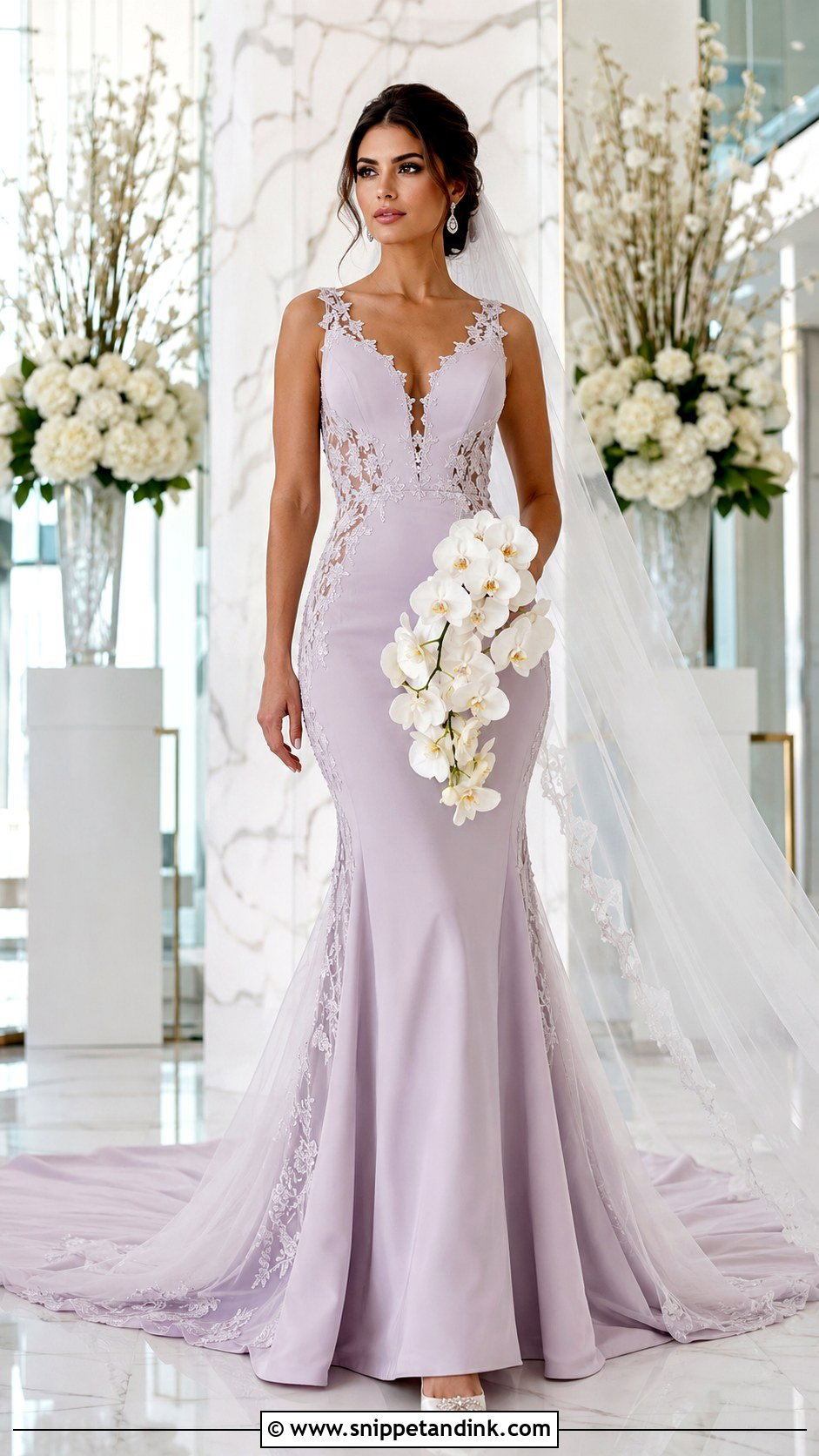
A mermaid shape lives or dies on where the flare starts. Too high and you shuffle; too low and you can’t climb a single stair. I mark the knee with the bride standing, then again sitting, and set the flare from there. Stretch crepe or a supportive satin keeps the body smooth, and lace panels at the neckline and train add texture without bulk. Simple teardrop earrings and pointed ivory heels let the silhouette lead. A long veil attached beneath a sleek updo follows the train, and a structured bouquet of white orchids with a few mauve accents suits a formal evening venue.
8. Mauve Tea-Length Wedding Dress
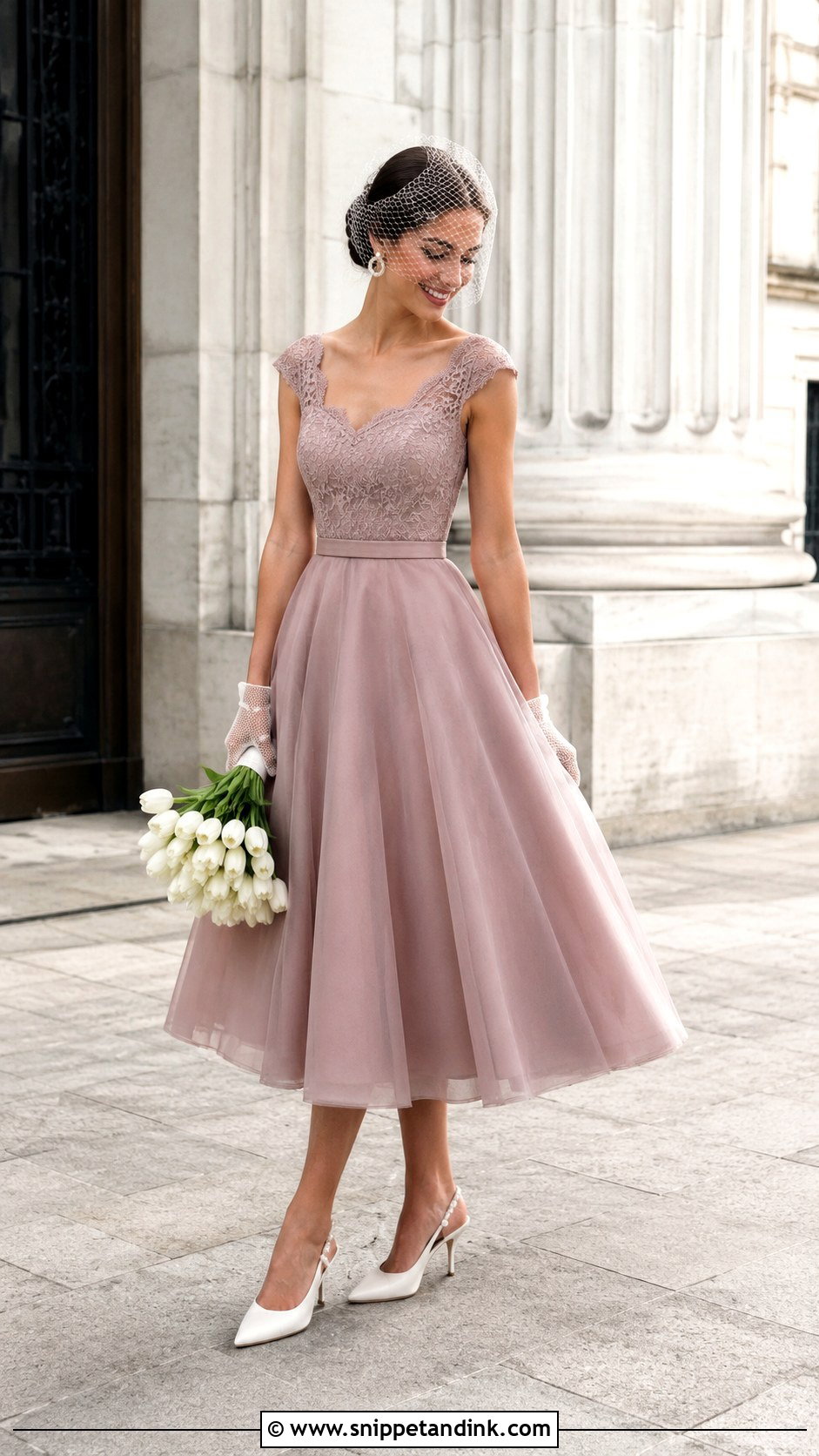
Tea length is the gown I’d suggest to anyone who wants to dance properly, though it changes your shopping list. The hem now ends between knee and ankle, so your shoes are part of the outfit, and so are your legs in every photo. Mikado or layered organza holds the flare without a heavy petticoat. Ivory slingbacks or pearl-detailed heels, short gloves if you like vintage, or pearl hoops and a birdcage veil if you don’t. A tidy bun or soft shoulder-length waves both work, with a small bunch of white tulips. Courthouse ceremonies and daytime city receptions suit it best.
9. Mauve Boho Chiffon Wedding Dress
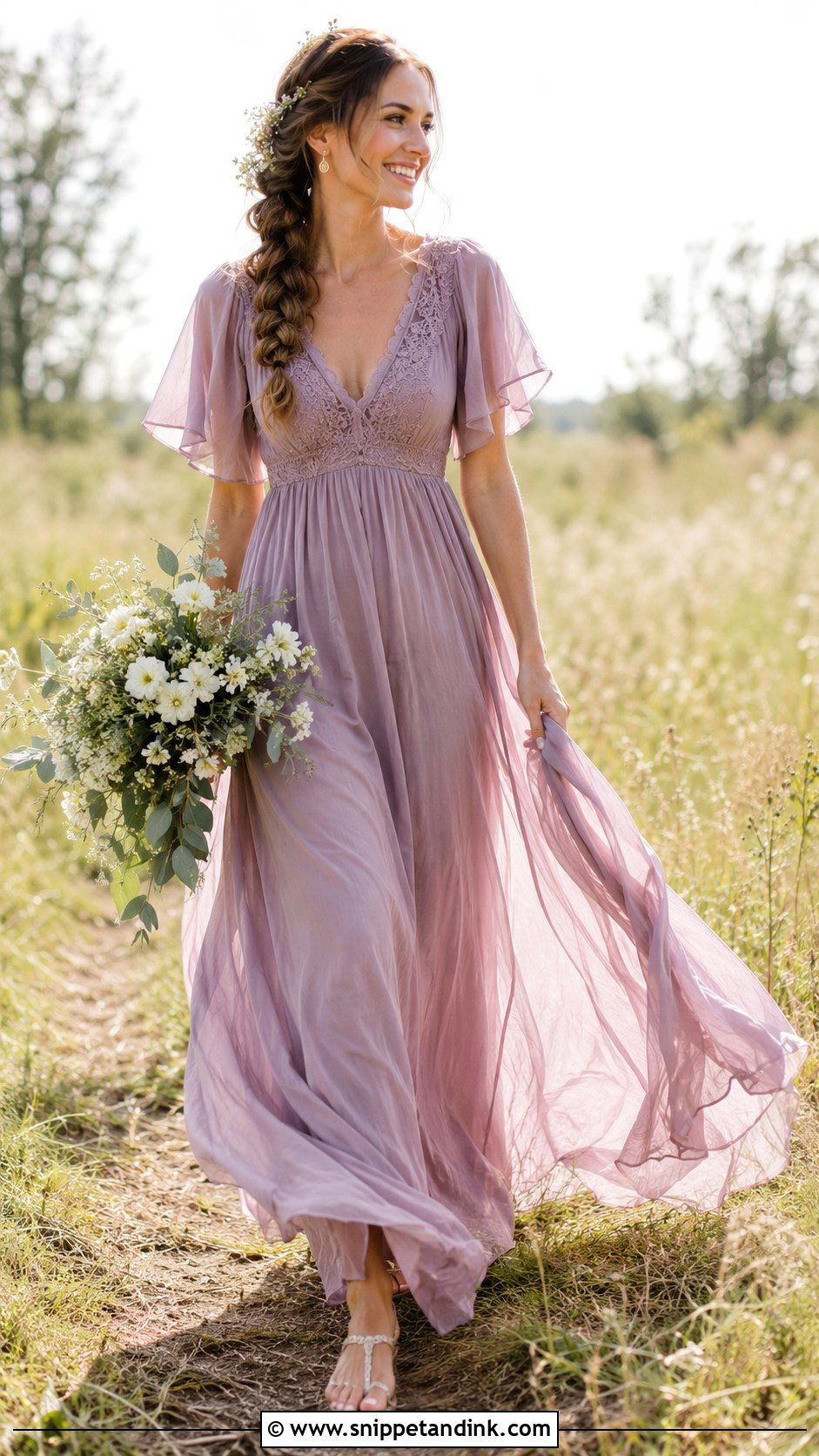
Chiffon is soft but it also shows every wrinkle from the car ride, which surprises a lot of boho brides. I tell them to pack a handheld steamer and to sit on the back of the skirt rather than bunching it. An empire or natural waist, a gathered skirt, flutter sleeves and a lace-trimmed neck give the dress its airy movement, and a keyhole back adds interest without weight. Flat ivory sandals, small gold earrings and a loose braid with tiny flowers replace the usual veil. Carry ivory blossoms wrapped in mauve ribbon for a meadow, woodland, coastal, or casual outdoor wedding in warmer months.
10. Mauve Square-Neck Wedding Dress
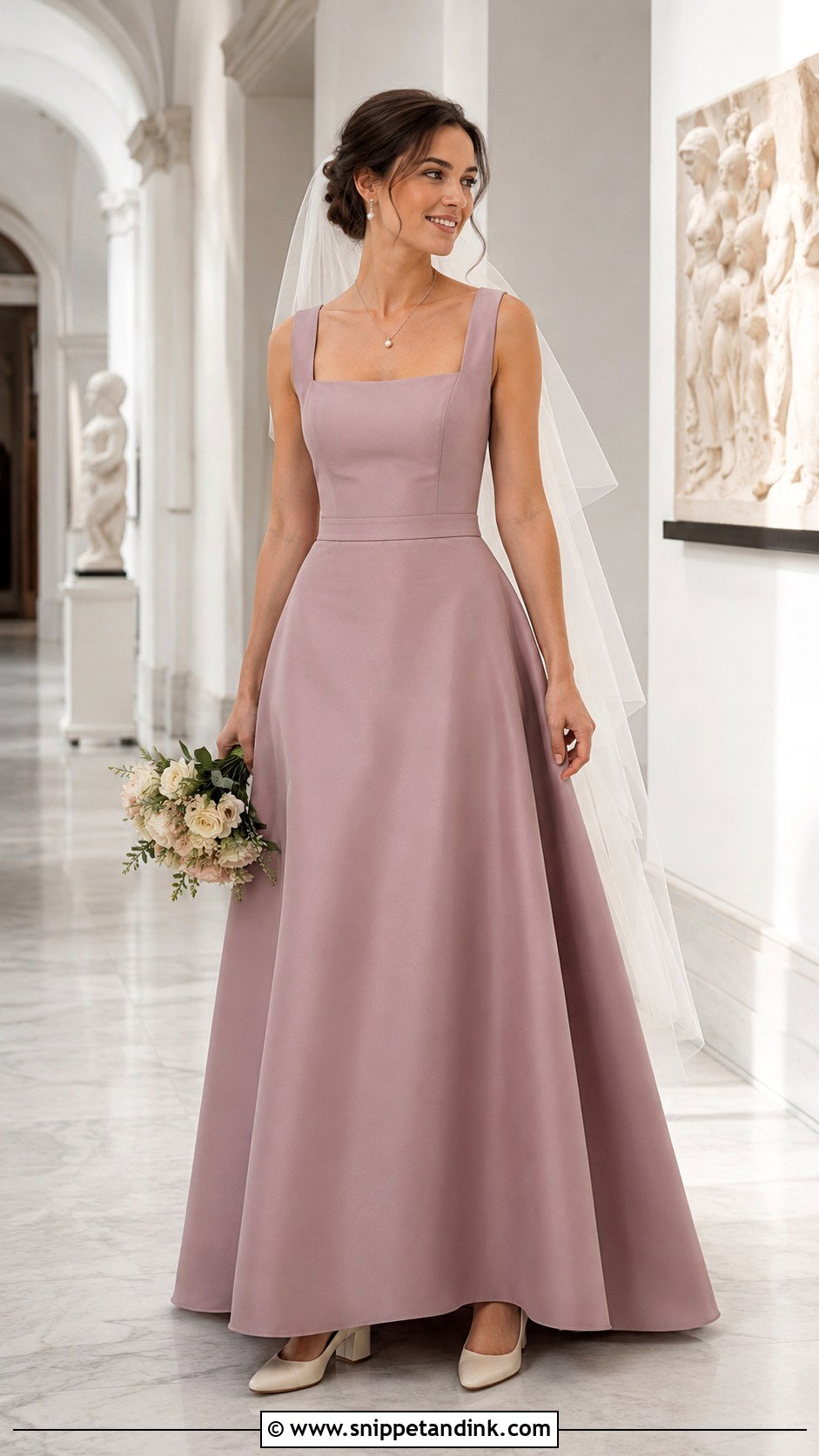
A square neckline is a structural detail, so the straps have to be wide enough to hold it. Narrow straps let the corners gape when you lean forward to sign the register. Matte crepe keeps it understated and satin gives it more light. One pearl pendant sits neatly inside the square, with matching earrings and block heels for a long day on your feet. Choose a plain-edged fingertip veil and a low ponytail or waved bun so the line of the neckline stays clean. White roses and greenery are enough for a gallery, formal garden or minimalist room.
11. Mauve One-Shoulder Wedding Dress
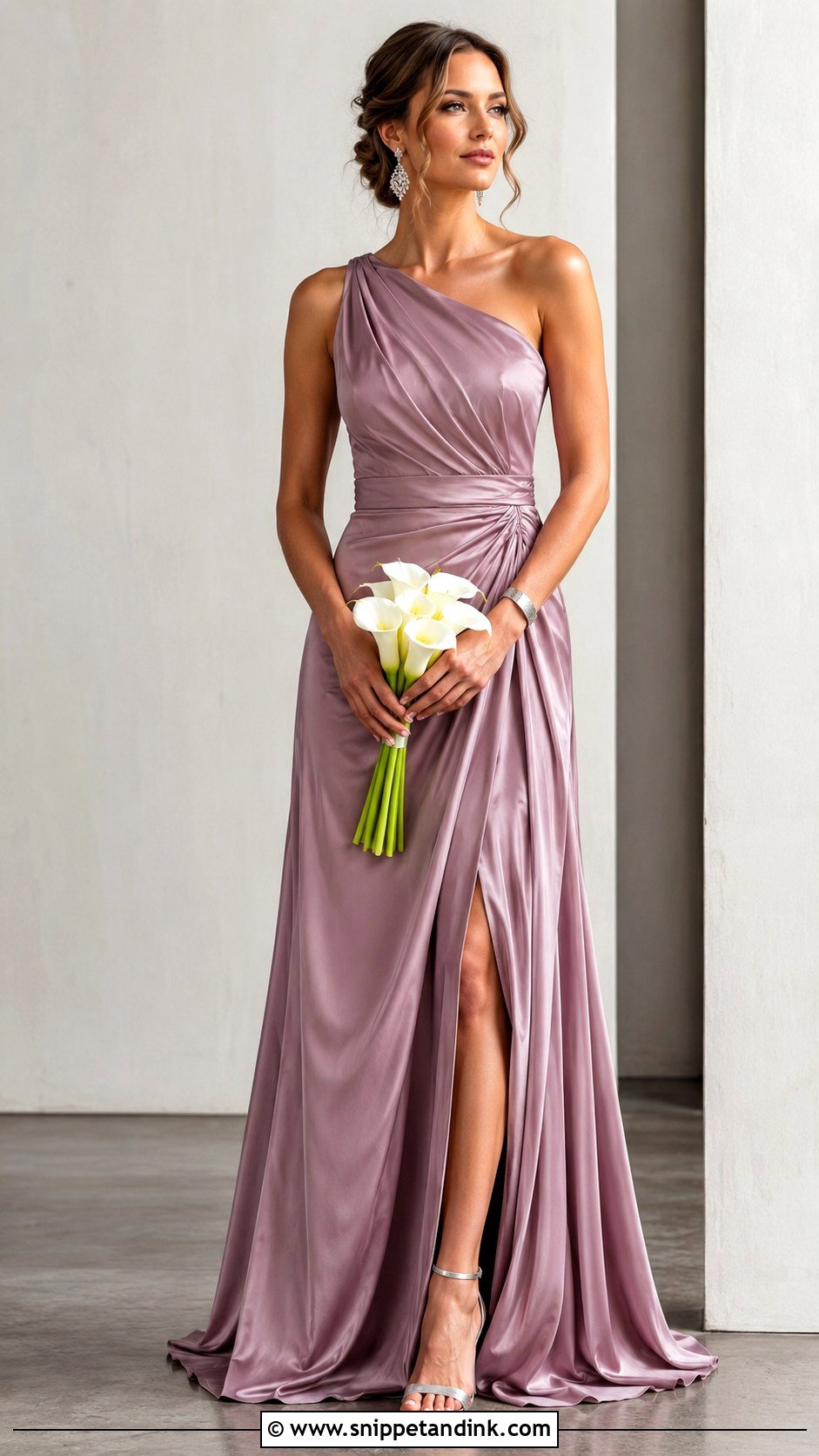
One strap means one side of the bodice carries all the support, and that’s the first thing I test. If the gown relies on the strap alone, it will drift on the open side by the speeches; good versions have internal boning and a waist stay. Draped satin, crepe or chiffon all work, depending on formality, and a side slit helps with walking. Leave the neck bare, wear crystal drops and a slim silver cuff, and add silver sandals. A side-parted bun keeps the shoulder visible, and calla lilies or orchids repeat the clean line for an evening ceremony.
12. Mauve Corset Wedding Dress
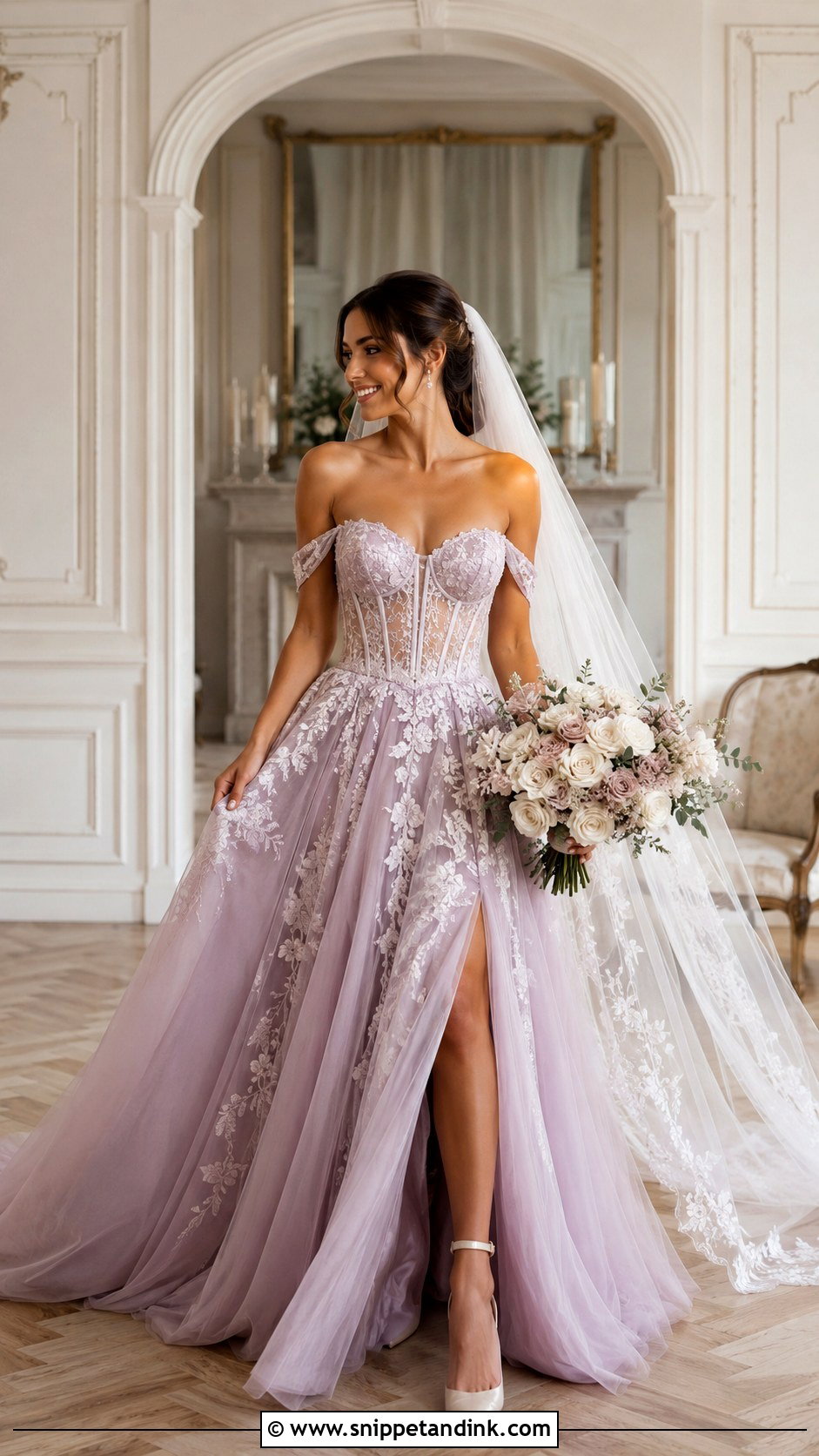
Visible boning reads beautifully in mauve because the seams catch light and shade, giving the bodice a sculpted look even in flat light. Fit matters more here than anywhere else in this list. I want two fingers of breathing room at the top edge and no pressure on the ribs when you sit; a corset fitted while standing can bite once you’re at the table. Pair it with a soft A-line skirt and detachable off-shoulder straps for a second look. Pearl drops, ivory satin heels and a sheer cathedral veil soften the structure. Wear waves or a loose low bun depending on how much back you want on show, with an ivory and blush bouquet.
13. Mauve Empire-Waist Wedding Dress
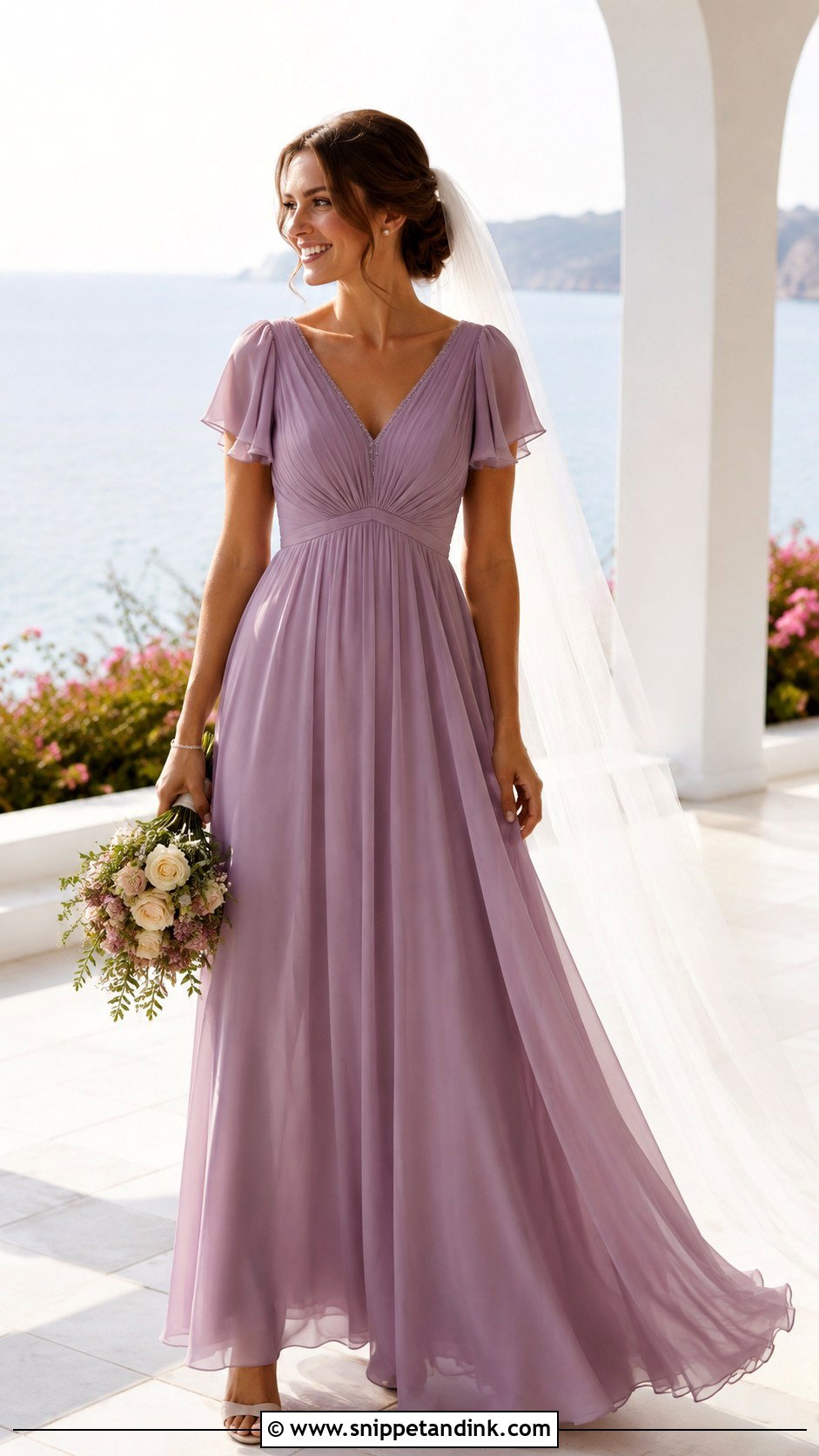
The seam on an empire-waist mauve wedding dress sits just under the bust, so nothing presses on the waist at all. That’s why I suggest it to pregnant brides and anyone planning a long dinner. The catch is that the bust seam must land exactly in the right place; a centimetre low and the dress looks borrowed. Chiffon layers over a smooth lining with a touch of beading at the neck keep it light. Choose flutter sleeves, cap sleeves or wider straps for the coverage you want. Low ivory heels, pearl studs and a chapel veil are plenty for a warm outdoor or destination ceremony.
14. Mauve Wedding Dress With Cape
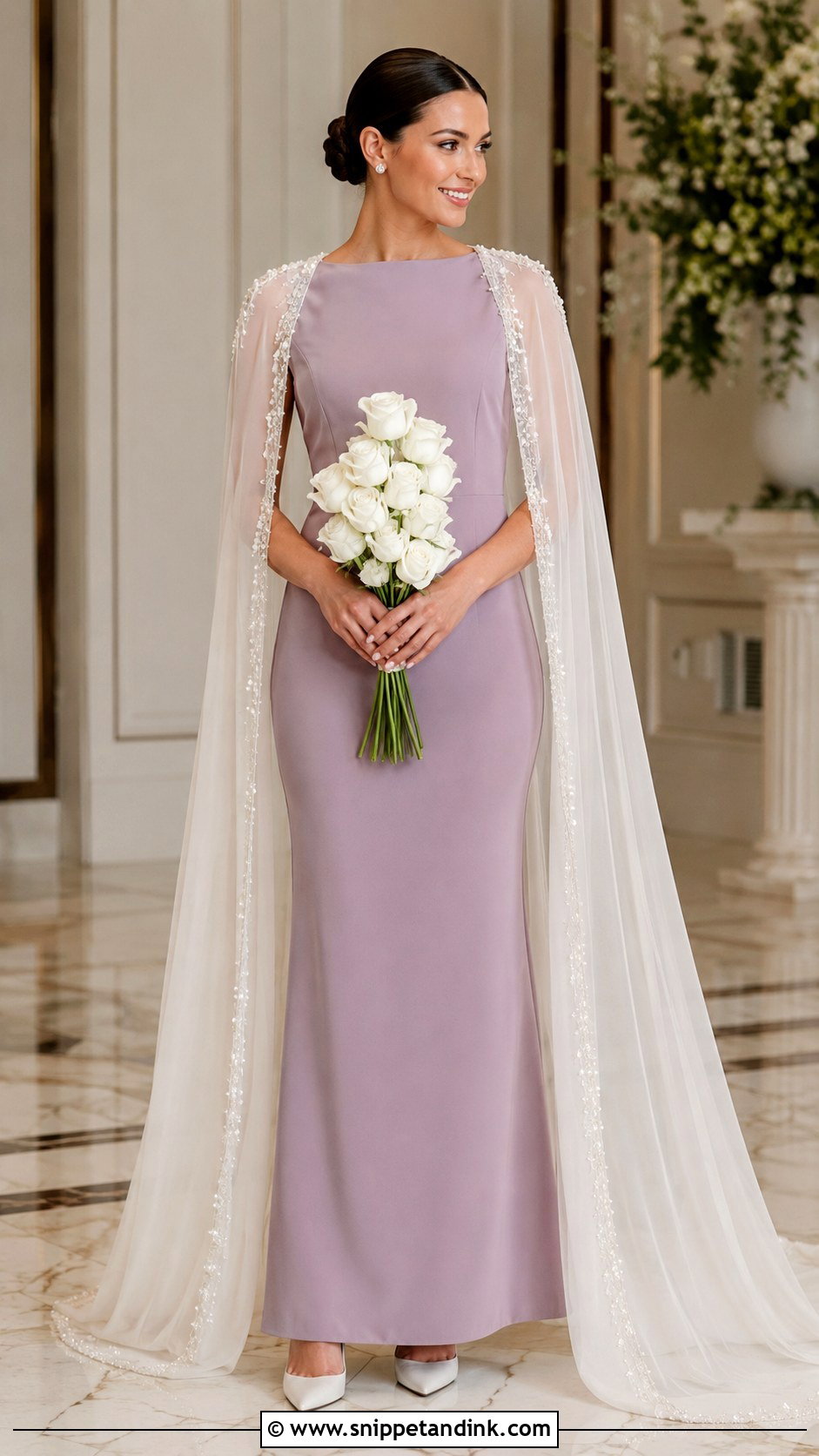
A cape is the accessory I suggest when a bride loves a simple gown but wants a ceremony moment, or doesn’t want a veil at all. Start with a clean column, A-line or fit-and-flare, then add a sheer ivory cape from shoulder to floor. Check how it attaches: clear elastic loops on the shoulders are more forgiving than hooks, which can drag the neckline back. Pearl beading or an embroidered edge ties it to the dress without hiding the colour. Keep jewellery to crystal studs and a slim bracelet, then add pointed pumps, a low bun and a narrow bouquet of roses or calla lilies.



15. Mauve Ombre Wedding Dress
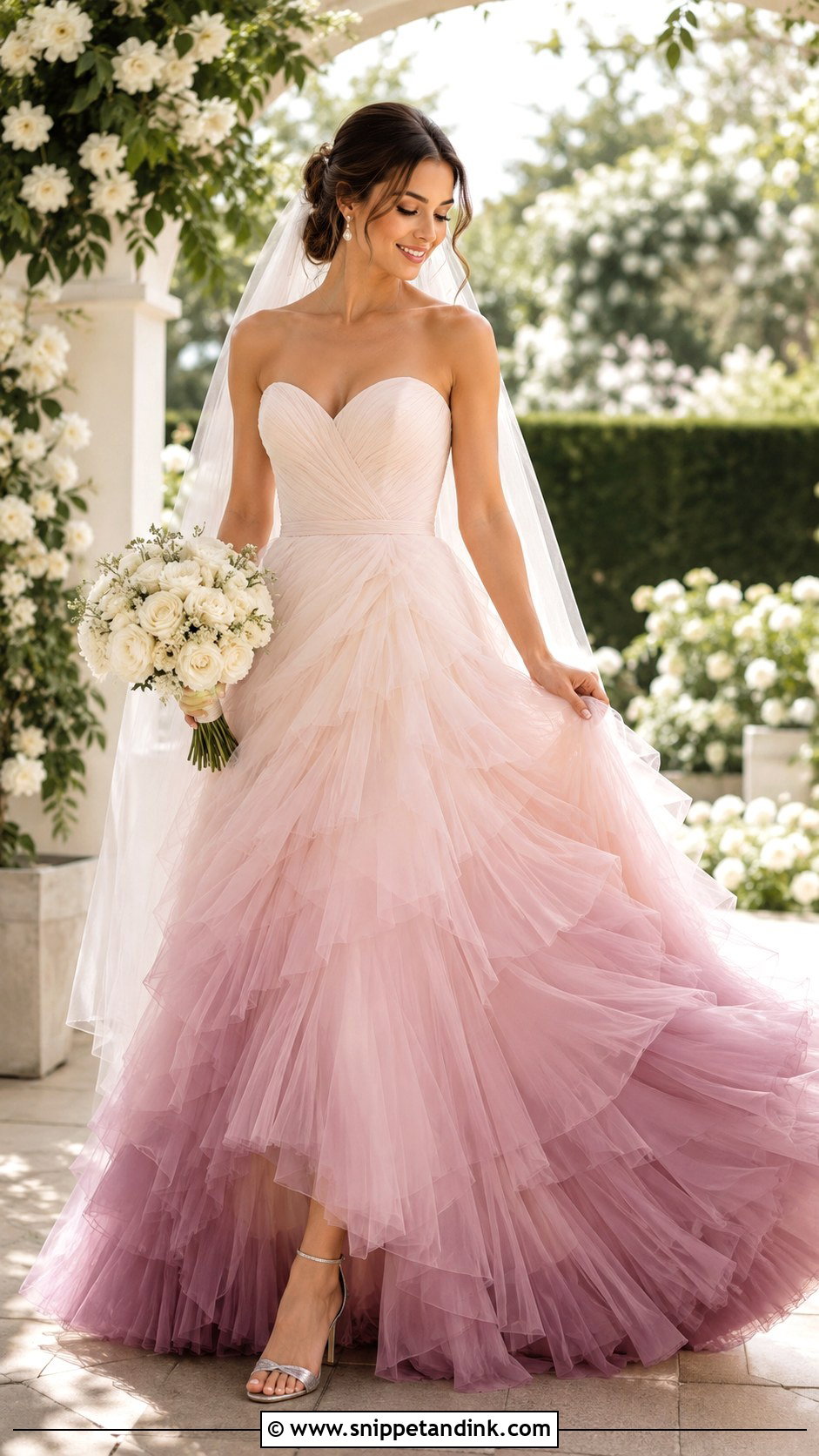
With an ombre gown, the ivory stays near your face and the mauve deepens toward the hem, which is kind to brides who worry colour will wash them out. Tulle and organza handle the gradient best because the sheer layers blend the transition. Ask how it was dyed, because a dip-dyed skirt can show a hard line if the tulle layers were dyed separately. Pearl earrings, silver heels and a plain veil that stops above the darkest band are all it needs. A loose updo and ivory flowers wrapped in mauve ribbon bring the two tones together in an artistic bridal look for a garden or a creative venue.
16. Mauve Embroidered Wedding Dress
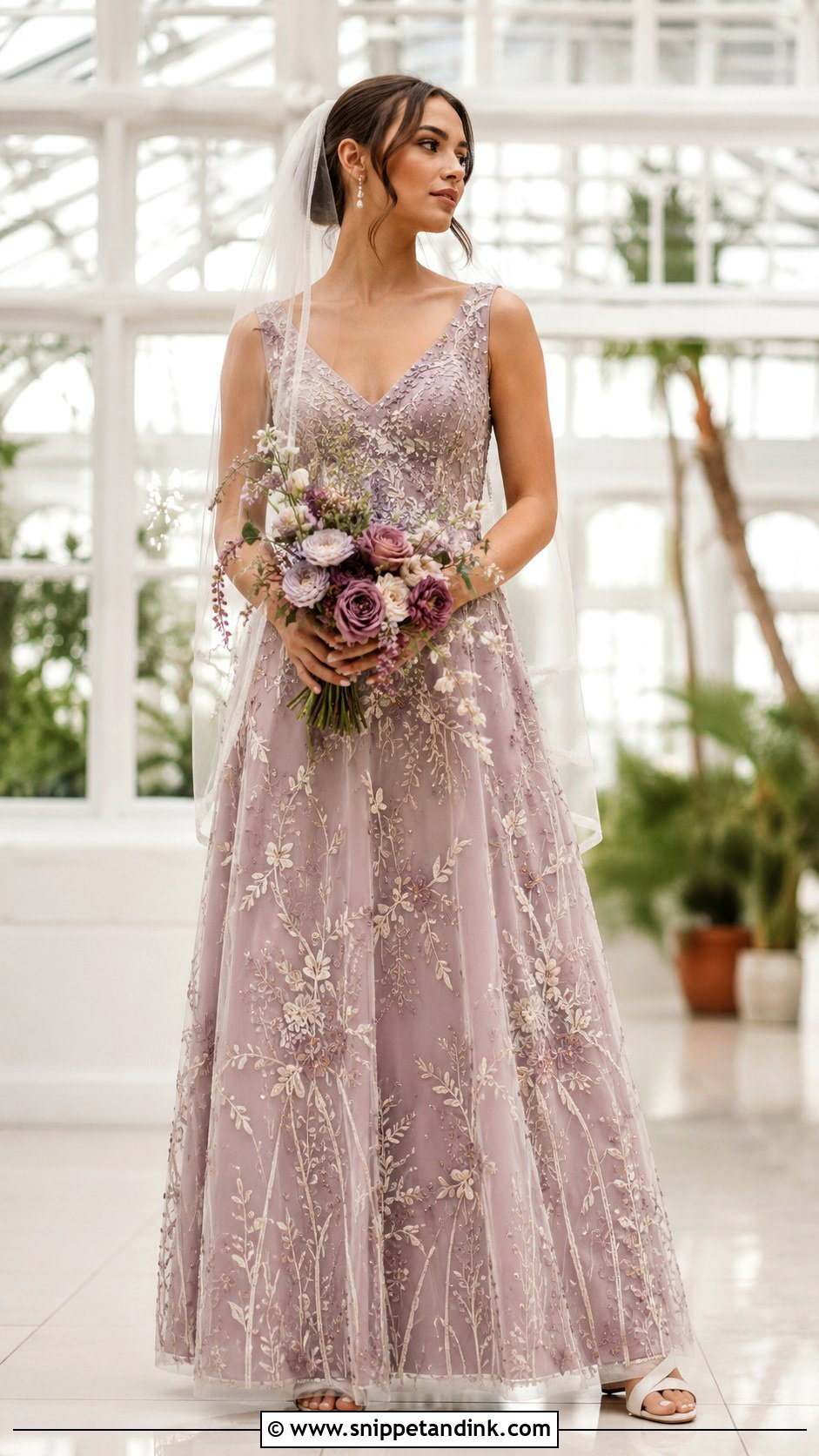
Embroidery is lighter than beading and survives a long day better, since there’s nothing to snag or shed. I look at the back of the work: tight, even stitching means the motif won’t pucker after steaming. Ivory vines on mauve, with a few pink and lavender threads mixed in, give a tonal finish, and tiny beads add a little sparkle. Pearl earrings, ivory block heels, a plain-bordered veil and a textured low bun let the stitching lead. Ask your florist to borrow the flowers from the motif for a garden or conservatory setting.
17. Mauve Minimalist Crepe Wedding Dress
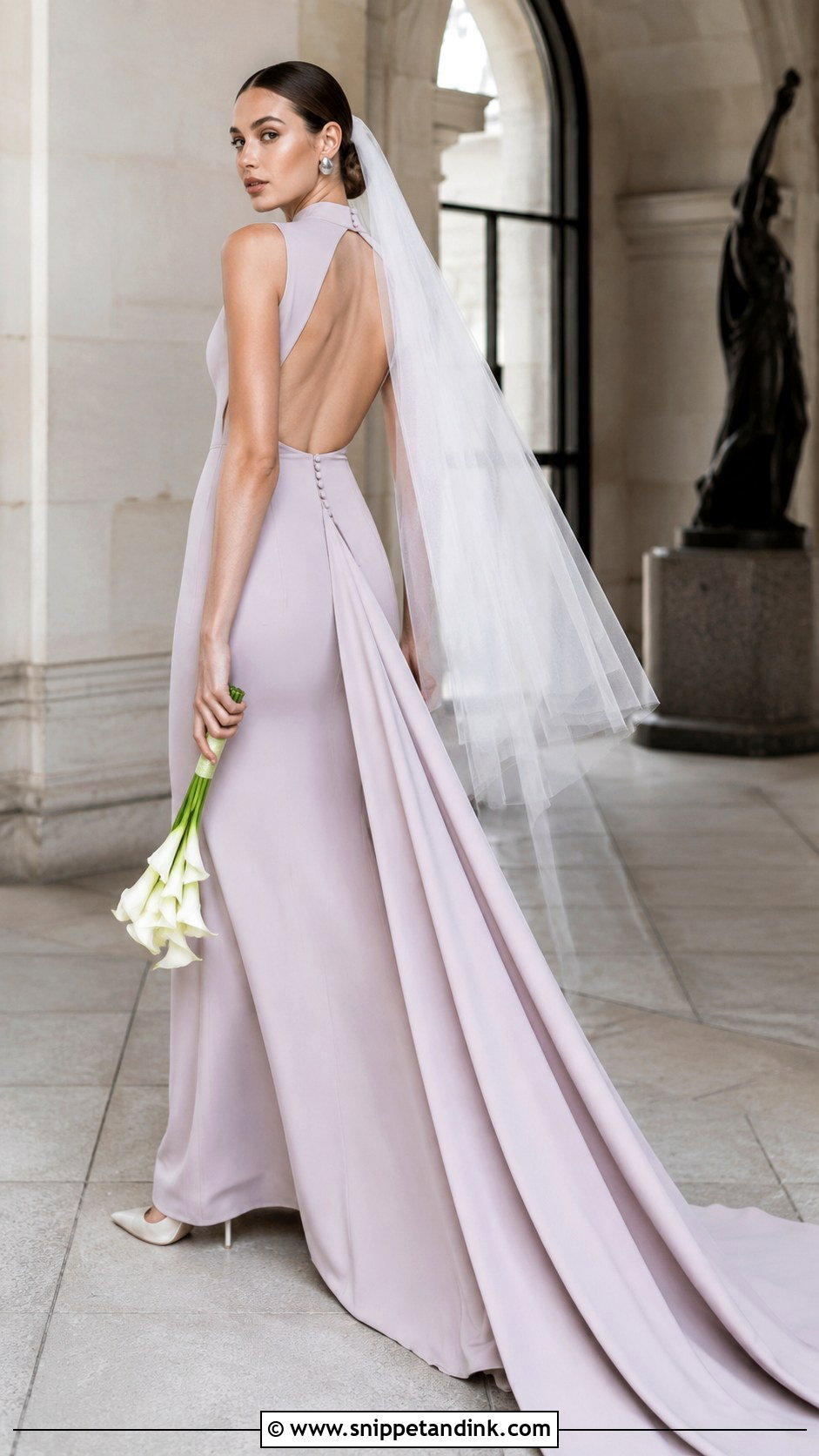
Minimal gowns hide nothing, so the tailoring has to be precise. On crepe, I check the side seams first; if they twist, the whole dress looks cheap no matter the price. Choose a bateau, scoop, or high neckline and let a low back, covered buttons or a detachable train be the only details. Sculptural silver earrings, ivory pointed pumps, a simple fingertip veil and a sleek chignon keep it modern. One flower type in the bouquet, such as calla lilies, suits a hotel, rooftop or courthouse ceremony where restraint is the point.
18. Mauve Plus-Size Wedding Dress
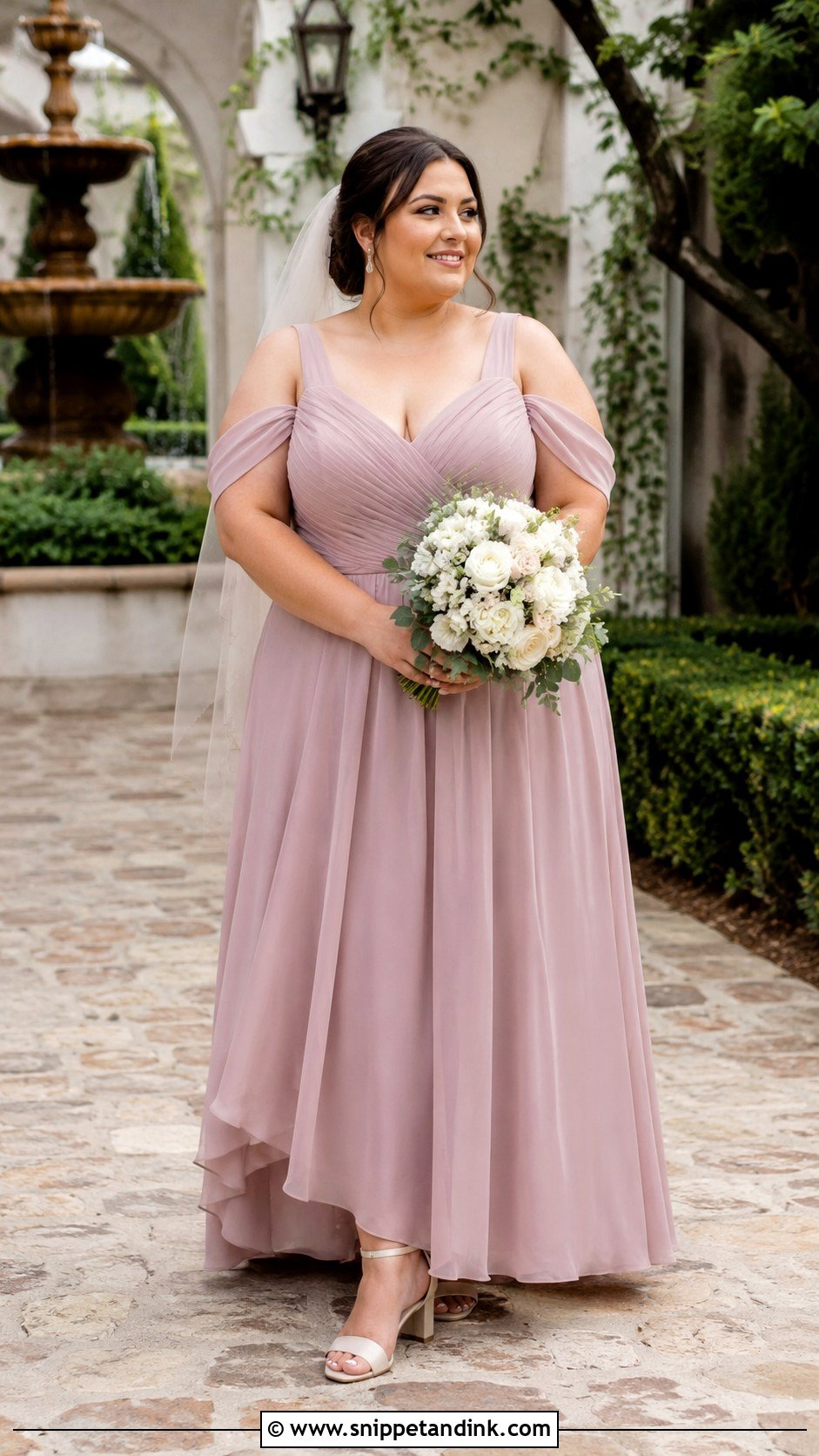
A plus-size gown should support and show you, not hide you. What I look for first is a structured bodice with built-in support, so you’re not relying on a separate bra that shows at the back. An A-line with wide straps and a softly defined waist gives a long line, and a V-neck opens up the chest. Lace sleeves or detachable draped straps let you adjust coverage. If you add shapewear, it should smooth, never restrict breathing at the table. Block heels in ivory or silver, pearl drops and a light veil keep the proportions right, with a medium rounded bouquet.
19. Mauve High-Low Wedding Dress
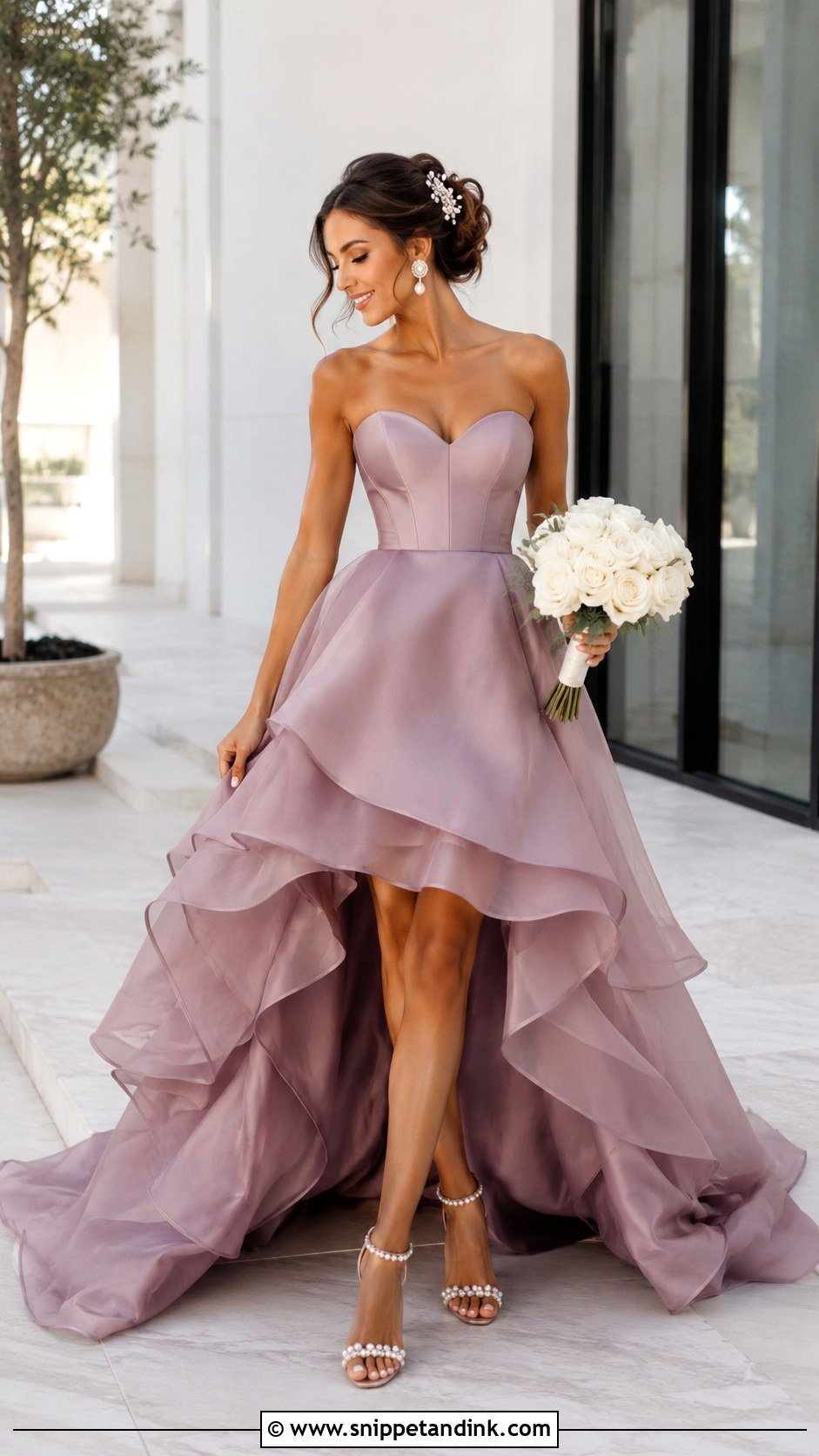
Shoes become half the outfit with a high-low hem, so I tell brides to buy them before the first fitting and bring them every time. The front hem is set to the exact heel height. Structured satin or layered organza keeps the lifted back crisp. Pearl-detailed pumps, silver sandals or ivory block heels all suit it, with small statement earrings and a short veil or a hair comb instead of a long cathedral veil, which drowns the shape. A polished ponytail and a compact bouquet of white roses with mauve accents suit outdoor parties and anyone who plans to dance a lot.
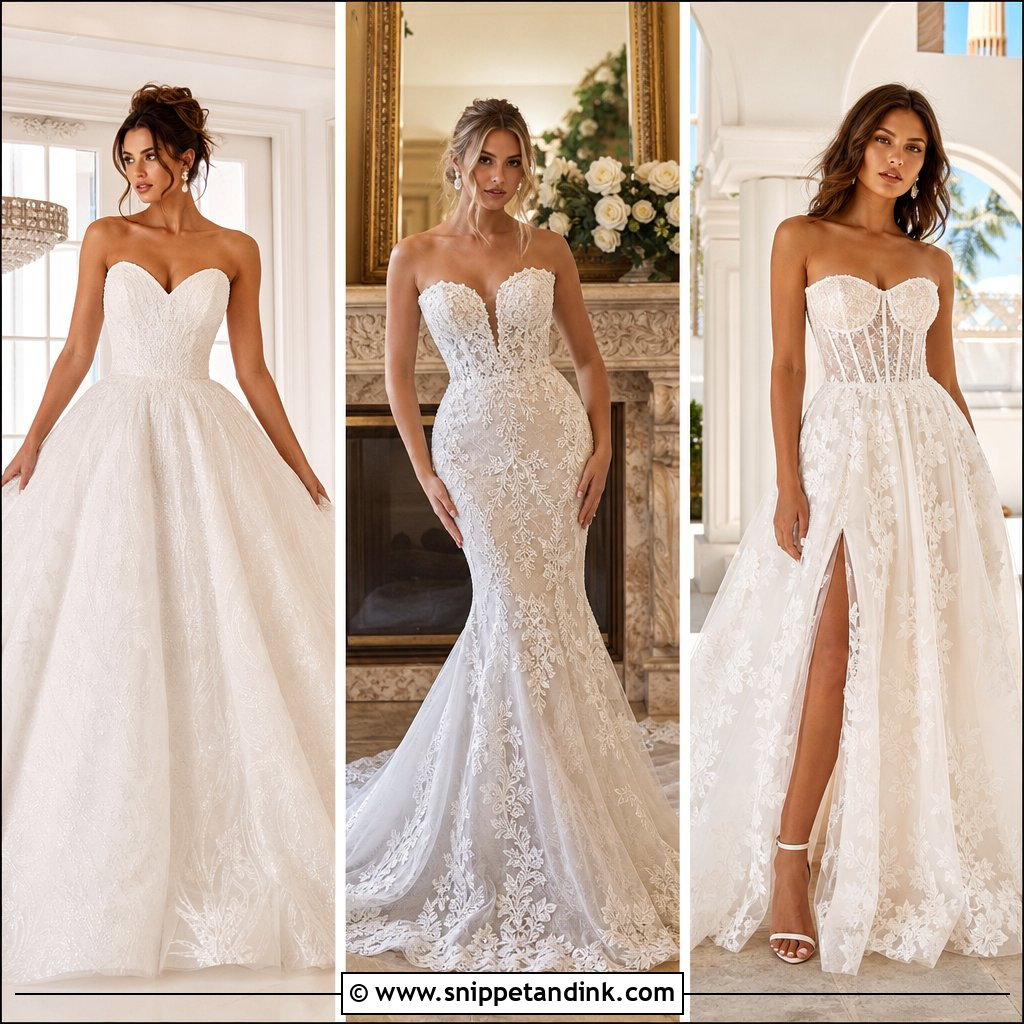

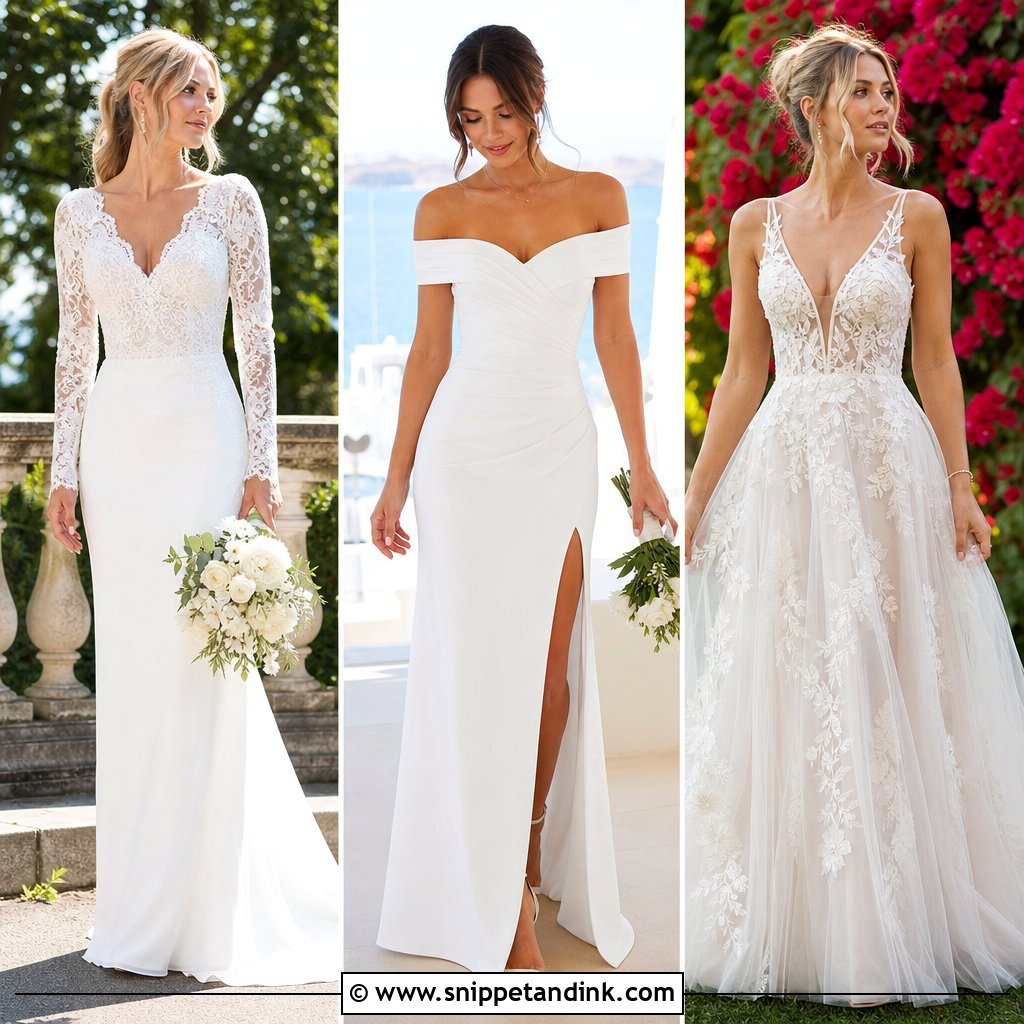
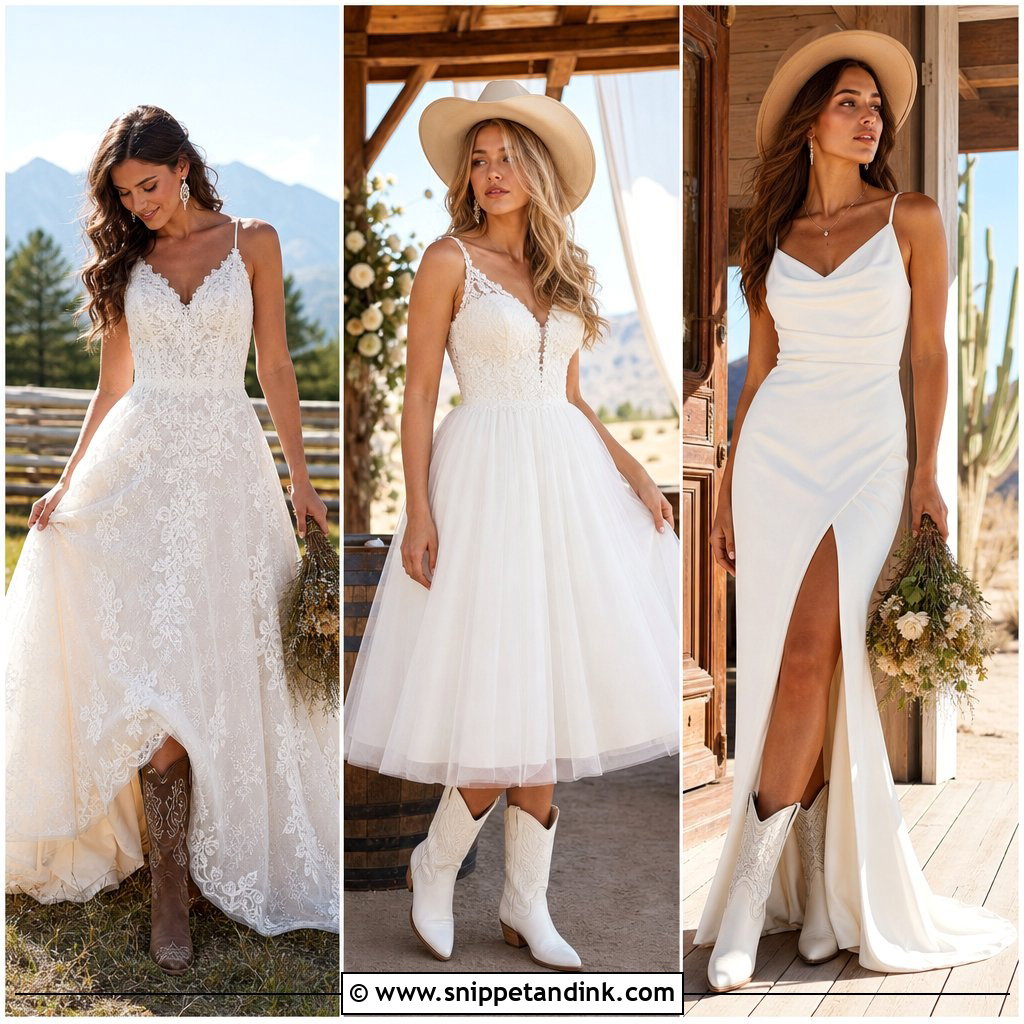
20. Mauve Short Wedding Dress
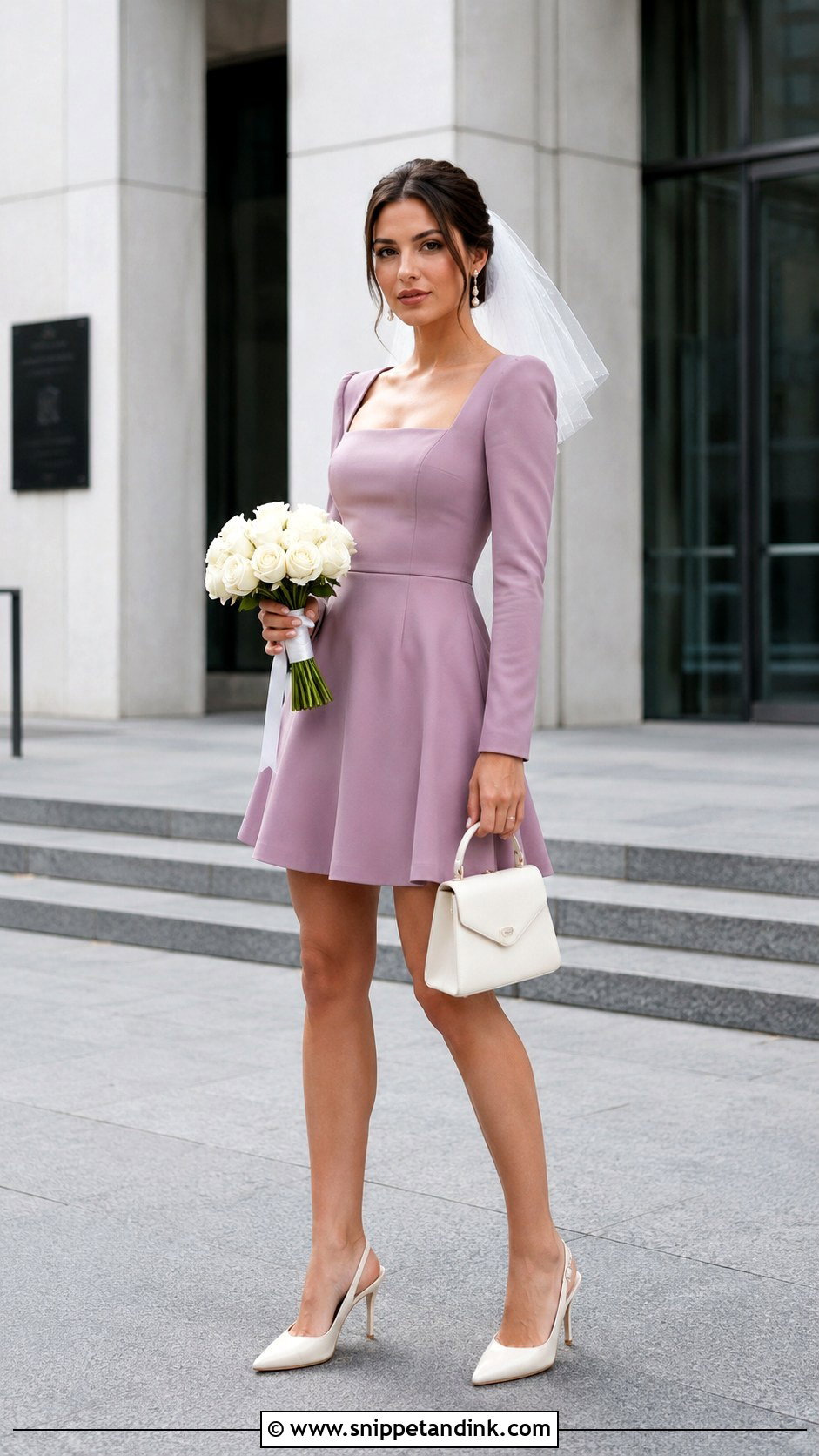
A short mauve dress works for a courthouse ceremony, a reception change or a small daytime wedding. With a mini or knee length, I balance the hem with coverage above: a higher neck or long sleeves, or a square neck with a structured bow if you want more skin. Ivory slingbacks, pearl earrings and a small top-handle bag photograph well together. A birdcage veil, short tulle veil or headband keeps it clearly bridal, and a compact bouquet of ivory roses shouldn’t hide the dress. Heirloom jewellery or bold shoes are the easiest way to make it yours.
A Coloured Gown Changes Your Alterations and Aftercare
Most mauve gowns are made to order, often in a custom dye run, so allow more time than you would for an ivory sample. Ask the shop for its production estimate in writing and plan your first fitting about two to three months before the wedding. A dye run can’t always be repeated exactly, which matters if you later want matching fabric for a bustle or a sash.
Hemming and bustling
Ask your seamstress to keep the cut-off hem fabric. It’s the only perfect colour match you’ll ever have for repairs, covered buttons or a small pocket. Thread should be matched to the mauve, not to ivory, or bustle points show as little pale dots.
Protecting the colour
Dyed silk and satin can fade where sunlight hits them for long periods, so never hang the gown by a window in the weeks before the wedding. Steam it from the inside on low, and keep perfume and spray tan off the fabric, since both can leave marks that show more on a colour than on white. Afterwards, have it cleaned by a specialist who handles coloured bridalwear, then store it flat or on a padded hanger in breathable cotton, away from light.
Seeing Mauve in Three Different Lights
Start with how much colour you want. Mauve lining under ivory lace whispers; saturated satin or layered tulle says it out loud. Then think about the venue, the season and how much moving you’ll do, because supportive tailoring and comfortable shoes matter as much as any detail. Repeat one or two finishes in your accessories, pearls or silver crystal or ivory satin, and stop there. Above all, see the dress in daylight and under indoor bulbs before you decide, because mauve can lean pink, purple or grey depending on the room. The right one will feel like you in all three lights.
You'll Like These Ideas:






Leave a Reply