
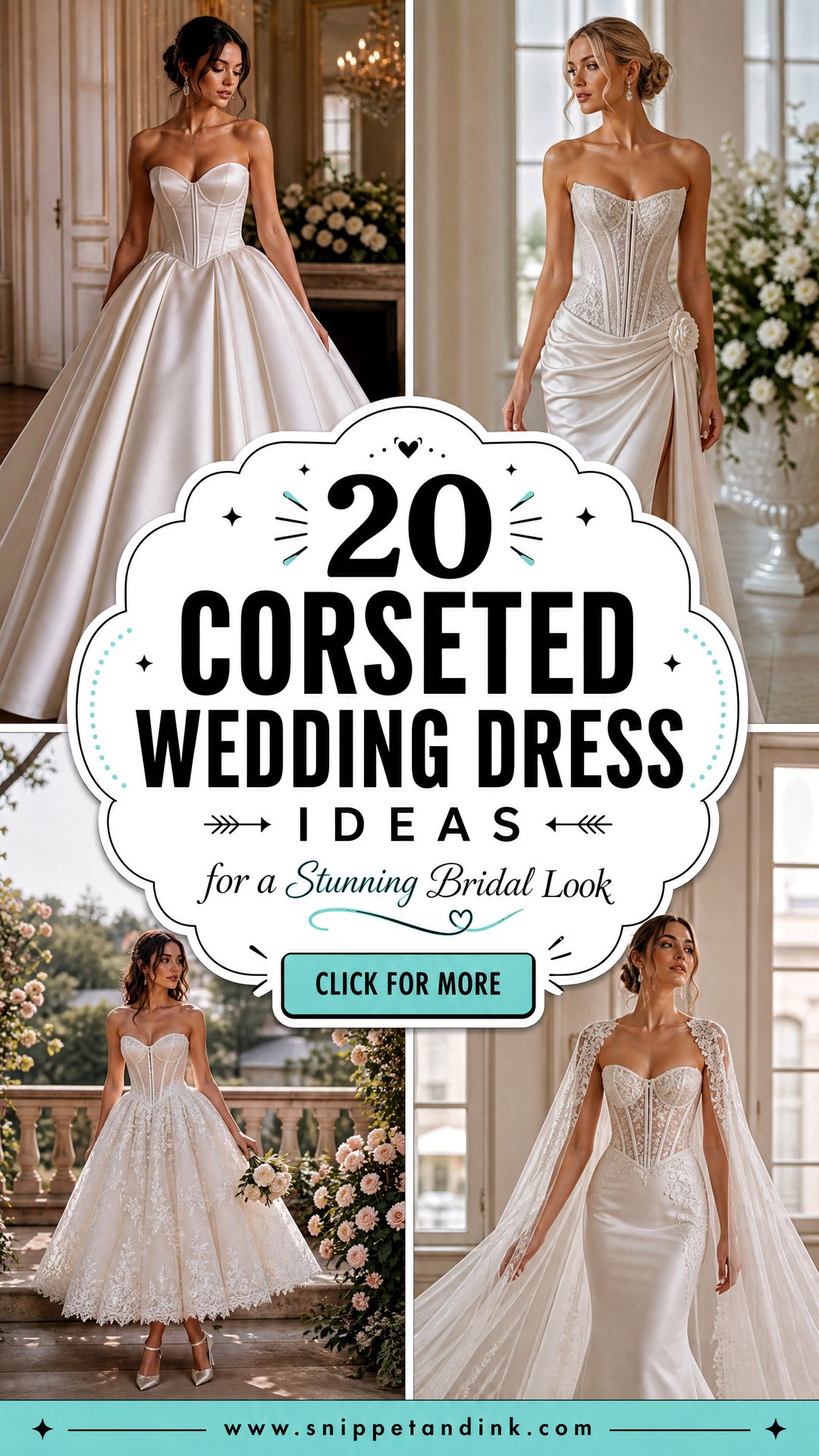
A corset changes how a wedding dress sits on you more than any trim ever will. Modern versions go well past the laced-up bodice: clean satin, lace over boning, sculpted Basque waists, removable skirts and soft sleeves. Basque waists in particular have come back strongly, often paired with draping, pearls and raised florals. What I tell every bride before she tries one on is simple. The bodice should hold you, and you should still be able to breathe, sit and laugh. Below are twenty corseted gowns styled with veil, jewellery and shoes, from a registry-office crepe to a full ballroom satin.
What Holds a Corset Bodice Up From the Inside
Two corset gowns can look the same on a rail and wear very differently, and the difference is hidden inside. At a sample sale or a first appointment, ask to look at the inside of the bodice. Here is what I’m checking.
Steel or plastic boning
Spiral steel bones bend with you in two directions and hold their shape all day. Flat plastic boning is lighter and cheaper but can kink at the waist or warp with body heat, leaving ripples in satin by the evening. Many good gowns mix both. Press gently on a bone: steel springs back, plastic tends to stay bent.
A waist stay
A strong ribbon band sewn inside at the waist, fastened with hooks. It takes the pull of the skirt off the bodice seams. Heavy satin, jacquard and ball gown skirts really need one.
Cups and lining
Built-in cups mean no strapless bra. If the dress has none, a seamstress can usually sew cups in, which is often more comfortable than a separate bra and won’t show at a low back.
Lacing versus zip
A lace-up back adjusts if your weight shifts a little before the wedding, which is a real advantage. A zip with hidden boning gives a cleaner back line but has no give, so the final fitting has to be accurate.
1. Satin Ball Gown Corseted Wedding Dress
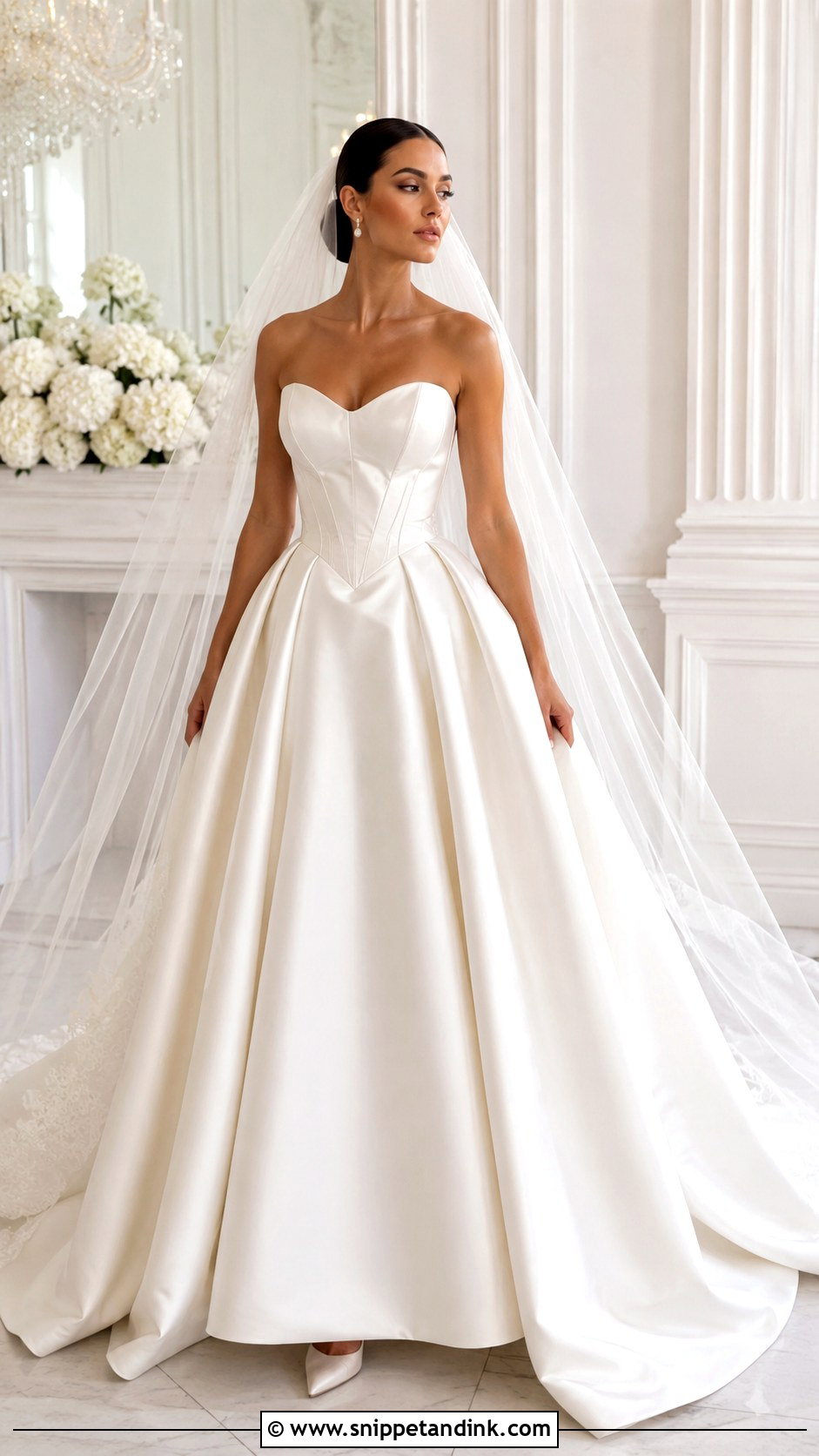
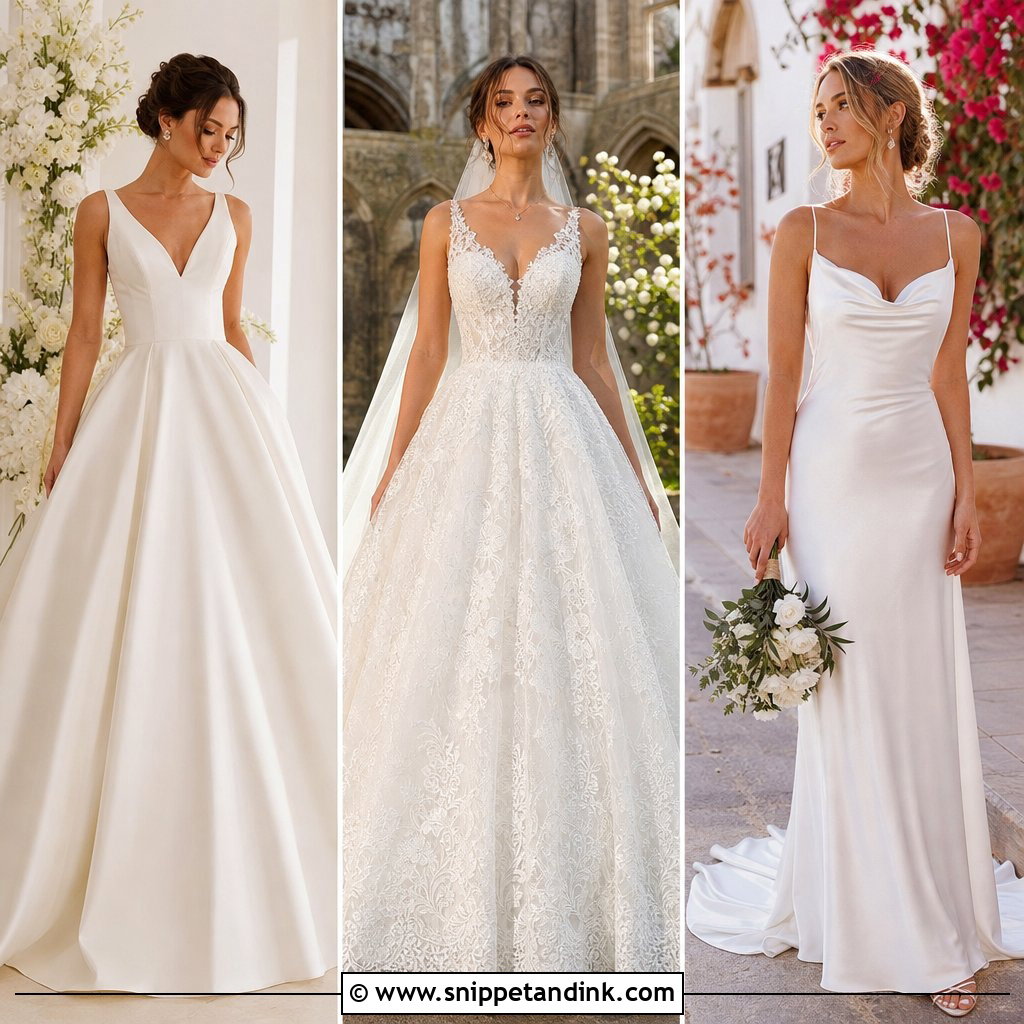
Duchess satin is heavy for a reason. A full skirt in duchess satin or Mikado holds its own shape, so the corset above it has to be firm enough not to crumple at the waist under that weight. A softly curved neckline and a defined natural waist keep it classic. Cathedral veil, pearl studs, pointed pumps, low bun. With a lace-up back, I always ask the seamstress to tuck the modesty panel neatly under the ribbons, because a panel that pokes out at one side is visible in every back shot. Save this one for an indoor, formal venue; it’s hard work on a lawn.
2. Lace A-Line Corseted Wedding Dress
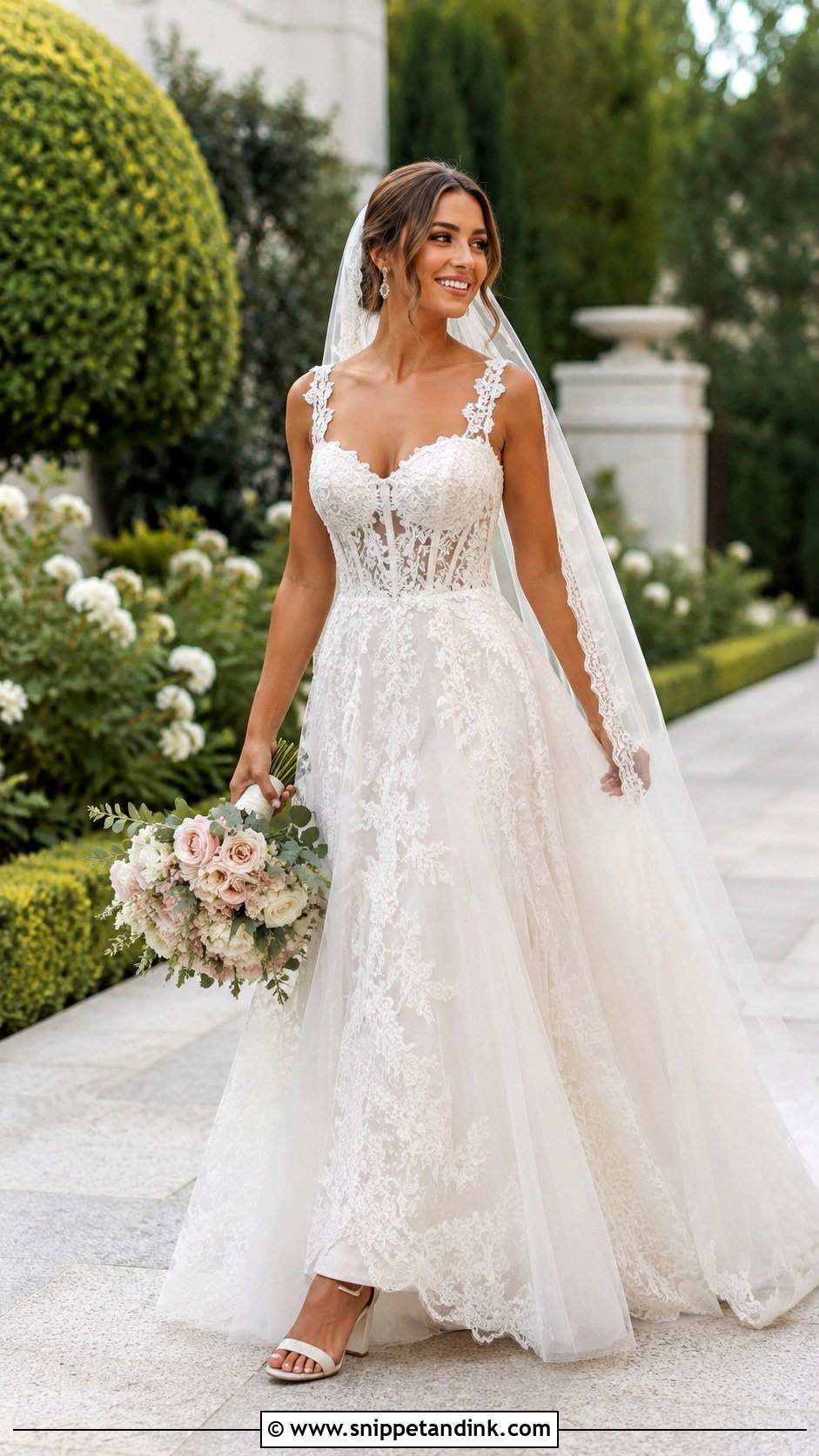
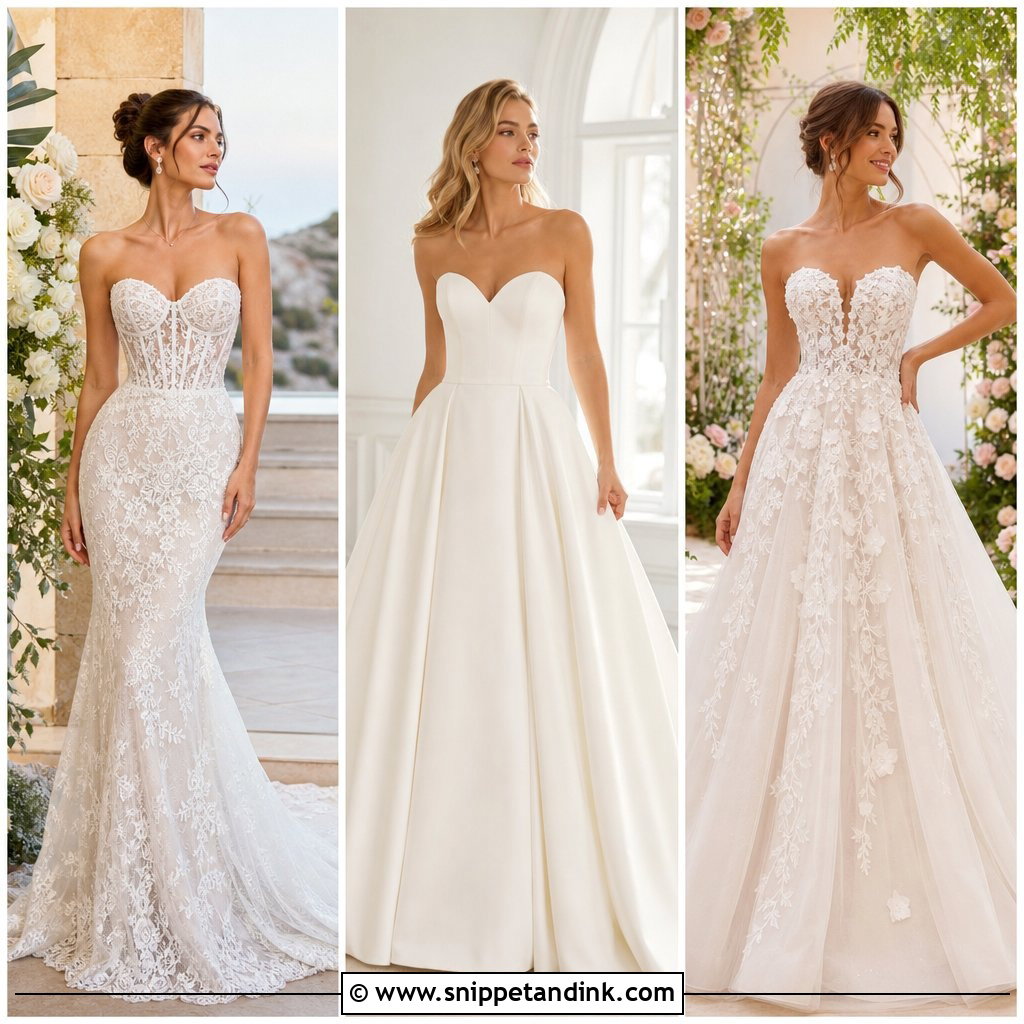
Lace that runs from the bodice down onto the skirt makes an A-line feel like one piece instead of a top and a skirt. A sweetheart neck softens the corset, and wider straps take some weight off the bust, which you’ll appreciate around hour eight. The lining colour decides the mood: nude makes the lace pattern and seams stand out, ivory blends them. Pair with a fingertip veil in matching lace, small drops and block-heel sandals. Relaxed waves or a low twist suit the softness.
3. Basque Waist Corseted Wedding Dress
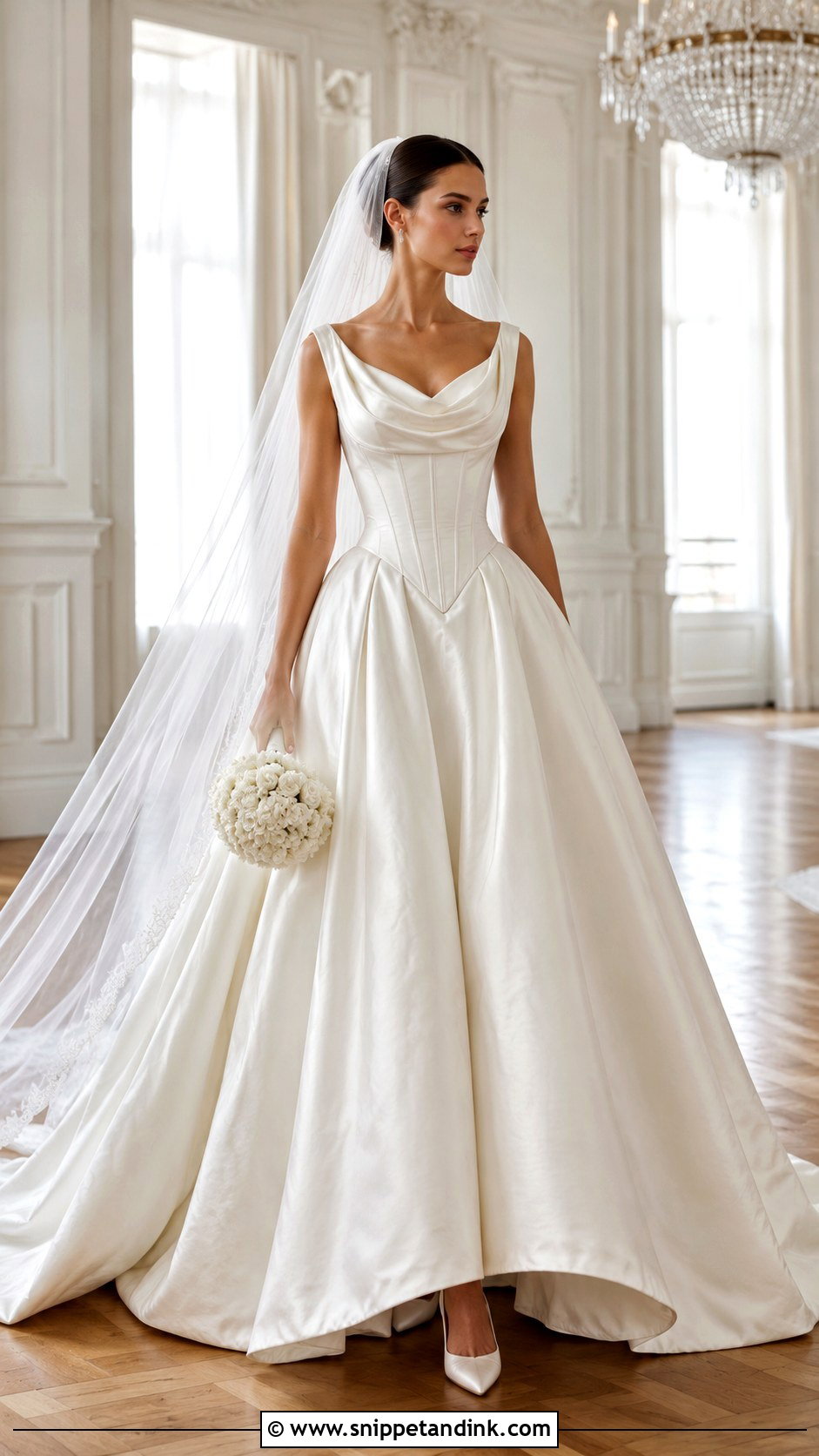
The point of a Basque waist dips below the natural waist and pulls the eye into a long V. Stiff fabrics like satin and taffeta keep that point crisp; soft ones let it curl. Keep the veil plain so the waist stays the detail. I treat the Basque point as the most important alteration in this dress, because moving it even slightly changes your whole proportion. Have it checked while standing, then seated, then bending. If it digs into your lower belly when you sit, it needs reshaping.
4. Drop Waist Corseted Wedding Dress
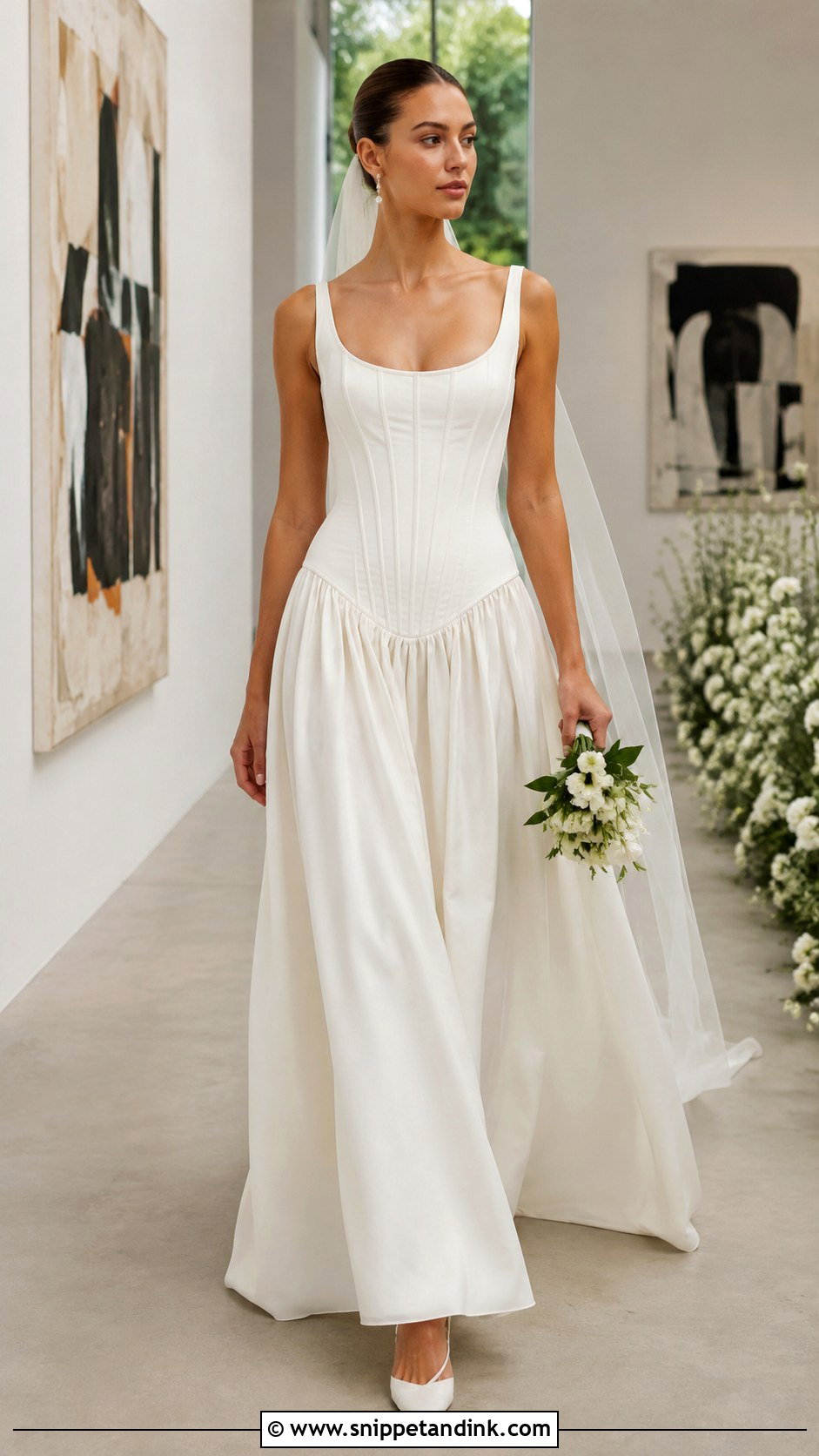
Drop waists vary more than any other style. One brand’s version stops at the high hip; another runs nearly to the hip bone. That’s why I never pick one from a photo. Try several and see where the seam lands on your body. A clean scoop or strapless neck and a gathered skirt keep the long torso clean. Slingbacks, a narrow veil and pearl drops are enough. The seam should sit flat at the upper hip without buckling when you walk.
5. Long Sleeve Lace Corseted Wedding Dress
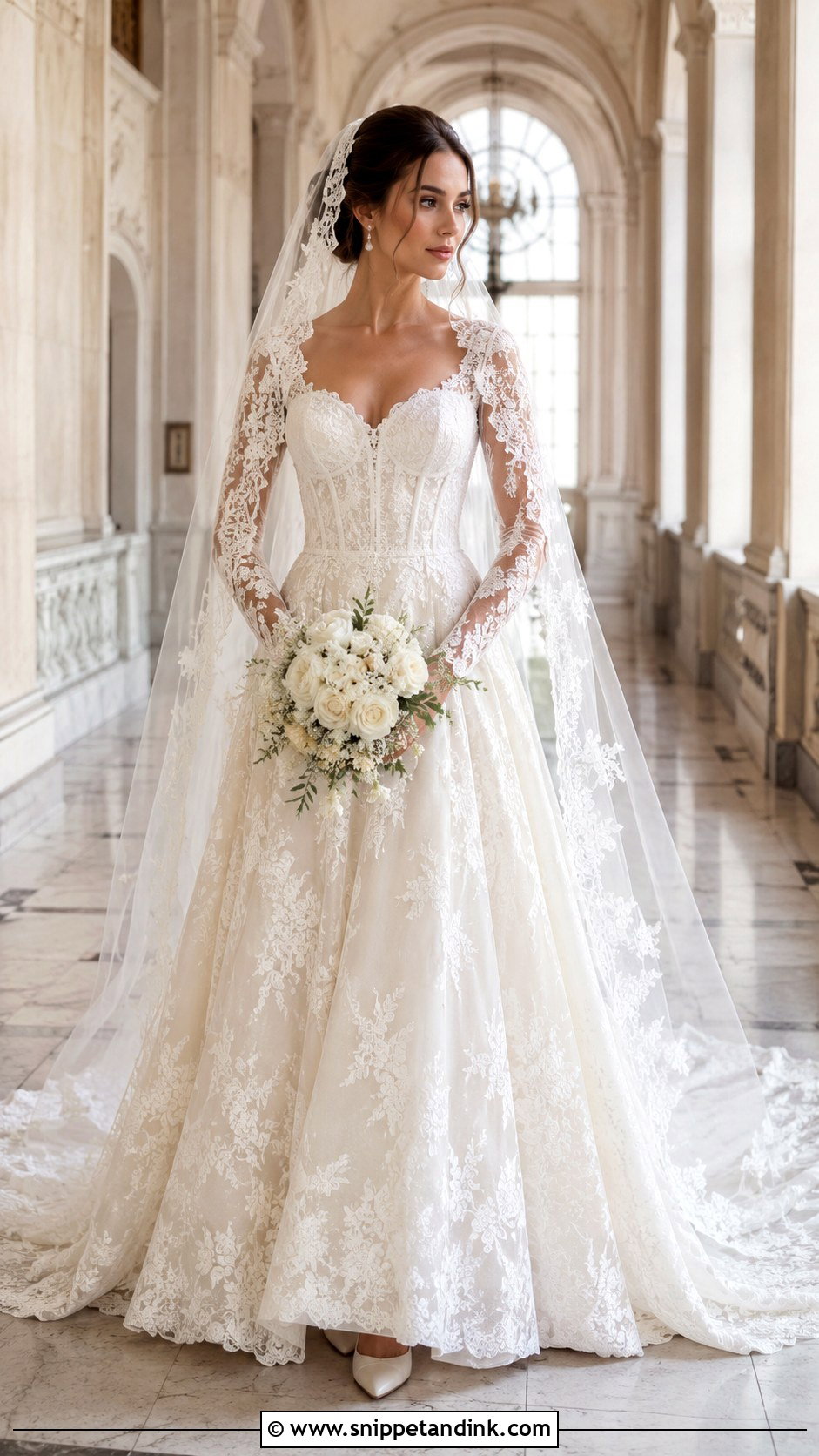
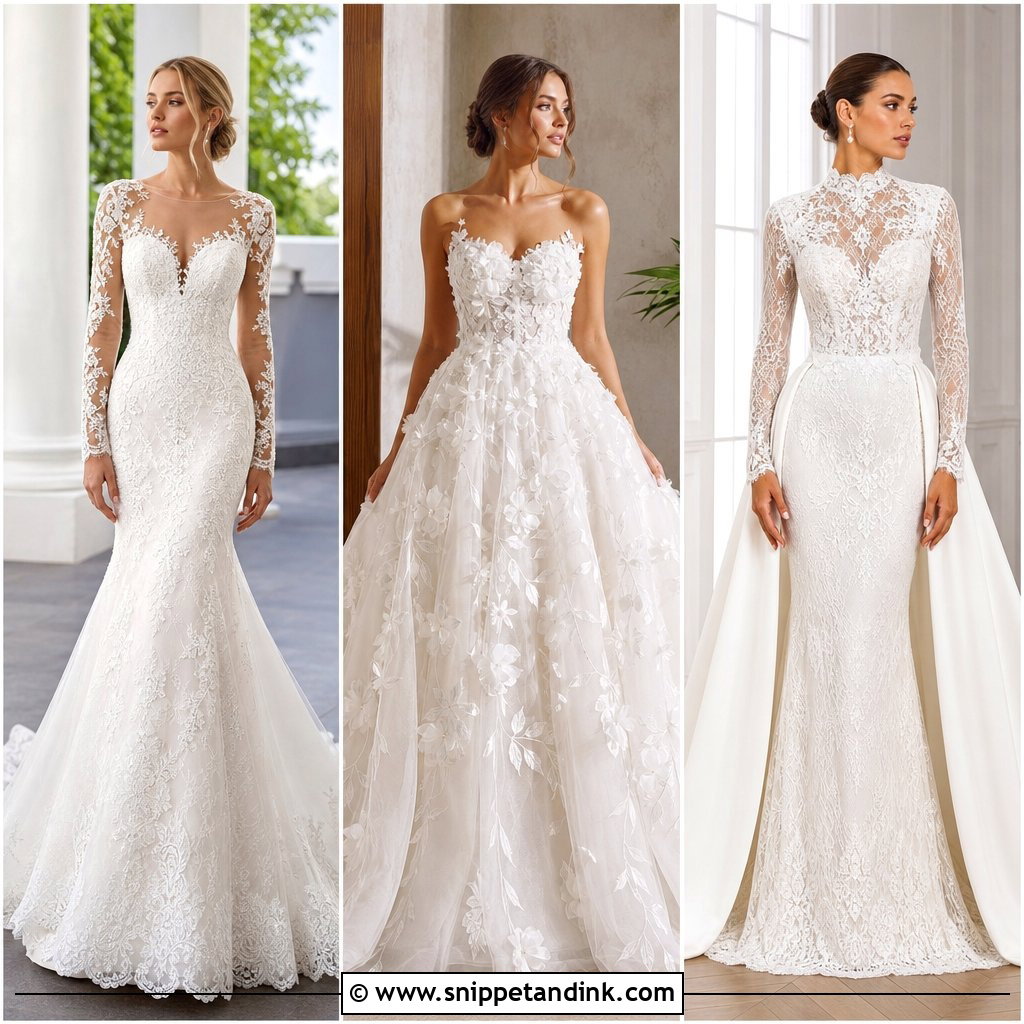
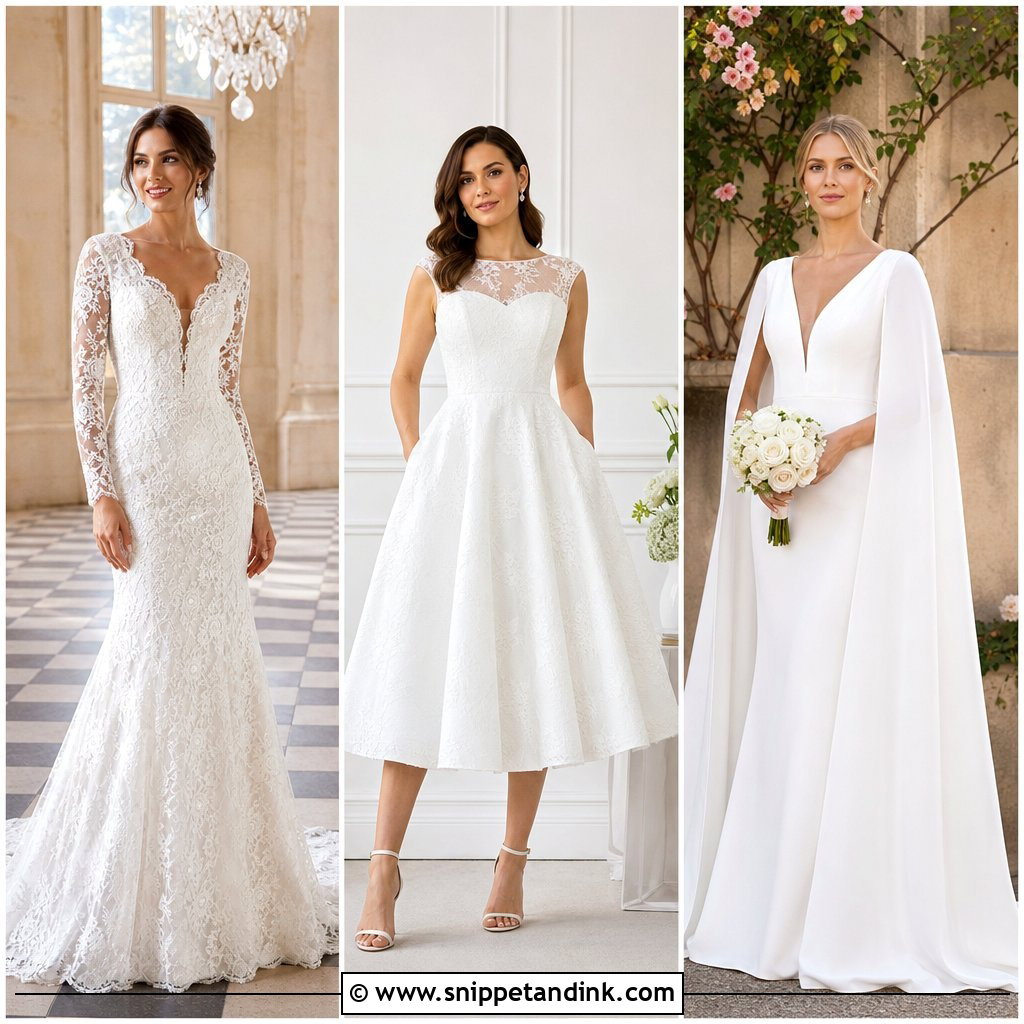
Long lace sleeves over a lined corset give coverage and still keep the waist on show. I’d balance them with a soft V, sweetheart or gentle square neck so the top doesn’t feel closed in. The sleeve itself is the fitting challenge. Lift your arms above your head and reach forward: if the bodice rides up, ask for stretch lace or a small gusset under the arm. A low chignon keeps hair off the delicate appliqué. This is my go-to for winter weddings and churches that ask for covered shoulders.
6. Off Shoulder Satin Corseted Wedding Dress
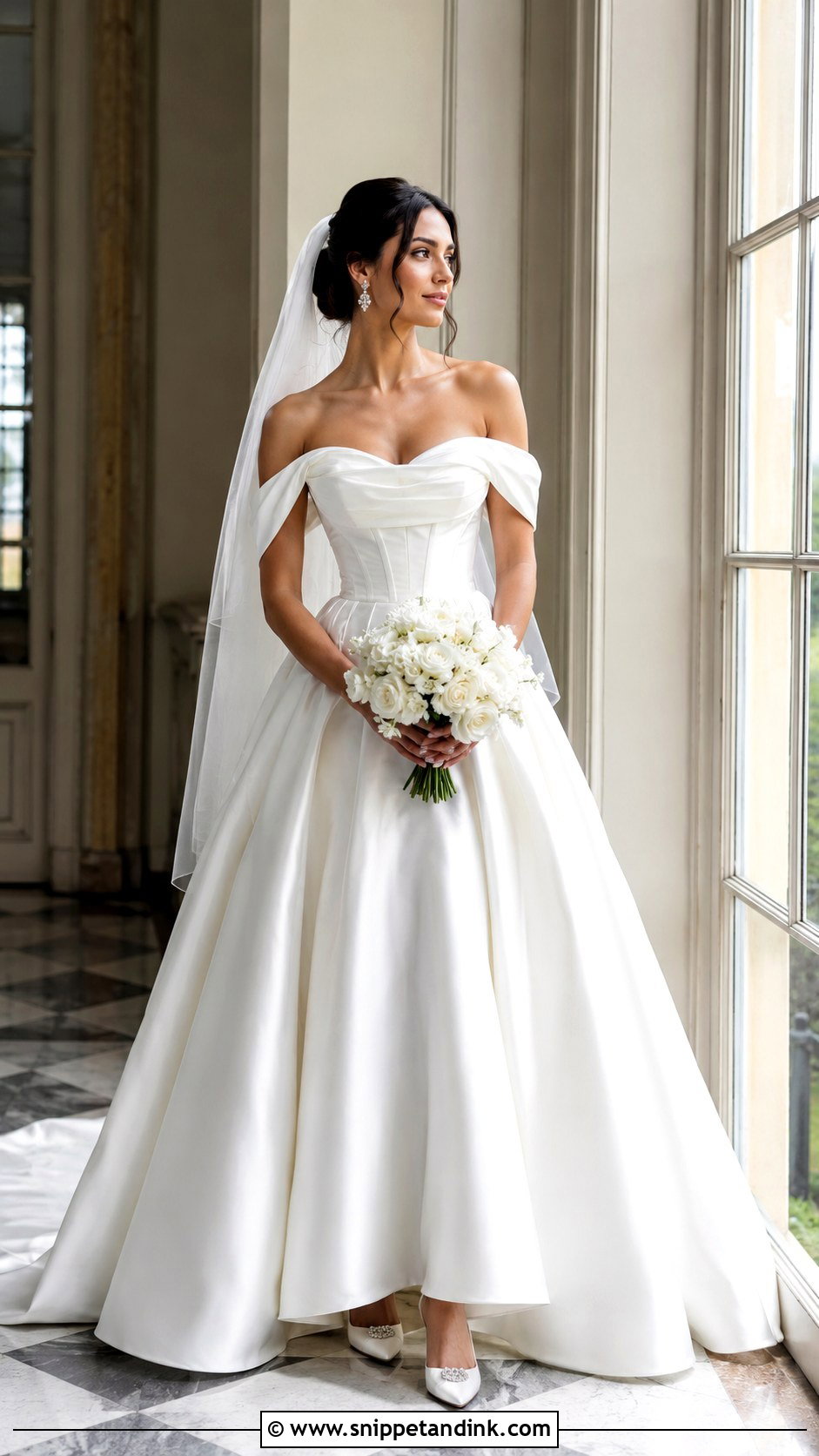
Here’s the rule I give brides in off-shoulder dresses: the corset carries the gown, not the sleeve bands. If the bands are doing the work, they’ll slide down your arms by the first dance. Gathered or draped satin across the bodice softens visible boning, and a full skirt gives the classic shape. Skip a necklace, since the neckline already draws a strong line across the shoulders; wear a slim bracelet or a family ring instead. Wave and hug at the fitting the way you will on the day.
7. Strapless Mermaid Corseted Wedding Dress
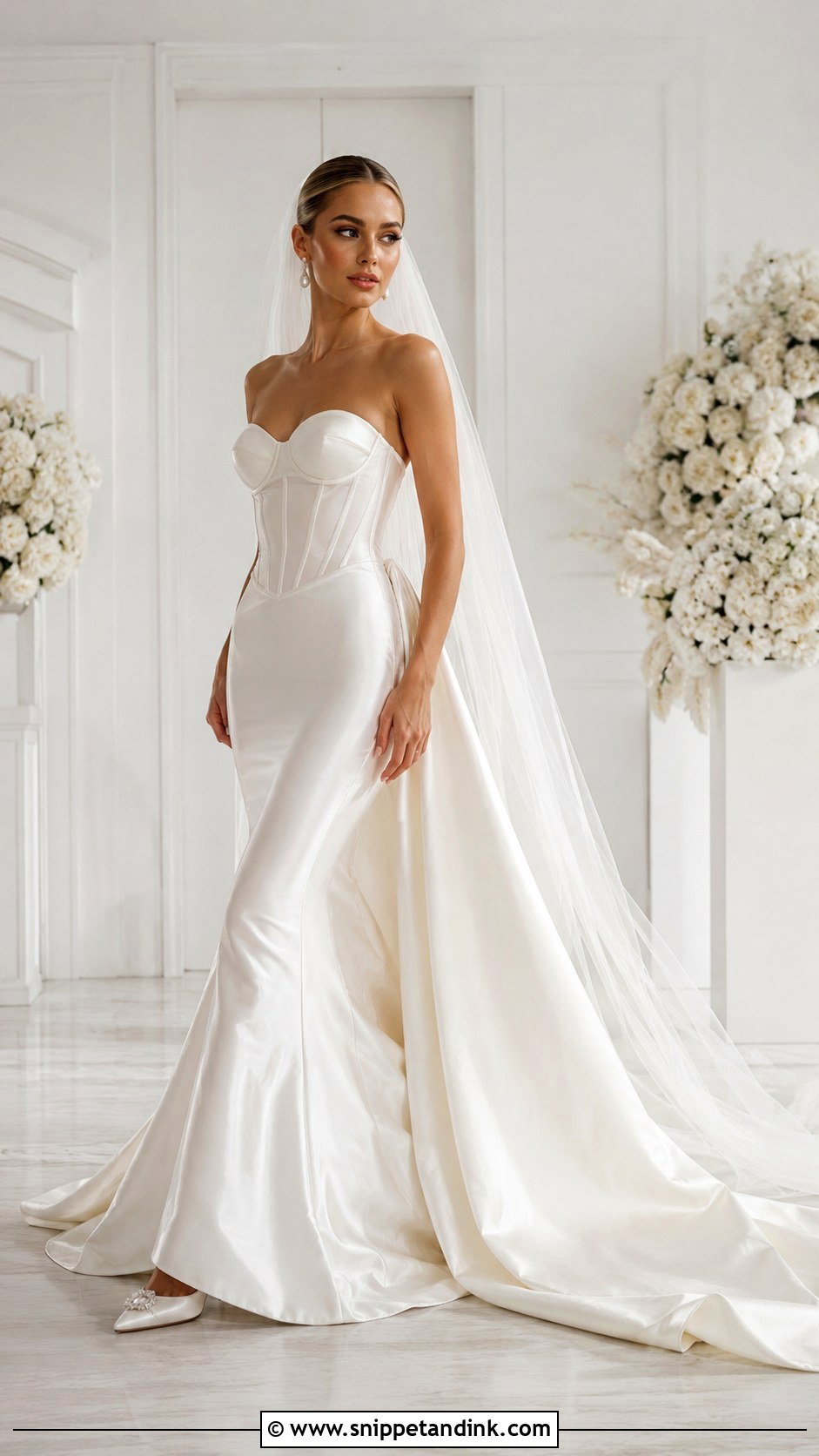
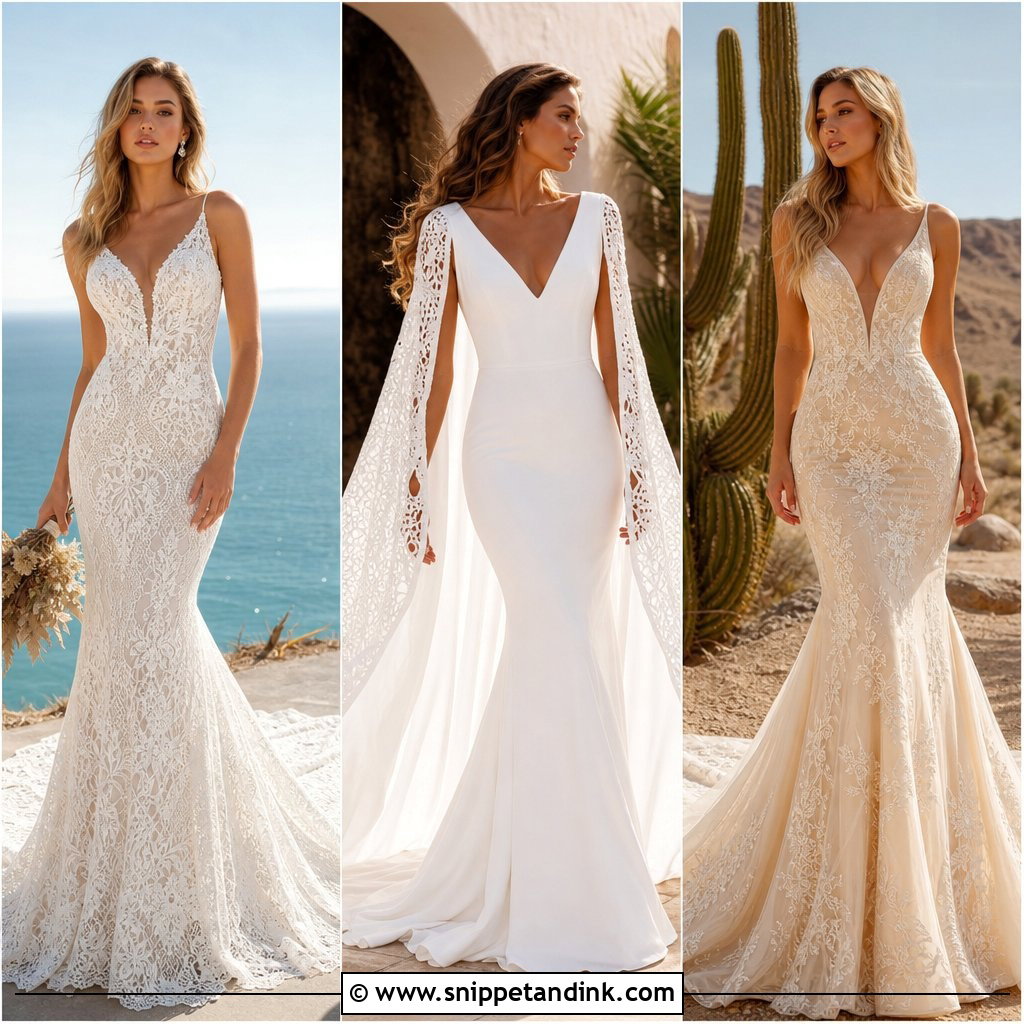
A strapless mermaid is fitted from bust to knee, so the bodice needs firm internal support and the flare must start where you can still walk. Lace appliqué softens it; crepe or satin sharpens it. Get the hem cut in your real wedding shoes, as an inch of difference turns into a trip on the stairs. If dancing matters, ask for a strong bustle or a detachable train. Mermaid trains are heavy and drag on a dance floor.
8. Square Neck Corseted Wedding Dress
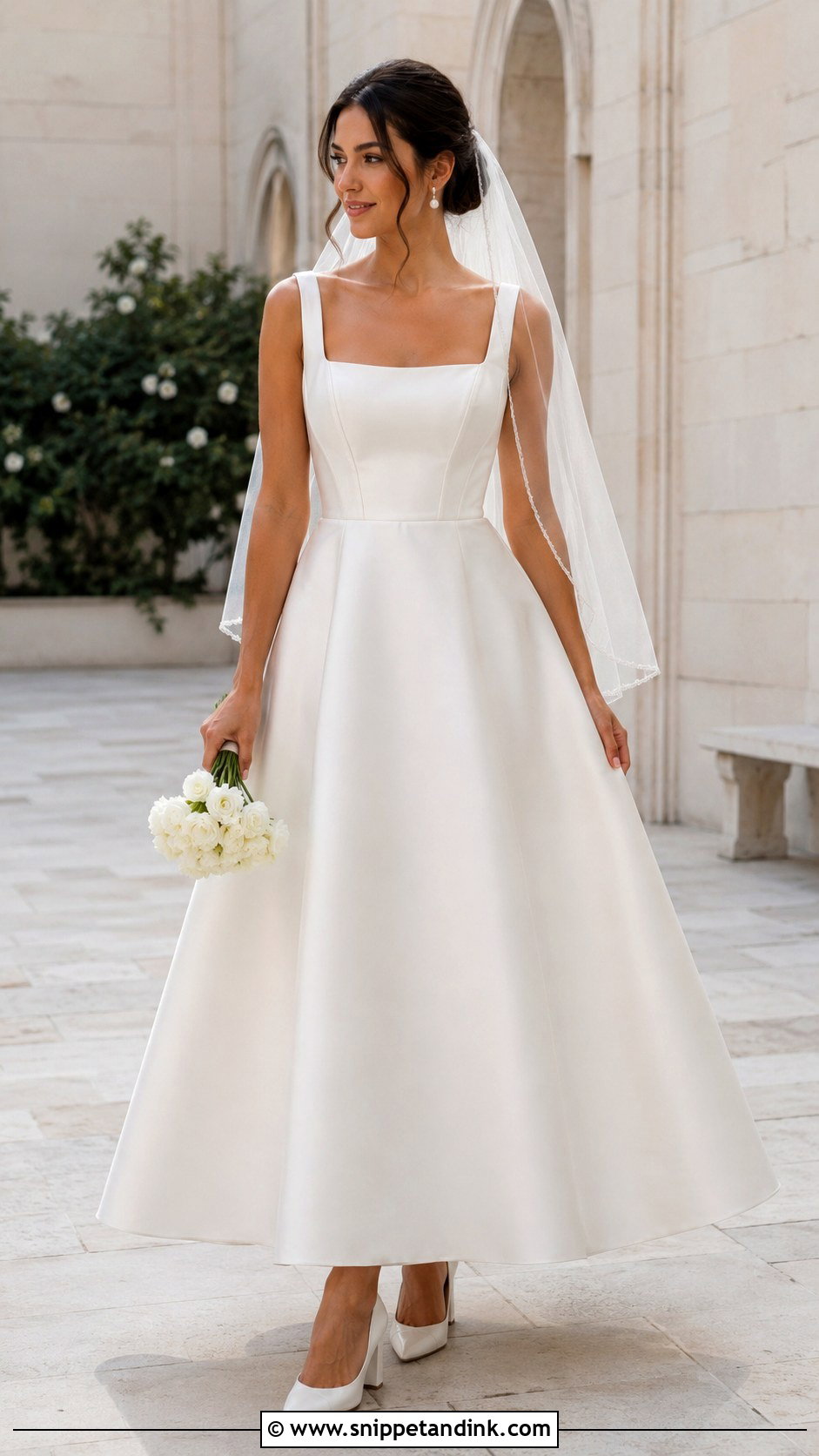
Square necklines are unforgiving if the straps are even slightly long: the edge lifts off the chest as soon as you lean forward. So shoulder and bust alterations come first with this dress. Wide straps, a fitted bodice and a structured A-line skirt suit both minimalist and traditional weddings. Satin keeps it clean; lace panels add texture. Pearl buttons down the back, a fingertip veil and block-heel pumps keep the geometry crisp.
9. Scoop Neck Corseted Wedding Dress
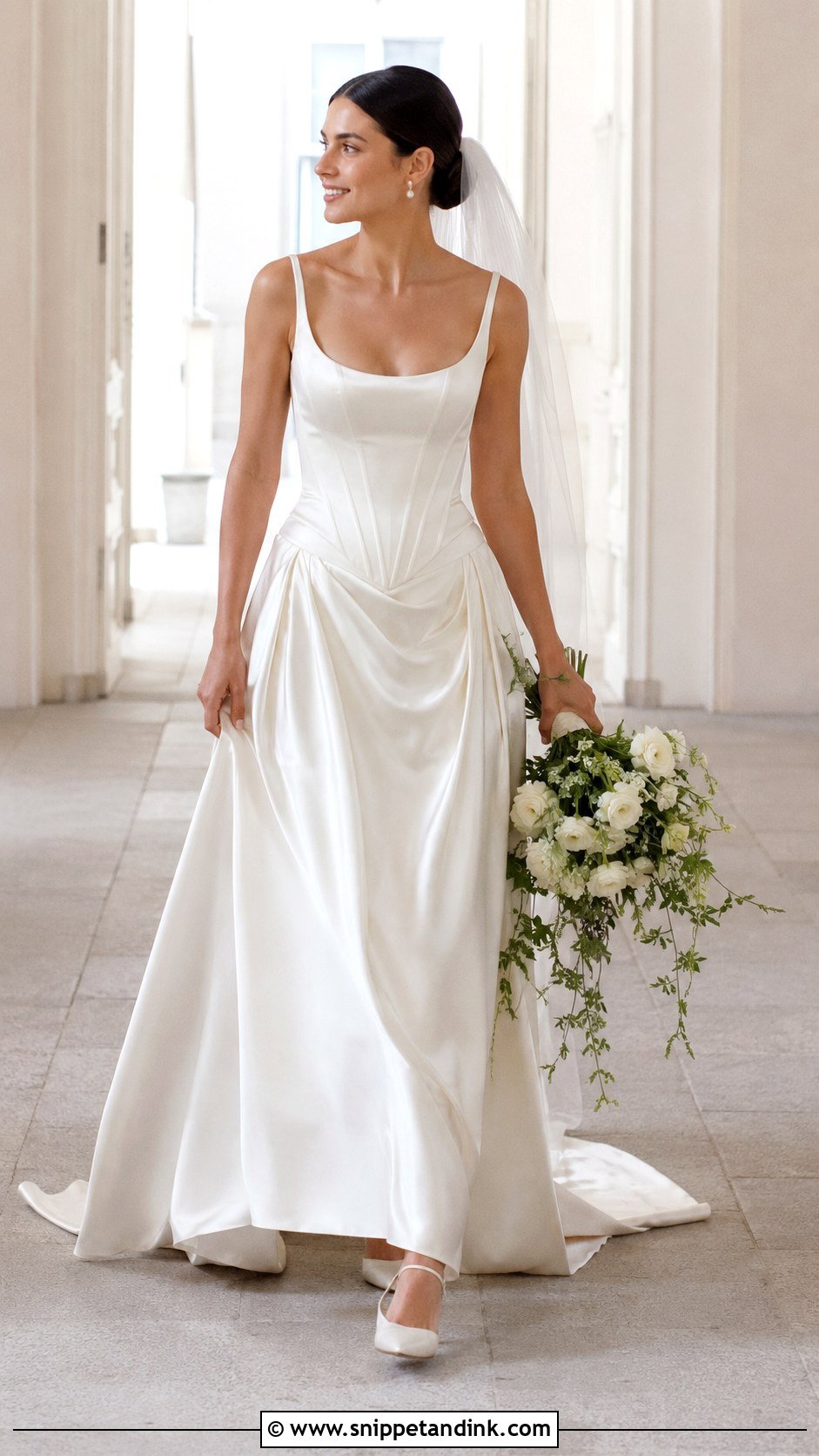
Scoop necks are kinder than they look. The curve flatters most busts and pairs well with visible seams, thin straps and a dropped or natural waist. Silk satin moves fluidly; Mikado holds a firmer line. The risk is a low back combined with a scoop front, which can make the bodice drift when you bend. Bodice alterations and a strip of fashion tape usually fix that. Round pearl earrings and a French twist echo the curve.
10. Pearl Corseted Wedding Dress
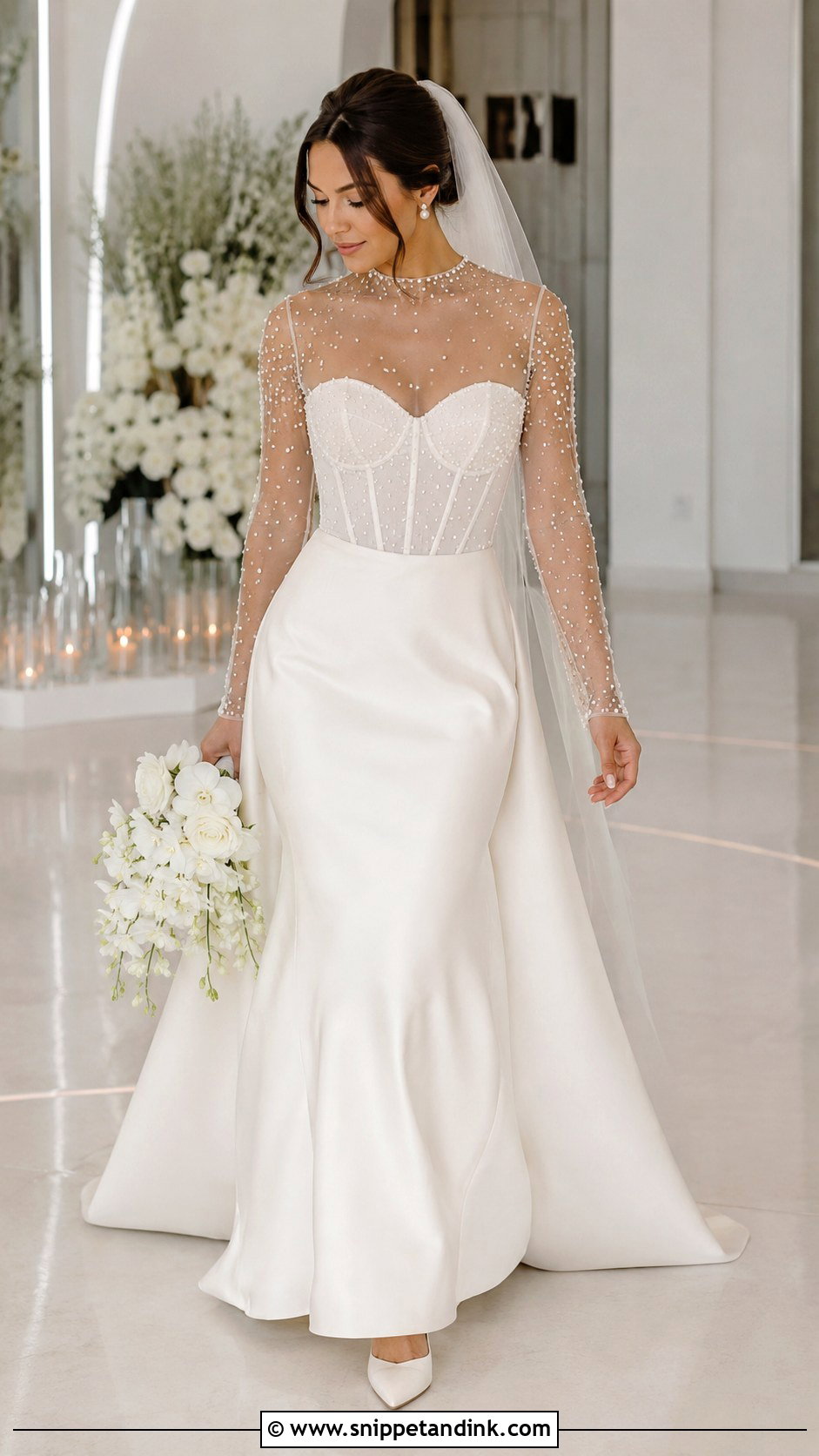
Pearls give dimension that catches soft light rather than sparkling. You can have them scattered over a sheer overlay or packed along the neckline and boning channels. Keep the skirt plain so the bodice reads clearly. I always ask the shop how the pearls are sewn and whether spares come with the dress, because a few will come loose by the end of the night, especially near the underarms. Beading there can also scratch, so run your arm along it before you decide.
11. Floral Appliqué Corseted Wedding Dress
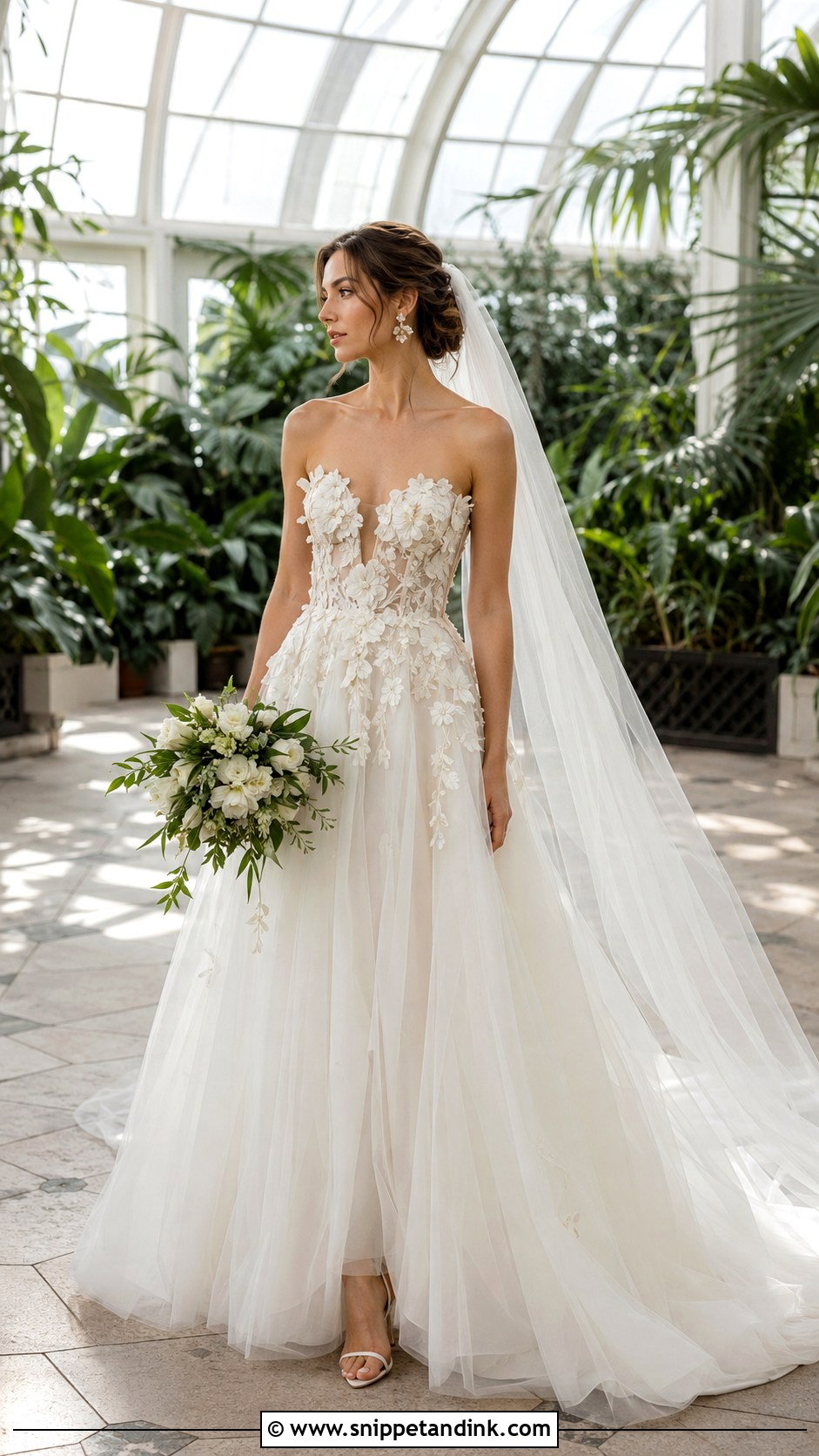
Raised flowers on a corset make a romantic dress without any sparkle. The placement I like starts dense at the neckline and scatters down across the waist onto the skirt, which joins the two halves. Bigger blooms add bulk on camera; small embroidered motifs stay subtle. Look at the dress from the side and back in the fitting room mirror, not just the front. Then have any loose petal edges tacked down, since they catch veil netting and bouquet stems.
12. Detachable Overskirt Corseted Wedding Dress
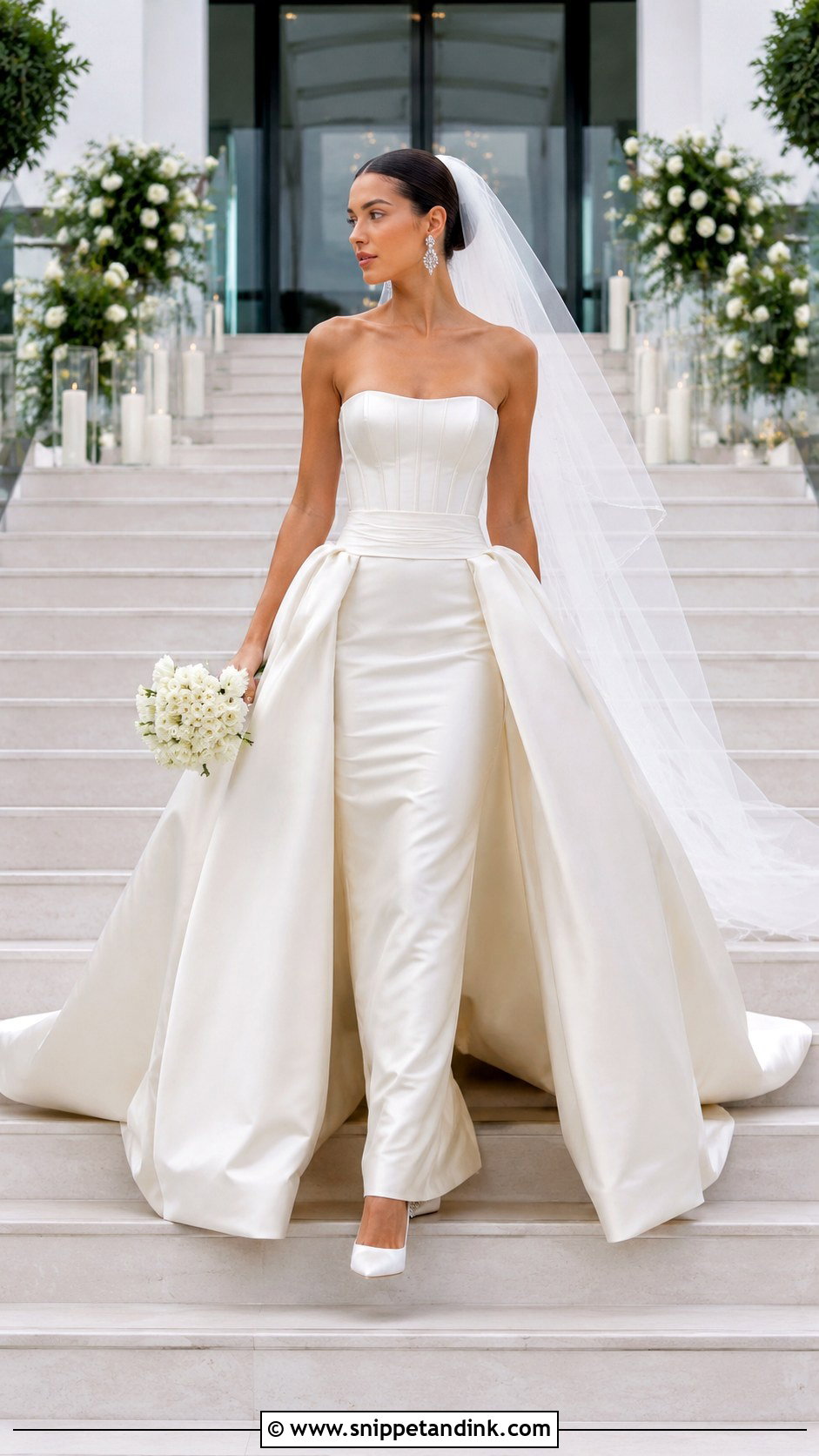
An overskirt turns one dress into two. A fitted column or mermaid underneath, a full satin or tulle layer for the ceremony, and a quick change after photos. Once it comes off, swap the long veil for a pearl comb. The attachment point is what I examine closely: hooks, snaps or a narrow waistband should be invisible in both versions and must not loosen the corset lacing when removed. Rehearse the change with your helper at least once before the wedding.
13. Exposed Boning Corseted Wedding Dress
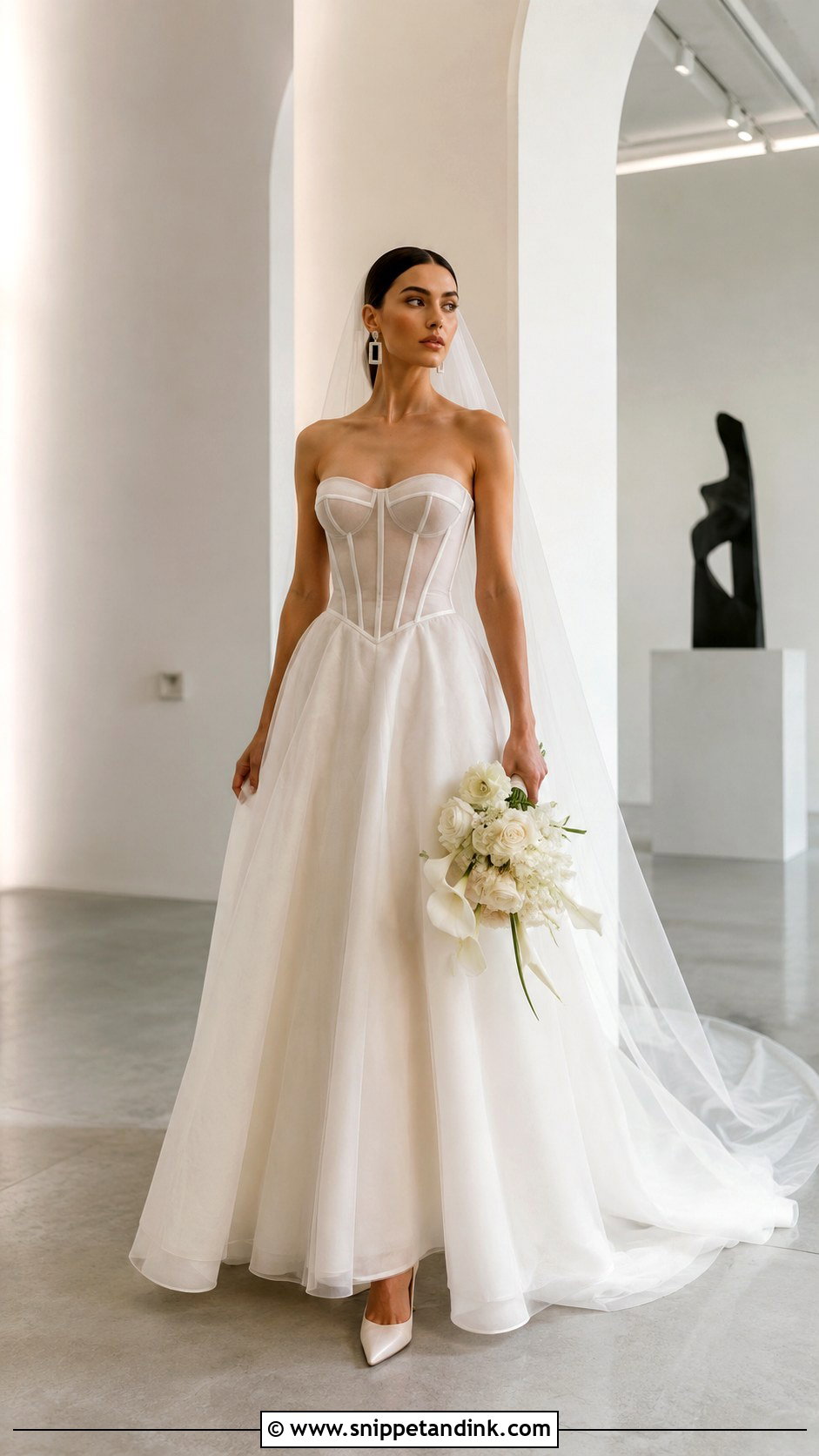
Exposed boning turns the corset’s structure into the design. Channels can be covered in satin, piped or set behind sheer tulle. A soft A-line skirt and plain neckline balance the architectural top. Sheer panels change under venue lights and camera flash, so test that before choosing your lining level. Good boning lies flat; bones that bow outward at the waist mean the bodice is too small or poorly cut. Cups, extra lining or a modesty panel can be added without spoiling the look.
14. High Neck Corseted Wedding Dress
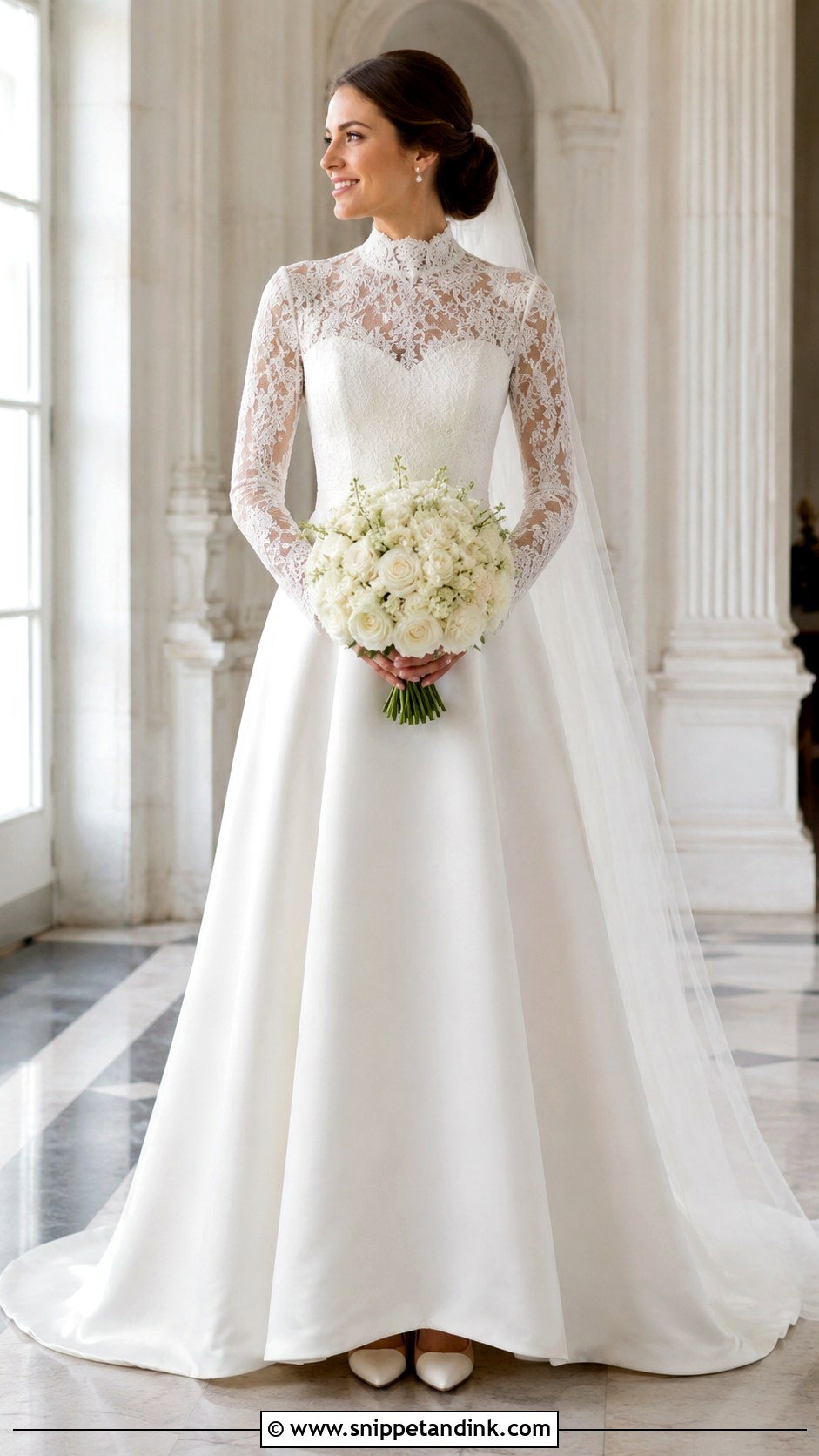
A high neck over a fully lined corset gives coverage and still a defined waist. Lace or illusion mesh at the neckline keeps it from feeling heavy, and an A-line skirt keeps the proportion graceful. No necklace needed; small earrings do it. The detail people forget is the collar edge. Turn your head side to side and sit: if the neckline rubs your throat, ask for soft binding inside. Attach the veil under a low bun so it doesn’t fight the collar.
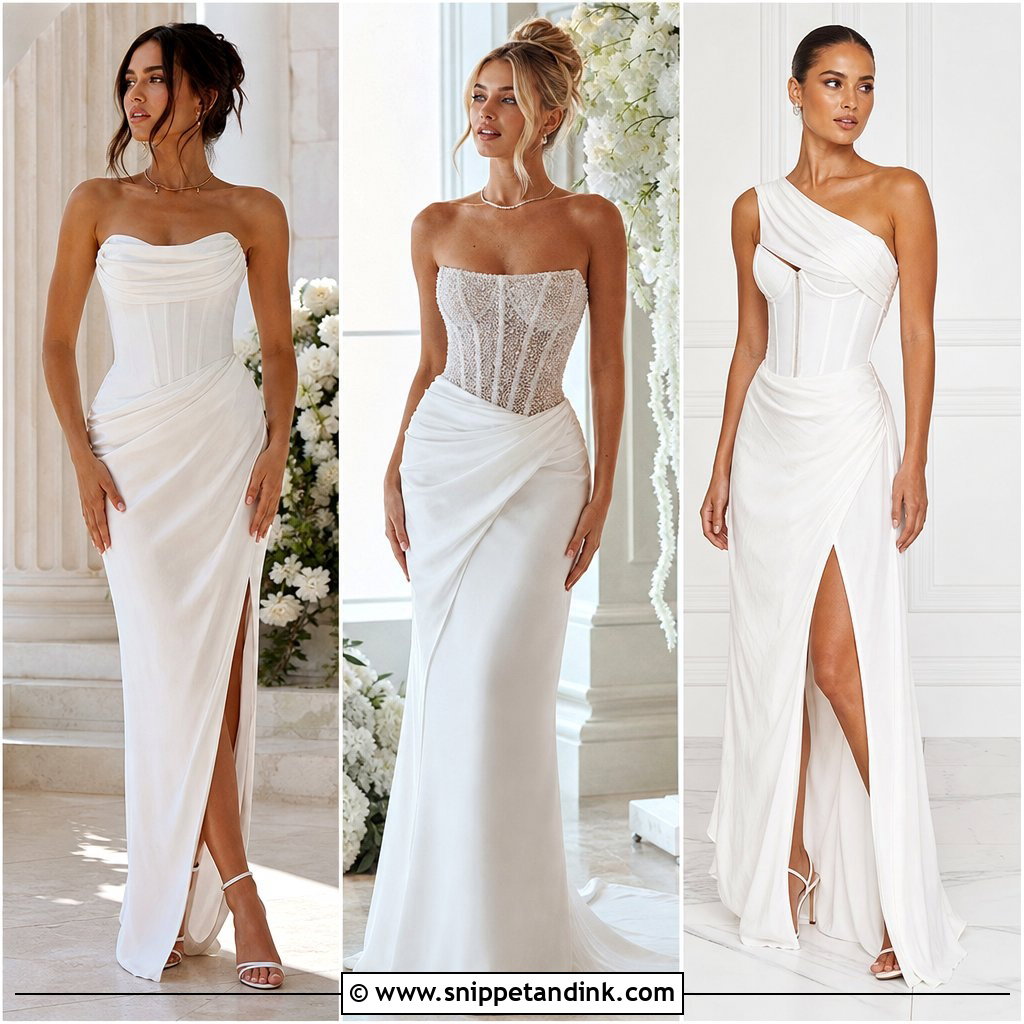
15. Tea Length Corseted Wedding Dress
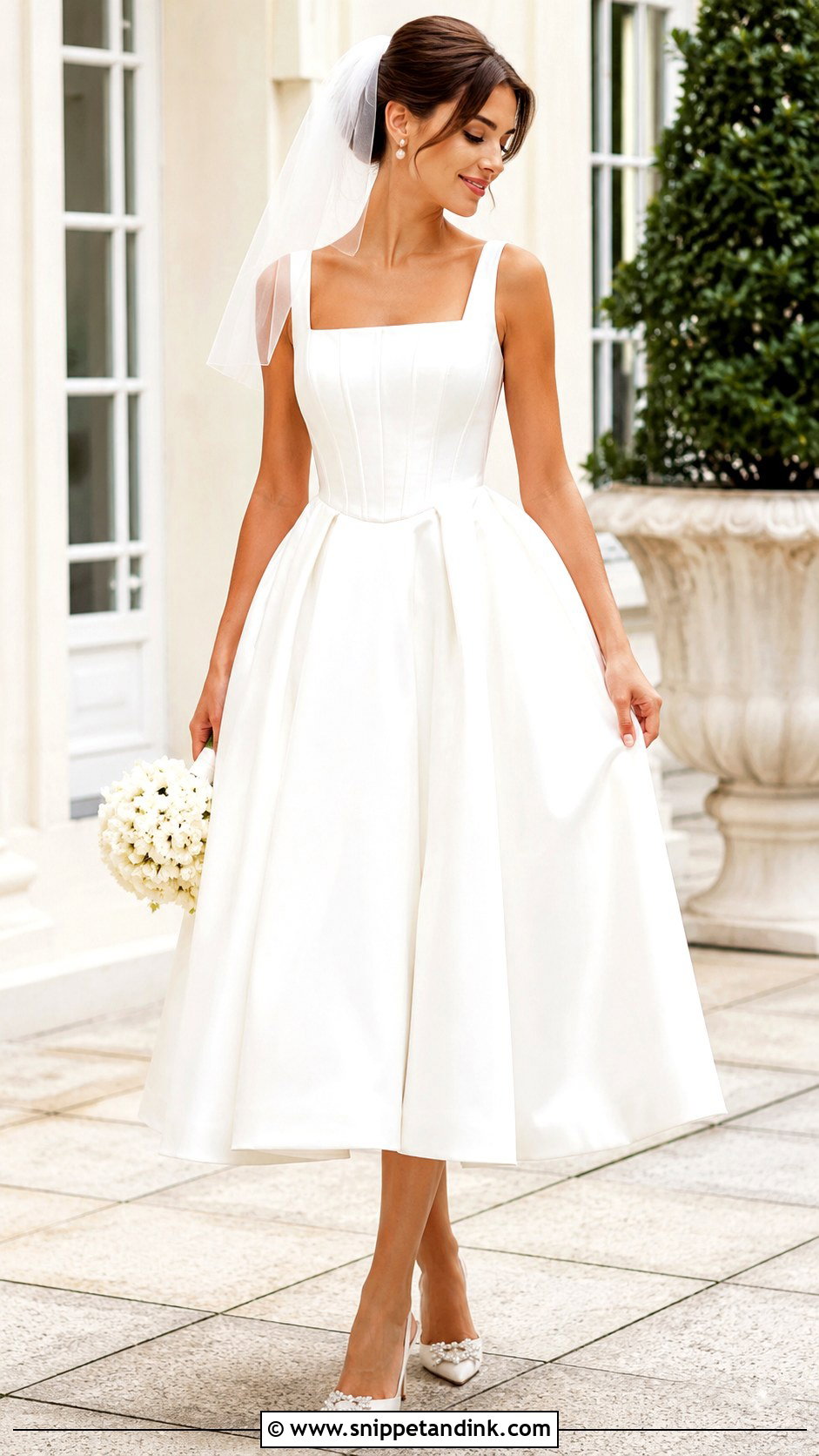
Tea length suits a small daytime wedding or a reception change. A corset with a sweetheart or square neckline and a full skirt between knee and ankle gives a vintage proportion, so the shoes become a real feature. Ivory slingbacks, embellished flats or block heels all work. Keep hair modern, a soft bob wave or tidy updo, so the look doesn’t tip into costume. Ask for pockets; on a shorter skirt they’re easy to add and you’ll use them.
16. Minimal Crepe Corseted Wedding Dress
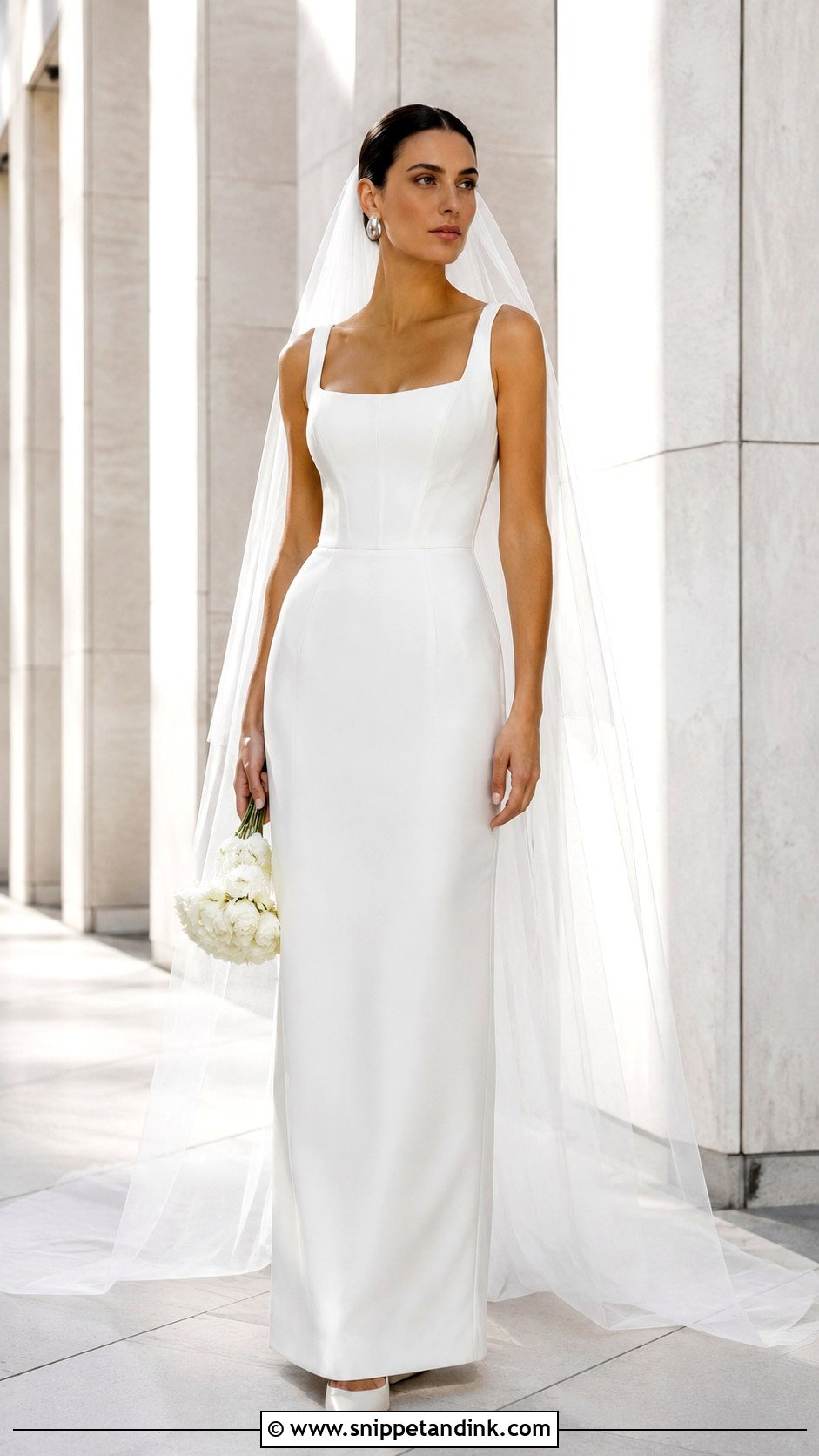
Crepe shows everything underneath it. That’s the appeal and the challenge: a crepe corset gown looks clean and modern, but any lumpy seam, visible bone end or underwear line shows through. Princess seams and internal boning keep it smooth. A column or soft fit-and-flare skirt continues the line, with a long sheer veil and a single-flower bouquet. Check the bodice by a window in daylight at your fitting; shop lighting is flattering and hides ridges.
17. Tulle Princess Corseted Wedding Dress
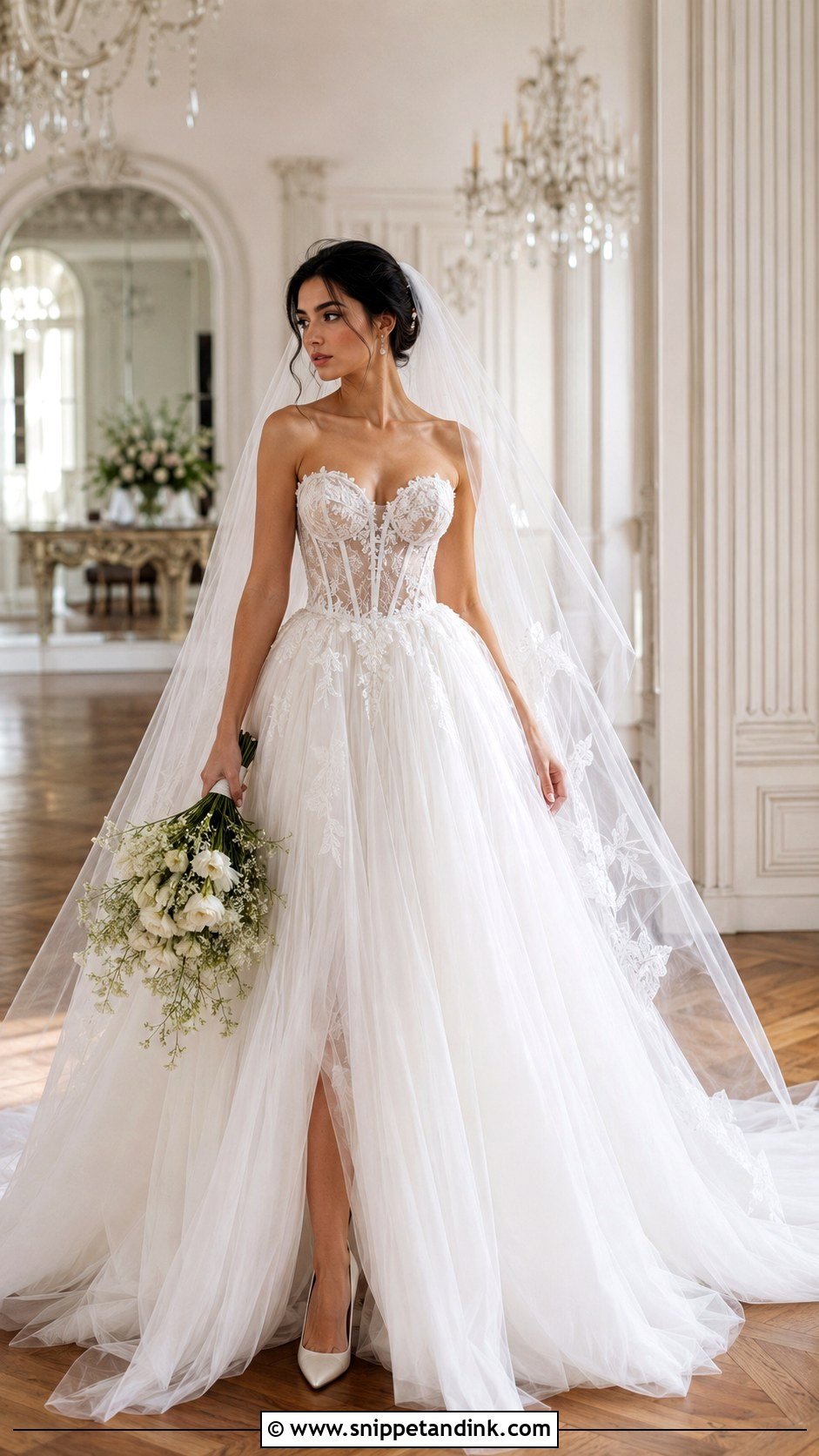
Princess tulle against a firm corset gives the most contrast of any dress here. Ask for a skirt built from lightweight layers rather than a heavy underskirt, because the weight goes straight to your waist. Keep the bodice detail light and the lower half soft. Two practical questions for the shop: can the tulle be shortened from the waist or only the hem, and does the bustle catch every layer? Multi-layer trains often have one layer left trailing after bustling.
18. Jacquard Corseted Wedding Dress
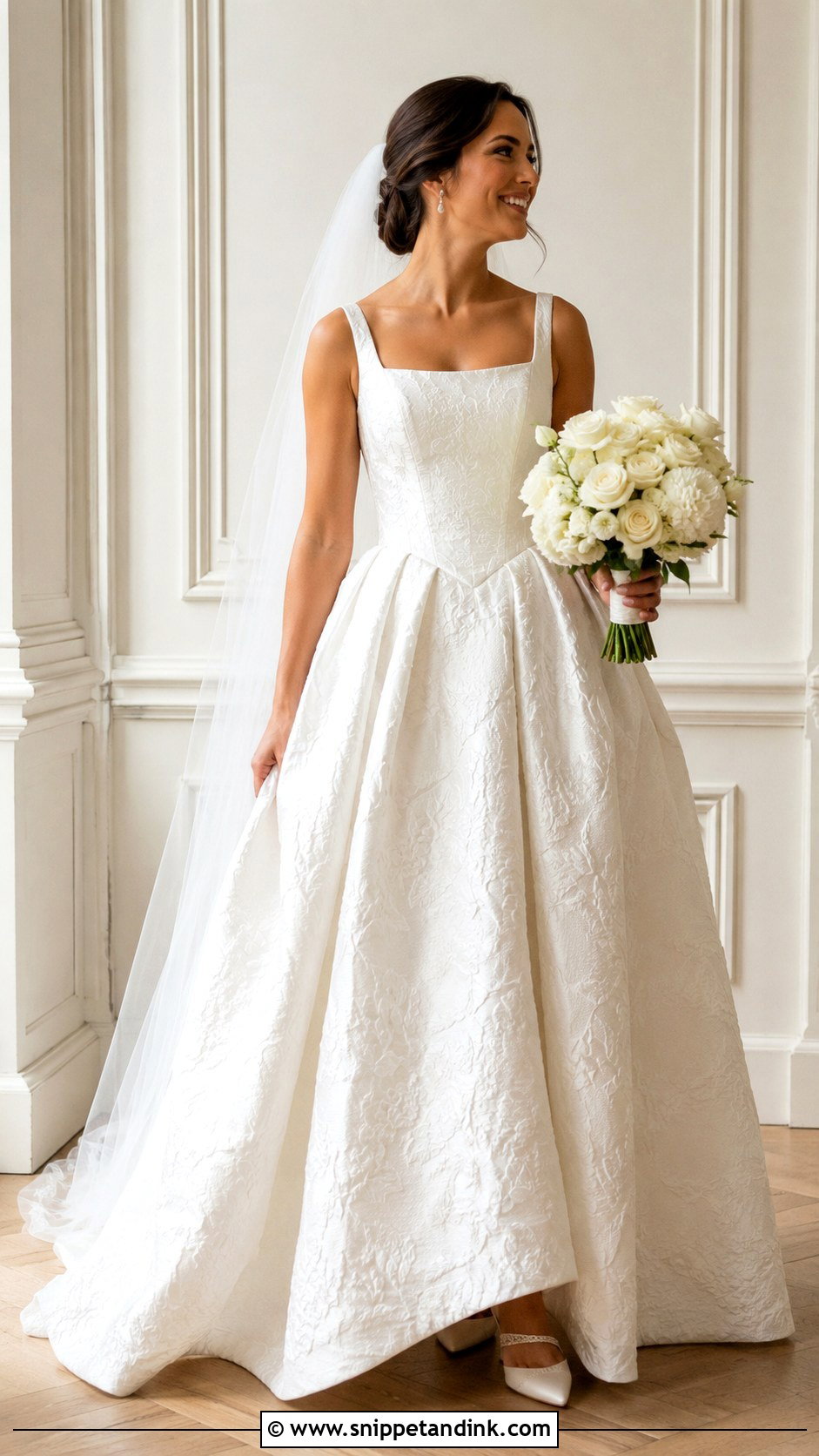
Jacquard fabric adds woven pattern without any beading, so the fabric itself is the decoration. A strapless or square neck lets it show, and a Basque waist with a full skirt makes it formal. Jacquard is heavier than chiffon or light satin, so try the full dress on early. A waist stay, a petersham band sewn inside at the waist, takes much of the weight off your hips. Ask that the pattern be matched at the centre front seam; a mismatched motif is obvious in close-ups.
19. Cape Sleeve Corseted Wedding Dress
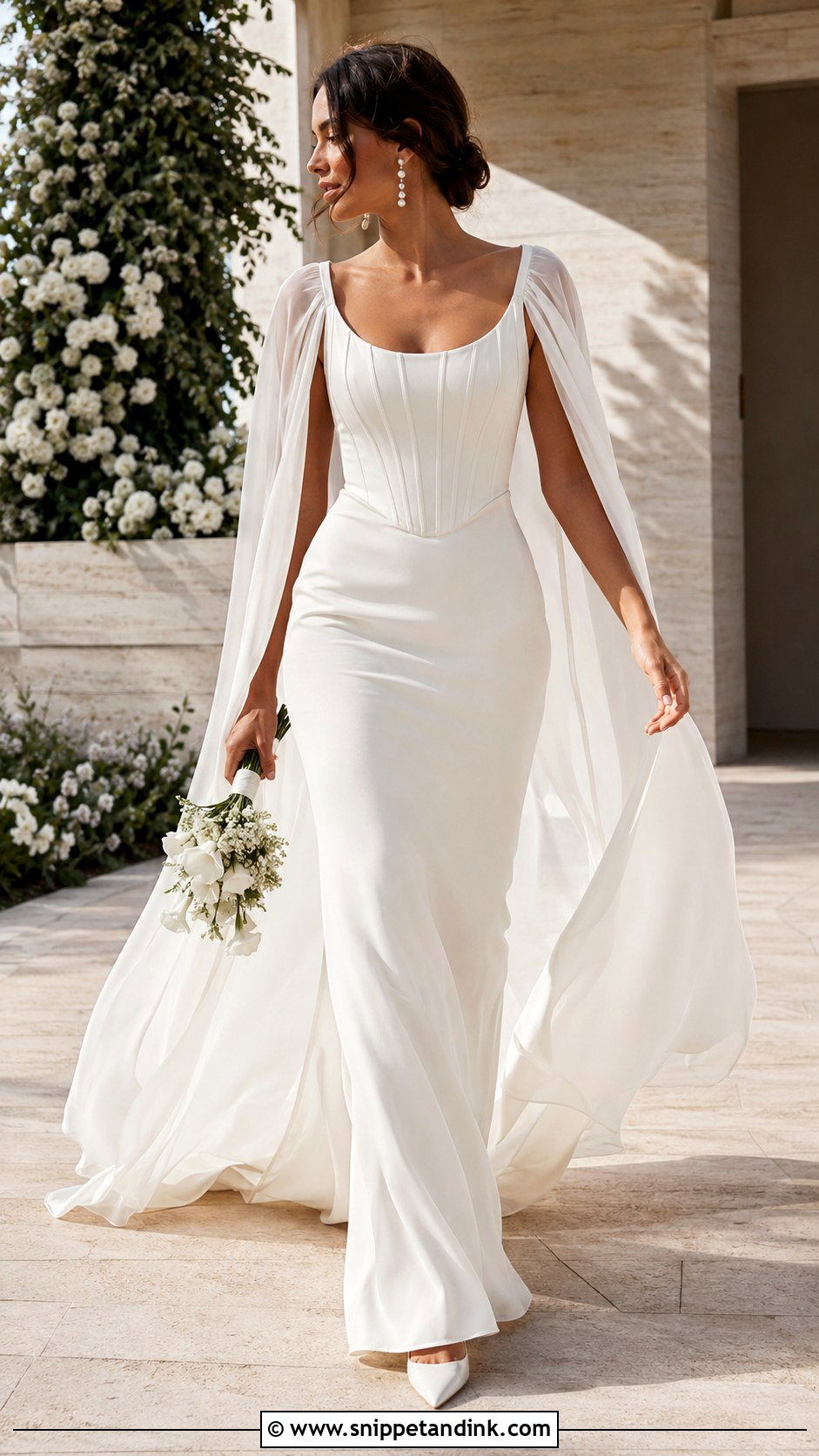
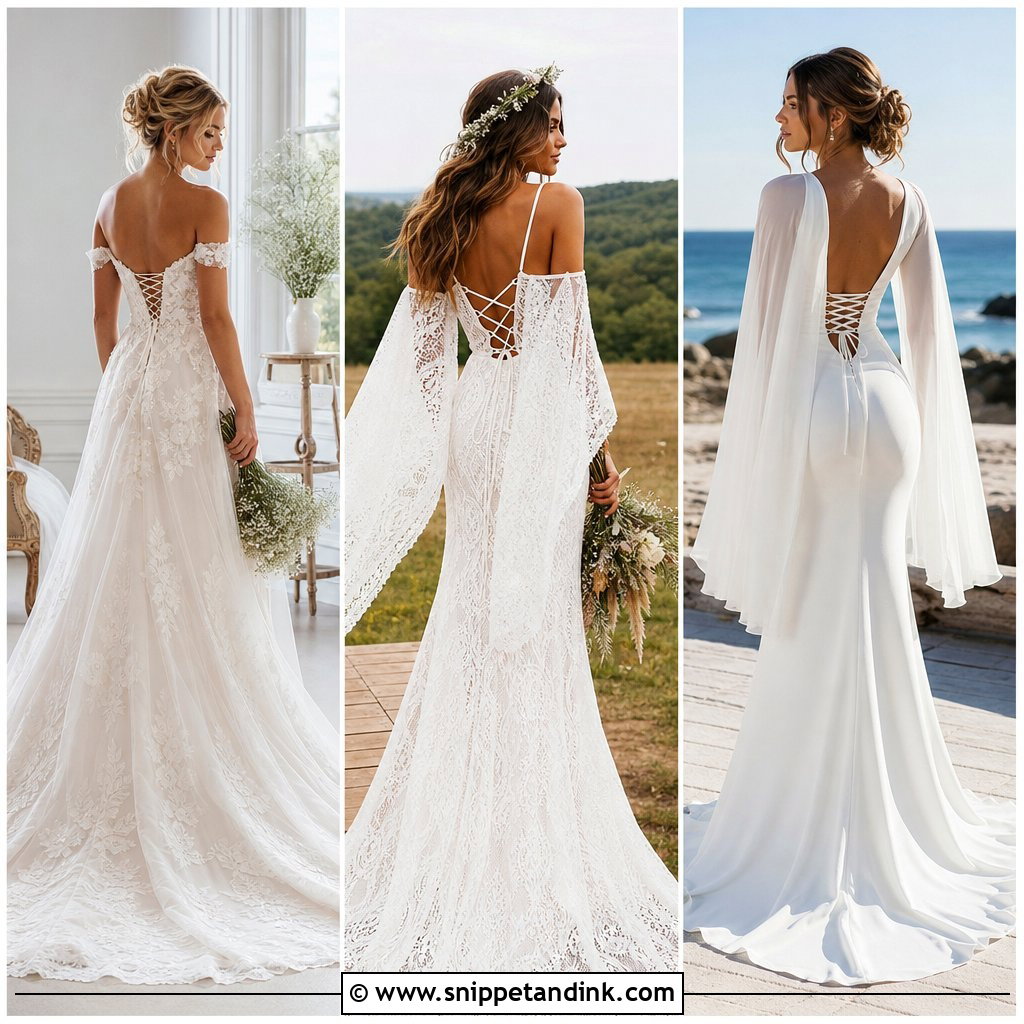
A cape adds movement and covers the shoulders for the ceremony, then comes off for the party. Choose a sheer shoulder cape, chiffon cape sleeves or a full-length detachable one over a fitted satin or crepe gown. Keep the neckline clean so the cape falls smoothly, and go for a sleek updo so it doesn’t tangle in your hair. Outdoors, test it in wind. A long cape becomes a sail, and secure shoulder attachments are what keep it from dragging the bodice sideways.
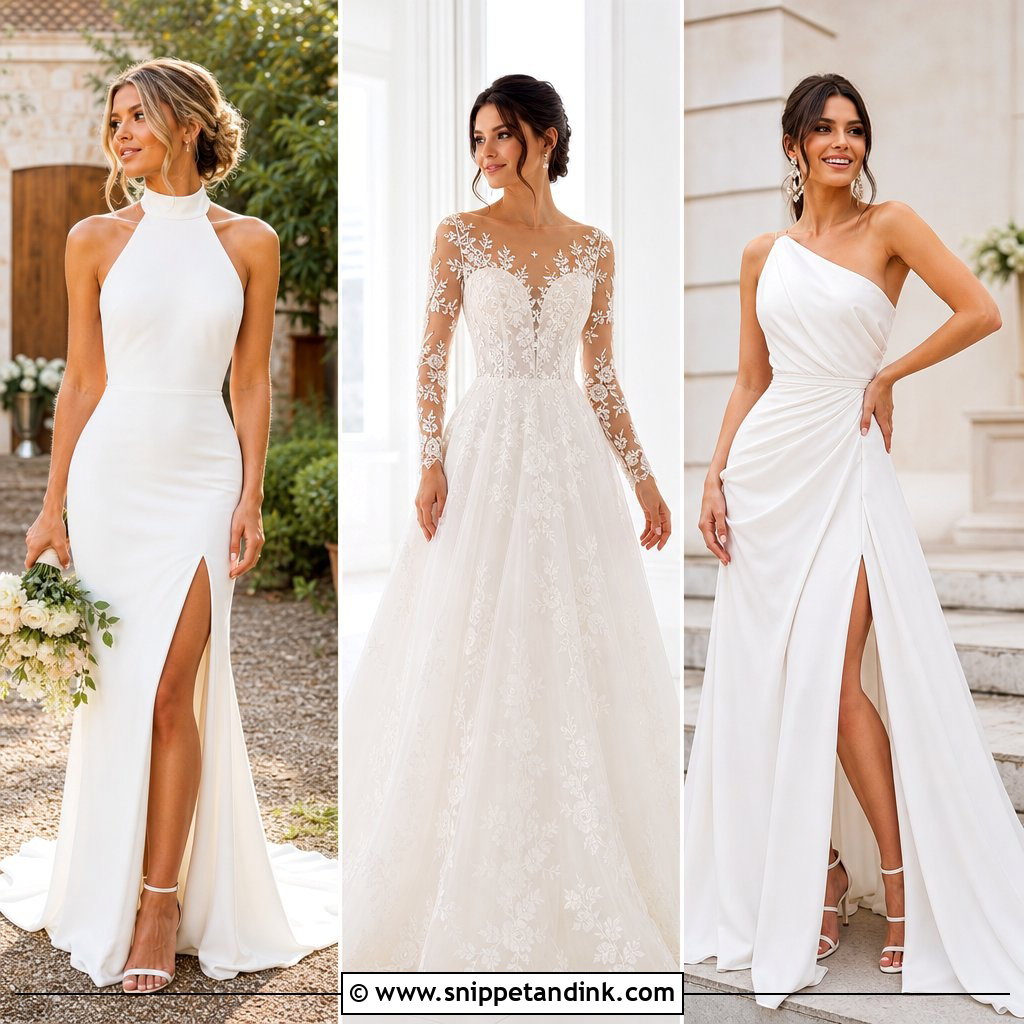
20. Plus Size Corseted Wedding Dress
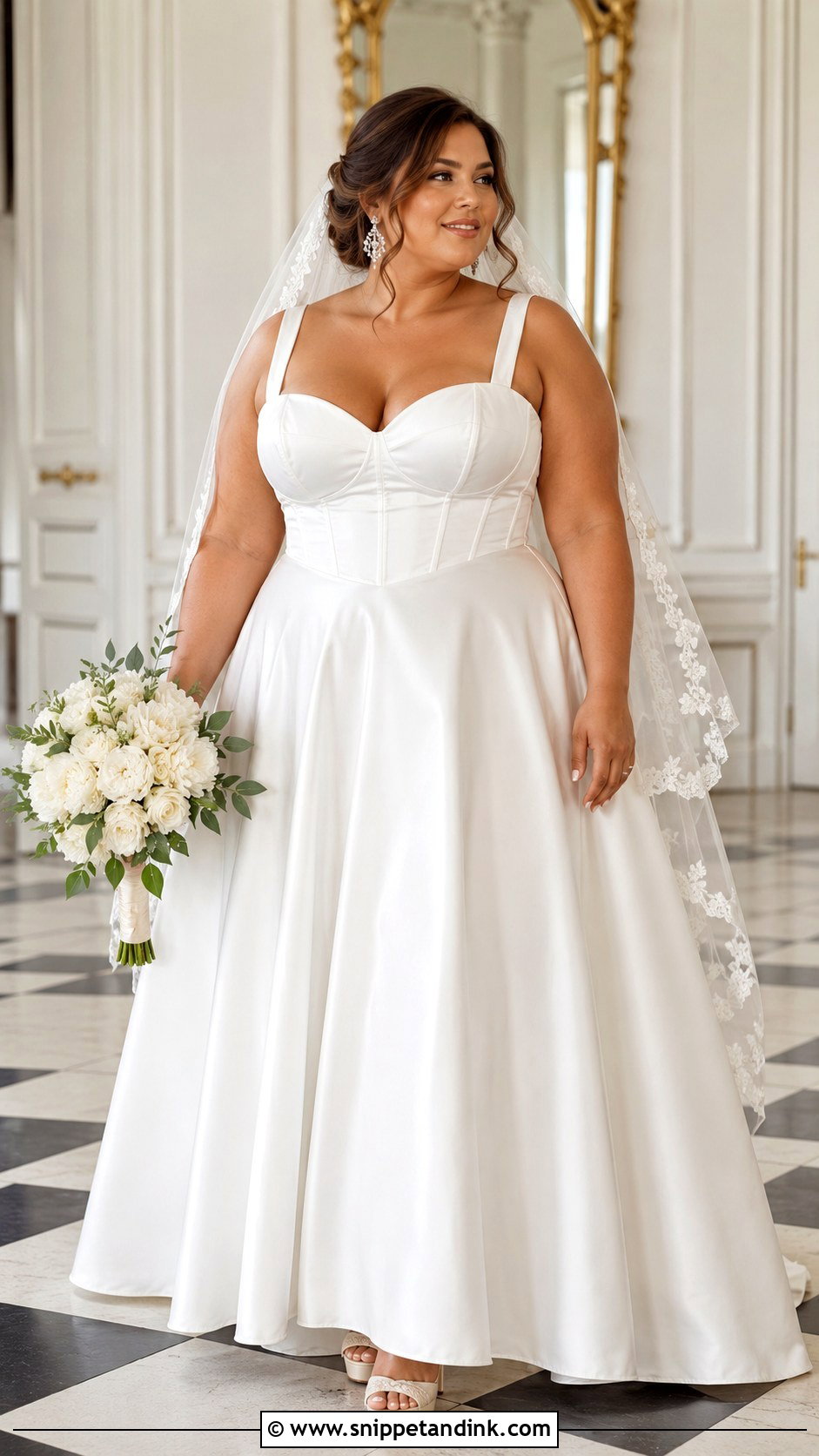
On a fuller figure, the corset should support and shape you without squashing anything flat. Strong internal boning, real cups, wider straps if you like them, and a lacing or carefully tailored back all help. An A-line or ball gown skirt balances the bodice and lets you move. Choose your neckline for support and comfort, not someone’s rule list. At every fitting, sit, breathe deeply, raise your arms and walk. Alter to your real measurements, not the number on the label.
A Fitting Calendar for a Boned Gown, Counted From the Wedding
Corseted dresses need more alteration time than a soft slip, because changing the bodice means opening up boning channels and lining. Timings vary by shop and season, but this is the rhythm I plan around.
- Around nine to six months out: order the dress. Made-to-order gowns often take several months to arrive, and spring and summer dates fill seamstresses’ diaries fast.
- About three months out: first fitting. The big changes happen here, such as taking in the bodice, setting the waist point and cutting the hem in your shoes.
- Six to four weeks out: second fitting. Check the corset seated and moving, try the bustle, and bring the veil and jewellery.
- One to two weeks out: final fitting and collection. Bring whoever will lace you in on the morning, and have them do it in front of the seamstress.
Corset alterations usually cost more than hemming, because each change to the bodice is hand work. Ask for a quote at the first fitting so nothing comes as a surprise.
One last point: avoid big diet or training changes in the final month. A lace-up back can absorb a small shift, but a closed corset fitted three weeks out will feel very different if your body changes a lot after that.
Structure Should Never Cost You a Deep Breath
A corseted gown can be a formal satin ball gown, a soft lace A-line or something more unusual with a Basque waist, exposed boning, a cape or a removable skirt. Whichever way you lean, good alterations and real support matter more than the label. Wear your actual shoes and undergarments to every fitting and practise sitting, walking and lifting your arms. Let accessories follow the gown. Then pick the dress that feels secure, so you can forget about it once the music starts.
You'll Like These Ideas:




Leave a Reply