
Ball gowns are the shape I get asked about most at first appointments, and the Vera Wang wedding dress versions show how far one silhouette can stretch. The volume can come from airy tulle, polished satin, sculptural flowers, lace or an architectural corset, and each of those moves and photographs differently. Before you fall for a skirt, think about the venue, the season and how much you plan to dance, because a gown that fills a ballroom can swallow a small garden. I plan accessories around the skirt, not the other way round: a cathedral veil adds grandeur, while pearl earrings, pointed pumps and a sleek hairstyle keep an elaborate skirt in check. The twenty gowns below run from classic ivory to black accents, across very different necklines and fabrics.
What a Full Skirt Asks of You on the Day
A ball gown is heavier than it looks on the hanger once you add the skirt layers, a crinoline or petticoat and a train, and satin or mikado versions weigh the most. At a first try-on I ask brides to stand in the gown for ten minutes and walk the length of the salon twice. If your lower back or shoulders complain by then, they will be loud by the speeches.
Small practical things nobody mentions at the salon
- Doorways and cars: a full skirt needs the wider back seat or a larger car, and someone to feed the skirt in after you sit.
- Restroom trips: plan on a bridesmaid helping, or ask about a slip-style skirt holder you step into backwards.
- Bustle style: an over bustle lifts the train in pickups on top, an under bustle folds it beneath. Count the hooks or ribbons and have whoever will do it practice at the final fitting.
- Dancing: if you won’t bustle, ask for a wrist loop sewn to the train so it travels with you.
A built-in crinoline is simpler on the day; a separate petticoat lets you swap to less volume for the reception. I lean toward the separate one for long, warm days.
1. Strapless Tulle Vera Wang Ball Gown
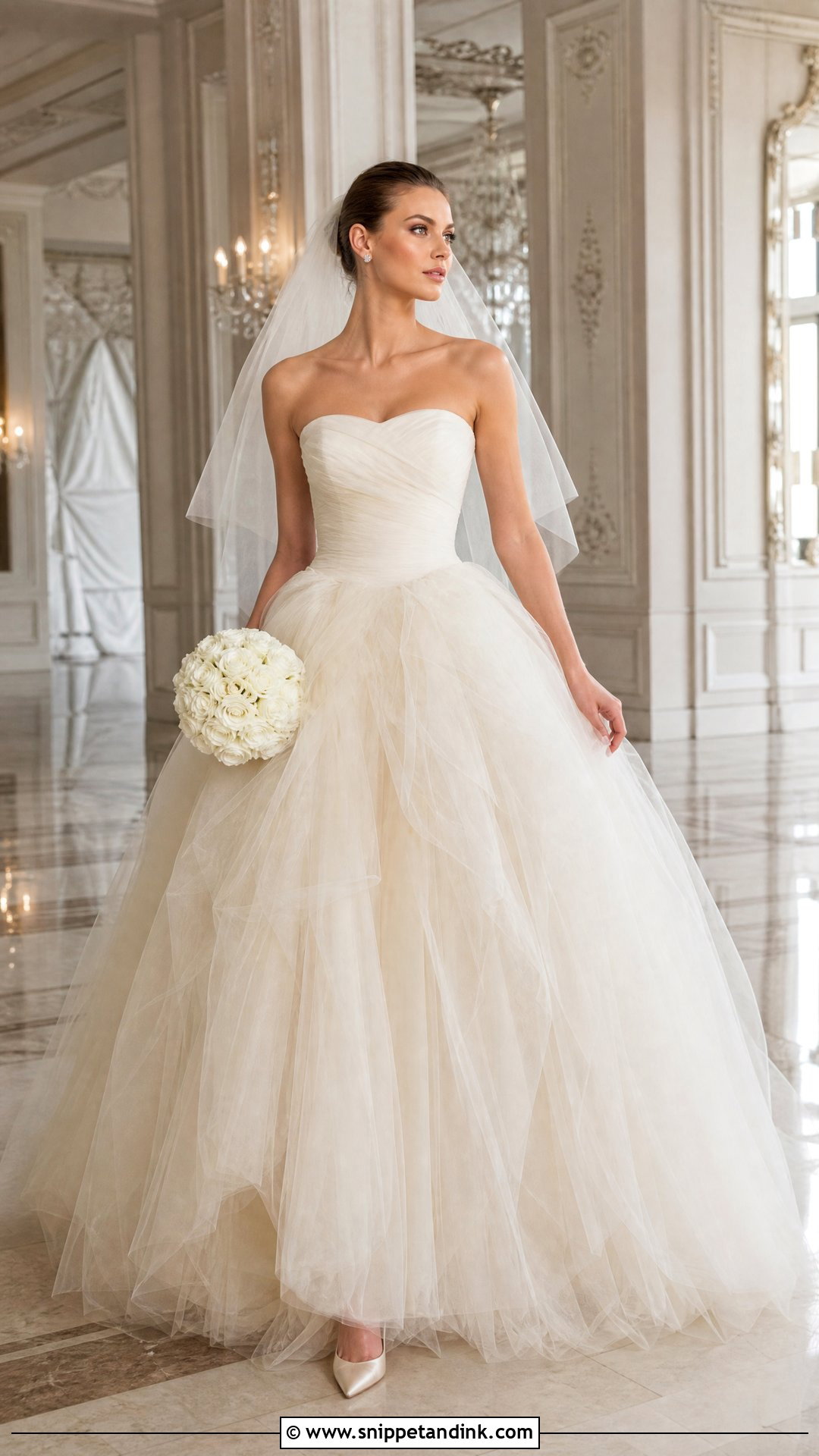
The first thing I check on a strapless tulle gown is whether the bodice holds you up on its own. A good one has boning and an inner waist stay, so you are not tugging at the neckline every time someone hugs you. Layers of soft ivory tulle give the sweeping shape while staying light enough to walk and dance in, though tulle snags on rough stone and on velcro shoe straps, so watch the hem. I’d finish it with a fingertip veil, crystal studs, pointed satin pumps and a neat chignon that leaves the neckline clear. For a garden or ballroom, a compact bouquet of white roses and greenery keeps the proportions right. Strapless tulle, layered, draped and textured, is something the label returns to season after season.
2. Sweetheart Vera Wang Ball Gown
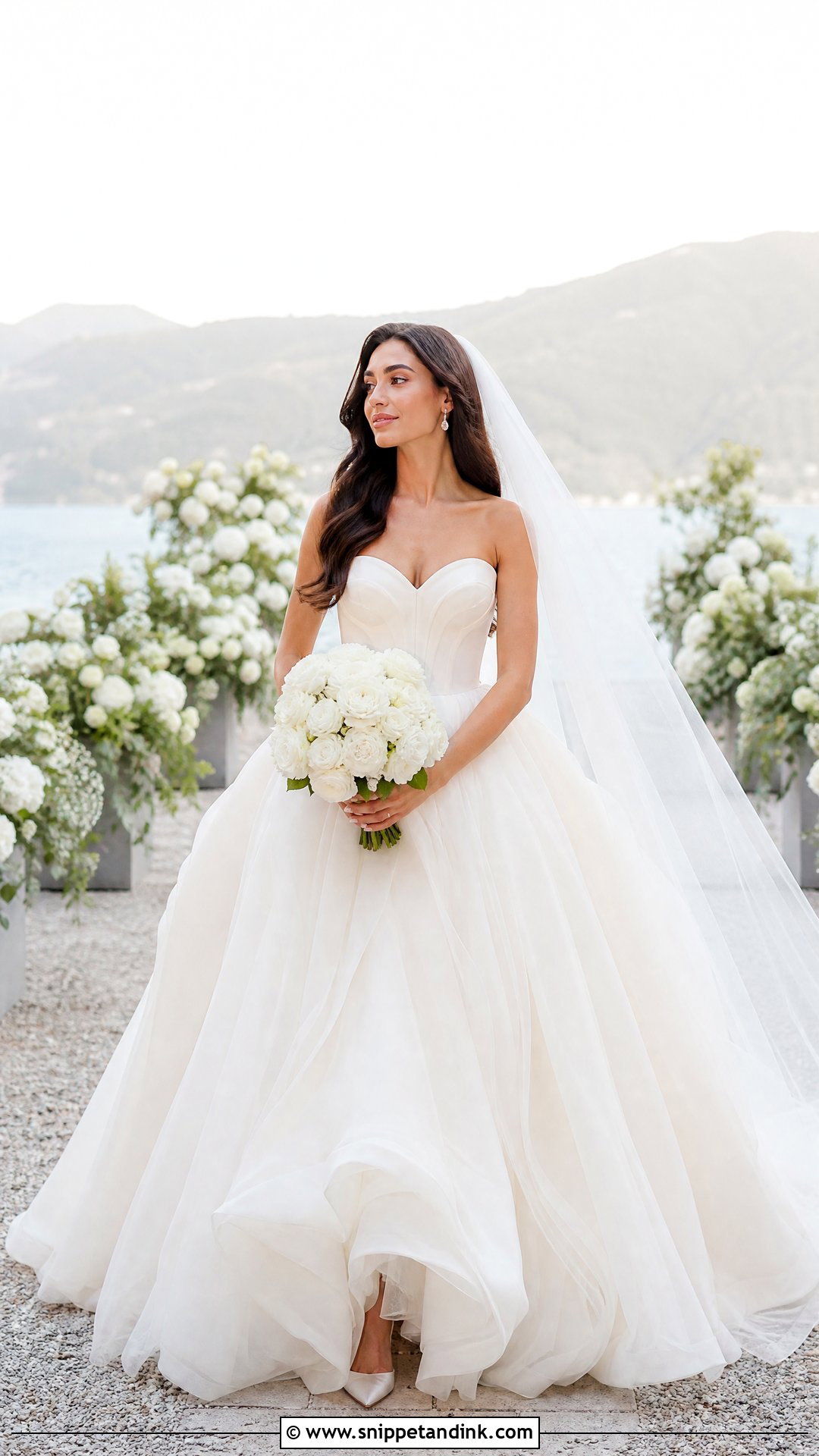
A sweetheart neckline softens the top of a ball gown and gives you definition at the waist. I usually steer brides toward a gentle curve rather than a deep plunge; a deep sweetheart on a big skirt tips the proportions, and it shifts when you raise your arms. Tulle or organza in the skirt adds movement without fighting the neckline. Style it with a delicate pendant, pearl drop earrings, a sheer cathedral veil with a narrow raw edge, ivory pumps and a small white bouquet. Soft waves suit an outdoor ceremony, while a low bun reads more formal. The label’s ball gown range has included several princess silhouettes with sweetheart necklines, many of them with open backs.
3. Basque Waist Vera Wang Ball Gown
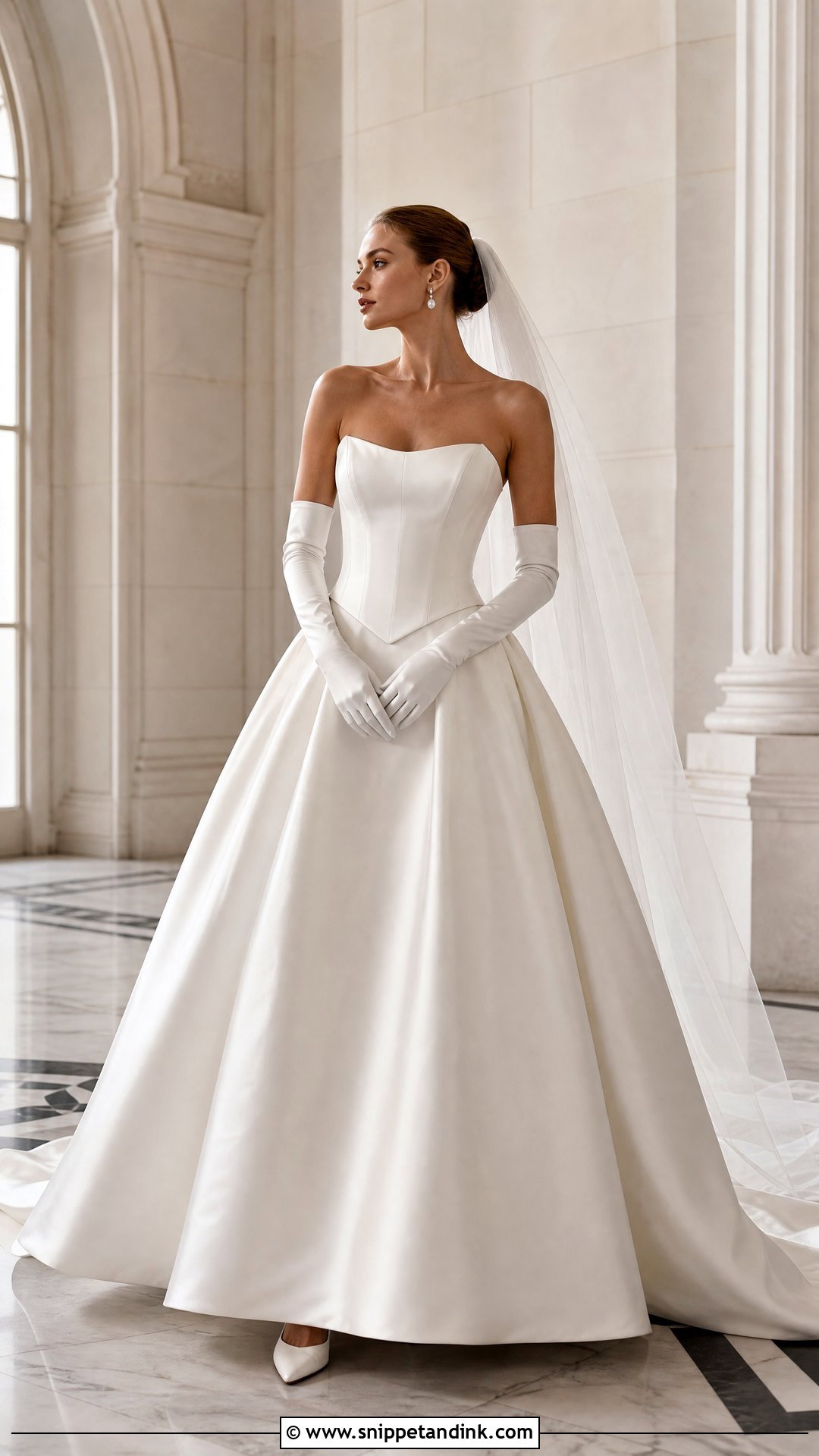
A basque waist dips into a V below the natural waistline, which lengthens the torso and gives the regal shape this whole list is built on. That point has to land correctly on your body. On a short torso it can sit too low and make the skirt look like it starts at your knees, so we often raise it at alterations. Satin or silk faille shows the construction cleanly. Elbow-length gloves, pearl button earrings and closed-toe pumps match the formality, and a long veil anchored under a sleek bun keeps the headpiece from crowding the bodice. Keep the flowers simple with calla lilies or white tulips. Satin versions with lace detailing along the skirt have appeared in recent collections.
4. Drop Waist Vera Wang Ball Gown
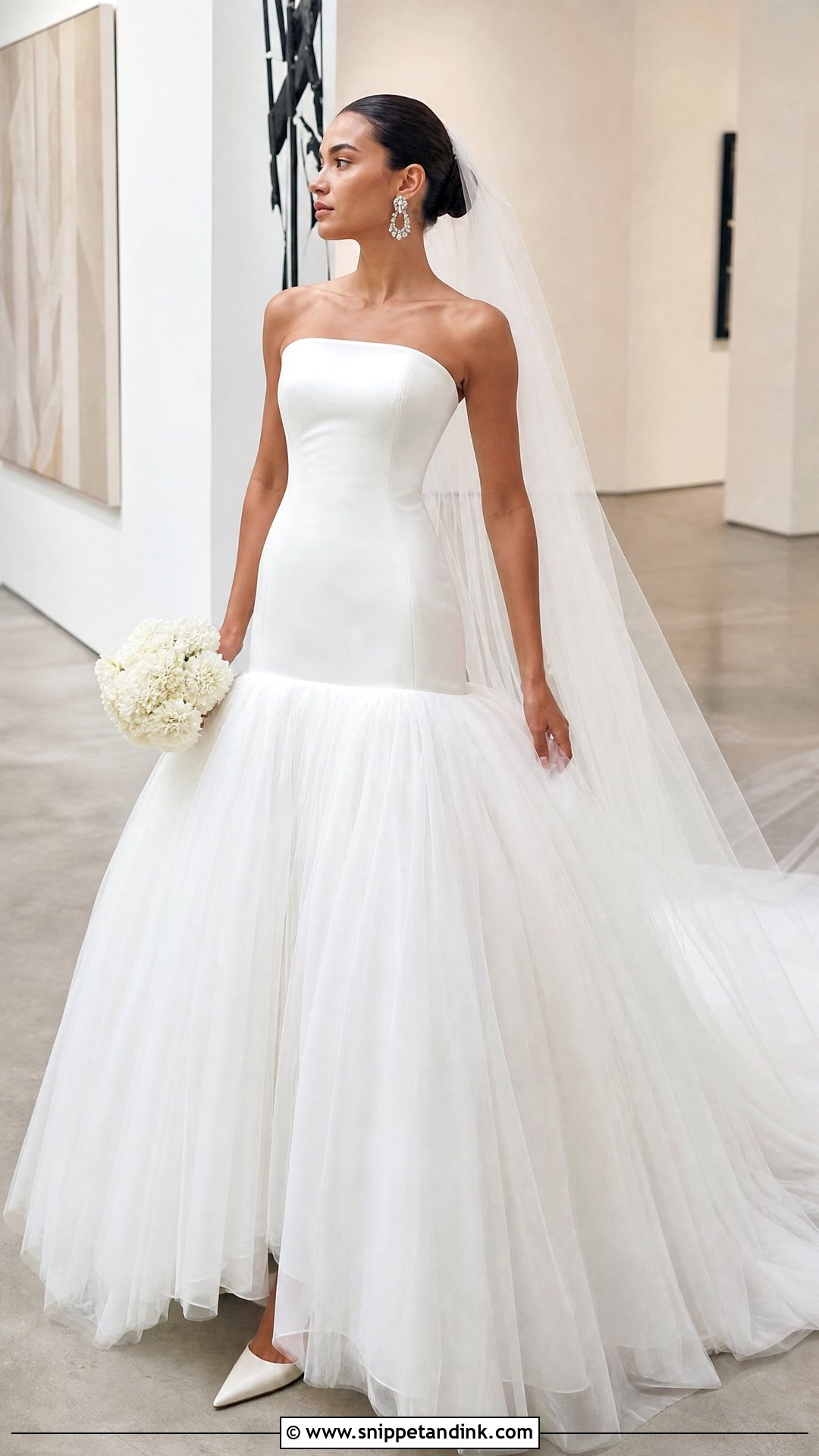
Sleek through the torso, then volume from the hips. A drop waist flatters long-waisted brides and can shorten petite brides with shorter legs, so try it before you decide from a photo. The extended bodice has to be fitted precisely, because a dropped seam that sits even slightly off pulls and wrinkles the moment you sit down, which is why I make brides sit in it at every fitting. A tulle or organza skirt adds softness below the hips. Crystal earrings, pointed heels and a narrow cathedral veil keep the lines clean, with a polished ponytail or smooth low bun. Skip the cascade bouquet; a small posy keeps the long bodice visible. Satin-and-tulle drop-waist combinations have shown up in the designer’s bridal lines.
5. Lace Vera Wang Ball Gown
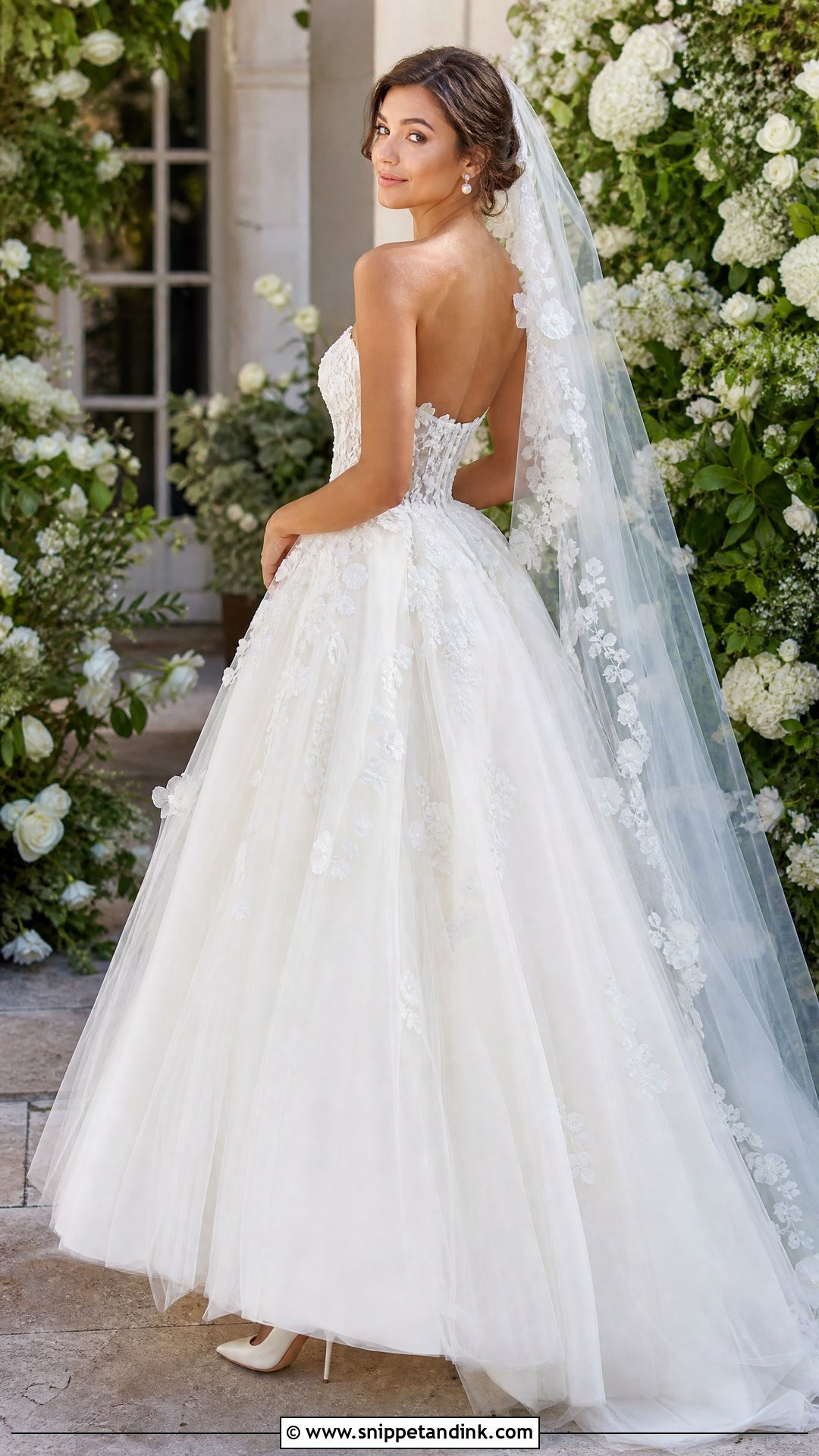
Lace gives a ball gown depth without beading, but the type of lace matters more than most brides expect. Floating appliqués on fine tulle feel light and let skin show through; denser all-over lace gives coverage, and also more weight and warmth, which counts at a summer wedding. A corset bodice and open back stop the classic shape from looking dated. Pair it with pearl earrings, ivory pumps and a veil with a subtle lace border, but hold the veil lace against the dress first, since two slightly different ivories side by side can make one look grey. Keep the hair to a loose chignon with a few face-framing pieces and carry white garden roses. Strapless lace ball gowns with tulip-and-rose motifs, open backs and visible corsetry sit in the label’s archive.
6. Off The Shoulder Vera Wang Ball Gown
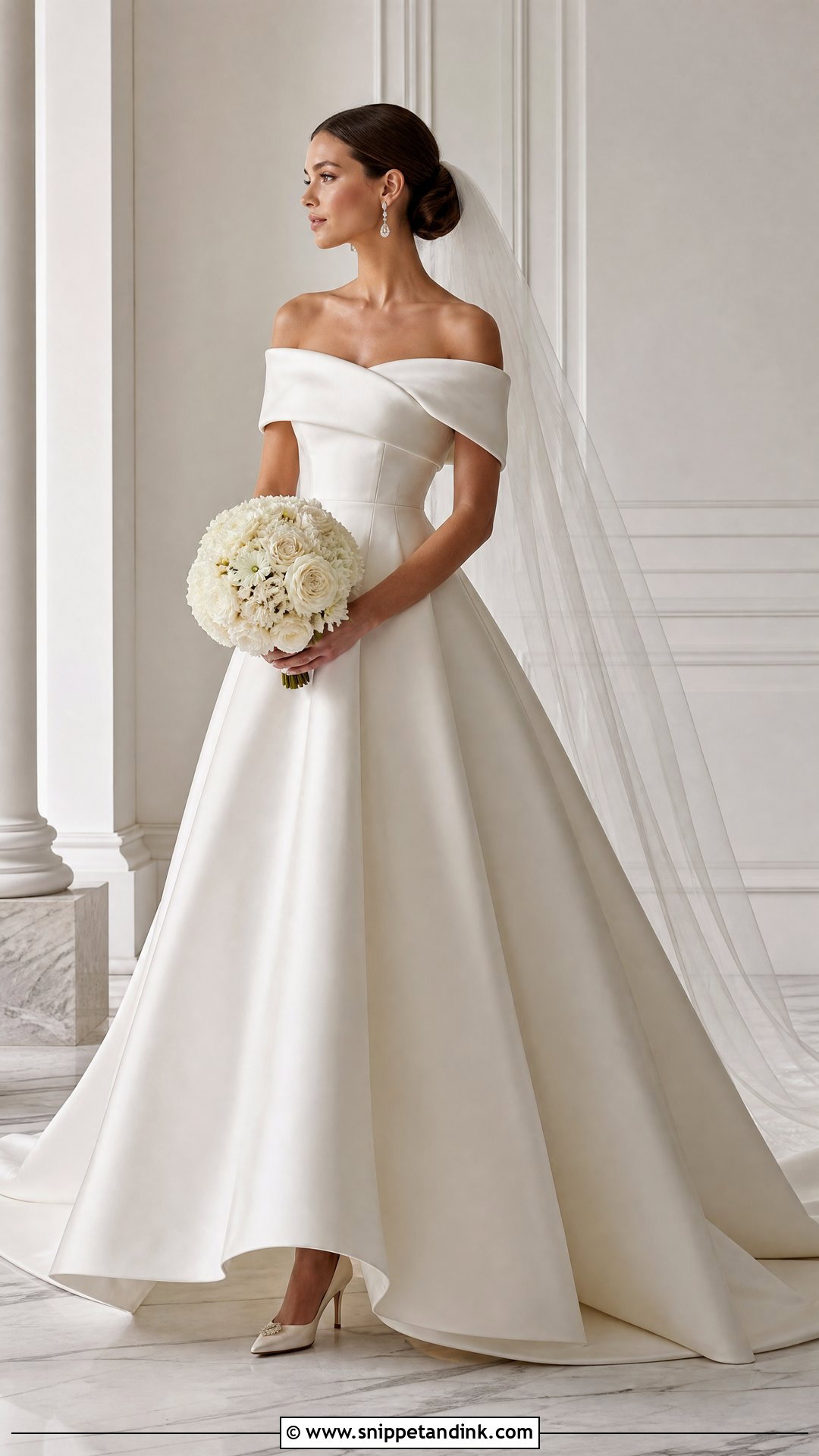
An off-the-shoulder neckline frames the collarbones and balances a big skirt, but it limits arm movement more than brides realize. At fittings I have brides lift their arms as if to hug someone, because a band that is too tight rides up and one that is too loose slides down the arm all evening. Draped bands, sculptural sleeves or a folded neckline can all work as long as they stay put. Mikado or satin reads formal; tulle reads softer. Leave the necklace off unless the neckline is very plain, and wear drop earrings, a bracelet and ivory pumps instead. A low bun and chapel-length veil keep the shoulders on show, with a rounded bouquet of cream flowers. Vera Wang Bride’s ball gown range has included princess dresses built around this neckline and an expansive skirt.
7. Open Back Vera Wang Ball Gown
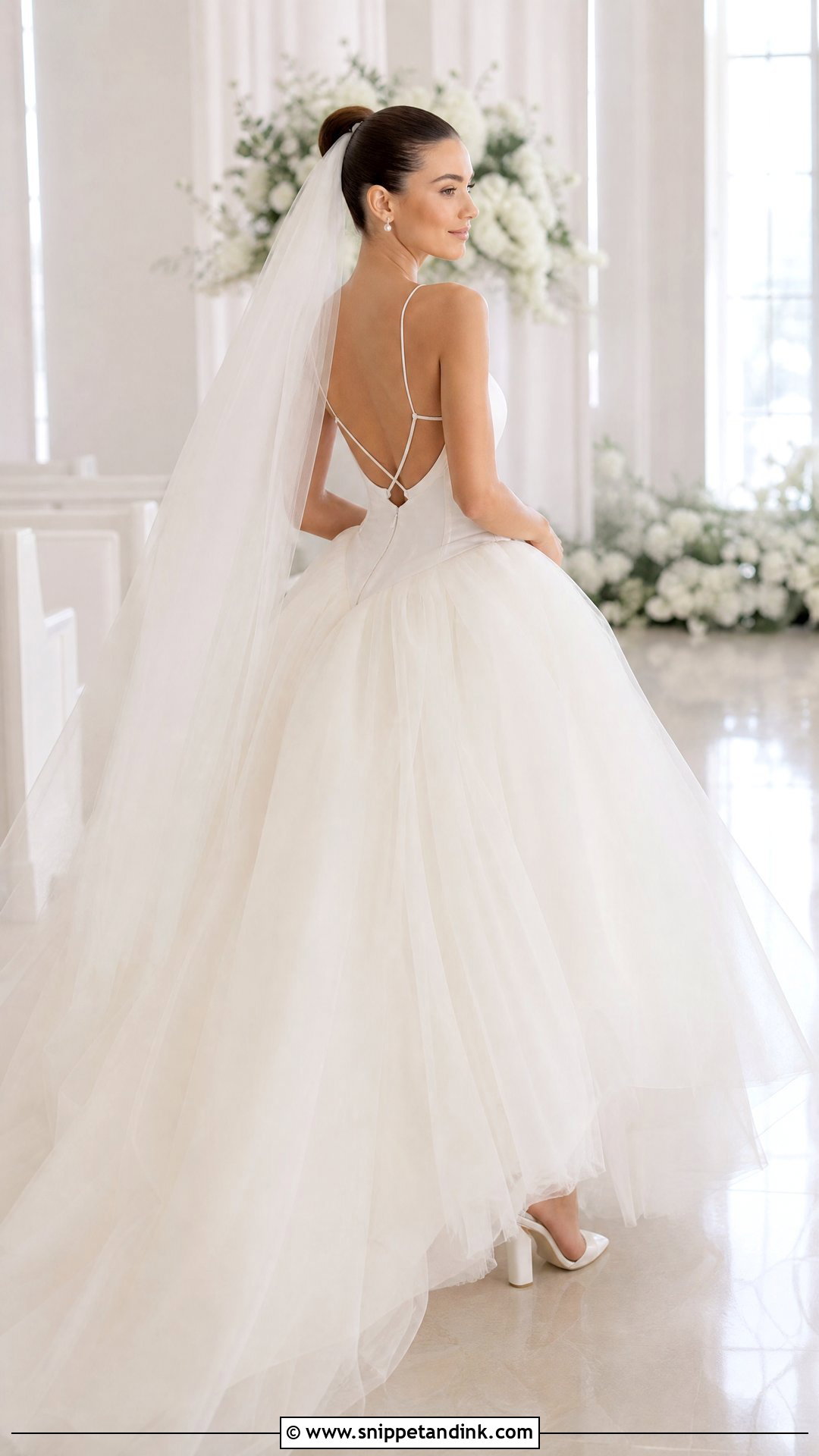
From the front, an open-back ball gown looks traditional; the surprise comes when you turn and the straps, sheer panels or corset lacing show. Sort your undergarments at the first fitting, not the last. With an open back the answer is often cups sewn into the bodice, and the seamstress needs them in place before she can fit it properly. During the ceremony a veil anchored beneath the hair still lets the back show through sheer tulle, and at the reception you can take it off. Pearl studs, a slim bracelet and satin block heels keep things calm, while a smooth updo puts the focus on the back. Several of the designer’s princess gowns pair open backs with strapless, sweetheart or V-shaped fronts.
8. V Neck Vera Wang Ball Gown
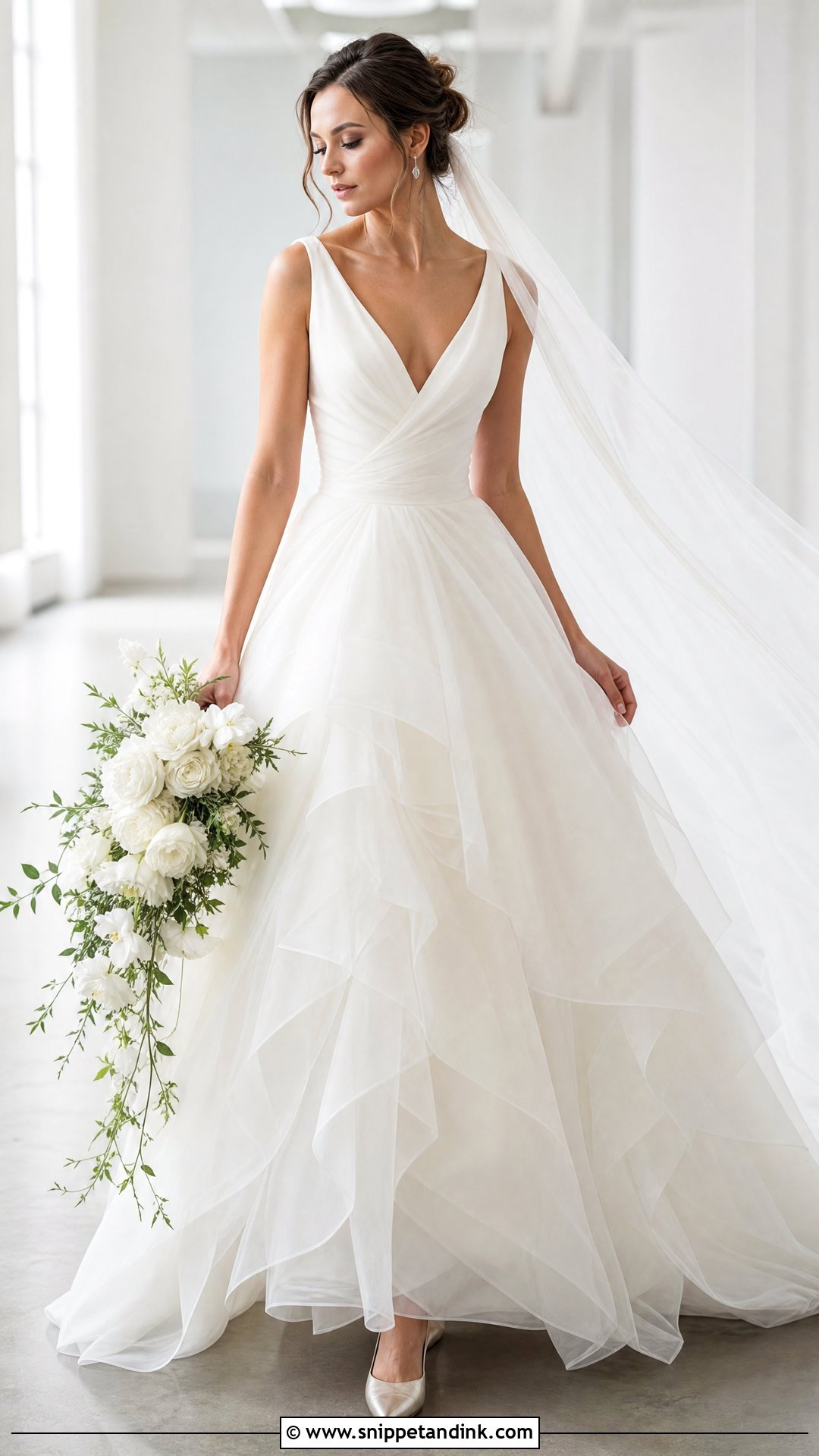
A V-neck draws a longer line through the upper body. A shallow V gives coverage, while a deep plunge backed with an illusion panel feels more couture. That panel is what holds everything in place, so I always ask whether it is stretch mesh or plain tulle; stretch mesh copes far better with a day of moving and hugging. Pair the fitted top with a generous skirt in tulle, lace or crisp organza. Small drop earrings, metallic ivory pumps and a flowing veil without heavy trim are enough, with a soft updo that leaves the neckline clear. An elongated bouquet echoes the vertical line. Princess gowns with V-neck fronts and matching V-backs have featured in the label’s ball gown offerings.
9. Mikado Vera Wang Ball Gown
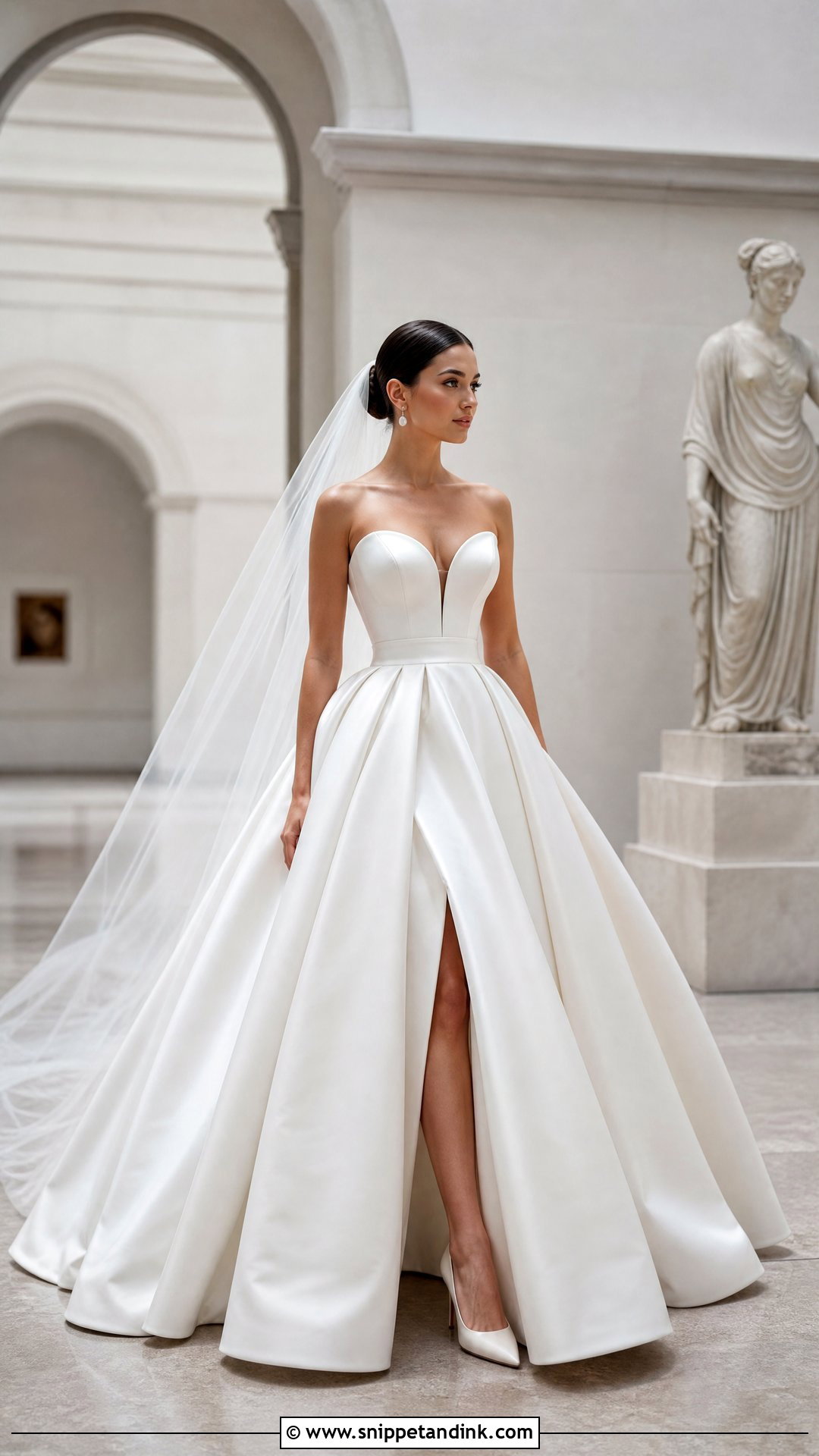
Mikado is a heavy silk blend with a soft sheen, and it holds pleats, structured necklines and long trains without decoration doing any of the work. It photographs crisply in formal rooms. The trade-off is weight and warmth, and I wouldn’t put a bride in full mikado for an outdoor August ceremony. Style it with polished pearl earrings, closed-toe pumps, a structured cathedral veil and a clean center-part bun. For flowers, white orchids or calla lilies in a restrained bouquet. If the skirt has a split hem your shoes will show with every step, so choose them as carefully as the earrings. Recent collections have placed split-hem mikado ball gowns alongside satin and organza ones.
10. Satin Vera Wang Ball Gown
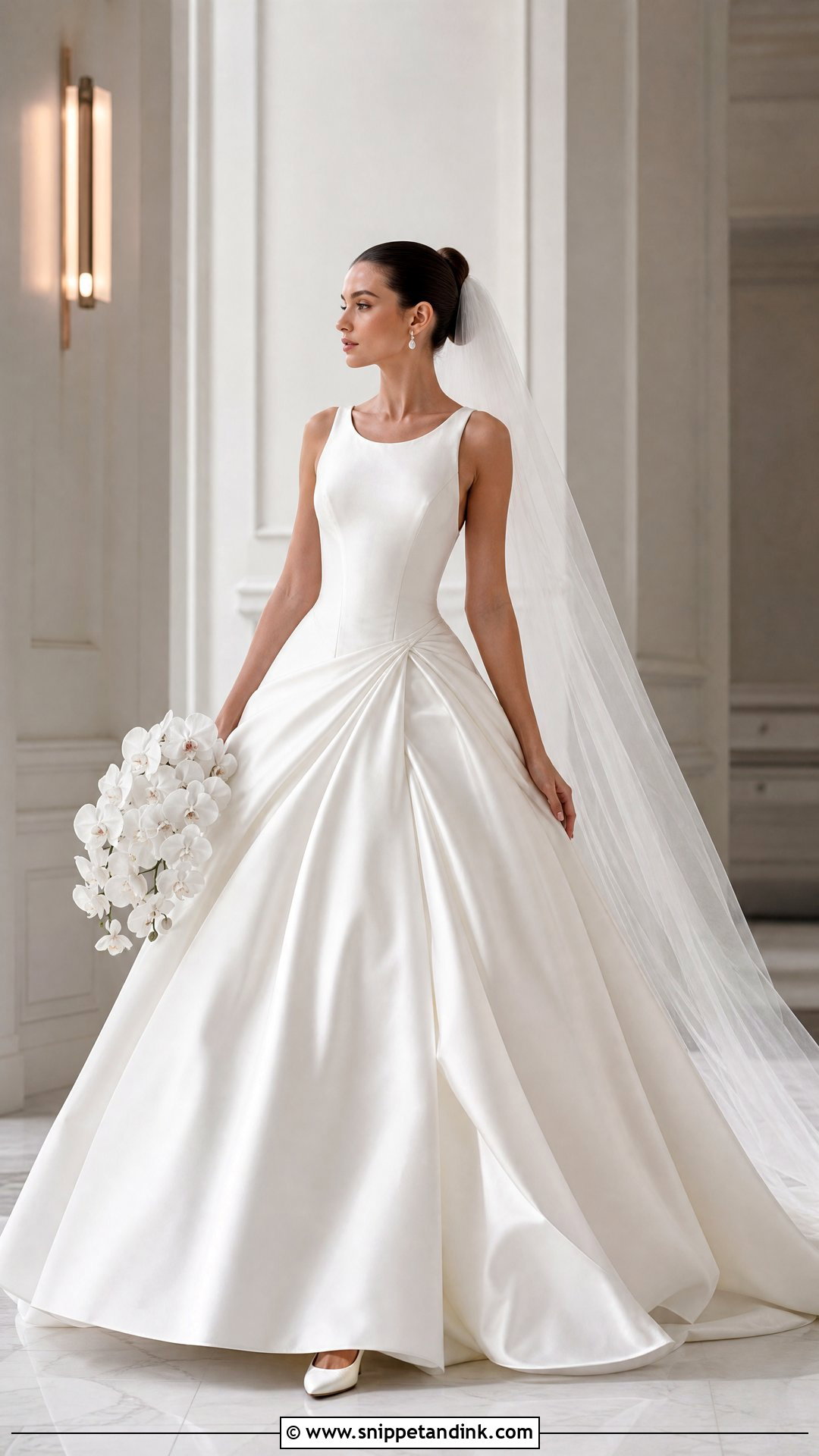
Few fabrics look as polished as satin moving through a bright ceremony room, and none show a crease faster. Satin catches light along every fold, so a wrinkle from the car ride appears in every photo after it. I bring a handheld steamer and ask that the gown travels hanging, never folded across a lap. A fitted bodice with a defined waist keeps the skirt in proportion; a tank-style top adds support, while strapless looks more traditional. Pearl drop earrings, ivory pumps and a long sheer veil complete it, with a structured bouquet and a sleek bun. Satin tank ball gowns, basque-waist designs and satin skirts with pick-up details have all appeared in the designer’s bridal collections.
11. Organza Vera Wang Ball Gown
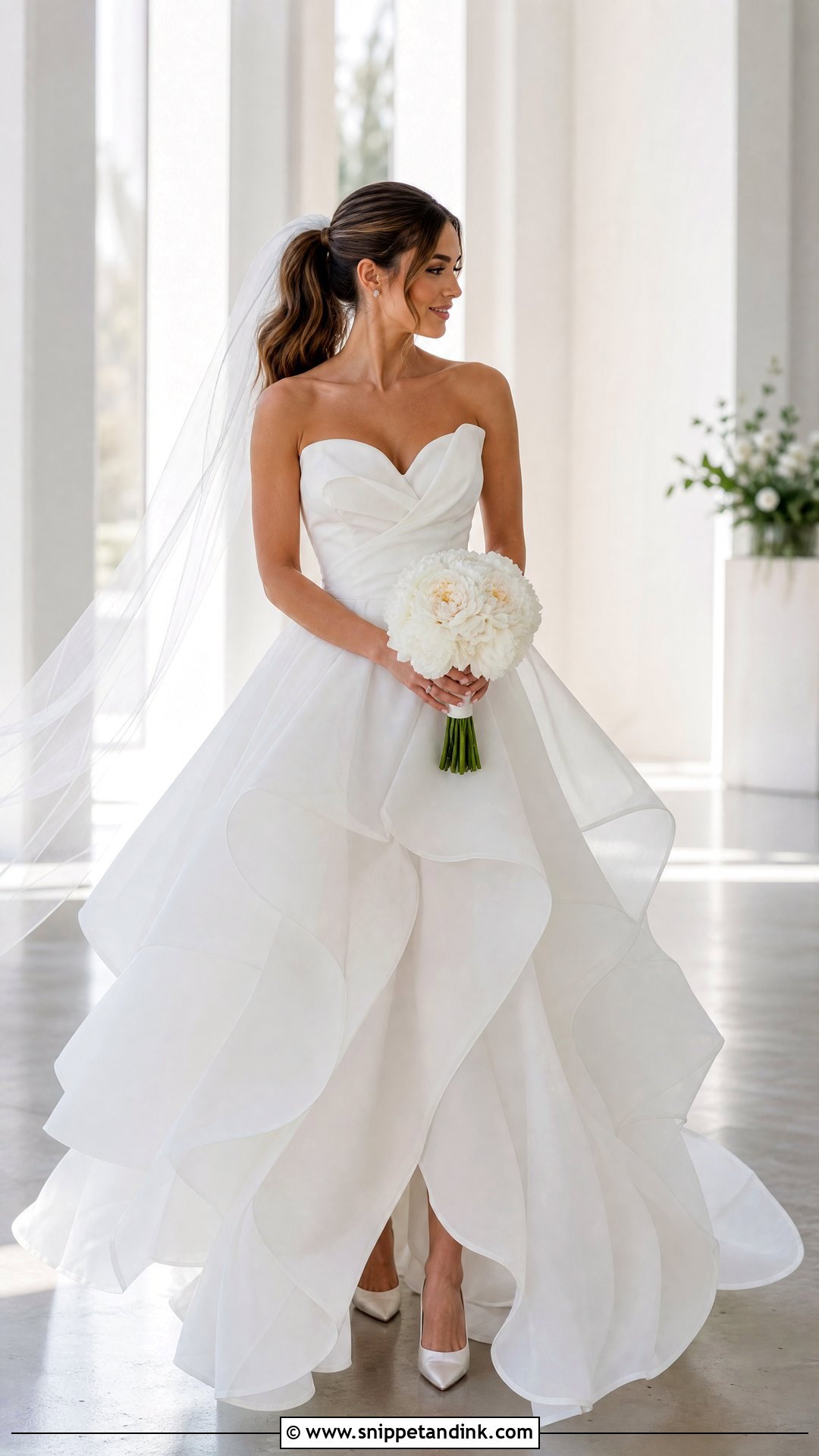
Organza gives volume that looks weightless, which is why I suggest it to brides who love a big skirt but dread carrying one. It is crisper than tulle and holds sculptural shapes well, though it creases easily and needs a steam on the morning. A sculptural bodice gives it a modern edge, and layered panels move from every angle. Keep the jewelry minimal: crystal studs, pointed satin heels and a simple veil. Wear the hair in a neat updo or a softly waved ponytail and carry a small bouquet of white peonies. Floating flanges, petals and floral forms cut from organza have been a signature of the label for years.
12. Floral Vera Wang Ball Gown
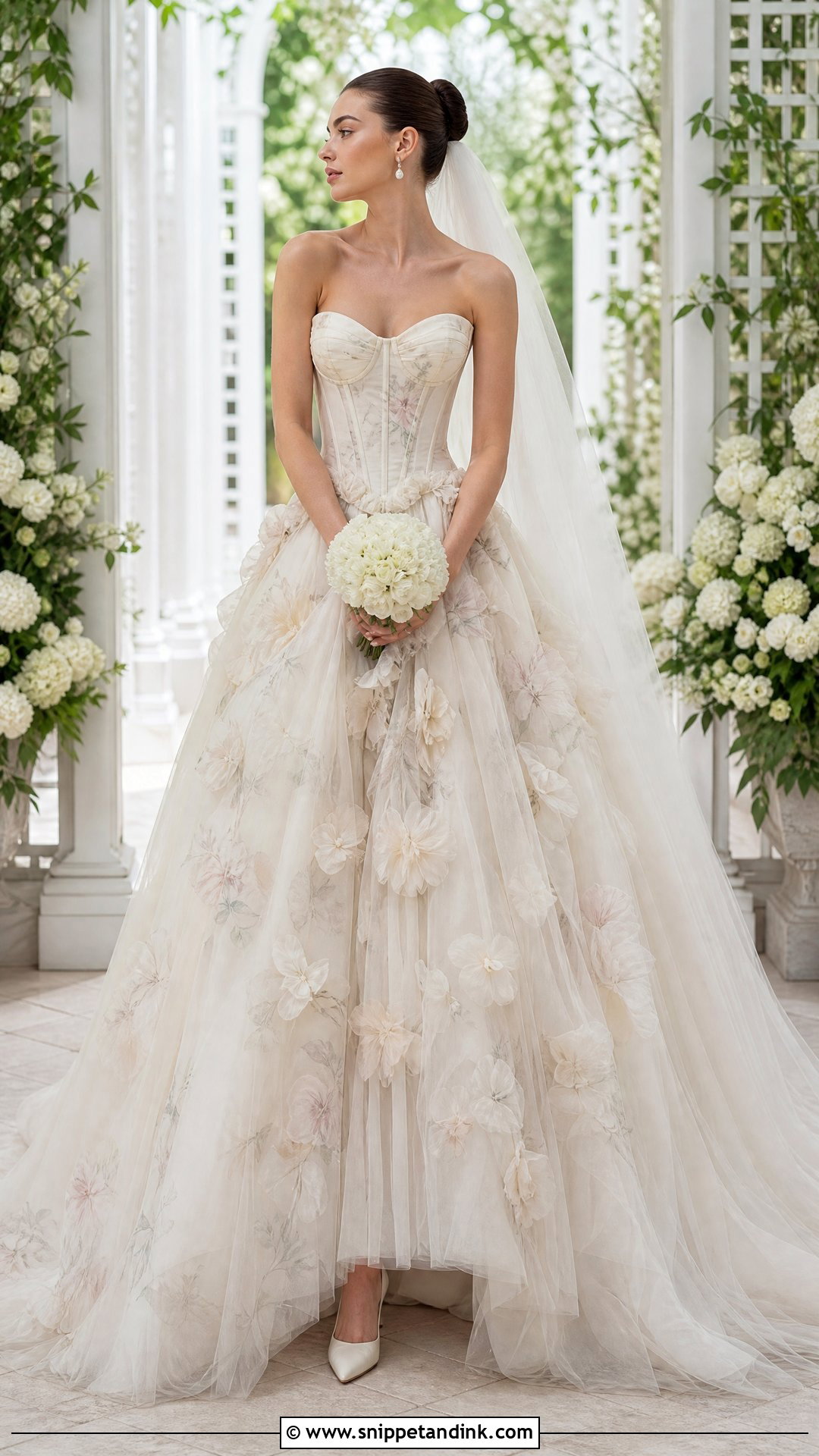
Here the flowers are part of the dress: hand-shaped organza blossoms, rolled florals and dimensional appliqués scattered across the bodice and skirt. The practical catch is that 3D flowers crush. Ask the salon how the gown should be stored and hung, and in the car, don’t sit on the skirt blooms. Keep the palette ivory, or let faint blush accents add depth. Understated pearl earrings, satin pumps and a plain tulle veil that won’t snag on the petals are enough, and a smooth bun gives a clean backdrop. Carry one flower variety so the bouquet doesn’t argue with the dress. Hand-rolled flowers and cascading silk organza blooms over pleated tulle run through the designer’s ball gowns.
13. Corset Vera Wang Ball Gown
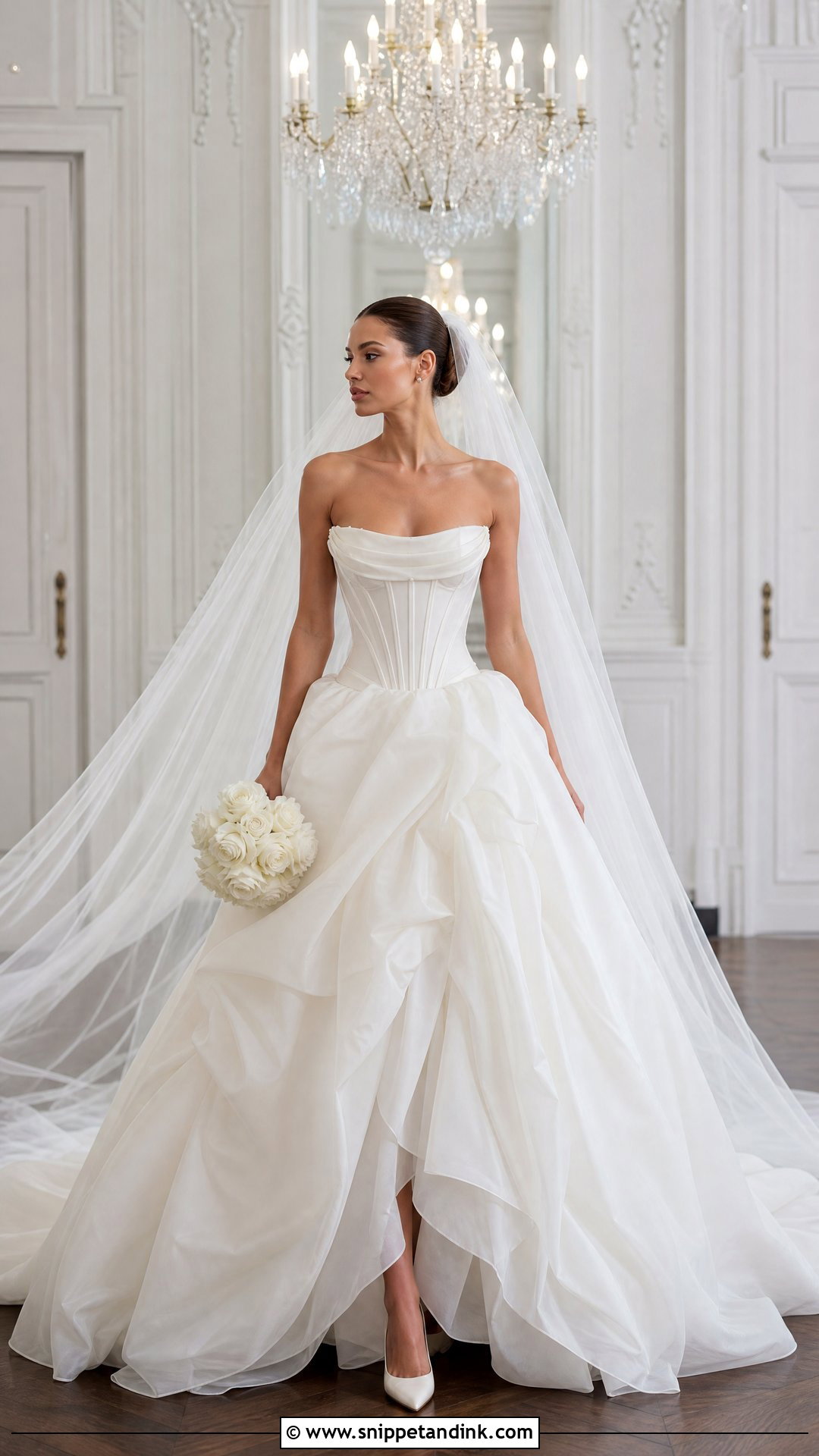
A corset ball gown combines support, definition and visible couture construction, with exposed boning, sheer panels, organic pleating or a draped overlay. Comfort is the real test. The bodice should feel snug at the bust and secure at the ribs both when you take a full breath and when you sit down to eat; if you can’t breathe deeply at the final fitting, I ask for it to be let out. Balance the structure with a flowing organza or tulle skirt. Pearl studs, pointed pumps and a cathedral veil, plus a sleek bun to show the bodice seams. Skip an elaborate necklace when the corset is already detailed. Strapless corset gowns with textured pleating, organza scallops and petal-like skirts are among the label’s best known bridal designs.
14. Pleated Vera Wang Ball Gown
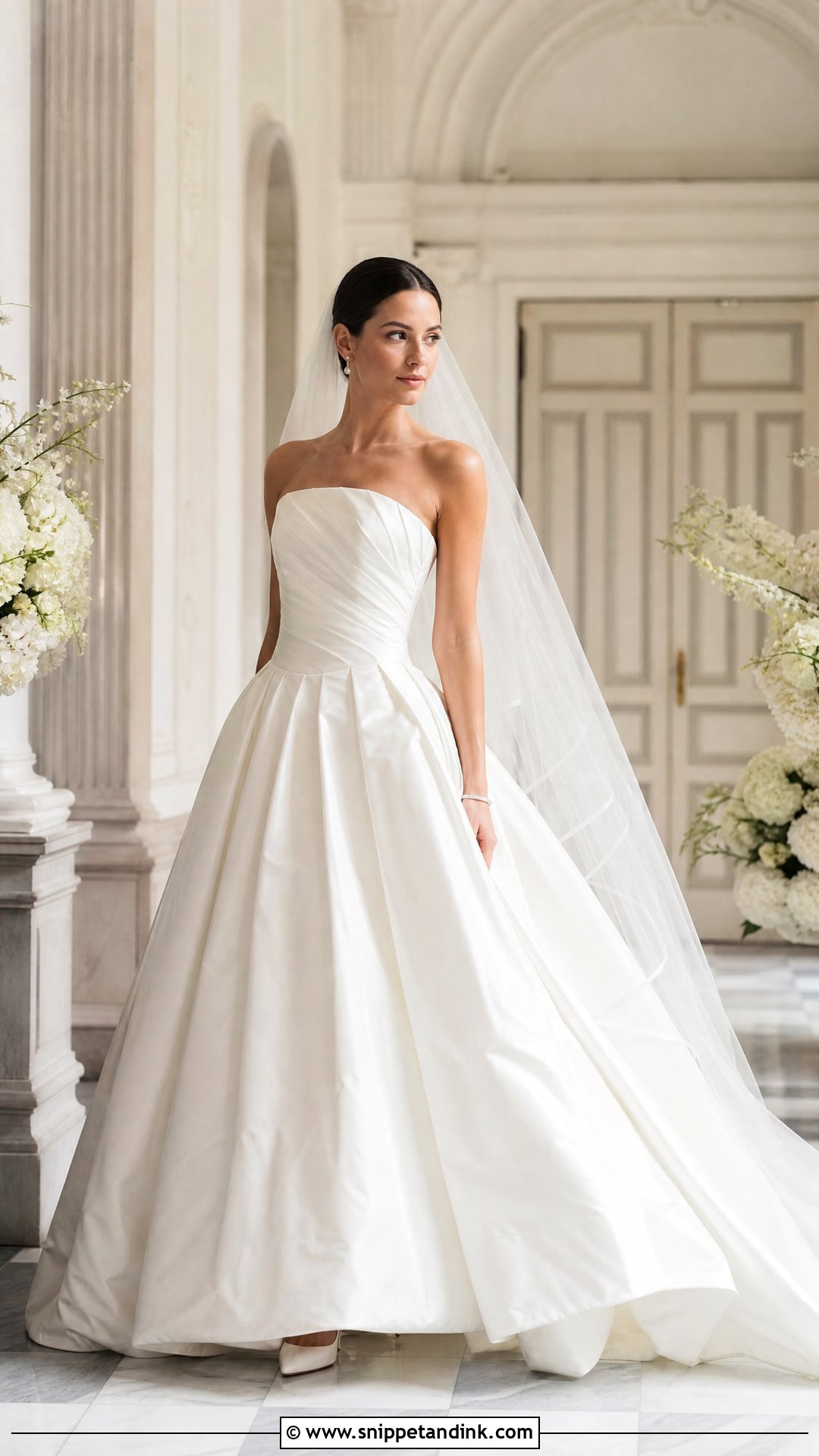
Precise pleating turns a simple ball gown into something fashion-led. Pleats across the bodice define the waist, and larger folds in the skirt control the fullness. Faille, satin and tulle all pleat differently, so walk in each: faille holds a sharp fold, tulle softens into gathers. Alterations on a pleated bodice take longer because each pleat may need re-laying by hand, so allow extra weeks. Keep accessories streamlined with pearl earrings, a slim bracelet, classic pumps and a sheer chapel veil, then a smooth chignon and compact white tulips. The designer has made silk faille ball gowns with hand-pleated bodices, basque-waist pleating and tulle skirts shaped through gathering and ruching.
15. Ruched Tulle Vera Wang Ball Gown
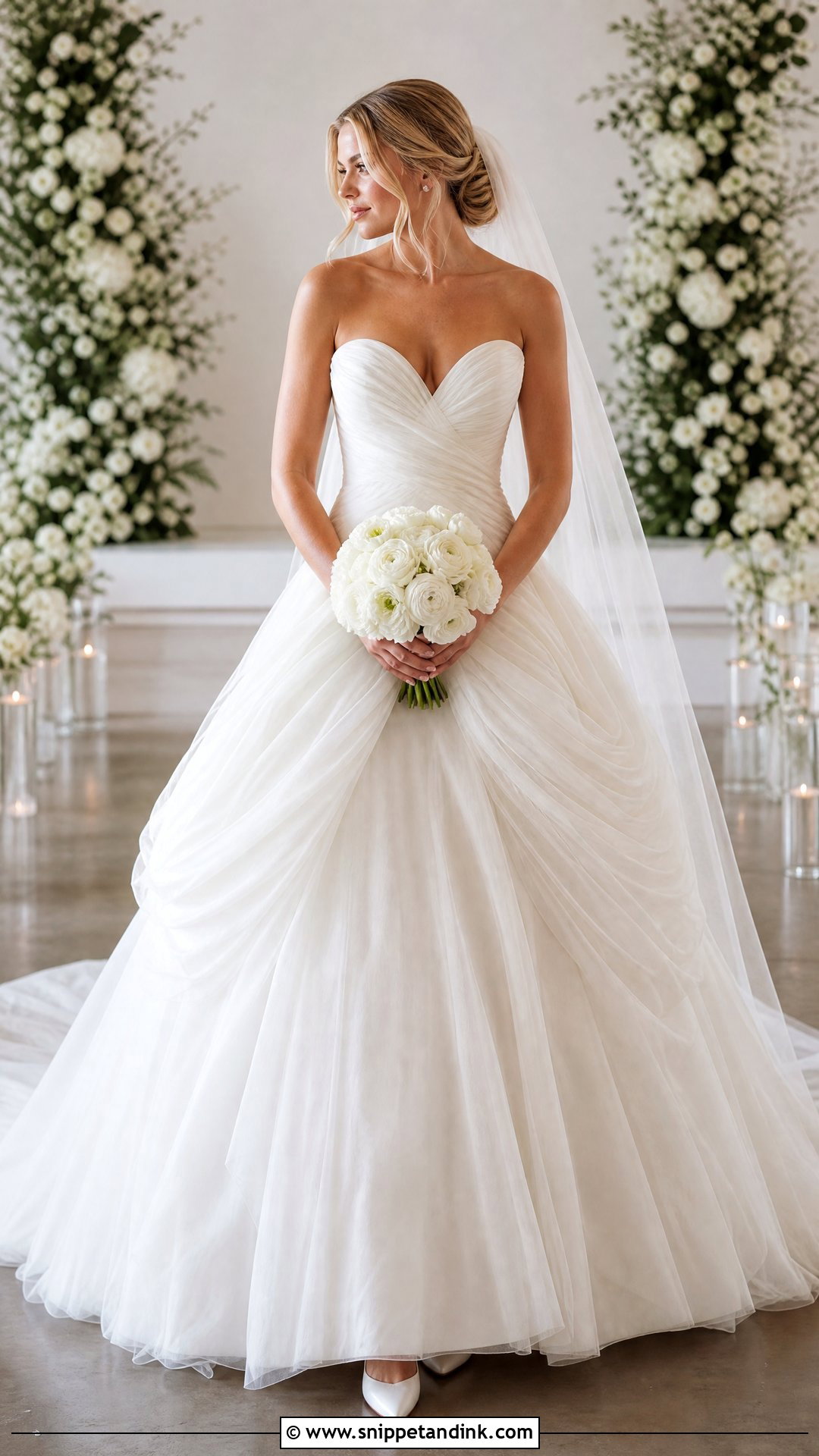
Ruched tulle shapes the bodice gently at the waist and bust without the weight of embroidery. It is also forgiving: small fit changes disappear into the gathers, which makes alterations easier. Keep the skirt smoother so the dress doesn’t get busy. Crystal studs, ivory pumps and a plain cathedral veil suit it, with soft waves swept into a low bun, and I’d carry white ranunculus with very little greenery. The Octavia gown shows the idea clearly, a strapless sweetheart ball gown with a hand-gathered tulle bodice and a ruched overlay.
16. Ribbon Embroidered Vera Wang Ball Gown
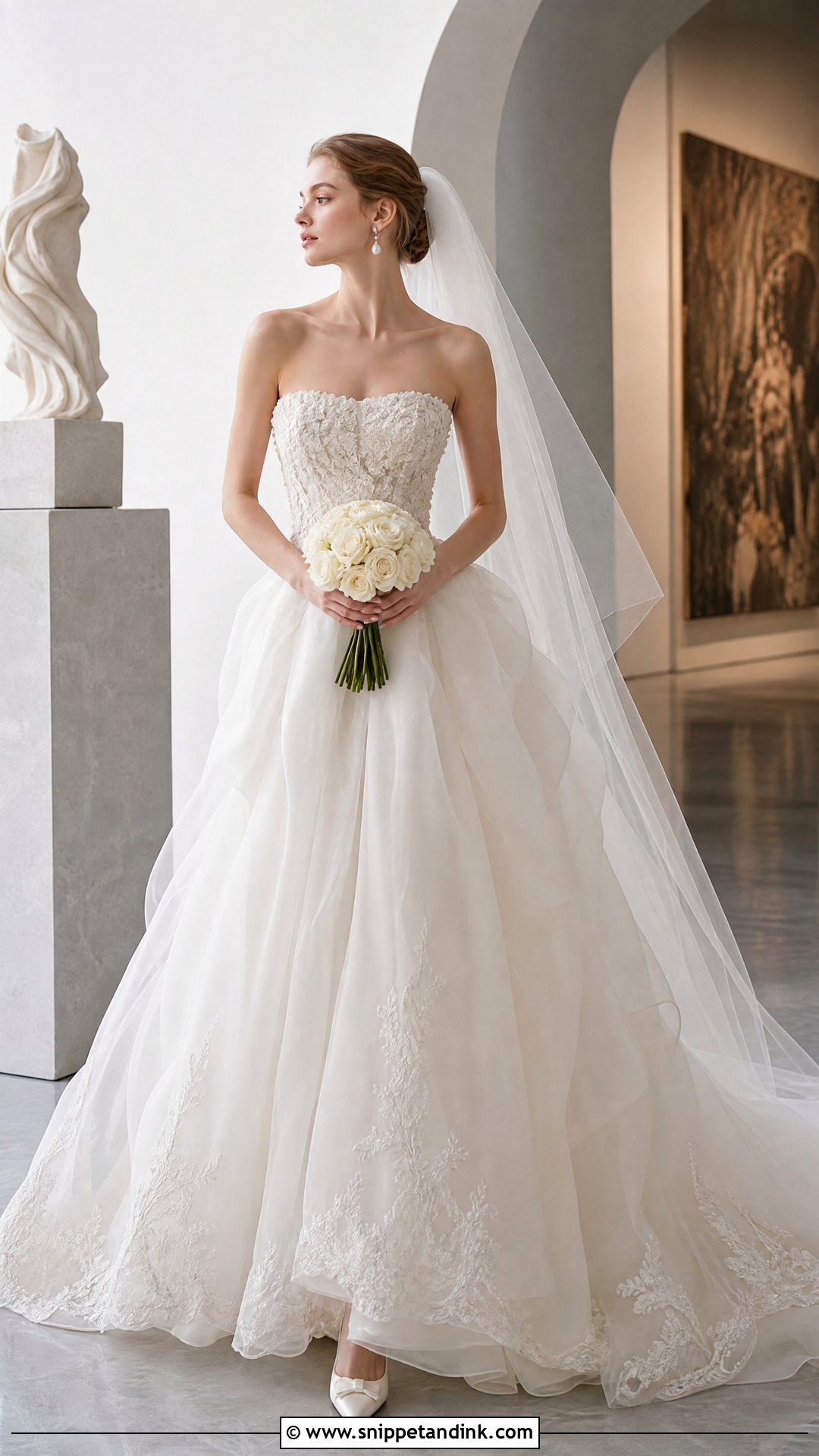
Ribbon embroidery adds raised pattern to a bodice. Up close it reads romantic, and in full-length photos it still looks refined. A floating silk organza skirt keeps the gown light, especially with lace appliqués near the hem. Raised ribbon work catches on hairpins and bracelet clasps, so I keep the jewelry smooth: small pearl earrings, satin pumps and a veil with a clean cut edge. Wear your hair up to show the bodice and shoulders, and carry compact white roses. The Liesel gown pairs a ribbon-embroidered strapless bodice with a floating organza flange skirt and lace appliqués.
17. Horsehair Trim Vera Wang Ball Gown
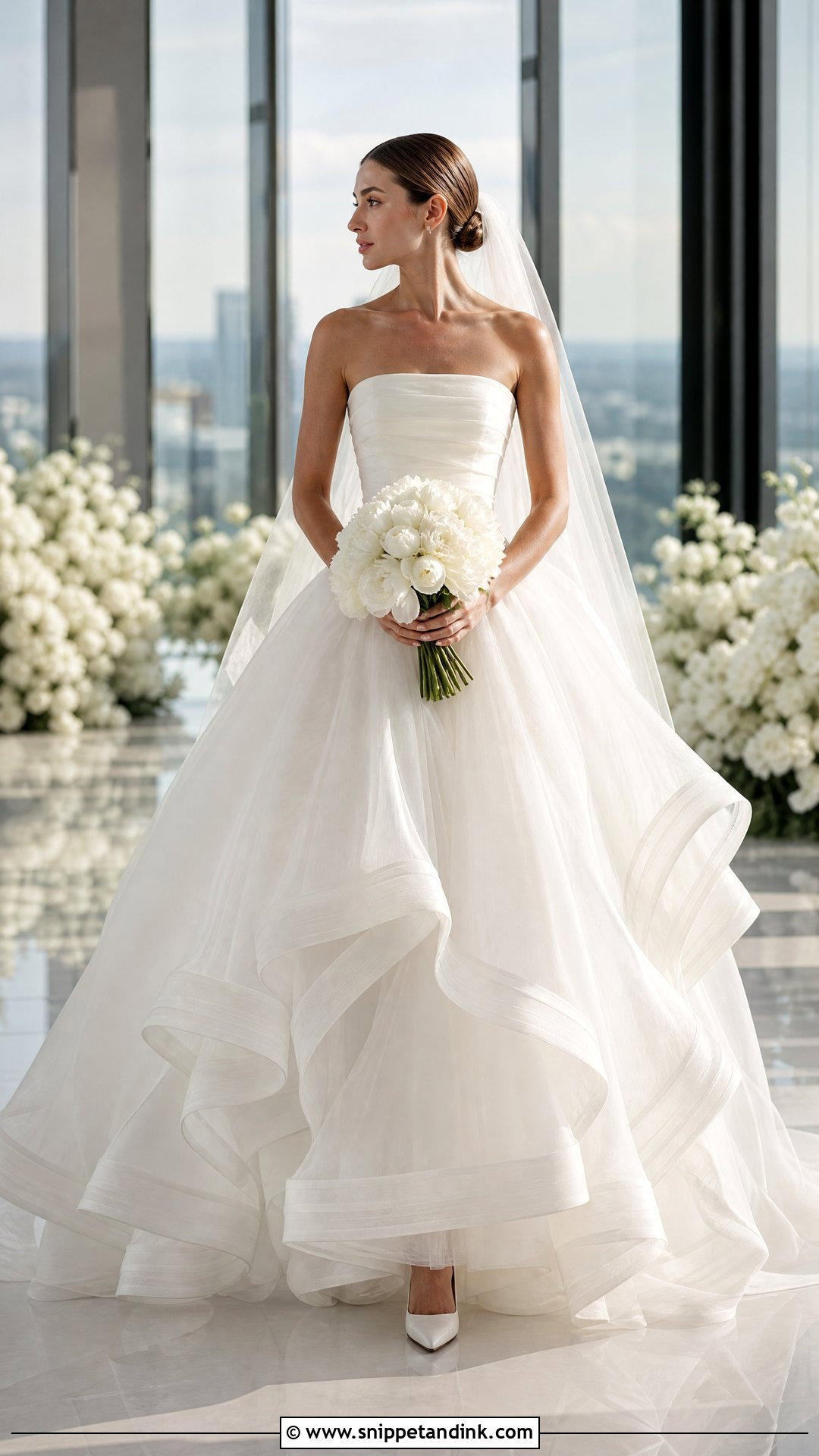
Horsehair trim helps ruffles, flanges and skirt edges hold a sculptural curve. It is a stiff braid, usually synthetic today, stitched into hems so soft tulle keeps a defined edge and still moves. Used everywhere it looks busy; placed around floral details, skirt layers or the train, it gives drama with control. One thing I check at fittings: a horsehair hem can scratch bare ankles, so see where it lands against your shoes. Pair it with understated earrings, smooth satin pumps, a simple chapel veil, a polished low bun and minimal makeup, and carry a single-variety bouquet. The label’s archive uses horsehair on floral ball gowns, illusion A-lines and sculptural peplums.
18. High Slit Vera Wang Ball Gown
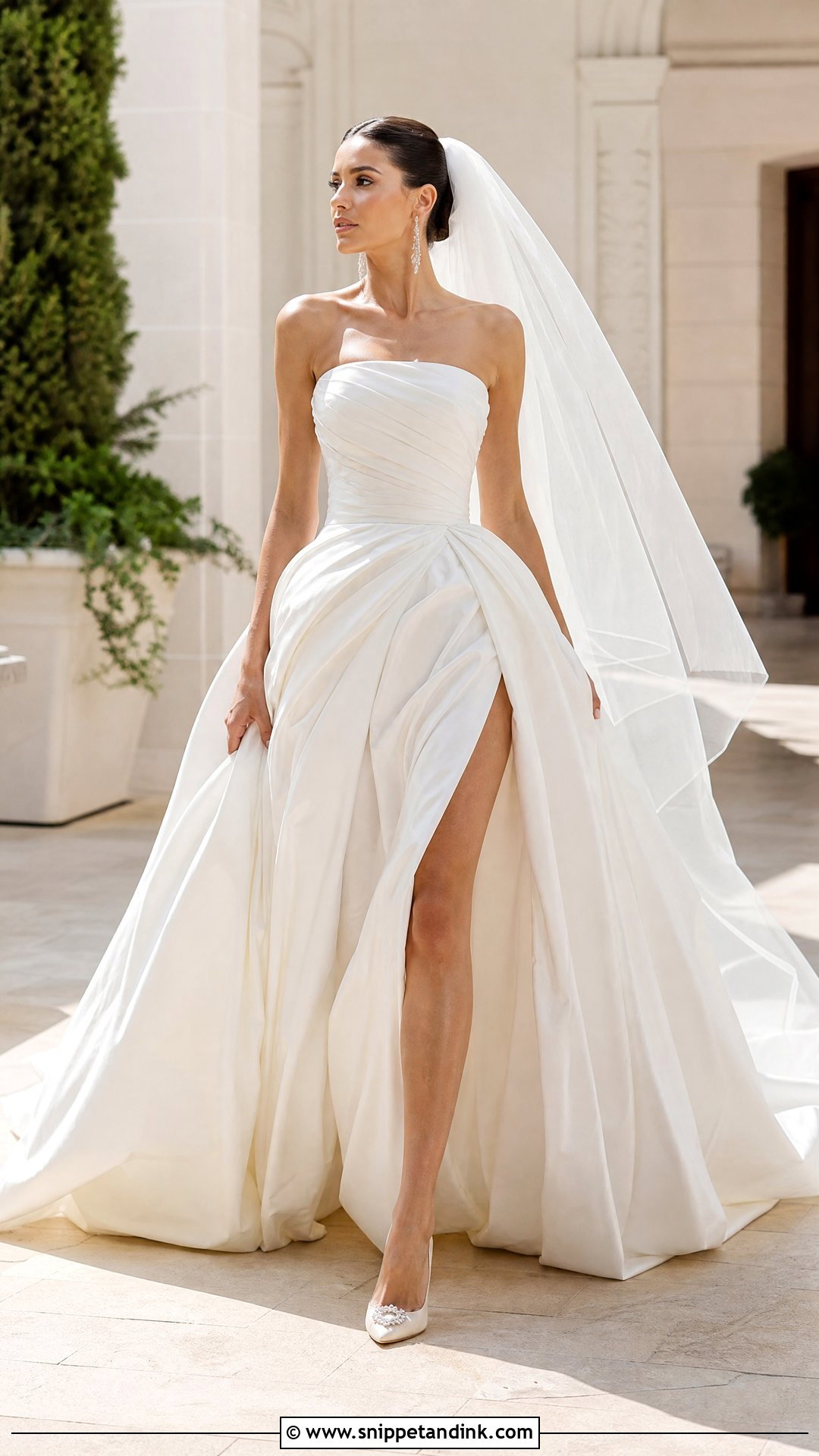
A high slit adds movement to the most traditional shape there is. Done well, it stays hidden while you stand and opens only as you walk. Your shoes become part of the outfit, so choose pointed satin pumps or embellished ivory heels rather than whatever pair was comfortable. Drop earrings, a plain veil and a fitted bodice with restrained detail keep the focus low, and a sleek hairstyle balances it. At alterations, sit, climb stairs and step into a car in it. A slit that falls open to the hip when you are seated is the most common surprise I see. Silk faille ball gowns with high side slits and hand-pleated bodices have featured in the designer’s collections.
19. Black Accent Vera Wang Ball Gown
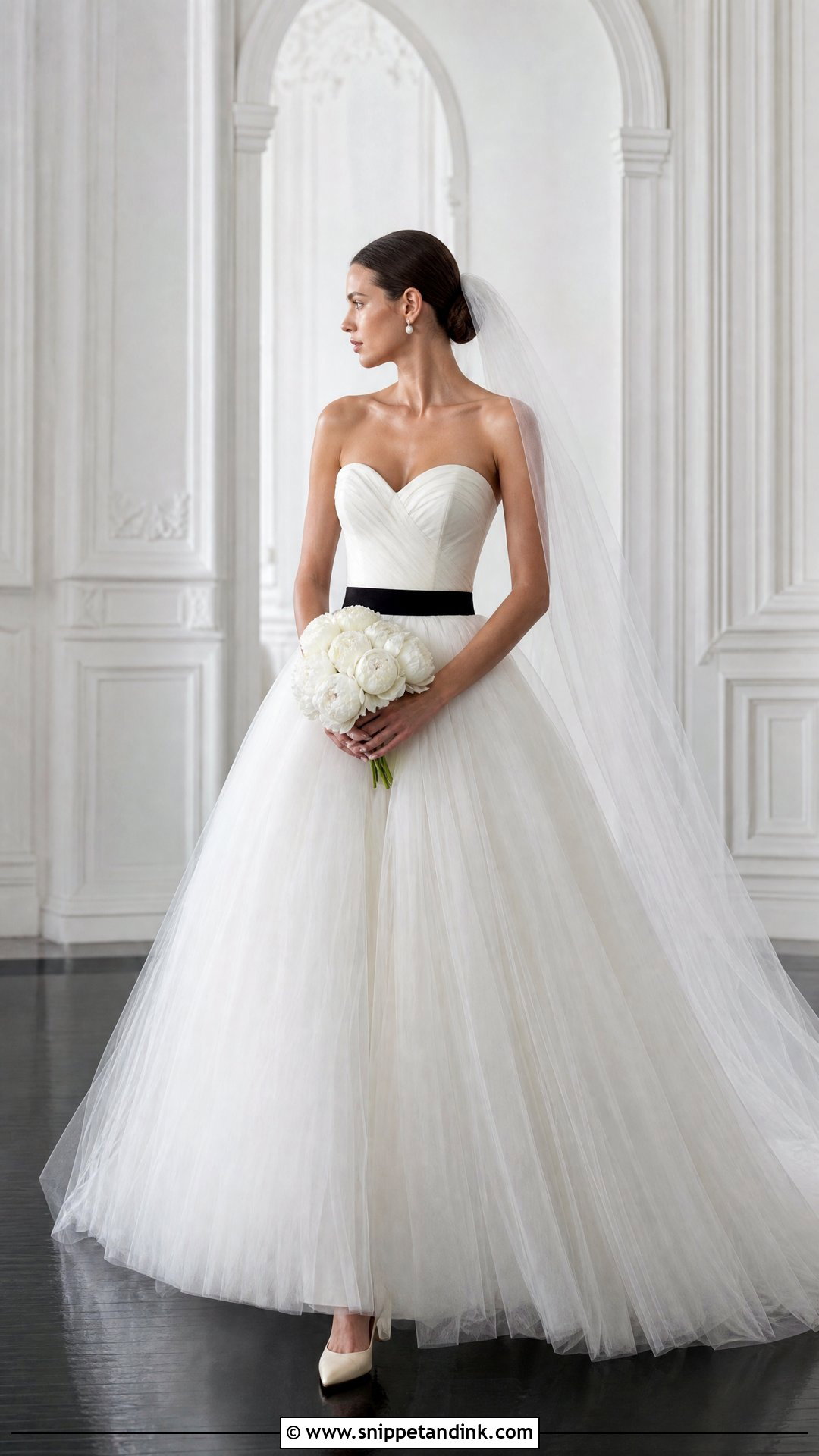
One black detail makes an ivory ball gown graphic and modern. A narrow sash, a velvet bow, dark gloves or a removable ribbon each work, but only one of them; two or three start to look like costume. Keep the gown simple, with a strapless corset bodice and a full tulle or satin skirt, then add pearl earrings, ivory pumps and a plain cathedral veil. A polished bun and an all-white bouquet keep it grounded. My favorite version is a removable piece, since you can wear it for portraits and take it off for the ceremony if family would rather see all white. The label has explored contrast for years through black gowns, dark sashes, gloves and black-and-gray split-away ball gowns.
20. Blush Vera Wang Ball Gown
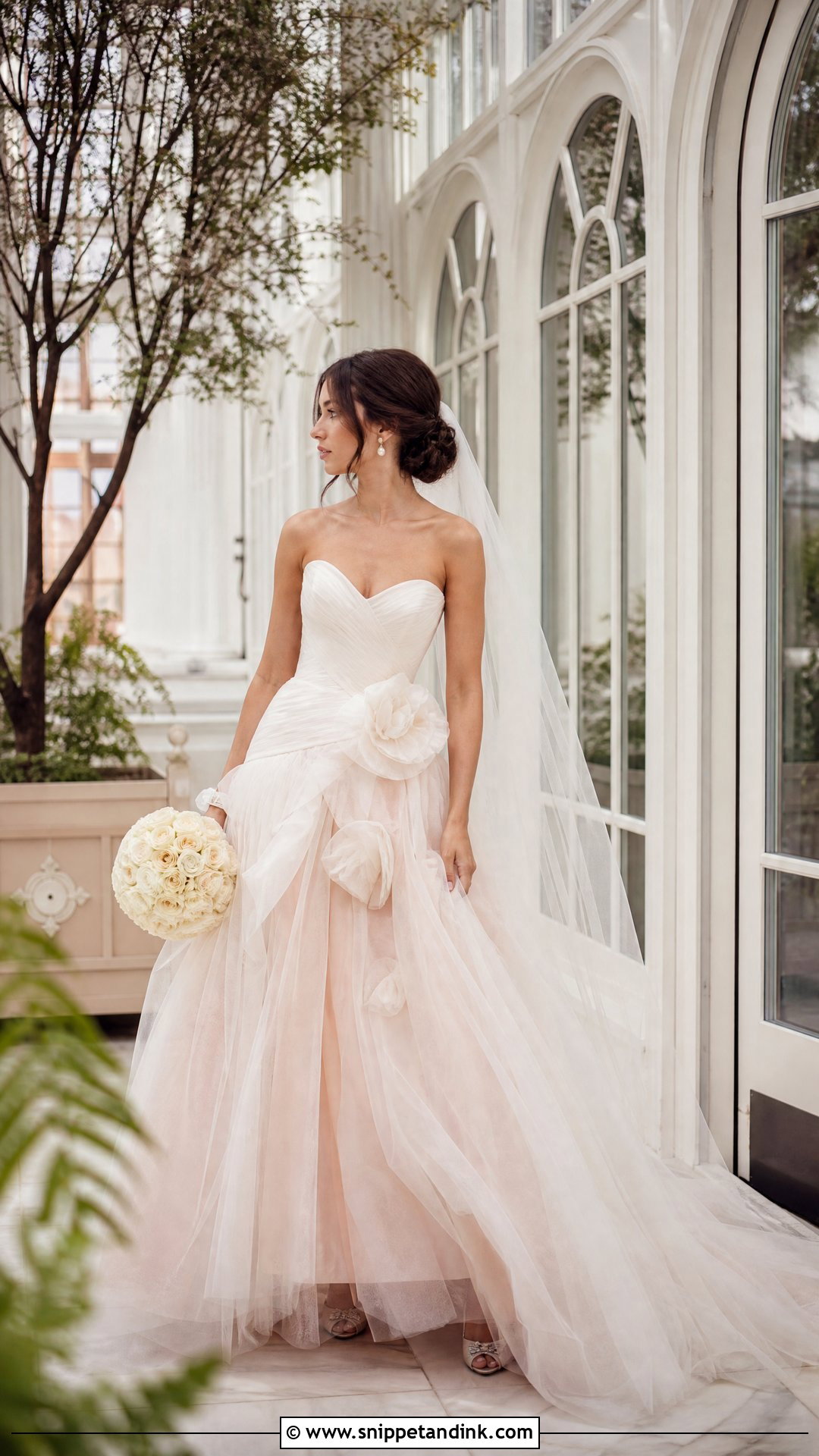
Blush is the easiest step away from bright white. Pale rose, nude, sand or muted lavender underlayers add depth beneath ivory tulle, and the dress still reads as bridal. Test the shade in two lights. I have brides stand by a window and then under warm indoor bulbs, because a nude underlayer that glows in daylight can turn flat or skin-colored under tungsten light. Style it with soft metallic heels, pearl earrings and an ivory veil. A loose low bun and cream roses carry the palette, and everything else should stay neutral so the color looks chosen. Ball gowns in blush, nude, sand and lavender, often with organza petals or layered tulle, appear throughout the designer’s work.
Ordering a Designer Gown on a Realistic Timeline
Most designer ball gowns are cut to order after you choose a size from the sample, and delivery commonly takes several months, often four to eight depending on the style and the factory schedule. Rush orders exist but usually cost extra and are not offered on every design. I tell brides to start shopping nine to twelve months out if they want a made-to-order gown without stress.
Alterations come next. Plan to start roughly two months before the wedding, with two or three fittings. Pleated, lace-covered or heavily boned bodices take longer, so tell the seamstress what the gown is when you book.
Bring these to every fitting
- The exact shoes you will wear, because the hem is set to their height.
- Your wedding undergarments and shapewear, never a stand-in.
- The veil or headpiece, to check how it sits against the bodice and back.
- Whoever will bustle the train and steam the dress on the morning.
Short on time? Sample sales and off-the-rack stock are worth asking about. You’ll take the gown in its existing size and rely on alterations, which works well for taking a dress in and much less well for letting one out.
The Skirt Decides the Rest of the Outfit
Every gown here starts with the skirt and its fabric. Tulle and organza give light volume; mikado, satin and silk faille hold an architectural shape. After that, the neckline, the waist placement and the back decide how the dress feels on your body. Try several shapes, and walk, sit and turn in each while someone watches from the front, side and back. Then build the accessories to support the gown rather than compete with it. Classic ivory, sculptural flowers, a slit or a blush layer, the right one is the dress you forget you’re wearing by the second hour of the reception.
You'll Like These Ideas:


Leave a Reply