
Lehenga, Saree, Anarkali or Sharara for Each Function?
Most South Asian weddings run across several events, and each one asks something different of the outfit. When I plan a bride’s wardrobe, I start with what she’ll be doing at each function, then pick the cut.
- Haldi and mehndi: you’ll sit on the floor, get messy and have your hands busy. A light Anarkali, sharara or cotton-silk lehenga in a fabric you don’t mind staining.
- Sangeet: you’ll dance. A sharara or a lighter lehenga with a single dupatta, and a blouse you can raise your arms in.
- Main ceremony: long seated rituals, often cross-legged, plus walking rounds. A heavier lehenga or a silk saree, with weight you’ve tested sitting down.
- Reception: standing, greeting and dancing for hours. A gown, a lighter lehenga or a pre-draped saree that won’t need re-pinning.
Keep the heaviest, most expensive piece for the event with the most photographs, and lighten up everywhere else. Spreading the budget this way usually gives better results than one heavy outfit and several afterthoughts.
1. Red Sajna Bridal Lehenga
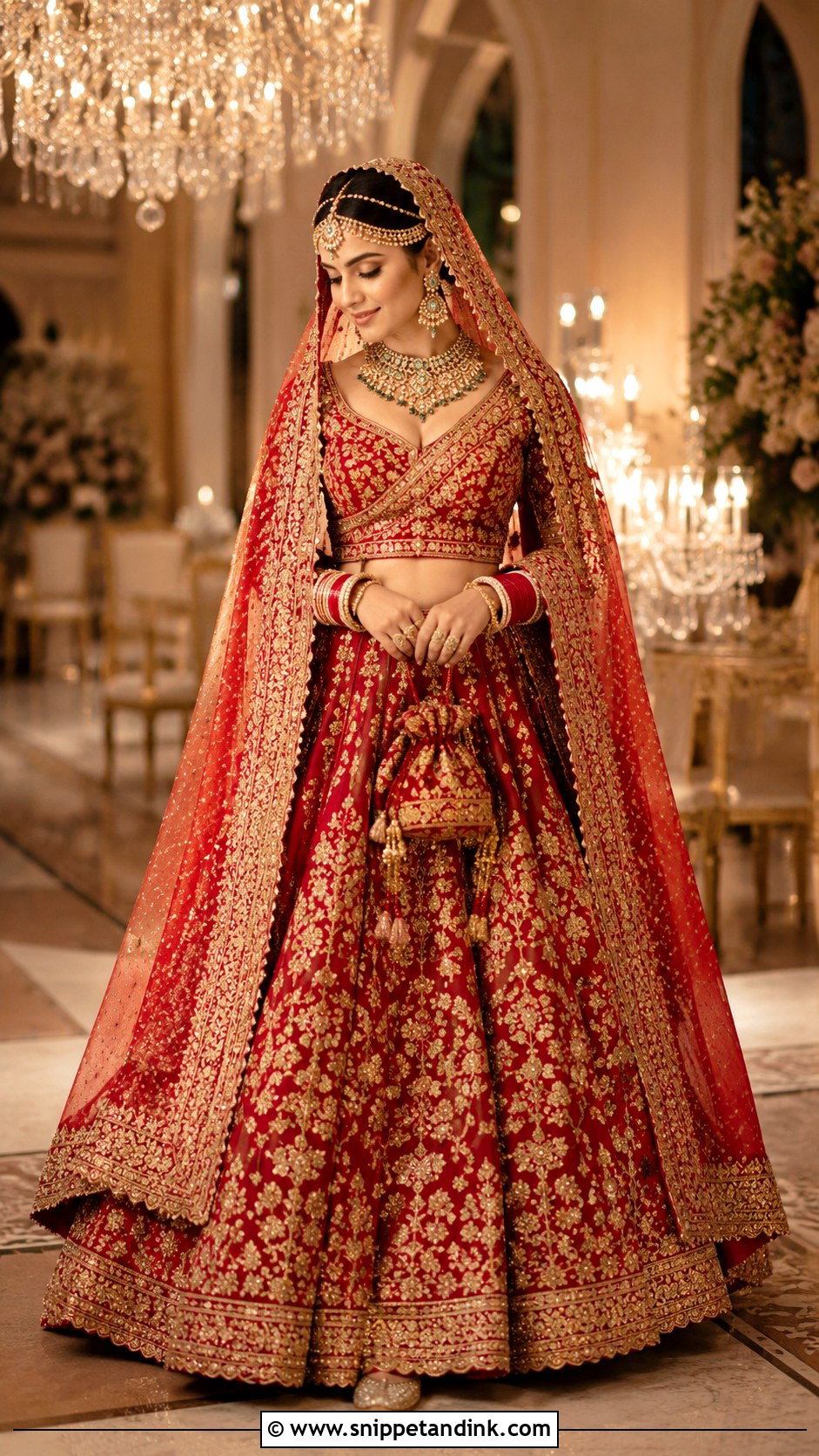
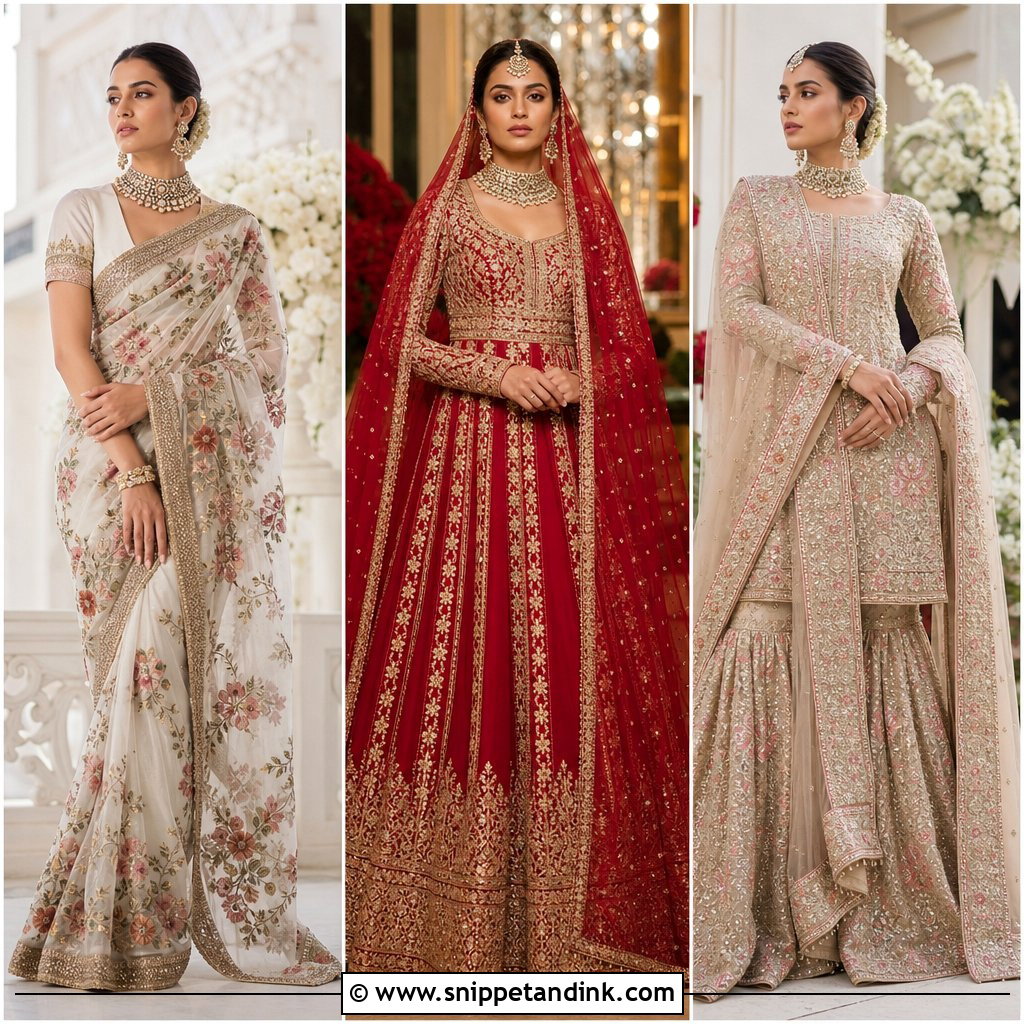
Red is still the color most brides come back to for the main ceremony, and it rarely disappoints in photos. I build it on a full skirt with real flare, gold embroidery and a blouse that supports properly, since a red lehenga with heavy work can weigh several kilos and the blouse carries the dupatta pins all day. A sweetheart, square or soft curved neck leaves room for layered necklaces. One embroidered dupatta goes across the body and a lighter one over the head. Add a matha patti, choker, longer necklace, bangles and embroidered juttis. If heavy all-over work feels like too much, ask for the embroidery concentrated at the hem; it photographs just as rich and is far easier to carry. Keep the bag small and structured.
2. Maroon Sajna Bridal Lehenga
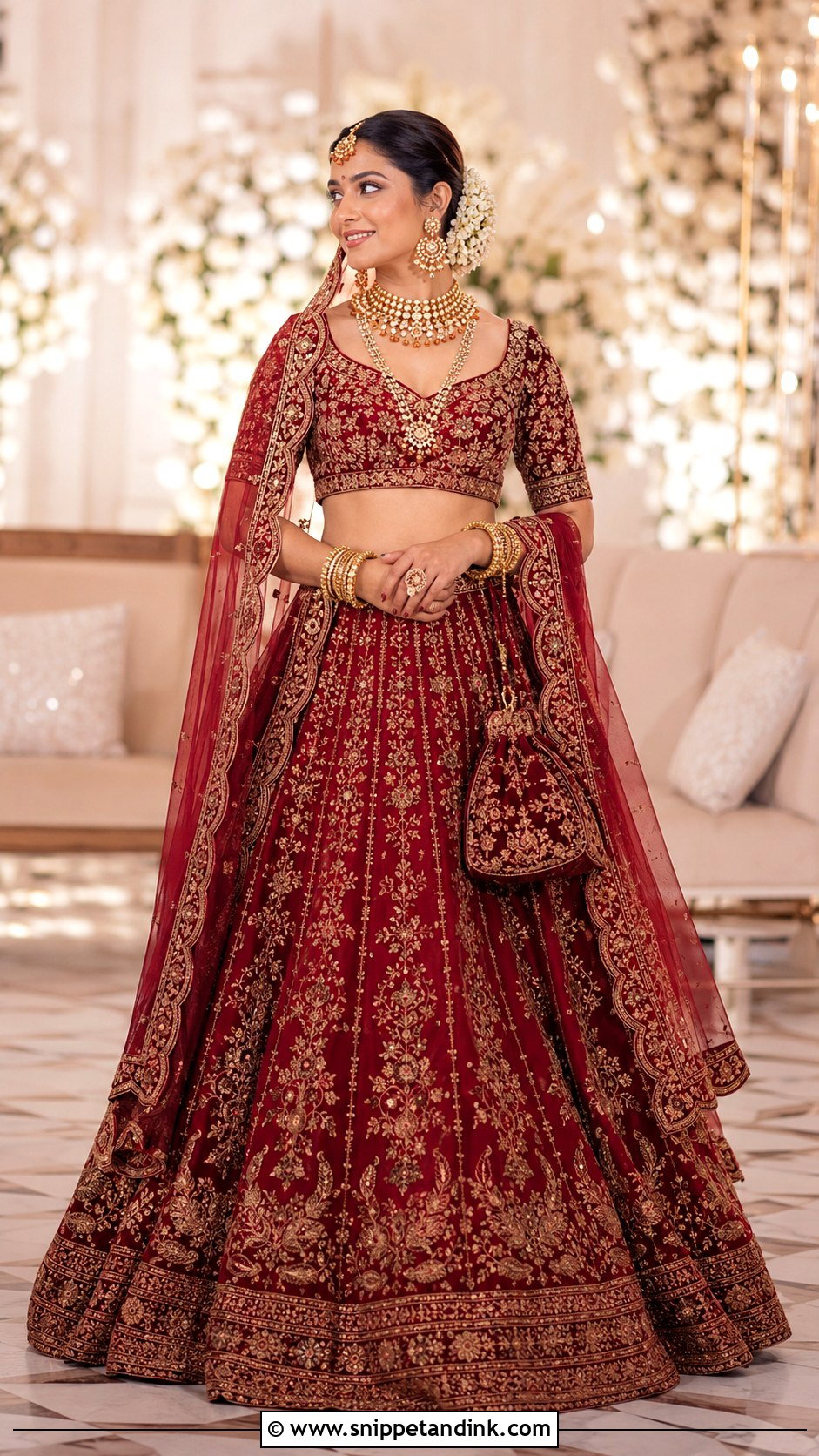
Maroon reads richer than red under indoor lighting, and it hides the flush of a long, warm day. Velvet or raw silk with antique gold embroidery suits it, with an elbow-sleeve blouse that gives room for a wide border. Drape a sheer maroon dupatta with a scalloped edge diagonally so the waist and blouse still show. Antique-finish temple or kundan jewelry suits the depth of color better than bright polished gold. Cushioned gold juttis and a potli in matching fabric are enough. I pin fresh flowers into a sleek bun, but tell your florist you’re wearing velvet; wet stems leave marks on the pile if they touch the shoulders.
3. Pink Sajna Bridal Lehenga
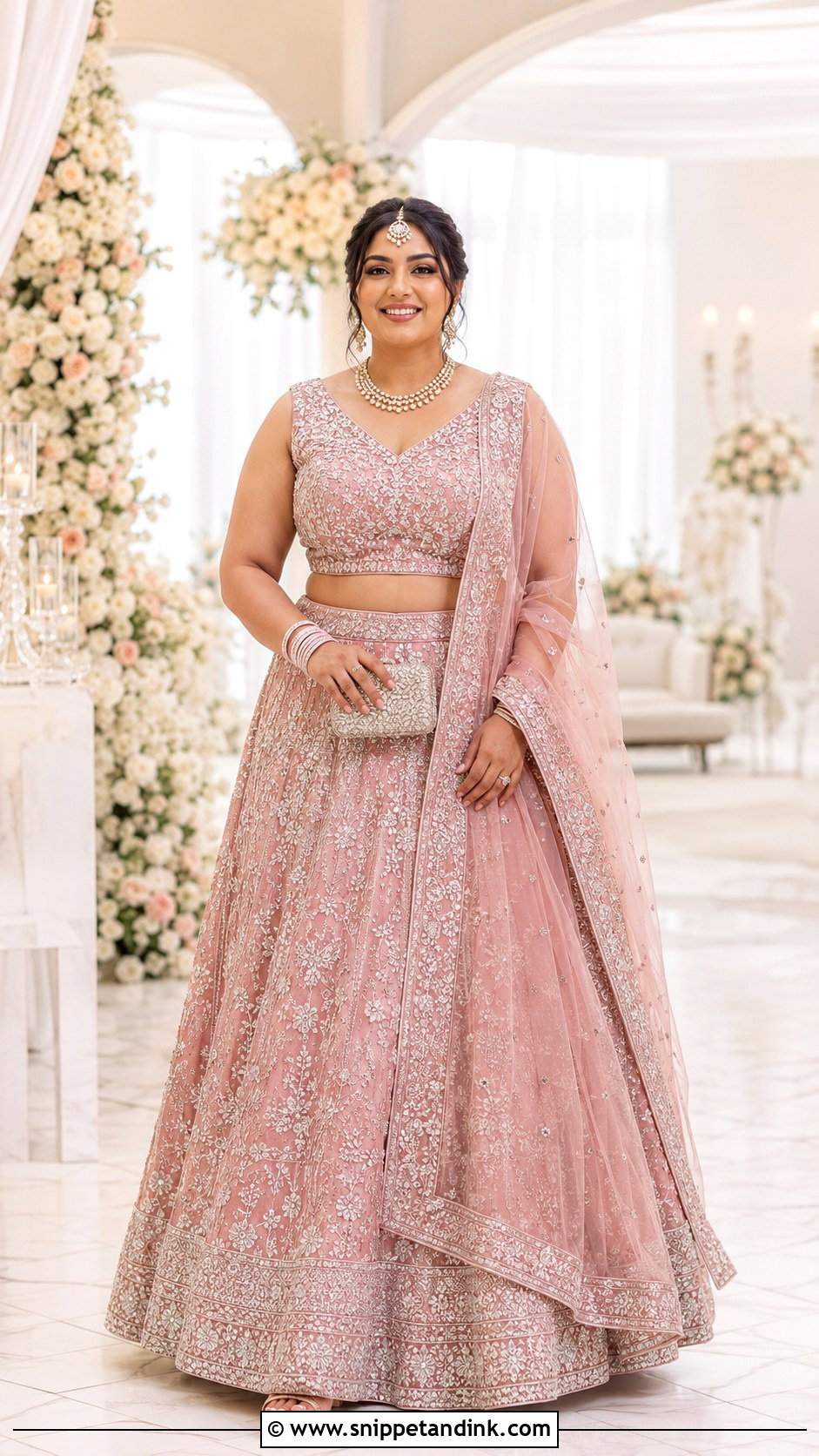
Pink keeps the grandeur but softens it. Blush, rose and dusty pink all take silver threadwork, pearls and fine florals well, and a fitted blouse with a modest V balances a full skirt. One light dupatta over the shoulder, with a second sheer veil if your ceremony calls for head covering. Pearls, pale stone bangles and crystal sandals keep the colors gentle. For a fuller figure, I’d ask the karigar to run the embroidery vertically and raise the waistband slightly; both lengthen the line. A compact silver clutch and small floral hair pieces that echo the embroidery finish it.
4. Ivory Sajna Bridal Lehenga
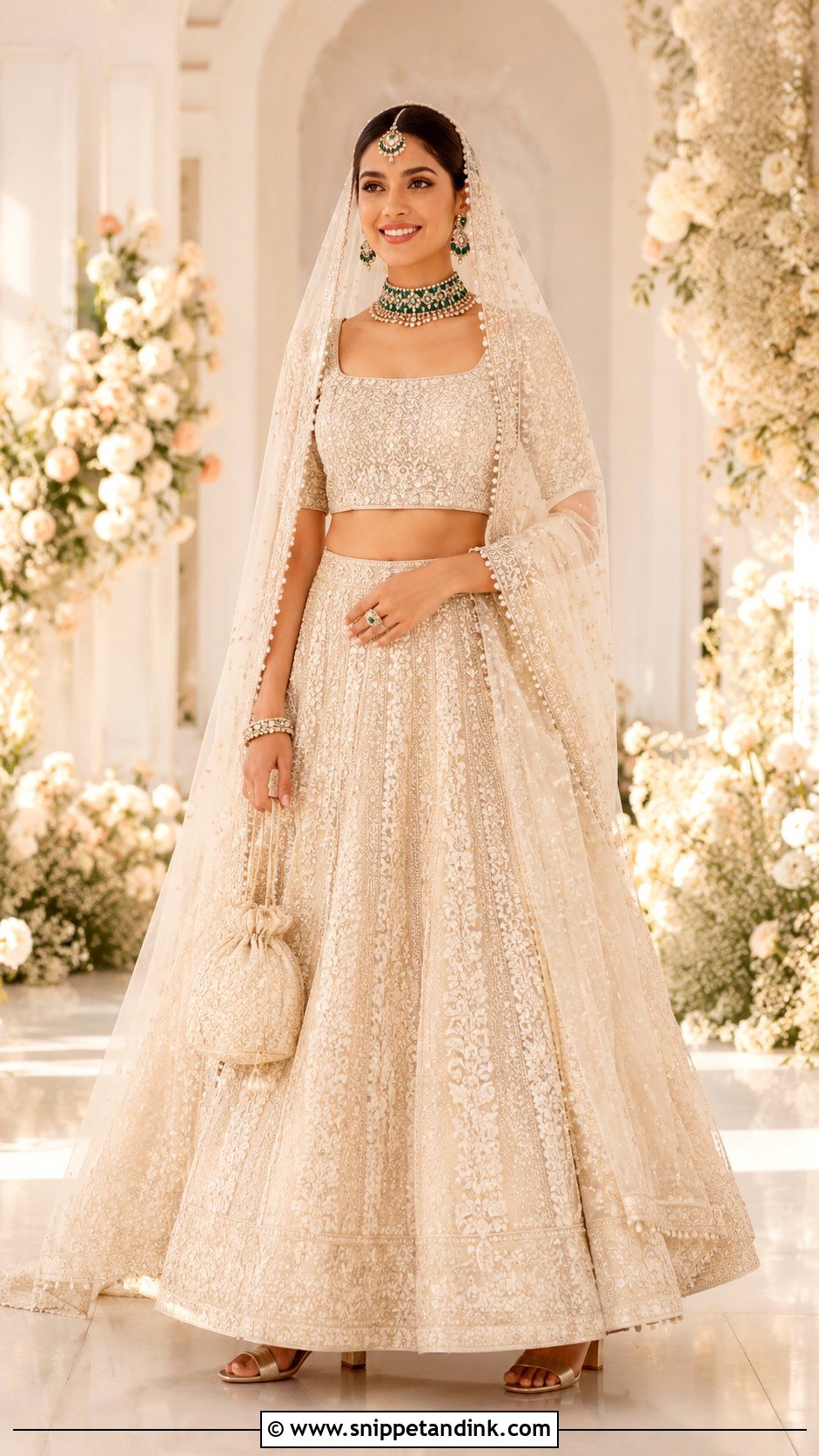
Ivory lights up in a bright daytime ceremony. An ivory lehenga with champagne threadwork, pearls and a little gold beading, plus a structured square-neck blouse, keeps it defined. The risk with an all-pale outfit is that it looks flat in pictures, so I mix textures: silk with net, organza with raised embroidery. Bring color in through emerald or ruby jewelry or a pastel border on the dupatta. An ivory veil with scattered work covers without hiding the detail beneath. Metallic block heels, a pearl potli and white flowers in a low bun finish it. Check with your family first; in some traditions white is not worn for the main ceremony.
5. Gold Sajna Bridal Saree
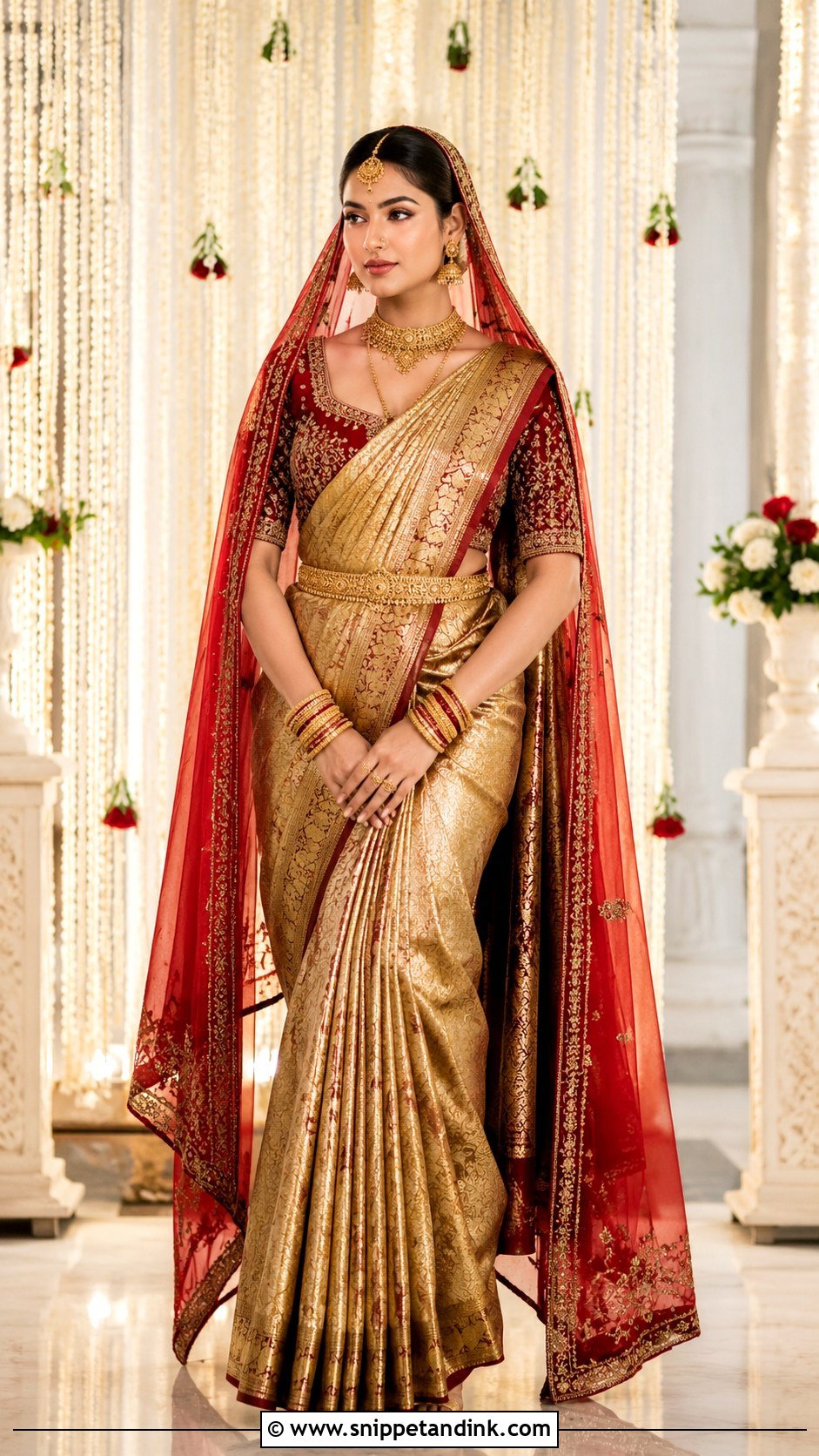
A gold saree in silk or tissue has a glow that works for traditional ceremonies and formal portraits. Choose one with a firm woven border and enough body to hold crisp pleats; very soft tissue collapses after an hour. The custom blouse featuring elbow-length sleeves should repeat the saree’s motifs, and a red, green or maroon veil adds depth. Temple jewelry, stacked bangles, a waist belt and low heels you can stand in for hours complete it. A braid or flower-wrapped bun suits the mood. I pin the pallu at the shoulder and again at the waist, using several small pins instead of one large one so it can’t drag.
6. Kanjivaram Sajna Bridal Saree
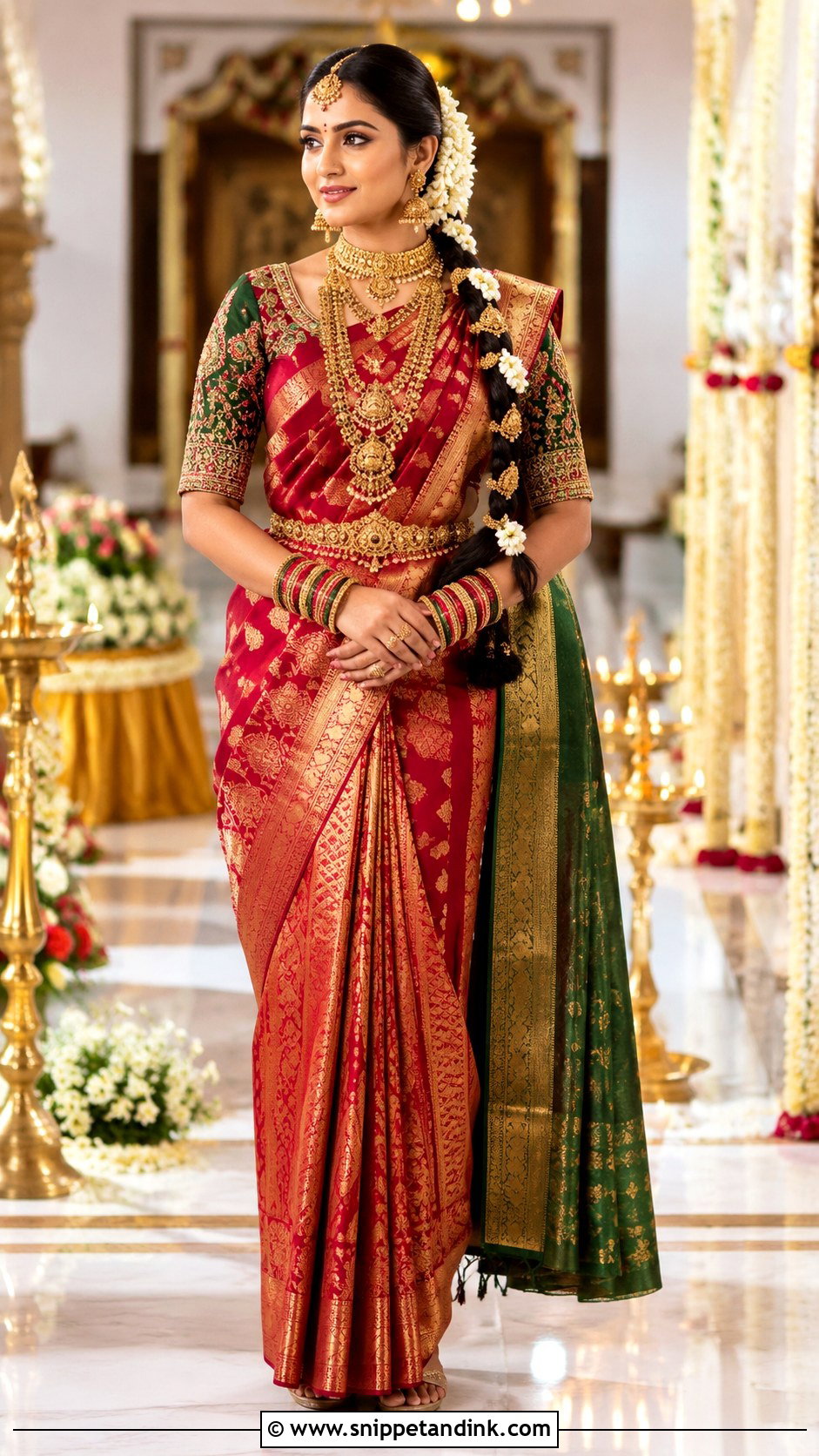
Kanjivaram silk is woven heavy, with real zari, so it holds its own shape and gives a commanding outline. Jewel tones like crimson, emerald, royal blue and deep purple with a contrasting border are classic. Have the blouse made with motifs taken from the pallu so it looks designed together. A temple-style waist belt holds the pleats and the drape in place through a long ceremony. Layer a short necklace with a longer haram, then jhumkas, bangles and hair ornaments, with low gold sandals underneath. A center-parted bun or flowered braid finishes it. Book an experienced draper; precise pleats are what let the border show.
7. Green Sajna Bridal Lehenga
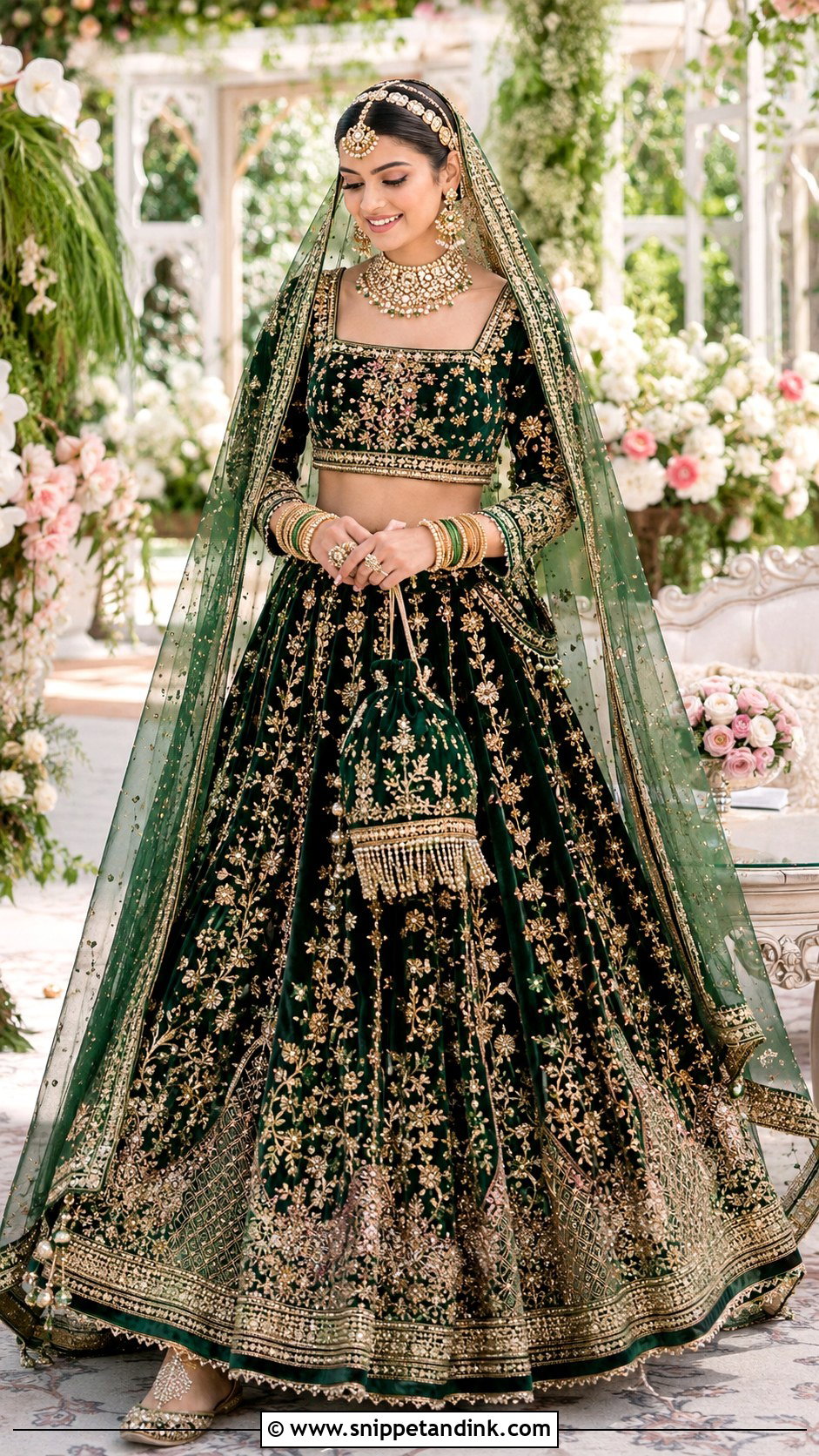
Emerald is a bold bridal choice that still feels grand rather than trendy. Silk, velvet or satin with antique gold embroidery and a moderately full skirt work well, with a square-neck blouse and structured sleeves. A matching sheer dupatta keeps it tonal, while a muted pink or champagne veil adds contrast. Polki, gold bangles and an ornate headpiece sit naturally with green. For outdoor portraits, I’d choose dimensional threadwork over lots of sequins; sequins in direct sun throw hot white spots that are hard to fix later. Cushioned gold juttis, a small potli, a low braided bun and defined eye makeup complete it.
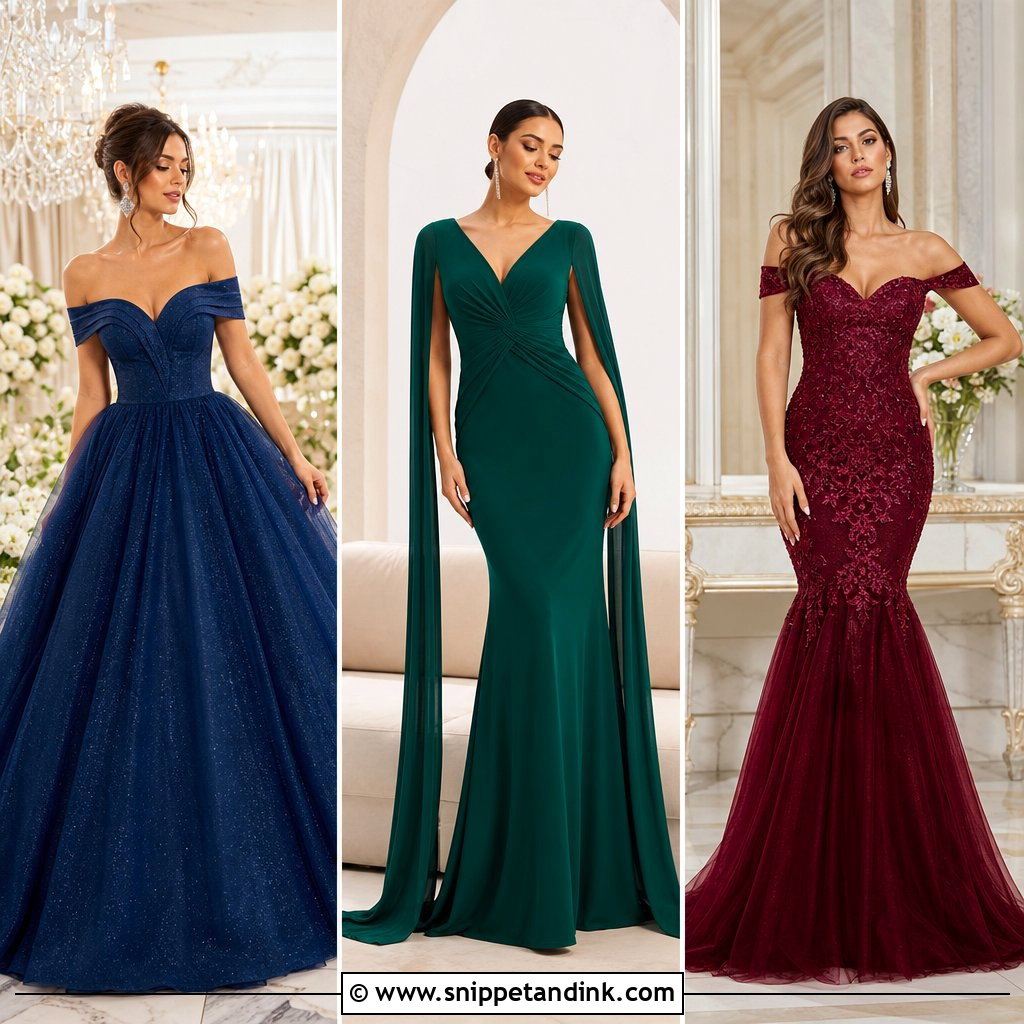
8. Royal Blue Sajna Reception Lehenga
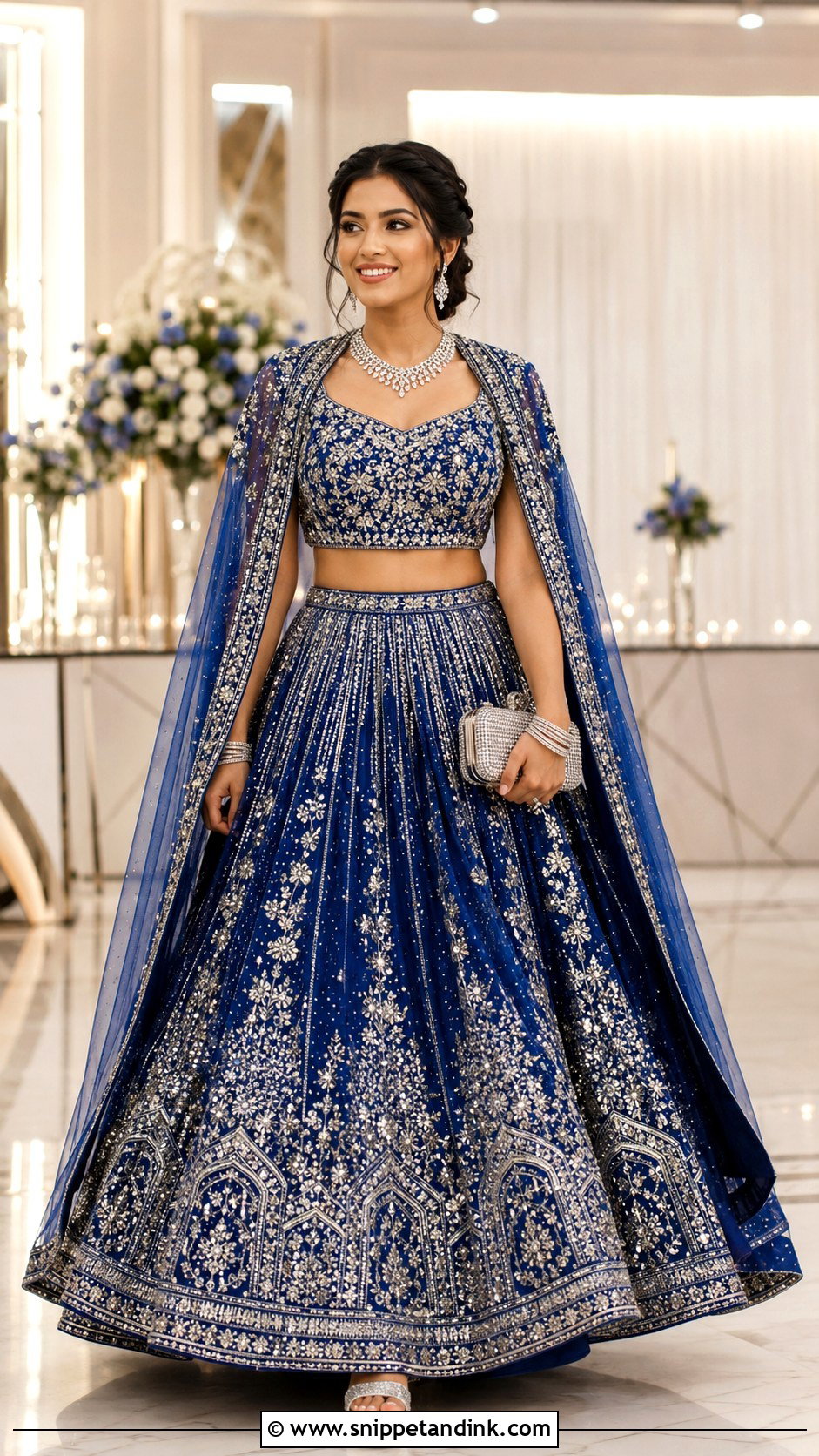
Royal blue is made for the reception. Silver embroidery, crystals or tonal beading catch light as you walk in, and a structured blouse with secure straps or sleeves lets you dance without adjusting. Wear one light dupatta, not two; a second layer only gets in the way on the dance floor. Diamond-style jewelry, silver bangles and a statement ring brighten the deep base. Block heels or embellished platforms stay stable under the skirt, and a silver box clutch keeps things neat. Soft waves or a sleek low ponytail move the traditional outfit into evening.
9. Lavender Sajna Reception Lehenga
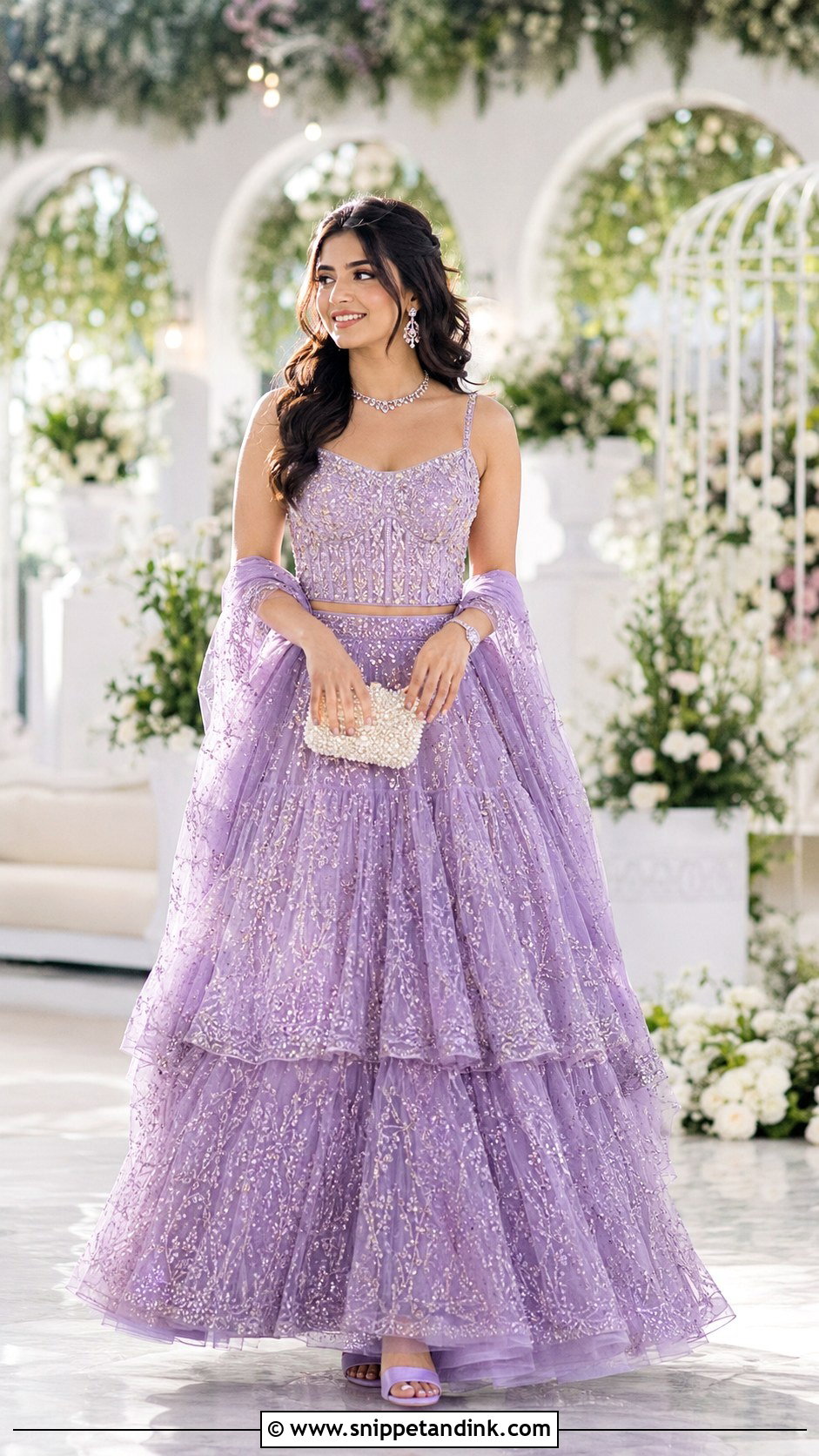
Lavender is the reception color I suggest to brides who find jewel tones heavy. Layered tulle or organza with tonal florals, pearls and only a little crystal keeps it airy. A corset-style blouse gives definition, but insist on proper lining and boning that bends; cheap corset blouses dig in by the second hour. Drape a sheer dupatta loosely over the arms or pin it at one shoulder. Crystal earrings, a fine necklace, silver or lavender heels and a small beaded clutch suit it. For more coverage, a longer blouse with sheer embroidered sleeves works. Soft waves, a polished bun or half-up hair with tiny floral pins finish it.
10. Peach Sajna Bridal Lehenga
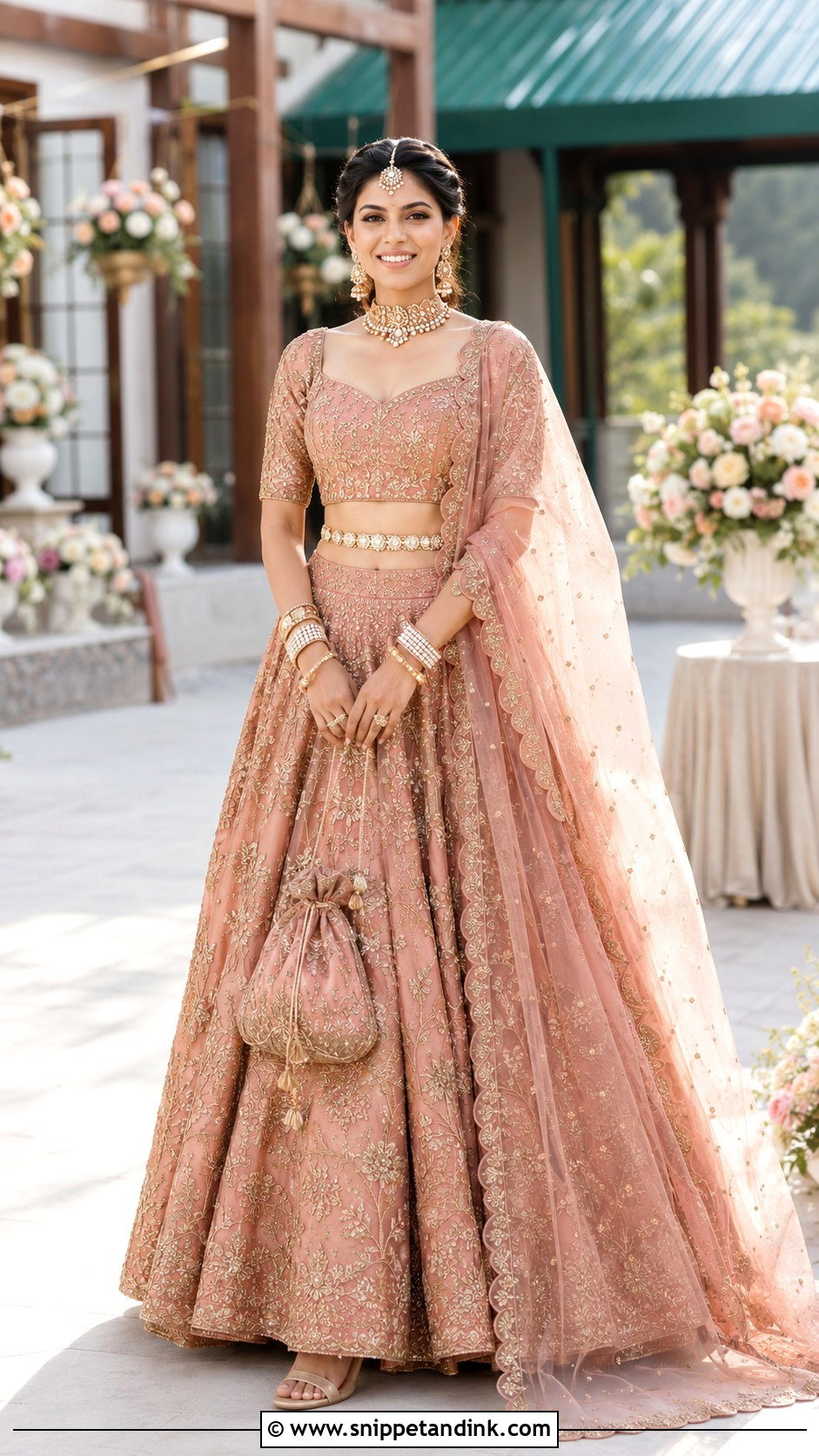
Peach looks bright in daylight without shouting, which is why it suits morning and afternoon ceremonies. Gold florals, delicate sequins and an airy skirt keep it light, with a round or sweetheart blouse in the same shade. A scalloped sheer dupatta can go over the head or across both arms for portraits. Rose gold, pearl bangles and nude-gold sandals match the warmth; a contrasting handbag spoils it, so carry an embroidered potli. A narrow jeweled belt over the dupatta adds definition and keeps the fabric from slipping. Fresh flowers in a low bun finish the palette.
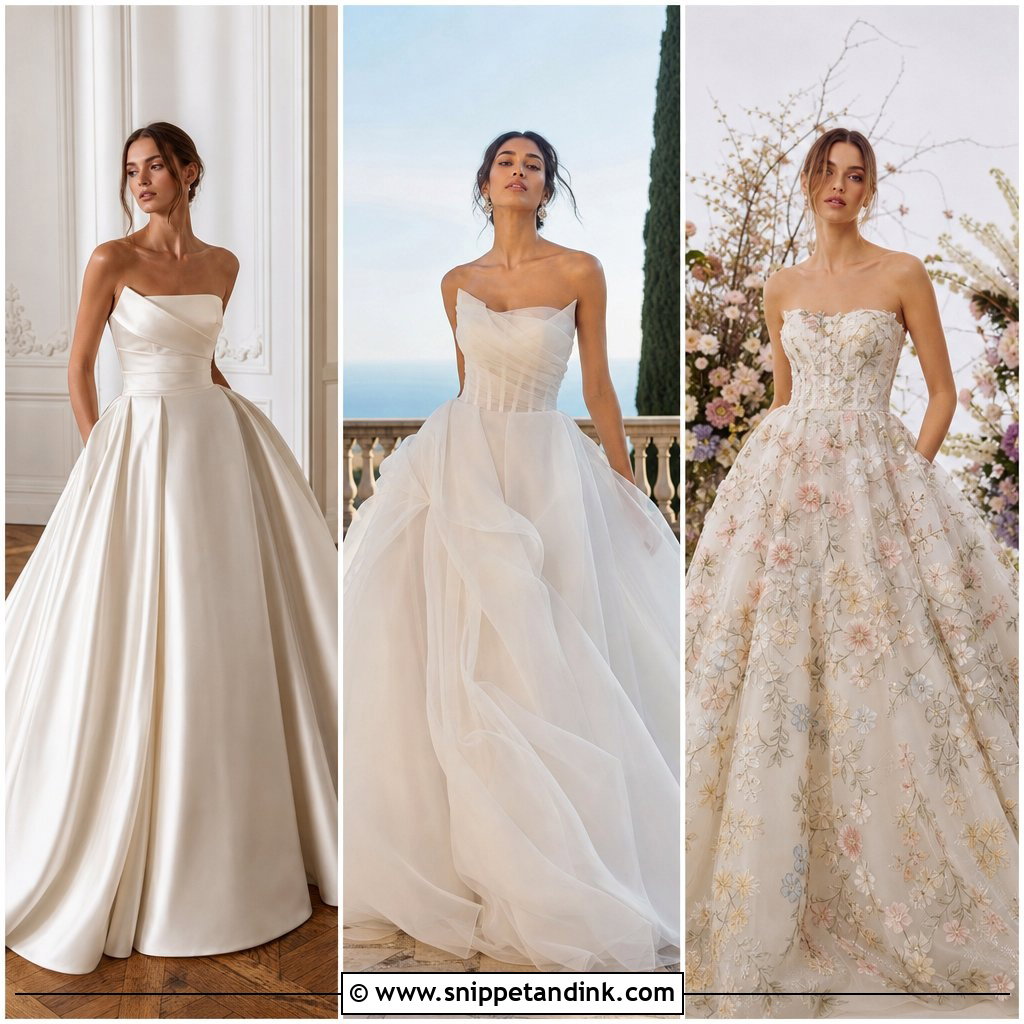
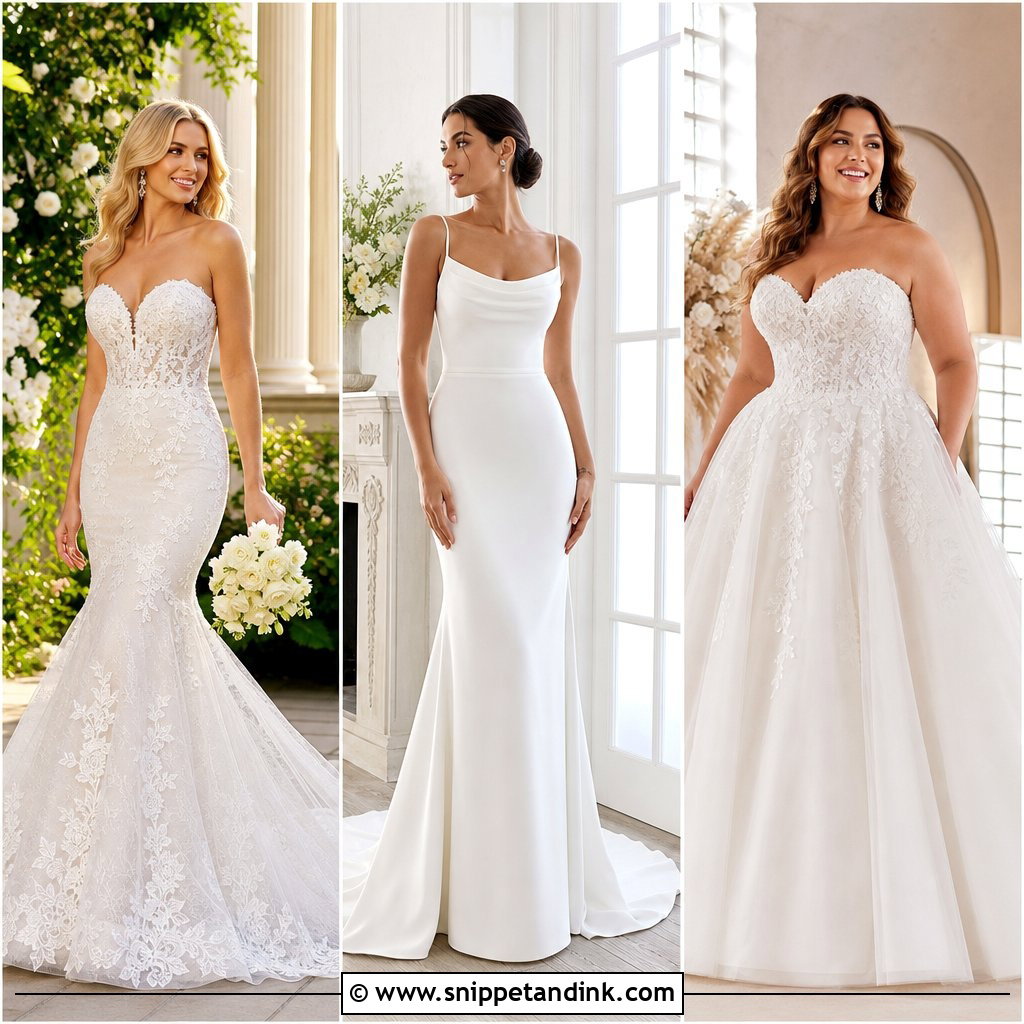
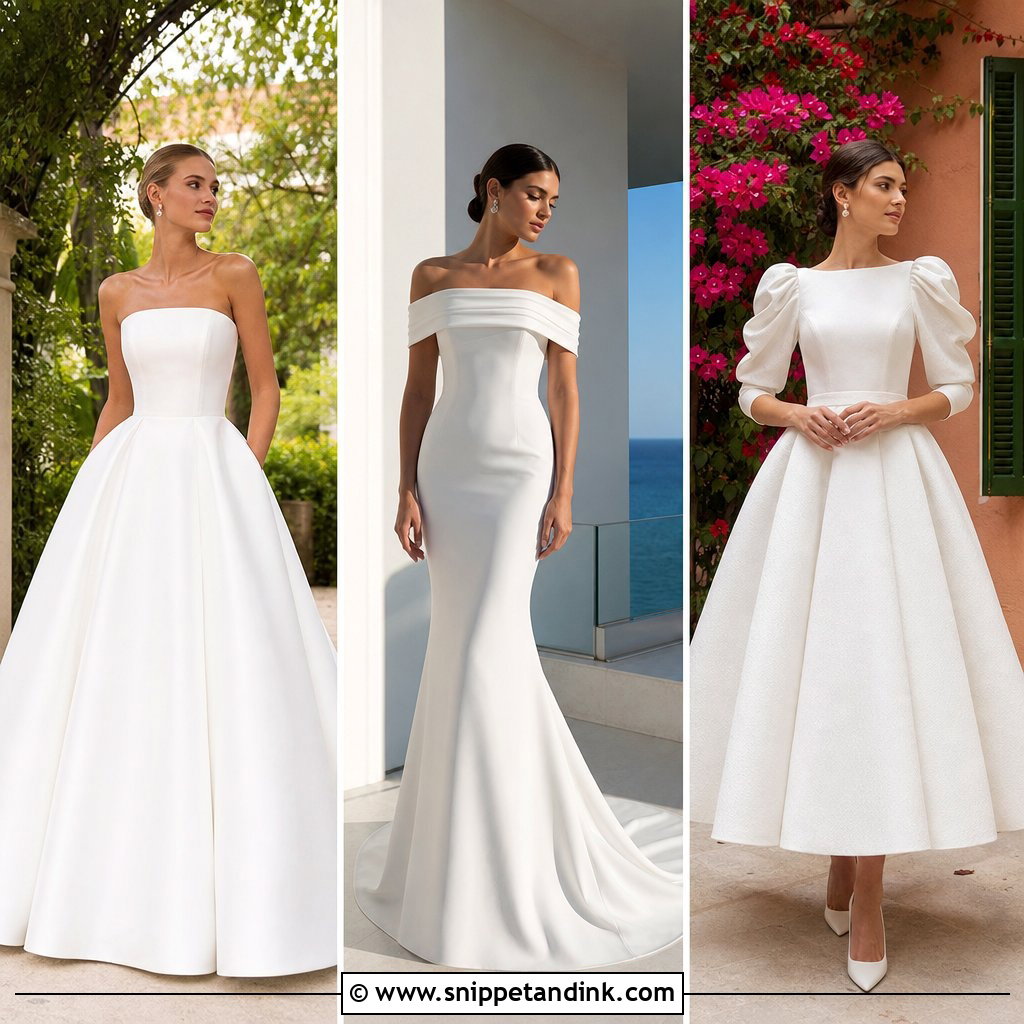
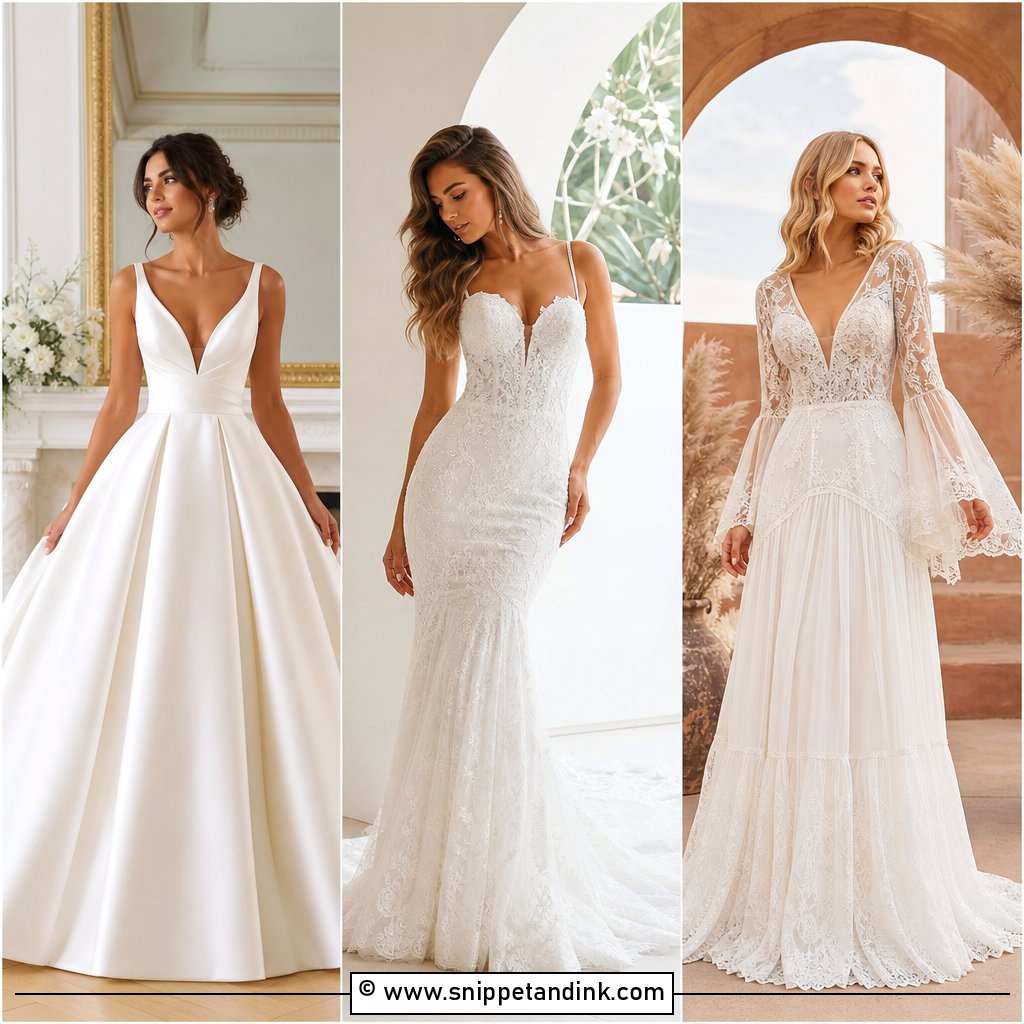
11. White Sajna Bridal Gown
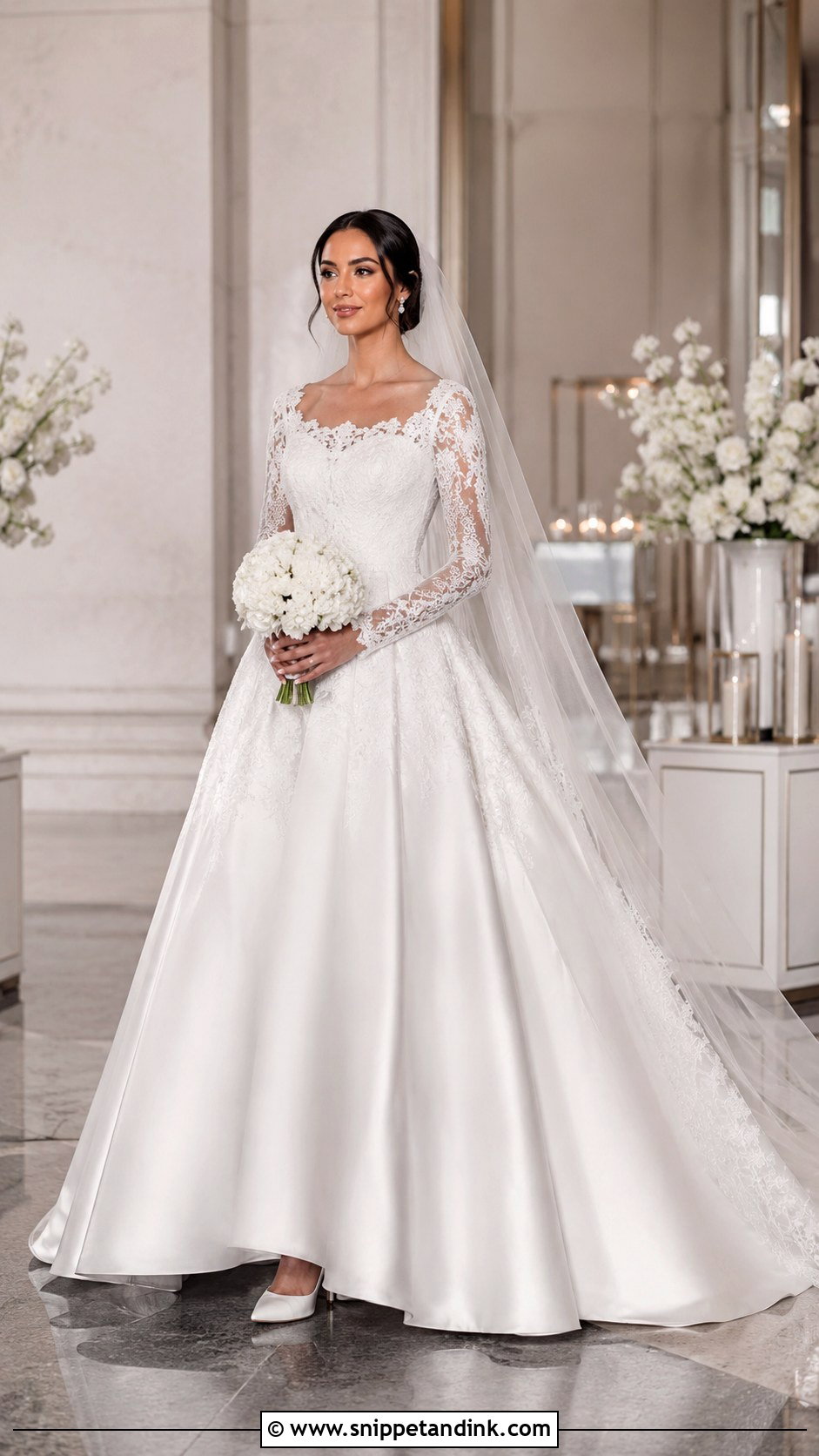
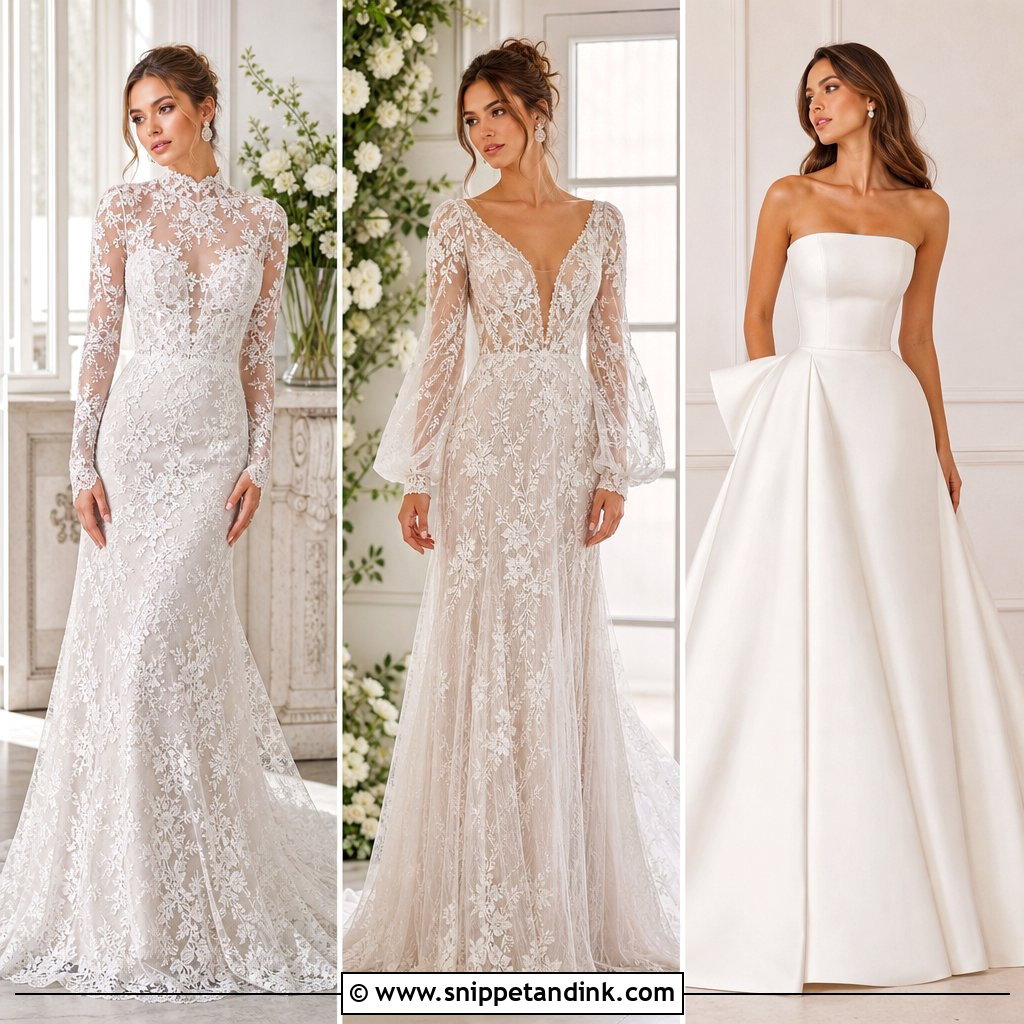
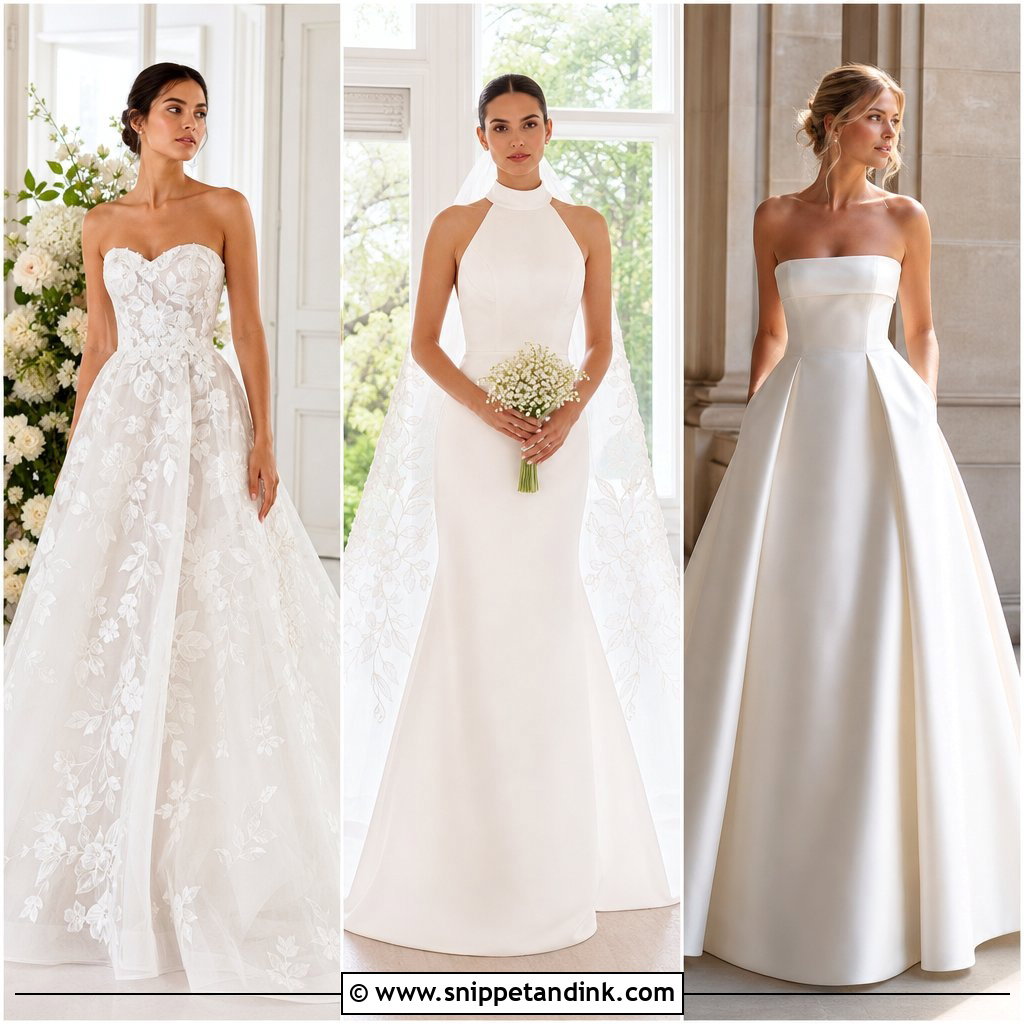
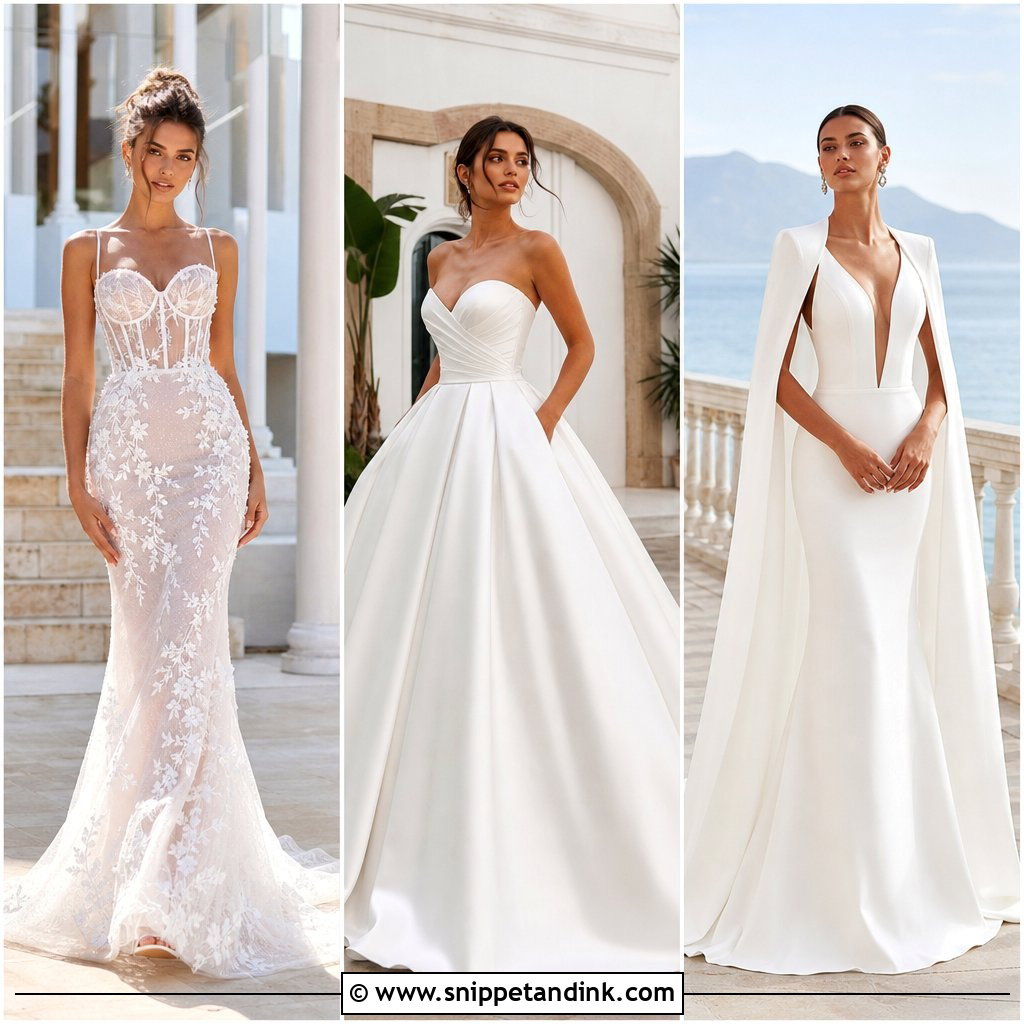
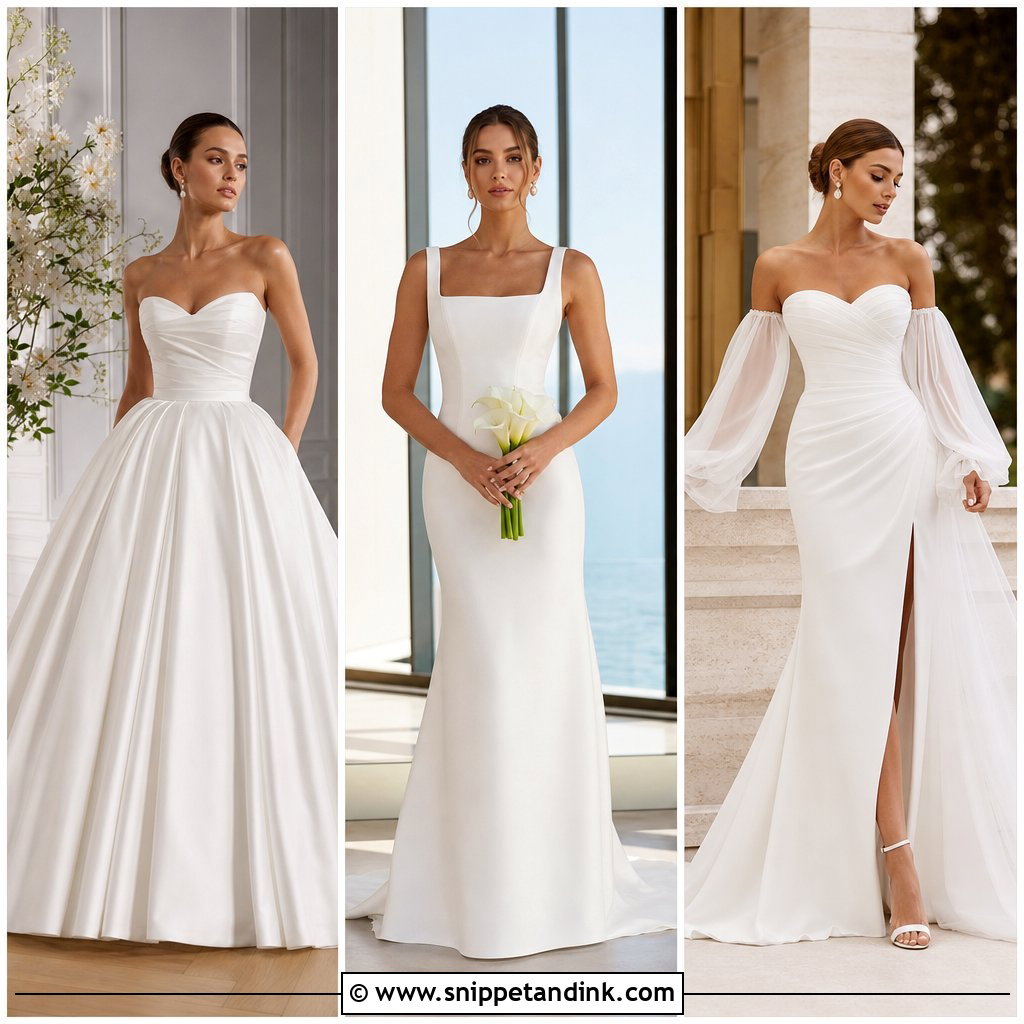
A white gown suits a church ceremony or a formal reception in a mixed-tradition wedding. An A-line or soft ball gown with lace, beadwork and a defined waist is the starting point; the bodice must be secure while the skirt leaves room to walk and sit. Long sheer sleeves give coverage, though cap sleeves feel lighter. Pick a fingertip or floor-length veil that doesn’t repeat every detail of the gown. Pearl earrings, a fine bracelet and closed-toe heels are enough. Keep the bouquet compact; an oversized one hides the bodice you paid for. A smooth bun or polished waves finish it.
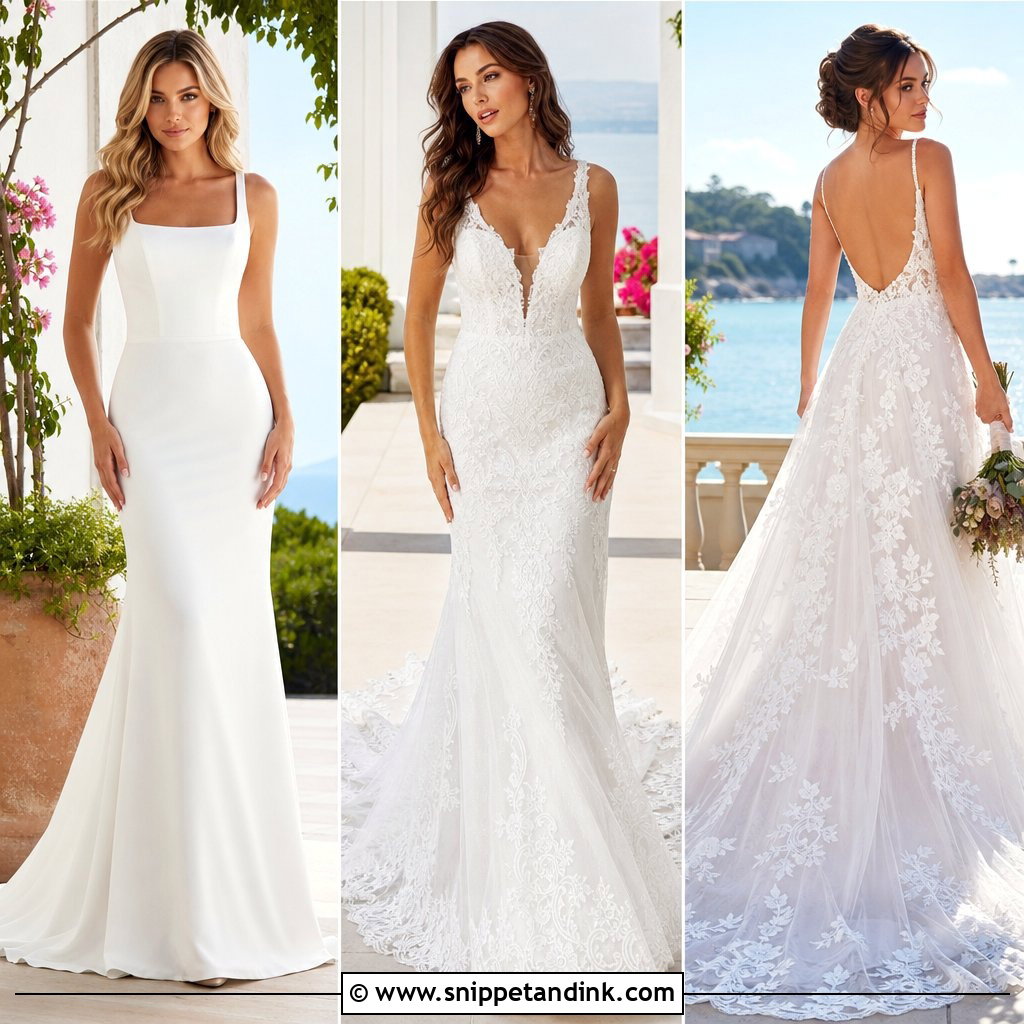
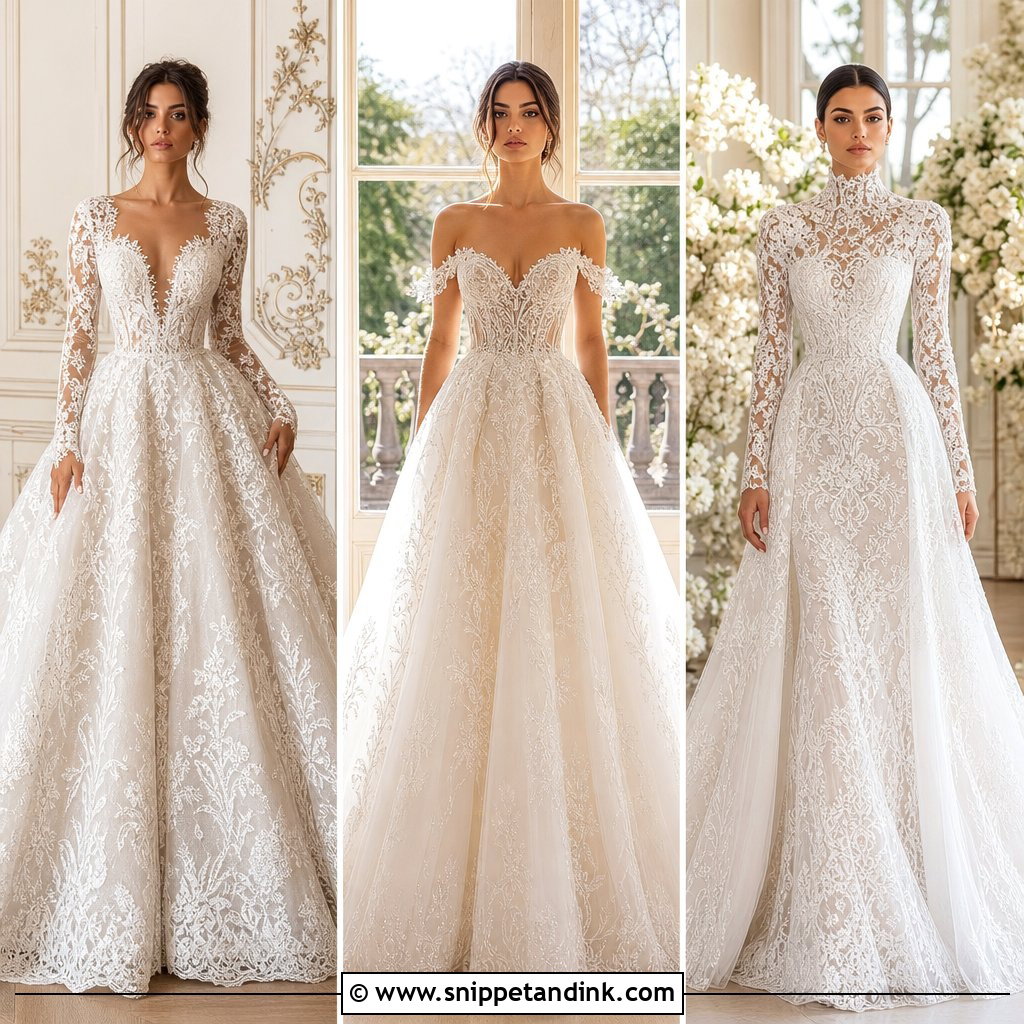
12. Lace Sajna Bridal Gown
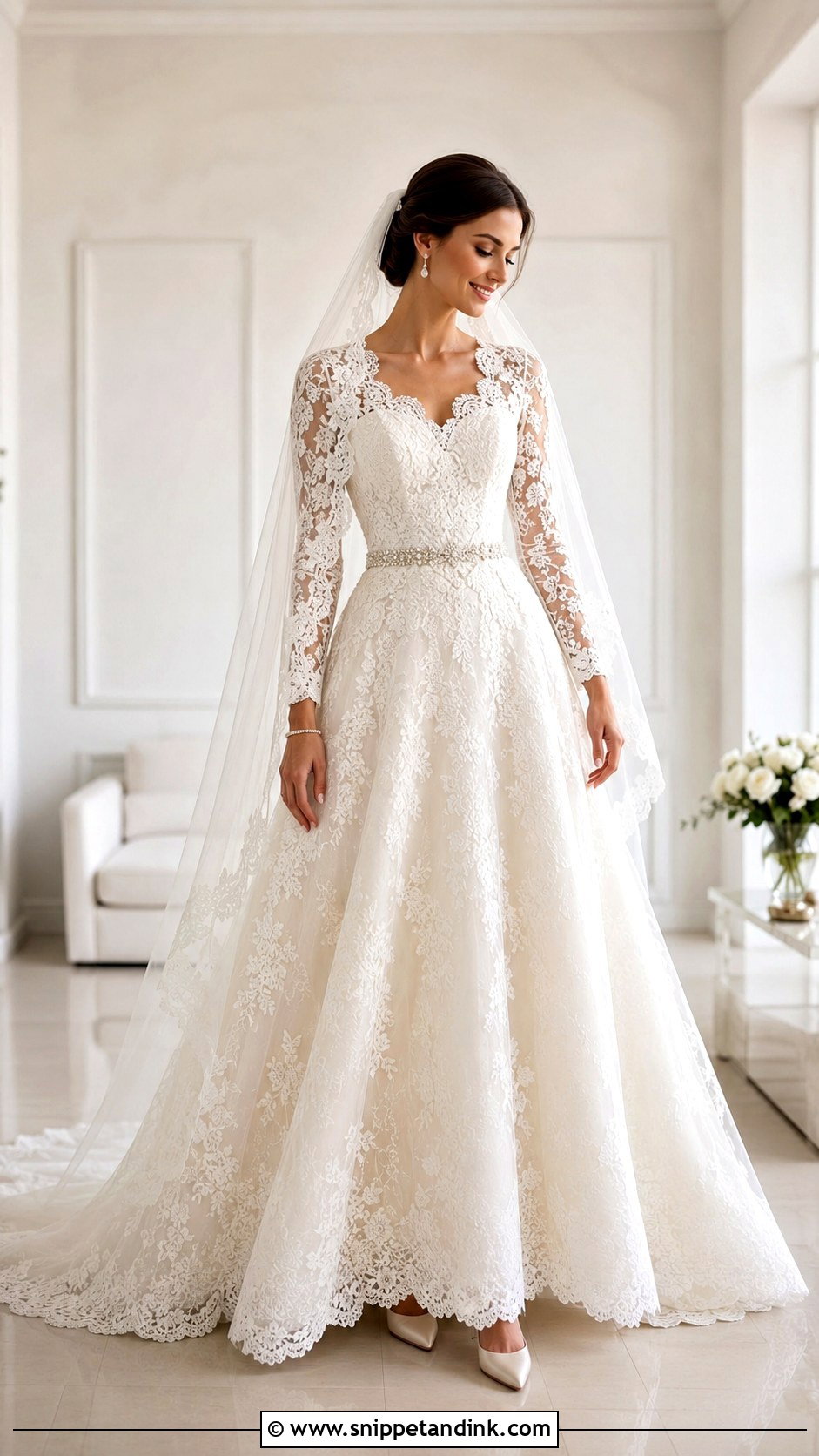
Lace gives detail without heavy sparkle. I prefer motifs placed along the neckline, sleeves, waist and train over lace spread evenly everywhere, because placed lace shapes the body. A soft ivory lining under the lace lets the pattern show. Choose a tulle veil edged in matching lace, but keep that border narrow so it doesn’t bury the back of the dress. Pearl drops, a slim bracelet and satin pumps complete it, with a thin crystal belt if you want waist definition. A low chignon or swept-back waves keep the shoulders clear.
13. Ruffled Sajna Bridal Saree
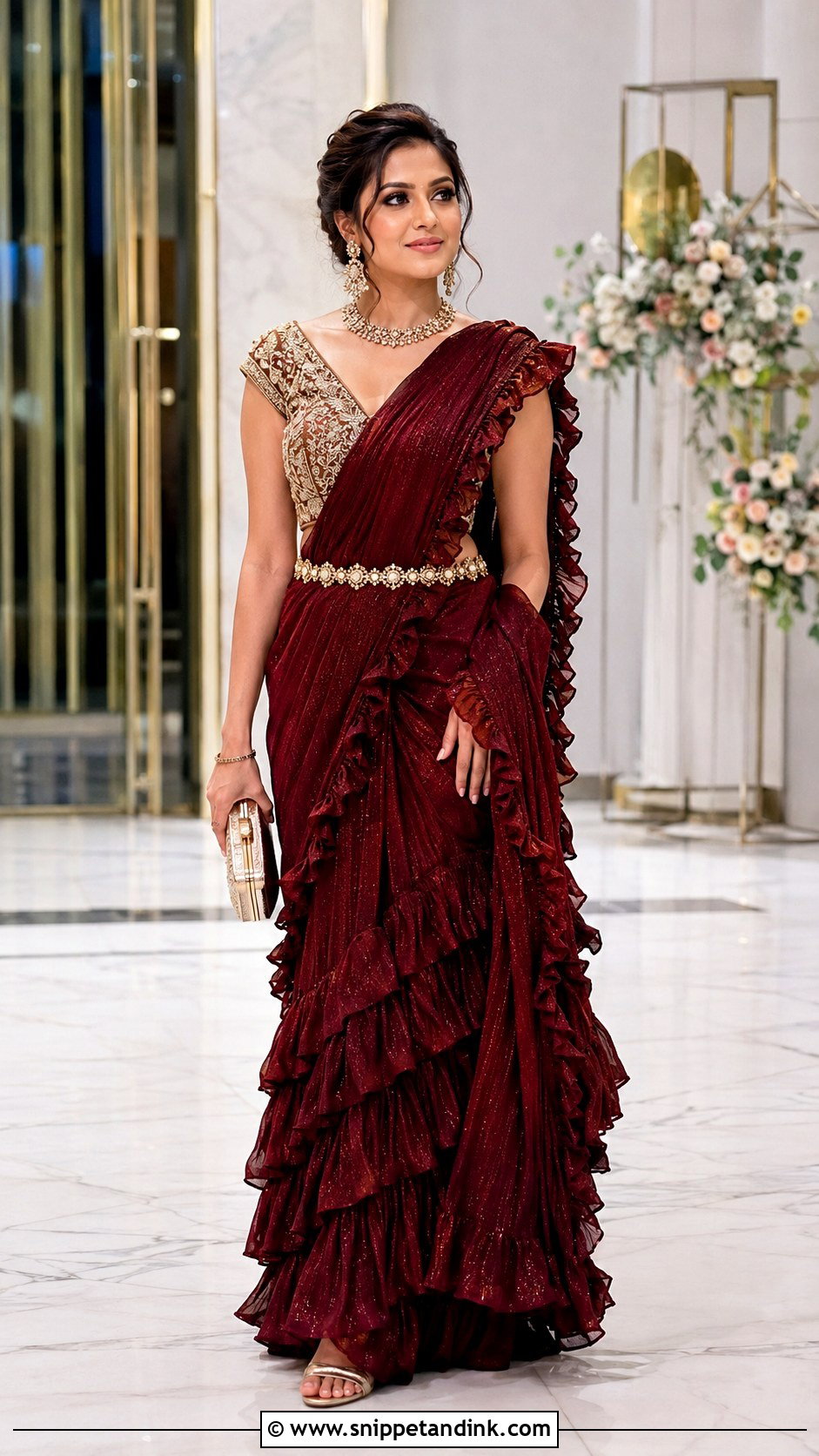
The ruffled saree moves like a gown and drapes like a saree. I’d choose a pre-draped version for this; ruffles are hard to pleat by hand and come out uneven. Red, wine, blush or champagne with controlled ruffles on the hem and pallu, plus a fitted embroidered blouse, balances the volume. A waist belt anchors the drape. Because the ruffles already add movement, one necklace with statement earrings beats several heavy layers. Metallic heels lift the hem off the floor, a small box clutch keeps it modern, and a sleek bun or side-swept waves finish it. Have the stitched drape checked by sitting and standing before the day.
14. Red Sajna Bridal Anarkali
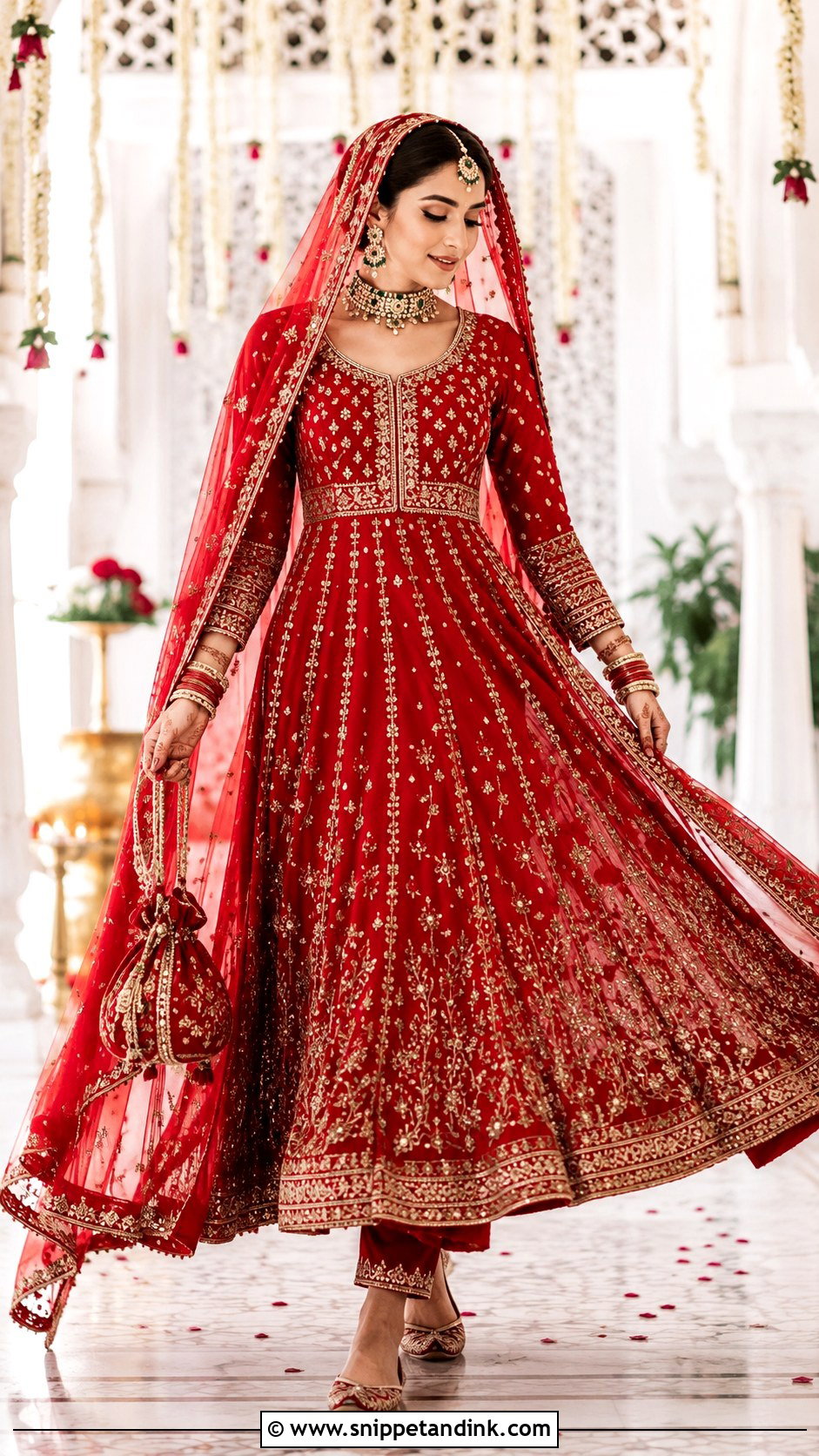
An Anarkali gives you movement without a separate skirt and blouse to manage. Look for a fitted upper body, a defined waist and generous flare from the hips, with gold embroidery on the neckline, sleeves and hem rather than everywhere. It goes over fitted trousers with embroidered juttis. Drape a light dupatta over the head and one shoulder so the front stays visible. A kundan choker, medium earrings, bangles and a small potli are enough. Length is the critical alteration: the hem should just skim your shoes. Too long and you’ll step on it on every stair.
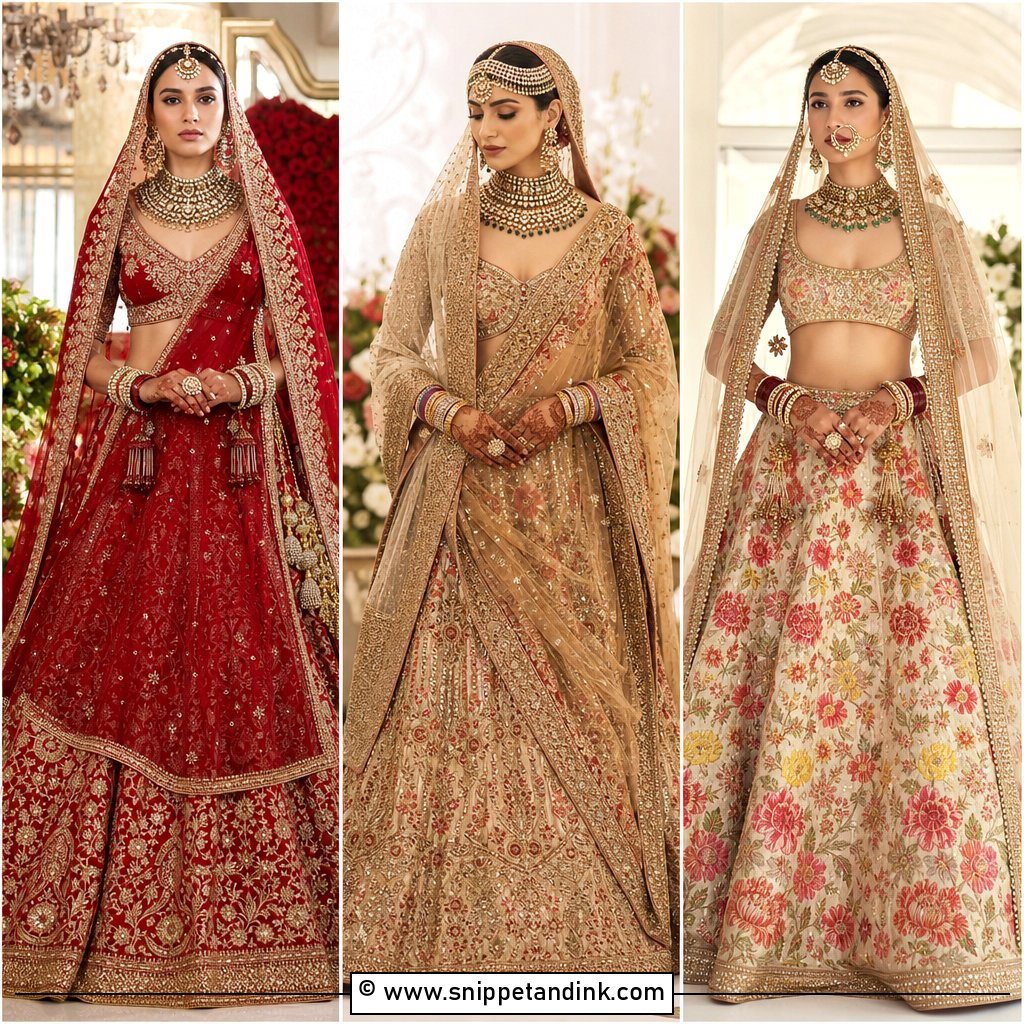
15. Pastel Sajna Bridal Anarkali
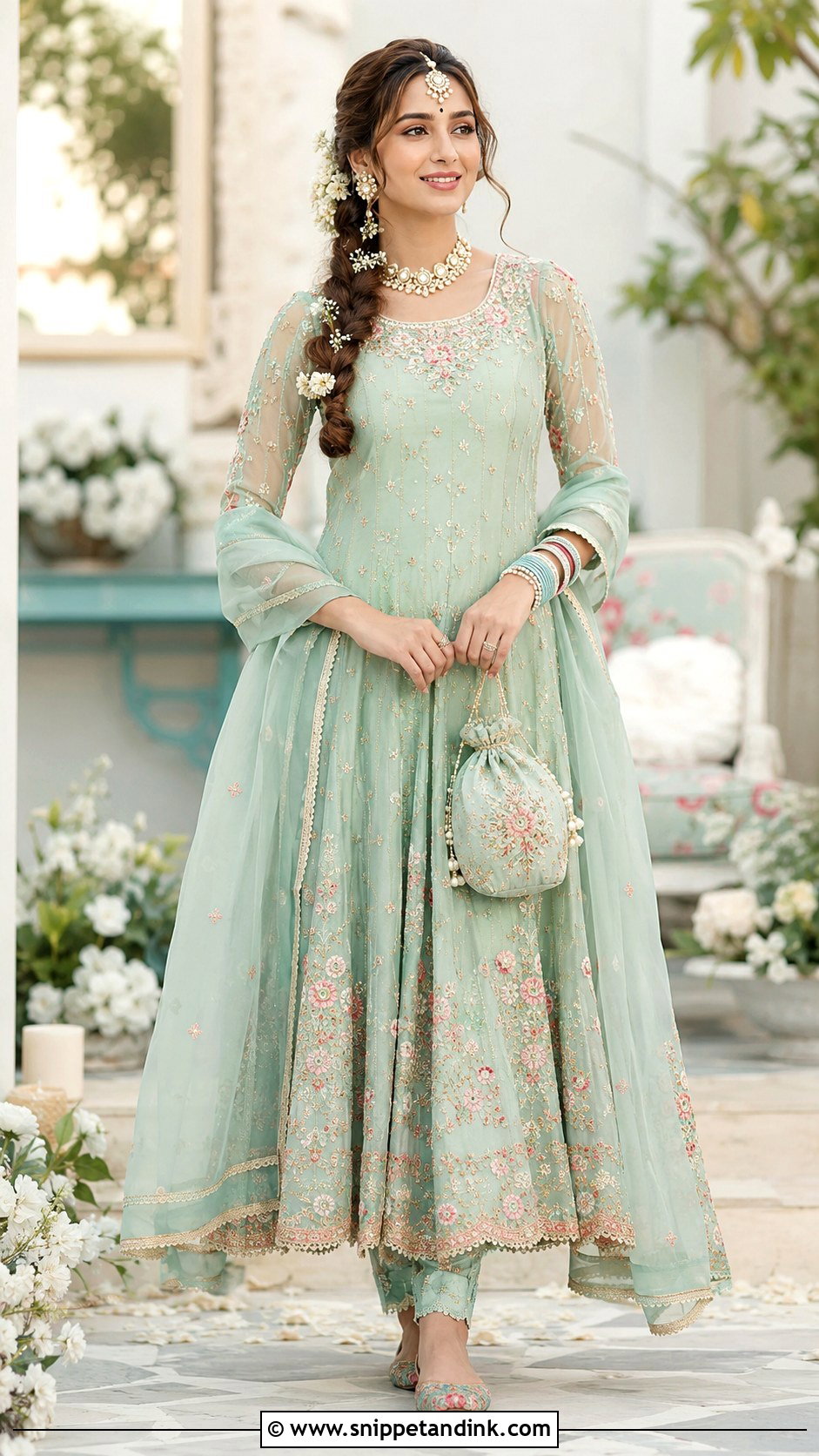
Pastel Anarkalis glow in morning light and suit a haldi, mehndi or daytime pooja. Mint, powder blue, blush and pale yellow all take fine floral embroidery well. A high or soft round neck with sheer sleeves gives coverage without weight. Pair matching fitted pants with an organza dupatta with a narrow border. Pearl or polki jewelry, pastel bangles, metallic juttis and a potli in the same fabric family complete it. For a haldi, choose a fabric you won’t mind staining; turmeric marks pale cotton and silk quickly. A loose braid or low bun with small flowers and fresh makeup finish it.
16. Gold Sajna Bridal Sharara
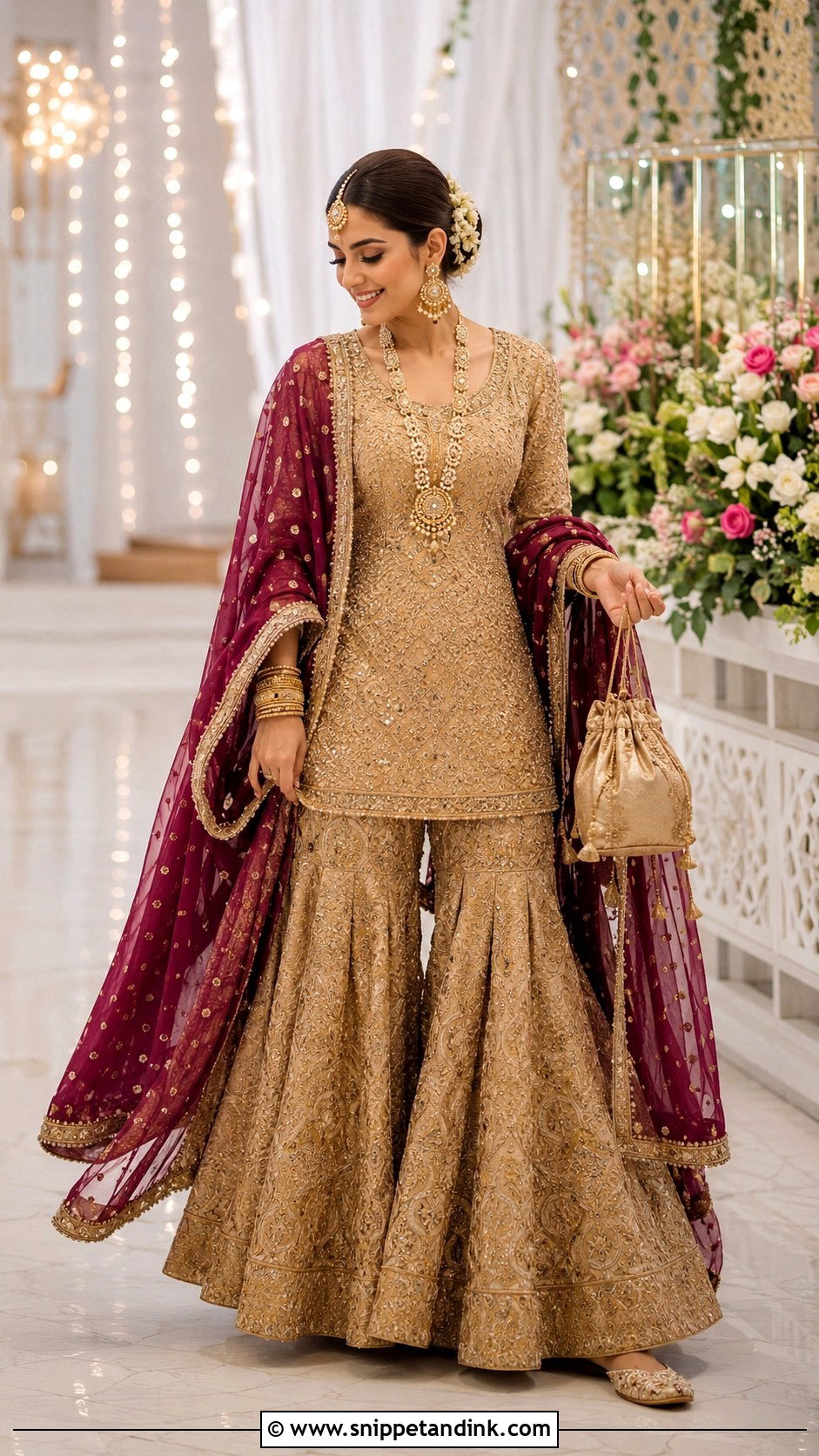
A sharara gives drama and comfort together. The pants are cut wide and flared, in brocade, tissue or embroidered georgette, so you can sit cross-legged and dance easily. Pair them with a short structured kurti ending near the waist so the flare shows. Drape a sheer gold or jewel-tone dupatta over one shoulder and pin it at the wrist. A long necklace with matching earrings adds height, and stacked bangles bring tradition. The hem is wide and heavy, so platform juttis or block heels give support. Pick a potli with short tassels; long ones snag on the flare. A center-parted low bun keeps the jewelry visible.
17. Pink Sajna Bridal Sharara
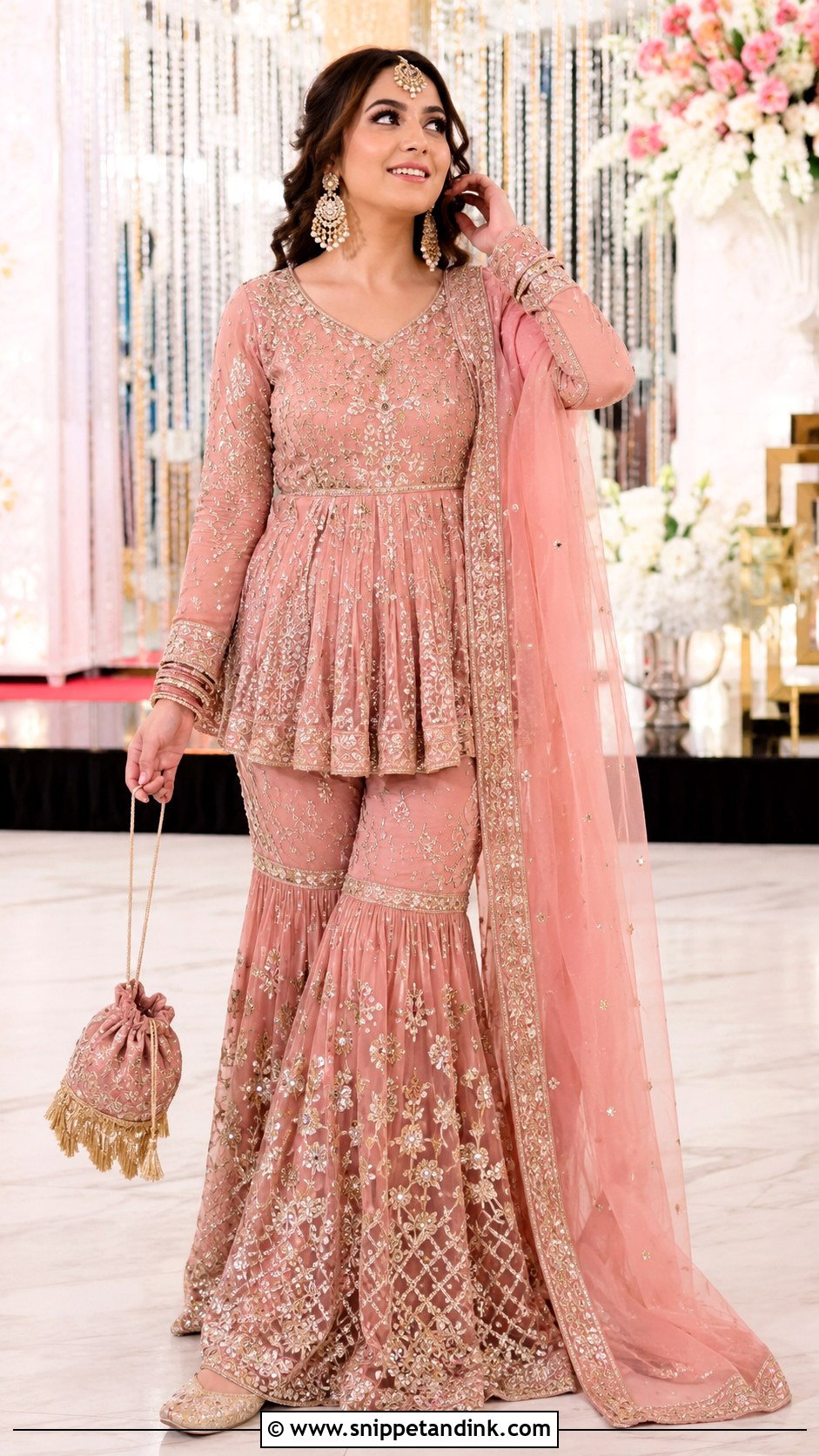
A pink sharara in rose, fuchsia or dusty mauve has plenty of energy for a sangeet. Embroidery that thickens toward the hem adds weight where it helps the flare swing. A peplum top flows into the wide pants more smoothly than a straight kurti. Keep the dupatta light with a narrow border, or the whole outfit starts to feel bulky. Kundan earrings, a small maang tikka, stacked bangles, embellished juttis and a matching potli finish it, with a braid, low ponytail or soft bun. Rehearse your sangeet steps in it once; wide pants need a little practice on turns.
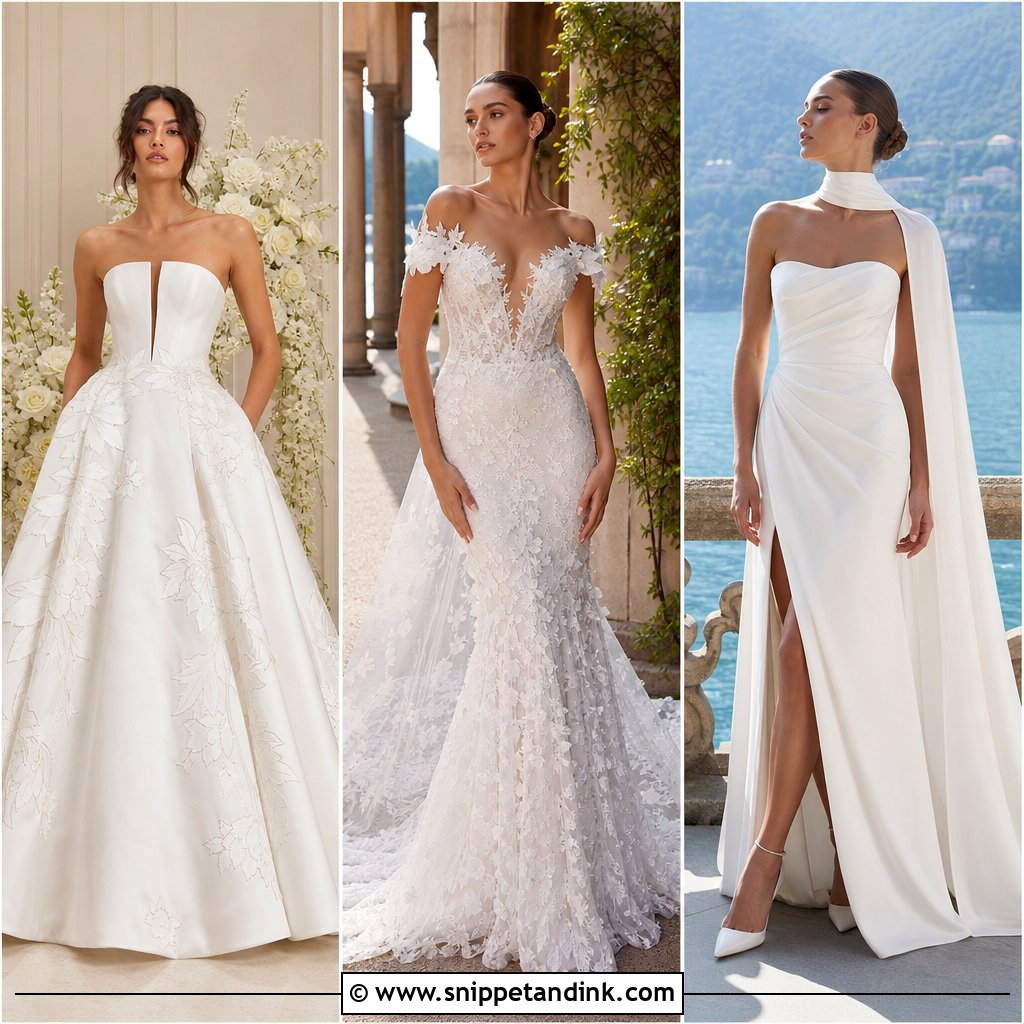
18. Champagne Sajna Bridal Gown
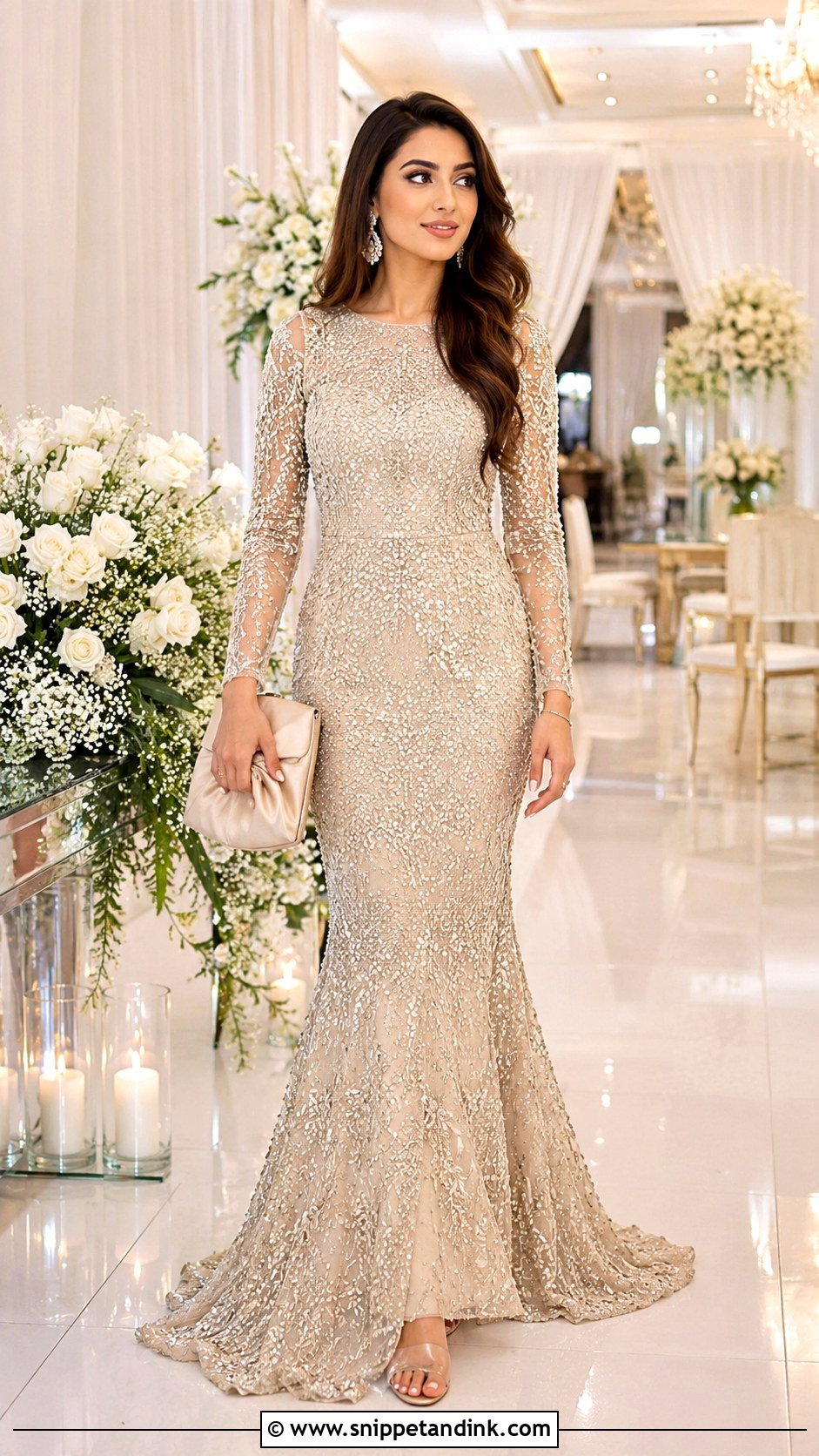
Champagne adds warmth to a beaded gown. A-line or fit-and-flare with tonal sequins, pearls and a soft neutral lining works best, and a defined waist stops all that shine from swallowing the figure. Long sheer sleeves or a structured off-shoulder neckline make it formal. Nude metallic heels, crystal earrings and a slim bracelet are plenty, with a satin clutch for the reception or a light tulle veil for the ceremony. Keep hair smooth, in a low bun or brushed waves. I’d hold back on statement accessories; the surface of the gown already does that job.
19. Floral Sajna Bridal Lehenga
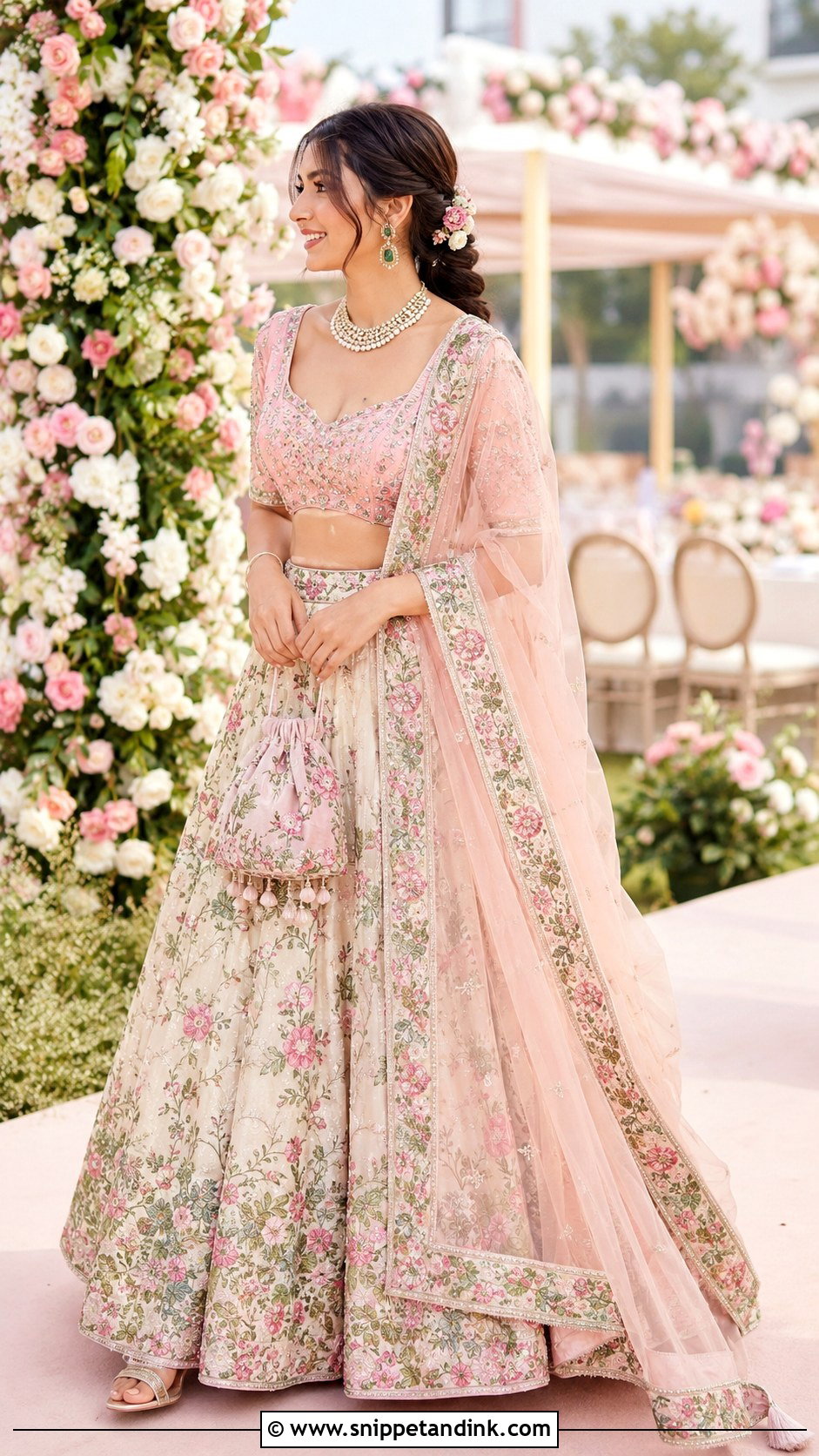
Florals feel joyful in daylight. Pick a light base with embroidered flowers in pink, coral, green, blue or gold, and a moderately full skirt so the pattern can spread out. My rule for the blouse is to repeat only one or two colors from the skirt, never all of them. A sheer dupatta with a plain border keeps the florals easy to read. Pearls, colored stone earrings and neutral metallic sandals are enough. A flower-trimmed braid or low bun echoes the theme, but keep the hair flowers smaller than the embroidered ones. A pastel potli and a few bangles finish it.
20. Velvet Sajna Bridal Lehenga
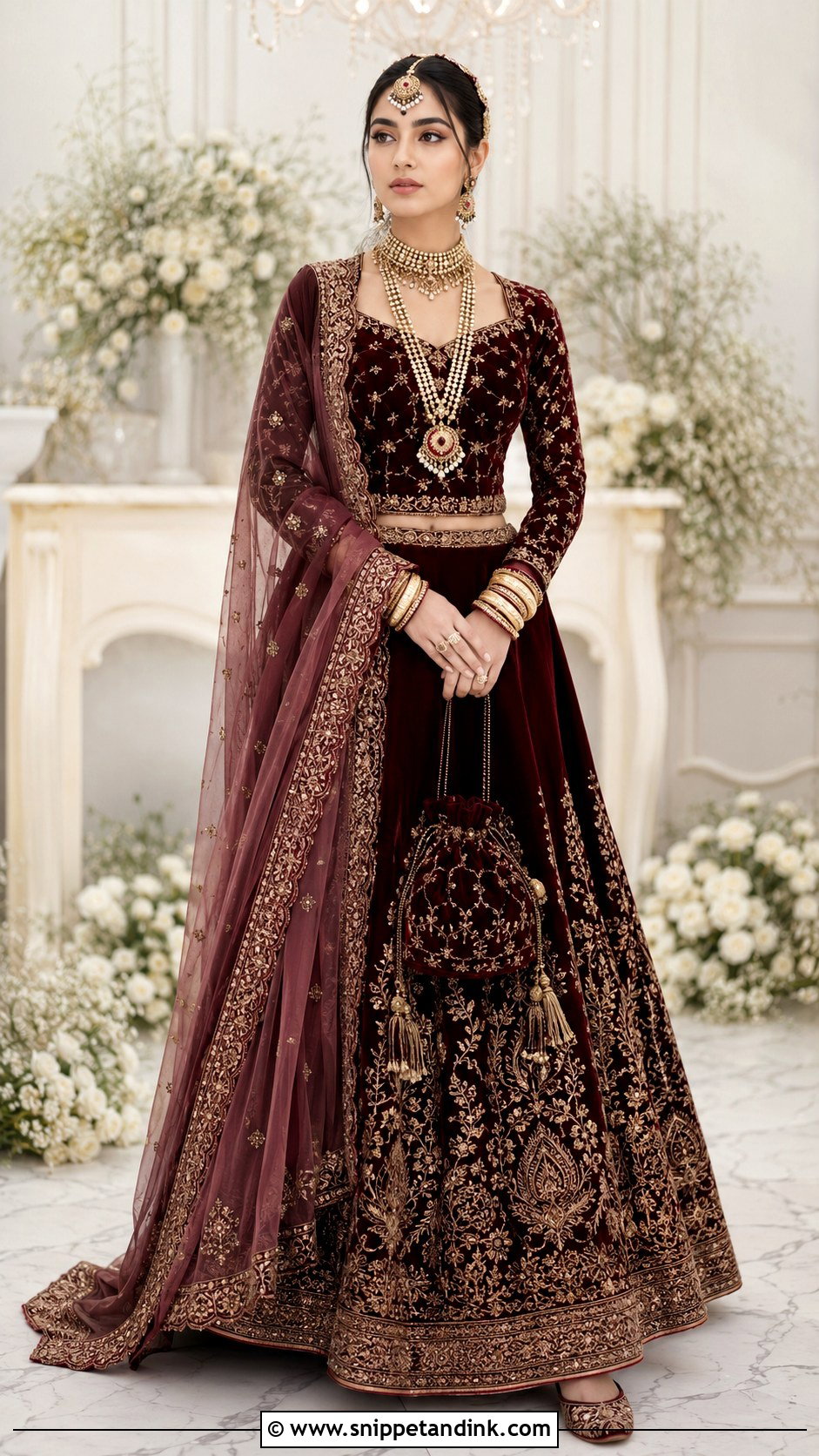
Velvet is the warmest fabric for a winter wedding and the richest under lamplight. A lehenga in burgundy, maroon, emerald or midnight blue with antique gold embroidery around the hem and panels is classic. A velvet blouse with structured sleeves matches it, and a light net dupatta keeps the whole look from feeling heavy. Velvet does crush and mark under pressure, so steam it from the back and never press the pile flat. Layer a choker with a longer necklace, then earrings, bangles and a headpiece. Juttis are steadier than narrow heels under that weight. Fit matters: velvet wrinkles at the waist if the blouse is even slightly loose.
How Heavy Is Too Heavy for the Pheras?
A fully worked bridal lehenga can be tiring to wear through a long ceremony. The weight sits on the hips, and the dupatta pins pull at the scalp and blouse. A few things make a real difference:
- Ask for a can-can or layered net underskirt sewn in, not separate. It holds the flare out so the skirt isn’t resting on your legs when you sit.
- Have the waistband widened and lined with soft cotton. A narrow band concentrates the weight and leaves marks by evening.
- Pin the head dupatta to the hair base and the blouse, not to the skin-side of the neckline, and use small U-pins instead of large safety pins.
- Practice sitting cross-legged and standing up again with someone holding the dupatta. That’s how you’ll do it in the ceremony.
Folding Zari Away So It Doesn’t Tarnish
Metallic zari and zardozi darken when exposed to moisture and air, and plastic traps both. After the wedding, have the outfit cleaned by someone who handles embroidered bridalwear, then wrap it in soft muslin or old cotton saree fabric rather than a plastic cover. Lay acid-free tissue between folds so the embroidery doesn’t rub against itself. Refold along different lines every few months, because silk can split along a crease that stays in one place for years. Store it somewhere dry and dark, away from mothballs touching the fabric directly.
Wear the Full Outfit for an Hour at Home First
The outfit that works on the day is rarely the most heavily worked one. It’s the one that fits, lets you sit and stand through long rituals, suits the ceremony and feels like you. Lehengas, sarees, Anarkalis, shararas and gowns all have a place across a multi-day wedding. Let color, fabric, embroidery, jewelry, shoes and hair tell one story. Book fittings early, walk and sit in the full outfit, and take test photos under light like your venue’s. Small custom changes often do more than adding more embroidery.
You'll Like These Ideas:


Leave a Reply