
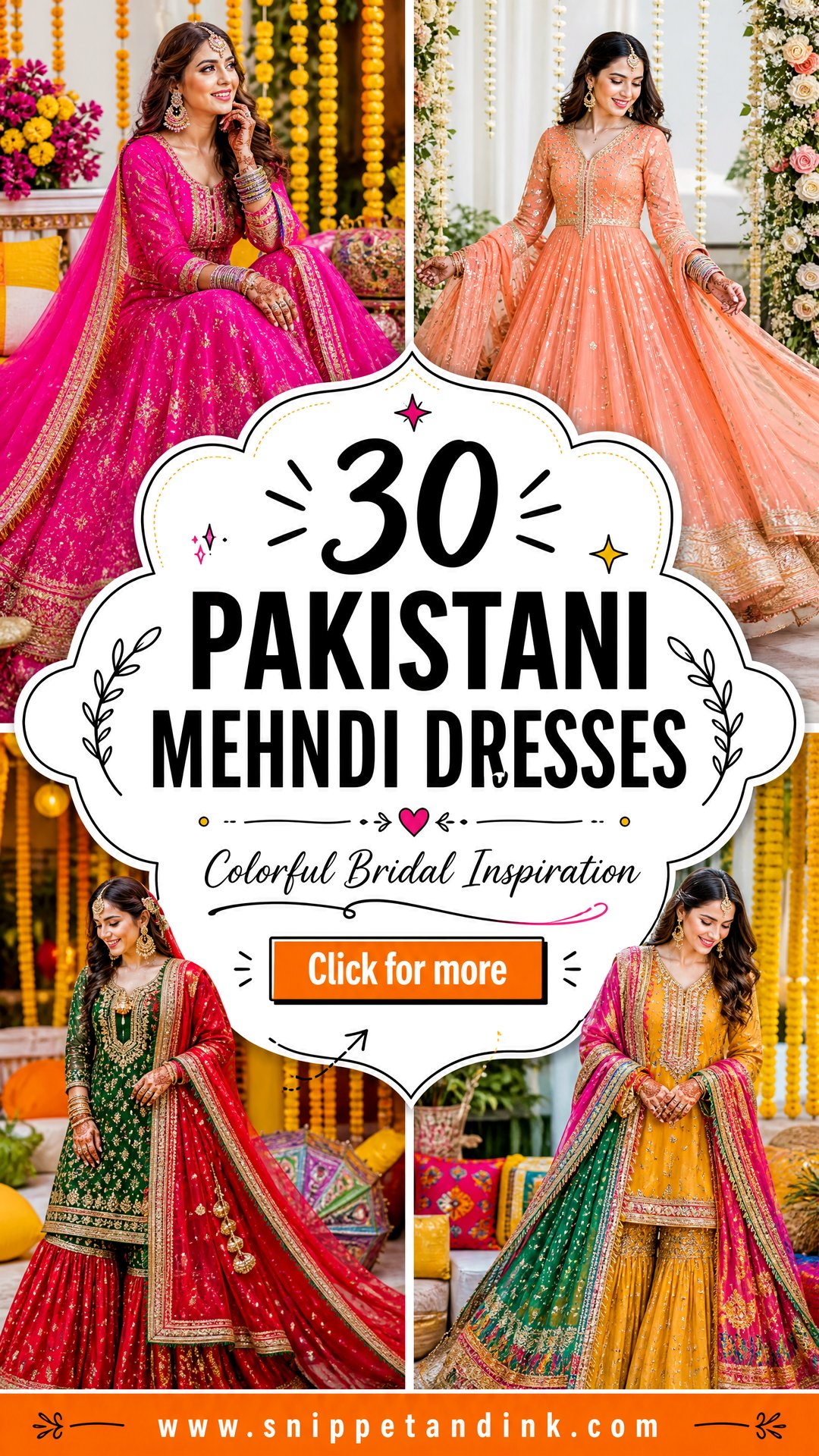
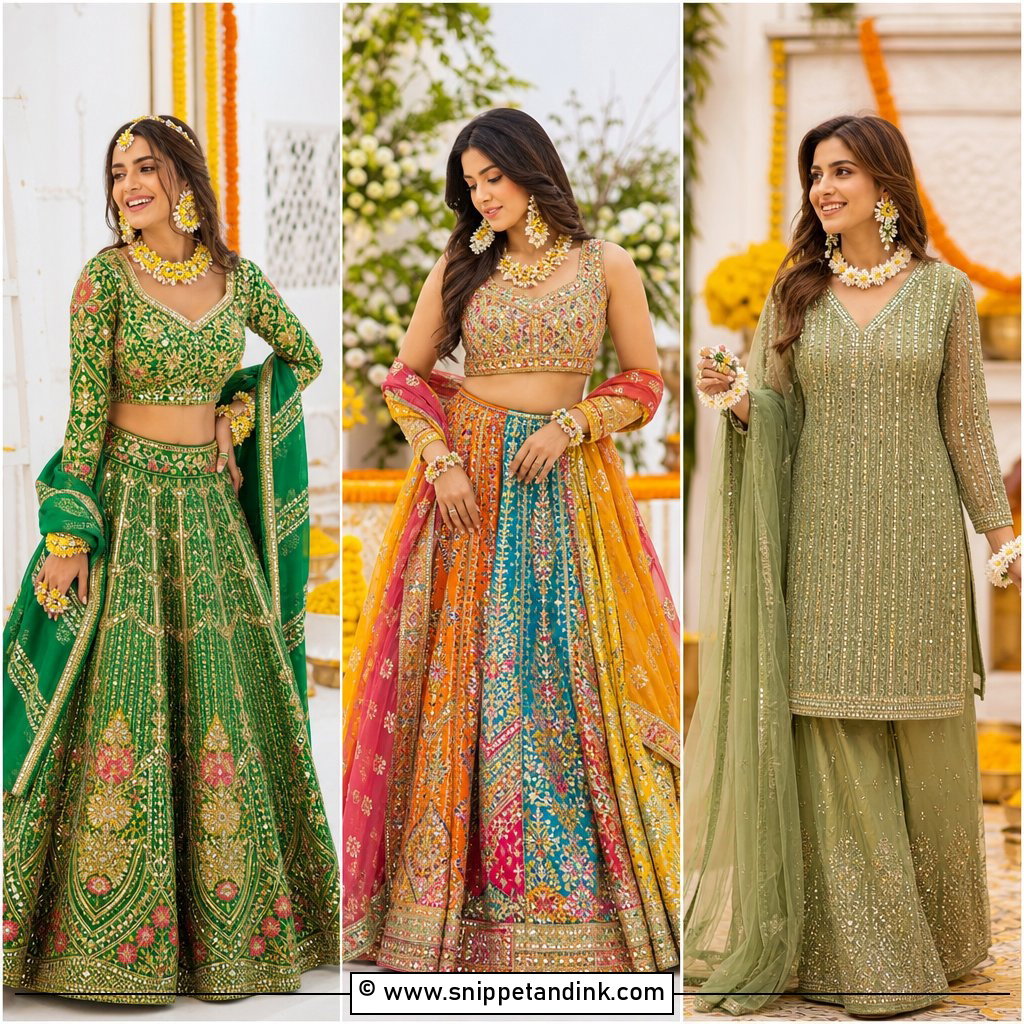
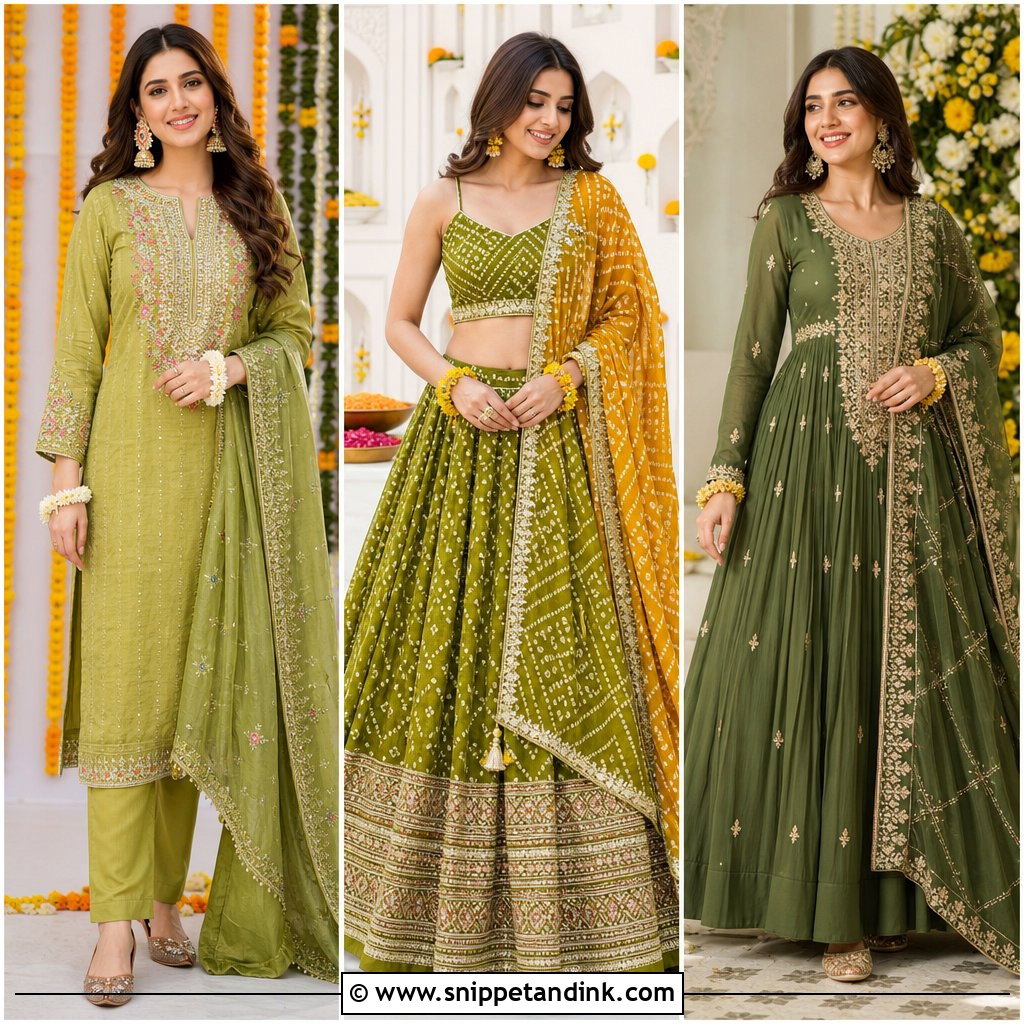
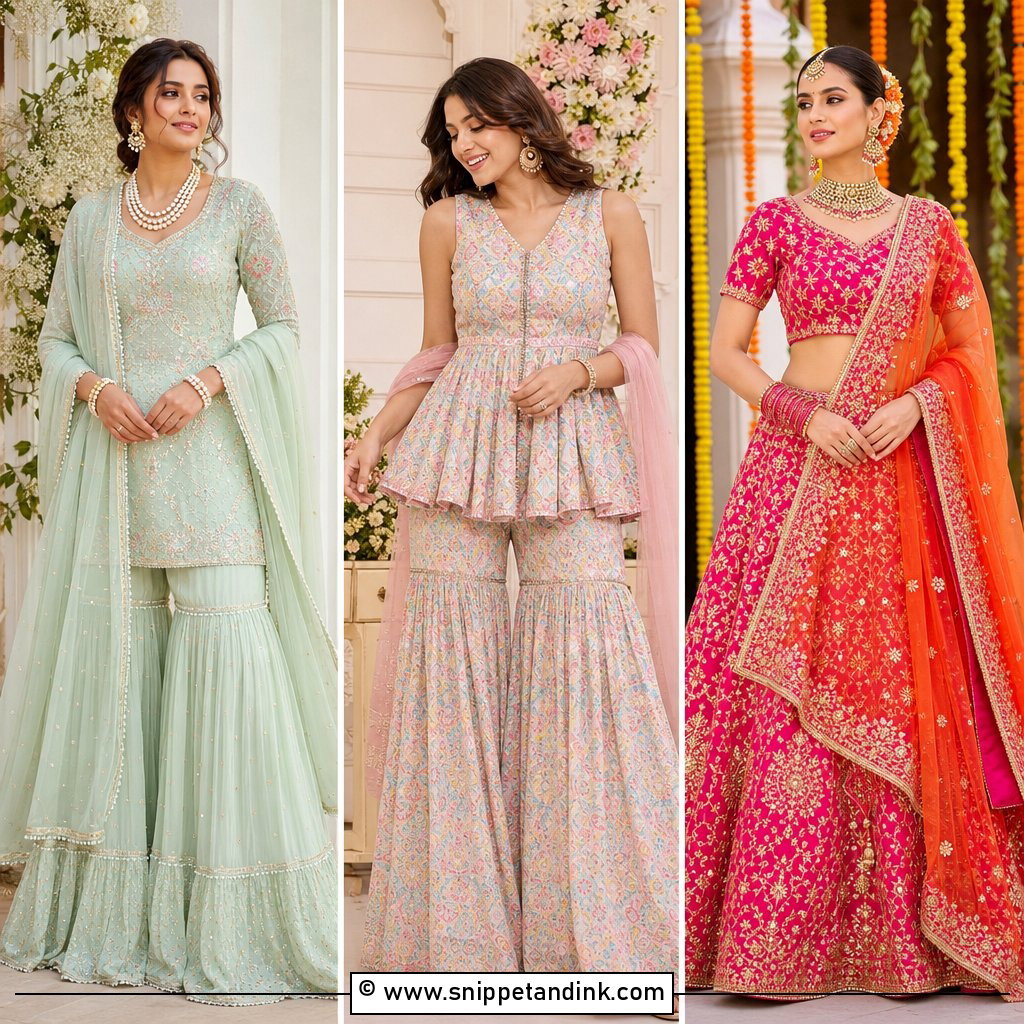
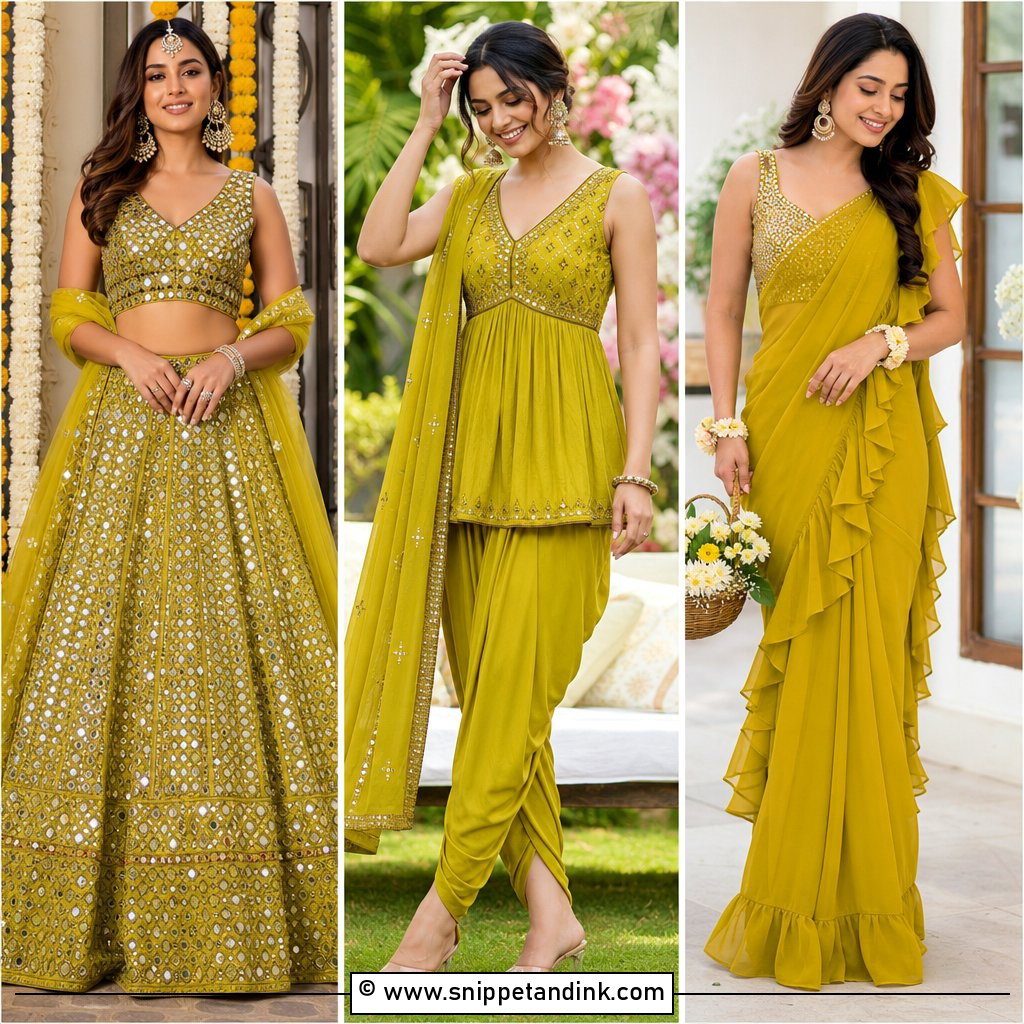
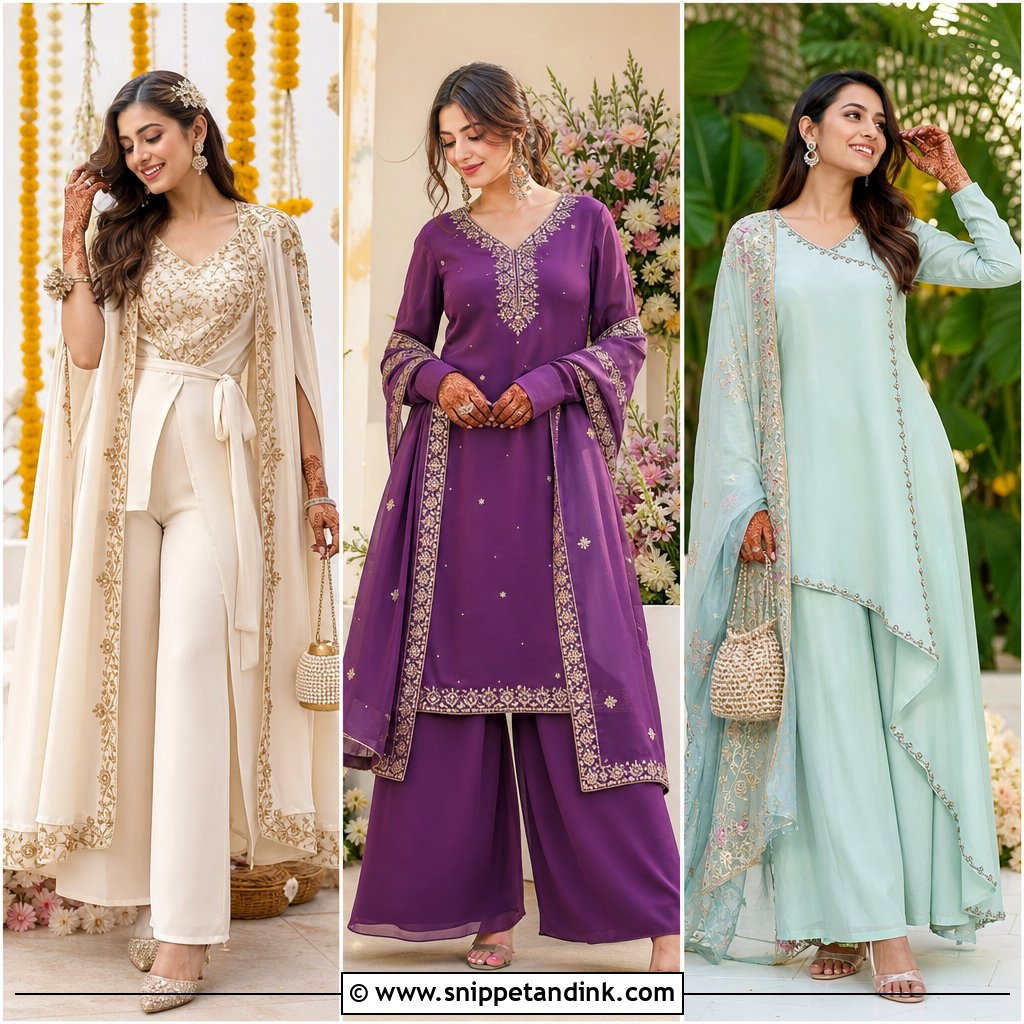
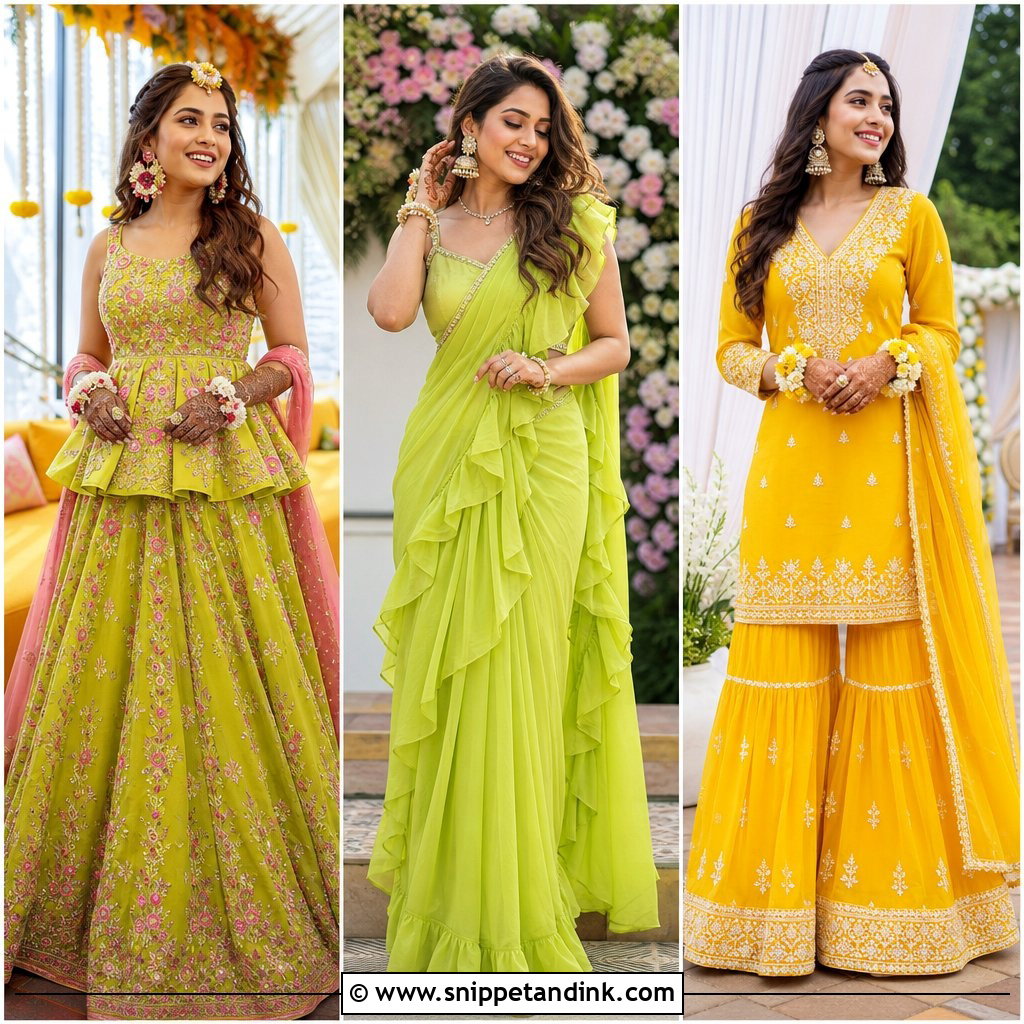
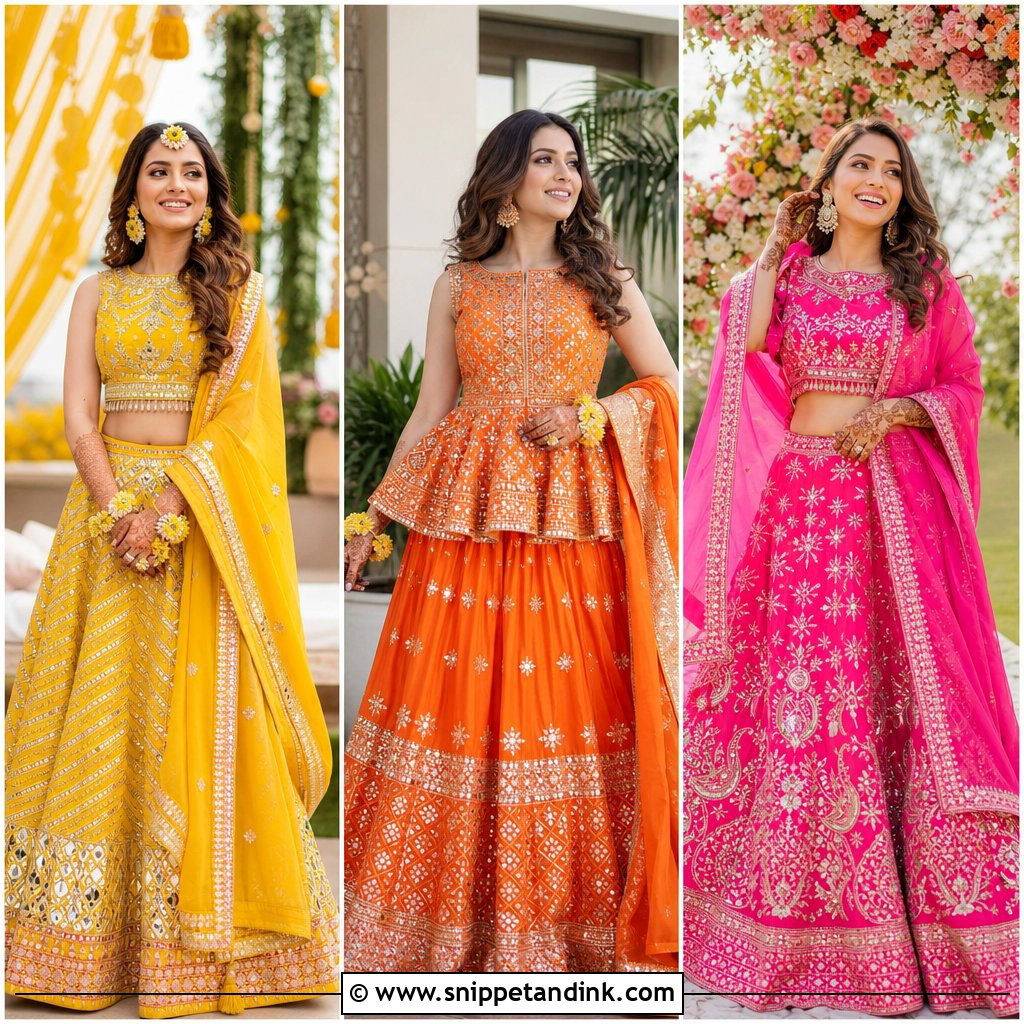
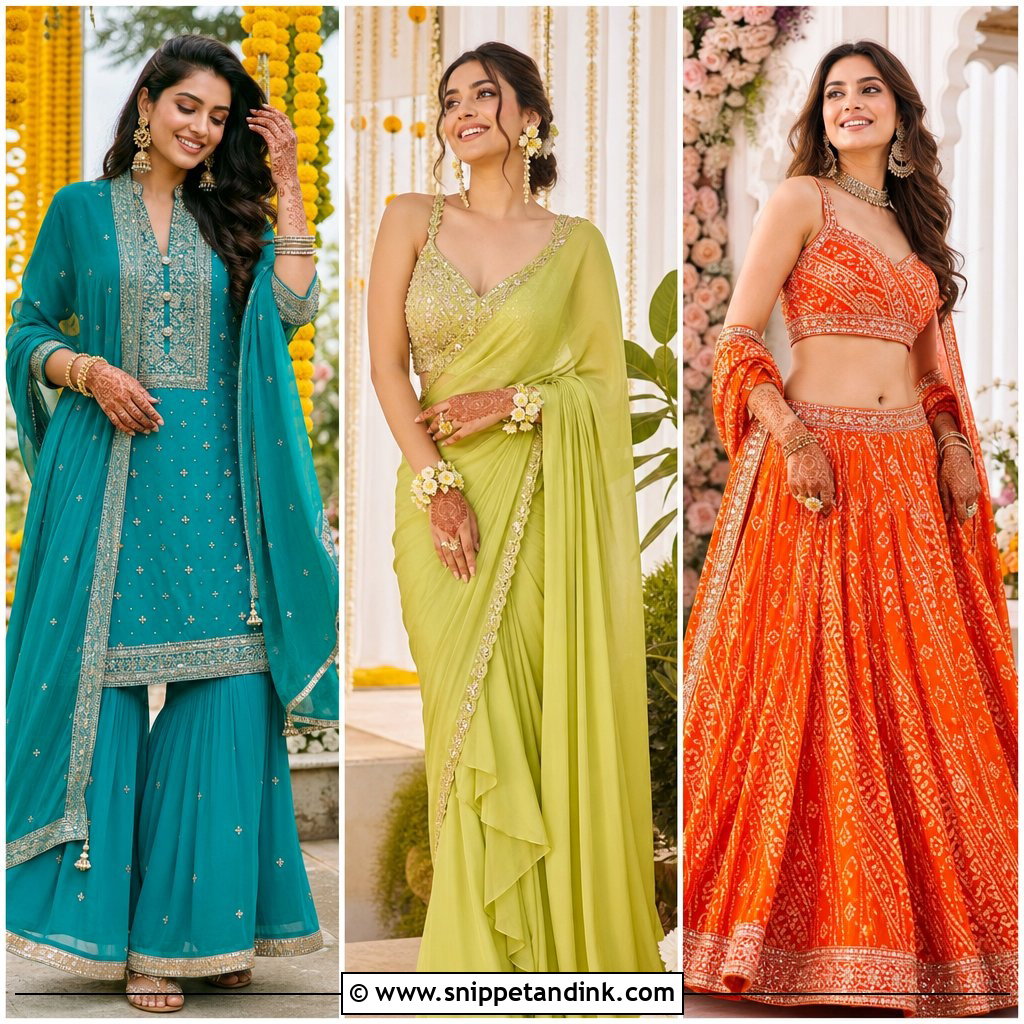
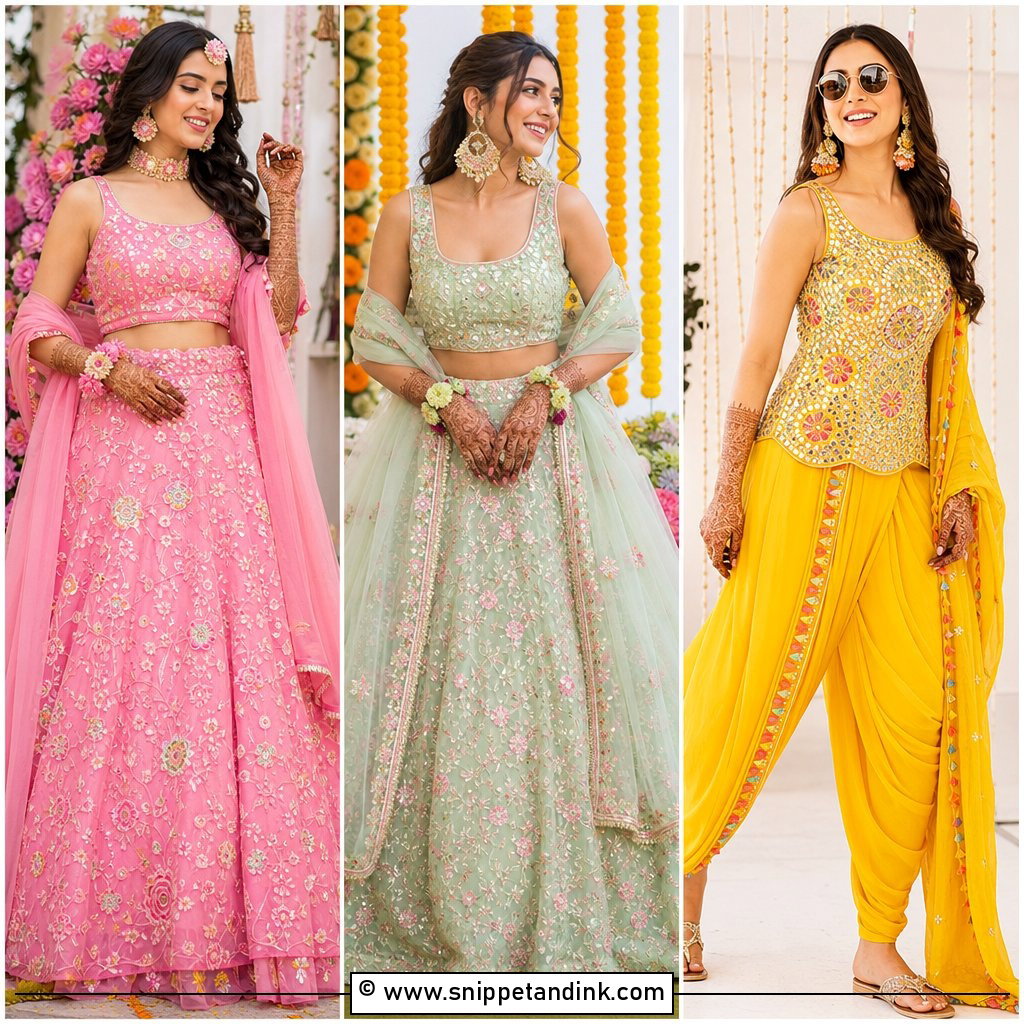
Most mehndi outfit problems show up around the second hour. The dupatta keeps sliding, the choli digs in when you sit on the floor, or the lehenga is too heavy to dance in. This season’s mehndi looks still lean on classic yellow, green, orange and pink, but with lighter fabrics, cleaner cuts and finishes like mirror work, gota, tilla, sequins and fresh flowers. Brides usually wear a lehenga, gharara, sharara, pishwas or angrakha; sisters, cousins, bridesmaids and guests can go lighter with frocks, long shirts, trousers and coordinated sets. I judge every outfit on one test: can you sit, dance, walk and greet people in it without thinking about it? The 30 looks below are arranged by color, cut and role, each with what I’d check before you commit.
July Garden Heat or a December Marquee? Pick the Fabric First
I ask about the venue and month before I look at a single color, because fabric decides whether the outfit lasts the night. A mehndi can mean an open lawn in muggy summer heat or a heated marquee in winter, and the same lehenga won’t suit both.
- Hot or humid evenings: chiffon, cotton net, lawn and light organza, with cotton linings. Avoid polyester linings; they trap sweat against the skin within the hour.
- Mild weather: organza, net and silk blends give structure without too much warmth.
- Winter or indoor venues: raw silk, jamawar, Banarasi or velvet, with a lighter net or chiffon dupatta so the outfit doesn’t feel suffocating once the dancing starts.
Then think about the floor. Grass and soft ground swallow thin heels and stain trailing hems, so outdoor mehndis call for flat khussas and a hem that clears the ground. Indoor marble and stage platforms are slippery under new leather soles, and I scuff the soles lightly with sandpaper before the event.
1. Yellow Mehndi Lehenga Choli
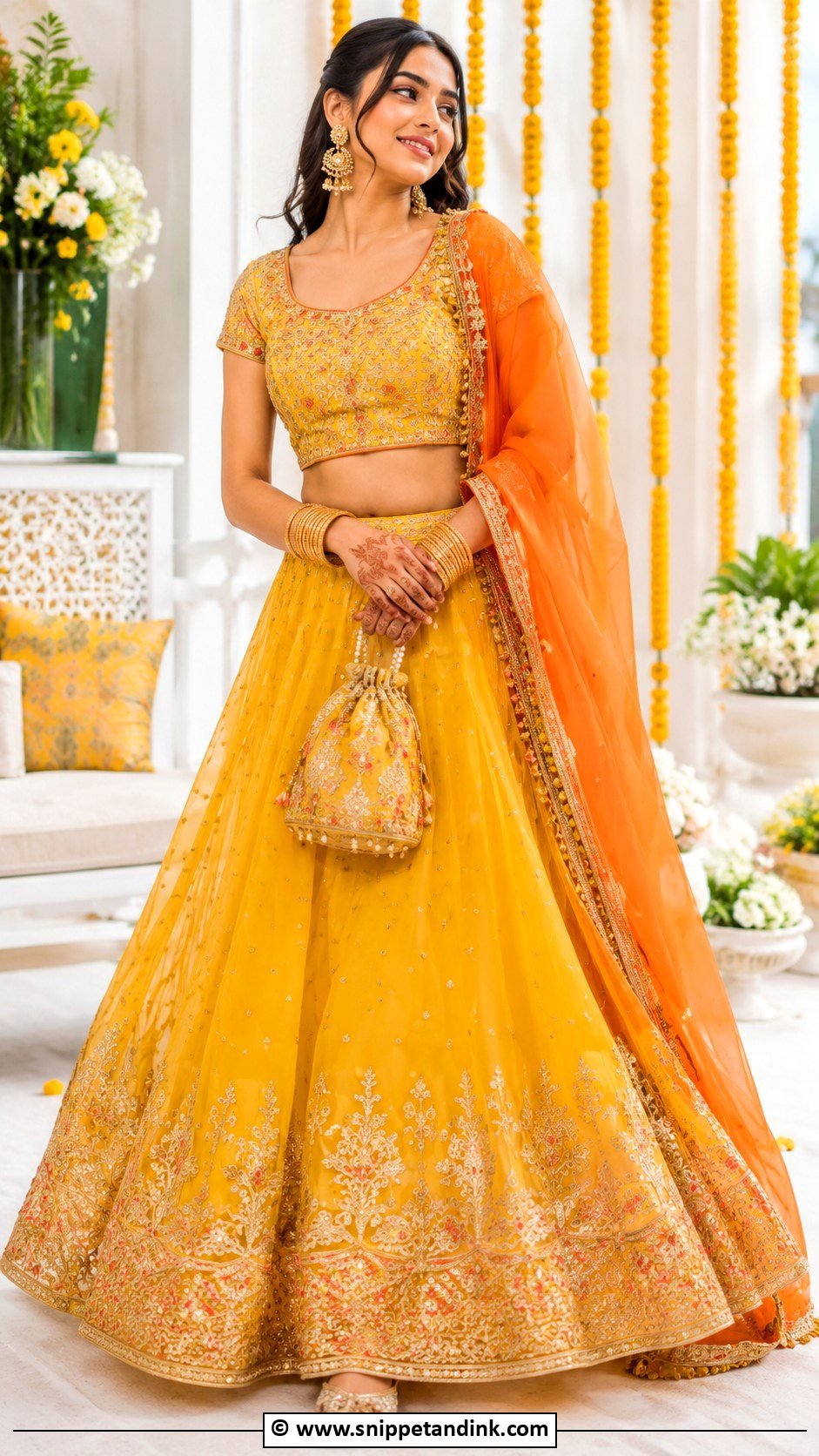
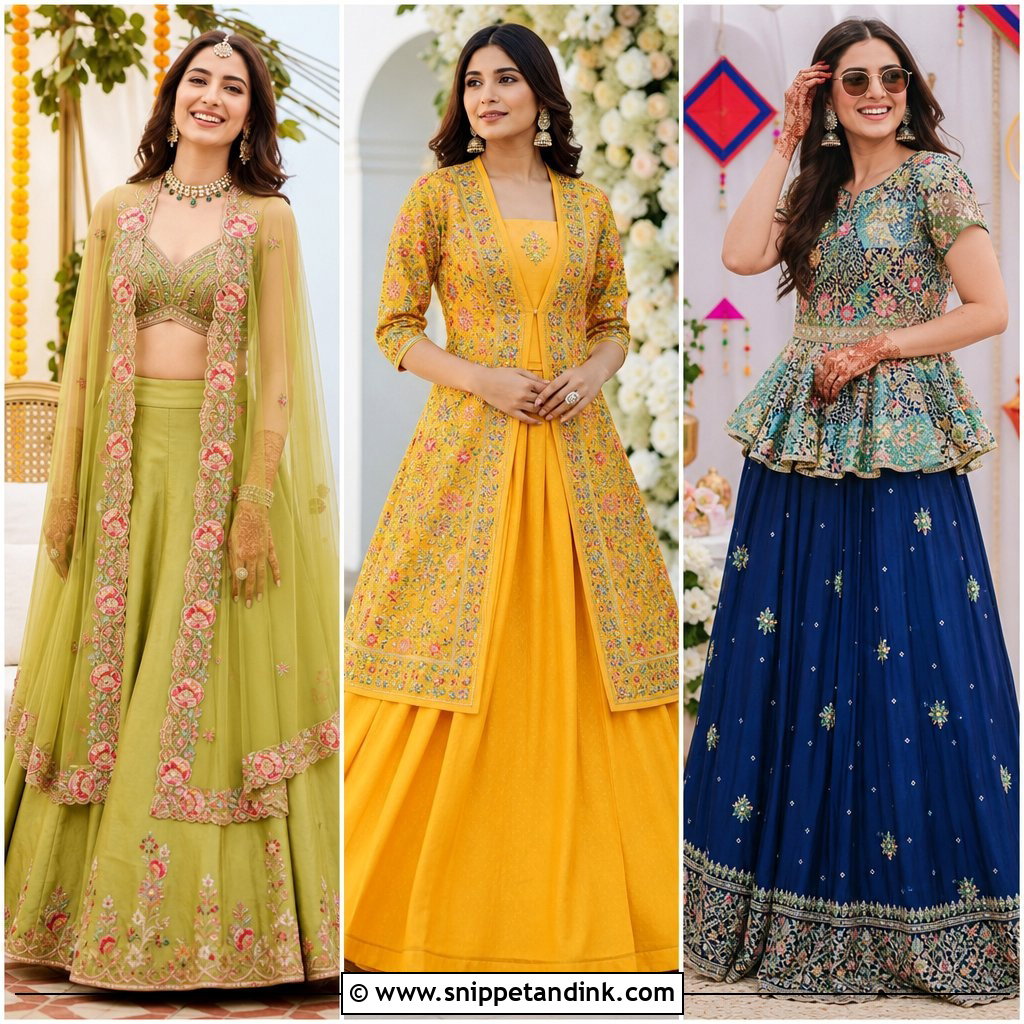
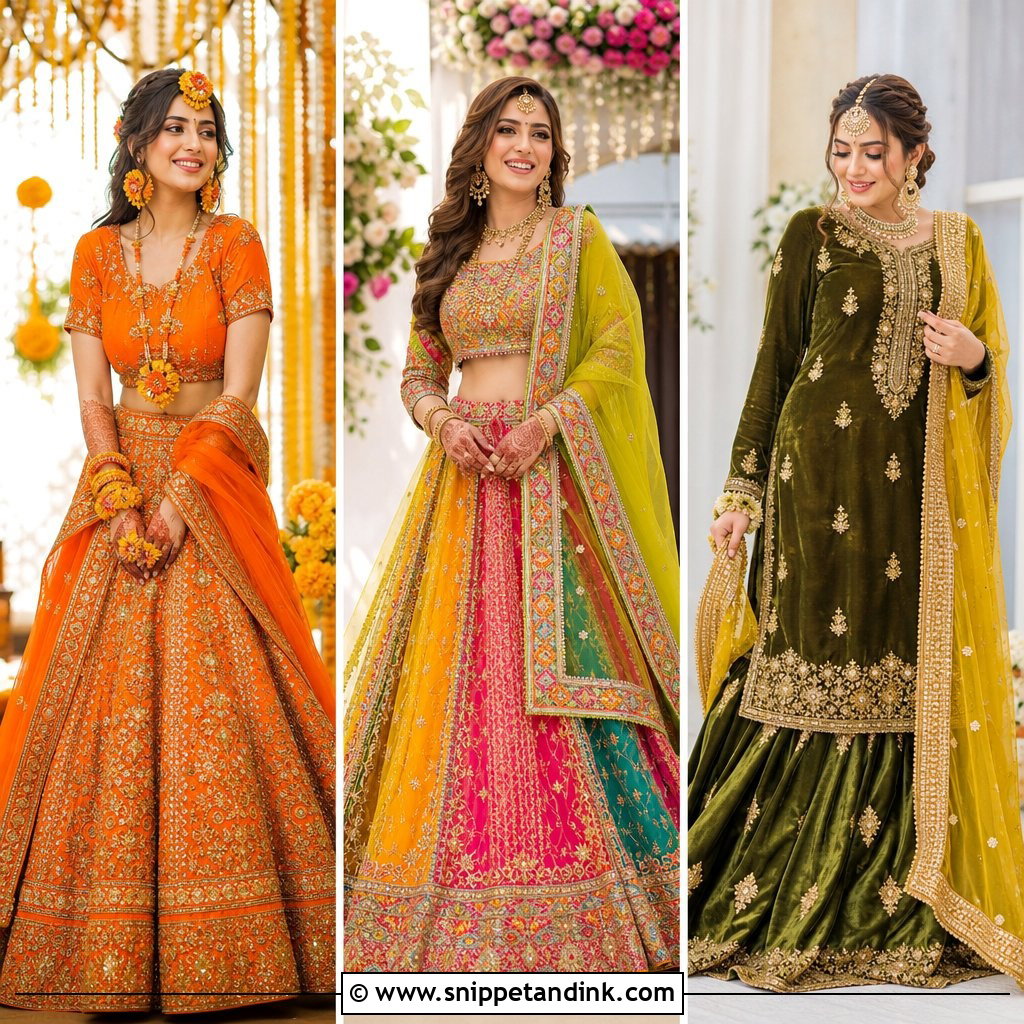
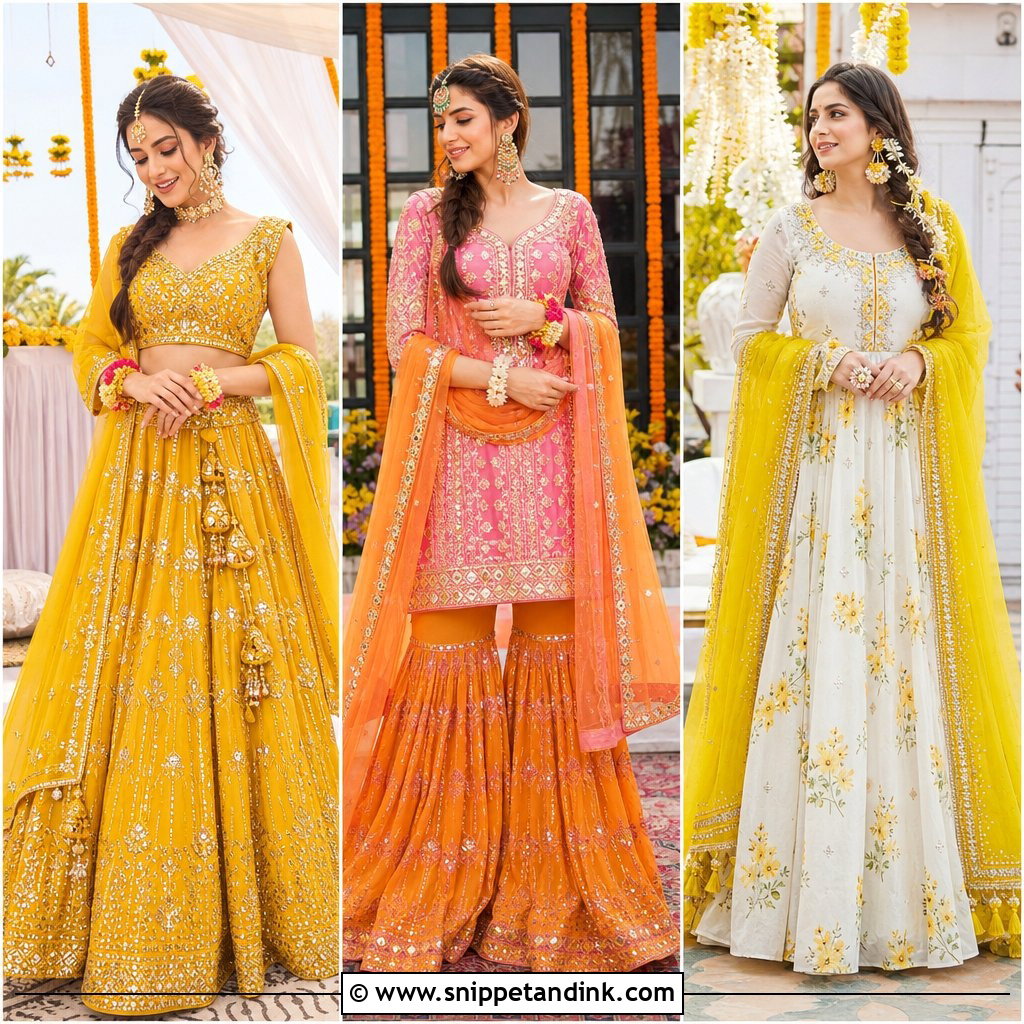
A yellow mehndi lehenga choli is the classic for good reason; it reads as mehndi from across the room. The fabric changes how it behaves. Chiffon and net swing, organza holds a shape, and raw silk stands stiffer and feels warmer. I ask the bride to raise both arms and twist at the fitting, because a choli that rides up during a dance is the most common complaint I hear. A matching or contrasting dupatta in orange, pink or green, gold khussas, jhumkas, bangles and a potli complete it. Brides can take a heavier worked border; guests should keep the embroidery softer.
2. Green Mehndi Sharara Dress
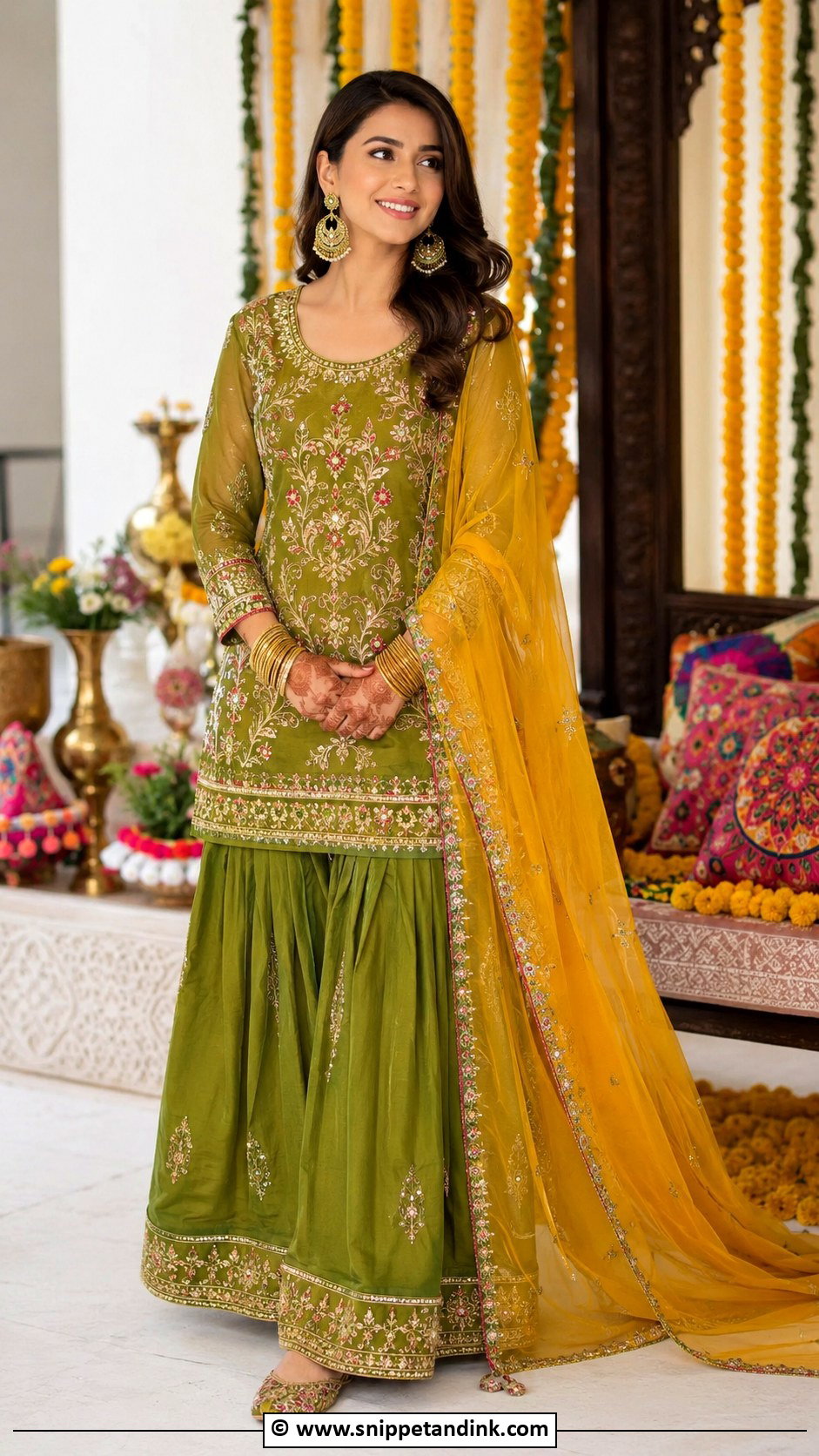
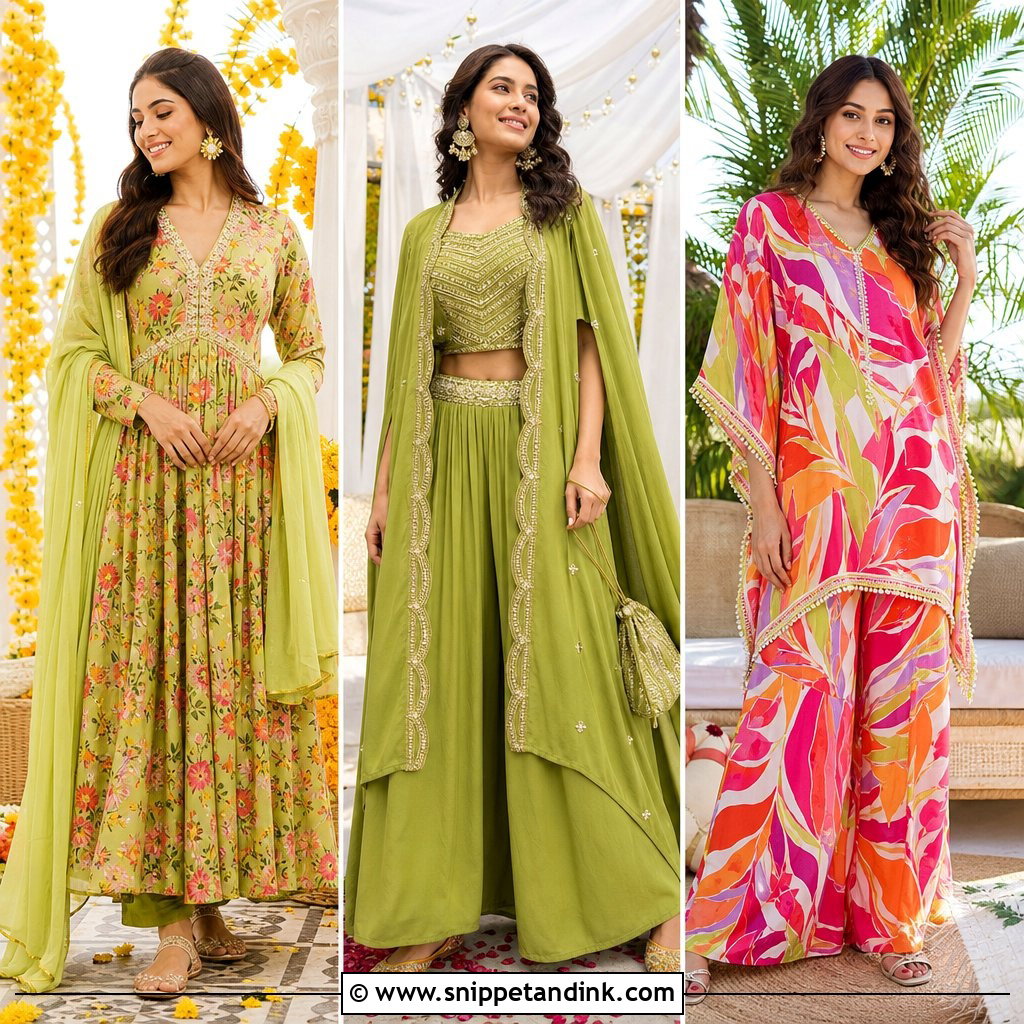
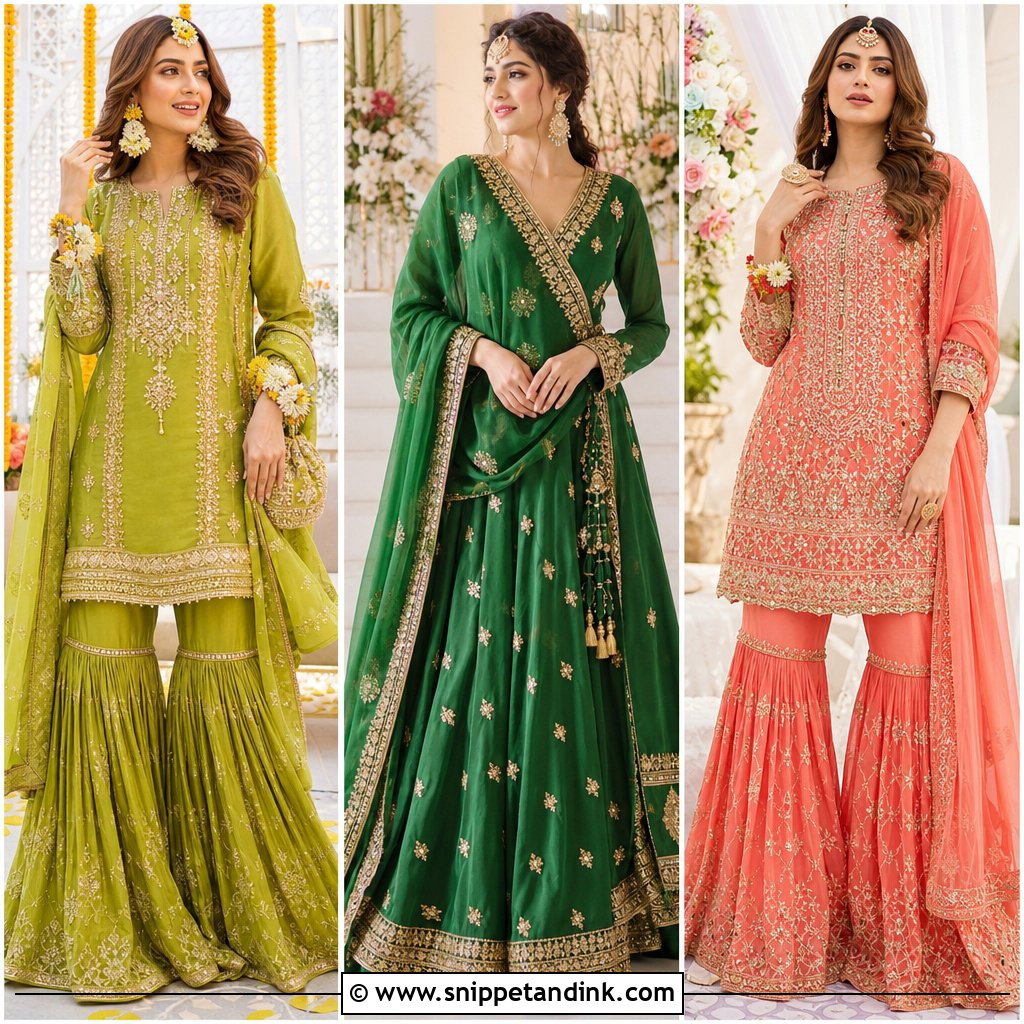
Bottle green, parrot, emerald and mehndi green behave very differently against skin, so hold the actual fabric to your face before you order. A short kurti over a wide sharara keeps the proportions balanced, and gold gota, zari, sequins or thread give it the festive finish. A yellow or fuchsia dupatta adds play. Sharara legs are joined at the knee and flare from there, so check the joint lands at your actual knee; if it sits too low, the flare looks dragged. Khussas or block heels, chandbalis, stacked bangles and a neat clutch suit sisters and close family.
3. Mustard Mehndi Gharara Outfit
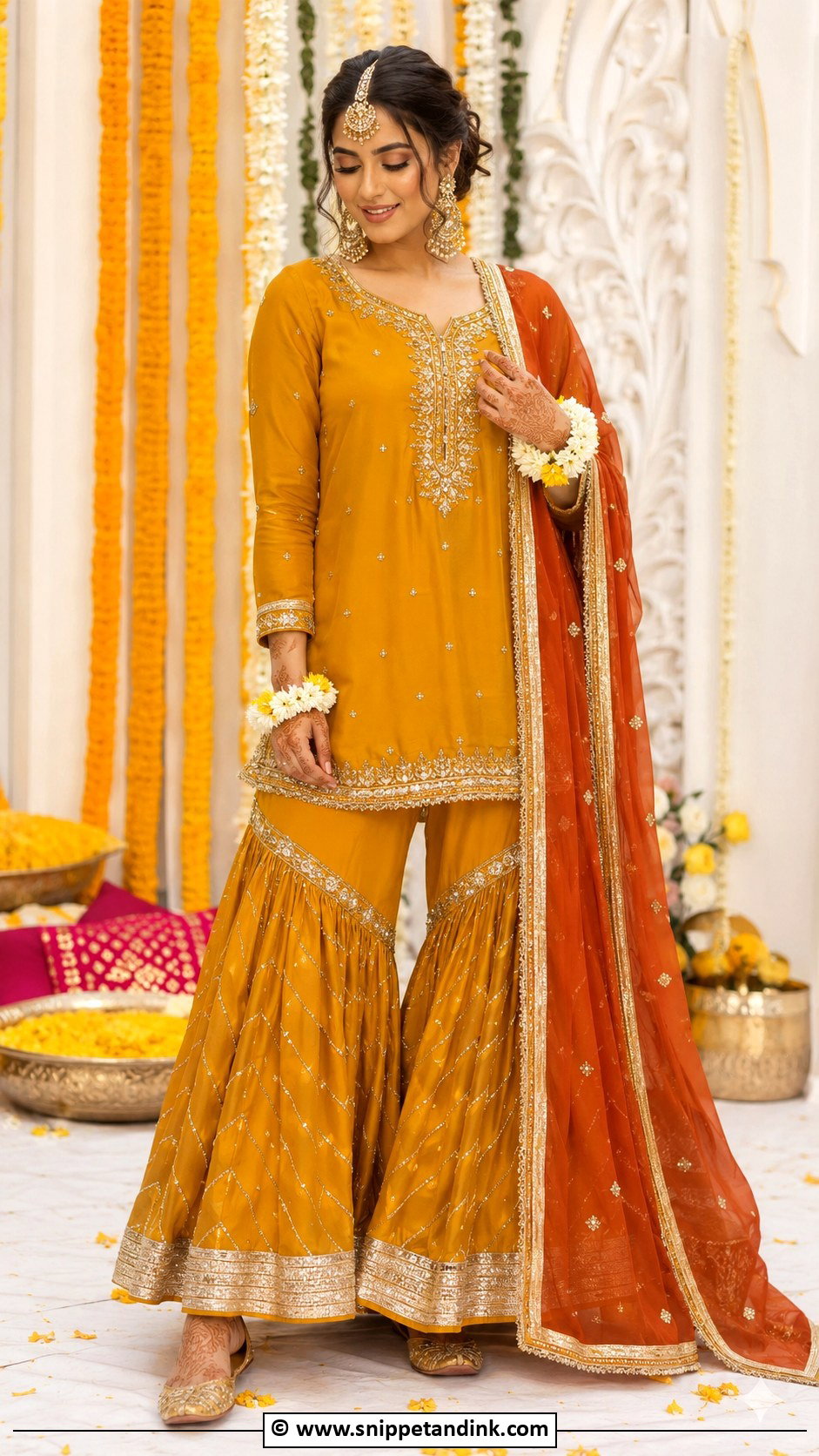
Mustard and the gharara were made for each other. The color has a vintage warmth, and a short shirt over a gharara that flares below the knee gives that old Pakistani silhouette a clean, current edge when the tailoring is sharp. Add a dupatta with gota edging or mirrors, and accent with rust, green, magenta, ivory or antique gold. For a bride, I’d put heavier work on the shirt and the gharara border; a guest is better off in lighter cotton net or chiffon. Gold earrings, khussas, soft curls and a floral bracelet finish it.
4. Orange Mehndi Pishwas Dress
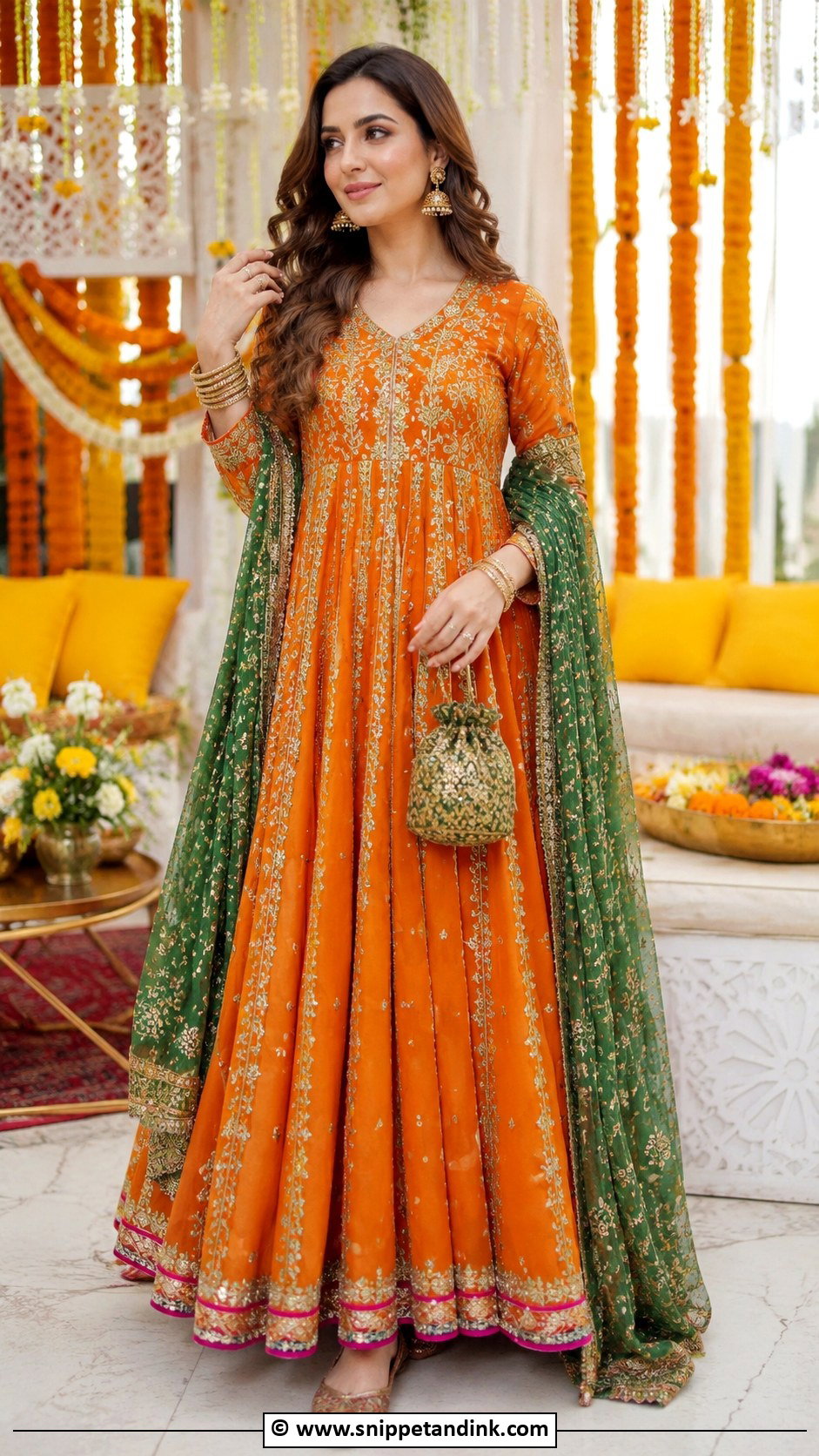
The pishwas is a long, many-paneled frock that flares from a fitted bodice, and in orange it moves wonderfully during dances and family photos. Marigold, burnt orange, tangerine and a soft peach-orange give you a range of boldness. Keep embroidery at the neckline, sleeves and hem rather than all over, so the panels stay light enough to swing. A green or pink dupatta brings the classic mehndi contrast. Count the panels before you buy: fewer, wider panels look heavier on a petite frame than many narrow ones. Light gold jewelry, embroidered khussas and a potli complete it.
5. Pink And Yellow Mehndi Dress
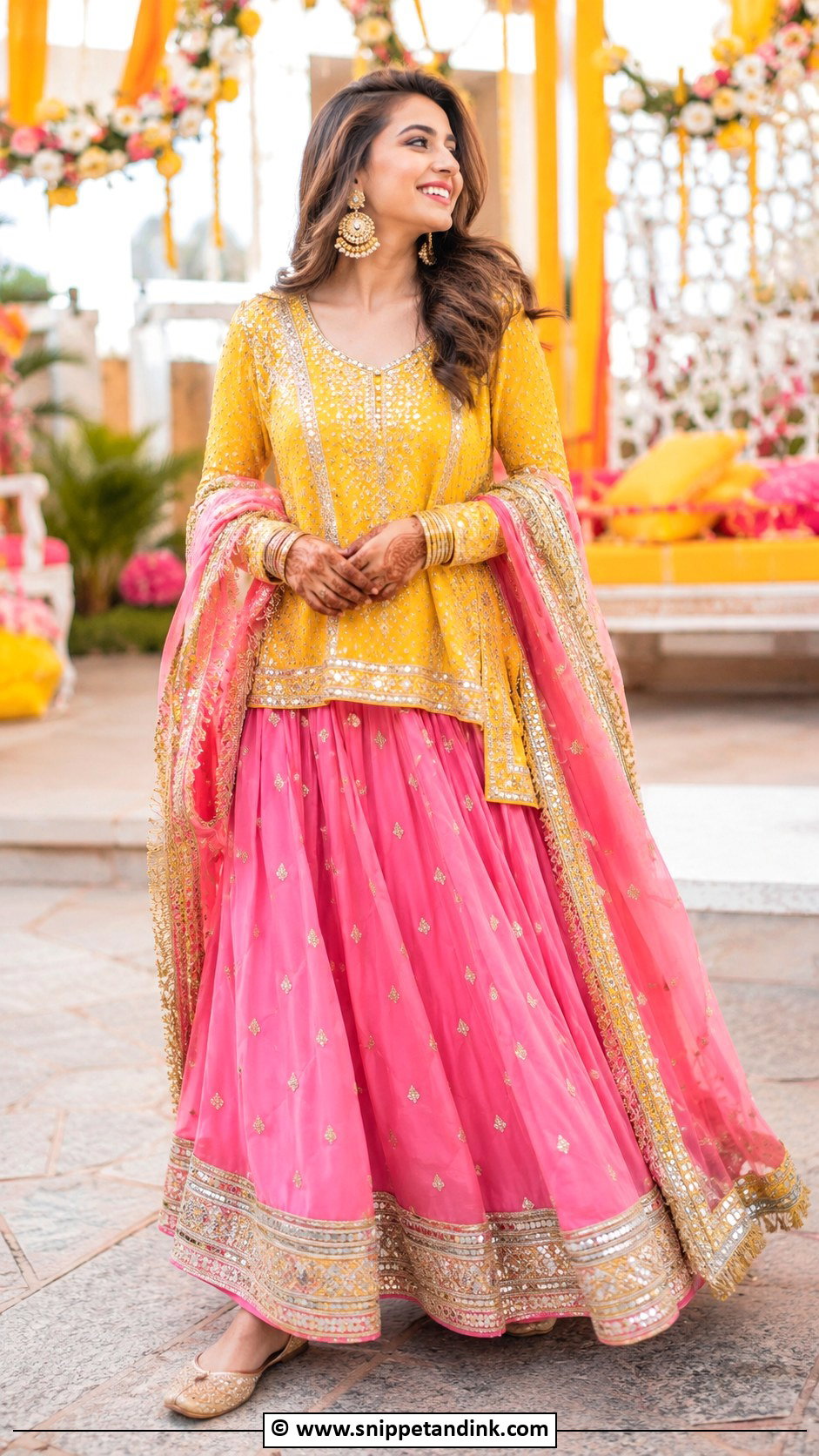
Pink and yellow photograph cheerfully at any hour, which makes them a safe pairing for a mixed group. Try a yellow shirt with a pink lehenga, a pink choli with a yellow skirt, or a two-tone frock with a contrasting dupatta, worked in gota patti, mirrors or colored thread. I keep the jewelry warm-toned here: gold jhumkas, bangles and a delicate tikka for close family. Silver jewelry against warm yellow and pink looks oddly cold. Nude heels or khussas keep it practical, and it suits bridesmaids and sisters of the bride especially well.
6. Multicolor Mehndi Lehenga Outfit
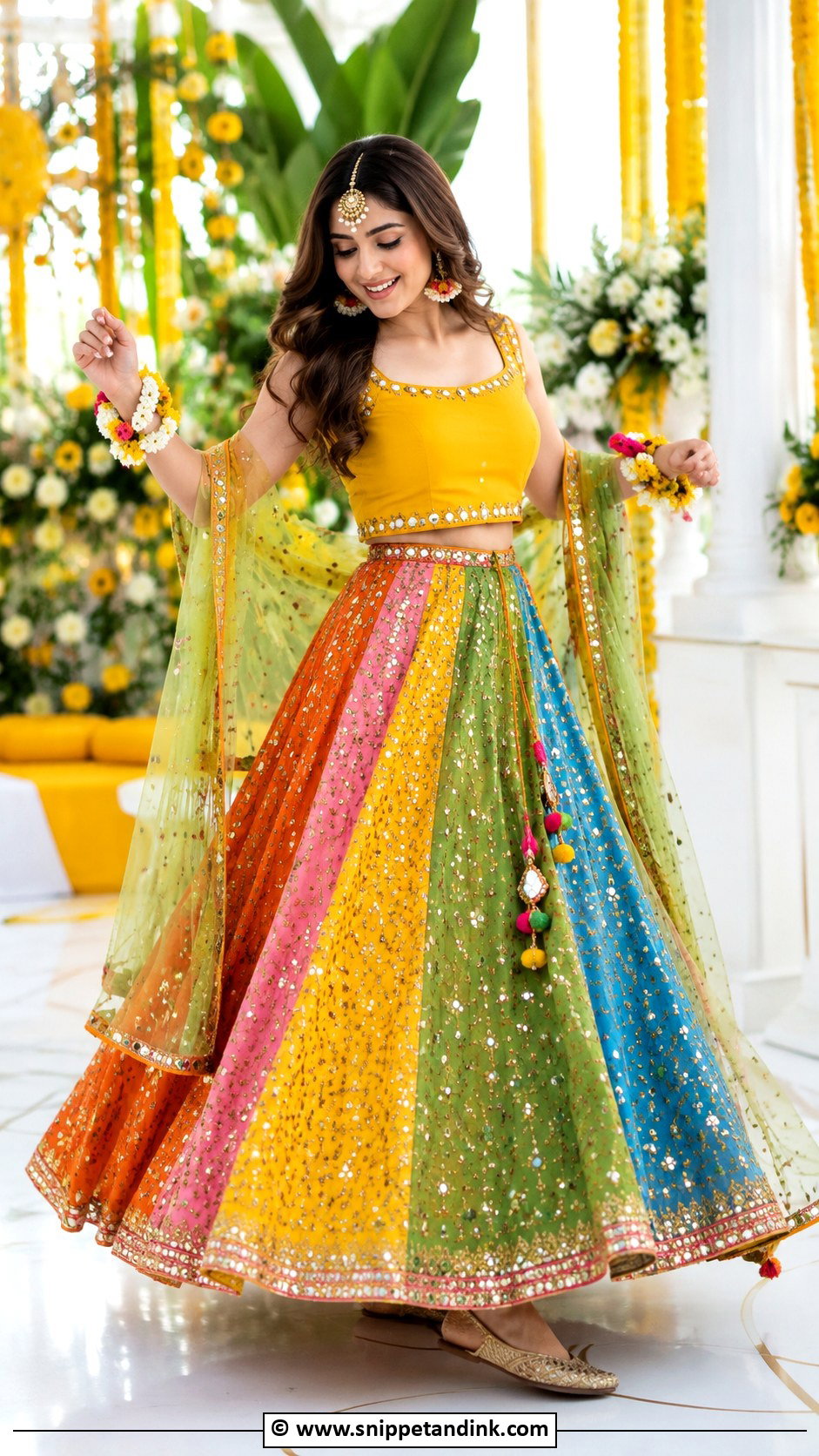
A multicolor mehndi lehenga outfit is an entrance piece. Panels of yellow, green, orange, pink and blue need a plainer choli or the whole thing turns busy. Mirror work, tassels, thread and gota borders all suit it. Keep the dupatta sheer, either one color pulled from the skirt or a thin multicolor trim. My rule with this many colors is one metal for all the jewelry, and gold almost always wins. Comfortable khussas and a neat potli finish it.
7. Mirror Work Mehndi Dress
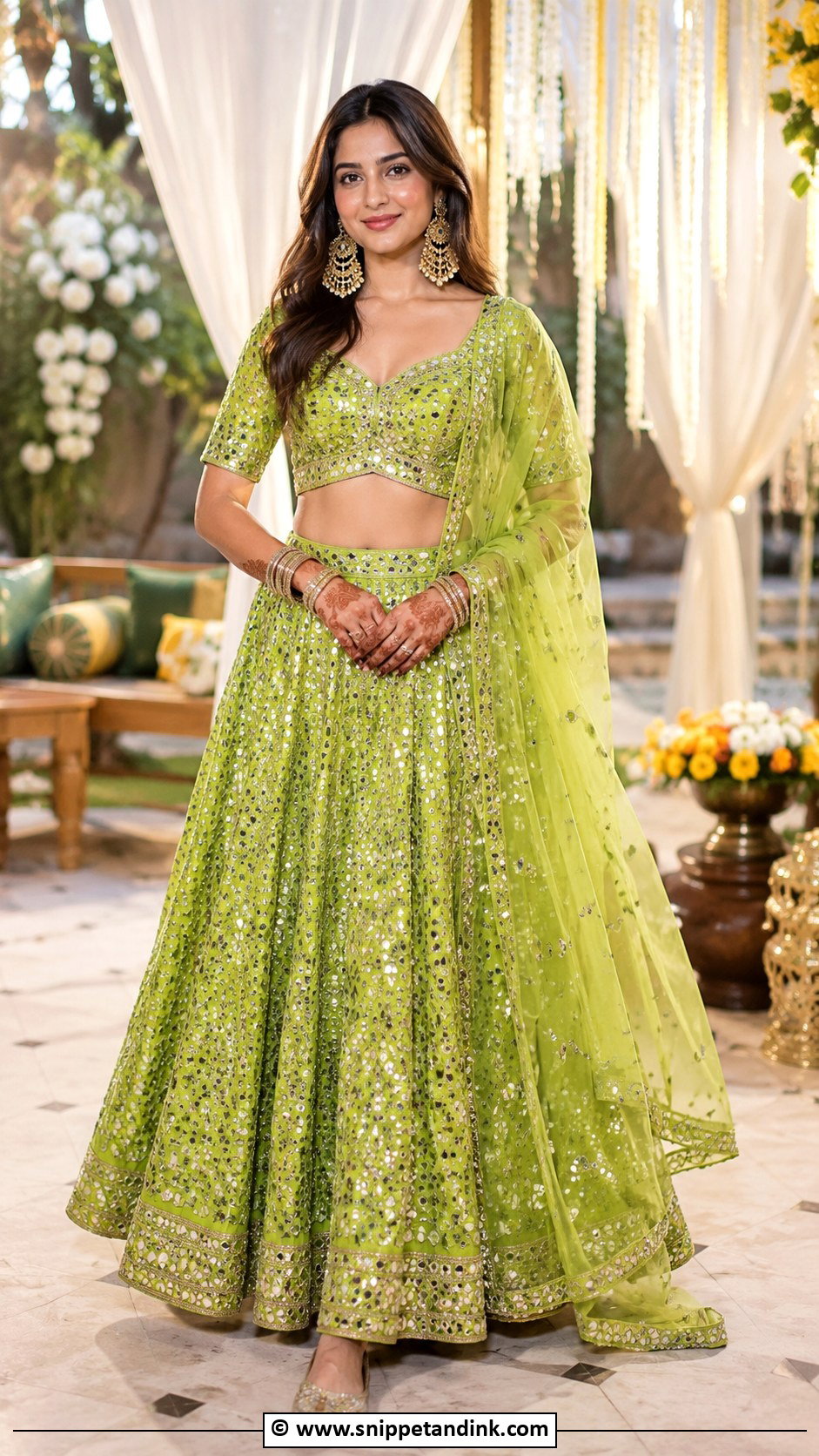
Mirror work gives shine without stones or formal embellishment, and it catches light outdoors and on the dance floor. Put it at the neckline, sleeves, hem and dupatta border of a lehenga choli, sharara or long shirt; lime, mustard, orange, teal and fuchsia make the mirrors pop. Hand-set mirrors are held in place by a ring of buttonhole stitching, and I run a fingertip over each one at the fitting, because a loose mirror scratches skin and snags the dupatta. Guests should choose small motifs; a bride can carry a fully mirrored dupatta or skirt. Keep jewelry to gold earrings and bangles.
8. Gota Patti Mehndi Suit
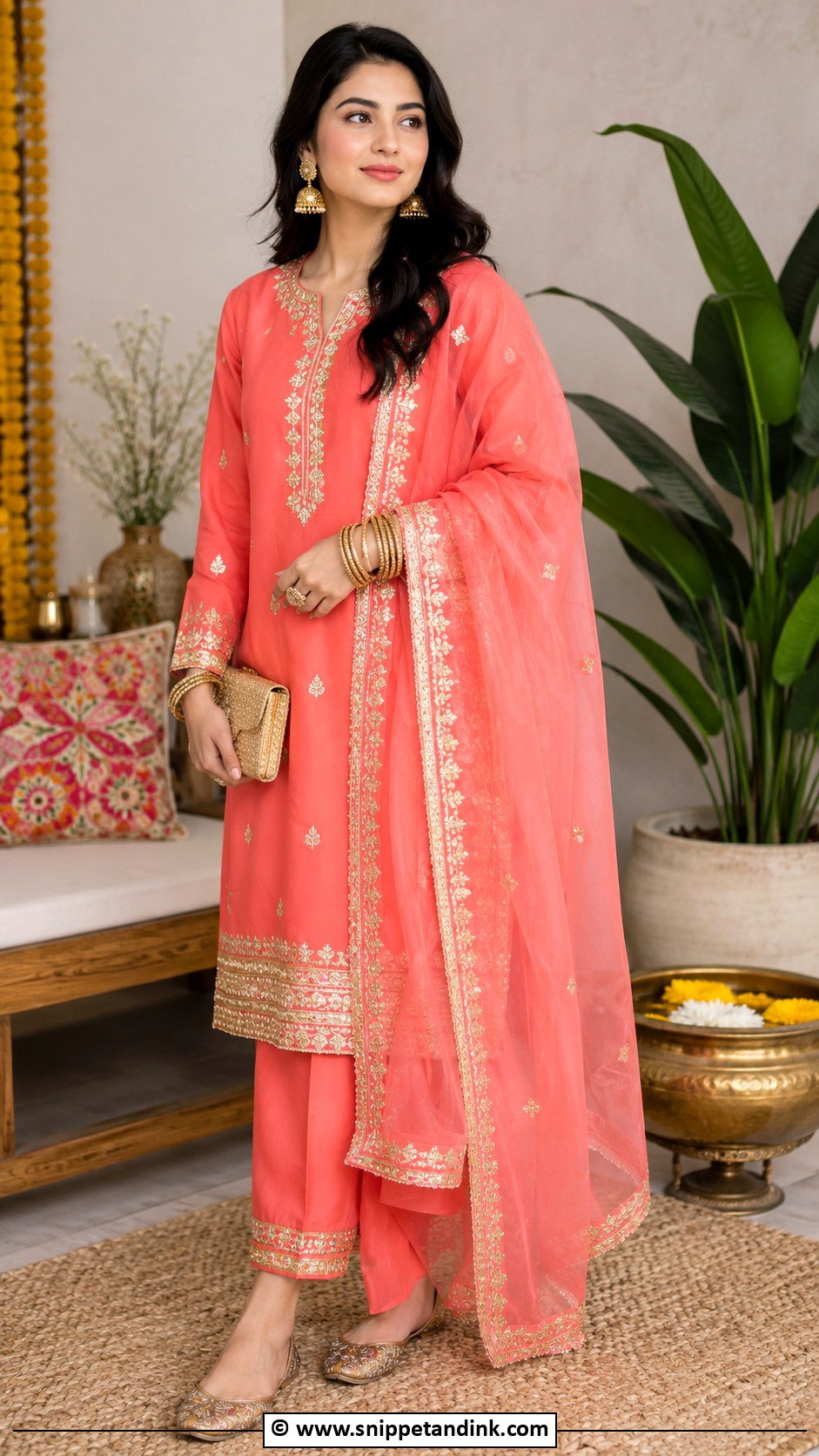
Gota patti never looks out of place at a mehndi, and a gota suit is the most reusable outfit in this list. The shiny ribbon work brings celebration without the weight of bridal embroidery. A straight shirt with trousers, a short kurti with sharara or an angrakha with cigarette pants all suit it, in yellow, green, coral or rust, with a gota-bordered dupatta. Guests I dress like that it carries on to dholkis, Eid and family dinners afterward. Jhumkas, bangles and embroidered khussas keep it traditional.
9. Lime Green Mehndi Dress
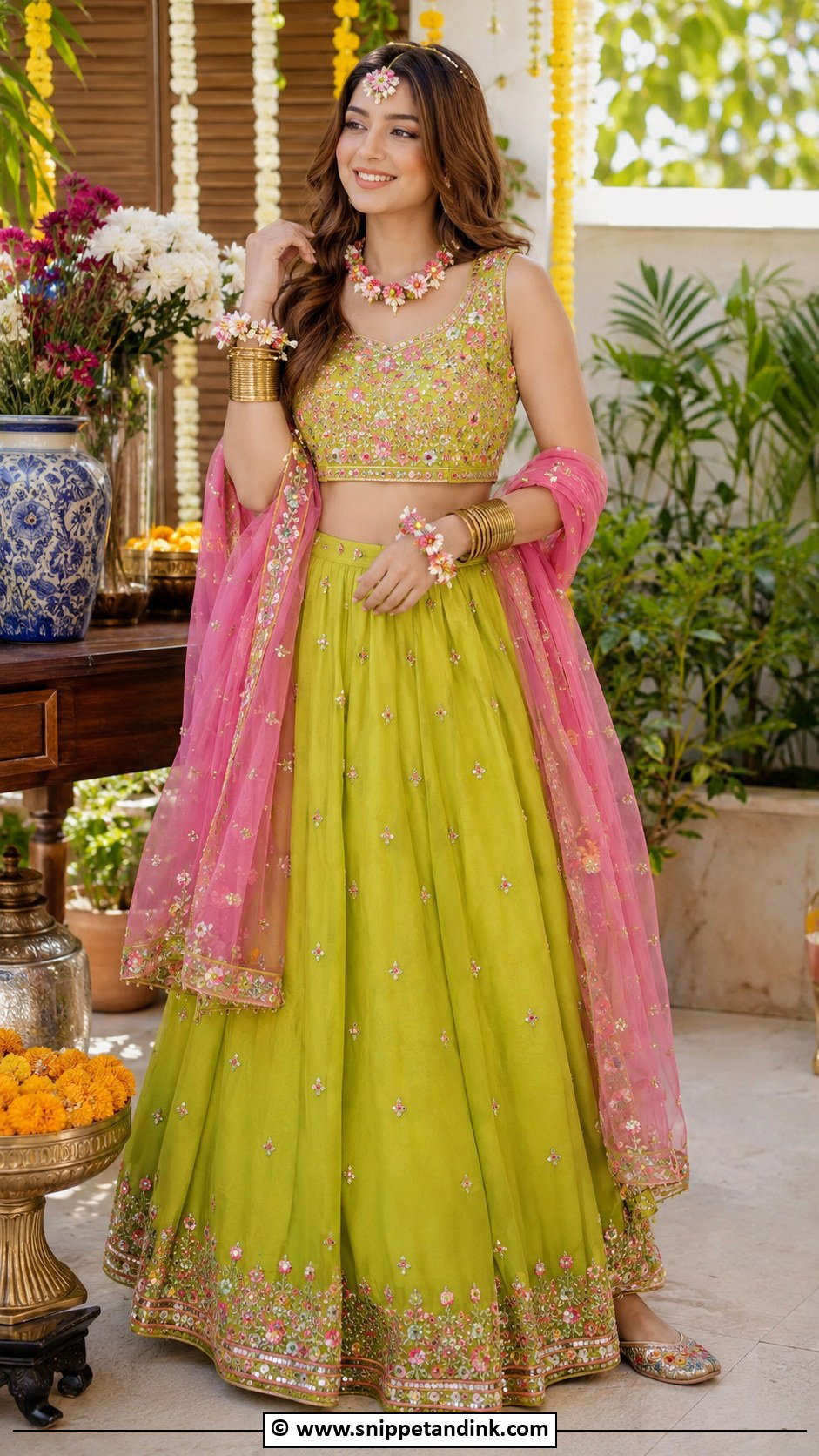
Lime is a shade that glows in organza, chiffon, net and silk, and it suits a daytime mehndi better than an evening one. Try a lime lehenga with a short choli, a sharara with a peplum, or a long frock with a contrasting dupatta, accented with pink, yellow, orange or gold. Keep the embroidery delicate so the color leads. Bright lime reflects green onto the chin and neck in close-up photos, so I ask the makeup artist for a touch more warmth in the base. Floral jewelry, soft gold bangles and khussas suit bridesmaids and younger guests.
10. Fuchsia Mehndi Lehenga Dress
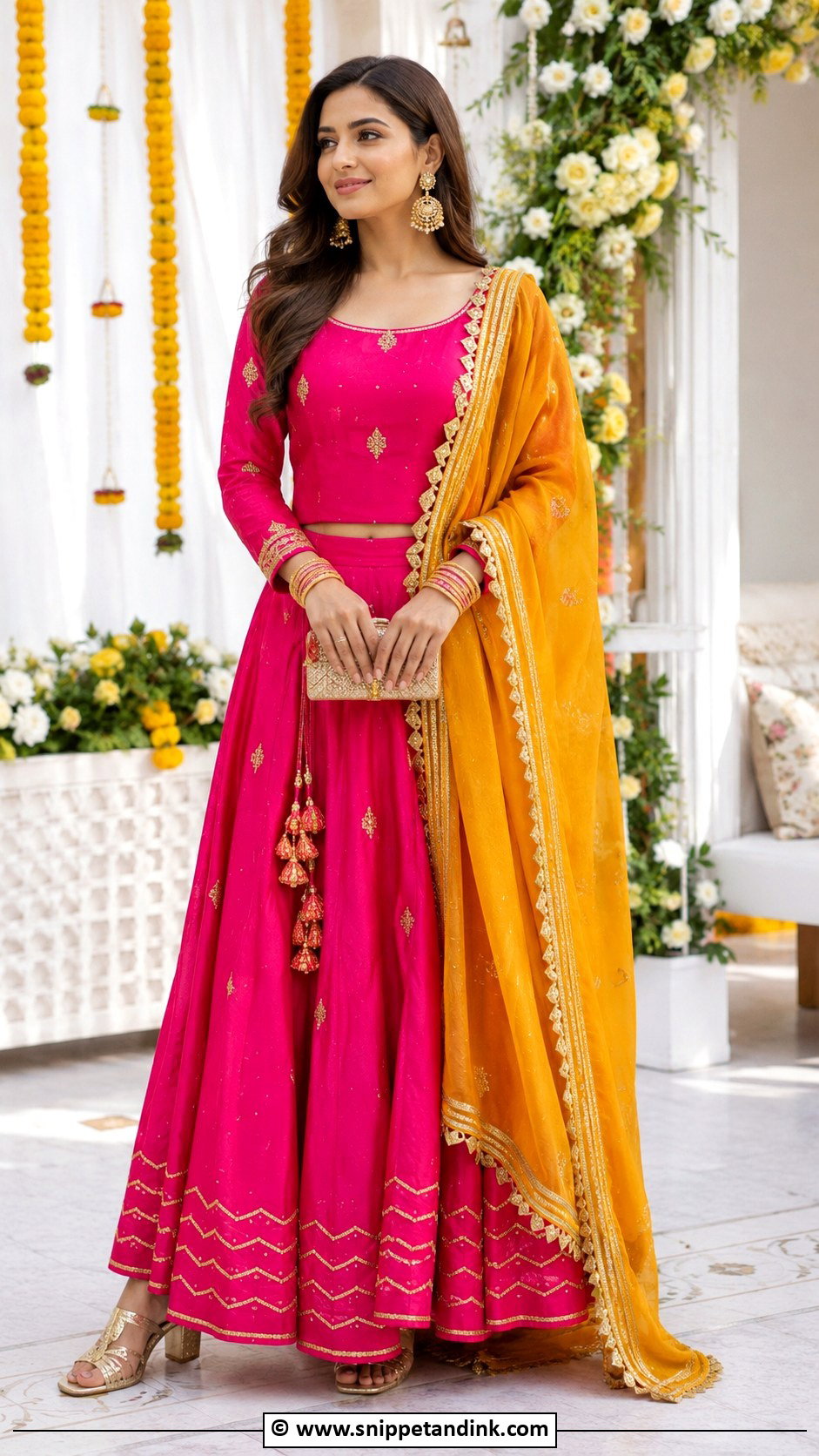
Fuchsia gives a bright, confident look without the usual yellow or green. A fuchsia lehenga with a short choli and a mustard, orange or emerald dupatta, finished with gold gota, sequins and thread, suits bridesmaids, sisters, cousins and guests. Since the color is already strong, keep accessories polished rather than oversized: gold jhumkas, bangles and a small clutch. Fuchsia dye can bleed when it gets damp, so if the mehndi is outdoors in heat, I’d ask the tailor whether the fabric has been pre-washed. Block heels or khussas if you plan to dance.
11. Teal Mehndi Sharara Dress
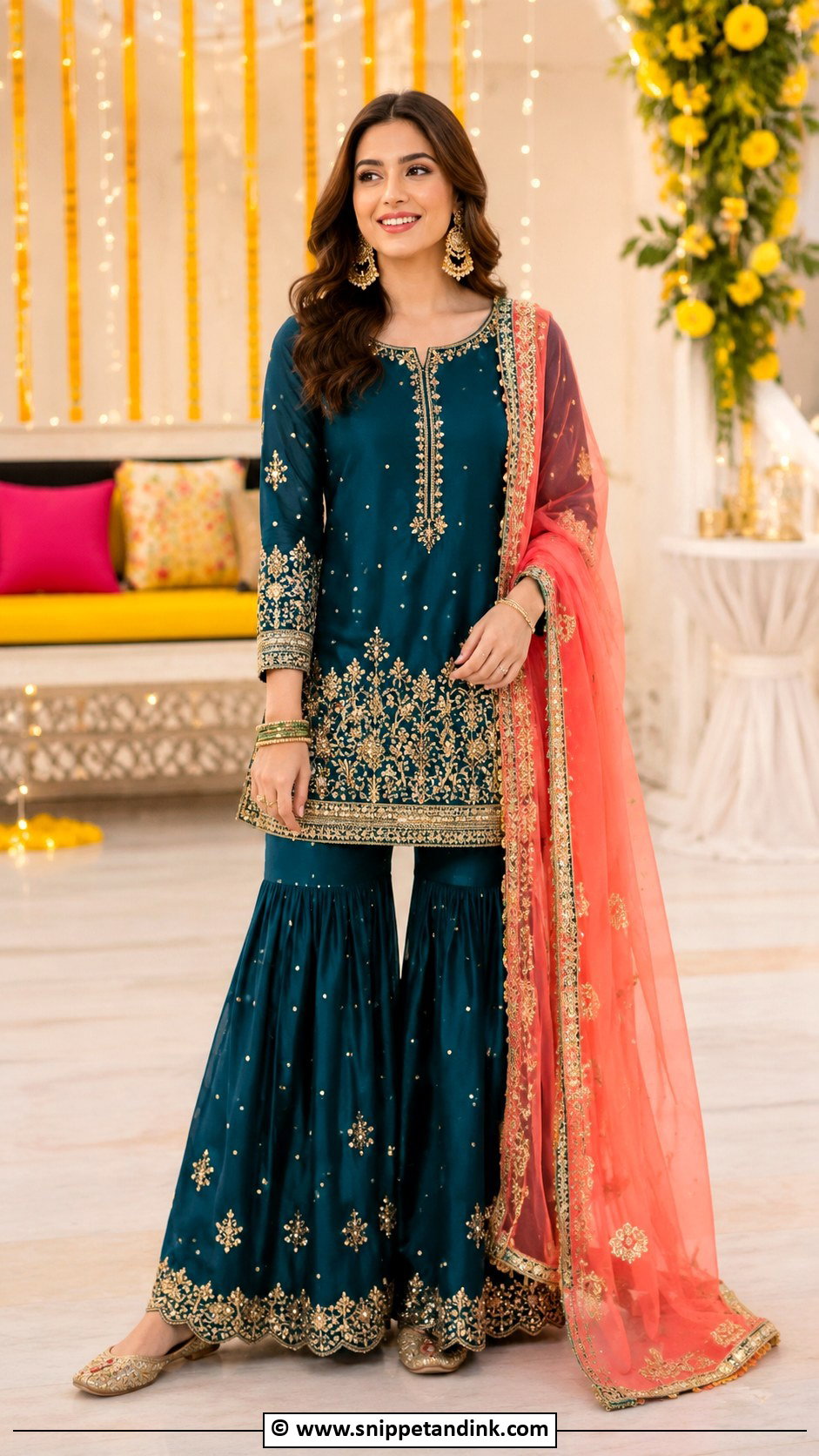
Teal is rich but slightly off the usual mehndi path, and it looks deep and polished under evening lights. A short embroidered kurti over a wide sharara with a sheer bordered dupatta gives the traditional shape. Accent it with antique gold, mustard, coral or hot pink. Teal shifts between blue and green depending on the bulb, so I check it under the venue’s lighting if I can, or at least under warm and cool light at home. Gold chandbalis, a bracelet stack and embellished khussas suit close family.
12. Peach Mehndi Anarkali Dress
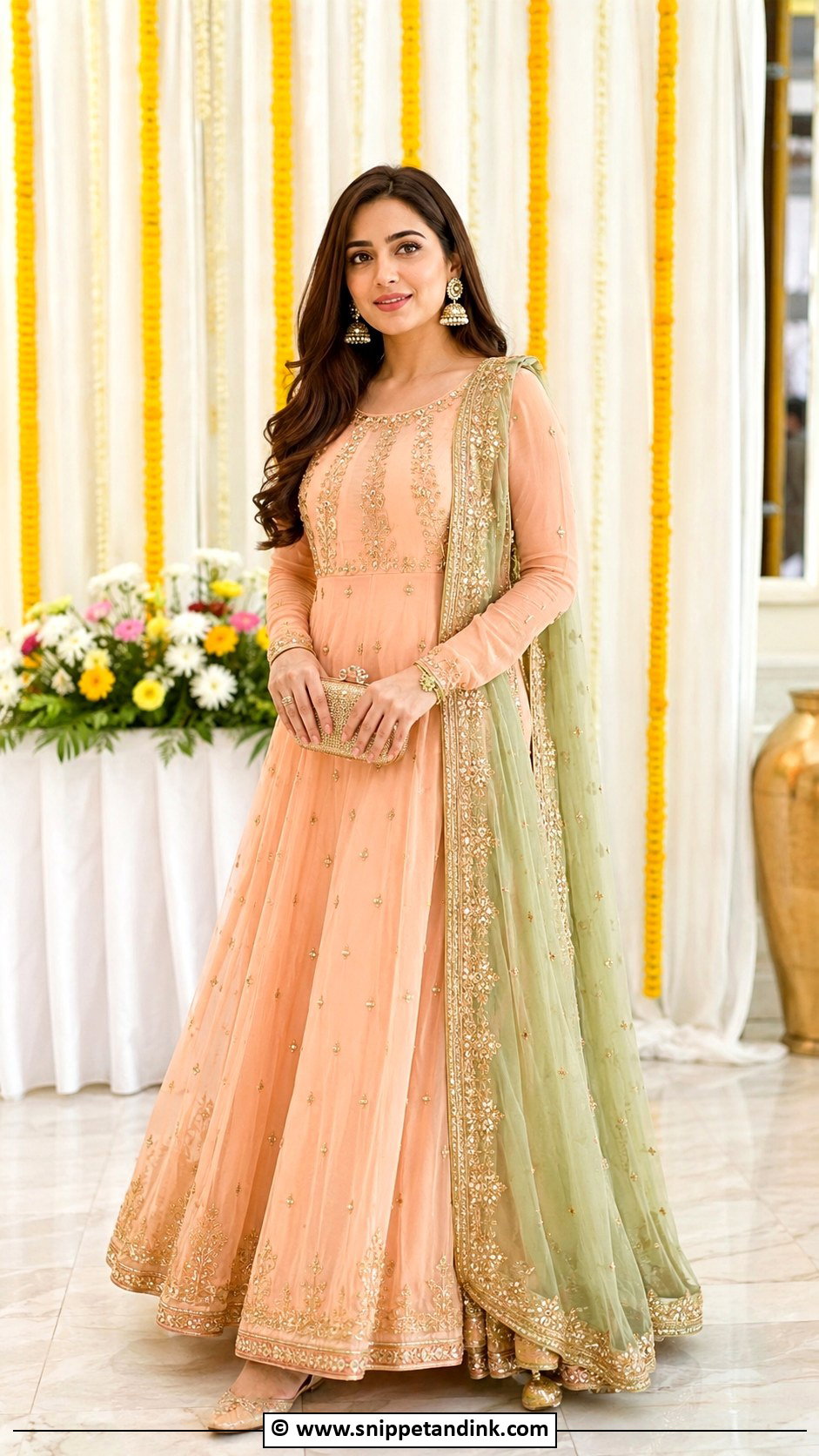
Peach is the gentlest color in the mehndi range, and an anarkali in it gives a modest, comfortable shape that moves easily. Pair it with gold, mint, ivory, coral or soft pink embroidery, kept light around the neckline and hem. A green or yellow dupatta pulls it toward mehndi rather than walima. Peach sits close to many skin tones, so I make sure there’s enough contrast in the embroidery or the dupatta to separate outfit from skin in photos. Nude or gold khussas, pearl jhumkas and a small clutch suit guests and mothers.
13. White And Yellow Mehndi Dress
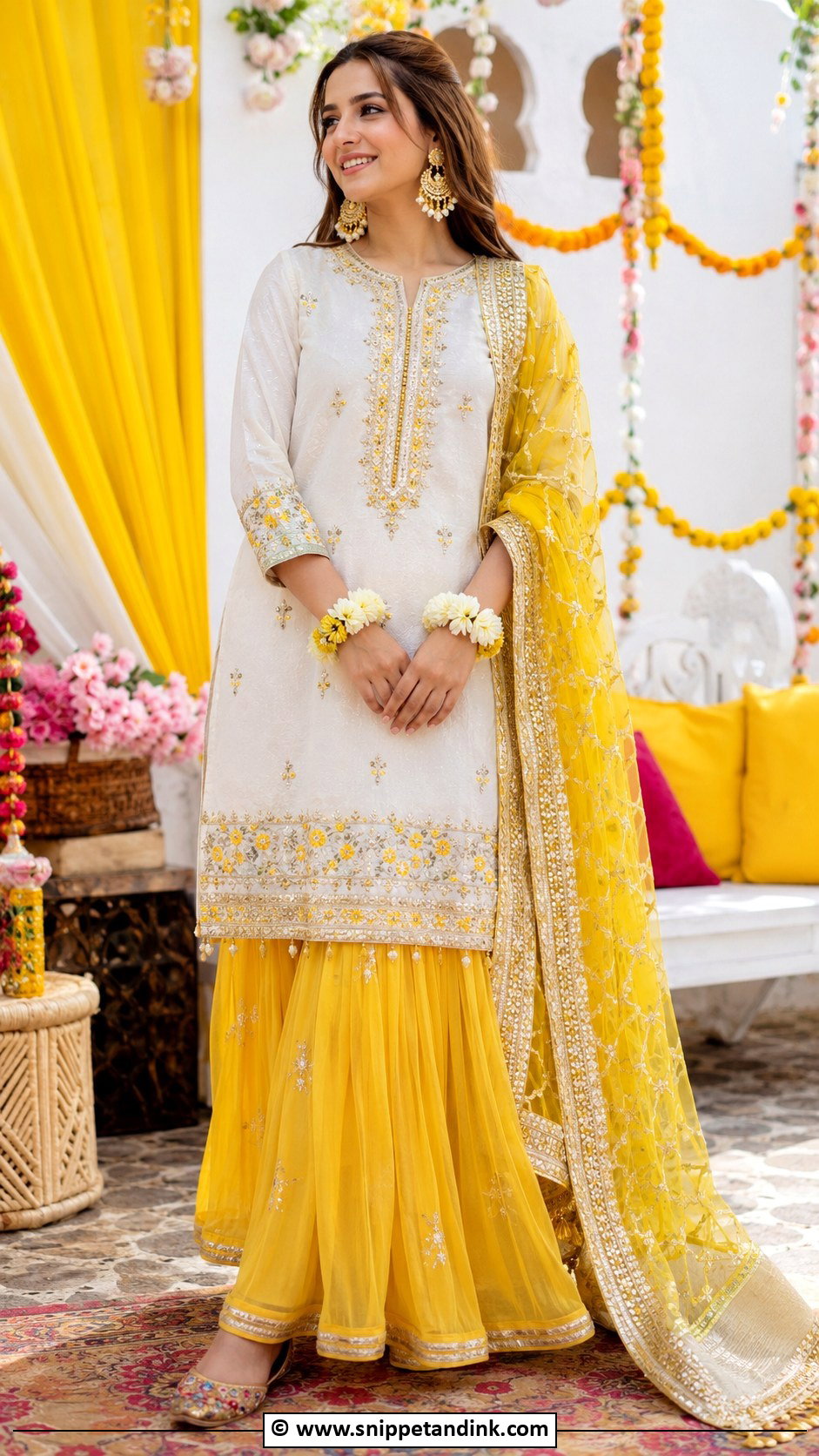
White and yellow works best at a daytime event. Keep the white as the base and give the yellow real presence: a yellow dupatta, an embroidered border or printed lehenga panels, with gota, mirrors or colored thread so it doesn’t read plain. A white kurti with a yellow sharara, or a yellow choli over a white lehenga, both work. The white parts will show every smudge of paste and food, so I’d keep the white away from the hands and sleeves if you’re having henna applied. Gold jewelry, floral bangles and khussas finish it for guests.
14. Red And Green Mehndi Outfit
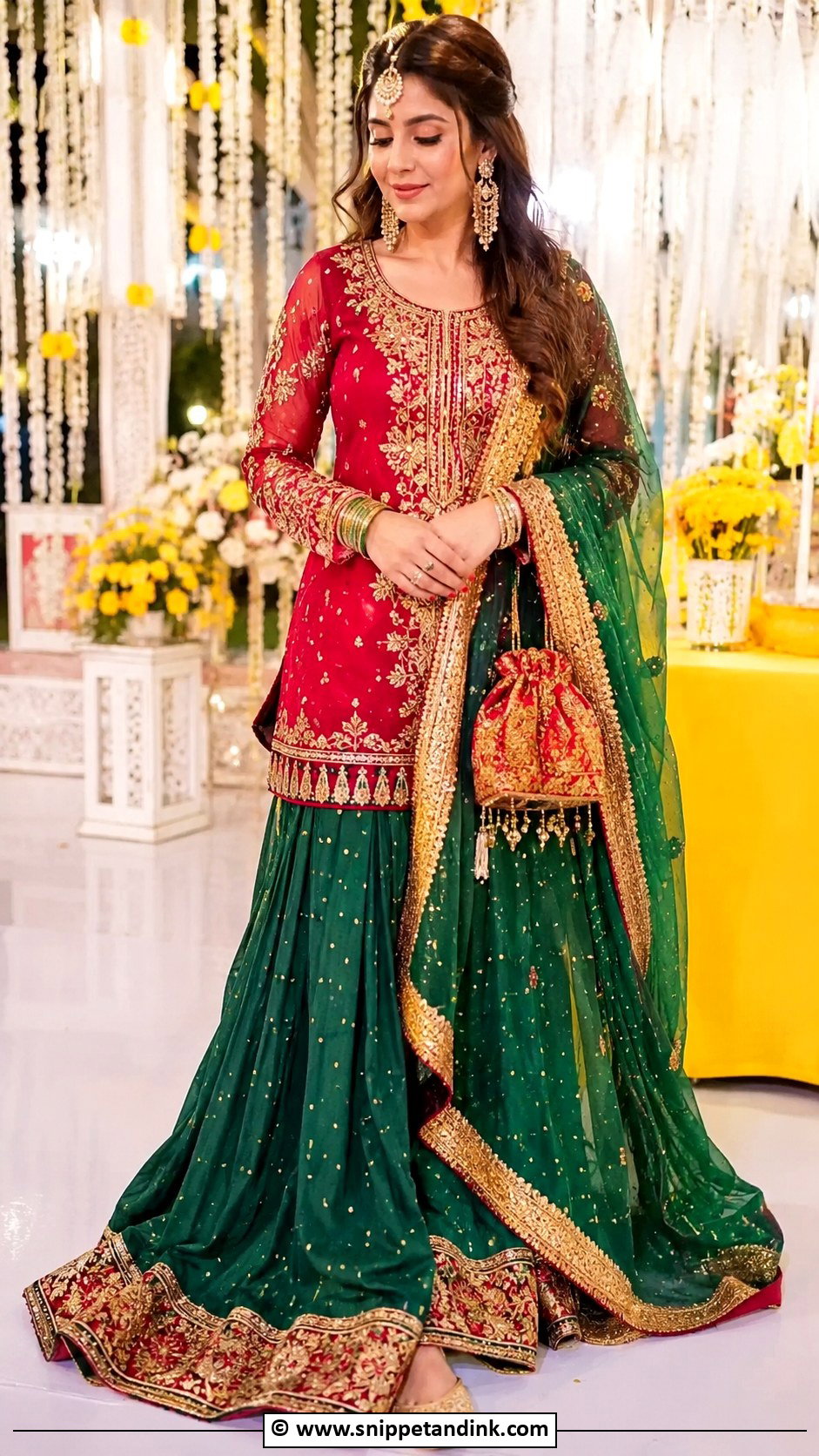
Red and green is the most traditional pairing on this list, but red reads bridal, so I use it carefully at a mehndi unless you are the bride or very close family. A green lehenga with a red dupatta, a red shirt with a green gharara, or a multicolor embroidered set can look rich and grounded, with gold details tying the two colors together. Brides can carry heavier zardozi, mirrors and gota borders; guests should keep the red to an accent. Antique gold jewelry, a potli and comfortable khussas complete it.
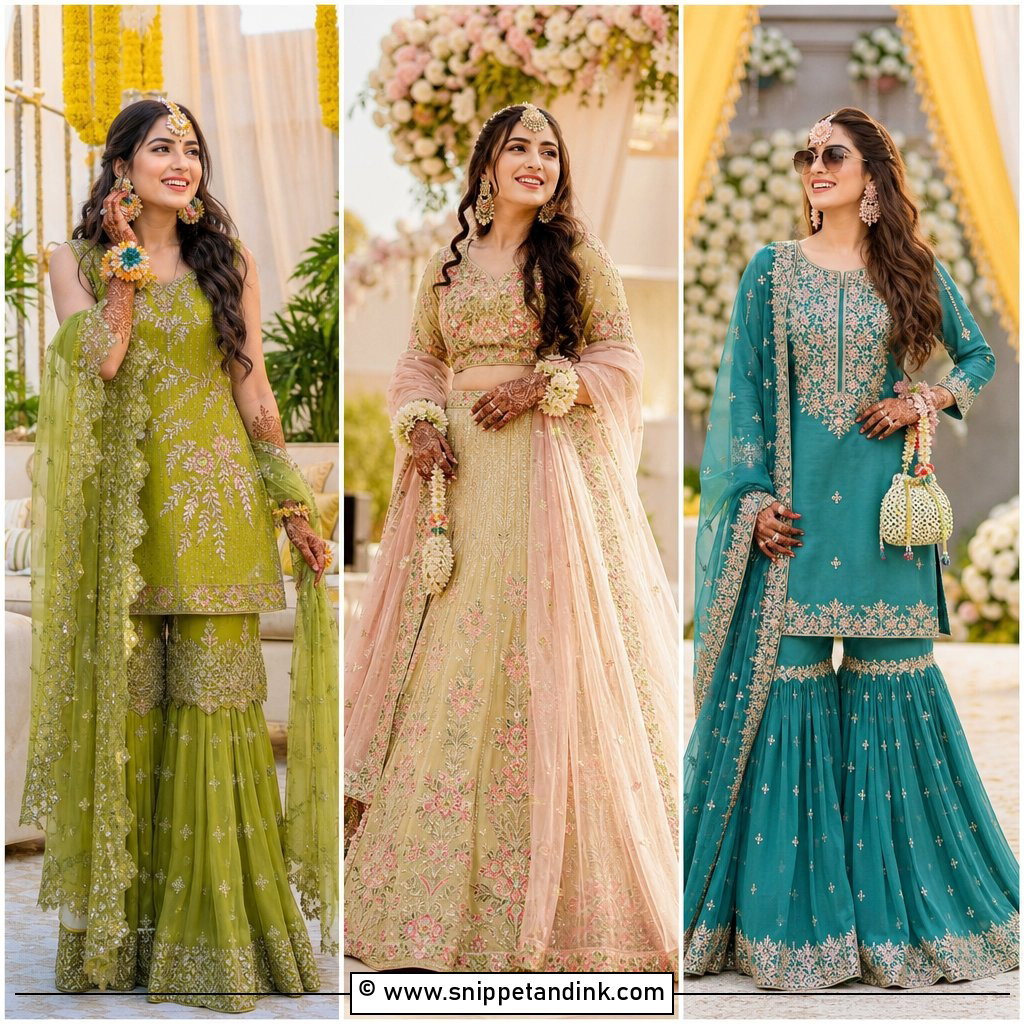
15. Rust Mehndi Gharara Dress
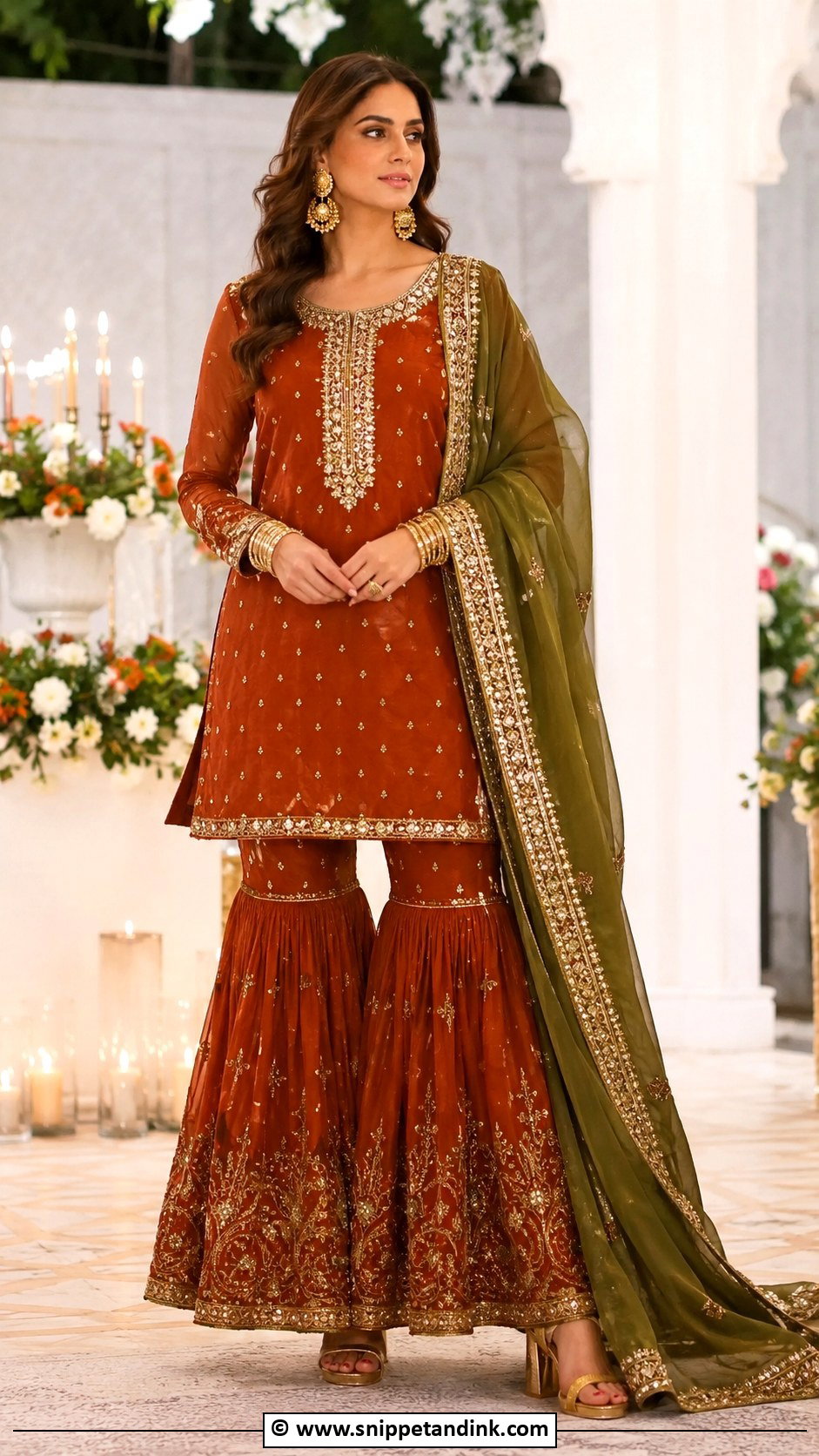
Rust suits evening events and autumn or winter weddings, and it pairs naturally with antique gold, mustard, olive and deep pink. A short rust shirt over a flared gharara gives a regal shape; a contrasting dupatta lifts it. Tilla, gota or resham add texture. Rust is unkind to cool, pink-toned makeup, so I keep both the makeup and the jewelry warm. Block heels or khussas depending on the floor and how much dancing you plan. It suits brides, sisters and guests who like earthy color.
16. Pastel Mehndi Dress
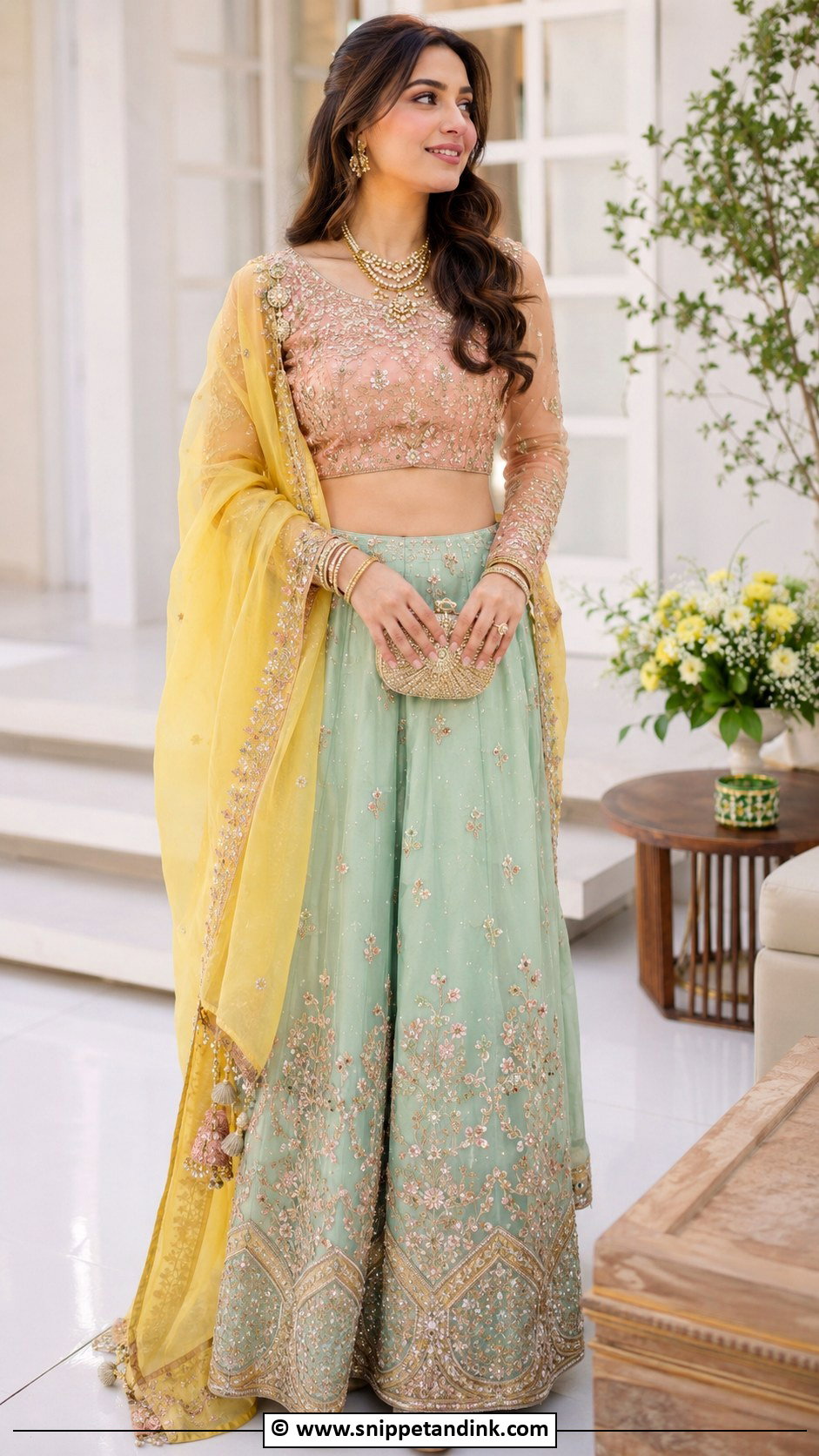
Pastels need a softer theme or a daytime setting to feel right at a mehndi. Mint, blush, powder blue, lilac, peach and sage all work if the outfit carries festive embroidery or color accents. Choose a pastel lehenga, pishwas, or sharara with gota, mirrors, sequins or floral thread, and add a brighter yellow, pink or green dupatta for more energy. Without that contrast, pastels can look like a walima outfit worn on the wrong night. Pearl jewelry, soft gold earrings and delicate bangles keep it refined for guests.
17. Floral Mehndi Dress
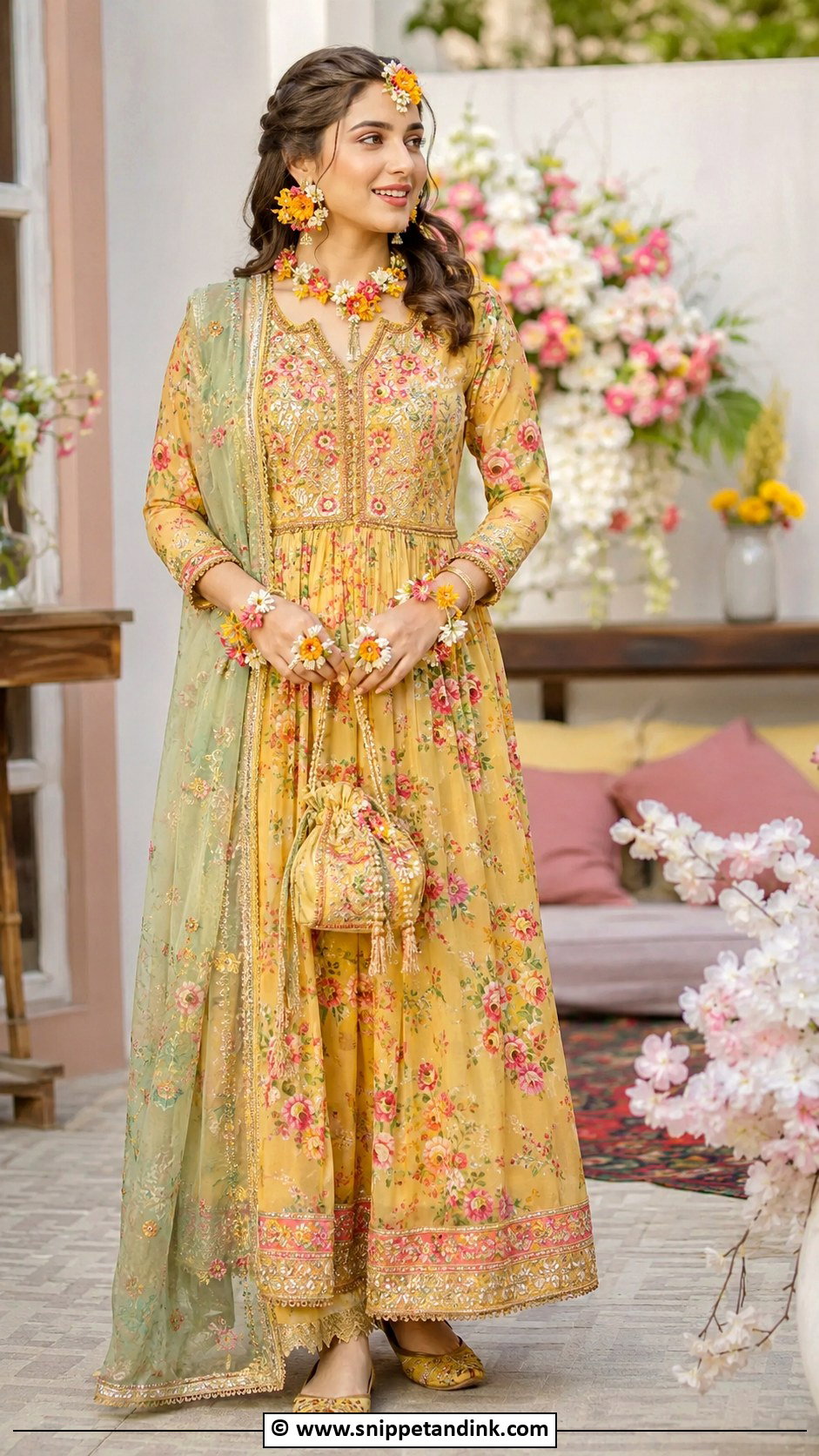
Florals suit garden-style mehndis, as prints, embroidered flowers or appliqué. A flowing lehenga, anarkali or pishwas in yellow, peach, green or pink with flowers across the skirt, sleeves or dupatta looks fresh, and real flower jewelry ties it to the theme. Fresh flower jewelry is fragile, though; I have it delivered close to the start and keep it misted and cool, because jasmine and roses wilt quickly against warm skin. Khussas or low heels for outdoor ground. It suits bridesmaids, cousins and daytime guests.
18. Short Shirt With Lehenga Mehndi Dress
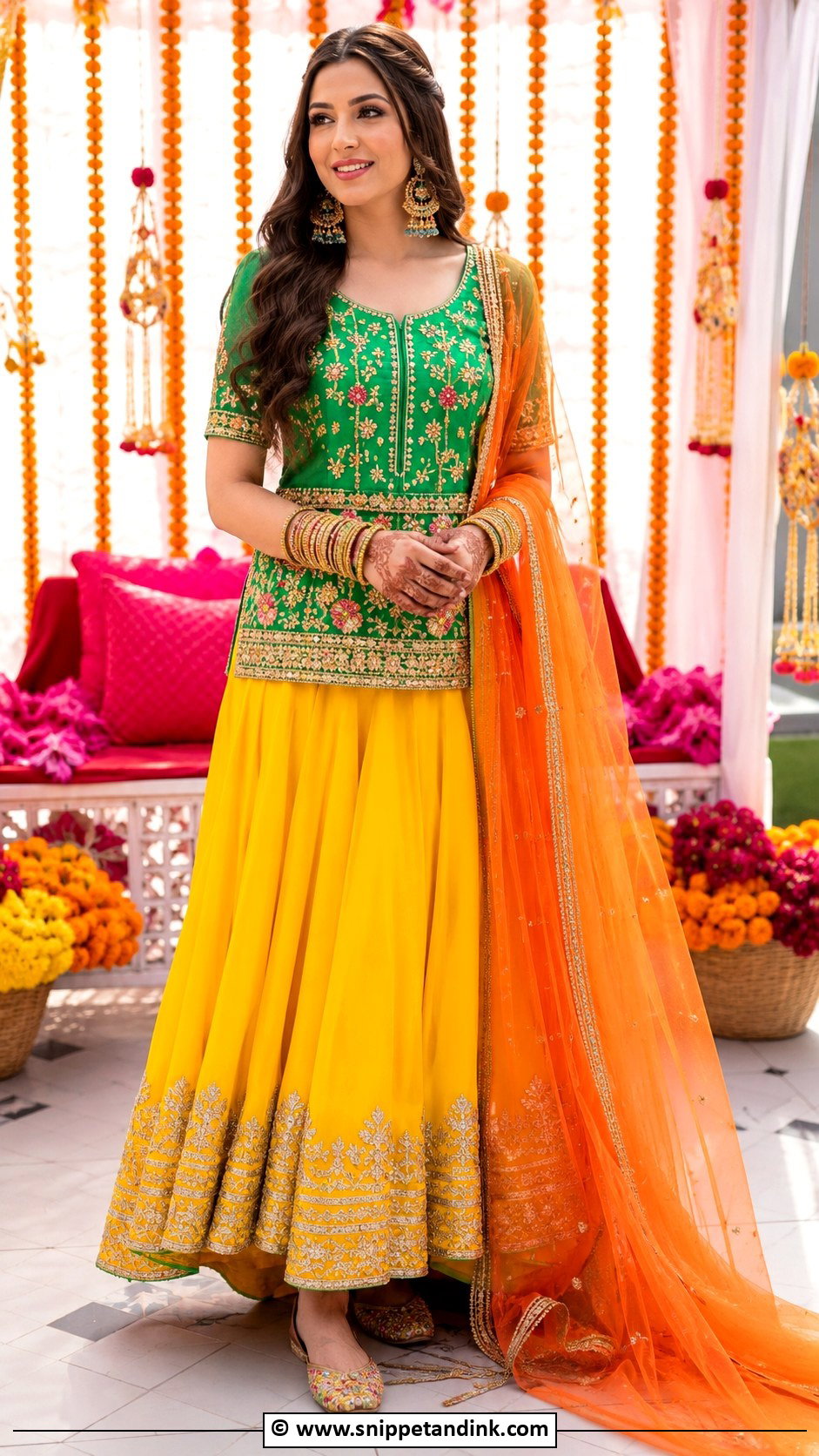
The short shirt over a lehenga is a classic Pakistani silhouette: the shirt marks the waist and the lehenga gives volume. A bright shirt in yellow, green, orange or pink with a contrasting lehenga feels fun, with embroidery at the sleeves and hem. Because the shape is already busy, the dupatta should be light. I watch the gap between shirt hem and lehenga waistband when the wearer sits; a short shirt can lift and expose more than she expected. Statement earrings, bangles and khussas complete it, with heavier borders for brides and printed or lightly worked versions for guests.
19. Long Shirt With Sharara Mehndi Dress
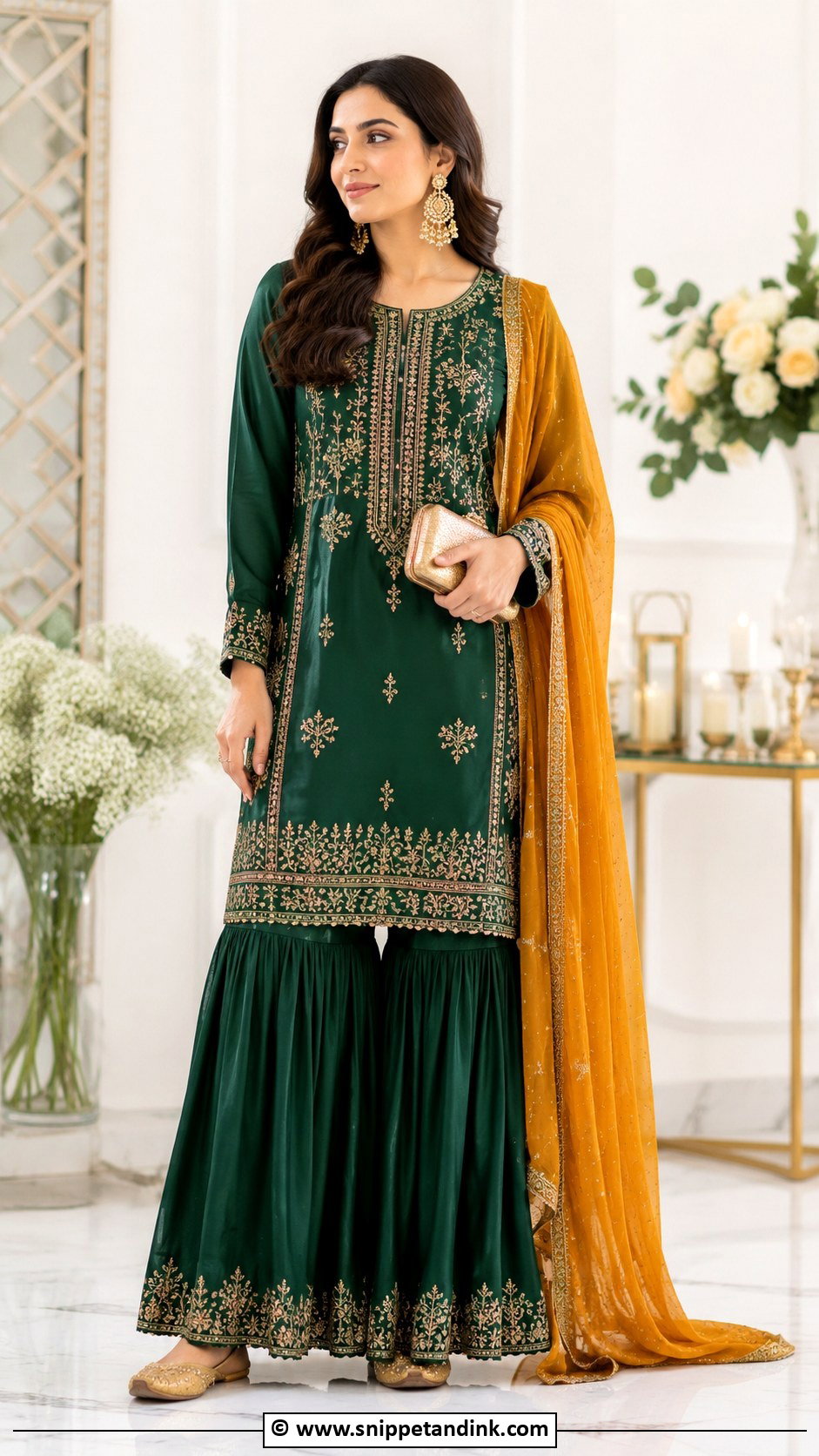
A long shirt over a sharara gives coverage on top and festive volume below, and it flatters most body types. Choose a straight or slightly flared shirt with side slits so you can walk and sit without the shirt pulling. Emerald, mustard, teal, rust and fuchsia suit it, with embroidery at the neckline, cuffs and hem and a soft dupatta. Slits that start too high look casual; I keep them at about hip level. Chandbalis, khussas and a structured clutch suit guests and mothers who prefer this shape to a cropped blouse.
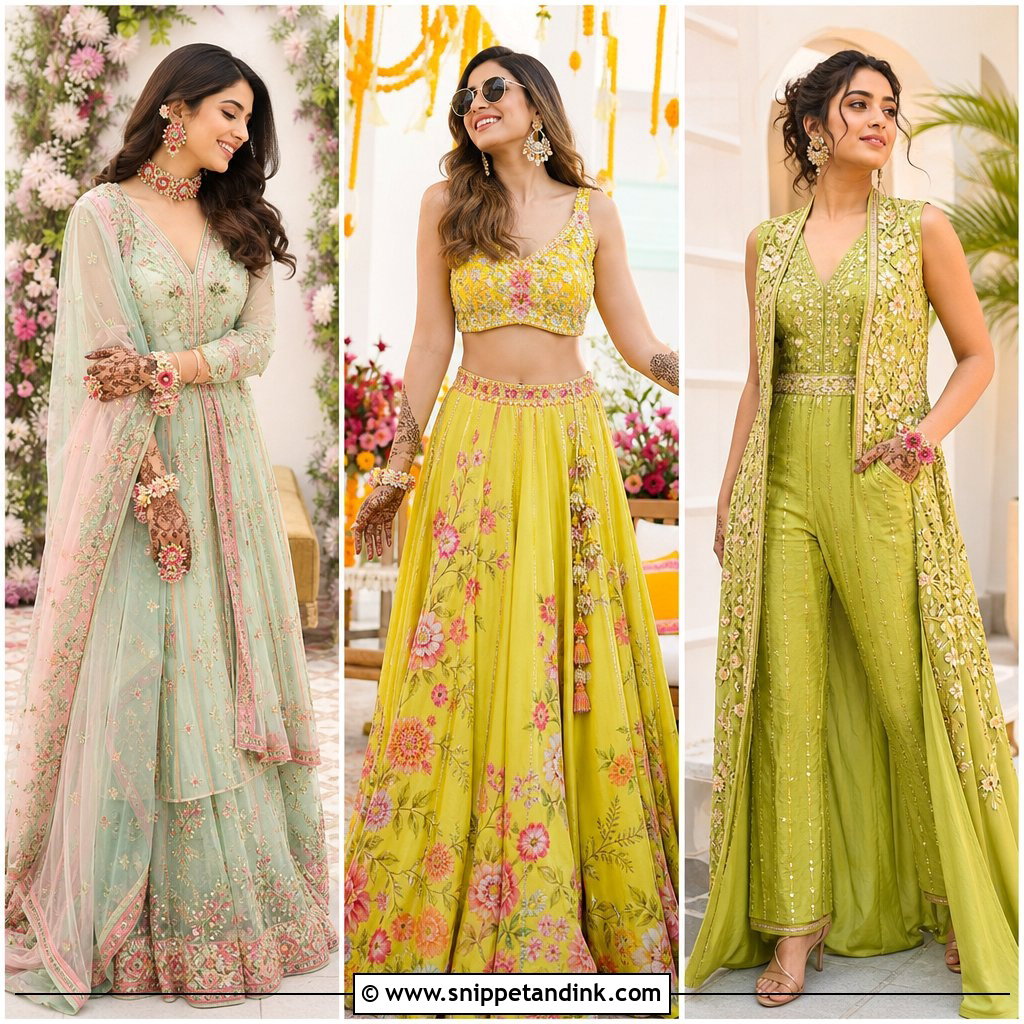
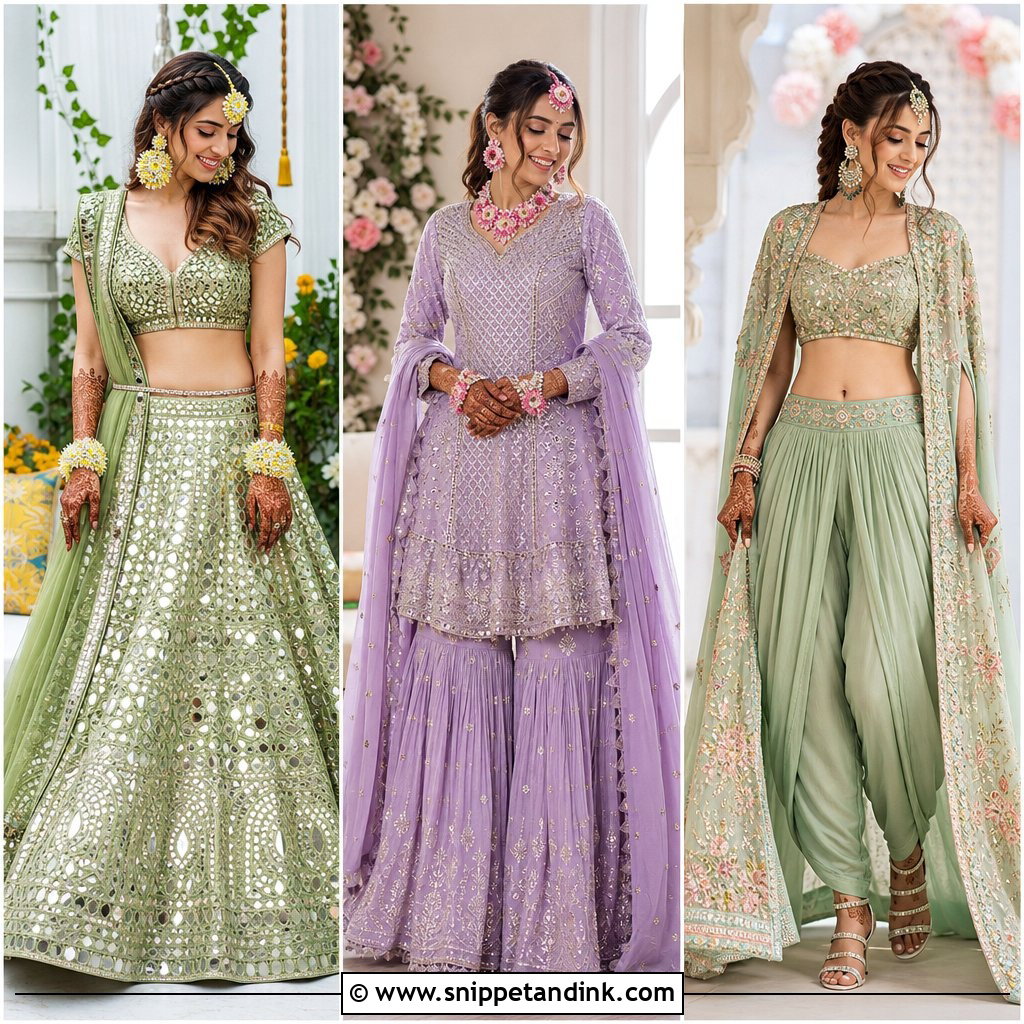
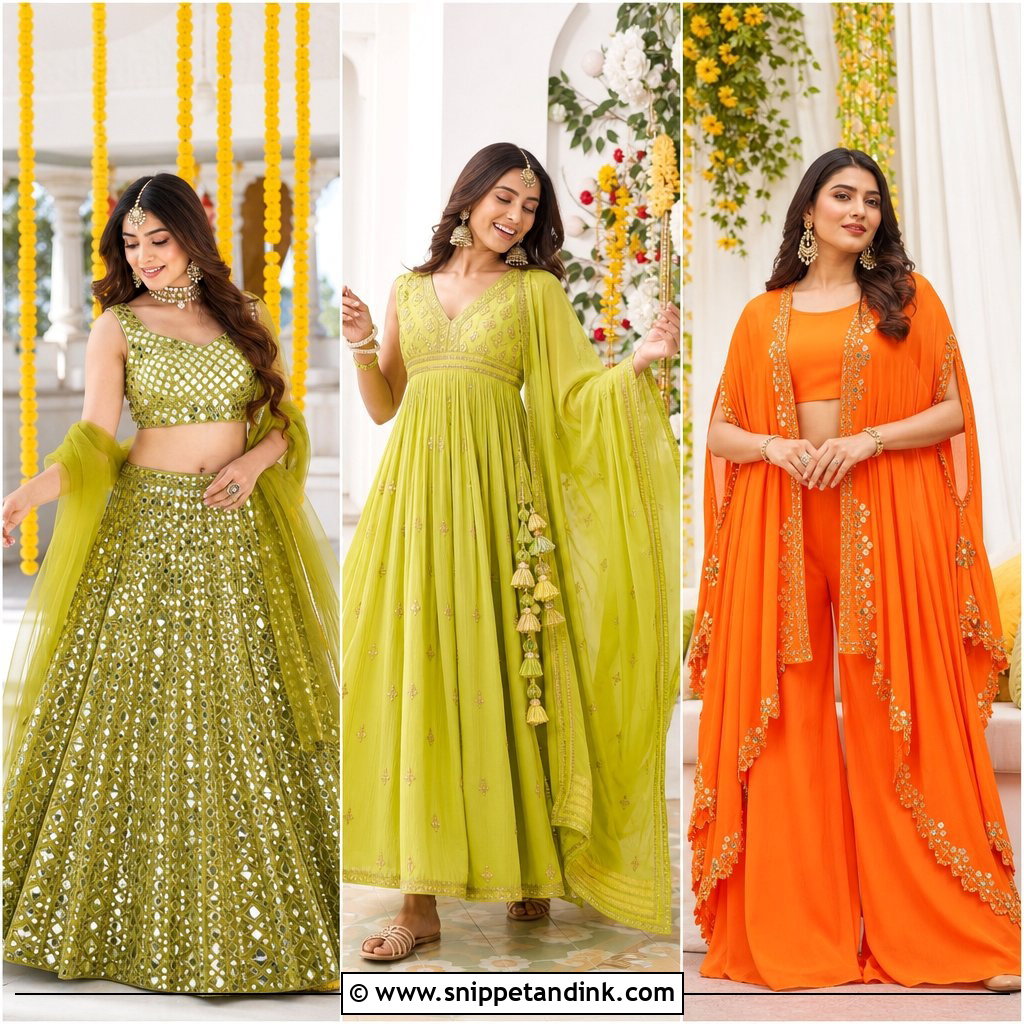
20. Angrakha Mehndi Dress
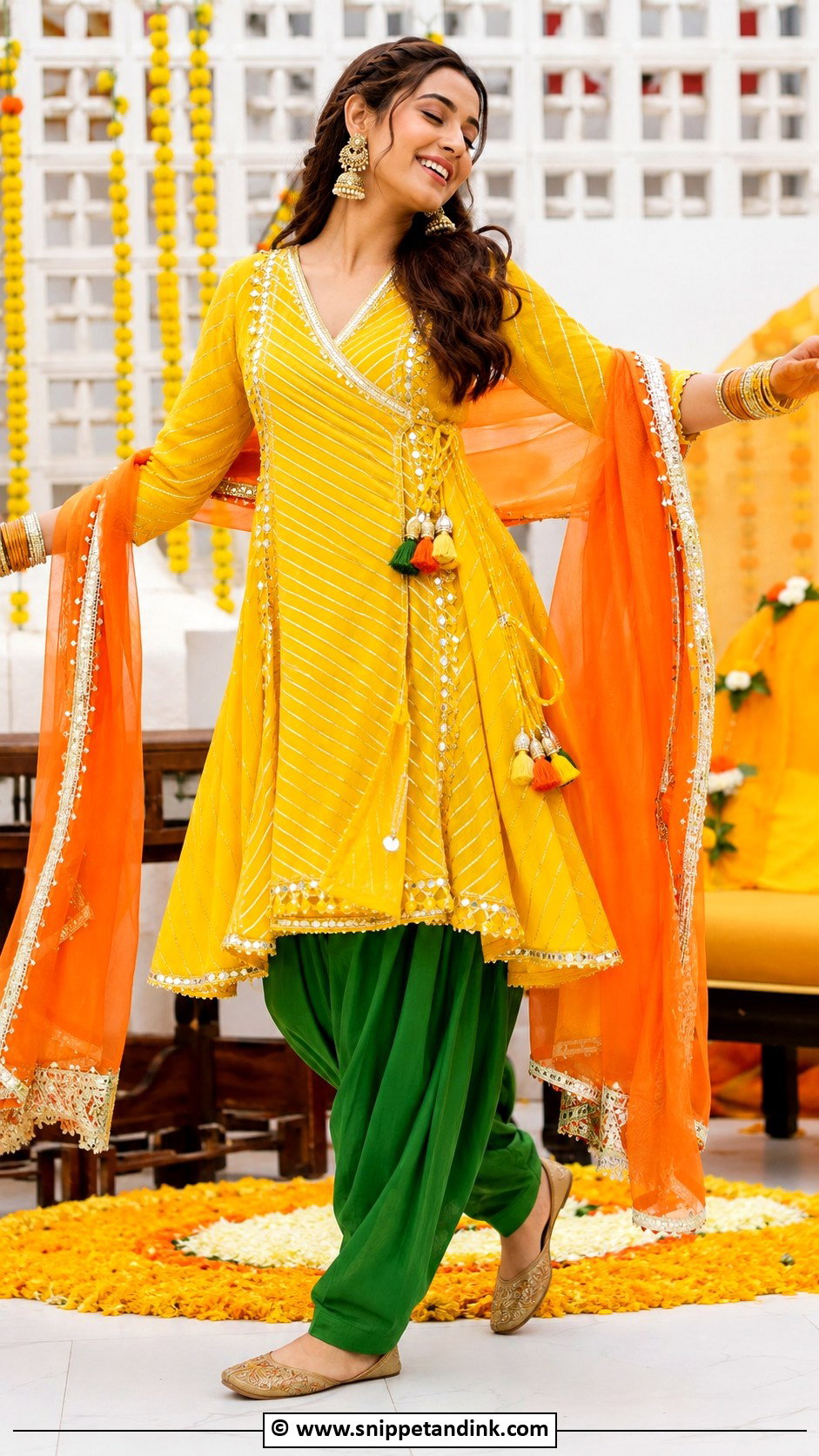
The angrakha’s diagonal wrap and tie are the whole point of it, and the flared skirt gives movement. In yellow, orange, green or multicolor with gota, mirrors, tassels or printed borders, it pairs with churidar, trousers, a sharara or a lehenga depending on how formal the night is. Performers love it because it moves without needing adjustment, provided the inner tie is fastened firmly; I add a small hook so the wrap doesn’t open mid-dance. A light dupatta, jhumkas and khussas finish it.
21. Peplum Lehenga Mehndi Dress
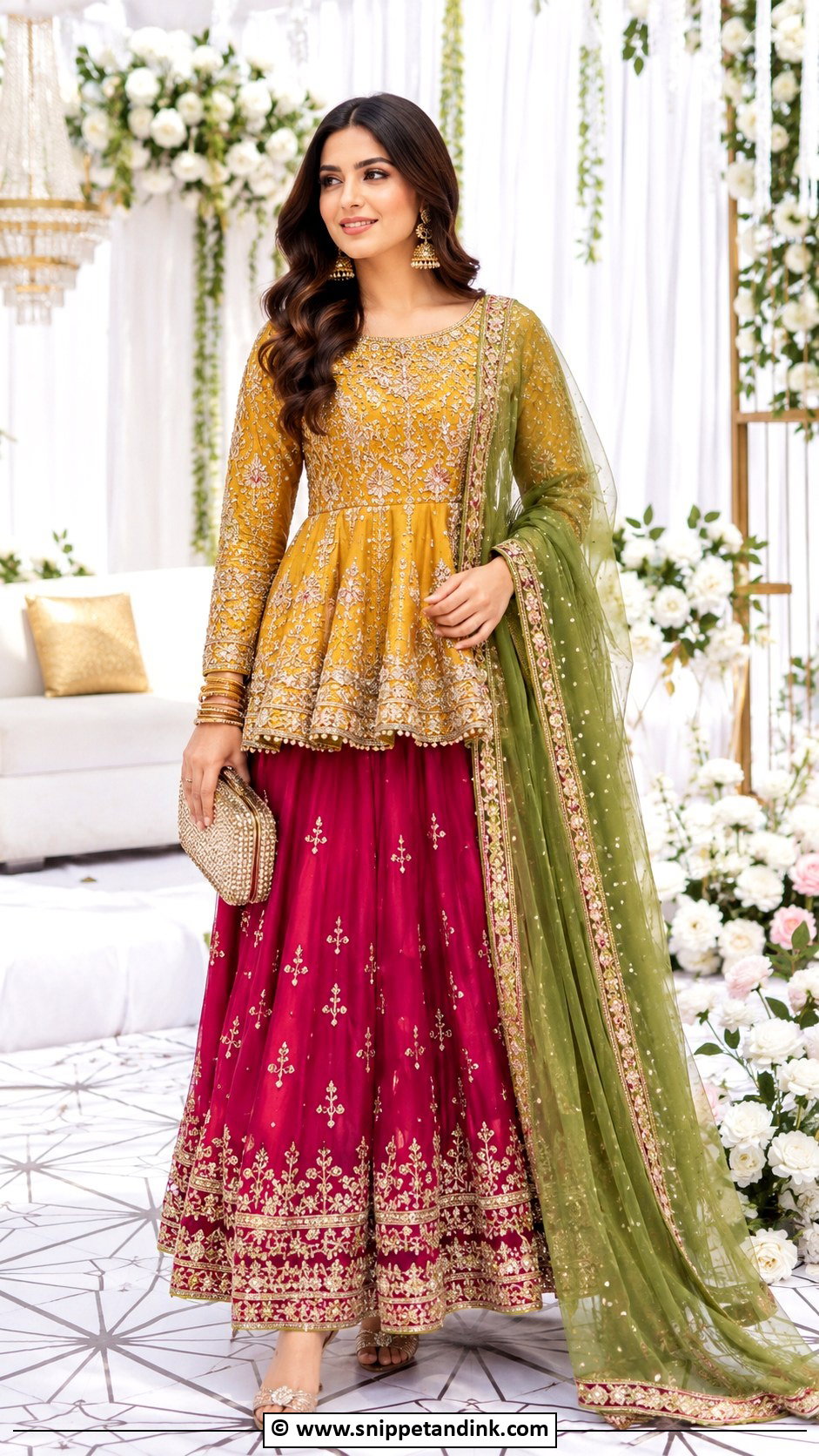
A peplum defines the waist and gives a tidy, polished line over a full lehenga. It can be short, mid-length or slightly flared depending on your comfort. Try contrast pairings like mustard with magenta, green with gold, teal with orange or pink with yellow, with embroidery on the peplum hem and the lehenga border. A peplum that flares right at the narrowest point of the waist suits most shapes; one that starts lower widens the hips. A sheer dupatta, statement earrings and heels or khussas suit bridesmaids and sisters.
22. Cape Style Mehndi Dress
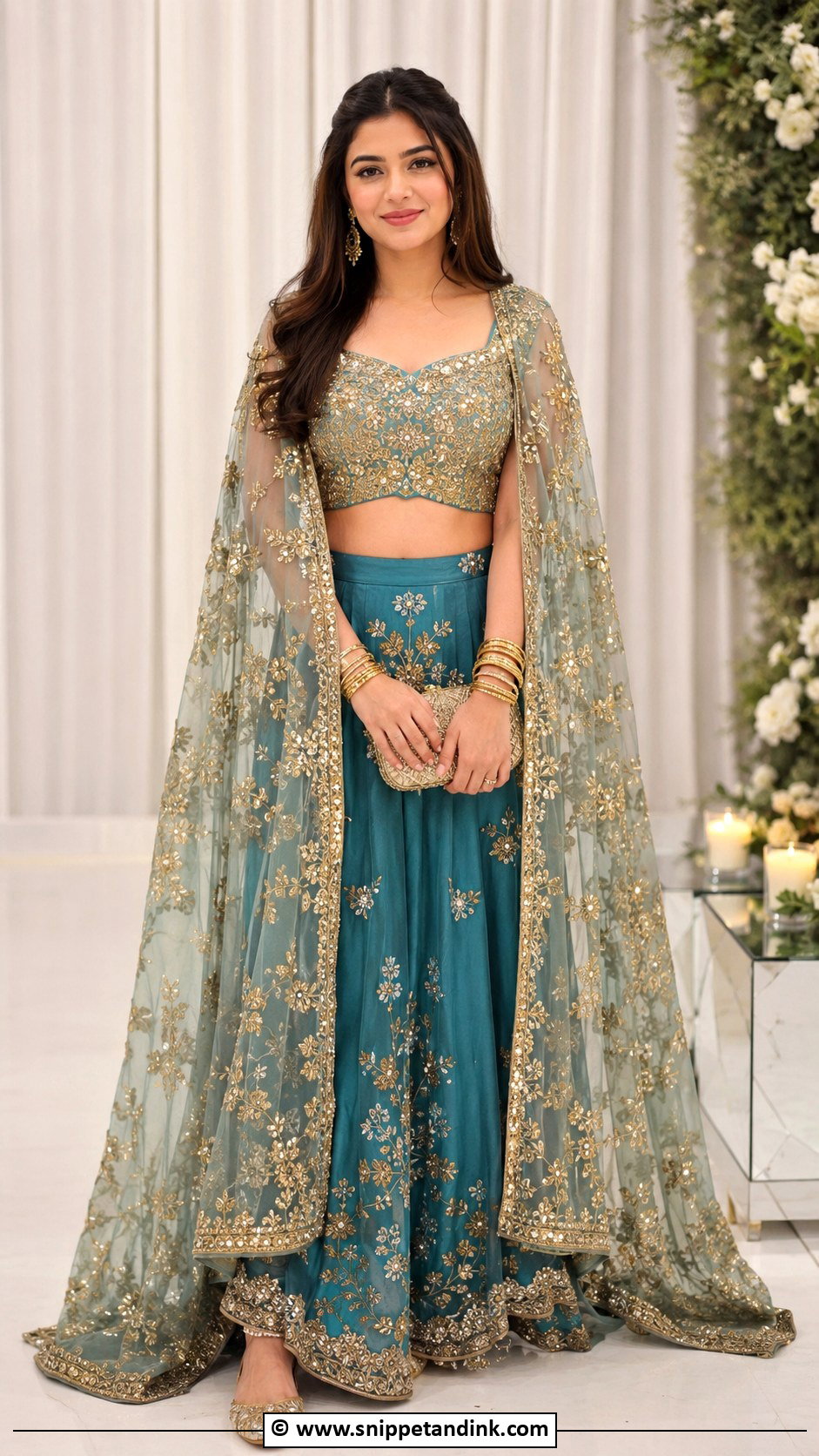
A cape replaces the dupatta, which keeps your hands free for dancing, greeting guests and managing jewelry. Choose a lehenga or sharara with a cape in net, organza or chiffon, in yellow, green, fuchsia or teal, and keep the embroidery to the cape’s border, shoulders or neckline so it looks finished. Chiffon capes drape softly; organza ones hold out from the body and can look boxy on narrow shoulders. Sleek earrings, bangles and heels or embellished flats suit fashion-forward guests, bridesmaids and reception-style mehndis.
23. Jacket Lehenga Mehndi Dress
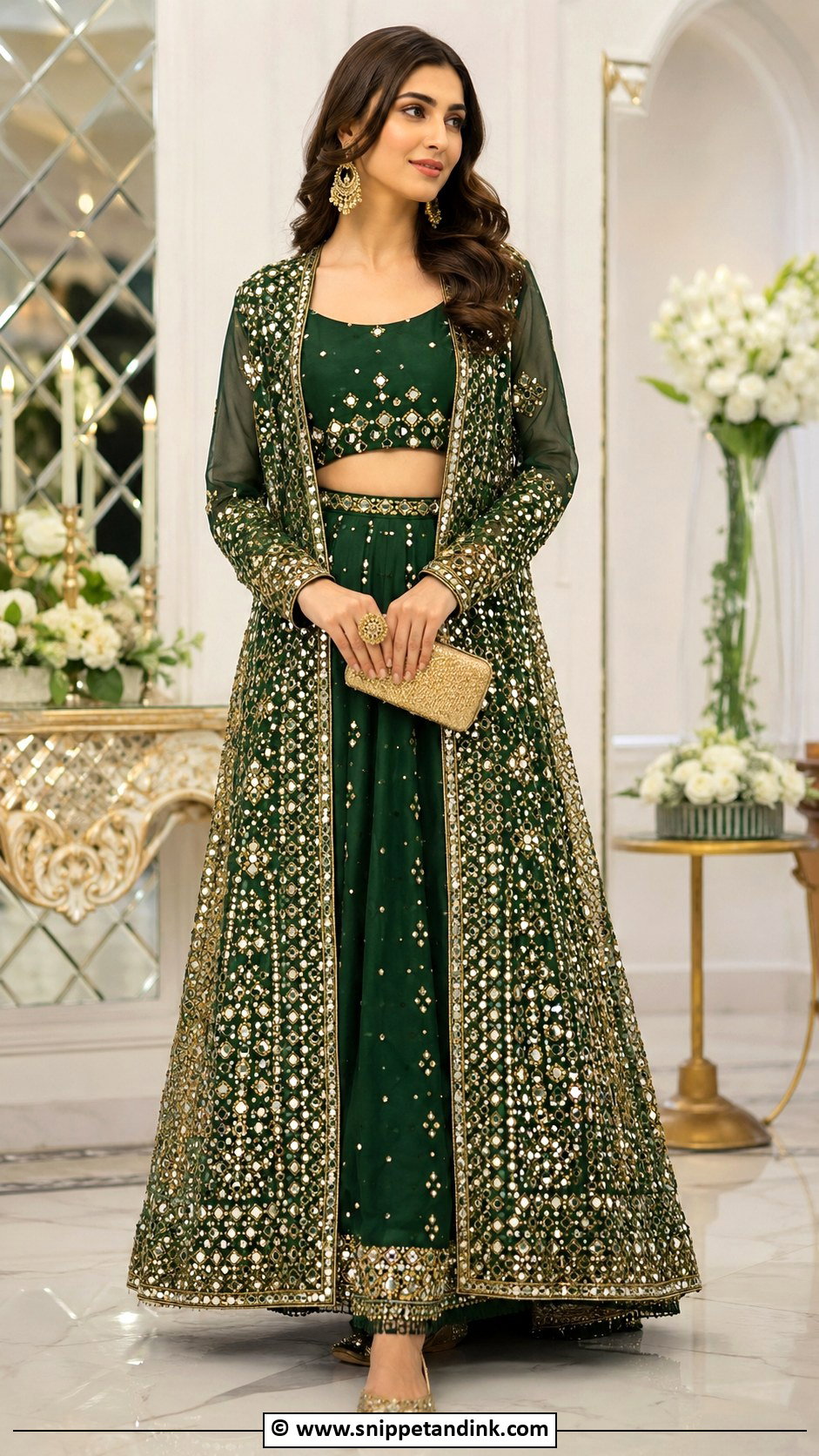
A jacket over a lehenga adds structure and coverage with a slightly regal feel. It can be short and embroidered, or long and open-front over a blouse. Emerald, teal, plum and rust look rich, and classic mustard and orange stay festive. A long jacket with mirrors or gota borders carries the outfit on its own, so the dupatta becomes optional. I keep jackets unlined or lightly lined for mehndis, since a heavily lined jacket traps heat once the dancing starts. Gold earrings, a ring and comfortable footwear are enough.
24. Dupatta Draped Mehndi Dress
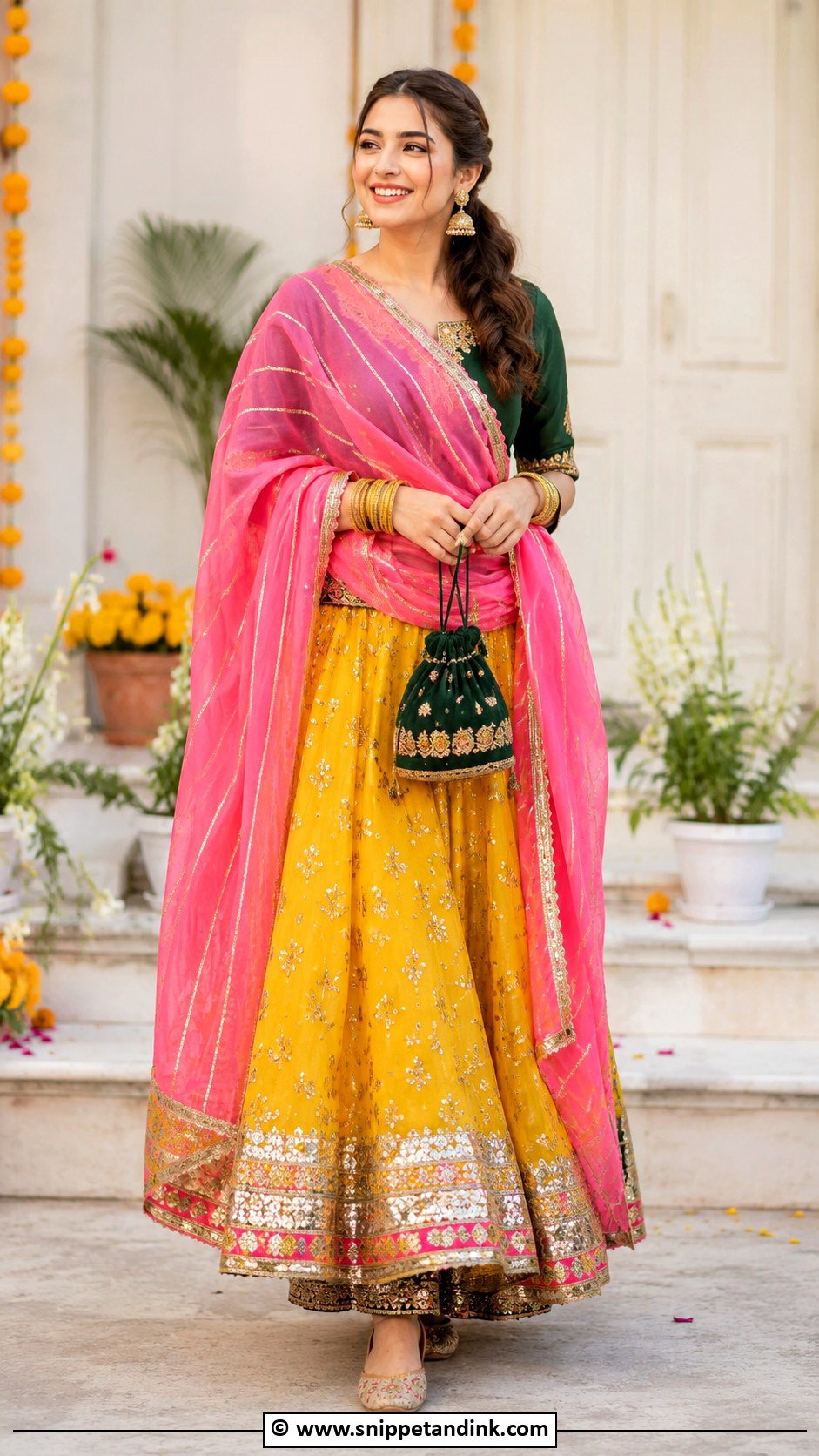
A dupatta draped mehndi dress shows how much the drape alone can change an outfit. A simple lehenga, sharara or long shirt looks special with a well-placed dupatta. A shoulder drape is elegant, a side-pinned drape is the most comfortable, and a front-open drape suits photos. Choose one with gota, mirrors, tassels or a colored border, and try contrasts like yellow with green, pink with orange or teal with mustard. I pin through the hidden edge of the border, never the open net, which tears. Jhumkas, bangles and khussas finish it.
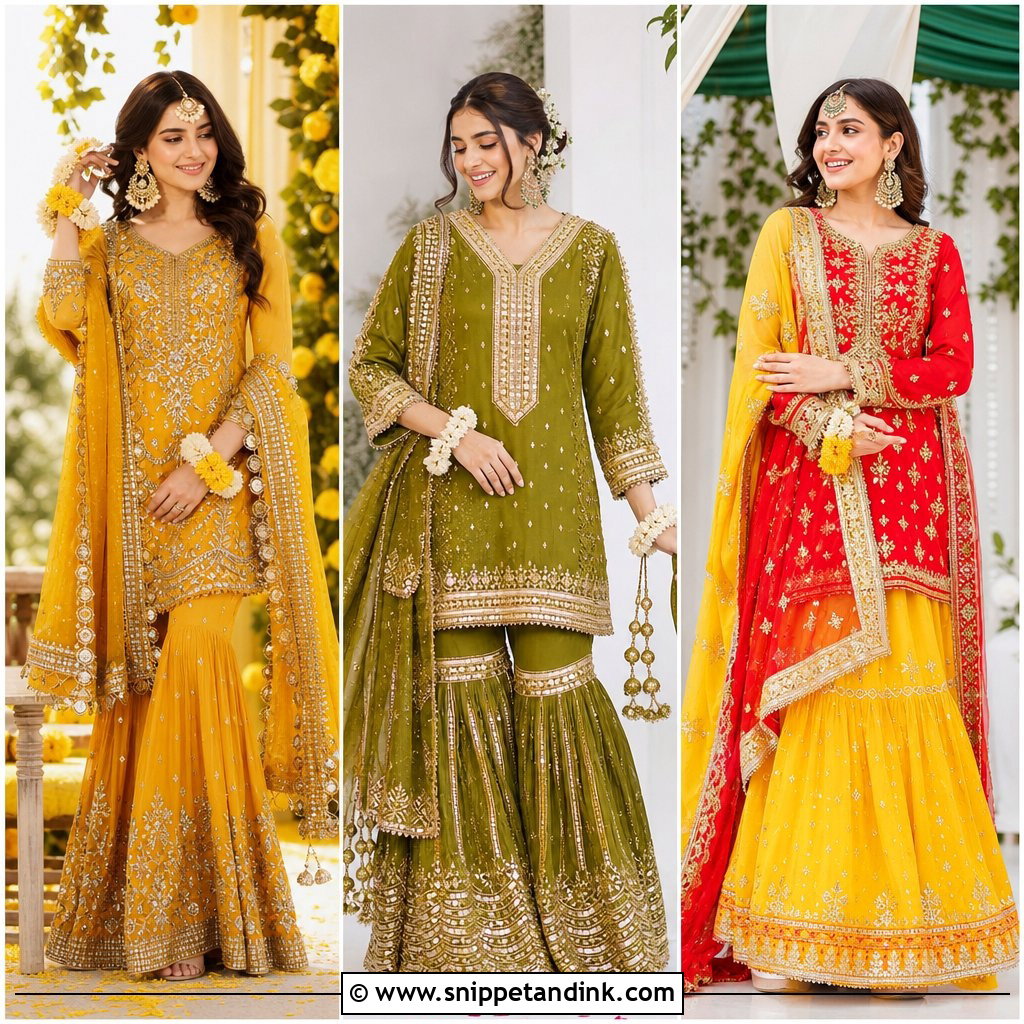
25. Bridal Mehndi Lehenga Dress
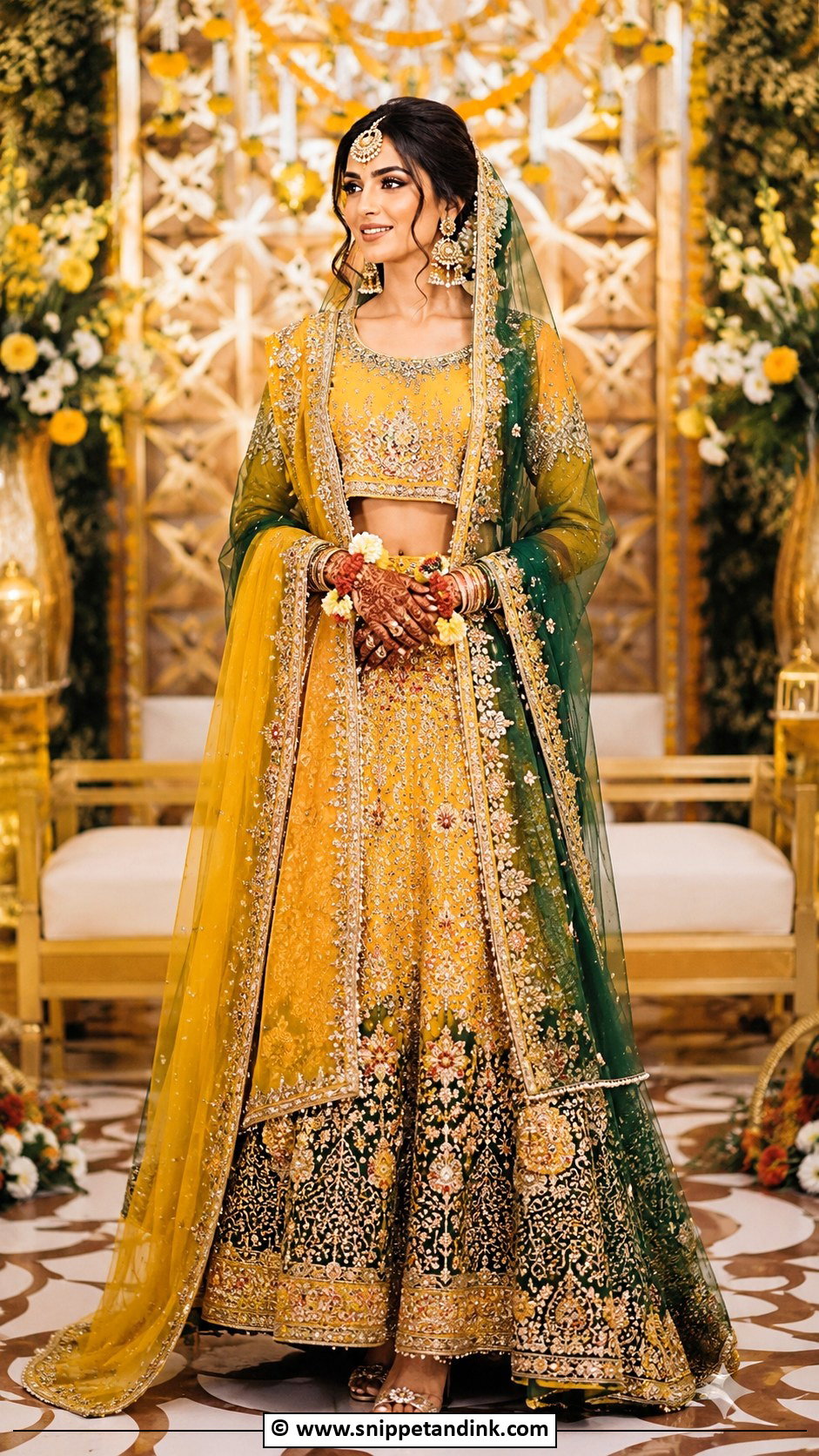
The bride’s mehndi lehenga has to be special and still comfortable for hours of sitting with henna on her hands. Yellow, green, mustard, orange, fuchsia and multicolor all suit it, worked in gota, mirrors, zardozi, tilla or resham. The choli must fit securely and the dupatta has to be manageable while you sit, pose and dance. A second, lighter dupatta adds drama without much weight. A tikka, jhumkas, bangles, floral accents and embellished khussas or heels complete it. If it exhausts you by midnight, it was the wrong lehenga, however good it looked on the hanger.
26. Bridesmaid Mehndi Dress
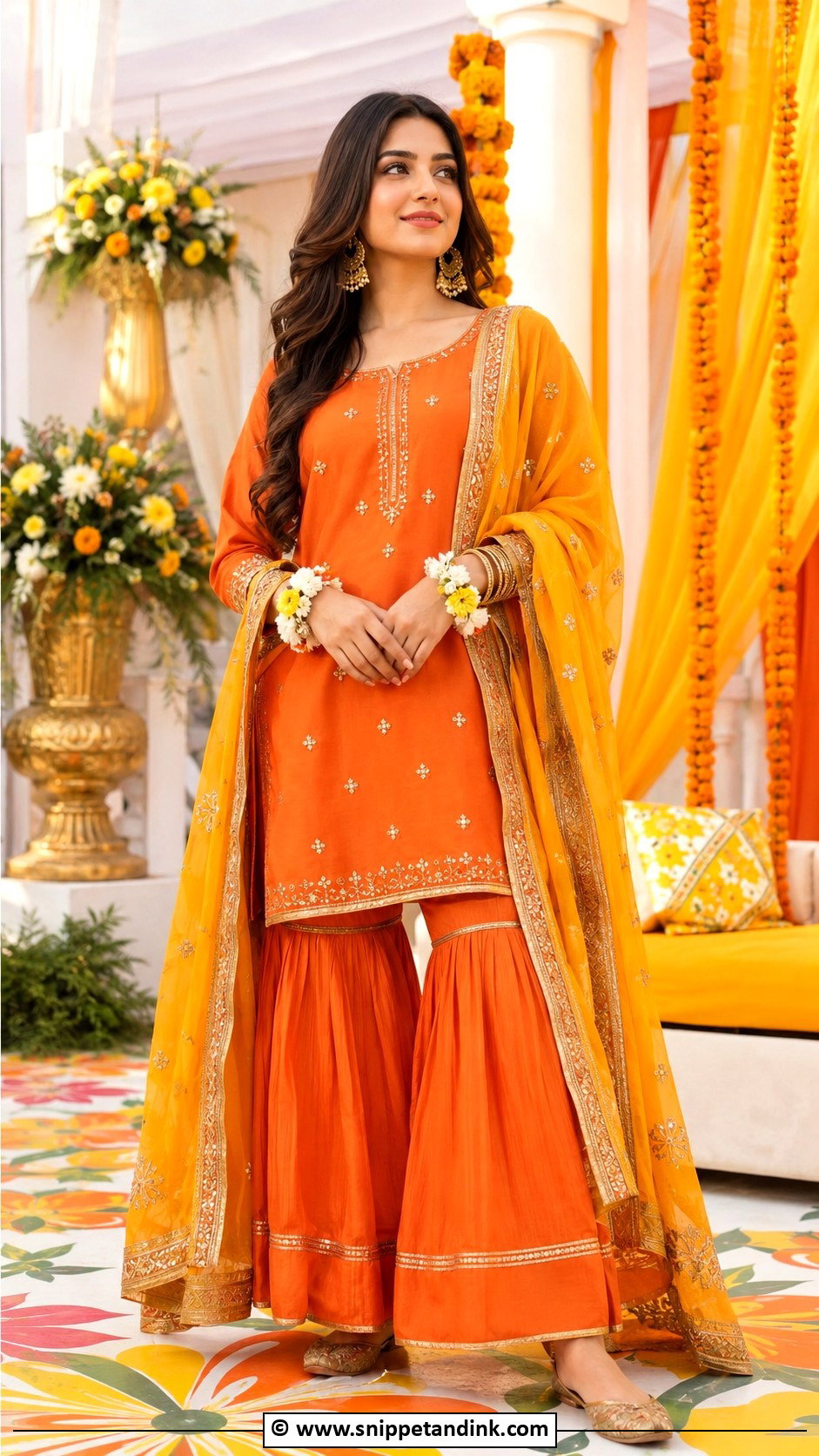
Bridesmaids should look coordinated, not identical, and never in competition with the bride. Agree on a color family, such as all yellows, all greens, or a pink, orange and lime mix, and choose lighter lehengas, shararas, ghararas or frocks with similar embroidery. Bridesmaids also run errands, perform and carry things, so comfort matters. I give a group one shared element, usually the dupatta color or matching floral jewelry, and let each pick her own cut. Jhumkas, bangles and khussas are usually enough.
27. Guest Mehndi Dress
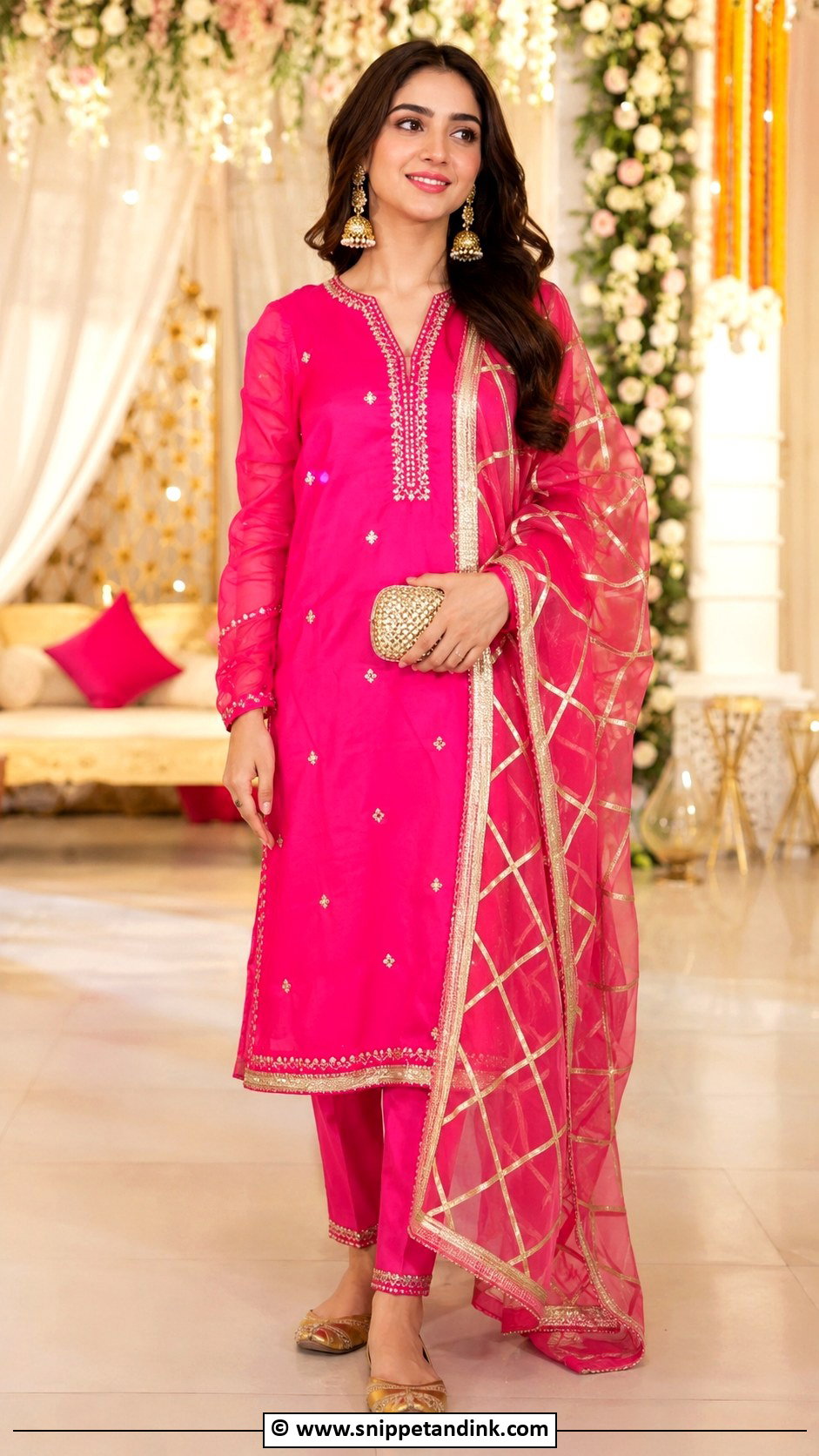
As a guest, festive and respectful beats heavy every time. A bright straight suit, a printed Anarkali, light sharara or a simple lehenga in yellow, green, pink, orange, teal or peach, with modest embroidery, mirrors or gota, is enough. Avoid looking bridal unless the invitation signals a very formal event. A light dupatta adds tradition without weight. If you don’t know the family’s dress expectations, ask the person who invited you; it’s a normal question, and it saves you from the wrong color. Khussas or small heels, jhumkas and a clutch finish it.
28. Simple Mehndi Dress
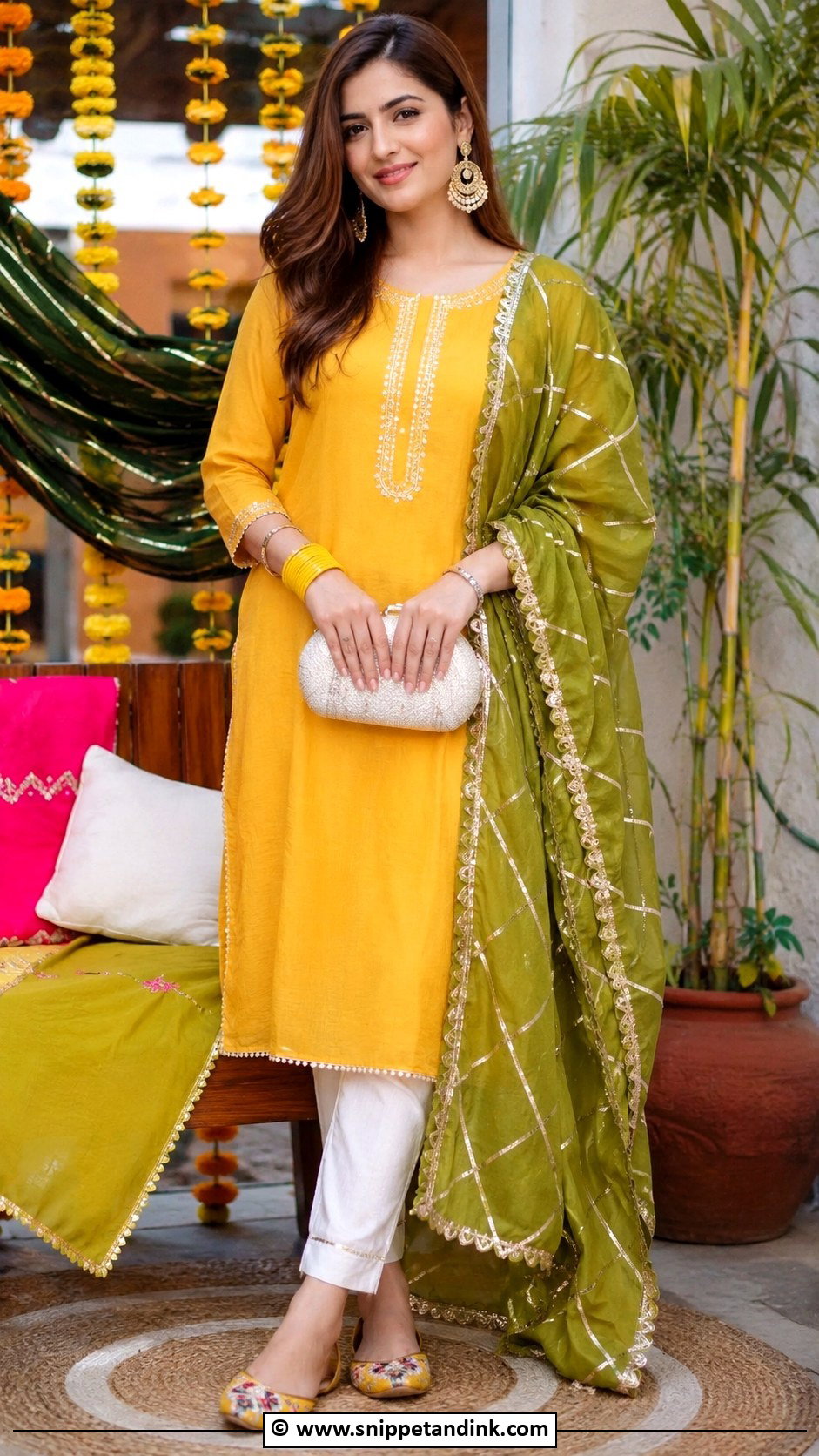
Simple is the right call for small home functions and dholki nights. A bright kurta with trousers, a light frock with a dupatta or a plain sharara set with a gota border lets the color do the work, in yellow, green, orange, coral or pink. Add one festive detail: mirror earrings, bangles, floral jewelry or embroidered khussas. Keep makeup fresh and hair easy. A plain outfit only looks underdressed when everything is plain, so one strong color or one good dupatta is enough to avoid that.
29. Modern Pakistani Mehndi Dress
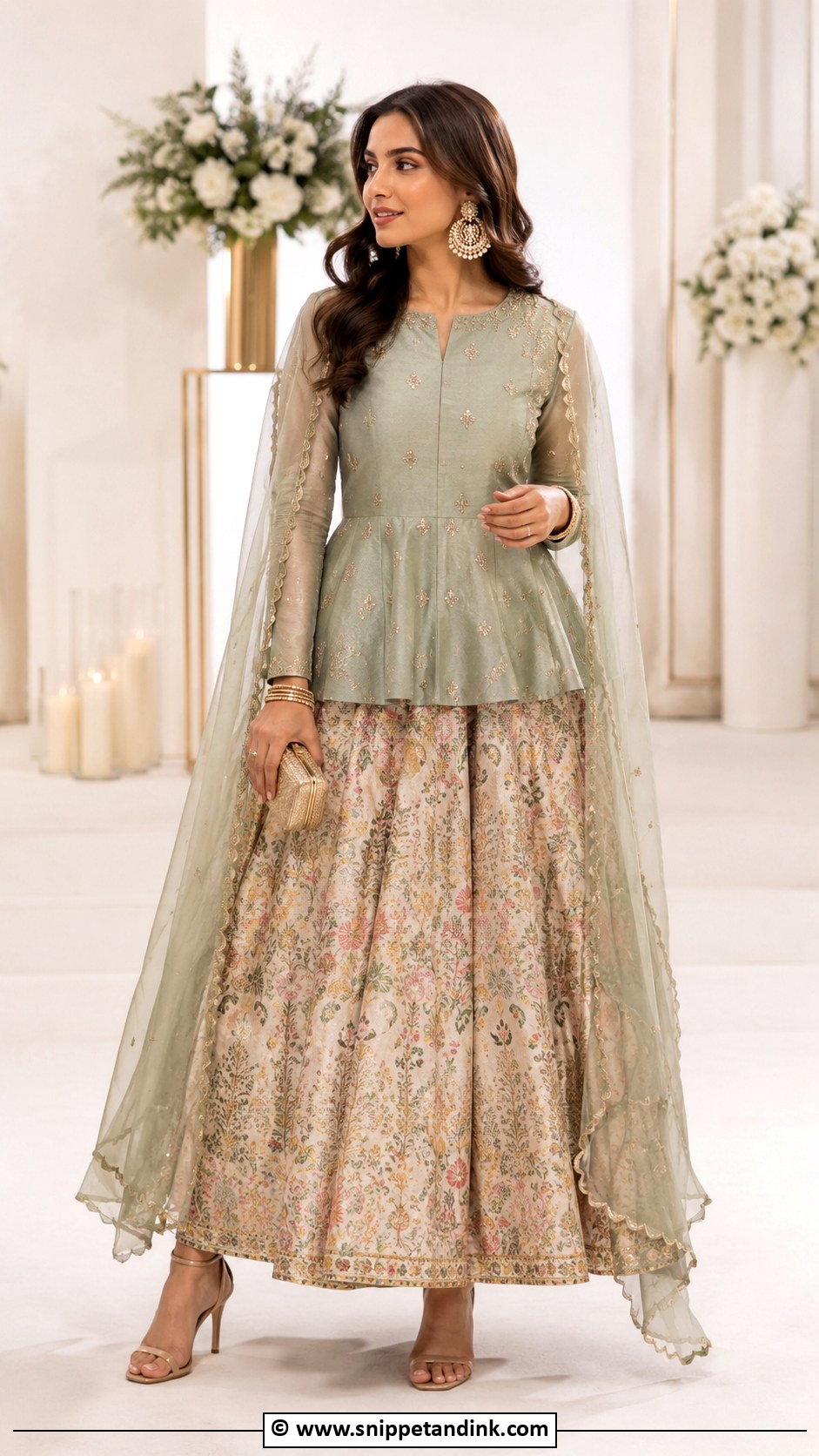
Modern mehndi dressing keeps the traditional colors and simplifies the cut: peplum tops, cape dupattas, structured jackets, pastel lehengas, printed co-ords or sleek shararas with little embroidery. Pick one statement detail, whether that’s mirrors, a bold dupatta, tassels or a strong color contrast, and keep the rest quiet. Sleek chandbalis, stacked bangles and a small clutch are plenty. Modern cuts depend on fit more than embroidery does, so budget for a proper tailor rather than buying off the rack and hoping. Match the shoes to how much dancing you’ll actually do.
30. Traditional Pakistani Mehndi Dress
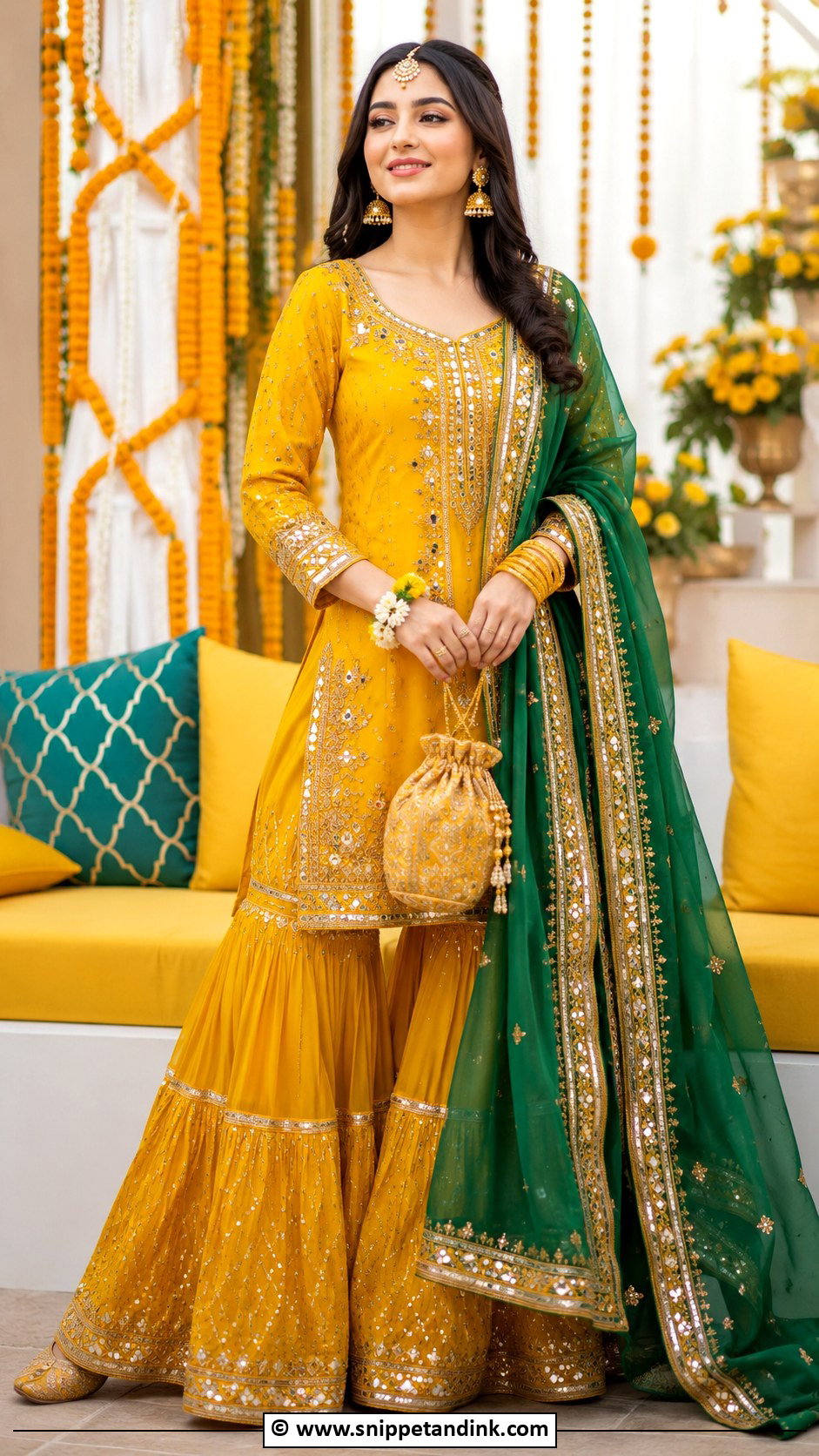
Traditional mehndi dress means the lehenga choli, gharara, sharara, pishwas or angrakha, worked in gota, tilla, mirrors, resham or zardozi. Yellow and green are the strongest mehndi colors, though orange, pink, rust and multicolor combinations feel just as rooted. A bordered dupatta, gold jewelry, bangles and khussas complete it, and floral accessories tie it to the ceremony itself. Traditional pieces are often handed down, so if you’re wearing a mother’s or grandmother’s outfit, I’d get it to a tailor early; older gota tarnishes and seams may need reinforcing before a night of dancing.
Dressing a Bride Who Can’t Use Her Hands for Three Hours
Once the henna goes on, the bride’s hands are out of action until the paste dries and is scraped off, and that can take hours. Anything she would normally fix herself, from a slipping dupatta to a falling earring, now needs someone else. I dress her with that in mind.
- Pin the dupatta fully before the artist starts, at the crown and the shoulder, so nothing needs adjusting mid-design.
- Choose sleeves that end above the wrist, or can be folded back and held with a small pin, so the paste doesn’t smear onto the fabric.
- Put bangles on after the henna, not before; they get in the artist’s way and scrape wet designs.
- Plan a bathroom trip just before application begins, with someone on hand to help with the lehenga.
- Keep a straw in her drink and a sister nearby to feed her; she’ll be sitting through the dancing with paste on her hands.
If the bride wants to dance at her own mehndi, ask the artist to do her feet and the backs of her hands first and leave the palms for later, or book the application the day before so the stain is set by the event.
Sit, Dance and Greet in It Once Before the Night
Mehndi dressing works when color, comfort and tradition pull in the same direction. A bright yellow lehenga, a green sharara, a mustard gharara, a floral pishwas or a modern cape outfit can all be right; what matters is that you feel festive rather than weighed down. Look for breathable fabric, a secure fit, shoes you can dance in and jewelry that supports the outfit. Brides can wear more; guests and bridesmaids should stay lighter. Before the night, put the full look on at home, sit on the floor, stand up, dance one song, and fix whatever bothered you.
You'll Like These Ideas:


Leave a Reply