
A Garhwali bride is recognized by her jewelry before anything else: the large Tehri nath, the guloband at the throat, the hansuli, the black-beaded chareu, bangles and anklets that carry Uttarakhand’s mountain heritage. When I style a bride from the hills, I build the clothes around those pieces rather than the other way round. Red saris, ghagra choli sets and embroidered lehengas all work, for rituals, temple ceremonies and receptions alike. Customs vary between families and villages, so I always ask the bride’s elders which pieces are inherited and which rituals call for what. Below are the looks I’d suggest, each with its jewelry, shoes and makeup worked out.
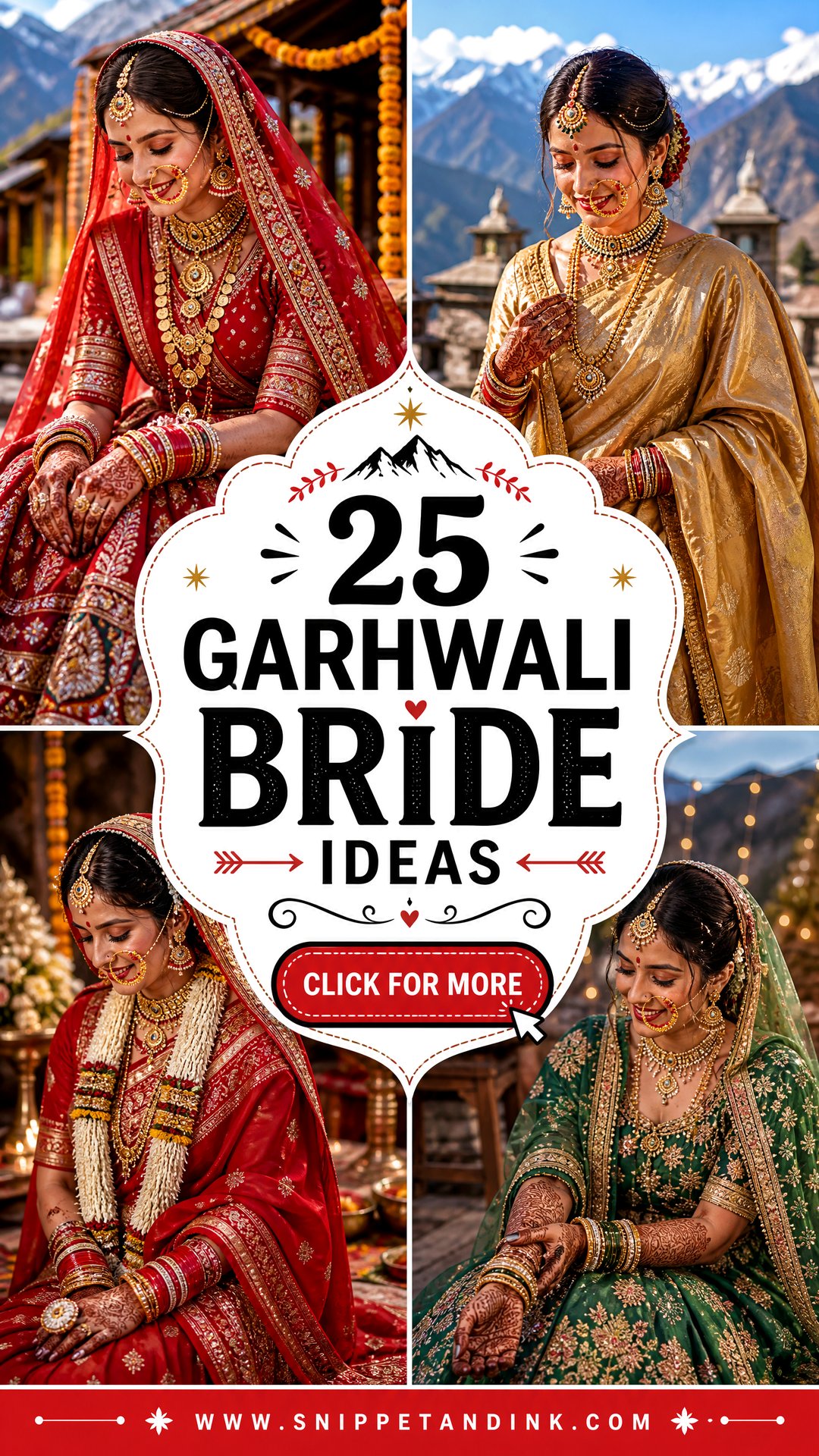
Wearing a Tehri Nath Through a Full Day of Rituals
A large nath is heavy, and the nose feels it within an hour. The supporting chain is what makes a full day bearable: it runs from the nath up to the hair or the ear and carries much of the weight. I set the chain’s anchor point into the bun before the veil goes on, so the dupatta pins don’t pull it out of place.
- Check the piercing well before the wedding. If it has closed or the nath’s wire is thicker than your usual stud, see a jeweler or piercer early, not the week of the wedding.
- Do a trial wear at home for an hour with the full veil, and talk and smile while you wear it.
- For eating and drinking, lift the hoop gently aside with one finger, or unhook it briefly between rituals if your family is comfortable with that.
- Ask the photographer to check the nath’s angle before close portraits; it tends to tilt as the day goes on.
1. Traditional Red Garhwali Bride Ghagra Choli
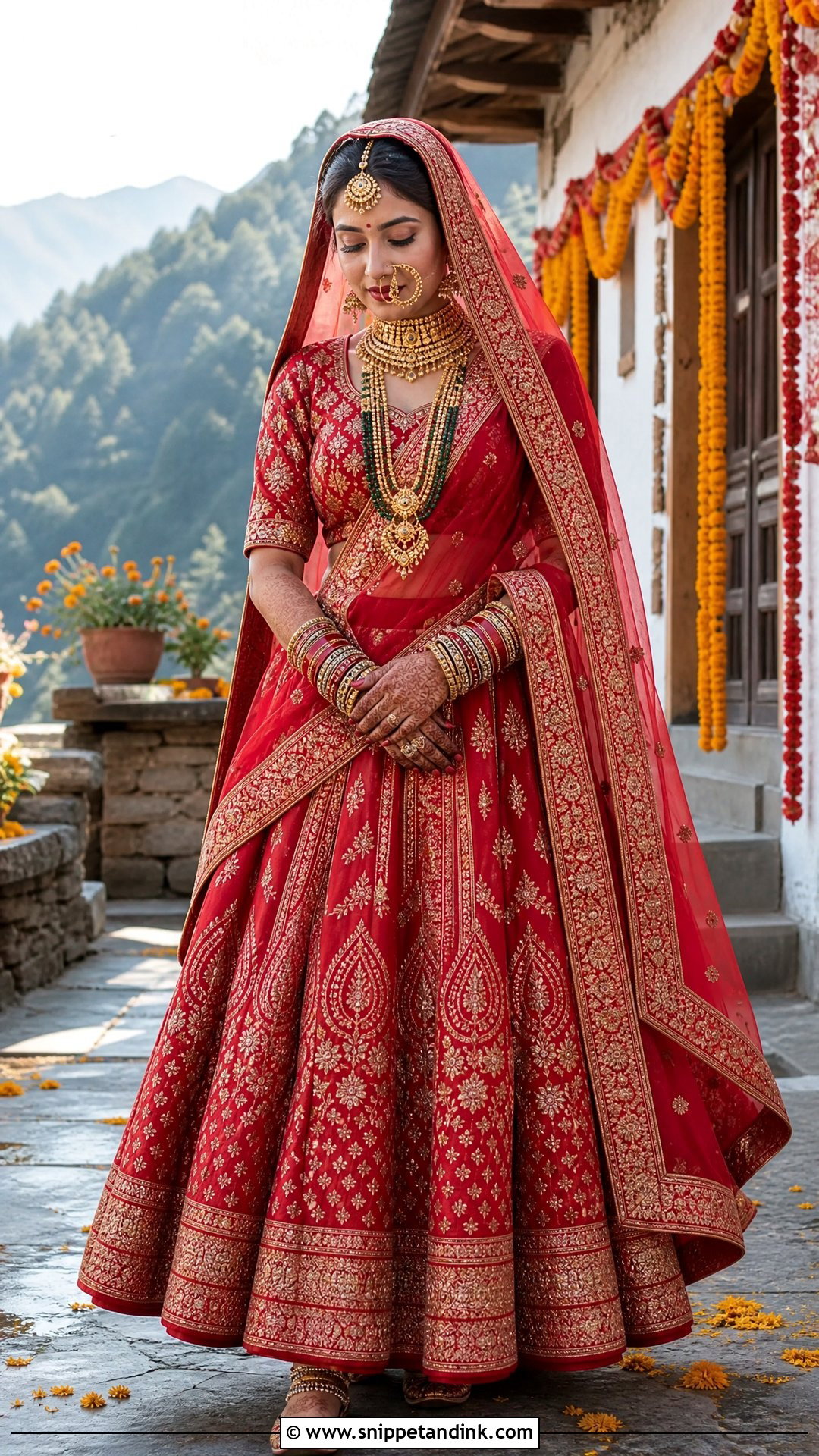
Red ghagra choli is the foundation most Garhwali families expect. I’d choose a full ankle-length skirt in silk or brocade and a fitted blouse with fine gold embroidery, then use two drapes: a red dupatta with a firm gold border over the head and a lighter one across the shoulder. The large gold nath, a close-fitting guloband, layered necklaces, red and gold bangles, anklets and toe rings complete it. Pin the hair into a low bun under the veil so the dupatta has something solid to anchor to. Soft gold eyes, a red lip, a round bindi and embroidered flats will see you through long rituals and blessings.
2. Red Silk Saree Garhwali Bride
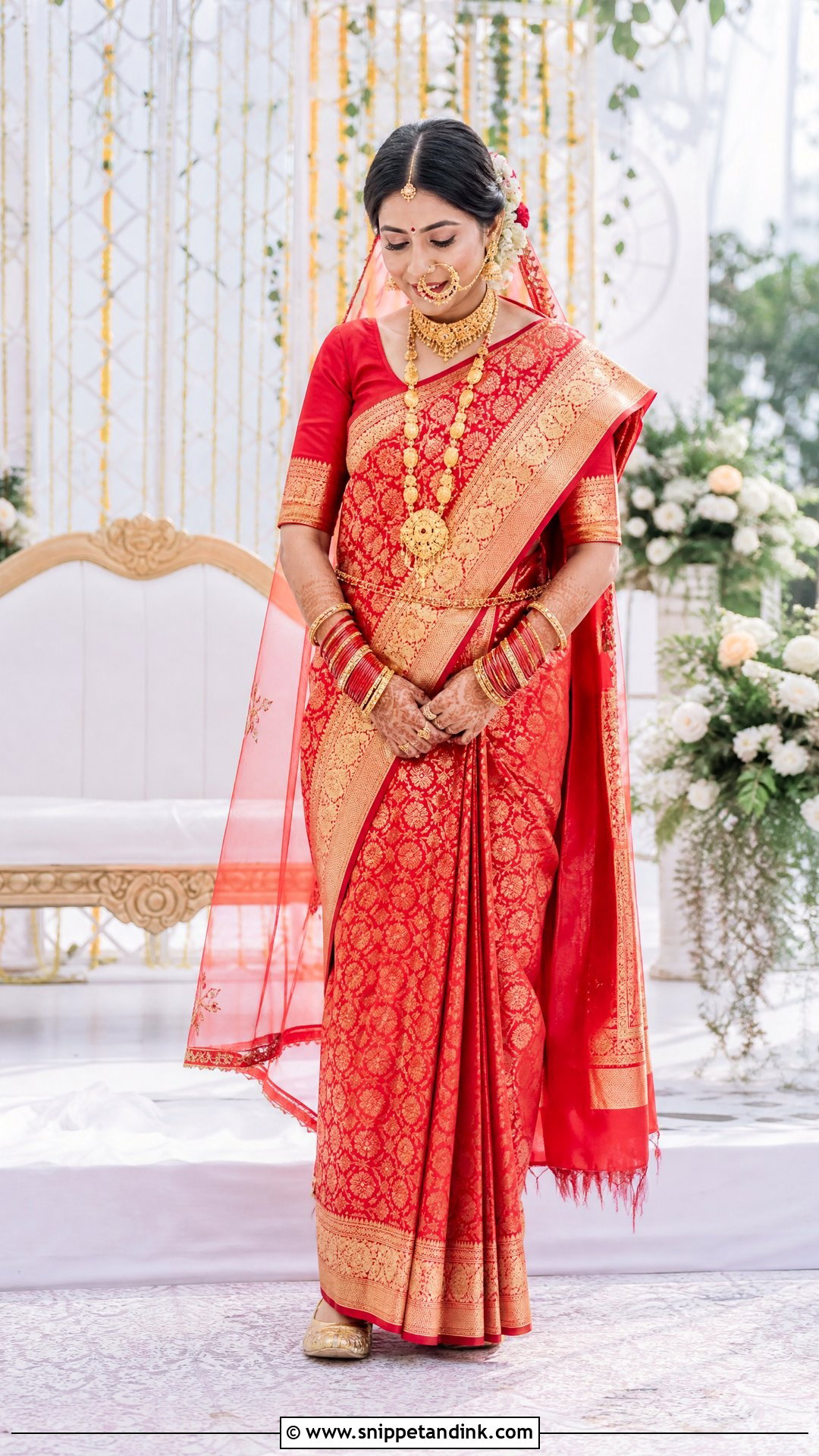
Silk saris catch daylight in a way heavy embroidery doesn’t, which is why I like a red silk sari for a daytime ceremony. A substantial gold border, pleats pinned firmly at the waist, and a matching elbow-length blouse give coverage and polish. With a Tehri-style nath, guloband, long necklace, jhumkas, stacked bangles and anklets, a lightweight red veil pinned over the head keeps the border visible. A smooth center-parted bun with small white flowers, kohl, warm blush and a deep red lip finish it. I’d always choose embroidered juttis over heels here, since sari pleats and heels on uneven ground are a bad pairing.
3. Maroon Velvet Garhwali Bride Lehenga
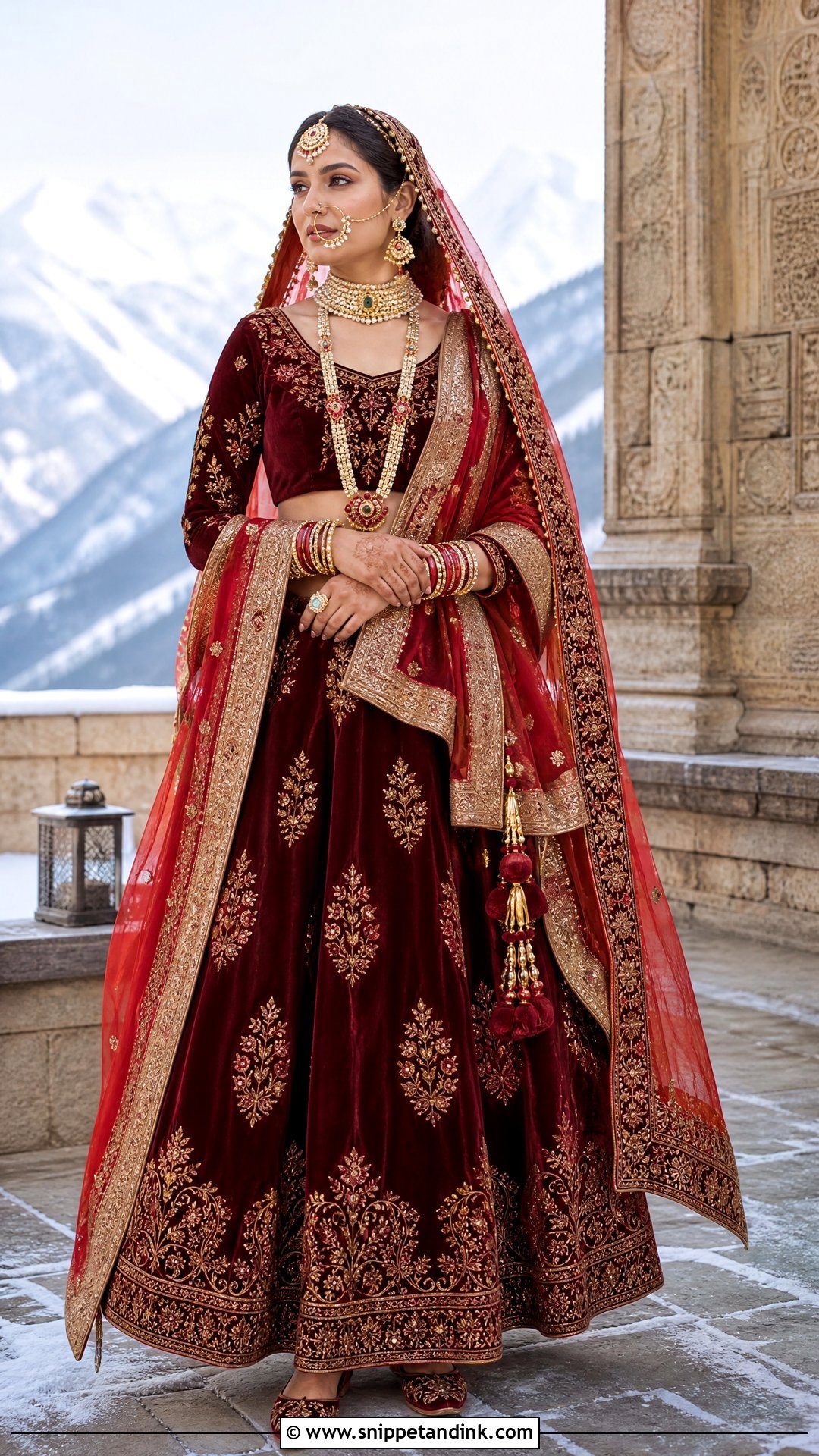
Mountain winters are cold, and a bride who’s shivering through the pheras doesn’t look her best. Maroon velvet with antique gold embroidery gives warmth that lighter silks can’t. I’d pair it with a full-sleeve velvet blouse and a soft red veil with narrow gold trim. Let the large nath lead, supported by a guloband, one longer necklace, jhumkas and bangles; velvet already has visual weight, so too many neck layers crowd it. A braided low bun, a matte base, softly smoked eyes and berry lips suit the darker palette. Closed embroidered flats and a fine wool shawl handle the outdoor moments.
4. Red Banarasi Saree Garhwali Bride
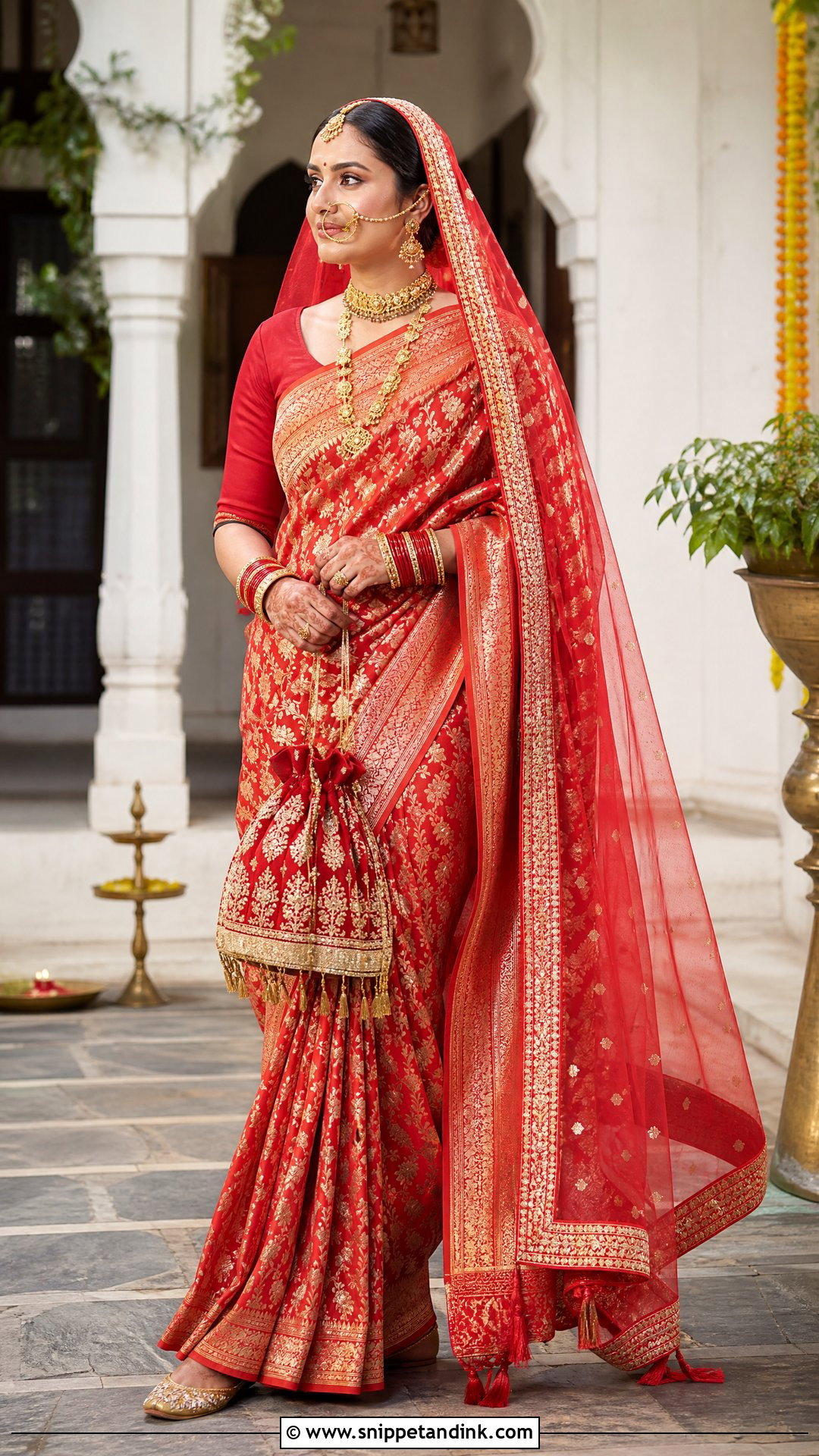
Woven detail suits a bride who doesn’t want heavy surface embroidery. A red Banarasi sari with traditional gold motifs and a broad border that stays visible across the shoulder needs only a plain red silk blouse. A heritage nath, short guloband, long necklace, gold earrings, bangles, payal and toe rings complete the jewelry. I’d add a red organza veil over the head, since it adds volume without hiding the pallu. Keep the hair center-parted in a neat bun, with defined brows, soft brown eyes, a red bindi and classic red lipstick, then gold flats and a small embroidered potli.
5. Crimson Raw Silk Garhwali Bride Lehenga
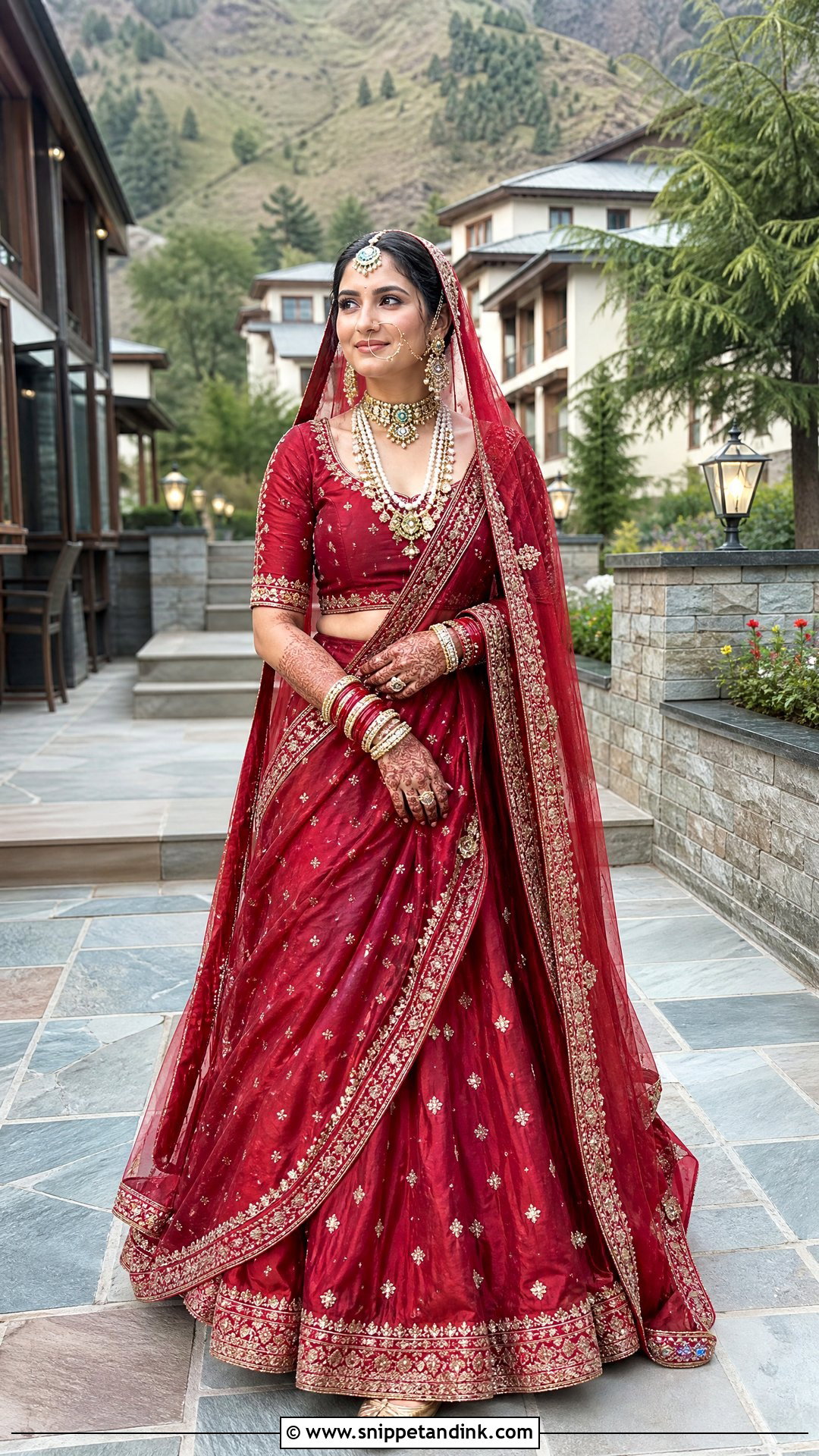
Raw silk is crisp, so it holds a flared shape without much help. For a crimson lehenga I’d pick a moderately flared skirt with gold borders and small floral motifs rather than embroidery from waist to hem, which lets the jewelry show. A structured blouse with elbow-length sleeves keeps it refined. Drape soft net or organza over the head and a second silk dupatta across one shoulder. A traditional nath with pearl details, guloband, layered necklace, jhumkas, red bangles and anklets finish the jewelry, with a low bun, bronze eyes, kohl, muted red lips, cushioned gold juttis and a compact potli.
6. Minimal Red Garhwali Bride Lehenga
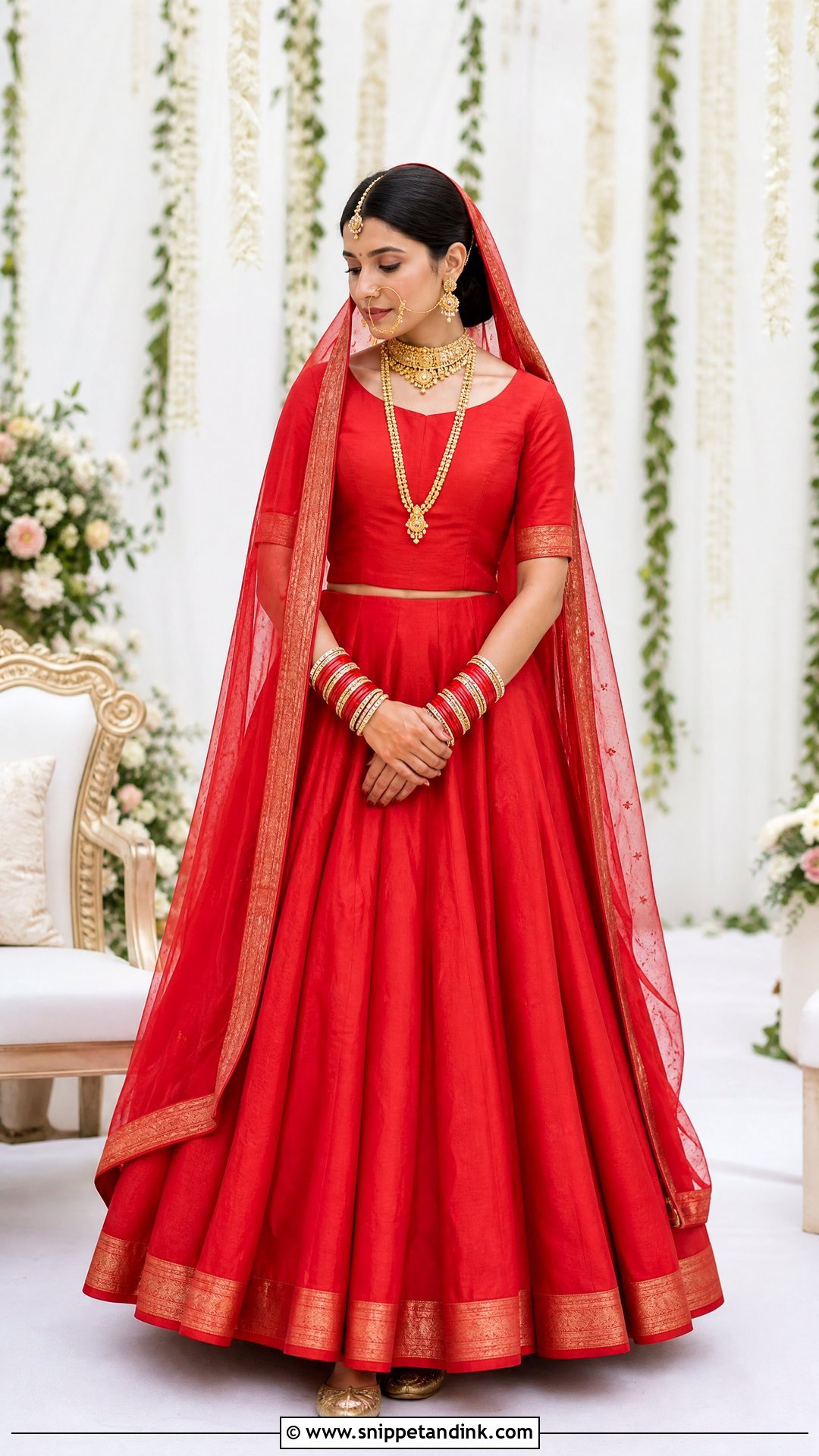
Not every bride wants dense embroidery, and the plainer the clothes, the more the Garhwali jewelry speaks. A minimal red lehenga with a clean gold border, a modest silk blouse and one lightweight dupatta over the head is enough. Wear the nath, a compact guloband, small earrings, one long necklace and coordinated bangles. I like a sleek low bun with a center part here because it echoes the round shape of the nath. Natural foundation, soft eyes, rose blush, brick-red lipstick and simple gold flats make an outfit that’s easy to carry through a long ceremony.
7. Garhwali Temple Wedding Bride Look
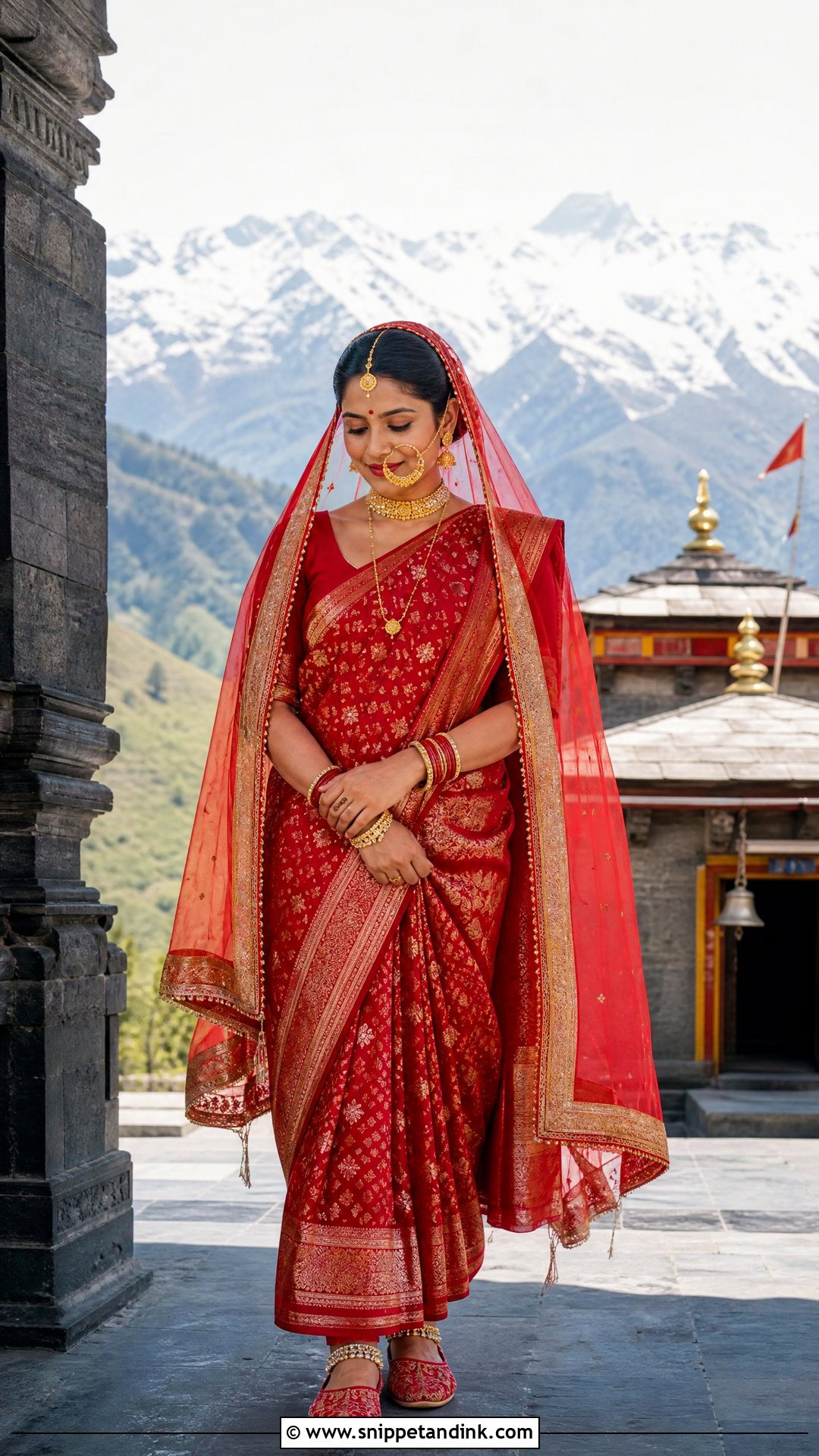
Temple ceremonies involve sitting on the floor, walking barefoot and moving near oil lamps, so security matters more than drama. A red silk sari or lightly embroidered lehenga with a shoulder-covering blouse that’s comfortable seated is my choice. I pin the pleats and veil far more firmly than usual so no loose edge drifts toward a flame. A traditional nath, guloband, medium necklace, jhumkas, bangles, anklets and toe rings suit it, with a firm braided bun under a lightweight veil. Waterproof kohl, natural blush and a long-wearing red lip hold up well. Flat embroidered footwear works for the grounds, and comes off wherever the temple requires.
8. Garhwali Mountain Wedding Bride Look
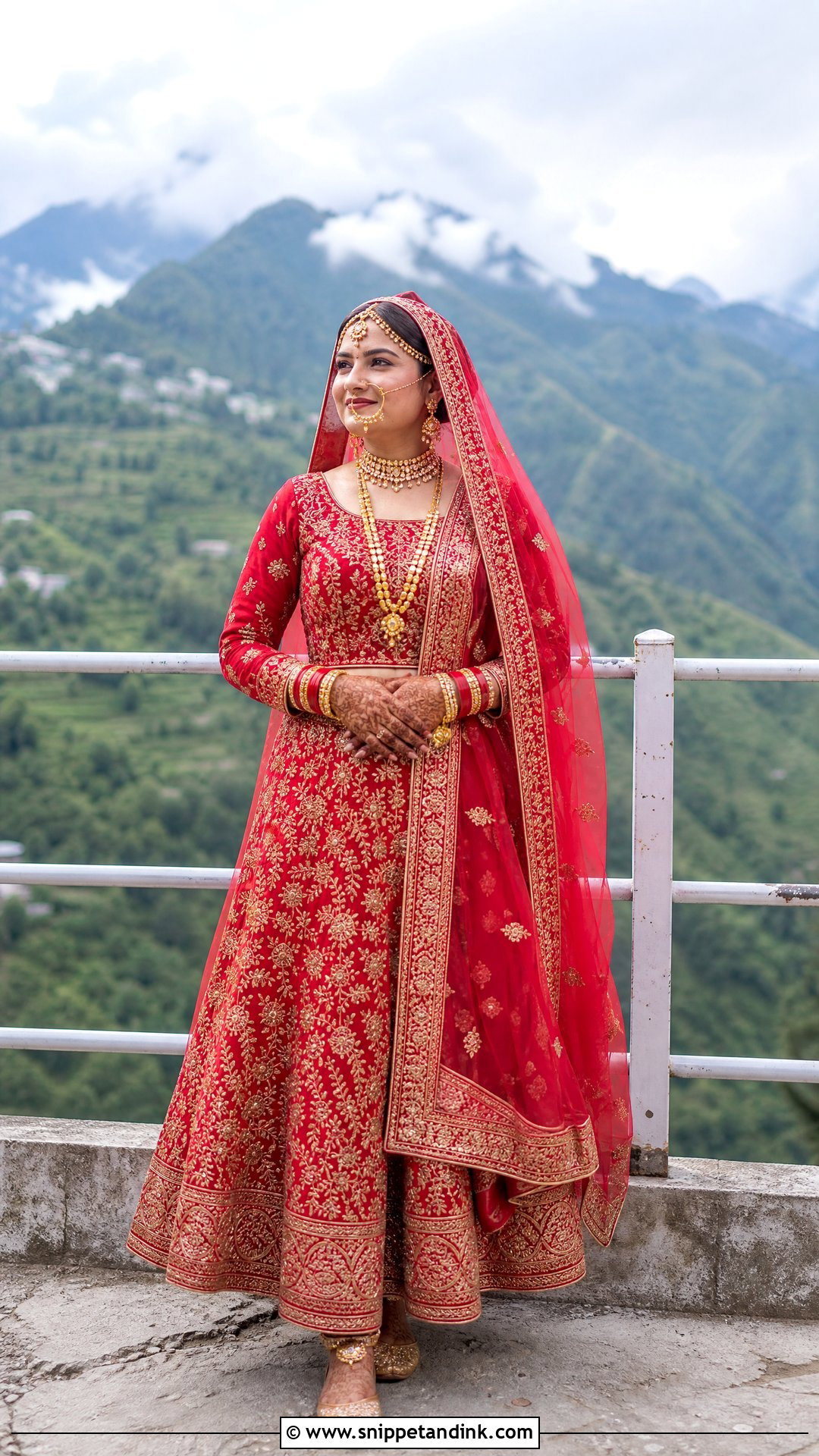
Hills mean slopes, stone steps and wind. For a wedding outdoors in the mountains, I’d choose a silk-blend lehenga that moves well without dragging on uneven ground, with a full-sleeve blouse for when the temperature drops after the sun goes behind the ridge. Secure the head veil with hidden pins and add a second drape across the torso. A large nath, guloband, long necklace, earrings, bangles and payal carry the tradition. Keep the bun strong enough for breezes, and makeup defined enough for photos: matte foundation, kohl, berry-red lips and a round bindi. Closed, cushioned juttis are safer on stone paths.
9. Heirloom Saree Garhwali Bride Look
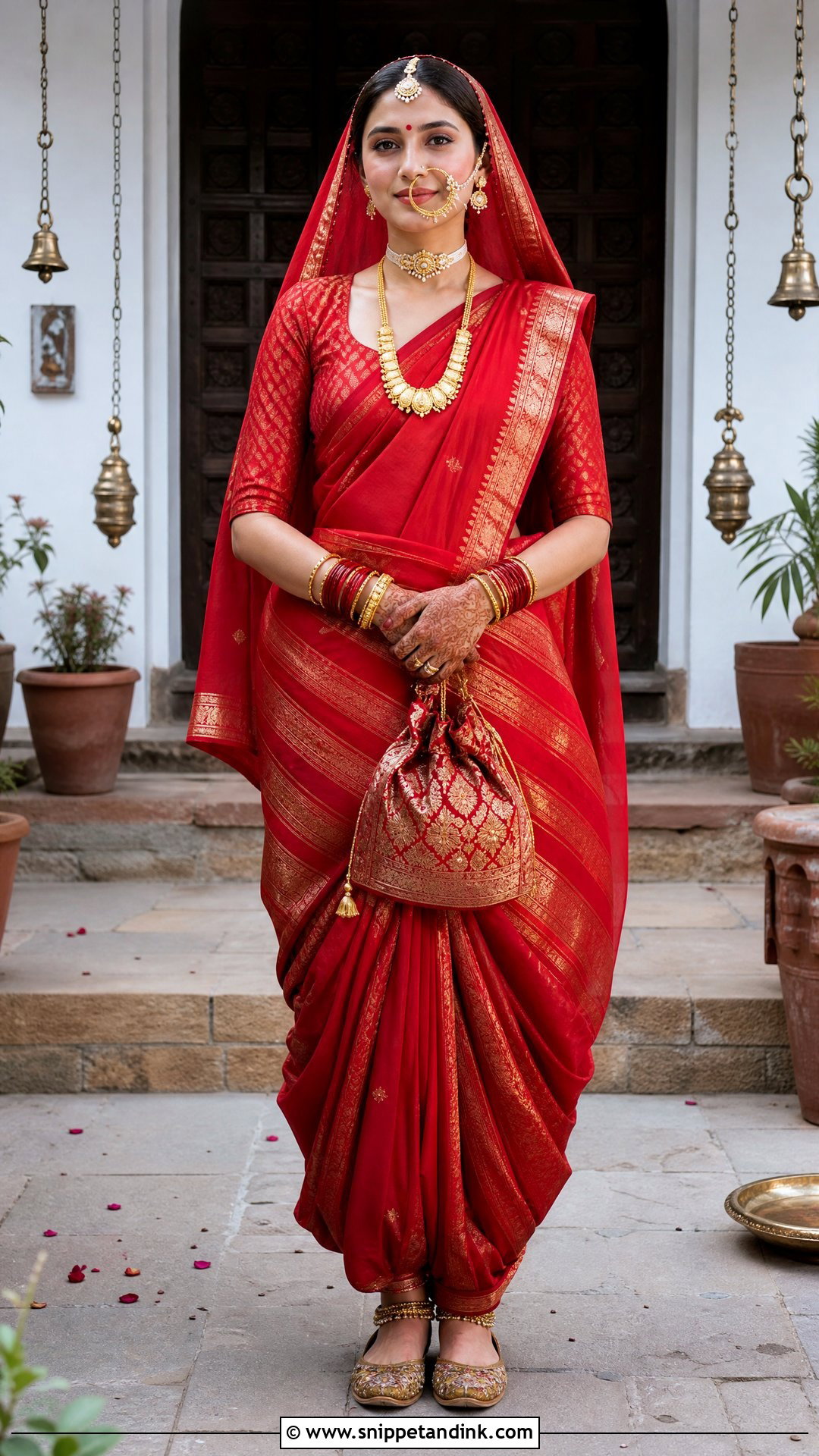
Before an old sari goes anywhere near a bride, I hold it up to the light. An heirloom saree carries family memory, but old silk can be weak along the folds, border and pallu, so check it carefully and arrange professional cleaning or restoration well ahead. A newly tailored blouse matched to its original colors keeps its character. Add inherited jewelry, such as a nath, guloband, hansuli, bangles or earrings, but not every piece if the combined weight gets uncomfortable. A plain veil, a smooth bun, warm neutral makeup, comfortable flats and a small family potli finish it.
10. Red And Gold Garhwali Bride Lehenga
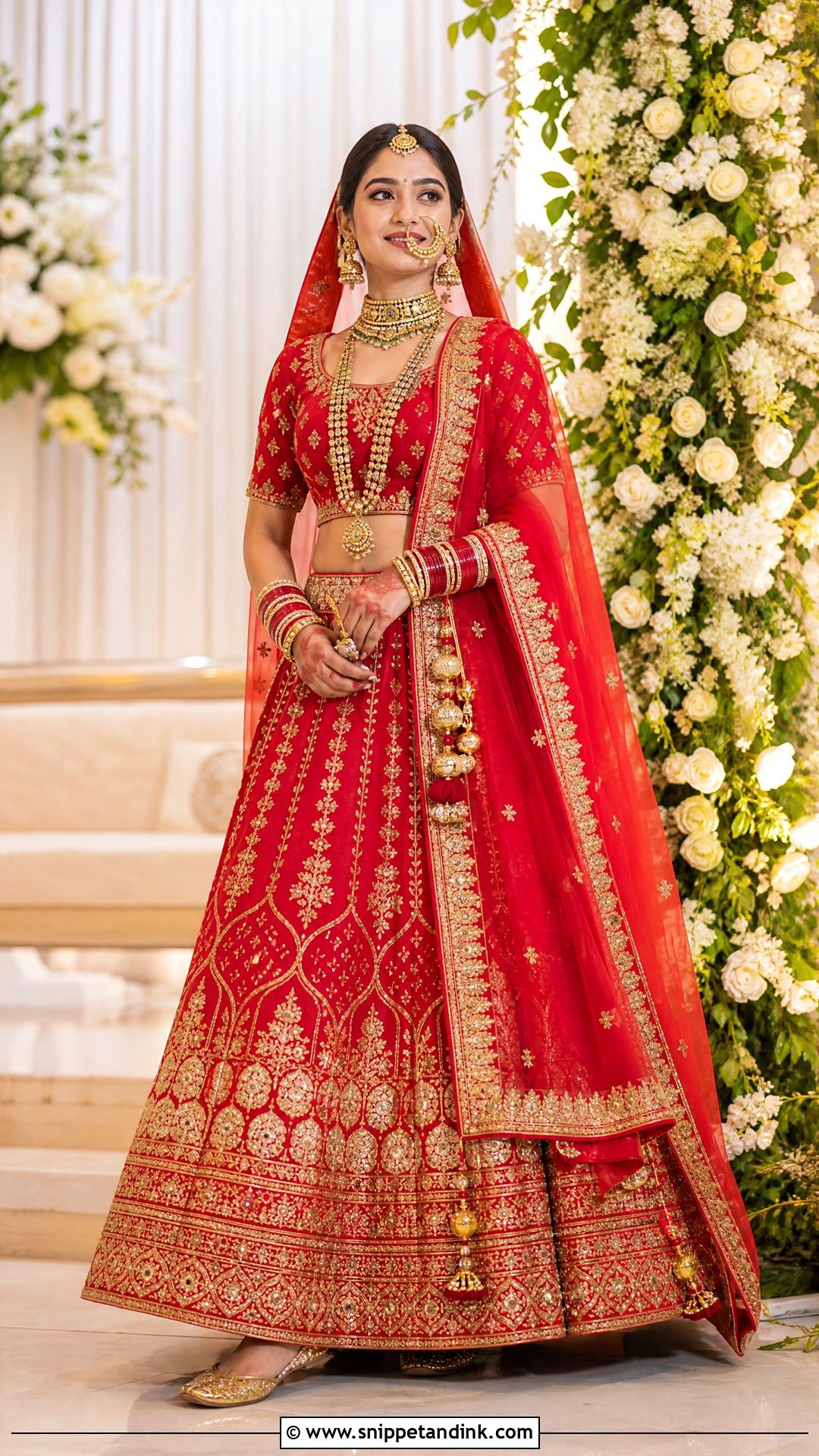
Red and gold photograph well indoors and out because the gold catches whatever light there is. I’d choose a red lehenga with evenly spread gold embroidery, a fitted blouse and a gold-edged red dupatta, with jewelry in the same warm metal. A statement nath, structured guloband, long gold necklace, jhumkas, bangles, anklets and toe rings complete it. With a heavily worked blouse and skirt, use a simple veil. A center-parted bun, luminous foundation, gold eyes, black kohl and rich red lips suit the palette, with gold juttis and a red potli that’s lightly embellished.
11. Gold Tissue Saree Garhwali Bride Look
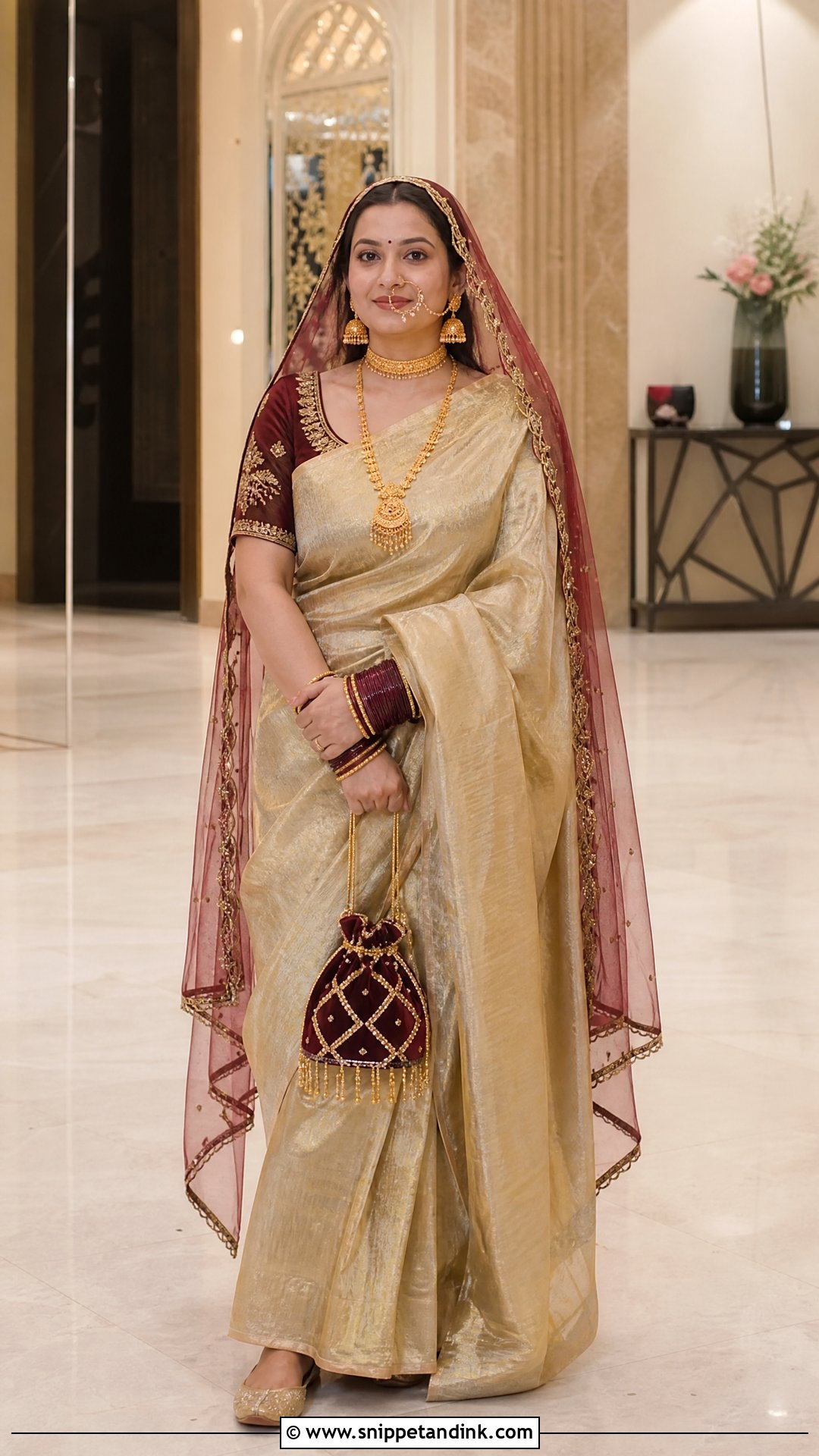
Gold tissue is lighter to wear and lighter in mood, so I save it for a reception or post-wedding celebration. A deep maroon blouse keeps the bridal connection. A smaller nath or delicate nose ring, a guloband, one long necklace, jhumkas and maroon bangles are plenty. A sheer maroon veil can go on for family photos and come off for easier movement. Wear a low bun or a long braid with subtle gold accessories, brown smoky eyes, a defined bindi, warm highlighter and maroon lips. Gold flats and a structured maroon potli finish it.
12. Green And Red Garhwali Bride Lehenga
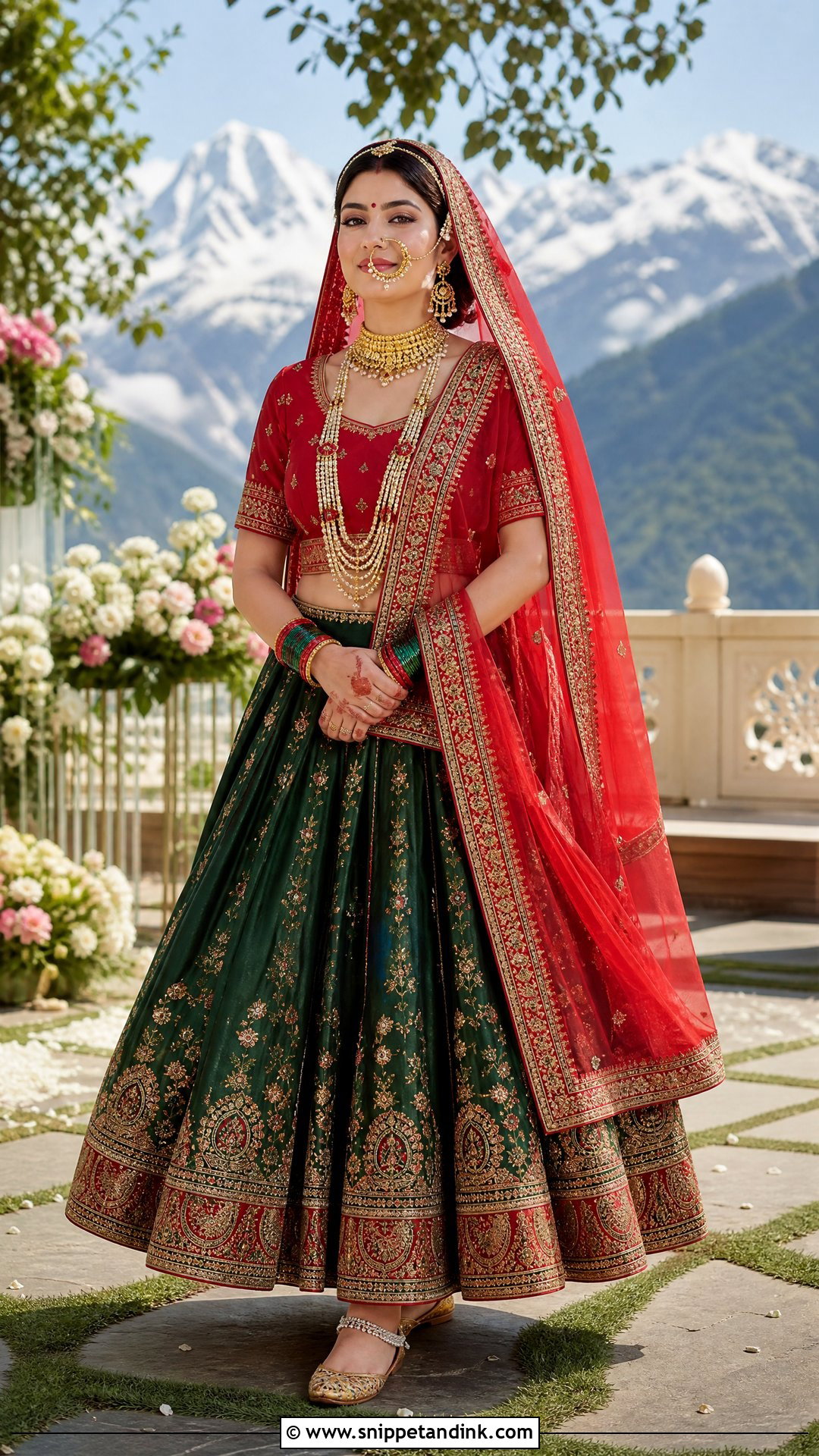
Green against red is a contrast that reads both fresh and traditional. A green silk lehenga with a red border, a red blouse and a matching head veil, tied together with small gold motifs, works well. Wear a gold nath, guloband, layered necklace, earrings, bangles, payal and toe rings, and slip green bangles between the red and gold sets. A braided bun keeps the head covering stable. I’d keep makeup warm and neutral with black liner, peach blush and classic red lips, then gold juttis and a red potli.
13. Pink And Red Garhwali Bride Lehenga
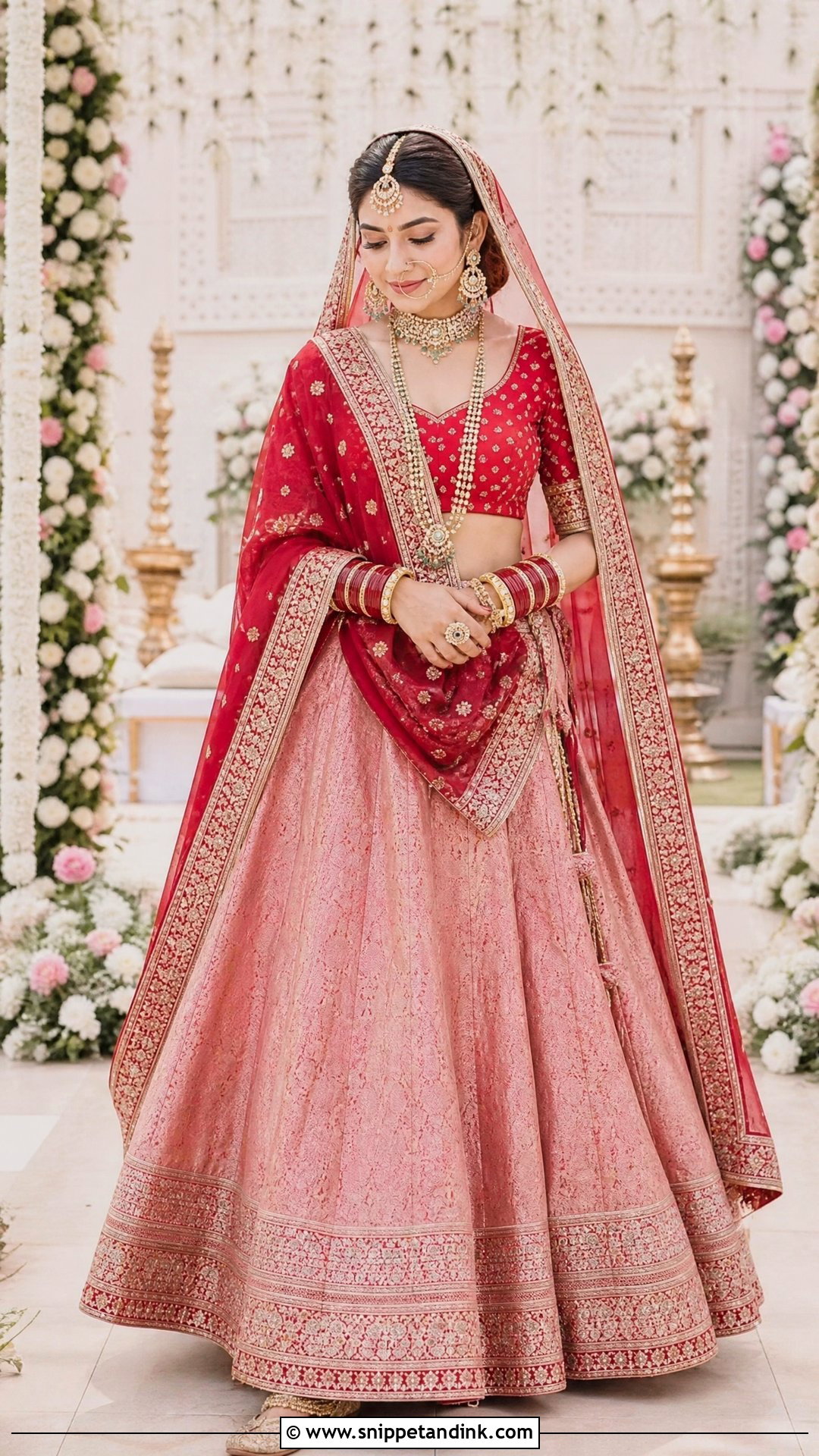
A dusty pink skirt softens red without giving up its ceremonial weight. I’d pair a dusty pink silk lehenga with a red blouse and a red veil bordered in antique gold; the lighter skirt makes a large nath look even more prominent. Add a guloband, one long necklace, jhumkas, red bangles, gold bracelets, anklets and toe rings. The one rule I hold to here: keep the embroidery pattern consistent across all three pieces, since mismatched motifs look accidental in pink. A loose low bun with pinned face-framing strands, rose-gold eyes, kohl, pink blush, a deep rose lip, muted gold juttis and a pink potli complete it.
14. Orange And Red Garhwali Bride Lehenga
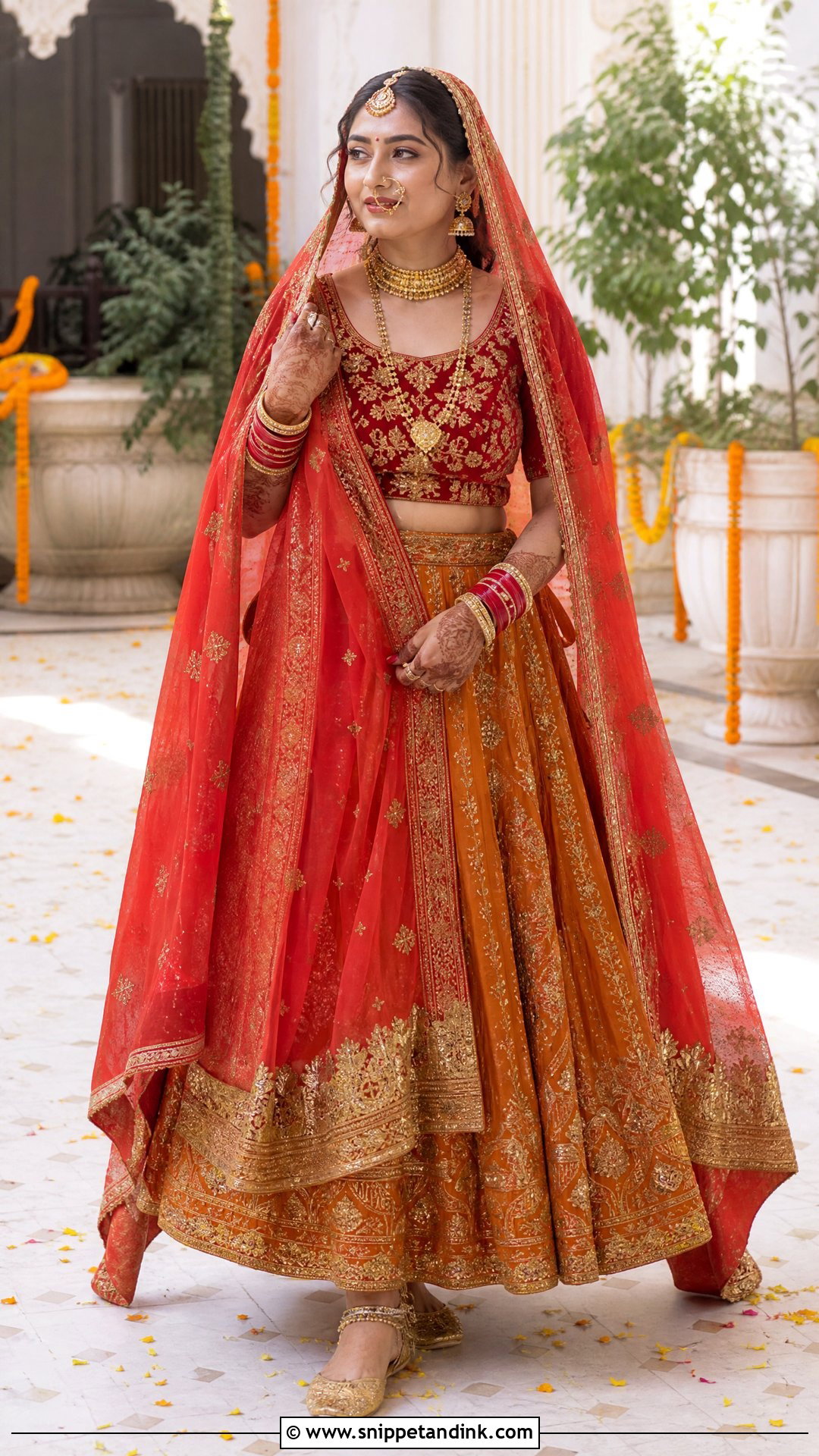
Morning light flatters burnt orange. A burnt-orange lehenga with a red silk blouse and a lightweight red veil, joined by antique gold borders, makes a warm outfit for an early ceremony. Wear a traditional nath, guloband, long necklace, jhumkas, bangles, anklets and toe rings, but hold back on extra necklaces since both colors are already strong. A center-parted bun with a few white flowers, bronze eyes, soft kohl, coral blush, red lipstick, gold flats and a red-orange potli finish it.
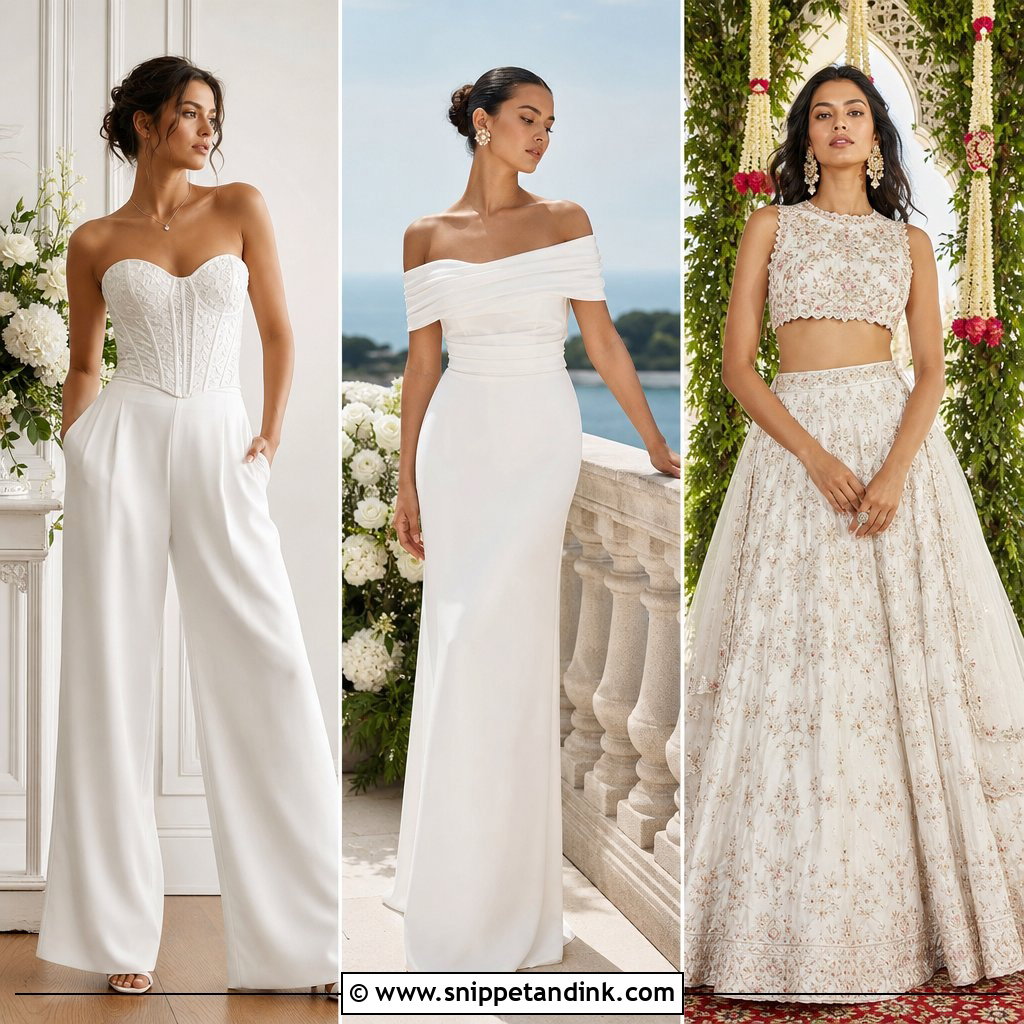
15. Ivory And Red Garhwali Bride Lehenga
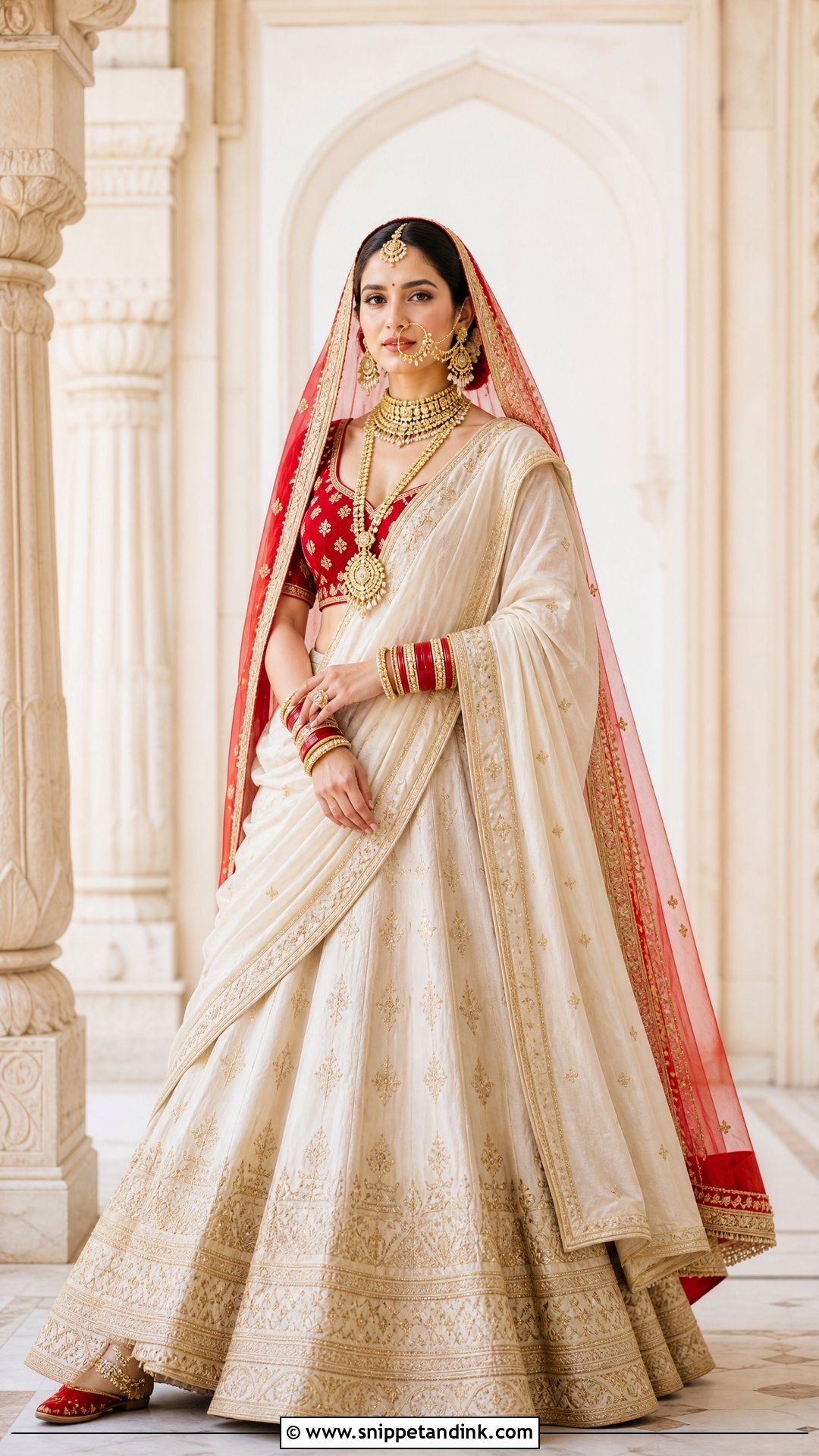
Ivory paired with red gives a contemporary balance while keeping clear bridal accents. Choose an ivory silk skirt with restrained gold work, a red blouse and a red head veil, plus an optional second ivory dupatta across one shoulder. Because the base is pale, I check the fabric against light for opacity before anything else; sheer ivory silk shows the lining seams in photos. Add a large nath, gold guloband, long necklace, jhumkas, red bangles, payal and toe rings. A sleek low bun with hidden clips, soft gold eyes, defined lashes, warm blush, red lipstick and red or gold juttis ground the look.
16. Garhwali Bride With Tehri Nath And Red Lehenga
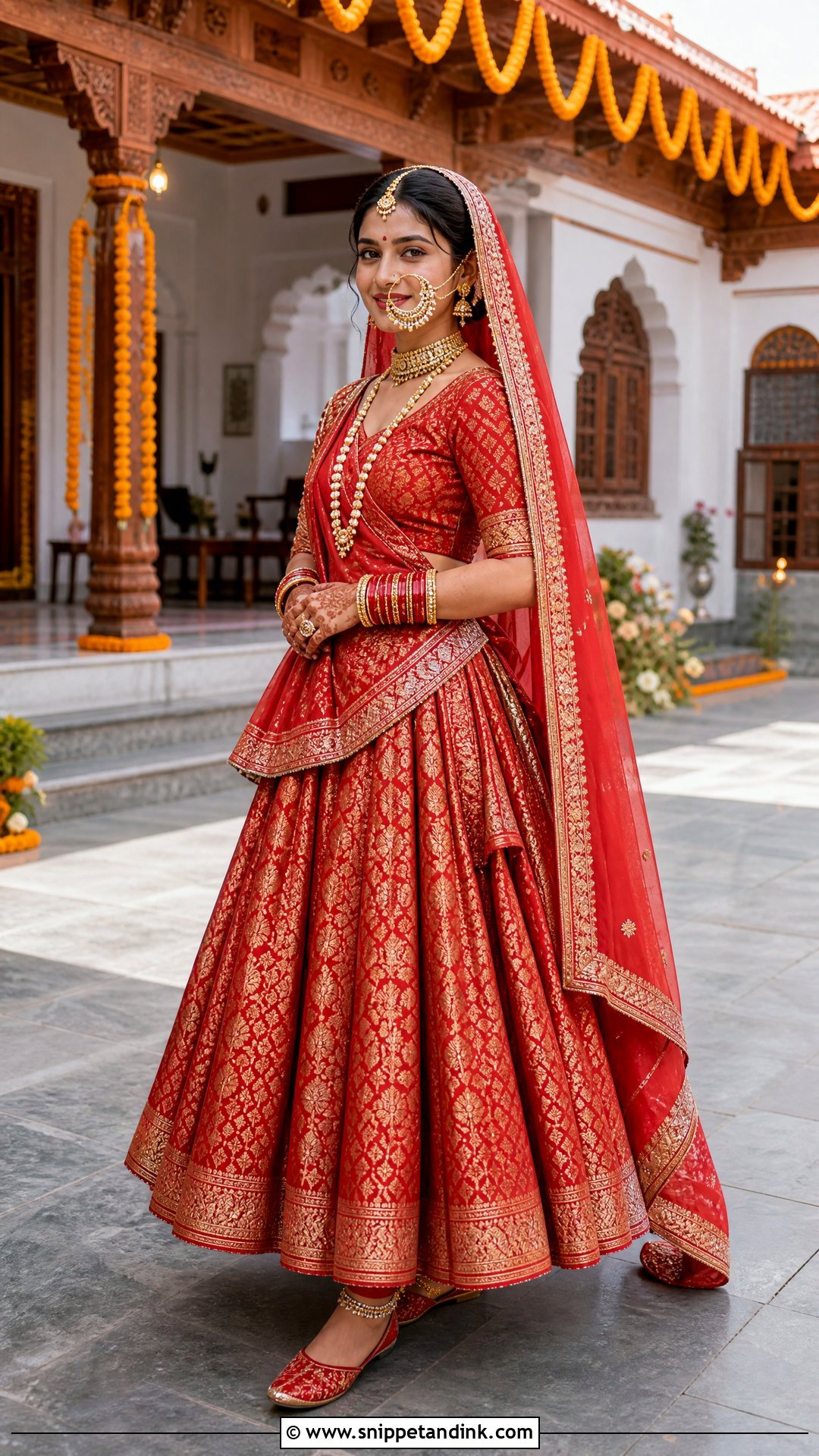
The Tehri nath is large, round and usually worked with gold, pearls or colored stones, and it’s the piece people recognize from across the room as Garhwali. Because of its size, it often has a supporting chain that hooks into the hair to take weight off the nose, and I always have the bride wear it for an hour at home before the wedding. Pair it with a red silk lehenga, a modest blouse and a lightly bordered veil, and choose a compact guloband and one longer necklace rather than several heavy pieces. Arrange the veil so it doesn’t catch on the hoop. Jhumkas, bangles, anklets, a low bun, classic red makeup and cushioned gold flats complete it.
17. Garhwali Bride With Guloband And Silk Saree
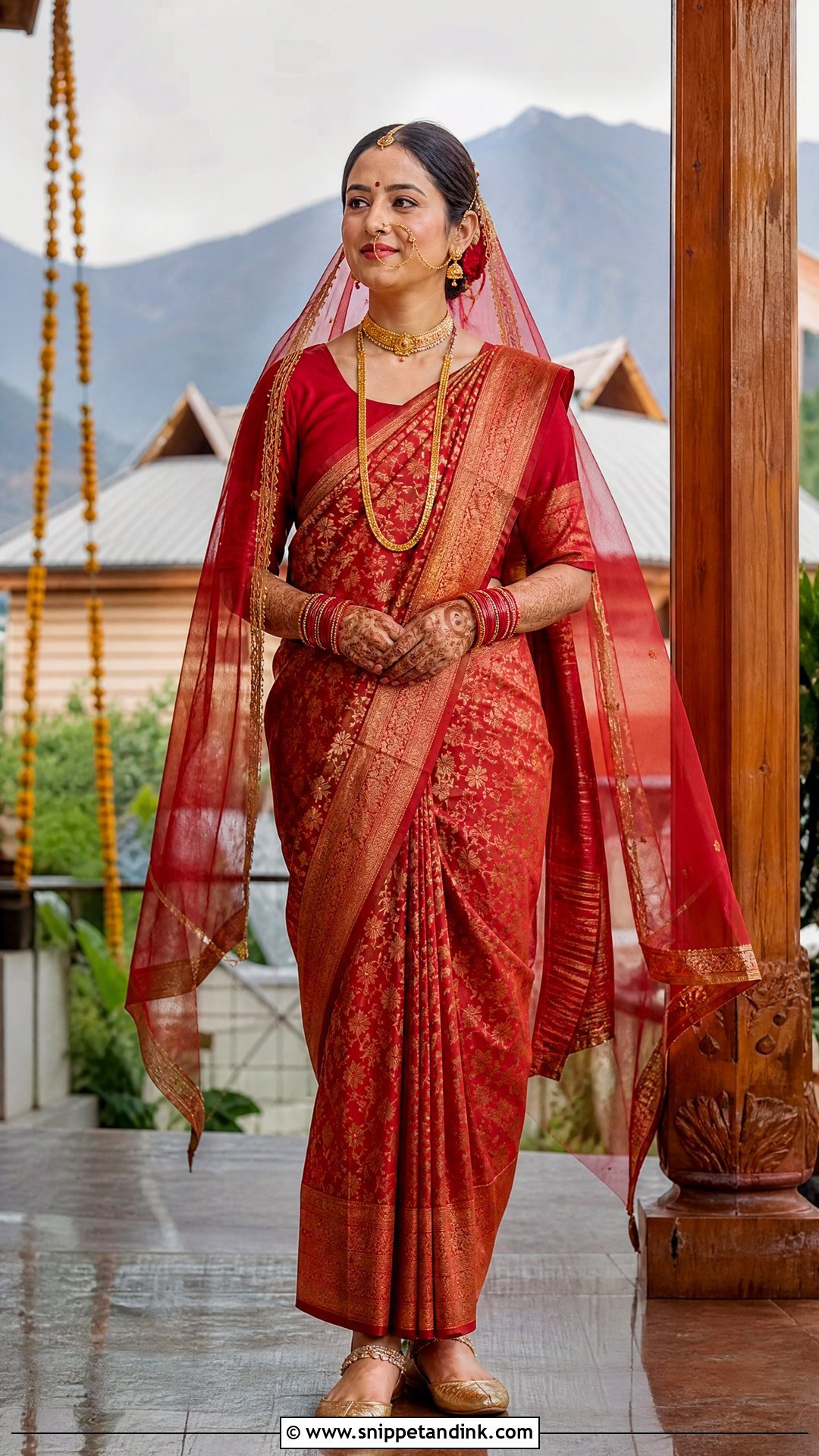
The guloband sits snug at the throat, traditionally decorative gold or silver elements set on a fabric band, and it’s one of the clearest Pahadi signatures a bride can wear. To show it properly, I pair it with a red silk sari and a simple elbow-length blouse whose neckline sits well below it; any fabric touching the band hides it and rubs. Add a medium nath, one long chain, jhumkas, bangles, anklets and toe rings. A smooth center-parted bun, defined kohl, warm blush, brick-red lips, gold flats and a red potli keep the balance.
18. Garhwali Bride With Hansuli And Red Ghagra
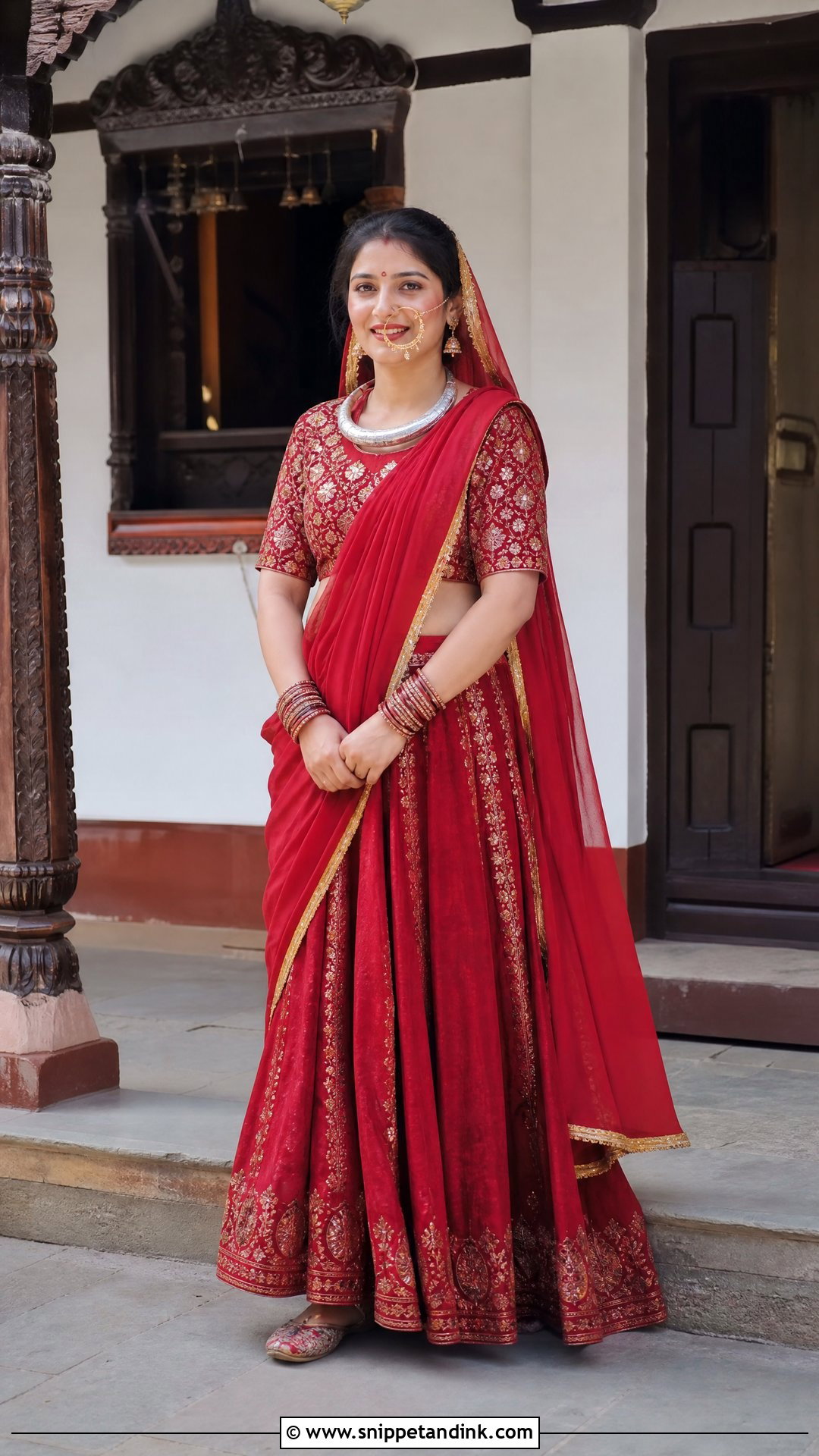
A hansuli is a rigid, crescent-shaped collar, traditionally silver and sometimes gold, and it gives a traditional red ghagra outfit a strong neckline. Because it can’t flex, the blouse neckline has to be cut open enough that no fabric bunches under it; I check this at the blouse fitting with the hansuli actually on. Pair it with an ankle-length red skirt, fitted choli and plain gold-bordered dupatta. Add a nath, small earrings, stacked bangles, anklets and toe rings, but no second choker. A braided bun, matte skin, black kohl, a red bindi and muted red lips suit it, with flats in the same metal as the necklace.
19. Garhwali Bride With Chareu And Red Saree
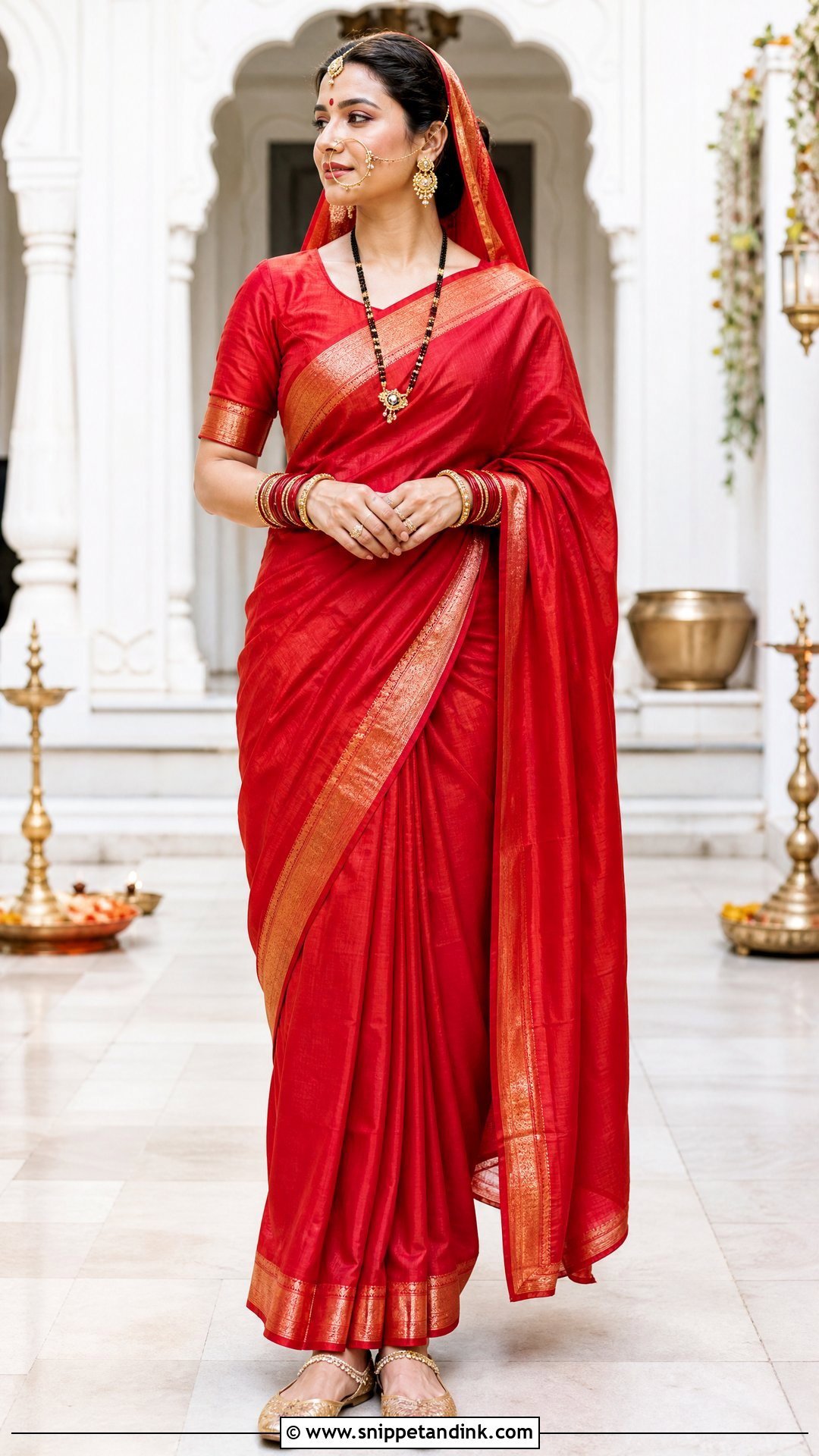
Black beads against red are striking, and the chareu carries real meaning for a married woman, so I ask the family how they want it worn. It can go alone or with a small guloband, depending on custom and the length of each piece. A red silk sari with a narrow gold border and a blouse that doesn’t cover the beads works well. Add a traditional nath, gold earrings, stacked bangles, anklets and toe rings, and keep the veil light so it doesn’t pull on the bun. Gold-brown eyes, defined lashes, a round bindi, red lipstick, gold juttis and a red fabric potli finish it.
20. Garhwali Bride With Layered Gold Jewelry
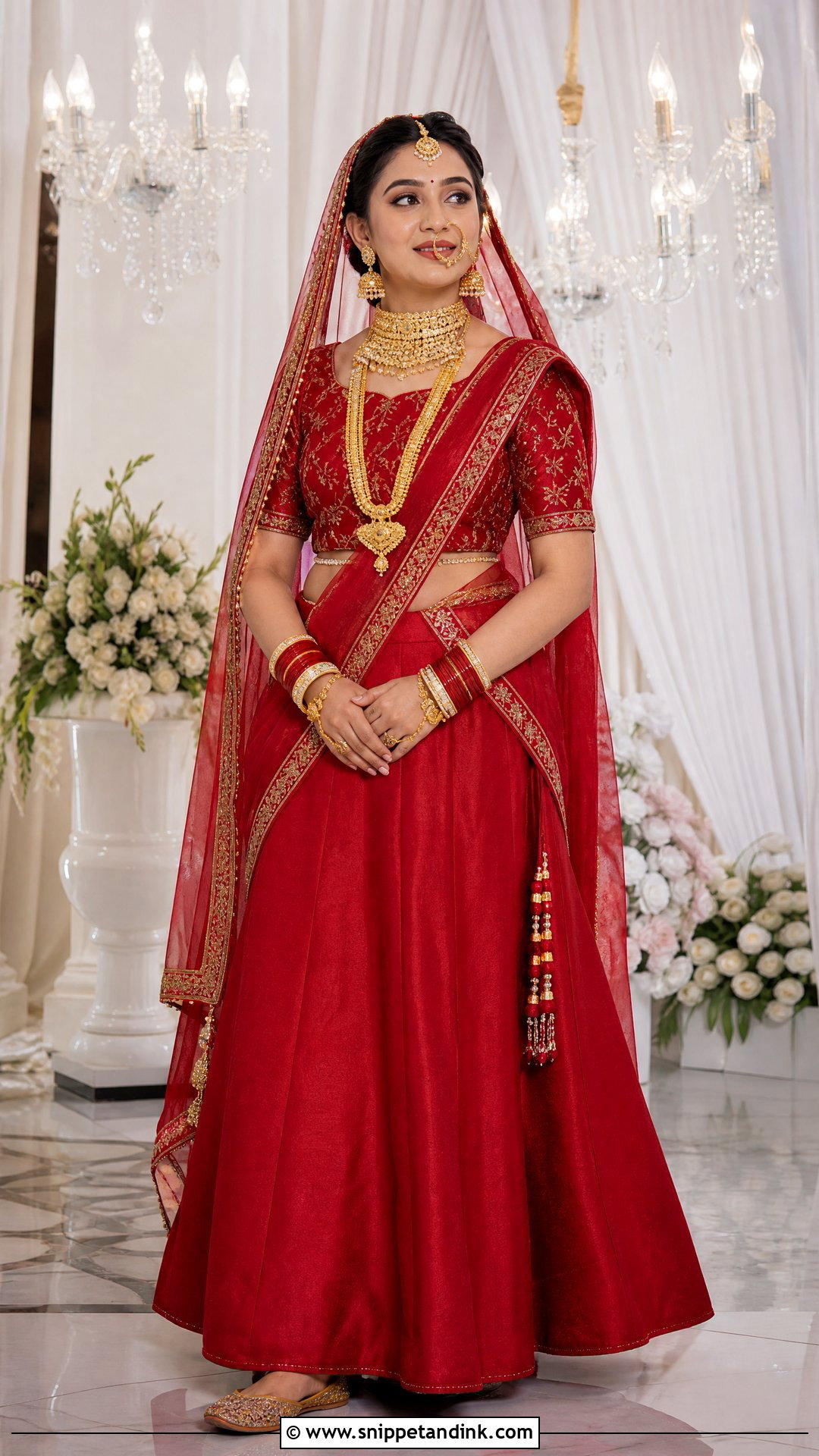
Layered gold looks regal only when each piece has its own position. Start with a plain red raw silk lehenga and a lightly embroidered blouse. Then place the guloband at the neck, a medium necklace below it and one longer chain, leaving a small gap between each so they don’t tangle or stack. I lay them out on the bride and adjust lengths before the day, since necklaces that look separate on a stand often overlap on the body. Add a nath, jhumkas, bangles, anklets and toe rings, a simple red veil with a slim border, a center-parted bun, luminous makeup with kohl and red lips, understated gold flats and a plain red potli.
21. Garhwali Engagement Bride Saree Look
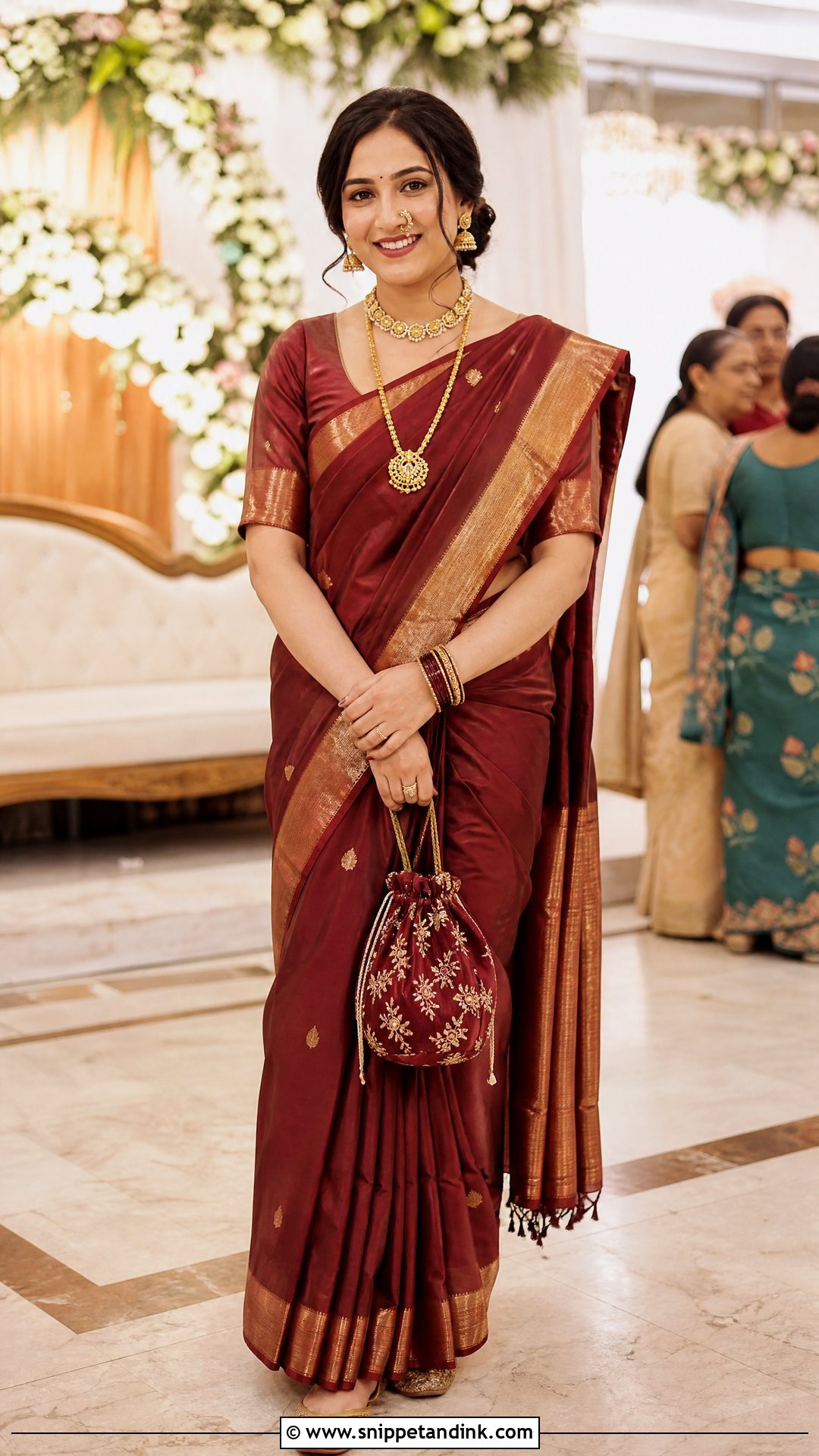
An engagement outfit can hint at Garhwali heritage without matching the full scale of the wedding. I’d choose a deep magenta, rose or maroon silk sari with a gold border and an elbow-length blouse, and keep the jewelry smaller: a delicate nose ring or small nath, a guloband, one long necklace, jhumkas, bangles and subtle anklets. Save the biggest heirloom nath for the wedding. A low bun or tidy braid, soft brown eyes, kohl, rose blush, berry lips, gold flats and a potli matching the sari border complete it.
22. Garhwali Haldi Bride Yellow Lehenga
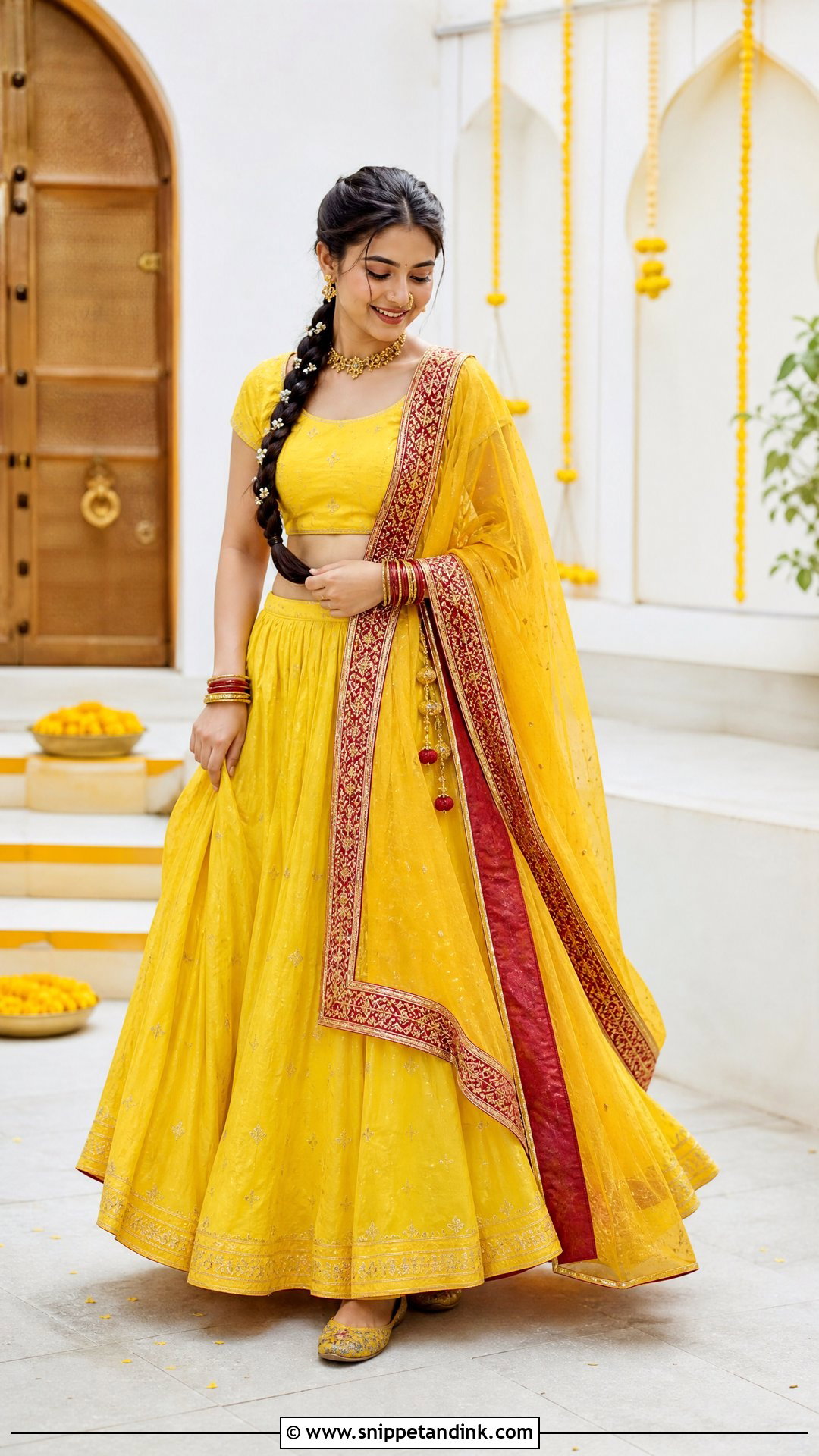
Turmeric stains, so the haldi outfit should be something you don’t mind ruining. A cheerful haldi ceremony suits a simple cotton-silk or lightweight chanderi lehenga in bright yellow, with a matching blouse and a red-bordered yellow dupatta. Skip heavy handwork that’s hard to clean. A small guloband, light earrings, a delicate nose ring and a few red or gold bangles are enough; leave the heavy nath and necklaces for the wedding. Floral accessories should complement heirloom jewelry, not imitate it. A braid or compact bun, water-resistant makeup with kohl and a tinted lip, washable flats and a fabric pouch finish it.
23. Garhwali Mehendi Bride Green Lehenga
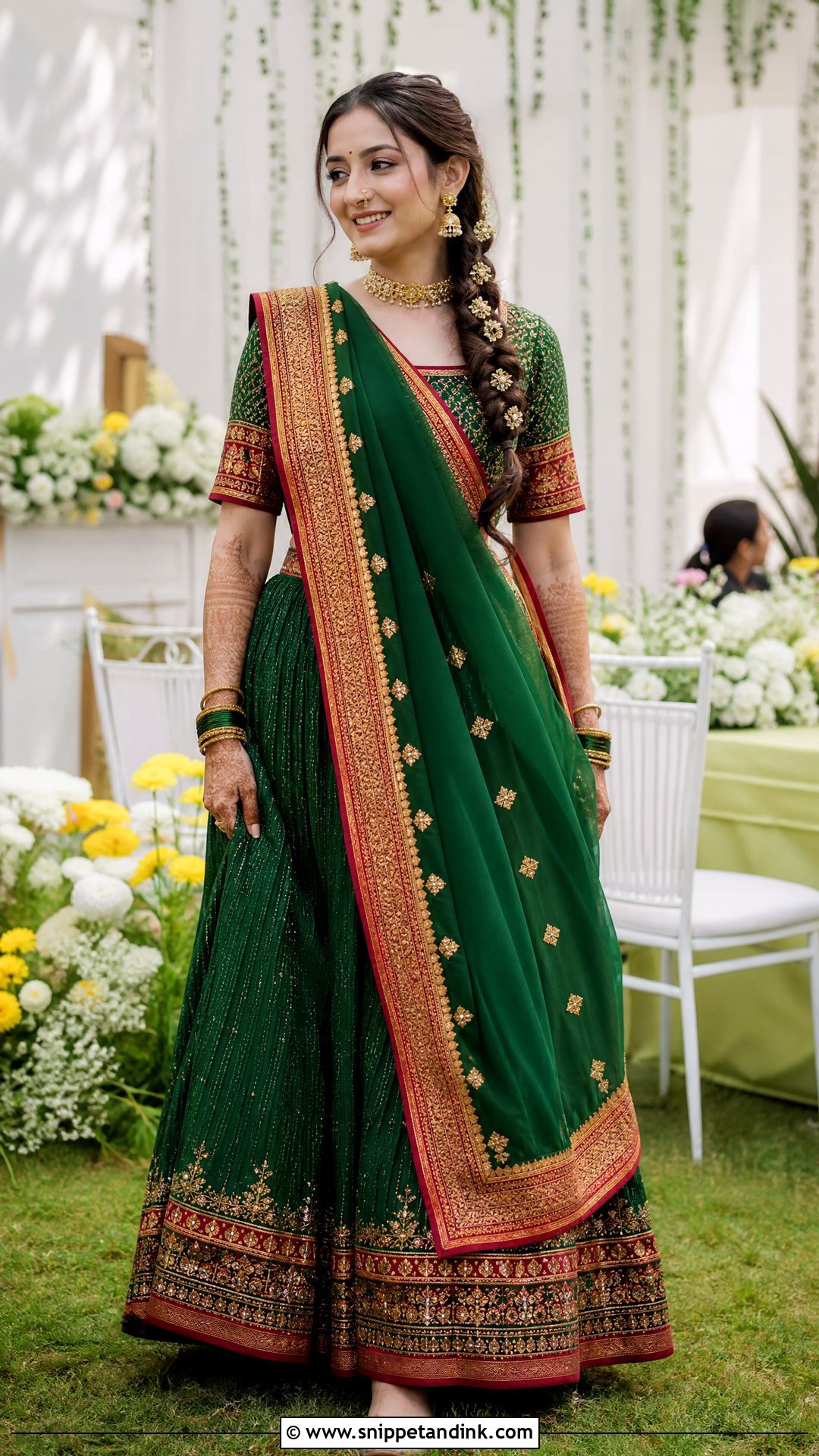
At a mehendi, the bride can’t use her hands for hours, so I dress her with that in mind. A lightweight deep green lehenga with red and gold borders, a short-sleeve blouse and a dupatta pinned well away from the hands is the base. Wear a small nath or nose pin, a compact guloband, jhumkas and only a few bangles that can come off while the design is applied. A braid with subtle gold accessories, breathable makeup, defined eyes, peach blush and a soft red lip suit it. Slip-on juttis matter more than you’d think, and a small crossbody potli can go on once the mehendi is dry.
24. Garhwali Bridal Reception Saree Look
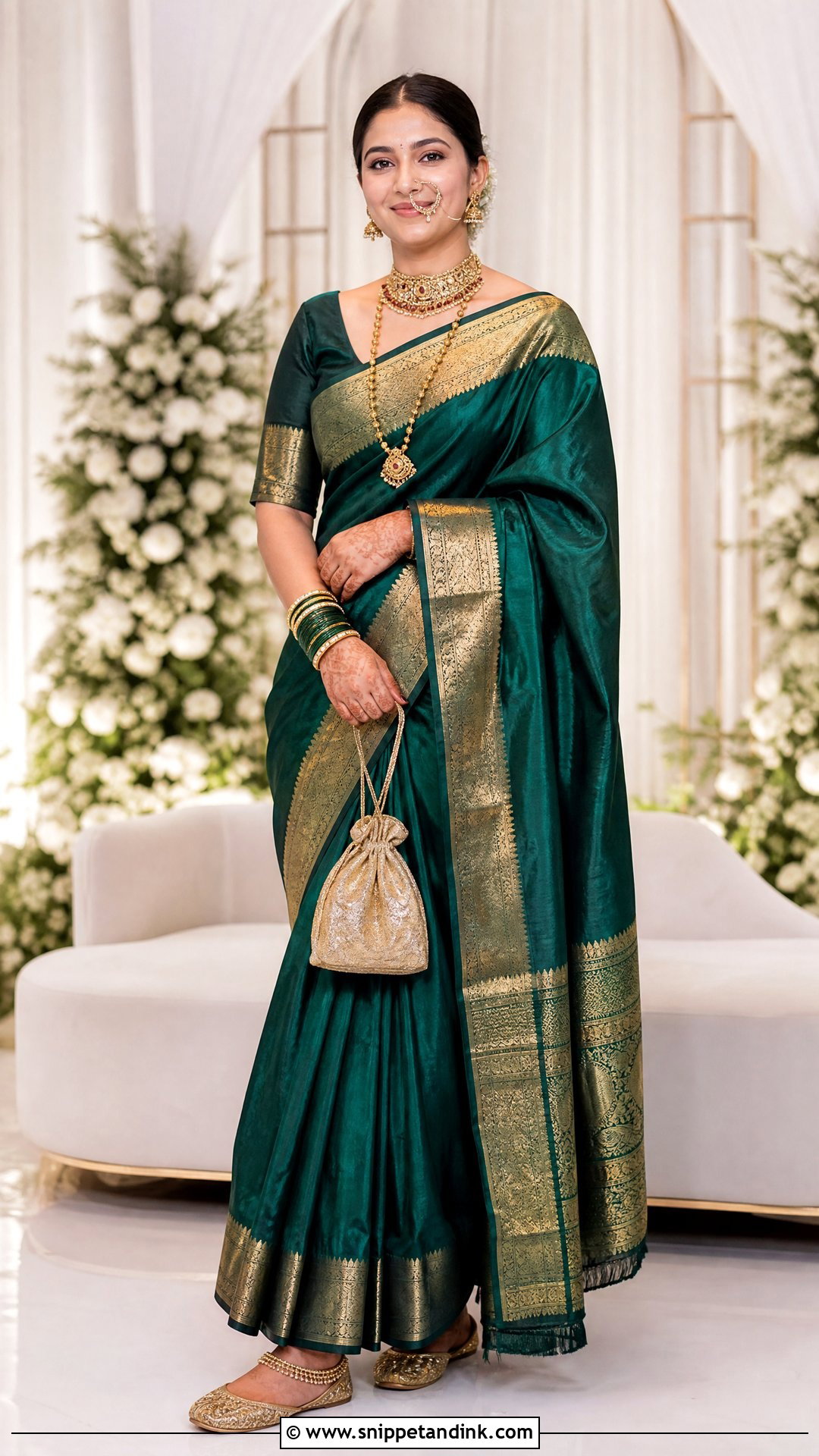
The reception is the right moment to step out of red. A jewel-toned silk sari in emerald, royal blue or deep plum with an antique gold border and matching blouse makes a clear change. I’d pick one strong neckline piece, a statement guloband or a hansuli, rather than repeating every wedding layer, and pair it with a smaller nath, one long necklace, earrings, bangles and anklets. A polished bun, braid or soft waves can replace the covered ceremony hair. Bronze eyes, defined lashes, warm highlighter and berry lips suit evening light, with cushioned gold heels or embellished flats and a metallic potli.

25. Modern Garhwali Bride Red Lehenga Look
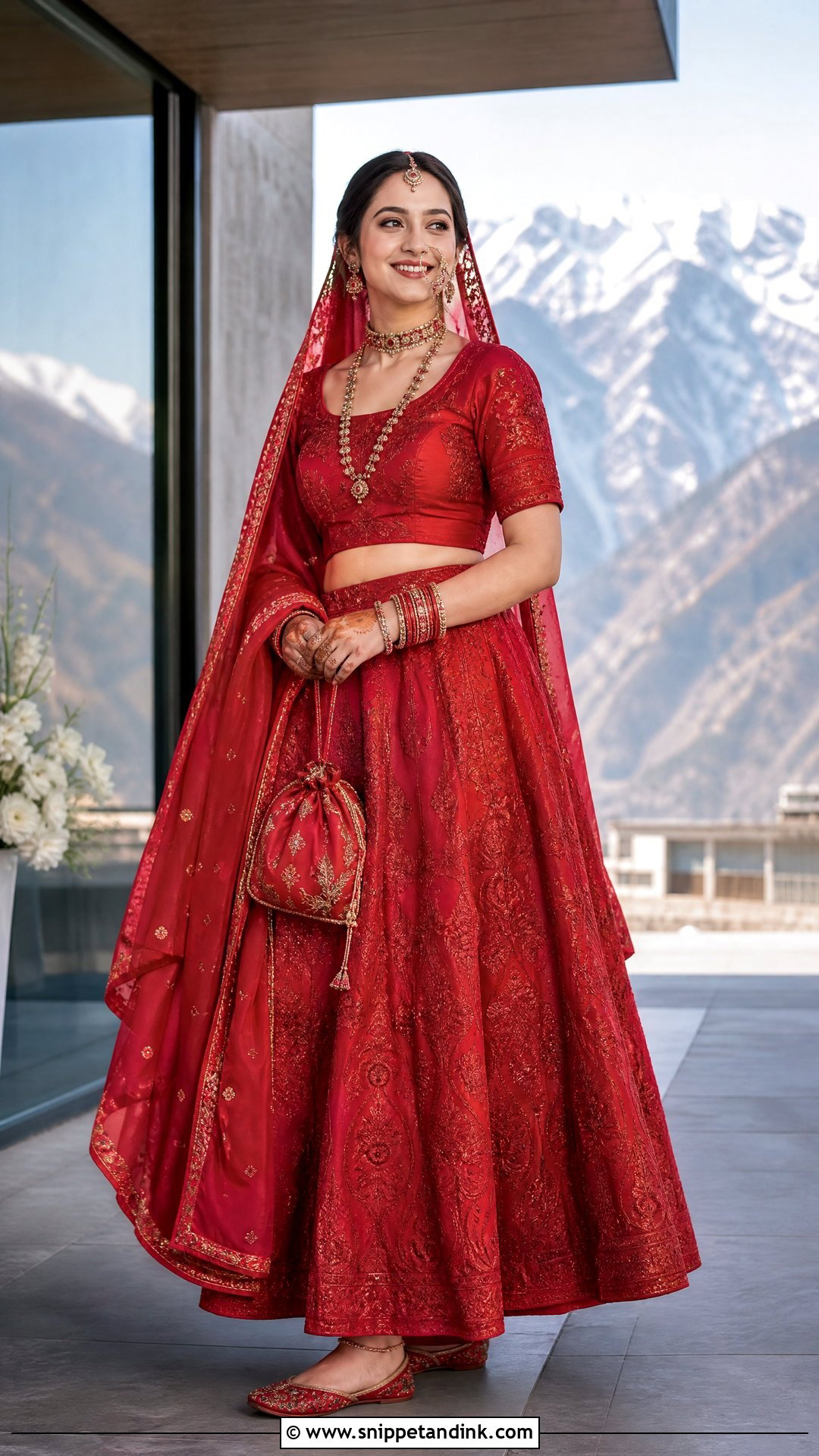
Simplifying the clothes is the easiest way to modernize without losing the culture. A clean red silk lehenga with tonal embroidery, a structured blouse and a lightweight dupatta over the head lets the heirloom nath, a streamlined guloband, one long necklace, small earrings, bangles, anklets and toe rings stay recognizable. A sleek center-parted low bun, satin-finish skin, softly smoked eyes, defined brows and deep red lips feel current. I’d finish with padded embroidered flats and a plain red potli, and treat the jewelry as the family’s, not as a passing trend.
Borrowed Heirloom Jewelry Needs a Plan Before the Wedding Week
Most Garhwali brides wear at least one piece that belongs to a mother or grandmother. I ask to see those pieces early, because old clasps, worn hooks and loose stones are common, and a local jeweler can repair them in time if they’re found weeks ahead.
Old silver darkens with time; a jeweler can clean it gently, but I wouldn’t scrub a guloband’s fabric base at home. Decide who holds each piece when it comes off between ceremonies, and keep a small lined box for it. On a busy wedding day, that one person’s job saves a lot of panic.
Staying Warm and Dry at a Hill Ceremony
Mountain weddings can turn cold fast in the evening, and rain is never far away in the season. A thin thermal layer under a full-sleeve blouse is invisible and changes everything. Keep a wool shawl in a color that works in photos, and choose closed juttis with grip for wet stone. I also keep a spare dupatta in the car; a soaked veil is heavy and pulls on the nath chain.
Red Silk, Old Gold and the Weight of a Family Nath
Every look here, from red saris and silk ghagras to modern lehengas and seasonal fabrics, rests on the same Pahadi ornaments: the Tehri nath, guloband, hansuli, chareu, heirloom necklaces and anklets. Makeup and shoes are there to support them and keep you comfortable. Talk through the ceremonial clothing and jewelry with the elders who know your family’s customs, and wear the full outfit, veil and nath included, at least once before the wedding. That trial is where I catch the pin that slips and the clasp that pinches, while there’s still time to fix them.
You'll Like These Ideas:






Leave a Reply