
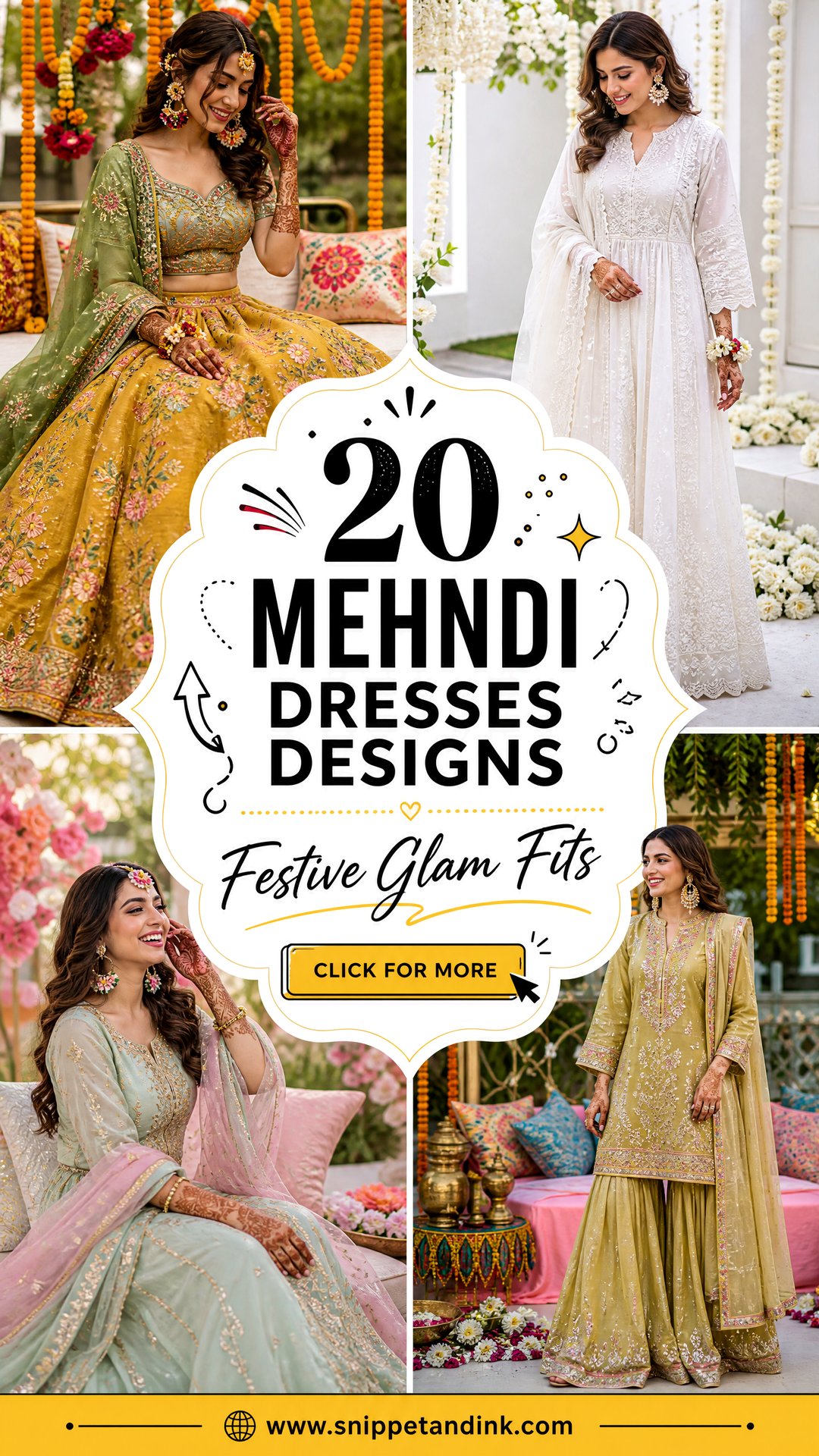
A mehndi outfit has a job most wedding clothes don’t: you have to sit still in it for hours with your arms held out, then get up and dance. That’s why I start every mehndi fitting with the sleeves and the closures, not the colour. Colour still matters, of course, and the season’s favourites run from lime green, mustard yellow and marigold to fuchsia, with mirror work, gota patti, light lehengas, shararas, ghararas, anarkalis and Indo-western sets all in the mix. Below are twenty outfit ideas for brides, sisters and guests, each with a note on how it behaves once the henna is on.
Dressing for Hours of Wet Henna on Your Arms
Once the paste goes on, your hands are out of action until it dries and ideally for hours after. You can’t do up a back hook, adjust a dupatta or fix a slipping blouse strap. So I work backwards from the henna session when I plan a mehndi look.
- Get fully dressed and pinned before the artist starts, including earrings and any hair accessories.
- Match the sleeve to the design: wrist-length henna allows elbow sleeves, while forearm designs need sleeveless or cap sleeves.
- Pin the dupatta at the shoulder and the back so it can’t slide forward onto your hands.
- Choose side zips or front closures if a relative will have to help you change later.
- Use the bathroom before the session begins. Seriously.
Heat is the other factor. Heavy silk and layered can-can under a lehenga get uncomfortable fast when you’re sitting still in a warm room, so for the bride’s own long session I favour georgette, chiffon or cotton silk.
1. Green Mehndi Lehenga Design
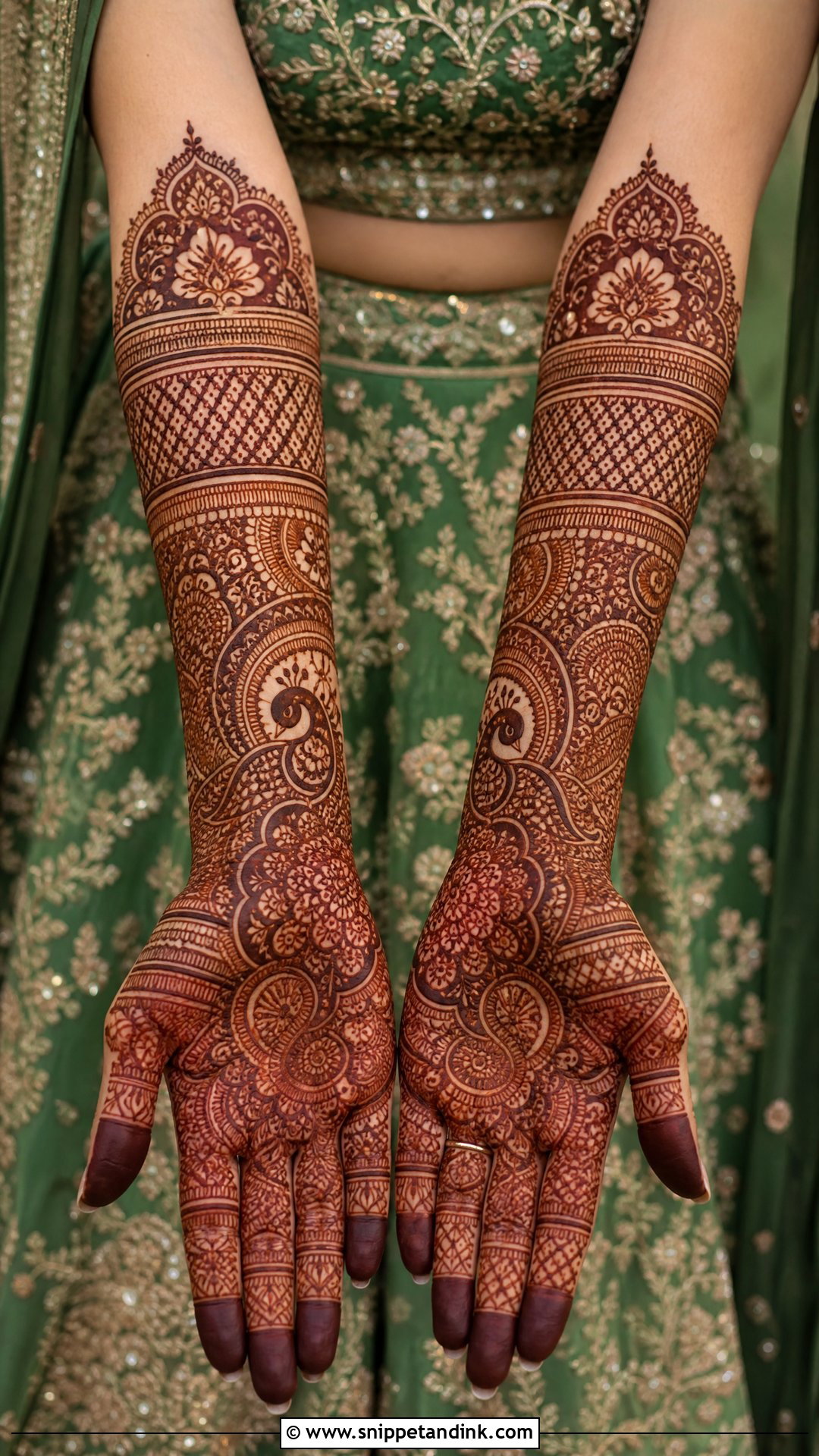
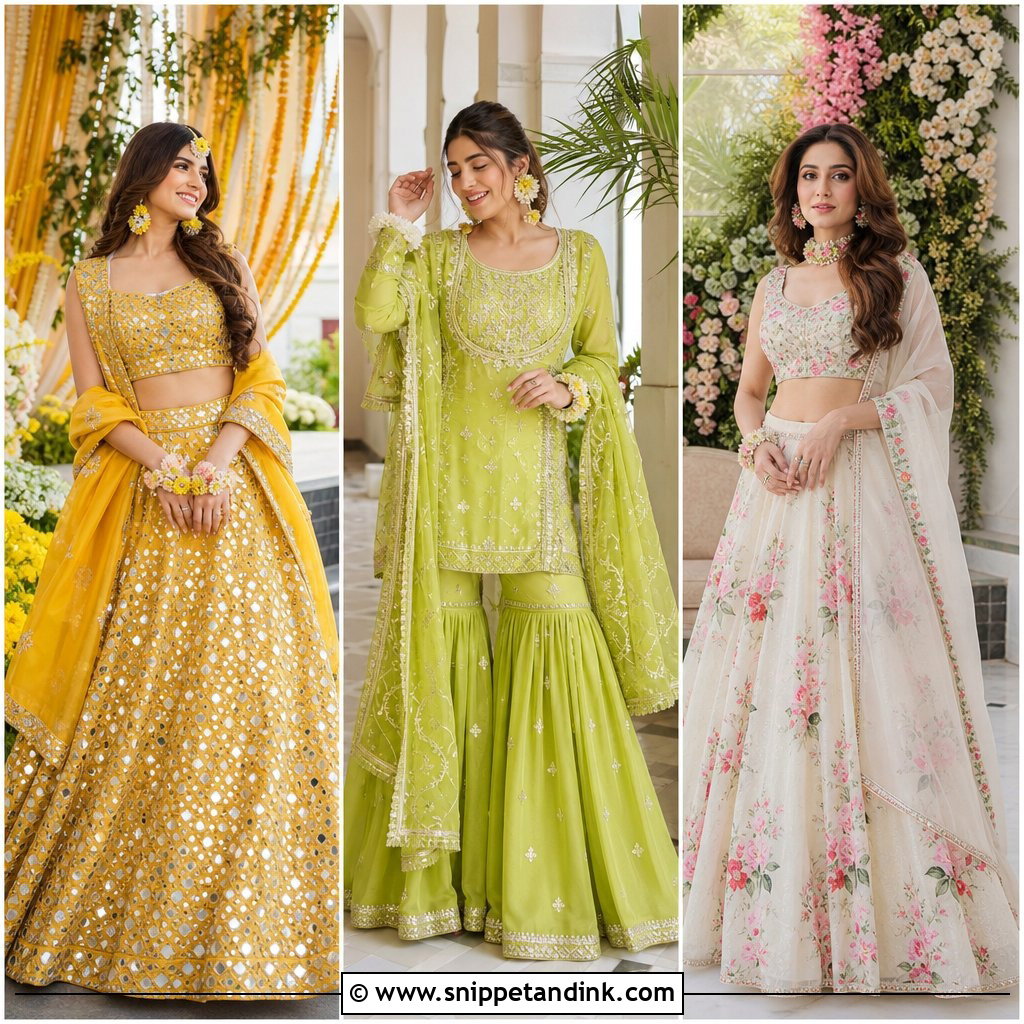
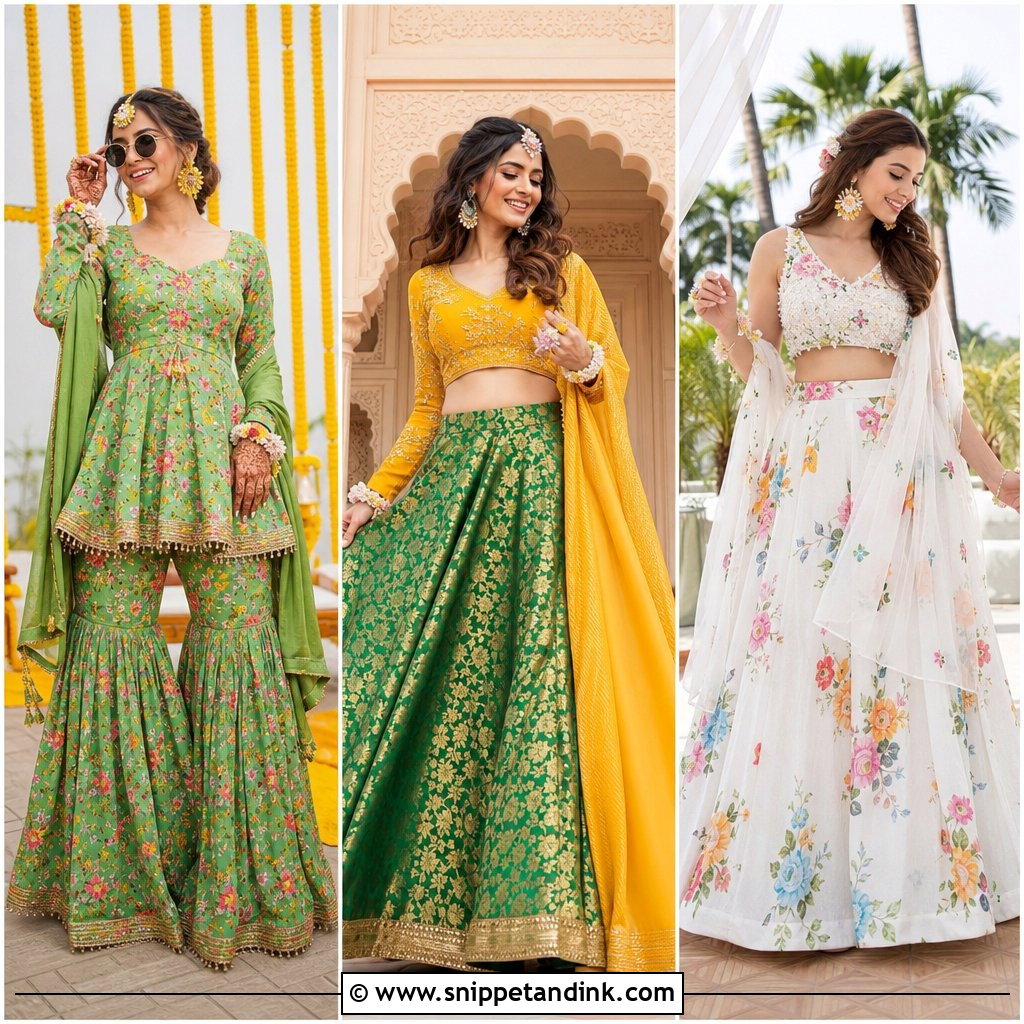
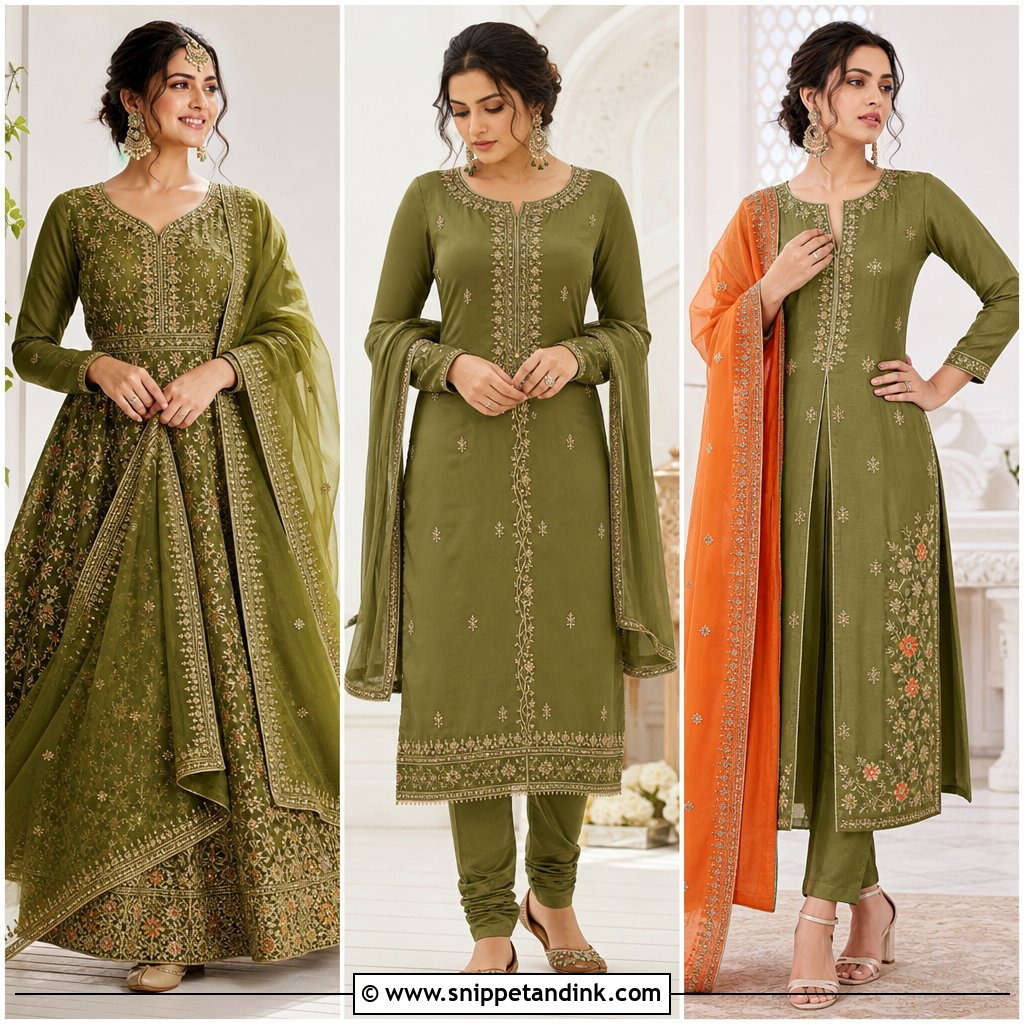
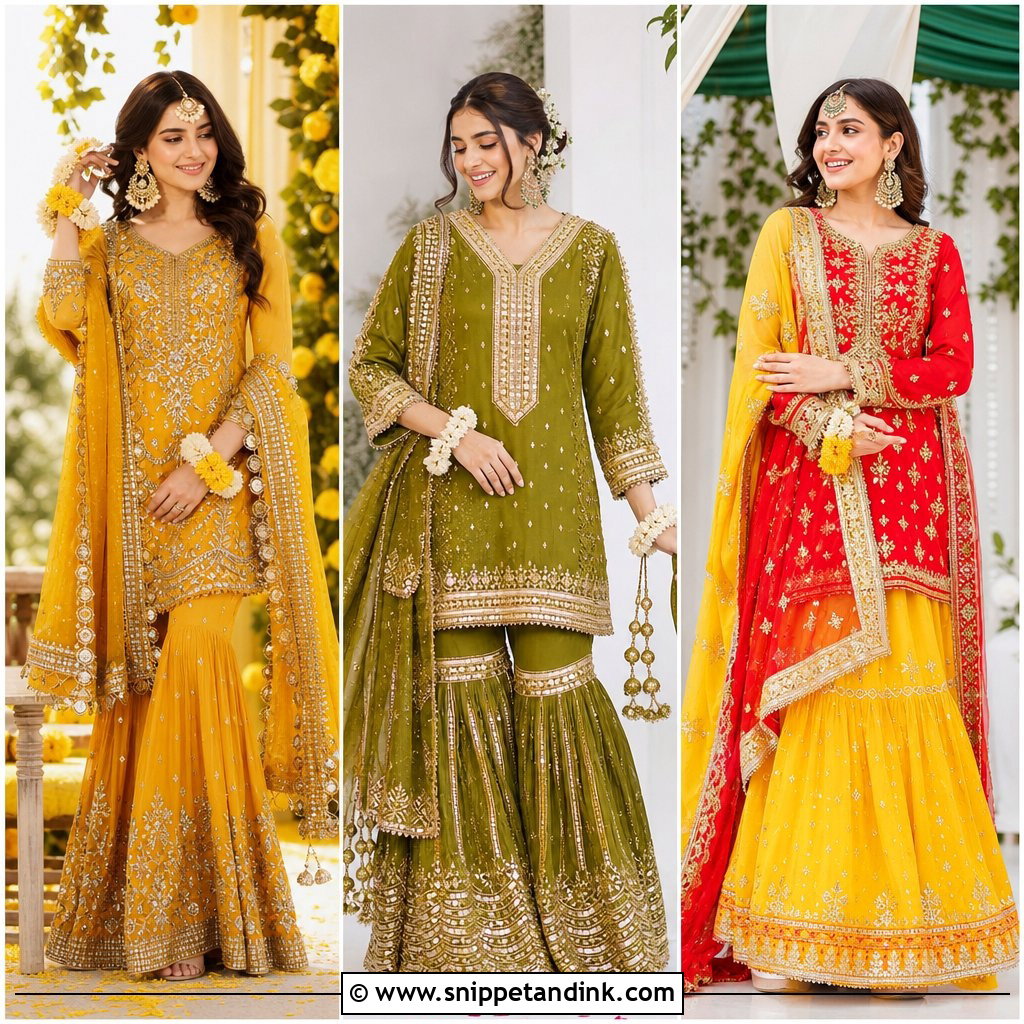
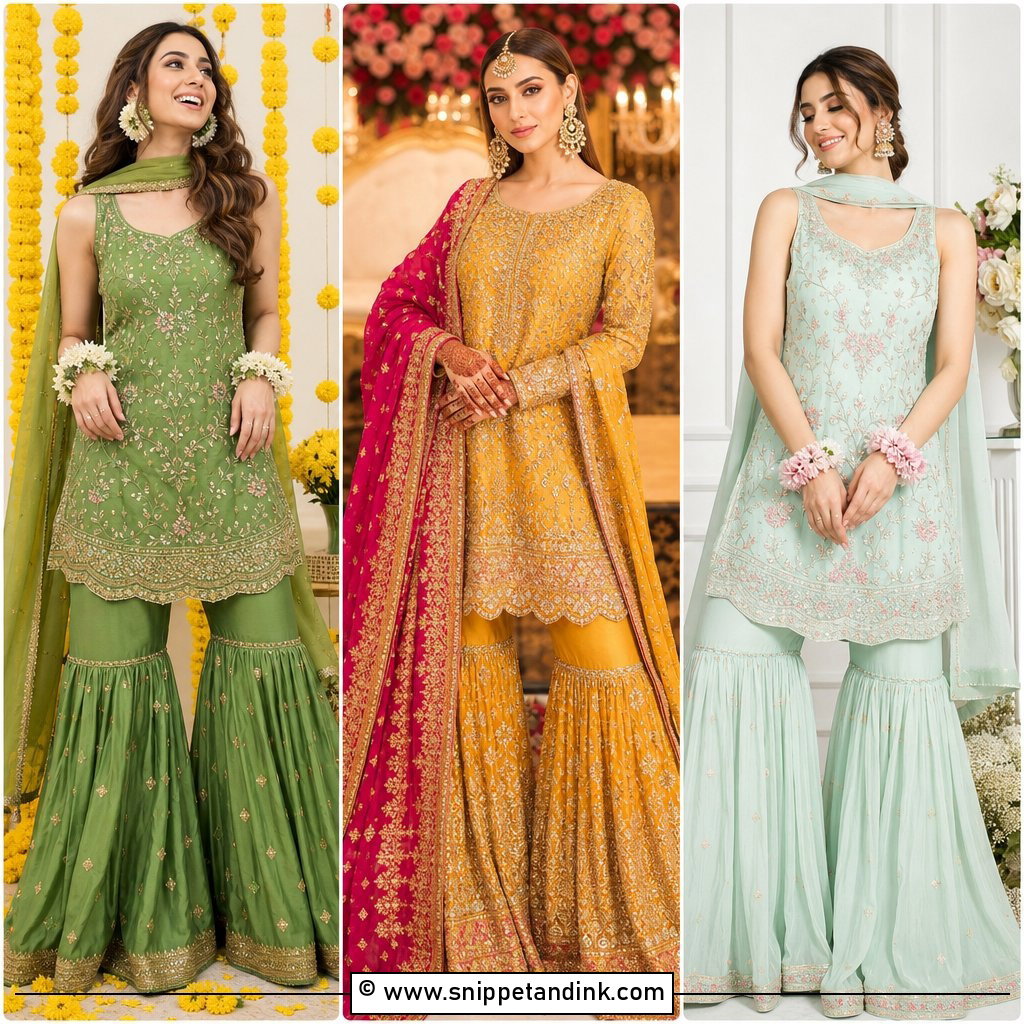
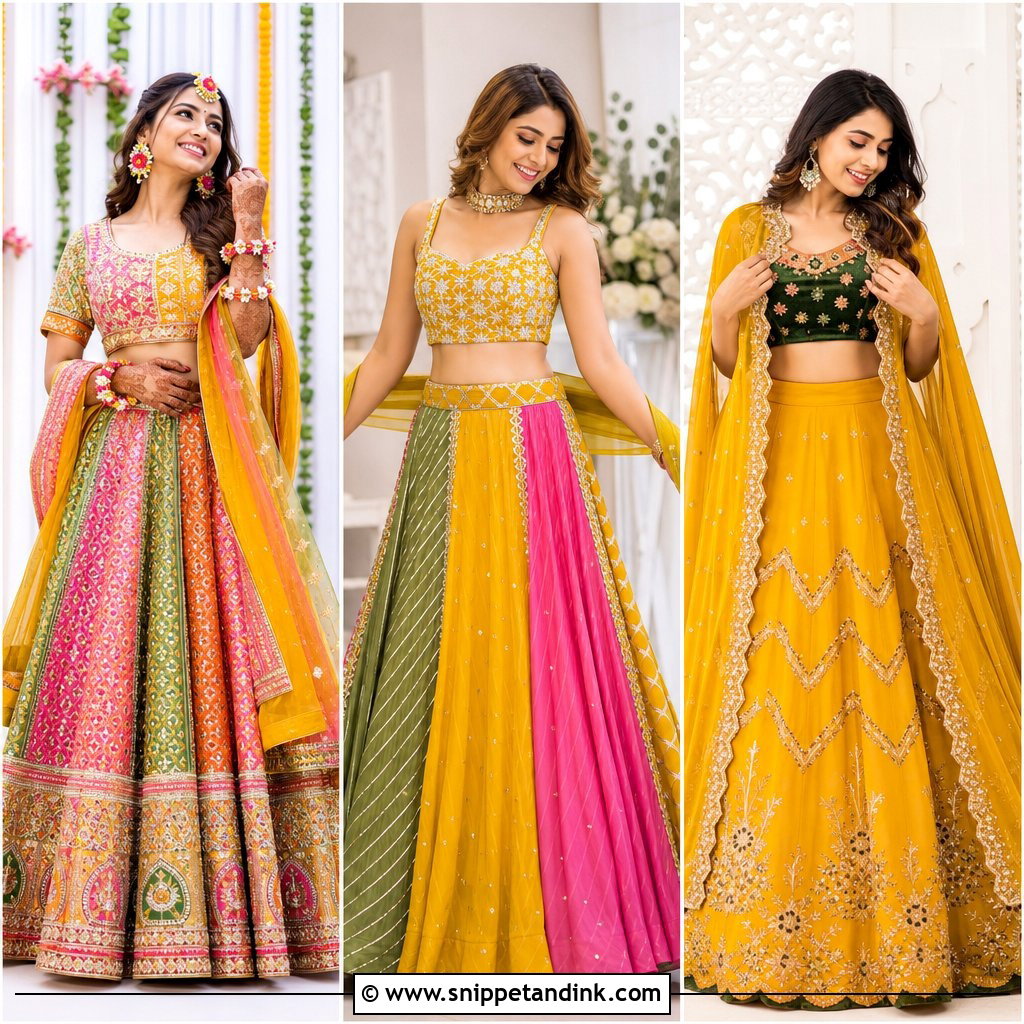
Green ties straight back to the henna itself, which is why it stays the default. Parrot green and lime flatter warm and deep skin tones; olive and emerald are kinder if bright greens make you look sallow, and I always hold the fabric under your chin in daylight before deciding. Brides can take a lightly flared lehenga with mirror work or gota; guests do well in georgette or organza. A short blouse or sleeveless choli keeps the wrists free, and a yellow or pink dupatta lifts the whole thing.
2. Yellow Mehndi Dress Design
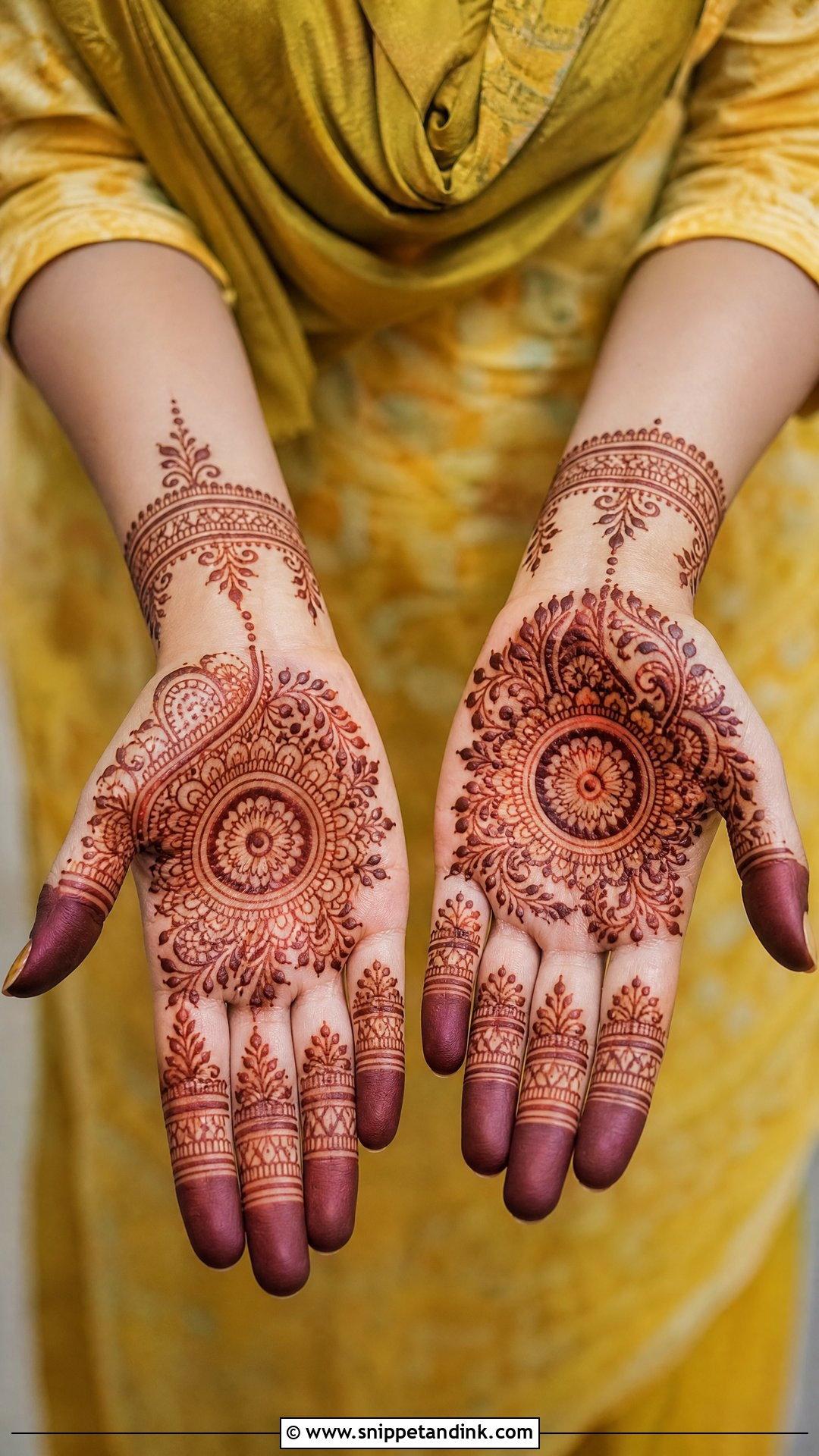
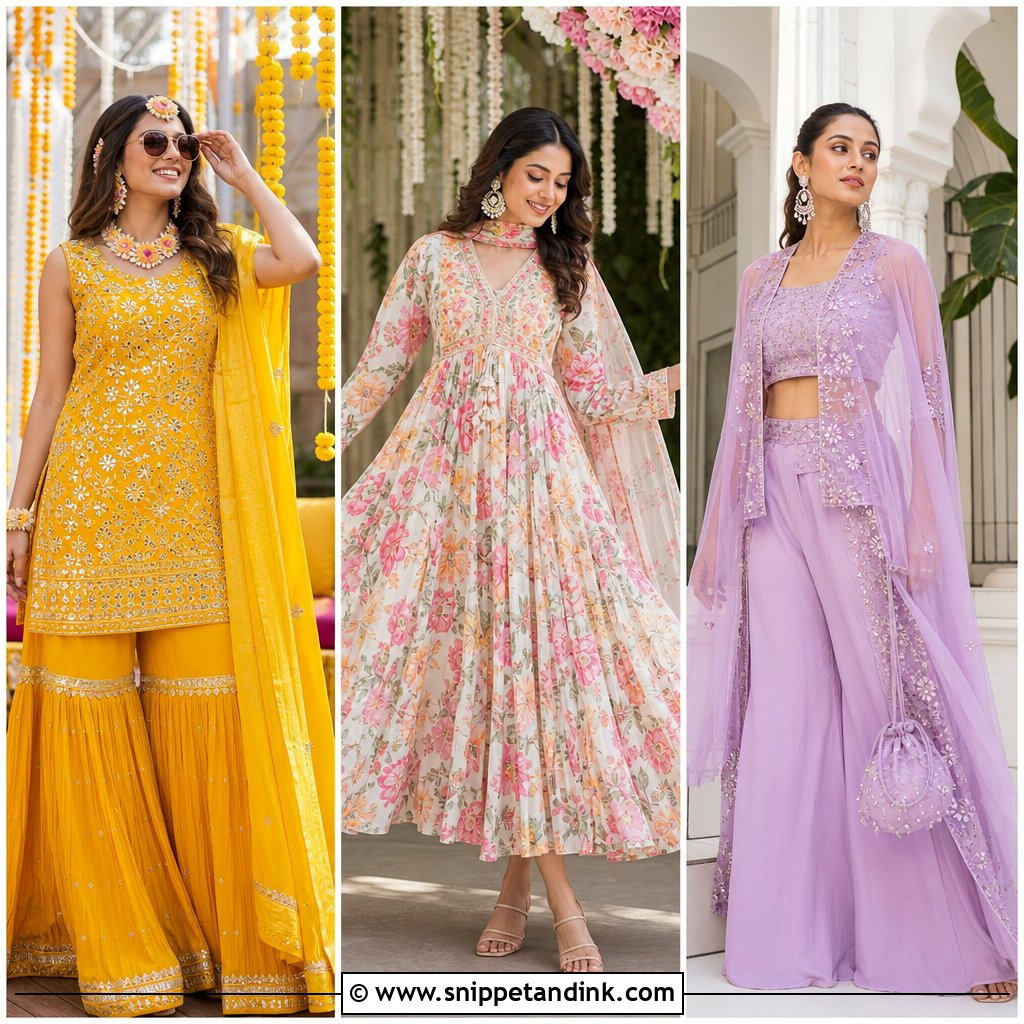
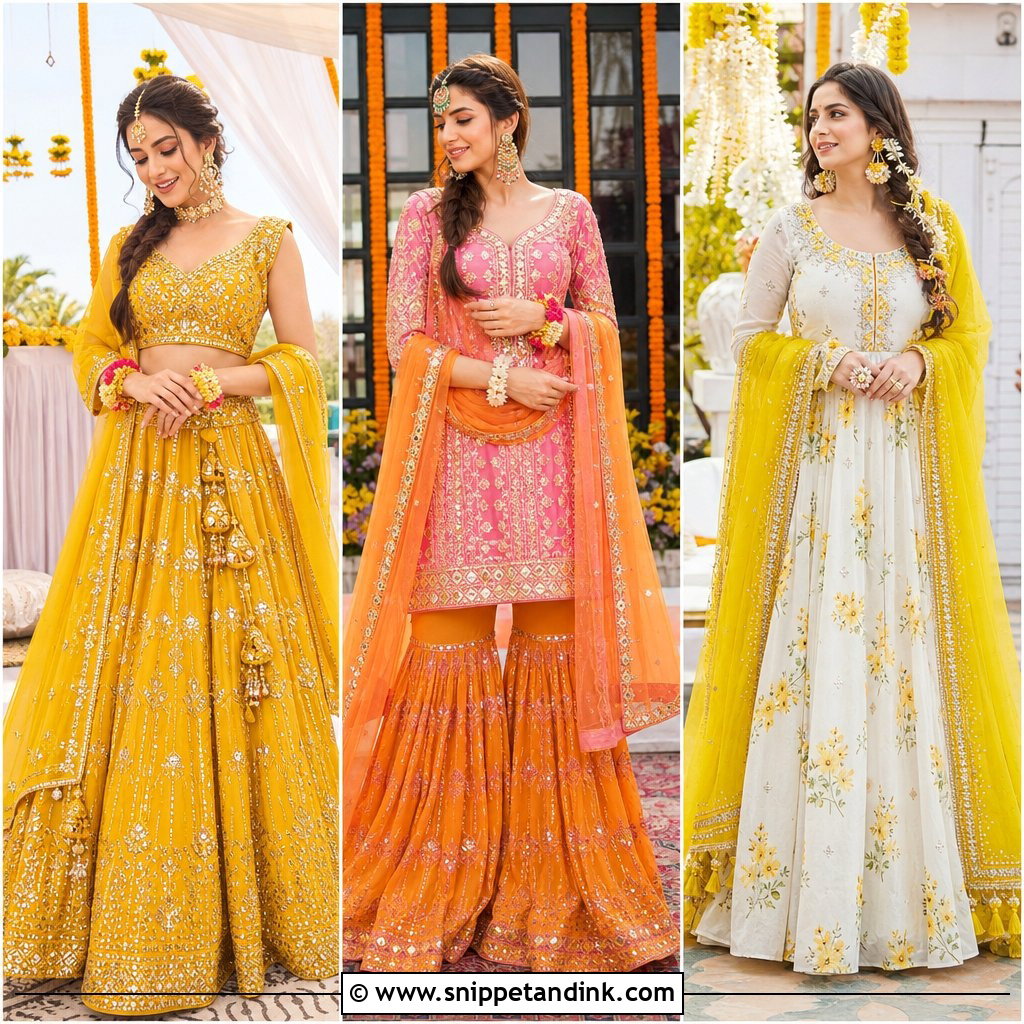
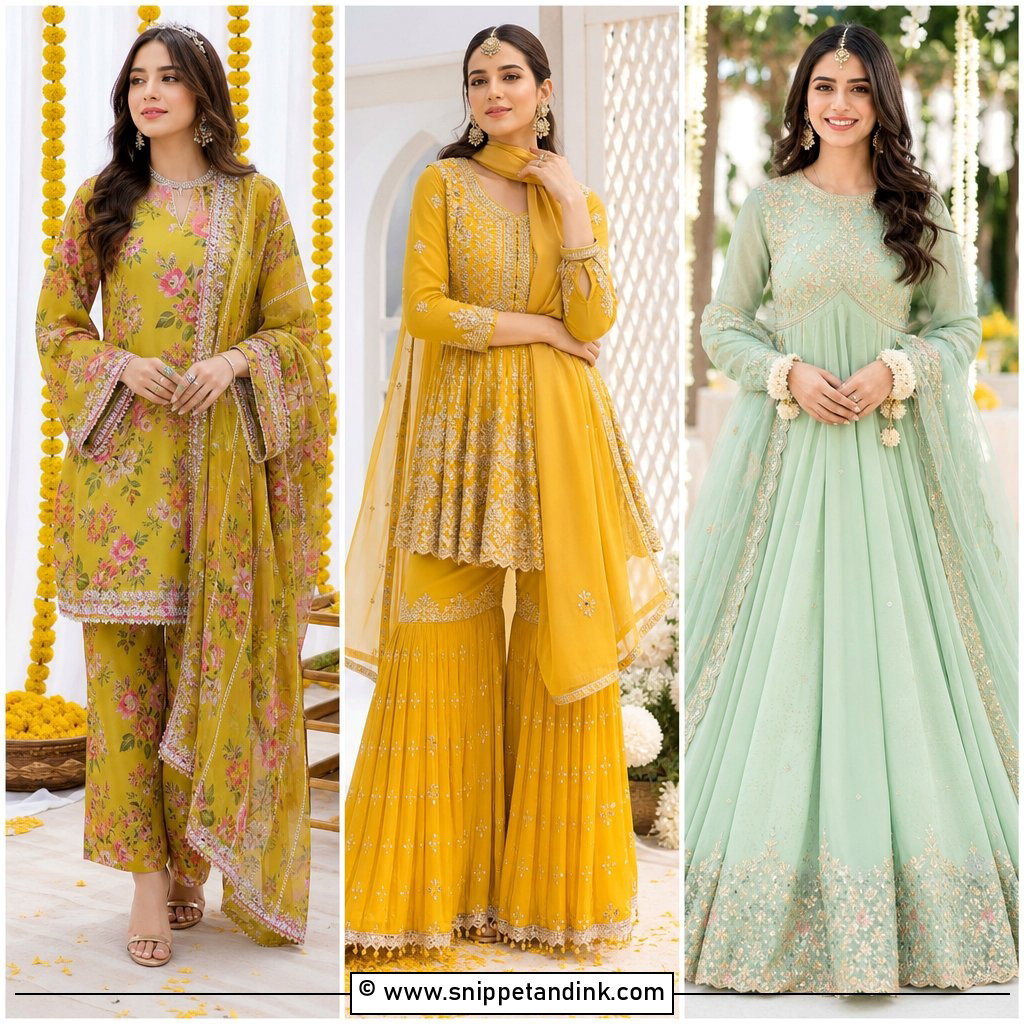
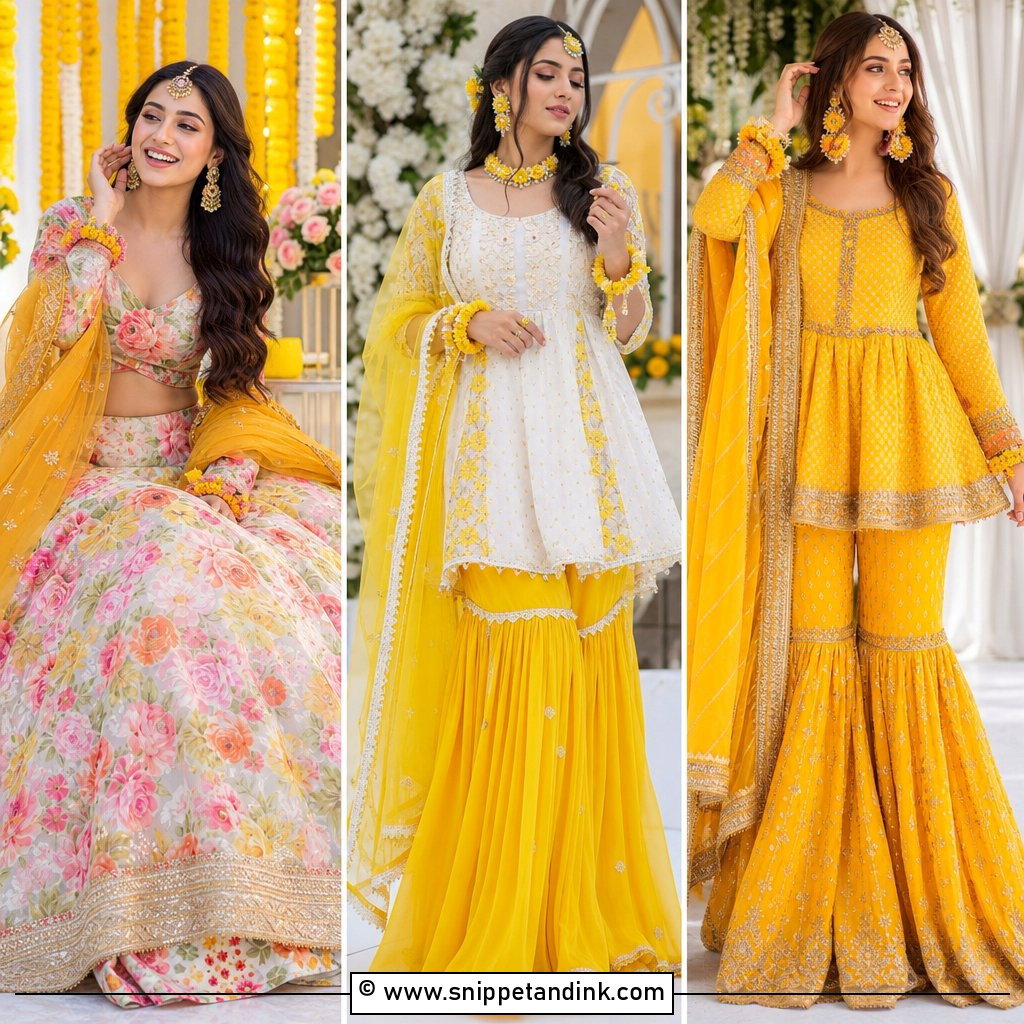
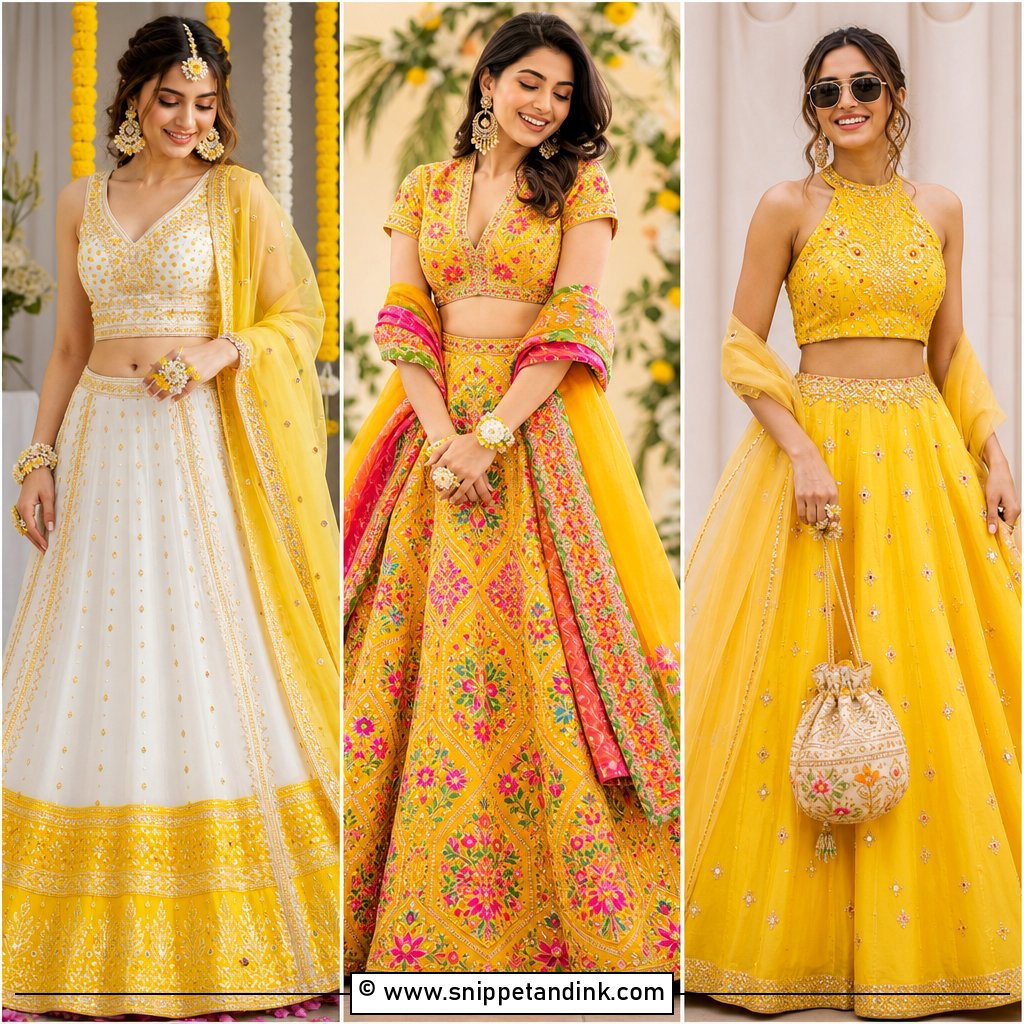
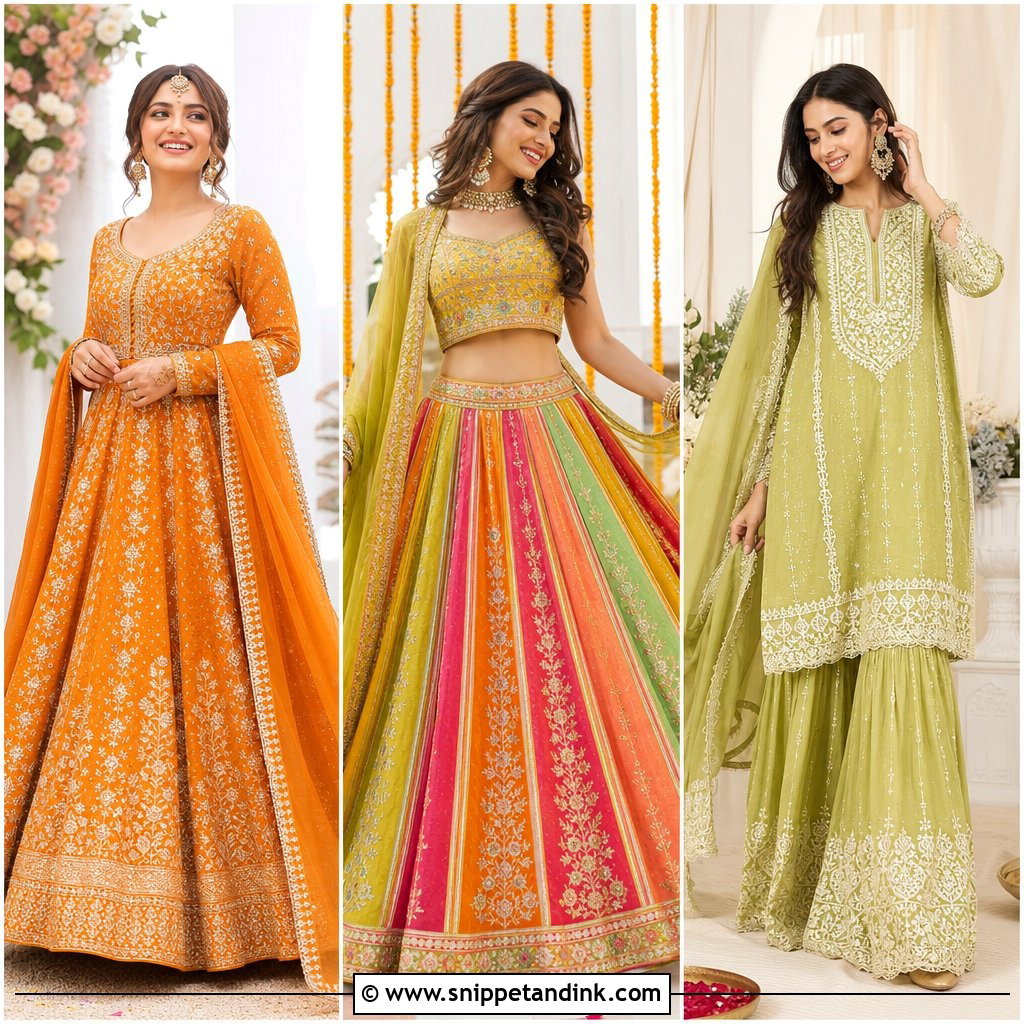
Yellow suits daytime mehndis better than evening ones, since it glows in sunlight and can look flat under warm indoor bulbs. Mustard reads traditional, lemon reads young. It works as a lehenga, an anarkali, a sharara or a straight kurta set depending on how formal the family is. Gota borders or mirror work keep it festive without weight. For brides, hot pink or green accents give it depth. Guests can keep jewellery light and let the colour carry the look.
3. Orange Mehndi Lehenga Design
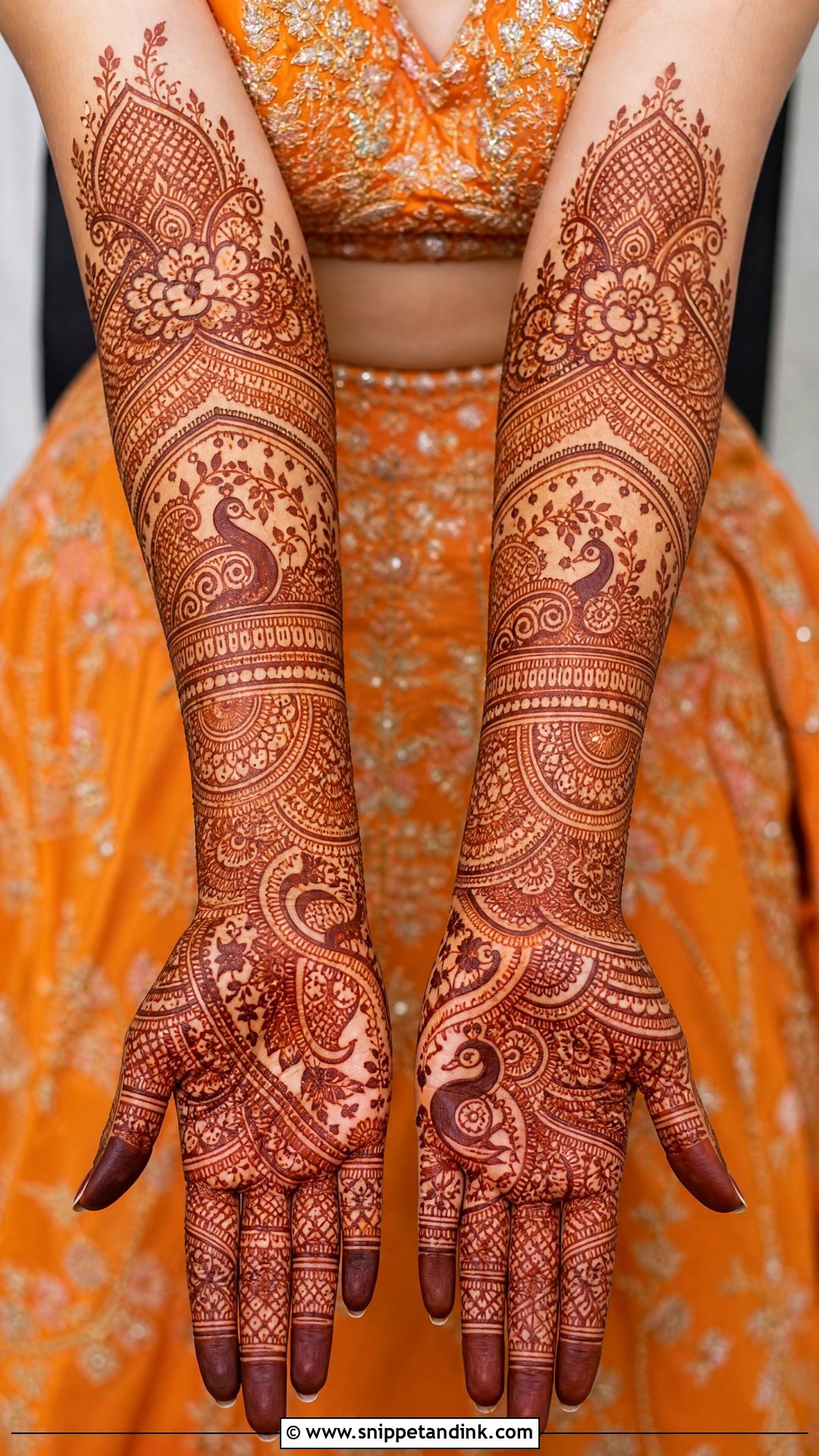
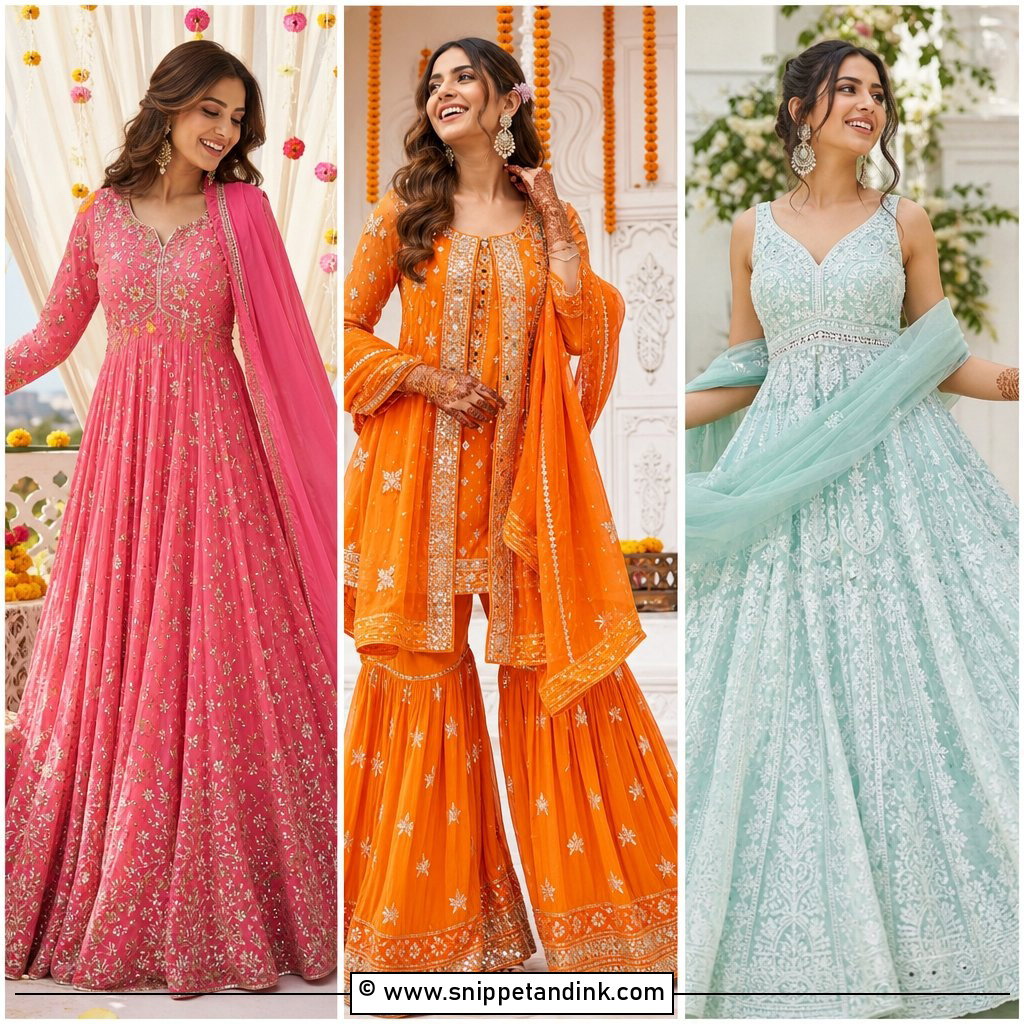
Orange is the colour I suggest to brides who want boldness without bridal red. Marigold, tangerine, rust and burnt orange all photograph warmly indoors and out. Mirror work or thread embroidery on the skirt catches movement when you dance. Watch the blouse sleeve, though: if your henna goes up to the forearm, a three-quarter sleeve will sit right on wet paste. A green or pink dupatta gives the classic festive contrast, and dense Indian henna holds its own against it.
4. Pink Mehndi Sharara Design
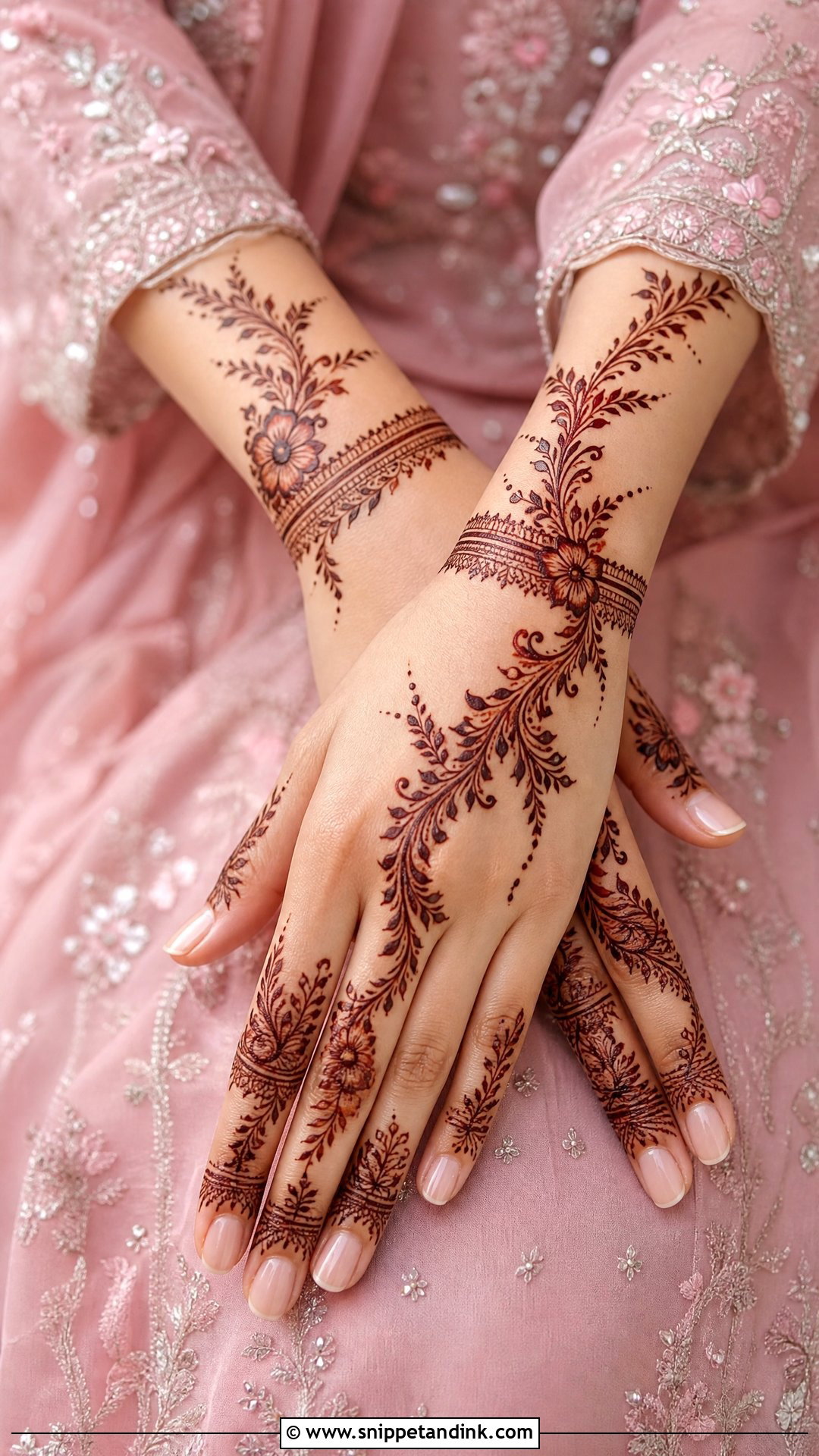
A sharara is a gift to bridesmaids and younger guests who want movement without lehenga weight. Rose, rani, blush or fuchsia can be dressed up or down depending on the event. The short kurti and wide trousers make sitting cross-legged for henna far easier than a stiff skirt does. Choose a light dupatta and pin it at the shoulder; a sliding dupatta is the thing most likely to smear a fresh design.
5. Mirror Work Mehndi Dress Design
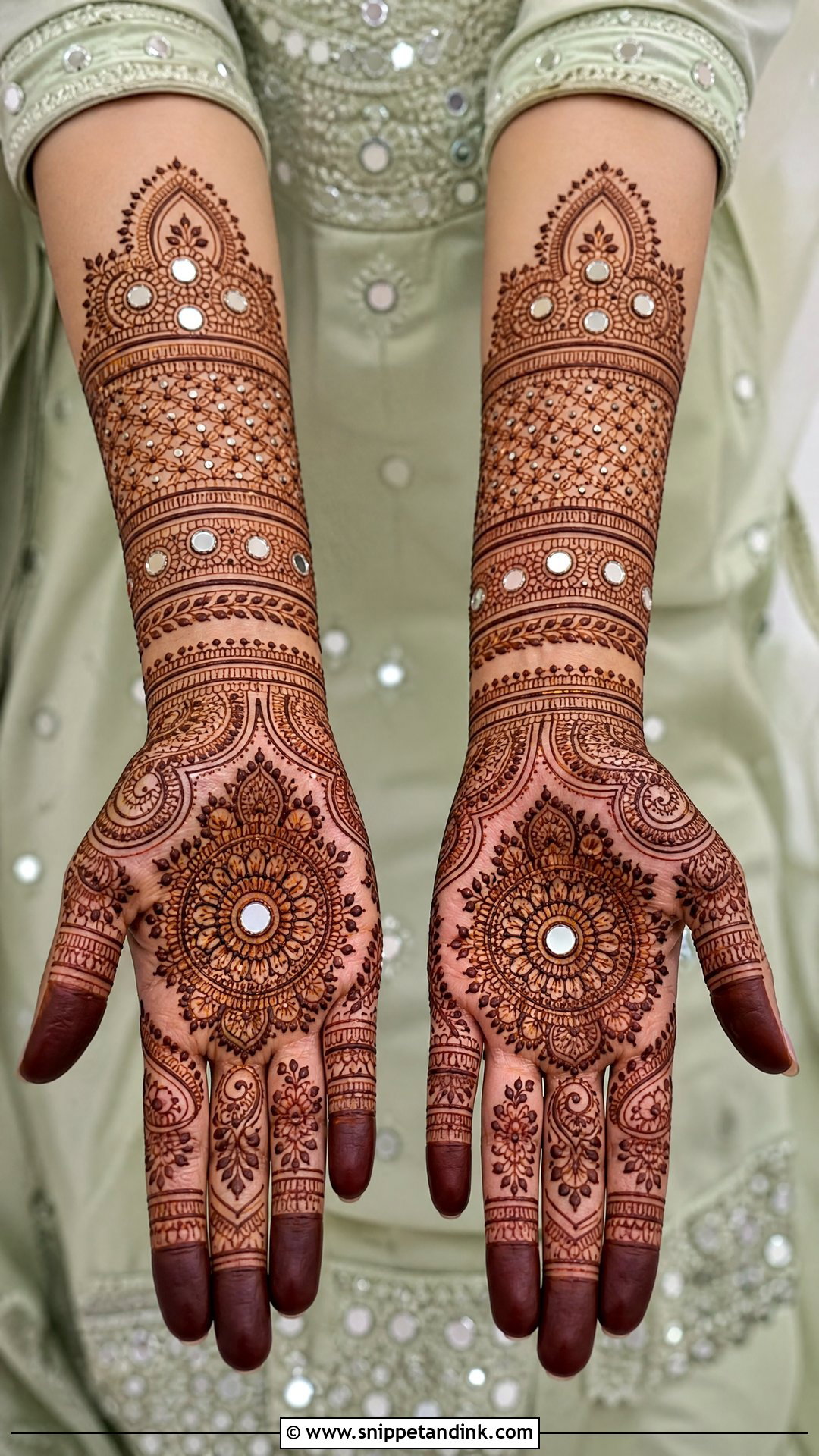
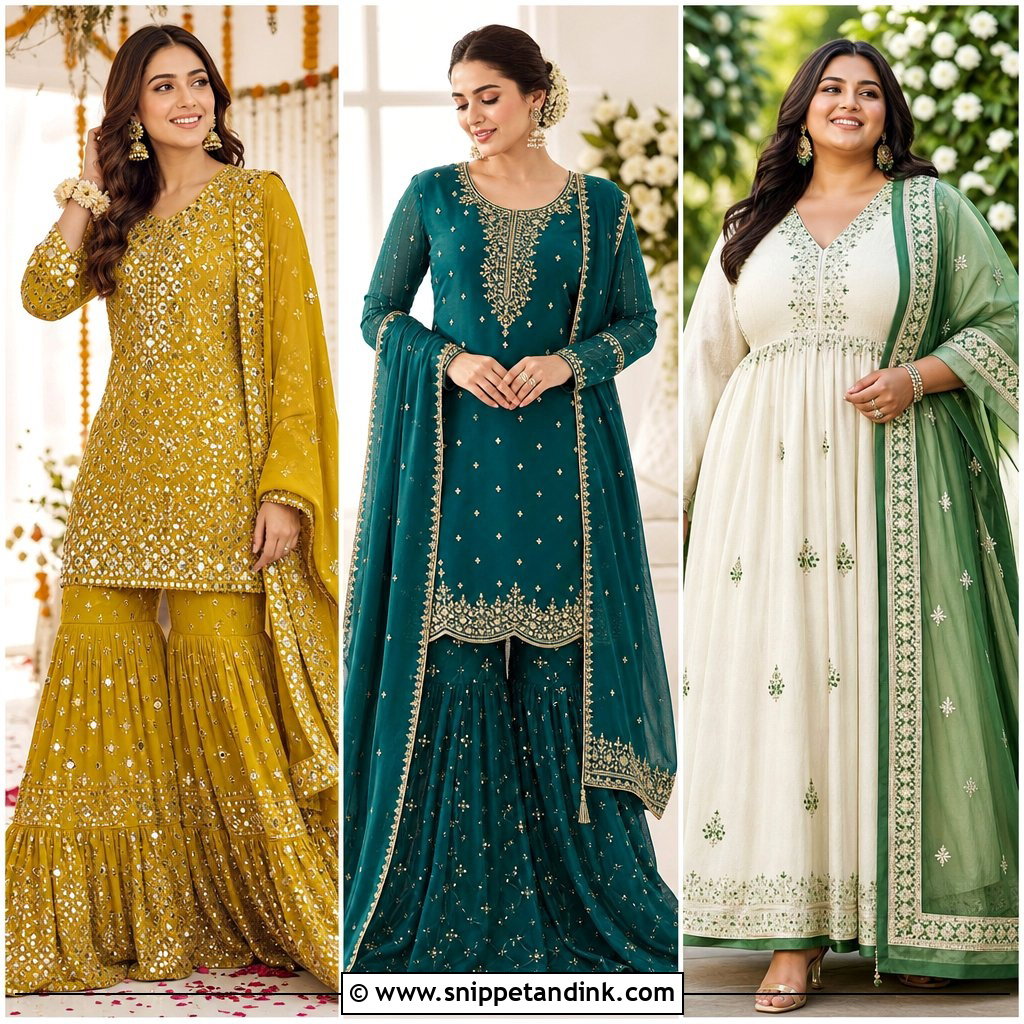
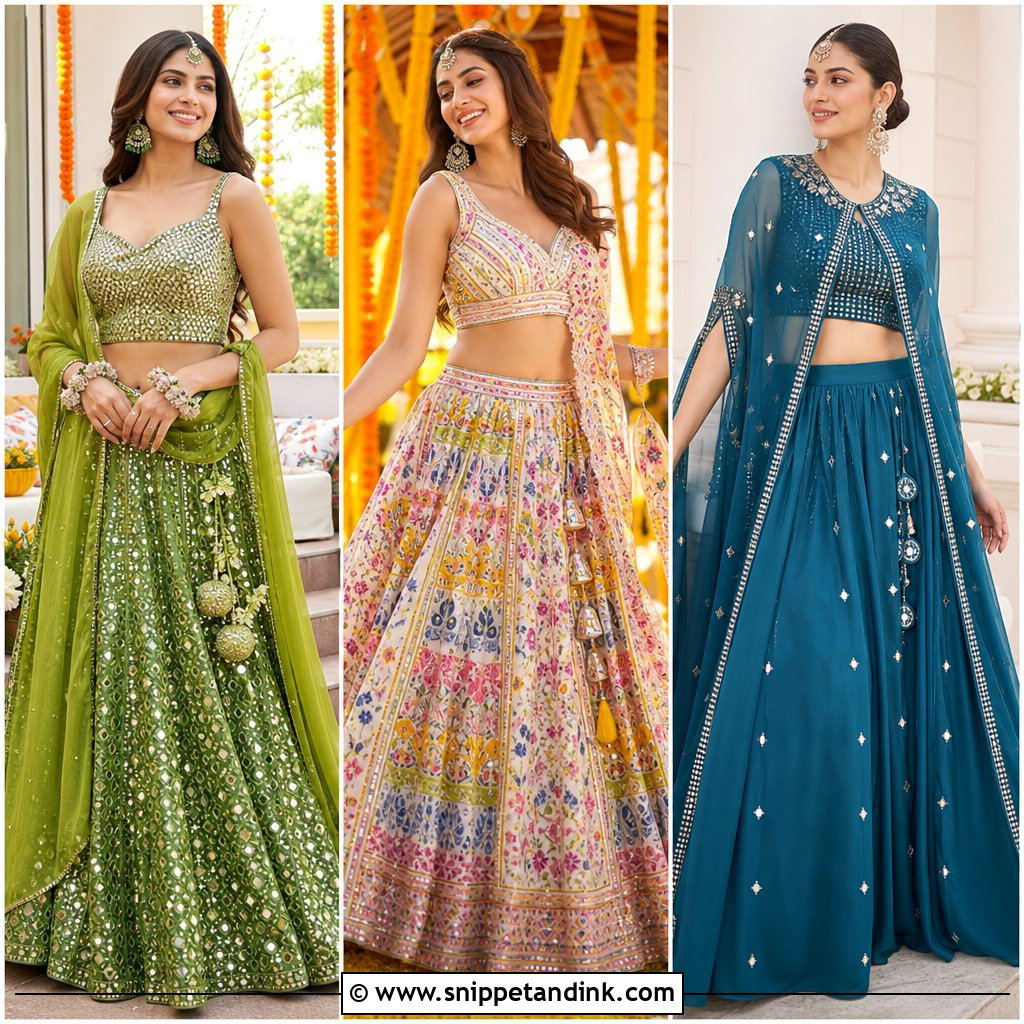
Nothing catches the light in mehndi photos and video quite like mirrors. A mirror work mehndi dress can be a lehenga, a short kurta with sharara or a peplum with a skirt. Two practical notes from fittings: heavy mirror work is weighty and can scratch the inner arm if it sits on the sleeve, so I prefer it on the skirt and borders; and with a lot of shine, keep the dupatta and jewellery lighter. Bright greens, yellows and fuchsias make the mirrors pop.
6. Gota Patti Mehndi Dress Design
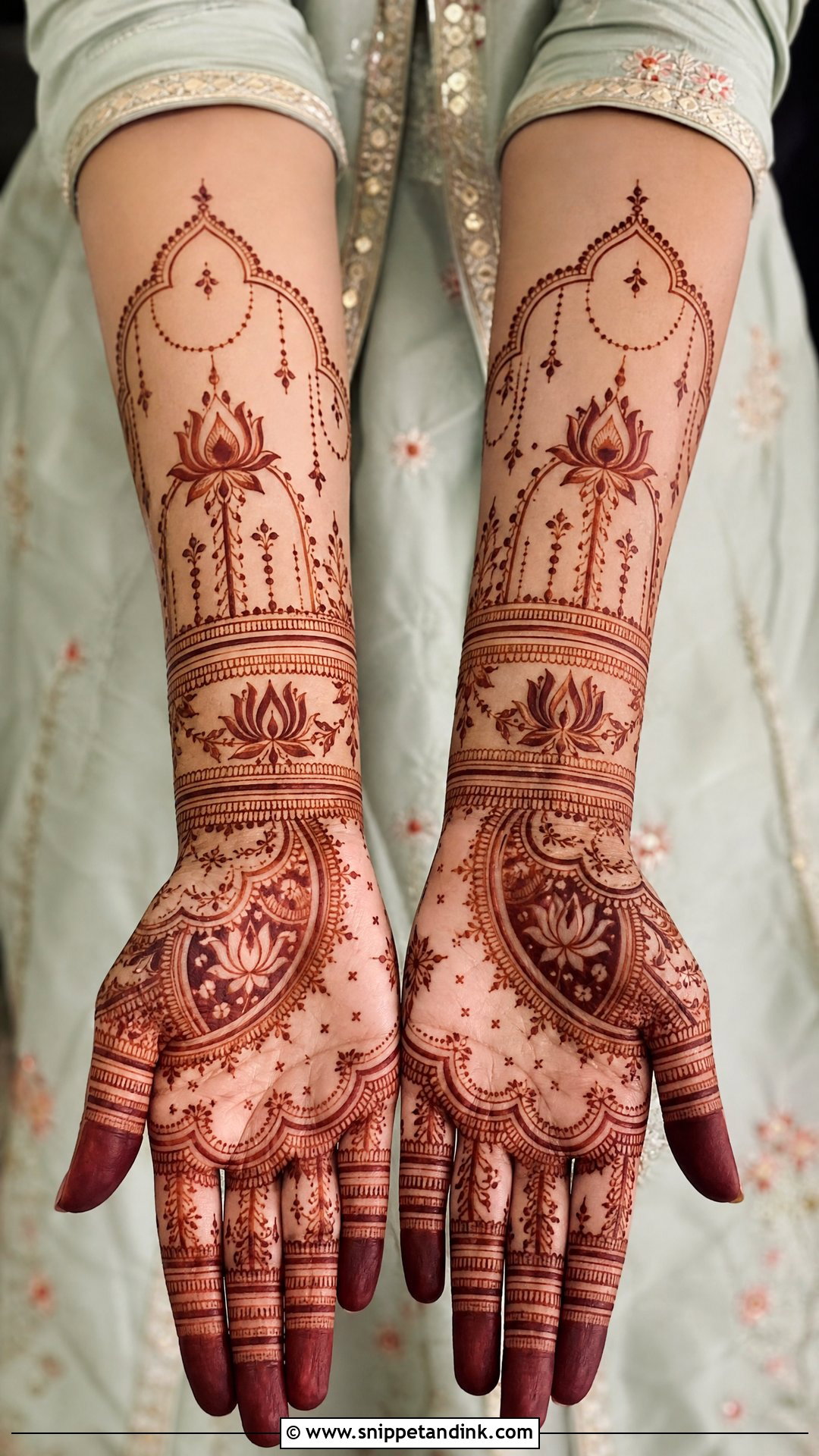
Gota patti, the flat metallic ribbon appliqué of Rajasthani and North Indian dressing, gives festive shine without bulk. On georgette, chiffon, cotton silk or light organza it moves well, and yellow, green, peach or orange bases suit morning and afternoon ceremonies. Brides can wear a flared lehenga or anarkali with gota borders; guests can keep it to the neckline, sleeves and dupatta. Real metallic gota can tarnish with moisture, so it needs careful storage afterwards.
7. Floral Mehndi Lehenga Design
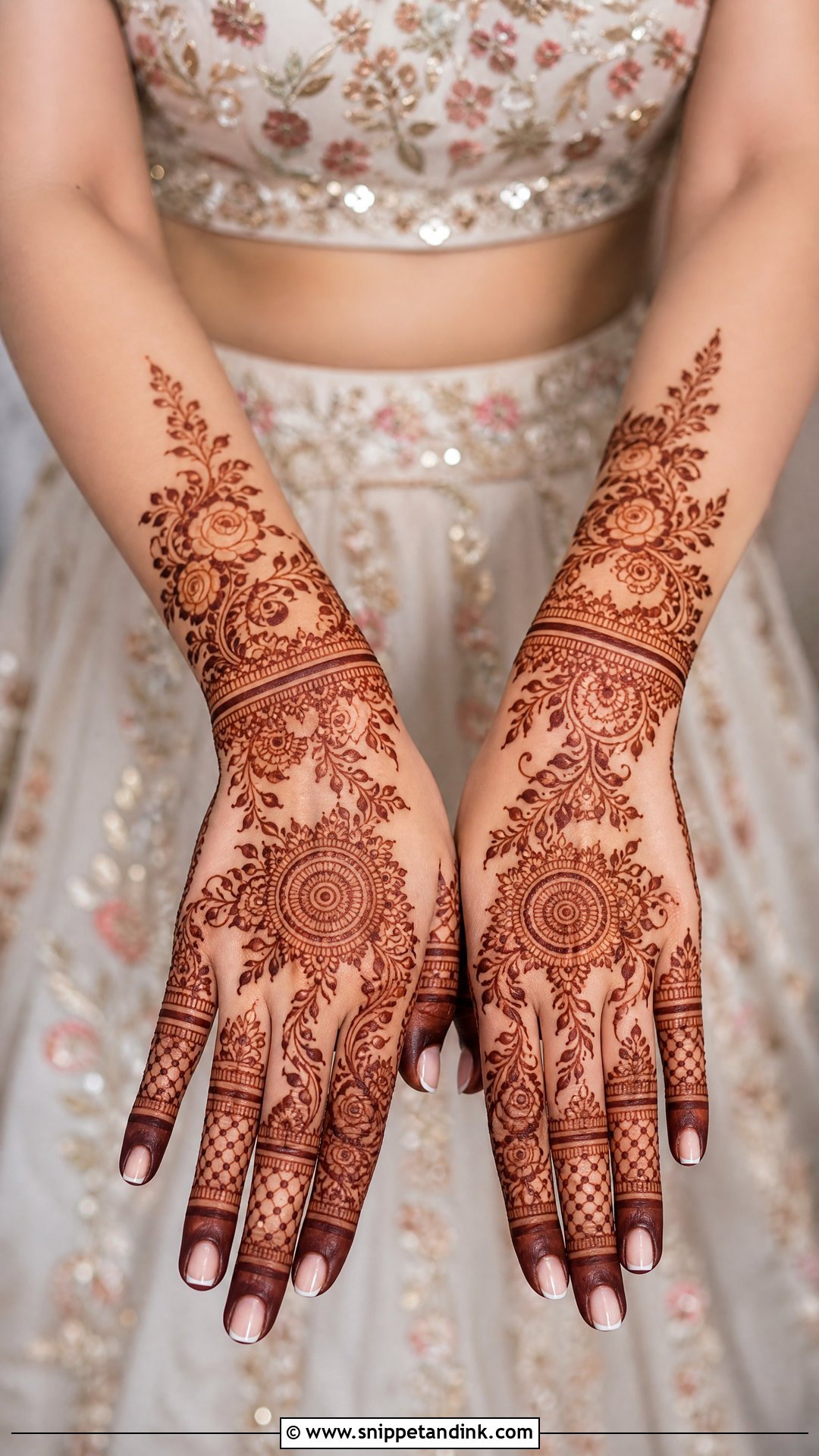
Printed florals are lighter and usually kinder to the budget; embroidered florals look more formal and weigh more. For a garden or terrace mehndi, a pastel base with bright flowers or a bold green or pink floral both work. A crop blouse and flowing dupatta keep you cool and leave your arms free. Fresh flower jewellery suits it, but I warn brides that real blooms wilt in heat, so pick hardy flowers or order a spare set.
8. White Mehndi Dress Design
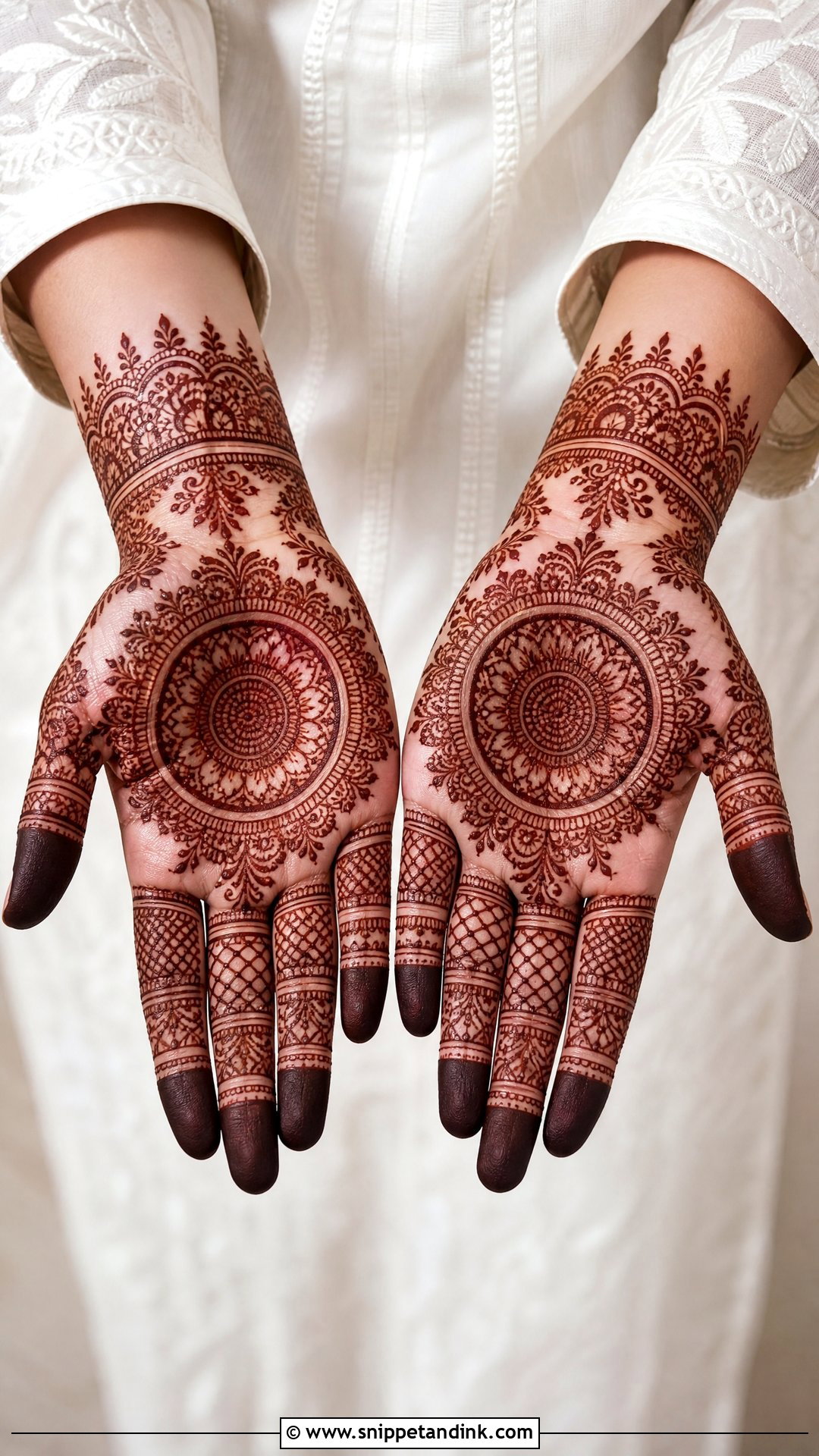
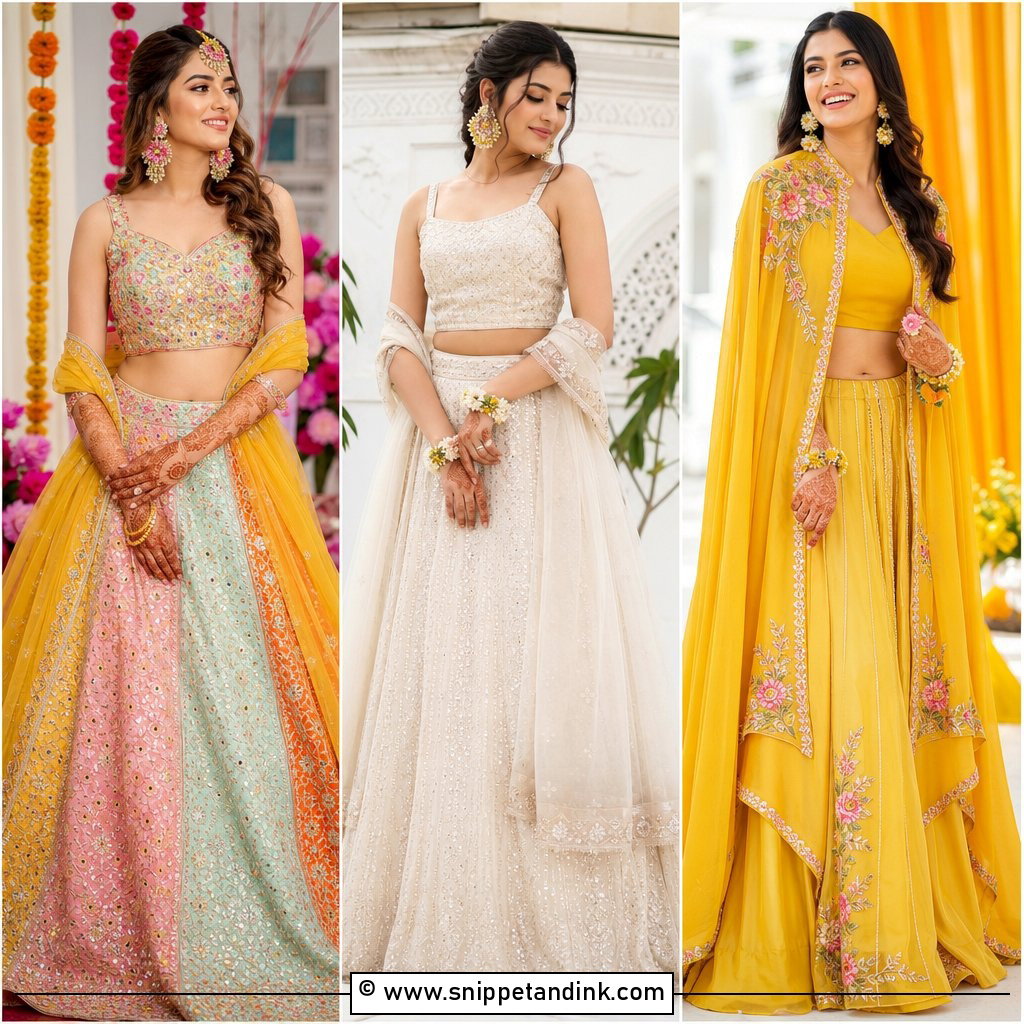
White on its own can look plain at a mehndi, so the embroidery has to do the work: multicolour thread, mirror accents, gota or florals. A white lehenga with a bright dupatta gives brides something unexpected; guests can choose a white kurta, sharara or anarkali with colourful accessories. The risk is obvious. Henna paste is dark and wet, and white shows every smudge, so I’d only recommend it if you’ll be careful while the paste dries. Warm makeup keeps it from washing you out, and a deep maroon stain looks striking against it.
9. Pastel Mehndi Dress Design
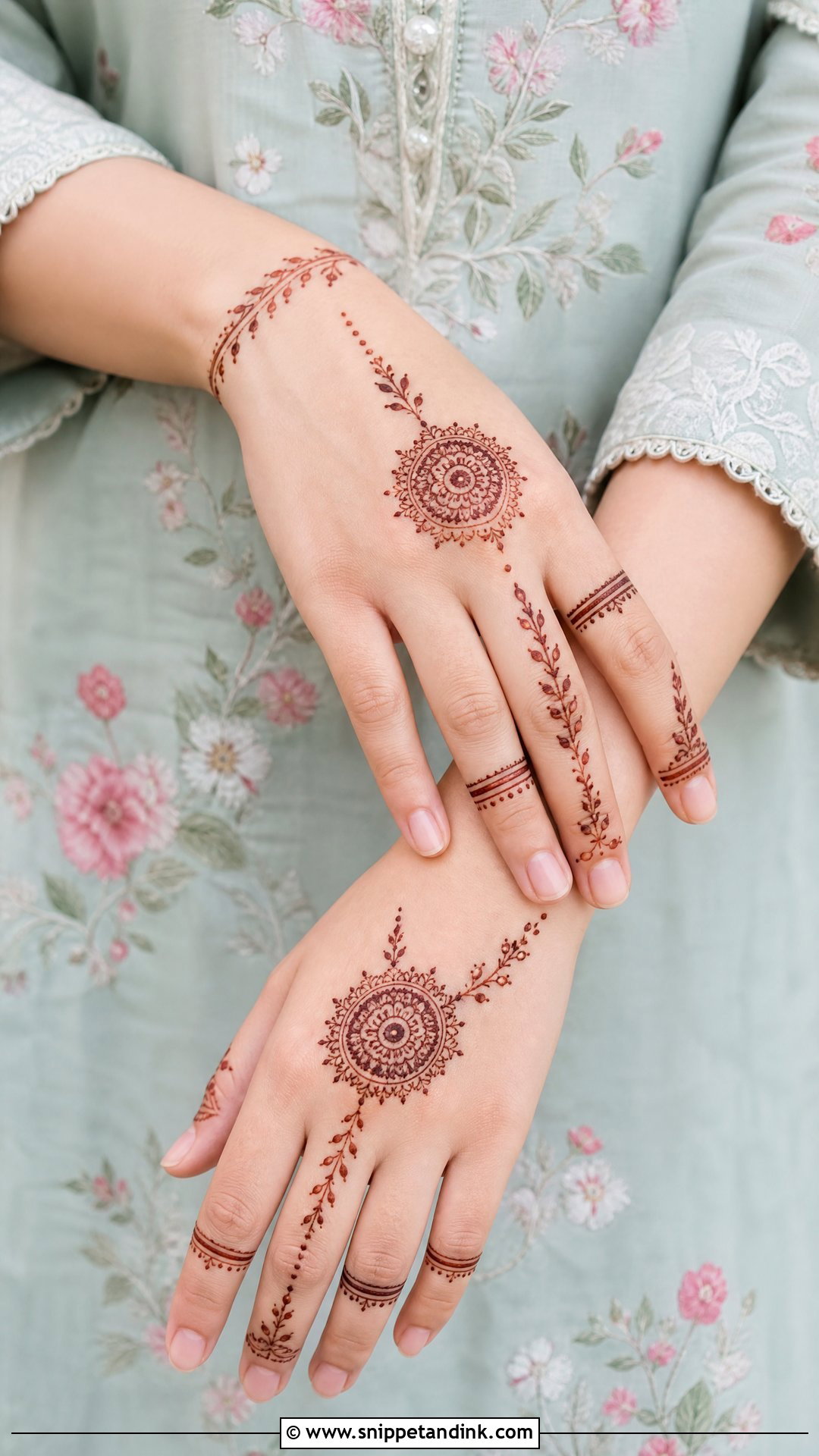
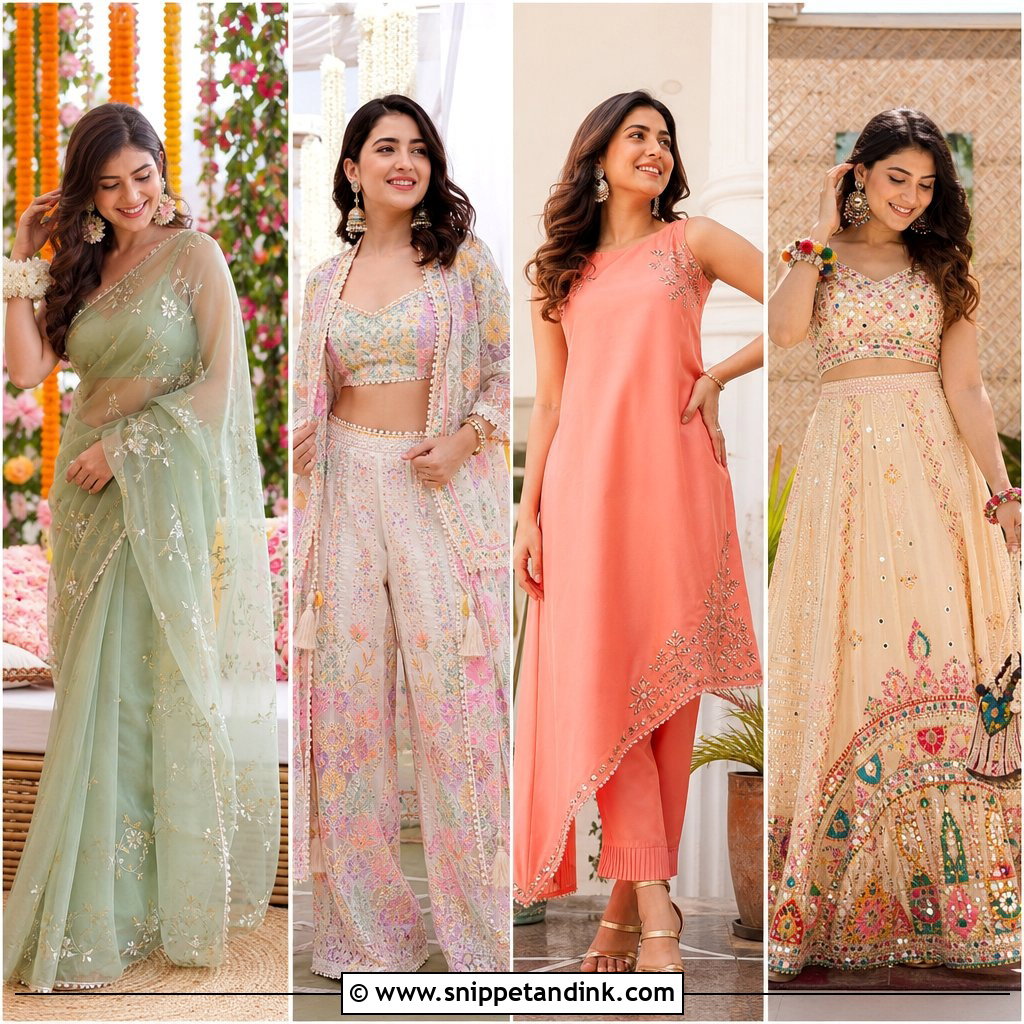
Mint, peach, powder blue, lavender, blush and pistachio all suit daytime events for anyone who’d rather avoid the brights. Pastels need texture to stay festive, so look for mirror work, pearl borders, light sequins or floral thread. For the bride, a brighter dupatta or bolder jewellery adds ceremony. One fitting tip: pastels show sweat marks faster than saturated colours, so a breathable lining matters if the venue is warm.
10. Multicolor Mehndi Dress Design
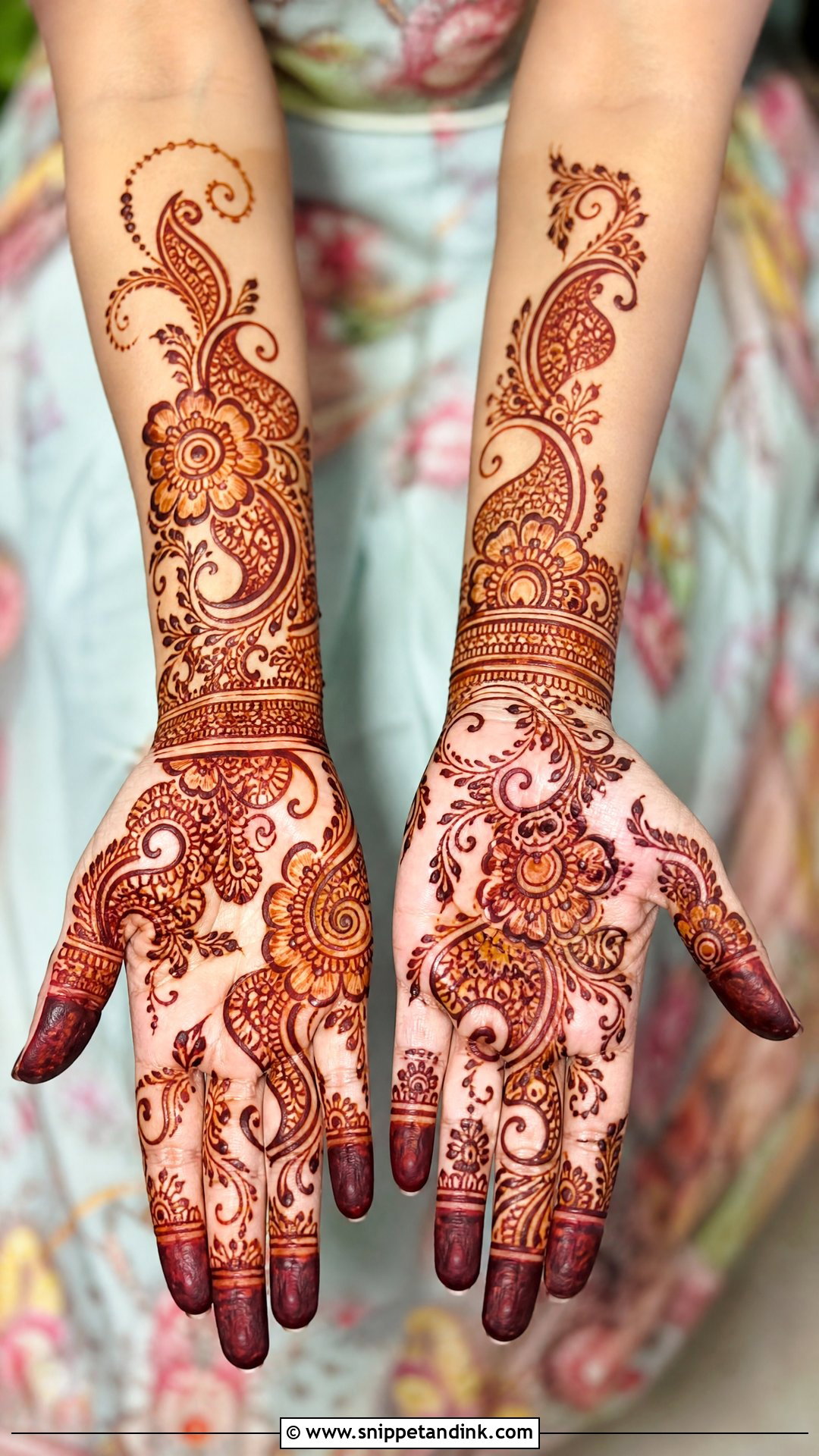
Patchwork lehengas, printed skirts and mixed-border dupattas suit a lively, dance-heavy function. Many colours can sit together when the base pattern is balanced; what tips it into chaos is mixed jewellery. I keep accessories in one metal tone so the outfit has a resting point. Brides can go heavier with mirror work; guests can wear a printed skirt with a plain blouse. Playful henna with paisleys, swirls and dots echoes the energy nicely.
11. Mehndi Anarkali Dress Design
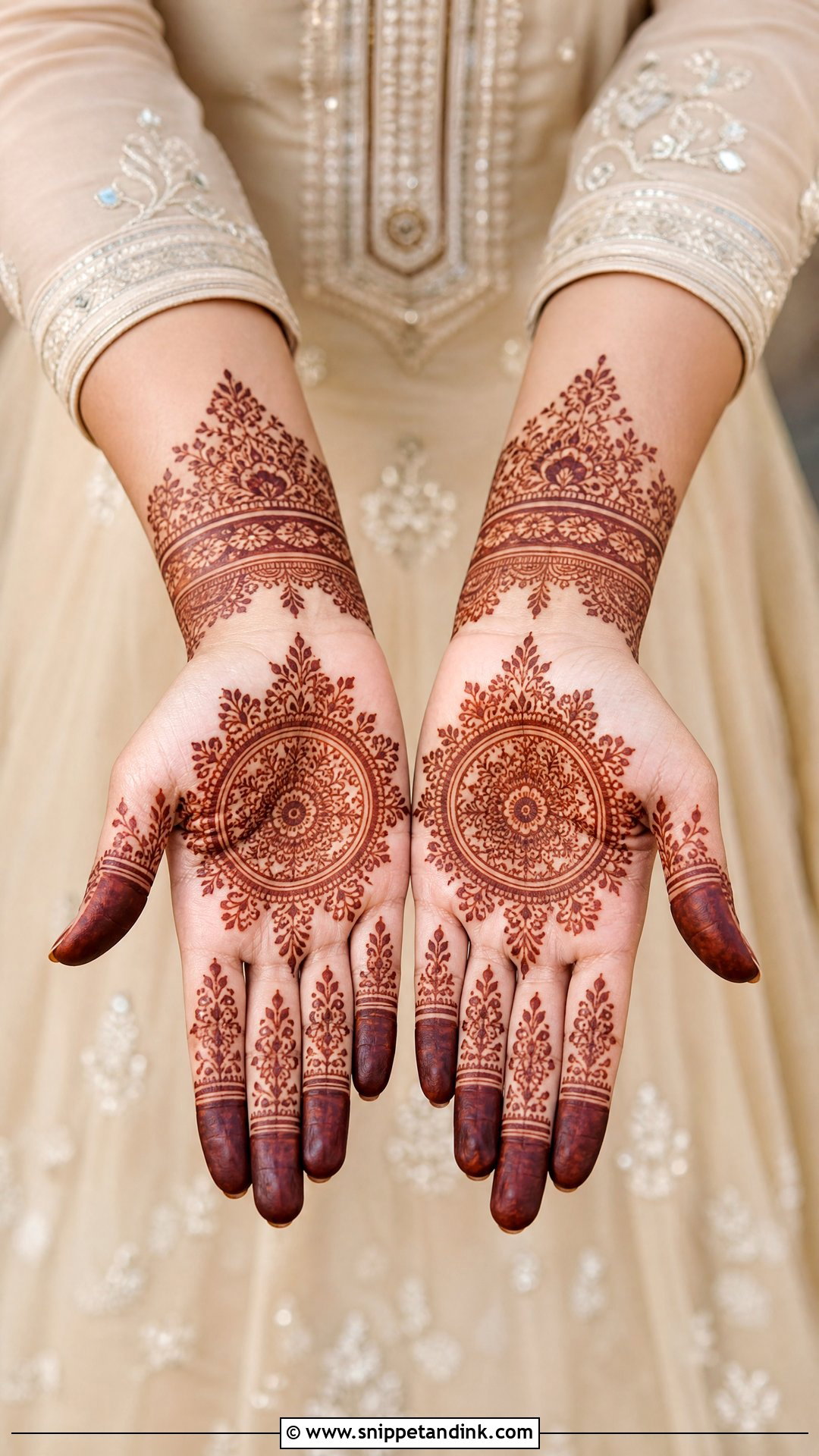
Comfort and a traditional silhouette meet in an Anarkali dress, and the flare lets you move without fuss. Georgette, chiffon, cotton silk or crepe keep it light. Yellow, green, peach and pink are the usual mehndi shades. Sleeveless or short sleeves are the practical pick for henna, with the dupatta pinned to one side. A floor-length anarkali can catch under your feet as you stand up with wet hands, so I have brides check the hem height in their actual shoes.
12. Mehndi Gharara Dress Design
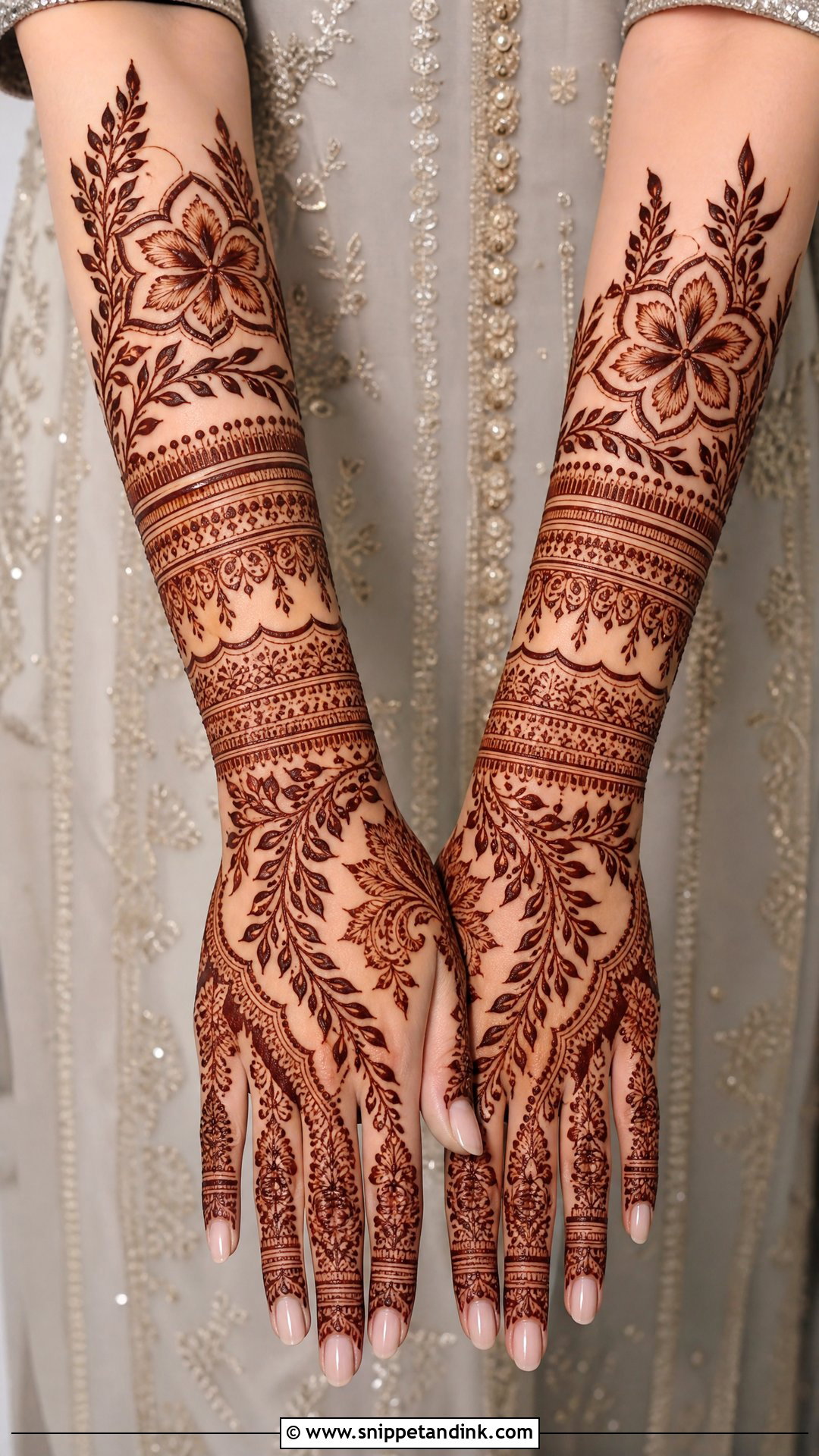
A gharara dress has that fitted upper leg and dramatic flare at the knee joint, with a short kameez as the traditional partner. It sits comfortably for henna. Dancing is another matter: if the flare pools too far on the floor, you’ll step on it, so I hem ghararas to just brush the shoe. Brides can carry heavy gota and mirror work; guests can choose lighter chiffon or georgette. Bold Gulf or Indo-Arabic henna with wrist coverage suits its proportions.
13. Mehndi Sharara Dress Design
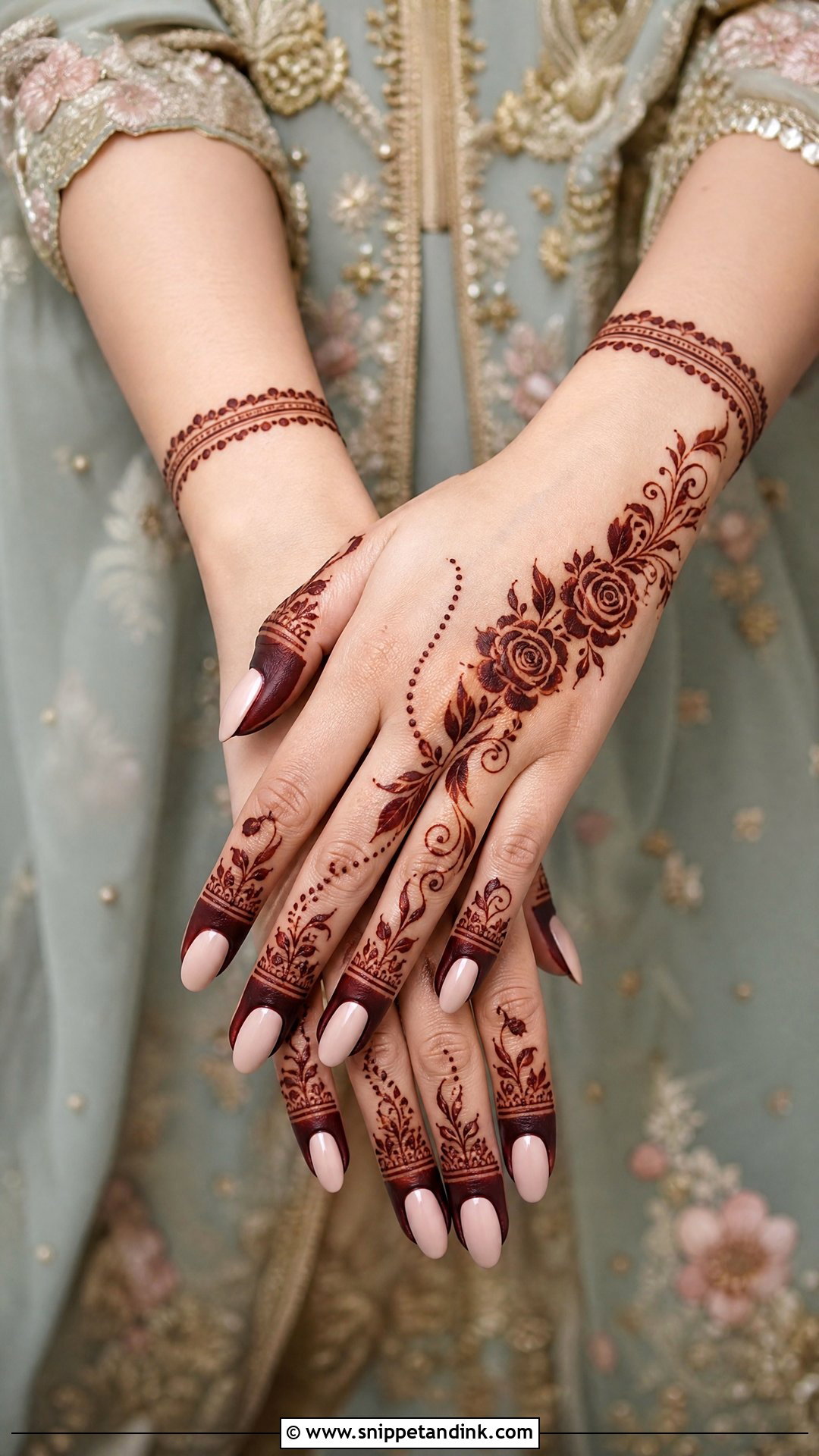
Few outfits are as practical for mehndi as the sharara. You get lehenga drama with trouser freedom, under a short kurti, a peplum or a long straight kameez. Brides can choose heavy embroidery in green, mustard or fuchsia; guests are fine with lighter prints. The sleeve rule is simple. Three-quarter sleeves only if your henna stays on the hands; anything up the arm needs sleeveless or cap sleeves.
14. Mehndi Palazzo Suit Design
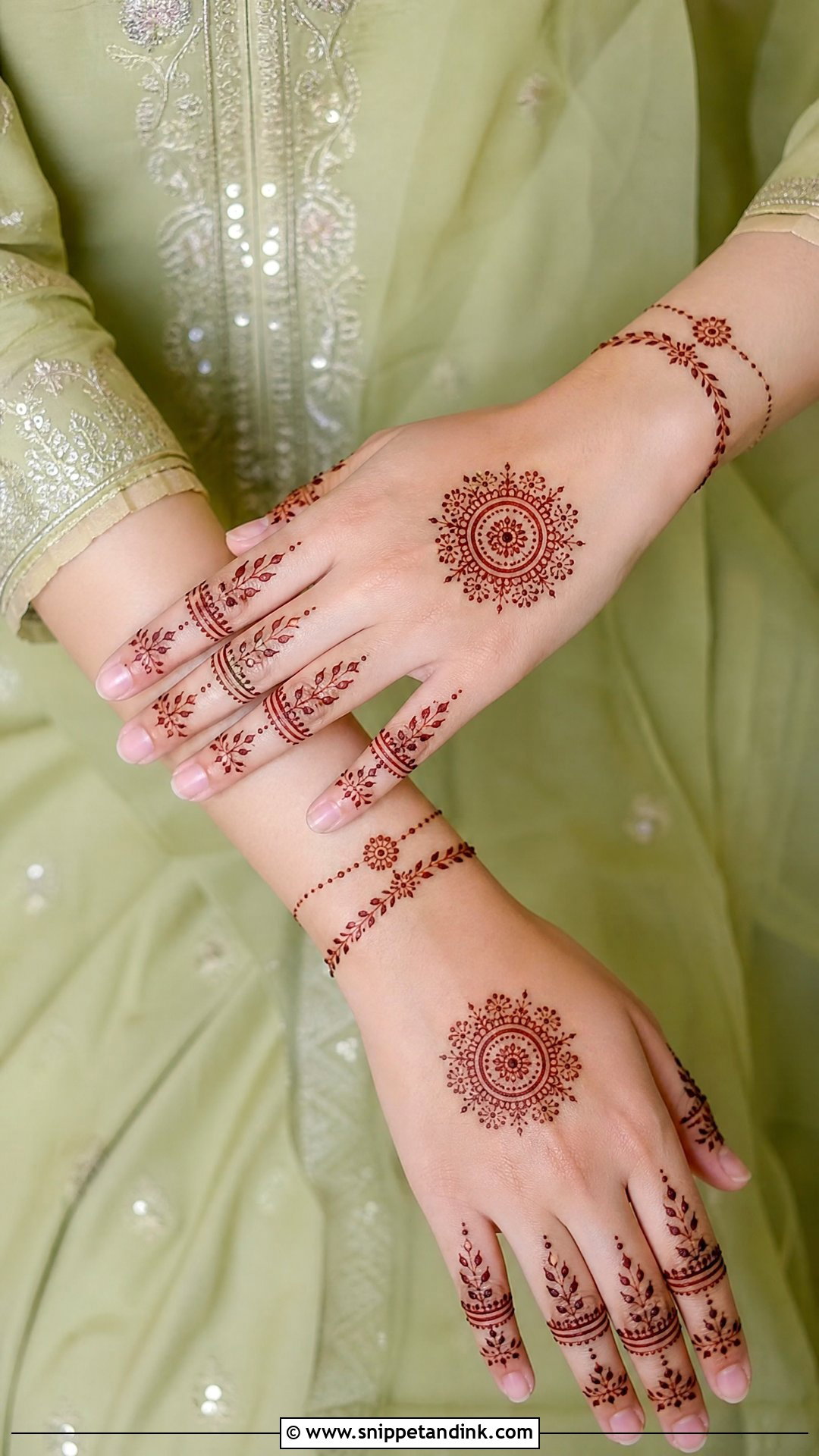
Palazzo suits are the quiet favourite of cousins and guests in hot weather. Wide trousers breathe, they’re easy to dance in, and a long kurta makes them look more dressed. Bright mehndi colours with gota, lace, mirror work or a printed dupatta keep them festive. Younger girls who dislike heavy lehengas tend to love them. Minimal back-hand designs and bracelet patterns suit the relaxed shape.
15. Indo Western Mehndi Dress Design
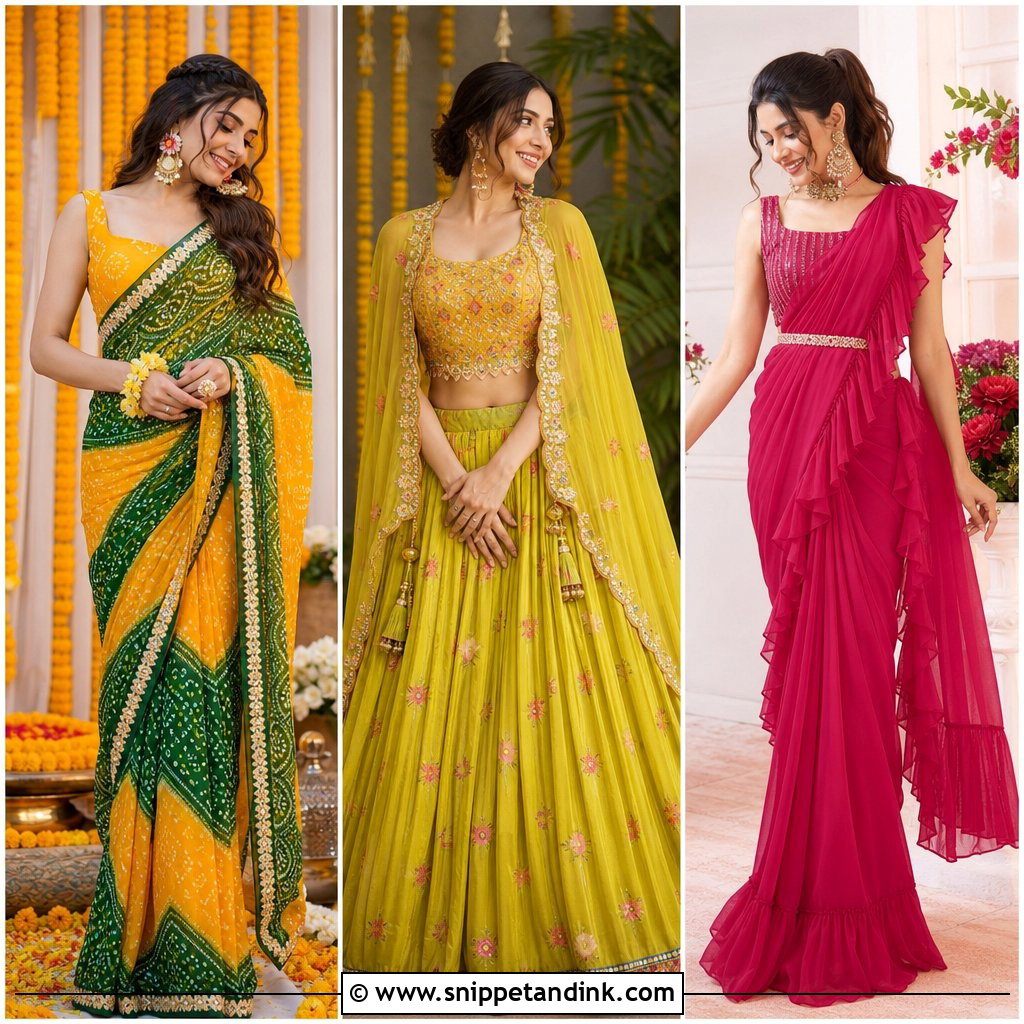
Indo-western sets let modern brides and guests step away from standard ethnic wear: dhoti pants with a crop top, a cape lehenga, a jacket and skirt, a peplum with palazzos or a pre-draped skirt. They stay festive in bright colours with mirrors, embroidery or tassels. The fit is where I’m strict. A structured crop top that’s tight across the back makes holding your arms out for an hour uncomfortable, so sit down and raise your arms in the trial before you commit.
16. Cape Mehndi Dress Design
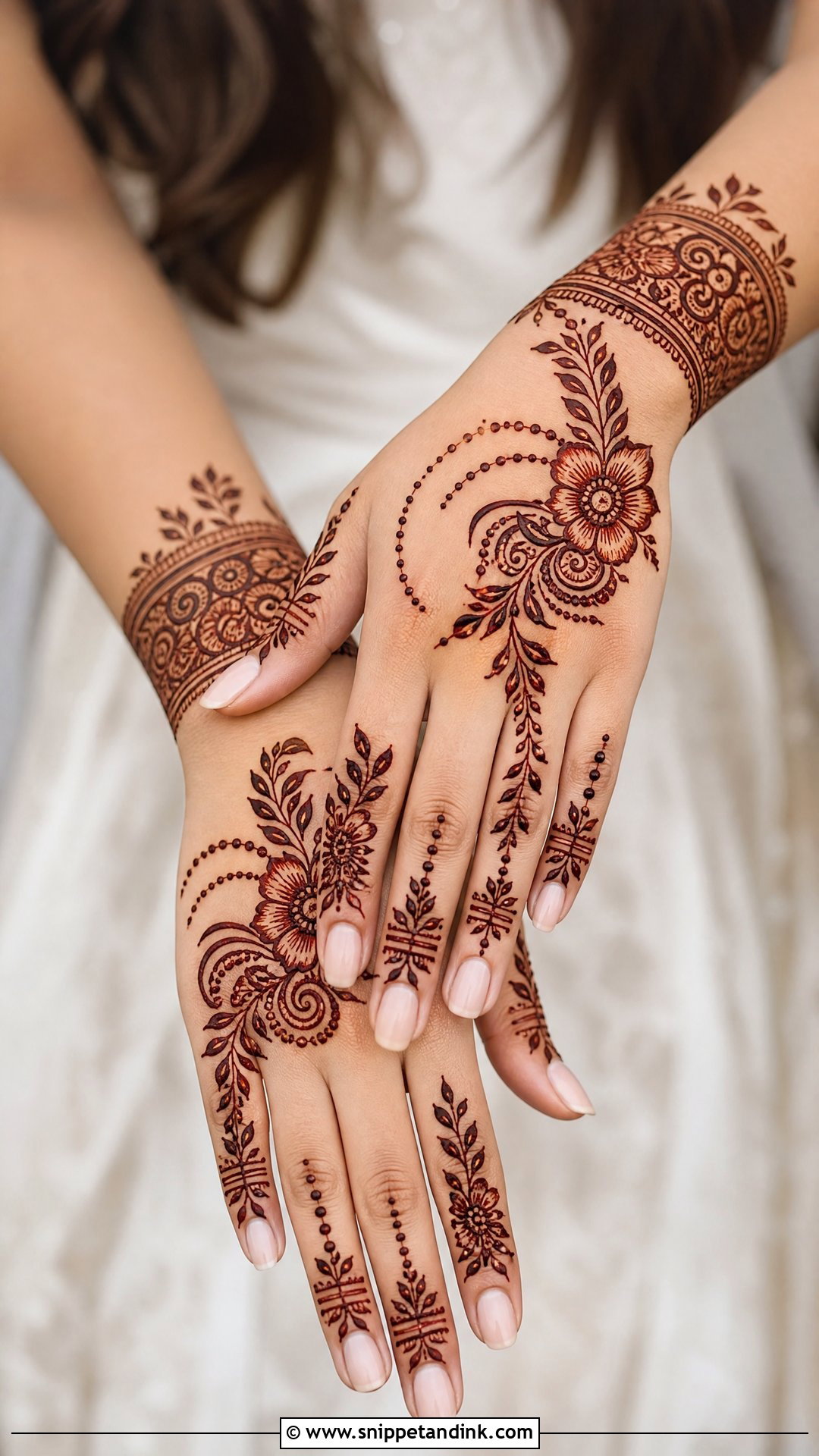
A cape replaces the dupatta, which is the biggest advantage at a mehndi: nothing slides onto wet paste. A short cape over blouse and skirt looks young; a long sheer one is more dramatic. Net, organza or chiffon keep the weight down, with mirrors, sequins or tassels for sparkle. Arms stay visible, so the henna on the backs of your hands and wrists becomes part of the outfit.
17. Jacket Mehndi Dress Design
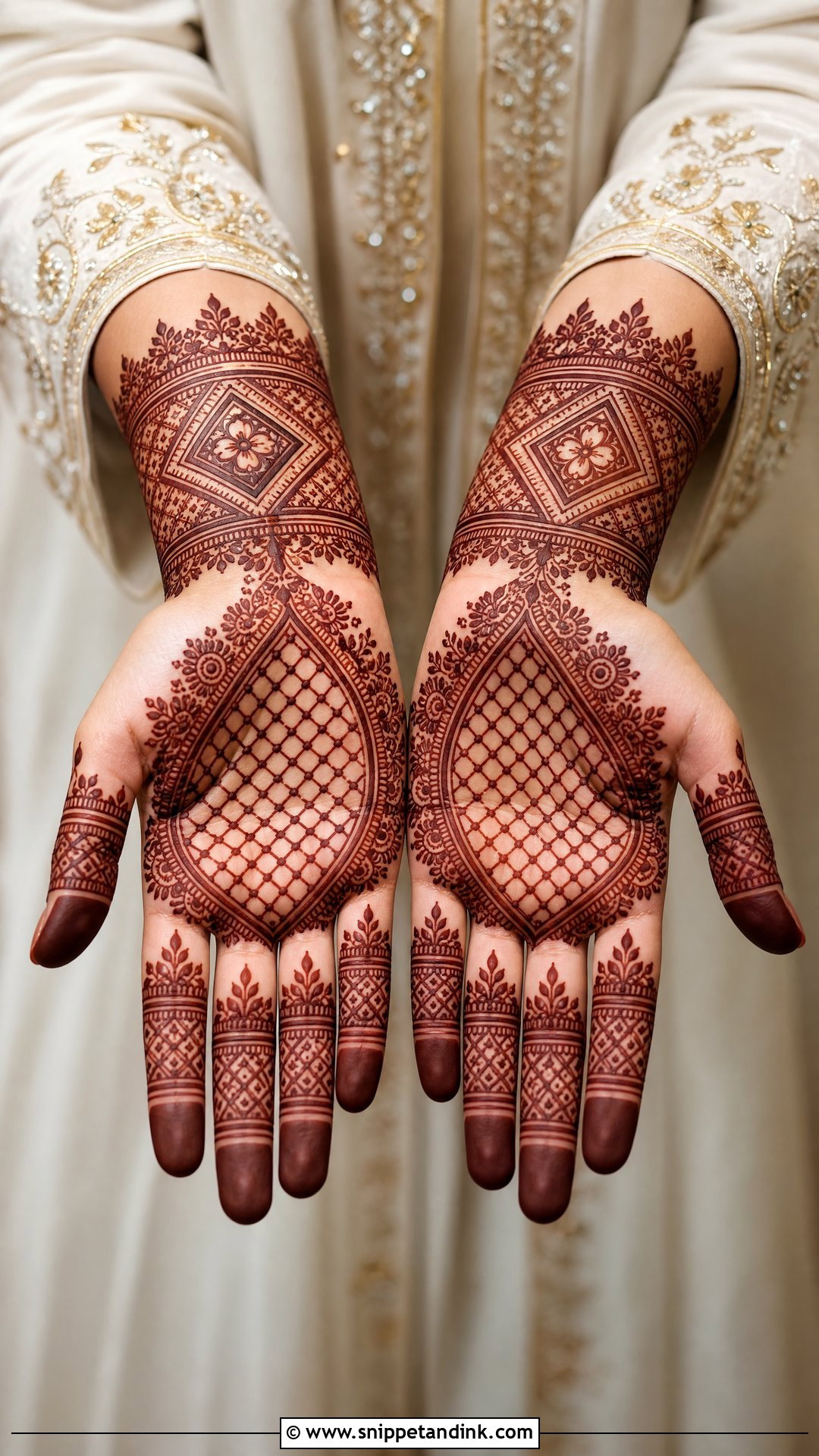
Jackets add structure without losing festivity, over a lehenga, skirt, palazzos or sharara. Short embroidered jackets read playful; long open ones read royal. The problem is the sleeve. A fitted jacket sleeve cannot go on over wet or freshly dried henna without smudging or cracking it, so I either choose a sleeveless jacket or have the bride wear it only after the paste comes off. Green, mustard, peach, pink and ivory bases all suit a colourful jacket.
18. Simple Mehndi Dress Design
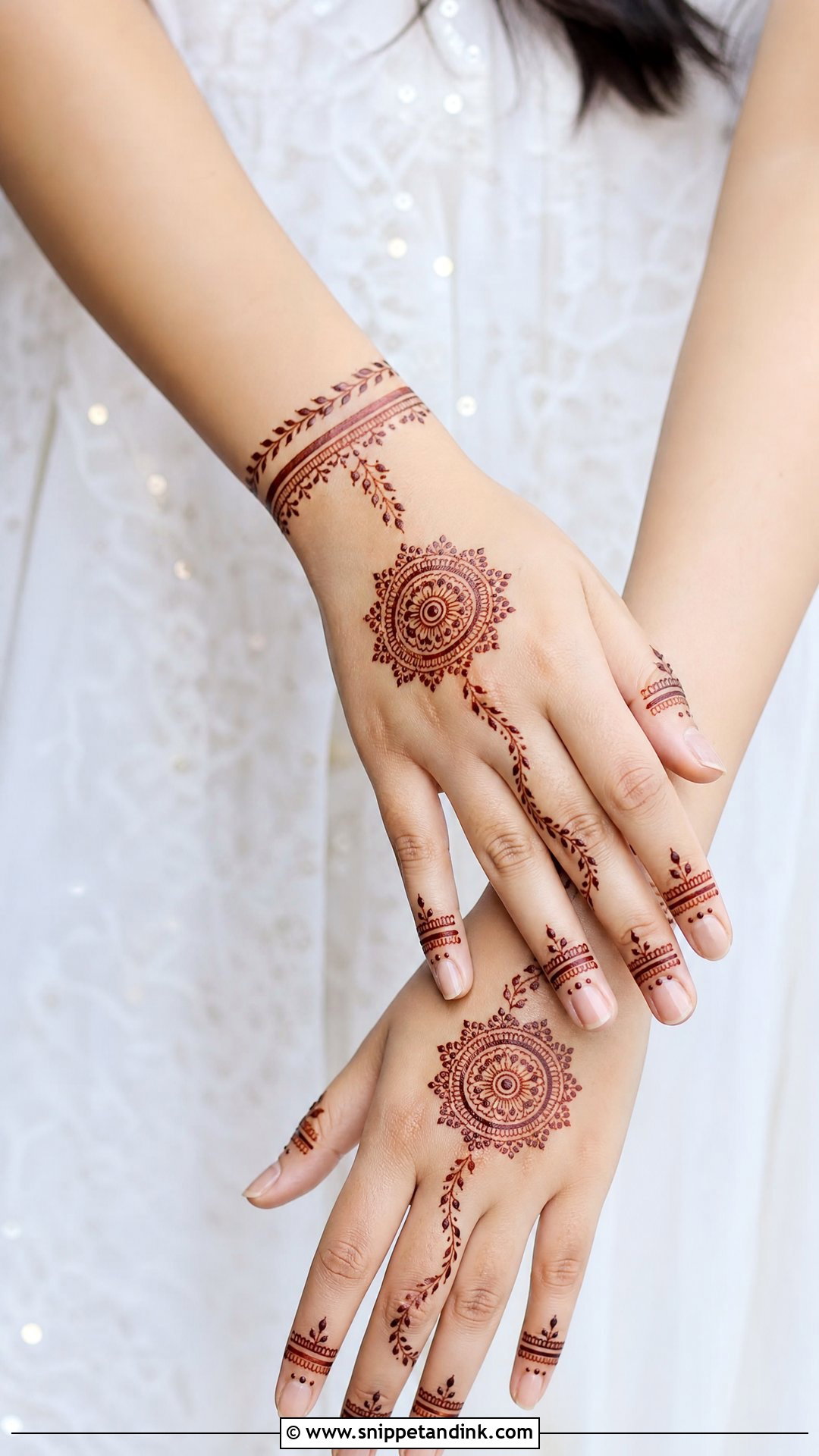
Simple doesn’t mean underdressed when the colour and fit are right. For a small home function or a dholki night, a cotton silk kurta set, a light anarkali, a printed lehenga or a plain sharara with a festive dupatta all work. Yellow, green, peach and pink are easy wins. Put the sparkle into earrings, bangles and embroidered juttis. Breathable cotton is the real advantage here if you’ll be sitting for henna a long time.
19. Bridal Mehndi Dress Design
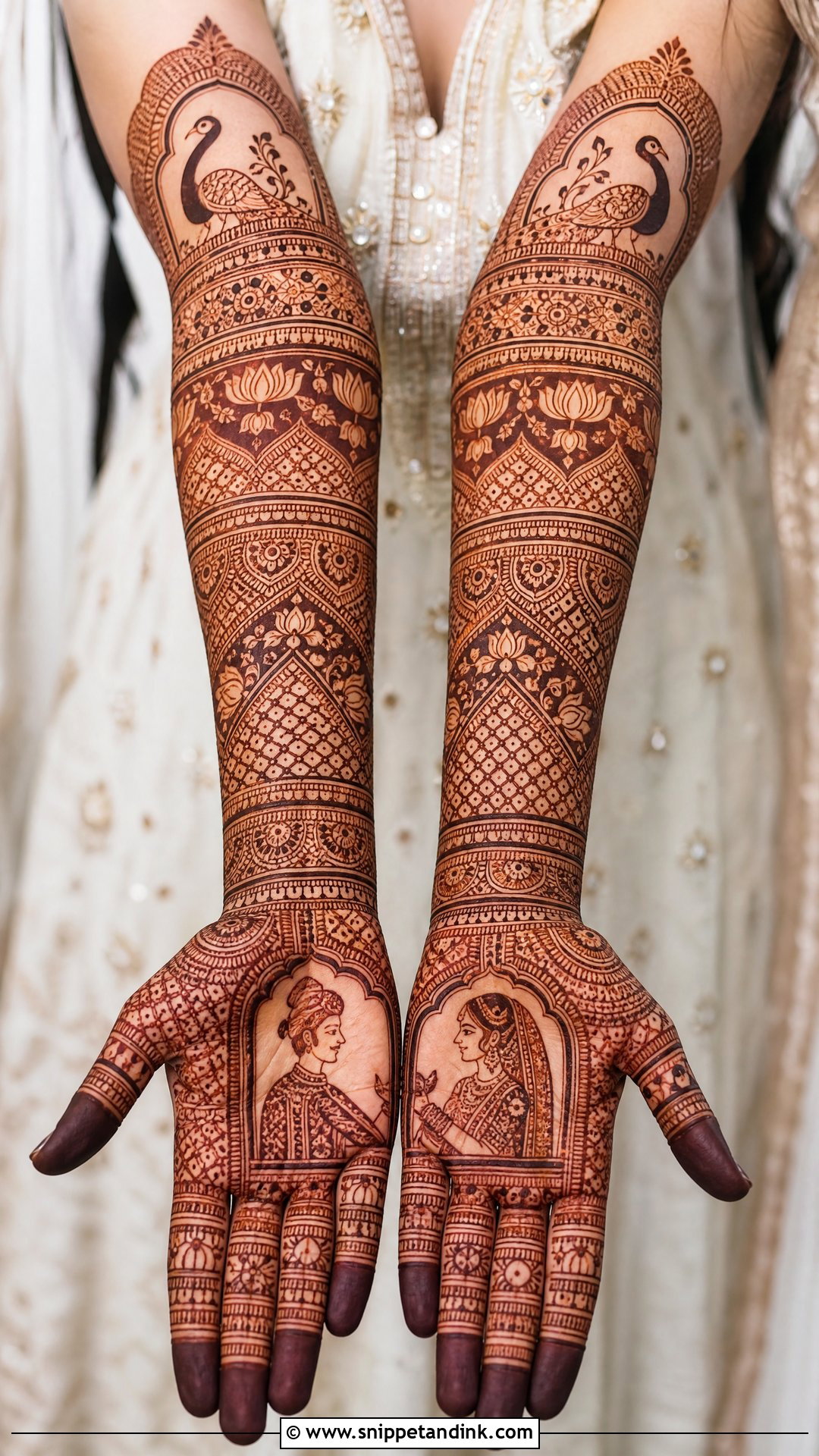
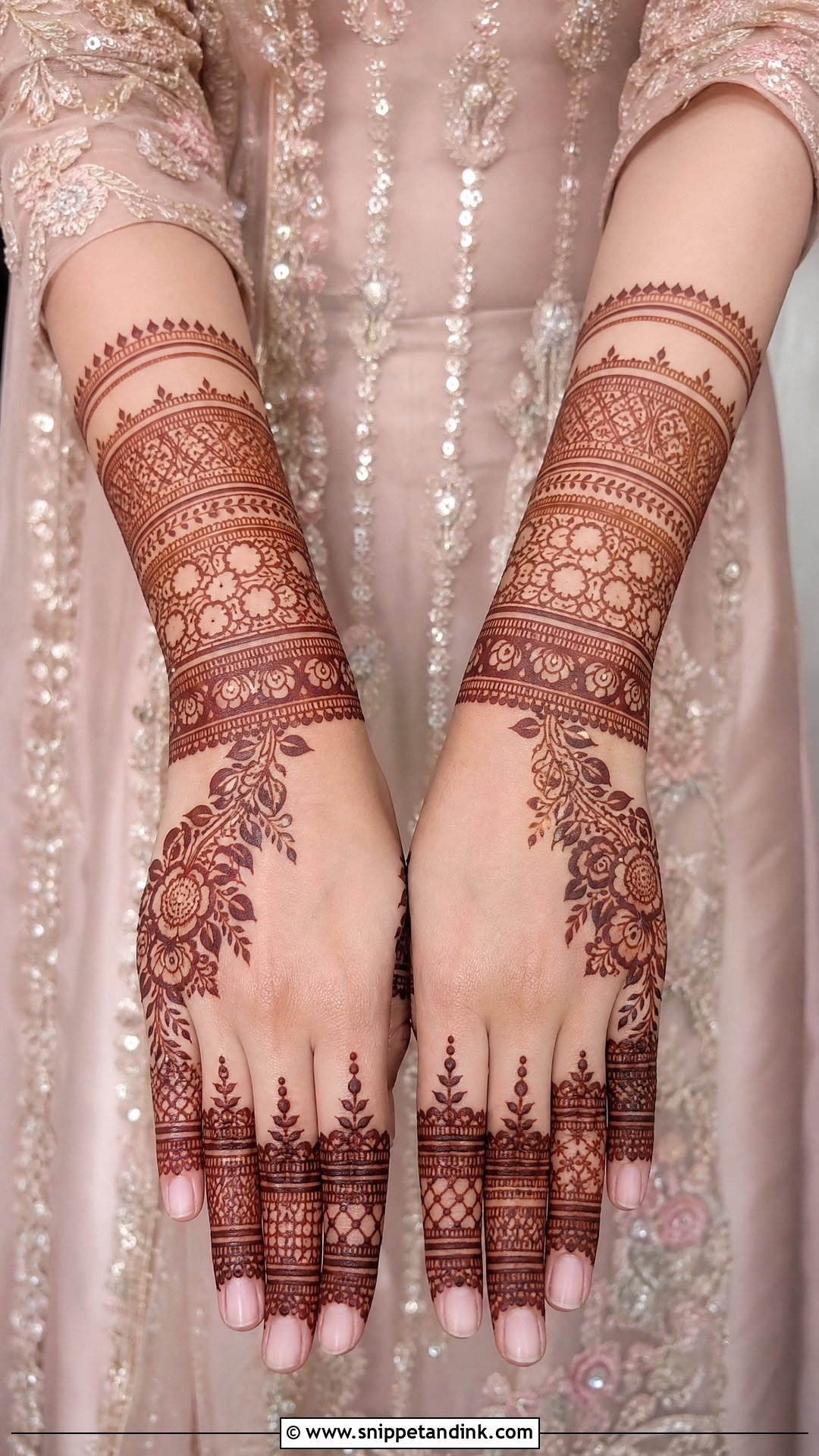
Green, yellow, orange, pink or a multicolour palette are where most brides land for their own mehndi. A lehenga is the usual pick, though a sharara, gharara, or heavily embroidered Anarkali can look every bit as special. Close-up hand photos are a big part of the day, so long fitted sleeves are out. I plan the blouse, dupatta and jewellery so the henna is framed rather than hidden, and I get the bride fully dressed, hooks and all, before the artist arrives.
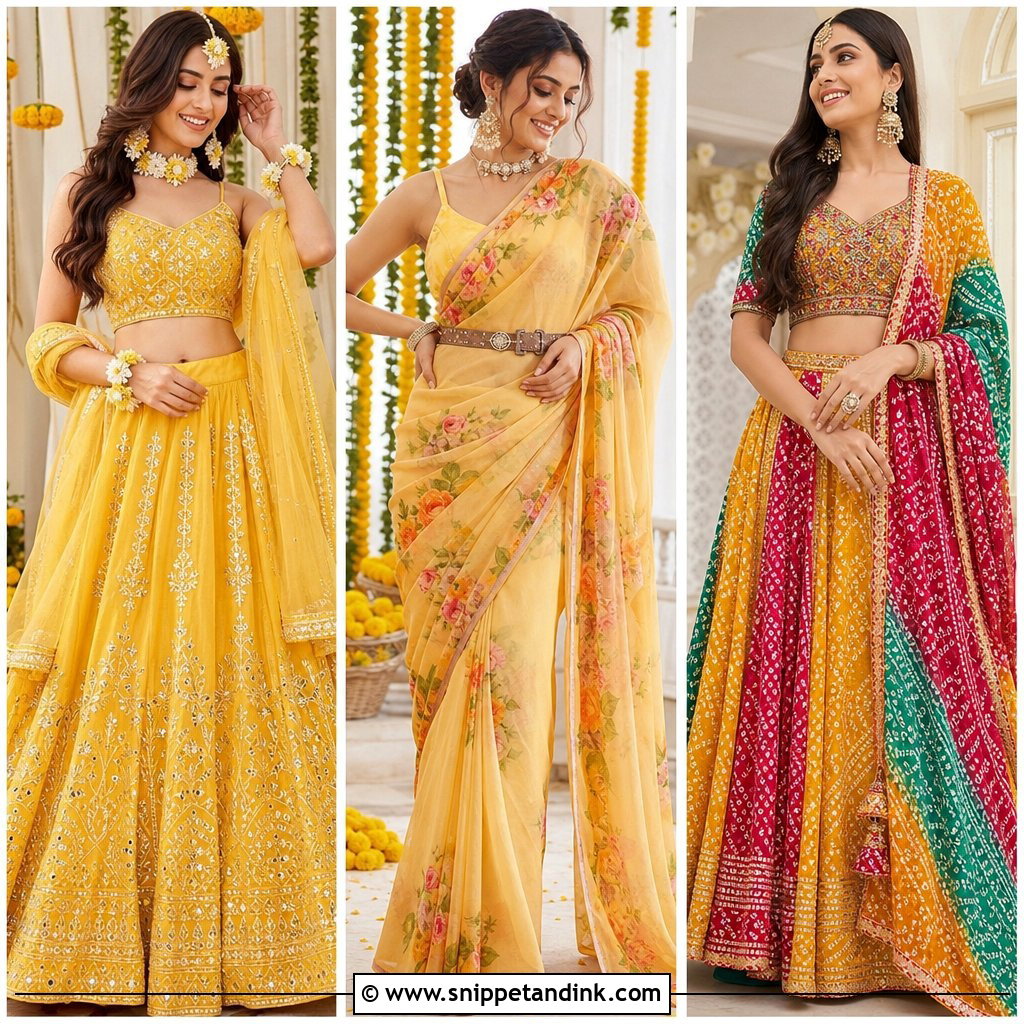
20. Mehndi Guest Dress Design
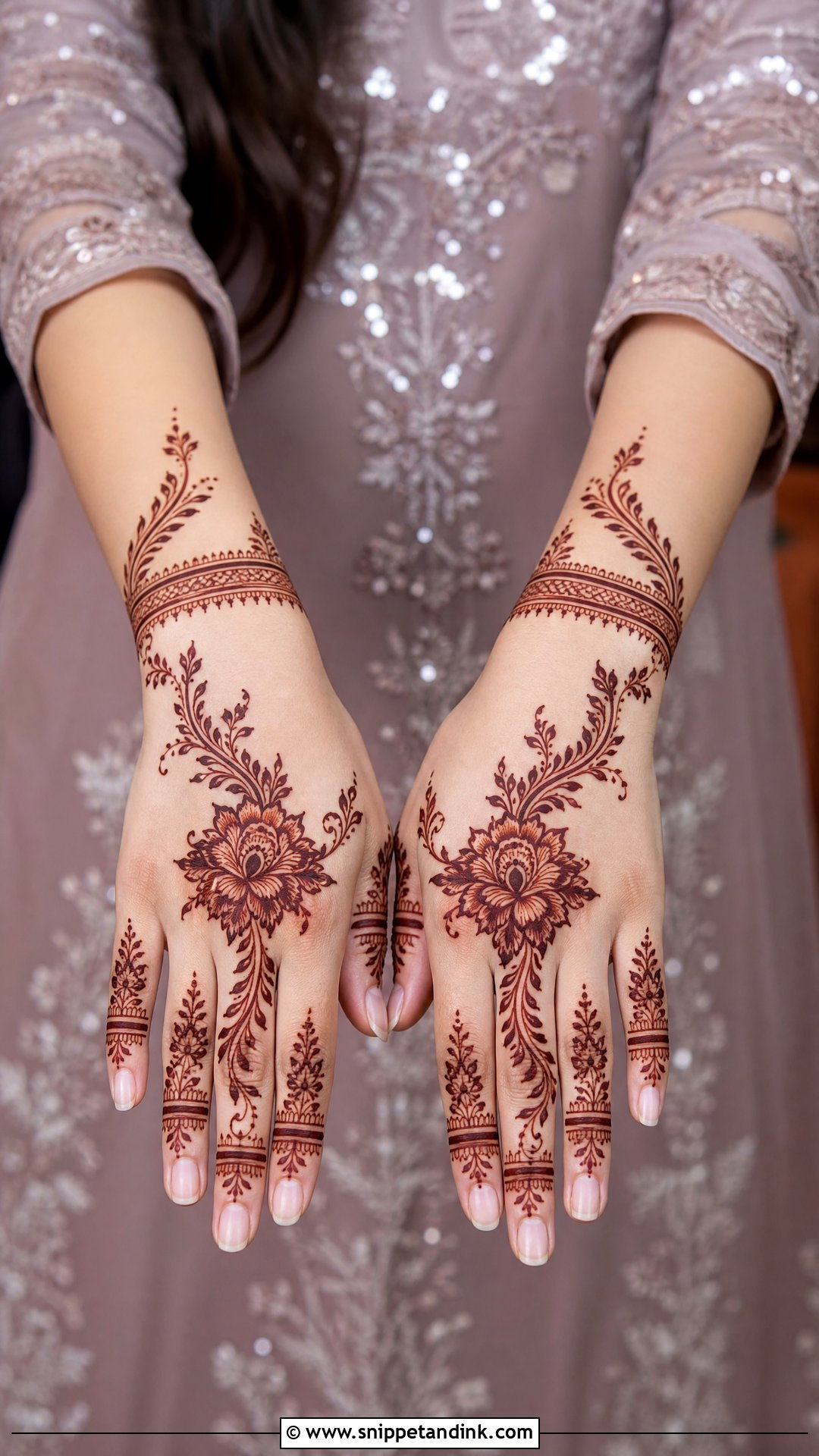
Guests should look festive without competing with the bride. Light lehengas, shararas, palazzo suits, printed anarkalis and bright kurta sets in yellow, green, pink, orange, turquoise or peach are all safe. Skip bridal-level embroidery unless the invitation asks for formal dress. If you’re planning to have henna yourself, wear sleeves that stop above the wrist or roll easily, and keep jewellery light enough to take off while the paste dries.
Getting Henna Paste Out of Silk and Georgette
Henna dyes fabric just as it dyes skin, and a smear on a light outfit can set quickly. If paste lands on your clothes, let it dry, then lift it off with a blunt edge rather than rubbing it in. Rinse the back of the fabric with cold water, never hot, which can set the stain. Washable cotton can usually be treated at home with a gentle stain remover. For silk, embroidered pieces or anything with gota, take it to a dry cleaner within a day or two and tell them it’s henna so they treat it correctly.
Storing Mirror Work and Gota Between Weddings
Mehndi outfits get worn again, and how you put them away decides whether they still look good next season. I give clients the same short checklist.
- Air the outfit for a day before packing so trapped moisture can’t tarnish metallic gota or zari.
- Wrap it in soft cotton or muslin. Plastic garment bags trap damp.
- Lay tissue between folds so mirrors and sequins don’t scratch the fabric beside them.
- Fold heavy lehengas rather than hanging them by the waistband, which stretches under the weight.
- Refold along different lines every few months so creases don’t wear into the fabric.
Let the Henna Plan Decide Your Sleeves
Colour, fabric and formality all matter, but the outfit that works at a mehndi is the one you can sit, raise your arms and dance in without ruining a fresh design. Brides can go bold with mirror-work lehengas, ghararas or heavy gota; guests look right in shararas, palazzos, floral lehengas, anarkalis or simple kurta sets. Brights feel traditional, pastels soften the mood, and Indo-western cuts feel current. Decide how far up your arms the henna will go first, then dress around it.
You'll Like These Ideas:


Leave a Reply