
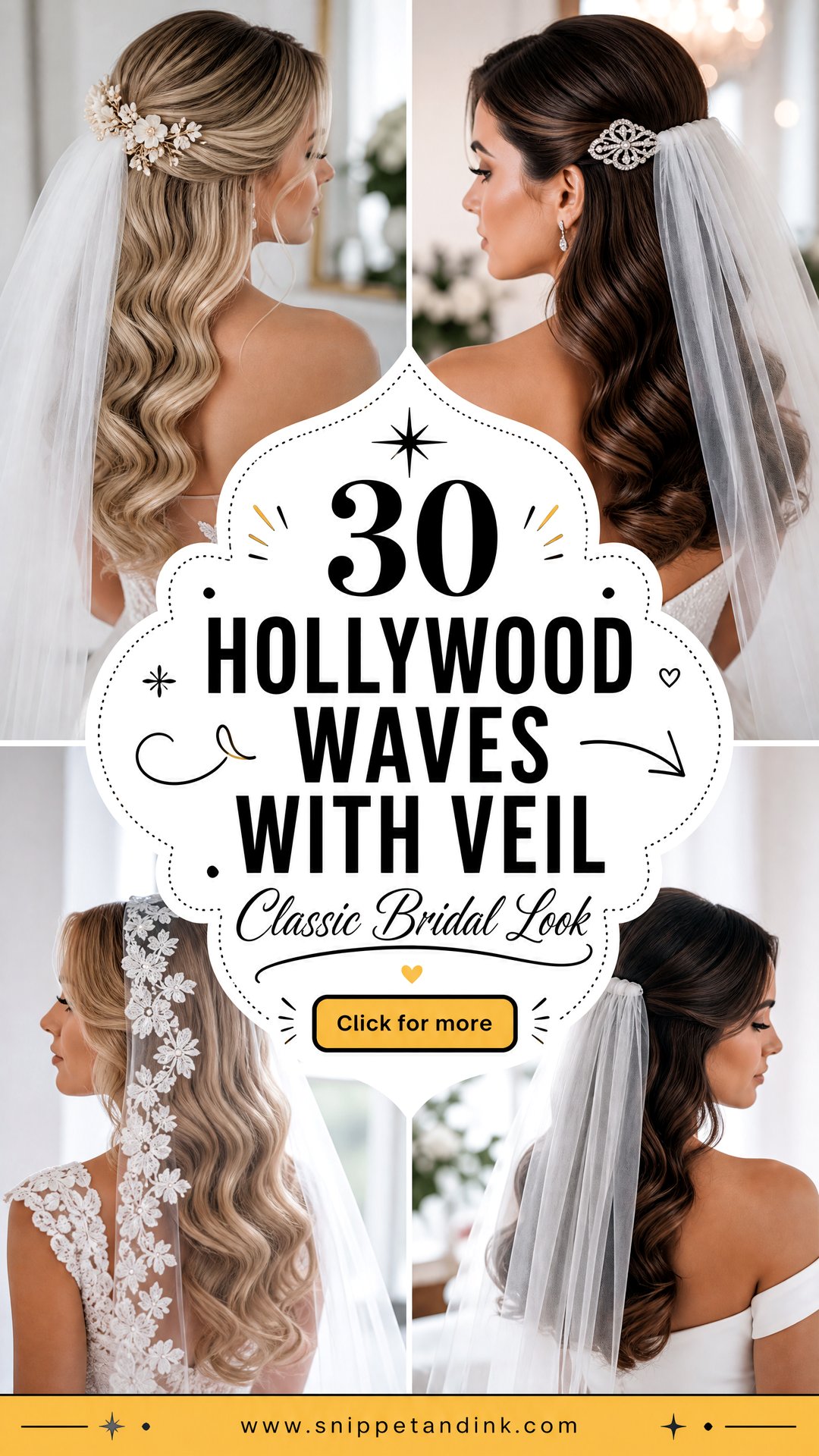
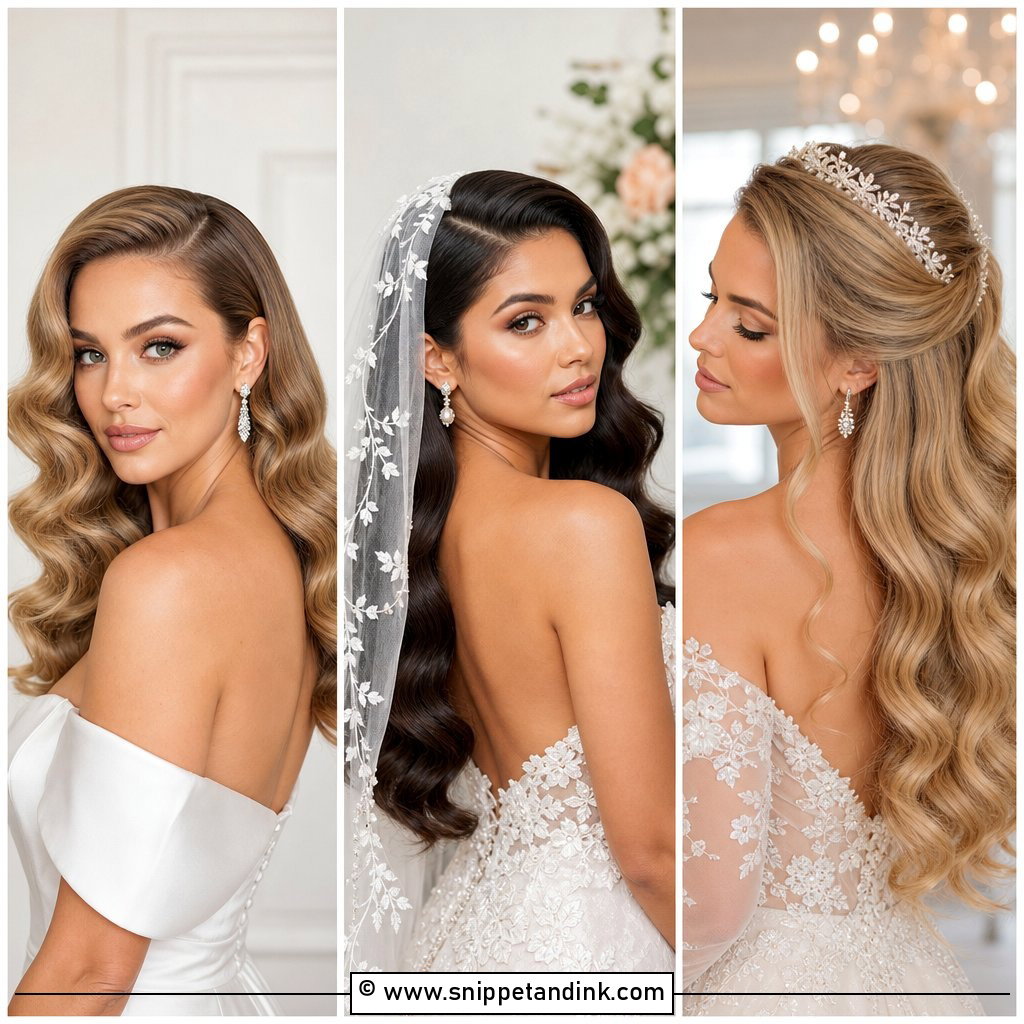
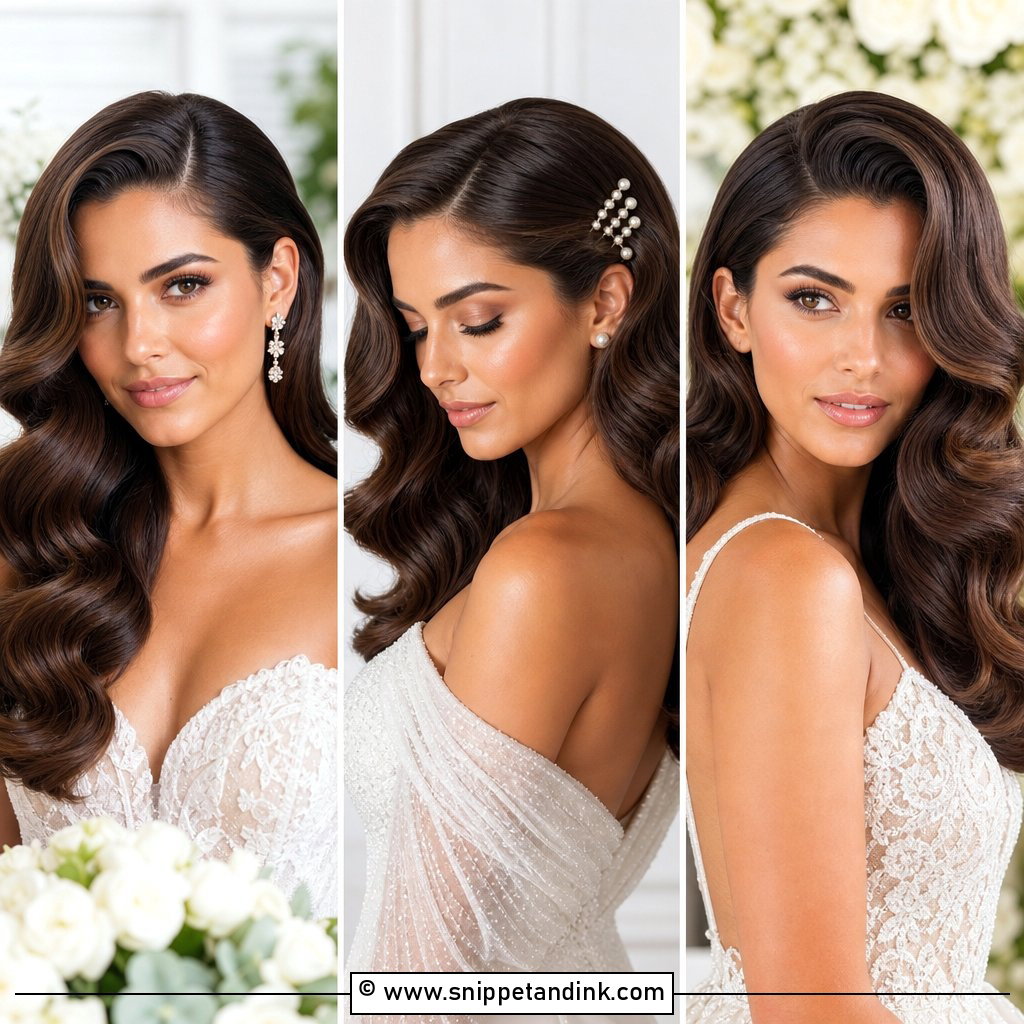
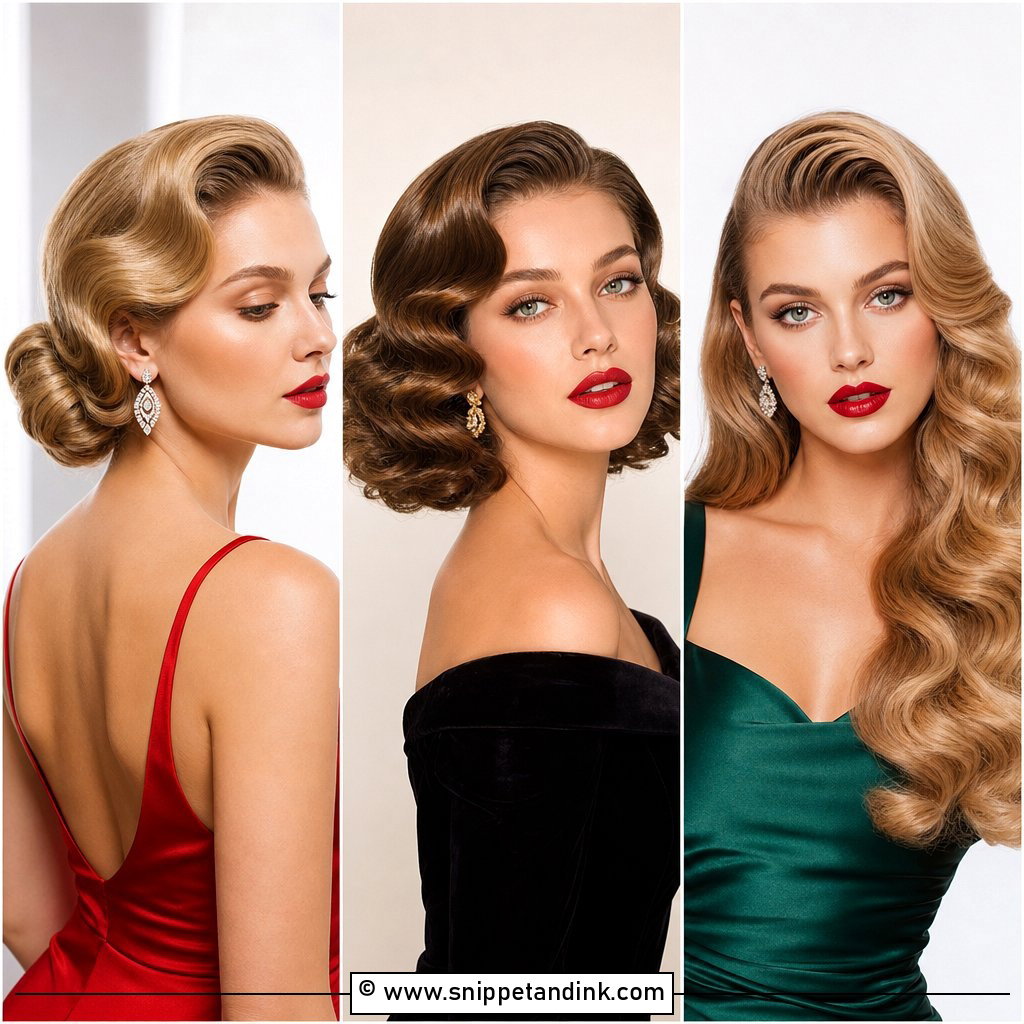
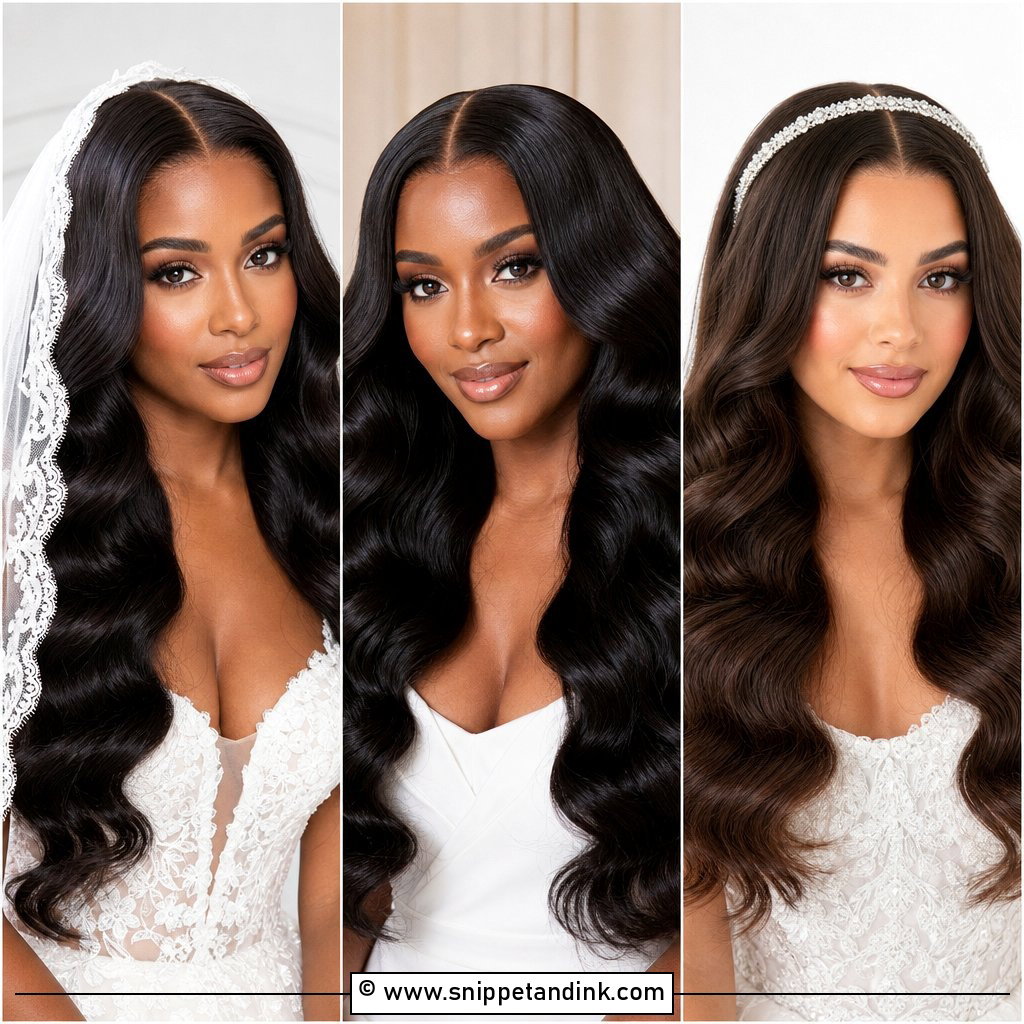
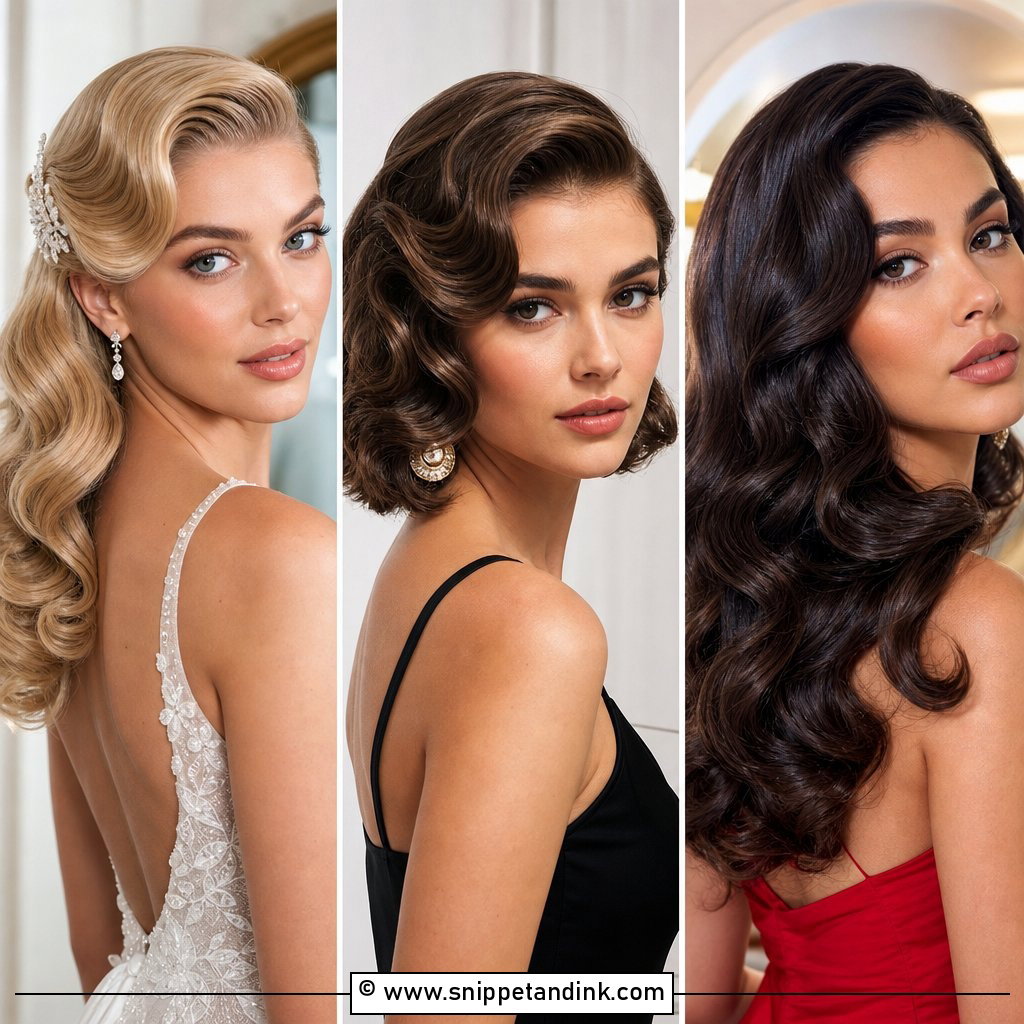
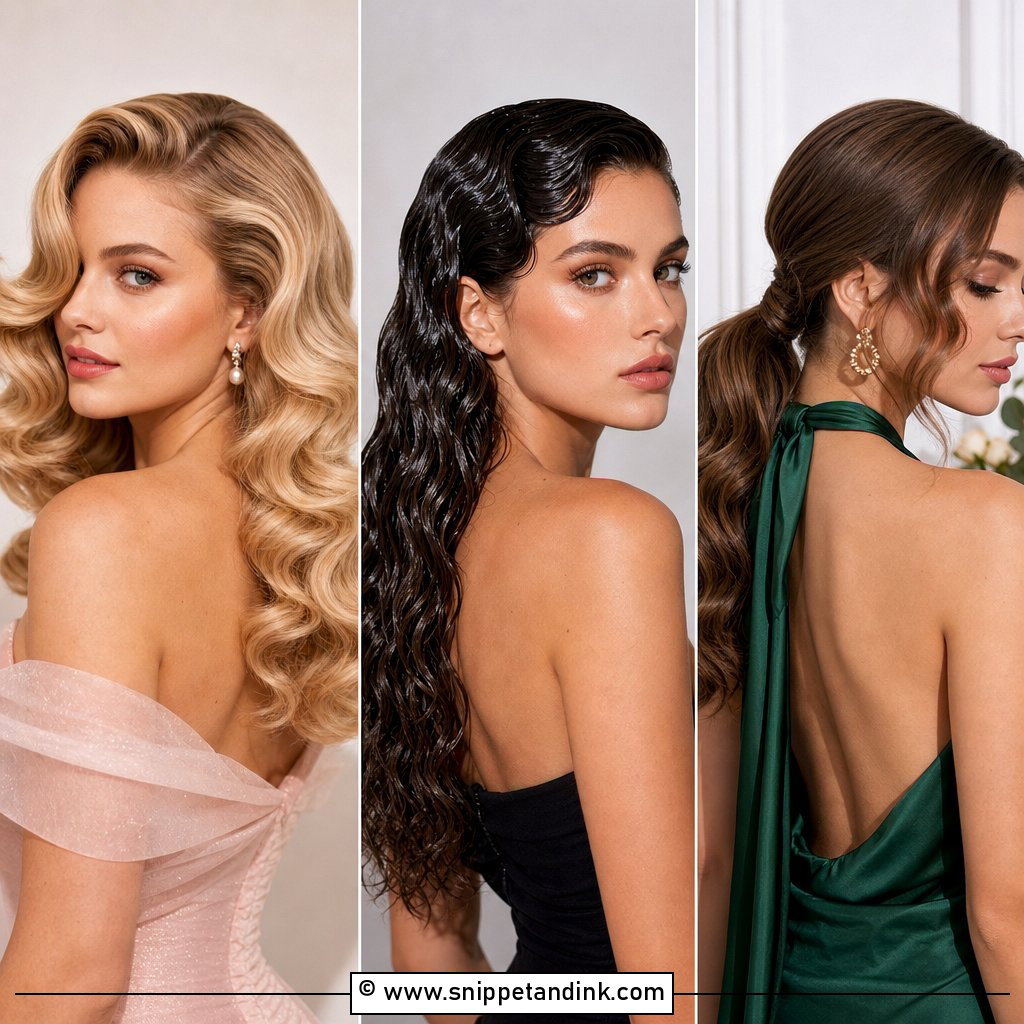
Hollywood waves are glossy, sculpted S-shapes that run in one continuous line from the part to the ends, the look of the old film studios. Put a veil on top and you have one of the most classic bridal pairings there is, but also one of the trickier ones, because glossy, brushed-out hair is exactly the hair a veil comb slides out of. The thirty combinations below cover side parts, half-up styles, low chignons and nearly every veil cut. With each one I’ve noted where the veil should anchor and how the waves behave when it comes off.
What Turns Curls Into a Hollywood Wave
A Hollywood wave isn’t just curled hair. It’s curled hair set in one direction and then brushed until the separate curls join into continuous ripples. If you skip the brushing, you get ringlets. If you skip the setting, it drops in an hour.
- I curl every section in the same direction, away from the face, with a medium-sized iron.
- Each curl gets pinned in a coil against the head while it cools. Cooling is what locks the shape.
- Once cold, the pins come out and I brush the whole length with a boar bristle brush until the curls merge.
- I push each ridge into place with my fingers and hold it with flat clips for a few minutes, then a light mist of spray.
This takes time. Budget more than you would for loose curls, especially with long or thick hair, and never let anyone rush the cooling step to save ten minutes.
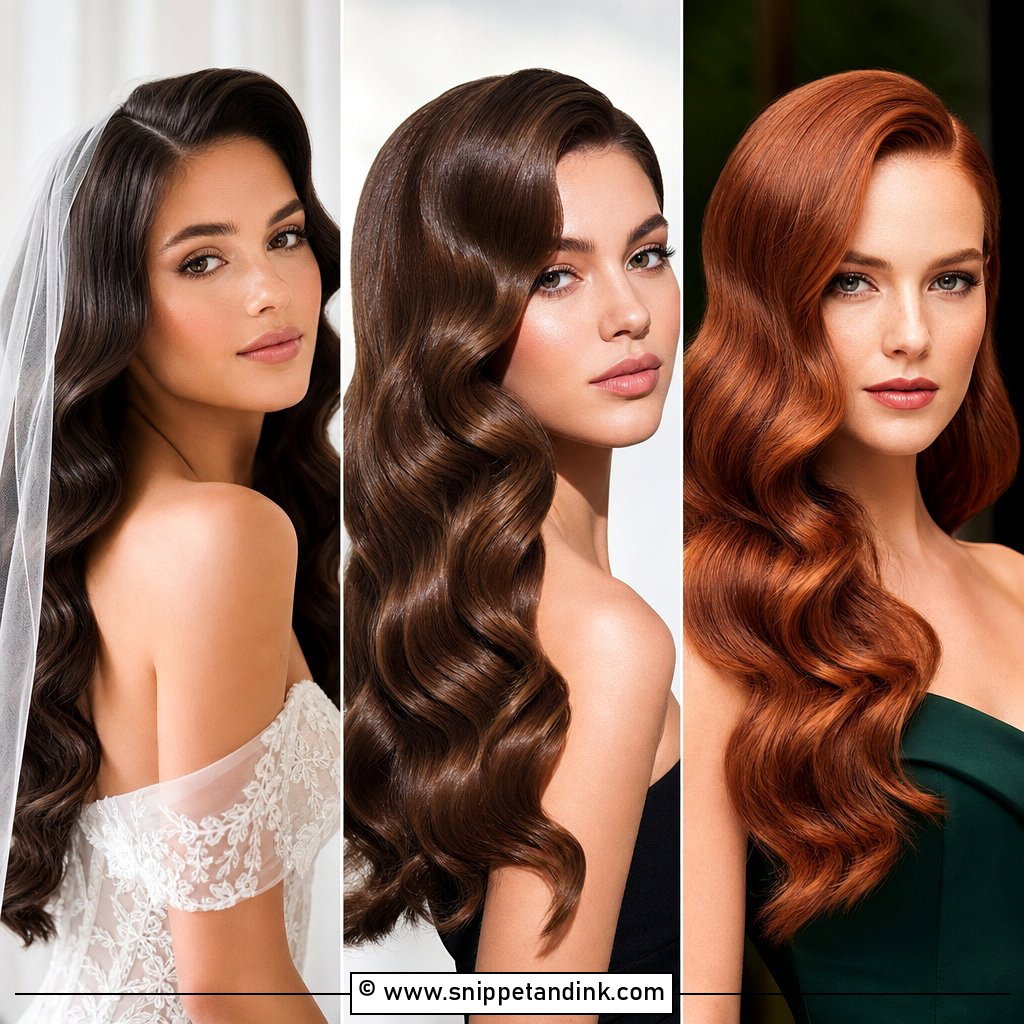
1. Deep Side Part Hollywood Waves With Cathedral Veil
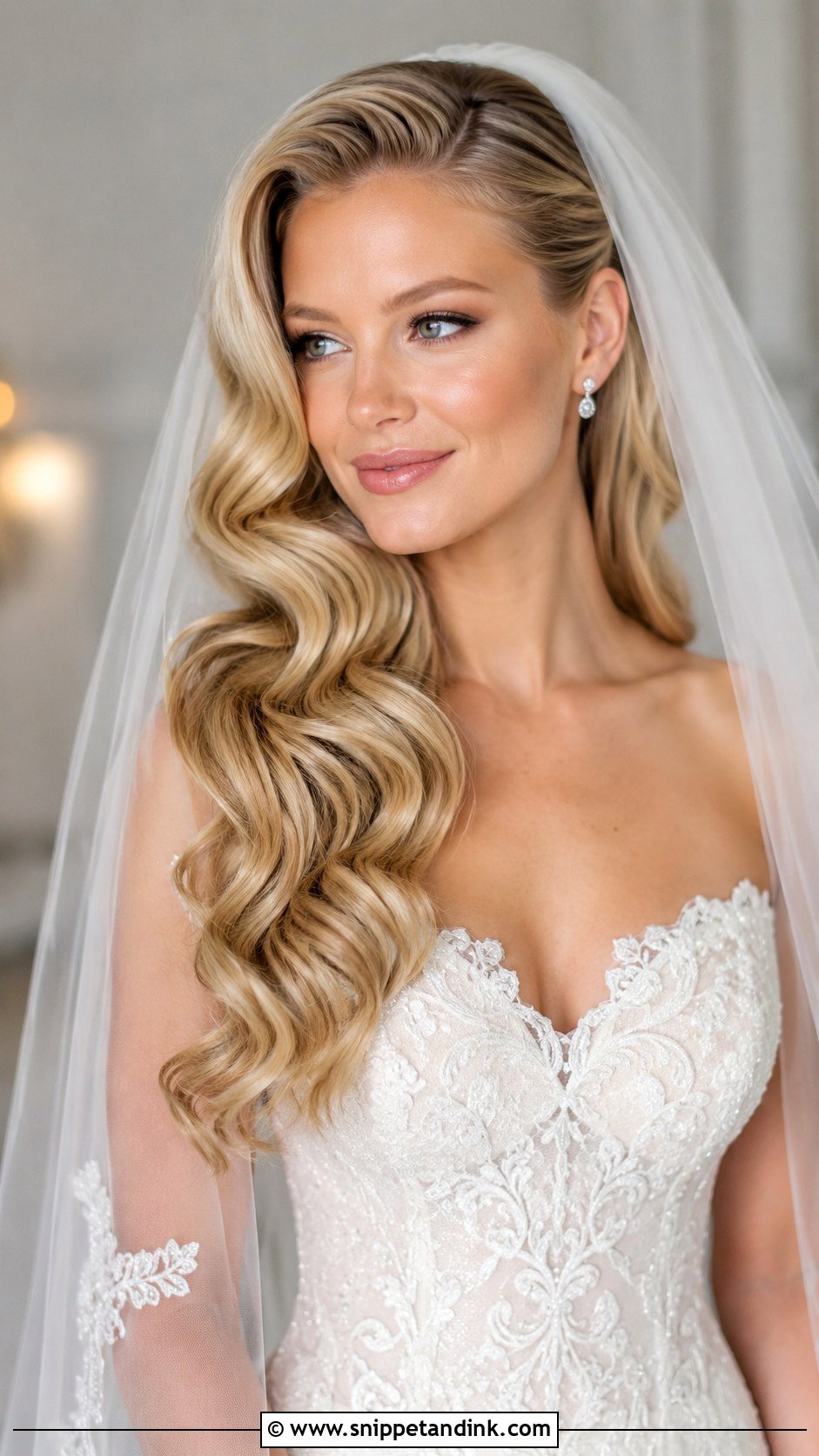
Curls swept over one shoulder from a deep side part, with a cathedral veil trailing behind. The deep part gives lift at the crown and frames the face. I anchor a cathedral veil just behind the curve of the head, below the wave pattern, so its weight pulls downward instead of dragging the front waves flat. Brush the waves out until they join into one continuous ripple. After the veil comes off for dancing, they keep their shape if they were set well.
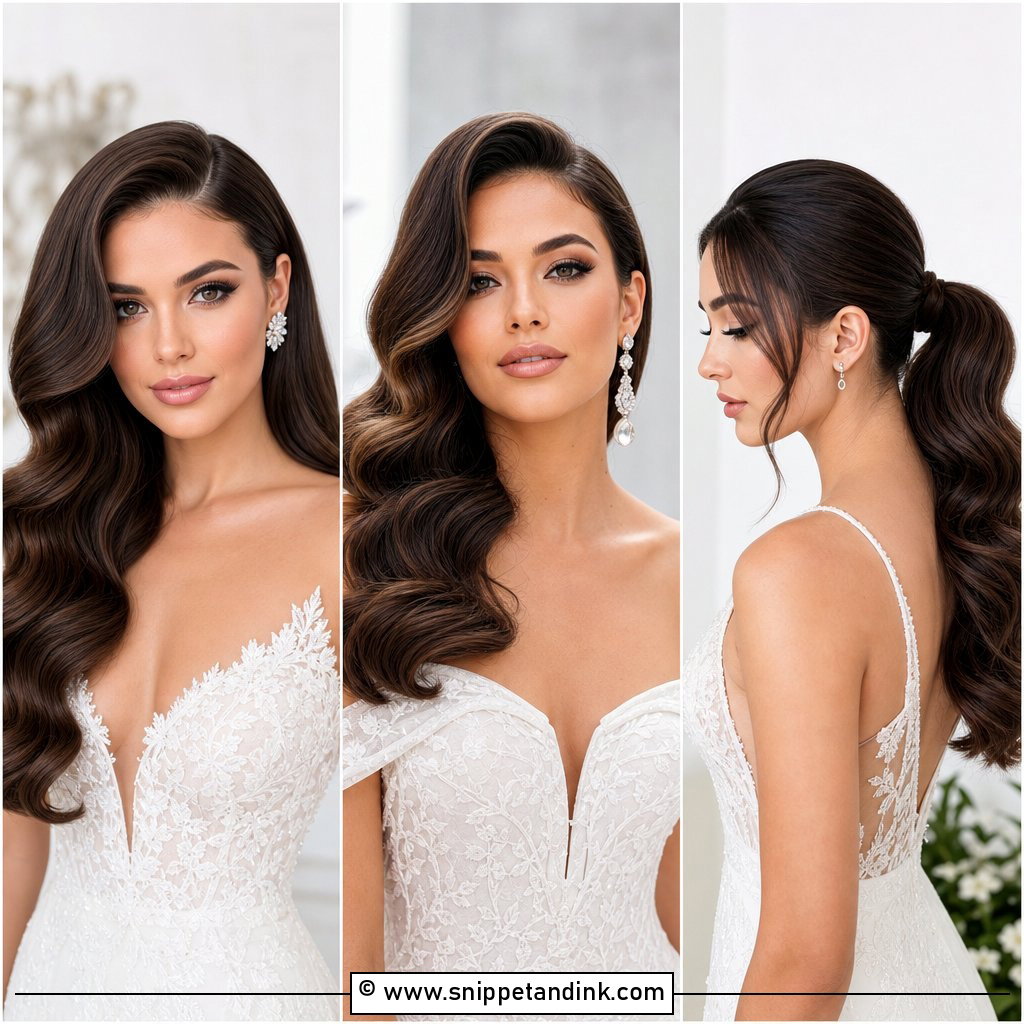
2. Half-Up Hollywood Waves With Veil Comb
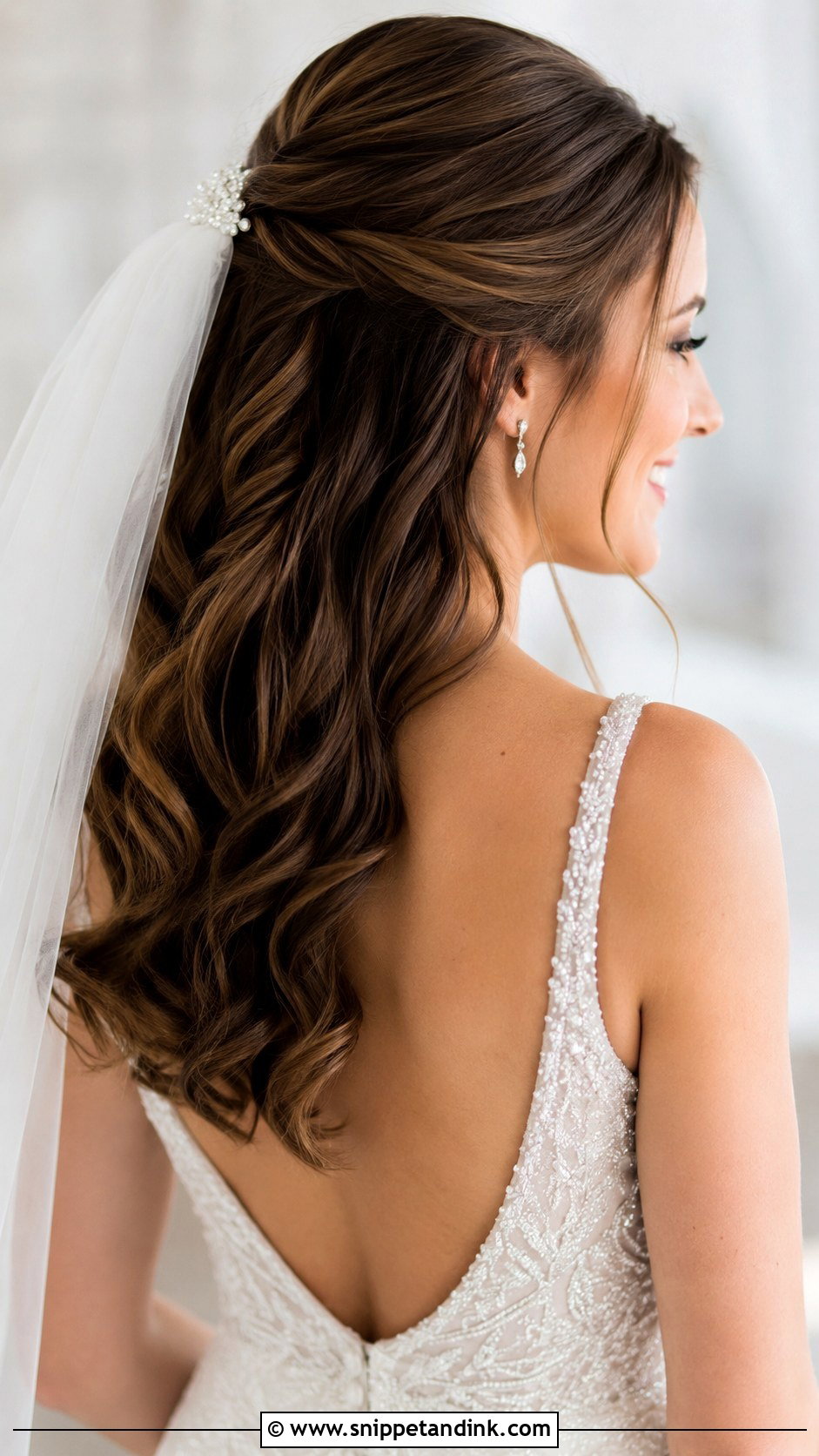
Half-up is the easiest way to give a veil comb something to hold. The top section is pinned smoothly at the crown and the lower lengths fall in defined waves, so the comb slides into the gathered section rather than into loose, glossy hair. I add two crossed pins under that section first as a little foundation. It keeps hair off the face and still shows all the movement, which suits a long day.
3. Low Bun With Hollywood Waves And Veil
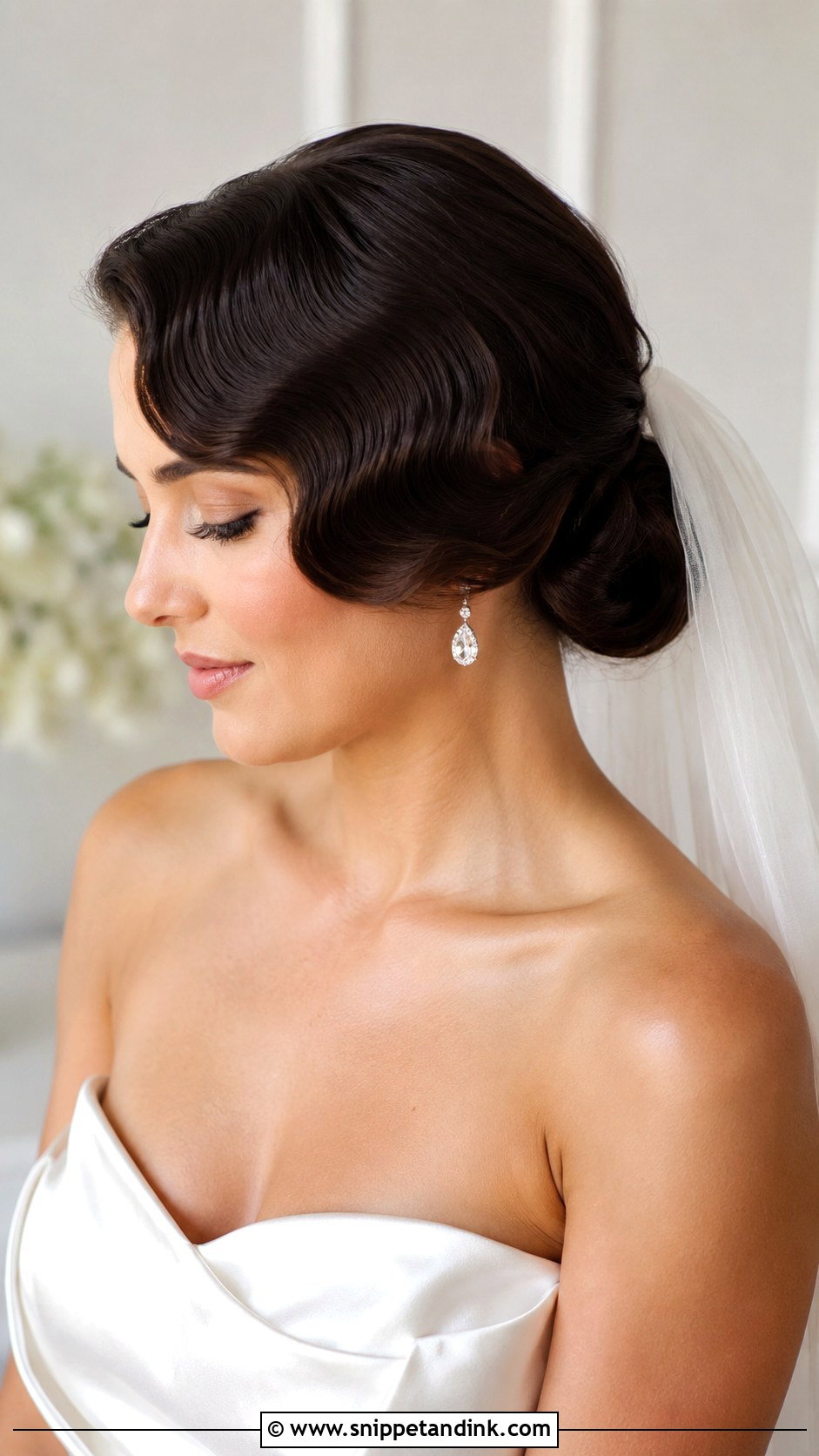
A sleek low bun with finger waves around the face reads as pure vintage. The veil goes just above or just below the bun. Above it shows the veil more; below it tucks the comb into the bun’s dense base, which is the most secure spot of all. I set the face-framing waves with clips while the bun is pinned, then remove them last. Once the veil is off, it’s an easy reception updo.
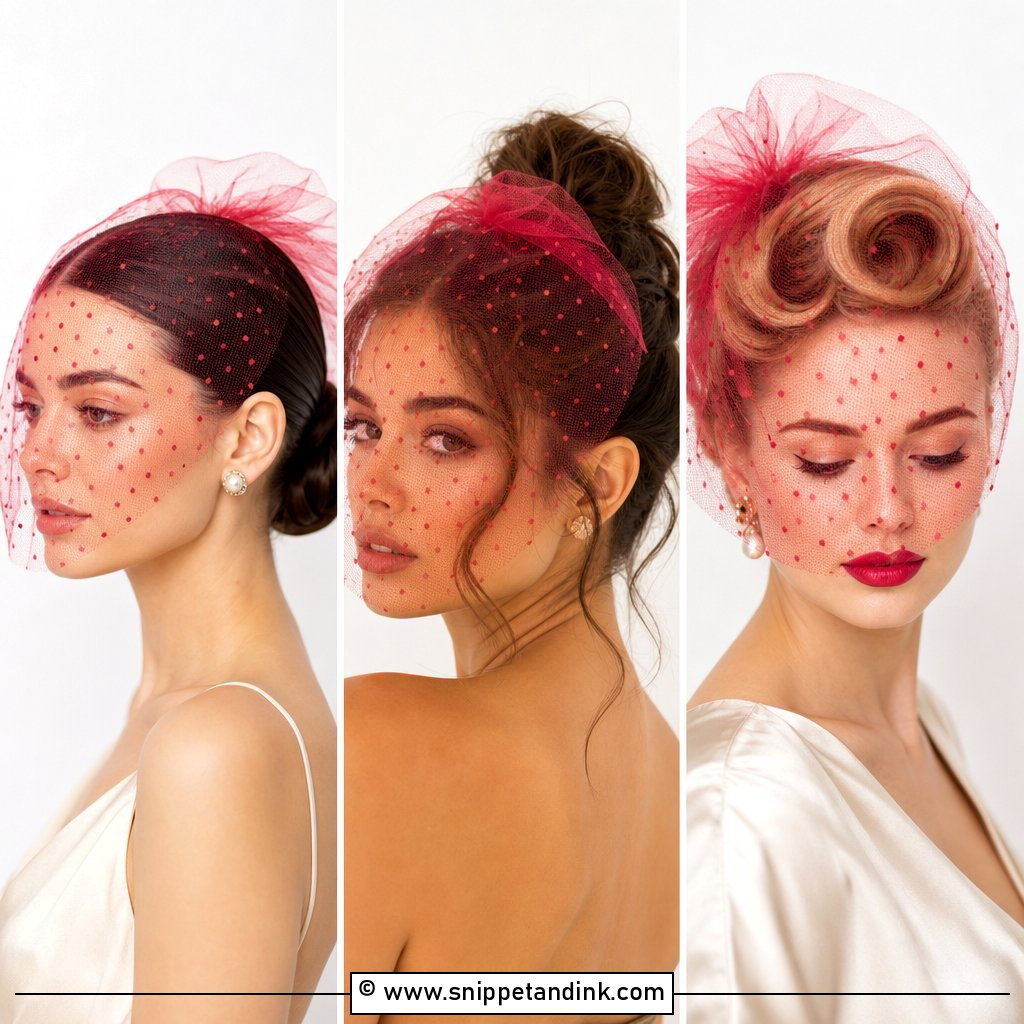
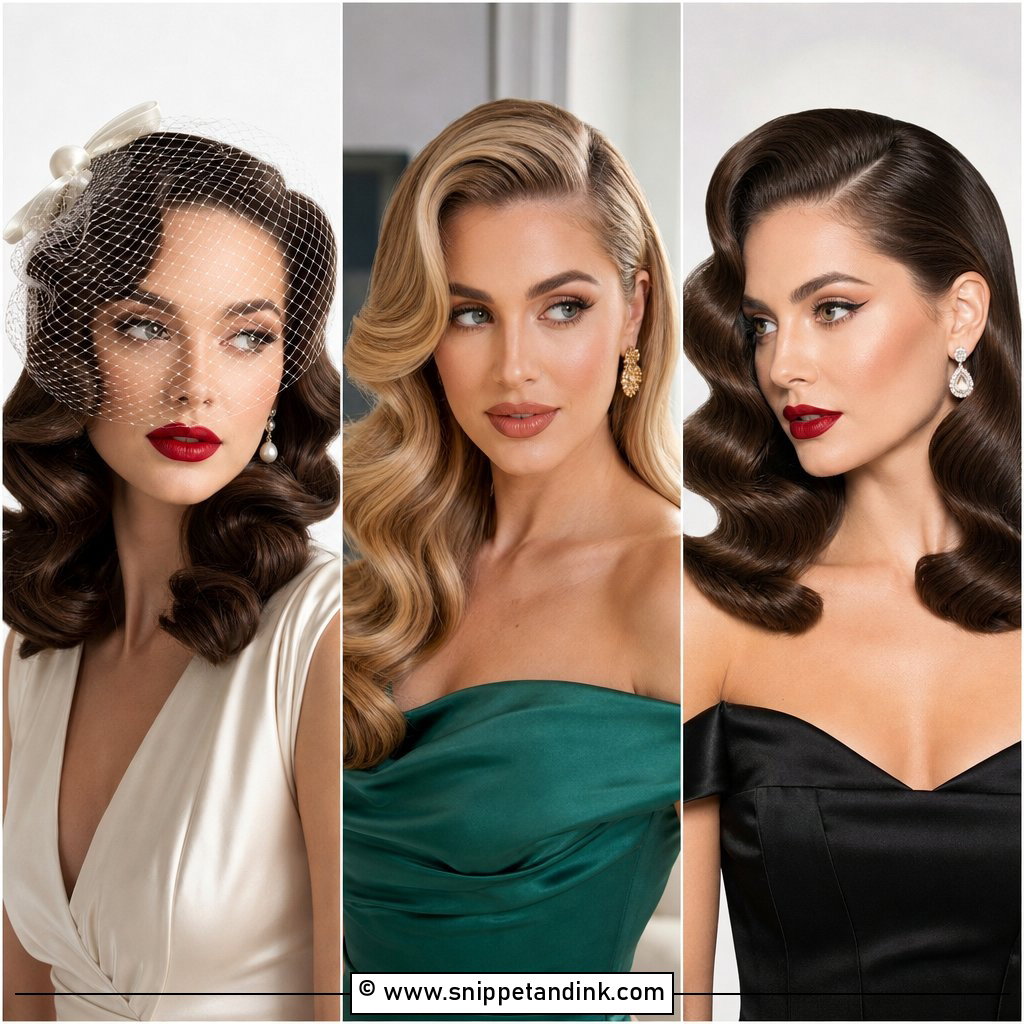
4. Birdcage Veil With Finger Waves
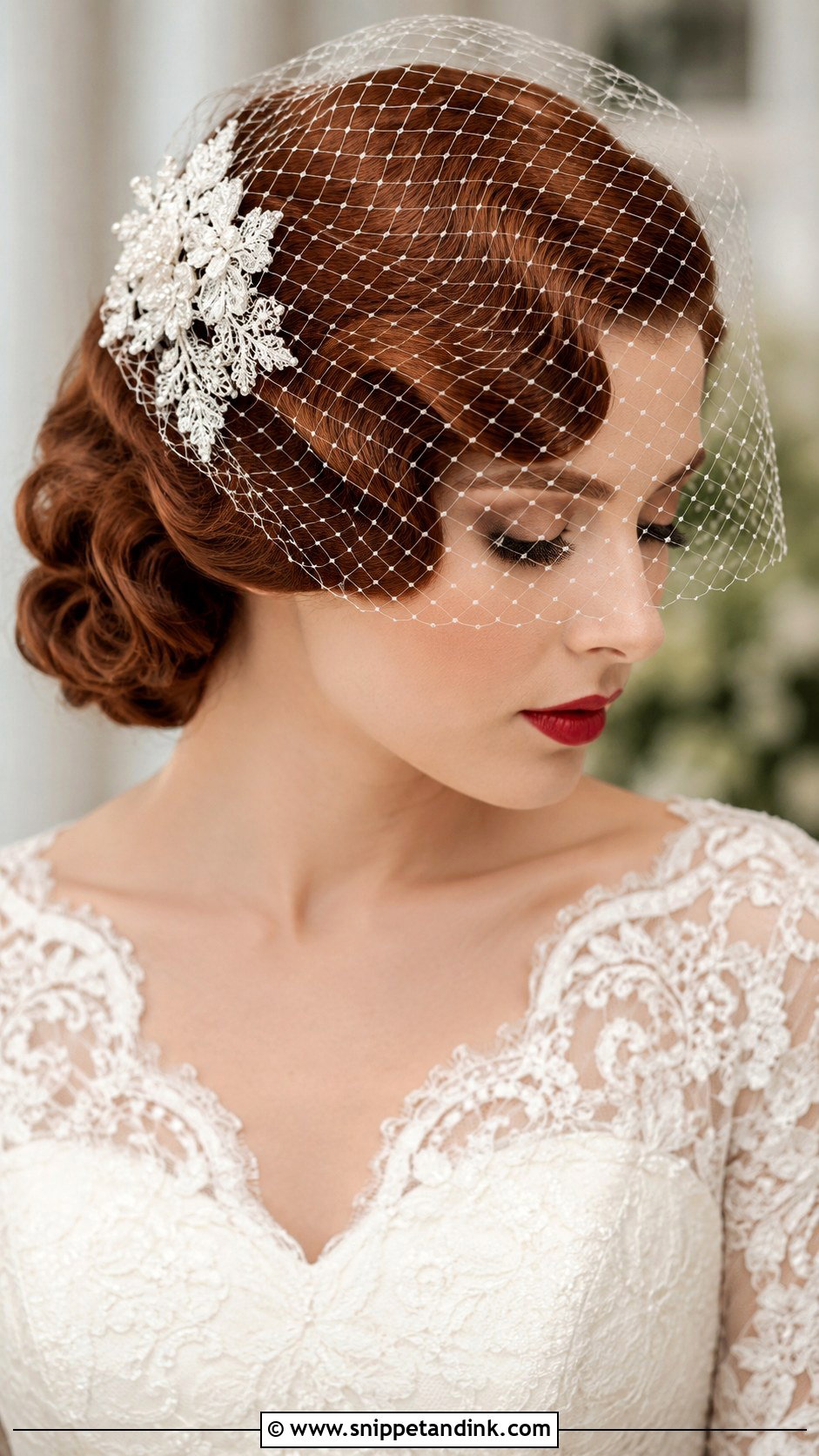
Tight, sculpted finger waves and a short netted birdcage veil are a natural pair, straight out of the 1920s through the 1940s. The birdcage pins at an angle on one side, usually just above the ear, and sits close over one eye. I set the waves with gel and leave them to dry fully before brushing, otherwise the ridges soften under the netting. It’s a small veil, ideal for intimate weddings and city hall ceremonies.
5. Side-Swept Hollywood Waves With Chapel Veil
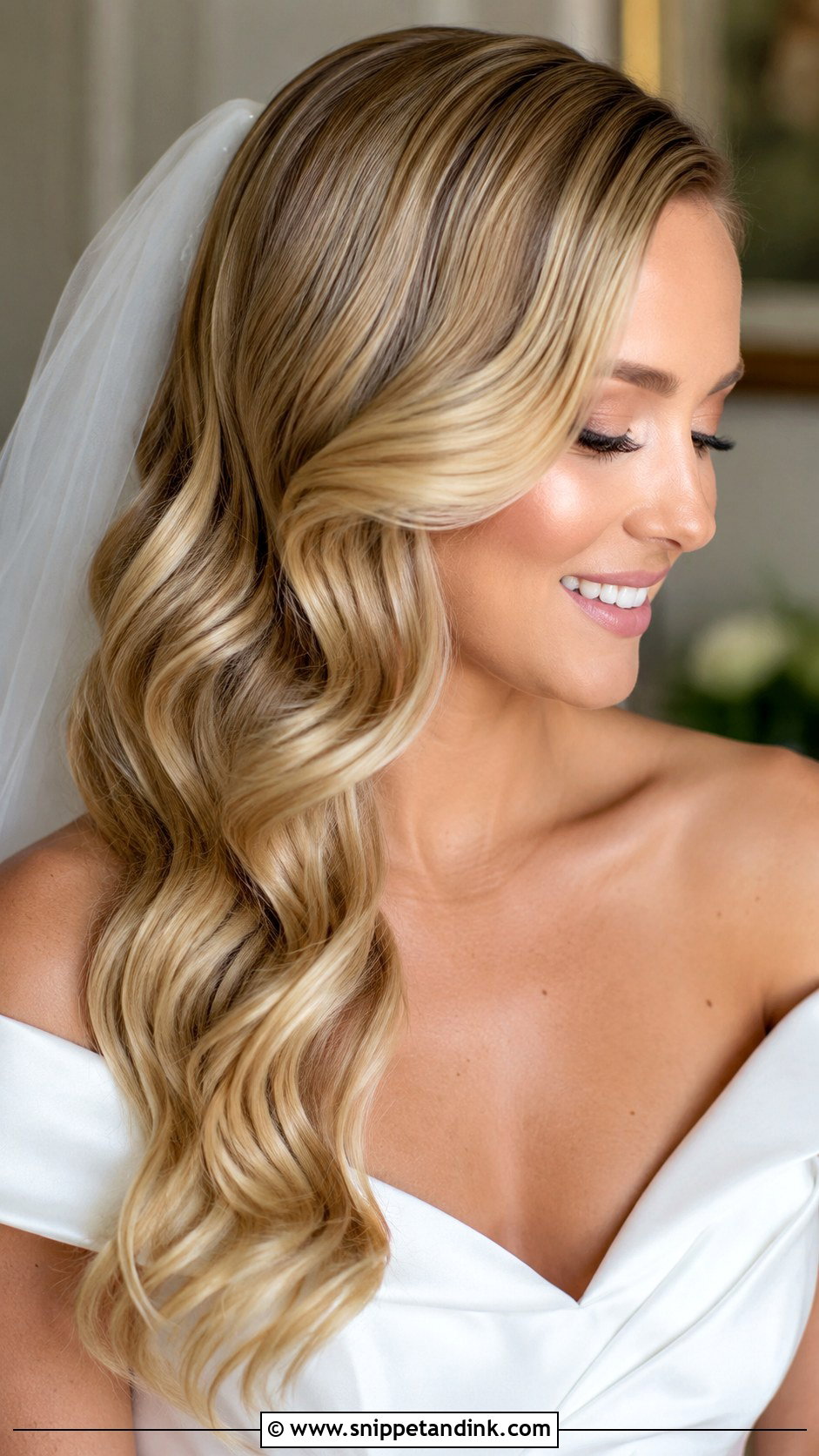
All the curls swept to one side and over the shoulder, with a chapel veil anchored where the top of the head starts to curve down. That mid-height spot is where I build a hidden base of crossed pins, so the comb has something to bite. Side-swept waves draw the eye to the neckline and jewelry, and chapel length works in a garden or a church. Unclip it after the ceremony and the waves carry the reception by themselves.
6. Hollywood Waves With Juliet Cap Veil
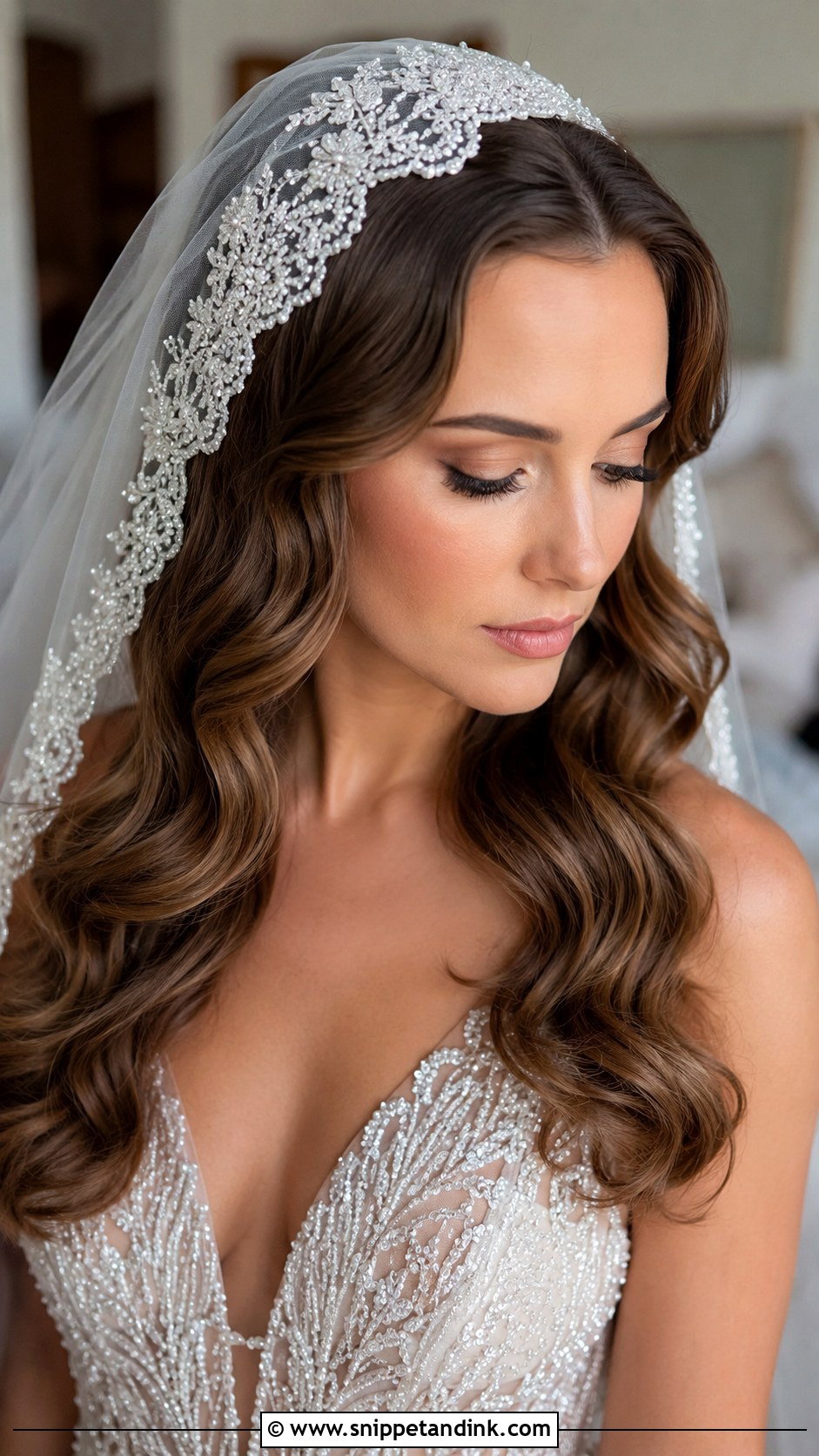
The Juliet cap sits low across the forehead and hugs the crown like a halo, a vintage-inspired headpiece that frames the face beneath it. Because it covers the crown, I build a firm pin base underneath, then set the waves to flow out from below the cap’s edge. It suits boho-glam weddings and brides who like a romantic, slightly theatrical look. Take it off carefully. Lift it straight up, not backward, so it doesn’t drag the waves.
7. Long Hollywood Waves With Mantilla Veil
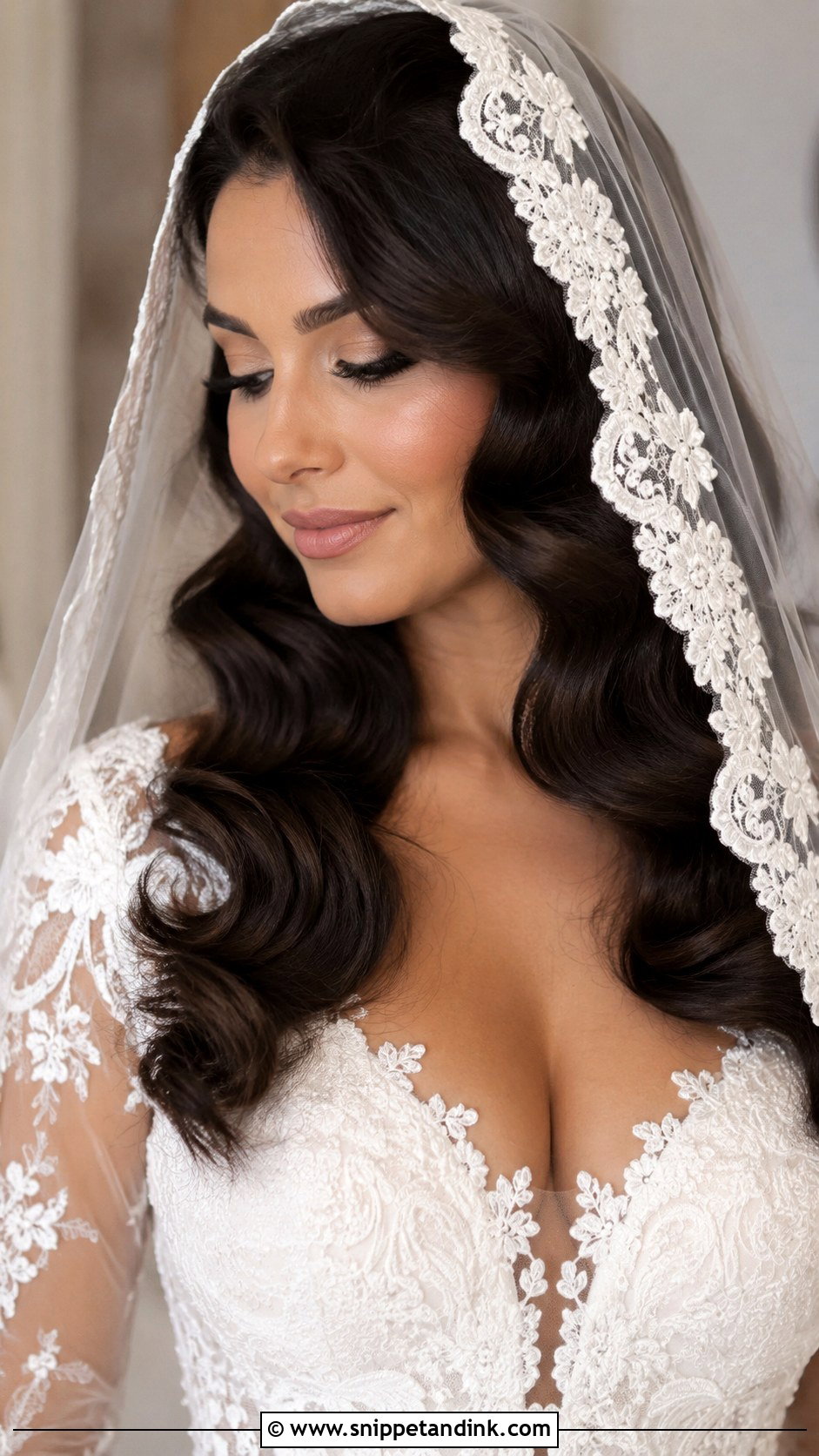
A lace-edged mantilla sits further forward than most veils, near the crown, and drapes around the face and over the shoulders. Its lace border is heavier than plain tulle, so I secure the comb a little more firmly than usual. The waves stay visible through the sheer centre, and the lace trim frames them without competing. Long, glossy waves and a mantilla are a classic choice for a traditional ceremony.
8. Hollywood Waves With Blusher Veil
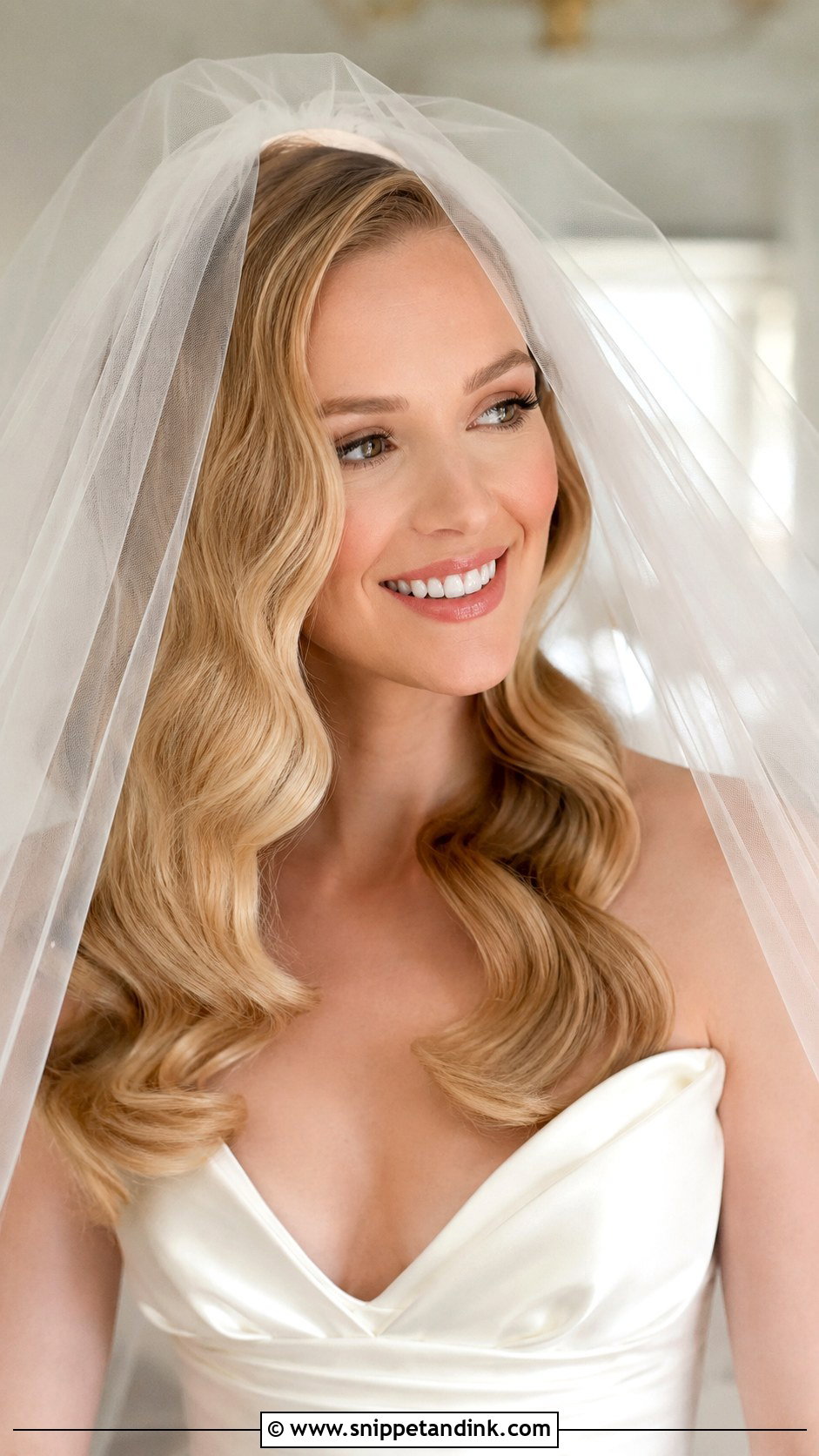
A blusher veil covers the face during the walk and gets lifted to reveal the waves underneath. The comb for a two-layer veil has to sit a bit higher on the crown, otherwise the blusher can’t fold back cleanly over the head. That higher spot sits right on top of the waves, so I set the front sections extra firmly and test the lift-back at the trial. Side parts and centre parts both suit the reveal.
9. Center Part Hollywood Waves With Veil
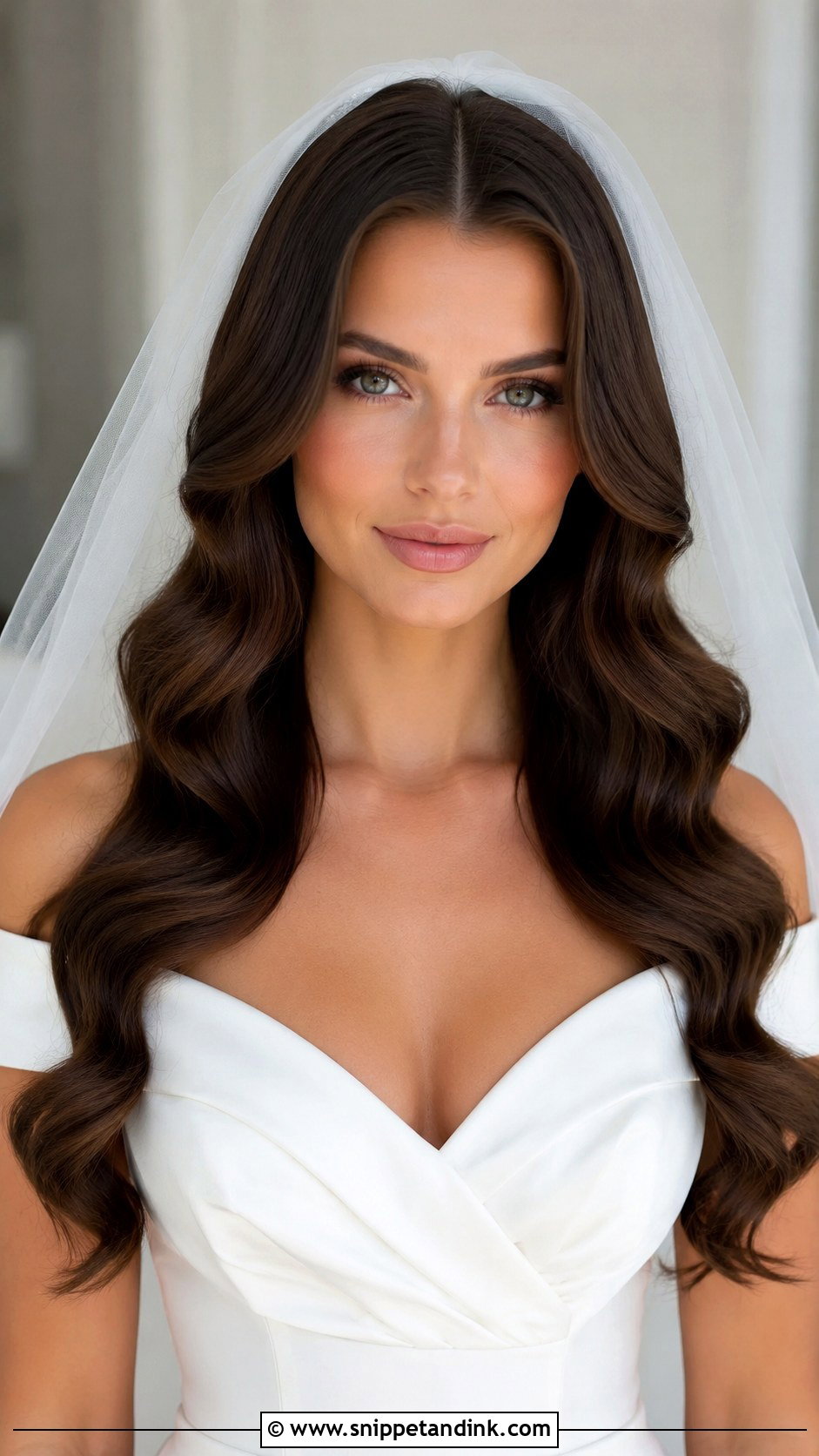
A centre part gives classic waves a more modern, balanced look, with curls falling evenly on both sides. Symmetry is harder than it looks. I curl both sides in opposite directions, away from the face, and check them in the mirror together, because any difference shows instantly with a centre part. The veil attaches where the head curves down. A little shine spray at the end gives that mirror finish.
10. Hollywood Waves With Crystal Hair Comb And Veil
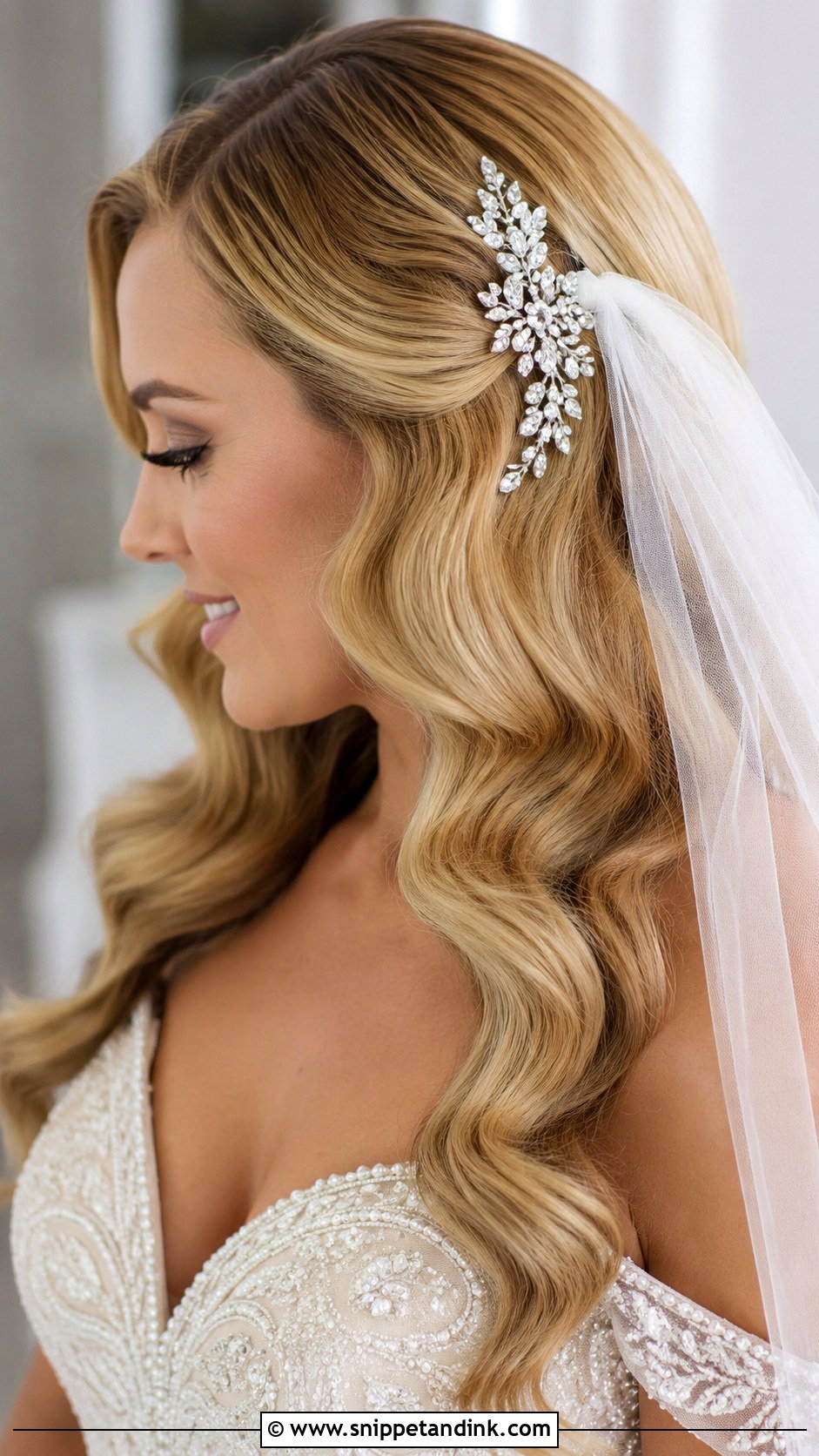
A crystal comb placed beside the veil adds sparkle and also gives the veil a sturdy grip. I position it at the side or crown, slightly in front of the veil comb, so it hides the veil’s edge. When the veil comes off later, the crystal comb stays, which means the reception look is already finished. It suits formal weddings where a bit of extra shine feels right.
11. Hollywood Waves With Halo Crown And Veil
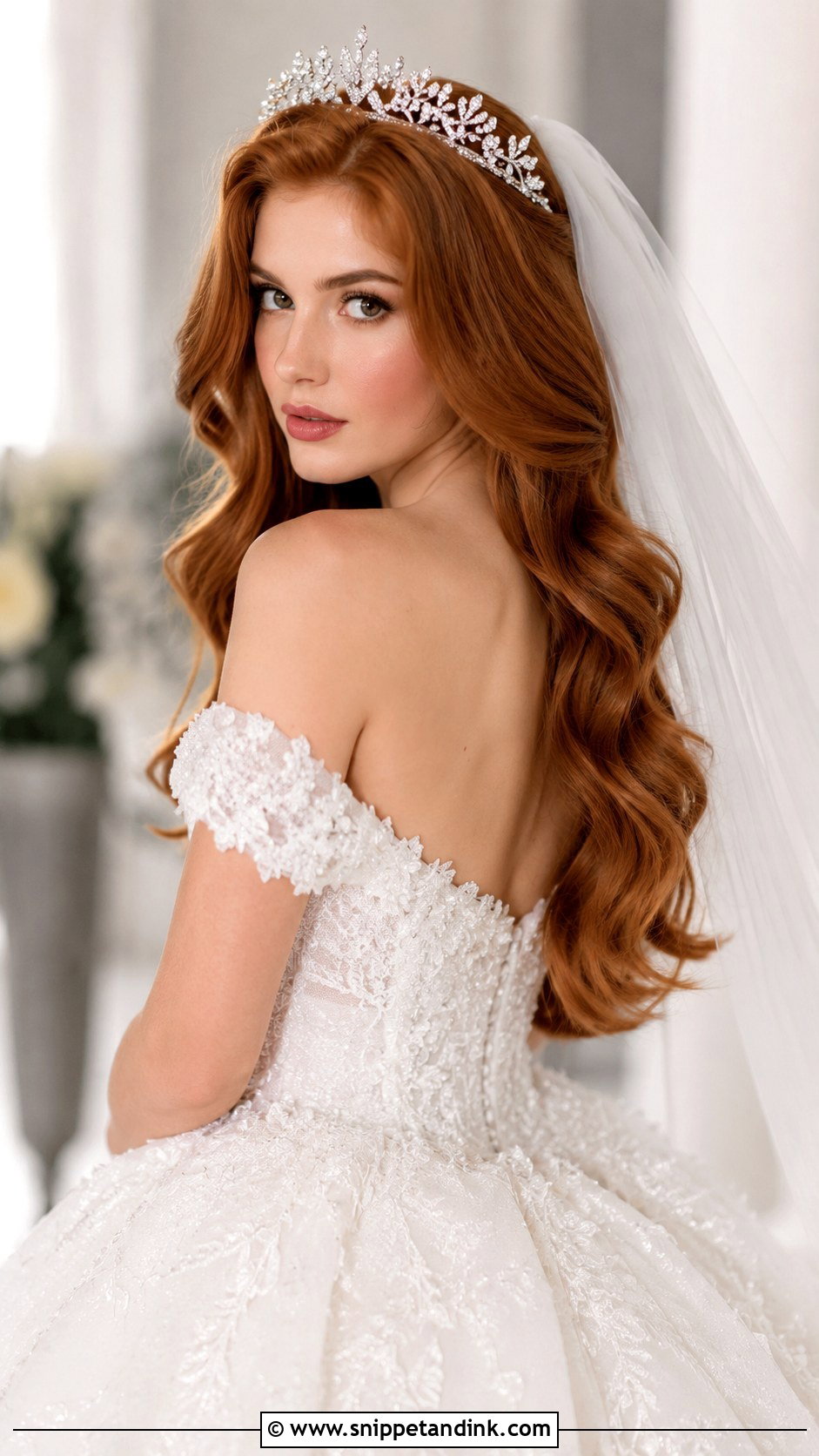
A wedding halo crown sits across the crown like a slim tiara and gives a firm frame to attach the veil to. The waves cascade from beneath it. Halos press on the scalp more than combs do. I bend the band to the bride’s head shape at the trial, because one that’s too tight will give you a headache by dinner. It’s at home in a ballroom or an evening reception.
12. Short Hollywood Waves With Veil
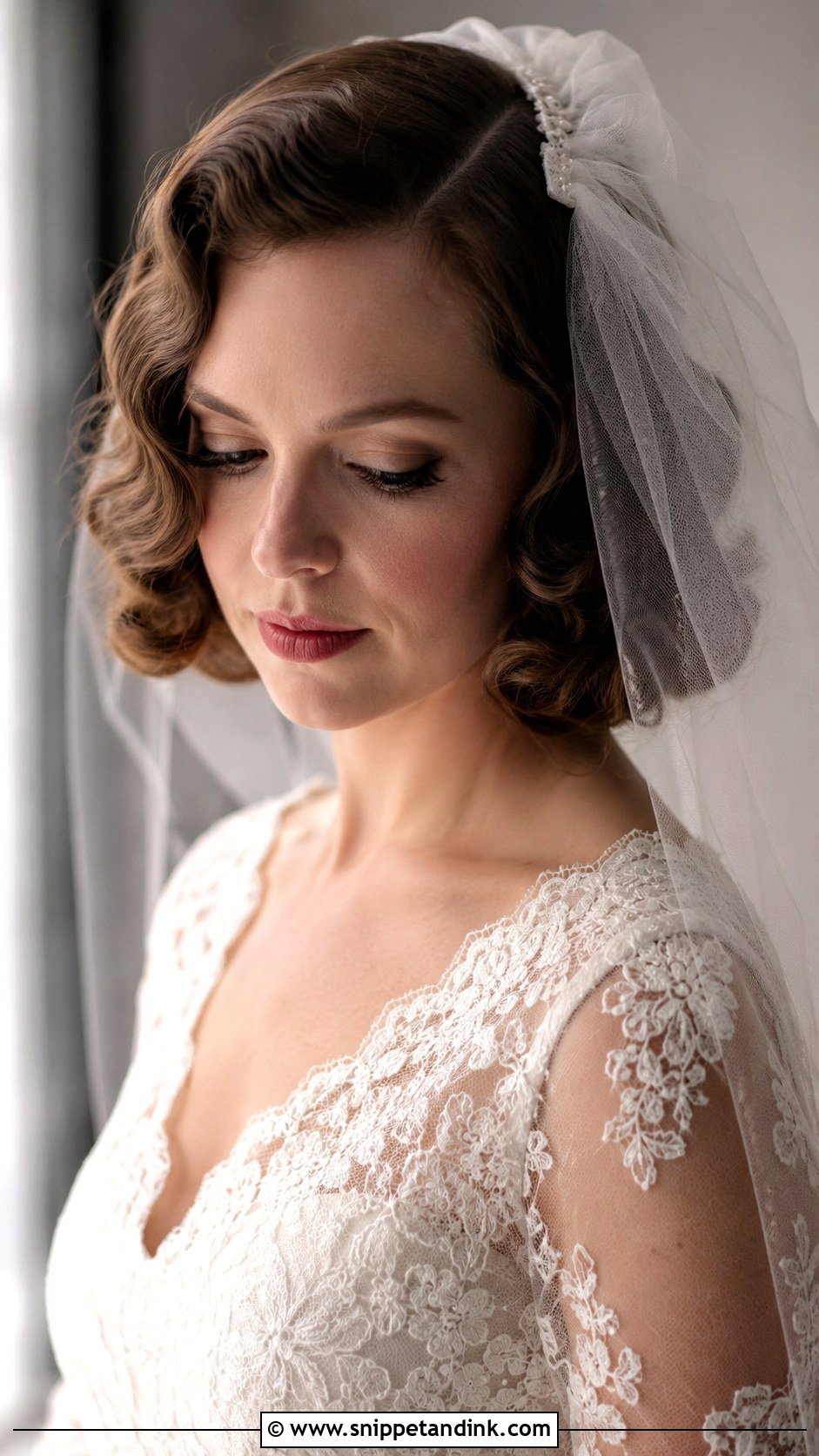
Short hair wears Hollywood waves well. Finger-waved bobs and shoulder-length curls sit close to the head in defined, glossy ridges. A small comb veil or a birdcage is the best match, because a long, heavy veil has too little hair to grip on short lengths. I often hide a small braid or a few crossed pins behind the ear for the comb to hold. Bobs and lobs suit this especially well.
13. Hollywood Waves With Flower Crown And Veil
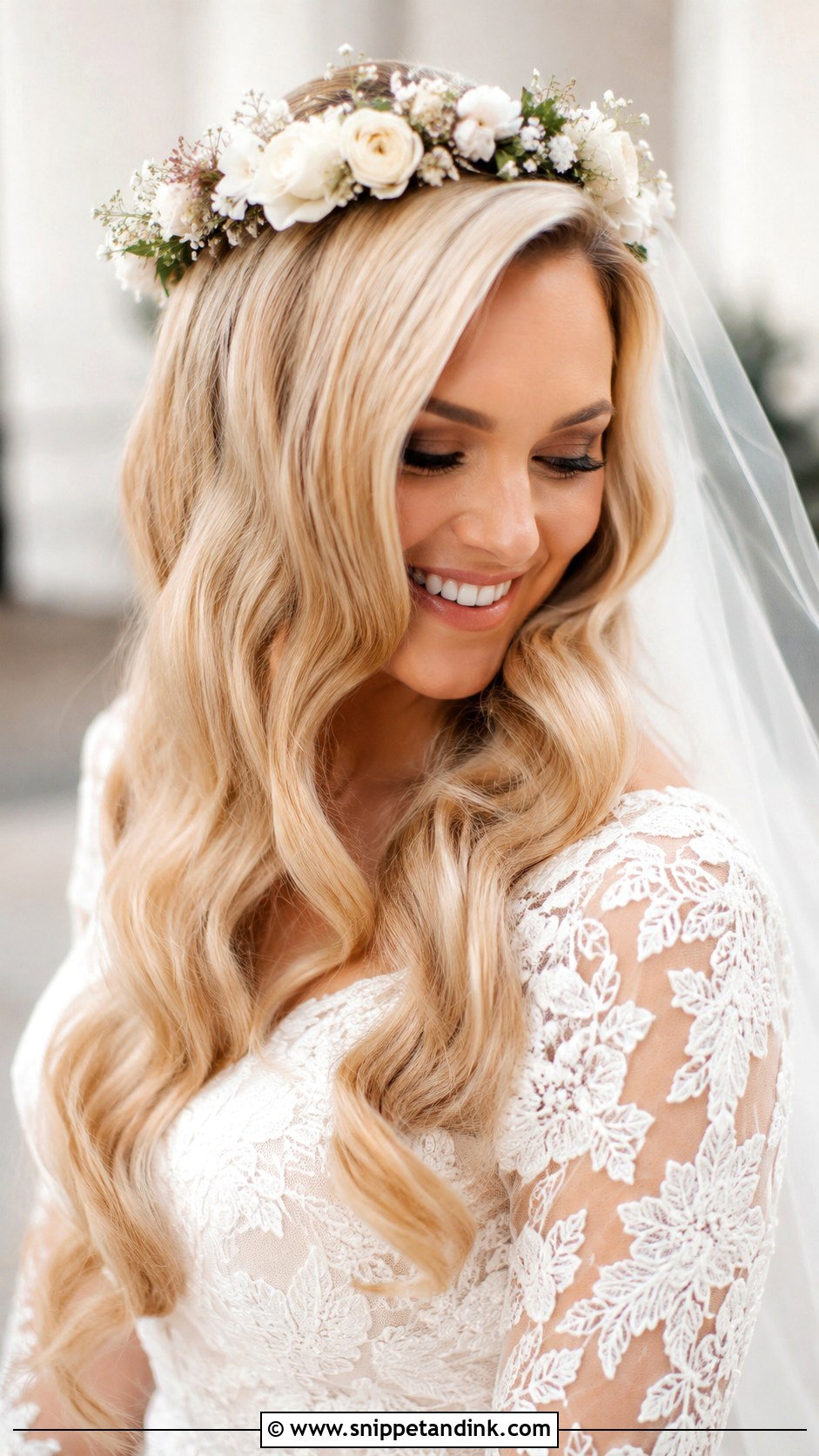
A flower crown with a veil layered beneath it gives garden weddings a softer version of the glamour. The crown sits across the head and the veil attaches just behind it, using the crown’s wire as a stable base. Fresh flower crowns are heavier than they look, so I pin them at four points, not two. Afterward you can drop the veil and keep the crown for a relaxed reception.
14. Hollywood Waves With Pearl Veil
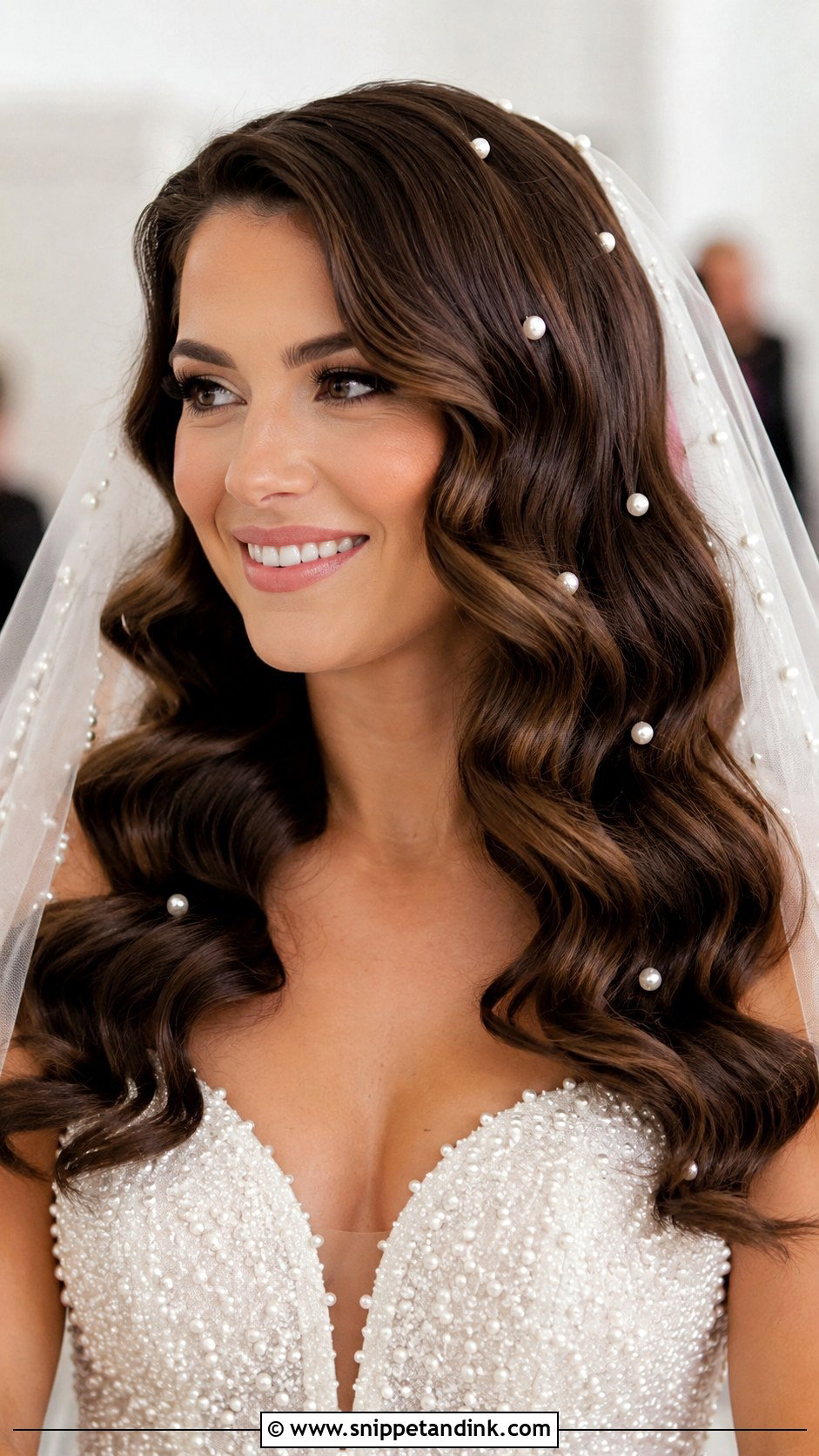
Pearls scattered over a veil add a gentle glow against glossy waves. The veil attaches behind the crown and leaves the wave pattern alone. Pearl-edged veils snag less on hair than beaded ones, which matters when the waves will be brushed out right before you put it on. A few pearl pins in the hair tie the look together, and the effect is quiet rather than sparkly.
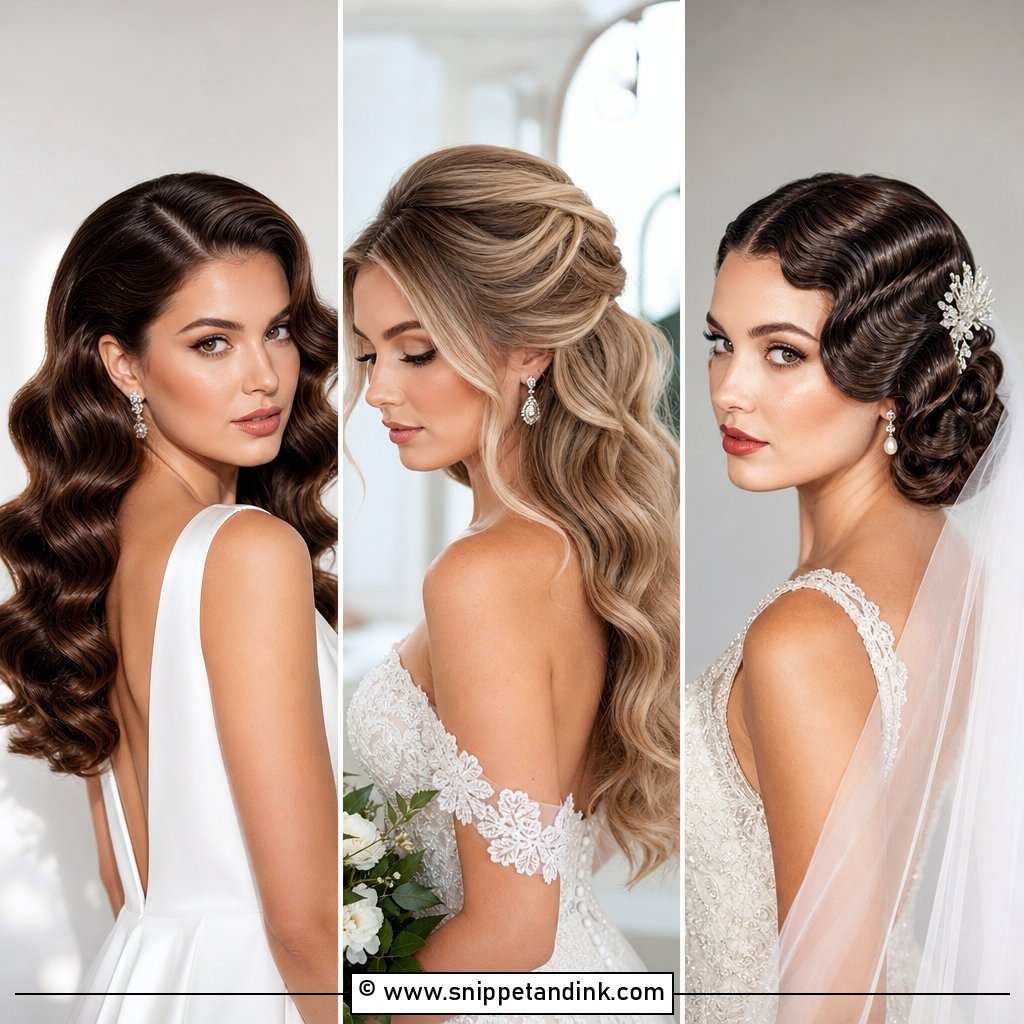
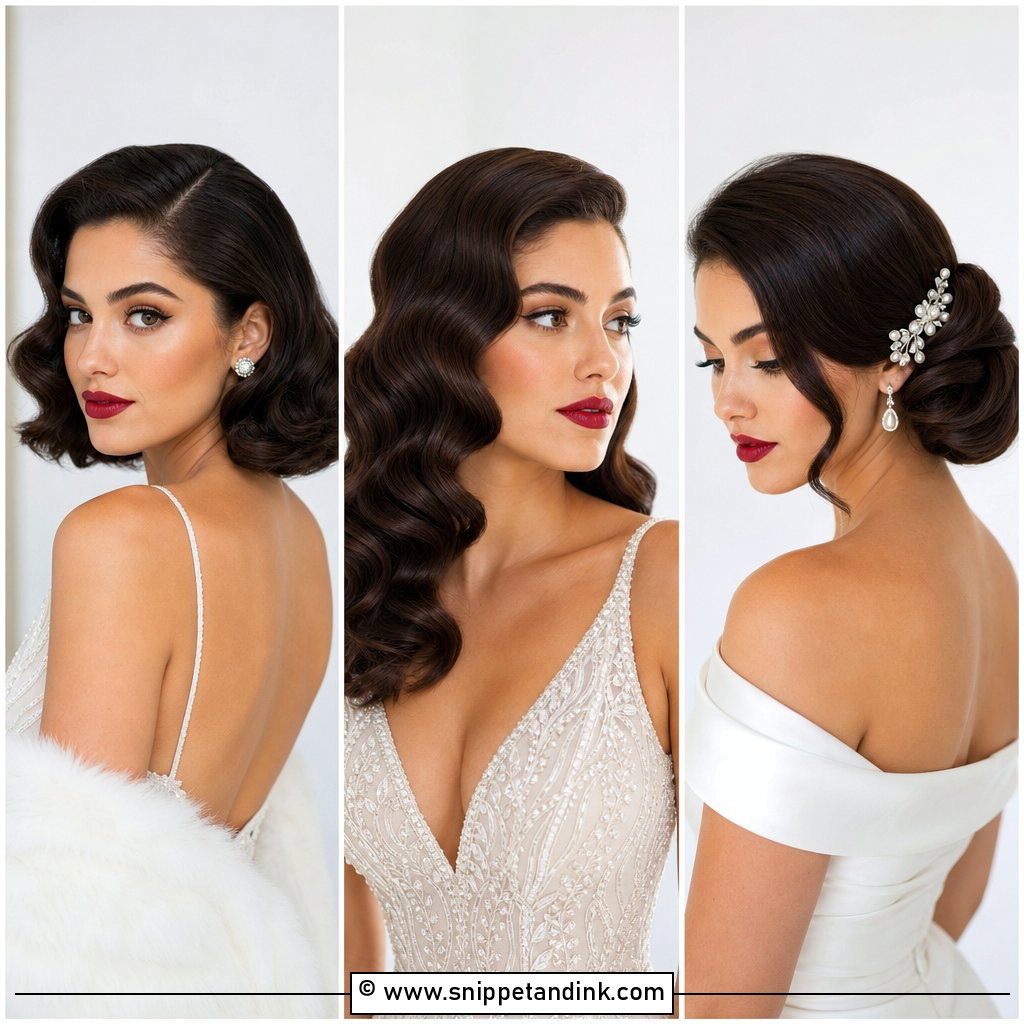
15. Hollywood Waves With Long Veil And Tiara
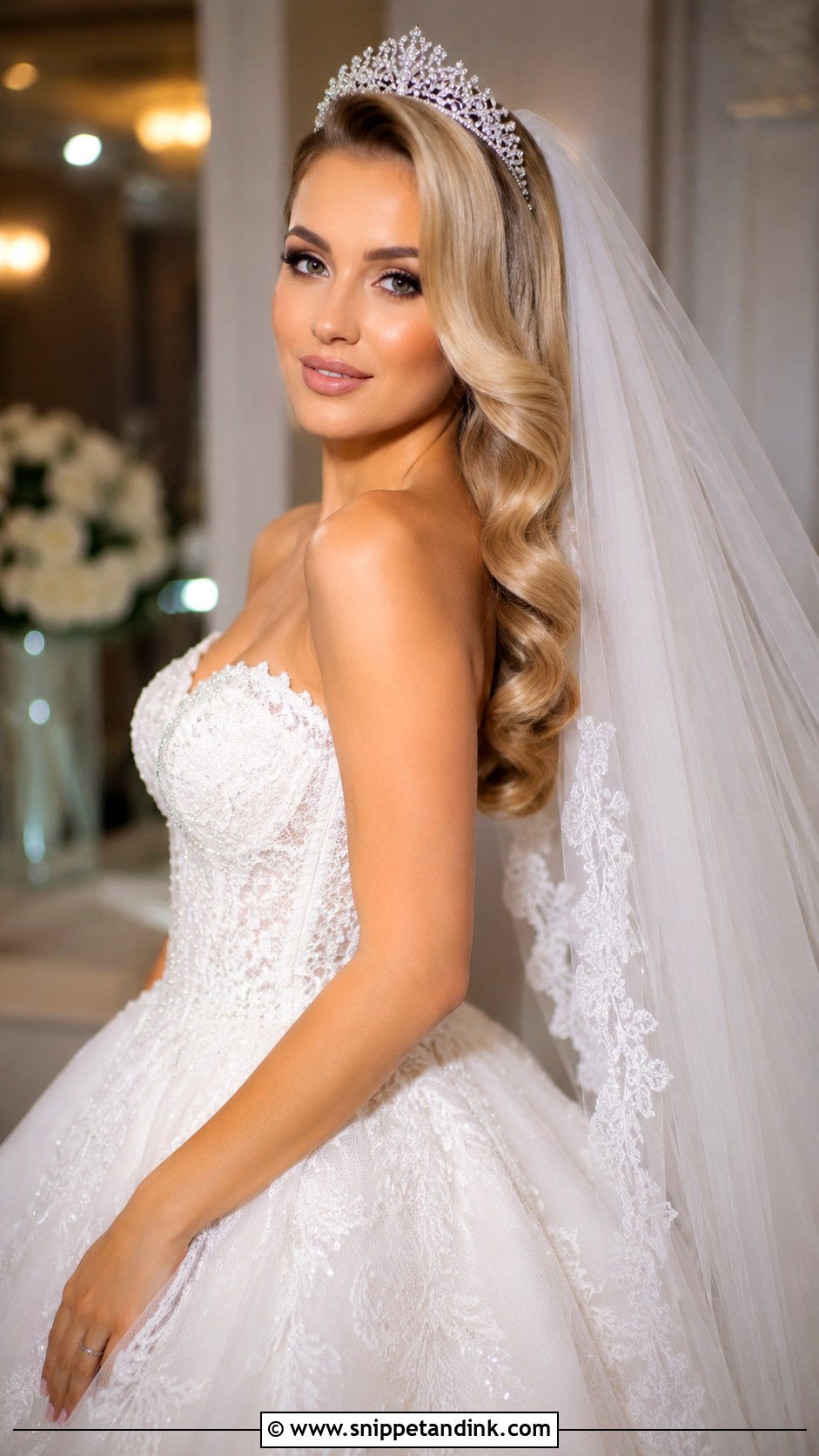
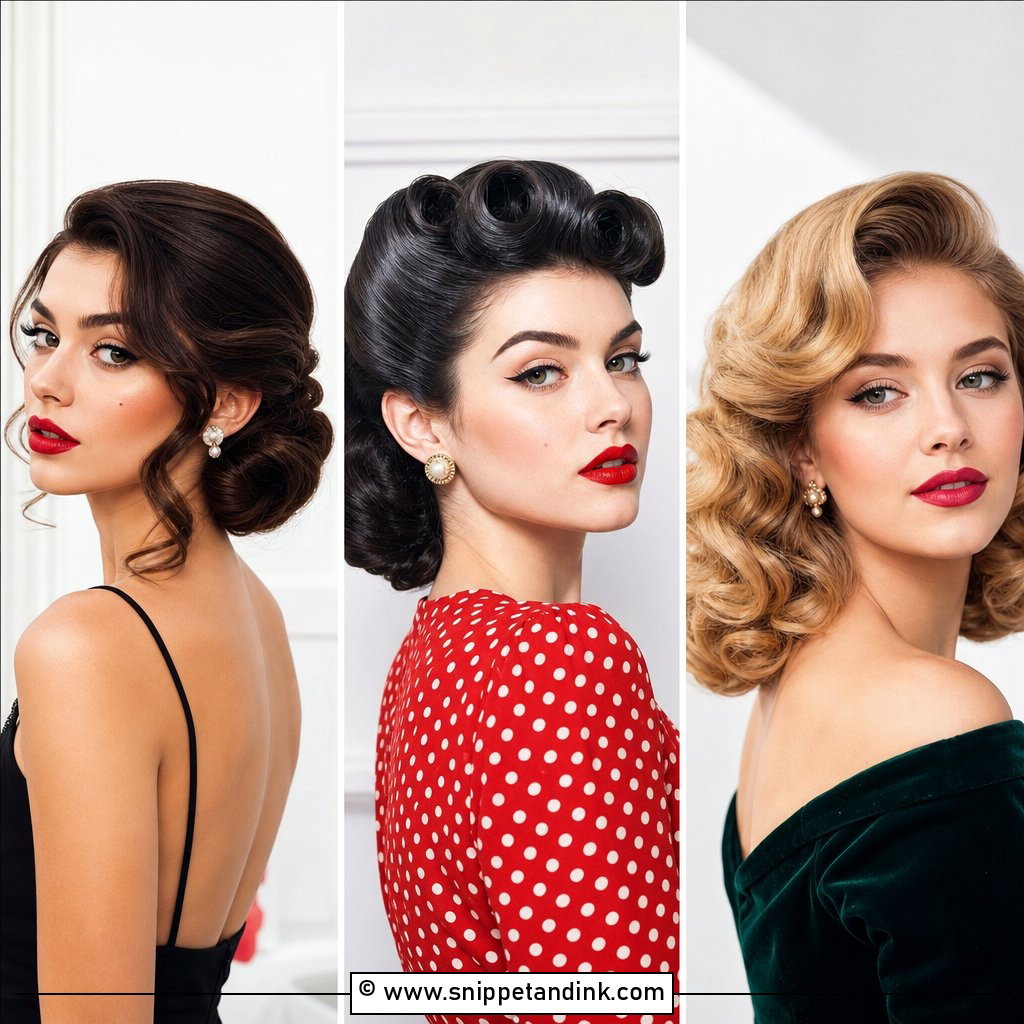
A tiara at the crown and a long veil behind it is the grandest pairing on this list. The tiara becomes the anchor, so I set it first, pin it through its loops, then attach the veil comb right behind it. Flowing waves underneath keep the look from getting stiff. It suits formal ceremonies, and once the veil is off, the tiara and waves carry the reception.
16. Hollywood Waves With Lace Edge Veil
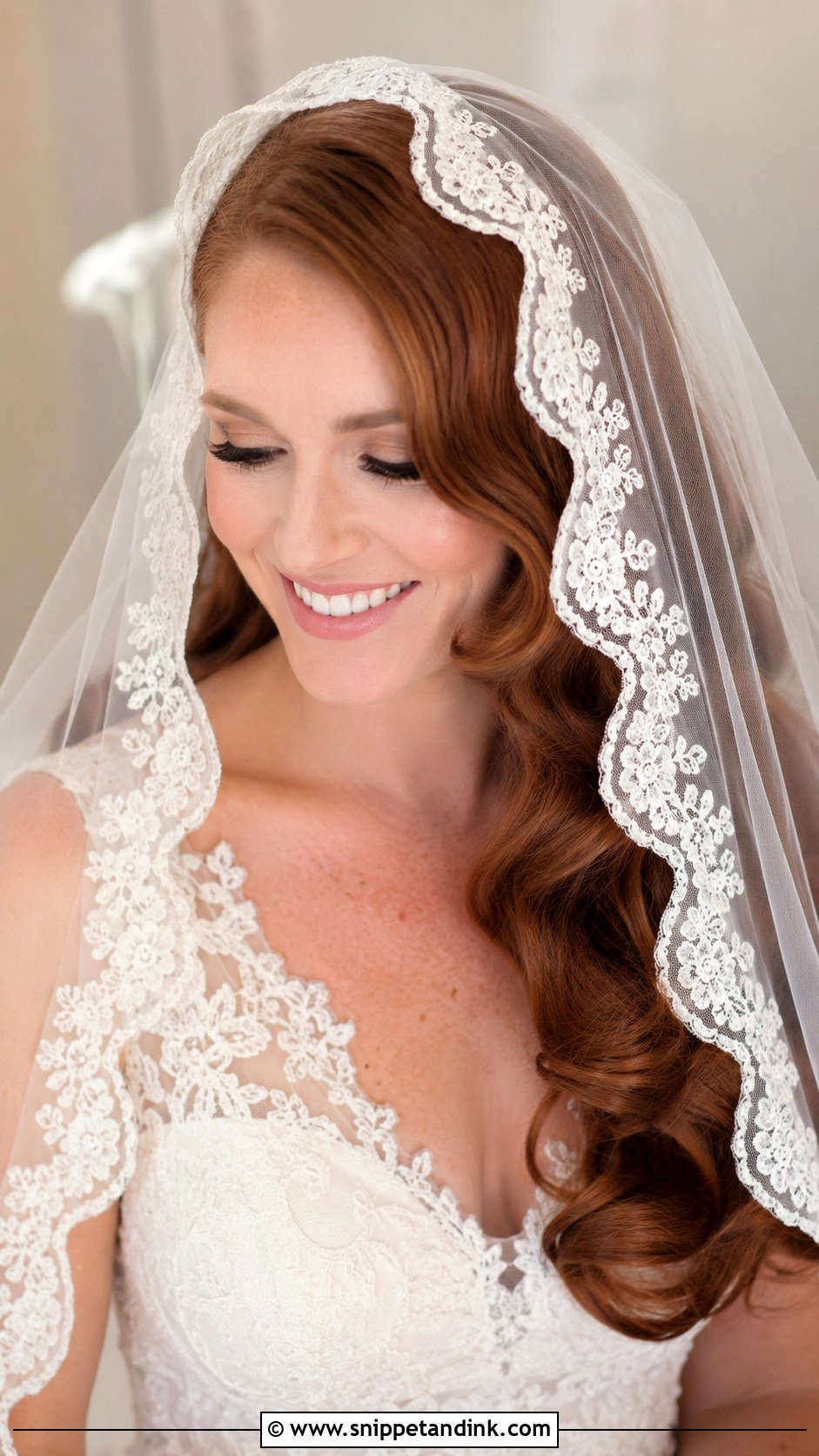
A lace-edged veil frames the waves with a scalloped or floral trim as it falls over the shoulders. The veil attaches behind the crown. Lace edges can catch on curled ends. I give the ends a final brush with a little serum so they’re smooth enough not to tangle in the trim. It suits classic, feminine dresses for an indoor or garden ceremony.
17. Hollywood Waves Half-Up With Floral Pins And Veil
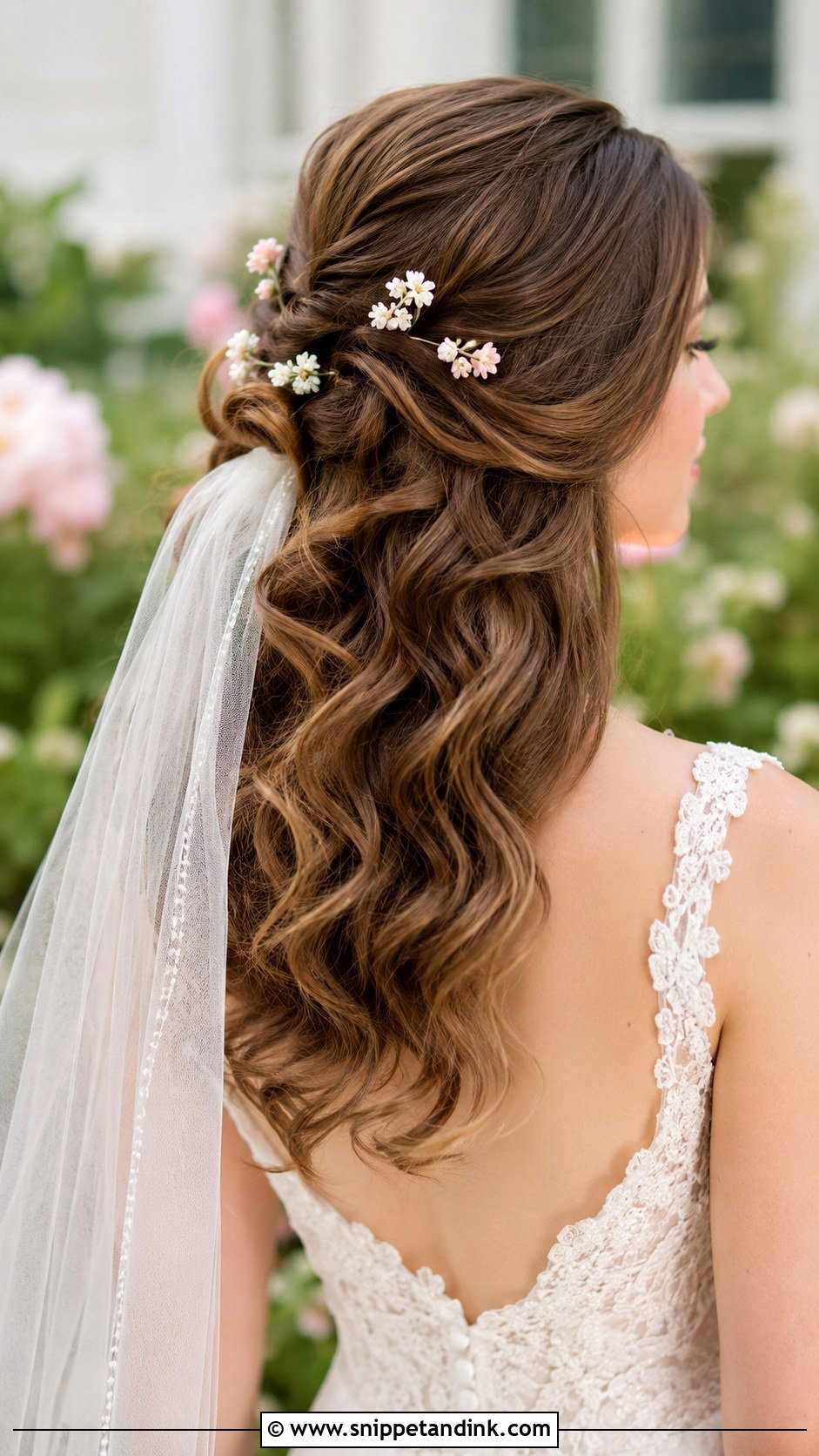
Small floral pins tucked into the pinned crown section of a half-up style add colour and detail, while the veil comb slides into the same section. Below, the curls fall in defined waves. I place the flowers after the veil is in, so I can see where they’ll show around it. It’s a fresh fit for spring and summer weddings, and it still looks finished once the veil comes off.
18. Hollywood Waves With Vintage Hair Clip And Veil
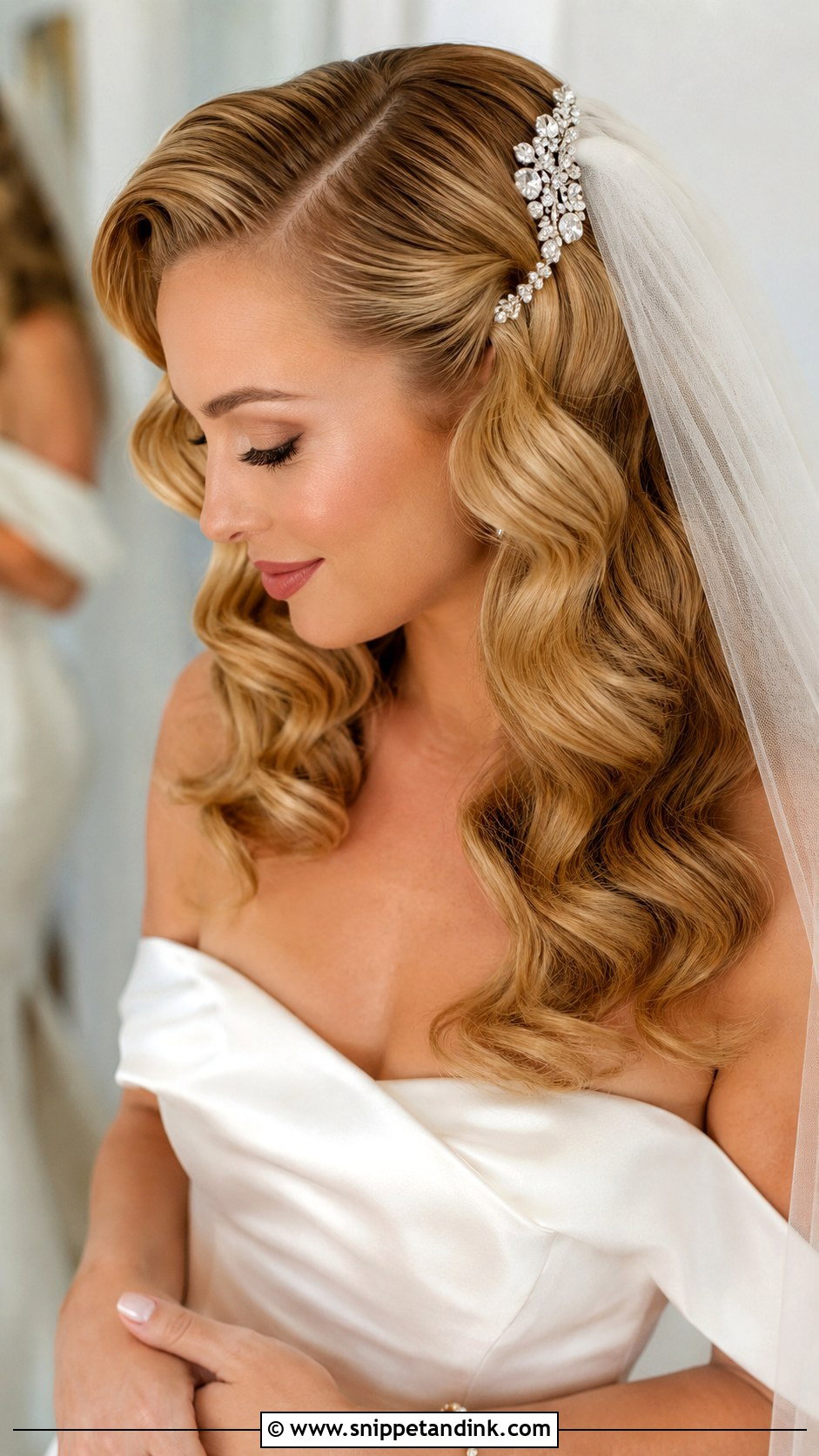
A decorative vintage clip pinned beside the veil secures a section of curls and adds a focal point. I put it at the side, where it draws the eye to the sculpted waves, and attach the veil close to it so the two pieces support each other. Vintage clips can be heavy, so I slide a bobby pin through the clip’s hinge into the base for extra hold. It’s a good place to wear a family piece.
19. Sleek Hollywood Waves With Drop Veil
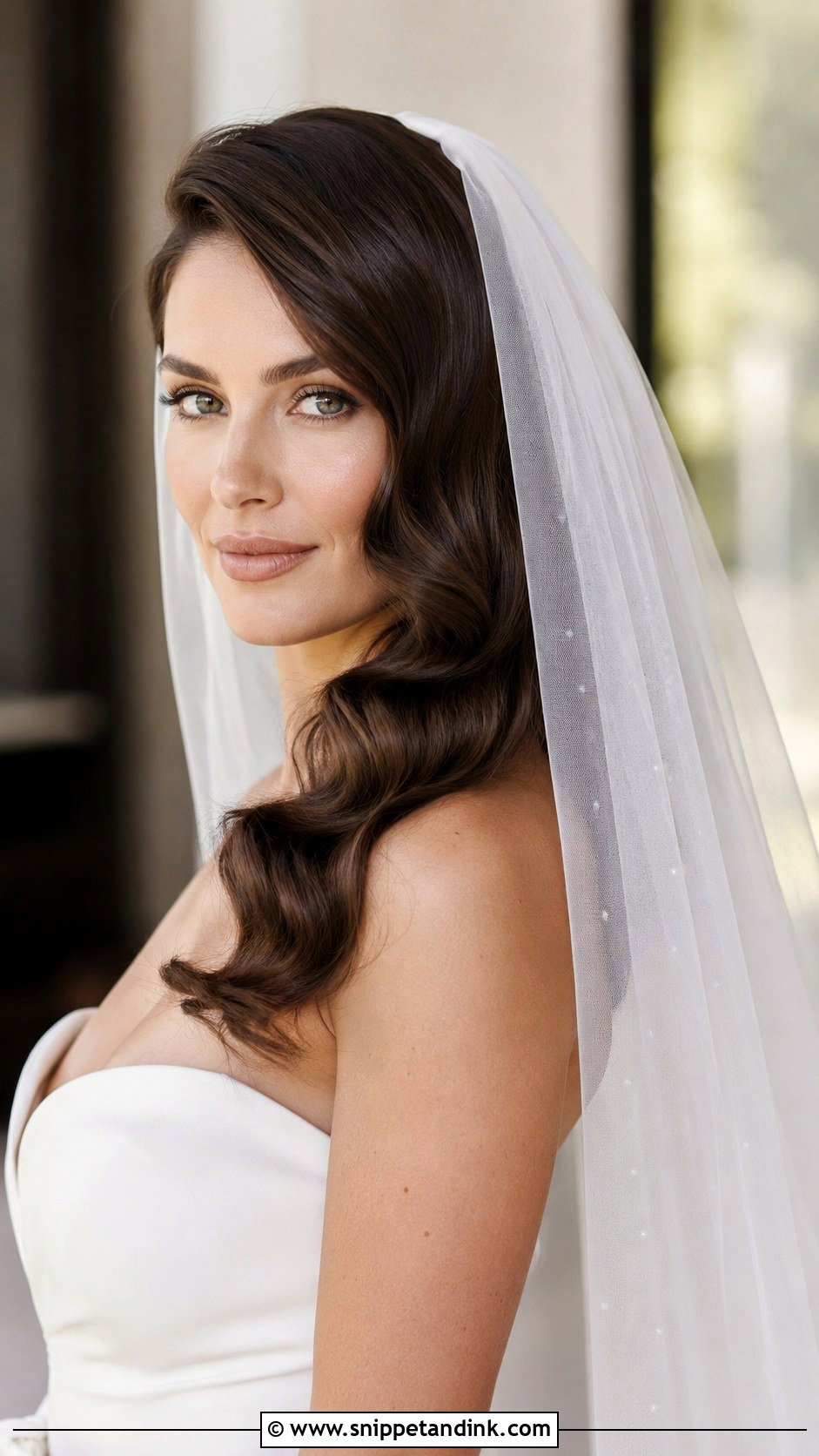
A drop veil is a simple circle of tulle that falls over the head, with no visible comb. It needs a light touch. I secure it with a couple of small hidden pins or tiny clear combs, because sleek waves give nothing else to grip. The fabric drapes softly and lets the polished waves show through. It’s a minimal, modern choice that works for both small and large weddings.
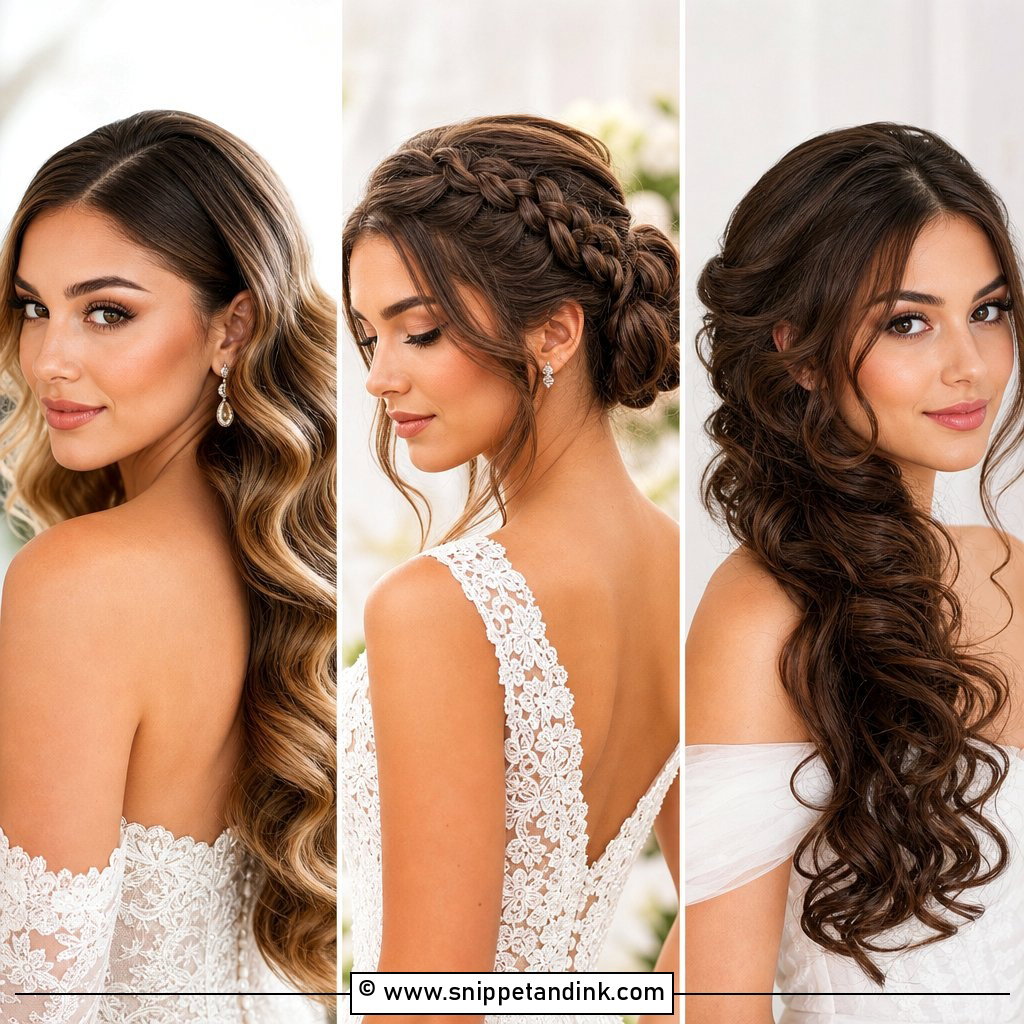
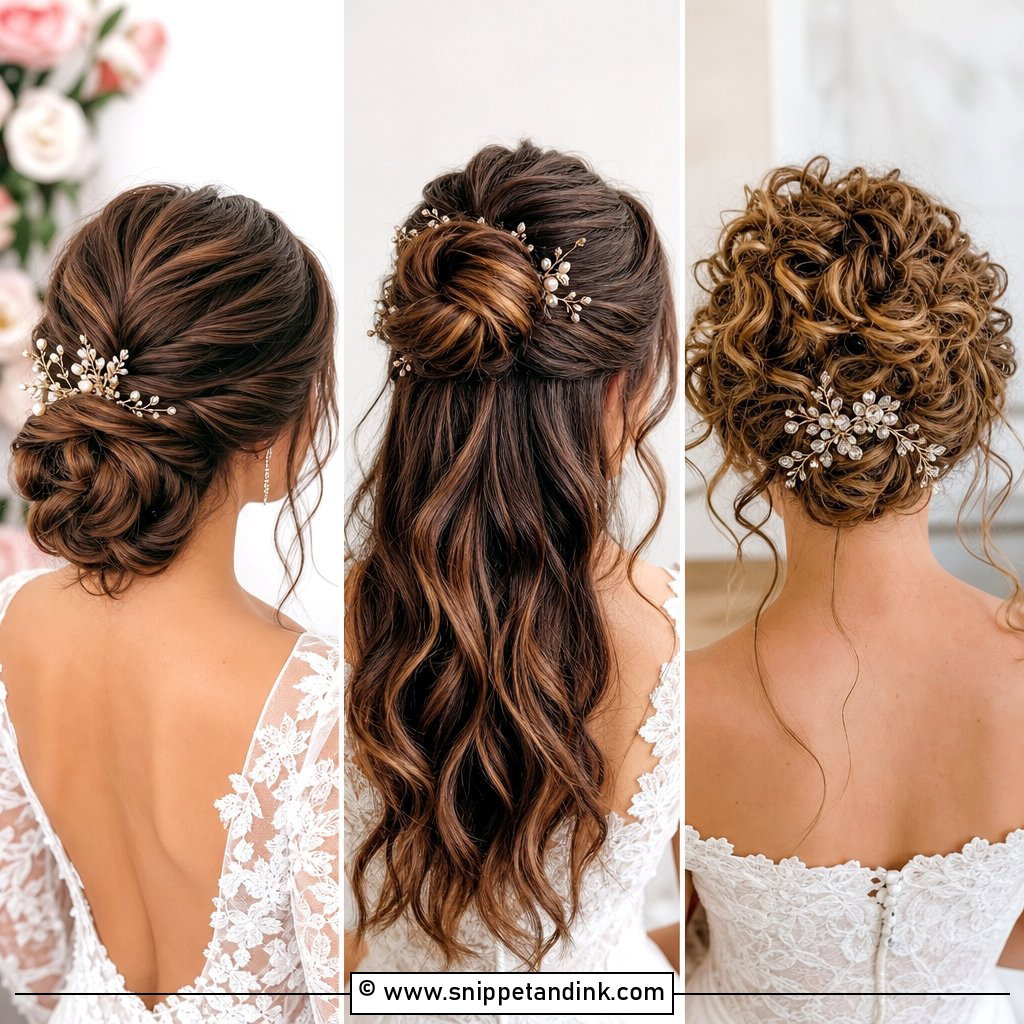
20. Hollywood Waves With Side Comb Veil
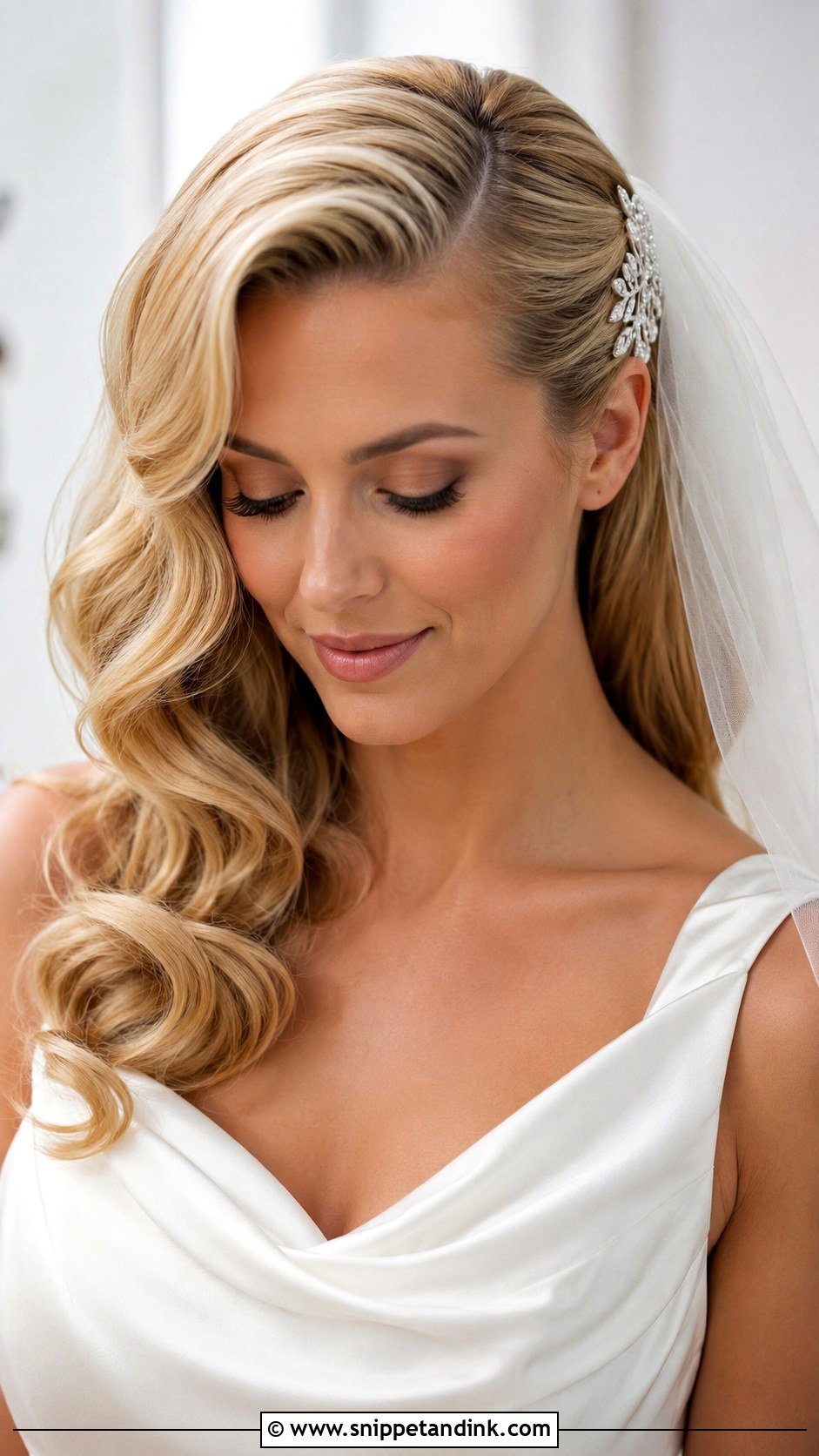
Attaching the veil with a side comb near a deep part creates an asymmetric, slightly dramatic look, with the waves sweeping over the opposite shoulder. The weight of the veil pulls to one side, so I build an extra pin base under the comb and keep the veil itself fairly light. When it’s removed, the side-swept waves remain the feature. It shows off the jawline and neck well.
21. Hollywood Waves With Two-Tier Veil
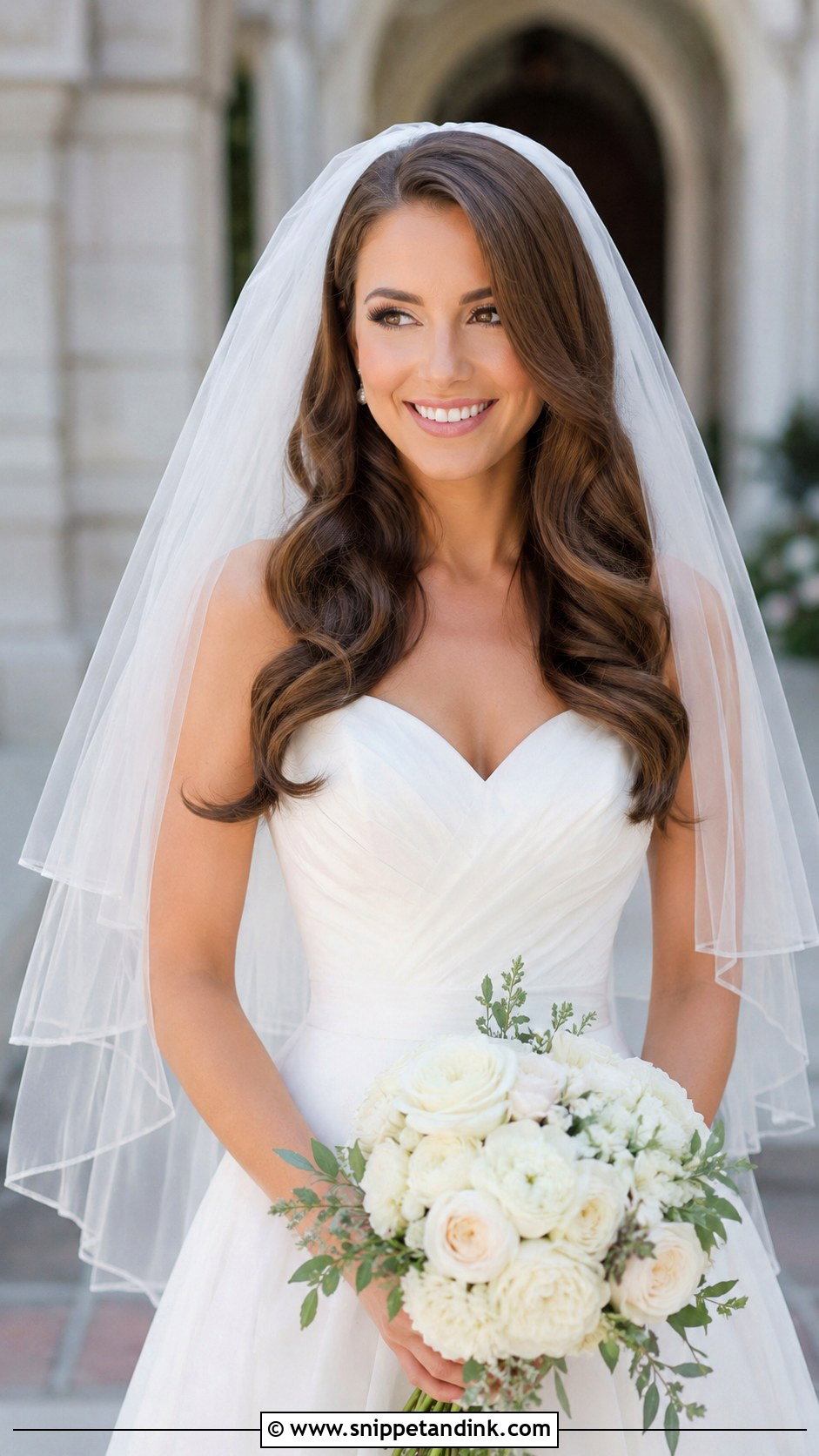
Two layers of tulle add volume around the face and shoulders, and the top tier can work as a blusher during the ceremony before folding back. The veil attaches behind the crown. A two-tier veil is noticeably fuller, so it can hide more of the waves than a single layer would. I’d choose it if you want the veil to be part of the look rather than a transparent frame.
22. Hollywood Waves Updo With Veil
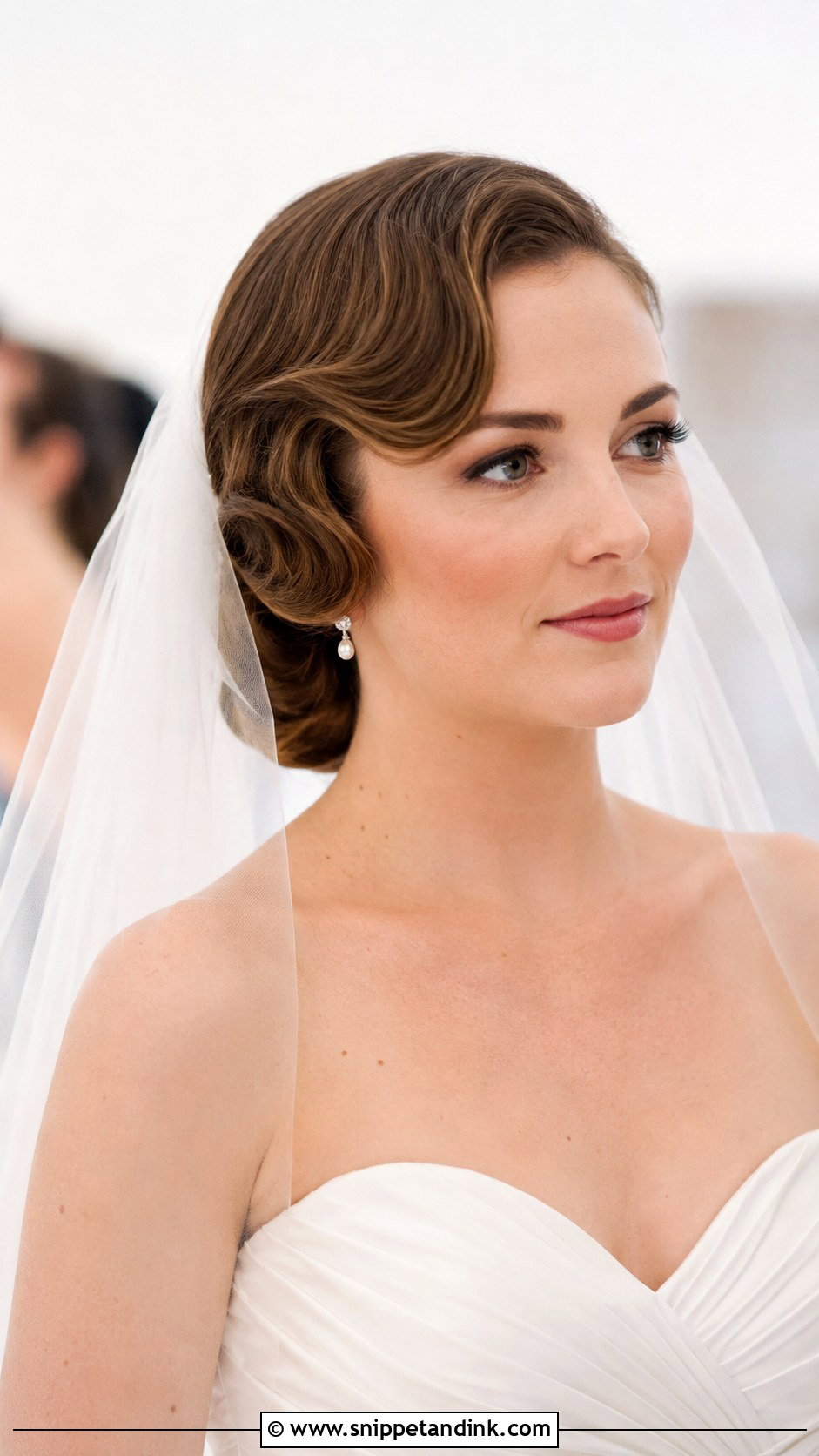
The hair is swept up and pinned into an updo, with gentle finger waves framing the face. The veil attaches directly into the updo, which is the most secure placement for any veil. Keeping hair off the neck makes this a practical choice for a hot summer wedding. I set the face-framing waves with clips while finishing the back, so they’re crisp when the clips come out.
23. Hollywood Waves With Embroidered Veil
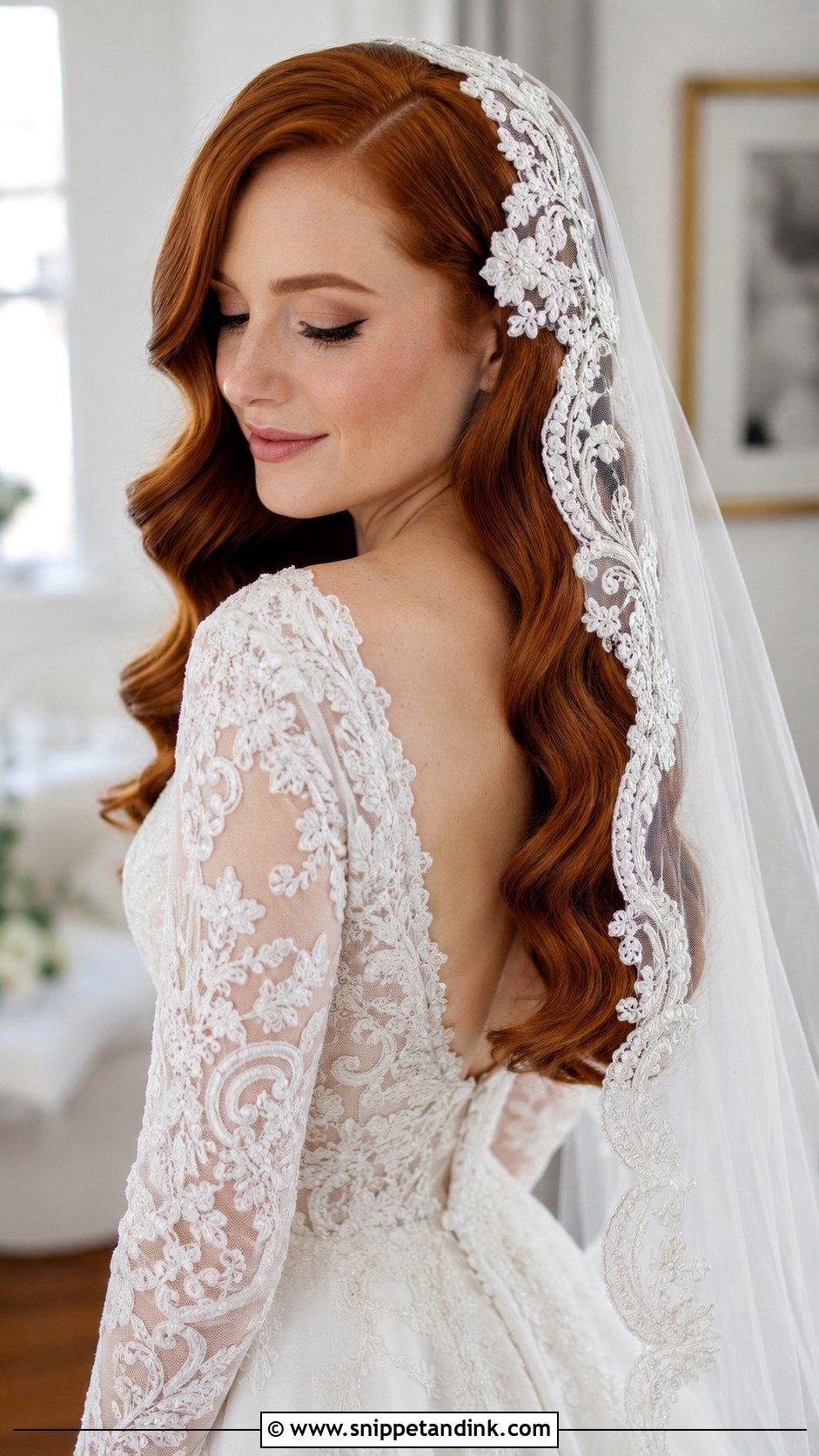
Embroidered veils carry intricate stitching along the edges, which makes them heavier than plain tulle. I anchor them more firmly behind the crown and place the comb slightly lower than usual so the weight pulls down rather than back. The stitching frames the glossy waves as it drapes. It’s a lovely way to wear an heirloom veil or a piece made to match the dress.
24. Hollywood Waves With Cap Veil And Side Curls
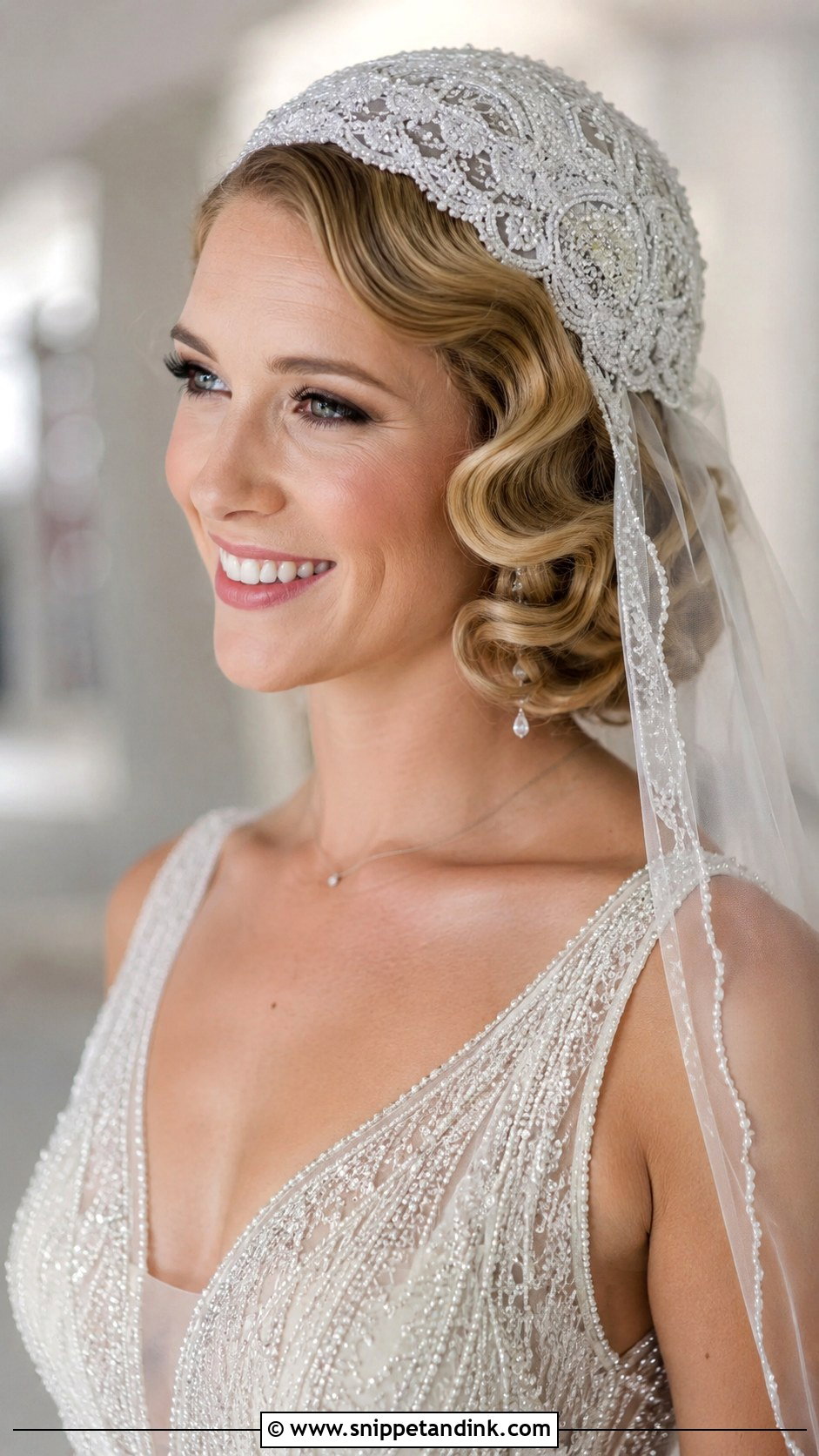
A fitted cap veil hugs the crown while waves frame the face on one side, a look borrowed from the 1920s. The cap gives the veil a secure base. I keep the side curls glossy and slightly tighter than usual so they read clearly next to the structured cap. It suits art-deco weddings and pairs naturally with retro glamour makeup. Once the veil is removed, the side waves stand on their own.
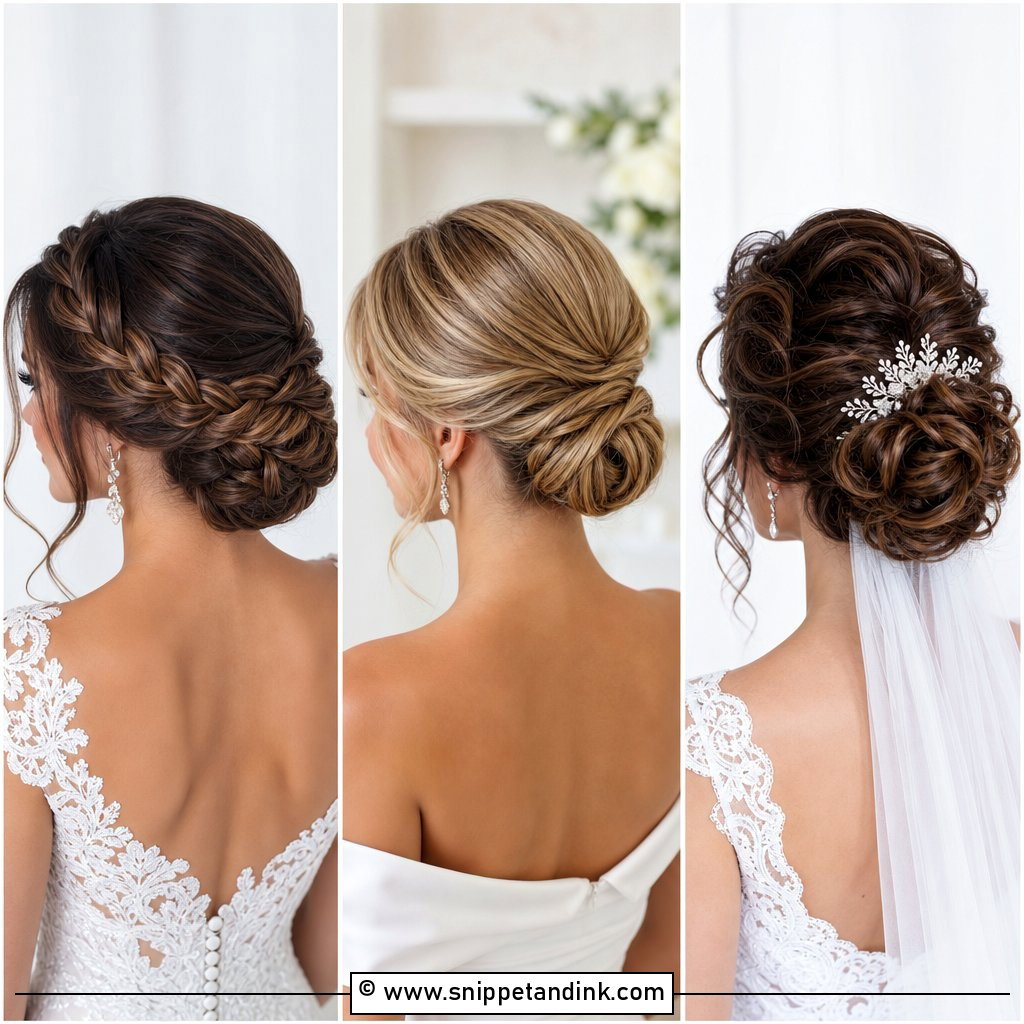

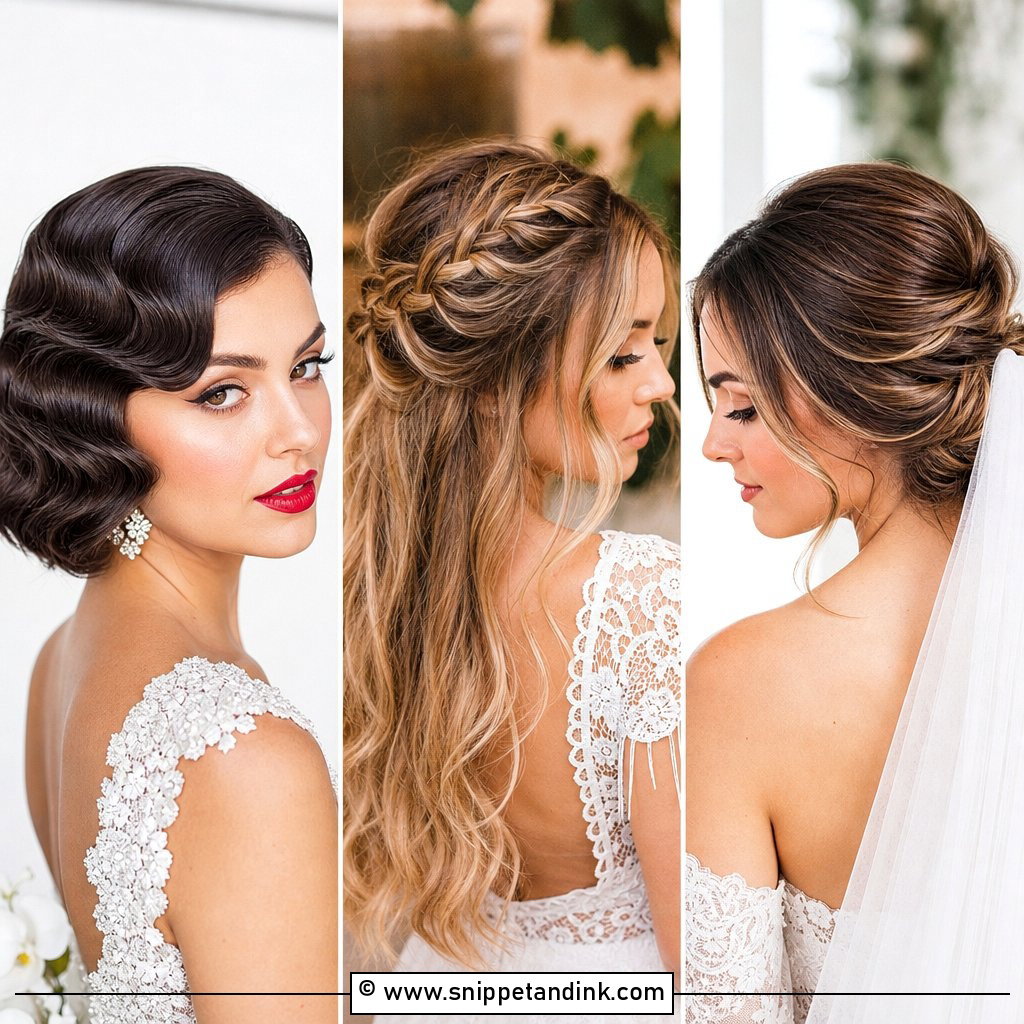
25. Hollywood Waves With Soft Bouffant And Veil
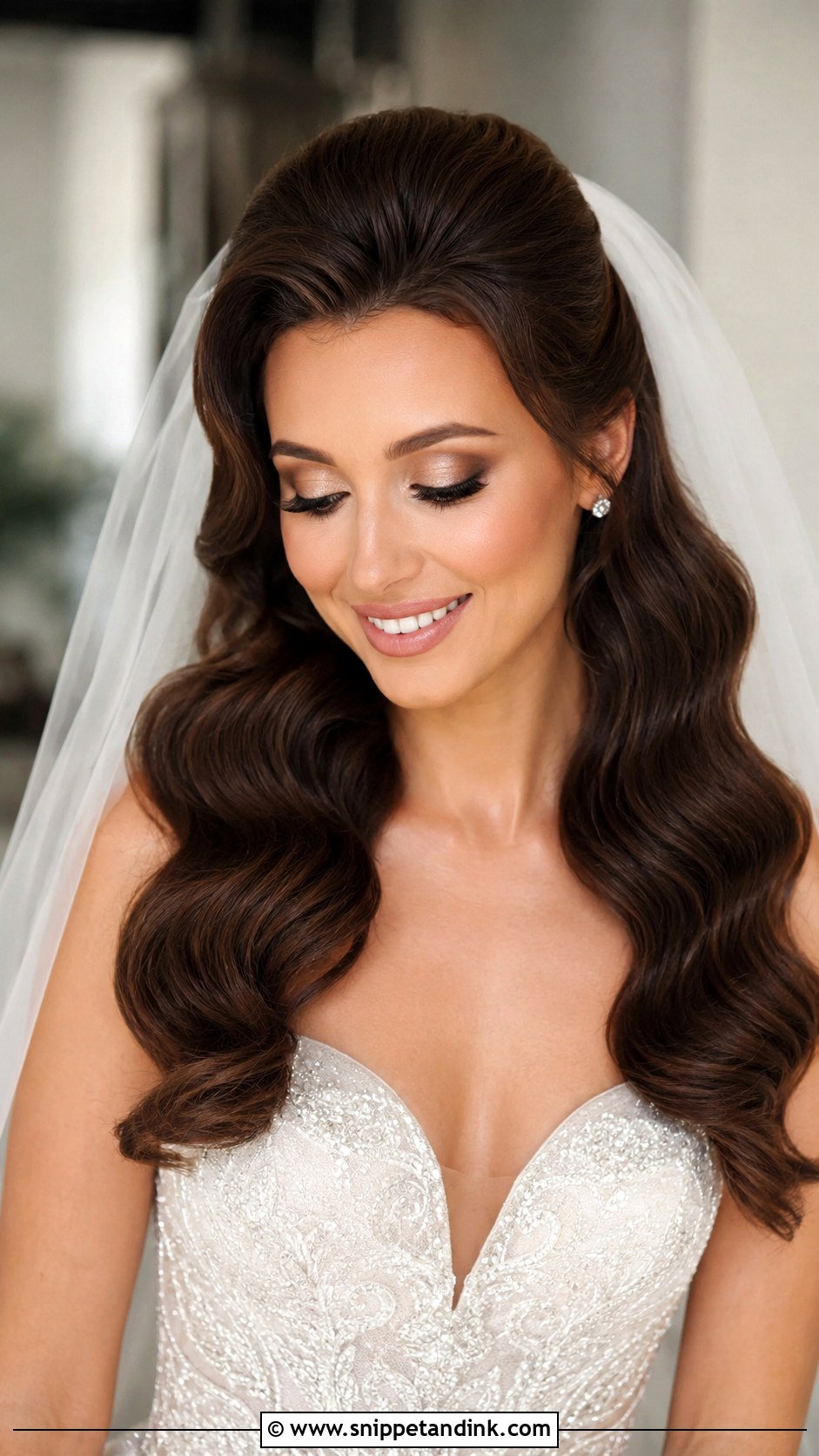
A soft bouffant at the crown adds height before the waves fall below. The veil attaches behind the bouffant, never on top of it, or the volume gets crushed within an hour. I backcomb only the under layer and smooth the top over it, so it stays glossy rather than fluffy. It’s a bold, retro choice that suits a formal wedding and keeps that red-carpet-worthy bridal glamour after the veil comes off.
26. Hollywood Waves With Floral Lace Veil
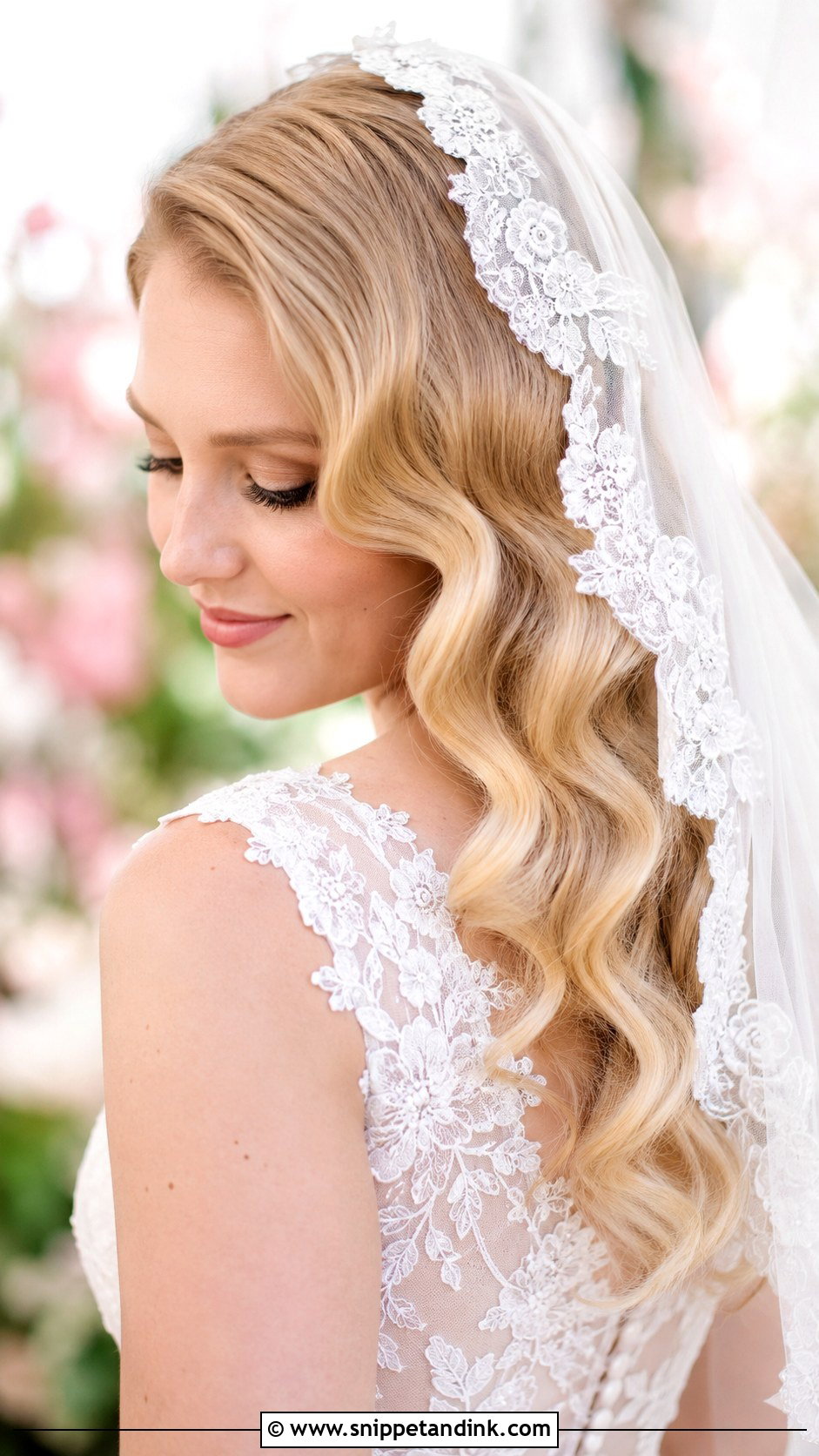
Floral lace appliques scattered over the veil add texture to the waves underneath. The veil attaches behind the crown. Appliques give the tulle some weight in spots, so I make sure the comb sits straight, otherwise the veil hangs crooked. It suits spring and garden weddings, indoors or out, and the smooth waves carry the look once it’s removed.
27. Hollywood Waves With Minimalist Veil
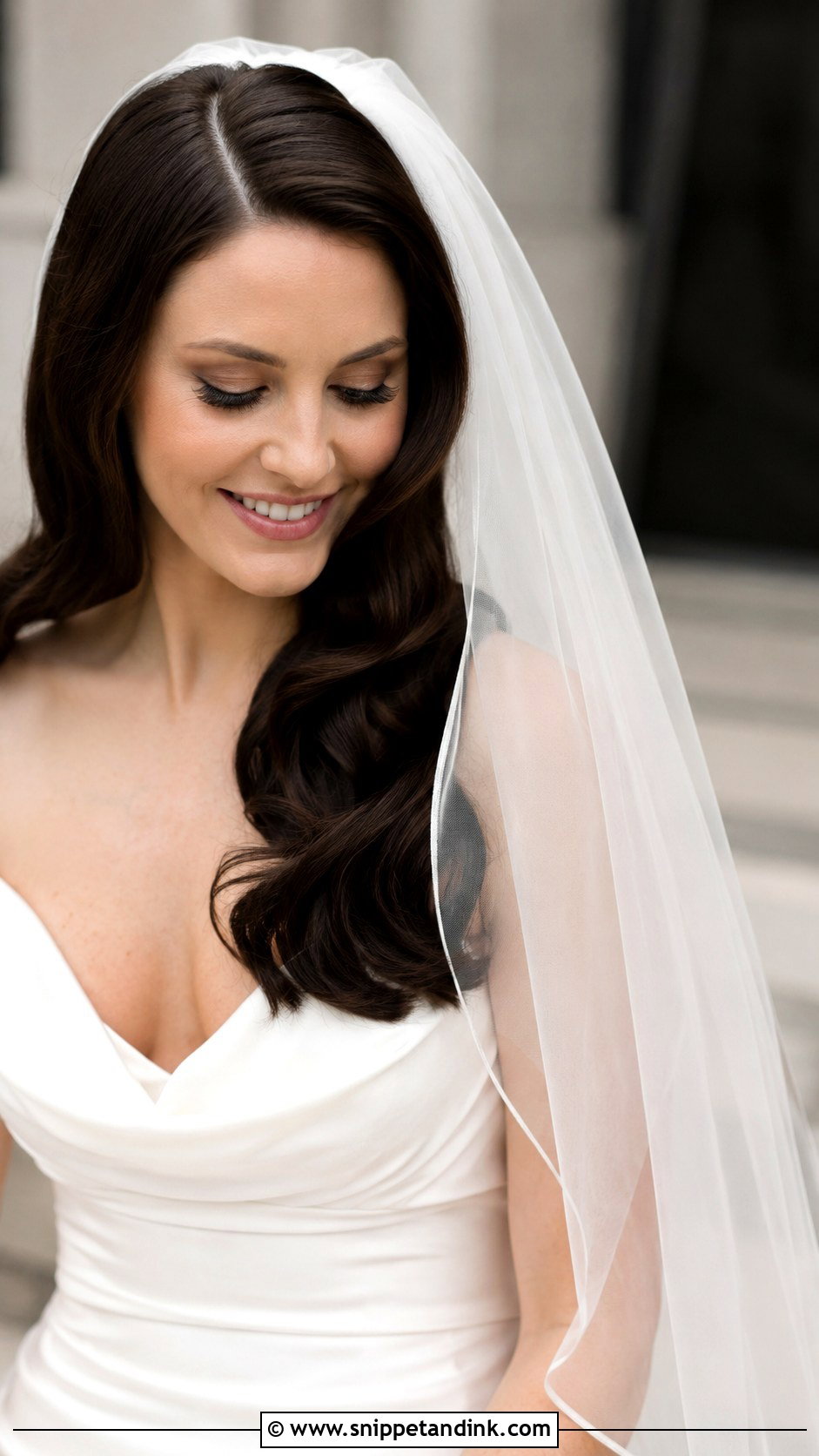
A plain, unembellished veil lets the waves take all the attention. It drapes softly, attaches discreetly behind the crown and stays light. If your hair is the main event, this is the veil I’d point you to, because nothing in the tulle competes with the shine. It works at an intimate ceremony or a big one.
28. Hollywood Waves With Beaded Veil
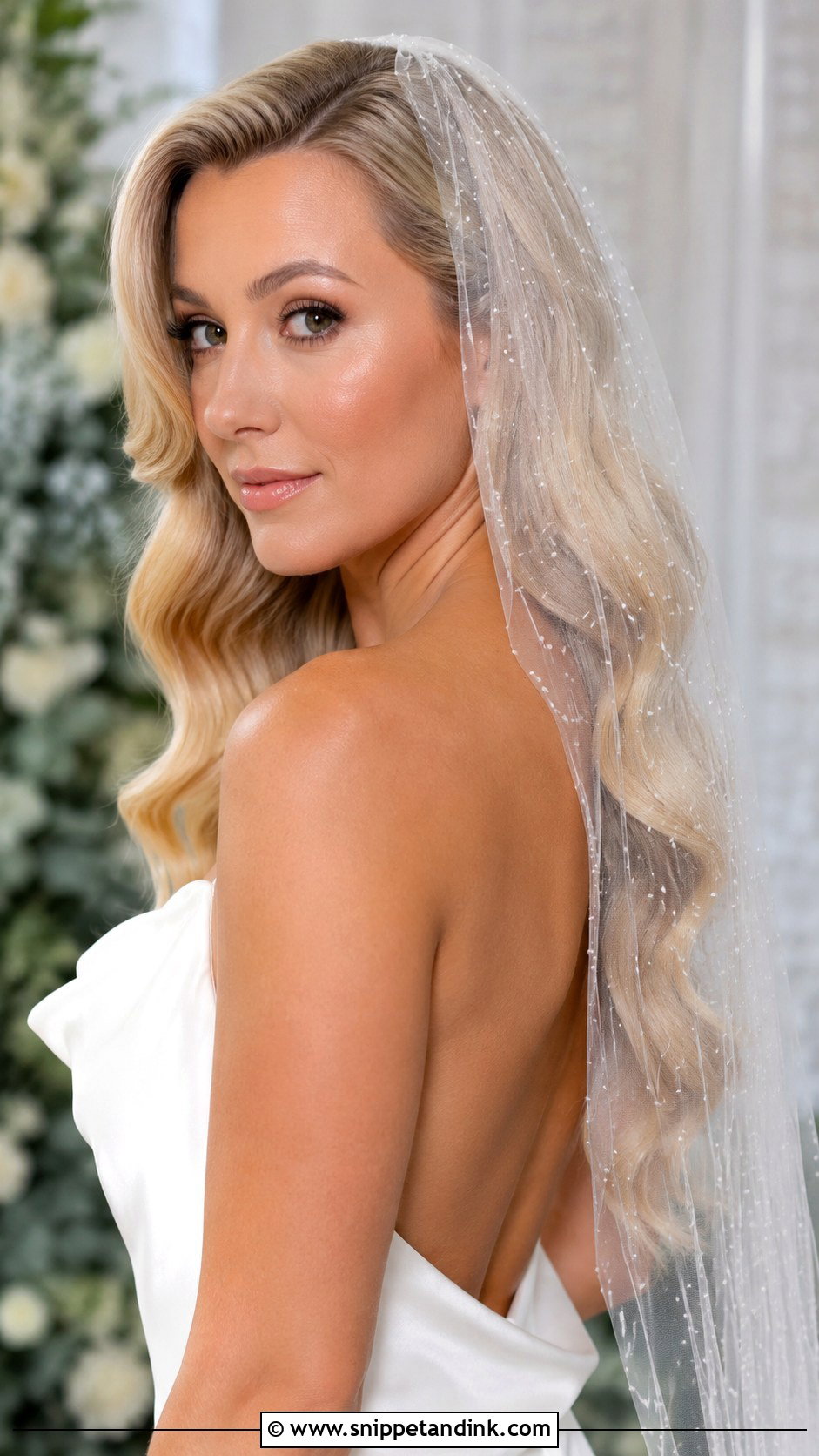
Tiny beads scattered across the tulle catch the light against the waves. The veil attaches behind the crown. Beads are the most likely to snag in curled hair. I tell brides to lift the veil away from the hair when they turn their head quickly, and to have someone help take it off. It suits evening weddings and ballrooms.
29. Hollywood Waves With Off-Center Part And Veil
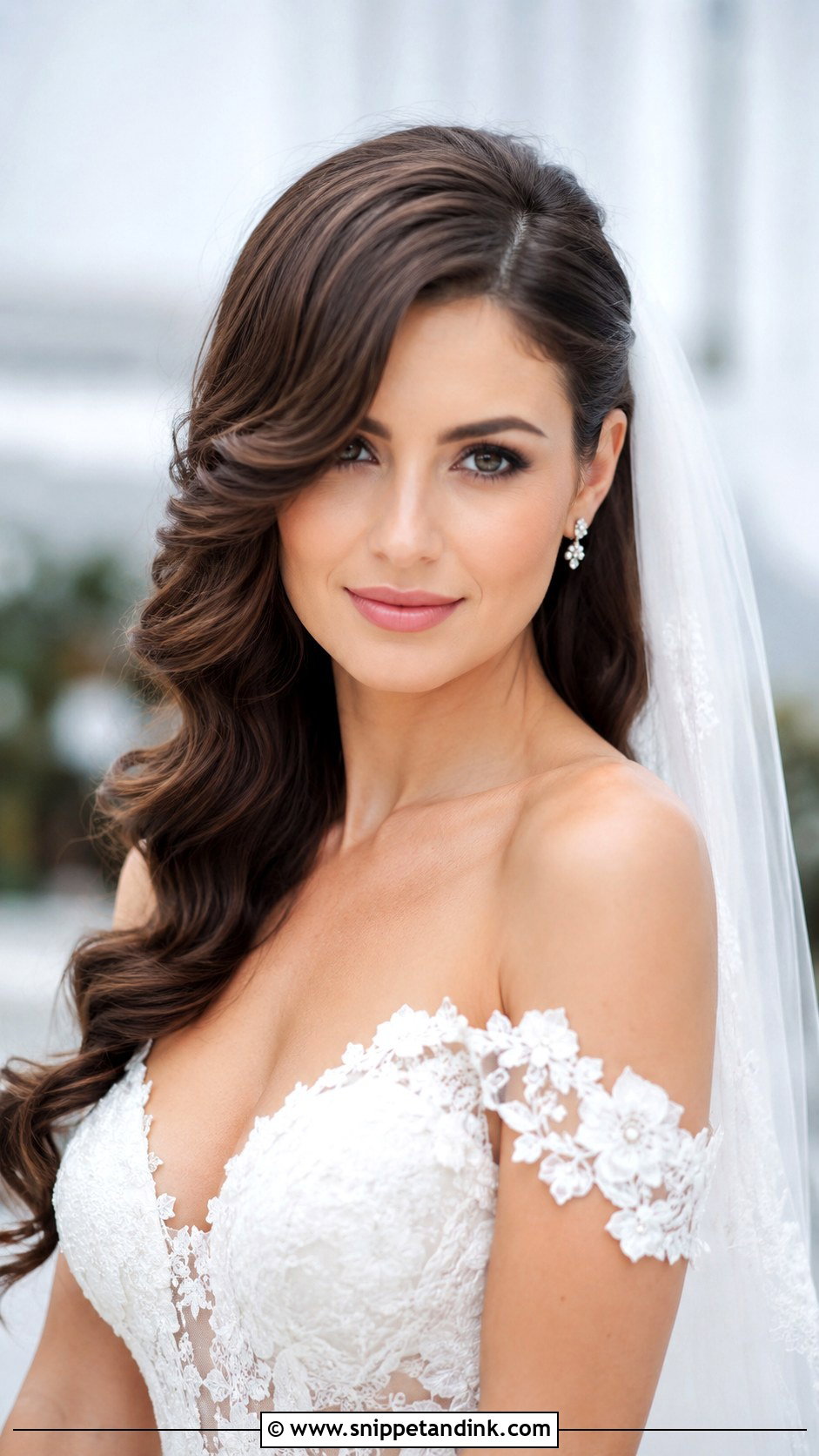
An off-centre part gives classic waves a softer, more modern shape and a little lift. It’s subtler than a deep side part and suits most faces. The veil goes where the head curves downward. I check the part in natural light before setting the curls, because an off-centre part that lands on a cowlick will spring back. A little shine spray keeps the finish mirror-like all day.
30. Hollywood Waves With Cathedral Veil And Hair Vine
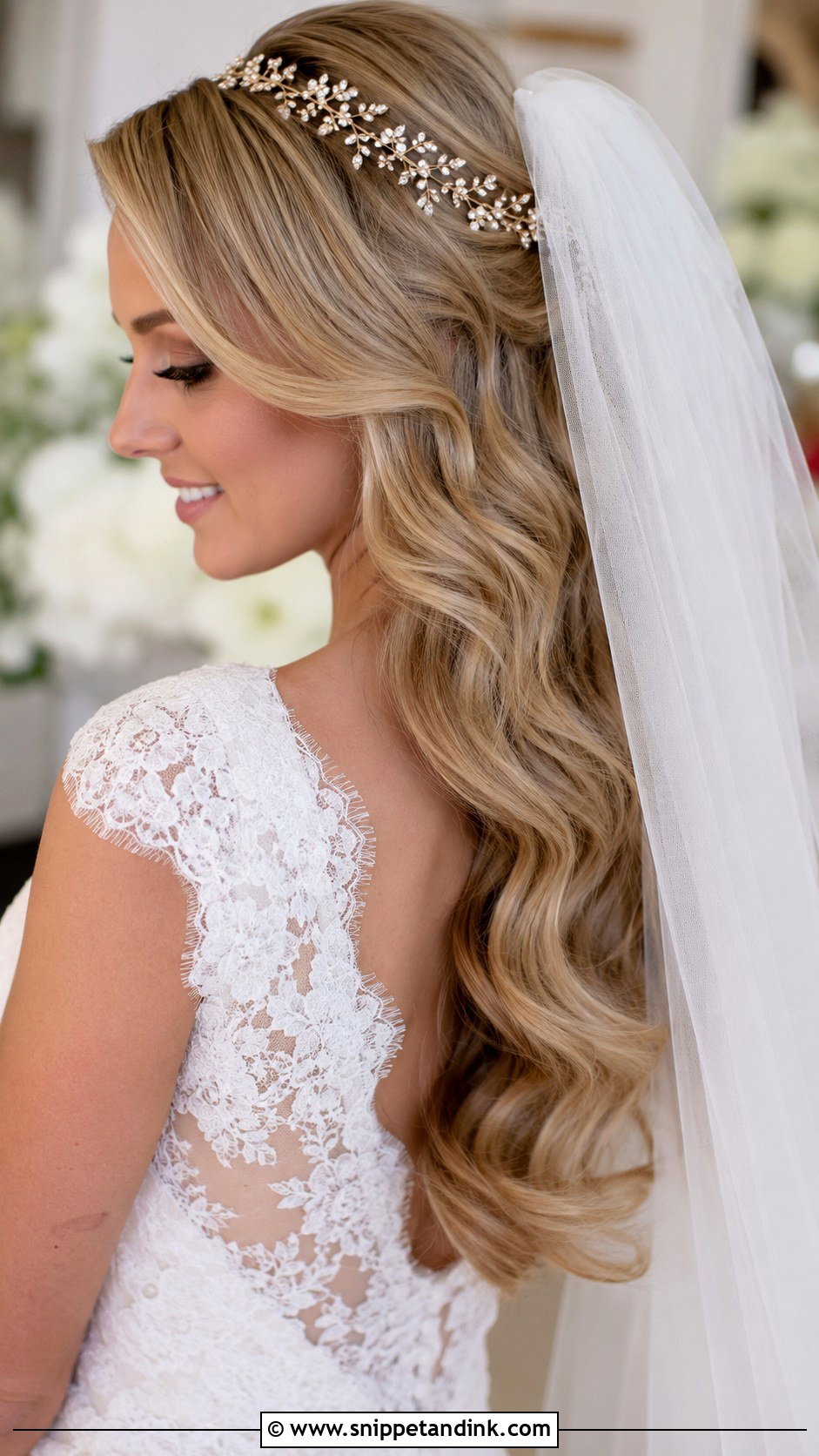
A slim hair vine woven through the waves adds sparkle and doubles as an anchor for a cathedral veil. I weave the vine in before the veil, pinning it every few centimetres so it lies flat against the head. The curls fall beneath the long veil. It’s a romantic, formal pairing, and when the veil is removed, the vine keeps the reception look sparkling.
Glossy Hair Lets a Veil Comb Slip
The shine that makes these waves look expensive is also slippery. A veil comb pushed straight into brushed-out waves has nothing to grip, so it creeps backward as the tulle moves and you turn your head. I always make a foundation first: two bobby pins crossed in an X, or a tiny hidden braid, right where the comb will sit. The comb slides in over that and holds.
When it’s time to take the veil off, have someone else do it. They should slide out any extra pins, then lift the comb up and out in the direction its teeth point. Yanking it backward drags the waves with it. A quick brush and touch of spray afterward and the waves are back in shape.
Will the Waves Hold in Humidity?
Damp air is the enemy of any set curl. If your wedding is outdoors in summer or near water, I’d use a setting spray before curling, keep the waves slightly tighter at the start because they’ll relax, and pack a small brush and a travel spray for touch-ups between ceremony and reception.
Hair type matters too. Very fine hair loses a wave fastest, so I use a lighter product and more pins while it cools. Naturally curly or coily hair usually needs a smooth blowout or silk press before it can be set this way. Do that a day or two ahead and keep it dry until the morning.
The Veil Placement Decides How the Waves Fall
Hollywood waves adapt to nearly any veil, from a sweeping cathedral to a short birdcage. What makes the pairing work is where the veil anchors: behind the curve for long veils, into a pinned section for half-up styles, into the bun for updos. Bring your actual veil and any comb or headpiece to your trial, so your stylist can build the right base under it. Done right, the waves still look sculpted when the veil comes off for the first dance.
You'll Like These Ideas:


Leave a Reply