
The robe is the first thing you put on that ends up in the album, and it has to do three jobs at once: keep you comfortable through two or three hours in a makeup chair, look right in the window light, and come off without catching a single curl. Plain white satin is still the default, but the best bridal robes I see now come in lace trims, feather cuffs, pearl details, embroidery, waffle cotton and sheer layers. Below are thirty of them, with my notes as a bridal stylist on how each fabric behaves, who it suits and where it lets a bride down. Most of the good ones get worn again on the honeymoon, so buy with that in mind.
How Satin, Silk and Cotton Behave Under a Photographer’s Light
Most robes are bought from a product photo shot on a standing model under studio light. Your robe will be photographed on a seated bride, next to a window, for hours. That changes which fabrics hold up.
- Satin shows every crease. Twenty minutes in a makeup chair leaves lines across the lap that read as wrinkles in a full-length shot, so stand up and smooth the front before the photographer starts.
- Silk charmeuse water-marks. Setting spray, a damp hand or a spilled coffee leaves a darker patch that stays until the fabric dries completely.
- Sheer fabrics change with light. Something opaque in lamp light can become see-through against a bright window or under flash.
- Cotton and waffle knit photograph matte and soft. They hide creases but never give the sheen people picture when they think of a bridal robe.
Color is the other thing I check. Bright optical white makes an ivory or champagne gown look slightly dingy when the two hang in the same frame. If your dress is ivory, choose an ivory or champagne robe, or at least hold the fabric next to a swatch of your gown in daylight before ordering.
Then do one test at home: put the robe on, sit in a dining chair for ten minutes, lean forward as if toward a mirror, and stand up. If it gaps, slides off a shoulder or creases badly, you have found the problem before your photographer does.
1. White Satin Bridal Robe
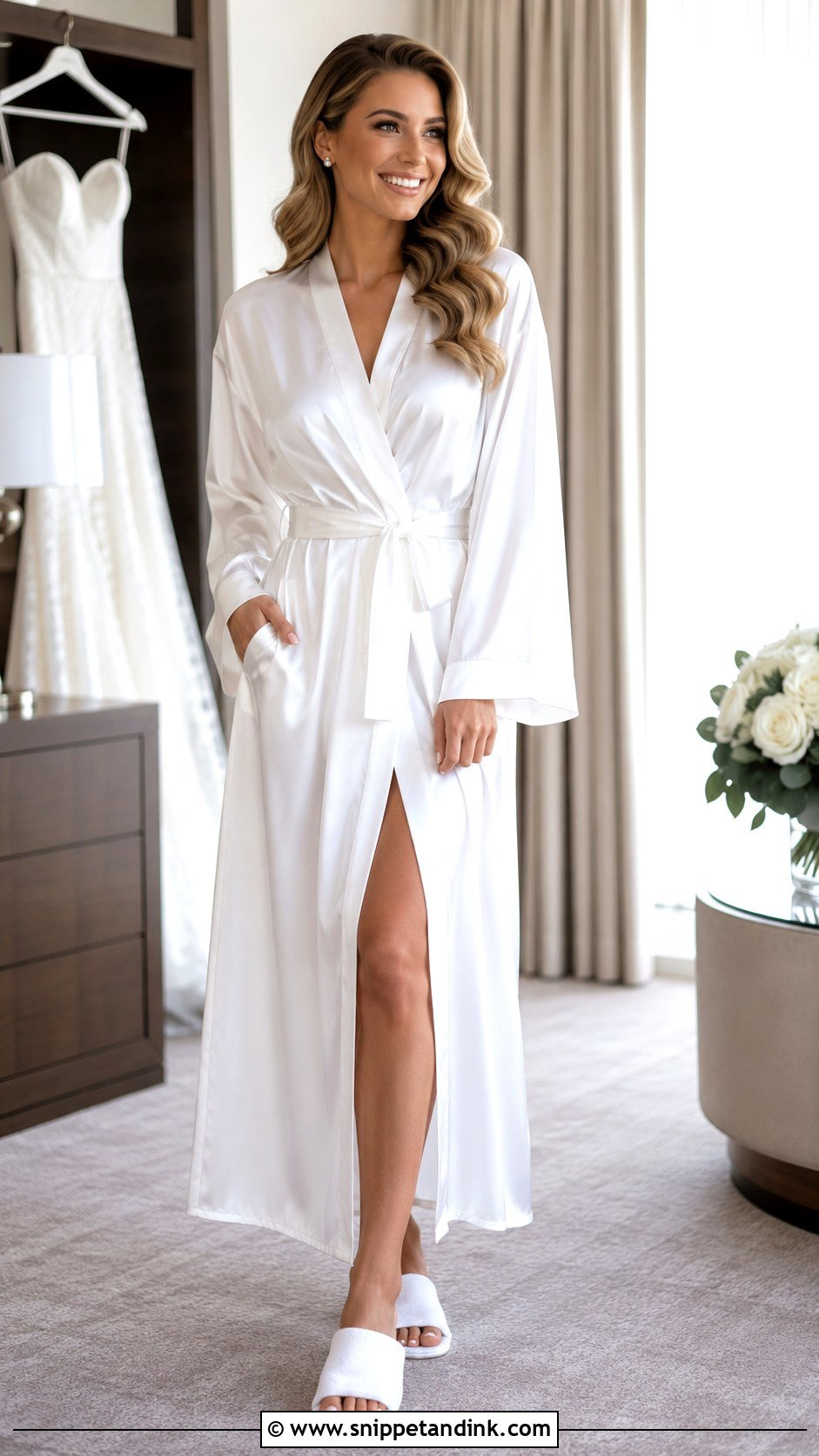
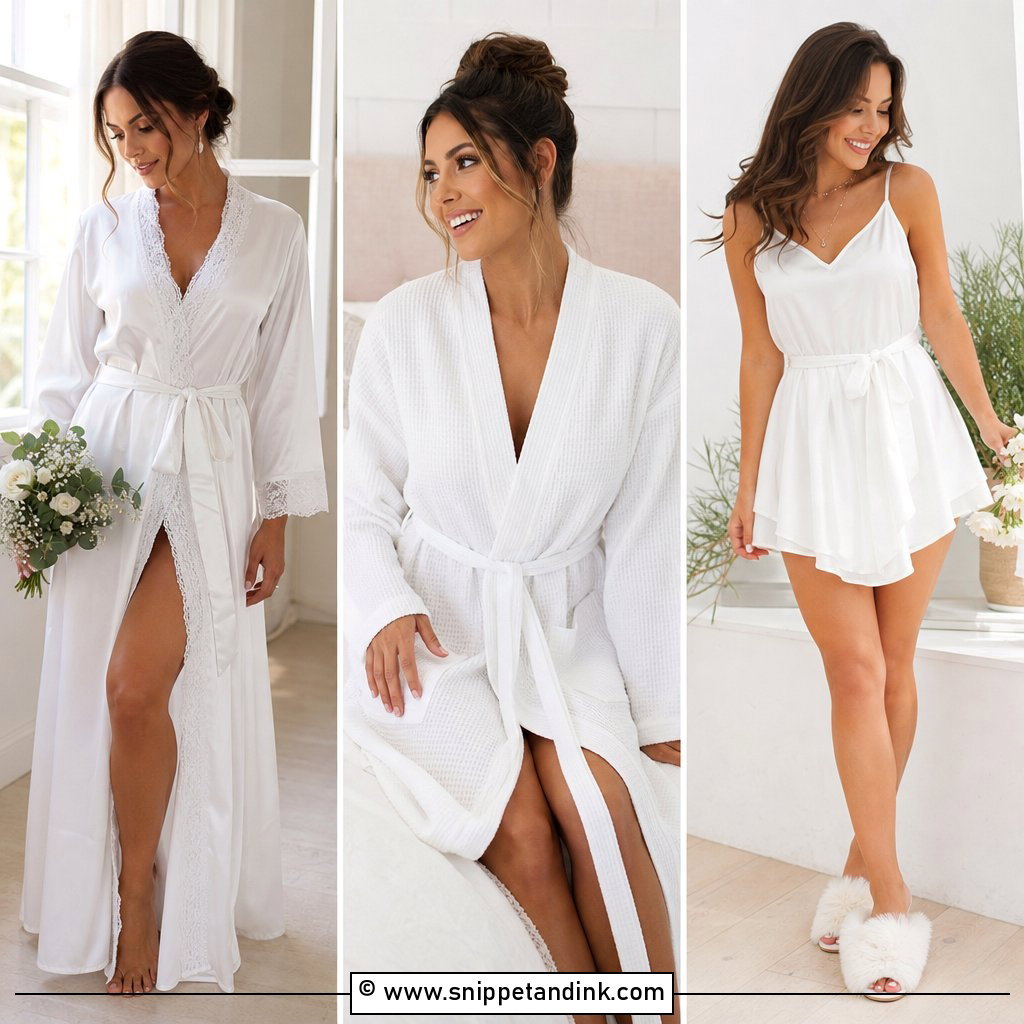
White satin is the classic for a reason: it reads as bridal in a single frame and never argues with the gown. The thing I check first is the inner tie. Satin is slippery, and without that second tie the front drifts open every time you lean toward the mirror. Mid-thigh or knee length is easiest to sit in. Pearl studs and loose waves or a sleek bun are enough. If your gown carries a lot of beading, a plain robe keeps the morning calm, and a little cuff embroidery is all the personal detail it needs.
2. Lace Trim Bridal Robe
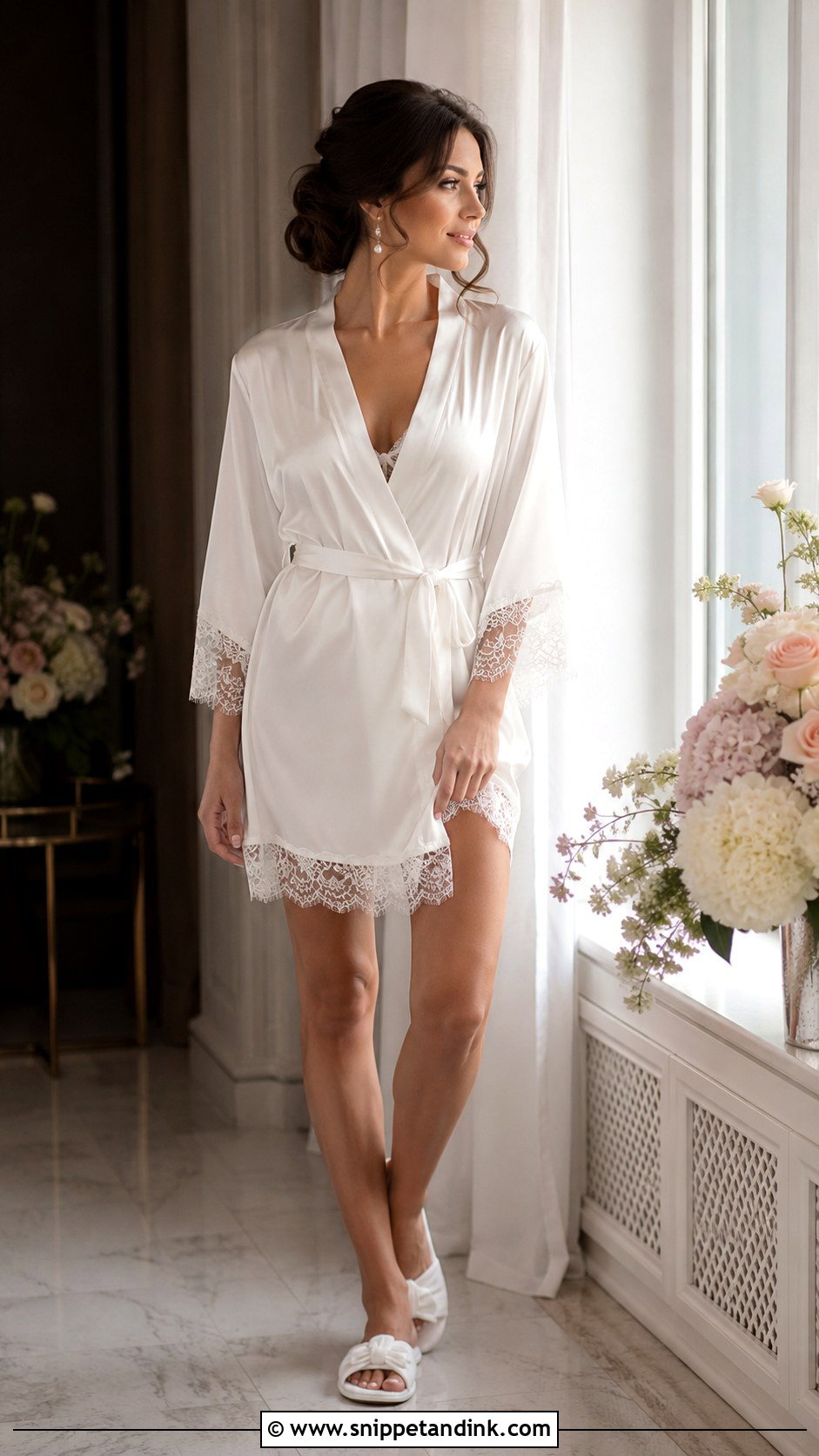
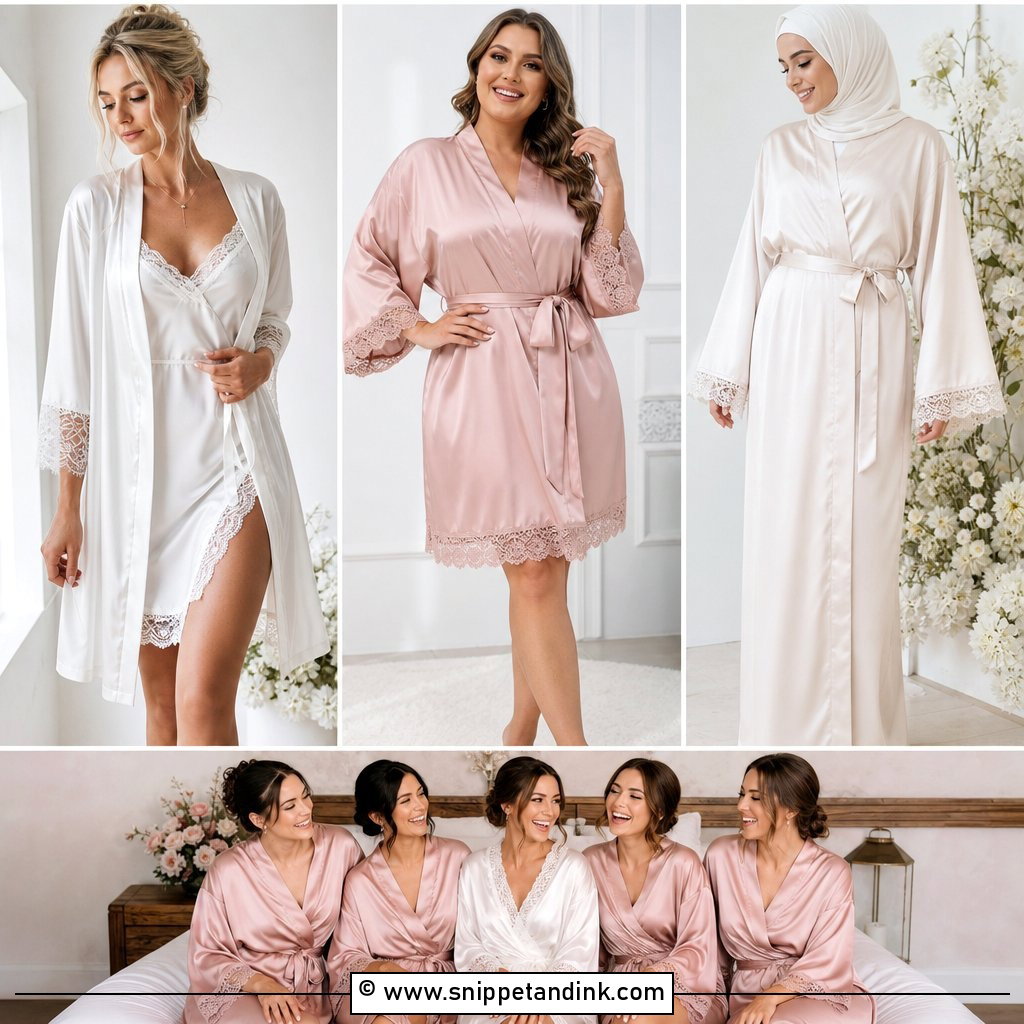
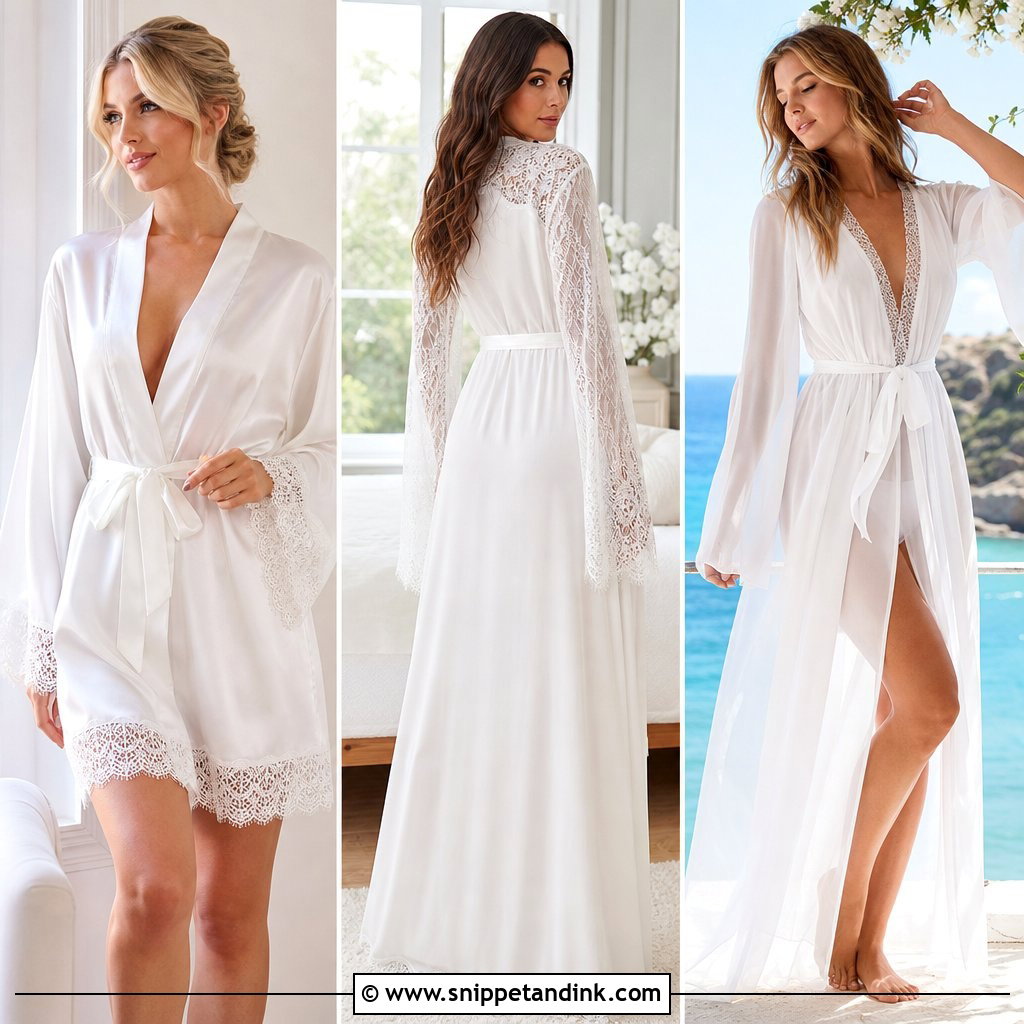
Lace along the sleeves, hem or lapel gives the close-ups something to hold onto, which matters when the photographer is shooting your hands and earrings at arm’s length. I prefer lace on a satin or light cotton base rather than an all-lace robe, because full lace snags on bobby pins and earring backs. Ivory lace reads classic. Blush lace trim softens nicely against warm skin, and it pairs well with garden and vintage settings.
3. Long Bridal Robe
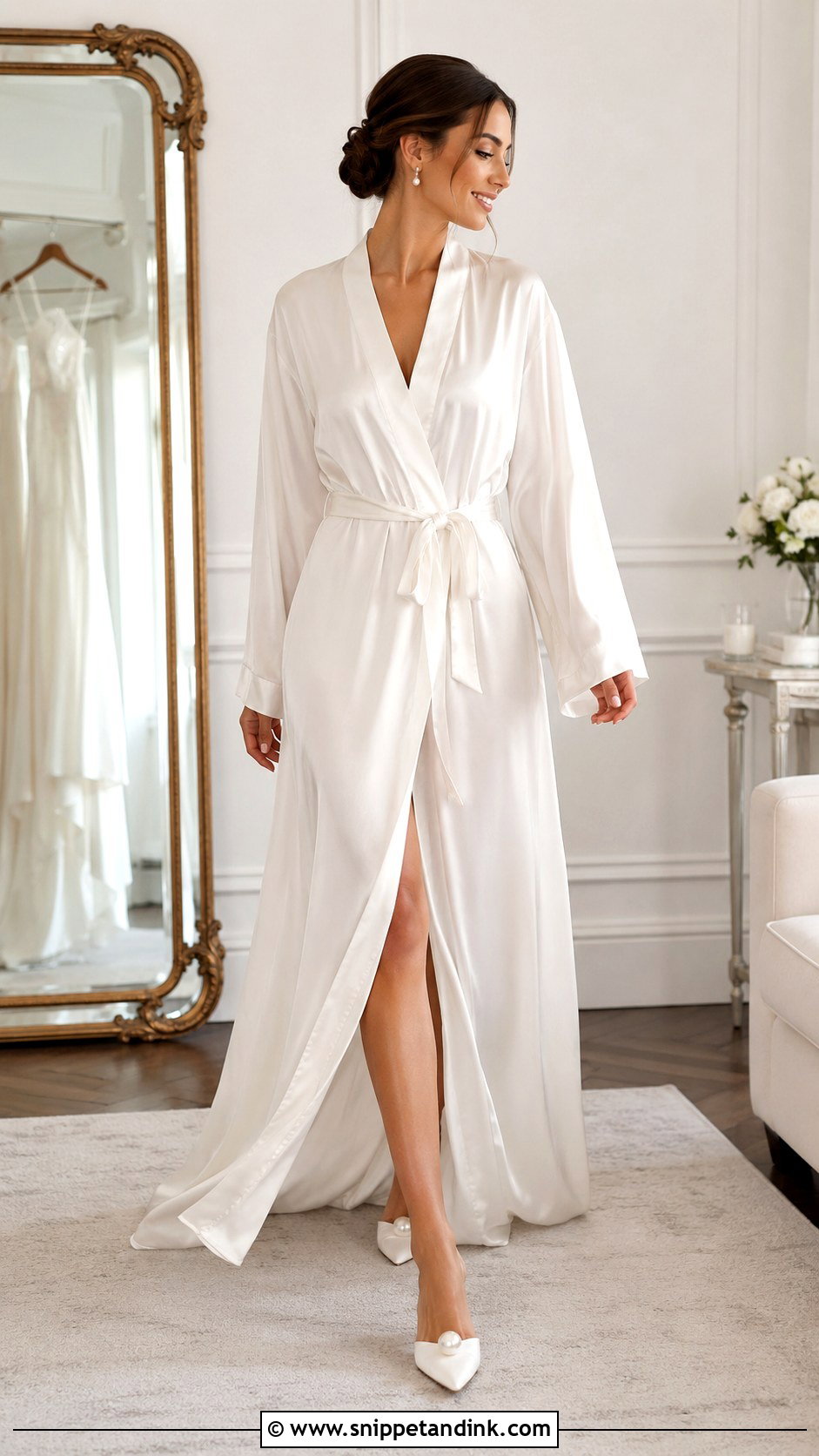
A floor-length robe moves when you walk across the room, and that movement is what makes the full-body shots. The catch is the hem. On a long satin robe it drags across a hotel carpet and catches on chair legs while you sit for makeup, so I ask brides to hold it up or sit sideways until the photographer is ready. Choose satin or silk for a cool morning, chiffon or crepe for heat. A light cinch at the waist gives shape without pulling the lapels apart when you sit.
4. Short Bridal Robe
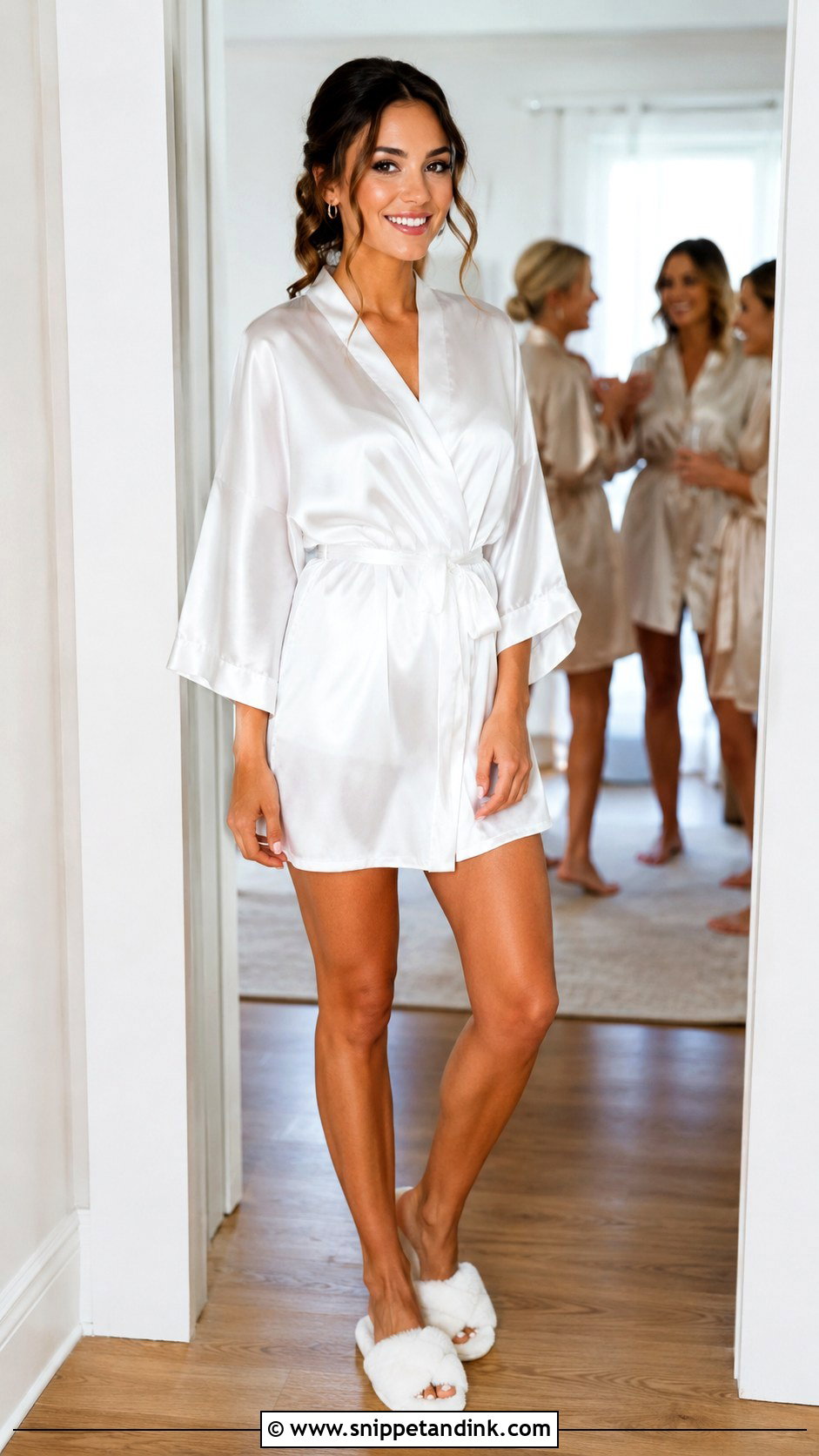
Short robes are the working bride’s choice. You can climb onto a high makeup stool, crouch to buckle shoes and walk between rooms without stepping on a hem. Satin gives shine, cotton gives a softer matte look. Slides and small hoops keep it easy. If the bridesmaids are in robes too, put yourself in white and them in a coordinating color, so you can be picked out of a group shot in a half second. Short lengths also fold small, which helps for destination weddings.
5. Personalized Bridal Robe
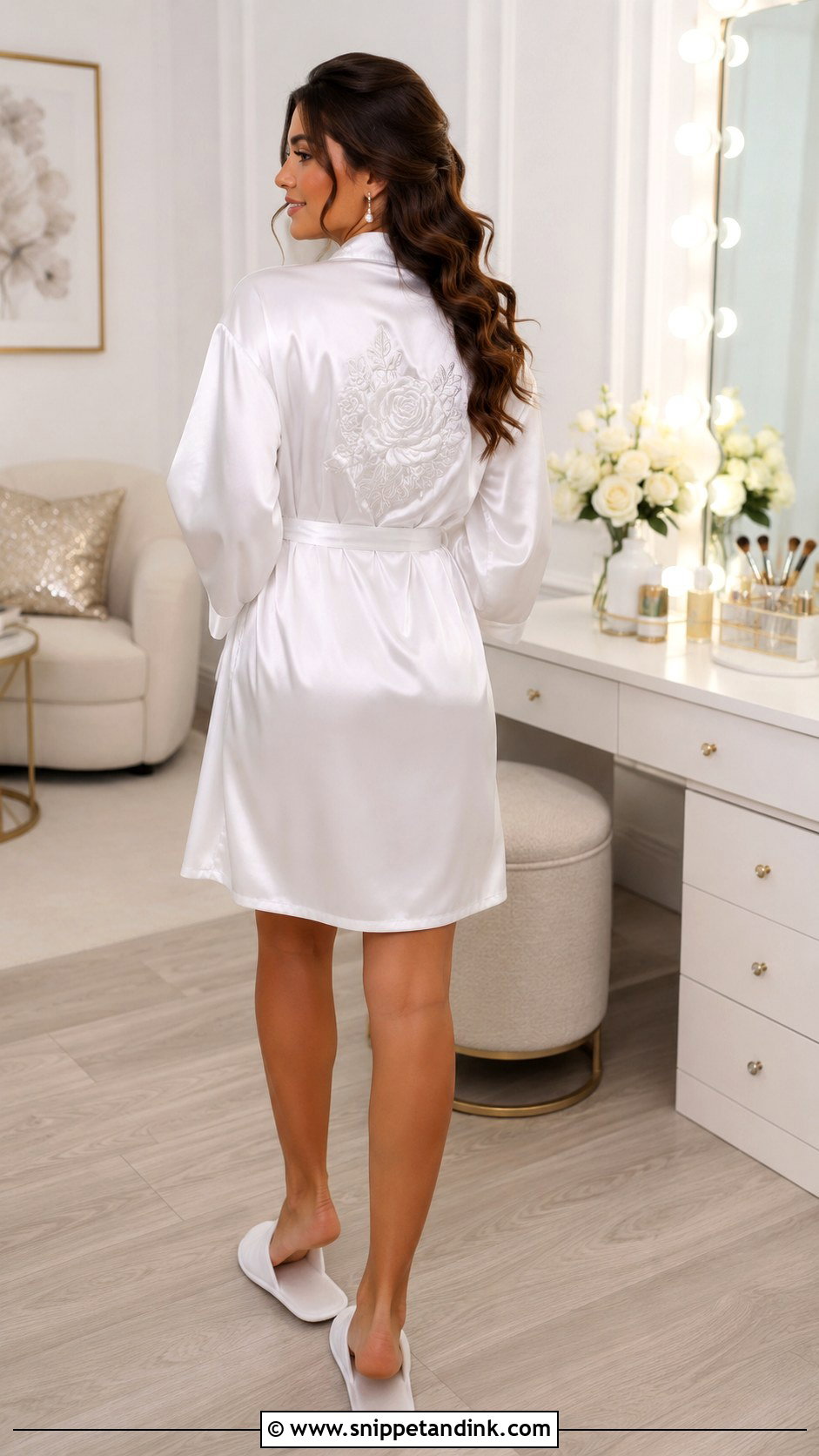
Embroidering a name, new surname, date or the word “Bride” turns a robe into something you keep. My advice is to keep the thread quiet: ivory, champagne, silver or pale blue. Bright thread on the back looks fun in person but tends to dominate the photos where you are facing away from the camera, which is most of the hair shots. Order early. Custom pieces need time for stitching, shipping and a reorder if the spelling comes back wrong, and spelling mistakes are more common than you would think.
6. Feather Trim Bridal Robe
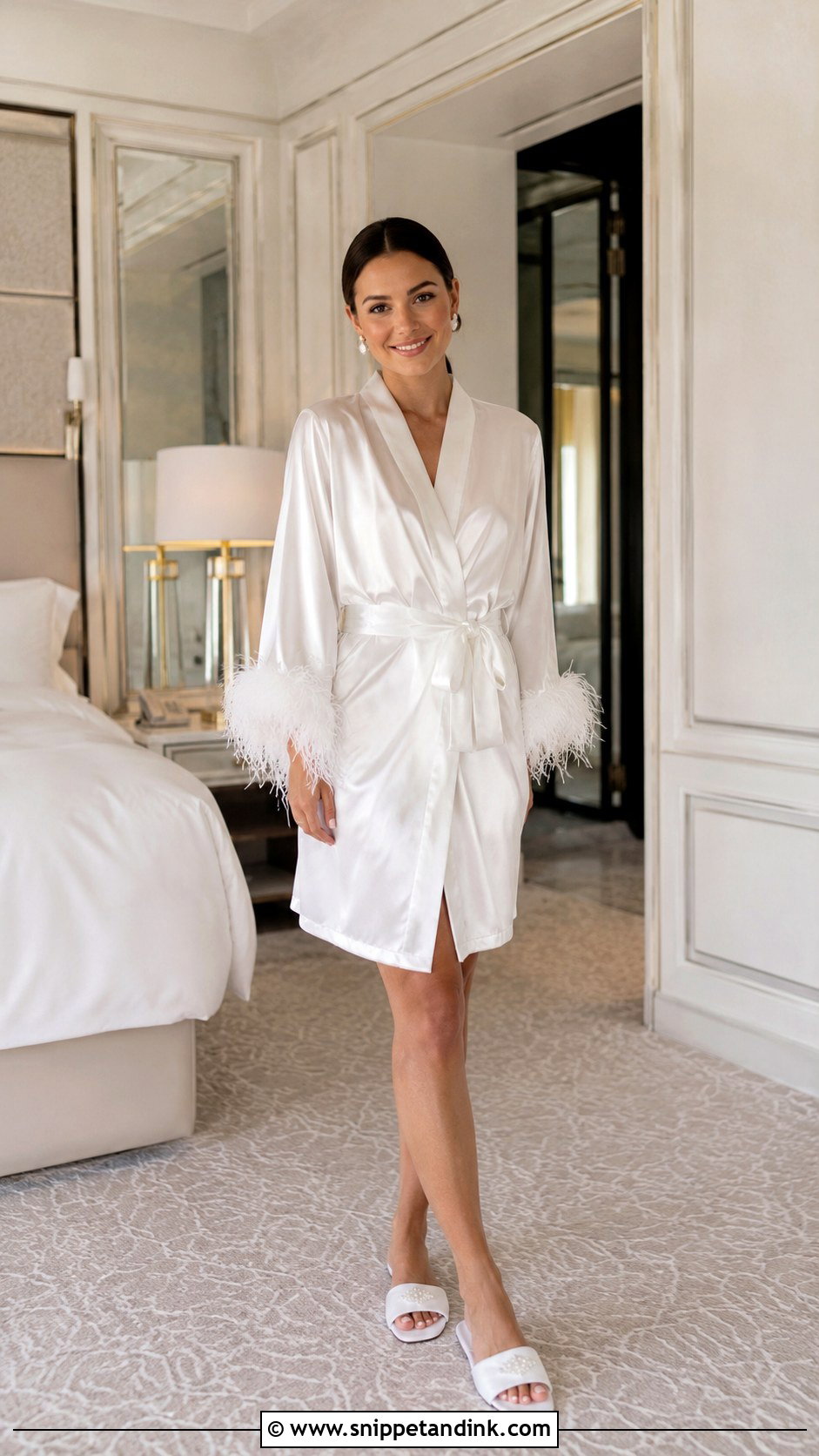
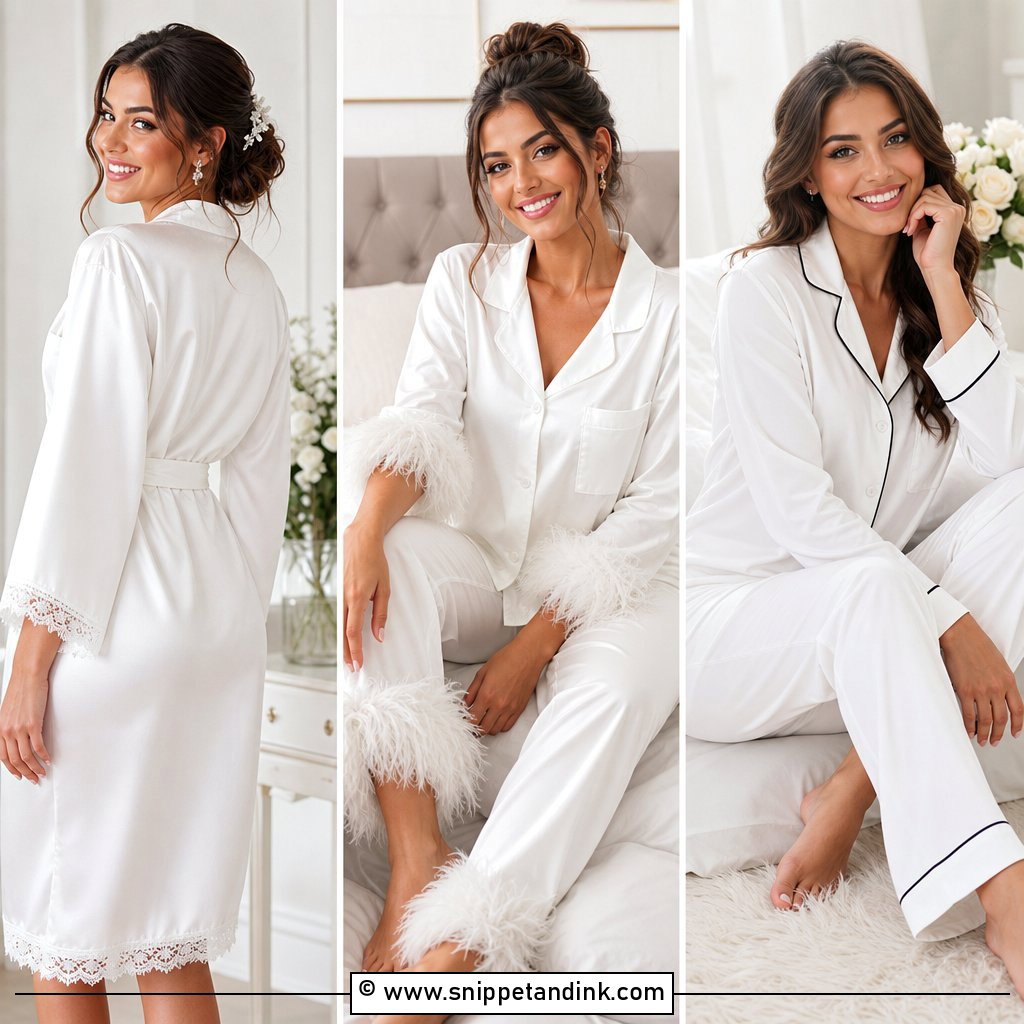
Feathers make a robe feel like fashion, and they are fun in a hotel suite. I steer brides toward feather cuffs or a feather hem rather than all-over feathers. Cuffs that sit near the face shed onto fresh foundation and lash glue, so I keep a lint roller in my kit for exactly this robe, and I ask the bride to push the sleeves back during makeup. Keep everything else plain: smooth hair, pearl studs, white slippers. A white satin base with soft feather sleeves gives the drama without looking costume.
7. Silk Bridal Robe
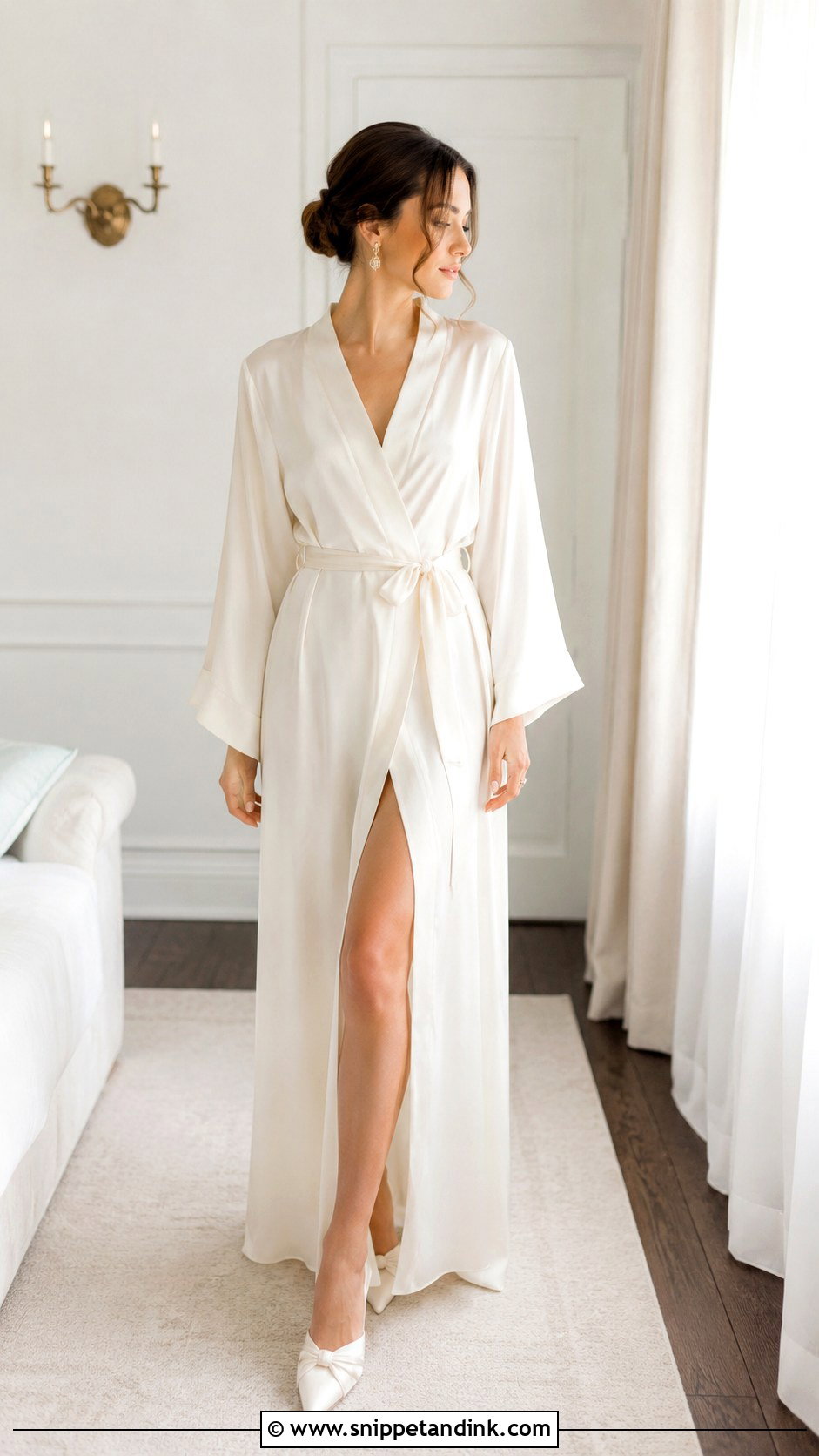
Real silk drapes close to the body and catches light softly, which is why it looks expensive in candid frames. It also creases and water-marks. A splash from a setting spray or a damp hand leaves a visible spot on silk charmeuse, so I keep a towel over the lap during makeup. Hang it the night before and steam from the inside on a low setting. Ivory, pearl or champagne silk with a low bun and fine gold jewelry is a quiet look, and it is the robe most brides actually wear for years afterward.
8. Floral Bridal Robe
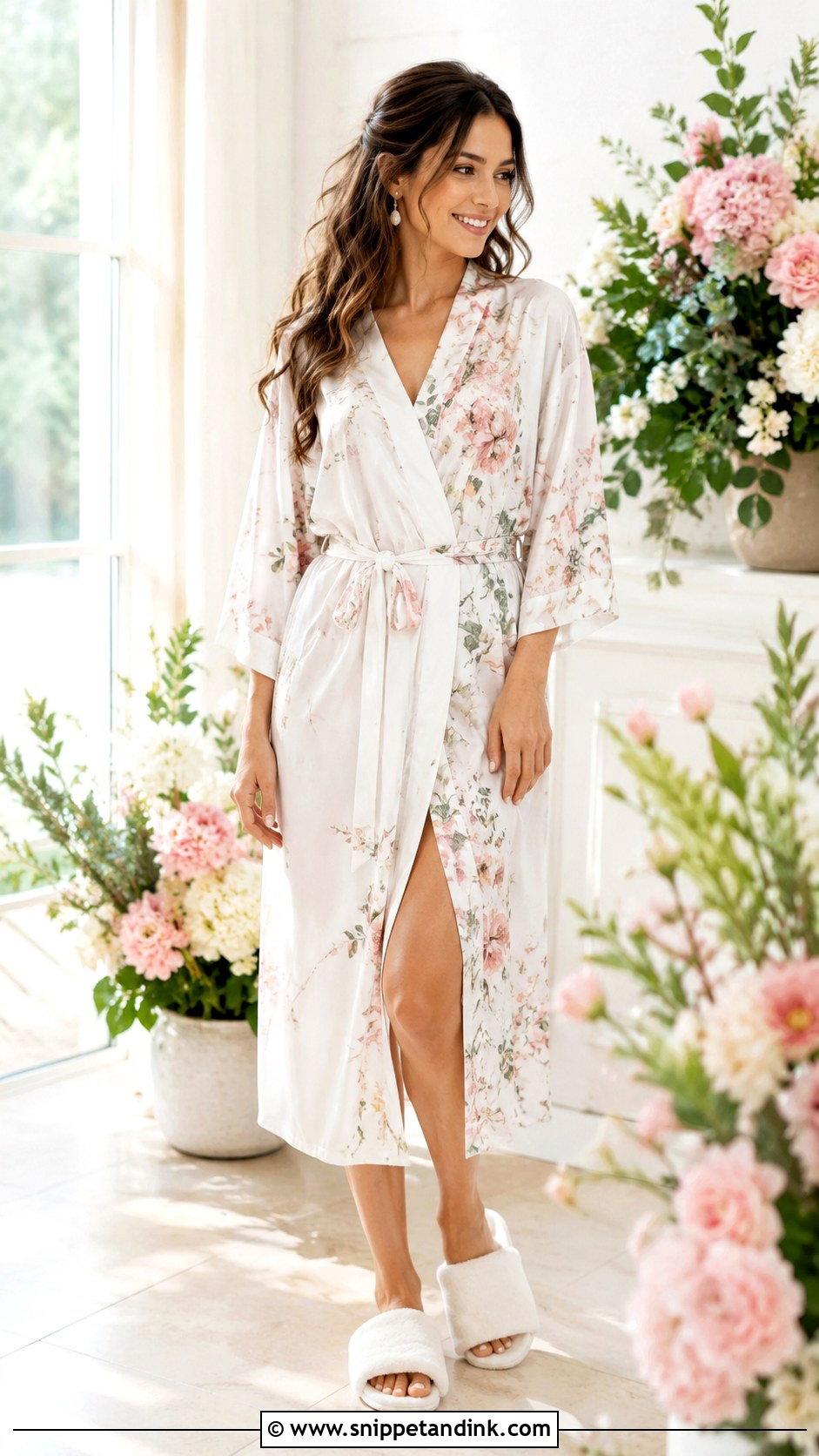
Florals bring color into a morning that is otherwise all white and ivory. Watercolor prints and embroidered flowers on a pale base work for spring, garden venues and resort suites. The thing I watch is scale: a large, busy print breaks up in wide shots and can clash with a bouquet held in front of it. A smaller or softer print holds together. If the bridesmaids wear solids, your floral robe separates you from them while staying inside the palette.
9. Champagne Bridal Robe
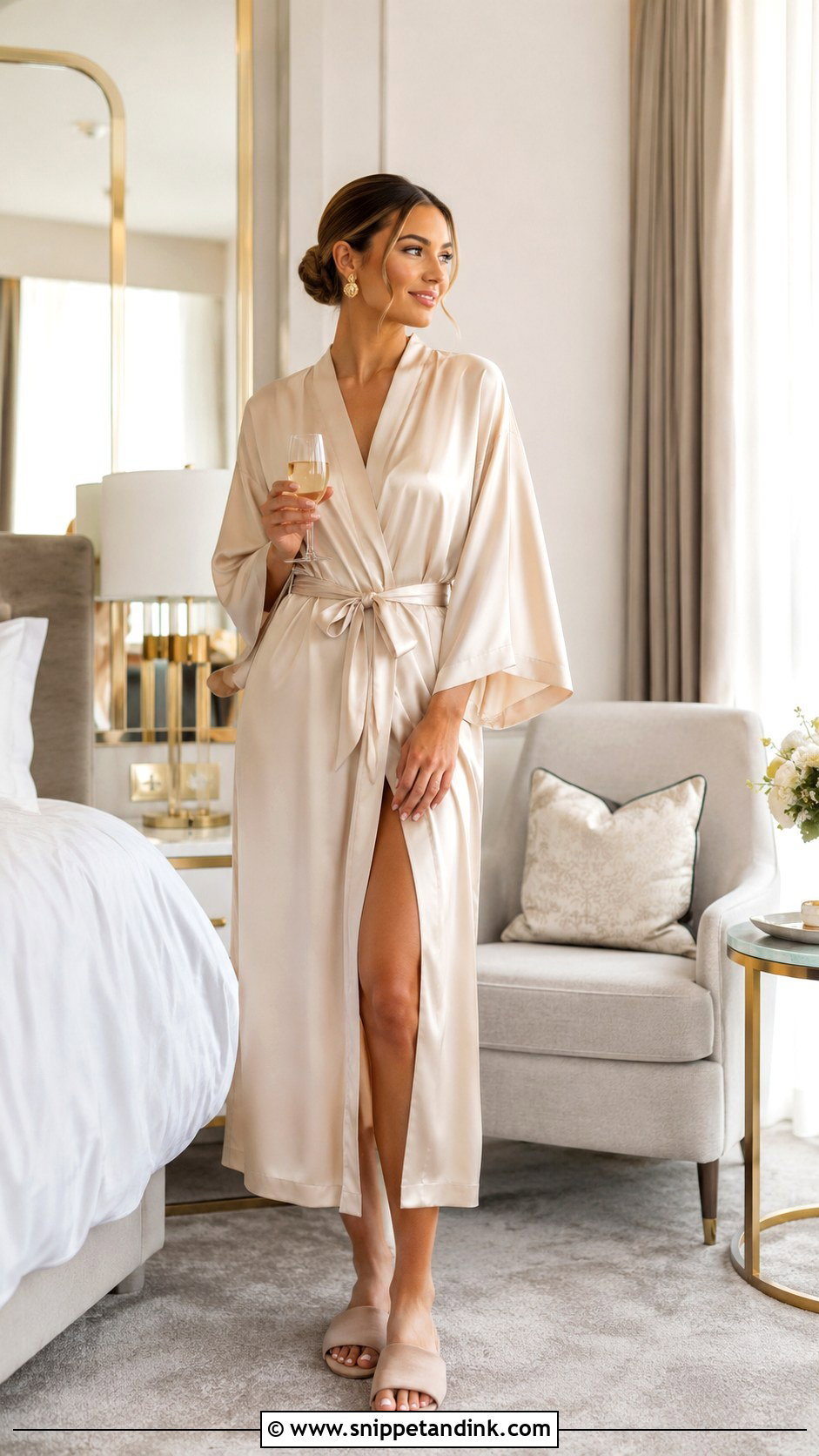
Champagne is my first suggestion for brides with an ivory gown. Next to stark white satin, an ivory dress can look slightly yellow in the hanging-dress shots, while champagne sits in the same warm family. It flatters most skin tones in window light. Gold earrings, nude slippers and a polished low bun suit it. It pairs with bridesmaid robes in sage, taupe, blush or dusty blue.
10. Blush Bridal Robe
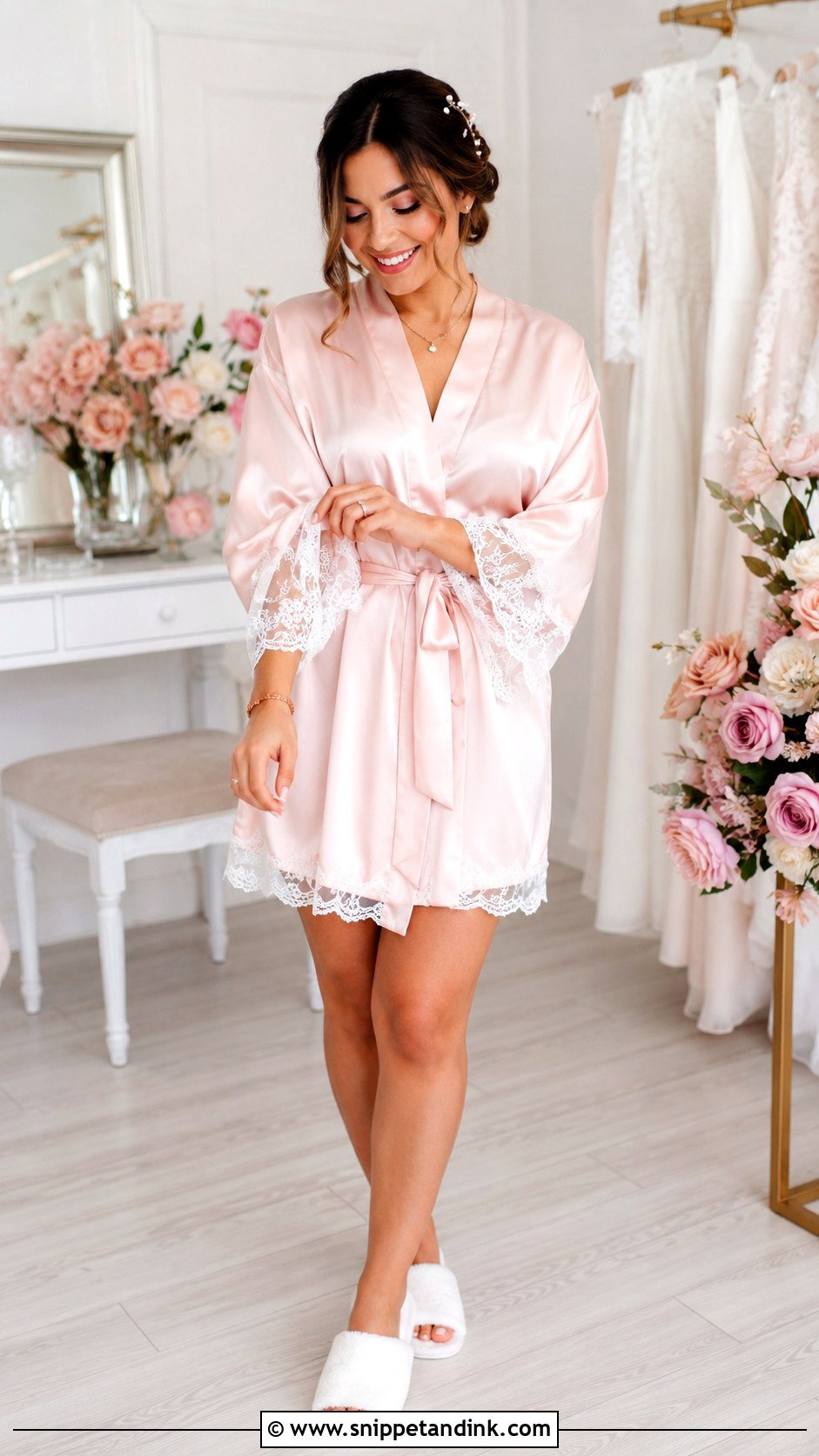
Blush is a gentle way into color. Pink fabric throws a little warmth back onto the face, which is flattering in morning light but can make already rosy skin look flushed, so I ask brides to hold the fabric under their chin in daylight before ordering. Satin, cotton or chiffon all come in blush. It sits nicely next to pastel bridesmaid robes, and a white lace trim, pearl buttons or embroidery keeps you identifiable as the bride.
11. Pearl Bridal Robe
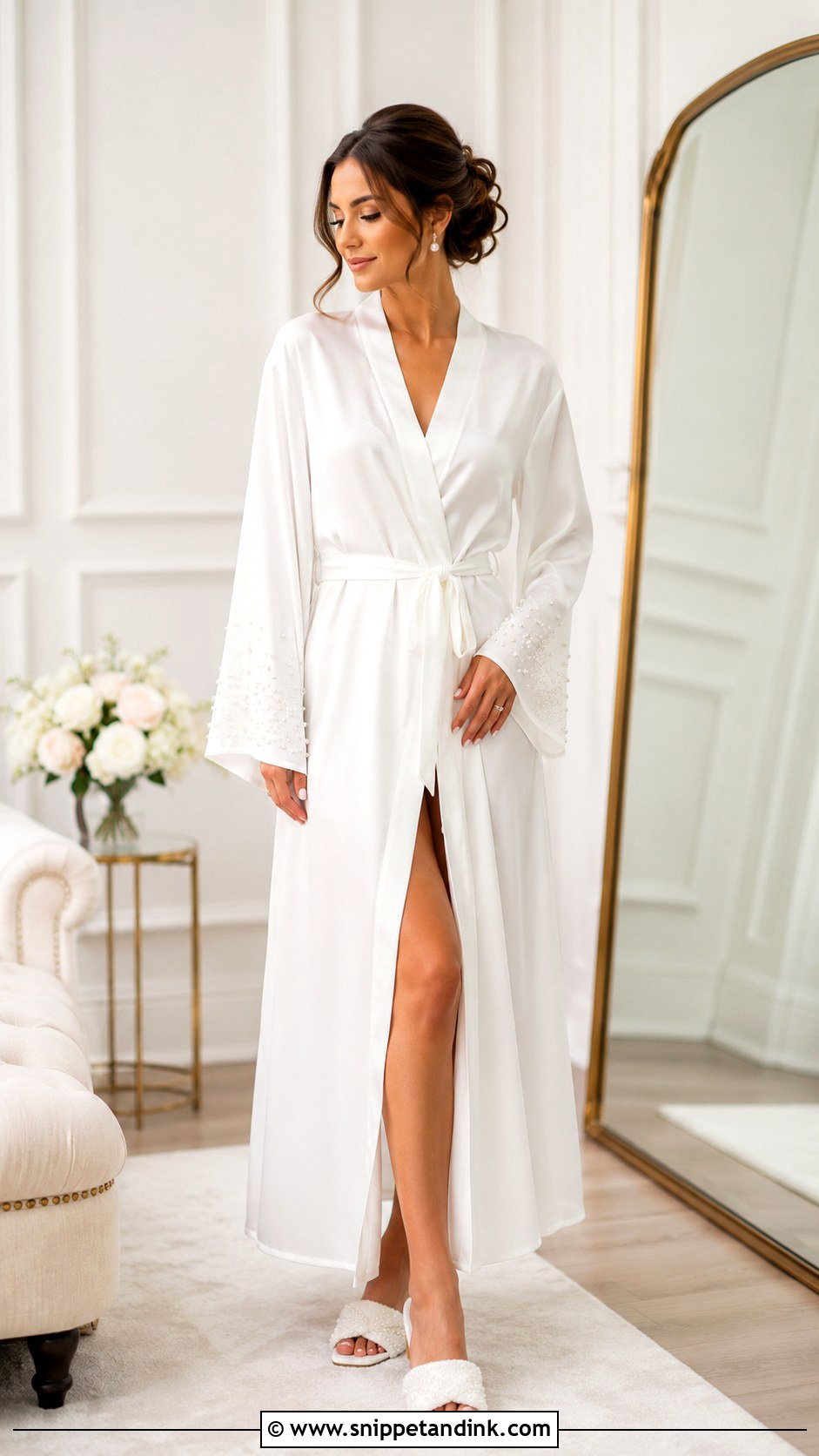
Pearl details on the cuffs, collar, sash or back give texture without color. A satin or crepe base lets them show. My practical worry with pearl collars is hair: sewn pearls snag on loose curls when you turn your head, so I prefer pearls on the cuffs or the back if you are wearing your hair down. They suit brides already wearing pearl earrings, shoes or gown details, and they show up well in close shots of hands and rings. Keep jewelry minimal so the robe does not feel heavy.
12. Sheer Bridal Robe
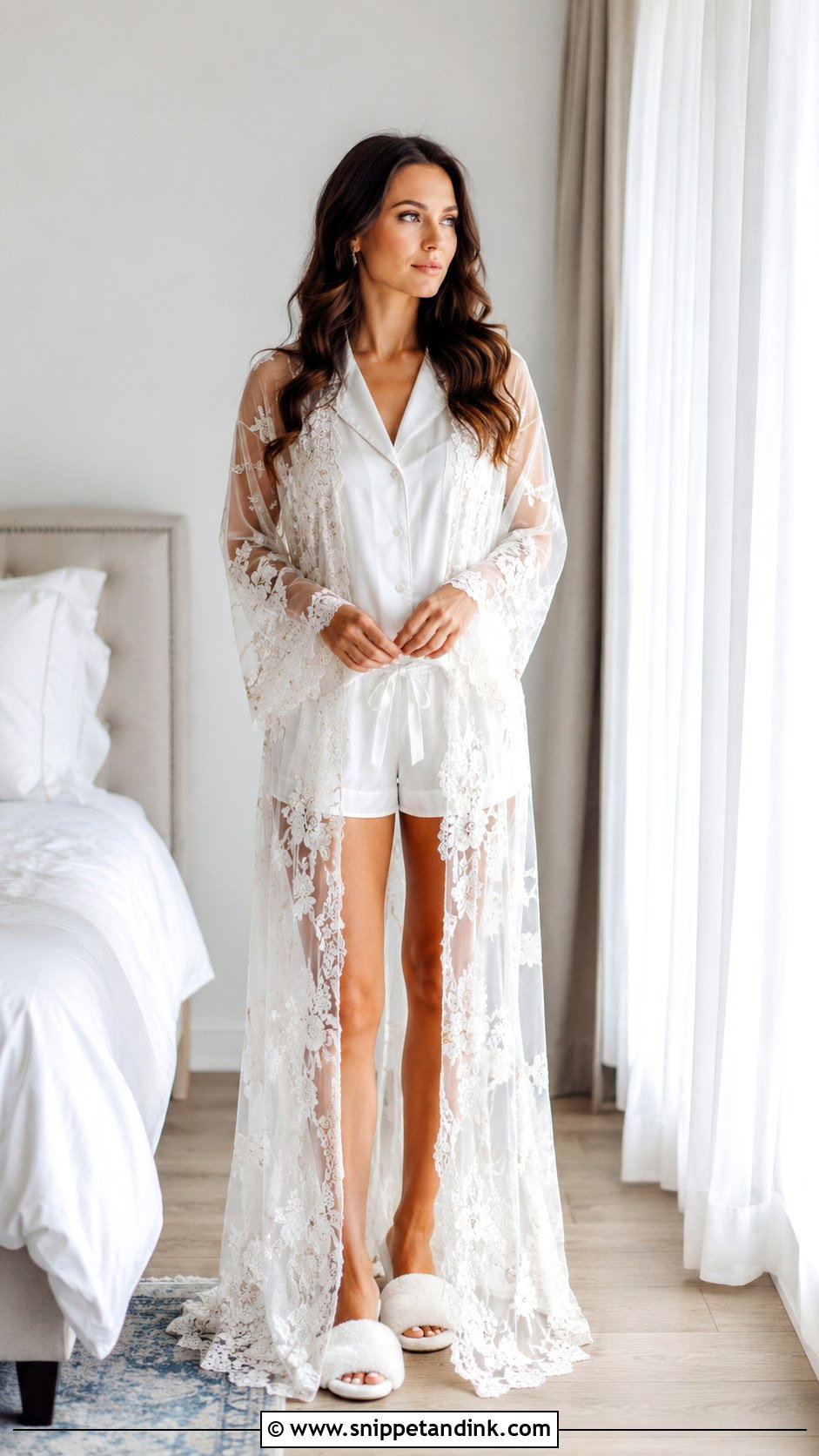
Sheer robes need a plan for what goes underneath, and that plan has to account for camera flash. Fabric that looks opaque in a hotel room can turn see-through the moment a flash or a strong backlit window hits it. I suggest a lined pajama set, a cami-and-short set or a plain white slip, then a test photo with flash on your phone before the day. Lace, floral embroidery or soft tulle gives the most editorial full-length shots. It is a fashion-led take on an easy getting-ready outfit, provided you feel secure sitting in it.
13. Cotton Bridal Robe
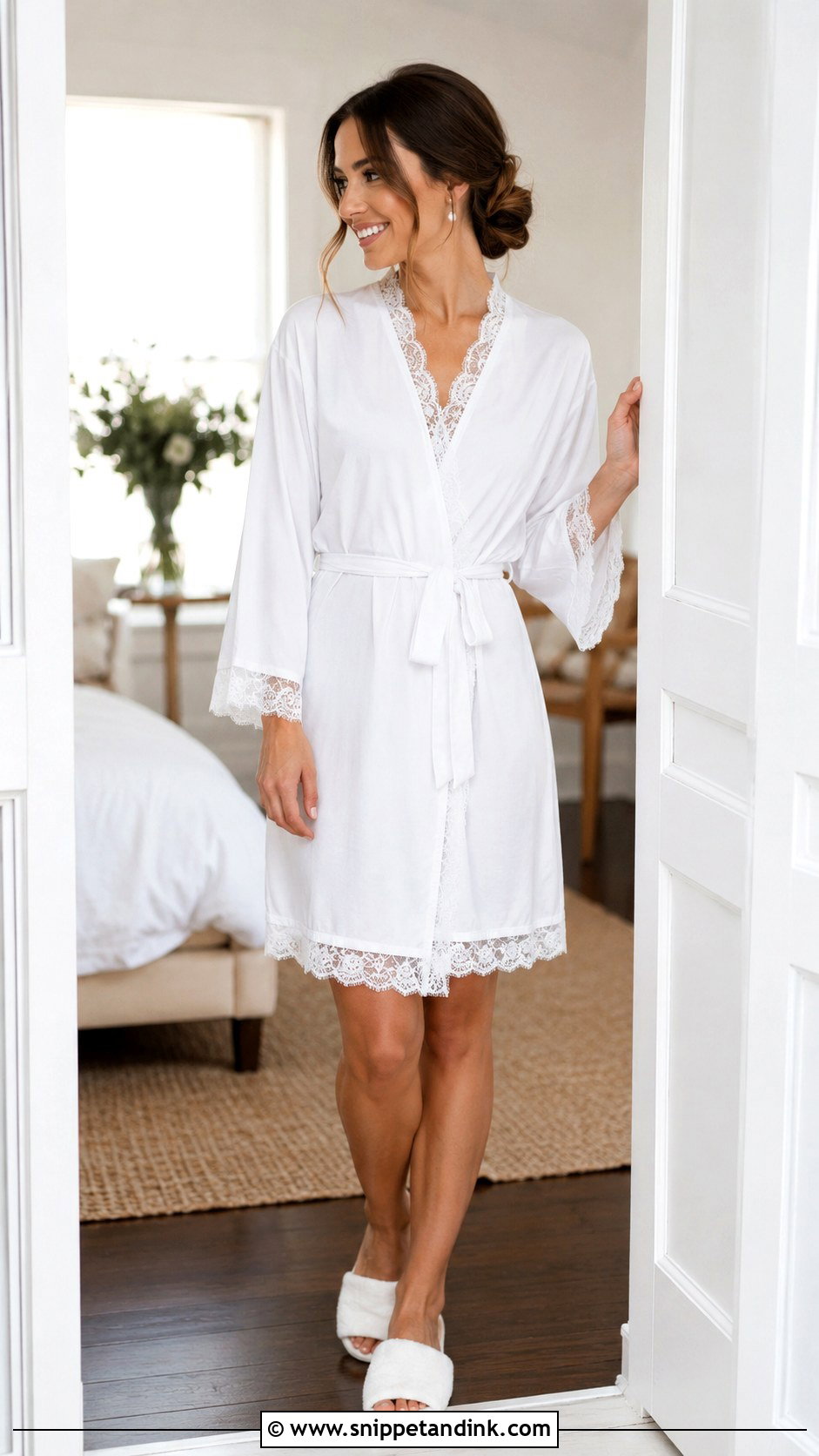
Cotton is the robe I recommend most often for hot climates and long timelines. It breathes, it absorbs, and it does not slide off your shoulders the way satin does when you move. White, ivory or pale blue cotton with lace trim or embroidery stops it looking like a hotel-room robe. It is also the kindest fabric for brides who dislike the slippery feel of satin against their skin. At-home weddings and relaxed suites suit it best.
14. Waffle Knit Bridal Robe
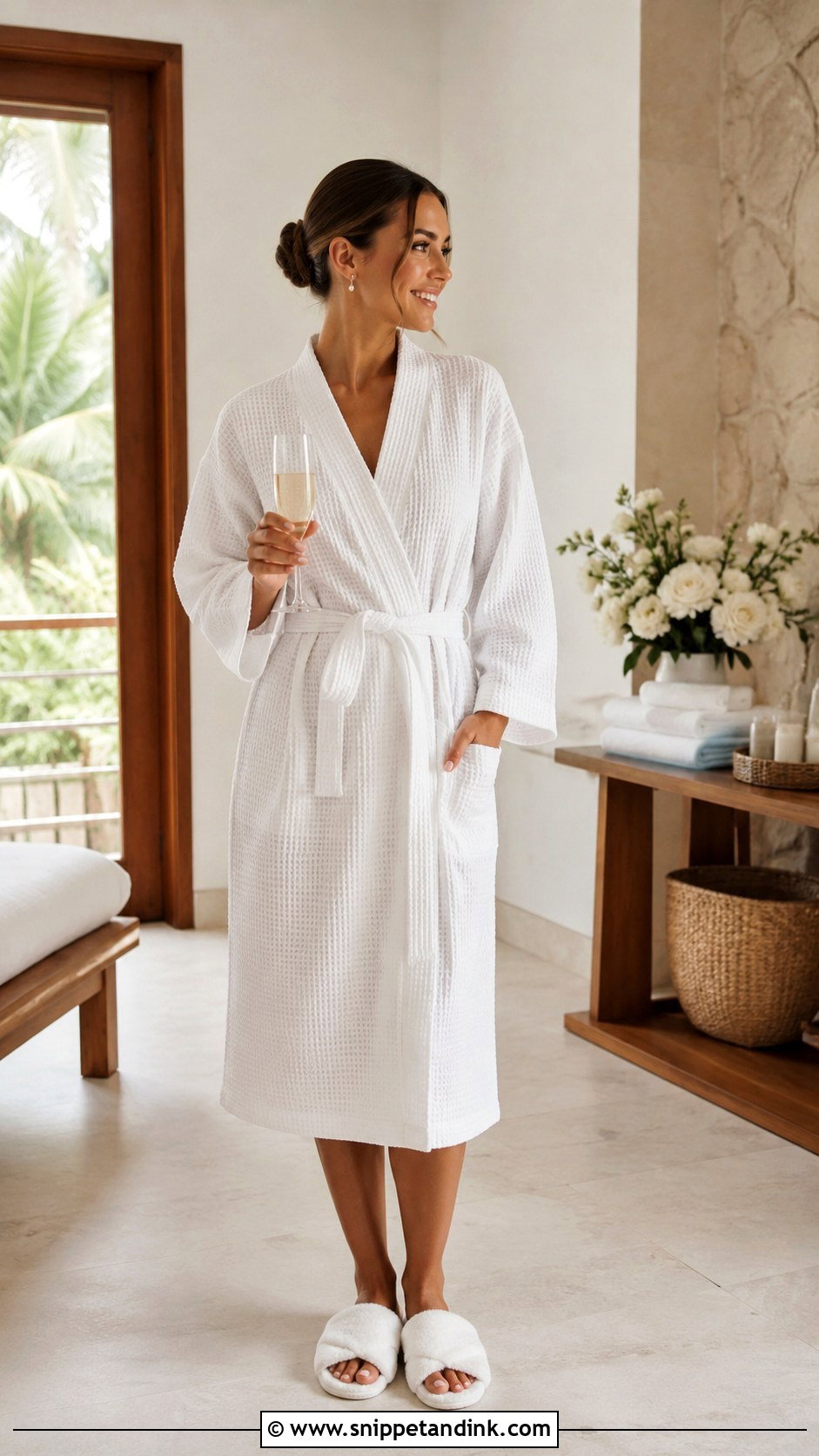
A waffle knit bridal robe feels like a spa morning, and it does one job no satin robe can: it soaks up water. If you are showering late, or your hair is being set wet, waffle is the practical pick. It is bulkier, though, and a thick collar can push against a fresh updo at the nape, so I loosen the collar or slip it off the shoulders once the hair is done. Plush slippers and a sleek bun suit it at resorts, lodges and modern homes. It reads less dressy than silk, and you will reach for it long after the wedding.
15. Embroidered Bridal Robe
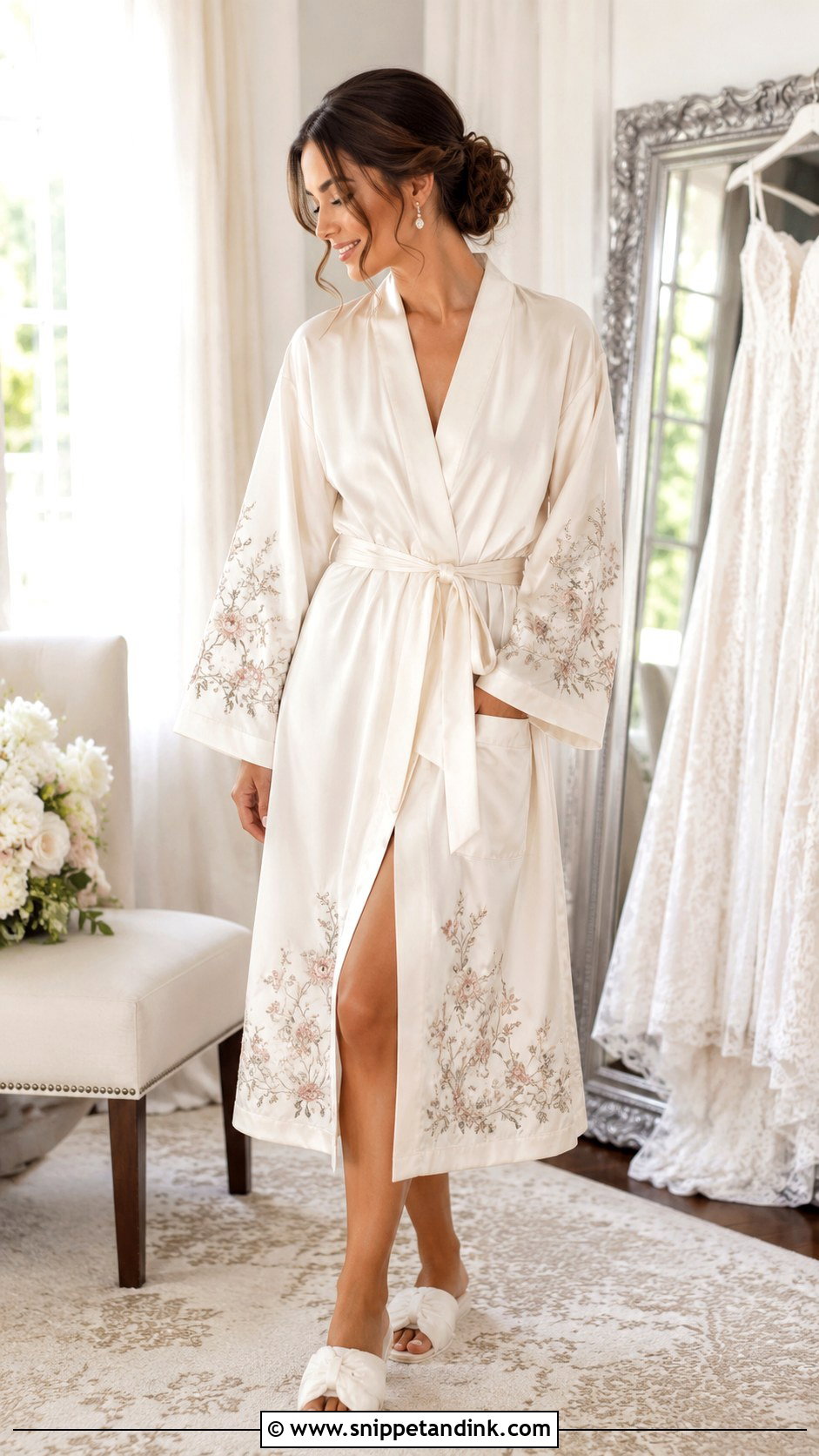
Embroidery is where a robe can feel handmade. Floral sprays, initials or vines along the sleeve and hem all work. White-on-white is the classic, while soft blue, blush or gold thread adds contrast that the camera picks up from further away. When ordering custom work I always ask for a placement proof. Embroidery that looked right in a mock-up can land under the arm or vanish into the tie once you are actually wearing the robe, and it should read clearly without crowding the frame.
16. Ruffle Bridal Robe
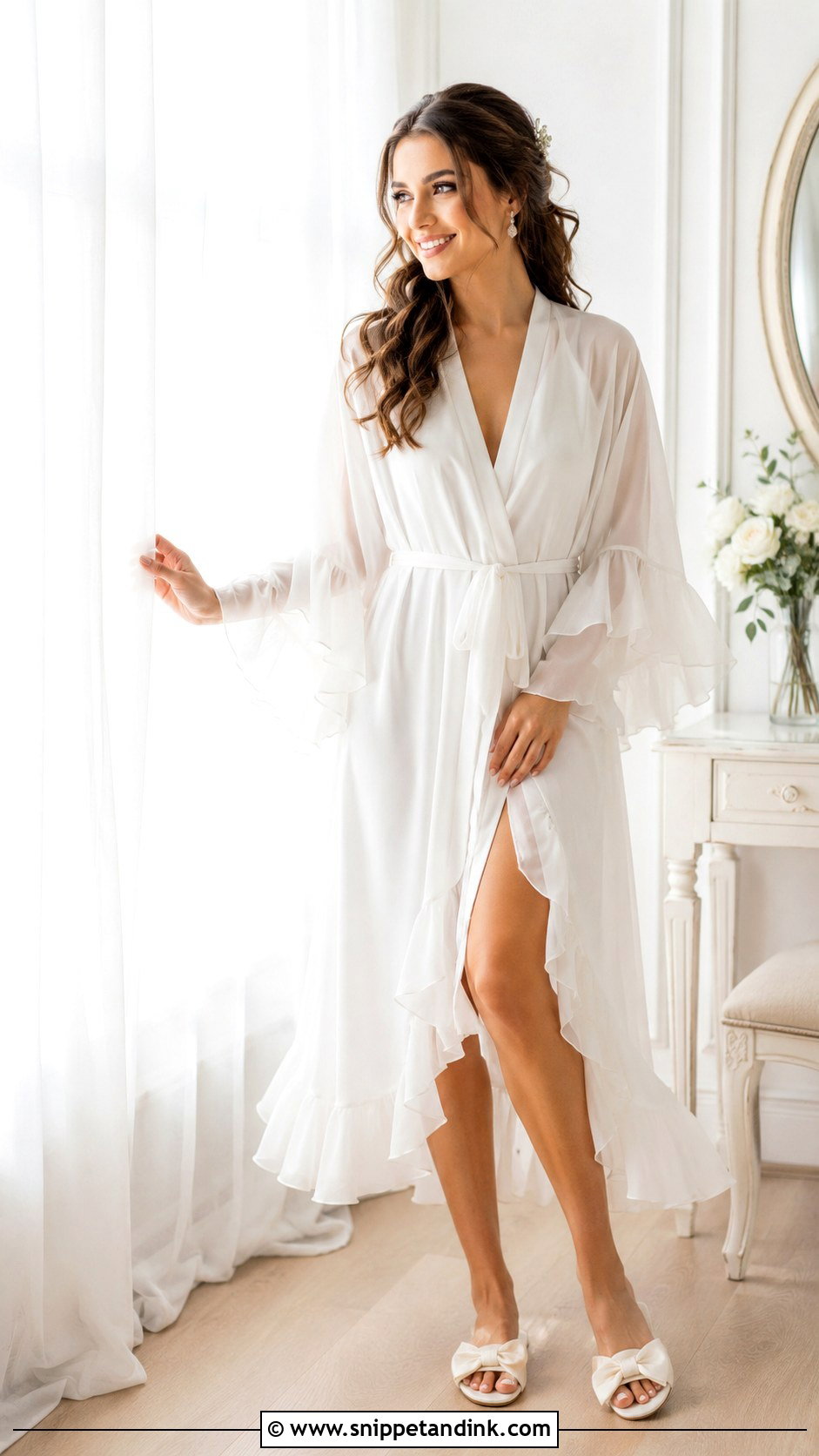
Ruffles at the sleeves, hem or front opening give the robe shape in photos, especially when you turn. I keep ruffles in lightweight satin, chiffon or cotton; heavy ruffles bunch up under the arms in a makeup chair and get crushed flat by the time you stand. Small ruffles read sweet and quiet. Larger ones become the main detail. White or ivory keeps the texture doing the work.
17. Kimono Bridal Robe
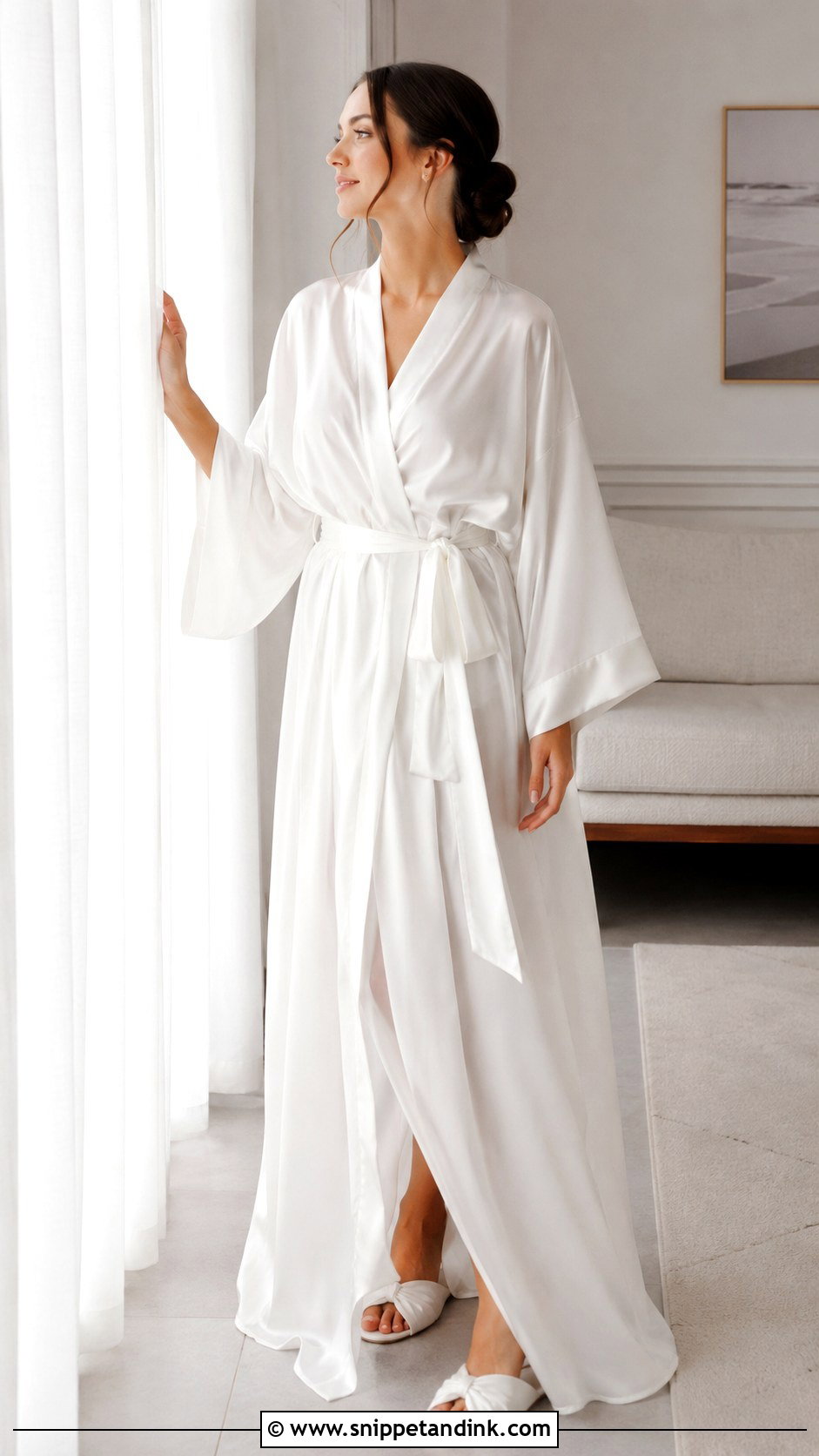
The kimono cut is the most forgiving shape in this list. Wide sleeves and a loose body mean nothing clings, which suits brides who feel self-conscious in fitted satin. The trade-off is those sleeves. They swing into the foundation palette and drop onto the vanity, so I pin them back with a clip while the makeup artist works. Silk, satin or light cotton in white, ivory, champagne or a soft floral all work. For photos, let the sleeves fall naturally and tie the sash neatly at the waist.
18. Tulle Bridal Robe
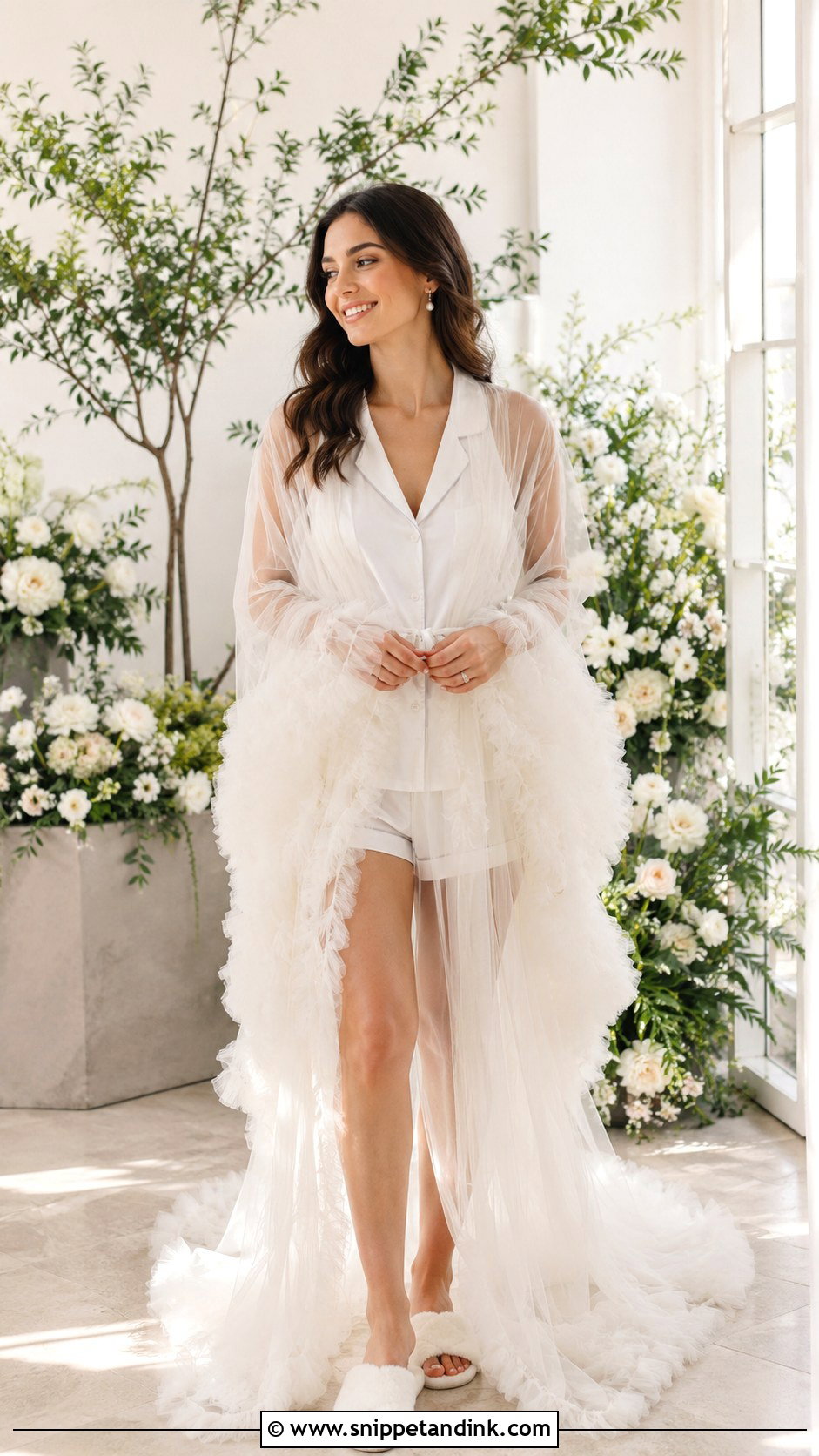
Tulle gives volume and a fairytale softness, and it is the most fragile robe here. It catches on earring backs, zippers and the hooks of a garment bag, and a small pull shows clearly in a backlit shot. Wear it over a simple pajama set or slip, keep jewelry off until it is on, and hang it away from anything with a zip. Subtle appliqué or a light satin tie suits garden venues and bright suites.
19. Chiffon Bridal Robe
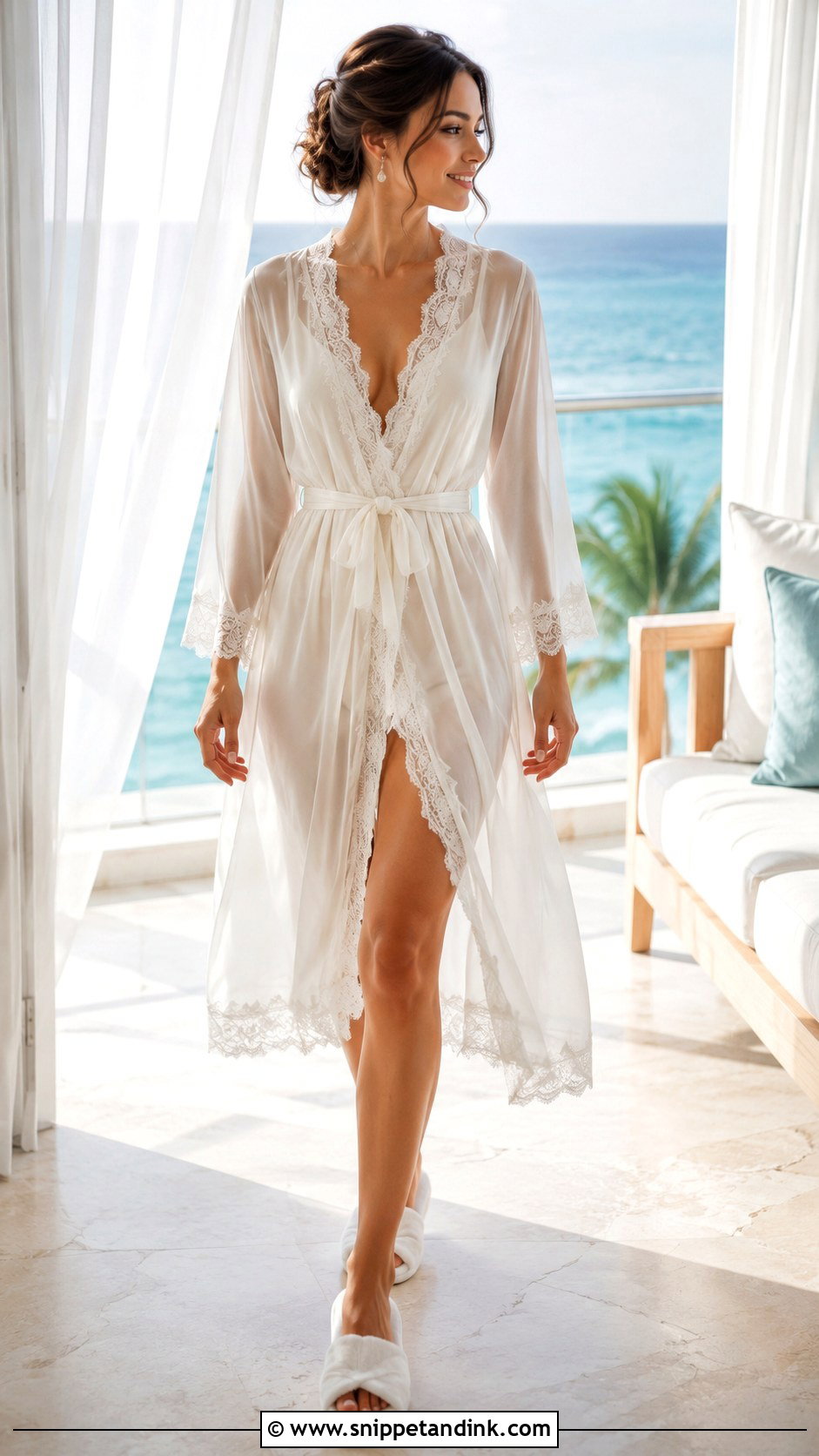
Chiffon floats, which is why it suits warm weather and walking shots: the fabric picks up every bit of breeze. White, ivory, blush or pale blue with a soft tie and a little lace looks right at beach and destination venues. It is slightly sheer, so a smooth pajama set or lined slip underneath is not optional. Chiffon also frays at cut edges, so check the hems are properly finished before you trust it on the day.

20. Velvet Bridal Robe
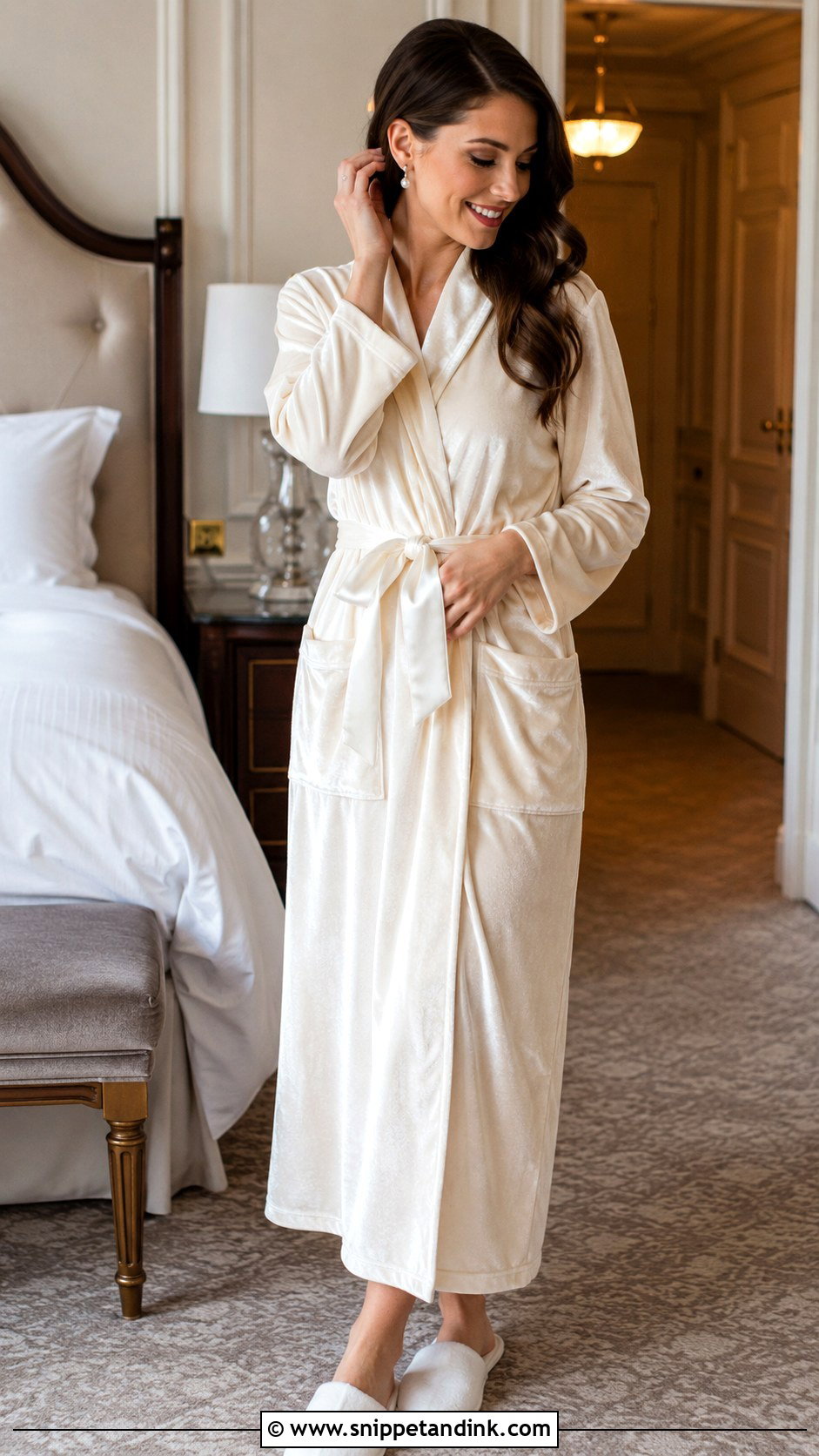
Velvet is for cold mornings. A drafty historic hotel or a mountain lodge in winter can leave a bride shivering in satin, and velvet keeps you warm through the early photos. Ivory, champagne or soft blue keeps it bridal. My one caution is weight: some velvet robes are heavy enough to drag the shoulders and feel hot once the room fills with people and hot tools. A long velvet robe with a satin sash looks formal. Velvet holds texture in photos without needing extra trim.
21. Blue Bridal Robe
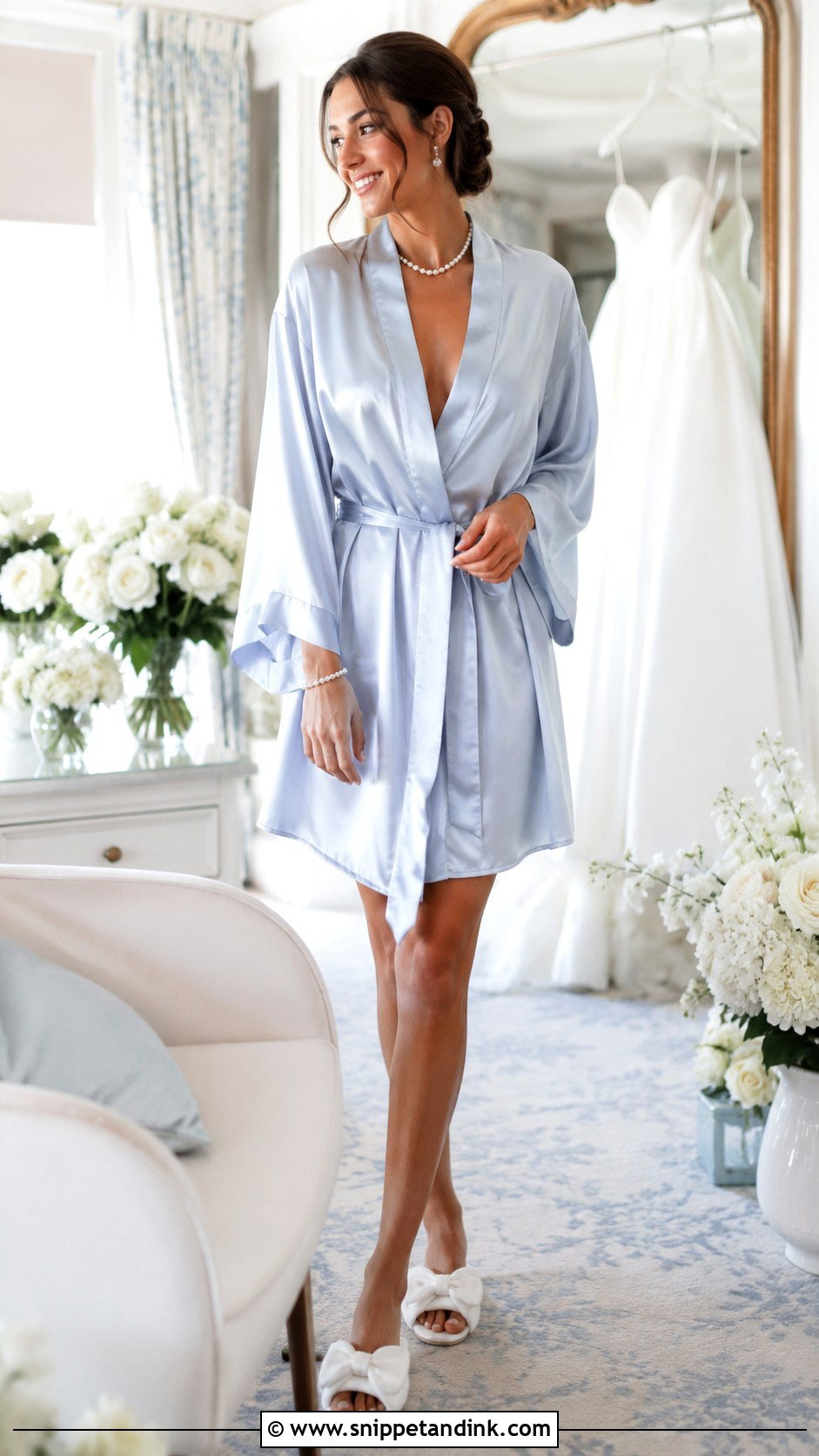
A blue robe takes care of “something blue” without touching the ceremony outfit. Pale, powder and dusty blue all read soft. Satin, silk or cotton depending on the setting. Blue sits well next to white flowers, silver accessories and neutral bridesmaid robes. For a quieter version, put blue embroidery on a white robe instead, which keeps the tradition and still lets the bride read as the bride.
22. Bow Bridal Robe
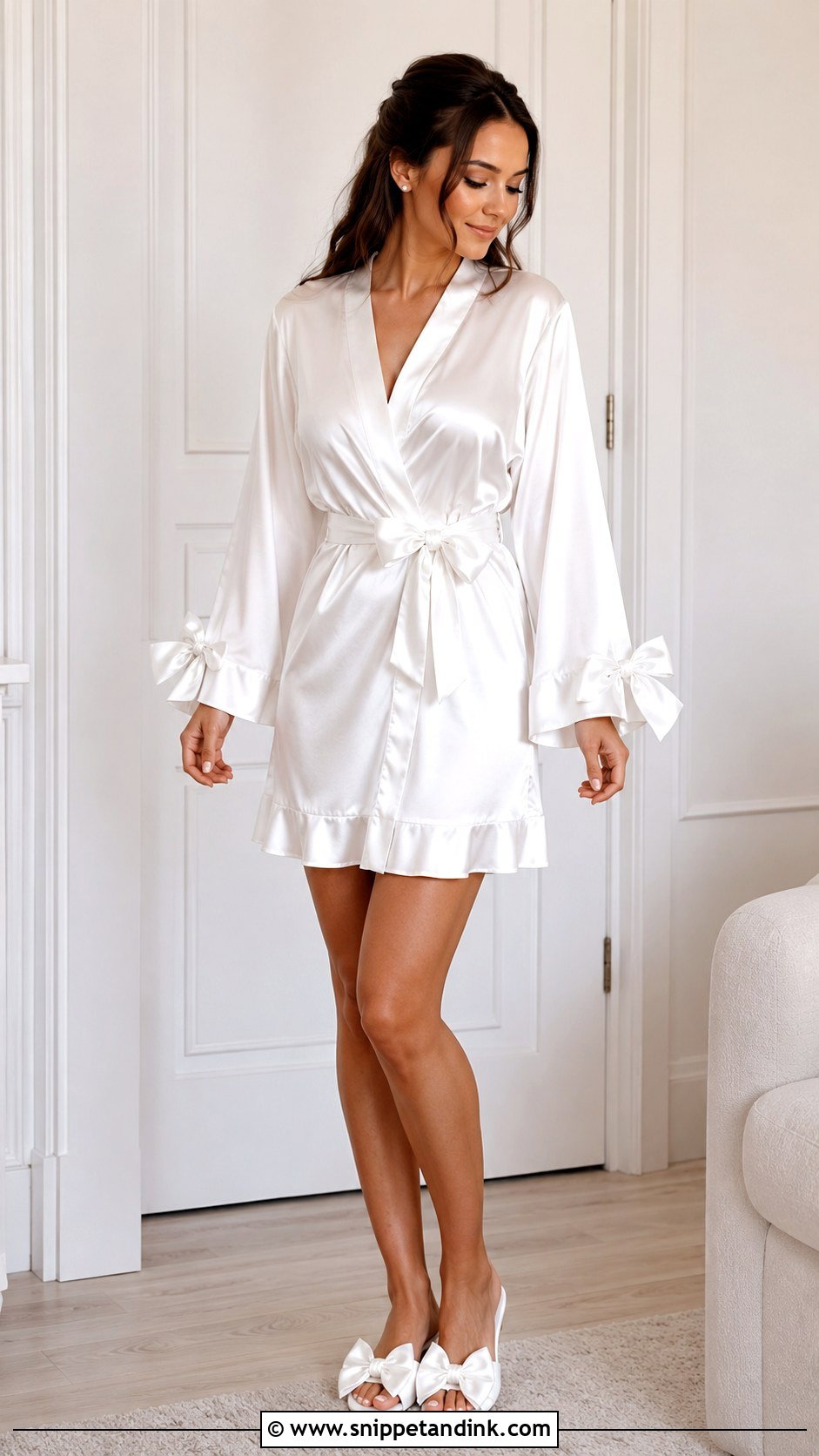
Bows at the cuffs, waist or back give a robe a sweet, polished finish with almost no effort. Small bow cuffs are subtle. A large back bow is the statement version, and it looks best in the shots of you facing the mirror. I keep bows away from the neckline if a necklace is going on, because they fight for the same space. Bow slippers and a soft ponytail or half-up style suit it, and a clean white bow robe stands out next to colorful bridesmaid outfits.
23. Sequin Bridal Robe
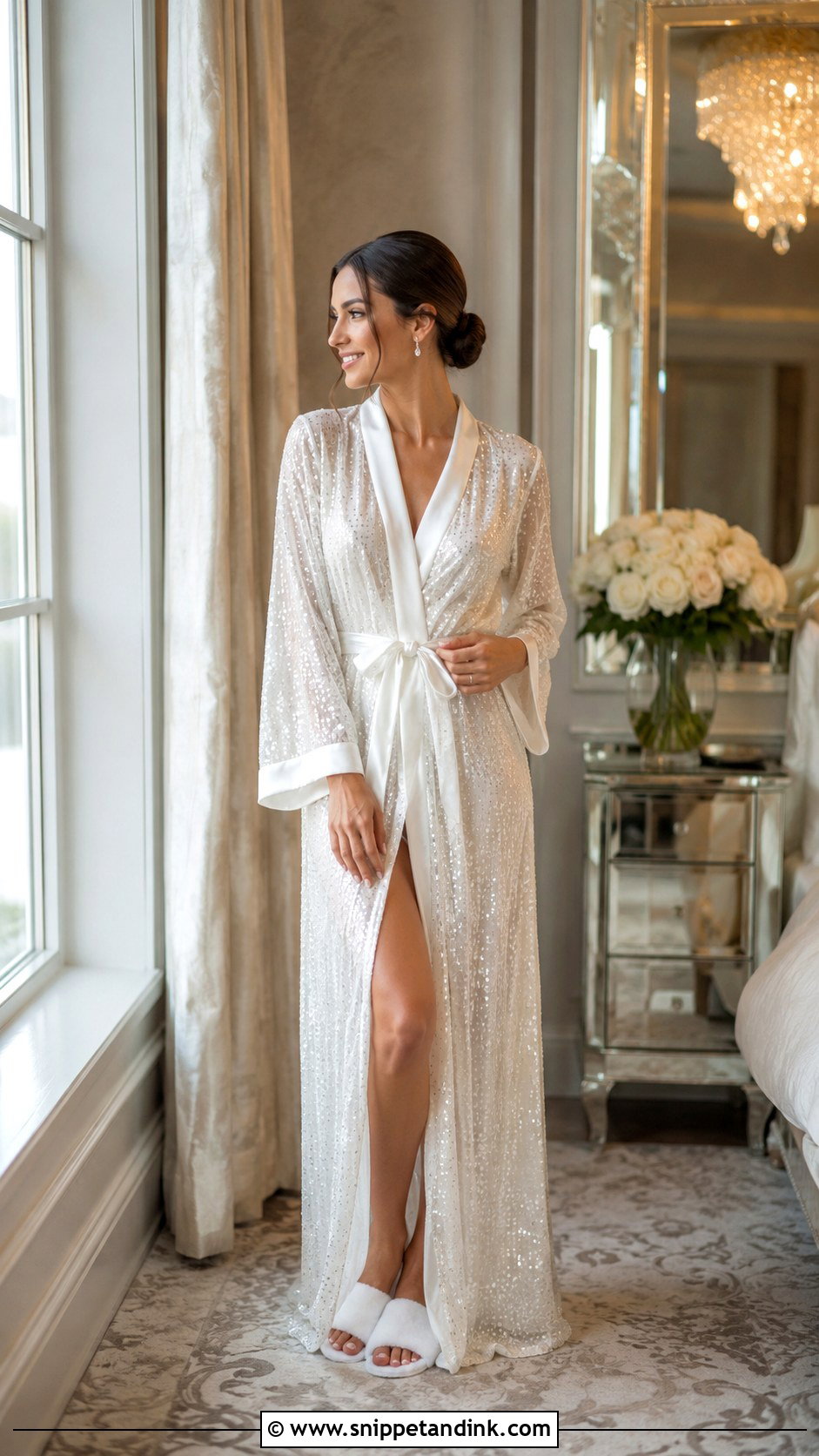
Sequins bring sparkle, and they bring practical problems. Sewn sequins and beads scratch on the inside, catch loose hair at the nape and can snag earrings when you take the robe off. I prefer scattered sequins or light beading on soft white, ivory or champagne, and I always check the lining before a bride commits. Keep hair smooth and jewelry minimal. Evening weddings, ballrooms and glam suites suit it.
24. Monogram Bridal Robe
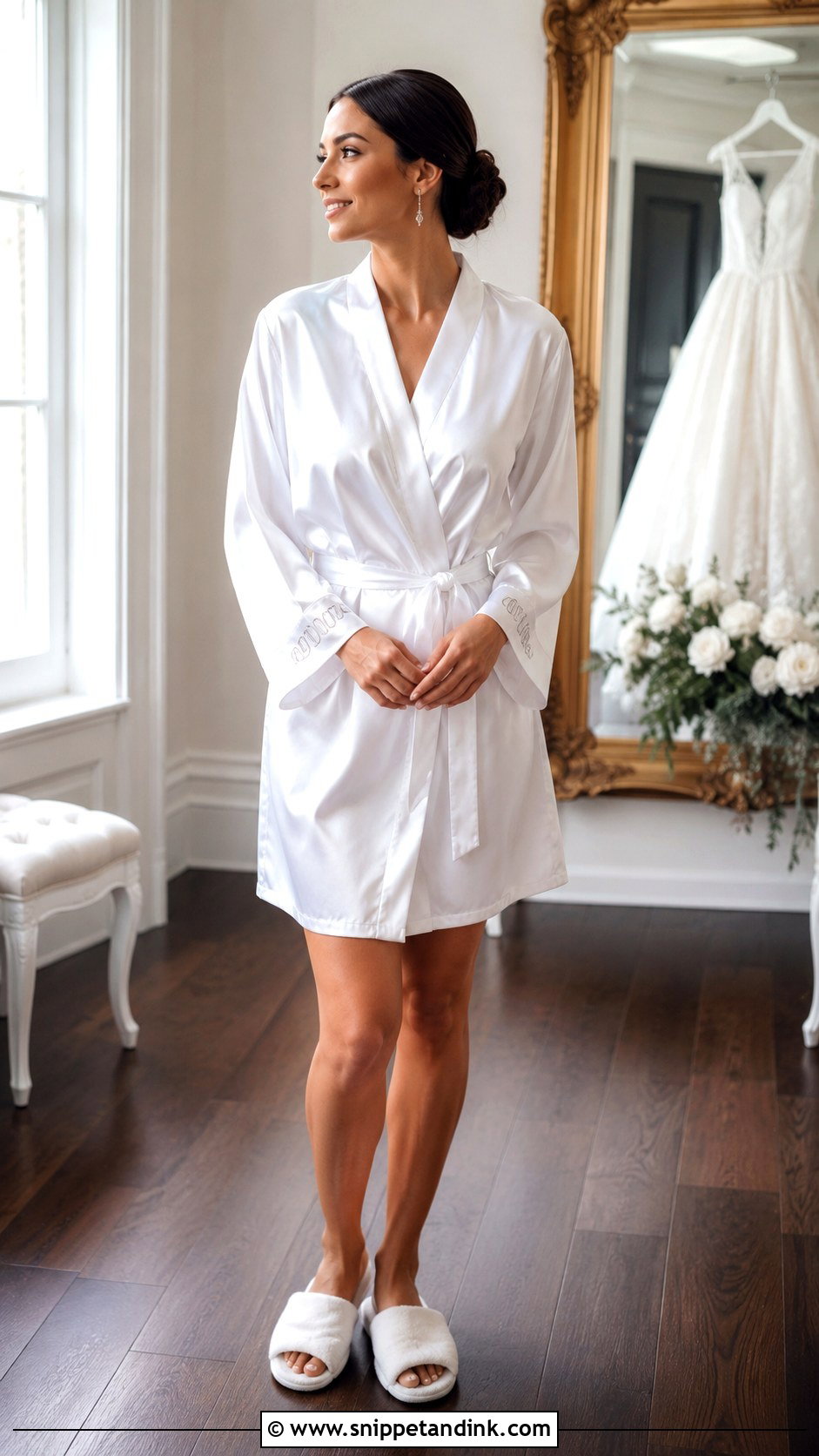
A monogram is the most restrained kind of personalization: initials on the cuff, pocket or chest in white, gold, silver or pale blue thread. Satin looks polished, cotton is comfortable, silk feels luxurious. Because it is not covered in “Bride” lettering, a monogrammed robe is the one people keep wearing after the wedding. Give bridesmaids the same monogram style in a different thread color so the group matches without everyone looking identical.
25. Bridal Robe With Pajama Set
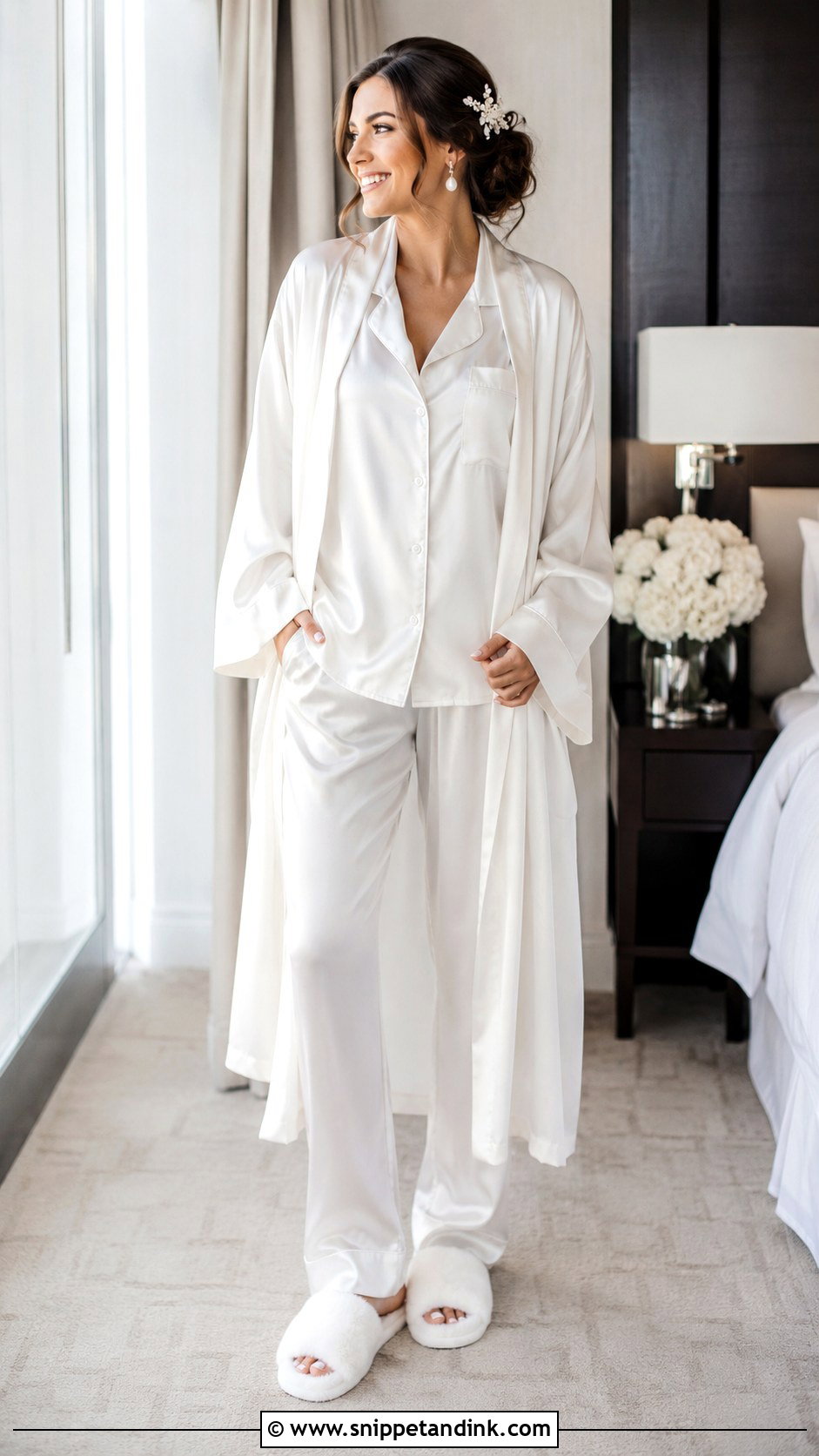
This is the combination I recommend most for long mornings. A button-front pajama top is the key piece: when the time comes, you unbutton it instead of pulling it over your head, so nothing touches your hair or makeup. White or ivory pajamas under a matching satin, silk or lace robe give full coverage and a layered look. Slippers, pearl earrings and a hair clip finish it. It also keeps you warm in an air-conditioned suite.
26. Bridal Robe With Slip Dress
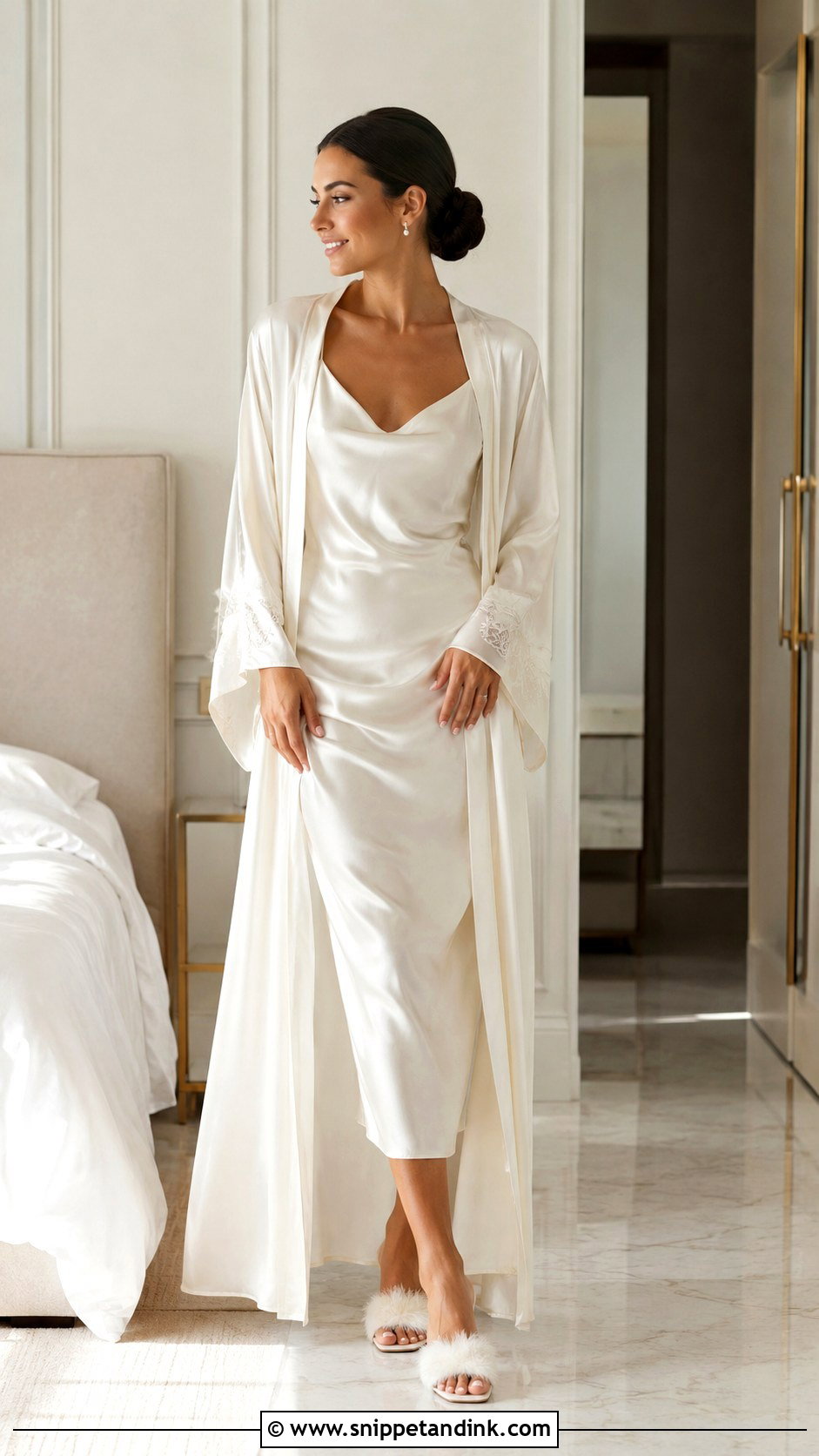
A satin or silk slip under a robe turns the morning look into a complete outfit, which is useful if the photographer wants posed portraits before the gown goes on. Keep the slip modest and simple in white, ivory or champagne. One thing to plan around is underwear: if your gown needs specific shapewear or a bra, put it on under the slip from the start, so you are not changing layers twice. A smooth low bun and small earrings let the robe trim stay the detail.
27. Plus Size Bridal Robe
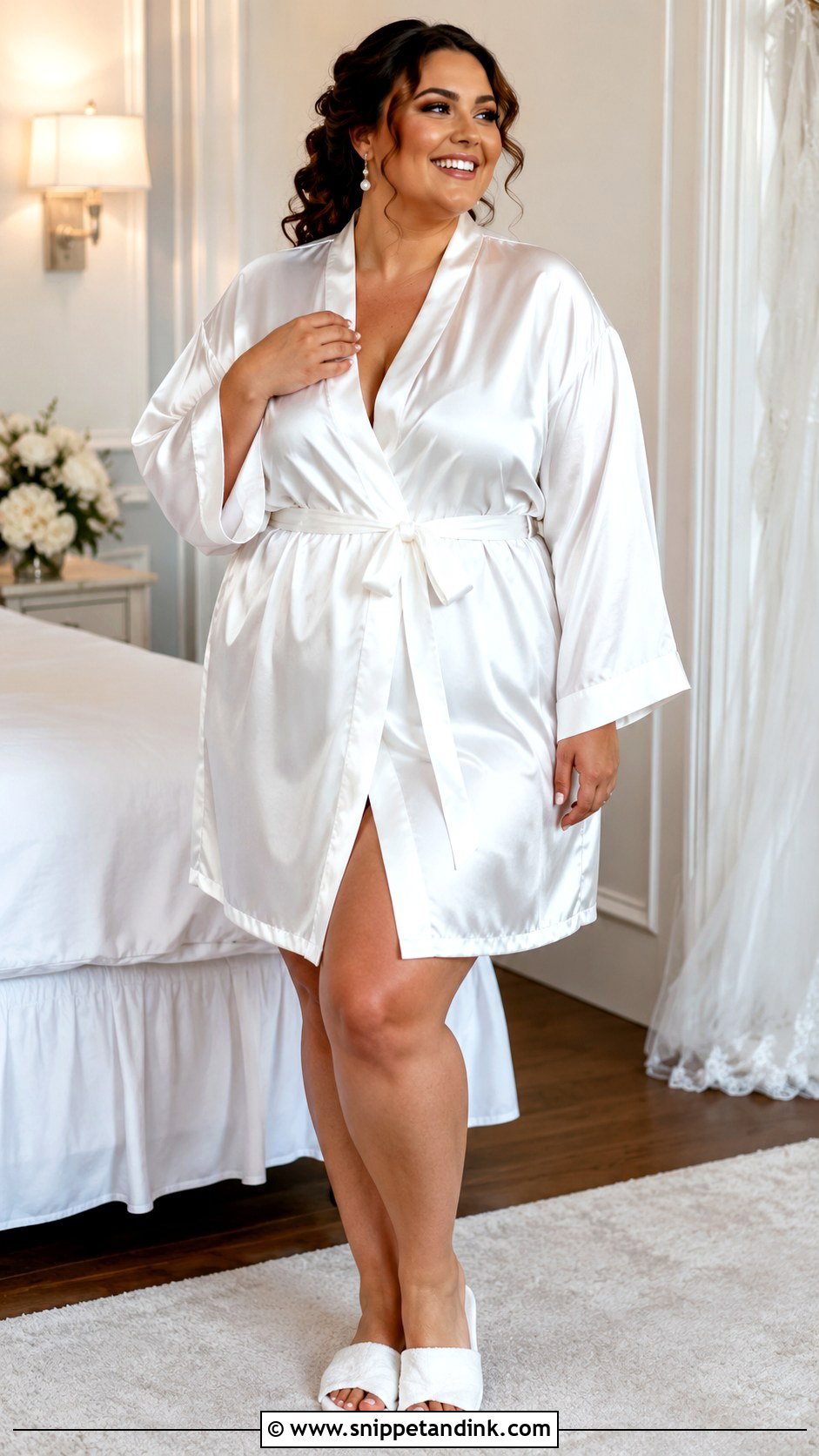
Fit matters more than style here. A robe that gaps or pulls open when you sit will bother you for the whole morning. Look for size-inclusive brands, an inner tie as well as the sash, and enough room through the bust, hips and upper arms. Satin, cotton, waffle knit and stretch fabrics all work. I tell brides to sit down in the fitting room and lean forward as if toward a mirror, because that is the position you will spend most of the morning in. The best plus size bridal robe is the one that stays closed while you do that.
28. Maternity Bridal Robe
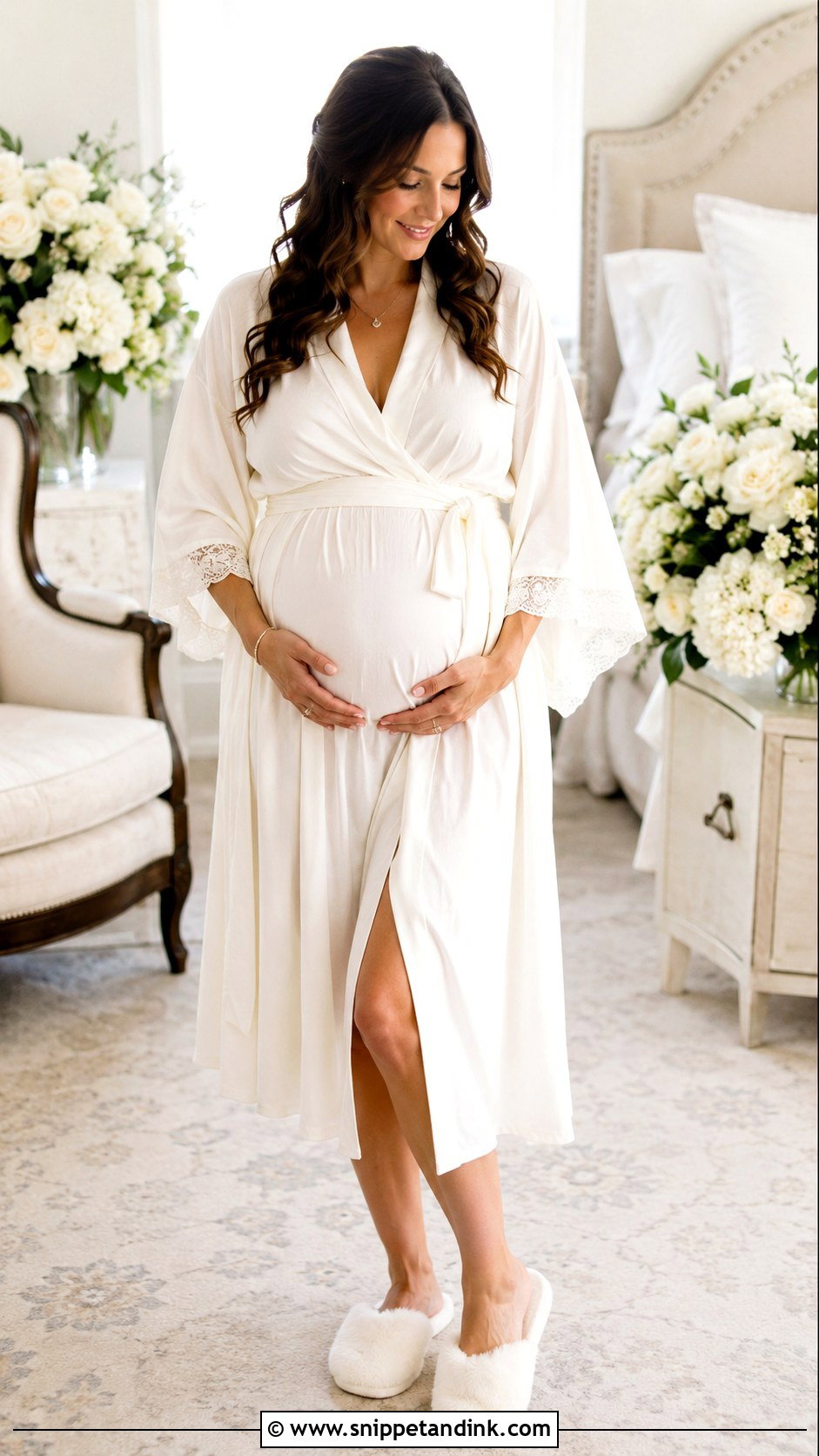
For a pregnant bride, adjustability is everything. A wrap style with a long flexible sash, roomy sleeves and breathable cotton, satin or silk lets you loosen it as the morning goes on, and bodies change shape across a long day. Knee or midi length is practical. A maternity-friendly pajama set underneath adds comfort. Ivory, blush, pale blue and champagne all suit. Pick soft slippers with real support, because you may be standing for longer than you expect.
29. Beach Bridal Robe
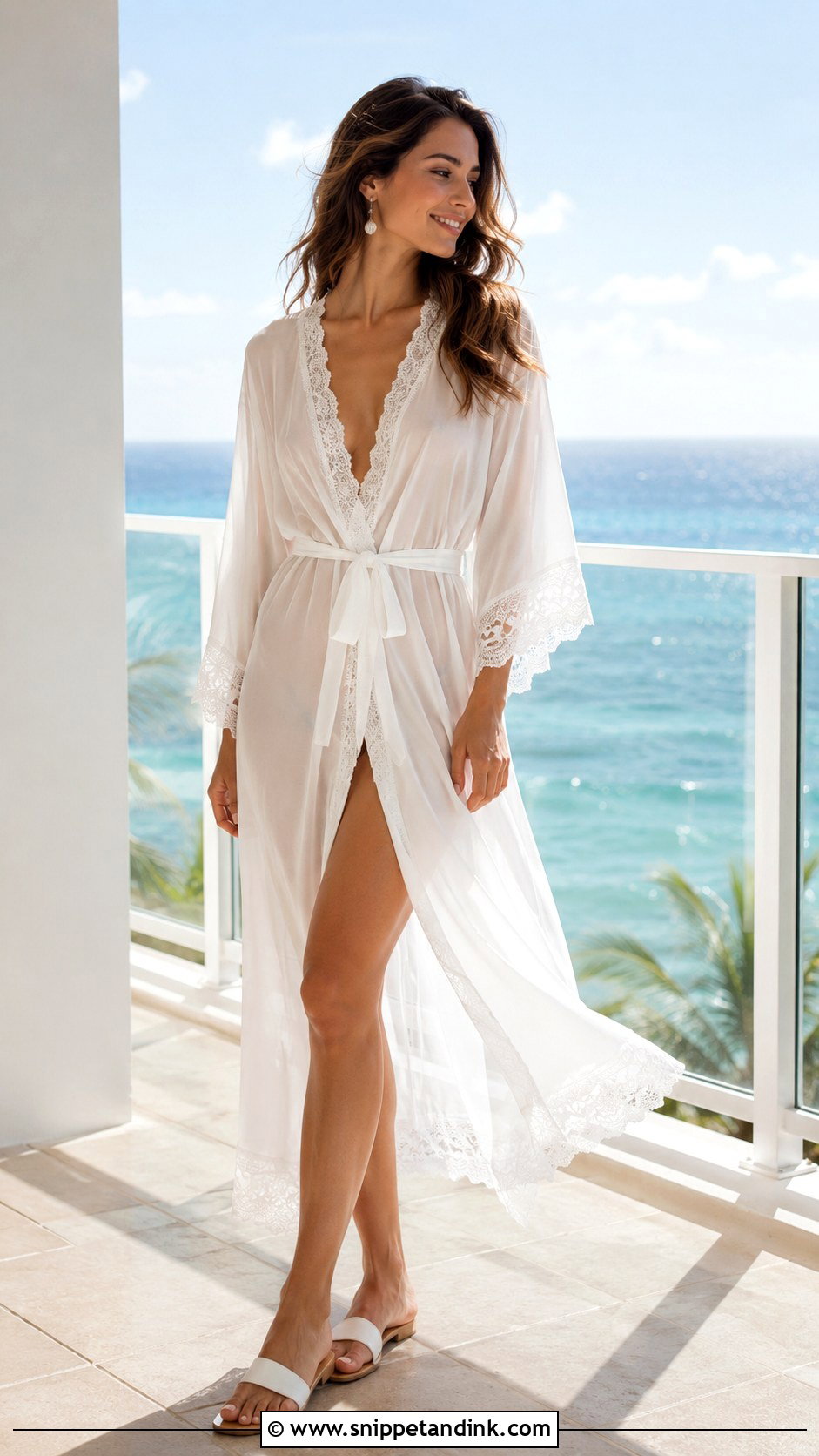
A beach robe has to survive a suitcase and humidity. Chiffon, cotton, silk or lightweight satin all cope with heat, but I avoid fabrics that crease badly, because a resort iron is rarely kind to delicate fabric. White, ivory, soft blue or a tropical print that fits the coastal setting works well. Lace trim or floral embroidery keeps it bridal. Flat sandals and loose beach waves finish it for balcony and ocean-view shots.
30. Luxury Bridal Robe
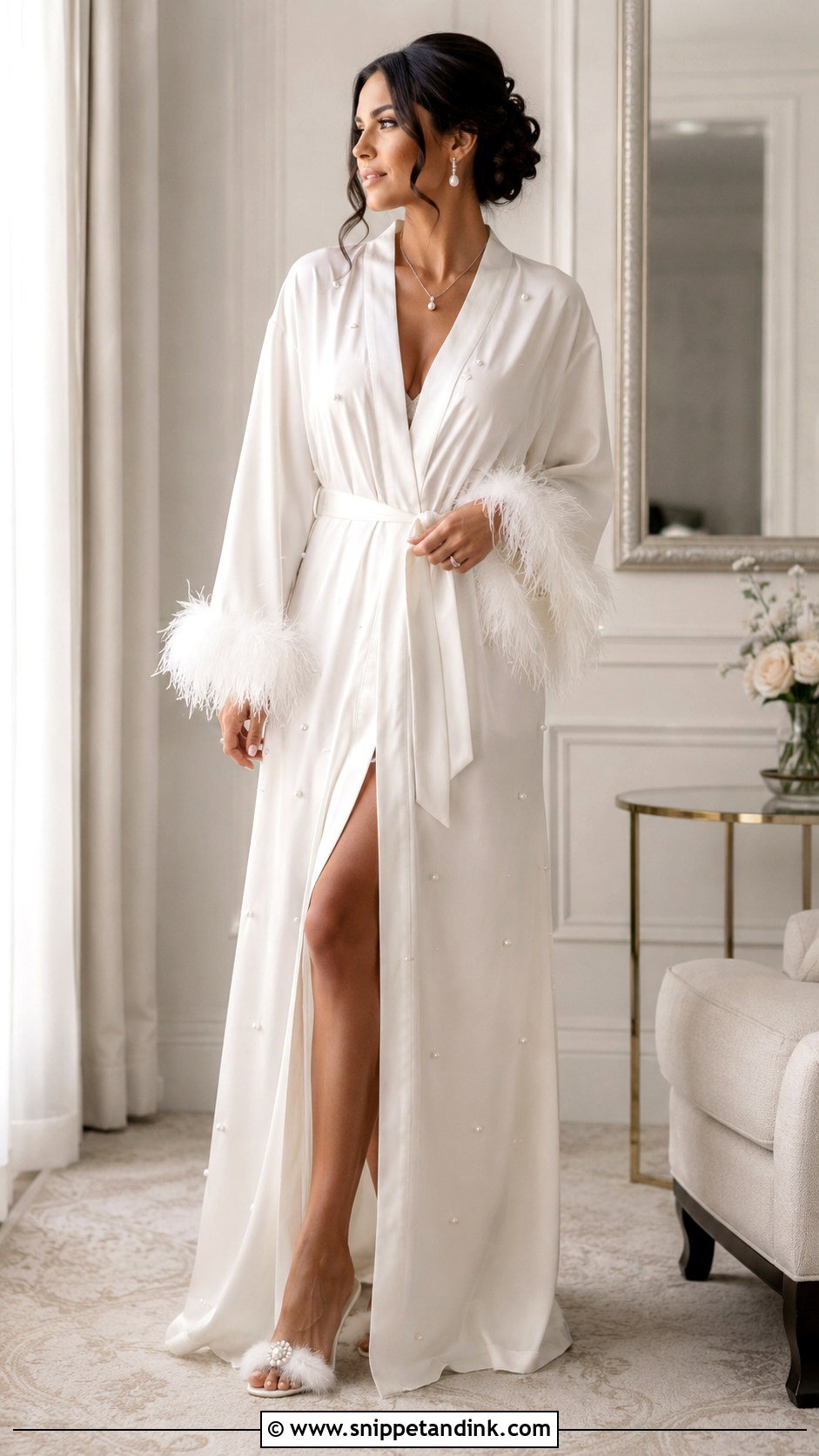
Luxury here means fabric and finish: silk, heavy satin, hand embroidery, real feather trim, pearl work or couture lace. Match the robe to the mood of your gown and venue so the morning and the ceremony look like one story. A long robe with movement makes for striking portraits before you dress. The honest question I ask is whether you will wear it again. If you are spending this much, choose a style that works on a quiet Sunday morning, not only in the bridal suite.
Getting Out of the Robe Without Touching Your Hair
The moment you change into your gown is usually filmed, so the robe needs an exit plan. Anything pulled over the head is out once hair and makeup are done. That is why I steer brides toward button-front pajama tops, and why the robe itself should be a wrap that opens wide.
I ask the bride to put her shapewear or bra on before hair and makeup start, under the robe. Then the change is simply robe off, dress on. If your gown laces up at the back, slip your arms out of the robe and let a bridesmaid hold it open behind you while the dress goes on from the floor, stepping in rather than lowering it over your head.
Take off earrings with long backs and anything on a chain before you slip the robe off. Lace, sequins and feathers grab jewelry on the way down, and that is how a necklace breaks twenty minutes before the ceremony.
Washing and Storing the Robe for the Years After
Makeup ends up on the robe. Foundation along the collar and lipstick on a cuff are normal, so treat the marks within a day or two rather than letting them set.
- Cotton and waffle knit can usually go in a gentle machine wash, cool, with a pretreated collar.
- Satin made from polyester handles a cool hand wash. Real silk is safer with a dry cleaner, especially if it has water marks.
- Feathers, sequins, pearls and heavy embroidery should be spot cleaned or professionally cleaned, never machine washed.
- Store it on a padded hanger in a breathable cotton bag, not plastic, which traps moisture and can yellow white fabric over time.
Always follow the care label first. A robe that is cleaned properly after the wedding is the one you are still wearing on anniversaries.
A Robe You Forget You’re Wearing
A robe works when you forget you are wearing it. Classic white satin, lace, cotton, silk, feathers or embroidery can all suit your dress, venue and season, but the practical questions decide it: does it stay closed when you sit, does the fabric survive the room temperature, and can it come off over finished hair. Get those right, add slippers and the jewelry you are already wearing, and the getting-ready photos take care of themselves.
You'll Like These Ideas:



Leave a Reply