
An Indian bride’s hands are photographed more than almost anything else at her wedding: mehndi close-ups, chooda and kaleere shots, ring exchange, the hands framing the face in portraits. So the manicure has to sit beside a dark henna stain, heavy gold and a richly embroidered outfit without disappearing or fighting them. The wedding nails for Indian bride designs below run from deep red and maroon to gold chrome, milky white and henna-style linework. I’ve noted which ones survive a week of haldi, mehndi, sangeet and reception, because that matters as much as the colour.

Get Your Nails Done Before the Mehndi
This is the scheduling question I get asked most, and the answer is almost always the same: nails first, then mehndi. Henna paste stains bare nails and cuticles orange. Gel or polish on the nail plate protects it, so the stain stays on your skin where you want it.
The other reason is what happens after. Once henna is on, you’re told to keep your hands dry for hours, and the stain keeps darkening for a day or two. A manicure after that means soaking, filing and wiping with remover, which can fade the stain around the nails exactly where it shows in ring shots. Gel removal with acetone is especially hard on fresh henna.
- Book the manicure one or two days before the mehndi function.
- Ask for a gel or builder gel set so it lasts the whole week.
- Mention the dates of the haldi and the mehndi so your nail artist can plan the colour around them.
- Bring a photo of your outfit and jewellery, or the actual bangles, so you can check colour in good light.
1. Red Bridal Wedding Nails
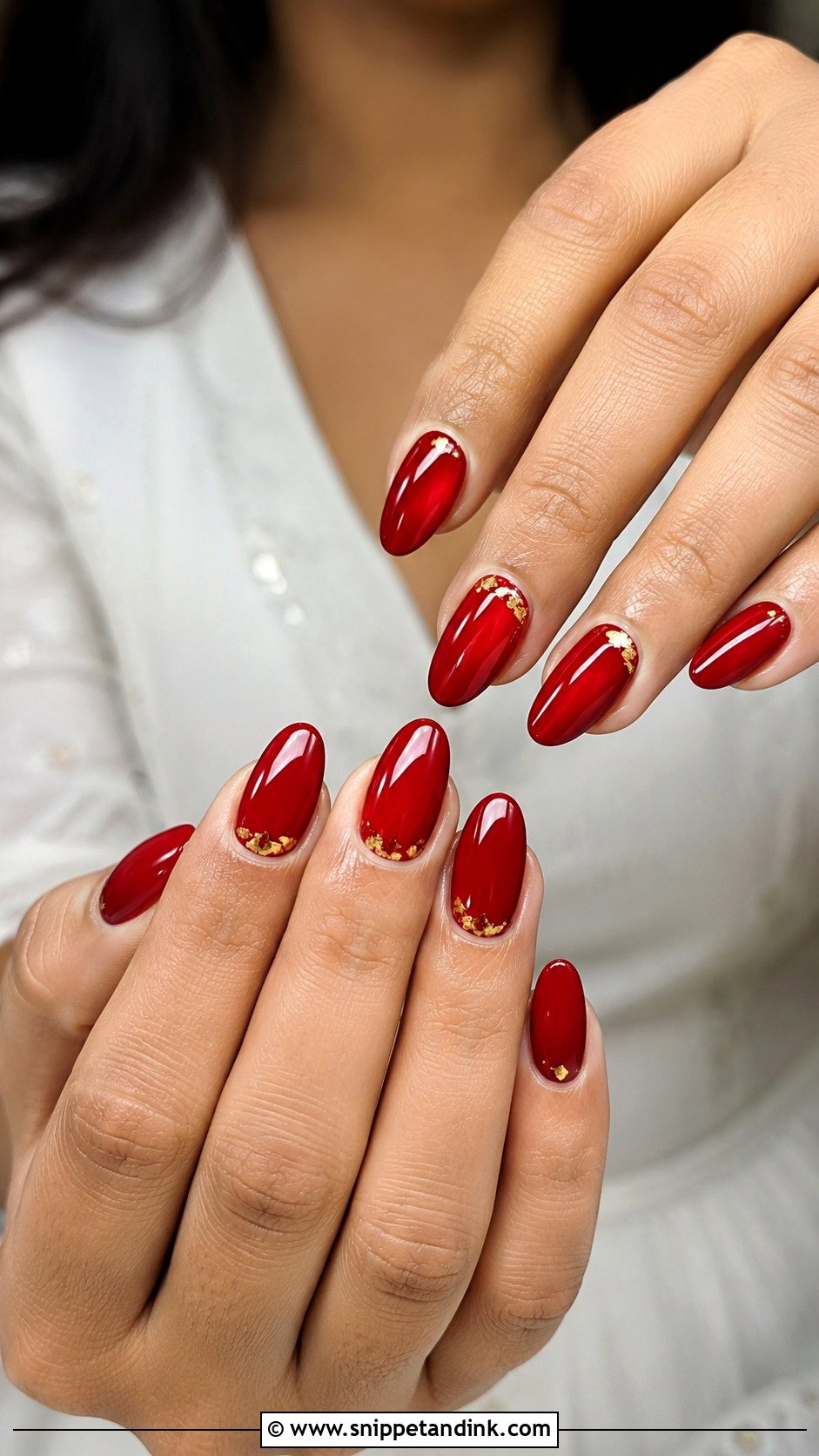
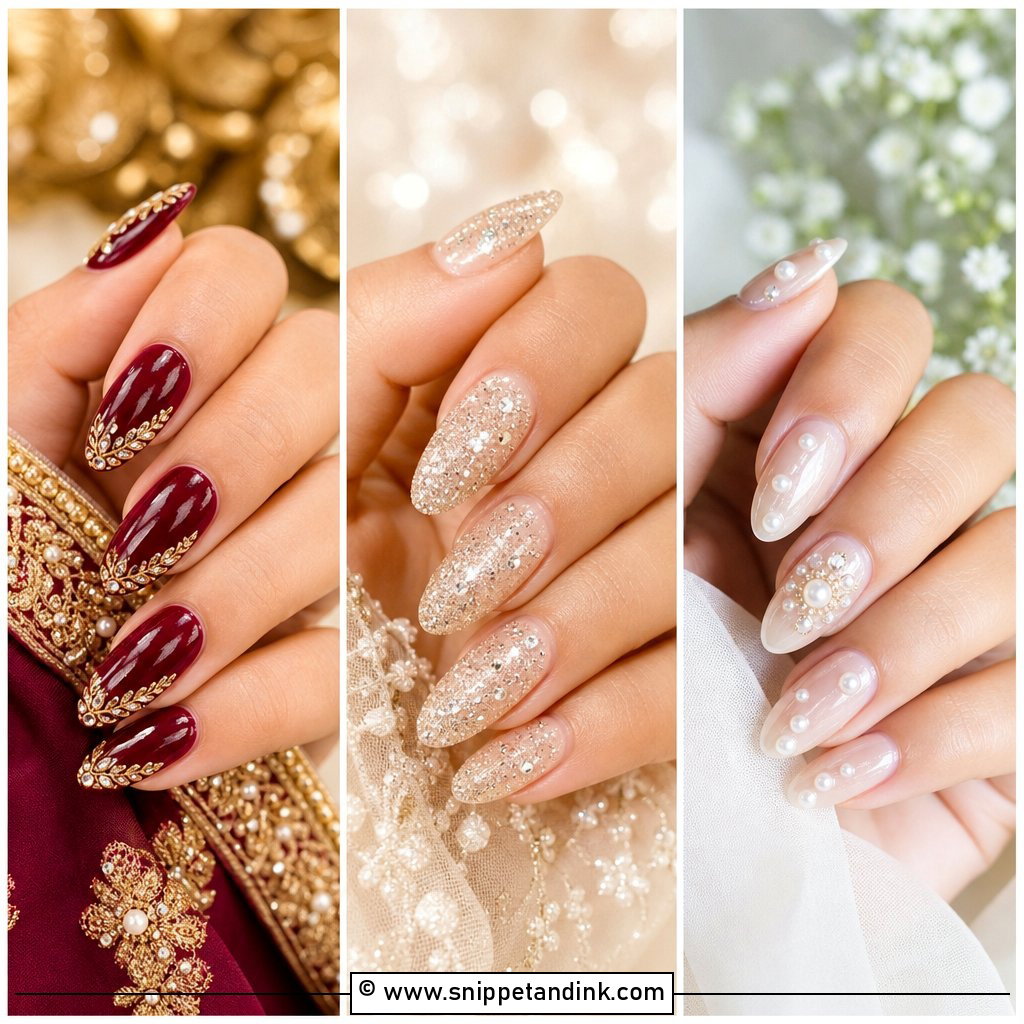
Deep red is the default for a reason: it matches a red lehenga, sindoor and red chooda, and it holds its own beside dark mehndi. A glossy full red needs nothing else, though fine gold linework or a small crystal at the cuticle adds a bridal note. The thing I check first is the undertone. Blue-based reds look crisp on cooler deep skin, while orange-based reds can clash with a henna stain that’s come up very orange. Almond or oval keeps it soft; square makes it bolder.
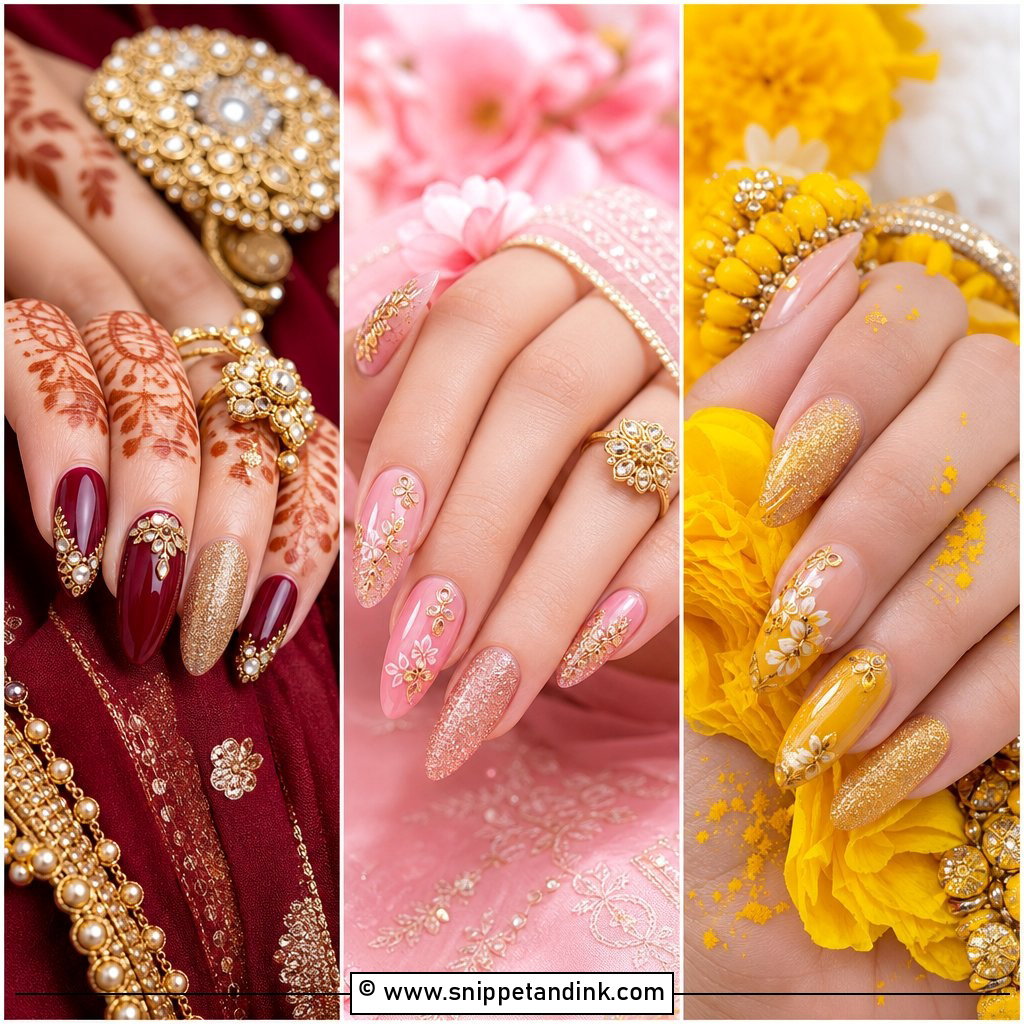
2. Maroon Bridal Wedding Nails
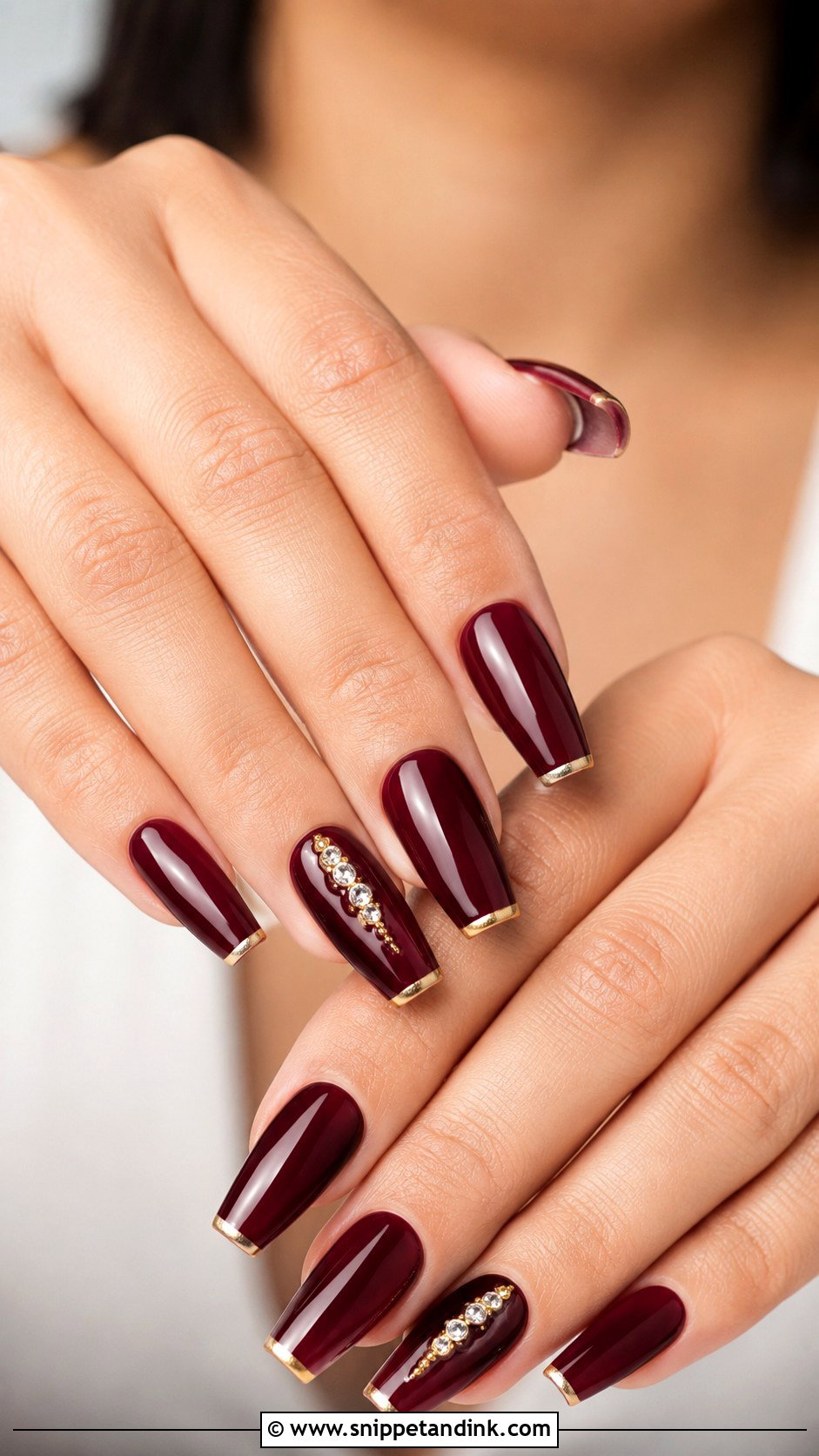
Maroon bridal wedding nails are the softer-feeling traditional colour, and they suit velvet lehengas, wine sarees and antique gold particularly well. A glassy top coat is enough; gold French tips or a single ornate accent nail make it more festive. Dark shades show every flaw at the cuticle, so I take extra care with the prep and keep a hair’s gap from the skin. Almond and coffin shapes lengthen the fingers in photos.
3. Gold Chrome Wedding Nails
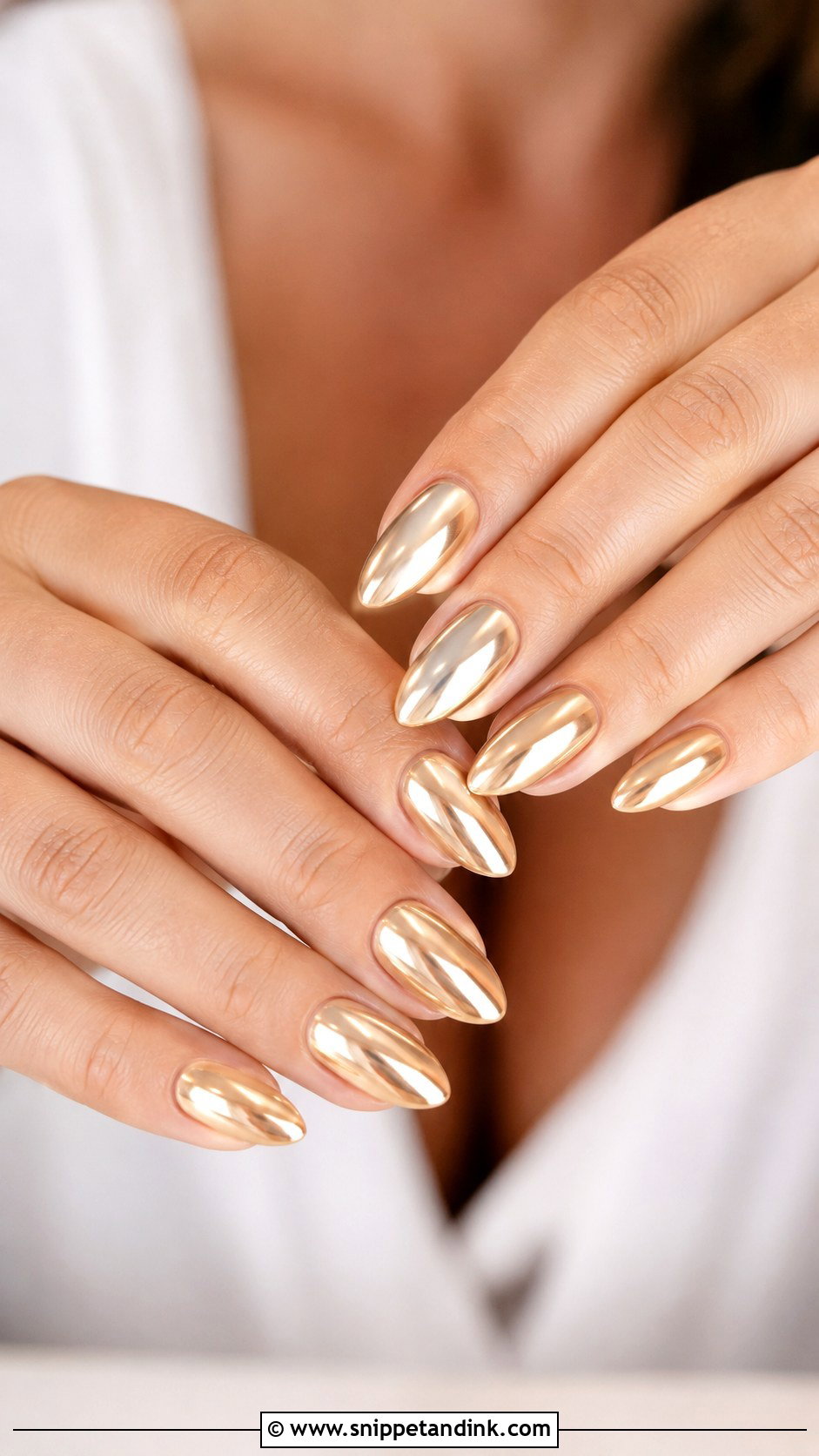
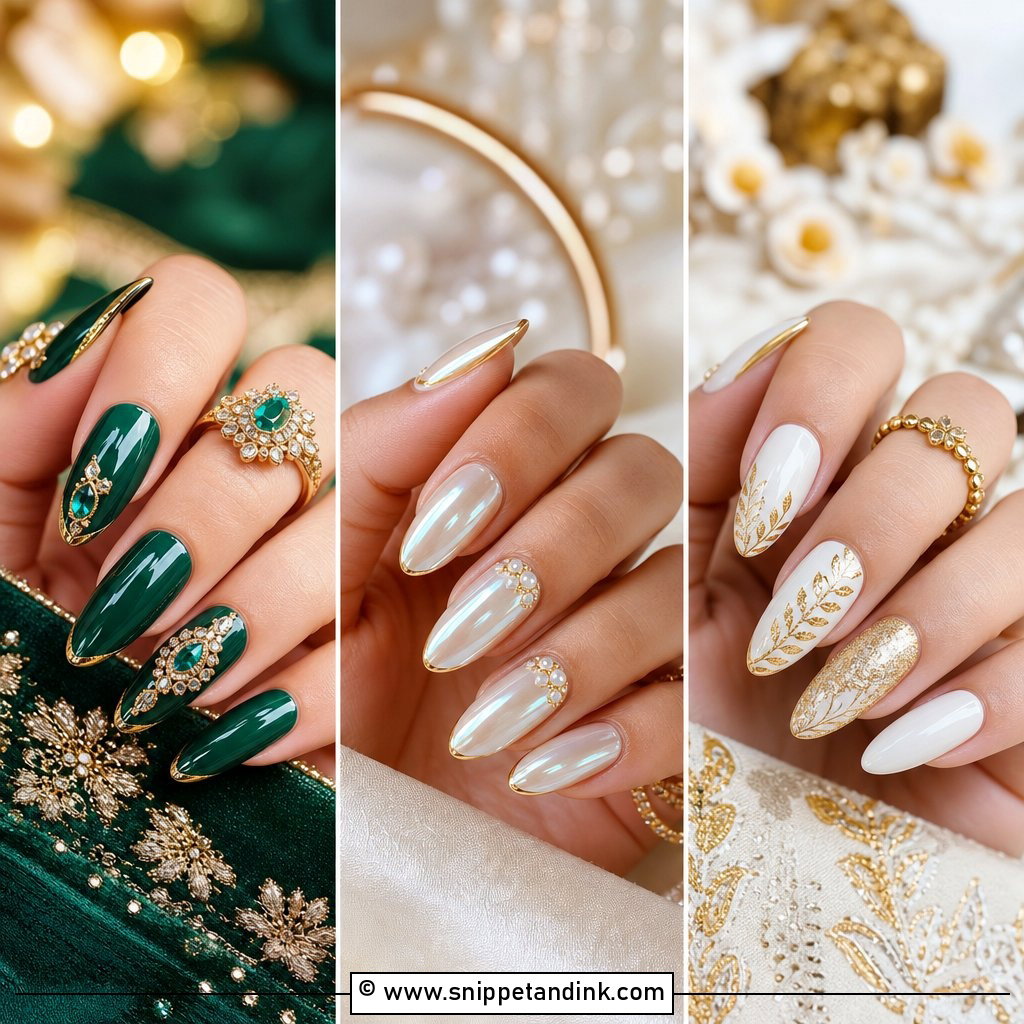
Gold chrome wedding nails suit the bride whose jewellery is the main event: kundan, polki or temple pieces with zari and mirror work on the outfit. I use a smooth chrome powder over a warm nude or champagne base rather than glitter, which keeps the shine liquid. A full chrome set is strong; gold chrome tips on nude are easier to wear for several days. Chrome scratches and dulls at the edges under bangles, so I seal it thoroughly.
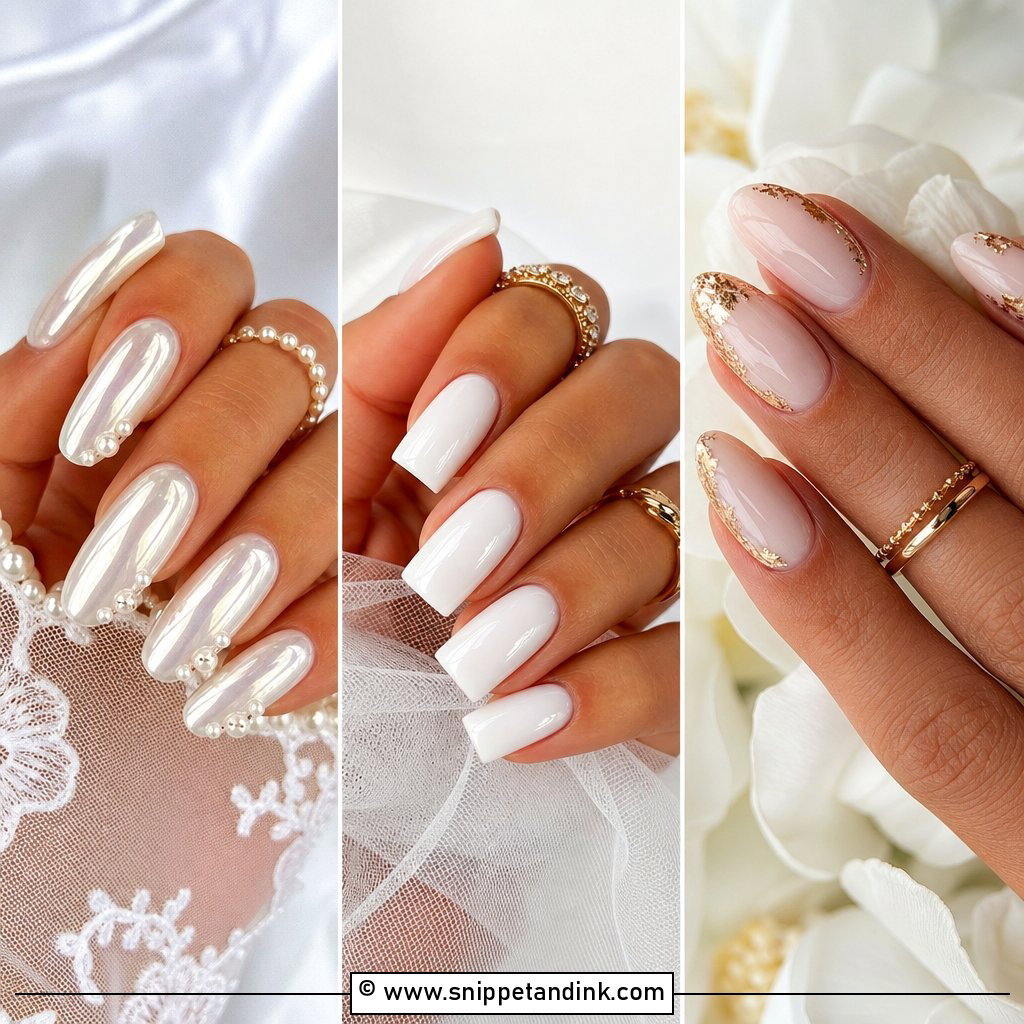
4. Nude Wedding Nails With Gold Art
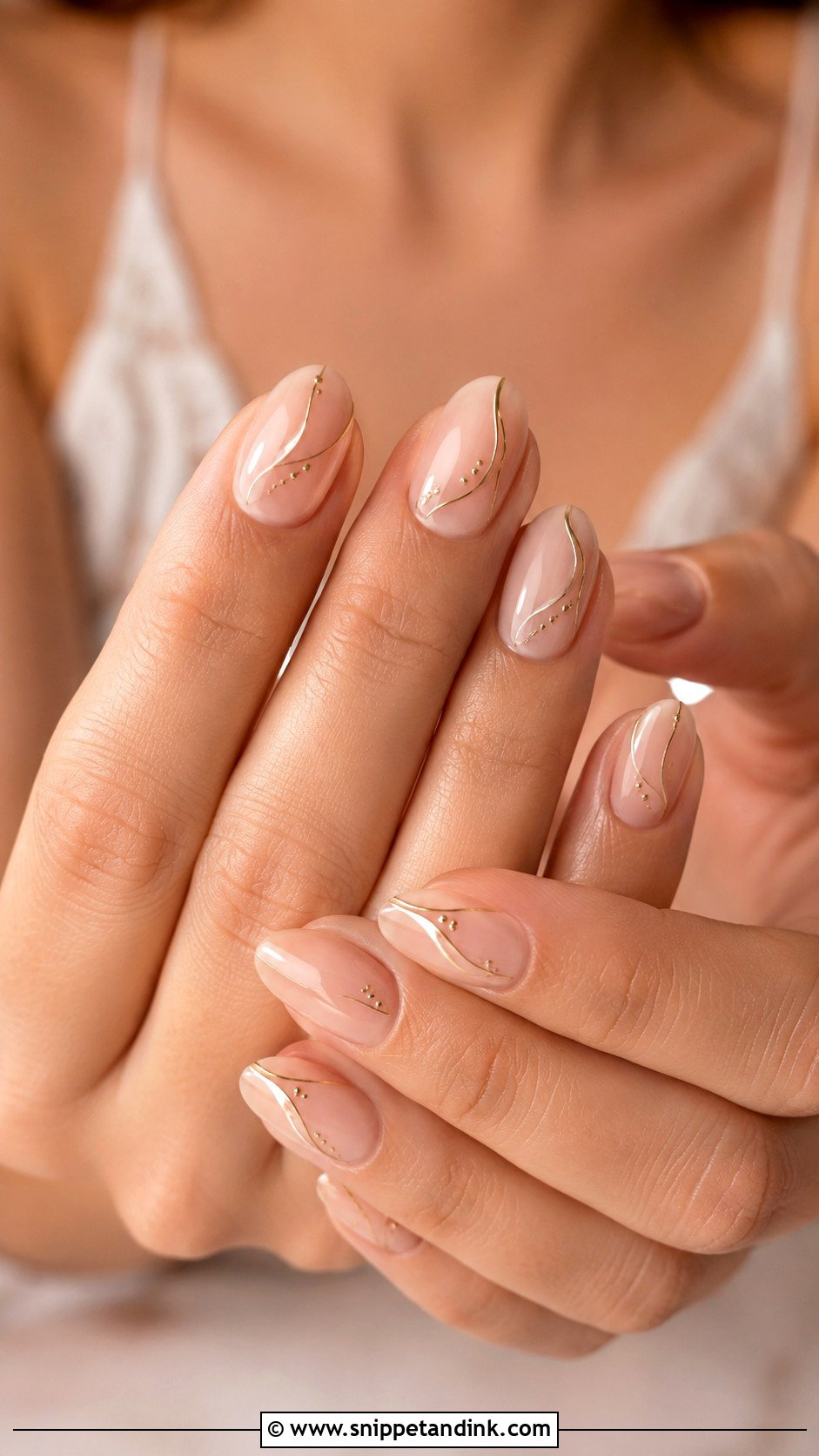
Nude with gold art is the design I suggest to brides who are unsure, because it goes with every outfit change. The nude needs to match your skin rather than look grey or chalky: caramel and warm beige on deeper skin, soft pink-beige on lighter. Thin gold swirls, tiny dots, leaves or a border line add the festive part. With a glossy finish, your mehndi stays the focus and the nails just frame it.
5. Henna Inspired Wedding Nails
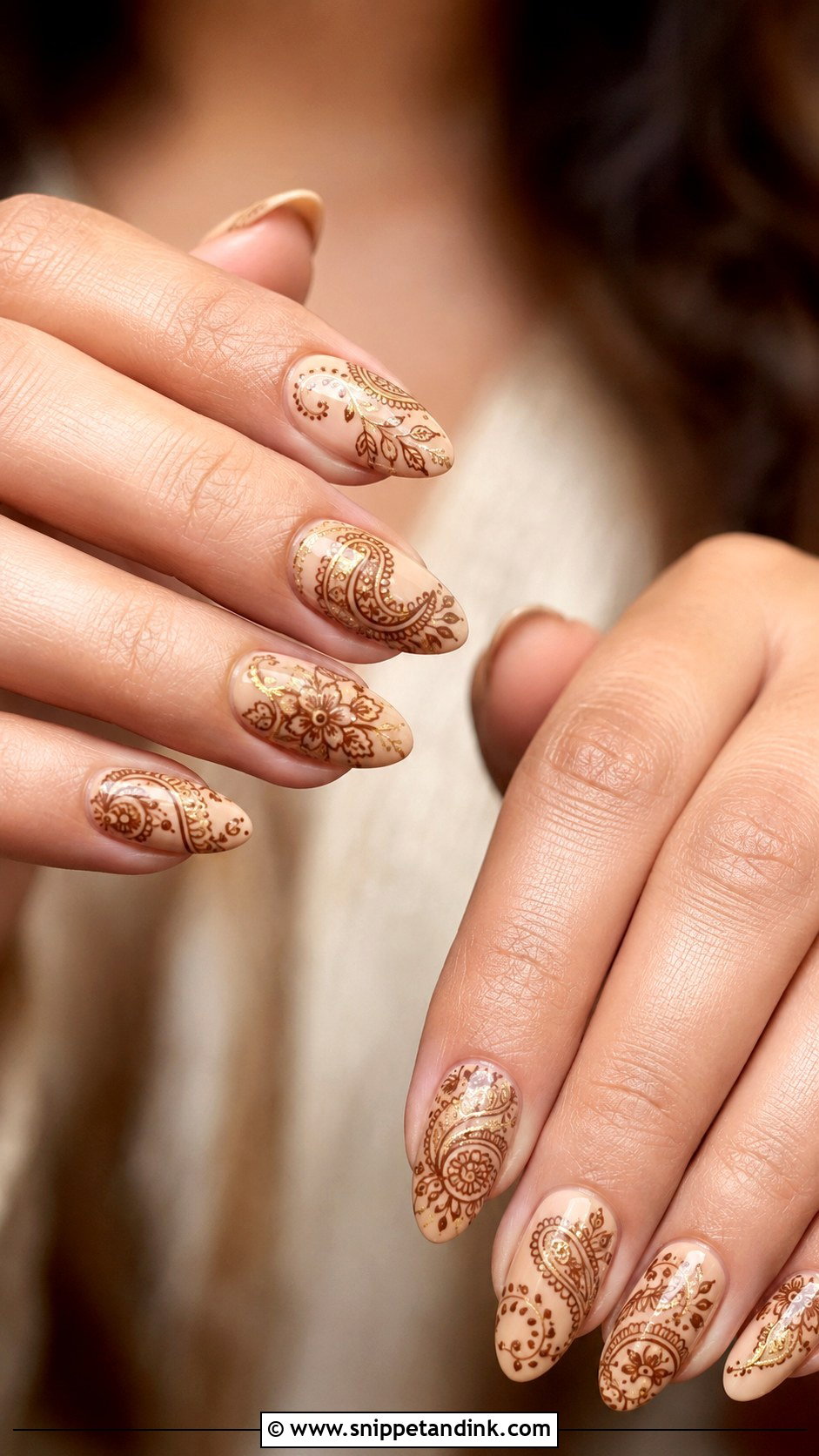
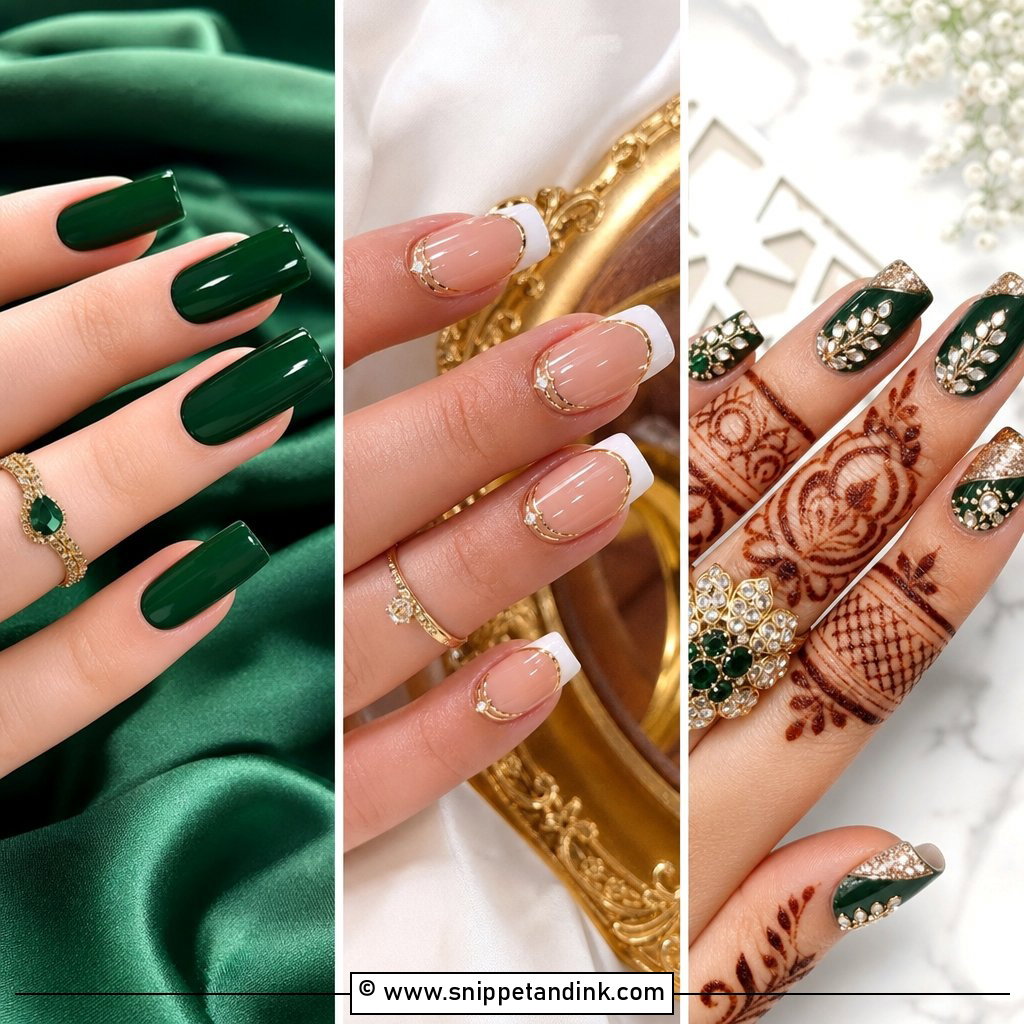
Henna inspired wedding nails echo the paisleys, florals and dots of your mehndi in fine linework over a nude, beige, blush or soft brown base. On a nail the scale has to shrink a lot, so I simplify: one paisley, a few dots, a scalloped edge, not a full mandala. Every nail or two accents both work. White, gold, brown or red lines all suit; I’d pick whichever colour your outfit borders use most.
6. Pearl Chrome Wedding Nails
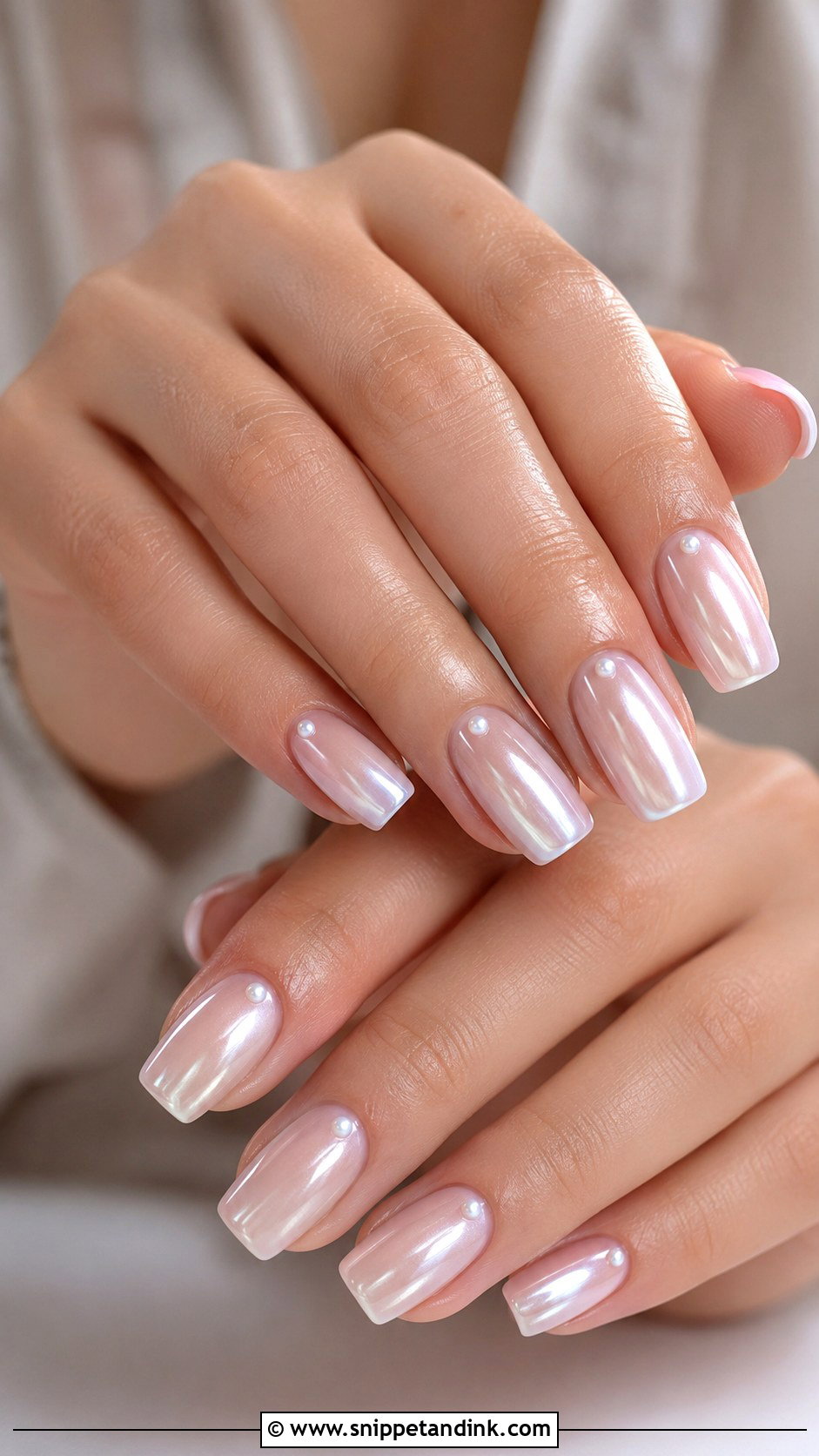
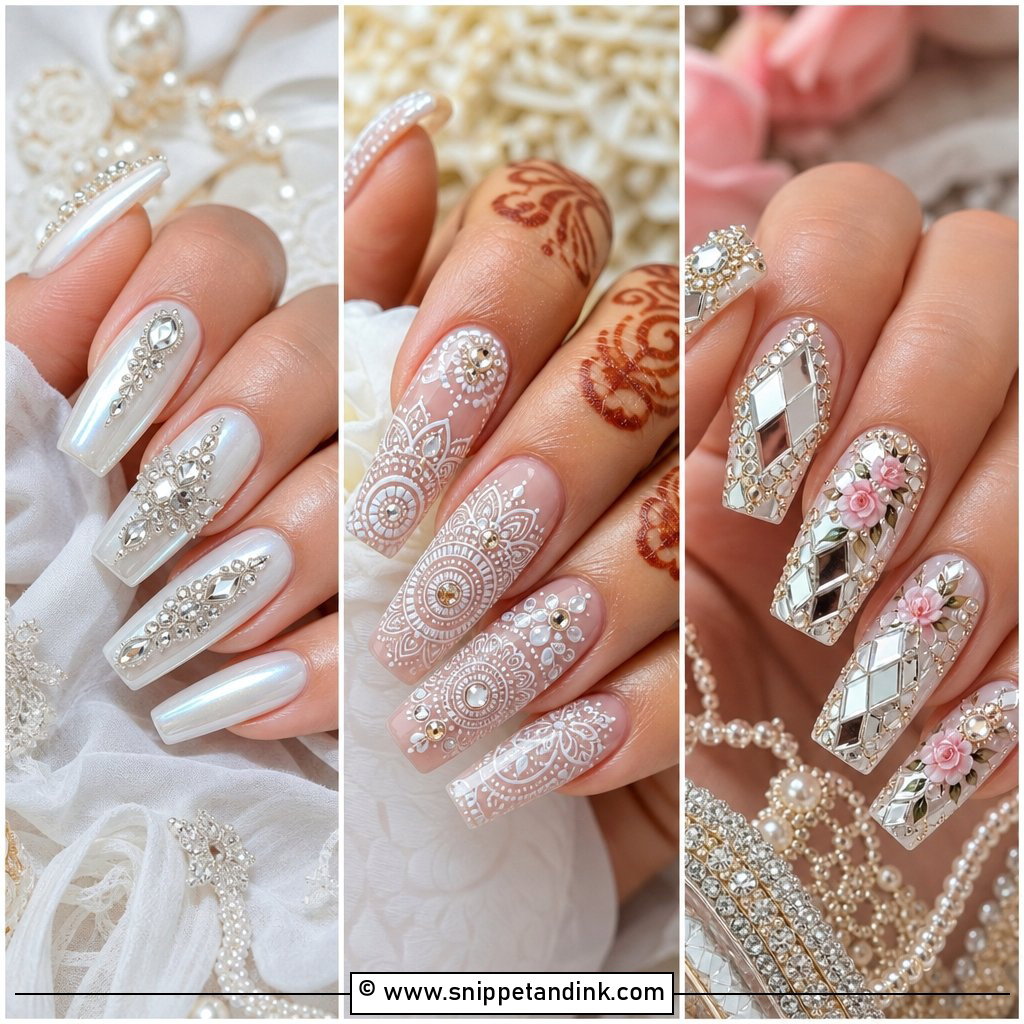
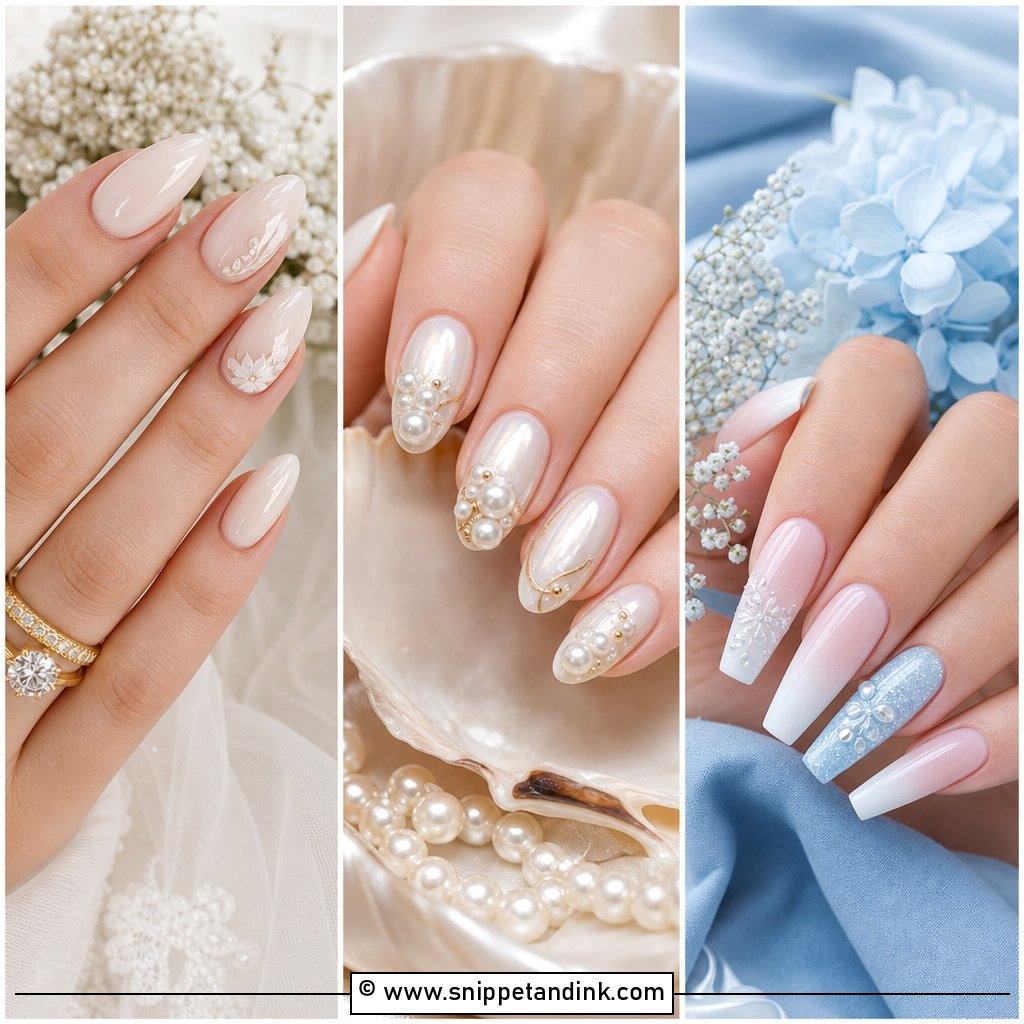
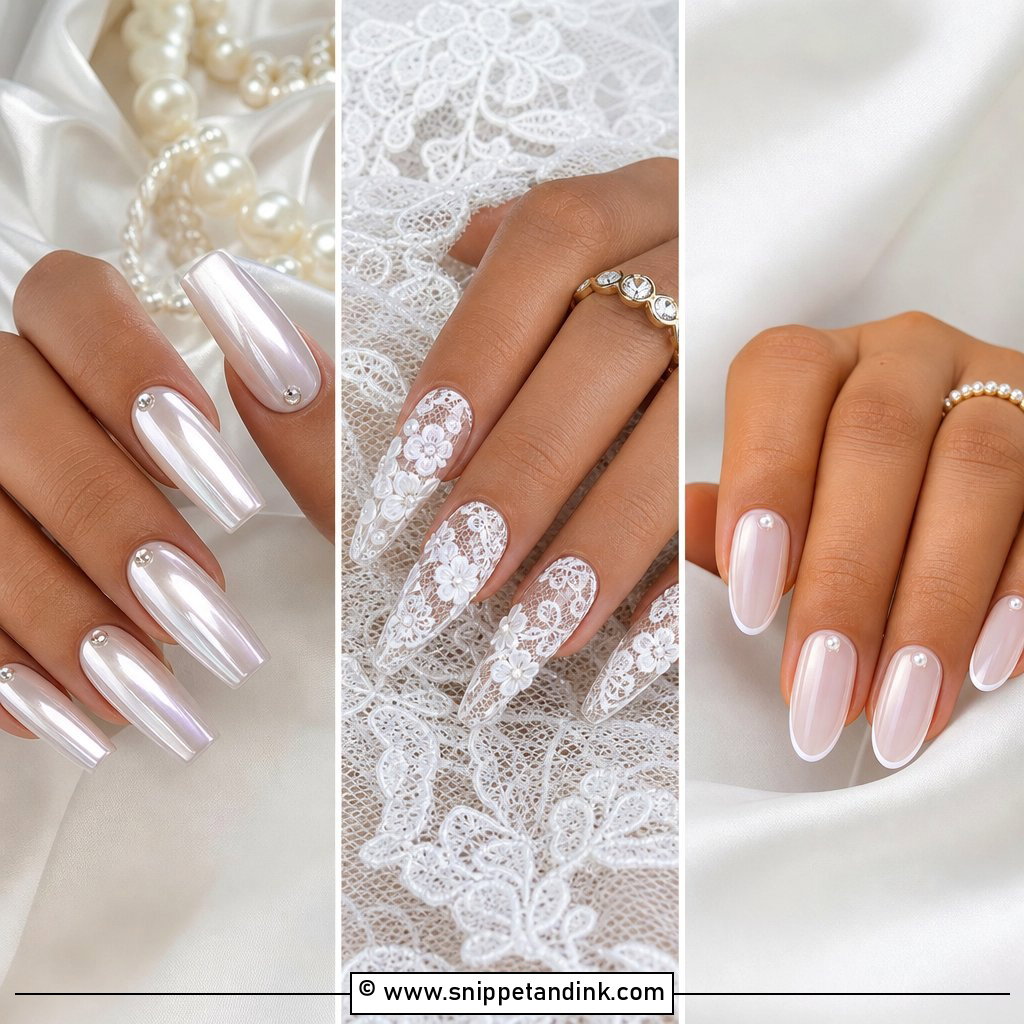
Pearl chrome over milky white, sheer pink or ivory gives a glow that holds up in daylight and under flash. For Indian weddings it’s mostly a reception or engagement choice, sitting naturally beside pastel lehengas, ivory sarees, diamond and polki. A pearl at the cuticle or a fine gold line on one or two nails adds just enough. If your haldi is after the manicure, think twice, because a pale chrome base picks up turmeric.
7. Milky White Wedding Nails
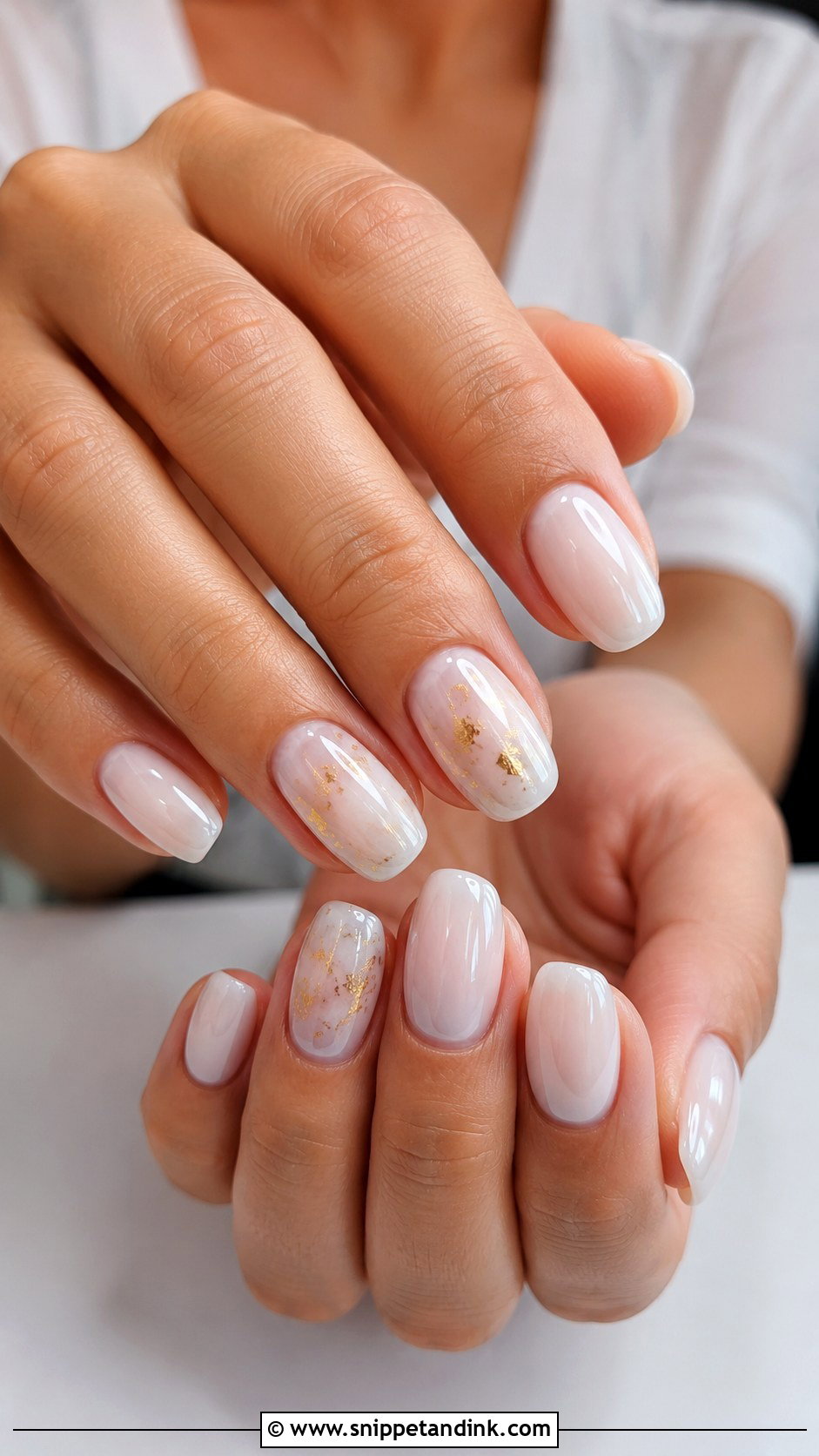
Milky white is calm and works well when your mehndi is very dense or your outfit carries heavy embroidery. The semi-sheer finish looks polished without adding visual noise. It pairs with ivory, pastel pink, silver and champagne outfits, and a little gold foil or a thin French tip makes it more festive. Be careful with timing: light, translucent nails are the most likely to yellow from turmeric at the haldi, so either schedule this after the haldi or protect the nails during it.
8. Ivory Wedding Nails With Pearl Details
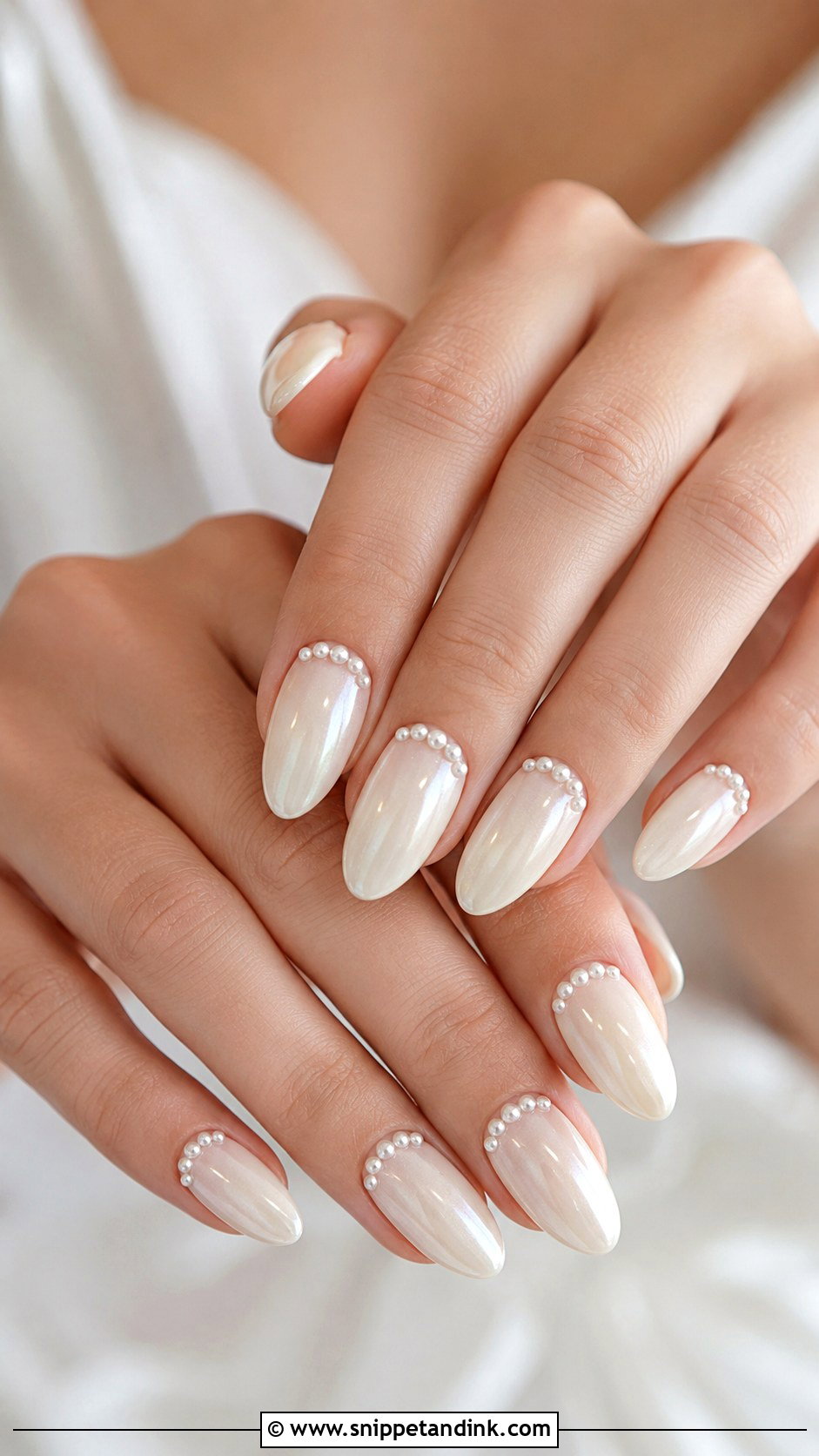
Ivory is softer than bright white, so it sits better against warm and golden undertones. Tiny pearls along the cuticle, across a French tip or on one accent nail make it look like jewellery. It’s a natural fit for chikankari, ivory lehengas and pearl sets, and often works as a reception set if the main wedding look is red. Keep pearls small and set in gel; anything that sticks up will catch on dupatta netting.
9. Pink Bridal Wedding Nails
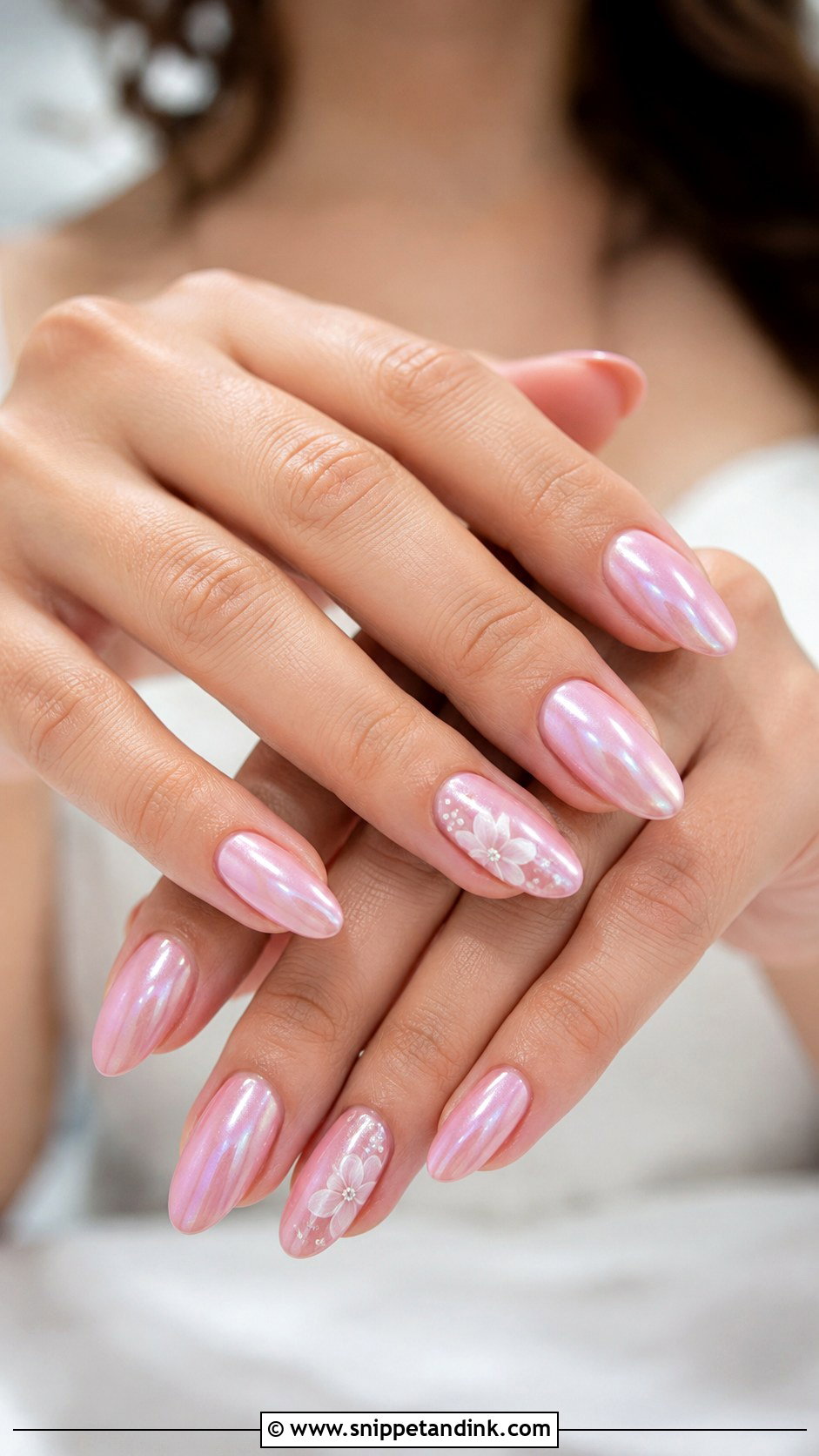
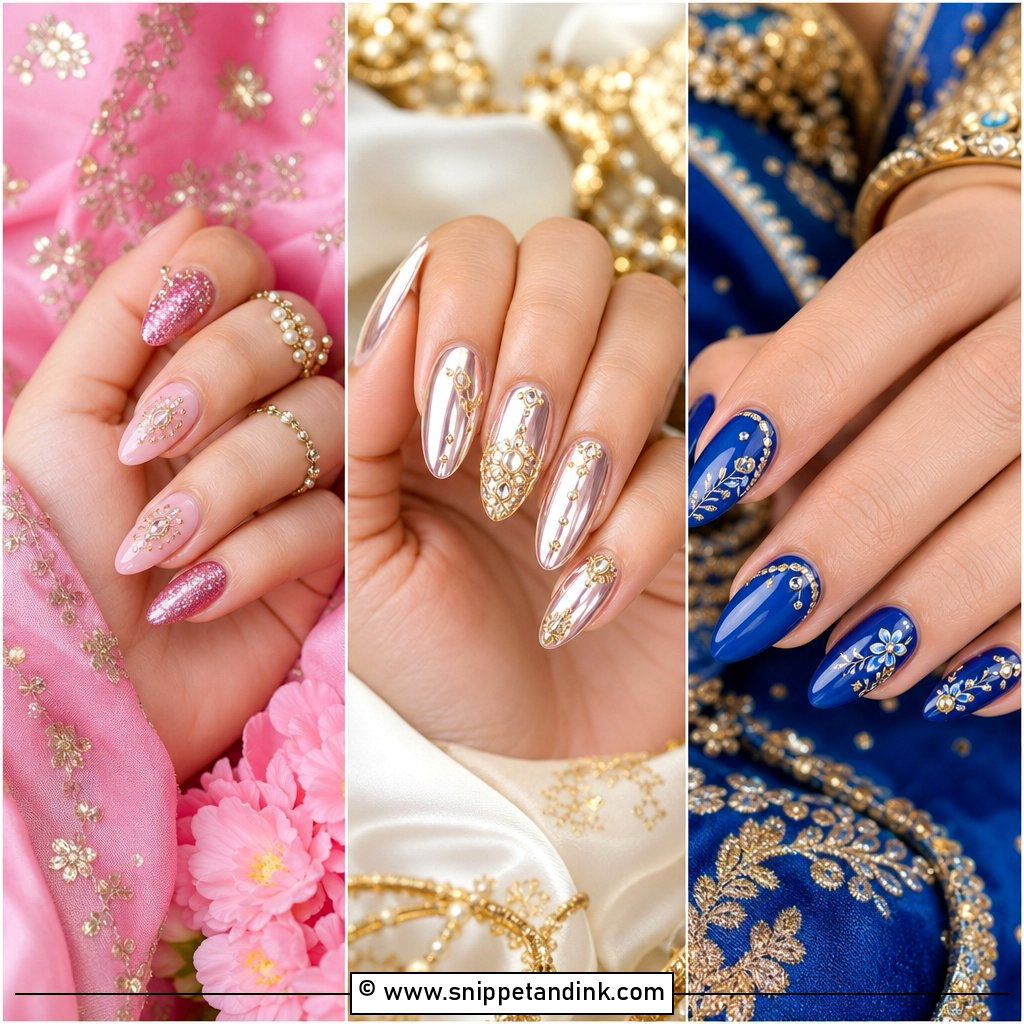
Pink works with more Indian outfits than people expect: dusty rose with mauve and lilac, blush with peach and ivory, rose nude with gold. A glossy pink is fine alone, and gold foil, pearl chrome or a few painted flowers make it more bridal. In photos it gives a gentle contrast against mehndi and gold without pulling the eye away from the jewellery. It reads younger and fresher than red or maroon.
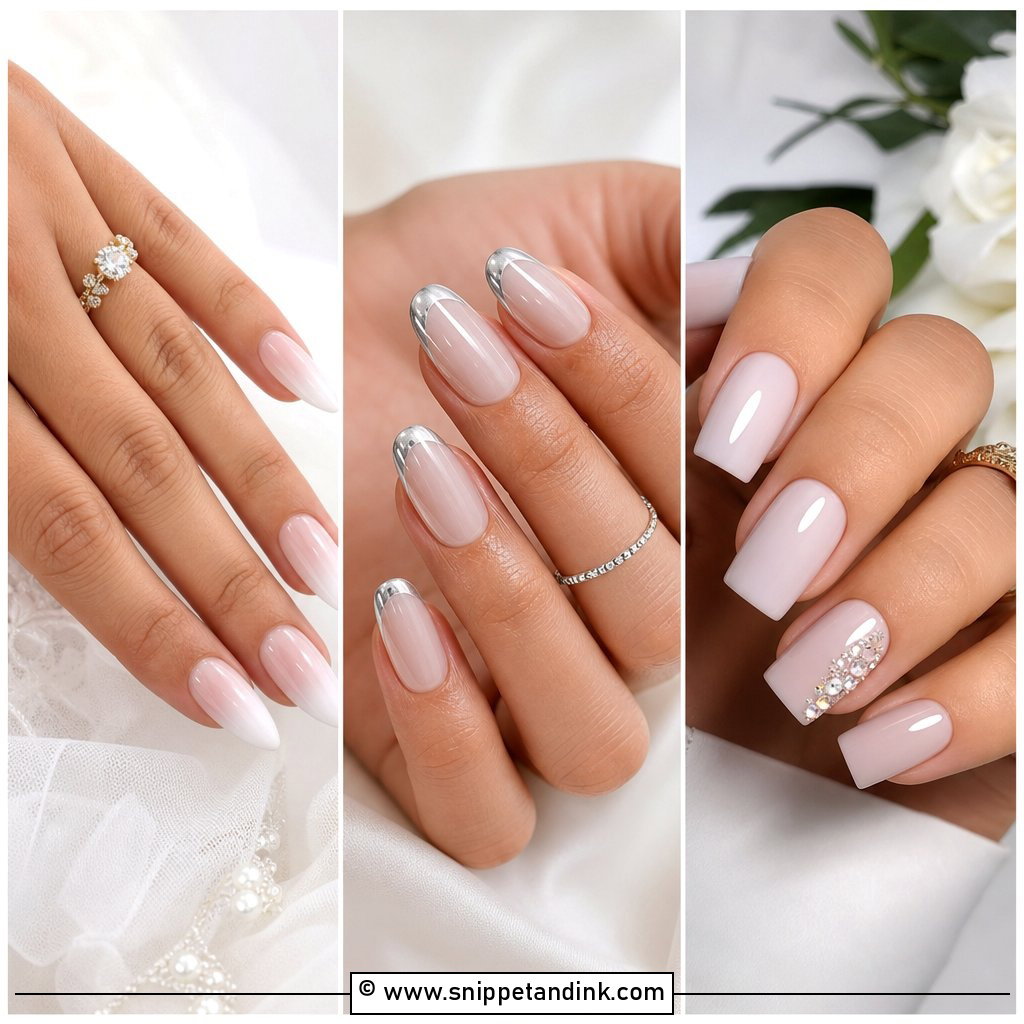
10. French Tip Wedding Nails
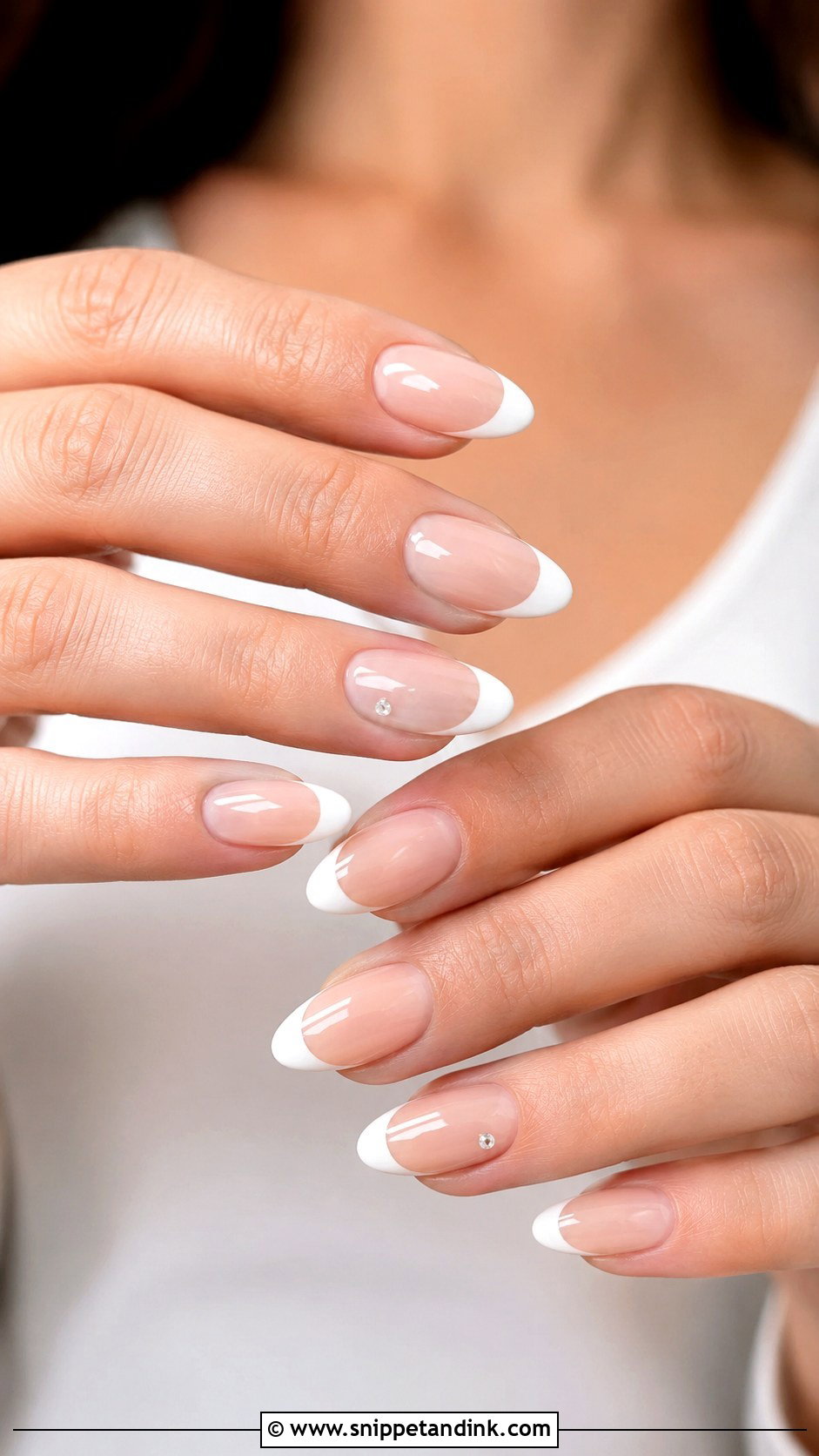
A French manicure can be adapted a lot for an Indian bride: gold tips, pearl tips, red tips or classic white over nude. Almond French tips lengthen the fingers in shots with rings and bangles. Because it doesn’t add a block of colour, it’s a safe pick if your wardrobe changes colour every day. One accent nail with a pearl, crystal or a small mehndi-style motif is all the decoration it needs.
11. Red French Tip Wedding Nails
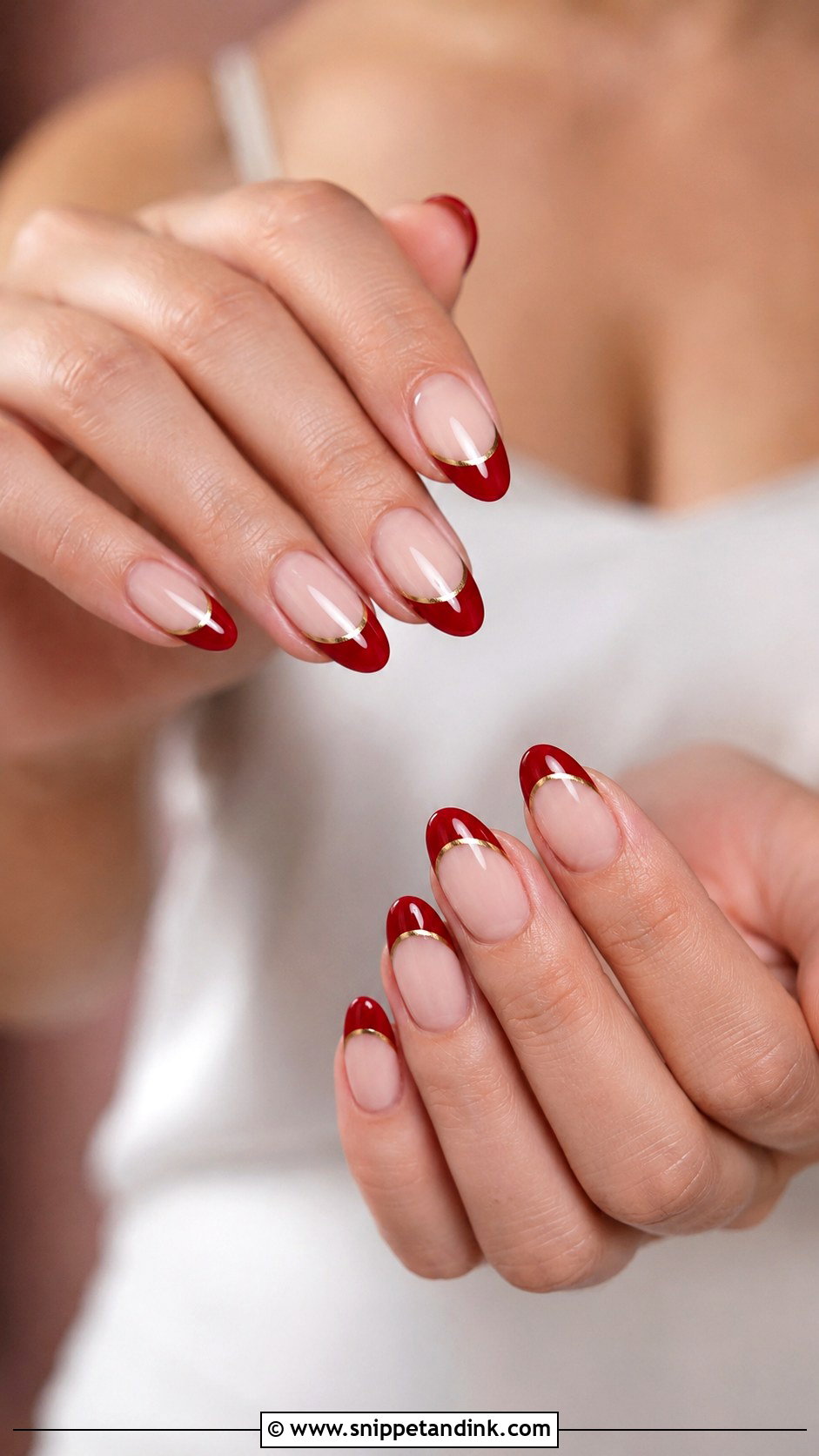
Red French tips put the traditional colour only at the edge, over nude, sheer pink or beige. It still feels connected to bridal red but lighter on the hand. A thin gold line under the red tip makes it more festive. The red line has to be very even, since a wobble shows instantly against nude. It suits red lehengas, ivory outfits with red dupattas and gold sarees with red borders.
12. Gold French Tip Wedding Nails
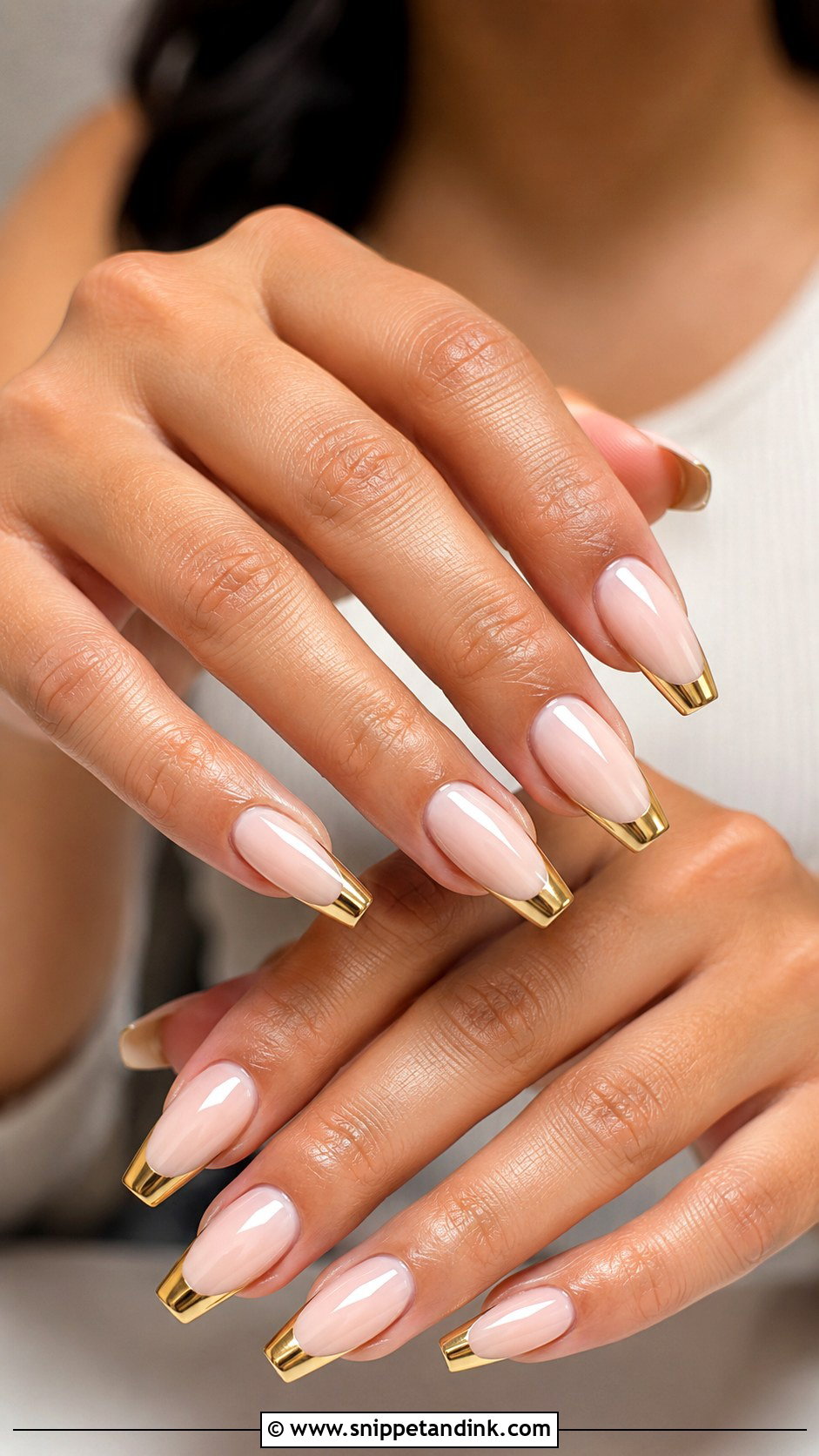
Gold French tip wedding nails sit between a classic French and full metallic. Thin gold tips look delicate; thicker chrome tips make more of a statement. They pair with red, maroon, green, ivory and champagne, and because the nude base covers most of the nail, they don’t crowd a busy mehndi. Gold tips are the first part to wear down, especially if you’re wearing heavy chooda, so I cap the edge well.
13. Green Bridal Wedding Nails
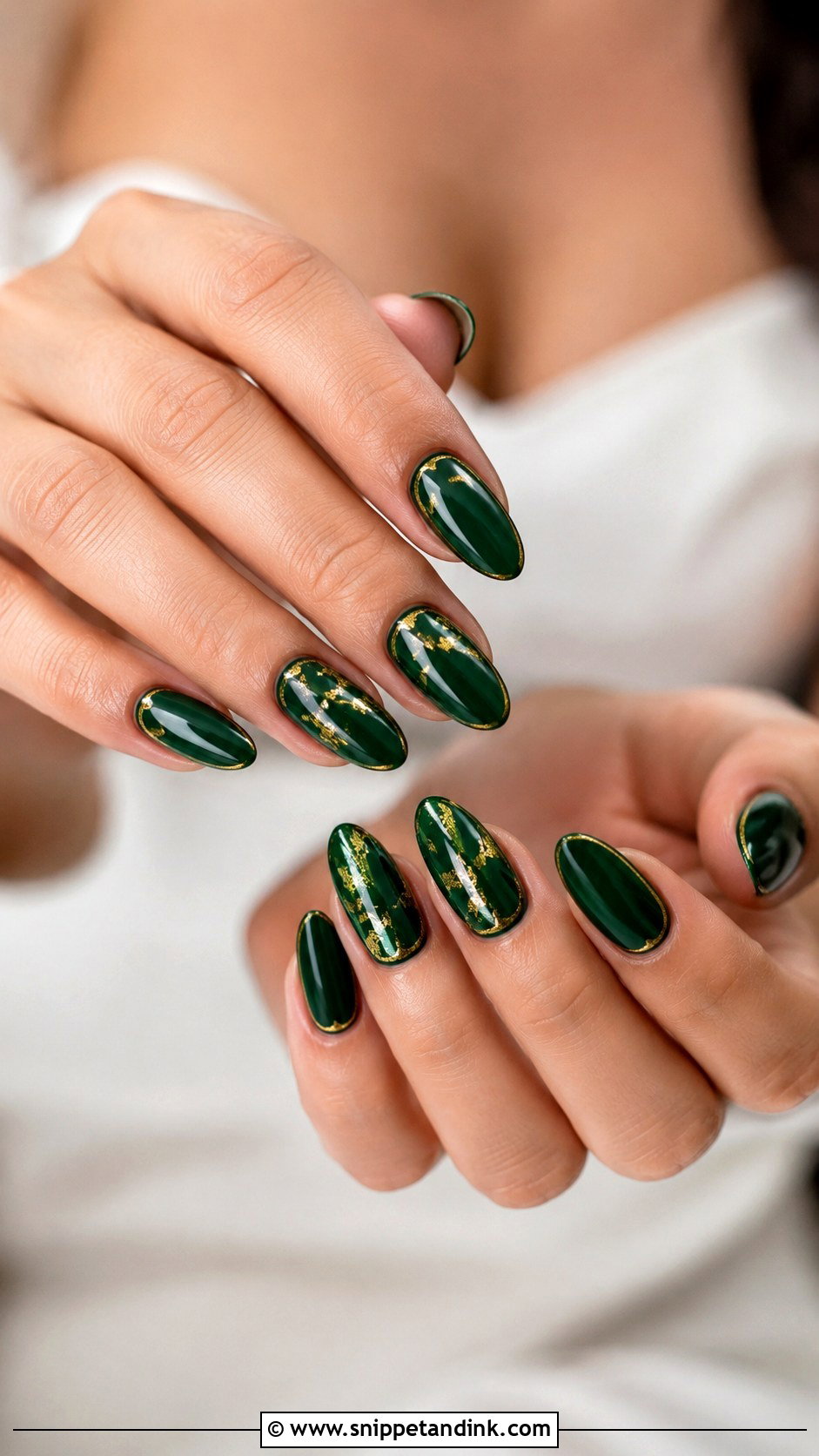
Emerald, bottle green and forest green work with emerald jewellery, green lehengas or jewel-toned embroidery, and green looks rich beside a red bridal outfit too. Gold foil, a few crystals or a gold border design make it bridal. If a full green set is too much, try green tips over nude or green on two accents. Very dark greens can look almost black in dim mandap lighting, so I’d pick a shade with a little brightness to it.
14. Champagne Glitter Wedding Nails
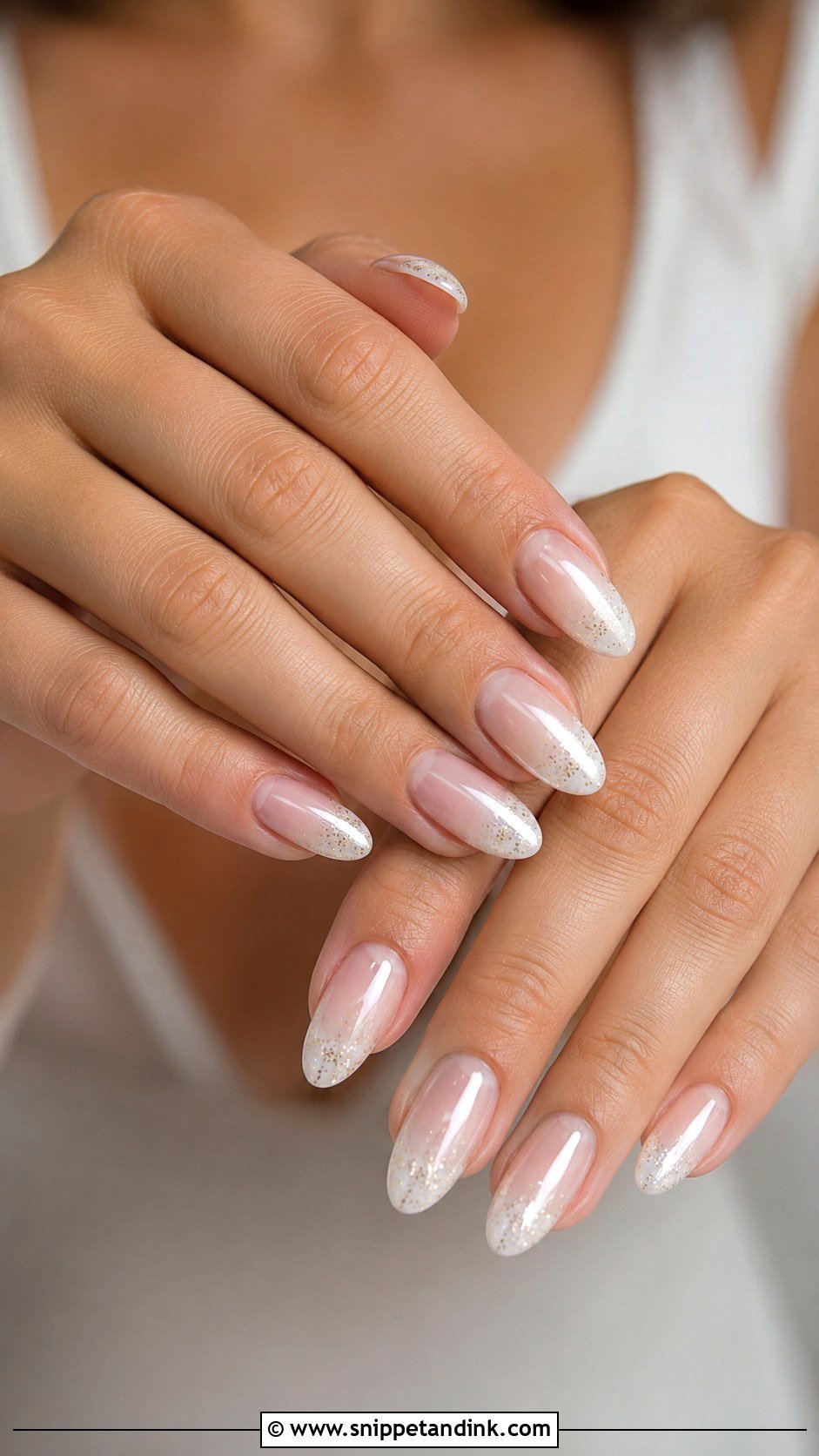
Champagne glitter reflects zari, sequins and jewellery without the harshness of silver. I use fine glitter rather than chunky, which keeps the surface smooth and doesn’t feel gritty against fabric. An ombre from the tips over a nude base keeps the cuticle natural and grows out better across a week of events. It works for sangeet and reception especially, and pairs with gold, ivory, blush, peach and pastels.
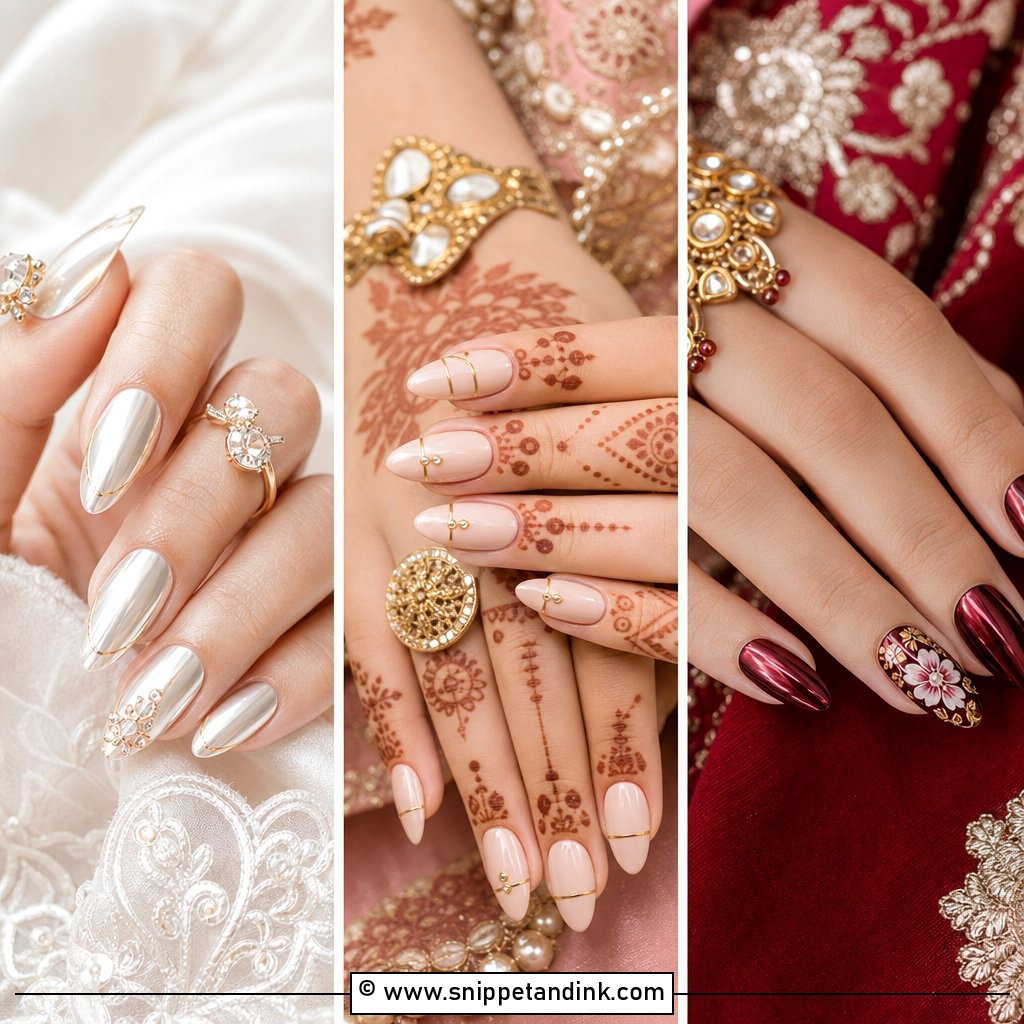
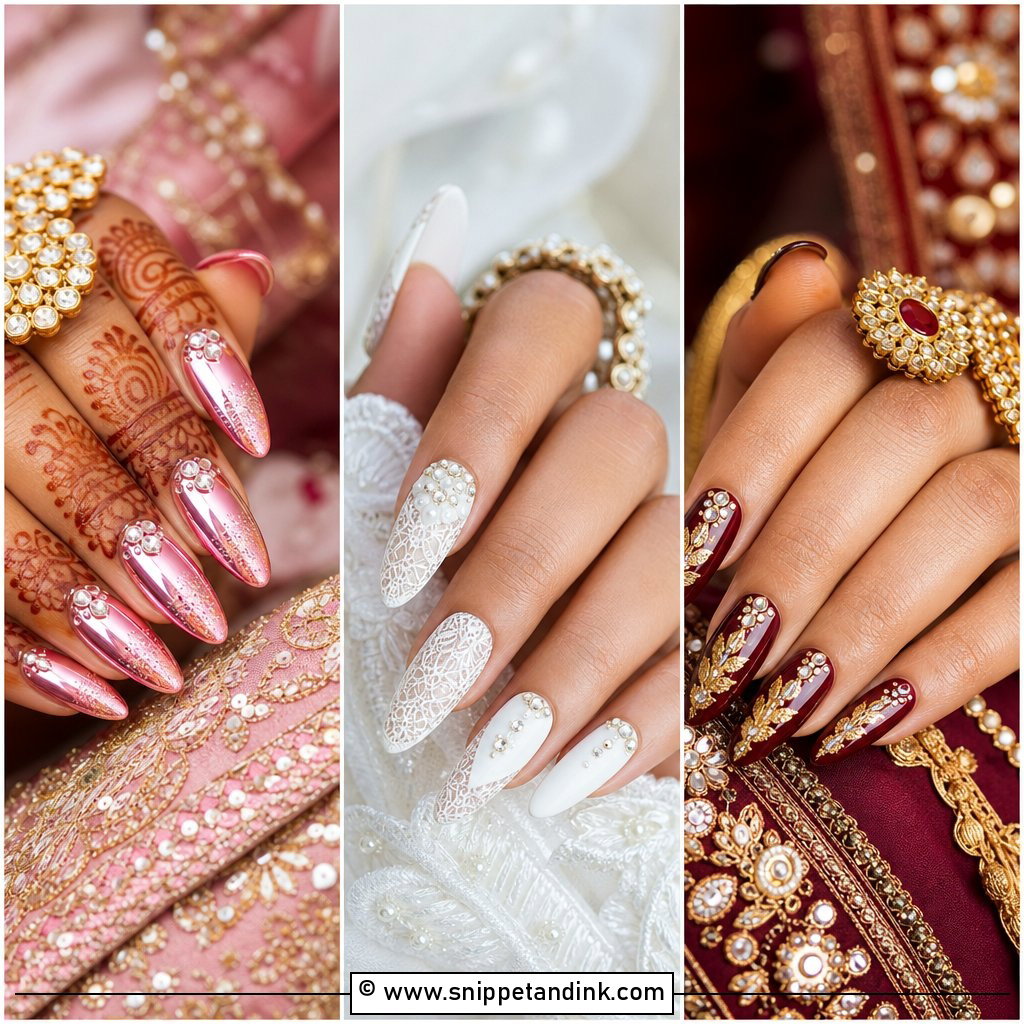
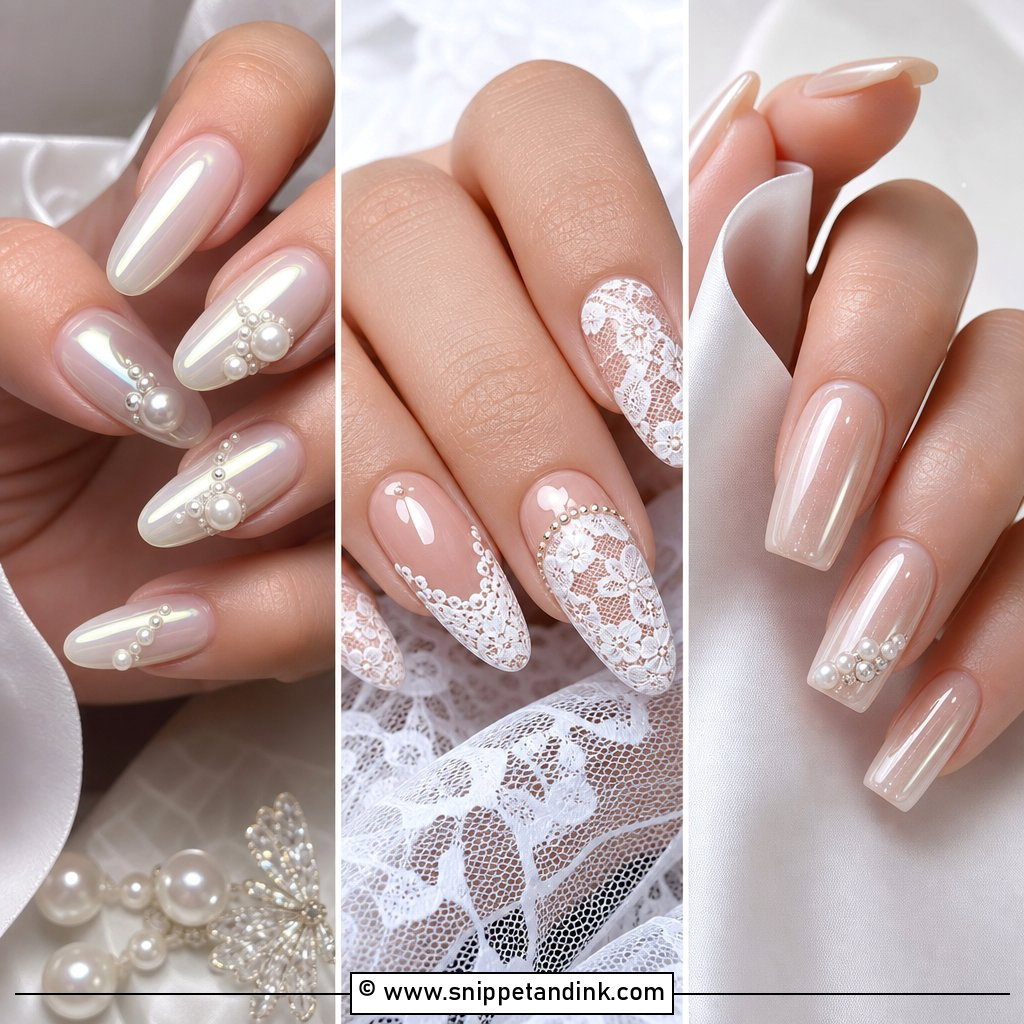
15. Crystal Bridal Wedding Nails
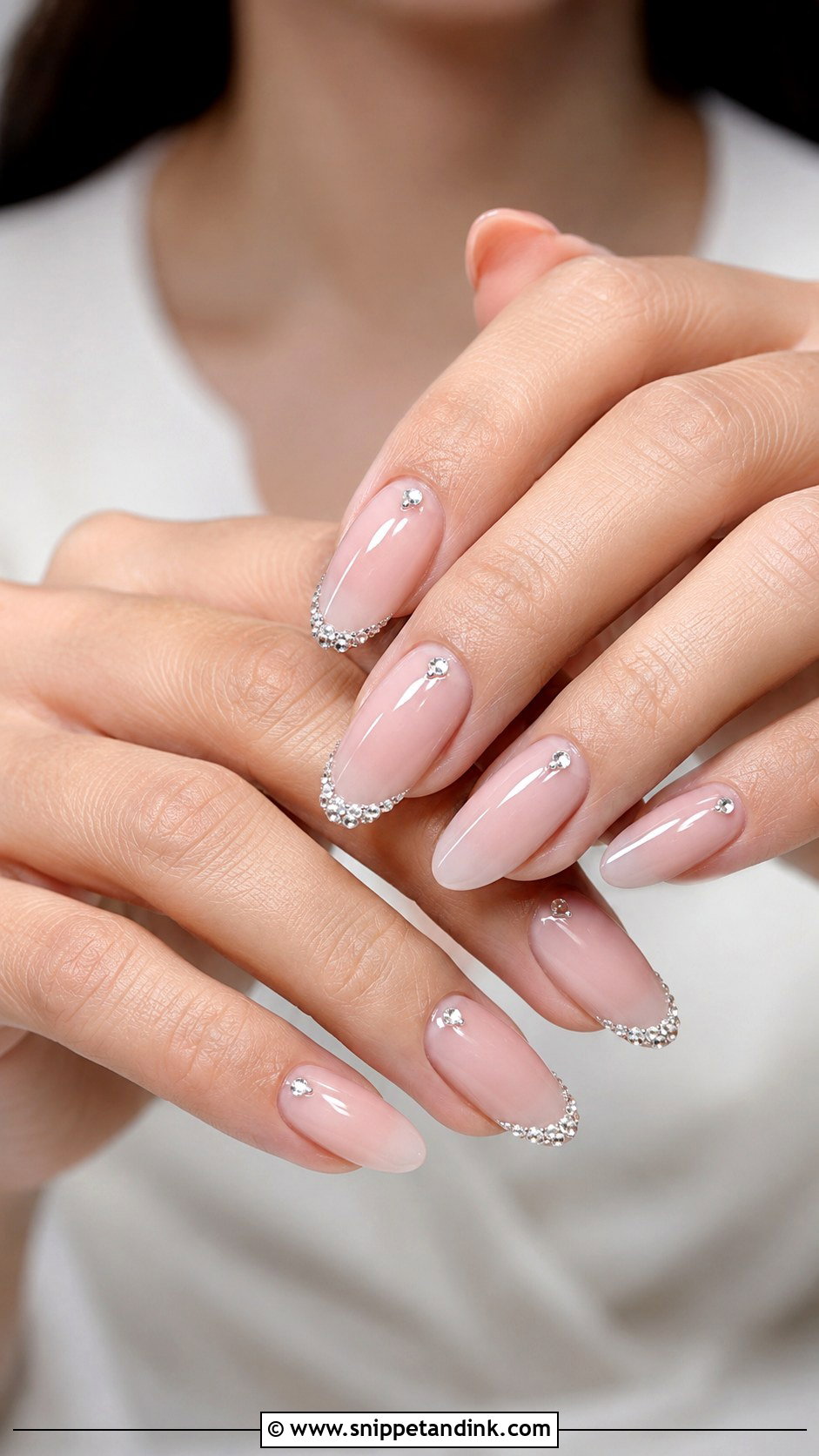
Crystals give close-up hand photos real sparkle. The placement should be deliberate: near the cuticle, along a French line, or on one accent nail, over a nude, blush or ivory base. With heavy rings, chooda and kaleere already on the hands, a few stones go a long way. If you plan to wear the set through many functions, ask for low-profile crystals set in gel, so they don’t snag on kaleere strings or embroidery.
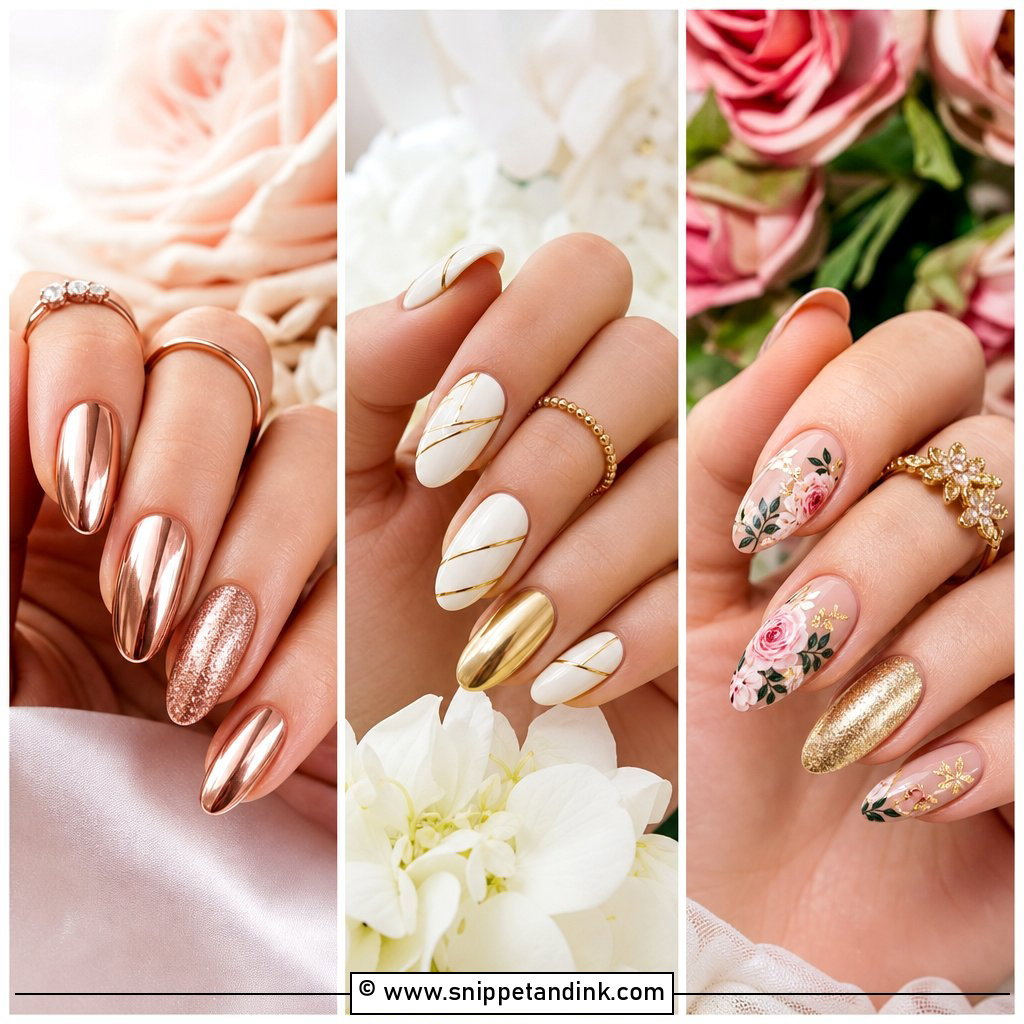
16. Rose Gold Wedding Nails
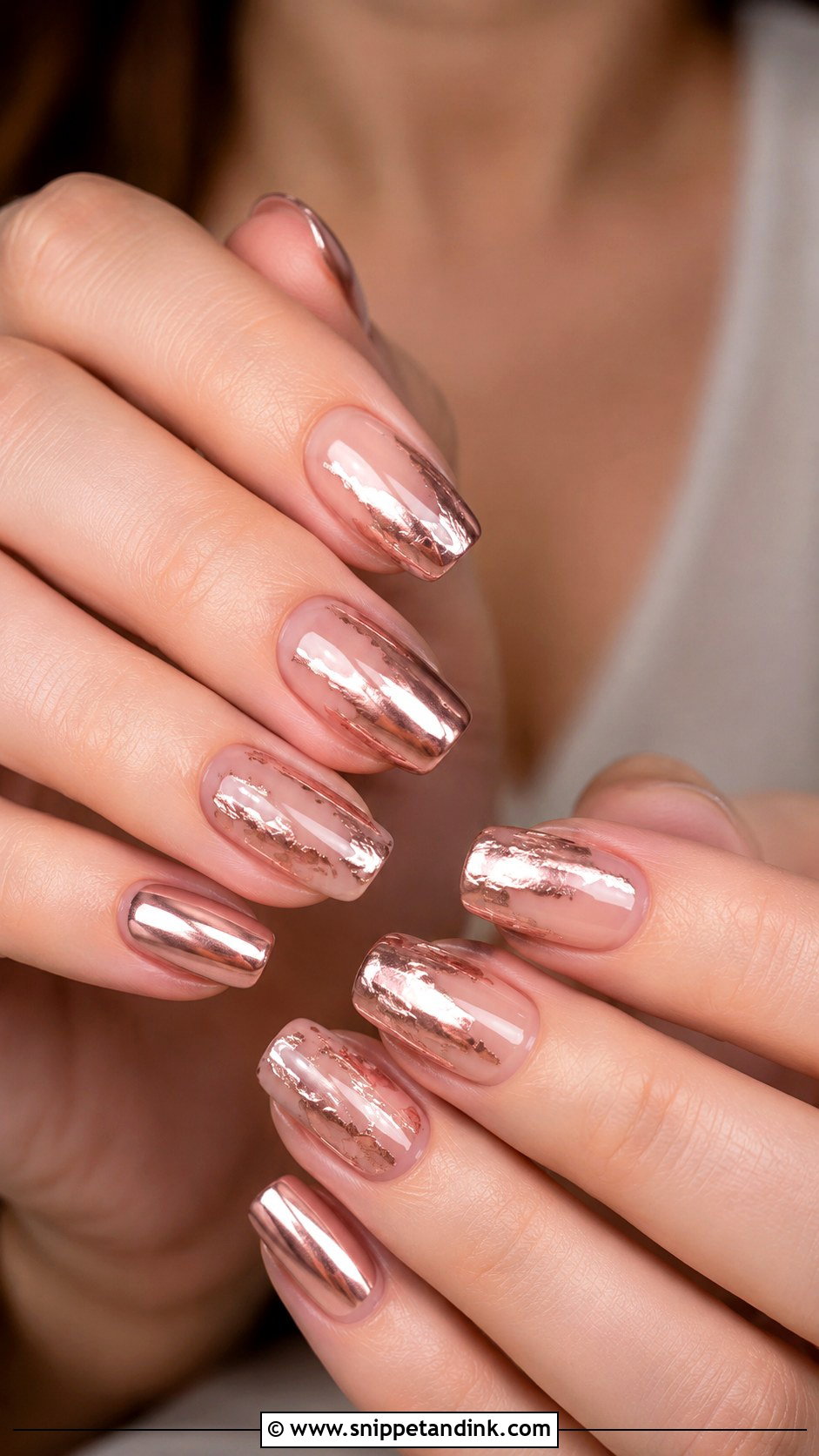
Rose gold sits between pink and gold, which makes it flattering on many Indian skin tones and easy with blush lehengas, peach outfits and soft metallic jewellery. Chrome, glitter ombre or nude with rose gold foil are the usual versions. It’s often the choice for the engagement or cocktail night rather than the wedding itself. Over sheer pink or milky nude, it stays bridal and modern.
17. Floral Bridal Wedding Nails
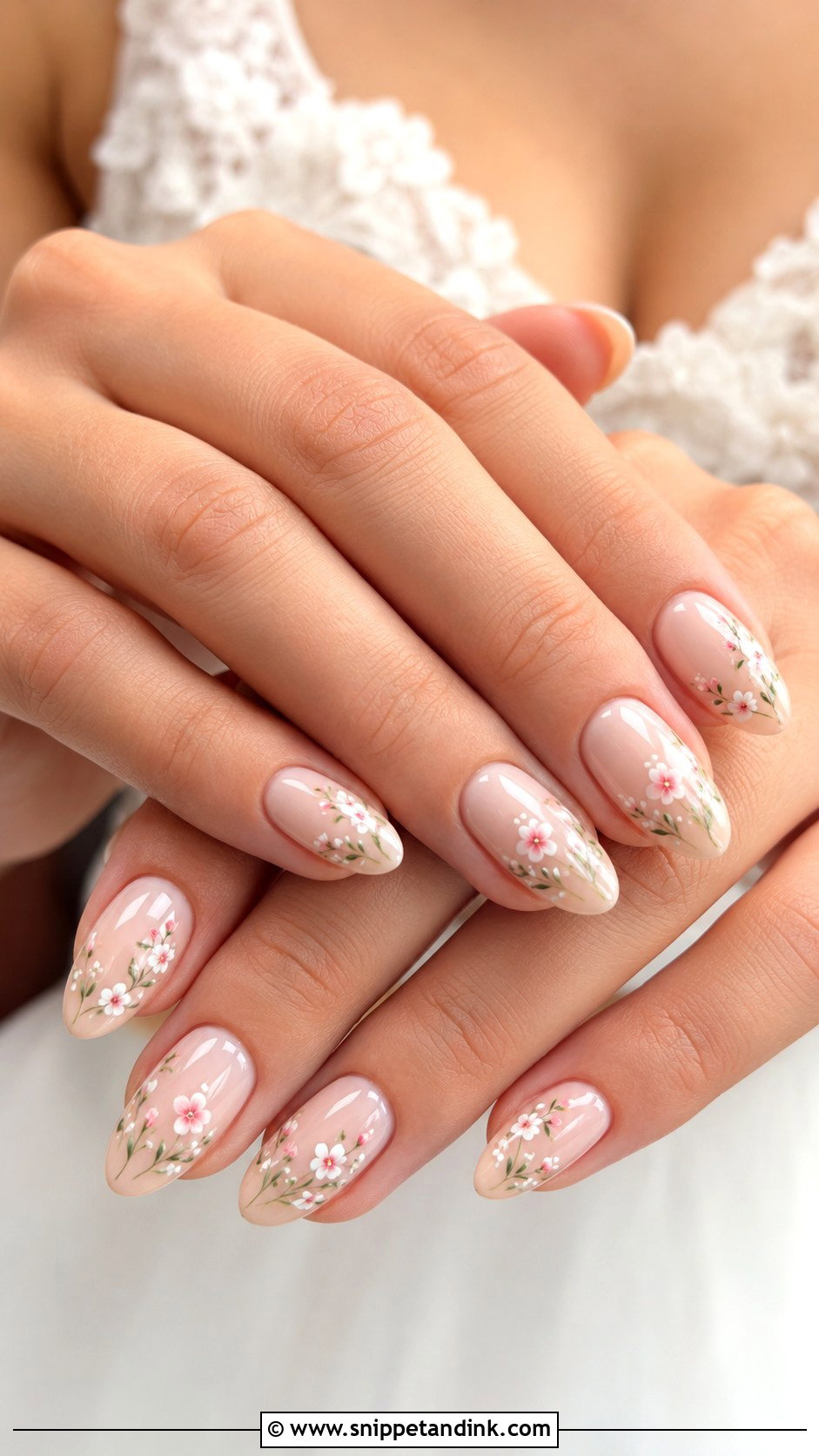
Small hand-painted flowers in white, pink, red, gold or soft green suit pastel and ivory outfits and daytime functions. Next to mehndi, florals can get busy, so I keep the base nude, blush or milky and the flowers on accent nails if your henna covers the fingers heavily. Every nail feels more romantic; accents feel cleaner. They’re a natural choice for the mehndi or engagement.
18. Burgundy Wedding Nails
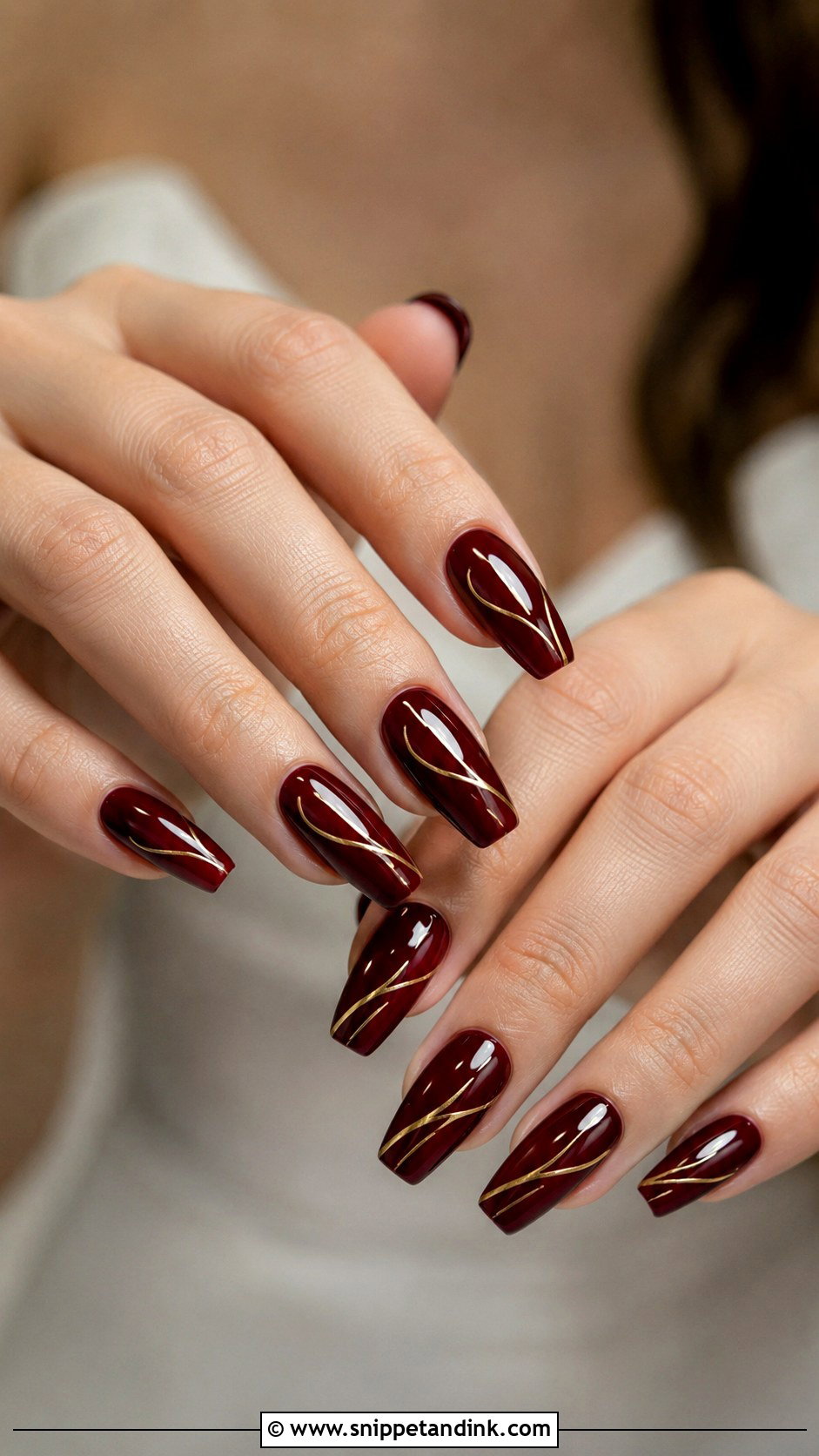
Burgundy is rich and dramatic without being black or brown. It works with maroon lehengas, gold sarees, emerald jewellery and winter weddings. A glossy full set is strong on its own; gold foil or thin metallic lines make it bridal. If a full dark set feels heavy, alternate burgundy nails with nude ones tipped in burgundy. It flatters deeper skin tones particularly well. Chips show quickly on dark shades, so pack a matching polish.
19. Ombré Wedding Nails
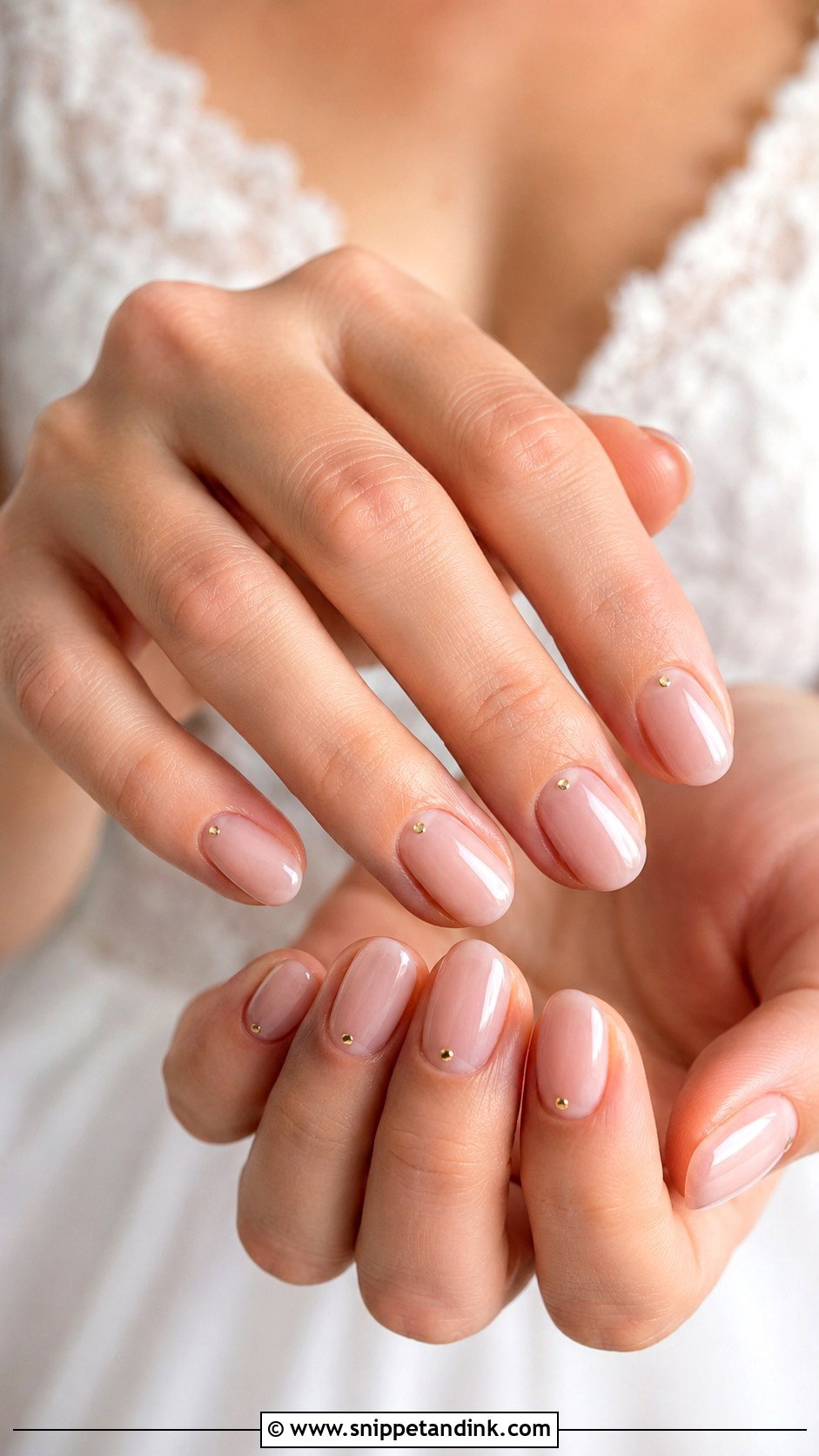
Ombré wedding nails fade from one colour to another, most often nude to white or pink to white, though nude to gold, blush to champagne and red to maroon suit Indian brides well. The fade hides grow-out at the cuticle, which helps across several events. Add pearl chrome for glow or fine glitter at the tips. Almond and coffin shapes show the gradient best.
20. Minimal Bridal Wedding Nails
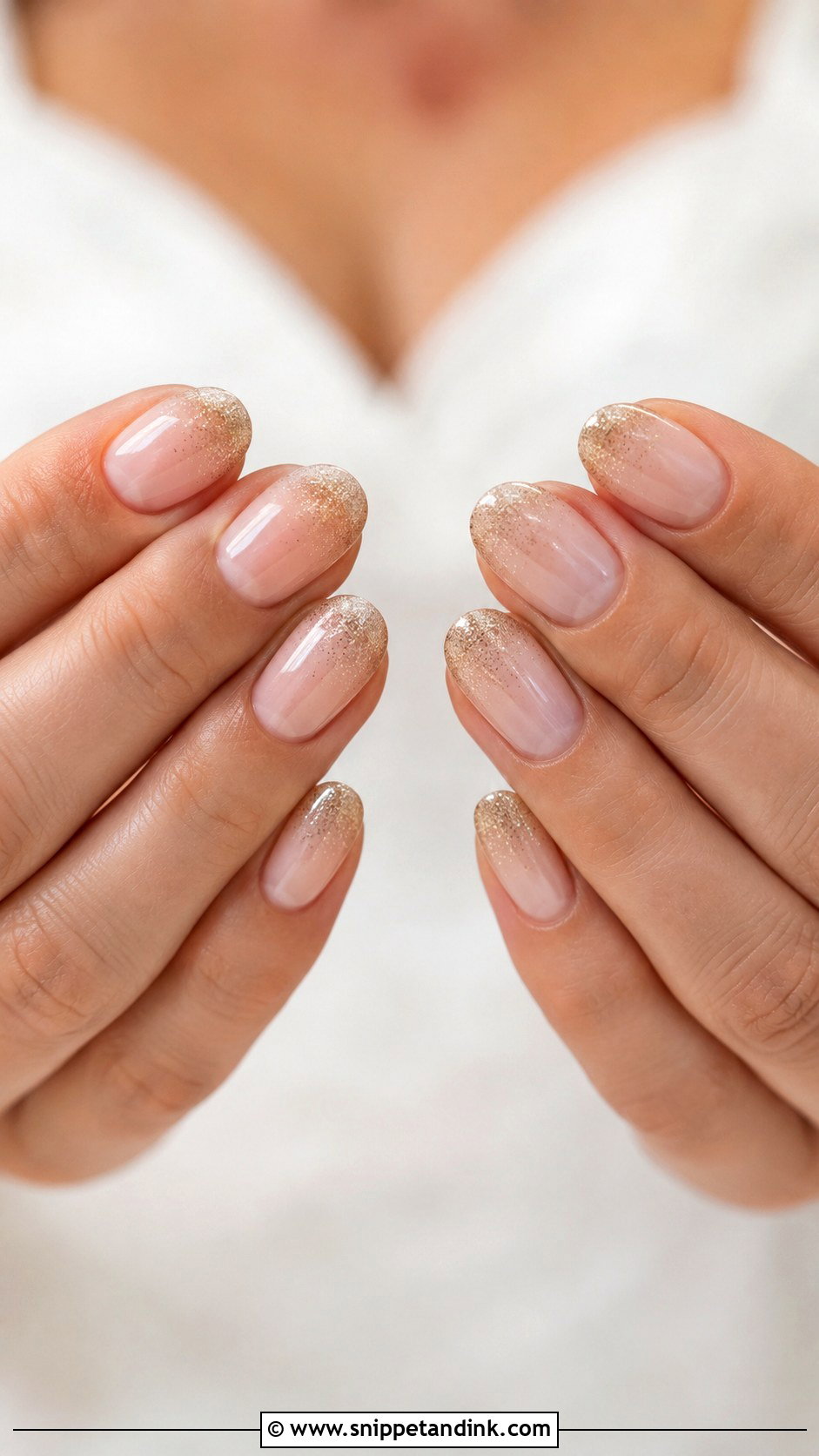
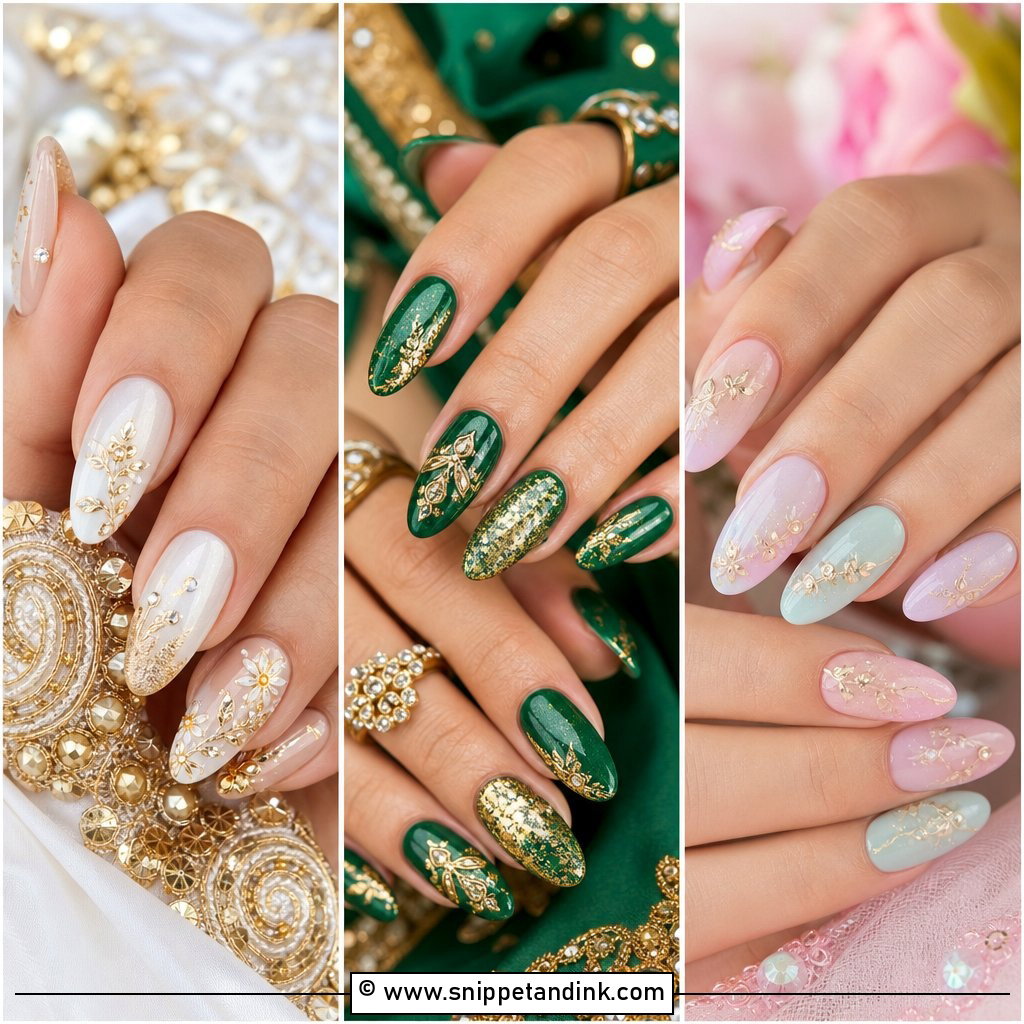
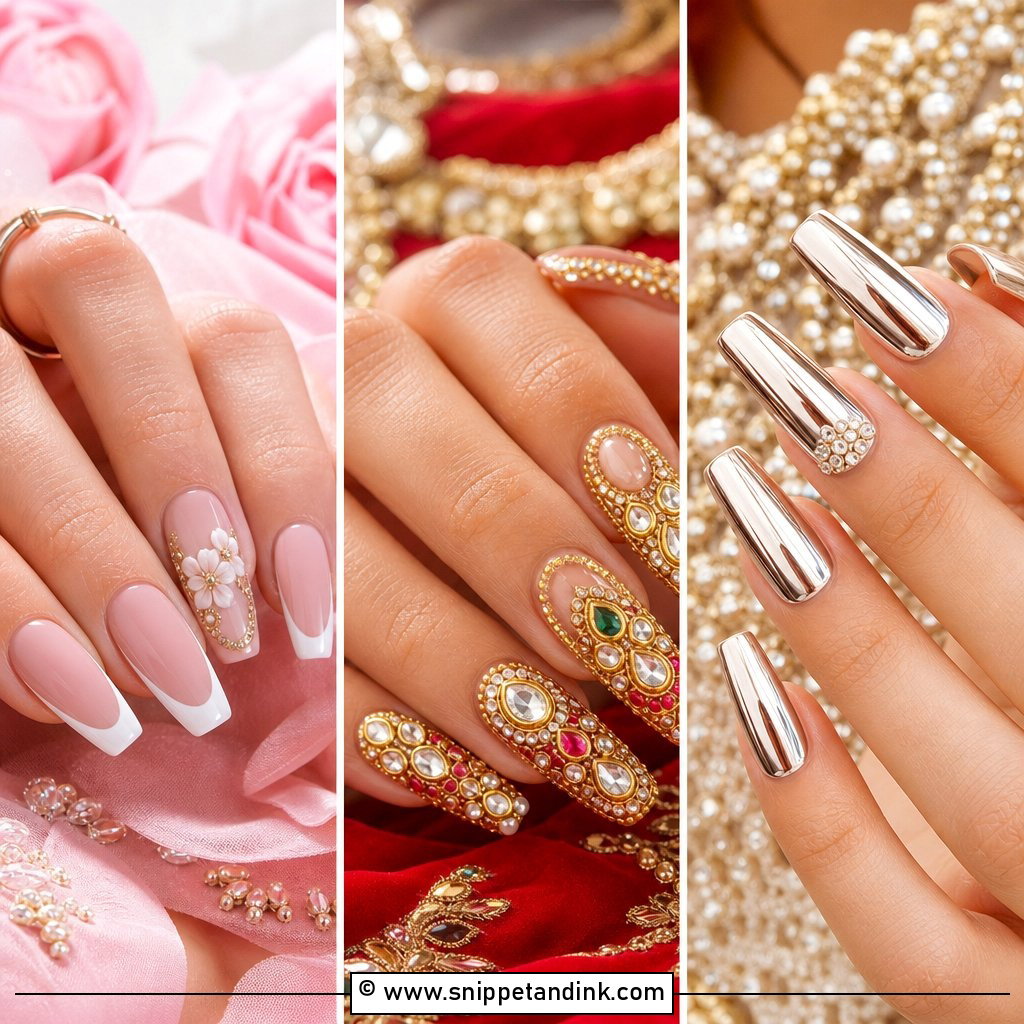
Minimal nails let the outfit, mehndi and jewellery lead. A sheer nude, pale pink, milky beige or soft ivory base needs to be shaped well and finished with high gloss, because there’s nothing else to look at. One tiny gold dot, a thin chrome line or a small pearl adds a bridal note. It works with every outfit colour and grows out the most gracefully across a multi-day wedding.
One Manicure for a Week of Functions
Most Indian weddings run over several days, and very few brides want to change their nails in the middle. I plan one set that bridges every outfit, and sometimes add something removable for the reception.
The Haldi Problem
Turmeric stains. On milky white, pale pink, ivory and pearl chrome, a haldi can leave nails looking yellow for days. If you love a light set, either get it done after the haldi (though that may clash with the mehndi rule above) or ask for a darker or warmer base that won’t show the turmeric. A thick layer of top coat helps a little, and wiping hands quickly after the ceremony helps more.
Chooda, Kaleere and Heavy Rings
Bangles sliding on and off over the knuckles are the most common reason for a chipped tip. Raised crystals and 3D pearls also catch on kaleere strings and net dupattas. If you’re wearing a full chooda, I’d keep stones flat and the nail length moderate. Very long coffin nails make putting on bangles harder than you’d expect.
For a reception look that’s very different, press-ons in the reception colour, sized and fitted at your trial, can go on over a gel base for one evening. They come off without touching your mehndi.
Matching Nails to Outfit, Mehndi and Jewellery
Red, maroon, gold and henna-style nails carry tradition; pearl chrome, milky white, nude and French tips feel more modern. As a rule, the more embroidered the outfit, the quieter the nails should be, and a simple outfit can take more sparkle. Look at your mehndi colour, jewellery tone and the number of functions before you decide, and plan your appointment around the mehndi and haldi rather than the other way round.
You'll Like These Ideas:


Leave a Reply