
Bridal nails at an Indian wedding get photographed more than almost anything except the face: ring close-ups, mehndi hands, bangle shots, the hands folded in the pheras. That changes how I plan a set. A polish colour isn’t enough on its own; it has to sit with the outfit, the jewellery, the skin tone and, above all, how much mehndi will cover the hands. Some brides want classic red and gold for the main ceremony, others prefer soft chrome, pearls, French tips or pastels for the engagement, sangeet, haldi or reception. Below are the designs I’m asked for most, with notes on shape, wear and what each one needs to last through several days of functions.

Gel Goes On Before the Henna, Never After
The order of appointments matters more than the design. Once your bridal mehndi is on, you’ll want to keep your hands out of water for as long as possible so the stain can darken, and a manicure involves soaking, scrubbing and filing. Doing nails after mehndi lightens the stain and can smudge it around the cuticles.
So I schedule bridal nails a day or two before the mehndi function. A gel set that’s fully cured also acts as a shield: henna paste stains a bare nail plate orange, but it won’t sink into cured gel and wipes off the surface. If you’re wearing extensions, the same applies; get them done first.
- Gel polish on natural nails: allow up to about two weeks of wear, so it should still look fresh at the reception if the wedding week is short.
- Builder gel or extensions: more durable, better for long fingers of art or stones.
- Regular polish: chips within days and doesn’t survive henna or haldi well. I wouldn’t use it for bridal nails.
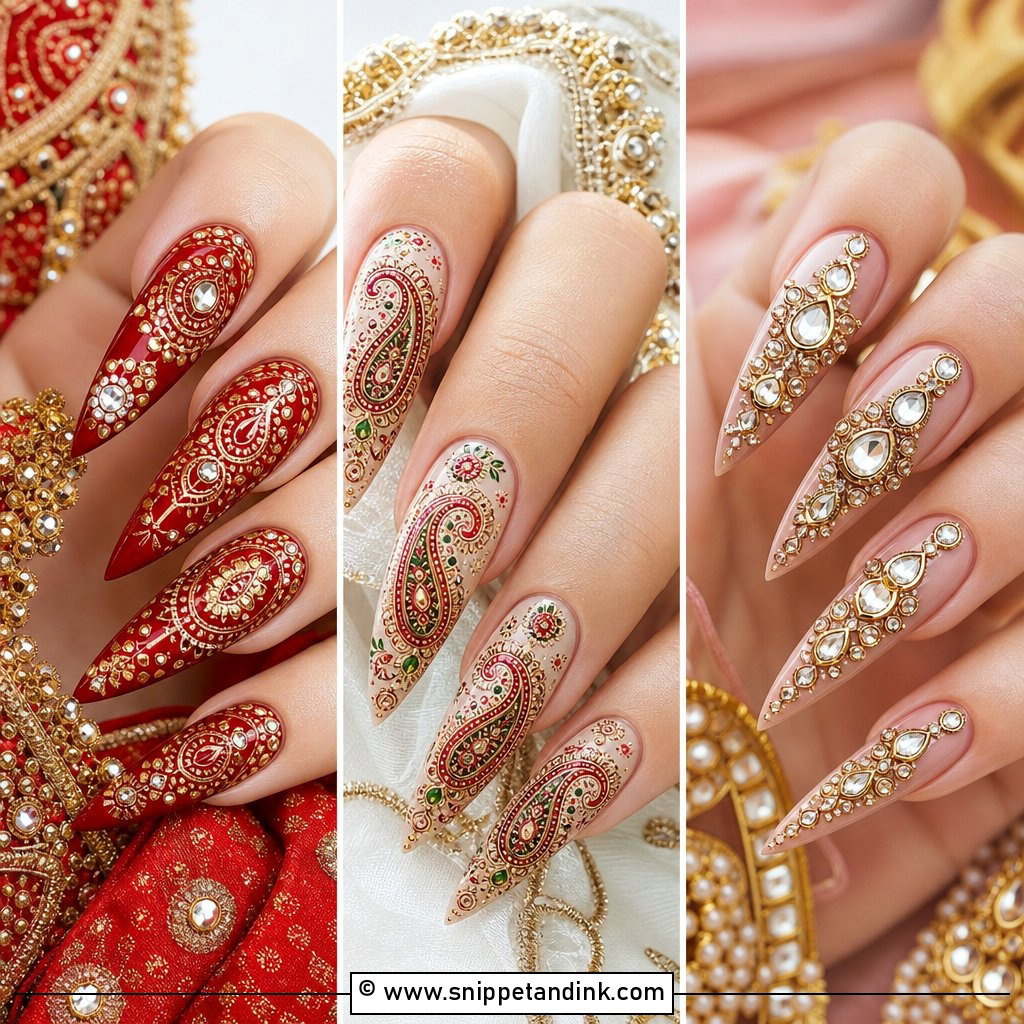
1. Indian Bridal Red Gold Nails
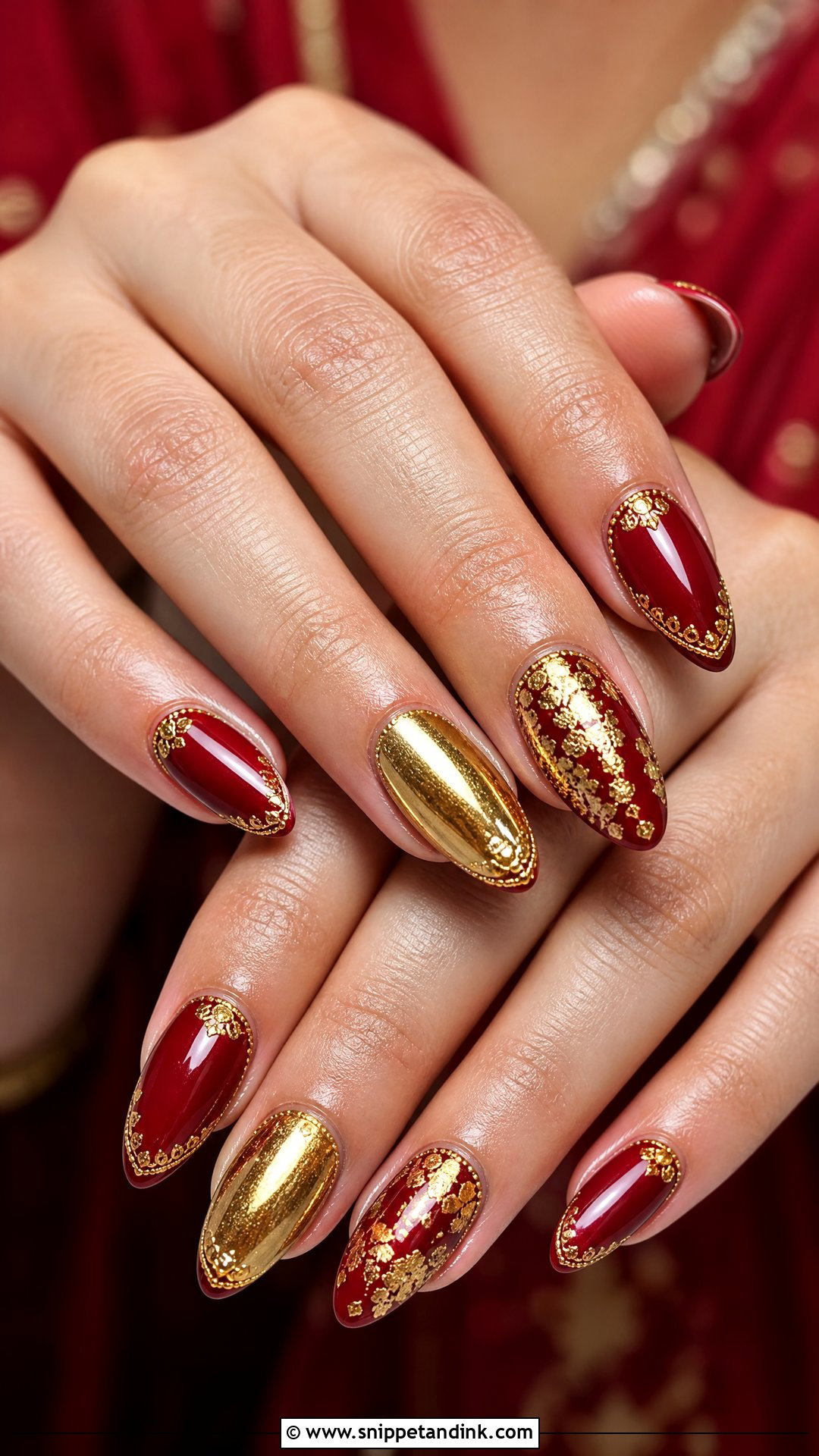
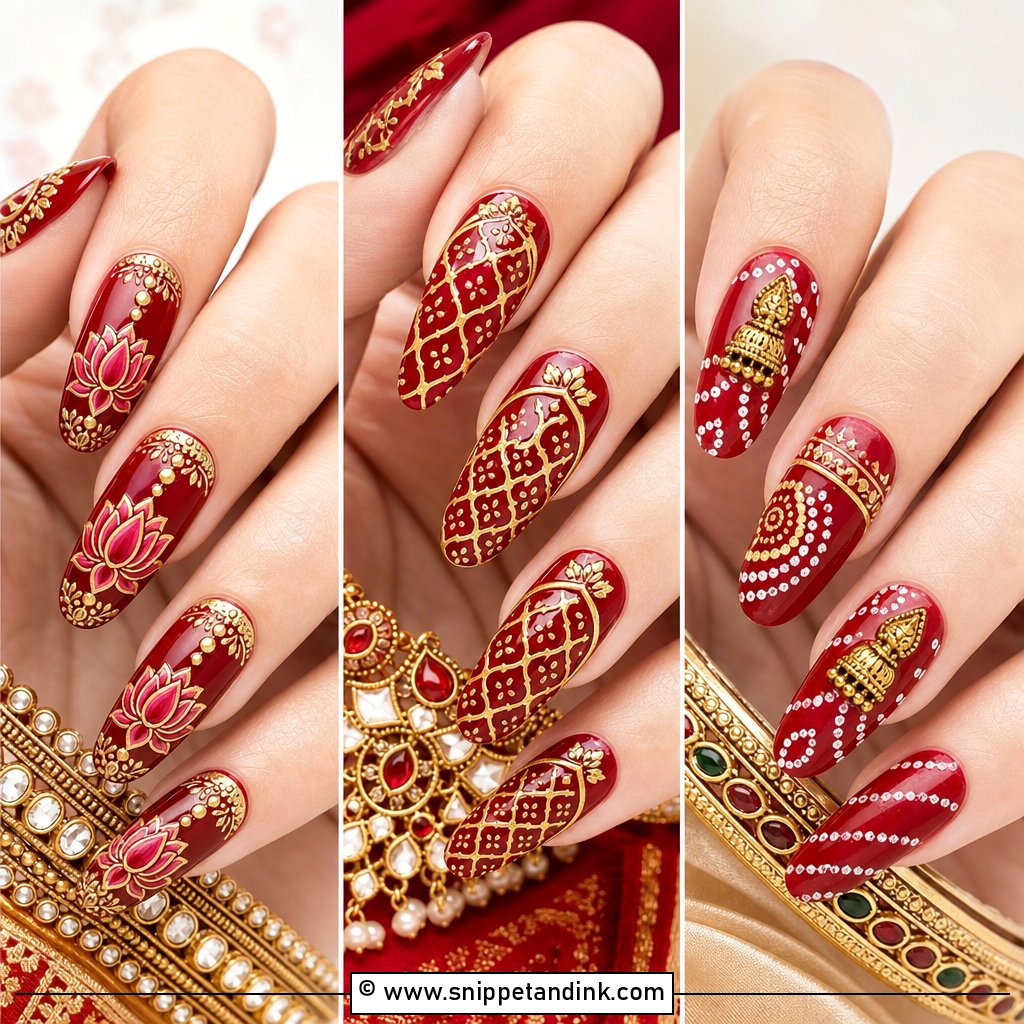
For a red lehenga, maroon saree or heavy gold jewellery, Indian bridal red gold nails are still the request I get most. I use a deep glossy red as the base, then keep gold foil, thin metallic borders or tiny motifs to the tips or the cuticle area rather than covering every nail. Warm red sits naturally beside a henna stain. One thing I check is the red’s undertone against the lehenga in daylight; a blue-red next to an orange-red fabric looks off in photos. Almond, oval or soft square shapes keep it traditional.
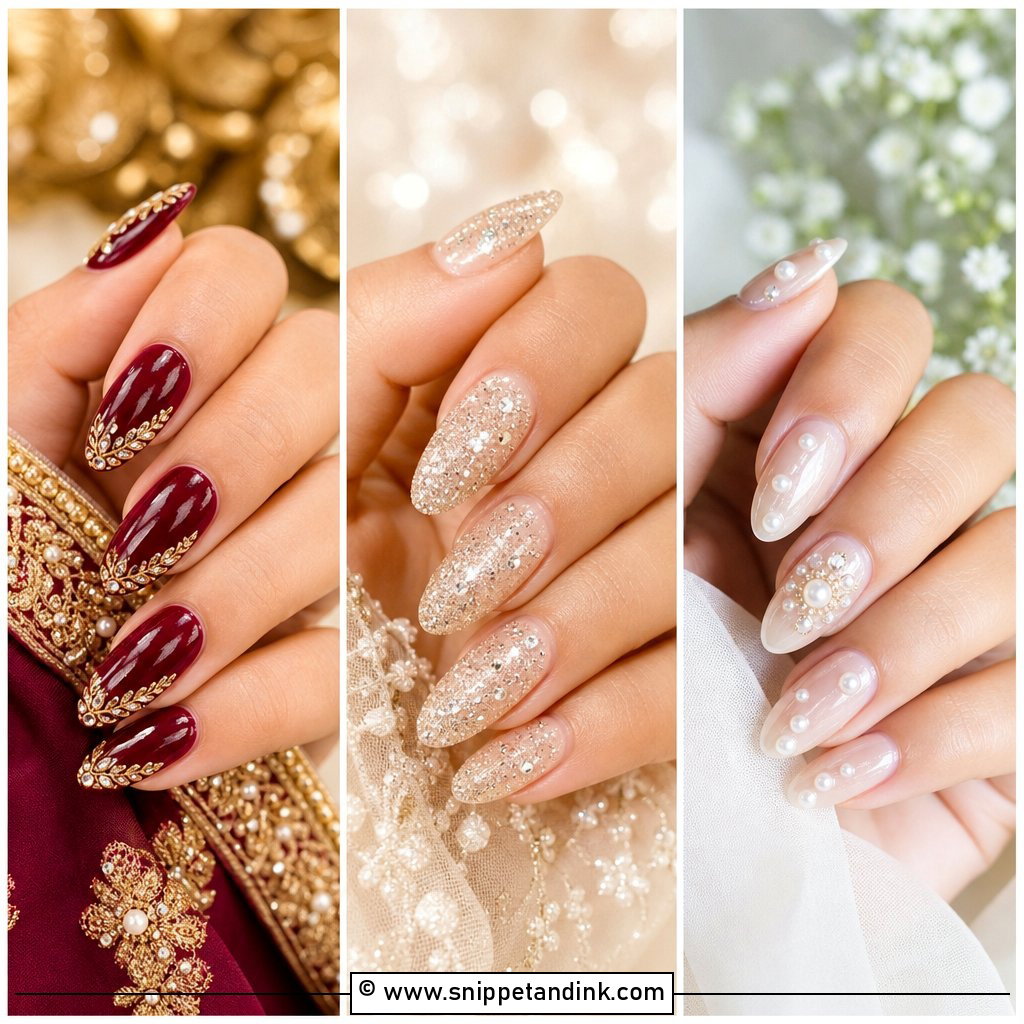
2. Indian Bridal Maroon Nails
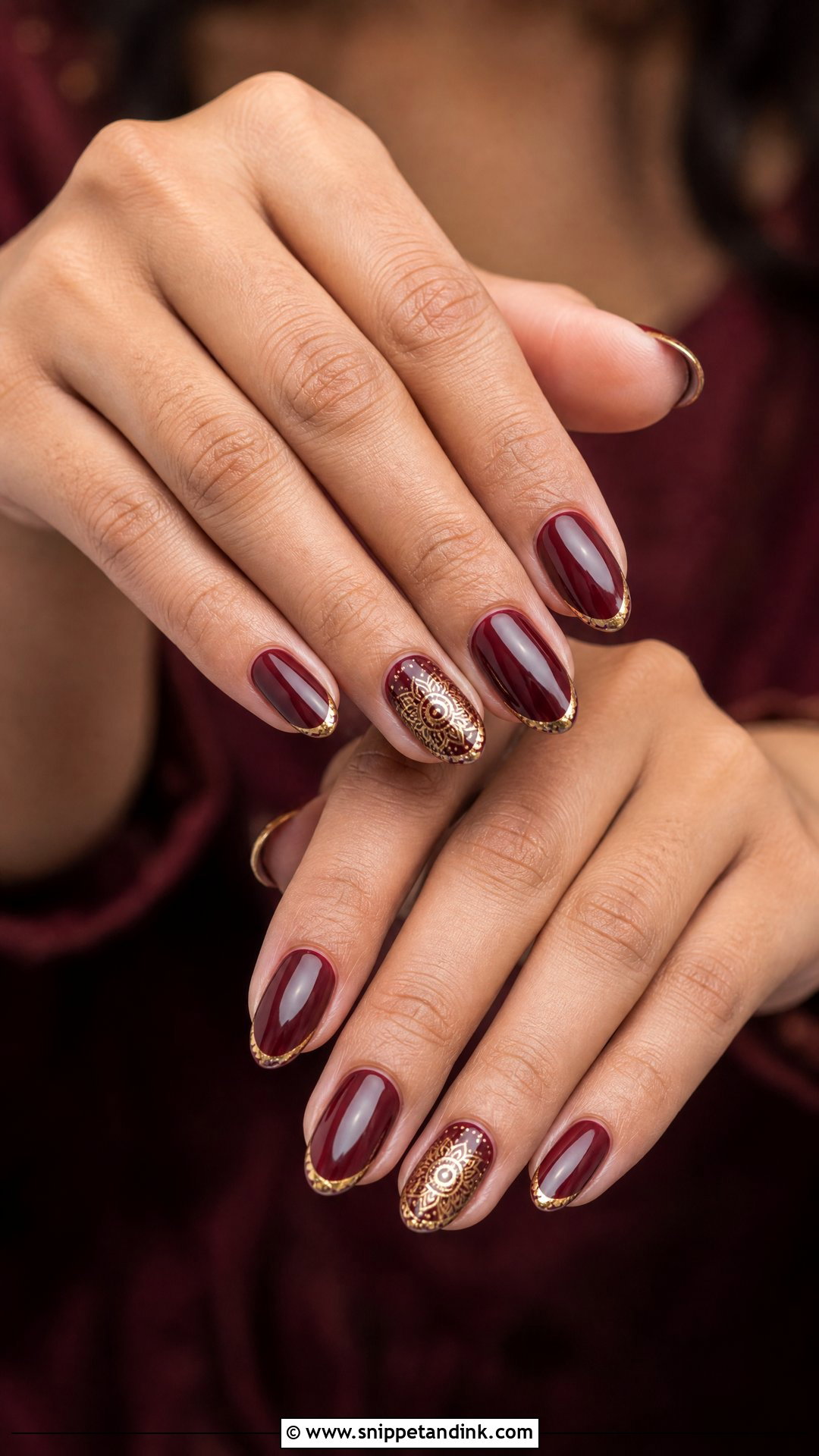
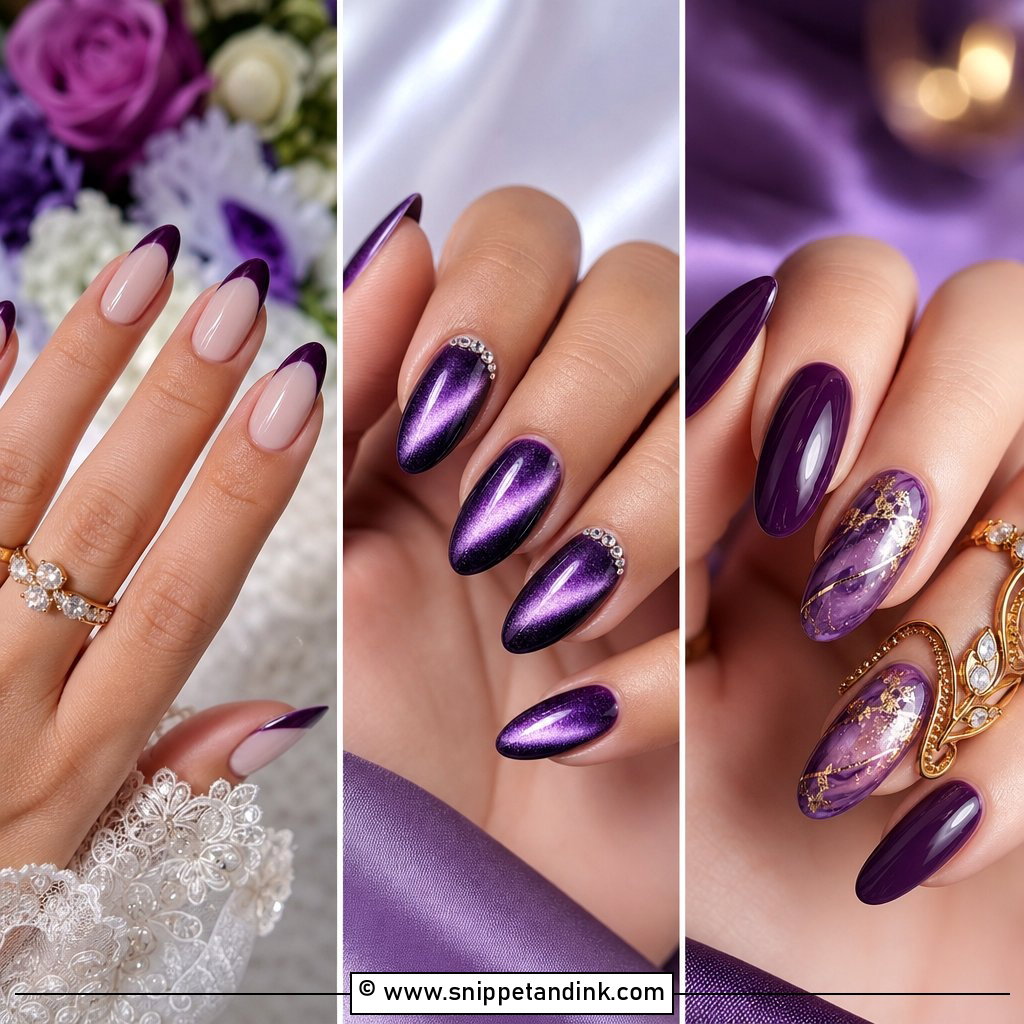
Maroon is the deeper, quieter cousin of red, and it suits velvet lehengas, antique gold, kundan and dark dupattas. I like a full maroon set with gold micro-French tips, or mostly glossy maroon with one or two fine mandala accents. It flatters medium to deep skin especially, and berry or wine shades adjust it for fairer hands. Dark gel shows every gap at the cuticle as it grows, so I’d book this one closer to the wedding than a nude set. A high-shine finish keeps the colour smooth in close-ups.
3. Indian Bridal Mehndi Nails
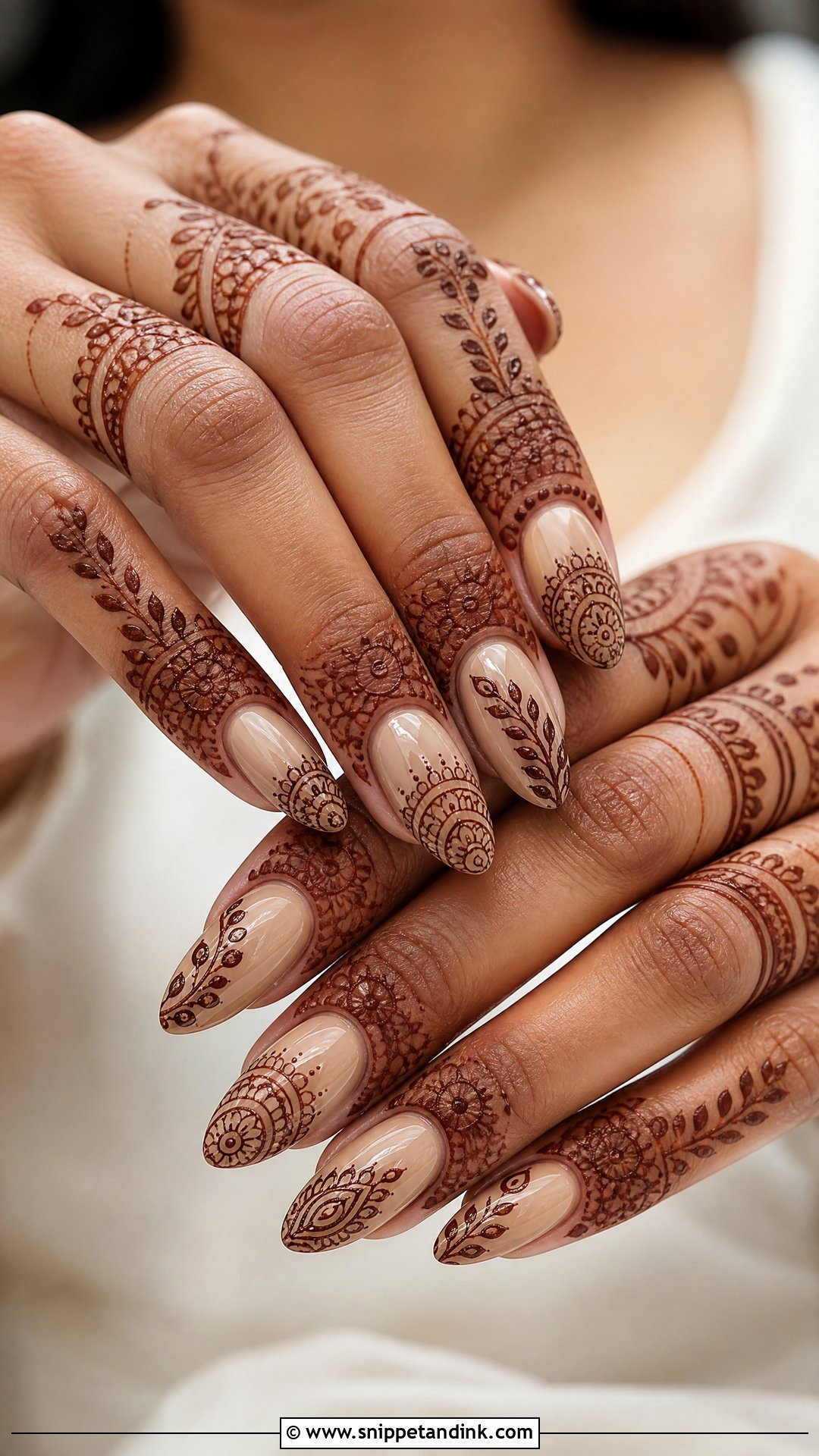
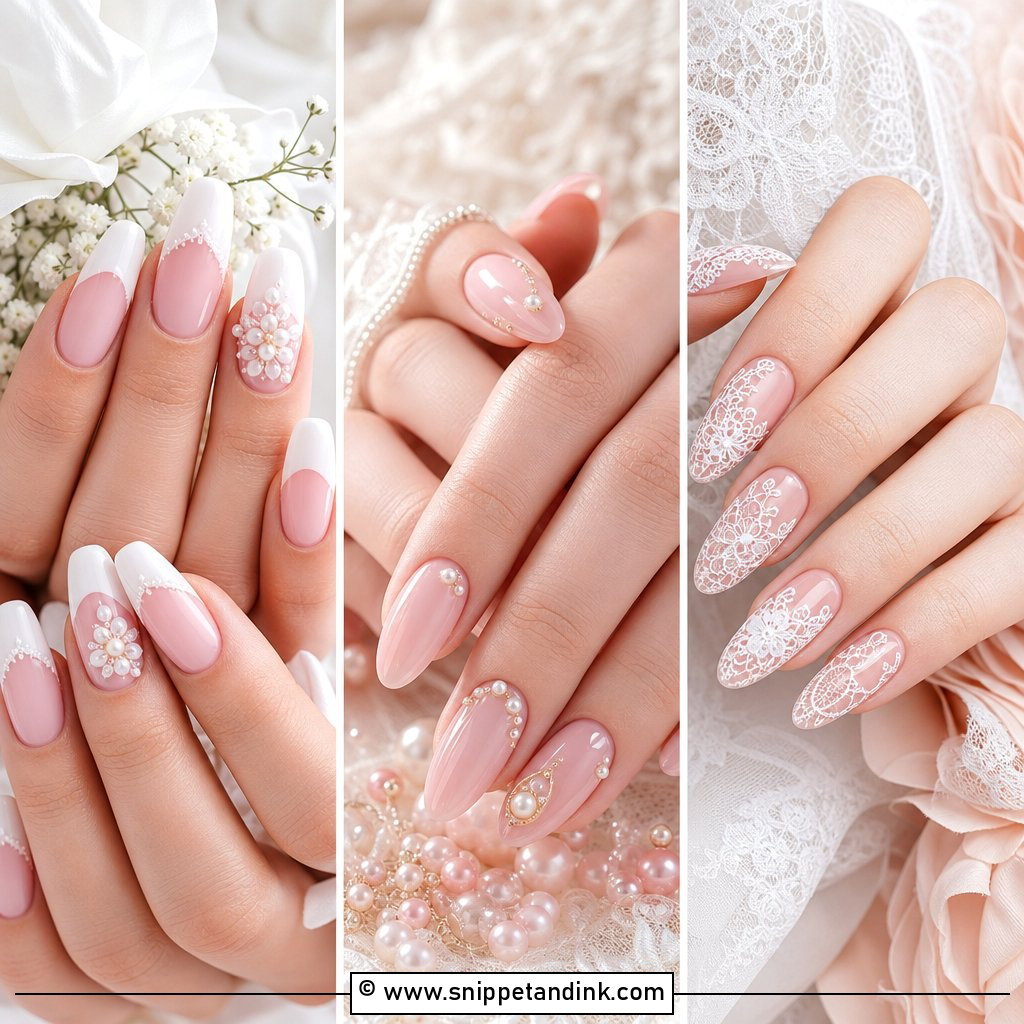
Rather than copying full hand mehndi onto the nail, I paint small paisleys, dots, leafy vines, jaali lines and mandala details over a nude, beige or sheer pink base. The art ties the manicure to the hands without fighting the henna. Brown, gold, white or deep red line work can all suit, depending on the outfit. The skill is in scale: a design that looks fine on a phone screen is often too busy at nail size, so I simplify by about half. Keep the base sheer and let the fine mehndi-inspired artwork carry it.
4. Indian Bridal Gold Chrome Nails
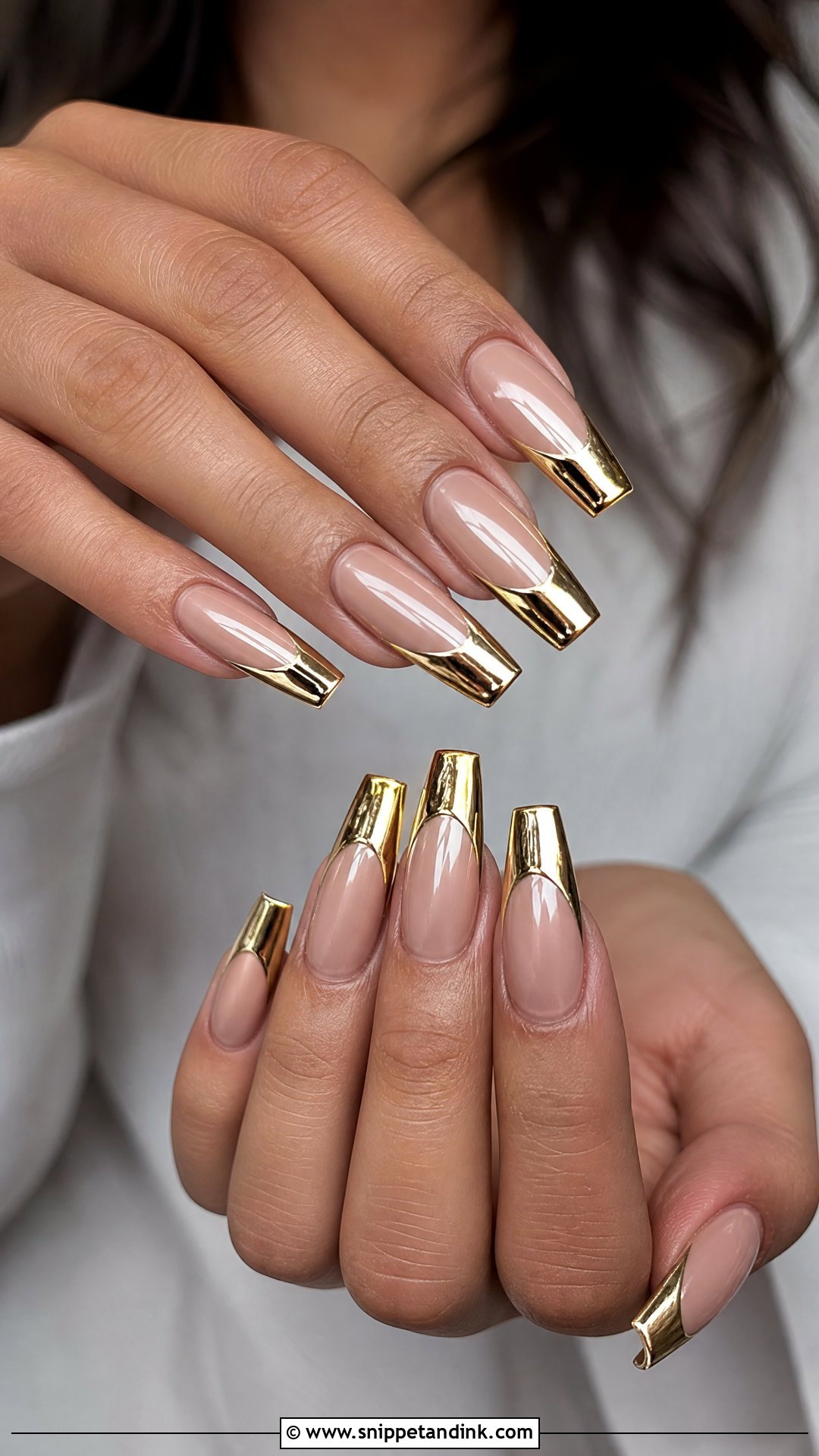
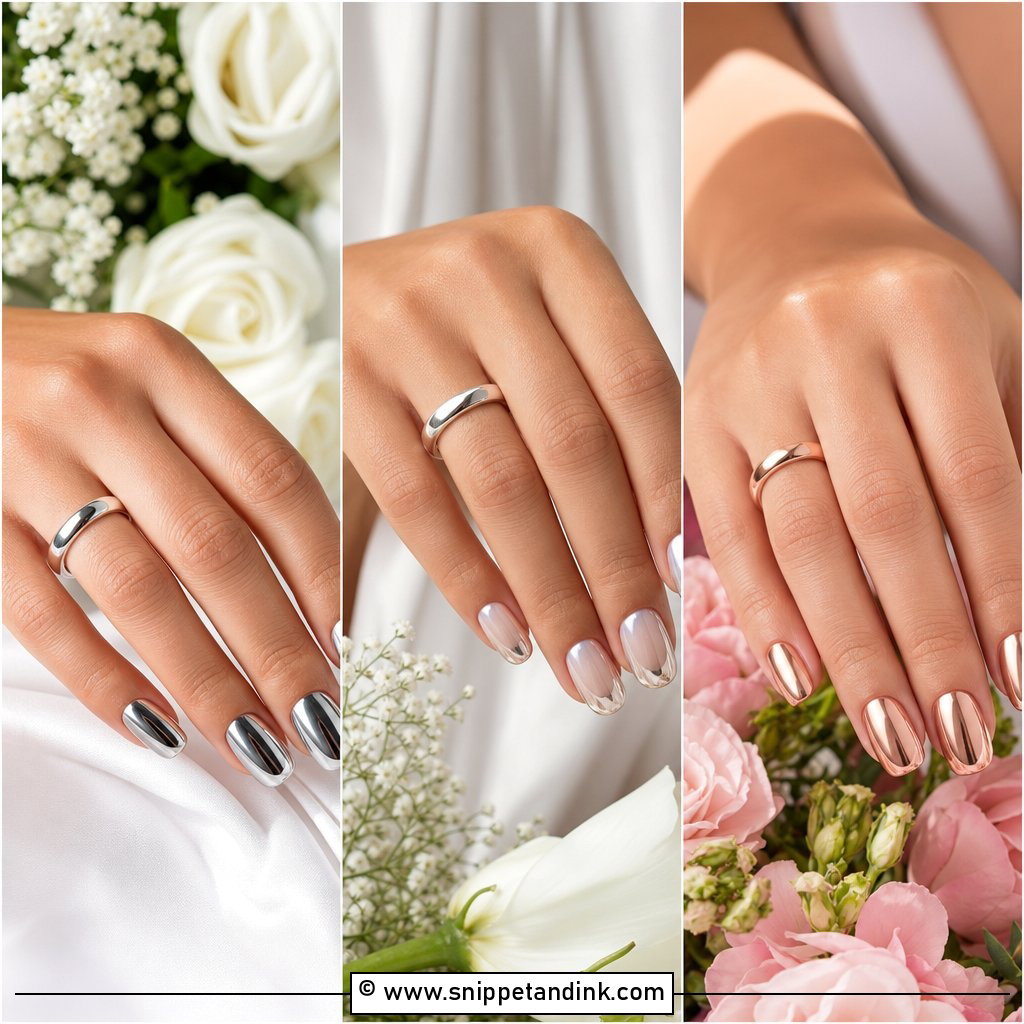
Chrome is a powder rubbed over a cured no-wipe top coat, and it’s what gives that mirror shine under stage lights and ring-ceremony flash. I lean toward champagne-gold over bright yellow-gold, which can look brassy next to ivory, beige, peach or pastel outfits. You can wear it as a full set or soften it with nude nails and gold chrome French tips. It goes well with zari, temple and plain gold jewellery. Chrome needs a smooth surface, so any ridges in the natural nail will show; I build a thin base layer first. Almond or coffin shapes suit it.
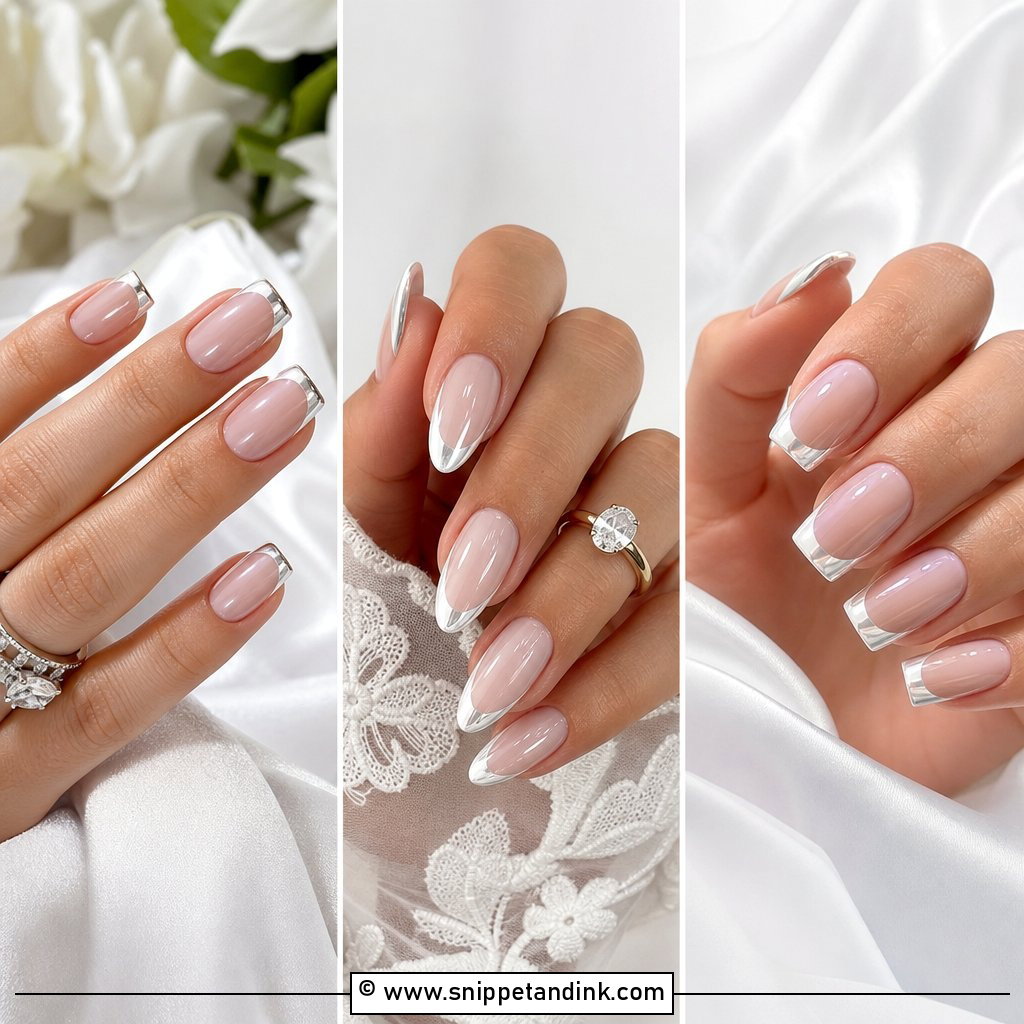
5. Indian Bridal French Tip Nails
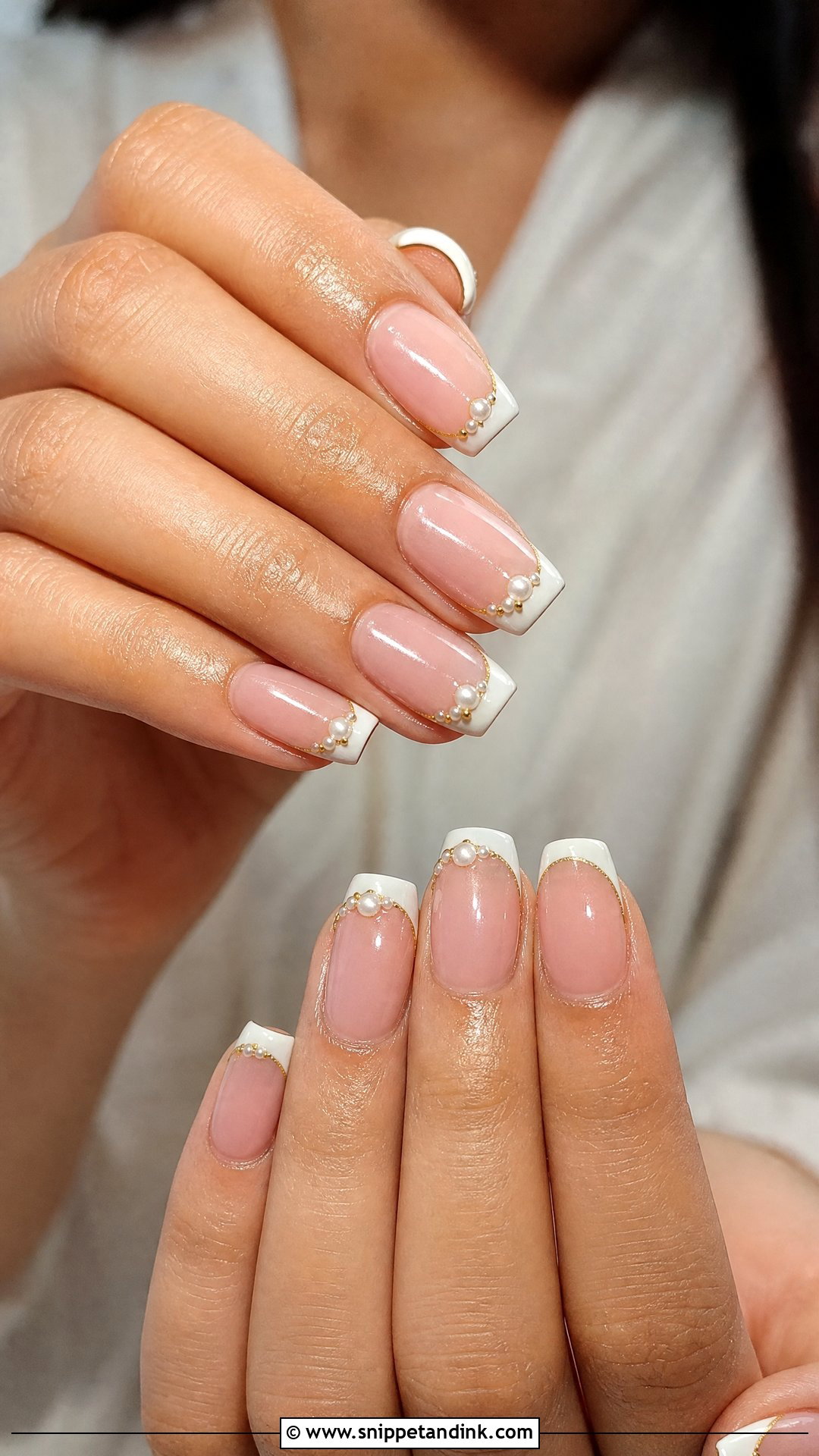
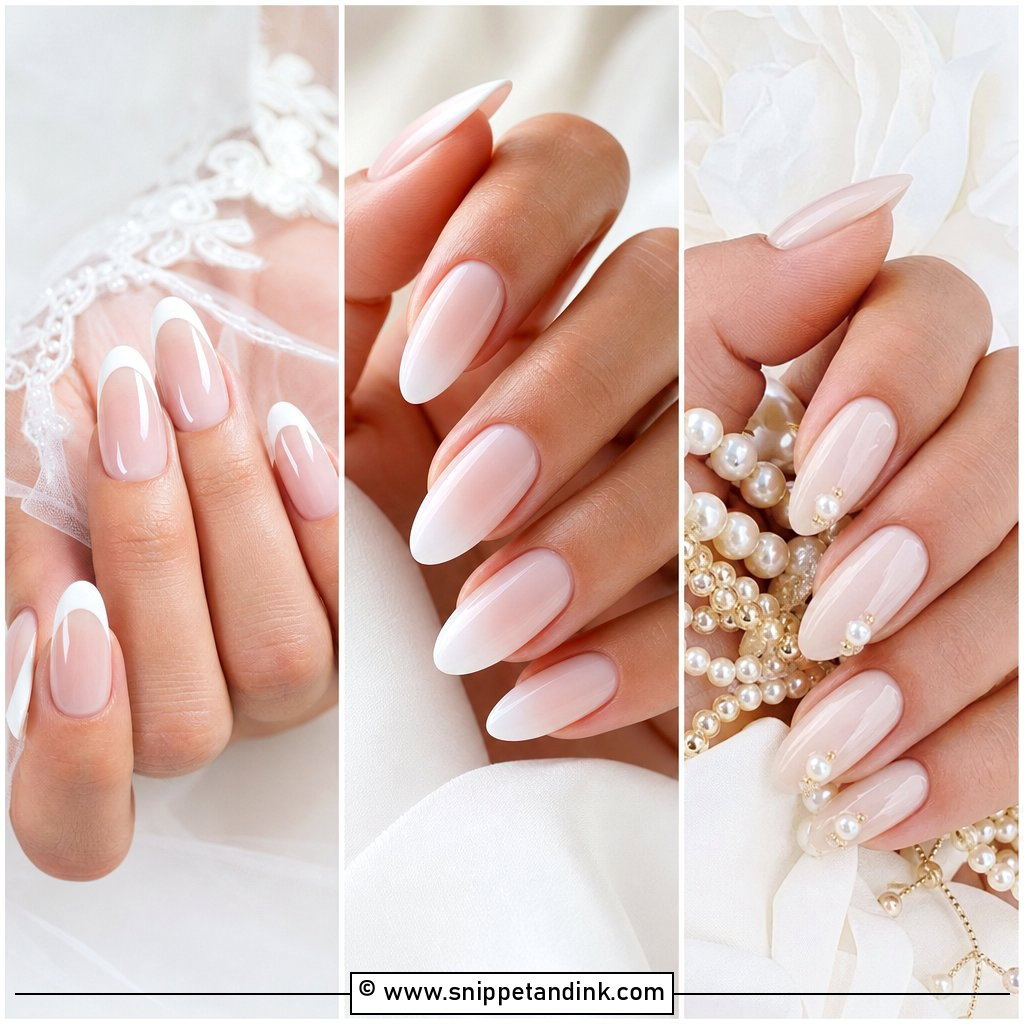
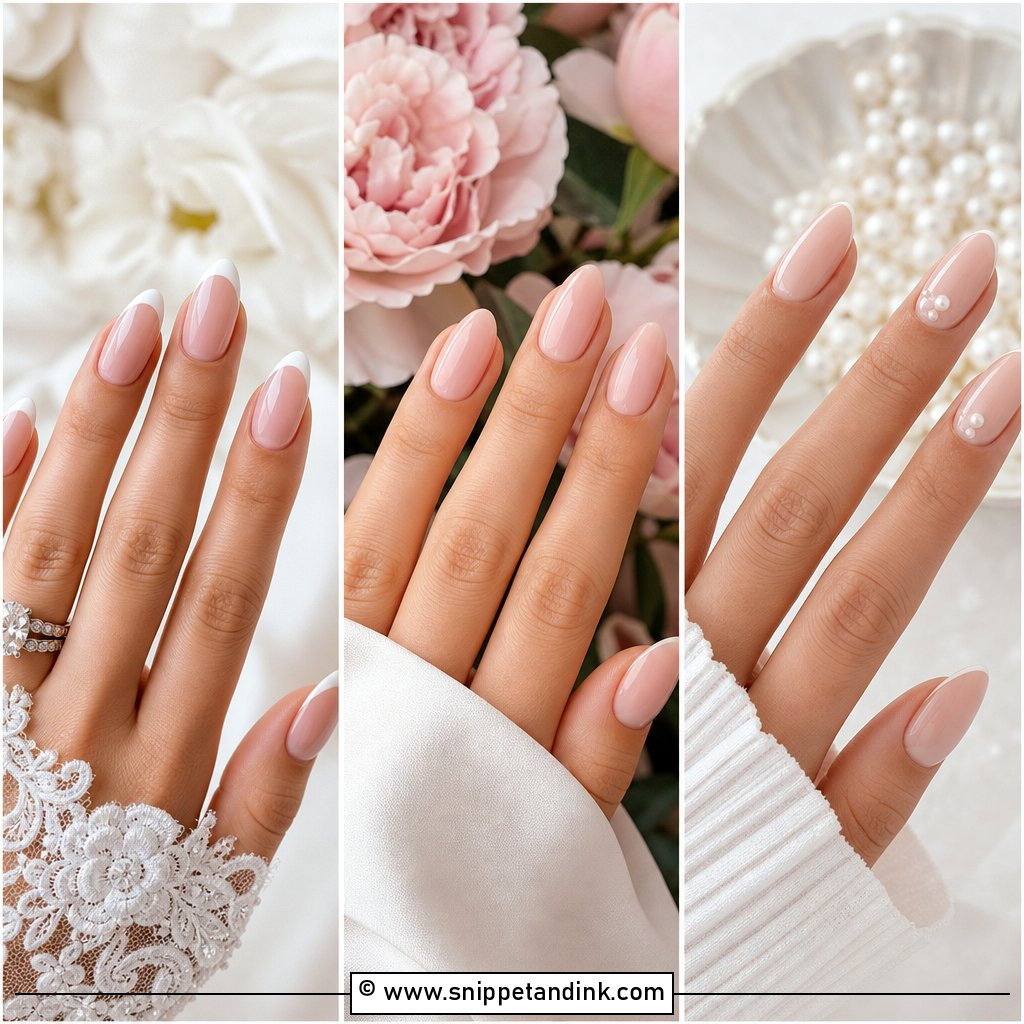
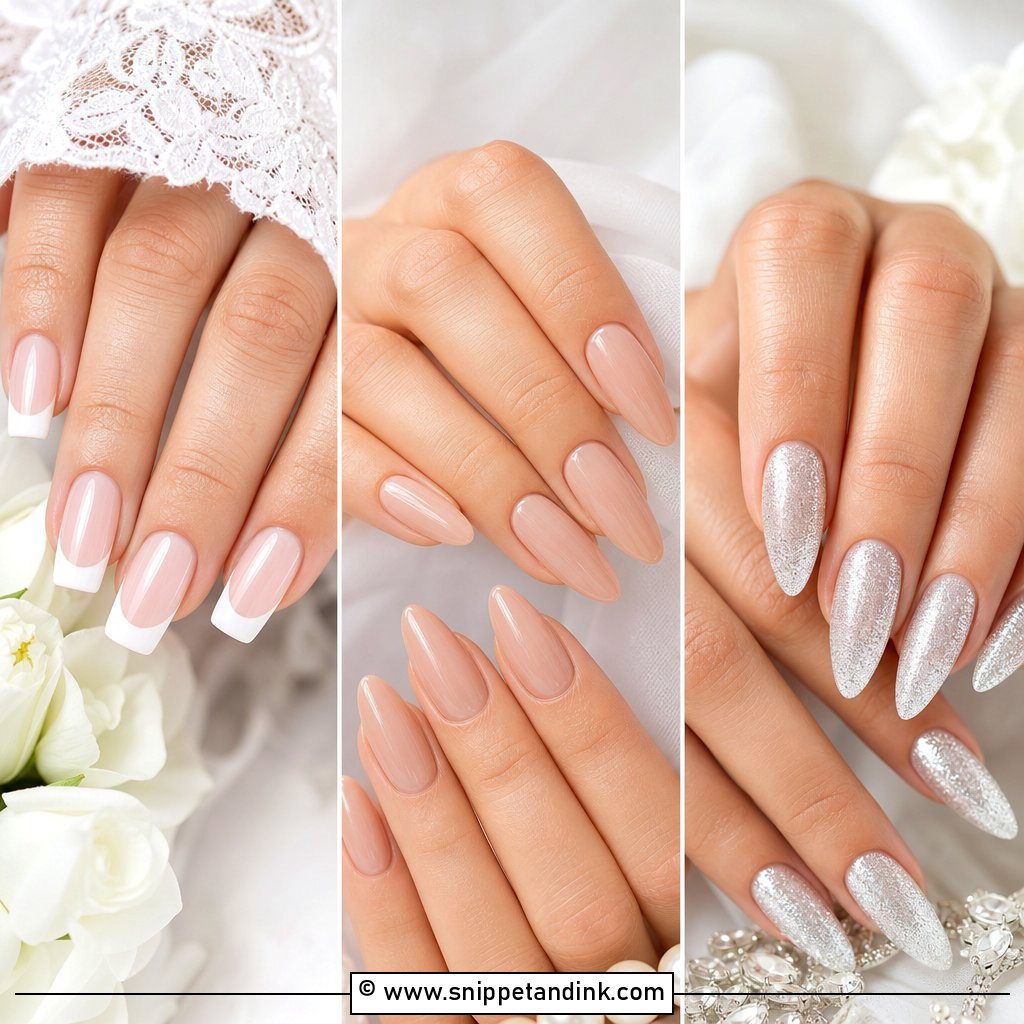
A French tip is the most flexible set for a bride with five or six outfit changes. I use a sheer pink or nude base with soft white tips and add gold outlines, tiny pearls or one lace-style accent nail for the wedding touch. It works with red, ivory, pastel, green, pink and gold outfits alike. As the nail grows, a sheer base hides regrowth far better than a solid colour, which matters when functions run over a week. Medium almond or squoval nails suit it, and the clean tips keep the hands looking fresh next to an engagement ring.
6. Indian Bridal Pearl Nails
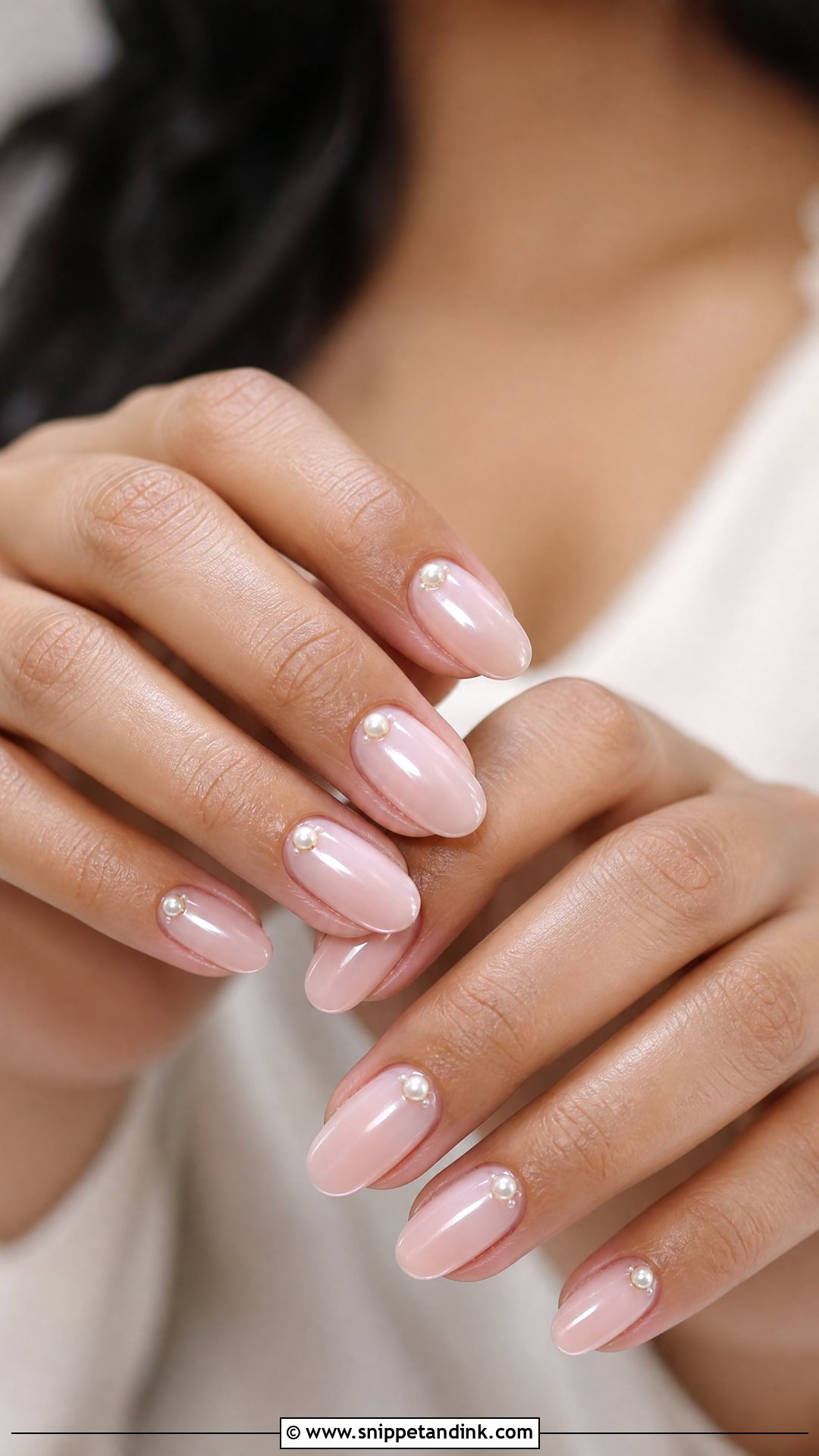
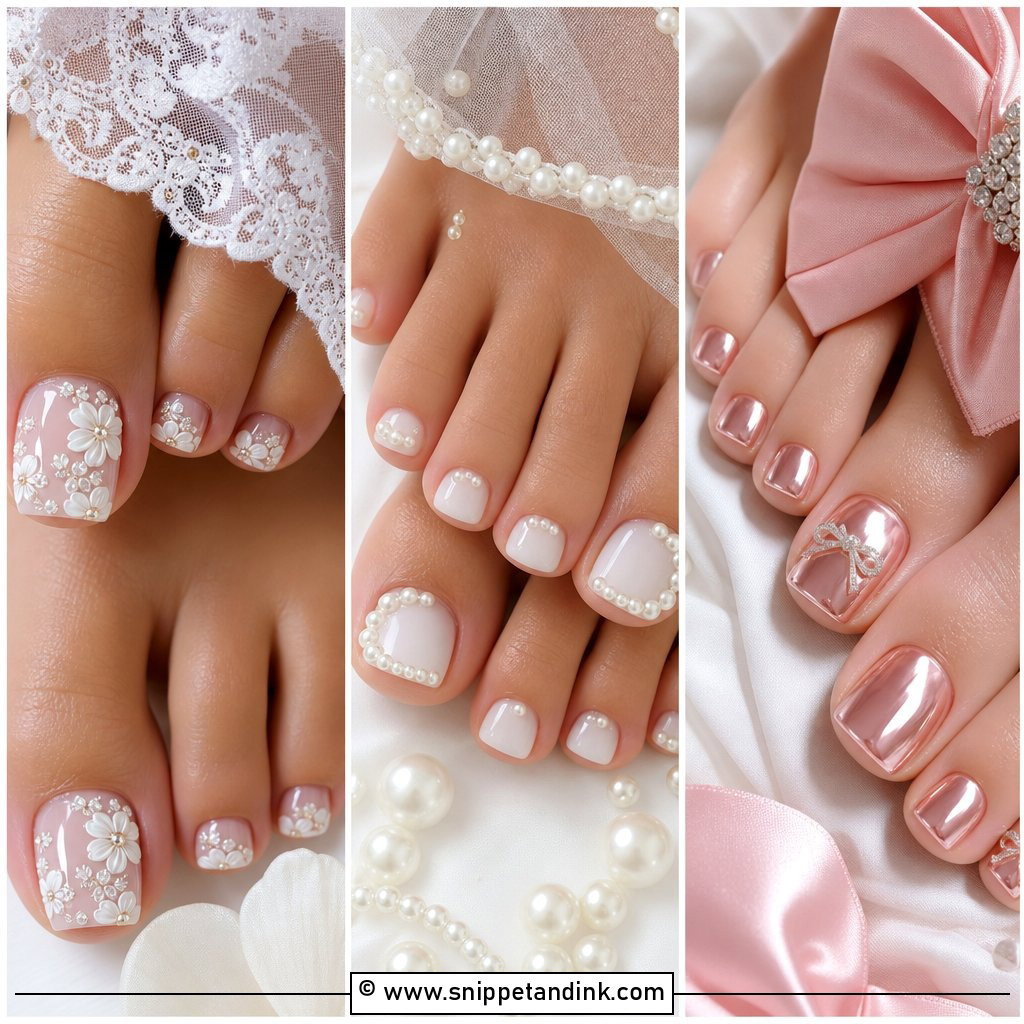
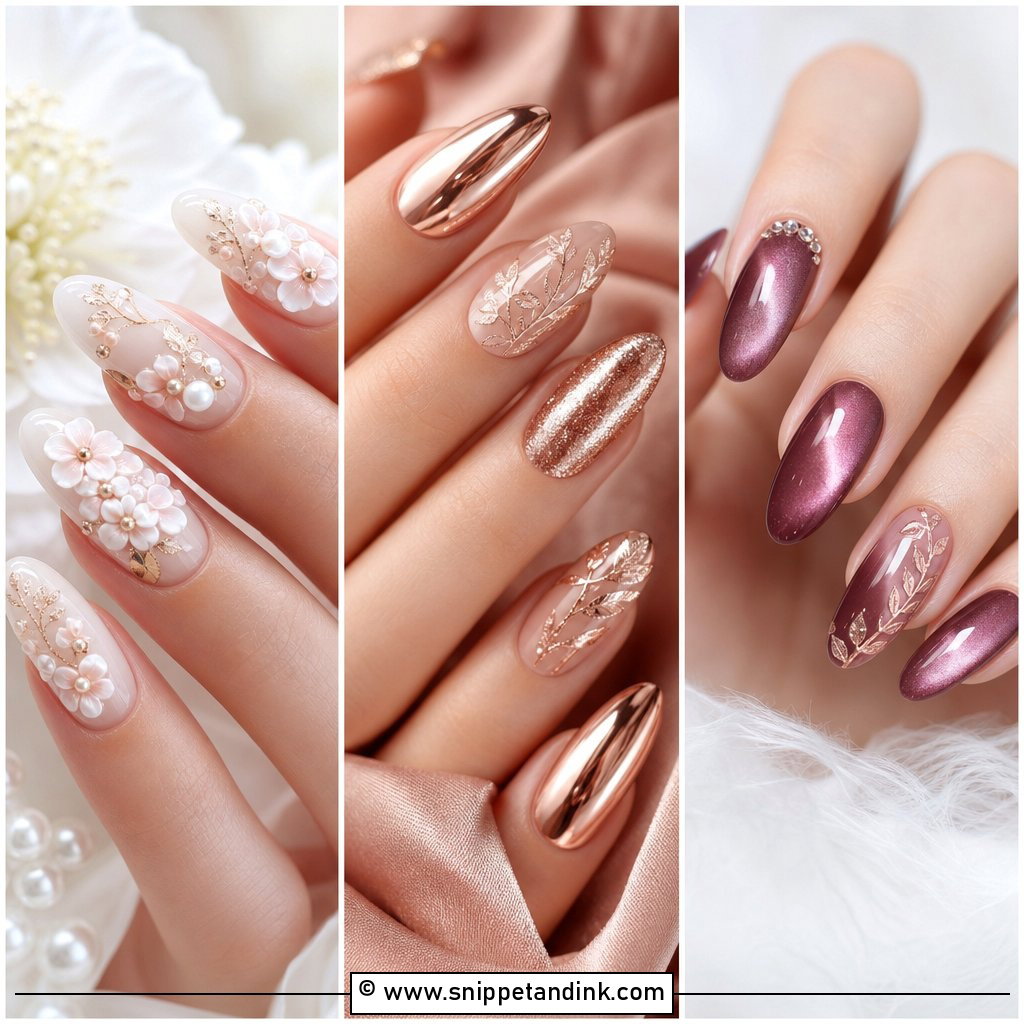
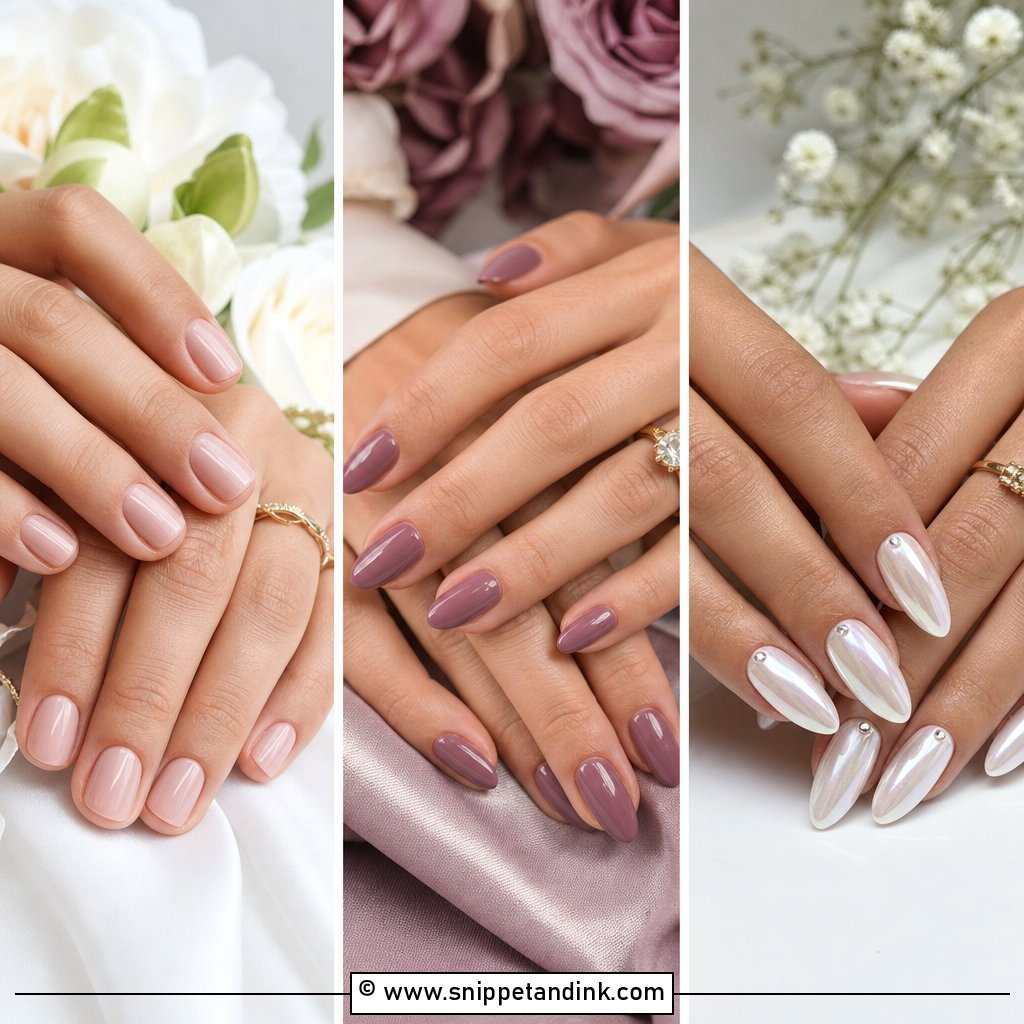
Pearls suit ivory, champagne, blush and pastel outfits. I set tiny flat-backed pearls in gel over a milky pink or nude base, near the cuticle, along a French tip or scattered on one or two nails. They pair with pearl jewellery, kundan, net dupattas and soft reception gowns. Restraint matters here. Raised pearls catch on net and chiffon, and a bride pulling her dupatta on and off a dozen times will feel every one of them. I keep the layout balanced and the pearls small.
7. Indian Bridal Kundan Nails
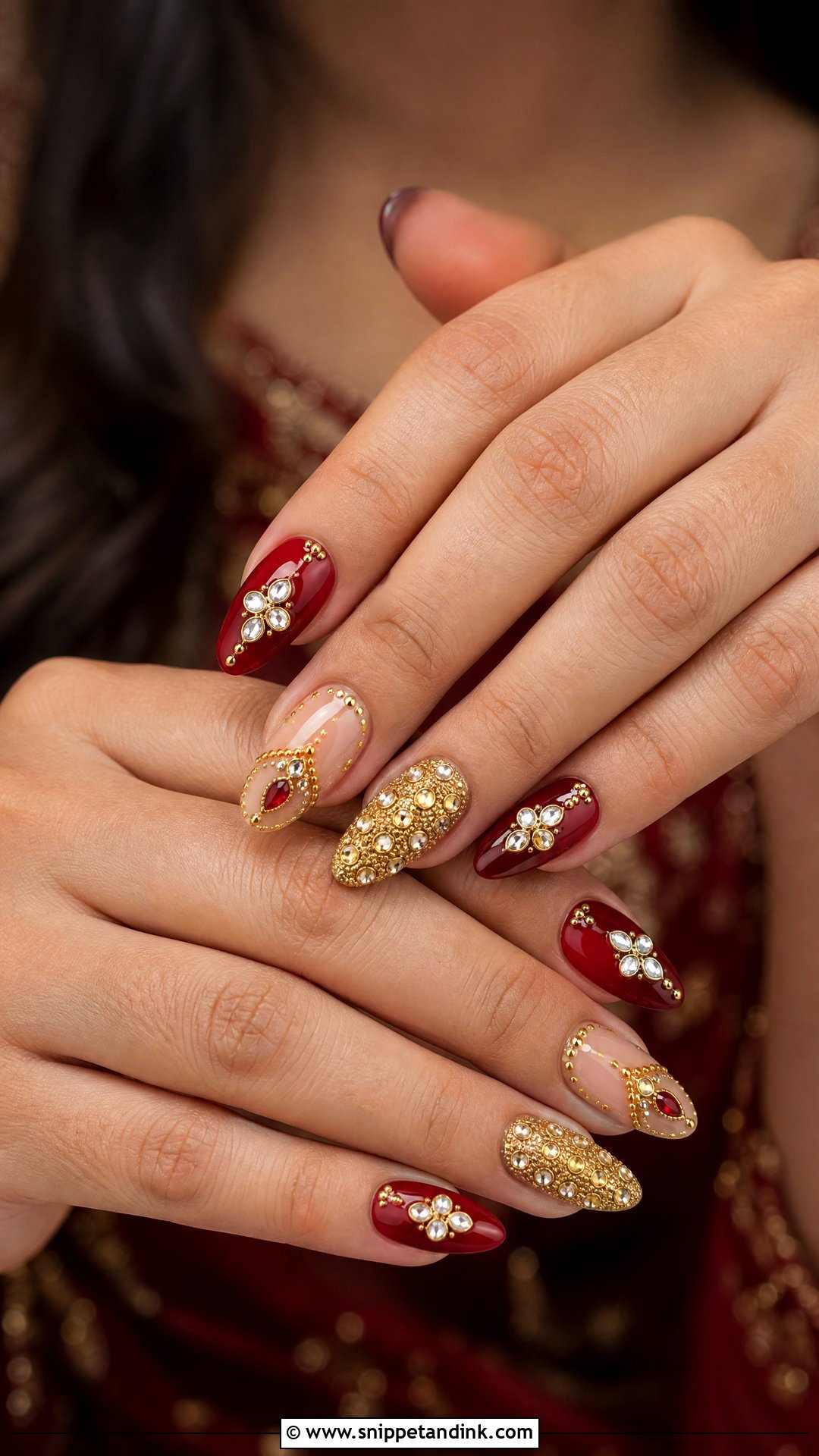
This is the set that echoes your jewellery. On a red, maroon, nude, emerald or champagne base, I place tiny rhinestones, gold studs and stone-like accents in kundan-style arrangements. Neat, symmetrical placement makes it look expensive; random scatter looks cheap. I usually keep kundan work to the ring or middle finger and leave the rest glossy. Every stone gets set in builder gel and capped, because heavy bangles going on and off will knock loose anything just glued on.
8. Indian Bridal Nude Nails
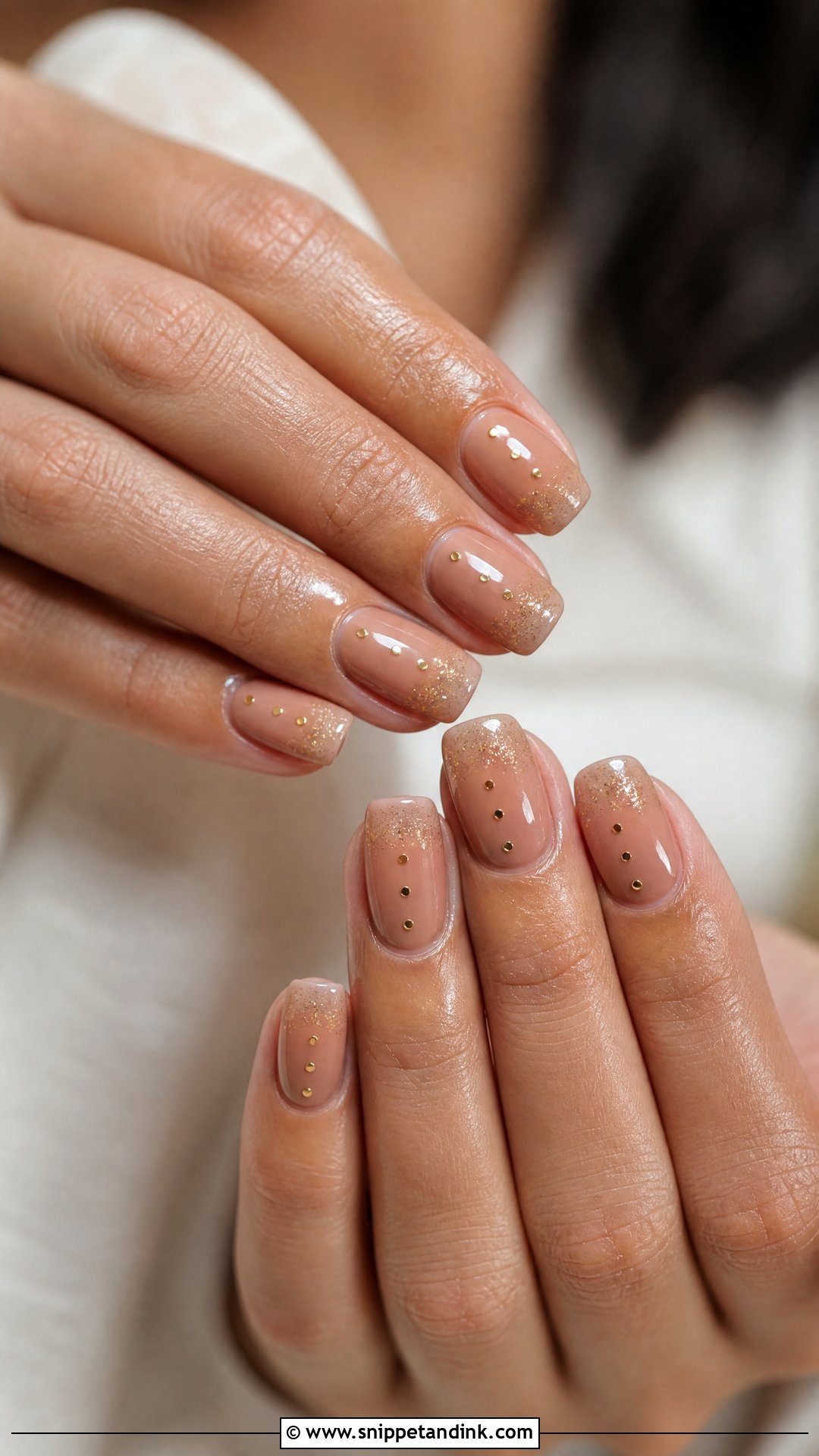
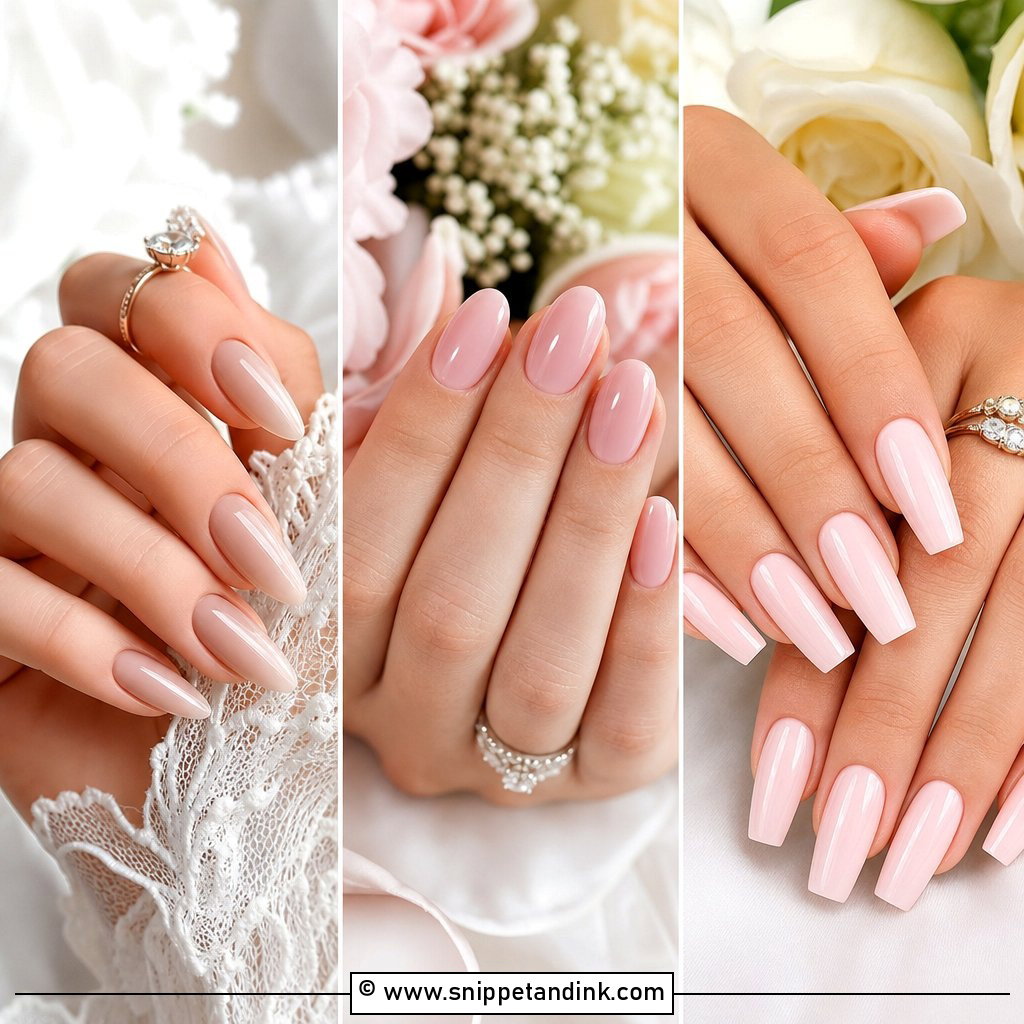
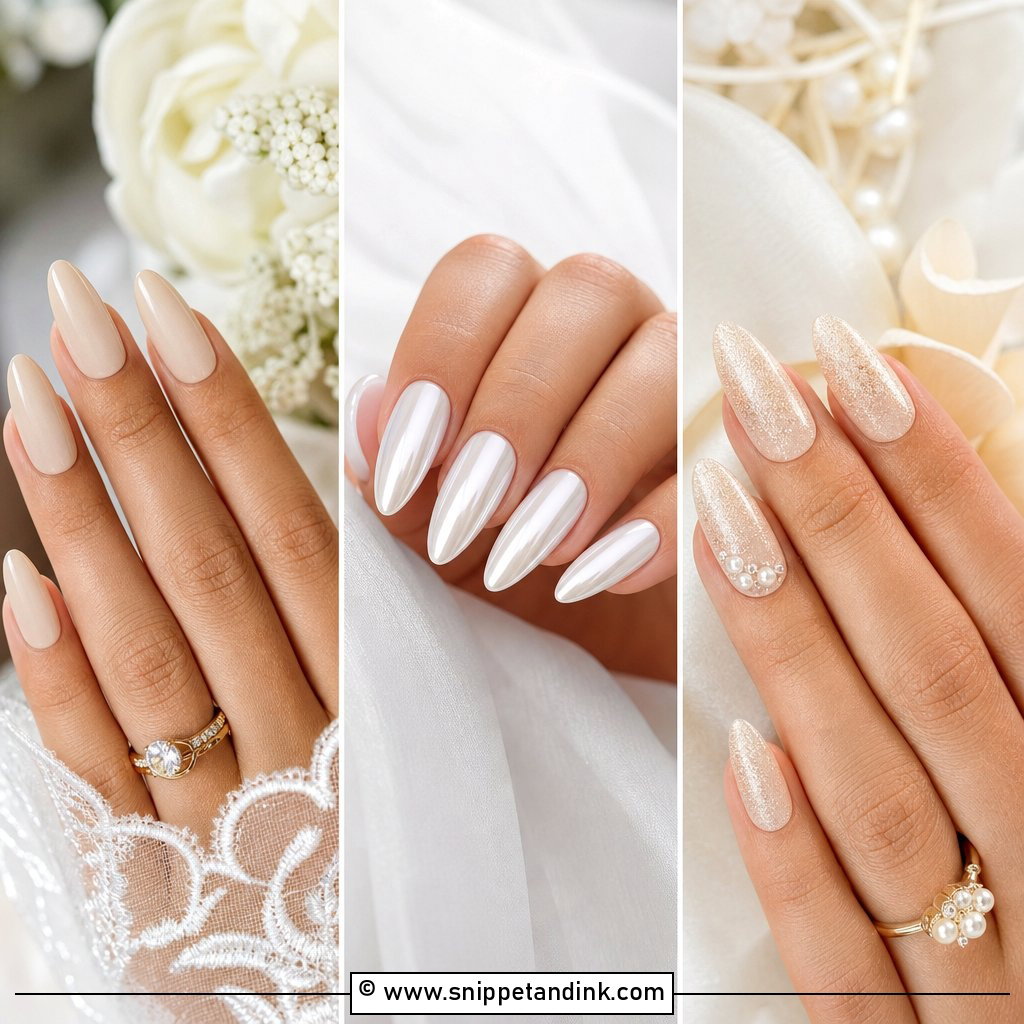
Nude isn’t plain when the shade is right. Beige, caramel, pink and mauve nudes all read differently across Indian skin tones, and the wrong one turns chalky and grey on deeper hands. I test two or three shades against the skin before choosing, and I’d go slightly warmer than you think. A glossy finish, soft shimmer, micro-French tips or tiny gold dots make it bridal. It suits engagements, court weddings, reception gowns and any bride who wants the mehndi and jewellery to take centre stage.
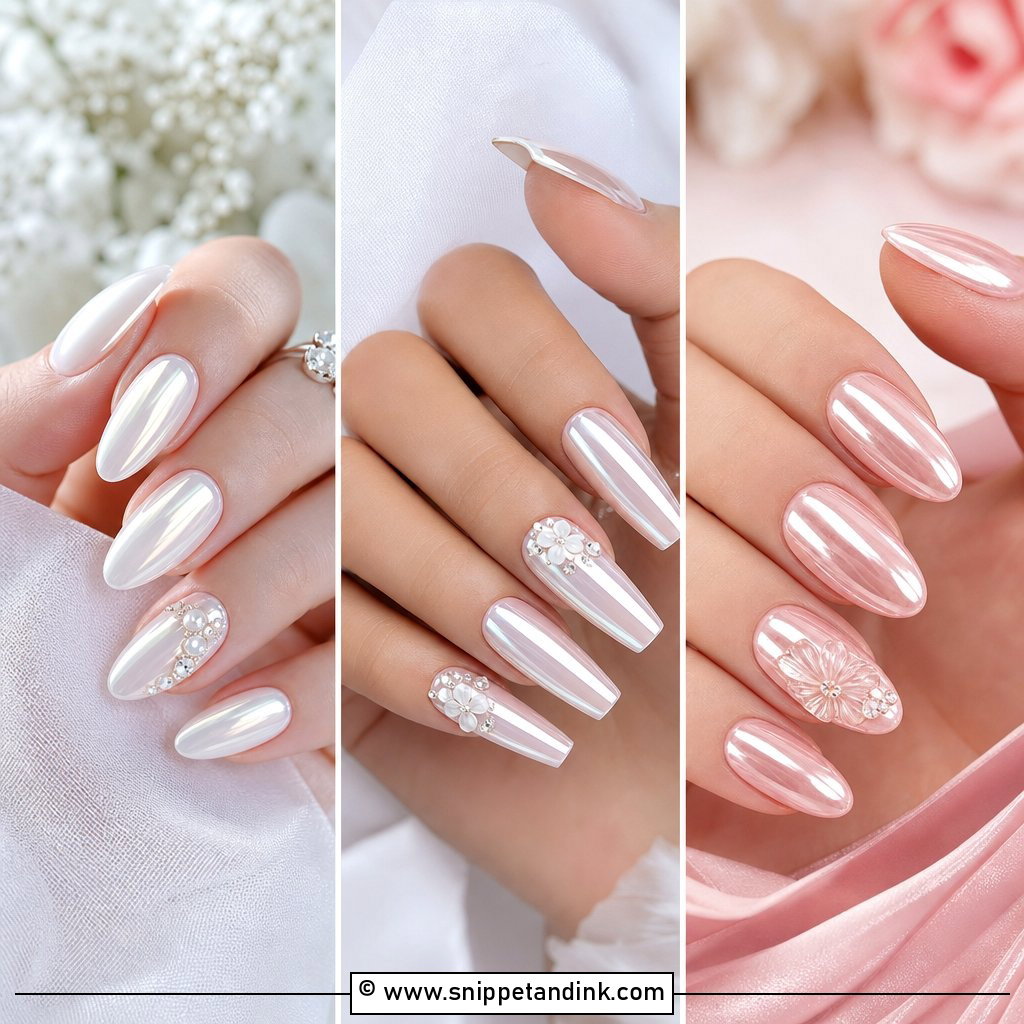
9. Indian Bridal White Chrome Nails
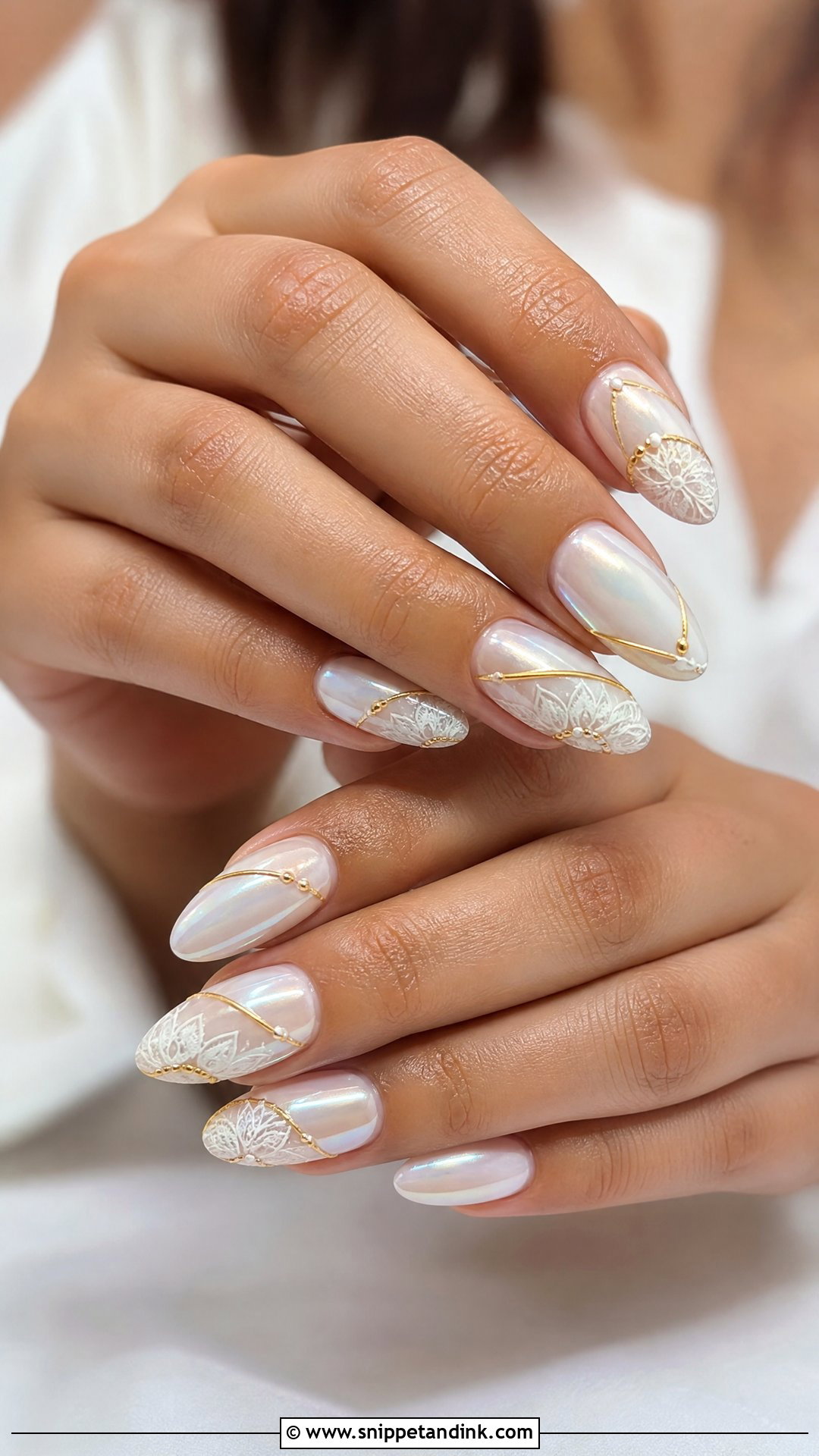
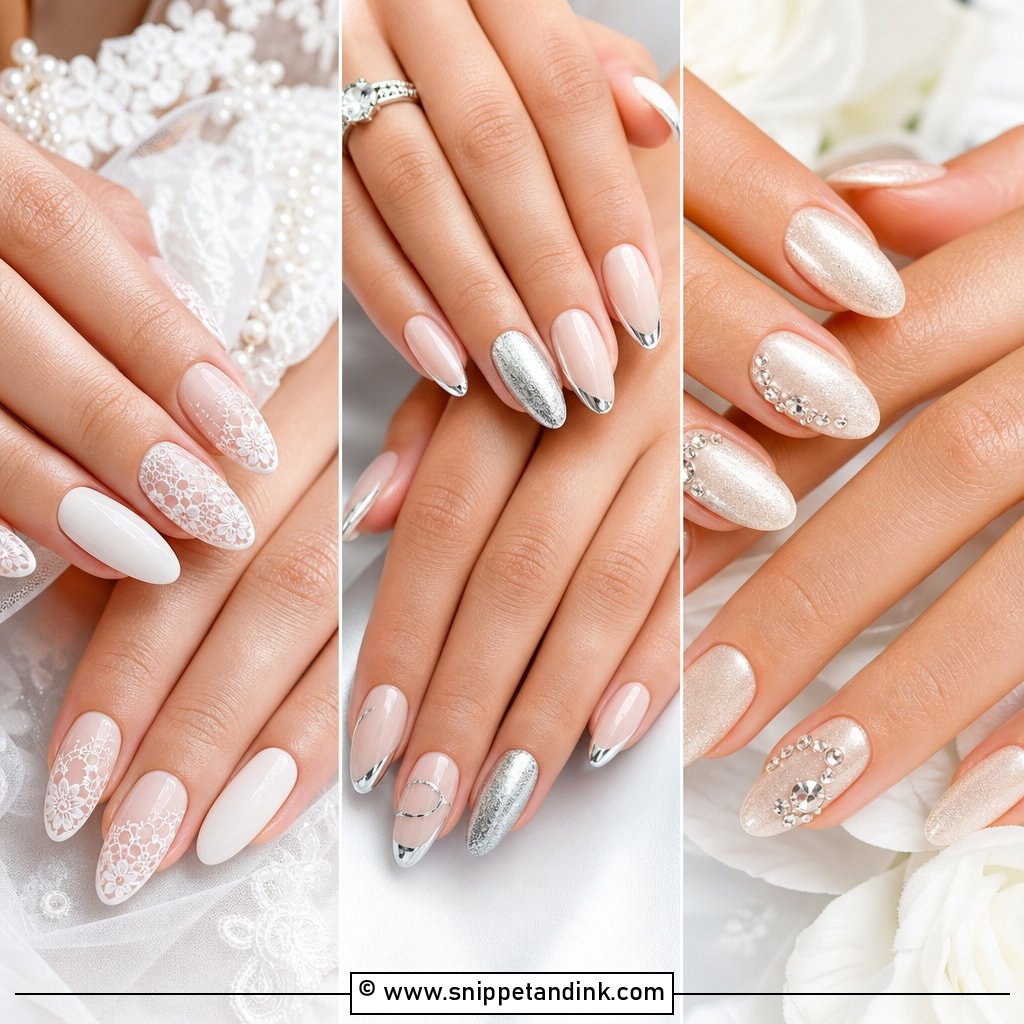
A milky white base dusted with pearl chrome gives a soft glow rather than flat correction-fluid white, and it looks particularly pretty under evening lights and flash. It suits ivory, silver, pastel and modern reception outfits, and brides who don’t want red or maroon. To make it feel more Indian, I add a fine gold outline, tiny pearls or lace-style detail on one accent nail. White gel can yellow slightly with some top coats over time, so I use a non-yellowing top coat. Almond and oval shapes suit it best.
10. Indian Bridal Pink Nails
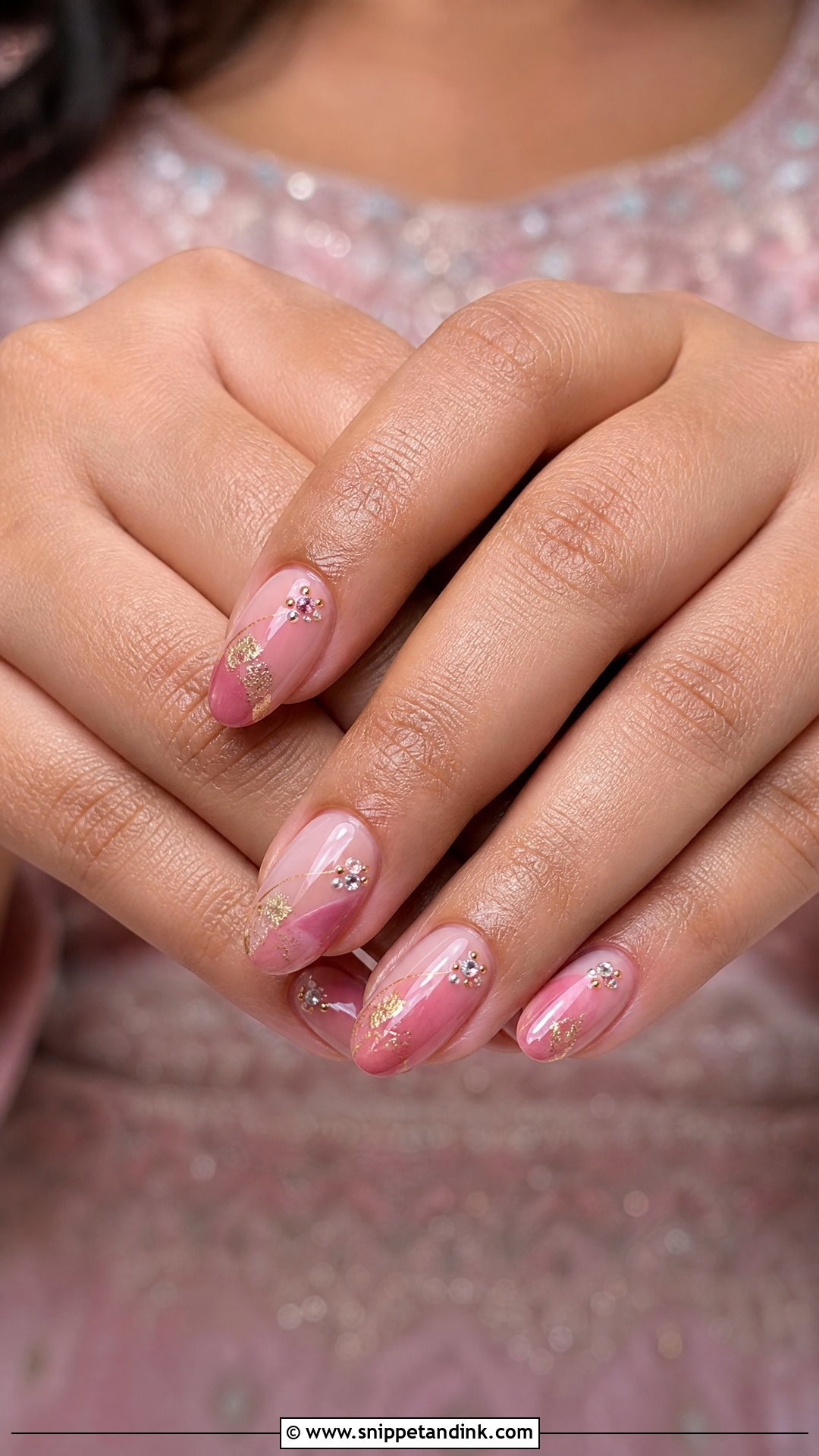
Pink covers a wide range. Soft blush suits engagement and reception looks, while rani or rose pink keeps up with bright lehengas and colourful sangeet outfits. I add gold foil or tiny crystals to a glossy pink base for the bridal finish, or use sheer pink with pearl chrome for a quieter look. Hot pink French tips over nude are a fun middle ground. Bright pinks are where I’m most careful about matching: a cool fuchsia beside a warm coral-pink lehenga clashes, so bring a fabric swatch. Rose gold jewellery pairs well with all of these.
11. Indian Bridal Ombré Nails
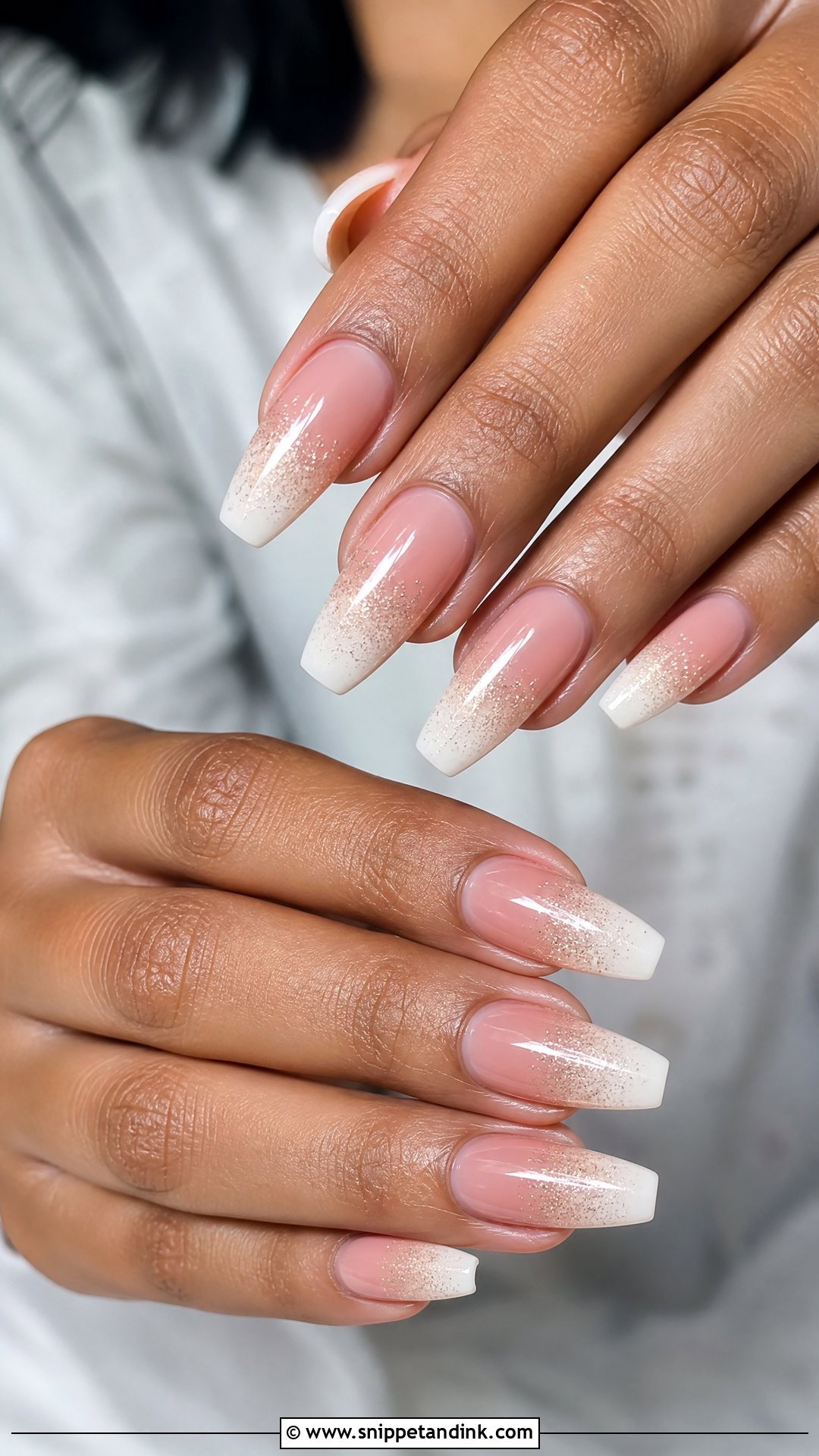
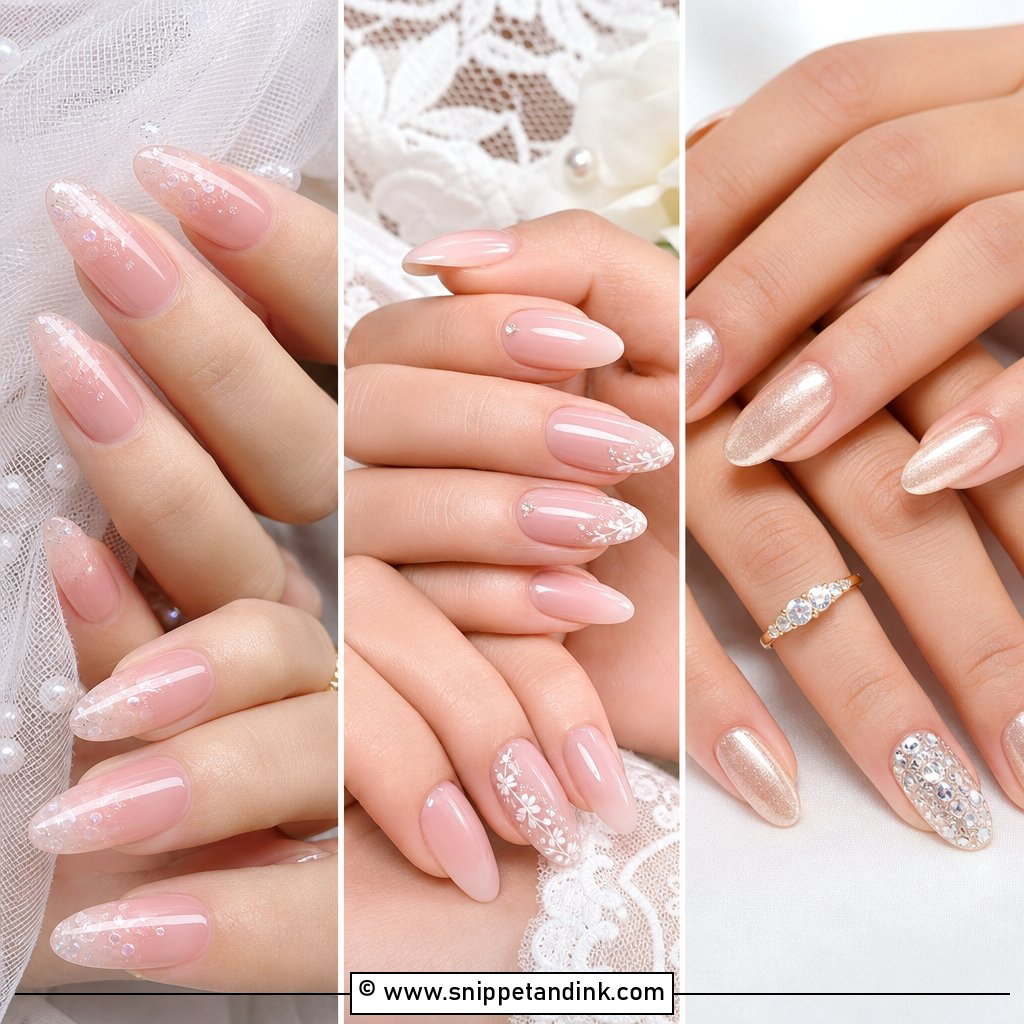
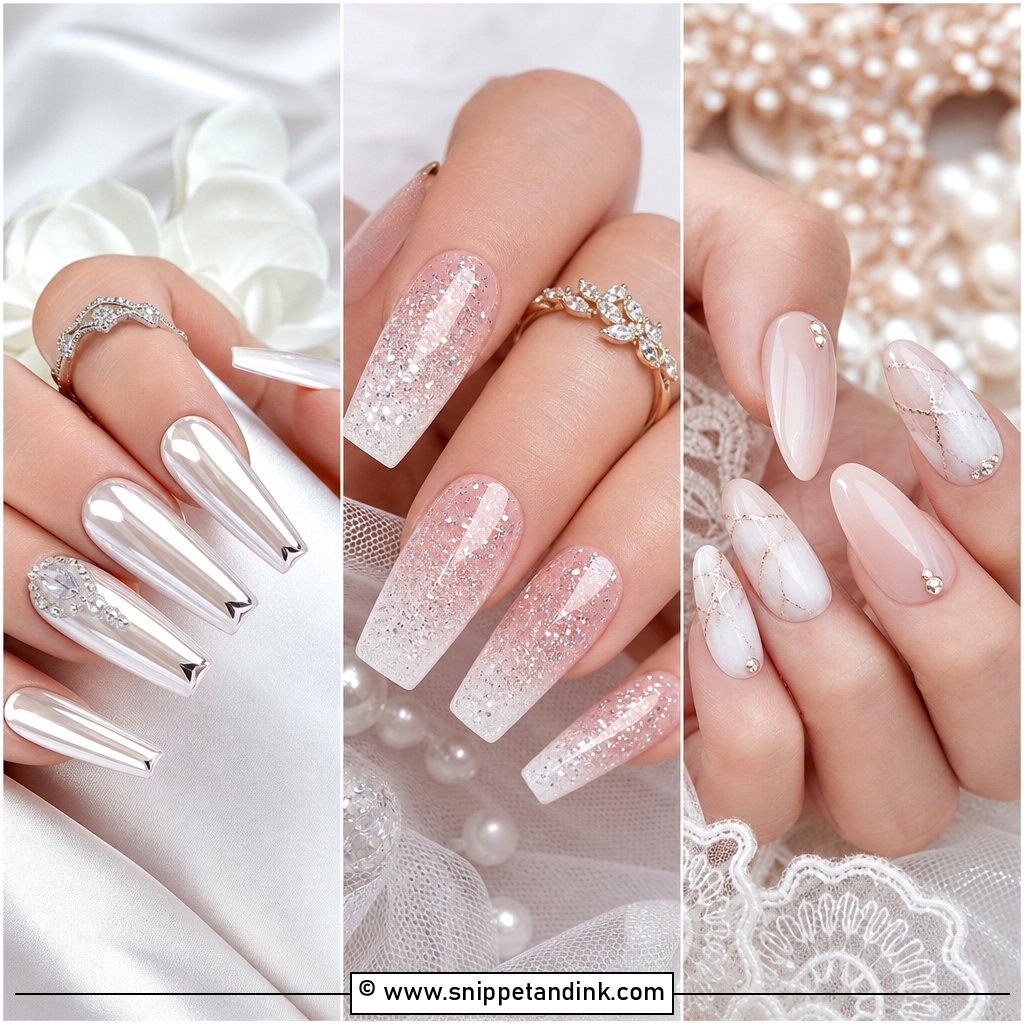
Ombré is a gradient, which I build with a sponge or by blending gel on the nail. Nude-to-white is the classic version; blush-to-gold or peach-to-champagne feels warmer with Indian outfits. I keep any glitter to the tips or the cuticle so it stays graceful. A practical bonus: as the nail grows, the soft fade at the base hides regrowth, so an ombré set still looks neat after several days of functions. Almond, coffin and ballerina shapes give the gradient room to show.
12. Indian Bridal Glitter Nails
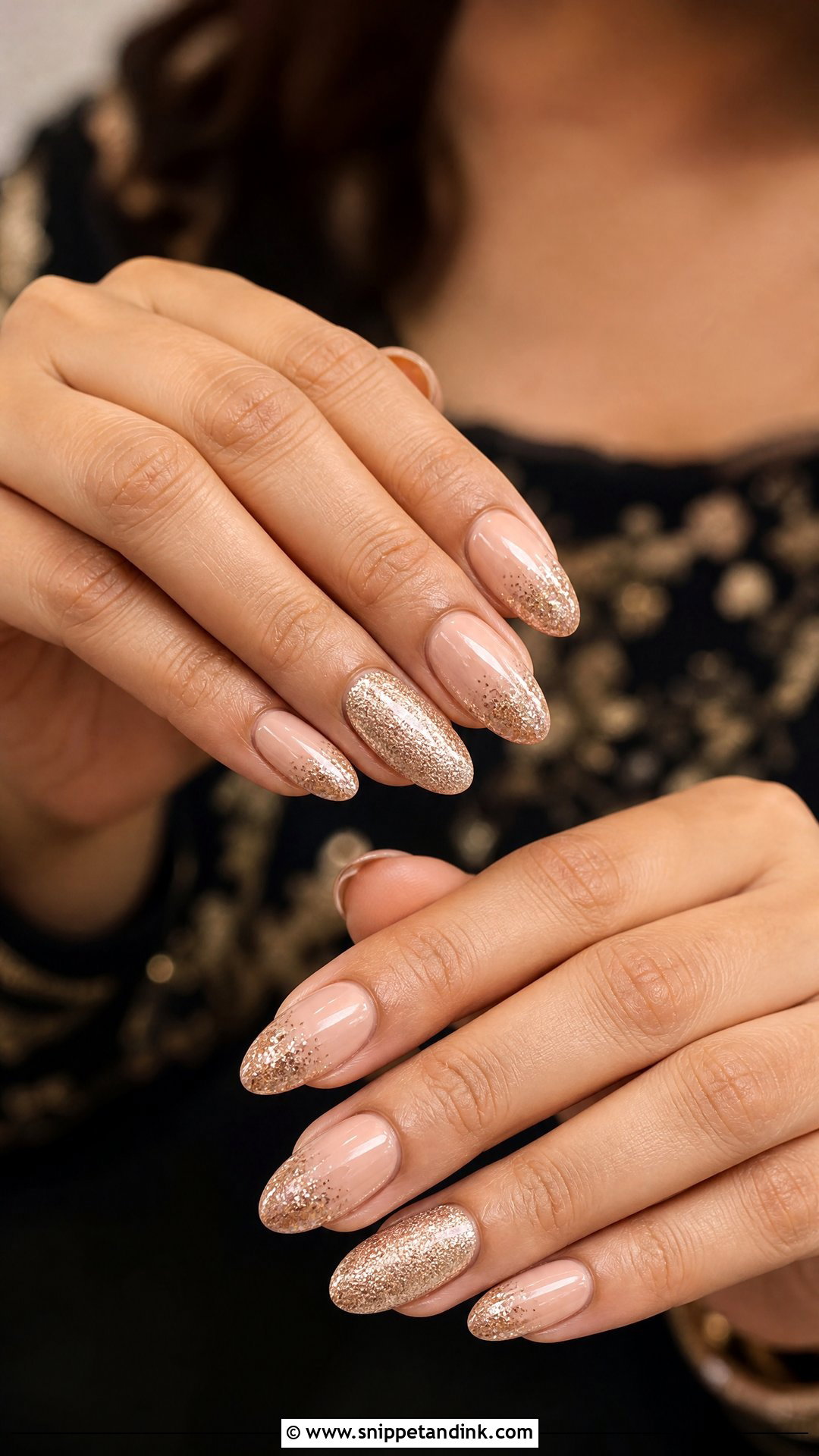
Glitter works best in a controlled dose, as glitter ombré tips, gold glitter French tips or a single full glitter accent beside glossy nude or red nails. Champagne, rose gold, copper and antique gold look more bridal than chunky silver. It suits sangeet, receptions, sequined lehengas and mirror work. If your outfit is already heavily embellished, I’d switch to fine shimmer instead of chunky pieces. Glitter gel is also the hardest to remove, so plan extra soak time afterward.
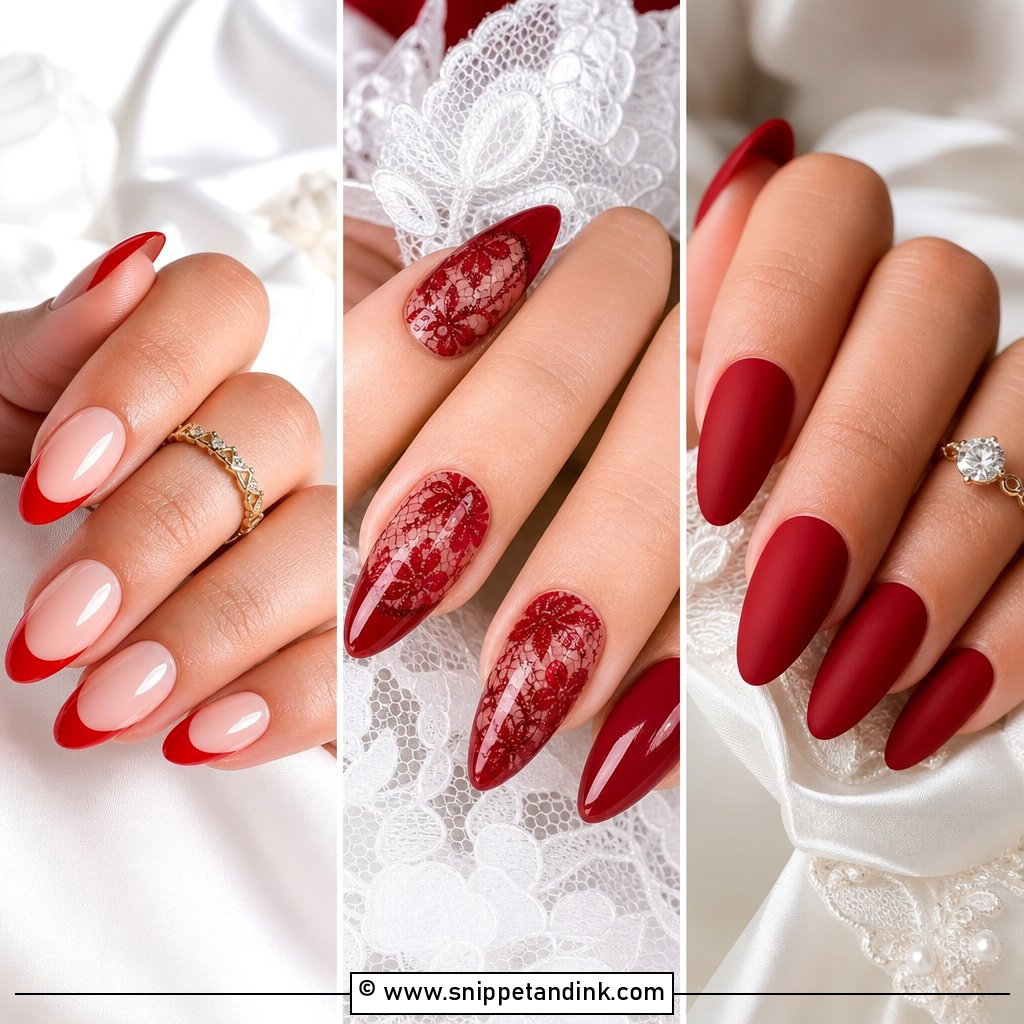
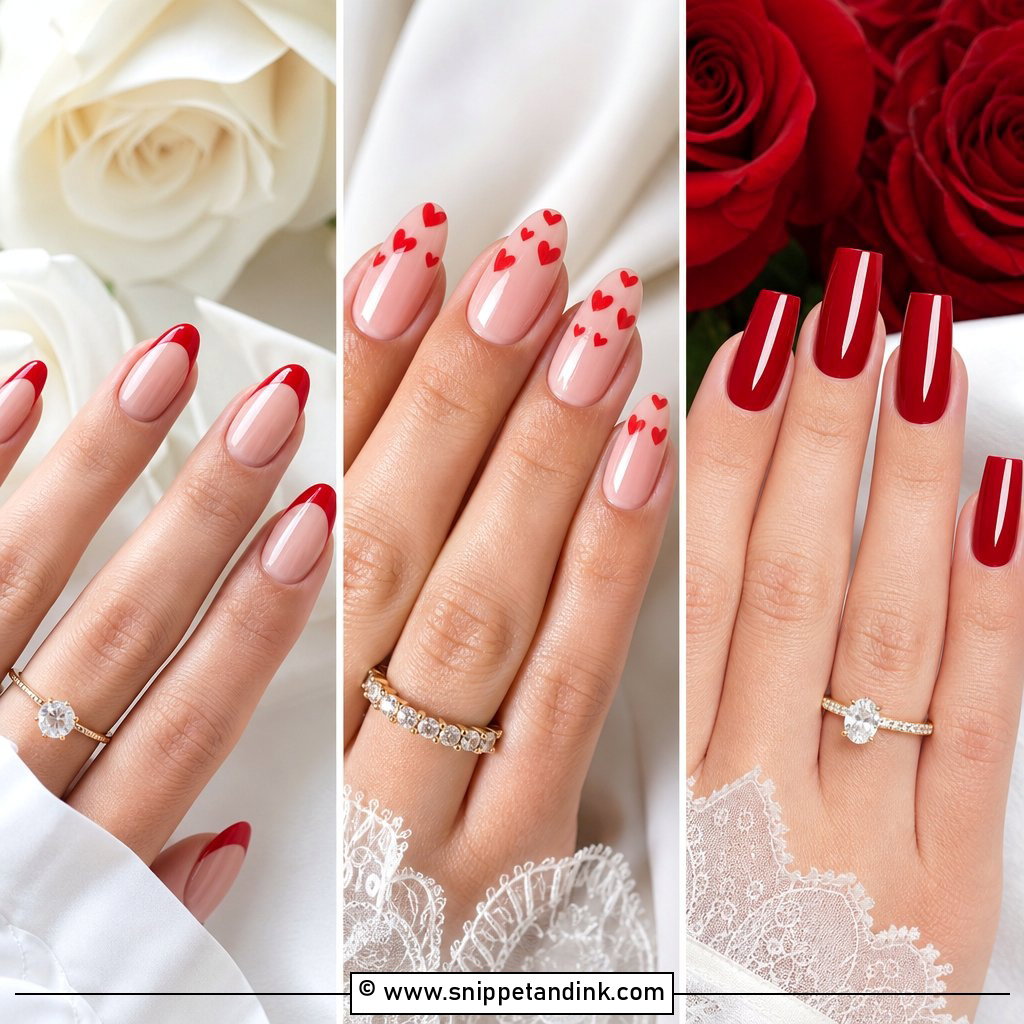
13. Indian Bridal Red French Nails
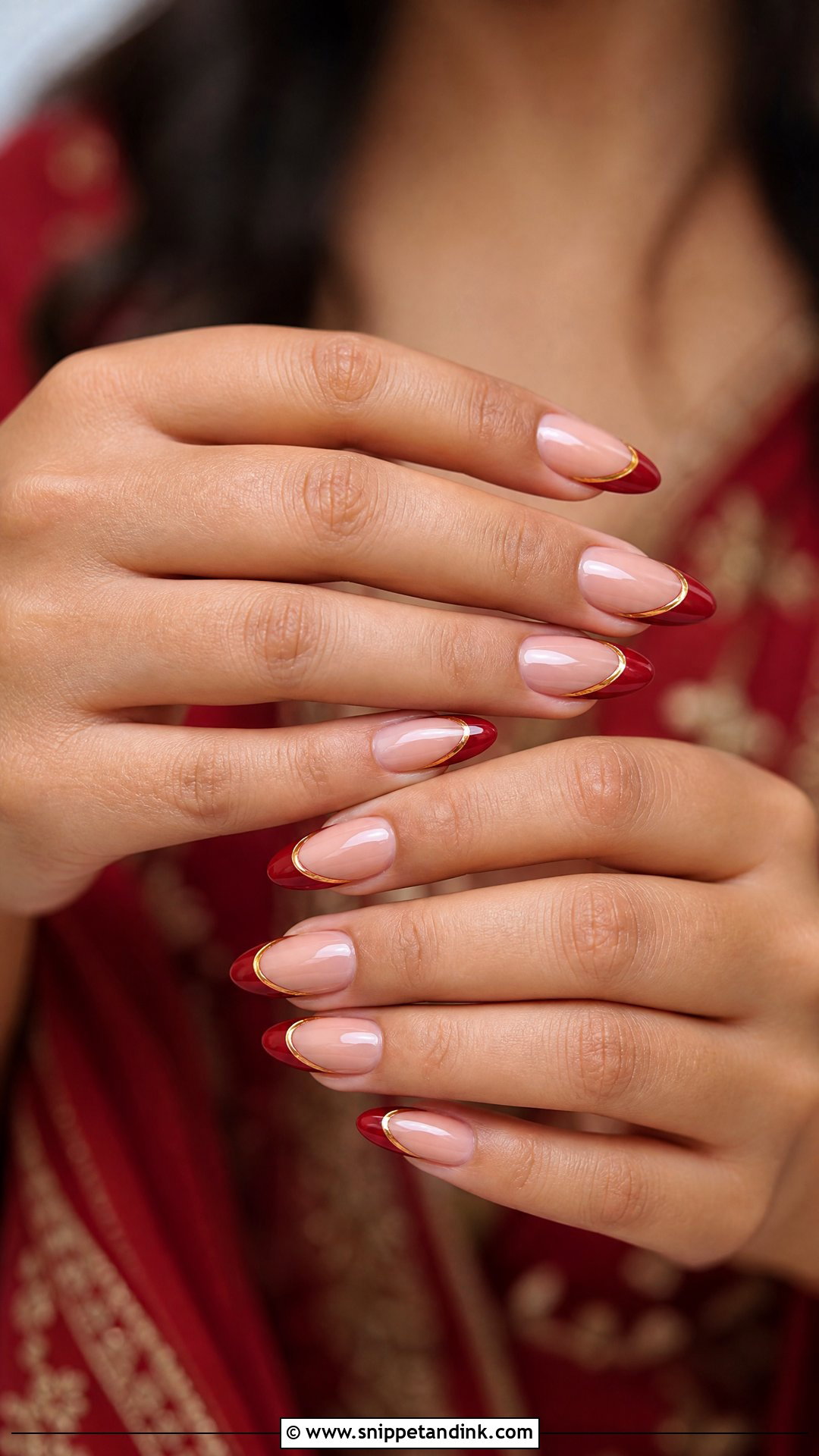
Here the tips are deep red, ruby or maroon instead of white, over a nude or sheer pink base. It reads as traditional because of the colour, but the bare nail area keeps it modern. A slim gold line under the red tip adds a festive edge. I suggest it to brides who want red without a full red set, and it sits well beside detailed mehndi because the sheer base lets the hands look soft. Painting a crisp red smile line takes a steady hand, so ask to see your artist’s French work first.
14. Indian Bridal Rose Gold Nails
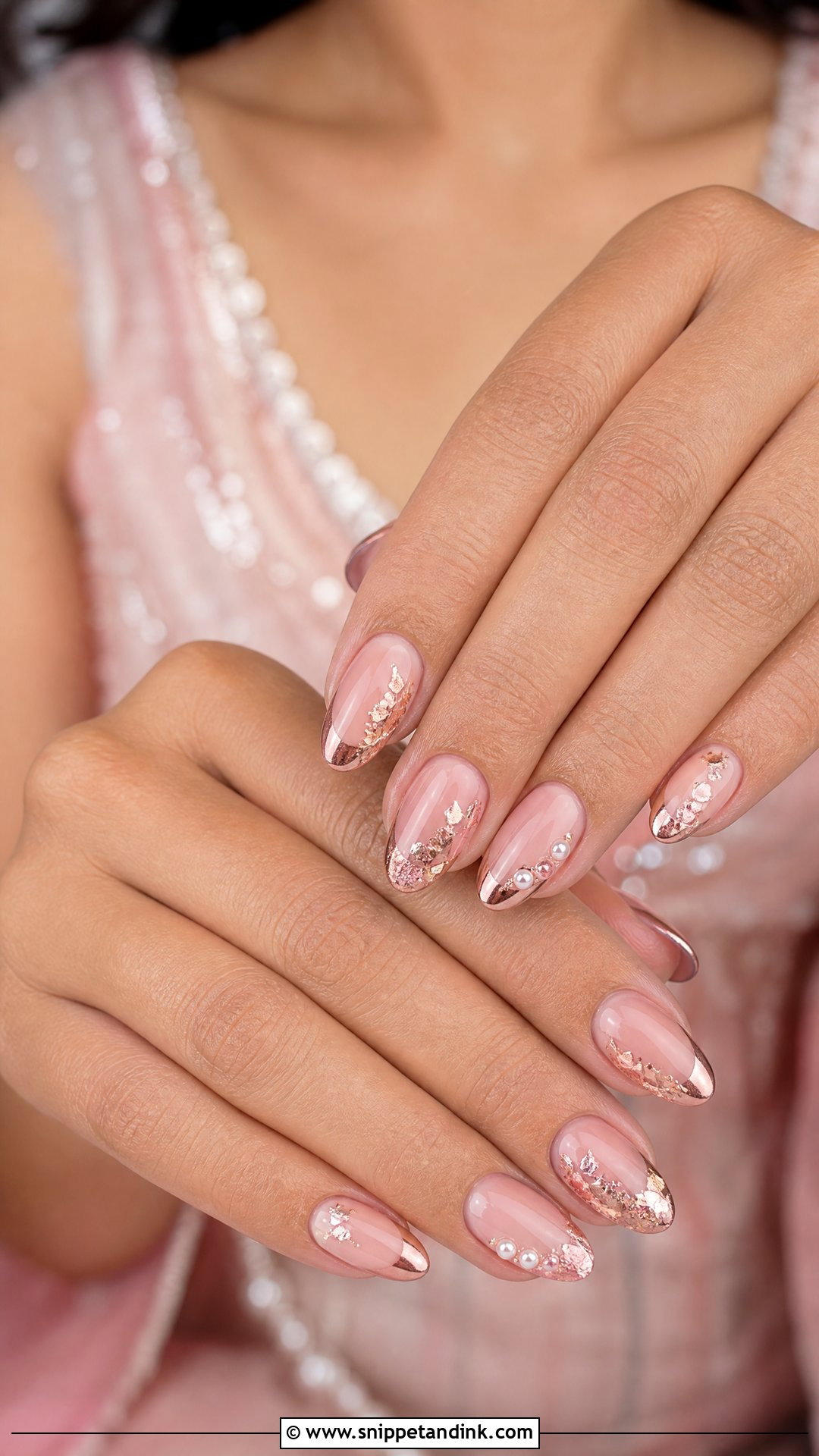
Rose gold sits between yellow gold and silver, softer than one and warmer than the other, and it flatters a lot of Indian skin tones. I use a nude pink base with rose gold foil, chrome tips or fine glitter. It’s a good match for blush, peach, beige, champagne and pastel outfits, and for diamonds or rose gold jewellery at engagements and receptions. Chrome French tips on almond nails make it modern; a few small pearls make it softer. It looks lovely with soft glam makeup.
15. Indian Bridal Emerald Green Nails
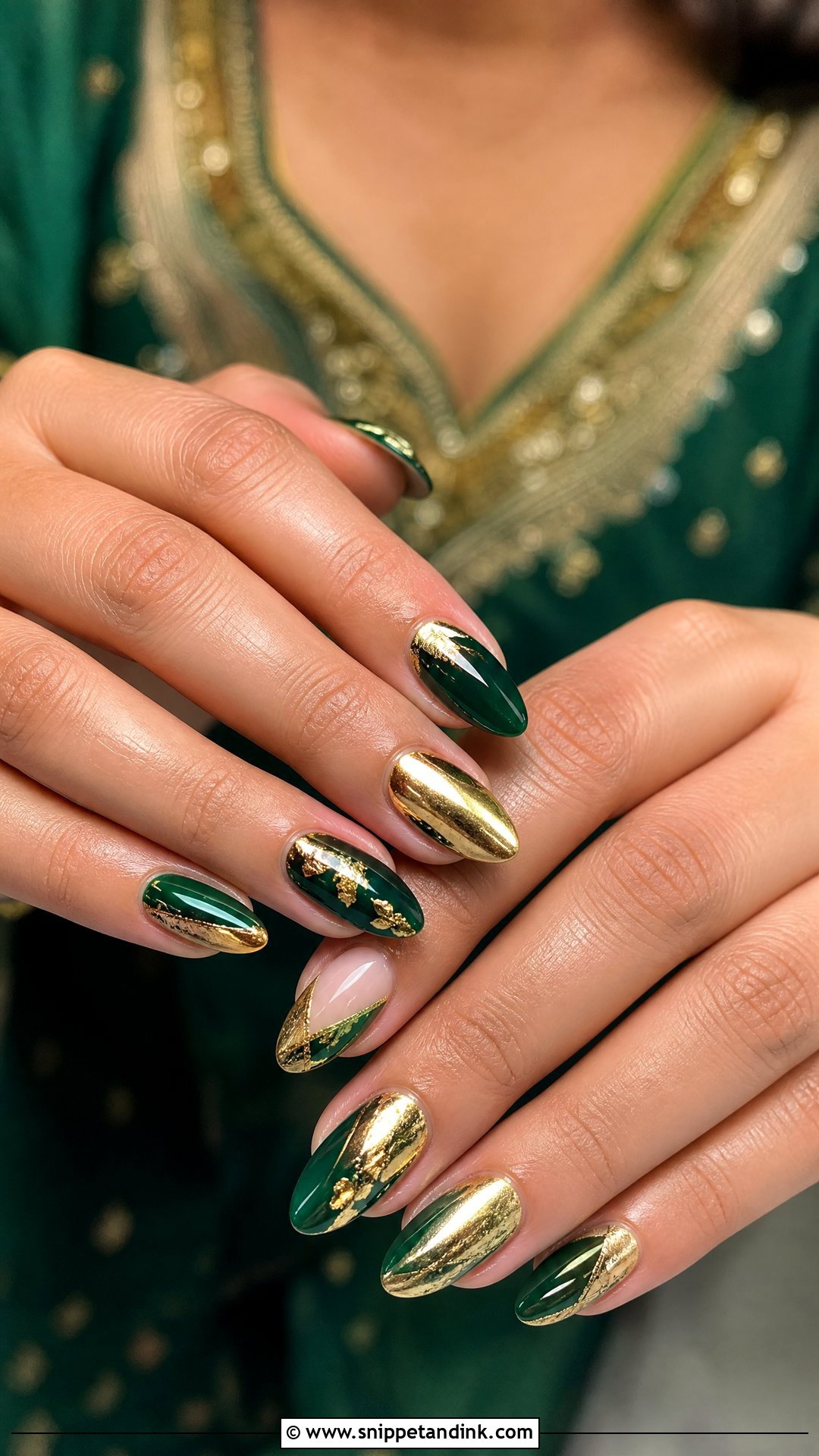
Emerald is a strong, regal colour that pairs naturally with gold, zari, kundan, polki and temple jewellery. A glossy emerald base with gold foil feels traditional; emerald French tips over nude feel newer. It’s a good break from red for the mehndi or sangeet. I keep the art minimal, because emerald is already doing a lot. Deep green also shows chips more than paler shades, so I cap the free edge carefully. A medium almond shape stops it from looking too dramatic.
16. Indian Bridal Pastel Nails
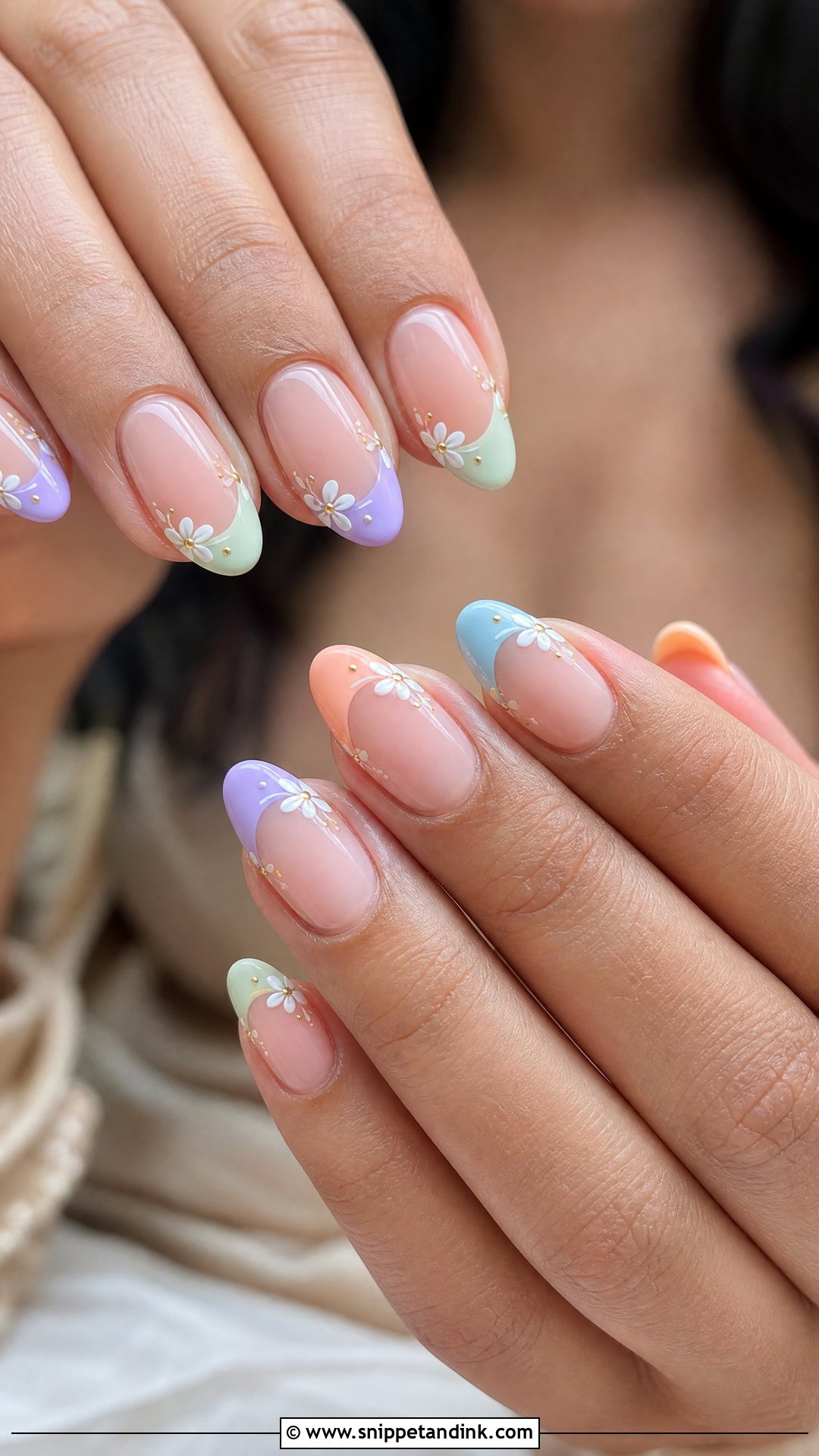
Mint, lavender, powder blue, peach and blush all suit daytime events and modern outfits. I add white floral art, gold dots or pearls to a pastel base, or mix pastel French tips across the nails for a playful sangeet or engagement set. Keep the colours creamy and muted, never neon. Pastels need clean cuticles and a glossy top coat to look finished, since sheer pale gels show any streaks. This is also the set I most often do for bridesmaids and sisters, because it’s easy to coordinate in different shades.
17. Indian Bridal Ivory Nails
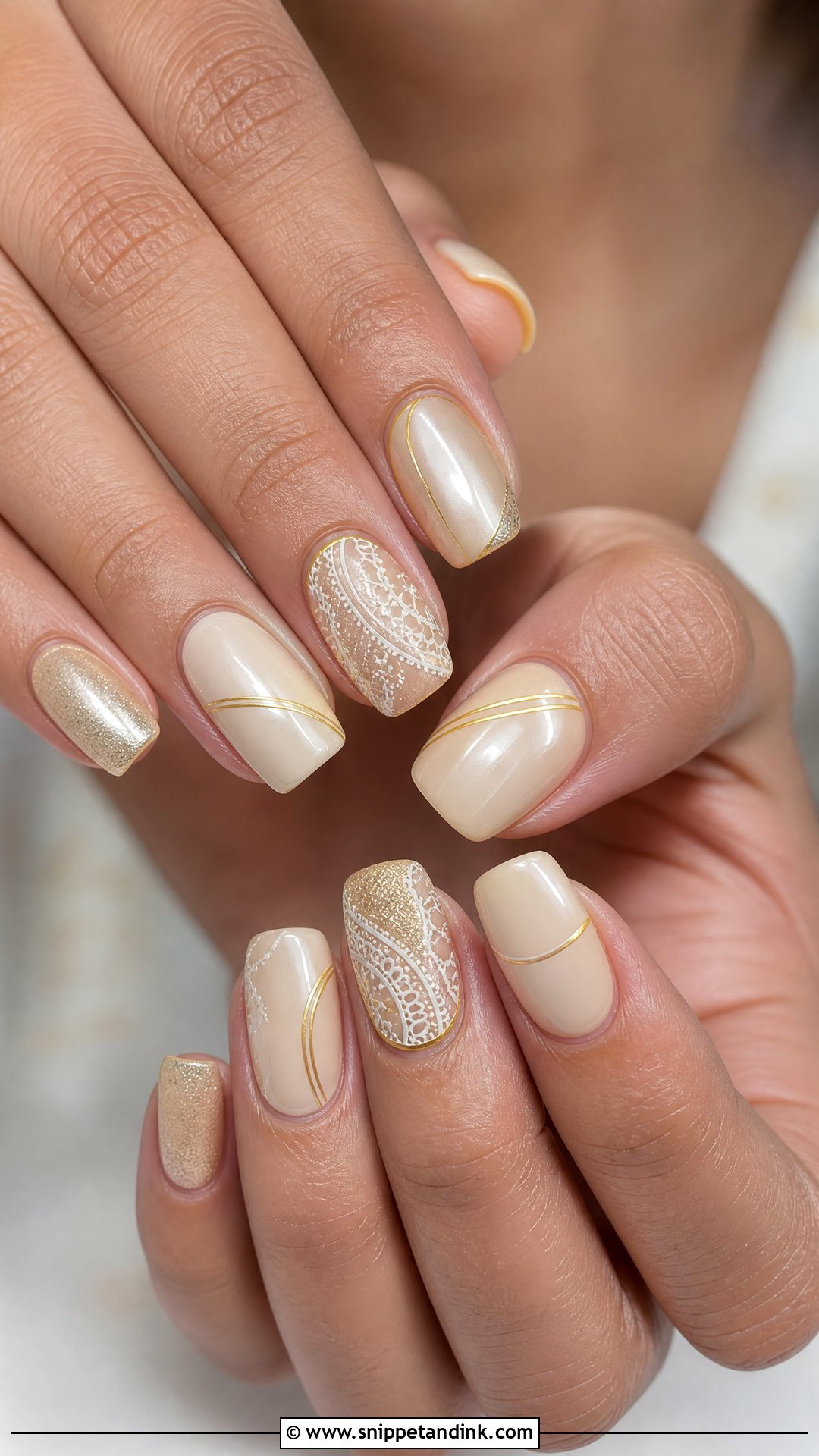
Ivory is the soft, luxurious option for ivory lehengas, gold sarees, chikankari, pearls and minimal makeup. I finish a creamy ivory base with pearl chrome, gold micro-lines or subtle lace-style art. It looks clean in every photo without pulling attention from the outfit. The one thing I’d avoid is stark white next to a warm-toned outfit, which looks harsh; ivory, cream or milky beige blend far better. Short squoval, oval and almond shapes all suit it.
18. Indian Bridal Floral Nails
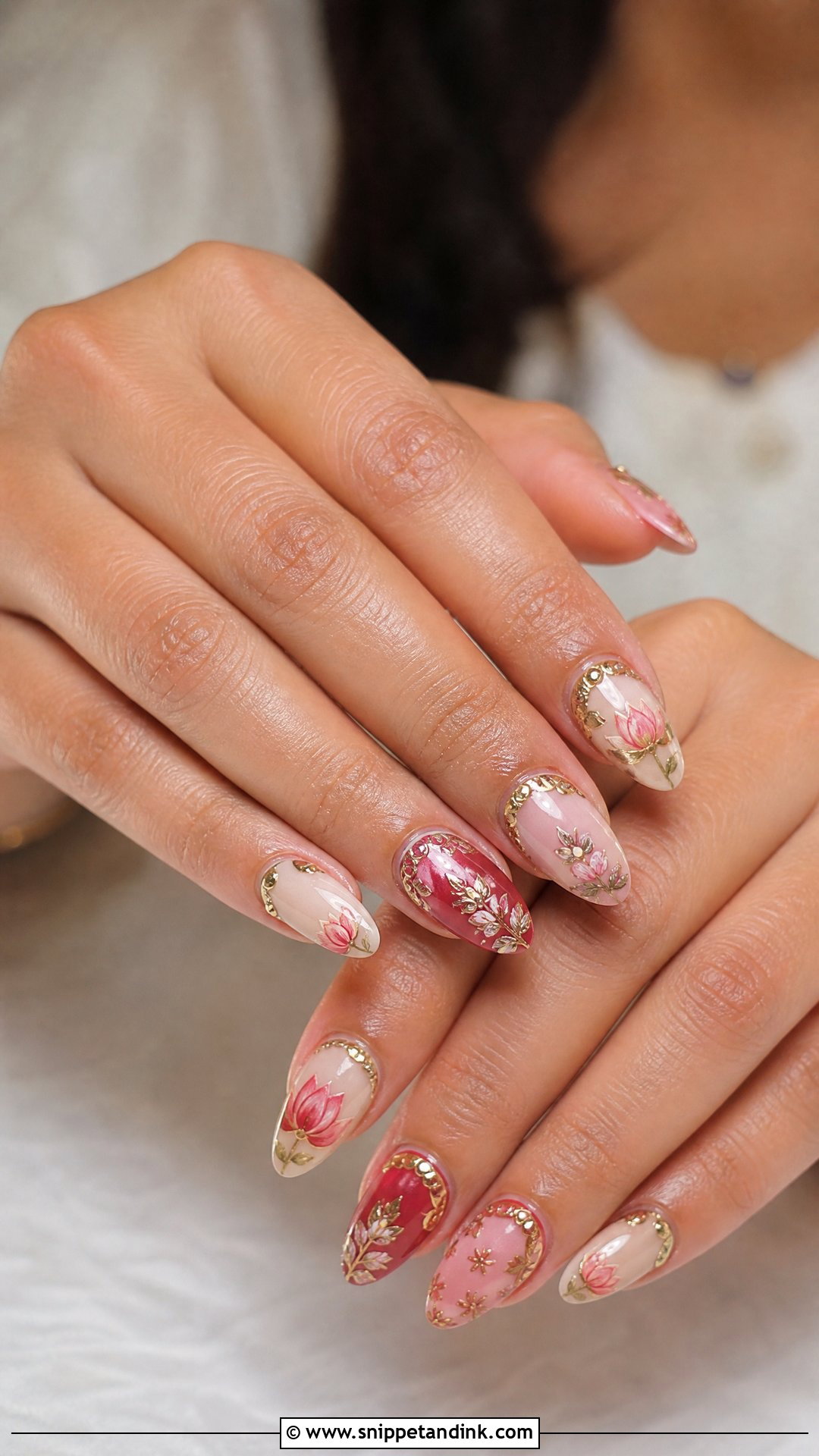
Small hand-painted flowers over nude, pink, ivory or pastel, with gold dots or tiny leaves, give a festive feel. For a more traditional effect, I paint lotus shapes, marigold tones or red and gold blooms. It suits floral lehengas, garden ceremonies and soft reception gowns. I keep the brushwork fine and airy so the nails don’t look busy beside mehndi, and I usually limit florals to two or three nails per hand. Oval and almond shapes give the flowers room.
19. Indian Bridal Mandala Nails
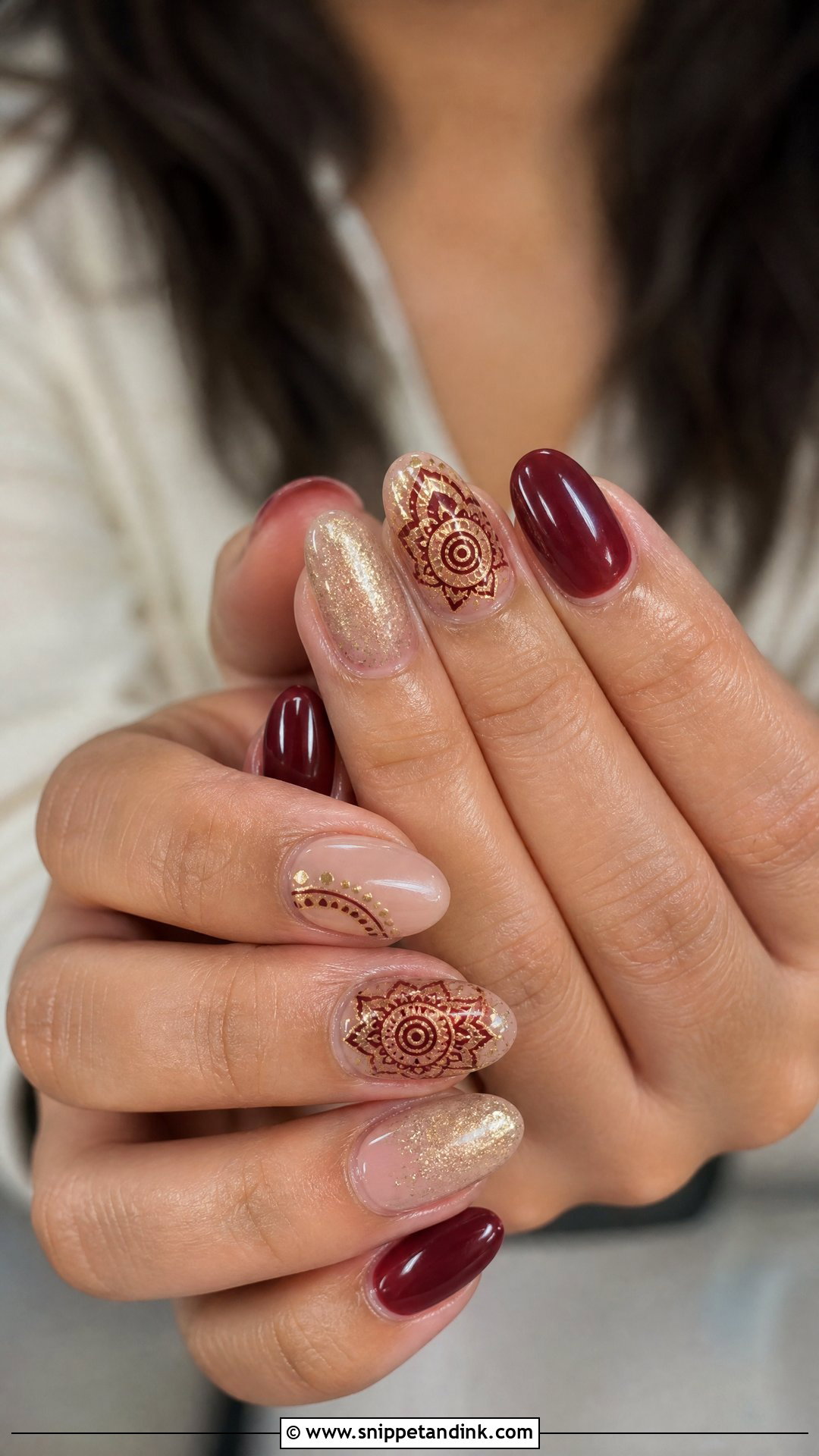
Mandala art needs a steady hand and a fine liner brush, because any wobble in a symmetrical design shows straight away in a close-up. On a nude or sheer base, I paint white, gold or maroon mandalas, either centred on one accent nail or spread softly across the tips. It echoes mehndi and traditional patterns and looks great in ring, bangle and mehndi close-ups. To keep the set wearable, I pair the detailed nails with solid glossy red, maroon, ivory or nude. This is a design to book with a skilled artist.
20. Indian Bridal Marble Nails
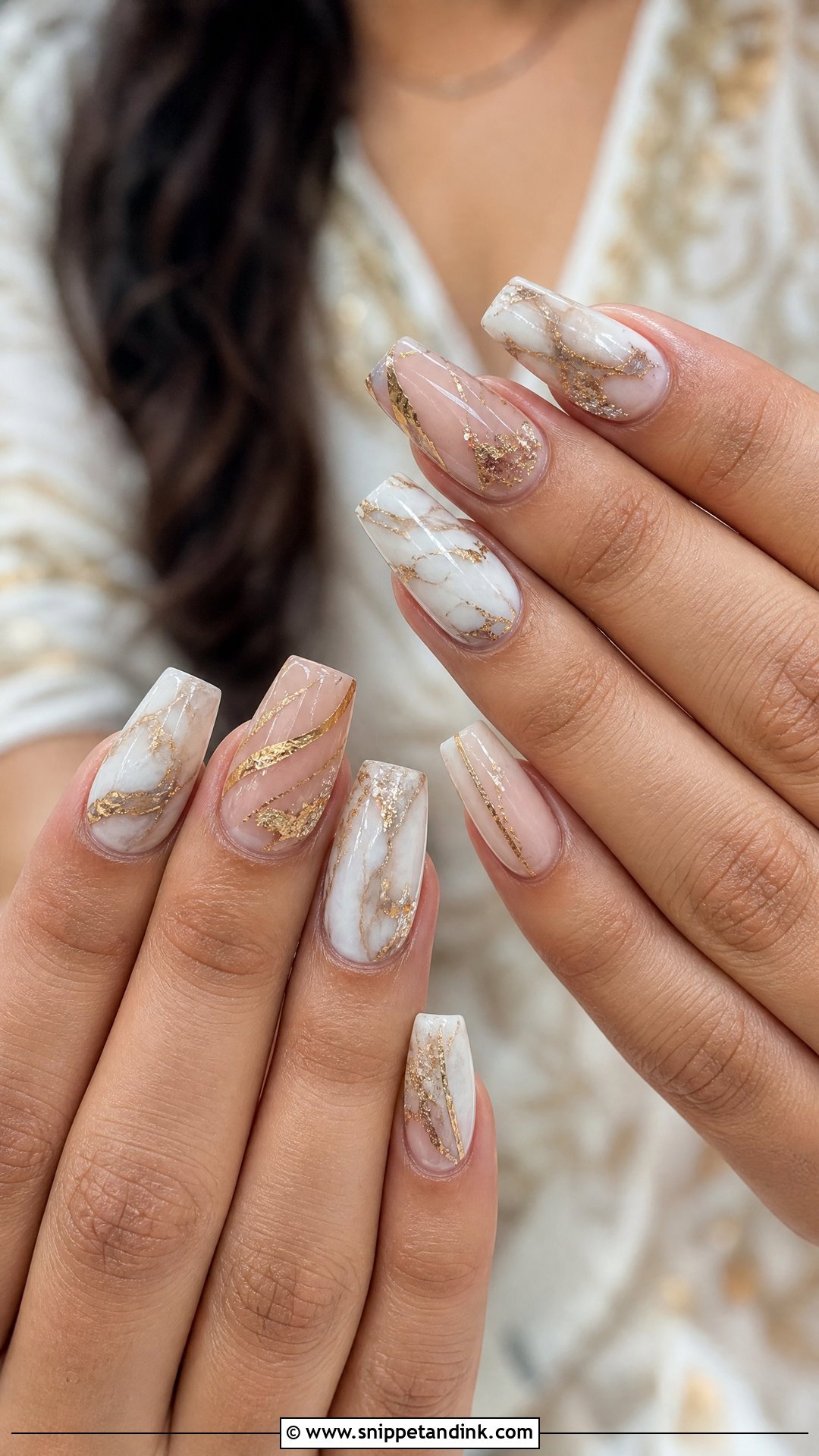
Marble gives an artistic, stone-like finish without heavy embellishment. On a white, ivory, blush or nude base, I drag soft gold veins through wet gel, then add gold foil or tiny metallic flakes to make it festive for an Indian wedding. It sits well with pearls, diamond sets and contemporary outfits, and suits receptions, engagements and neutral or pastel looks. Thick veins look like cracks, so keep them thin. Coffin, almond and oval shapes all show the pattern well.
21. Indian Bridal Red Ombre Nails
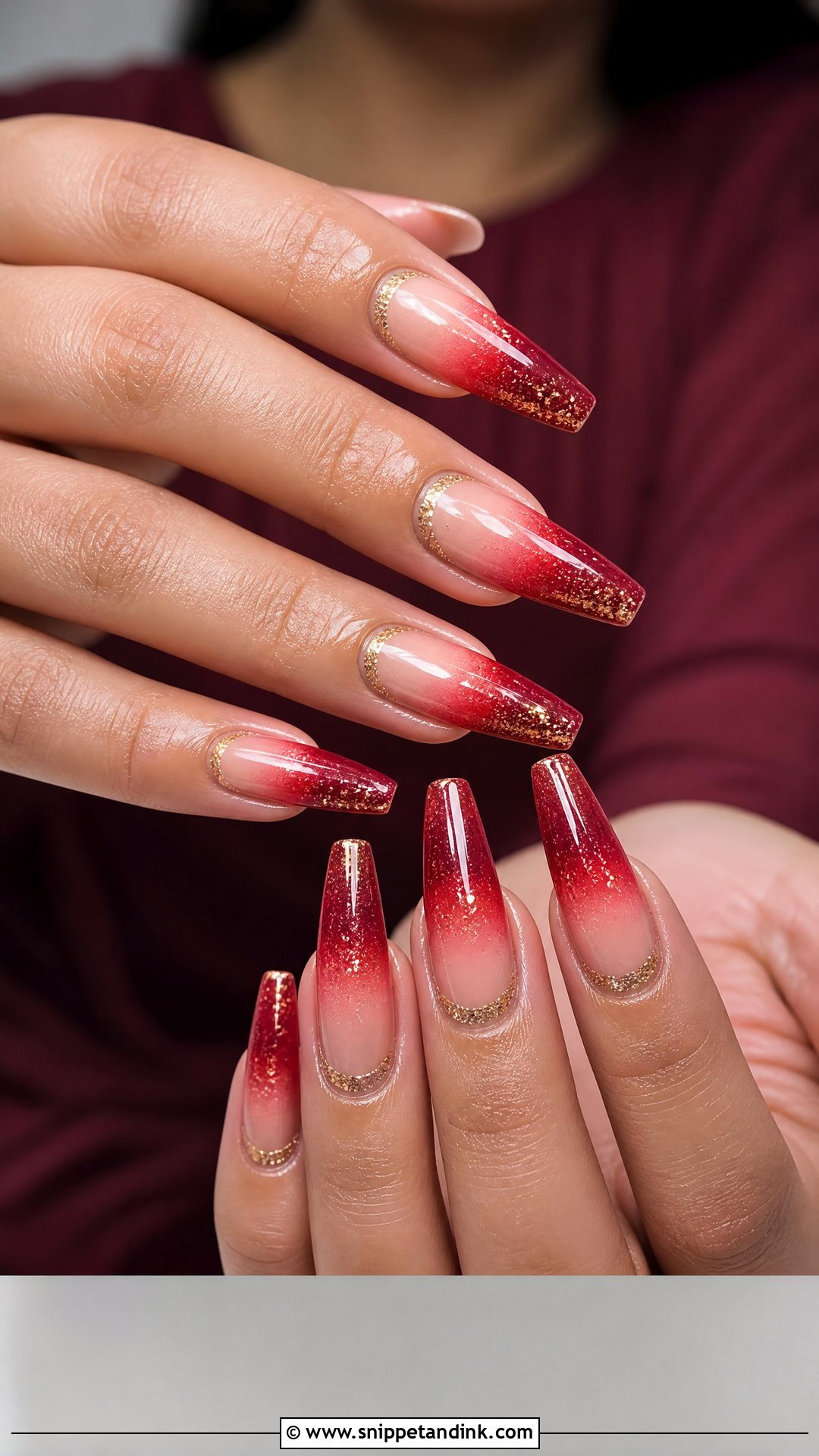
A red ombré gives the colour more depth. It can fade from nude to red, red to maroon or deep red into gold shimmer. Nude-to-red tips feel modern, and maroon-to-gold feels rich and traditional. Next to heavy mehndi, I find the gradient works better than a solid red, because it adds colour without one dense block on every nail. Fine glitter at the tips suits evening ceremonies. Almond or ballerina nails help the fade look long and smooth.
22. Indian Bridal Mirror Work Nails
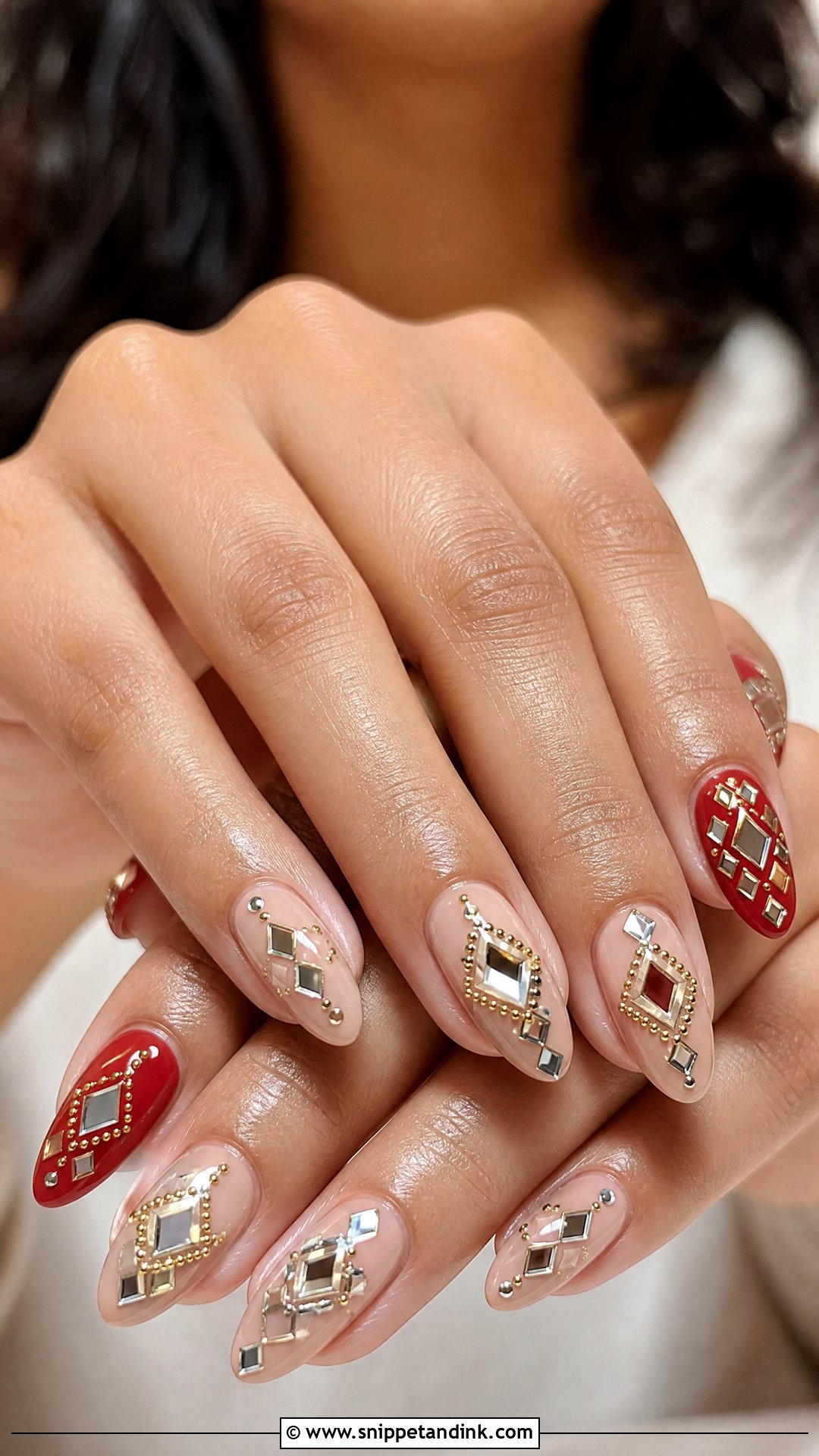
Mirror work nails borrow from lehengas and dupattas with tiny reflective pieces. I set small silver or gold mirror-style accents on a nude, red, pink or ivory base, around the cuticle, along the tips or in geometric patterns. They catch light while you dance or pose, which makes them fun for the sangeet and reception, and if your outfit already has mirror work, the hands tie it together. Keep the pieces small and flat and fully sealed in gel; raised edges snag on fabric and lift within days.
23. Indian Bridal Haldi Nails
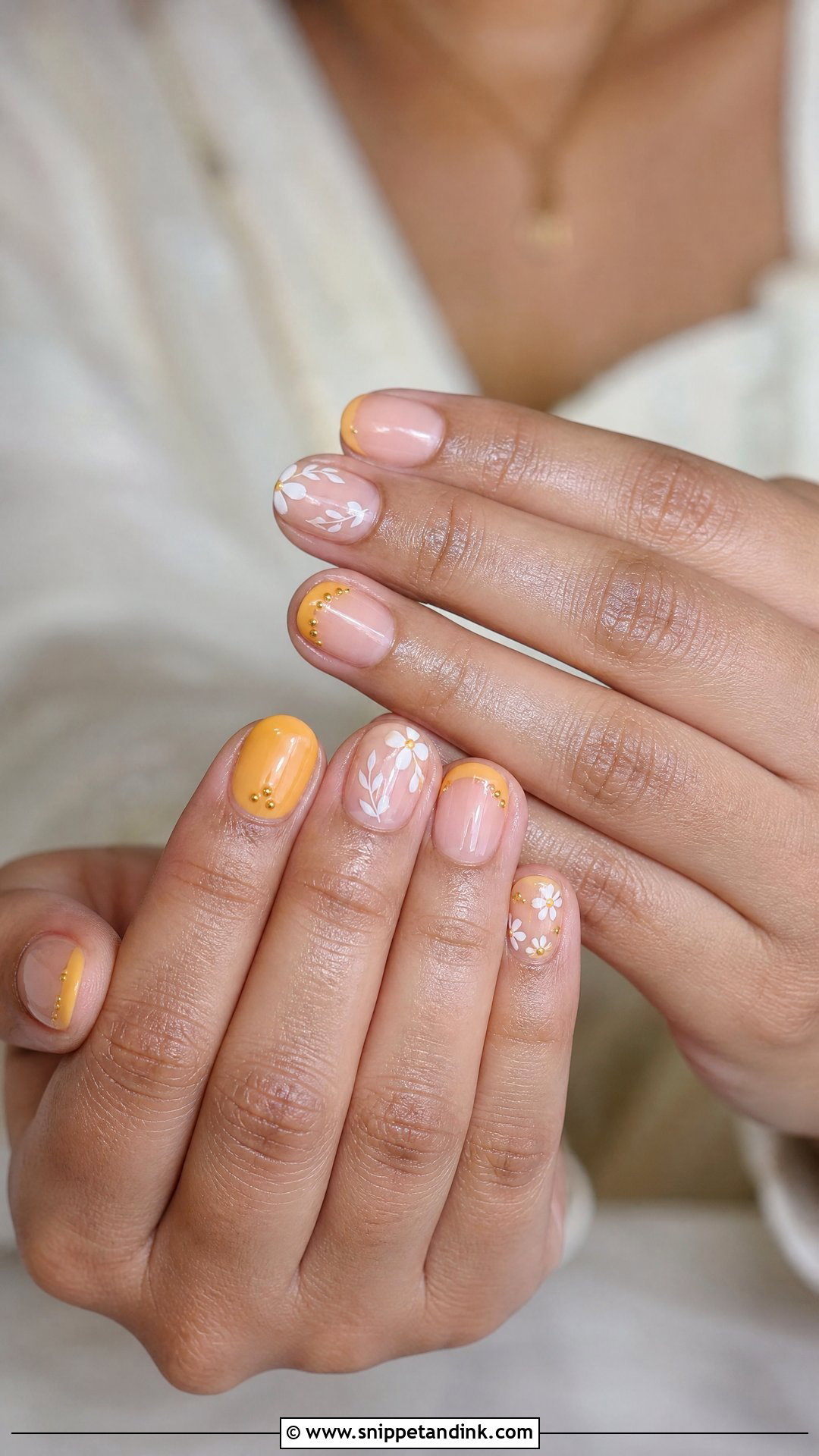
Haldi is the messiest function of the week, and turmeric paste stains porous surfaces yellow. Gel holds up far better than regular polish, so I always use a glossy gel top coat for this set. Yellow, mustard, marigold, peach and gold all suit it; a soft yellow base with white flowers or gold dots is cheerful without shouting. Nude nails with yellow French tips or marigold accents are a quieter choice. I’d keep the shape short, oval or squoval, since you’ll be hugged, splashed and scrubbed. It goes nicely with yellow outfits and floral jewellery.
24. Indian Bridal Reception Nails
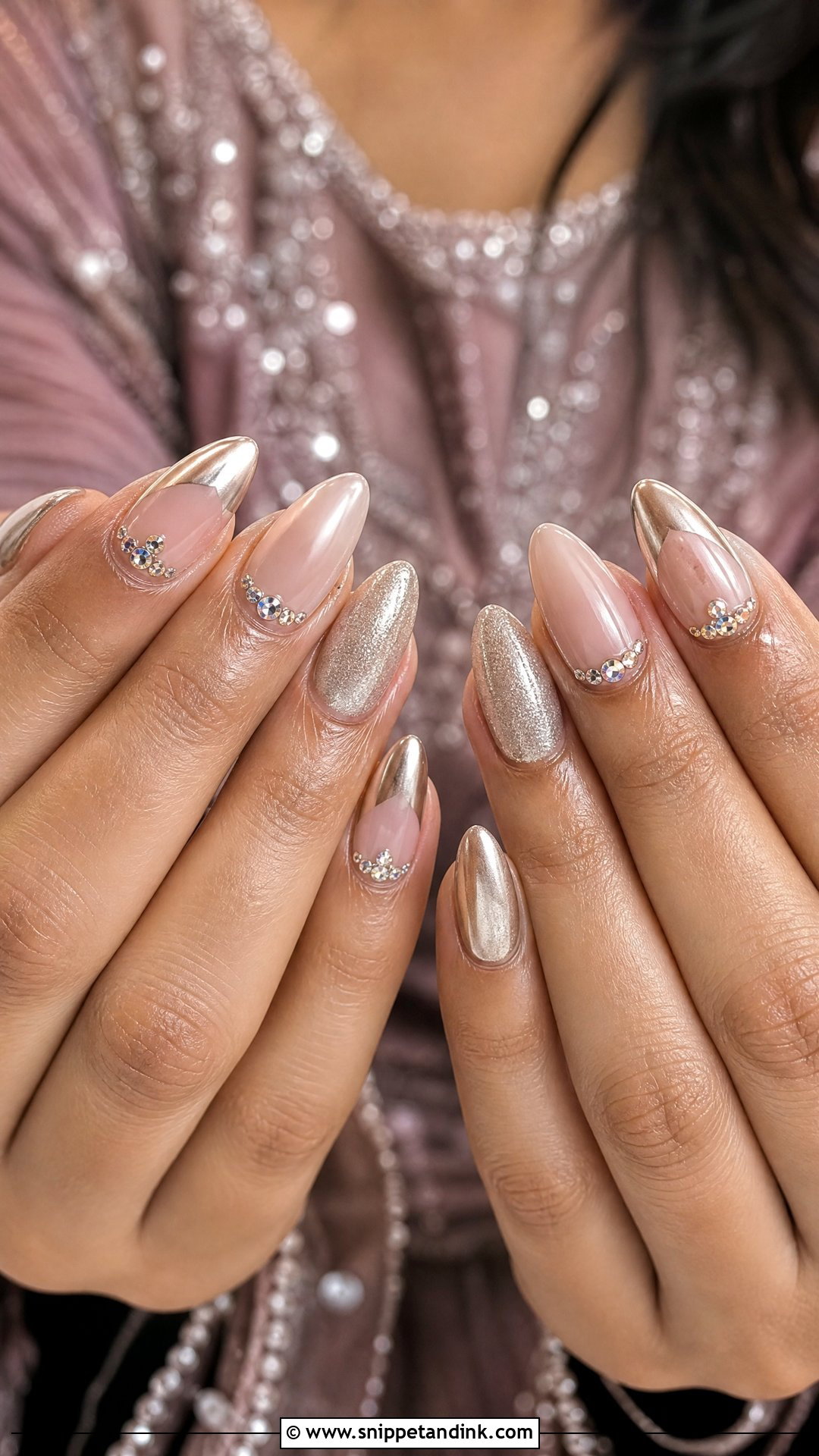
The reception is where you can be more glamorous. Champagne chrome, silver shimmer, pearl white, rose gold glitter or nude crystal nails all work with gowns, sarees and modern lehengas, and they sparkle under evening lights. A nude base with crystal cuffs or chrome French tips looks polished without too much. For darker reception outfits, I like deep plum, emerald or blackened maroon with gold accents. If the reception is a day or two after the wedding, some brides do a quick top-coat change rather than a whole new set, which saves the nail plate.
25. Indian Bridal Short Nails
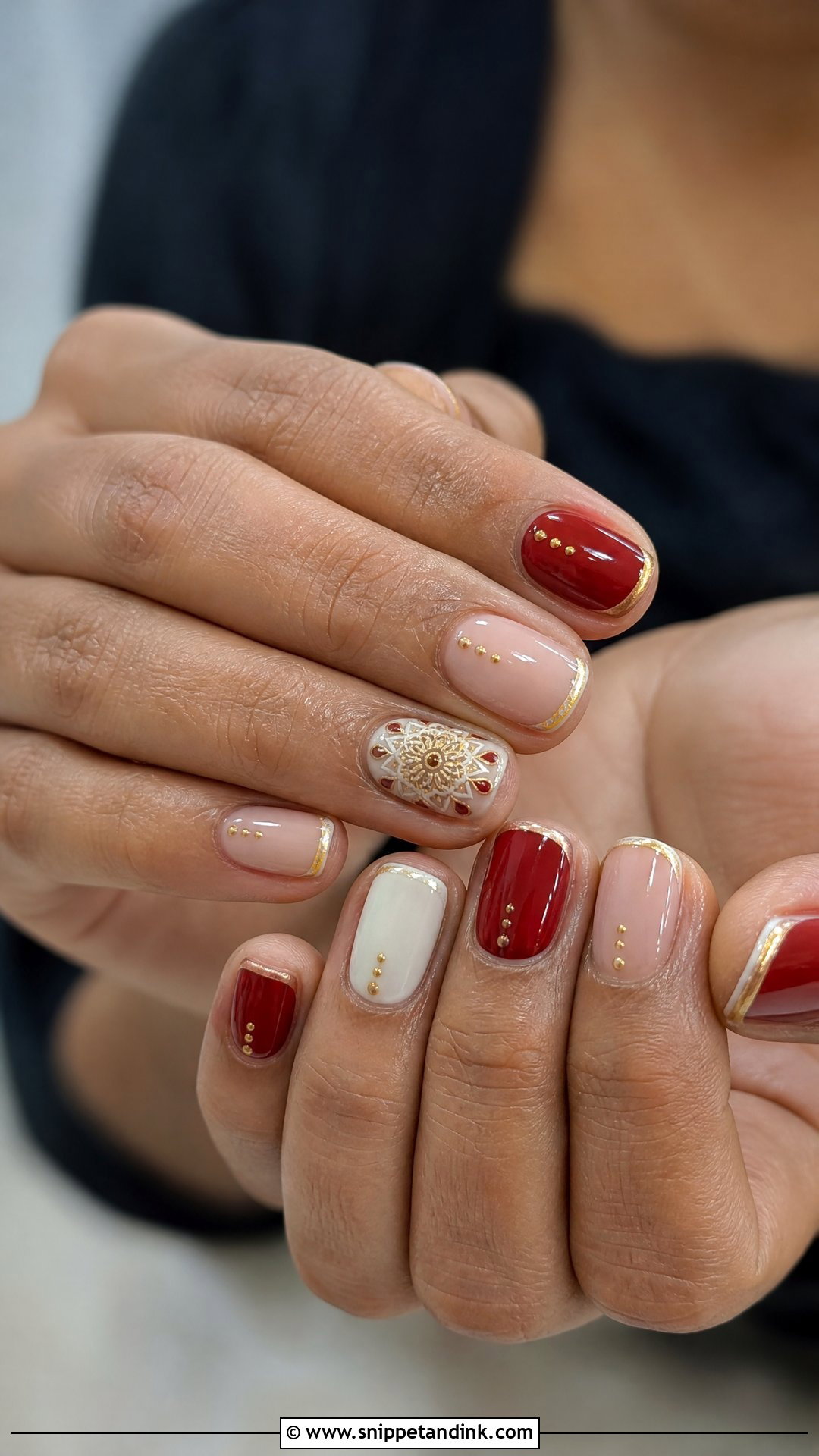
Short nails can look as polished as long extensions when the design is clean. Short squoval or oval shapes are practical for mehndi, rituals, outfit changes and travel. I’d use glossy red, nude, ivory, blush or maroon with small details like gold dots, micro-French tips, a pearl or one mandala nail. Big stones and busy art crowd a short nail, so I scale everything down. Honestly, a neat cuticle line and a high-shine top coat do more for short nails than any decoration.
A Week of Bangles, Rituals and Packing on One Manicure
Indian weddings are hard on nails. Bangles are pushed over the knuckles again and again, chooda and kaleere add weight, and you’ll be handling luggage, gifts and puja items. The most common problem I see isn’t a chip, it’s a lifted edge at the cuticle that catches on a dupatta.
If a nail lifts during the week, don’t pick at it or peel it, because that takes layers of your natural nail with it. Keep a small file in your bag to smooth a snag, and wear rubber gloves for anything wet. Most nail artists will do a quick repair on one nail without redoing the set, so it’s worth asking yours about it in advance.
Getting the Set Off After the Wedding
Gel and extensions should be soaked off in acetone or filed down by a technician, not pried off. The nails may feel thin for a few weeks afterward, so I suggest a short break with a cuticle oil and a strengthening base before your next set. Acetone can lighten the last of your mehndi stain at the fingertips, which surprises some brides, so if you want the stain to linger, wait a little before removal.
Matching Nails to Each Function, Not Just the Wedding Day
Good bridal nails are personal and practical enough to last every function. Red and gold, soft nude French tips, pearl chrome, mehndi-style art or bold emerald can each be right; what decides it is your outfit, jewellery, hand shape and how much you’ll be using your hands. Heavy mehndi usually calls for cleaner nails, while lighter mehndi leaves room for more art. Plan haldi, the wedding and the reception separately, and test your shortlist in both daylight and evening light before you commit.
You'll Like These Ideas:


Leave a Reply