
Wedding nails at an Indian celebration live in close-up. They’re in the ring shot, the jaimala, the hands-over-mehndi photo and every frame where bangles are being slid on. Bride, bridesmaid, sister or guest, your manicure has to suit the mood of each ceremony without fighting the outfit or the jewelry. Red and gold still lead, but I’m painting just as much milky chrome, mehndi-style line work, pearl finishes, soft ombre, florals and fine French tips. Which one suits you depends on your lehenga or saree, your skin tone, your nail length and how many events the set has to last. Below are twenty I’d confidently put on a client, classic to glam, with what I’d watch for on each.

Getting Natural Nails Ready for the Ring Close-Up
The design matters less than the nail underneath it. In a ring photo, the camera is a few inches from your fingers, and dry cuticles, ridges or a lifted edge show more clearly than the polish colour. Most of the prep I ask brides to do happens weeks before the appointment.
- Stop peeling off old gel. It strips layers of the nail plate and leaves thin, bendy nails that won’t hold a set well.
- Oil your cuticles every night. It’s the cheapest thing you can do and it shows in close-ups.
- Decide on length early. If you want extensions, book a practice set a few weeks out to see how you live with them.
- Let me shape and file at the final appointment; aggressive filing at home just before can weaken the edges.
If your nails are weak or bitten, I’d rather put on a thin overlay or soft gel tips than force a long shape. A short, even set looks far better in a close-up than long nails that lift by the second day.
1. Red And Gold Indian Wedding Nails
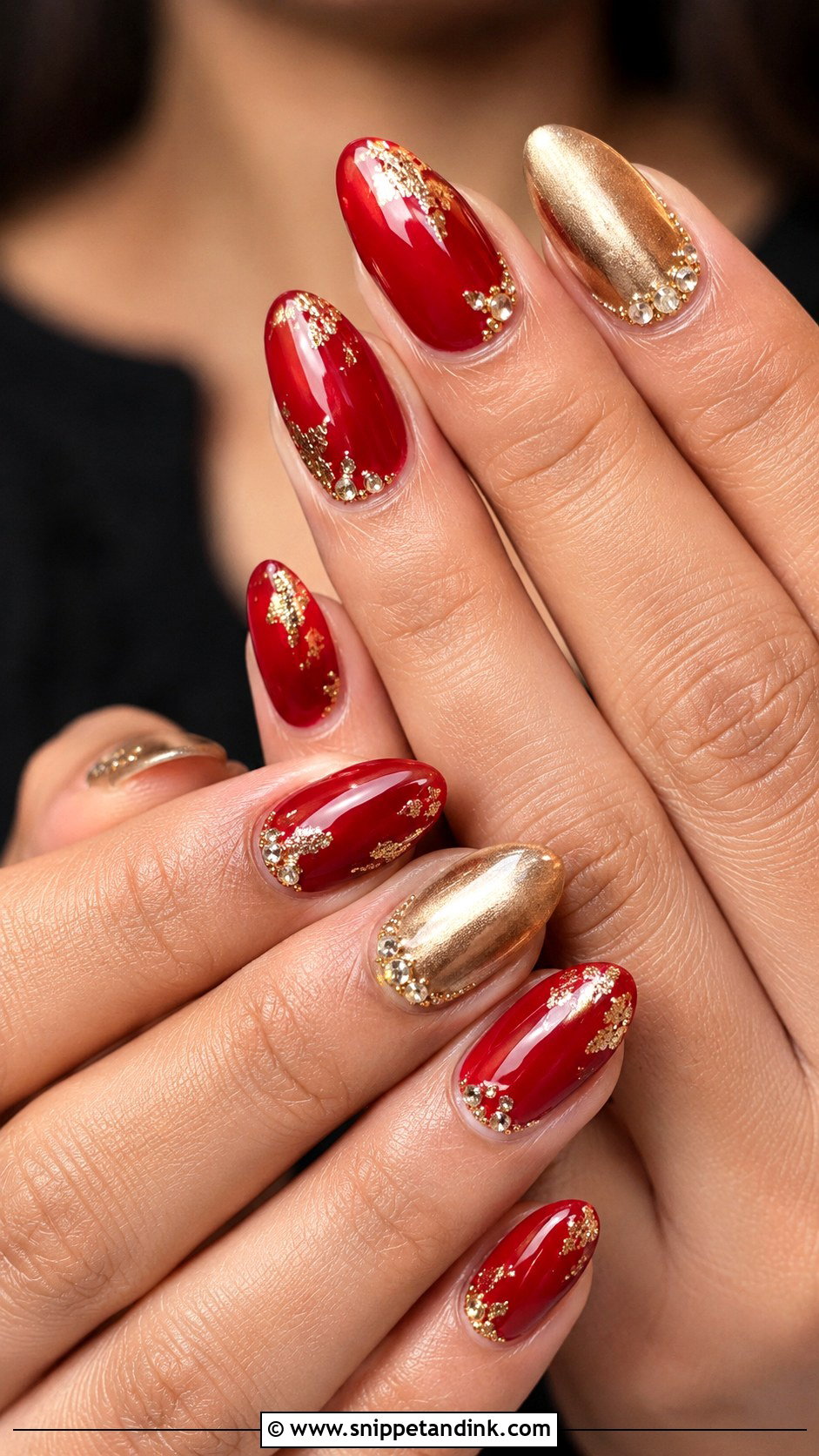
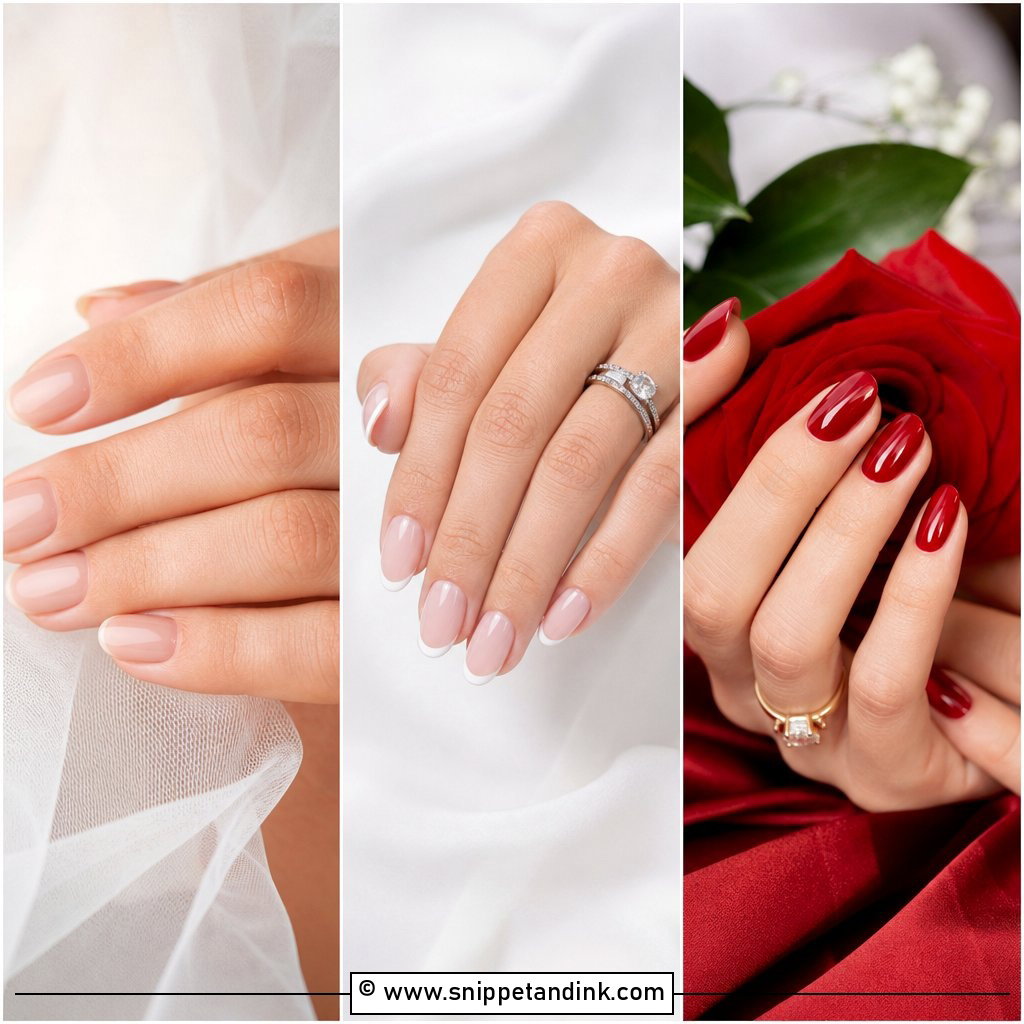
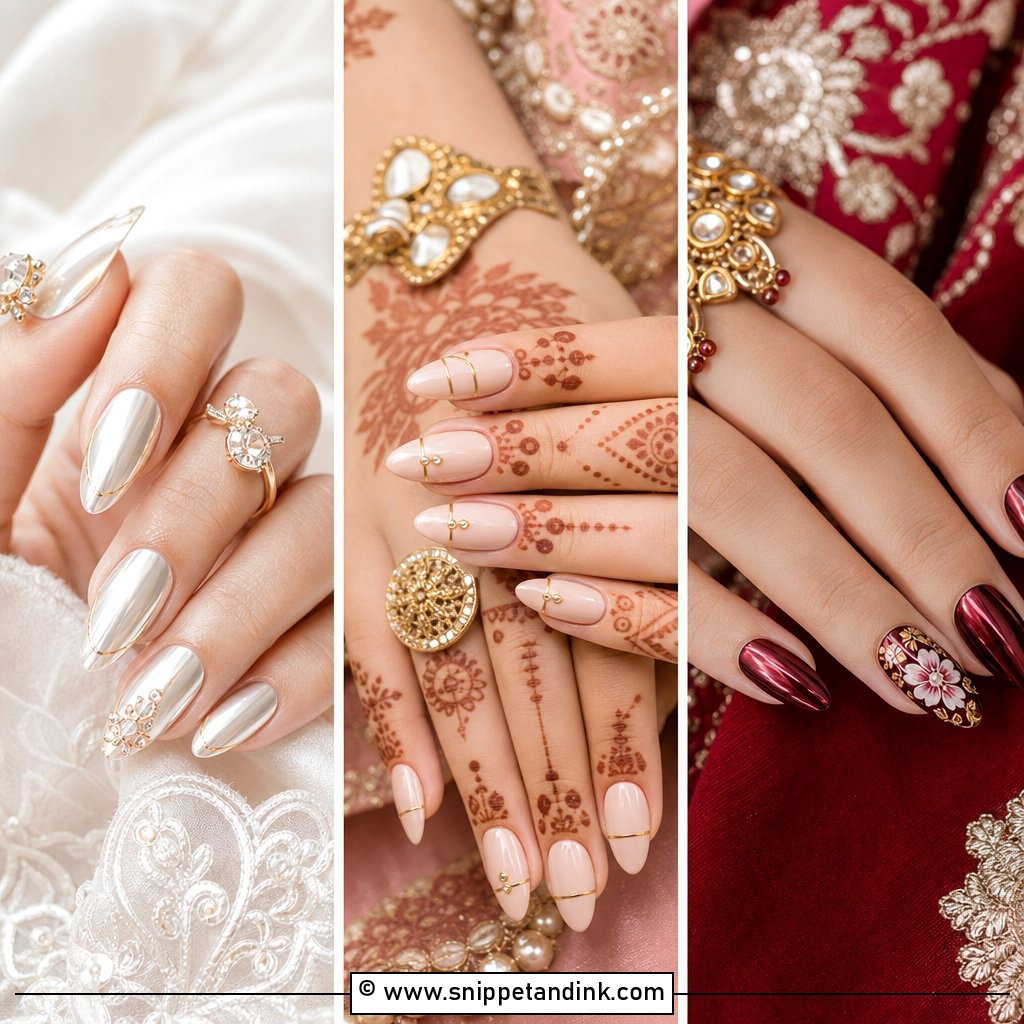
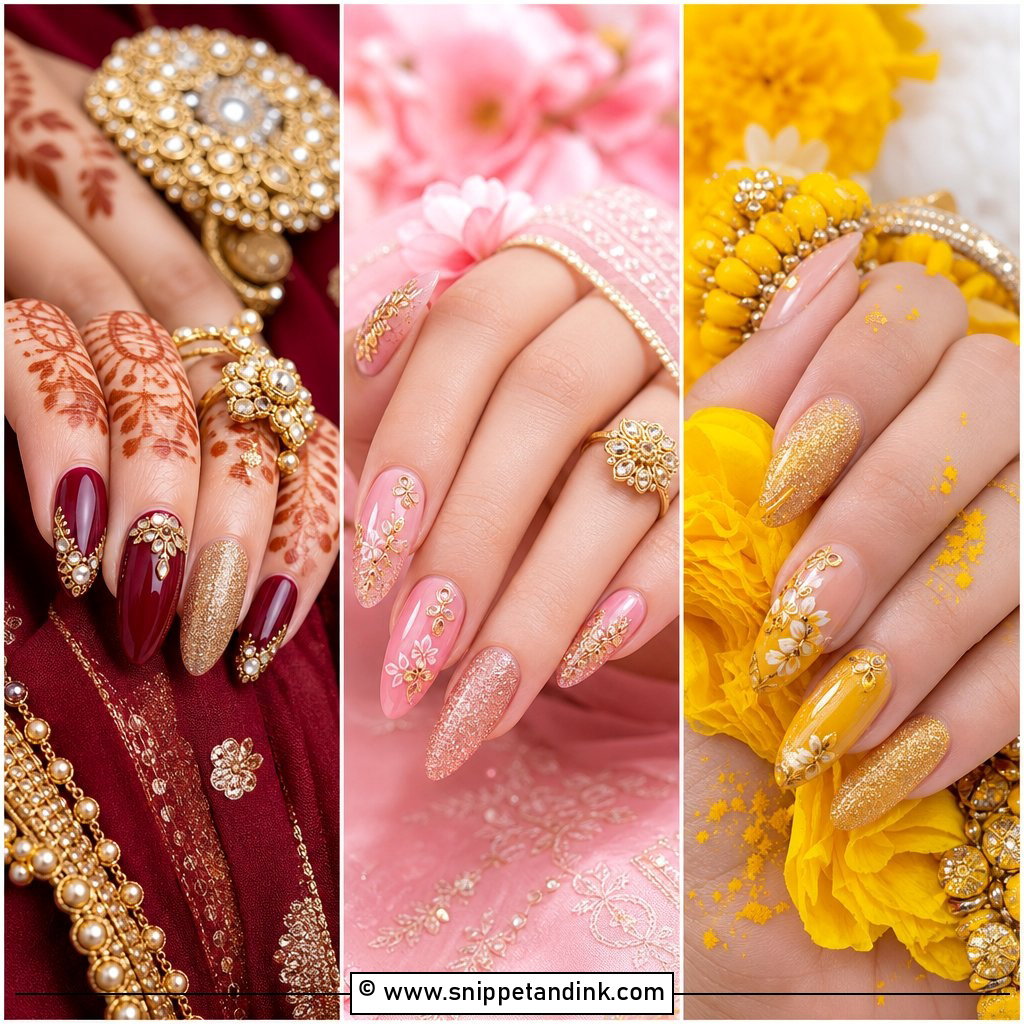
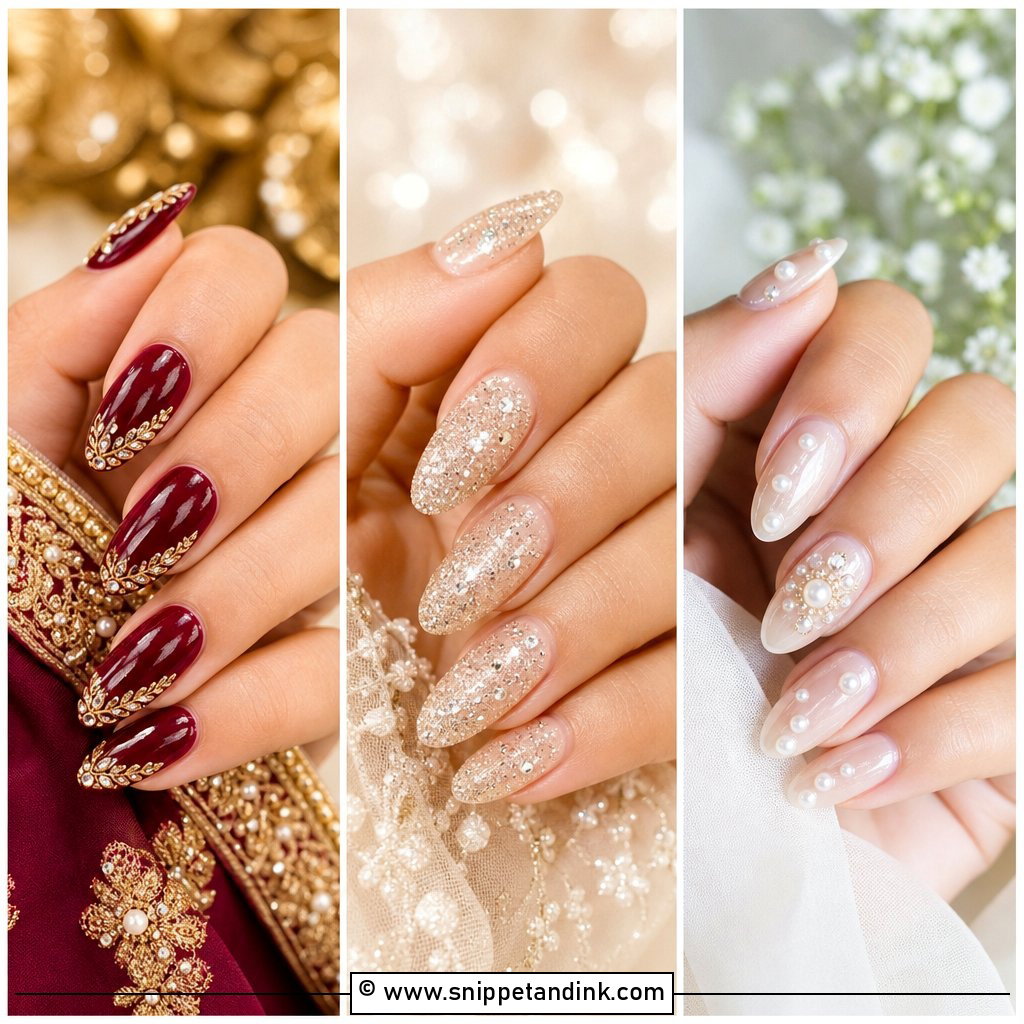
Nothing reads as Indian bridal quite like a deep red with gold. It sits naturally beside bridal lehengas, silk sarees, gold jewelry and henna-stained hands. I finish it with fine gold foil, delicate linework or a few small crystals near the cuticle. Almond or oval keeps it graceful; square looks bolder. Red is unforgiving at the cuticle, so I take extra care with prep, because any flooding onto the skin shows instantly in a ring close-up. A high-gloss topcoat finishes it.
2. Maroon Bridal Nails With Gold Art
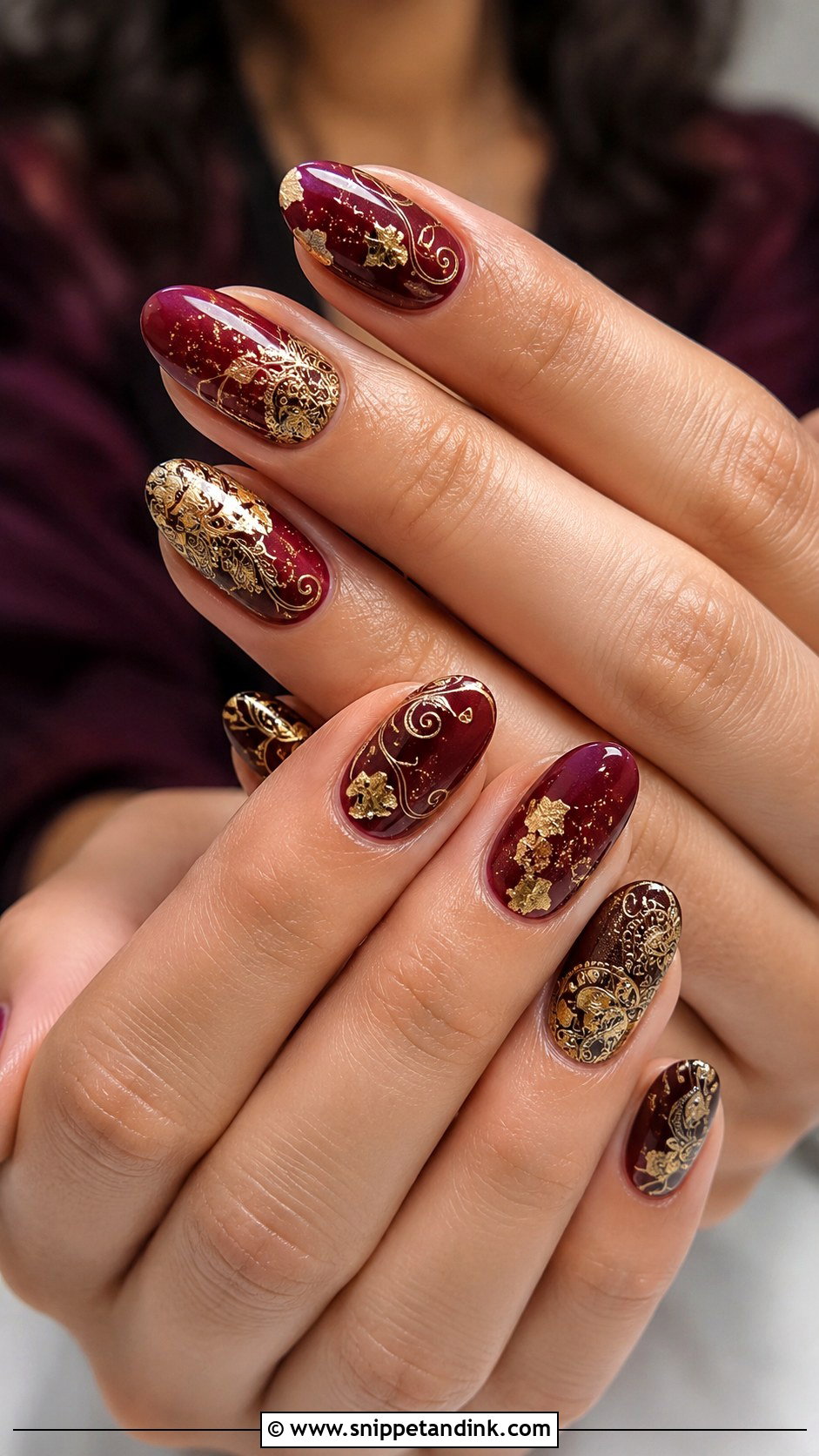
Maroon is what I suggest when bright red feels too loud against the outfit. It looks luxurious next to gold embroidery, kundan jewelry and velvet bridal outfits, and I decorate it with thin gold swirls, tiny paisleys or a little foil. The colour carries enough drama on its own that it works on short, medium or long nails. If your outfit has heavy zardozi, antique gold or wine tones, it will blend right in. Keep the art restrained so the nails sit quietly beside the mehndi instead of competing with it.
3. Mehndi Inspired Indian Wedding Nails
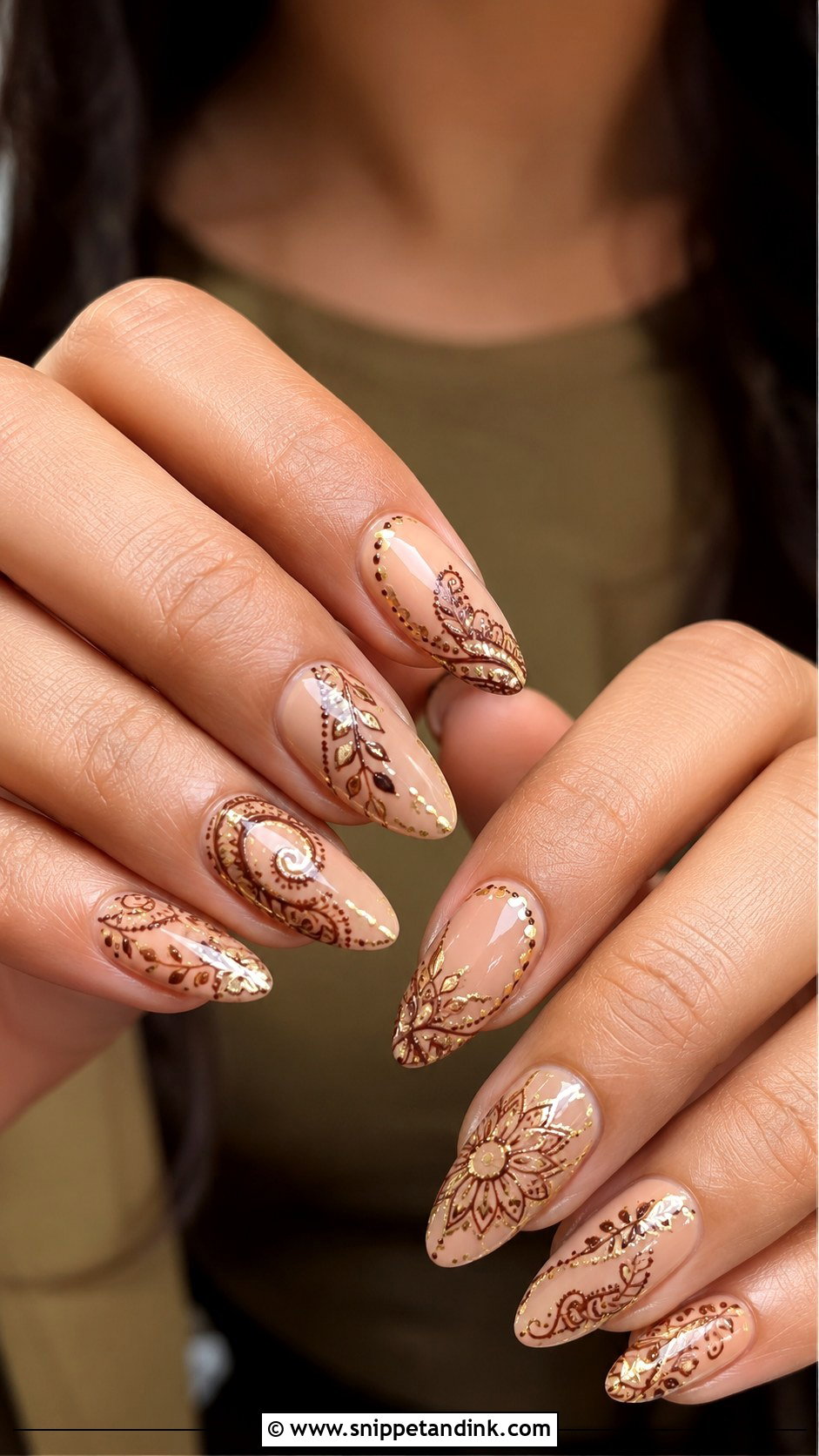
Line art taken from henna patterns connects the manicure to the hands around it. I paint fine paisleys, dots, small mandalas, leafy vines and lace-like strokes in brown, gold or white over a nude, beige, blush or sheer pink base. A bride can carry detail on every nail; a guest usually looks better with one or two accent nails. The brushes for this are long and thin, and the lines only stay crisp on a well-levelled base. I finish with gloss or satin depending on whether the bride wants the nails to shine or recede next to her mehndi.
4. Nude Indian Wedding Nails With Gold Tips
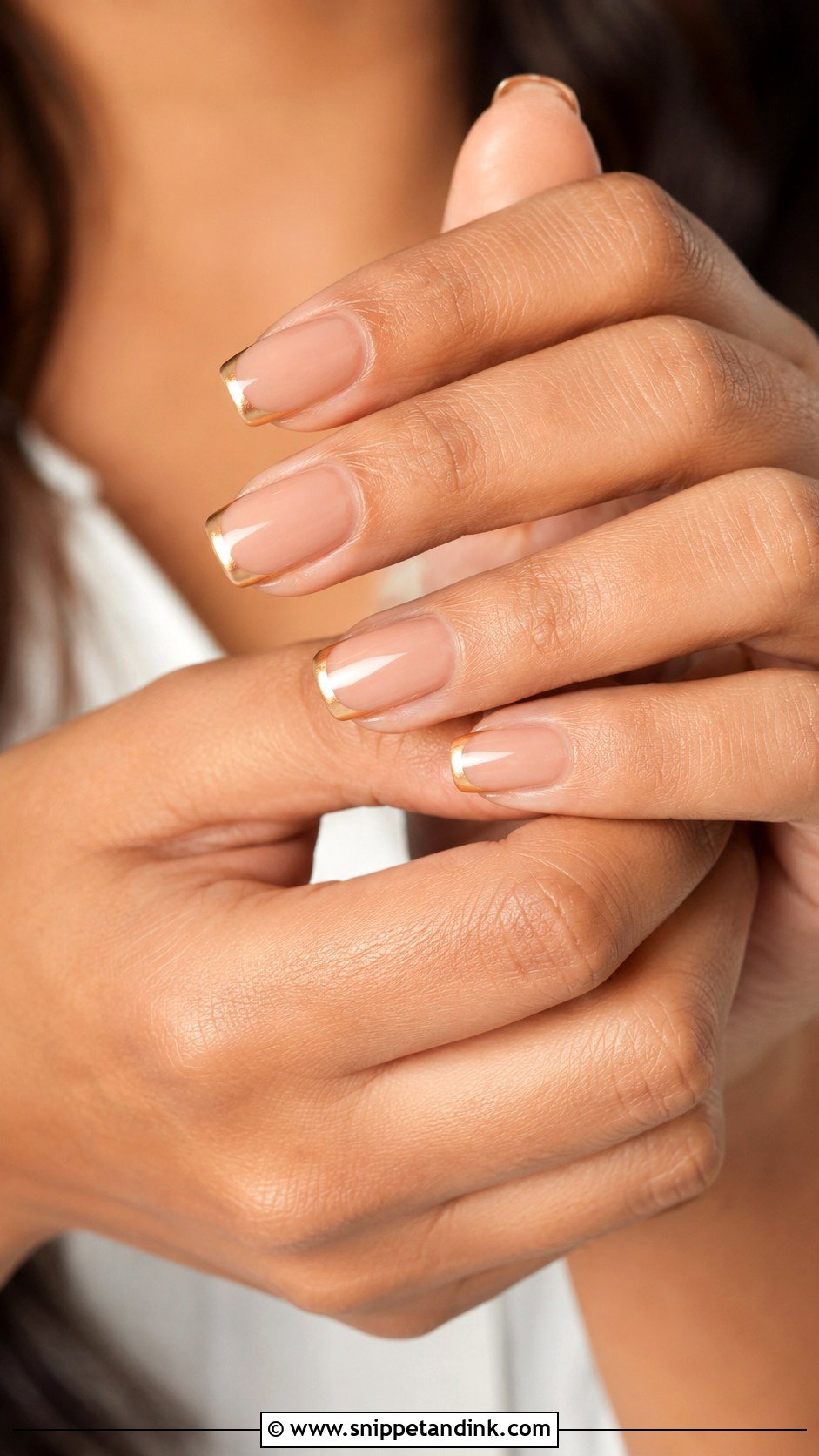
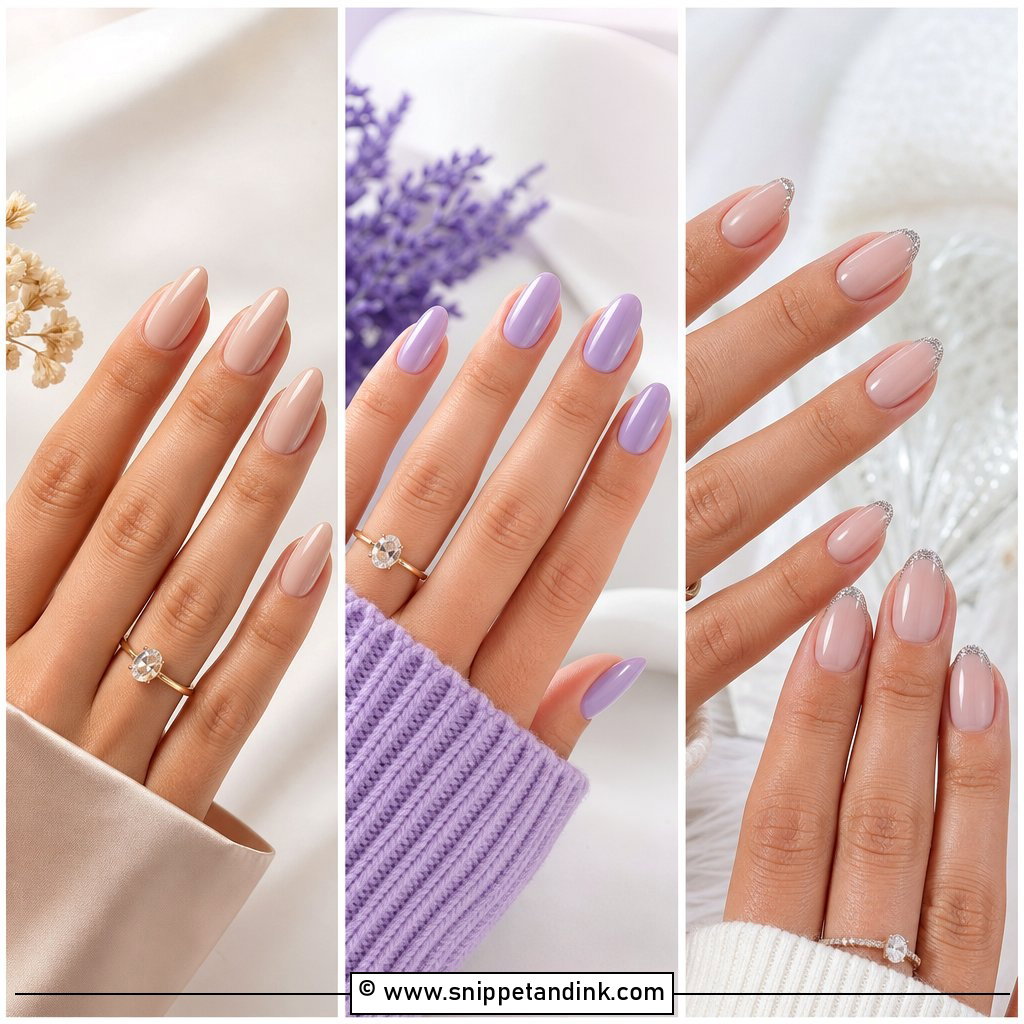
Gold tips on a nude base are quiet but still festive. They suit pastel lehengas, ivory sarees, champagne gowns and outfits with subtle metallic threadwork, and they’re what I recommend to anyone attending several events who needs one set to match everything. Almond, oval and soft square all work. The nude has to suit your skin tone, or the fingers look washed out under the gold. I keep the metallic tip thin and even on every finger; a thick, uneven line is the one thing that cheapens this look.
5. Milky White Chrome Wedding Nails
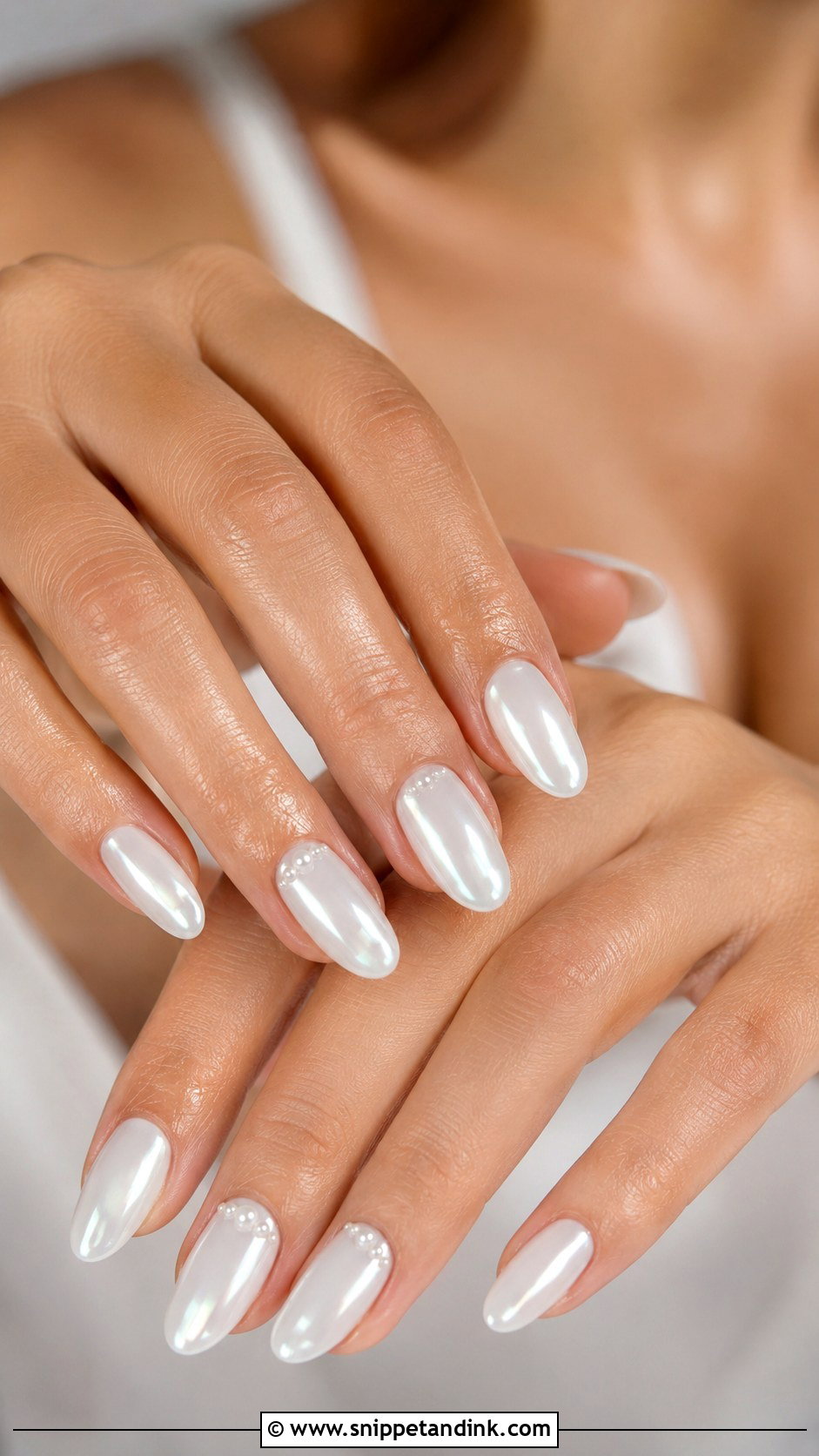
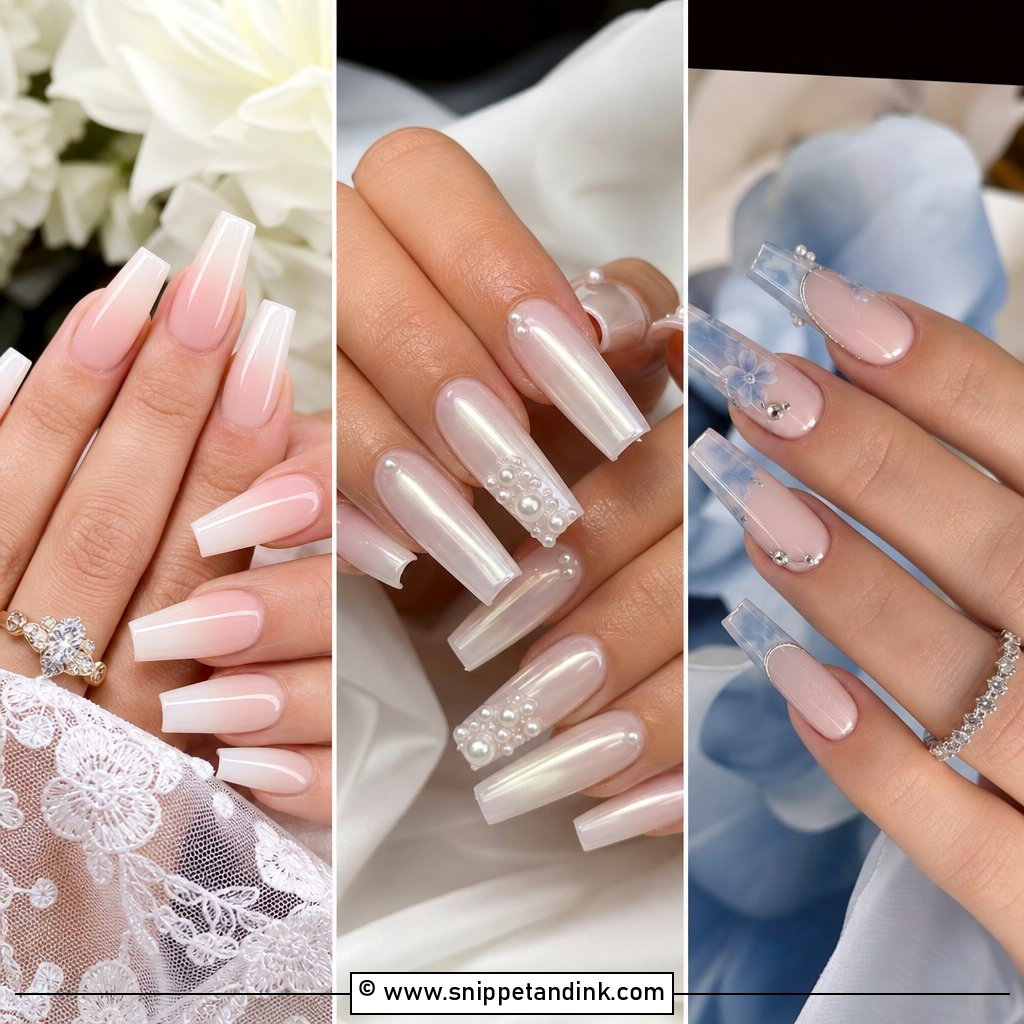
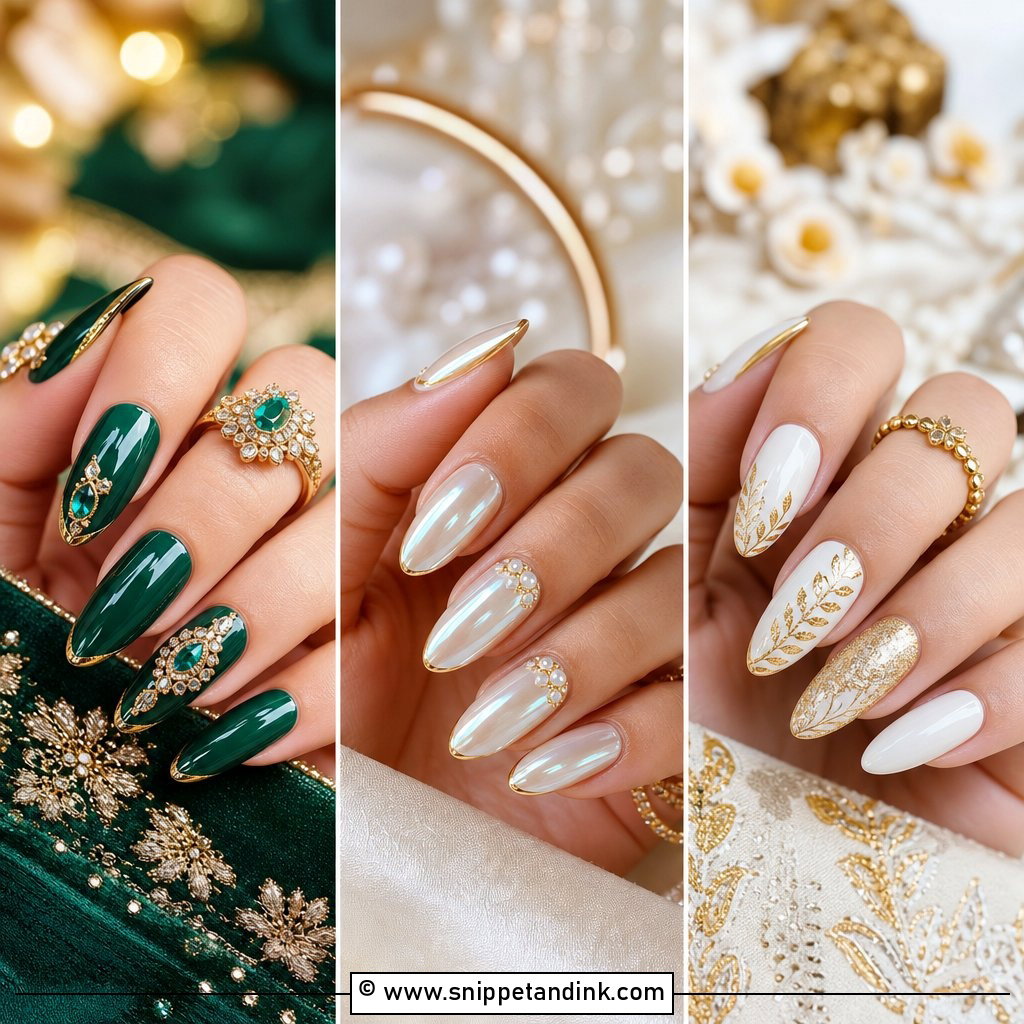
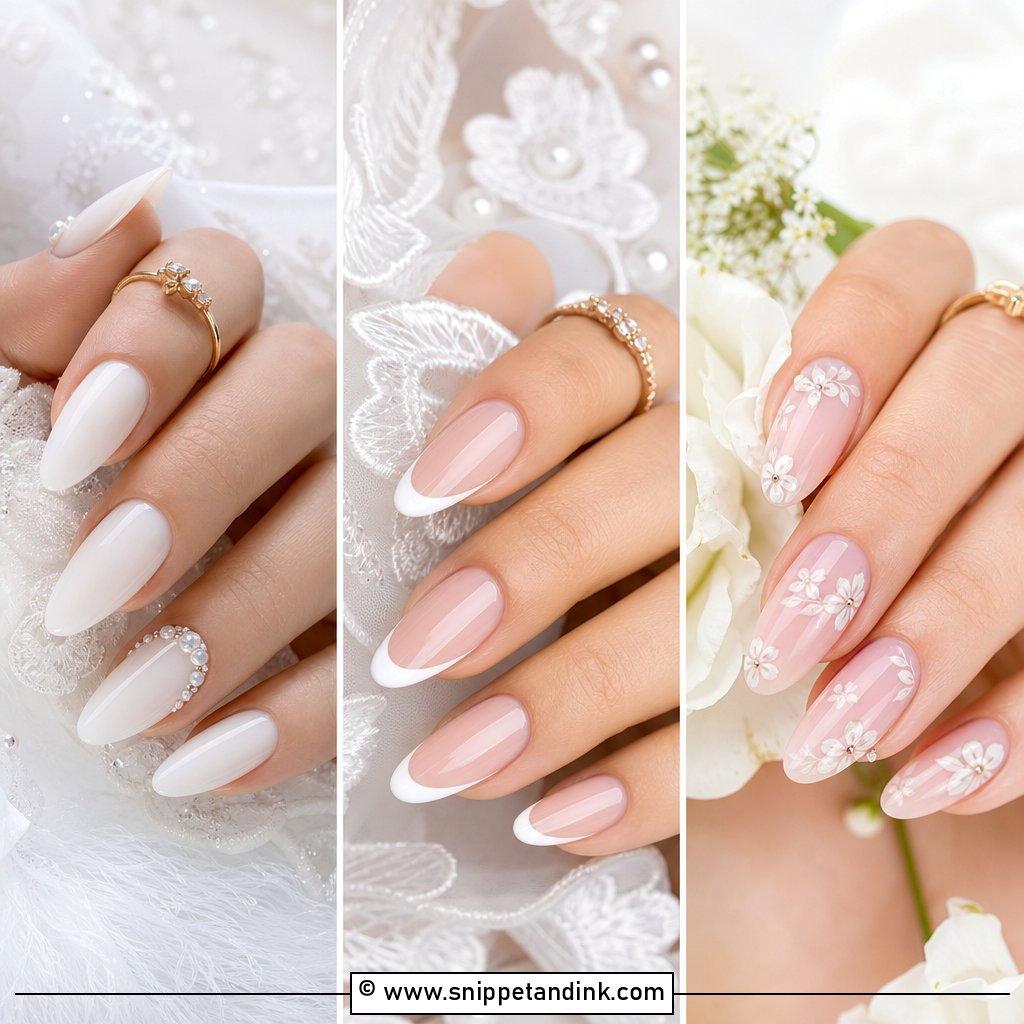
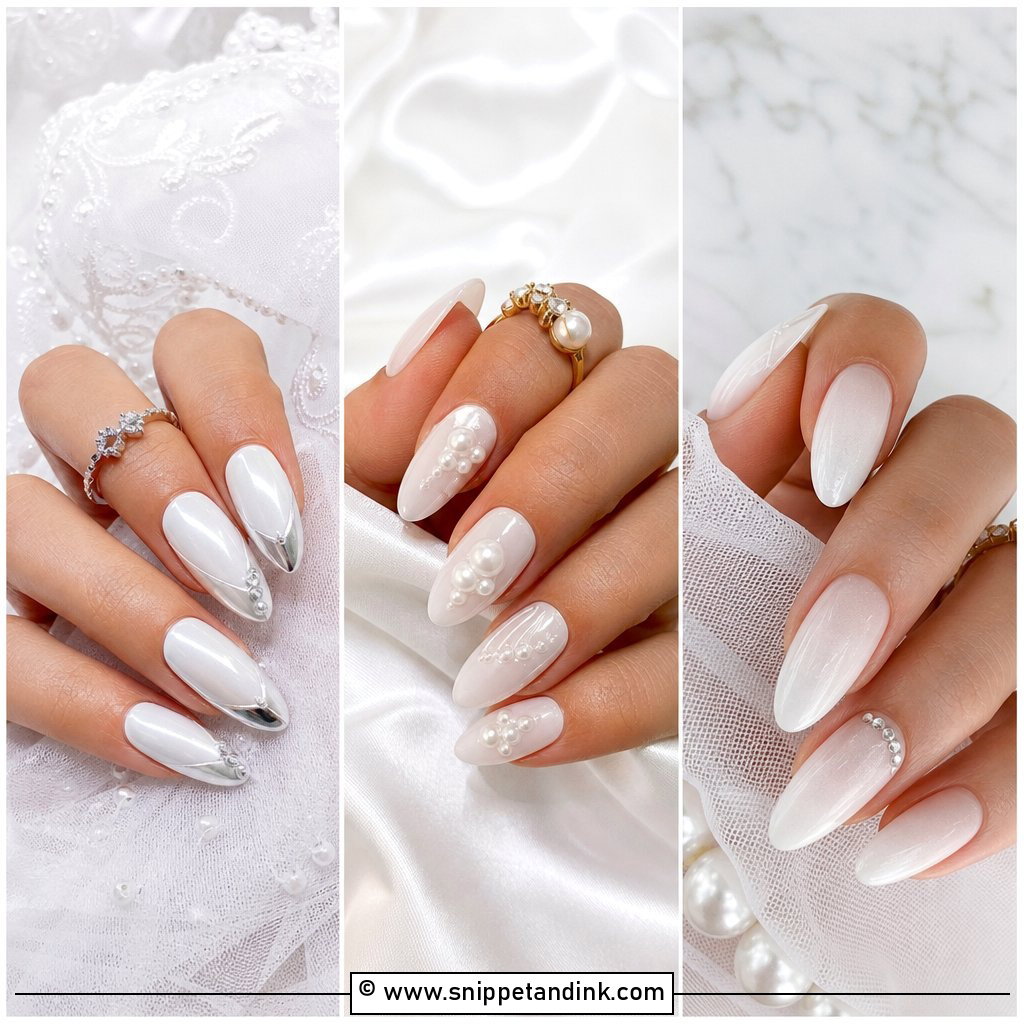
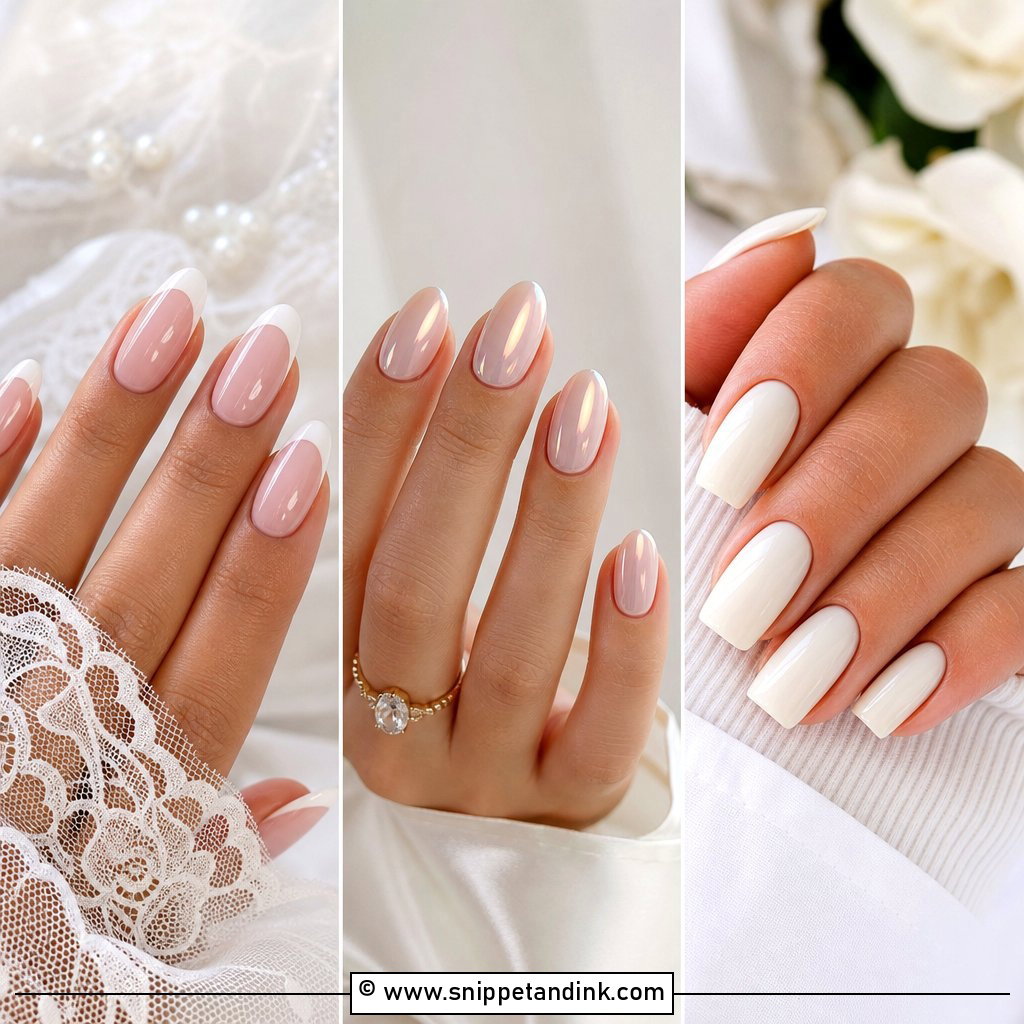
Milky white chrome has a soft pearly glow that reads modern but still bridal. A creamy white base keeps it fresh, and chrome powder rubbed over the top catches bright lights. Reception outfits, ivory lehengas, pastel sarees and diamond or pearl jewelry suit it, and it’s my answer when a bride wants something special that isn’t red or maroon. Chrome highlights every bump underneath, so the base has to be perfectly smooth. It looks best on almond, oval or ballerina shapes, plain or with a few tiny pearl accents.
6. Pink Ombre Indian Wedding Nails
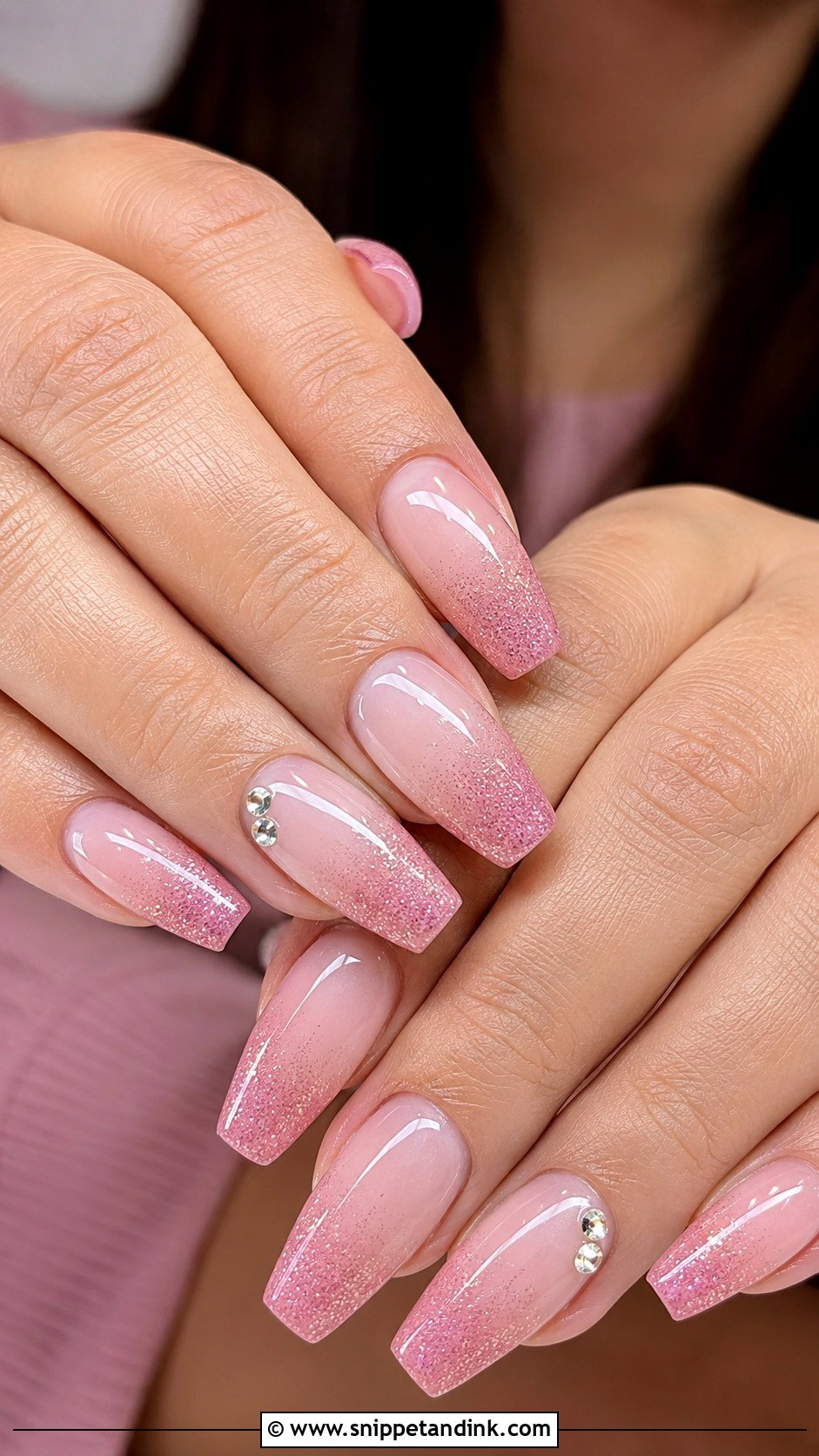
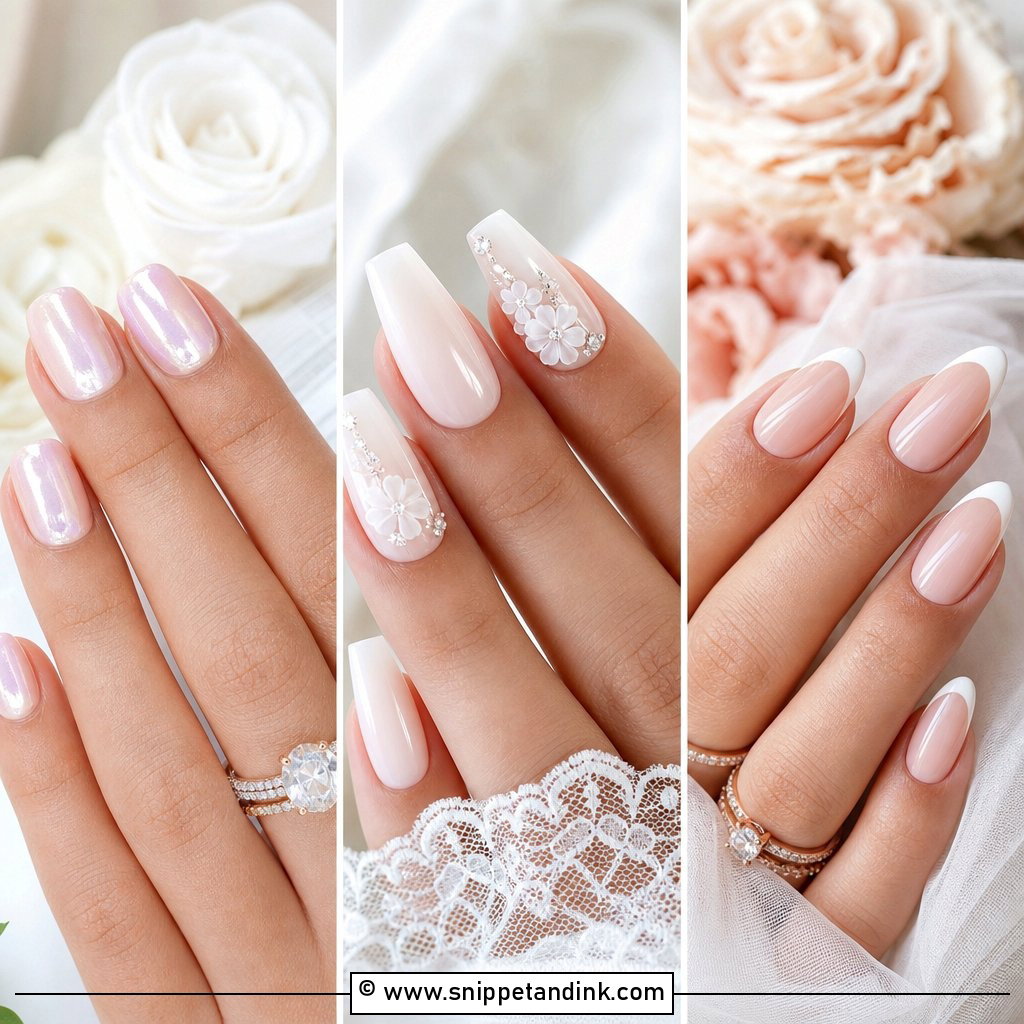
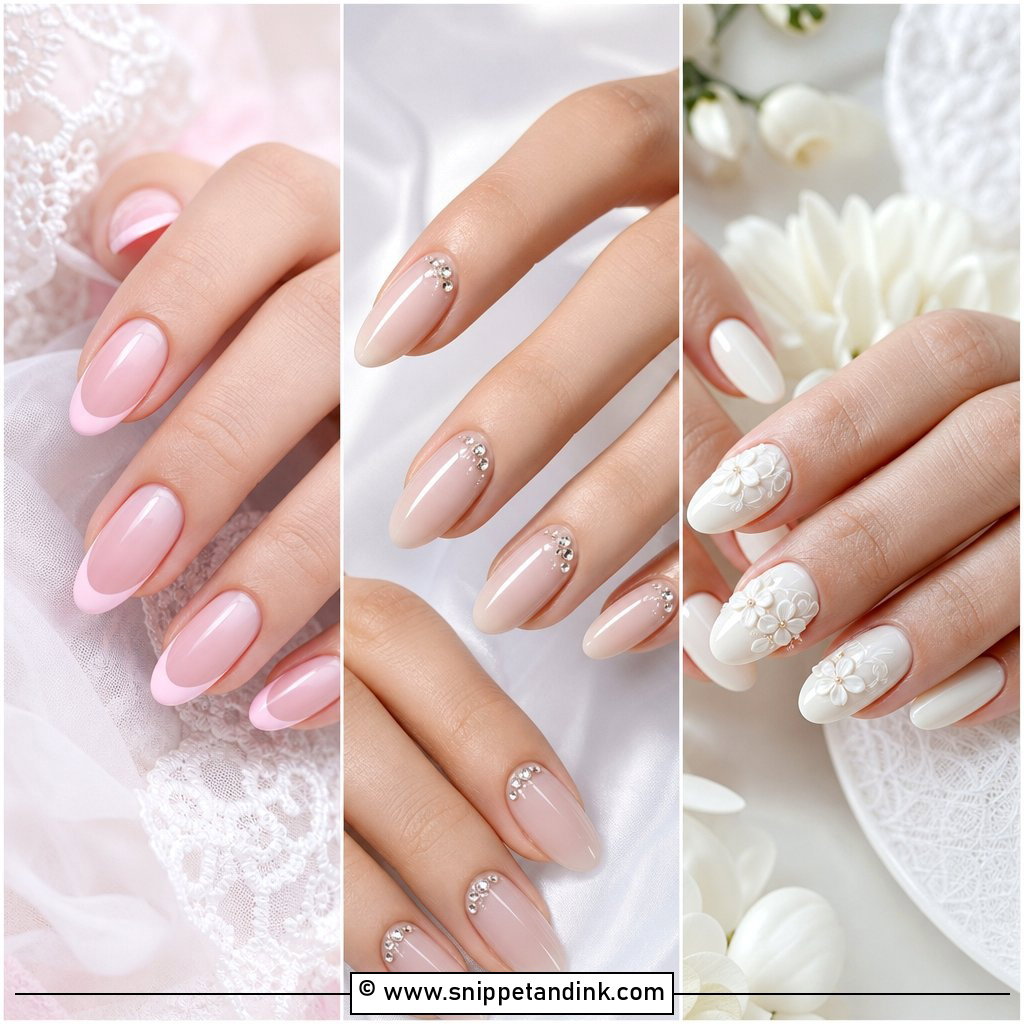
Pink ombre Indian wedding nails fade from a sheer nude at the cuticle into blush, rose or baby pink tips. It looks polished without being bold, so it’s a good fit for engagement ceremonies, roka functions, bridesmaids and guests in pastel or floral outfits. I blend the gradient with a sponge or a soft brush, and a grainy ombre usually means it was rushed. Fine glitter near the tips or one small crystal on the ring finger adds a wedding detail. The fade also makes the nail bed look longer, especially on almond, coffin or oval shapes.
7. Pearl Indian Wedding Nails
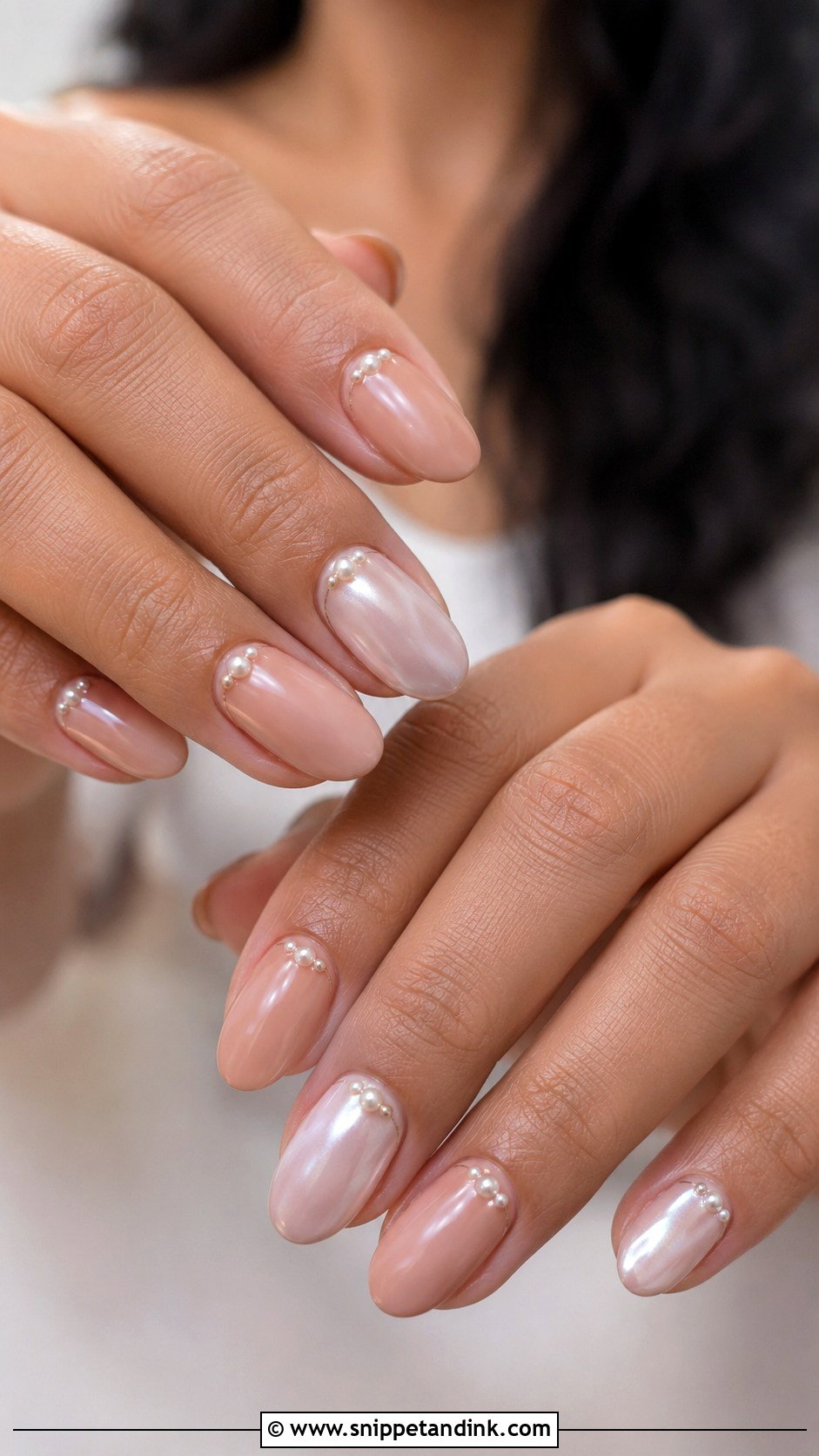
Pearls give a soft kind of luxury. I set small pearls near the cuticle or along one side of the nail, over a sheer nude, milky white or blush base. They suit ivory outfits, chikankari, organza sarees, pastel lehengas and kundan or pearl jewelry, and they look refined in close-ups at a reception or engagement. Here’s the trade-off: raised pearls catch on dupatta net and hair. I keep them small, set them into gel instead of gluing them on top, and limit them to a few nails so the set stays comfortable through long events.
8. Gold Glitter Indian Wedding Nails
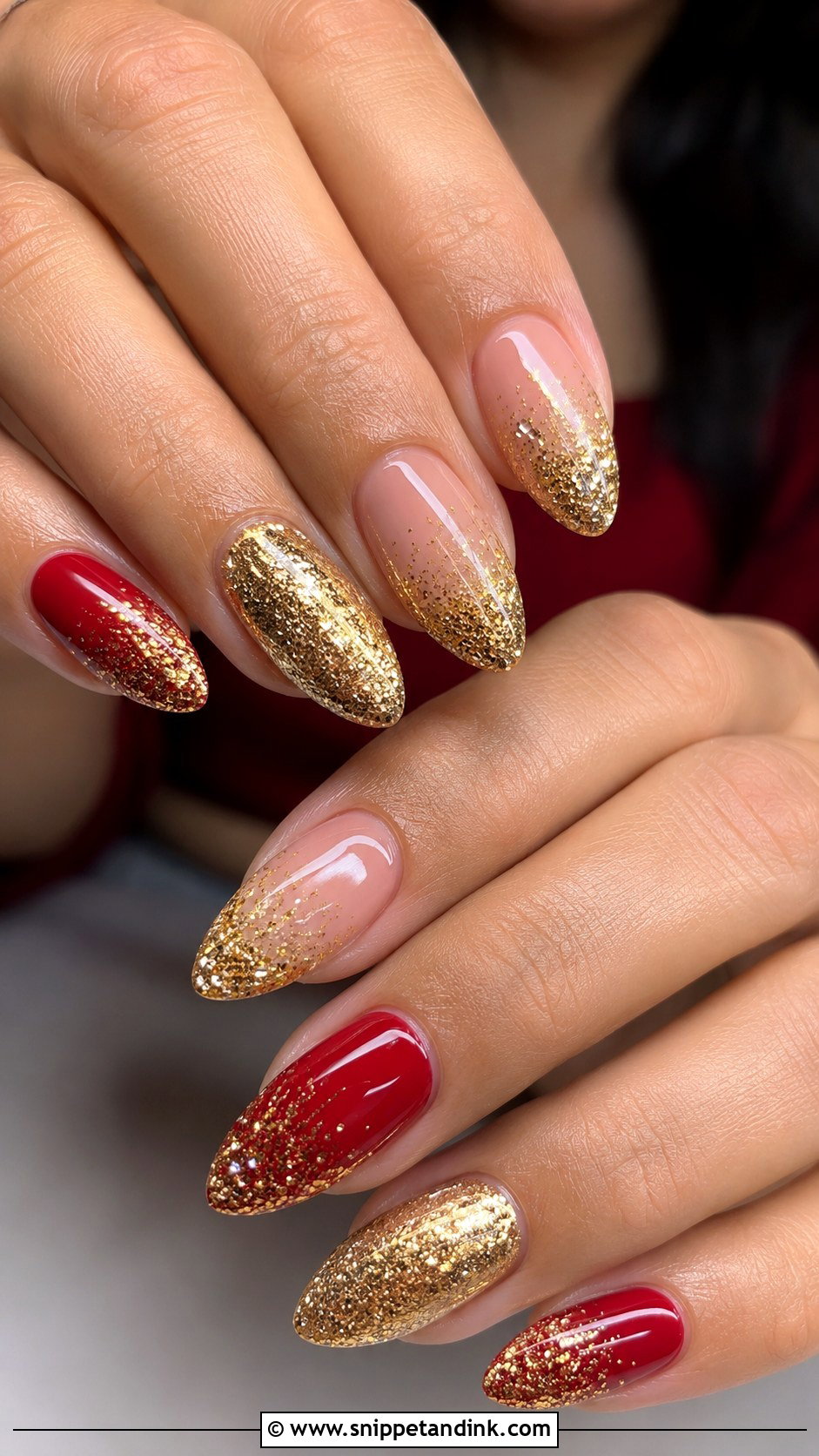
Gold glitter Indian wedding nails shine under stage lights, flash and evening reception settings. I rarely cover every nail in chunky glitter, though. A balanced set mixes soft nude or red bases, gold glitter gradients and one or two fully glittered nails, which looks festive but deliberate. It goes with sequin work, zari borders, mirror work and metallic embroidery. Medium almond or coffin shapes give the sparkle room. Glitter leaves a gritty surface, so I build the topcoat in layers until it’s completely smooth, otherwise it snags threads.
9. Red French Tip Indian Wedding Nails
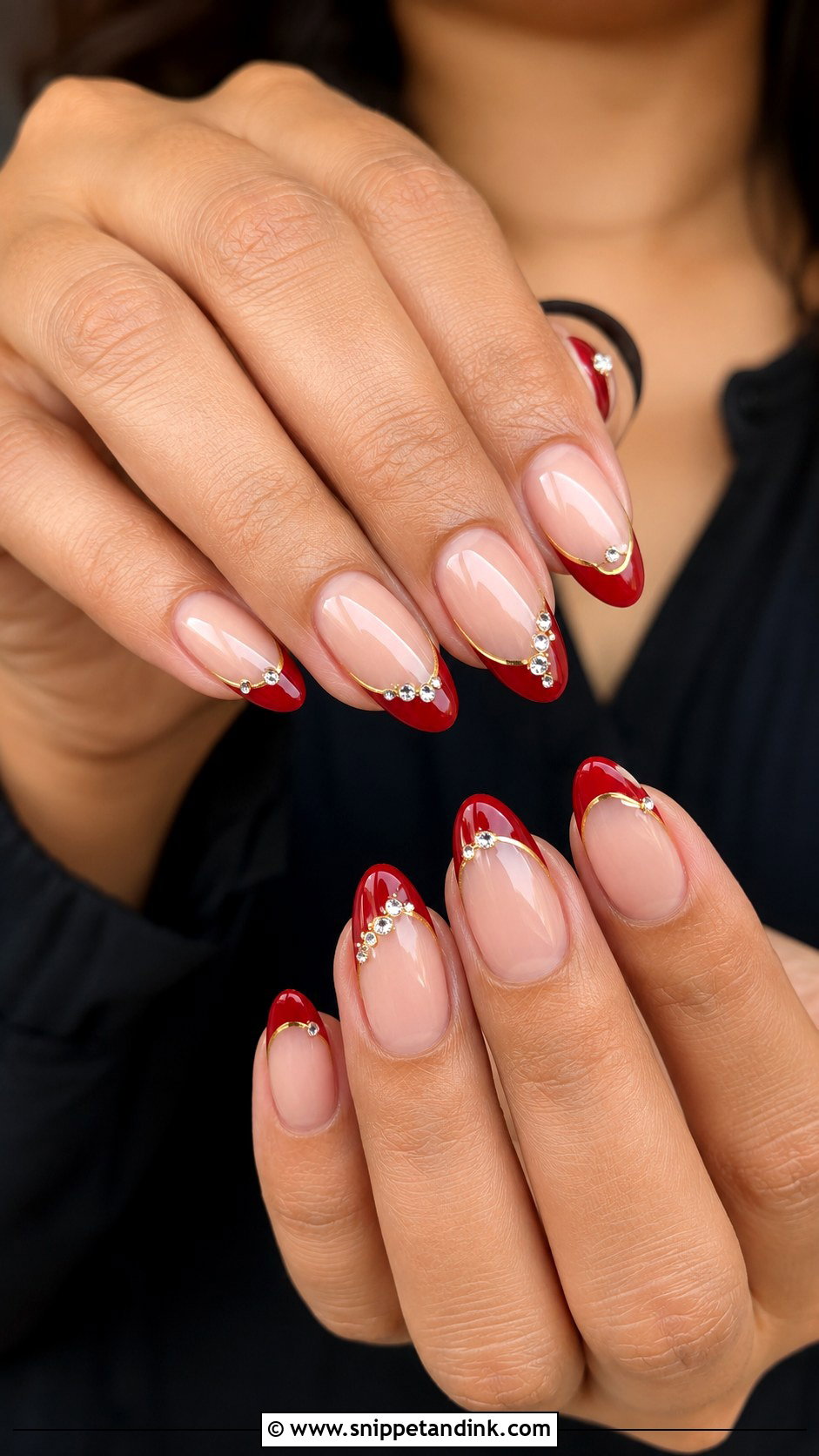
A red French tip is the modern route to a red bridal nail. The base stays nude or sheer pink and the colour sits only at the tip, which keeps the hands clean while still tying in traditional red. Plain tips, a gold outline or a few tiny crystals all work. It’s a good choice if full red feels heavy on your hands, and it works for sisters, bridesmaids and guests too. Red tips magnify any unevenness in the smile line, so I check both hands side by side before curing. Almond and square shapes both suit it.
10. White And Gold Indian Wedding Nails
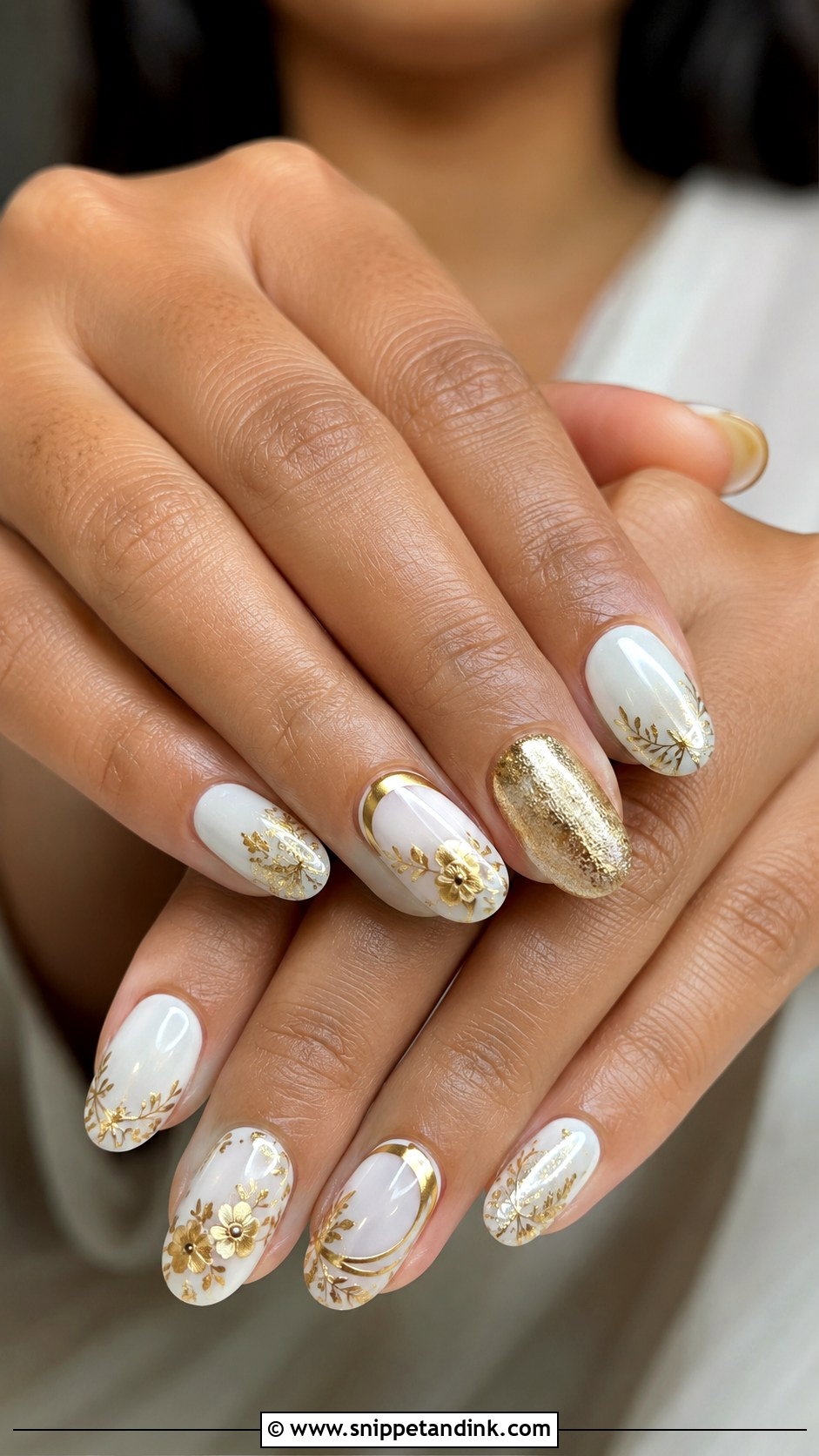
White and gold looks bright and sophisticated. The white base is a clean canvas, and gold brings the richness Indian weddings expect: foil, fine metallic lines, small florals or a slim French tip. Ivory, cream, gold, emerald and pastel outfits all suit it, which makes it a flexible choice for brides and guests alike. My rule is to balance against the outfit. Heavy jewelry means minimal nail art; a simple outfit can take more gold. Pure white can look stark on very warm skin, so I sometimes soften it to an off-white.
11. Rose Gold Indian Wedding Nails
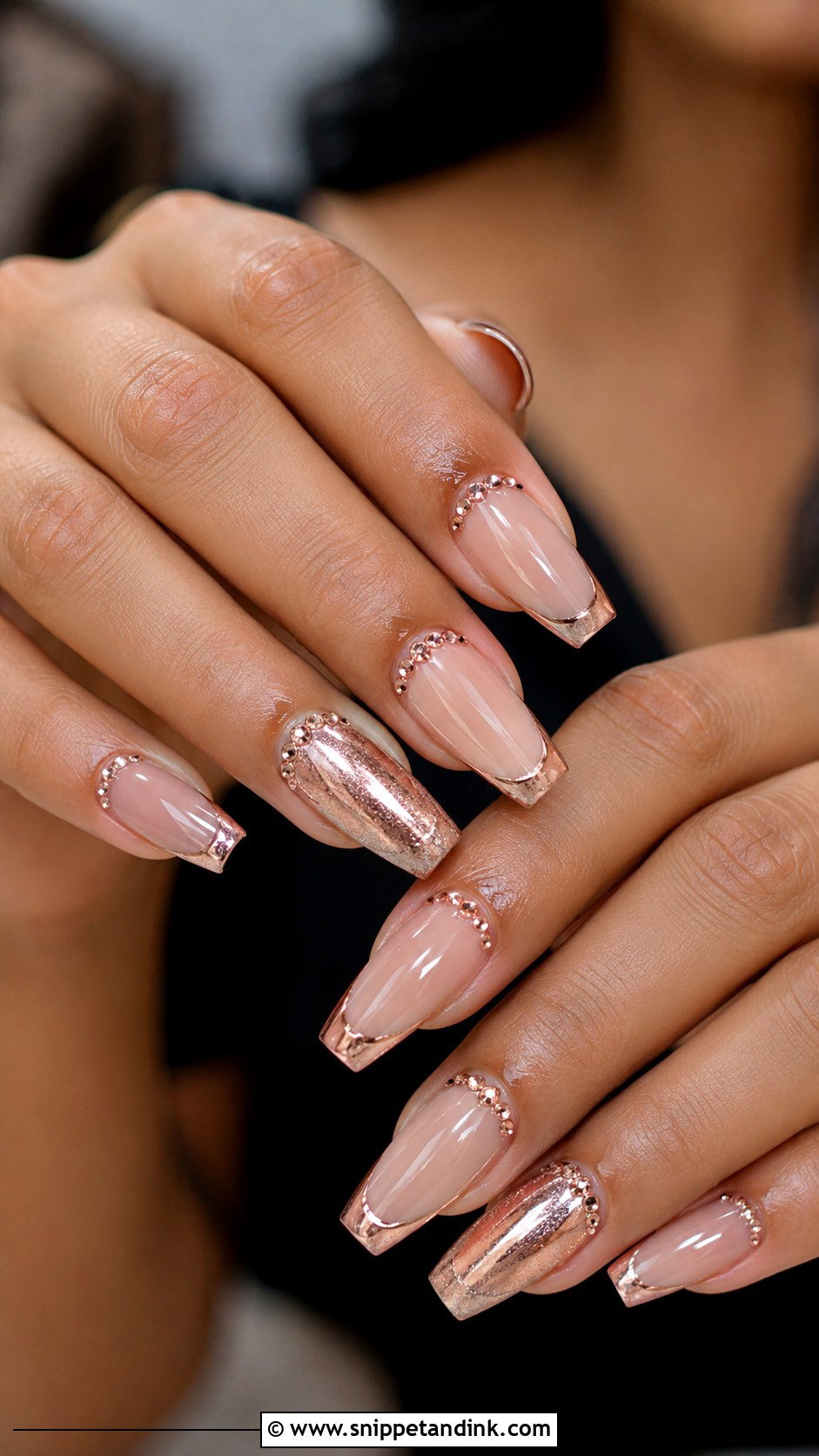
Rose gold sits between pink and gold, which is why it warms up so many skin tones. I build it over a blush or nude base with rose gold chrome, foil or glitter, and it suits engagement parties, receptions and cocktail-style events with peach, dusty pink, champagne, mauve or rose-toned outfits. Fine rose gold French tips or a few small crystals add detail. The finish should look luminous rather than mirror-metallic. Medium almond or coffin is the shape I’d choose here.
12. Green And Gold Indian Wedding Nails
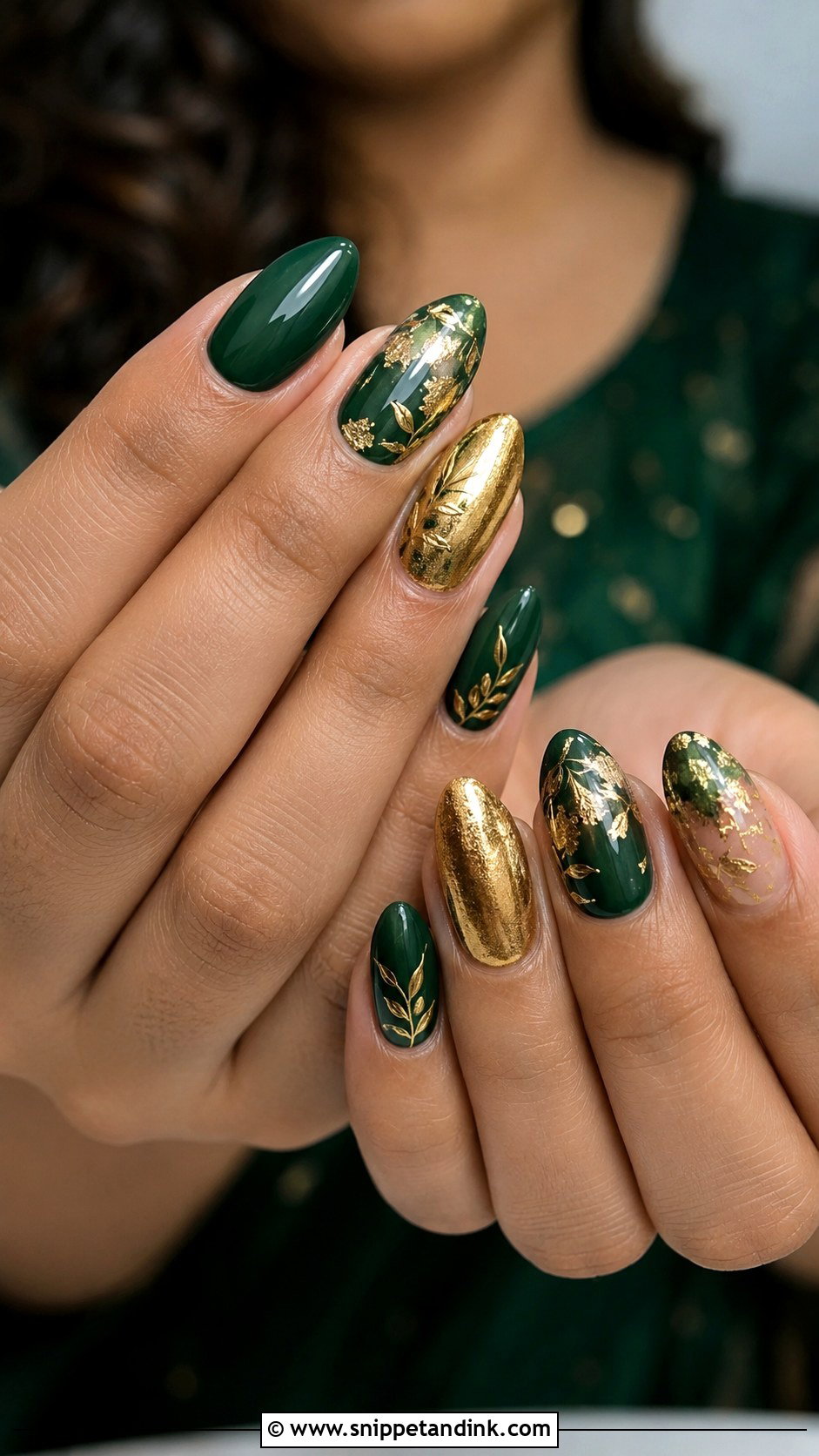
Green and gold suits emerald, mehndi green, bottle green and traditional silk outfits. Green feels festive, and gold keeps the manicure tied to the jewelry and embroidery. A deep green base with gold foil, a green French tip over nude, or alternating green and gold accents are the three versions I paint most. It works well at the mehndi, sangeet or reception. With heavy work on the outfit, I keep the nails glossy and clean; with a simpler outfit, leafy details, crystals or metallic borders fill it out. Dark green needs two thin coats rather than one thick one, or it wrinkles while curing.
13. Pastel Indian Wedding Nails
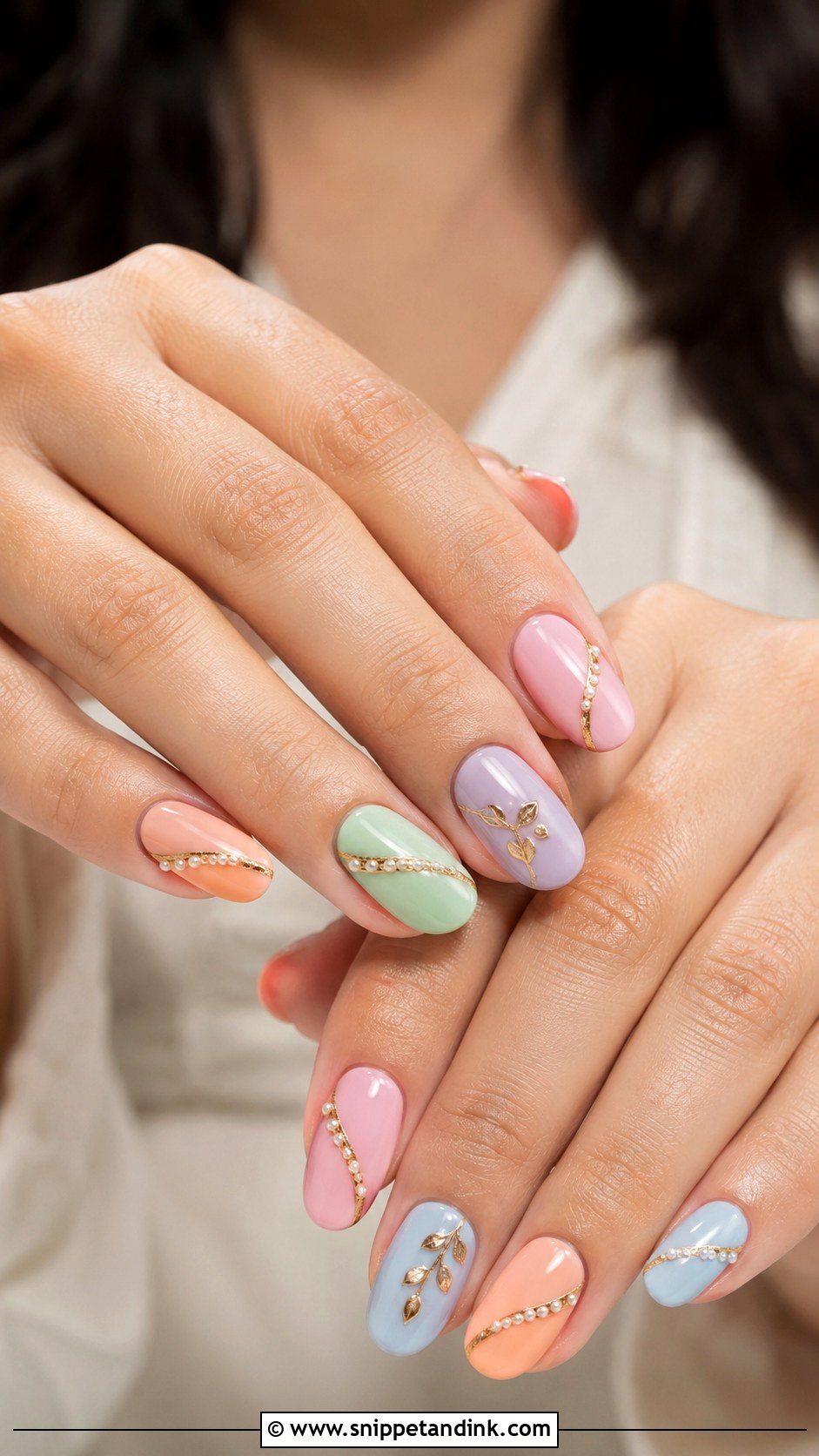
Pastels belong to daytime ceremonies, summer weddings, bridesmaids and guests in lighter outfits. Baby pink, lavender, mint, peach and powder blue can be used together across a set without looking loud. Fine gold lines, small pearls, subtle chrome or delicate florals make it feel wedding-ready. They look fresh with organza sarees, floral lehengas and minimal jewelry. Pastels are often streaky, so I use a pigmented gel and allow for an extra coat. Soft oval or almond shapes keep the whole effect airy.
14. Floral Indian Wedding Nails
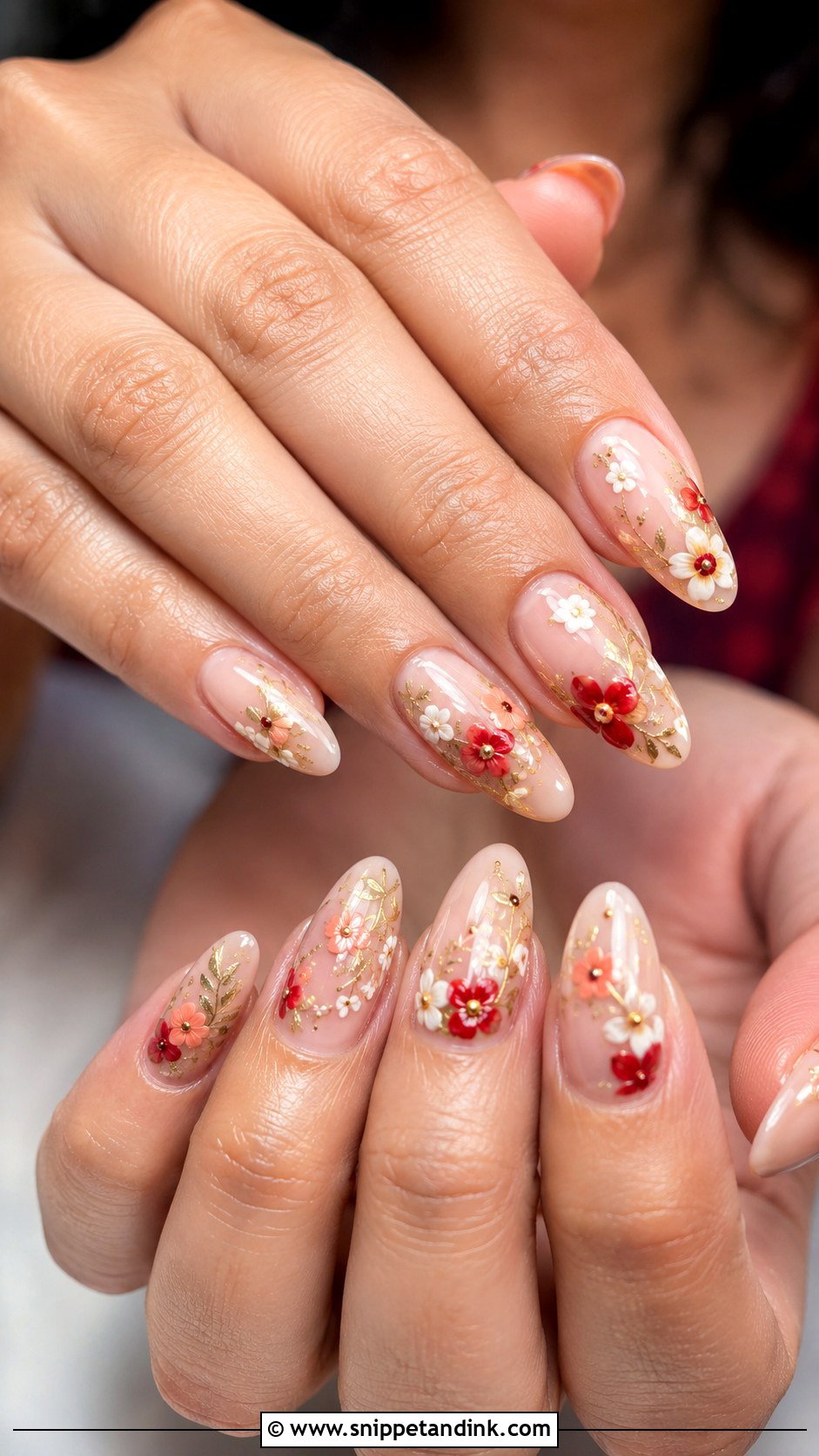
Floral nails can be tiny hand-painted flowers, pressed-flower effects or soft 3D blooms over a nude, blush or milky base. For Indian weddings I lean on red, pink, white, gold or peach, which match garlands, decor and embroidery. They’re right for engagement ceremonies, haldi, garden weddings and pastel bridal looks. I balance the placement across the set, with some nails plain and others detailed, so the hands don’t look cluttered. Real pressed flowers need to be fully sealed under gel, or the edges lift and discolour. A glossy finish keeps the painting fresh, and a subtle chrome layer adds glow.
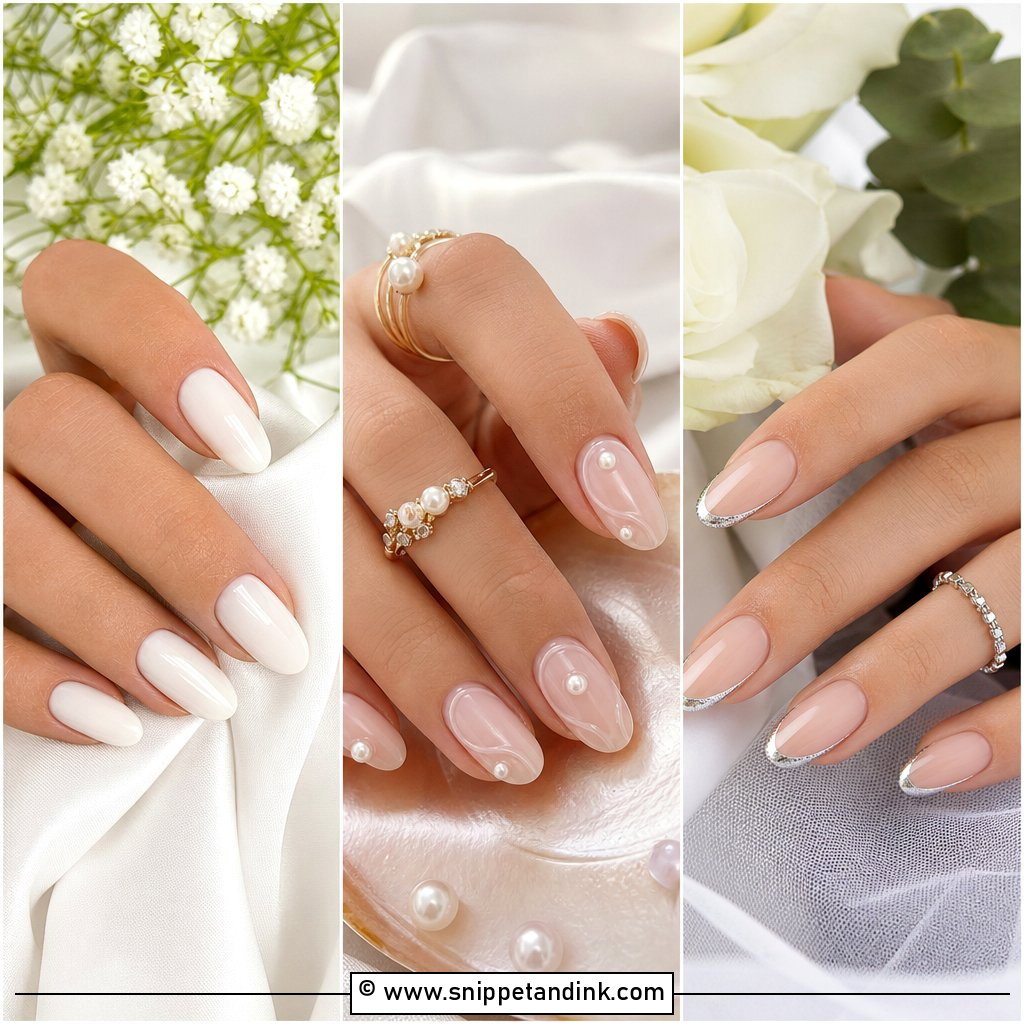
15. Mirror Work Indian Wedding Nails
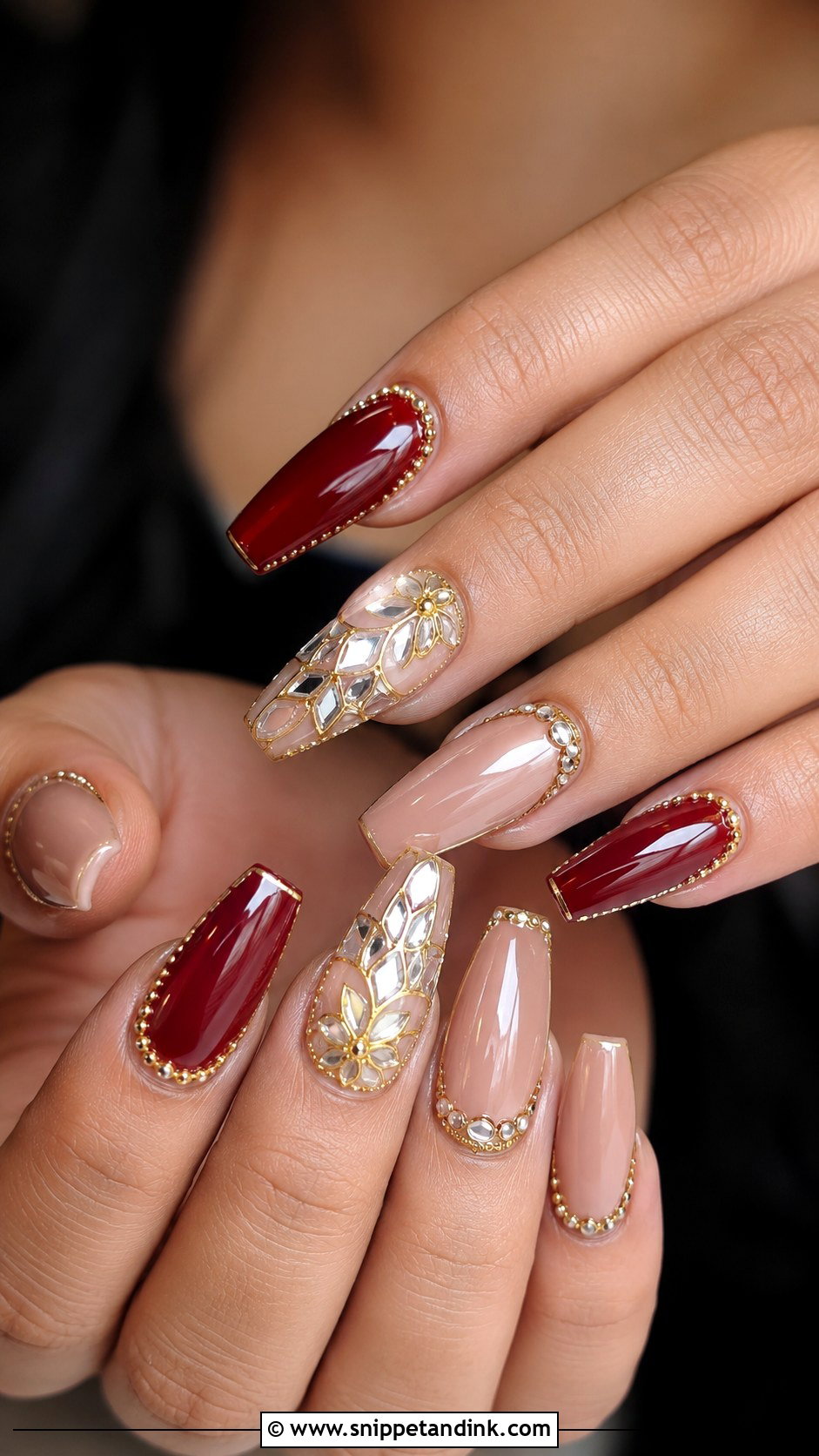
Mirror-work nails borrow from the sparkle of traditional lehengas. I use tiny reflective pieces, silver or gold accents and a strong base in red, pink, nude, green or white. Every hand movement catches the light, which is why they suit sangeet, reception and dancing events. Oversized embellishments look clumsy and snag, so I use small mirror pieces on two accent nails, glossy solid colour on the rest and fine metallic borders. Medium to long nails give the reflective pieces room. On short nails, the same design starts to look crowded.
16. Haldi Yellow Indian Wedding Nails
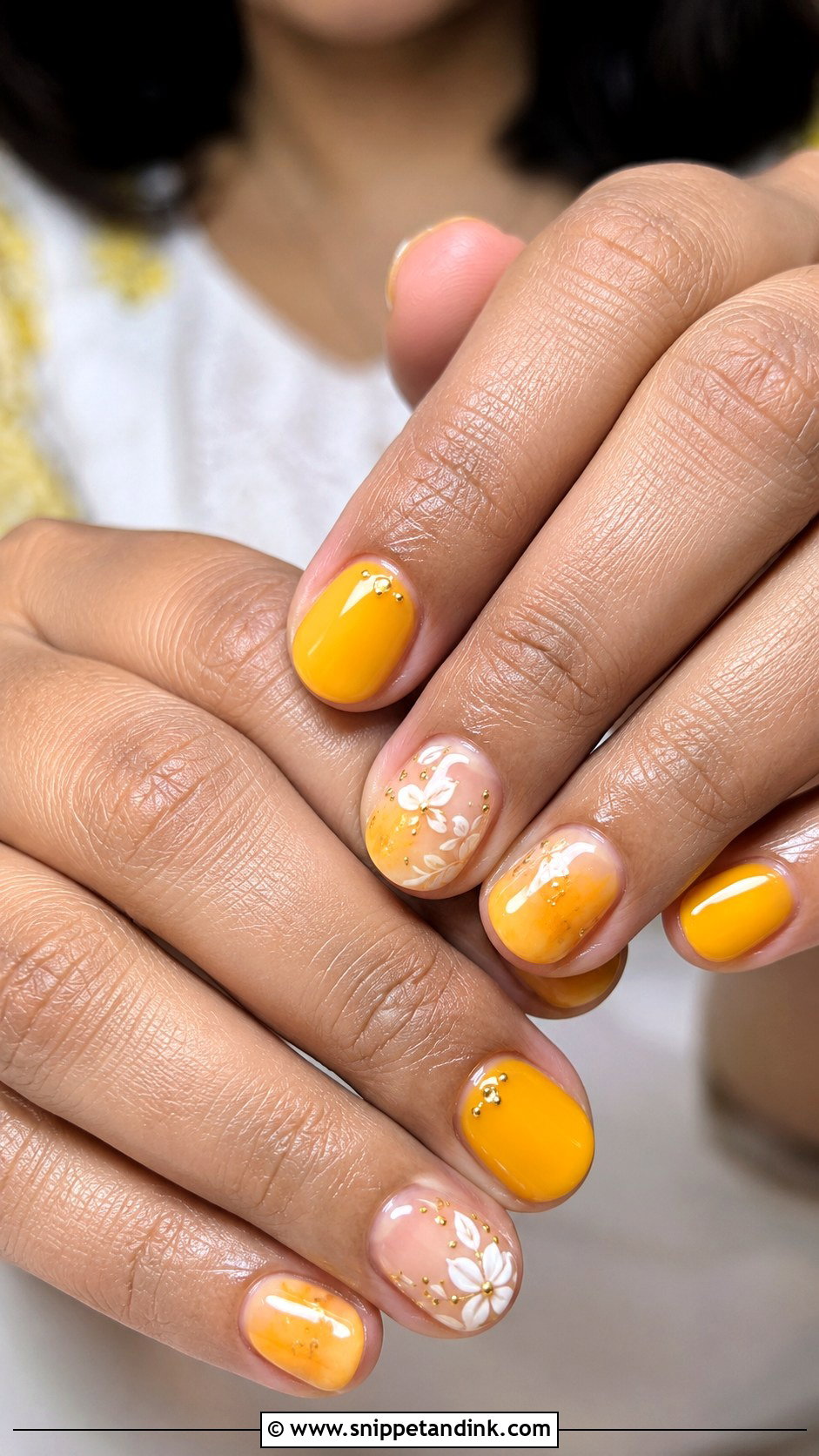
Haldi yellow is cheerful and meant for the pre-wedding celebrations. A warm yellow base matches the mood of the ceremony, and white florals, gold dots, a soft orange gradient or tiny marigold details make it look finished. Short oval or square nails are practical for an active daytime event. If yellow on every nail feels too bold, I mix it with nude accents and fine gold. One practical note: turmeric paste stains porous surfaces, so a fresh gel topcoat is your friend here, and lighter nudes may pick up a yellow tint by the end of the ceremony.
17. Sangeet Glitter Indian Wedding Nails
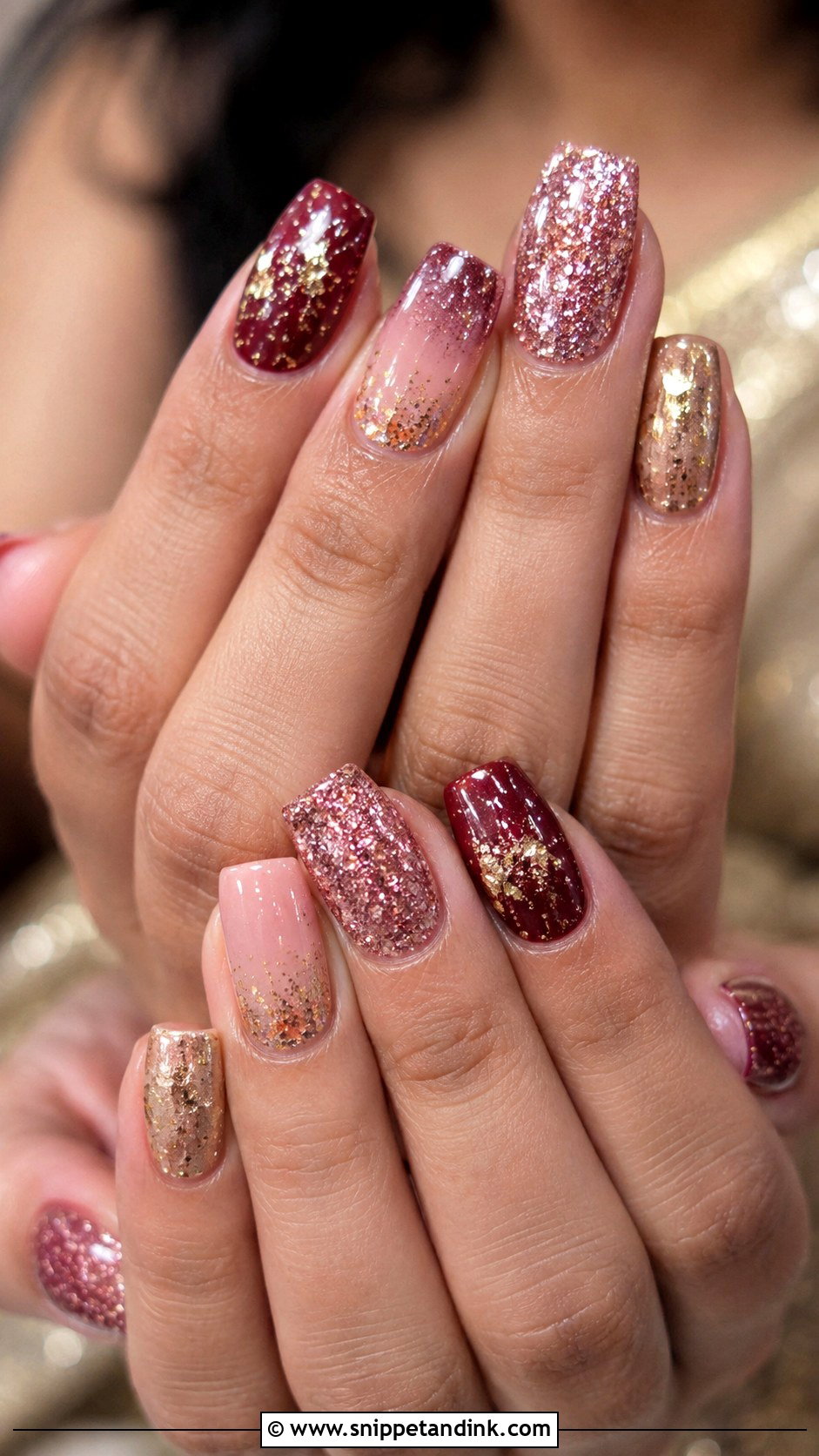
Sangeet nails should feel fun and ready for movement. The night is all lights, music and dancing, so glitter makes sense. I start with a base that matches the outfit, such as pink, champagne, silver, gold, navy or burgundy, then add a glitter ombre, metallic flakes or one full sparkle nail per hand. The skill is making it shine without looking messy, which comes down to limiting glitter to one or two zones rather than scattering it everywhere. Coffin, almond and square shapes all work. Gel keeps the glitter smooth and strong through hours of dancing.
18. Reception Chrome Indian Wedding Nails
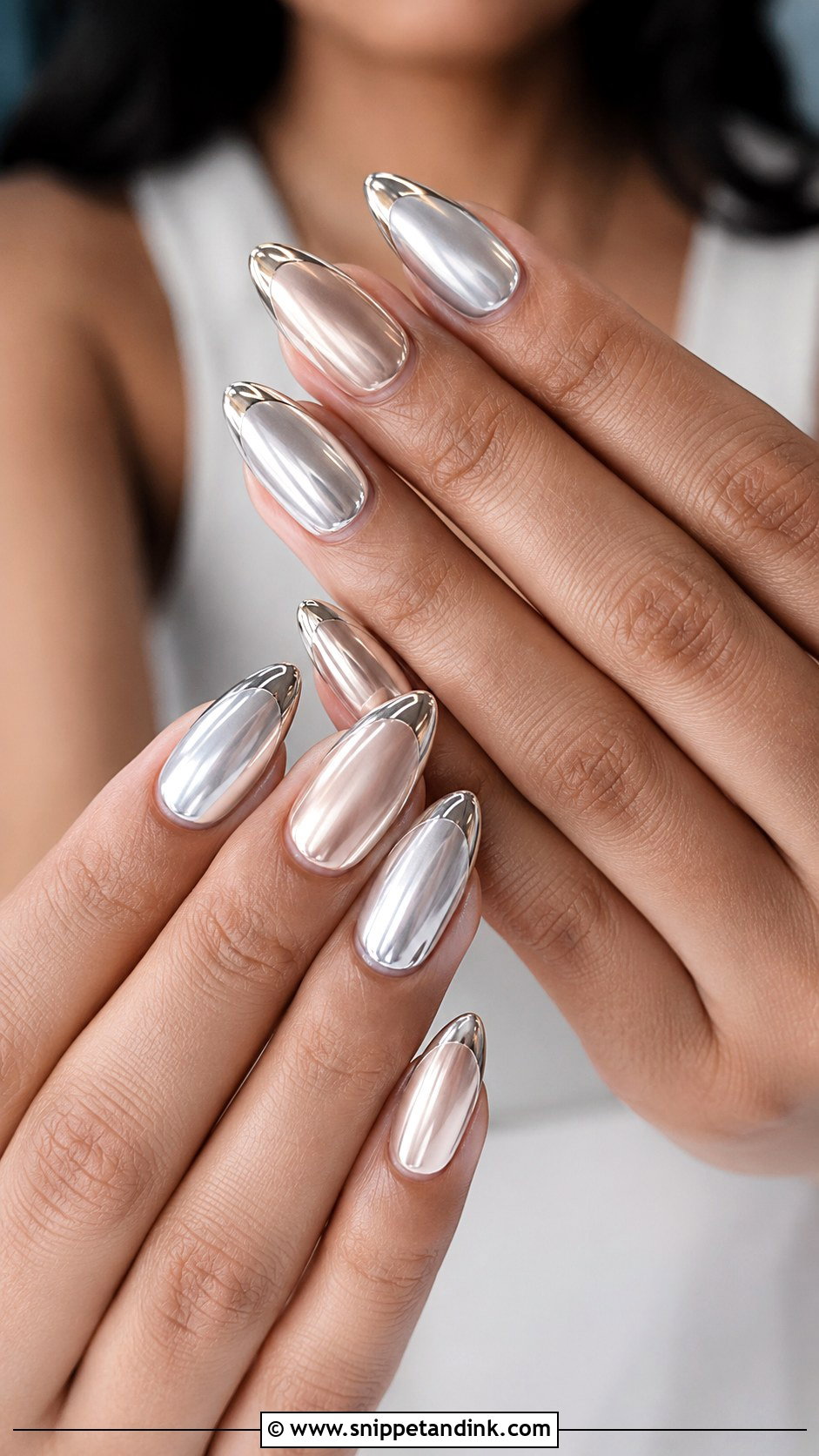
Chrome is sleek and camera-friendly at an evening reception, reflecting light in a smooth, high-shine sheet. Silver, champagne, rose, pearl and bronze chrome all work depending on the outfit and jewelry. You can wear a full chrome set or soften it with a nude base and chrome French tips. It pairs with gowns, modern lehengas, metallic sarees and statement jewelry. Longer almond or coffin nails make it dramatic; short oval nails keep it clean and minimal. I’d avoid full mirror chrome if you’ll be using your hands a lot that day, since it scratches more visibly than a cream colour.
19. Short Indian Wedding Nails
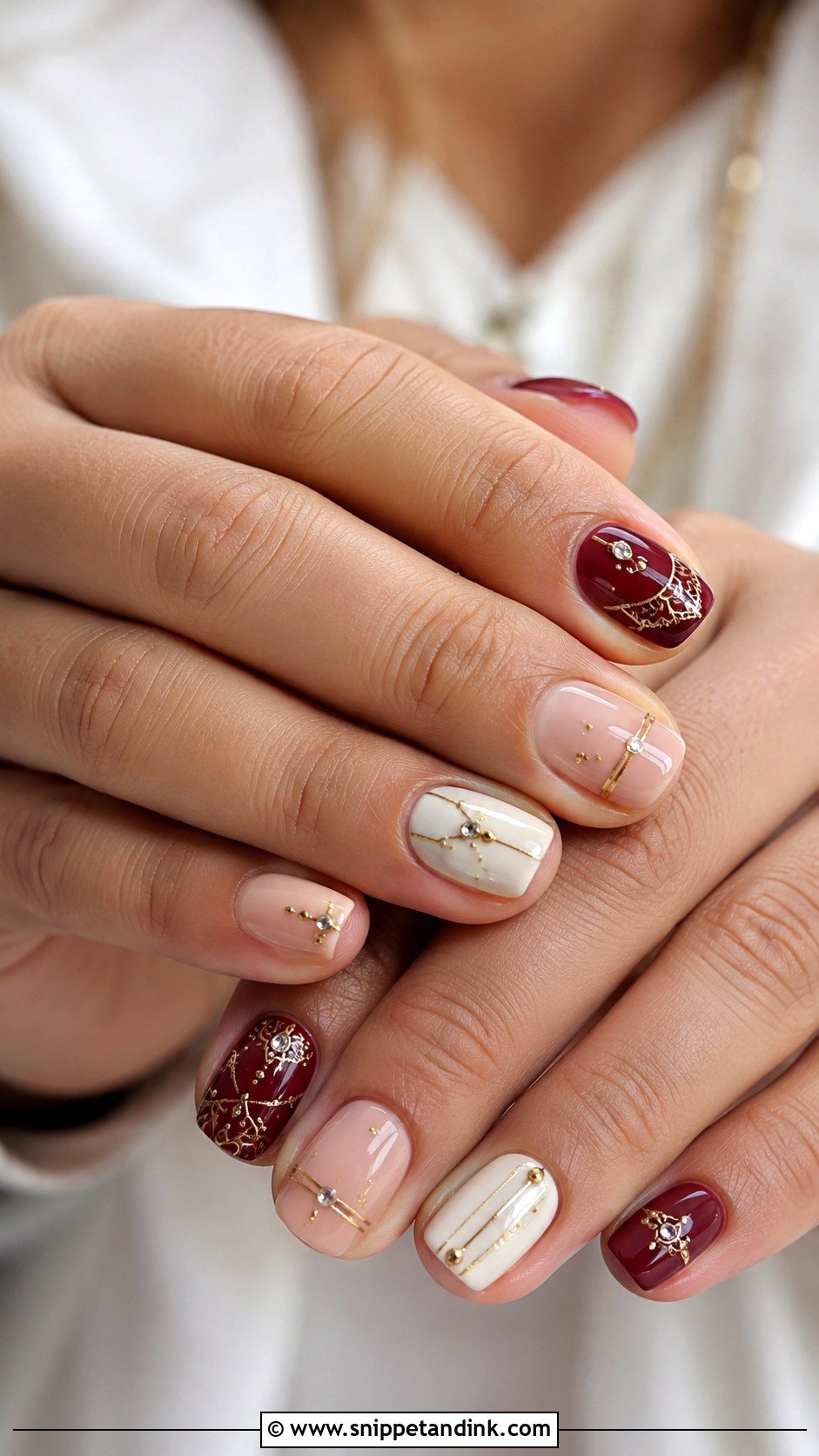
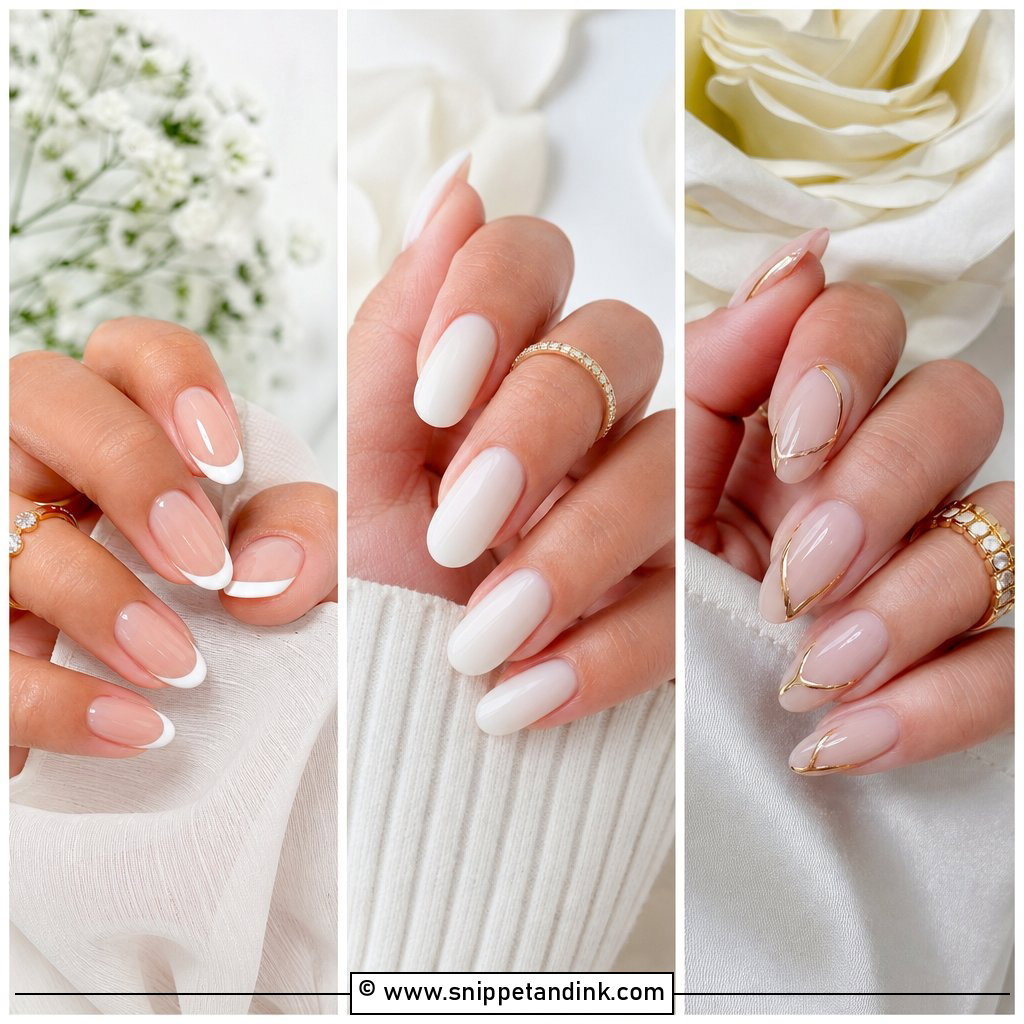
Short nails can look every bit as polished as long ones when the design is planned for them. Clean colour, fine detail and a glossy finish do the work. Red, maroon, nude, pink, gold and milky white all suit short nails. I skip heavy 3D accents and use thin gold lines, tiny dots, small crystals or delicate mehndi-style art instead. Short is also practical through rituals, outfit changes, dancing and travel. A rounded square or short oval keeps the hands neat, and a well-shaped short nail photographs better than a long nail that’s starting to lift.
20. Minimal Indian Wedding Nails
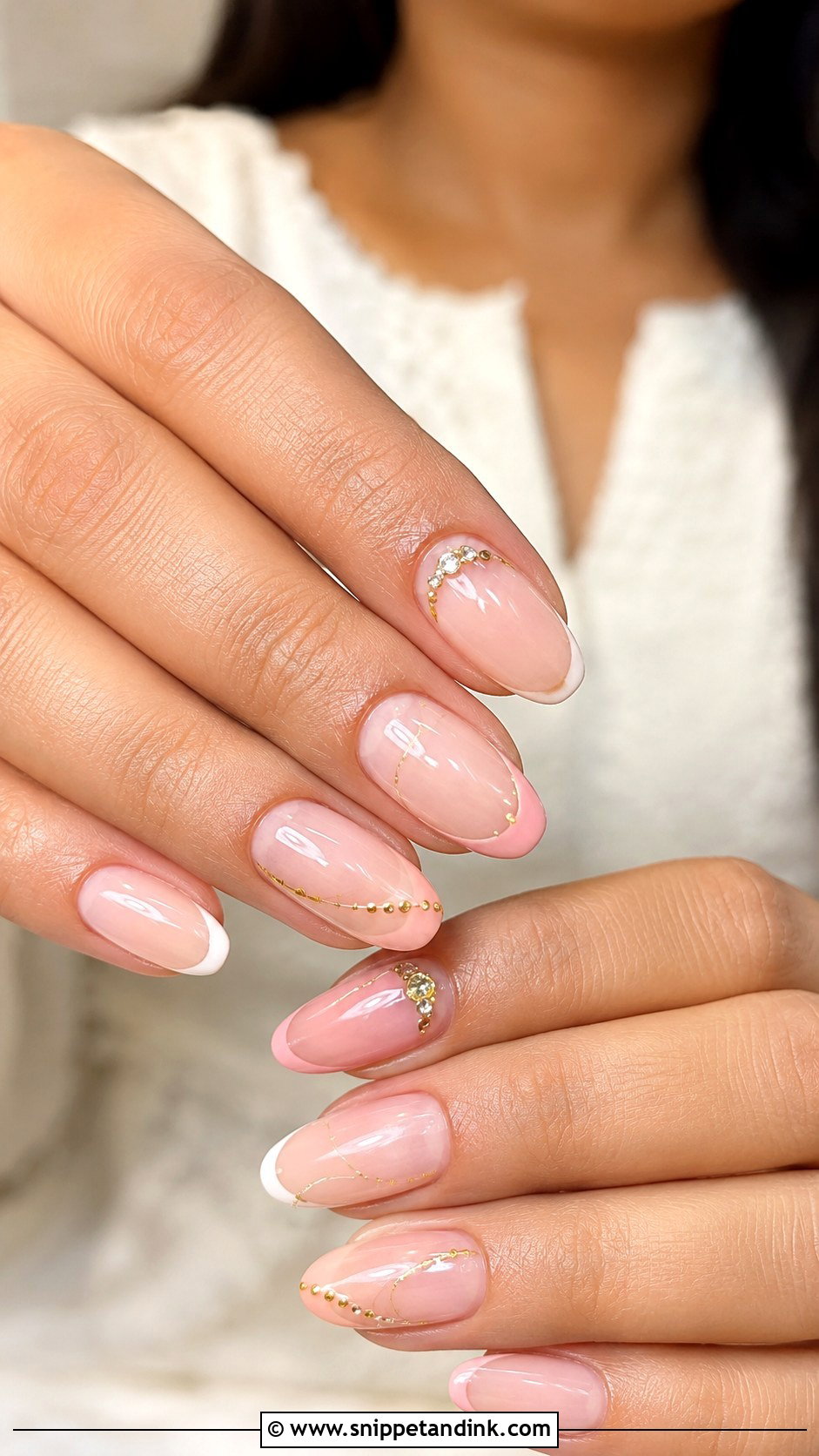
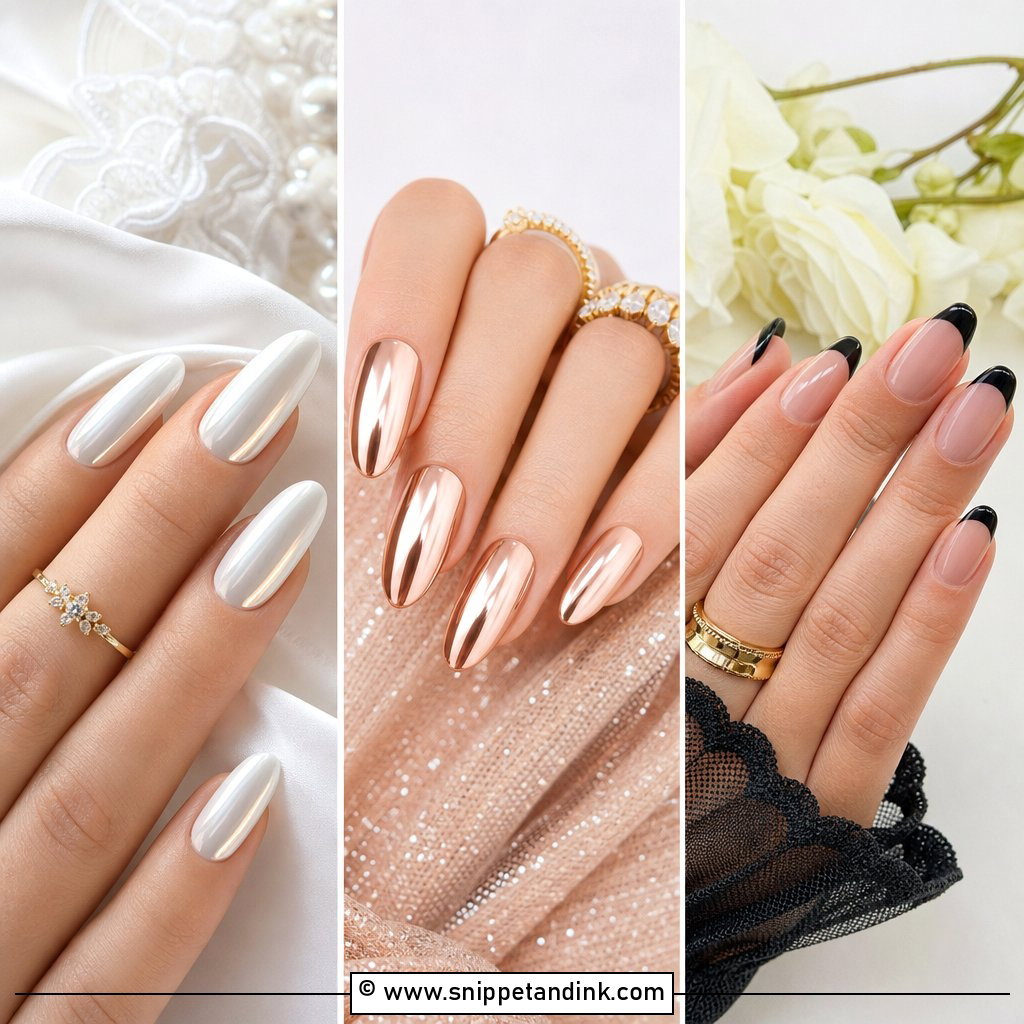
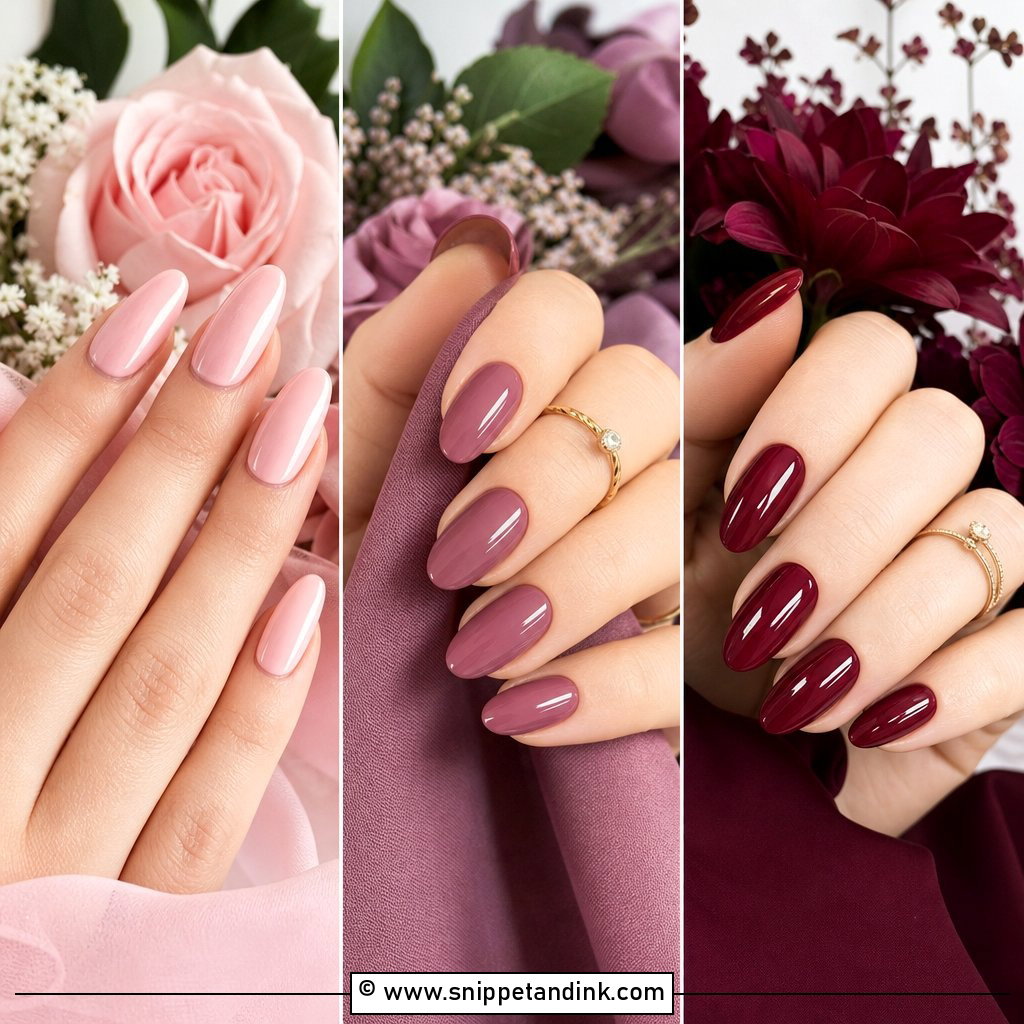
Minimal nails carry just a hint of celebration. A sheer pink, nude, milky beige or soft peach base keeps it clean, and tiny gold dots, thin French tips, micro crystals or fine line art add the wedding detail. I recommend it when the outfit, jewelry or mehndi is already very detailed, and to guests who need one manicure for several ceremonies. Pick a shade close to your natural nail colour; it flatters the hands and hides growth at the cuticle as the week goes on.
Bangles, Chooda and Kaleere Are Hard on Long Nails
Brides often forget that their wrists will be loaded with jewelry. Bangles are pushed over the hand, which compresses the fingers and puts pressure on the tips. Long, pointed shapes catch on the bangle edge, and 3D stones get scraped. If your chooda or a stack of glass bangles is going on during the ceremony, I’d keep the length moderate and the accents flat.
Kaleere hang from the bangles and swing as you move. They rarely damage nails, but they tangle easily with raised pearls or charms. Keep the most textured nail art away from your dominant hand if that’s the side they’ll hang on.
Taking the set off after the wedding
Many brides want to keep their mehndi as long as possible after the wedding. A full acetone soak lightens the henna around the fingers, so I suggest waiting until the stain has started to fade before removal. When you do take it off, have it removed professionally or soak it properly. Prying it off is what leaves nails thin and sore for weeks.
A Small Detail That Shows Up in Every Close-Up
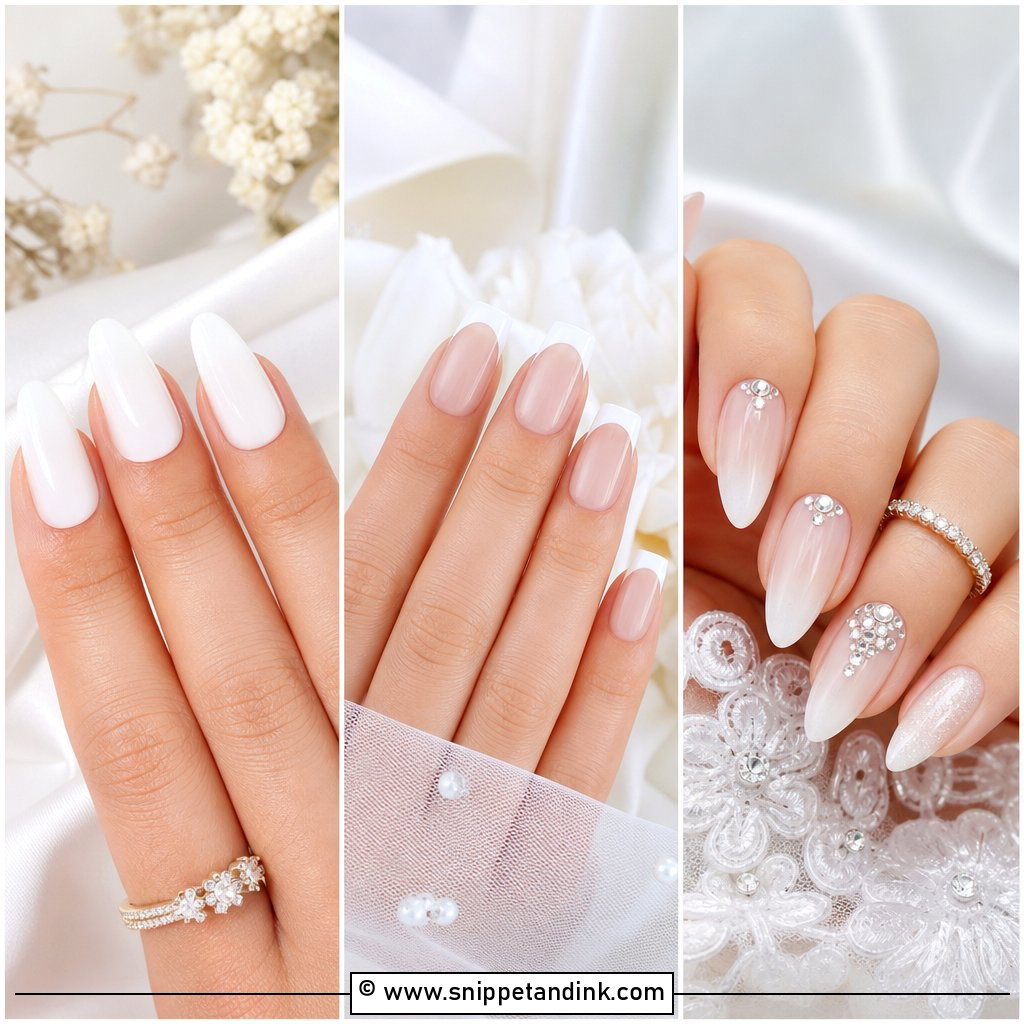
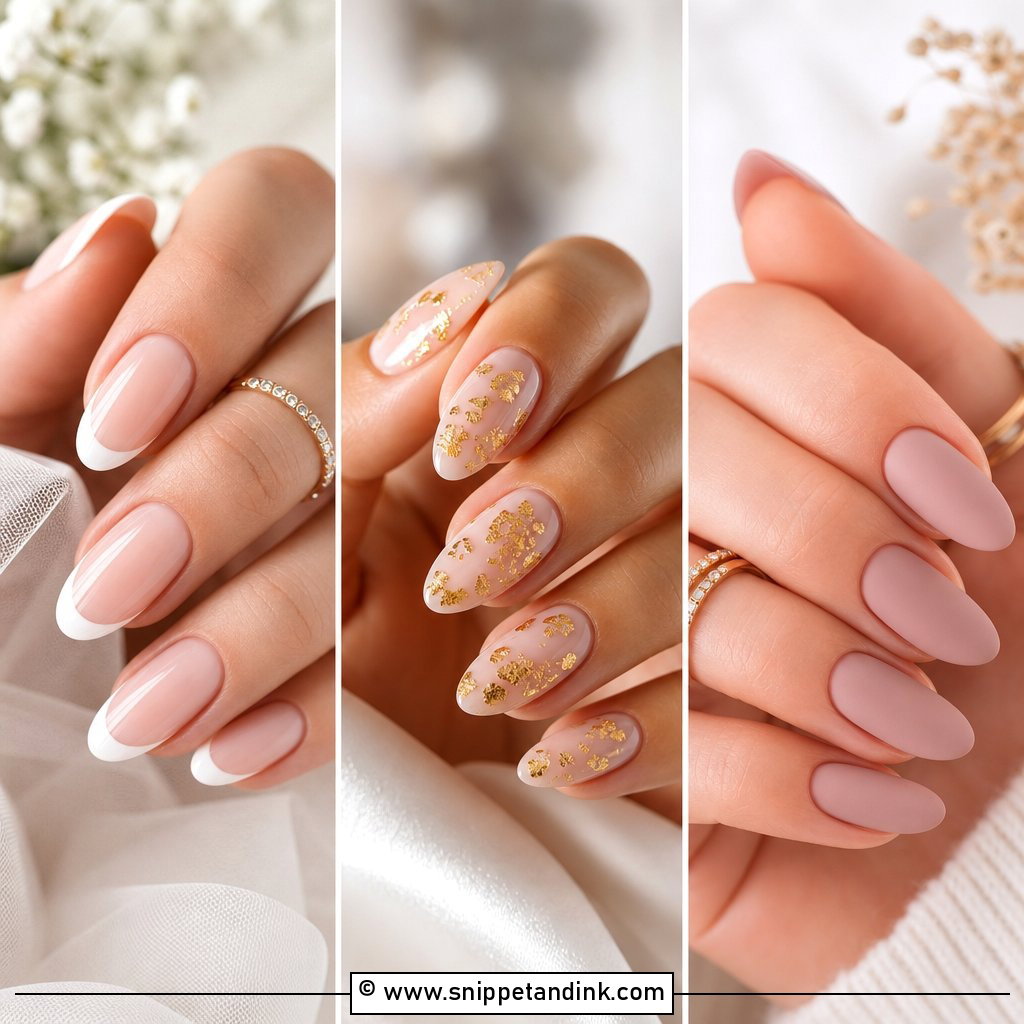
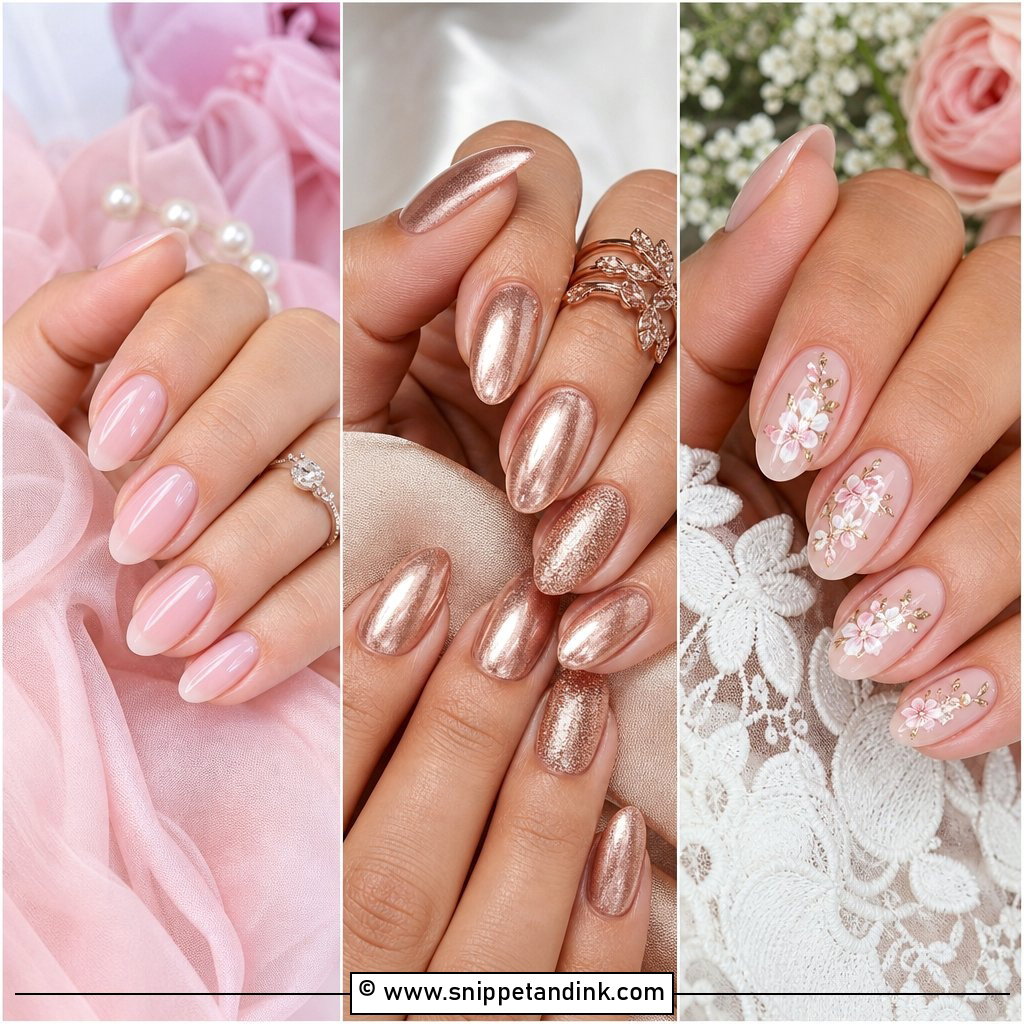
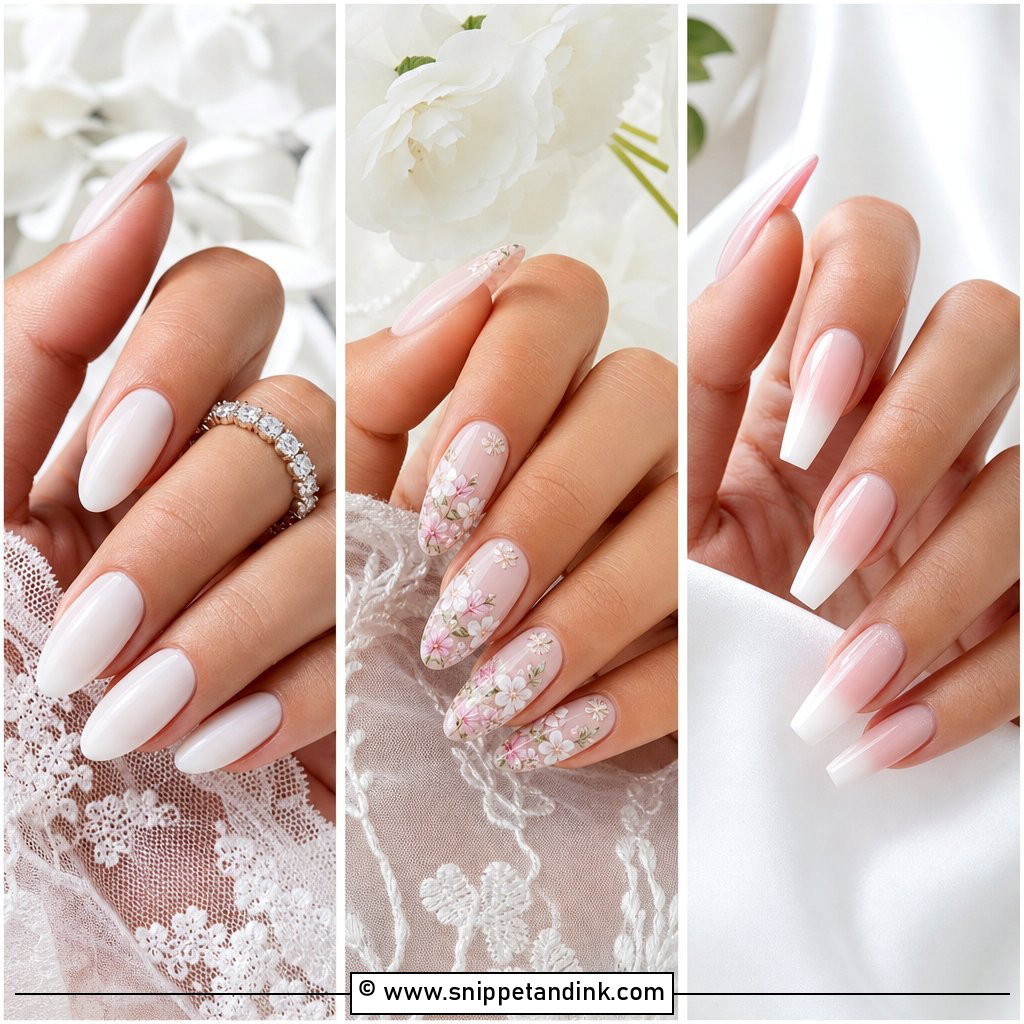
The right wedding nails suit your outfit, survive your events and still feel like you. Classic red and gold will always hold their place, but milky chrome, nude with gold tips, pearls, florals and pastel ombre are just as wedding-worthy. Before you decide, think about your ceremony schedule, your jewelry tone, how detailed your mehndi will be and the length you’re comfortable with. If the set has to last several events, I’d keep the shape practical and the details smooth. Small as they are, your nails turn up in more photographs than almost anything else you wear.
You'll Like These Ideas:


Leave a Reply