
Nails at an Indian wedding sit inside a much busier frame than at most weddings: mehndi up to the wrist, stacked bangles, rings and a different outfit at each function. They frame the henna, catch the light in ring photos and have to sit beside every lehenga, sari, sharara, or anarkali look you wear that week. Red, maroon and gold still lead for the pheras, with soft nudes, pearls and mirror-like chrome taking over the engagement and reception. When I plan a set, I ask about outfit colours, jewellery metal, how dark the mehndi is expected to go and how many functions the nails need to last. The sets below run from ceremony classics to small, guest-friendly details, with what to watch for in each.

One Set for the Whole Week, or a Change Between Functions?
Most brides I work with have four or five events in a week, each with a different outfit. Changing gel between them means soaking with acetone right after the mehndi, which dries the skin and can dull a fresh stain. So I usually suggest one of two plans.
- A single gel set chosen to suit everything: a nude, milky pink, red or maroon base with gold detail, applied before the mehndi and worn through the reception.
- One durable base set, plus press-on nails or adhesive tabs for a single function where you want something louder, such as glitter or jewel tones for the sangeet. Tabs come off without soaking, so the henna isn’t disturbed.
If you choose the first plan, pick the base for the wedding ceremony itself, since that’s the photo set you’ll keep the longest, and let the other functions borrow from it.
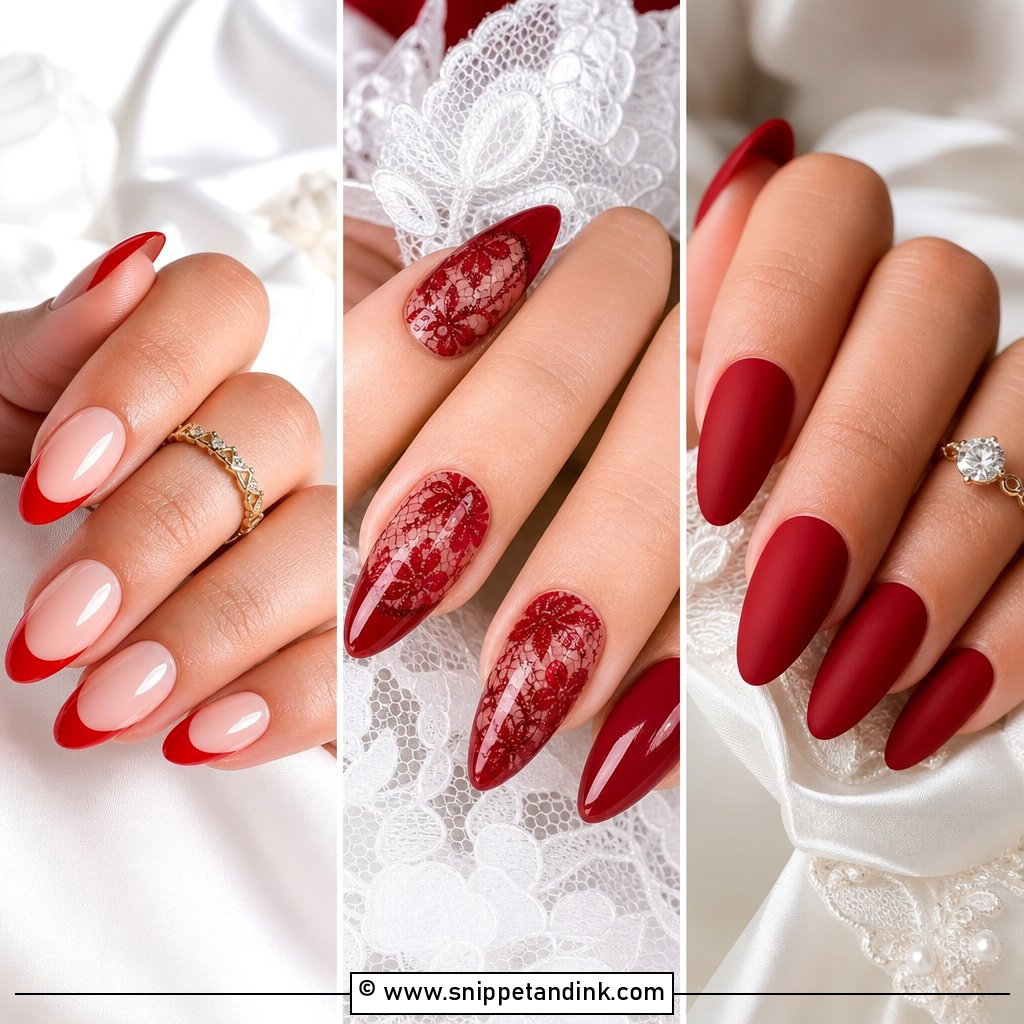
1. Red Indian Wedding Nails
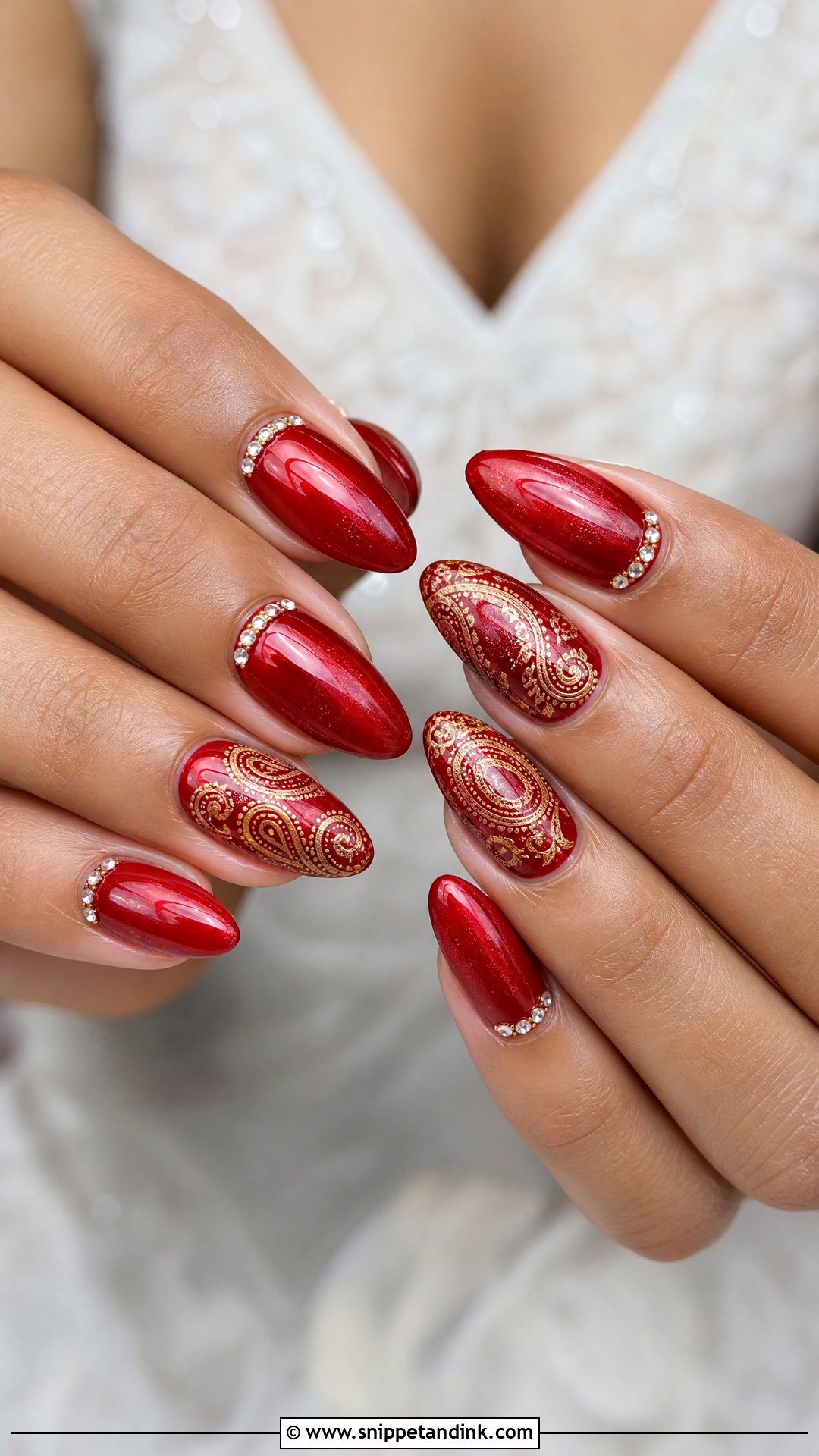
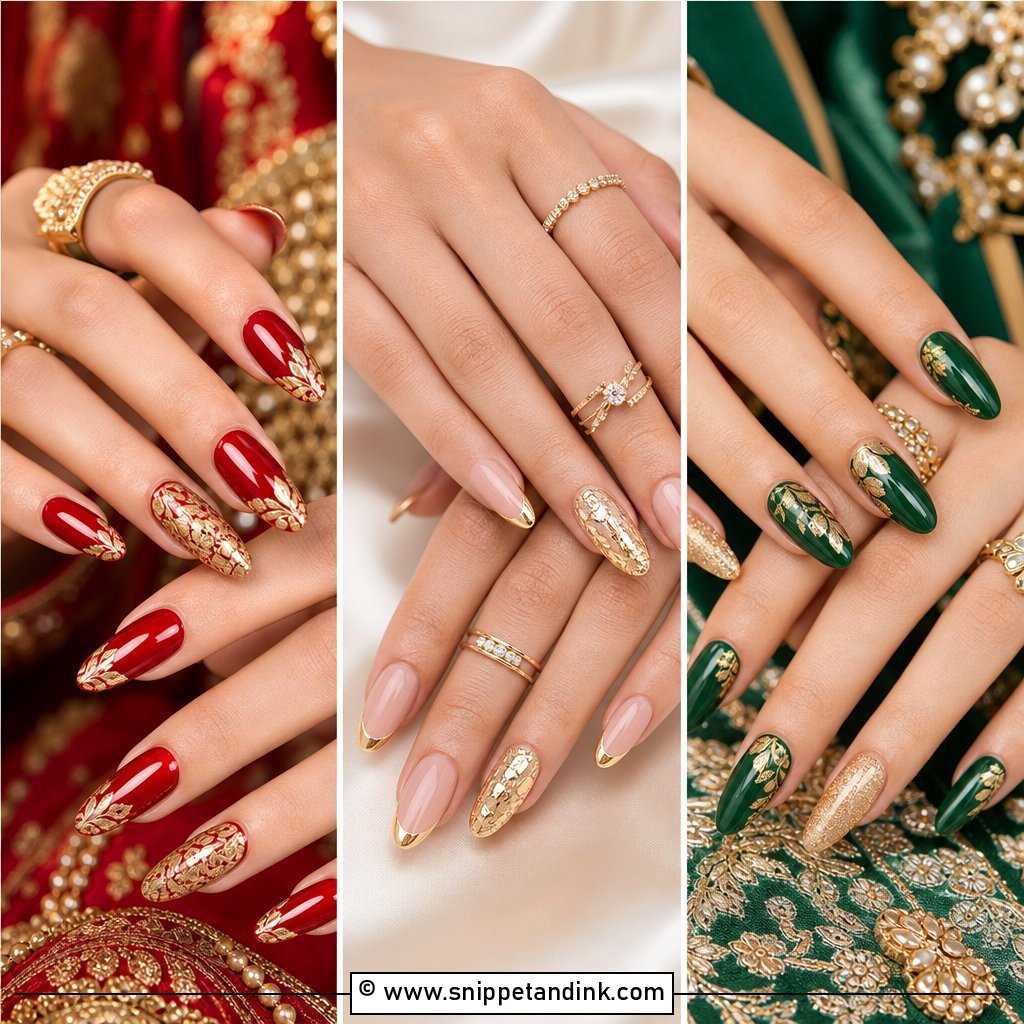
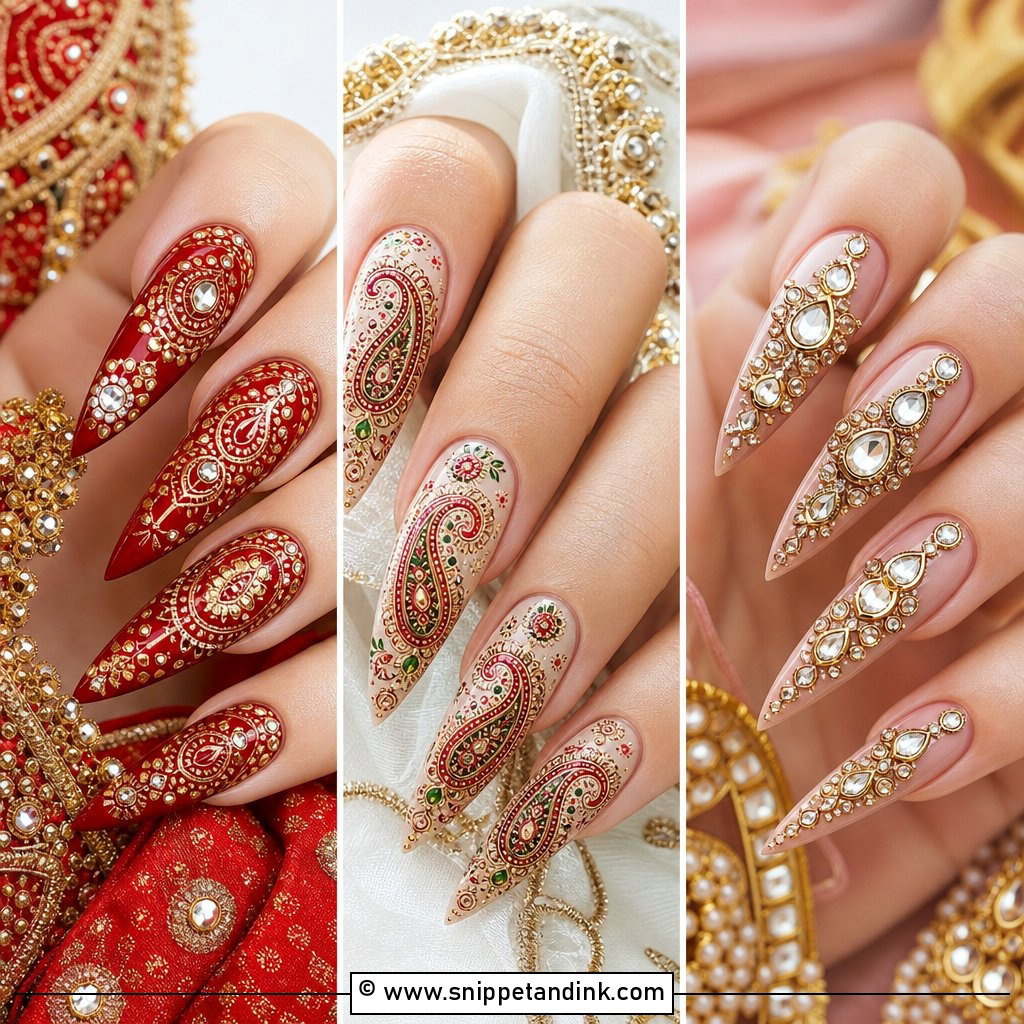
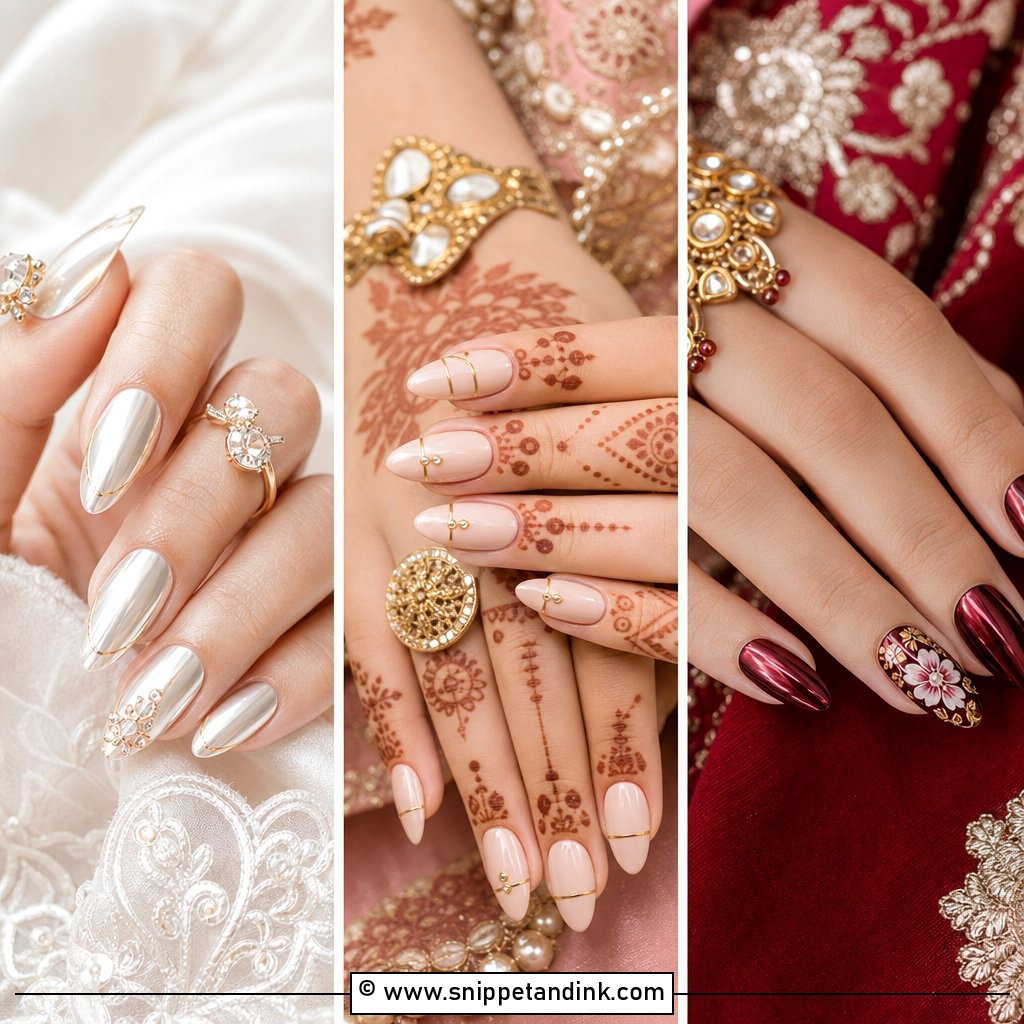
Red is the set most brides book for the pheras, and the shade has to agree with the lehenga, not just look good in the bottle. Hold a swatch against the fabric in daylight: orange-reds and blue-reds clash with each other far more than you’d think. Glossy red beside a deep mehndi stain is classic on its own. If you want detail, one paisley accent nail per hand or a little gold foil is plenty; heavy embroidery and heavy nail art fight in photos. Almond and oval are graceful, square is bolder.
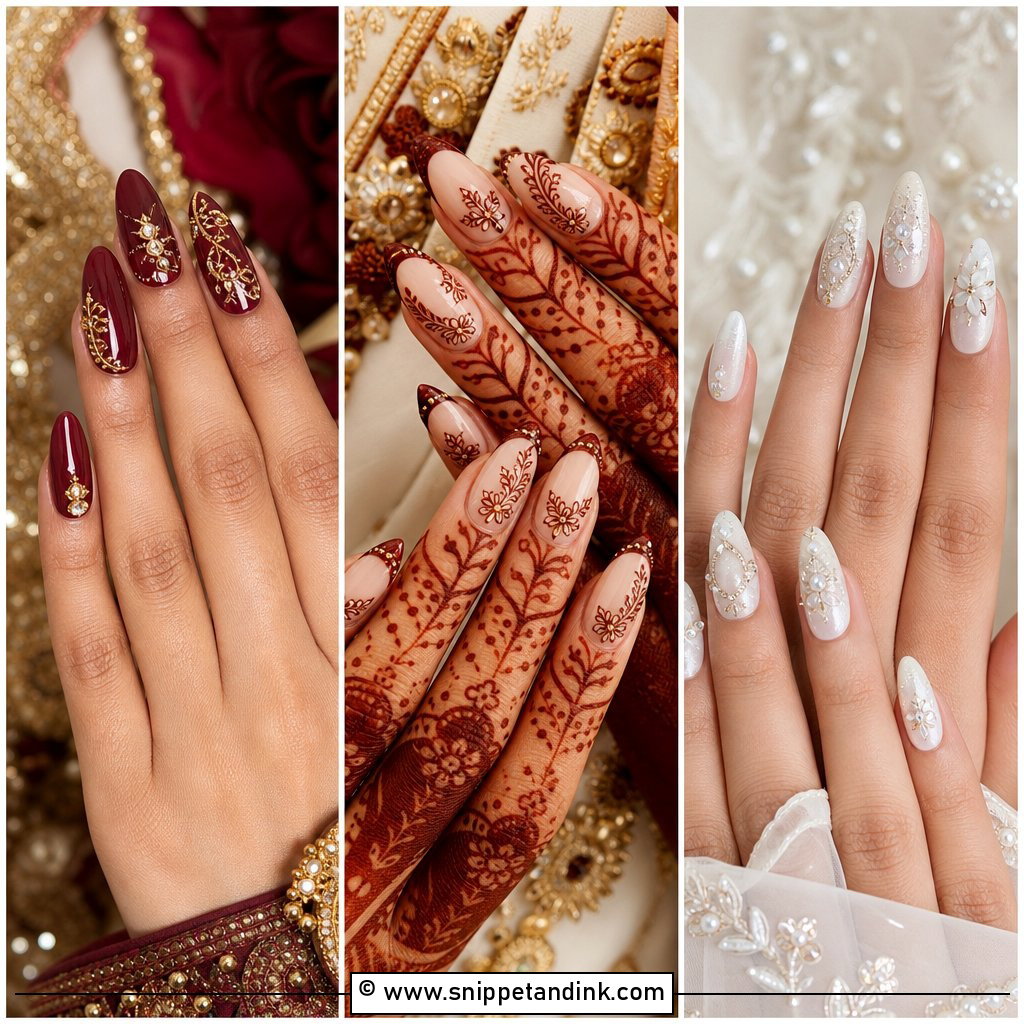
2. Maroon Indian Wedding Nails
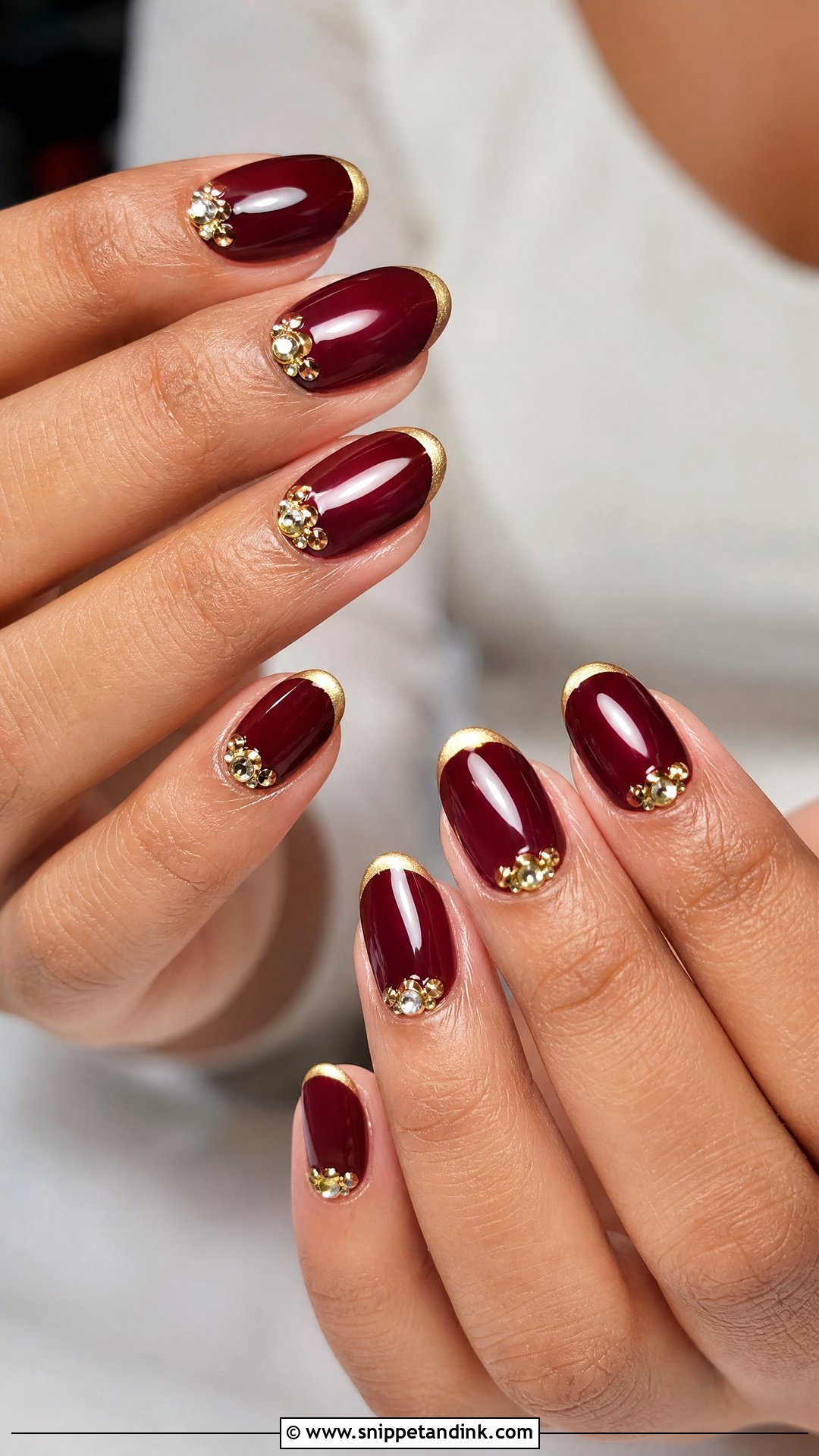
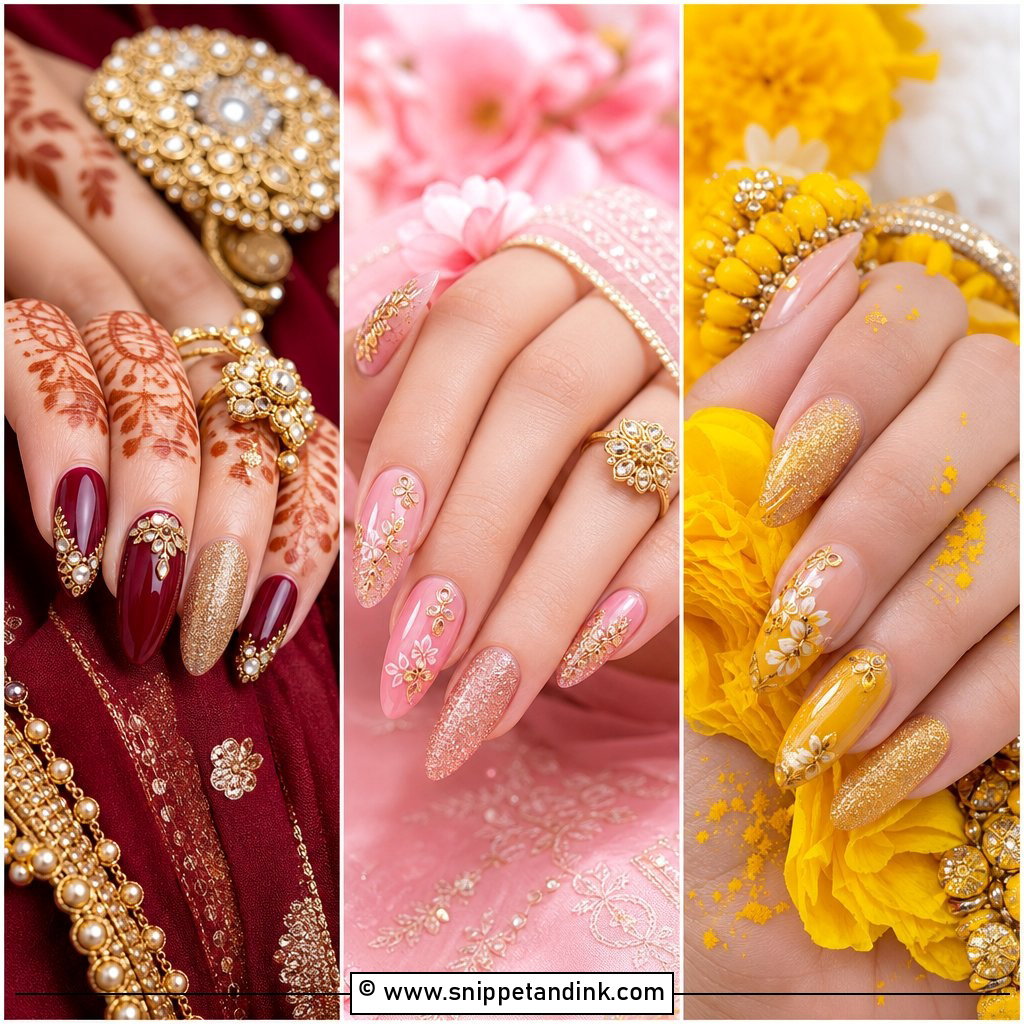
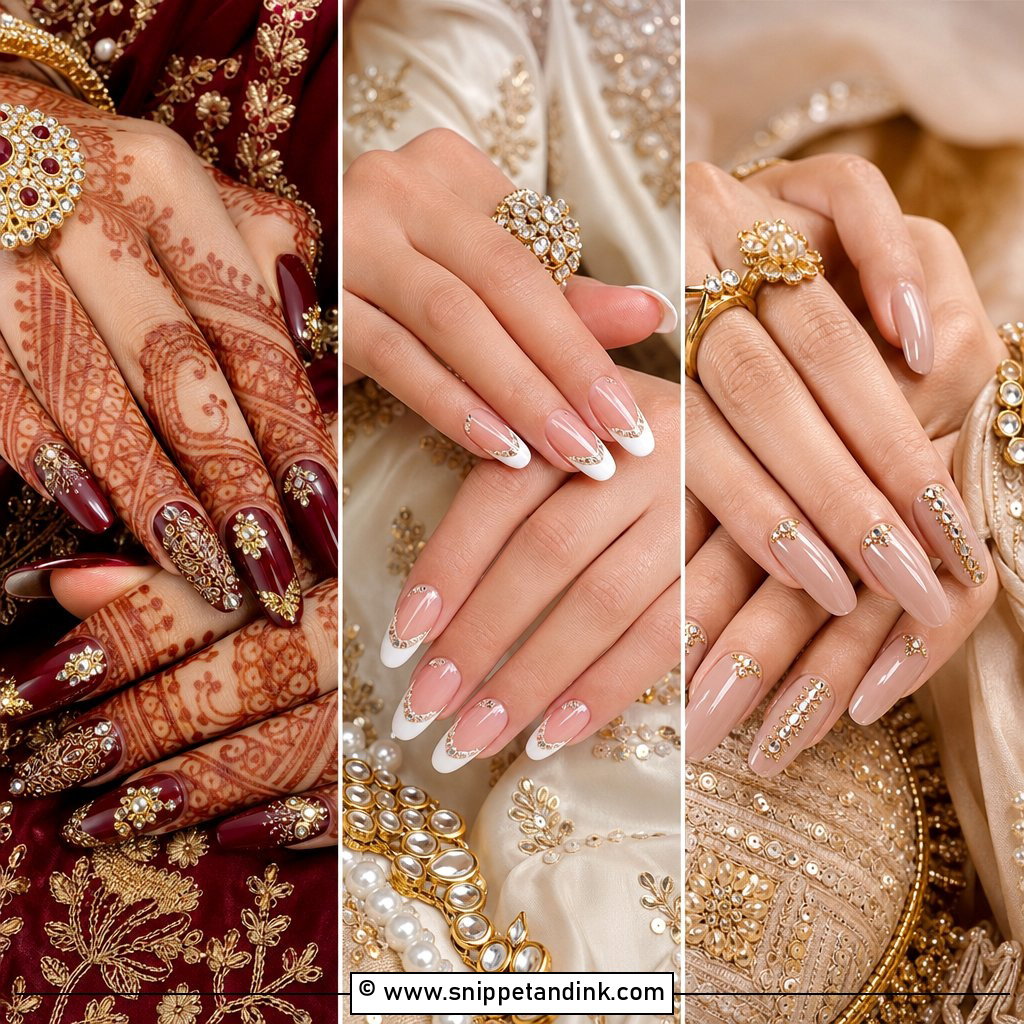
Maroon is the red I suggest when a bride wants richness without brightness. It sits well beside burgundy, wine, gold, ivory and emerald, and it blends into a dark henna stain instead of competing with it. Gold French tips give it a regal finish; maroon chrome is the modern version. Deep shades show growth and chips quickly, so book it close to the ceremony and keep the tip well sealed. A few crystals at the cuticle are the most it needs.
3. Gold Indian Wedding Nails
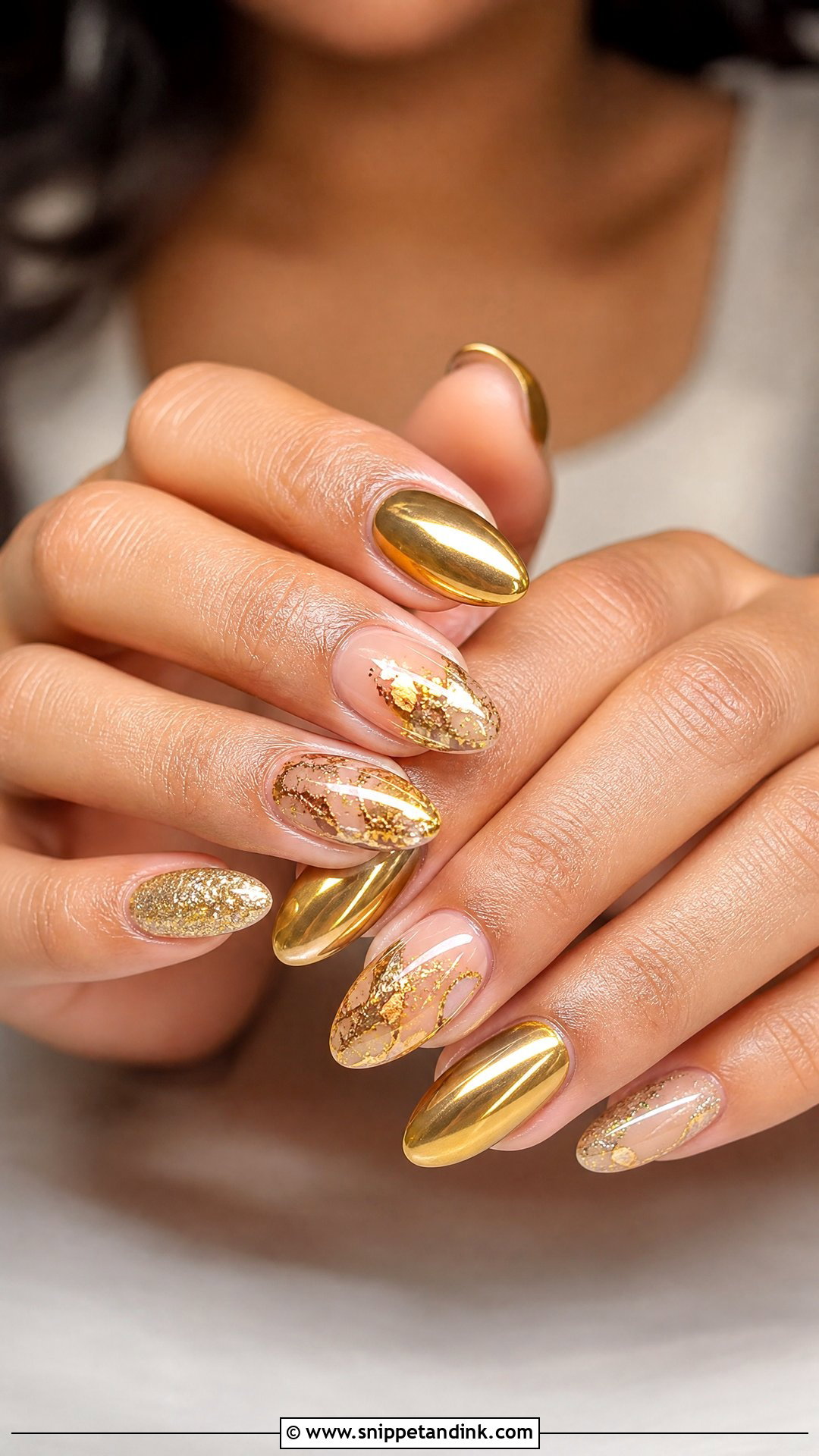
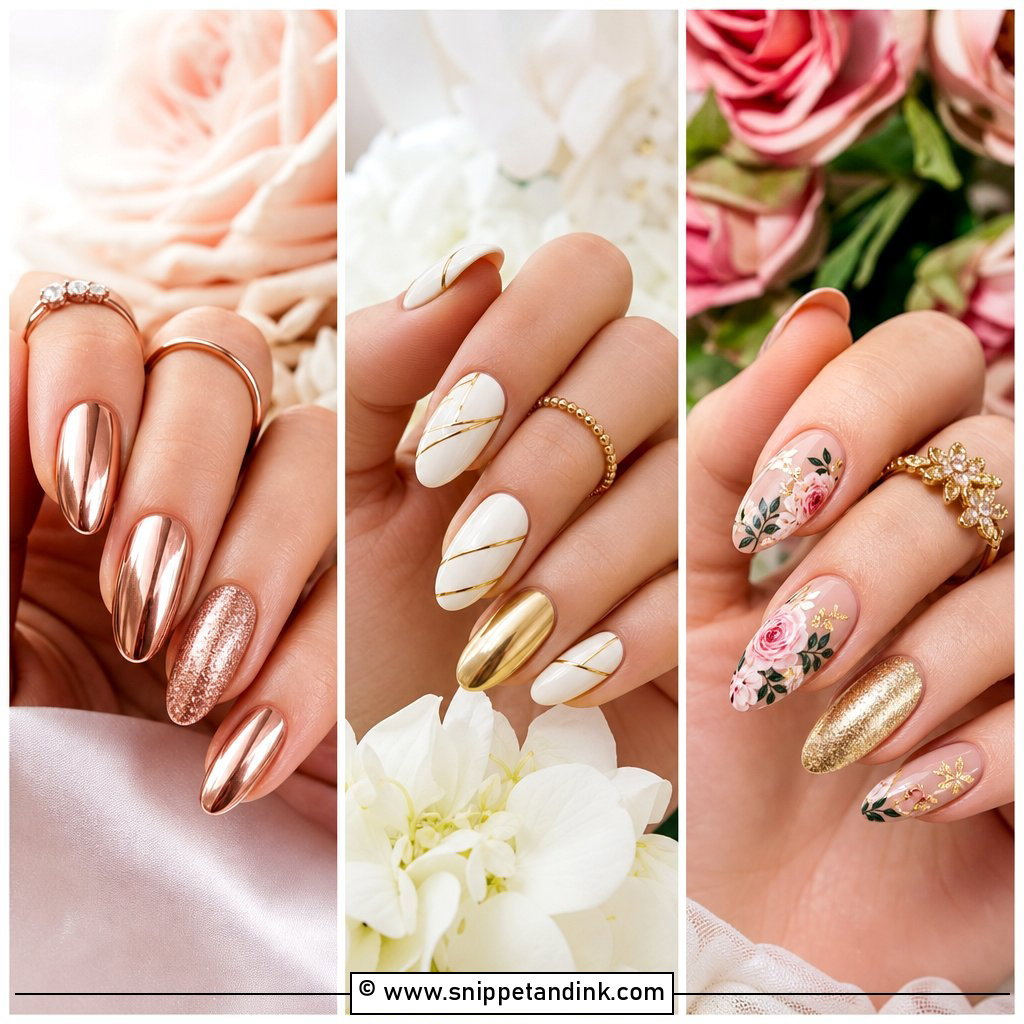
Gold nails sit naturally beside kundan, polki and temple jewellery and metallic embroidery. A full gold chrome is dramatic; a nude base with gold foil is far easier to wear across several functions. Gold tips, fine swirls or a few flakes over milky pink are the middle ground. Match the gold tone to your jewellery, since a bright yellow chrome can make antique-finish kundan look dull. Keep the shape almond or oval so the shine stays refined.
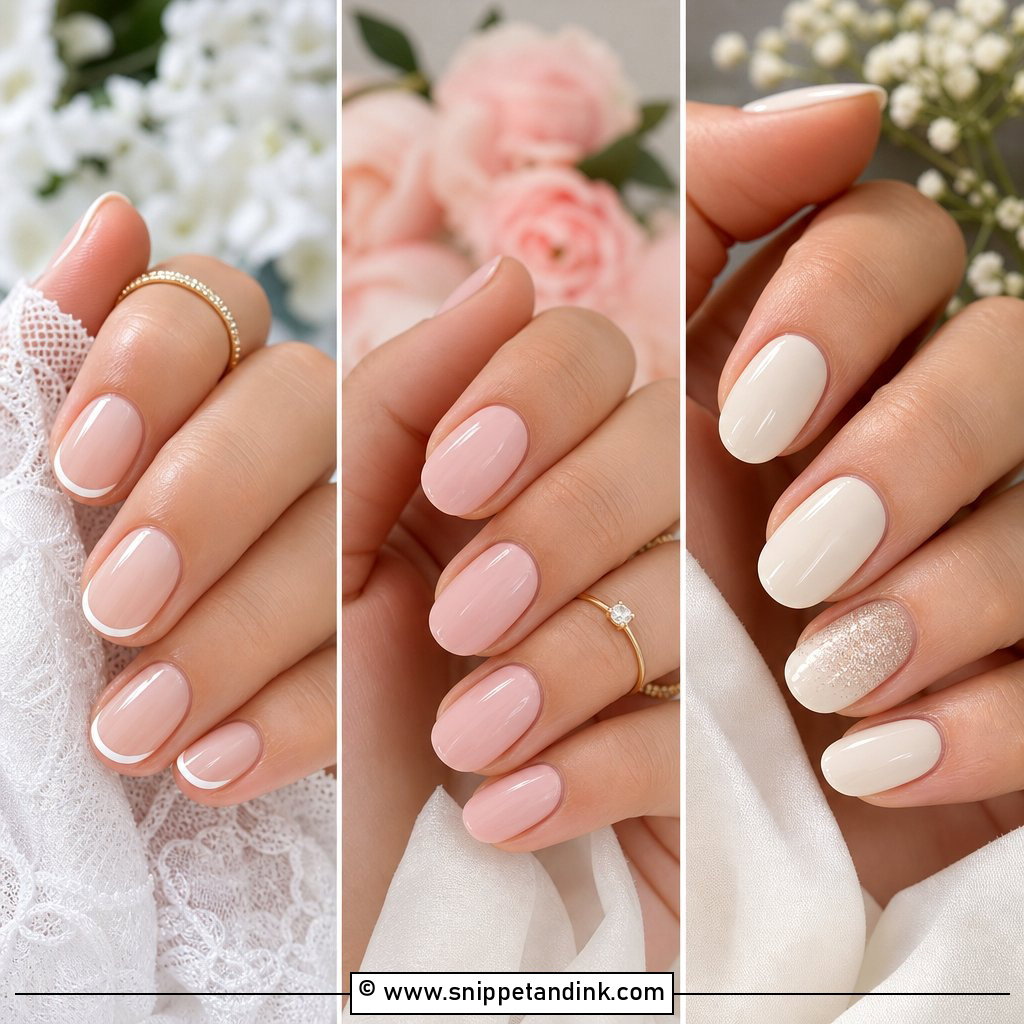
4. Nude Indian Wedding Nails
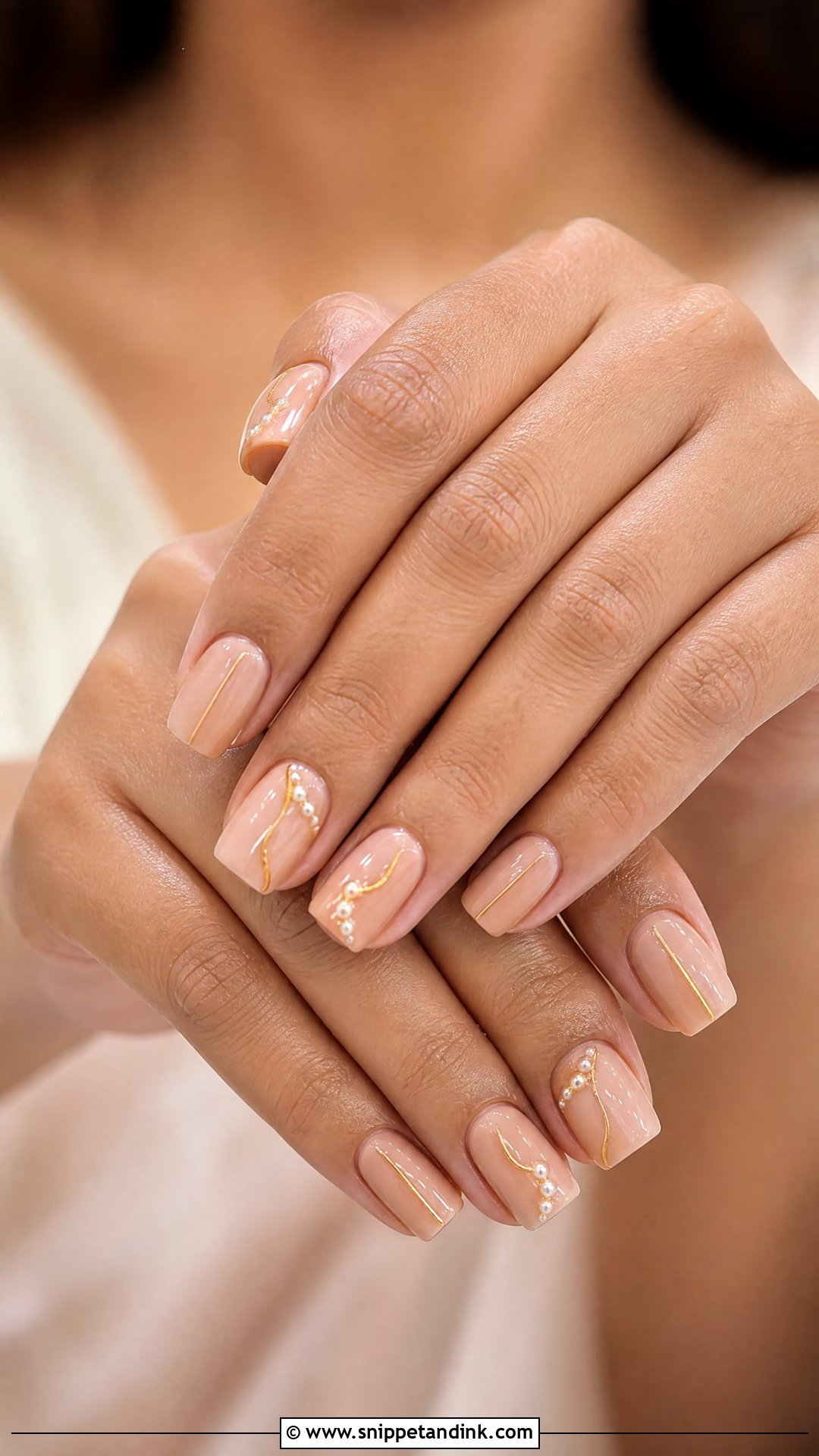
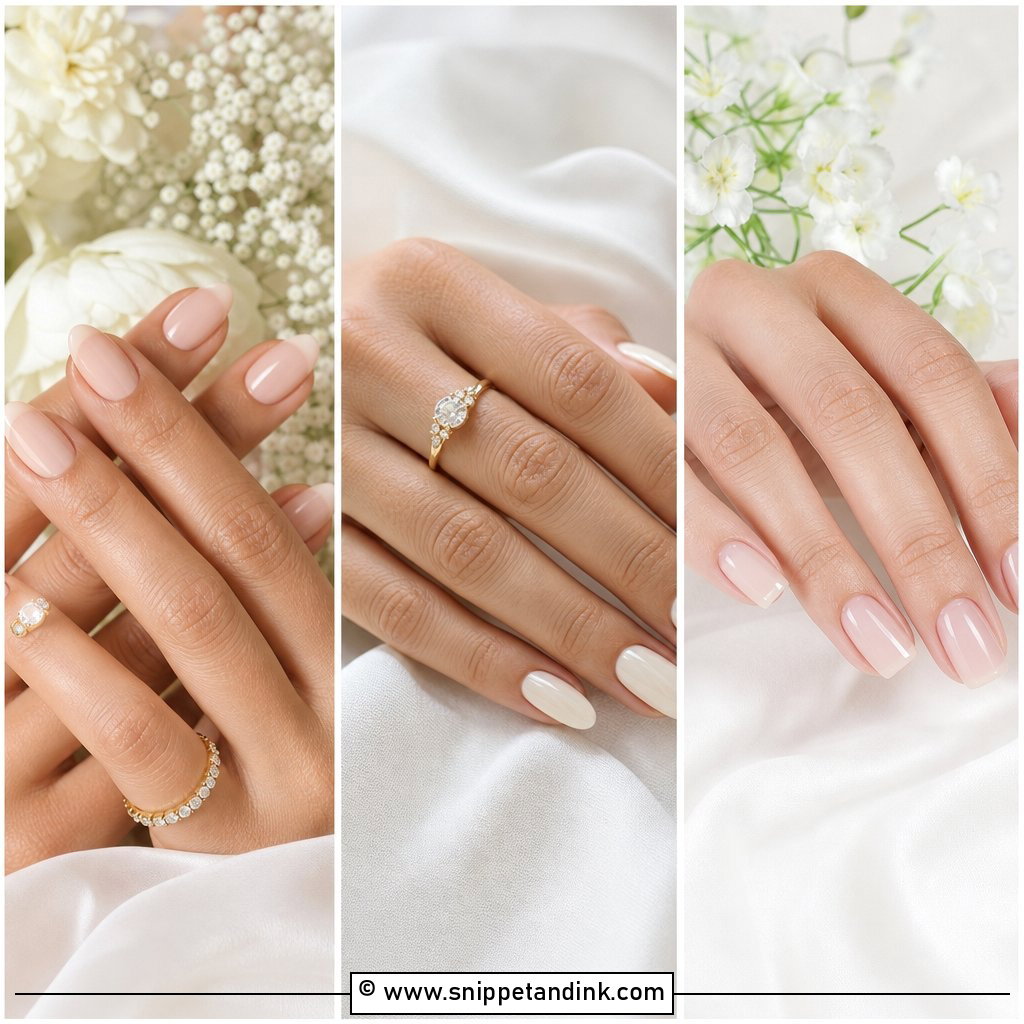
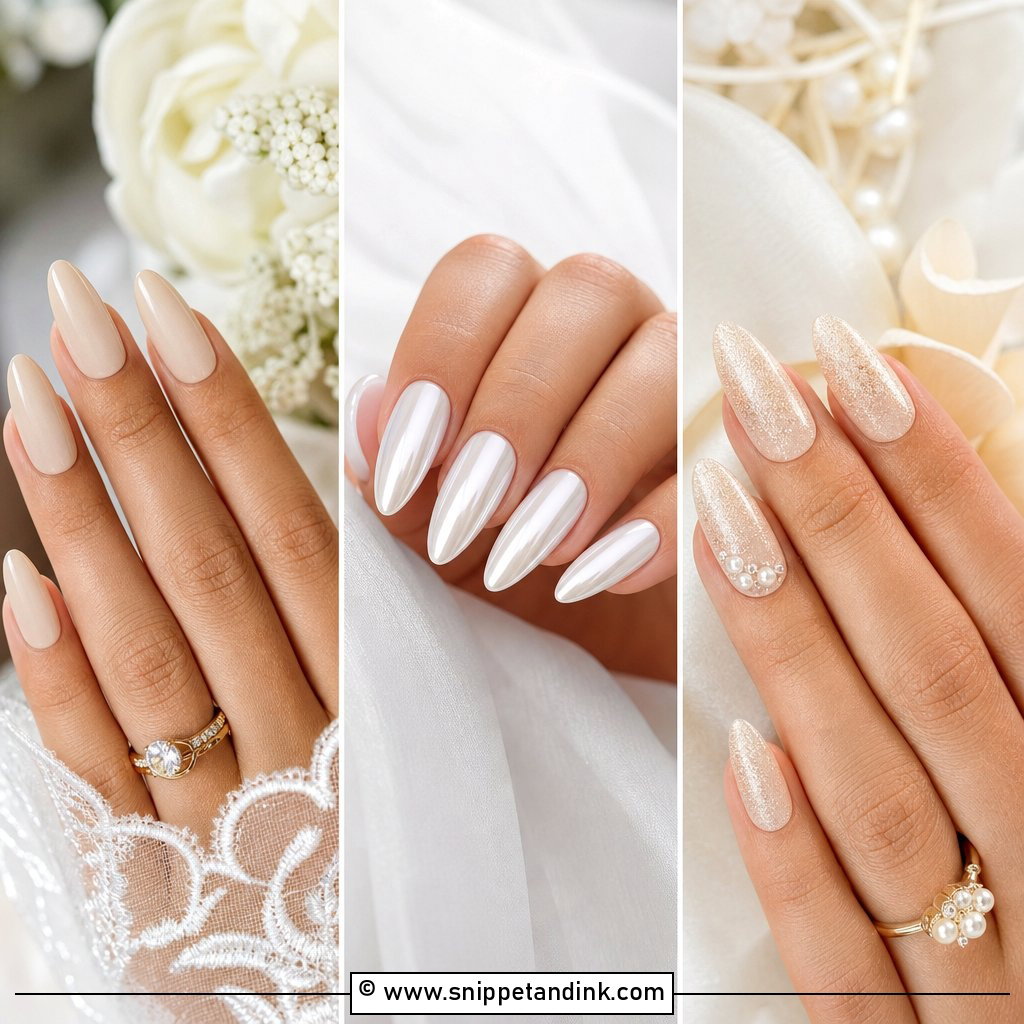
A nude set lets the mehndi, rings and bangles do the talking, which is why I recommend it to brides with very intricate henna. The shade has to match your skin: beige, caramel, peach, pink-brown or latte, chosen against the back of your hand, not the bottle. Pale nudes on deep or warm skin look chalky in photos. Thin gold lines, a pearl or a soft chrome glaze turn it bridal. Nudes also hide a week of growth better than any bold shade.
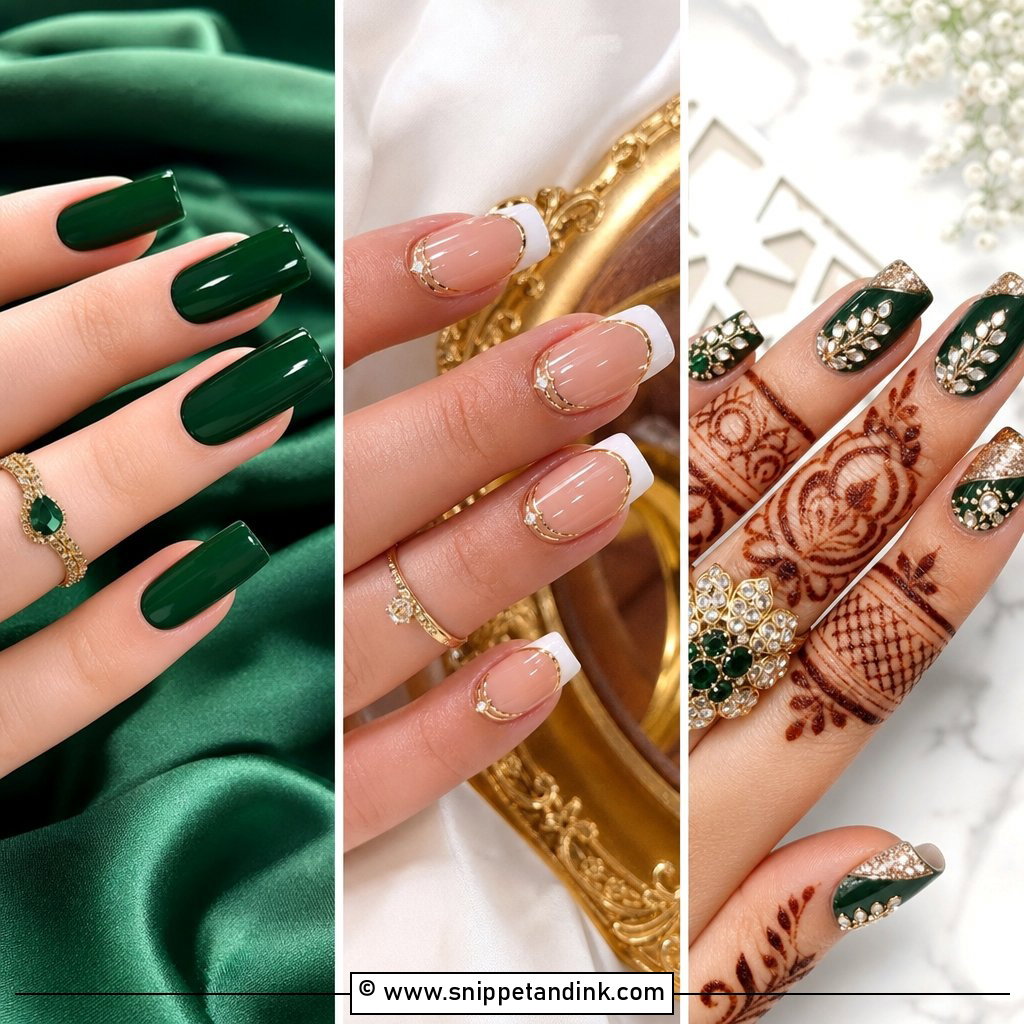
5. French Tip Indian Wedding Nails
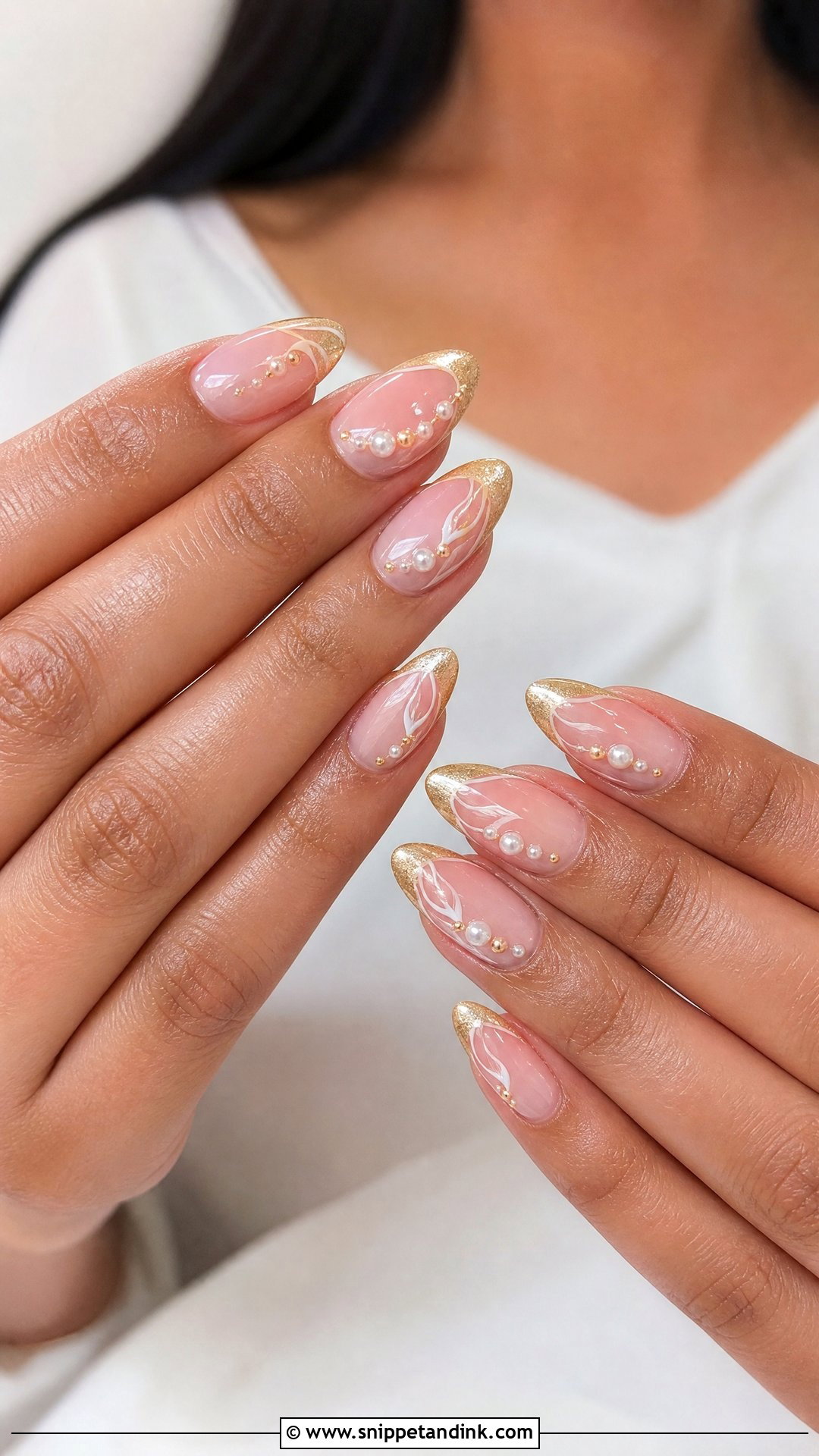
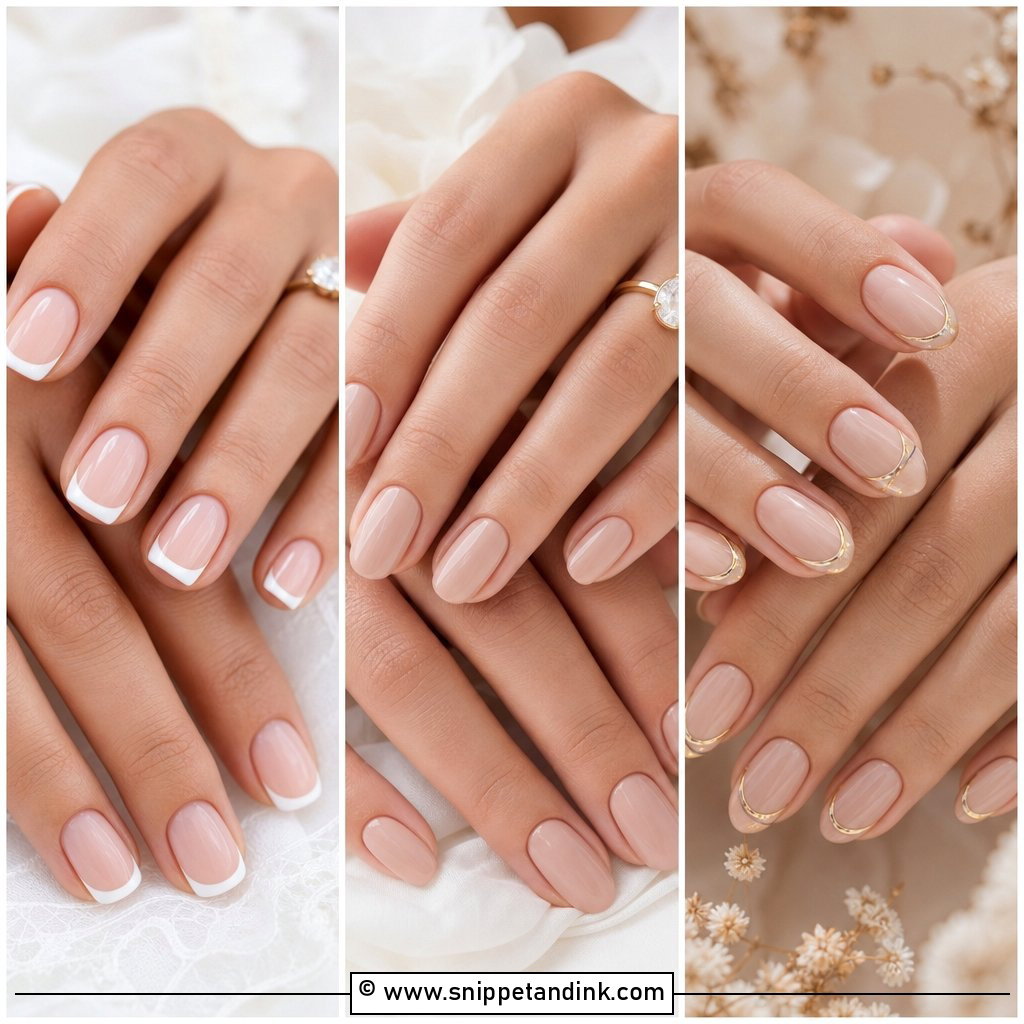
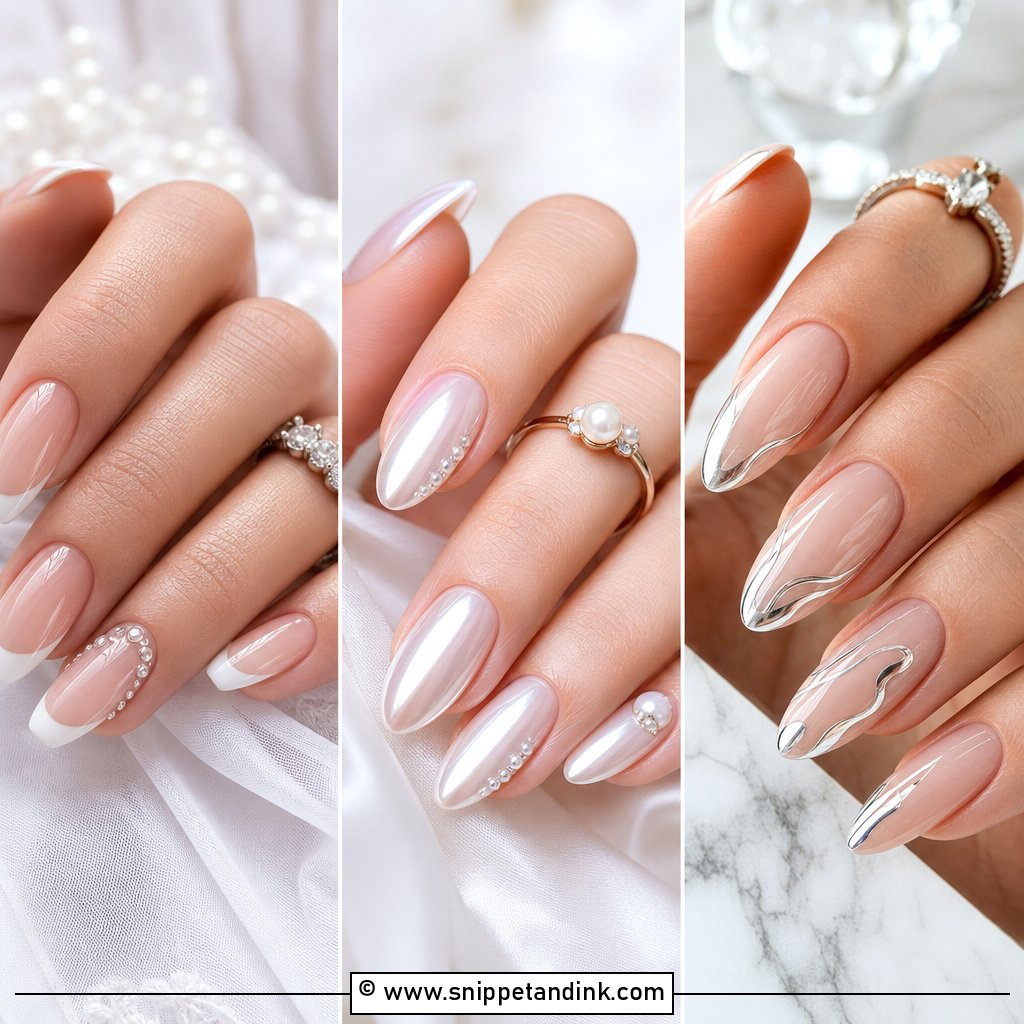
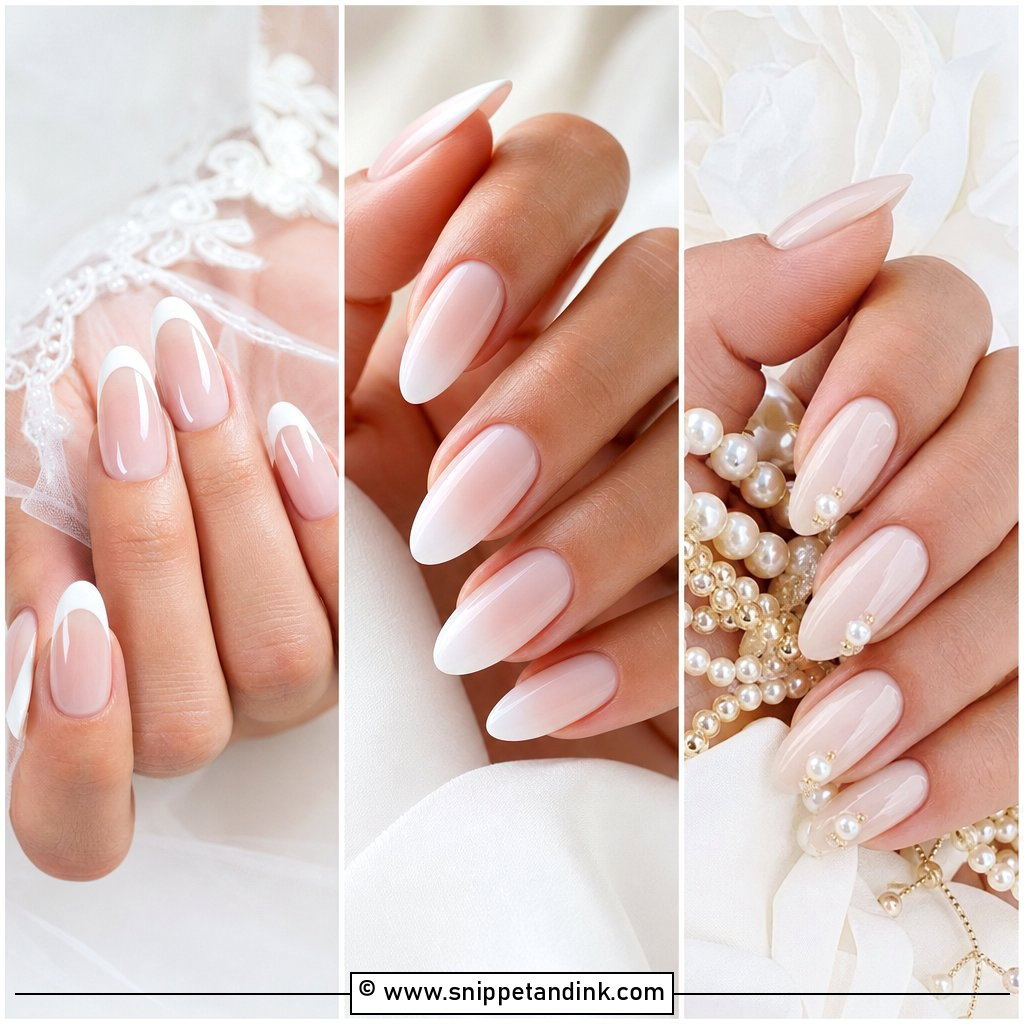
A French tip is the cleanest formal option, and it moves easily between the engagement, the reception and guest outfits. For an Indian wedding I often swap the white for gold, red, maroon, champagne or rose gold, so the tip picks up the jewellery. A sheer pink or nude base keeps it soft. Keep the line slim; a thick coloured tip looks heavy beside an already patterned hand. One or two accent nails with pearls or mehndi lines are enough.
6. Mehndi Indian Wedding Nails
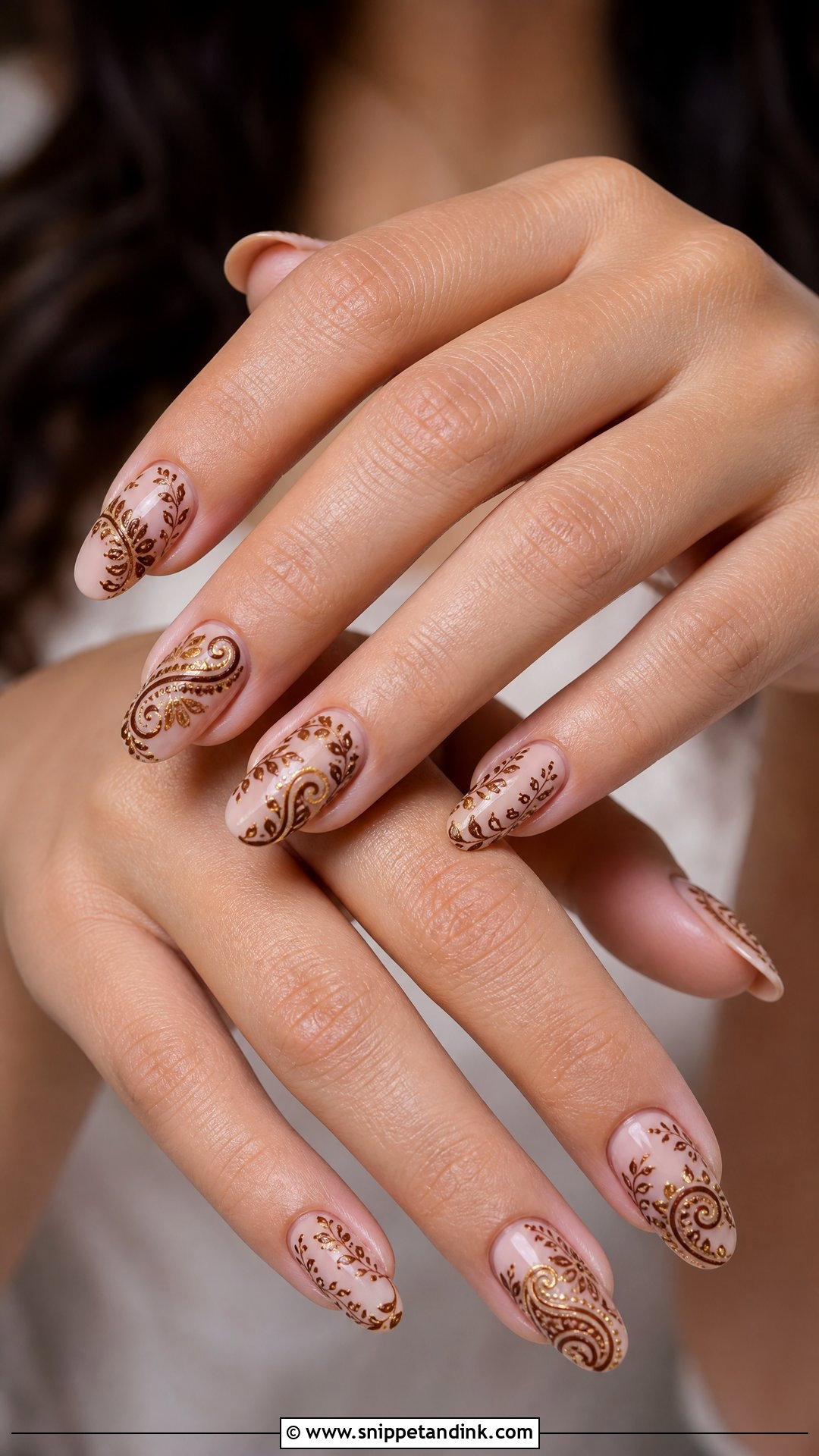
These sets borrow from the delicate patterns used in henna art: paisleys, vines, dots and curved lace-like lines in brown, white, gold or deep red over a nude or soft pink. I paint them with a long liner brush and keep the lines a little thinner than the henna itself, so the nail reads as an echo rather than a copy. If your palms are already heavily covered, put the art on two or three nails only. Short almond and medium oval leave enough room for a motif.
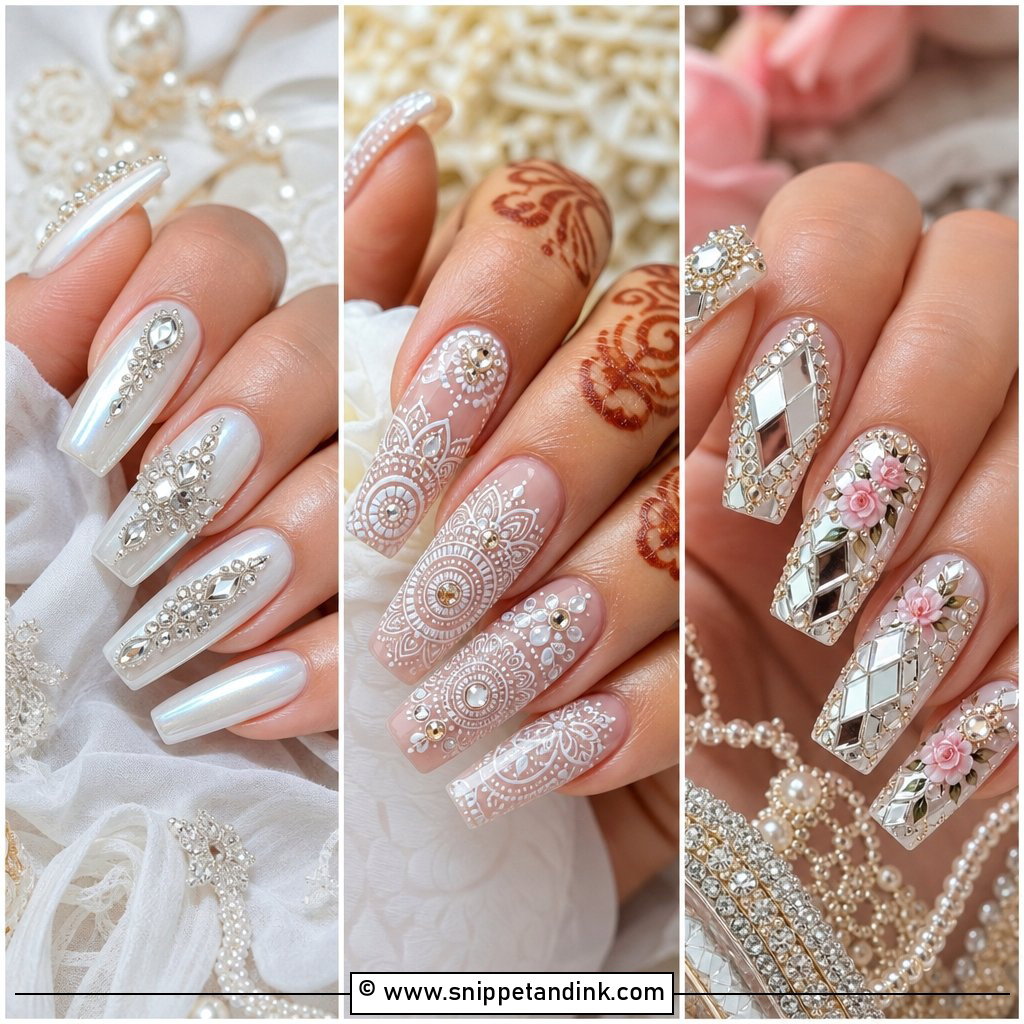
7. Pearl Indian Wedding Nails
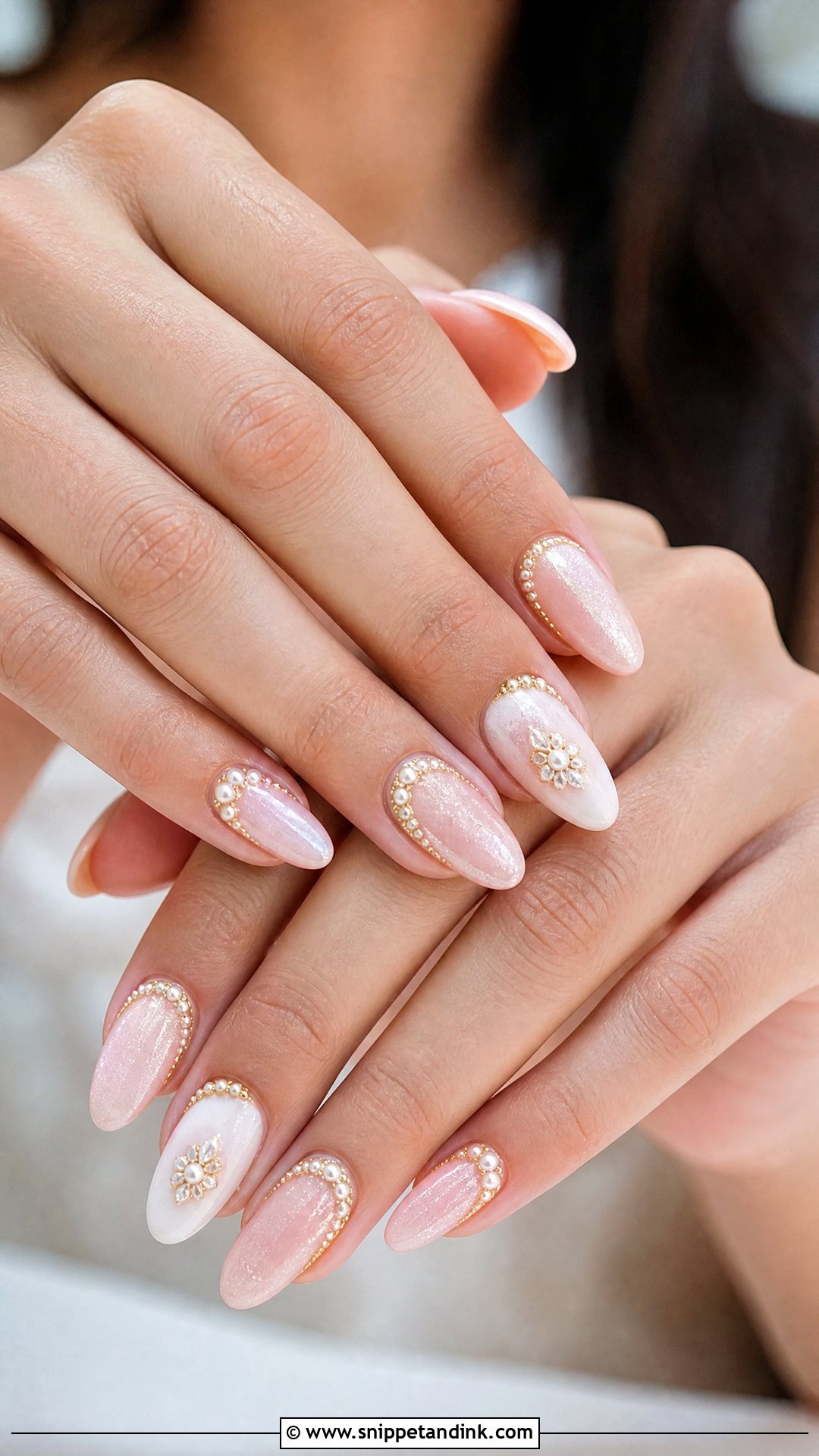
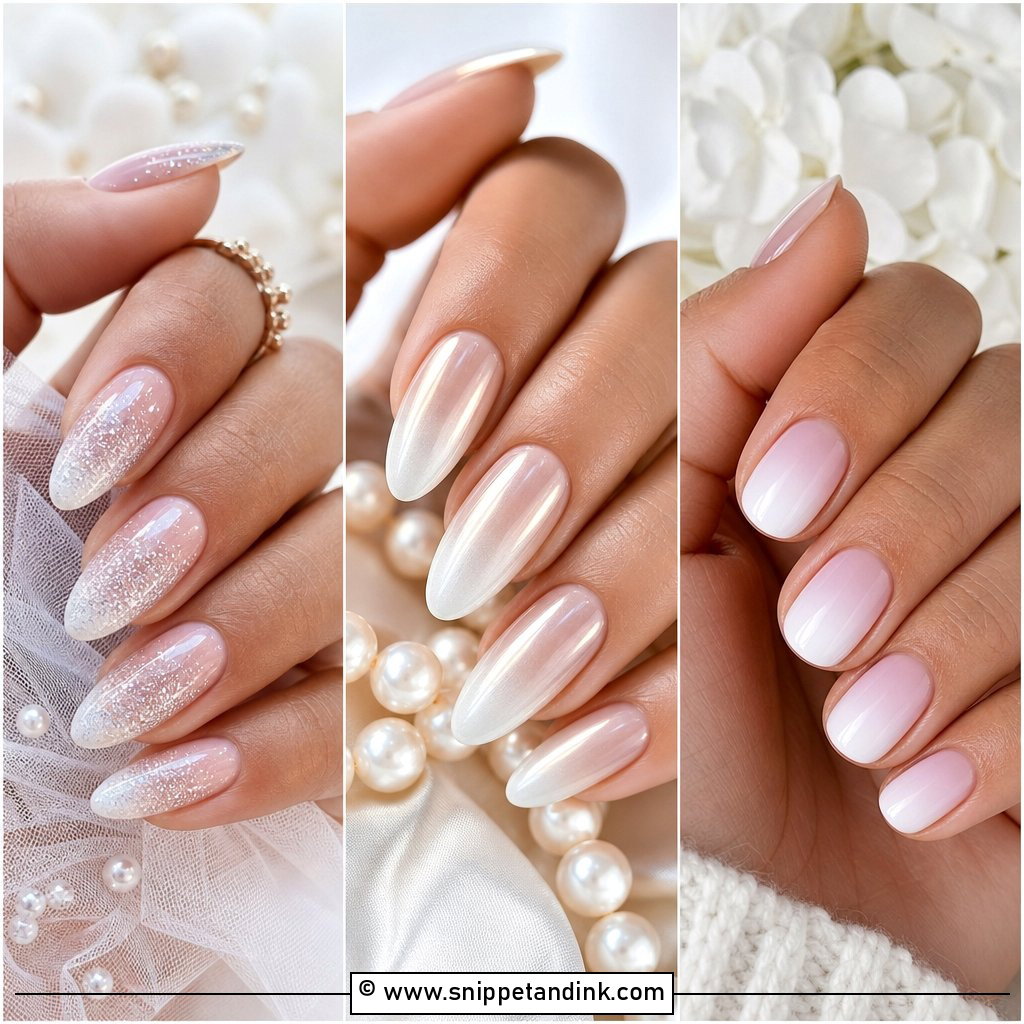
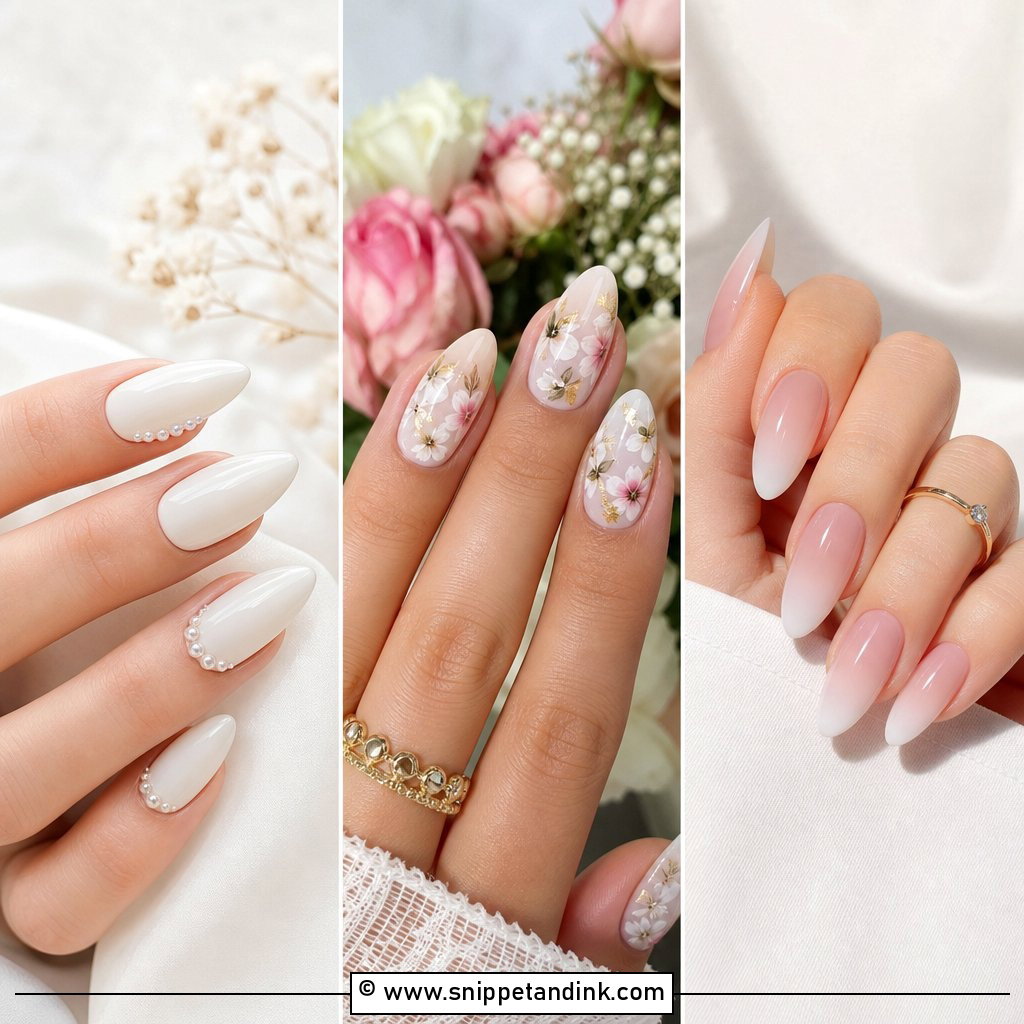
Pearls suit brides in ivory, blush, champagne or pastel, and outfits with pearl work. Over a milky white or pale pink, a few small pearls at the cuticle or along a fine gold line look delicate in close-ups. They sit best at the engagement and reception, where your hands aren’t in haldi paste or rice. I set each pearl into a bead of gel and seal it so it won’t catch on dupatta netting, and I keep them small and fairly flat.
8. White Indian Wedding Nails
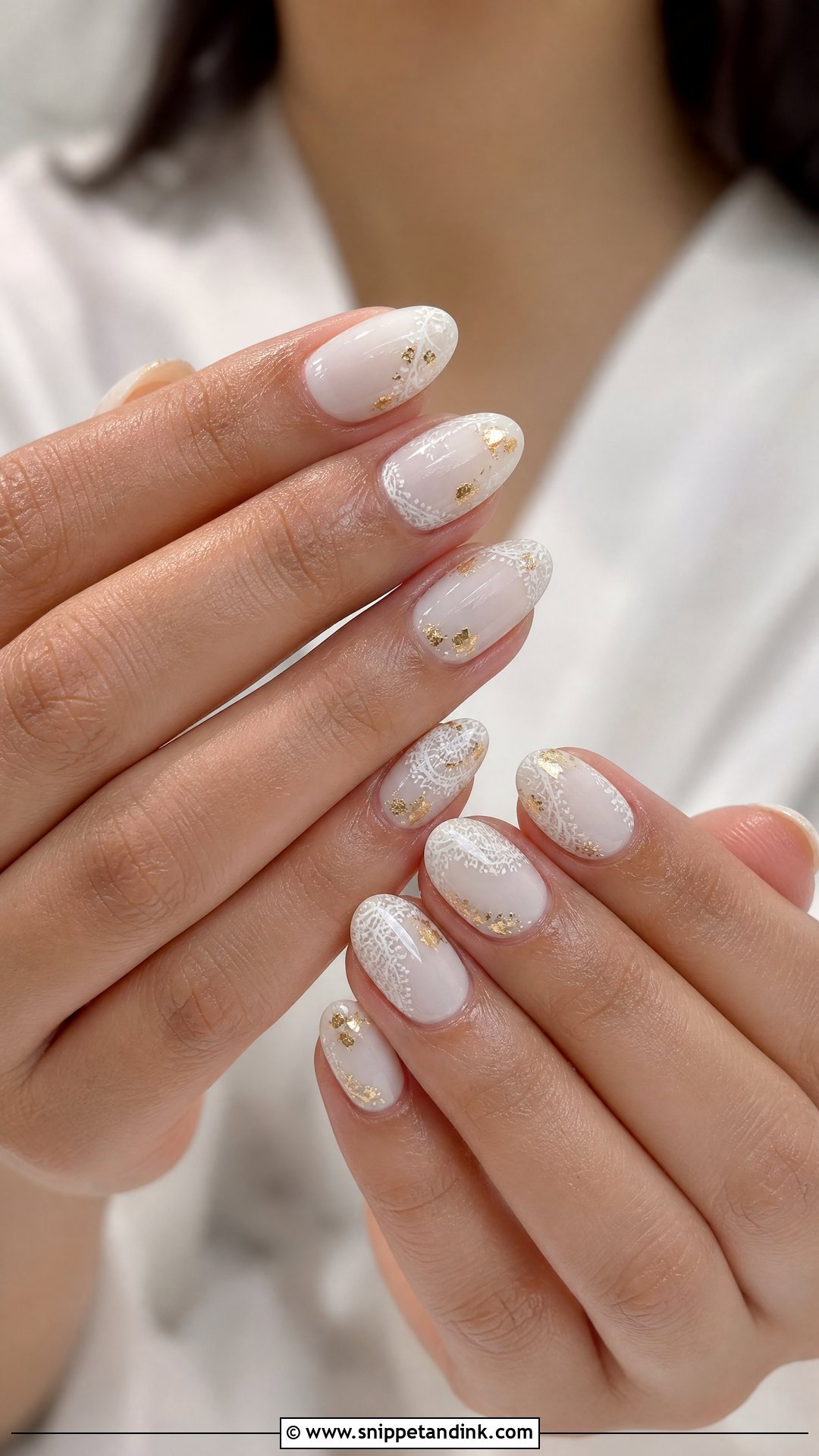
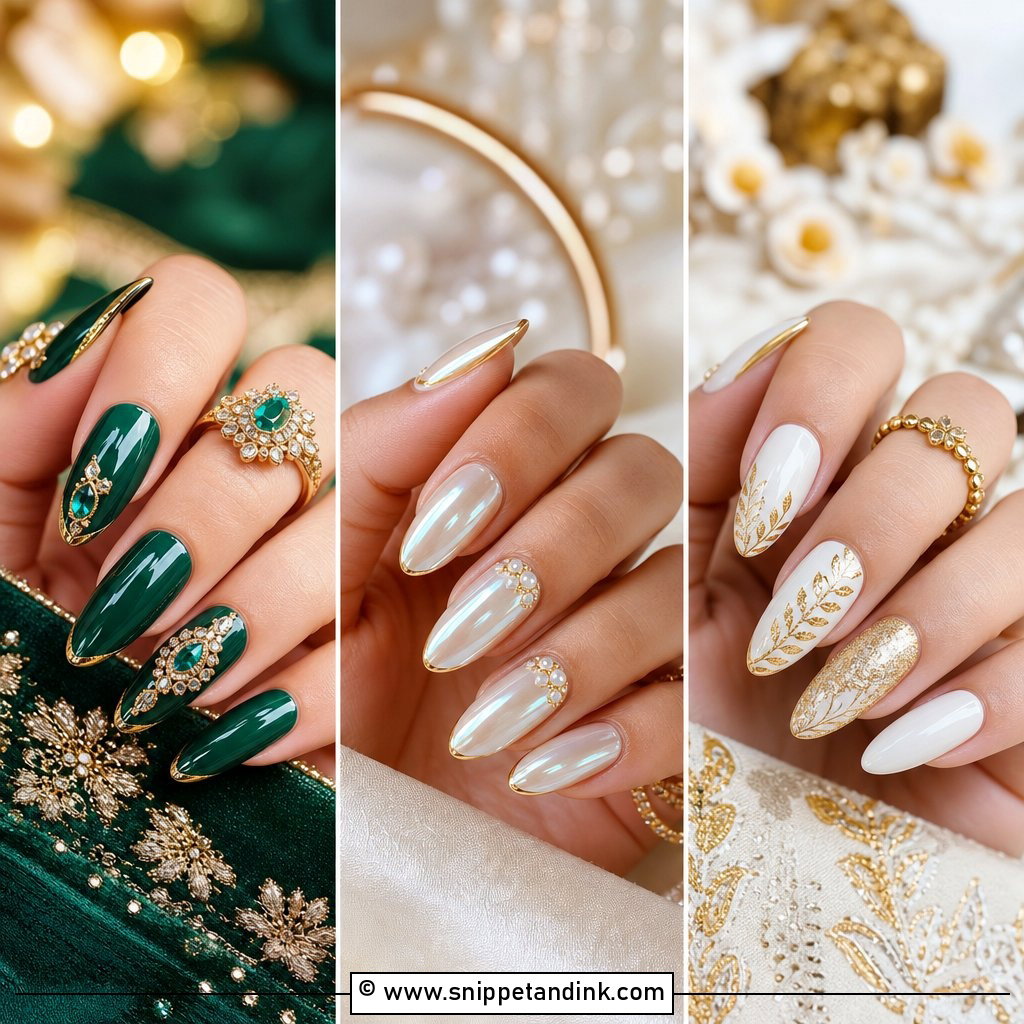
White looks bright and modern beside ivory, silver and pastel outfits, and it makes the contrast with a dark mehndi stain very clear in photos. Pure white can look stark; milky white is softer. Match the metallic detail to the embroidery: silver glitter or chrome with silver work, warm gold accents with gold. One practical warning for the haldi: pale and white polish can pick up a yellow tint from turmeric, so I’d save white for the functions afterwards.
9. Pink Indian Wedding Nails
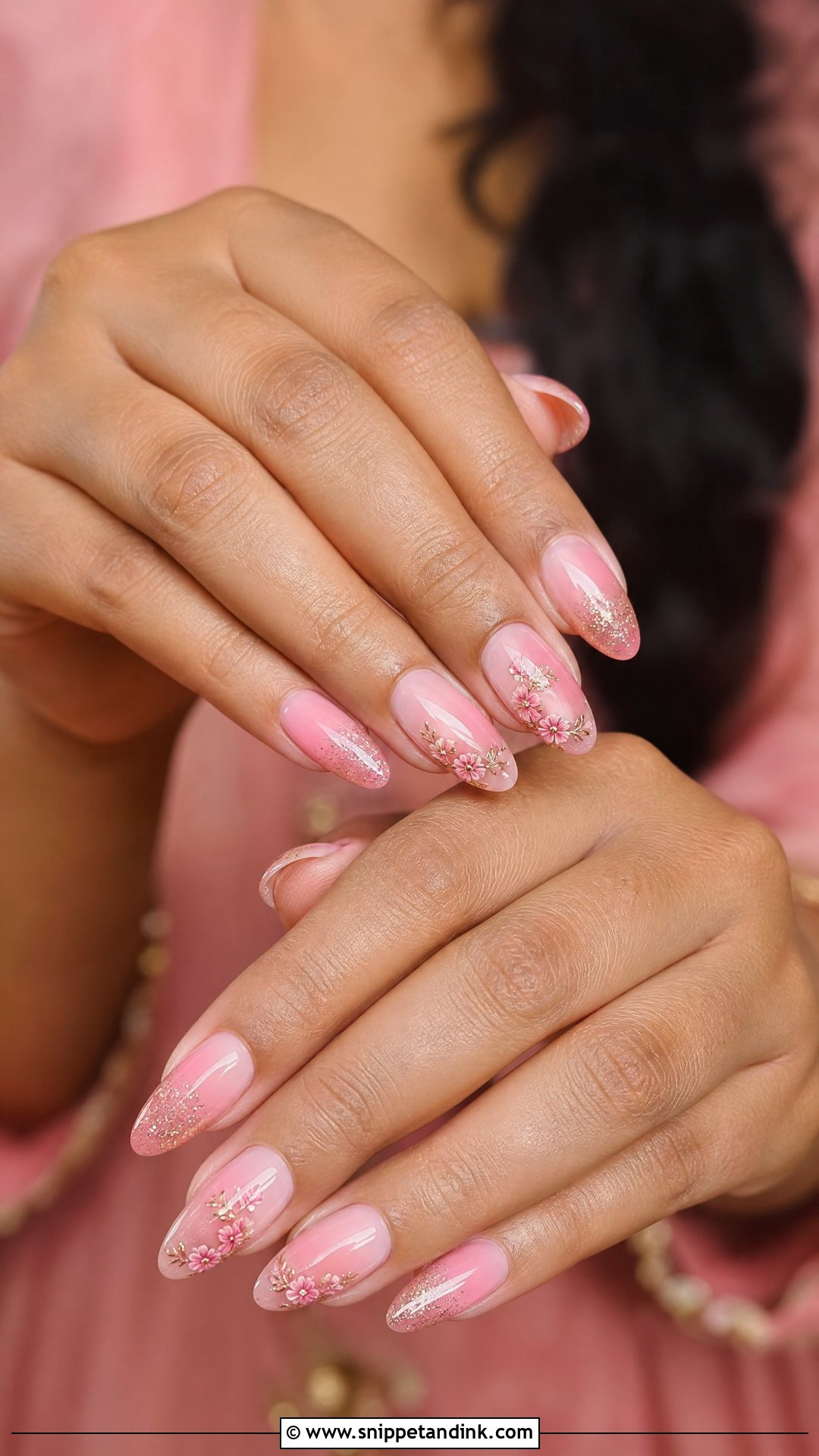
Pink covers a wide range. Soft blush suits engagement ceremonies, pastel lehengas and daytime events; a deeper rose or rani-adjacent pink stands up to magenta and jewel tones. Warm pinks sit better with gold embroidery, cool pinks with silver. A pink ombre or a few gold glitter tips makes it bridal. On very deep mehndi, pale blush can disappear, so go a step brighter if your henna stains dark.
10. Ombre Indian Wedding Nails
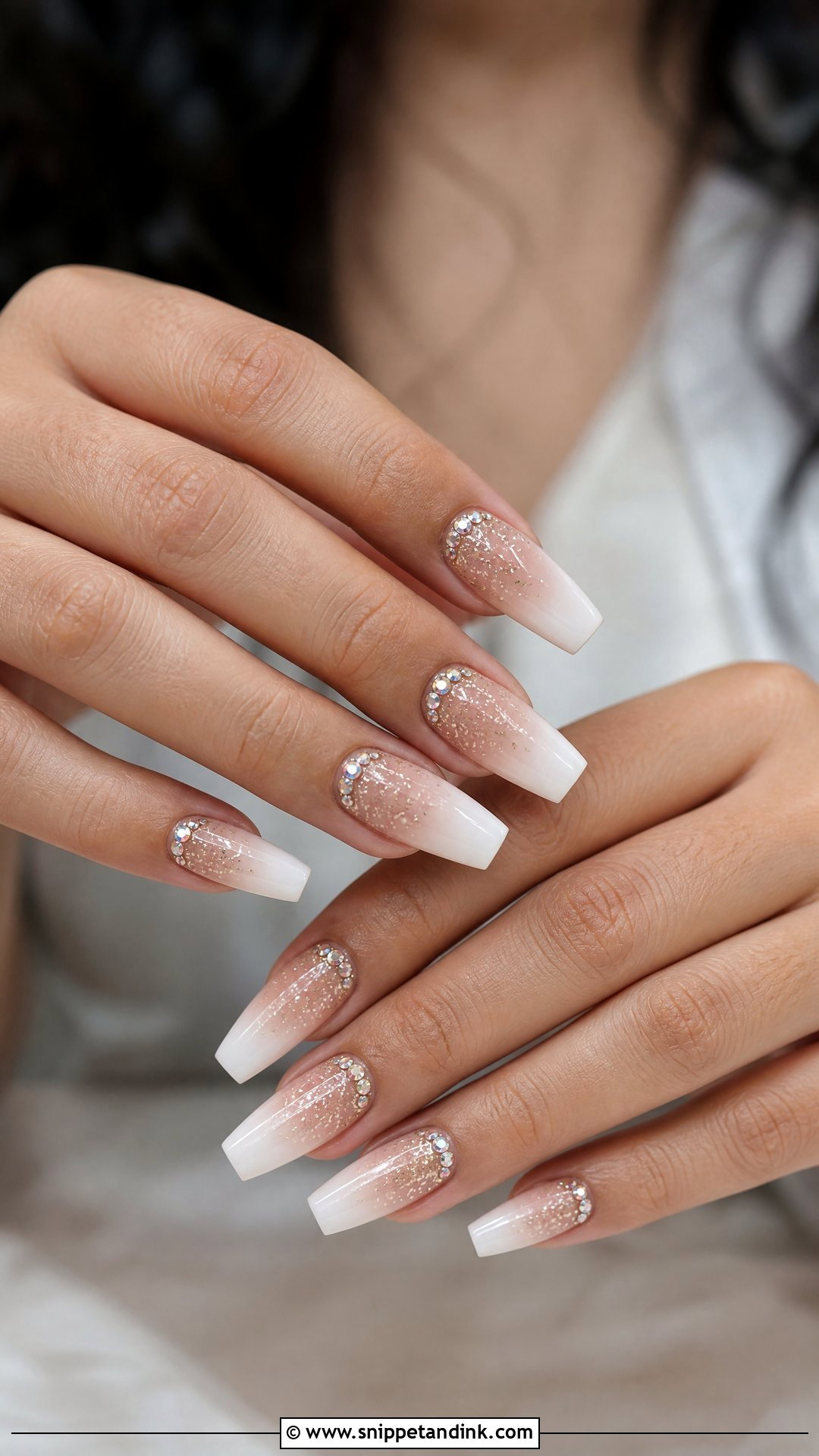
An ombre blends two colours so there’s no hard line, and that softness keeps nail art from fighting the mehndi. Nude to white, pink to white, red to maroon, peach to gold and champagne to glitter all work. A milky pink ombre with a pearl or crystal is romantic for a bride; nude to gold suits guests. The fade needs room, so almond, coffin and oval show it best. Look at healed examples of a tech’s ombre before booking, as uneven blending shows in macro shots.
11. Chrome Indian Wedding Nails
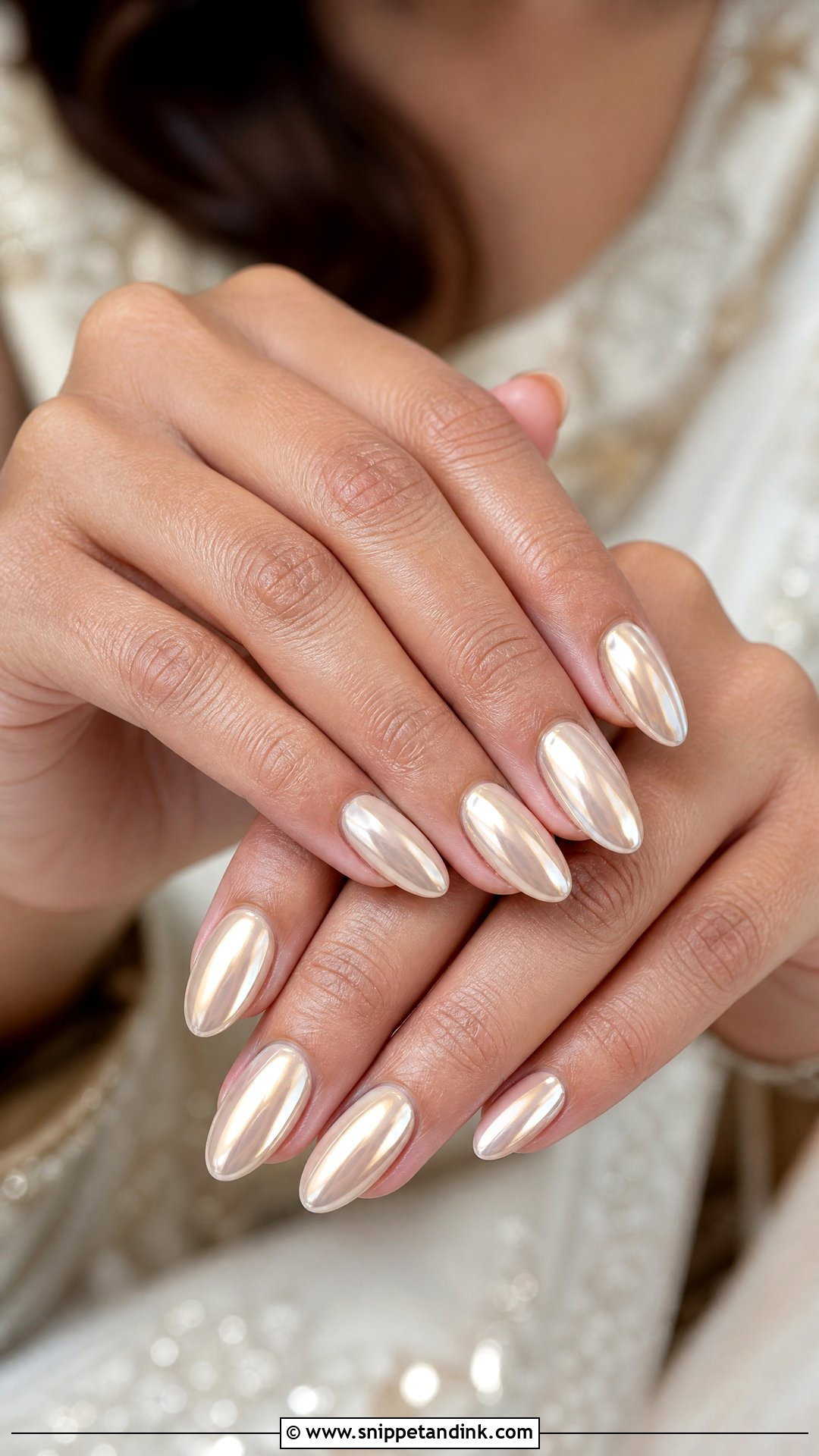
Chrome ranges from a soft glaze to a full mirror. Gold chrome sits beside traditional bridal jewellery, pearl chrome with ivory and pastels, rose gold with peach and champagne, and maroon or bronze chrome with deep bridal colours. It catches every light in the hall, so it’s at its best at the sangeet and reception. Chrome exaggerates any bump on the nail, so I smooth the surface with builder gel first. Keep the design minimal when the finish is very reflective.
12. Glitter Indian Wedding Nails
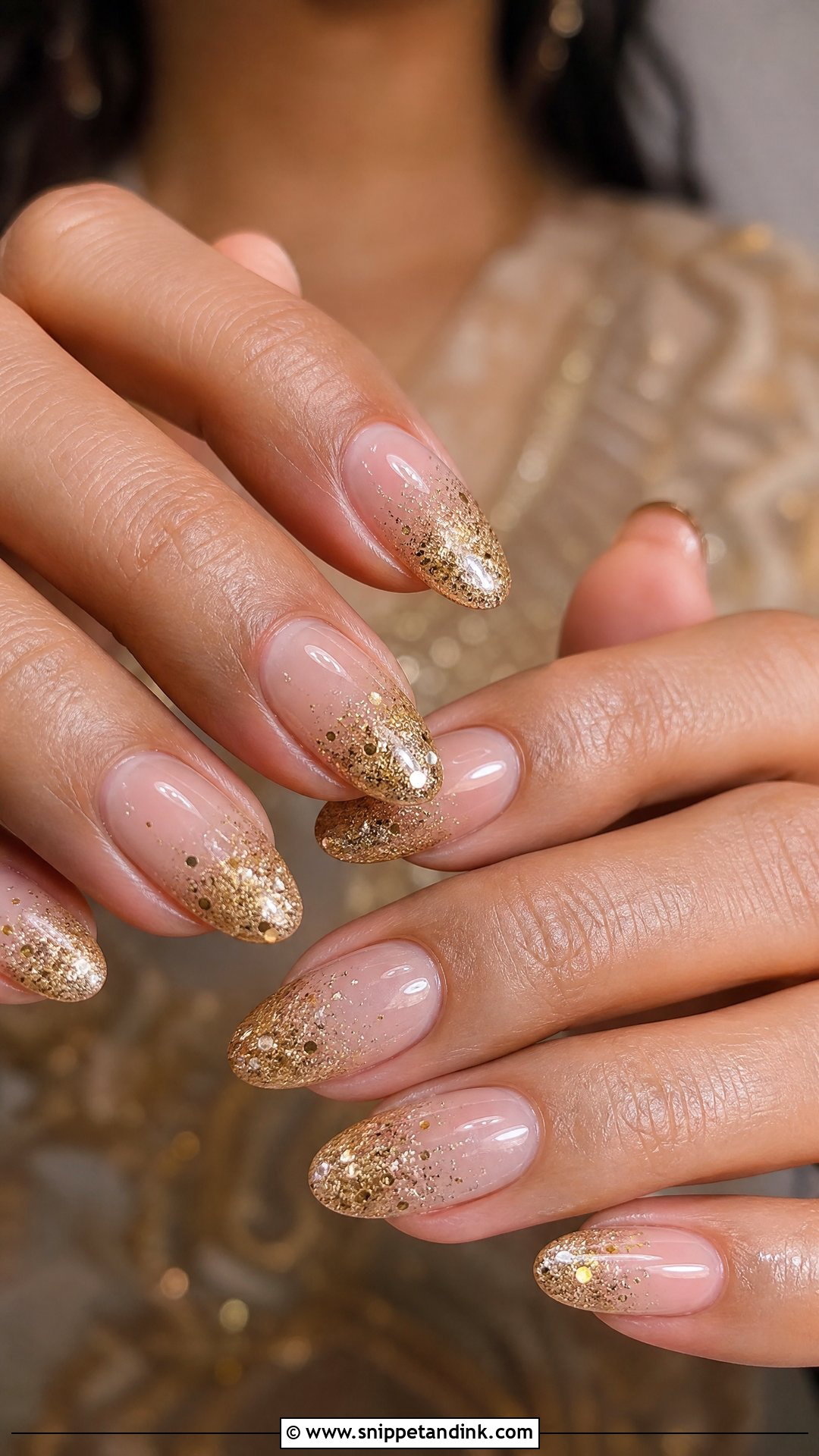
Glitter Indian wedding nails give sparkle without detailed art, and they fit the sangeet, reception and cocktail nights. Full glitter is bold; a glitter fade is softer. Gold suits red, green, ivory and mustard; silver suits cool pastels and mirror work; rose gold suits blush and peach. As a bride, consider glitter on two accent nails and a solid base on the rest, so the set still works for the ceremony. Fine glitter looks classy; chunky glitter is party and much harder to remove.
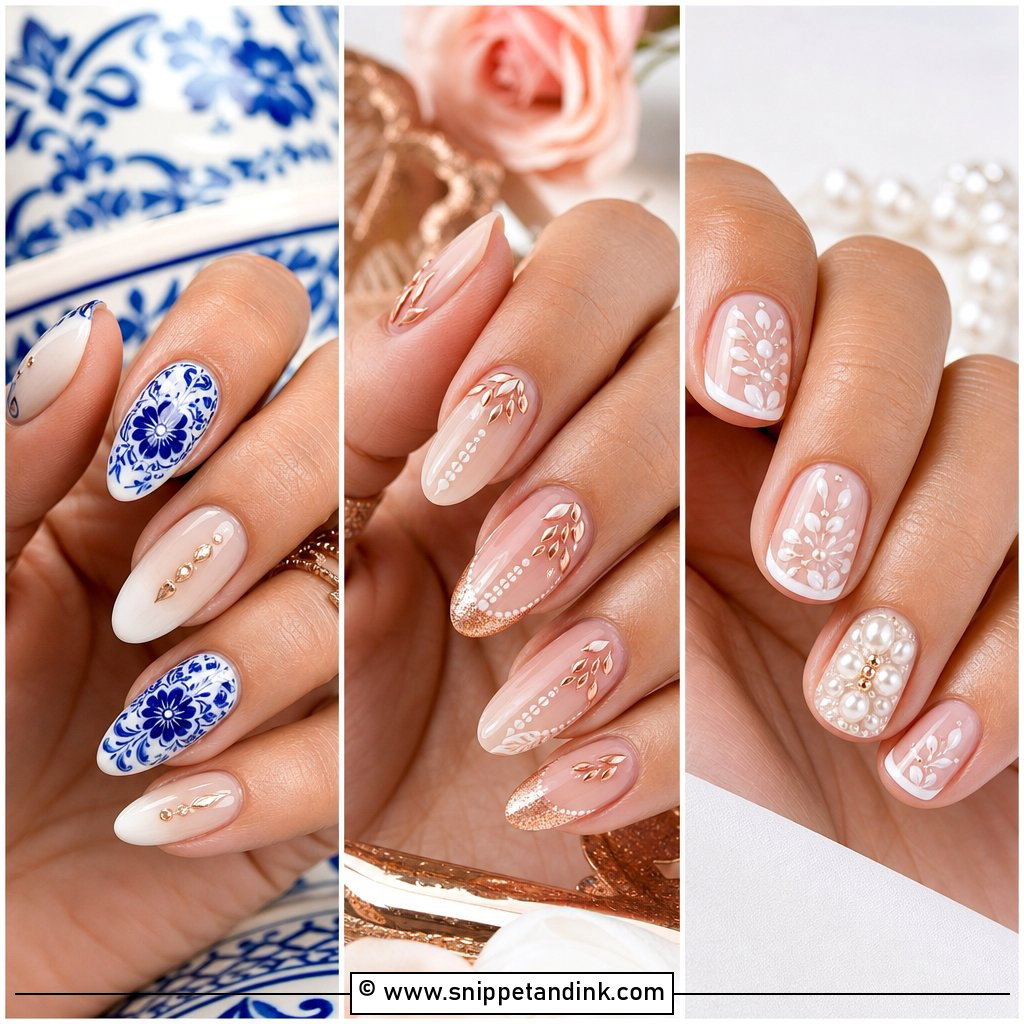
13. Floral Indian Wedding Nails
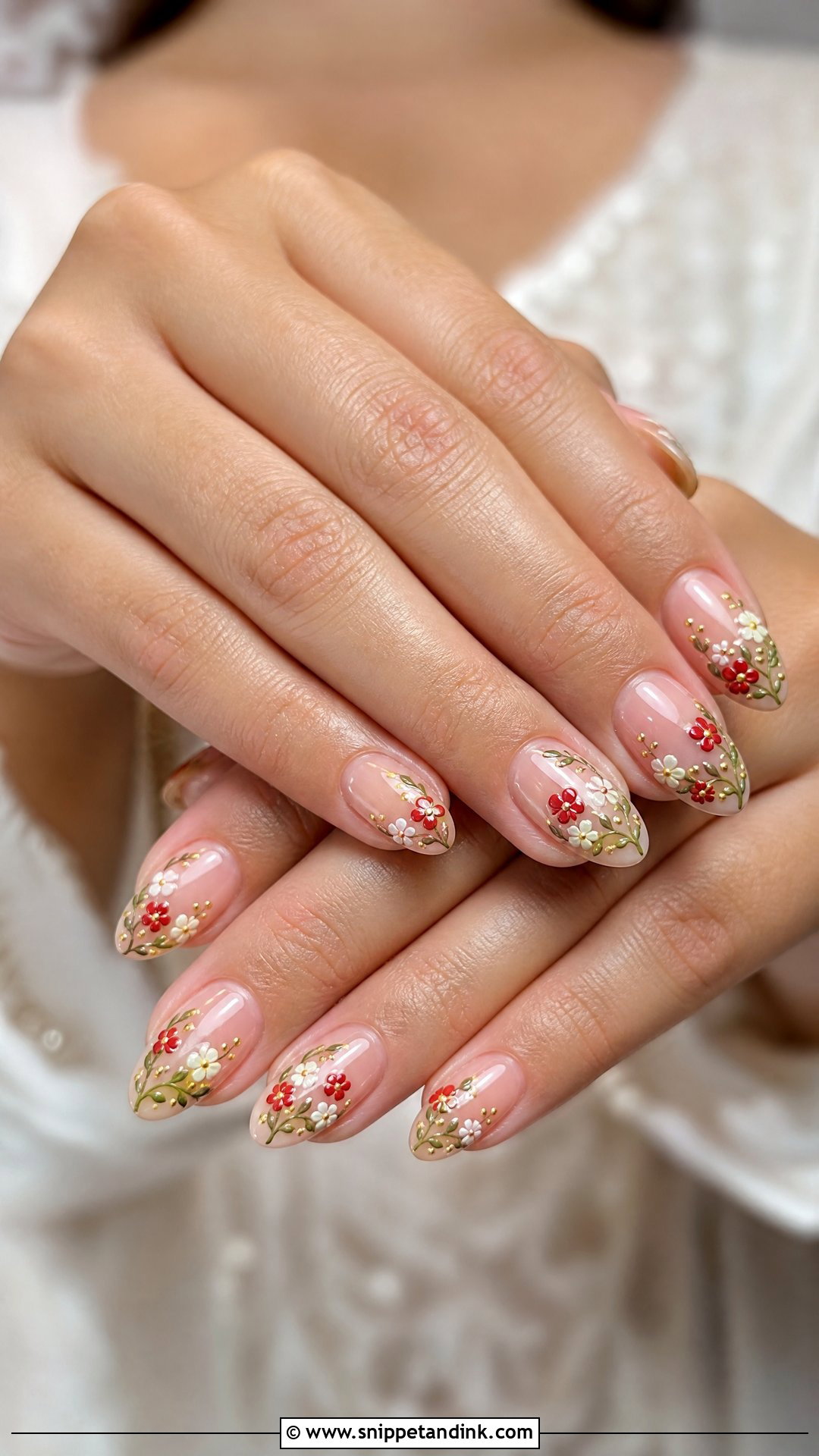
Small flowers suit the mehndi, haldi, engagement and daytime functions. Over a nude, pink, peach or milky base, you can echo the flowers of the day: red roses, white jasmine-like petals, yellow marigold details or pastel blooms, with a few gold dots or a thin vine to tie it together. Keep each flower small enough that most of the nail stays clear. Bridesmaids and guests can wear a simpler version with one floral accent.
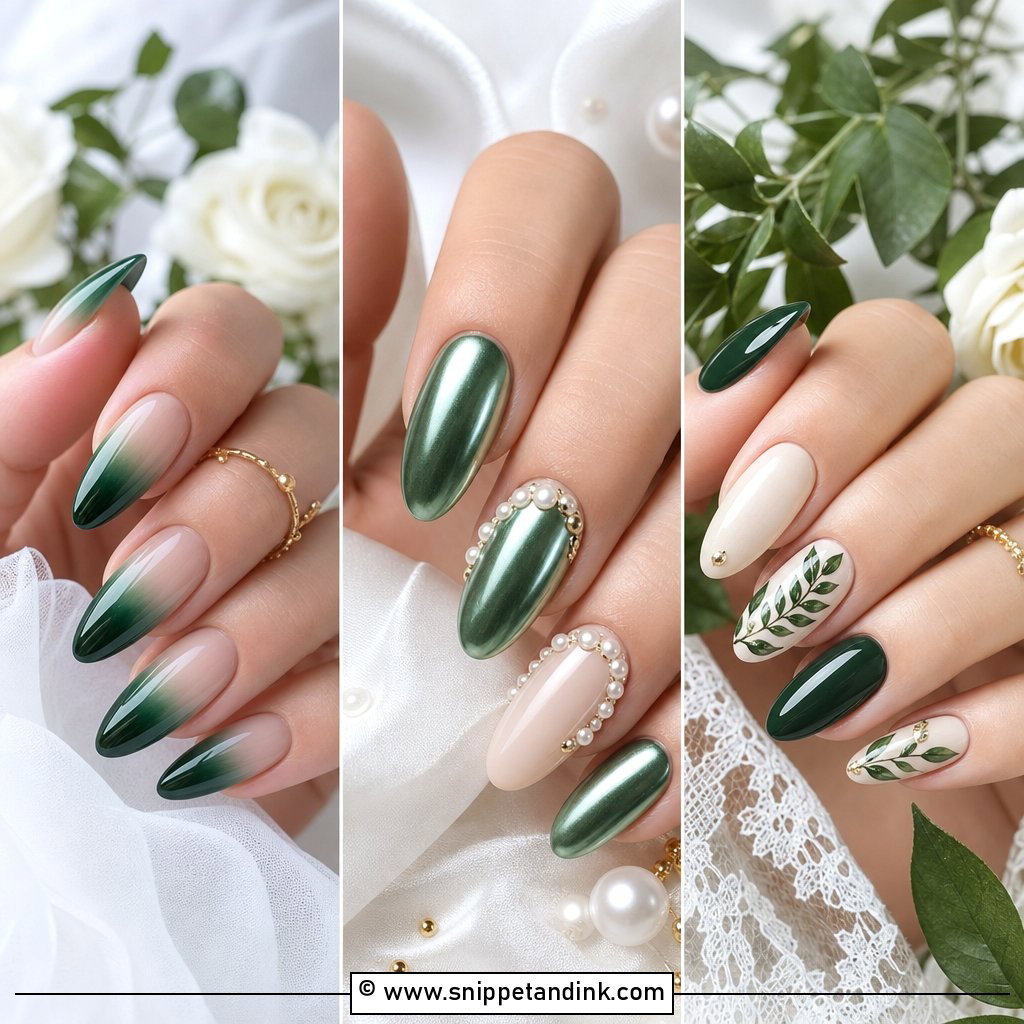
14. Green Indian Wedding Nails
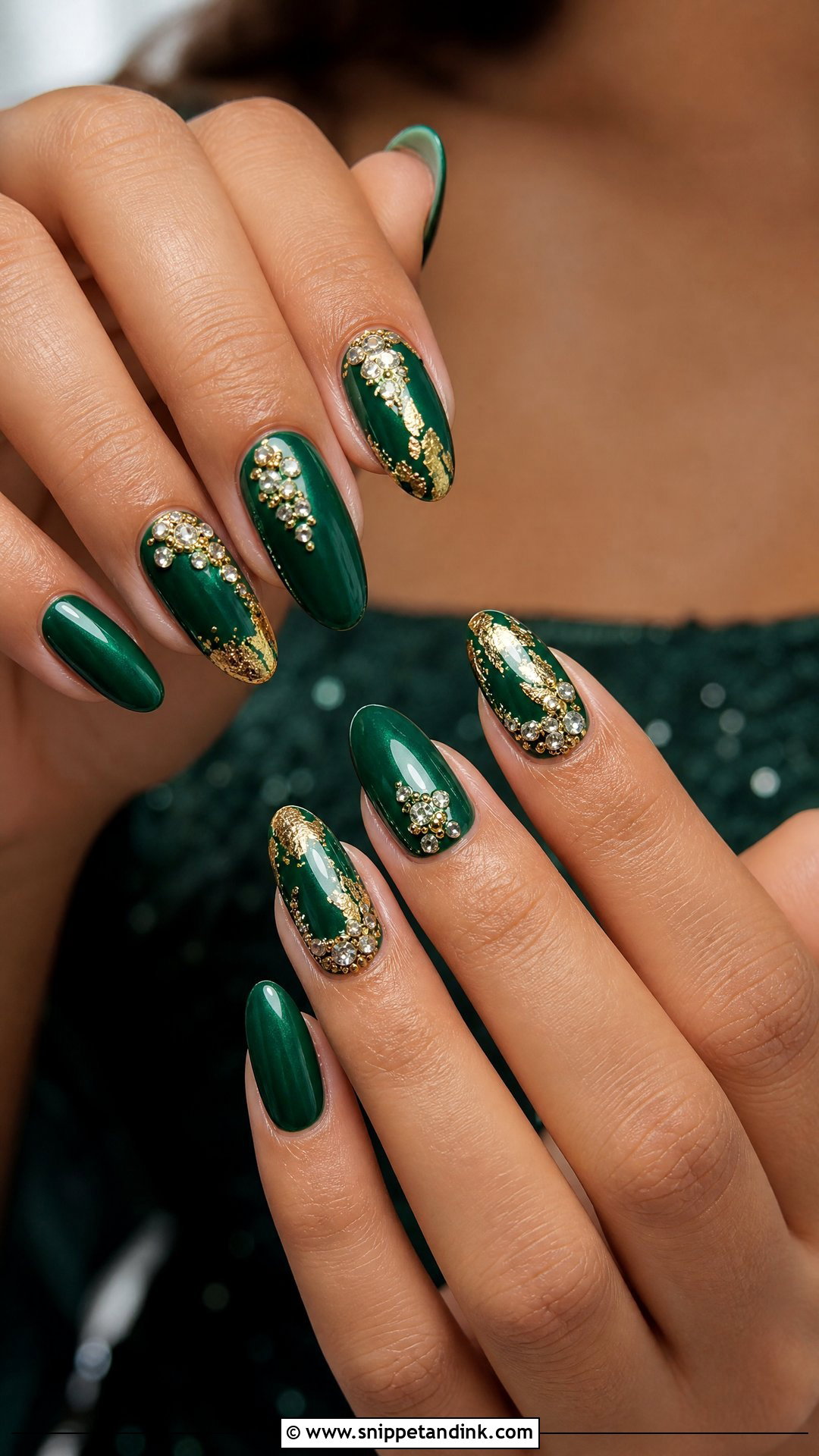
Green works when it connects to something you’re wearing, such as emerald jewellery, green bangles or a green outfit. Deep emerald with gold is royal for the ceremony or reception; sage or mint is softer for daytime and pastel lehengas. Emerald also sits well beside maroon and ivory. Deep greens need two full coats to avoid streaks, and they show chips like any dark colour, so seal the free edge carefully. Almond and oval soften it; coffin makes it dramatic.
15. Blue Indian Wedding Nails
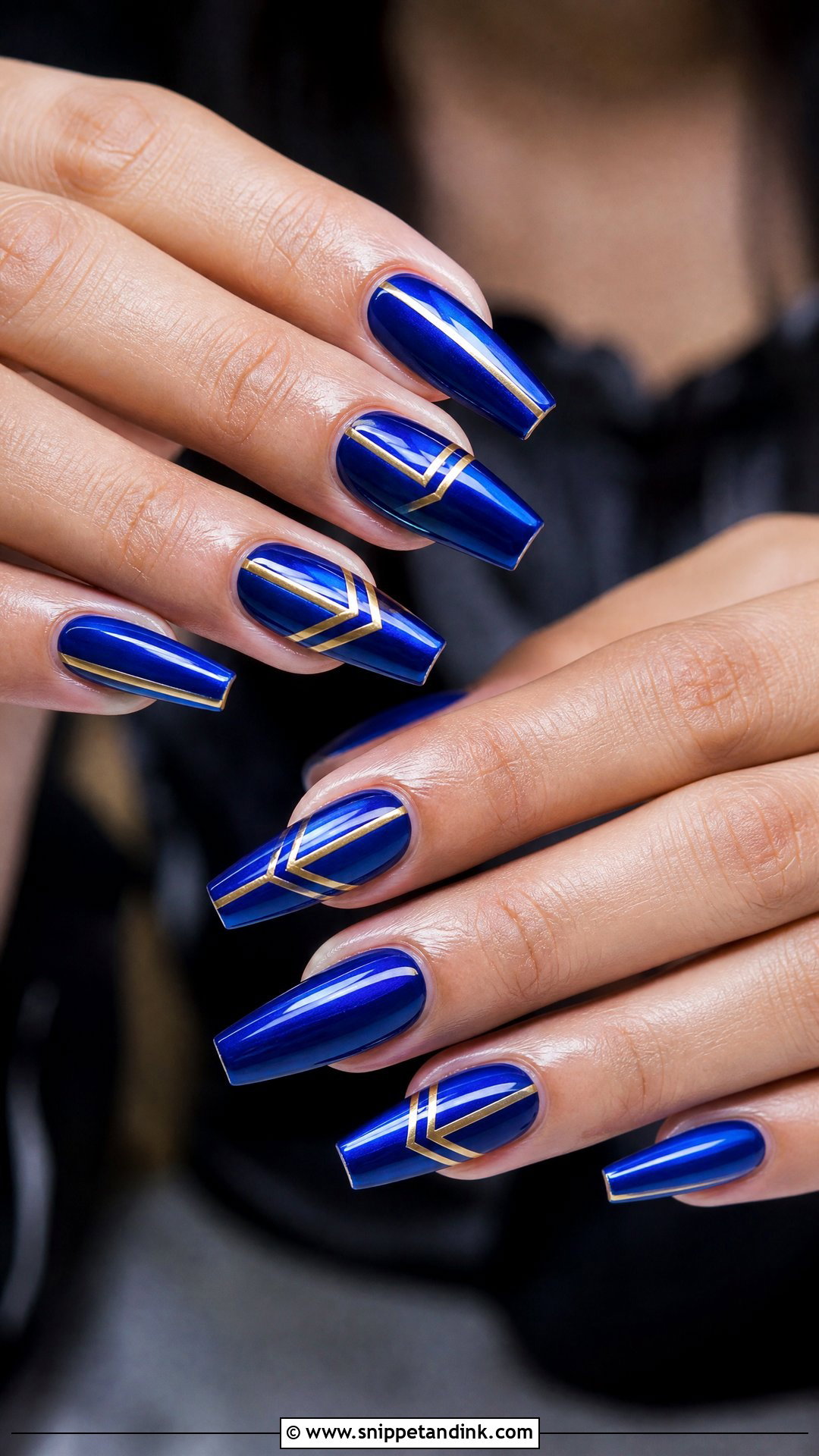
Blue is the colour for guests and brides stepping away from red and maroon, especially with navy, powder blue, turquoise or silver outfits. Navy with gold detail is evening-ready; light blue with pearls is soft for engagements and day functions. Match the metal to the embroidery: silver glitter for mirror work, gold foil for zari. Blue French tips over nude or a blue chrome are modern options. Keep any art minimal so the colour itself carries the set.
16. Ivory Indian Wedding Nails
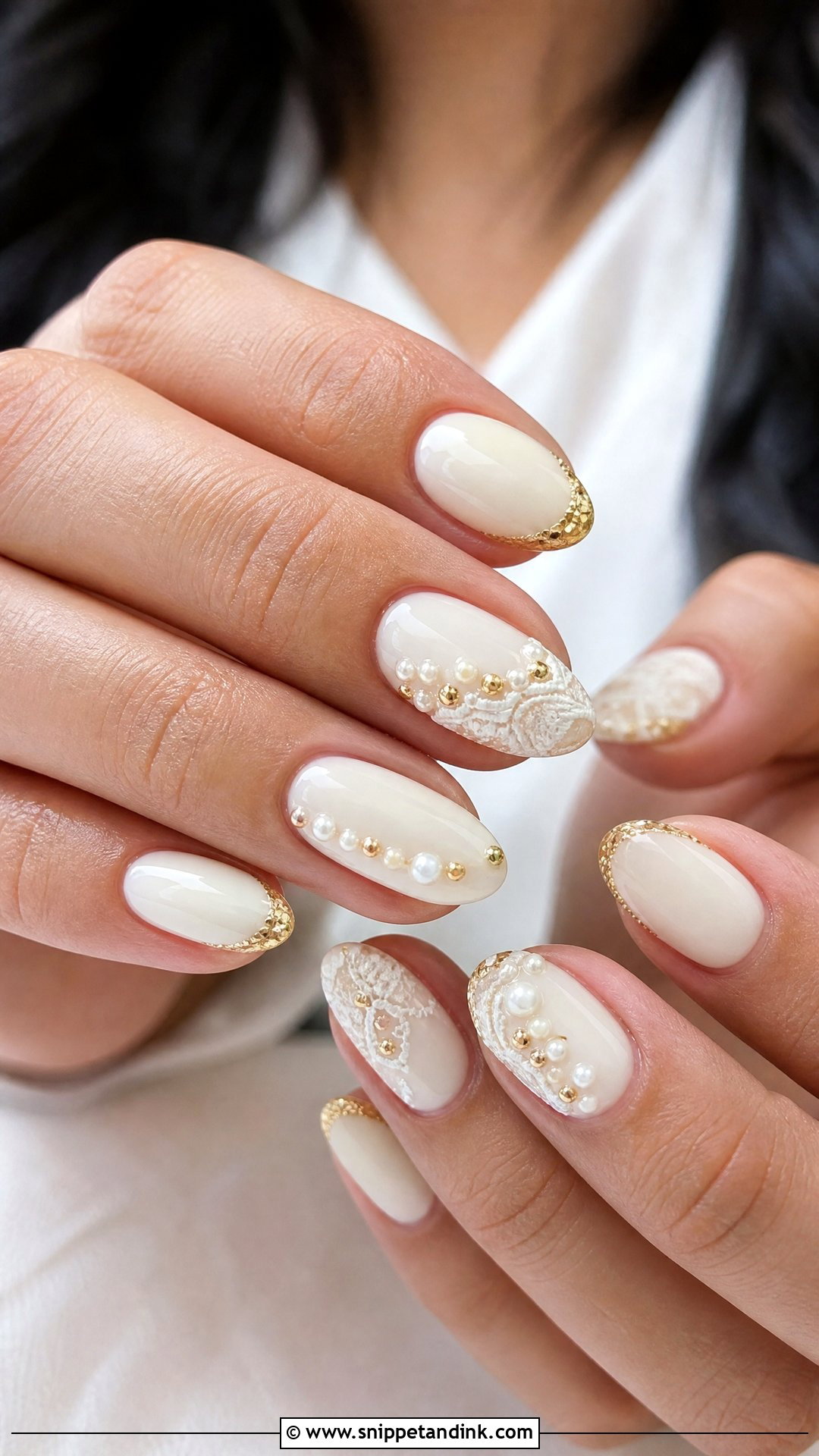
Ivory is softer than stark white and suits cream, champagne, beige and off-white outfits. It works beside both gold and diamond jewellery. Glossy ivory is lovely alone; pearl accents, a gold micro French or fine lace-style lines make it bridal. Against a dark mehndi stain, ivory gives strong contrast in close-up photos. Like white, it’s vulnerable to turmeric staining, so I wouldn’t wear it for the haldi.
17. Rose Gold Indian Wedding Nails
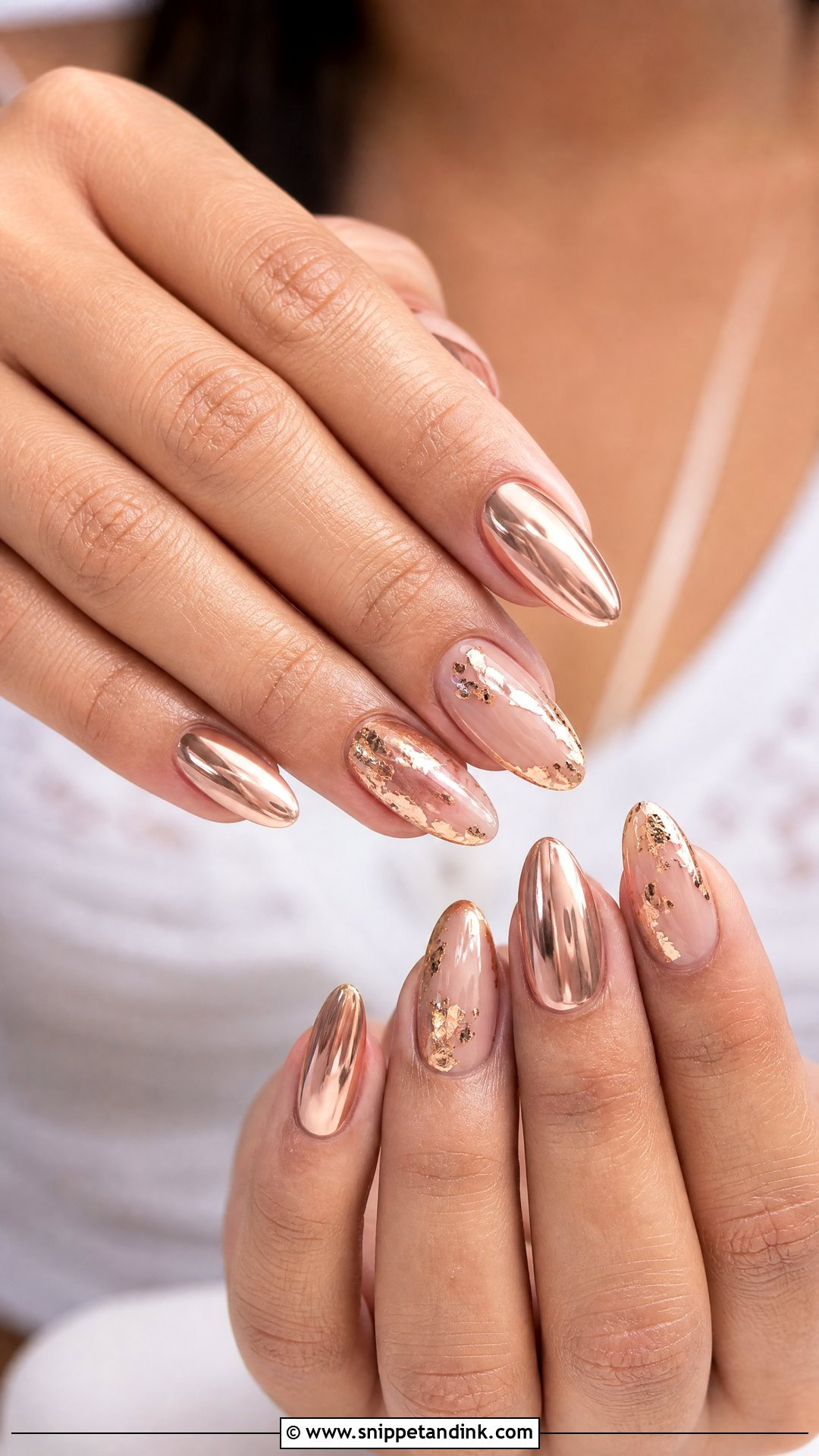
Rose gold sits between pink and gold, so it flatters most skin tones and suits blush, peach, champagne, ivory, mauve and pastel outfits. It also bridges mixed-metal jewellery. A rose gold chrome looks sleek at the reception; rose gold glitter tips are softer for the engagement; foil over nude or milky pink is delicate. Rose gold already glows, so keep any art minimal.
18. Rhinestone Indian Wedding Nails
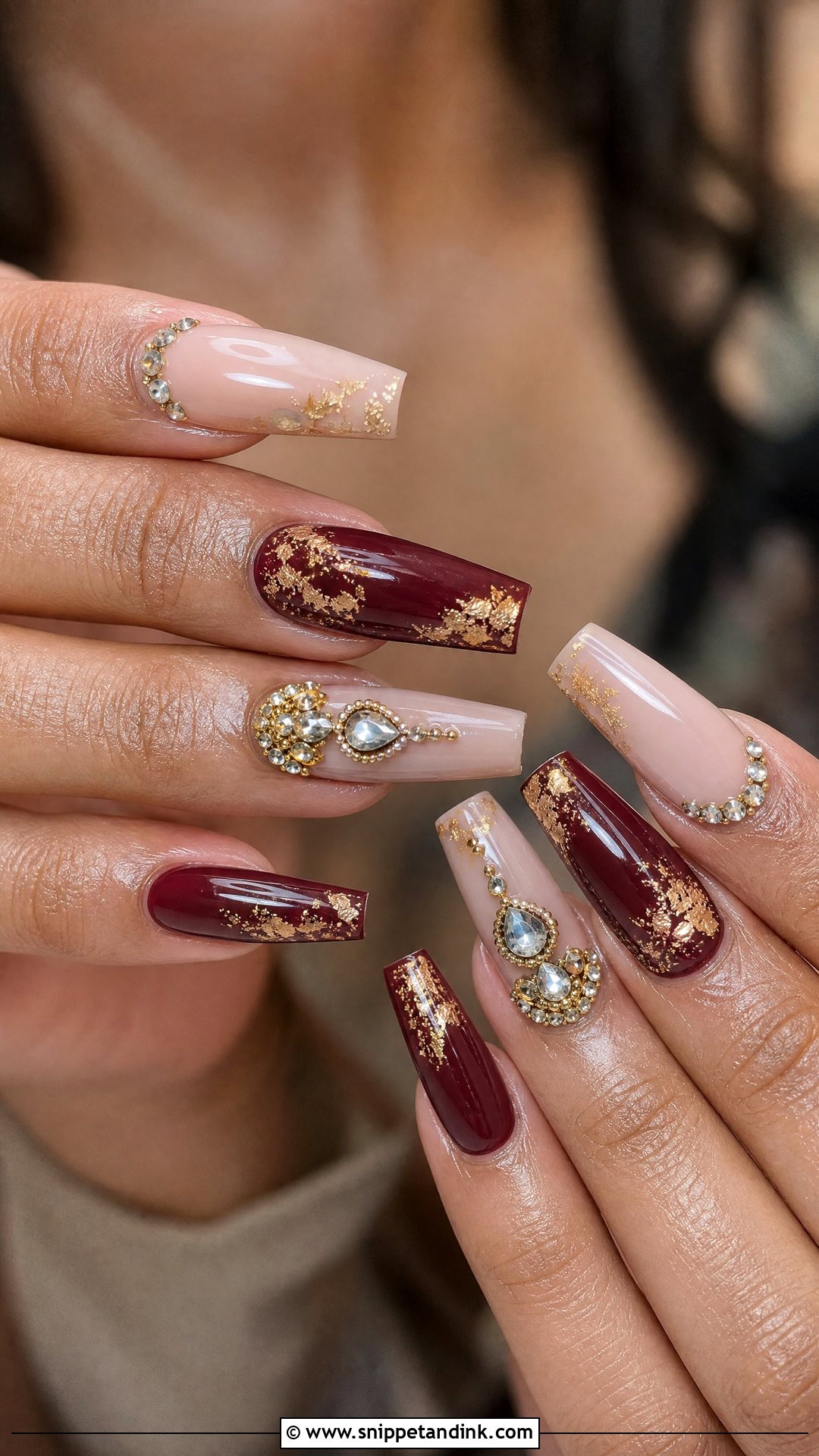
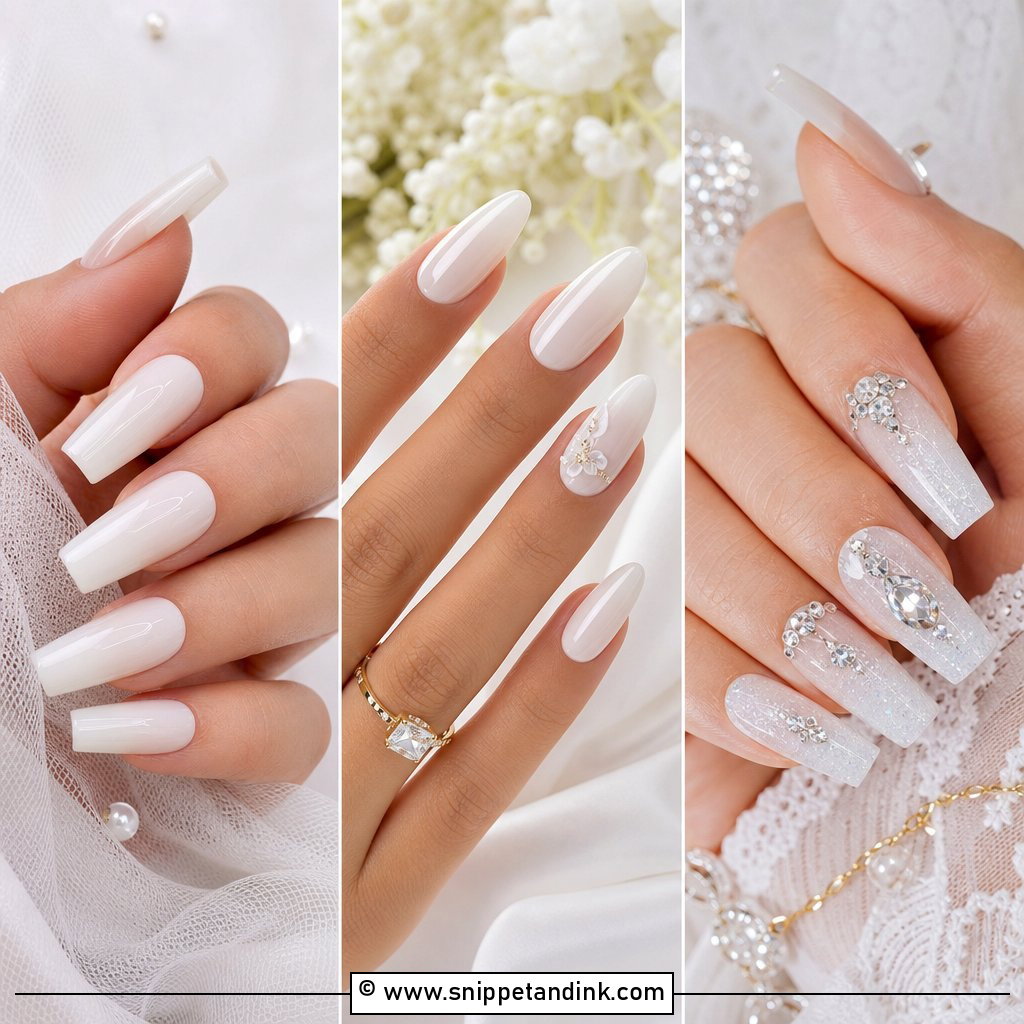
Rhinestone Indian wedding nails look luxurious when the stones are placed with intent: at the cuticle, along a French tip or on one accent nail over nude, red, maroon, ivory or pink. Heavier bridal sets can add gold foil or pearls. I use flat-back stones set in gem gel, sealed at the base and never coated over the face, so they keep their sparkle. They need to survive outfit changes and rituals, so give each nail a gentle press test before you leave the salon.
19. Minimal Indian Wedding Nails
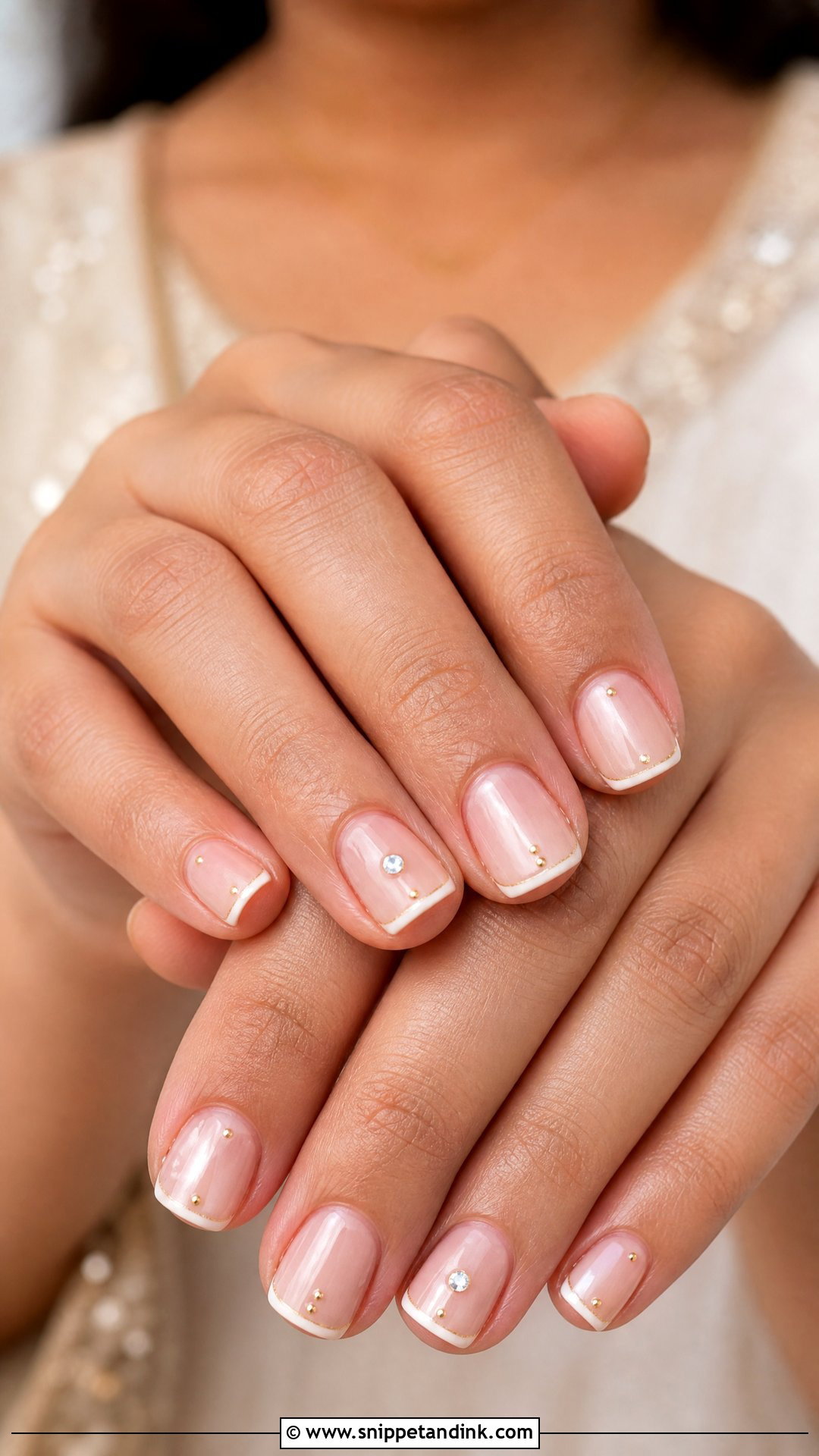
Minimal sets start with a nude, sheer pink, milky white or beige base and add one detail: a gold line, a tiny dot, a micro French, one pearl or one crystal. It’s the right choice when the mehndi and jewellery are already intricate, and it matches several outfits without a change. Because the design depends entirely on neatness, the cuticle work and shaping have to be perfect. Short square, soft oval and medium almond all suit it.
20. Haldi Indian Wedding Nails
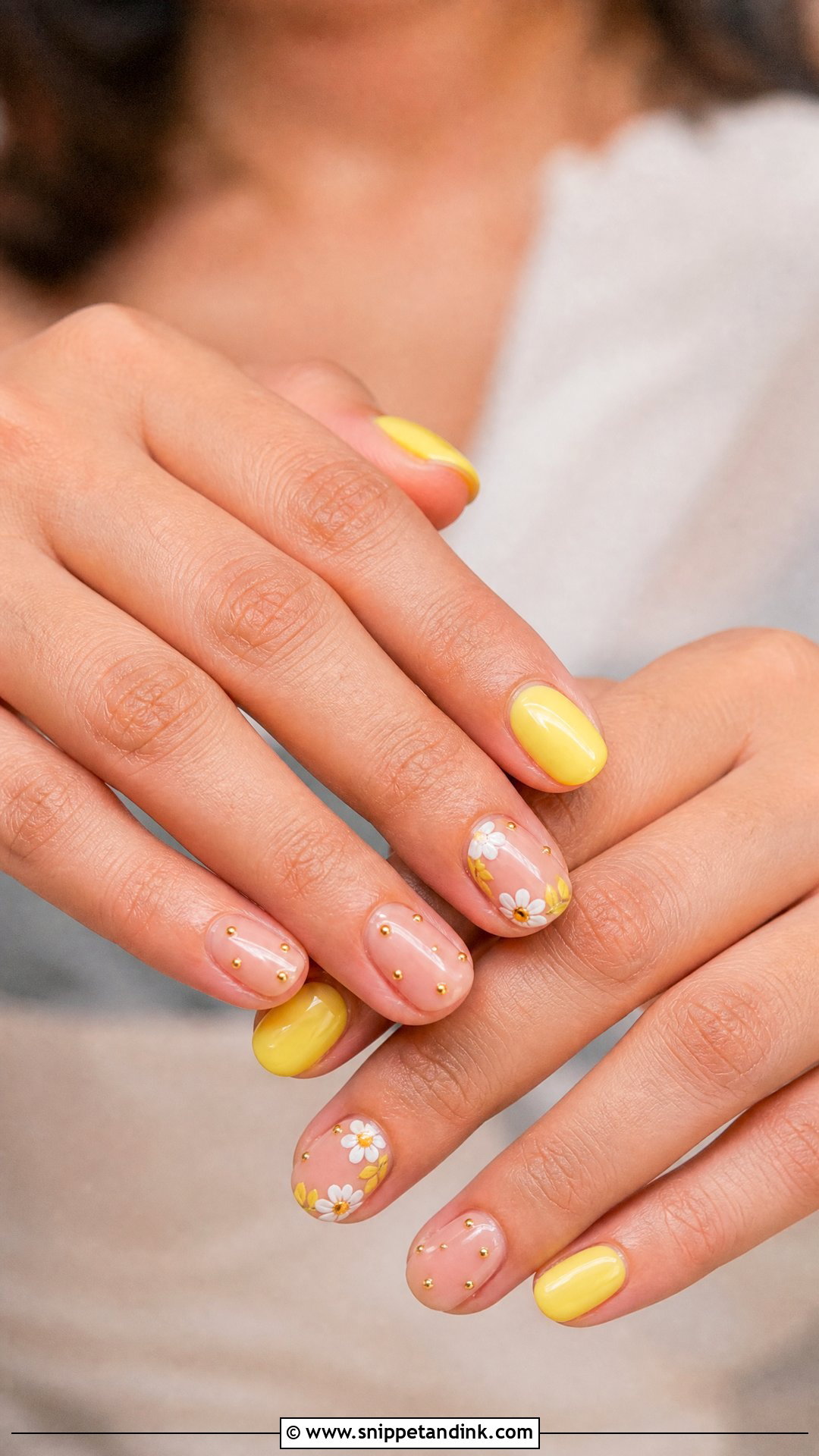
Haldi nails should look sunny: yellow, mustard, marigold, peach and gold. A soft yellow with white florals feels traditional; a nude base with yellow French tips is easier to wear afterwards. Haldi is hands-on, with paste smeared on skin and nails, so skip large stones or raised details that trap it. Glossy gel resists turmeric staining far better than matte or regular polish. Short to medium nails are the practical length, and it all suits yellow outfits, floral jewellery and warm daylight.
21. Sangeet Indian Wedding Nails
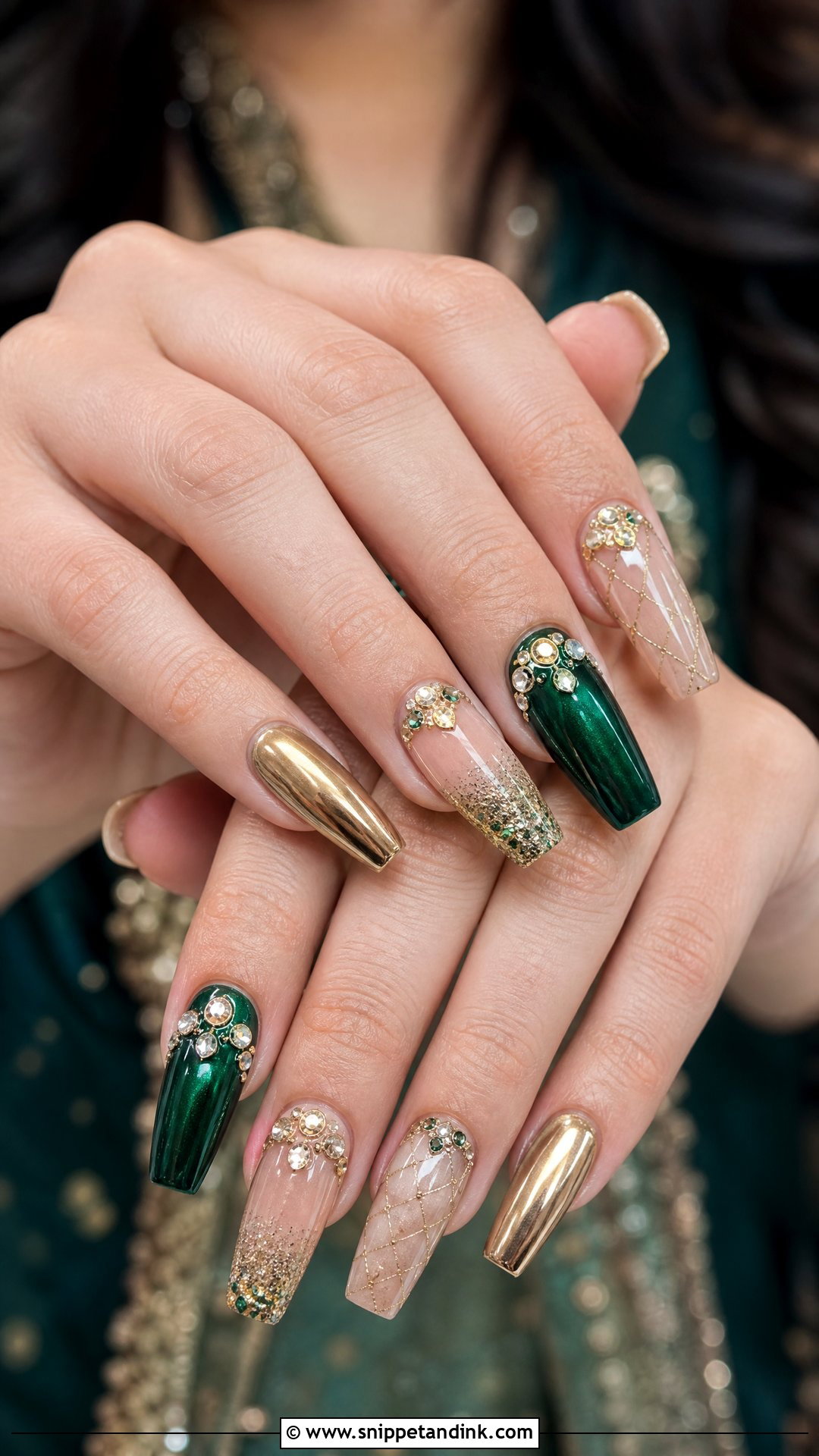
The sangeet is where nails can get louder: glitter, chrome, jewel tones and reflective finishes that flash as you dance. Deep pink, emerald, navy, purple or gold can match an embellished lehenga or mirror-work outfit. Chrome French tips or a glitter fade over nude are modern choices. Rhinestones are fine if they’re low and well sealed. Medium almond or coffin gives drama without being hard to manage while dancing.
22. Reception Indian Wedding Nails
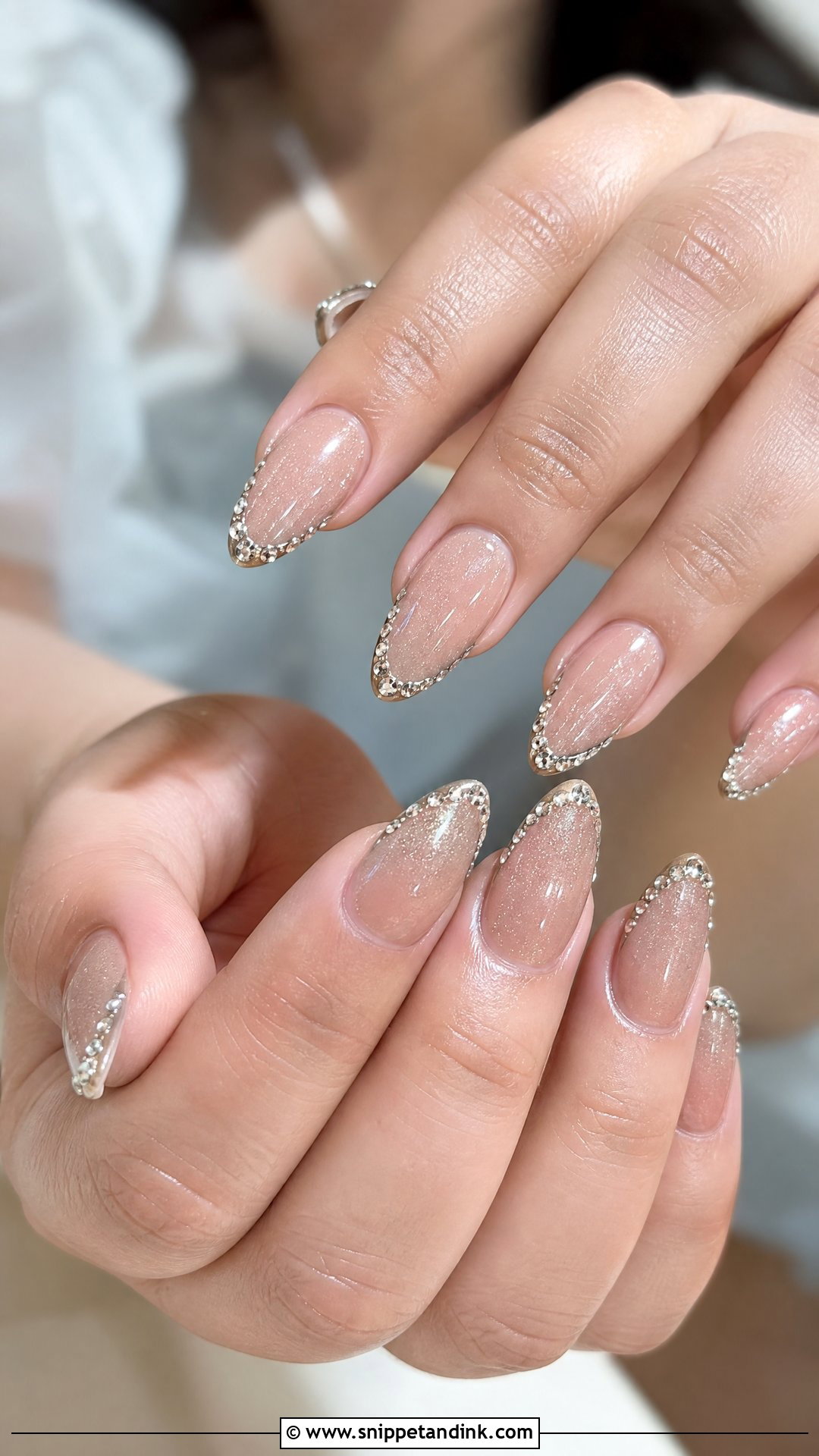
Reception nails can be more glamorous because most rituals are done: champagne chrome, nude shimmer, maroon gloss, pearl white, gold foil or crystal French tips all photograph well under indoor lights. Against a heavily embellished outfit, choose one main finish rather than several; a glazed nude with tiny crystals beside a sequined lehenga is a good example. Deep red or wine suits classic bridal colours. This is also the function where longer almond, coffin or stiletto shapes become practical.
23. Engagement Indian Wedding Nails
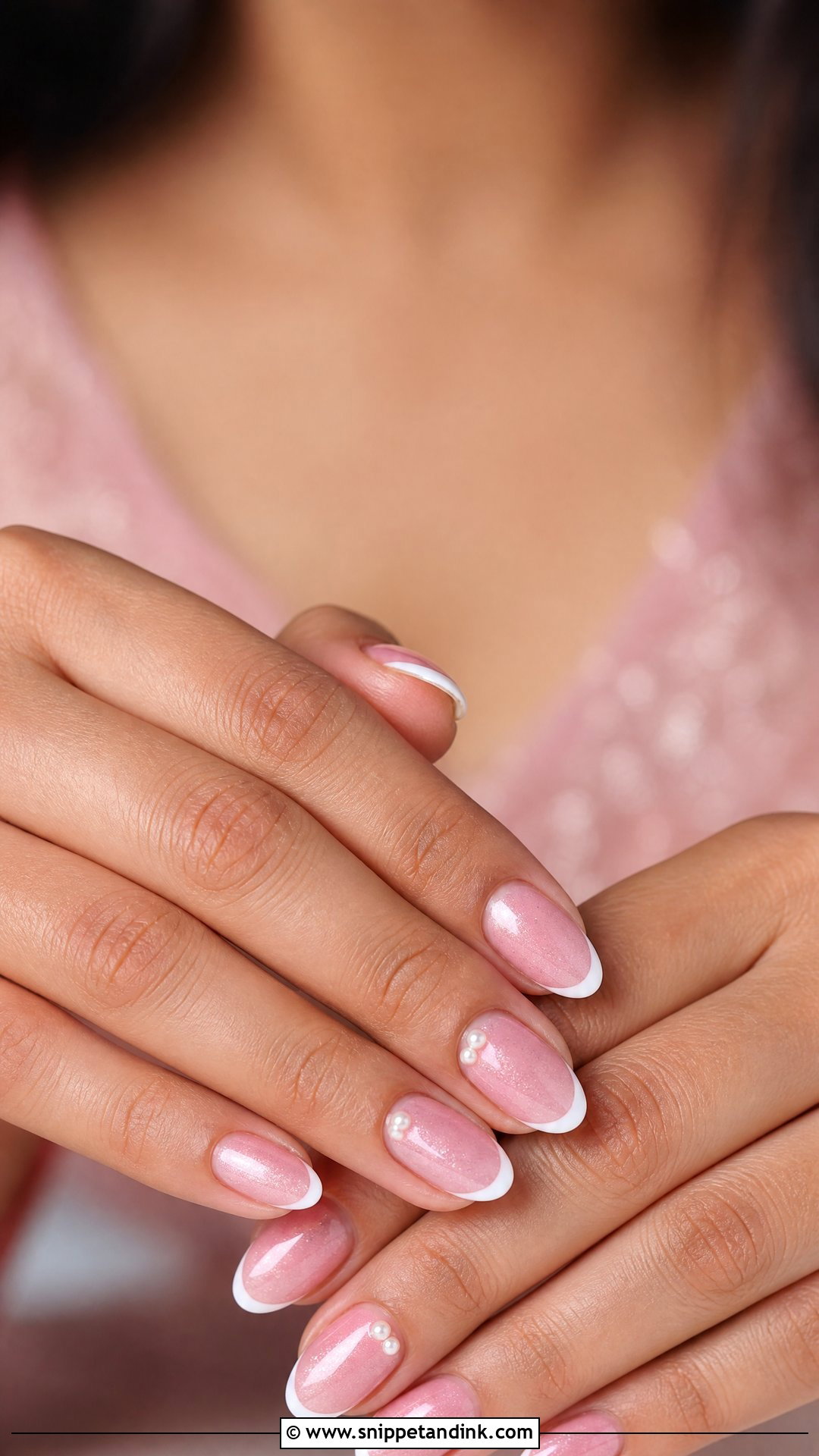
Engagement nails get photographed constantly around the ring, so the set should flatter it rather than compete. Soft pink, nude, ivory, milky white and champagne are reliable. A thin French, pearls, tiny crystals or a hint of shimmer adds a bridal touch. With a bold outfit, keep the nails neutral; with a pastel outfit, a soft chrome or a floral accent adds depth. Almond and oval lengthen the fingers, while short square looks clean and modern.
24. Wedding Guest Indian Wedding Nails
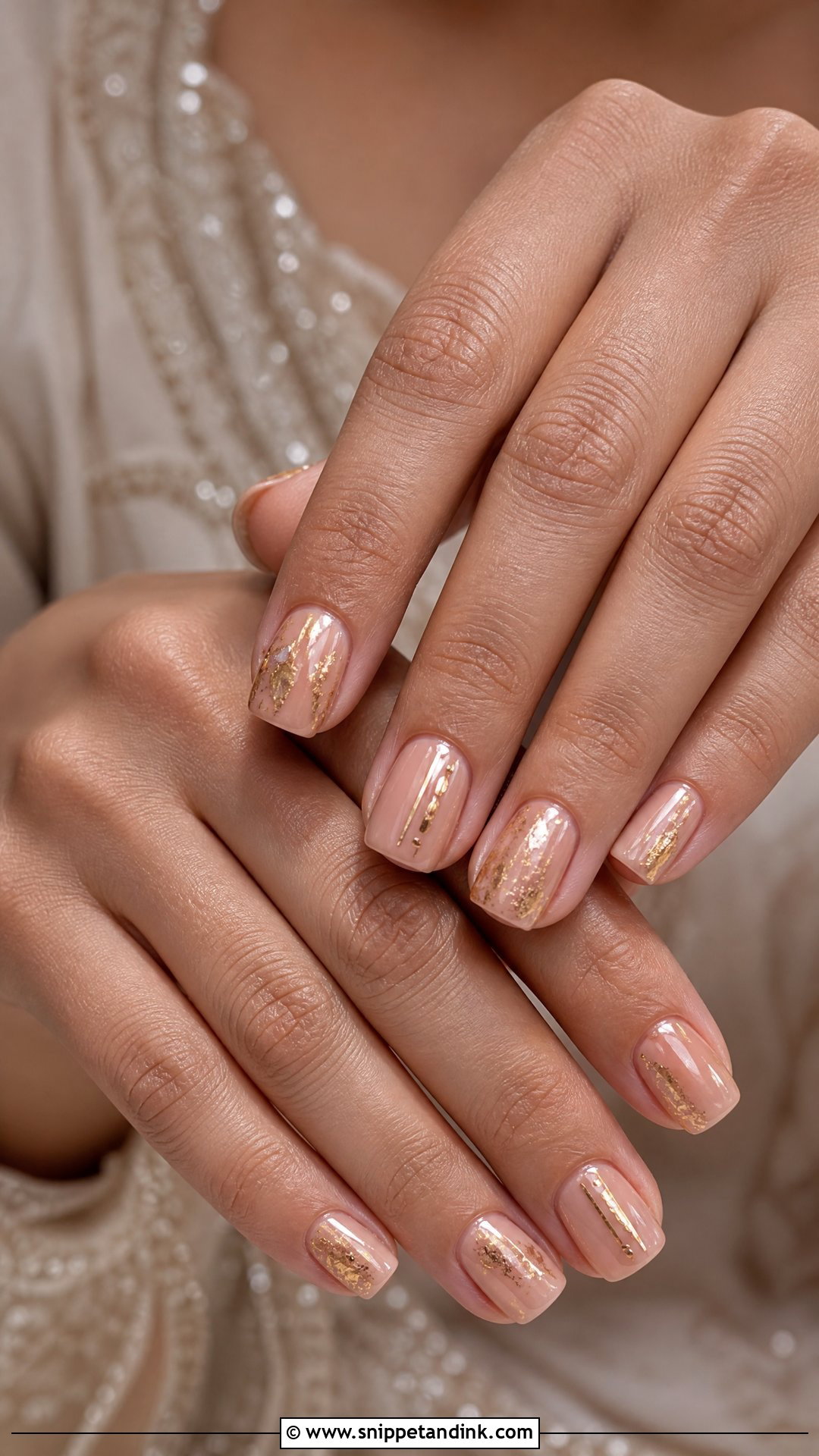
Guests should aim for festive without looking bridal. Nude with gold accents, blush pink, soft chrome, French tips, pastel florals, emerald gloss and champagne shimmer are safe choices. Heavy rhinestones, bridal red patterns or full mehndi-style nail art can read as competing with the bride, unless the dress code is very grand. Short to medium length is easiest through long ceremonies, eating with your hands and dancing. For several events, pick one versatile base and add small details that suit each outfit.
25. Short Indian Wedding Nails
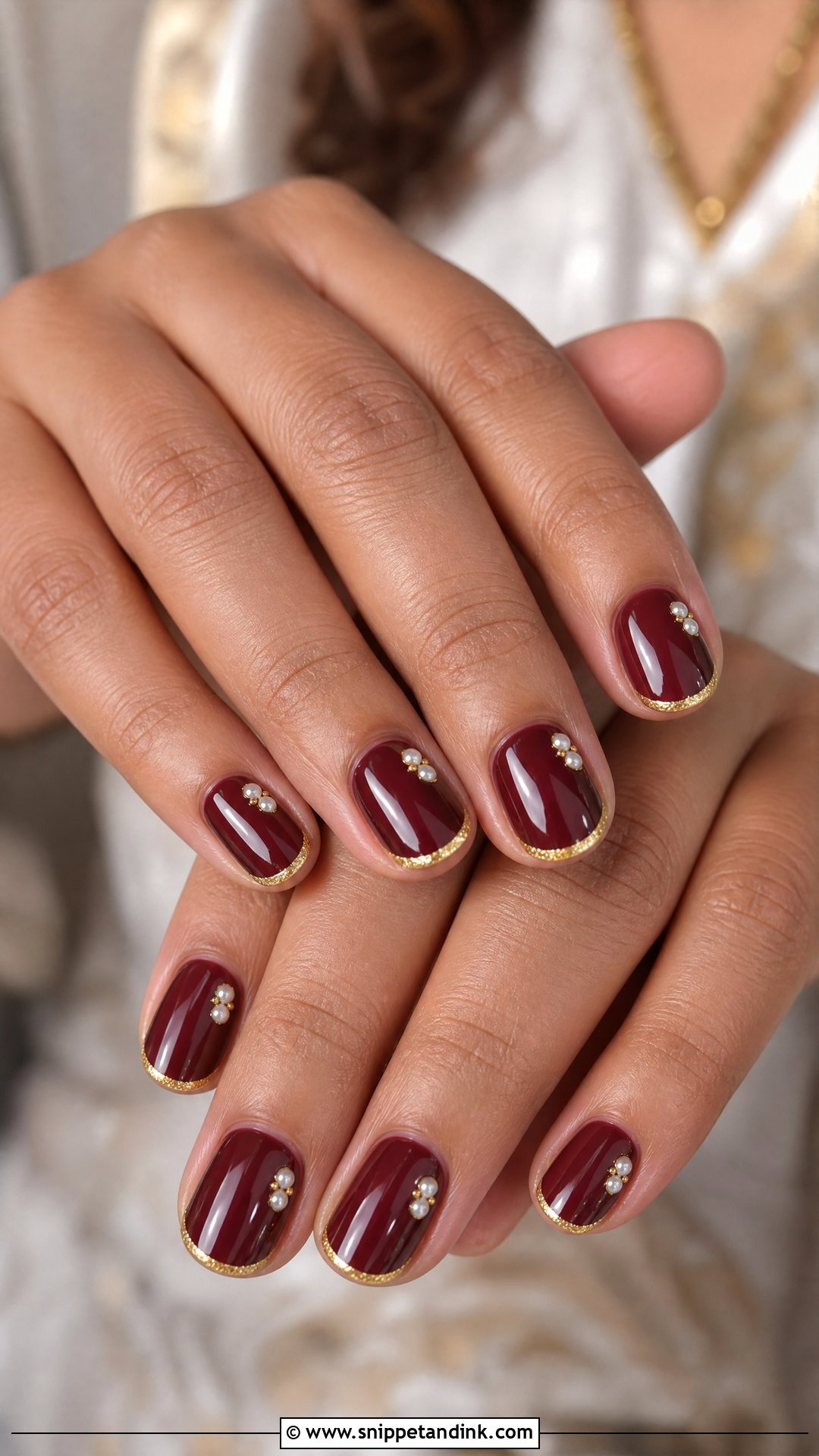
Short nails look bridal when the shaping is clean, the finish is glossy and the details are scaled down. A short nude with gold micro tips is elegant and practical; short red or maroon feels traditional and easy to wear. Milky white chrome, pearl dots, tiny florals or a fine glitter fade also sit well. Short lengths suit brides who aren’t used to extensions and need to handle rituals, bangles and outfit changes. Soft square, round and short oval are the best shapes.
Have the Manicure Done Before the Mehndi Goes On
The order matters more than the design. Henna stains whatever it touches, including the cuticles and any bare nail plate, and the stain darkens over the following day or two. Once it’s on, a manicurist can’t push back, file or clean the cuticle area without disturbing the design. Book the gel a day or two before the mehndi, so the cuticles are tidy and the nail plate is sealed under polish.
- Gel acts as a shield: henna sits on top and wipes off the cured surface, leaving the nail colour intact.
- Ask your mehndi artist whether she wants the fingertips covered. Many brides want the traditional orange tips, which will stain the skin around the nail but not the gel itself.
- Avoid soaking off or filing for a few days after mehndi. Acetone and water both work against a deep stain.
- Bring cuticle oil, but apply it once the paste is removed and the stain has had time to set.
Turmeric, Paste and Pale Polish at the Haldi
Haldi paste is turmeric, and turmeric tints anything porous. Matte top coats, regular polish and white or very pale gel can all pick up a yellow cast that won’t fully wipe away. A high-gloss gel top coat resists it much better. If your ceremony set is white, ivory or milky, wipe your nails with a little oil or makeup remover as soon as the paste is washed off, and keep a fresh layer of top coat on hand in case the shine dulls. A darker or yellow-friendly shade for the haldi saves the worry altogether.
Plan the Nails Around Every Function, Not Just the Pheras
The right set supports the whole look across the week, not only the ceremony outfit. Red and maroon stay classic for the wedding itself; nude, ivory, pearl and French tips bring softness for the engagement and reception. Gold, chrome, glitter, rhinestones and jewel tones belong to the sangeet and reception nights, while mehndi-inspired art, florals and haldi yellows suit the pre-wedding functions. Before you settle on a design, think about your jewellery, how dark your mehndi will go, your nail length and how many outfits the manicure has to match.
You'll Like These Ideas:


Leave a Reply