
A bride’s hands get photographed more than almost anything else at an Indian wedding: next to the mehndi, under the kaleeras, wrapped around a dupatta during the pheras. That’s why I plan the manicure as part of the whole look rather than as a last-minute treat. A set has to sit happily beside henna, bangles and heavy embroidery, and it has to survive several functions in a row. Below are 30 Indian wedding nails I’d actually put on a client, from classic red and gold to milky chrome and pearl work, with notes on who each one suits and where it tends to fail. Sisters, bridesmaids and guests will find plenty here too.
Nails Go On Before the Henna, Not After
The order of appointments matters more than the design. I ask brides to book the manicure two to three days before the mehndi function, never the morning after. Gel removal and reshaping both involve acetone, filing and scrubbing around the cuticle, and that is exactly where a fresh henna stain is thinnest. Do your nails afterwards and you risk pale patches on the fingertips in every ring shot.
There’s a second reason. Henna paste is usually sealed with a lemon and sugar mix, and it sits on the hands for hours. A cured gel top coat shields the nail plate from that orange staining; a bare or freshly buffed nail soaks it up and can stay tinted for weeks.
- Skip cuticle oil and hand cream on mehndi day itself. Oil sitting on the skin stops the paste from bonding and gives a lighter stain.
- Ask your henna artist to stop just short of the cuticle if your set has foil or stones there, so scraping off the dry paste doesn’t lift them.
- Bring your outfit swatch to the nail appointment, not a phone photo. Screens shift reds and golds badly.
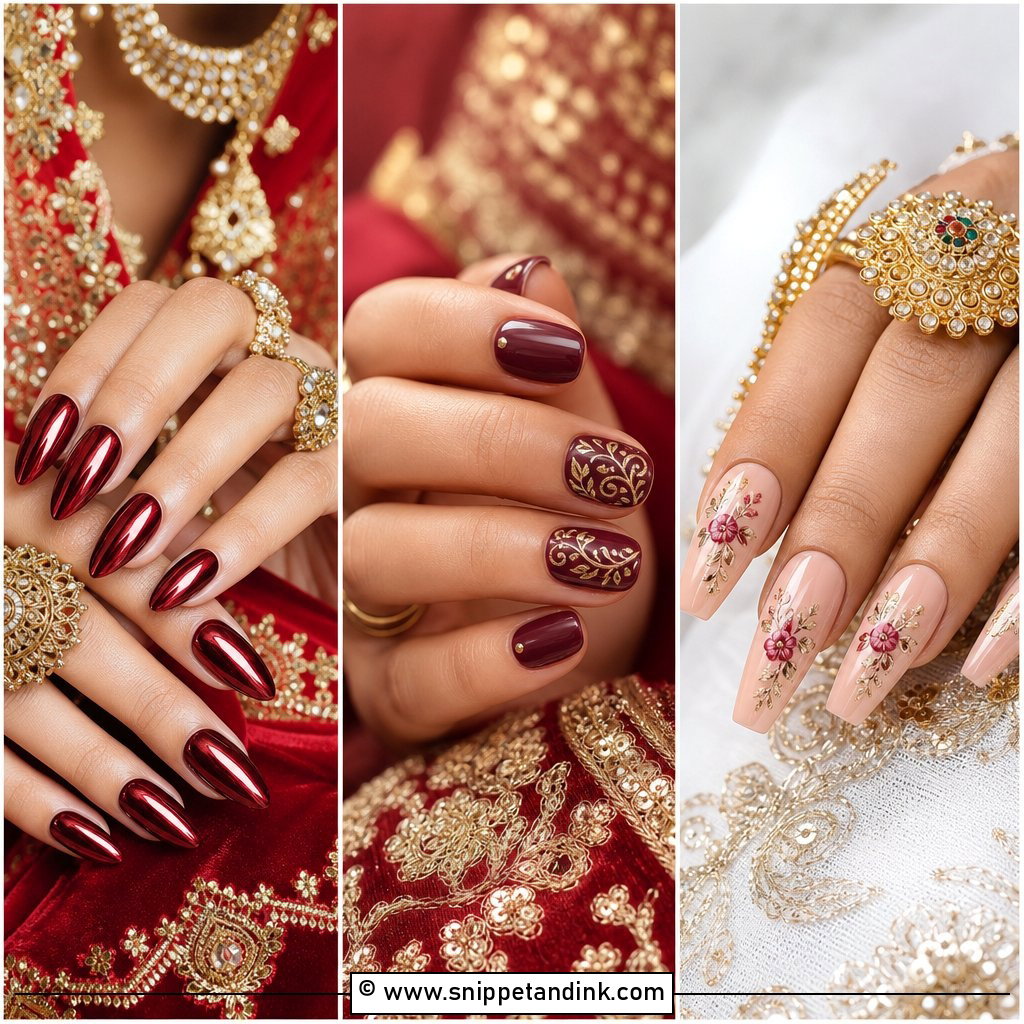
1. Red And Gold Indian Wedding Nails
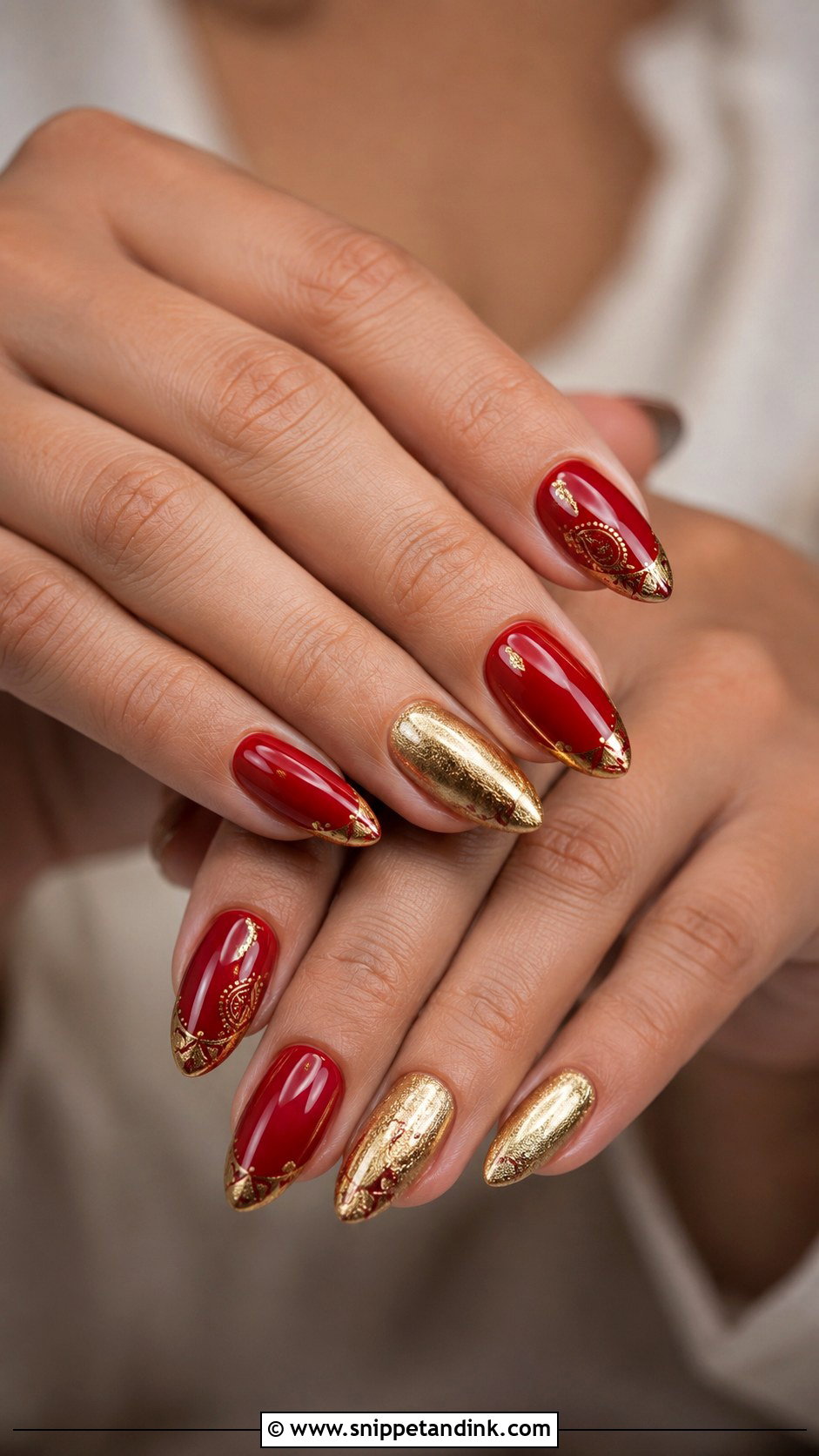
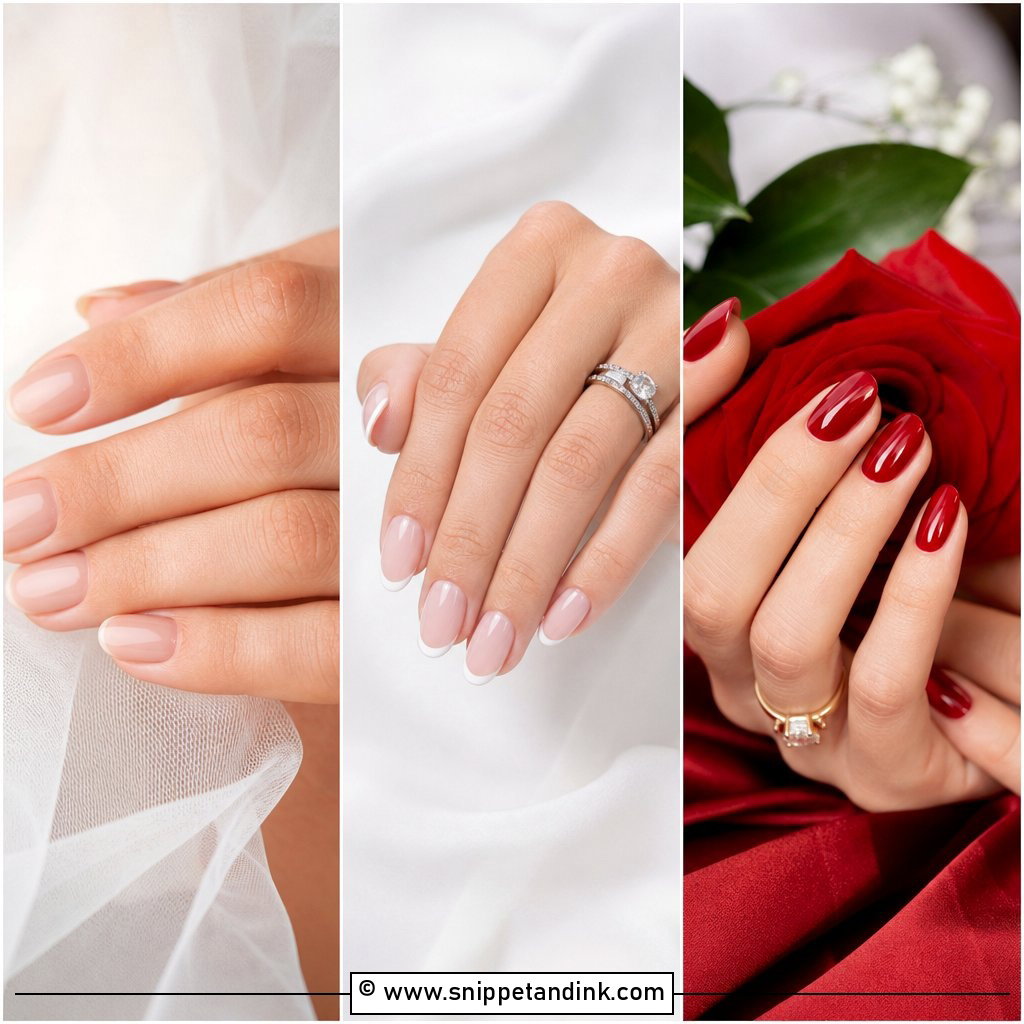
This is still the set I’m asked for most often for the main ceremony, and it earns its place next to a red lehenga and dark henna. The trick is choosing the right red: a blue-based red can look almost pink beside a warm orange-red outfit, so I always hold a swatch against the fabric before I start. Gold foil or fine linework carries the festive part. I’d keep the shape almond, oval or coffin so there’s enough room for detail, then add one or two nails with fine paisley or mandala-inspired art over a glossy base with gold tips.
2. Maroon Bridal Indian Wedding Nails
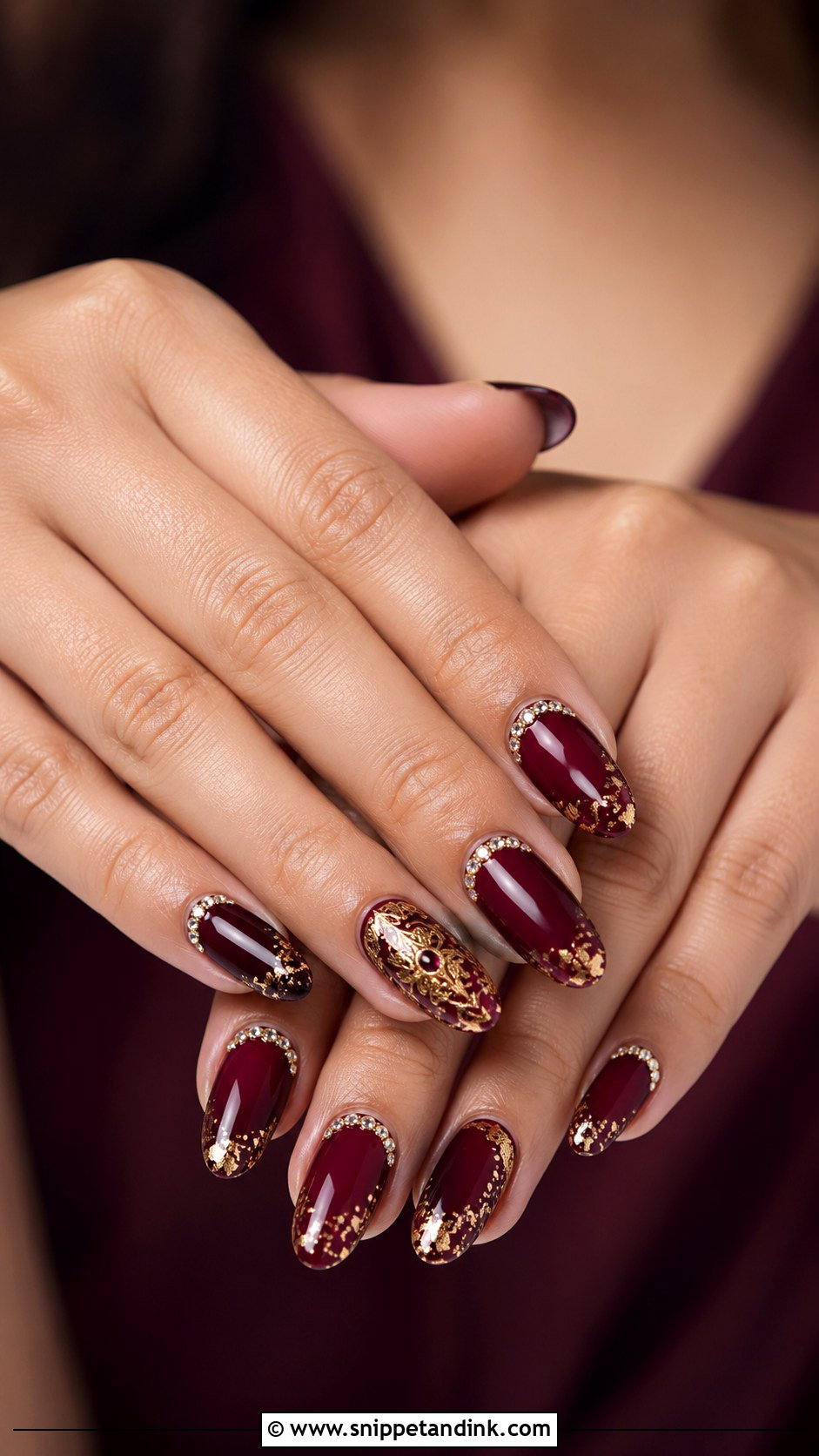
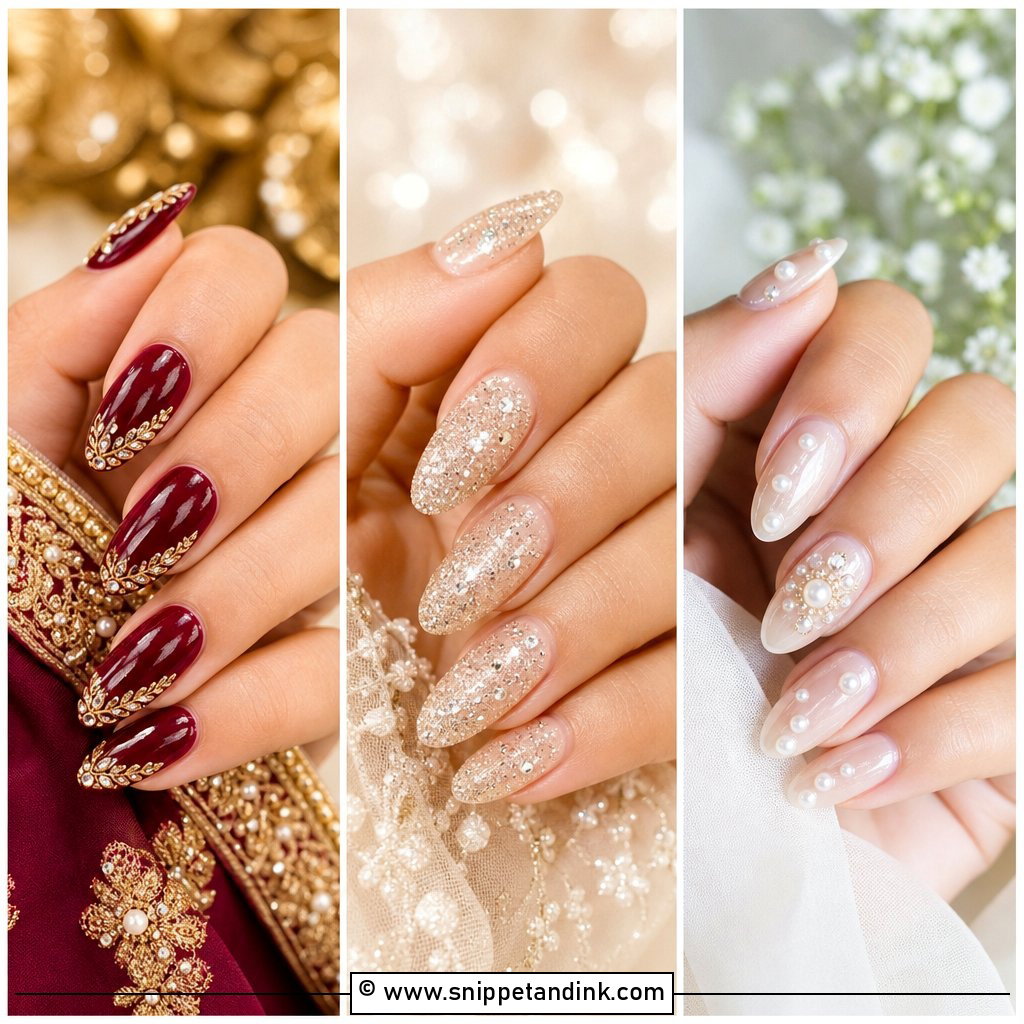
Maroon reads richer than bright red on camera, and it forgives the slight warmth that indoor lighting adds. It sits well with wine, rust, antique gold and velvet. A glossy maroon on its own already looks finished; I usually add only gold foil flakes or a hairline metallic border near the free edge. One honest warning: dark gels show chips and regrowth faster than nudes, so I time this set within a few days of the wedding. Medium almond is my default shape, and the colour carries from the ceremony into the reception outfit without a change.
3. Nude Gold Indian Wedding Nails
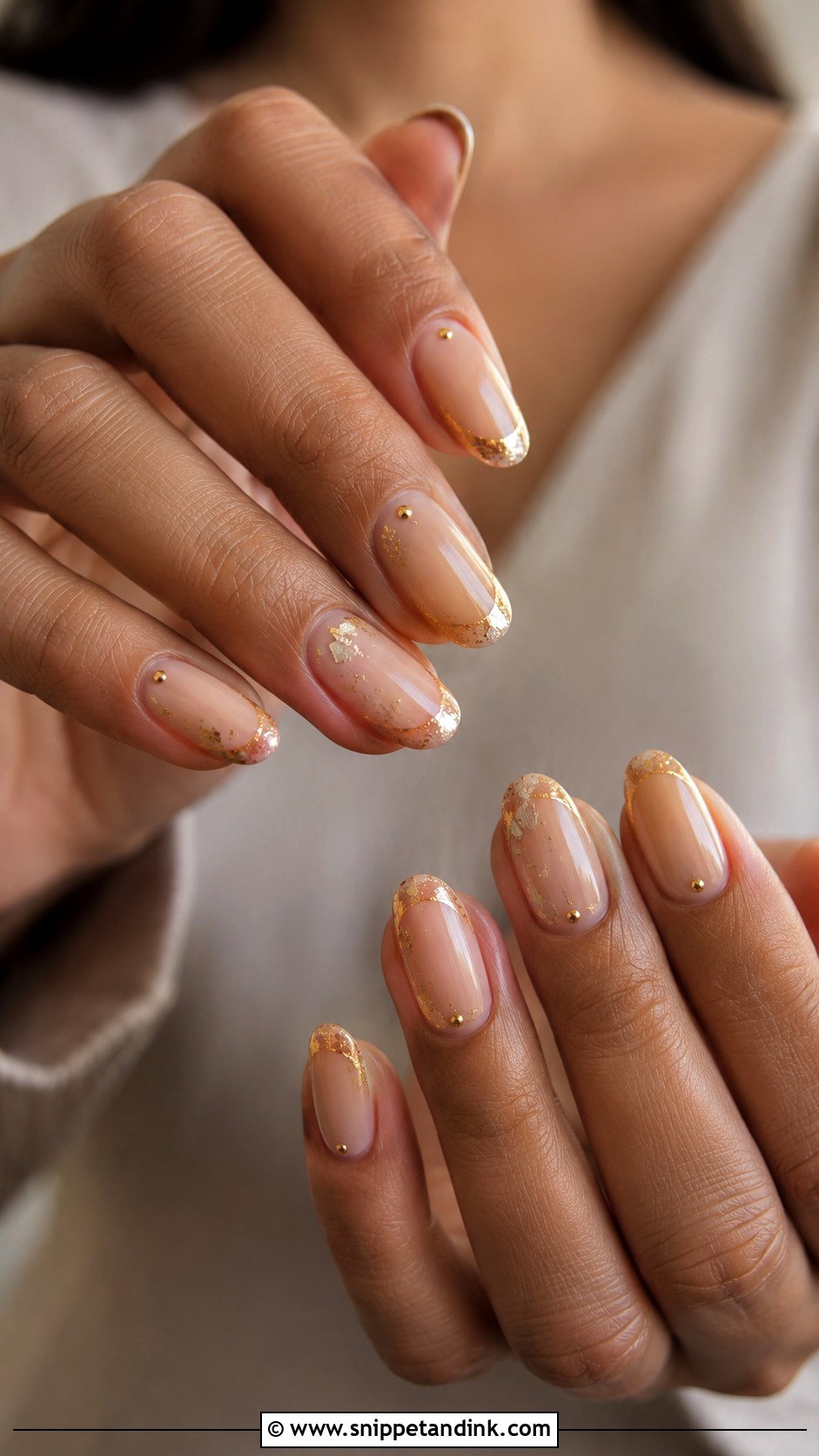
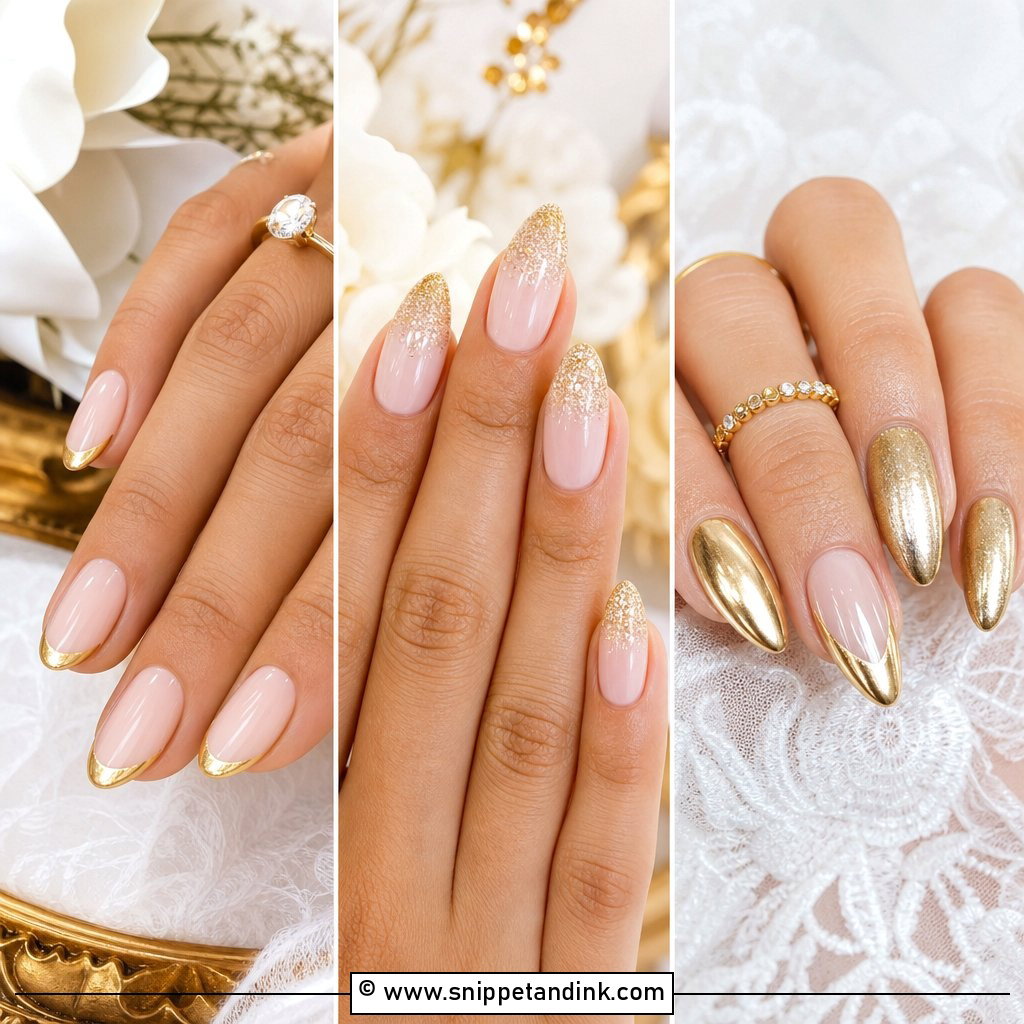
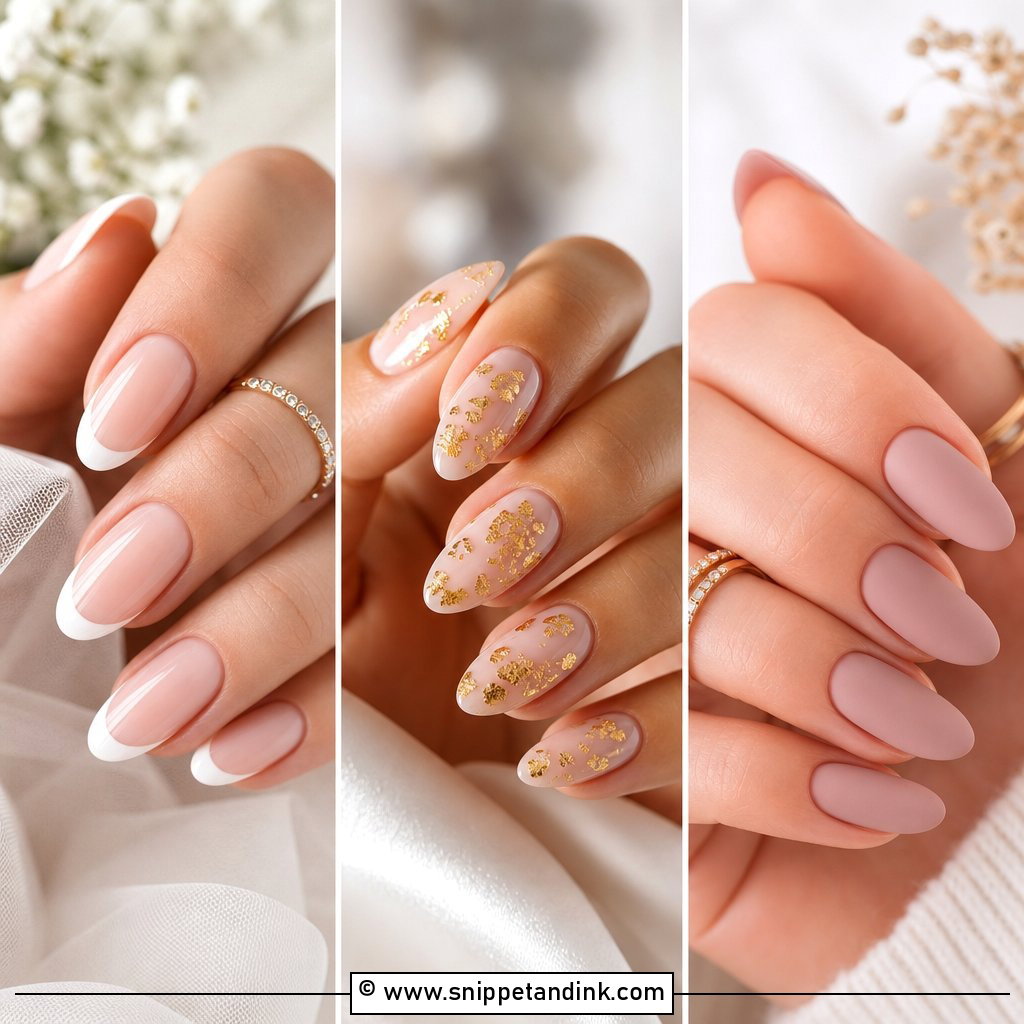
When the lehenga and jewellery are already doing a lot, a nude base with a little gold lets the hands rest. The hard part is the nude itself. Too light and it looks chalky against deep henna; too dark and the fingers look stubby. I test two or three shades on the client’s actual nail before deciding, then keep the gold to foil, fine tips or tiny dots at the cuticle. It works with pastels, ivory and champagne, and it never fights with rings in close-ups.
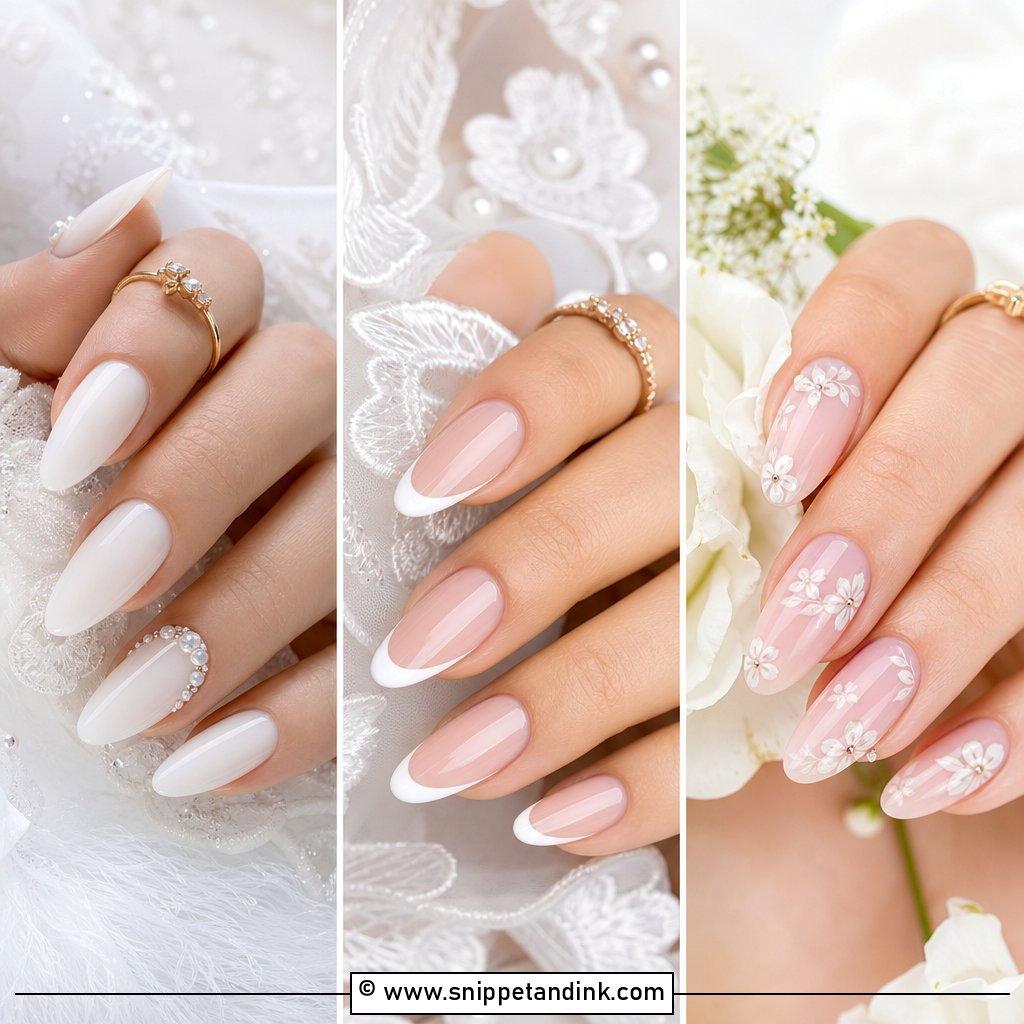
4. White And Gold Indian Wedding Nails
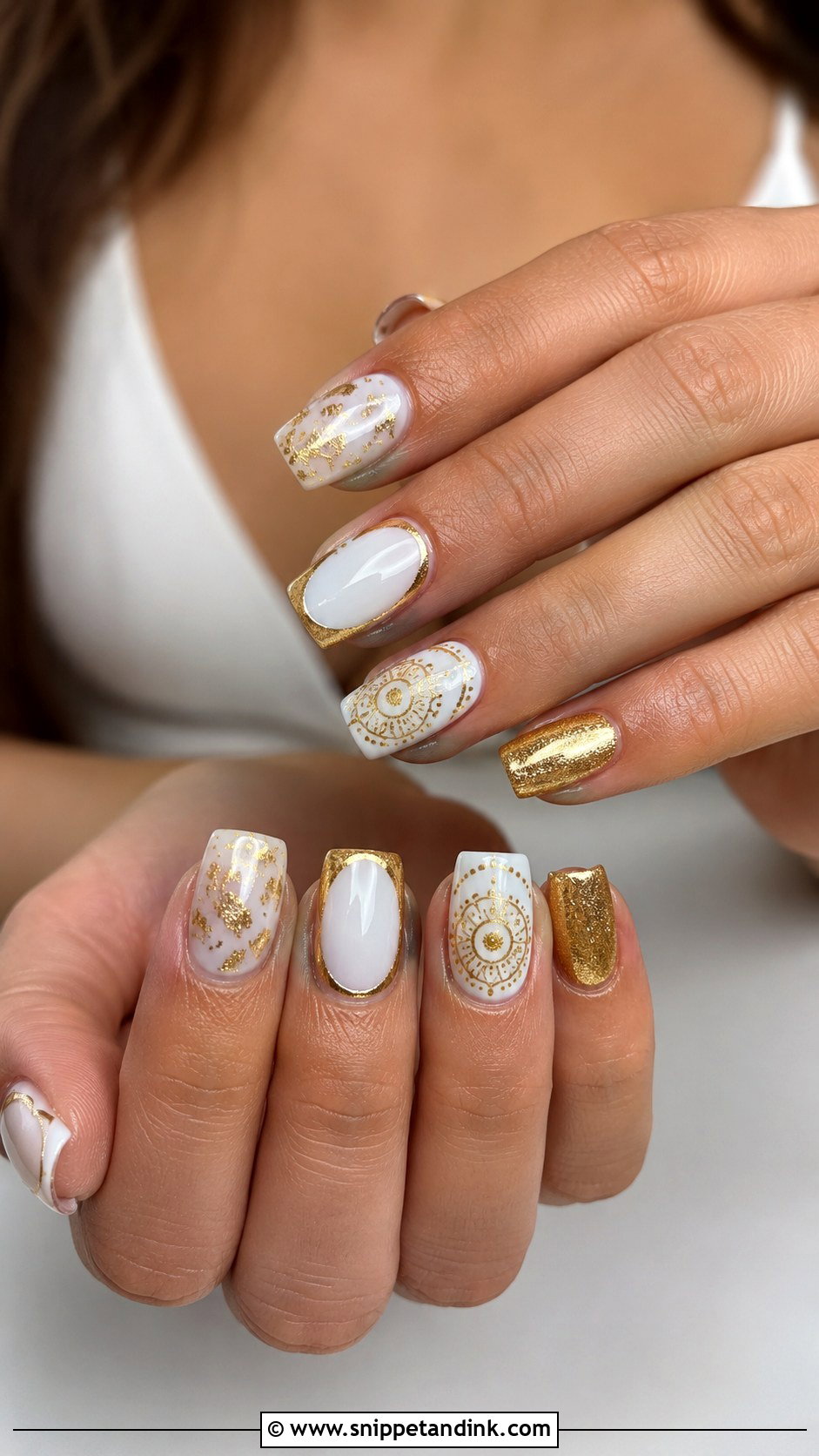
White with gold looks bright and regal with ivory, cream and pastel outfits. I prefer a milky white over an opaque one; full white can look like correction fluid in flash photos. Gold outlines on a white French or a single mandala accent keep it festive. If your mehndi is dense, skip raised charms and use flat foil, otherwise the hands look busy. And if this set has to get through a haldi first, expect turmeric to tint pale gel yellow, which is why I’d book it after that function where possible.
5. Pink Indian Wedding Nails
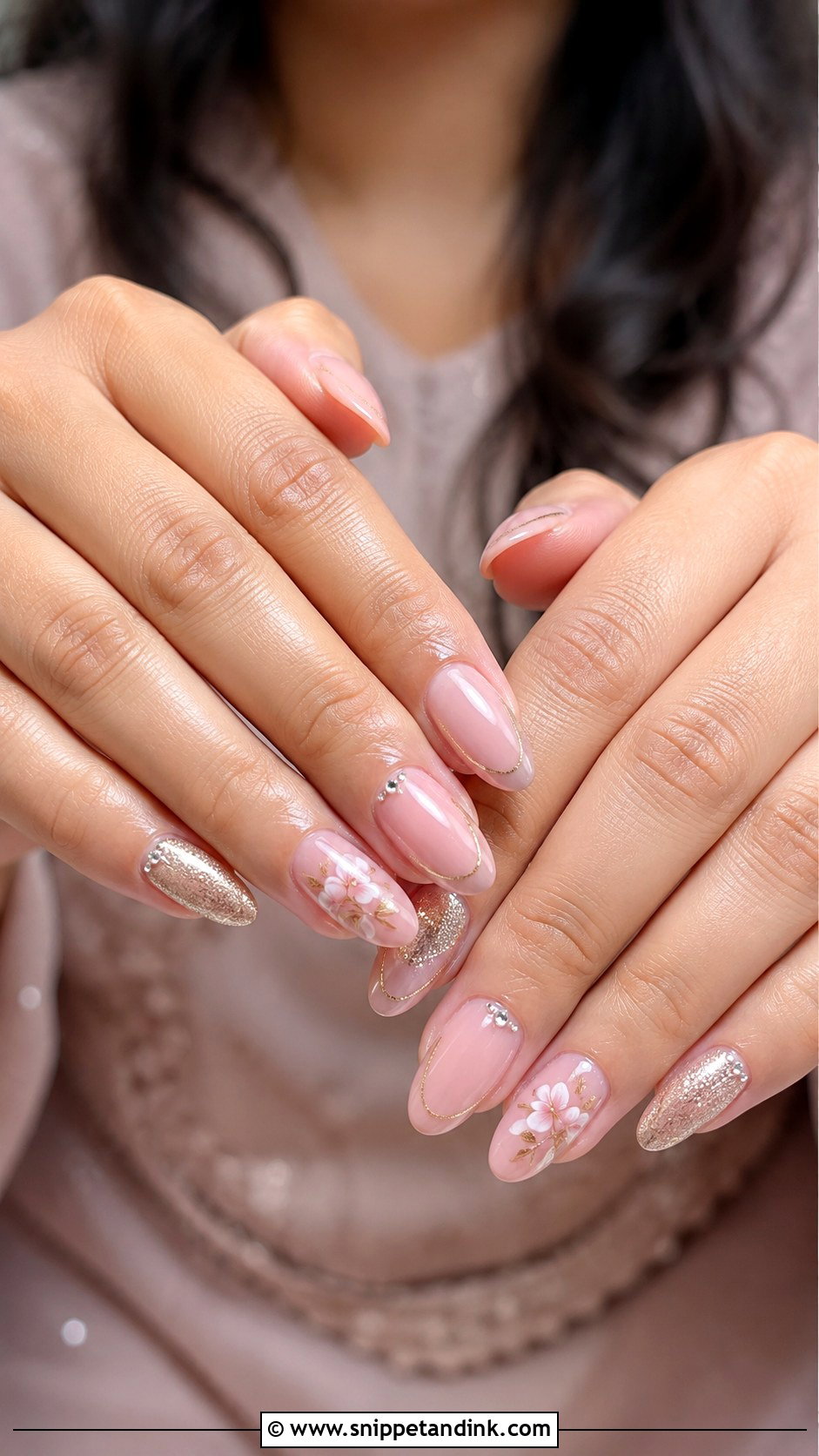
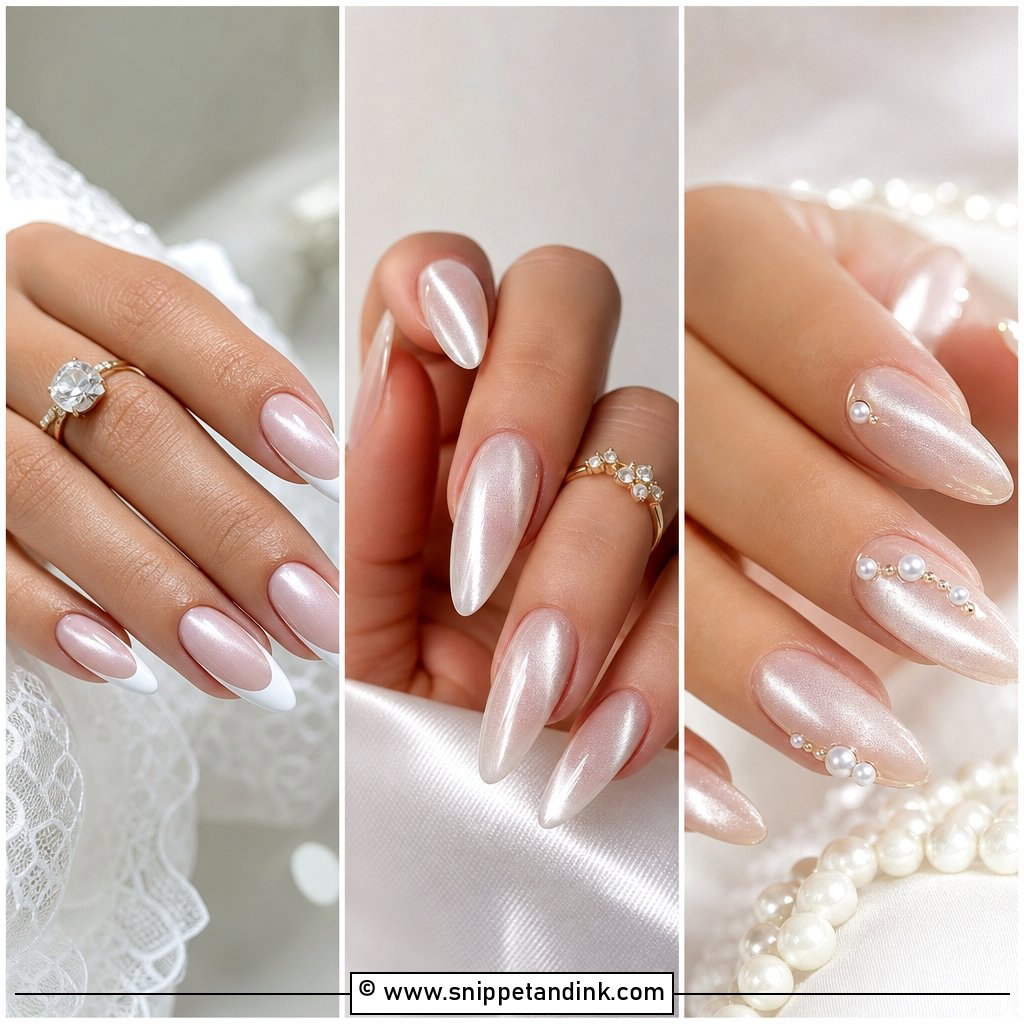
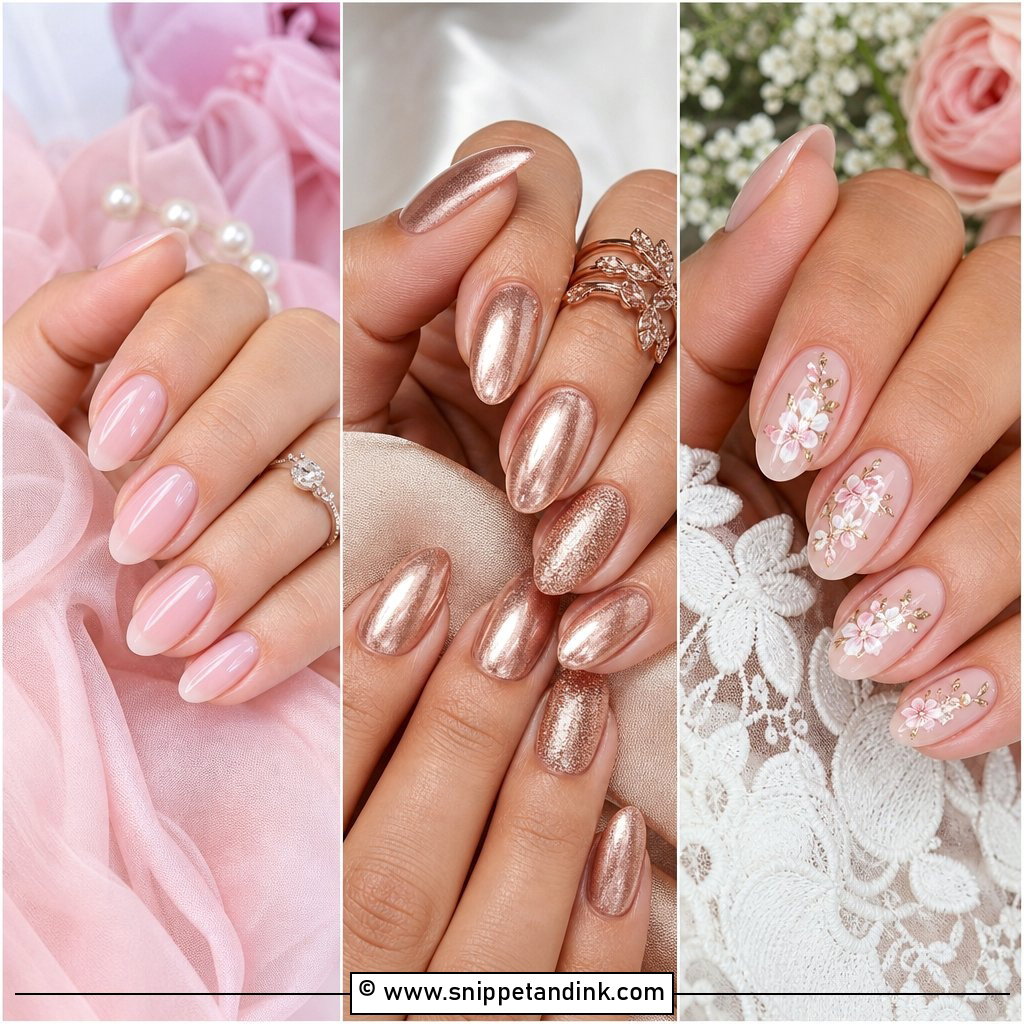
Pink is the easiest colour to get right across blush, peach, lavender and champagne outfits, which makes it a safe call for bridesmaids as well as the bride. A sheer pink base with a thin gold tip or a few pearls makes it bridal. For something modern I’ll do baby pink chrome with micro crystals at the cuticle; for something traditional, one accent nail with fine paisley. Next to very dark mehndi, a pale pink softens the contrast in a way red can’t.
6. Milky Chrome Indian Wedding Nails
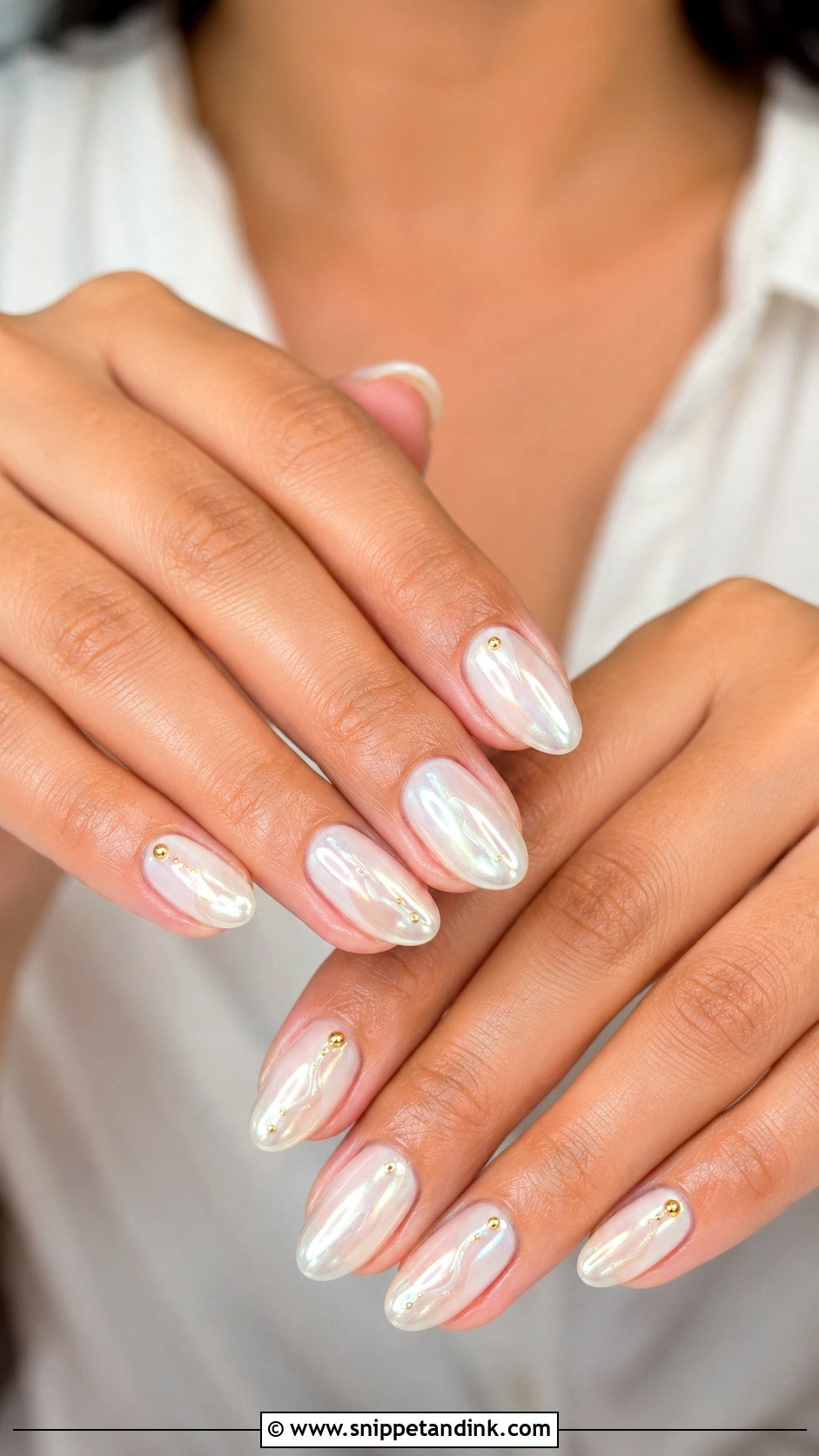
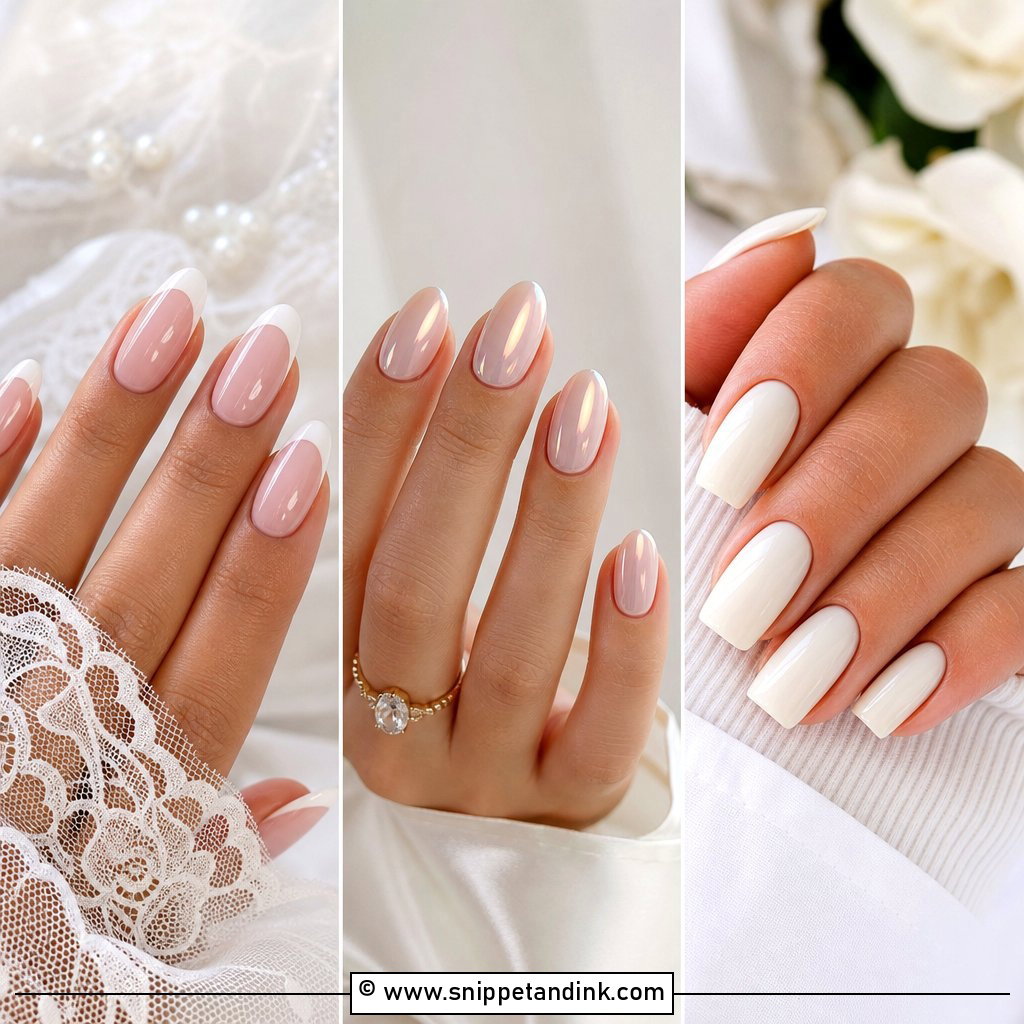
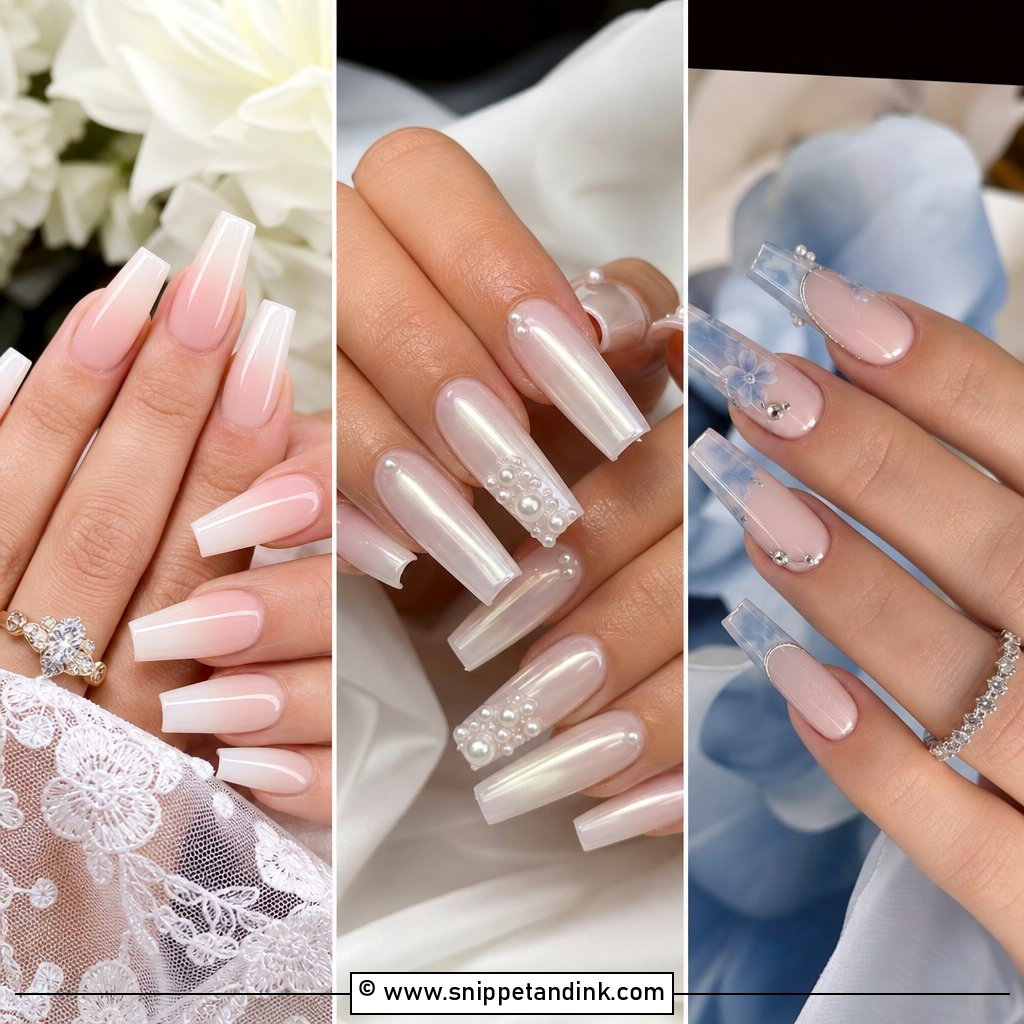
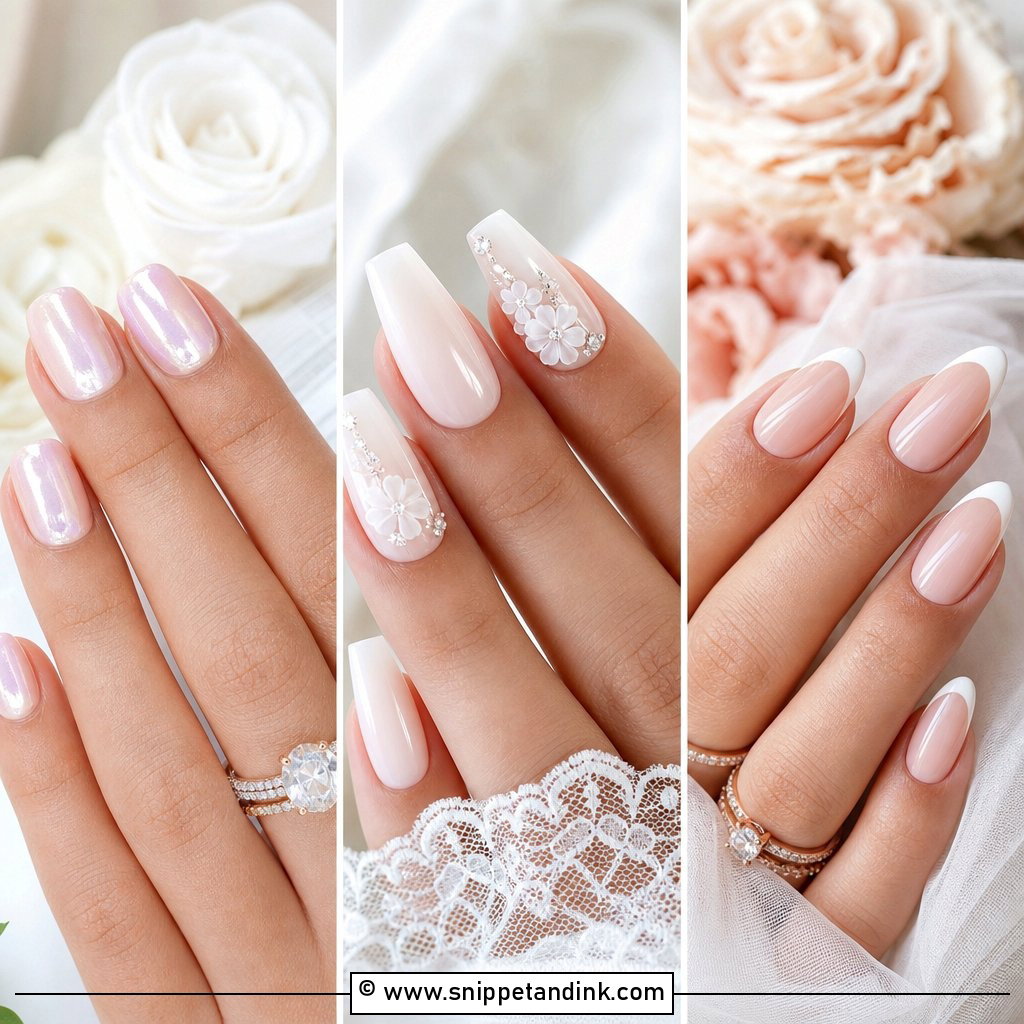
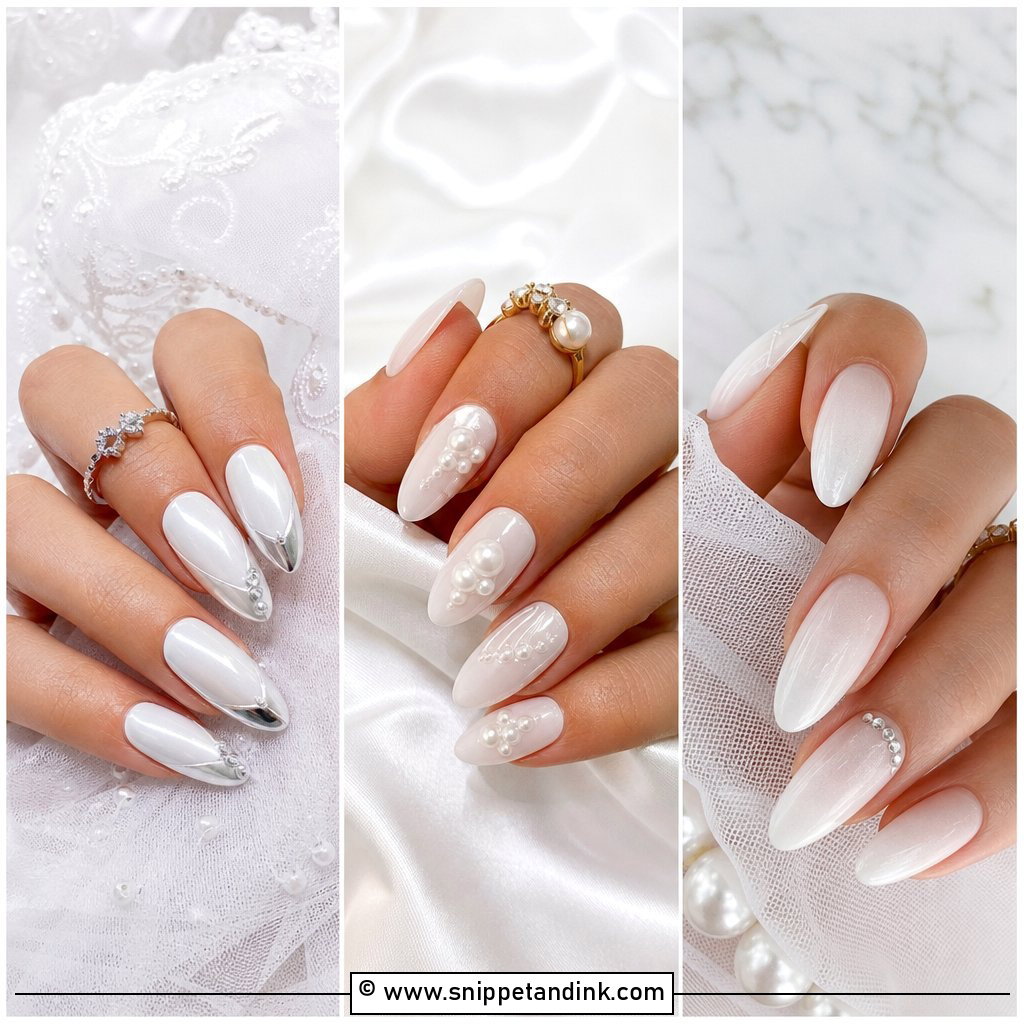
Milky chrome is the set I reach for when a bride wants her nails to glow without art. I lay down a milky gel, cure it, then buff a fine pearl or glazed powder over the no-wipe top coat so the shine stays even. It pairs well with diamonds and pearls and with pastel lehengas. Short almond, medium oval and ballerina all suit it. If you want an Indian touch, a few gold studs or a thin metallic border is enough; anything heavier hides the finish you came for.
7. Mehndi Design Indian Wedding Nails
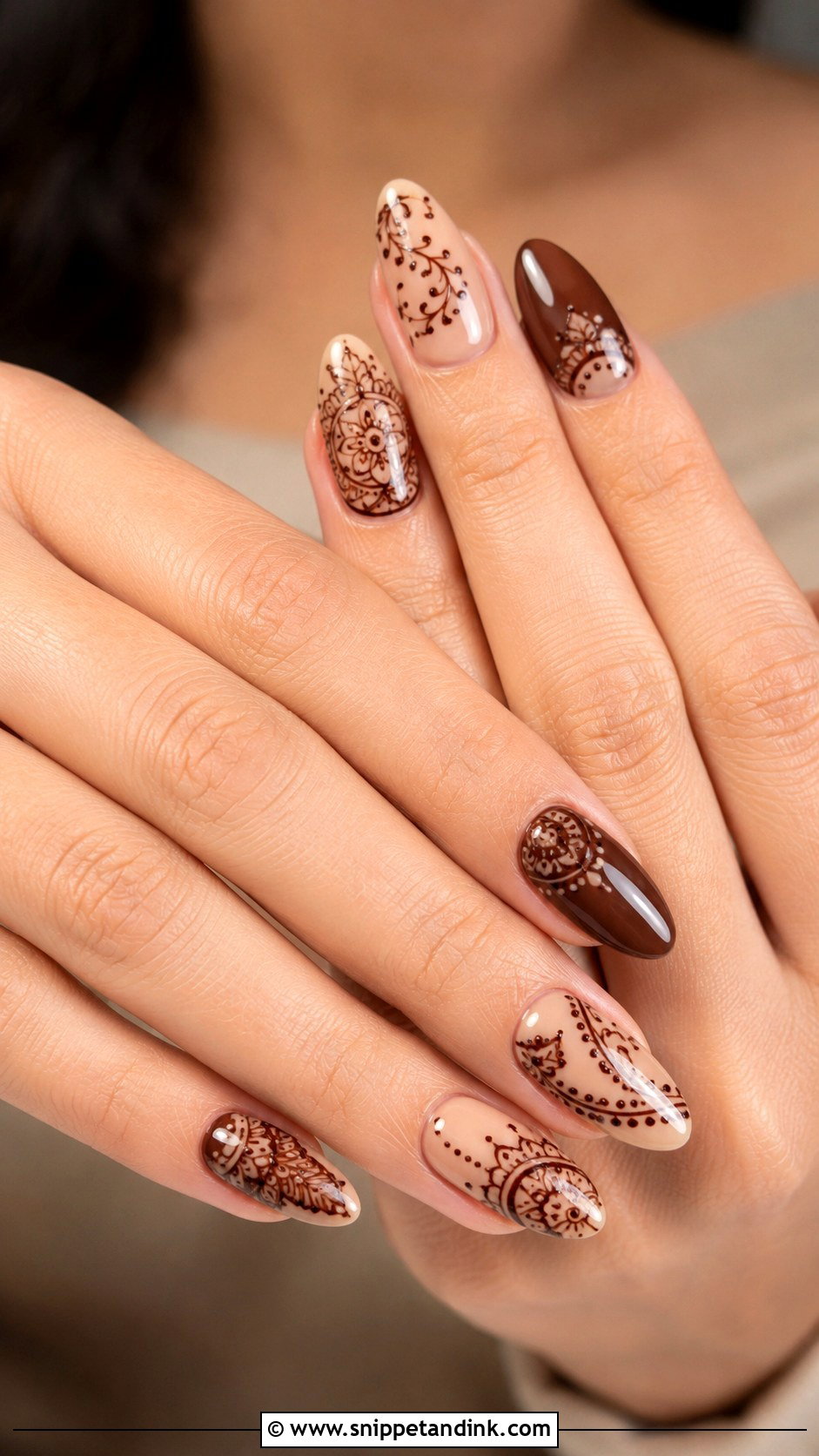
Putting henna-style patterns onto the nail itself means fine paisleys, dots, vines and lace lines painted with a liner brush. Contrast is everything: on nude, beige or ivory the art stays readable, while on dark bases it disappears. I match the linework to the actual stain, so brown or deep red for a fresh mehndi and gold if the outfit leans metallic. Two or three detailed nails per hand is plenty. Full-coverage art on all ten starts to compete with the henna on the hand.
8. Haldi Indian Wedding Nails
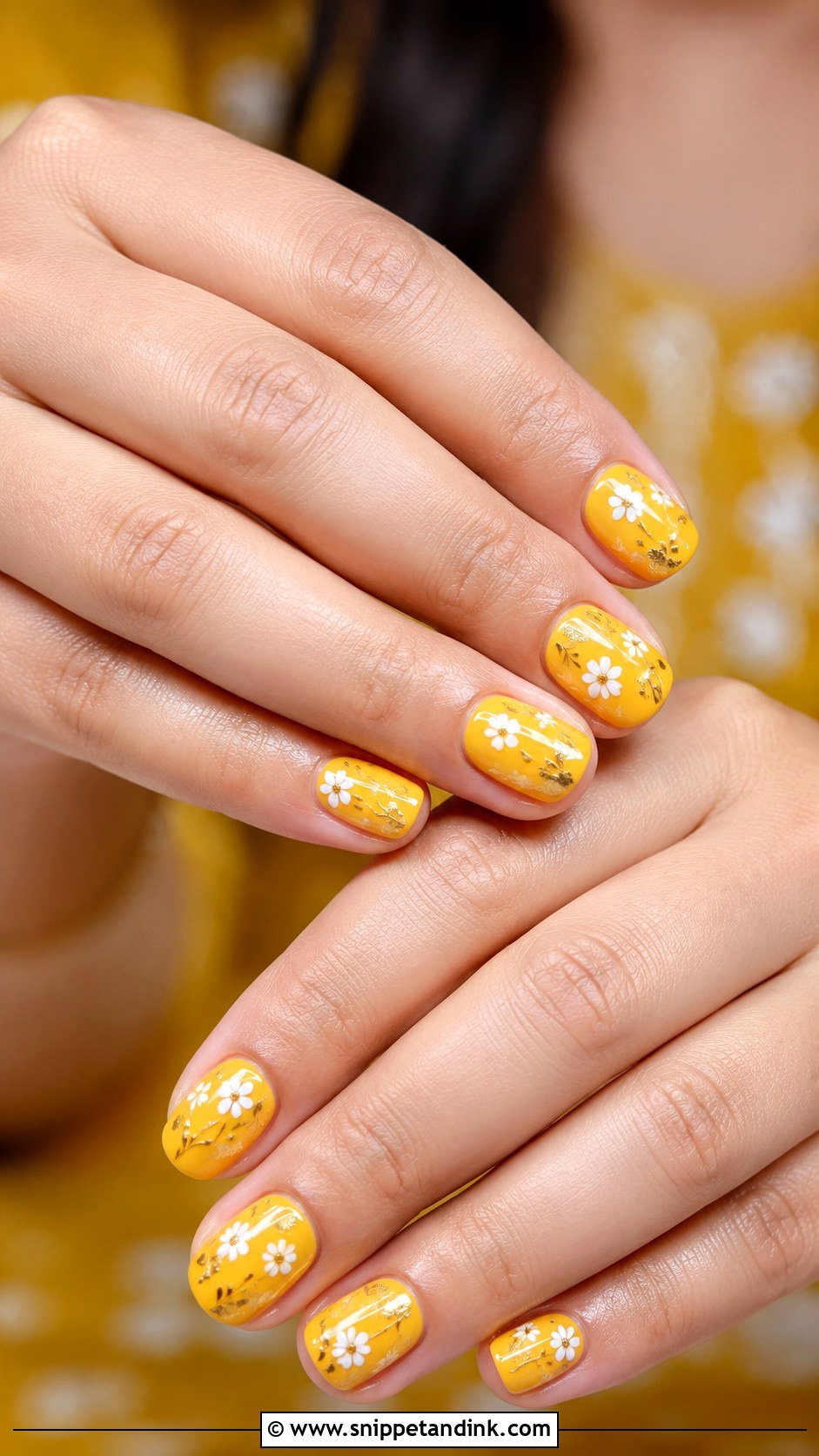
Haldi is messy, so I build this set for durability first. Yellow is the obvious colour, and mustard, lemon or marigold all keep it more grown-up than a highlighter shade. White floral art on a glossy yellow base looks fresh, and a few orange accents nod to the marigolds. Keep the nails short oval or squoval, because you’ll be grabbing, hugging and getting paste rubbed everywhere. Turmeric stains the skin around the nail for a day or two, so a thick top coat and a quick clean of the sidewalls afterwards help. It goes well with yellow sarees, floral jewelry and simple makeup.
9. Sangeet Indian Wedding Nails
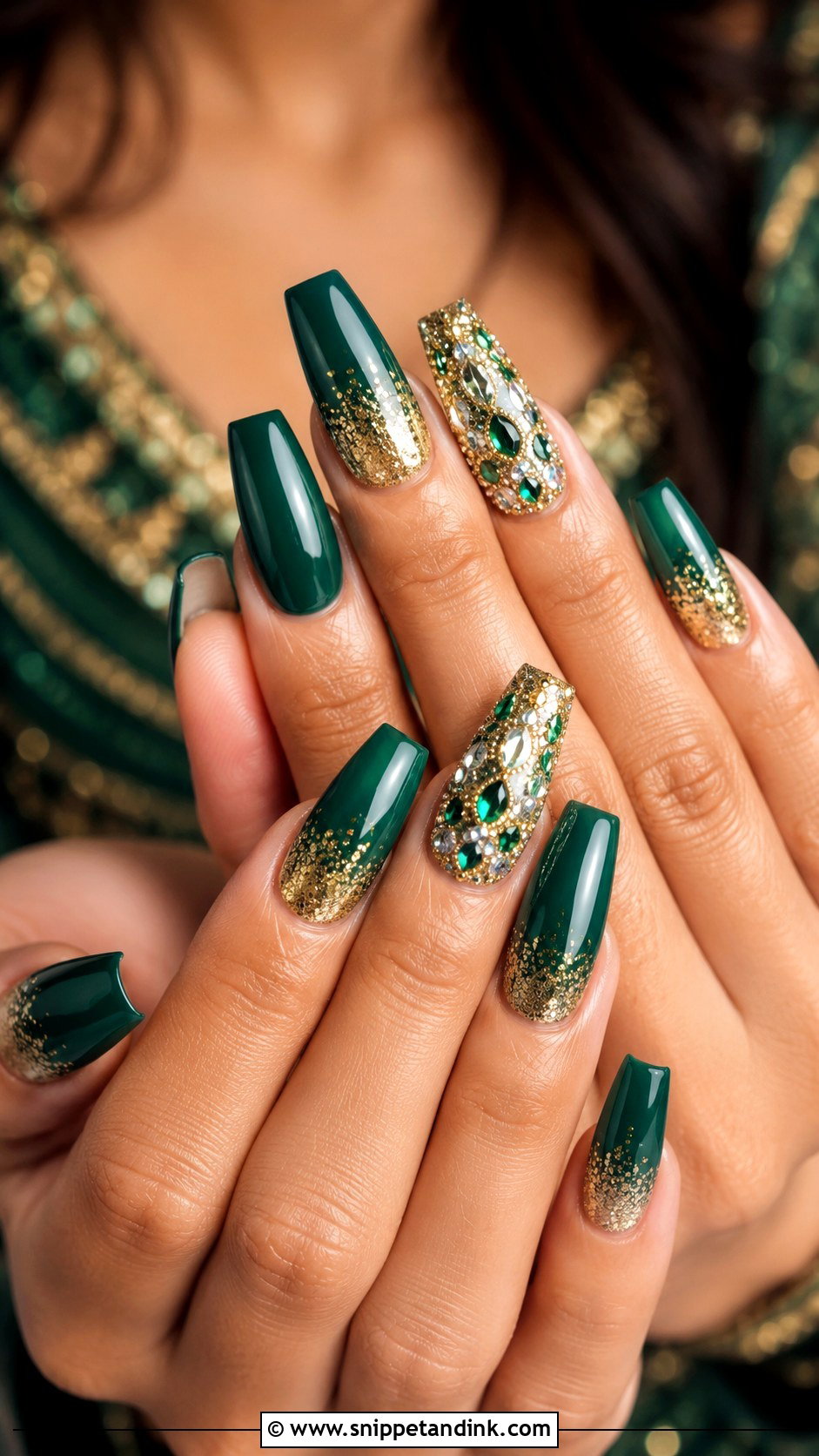
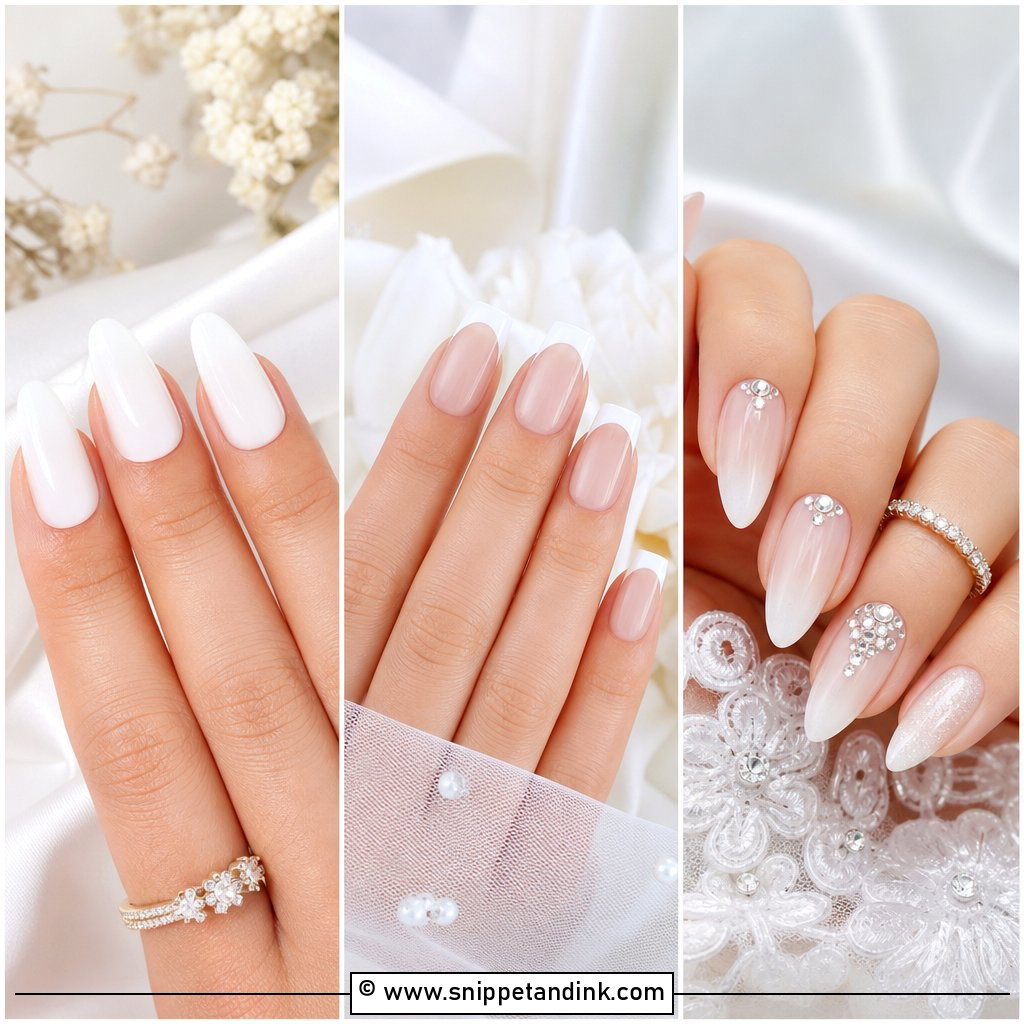
Sangeet is where I let clients go louder than on the wedding day. Under stage lights, glitter, chrome, cat-eye polish and crystals actually earn their keep. Match the colour to the outfit, whether that’s emerald, royal blue, purple or hot pink. A jewel-toned base with glitter ombré and one crystal accent is my usual starting point. If the outfit itself is covered in embellishment, swap chunky stones for shimmer so you can dance without catching your sleeves.
10. Reception Indian Wedding Nails
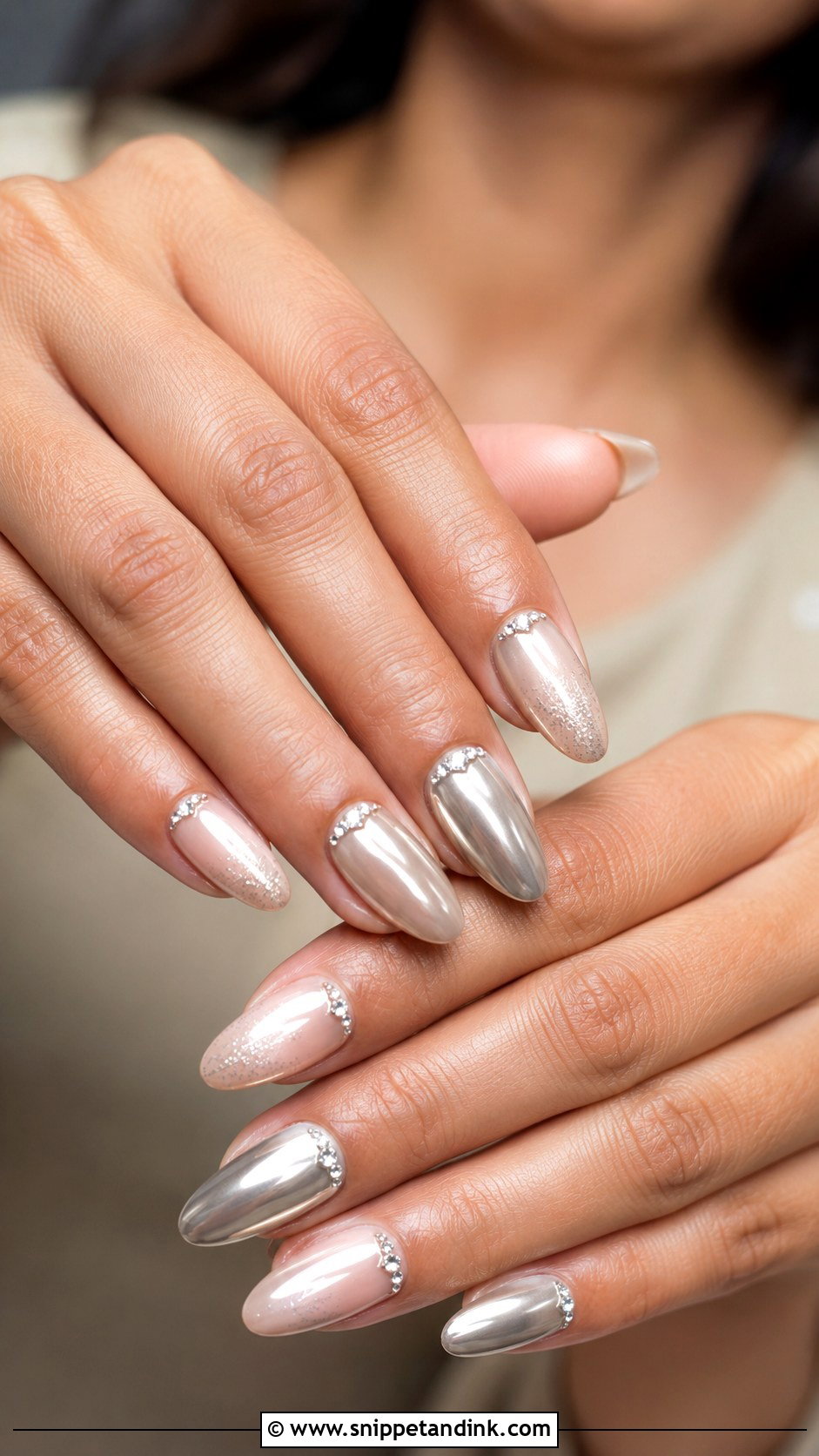
Reception nails usually get sleeker, because the outfit changes to a gown, a saree or a modern lehenga. Champagne, silver, nude chrome and rose gold all pair easily; with a dark outfit I’d try black cherry, emerald or navy with a metallic accent. Flash photography is harsh on texture, so I make sure the top coat is smooth and the cuticle line is clean before anything else. Medium almond or coffin keeps it dressed up while you’re still greeting guests and holding a bouquet.
11. Pearl Indian Wedding Nails
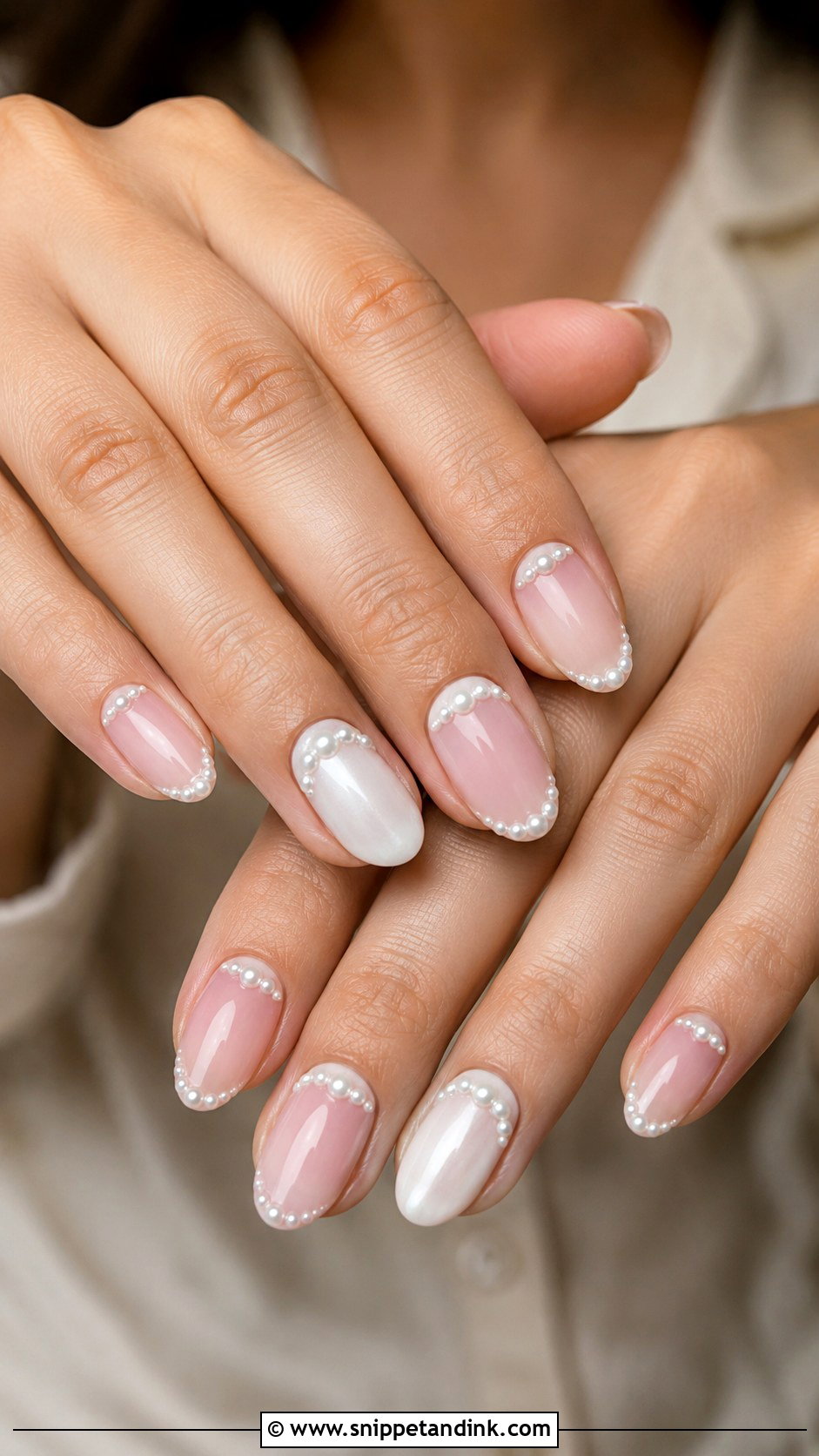
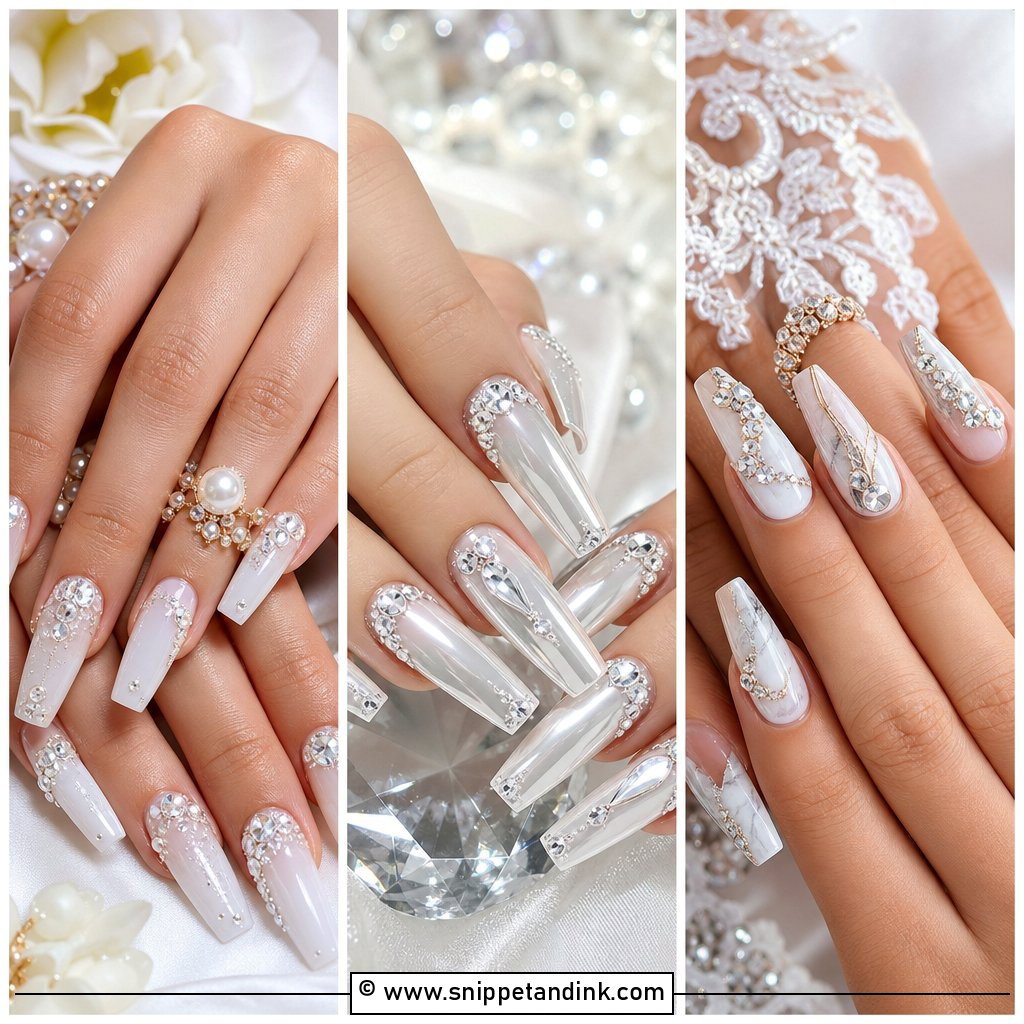
Pearls suit ivory outfits, pearl jewellery and embroidered dupattas. The base can be milky white, blush or sheer beige. I only use flat-backed pearls, set close to the cuticle or along a French line, and I encapsulate them in builder gel so the edges don’t lift. Domed pearls look pretty in a photo but catch on net dupattas and hair within an hour. Oval and almond shapes echo the roundness, and a glossy top coat finishes it.
12. Kundan Indian Wedding Nails
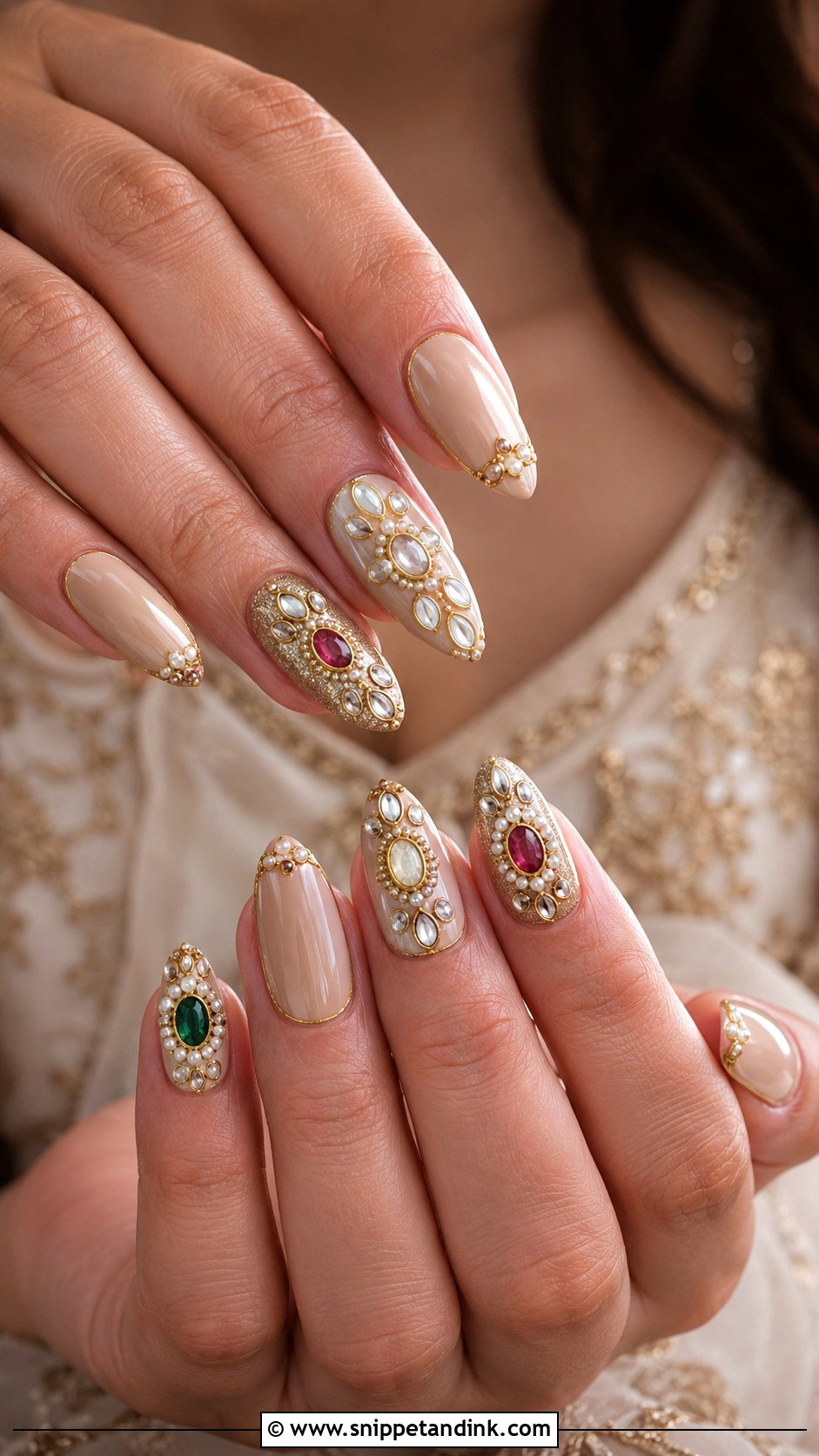
Kundan nails borrow from the jewellery itself: gold frames, small stones, pearl dots. They make the most sense when you’re wearing heavy gold, polki or kundan sets. Placement is the whole job here. I build the gold frame first and only then decide how many stones fit, because crowding is what makes this style look cheap. A good full set is gold tips, two kundan accent nails and a soft shimmer on the rest, on medium almond or coffin.
13. Green Indian Wedding Nails
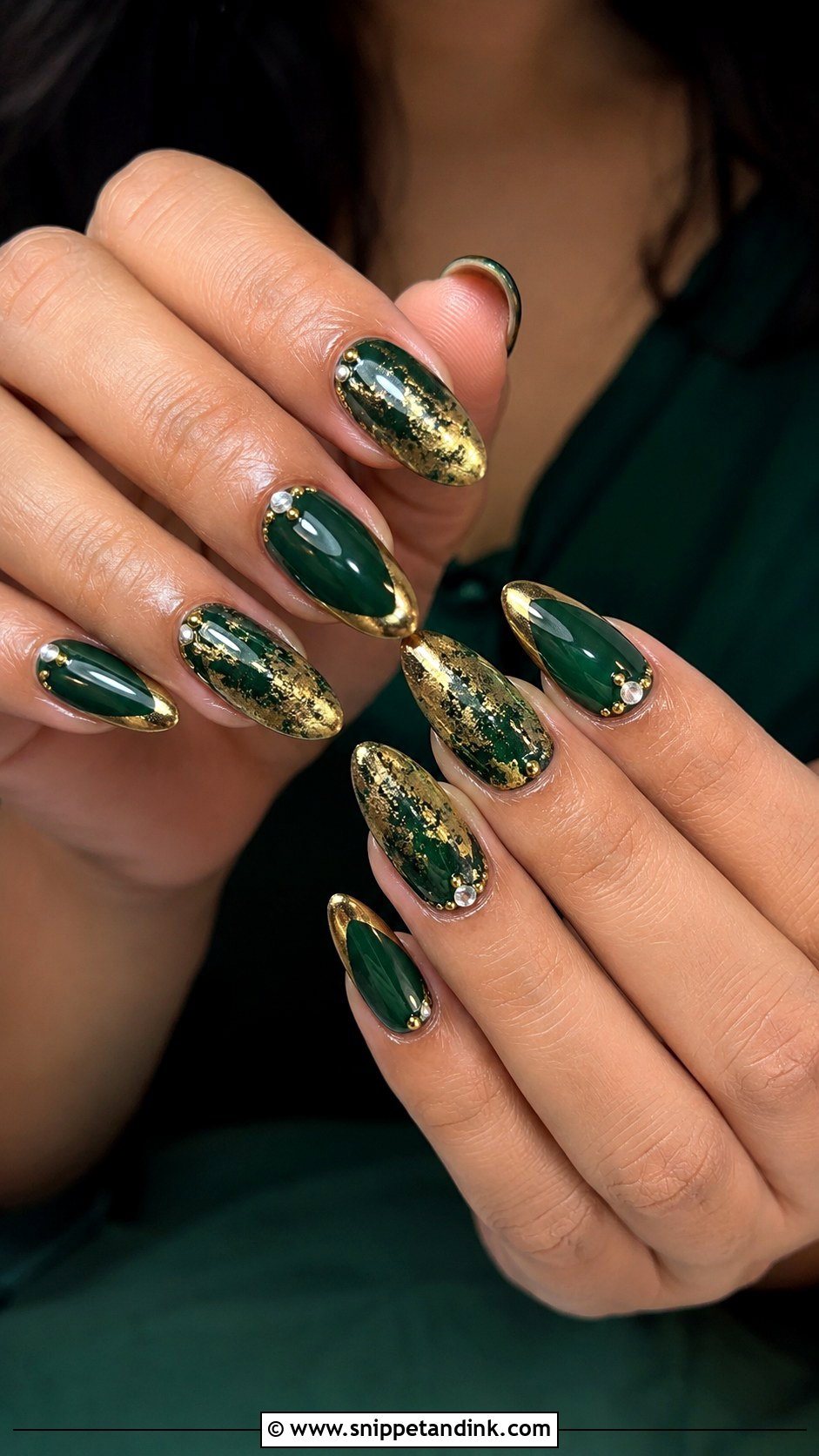
Emerald next to gold bangles and dark henna is one of my favourite combinations; sage is the softer, modern version. Dark green gels are heavily pigmented, so I apply them in thin layers to stop them wrinkling under the lamp. Pair it with gold foil or thin metallic tips for a bridal finish. If a full green hand feels too strong for the ceremony, a nude base with green French tips and gold linework is the compromise. Almond softens it, square sharpens it.
14. Blue Indian Wedding Nails
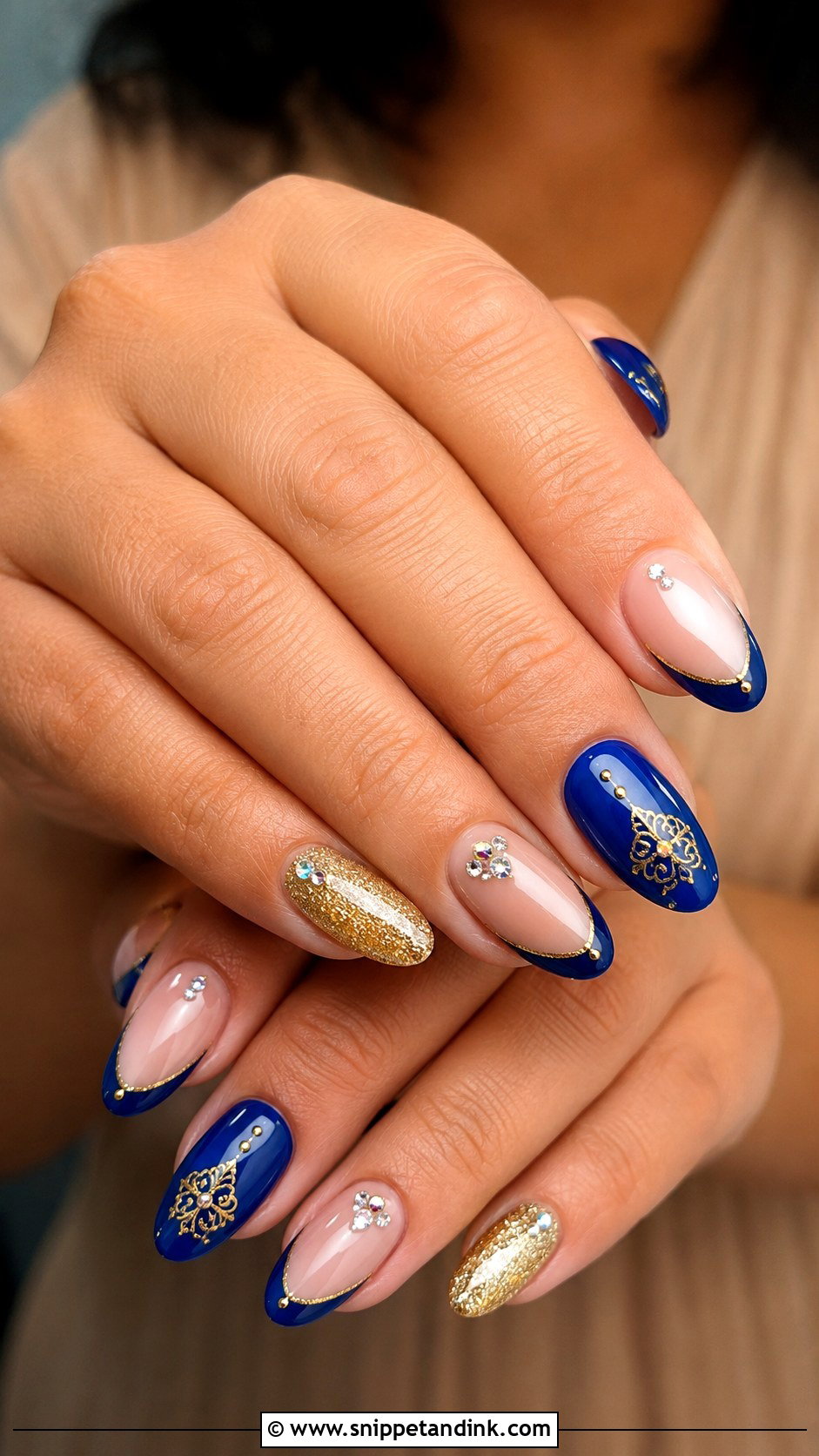
Blue appeals to brides and guests who are tired of red and pink. Royal blue with silver or diamonds is dramatic, powder blue suits pastels, and navy with gold reads regal at a reception. If the outfit has mirror work, I add silver chrome so the nails pick up the same flash of light. My advice is to keep the art clean so the colour does the talking; a blue French on nude with tiny gold dots is often enough.
15. Purple Indian Wedding Nails
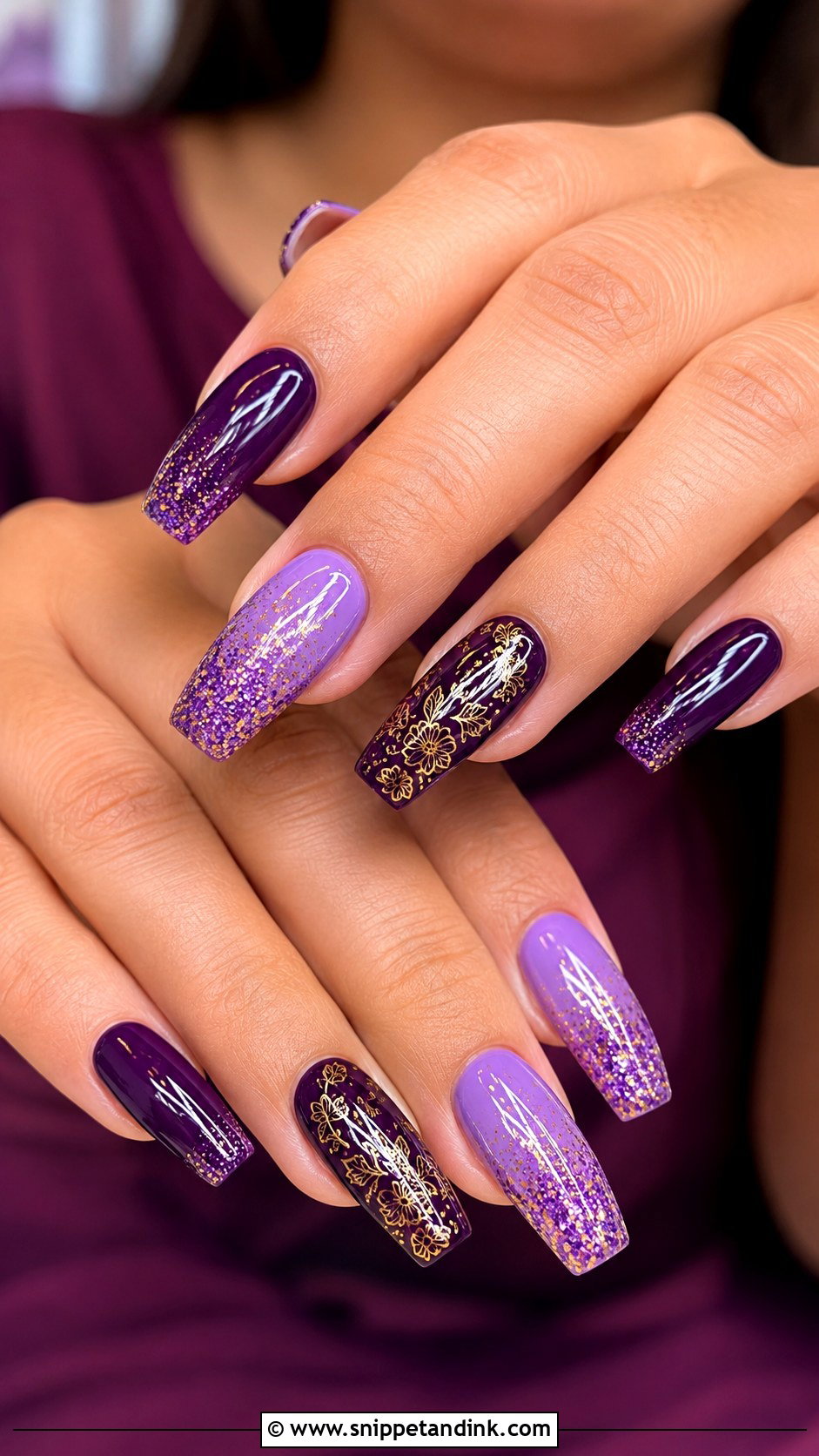
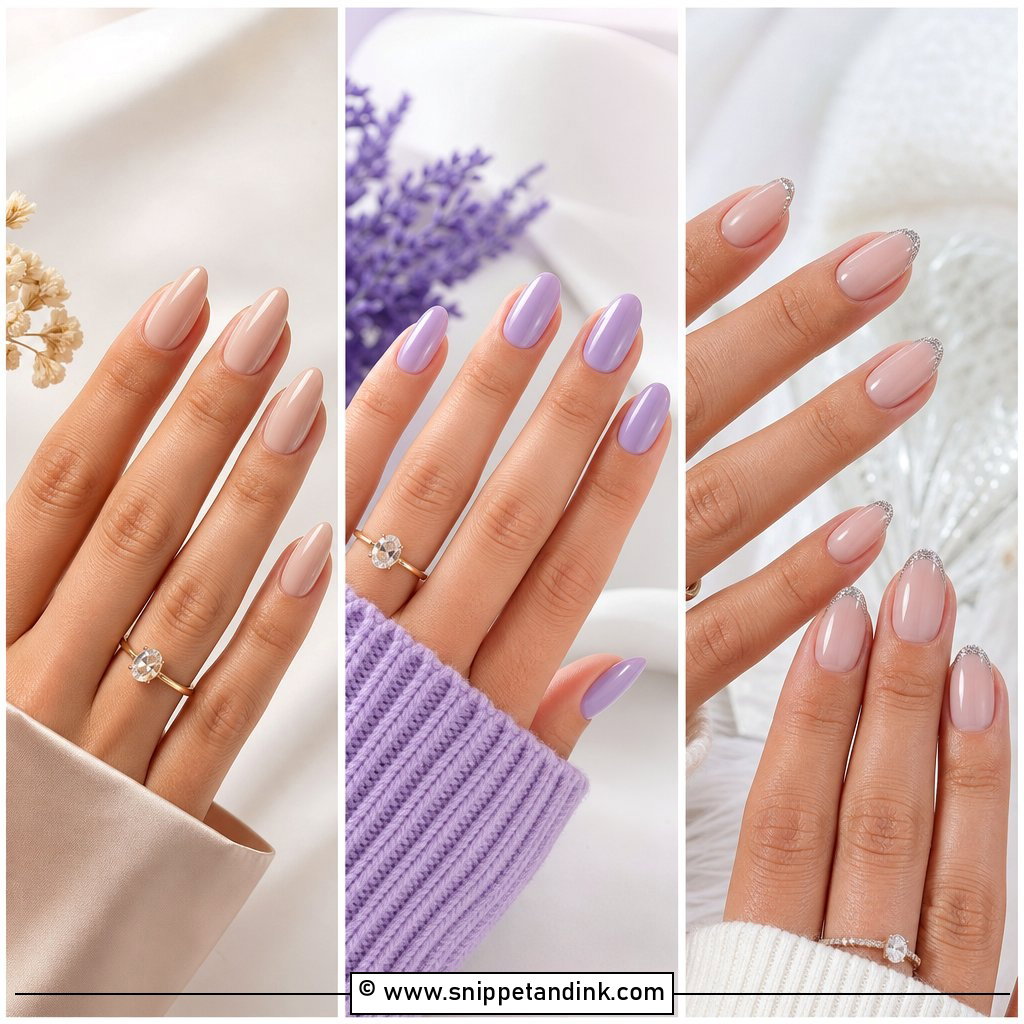
Plum and lavender behave like two different colours. Deep plum suits gold jewellery and darker reception outfits; lavender suits pastels and silver embroidery. A purple base with glitter ombré tips and one fine gold floral nail is a full-set option, while sheer lavender chrome with tiny pearls is the quiet one. Bridesmaids often land here because it feels festive without copying the bride’s red or maroon. Almond or coffin shapes keep it dressy.
16. Orange Indian Wedding Nails
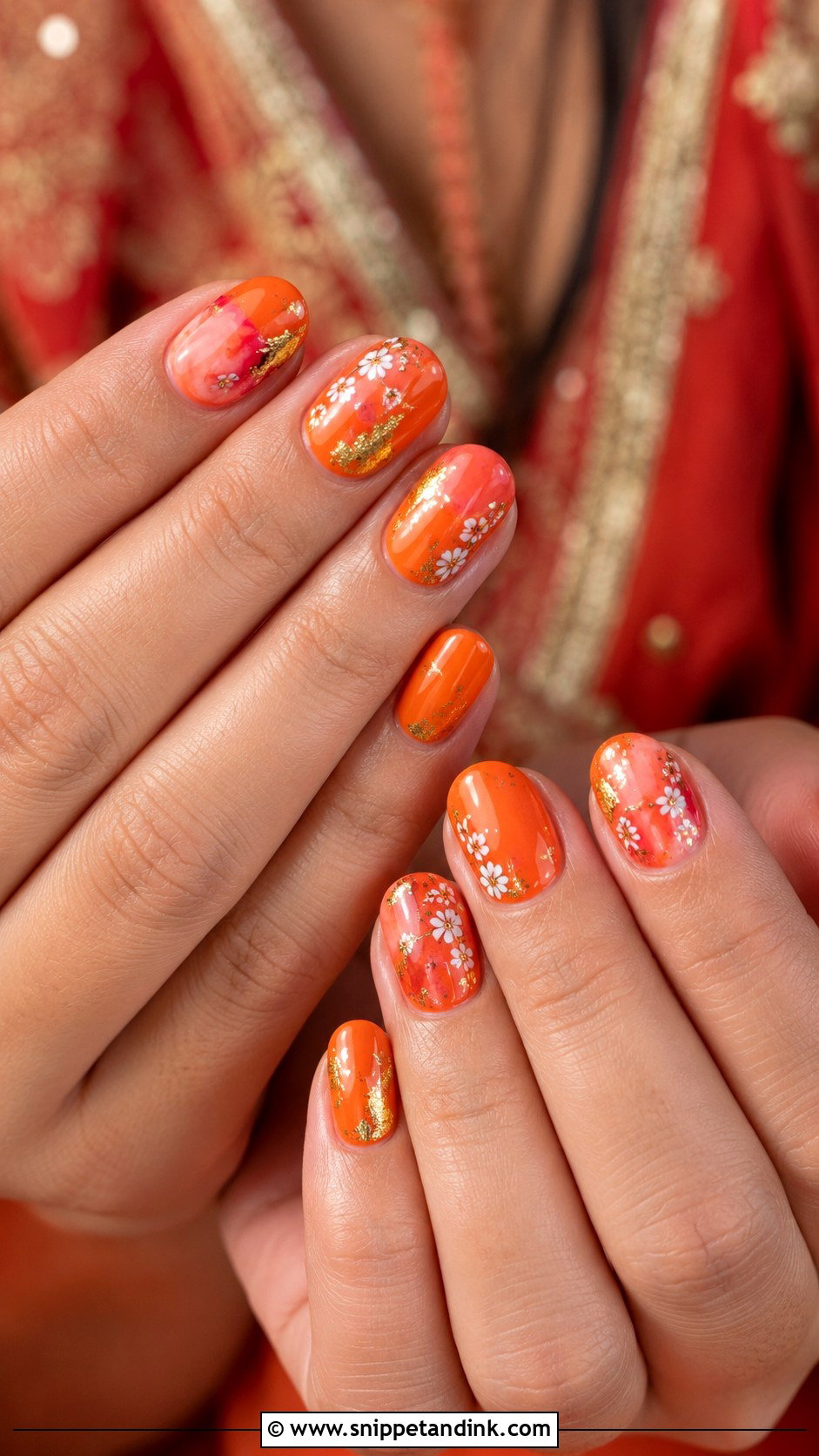
Orange belongs to daytime functions like haldi and mehndi, and it photographs warmly against marigold decor. Saffron, coral, burnt orange and soft peach each suit different outfits, so bring a fabric swatch. A coral base with gold foil and tiny white flowers is bright without being loud. For a bridal version I’ll blend a red-orange ombré with gold glitter at the tips. Short oval keeps it wearable; long almond pushes it into glamour. Next to fresh orange henna it can blur together, so add a white or gold accent to separate them.
17. Champagne Indian Wedding Nails
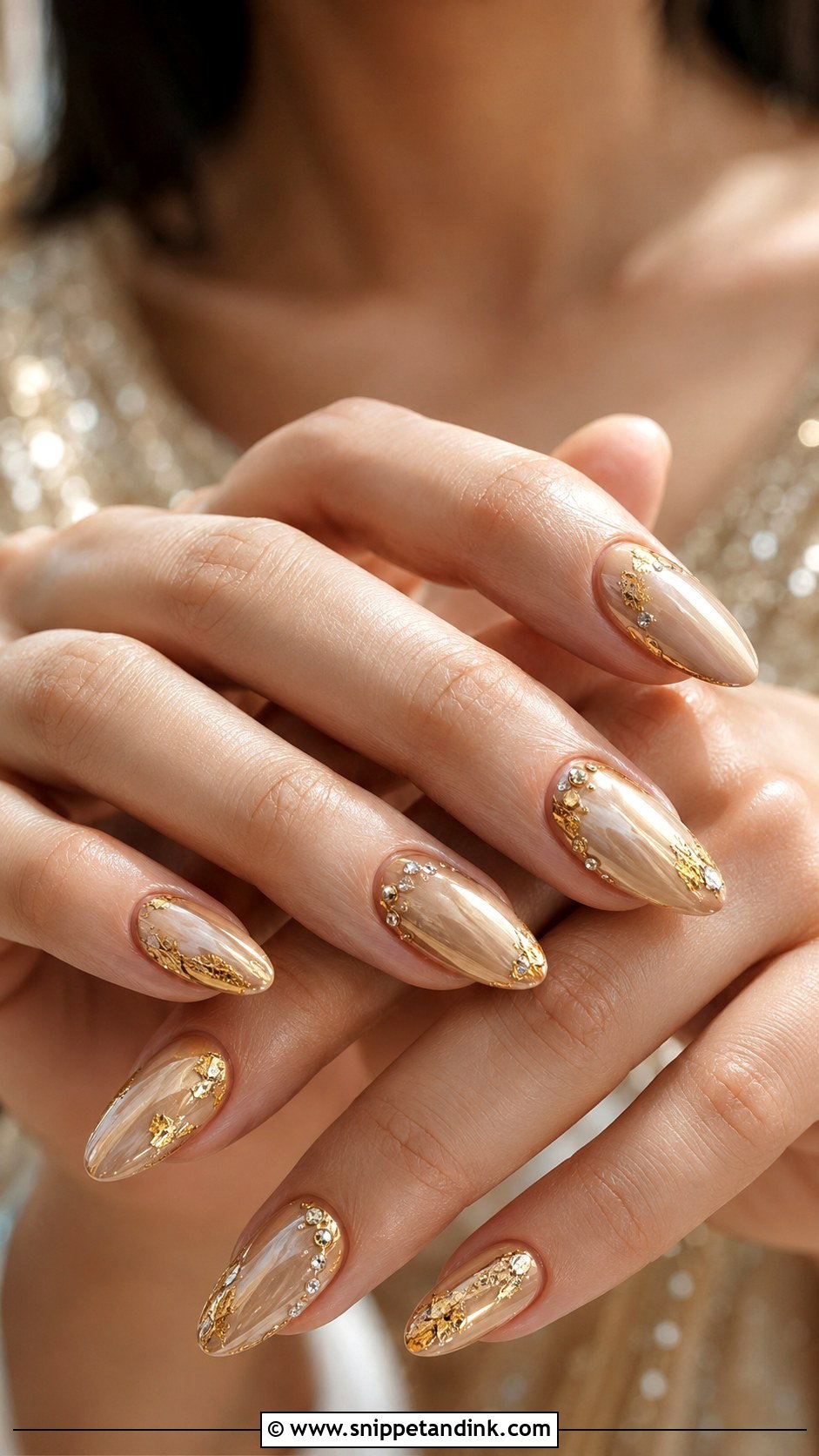
Champagne sits between nude, gold and beige, which is why I suggest it to brides with five outfits and one manicure. It goes with ivory, blush, silver and pastels alike. A shimmer base with a light chrome rub gives a soft glow; fine foil or a few crystals add wedding detail. The shimmer reads best on almond and oval, where the curve catches light. It’s the set I’d pick if you don’t want to think about your nails again until the honeymoon.
18. Rose Gold Indian Wedding Nails
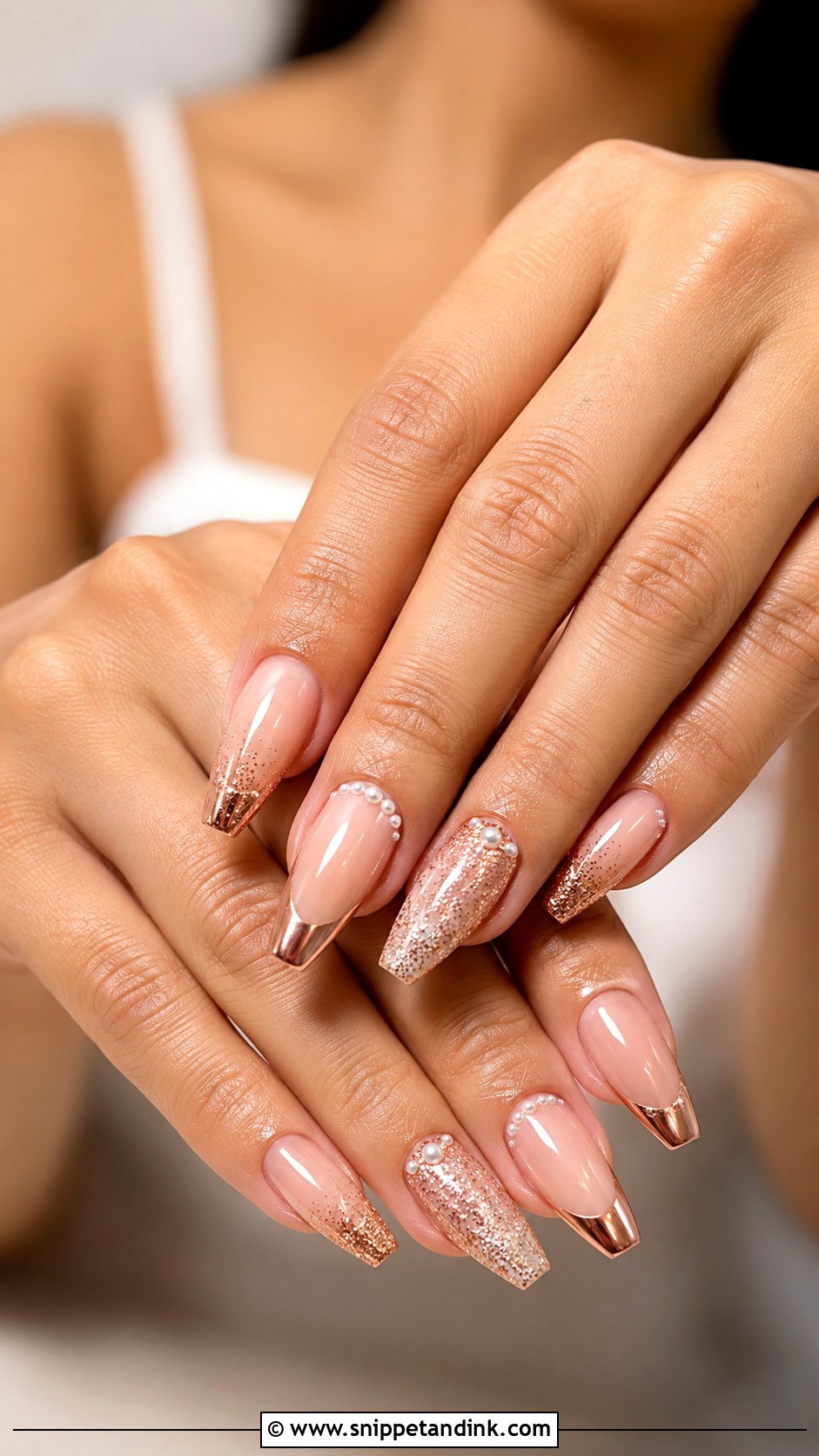
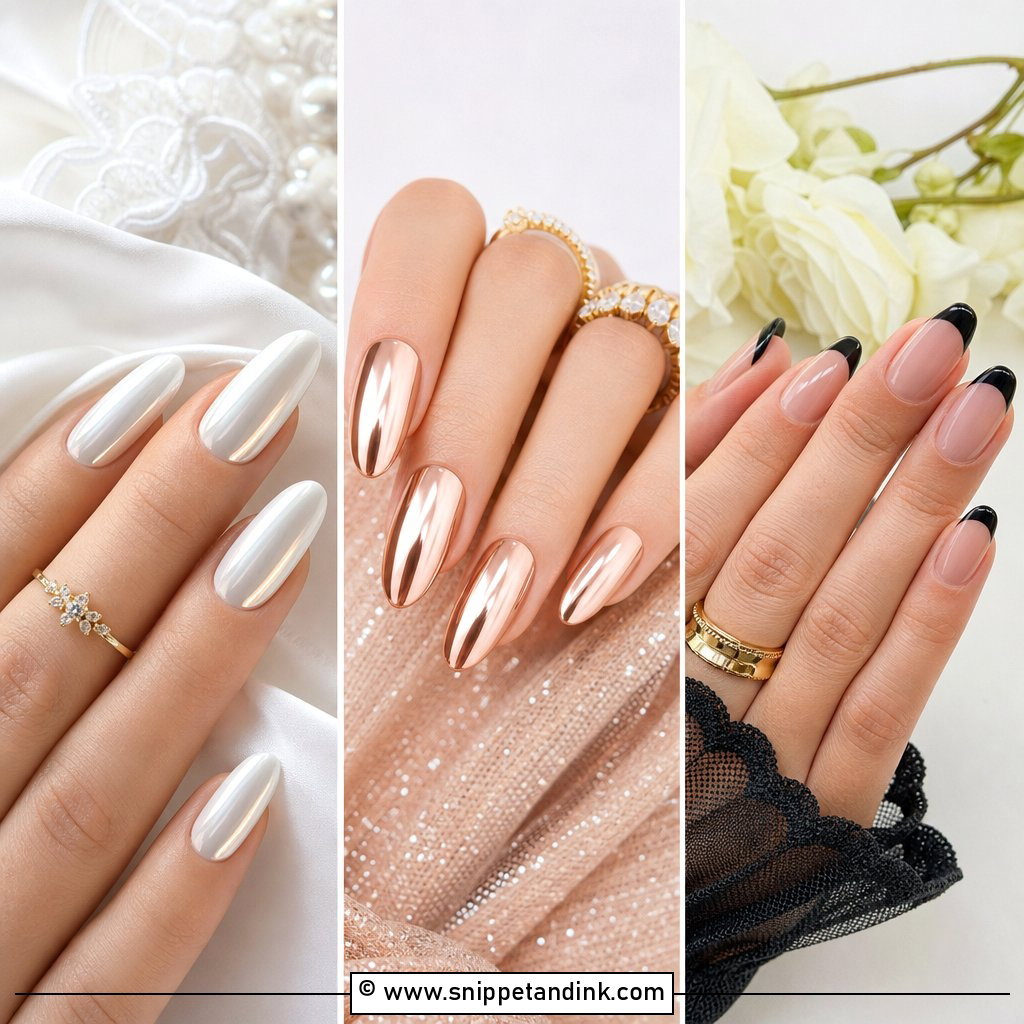
Rose gold flatters a wide range of skin tones and sits well with blush lehengas, peach sarees and pinkish gold jewellery. A nude-pink base with rose gold chrome or foil is delicate; for more, I fade glitter up from the cuticle or paint thin rose gold tips. Rose gold chrome powder can look slightly coppery on very warm skin, so I swatch it before committing. Bridesmaids can wear the simple version and the bride can add pearls or small stones.
19. French Tip Indian Wedding Nails
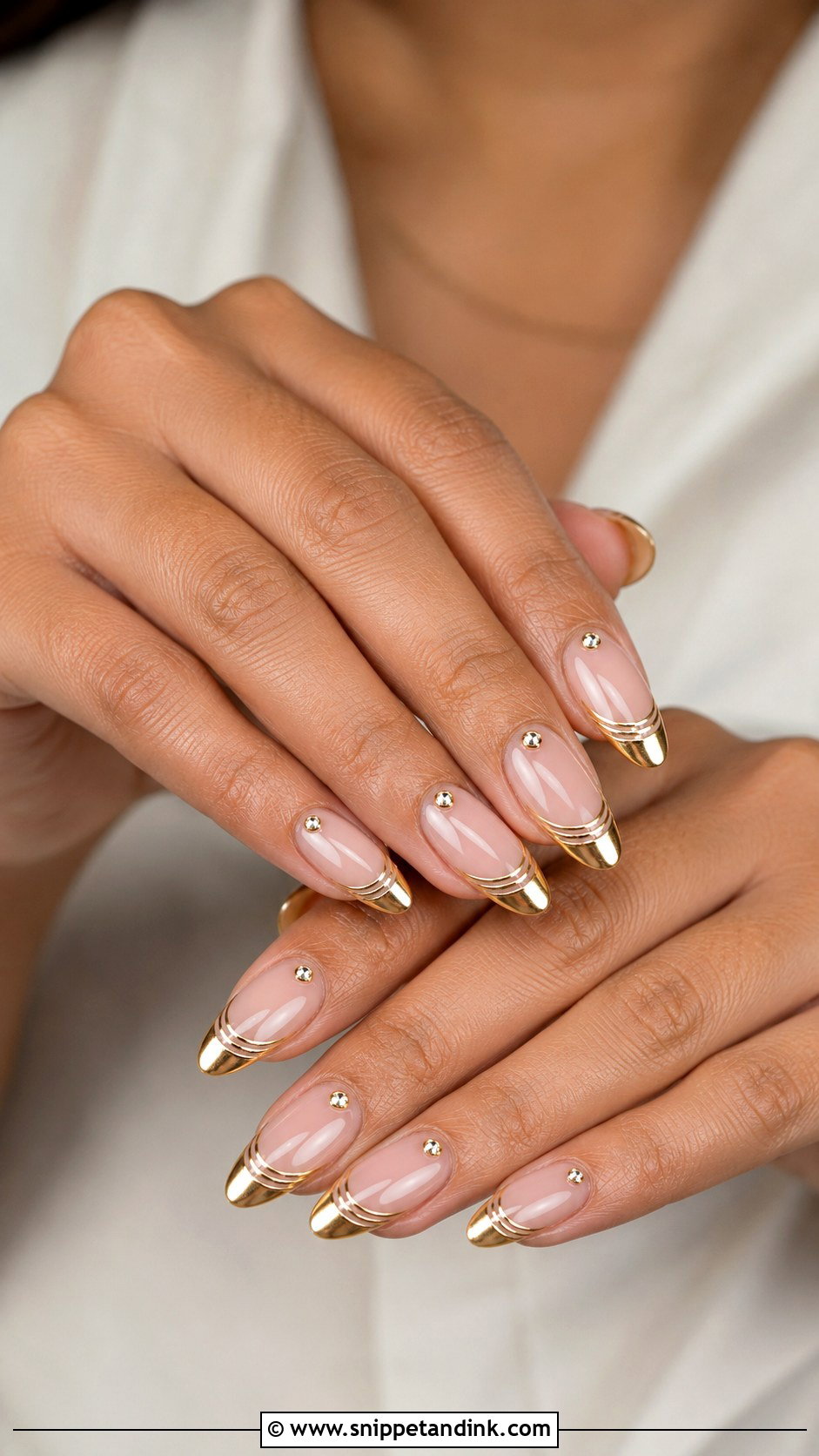
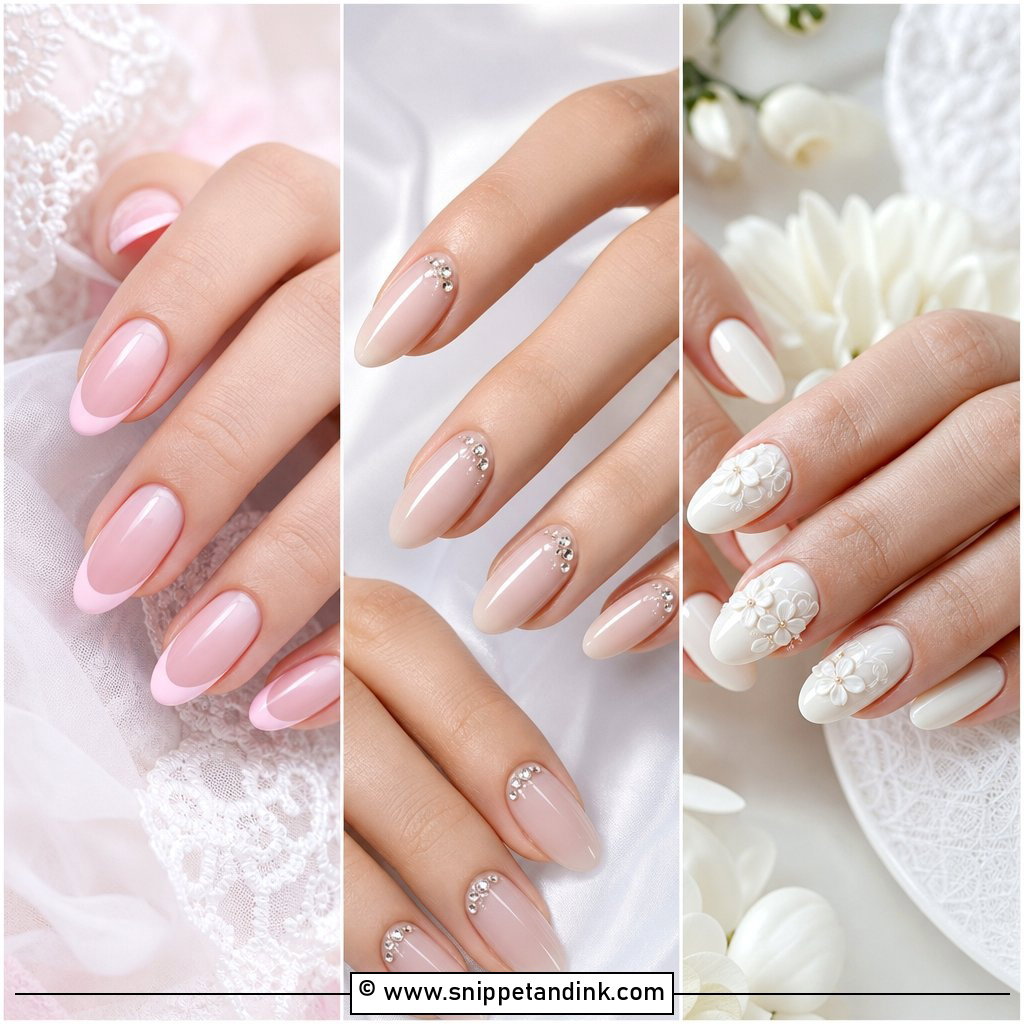
A French tip is the most adaptable base I know, because the tip colour can change with the outfit: gold, red, pearl or chrome. A nude base keeps the hands neat and leaves the mehndi, rings and bangles in charge. For a bridal upgrade I add a fine gold line under the smile line or tiny crystals at the cuticle. The smile line is where a rushed French shows, so give your artist time for this one. It works on square, almond, oval and coffin.
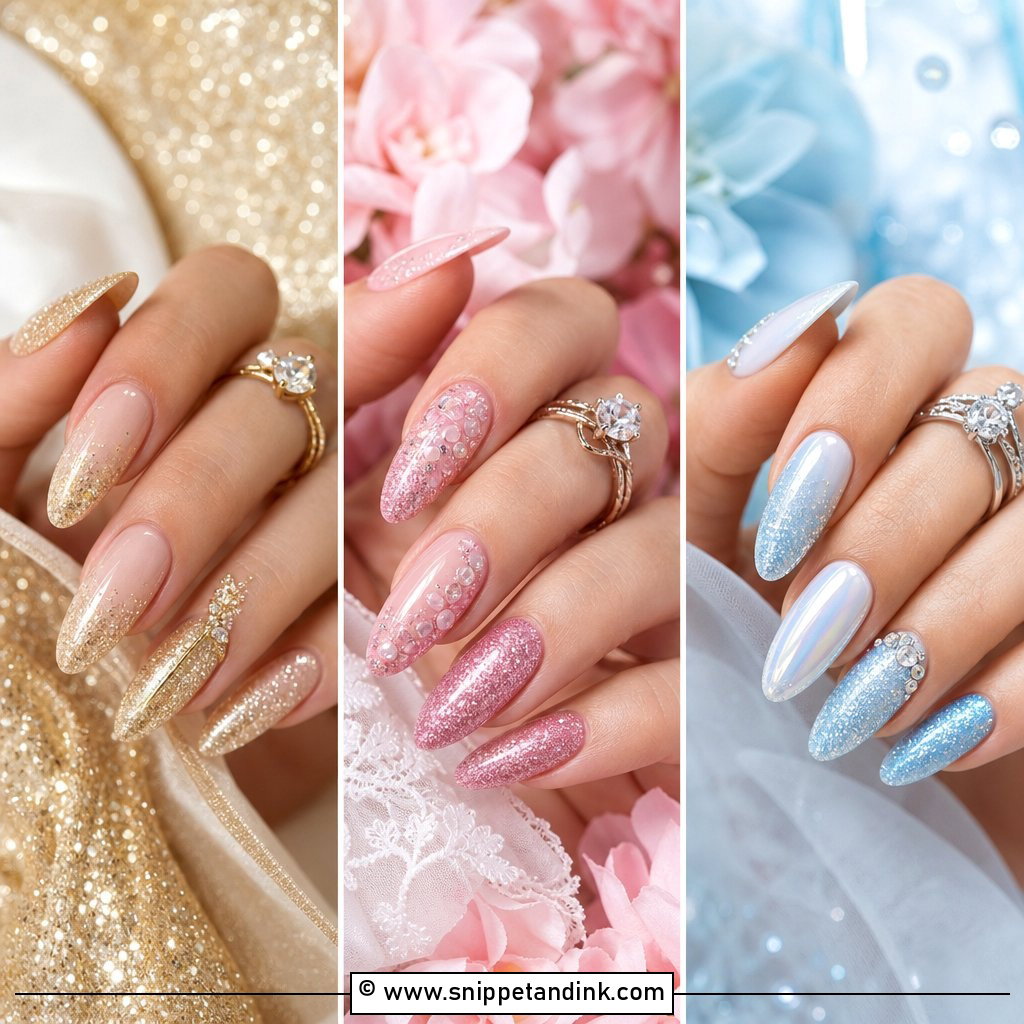
20. Glitter Ombré Indian Wedding Nails
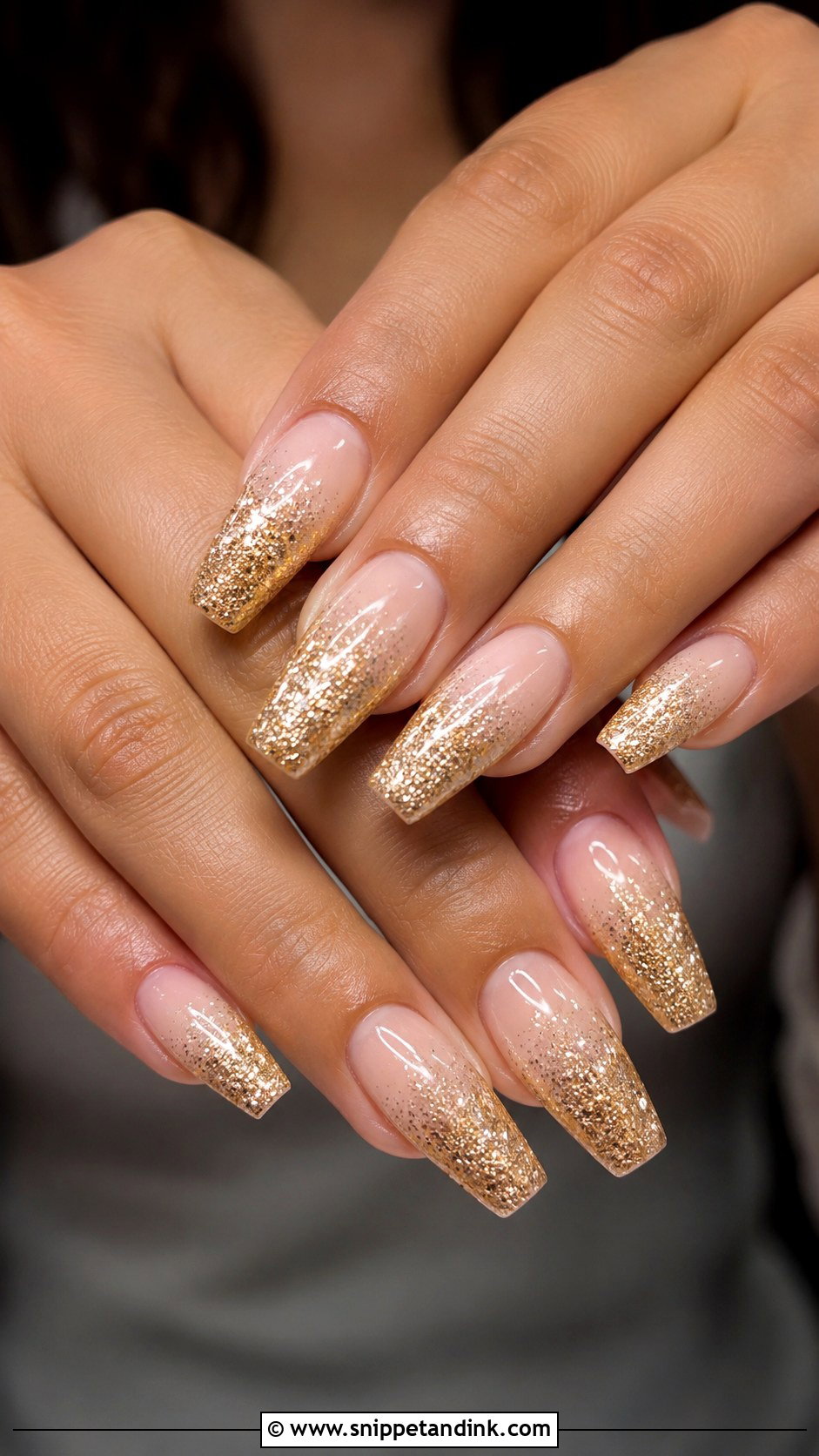
Glitter ombré brings sparkle without the weight of stones. It starts with a nude, pink, red or champagne base and fades into glitter at the tips or cuticles. Gold glitter reads traditional, silver modern, rose gold softer. I sponge or brush the glitter in thin passes so the fade stays smooth; packed on in one go, it looks patchy. It suits sangeet, receptions and bridesmaids, and it echoes sequins, zari and mirror work. Medium almond and coffin show the gradient best.
21. Floral Indian Wedding Nails
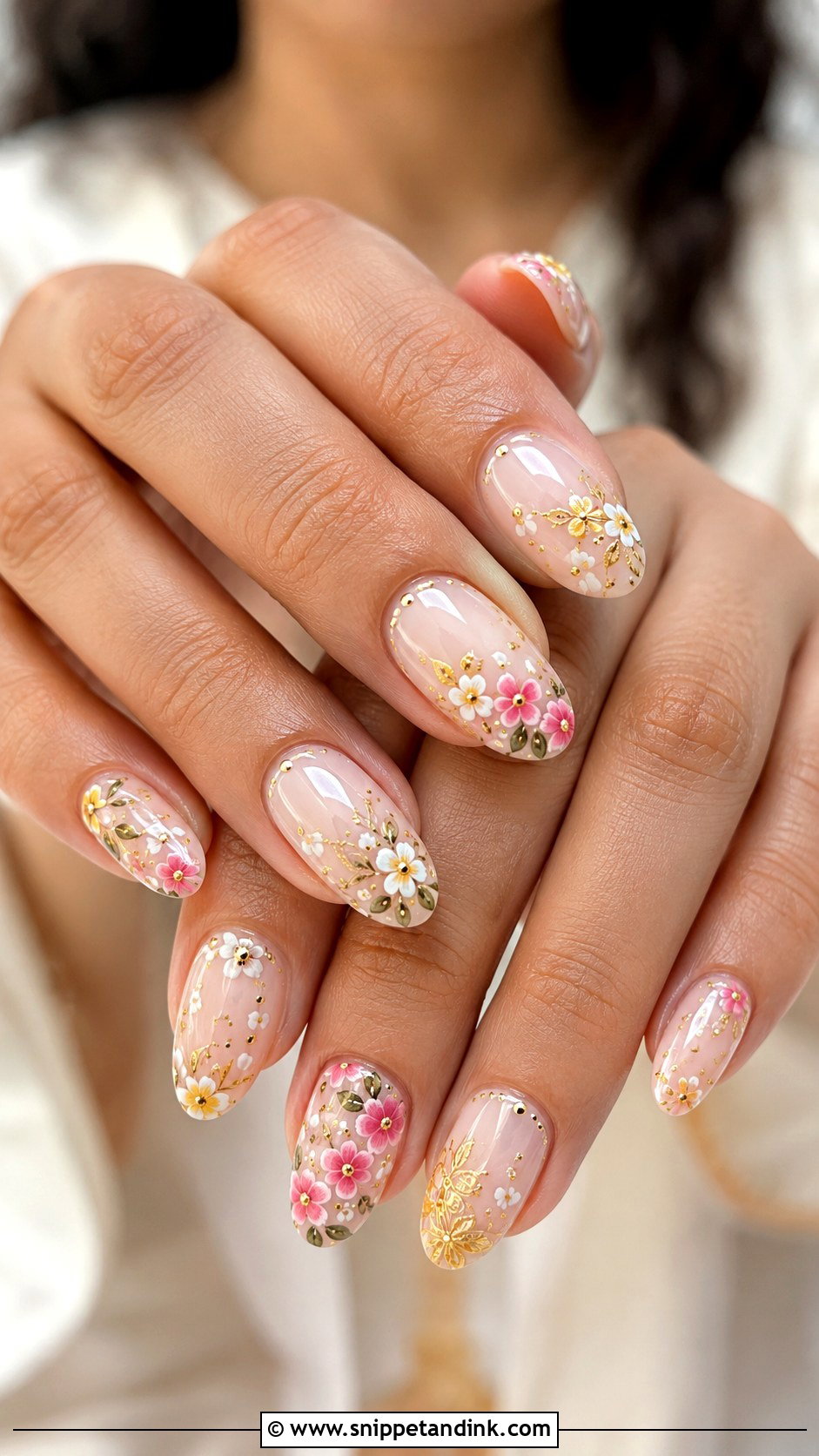
Hand-painted flowers suit daytime functions such as mehndi, haldi and engagements. On a nude or milky base the art stays crisp; I paint them in white, pink, yellow, red or gold depending on the outfit. Lotus or marigold motifs give a more traditional feel. Keep the flowers to two or three nails and leave the rest glossy, or the hands start to look like wallpaper next to the henna. Oval and almond match the curves of the petals.
22. Marble Indian Wedding Nails
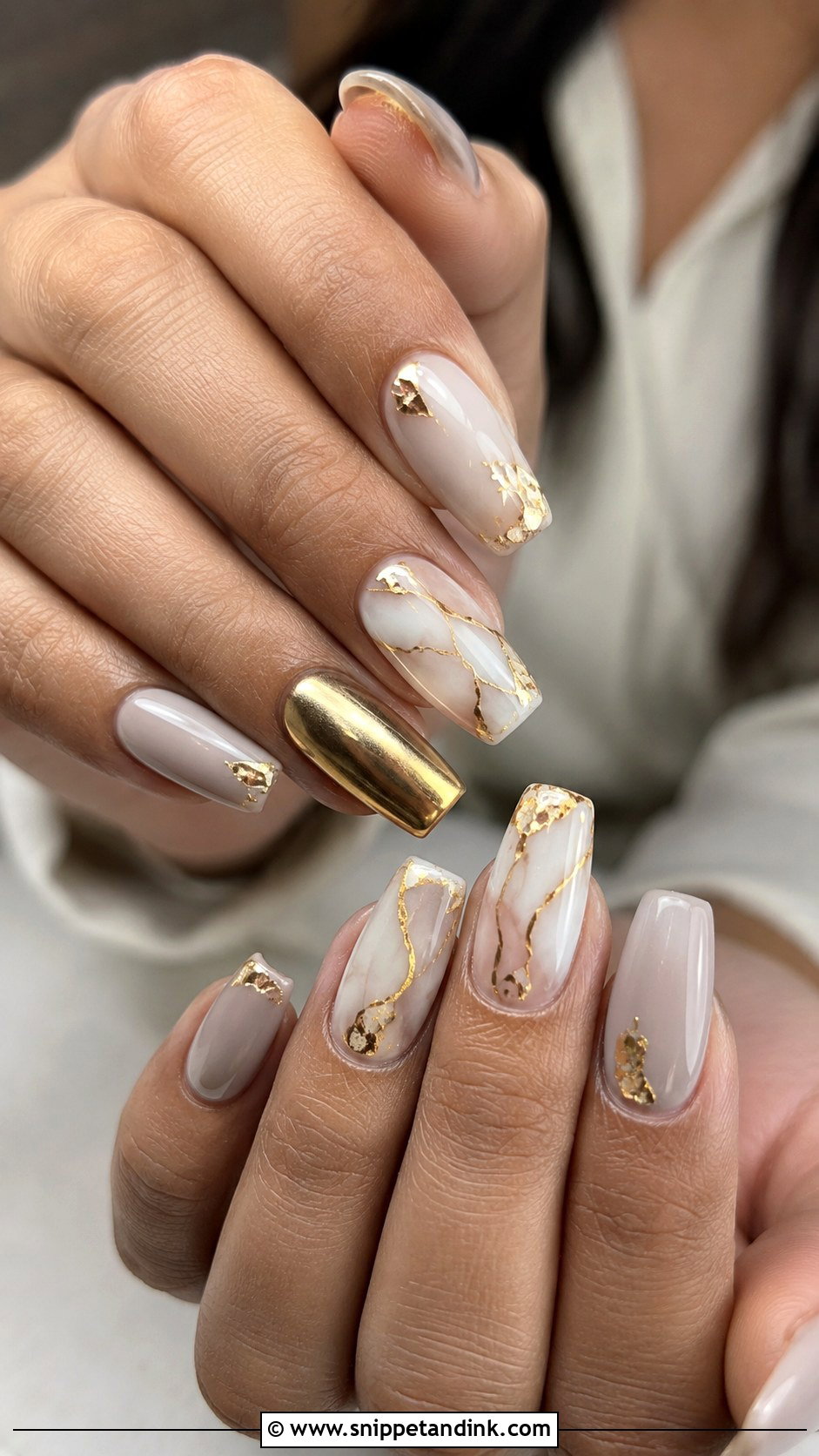
Marble is the modern option for brides who don’t want red. White marble with gold veins is the classic wedding version; pink, green or nude marble follow the outfit. I build it with a few drops of colour bled into wet gel, so every nail comes out slightly different, which is exactly what makes it look like real stone. Use it on accent nails with gold foil and keep the rest solid. A glossy finish makes the effect convincing. Coffin, almond and square all show the pattern well.
23. Mirror Work Indian Wedding Nails
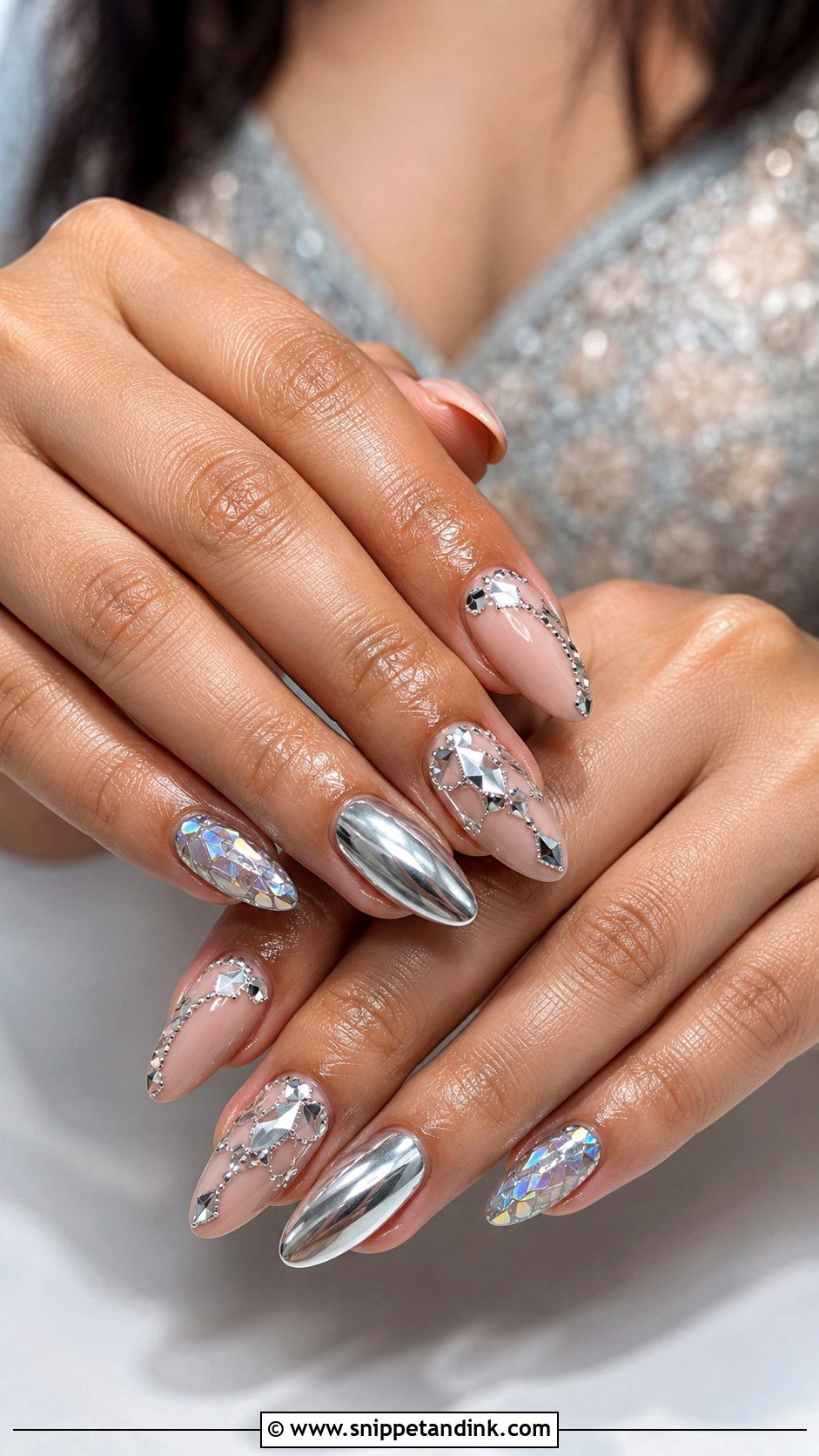
Mirror work nails take their cue from embellished sangeet outfits: tiny reflective pieces, silver foil, chrome or holographic flakes over a nude, pink, black or jewel-toned base. They catch light every time you move your hands, which is the point on a dance floor. If your outfit already has real mirror work, I’d scale back so the hands don’t compete with the clothes. Seal the reflective pieces under gel, because loose flakes are what catch on netting first. Almond or coffin gives the pieces room.
24. Minimal Indian Wedding Nails
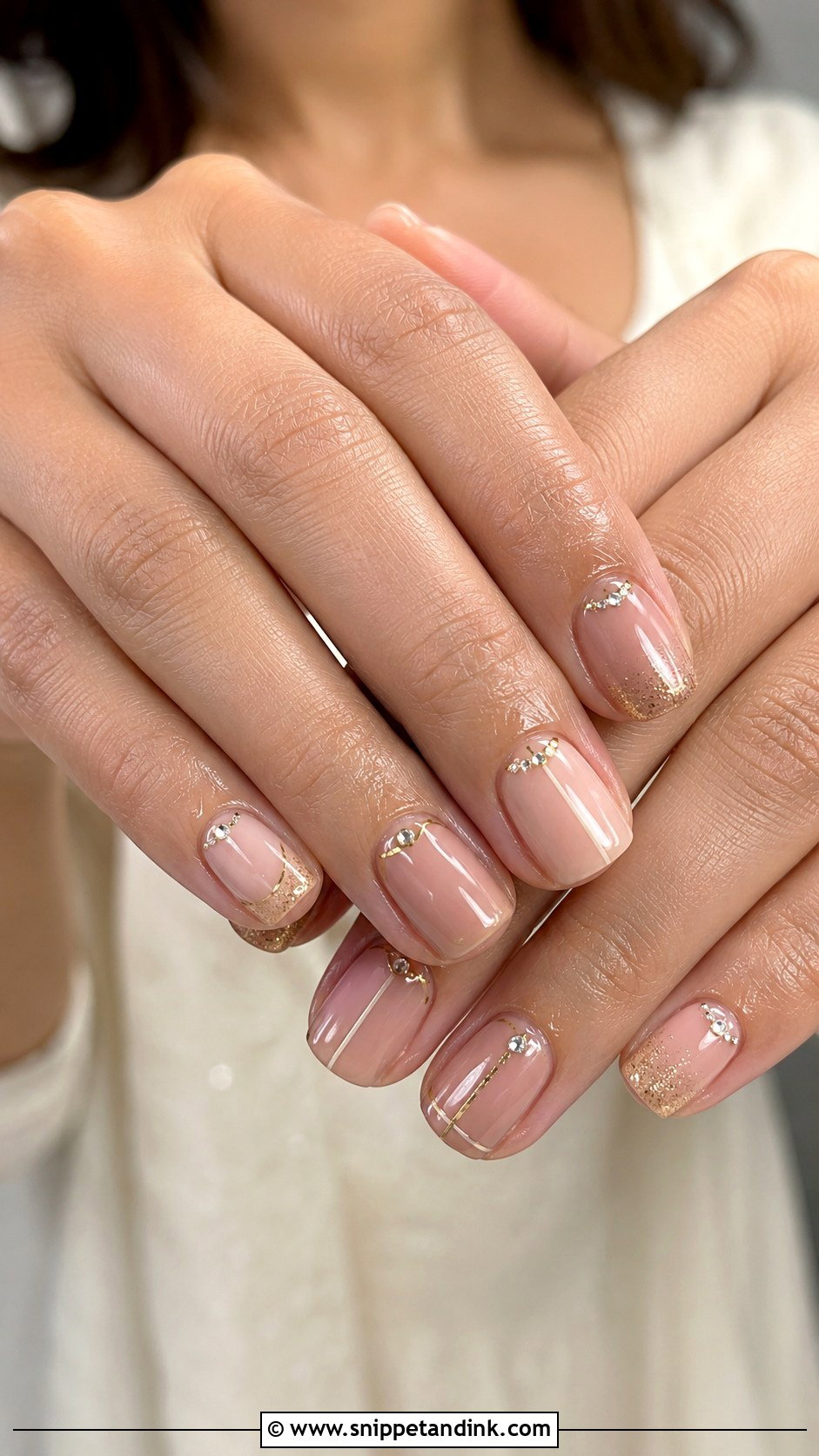
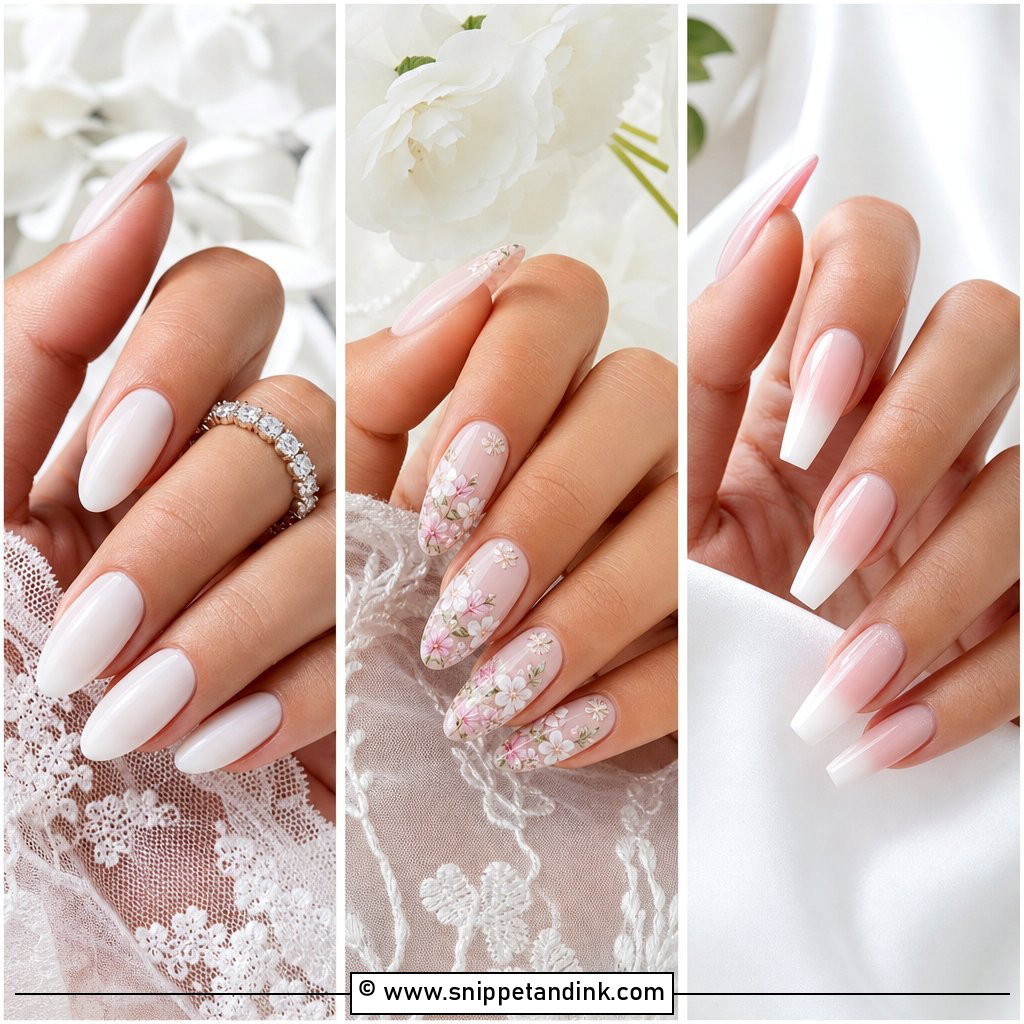
Minimal nails are for brides who like a quiet manicure, and they make sense when the mehndi or embroidery is very detailed. Start with sheer pink, nude, beige, milky white or soft peach, then add one detail only: a thin gold line, one pearl or a micro French. Short oval or squoval looks natural and is practical through long rituals. I also recommend this for civil ceremonies and engagement events, and for guests who want one set to go with several outfits.
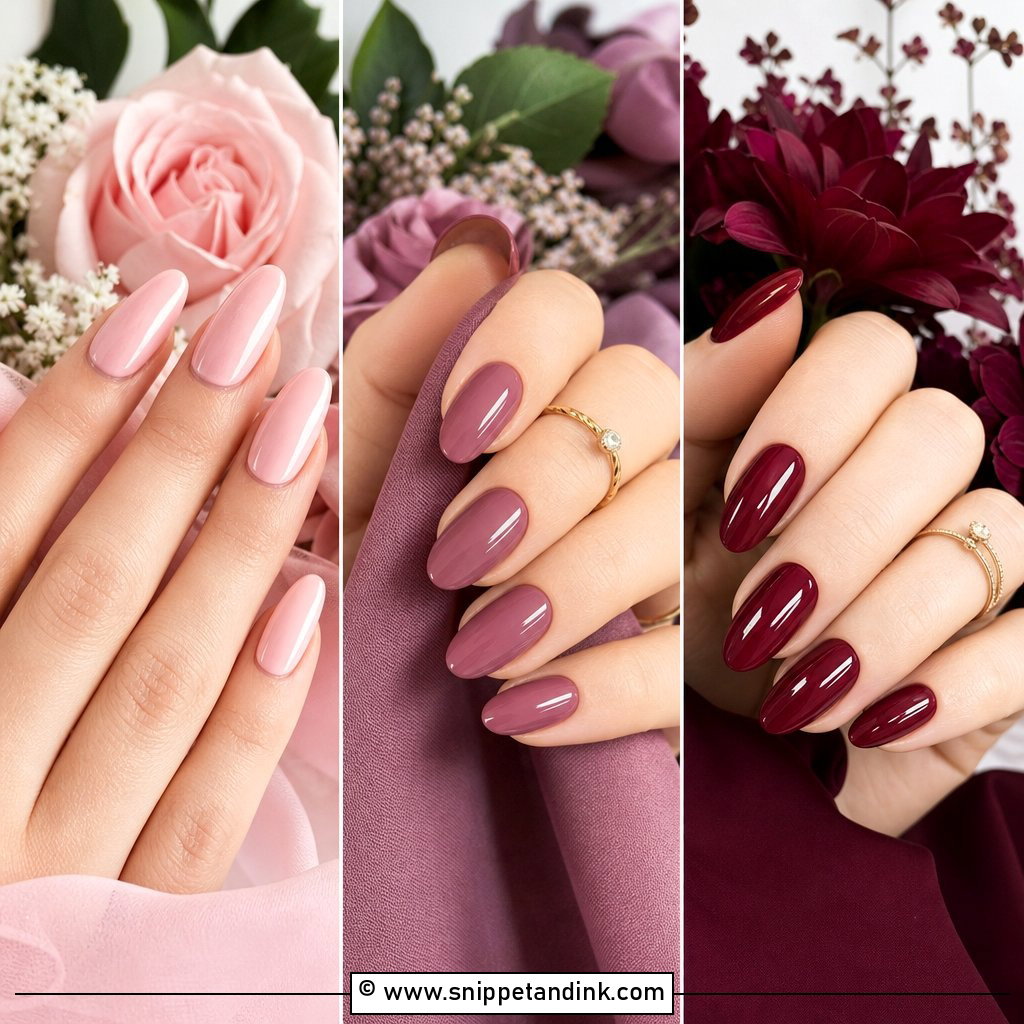
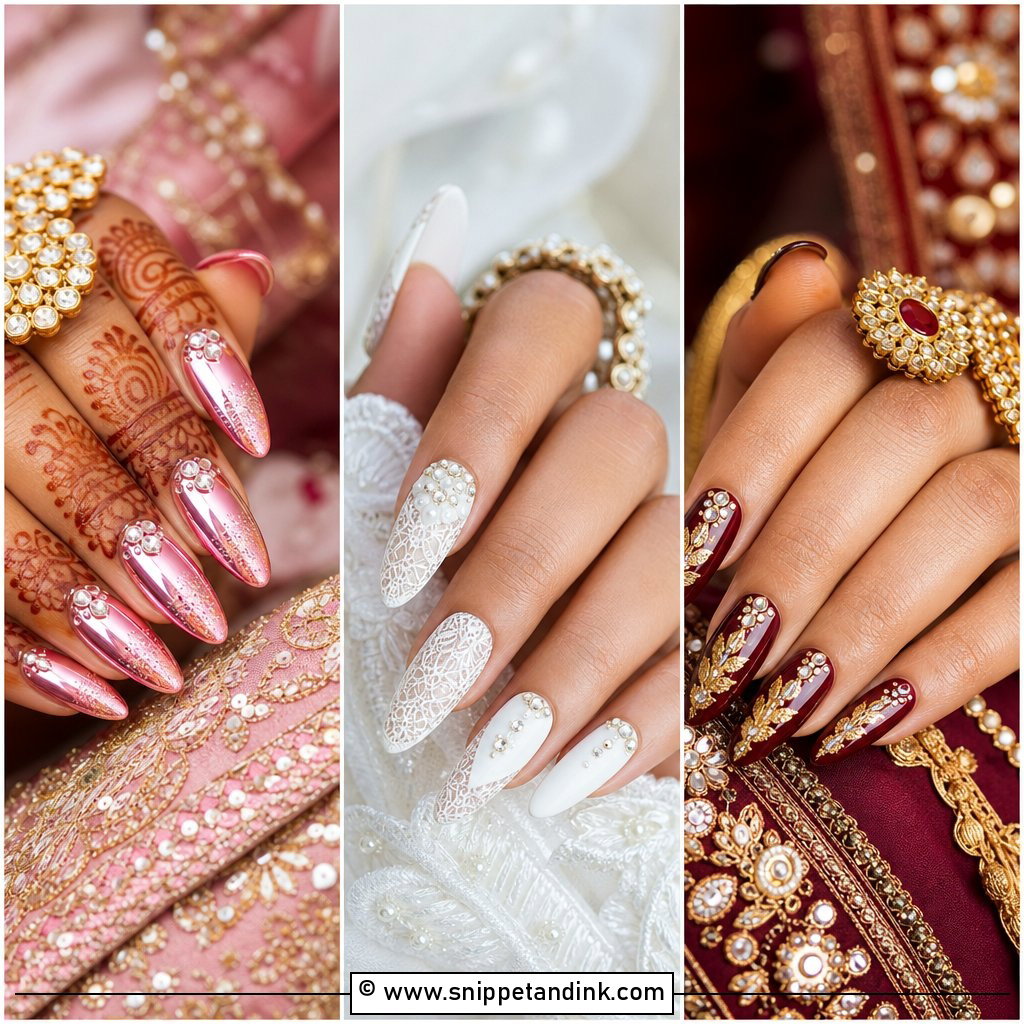
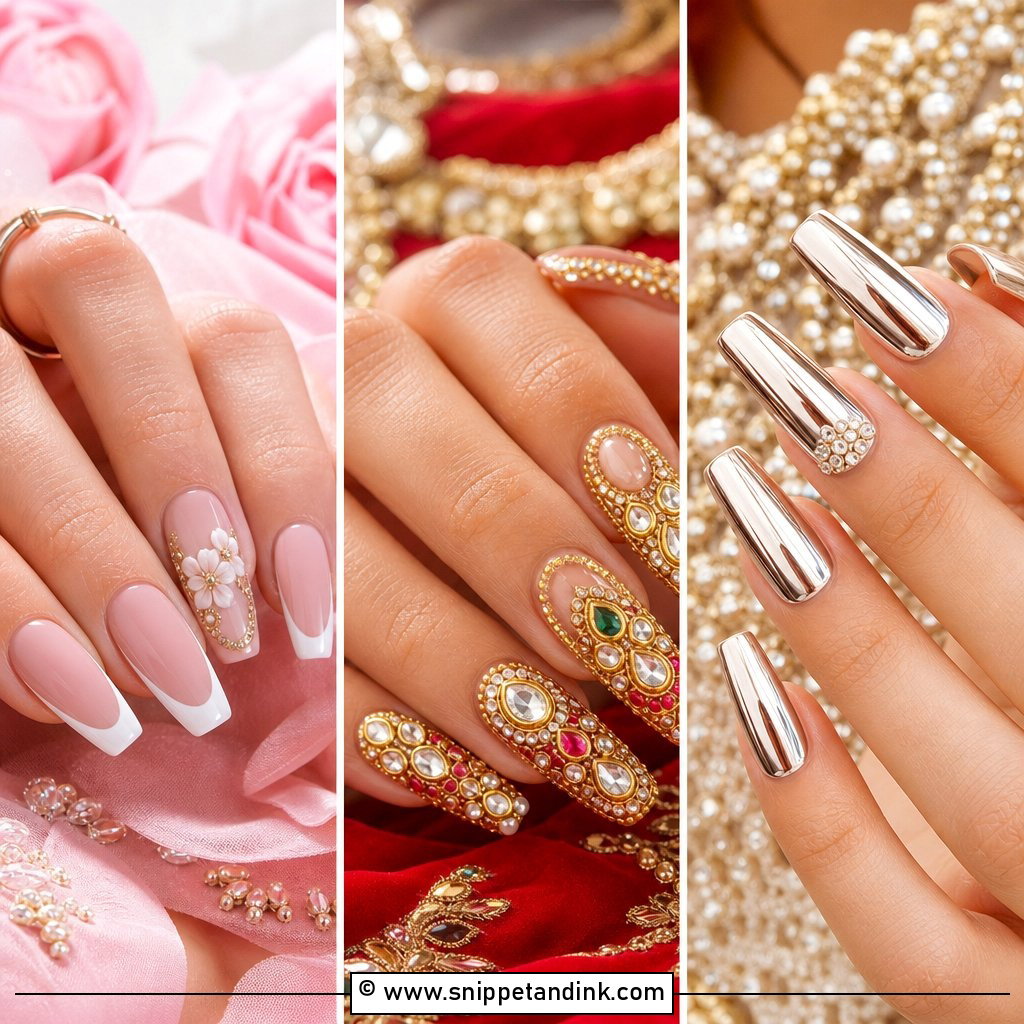
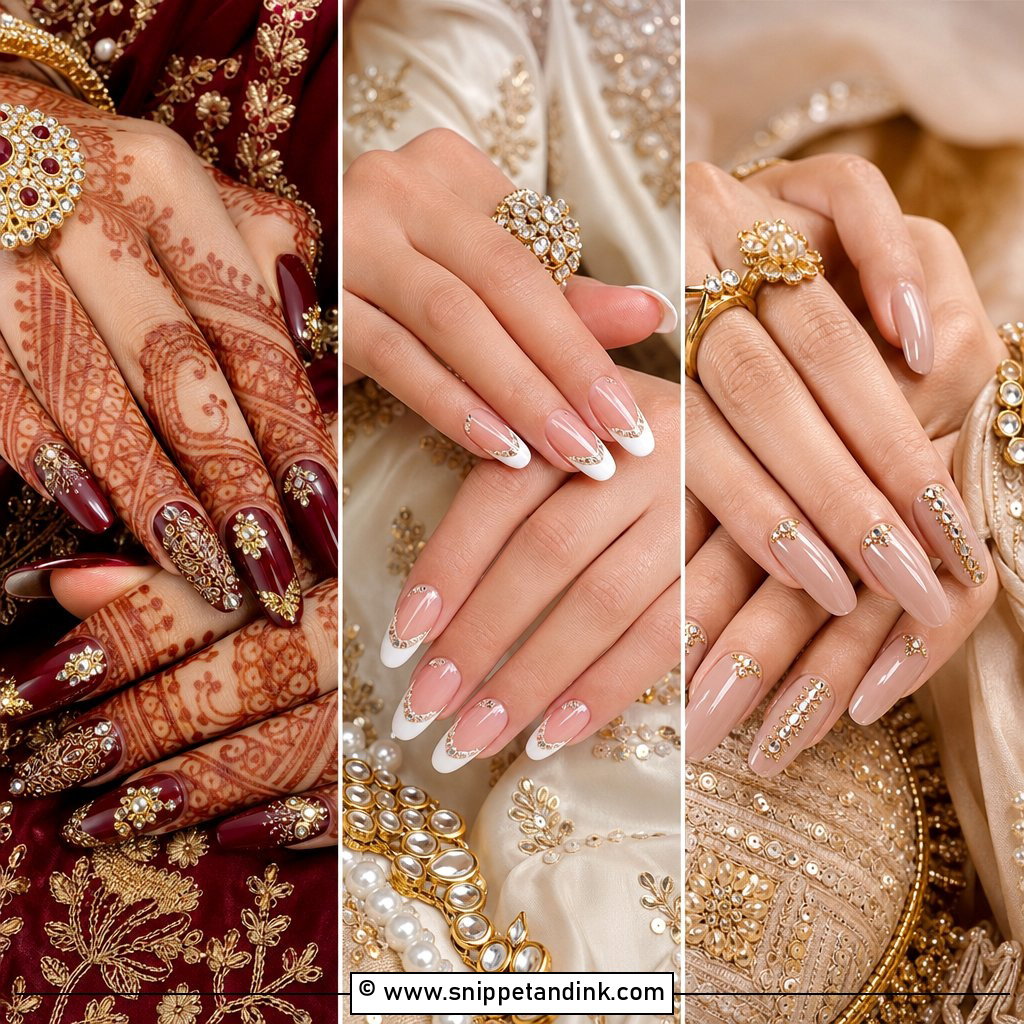
25. Heavy Bridal Indian Wedding Nails
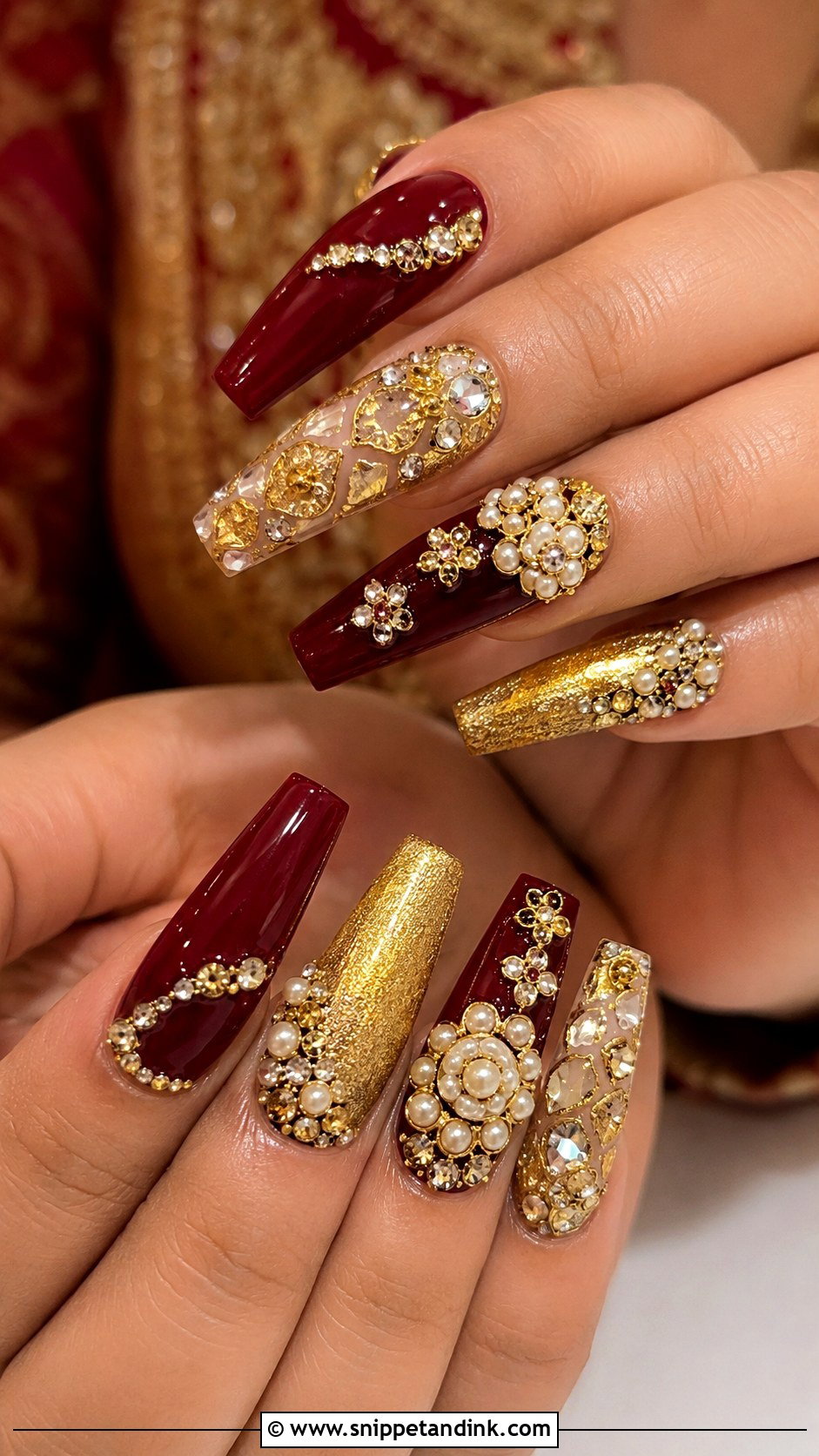
Heavy bridal sets pile on red or maroon, gold foil, rhinestones, pearls, 3D flowers, kundan stones and line art. With that much going on, balance decides whether it looks expensive or chaotic, so I leave some nails solid or lightly shimmered. This is a main-ceremony set for a heavy lehenga and traditional jewellery. Longer almond, coffin or ballerina gives the surface you need. Every stone gets set into builder gel and checked for height; a raised stone will snag fabric within minutes.
26. Short Indian Wedding Nails
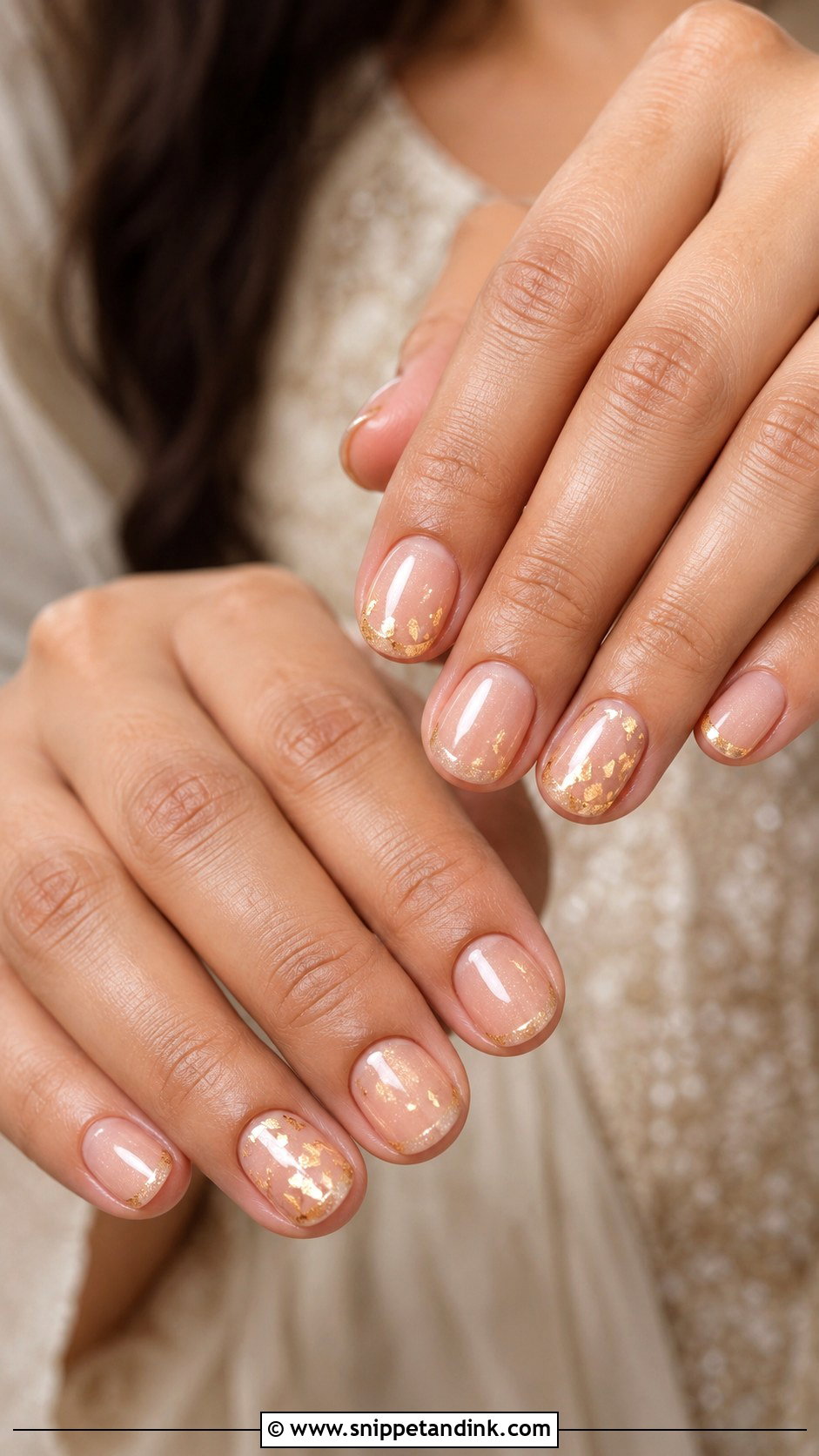
Short nails look every bit as bridal as extensions, and I often prefer them for brides who don’t normally wear length. They’re easier through haldi, travel and tying knots in dupattas. Glossy red, nude with gold, milky chrome, soft pink and champagne shimmer all work. On a short nail, scale the detail down: micro French tips, tiny dots or small flecks of foil beat large stones. Round, oval and squoval are most flattering, and short nails keep ring photos focused on the ring.
27. Long Indian Wedding Nails
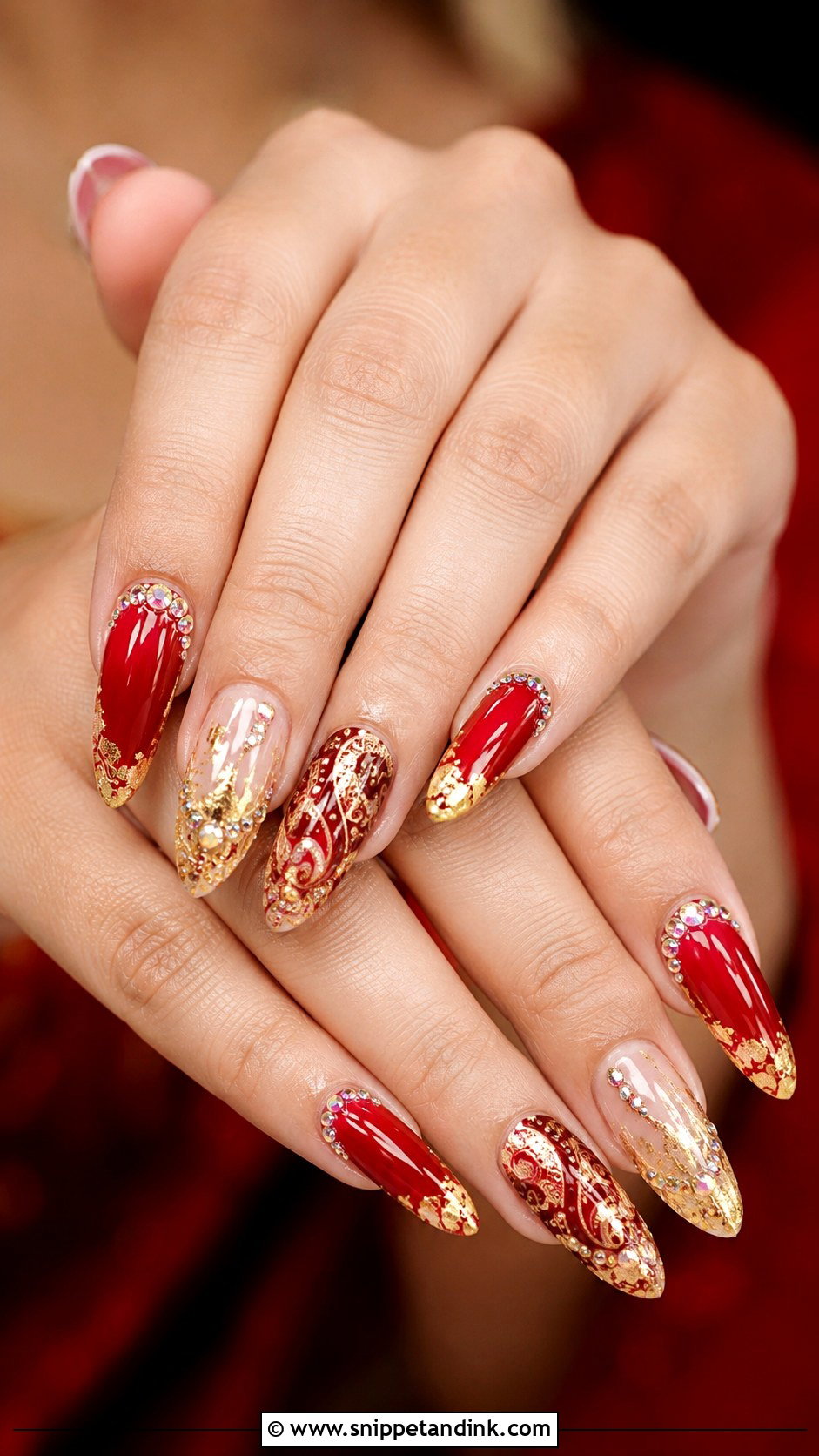
Long extensions give an artist room for ombré, French work, crystals, paisley art, chrome and 3D details. Almond and coffin are the most common shapes. For a traditional set, long red with gold foil and mehndi-style accents; for a reception, long nude chrome with pearls. I’ll be blunt about one thing: if you’ve never worn length, putting it on for the first time a few days before the wedding is risky. Fastening blouse hooks and jewellery clasps is harder than it looks, so try a medium length first.
28. Almond Indian Wedding Nails
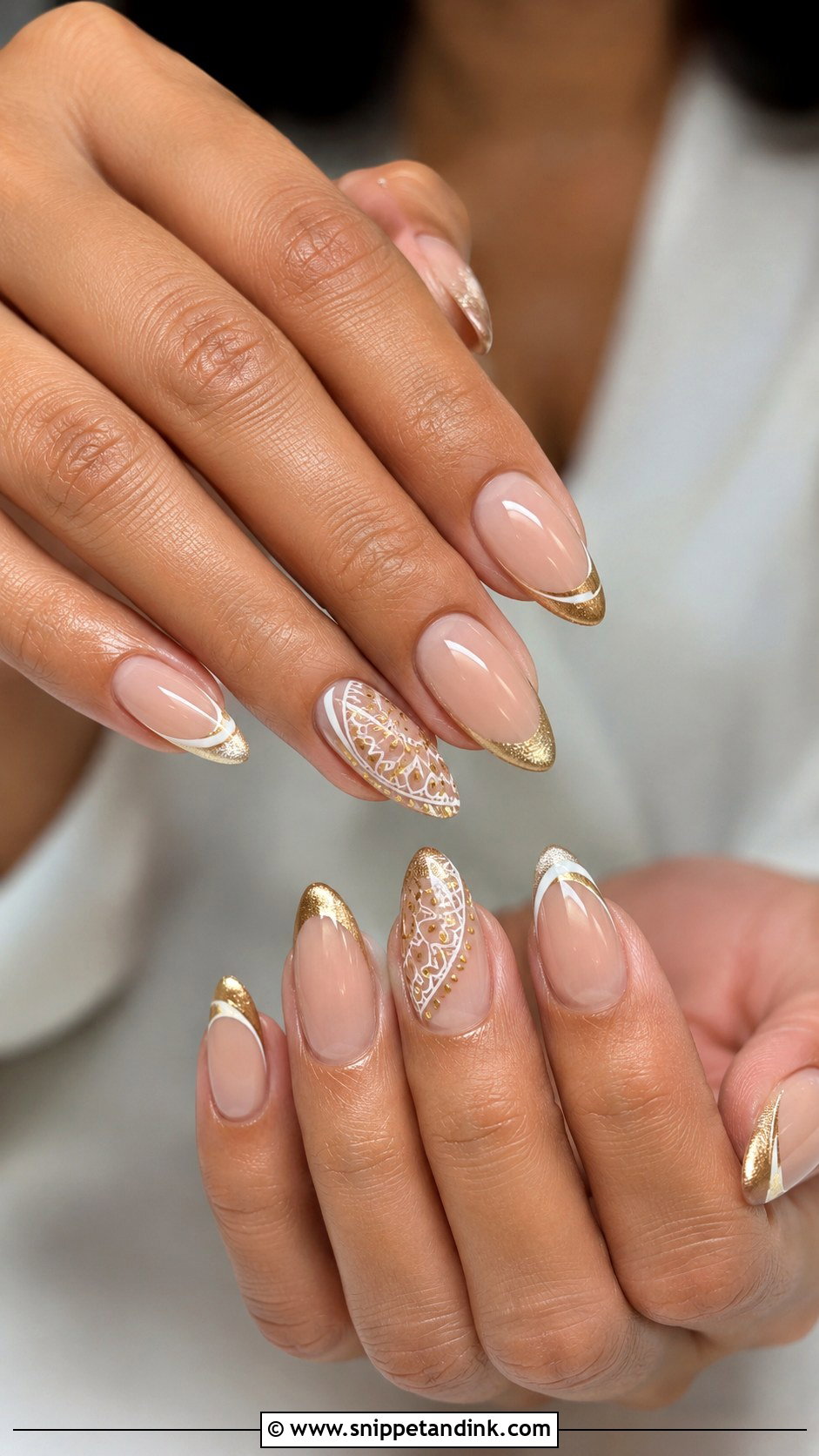
Almond tapers at the tip, which makes fingers look longer, and it suits almost every design in this list. It’s softer than stiletto and less blunt than square. Shaping matters more than people expect: a true almond keeps the sidewalls straight up to the stress point before tapering, otherwise it ends up looking like a pointy oval. My usual bridal version is medium almond with a nude base, gold accents and one or two detailed nails. The curved tip echoes the flow of henna patterns on the hand.
29. Coffin Indian Wedding Nails
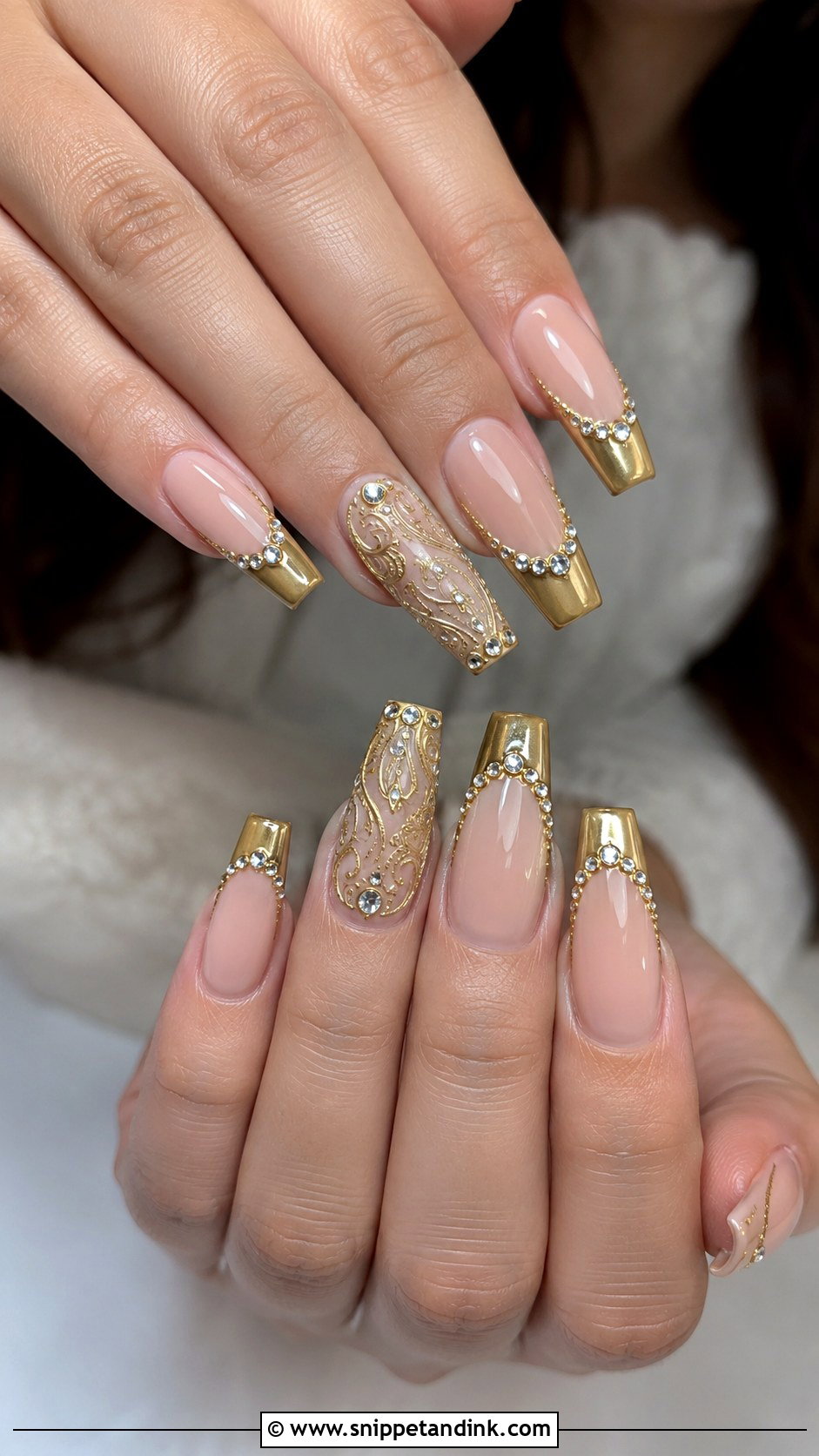
Coffin has straight sides and a squared tip, so it gives plenty of flat space for glitter ombré, marble, chrome or kundan work. Red, maroon, emerald, champagne and nude gold all look striking on it. Because the shape is already dramatic, I plan the design carefully and limit large stones, which make a coffin set feel heavy. A nude base with gold French tips, crystal accents and one detailed paisley nail per hand is a balanced version. The squared corners can catch, so I soften them slightly.
30. Wedding Guest Indian Wedding Nails
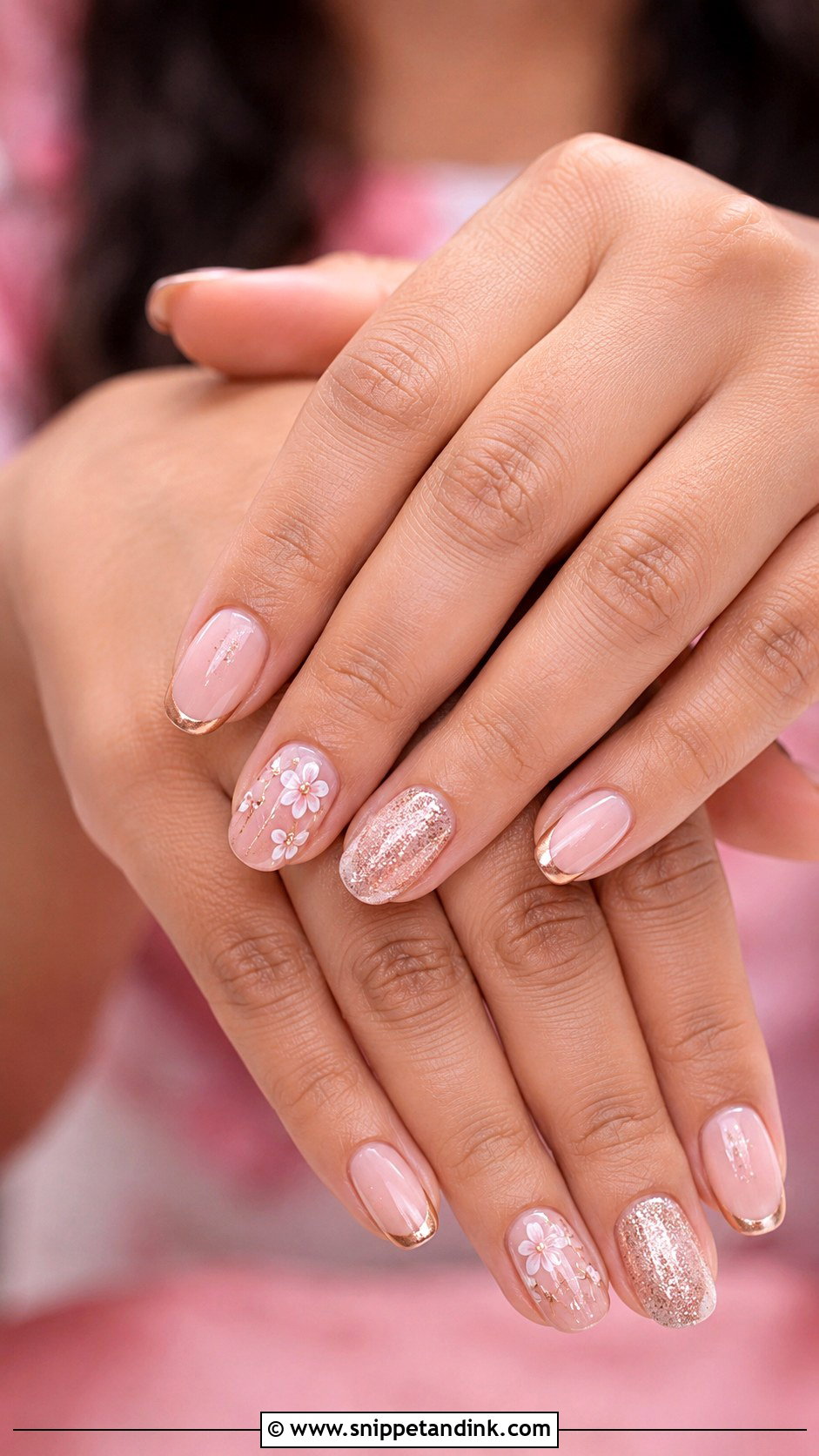
As a guest, your nails should look festive and respectful without reading as bridal. Soft pink, nude gold, champagne, rose gold, sage, lavender and a classic French all suit. With a bright lehenga or saree I’d keep the manicure neutral with a little shimmer; with a plain outfit you can add glitter ombré, chrome or florals. Short to medium almond, oval or square lets you dance, eat with your hands and manage a clutch. I’d avoid deep bridal red with heavy gold, since that’s the bride’s territory in many families.
One Manicure for Five Functions, or a Change Halfway?
A well-applied gel or builder set lasts two to three weeks, so a single appointment can cover haldi through reception. The catch is colour. If you want yellow for haldi and red for the pheras, I’d do a neutral base early on and add press-on overlays or a quick accent change for individual events, rather than soaking off and starting again mid-week. Every full removal thins the nail a little and costs you a morning you won’t have.
My usual plan for a multi-day wedding is a champagne, nude or milky base with gold detail that suits every outfit, then one bolder appointment for the main ceremony.
When a Stone Pops Off in the Middle of the Pheras
Something will catch. Kaleeras, net dupattas and chooda edges are hard on embellished nails, and long sets crack at the stress point if you knock them on a doorframe. I give every bride a small emergency pouch: nail glue, a fine file, two or three spare matching stones and a clear top coat. A lifted stone can be glued back in under a minute. A cracked extension should be filed short and smooth rather than left jagged, because a jagged edge will pull threads from the lehenga for the rest of the night.
Give that pouch to a sister or bridesmaid, not the bride. You won’t have pockets.
Which Set Goes on Which Day
Traditional or modern, minimal or fully embellished, the right set comes down to the outfits, the jewellery, the mehndi and how many functions you need it to last. Red and gold still belongs to the ceremony; milky chrome, pearls, champagne and French tips cover modern looks; haldi and sangeet can take more colour and sparkle. Guests should complement their own outfit without stepping into bridal territory. Above all, pick a length and shape you can live with through every ritual, photo and dance.
You'll Like These Ideas:


Leave a Reply