
Your hands will be photographed closer than your face on the wedding day: the ring exchange, the bouquet, a hand resting on a shoulder. That’s why I steer most brides toward soft color, a clean shape and a deep gloss, and away from anything that needs explaining. Milky whites, pink French, pearl chrome, sheer nudes, fine lace and small florals all earn their place below. I’ve grouped 35 sets here, from short natural nails to long almonds, and with each I’ve said what I’d do at the table and when I’d talk you out of it.
Matching Polish to Your Dress, Metal and Skin
Wedding whites aren’t all the same white. A gown can be bright white, soft white, ivory, champagne or blush, and nail polish sitting next to it shows the difference immediately.
- Bright white gown: pure white tips, milky white or cool pinks all match.
- Ivory or cream gown: ivory, milky beige or warm pink. Bright white tips can make the dress look yellow.
- Champagne or blush gown: champagne, nude or blush pink. Avoid stark white entirely.
- Gold jewelry: warmer nudes, gold tips, champagne shimmer.
- Silver, platinum or white gold: cooler pinks, silver tips, pearl chrome.
Bring a fabric swatch or a clear photo of the dress in daylight to your appointment. I’ll hold polish bottles against it before we start, which takes two minutes and saves a lot of second-guessing.
Then check it against your skin
A shade can match the dress perfectly and still look wrong on your hands. Cool undertones, where veins look bluish, usually suit pinks and pure whites. Warm undertones, with greener veins, look better in peachy nudes, ivory and champagne. If you can’t tell, sit by a window during the swatch; shop lighting flatters almost every color and tells you very little.
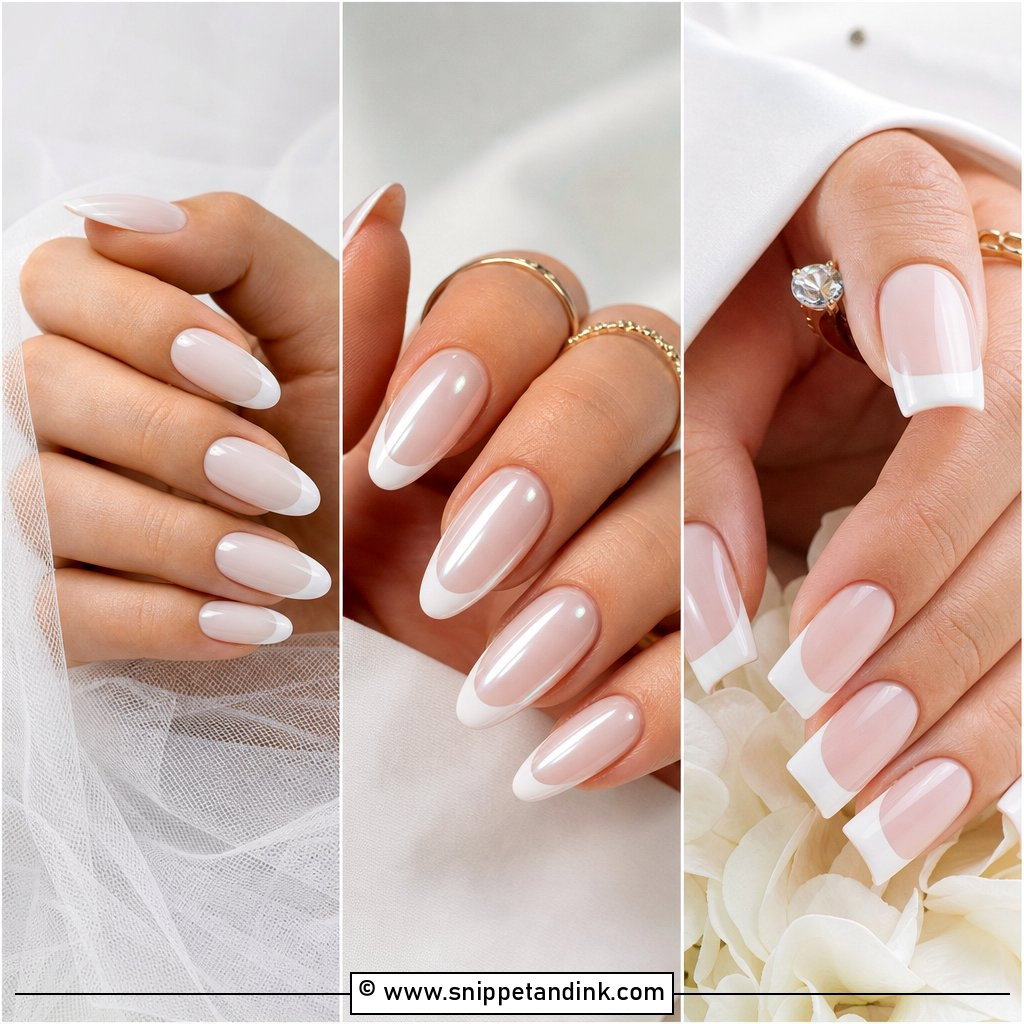
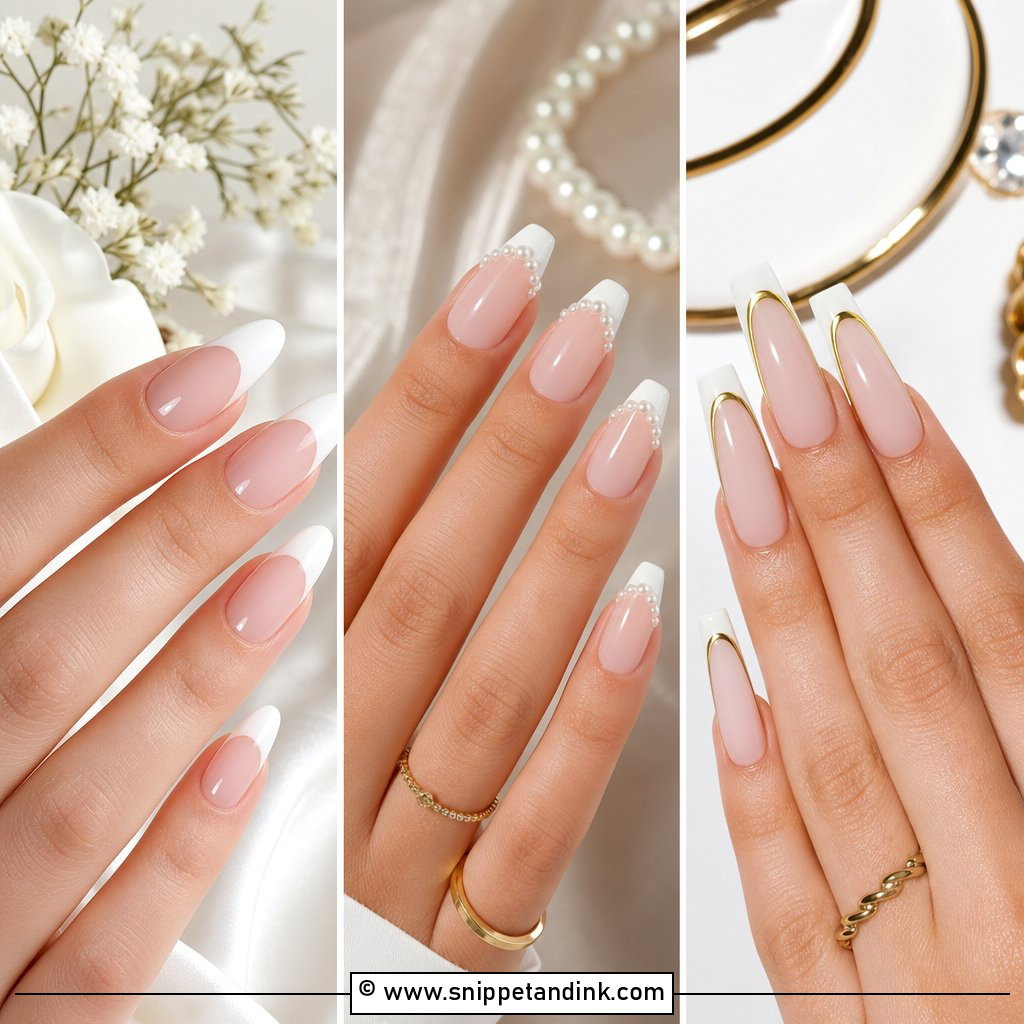
1. Classic French Bride Nails
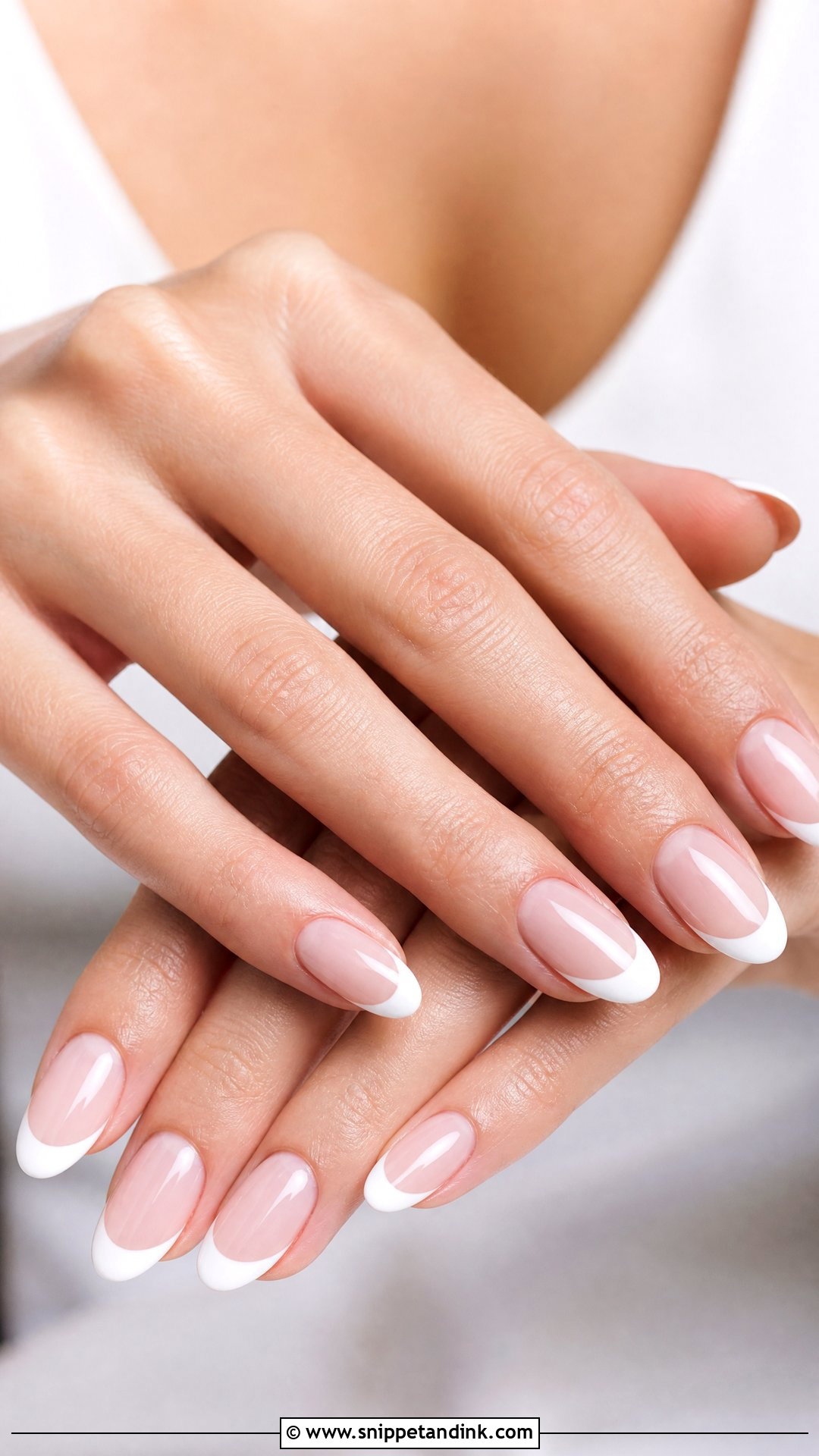
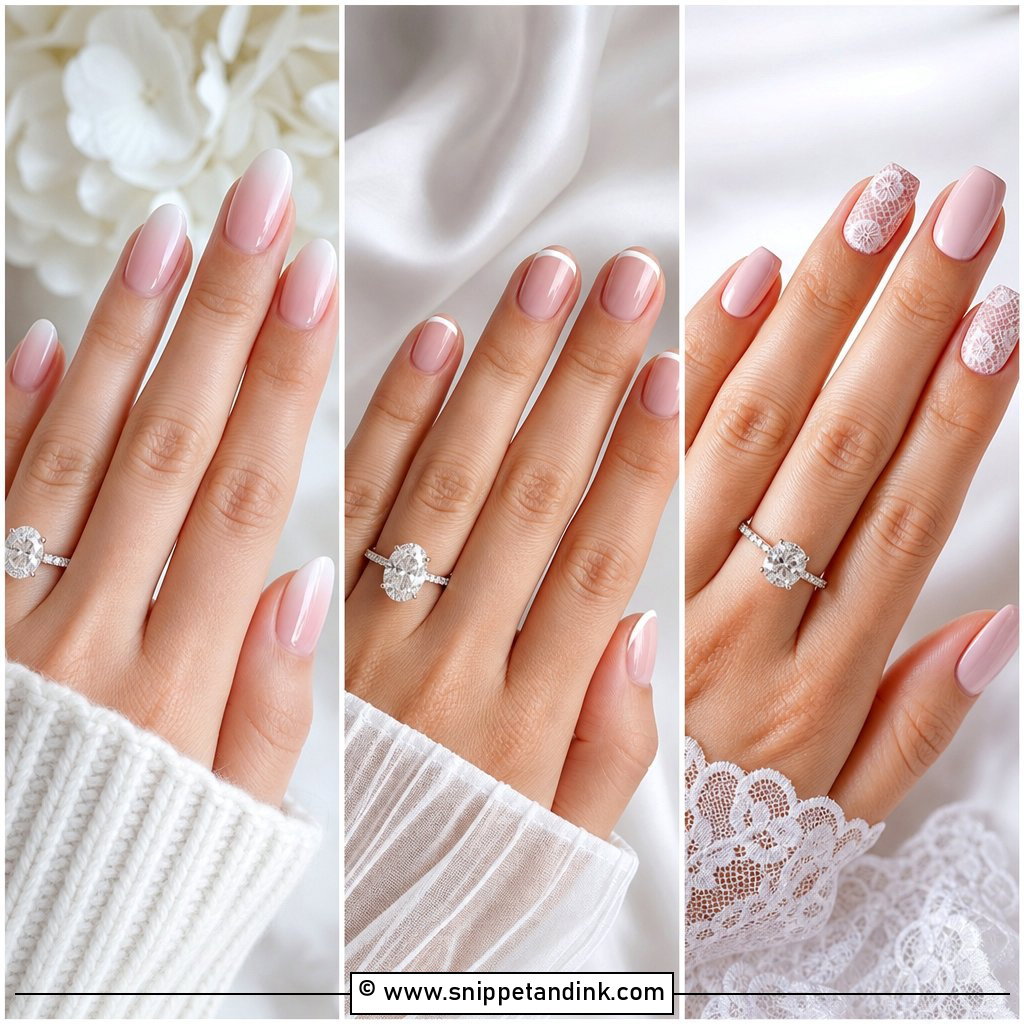
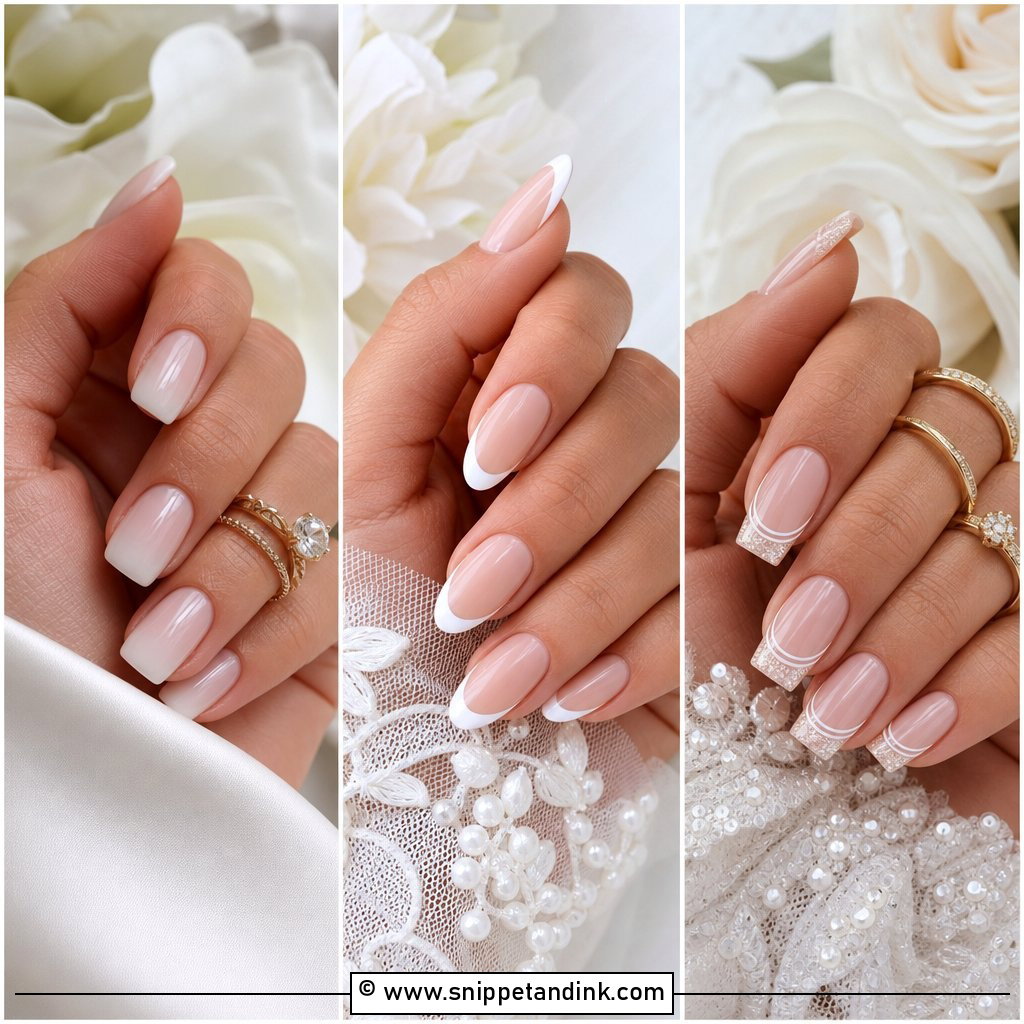
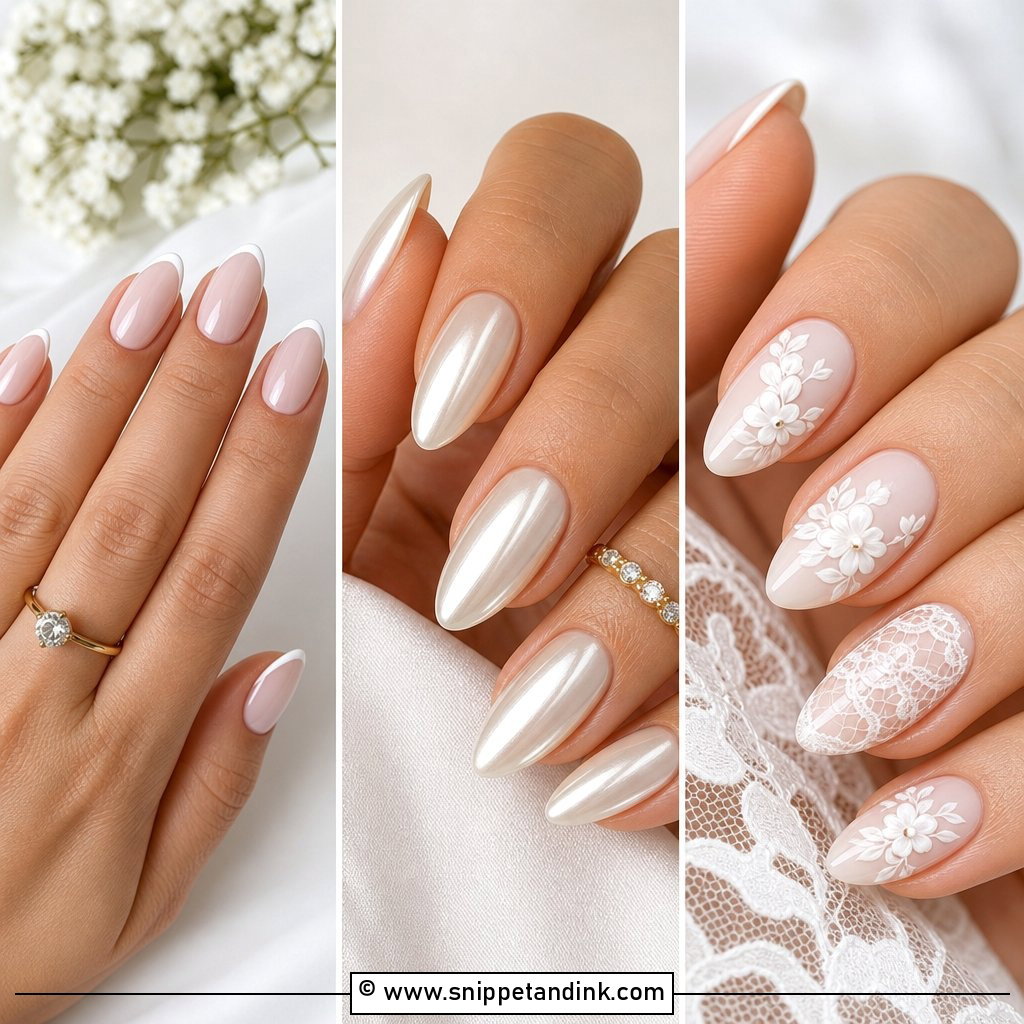
When a French manicure looks dated, it’s almost always the tip. A thick, bright band reads old-fashioned; a thin smile line that follows your own free edge looks clean. I lay a clear builder gel base first so the nail surface is perfectly flat, which is what makes the white edge look sharp in a ring close-up. Almond, oval and short square all carry it, and it sits quietly next to satin or lace.
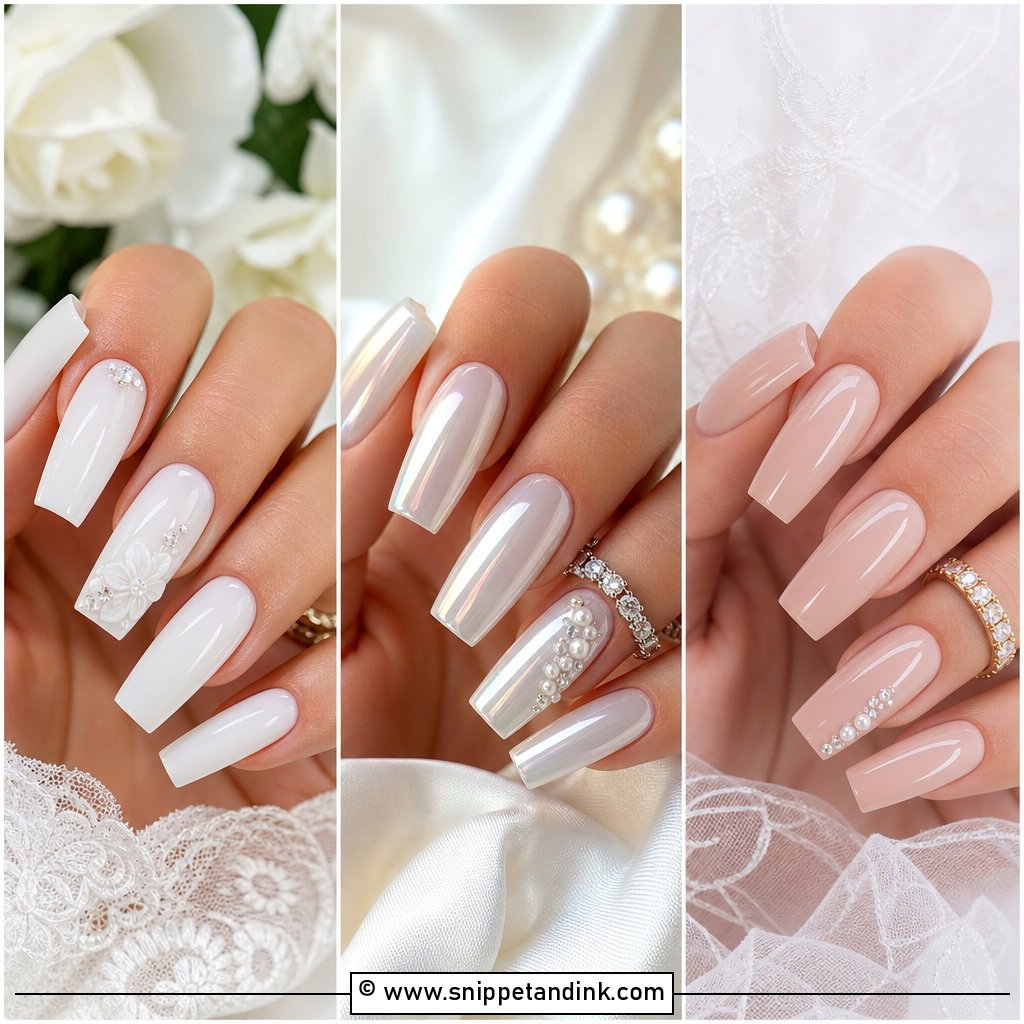
2. Milky White Bride Nails
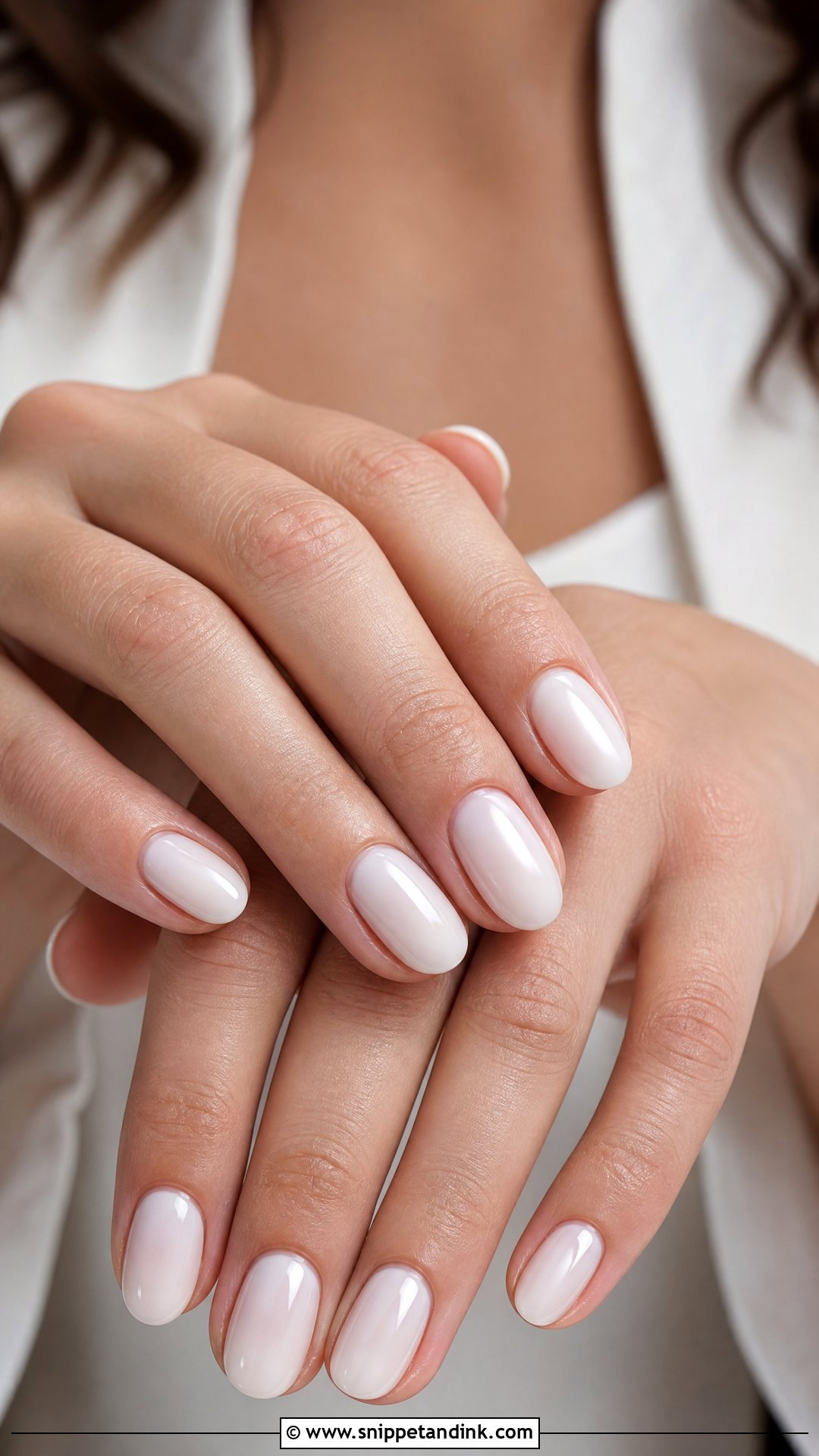
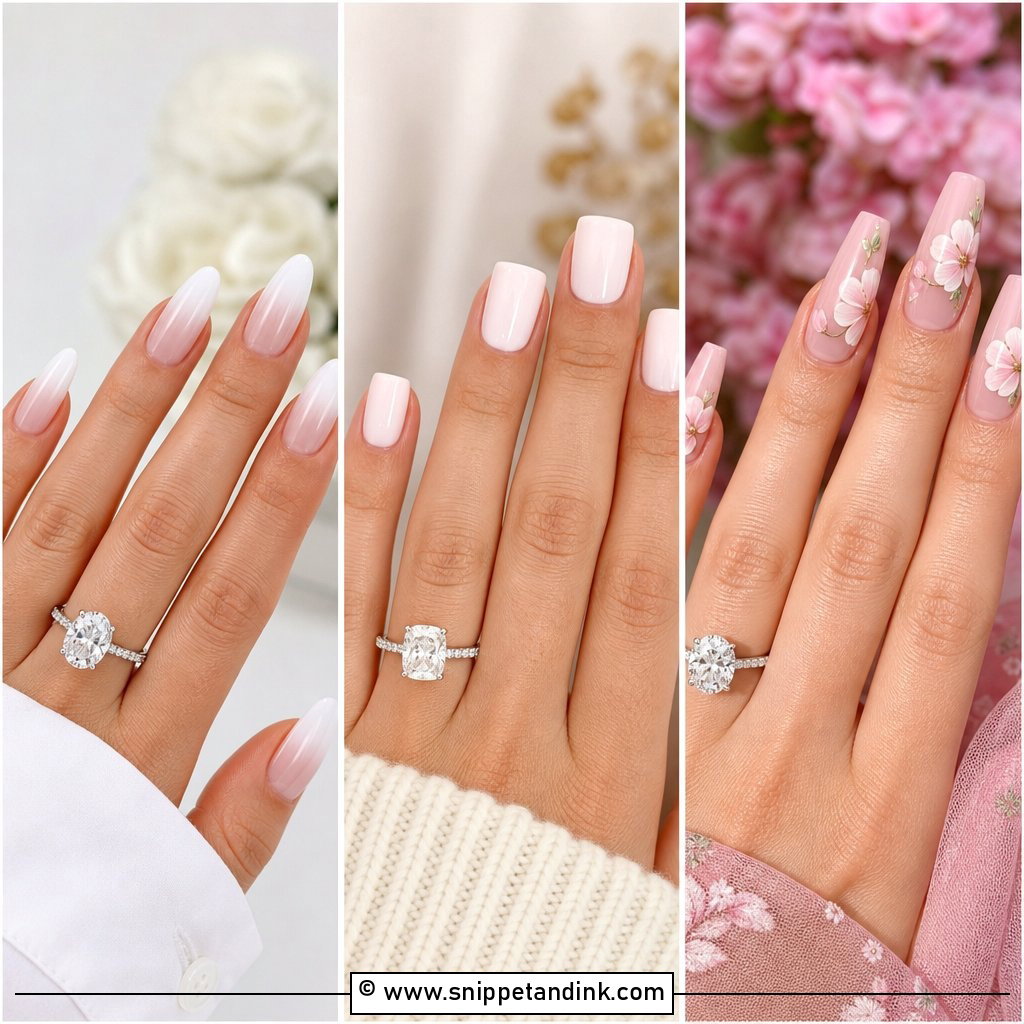
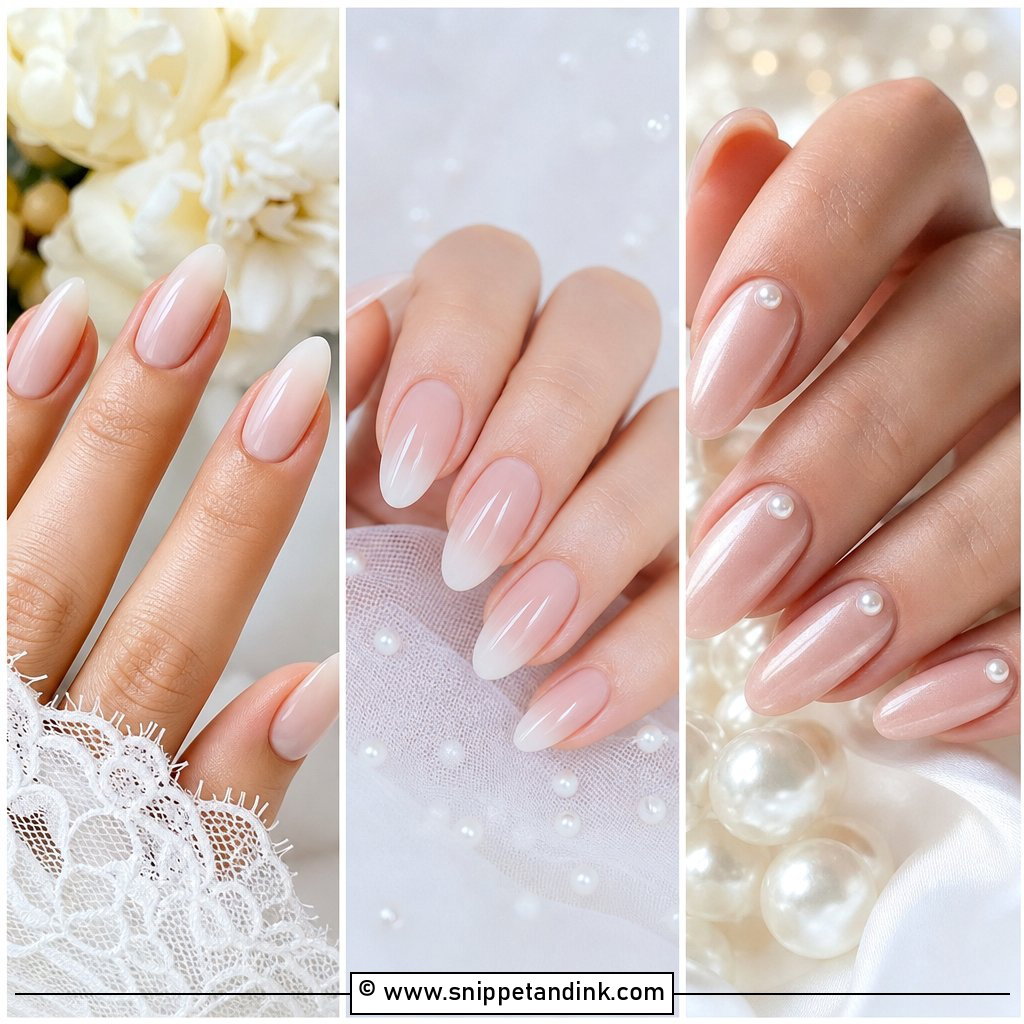
Milky white is cloudy rather than solid, so a little of your nail shows through. Two thin coats give that soft creaminess; one thick coat looks streaky and can wrinkle as it cures. It’s kind to short and medium lengths, where solid white can make nails look stubby. The translucency also hides a millimeter or two of regrowth, a real advantage if you’re having it done several days out.
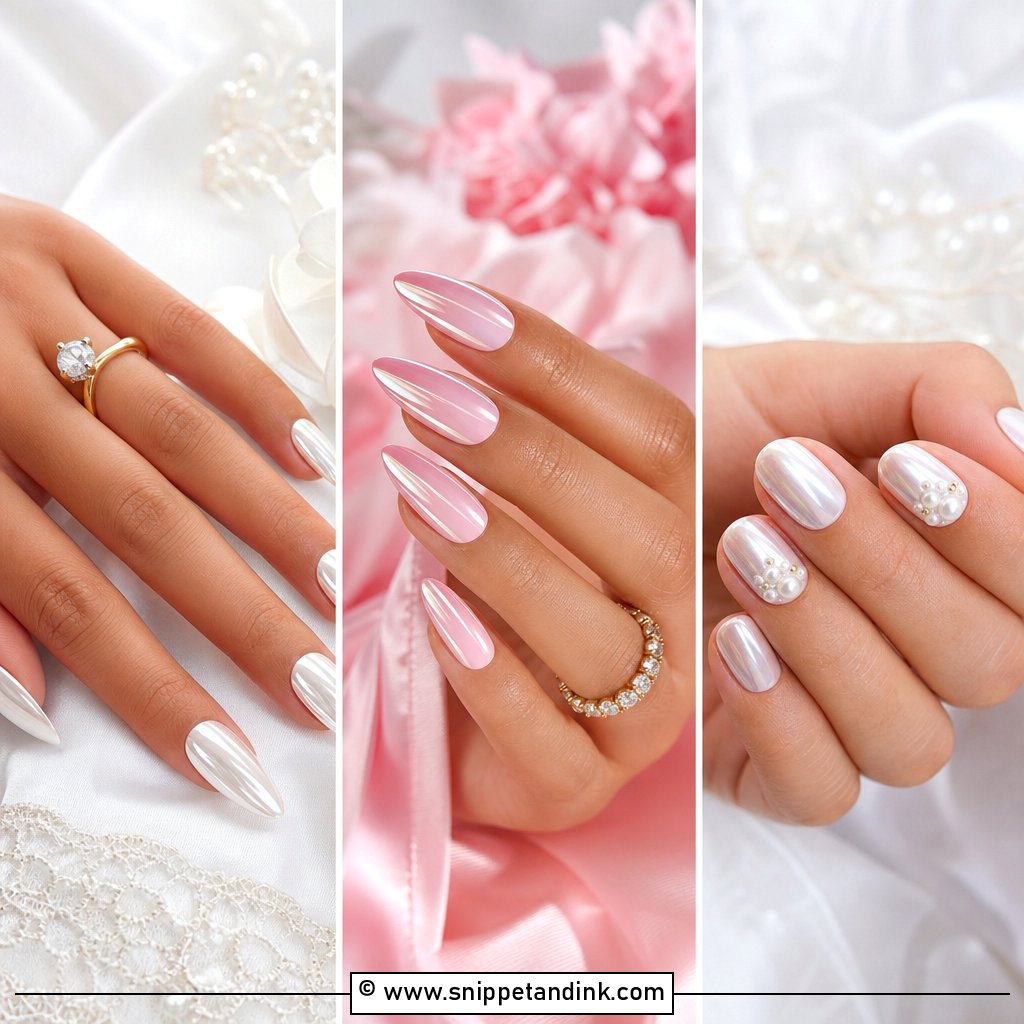
3. Pearl Chrome Bride Nails
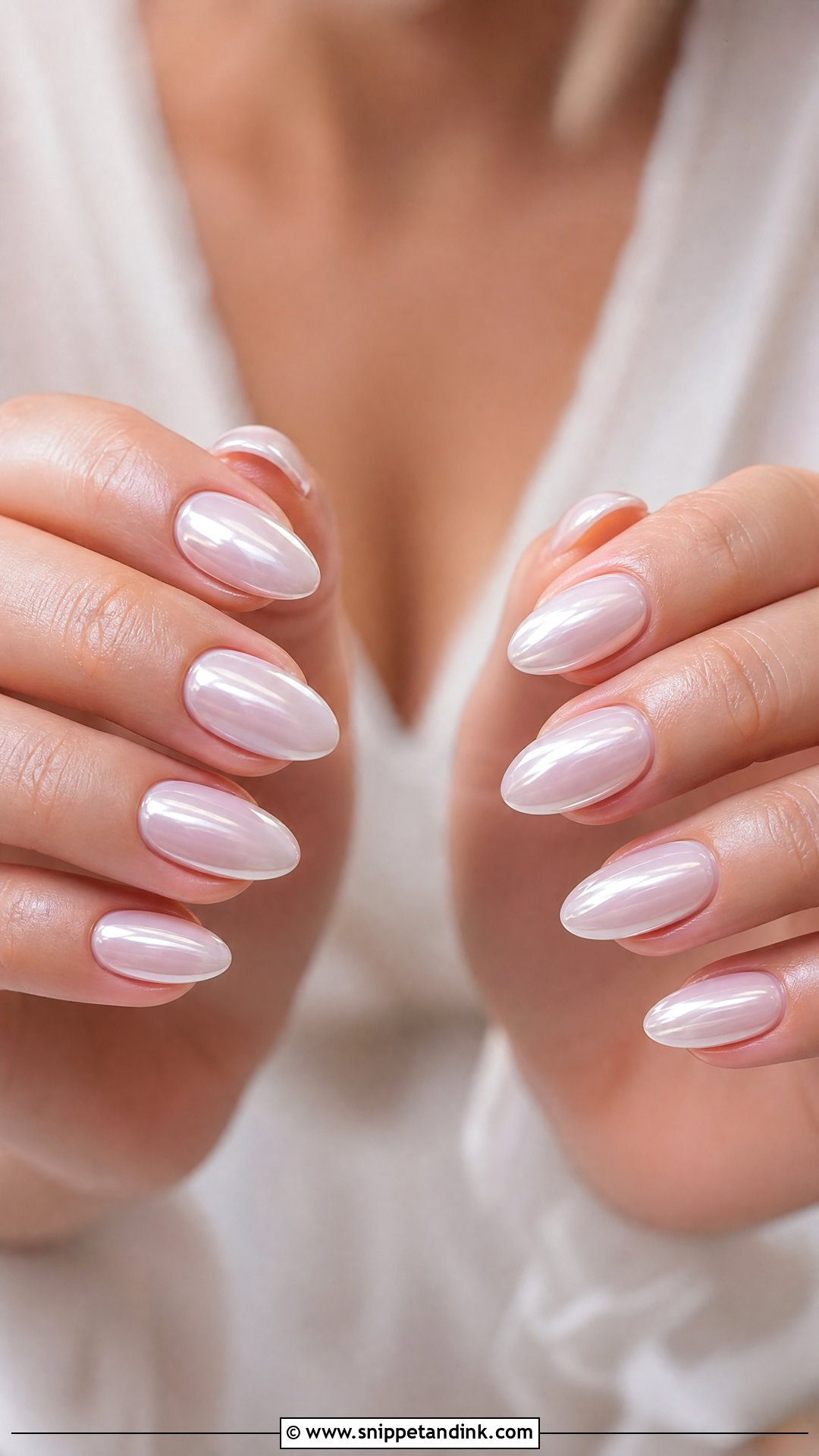
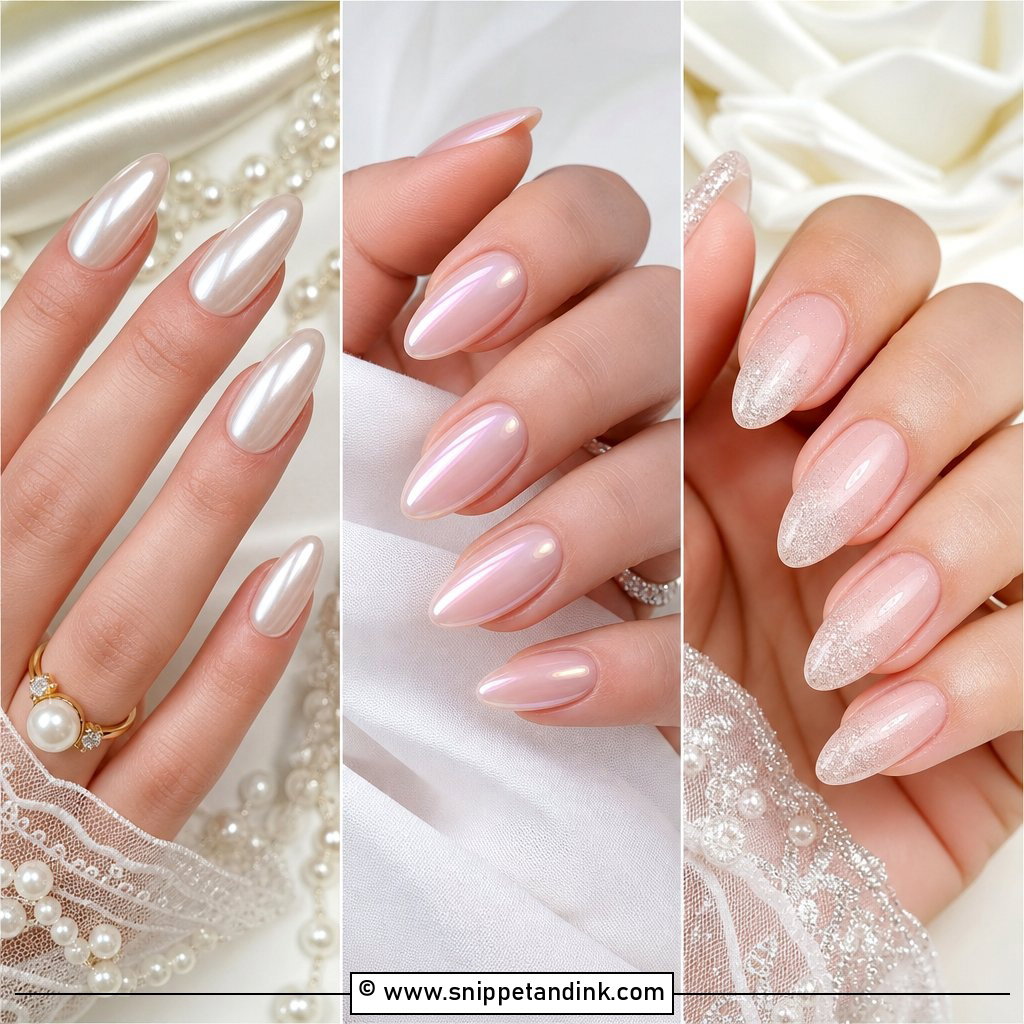
Pearl chrome is powder rubbed onto a cured top coat, then sealed again. On milky white it looks like the inside of an oyster shell; on sheer nude it’s quieter. Because chrome magnifies every ridge, I spend longer filing and leveling the base than on the chrome itself. Keep the shape simple. The finish is the detail, and adding art on top of it usually makes it look busy.
4. Soft Pink Bride Nails
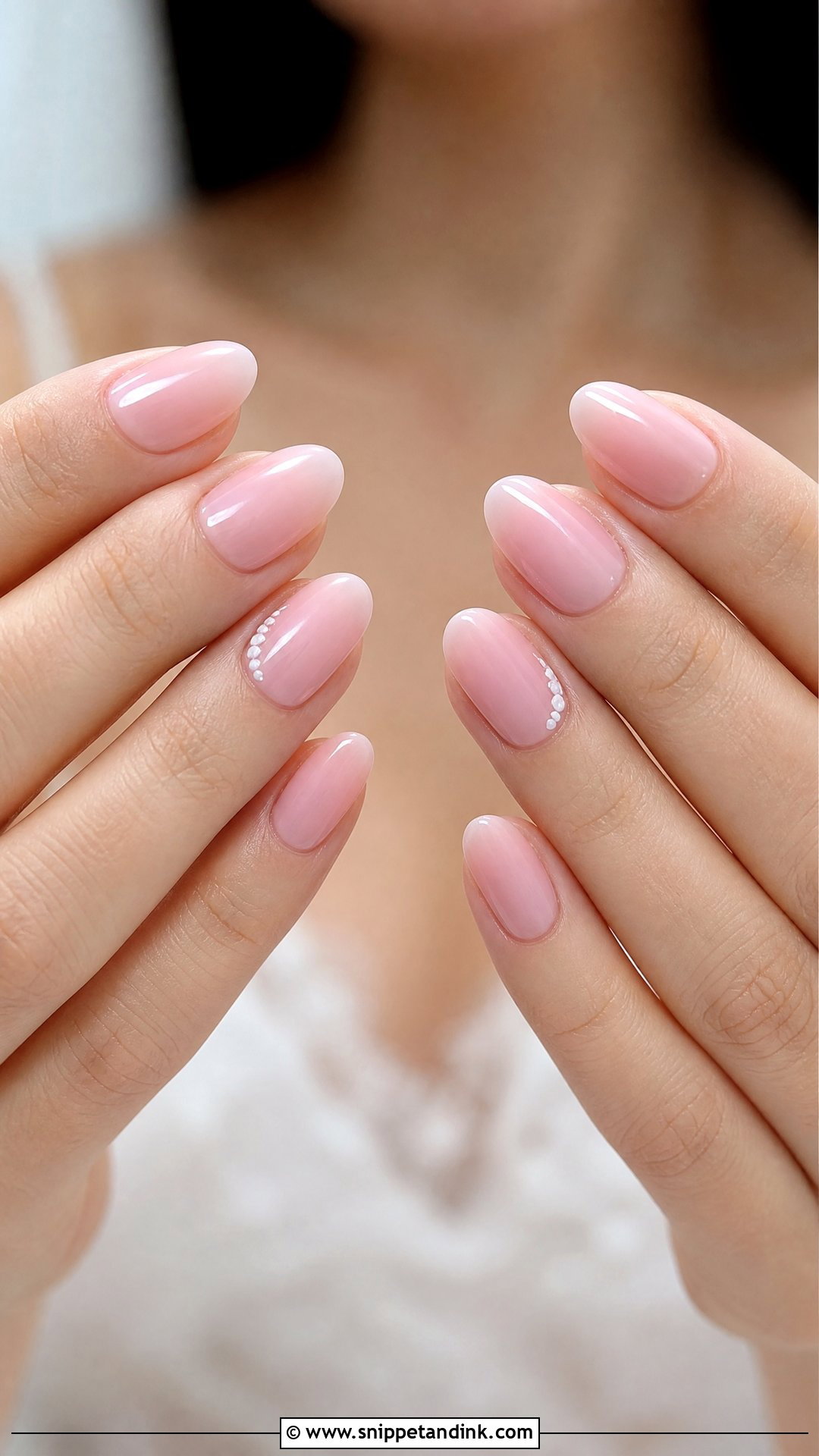
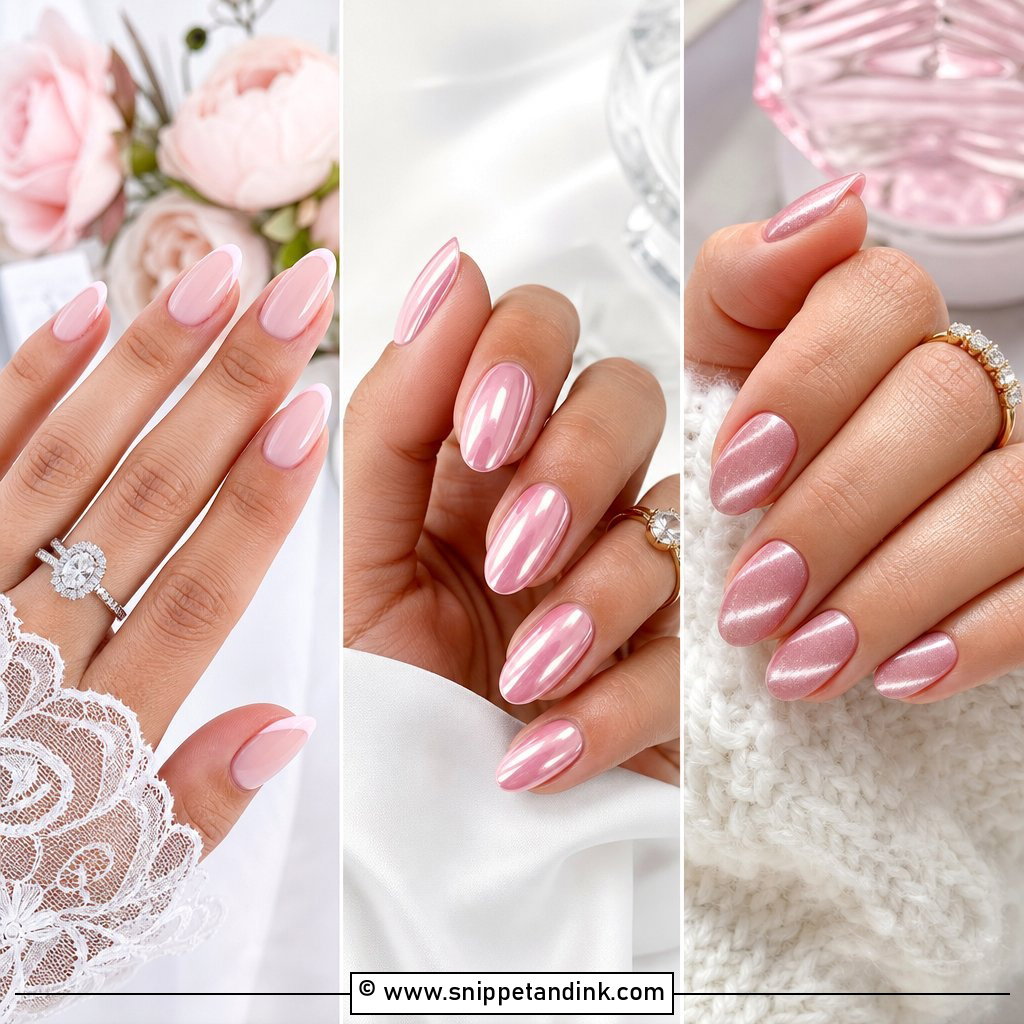
Soft pink is the set I’d give someone who never wears nail art. A sheer pink gives a barely-there wash; a creamy baby pink covers more, including white spots or staining from old polish. Very pale pinks can look chalky on deeper skin, so I’ll swatch a couple of options side by side. A rounded almond or oval shape and a high-gloss top finish it.
5. Nude Bride Nails
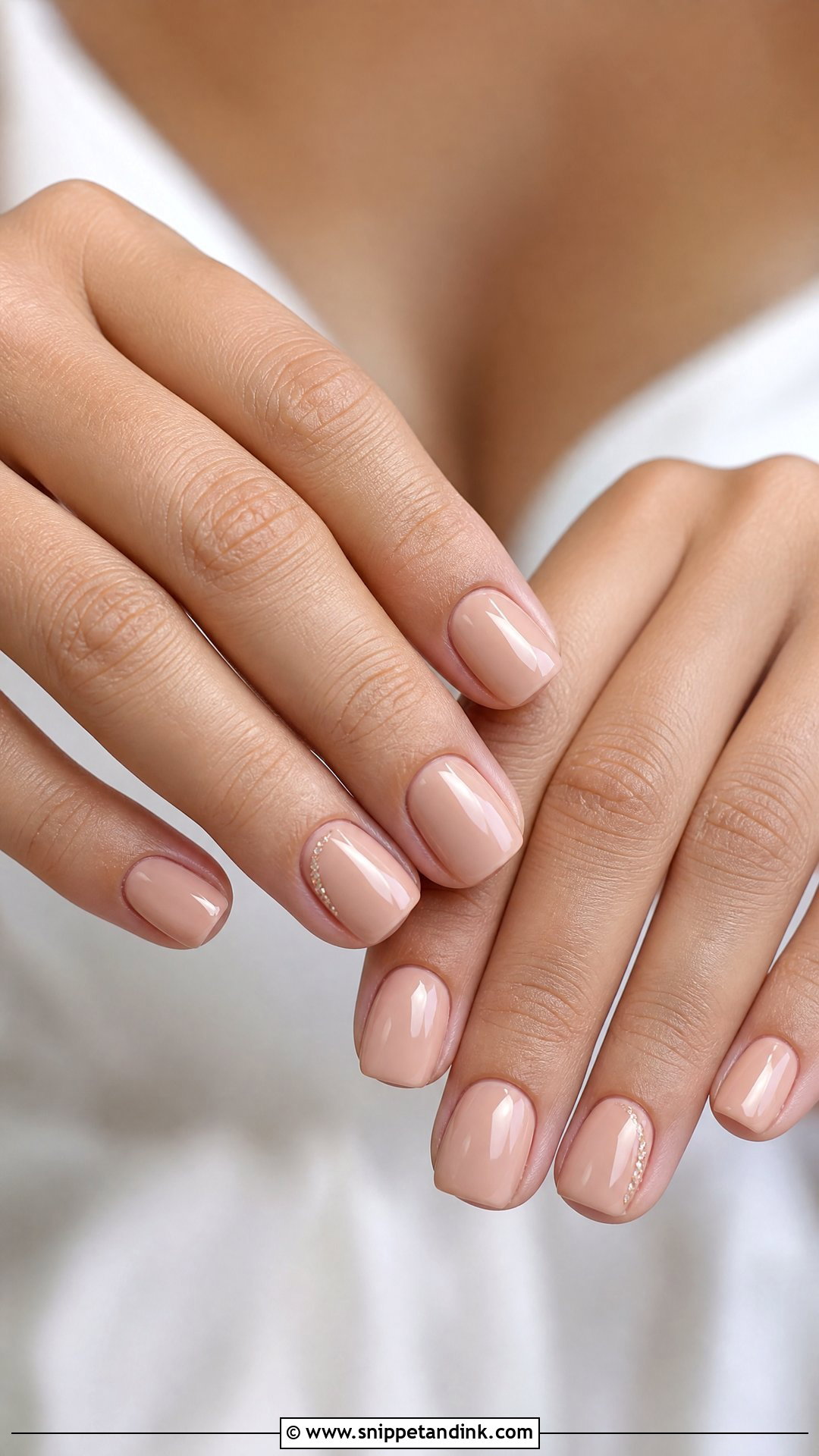
The nude has to suit your hands, not your face. Fingers are often warmer or redder than the face, and a nude chosen from a lipstick can look grey on them. I swatch against your knuckles: pink-beige often suits fair skin, peachy nudes suit medium, and caramel, mocha or warm tan suits deeper skin. A nude set is the one I’d pick for a dress full of beading or lace, because nothing competes.
6. Micro French Bride Nails
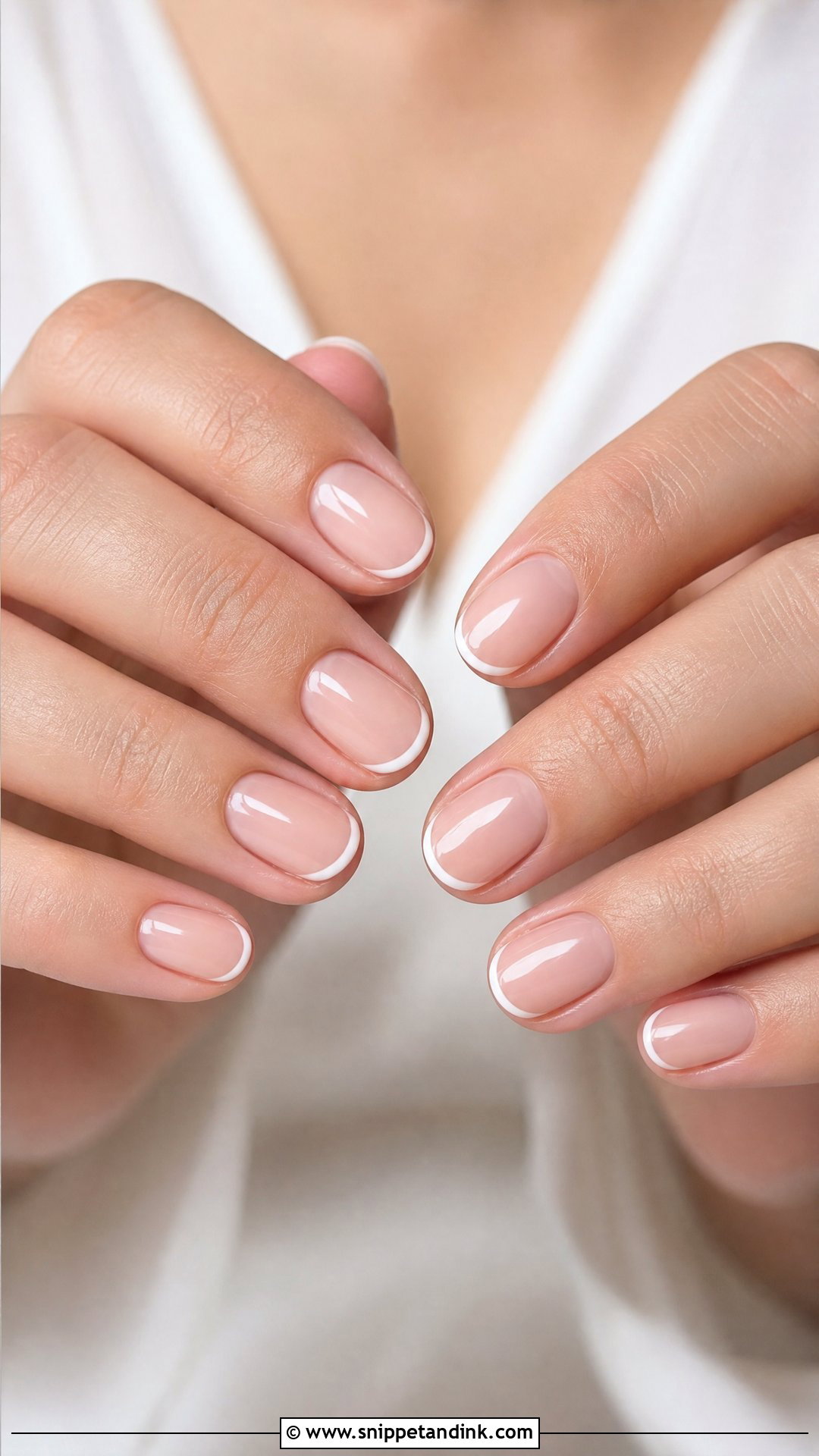
A micro French uses a line so thin it barely reads as a tip, and that’s why it suits short nails. A thick tip on a short nail makes the nail bed look shorter; a thin one doesn’t. I use a long striper brush and pull the line in one stroke from side to side. Ivory or cream instead of pure white can look softer against a warm-toned dress.
7. Glazed Donut Bride Nails
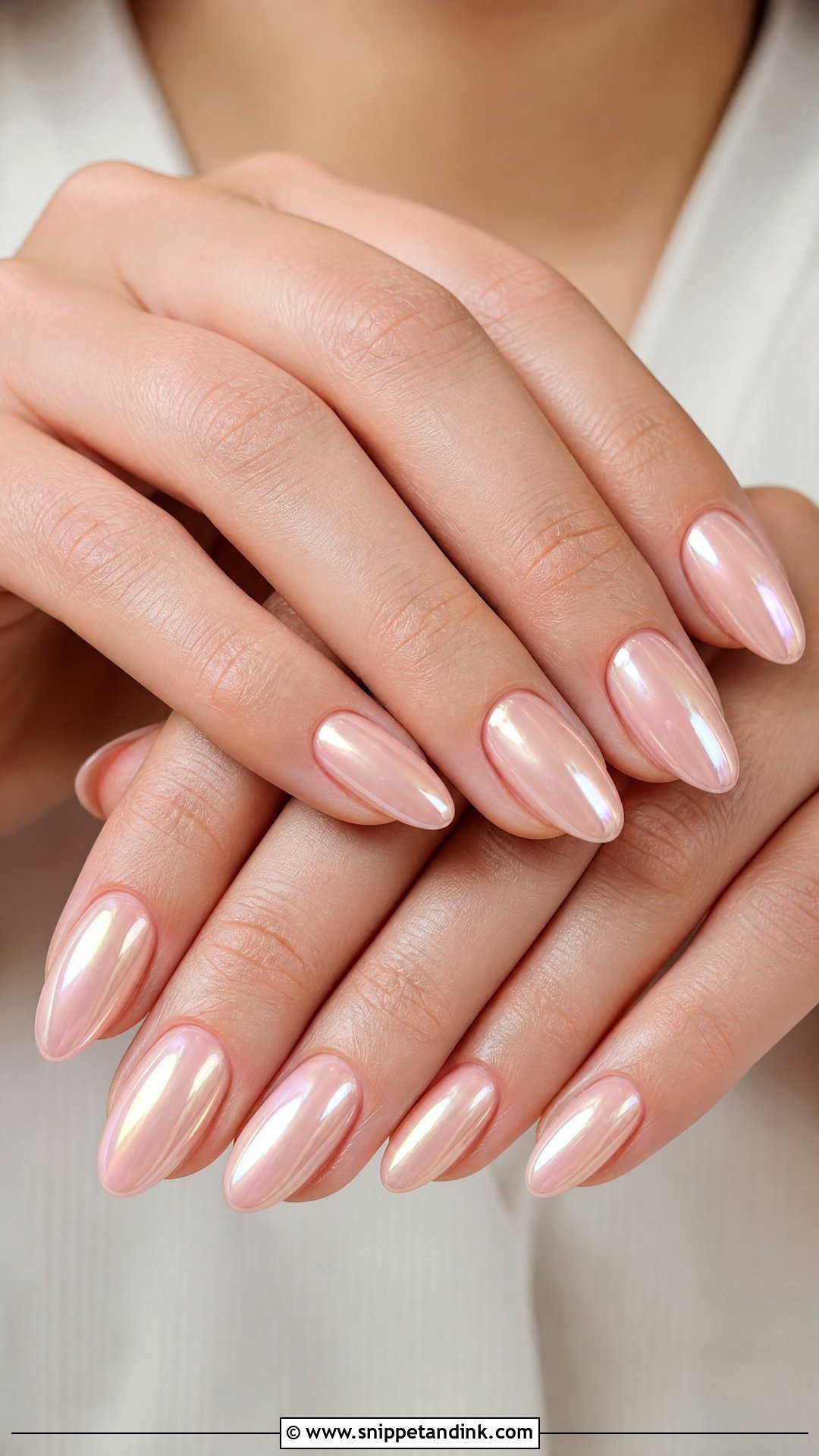
Glazed donut bride nails are a sheer base under a very fine iridescent chrome. The trick is using a tiny amount of powder, buffed in thinly, so the finish stays wet-looking rather than frosted. Outdoors it shifts softly in daylight; indoors it gives a gentle glow. I’d skip any art on top. Almond and oval shapes suit it best.
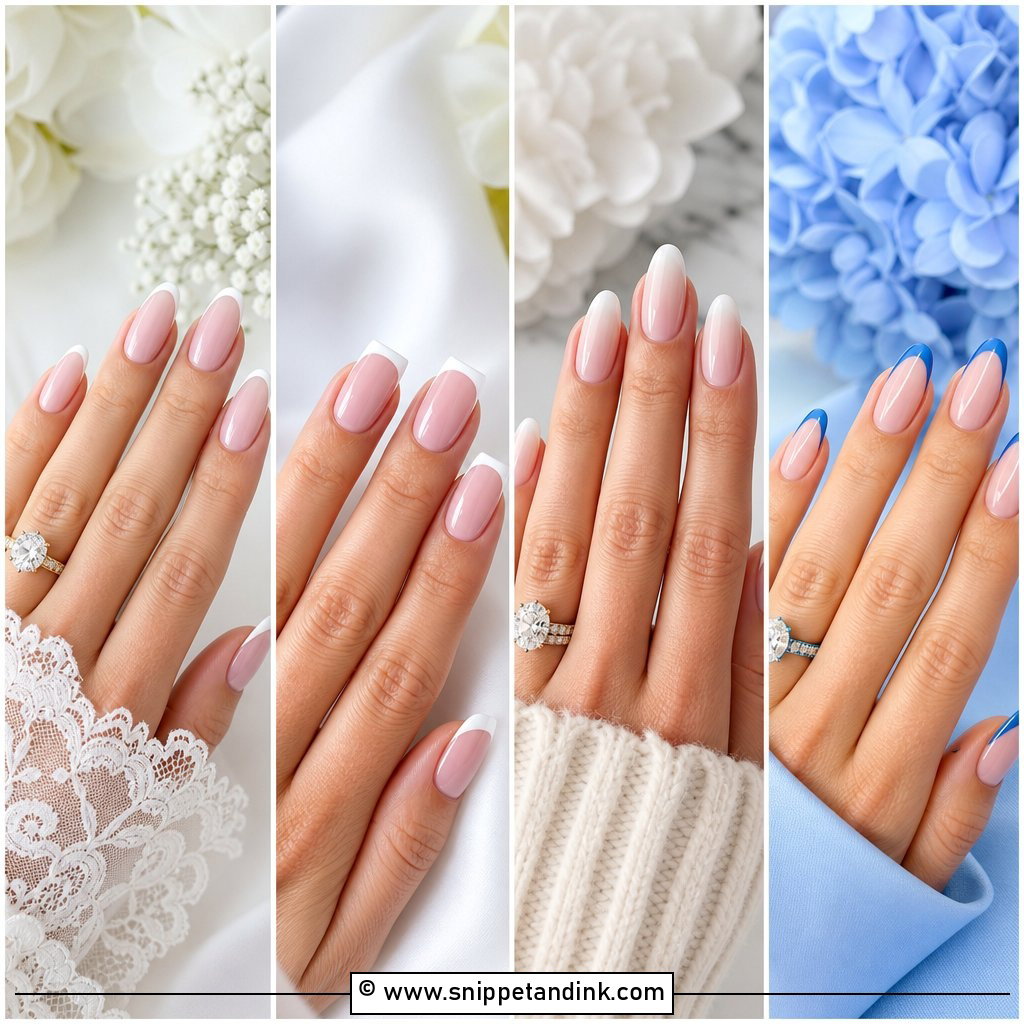
8. White Ombre Bride Nails
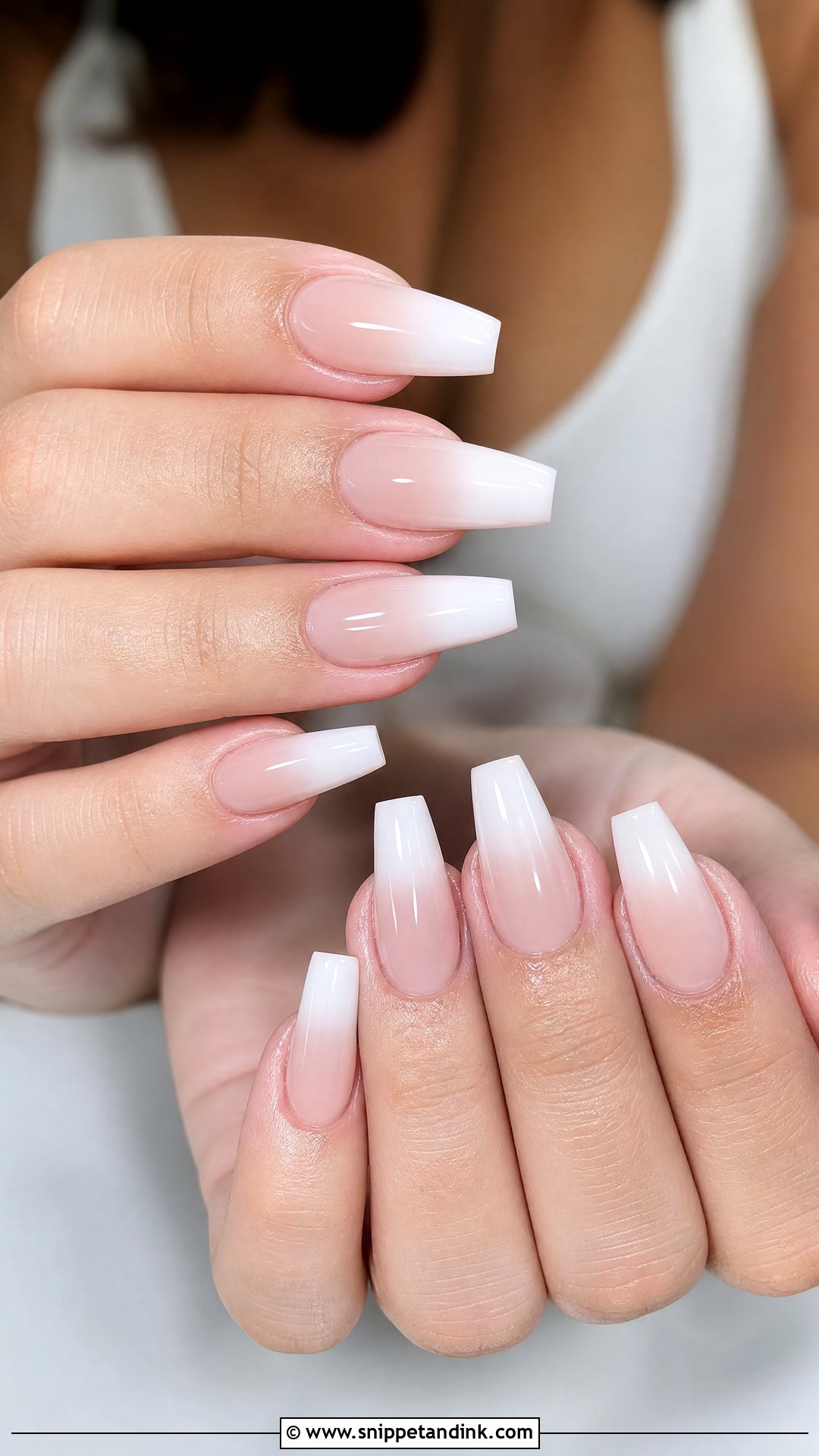
This fade, also called baby boomer nails, blends a nude or pink base into a white tip with no visible line. I build it gradually in gel with a sponge or blending brush, which takes longer than a regular French. It needs a little length for the gradient to show, so very short nails are better off with a micro French. Because there’s no hard line at the cuticle, it grows out gracefully.
9. Lace Bride Nails
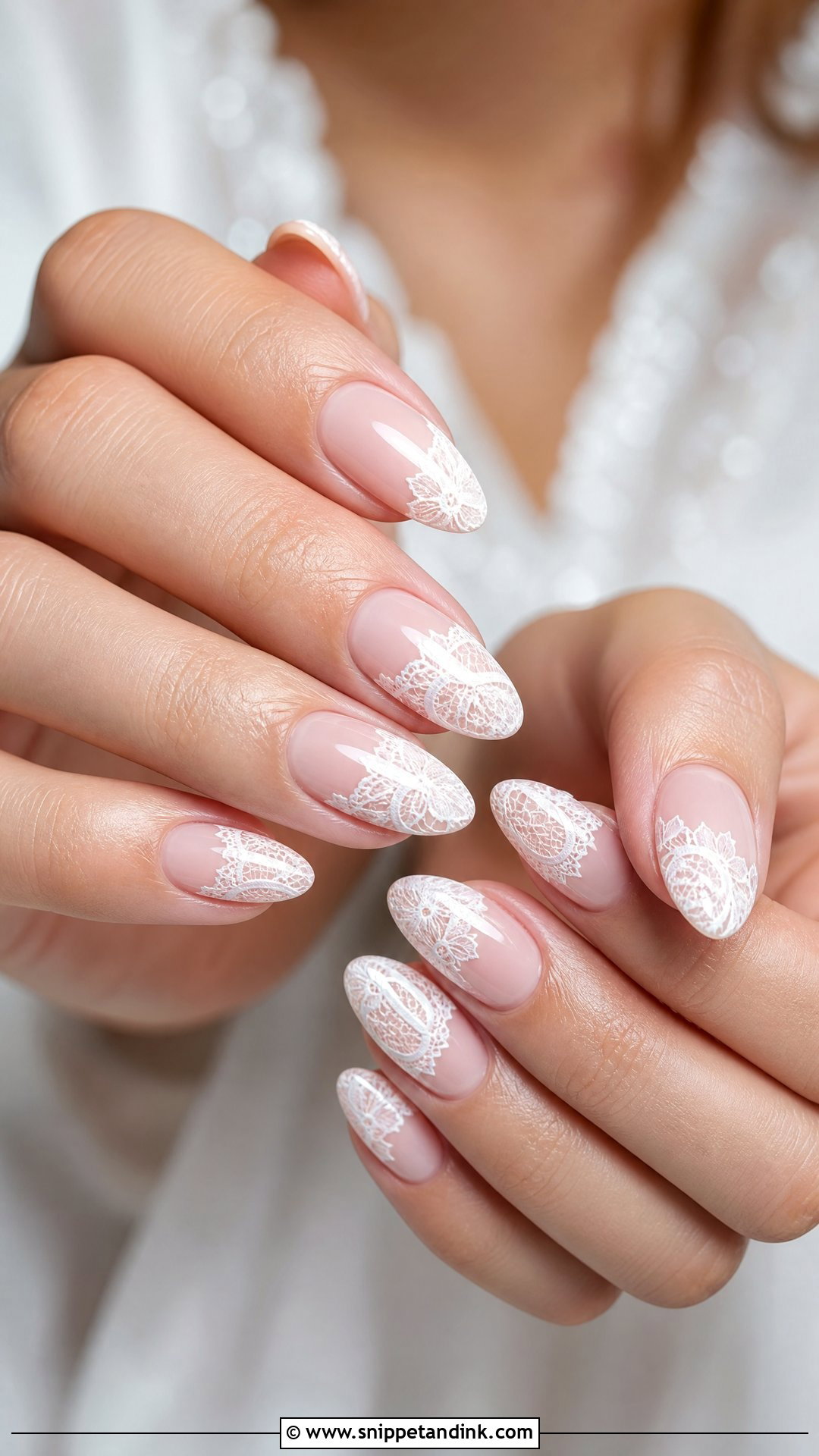
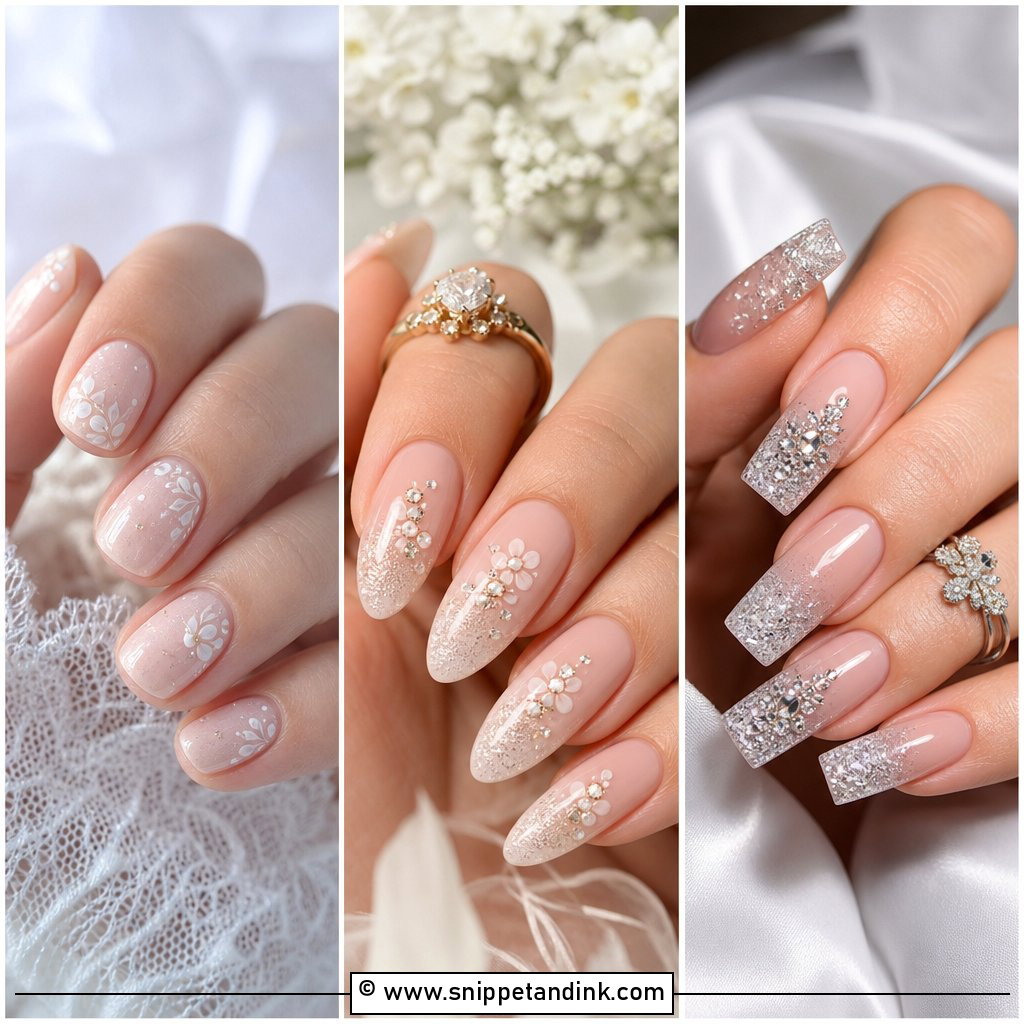
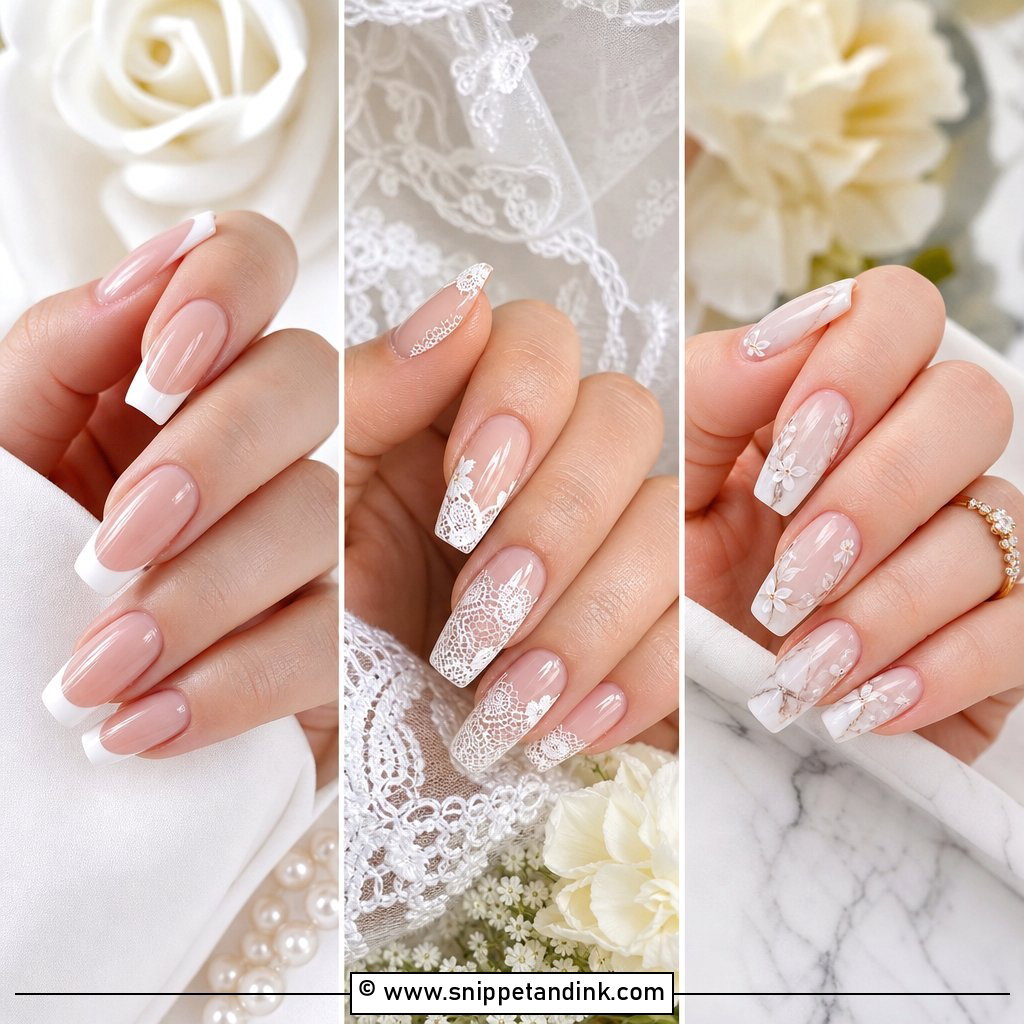
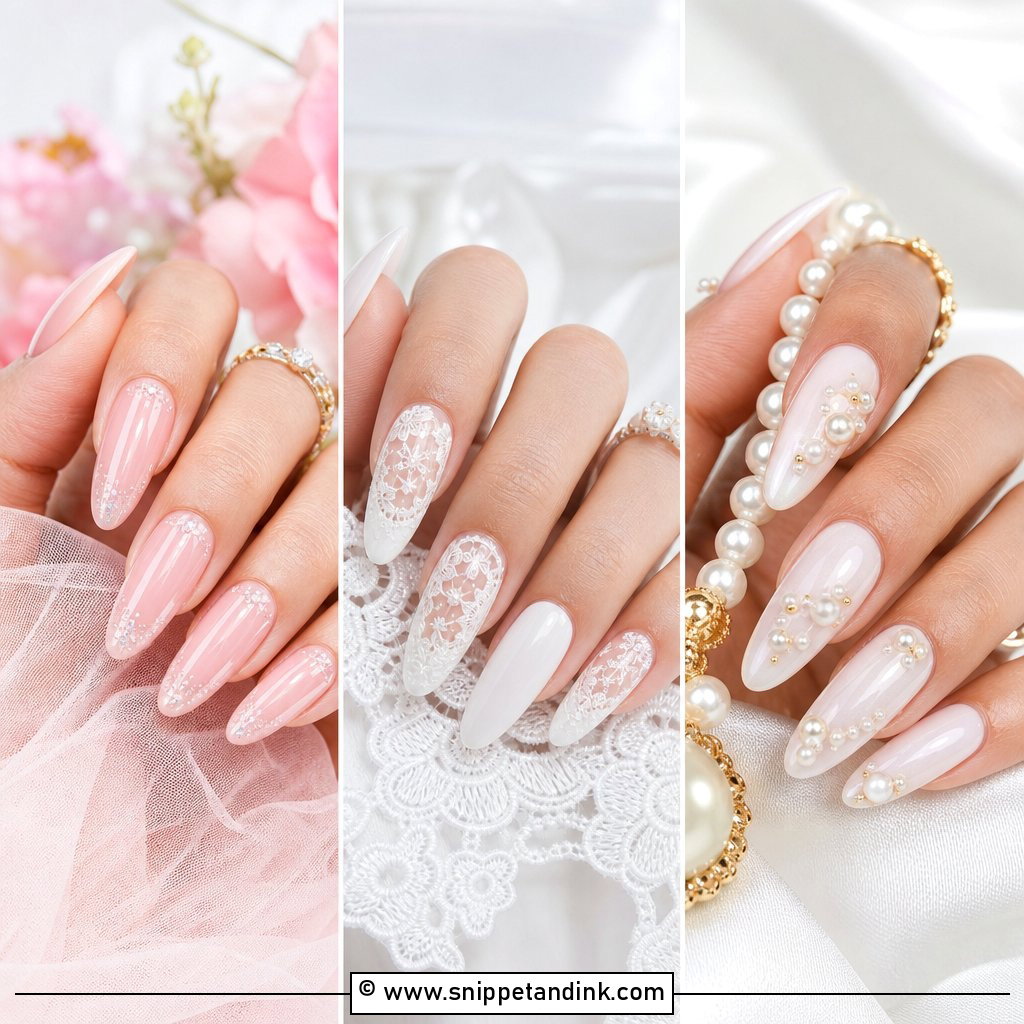
If your dress has lace sleeves or a lace back, lace nails tie the hands to it. I paint the pattern freehand with a fine liner brush, using plenty of negative space so it reads as lace rather than scribbles. A full set of lace can look busy in photos, so I often put it on two nails per hand. Bring a close-up photo of your dress lace and I’ll match the motif.
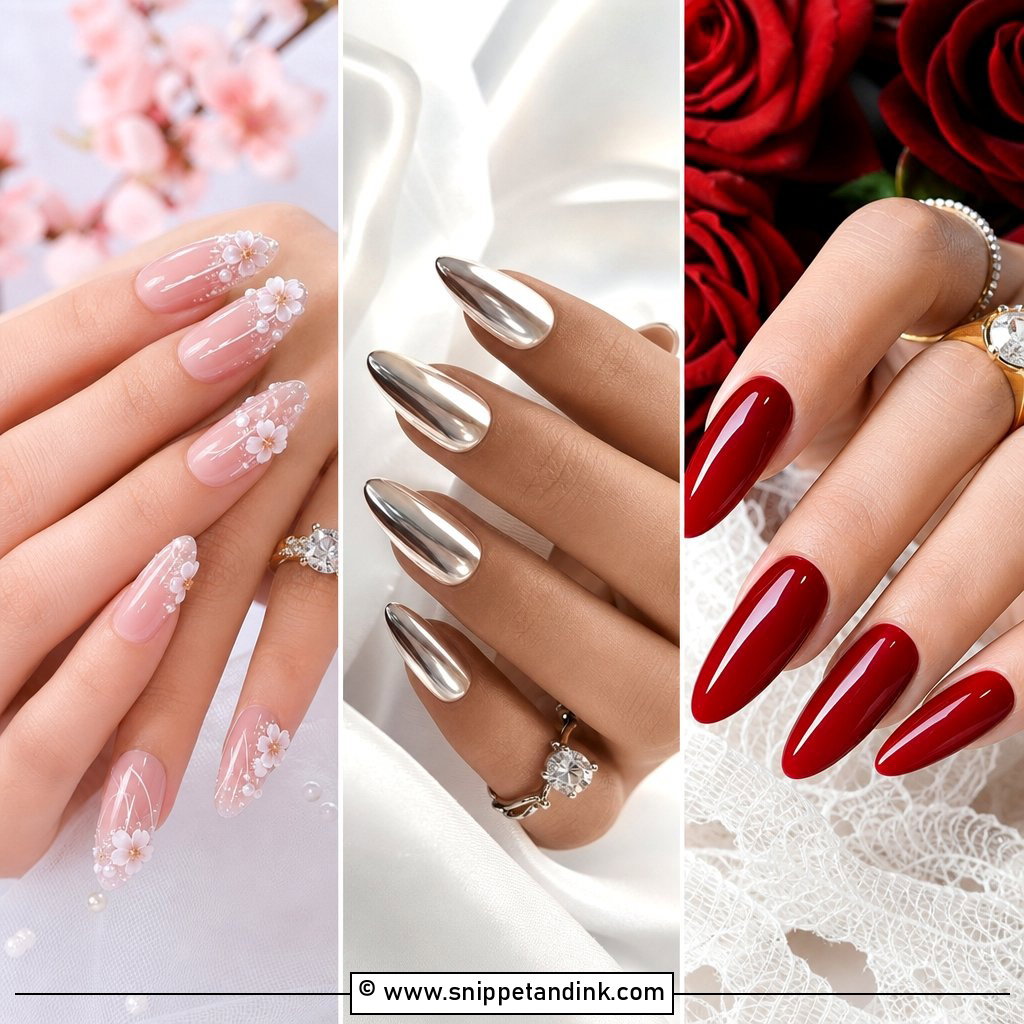
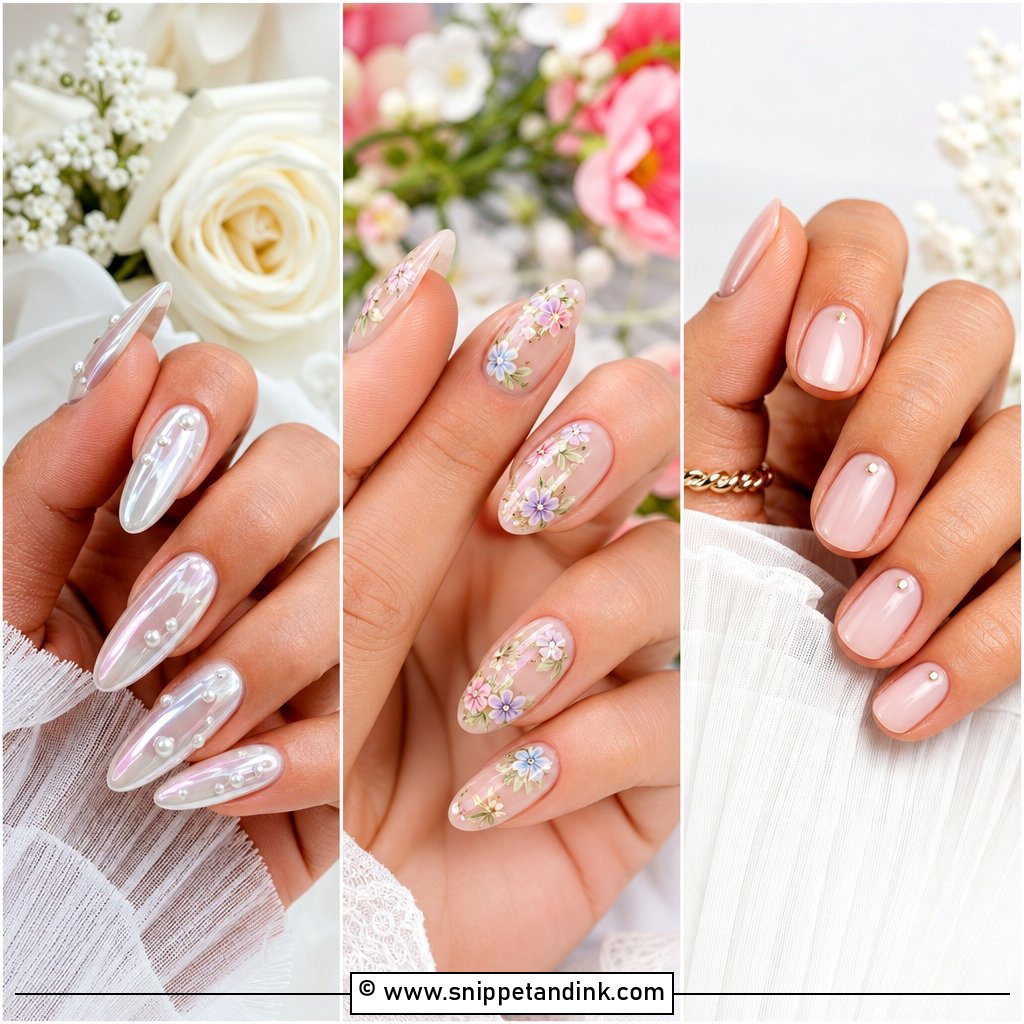
10. Floral Bride Nails
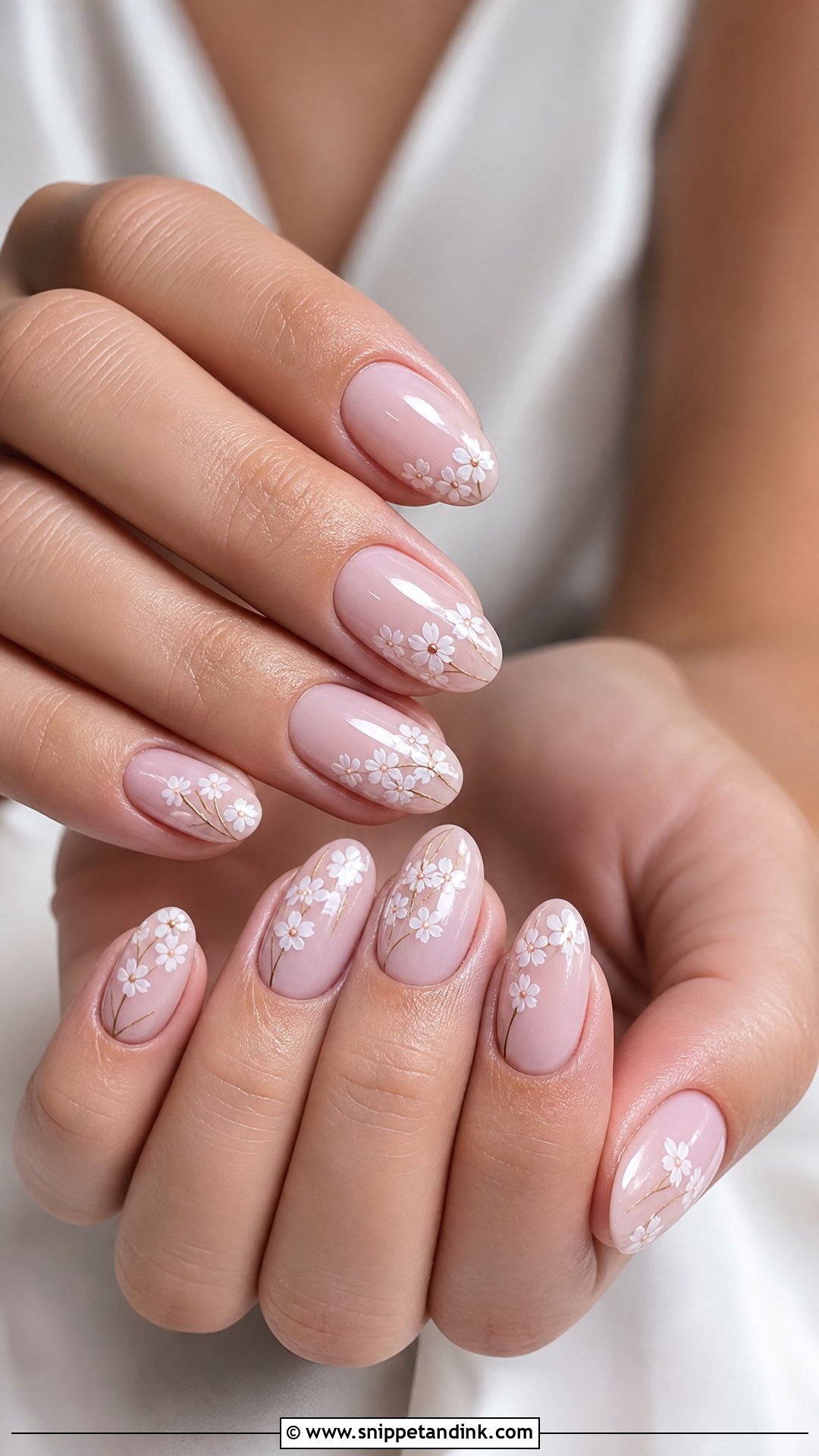
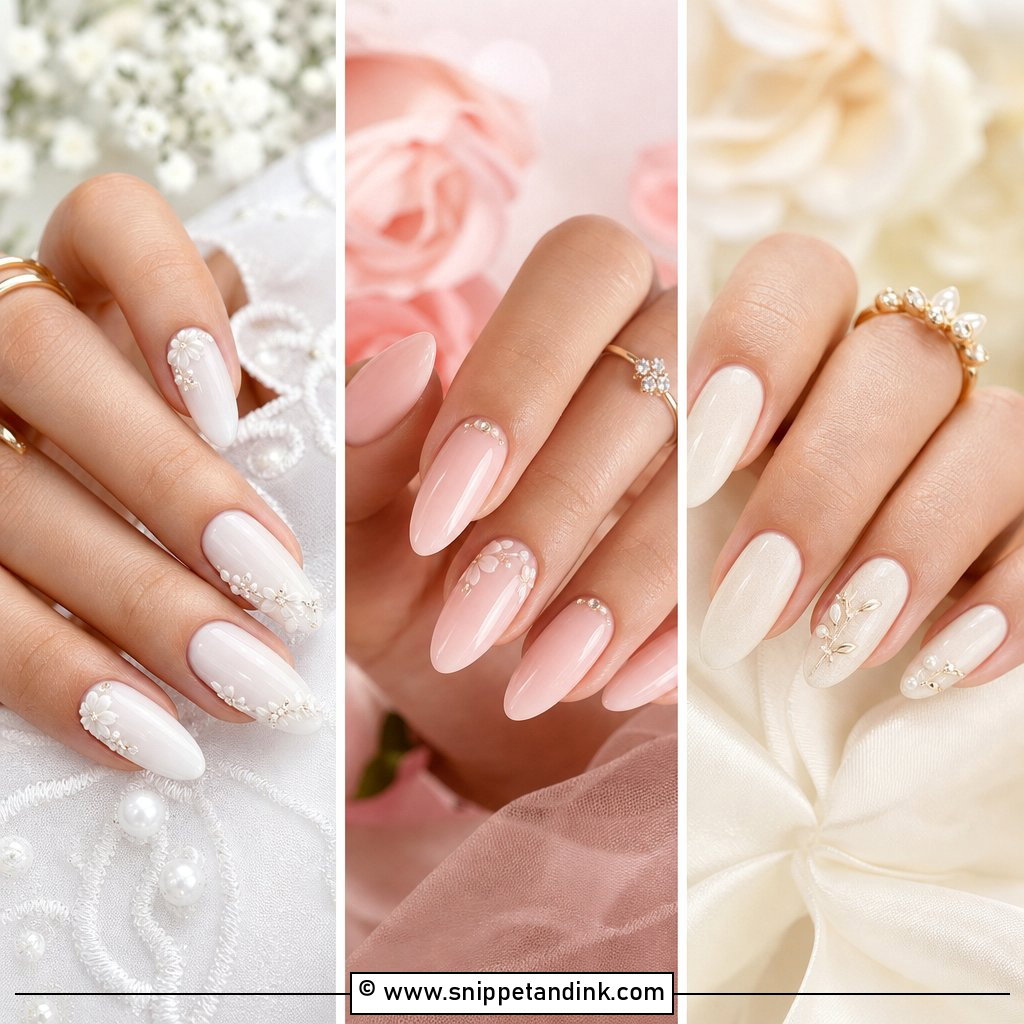
Floral nails look best when the flowers are small and the color is soft. Tiny white flowers on sheer pink or nude look delicate; large, bright flowers look like a party set. I paint petals with a dotting tool and fine brush, then seal them in top coat so they’re smooth. Scatter them across a few nails rather than every one. A high-gloss finish keeps the art clean in close-ups.
11. Pearl Accent Bride Nails
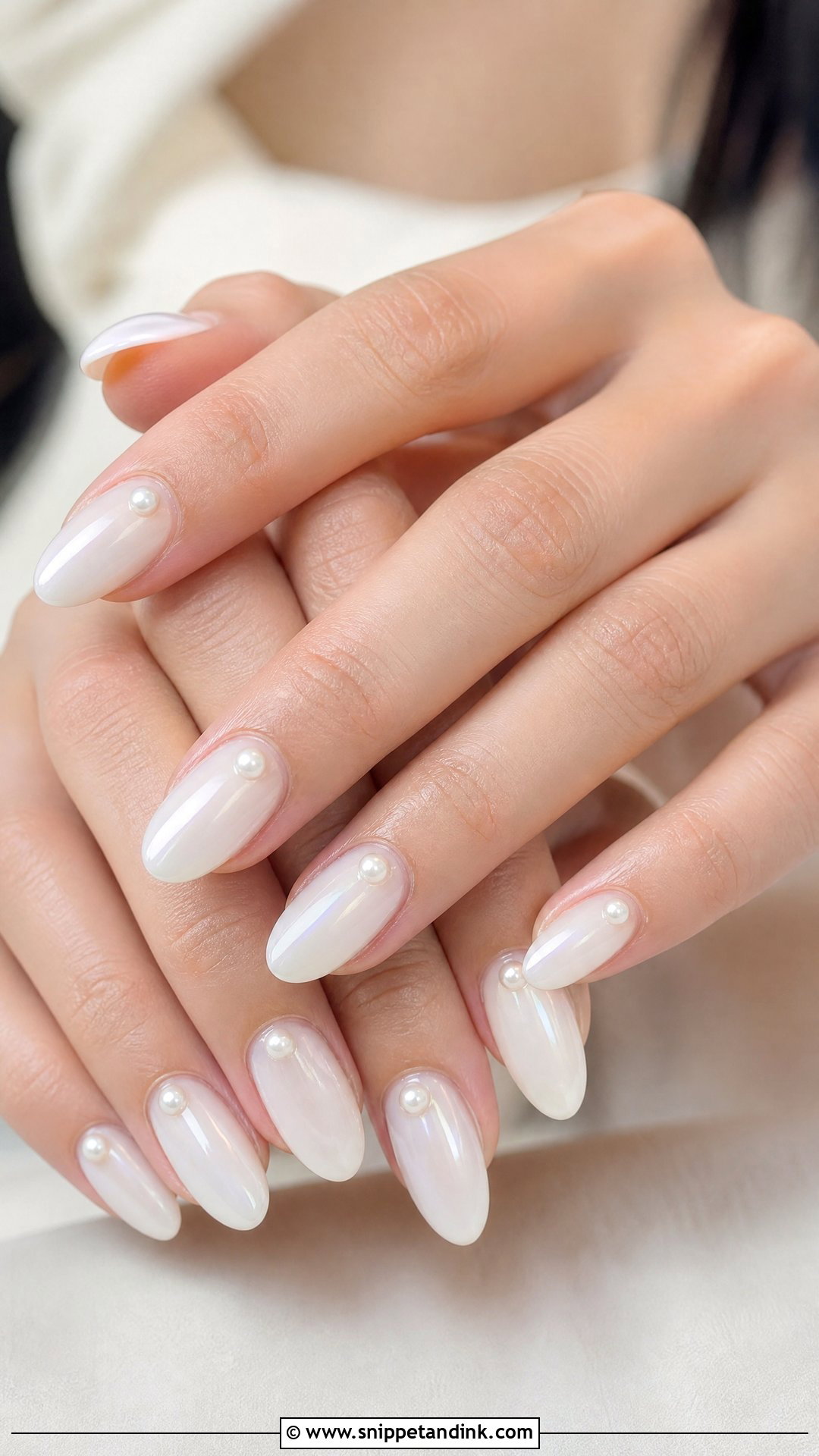
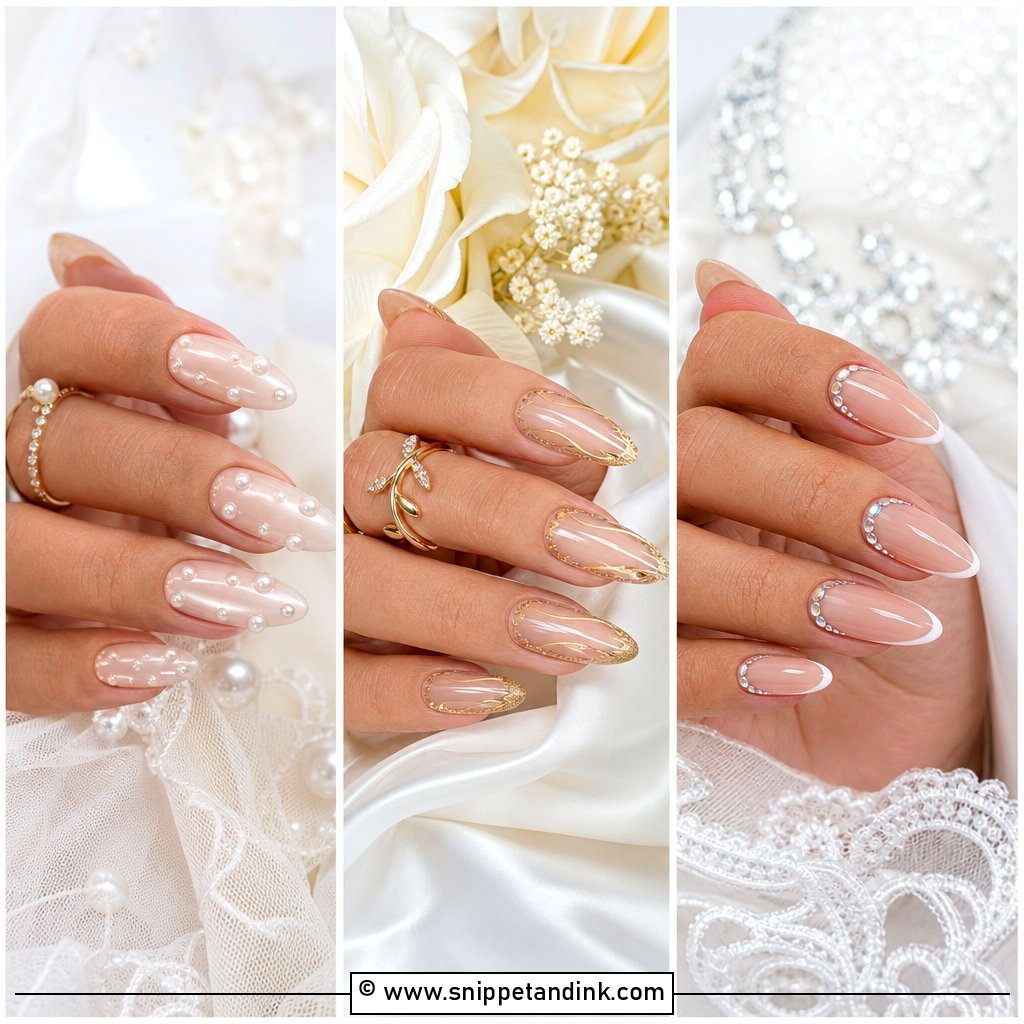
Pearl accent bride nails need the pearls embedded into gel, not glued on top, or they’ll come off before the speeches. I place a few near the cuticle or along the tip and cap them with top coat. Flat-backed pearls are more comfortable than full rounds. They suit pearl jewelry and beaded gowns, but too many large pearls catch on lace and hair.
12. Short Bride Nails
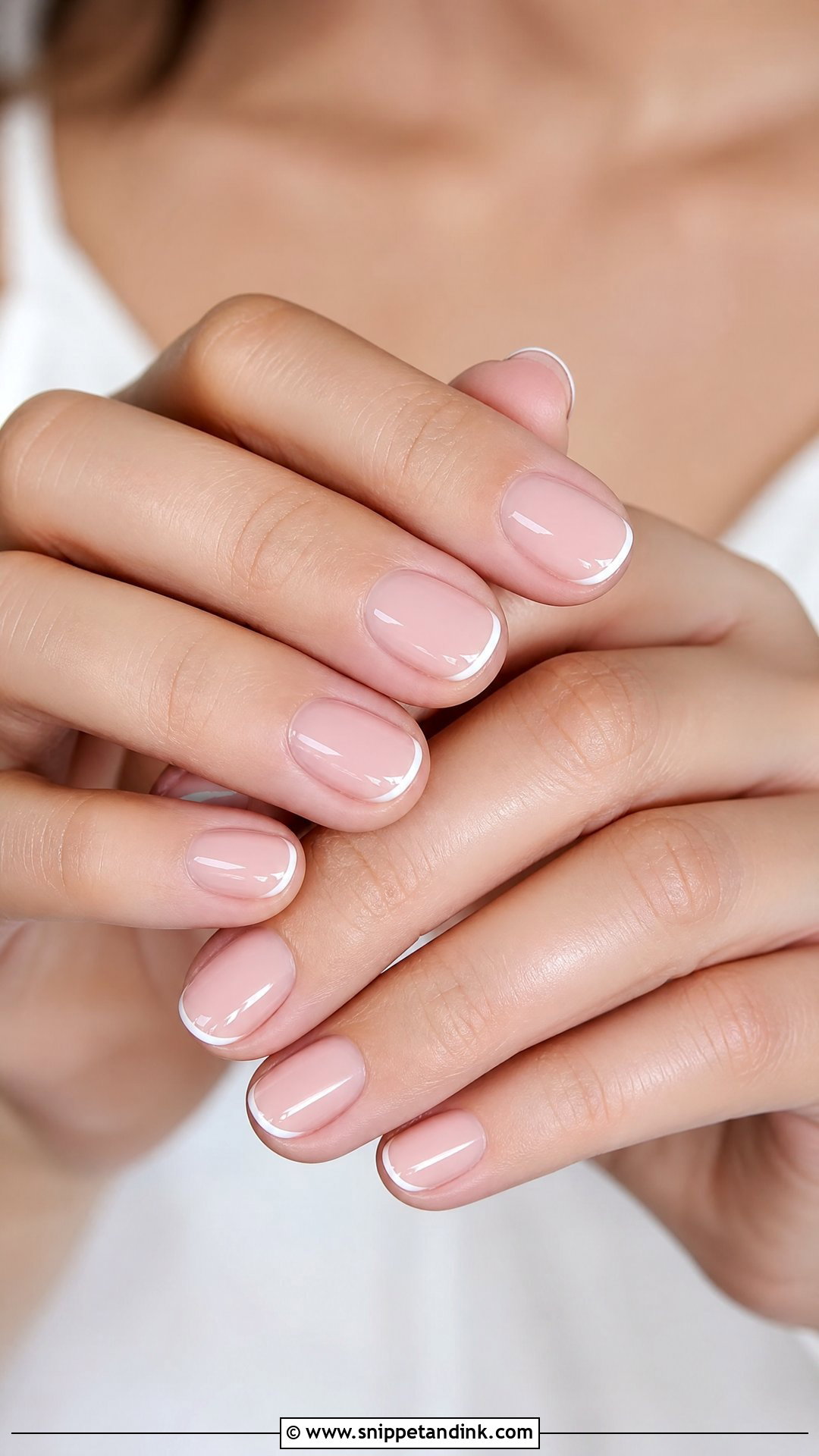
Short nails are often the more practical bridal choice. They don’t catch on fabric, they make dress zippers and earring backs easy, and they suit brides who type or work with their hands. Soft square, round and short oval shapes are easiest. Neat cuticles matter more on short nails, because there’s less nail to look at. Milky white or micro French look polished.
13. Almond Bride Nails
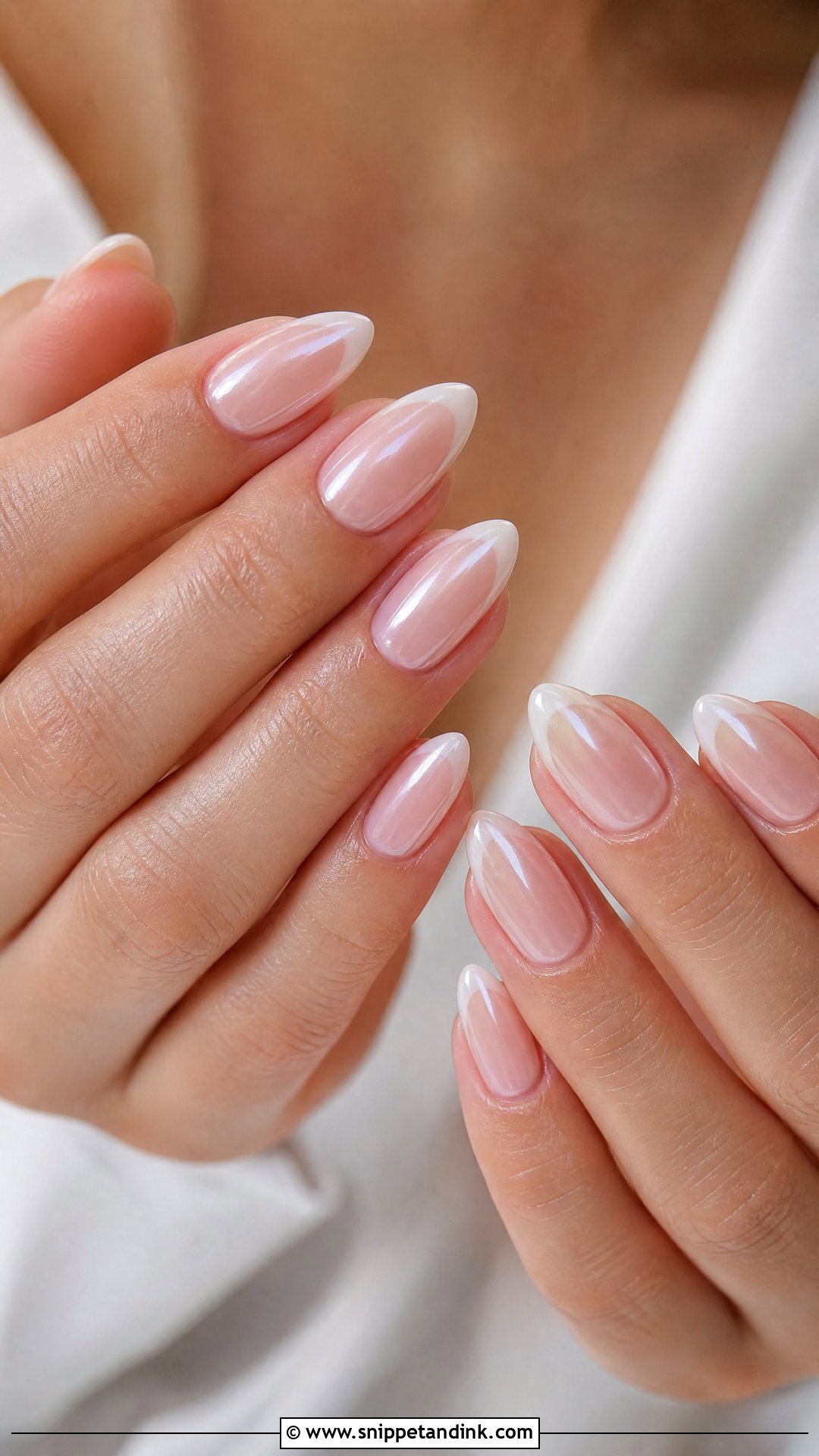
Almond is the most flattering shape for most hands. The taper lengthens the fingers without looking sharp. Medium length is easiest to manage on the day, especially for fastening jewelry and holding a bouquet stem. If your natural nails are short, a soft gel extension can build the shape. Almost every design here works on almond.
14. Square Bride Nails
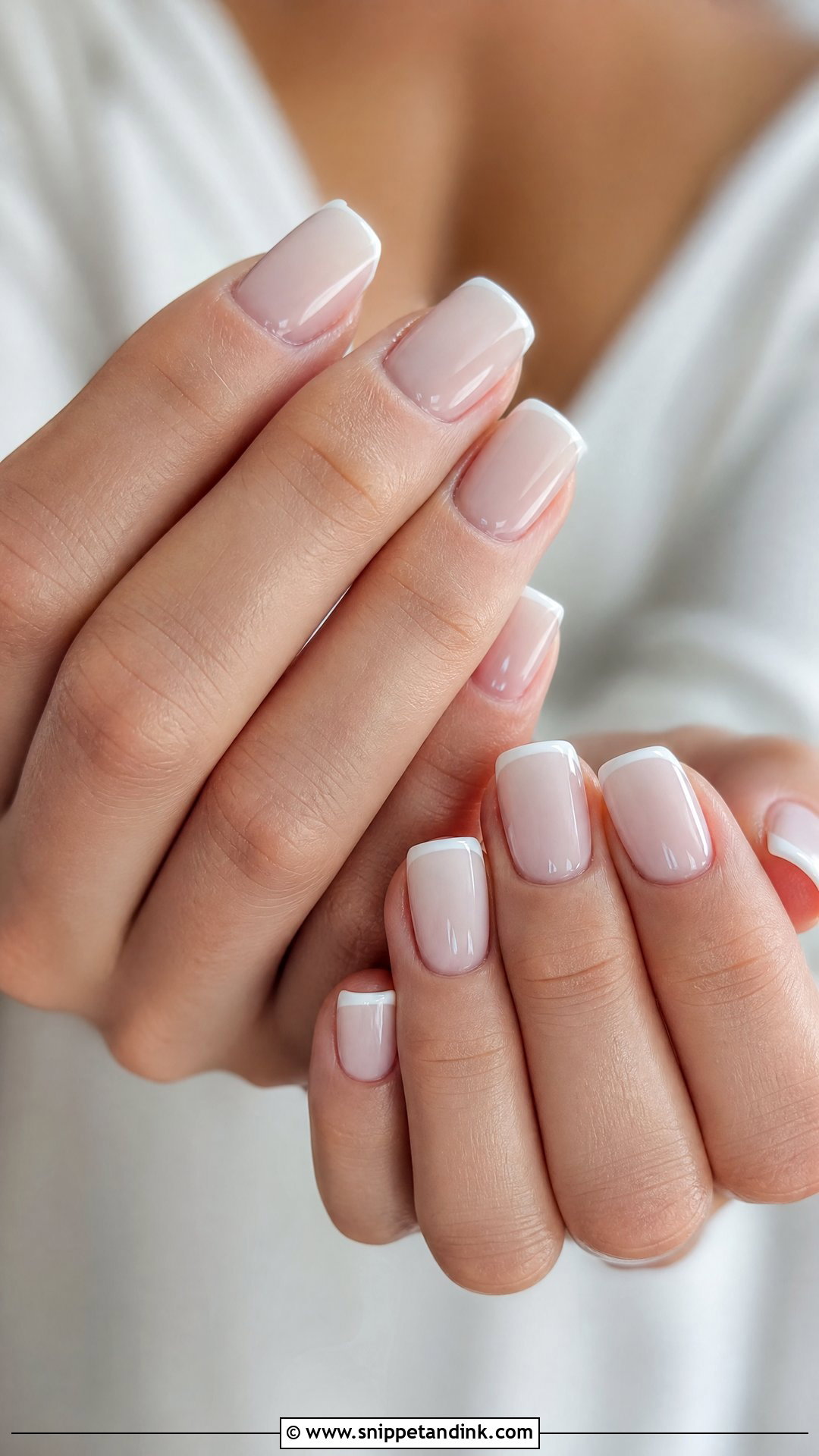
Square nails look crisp and modern, but the corners need softening. Sharp corners catch on lace and chip first, so I file a slight curve into them. Short square suits nude or milky white; medium square can carry pearls or lace art. It suits sleek gowns and minimal jewelry.
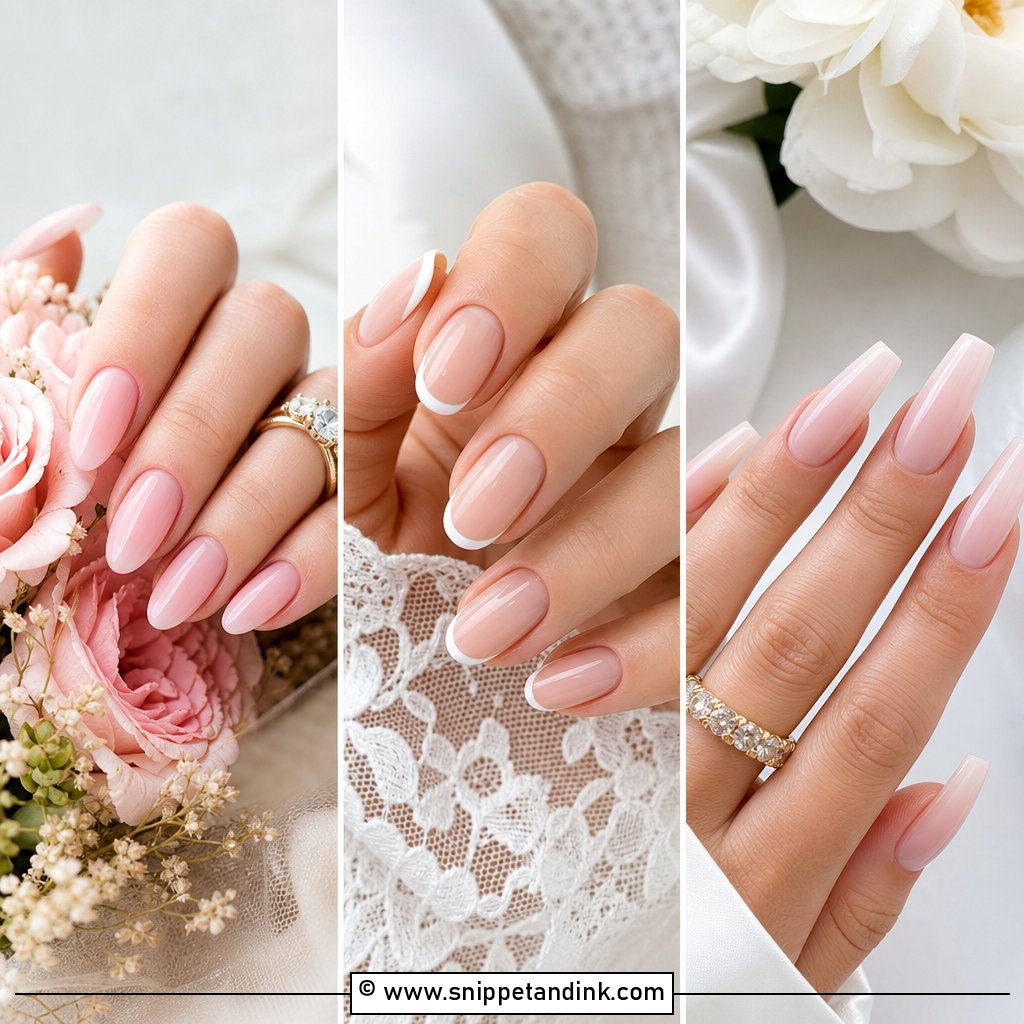
15. Coffin Bride Nails
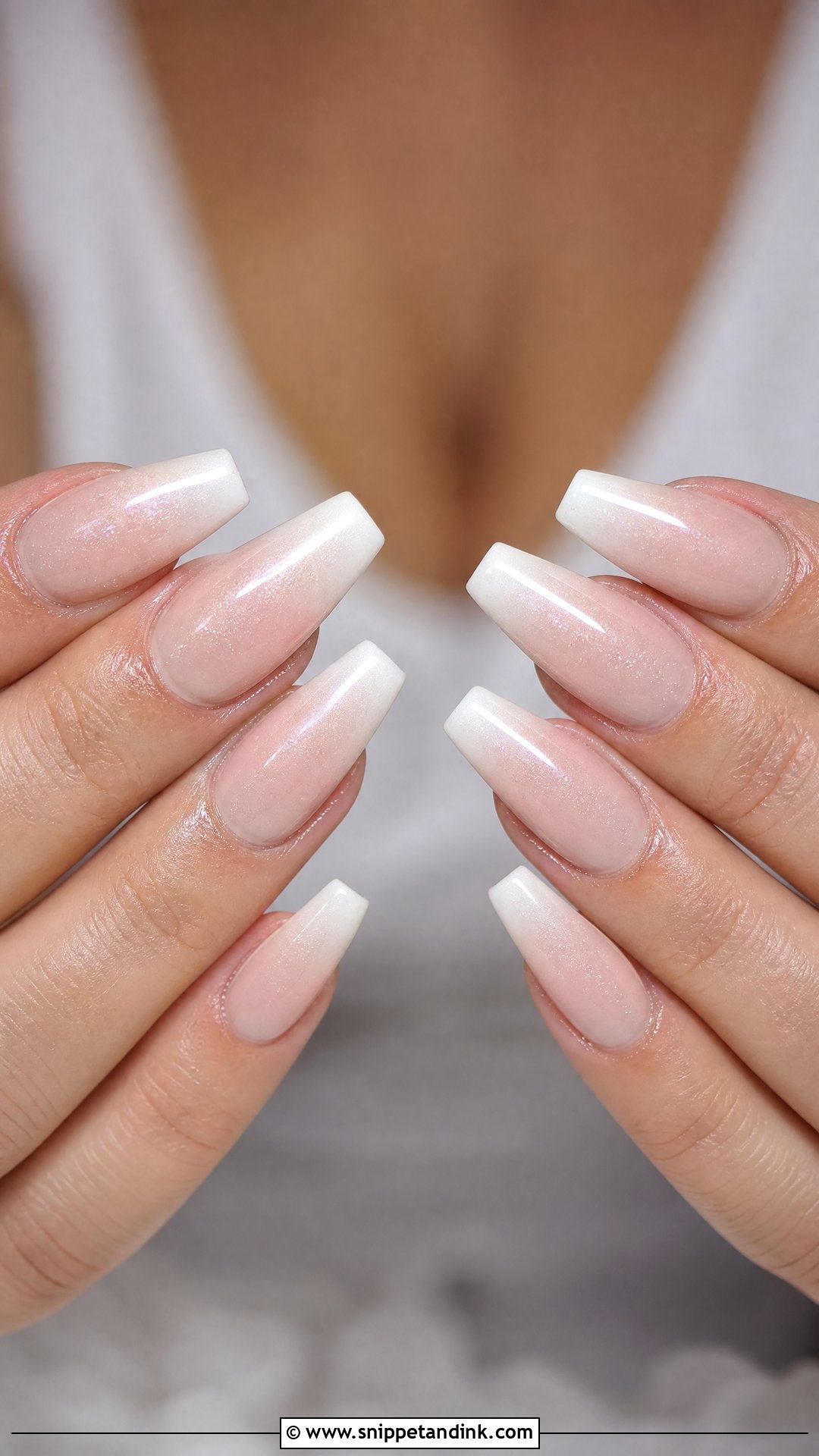
Coffin needs length, at least medium, or the shape looks stubby. It’s a glamorous shape, so I keep the color soft: milky white, blush, nude ombre or pearl chrome. If you’ve never worn long nails, wear them for a week before the wedding to get used to them. Keep the art simple so the shape stays the focus.
16. Oval Bride Nails
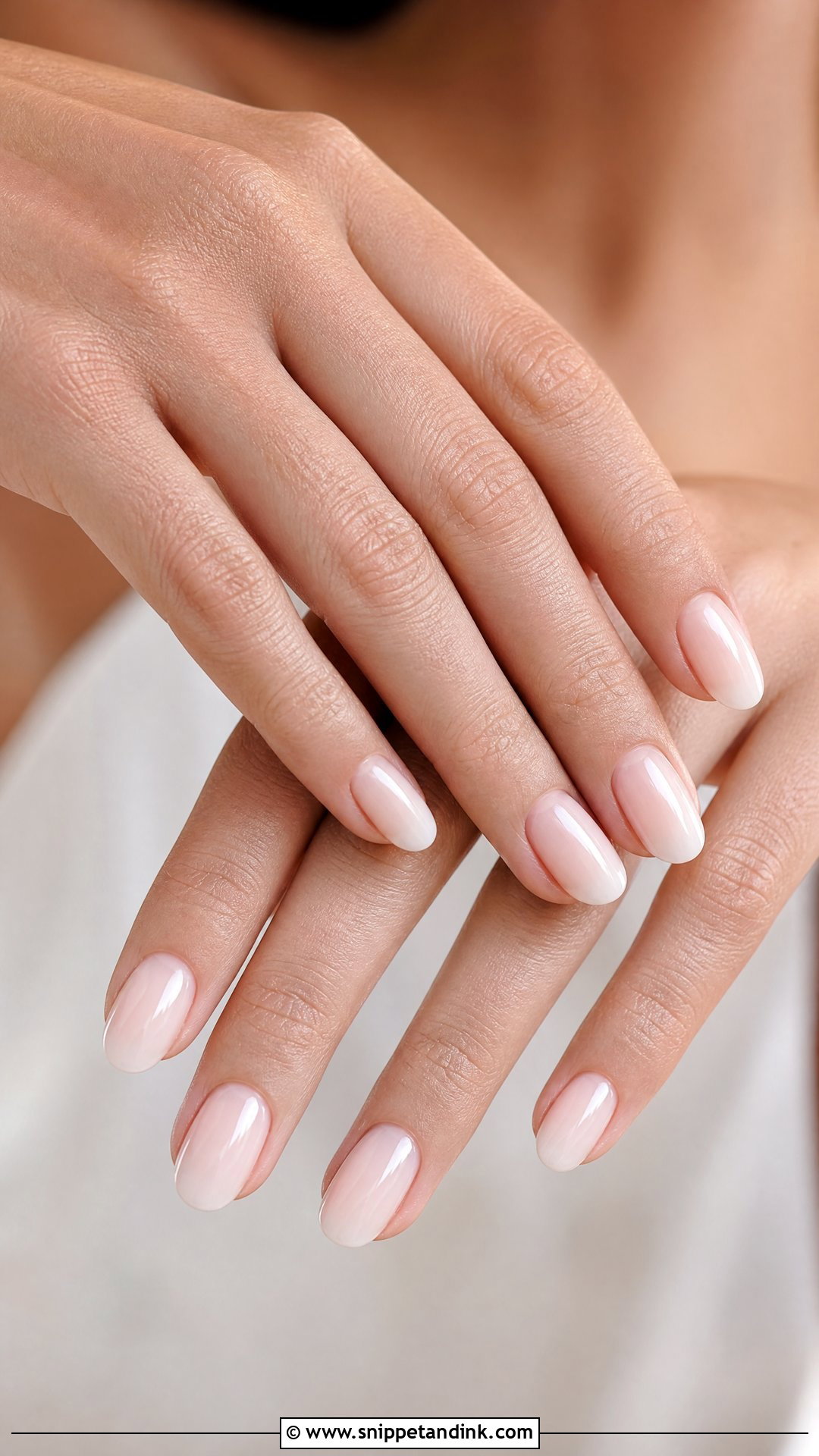
Oval follows your fingertip’s natural curve, which makes it the easiest shape to grow and the least likely to break. It suits short, medium and long nails. If you’re unsure which shape to choose, I’d start here. It works with every design in this list, from French to lace.
17. Sheer Pink French Bride Nails
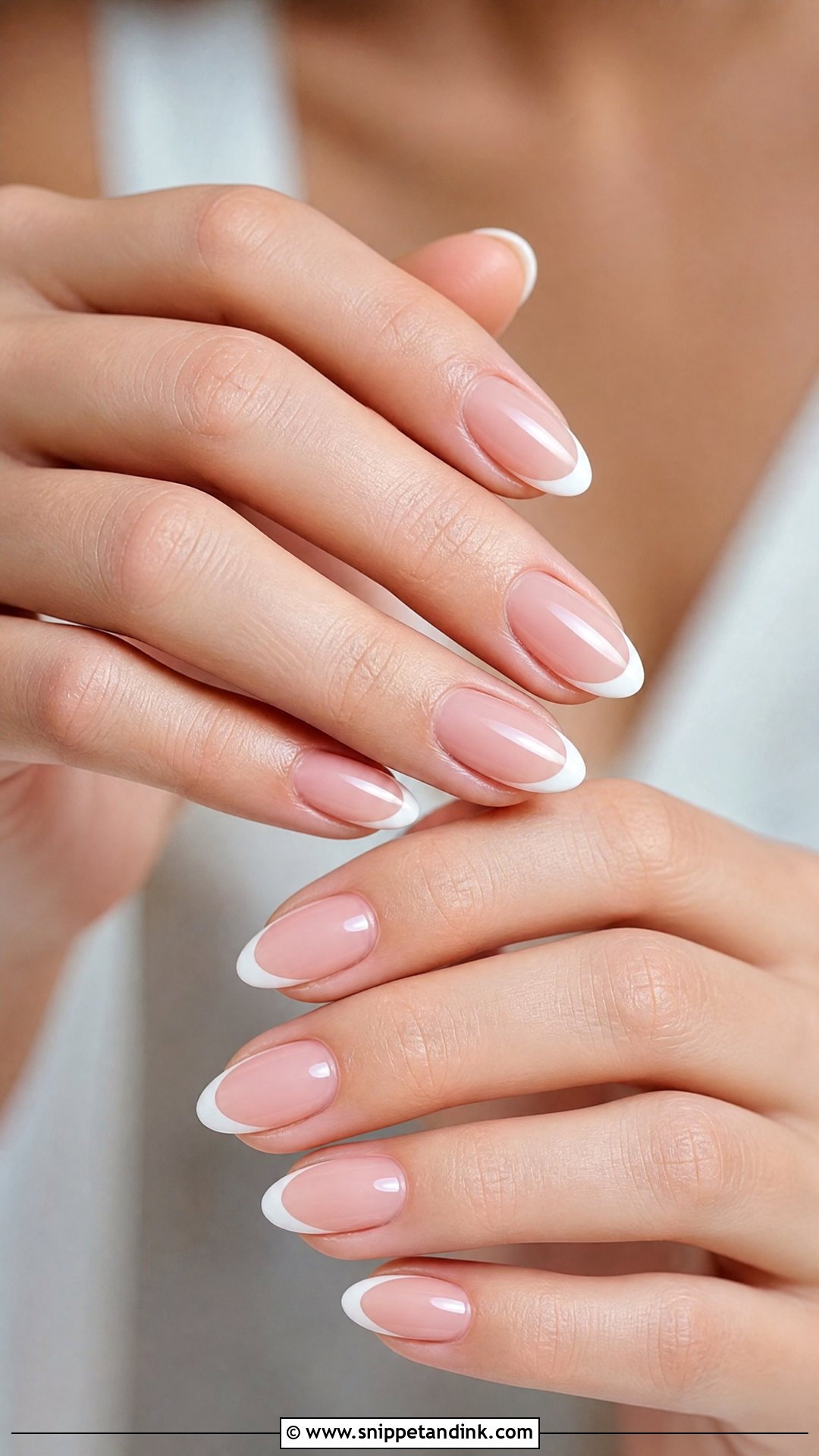
A sheer pink base under the white tips makes this French softer than a classic one. The base lets the natural nail show through, which looks healthy. A thin tip looks modern; a slightly deeper one looks more classic. It works with silver and gold jewelry equally well.
18. Ivory Bride Nails
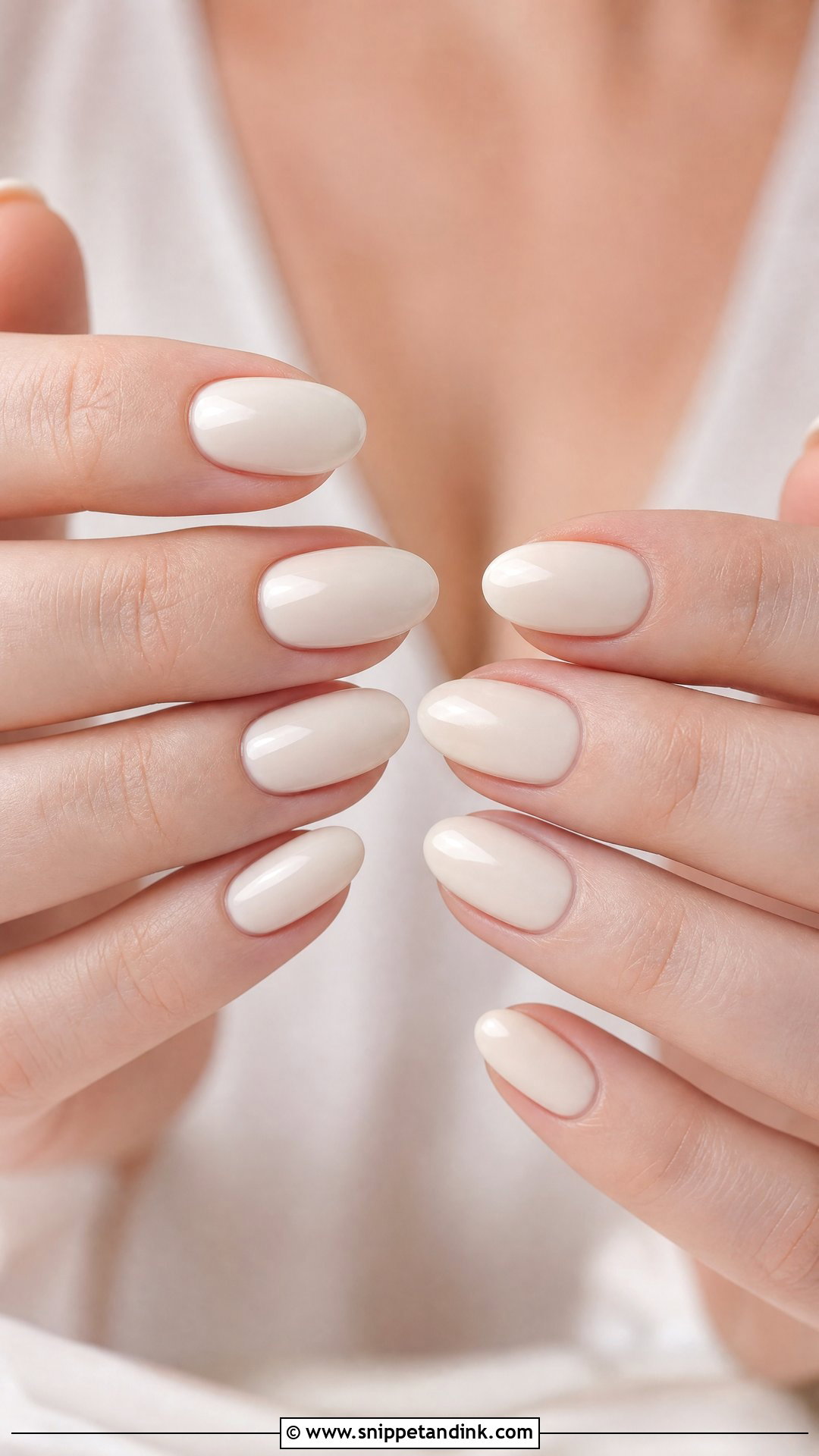
Bright white polish next to an ivory dress can make the fabric look yellowish. Ivory nails avoid that. Bring a swatch of your dress fabric to the appointment so I can compare shades under daylight. Solid ivory, a soft French or a milky ivory all work. A thin pearl chrome over ivory adds glow.
19. Blush Chrome Bride Nails
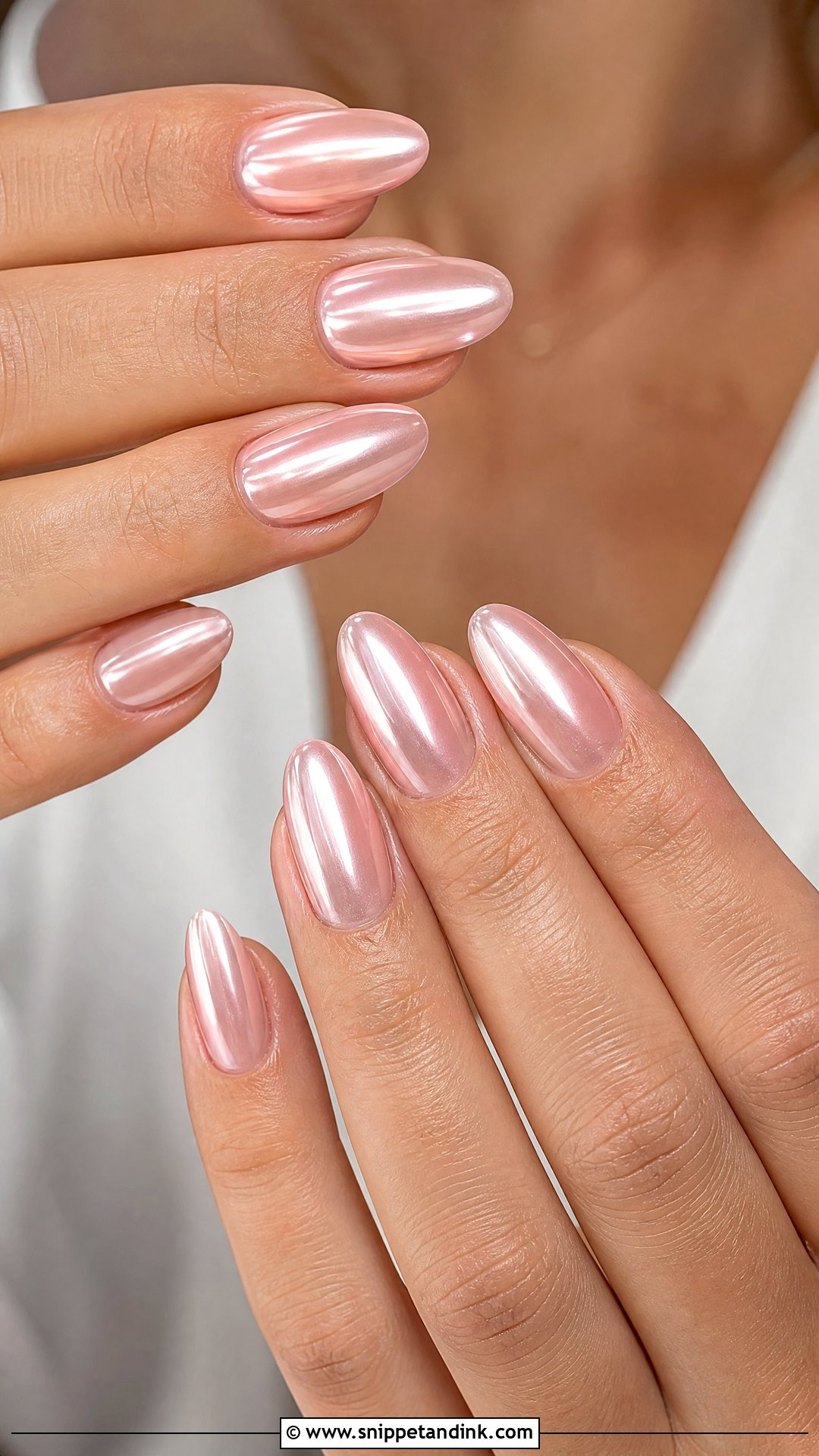
Blush chrome is a pink or peachy base under a sheer chrome powder. Too much chrome makes it metallic, so I keep the layer very light. It suits rose gold jewelry and warm flowers. In photos, it gives the hands a soft, healthy glow rather than a shine.
20. Gold French Bride Nails
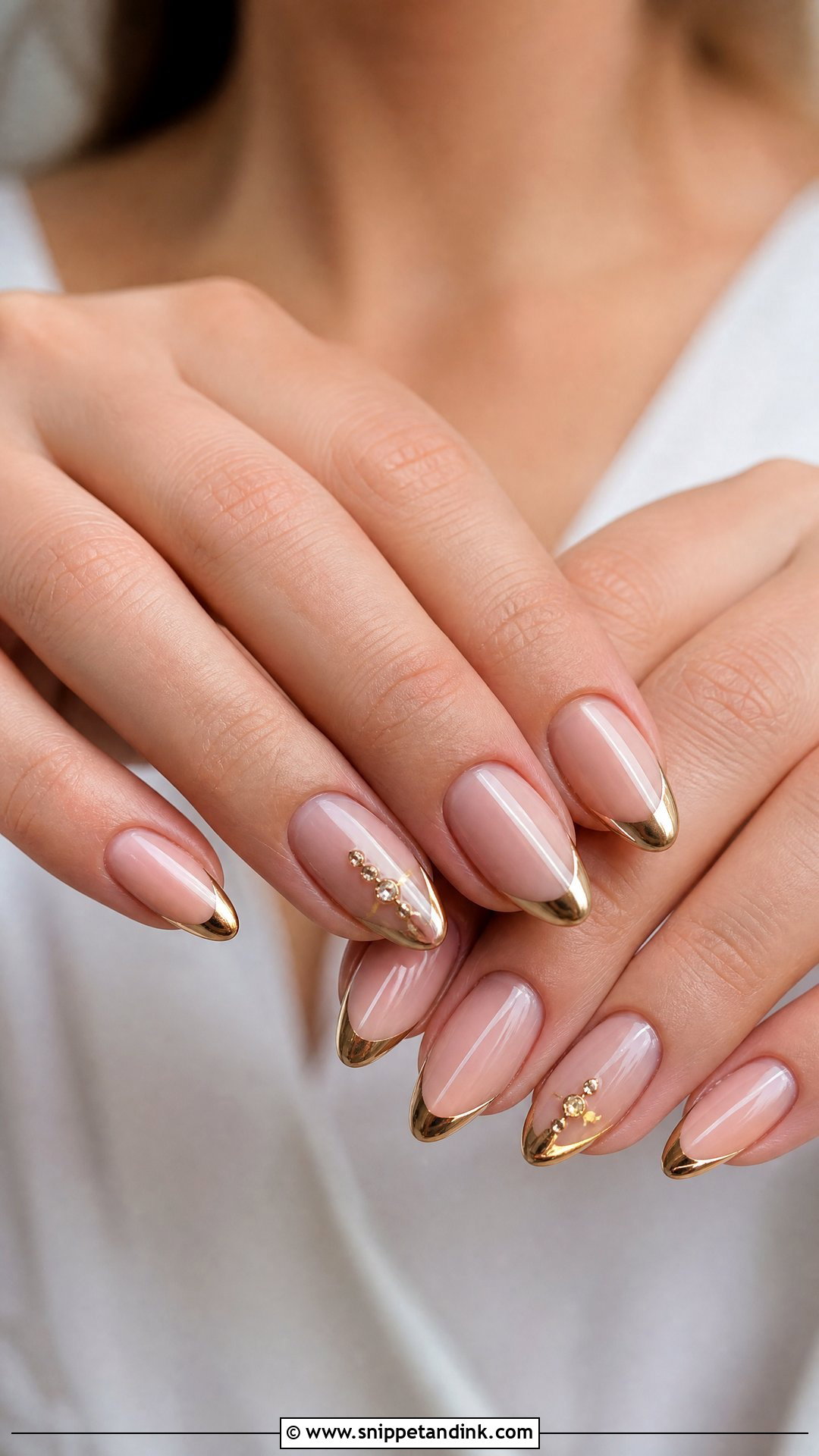
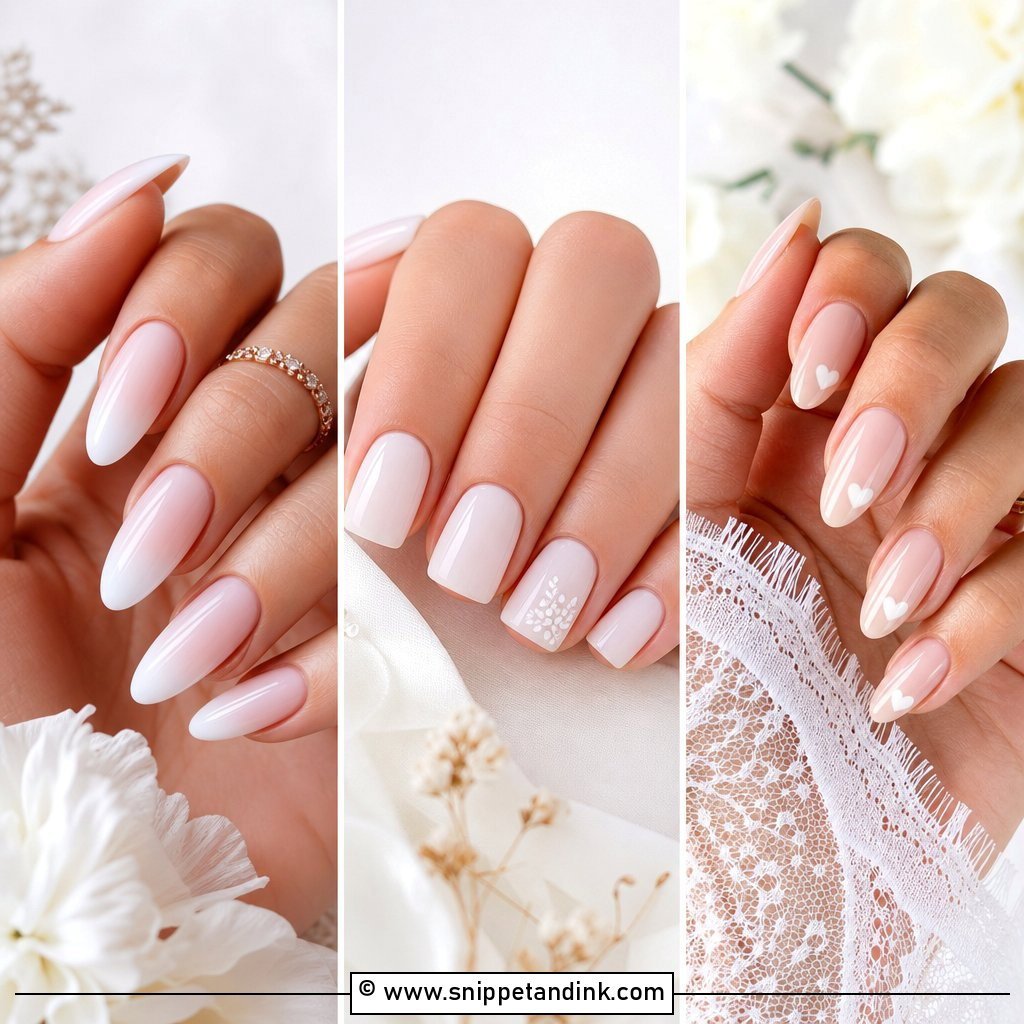
Gold tips work best when the line is thin. I use a gold gel or foil rather than glitter polish, which looks rough up close. A micro gold tip is modern; a slightly thicker one is more glamorous. It suits gold jewelry and champagne gowns.
21. Silver French Bride Nails
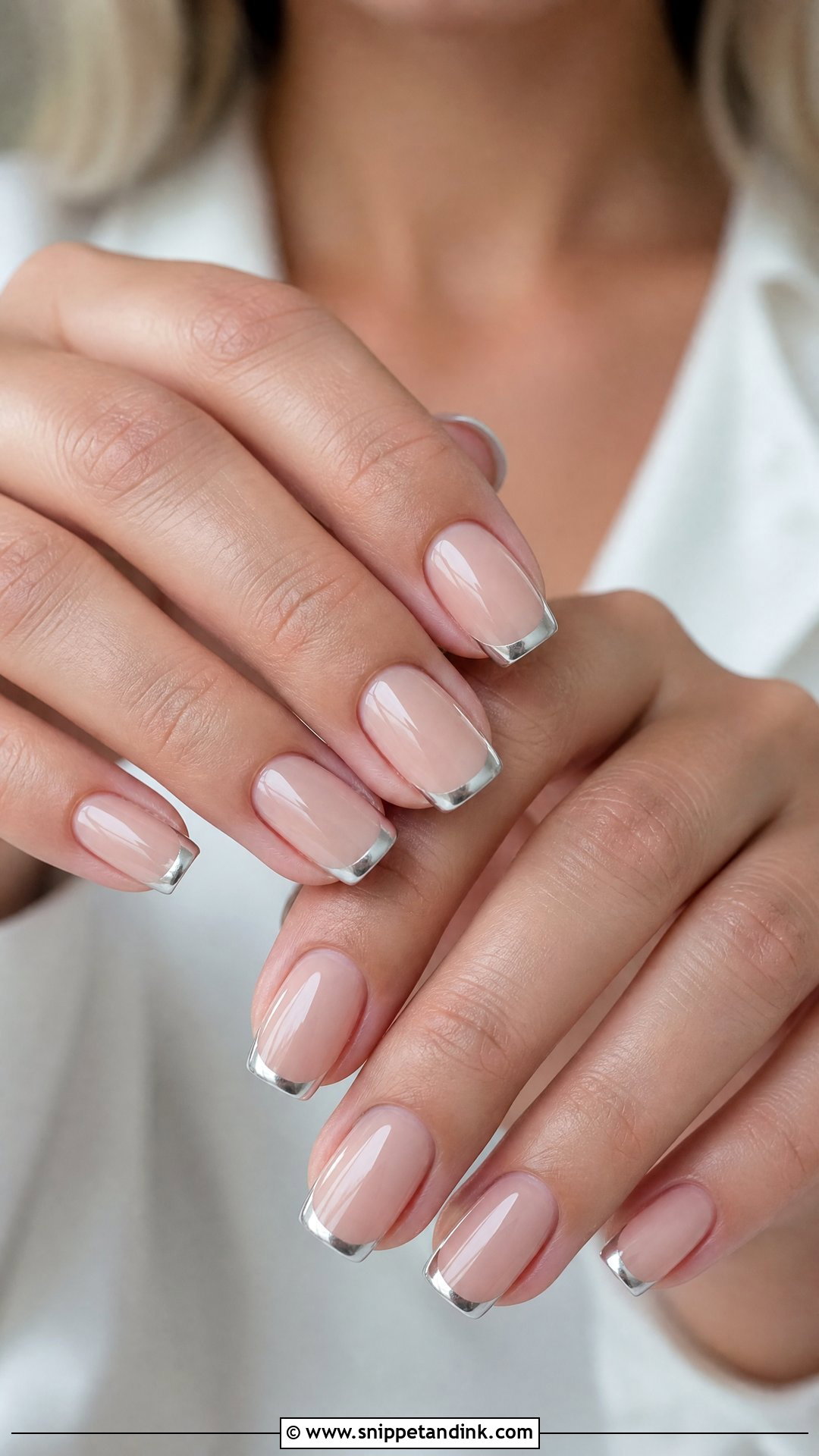
Silver tips suit platinum, white gold and silver jewelry. Mirror chrome looks harsh under flash, so I’d pick a softer metallic or pearly silver. Keep the line thin. Almond softens it; square makes it crisp.
22. Glitter Ombre Bride Nails
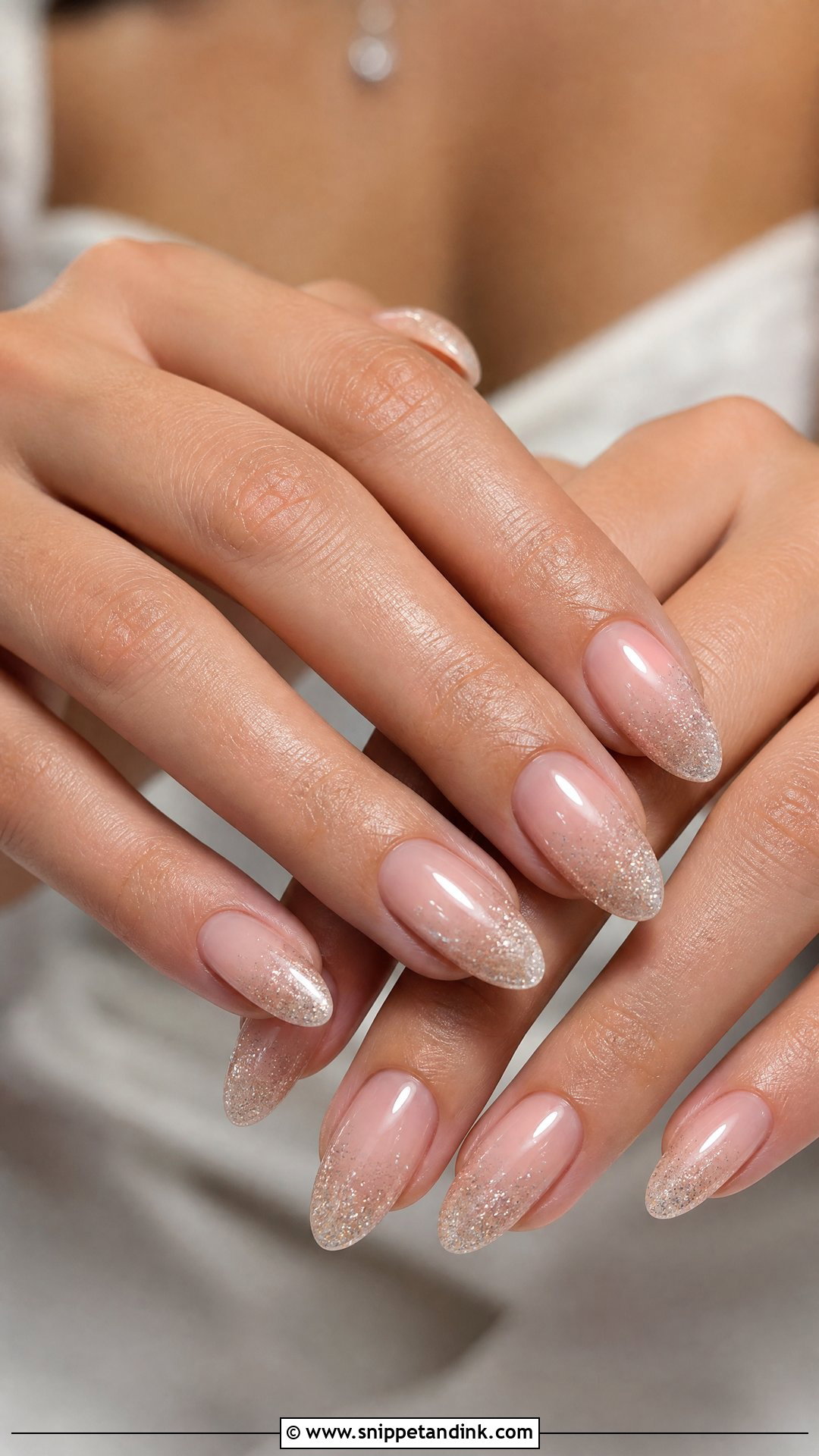
Glitter ombre bride nails put the sparkle at one end of the nail and fade it into a sheer base. Fine glitter in silver, champagne or pearl looks bridal; chunky glitter looks like a party set and feels rough. I sponge the glitter on in layers so the fade is gradual. It catches candlelight nicely at an evening reception.
23. Minimal Bride Nails
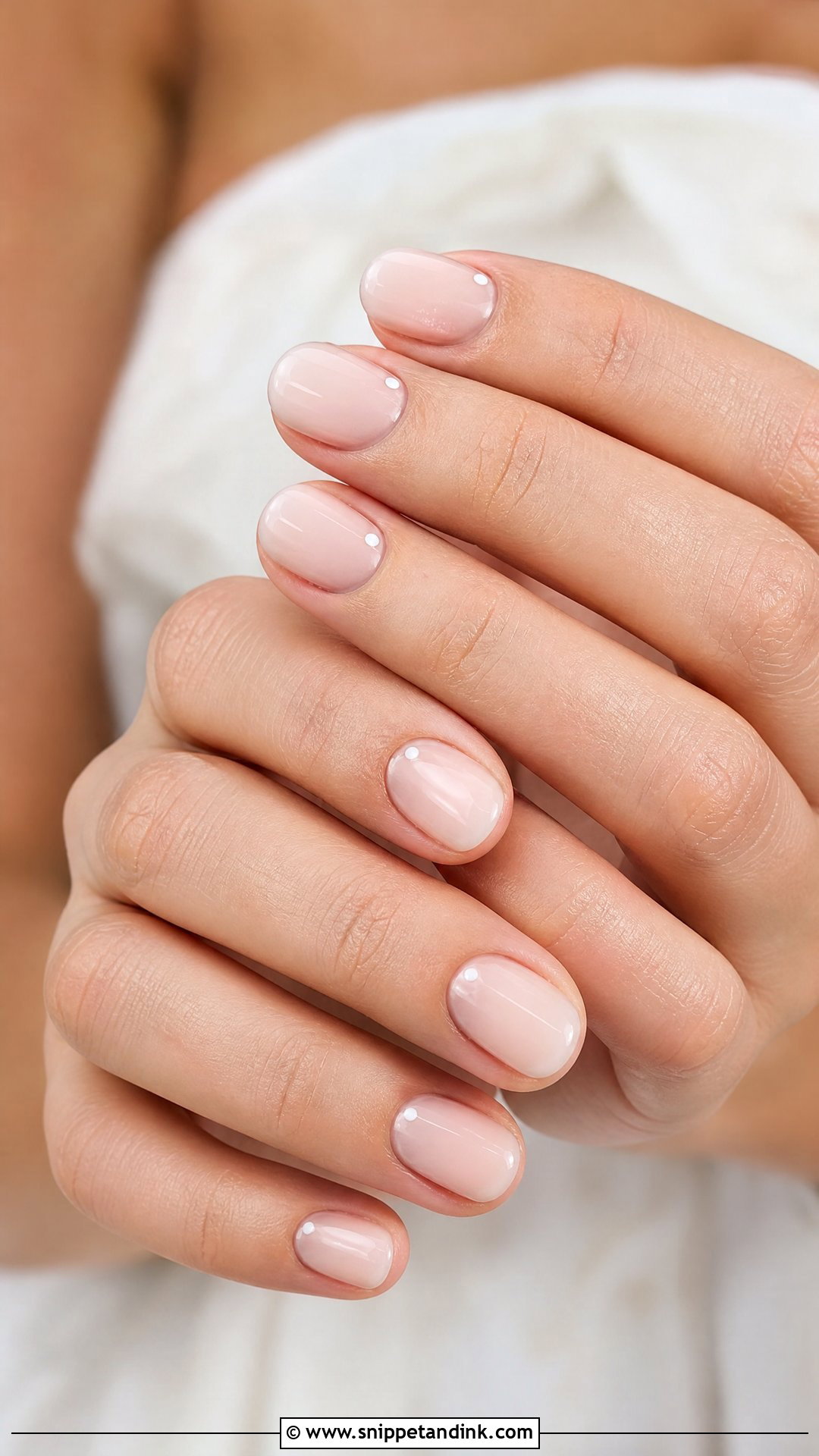
Minimal nails rely on perfect shaping and a glossy finish, since there’s nothing else to look at. Start with a sheer nude or pale pink, then add one small detail: a tiny pearl, a thin line or a micro dot. It suits dresses with dramatic detailing. Short oval or soft square shapes keep it practical.
24. 3D Flower Bride Nails
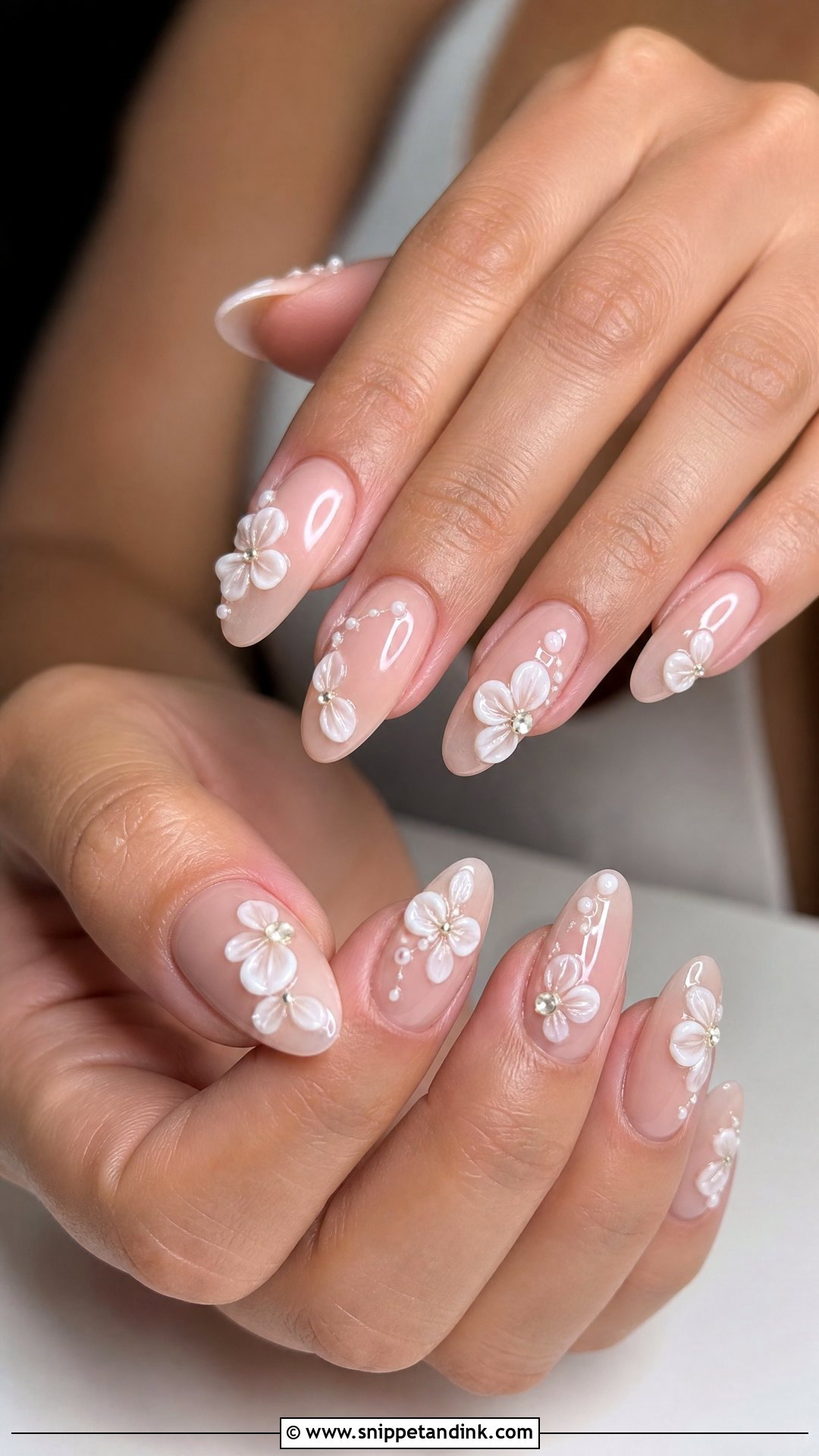
3D flowers are sculpted in gel and sit raised on the nail. They’re the set most likely to snag lace, veils and hair, so I place them on one or two nails and keep them small. Every edge needs sealing with top coat. Almond and oval shapes make them look delicate. I’d skip them if your gown is all tulle.
25. White Chrome French Bride Nails
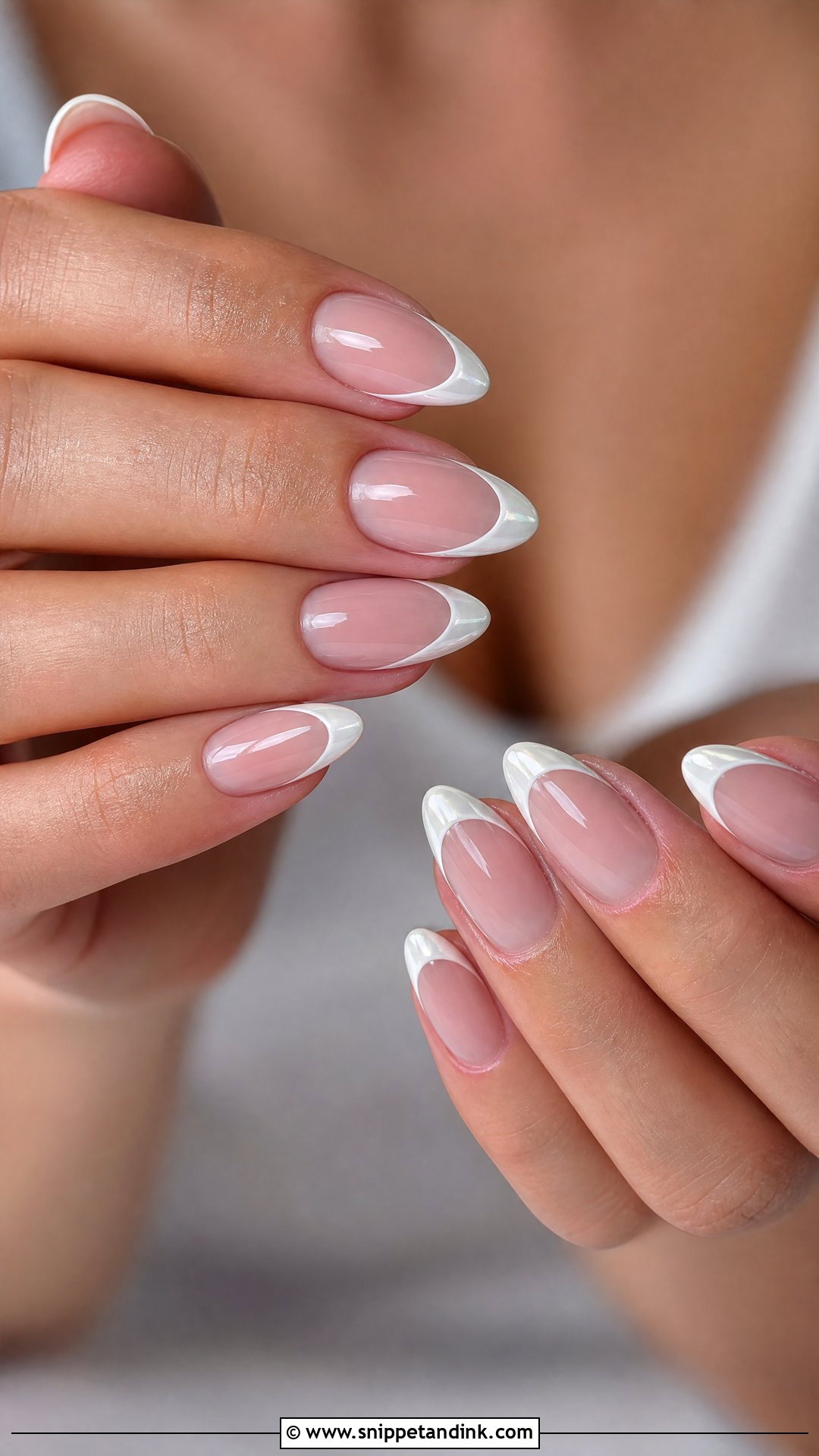
This French uses white tips finished with a soft chrome. It’s brighter than a plain white tip but still classic. On short nails, a micro chrome tip looks best; on almond or coffin nails, a deeper tip can carry more drama. The chrome needs a perfectly smooth tip underneath, so I file carefully first.
26. Pink Ombre Bride Nails
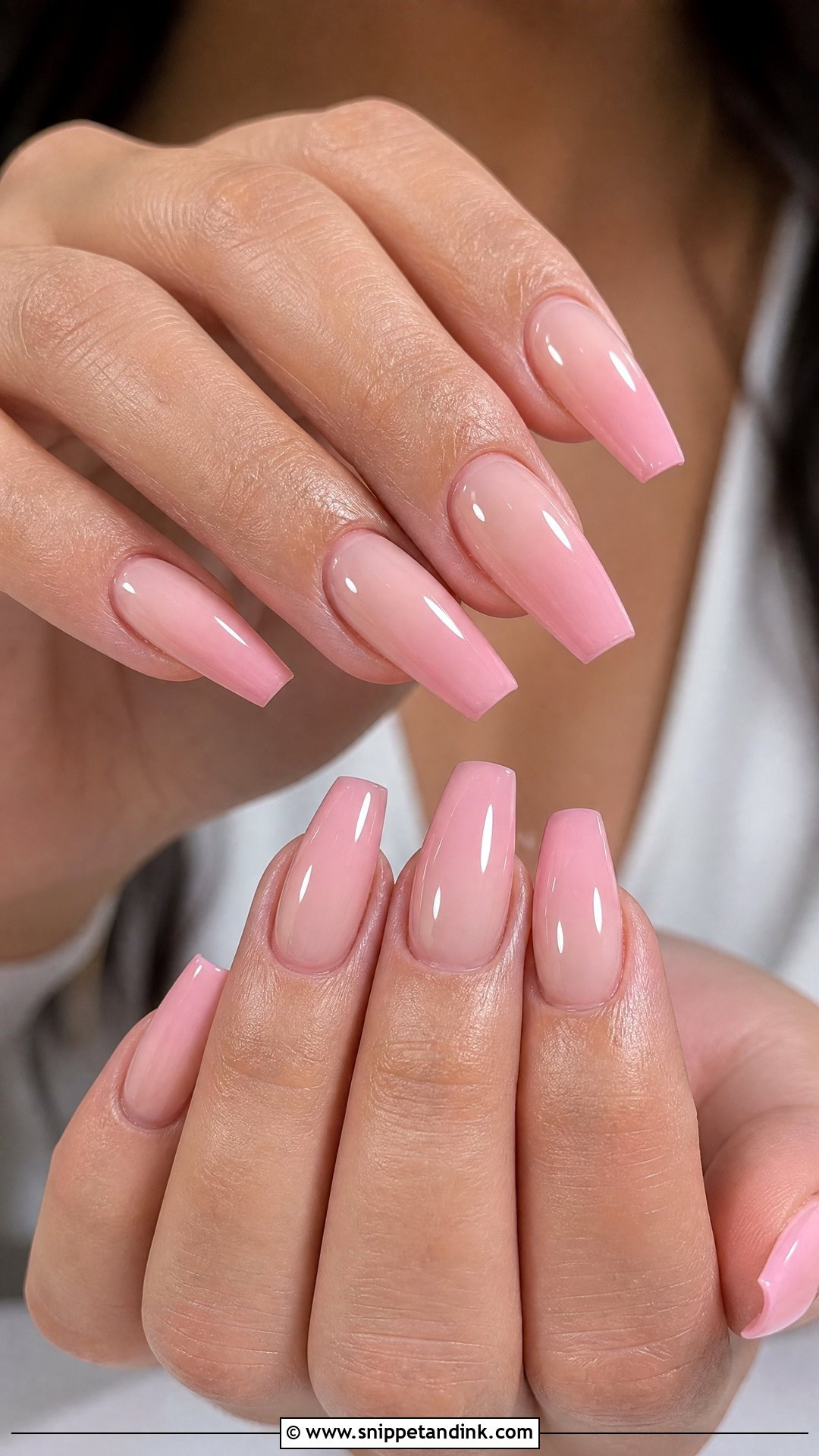
Pink ombre bride nails fade a pale pink base into a brighter pink tip, or pink into milky white. I blend in gel with a sponge, building gradually. Longer nails show the gradient best. It suits blush bouquets and warm ivory gowns.
27. White Swirl Bride Nails
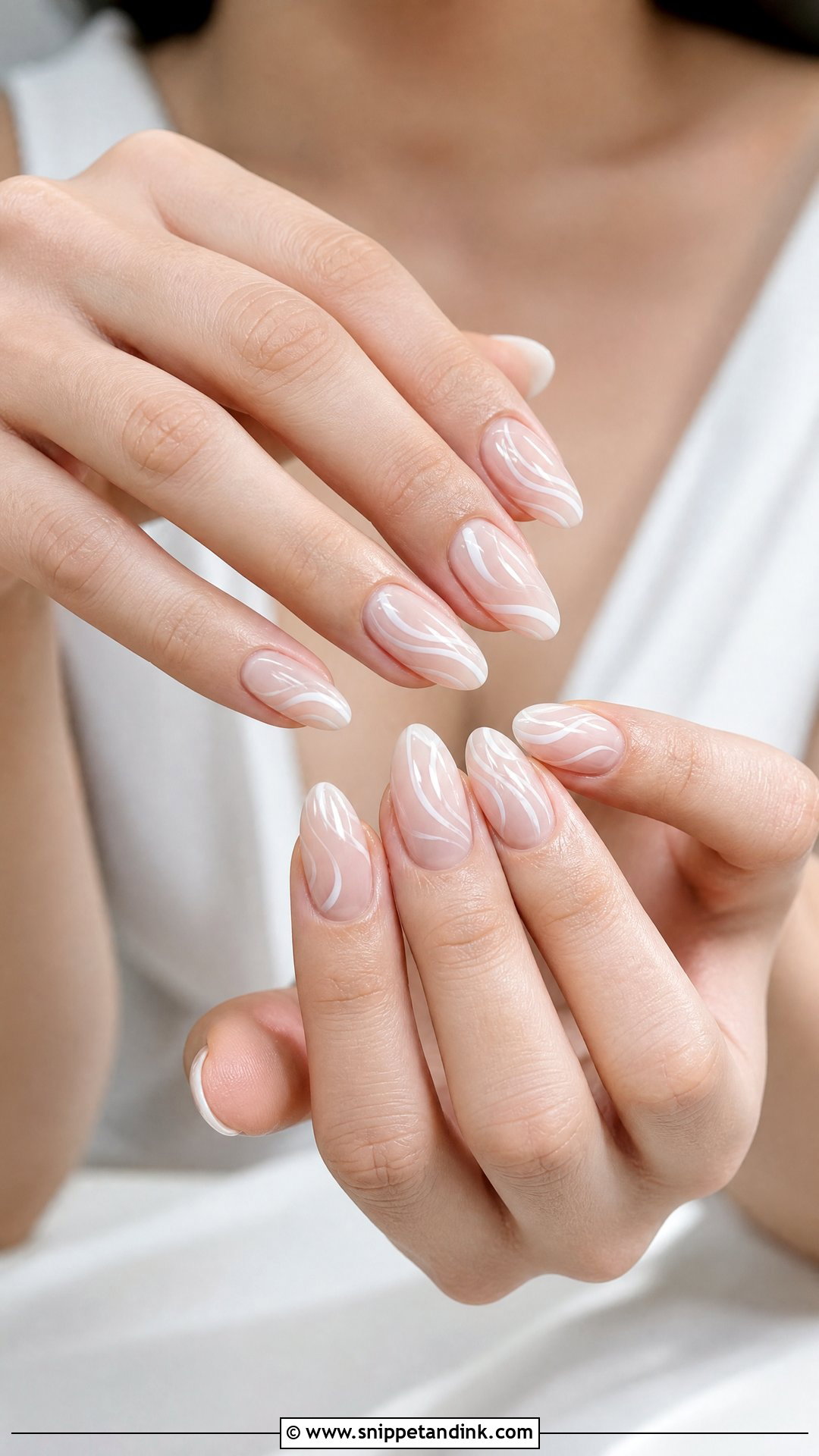
White swirls are thin, flowing lines painted across a sheer base. I use a long liner brush and paint each line in one stroke so it looks fluid. Leave plenty of open space between swirls. Almond and oval shapes make the movement look graceful.
28. Marble Bride Nails
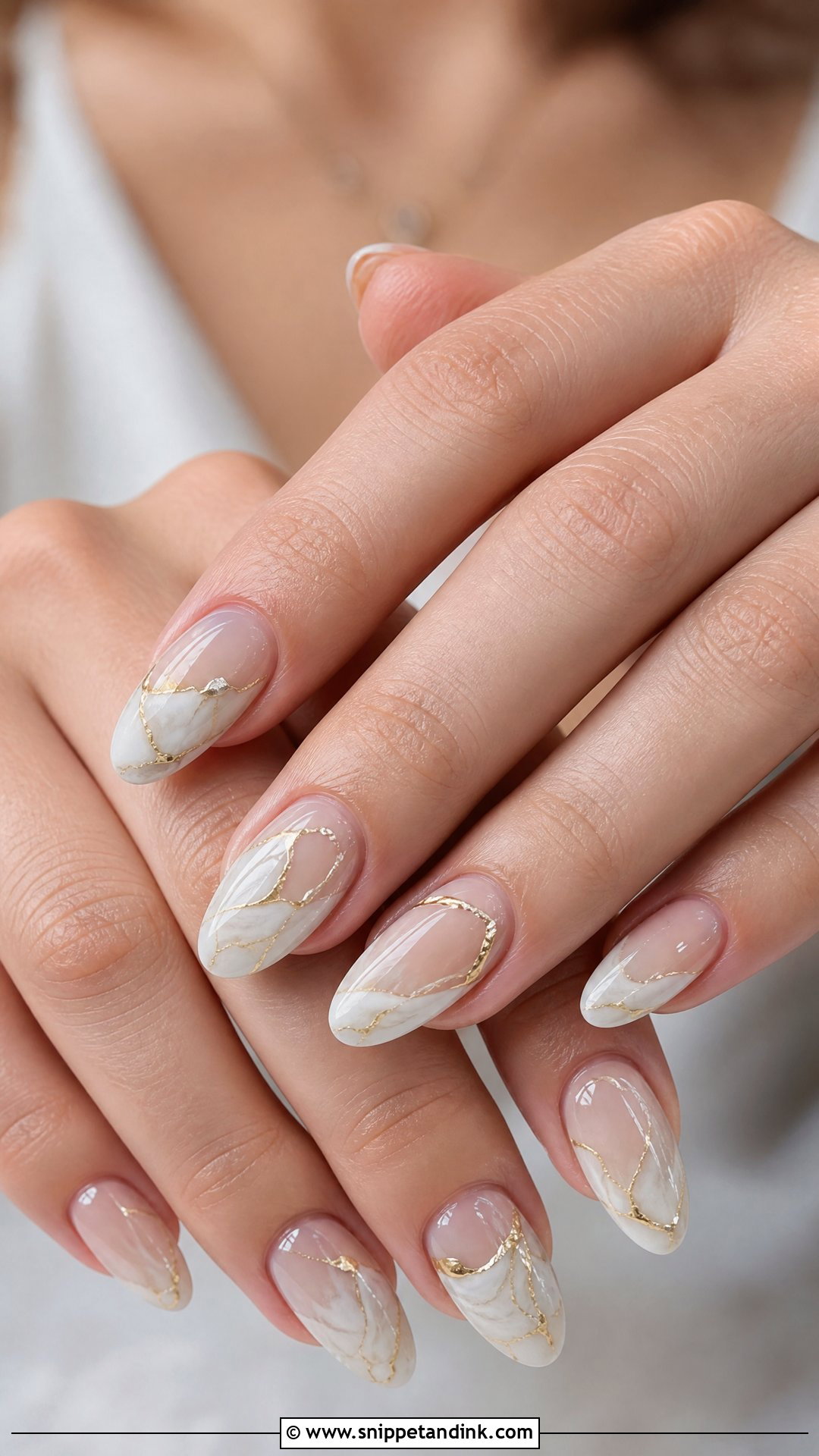
Marble uses fine white or ivory veining over a sheer base, sometimes with a thin gold or silver vein. I diffuse the lines with a little alcohol on a brush so they look natural. Keep it delicate. Almond, coffin and square shapes give the pattern room.
29. Something Blue Bride Nails
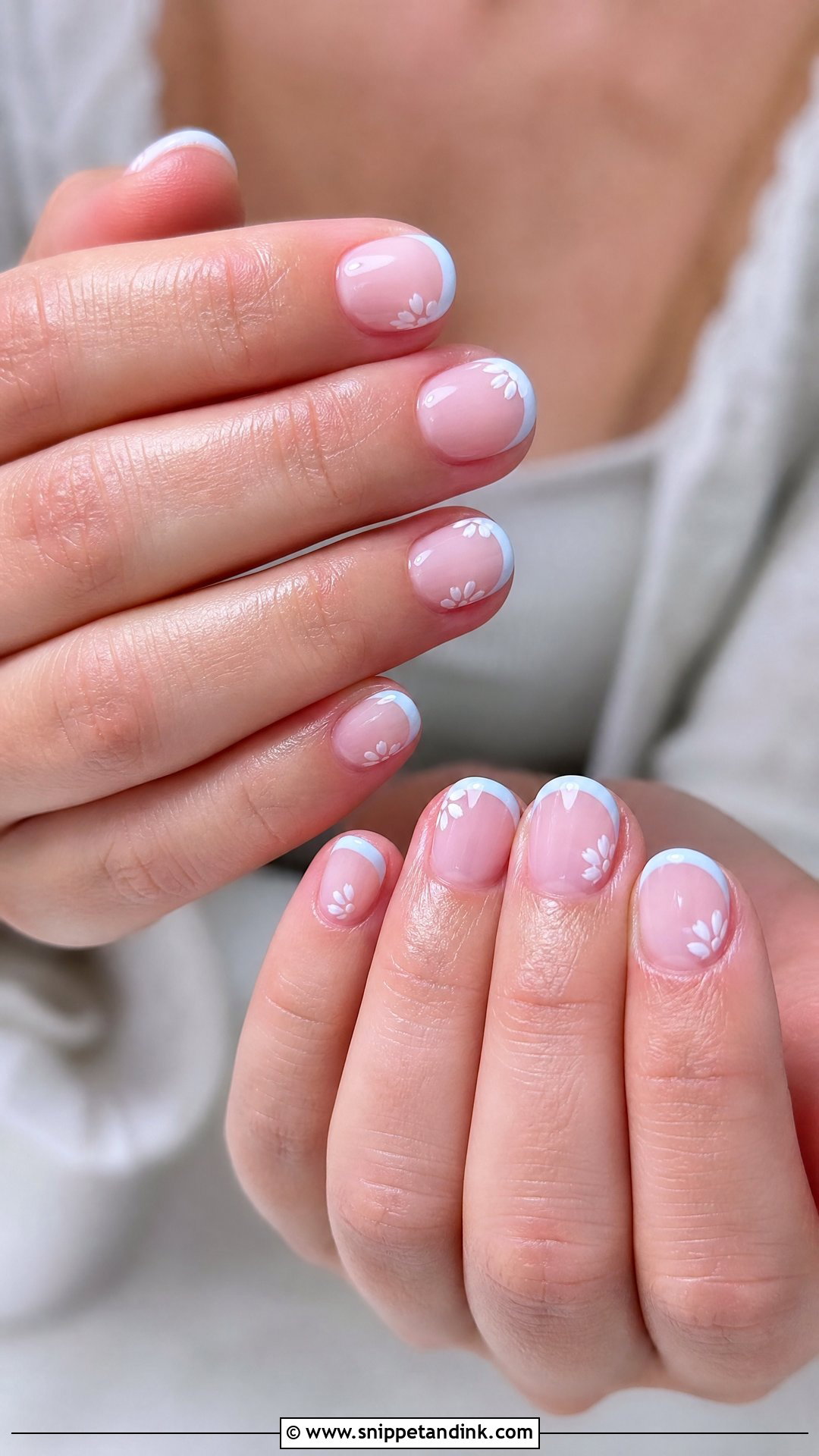
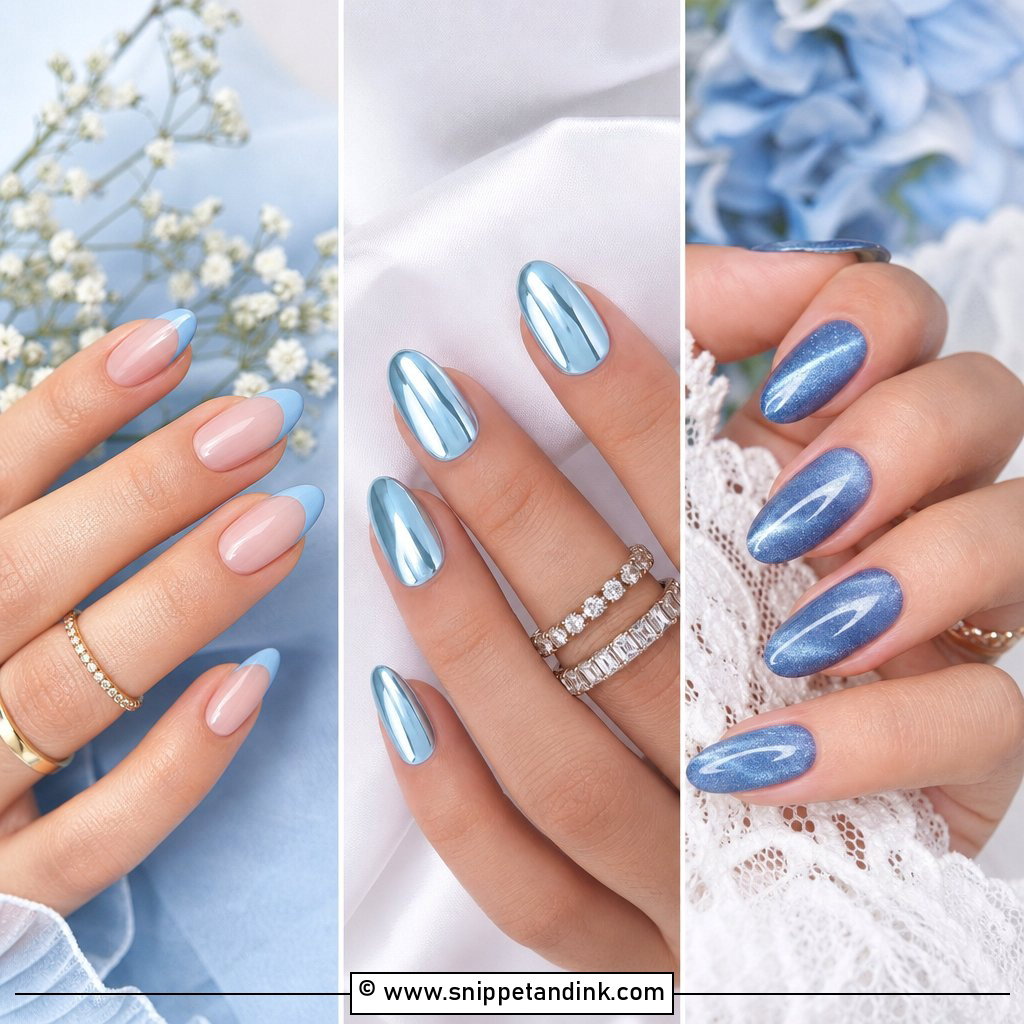
Something blue can be as hidden or visible as you want. A pale blue micro tip, tiny blue flowers or one blue accent nail work. For a hidden touch, I put it on the ring finger or under a French tip detail. Light blue suits silver jewelry and cool-toned bouquets.
30. Champagne Bride Nails
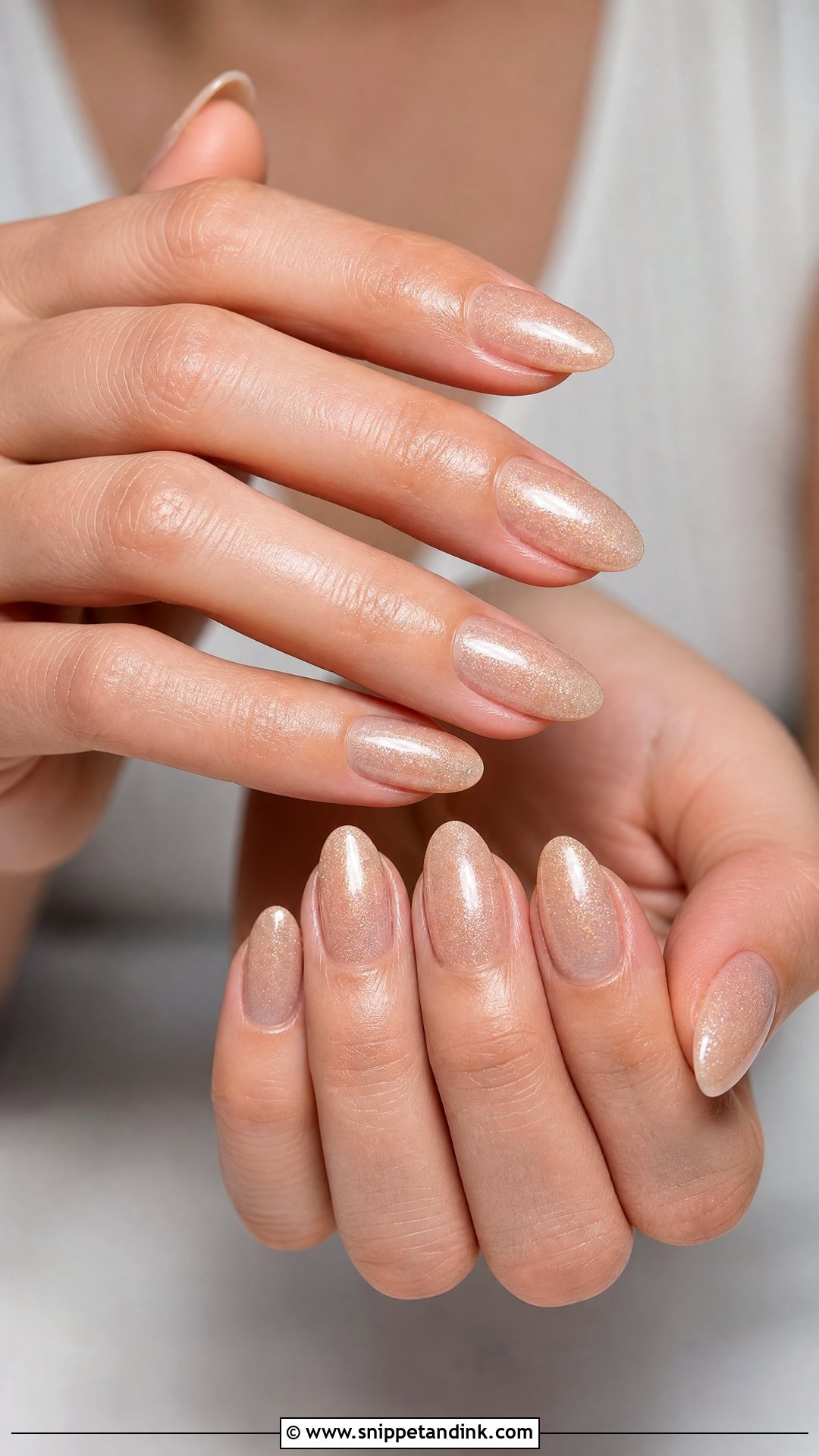
Champagne sits between nude and pale gold. As a sheer shimmer or a light chrome, it looks luminous; heavy glitter looks less bridal. Shimmer polish can show brush strokes, so I apply thin coats. It suits ivory gowns and gold jewelry, and is especially flattering on medium and deeper skin.
31. Rhinestone Bride Nails
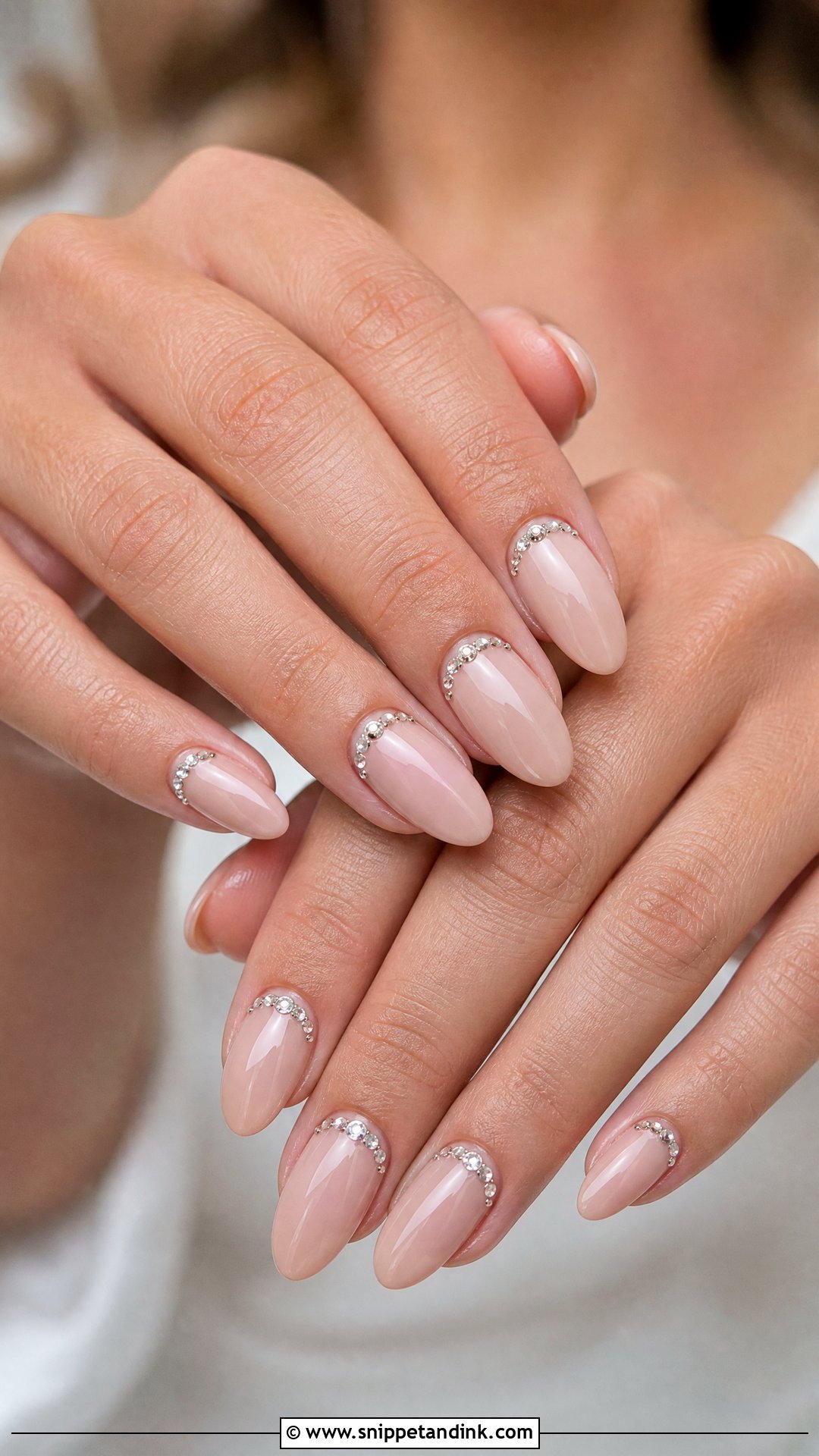
Rhinestones should look like jewelry, so small, clear or champagne stones placed carefully. I set them into gel and cap the edges so they don’t catch on fabric. A tiny stone near each cuticle or a curved line on one accent nail looks refined. They add sparkle to ring photos without a full glitter set.
32. Matte Bride Nails
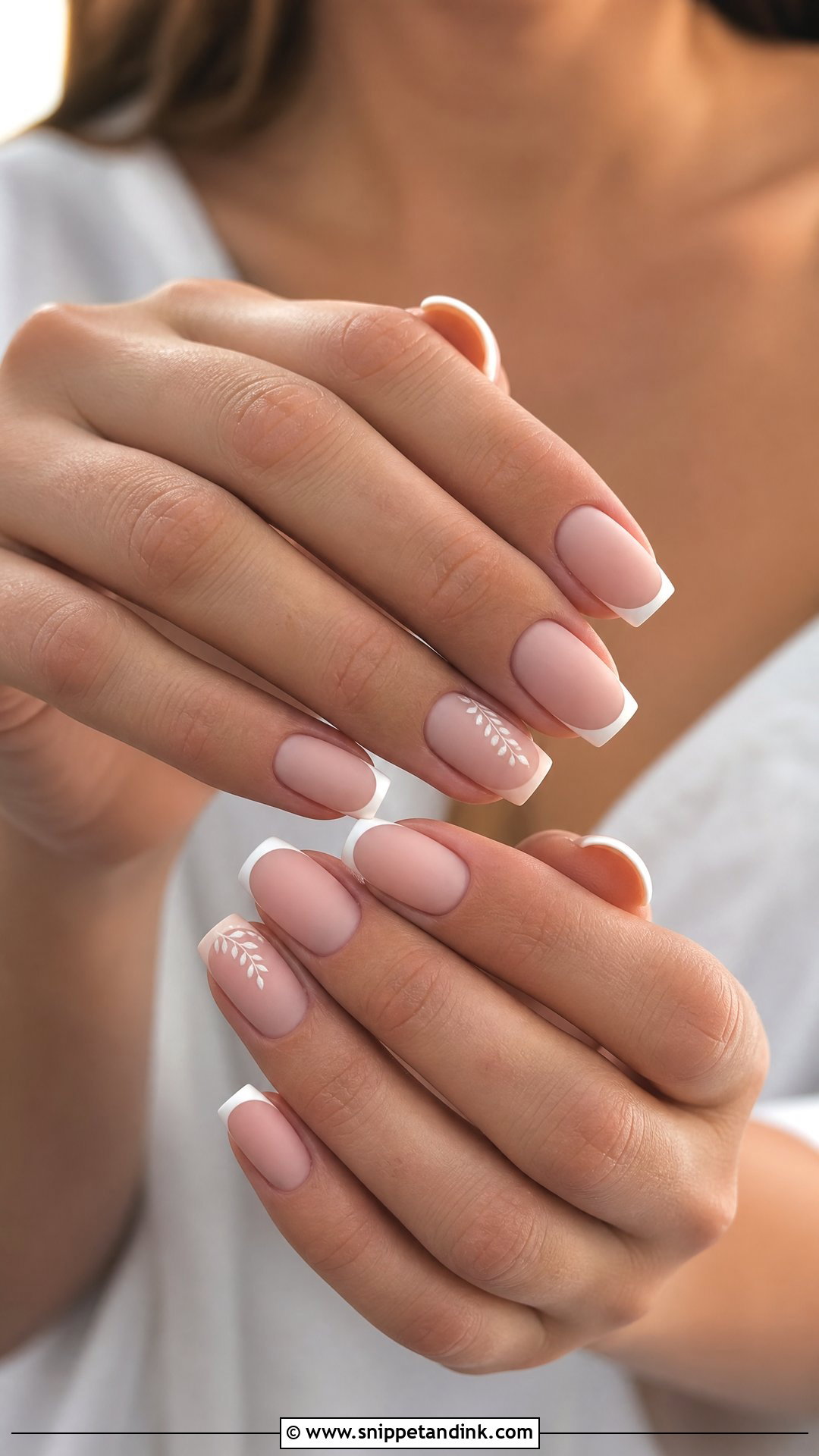
A matte top coat gives a velvety finish but picks up marks from hand cream and food oils. It shows shape and cuticle work clearly, so prep has to be perfect. A glossy French tip over a matte base gives contrast. I’d only suggest matte if you’re happy with a slightly less pristine finish by evening.
33. Natural Bride Nails
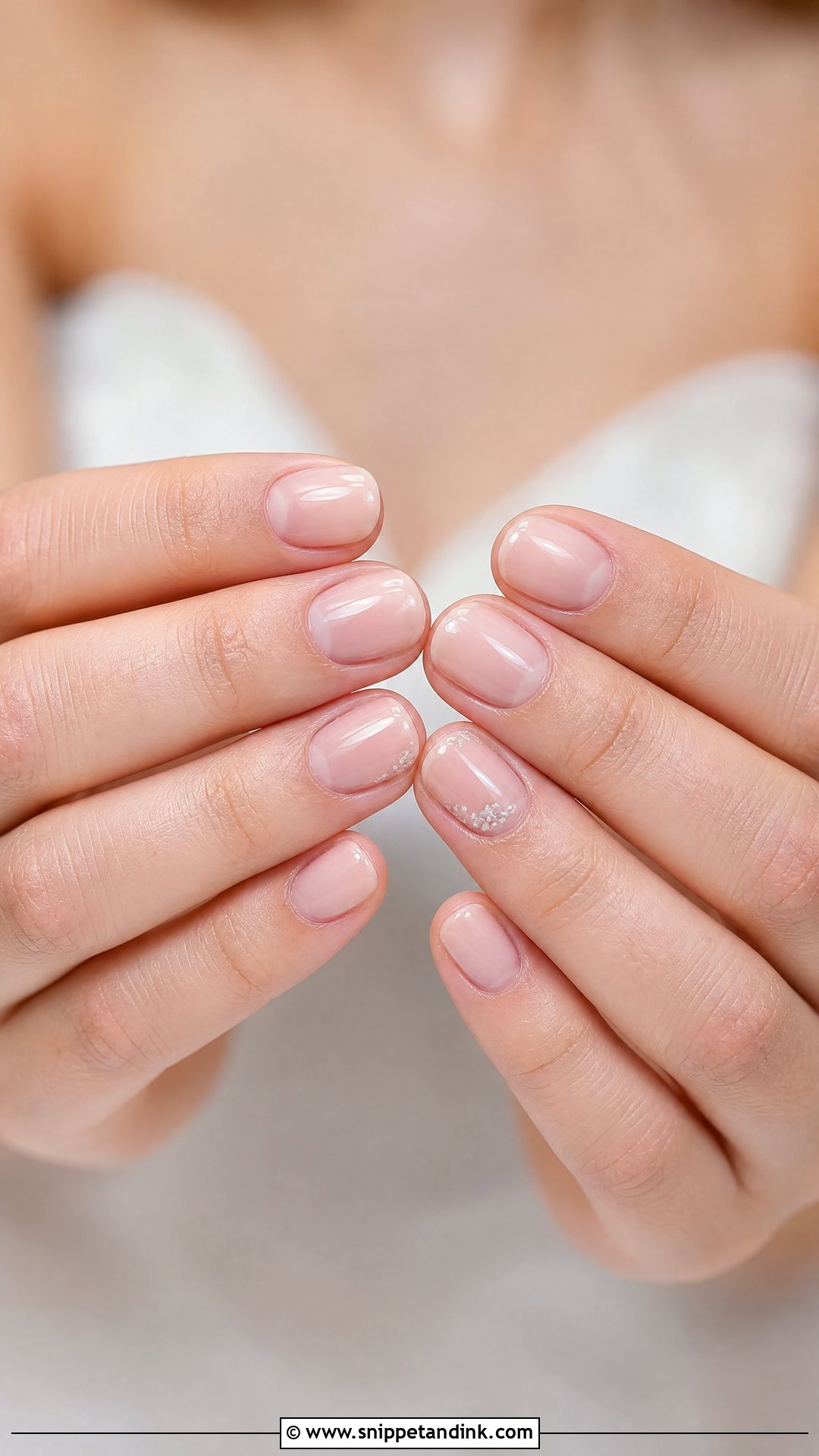
Natural nails focus on care rather than color. I shape, clean the cuticles, buff lightly and finish with a clear builder gel or sheer pink. Short oval or rounded shapes look clean. It suits brides who rarely wear polish and want to feel like themselves.
34. Long Bride Nails
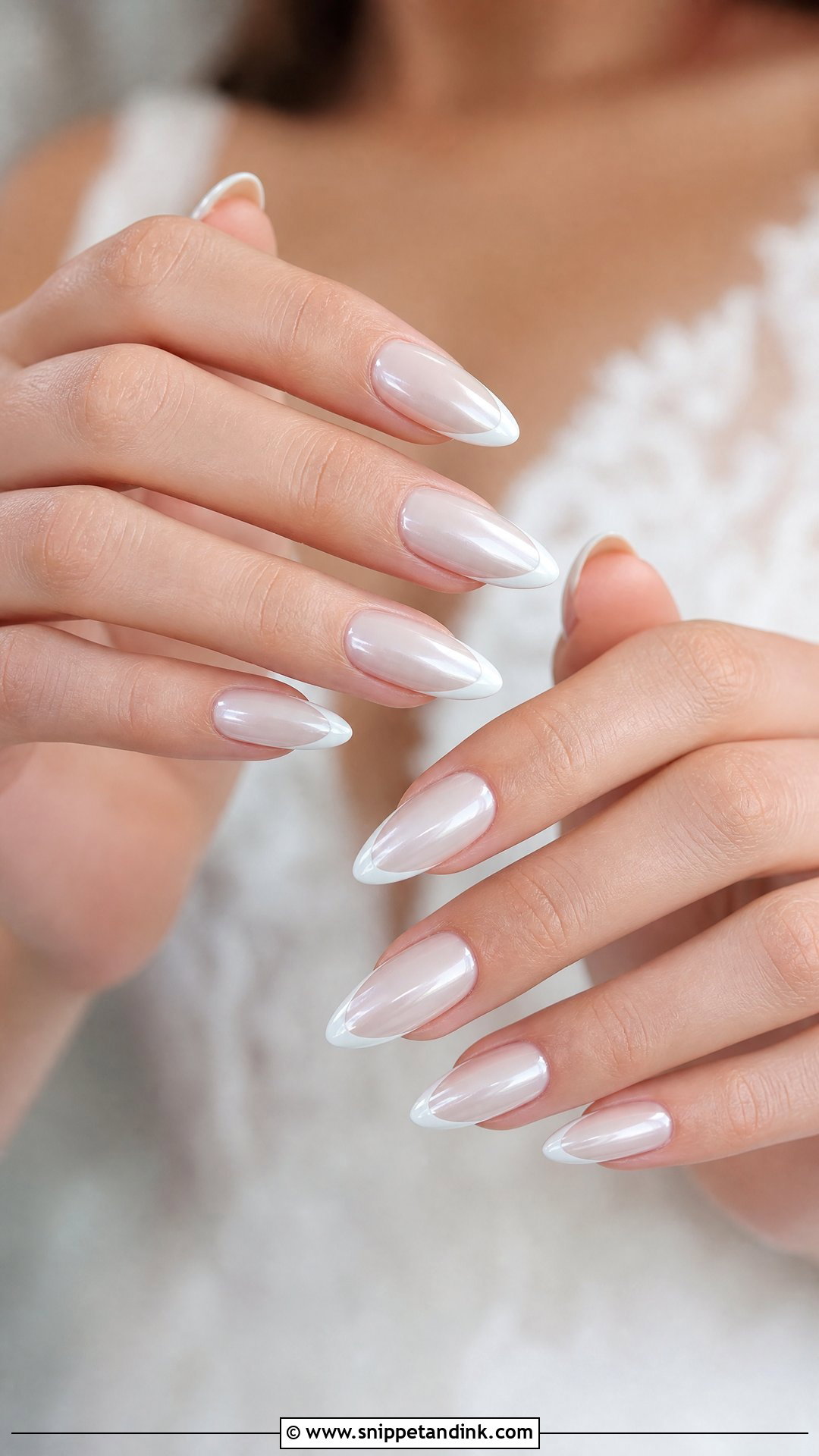
Long nails give more space for art, but they need practice. Almond, coffin and tapered square shapes balance the length. Choose one main feature and keep the rest simple. Wear them for a week or two before the wedding so you’re used to fastening buttons and handling jewelry.
35. Elegant Bride Nails
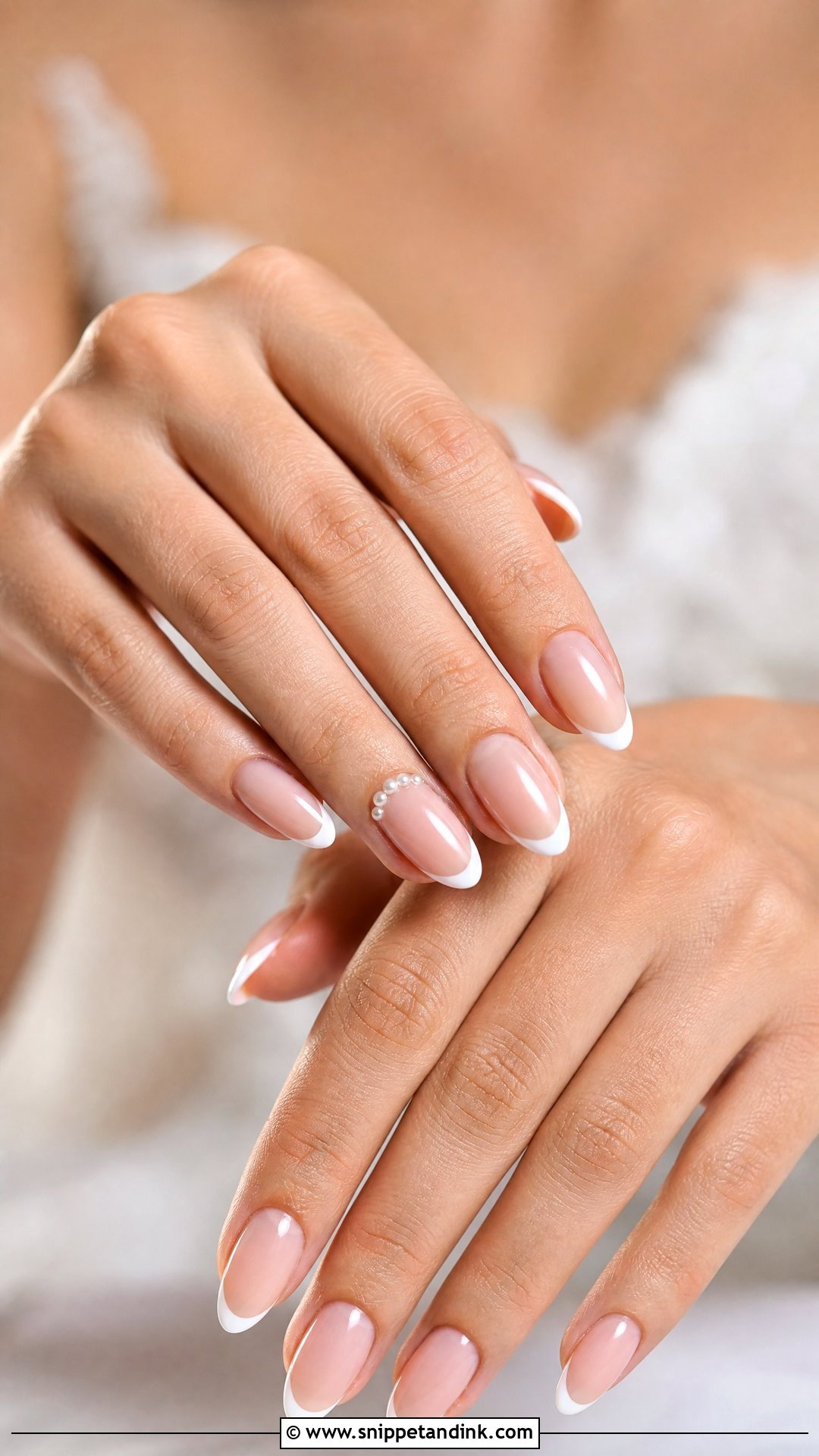
A balanced set combines a sheer base, a soft almond shape, a thin French and maybe one pearl or a little shimmer. Nothing is loud. It matches the gown, bouquet and rings without being tied to one trend, so it still looks right in photos years later.
Counting Back From the Wedding Morning
When you book matters almost as much as what you book. Here’s the schedule I suggest to brides.
- Four to six weeks before: a trial. Try the shape and two shades, and see how they wear for a week.
- Two weeks before: if you’re having extensions, a first set so your hands get used to the length.
- One to three days before: the final set. Gel applied this close stays fresh through the wedding and usually the first week of the honeymoon.
- The day before: cuticle oil and hand cream only. No gardening, cleaning or self-tan without gloves.
- Wedding morning: a quick check. Apply hand cream before photos, but wipe the nails so the gloss stays clear.
Coordinating the bridal party
Bridesmaids don’t need to match you. A softer version of your color, or a plain nude for everyone, looks cohesive in group shots without competing. If they’re booking separately, give them the shade names so the tones agree.
Ten Fingers, One Ring and a Very Close Camera
Look at your dress color, jewelry metal, nail length and how you use your hands before deciding. Classic French, milky white, pearl chrome, sheer pink and nude are safe choices that photograph well. A trial appointment lets you compare shades in real light. Short natural or long almond, the right set is one you forget about once the ceremony starts.
You'll Like These Ideas:


Leave a Reply