
Gold is the accent I reach for most when a bride wants her nails to look finished but not loud. It sits comfortably on sheer pink, milky white, ivory, nude, pearl chrome and deeper neutrals, and it can be as quiet as a thin French tip or as busy as foil, pearls and glitter on one hand. What makes it so useful is that it scales to any length. On short square nails a single gold line reads crisp and expensive; on almond or oval it follows the curve and softens the whole hand. Below are twenty full sets I’d happily recreate at an appointment, with notes on how each one behaves once it’s on your fingers.
Your Ring Metal Decides Which Gold Goes on the Nails
The first thing I ask a bride who wants gold is what her rings are made of. Nails sit right next to the engagement ring in almost every close-up, and a gold that’s a shade off from the band is surprisingly obvious in a ring shot. Yellow gold rings suit warm metallic gold or a richer foil. White gold and platinum look better beside champagne gold or a softer chrome, which carries less yellow. Rose gold bands pair with rose gold detail, or with a very pale champagne that won’t fight the pink.
Skin undertone comes next. Look at the veins on your inner wrist in daylight: greenish usually means warm, bluish usually means cool. Warm skin can wear brassy, deep gold. Cool skin tends to look better in paler, pinker golds, and a strong yellow can make the fingers look slightly sallow under flash.
What to bring to the appointment
- Your engagement ring and, if you have it, the wedding band, so I can hold the gold beside the metal
- A photo of the dress fabric taken in daylight, not a catalogue image
- Two or three nail photos you like, plus one you definitely don’t
- An honest idea of how much you use your hands that week: typing, cooking, assembling favours
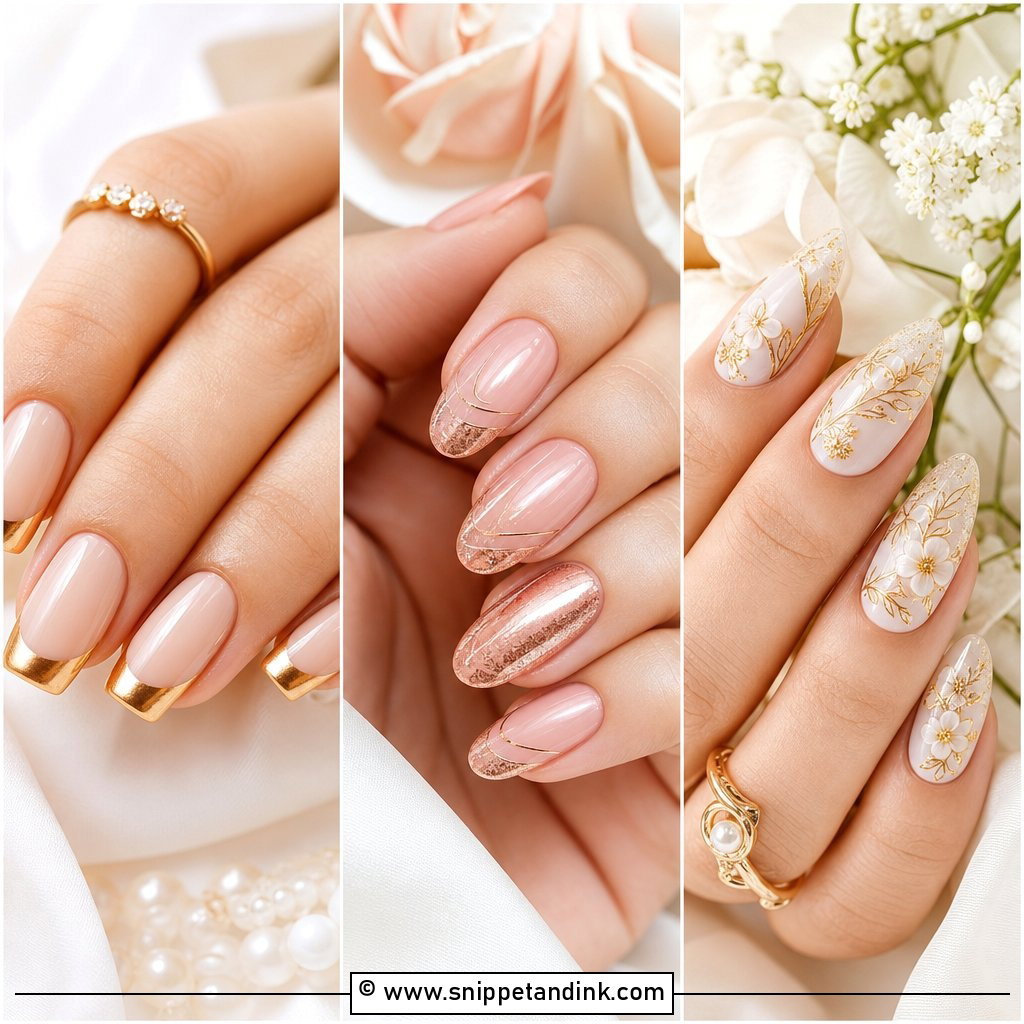
1. Gold French Tip Wedding Nails
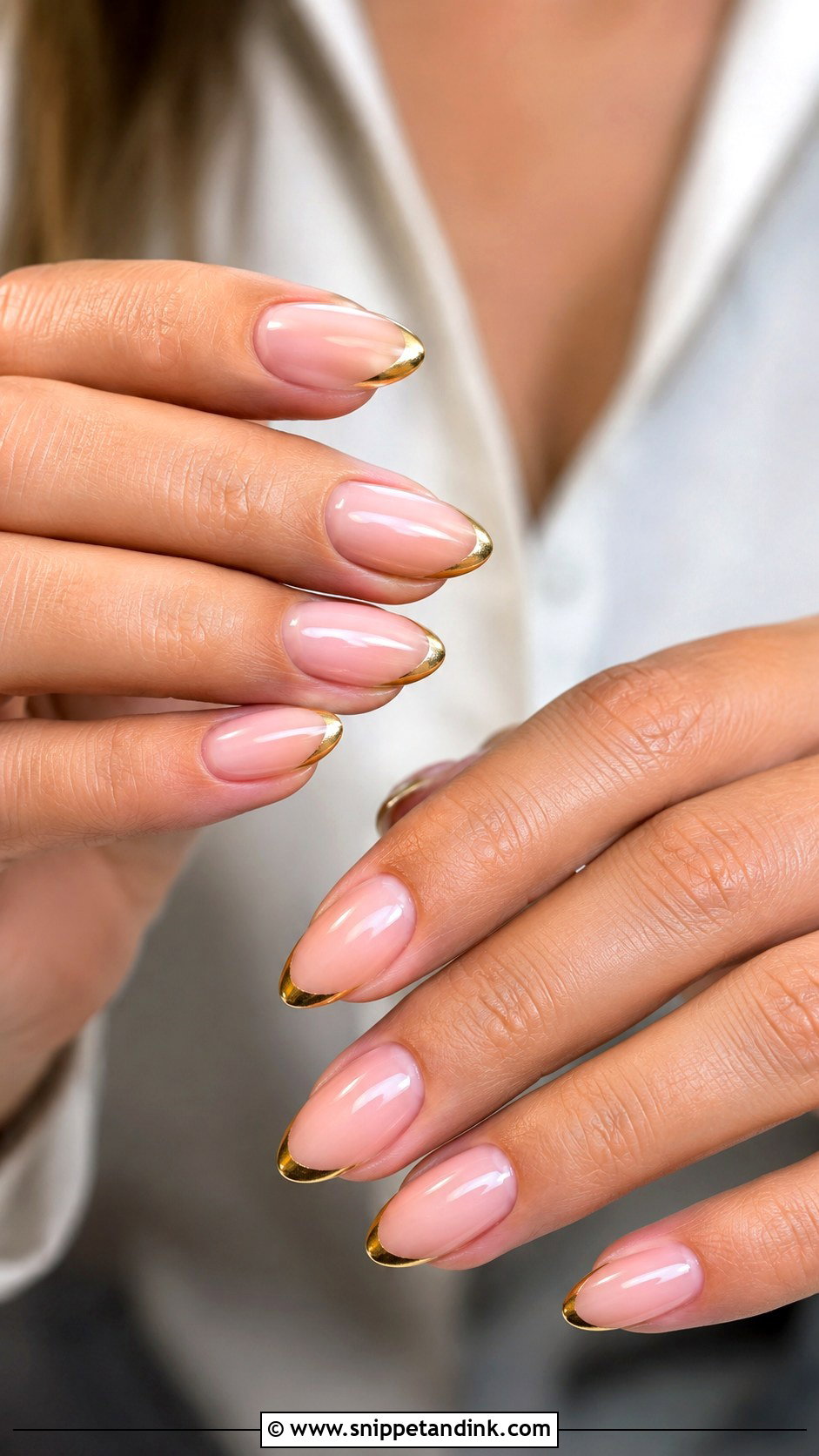
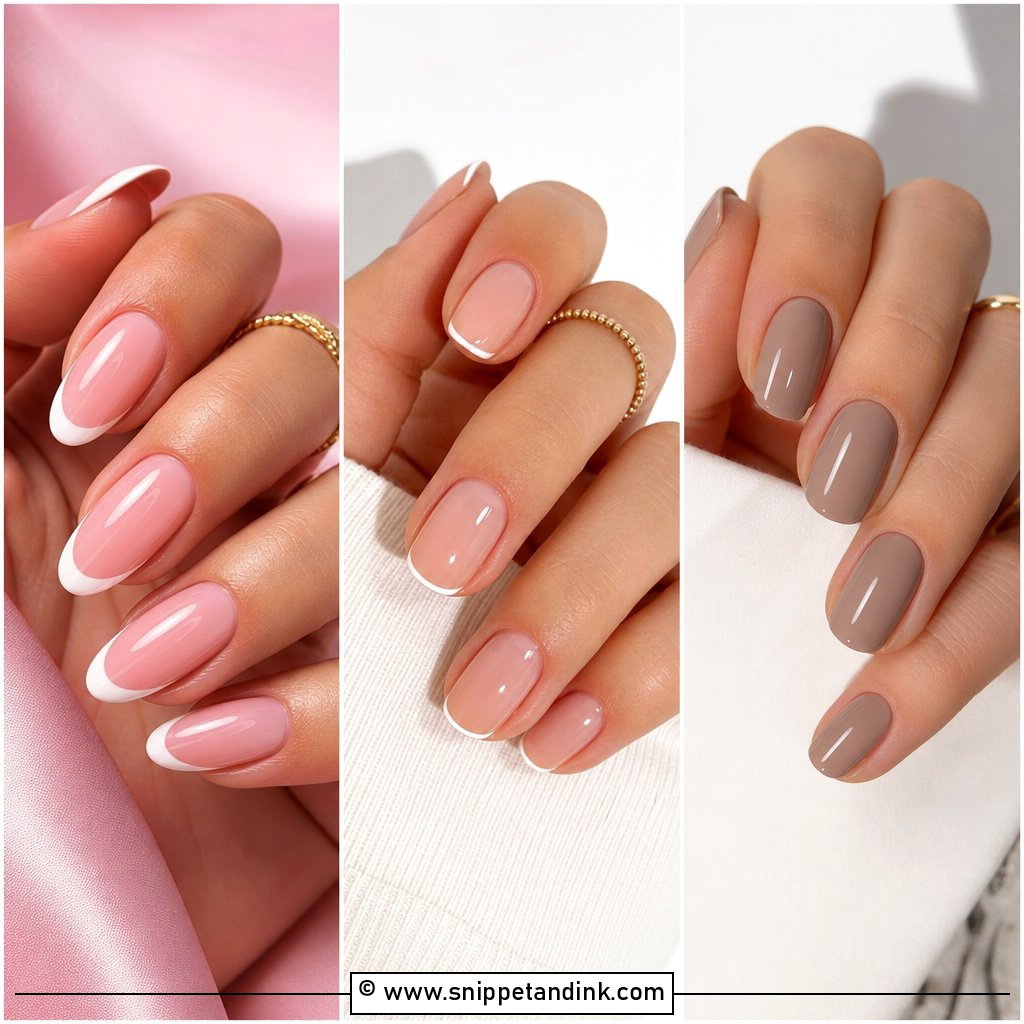
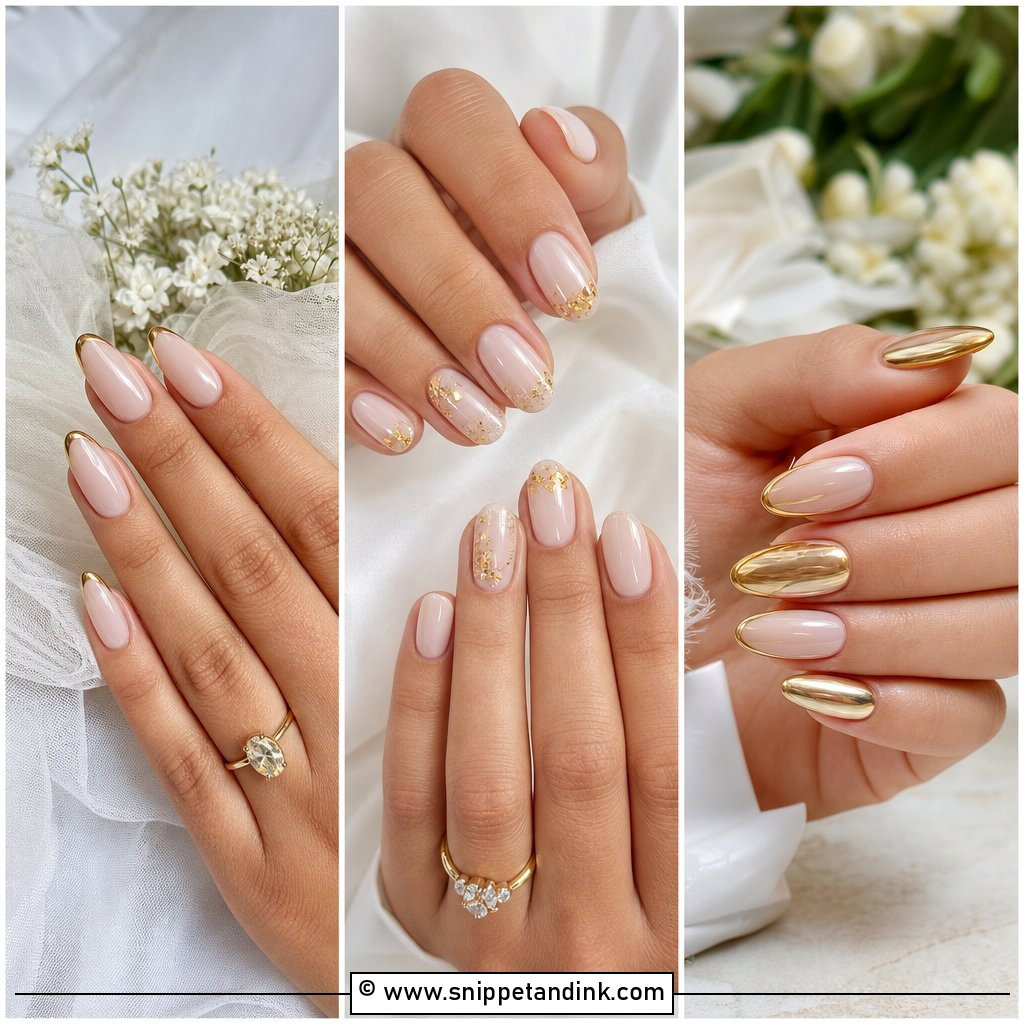
Swapping the white tip for gold changes how a French reads: it starts to look like jewelry rather than polish. I paint the free edge in fine metallic gold, champagne gold or a rubbed-in gold chrome over a sheer pink or nude base. The tricky part is the smile line. Gold shows every wobble far more than white does, so I usually build it with a striper brush in two thin passes rather than one heavy one. Almond, oval and short square all take it well. If you’re a minimalist, ask for a micro tip about one to two millimetres deep; if you want the gold to show in ring shots, go a little deeper.
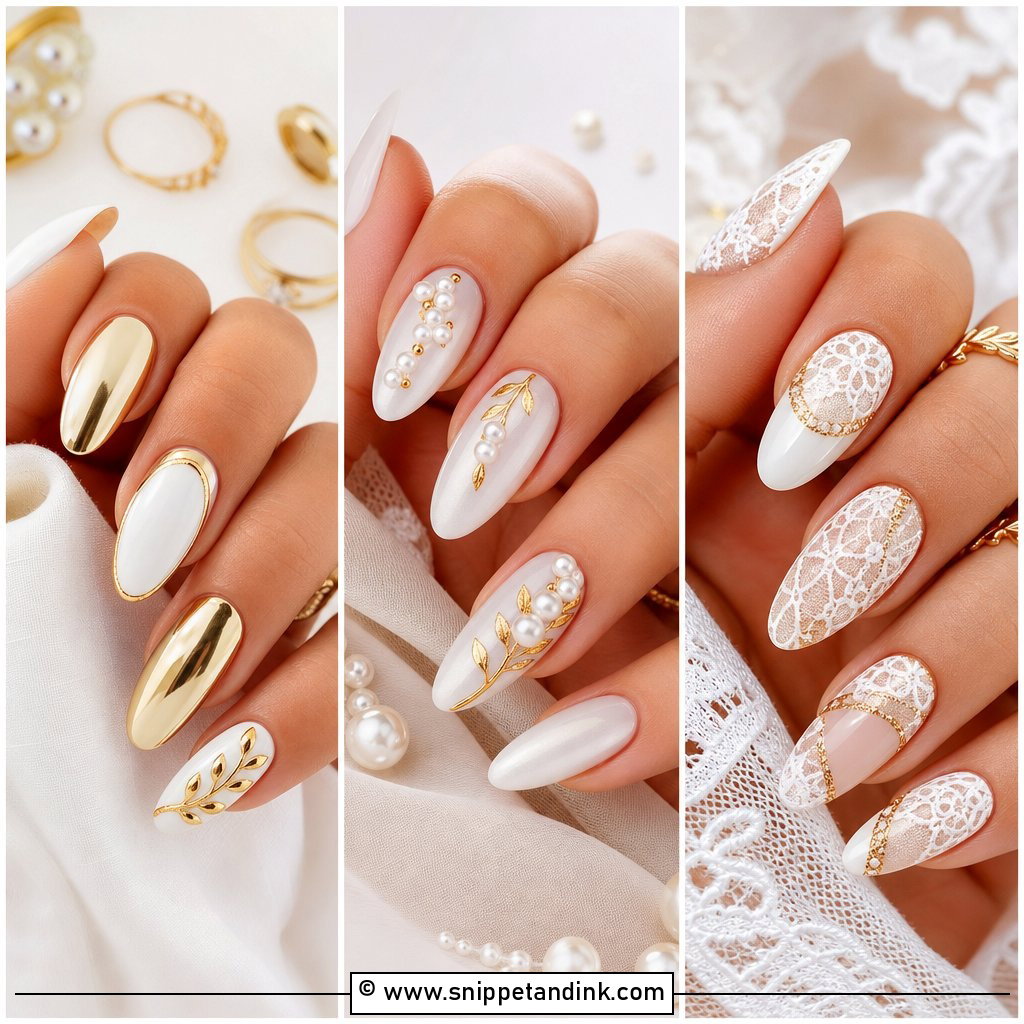
2. White And Gold Wedding Nails
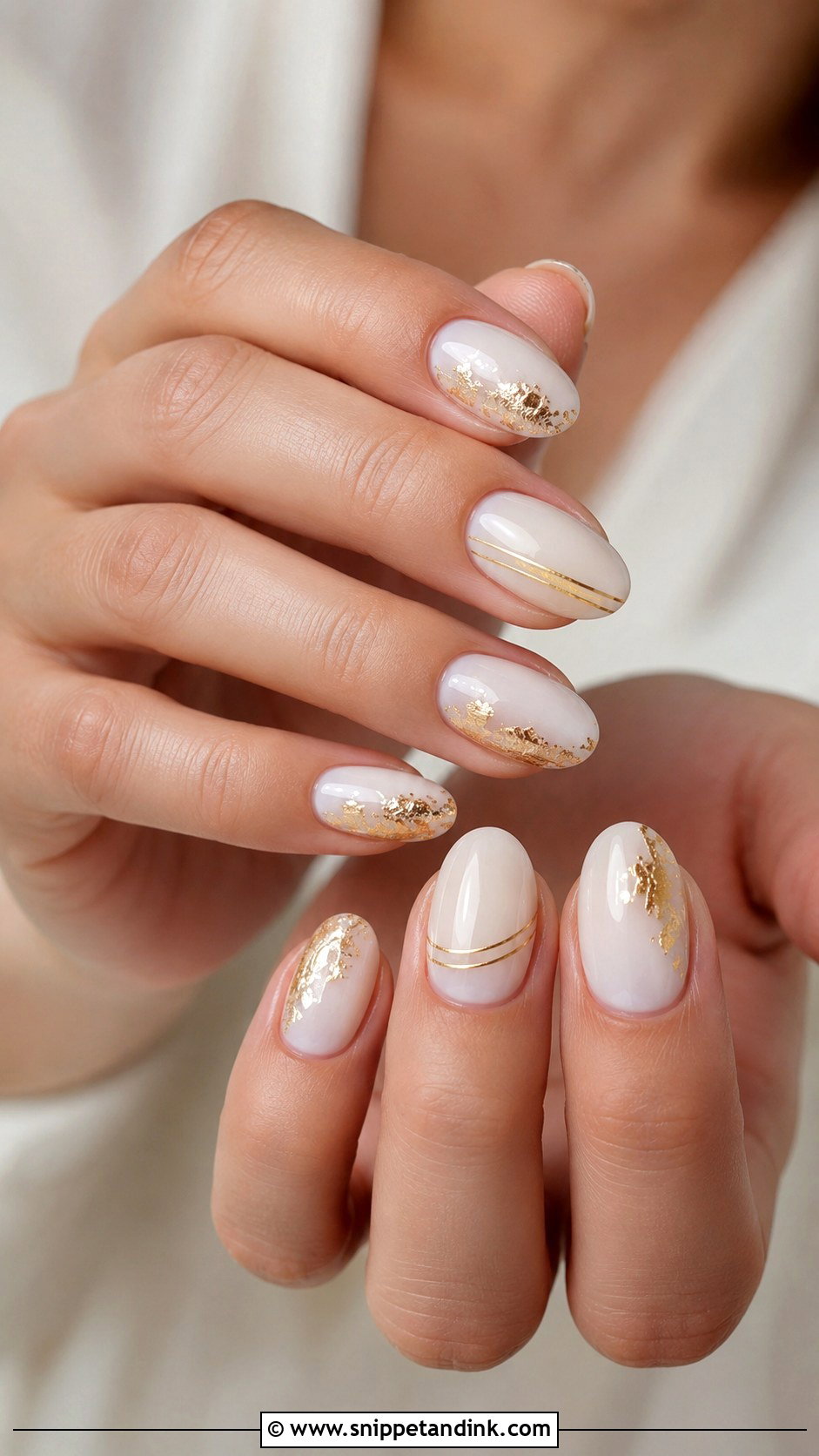
White and gold is a full-set design, so balance matters more than any single nail. I start with milky white, ivory or a sheer white gel, then layer foil, striping or small gold accents across a few fingers. It sits especially well next to satin, pearl details and warm-toned jewelry. My rule is one main gold motif repeated softly: say, thin gold curves on two nails and a few flakes on the rest. That keeps it cohesive. Bright opaque white is less forgiving than milky white, since any chip or thin spot shows at the tip, so I lean milky for brides who type a lot in the week before.
3. Nude And Gold Wedding Nails
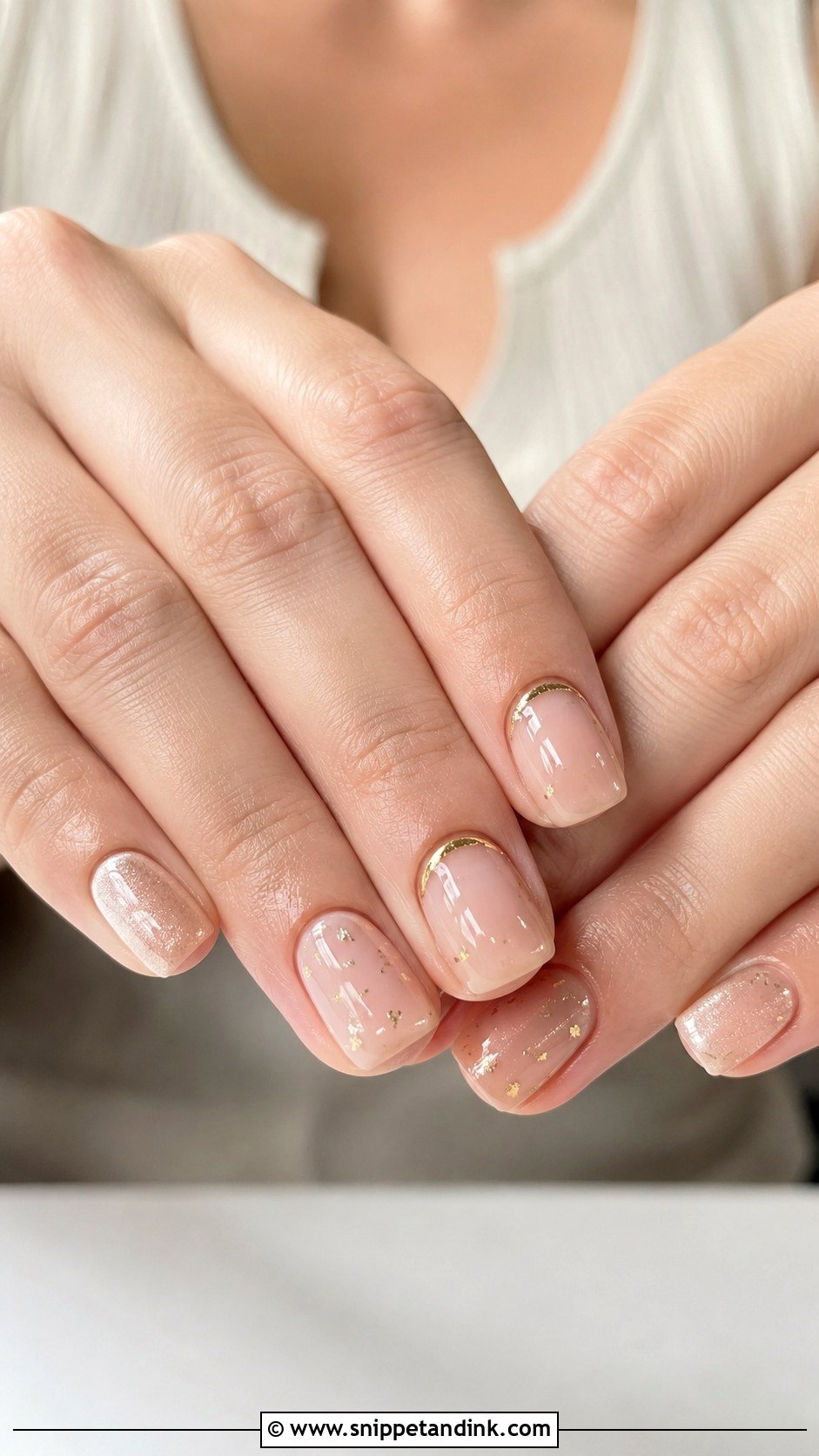
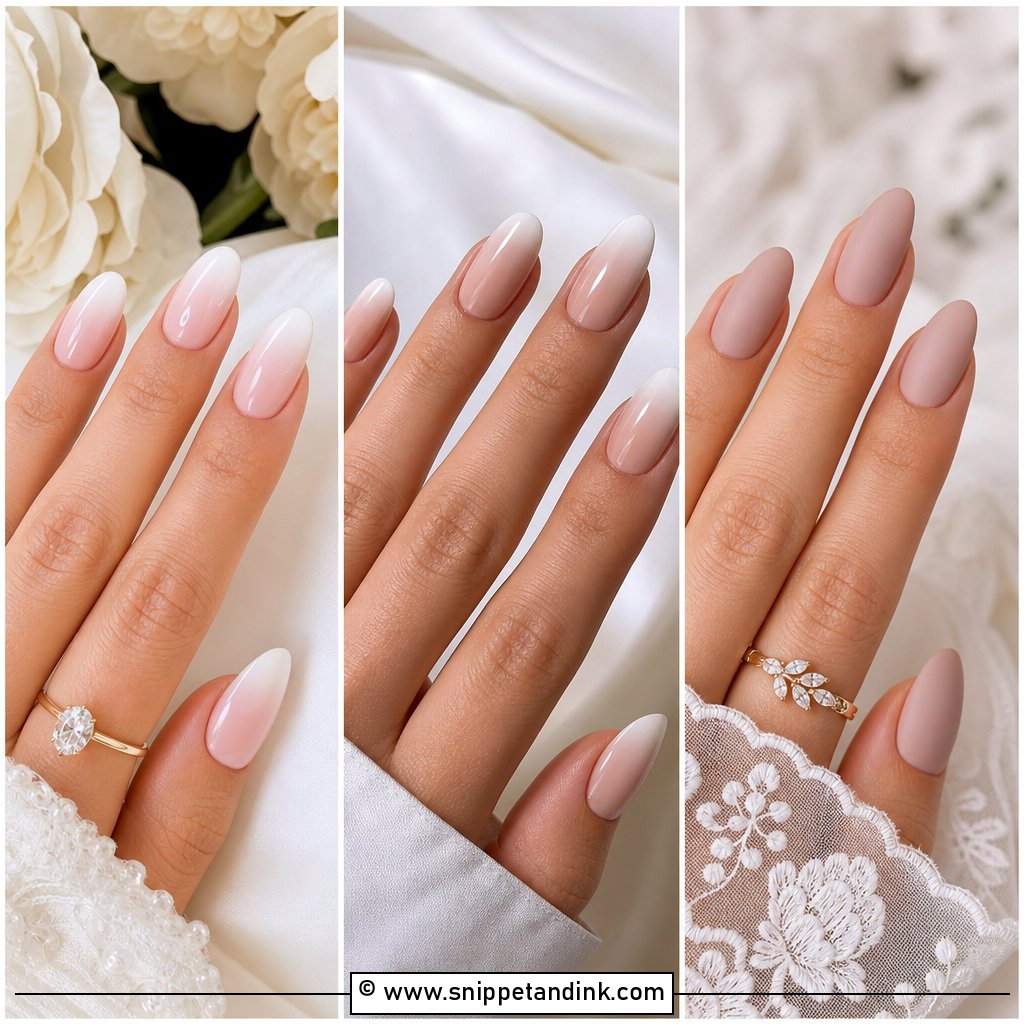
A nude base only works if it actually matches you, which is why I swatch it on the nail before committing. As a rough starting point, fair skin tends to suit a pinky nude with champagne gold, medium skin a beige nude with warmer gold, and deeper skin a caramel nude with rich metallic gold. The gold can be a cuff near the cuticle, a thin diagonal, a few foil pieces or a minimal tip. A nude that’s too pale on deeper skin turns chalky in photos, and that’s the most common miss I see. This one also translates easily to bridesmaids and guests, since it’s understated.
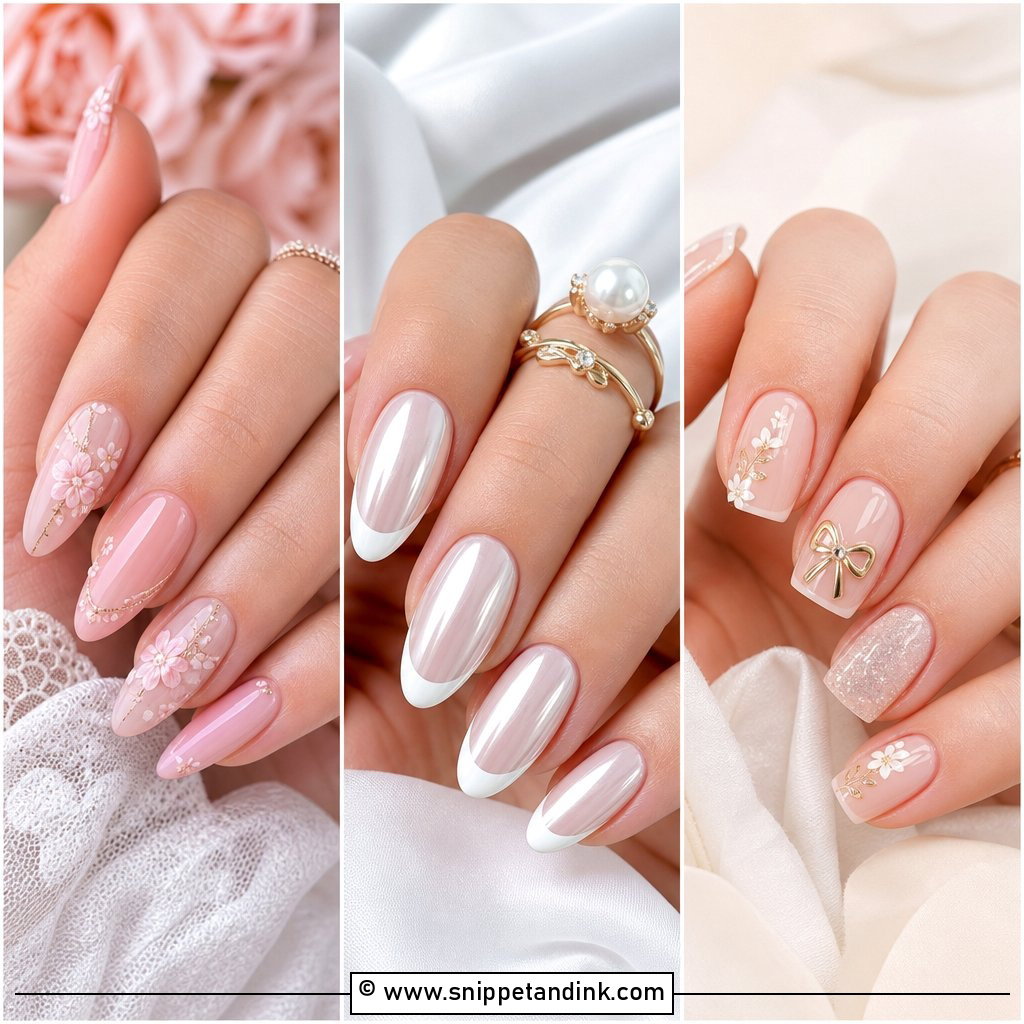
4. Blush Pink And Gold Wedding Nails
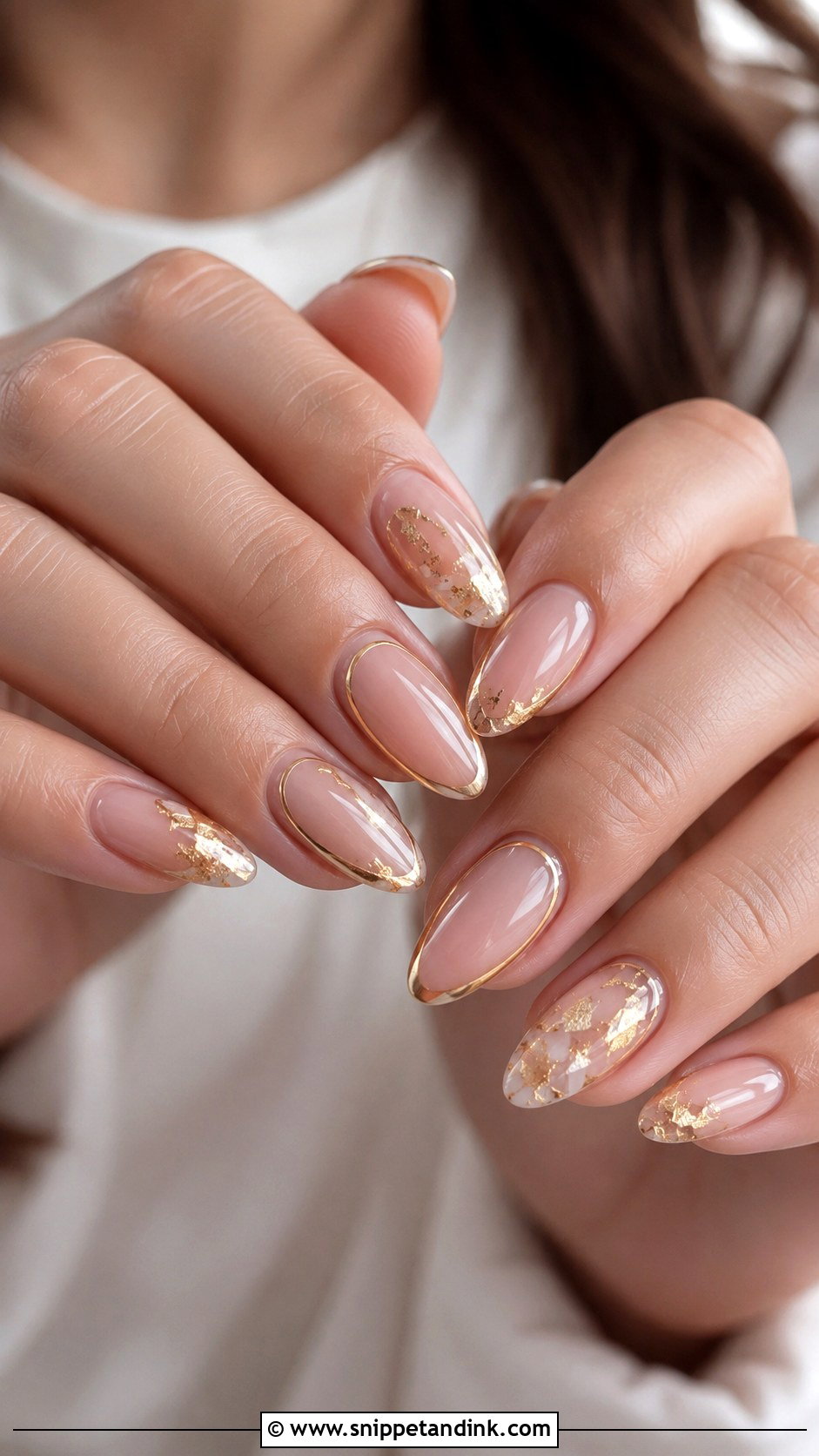
Blush pink is the most forgiving base in this list. It gives the nail a healthy flush, and gold adds warmth without competing. Keep it simple with slim gold outlines around the edges, or scatter fine foil over a glossy blush layer. Almond and oval look graceful here, though short rounded nails carry it just as well. Do check the pink against your bouquet and lip colour at the trial: a cool, bluish blush can clash with peachy flowers, while a warmer blush ties rosy makeup and pale pink blooms together.
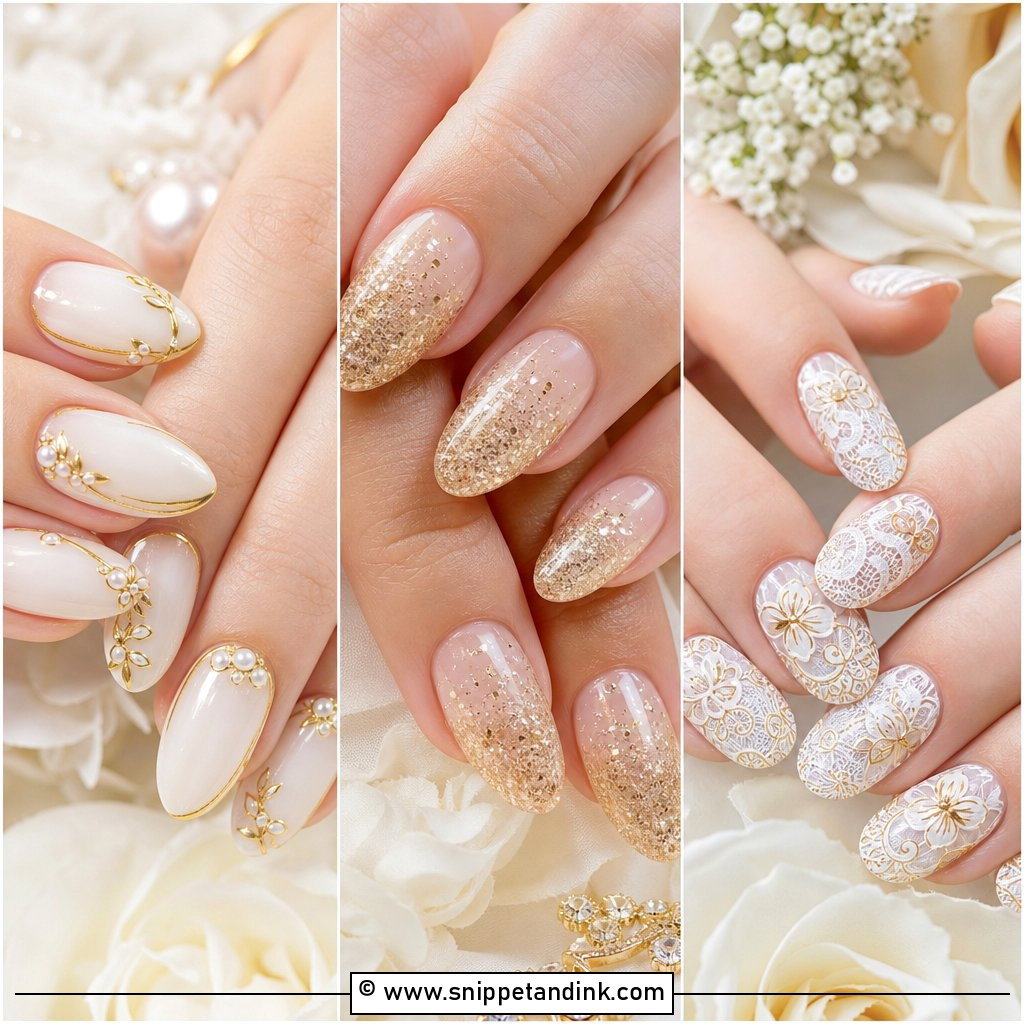
5. Milky White Gold Foil Wedding Nails
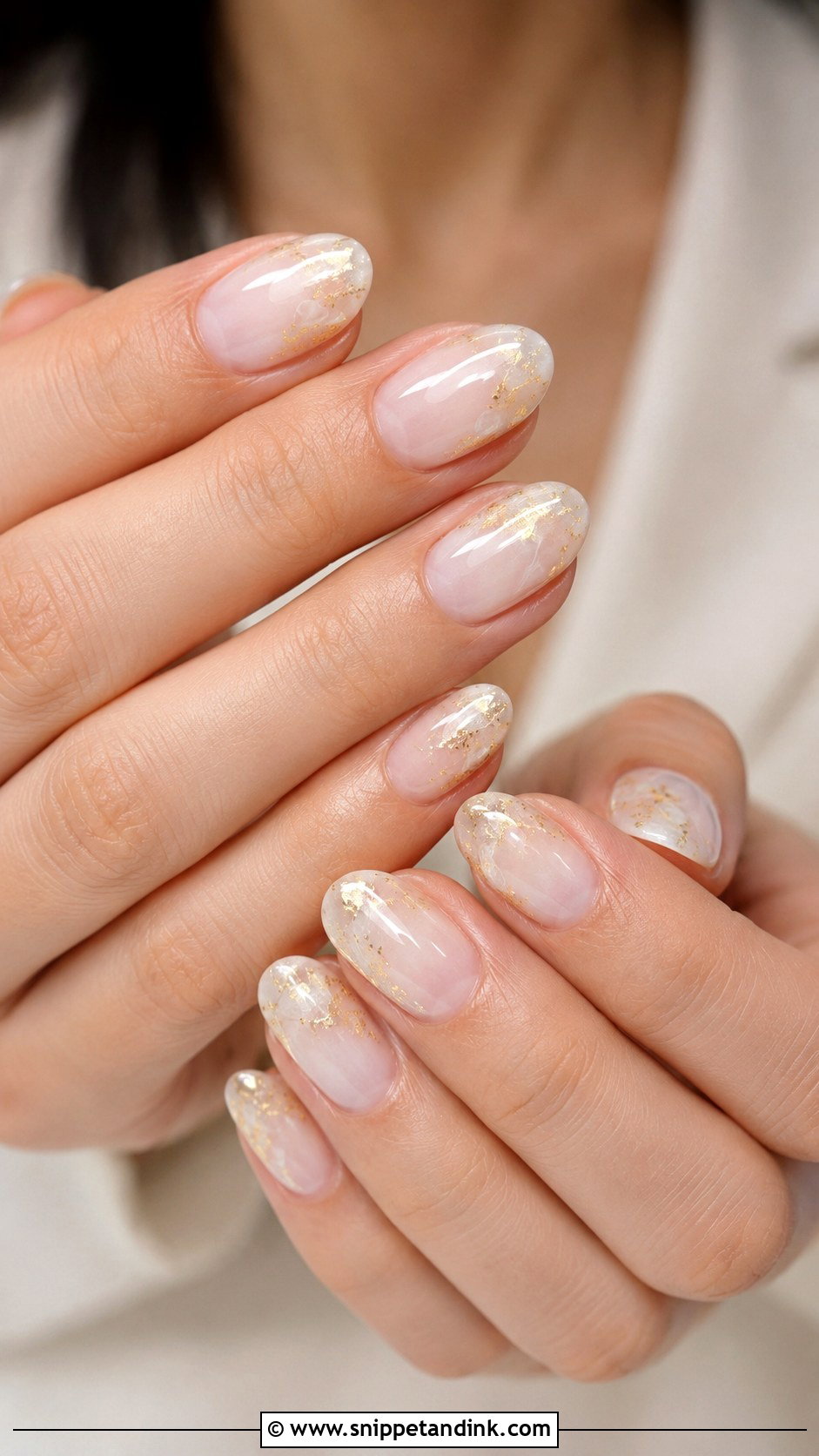
Milky white with gold foil photographs softly because the semi-sheer base diffuses light while the foil catches it. The foil is hand-placed and irregular, so no two nails match exactly, which is the charm. Placement is where it goes right or wrong. Too much gold looks heavy; small pieces near the cuticle, along a sidewall or at the tip give that floating effect. I press foil into a tacky layer and then seal it under builder or top gel, because foil left close to the surface tends to lift at the edges within a few days. A medium almond or oval gives the pieces room.
6. Gold Chrome Wedding Nails
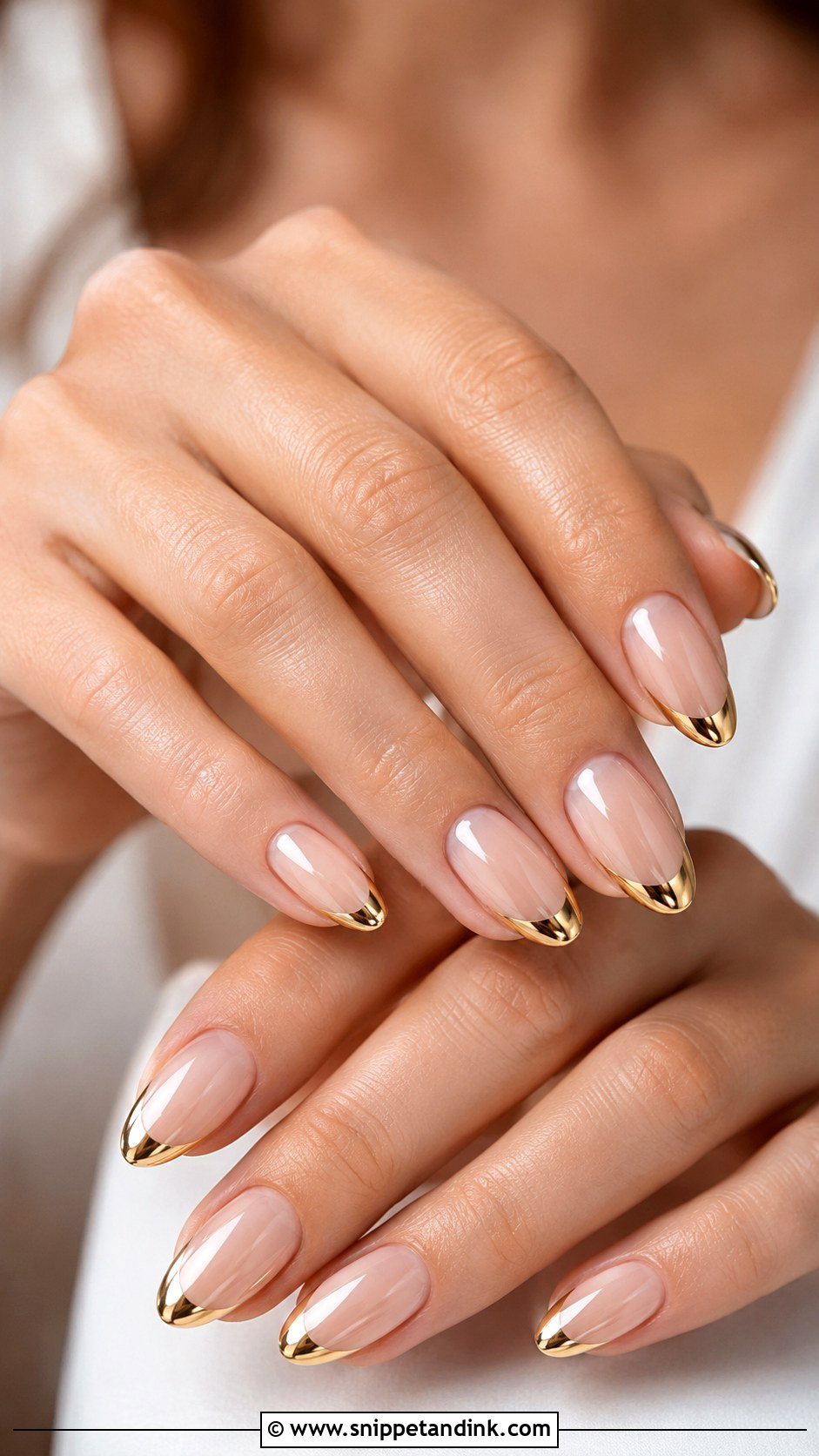
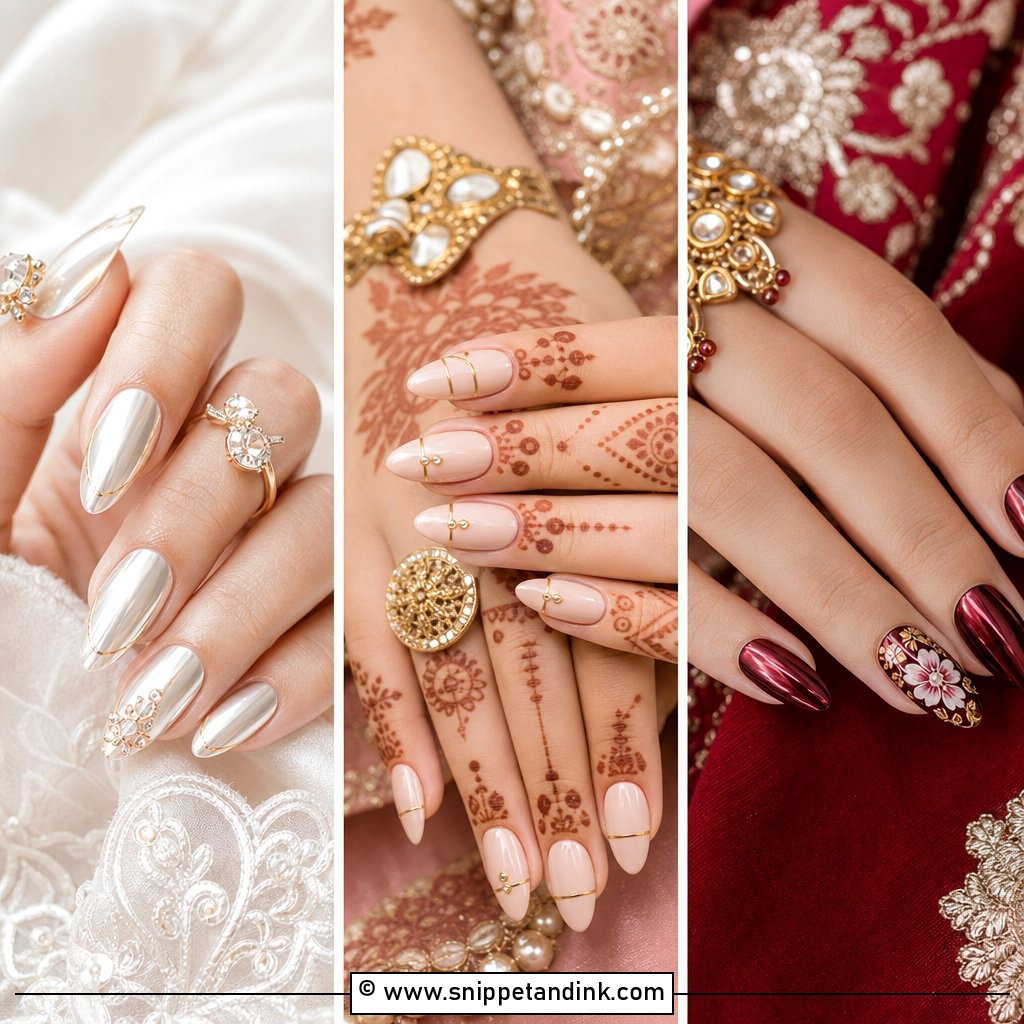
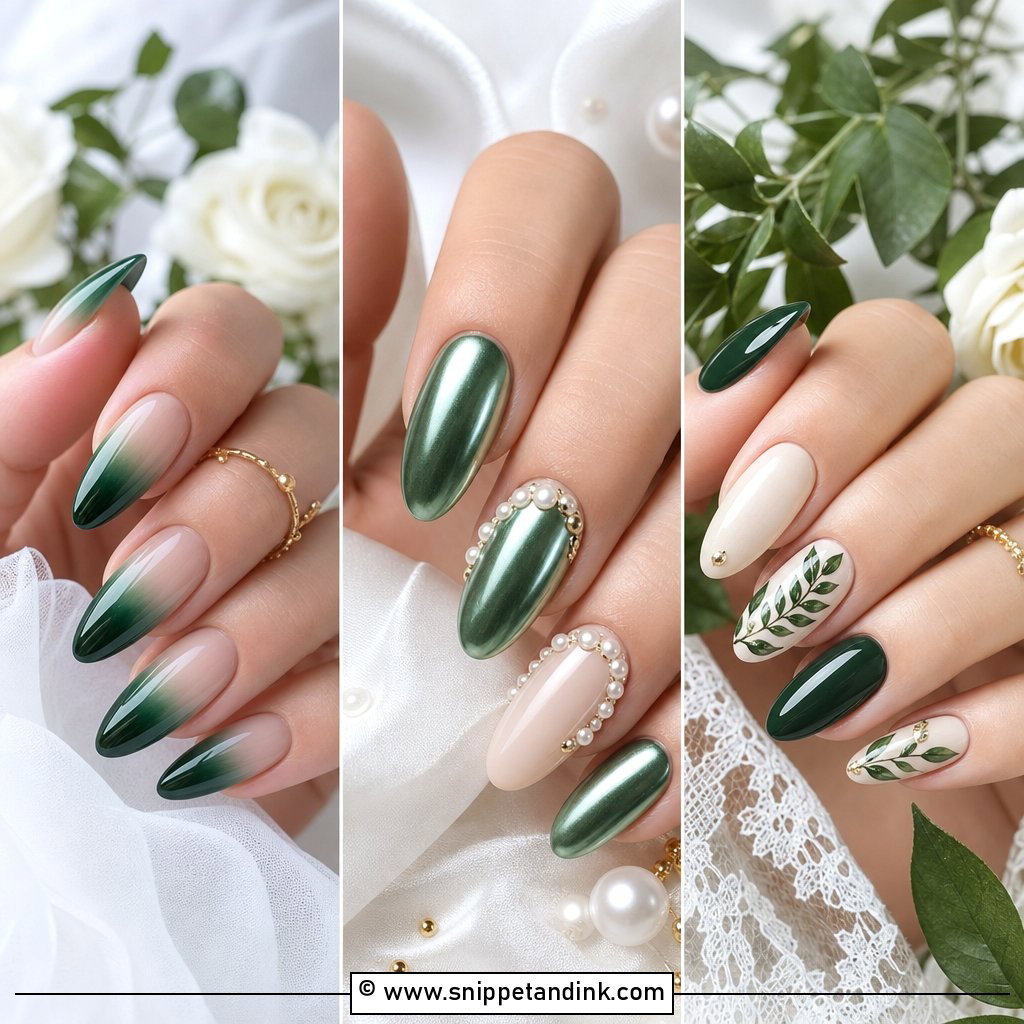
Chrome is the sleekest way to wear gold, and also the least forgiving. It can cover the whole nail, or sit on tips, swirls, borders or a single accent. For brides, champagne chrome is usually my pick over yellow gold because the glow is lighter and sits closer to skin. A wearable version is a sheer nude with chrome French tips or one full chrome nail per hand. The base has to be perfectly smooth before the powder goes on: chrome sits on a no-wipe top gel and magnifies every ridge, bump or speck of dust underneath it.
7. Pearl And Gold Wedding Nails
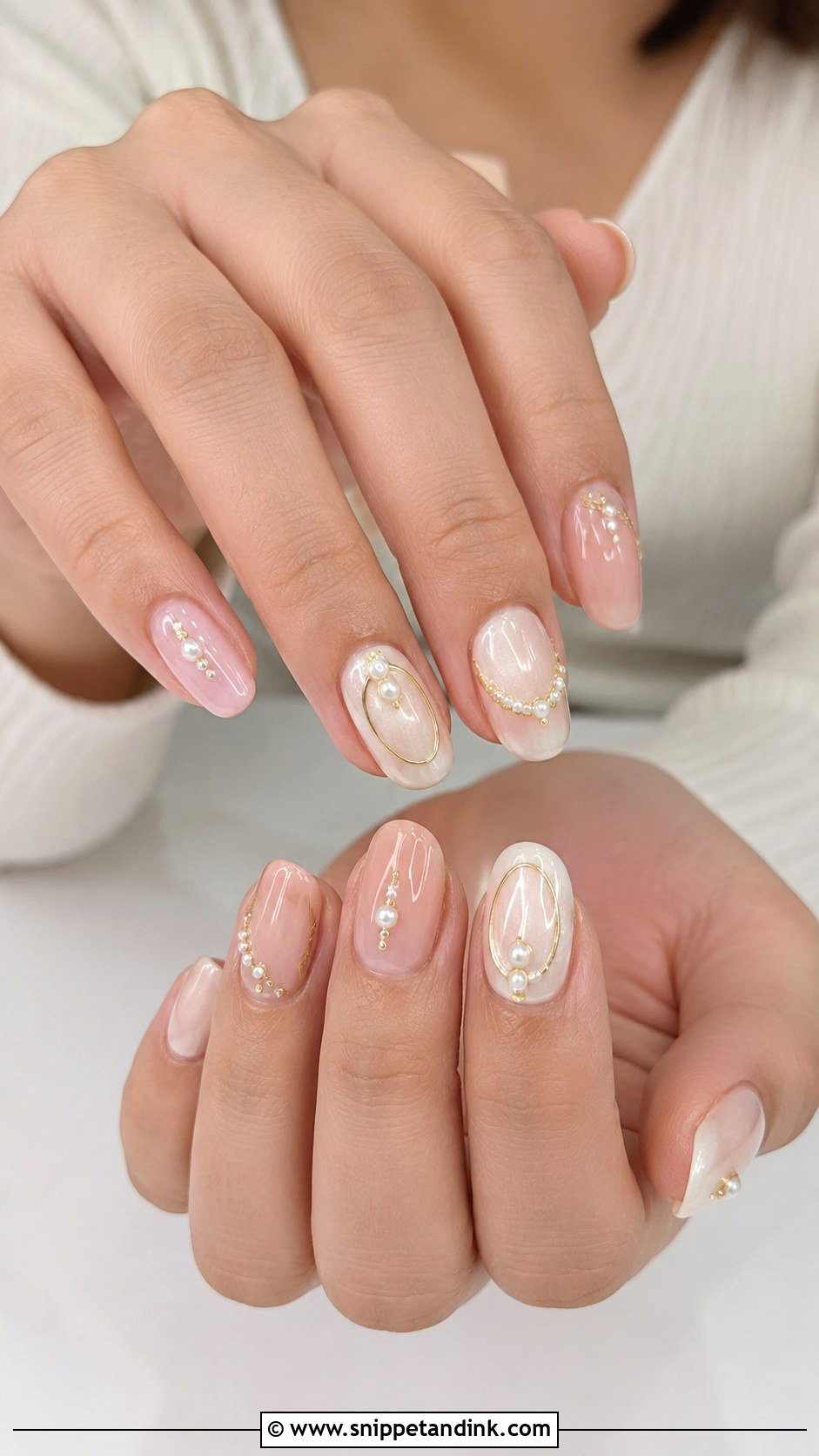
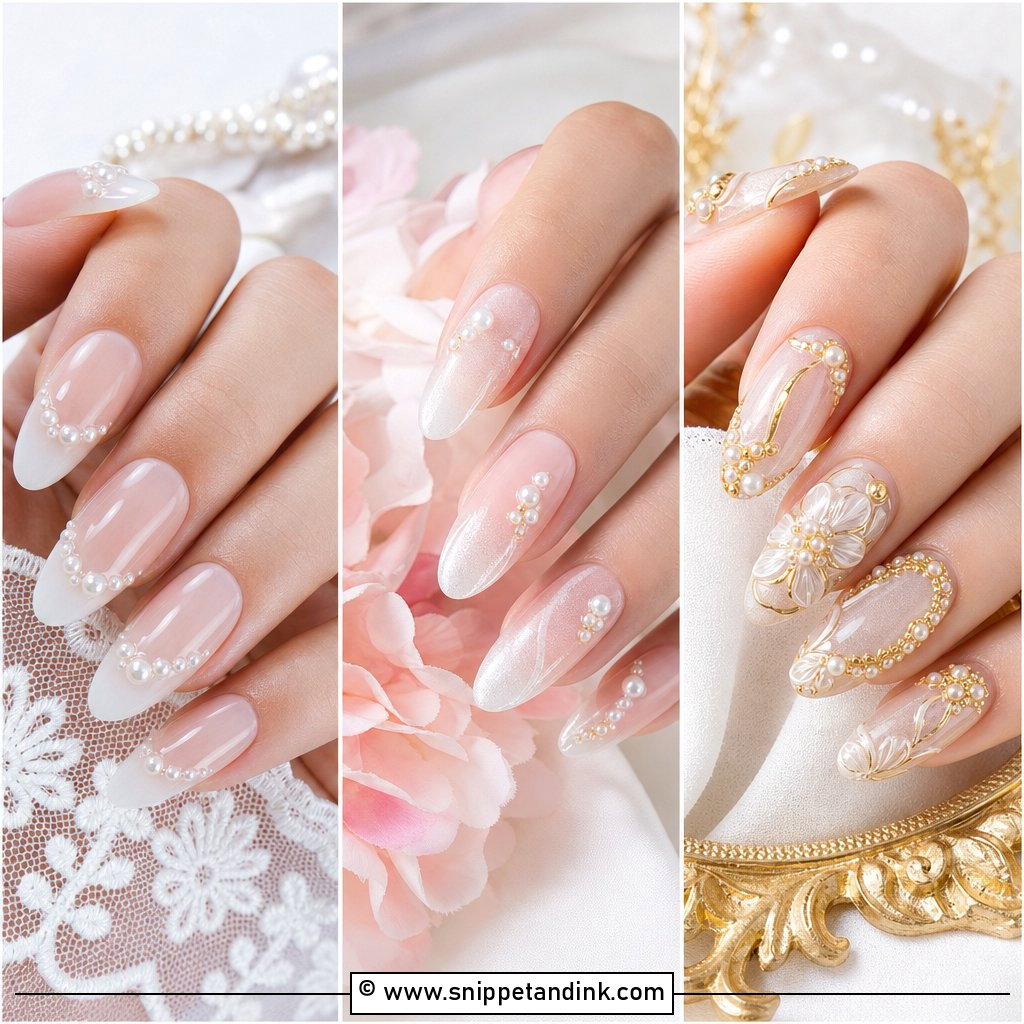
Pearls and gold together give the set dimension, and they echo bridal jewelry without copying it. I start with a sheer pink, nude or milky base, then add tiny pearls with thin gold accents, either near the cuticle, along a curved line, or on one or two accent nails. Size is the decision that matters. Small flat-back pearls stay put and don’t snag; large domed charms catch on lace, hair and tights, and they’re usually the first thing to pop off. This set pairs well with pearl earrings, a pearl-edged veil or a beaded gown, as long as you don’t add pearls to every nail.
8. Gold Glitter Ombre Wedding Nails
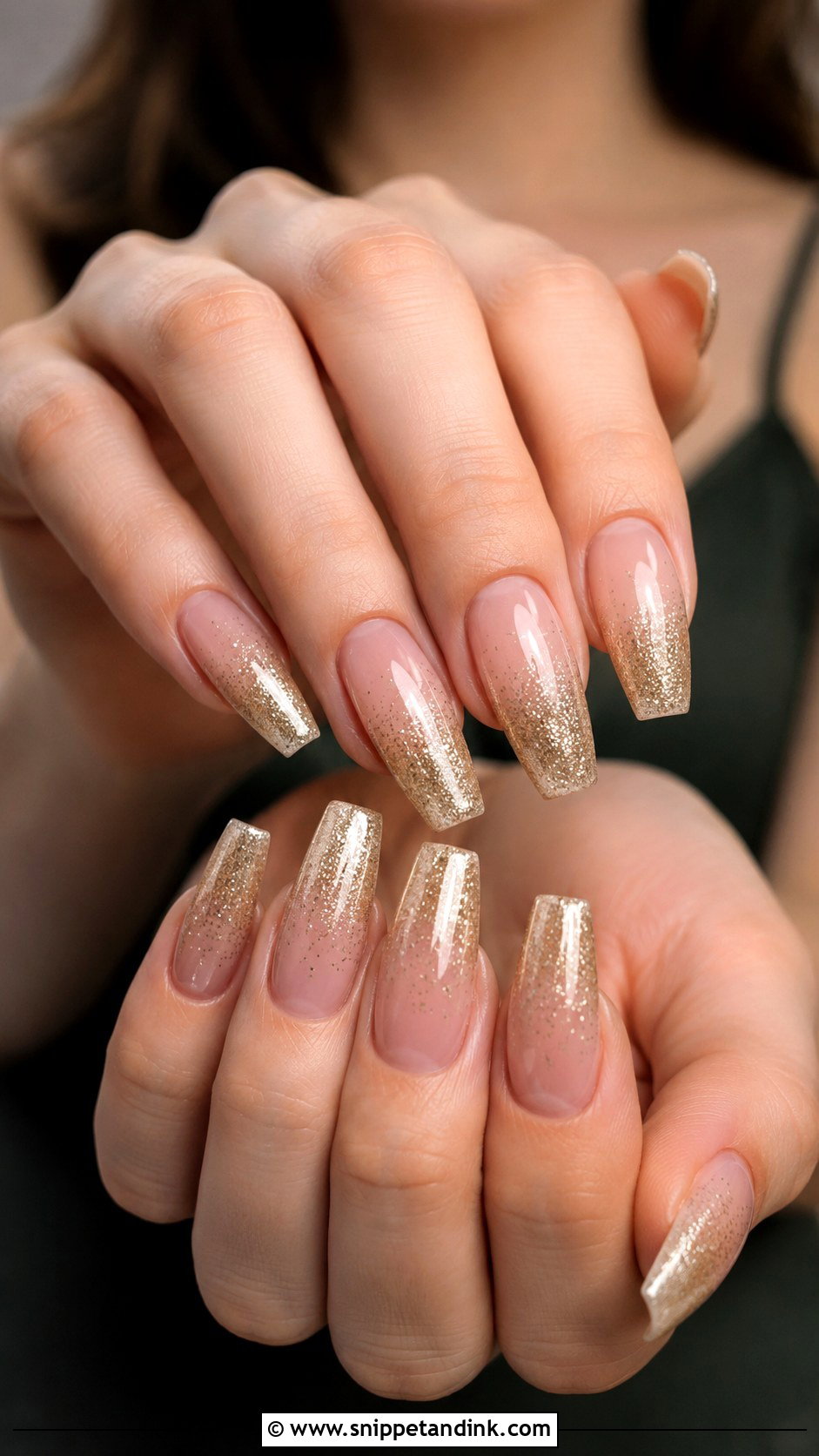
Gold glitter ombre wedding nails give you sparkle that blends rather than sits on top. The glitter usually fades from the tip toward the centre, or from the cuticle up for a reverse effect. I build the gradient with a sponge or a slightly damp brush in thin layers, because packing glitter on in one go leaves a hard line that never really blends. Fine champagne glitter is the one to ask for; chunky hex glitter reads flashy and makes the topcoat lumpy. Almond, coffin and oval give the fade room to travel. Under candlelight at an evening reception it glows nicely.
9. Gold Marble Wedding Nails
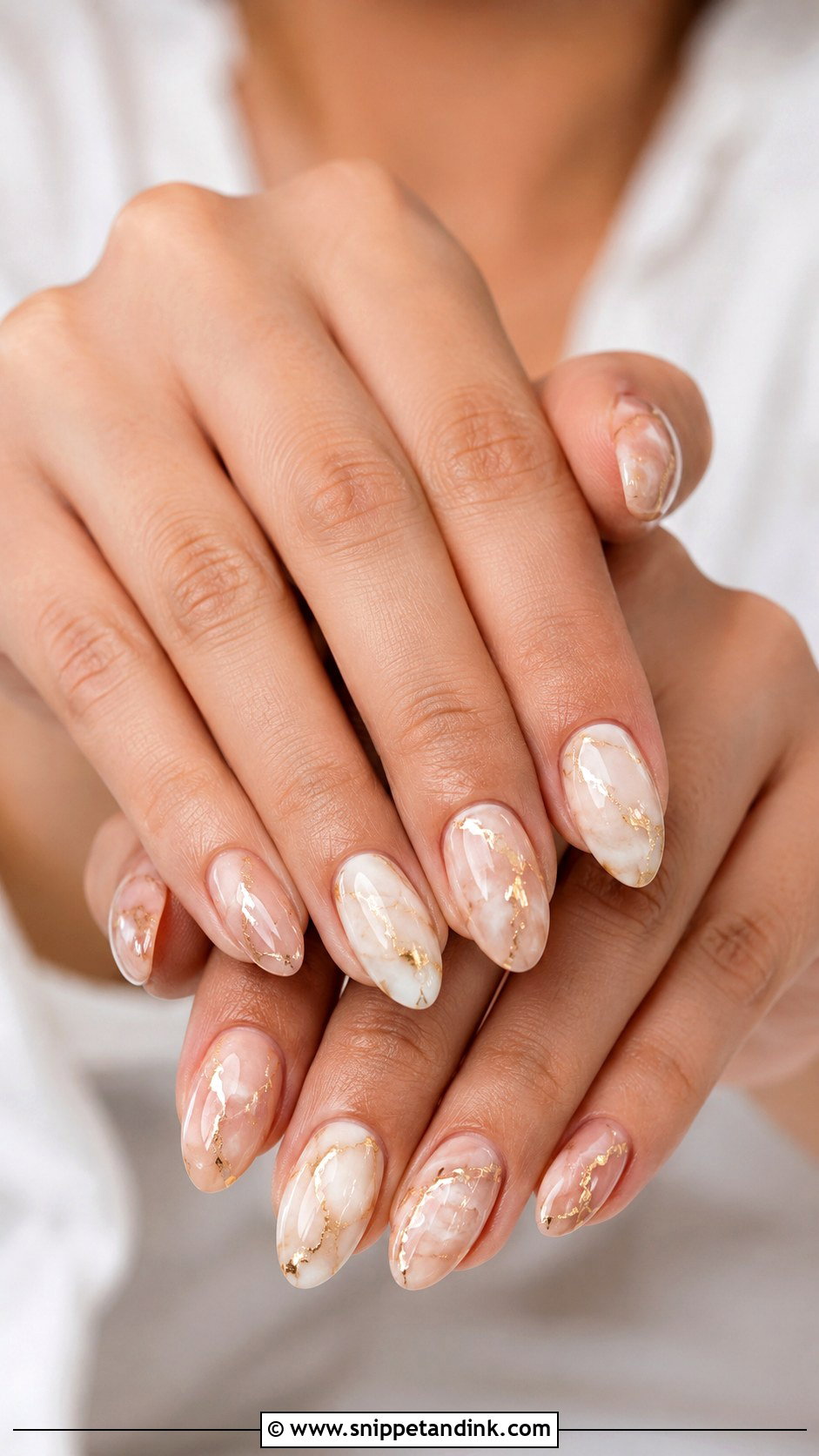
Marble is subtle stone-like movement on a white, ivory, blush or nude base, with thin gold foil or line accents layered in. The veining should be delicate. I drag soft grey, beige or barely-there white through wet gel so the lines bleed slightly, which looks more like real stone than crisp painted lines do. Gold foil set along a vein makes the whole thing feel custom. A full marble set is a statement; two marble accents with glossy neutrals elsewhere is easier to live with, and it won’t fight a patterned dress.
10. Gold Lace Wedding Nails
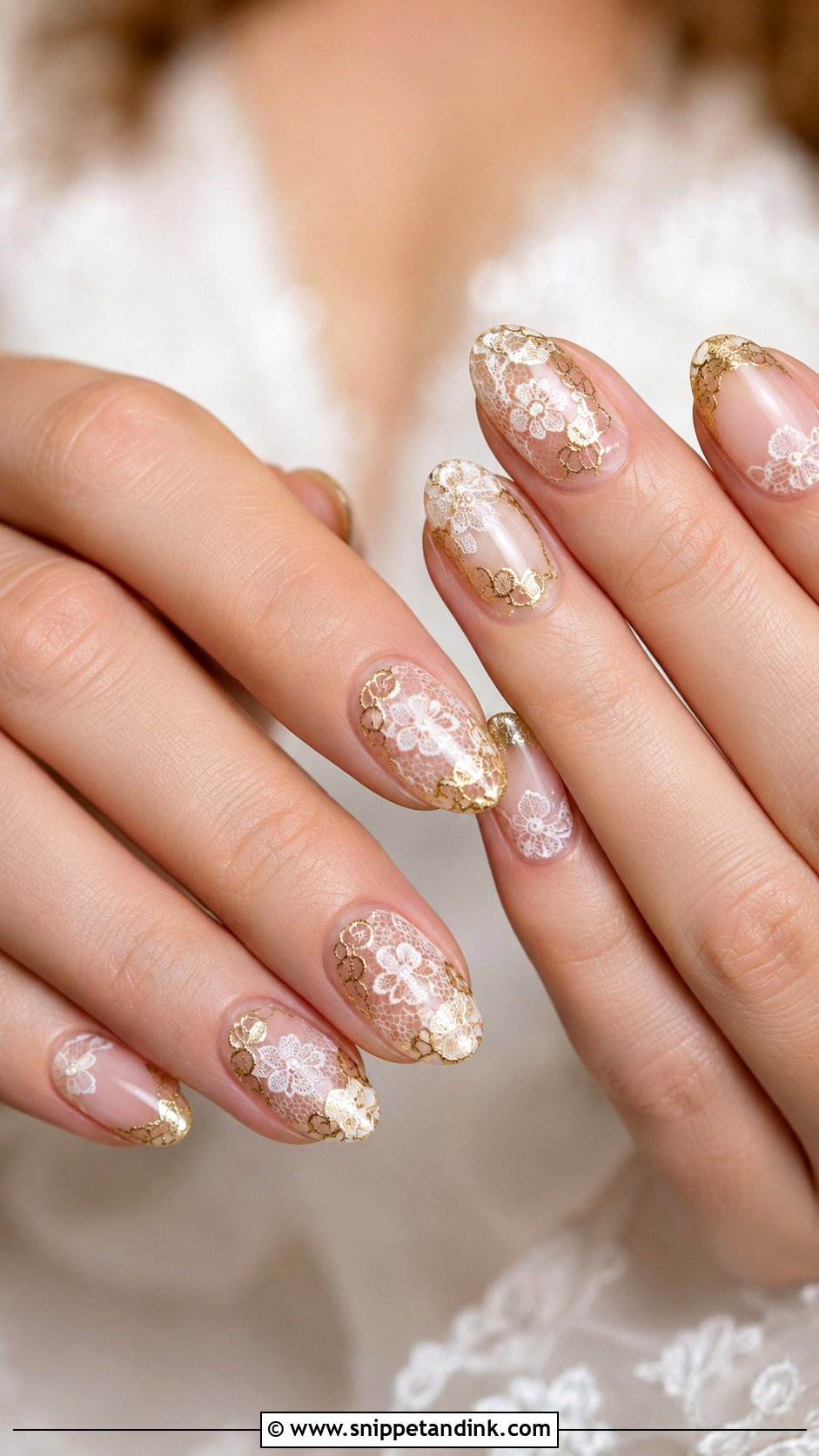
Lace nails are fine-brush work, so they take longer in the chair than most sets here and I’d book extra time for them. On a sheer nude or soft pink base I paint lace in white, ivory or gold, with the gold either outlining the pattern or picking out small floral shapes. They mean the most when they echo something real, like lace sleeves or floral embroidery on your gown. Bring a close photo of the fabric. Keep the linework thin; heavy lace turns into a blur from more than a foot away. One or two lace accents with gold French tips on the rest is the balance I usually suggest.
11. Gold Floral Wedding Nails
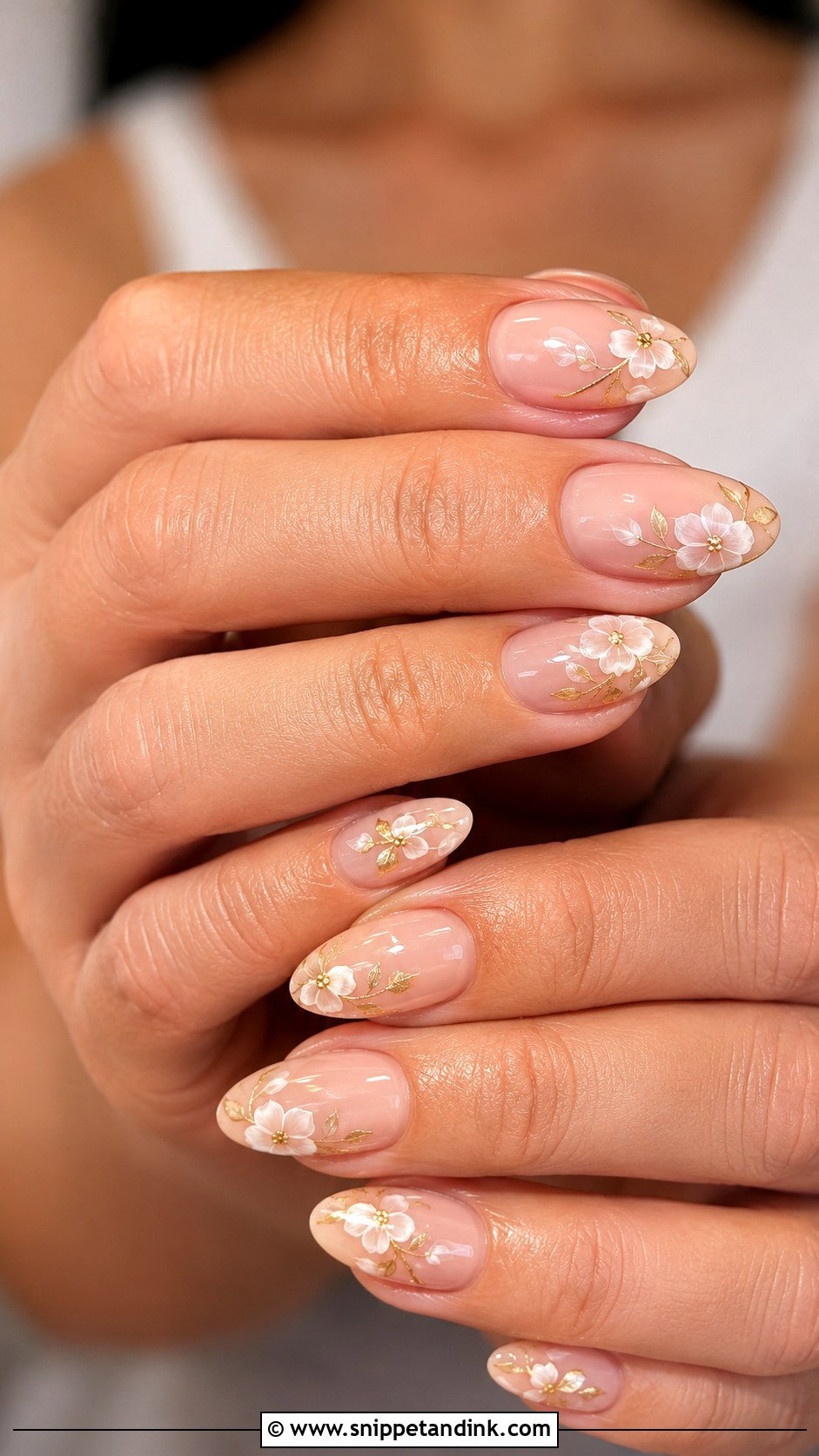
Gold floral art is easy to personalise because the flowers can mirror your bouquet. I paint them in soft white, ivory or nude, then finish with tiny gold centres, stems or metallic leaves. They suit spring, summer and garden weddings, but a neutral palette carries them year-round. Ask for small flowers that follow the curve of the nail rather than one large bloom across the surface, which flattens the nail visually. Glossy top gel keeps the petals looking fresh; matte makes them softer, though matte shows hand cream and makeup marks more and needs a gentle wipe on the day.
12. Rose Gold Wedding Nails
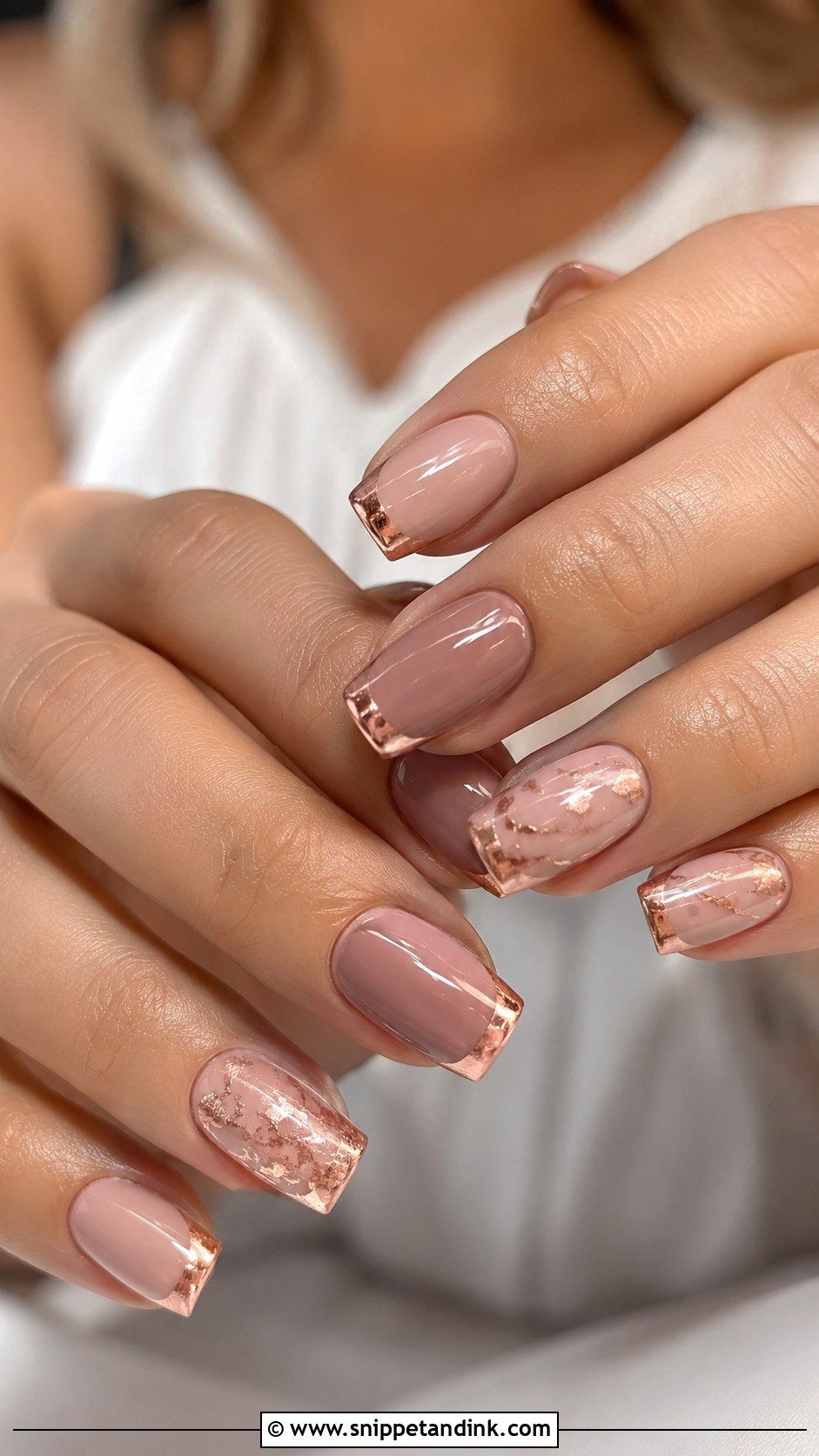
Rose gold wedding nails are the softer cousin of yellow gold, with pink running through the warmth. They sit well with blush, mauve nude, sheer beige and milky white, and that mix of pink and gold suits a wide range of skin tones. Tips, foil, glitter ombre and chrome all come in rose gold. If your rings, earrings or hair pins are rose gold, match the nail finish to them; if your engagement ring is yellow gold or platinum, rose gold nails can look slightly off beside it in close-ups. Short square edges look sharp in it, and almond nails suit swirls.
13. Gold Swirl Wedding Nails
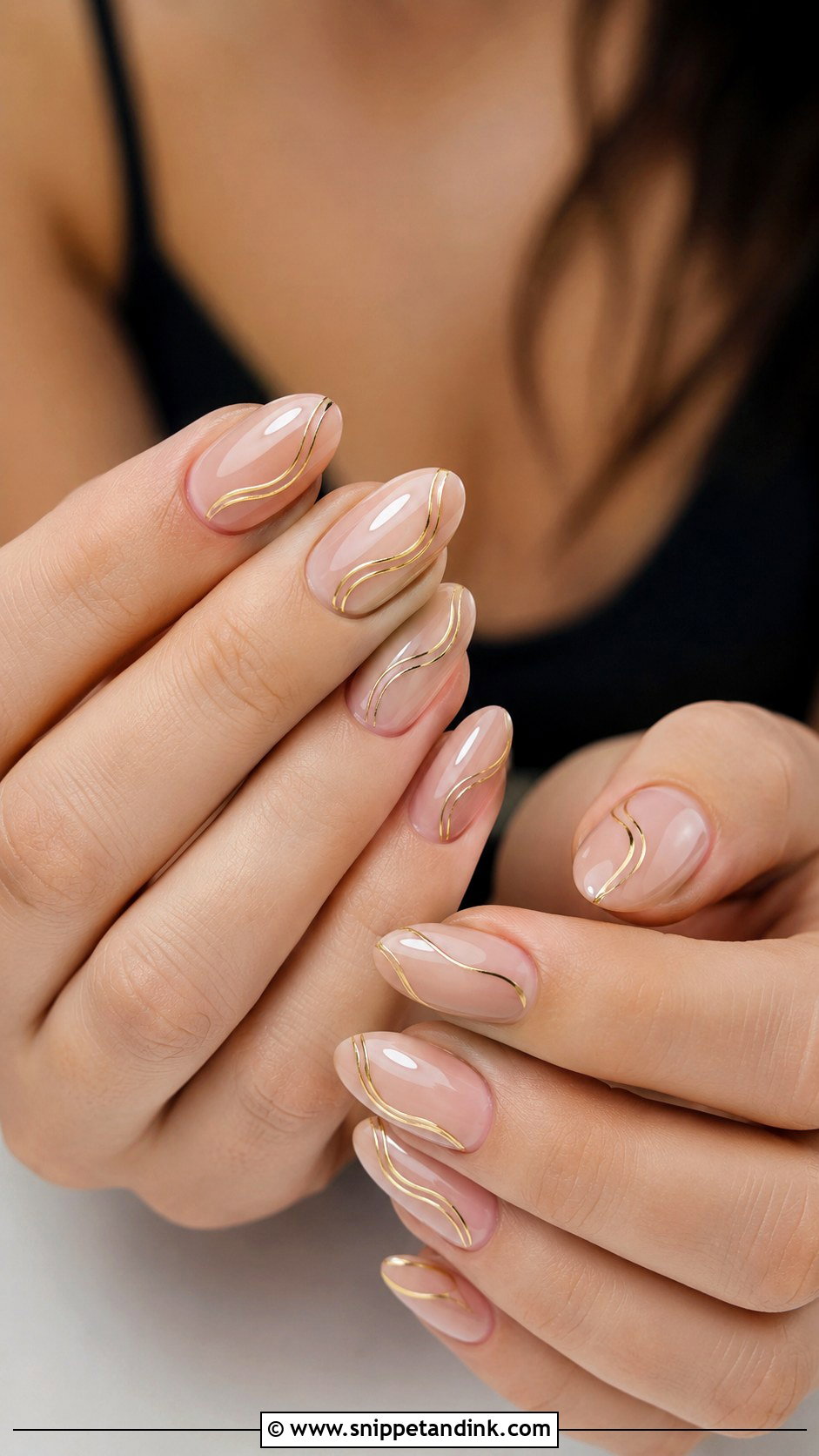
Swirls give movement without flowers, glitter or anything raised, which is why they suit brides who want nail art that still feels clean. Thin gold lines run across a sheer nude, pink or milky base, diagonally, near the tips or along one side. A diagonal swirl also makes fingers look longer, especially on almond or oval. The skill is consistency. I use a long, thin liner brush and keep the line weight the same on every finger, because one thick swirl among nine fine ones is the first thing the eye catches in a hand shot.
14. Gold Accent Wedding Nails
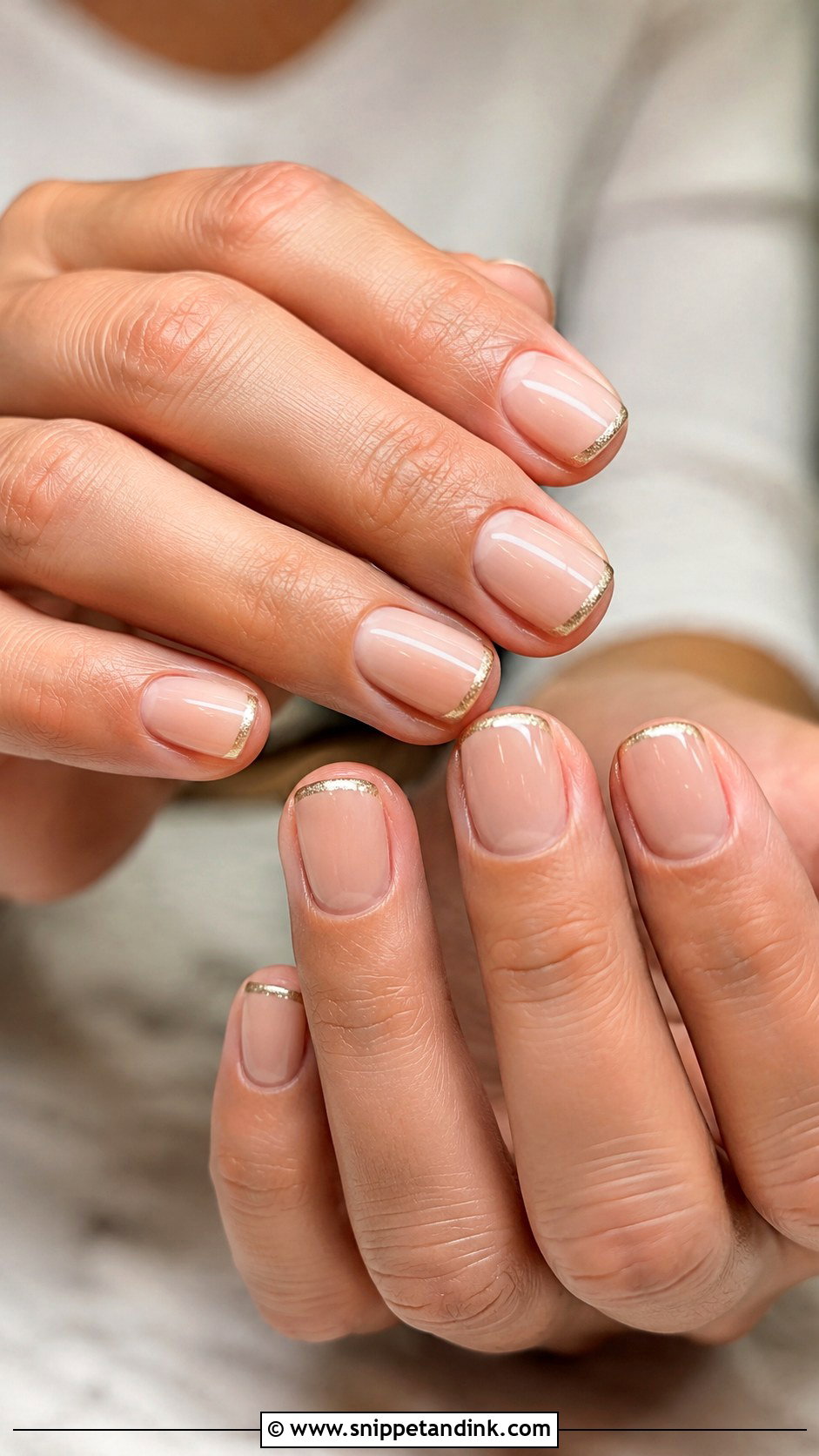
Gold accent wedding nails keep most of the set plain (sheer pink, nude, ivory or milky white) and put the detail on one or two fingers: foil, glitter, chrome, pearls or fine line art. It’s the most practical route for short nails, since the design doesn’t need a big canvas, and it’s the easiest set to repair if something chips. One thing I always do is carry a trace of gold onto the plain nails, a tiny dot or a fine cuticle line, so the accents look planned instead of random.
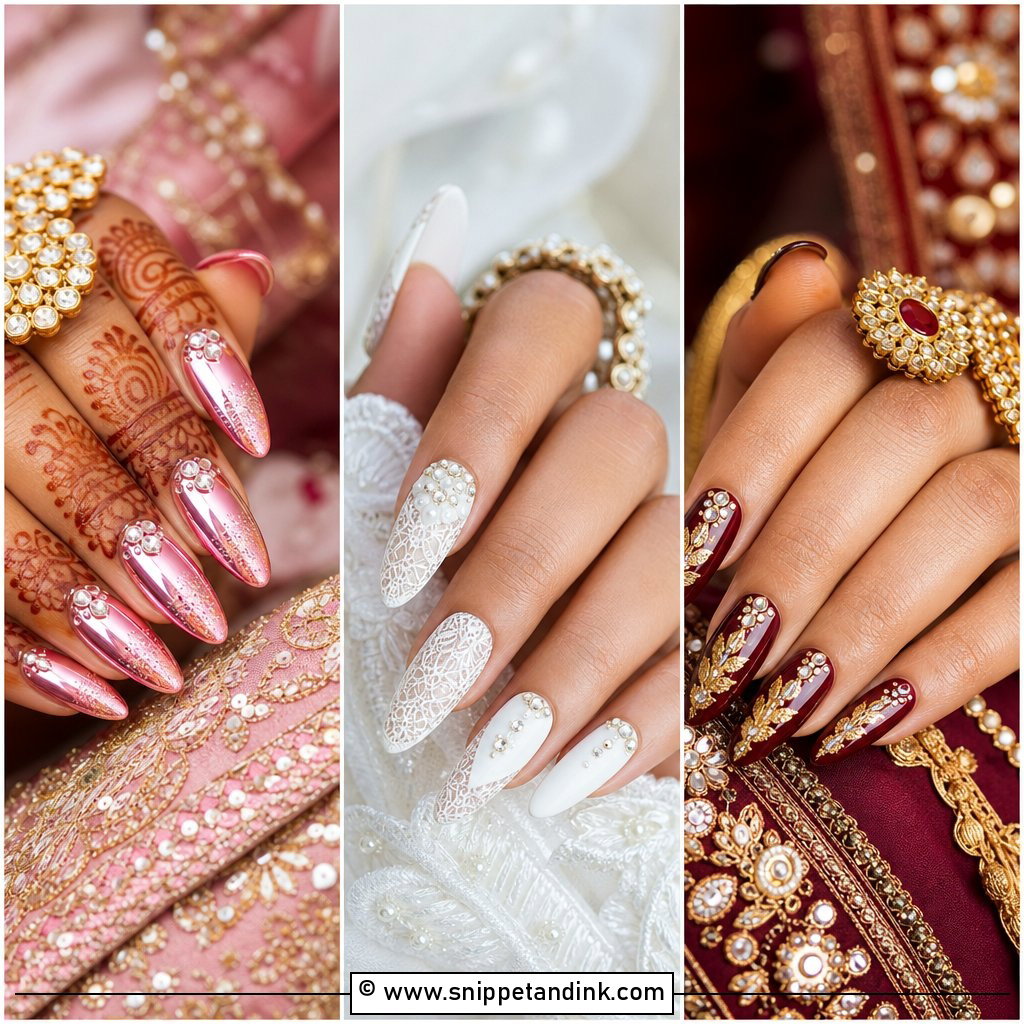
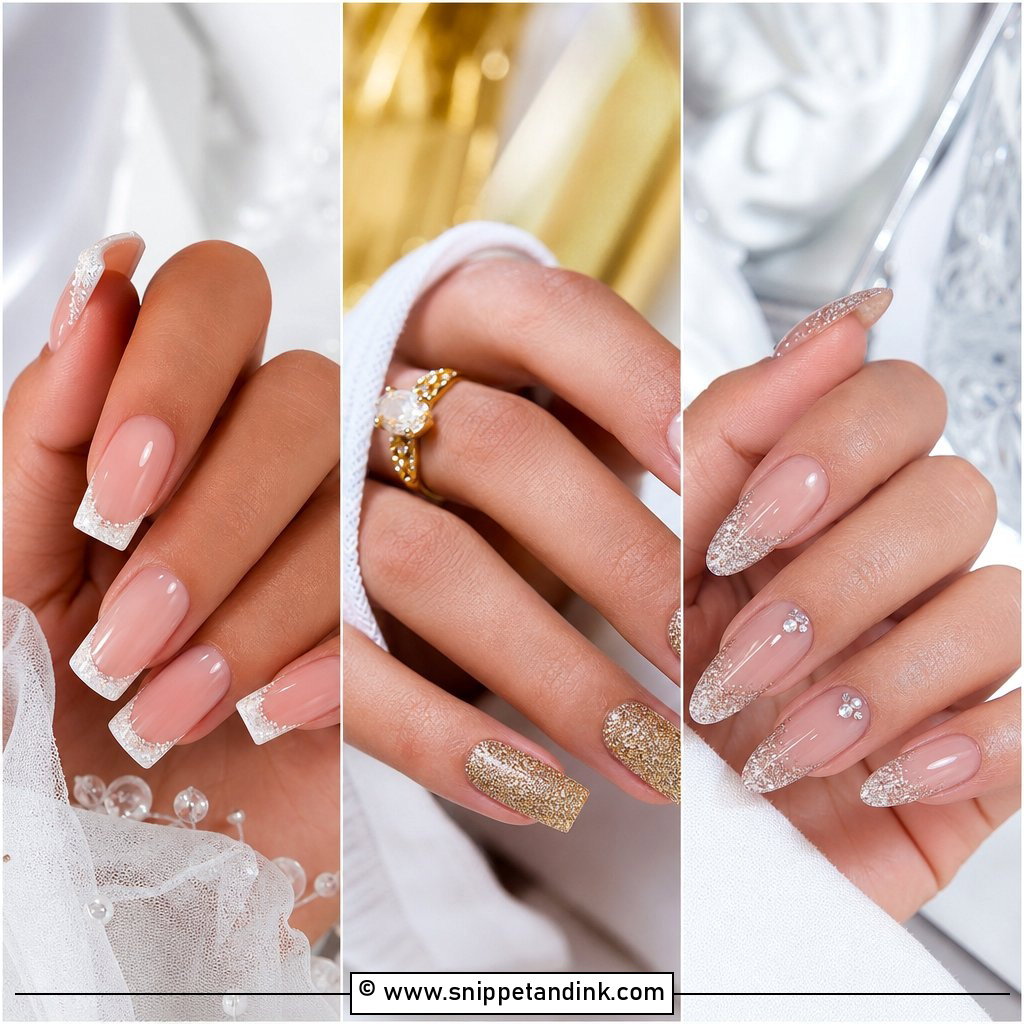
15. Short Gold Wedding Nails
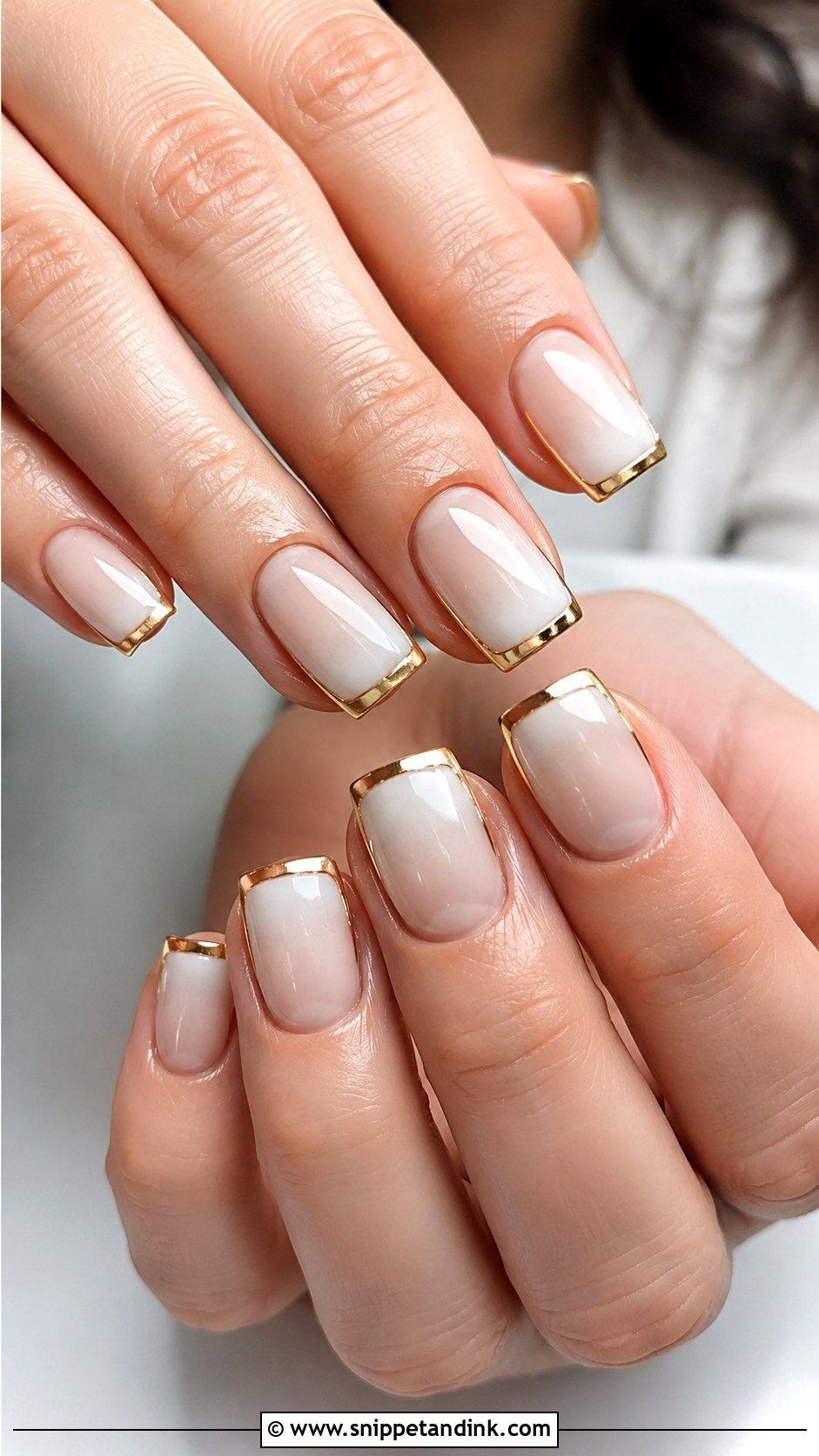
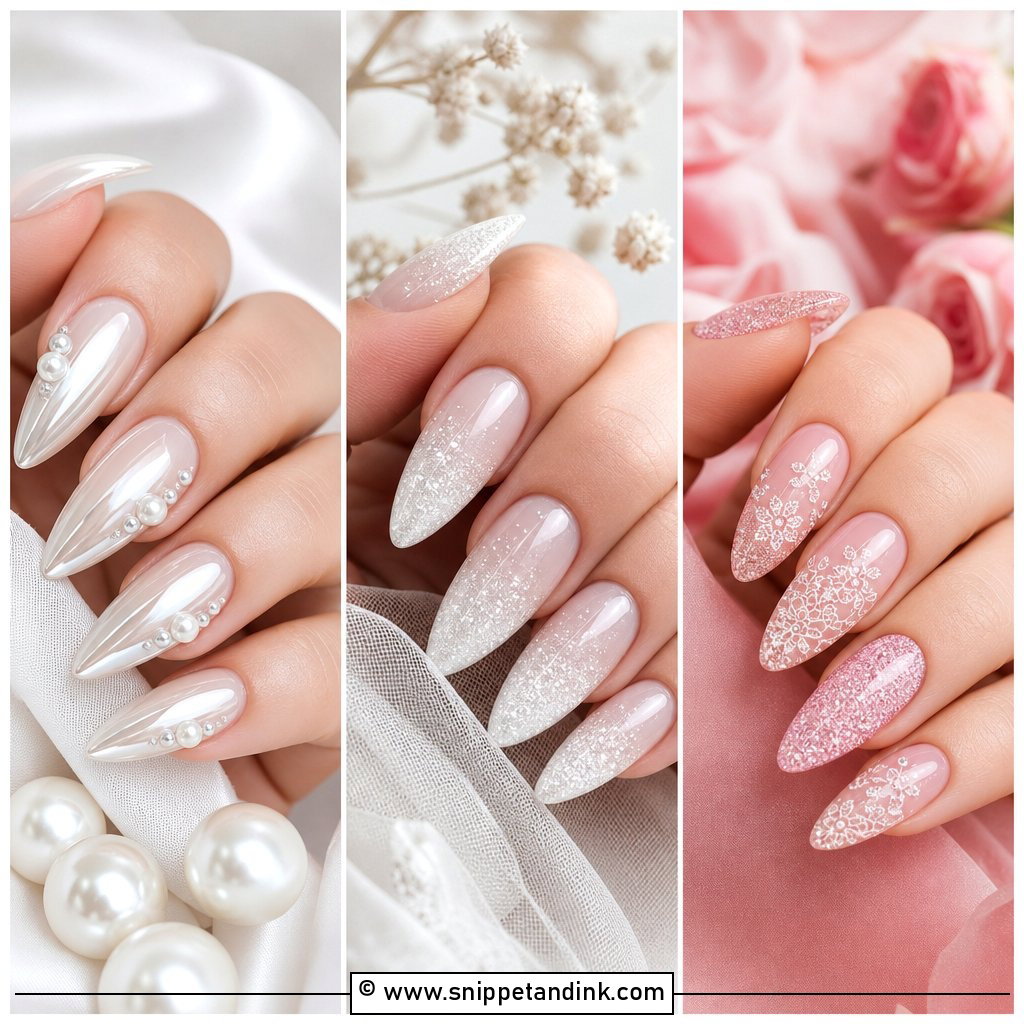
Short nails carry gold better than people expect, because small details look deliberate rather than crowded. A soft square, rounded or squoval shape takes thin gold tips, tiny foil pieces or a simple cuticle line well. A sheer nude or milky base makes the nail bed look longer. Fine gold glitter at the free edge brightens the set without crowding it. I’d choose this for anyone who works with their hands, plays an instrument, or simply hates the feeling of length, since short gel is also the least likely to crack at the free edge before the day.
16. Almond Gold Wedding Nails
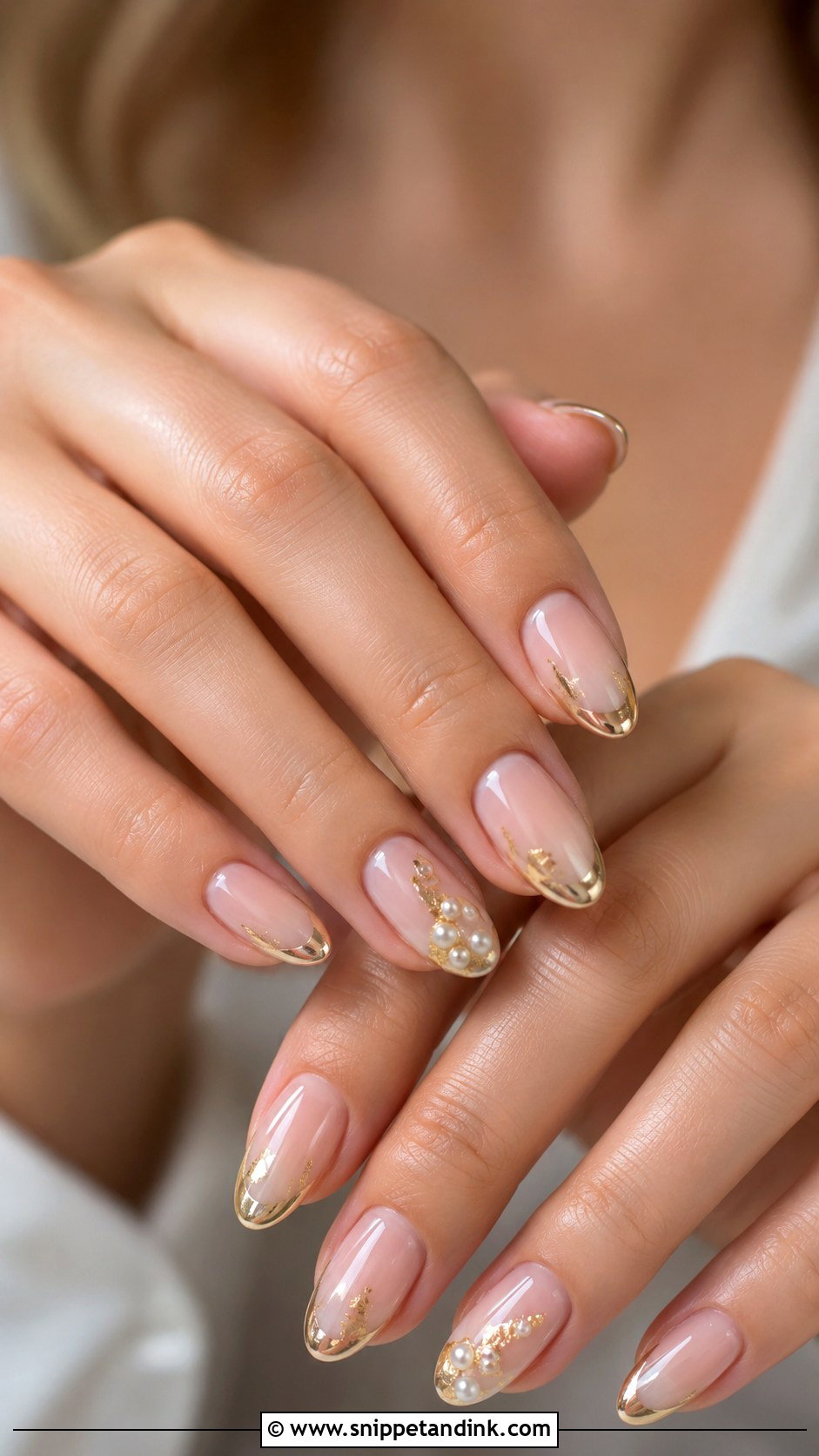
Almond is the shape I recommend most for gold because the taper lengthens the fingers and a metallic line naturally follows the curve. French tips, chrome edges, florals, foil and swirls all sit well on it. For a classic set, sheer pink with thin gold tips. For more detail, foil and a few small pearls on accent nails. Almond can hold more design than short nails, but it still looks best when the gold is placed with intention. Keep it medium: very long almond tips are the most likely to snap if you’ve never worn length before.
17. Square Gold Wedding Nails
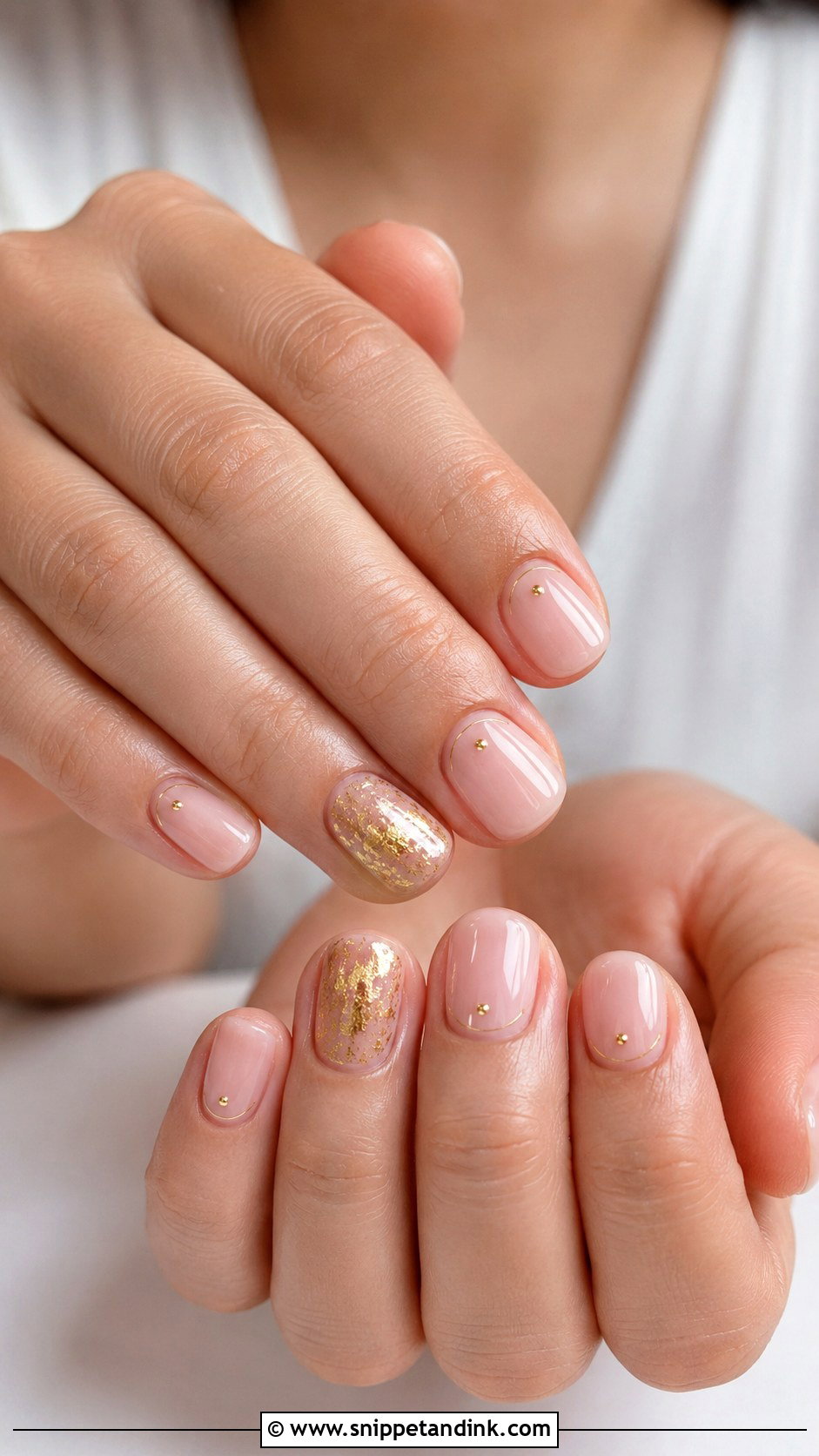
A straight free edge makes gold tips and border lines look crisp, so square suits brides who like structure. A sheer nude with thin metallic tips is the chic version; milky white with gold foil is the softer one. Short natural nails can still wear soft square well. I usually round the corners slightly, because sharp square corners snag tights, lace and hair and chip first. A glossy top gel keeps the gold edges sharp.
18. Coffin Gold Wedding Nails
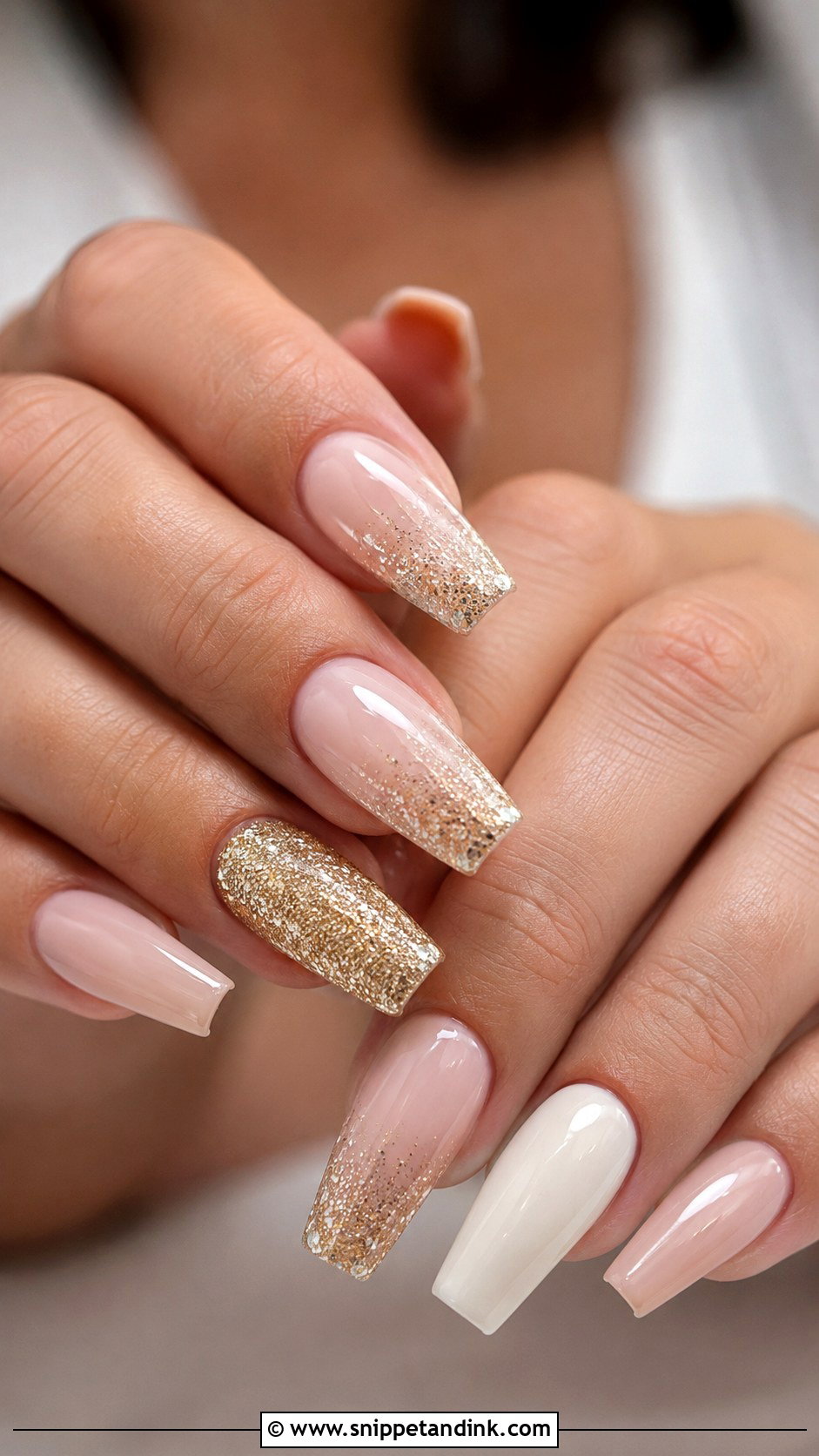
Coffin gold wedding nails are the boldest shape here and give the most surface for detail. The tapered sides and flat tip suit glitter ombre, chrome French, marble and 3D pearls. Balance the drama with soft bases like nude, blush, ivory or milky white, and if you want one full gold glitter nail, keep the rest calmer. I’d steer first-timers toward medium coffin rather than extra long. Long coffin changes how you hold a glass, pin a boutonniere or do up a clasp, and you’ll be doing all three all day.
19. Ivory And Gold Wedding Nails
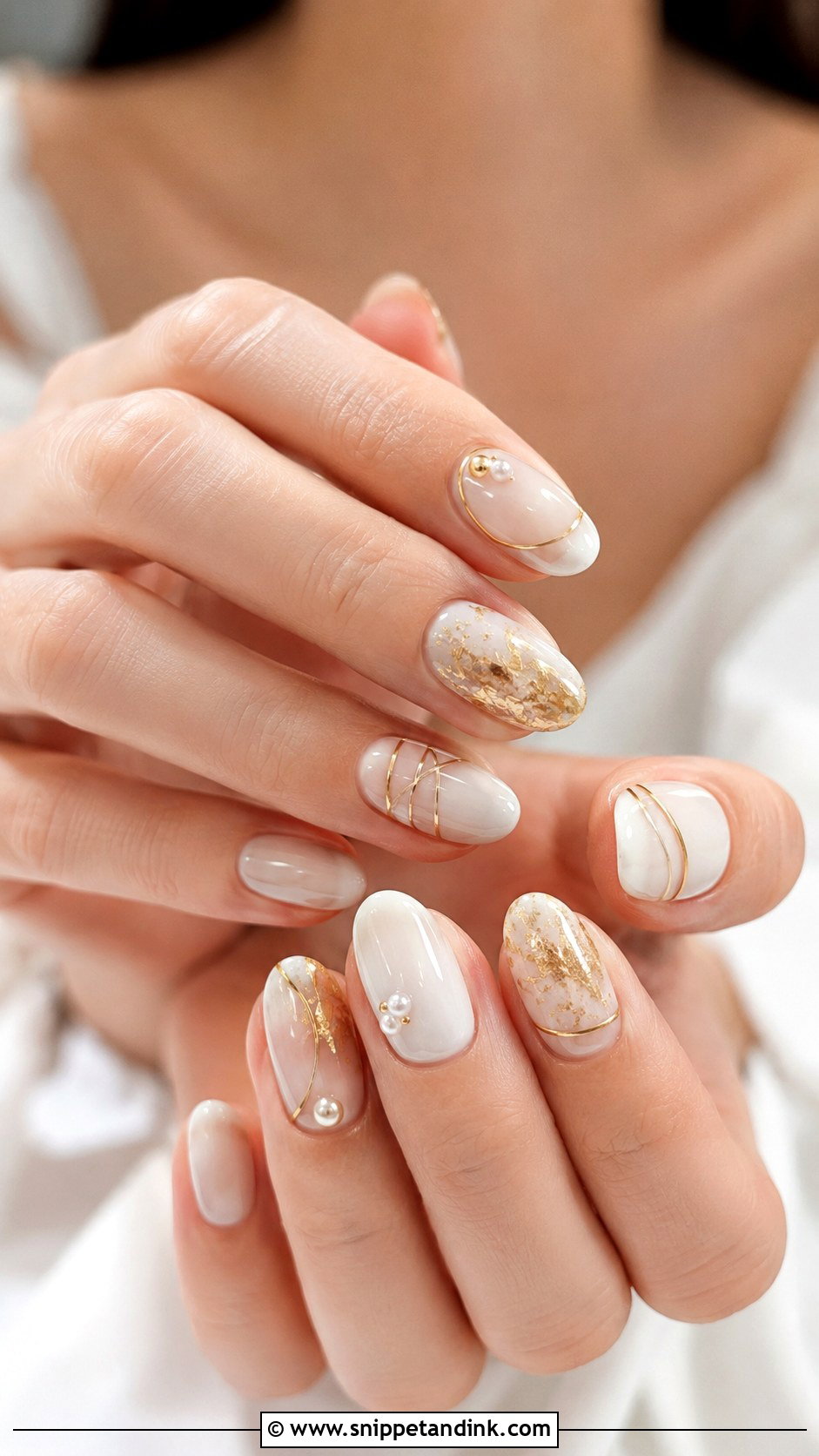
If your gown is ivory, champagne or anything warmer than bright white, ivory nails will look more harmonious in photos than stark white polish. Ivory blends naturally with gold, so foil, fine metallic lines, pearl accents and delicate tips all work. A sheer ivory base also flatters many skin tones and gives the nail a soft glow. Hold the polish bottle against your dress fabric in daylight before you commit, since some ivories lean yellow under warm indoor light. Keep the gold thin and warm, then seal it with a glossy top gel.
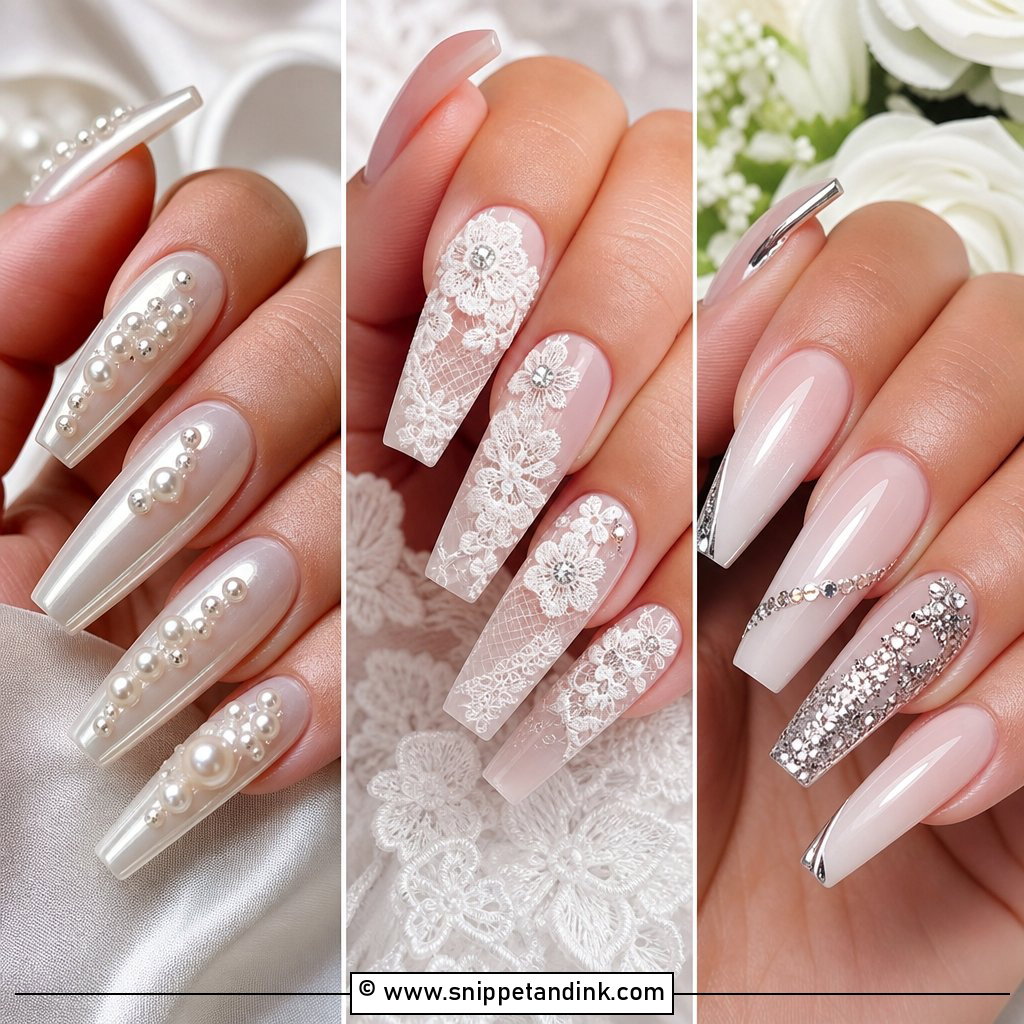
20. Gold Jewelry Wedding Nails
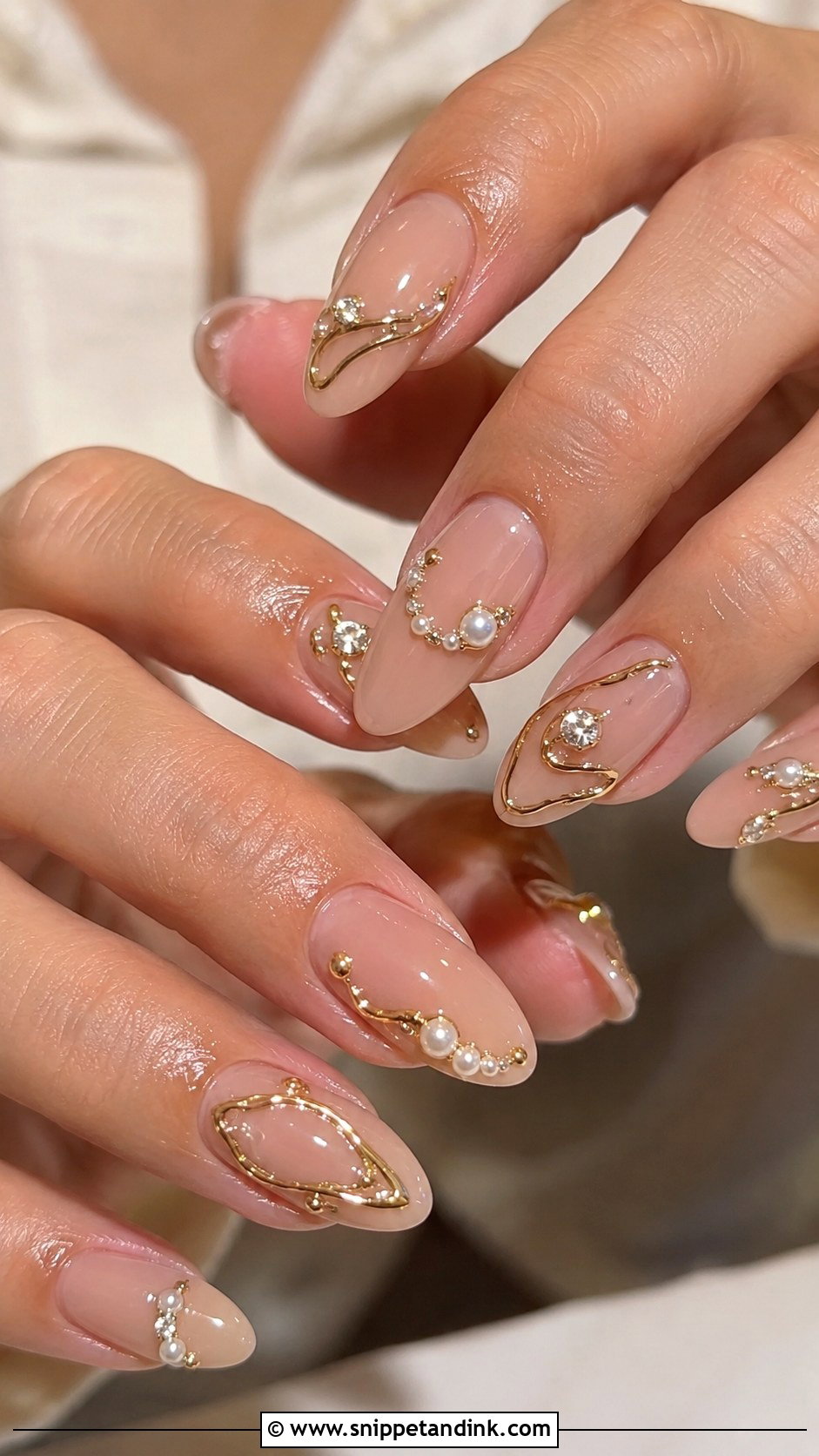
Jewelry nails treat the manicure as an accessory: raised gold gel, tiny metal studs, pearls, crystals or chain-like details over a neutral base. Think sheer nude with gold chrome lines, small pearls near the cuticle and one statement accent per hand. Every raised piece is something that can catch on fabric. I set studs and chains into builder gel and cap them so the surface feels smooth to a fingertip, and I’ll talk a bride out of chains on her ring finger if her dress is lace. Worn with a simple gown, sleek hair and minimal jewelry, the nails become part of the styling.
How Foil, Chrome and Glitter Wear Between the Salon and the Send-Off
Gold finishes don’t all age the same way, so the timing of your appointment should depend on which one you pick. Gel with glitter or fine painted lines is the most durable; it barely changes over two weeks. Foil is the most fragile, because it can lift at the edges if it isn’t fully encapsulated, and chrome can dull or scratch where your nails meet keyboards and phone screens. For most brides I book the full set two to three days before the wedding. That’s close enough that there’s no visible regrowth at the cuticle, and far enough that a lifted foil or chip can still be fixed.
Grow-out is worth thinking about too. Gel grows away from the cuticle at roughly a millimetre a week, and a gold cuff placed right at the cuticle shows that gap sooner than a design placed at the tip.
If something chips on the day
Keep a small kit in your bag: a fine file, a clear glossy topcoat and a nail glue if you’re wearing pearls or studs. A chip at the free edge can be filed smooth and sealed with clear coat in a couple of minutes, and from more than arm’s length nobody will spot it. A pearl that pops off is best left off rather than glued at an angle. Avoid hand sanitiser on chrome right before photos, since alcohol can cloud the finish, and pull on rings and bracelets before the clasps have a chance to scratch the top gel.
Matching the Gold on Your Nails to Everything Else You Wear
Gold can be quiet or bold depending on how much of it you use and where. A thin gold French is the safest route; chrome, pearls, foil and jewelry details push the set toward fashion. When you decide, start with the metal of your rings and earrings, then the colour of your dress, then how much nail art you’ll actually enjoy living with for a week. A detailed gown usually wants a simple manicure. A plain gown leaves room for more shine. Get the shape, base and finish right, and the gold takes care of itself in every close-up.
You'll Like These Ideas:


Leave a Reply