
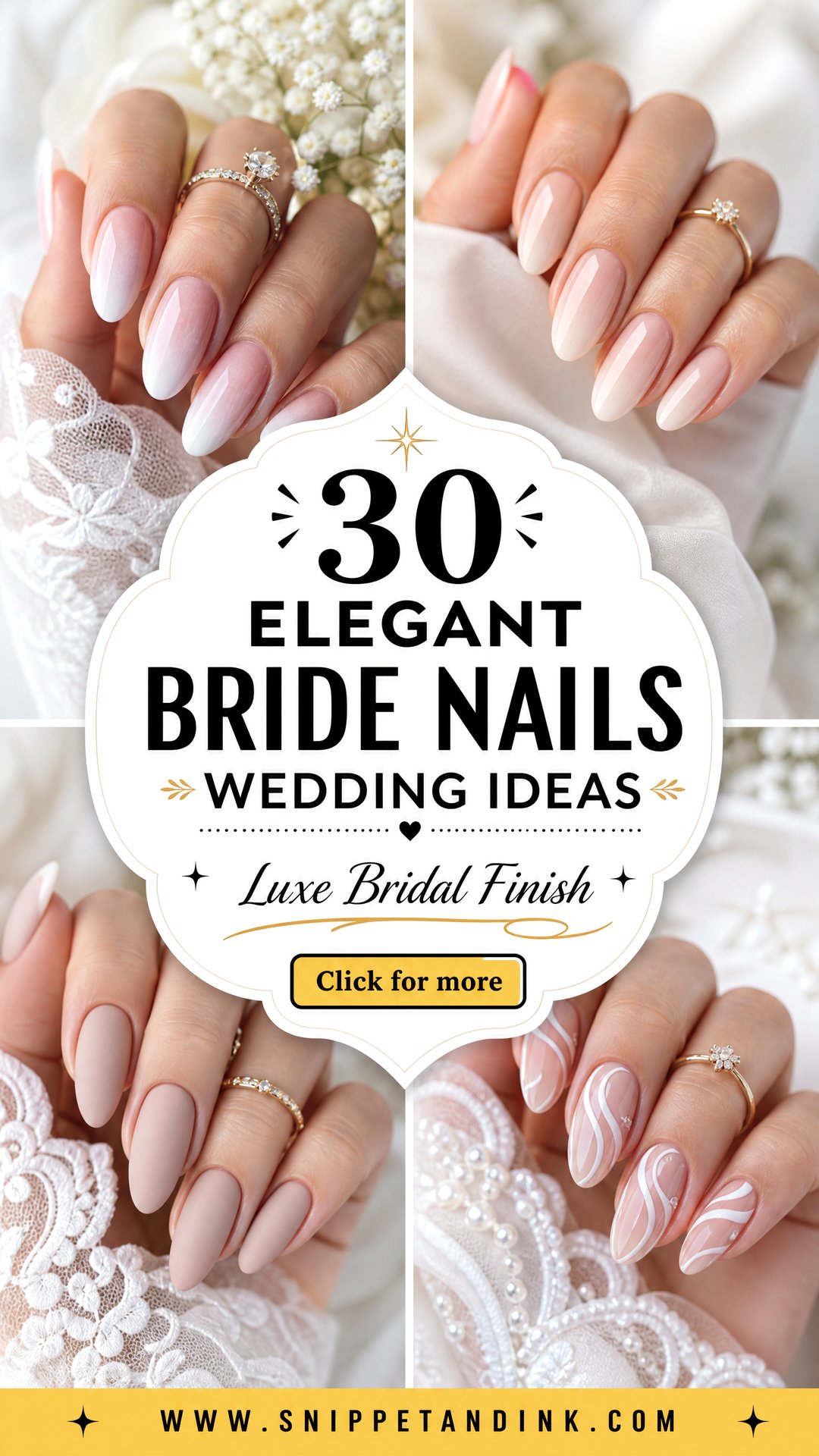
A bridal manicure gets more close-up attention than almost anything else you wear: ring shots, hand-holding during the vows, the moment you lift a glass. I plan every wedding set around that camera distance. Below are thirty designs I’d happily put on a bride, from barely-there sheers and pearl chrome to glamorous gold foil, tiny crystals and a quiet nod to something blue, with notes on what each one needs from your natural nails and how it holds up over a long day.
Scheduling Your Trial Set and the Final Appointment
I treat a bridal manicure as two separate appointments. The trial happens four to six weeks out, and you wear it for at least a week so you see how it grows out, where it chips first and whether the length suits your daily life. The final set goes on one to three days before the wedding: close enough that regrowth at the cuticle isn’t visible, far enough ahead that there’s time to fix a lifted corner.
Gel, builder gel or regular polish
- Gel polish is the default for most brides. Expect around two weeks of wear, enough to cover the wedding and the start of a honeymoon.
- Builder gel adds a structured overlay that strengthens thin, bendy nails and stops a short almond from snapping the week before. Removal takes longer, so plan for it.
- Regular polish is fine if you dislike gel, but it needs most of a day to harden fully and will chip within days. Have it done the evening before, not the morning of.
- Extensions in soft gel or acrylic give length. Trial the same length you’ll wear, because typing, fastening earrings and putting in contact lenses all feel different with it.
Avoid having cuticles cut the day before. Freshly nipped skin can redden and peel right where the camera lands. I push back and oil instead, and only trim true hangnails.
1. Classic French Bride Nails
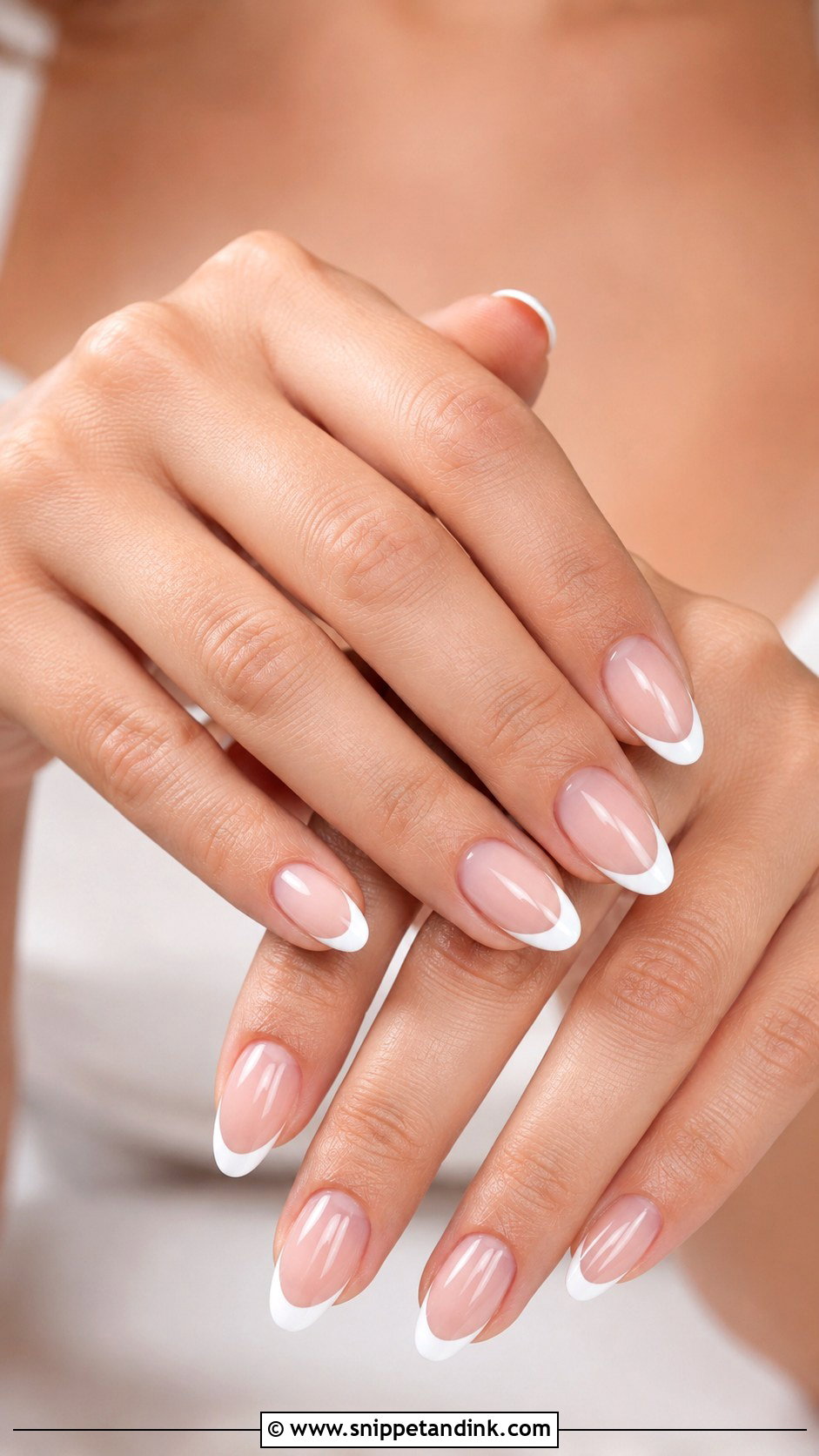
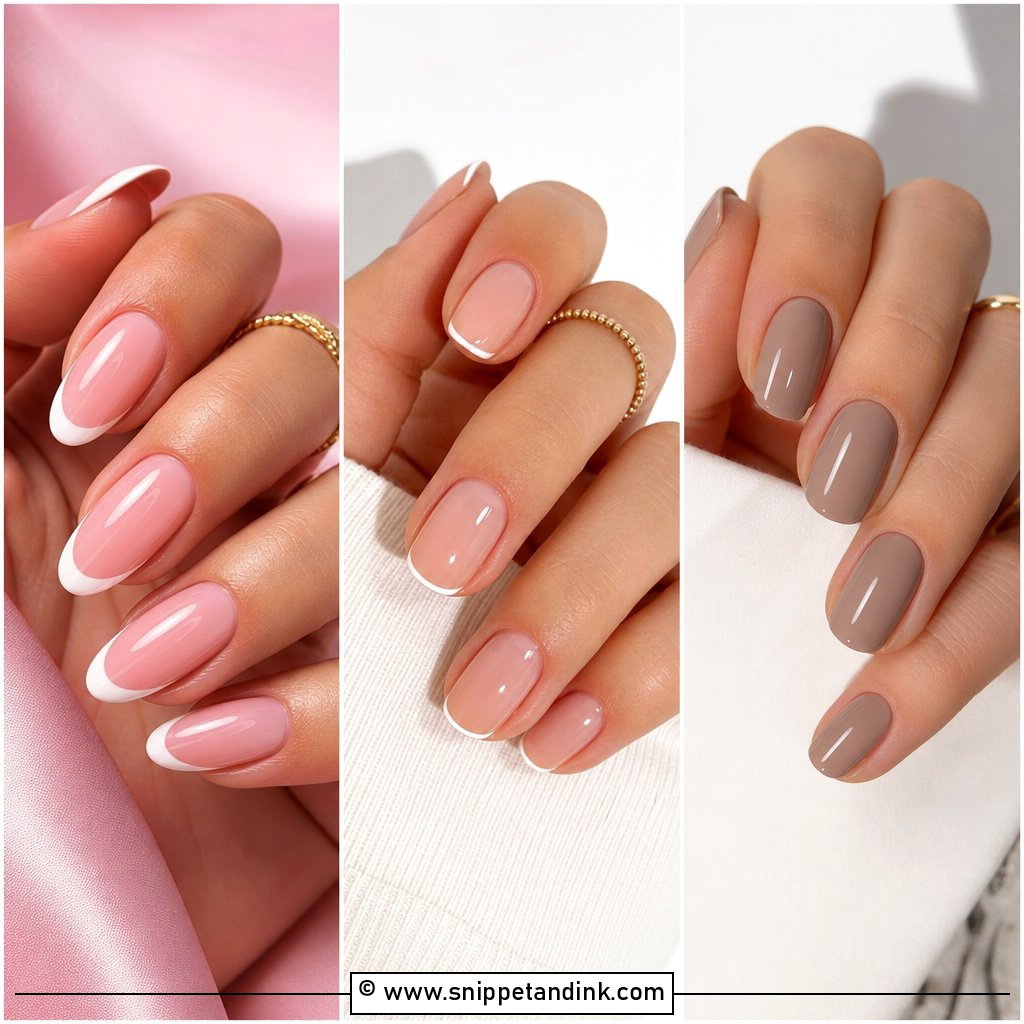
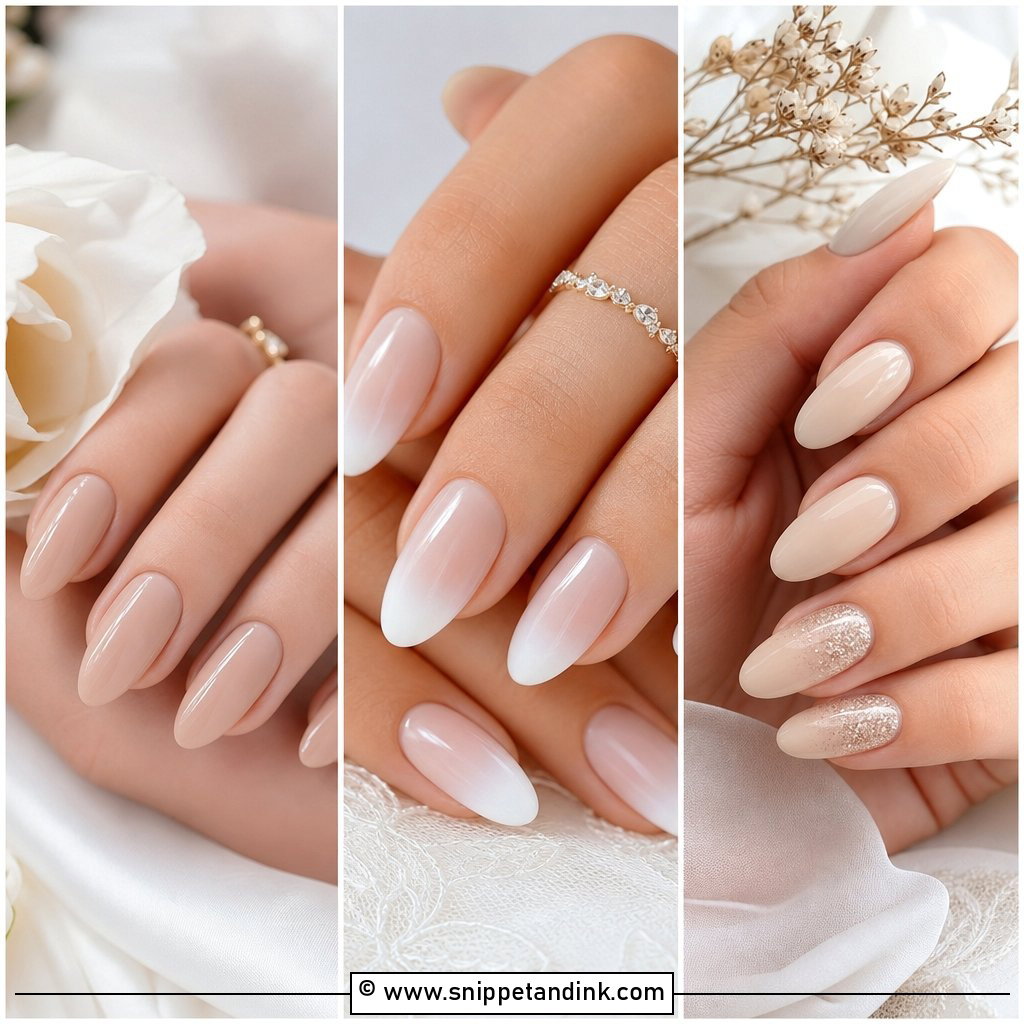
The French set is still the one I’m asked for most, and the version that reads current is a slimmer tip than the thick band of twenty years ago. I keep the white to roughly a quarter of the free edge and check the smile line on both hands side by side before anything else, because a lopsided curve is the first thing a ring close-up exposes. A sheer pink base hides minor discoloration without going opaque. It sits comfortably next to satin, lace or crepe and leaves the ring to do the talking.
2. Milky White Bride Nails
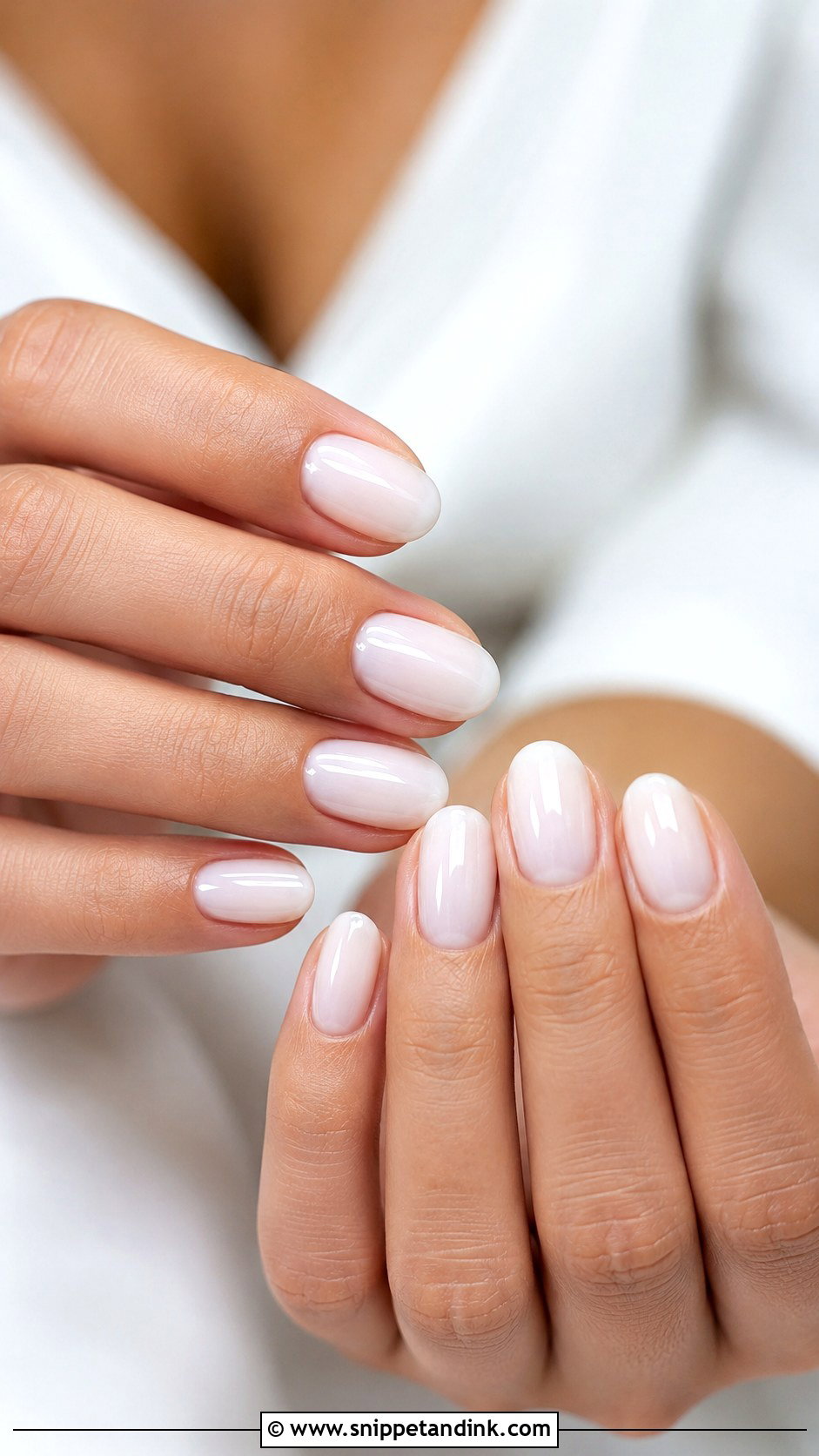
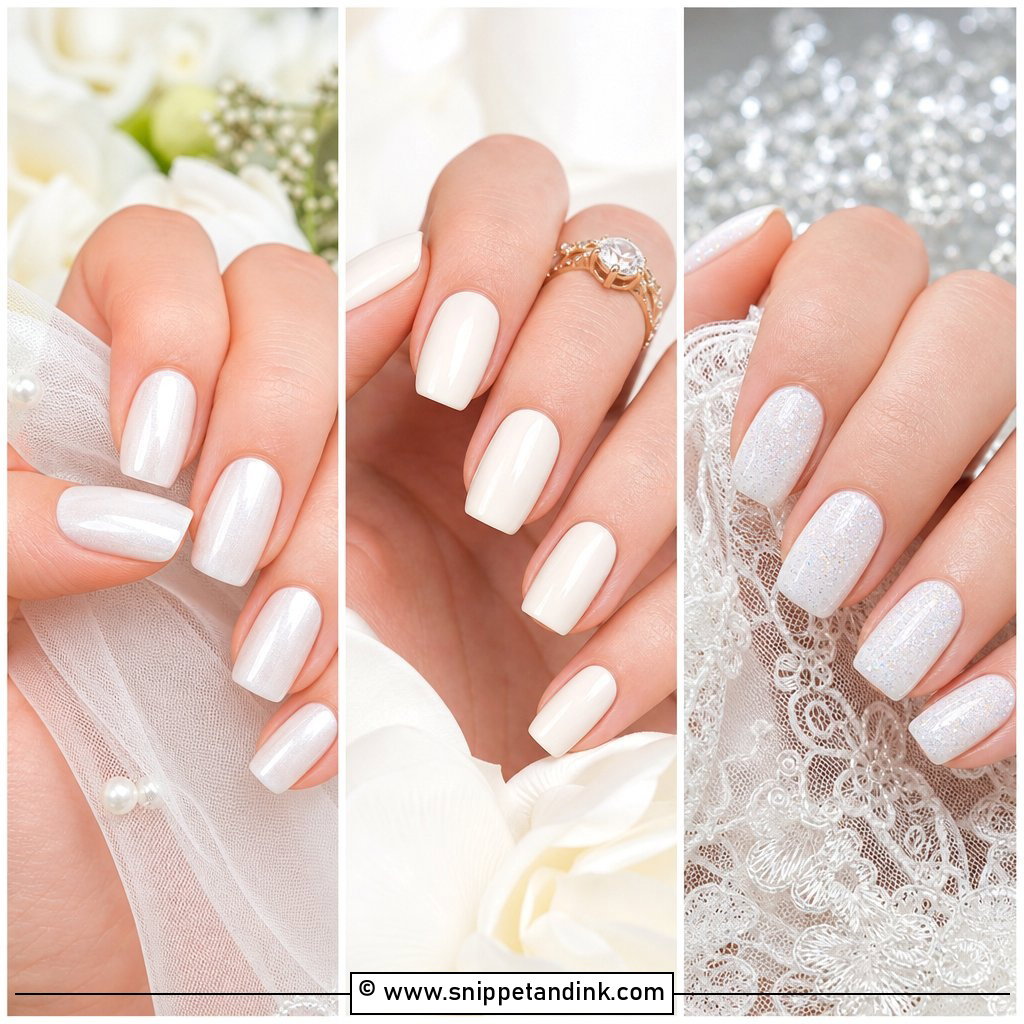
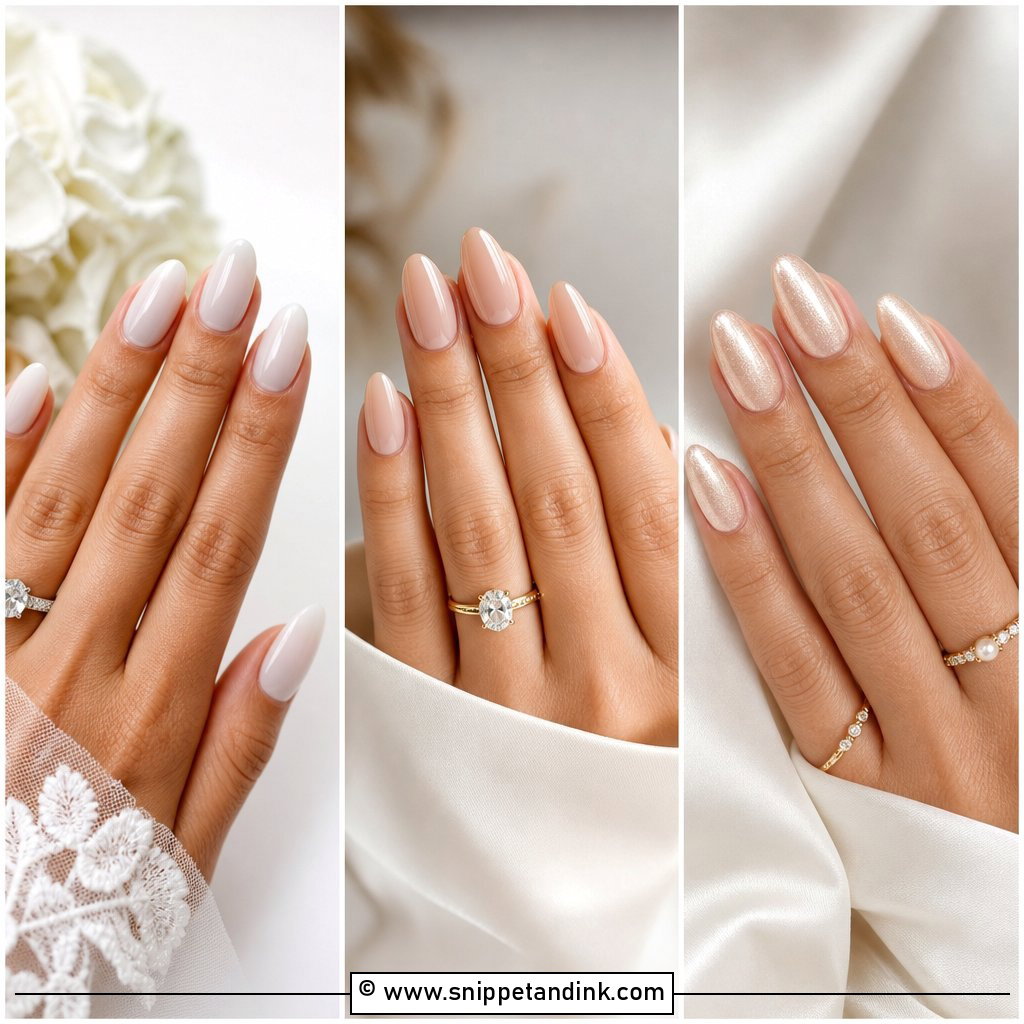
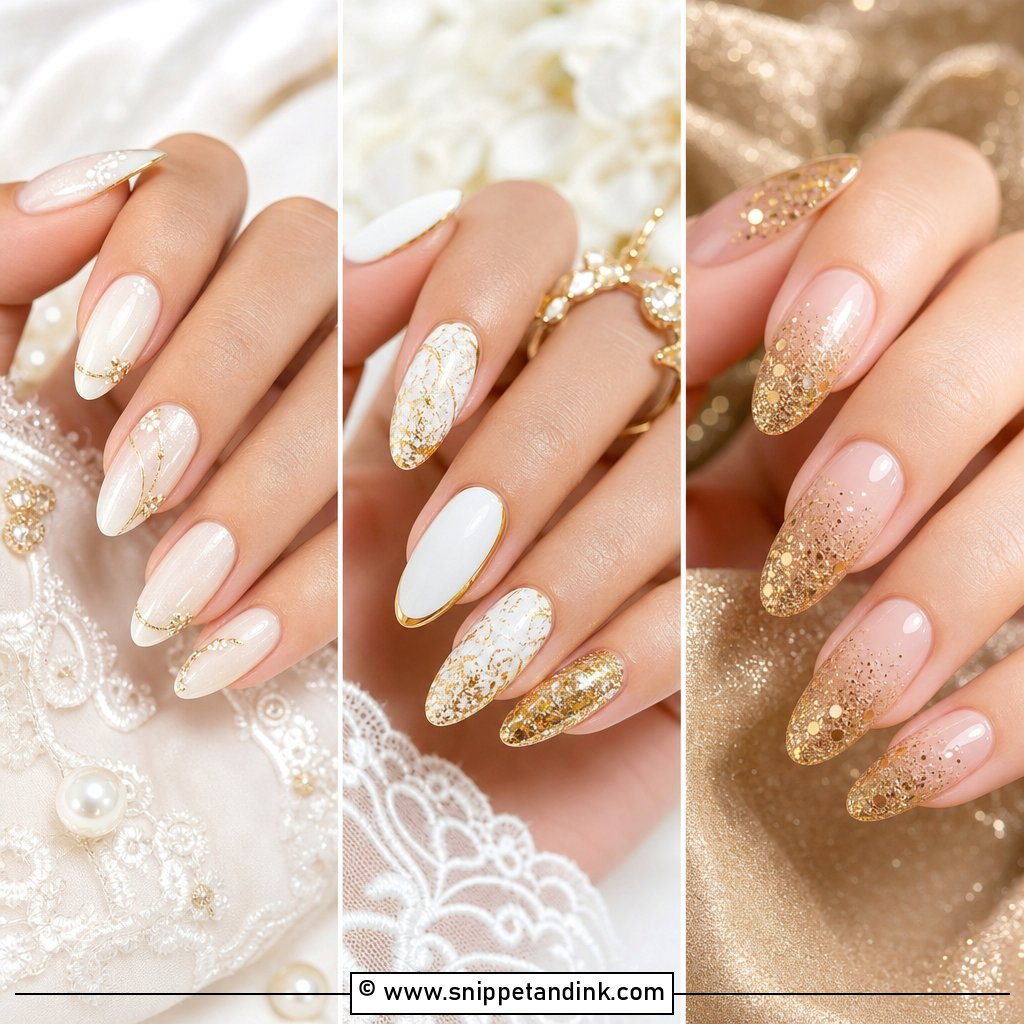
Milky white is a jelly-like translucent white, not the flat correction-fluid white that turns chalky on camera. I build it in two or three thin coats so a hint of nail bed shows through; one thick coat streaks and pools at the sidewalls. It flatters short ovals and medium almonds most. One caution: on very warm or olive skin, a cool milky shade can make fingers look faintly grey in daylight, so I test it against your hand before committing.
3. Sheer Pink Bride Nails
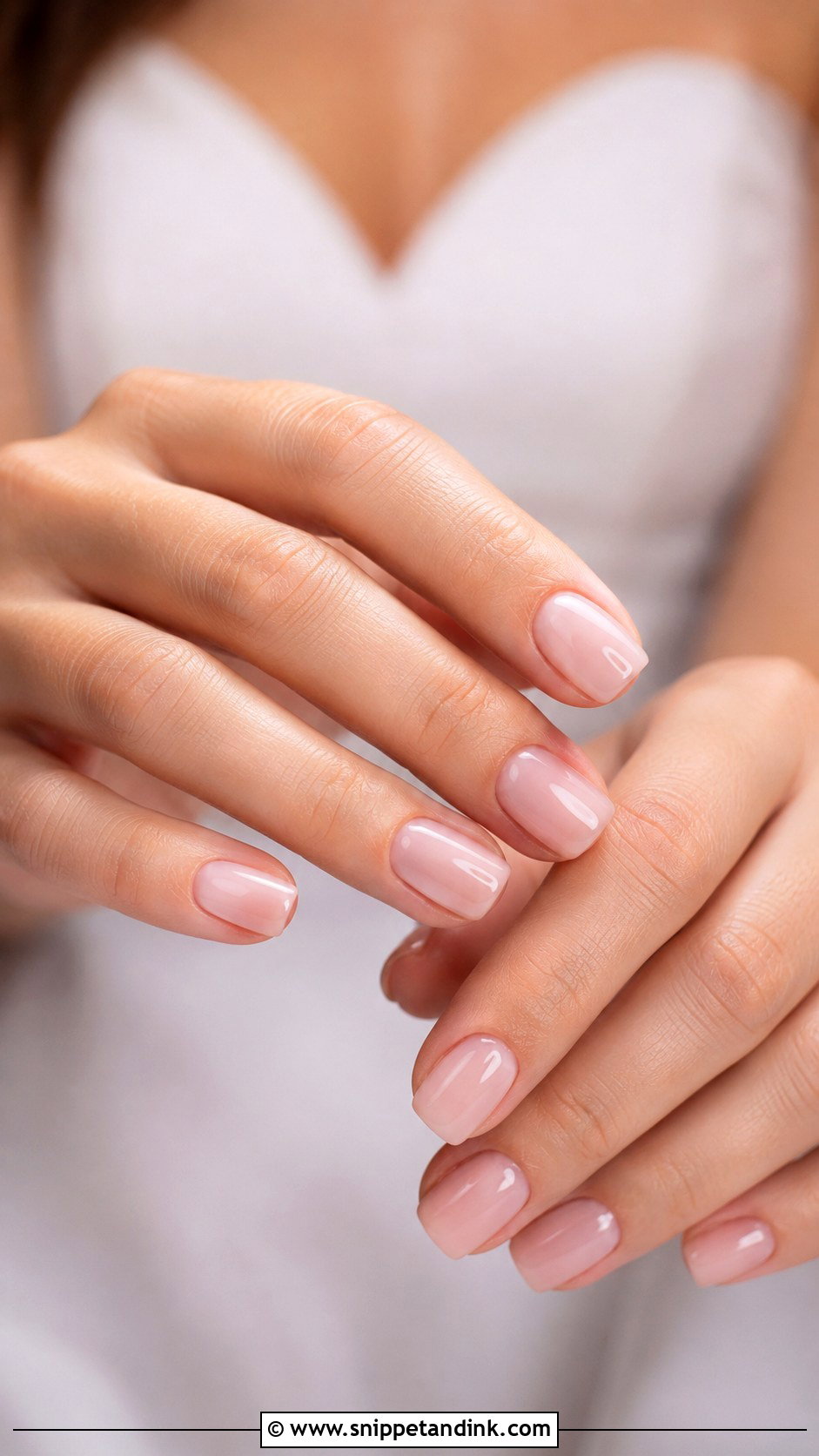
Sheer pink is what I suggest when a bride tells me she doesn’t really wear polish. A translucent blush evens out the nail bed and reads as healthy nails rather than a painted design, at any length. The catch is that sheers show every ridge and stain underneath, so buffing and a ridge-filling base matter more here than with any opaque color. A single micro pearl at the cuticle is about as far as I’d take the decoration.
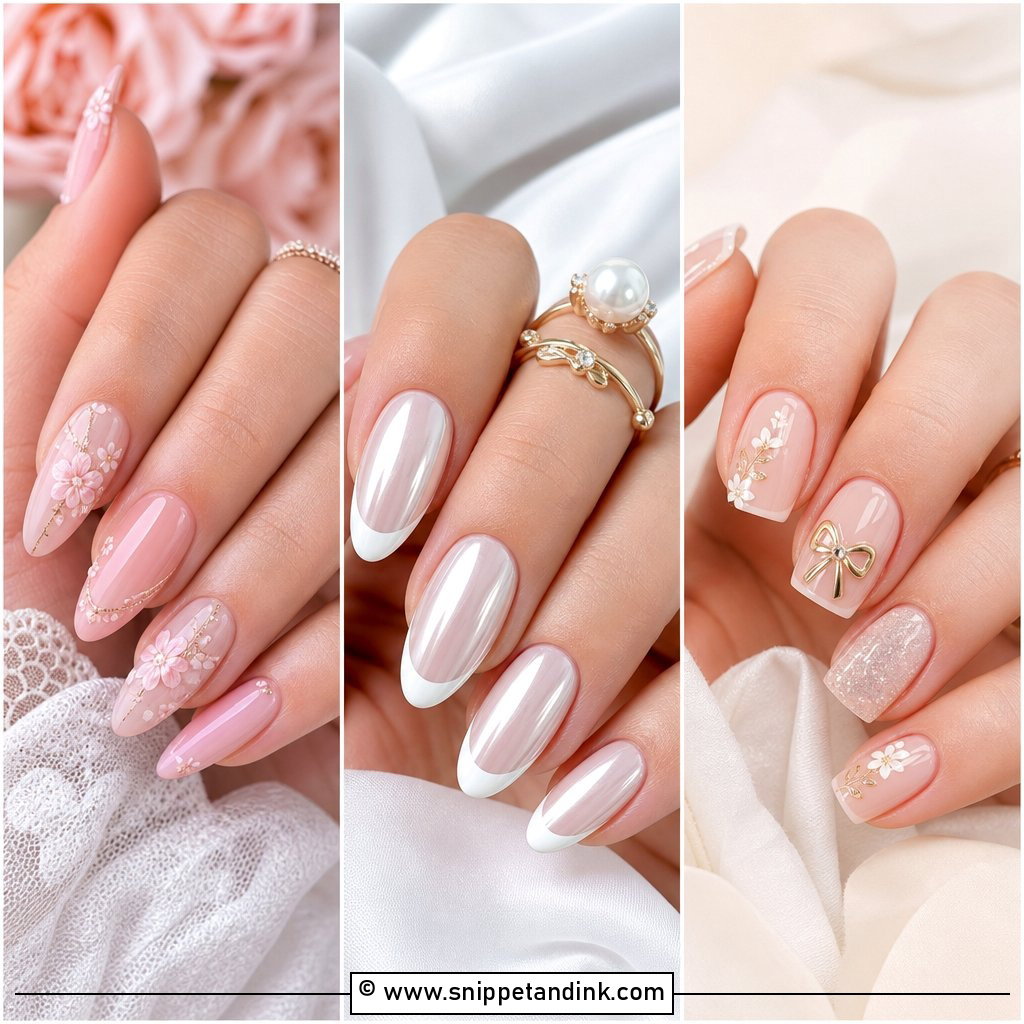
4. Pearl Chrome Bride Nails
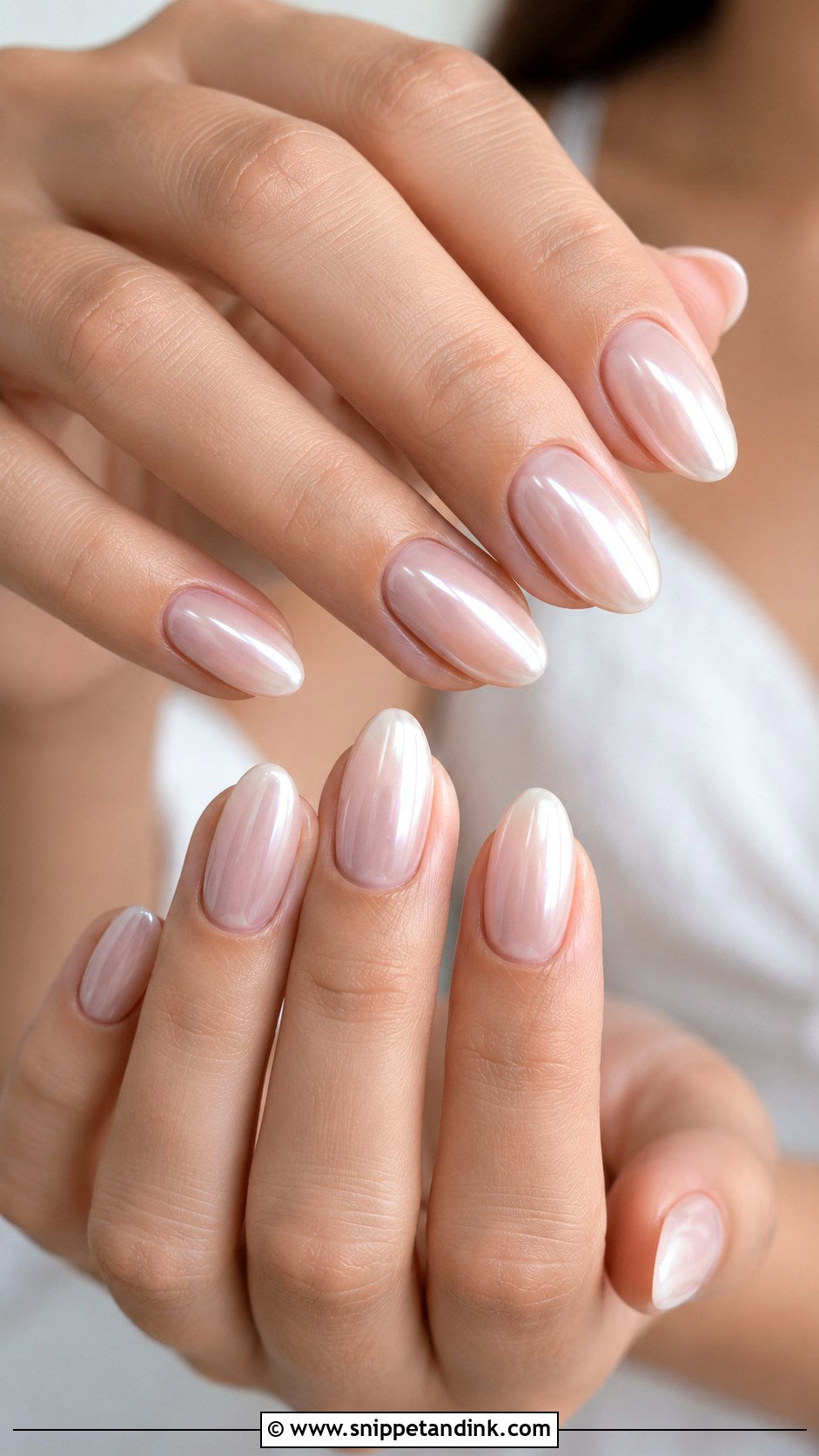
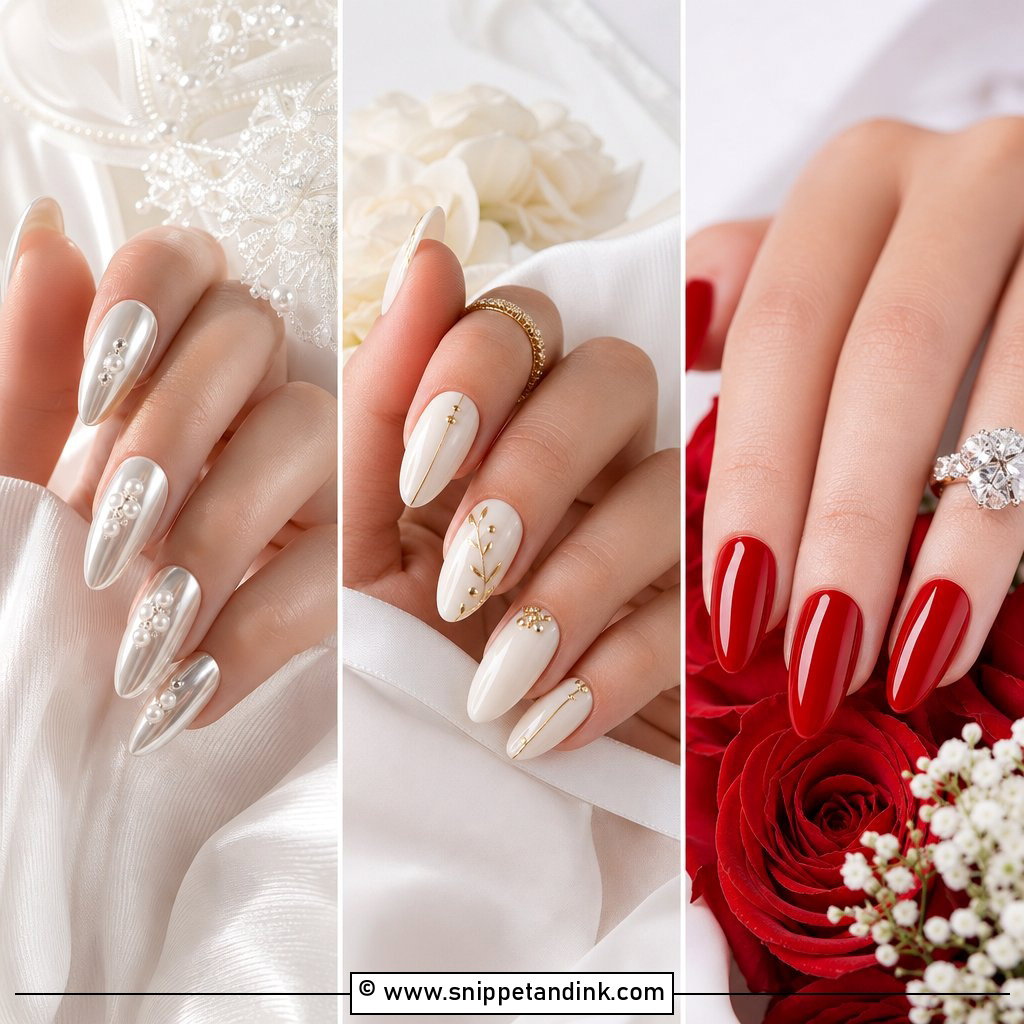
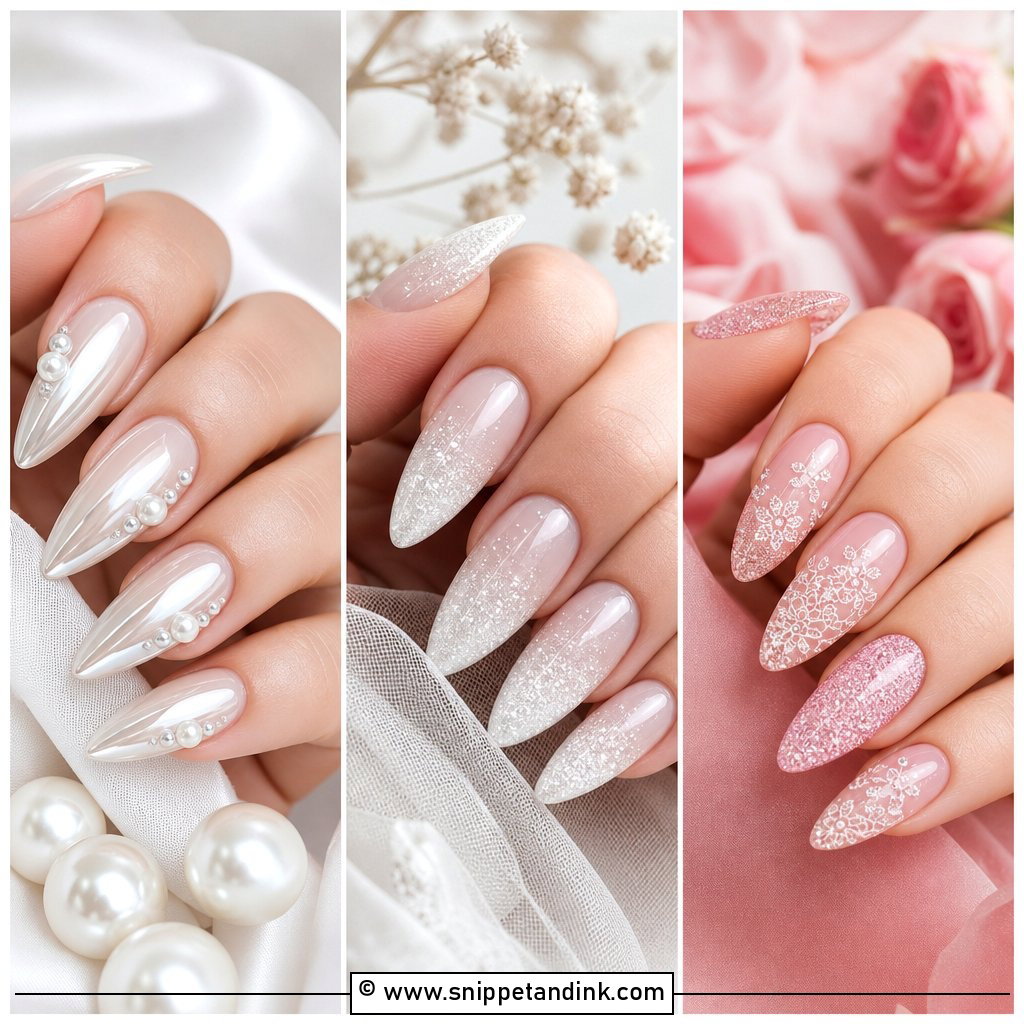
Pearl chrome is a fine powder rubbed into a no-wipe gel top coat over a sheer pink, nude or milky base, and it gives an opalescent shift rather than a mirror. It reads strongest on curved surfaces, which is why it suits almond and oval nails so well; on flat square tips the shine looks patchy. I cap the free edge carefully, since chrome that isn’t sealed at the tip is the first part to wear away. Moderate length keeps it refined next to pearl earrings or a beaded bodice.
5. Baby Boomer Bride Nails
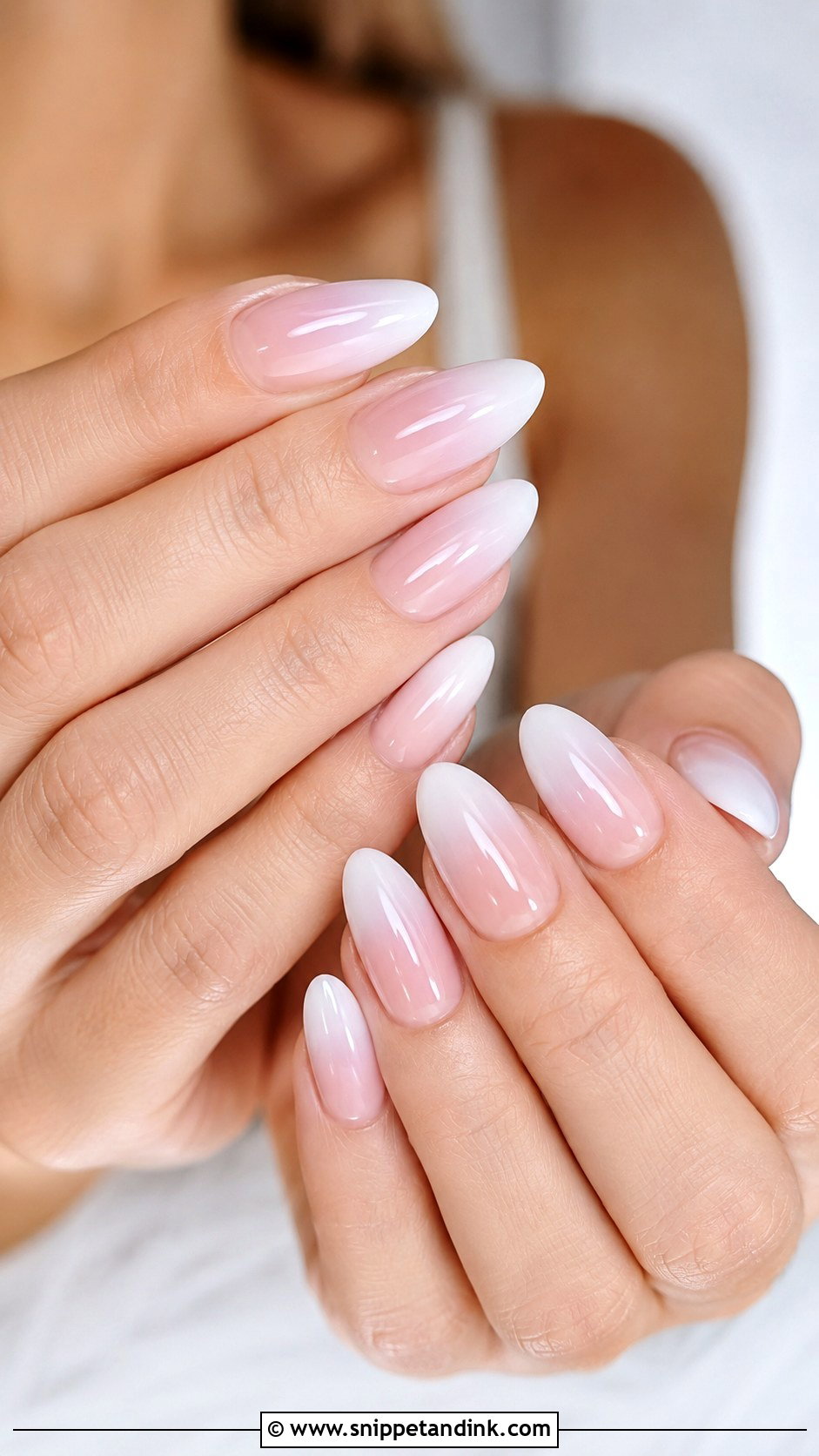
Baby boomer bride nails blend white into pink or nude with no hard line, done with a sponge or an airbrush. The blend makes or breaks it: if the fade starts too low on the nail, it looks dipped in paint. I like this one for weddings spread over several days, because regrowth at the cuticle is far less obvious than with a crisp French. Almond and coffin give the gradient the most room to travel.
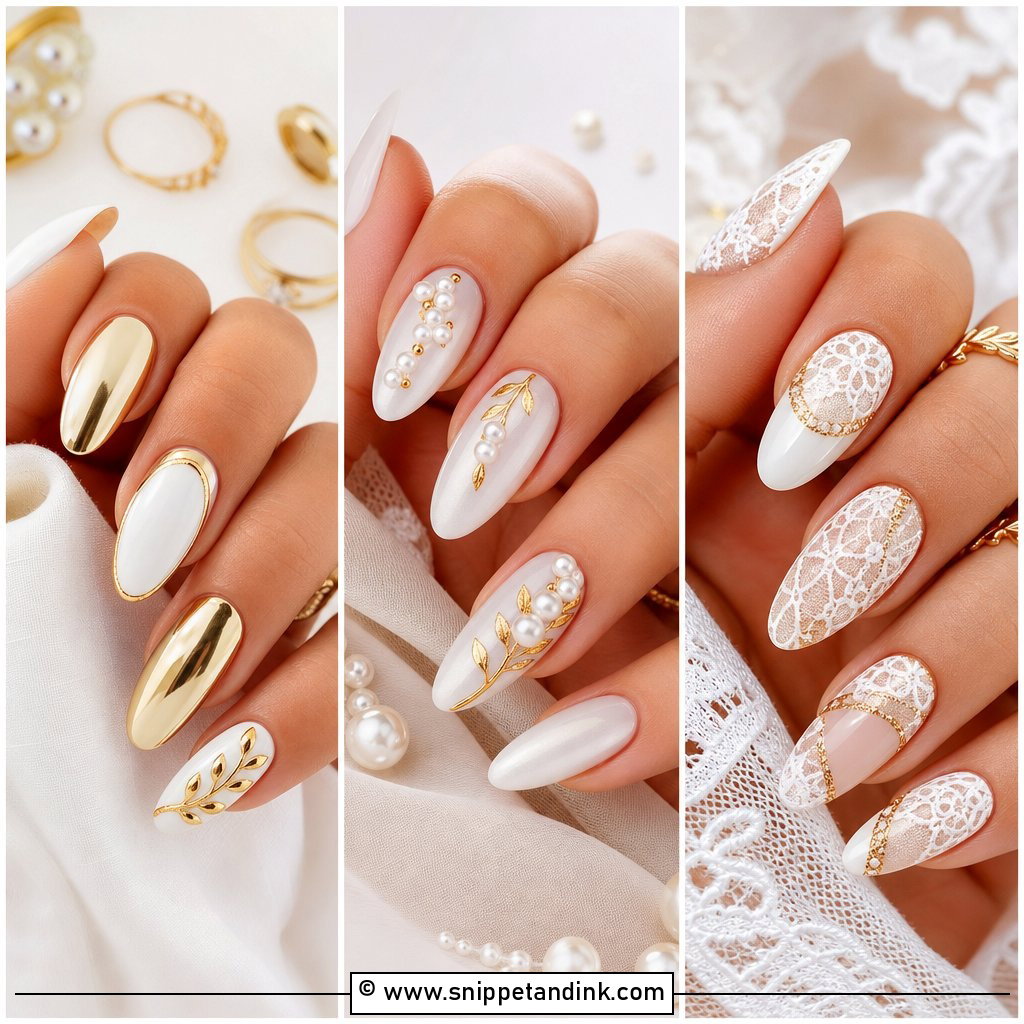
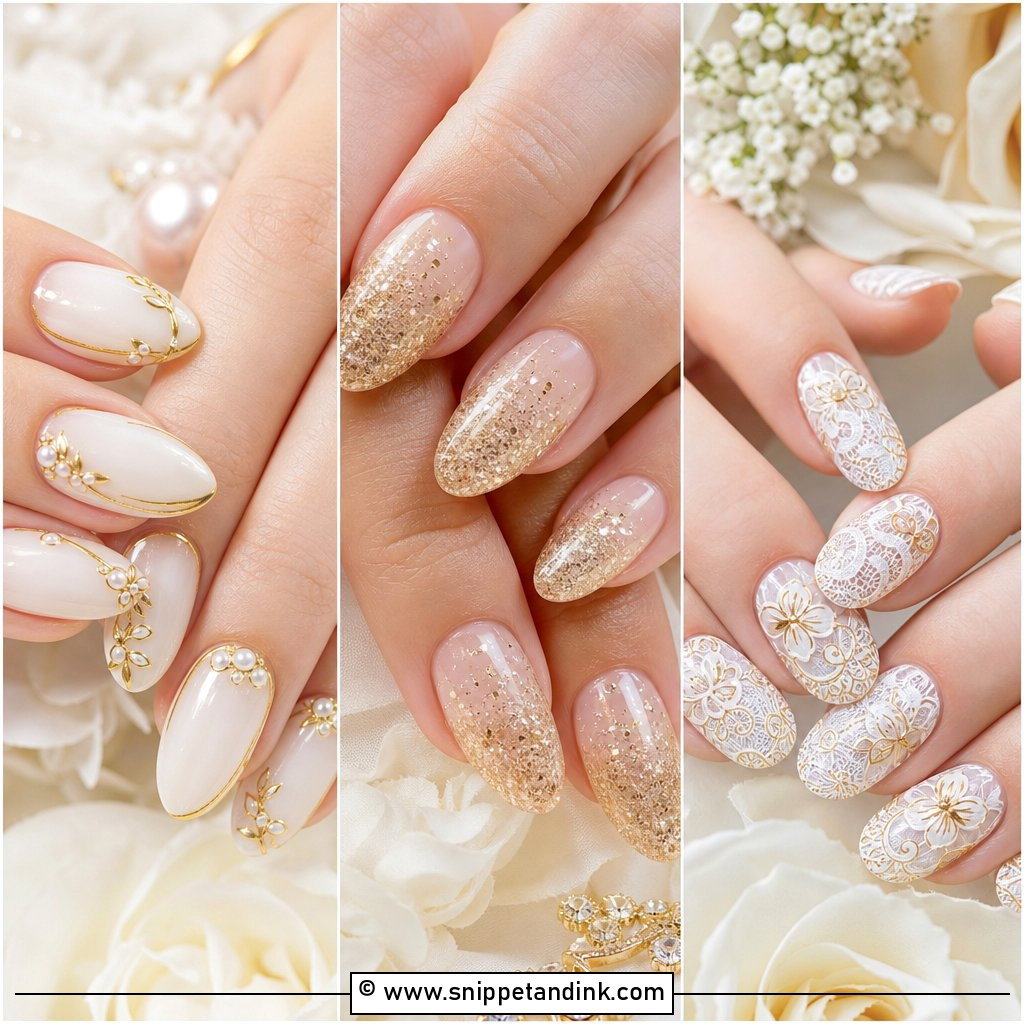
6. Nude Bride Nails With Gold Foil
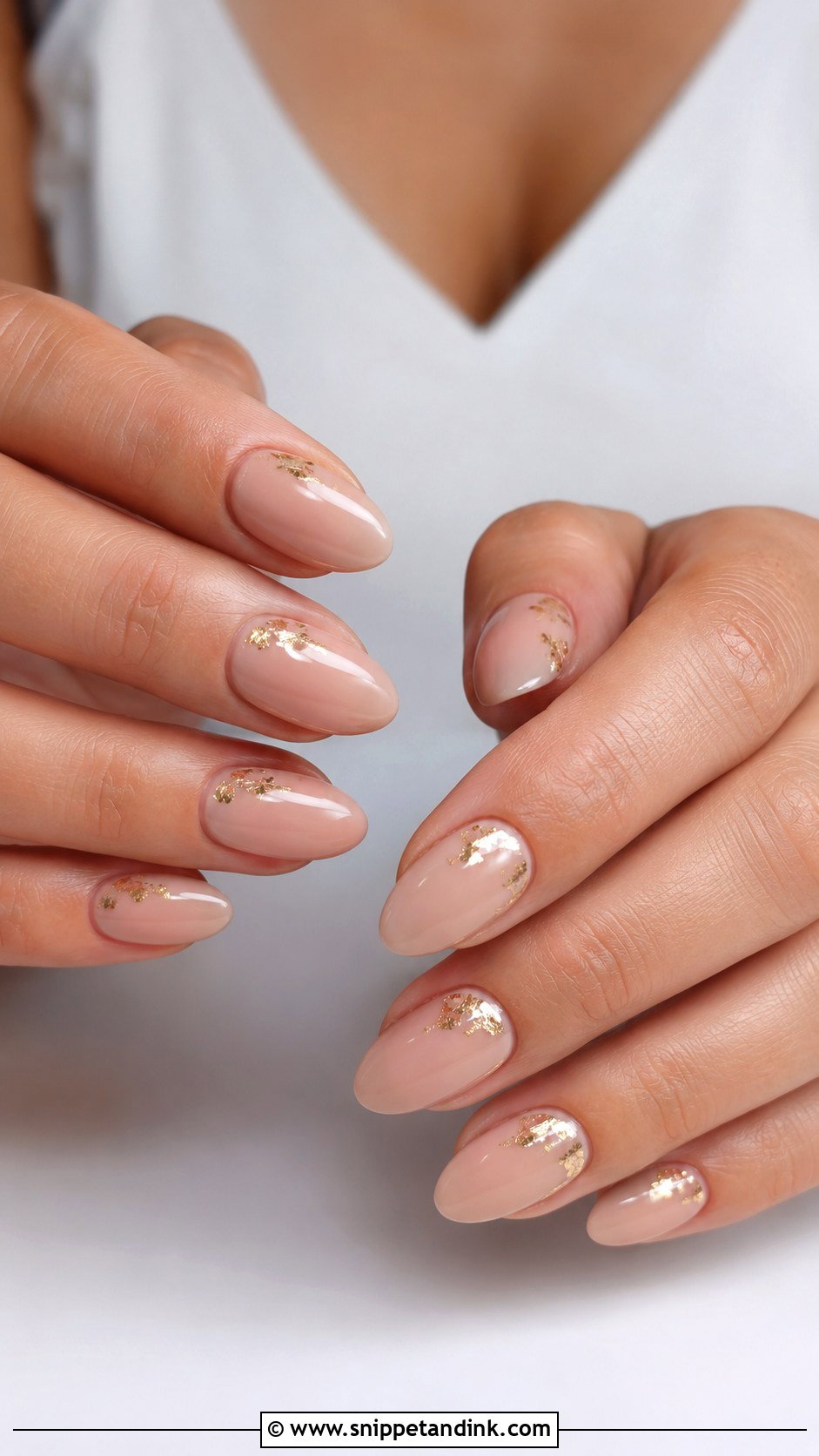
Gold foil works best when it looks almost accidental. I press a few torn flakes near the cuticle or along one side wall of two or three nails and leave the rest bare, over a nude matched to your skin. Foil sits slightly raised, so it needs an extra layer of top coat to lie smooth; skip that and it catches on lace and loose hair. Pair it with gold jewelry or a champagne gown, and keep the shape to a short almond or soft square.
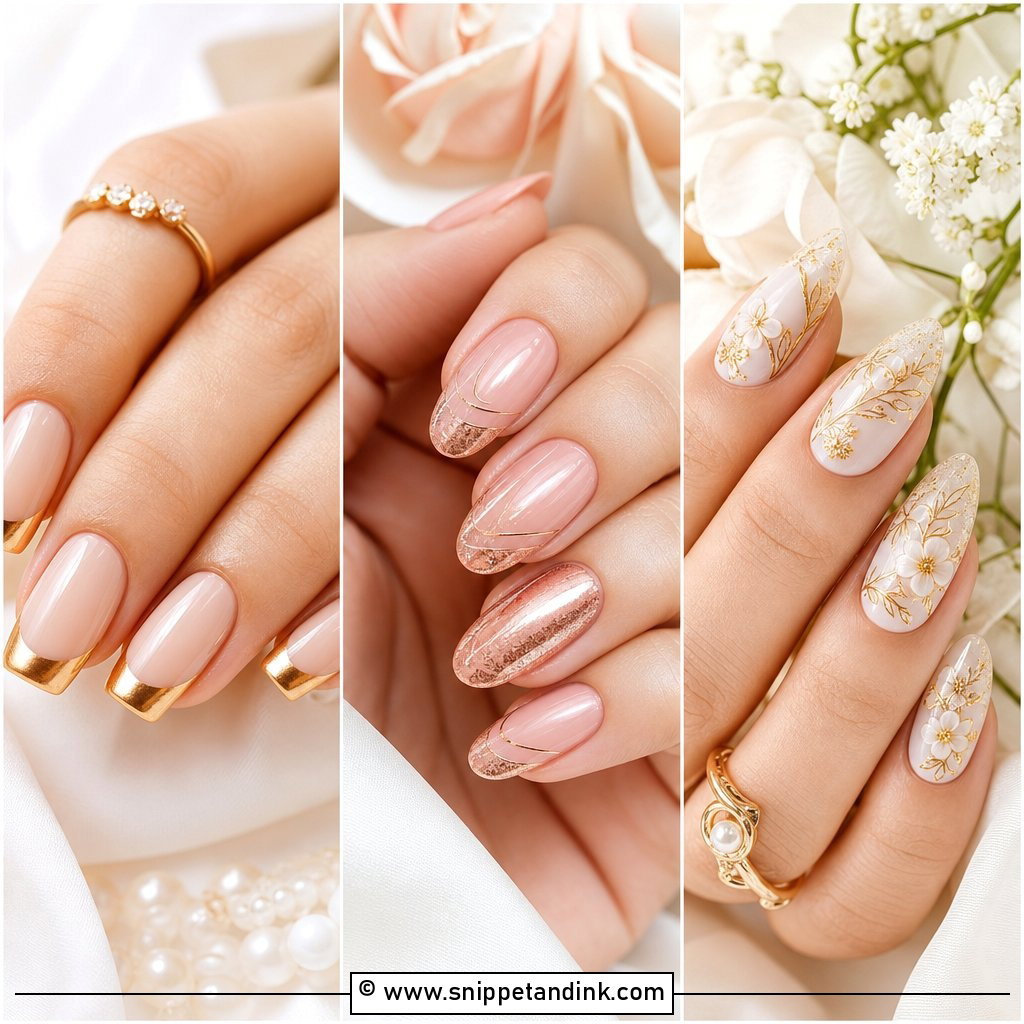
7. Blush Pink Bride Nails With Pearls
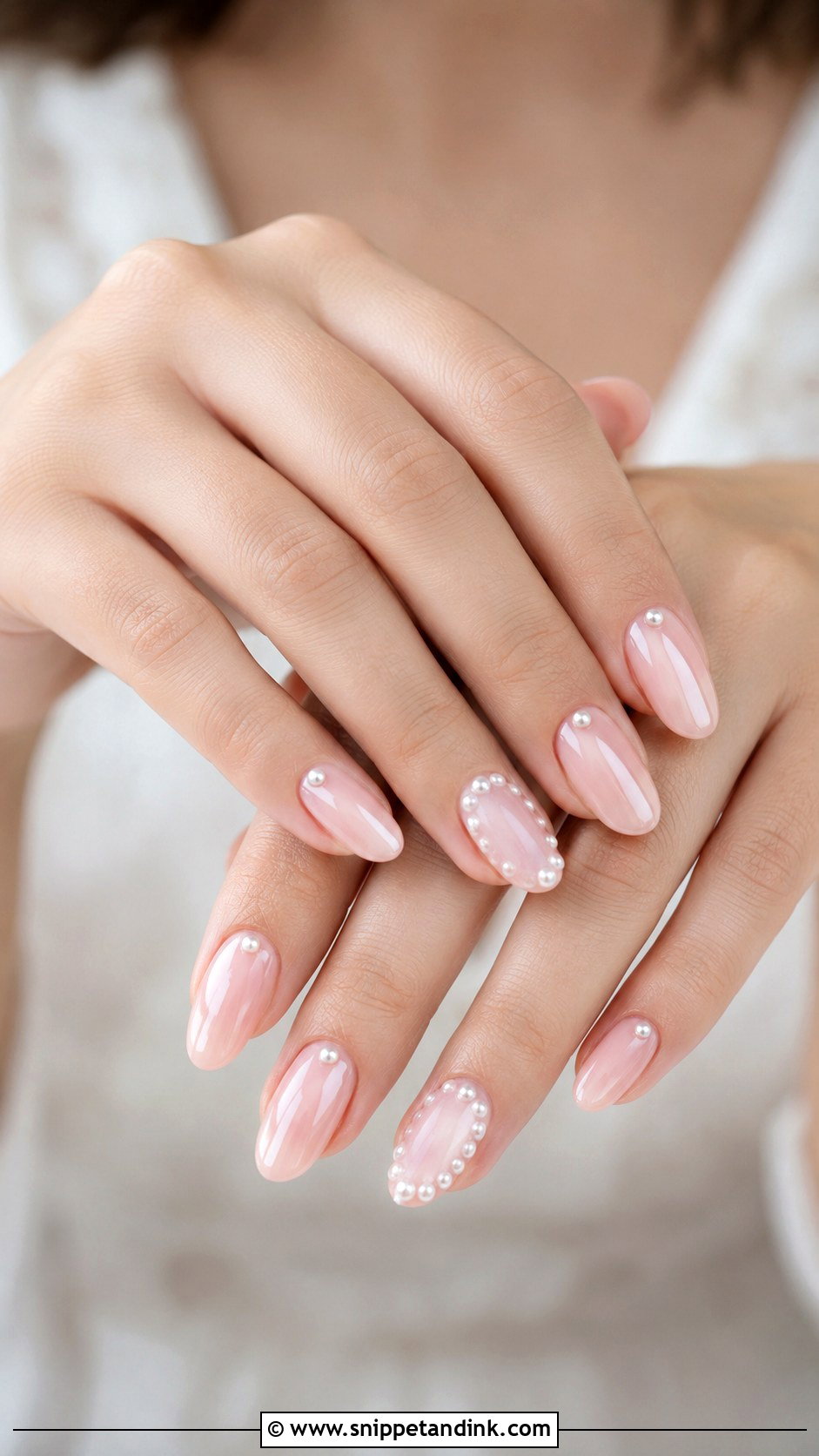
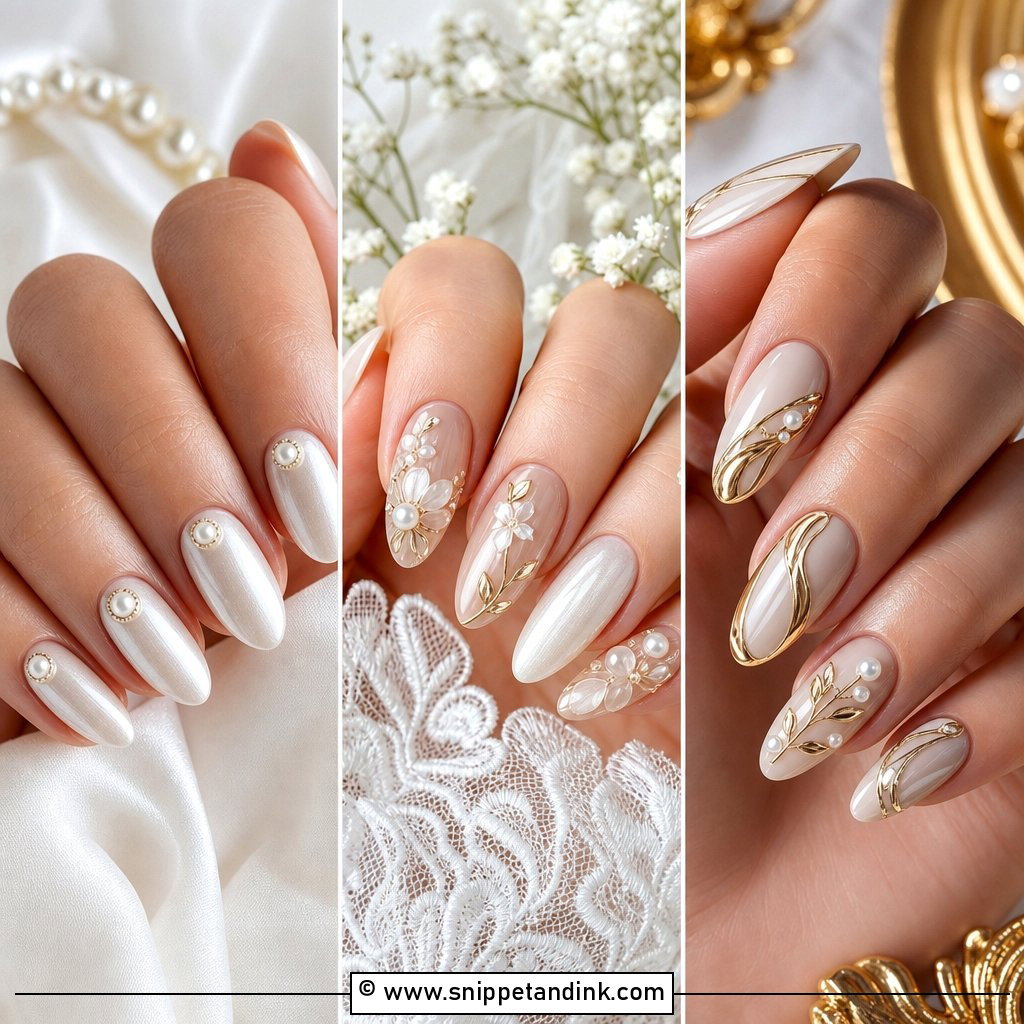
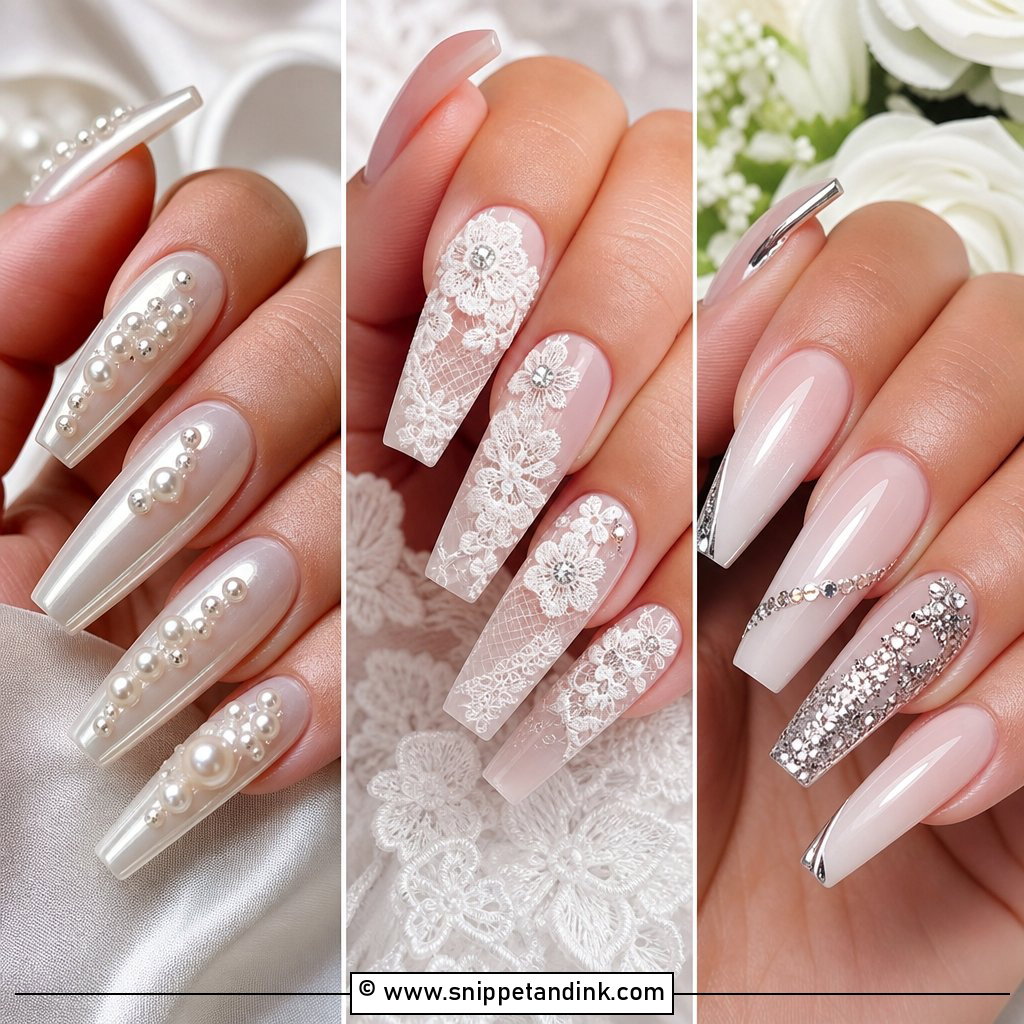
Tiny flat-backed pearls are the detail I’m most careful with on a bride, because they’re the part most likely to snag a veil. I set them into gel rather than nail glue and keep them very small, usually a single curve near the cuticle on one accent nail per hand. Over a pale pink base they echo pearl hair pins or a beaded gown without crowding the nail. Oval and almond carry them better than square, where they tend to look stuck on.
8. White Lace Bride Nails
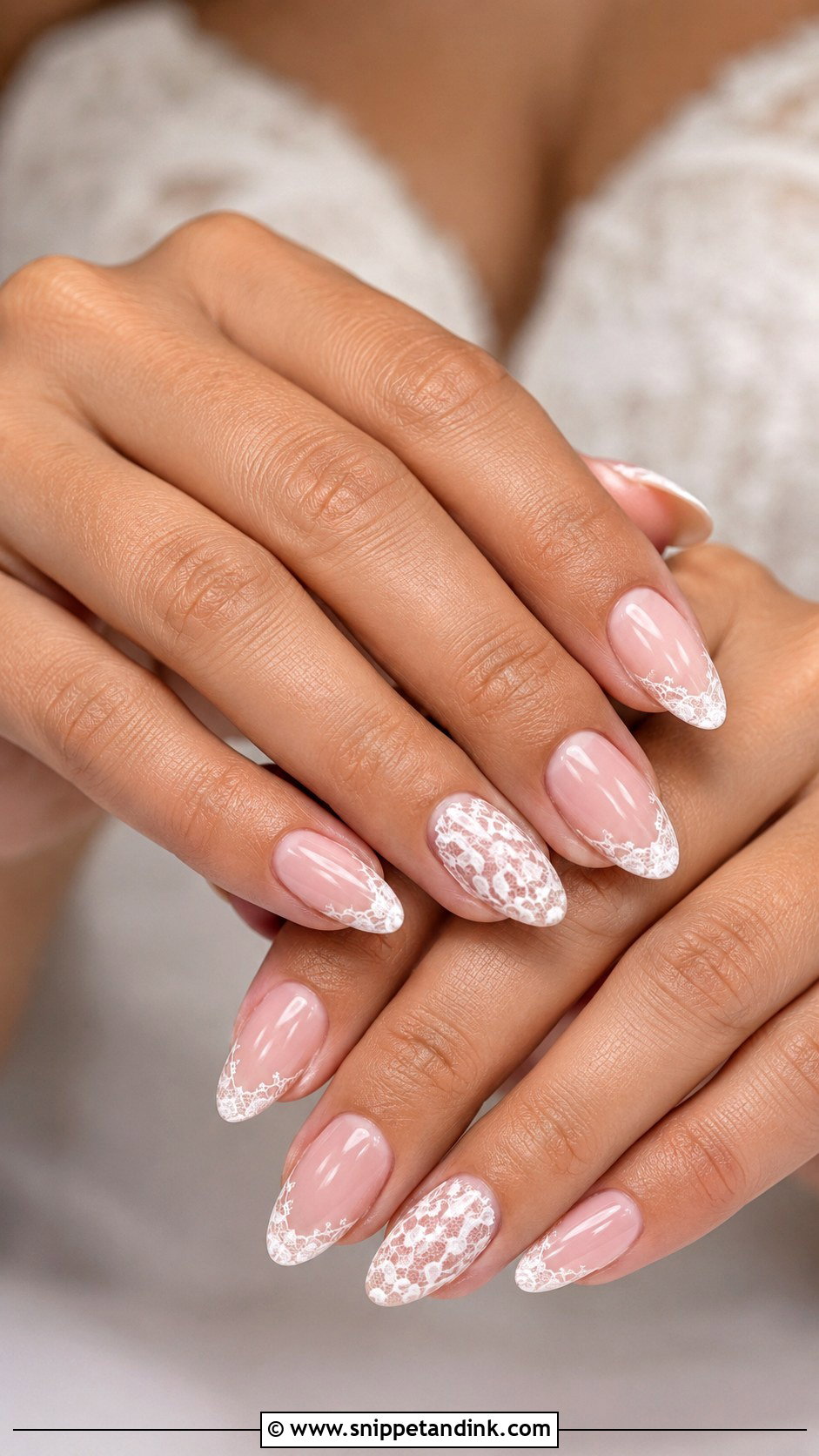
Lace nails are freehand line work with a very fine striping brush, and the result depends almost entirely on how thin the lines stay. I ask brides to bring a photo or offcut of their dress lace so I can echo its actual motif, a scallop edge or a small floral repeat, instead of a generic net. Keep it to the tips or a couple of accent nails over a sheer nude. Fully covered nails start to look like patterned tights from across a room.
9. Short Nude Bride Nails
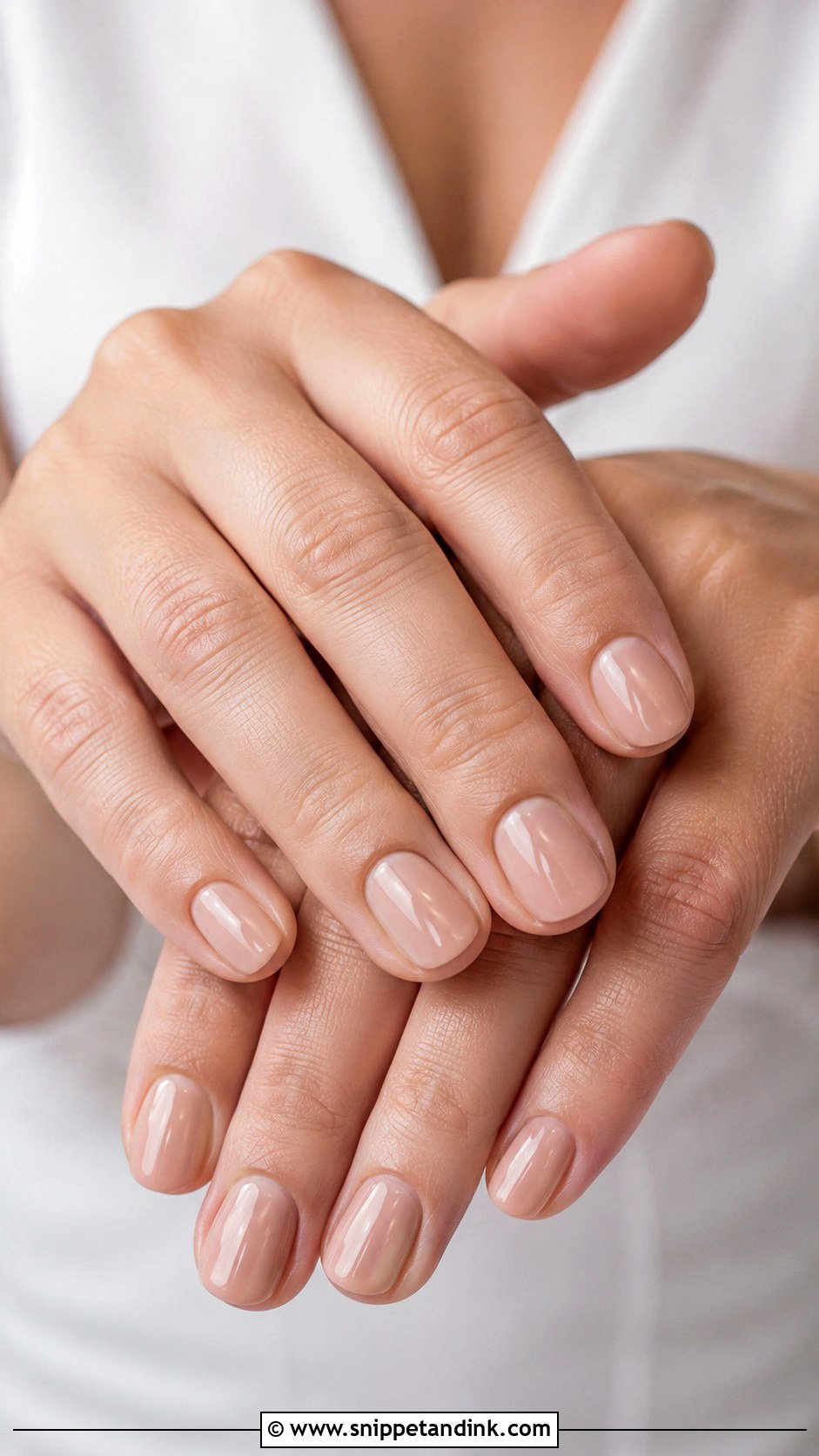
Short nails are not a compromise. A neat short nude, filed so the free edge just clears the fingertip, often looks cleaner in ring shots than long extensions do. Matching the nude to your undertone is the whole job: pink-leaning for cool skin, beige for neutral, peach for warm, toffee or caramel for deep skin. Go too light and the fingers look washed out, so I swatch two or three shades across your knuckles before deciding.
10. Almond French Bride Nails
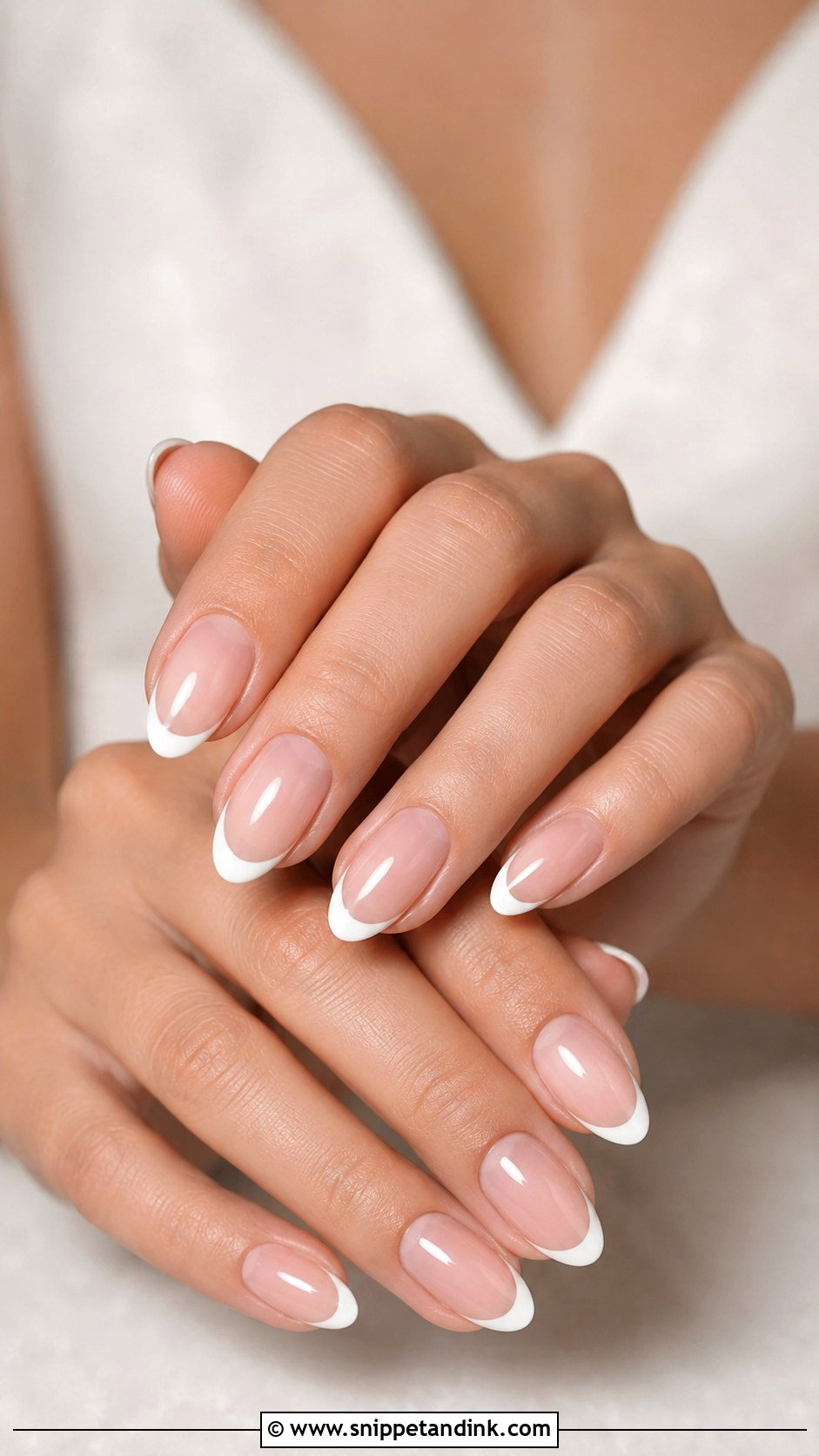
An almond shape lengthens the fingers, and a French tip on it has to follow the taper or it looks heavy at the end. I paint the smile line deep and slim so the white sweeps up toward the side walls. A sheer pink or neutral base keeps it fresh. For a more current version, swap stark white for a soft off-white, or lay pearl chrome over the whole set.
11. Soft Square Bride Nails
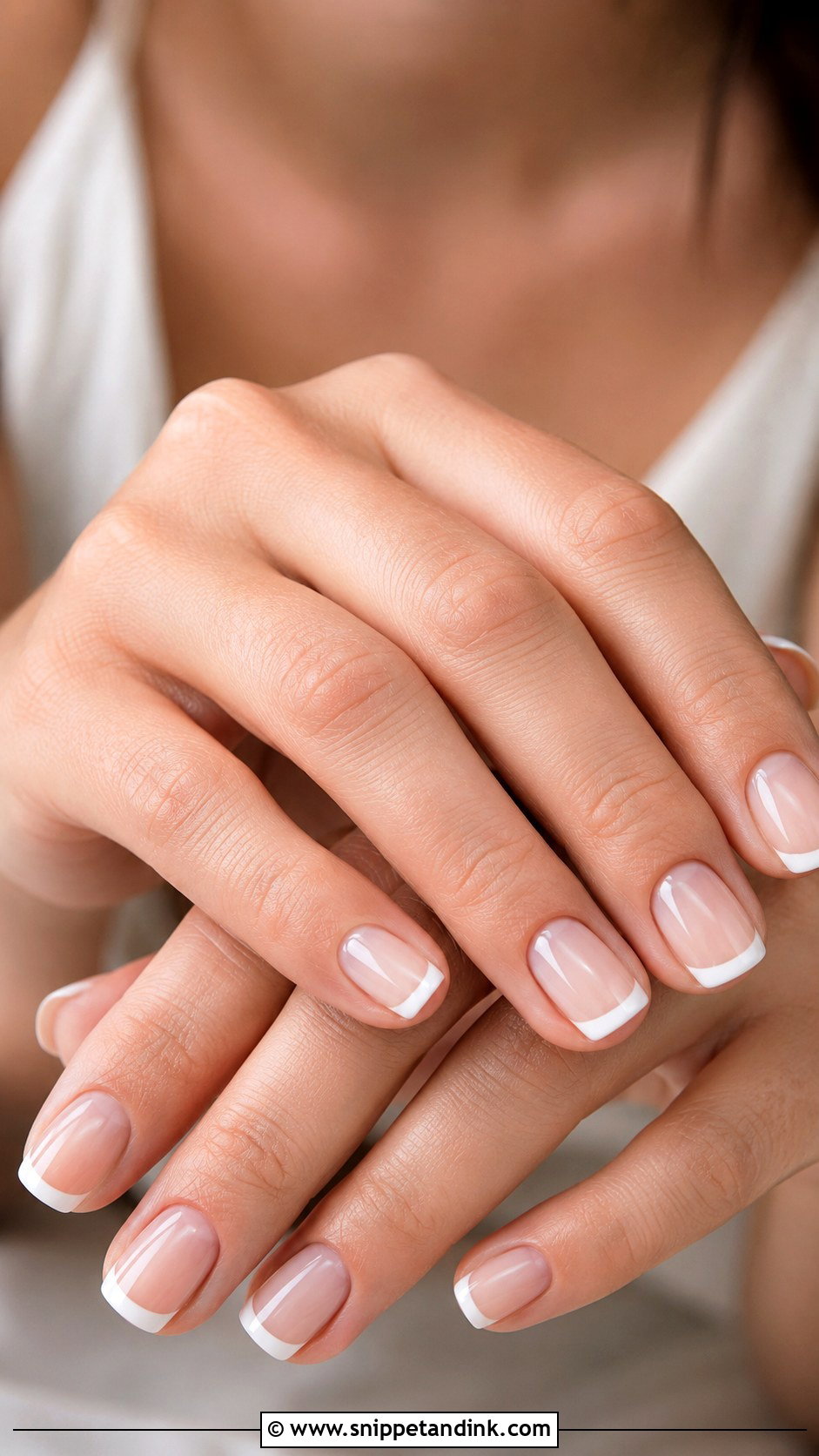
Soft square is the shape I recommend for brides who type all day or play an instrument. It keeps a strong free edge without sharp corners that snag tights or catch on a dress zipper, and it looks best short to medium. Its tidy outline reads cleanly when hands are stacked for a ring shot. Clean cuticles matter more with this shape, since the straight tip draws the eye back down toward the base.
12. White Chrome Bride Nails
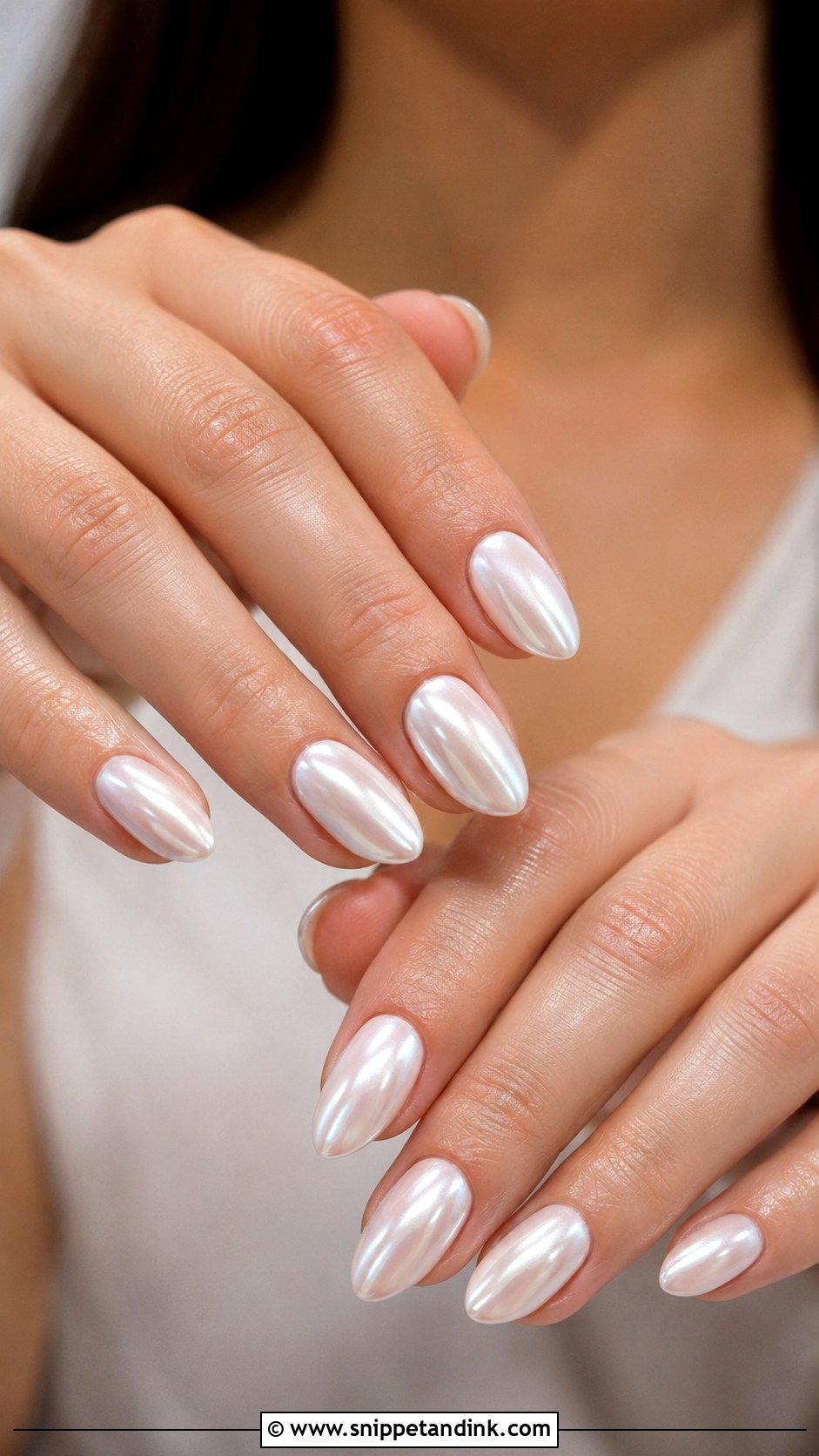
White chrome sounds harsh but isn’t: chrome powder over a white or milky base gives a soft pearly sheen rather than metal. Under direct flash it can bounce light and flatten detail, so I always ask brides to take a flash photo at the trial. It’s at home with satin and sleek silhouettes, and it ties in neatly with platinum or white gold. Coffin pushes it toward glamour; short ovals keep it quiet.
13. Ivory Bride Nails
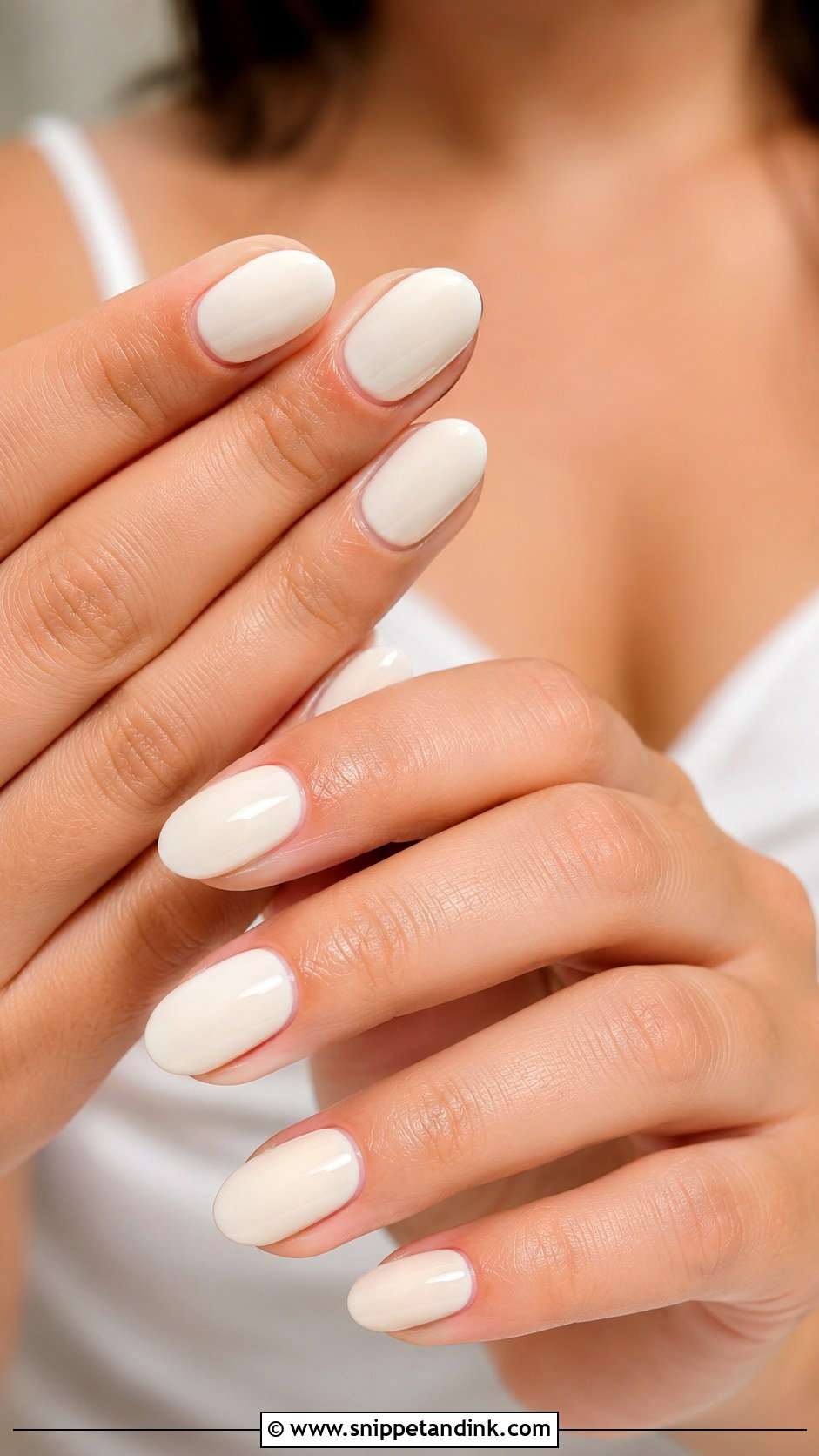
Pure white nails next to an ivory gown can make the dress look yellow. That’s why I steer brides in ivory or diamond-white dresses toward a creamy ivory polish instead: it coordinates without trying to be an exact match, and a fine shimmer layer gives it depth. Bring a fabric swatch to your appointment. I hold the bottle against it by a window, never under the salon lamps.
14. Nude Ombre Bride Nails
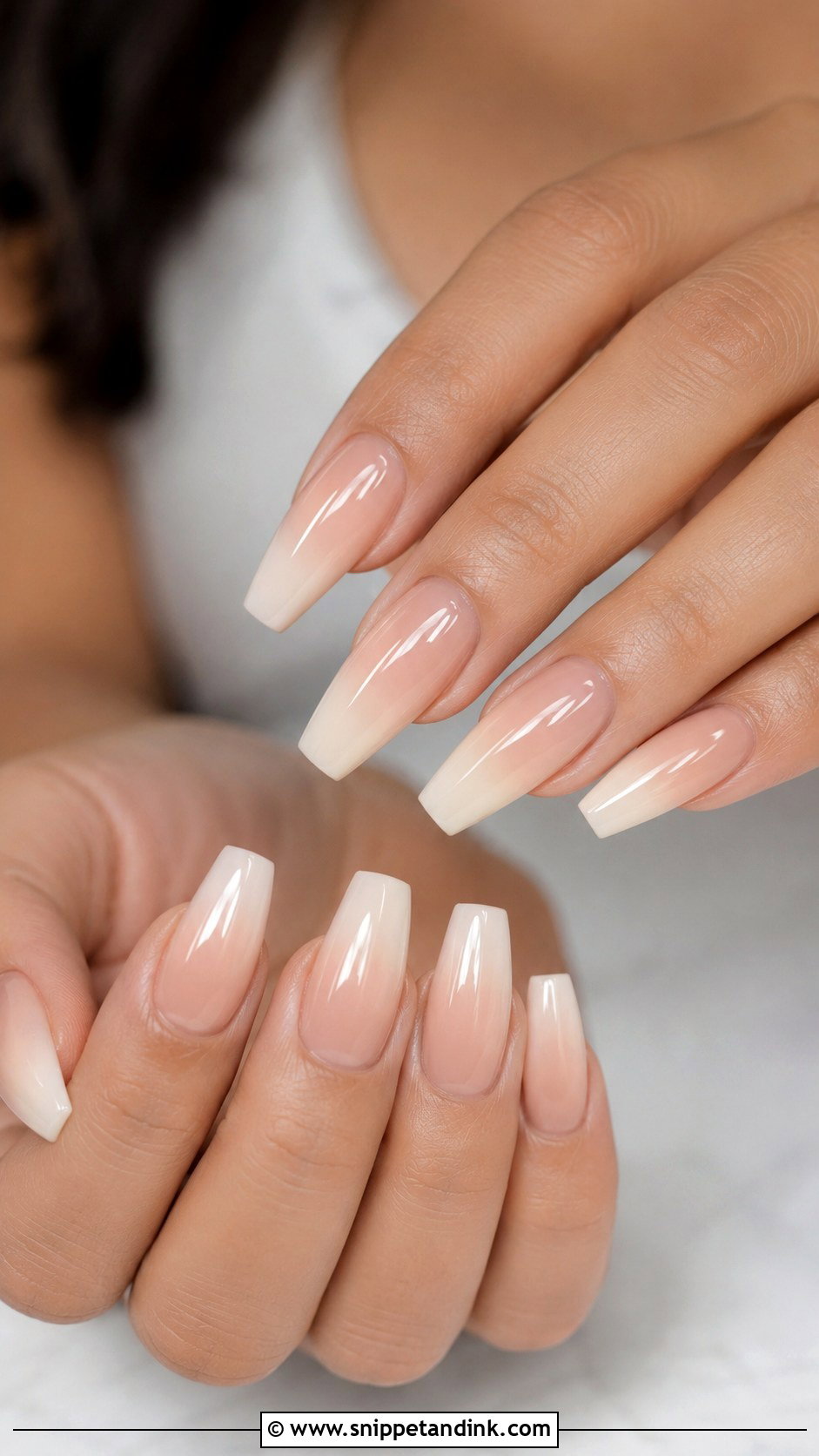
A nude ombre fades from a shade close to your own nail bed into pale ivory or blush at the tip, giving more movement than a single color and less contrast than a French. The base shade is the real decision. Pick one too far from your natural nail and a visible line appears at the cuticle after a week of growth. Almond and coffin give the gradient the most length to work with.
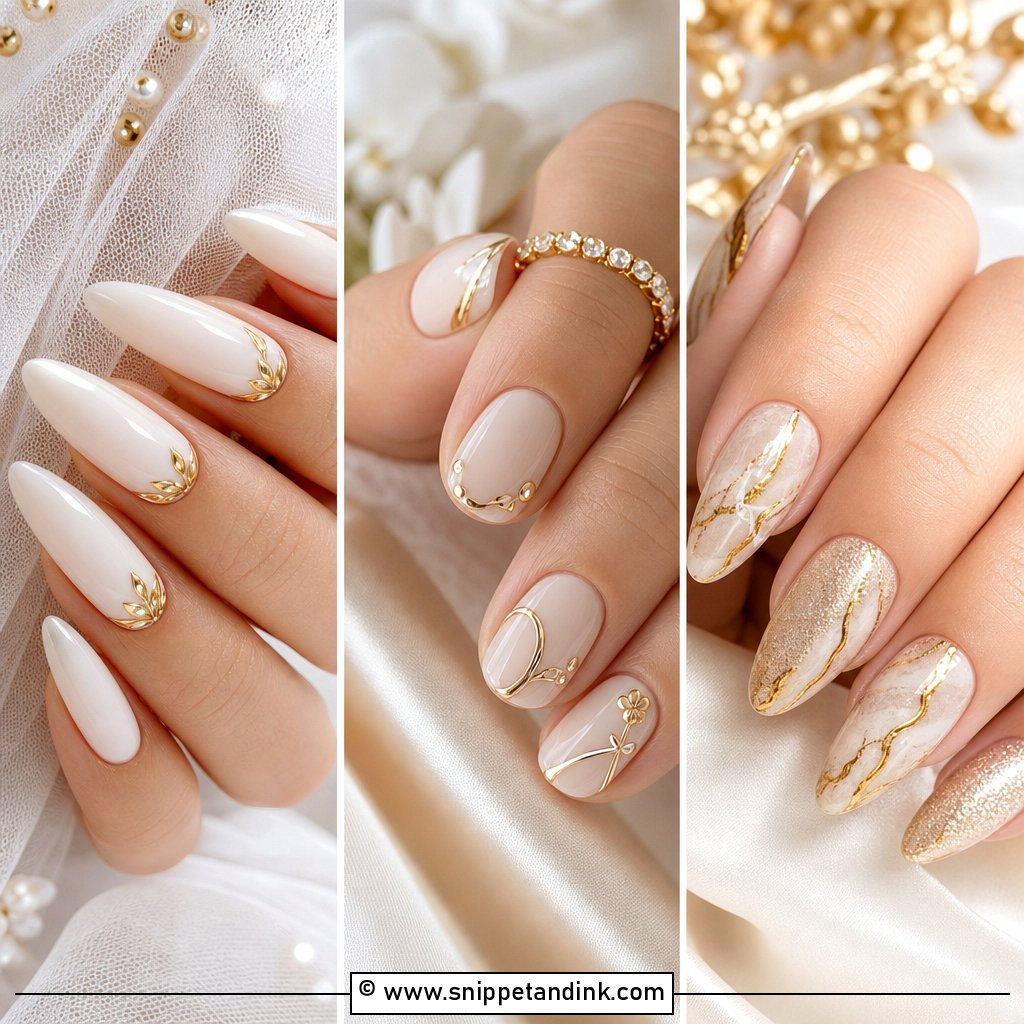
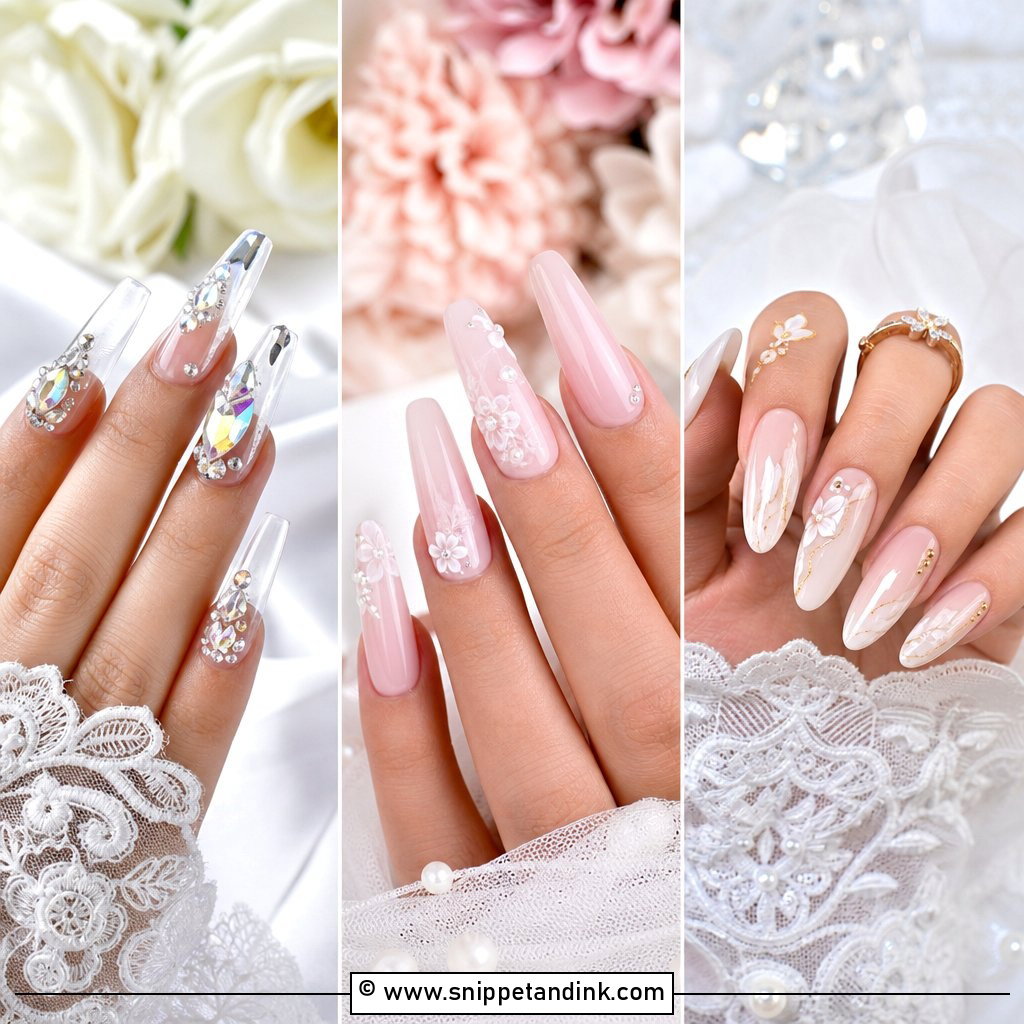
15. Pink Chrome Bride Nails
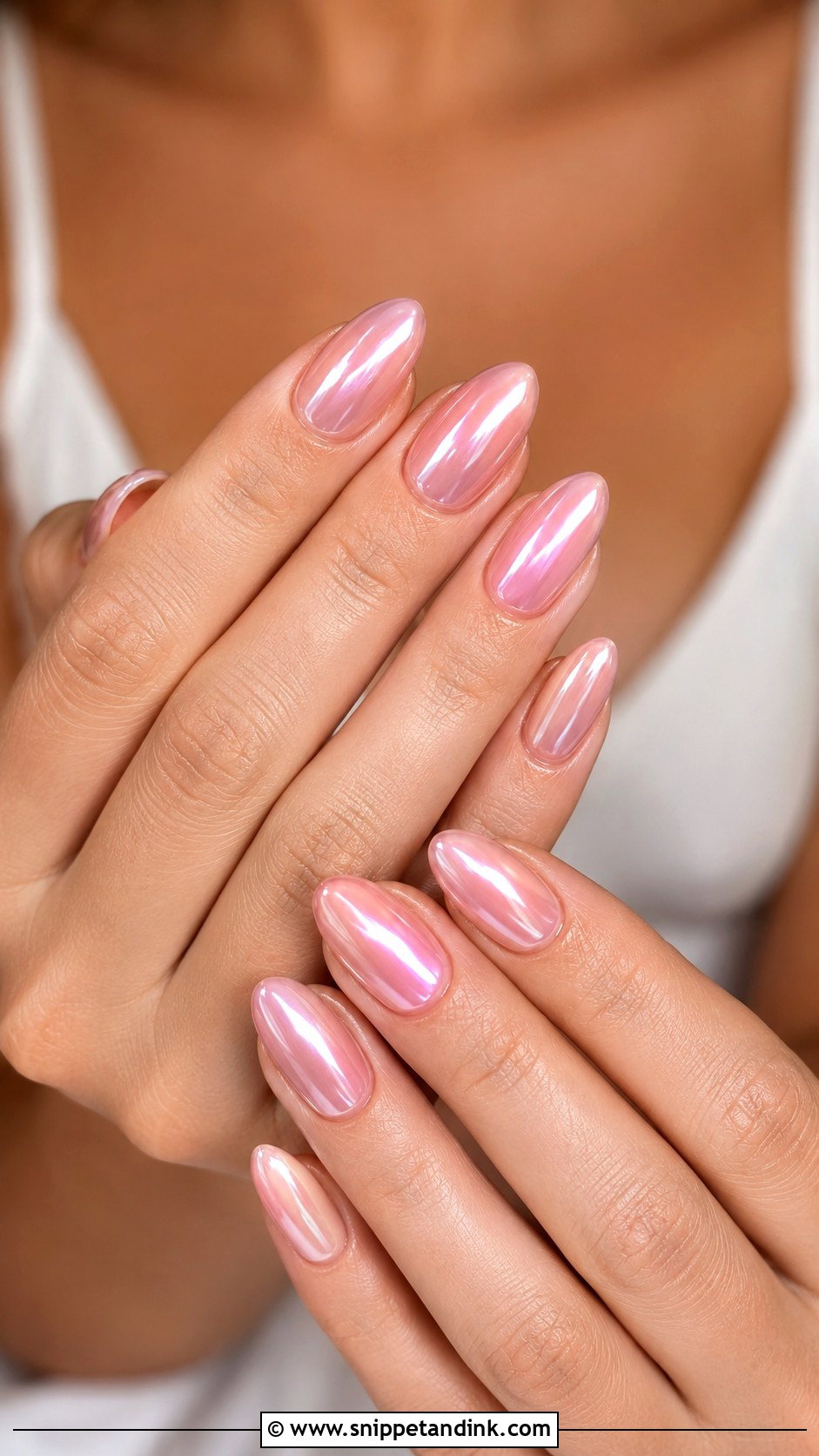
Pink chrome, often called glazed, layers pearl powder over sheer blush or rosy nude. It’s warmer than white chrome and forgiving on most skin tones, which is why I reach for it alongside rose gold rings or blush makeup. Chrome magnifies any bump underneath, so I level the base gel carefully before the powder goes on. A simple oval or almond keeps the shine from dating quickly.
16. White Floral Bride Nails
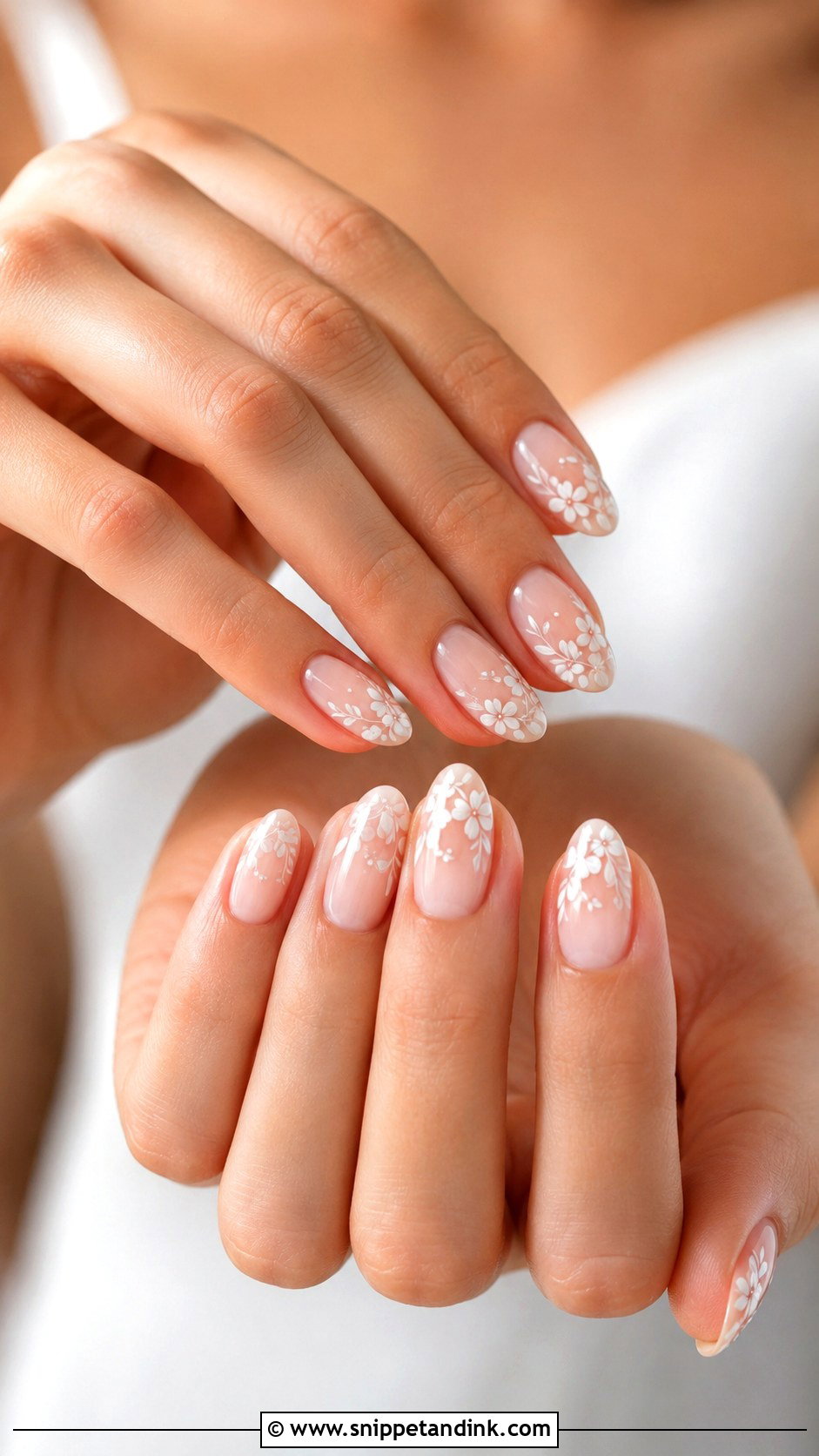
Hand-painted white florals add detail without bringing in color. I paint small five-dot blossoms, a leaf or two and a trailing vine, varying each nail slightly so it looks genuinely hand-done. Florals on all ten nails can feel busy at arm’s length, so for most brides I’d keep them to the ring finger and one other per hand. Garden weddings and floral lace gowns are the natural match.
17. Clear Bride Nails With White Tips
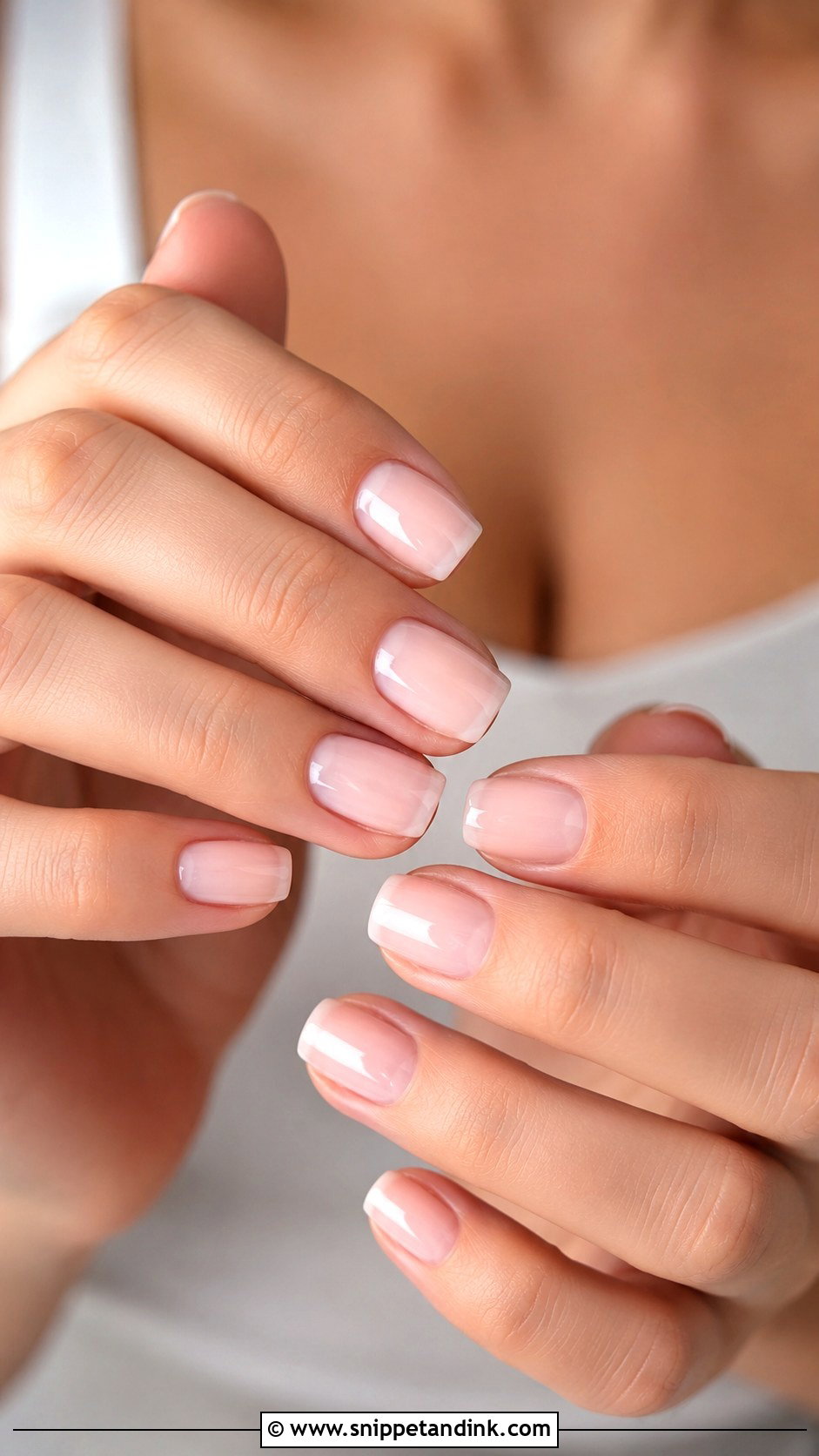
A clear or barely tinted base makes this lighter than a traditional French, almost like glass with a white edge. It only works if your natural nail bed is even, because a clear base conceals nothing. Short and square gives a crisp result; almond softens it. Ask for a high-gloss gel top coat so the clear part reads as glassy rather than bare.
18. Champagne Shimmer Bride Nails
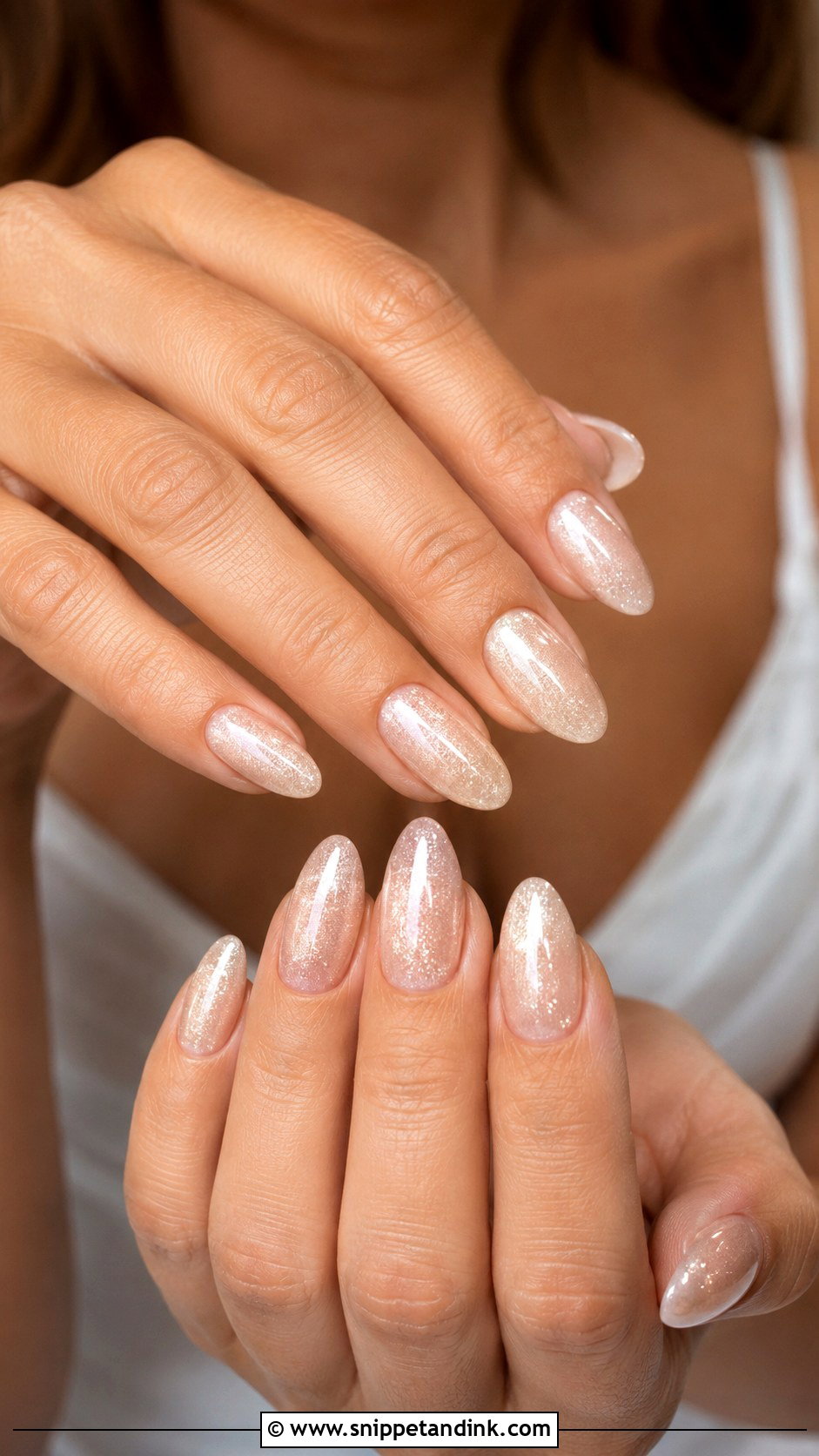
Champagne sits somewhere between beige, soft gold and pale rose, and it’s one of the most skin-friendly shimmer shades I own. The shimmer should be fine and suspended evenly in the polish; chunky glitter scatters reception lighting unevenly and looks like confetti in close-ups. It’s a natural partner for champagne gowns and gold jewelry. On short nails it stays subtle, on almond nails the glow has room to show.
19. Minimal Pearl Bride Nails
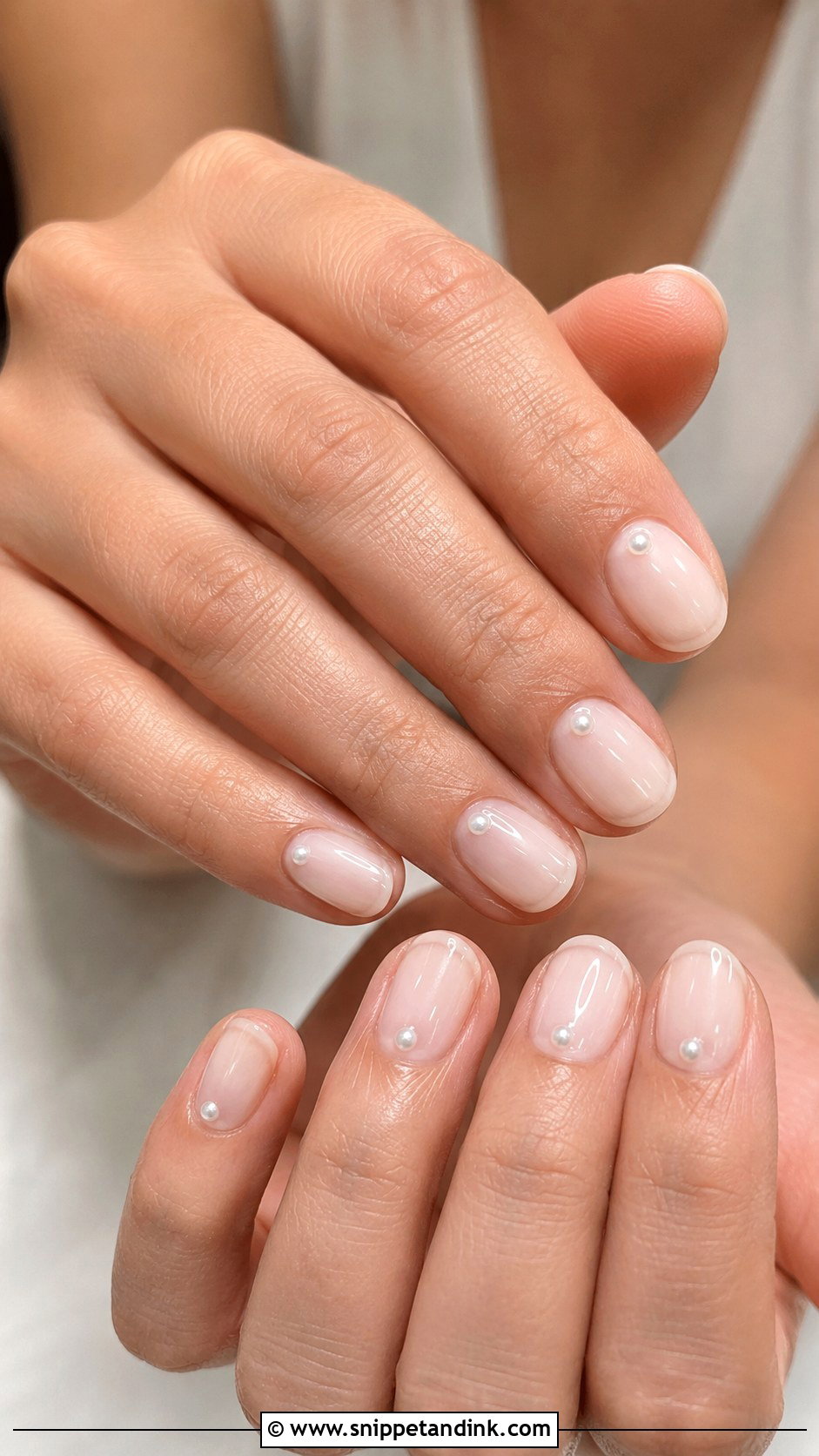
Minimal pearl sets use one tiny pearl at each cuticle, or a short row on a single accent nail, and that restraint is the whole point. I keep length short to medium, since pearls on long nails start to look like costume. What makes them comfortable is building top coat up around each pearl so there’s no lip for a thread to catch on. They sit naturally with pearl jewelry and a classic cathedral veil.
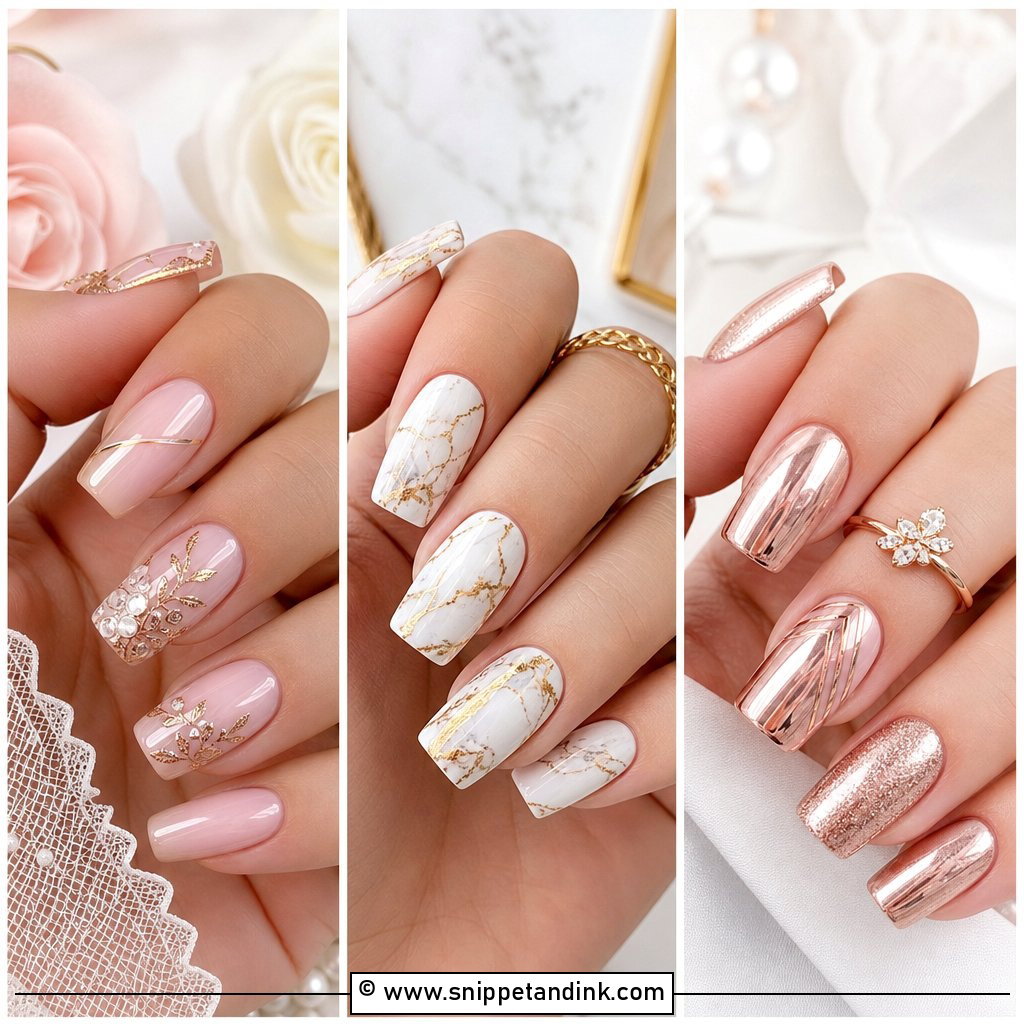
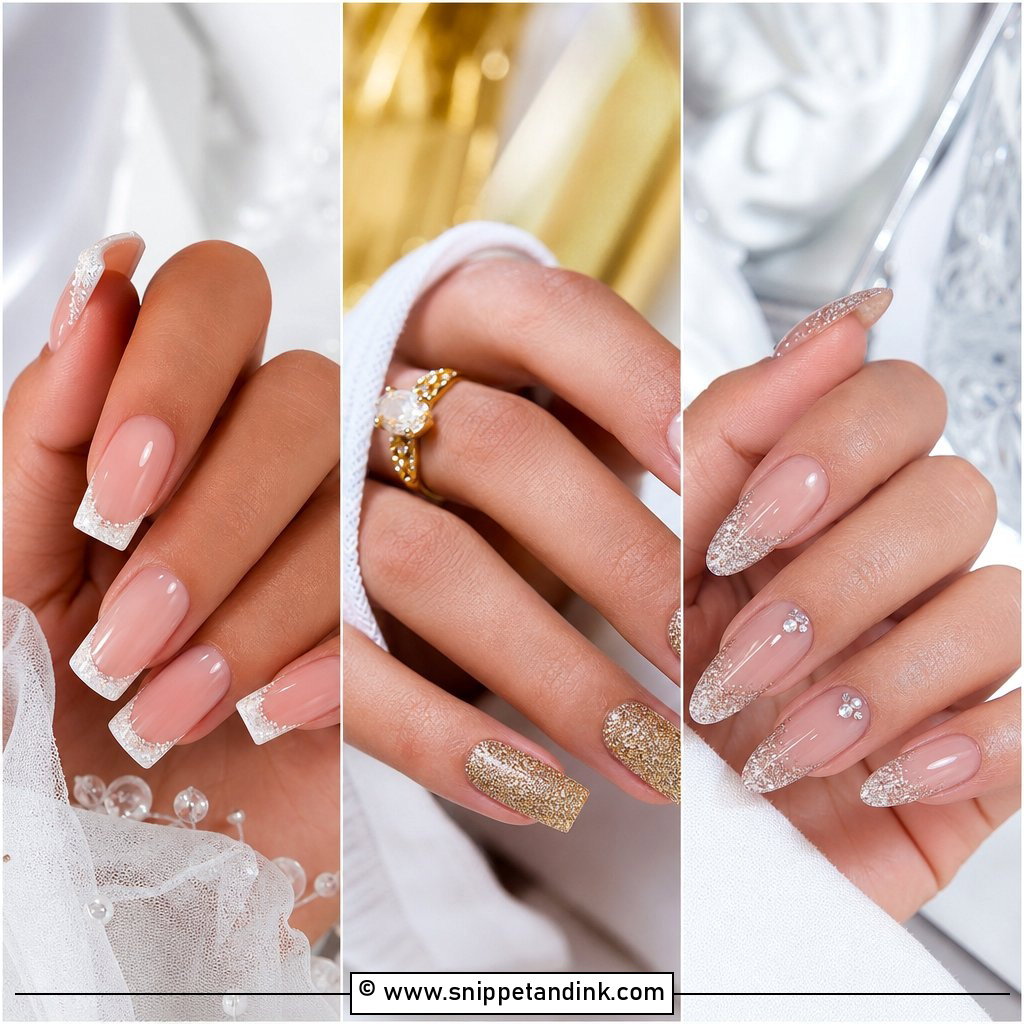
20. White French Bride Nails With Glitter
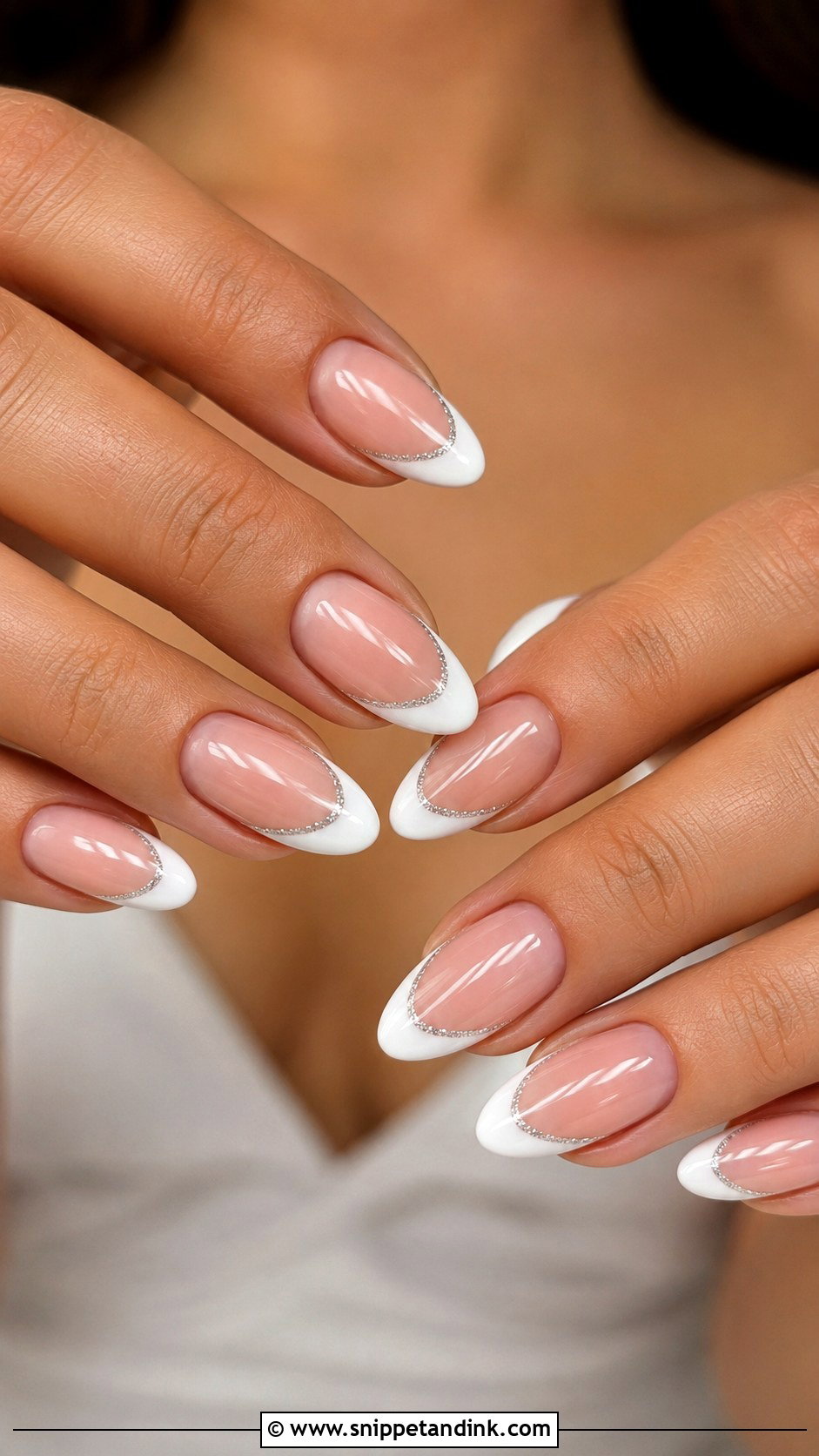
A fine glitter line traced along the smile line, or dusted over the white tip, adds sparkle without abandoning the French structure. Stick to micro glitter in silver, pearl or champagne; large hex pieces look craft-store in photos. I find this suits evening receptions best, where candlelight picks up the glitter every time your hand moves. Almond, oval and soft square all carry it.
21. Rose Gold Bride Nails
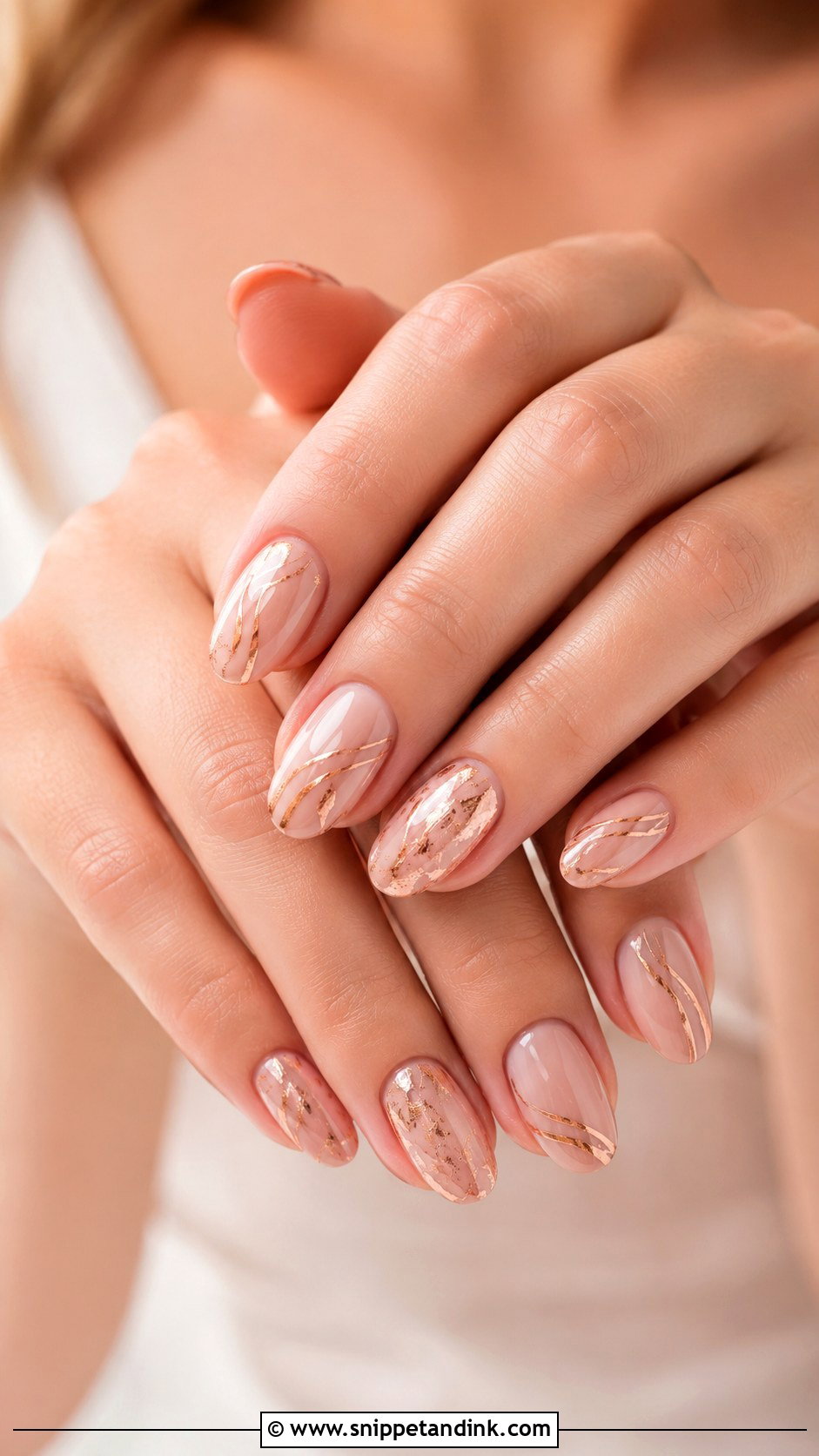
Rose gold can mean a shimmer polish, foil, or thin metallic lines over nude. On a bride I use it strictly as an accent: a fine line along one side, a few foil flecks, never a full metallic coat on all ten nails, which can look brassy against warm skin. It’s the obvious partner for rose gold rings and blush flowers. Almond and oval soften it, and a short square makes it modern.
22. Matte Nude Bride Nails
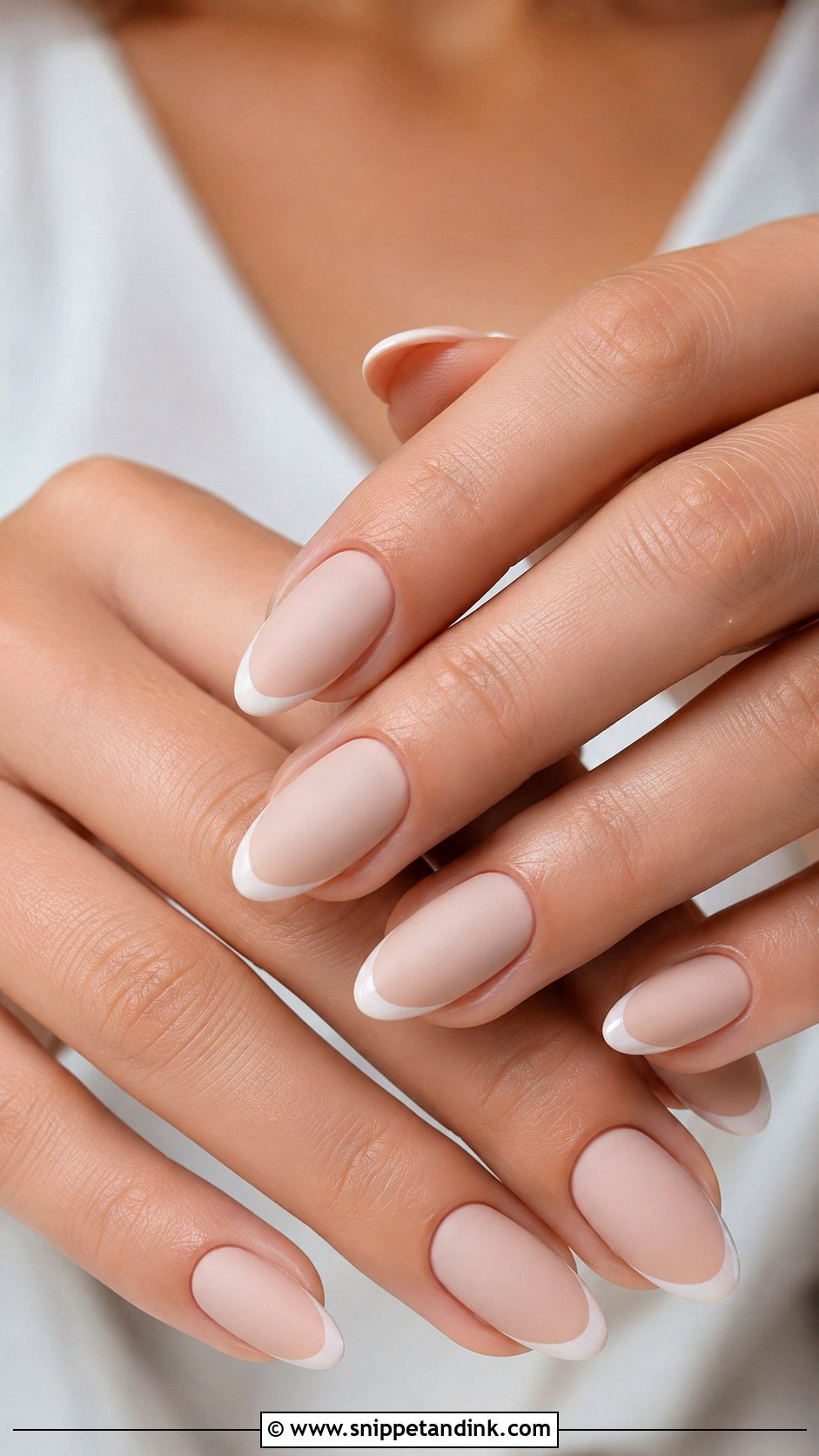
Matte is the one finish I’d think twice about for a bride. It’s chic in person, but matte top coats pick up foundation, self-tan and hand cream, and they can look dull in close-up photos. If you love it, add a glossy French tip or a single pearl over the matte so there’s some contrast, and keep a lint-free wipe in your bag. It suits minimalist and structured gowns best.
23. White Swirl Bride Nails
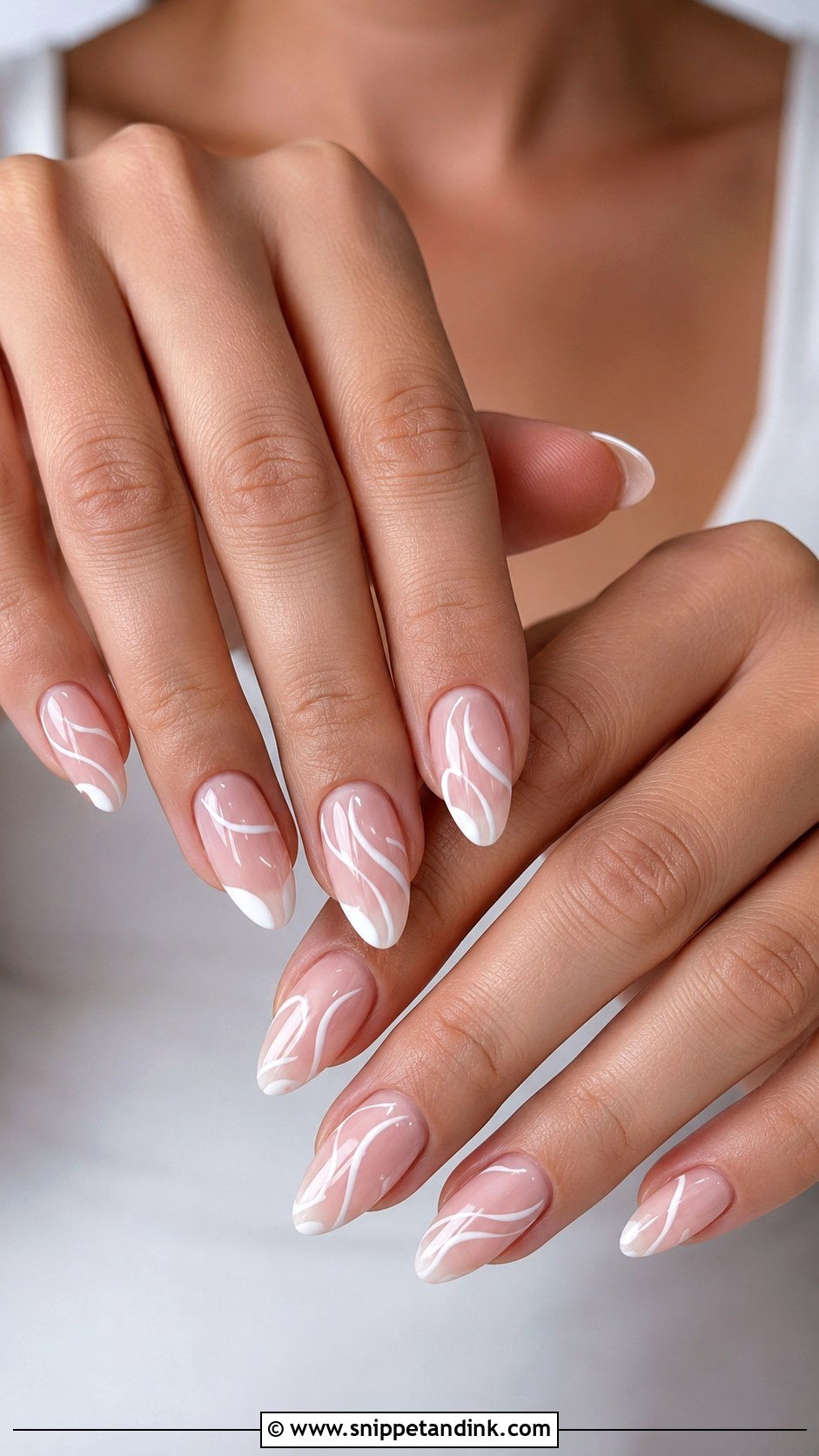
Swirls are freehand ribbon lines in white over sheer pink, nude or clear, and they give movement without florals, glitter or pearls. Line weight decides whether the set reads bridal or graphic, so I use thin strokes that taper at each end. Almond and oval shapes follow the curve of the line. On square nails the swirls tend to look cut off at the tip.
24. Silver Accent Bride Nails
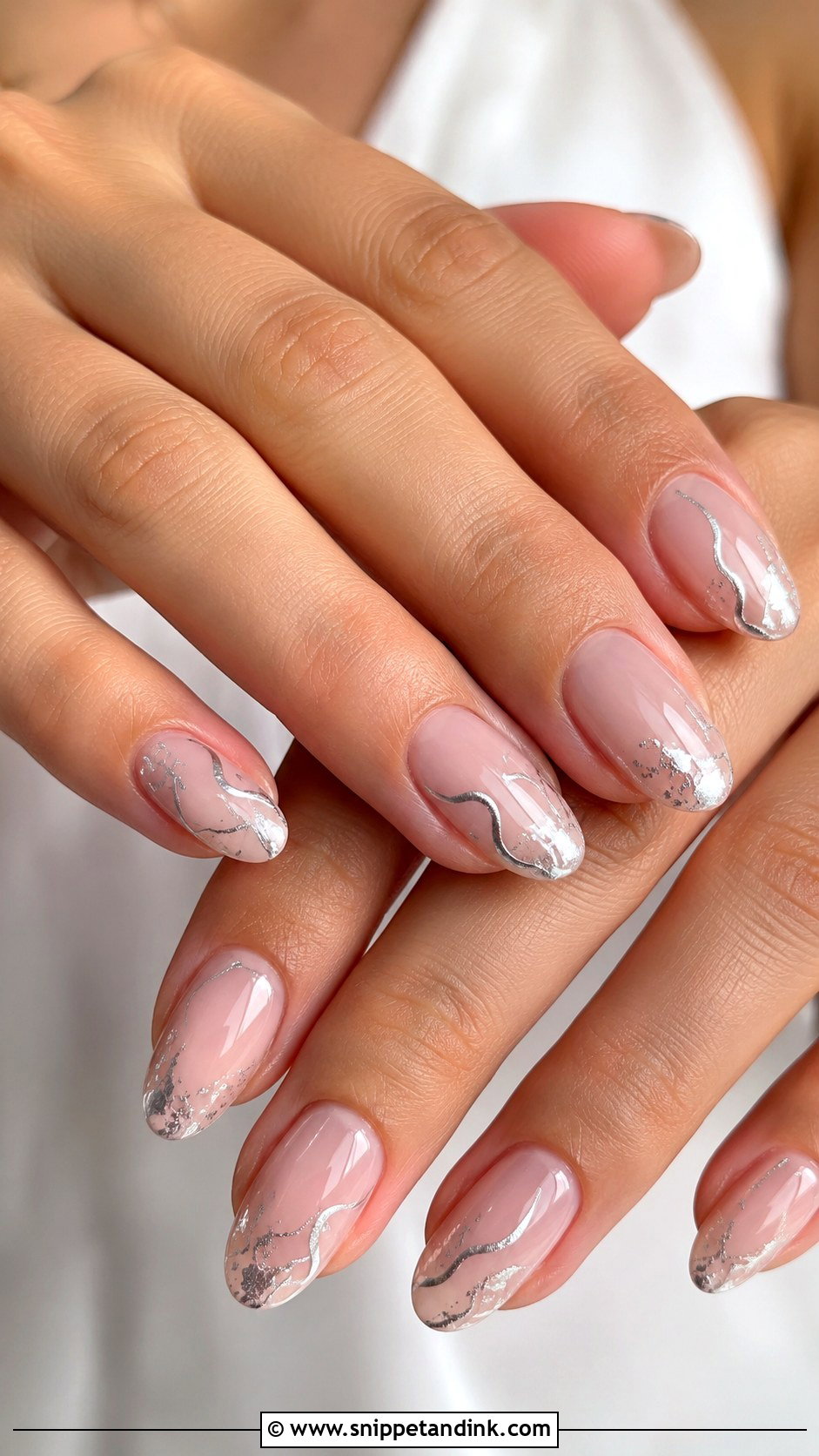
Silver details belong with platinum, white gold or silver jewelry, and they need to stay smaller than the ring. Fine striping, a few foil touches, a delicate glitter tip or a soft chrome accent nail is plenty. I avoid silver on every nail because it competes with the diamond in a close-up. Cool-toned palettes and crystal hair pieces are where it fits best.
25. Coffin French Bride Nails
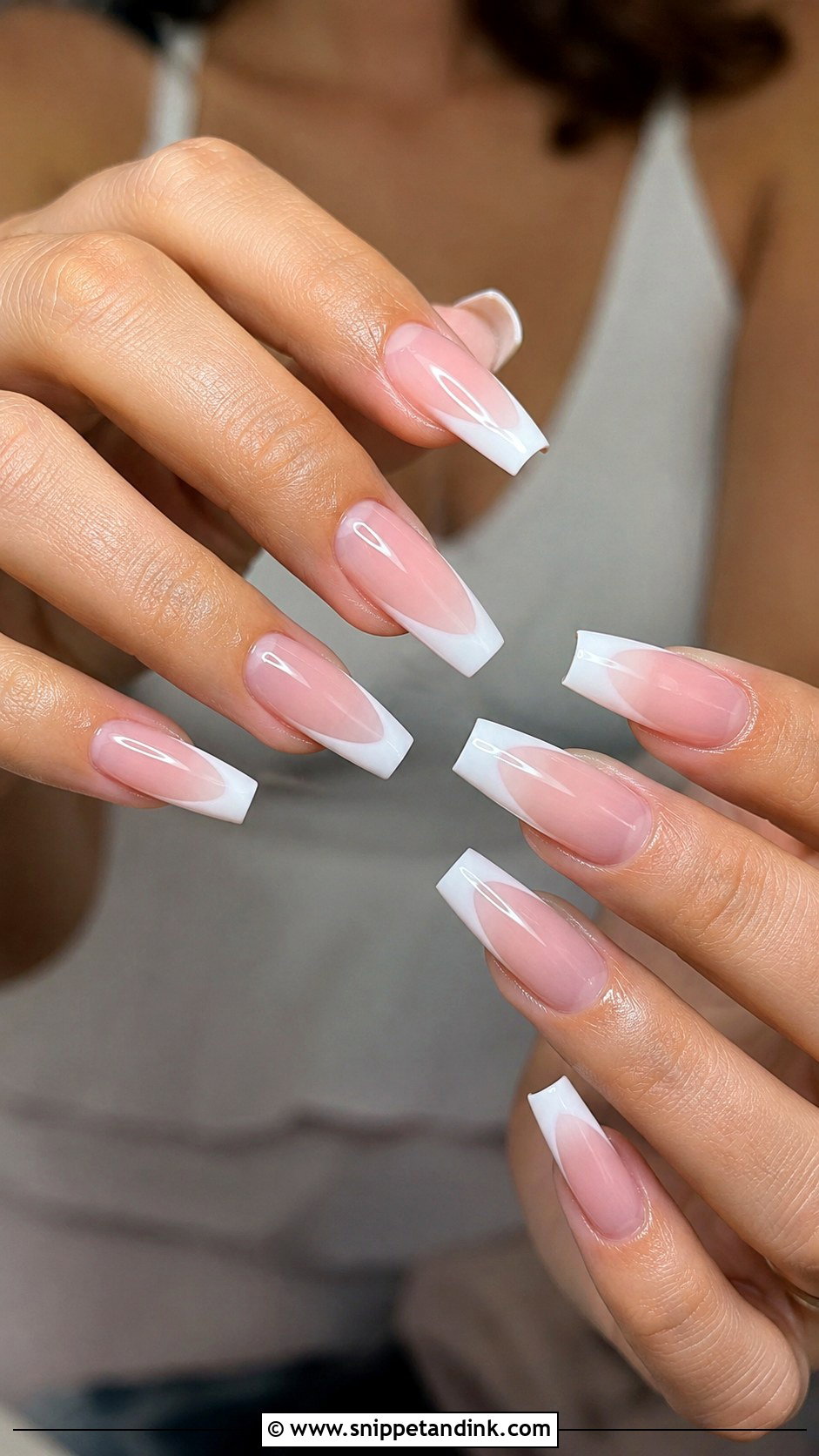
Coffin has tapered sides and a flat tip, a structured shape that a French tip softens into something bridal. I recommend medium length rather than extreme, because long coffin tips get in the way of fastening earrings, holding a bouquet stem and, honestly, doing up your own buttons. Thin white tips over sheer pink keep it balanced. A pearl chrome layer adds dimension for a formal venue.
26. Micro French Bride Nails
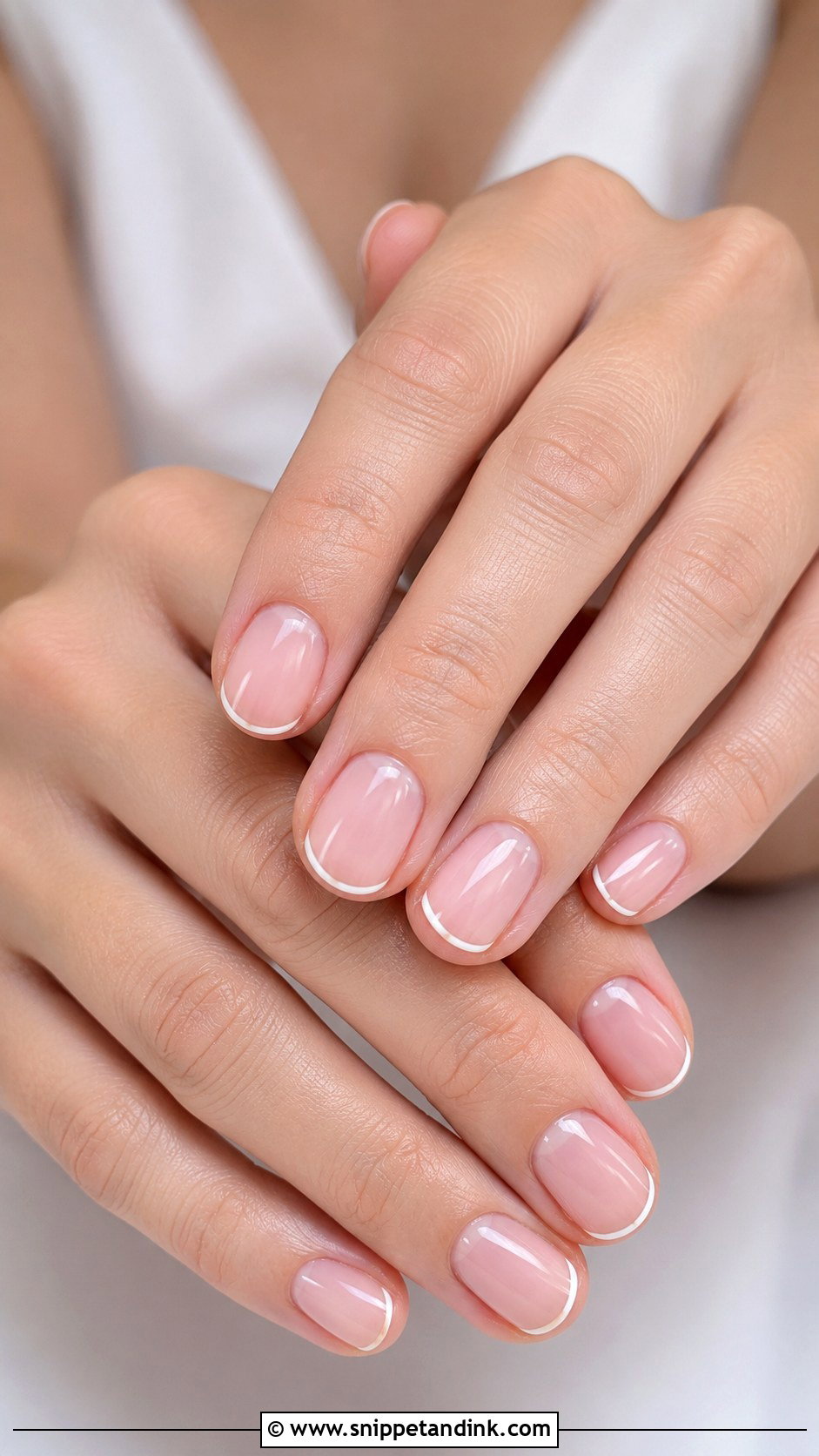
Micro French bride nails use a line of white so thin it’s almost a highlight along the free edge. It’s the French I suggest most for short nails, since a full tip would swallow a short nail bed. Painting it takes a steady liner brush and an identical free edge on every finger, so I file all ten to the same length first. Finished with a high-gloss top coat, it reads quiet and polished.
27. Milky Pink Bride Nails
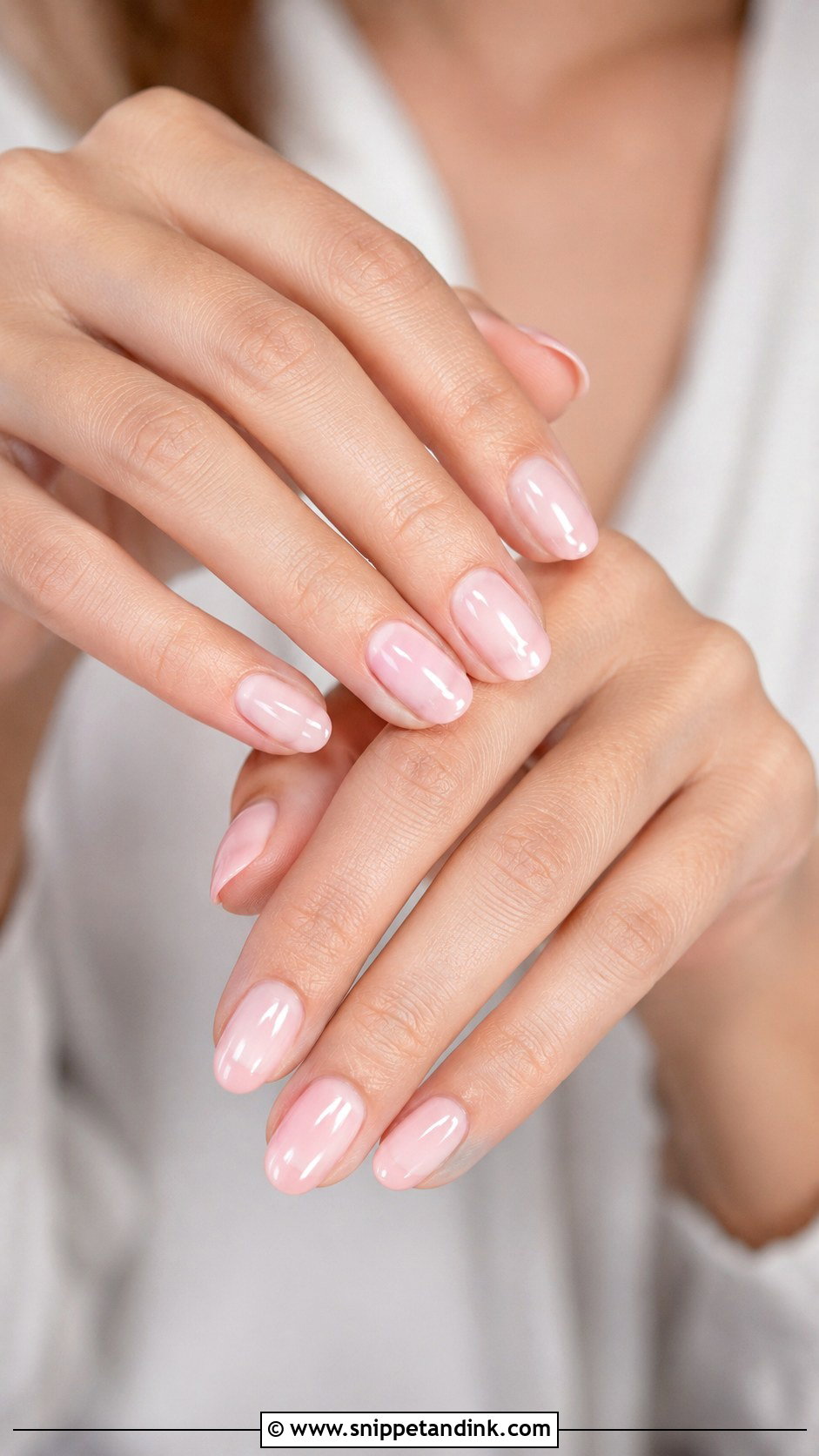
Milky pink is the halfway point between a sheer and a cream: enough opacity to look finished, enough translucency to look natural. I suggest it when sheer pink shows too much staining or ridging on a bride’s nails. It suits any length. A pearl shimmer top coat or one tiny crystal at the cuticle is all the decoration it needs.
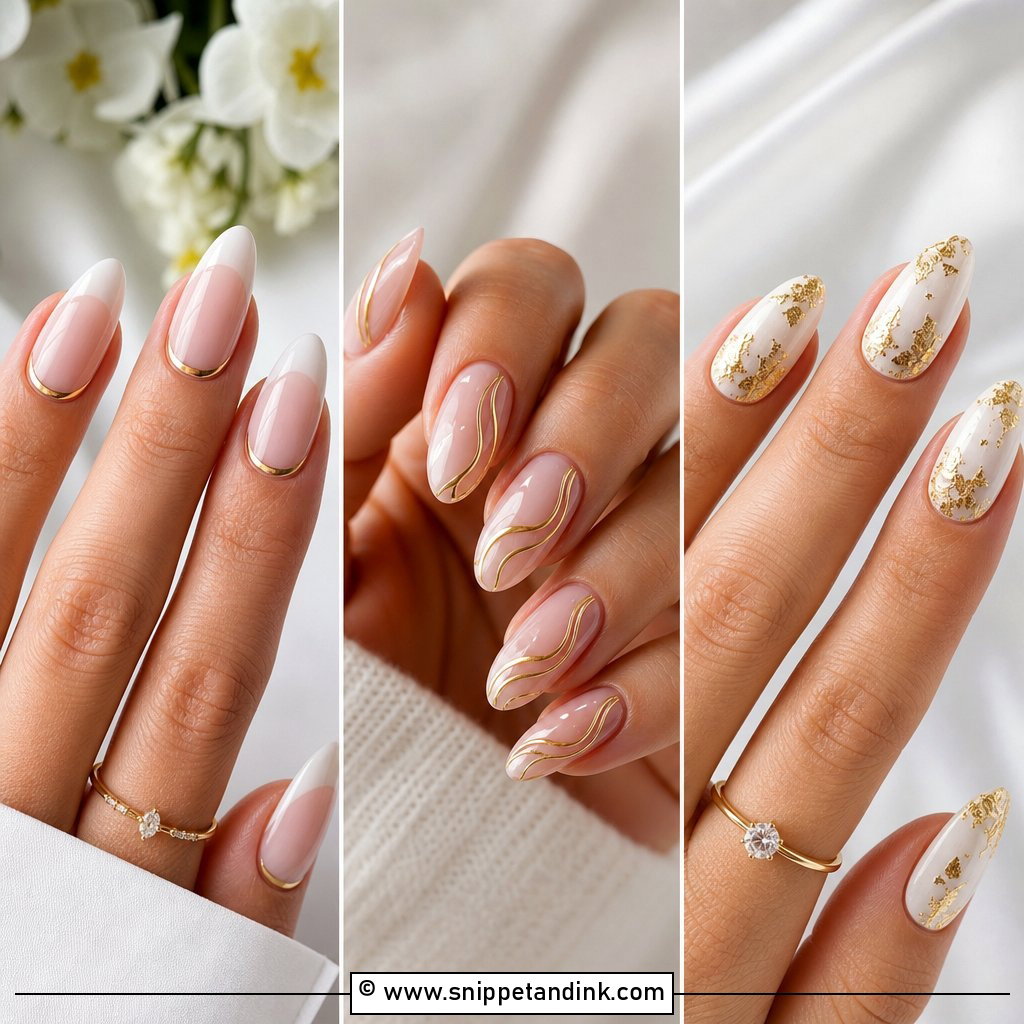
28. Gold French Bride Nails
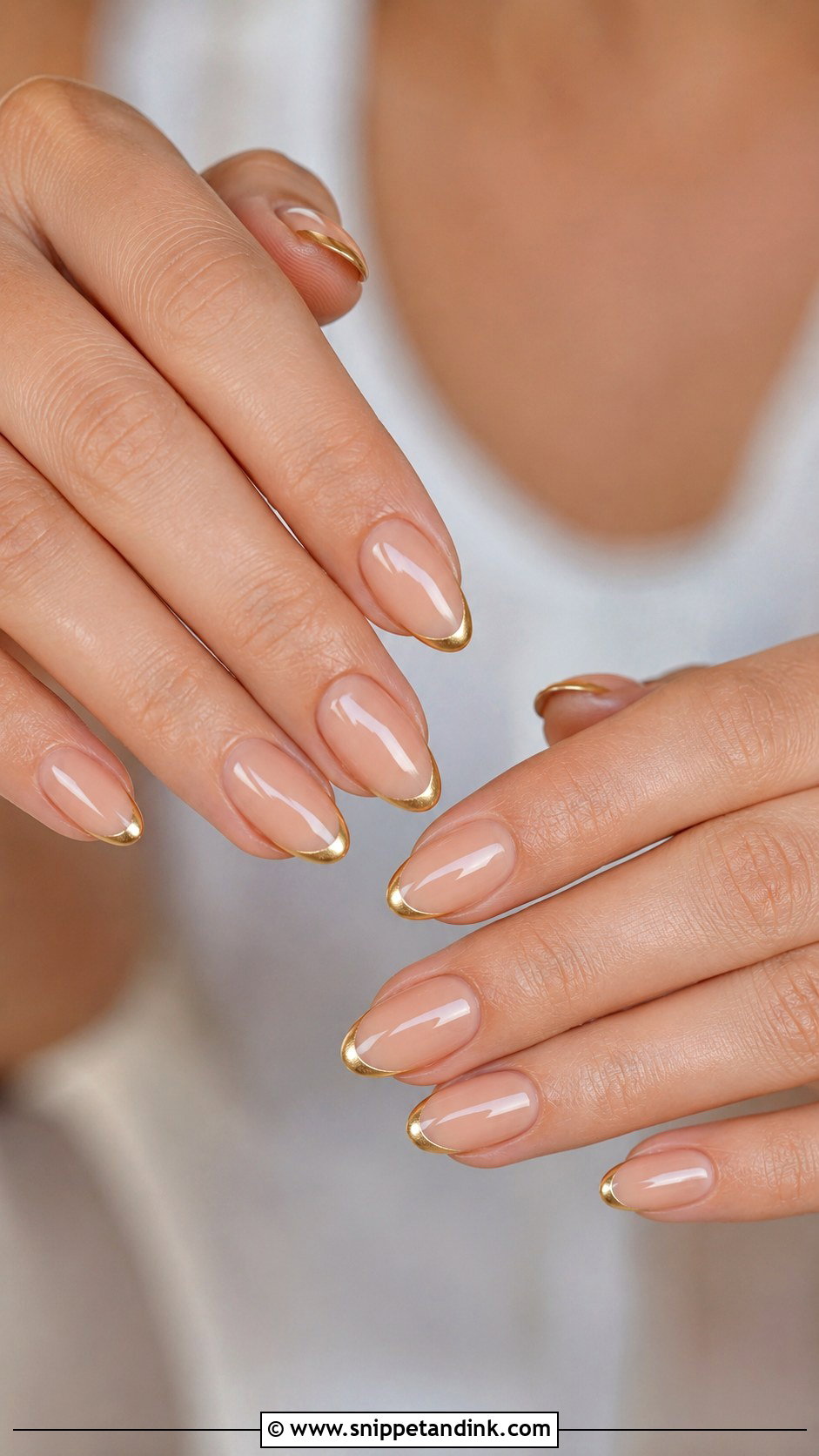
Swapping the white tip for a thin gold line keeps the French structure but warms it up. I paint it with a gold gel liner rather than foil, which can crack along a curved edge. Keep the base sheer nude or milky beige and the line very fine. It matches gold jewelry and champagne palettes; almond and oval read graceful, short square reads crisp.
29. Diamond Accent Bride Nails
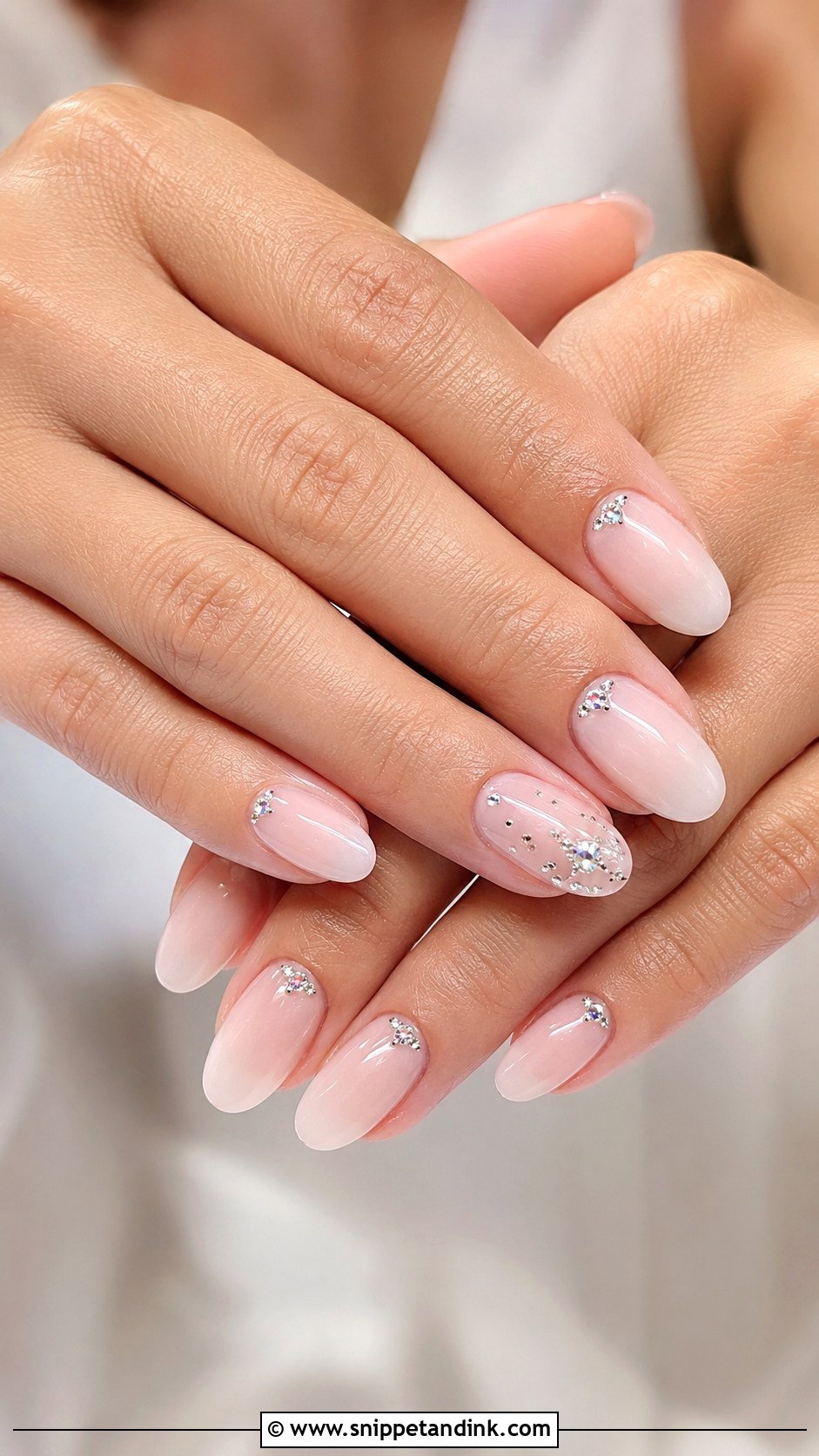
Crystals on a bridal set need to be few, flat and secure. I use small flat-back stones set into gel, near the cuticle or along one side of an accent nail, and avoid raised clusters that snag veils, hair and lace sleeves. A soft base like sheer pink or ivory keeps the ring the focus. Before a bride leaves my chair, she runs her hand over a knit sweater; if anything catches, it gets rebuilt.
30. Something Blue Bride Nails
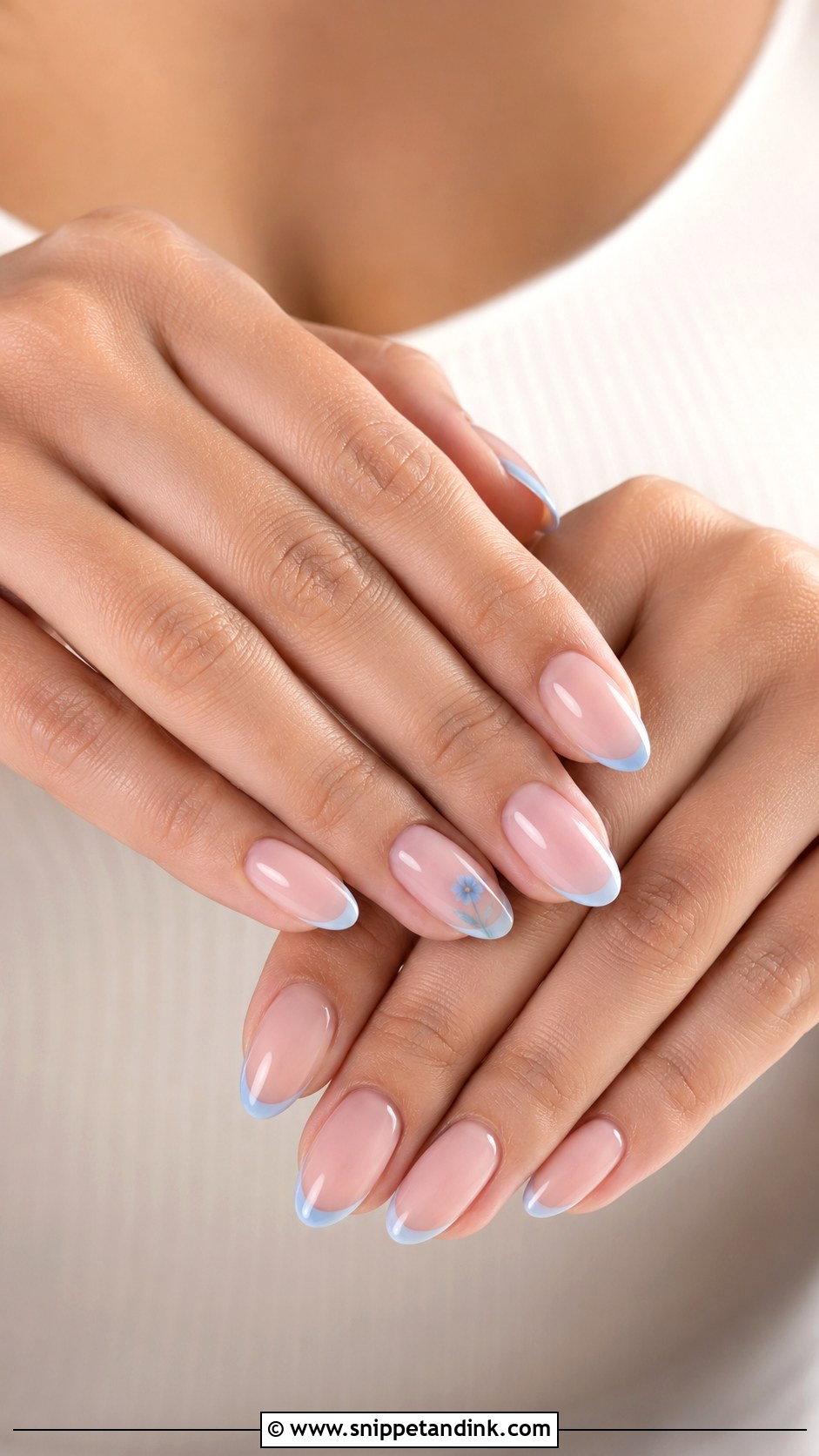
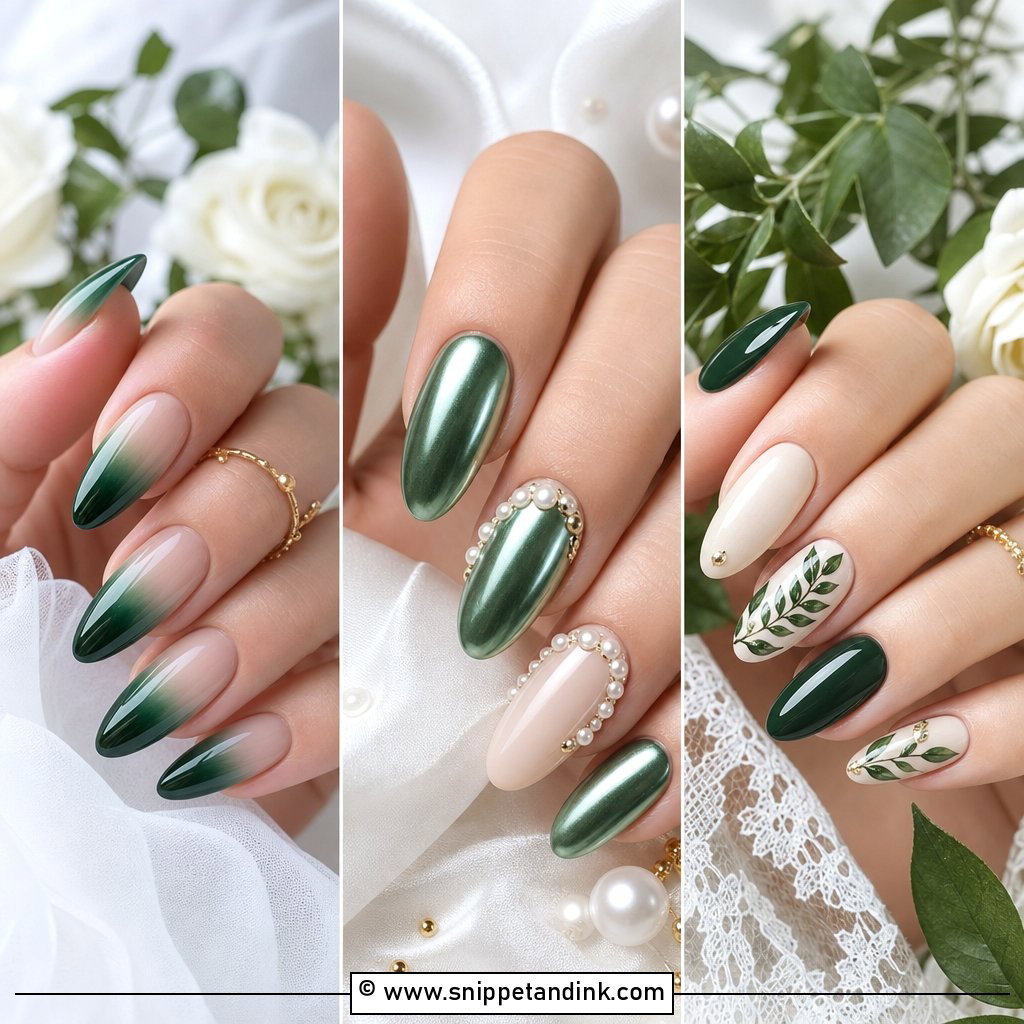
This is the subtlest way I know to include something blue: a pale blue micro tip, a tiny forget-me-not, a single dot at the cuticle or one powder-blue accent nail over nude or milky white. Pale is the key word. Bright cobalt often photographs as navy and pulls attention away from the ring. Spring, summer and coastal weddings suit it most, but a whisper of pale blue works in any season.
Sheer Polish Shows Everything Underneath
Almost every design above sits on a sheer or milky base, and sheer colors hide nothing. Staining from dark polish, white spots, ridges and an uneven free edge all show in a ring close-up. In the weeks before the wedding, I ask brides to stop wearing dark shades without a base coat, use cuticle oil every night and file in one direction instead of sawing back and forth. A ridge-filling base coat smooths out whatever is left.
Hands change with the season, too. Cold weather dries out cuticles, and a summer tan can turn a cool pink chalky. If your skin has shifted since the trial, retest the shade a couple of weeks before the day.
Fixing a Lifted Corner or Chip at the Venue
Most problems on the day are small: a chip on the thumb, a corner lifted by a car door handle, a pearl that pops off during dressing. I send brides home with a tiny kit to hand to a bridesmaid.
- A glass file to smooth a snag without tearing the nail
- A bottle of the exact shade, or a sheer top coat, to fill a chip
- Nail glue and two spare pearls or crystals if your set uses them
- Cuticle oil and a lint-free wipe for camera-ready hands
If a gel corner lifts, resist picking at it. File the loose edge flush and seal it with a dab of top coat; peeling it pulls up layers of natural nail along with the gel.
Your Ring Should Still Be the Focus
Most of the best bridal sets I’ve done are the plainest ones: a well-shaped nail, a clean cuticle and a shade matched to the skin. Detail is easy to add and hard to undo once it’s on camera. Book the trial, live in it for a few days, look at your hands in daylight and in a phone photo, then adjust. If it still feels like your own hands after a week, you’ve found your wedding set.
You'll Like These Ideas:


Leave a Reply