
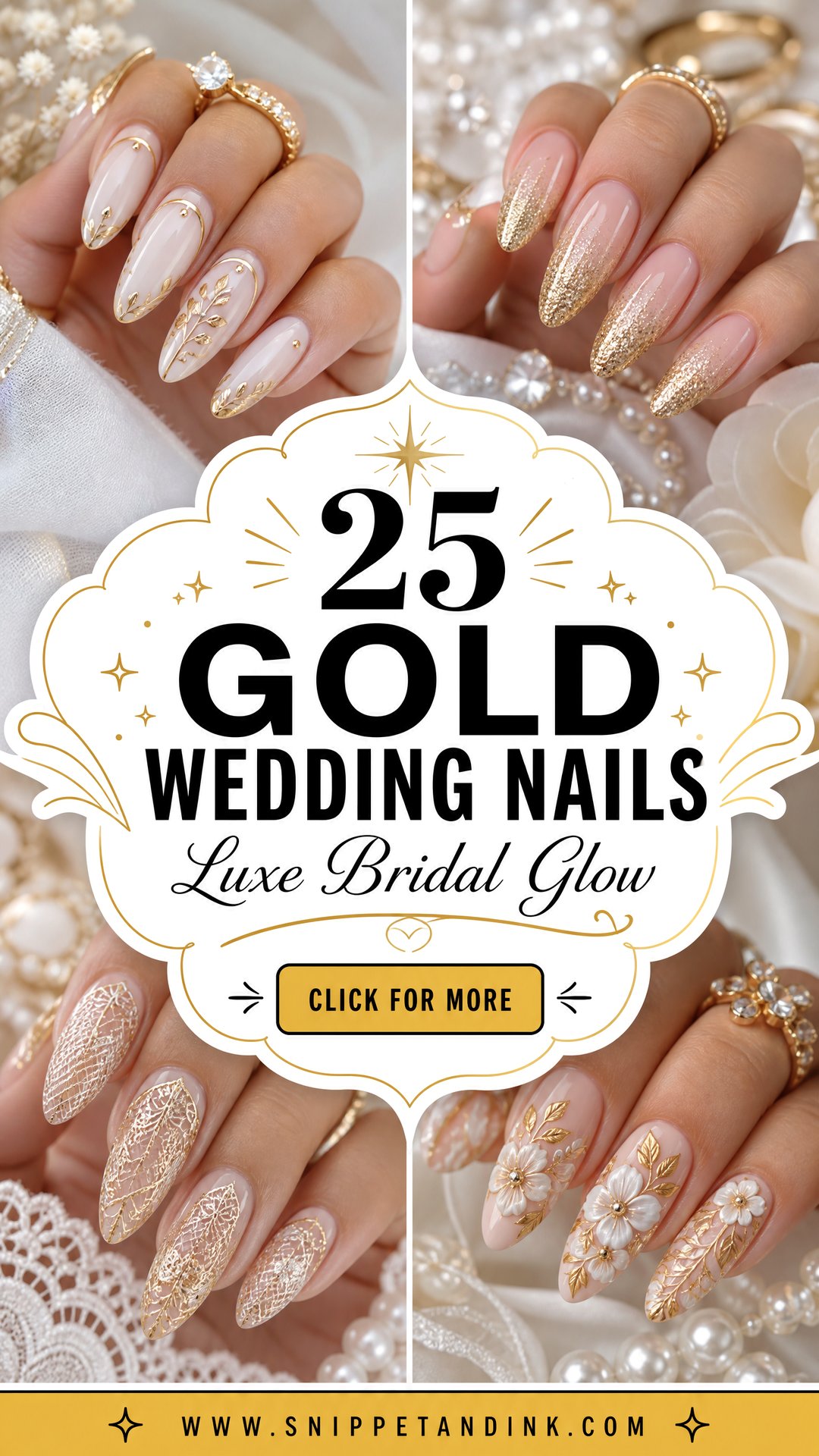
Gold is the metal I’m asked to put on bridal nails more than any other, and it’s more forgiving than people expect. It sits comfortably next to ivory and champagne fabrics, pearls and both yellow-gold and mixed-metal jewelry. Gold wedding nails can be as quiet as a hairline French tip or as rich as a full chrome set, and the right amount depends mostly on your nail shape and length. Short ovals stay clean with small details; almond, coffin and stiletto shapes give gold more room. The 25 sets below are complete manicures, with notes on how each one wears and what I’d check before booking it.
Gold Tone Against Your Ring and Your Skin
Not all golds are the same color, and the first thing I do at a bridal consultation is hold a few swatches next to your engagement ring and the back of your hand. A gold that fights the ring looks wrong in every close-up, no matter how good the nail art is.
- Yellow gold ring: classic yellow gold or a warm champagne. Bright yellow chrome can look harsher on camera than the ring itself, so I usually tone it down a shade.
- Rose gold ring: rose gold details, or champagne if you’d rather the nails not match exactly.
- White gold or platinum ring: champagne gold, kept to tips or a few accents, so the warm metal doesn’t overwhelm the cool one.
- Mixed metals: champagne is the bridge. It sits between warm and cool and rarely clashes.
Skin matters too. Cool, pink undertones tend to suit rose and champagne golds; warm and olive undertones carry richer yellow golds. Deep skin tones wear almost any gold well, and bright chrome in particular looks rich rather than brassy.
1. Gold French Tip Wedding Nails
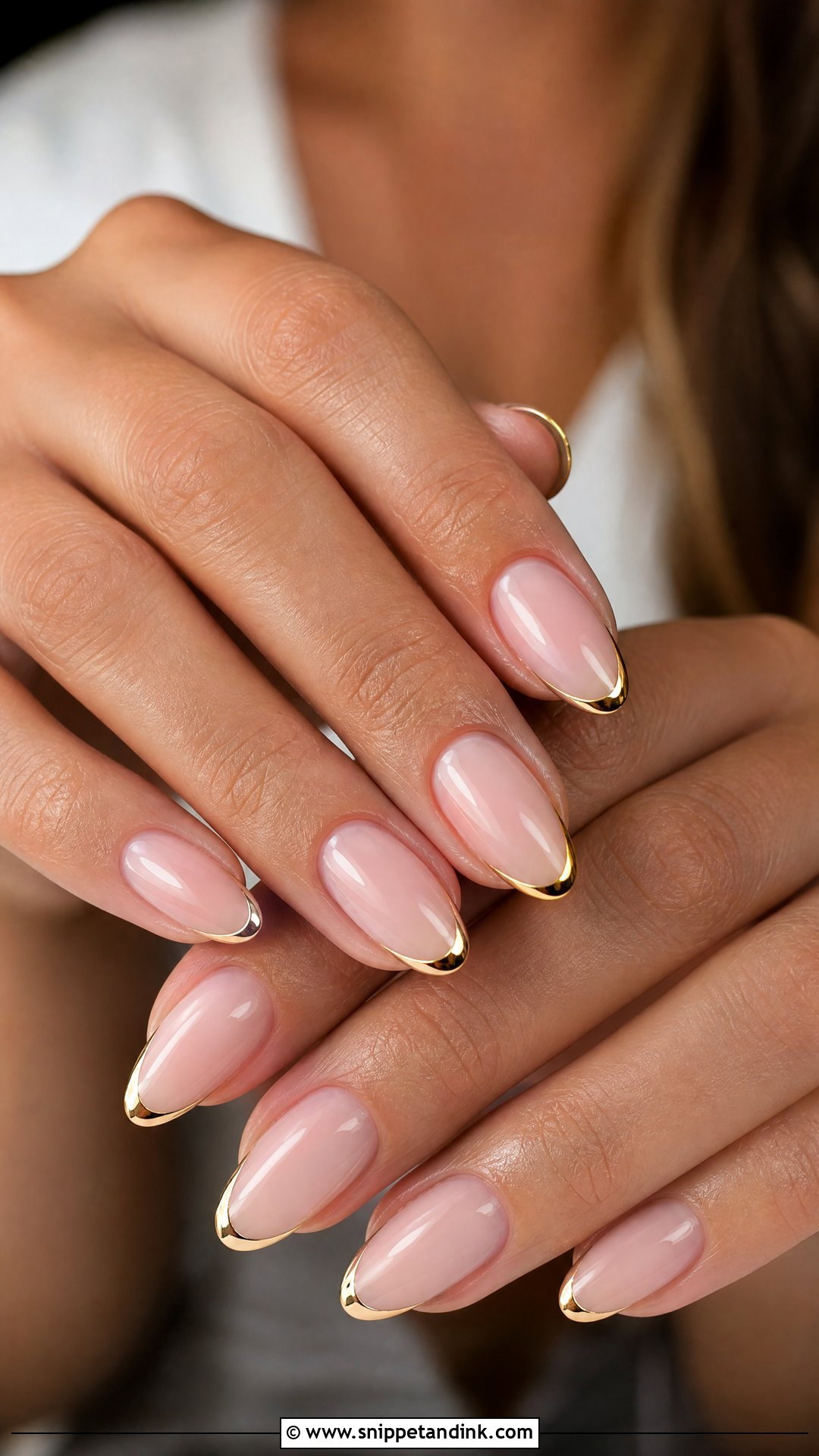
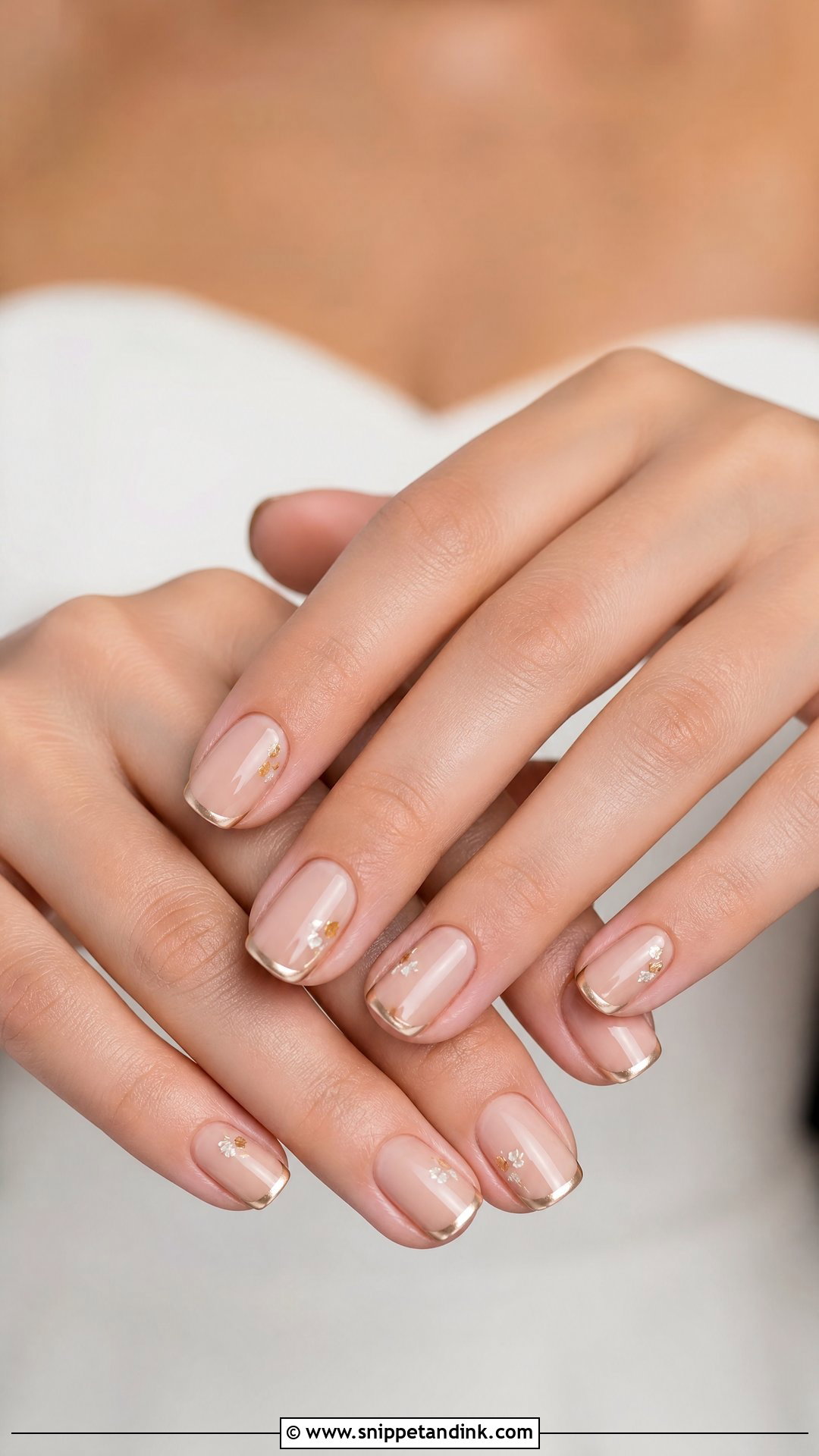
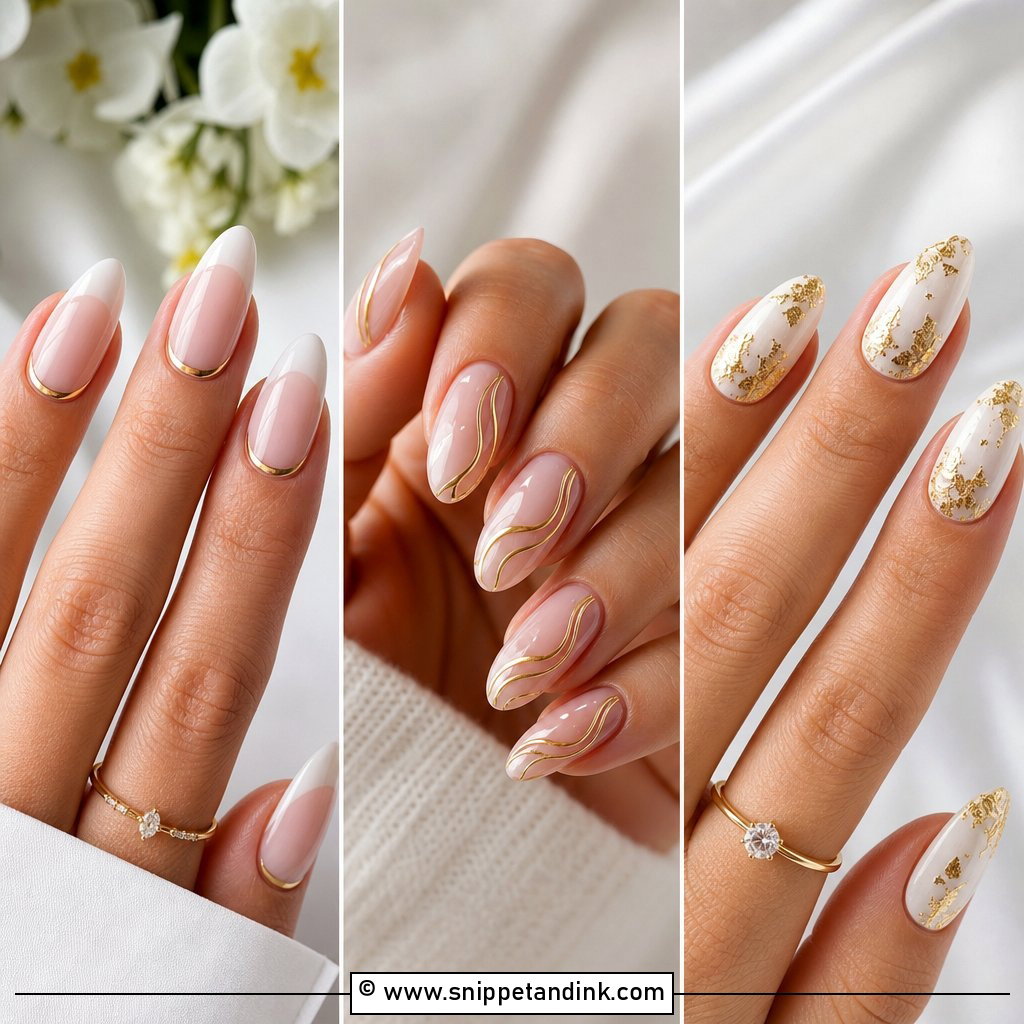
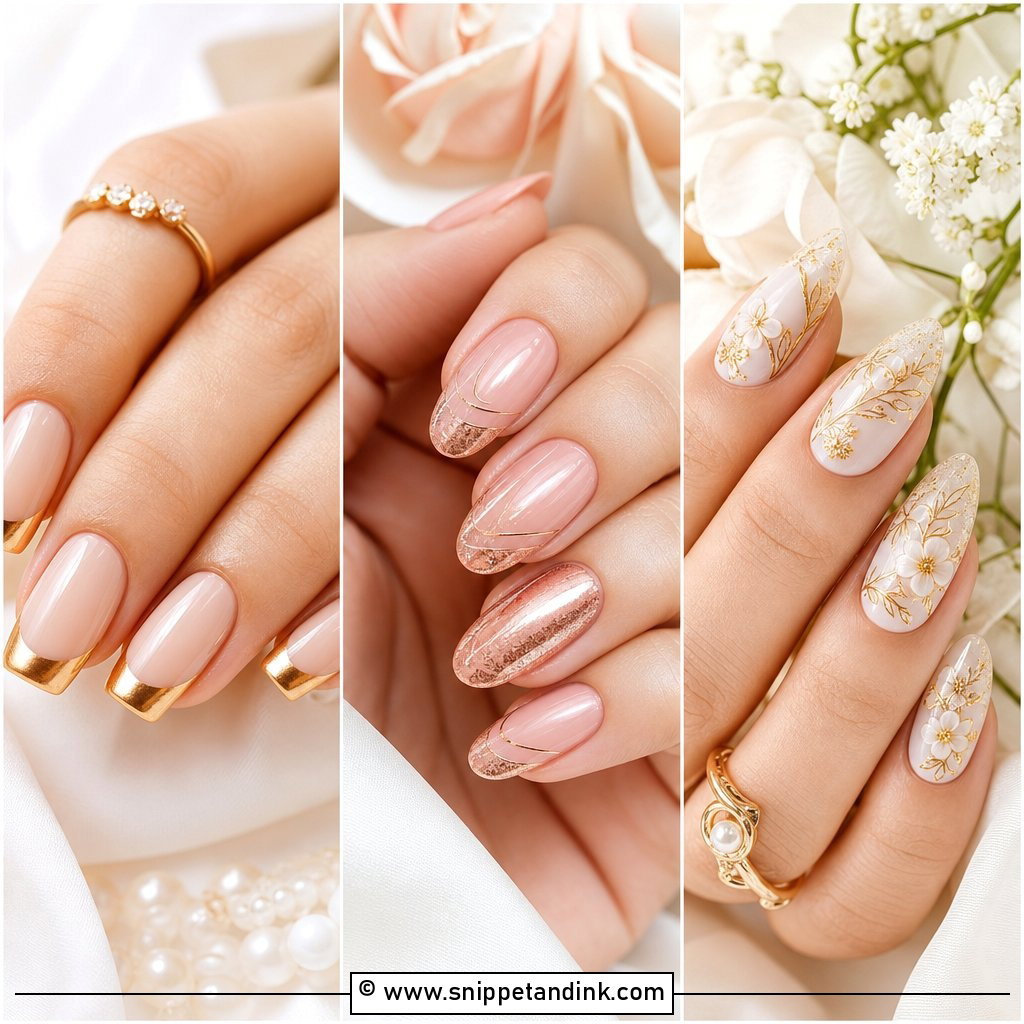
Swapping the white tip for a fine metallic edge is the smallest change you can make to a classic bridal manicure, and it changes the whole feel. The gold sits over a sheer nude, pink or milky base. On short ovals I keep the tip very thin, because a thick band shortens the nail visually; a deeper smile line suits almond and coffin shapes. I paint the tip with a striping brush rather than using a guide sticker, which lets me follow each nail’s own curve. It ties in nicely when your ring setting, hairpiece or shoes carry warm gold.
2. Gold Chrome Wedding Nails
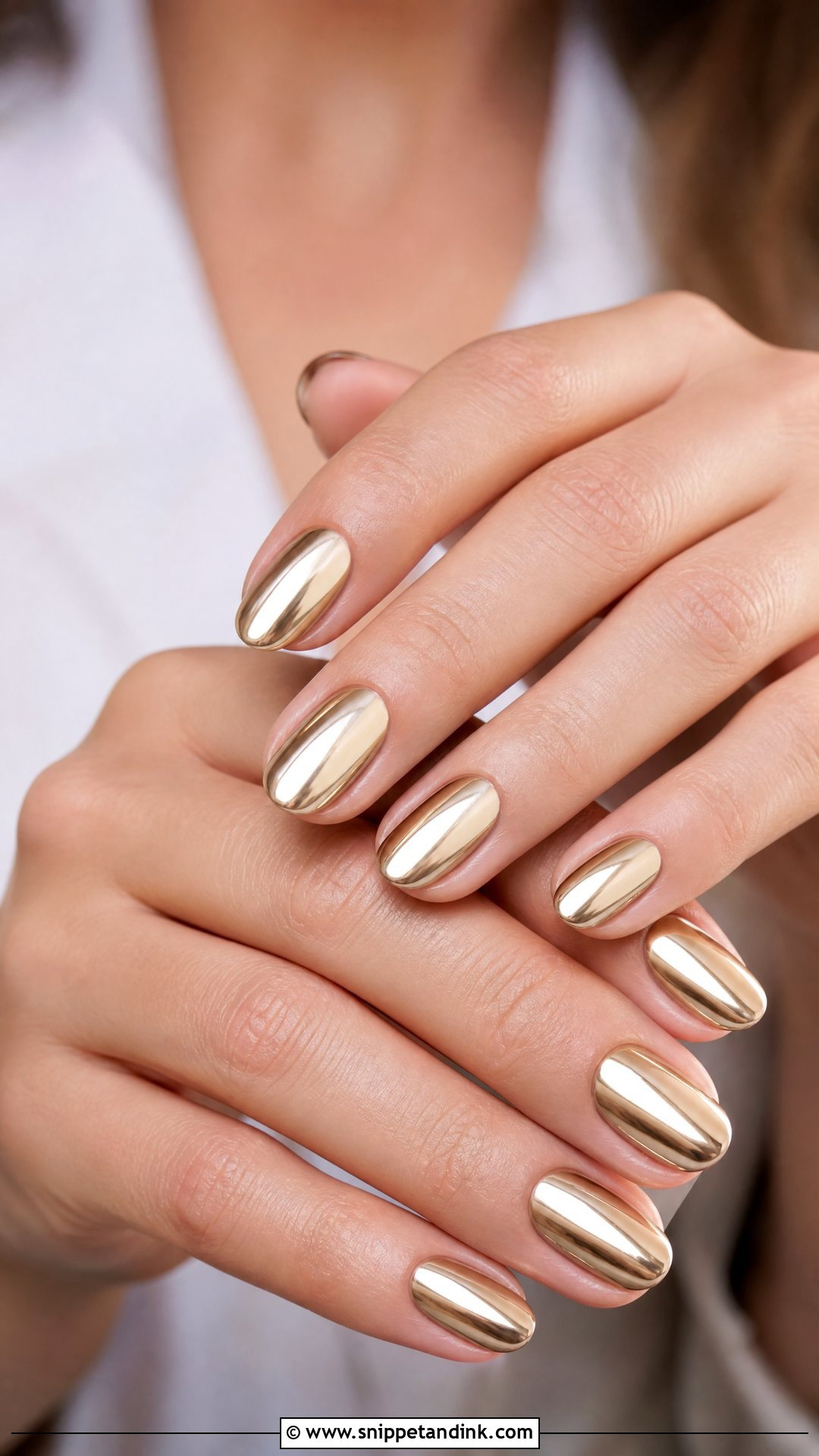
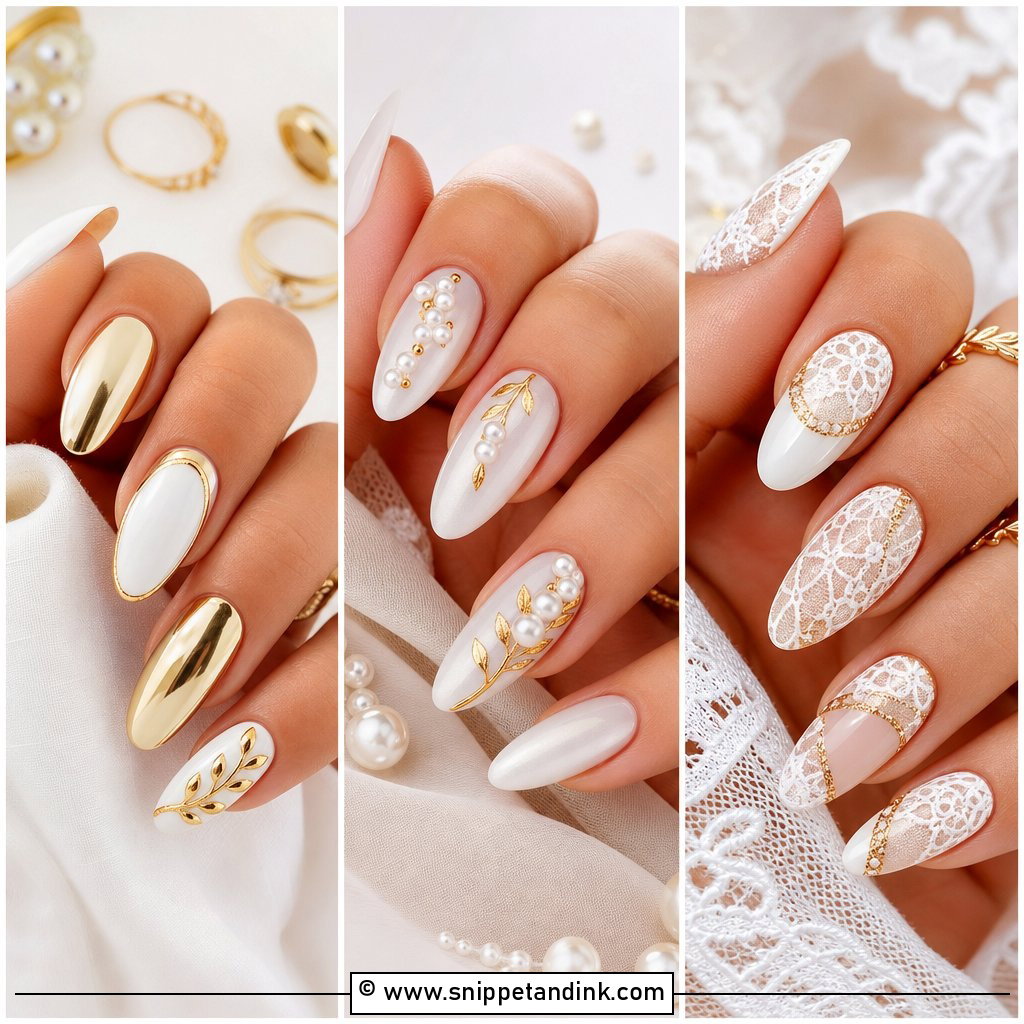
Chrome gives a mirror finish that looks modern, and the shade decides whether it reads bridal. Bright yellow chrome can look like costume jewelry in photos, so I steer brides toward champagne or pale gold powder. Chrome is buffed onto a cured no-wipe top coat, then sealed, and the first place it wears is the free edge, so I cap the tips carefully. Curved shapes like almond and oval catch light more evenly than a flat square. For less shine, put the chrome on the tips or one accent nail only.
3. Nude And Gold Wedding Nails
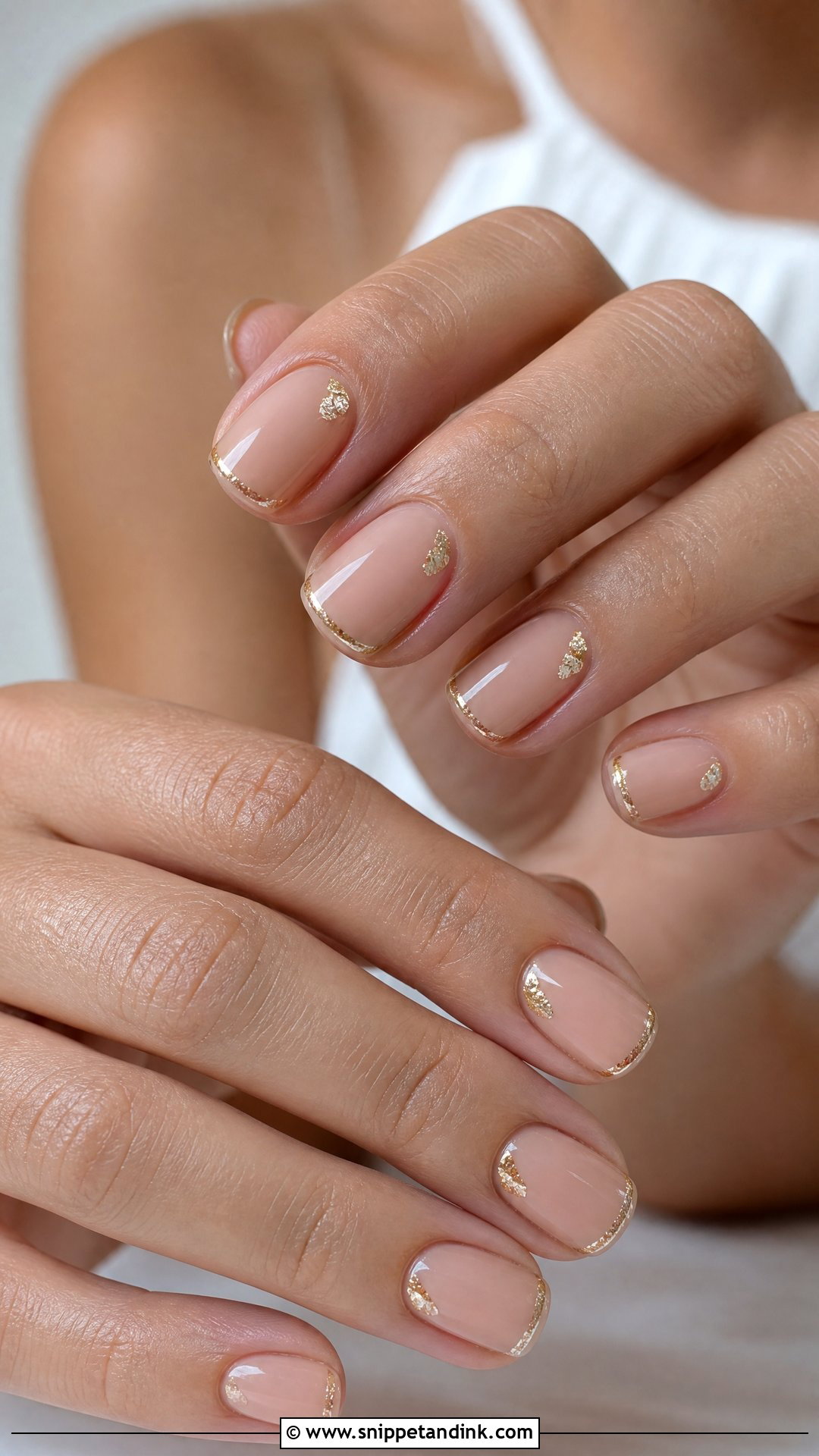
A nude base is the most practical canvas I can give a bride. Regrowth at the cuticle barely shows, which matters if the manicure goes on a few days early. Matching the nude to undertone is where most sets go wrong: beige suits warm skin, pink suits cool skin, and peachy nudes suit deeper warm tones. A nude that’s too light makes the fingers look grey in photos. Once the base is right, gold can be micro French tips, foil flakes, a thin line or one tiny cuticle accent, and it all looks clean in ring shots.
4. White And Gold Wedding Nails
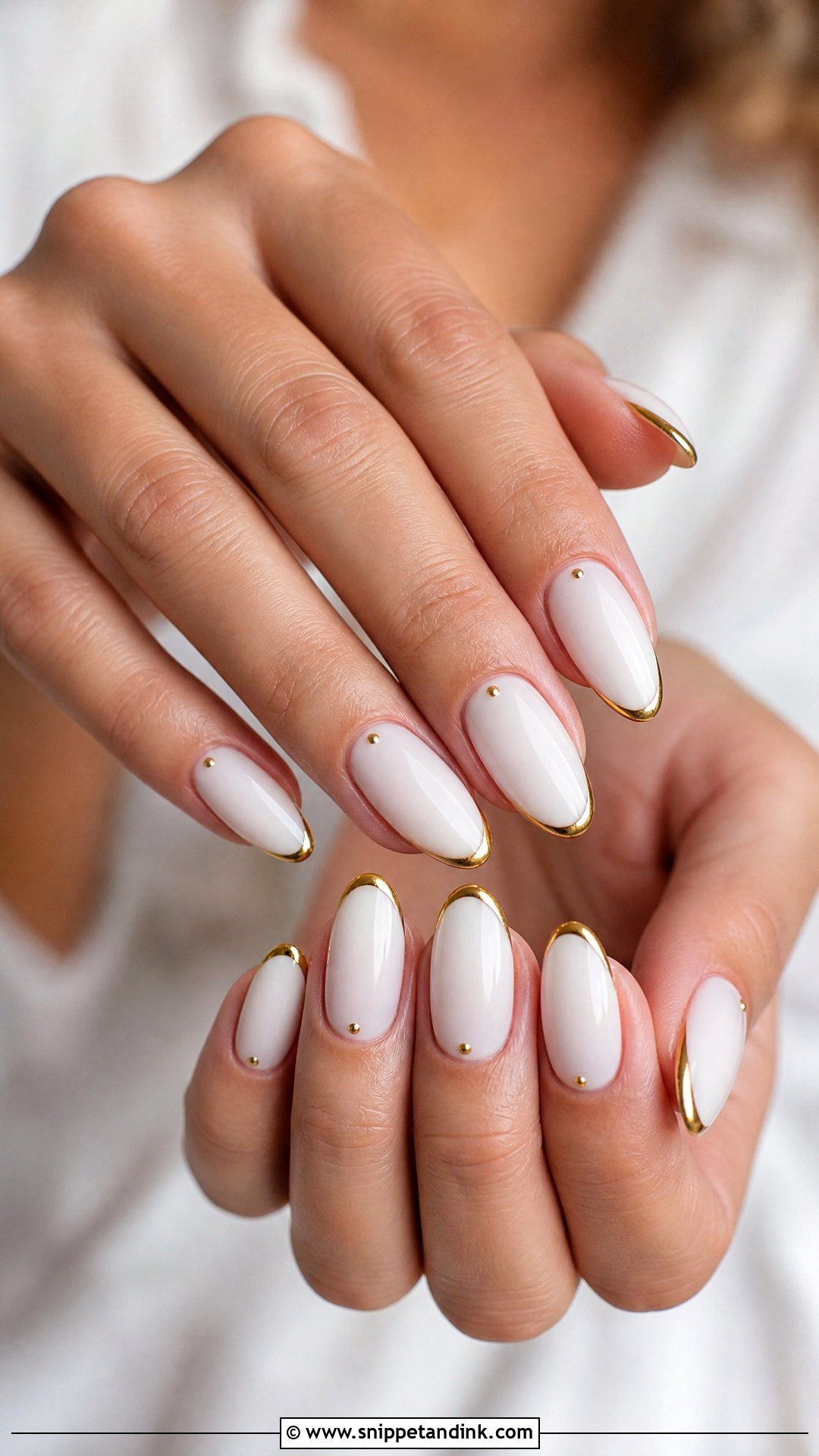
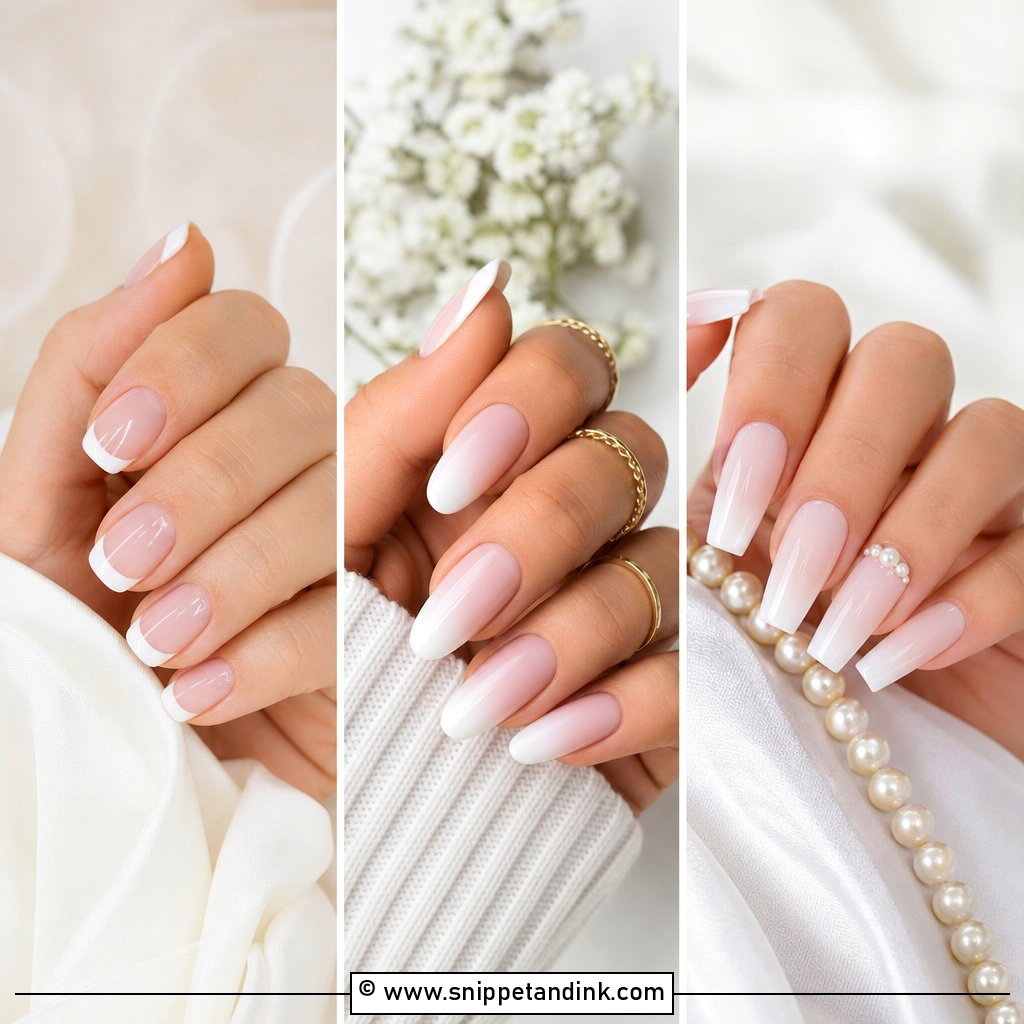
Flat, opaque white is harder to wear than it looks. It shows every bump in the polish, and next to a warm ivory dress it can look bluish. I almost always suggest a soft or milky white instead, which reads smoother on camera. White and gold wedding nails then take fine French tips, delicate swirls or scattered foil. Slim gold chrome tips on white almond nails give the most modern version; milky white with a few foil flakes is softer.
5. Milky White Gold Wedding Nails
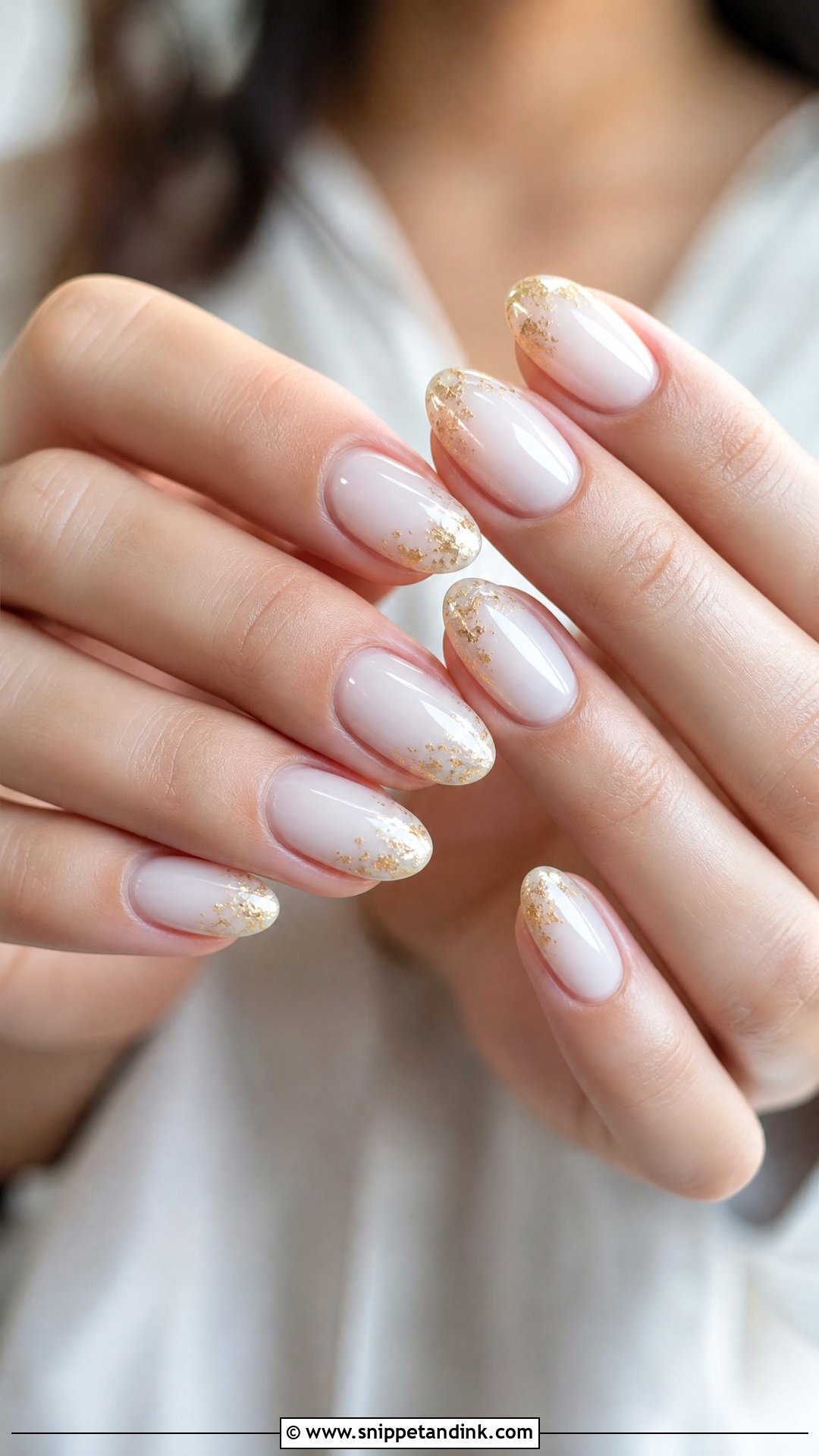
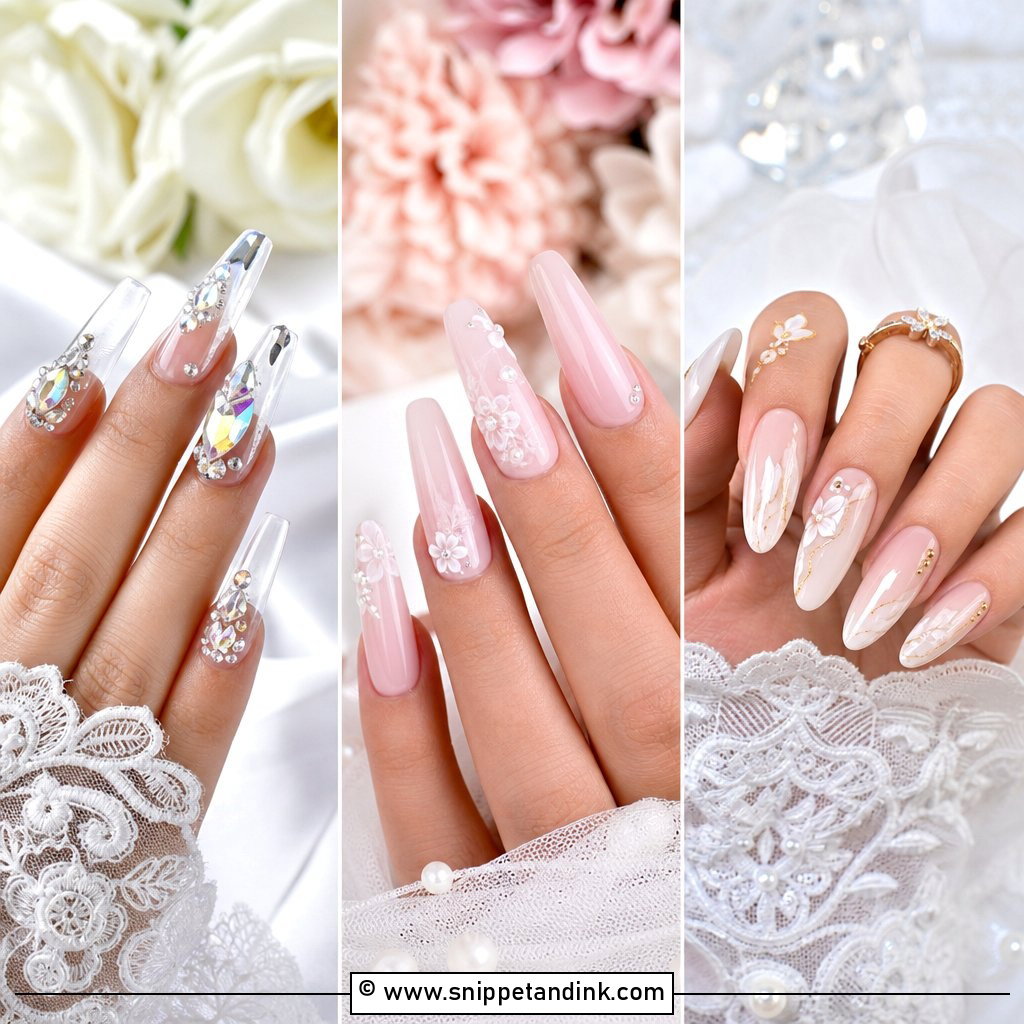
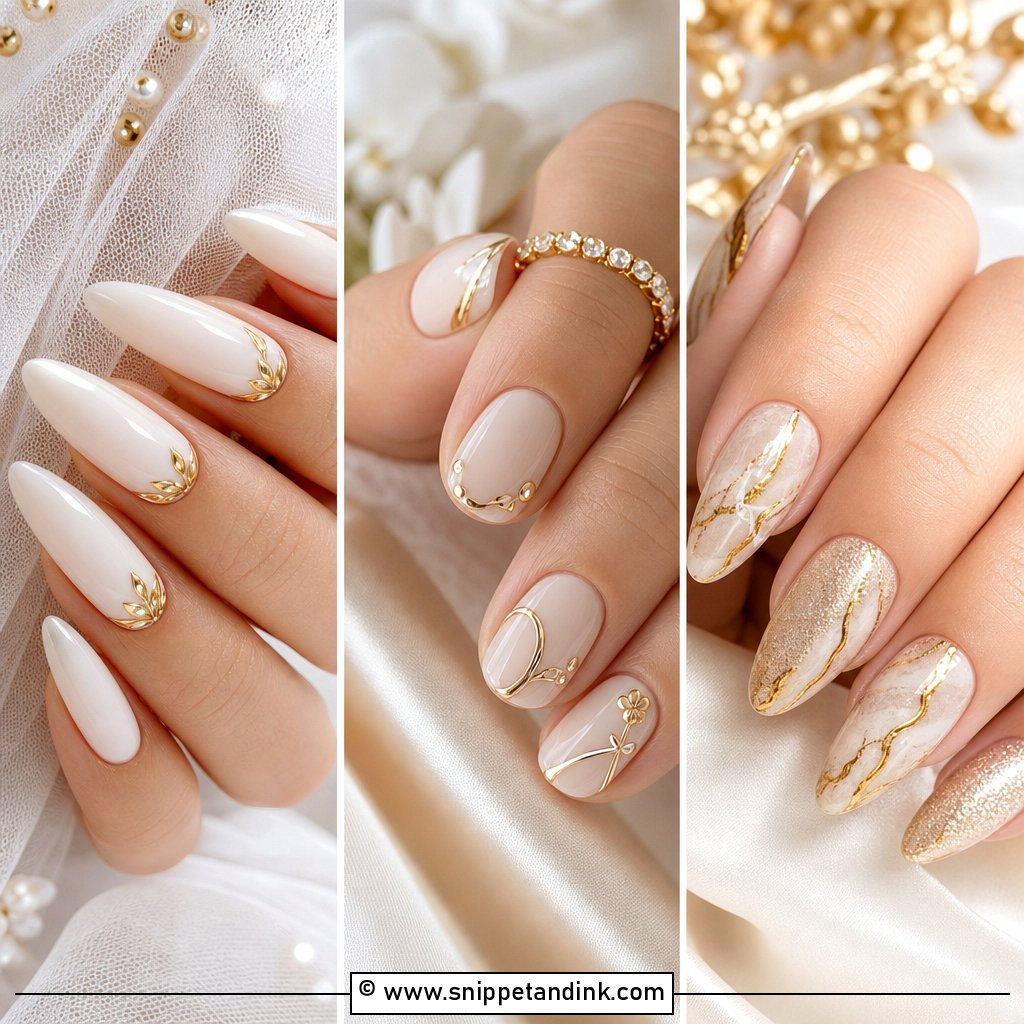
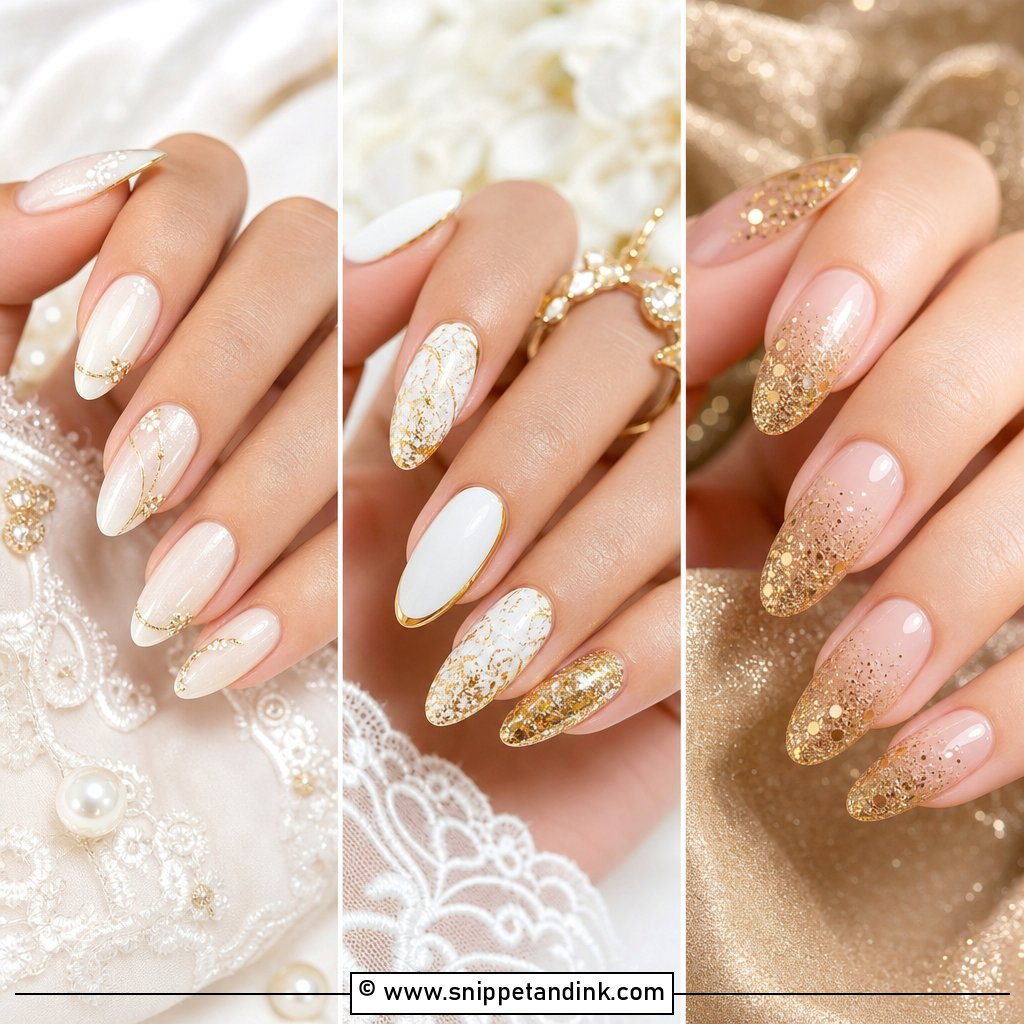
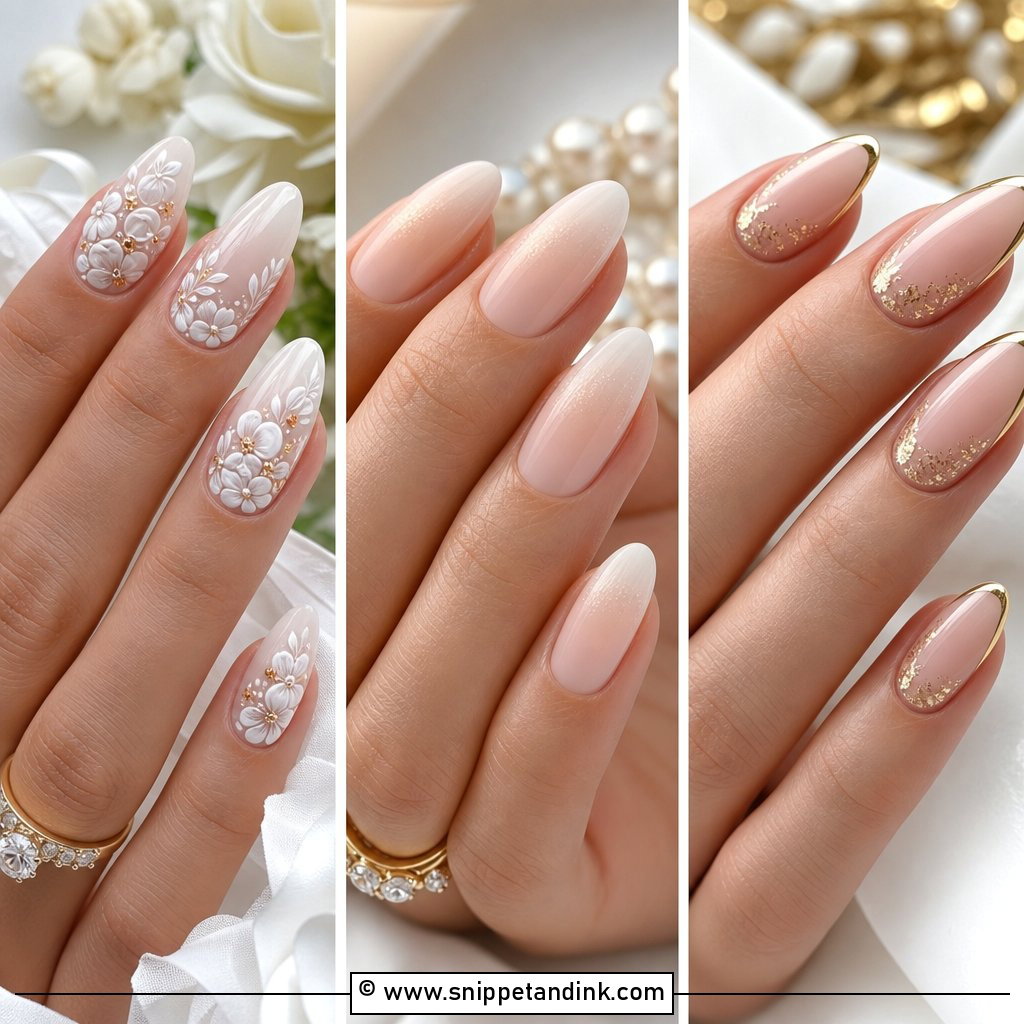
Milky white is my favorite base under gold. It’s sheer enough that the natural nail glows through, so the set never looks heavy, and gold details sit on top almost like jewelry. Fine foil near the tips, gold micro lines or a few tiny metallic stars all work. Two thin coats of milky gel beat one thick one; thick coats look cloudy and streak at the cuticle. A high-gloss top coat gives the glassy finish, and it works on short natural nails as well as longer almonds.
6. Gold Glitter Ombre Wedding Nails
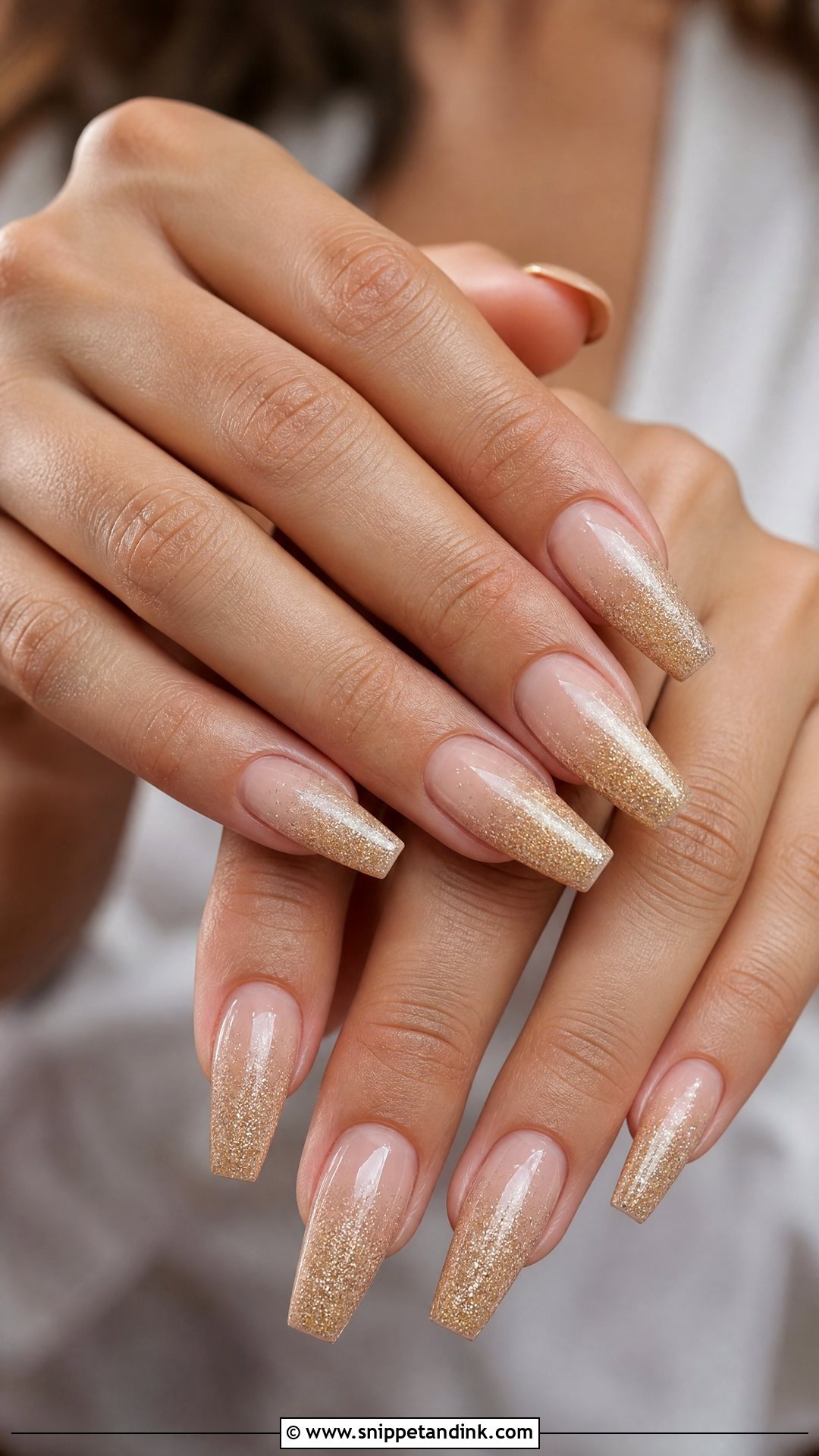
Fading glitter from the tip down is the most forgiving glitter design I do, because growth at the cuticle shows nothing but base color. Gold glitter ombre wedding nails start from a sheer nude, blush or milky base, then I sponge or brush fine gold glitter from the tips downward. Chunky glitter looks lumpy under a macro lens and needs extra top coat to smooth, so I stick to fine particles. A reversed gradient with glitter near the cuticle is an option, but it shows growth within days. Longer shapes give the fade more room to soften.
7. Gold Foil Wedding Nails
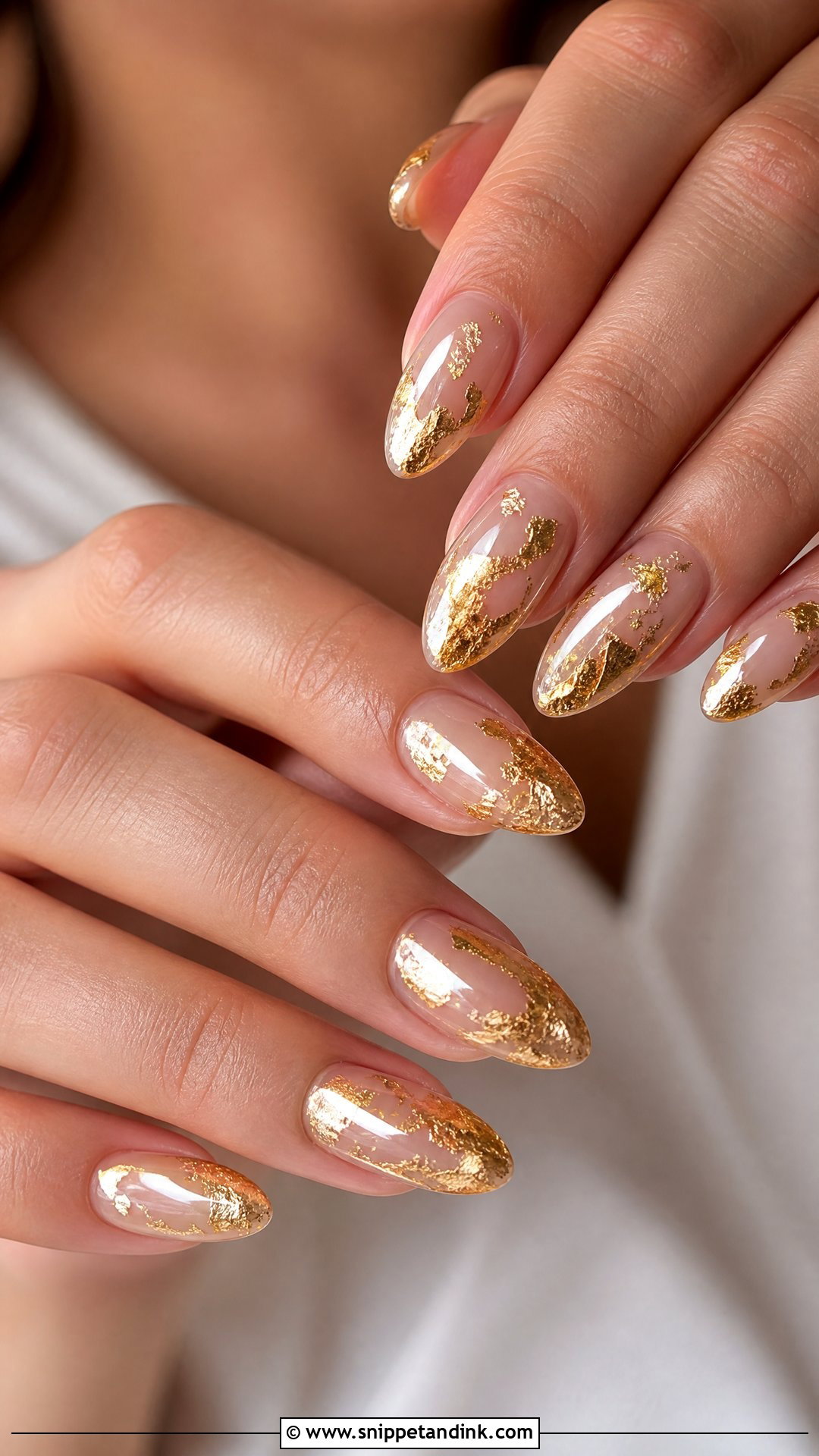
Foil gives every nail a slightly different pattern, which is exactly why I like it: the set looks hand-done. I press thin pieces over a nude, blush or milky base, keeping the placement light for a delicate look or clustering it toward the tips for more richness. The most important step is sealing. Foil has to be fully encapsulated under top coat, or the edges catch and lift within a day or two, especially on the hand that grabs bags and opens doors. Lace or textured dresses and garden settings suit it well.
8. Gold Pearl Wedding Nails
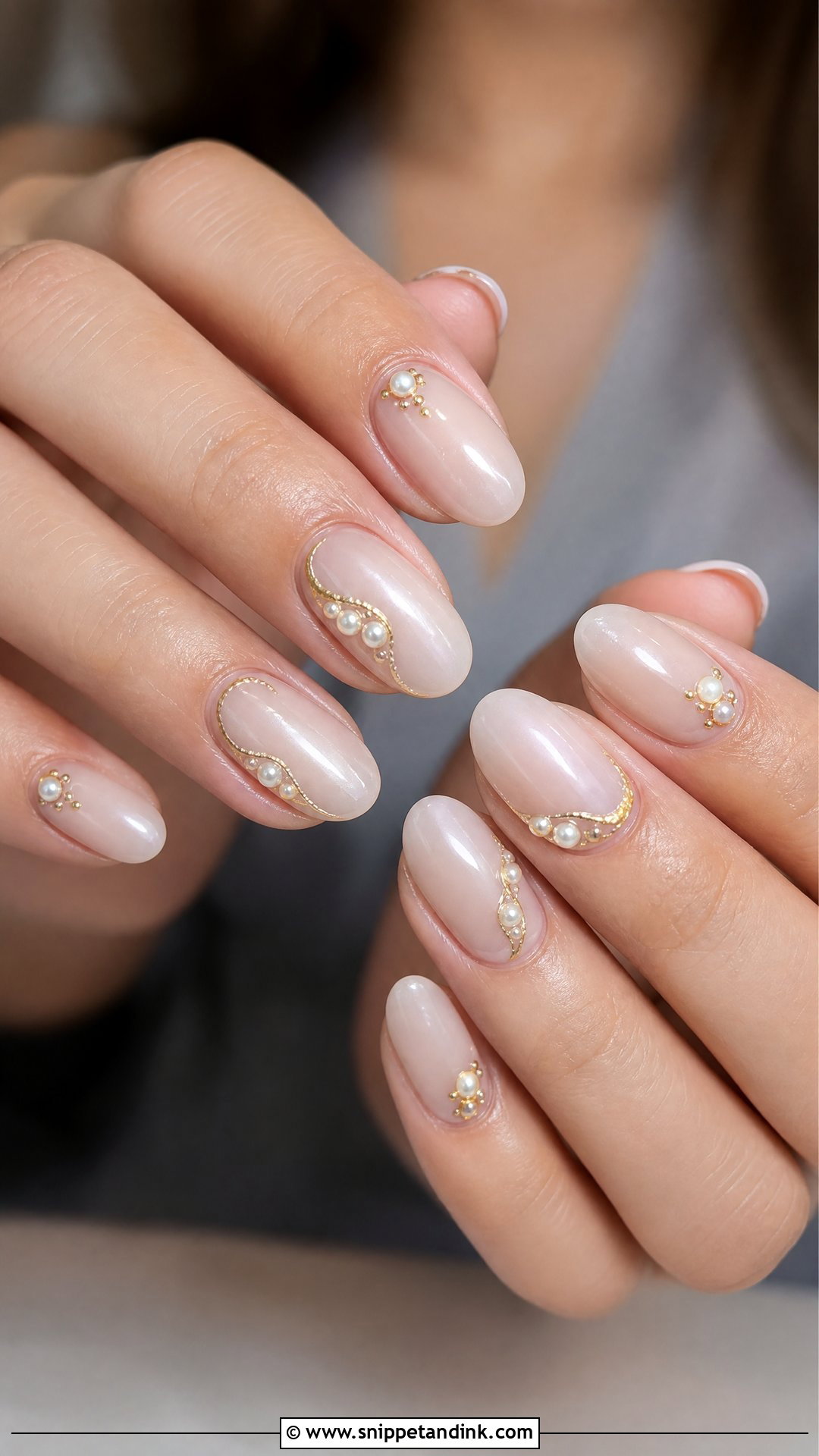
Pearls and gold are two of the most bridal details I can put on a nail, and the risk is bulk. A real pearl bead sits high off the nail, so I keep it to one or two nails per hand and set it near the cuticle, where it’s less likely to catch on tulle or your hair. Thin gold lines, dots or a tiny metallic frame around the pearl tie it in. Almond and oval nails carry it best. It’s a nice echo of pearl beading, earrings or a pearl-edged veil.
9. Gold Swirl Wedding Nails
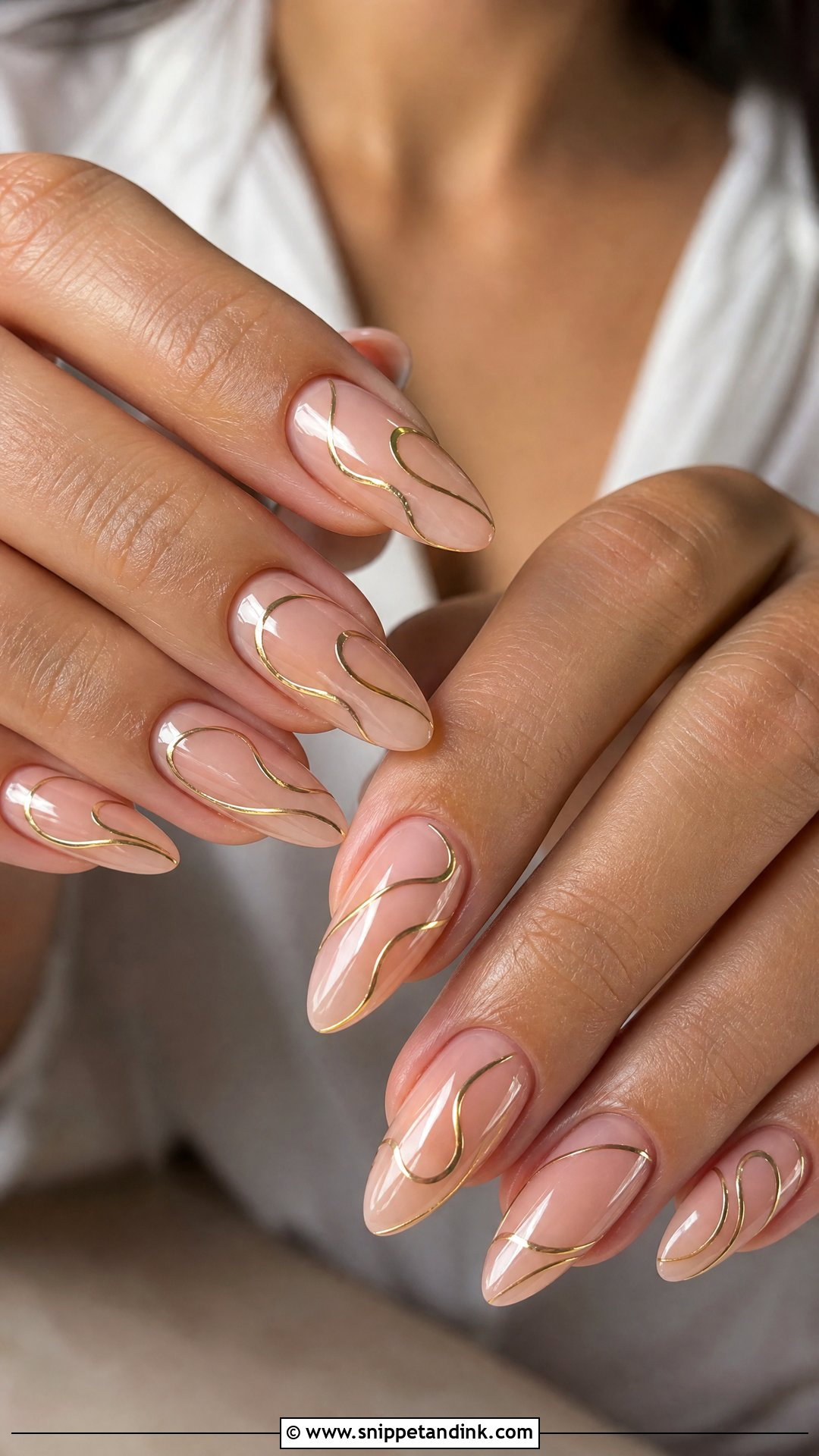
Swirls are freehand work, and the steadiness of the line is everything. I use a long, thin liner brush and let the curves stay airy and spaced out, because crowded swirls look busy in photos. Thin gold over a nude, pink or milky base reads like ribbon. Swirls on every nail make a coordinated set; mixing them with plain glossy nails is calmer. Almond and coffin shapes let the curves flow, and satin or draped dresses suit the movement.
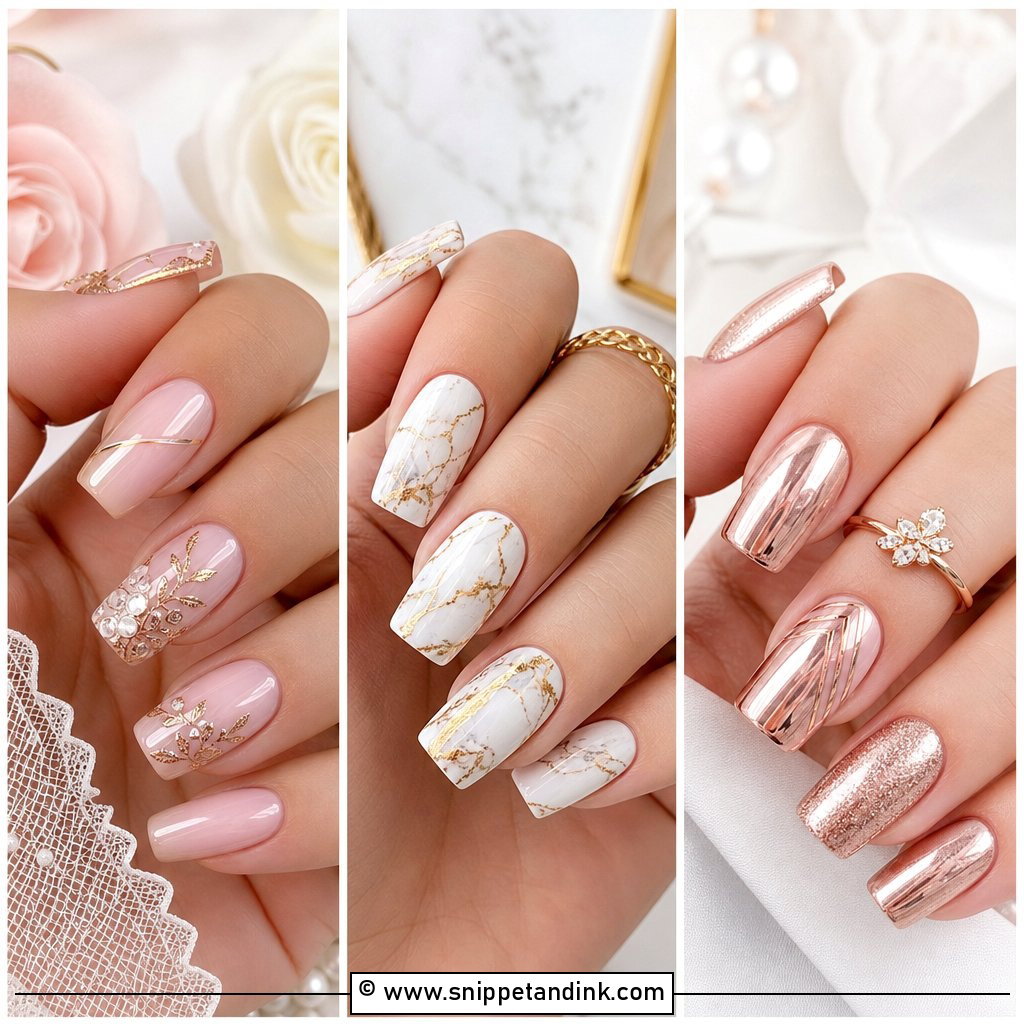
10. Rose Gold Wedding Nails
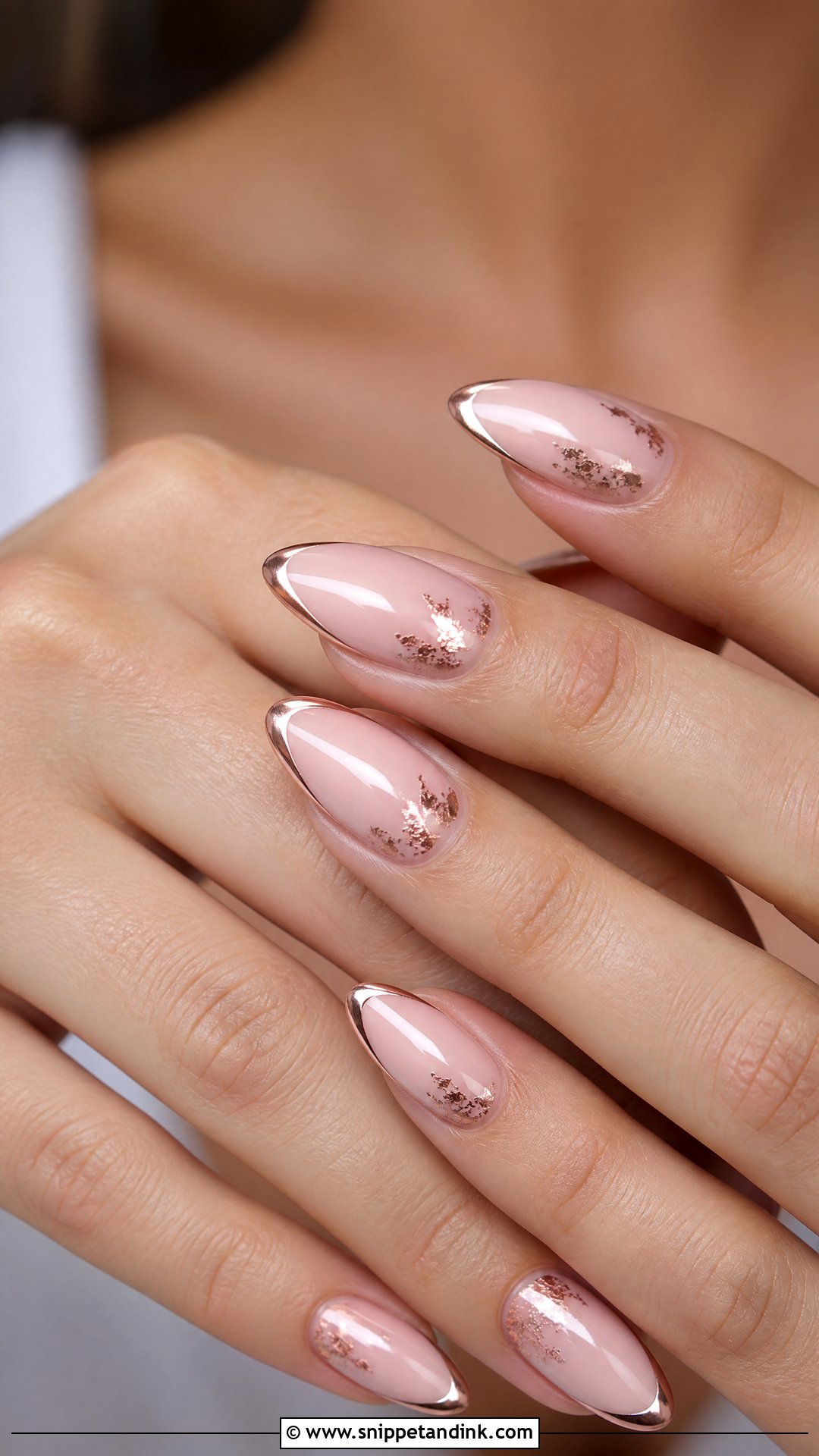
Rose gold sits softer than yellow gold and flatters pink and neutral undertones especially well. If your engagement ring is rose gold, this is where I’d start. Rose gold French tips over sheer pink, rose gold chrome on almonds or rose gold foil over milky nude all work. One thing I check: some rose gold polishes lean coppery under warm reception lights, so look at the swatch under a warm bulb as well as daylight. Keep the lines clean and the finish glossy.
11. Champagne Gold Wedding Nails
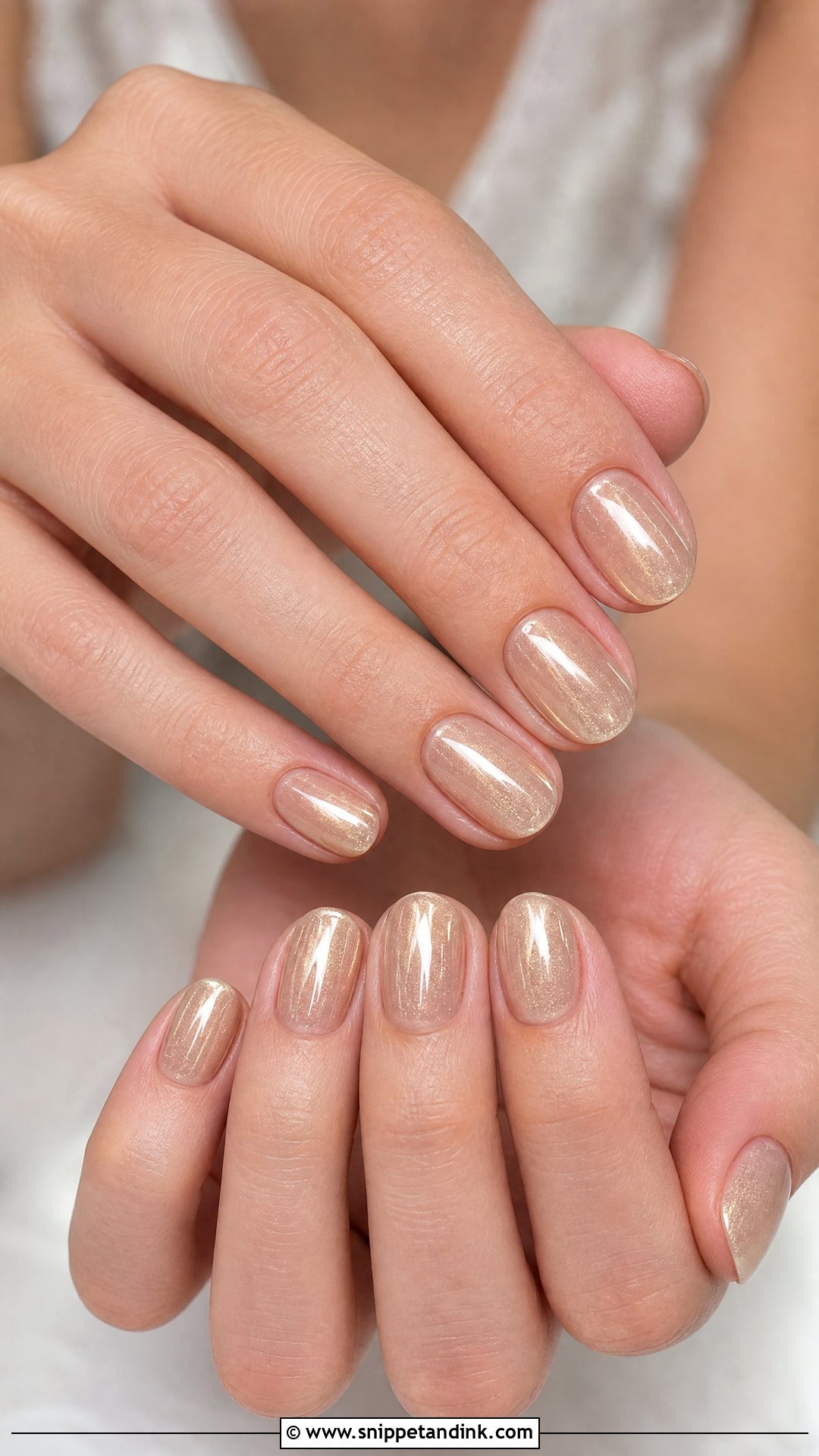
Champagne sits between beige, gold and pale shimmer, so it’s the gold I suggest to brides who want the shine to show up in photos but stay quiet across a table. A champagne chrome wash over nude gives a glazed look; champagne glitter tips are a little more festive. It sits well next to ivory, cream and champagne dresses. Short ovals look clean in it, long almonds look more glamorous. Of all the golds, it’s the one least likely to clash with silver or white gold jewelry.
12. Gold Marble Wedding Nails
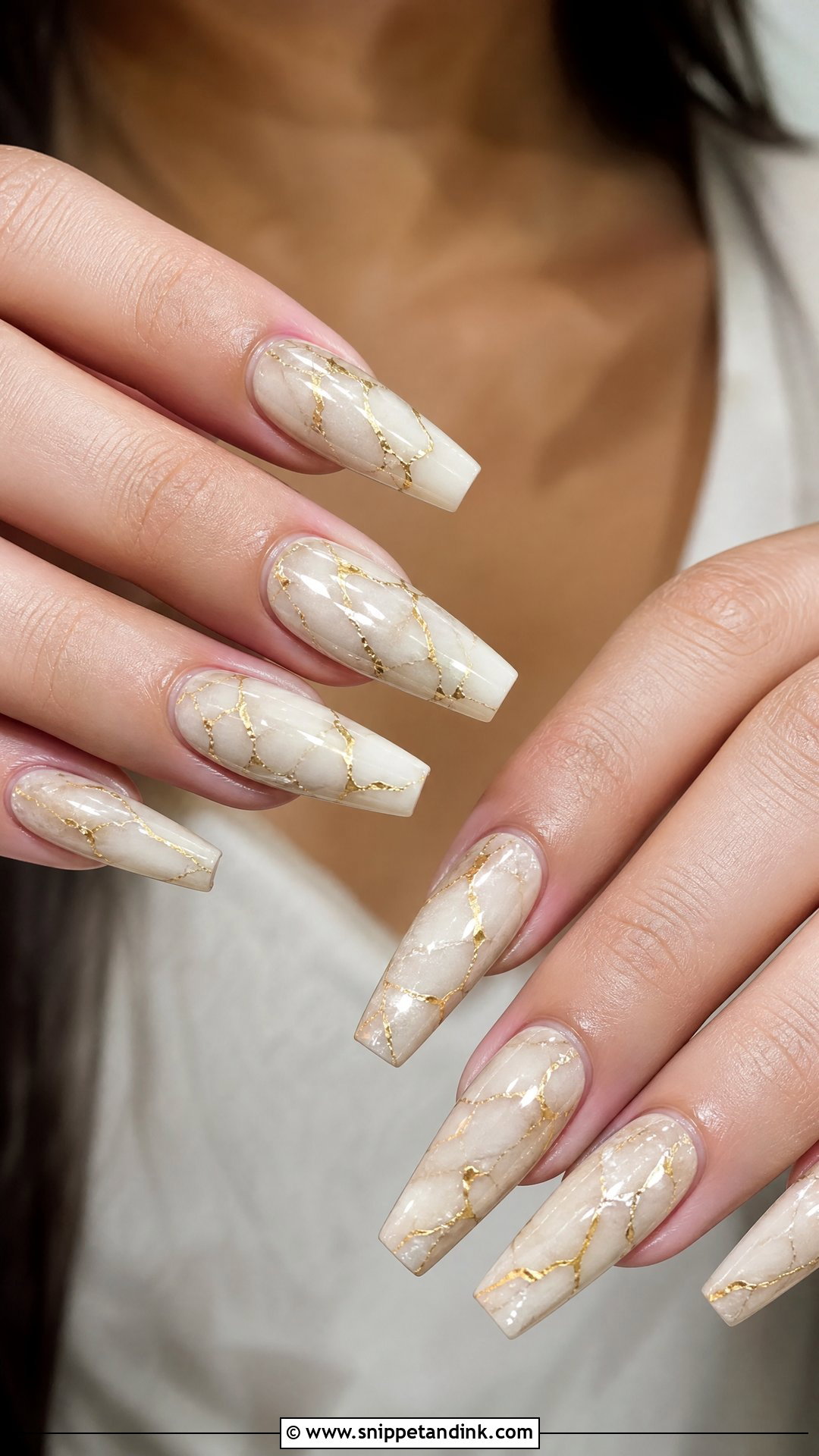
Marble is one of the few designs I do in layers, letting soft grey or nude veining spread before adding the gold. Gold marble wedding nails work best on a white, ivory or blush base with very fine gold lines that look like mineral seams, never thick blocks. A full marble set is a lot of pattern, so I often suggest marble on two accent nails with the rest plain nude or milky. Almond and coffin shapes show the veining; very short nails can make it look cramped.
13. Gold Accent Wedding Nails
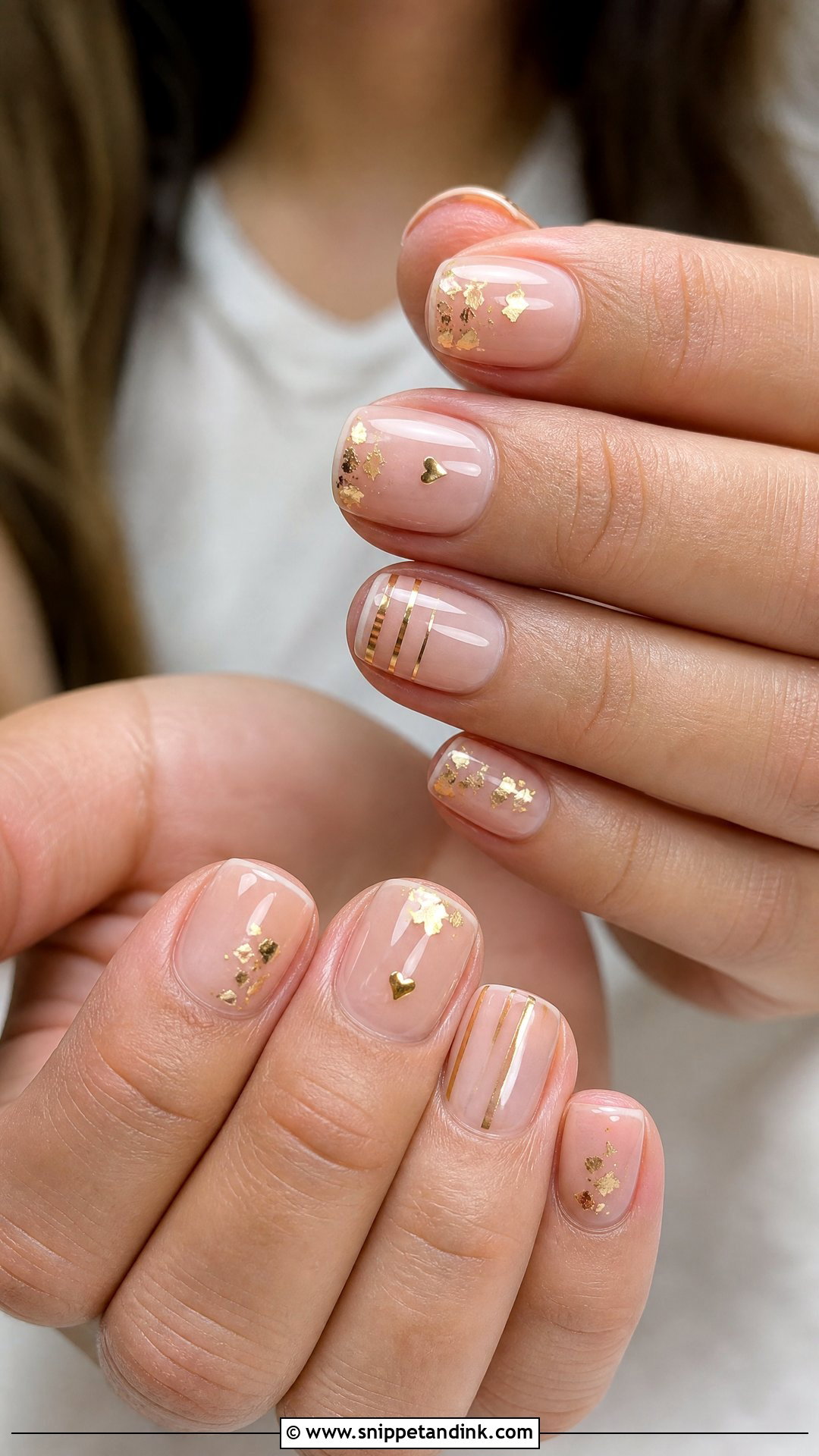
Keeping gold to two or three nails is the smart route when you love the metal but your overall style is classic. The base can be sheer pink, nude or milky white, and the accent can be a thin French tip, a foil detail, a tiny heart or a slim stripe. My only rule is consistency: put the accents on the same fingers on both hands, usually the ring finger, so the set looks planned. It’s easy to wear and easy to match to anything.
14. Gold Line Wedding Nails
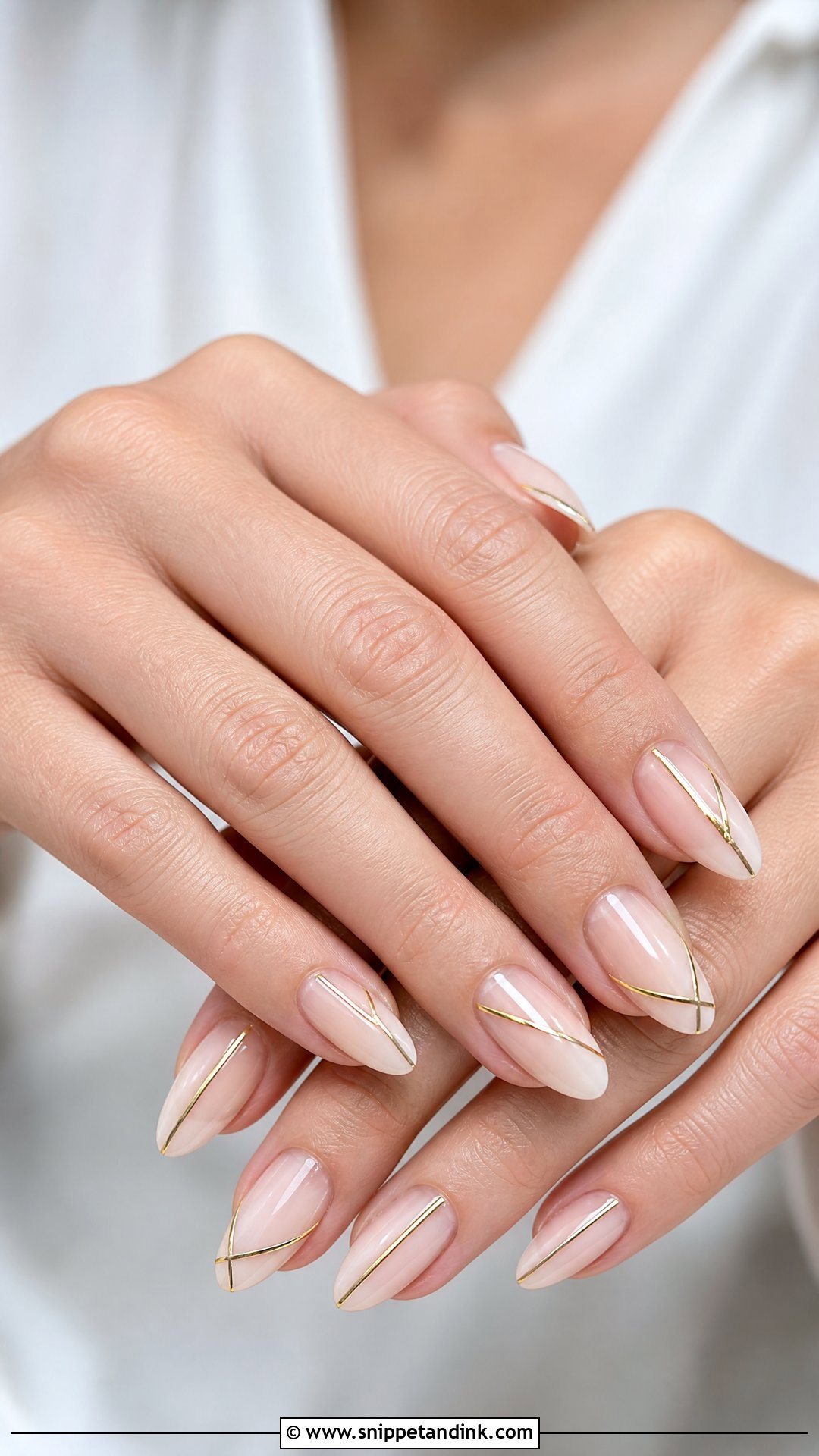
Fine lines are the most flattering trick in nail art for short nail beds. A single vertical gold line down the center of a nude nail makes it look longer, and that’s often the reason I suggest this design. Diagonal lines feel more modern on almond or coffin shapes, and a line traced along the cuticle frames the nail. The lines must be very thin, done with a striping brush or fine gold striping tape sealed under gel. Thick or numerous lines quickly look busy.
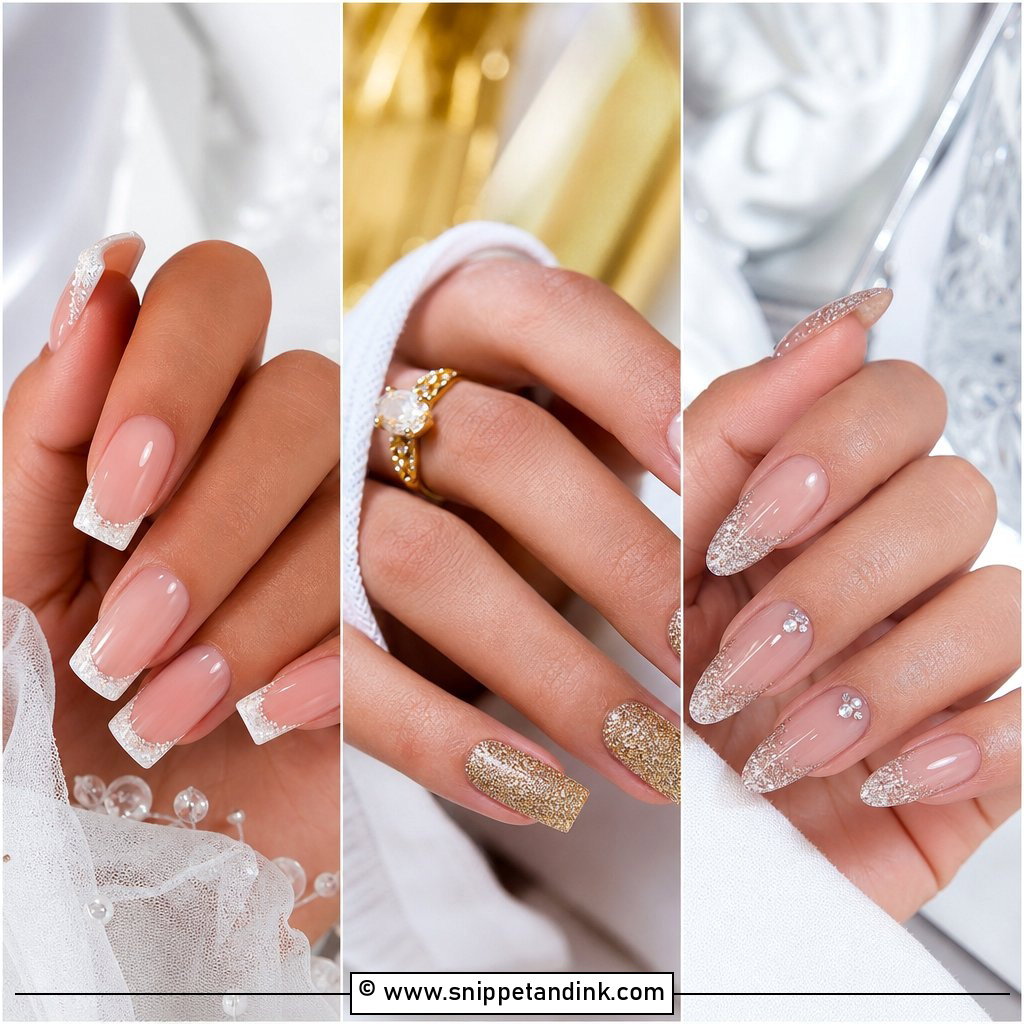
15. Gold Lace Wedding Nails
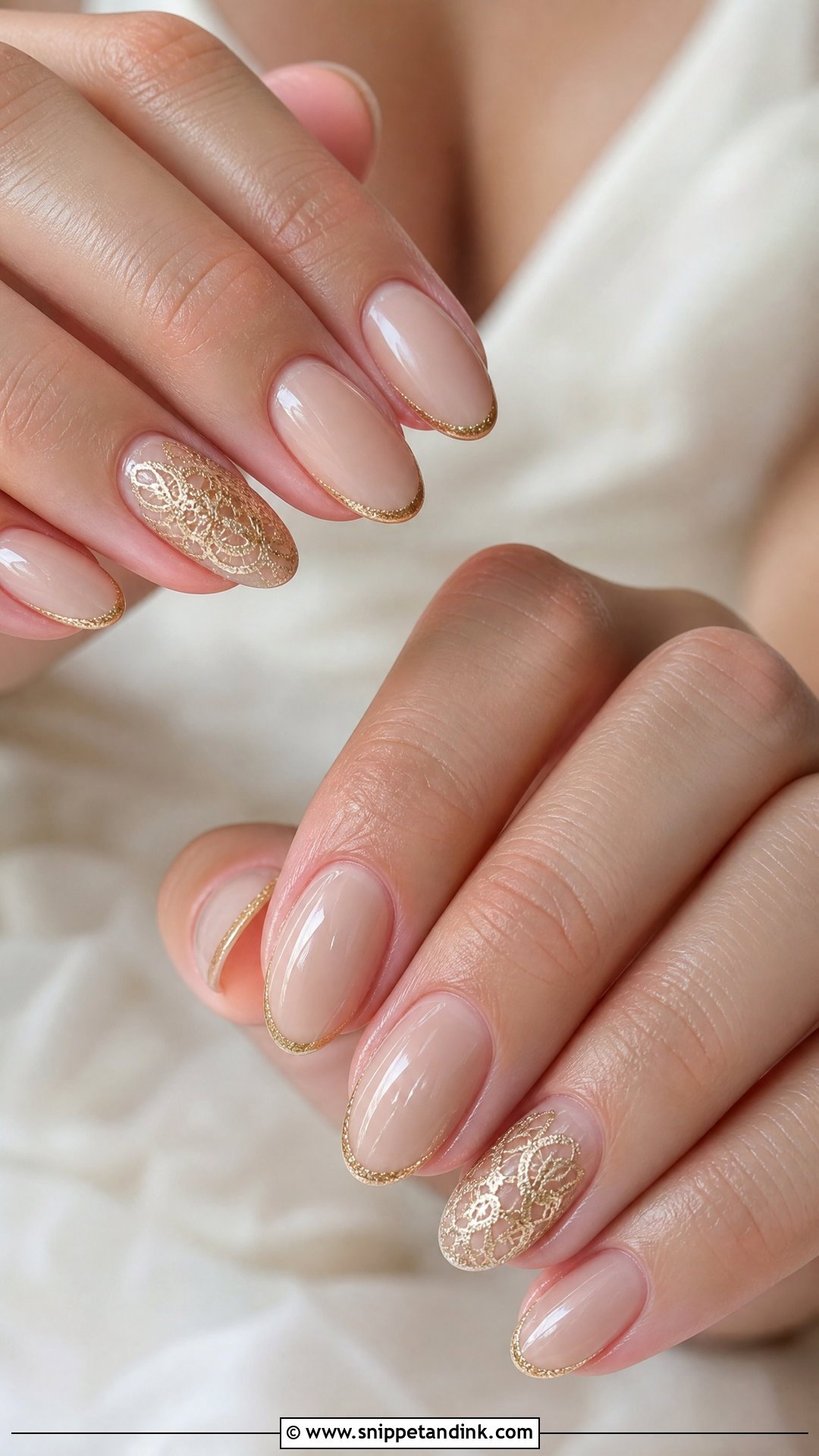
Gold lace is detailed work, and it pays off most when your gown or veil already has lace or embroidery. Rather than cover every nail, I paint fine gold lace on two or three nails over a sheer nude or milky base and keep the rest glossy with gold tips or a little foil. Lace stamping plates give crisper repeats than freehand, though freehand lets me echo a motif from the dress itself if you bring a photo of the fabric. Oval, almond and medium coffin shapes give the pattern room.
16. Gold Floral Wedding Nails
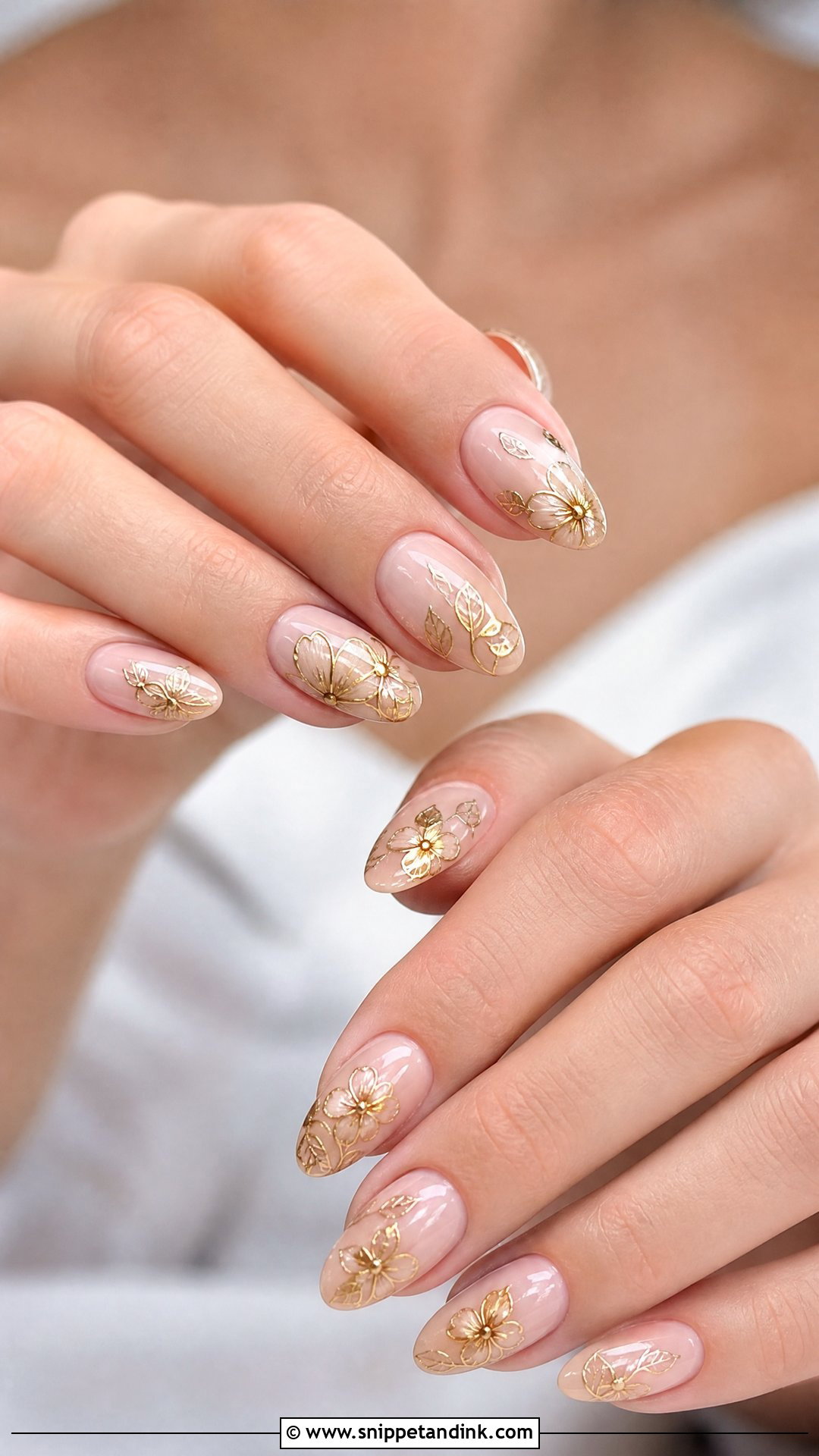
These florals swap colored petals for fine gold outlines or foil petal shapes over a nude, blush or milky base. I place the flowers near the tips, along one side of the nail or as a small accent on the ring finger. Keep them small: your bouquet and your ring are the main event in hand photos, and big nail florals compete with both. Spring, summer and garden weddings suit them best, and almond or oval nails give the shapes a natural frame.
17. Gold Rhinestone Wedding Nails
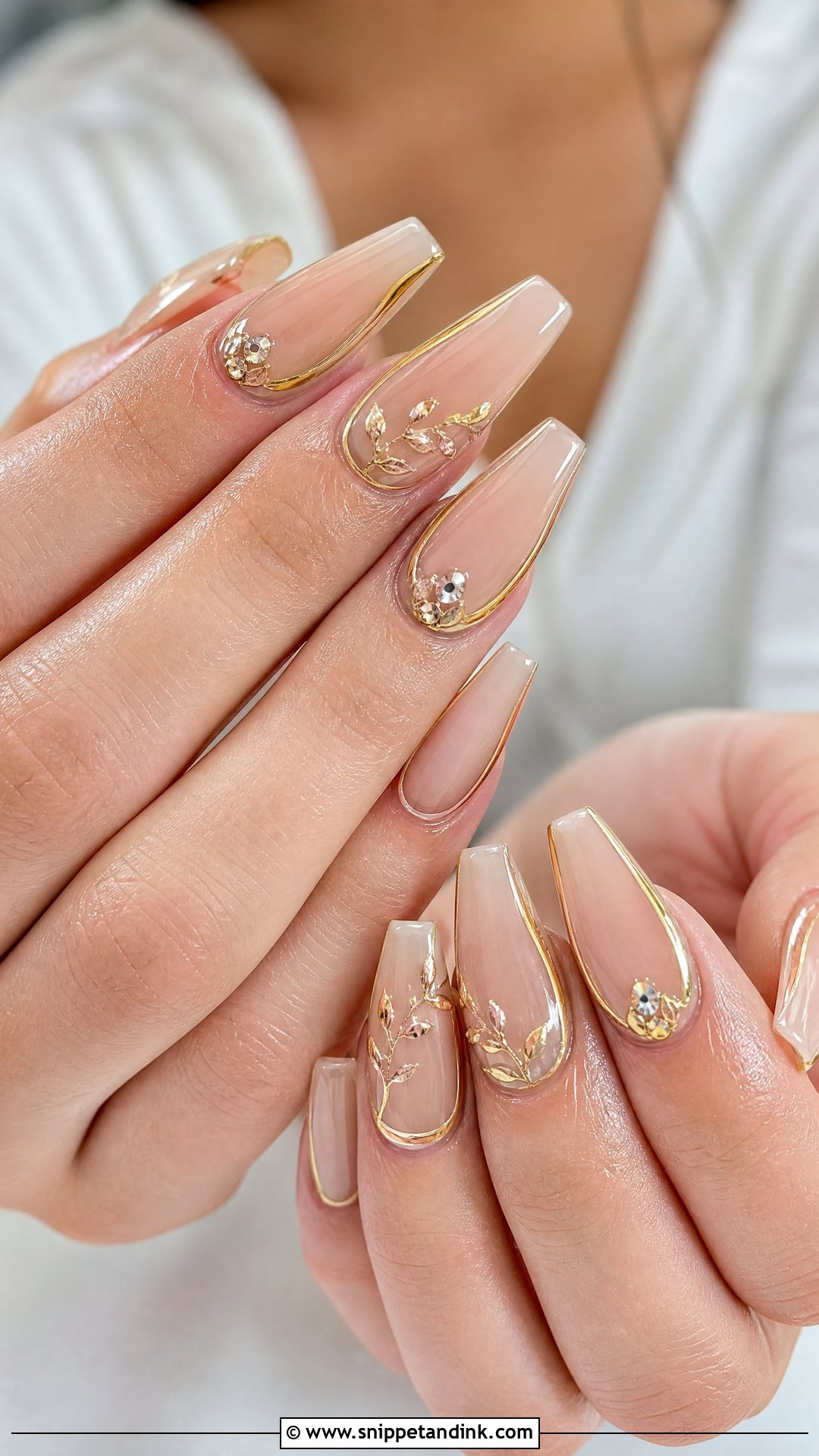
Stones are where I ask the most practical questions. Large gems snag lace veils, hair and knit fabric, and a stone lost at the reception leaves an obvious gap. So I use small clear stones set in gold-toned accents near the cuticle or along a French line, on one accent nail per hand. They’re embedded in builder gel and sealed around the edges, never just pressed into top coat. This pairs with crystal hairpieces, beaded gowns and statement earrings.
18. Gold Chrome French Wedding Nails
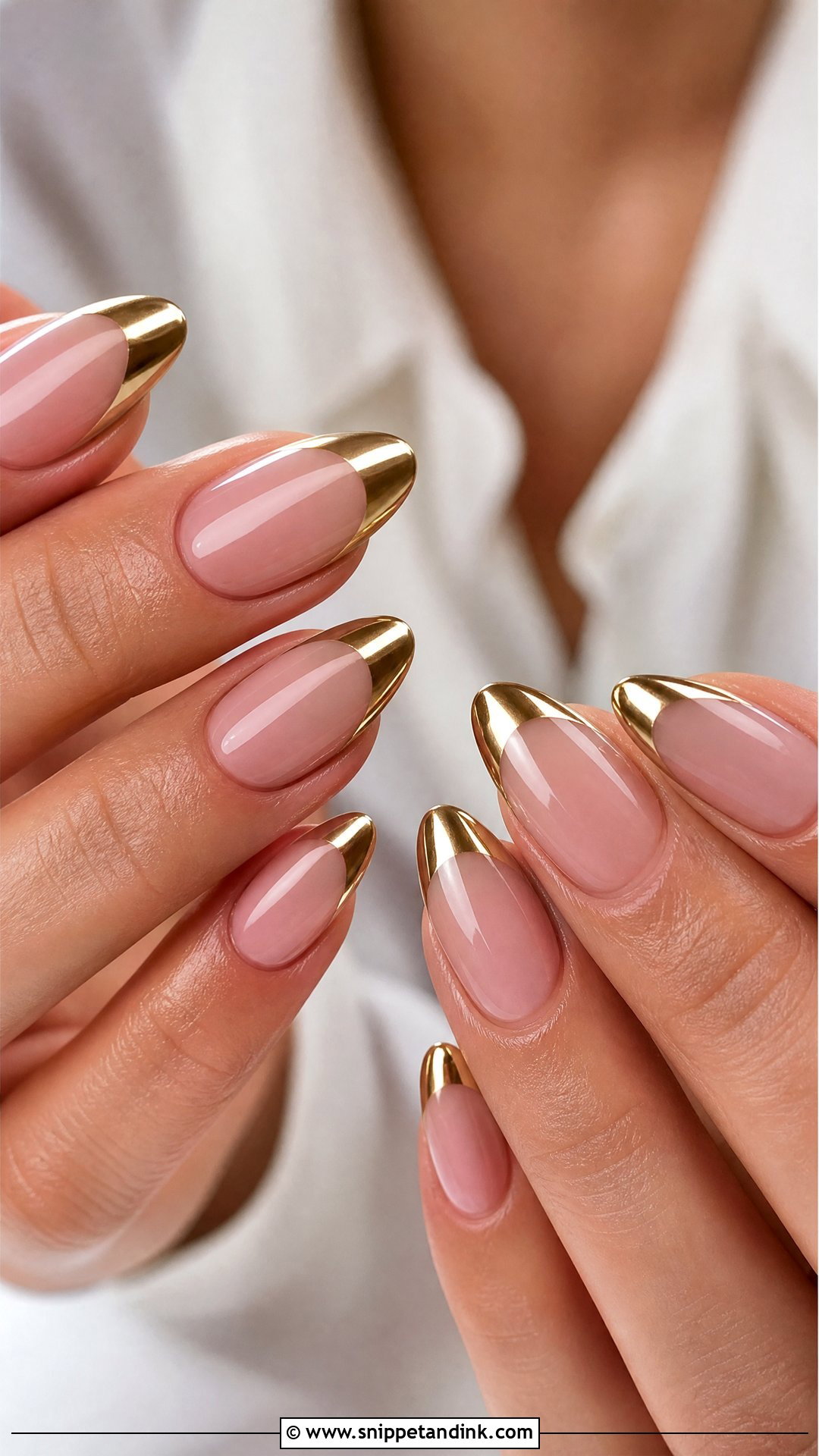
This is the modern French: a sheer, glossy, natural base with the tips coated in smooth gold chrome. Because chrome reflects light like metal, the edge reads almost like a fine gold band. A thin tip is subtle; a deeper tip is more dramatic. Almond nails flatter it most, since the French line follows the curve. Ask for champagne chrome instead of bright yellow if you’d like it softer, and keep the tip edges capped with top coat, since chrome on the free edge wears first.
19. Gold Cat Eye Wedding Nails
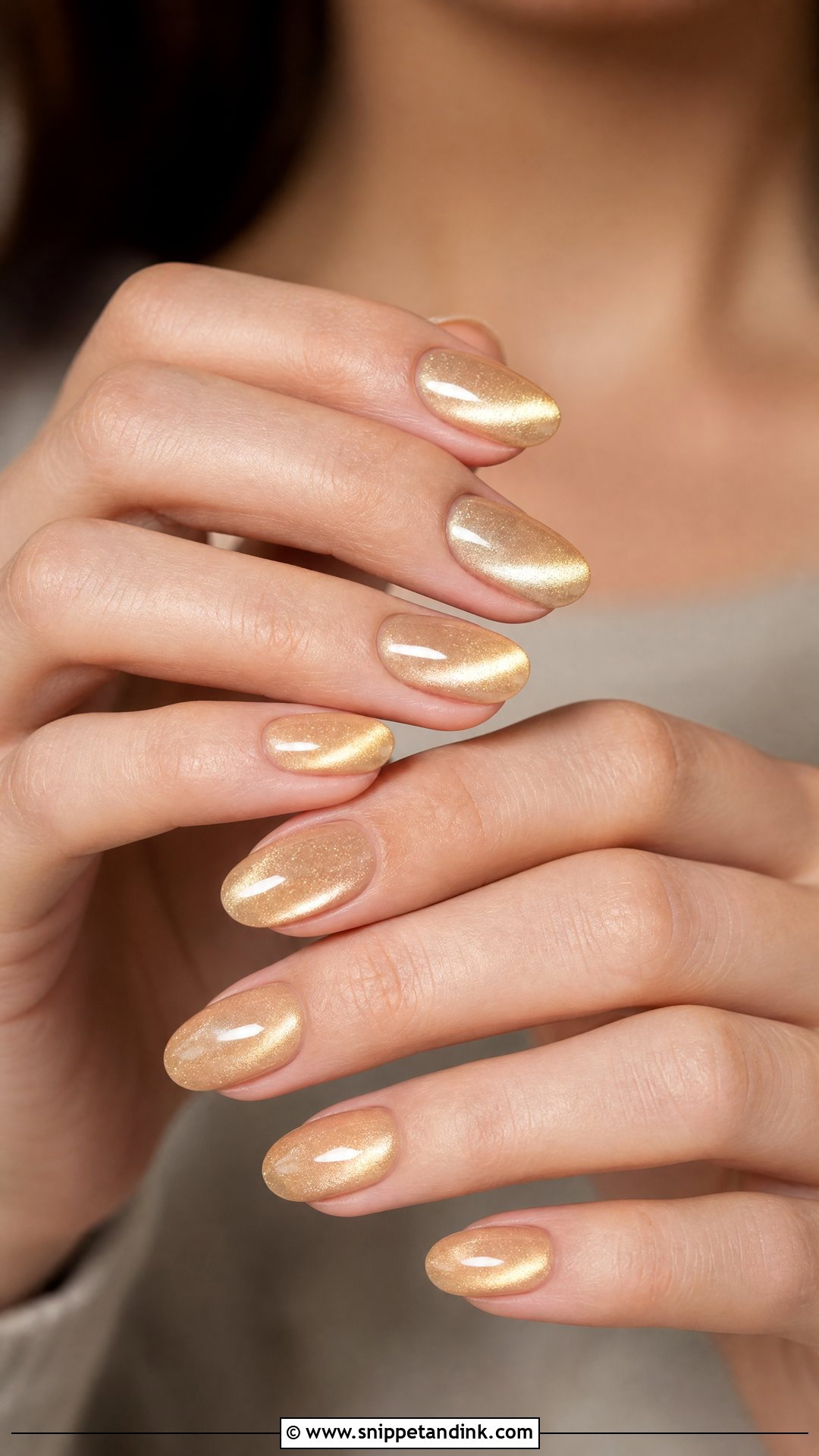
Cat eye gel contains magnetic particles. Before curing, I hold a magnet over the wet gel to pull them into a band of light, which gives depth without any extra art. For a bridal version, I’d choose champagne, beige-gold or a soft bronze-gold over a sheer or nude base. Wear it on every nail or alternate with plain nude nails. It looks best under warm, low light, so candlelit receptions and evening venues show it off far more than bright midday sun.
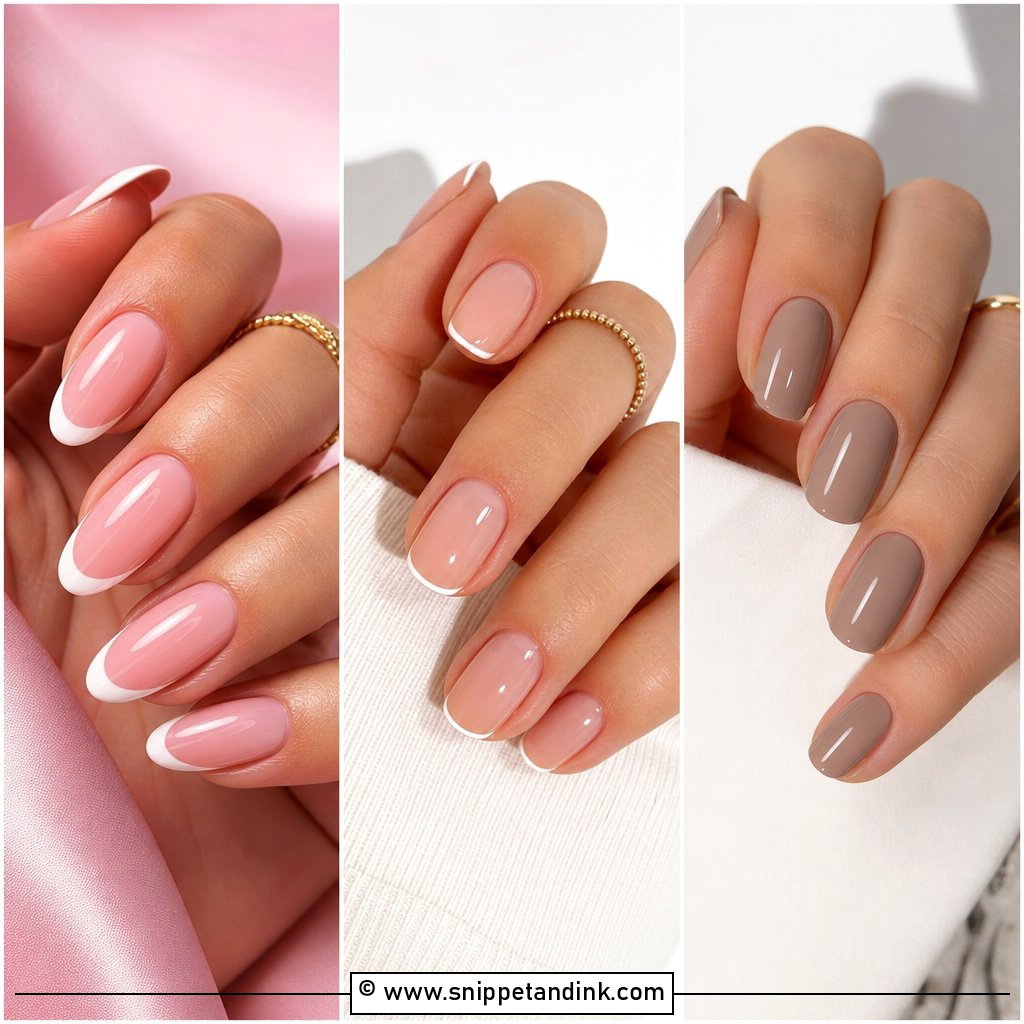
20. Gold Almond Wedding Nails
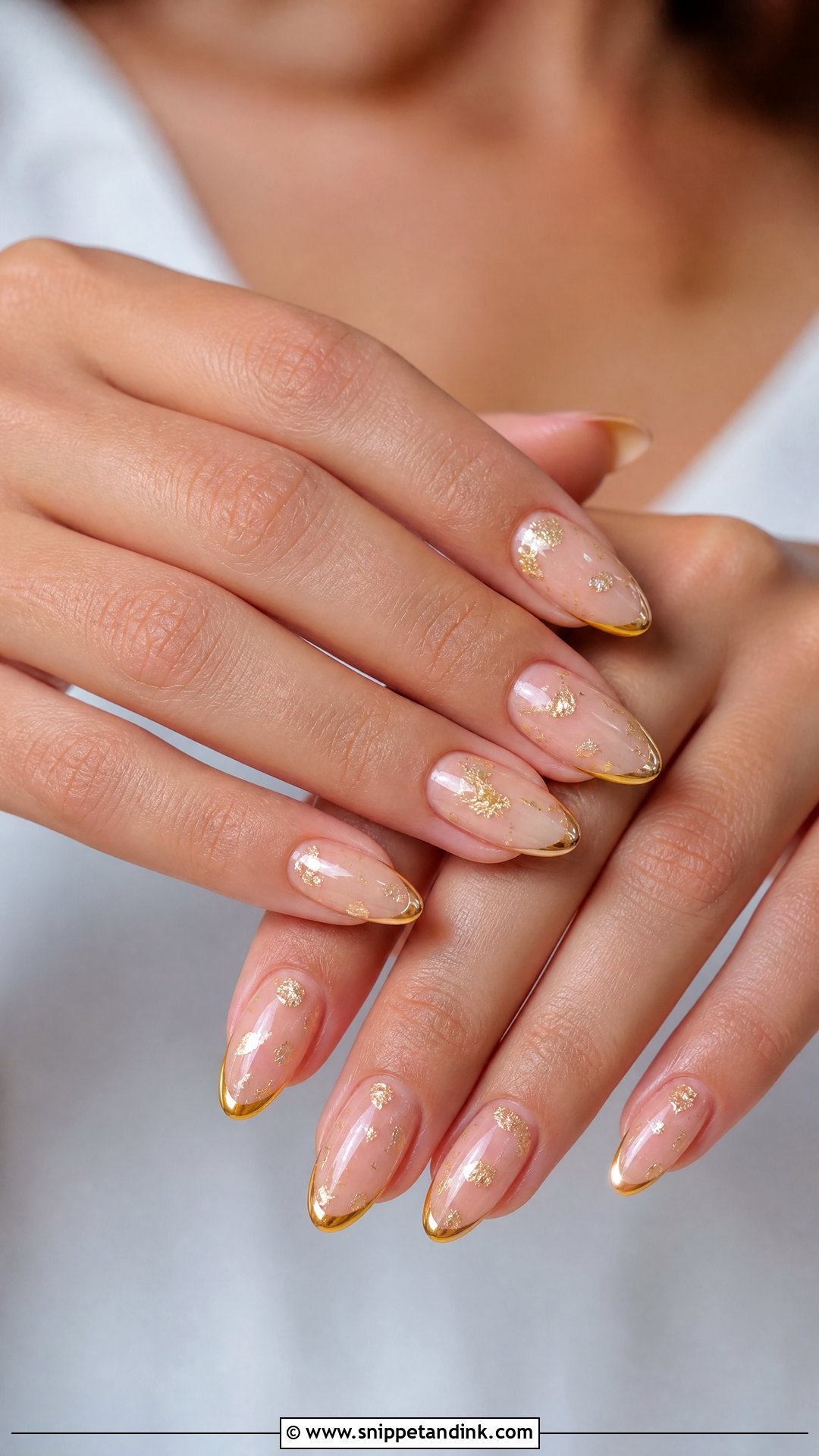
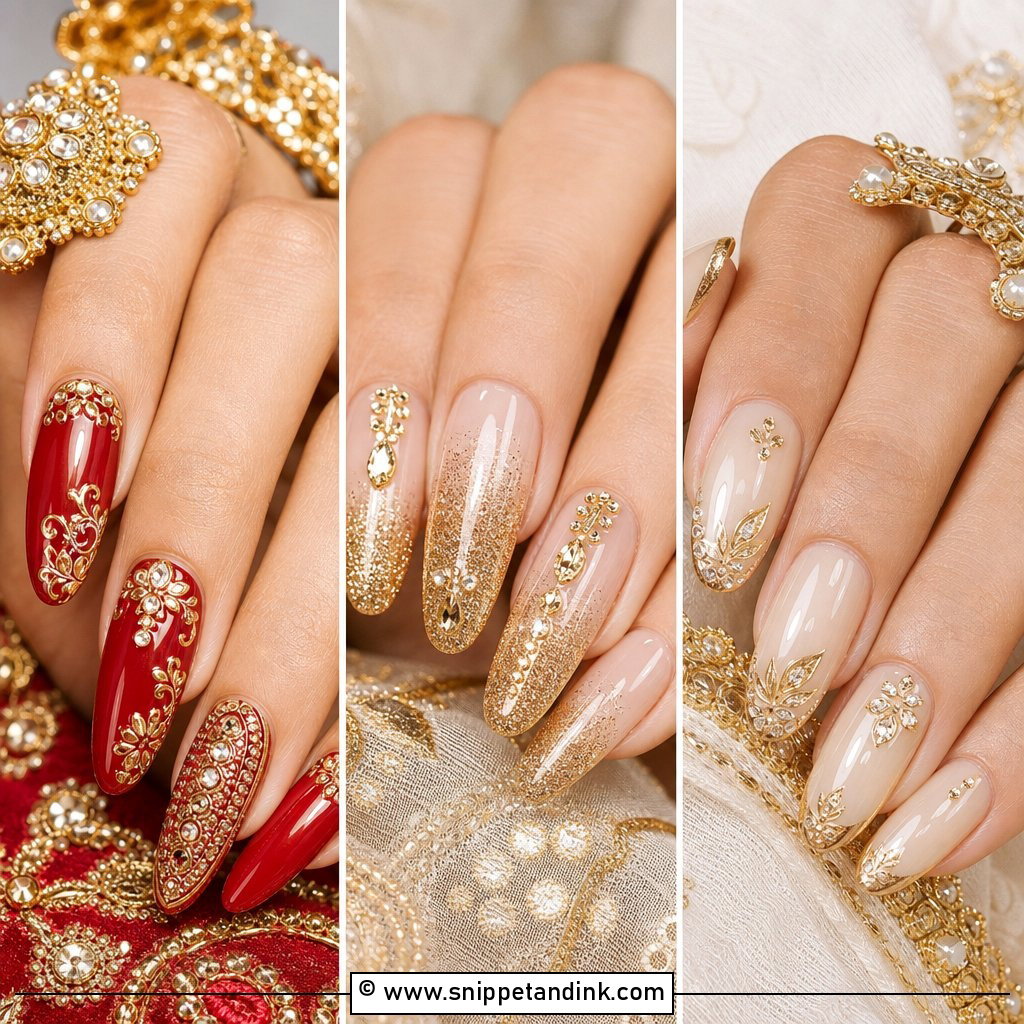
Almond is the shape I recommend most often for brides, because it lengthens the fingers without the drama of a stiletto. Gold suits it in any form: French tips for something minimal, foil over milky polish for something romantic, chrome with pearls for glamour. I’d keep the length medium. A medium almond is long enough to look elegant around a ring and short enough to hold flowers, sign the register and fasten jewelry without trouble. A sheer pink or nude base keeps it soft.
21. Short Gold Wedding Nails
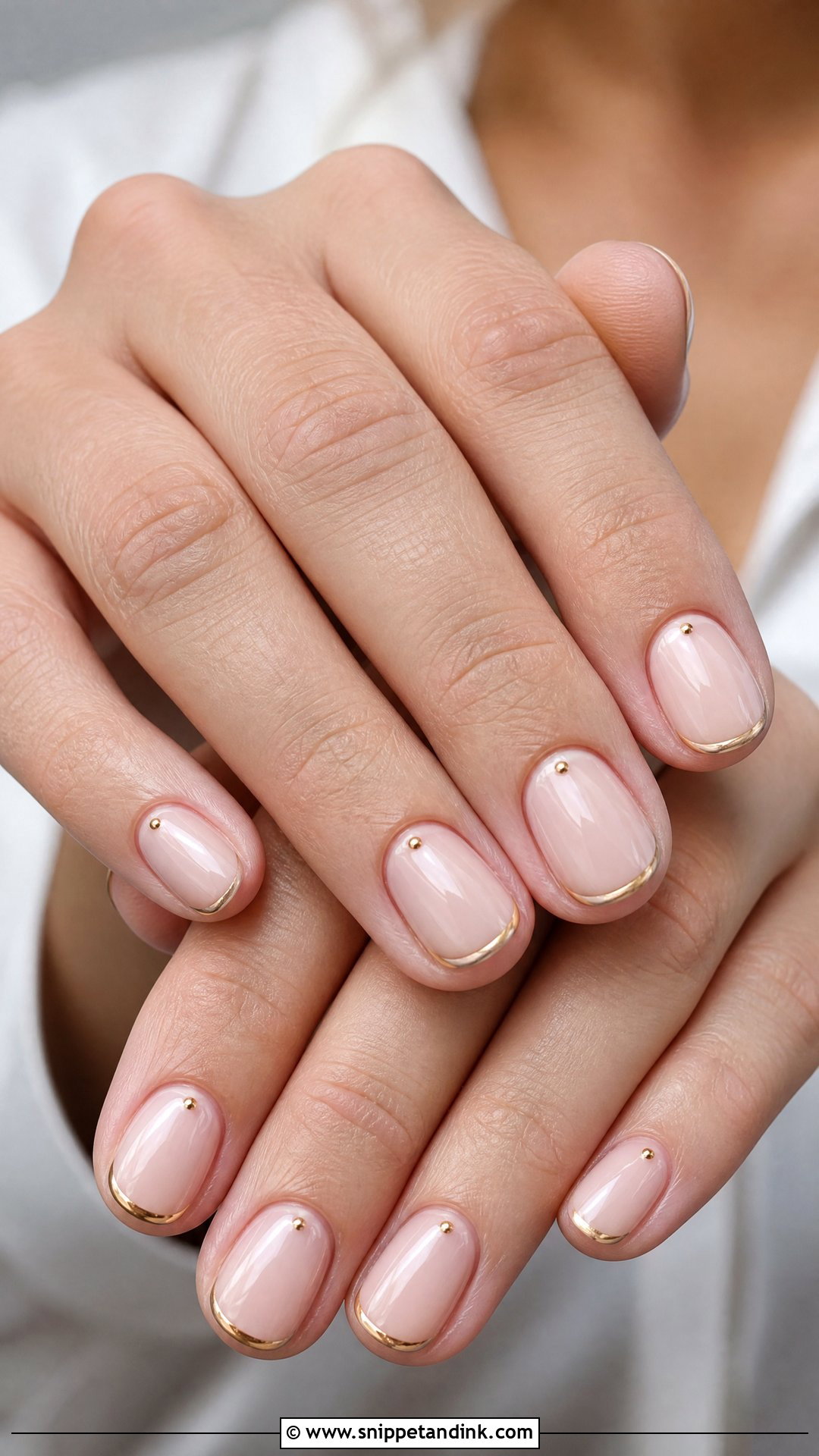
Short nails look just as bridal as long ones when the details are scaled down to fit. On short ovals or squovals I use micro French tips, tiny foil pieces, a thin cuticle line or a soft champagne shimmer, never several of these on one nail. A sheer nude or pale pink base keeps them fresh. Short sets also chip far less, which makes them the sensible pick if you work with your hands or can’t book your appointment close to the wedding.
22. Gold Coffin Wedding Nails
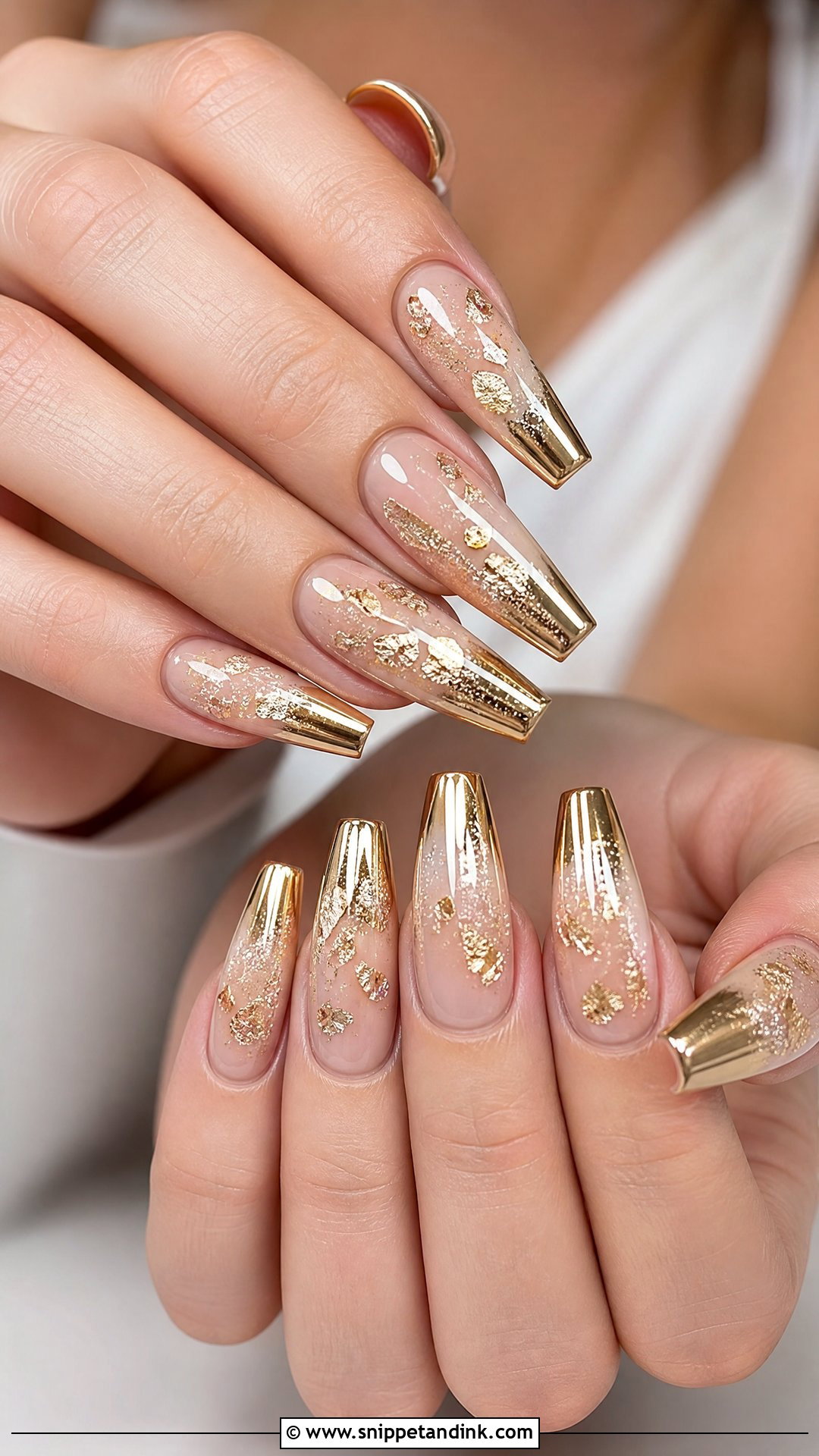
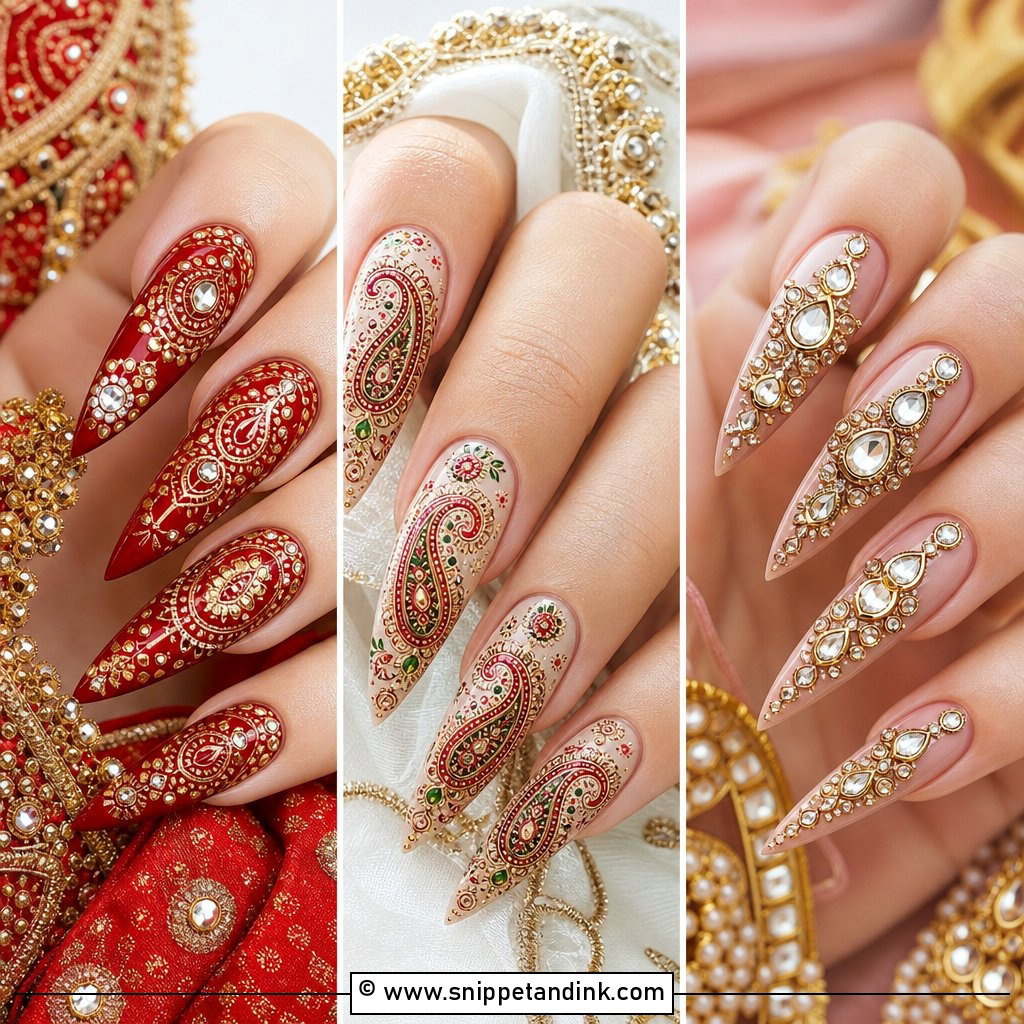
Coffin shapes give a flat, wide tip that shows off detail. Gold coffin wedding nails can take chrome French tips, glitter ombre, foil, marble or pearls, and I place the gold toward the tip to emphasize the shape. Balance the strong outline with soft colors like nude, blush or milky white. I’d go medium length rather than extra long; long coffins catch on everything from zippers to buttons on a busy day.
23. Gold Stiletto Wedding Nails
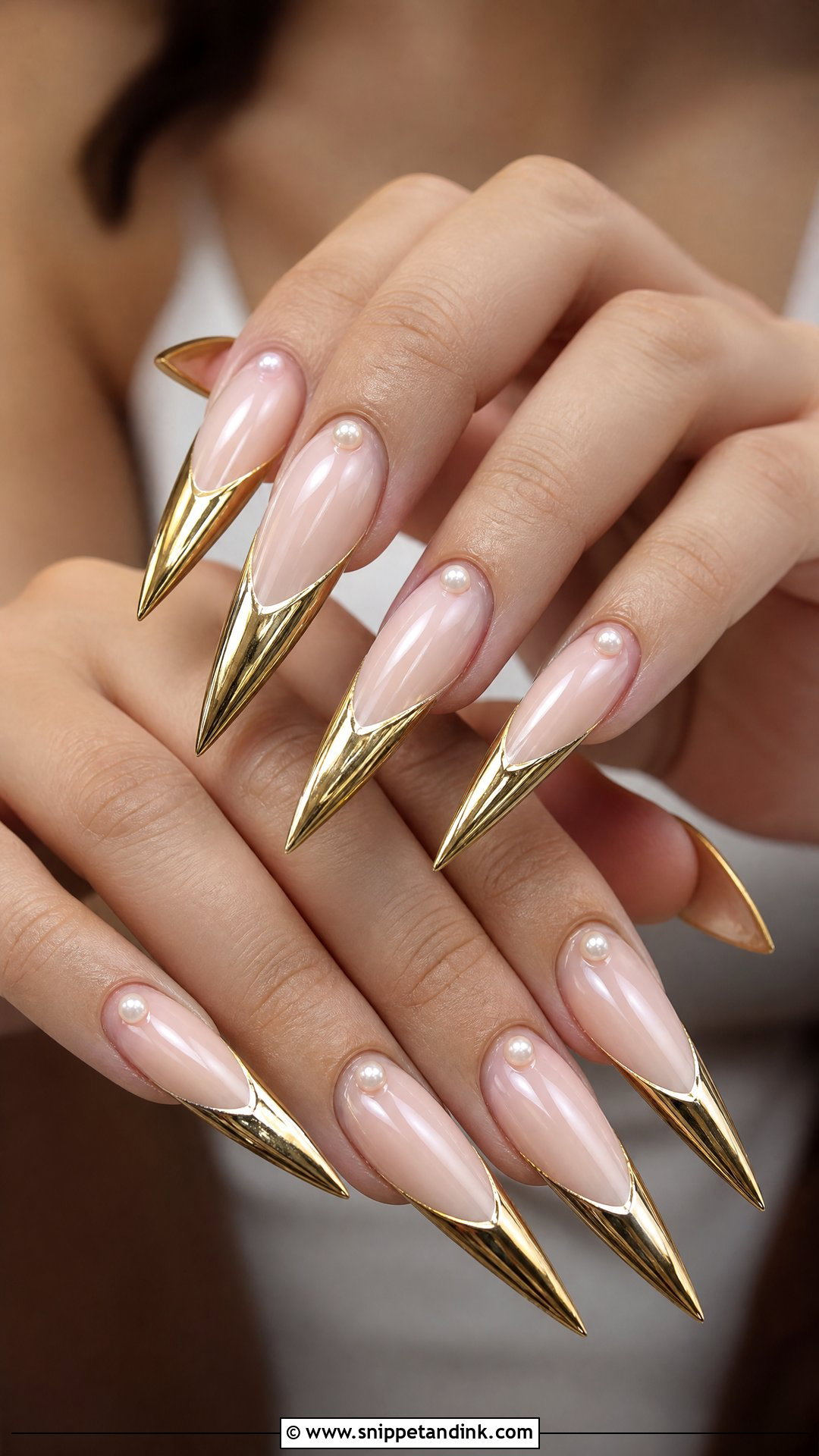
Stilettos make the nails part of the outfit, so I only suggest them to brides who already wear length day to day. A pointed tip takes some practice when you’re fastening a necklace or putting in contact lenses, and the morning of the wedding is not the time to learn. Gold chrome tips over sheer nude look sharp; foil over milky polish is softer; full champagne chrome makes the most impact. If you add pearls or stones, keep them small and close to the cuticle, where they won’t catch on a veil.
24. Gold Wedding Nails For Bridesmaids
A bridal party should look coordinated in photos without everyone sporting identical sets, and gold makes that easy. I’d pick one shared detail, such as a gold French tip or a gold cuticle line, and let each bridesmaid’s base and length suit her own hands and skin tone. Soft nudes with thin tips, champagne shimmer or a few foil flakes keep attention on the bride. Gold goes with neutral, champagne, blush, sage and terracotta dresses.
25. Gold Wedding Nails For Guests
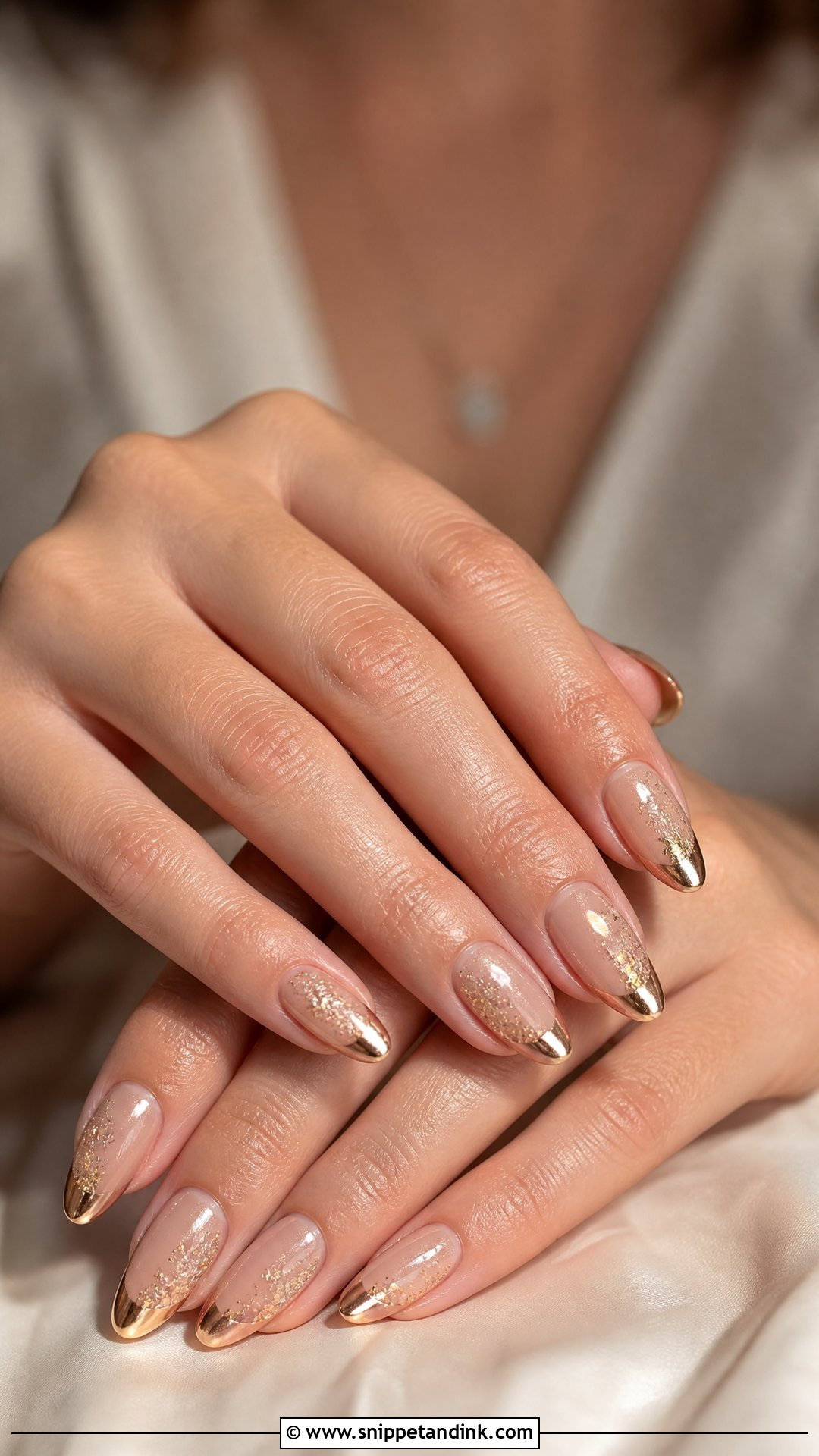
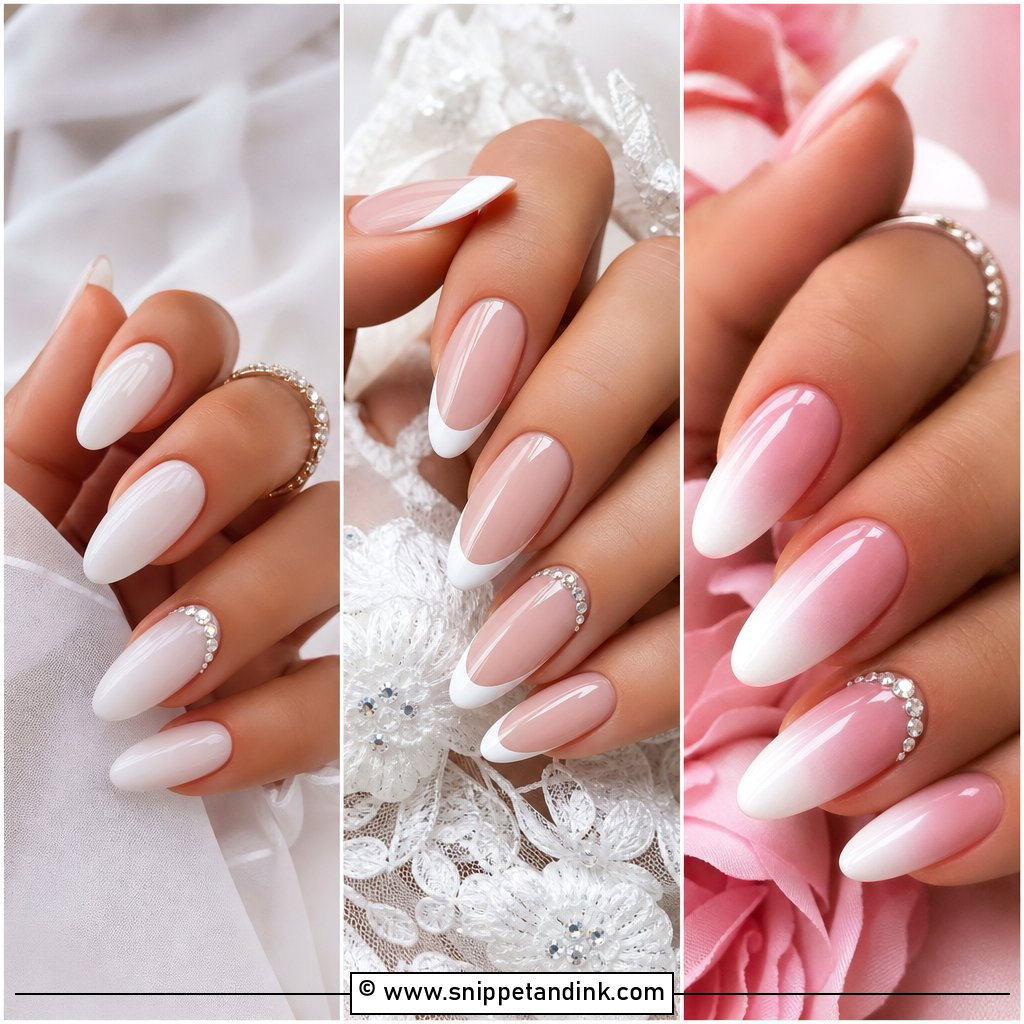
Guests can go a little more festive than everyday nails while staying clear of anything that reads bridal. A nude base with gold tips, champagne glitter, rose gold chrome or a bit of foil is safe and polished. What I’d avoid as a guest is the obviously bridal combination of milky white, lace and pearls on every nail. Match the gold to your outfit and jewelry instead. Short almond, oval or squoval shapes are the easiest to live with at a long reception.
Chrome and Foil Between the Salon Chair and the Honeymoon
Metallic finishes are the first to show wear, so I time bridal gold sets more carefully than plain polish. I like to book the final appointment one to three days before the wedding. That’s close enough that growth at the cuticle is invisible, and far enough that any lifting shows up while there’s still time for a fix.
- Chrome rubs off at the free edge first. Avoid using your nails as tools, especially on cans, stickers and ribbon.
- Foil lifts if water gets under a corner, so wear gloves for washing up in the days before.
- Apply cuticle oil twice a day; it keeps the skin around the gold looking neat in ring photos.
- Don’t pick at or file a lifting edge yourself. A quick repair takes minutes at the salon.
After the wedding, gel with chrome or foil should be removed professionally with a soak, not peeled. Peeling takes layers of nail with it, and if you’re heading on honeymoon, I’d rather you go with a full, healthy nail under the gold.
What a Macro Lens Sees on Your Hands
Ring shots are taken inches from your fingers, often with a macro lens, and they show things no one sees across a room: flooded polish on the cuticle, a foil edge sitting proud, a tiny gap where the base color didn’t reach the side wall. Before I finish a bridal set, I look at each nail under a bright lamp from the side, the same angle a photographer uses. If you’re doing your own nails, take a close phone photo with the flash on; that will show the same flaws in time to fix them.
Gold Is the Accent, Your Base Color Is the Foundation
Gold can be soft or glamorous depending on the finish, and the sets that look best always start with a base color matched to your skin. A thin gold French tip is the quietest version; chrome, foil, pearls, glitter and marble add more personality. Treat the gold as a deliberate detail, not something layered on at the end. Before the wedding, wear your chosen shape and length for a week or two so you know it suits the way you’ll use your hands on the day. That goes for bridesmaids and guests as much as the bride.
You'll Like These Ideas:


Leave a Reply