
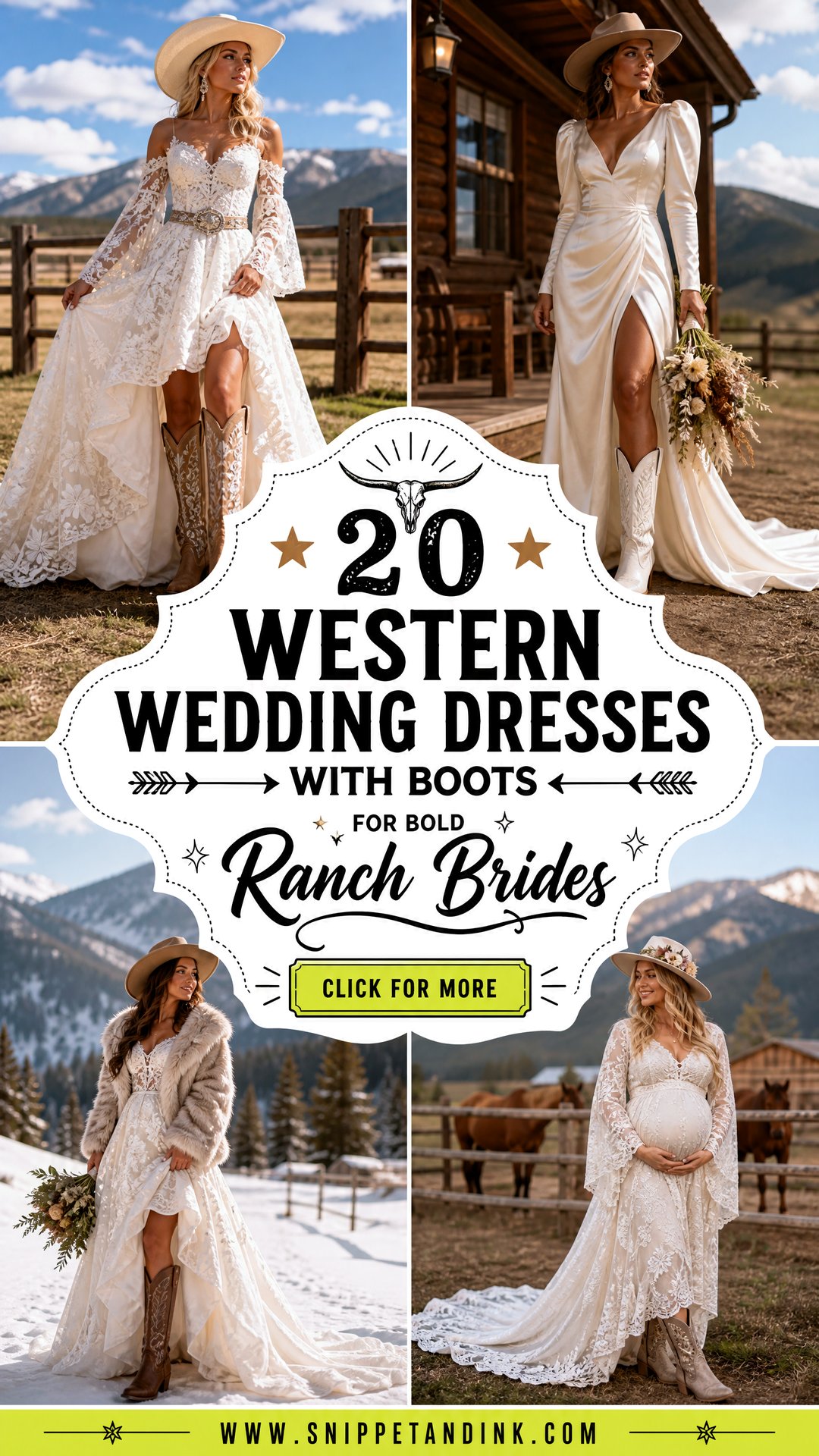
Putting cowboy boots under a wedding dress sounds simple until the hem drags over the toe, the boot shaft bunches lace at the calf, or the whole outfit tips into costume. When I style a Western bride, I treat the boots as part of the dress from the first fitting, because they change the hem length, the way the skirt moves and how much of the foot shows when she sits. The looks below run from classic lace and prairie cotton to satin, fringe and a sequin reception change. Each one is built head to toe: silhouette, boot height and color, accessories, and the kind of ground the outfit has to cross. You’ll find options for different bodies, pregnancies, budgets and seasons, from ranch ceremonies to courthouse vows.
Hemming a Wedding Gown Around a Cowboy Boot Heel
The most common problem I fix for Western brides is a hem set for the wrong shoe. Cowboy boots have a lower, chunkier heel than most bridal pumps, and the toe sits higher off the floor, so a dress hemmed for a stiletto will pool in front and catch on the boot tip every few steps.
- Buy the boots before your first fitting. The seamstress needs the exact heel height, not a similar pair.
- For a floor-length gown, I aim for the front hem to just kiss the top of the boot toe when you stand naturally. Any longer and you’ll be kicking it all day.
- Walk across the fitting room, then up and down a step, while the pins are in. Boots change your stride, and a hem that looks right standing still can drag in motion.
- Ask for a bustle that lifts the train well clear of the ground. Ranch and barn floors are rough on lace in a way a ballroom never is.
- If the boot shaft shows a ridge under a fitted skirt, a thin slip with a little weight in the hem usually smooths it out.
Short and tea-length dresses need the same care in reverse: check where the hem lands against the boot top, because a gap of a few inches looks deliberate, while two edges meeting at the same line looks like a mistake.
1. Lace Western Wedding Dress With White Cowboy Boots
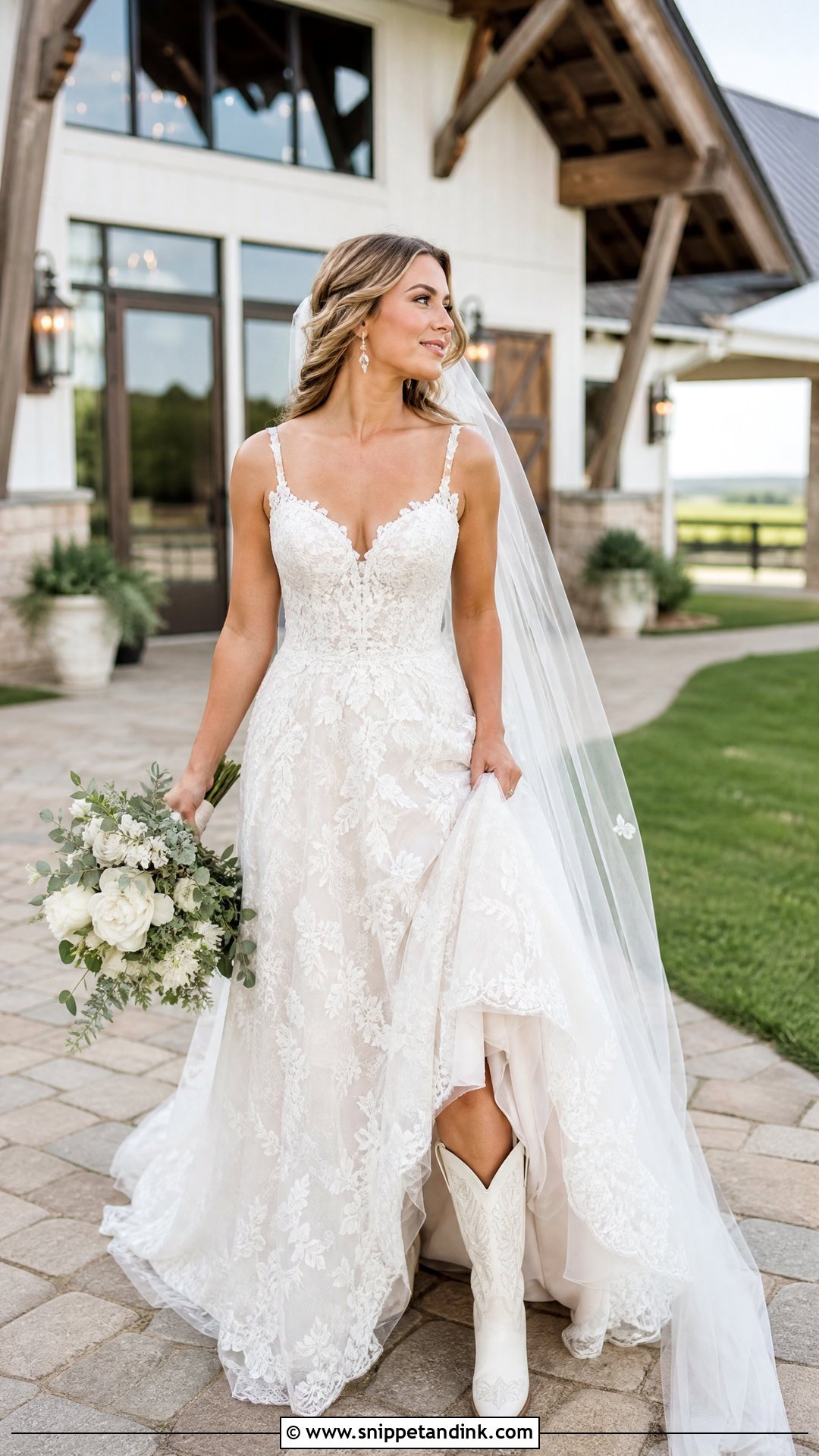
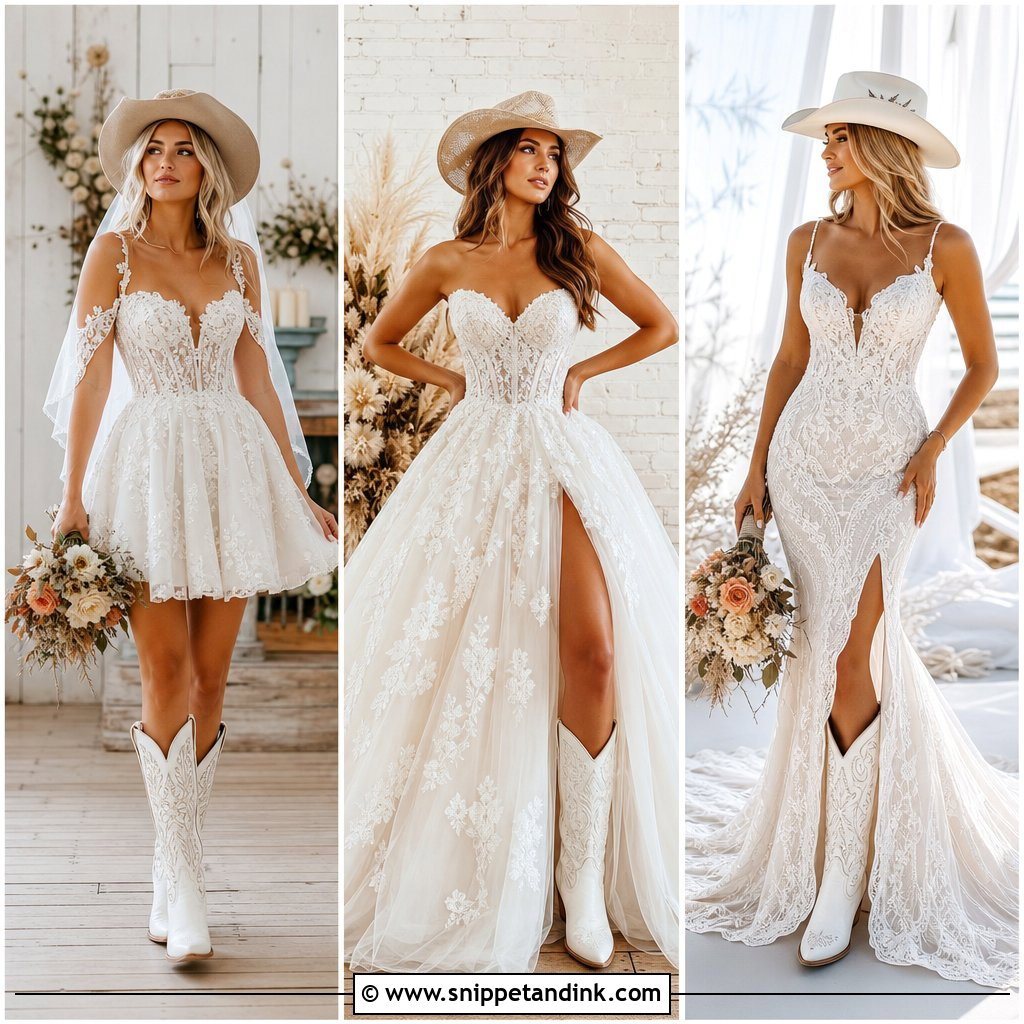
Lace and white cowboy boots are the pairing most of my Western brides start with, and it rarely needs much fixing. I look for a fitted bodice, a clear waist and an A-line skirt that clears the boot toe by about half an inch, so the lace isn’t scuffed with every step. Pointed white leather with tonal stitching keeps the foot quiet. A low stacked heel matters more than people expect: it stops the dress from sitting longer in front than in back. Add a fingertip veil, pearl drops, a loose low bun and white flowers with plain greenery, and stop there.
2. Boho Western Wedding Dress With Tan Cowboy Boots
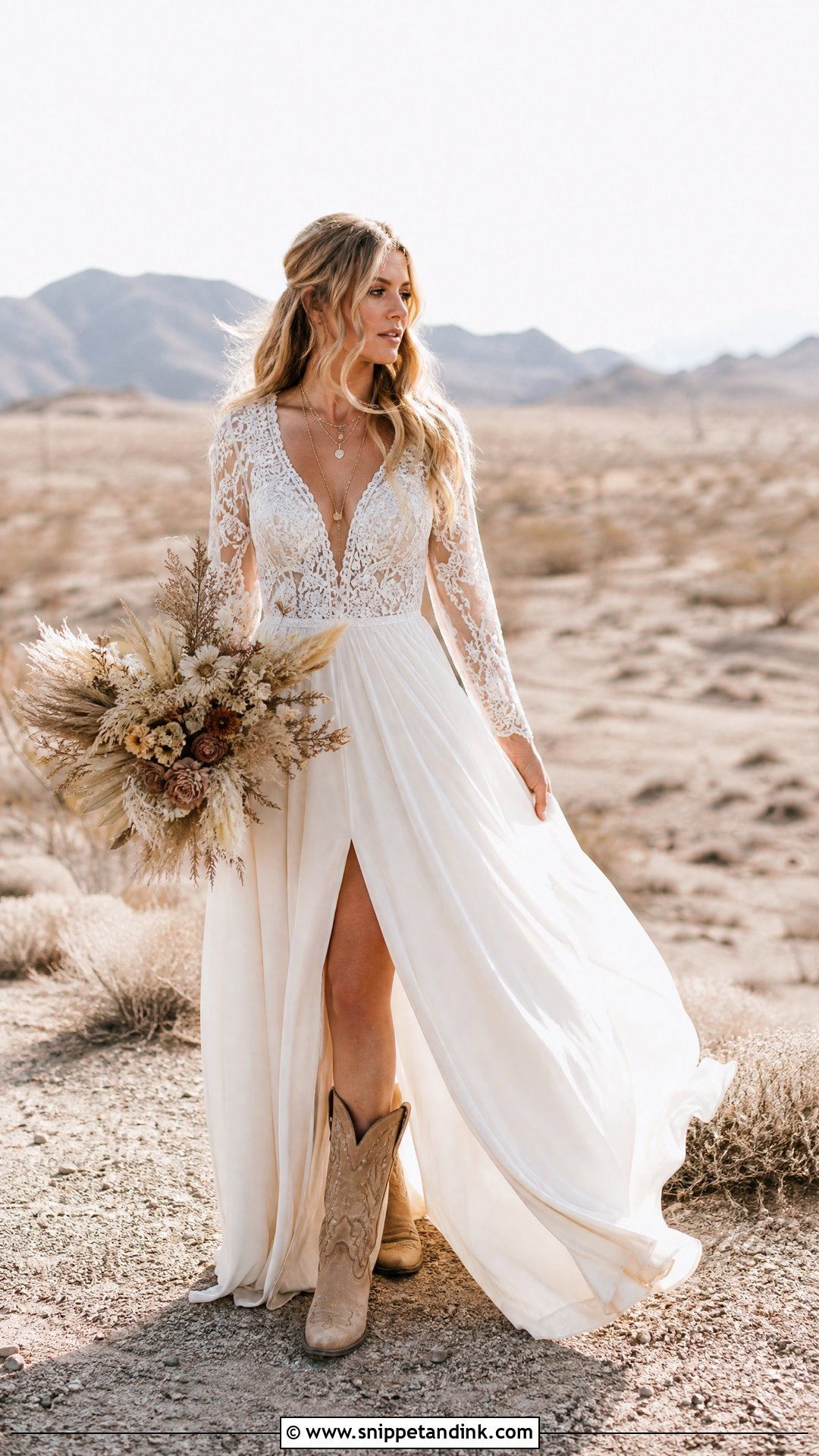
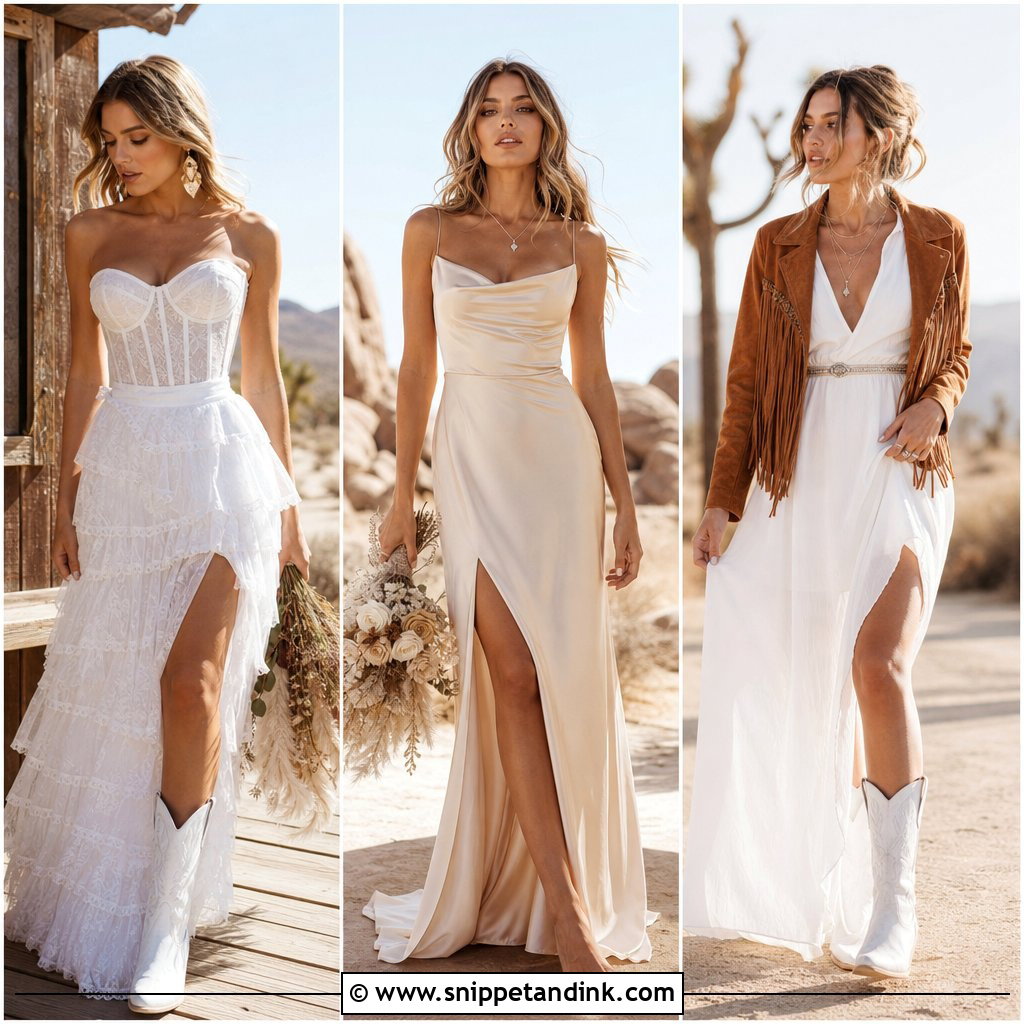
Chiffon and tulle catch the wind outdoors, which is exactly why a boho gown sits so well over tan boots. I pick tan leather with almost no stitching here, since the dress already has lace sleeves and a deep V doing the decorative work. The one thing I insist on is a defined waist; without it, a relaxed ivory dress over a chunky boot can read as a size too big in photos. Loose waves, a couple of fine layered necklaces and cream flowers with muted earthy stems finish it. Bring a fringed wrap if the evening turns cold in the desert or the woods.
3. Tea-Length Western Wedding Dress With Embroidered Boots
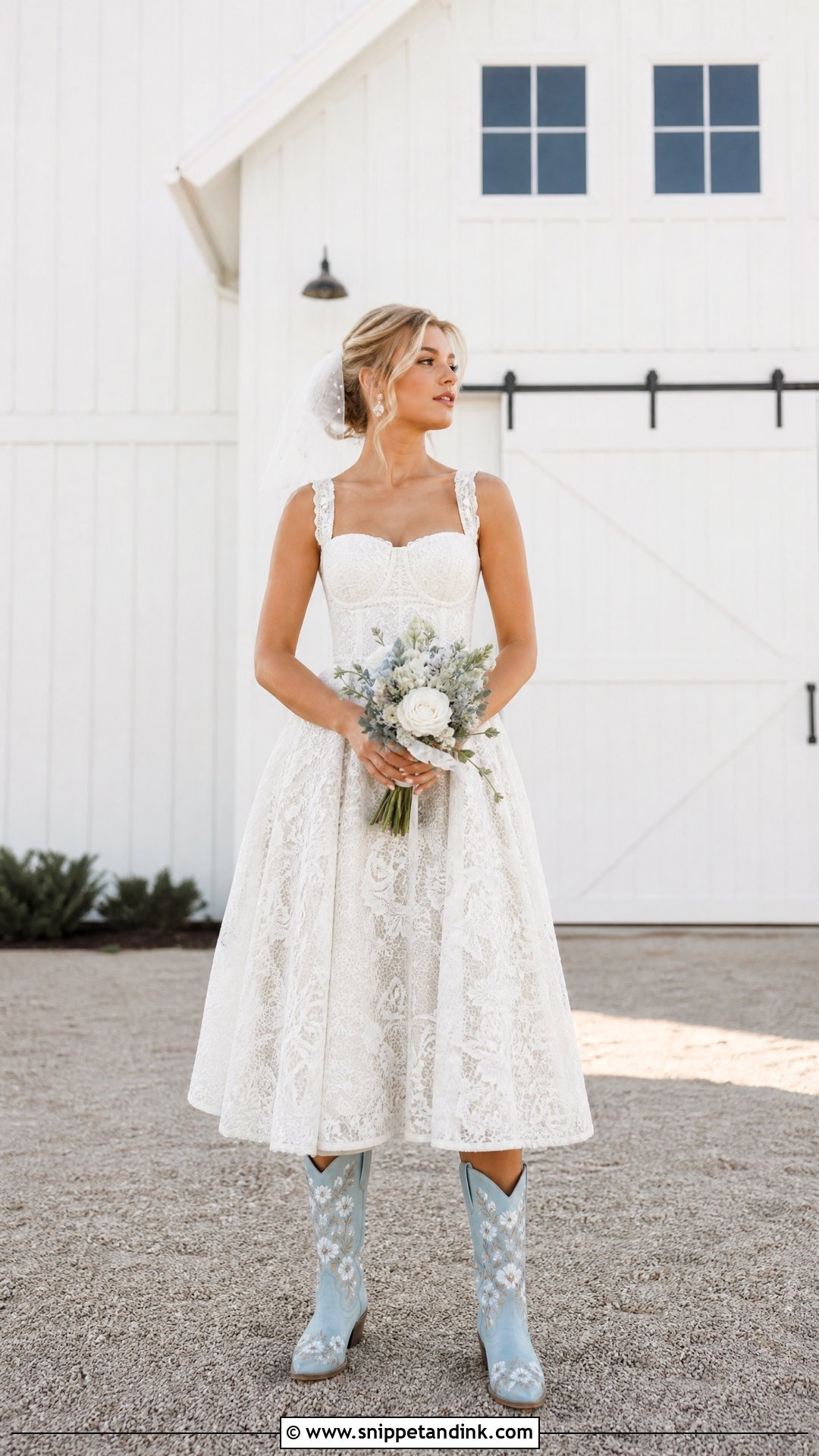
A tea-length hem ends between knee and ankle, so the boots stop being a secret and become half the outfit. That changes my priorities: the boots must be clean, properly fitted at the shaft, and worth looking at, so this is where floral embroidery or a pale blue pair earns its place. Structured lace or mikado holds the flared shape and keeps it vintage rather than casual. Pearl studs, a short veil and a tight round bouquet keep the top tidy. If you add a narrow Western belt, match it to the dress, not the boots; a dark belt cuts a short dress in half. It’s a very easy length to dance in.
4. High-Low Western Wedding Dress With Statement Cowboy Boots
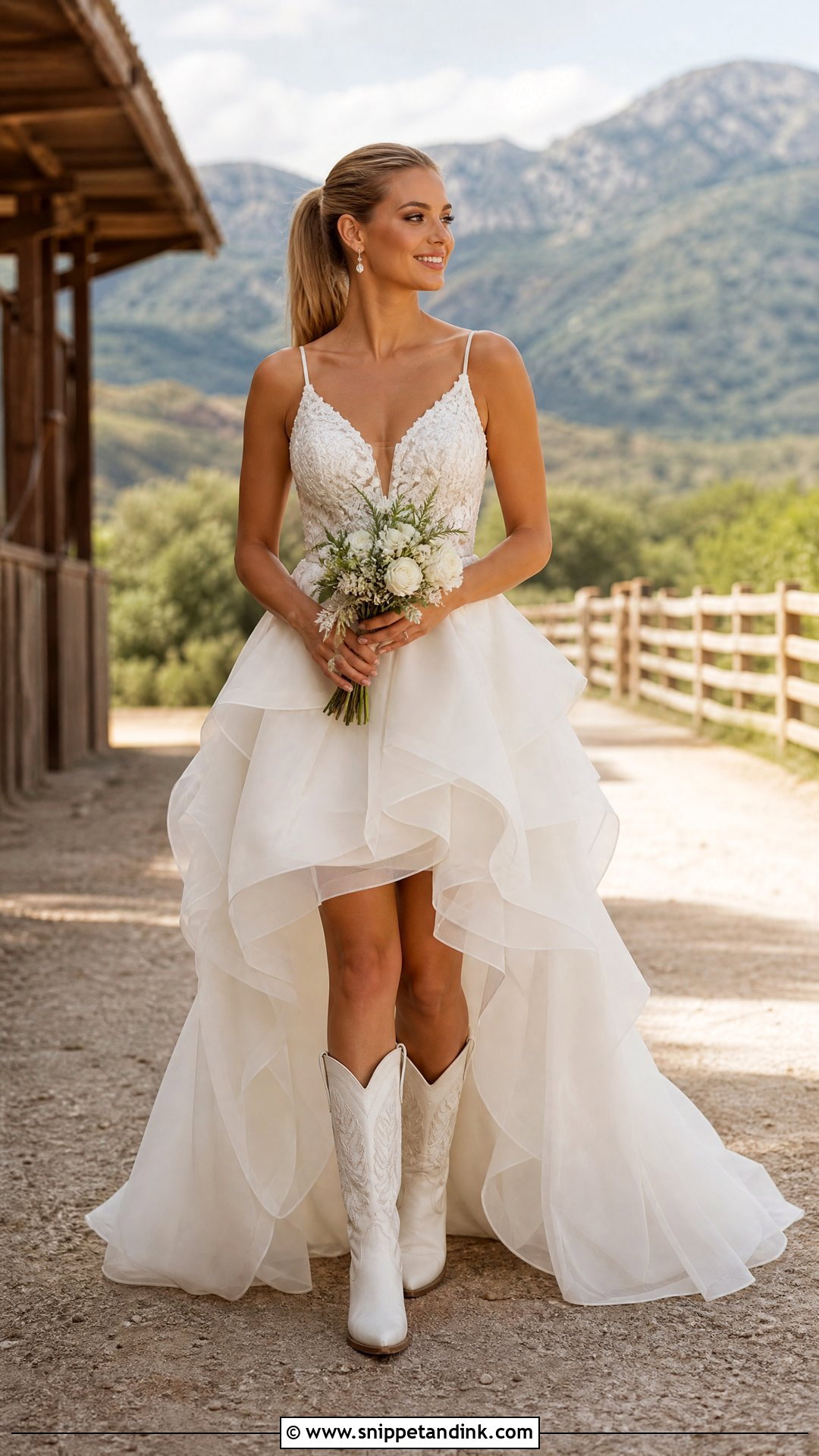
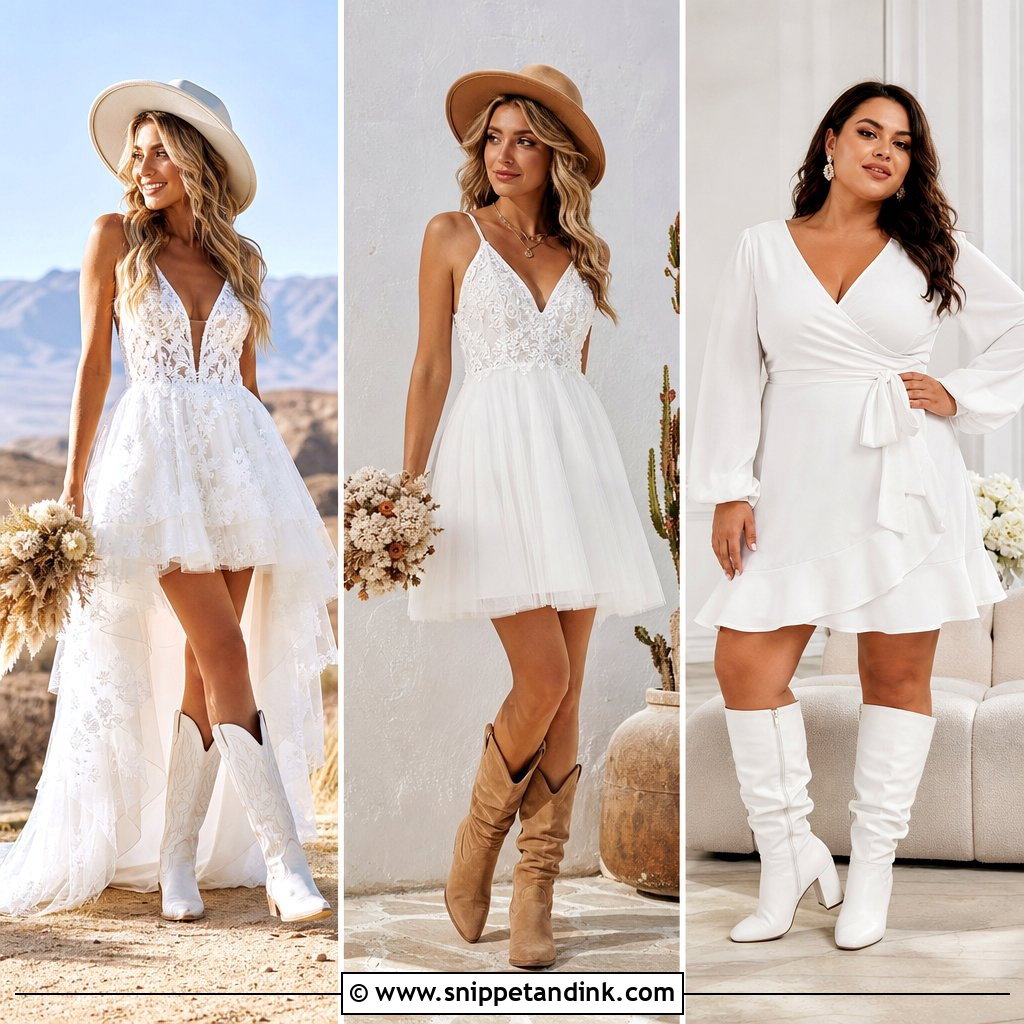
High-low hems solve the biggest practical problem of a Western wedding: fabric dragging over uneven ground. The front sits at the knee and lets statement boots show, while the back keeps the sweep of a train for the aisle. I steer brides toward chiffon, organza or a few tulle layers so the long back floats instead of pulling. Since the boots are the loud part here, I keep everything else plain: simple earrings, a smooth ponytail and a compact bouquet. A custom pair with initials or a date stitched in works especially well with this cut, because people will actually see it.
5. Satin Western Wedding Dress With Pointed-Toe Boots
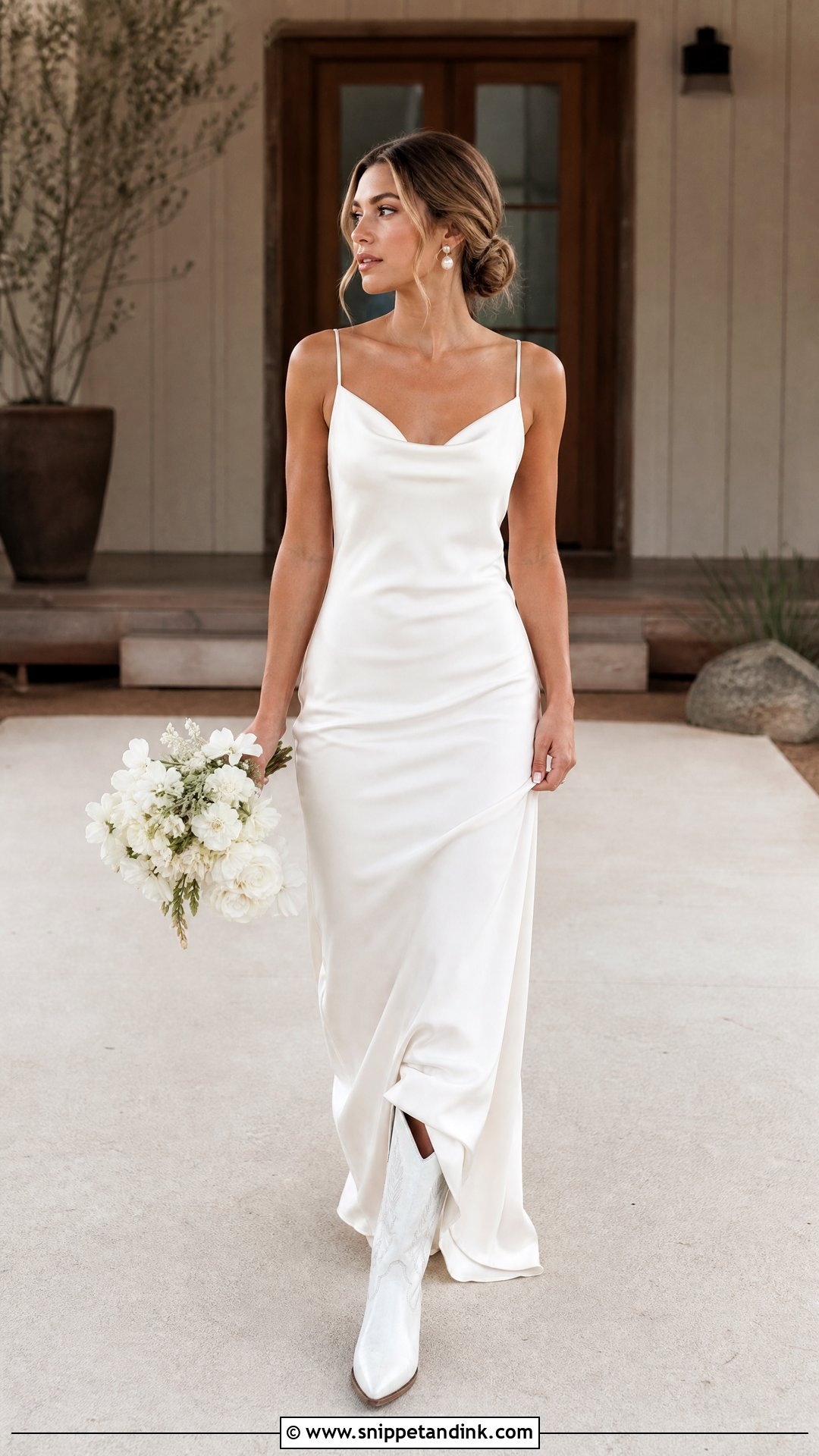
Satin is the fabric I’m most careful with under boots. It shows every crease and every bump, so a bias-cut slip or clean column needs the boot shaft to sit flat underneath, with no seam ridge showing through at the calf. Pointed-toe boots suit the long line. White leather keeps the palette bridal; tan or caramel warms it toward ranch. A low chignon, gold or pearl earrings and one flower variety keep it minimal. For portraits, a satin scarf or cropped suede jacket adds the Western note, then comes off before the vows. It suits a modern barn or estate better than a working ranch.
6. Off-the-Shoulder Western Wedding Dress With Brown Boots
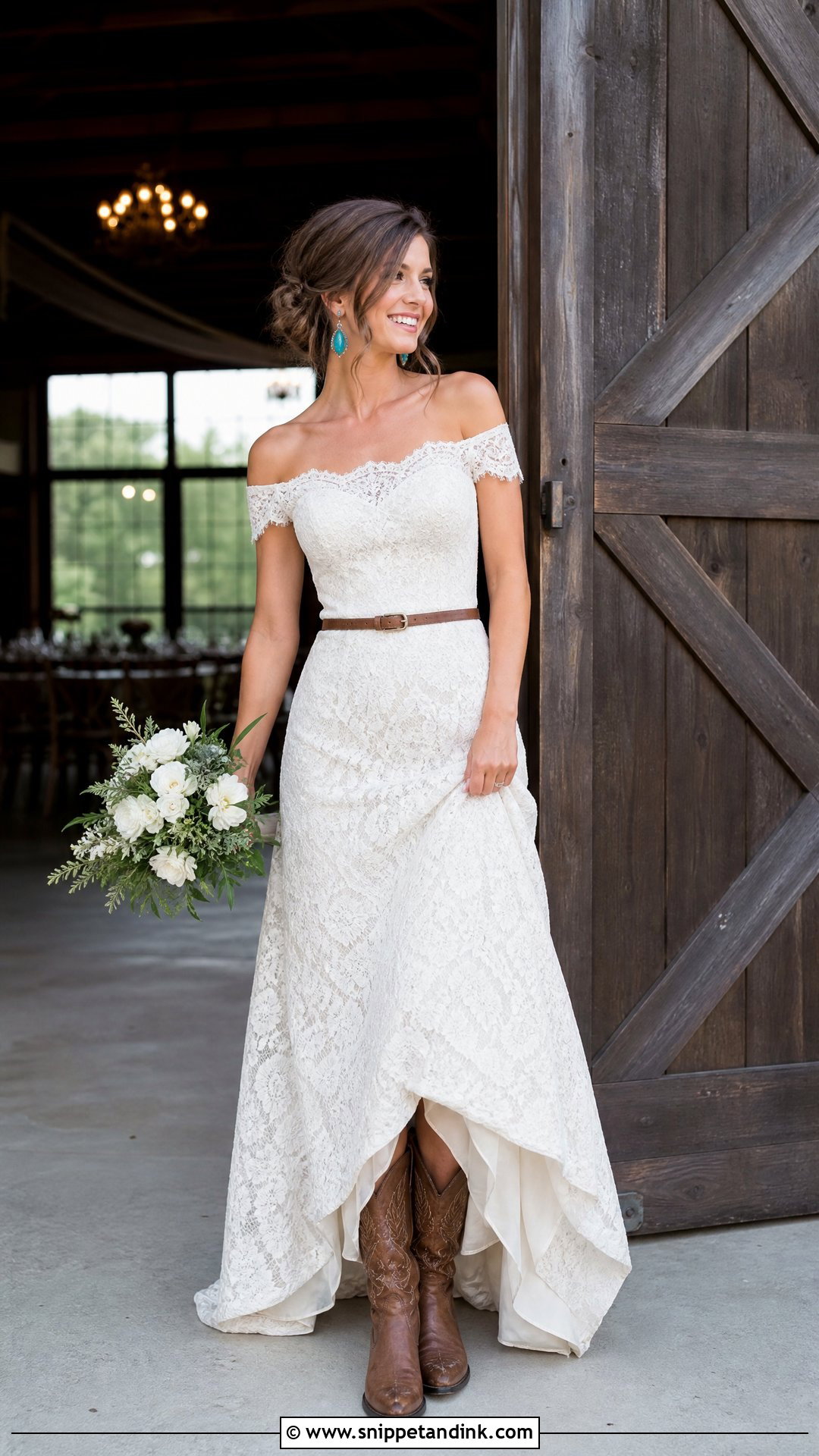
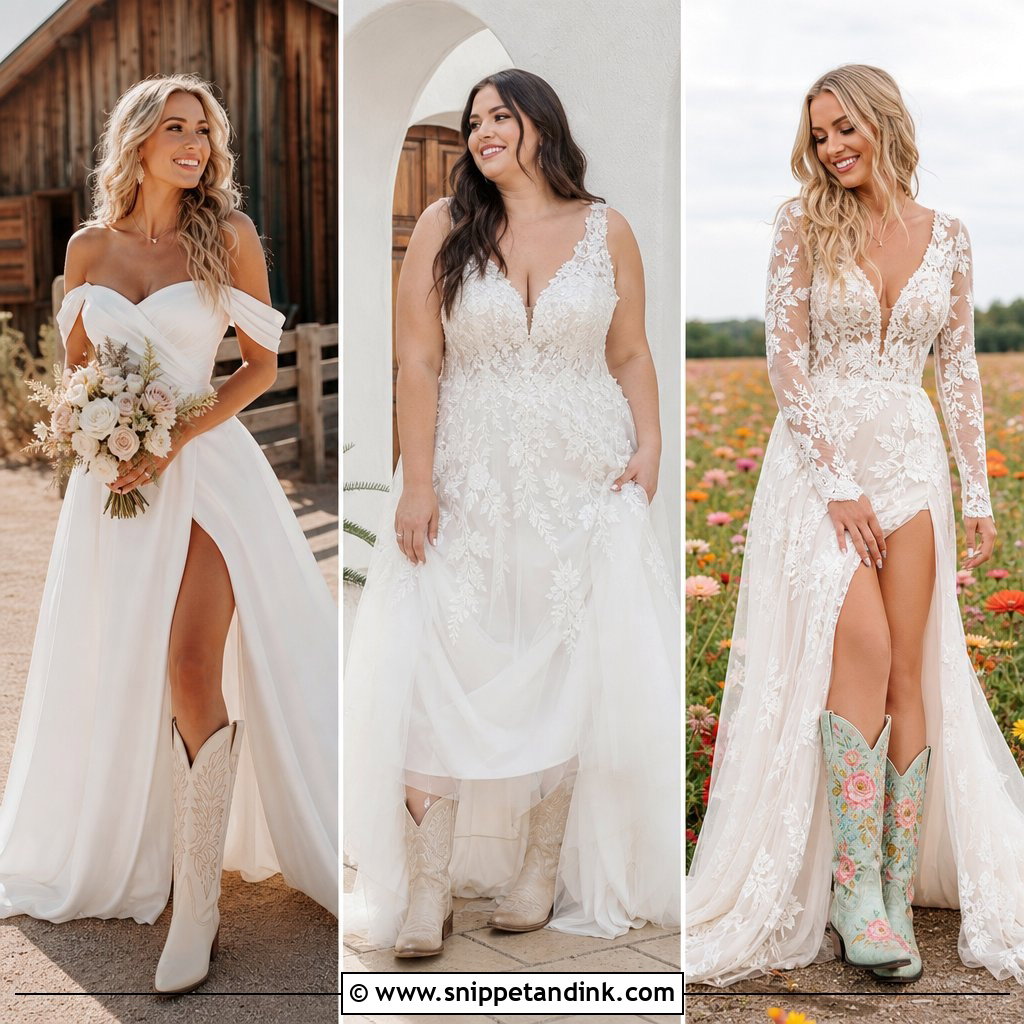
Off-the-shoulder necklines need internal boning or a grippy waistband, or you’ll spend the day hitching the sleeves up. I check that first, then the boots. Medium brown is the right depth against ivory lace; very dark brown can look like a gap at the bottom of every full-length photo. Choose a polished pair with clean stitching and a moderate heel, not distressed work boots. A loose updo shows the shoulders, small turquoise earrings bring in color, and white flowers with textured greenery tie it together. If you want a belt to echo the boots, keep it slim. It feels right for a fall ranch or a rustic indoor reception.
7. Mermaid Western Wedding Dress With Cream Cowboy Boots
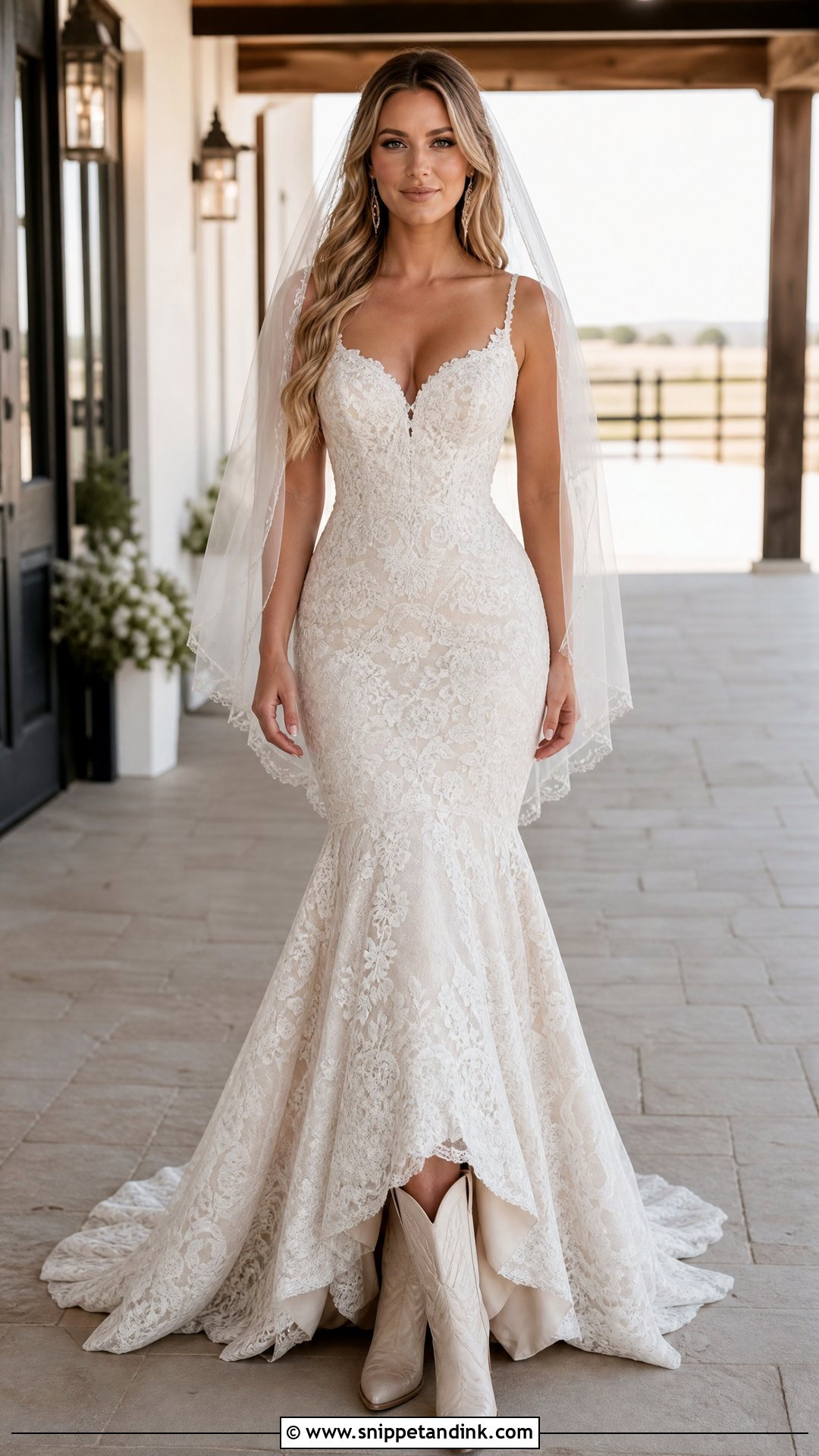
Mermaid gowns and boots can absolutely work, but the flare point matters. The skirt opens at the knee, and if the fabric is stiff, a boot shaft underneath can push it out into an odd bulge. Stretch lace or crepe moves around the boot more kindly. Cream boots blend under an ivory skirt, and a pointed toe lengthens the line whenever the hem lifts. Because this silhouette already does a lot, I keep the top to a fingertip veil, sculpted waves and drop earrings, and I talk brides out of wide belts and fringe. It belongs at a formal ranch venue or an evening reception.
8. Tulle Western Wedding Dress With Hidden Cowboy Boots
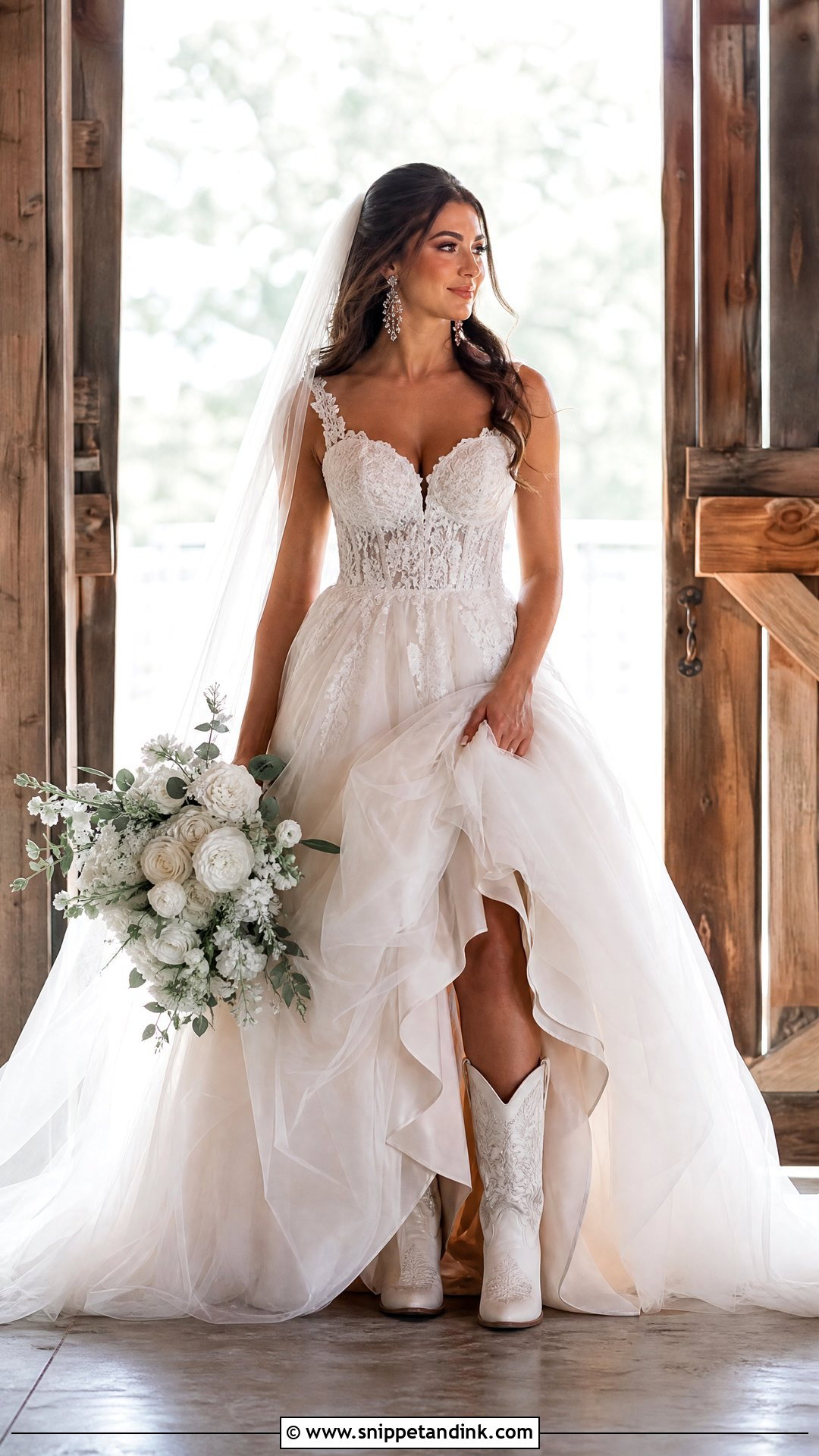
Ball gowns are where boots are a comfort choice rather than a style one. Nobody will see them, and that’s the point: you can stand through photos and dance all night in cushioned ivory boots with a stable heel. The single most important step is hemming the dress while wearing those exact boots. A ball gown hemmed in heels and worn over boots will drag and trip you on the first stair. Choose a lace or corset bodice and lightweight layers you can lift with one hand. A cathedral veil, small sparkling earrings and a structured bouquet keep the entrance formal.
9. Prairie Western Wedding Dress With Vintage Leather Boots
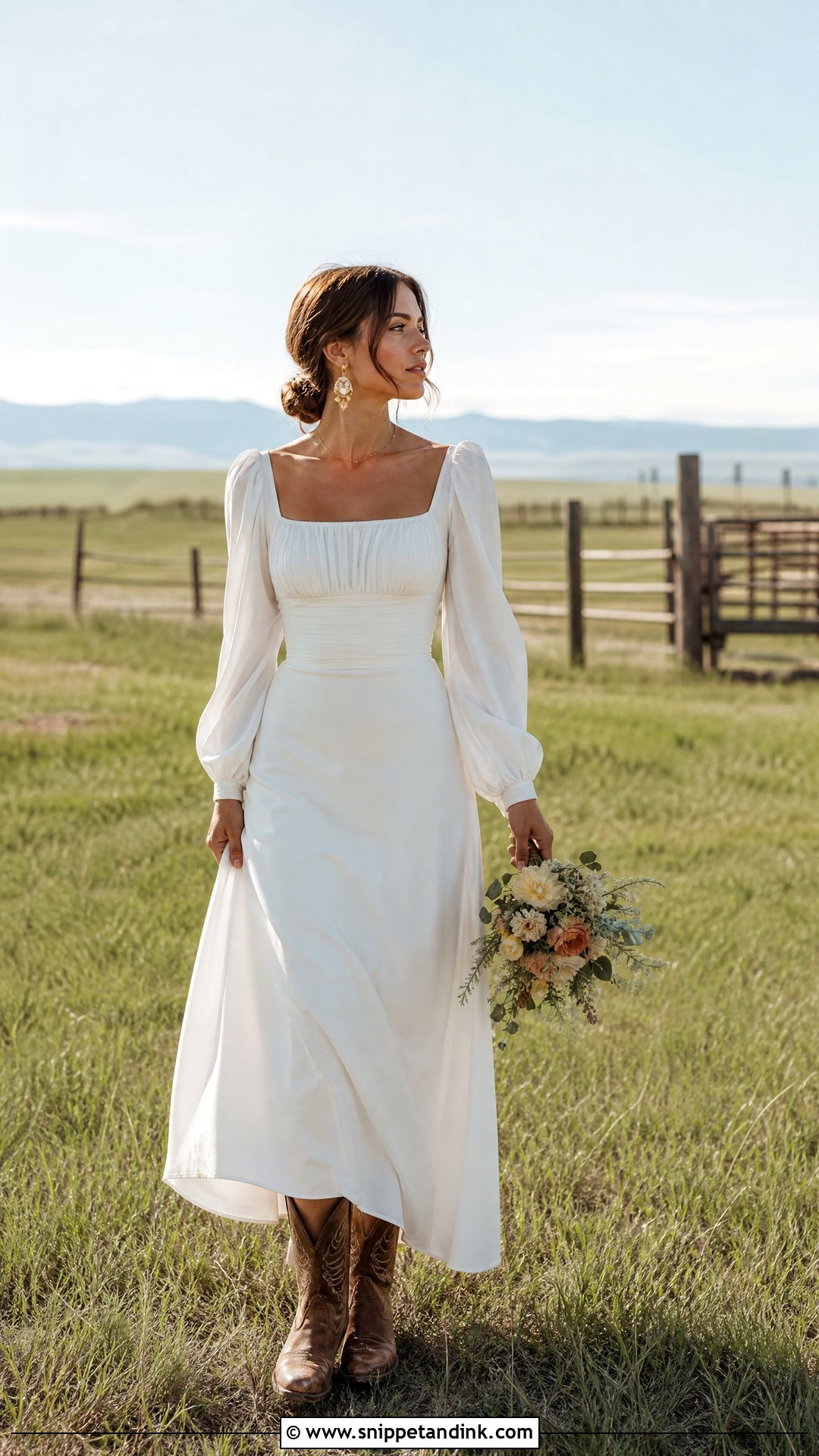
Prairie dresses carry their Western feel in the cut itself: square neckline, fitted waist, gathered long sleeves and an ankle-length skirt. The risk is costume, and the fix is fabric. Cotton lace or a soft linen blend reads bridal; stiff calico prints do not. Vintage brown boots with real wear look right here, since the whole dress is about history. I keep the rest current, with natural makeup, softly pinned hair, modern gold earrings and a small seasonal bouquet, so the look feels chosen rather than borrowed. It is modest, easy on uneven ground and very at home at a family ranch or meadow ceremony.
10. Bell-Sleeve Western Wedding Dress With Suede Boots
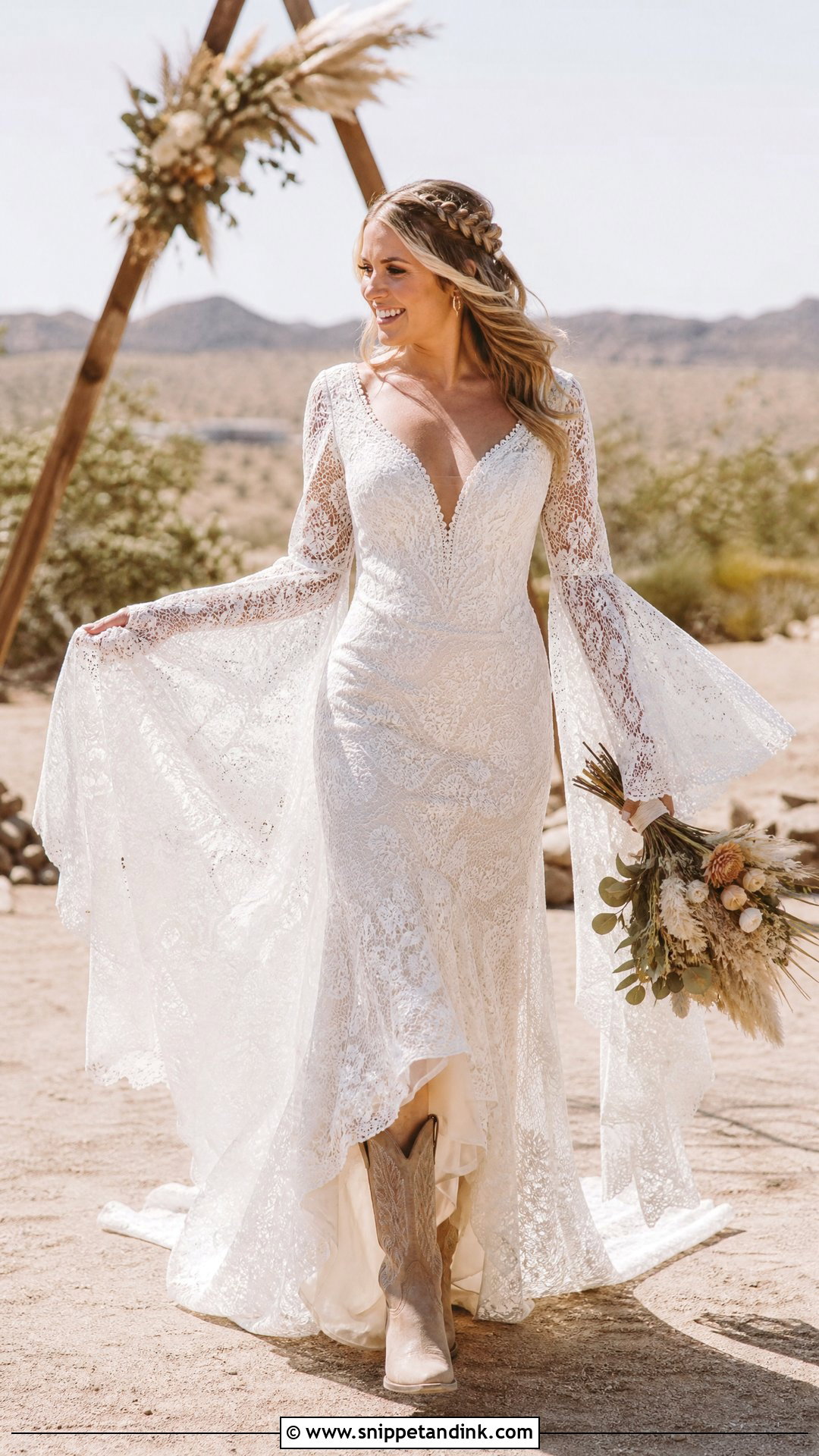
Bell sleeves add width up top, so I balance them with a fitted waist and a manageable train in this Western bridal outfit. Light tan or taupe suede matches the soft texture of lace well. The warning I give every bride: suede marks with water and dust, so it suits a dry desert venue or an indoor reception far better than a dewy morning lawn. Spray it with a suede protector a few days ahead. Pair it with a braided half-up style, small hoops and neutral flowers with airy greenery. Skip the big hat and the heavy necklace; the sleeves are already the feature.
11. Short Western Wedding Dress With Tall Cowboy Boots
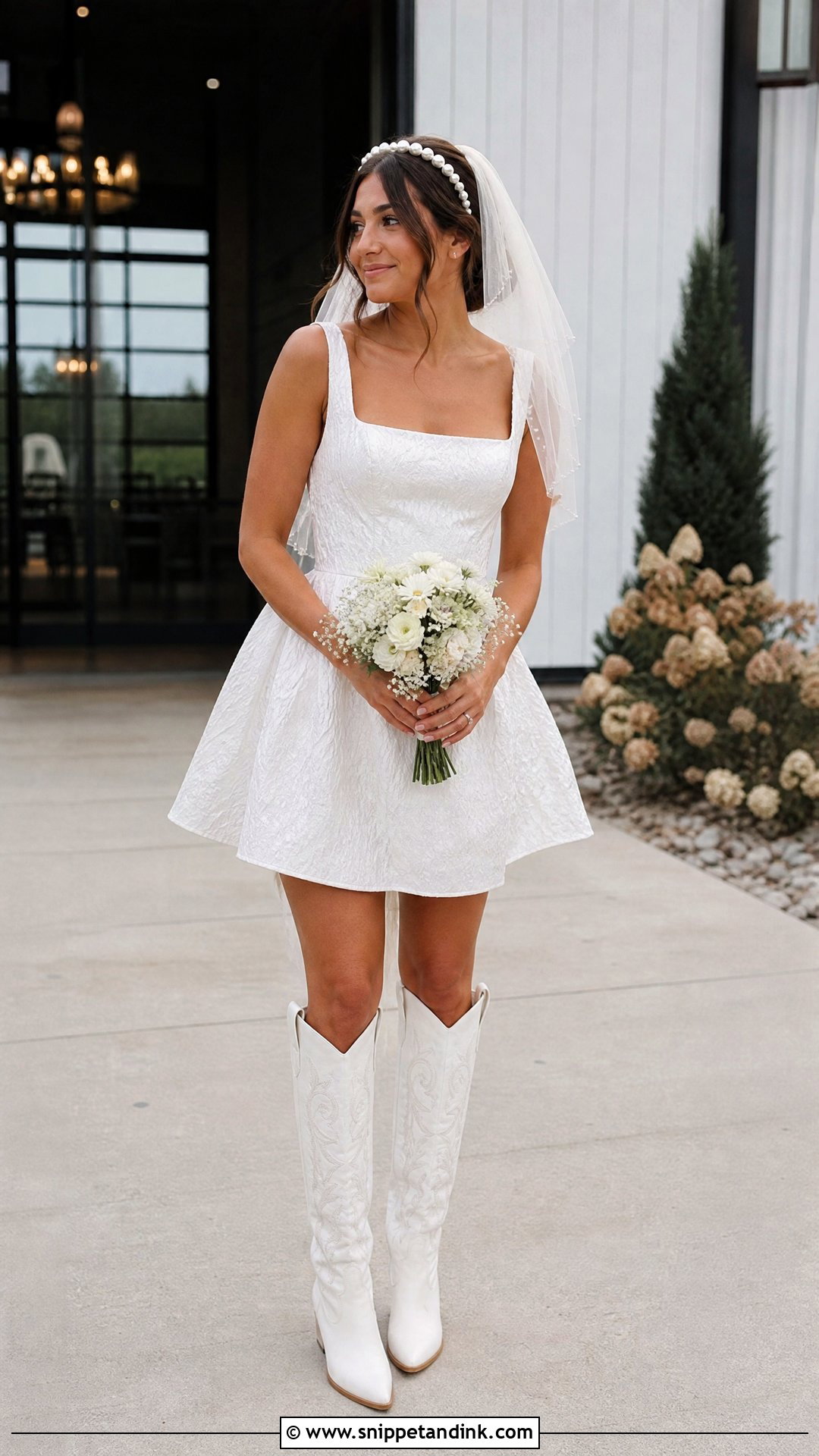
Short dresses with tall boots put the legs and the boot shafts on show, so fit has to be exact. I check two things at the fitting: that the skirt doesn’t ride up when she sits, and that the boot top doesn’t land at the same height as the hem, which makes the legs look chopped. Lace, brocade or textured crepe keeps a short dress feeling special. Knee-high or mid-calf white boots with light embroidery and a block heel are the most comfortable option. A short veil, pearl headband or small-brimmed hat finishes it. I reach for it most for elopements and quick reception changes.
12. Fringe Western Wedding Dress With Embellished Boots
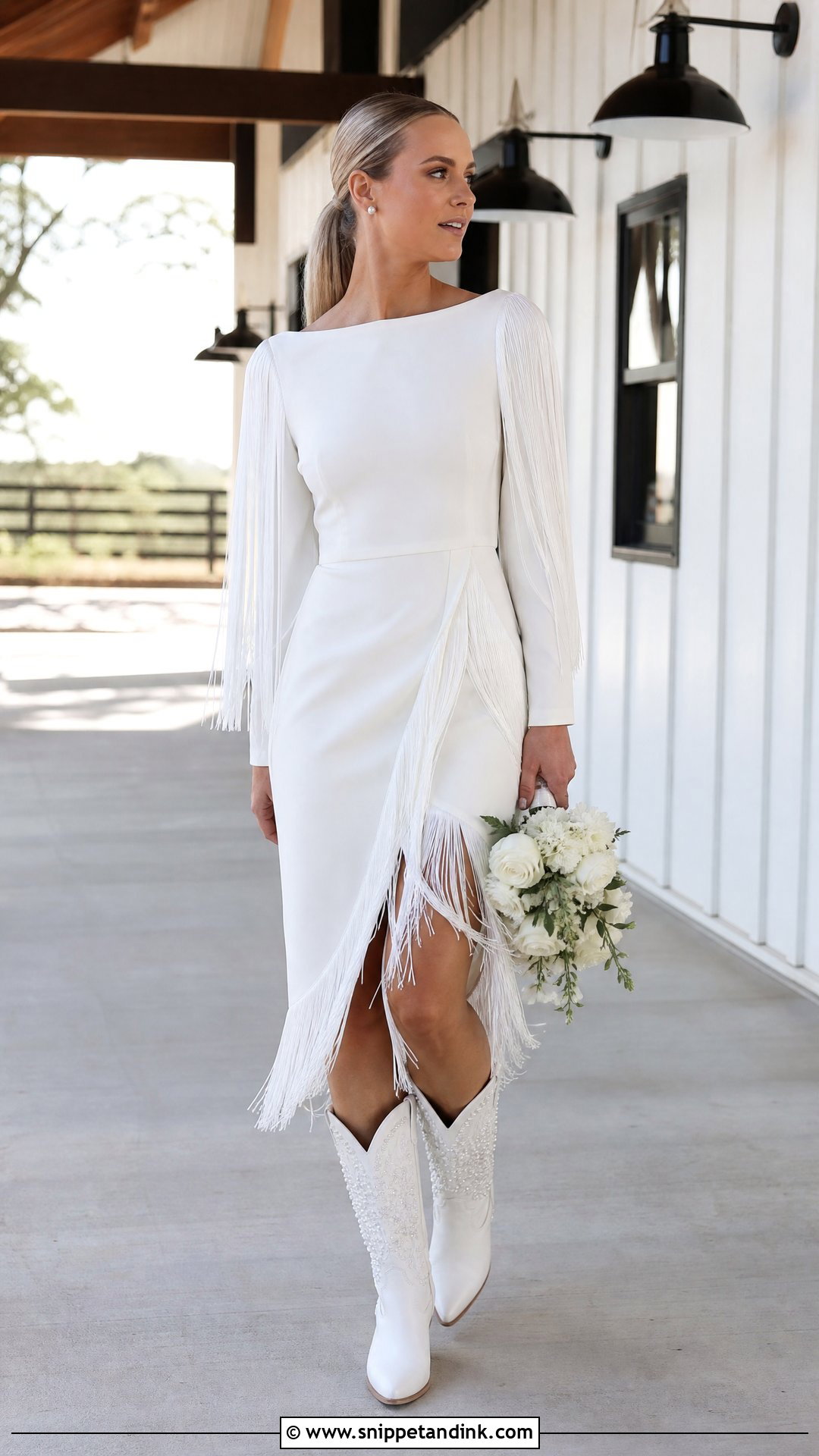
Fringe moves every time you do, which is wonderful in a first dance and exhausting all over a gown. I keep it to one zone: the sleeves, the back or the skirt edge. Ivory crepe or matte satin gives the fringe a clean background to swing against. White boots with tonal crystals, pearls or embroidery add sparkle at the other end of the body. After that, stop adding Western pieces; studs, a sleek ponytail and a simple bouquet are enough. Check the fringe length when seated, too. Long fringe at the hip can catch on chair backs and bench slats.
13. Floral Western Wedding Dress With Blush Cowboy Boots
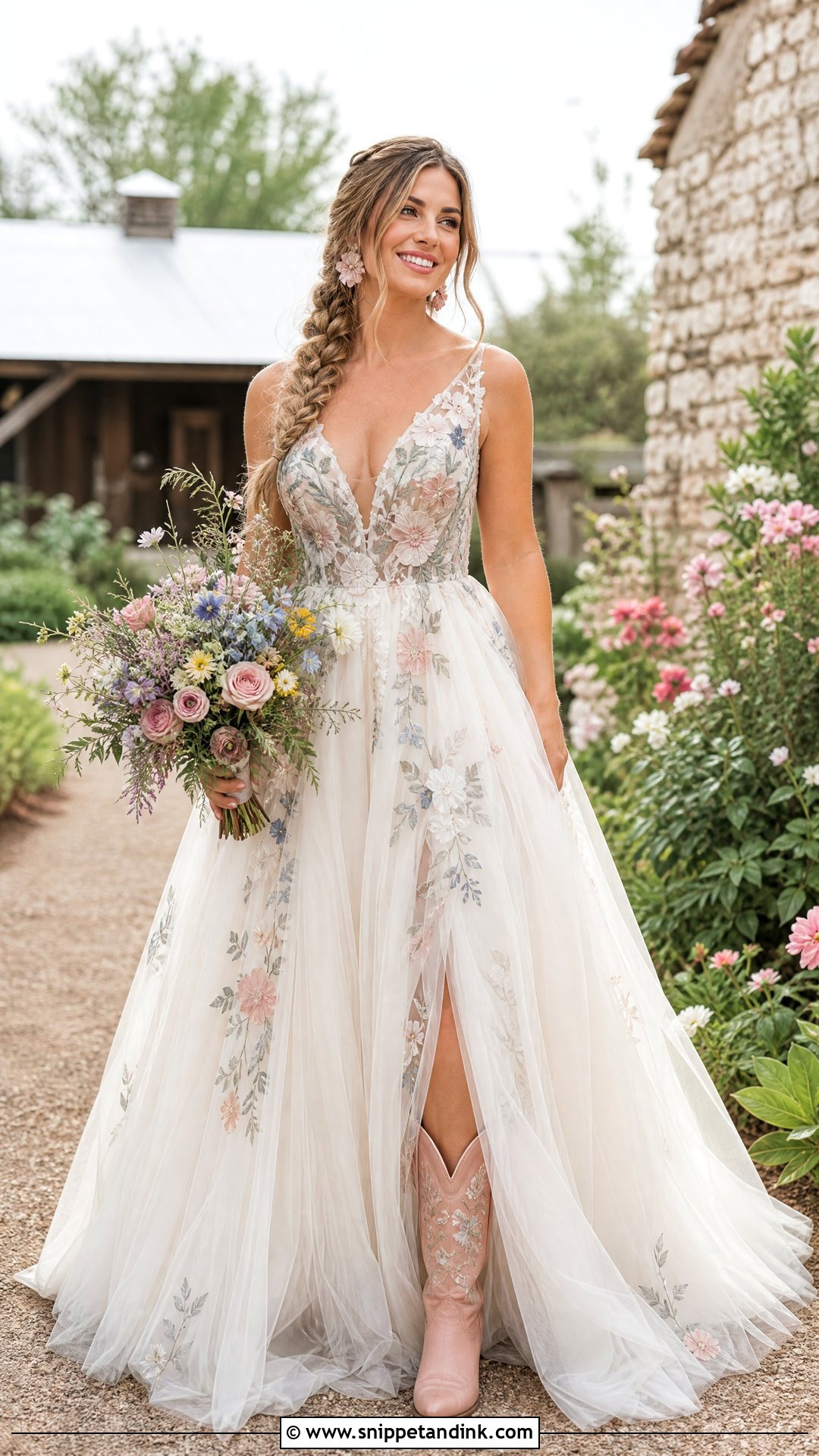
Colored floral embroidery gives you color without leaving ivory behind. Muted pink, blue, sage and cream are the shades I find easiest to build around; bright multicolor quickly looks busy next to boots. My favorite trick is to take blush boots that repeat one thread color from the embroidery, so the outfit reads as one idea from top to bottom. Bring a fabric swatch or a clear photo of the stitching when you shop for boots, because blush varies a lot between leathers. Add a loose braid, small floral earrings and flowers drawn from the dress, and skip the belt. It’s a spring and summer look.
14. Plus-Size Western Wedding Dress With Supportive Cowboy Boots
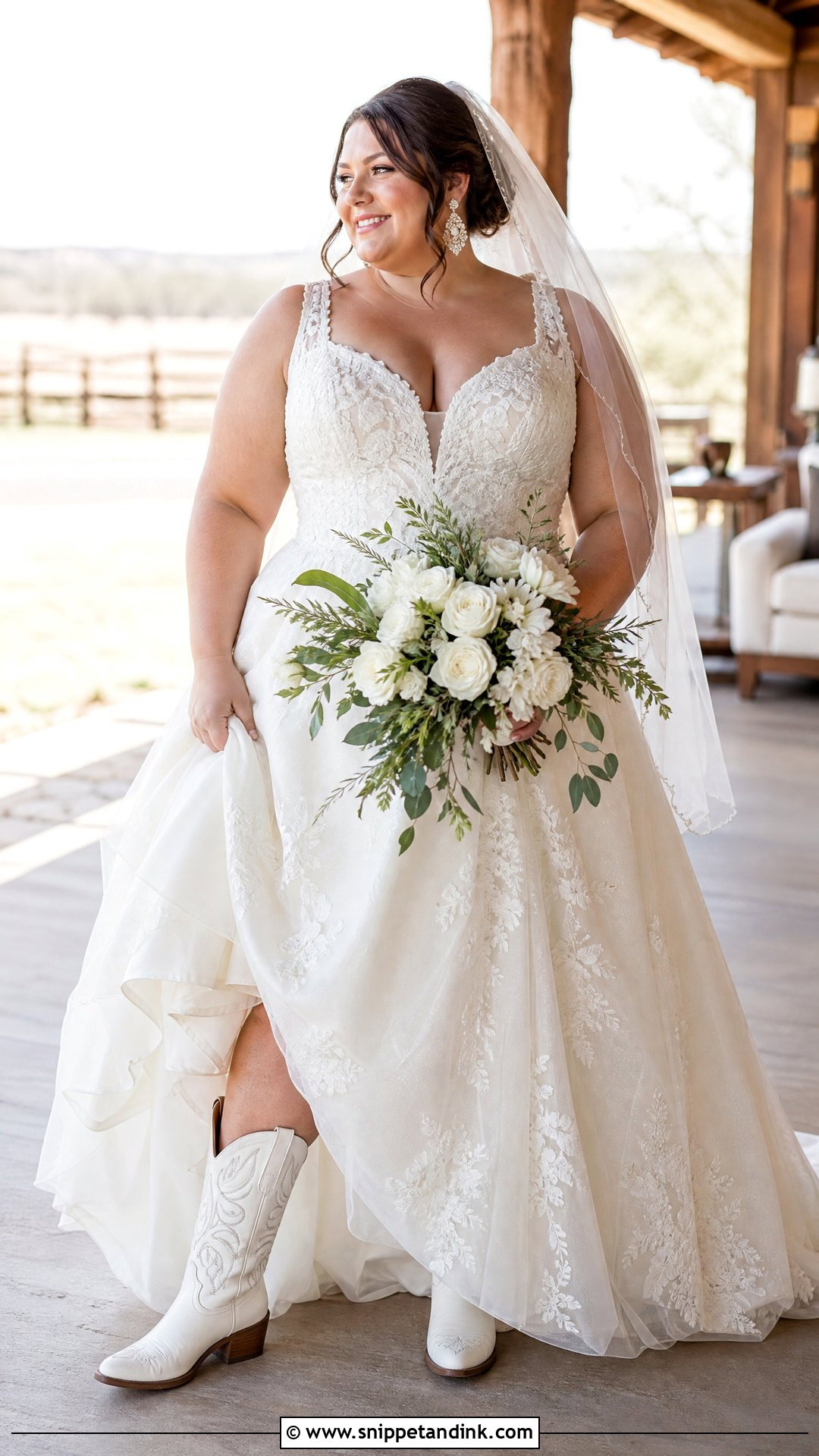
For plus-size brides, comfort and structure change how the whole day feels. I start with an A-line or empire-waist gown, supportive straps, a shaped bodice and light skirt layers, with soft lace panels and a V-neck for definition. Boots are where I see the most avoidable pain: order a wide-calf or extended-width fit, because a shaft that pinches at the calf pushes the skirt out and gets sore by the reception. A low stacked heel, a cushioned footbed and soft leather beat a narrow, rigid pair. Break them in for weeks, not days. Add a fingertip veil, statement earrings and a bouquet in proportion. Good tailoring and supportive underpinnings do the rest.


15. Modest Western Wedding Dress With Ivory Cowboy Boots
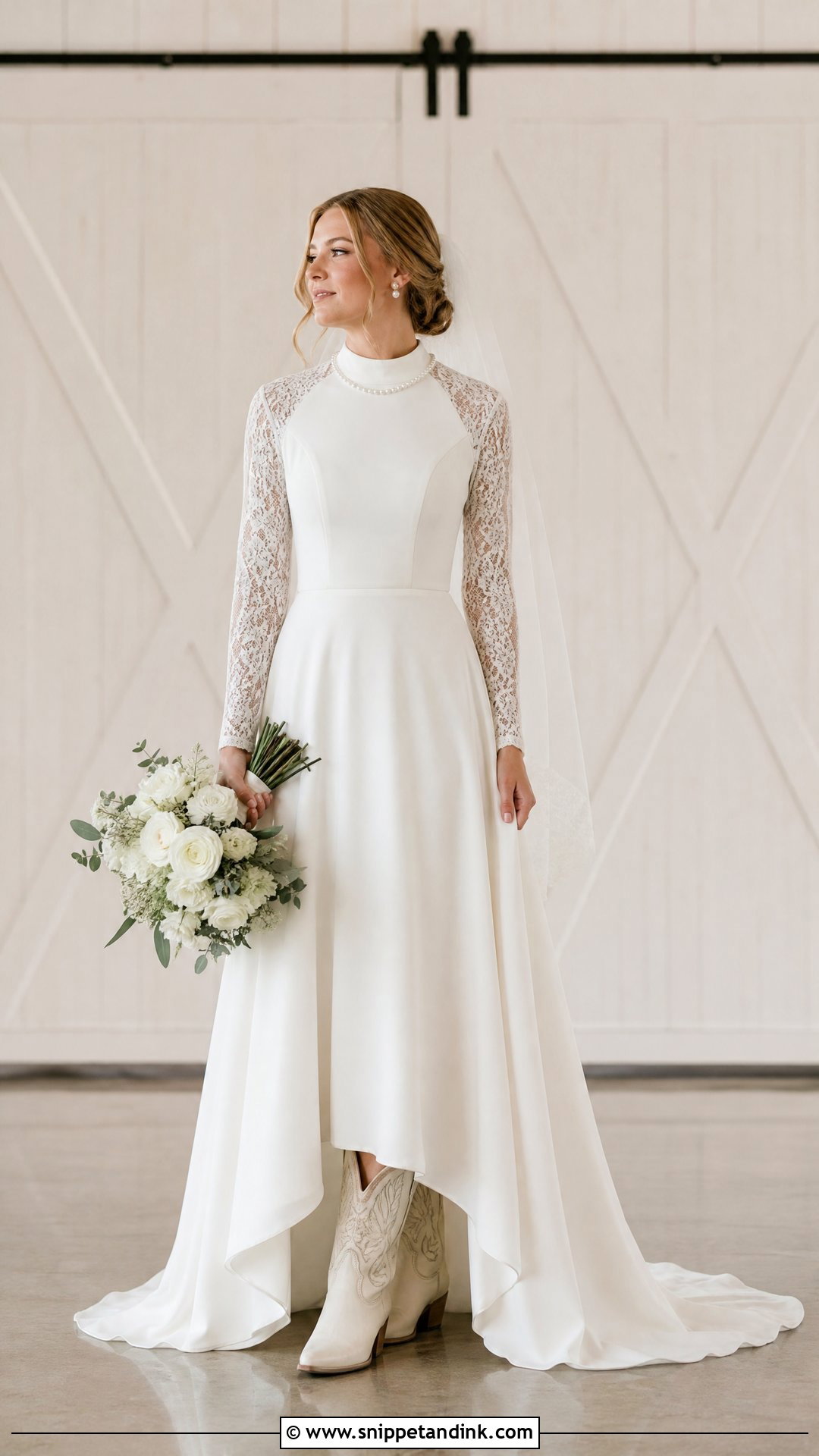
A modest gown with a higher neckline and long sleeves suits a Western setting very naturally. The thing to plan for is heat: more coverage means you need breathable lining and lighter fabric, or a summer ranch afternoon gets uncomfortable fast. I like lace sleeves with a crepe bodice, which keeps the dress clean rather than fussy. Ivory boots with tonal stitching and a low heel let the hem fall straight. A low bun, a simple veil and pearl or silver jewelry finish it, and a narrow embroidered belt adds shape if the waist needs it. It works year-round, indoors or out.
16. Winter Western Wedding Dress With Leather Cowboy Boots
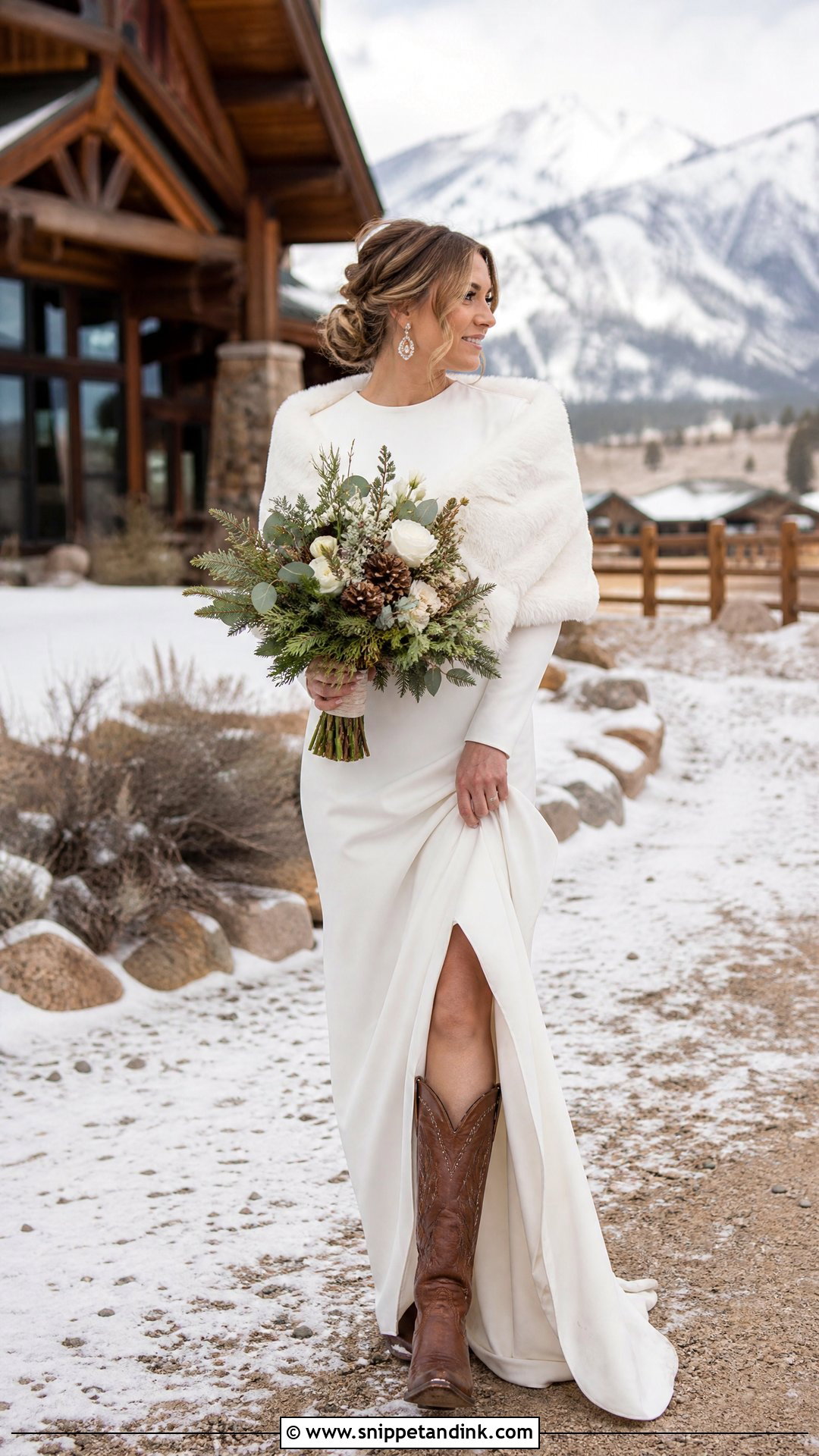
Winter is the season boots make the most sense, since your feet stay dry and warm on cold ground. I start with a long-sleeve crepe or lined lace gown and have thin thermal socks fitted into the boots at the dress fitting, because even a thin layer changes how the boot sits. For outdoor portraits, add a cropped faux-fur wrap, a wool cape or a suede jacket that stops near the waist; anything longer hides the dress shape. A soft updo holds better in wind than loose waves. Choose a shorter train if the ground is wet or snowy. Polished white or brown leather boots finish the look for a mountain lodge or snowy ranch.
17. Eyelet Western Wedding Dress With Ankle Cowboy Boots
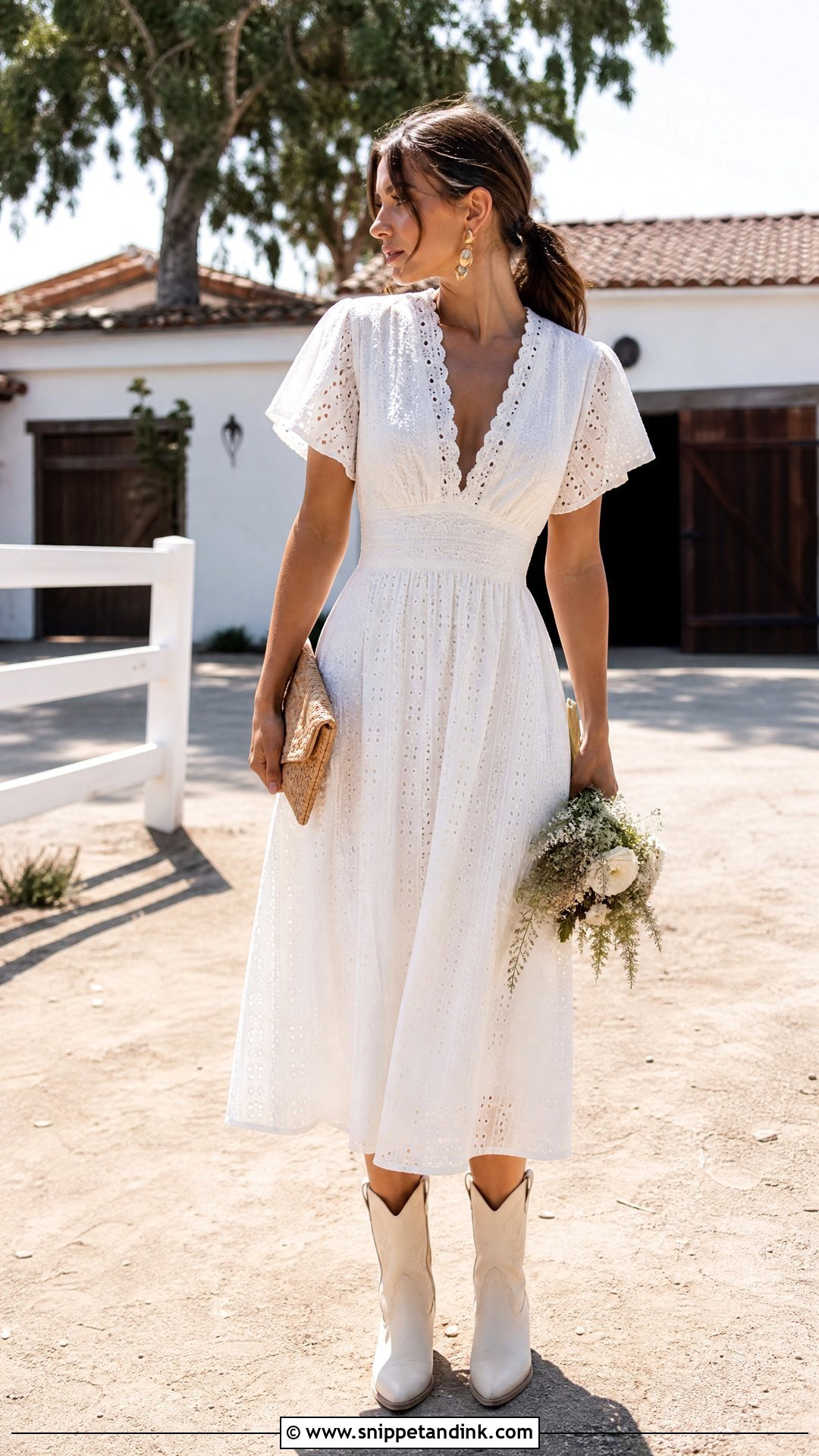
Eyelet is the coolest fabric on this list on a hot day. Cotton breathes, the cutwork lets air through, and it is far lighter than bridal lace. Have the skirt lined, though, because eyelet holes become see-through in direct sun. A midi length with puffed or flutter sleeves pairs well with cream or tan ankle-height cowboy boots, which keep the leg line lighter than tall shafts. A woven clutch, small gold earrings and a low ponytail keep it relaxed. Cotton wrinkles, so steam it on the morning and avoid long car rides in it. It’s built for summer elopements and backyard ceremonies.
18. Courthouse Western Wedding Dress With White Boots
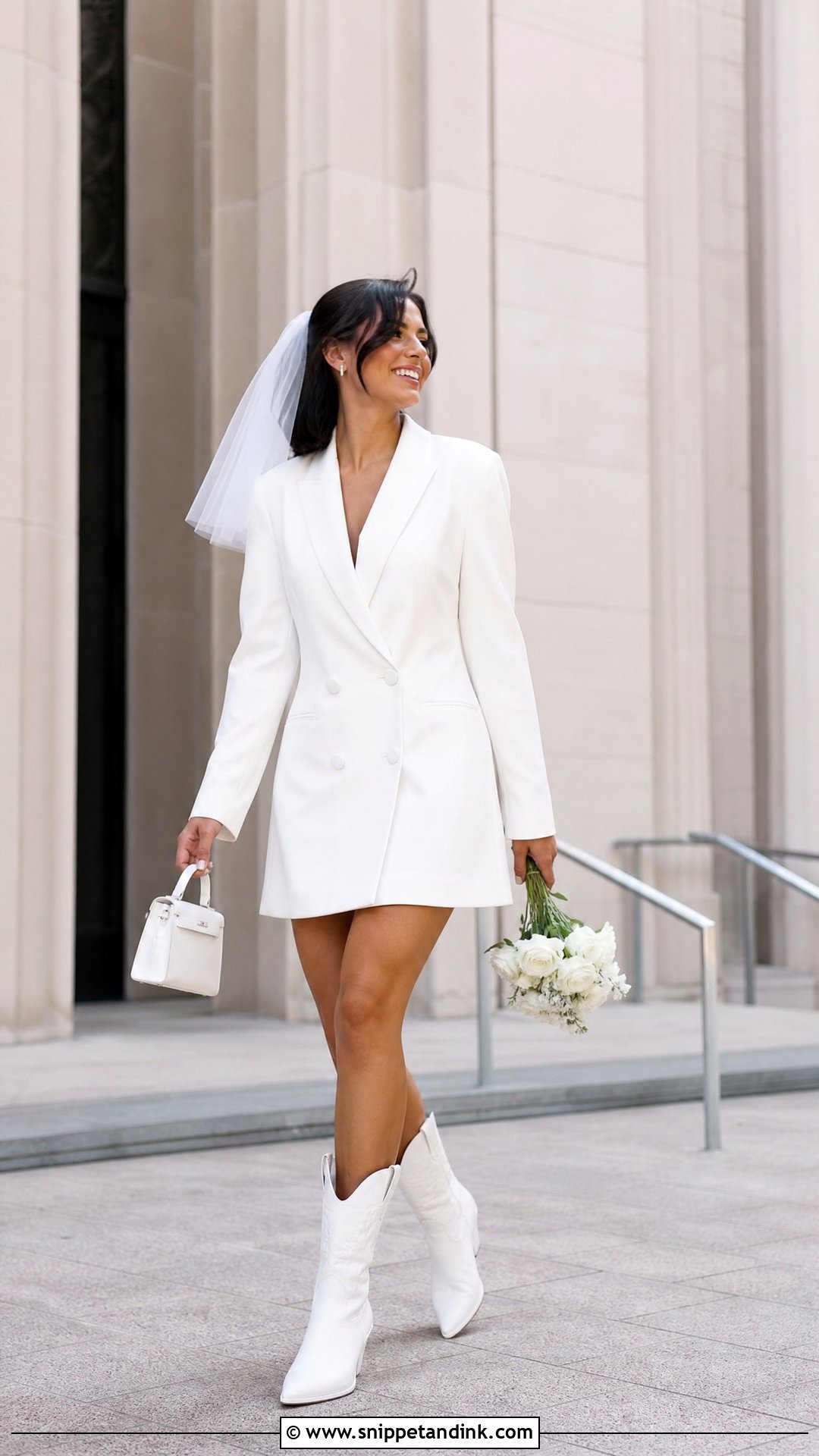
A courthouse wedding is the place for a sharp, tailored take on Western style. My choice is a white blazer dress with a secure wrap or double-breasted front and a hem long enough to sit on a courtroom bench without worry. Fitted shorts underneath solve any coverage concern. Sleek pointed white boots with a moderate heel keep the outfit monochrome. A structured mini bag, small hoops, a short veil, smooth hair and a few white stems are all it needs. The same outfit carries straight from the ceremony to lunch and a relaxed party, with no change required.
19. Maternity Western Wedding Dress With Low-Heel Boots
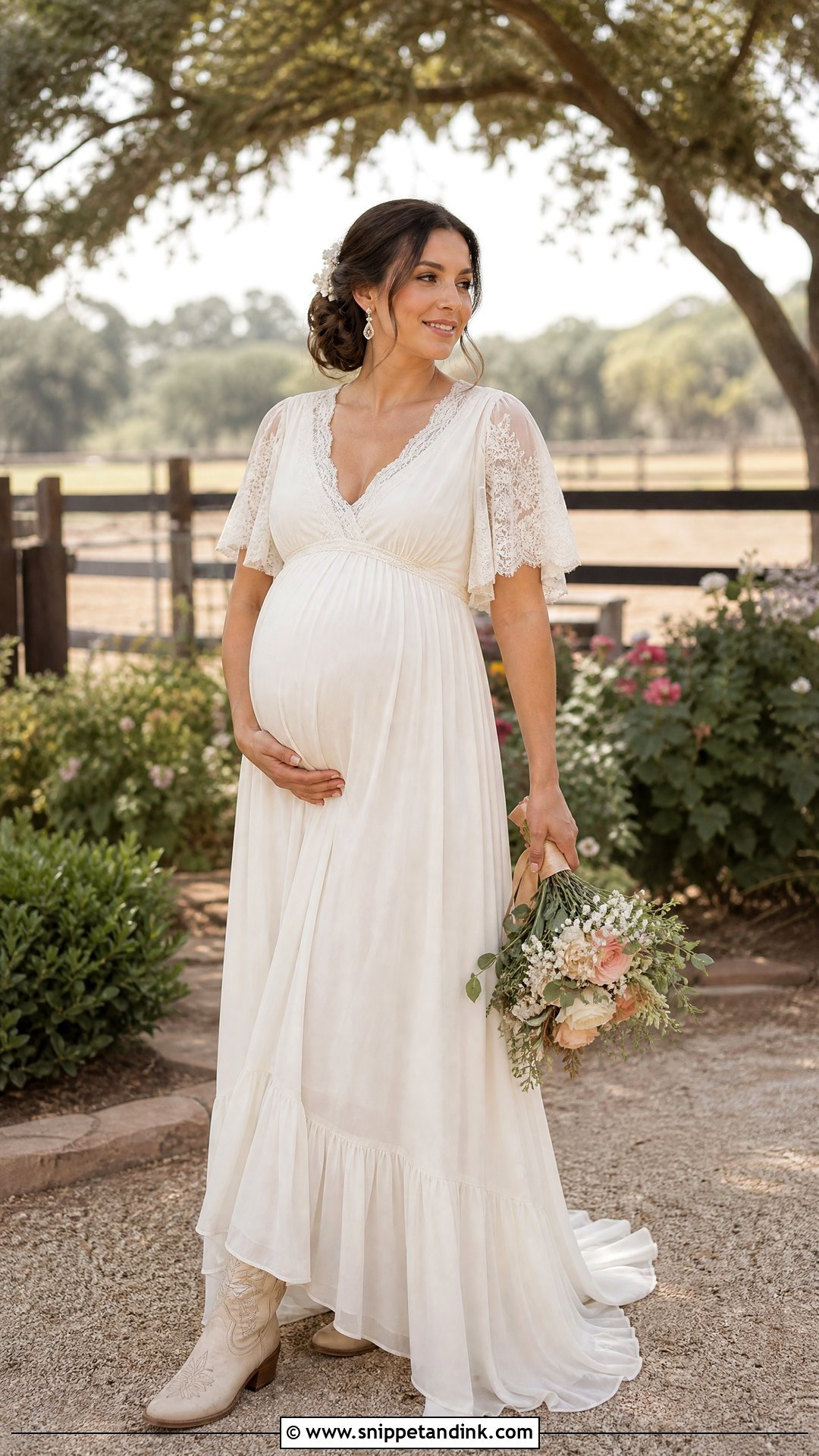
Maternity styling is about room and support, and the boots matter as much as the dress. Feet often swell later in pregnancy, so I tell brides to try boots on in the afternoon and to choose flexible shafts, roomy toe boxes and a low heel, ideally with pull tabs or a side zip so they can get them on without bending far. An empire-waist chiffon or stretch-lace gown sits above the bump and falls freely. A V-neck, flutter sleeves or lace straps keep the top light. Skip heavy trains and stiff waistbands. A floral hair piece, small earrings and a light bouquet finish an outfit that works in any trimester.
20. Sequin Western Reception Dress With Metallic Cowboy Boots
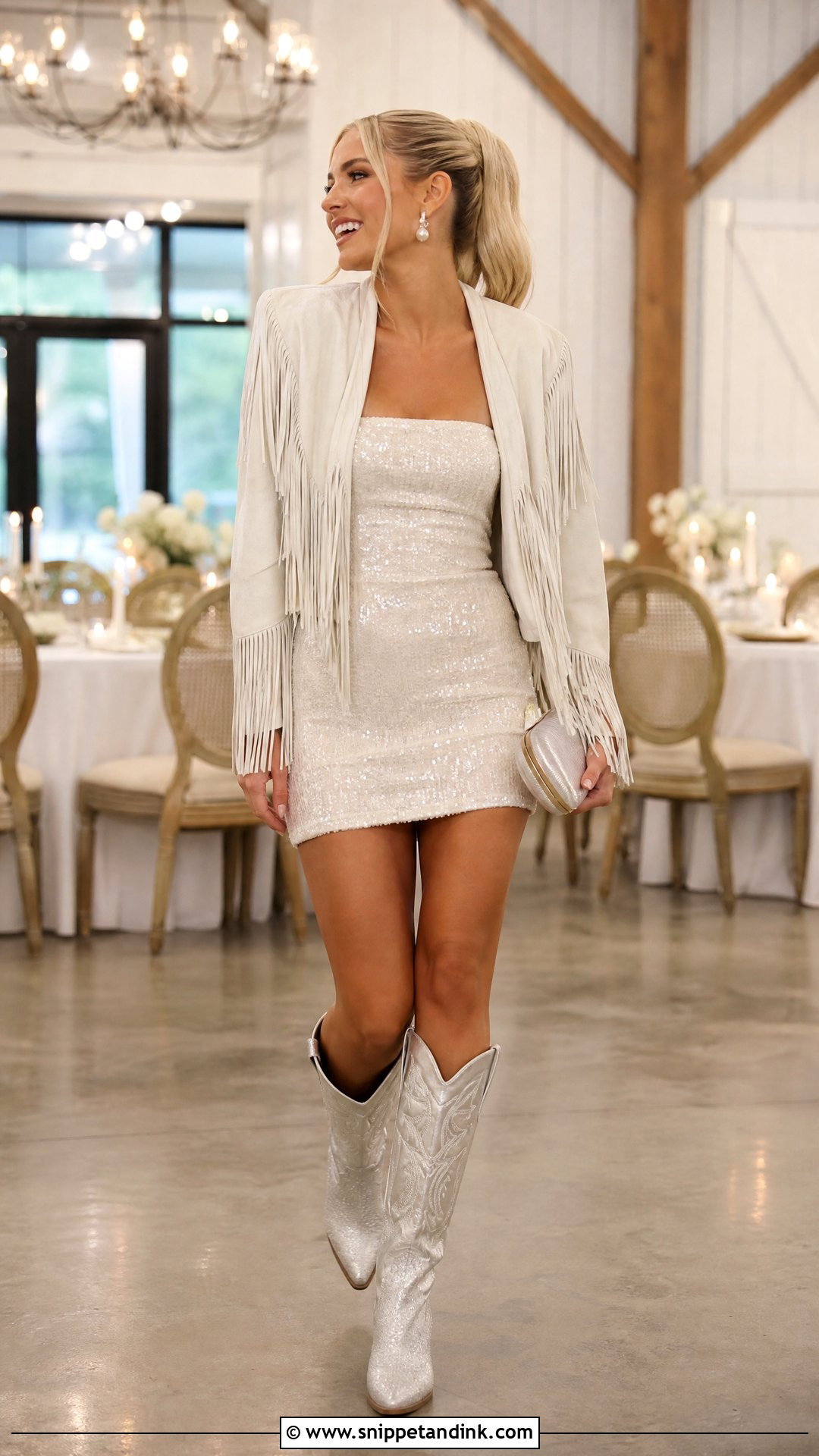
Sequins and metallic boots are a reception change, not a ceremony look, and that freedom is the fun of it. Choose a white or champagne sequin mini dress with full lining and some stretch; unlined sequins scratch the inner arms after an hour of dancing. Silver or pearlized boots should echo the dress, not outshine it, and they need a stable heel with smooth inner seams for a long night. A short fringe jacket adds movement for photos. Pull the hair into a high ponytail and swap the bouquet for a small clutch. It’s made for a lively barn party.
Getting New Boots Wedding-Ready Weeks Ahead
A stiff pair of cowboy boots straight out of the box will hurt by the first dance. Leather needs time to mold to your foot, so I ask brides to start wearing their wedding boots around the house about a month out, an hour or two at a time, with the same socks they plan to wear on the day.
Expect a little heel slip at first. In a well-fitted boot the heel lifts slightly when new and settles as the sole flexes; a boot that pinches across the widest part of the foot will not stretch enough to fix it. If the instep is tight, a cobbler can stretch it, but give them a week. Scuff the soles lightly on concrete or have rubber grip pads fitted, because new leather soles are slippery on polished barn floors and wet grass.
Red Dust, Wet Grass and a White Hem
Outdoor Western venues are hard on light fabric. By the reception, the bottom few inches of most ranch gowns have picked up some dust or grass stain, and I’d rather a bride expect that than panic over it. A few habits help:
- Treat white and pale leather boots with a water and stain protector a couple of days before, and let it dry fully.
- Pack a small kit: baby wipes for leather, a white chalk block for light marks on lace, and a lint-free cloth.
- Bustle the train before you walk to portraits in a field, not after.
- After the wedding, don’t scrub the hem yourself. Take the dress to a cleaner who handles bridal fabrics and point out the soiled edge.
- Stuff the boots with paper and let them dry away from heat if they got wet, then condition the leather before storing them.
One Good Pair of Boots and One Western Detail
Every outfit here works because the boots were planned with the dress, not added afterward. Think about the ground you’ll stand on, the weather, the hem length and how far you’ll walk before you decide on height and leather. Wear your boots to every fitting so the hem is set to them. And resist adding every Western accessory at once: one good pair of boots, one deliberate detail and well-chosen jewelry are usually plenty. Done that way, the look feels comfortable all day and still unmistakably bridal.
You'll Like These Ideas:




Leave a Reply