
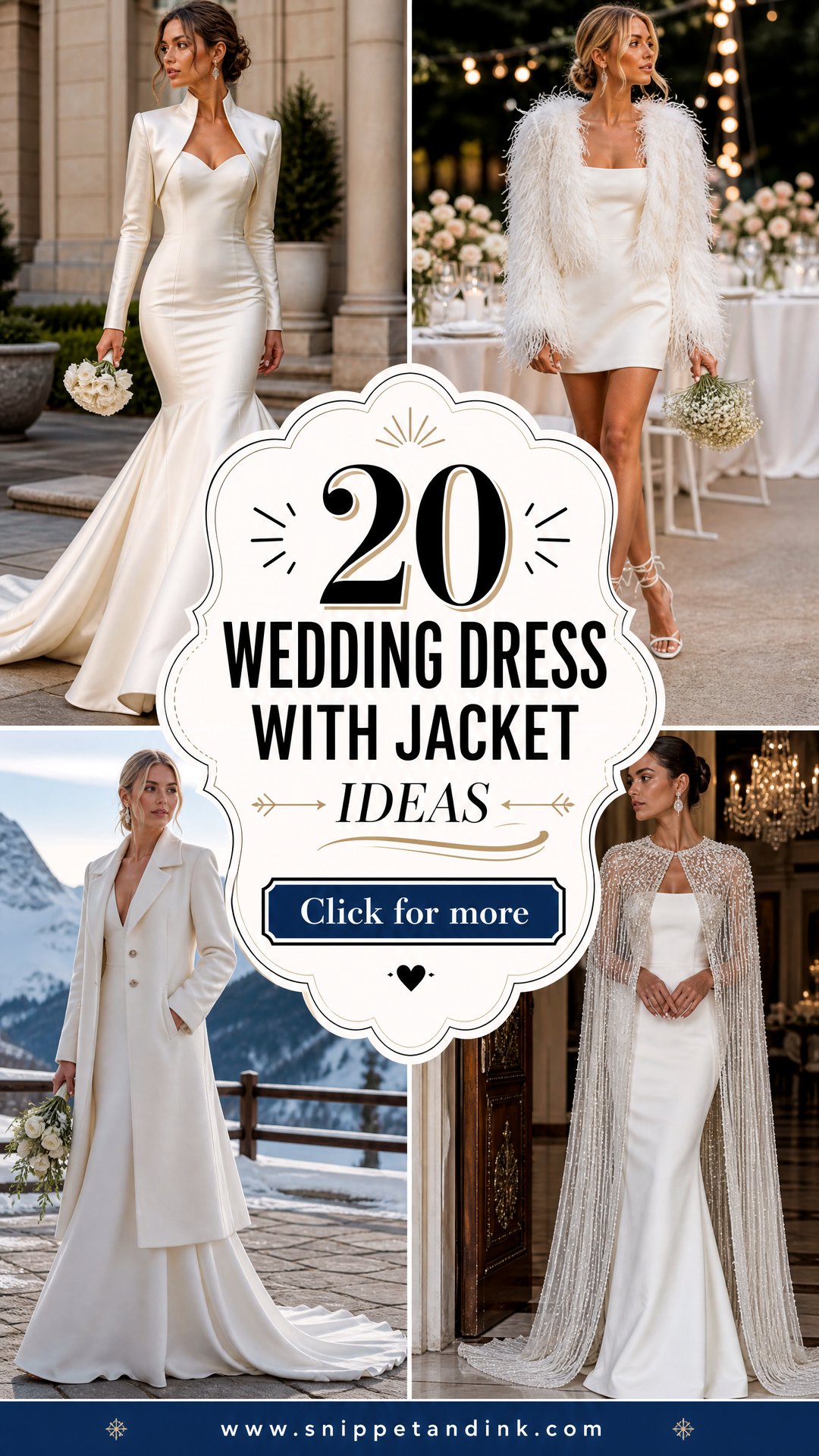
A bridal jacket changes a gown more than any other accessory, because it sits right over the neckline and waist, the two places people look first. Get the length or the white wrong and the dress looks shorter, wider or dingier than it is. Get it right and you have warmth for a cold arrival, coverage for a religious ceremony and a second look for the party. I’ve grouped twenty pairings below, from lace boleros and tulle toppers to blazers, denim, leather and faux fur, with the fitting checks I use for each.
Does the Jacket’s White Agree With the Dress?
Bridal whites are not one colour. Gowns come in bright white, natural or diamond white, ivory and champagne, and two shops can call the same shade by different names. A jacket bought separately is the most common source of a clash I see, because it’s chosen from a photo and arrives a shade cooler or warmer than the gown.
Ask your bridal shop for a fabric swatch, or a photo of the inside hem under daylight, and take it with you when shopping for the jacket. Compare them by a window, not under shop spotlights. Sheen matters as much as colour: matte crepe beside high-shine satin can make the whiter one look grey.
If they don’t agree, go deliberately different instead. A camel coat, a pale blue denim or a cream knit reads as a choice. An off-white that almost matches reads as an error.
1. Lace Bolero With Strapless Wedding Dress
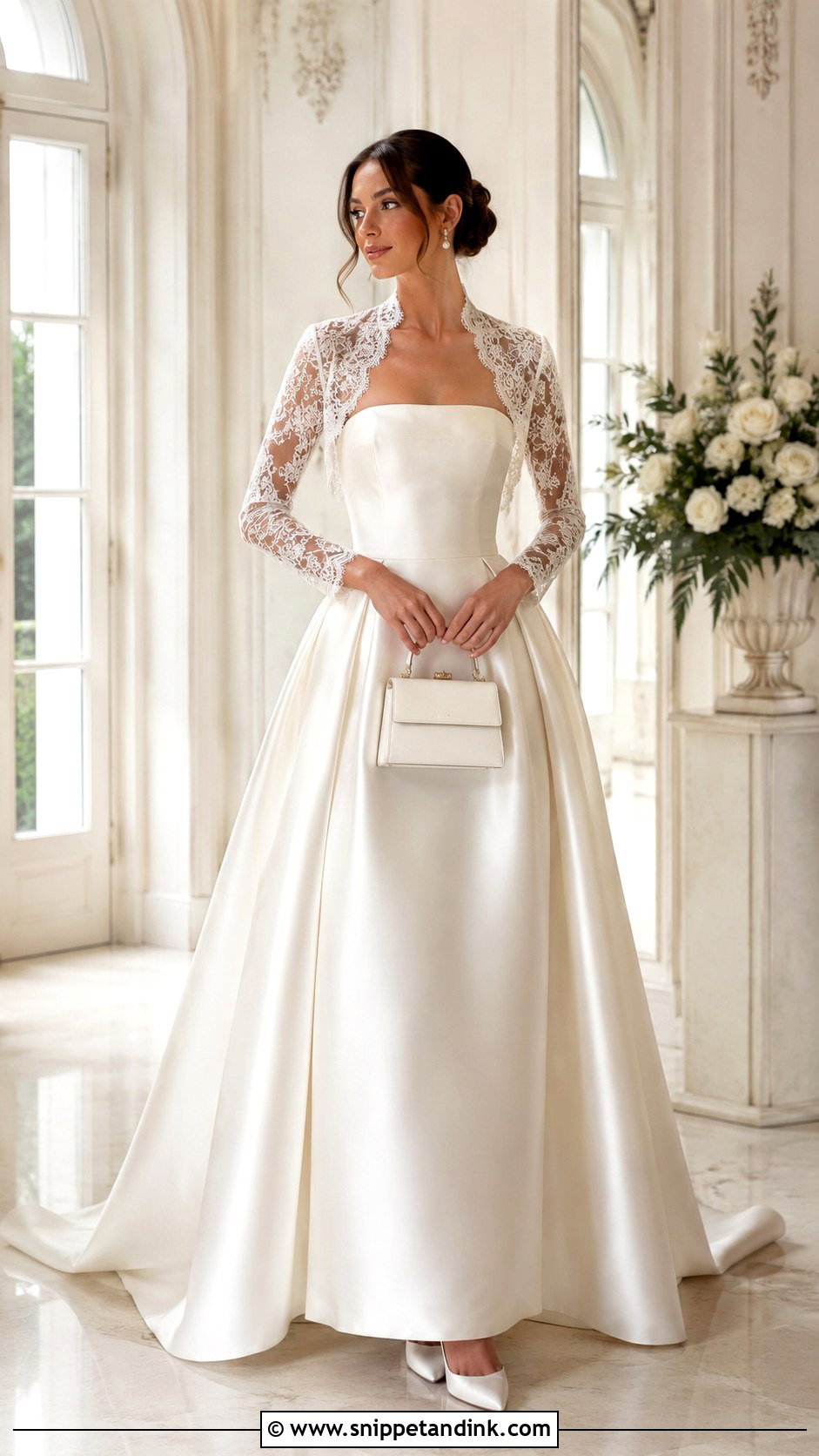
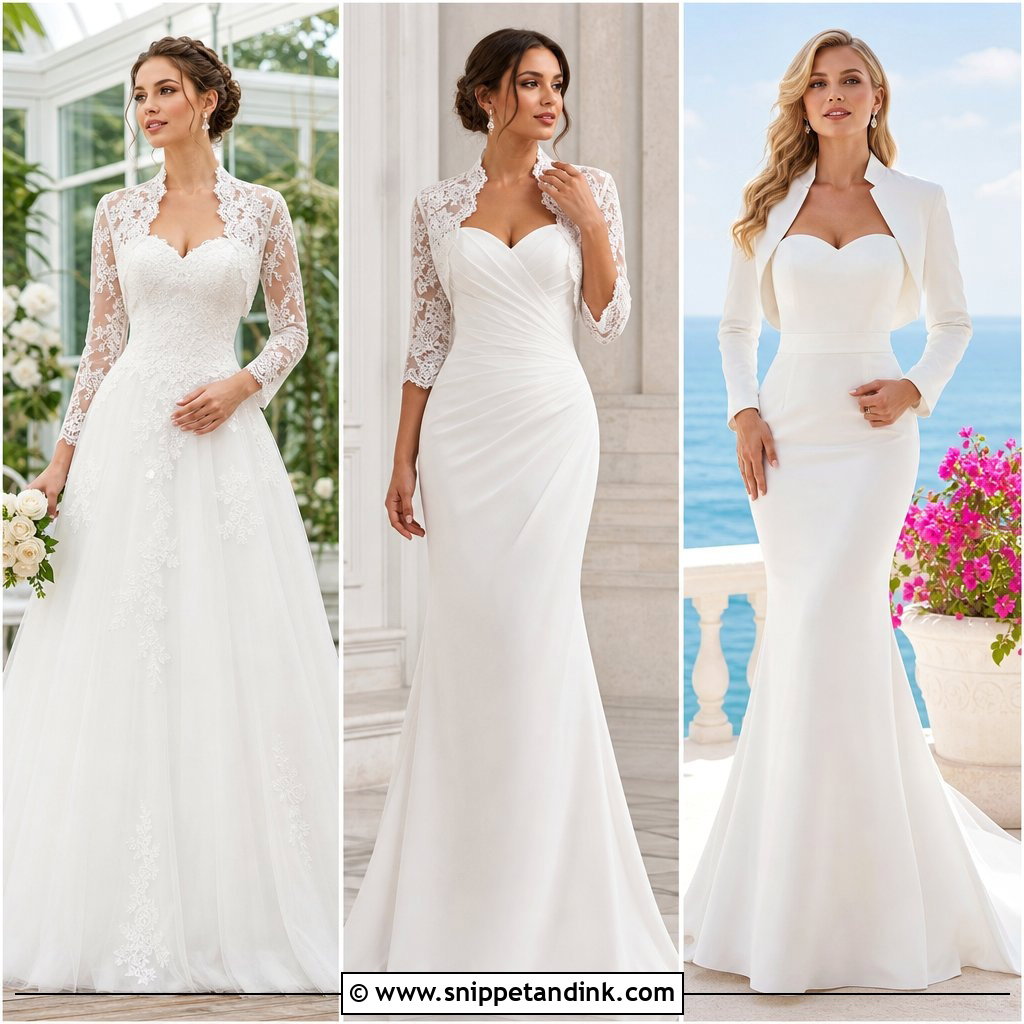
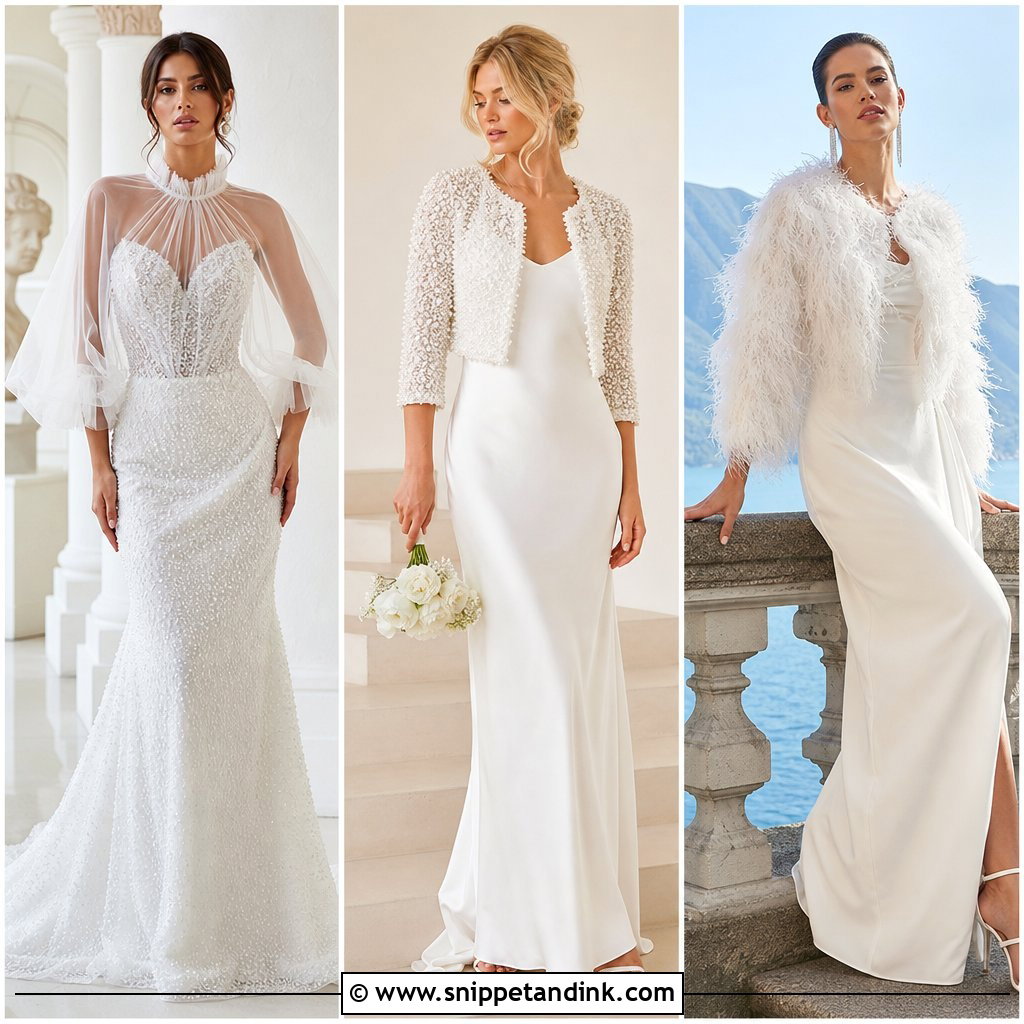
Strapless gowns are where I use a lace bolero most, usually for a church ceremony before the shoulders come out at the reception. Keep it cropped to the natural waist over an A-line or ball gown. The lace has to either match the gown’s lace exactly or be clearly different; a near-match looks like a mistake. Floral lace sits well over plain satin, cleaner geometric lace over modern crepe. Wear your hair low so the bolero collar isn’t crowded.
2. Faux Fur Jacket With Ball Gown Wedding Dress
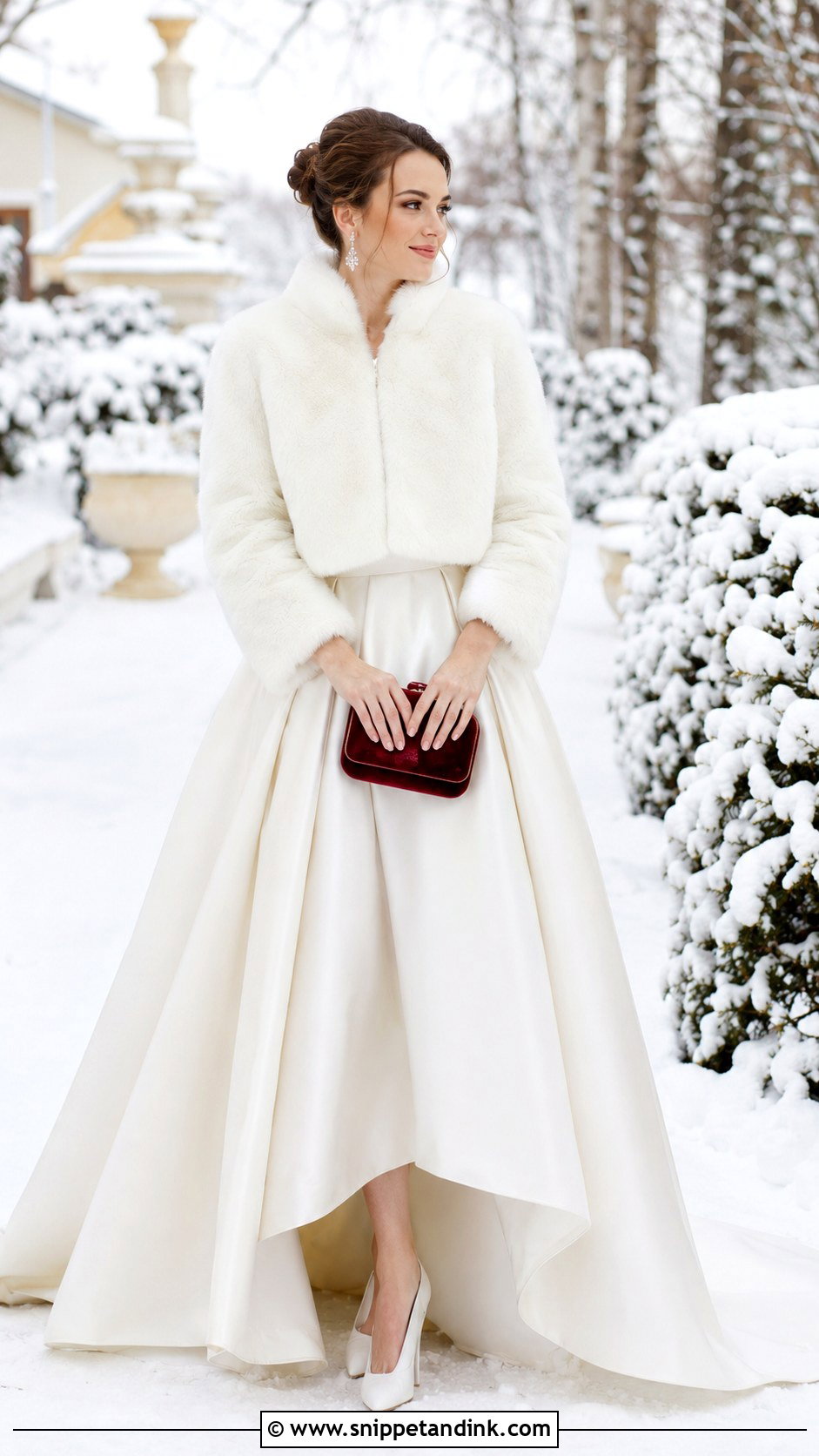
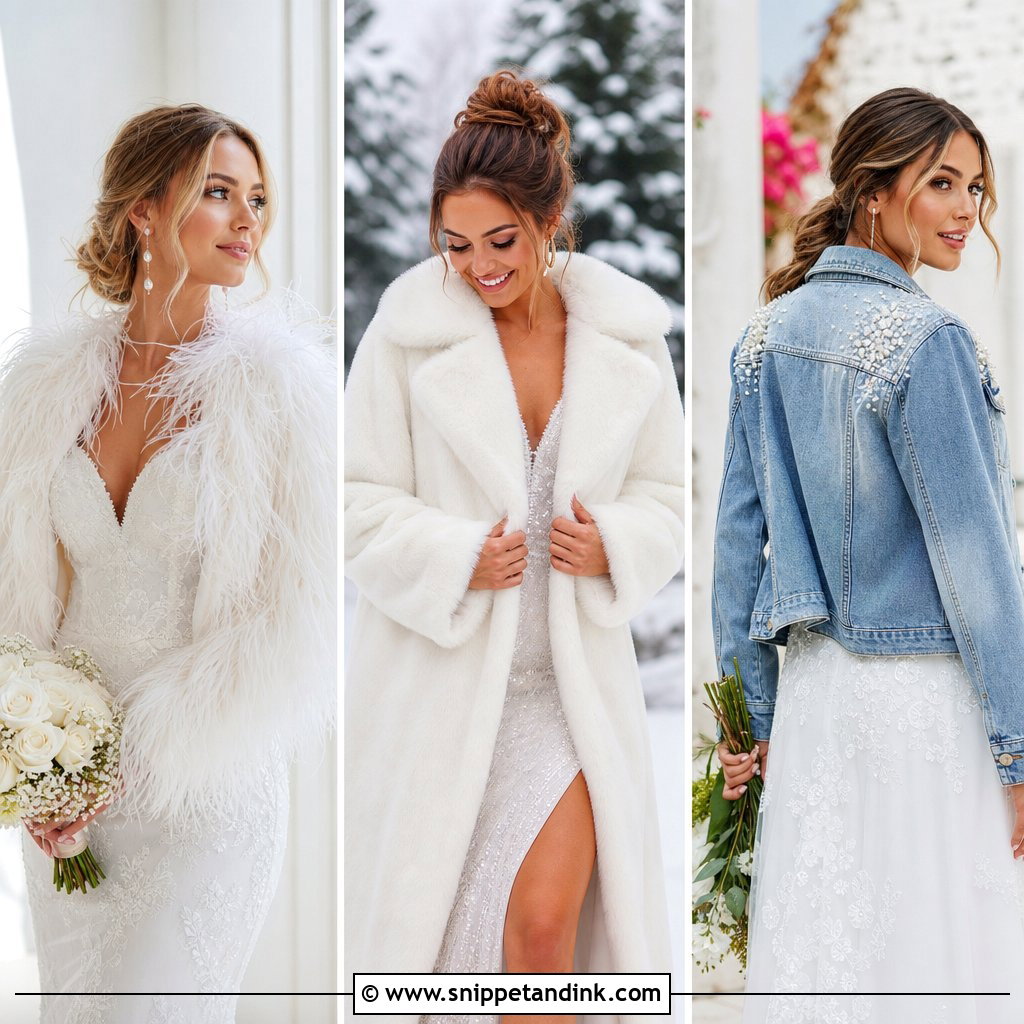
Faux fur over a ball gown is the winter outfit brides ask for by name, and the length is what makes or breaks it. The jacket has to stop above the narrowest point of your waist. Any longer and the fur merges with the skirt into one big shape. I pair it with smooth satin rather than tulle, because fur sheds onto tulle and you’ll be picking fibres off it in photos. Choose a fitted shoulder, not an oversized coat, and lint-roll the inside before you put it on.
3. Cropped Blazer With Slip Wedding Dress
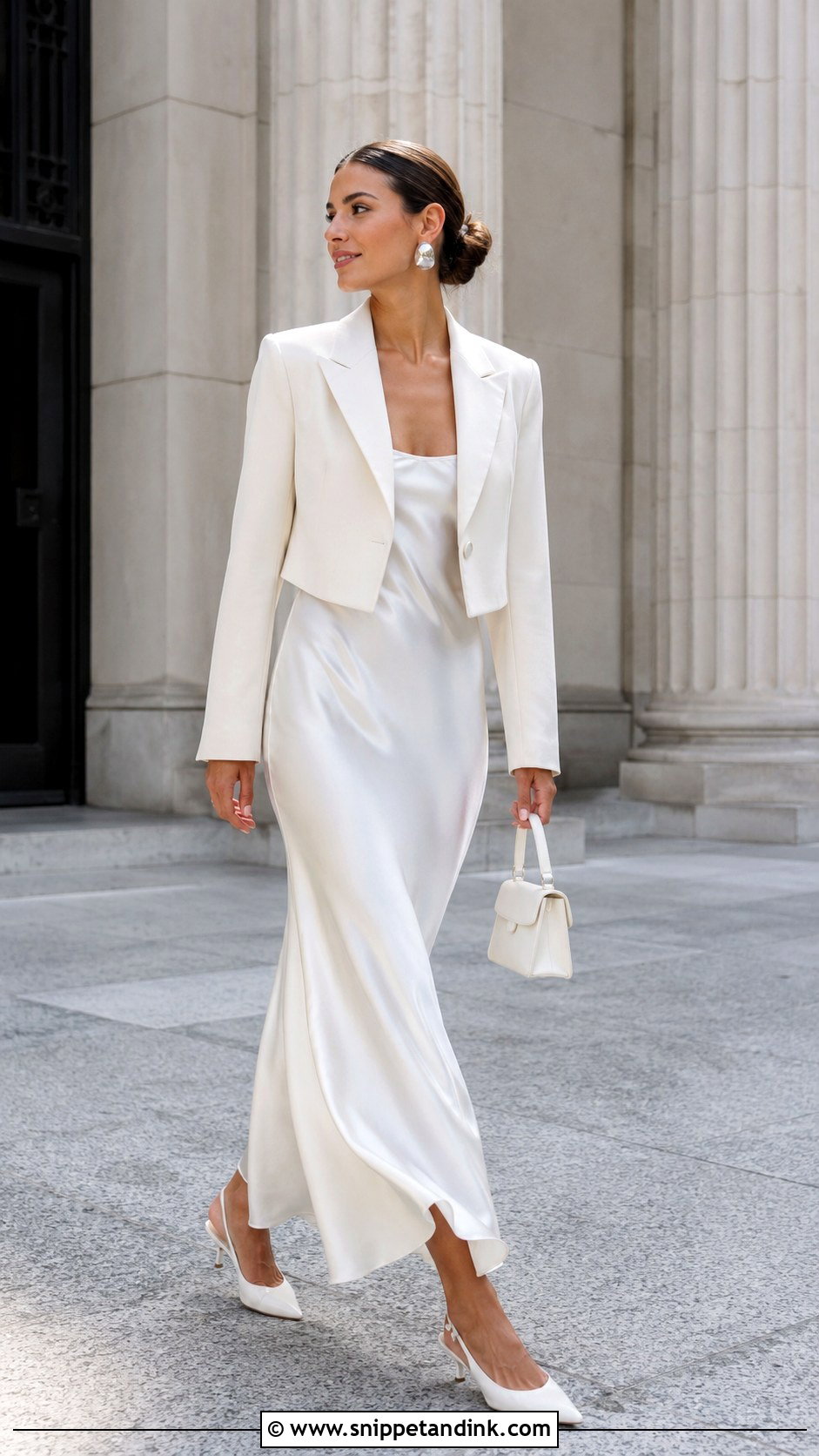
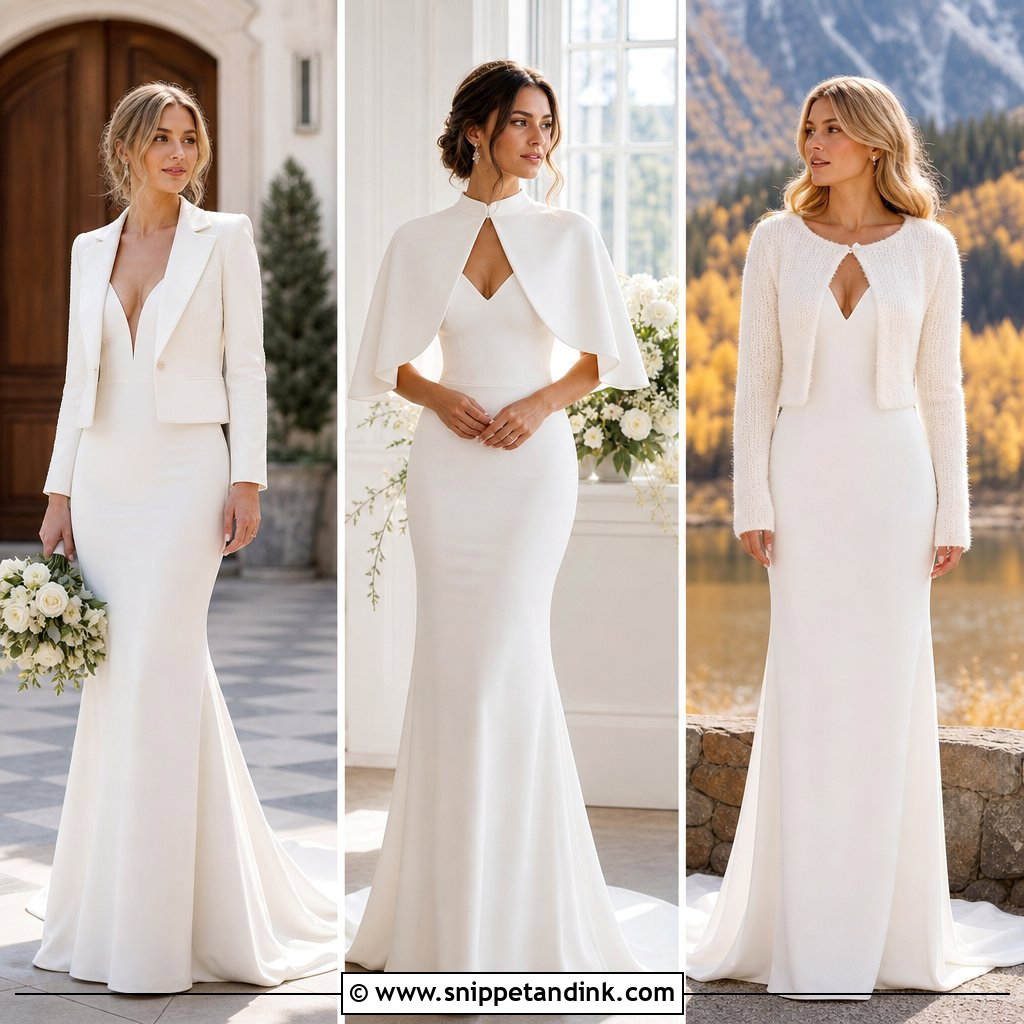
Slip dresses are simple to the point of looking unfinished in a cold registry office, and a cropped bridal blazer fixes that instantly. I look for defined shoulders, a shaped waist and crepe that won’t drag on satin. A single-button version reads sharp; collarless is softer. The detail tailors forget is cuff length. A bridal blazer should finish at the wrist bone, so your rings and bouquet hand stay visible, rather than the off-the-rack length that covers half the hand.
4. Pearl Denim Jacket With A-Line Wedding Dress
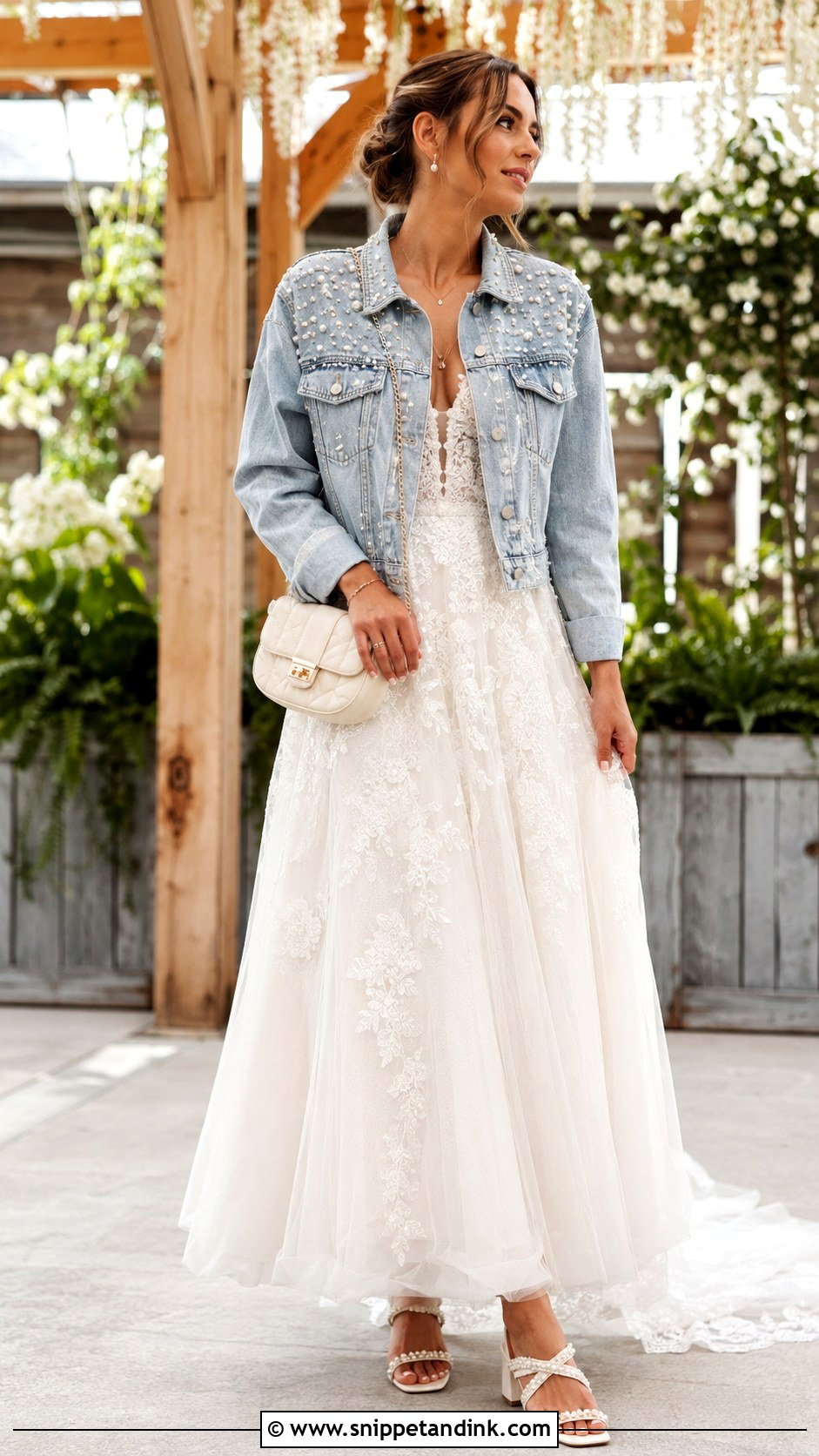
Denim with pearls is a reception or garden-venue jacket, not a church one, and it’s honest about that. Pick white, pale blue or faded denim with small pearls rather than dense rows, which make the jacket stiff and heavy. A chiffon or lace A-line gown underneath keeps it bridal. Denim can bleed dye, so I avoid raw indigo over an ivory gown entirely; wash a new jacket twice before the wedding. Back embroidery is fun, but keep it small if you want to wear the jacket again.
5. White Leather Jacket With Tulle Wedding Dress
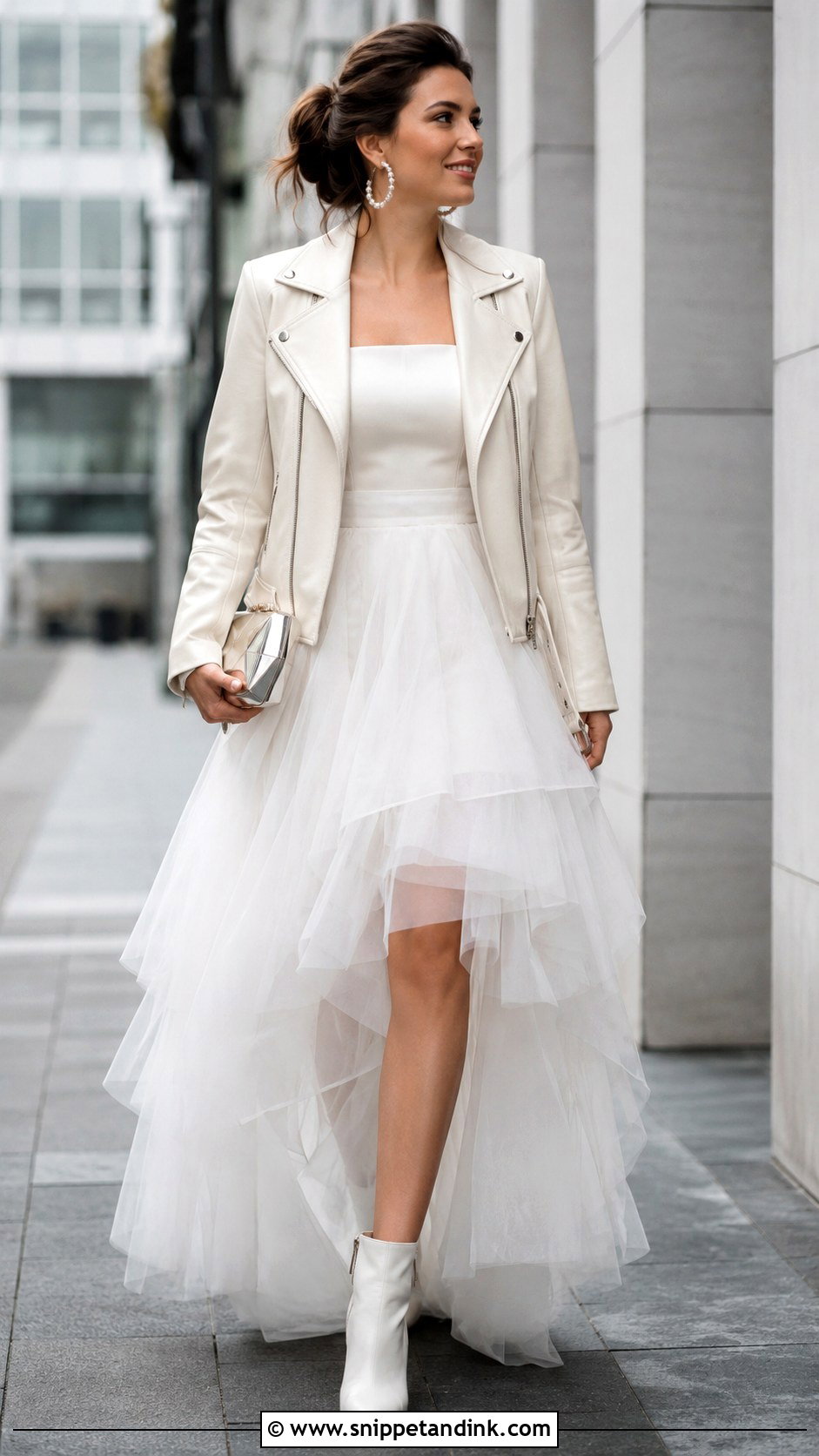
Leather over tulle works because the two fabrics argue: one stiff and close, the other floating. The jacket should be fitted and end at the waist so the skirt has room to puff out underneath. Collarless leather softens the look more than a classic moto cut. Watch the hardware. Gold zips on an ivory jacket pull attention away from the gown, so I look for silver, pearl or tonal zips. Real leather doesn’t breathe, so plan to take it off before the dancing starts.
6. Satin Bolero With Mermaid Wedding Dress
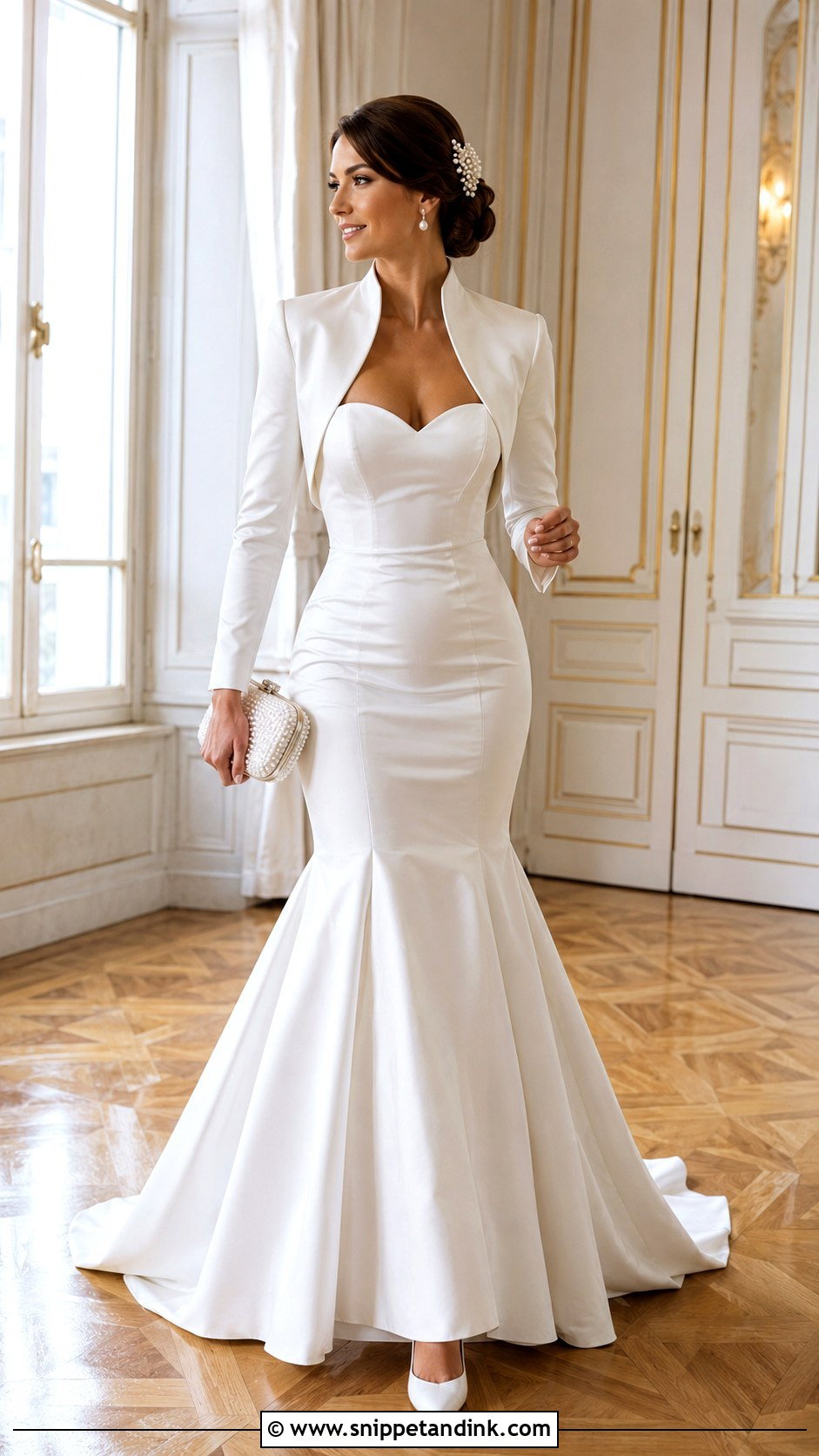
Mermaid gowns live or die on an unbroken line from shoulder to knee, which is why a satin bolero must be tailored very close. Match the sheen and undertone of the gown; a duchess satin bolero on a crepe-backed satin dress looks like two different whites. Keep it short, meeting the gown at the natural waist, with three-quarter sleeves and clean seams. Skip embellishment entirely. Any loose fabric at the back will bunch when you sit.
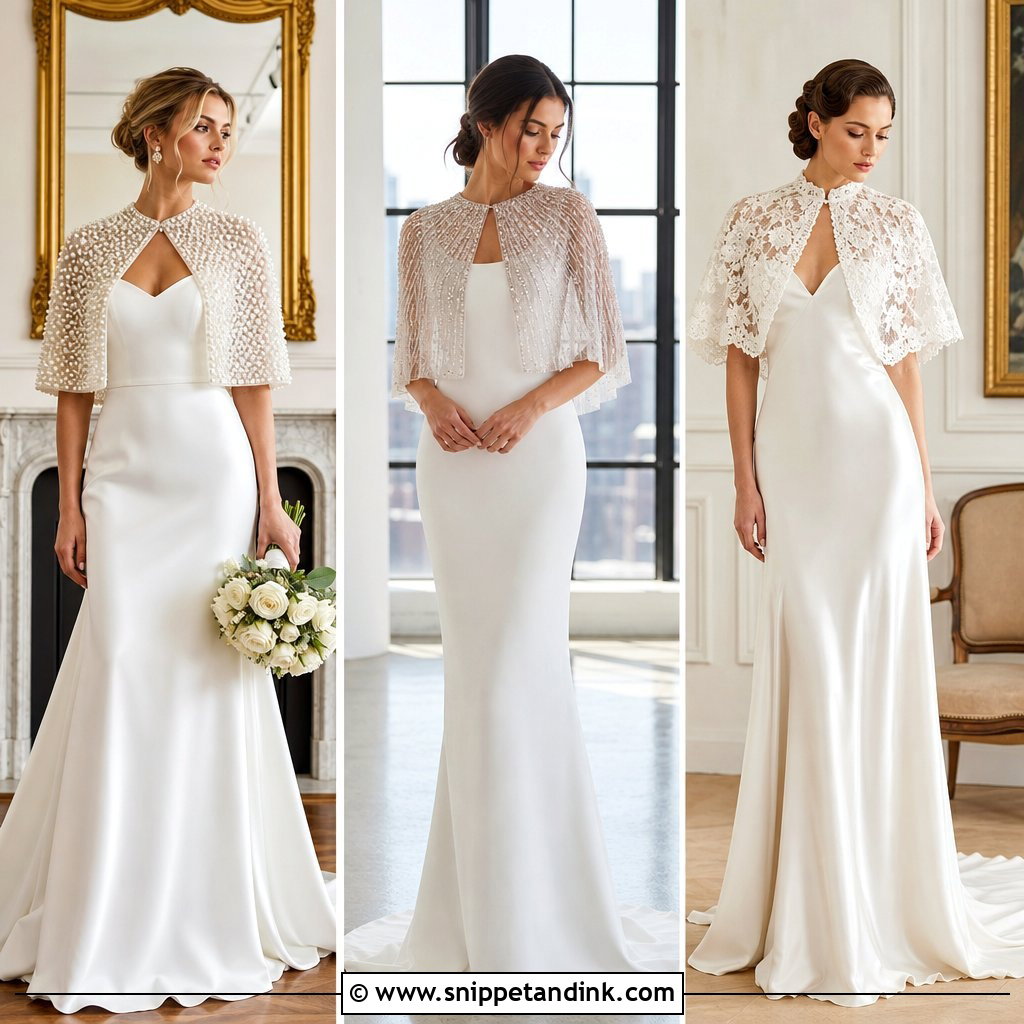
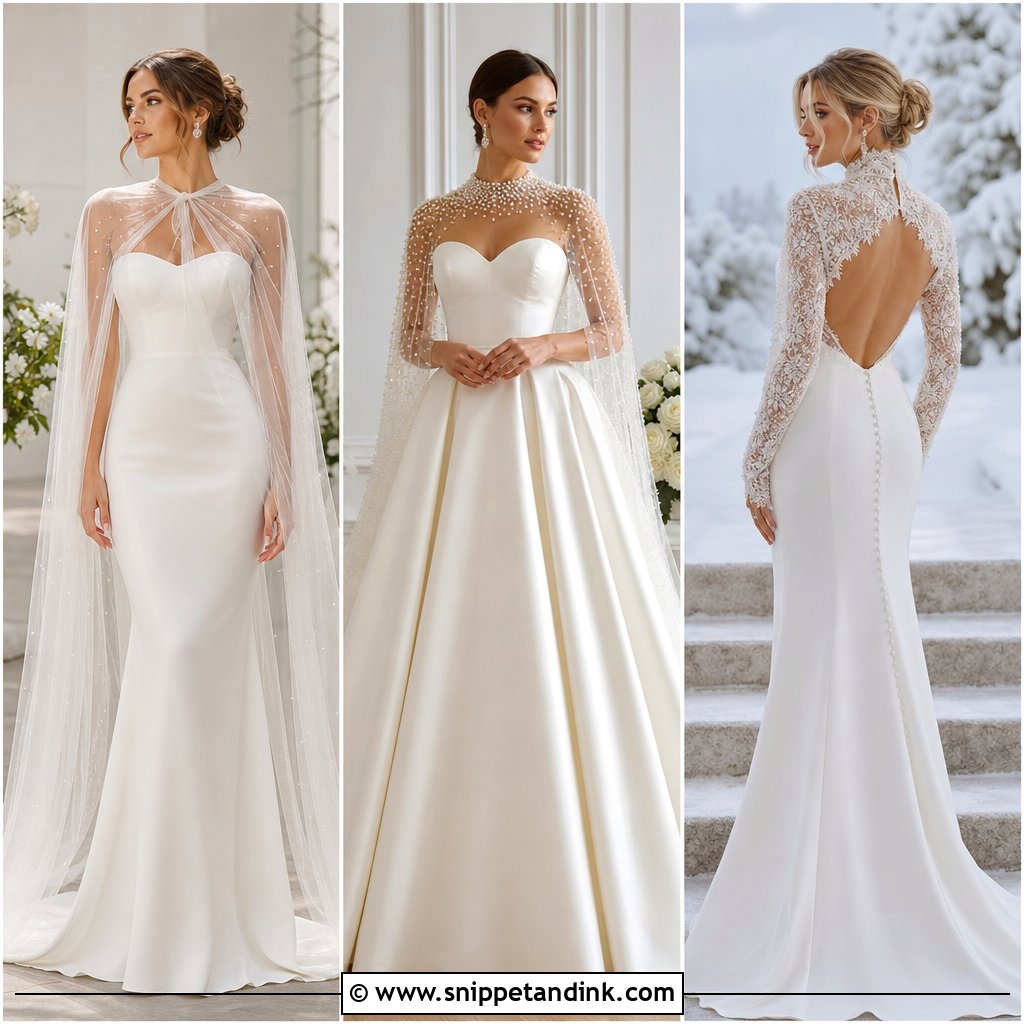
7. Sheer Tulle Jacket With Column Wedding Dress
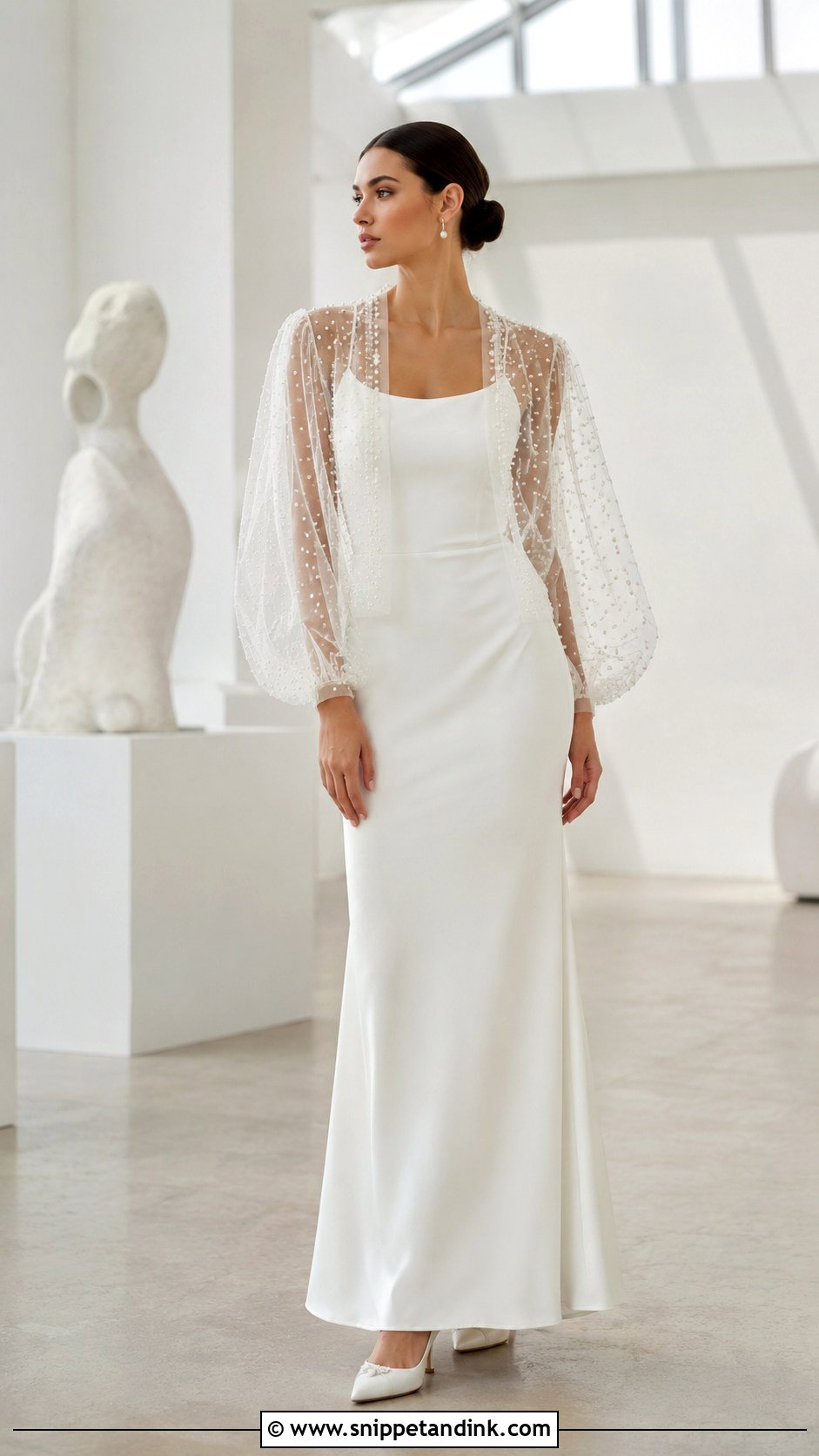
Tulle toppers suit column dresses because they add movement without changing the shape underneath. Choose fitted sleeves and either a high neck or tiny covered buttons. Plain tulle over plain crepe is the cleanest; a scatter of pearls adds a little light. I’m cautious with a long veil here, since veil tulle and jacket tulle together can look like too many sheer layers. Tulle snags on rings and bracelet clasps, so do a full arm-movement test wearing your jewellery.
8. Feather Jacket With Mini Wedding Dress
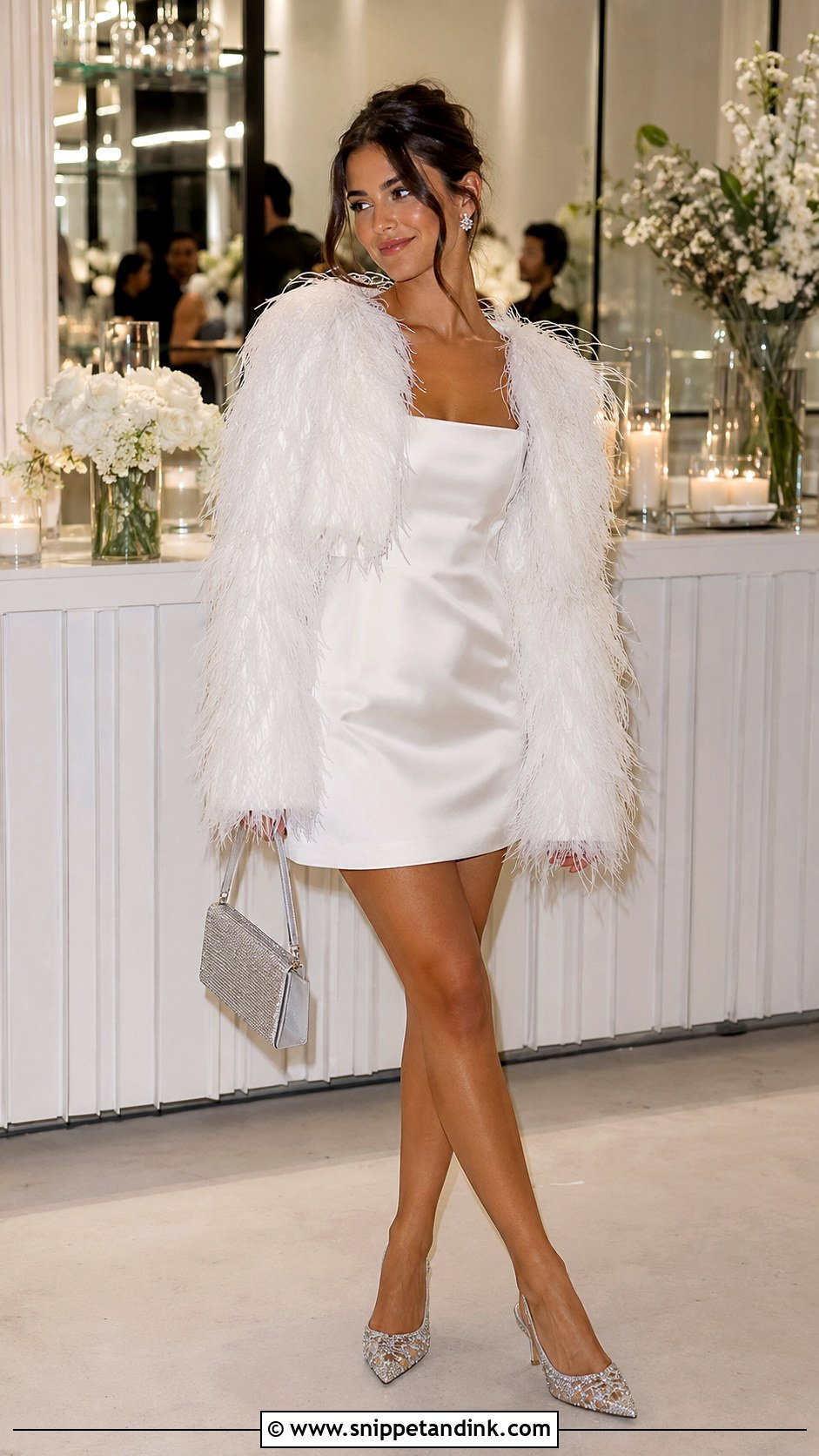
A feather jacket over a mini dress is pure party: courthouse ceremony, then straight to dinner. Keep it cropped and narrow; full feather coverage over a busy dress turns into a costume. The best base is a plain shift or tailored sheath. Feathers shed and flatten in the rain, and they collect lipstick if you hug a lot of people, so a version with feathered cuffs only is the quieter, more practical choice. A sleek ponytail or bob keeps the feathers away from your face.
9. Cashmere Jacket With Chiffon Wedding Dress
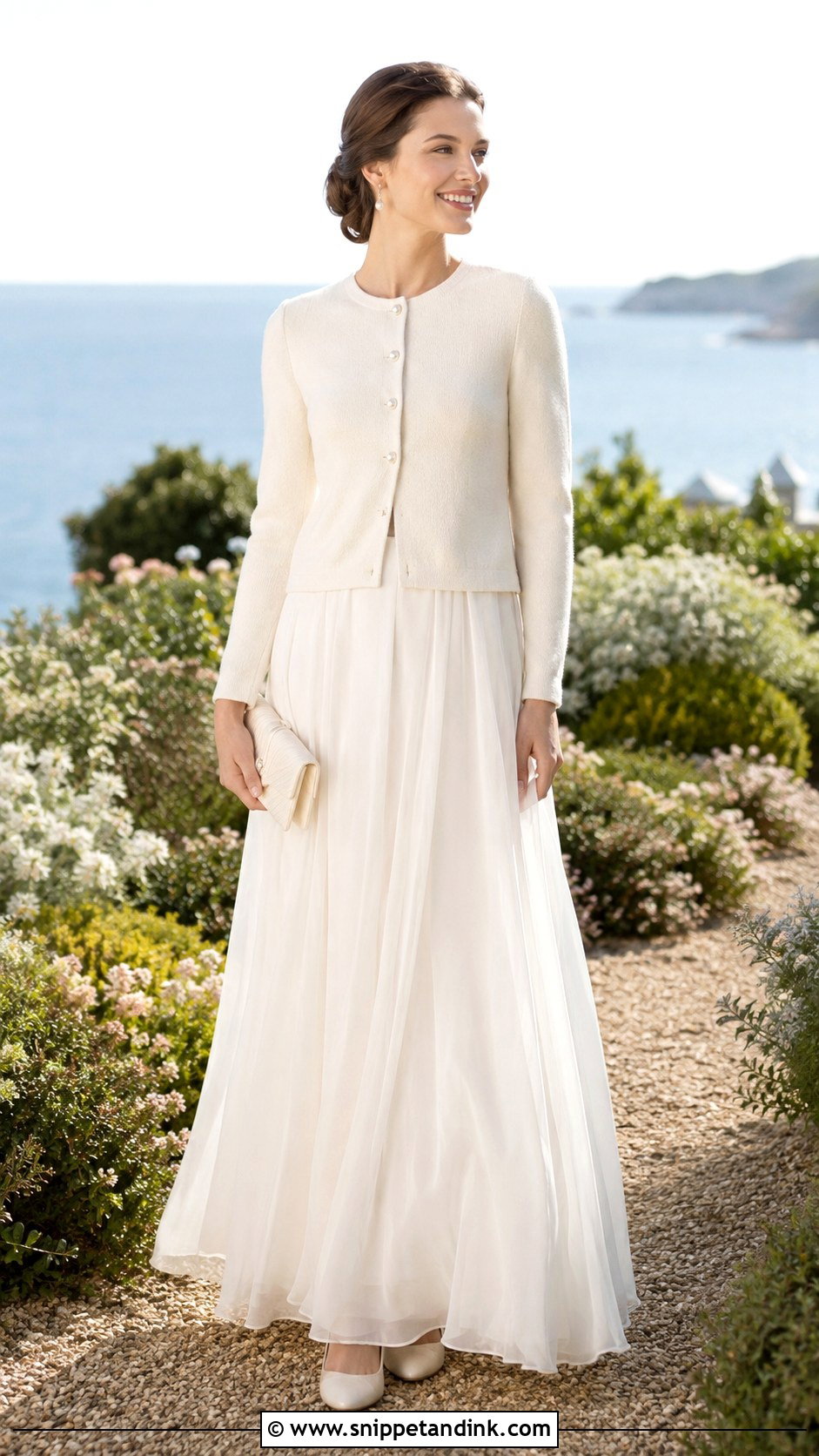
Cashmere is my choice for cool spring and autumn evenings, when a wool coat is too much. A fine-gauge cropped knit in ivory or cream sits lightly over chiffon without crushing it. Pearl buttons or a small tie closure make it read bridal instead of everyday. The trouble with knitwear is pilling where your arms rub the sides, so pick a tight, smooth knit and avoid chunky ones, which also catch on chiffon. Long cardigans hide the waist; keep it short.
10. Embroidered Organza Jacket With Tea-Length Wedding Dress
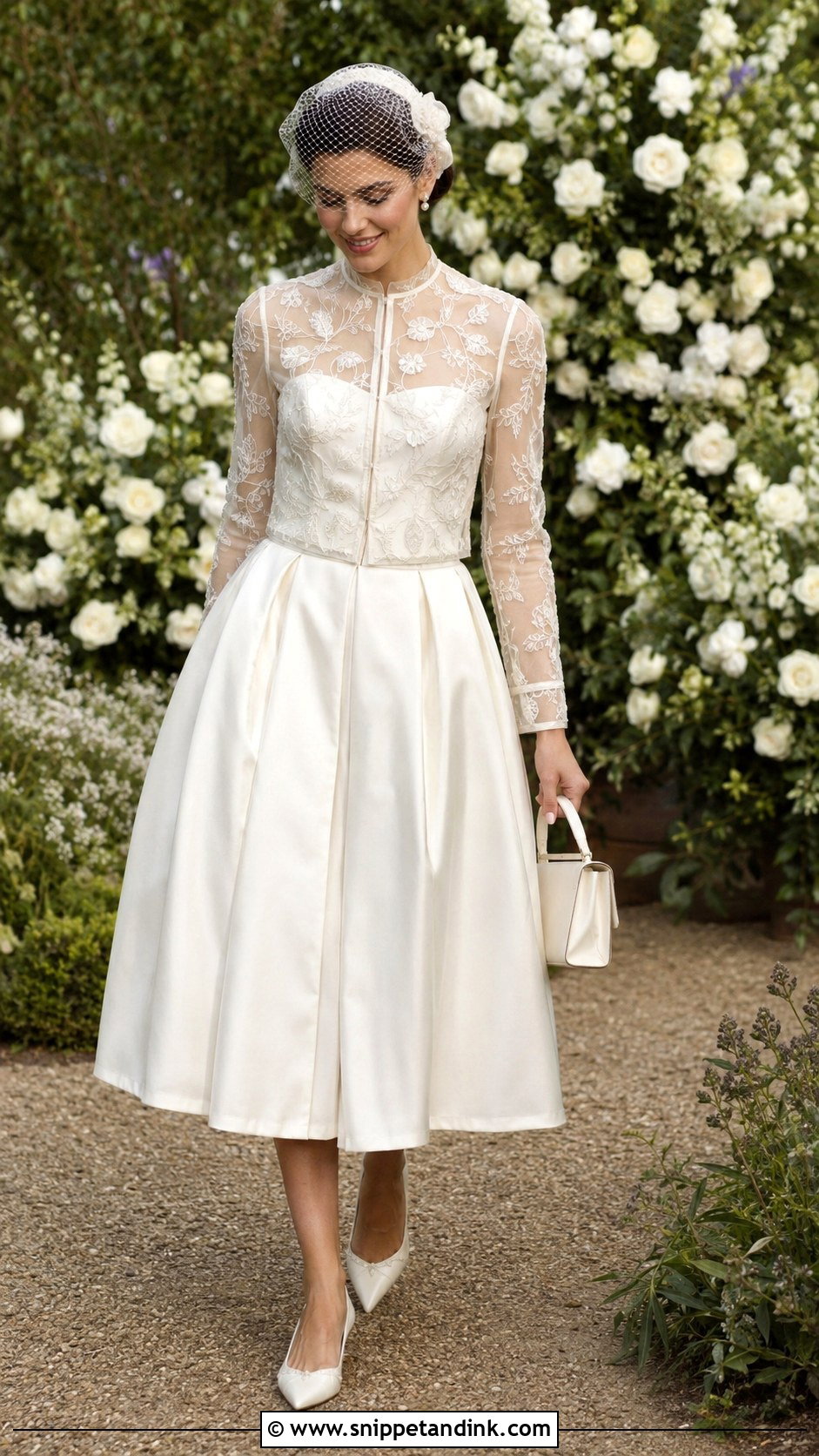
Tea-length dresses leave room for a detailed jacket because there’s less skirt competing with it. An embroidered organza jacket with tonal flowers or fine pearls suits the shape; pair it with kitten heels and a birdcage veil for a vintage feel. If the organza is heavily worked, the dress underneath should be plain satin or mikado. Organza crinkles at the elbows after an hour of wear, so expect some softening by the reception. That’s normal and photographs fine.
11. Velvet Blazer With Satin Wedding Dress
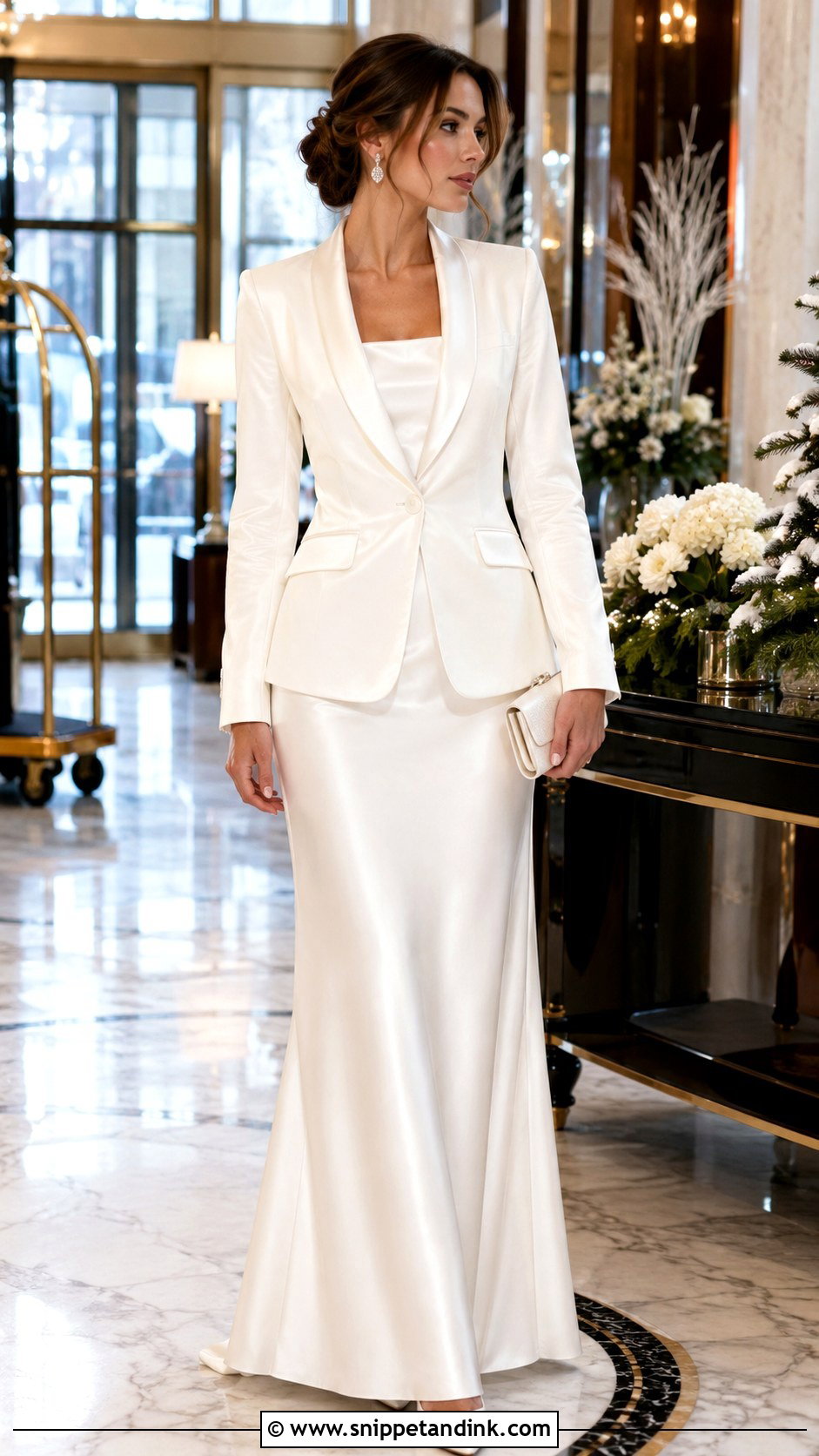
Velvet next to satin gives you two very different surfaces, which is why I keep everything else quiet. A fitted single-button velvet blazer in ivory or cream, cropped above the waist, looks best over a bias-cut satin gown. Deep green, navy or burgundy can work for a winter wedding but reads as evening wear rather than bridal. Don’t steam velvet face down or press it on a board; the pile flattens and shows marks. Hang it in a steamy bathroom instead.
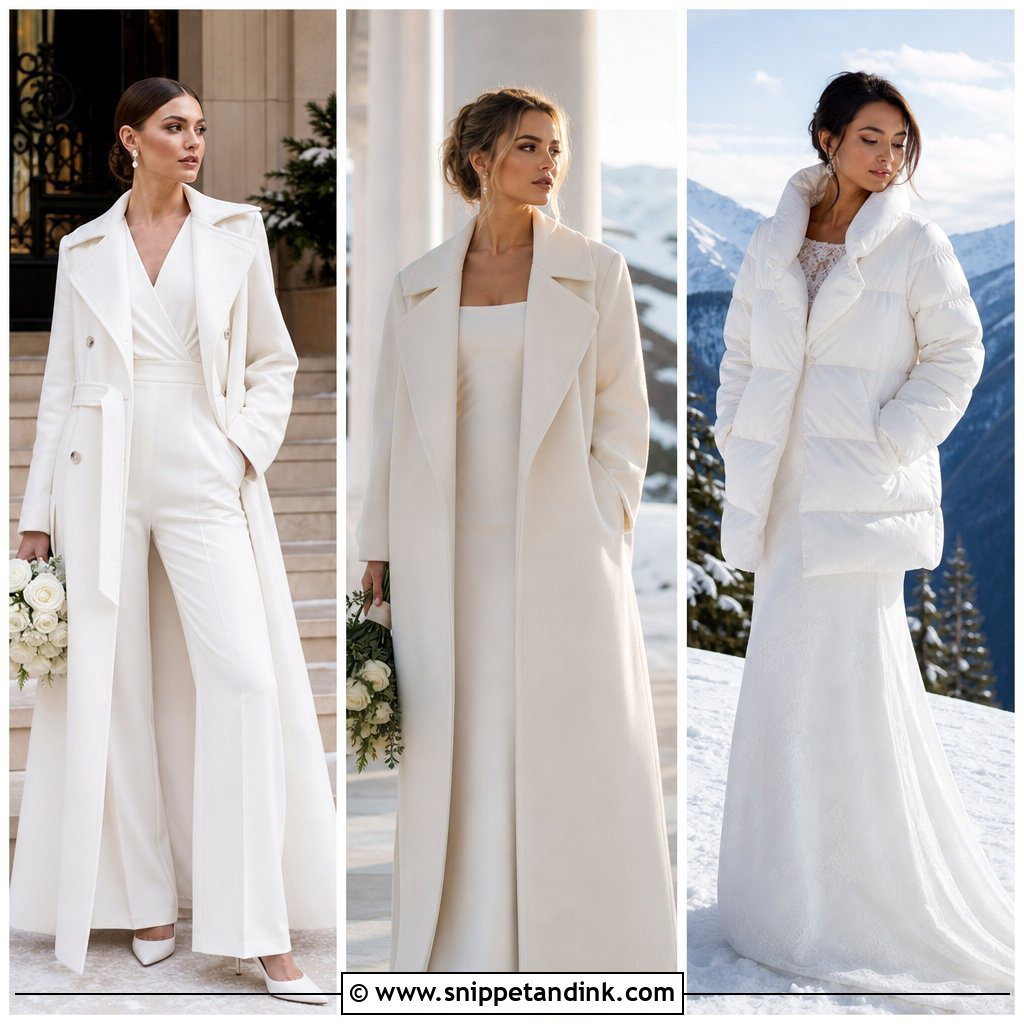
12. Long Wool Jacket With Crepe Wedding Dress
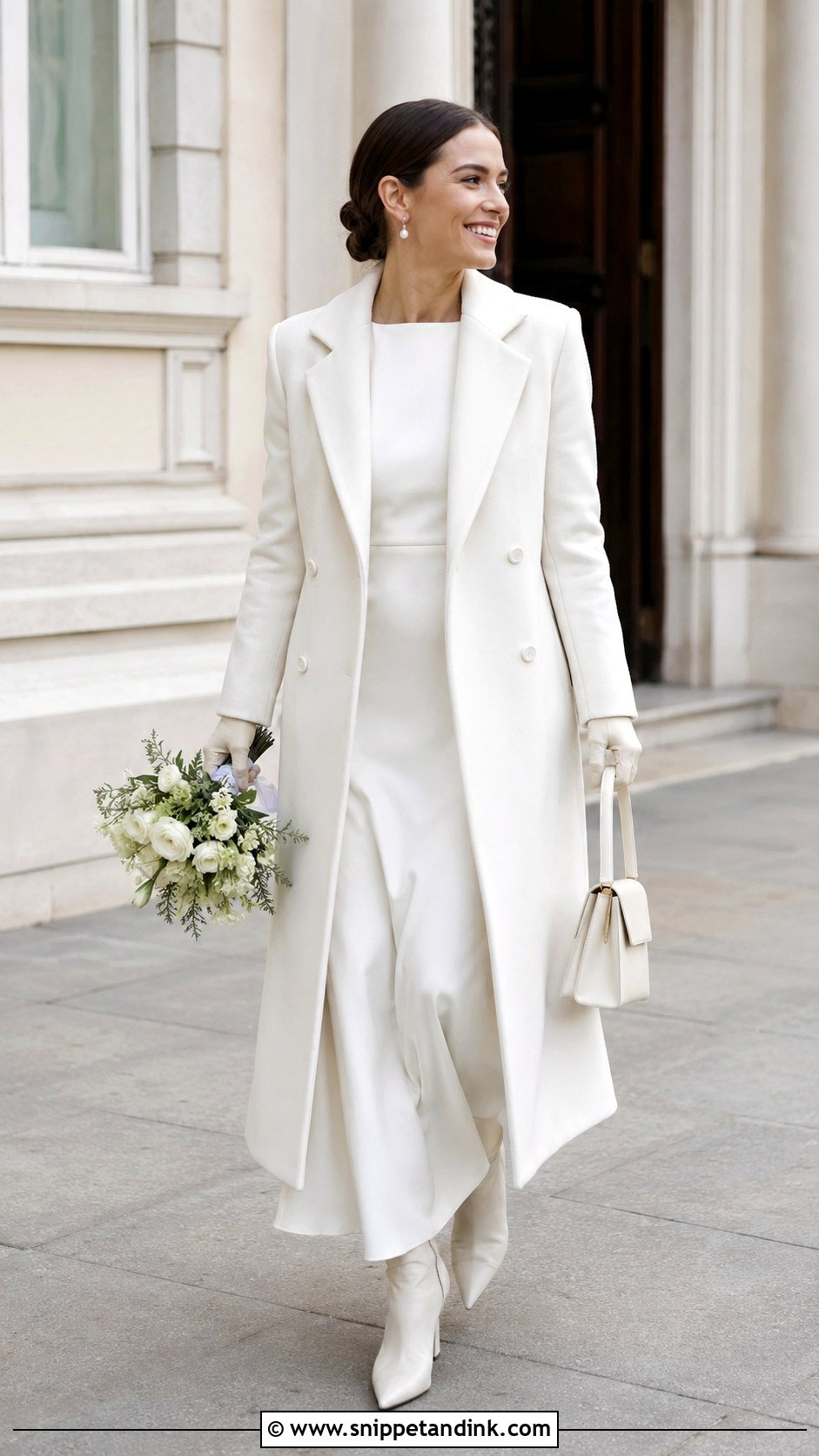
A long wool jacket is the one I recommend for a cold city wedding with a walk between buildings. Choose a tailored coat cut with narrow lapels and a shaped waist, sized up enough to go over the dress without pulling. An ankle-length crepe gown with little embellishment keeps the whole outfit from looking heavy. Ivory coats blend in; camel gives a quiet contrast. Walk and sit in the full outfit at a fitting. The coat should clear the floor and must not crush beading at the bodice.
13. Sequin Jacket With Reception Mini Dress
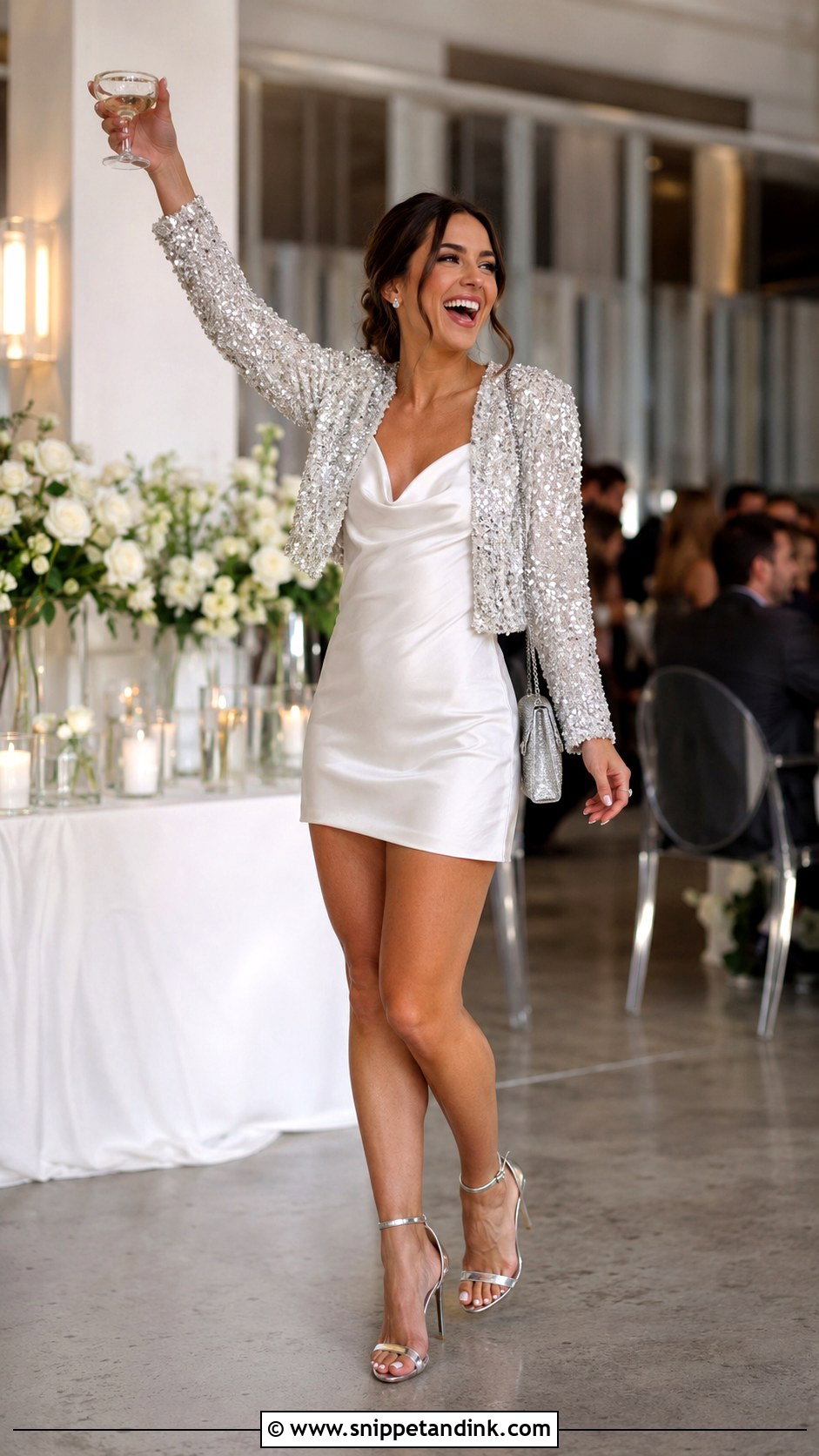
Sequins turn a plain mini into a reception outfit. White, silver, champagne or iridescent all work if you match the dress undertone. I insist on a fully lined jacket: unlined sequins scratch the inside of your arms within an hour and snag satin. Keep the neckline bare so the sequins aren’t fighting a necklace. The hem should hit the waist. A plain satin or crepe mini is the right base; anything patterned underneath gets lost.
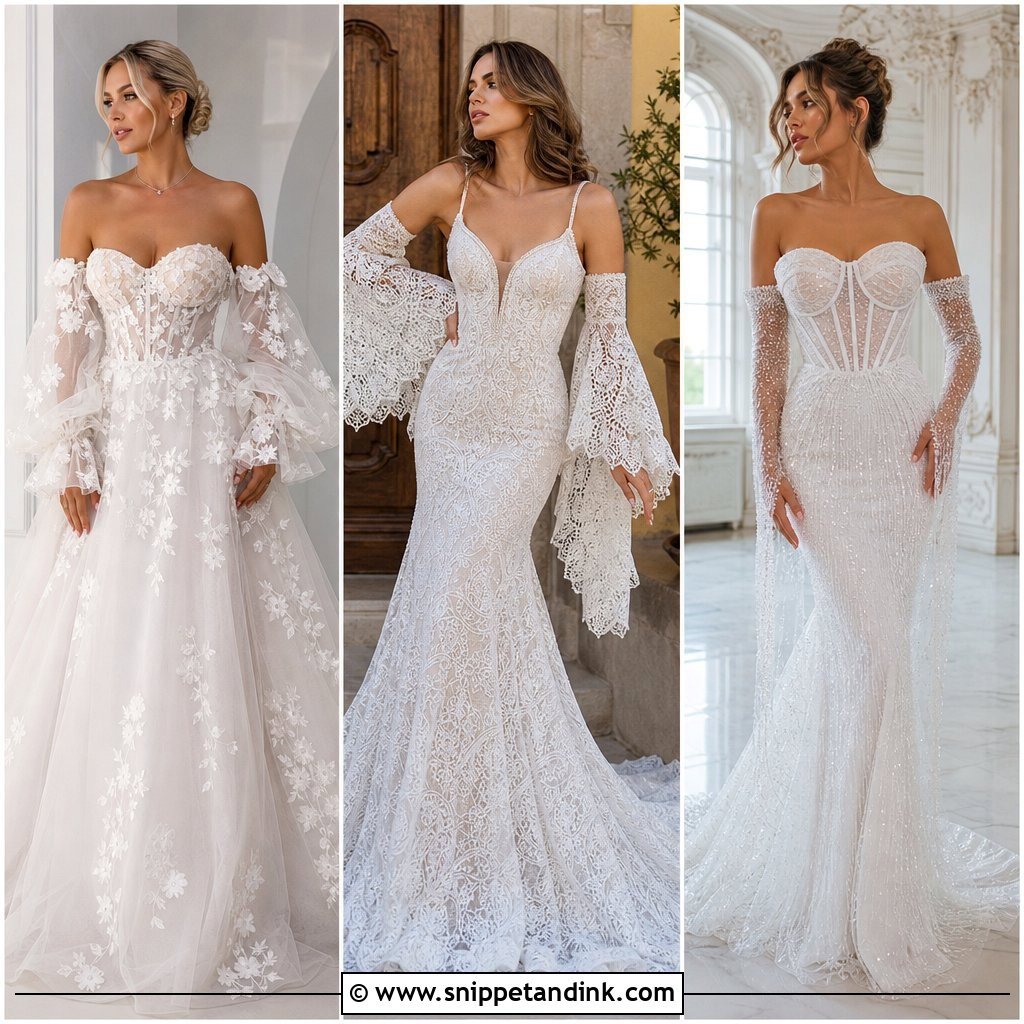
14. Crochet Bolero With Boho Wedding Dress
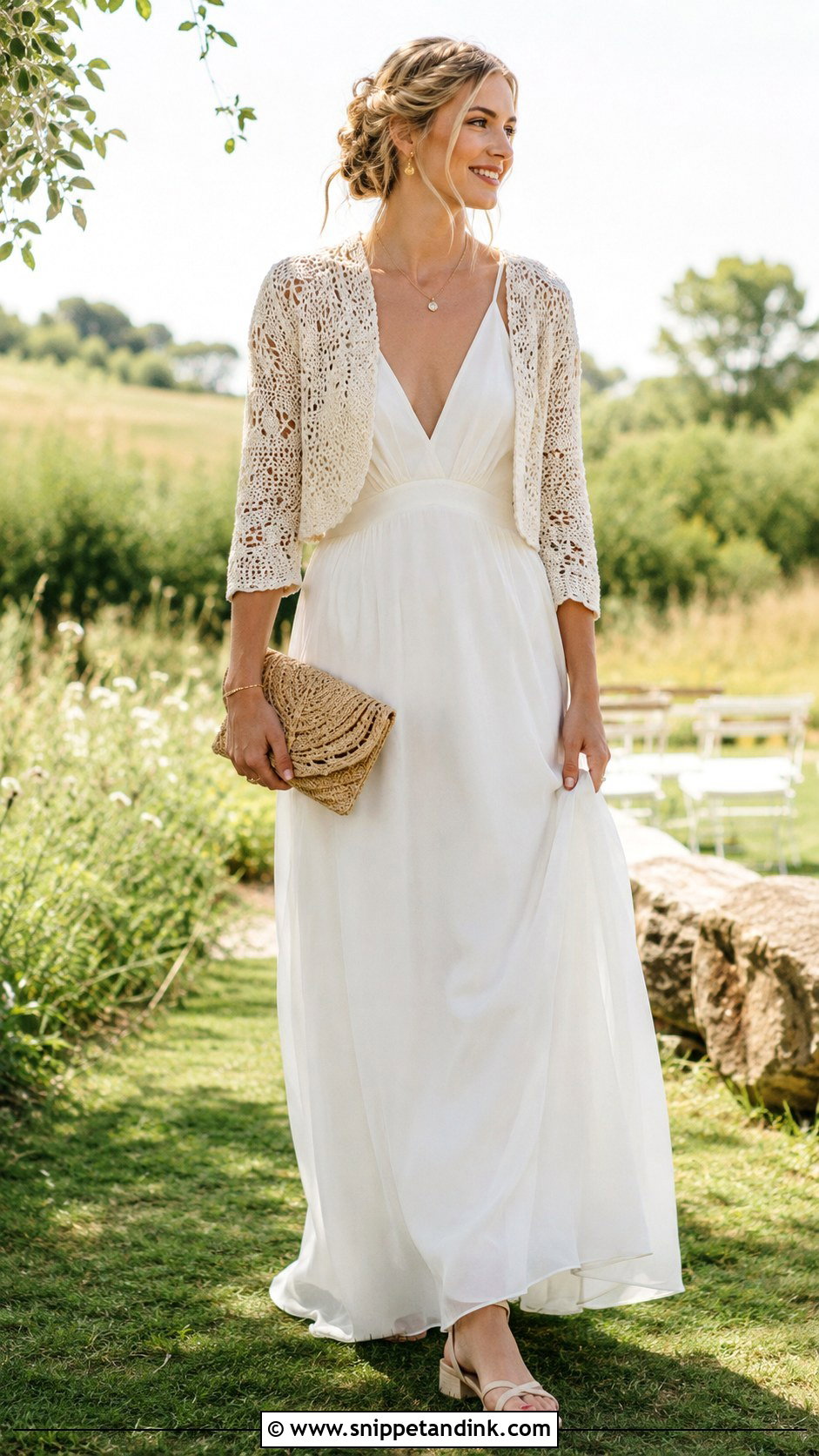
A crochet bolero belongs with a flowing boho dress at an outdoor or destination wedding. I look for fine, open crochet, almost lace-like; thick yarn reads as a jumper. Bell sleeves or a scalloped edge go nicely over chiffon or cotton lace. If the dress has bold lace, choose a plainer stitch. Crochet stretches when wet or when hung on a hanger for days, so store it folded flat and only put it on when you get dressed.
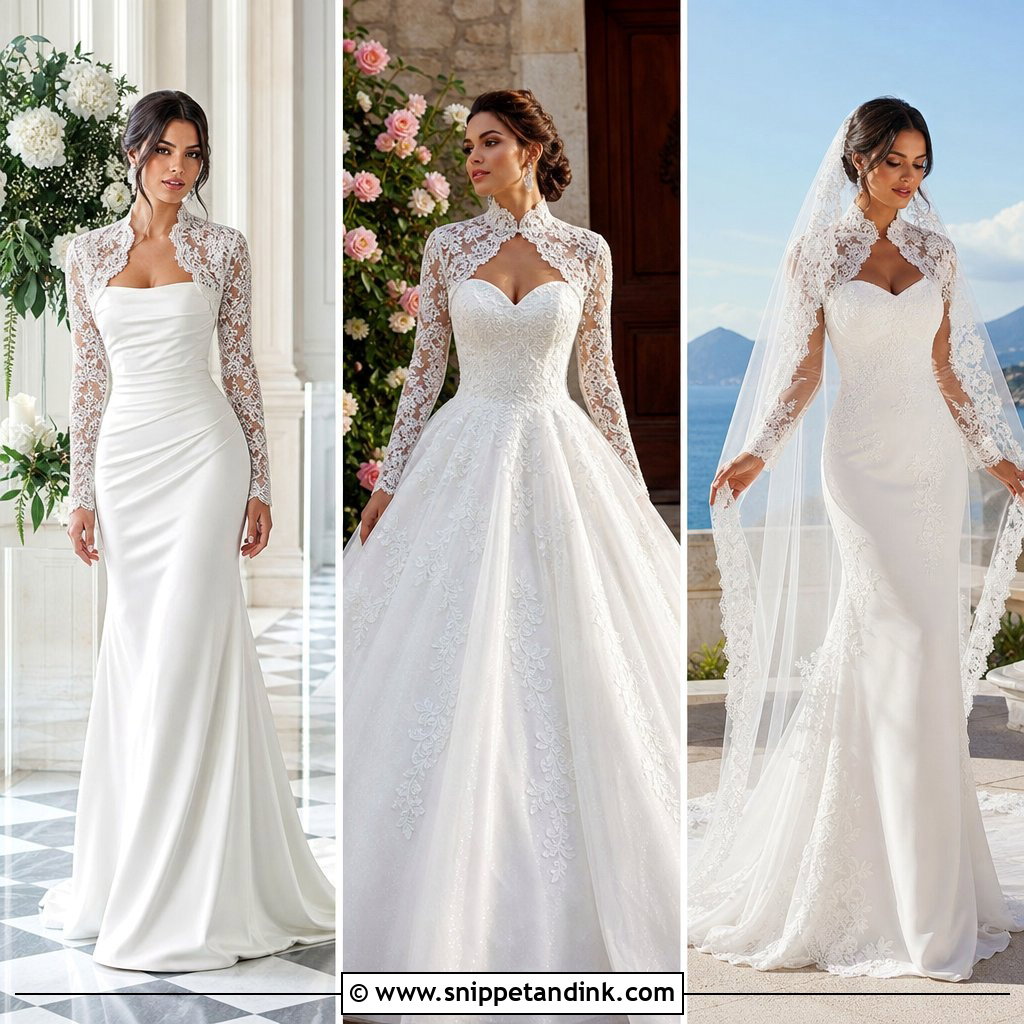
15. Beaded Cape Jacket With Sheath Wedding Dress
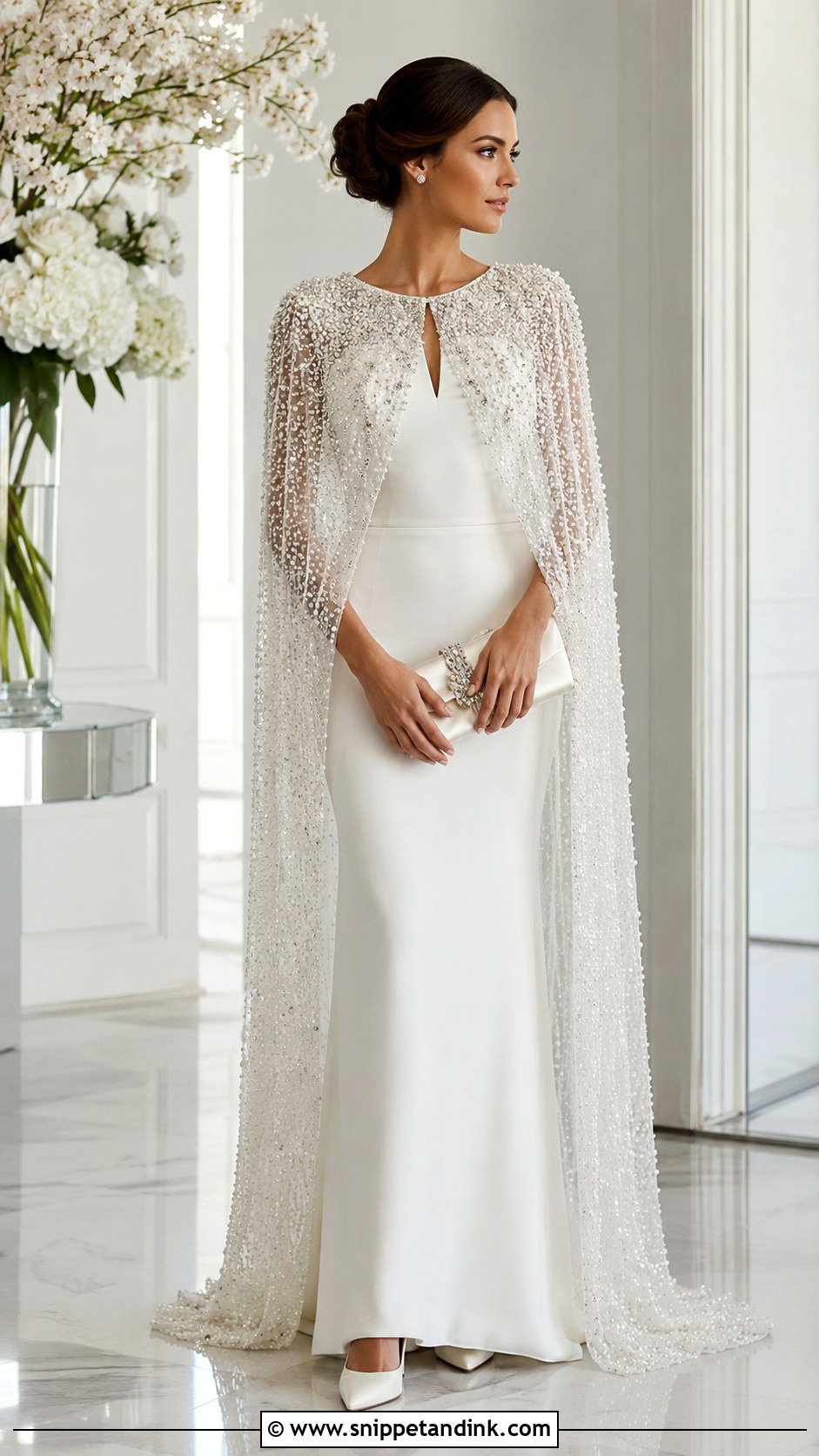
Beaded cape jackets hang from the shoulders with no sleeves, so your arms move freely for the bouquet and the hugs. Choose hip length, with pearls or crystals around the neckline and edges, over a plain crepe or satin sheath. Weight is the real issue. Densely beaded capes can drag on the collarbone after a few hours, so ask the shop to weigh it or wear it for twenty minutes before buying. Skip the necklace if the collar is decorated, and wear your hair up so it doesn’t tangle in the beading.
16. Puff-Sleeve Lace Jacket With Square-Neck Wedding Dress
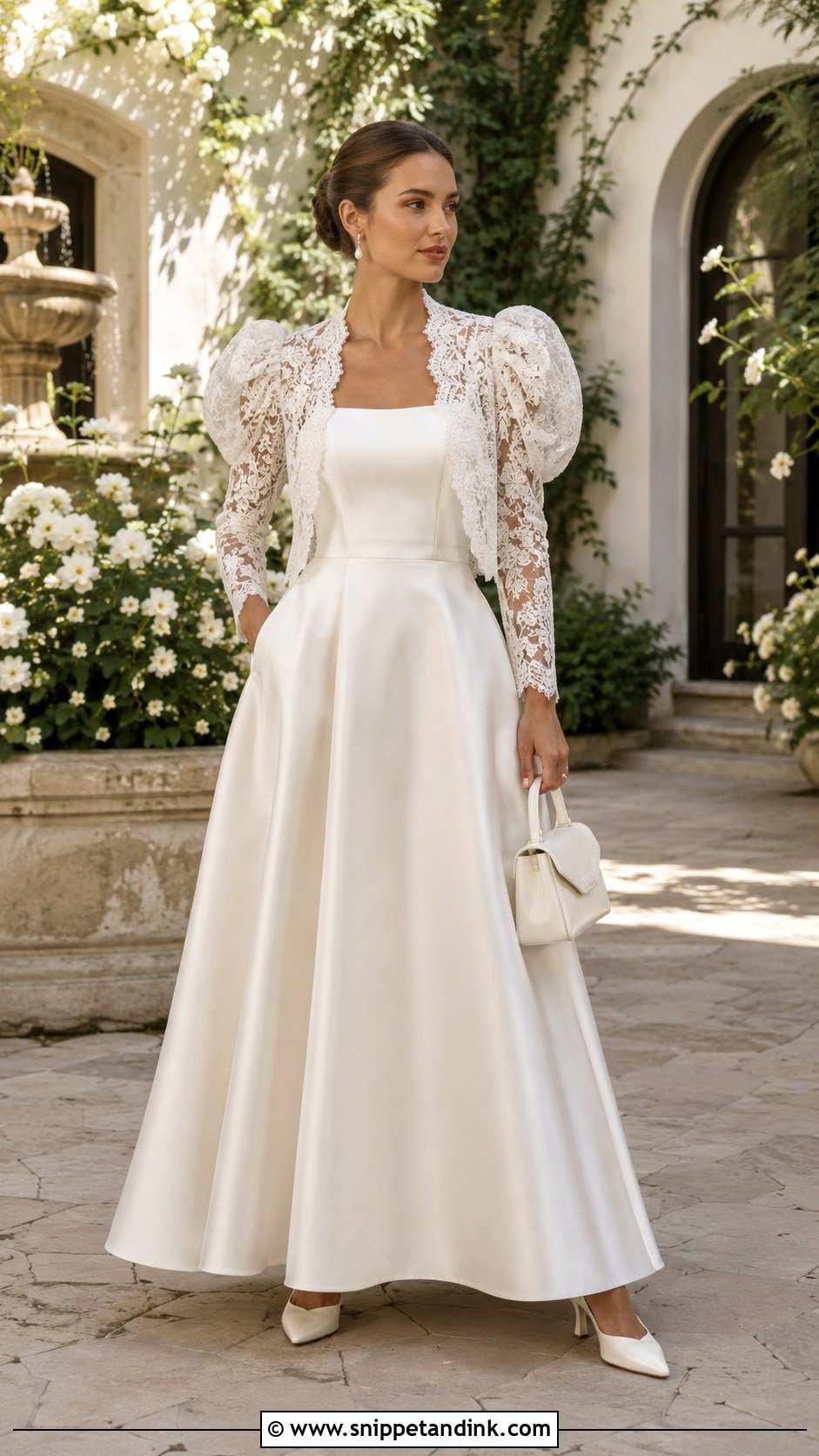
Puff sleeves and a square neck are a natural pair: the open neckline balances the extra volume at the shoulder. The problem I see most is sleeves that are too big, which make the shoulders look much wider in photos taken from the side. Ask for controlled puff with a firm interfacing, and check the armhole from the side at alterations. A plain satin or crepe A-line is the best base. Wear your hair up or behind the shoulders so the neckline stays clear.
17. Brocade Jacket With Vintage Wedding Dress
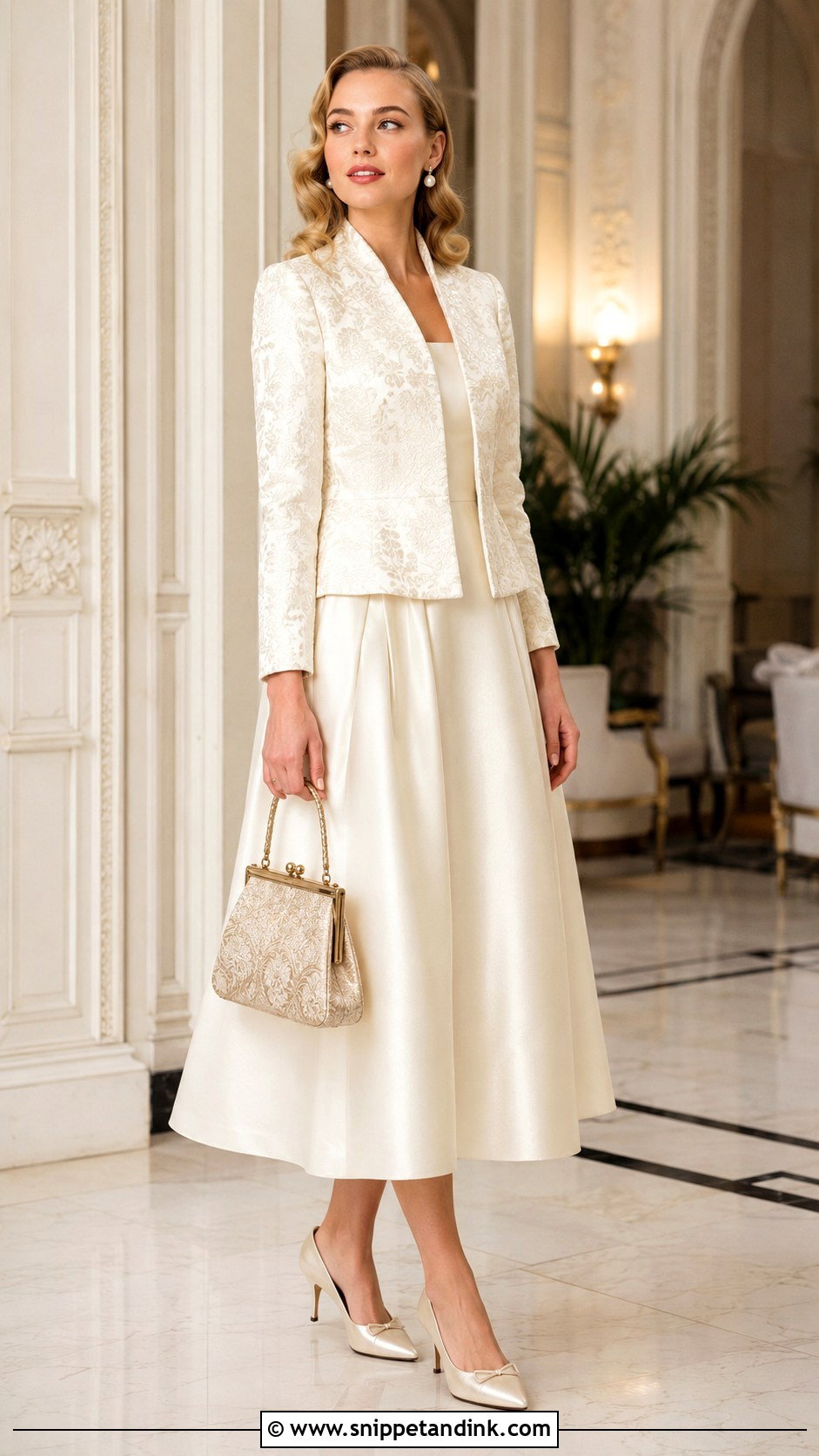
Brocade is stiff and structured, which is what gives a vintage outfit its shape. A collarless brocade jacket with covered buttons and bracelet-length sleeves suits a tea-length satin dress or a simple column. Ivory on ivory is refined; pale gold or silver thread adds a gentle shimmer. Because brocade doesn’t stretch, it must be fitted properly through the bust, shoulder and waist. Over a beaded gown it’s too much texture, so keep the dress plain.
18. Fringe Suede Jacket With Western Wedding Dress
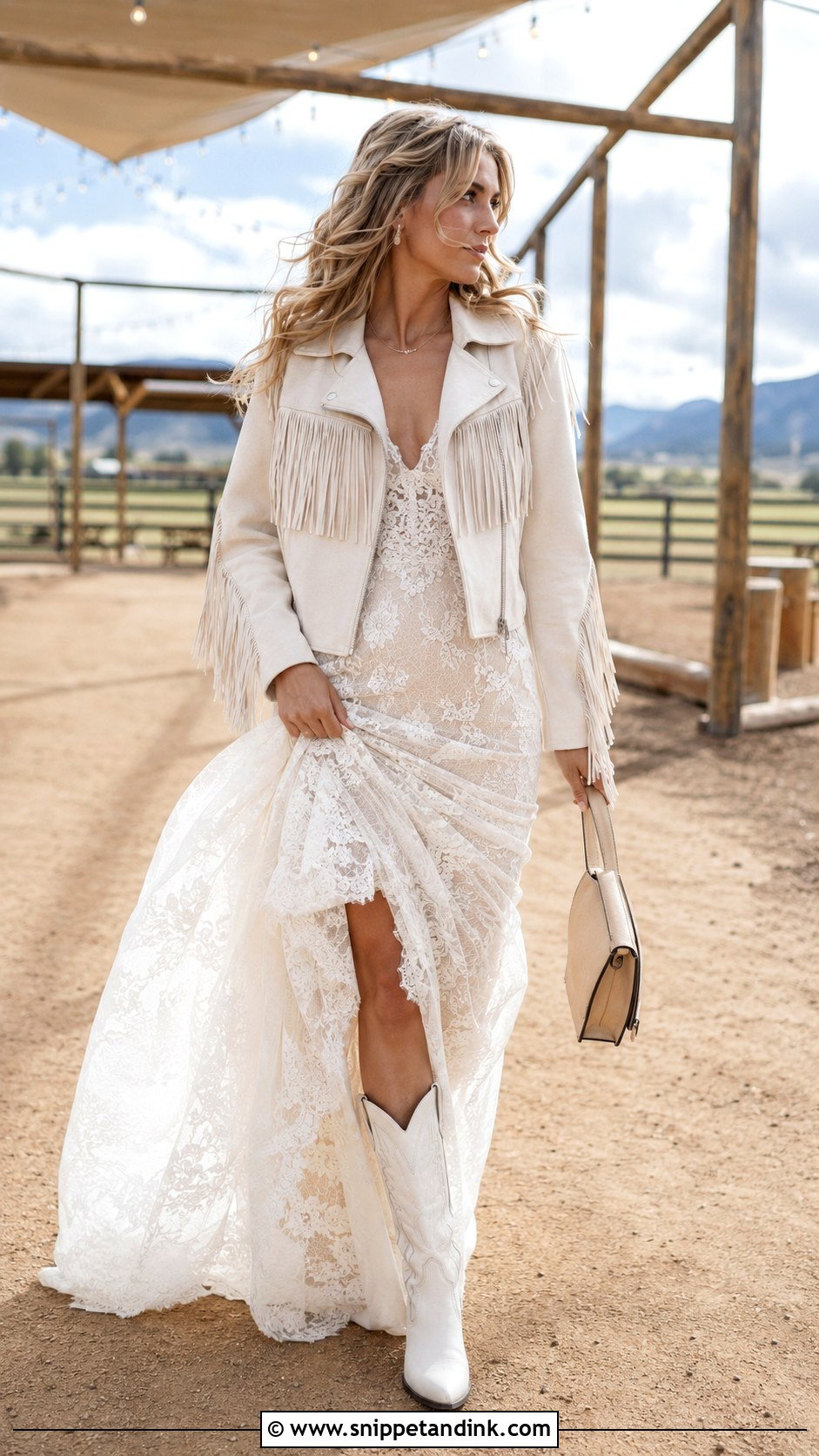
Fringe suede gives a Western-inspired bridal outfit its movement, and it should be the only Western piece doing the work. Choose ivory, cream or pale beige suede with moderate fringe on the back or sleeves, and keep it cropped so the fringe doesn’t tangle with the skirt. A plain lace A-line or a bias-cut slip lets it swing. White boots and silver jewellery are enough. Suede marks with water, so treat it with a suede protector spray well before the day.
19. Silk Kimono Jacket With Bias-Cut Wedding Dress
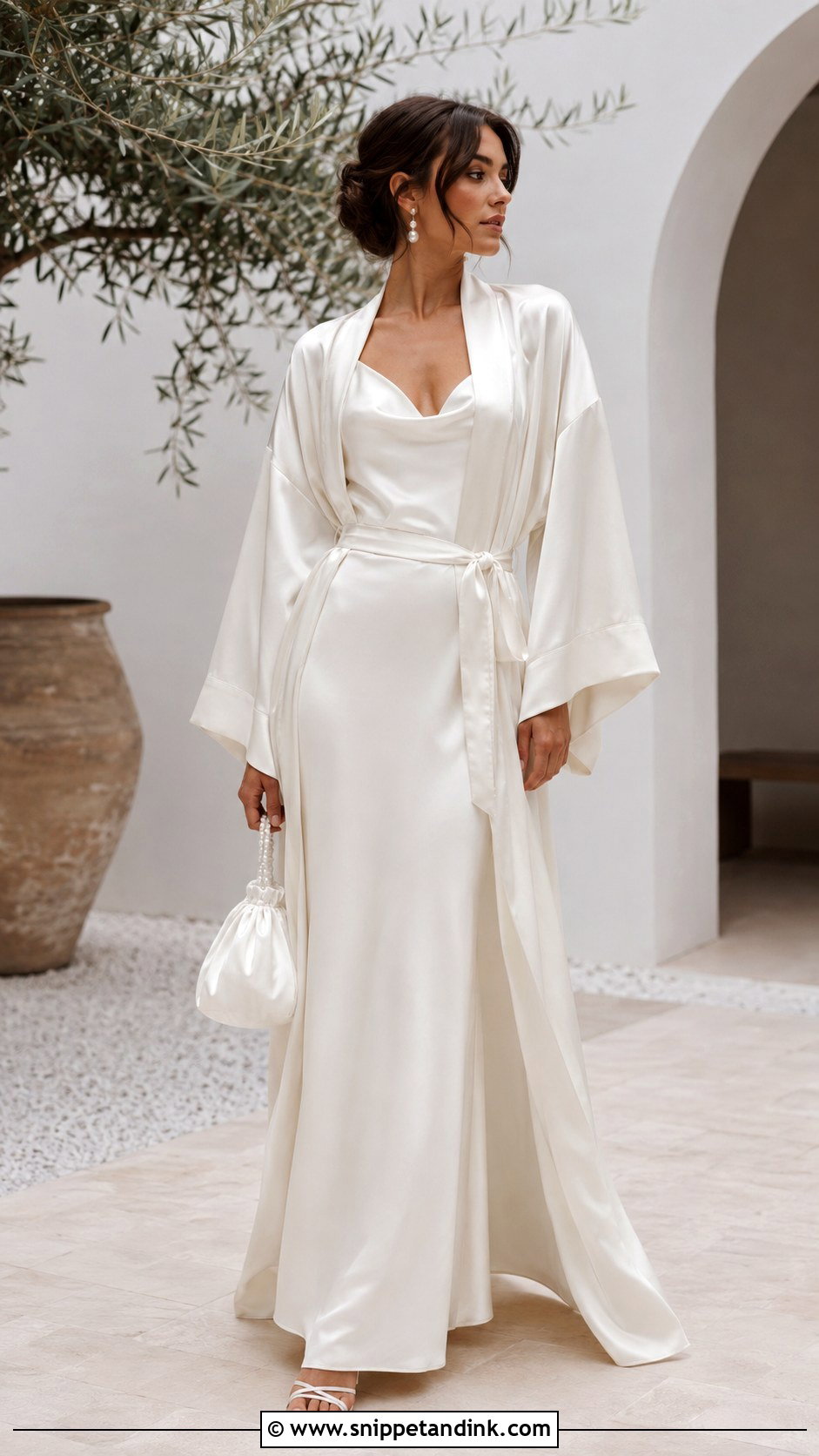
A silk kimono jacket is the lightest cover-up on this list. Over a bias-cut dress, both fabrics drape the same way, so the outfit moves as one. Choose hip-length or cropped with wide sleeves and a soft tie you can fasten without crushing the dress. The jacket should skim the body; a kimono two sizes too large swallows a bias cut. Silk shows water marks and sweat, so I avoid it for hot, humid outdoor ceremonies.
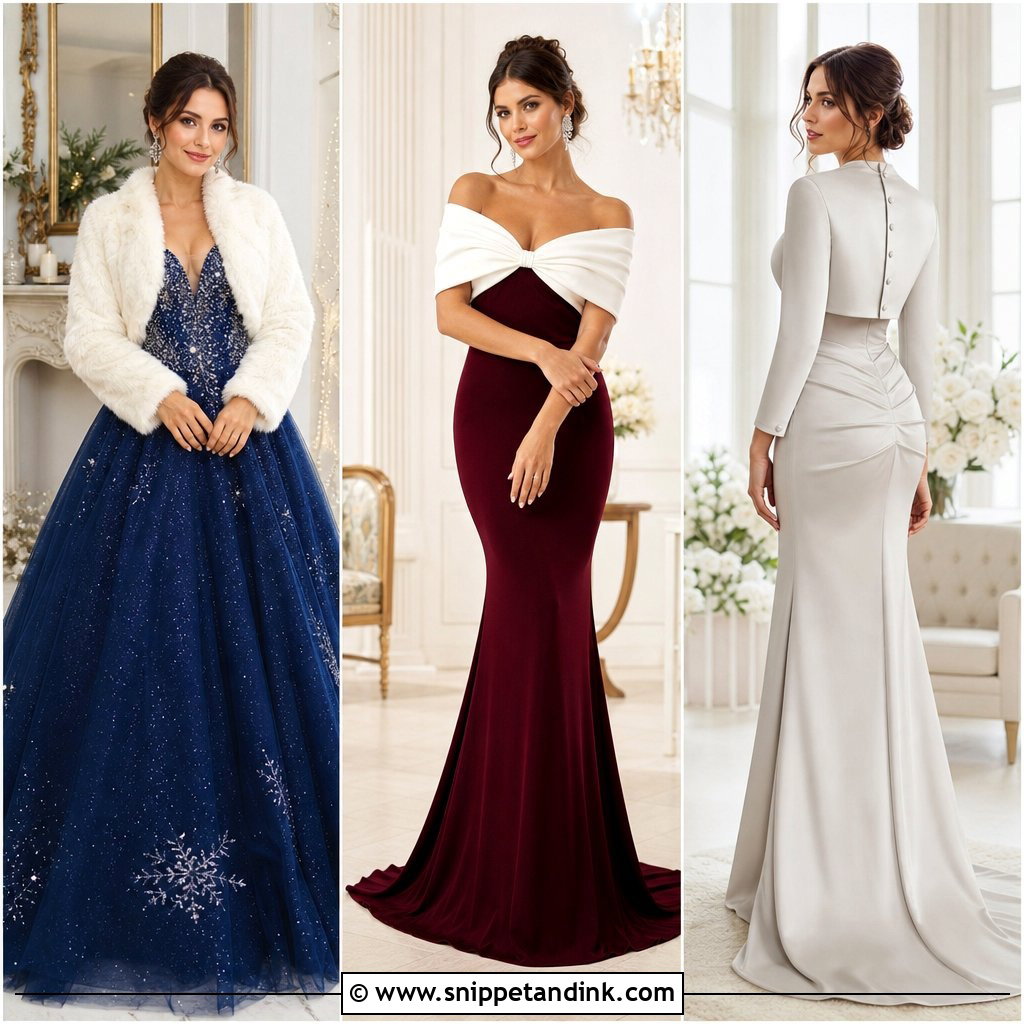
20. Hooded Velvet Jacket With Long-Sleeve Wedding Dress
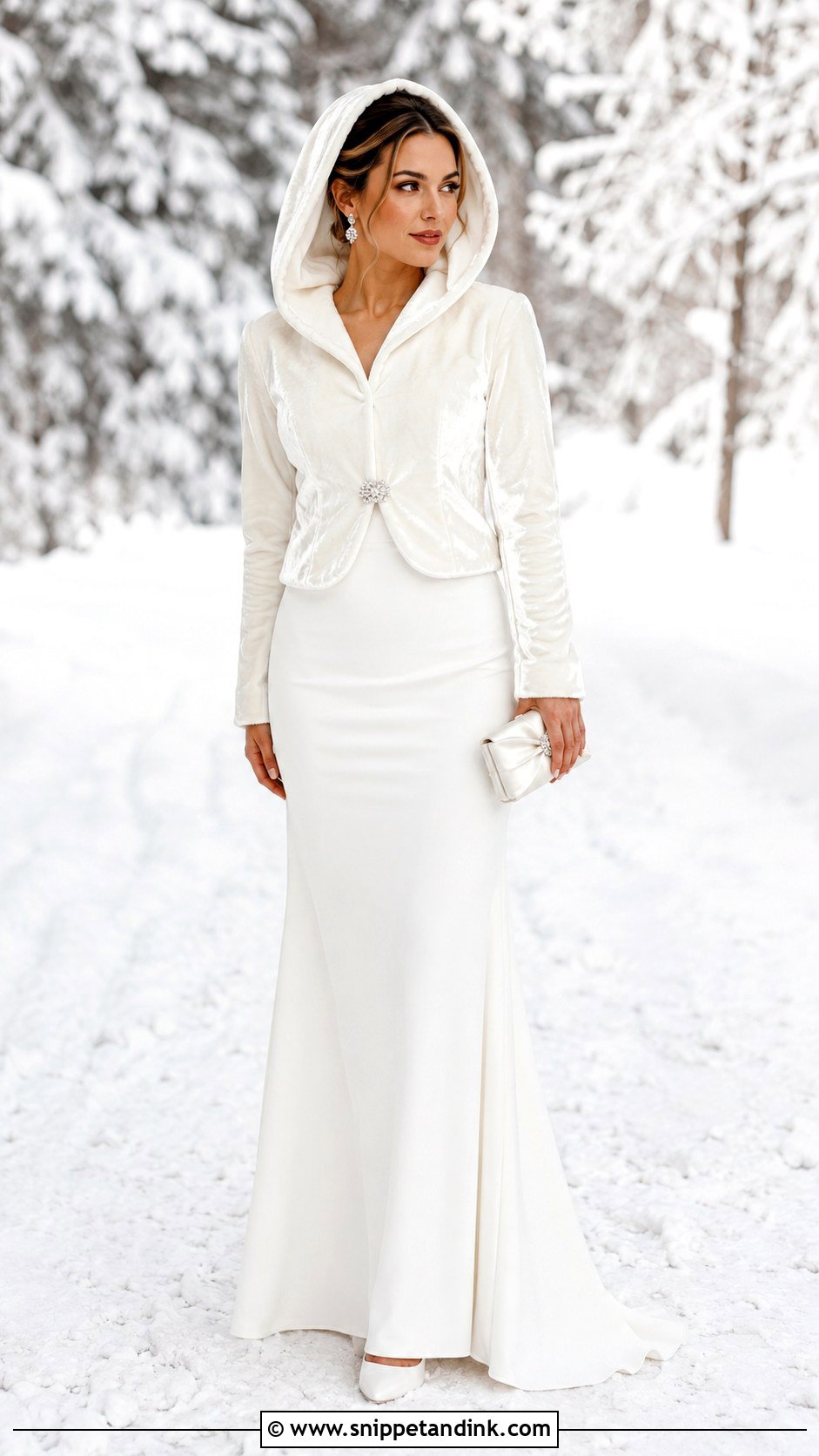
Hooded velvet is dramatic and properly warm for a winter arrival. Choose a fitted or gently flared jacket that follows the gown and a slim crepe dress with narrow sleeves underneath, so the arms aren’t doubled in bulk. Ivory keeps it soft; deep blue or forest green gives a seasonal contrast. If you’re wearing a veil, the hood has to lie flat against the back when down, or the veil will sit on top of a lump. Try the jacket over the dress at alterations and lift your arms.
Plan the Moment It Comes Off
Most brides wear the jacket for part of the day only: the arrival, a cold ceremony, outdoor portraits. Decide in advance when it comes off and who takes it. A jacket left on a chair gets sat on, and a sequin or leather jacket thrown over a gown can scratch or mark the satin underneath.
- Give it to one bridesmaid with a padded hanger and a garment bag.
- Tell your photographer which shots you want with and without it.
- If the dress has a sticky bodice or fashion tape, check it after removal, since a jacket can loosen tape at the neckline.
- Pack a lint roller for fur, feathers and dark velvet.
Wearing It After the Wedding
This is where a jacket beats a veil: you can wear it again. Blazers, denim, leather and cashmere all go back into a normal wardrobe. Get anything with makeup or food on it cleaned soon after the wedding, by a cleaner who handles the specific material, because leather, suede, fur and sequins each need different care.
Store beaded and sequinned pieces flat in acid-free tissue rather than on a hanger, where the weight stretches the shoulders. Knits should be folded, never hung. Leather and suede want a breathable cotton bag, not plastic, which traps moisture.
Let the Jacket Do One Job Well
A jacket should make the dress easier to wear, not hide it. Start with how much warmth and coverage the season and ceremony require, then compare undertones, lengths and proportions with the full outfit on. Lace, satin and tulle stay light. Blazers, leather and denim add contrast. Faux fur, velvet and wool are the ones that actually keep you warm. Whichever you choose, test sitting, walking and lifting your arms before the last alteration.
You'll Like These Ideas:


Leave a Reply