
Eclectic bridal dressing mixes things a traditional fitting room keeps apart: color with lace, an old silhouette with a modern shoe, embroidery with a sleek slip. The brides who come to me wanting this look rarely want chaos. They want to look like themselves on the aisle. That is harder than it sounds, because a mixed look only reads as intentional when one element leads and everything else supports it. The dresses below run from soft pastel tulle to red satin and western boots, and for each one I’ve noted what makes it work in real life, not just on a hanger.

One Loud Piece, Then Everything Else Goes Quiet
The eclectic looks that fail are almost always the ones with three statements fighting each other: a printed dress, a colored veil and statement boots all at once. When I build a mixed bridal look, I ask the bride to name the one thing she’d keep if everything else disappeared. That piece leads. Everything else is chosen to support it.
- Pick the lead: color, print, texture, a silhouette from another era, or one accessory.
- Choose one supporting echo, such as a thread color from the embroidery repeated in the shoes or bouquet.
- Keep the remaining pieces neutral and in one metal tone.
- Stand back at a full-length mirror from across the room. If your eye jumps around, remove the newest addition.
Venue matters more than people think. A colored or printed dress sits naturally in a garden, gallery or restaurant, but can feel out of place in a formal church with strict dress customs. If your ceremony is religious, I’d quietly check what’s expected before falling for a red or black gown.
1. Colorful Floral Wedding Dress

Floral print is the gentlest door into color. Watercolor flowers, bold garden prints or embroidered blooms over ivory, blush or champagne all still read as bridal from the back of a ceremony. What I watch is scale. Large prints look intentional on a full skirt but can look like a sundress on a short slip, so the bigger the bloom, the more fabric it needs. Pearl earrings, a plain veil and a bouquet that picks out one color from the print keep it from tipping into busy. Garden venues and spring or summer weddings suit it best.
2. Vintage Lace Wedding Dress

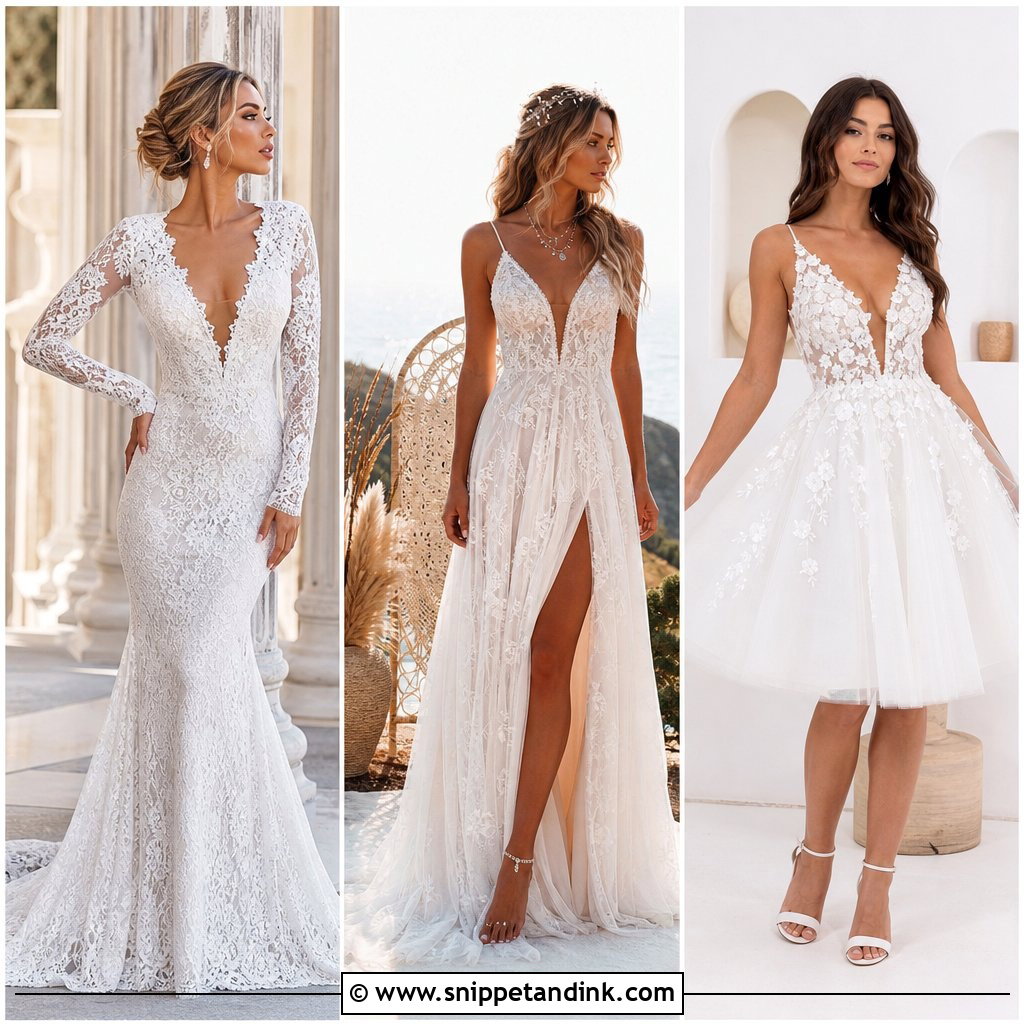
Vintage lace becomes eclectic the moment you style it against its era. High necklines, scalloped hems, bell sleeves and antique-style trains carry the history; satin platform heels, a structured mini bag or a sleek low bun pull it into now. I often suggest tea-stained beige or champagne lace for this, because stark white lace on a vintage cut can look like a reproduction. True vintage lace is fragile, so I’d have any original piece checked by a seamstress for weak spots before alterations begin.
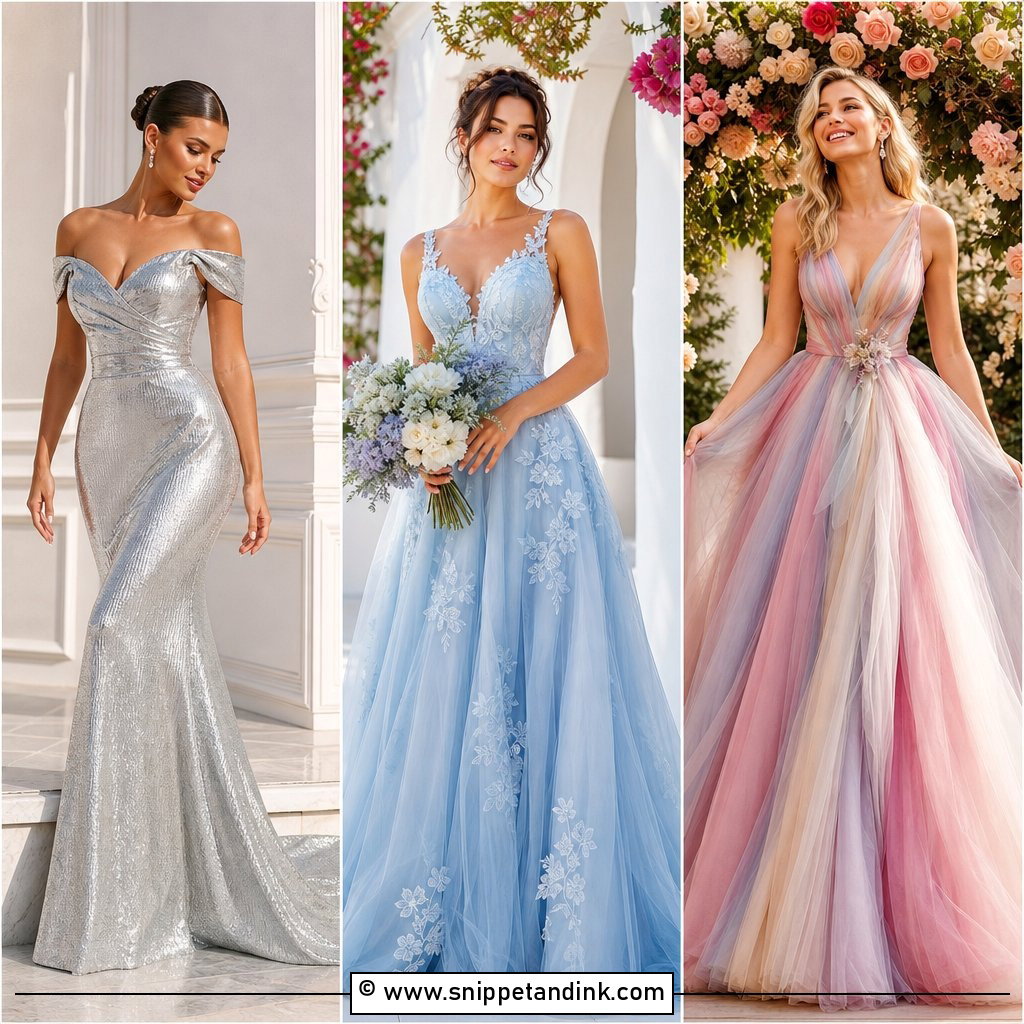
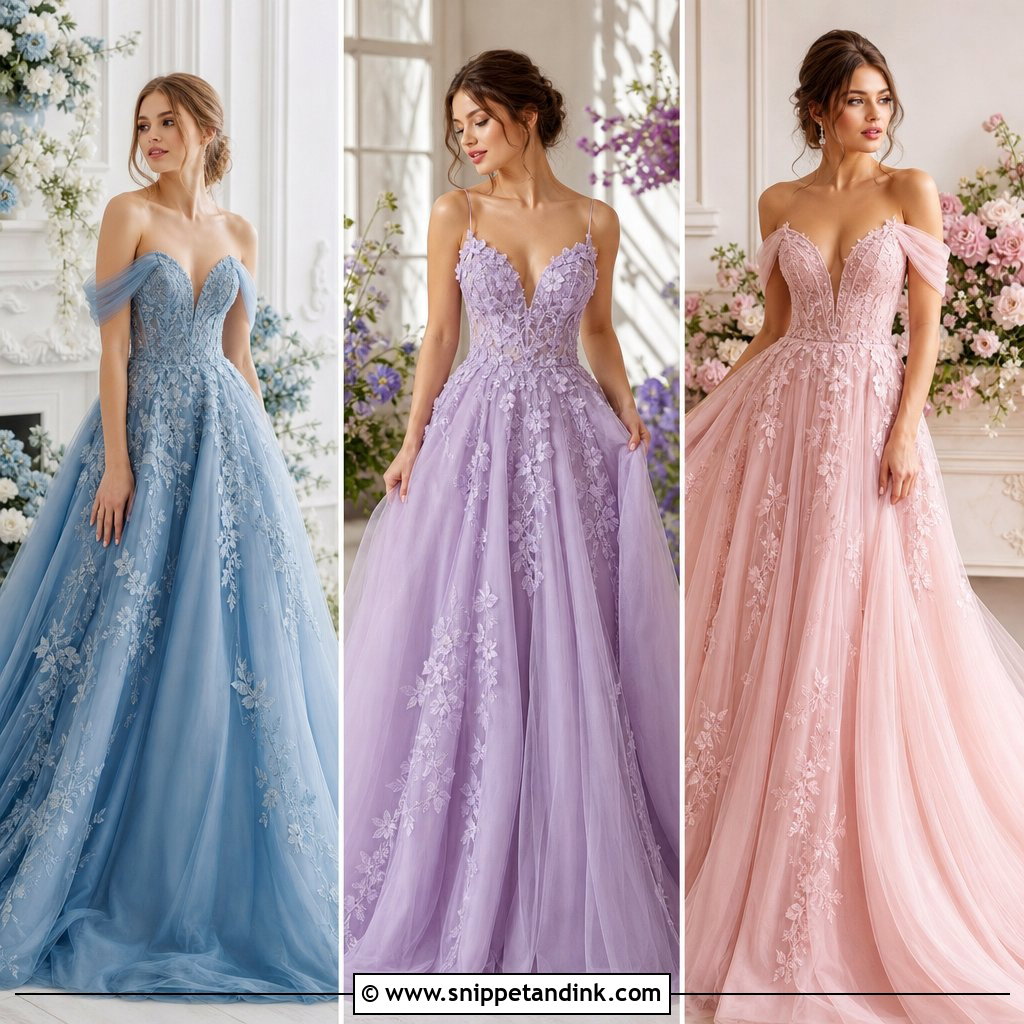
3. Pastel Tulle Wedding Dress

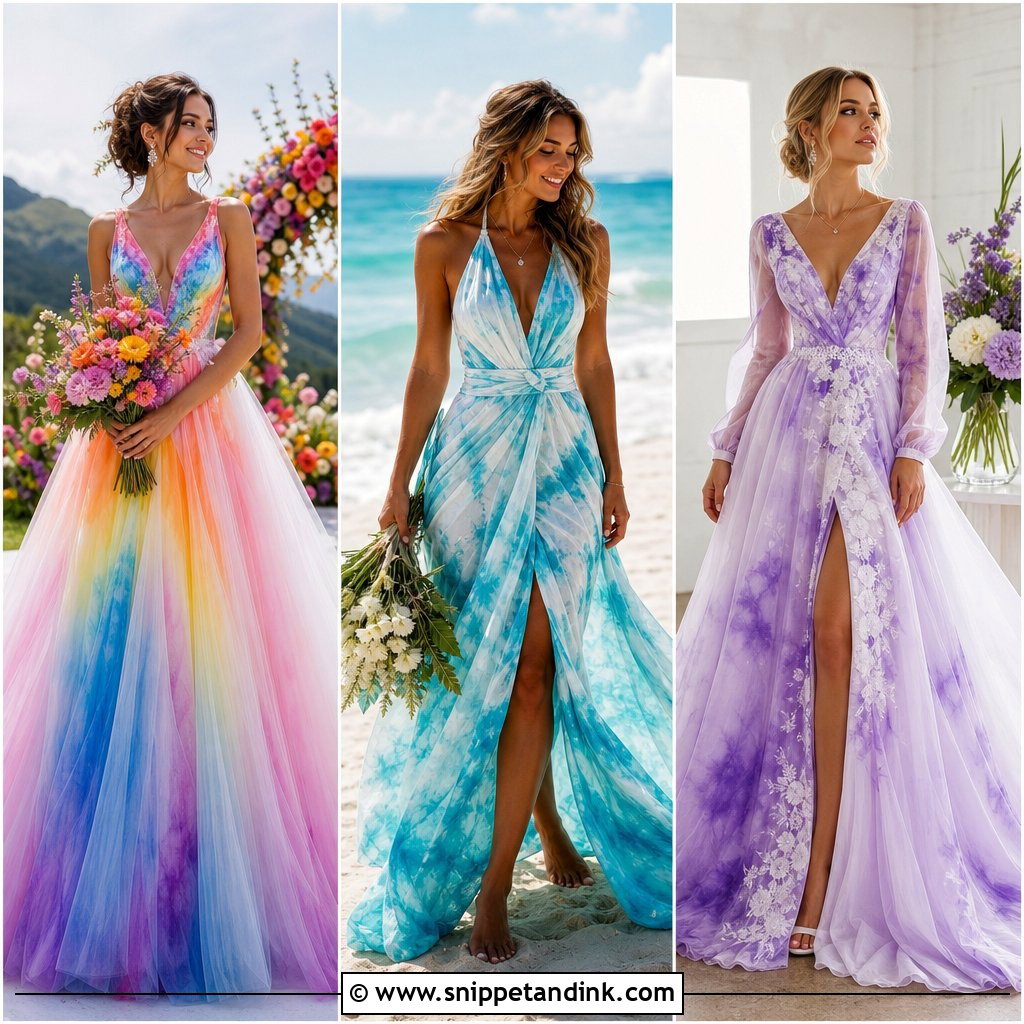
Pastel tulle is where I see brides surprise themselves. Pale lavender, powder blue, blush, butter yellow and misty sage all read as bridal when the silhouette stays classic. One practical note: colored tulle is layered, and each layer adds depth, so the dress always looks darker in person than on a single swatch. Ask to see a sample with the same number of layers. A corset bodice or soft off shoulder neckline gives shape, and sheer gloves with small pearl jewelry keep the finish light. Tulle catches outdoor light well, which is why these gowns shine in garden portraits.
4. Embroidered Wedding Dress

Embroidery is the most personal choice here, because the motif can mean something: flowers from your home garden, celestial patterns, or designs drawn from your family’s culture. A sheer embroidered overlay over a simple slip keeps it light enough for a summer ceremony. Colorful threadwork across the bodice or hem makes a stronger statement. I keep shoes and jewelry very plain with heavy embroidery, since the eye needs somewhere to rest. Custom embroidery also takes time, so start early if the design is being made for you.
5. Boho Fringe Wedding Dress

Fringe only works if it moves, and that depends on its weight. Long silk or beaded fringe swings as you walk; short cotton fringe on a stiff fabric just sits there. Sleeves, hems, capes or full overlays all carry it. Ivory, cream and sand tones look natural with block heels, loose waves and a small bouquet with dried textures. The thing I warn fringe brides about is tangling: it catches on bouquet ribbons, lace veils and jewelry clasps, so keep the veil plain. Desert, beach and rustic venues suit it.
6. Sequin Wedding Dress

Sequins at a wedding read festive, and I’d lean on softer finishes rather than mirror-bright sparkle. Matte sequins, pearlized shimmer, champagne beading or art deco patterns all shine without glaring under a camera flash. Column, long-sleeve and slip silhouettes keep it sophisticated. Know that sequined gowns are slow and costly to alter, because the seamstress removes sequins along the seam and resews them by hand. Evening city weddings, rooftops and reception changes are its natural setting.
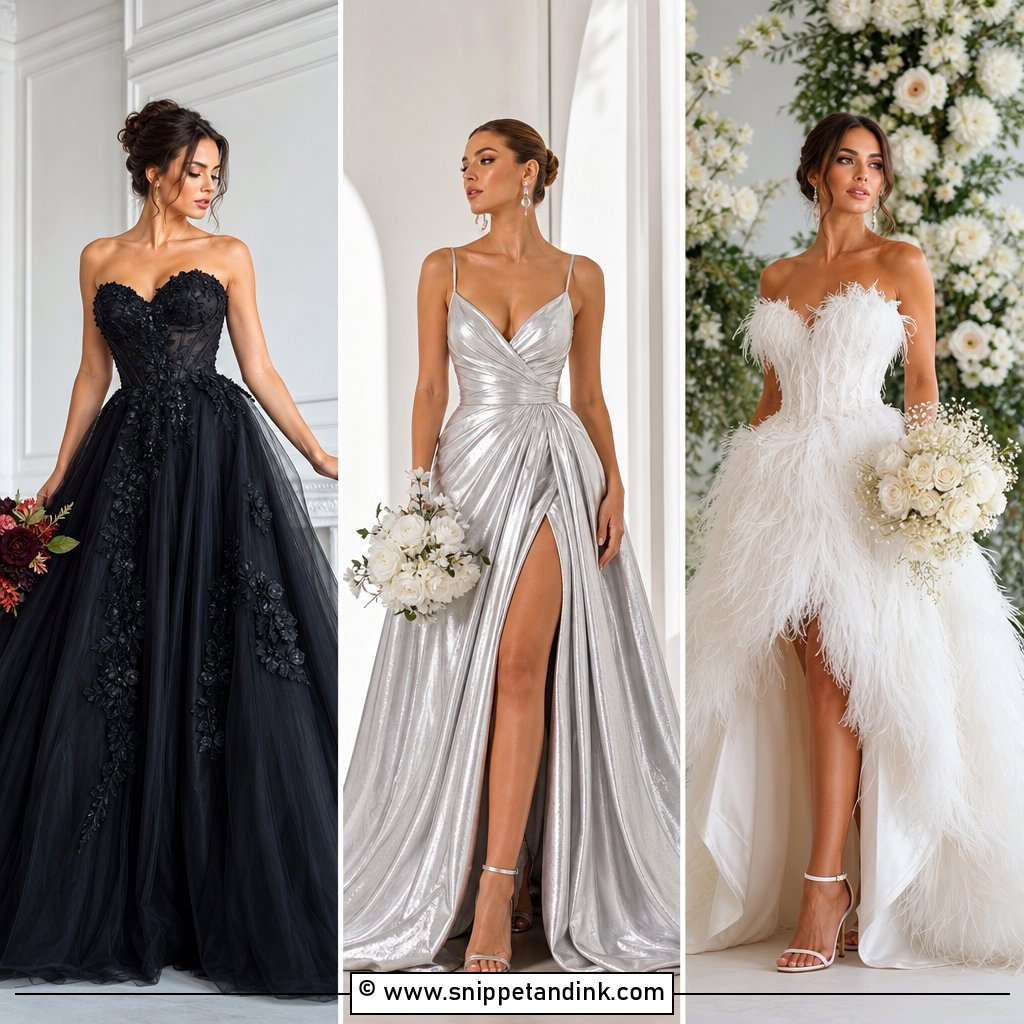
7. Black And White Wedding Dress

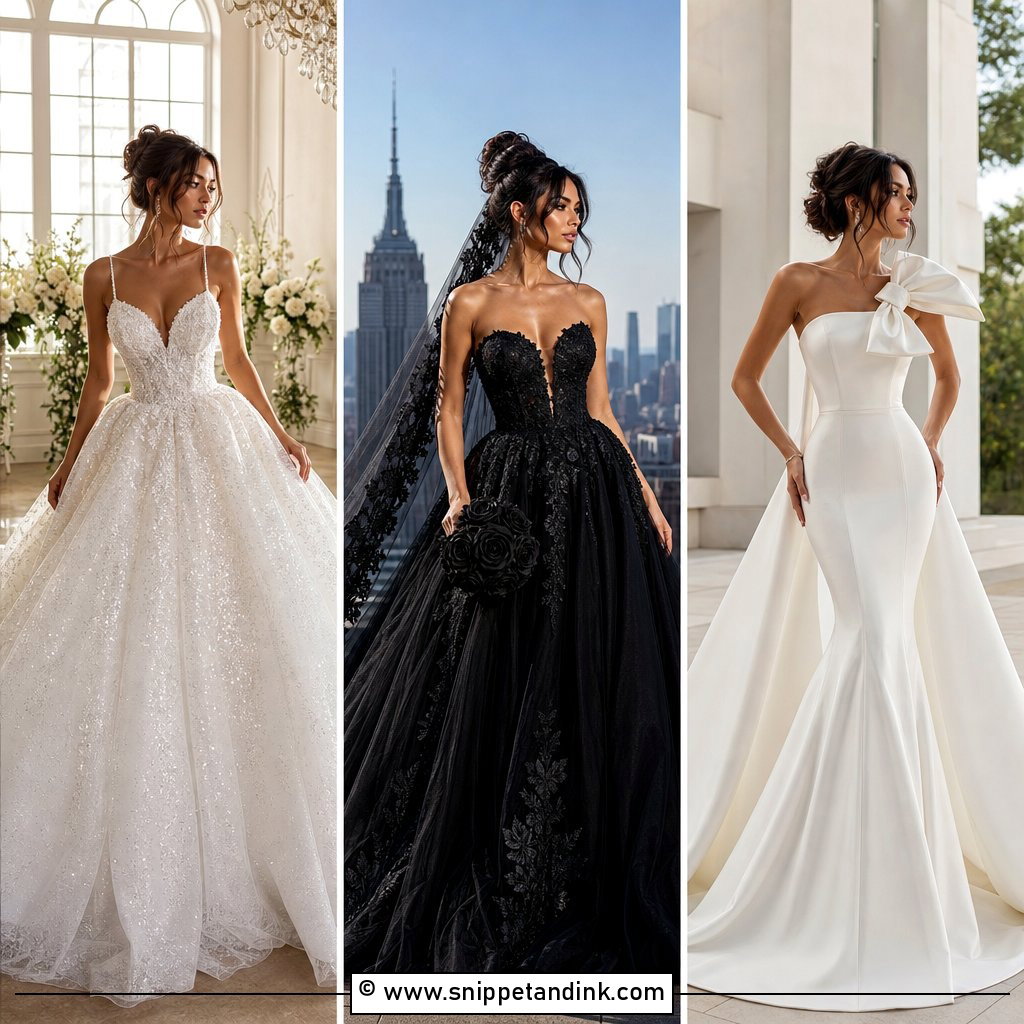
Black on a bridal base looks deliberate when it is used in small, sharp doses: velvet bows, black floral embroidery, a sash, or a printed black lace overlay on ivory. Clean silhouettes keep it formal. I’d match the black heels to the darkest detail on the gown so the outfit reads as one idea, and add pearls to soften the contrast. Galleries, hotels and evening receptions suit this best. Check with your photographer that they’re comfortable exposing for strong contrast; pure black and bright white in one frame is tricky in harsh sun.
8. Red Wedding Dress

Red has deep roots as a bridal color in several traditions, and on any bride it makes the entrance before she does. Crimson, cherry, burgundy, scarlet or a softer rose-red each change the mood; a plain satin gown keeps it modern, while lace or embroidery romanticises it. I always do a daylight test against your skin, because some reds turn orange outdoors and others go almost brown by candlelight. Metallic heels, sculptural earrings and polished hair. Red needs no other accessory competing for attention.
9. Short Wedding Dress With Veil

Short dresses look most bridal with a veil longer than the hem. That contrast is the whole trick. A mini or knee-length dress in lace, feathers, satin or structured tailoring, paired with a chapel or fingertip veil, reads as a wedding outfit from any angle. Pointed heels and pearl drops finish it. I recommend this for courthouse ceremonies, city elopements and reception changes, and to brides who simply want to dance freely. Mind the proportion: an elbow veil on a mini dress can look unfinished.
10. Two Piece Wedding Dress

Separates give you the most freedom. A lace crop top with a silk skirt, a structured bustier with wide-leg bridal trousers, or an embroidered top over tulle. My one rule is that the two pieces share something, a color, fabric, embellishment or neckline shape, so they look made for each other. Fit the top and skirt at the same appointment, because the gap between them changes with how high the waistband sits. Two-piece outfits are also easier to alter and wear again.
11. Wedding Dress With Cape

A wedding dress with a cape adds drama without a heavy gown underneath. Sheer, lace, satin, tulle, beaded or embroidered capes all sit differently, and the fastening matters most: a cape clipped only at the shoulders slides backward when you hug people, so I prefer one stitched into the neckline or secured with discreet hooks. A plain sheath with a long cape moves cleanly; a floral cape over a simple gown is more romantic. Detachable capes give you a second look for the reception.
12. Wedding Dress With Puff Sleeves

Puff sleeves frame the face, which is why they photograph so well in close portraits. They range from sheer and airy to structured and dramatic, and detachable versions let you change for the reception. Balance the volume with a fitted bodice and a clean skirt. One fitting check: lift your arms. Structured puffs can rise and crowd the jaw when you hold a bouquet at chest height. Soft waves, pearl studs and satin heels keep the rest simple.
13. Printed Satin Wedding Dress

Printed satin gives color with polish. The shine lifts the print, and the fabric drapes cleanly in a slip, bias-cut gown or long-sleeve silhouette. Painterly florals, soft botanicals, abstract patterns and muted vintage motifs all work; loud geometric prints tend to look like eveningwear. With bias-cut prints, the pattern runs diagonally, so ask how the seamstress will match it at the seams before any alteration. Simple heels and understated earrings. Intimate weddings and destination venues suit it.
14. Metallic Wedding Dress

Metallics suit brides who never felt drawn to white but still want something ceremonial. Champagne, silver, pale gold, rose gold and soft bronze all read as special. Keep the silhouette clean, a column, a wrap or a pleated dress, so the finish carries the look. Metallic fabric reflects whatever light it is in, warm under candles and cool in daylight, so I’d look at the fabric in both before committing. Smooth hair and sculptural earrings finish it.
15. High Low Wedding Dress

A high low hem gives you gown movement at the back and ease at the front. The shoes become part of the outfit, so choose them with the dress, not after. Layers of tulle, printed organza, ruffled satin or lace make it eclectic. I like this cut for outdoor weddings because it clears grass and garden paths, but check how the front hem falls when you walk down steps; a short front can flip up in wind.
16. Ruffle Wedding Dress

Ruffles bring volume and shadow, which is why they look so alive in photos. Every step changes their shape. For an eclectic take, look past classic tiers to asymmetrical ruffles, one-shoulder necklines, layered organza or colored edges. Ruffles crush easily in a car, so I’d sit the bride on the skirt’s edge or lay the back out flat when traveling. Sleek hair and small earrings stop the look from getting fussy.
17. Slip Wedding Dress With Statement Accessories

A slip dress is the blank canvas of eclectic dressing. Clean satin, silk or crepe gives you room to add a colored veil, a beaded capelet, bold earrings, embroidered gloves or metallic heels. I usually pick one accessory to carry the personality and keep the rest neutral. Fit is the hard part: bias-cut slips show every line beneath, so smooth, edge-free underwear and a fitting in those exact pieces are essential. City weddings, beaches and small ceremonies suit it.
18. Tea Length Wedding Dress

Tea length sits between the knee and ankle and has a strong 1950s feel. A full skirt, lace overlay, embroidered bodice or colored lining keeps it fresh. Because the hem shows your shoes, they become a feature: satin pumps, embellished flats or colored heels. A birdcage or short veil suits the length better than a long one. I find tea length is one of the most comfortable bridal lengths to wear all day, especially for daytime and courthouse ceremonies.
19. Ombre Wedding Dress

Ombre lets color creep in slowly, fading from ivory into blush, blue, lavender, peach, grey or a deeper jewel tone toward the hem. Tulle and chiffon carry the shift best because the layers blend it. I’d ask exactly where the fade begins: a gradient that starts at the knee looks graceful, one that starts at the waist can look like two dresses. Neutral heels, delicate earrings and a bouquet that echoes the hem color tie it together.
20. 3D Floral Wedding Dress

Raised flowers, fabric petals and applique add depth without color. The dress looks rich close up and still has texture from the back row. A fitted bodice with a soft skirt keeps it balanced; flowers scattered across the whole dress make a bolder statement. Three-dimensional flowers do flatten when crushed, so I keep them away from the back of the skirt where you sit, and pack the dress with tissue between the petals. Refined shoes and jewelry let the texture lead.
21. Bridal Jumpsuit With Overskirt

A jumpsuit with an overskirt gives you two outfits in one fitting. The overskirt creates a gown silhouette for the ceremony, then comes off for a sleek reception look. Lace, crepe, satin and mikado all work. Practise unhooking the overskirt before the day; some fastenings need a second pair of hands, and someone in the bridal party should know how they work. Pointed heels, statement earrings and a clean veil keep it bridal. Brides who don’t love dresses tend to feel most like themselves in this.
22. Blush Pink Wedding Dress

Blush is the color I see most often from brides trying color for the first time. It works in satin, tulle, lace, chiffon or organza and pairs with ivory, rose gold, pearl and champagne accessories. A blush ball gown feels fairytale, a blush slip modern. Pale blush can disappear on camera against warm skin tones, so check a fabric swatch next to your face in daylight. A bouquet in cream or muted pink keeps the palette soft.
23. Blue Wedding Dress

Blue gives a cool, calm mood. Pale, powder, dusty, slate or icy blue each shift the feeling, and a blue tulle gown reads dreamy while a satin column reads sleek. Silver or pearl accessories suit it, and white or blue accents in the bouquet. Some brides choose it as their something blue. Watch the lighting: icy blue looks grey under yellow indoor bulbs, so coastal and daylight weddings flatter it most.
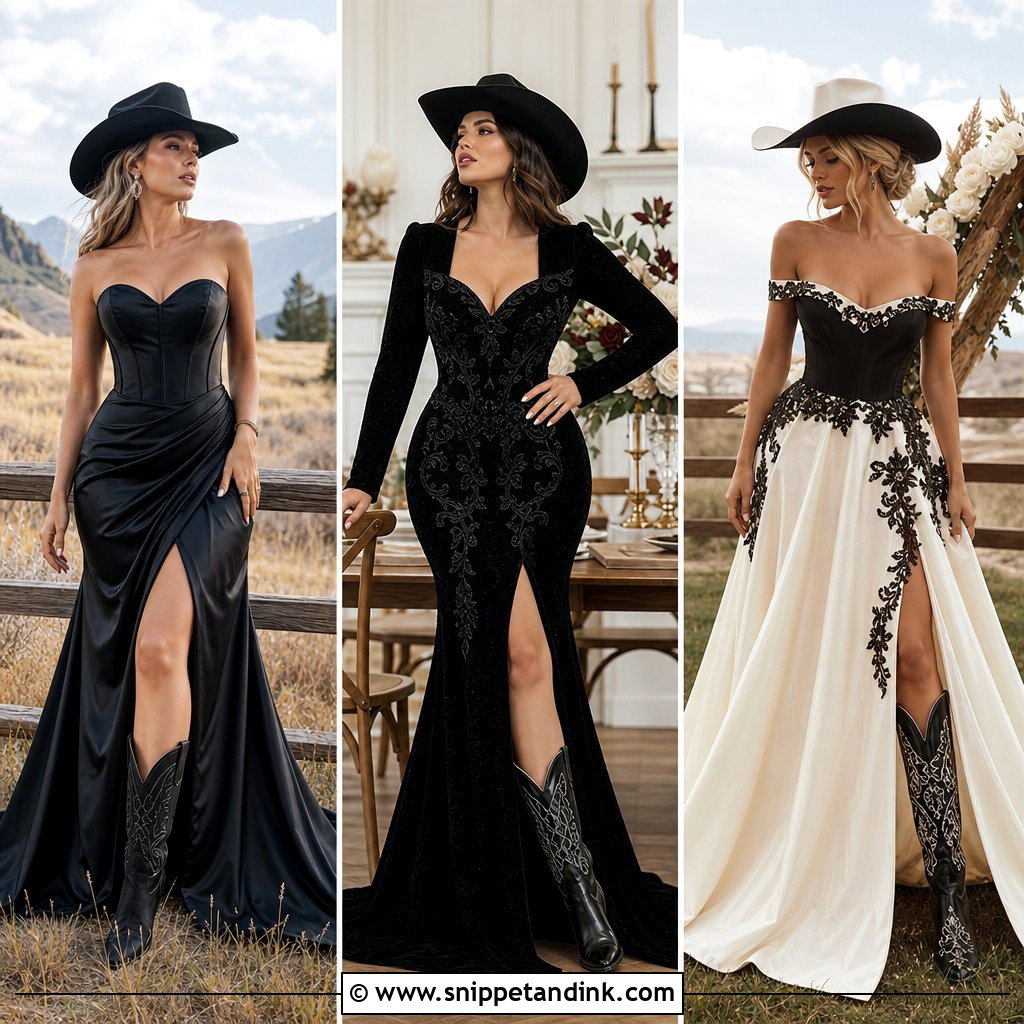
24. Western Wedding Dress With Boots

A western wedding dress with boots pairs lace, embroidery, fringe or cotton eyelet with polished bridal boots. Fit the boots before the hem is set, because a boot heel is usually lower and chunkier than a bridal heel and changes the length. A wide-brim hat can work at some venues, but I’d keep the themed details to one or two. Turquoise jewelry or a denim jacket for photos adds personality. Ranch, mountain and outdoor weddings suit it.
25. Colorful Veil Wedding Dress

A colored veil keeps the gown classic and puts all the eclectic energy into one piece. Start with a white, ivory or champagne dress, then add a veil in blush, red, blue, lavender, black or embroidered multicolor tulle. Color concentrates where veil tulle folds and gathers, so a pale veil looks stronger at the comb than at the edge. I tie the shoes or jewelry back to the veil color so it looks planned. In outdoor wind, a colored veil gives the photographer real movement to work with.
Ordering Color, Print and Sequins Without Surprises
Unconventional fabrics bring practical problems that a plain ivory gown never does. Most of them show up at ordering or alterations, and most are avoidable if you ask early.
Swatches before samples
Shop lighting is flattering and rarely matches your venue. I ask for a fabric swatch of any colored gown and look at it by a window, under warm indoor light and on a phone camera. Colors that shift dramatically between those three will shift in your photos too.
Alterations cost more on decorated fabric
Sequins, beading, three-dimensional flowers and large prints all slow a seamstress down. Embellishment has to come off along a seam and go back by hand, and a print has to line up again after it is taken in. Budget extra time and money for these, and get a quote at the first fitting rather than the last.
- Order colored and custom gowns early; dyed and made-to-order pieces often take longer than stock ivory.
- Ask whether a colored gown is dyed in one batch, so a replacement panel will match.
- Request extra fabric or spare sequins with the order for repairs.
- Steam rather than iron prints and metallics, and test on an inside seam first.
Mixing Eras and Colors Comes Down to Editing
An eclectic look is never about being different for its own sake. It is about dressing for your taste, your venue and the feeling you want to carry into the day. Color, texture, vintage shapes, modern tailoring and expressive accessories all work together once one of them leads. My process is always the same: decide the statement, then build the shoes, veil, jewelry, bouquet and hair quietly around it. If an accessory doesn’t support the statement, it goes.
You'll Like These Ideas:


Leave a Reply