
Plenty of brides now skip the expected white gown altogether. Bridal and eveningwear designers are making color, prints, short hemlines, tailored separates, metallic finishes and convertible pieces, and jumpsuits and sparkling reception looks are showing up far more often than they used to. Going unconventional raises more styling questions than a white gown does, not fewer. Color reads differently on camera, unusual fabrics need different care, and short or tailored pieces put more weight on shoes and fit. Before you commit, think about the season, the ground you’ll be walking on, the dress code and how much moving you’ll do. The twenty looks below are styled head to toe, from romantic to gothic, with the practical checks I’d make on each.
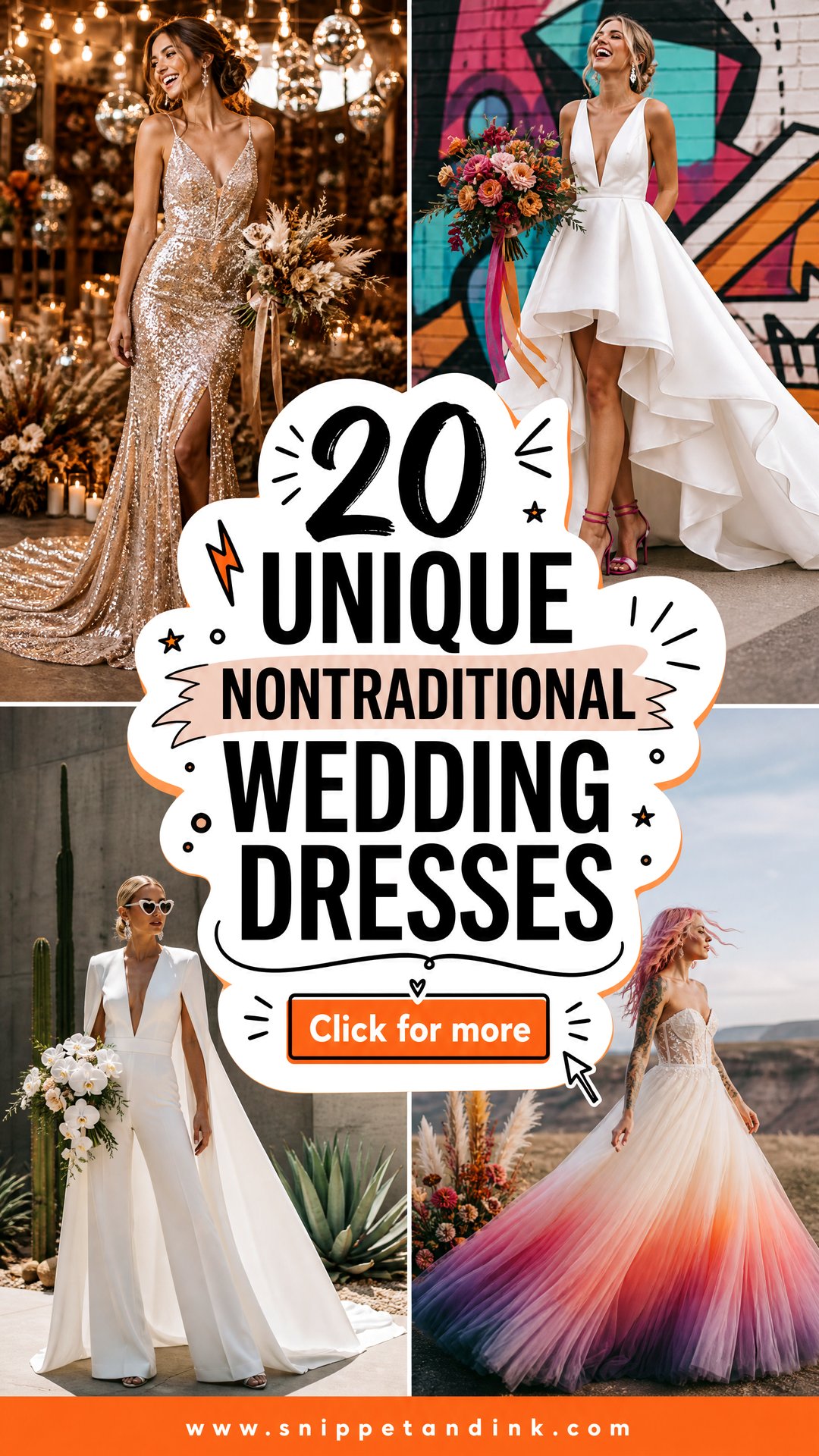
Testing a Color Against Your Skin Before You Order
White and ivory are forgiving because they sit on almost anyone. Color is personal, and the shade that looks fabulous on a hanger can drain your face. Before ordering, I run the same three checks with every bride who’s leaving white behind.
- Daylight first. Stand by a window with the fabric under your chin. If your skin looks grey or sallow, the undertone is wrong, even if you love the color.
- Then flash. Take a phone photo with the flash on. Metallics, satins and some blues and greens shift noticeably under direct light, and your evening photos will use it.
- Then your wedding makeup. A trial face changes how a color reads. Bring the swatch to your makeup trial or wear the makeup to a fitting.
Ask for a fabric swatch to take home. Dye lots vary, so if you’re ordering a made-to-order color, it’s fair to ask whether the final gown will be cut from the same batch you approved.
1. Black Lace Wedding Dress
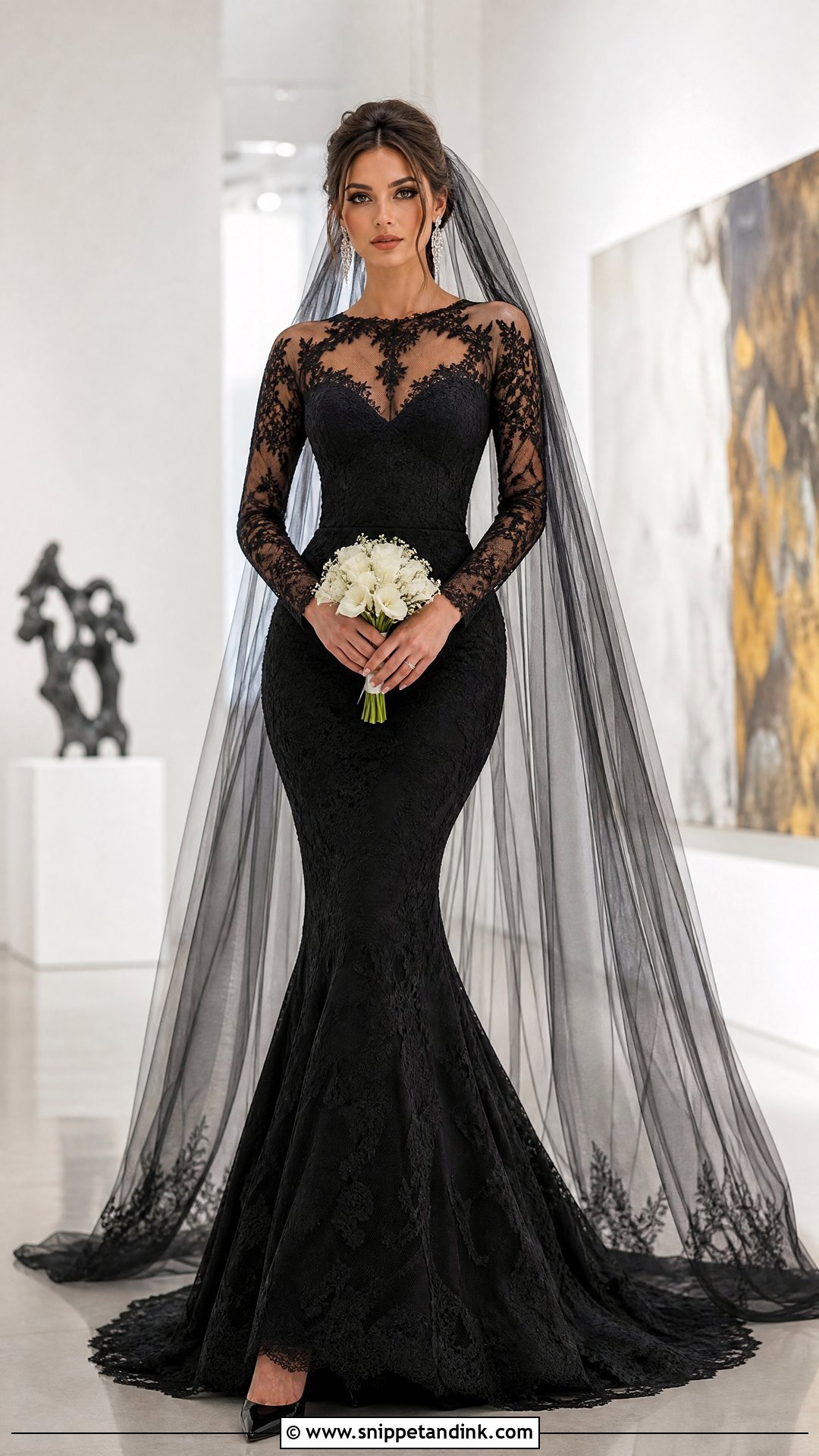
Black lace is dramatic, and it can still feel romantic if the lace has real texture. In dim rooms, flat black fabric swallows detail and photographs as a silhouette, so I’d pick lace with raised cording or a visible pattern and lay it over a nude, grey or black lining depending on how much contrast you want. A fitted trumpet suits evening; a structured A-line is easier to move in. Pointed black heels, crystal drops and a small white bouquet give the eye a bright point. A sheer black veil pushes the drama, while an ivory veil softens it. Ask your photographer to plan lighting for the evening portraits.
2. Floral Embroidered Wedding Dress
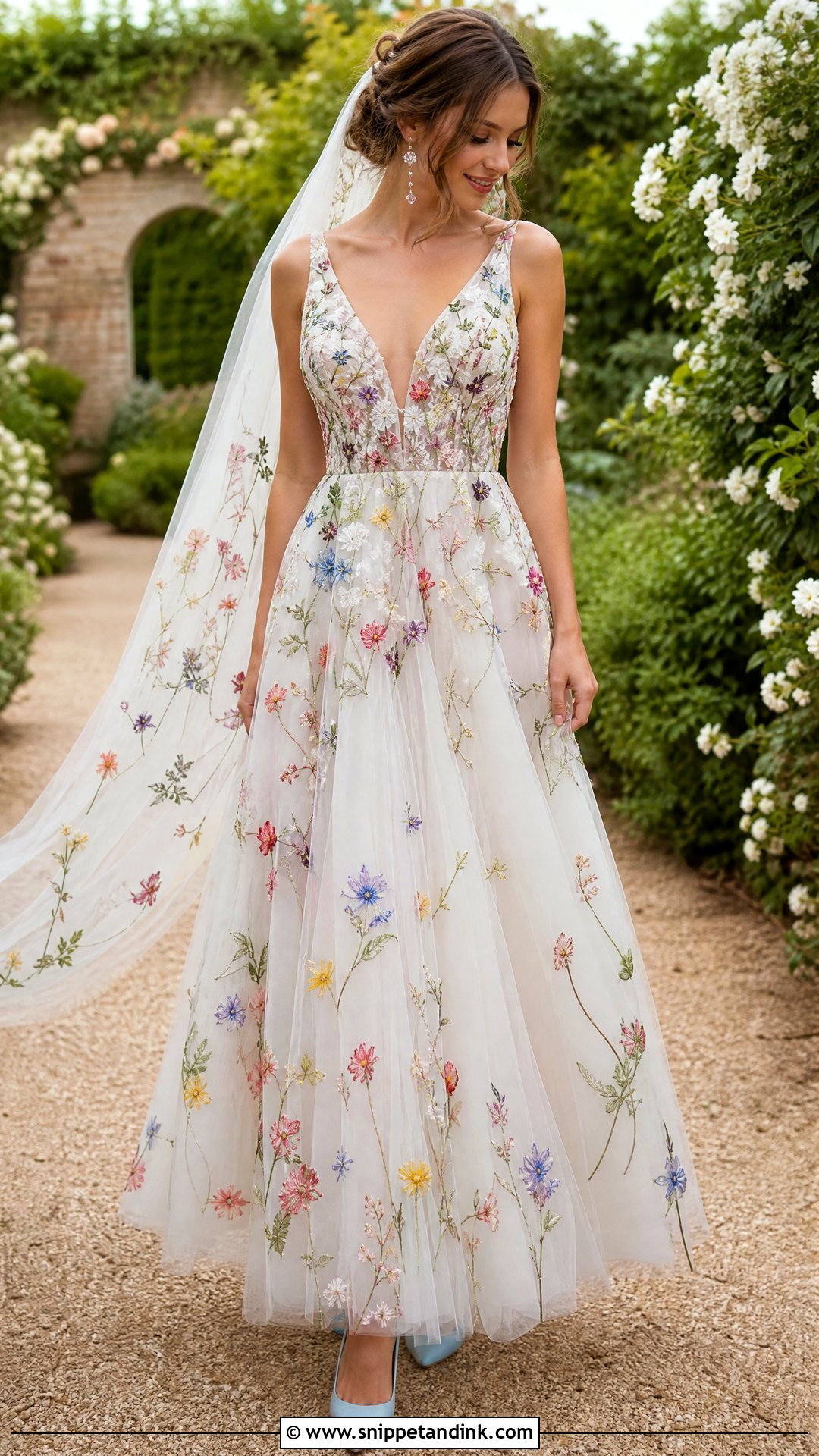
Colored embroidery makes a gown feel like it belongs to one person and one place. Look for soft tulle worked with vines, wildflowers or raised appliqués, over a fitted bodice and an airy A-line skirt. The trick to styling it is restraint: pull a single shade from the embroidery into your shoes, earrings or bouquet ribbon, and stop there. Nude heels keep the fabric the focus; pale blue or pink shoes add a second note. If you add a veil, keep it plain tulle or have one flower from the dress repeated at its edge. Embroidered thread can pucker when it’s steamed too hard, so ask the shop to handle pressing. Gardens and greenhouses are its natural home.
3. Blush Pink Wedding Dress
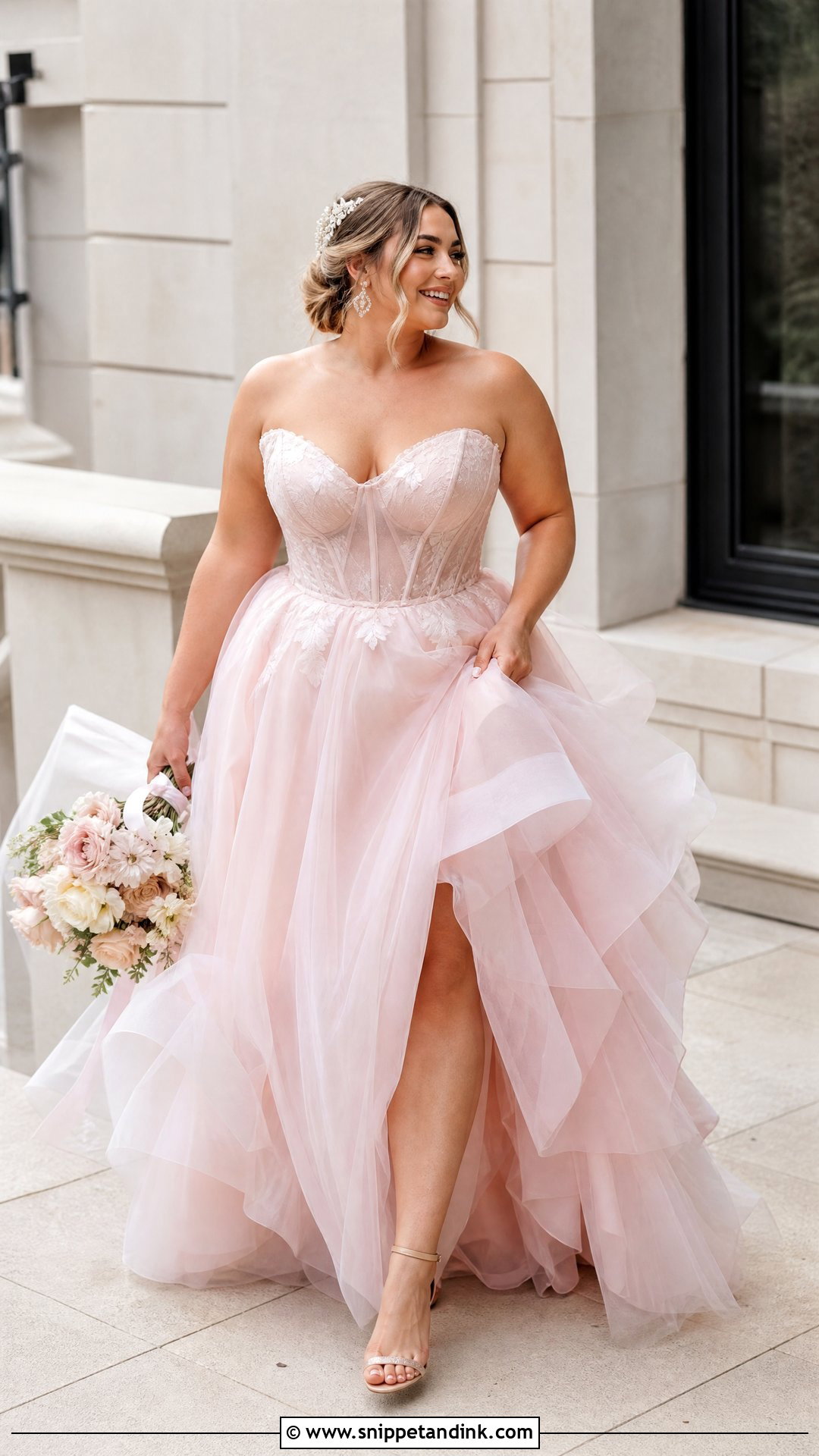
Blush is the gentlest step away from white, and the undertone decides whether it works. Cool dusty pink flatters pink-toned skin; warm peachy blush suits golden or olive skin, and the wrong one can make you look washed out next to it. A layered blush tulle gown with a fitted corset bodice gives definition and movement. Metallic champagne sandals, rose-gold earrings and a pearl comb keep the look light, and a bouquet with cream and muted green stops the palette going sugary. Tonal beading or soft appliqués add depth. Finish with a sheer fingertip veil, or skip it for a structured bow.
4. Blue Satin Wedding Dress
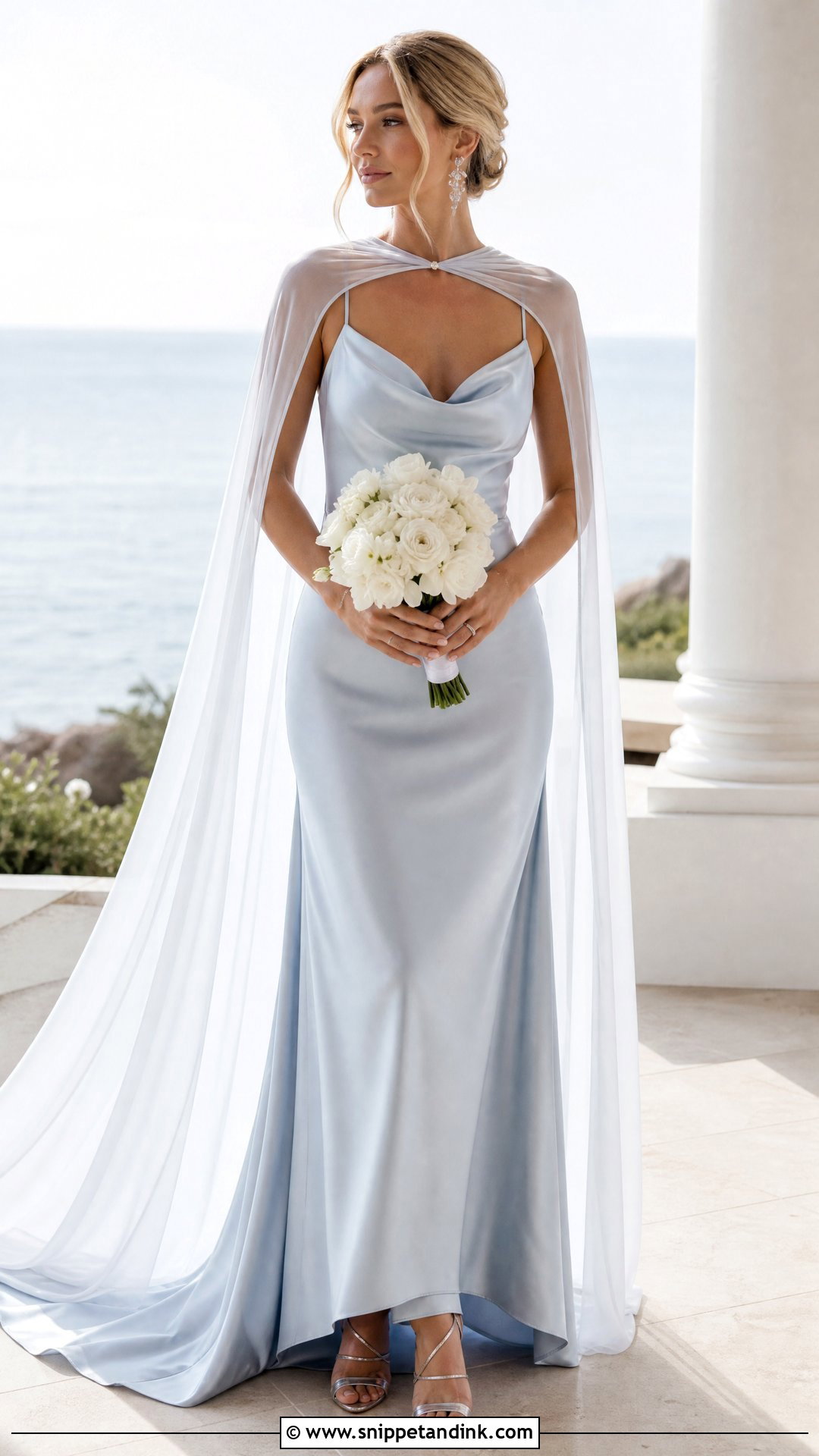
Blue satin is unexpected without shouting. Powder blue reads soft; navy or sapphire is an evening statement. A bias-cut slip is the classic shape, because cutting on the bias makes satin drape and skim the body, and that’s also why it shows every seam and every line underneath. I tell brides to budget for smooth undergarments and careful tailoring before anything else. Silver strappy heels, crystal earrings and a compact white bouquet suit it. If the neckline is plain, a removable sheer cape gives the ceremony some movement. For more coverage, look for draped sleeves, a cowl back or a matching long coat. A low bun or polished waves keep the line clean.
5. Red Off-Shoulder Wedding Dress
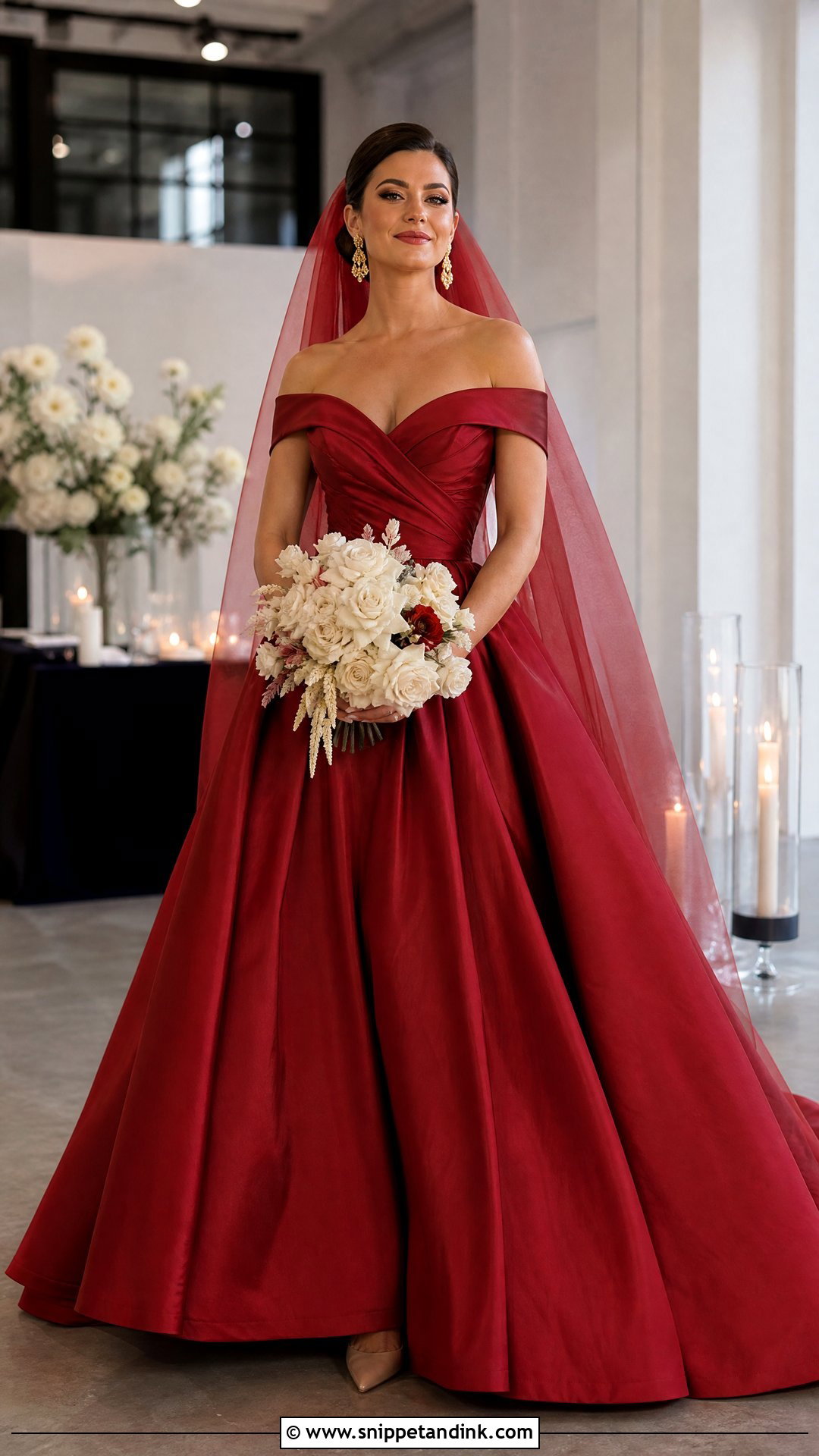
Red carries strong meaning at many weddings, and it’s a traditional bridal color in several cultures, so it rarely looks out of place. An off-shoulder gown with a fitted waist and full skirt balances drama with structure. Cherry red is vivid, burgundy feels autumnal and deep crimson suits formal evenings. Keep accessories deliberate: gold earrings, neutral heels and a sleek clutch. A tonal red veil looks high-fashion; no veil keeps the neckline clean. Carry cream flowers with small red accents rather than a fully matching bouquet. Off-shoulder bands on a heavy full skirt can restrict your arms, so dance in it at the fitting. Soft waves or a low chignon complete it.
6. Silver Metallic Wedding Dress
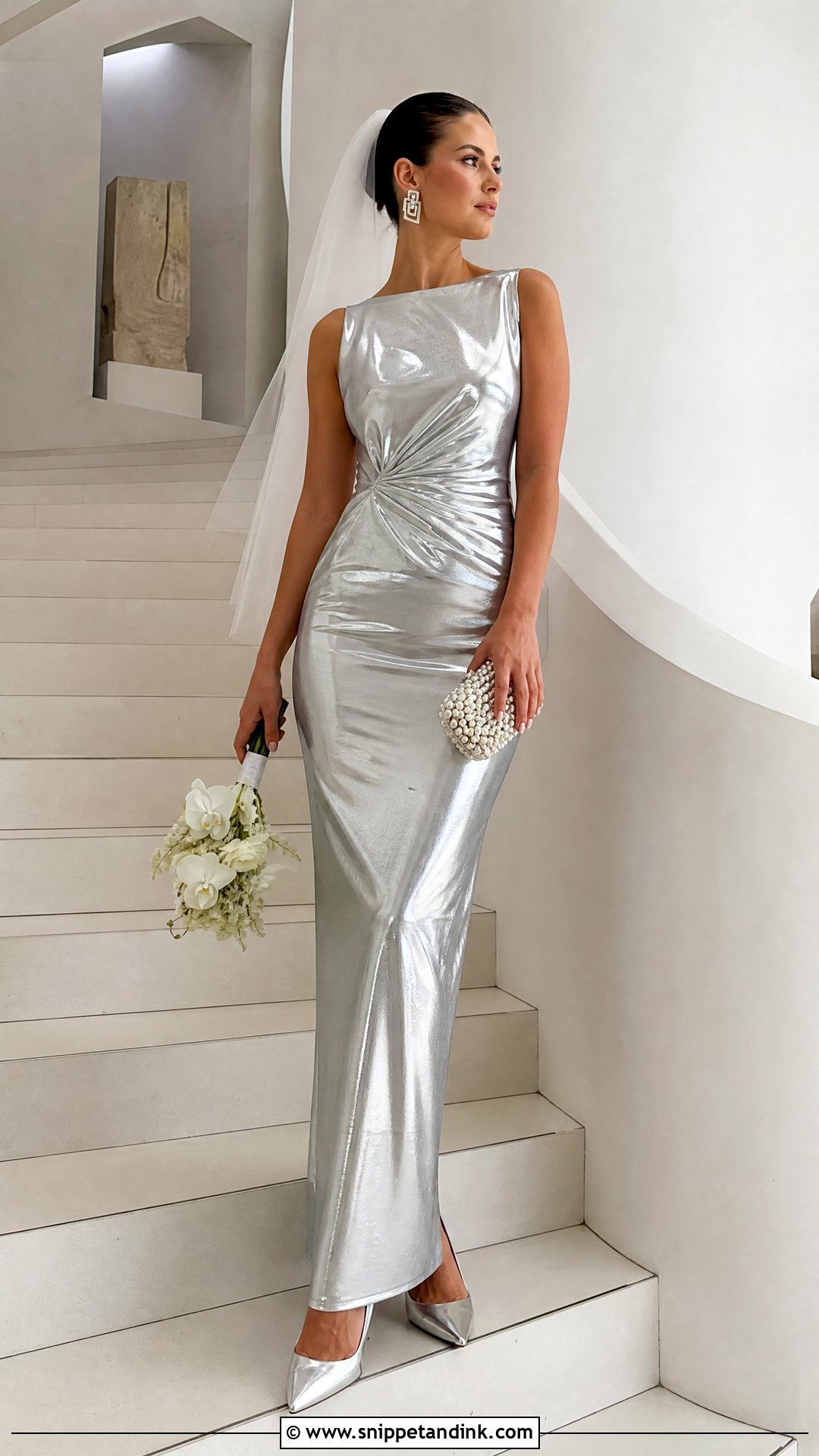
Silver is the fabric acting as jewelry, which means everything else should step back. Lamé, metallic jacquard and fine sequins each reflect light differently, and a metallic that looks soft in a showroom can turn harsh under a camera flash, so look at the fabric both outdoors and under strong indoor light before deciding. A fluid column feels sleek; a pleated A-line moves more. Wear silver heels, geometric earrings and a mirrored or pearl-trimmed clutch, and carry a plain white bouquet as a visual break. Add a sheer veil or light cape for the ceremony. A polished ponytail or smooth bun keeps it crisp at rooftops, museums and evening venues.
7. Champagne Sequin Wedding Dress
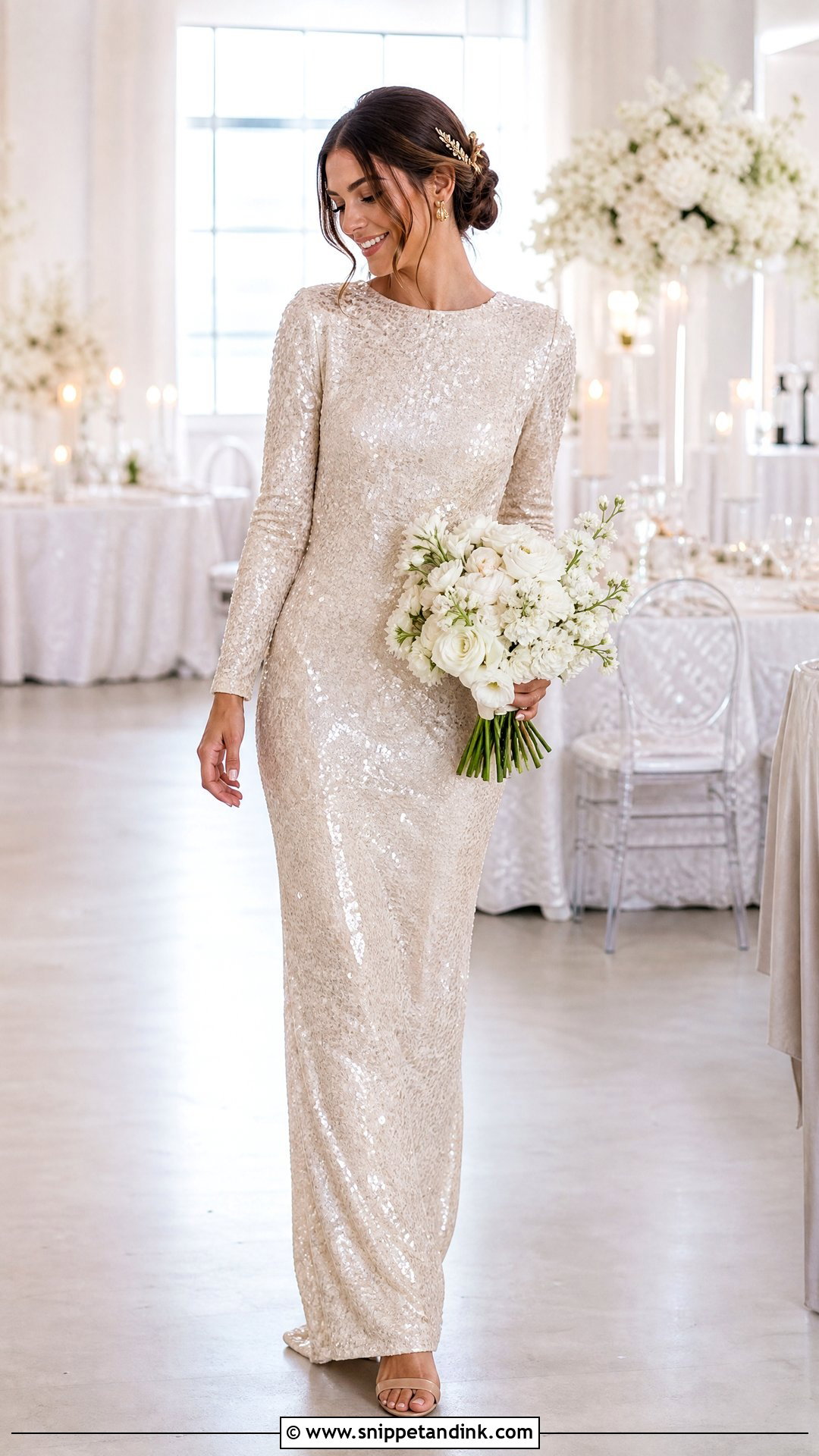
Champagne sequins are warmer than silver and softer than ivory. A long-sleeved column gives coverage; a sleeveless fitted design is easier to dance in. Small, evenly placed sequins give shimmer without tipping into stage costume. Sequins scratch, though, especially on the inner arms, and that’s where cheaper gowns cut corners on lining. I ask brides to sit, hug and swing their arms in the fitting room for a full minute; if the inside of the arm stings, the lining isn’t good enough. Nude heels, delicate gold earrings and a cream satin clutch suit it, with white flowers and soft greenery. Keep hair simple, finished with a minimal veil or a gold pin.
8. Polka Dot Tea-Length Wedding Dress
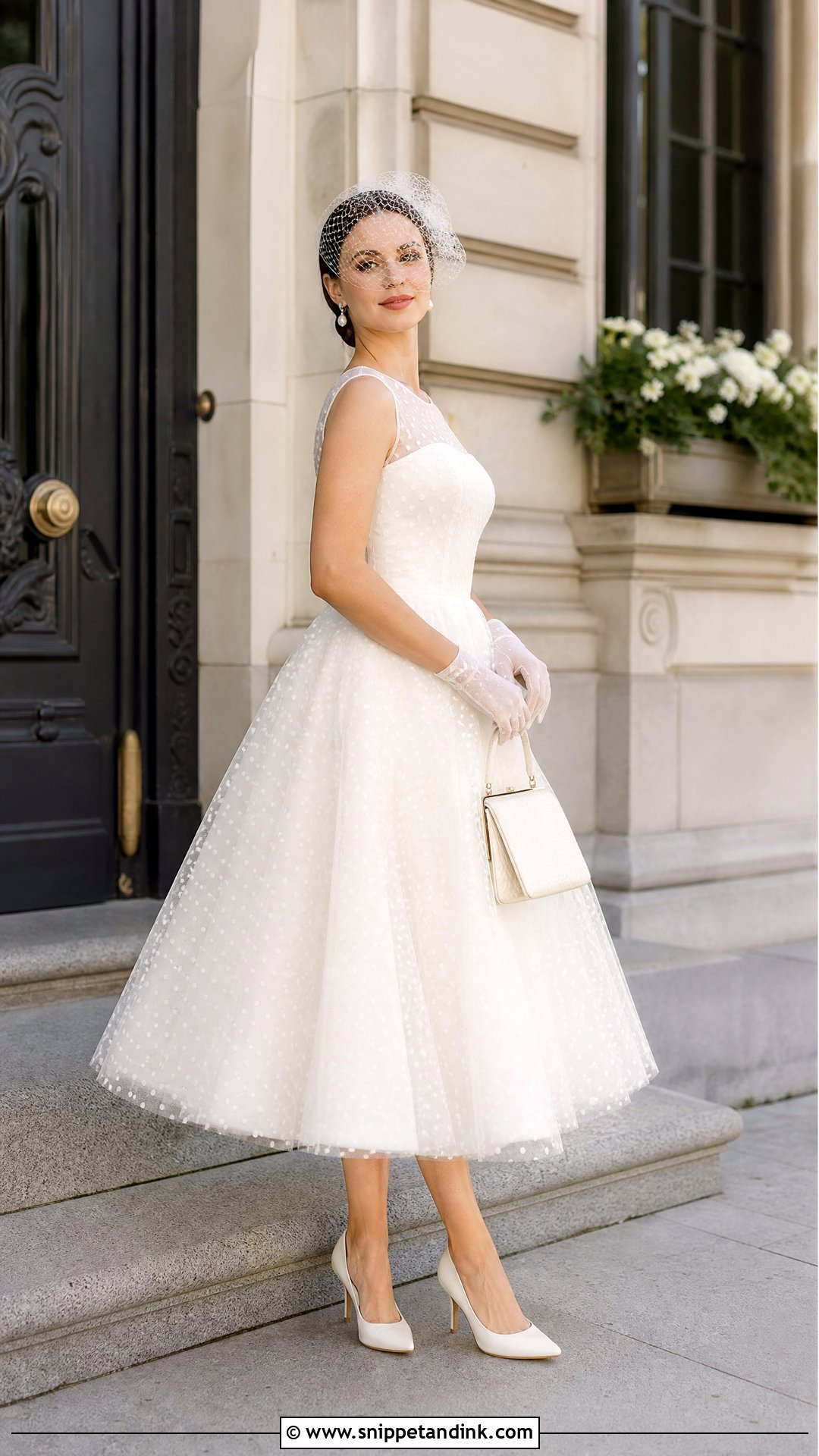
Polka dots bring a wink of vintage. A dotted tulle tea-length wedding dress over a fitted bodice lands between knee and ankle, which puts the shoes on show, so choose satin pumps, embellished flats or ankle-strap heels you actually love. Retro styling tips into costume quickly. Pick two vintage cues, perhaps pearl earrings and short gloves, rather than piling on every one. A birdcage veil is the classic finish; a velvet headband feels more relaxed. Check where the hem hits in your shoes, since the narrowest point of the calf is usually the most flattering. It suits courthouse ceremonies, restaurant receptions and venues with lots of stairs.
9. Wedding Mini Dress With Bow
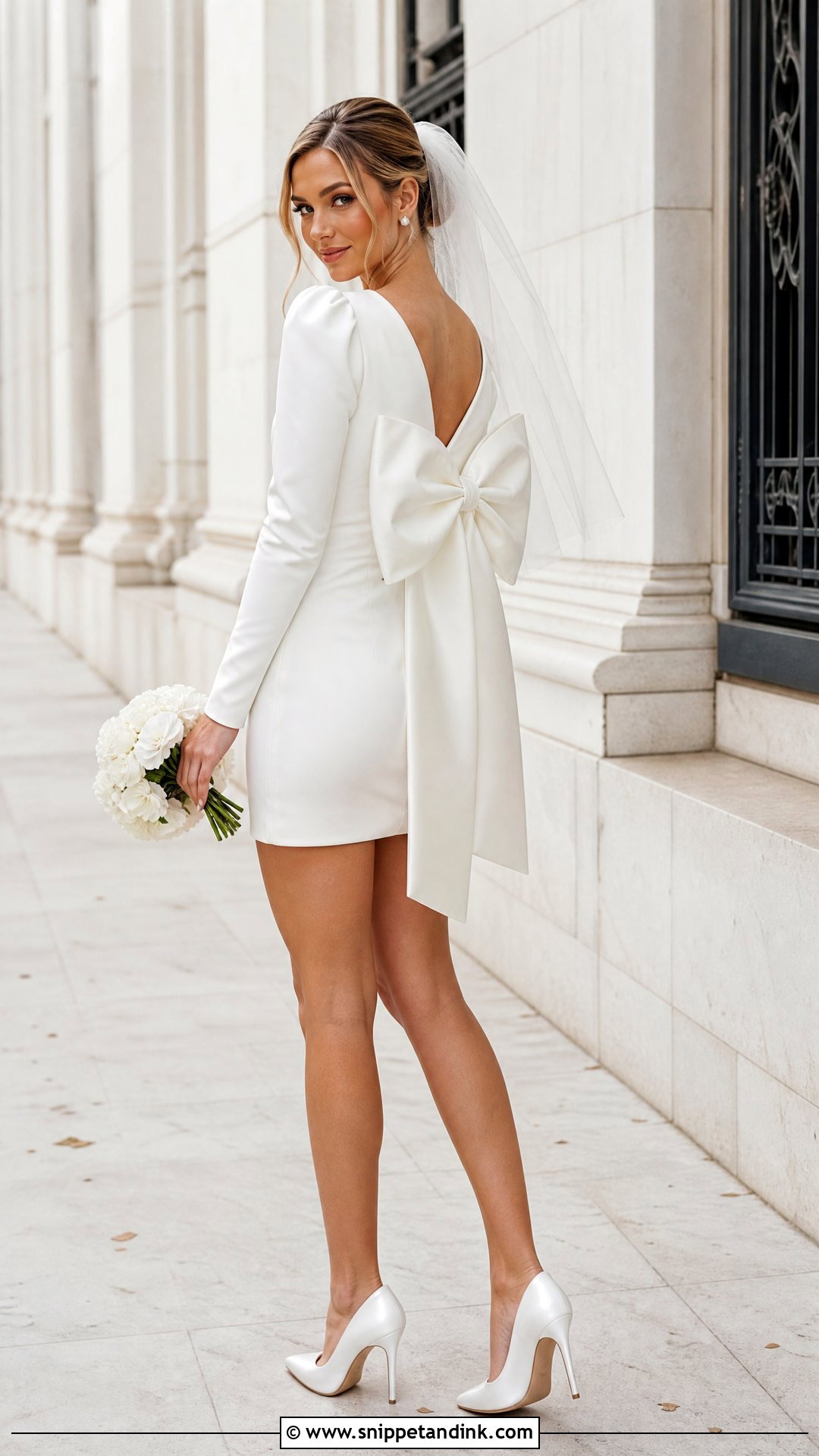
A mini needs strong proportions to read as a wedding look rather than a party dress. A structured shift, fitted sheath or flared mini with an oversized back bow gets there, since the bow gives movement and a reason to watch you walk away. Big bows on stiff fabric need an internal stay or they droop by evening, so ask how it’s supported. Pointed pumps suit a short ceremony; low block heels are kinder if you’ll stand for hours. Sheer tights add coverage in cooler months. Pearl studs, a compact bouquet and a short veil that clears the bow finish it. If the hem is very short, long sleeves or a higher neck balance it.
10. High-Low Wedding Dress
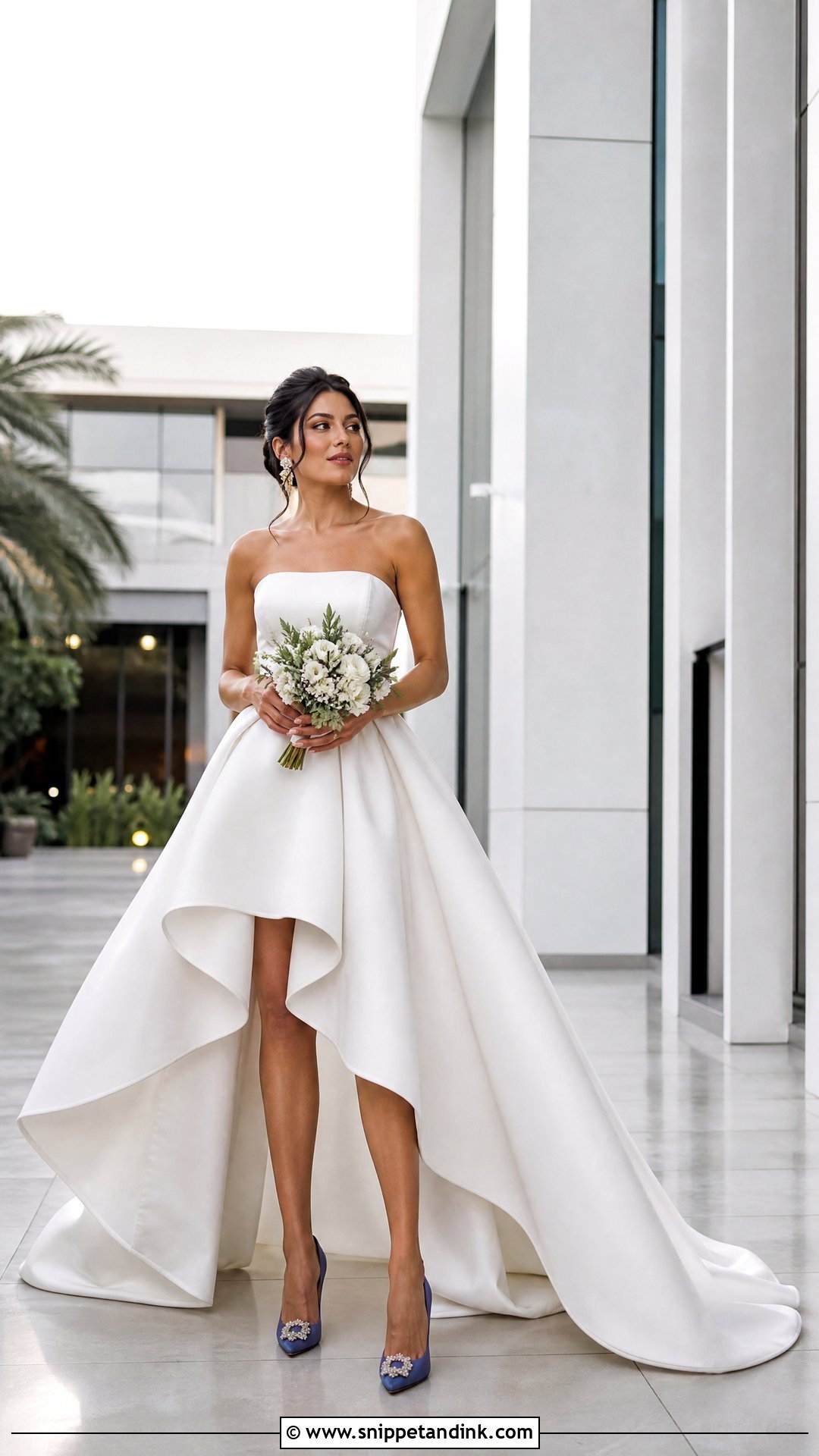
A high-low dress gives formal drama at the back while the front stays clear of your feet. Look for a sculpted skirt, short in front, sweeping long behind, with a clean strapless bodice; an asymmetric neckline pushes it toward editorial. Your shoes will be seen all day, so embellished pumps, colored heels or even sleek ankle boots earn their place. Carry a small bouquet that doesn’t cover the shorter front. The back hem needs a bustle or a wrist loop for the reception. One thing that catches brides out: the lining of a high-low is visible when the skirt moves, so check it’s finished as neatly as the outside.
11. Cape Wedding Jumpsuit
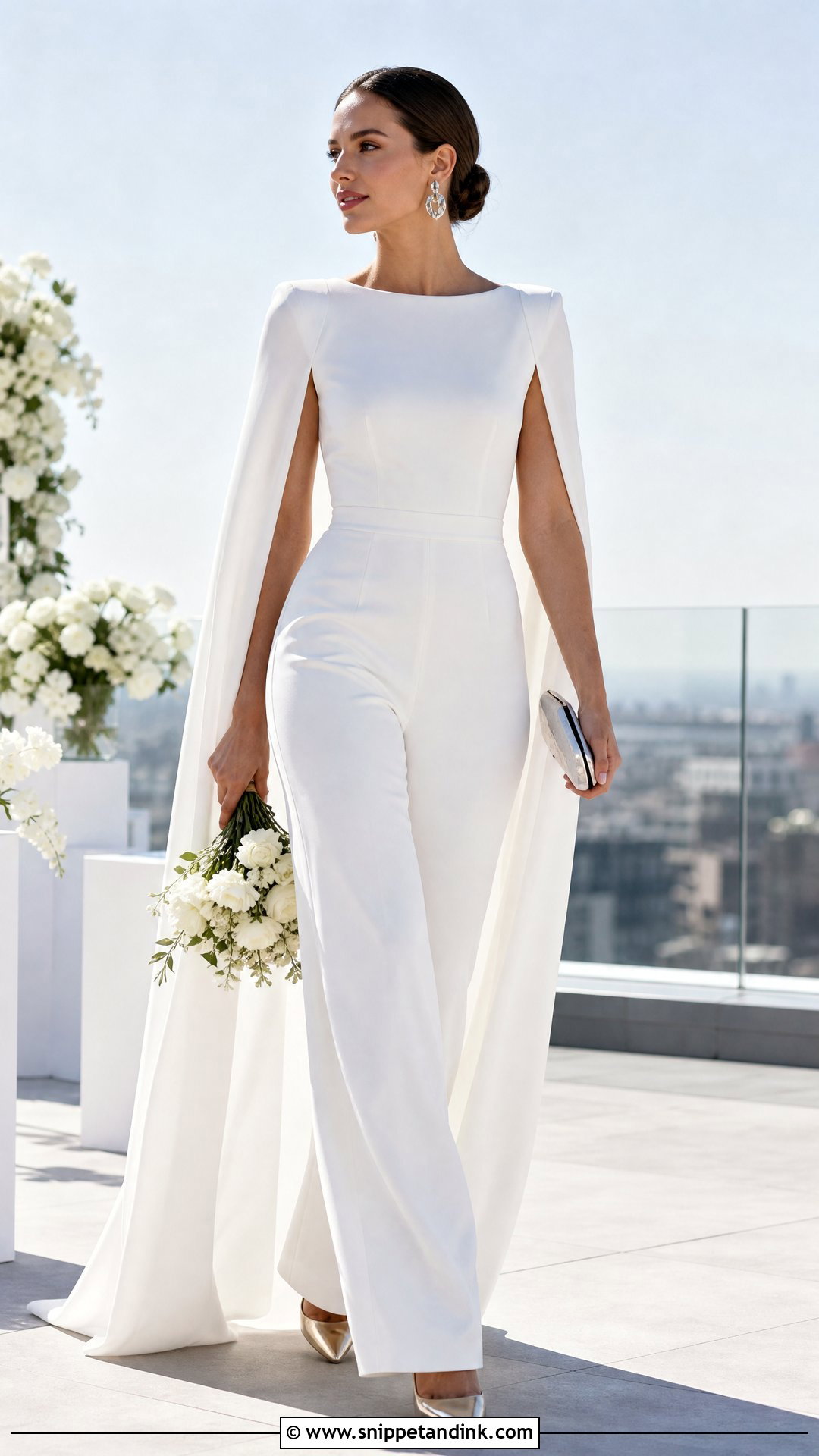
A jumpsuit with a cape gives you tailoring and ceremony in one. The fitted bodice and wide-leg trousers make a long line, and a cape fixed at the shoulders takes the place of a veil. Torso length is the make-or-break measurement on any jumpsuit. If it’s even slightly short, the crotch pulls when you sit and the straps dig in when you raise your arms, so test both in the fitting room and ask for extra length in the body if needed. Pointed heels, metallic earrings and a slim clutch suit it, with a compact bouquet that leaves the waist visible. Thicker straps or a blazer-style bodice give more support. After the ceremony, unhook the cape and switch to platform shoes for dancing.
12. White Bridal Pantsuit
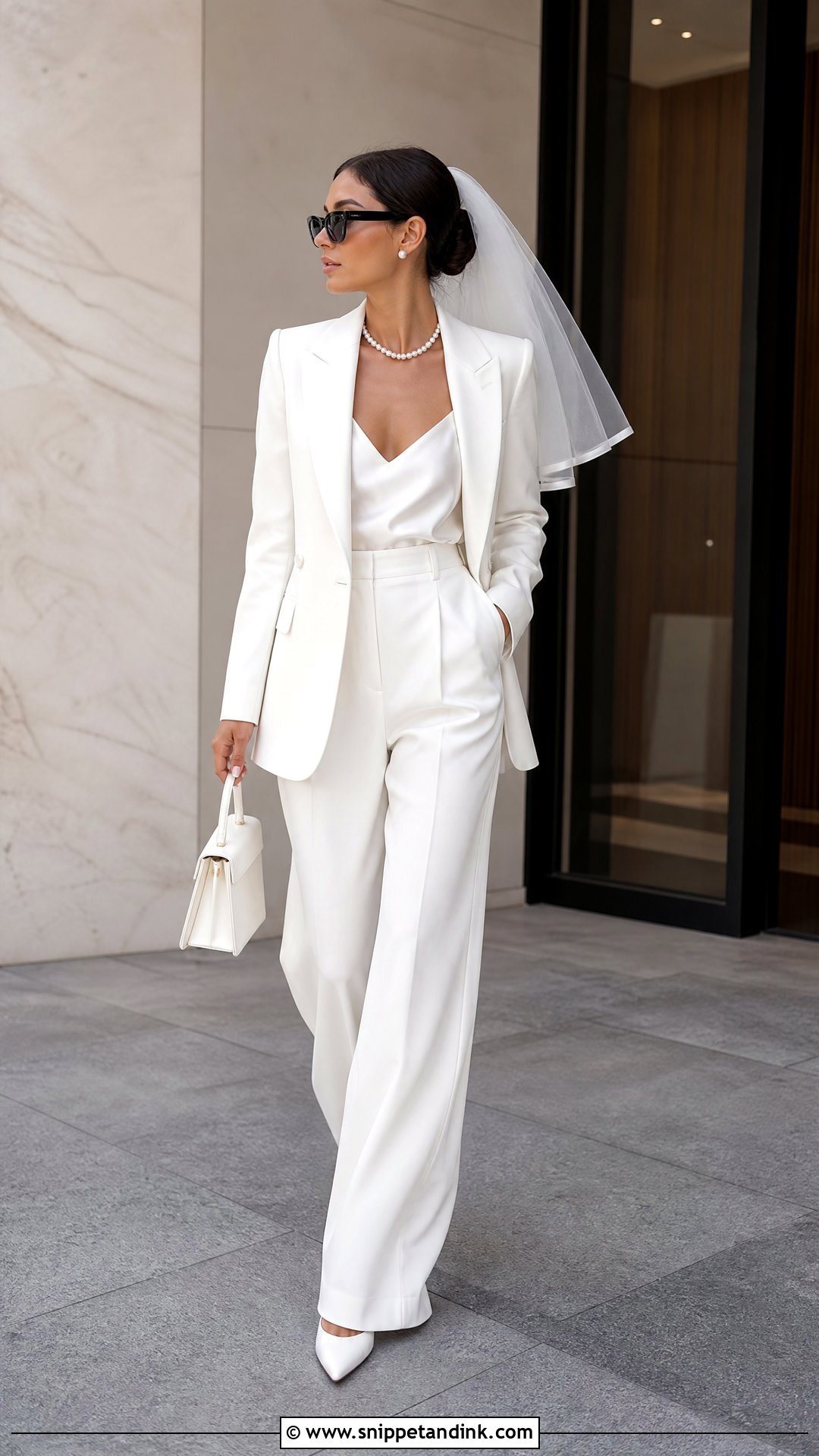
A white bridal pantsuit is all about tailoring. Choose a sharp blazer with straight or wide-leg trousers, then a silk camisole, fitted bustier or high-neck shell underneath. The jacket should button without pulling into an X across the front, and the trouser hem should just kiss the top of your shoe, so I always hem with the exact pair you’ll wear. White suiting shows any marks, so a jacket with a slightly heavier weave hides creases better than thin linen. Pointed pumps look classic; loafers or embellished flats are kinder for a long day. A pearl necklace, sculptural earrings and a structured mini bag finish it, with a short veil or wide-brim hat to signal bride.
13. Two-Piece Wedding Dress
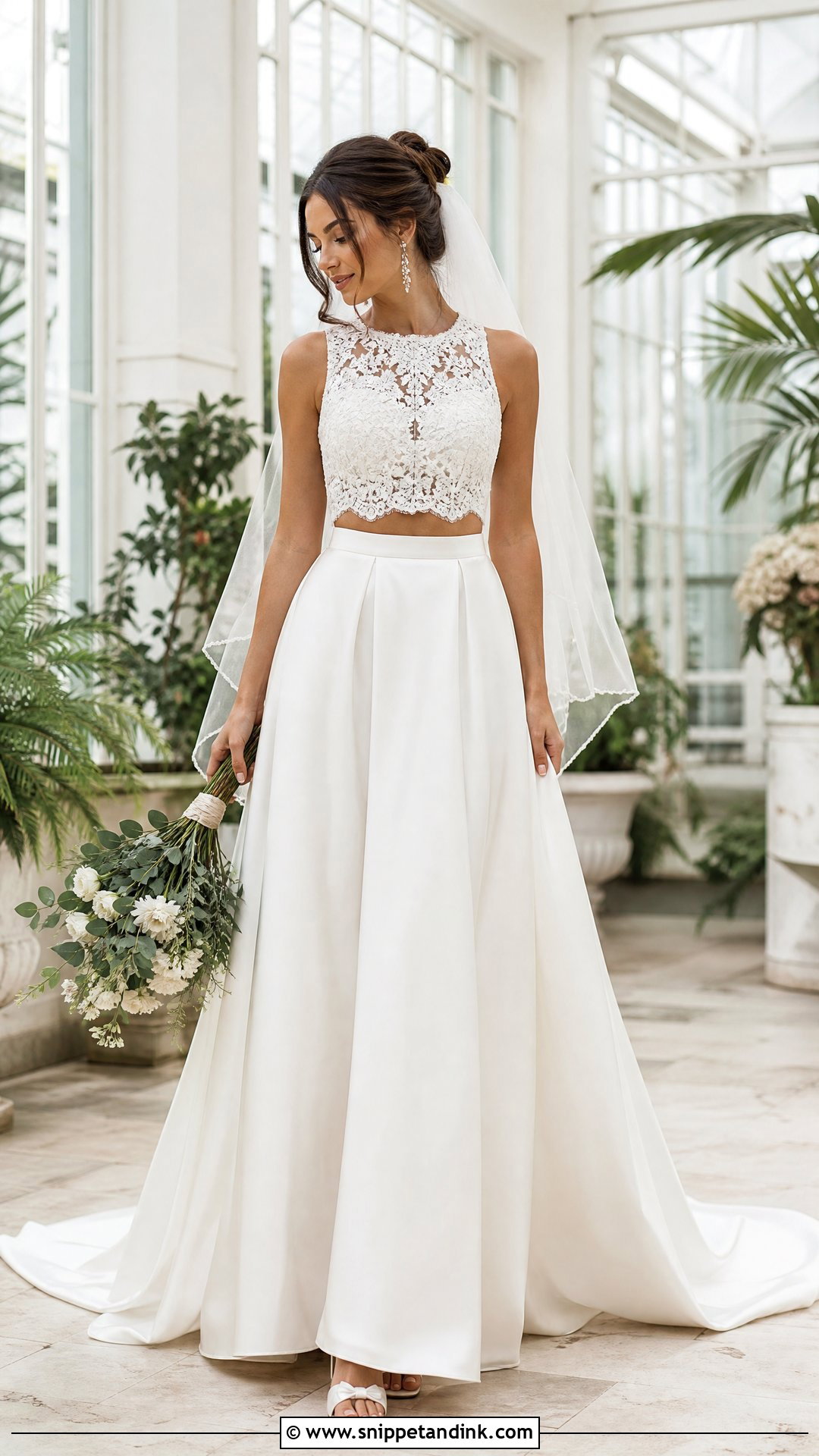
Two pieces let you mix texture and coverage. A structured cropped top over a high-waisted skirt shows only a narrow band of skin; lace with satin gives contrast, and matching crepe looks minimal. The common problem is movement: tops ride up and skirts rotate as you walk and sit. A small hook or a couple of snaps joining the two inside the waistband stops it, and it’s a quick job for a seamstress. Low heels, drop earrings and a fingertip veil under a loose bun suit it. For full coverage, choose a top that meets the waistband or add a sheer fitted layer underneath. Afterwards, each piece can be worn again on its own.
14. Convertible Overskirt Wedding Dress
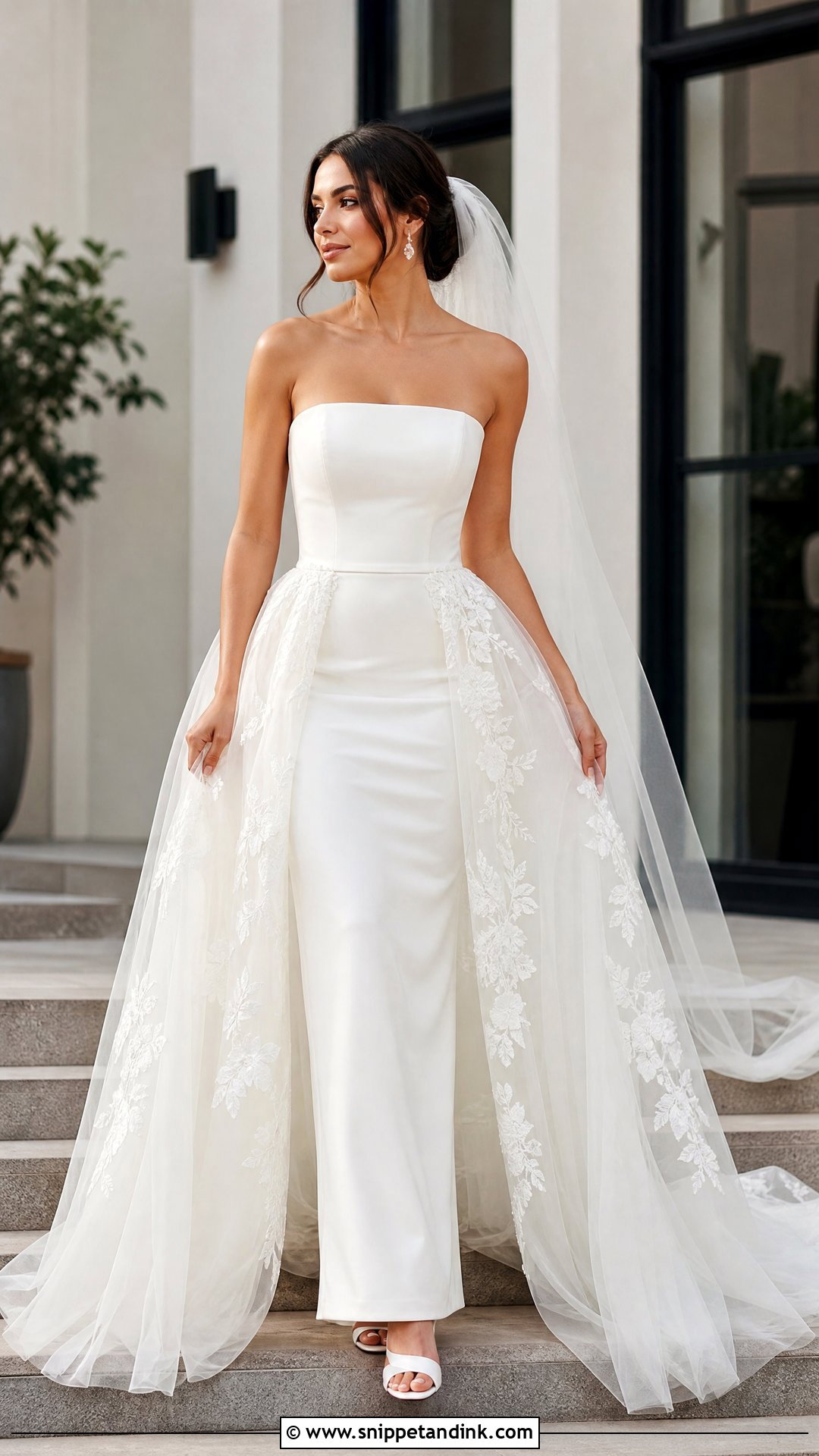
A convertible dress gives two silhouettes without a full outfit change. Start with a fitted mini, a column or even a jumpsuit, and add a full overskirt for the ceremony. Tulle feels airy, satin structured, embroidered fabric adds color. The attachment is the part to judge. It should sit flat with no ridge at the waist, and someone other than you should be able to unfasten it quickly, because you can’t see your own back. Wear classic heels, understated jewelry and a long veil for the ceremony. At the reception, remove the overskirt and veil, then switch to statement earrings and comfortable shoes for dinner and dancing.


15. Feather-Trimmed Wedding Midi Dress
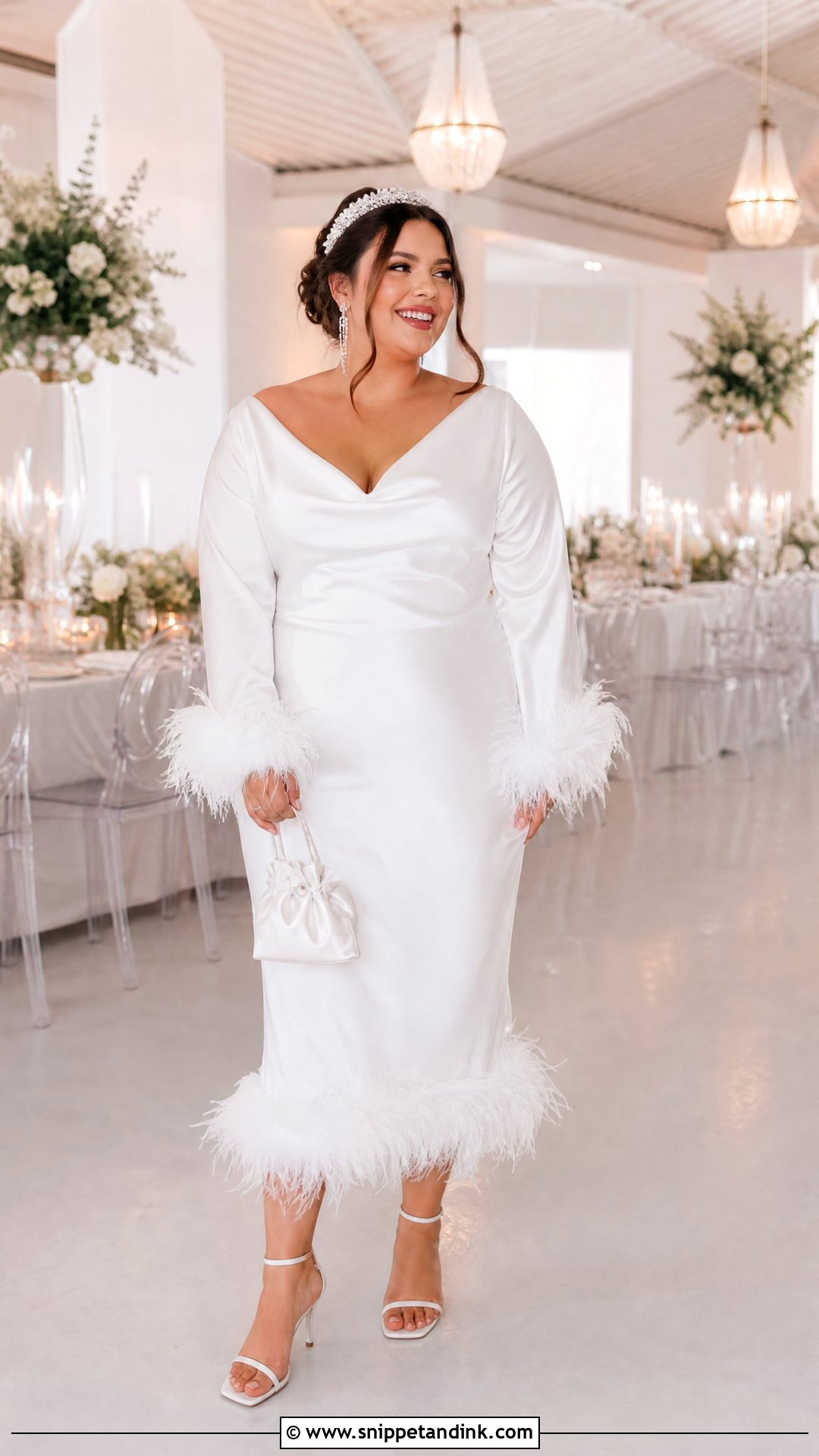
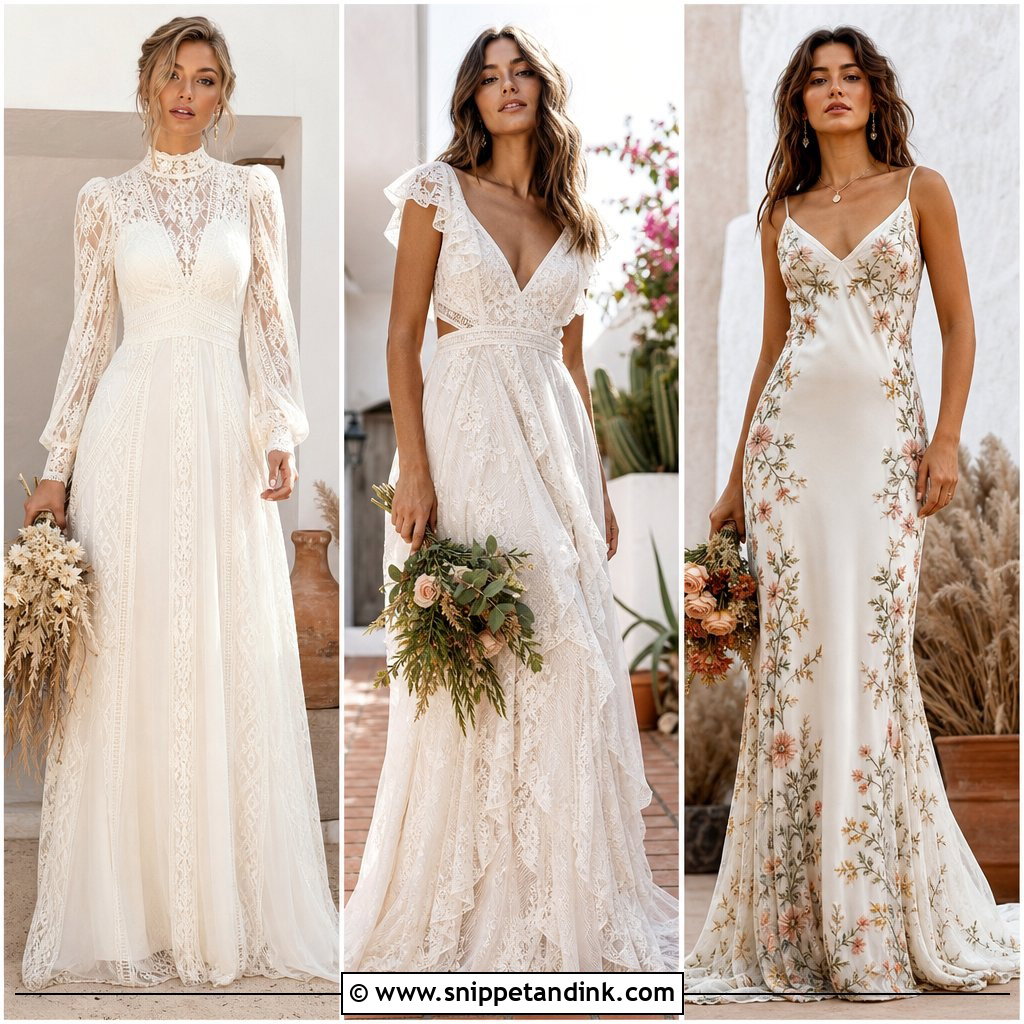
Feather trim on a midi dress is fun, and a little goes a long way. Keep feathers to the cuffs, neckline or hem of a streamlined crepe or satin dress rather than covering the whole thing. The first thing I check is how the trim is attached. Ostrich and marabou shed, and loosely glued trim will leave a trail on the dance floor and stick to your lipstick, while stitched trim lasts. Brides with a fuller bust usually look better with feathers at the cuffs or hem; those who want volume at the shoulders can put them at the neckline. Slim ankle-strap heels, crystal earrings and a satin mini bag suit it, with a short veil or jeweled headband.
16. Beaded Fringe Wedding Dress
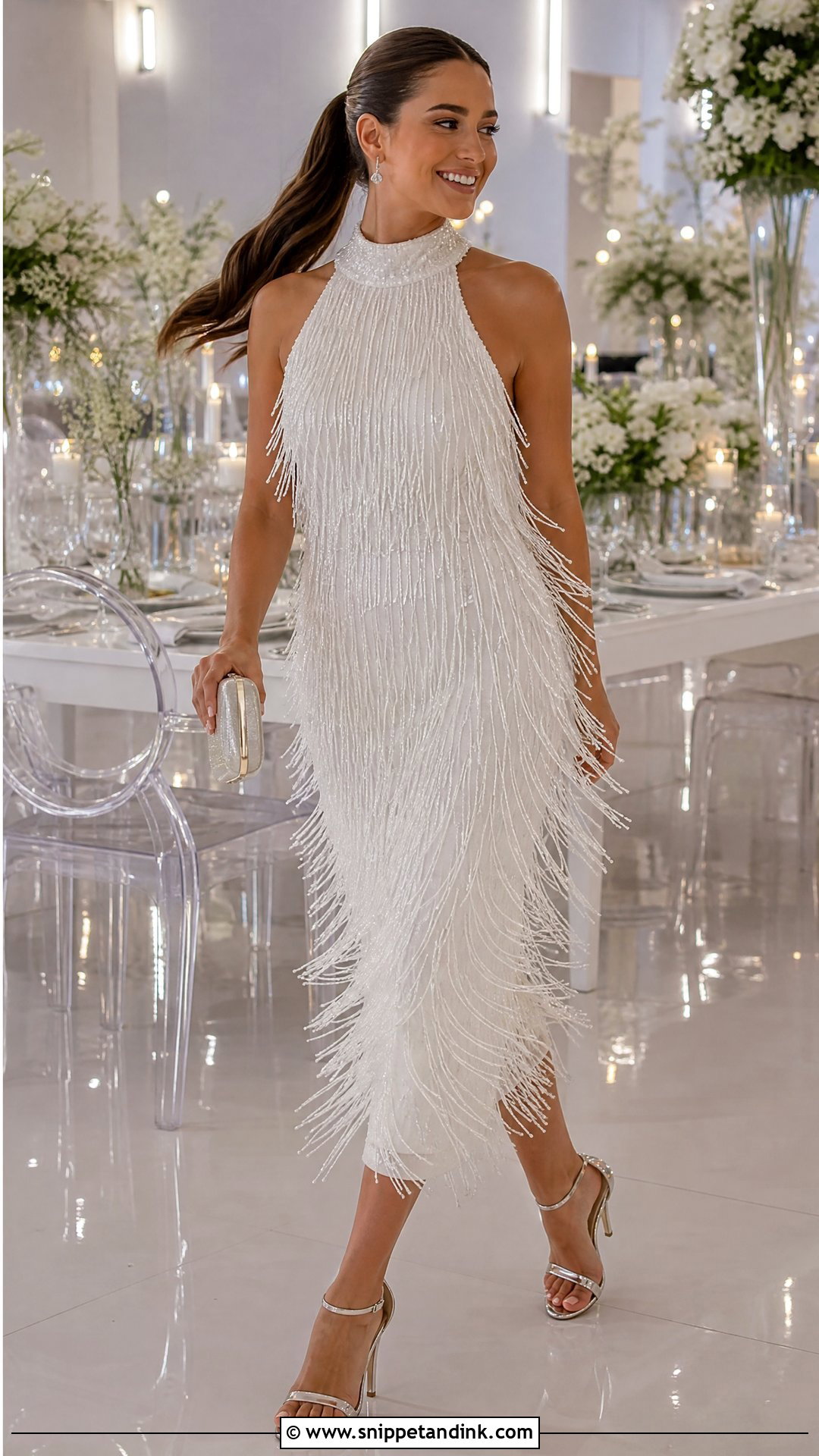
A beaded fringe dress moves with every step, so it earns its keep on the dance floor. Choose a mini or midi with layered fringe over a smooth, supportive lining. Clear crystals read bridal; multicolored beads feel like a party. Beaded fringe is heavy and tangles easily, especially when you sit, and long hair caught in it is miserable to free, so a sleek ponytail is the practical choice here. I’d walk, sit and turn in it before buying. Keep accessories small: metallic sandals, small earrings and a compact clutch. A plain cape can cover the shoulders for the ceremony and come off later.
17. Green Velvet Wedding Dress
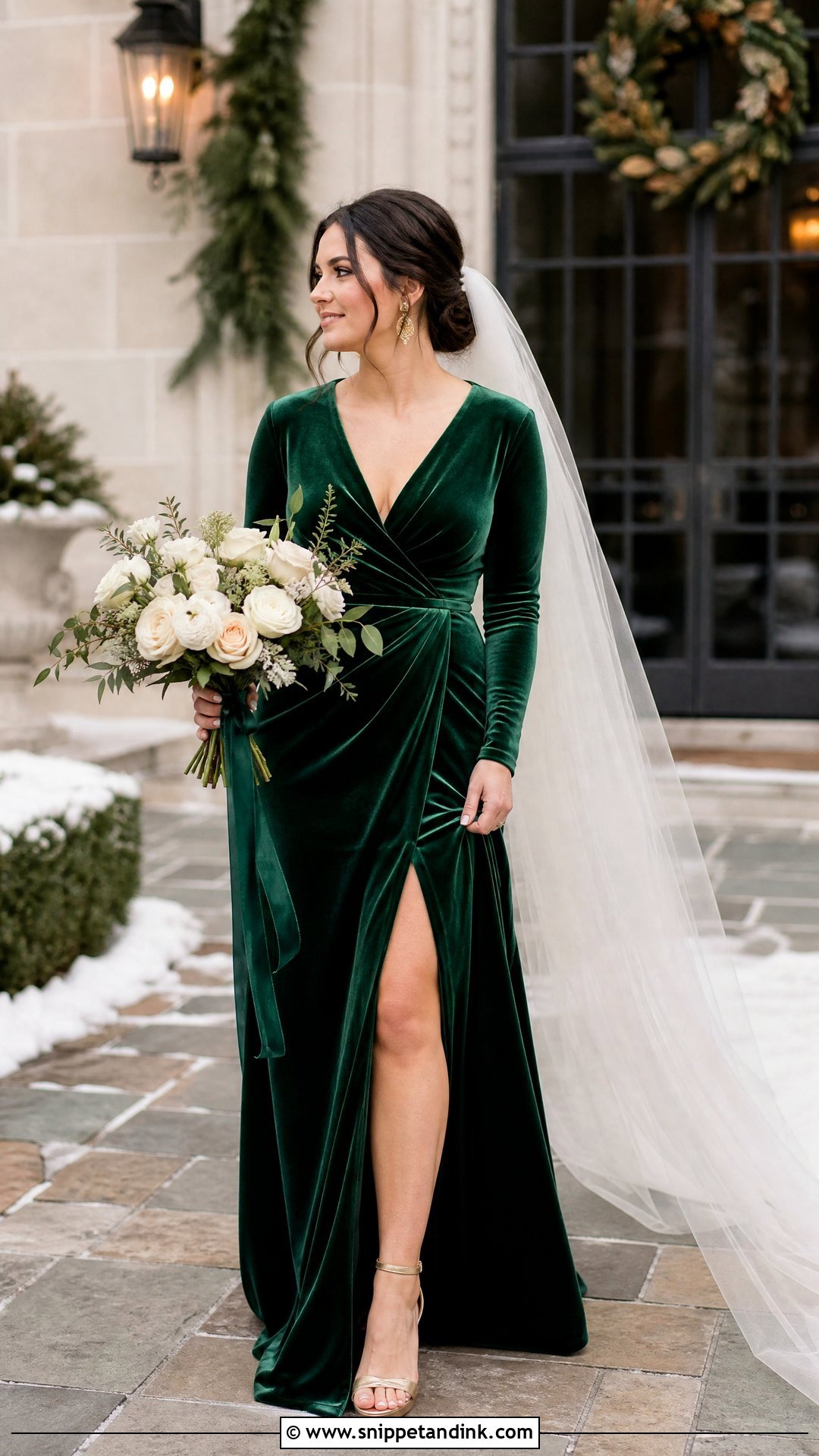
Green velvet is made for cold-weather weddings. Emerald, forest and moss each set a different mood, so hold each against your face by a window before choosing. Velvet has a nap, meaning the pile lies in one direction, and if panels are cut with the nap running different ways, they look like two shades in photos. I check every seam in daylight before a velvet gown leaves the shop. A long-sleeved wrap gown is forgiving because the waist adjusts, while a structured square-neck feels more formal. Gold heels, vintage earrings and a cream bouquet tied with green ribbon suit it, with a faux-fur wrap or tailored coat for outdoor portraits. A gold headband or ivory cathedral veil adds the bridal note.
18. Crochet Boho Wedding Dress
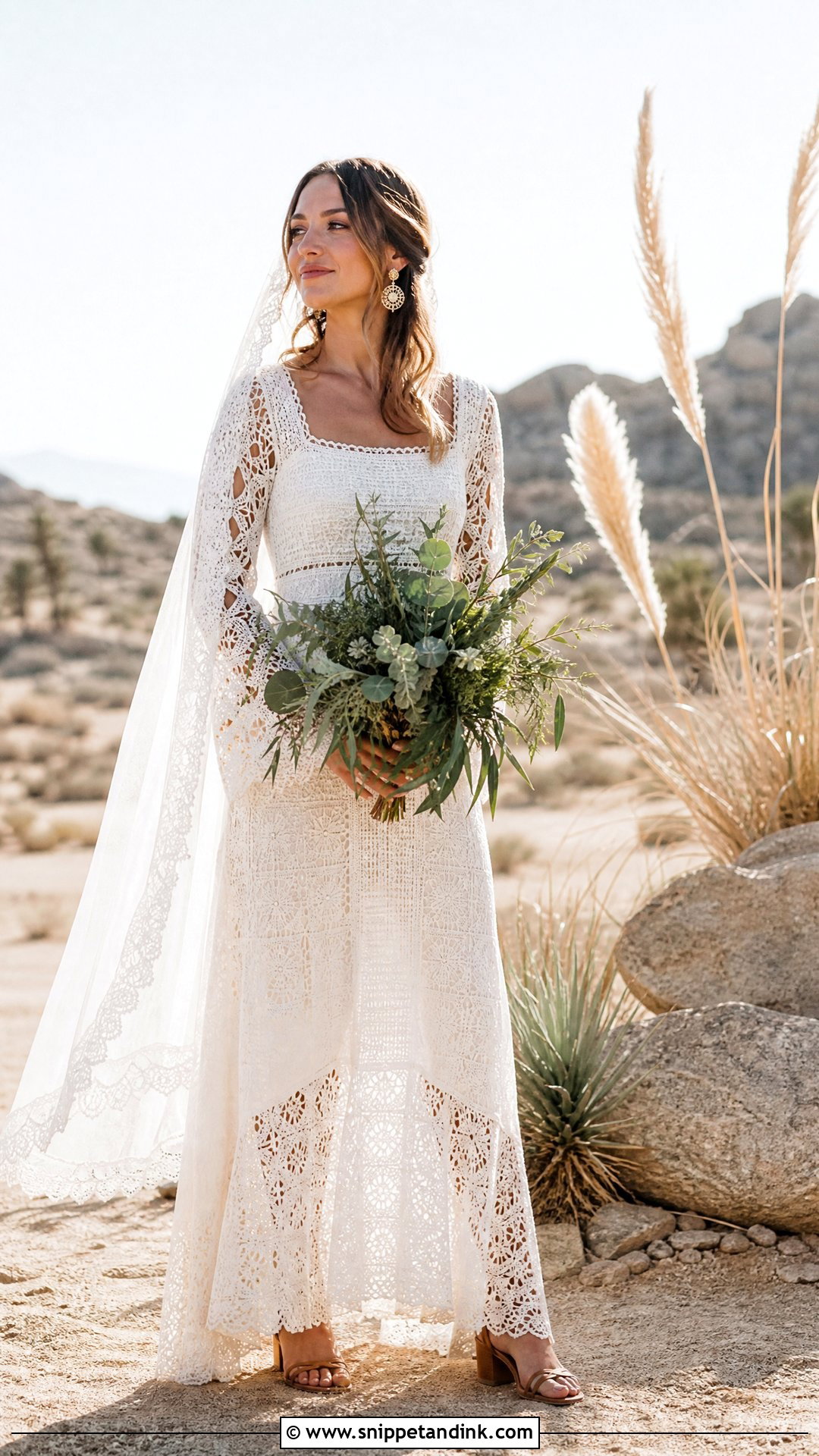
Crochet gives a relaxed, handmade look full of texture. Choose a lined maxi with openwork sleeves, a defined waist and a softly flared skirt. The lining should match your skin tone or the crochet itself; anything in between makes the pattern look muddy. Crochet stretches and drops under its own weight, so a dress that fits perfectly in the shop can lengthen through a long day, and I’d hem it a touch shorter to allow for that. Leather block-heel sandals, hammered metal earrings and a loose bouquet of greenery suit it, with a flower comb, lace-edged veil or wide-brim hat. Check that every end is secured, since loose crochet snags on everything at beaches and barns.
19. Vintage Floral Print Wedding Dress
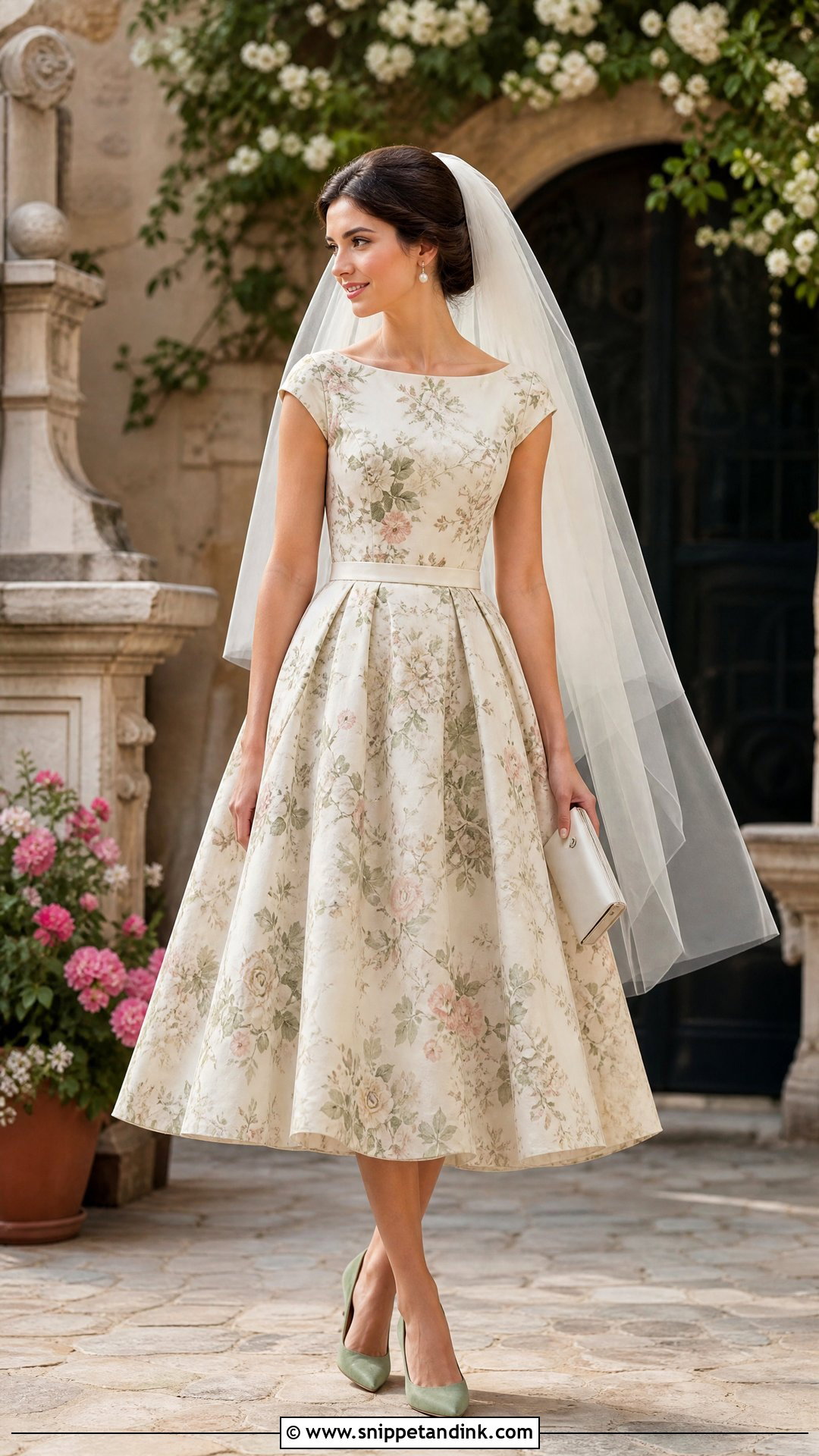
A vintage floral print wedding dress is one of the few wedding dresses you’ll genuinely wear again. Look for tea or floor length in watercolor flowers or a small archival-style print, with a defined waist and gathered skirt so it still feels like an occasion. Print scale matters on camera: tiny prints blur into a texture in full-length shots, and huge ones break up in close portraits, so a medium print holds up best. Pick shoes in one of the quieter colors in the print, then add pearl earrings and a simple clutch. A plain veil stops things getting busy. For cooler weather, add a cropped cardigan or a tailored coat in a coordinating shade.

20. Ombre Dip-Dye Wedding Dress
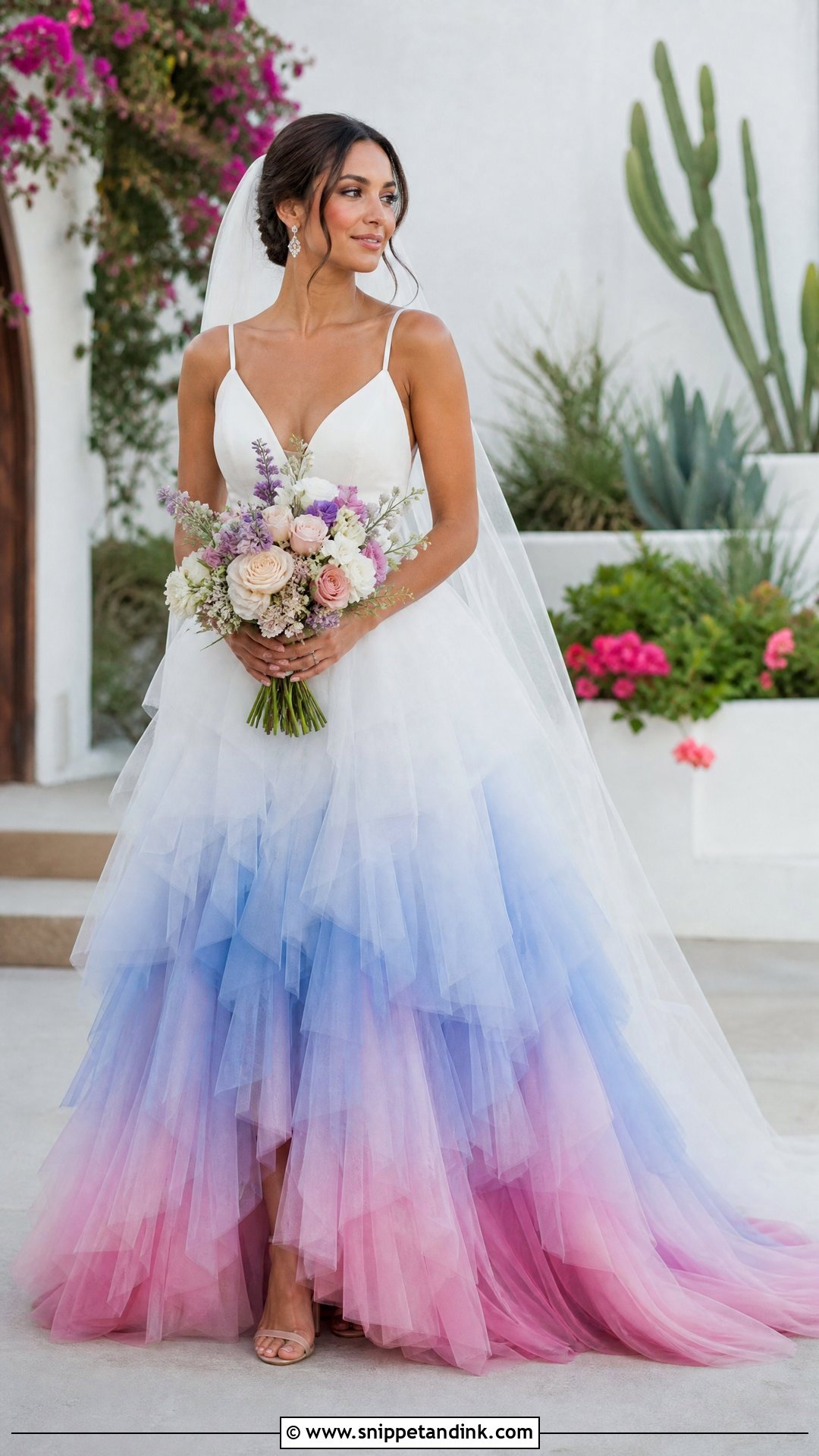
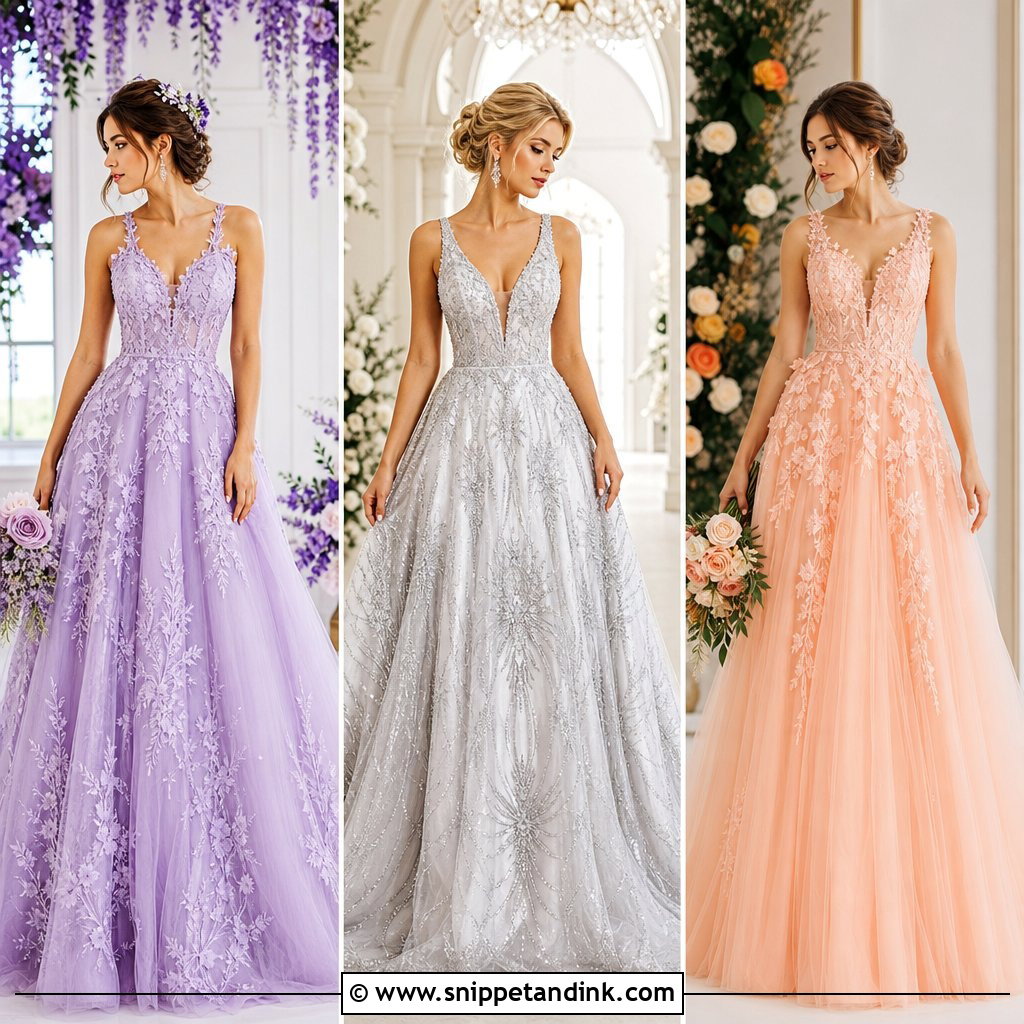
An ombre dip-dye wedding dress keeps a bridal white top and lets color wash up from the hem: pink, blue, purple, orange or a custom blend matched to your palette. A simple A-line or tiered tulle skirt gives the gradient room to look smooth. Keep the bodice minimal. Ask the maker how the fabric was dyed and whether it’s colorfast, because hand-dyed tulle can bleed if it gets wet on damp grass or in a rain shower, and the color then creeps upward. Neutral heels, small gemstone earrings and a bouquet with one or two matching shades suit it, with a plain white veil to keep the top light.
Buying Outside a Bridal Salon
Many of these looks come from eveningwear, ready-to-wear or suiting rather than a bridal shop. That widens your choice and often shortens the wait, but the dress won’t always have bridal-level construction inside. A few things to check before you pay:
- Seam allowance. Bridal gowns usually leave extra fabric inside for alterations; ready-to-wear often doesn’t, so buy for your largest measurement.
- Who will alter it. Some seamstresses won’t take on sequins, beading or velvet, so find one before you buy the dress.
- The return policy. Bridal sales are often final, while ready-to-wear may allow returns, which gives you room to try a backup.
- Inner support. Evening dresses are often built lighter, so you may need cups, a waist stay or extra boning added.
A word to family before the day
Some relatives still expect white. If your outfit will surprise people, letting close family see a photo ahead of time tends to make the day smoother. It’s also worth a line on the invitation or website if your color is close to something guests might choose, so nobody arrives matching you.
Does It Still Feel Like a Wedding Dress to You?
A nontraditional dress works when it looks like you rather than following a fixed bridal formula. Color, print, tailoring, unusual lengths and removable layers can all make a wedding look distinctive, but impact never makes up for discomfort or poor support. Walk, sit, turn and lift your arms in every option. Look at it by a window and take phone photos from several angles. Factor in the venue, the weather and the time alterations will need. Black lace, floral tulle, a sharp suit or an ombre gown can all feel bridal once the styling around them is considered.
You'll Like These Ideas:






Leave a Reply