
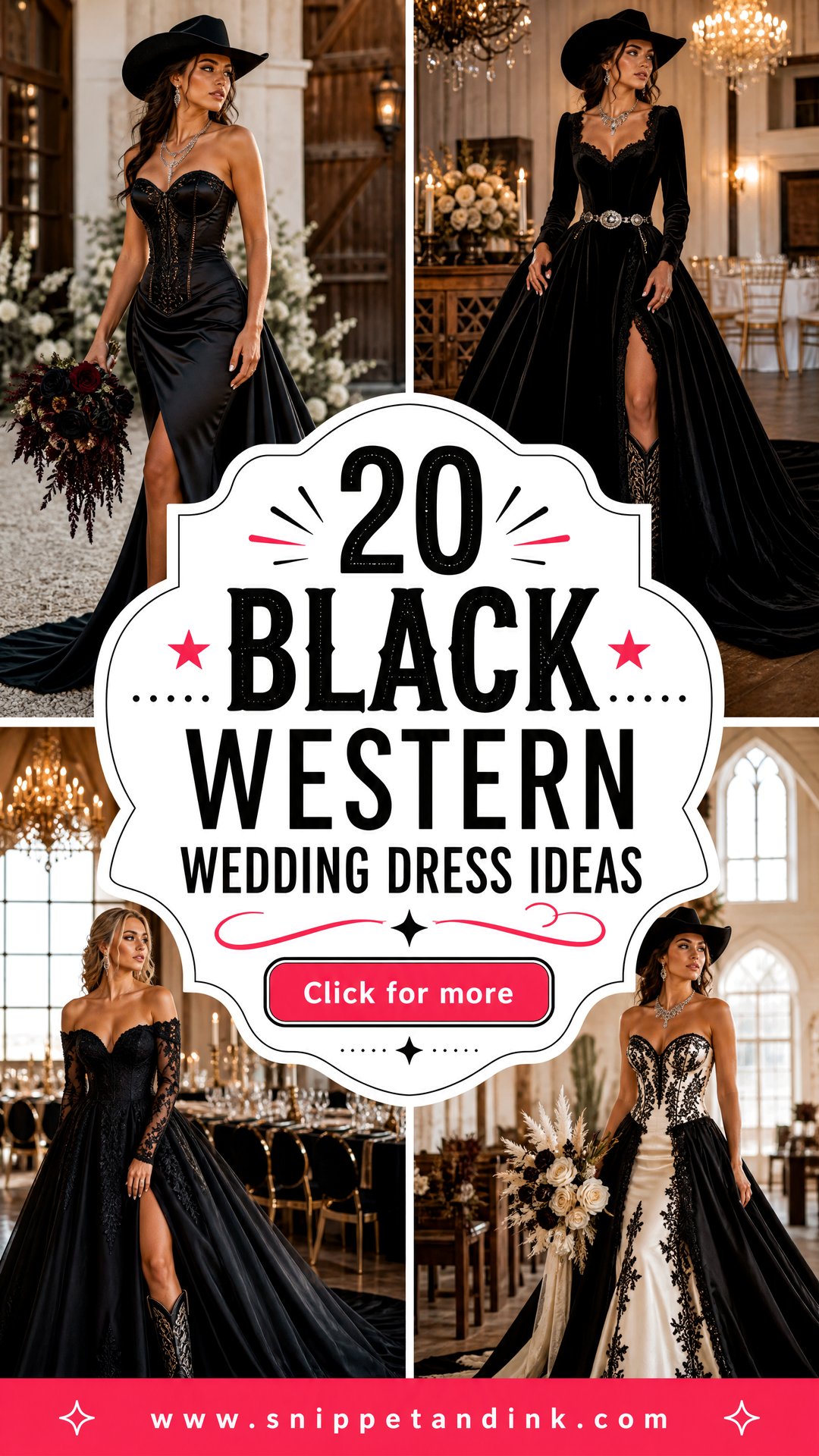
Fitting a Black Gown Around a Pair of Boots
Cowboy boots change how a gown fits more than any heel does. The heel is chunky and usually one to two inches high, the toe is long, and the shaft is stiff, so a skirt that looks right in bridal shoes will look and move differently once the boots are on. I ask every bride to buy her boots before the first fitting and to bring them to every one after that.
- Hem with the boots on, standing on a hard floor. For a floor-length gown, the front should just clear the toe so you can walk without kicking the fabric.
- Watch the toe. A pointed toe pushes the hem forward as you walk; a little extra clearance at the front prevents a constant flick of fabric.
- Check the boot shaft through the skirt. Thin chiffon and slip satin can show the outline of a tall shaft. A slip or a fuller lining hides it.
- Break the boots in. Wear them around the house for two or three weeks with the socks you’ll wear on the day. New leather boots rub hardest at the heel and the ankle bone.
If you’re wearing a hat, bring that to the final fitting too. A wide brim changes how the neckline and shoulders read, and it’s better to know before the day whether your hairstyle needs to sit lower to hold it.
1. Black Lace Western Wedding Dress
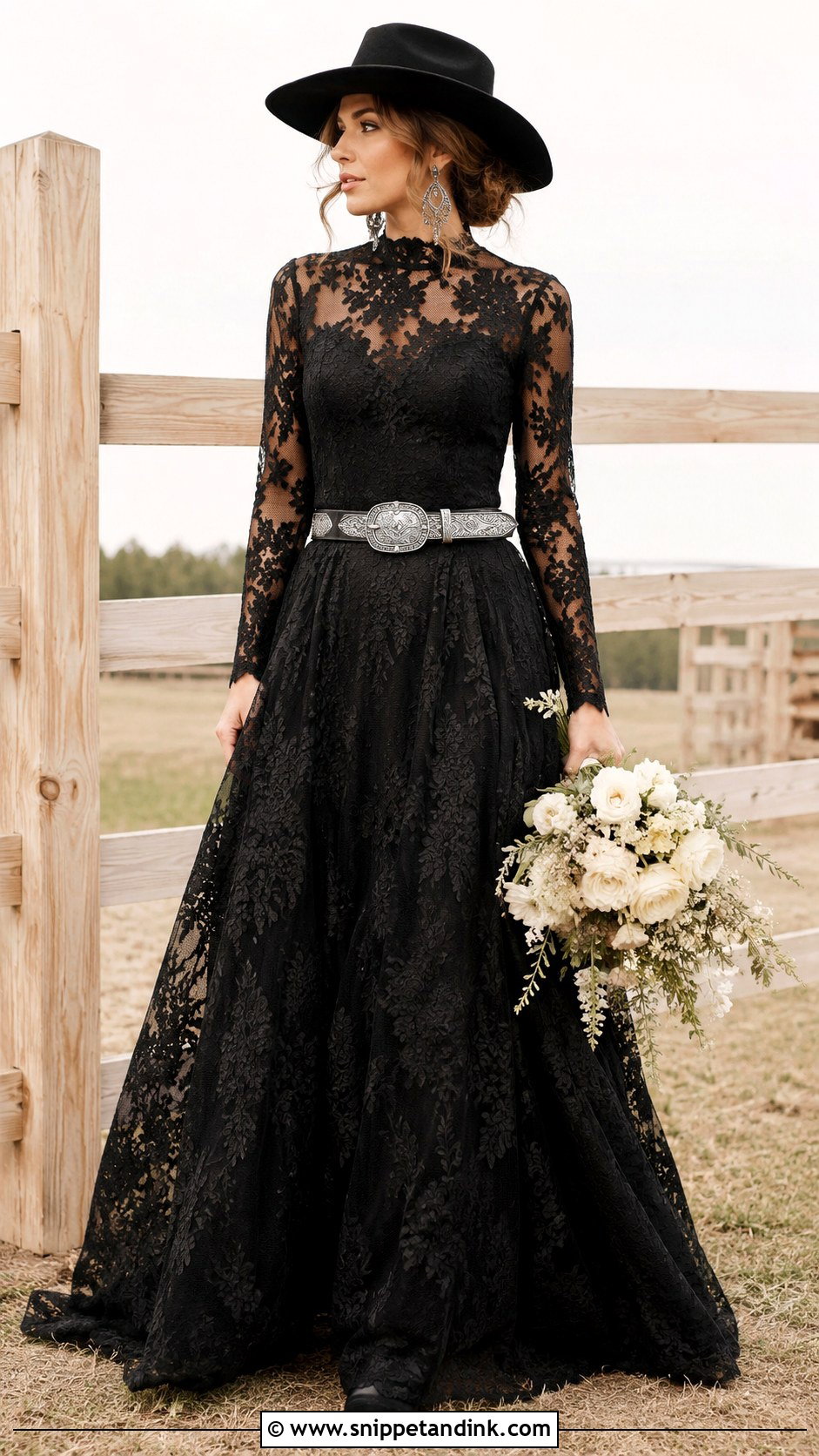
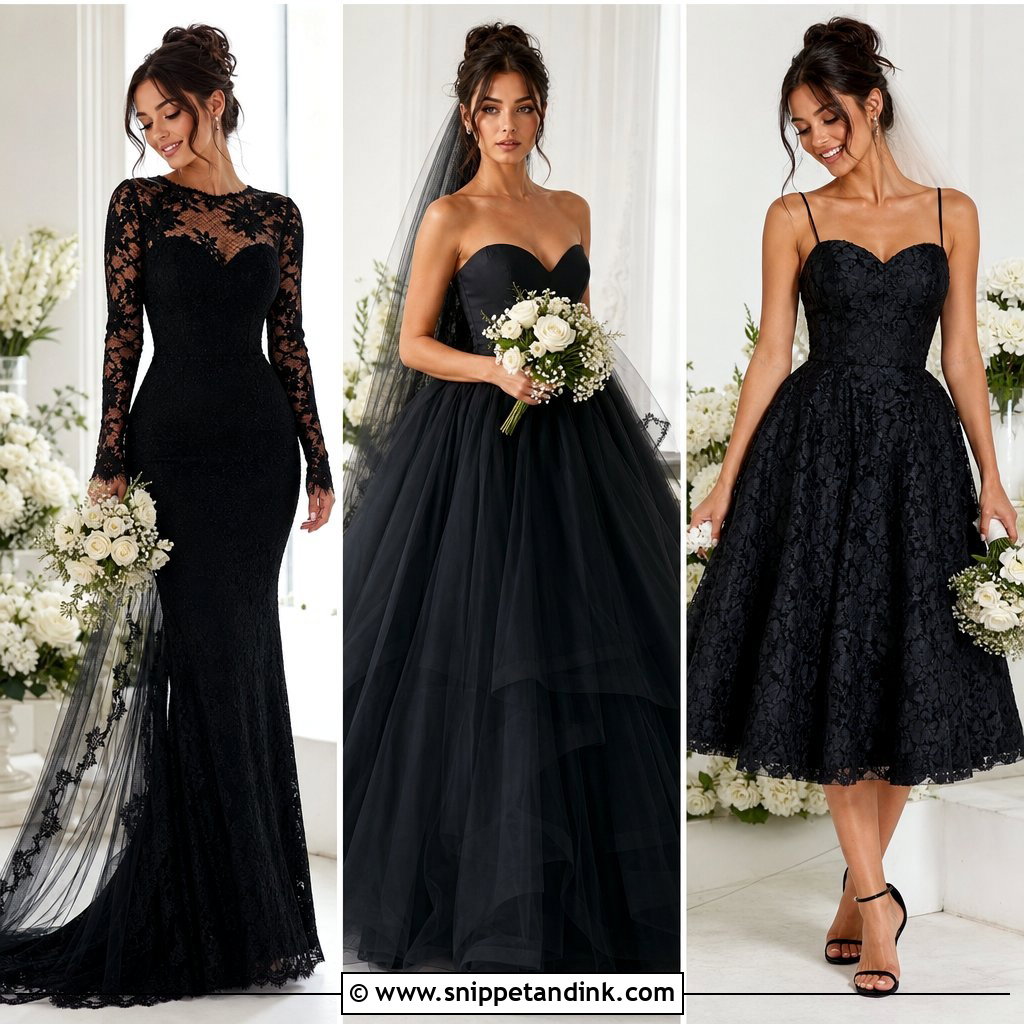
Black lace is the gentlest way into a dark wedding dress, because the pattern breaks up all that color. I’d start with an A-line: fitted bodice, defined waist, a skirt that moves. Floral or vine lace suits a ranch ceremony far better than a geometric one. Under the hem, pointed black cowboy boots keep the line unbroken; distressed brown ones add warmth. One thing I check on lace gowns is the scalloped hem edge, since boots with a rough welt can catch and pull it on every step. A slim belt with an engraved buckle, silver drops and a black felt hat are enough. Let the lace do the talking.
2. Black Satin Corset Western Wedding Dress
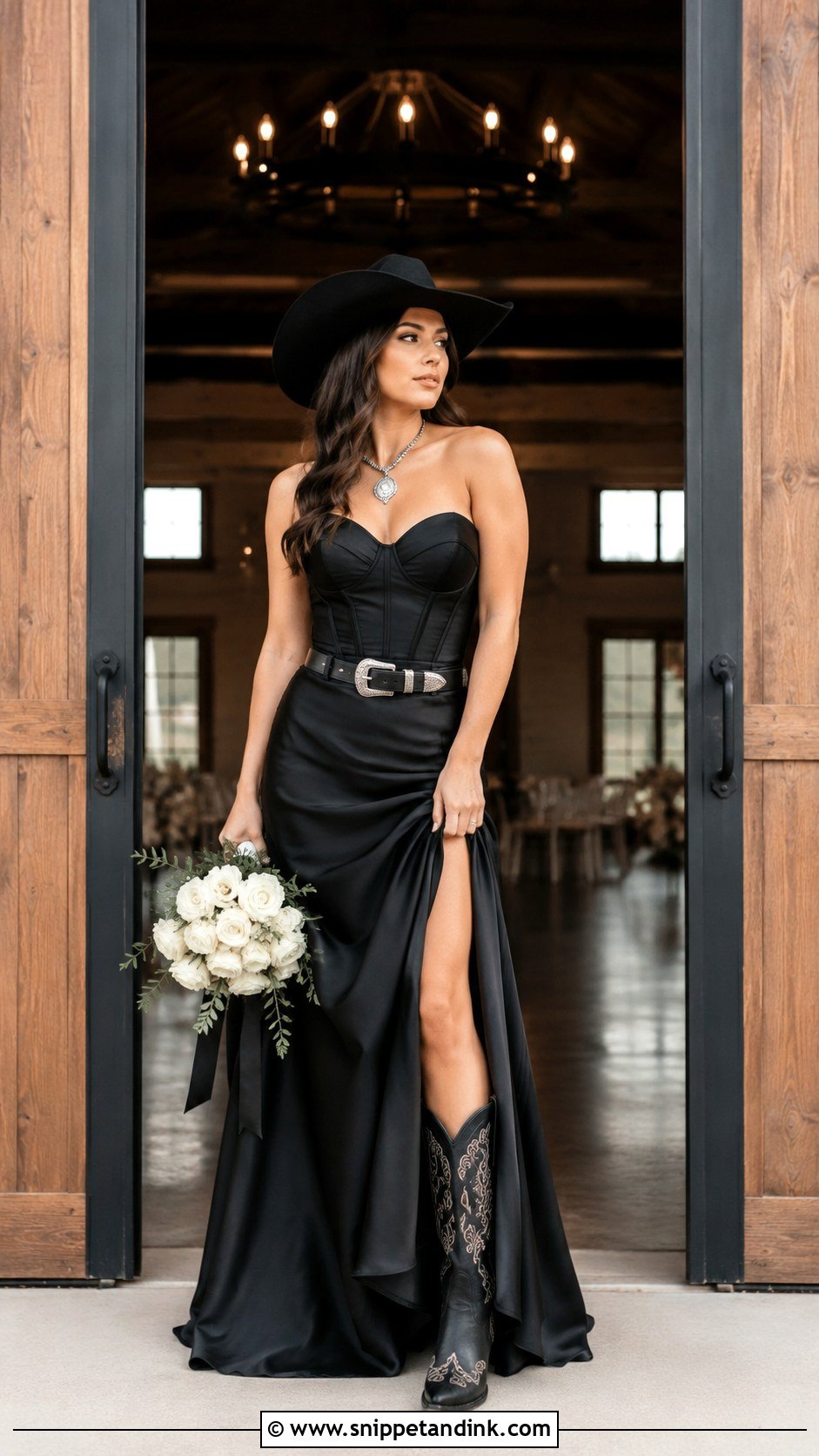
Satin and a corset bodice give a western gown real polish. I look for proper boning, a square or sweetheart neckline to soften the structure, and a full or gently flared skirt. Satin is honest about fit, though: it shows every ripple where a seam pulls, so this is the dress that needs the most careful alterations. Black leather boots with decorative stitching, a silver-tipped belt at the natural waist and a wide-brimmed hat finish it. Loose waves or a low textured bun sit well under the brim. Keep jewelry to a pendant and studs, because the sheen of the fabric is already the drama.
3. Black Long Sleeve Western Wedding Dress
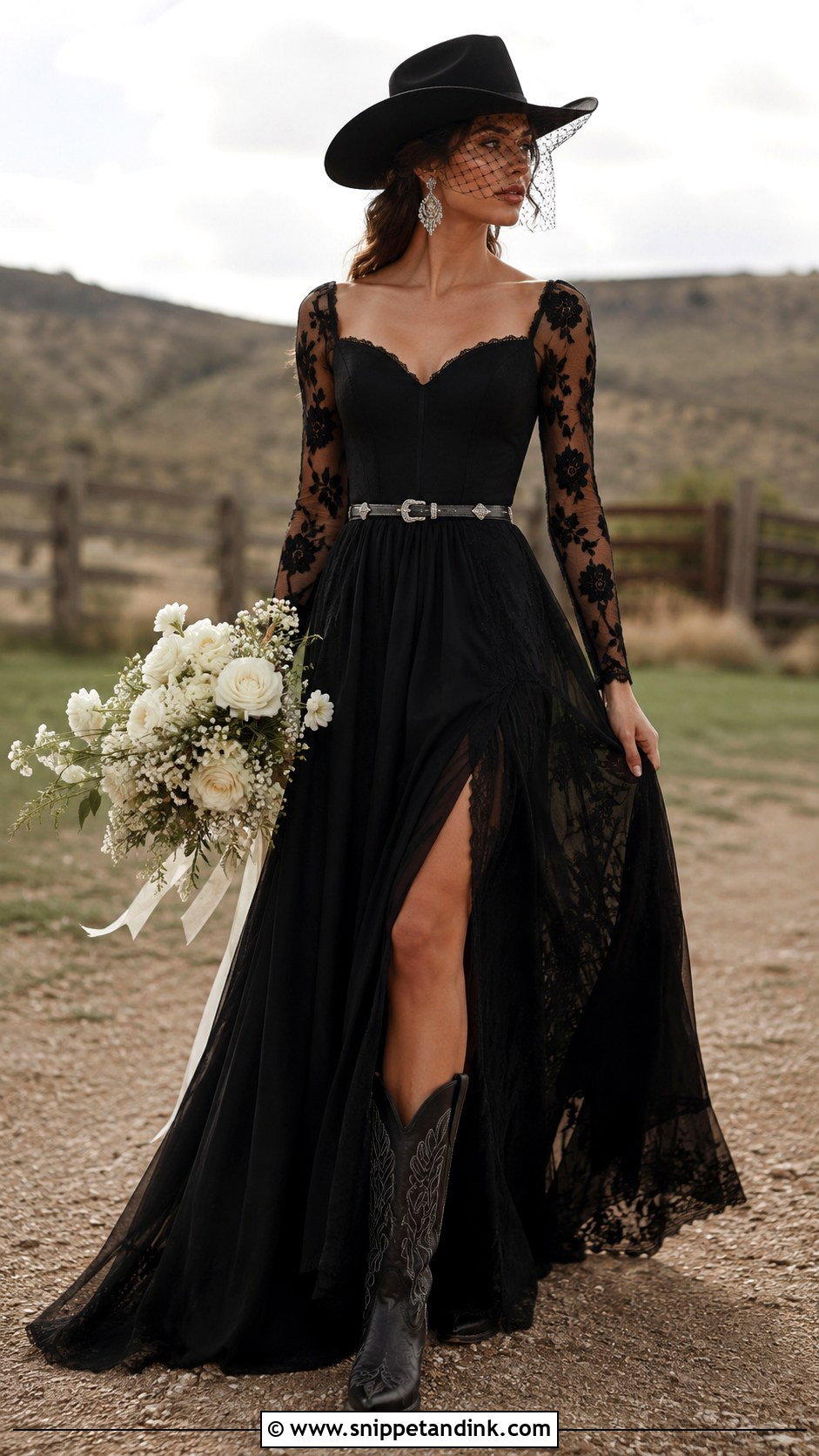
Sheer lace sleeves give coverage without weighing the dress down. I pair them with a fitted bodice and a chiffon or tulle skirt so the whole thing stays light. Botanical embroidery, scalloped cuffs or a slight bell shape at the wrist all work. Before buying, raise your arms over your head in the dressing room; a fitted lace sleeve that’s too narrow in the upper arm will tear at the seam during the first hug. Polished black boots, a narrow belt, a structured hat and a fingertip black veil complete it. It’s my pick for spring and fall, when mornings are cool and afternoons aren’t.
4. Black Velvet Western Wedding Dress
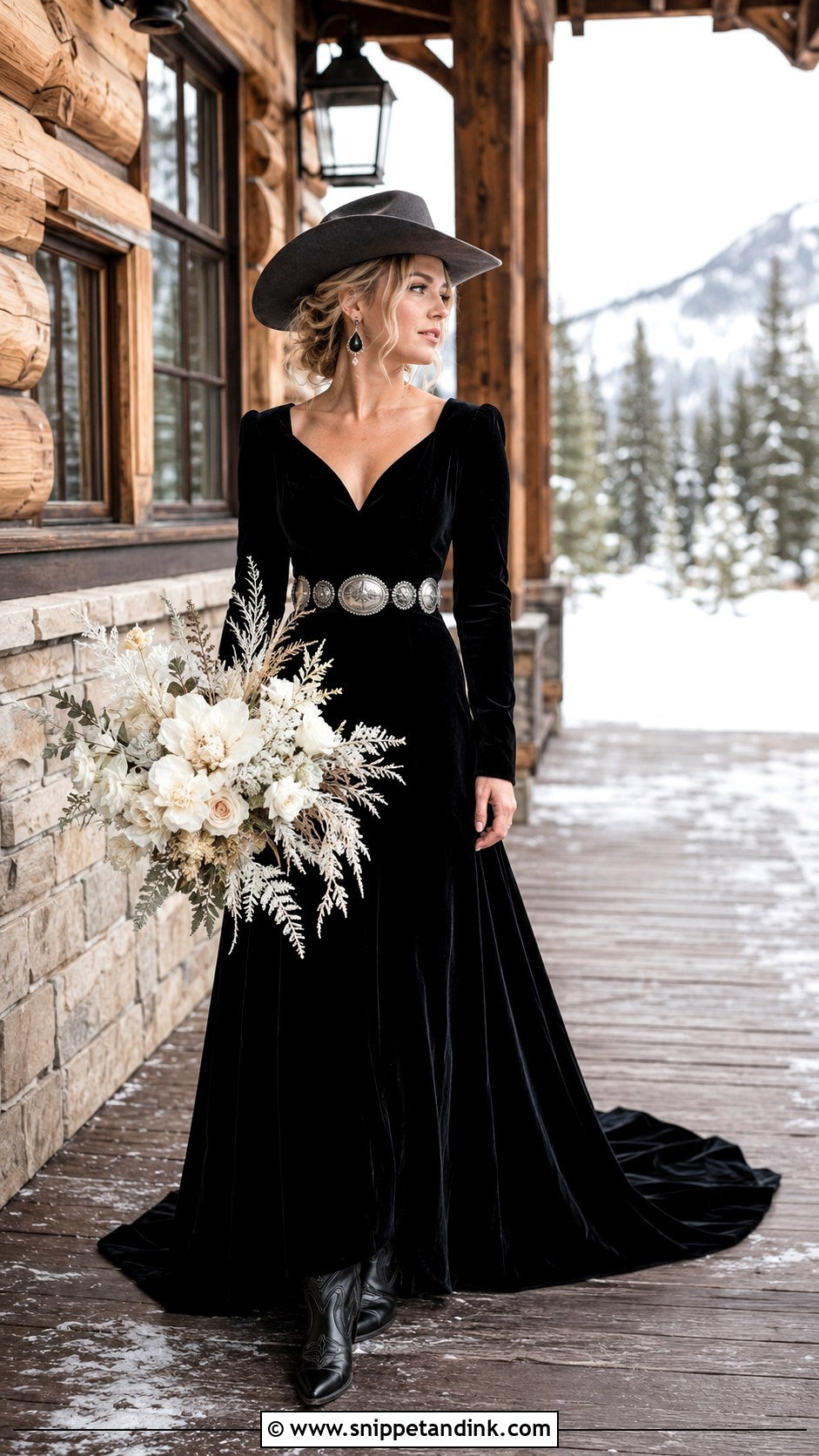
Velvet is the dark horse of this list. It’s heavy and warm, and it swallows light, which gives a western gown real depth in late autumn or winter. Choose a long-sleeved A-line or fitted shape with a modest train. Because the fabric is so strong, I keep the western notes refined: pointed black boots with tonal stitching and an antique silver concho belt. A black or charcoal felt hat completes the silhouette, with onyx and silver earrings and a low bun. Velvet marks where it’s crushed, so travel to the venue with the skirt laid out flat, not bunched on a car seat.
5. Black High-Low Western Wedding Dress
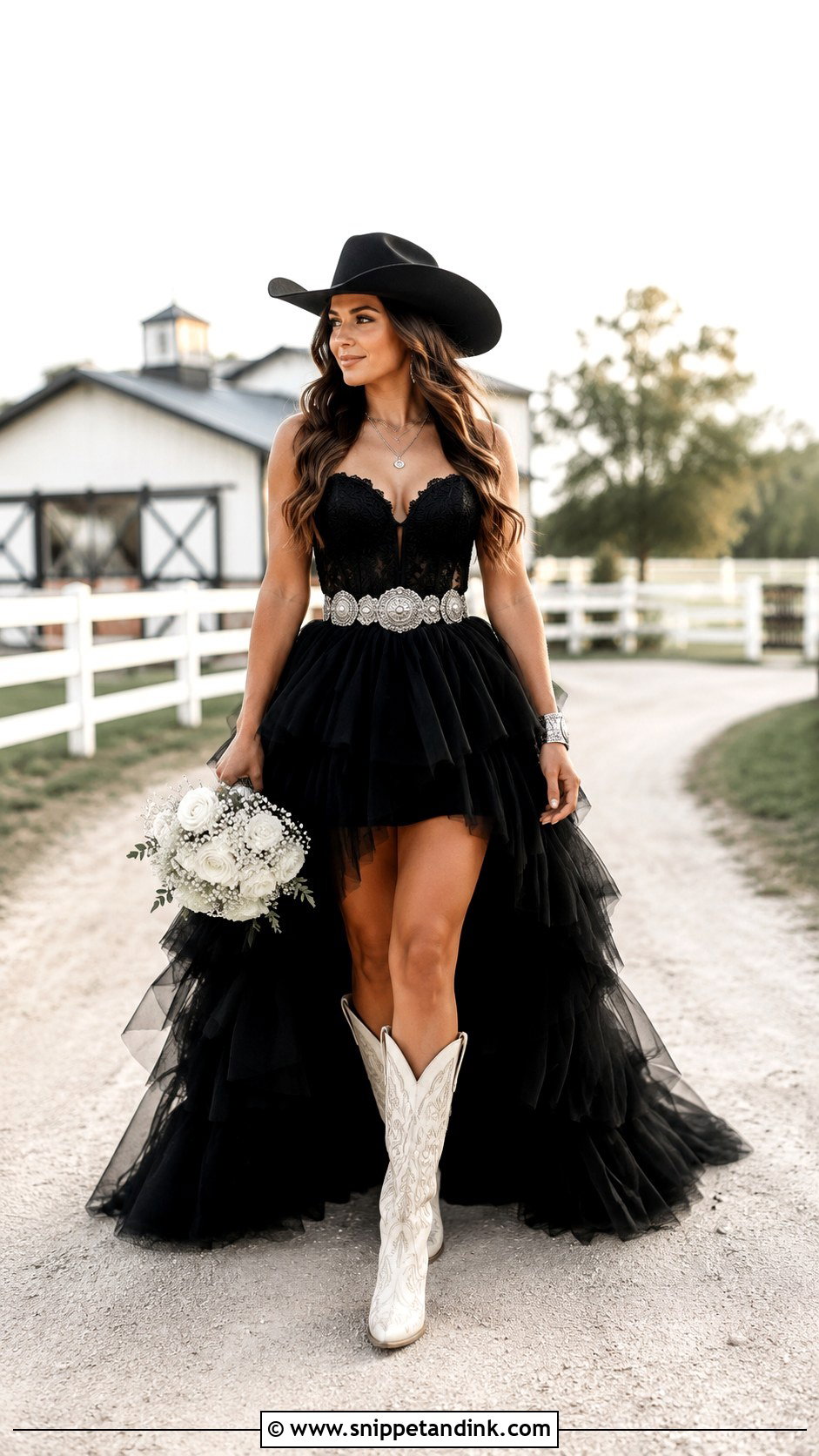
A high-low hem is for the bride whose boots are half the outfit. The shorter front shows them off, and the long back still gives you a train for the aisle. Layered tulle, chiffon or lace keeps the skirt from looking bulky. Since the boots are on show, they need to be worth it, so pick an embroidered pair and break them in at home for at least a couple of weeks. A fitted belt, a silver cuff and a compact bouquet keep the front clear. On grass and gravel, it’s also the easiest hem to walk in.
6. Black Fringe Western Wedding Dress
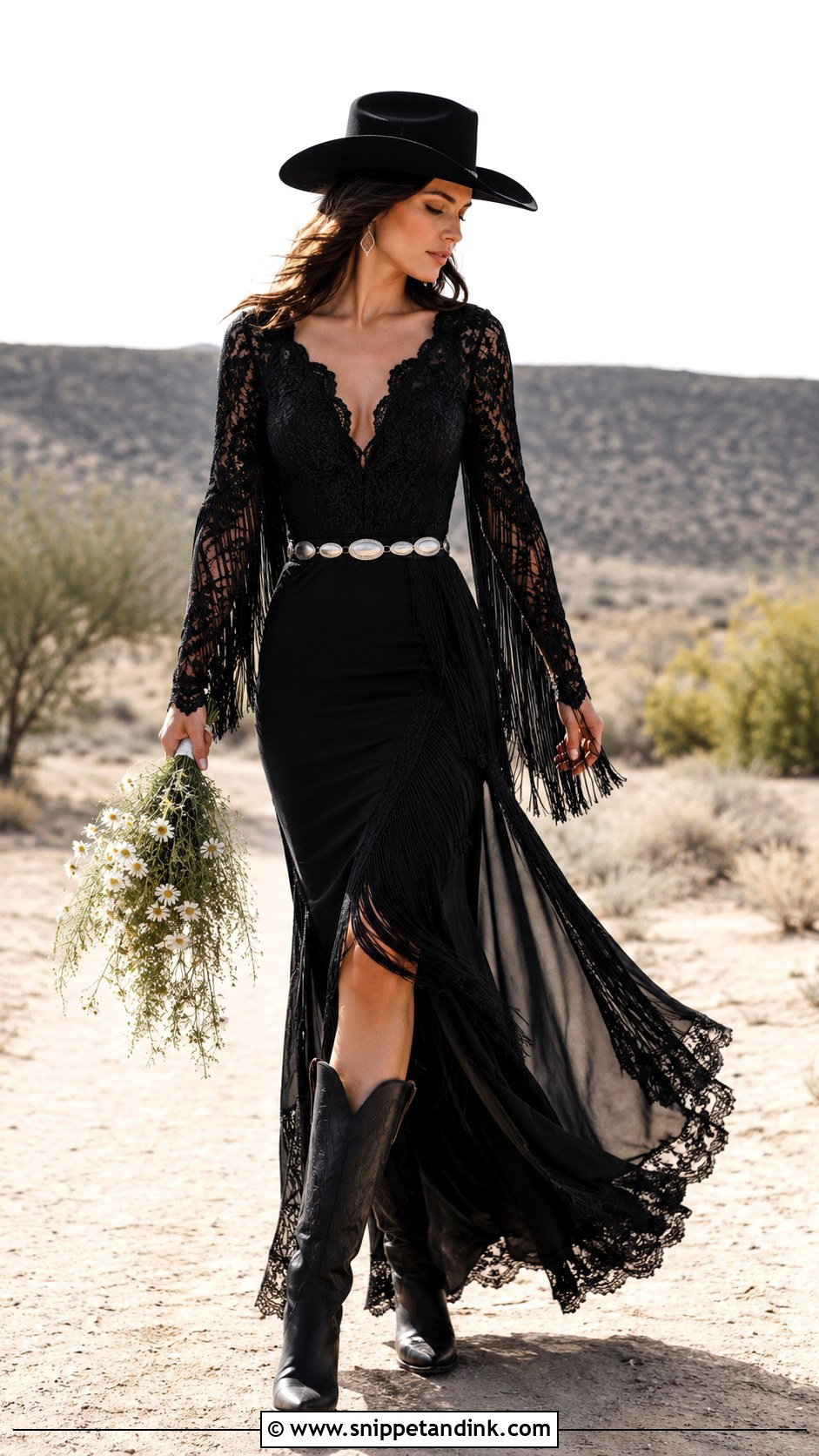
Fringe works best in one place, not everywhere. I’d put it on the sleeves, the back or a skirt overlay over a fitted black crepe or satin base, and let it swing as you walk, which is where the playful cowgirl character comes from. Sleek boots and a simple silver belt keep the accessories quiet. Fringe tangles, especially in long hair or around a bouquet, so I usually suggest a low ponytail. A black hat with a narrow silver band and geometric earrings finish it. It’s built for the dance floor.
7. Black Tulle Western Wedding Dress
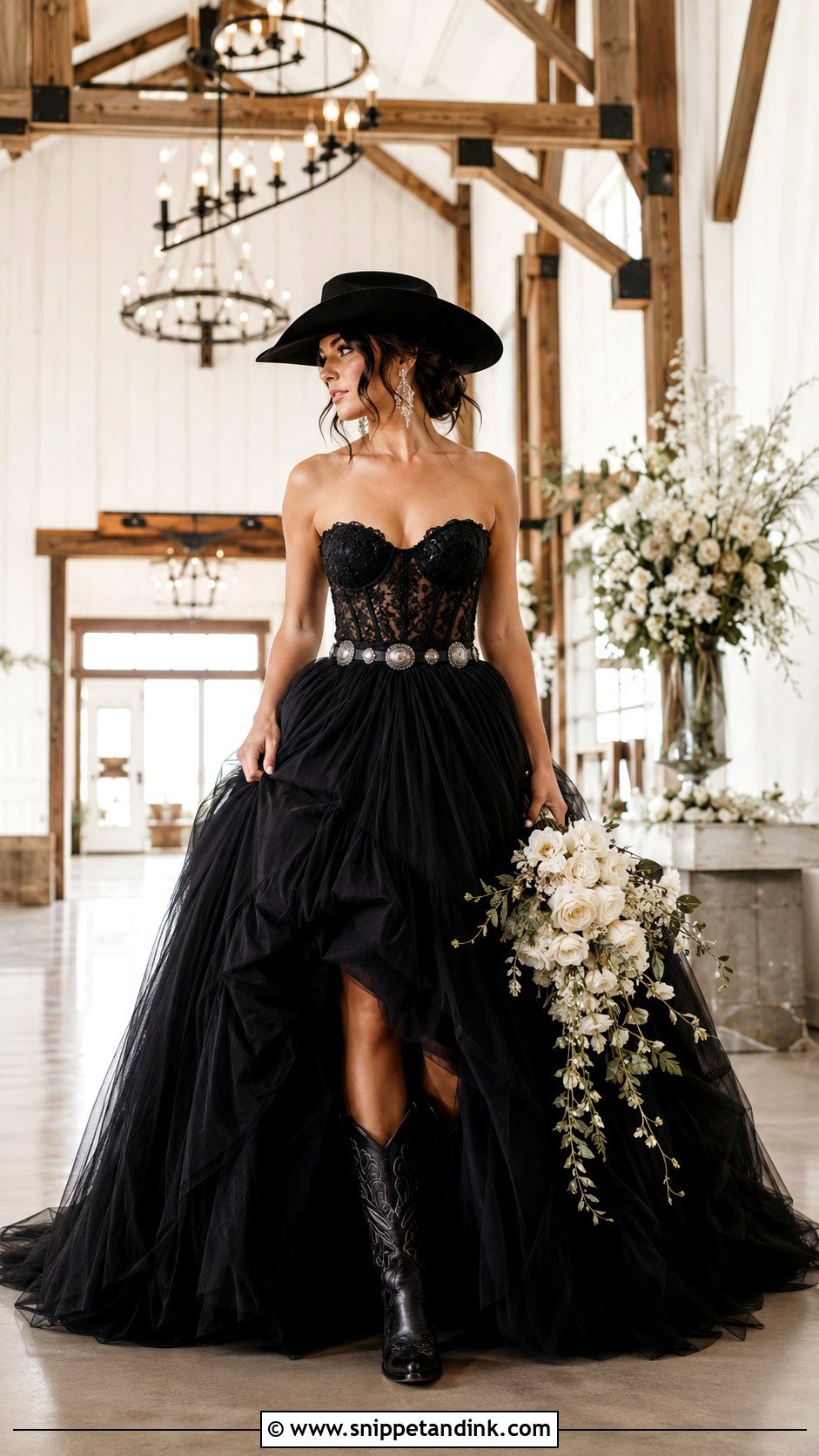
Full black tulle turns a ball gown into something unexpected at a ranch. Choose a fitted lace or corset bodice with a skirt that starts at the natural waist. With that much volume, the accessories should be plain: black leather boots for support under all those layers, a narrow concho belt, a felt hat rather than a headpiece and delicate silver earrings. A trailing ivory bouquet echoes the skirt. Ask your seamstress for a bustle, and practice it with whoever will be doing it on the day, because tulle layers are easy to hook unevenly.
8. Black Floral Embroidered Western Wedding Dress
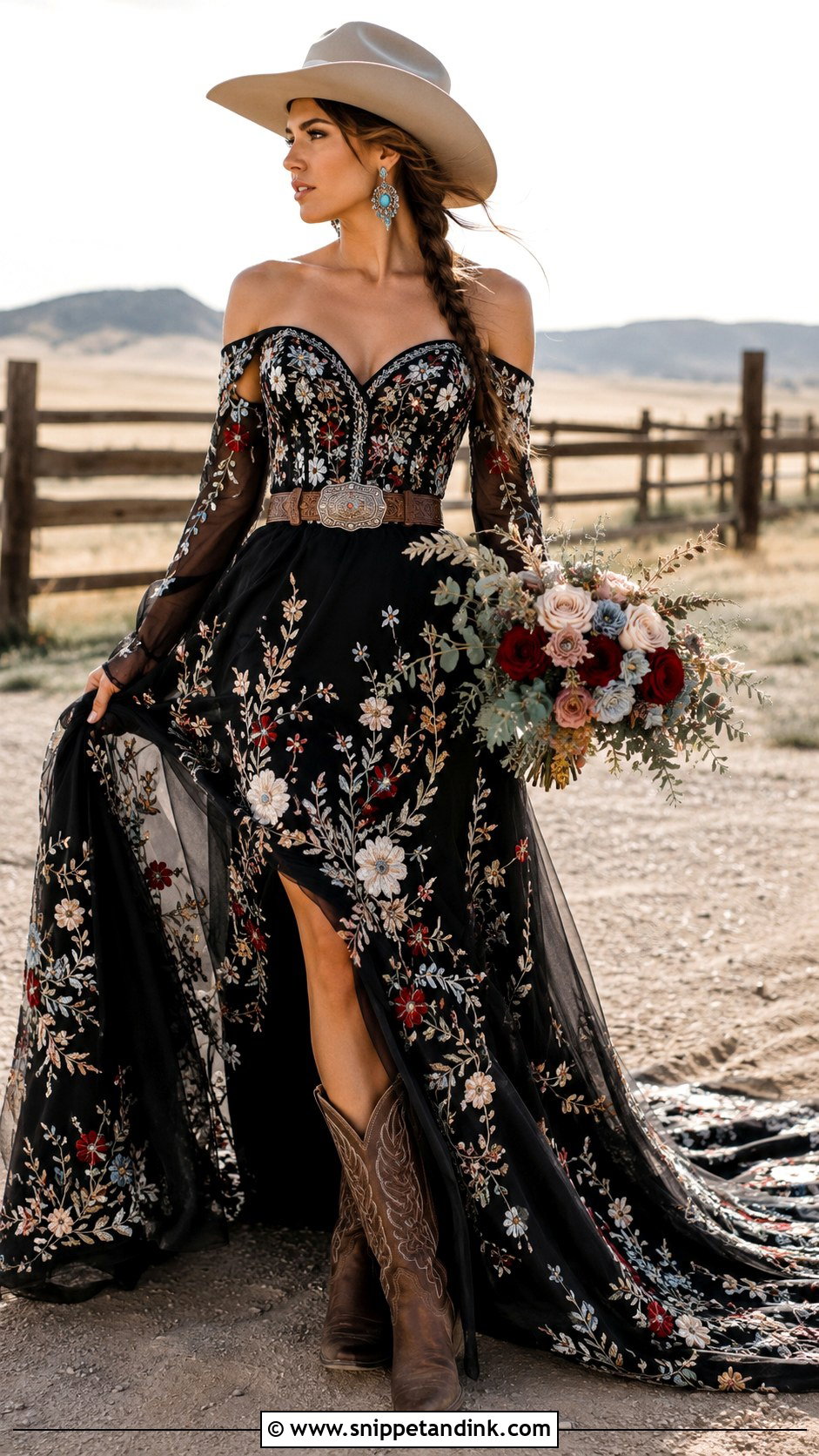
Colored embroidery keeps a black dress from feeling somber. Red, ivory, muted blue or dusty pink florals placed along the bodice and hem frame the shape nicely. I choose brown or black boots by looking at the thread colors: warm threads lean brown, cool ones lean black. Turquoise earrings add a classic western note, and an engraved leather belt marks the waist. Pull one or two embroidery colors into the bouquet and stop there. More than that and the eye doesn’t know where to land.
9. Black Off-Shoulder Western Wedding Dress
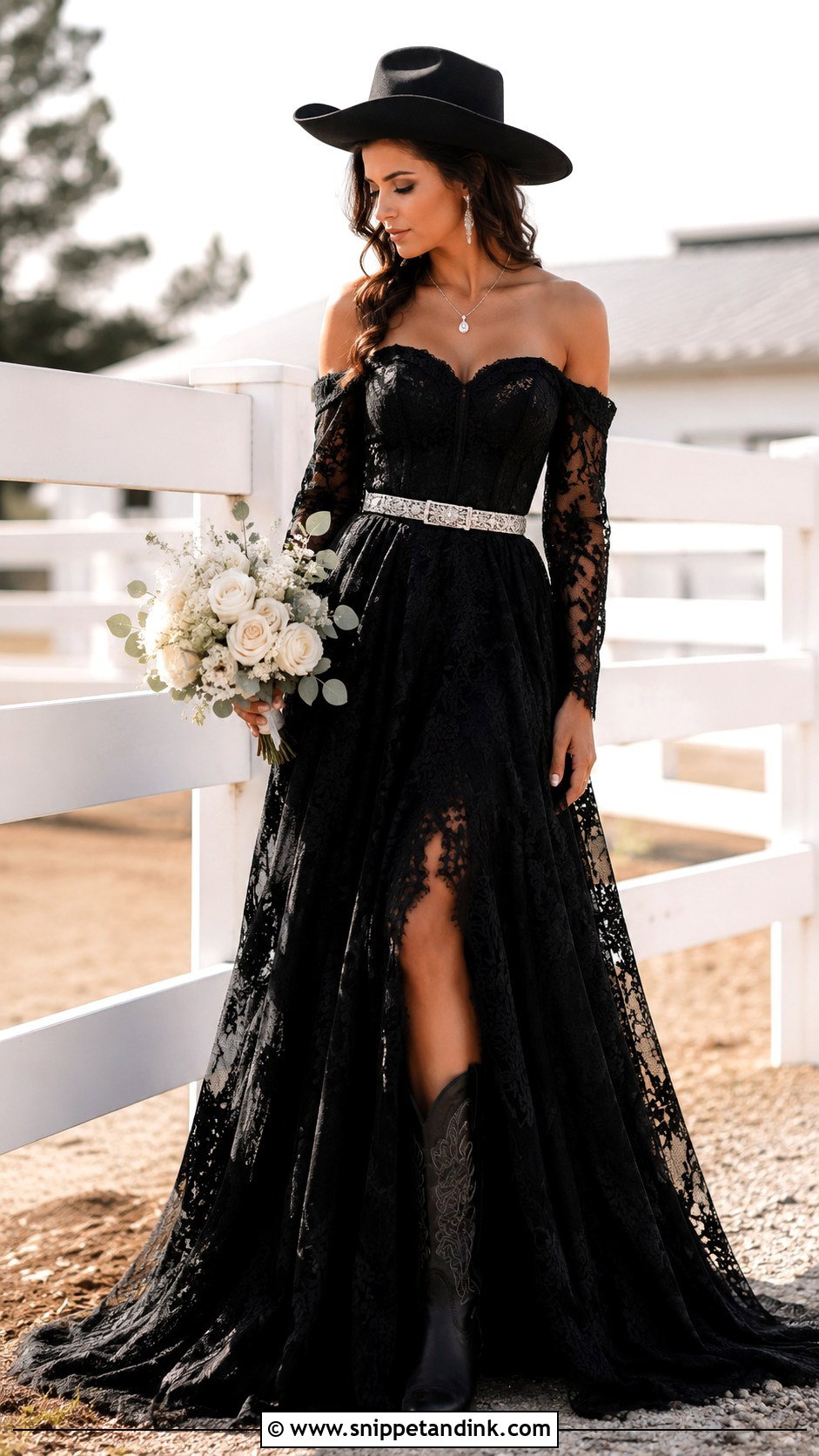
Off-shoulder sleeves soften a bold black dress, but they only work with real internal structure. Without a boned bodice or a silicone grip at the neckline, the dress slides down every time you lift your arms. Choose an A-line with lace sleeves resting below the shoulder. Wear a wide-brimmed hat tipped toward the back of the head so it doesn’t shade the neckline, and style hair in waves or a side braid that leaves the shoulders bare. Embroidered black boots and a slim buckle belt keep it western. Skip a shawl for the ceremony; save it for later in the evening.
10. Black Slip Western Wedding Dress With Fringe Jacket
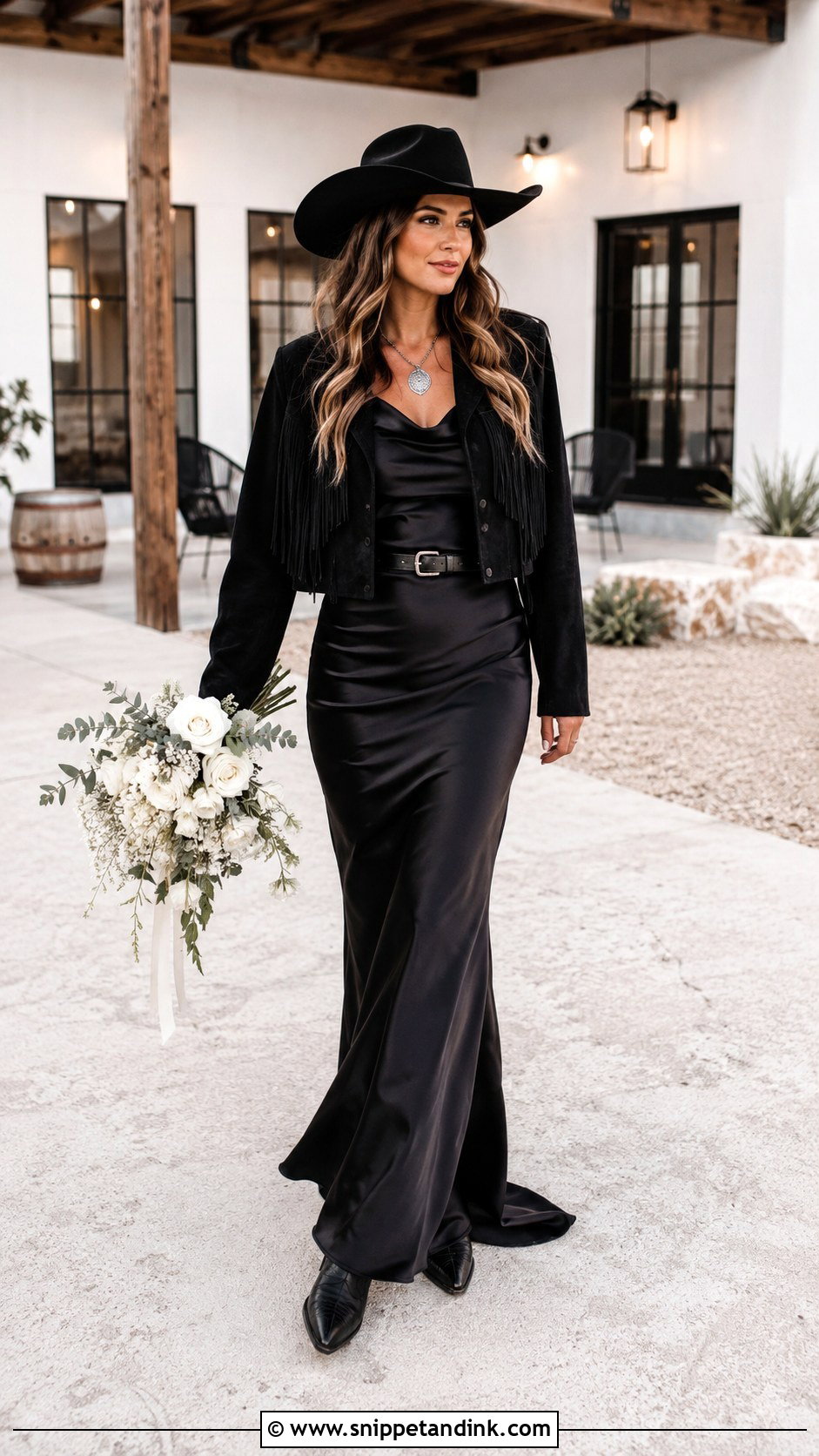
A bias-cut satin slip is sleek and simple, and a refined fringe jacket is what makes it western. Choose a floor-length slip with a soft drape and enough ease to sit down. Bias-cut satin clings, so I’d try it with the exact underwear you’ll wear. Layer it with a cropped suede or lace jacket with fringe along the sleeves and back, then add pointed boots, a silver pendant and a slim belt. Take the jacket and hat off for the reception and you have a second, sleeker look. It’s very useful when an outdoor ceremony turns cold by evening.
11. Black Tea-Length Western Wedding Dress
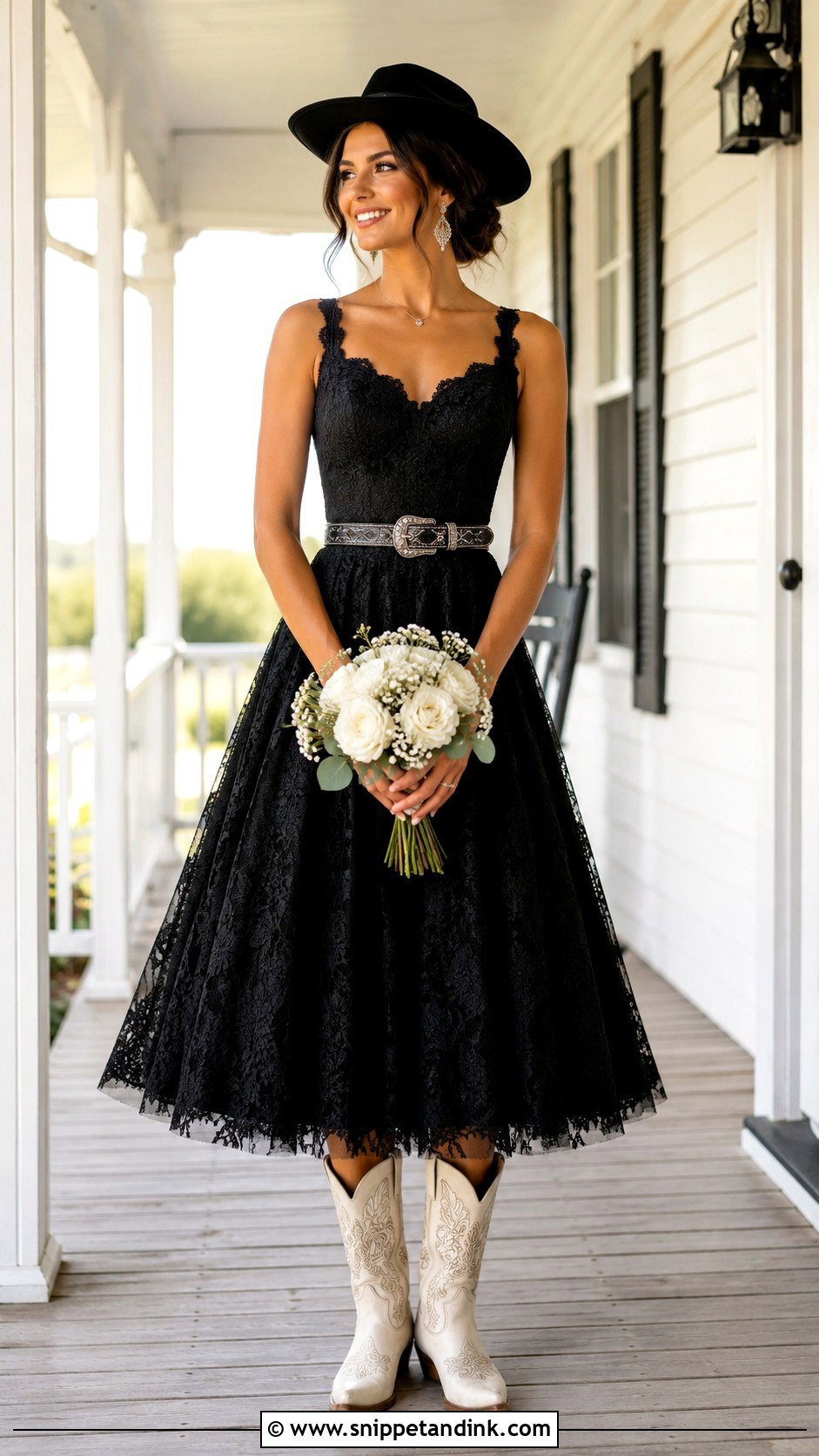
Tea length shows off decorative boots better than any other length. Look for a fitted bodice and a flared skirt that ends between knee and ankle, in lace, jacquard or structured satin so the shorter dress still looks bridal. Ivory embroidered boots give contrast; black ones unify. The length is where people go wrong. The hem and the top of the boot shaft shouldn’t meet, or the leg looks cut in half, so I always set the hem with the boots on. A narrow belt, silver earrings and a small hat or hair comb are plenty.
12. Black Mermaid Western Wedding Dress
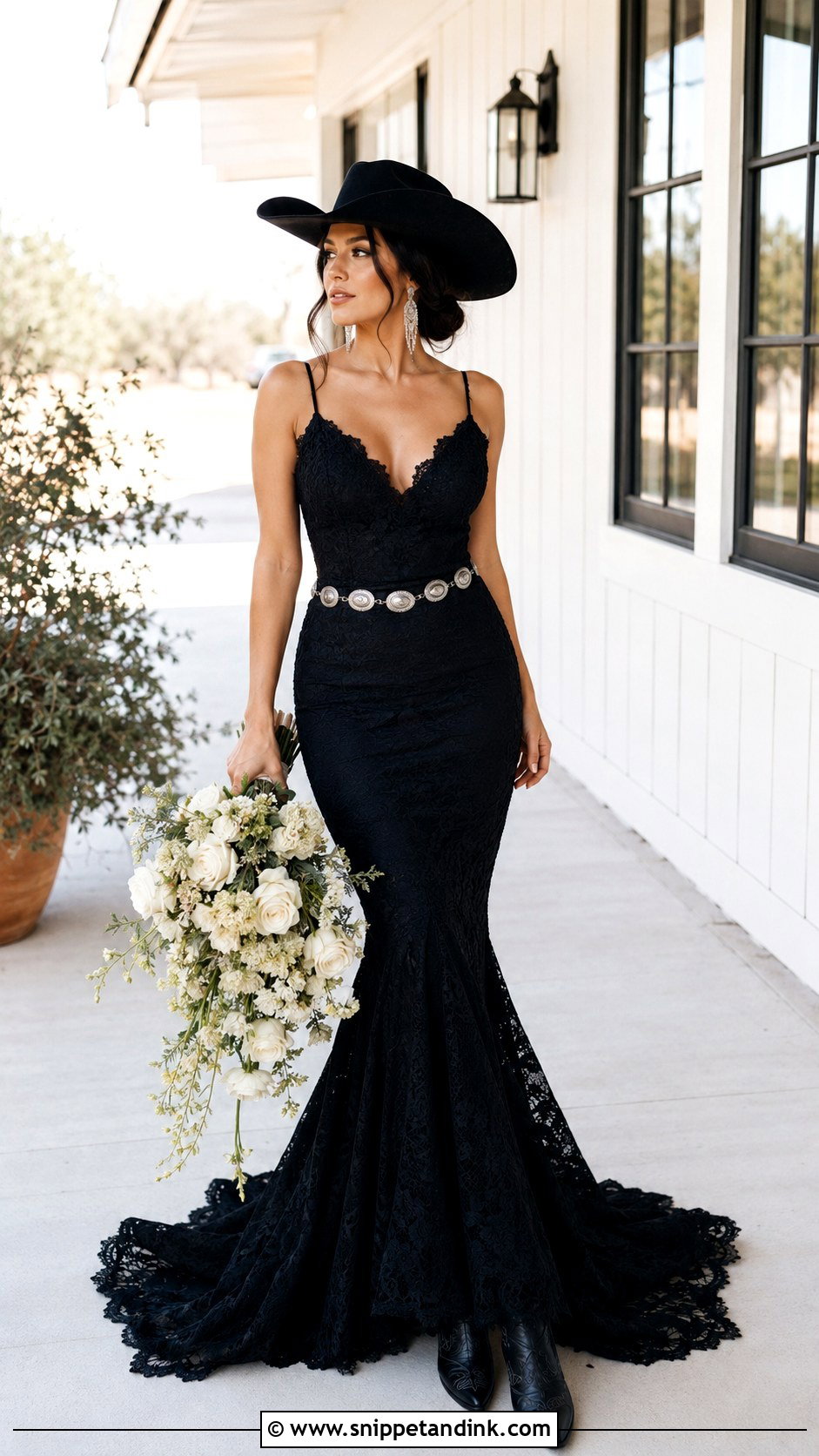
A black mermaid gown is the most glamorous option here, and the least practical outdoors. Stretch lace or structured crepe should follow the body before flaring around the knees. Keep the train short, because a mermaid skirt drags dirt fast on a ranch path. Wear pointed black boots with a heel you can actually walk in, and get the gown hemmed in them. A concho belt only goes on if it sits flat over the fitted waist; on a curvy waist it often tilts. A black hat and long earrings balance the top, and a narrow cascade bouquet suits the line.
13. Black Prairie Western Wedding Dress
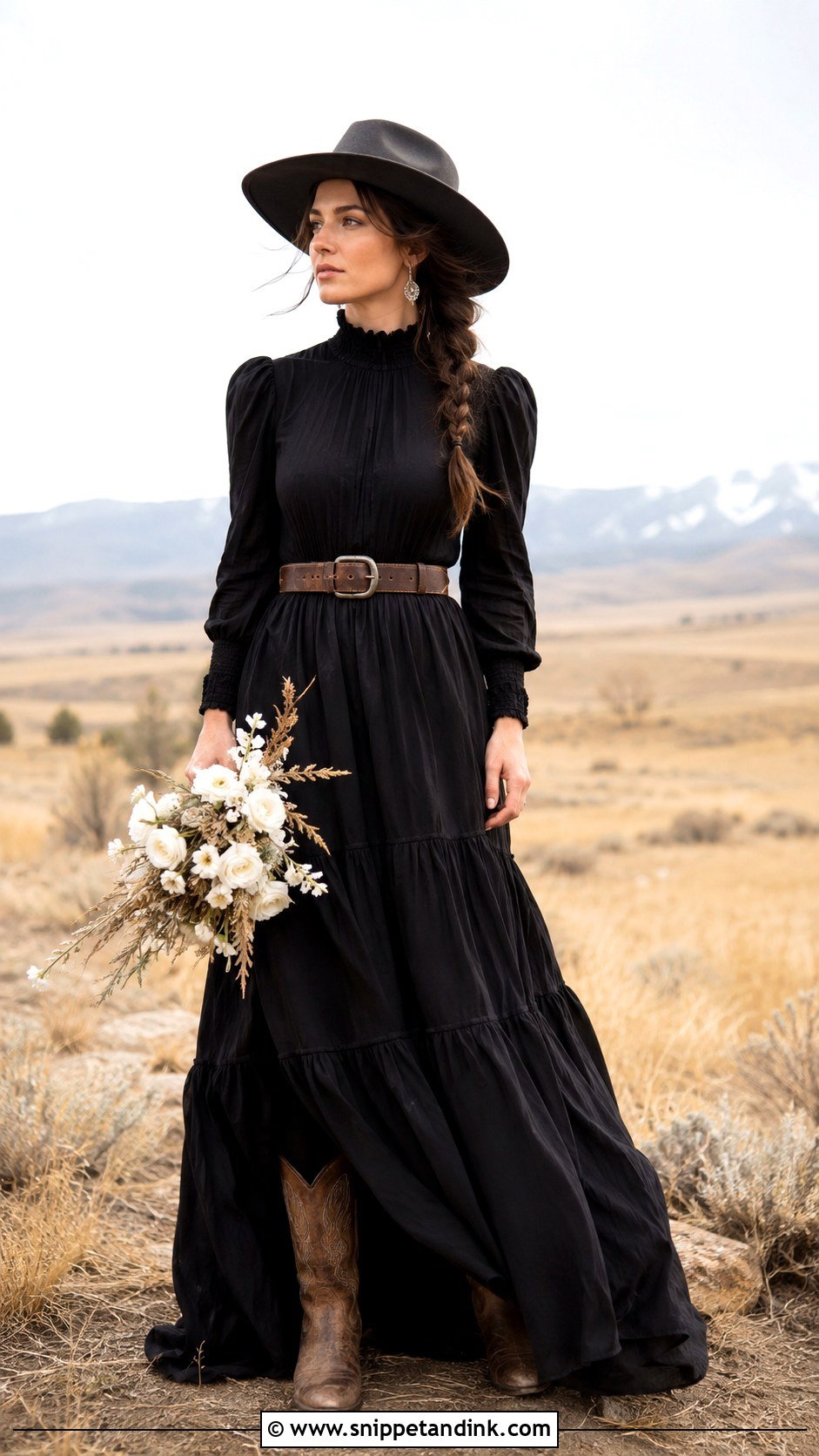
A black prairie-inspired gown brings a softer, vintage mood. I look for a high or gently ruffled neckline, a fitted waist, long sleeves and a tiered skirt in cotton lace, chiffon or embroidered tulle so the coverage doesn’t feel heavy. Distressed brown boots and an aged leather belt warm up all the black, and a tan or charcoal hat lightens it further. The line between prairie and costume is thin. Keep the ruffles small and the tiers clean, and wear a loose braid rather than anything too styled.
14. Black Boho Western Wedding Dress
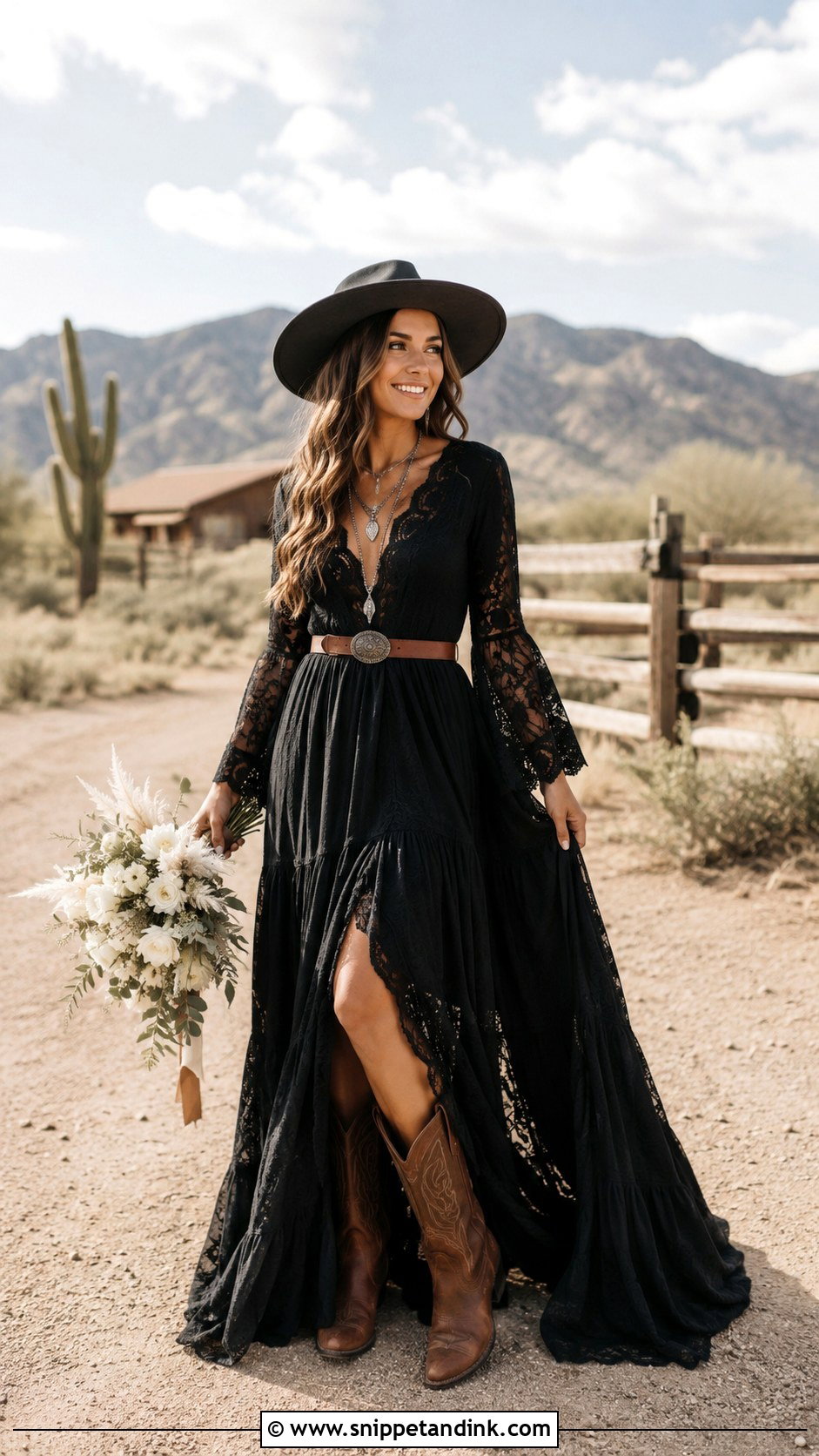
For an open-air wedding, a black boho western wedding dress moves with you instead of against you. A deep V-neck, bell sleeves and a gathered skirt are typical; crochet lace panels or tonal embroidery add texture. Check that the V has a proper lining or a mesh panel, because a deep, unsupported neckline needs constant adjusting. Worn-in brown boots, layered silver necklaces and a simple belt suit the relaxed shape. Bell sleeves tend to trail in food and drag through candles, so have them hemmed to the wrist bone.

15. Black Sequin Western Wedding Dress
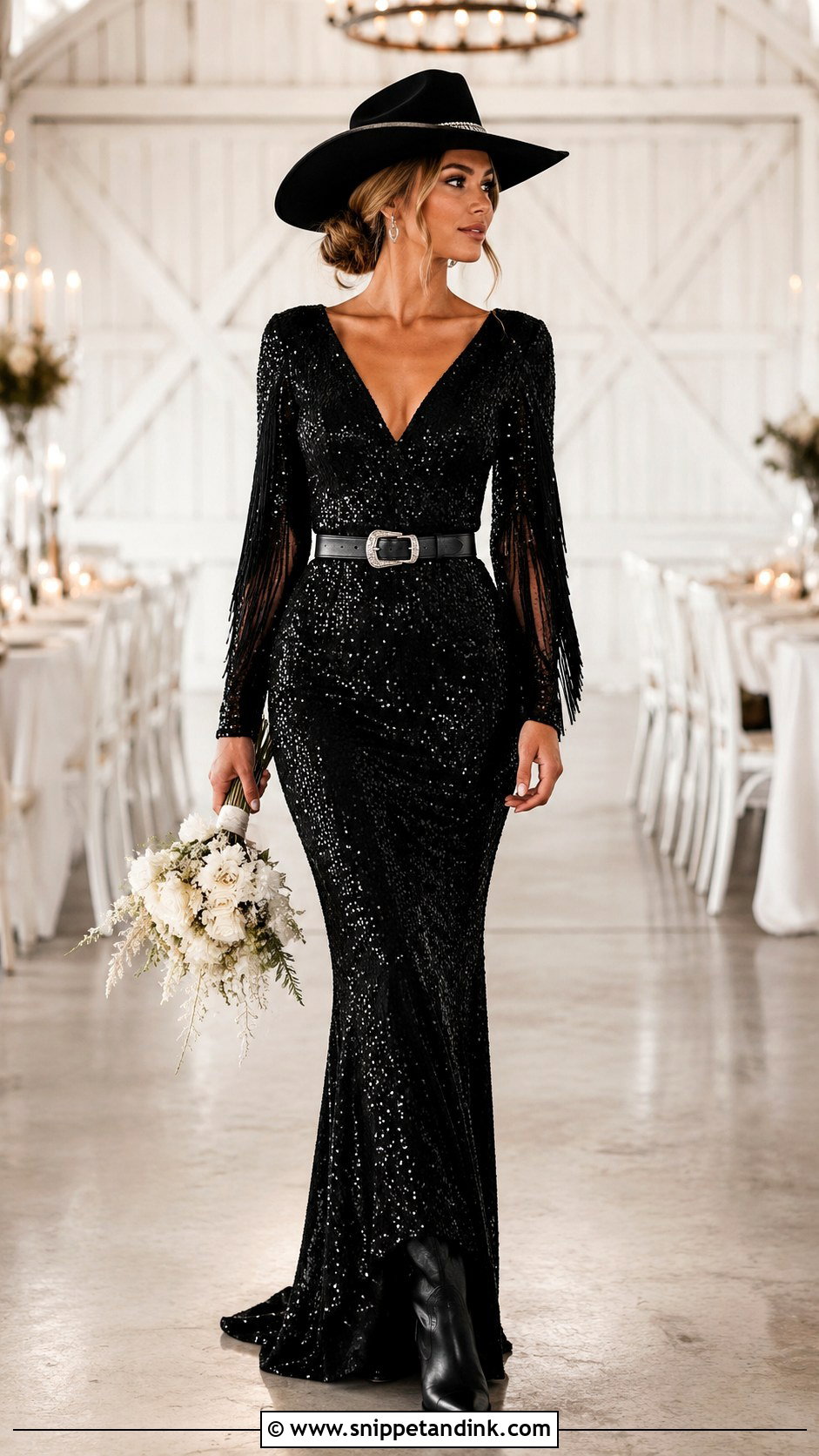
Sequins push a black gown toward evening, so the western cues have to stay quiet. I prefer tonal black sequins to multicolored sparkle, on a fitted or gently flared shape. A little fringe on the sleeves or skirt is fine if it’s limited to one area. Smooth black boots with minimal stitching and a clean belt without an oversized buckle avoid a clash of textures. A hat with a thin metallic band is enough western. Sequins shed, so check the inside of your bouquet arm and anywhere a jacket might rub. Skip the necklace.
16. Black Crepe Western Wedding Dress With Cape
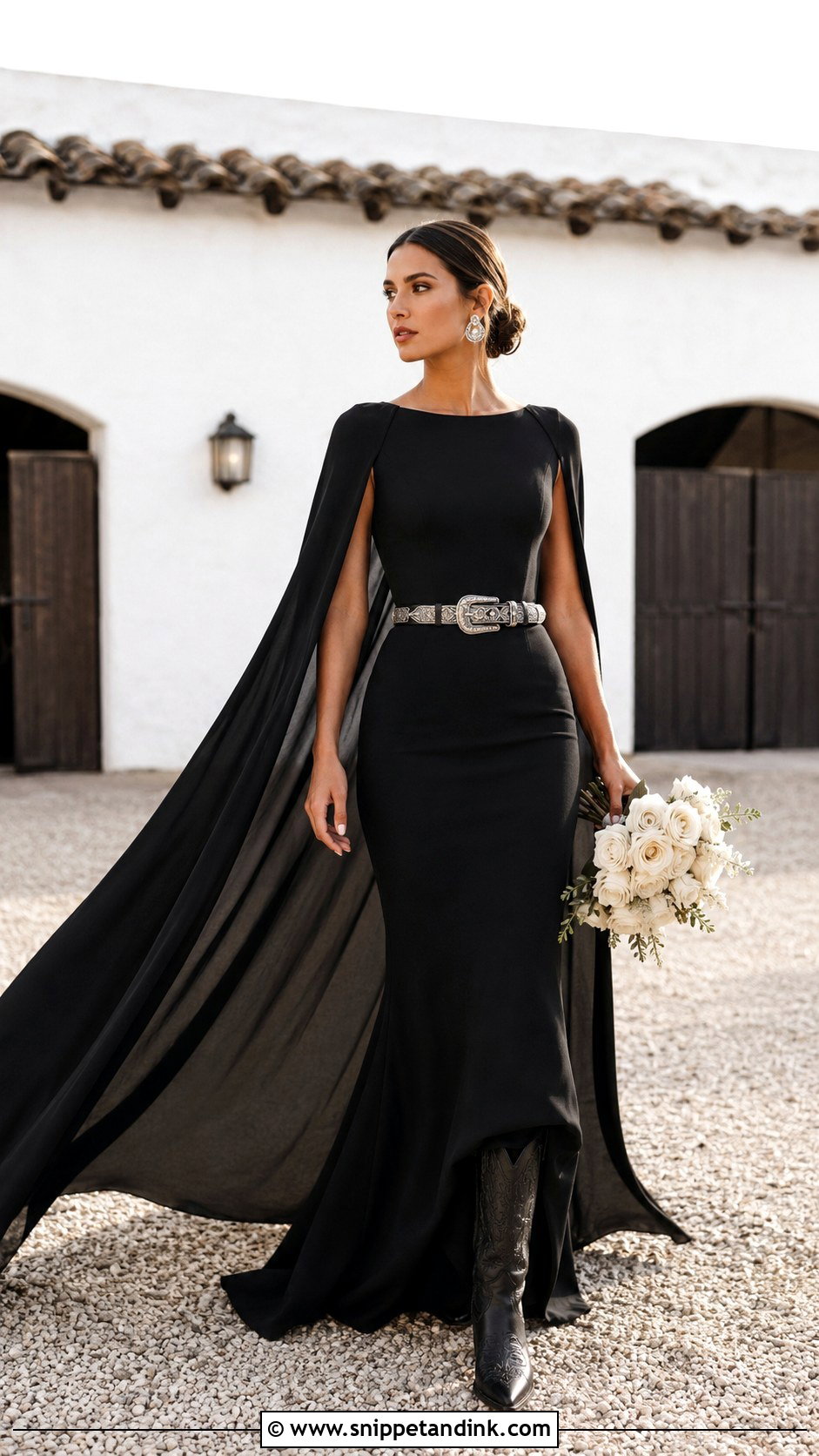
Plain black crepe with a cape is the most modern look in this set. Choose a fitted column or soft A-line with a simple neckline and an attached or detachable shoulder cape. Pointed black boots keep the line sleek. Only add a belt if the dress needs waist definition; a well-tailored crepe usually doesn’t. Swap the cape for a structured hat after the ceremony and you have two looks. The cape should stop above the ground, because a long one picks up grass, burrs and dust at an outdoor venue within minutes.
17. Black Mini Western Wedding Dress
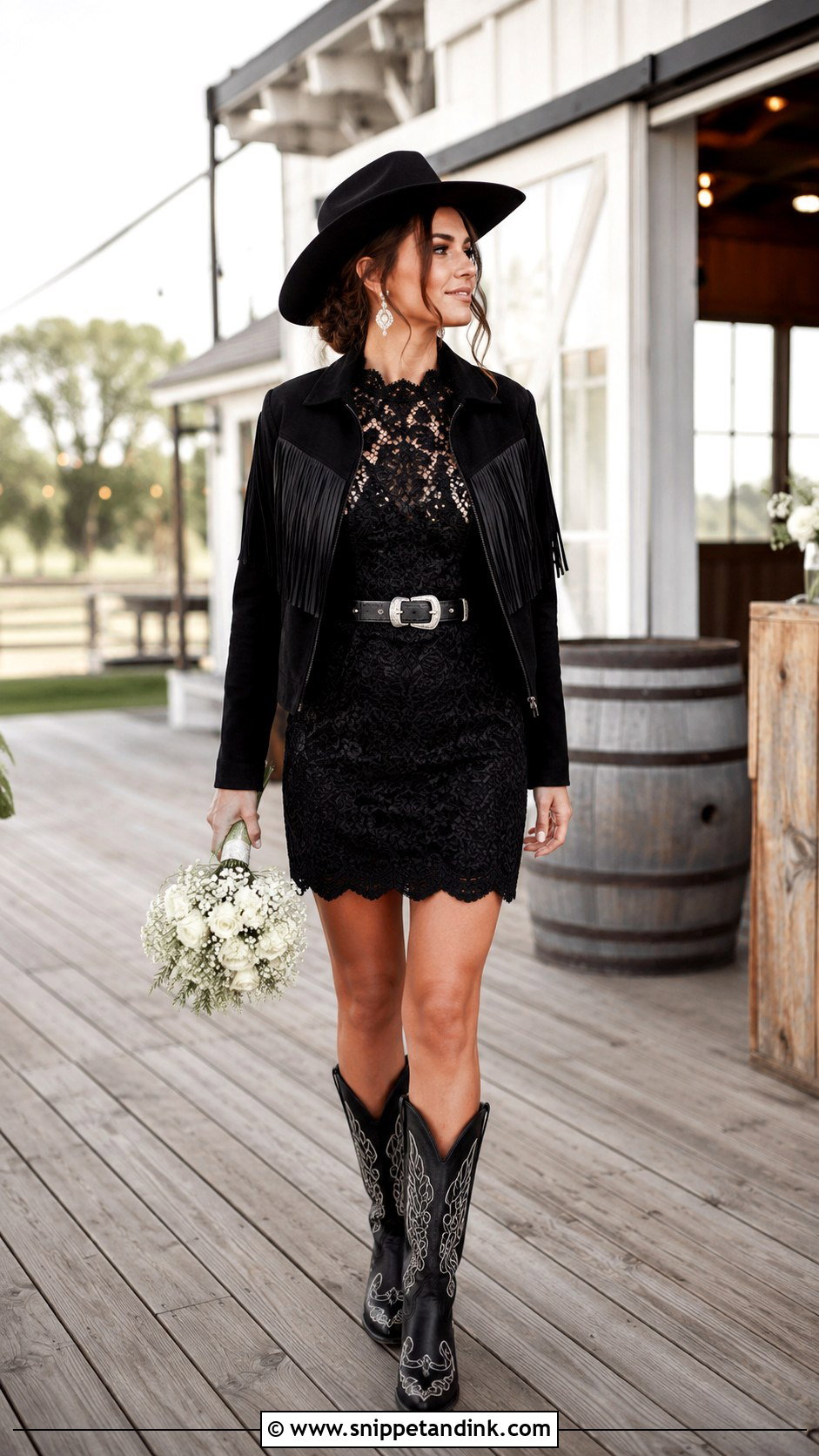
A black mini dress suits a courthouse ceremony, a casual ranch wedding or a reception change. I’d choose a structured A-line, fitted lace or a long-sleeved design so it feels considered rather than like a night-out dress. Knee-high embroidered boots cover the leg and become a big part of the outfit. Here the proportions decide everything: aim for a clear gap of thigh or knee between hem and boot, not a sliver. A slim buckle belt, an optional cropped fringe jacket, a felt hat and a small white bouquet keep it bridal.
18. Black Empire Waist Western Wedding Dress
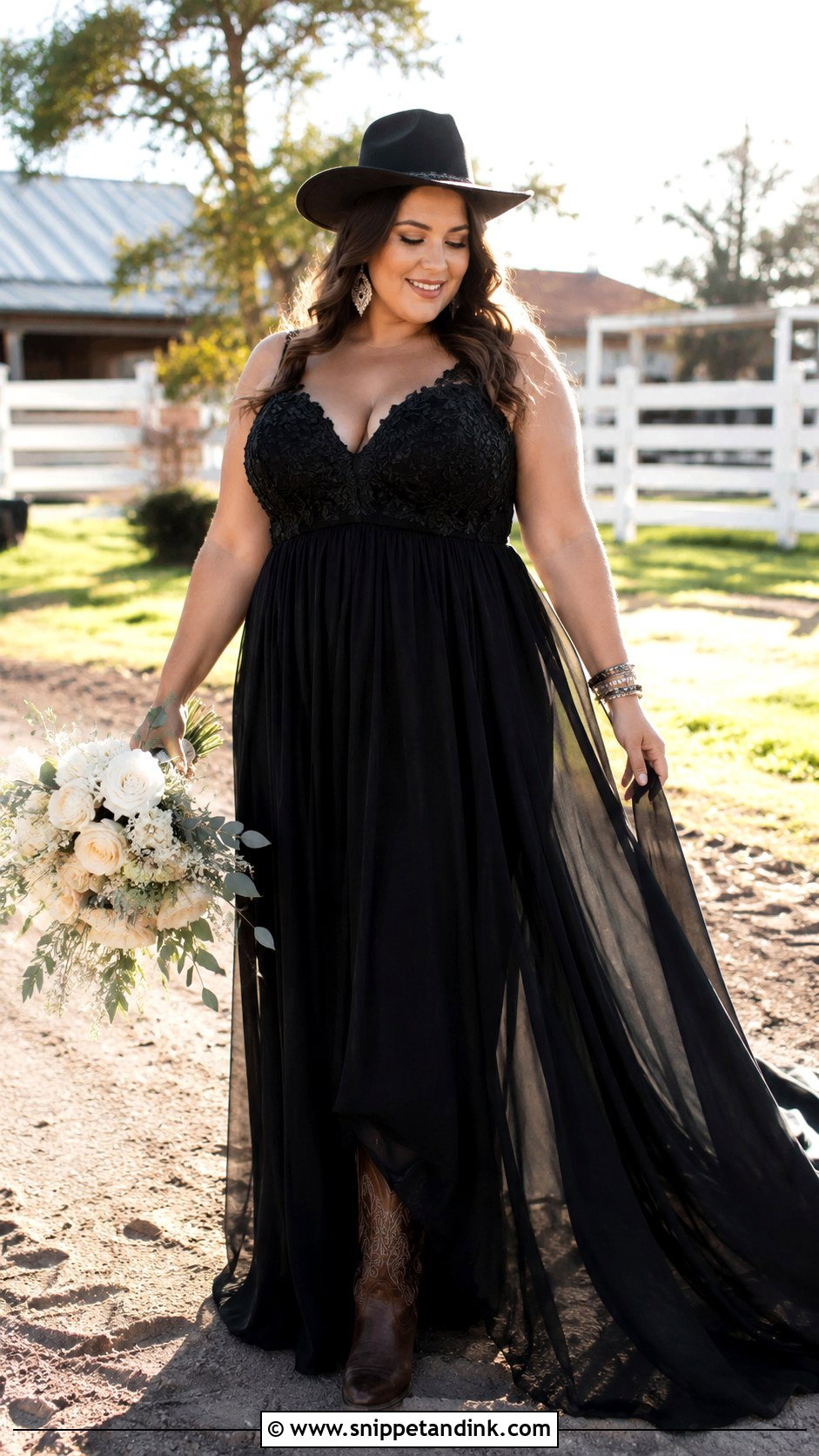
Empire waists are the most comfortable cut on this list for a long day. The skirt falls from under the bust, so there’s no pressure at the middle. Pick a supportive lace or embroidered bodice and a chiffon skirt for movement. I’d skip a waist belt here, as it fights the line of the dress. Put the western character into silver earrings, stacked bracelets and a hat with a subtle band instead. The one fitting I insist on is the bust: if the bodice gaps or slips, the whole dress looks like a nightgown.
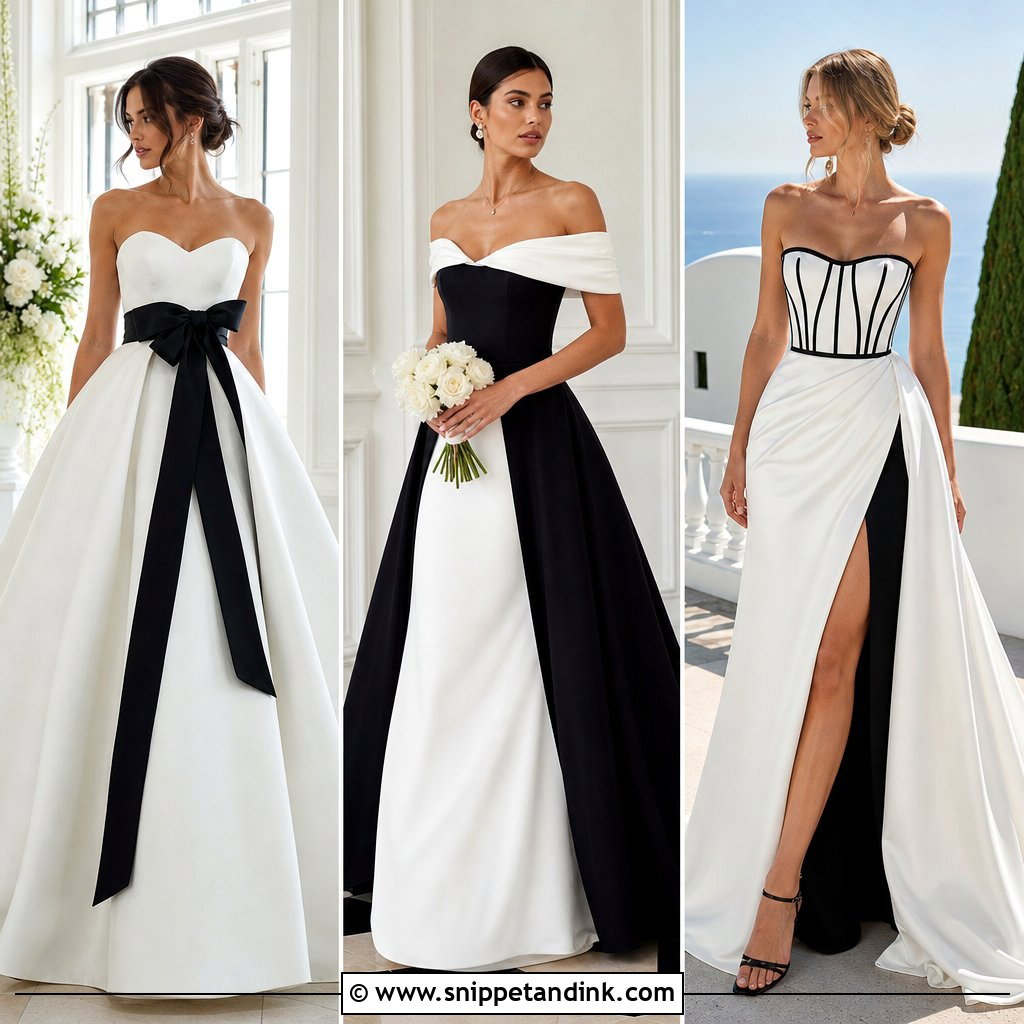
19. Black And Ivory Western Wedding Dress
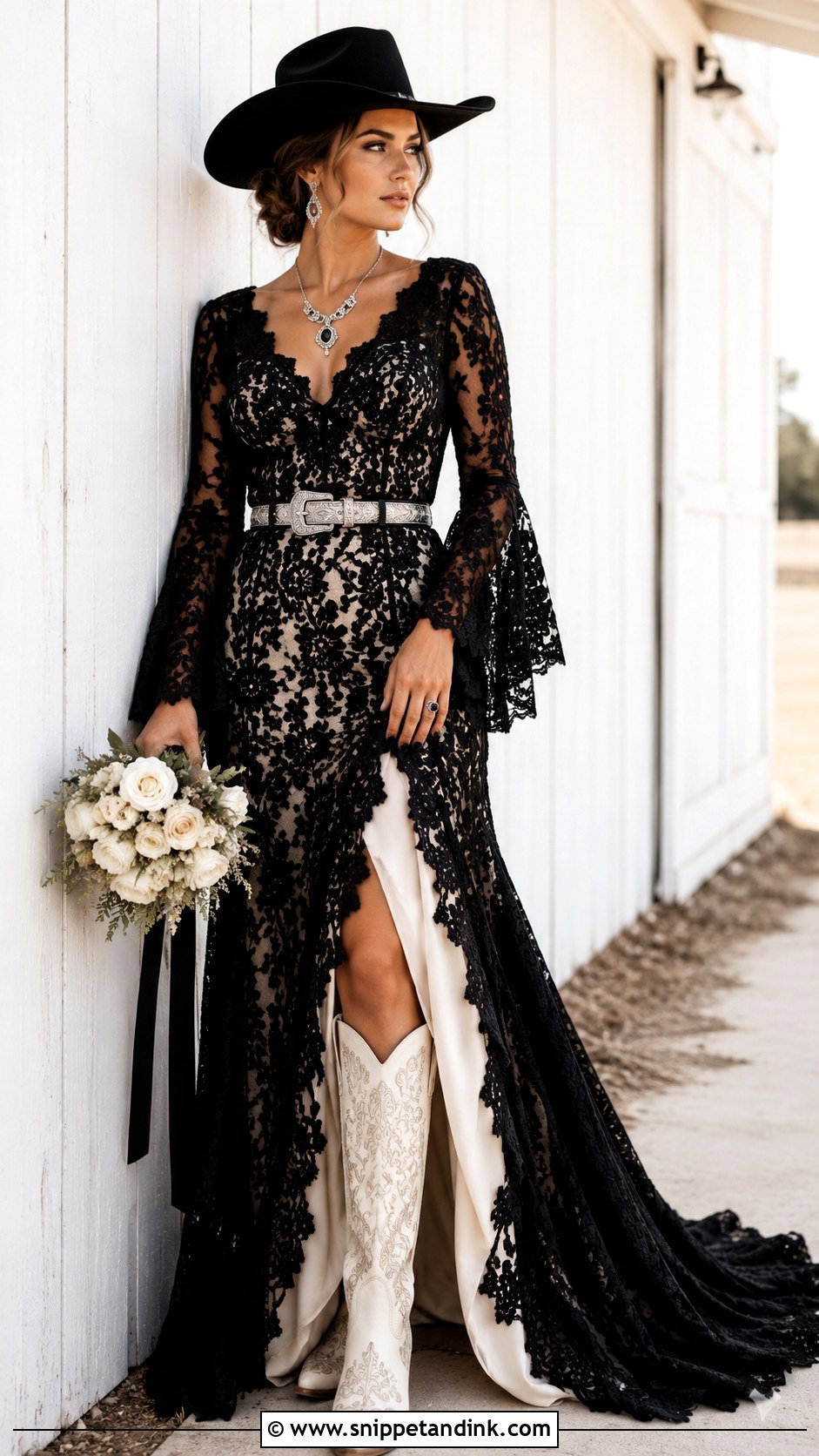
Black and ivory together give you contrast while keeping a traditional bridal color in the picture. The options are a black lace gown over ivory lining, an ivory bodice with a black tulle skirt, or black with ivory appliqués. Choose one color for the boots and hat so the outfit doesn’t break into pieces: ivory boots brighten a mostly black gown, and a black hat anchors the top. Wrap an ivory bouquet in black ribbon to repeat the palette. Stop at two colors plus metal. A third makes it look busy fast.



20. Black Western Wedding Dress With Detachable Skirt
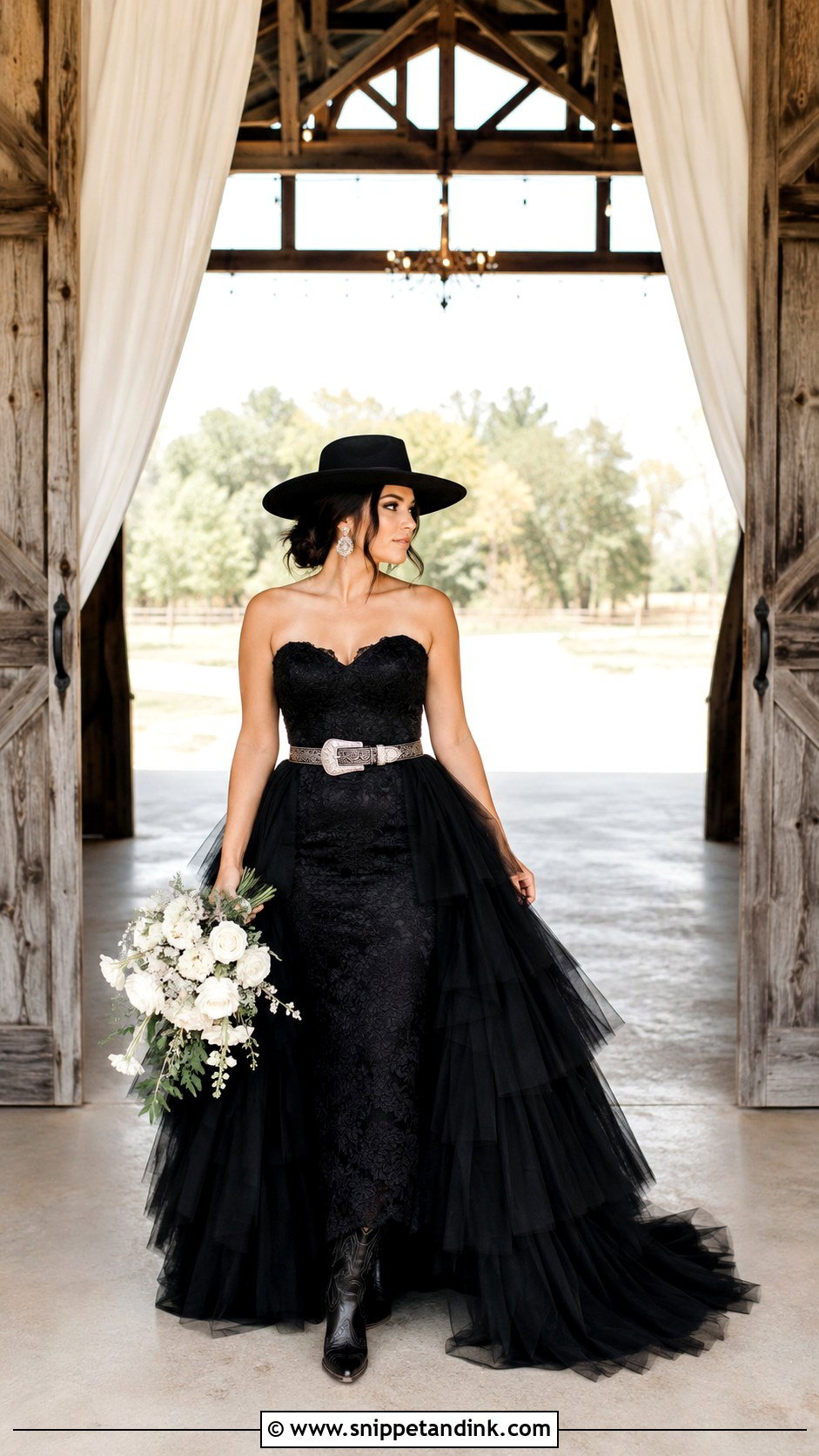
A detachable overskirt is two dresses for the price of one fitting schedule. Start with a fitted lace, crepe or satin base, then add a full tulle or embroidered overskirt with a train you can manage. For the ceremony, wear it with black boots, a silver belt and a wide-brimmed hat. Afterwards, unclip the skirt to show a midi, mini or column underneath. I always ask to see how the overskirt fastens: hooks and snaps hold better than buttons, and the closure should lie flat under the belt. Keep the jewelry the same for both looks.
Dust, Sun and Black Fabric Outdoors
A black dress hides mud and wine better than ivory, but it shows pale dust, pollen and dry grass. On a dirt or gravel venue, the bottom few inches of the hem will turn a soft grey by the end of the night. That’s normal, and most of it brushes off once dry. I keep a clothes brush and a lint roller in the kit for photos.
How black photographs in strong light
Midday sun flattens black fabric, so lace and embroidery can disappear into one dark shape. Golden hour or open shade brings the texture back. Talk to your photographer about timing portraits for late afternoon, and stand facing the light rather than with your back to it.
Hats, veils and the ceremony
Some families and officiants expect a hat to come off for the vows, especially at a church. Ask in advance. If you plan to wear both a hat and a veil, anchor the veil comb into the hair below the brim, not into the hat, so you can take one off without losing the other.
After the wedding, have the gown cleaned within a few weeks, and point out the hem to the cleaner. Store it in a breathable garment bag away from light, because black fabrics, especially cotton lace, can fade to brown over time in a sunny closet.
Boots, Hat and a Black Gown That Fits the Ranch
A black wedding dress can go romantic in lace and tulle or polished in satin, velvet, sequins and crepe. Cowboy boots, silver jewelry, a fitted belt and a structured hat set the western tone without tipping into costume, as long as you choose two or three of them, not all five. Begin with a gown that suits your body, the season and how much walking the venue involves. Then build the accessories around its best feature and leave the rest out.
You'll Like These Ideas:






Leave a Reply