
A wedding gown is usually the most expensive single garment a woman owns, and it is also the one she has the least idea what to do with once the party is over. I get asked about it at almost every final fitting. The honest answer is that there are three broad paths: keep it whole, let someone else wear it, or turn the fabric into something you will actually use. Whichever way you lean, the first job is the same. Lay the dress out under good light and look at the hem, the underside of the train and the armholes, because that is where the wedding leaves its marks. Get it cleaned before you make any permanent decision, since some stains set with time and the dress you are judging today may not be the dress you have in a year.
The First Few Weeks Decide How Well It Ages
Most of the damage I see on stored gowns was done in the month after the wedding, not the years after. The dress gets stuffed back into its shop bag, hung in a spare room, and left while the honeymoon and thank-you cards take over. Meanwhile, the champagne and frosting splashes that were invisible on the night slowly oxidise into tan patches. Sugar stains are the classic example. They dry clear, so you can’t see them, and then they brown with heat and time.
Here is the order I give brides who ask:
- Within a day or two, take the dress out of any plastic and hang it somewhere cool and dark, or lay it flat on a clean sheet.
- Walk around it and note every mark you can see, plus anywhere you remember a spill even if nothing shows. Tell the cleaner about both.
- Shake out the hem and train outdoors to remove grit; don’t rub or spot-treat anything yourself, because water and soap can leave a ring on silk.
- Book the cleaning within a few weeks. Waiting a few months is not a disaster, but older stains are harder to lift.
- Keep the label, the alteration receipt and any spare buttons or beads together in an envelope. Every option in this list goes easier with them.
1. Clean and Preserve Your Wedding Dress
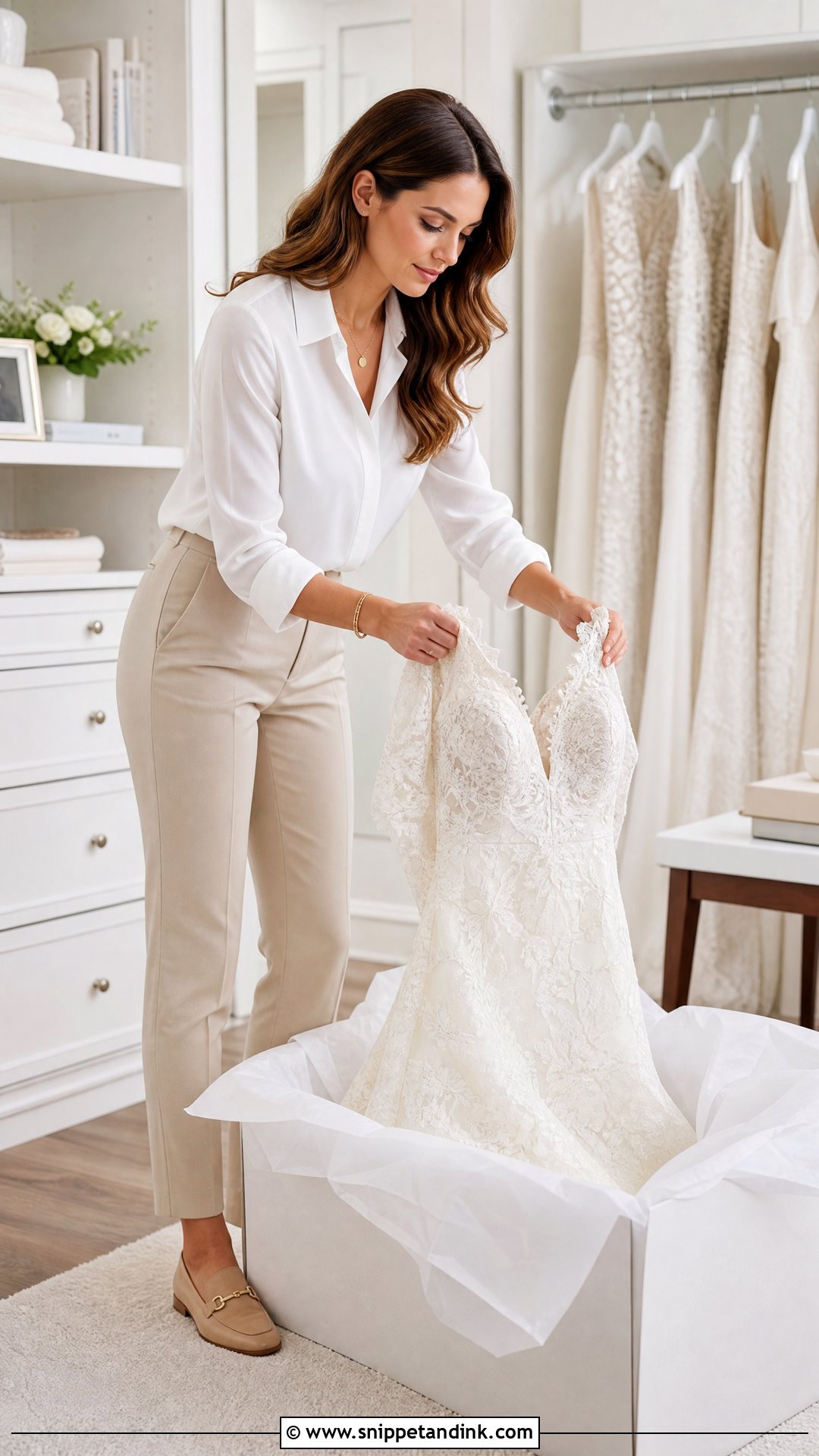
Professional preservation makes sense when you want the gown kept exactly as it was. Choose a cleaner who handles bridal work every week, not a general dry cleaner who sees a beaded bodice twice a year. I always tell brides to ask two things: how they treat invisible sugar stains from champagne and cake, and whether you can see the dress before it is sealed. A good service folds it around acid-free tissue in an archival box rather than a sealed plastic window box. Keep that box in a closet inside the main living space, never the attic or garage, where heat swings and damp do the real damage. Preservation slows yellowing; it does not stop it entirely, and no honest cleaner will promise otherwise.
2. Store Your Wedding Dress at Home
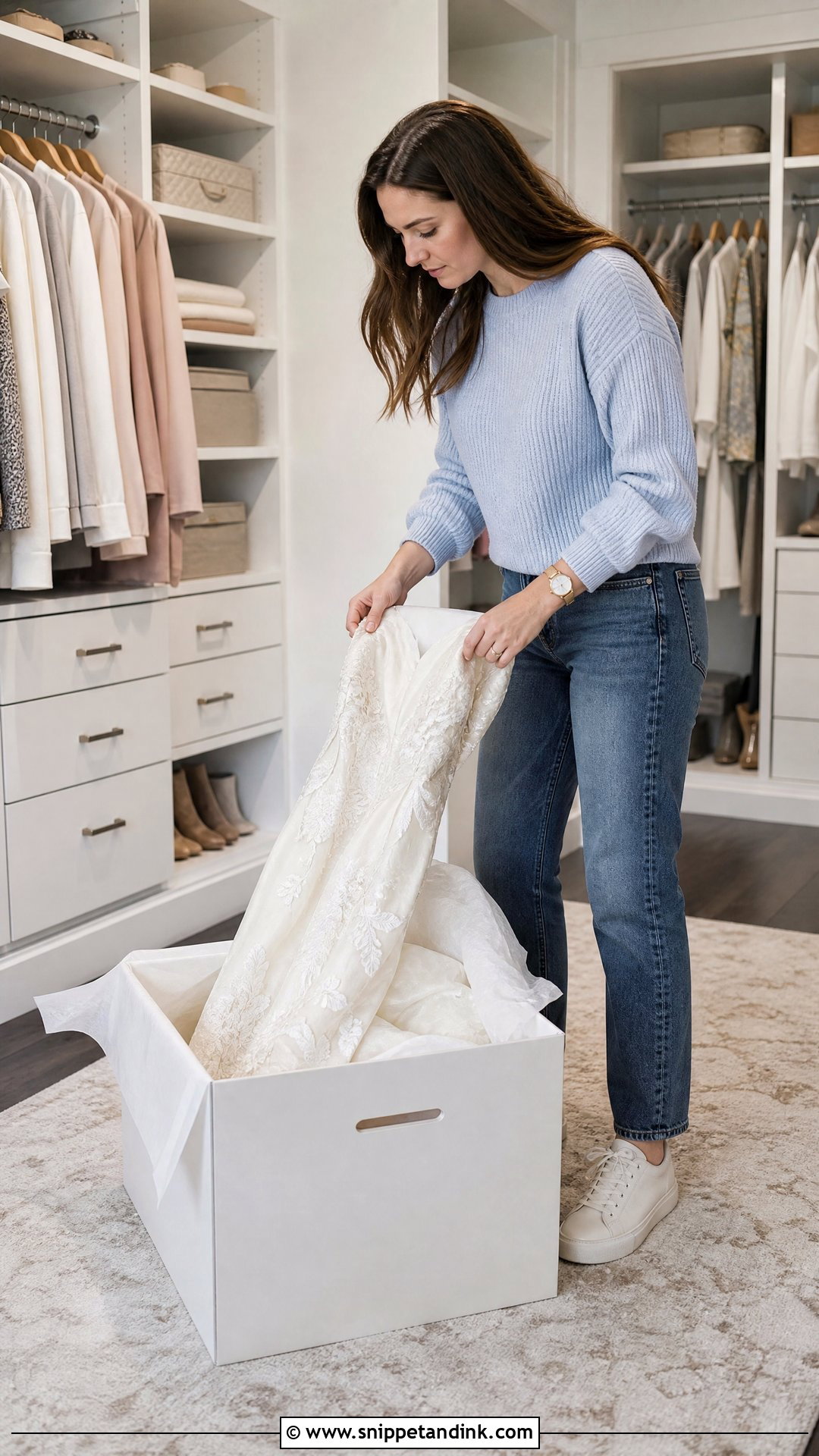
Home storage works well on a smaller budget, provided the dress is clean first. Take it out of the thin plastic bag the shop sent it home in. That bag was meant for a car journey, and over months it traps moisture against the fabric. A breathable cotton bag is fine for a few weeks of hanging; for anything longer, I’d box it. Heavy gowns pull on the shoulder seams and the little hanging loops if they hang for a year, and loops can tear clean out of satin under that weight. Pad every fold with acid-free tissue, especially across beading, so the stones don’t press dents into the fabric. Then check it once or twice a year with clean, dry hands and refold it along slightly different lines.
3. Sell Your Wedding Dress Online
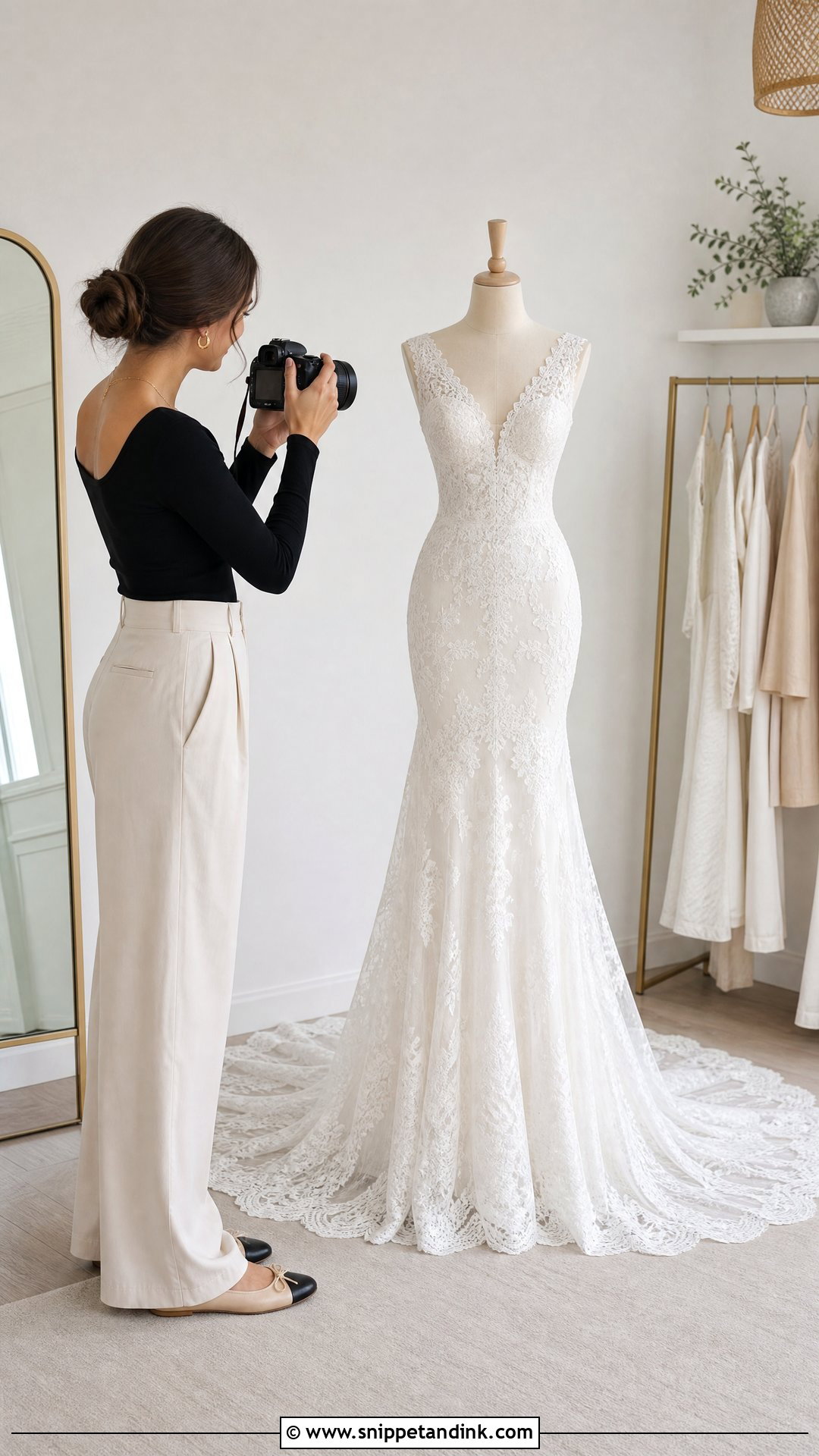
Selling online gets some money back and gives another bride a designer dress she might not otherwise afford. Buyers want facts, so gather the designer, style number, tagged size and your altered measurements before you list. Photograph the front, back, train, neckline and closure in daylight near a window, then add close-ups of anything worn: a loose bead, a grey hem, a repaired seam. In my experience, buyers forgive honest wear far more readily than a surprise. Say which alterations could be let out, but never claim it will fit without tailoring, because seam allowances in bridal gowns are often trimmed tight. Price against similar listings and remember to subtract fees, insured shipping and a proper box.
4. Consign Your Wedding Dress Locally
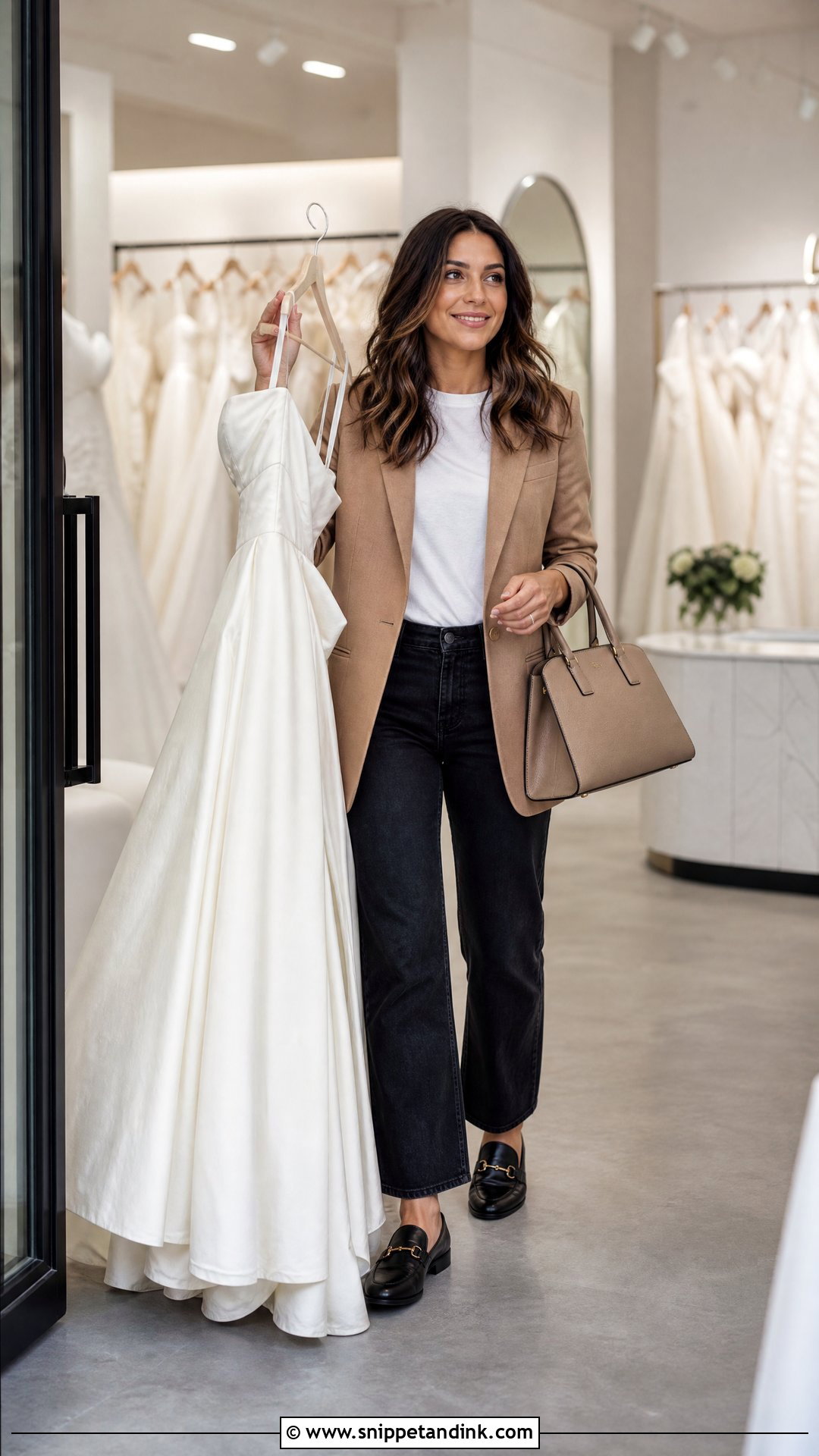
Consignment suits you if you’d rather sell your gown without answering messages from strangers or arranging try-ons in your living room. Call ahead, because shops set their own limits on how old a dress can be, which designers they take and which sizes move in their area. Ask about commission, how quickly the price is marked down, how long the contract runs and what happens to an unsold dress. A detachable sleeve, overskirt or belt is worth bringing; a matching piece can lift the price. You will usually net less than a private sale, but the shop does the fitting appointments for you. Photograph the gown before you hand it over and keep a copy of the signed agreement.
5. Donate Your Wedding Dress to Charity

Donation gives the dress a second life and clears a large box out of your closet. Some charities hand gowns straight to brides who need one; others sell them in bridal boutiques to fund their work. Requirements change often, so check sizes, age limits, condition rules and shipping steps before you pay for cleaning or packing. Empty the pockets (brides forget hairpins and lipstick in them constantly) and only add accessories if the charity asks. If you plan to claim a tax deduction, keep the receipt and check current guidance. Never post a dress unannounced; a small organisation with full racks may simply not have space for it.
6. Give Your Wedding Dress to a Bride
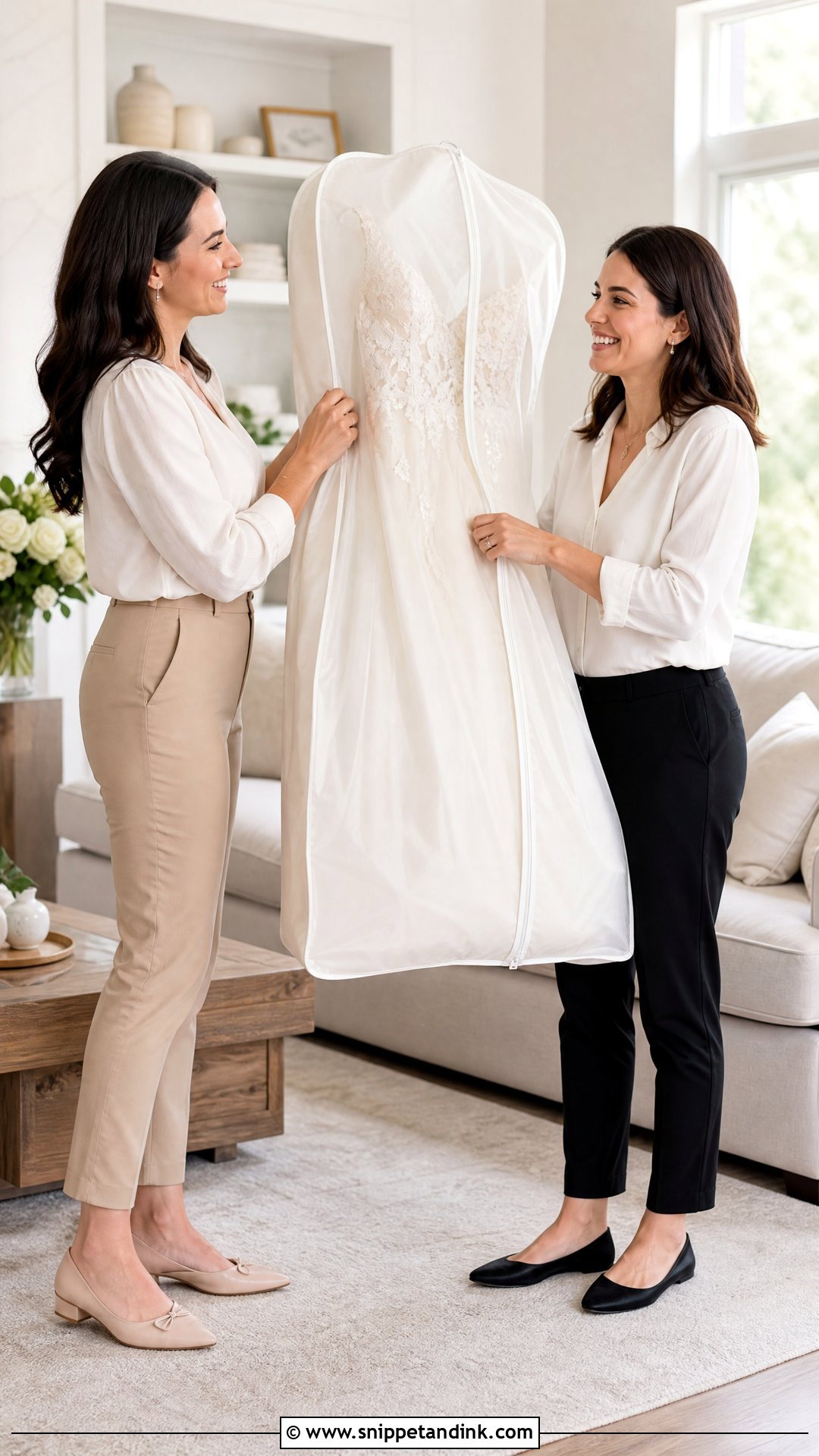
Handing your gown to someone you know means you’ll see exactly who wears it next. Before anyone tries it on, send real measurements and honest photos so she knows what she’s walking into. Write down every alteration you had: the shortened hem, added cups, a moved zipper, taken-in side seams. That list saves her seamstress a lot of guesswork, because altered bridal seams often can’t be let out as far as a new dress. Then let it go properly. If she wants to dye it, cut the sleeves off or swap the train, a gift with strings attached stops being a gift. Pass along any care notes from the designer or cleaner, and the veil if you have no use for it.
7. Pass Down Your Wedding Dress
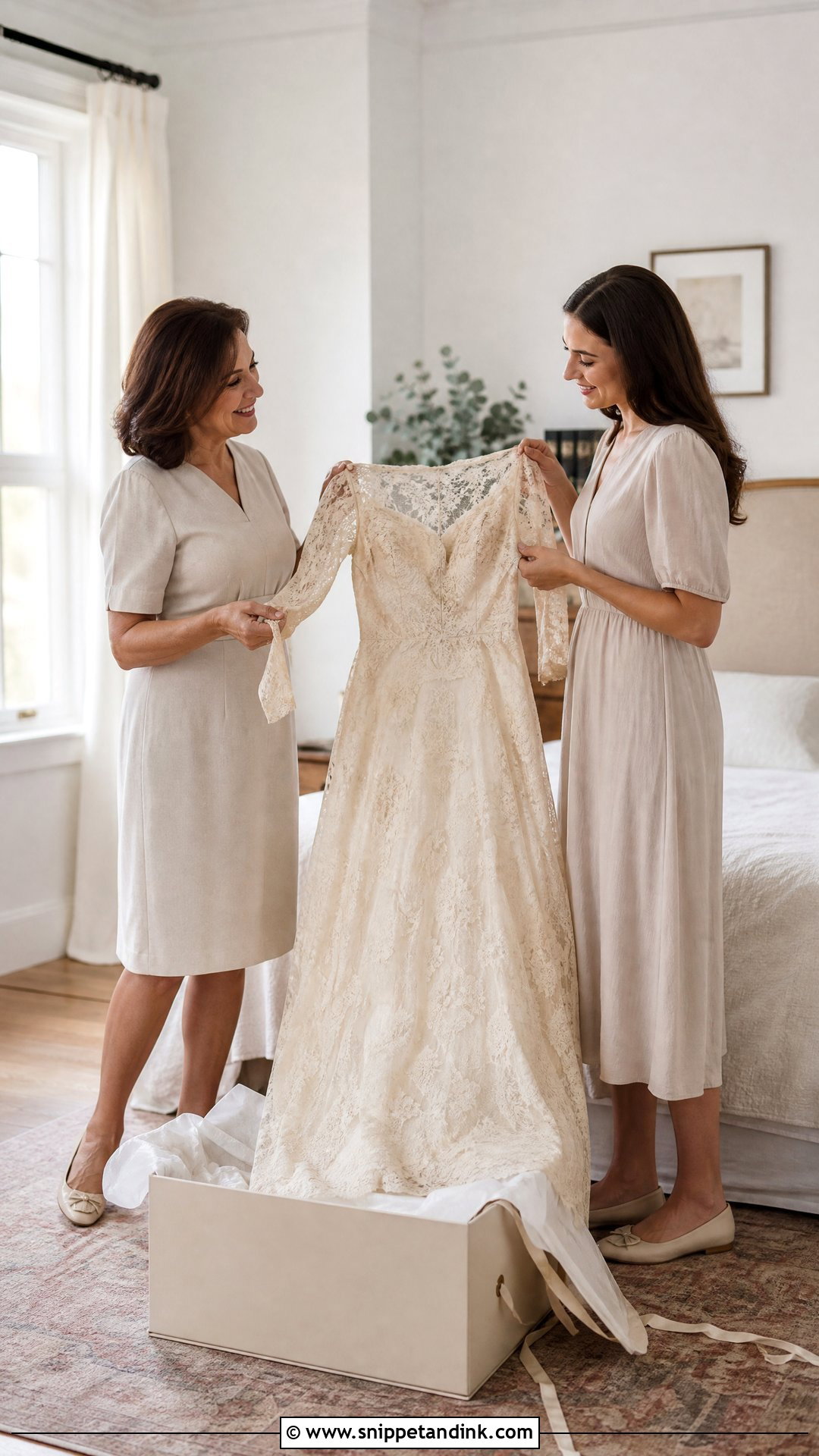
Keeping a dress for a daughter, niece or grandchild is sweet, but plan as if it will be decades before anyone opens the box. Have it professionally cleaned and preserved instead of leaving it in a closet, where light and dust will yellow the folds long before then. Tuck a written card inside with the fabric content, the designer, the alterations and a photo of you wearing it. A future seamstress will thank you for those notes. What I’d warn against is any expectation that it will be worn as it was. Bodies, fashion and venues change, and the next bride may want only the lace, the buttons or a strip of the train. Preservation keeps all of those choices open.
8. Loan Your Wedding Dress to Family
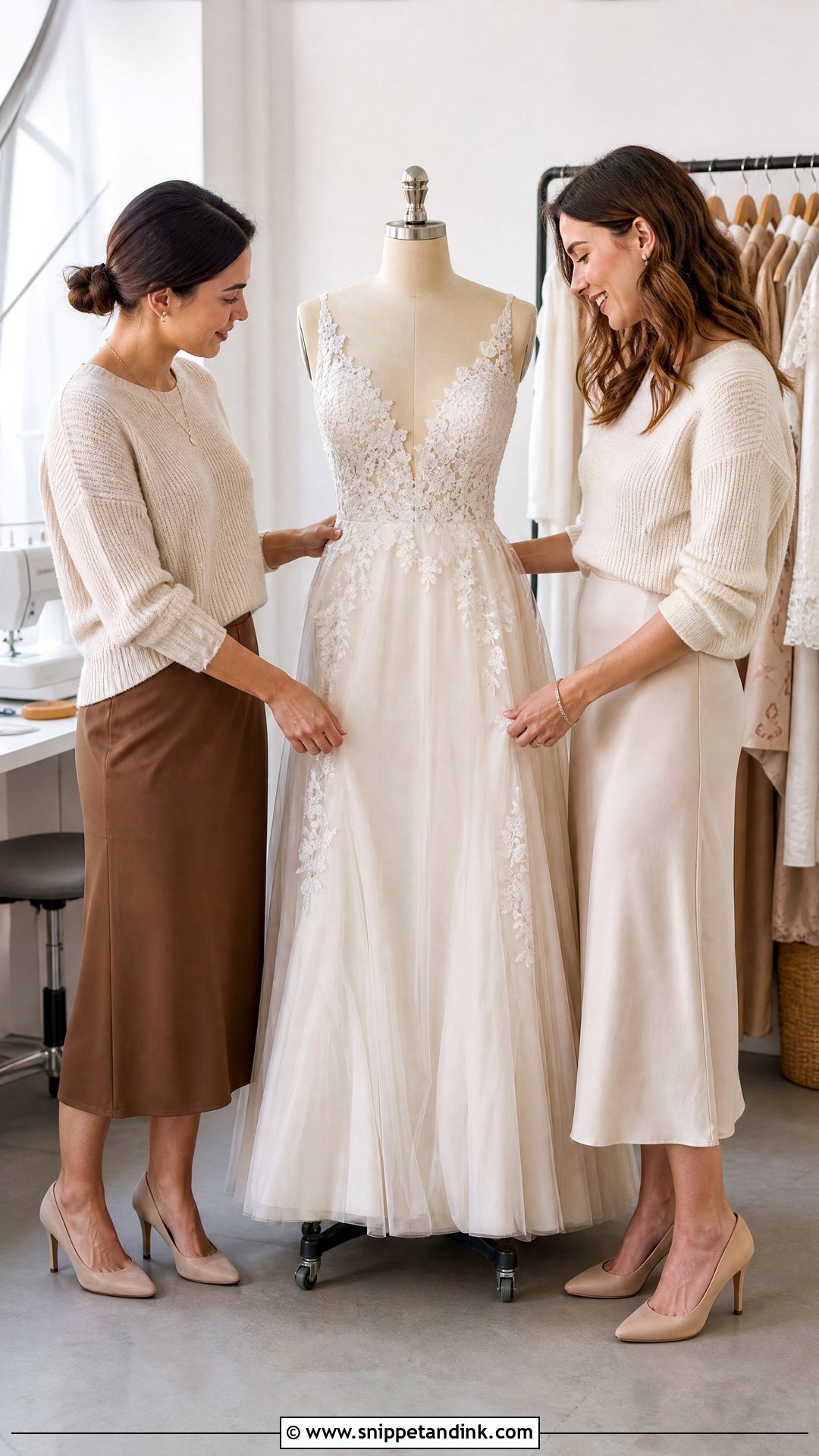
Lending the dress is a halfway point if you want it worn again but are not ready to part with it. Have the awkward conversation up front: who pays for alterations, cleaning, repairs and the courier, and what happens if wine ends up on the skirt. Ask her tailor to work only in ways that can be undone, so take in seams rather than cutting them and fold the hem rather than trimming the lace. Photograph the dress in detail and write the plan down in a few lines. Then accept that a dress worn for a whole day comes back worn; that’s what dresses are for. Get it professionally cleaned straight after and back into its box.
9. Wear Your Wedding Dress for Anniversary Photos
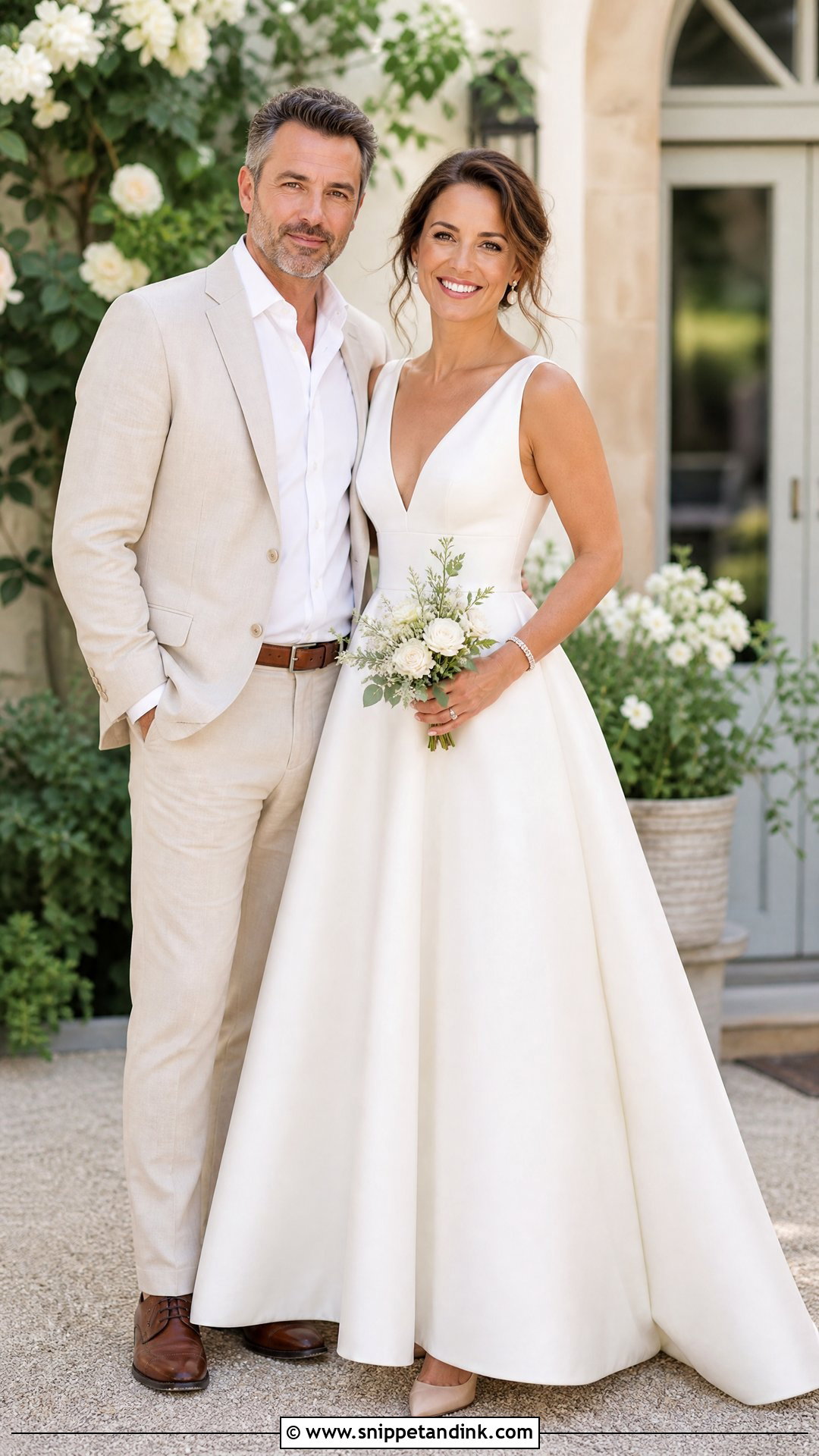
An anniversary shoot is the gentlest way to enjoy the whole gown again without changing a stitch. Pick a location that feels different from the wedding, so the photos don’t look like a reshoot of the same day. I’d plan the shoes around the ground: block heels or ankle boots for grass, flats for a beach. Fresh accessories and looser hair make it feel like a new outfit. If the dress has been boxed for years, try it on a few weeks ahead, since fabric relaxes oddly in folds and bodies change, and a seamstress may need to adjust a strap. Check the hem for grass and sand before it goes back into storage.
10. Shorten Your Wedding Dress
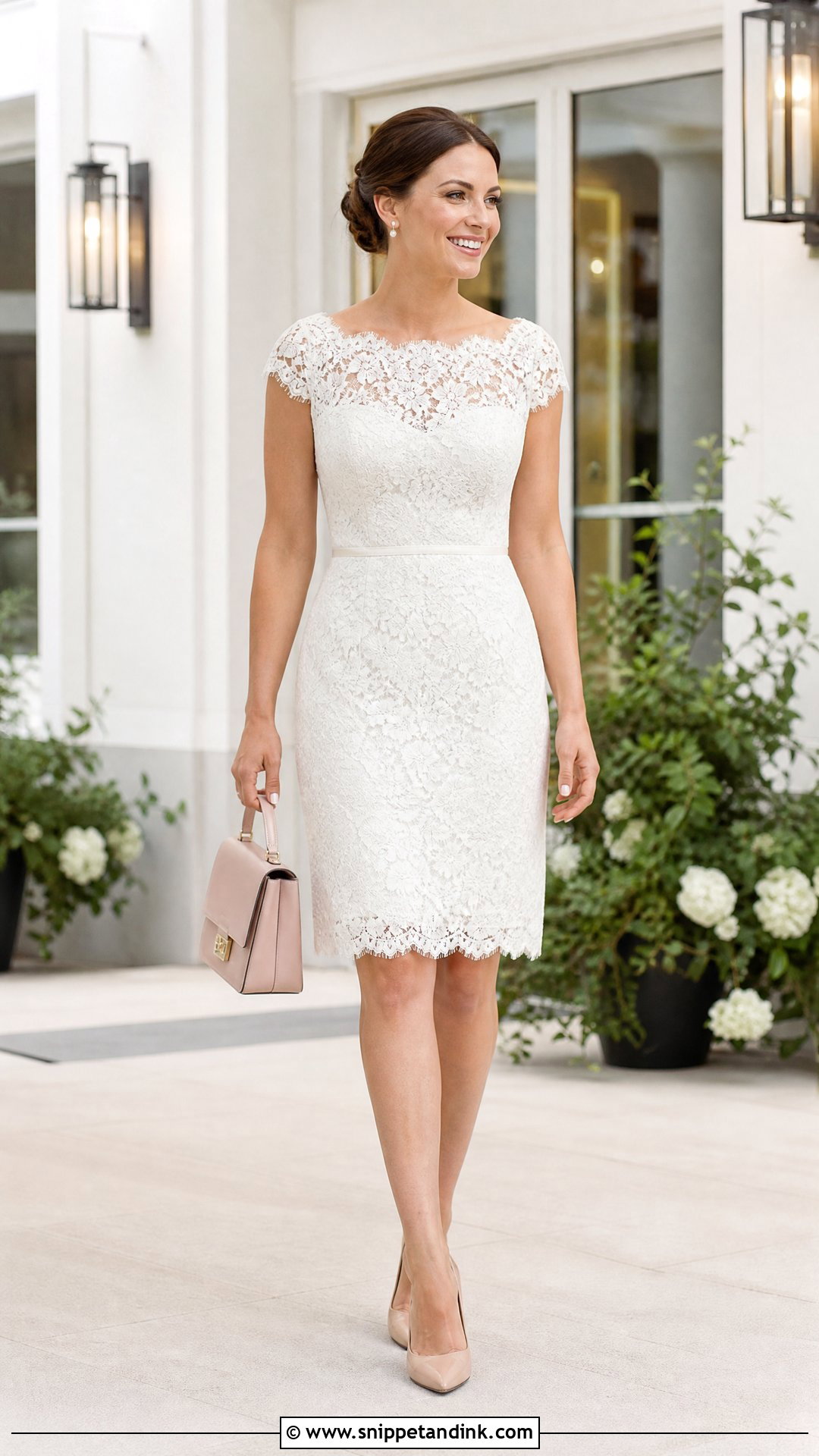
Taking a floor-length dress to midi or knee length gives you something you can wear to dinners and milestone birthdays. Clean A-lines, fitted sheaths and plain satin take this best; a full ballgown with layers of tulle tends to look like a cut-off costume. Have the tailor pin a few lengths while you’re standing in the shoes you’ll wear, because proportions shift a lot once the train and skirt weight are gone. A lace border along the hem is the tricky part. It has to be unpicked and reattached at the new length, so ask for a fitting plan before any scissors come out. Keep the offcut; it is useful for one of the smaller keepsakes further down this list.
11. Dye Your Wedding Dress
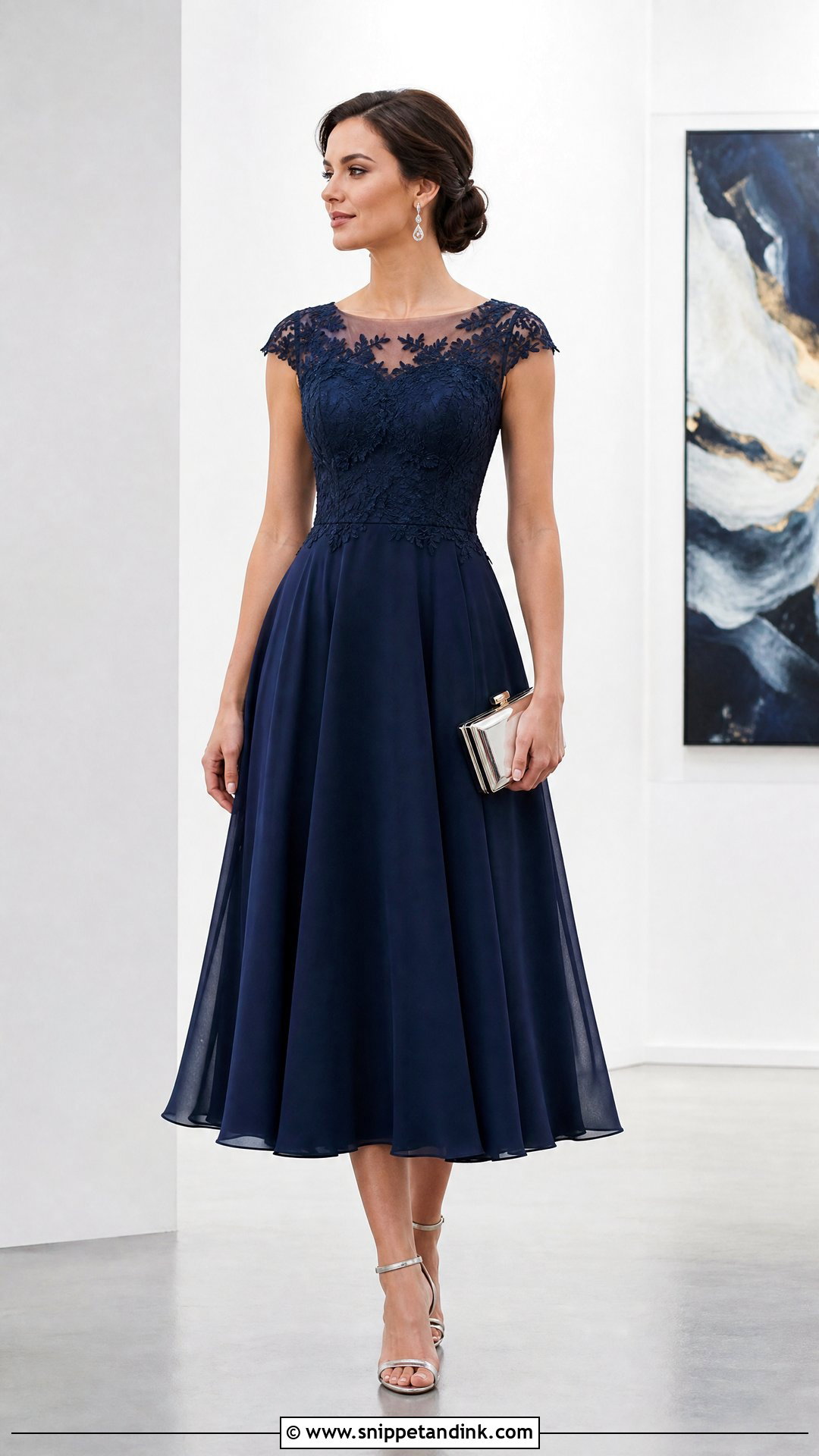
Dyeing changes a dress more than any alteration, but fibre content decides the result. Silk takes dye in one way, a polyester lining another, and the thread, lace and zipper may each go a different shade. An ivory gown can come out of a navy dye bath with pale seams running down it like piping, because polyester thread barely takes the colour. Talk to an experienced textile dyer, especially with a valuable dress, and test a hidden seam allowance or an offcut first. Deep colours like navy, black and jewel tones hide uneven uptake better than pastels do. Accept going in that this one is permanent.
12. Make a Two-Piece Set From Your Wedding Dress
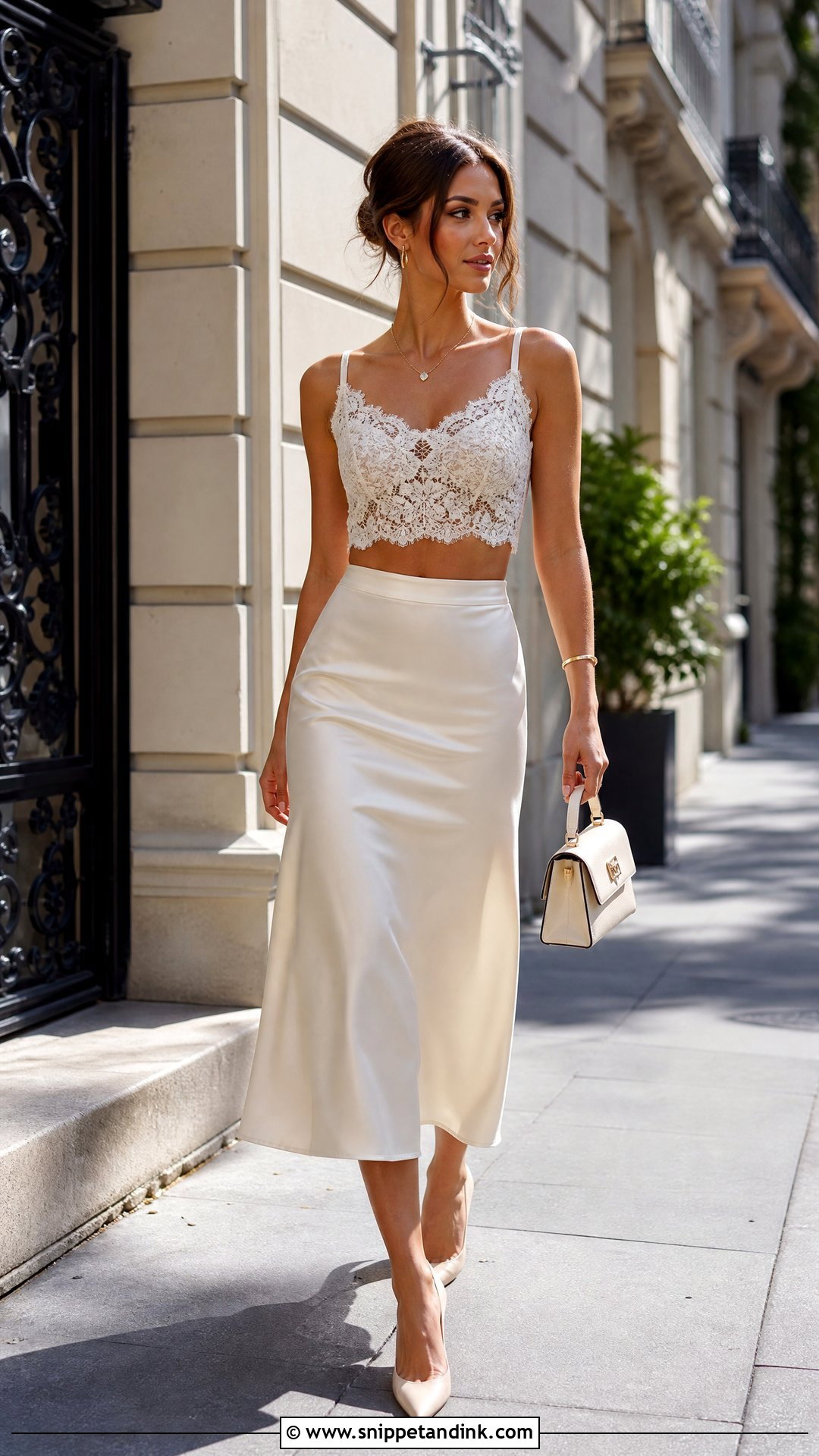
Splitting the gown into a top and skirt gives you more outfits than shortening alone. A seamstress separates the bodice at or near the waist, finishes a new waistband and adds a closure to each piece. It works best when the bodice carries the detail, say lace or beading, and the skirt is plain, because a plain skirt pairs easily with knitwear or a silk blouse later. The structured top can then go with tailored trousers. Ask about boning and lining before you commit: a boned bodice worn without its skirt can ride up unless the waist is reshaped. Ask her to design the split for comfortable movement rather than simply cutting along the old seam.
13. Turn Your Wedding Dress Into a Robe
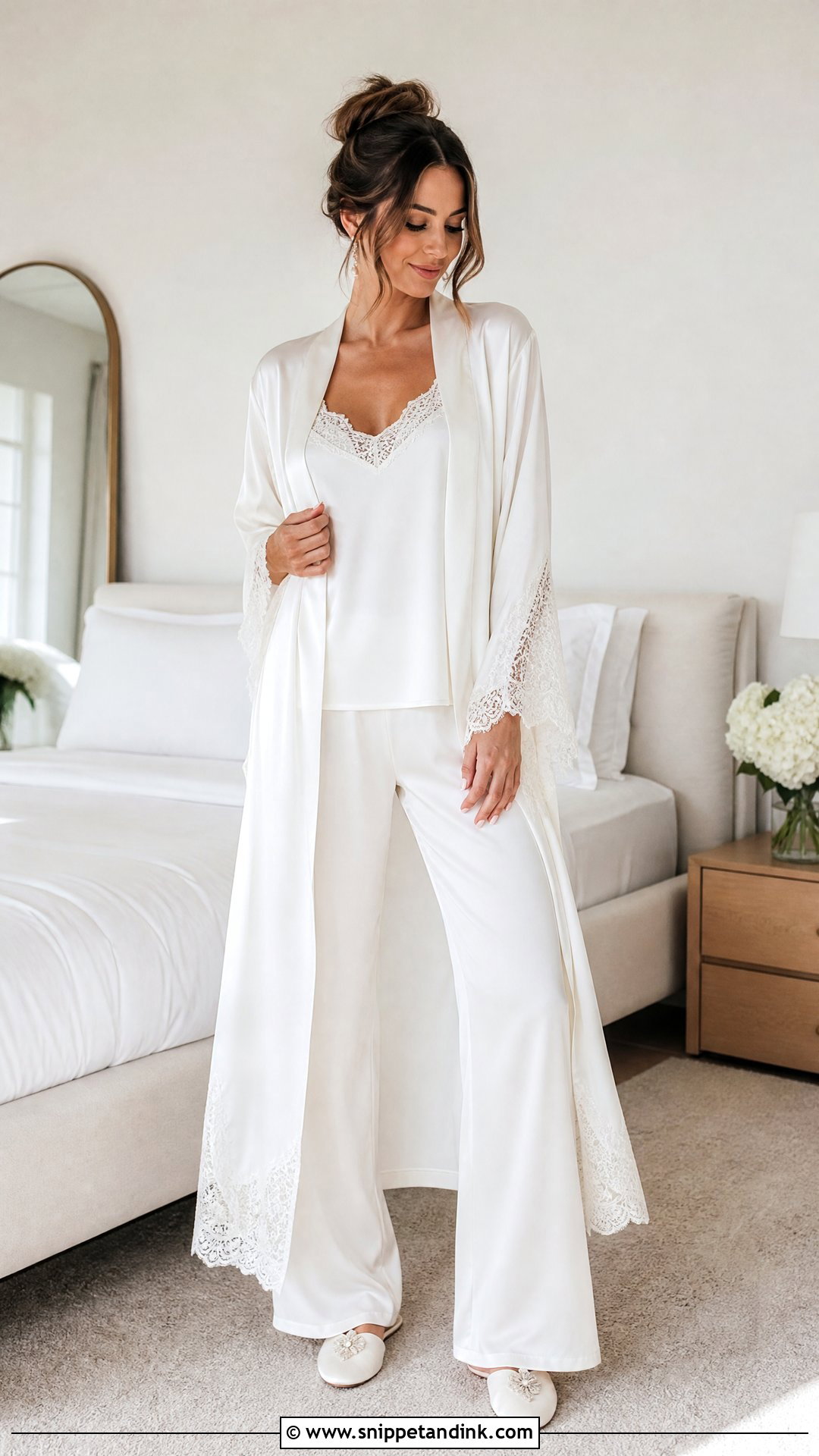
Soft satin, charmeuse or light lace can become an elegant robe you’ll use for years. The dressmaker needs long, uninterrupted panels for the fronts and back, and that usually means the skirt and train; a heavily seamed, boned gown may not have enough clean fabric, in which case she’ll blend in a coordinating new satin. Lace appliqués lifted from the bodice look lovely along the cuffs or hem. I’d keep the shape simple and the belt long enough to wrap twice. Bag any leftover buttons and beads with a label so they don’t vanish into a drawer.
14. Make a Flower Girl Dress From Your Wedding Dress
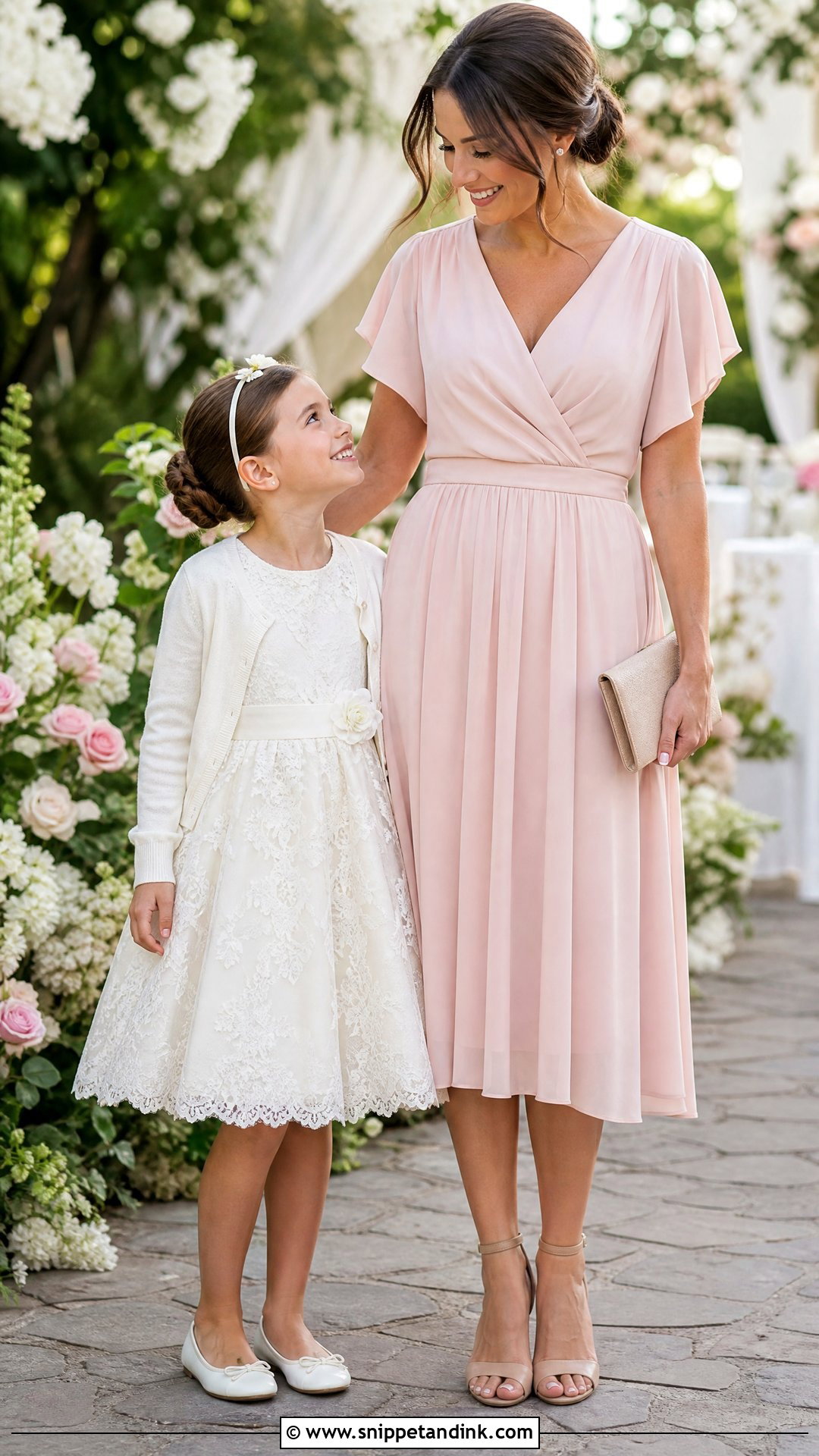
A flower girl dress cut from your skirt carries the gown into another family wedding. A full skirt usually gives enough satin or tulle for a child’s dress, with a soft cotton lining against the skin. Ask for a simple shape she can walk, sit and twirl in, with a knee-length skirt and a back closure an adult can manage quickly. Beading and stiff netting scratch little arms, so I always have those removed from anywhere that touches skin. Ballet flats and a small floral clip finish it. Keep a note of which part of your dress went into hers; it’s the kind of detail families like to retell.
15. Make a Quilt From Your Wedding Dress
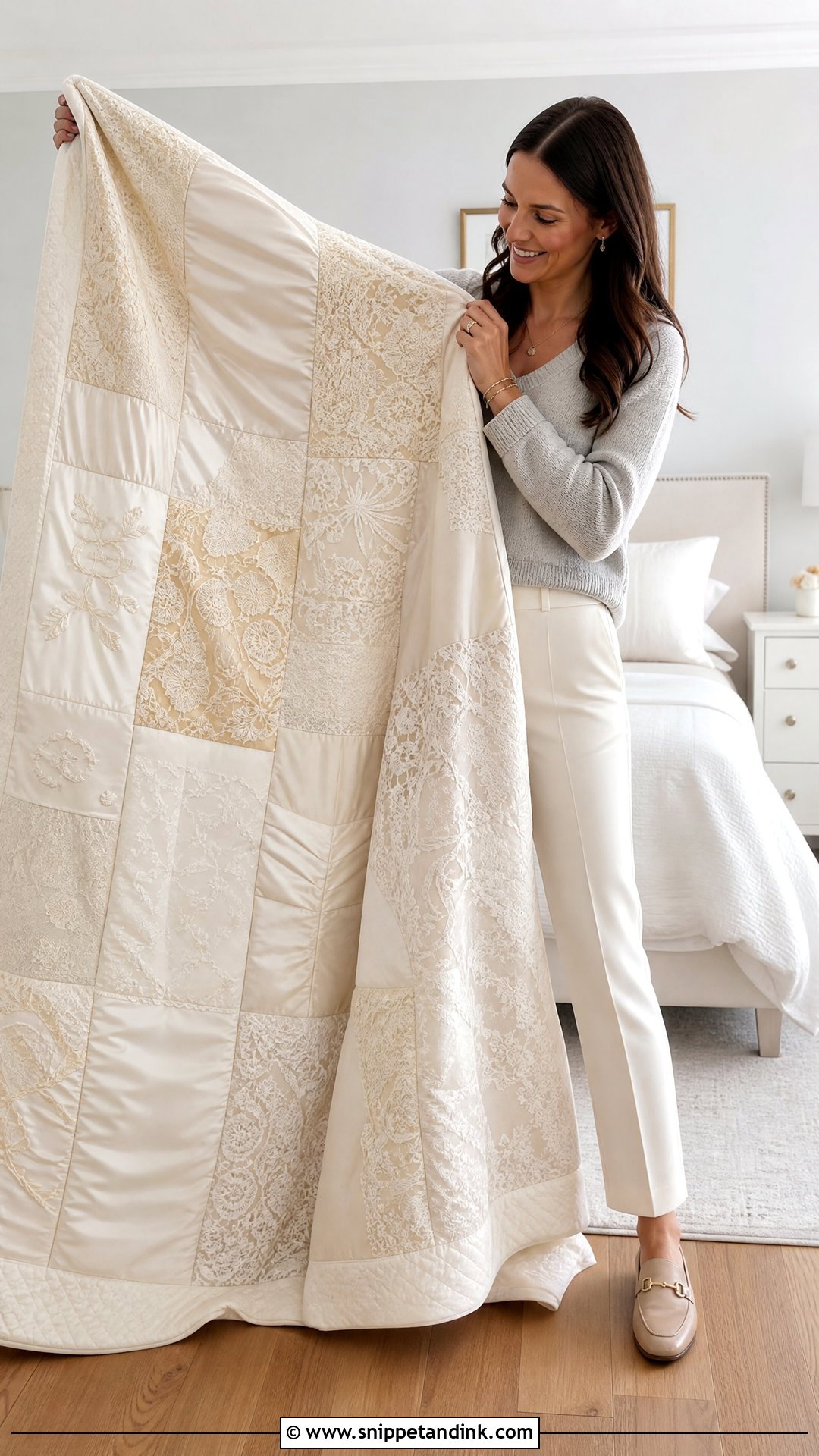
A memory quilt keeps the recognisable parts of the gown without keeping the whole box. Bridal satin and tulle slip, stretch and fray as soon as they’re cut, so a good quilter fuses a light stabiliser to the back first. Ask for a layout that puts the meaningful bits on show: a row of covered buttons, an appliqué, the edge of the train. Mix in a sturdy cotton in your wedding colours so the delicate squares aren’t carrying all the wear. Treat it as a display quilt over a chair or bench rather than something that goes through the wash every week.
16. Make Pillows From Your Wedding Dress
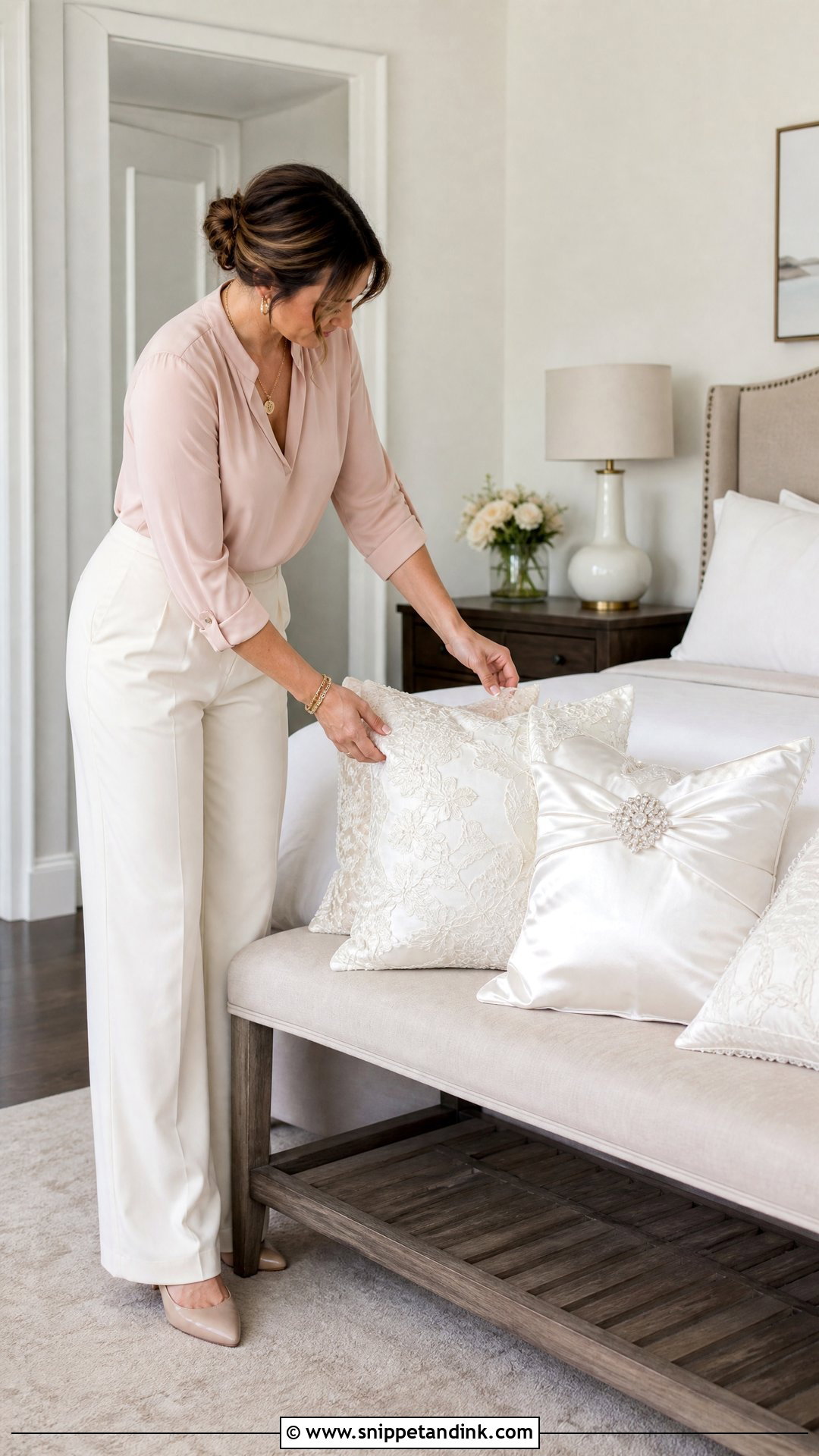
Cushions are the most space-friendly way to keep the fabric in daily view. A plain satin skirt makes smooth fronts, and lace from the bodice can be laid over a matching neutral underlayer so it reads clearly. Use embellishment sparingly; one button or appliqué per cushion is plenty. I always ask for zipped removable covers so the fabric can come off and go back into tissue if a puppy or a sunny window starts to threaten it. Two smaller cushions and one larger centre piece look deliberate on a bed or bench. Keep the design plain enough that anyone who saw the dress recognises it.
17. Frame Your Wedding Dress
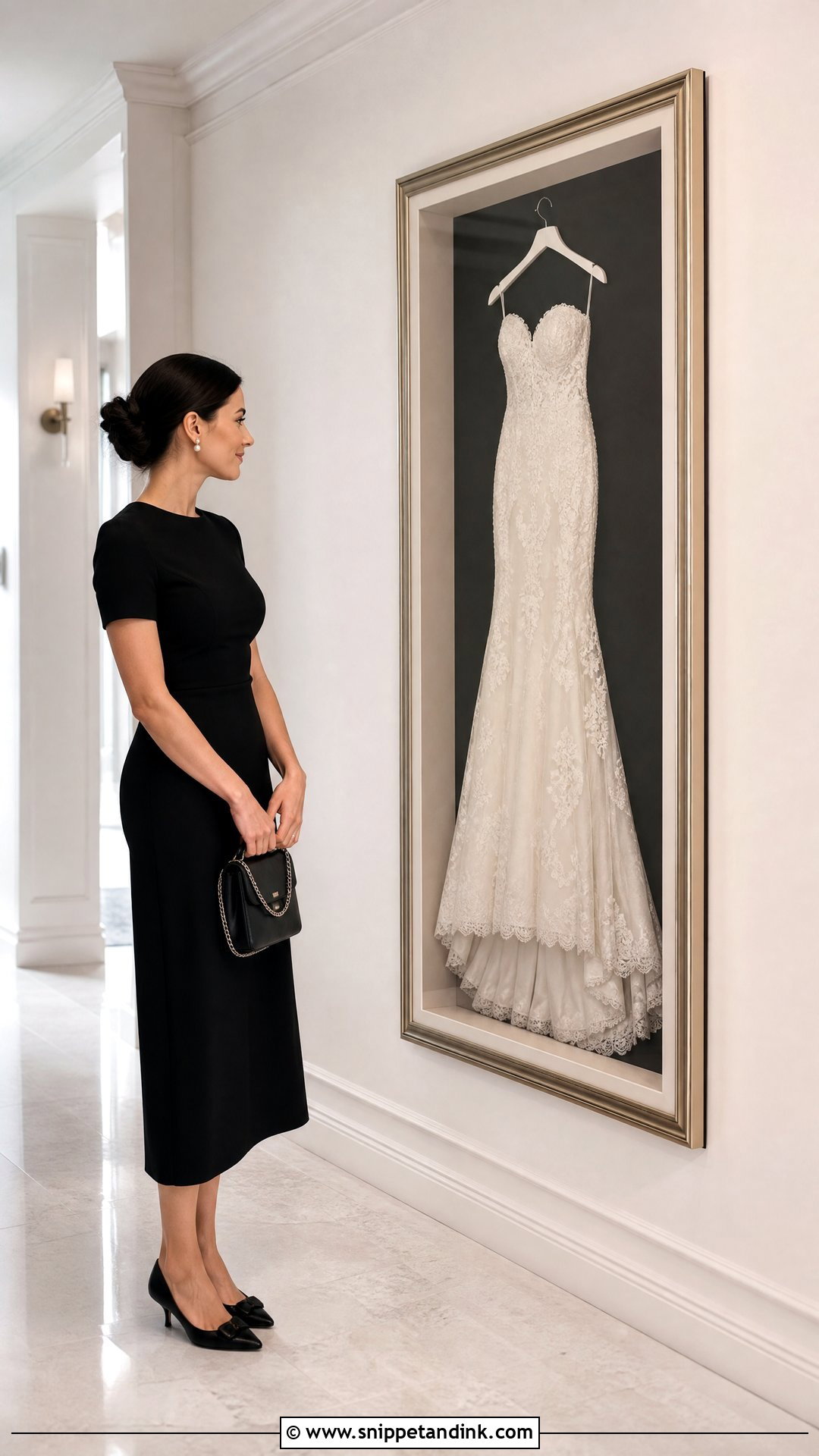
Framing puts the dress on the wall instead of leaving it as a keepsake hidden inside a box. A full gown in a shadow box needs a deep frame and a lot of wall, so most people frame a composed section instead: some lace, a few buttons, a strip of hem, perhaps the label and a photo. Go to a framer who has handled textiles. Ask about acid-free backing, UV-filtering glazing and whether the mount can be removed later without damage. Fabric should be stitched to its backing, never glued. Hang it out of direct sun and away from a bathroom, where steam builds up behind the glass.
18. Make a Clutch From Your Wedding Dress
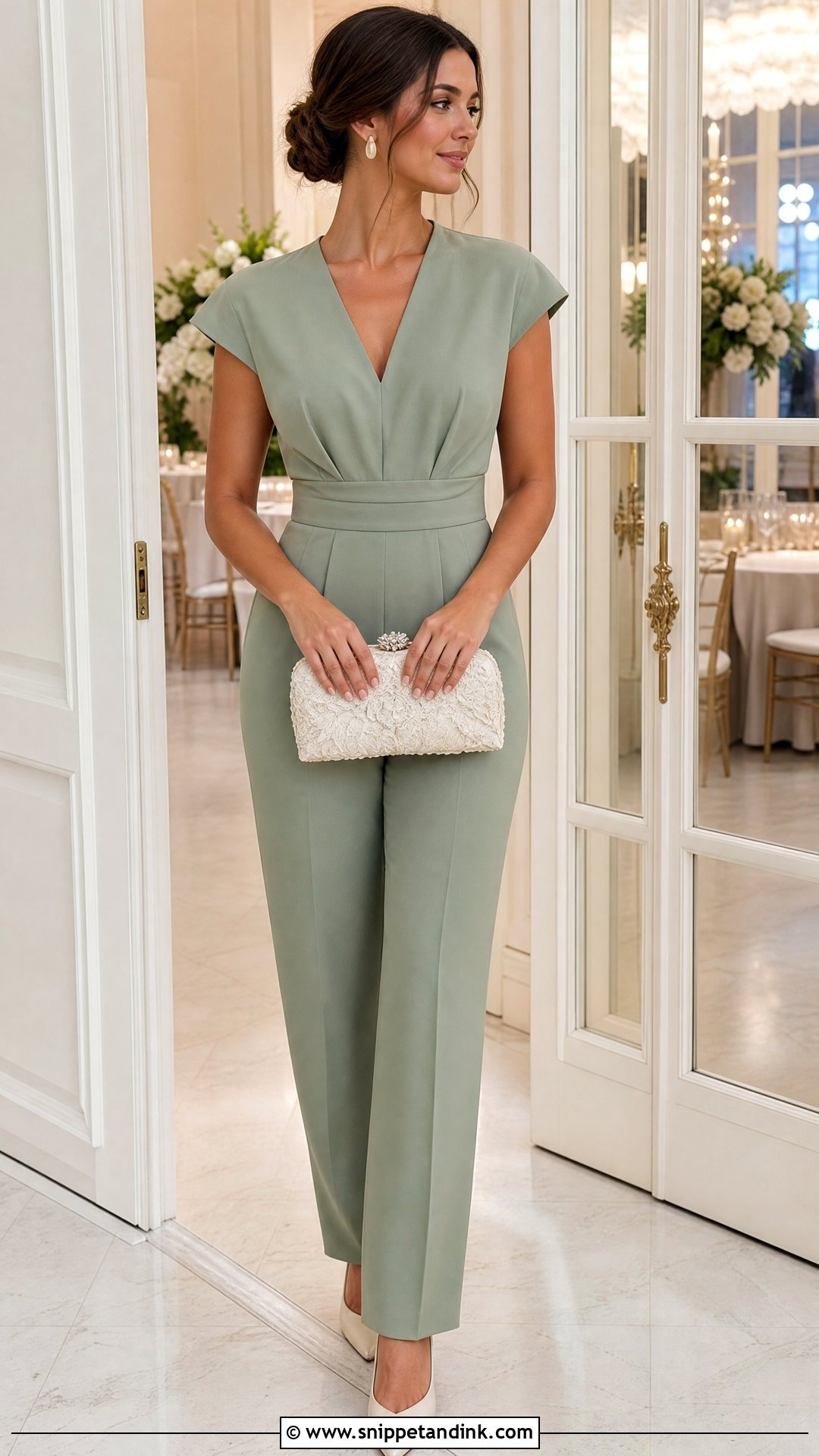
A clutch is a small, practical way to carry the dress to future weddings and parties. Satin, brocade and beaded appliqués all cover a structured frame well, with leftover lining inside. Fragile lace needs interfacing behind it, otherwise the corners wear through after a few outings. I’d pick one focal detail from the gown rather than crowding everything onto a bag the size of a book. A removable chain makes it far more usable, and a spare covered button can become the clasp. Ask the maker to stitch a small label inside recording where the fabric came from.
19. Make Table Linens From Your Wedding Dress
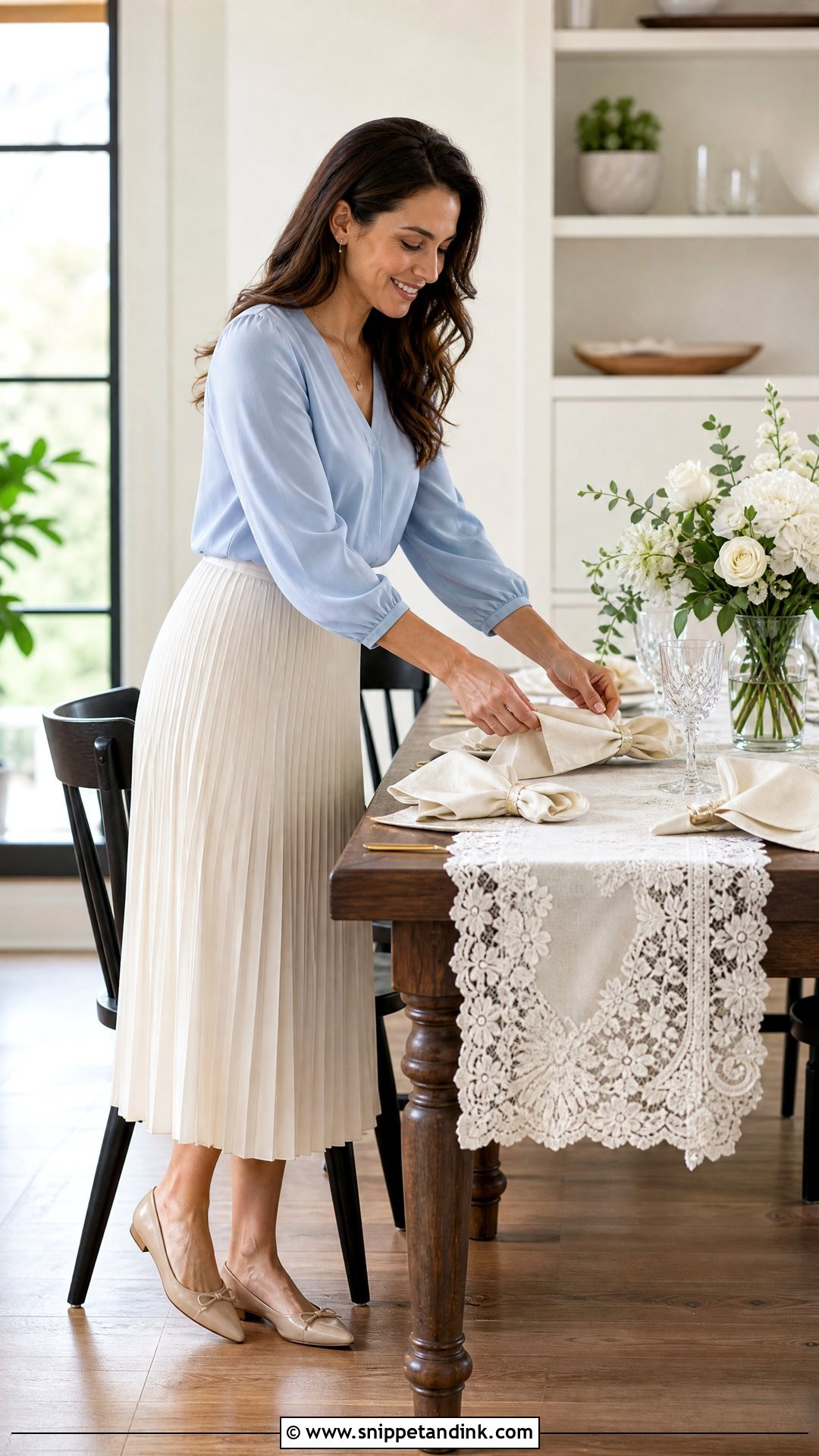
A wide, plain skirt holds a surprising amount of fabric for runners, napkins or a table overlay. Satin makes a smooth base; lace and organza work best layered on top of it. Ask the seamstress to bind the edges and back the pieces, because bridal fabrics fray quickly once they’re handled at a table. Check how each piece can be cleaned before the first dinner, since beaded or silk sections may only tolerate spot cleaning. Plain white plates and low flowers let the fabric do the talking. Between uses, store everything flat and interleaved with acid-free tissue.
20. Recycle Your Wedding Dress Fabric
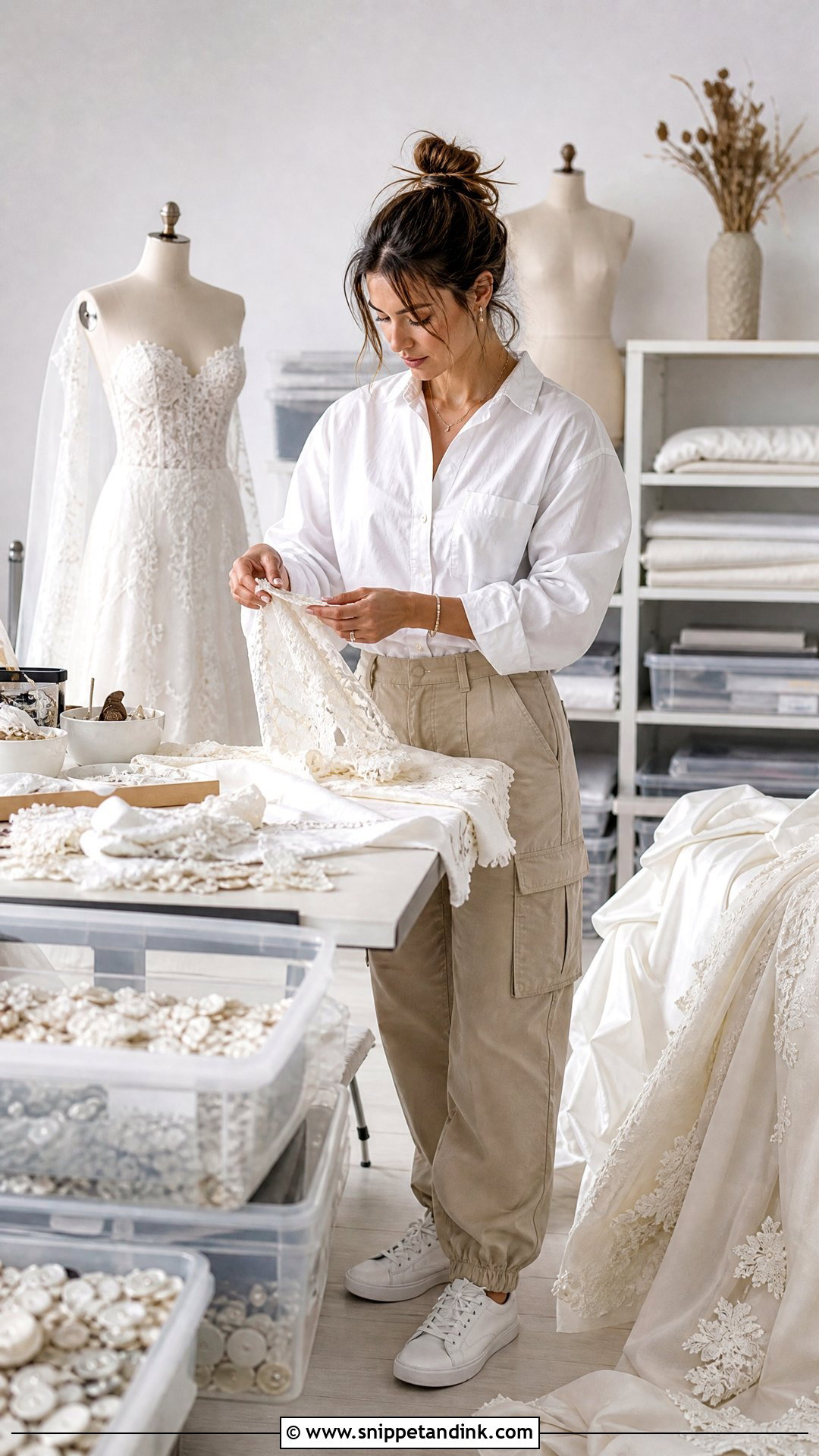
When a dress is too stained or damaged to sell or donate, textile reuse can still rescue parts of it. Unpick what’s sound first: lace panels, buttons, beads, appliqués, zippers and large clean areas of lining. Costume departments, sewing groups and creative reuse centres sometimes take bridal fabric, but call before you turn up with a bin bag. Good sections make hair accessories, bouquet wraps and fabric flowers. Keep only what you genuinely plan to use, label it, and look for a textile recycling scheme that accepts mixed fibres for the rest. Household recycling is rarely the right bin for a gown, so check local rules first.
Read the Fibre Label Before You Pick a Path
The tiny care label sewn into the side seam tells you more about your options than any mood board. A silk gown ages differently from a polyester one: silk can yellow and weaken along fold lines, while polyester satin tends to hold up longer in storage but takes dye poorly. If the label says polyester, I’d lean away from dyeing and towards selling, shortening or keepsakes. If it says silk, preservation and remaking both work, but folds need refreshing over time.
Resale value fades faster than the fabric
If you think you might sell, do it sooner rather than later. Buyers look for recent styles, so a gown listed within a year or two of the wedding usually draws more interest than the same dress listed much later. Keepsake projects work the other way round. There is no rush, and the fabric is just as usable later as long as it has been stored clean.
Sort your ideas into reversible and permanent
Storing, lending, photographing and consigning all leave the dress intact. Shortening, dyeing, splitting and every sewn keepsake are one-way doors. When a bride can’t decide, I suggest she does one reversible thing this year and leaves the scissors for later. Plenty of women who were certain they wanted a quilt end up selling the gown instead, and the opposite happens just as often.
Start With What Can Be Undone
There is no correct answer here, only the one that fits your space, your budget and how attached you feel. Clean it first, look at it honestly, and be realistic about whether you will ever open that box again. If you are torn, preserve it now and decide later. A preserved dress can still be sold, donated, lent or remade in five years; a dress that has been cut can’t be put back together. Wherever it ends up, it has done its job if someone keeps using it.
You'll Like These Ideas:




Leave a Reply