
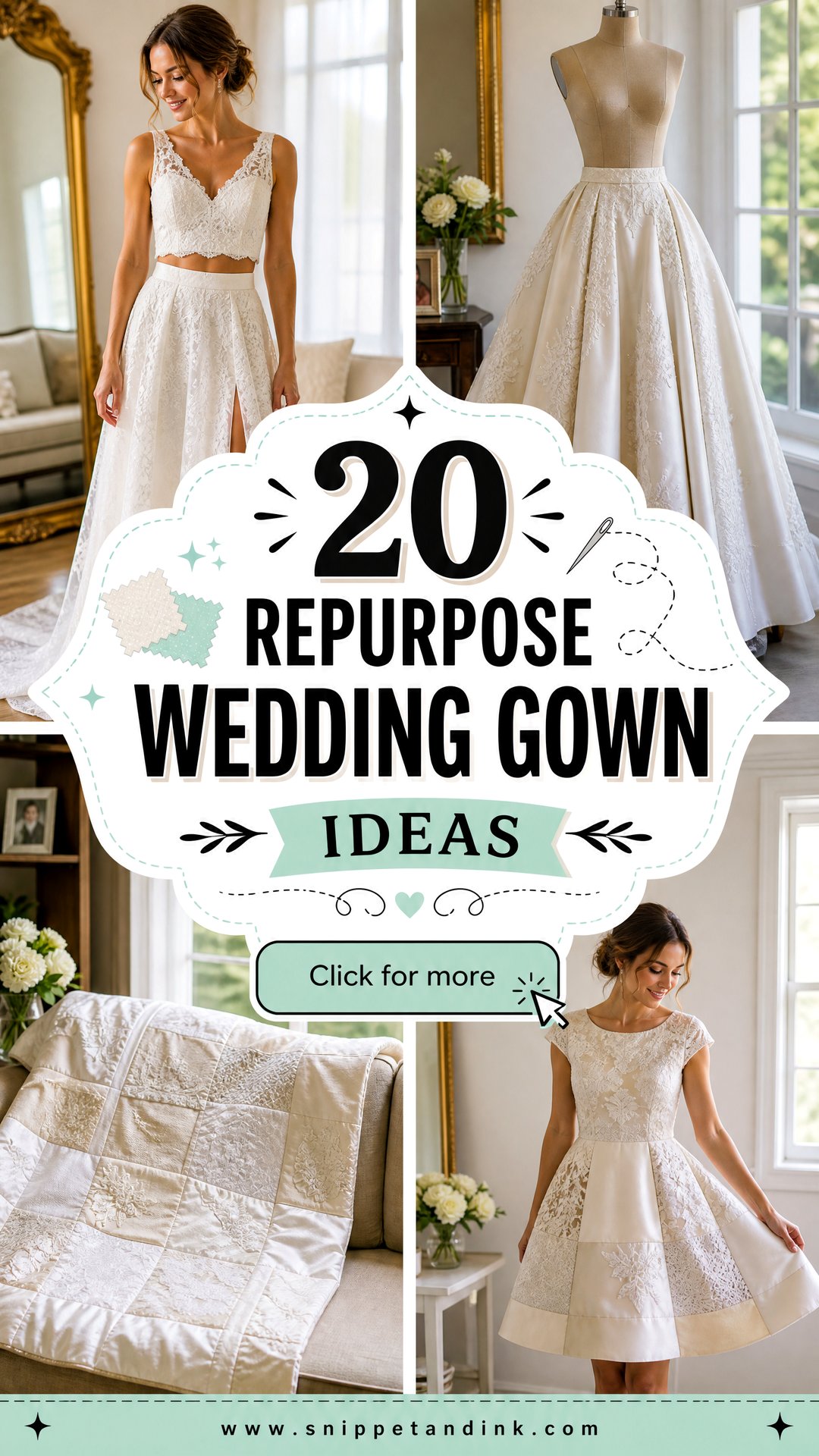
A wedding dress usually holds more good fabric than anything else you’ll ever own, and most of it sits folded in a box for decades. These 20 Repurpose Wedding Gown Ideas turn that lace, satin, tulle and beading into something you’ll wear, use or hang on a wall: shortened cocktail dresses and two-piece sets, quilts and handbags, children’s clothes and framed textile art. Whatever you choose, the order of work is the same. Have the gown professionally cleaned first, photograph every detail from front and back, and sit down with an experienced seamstress who can tell you which parts will survive being cut. Many brides also keep one small panel untouched, just as it was.
Mapping One Gown Into Several Projects Before Anyone Cuts
Once fabric is cut, it can’t be uncut, so I always lay the gown out and plan every project at once. Different parts of a dress give you very different material.
- The skirt and train hold the most usable fabric, in long uninterrupted panels. Robes, skirts, quilts, table runners and baby dresses all come from here.
- The bodice is heavily seamed and often boned, so it yields little flat fabric. It is best kept whole, as a top, or mined for its lace, beading and buttons.
- The lining and underlayers are often overlooked. They are softer than the outer fabric and right for anything that touches skin, like a christening gown or handkerchiefs.
- Trim and buttons are small but carry most of the recognition. Save every one; they finish the smaller pieces.
Write down which part goes to which project. If you’re sharing a gown among family members, agree on it before anything is cut, because the person who wants the train lace and the person who wants a quilt may be asking for the same fabric.
Can Your Gown Fabric Actually Take Dye?
Many of the ideas here suggest colour, and this is where most disappointments happen. Silk takes dye well, often more vividly than expected. Cotton and rayon take it too. Most modern gowns, though, are polyester satin, polyester tulle and nylon lace, and polyester won’t take the dyes sold for home use. It needs special disperse dyes and very hot water, which can melt glue and damage beading.
Even a silk gown is rarely all silk. The thread is usually polyester and stays white, the lining may be a different fibre, and appliqués can be glued on. Read the care label, then ask a professional dyer to test an inside seam allowance. If the test fails, choose a project that keeps the gown in its original colour instead.
1. Wedding Gown Cocktail Dress
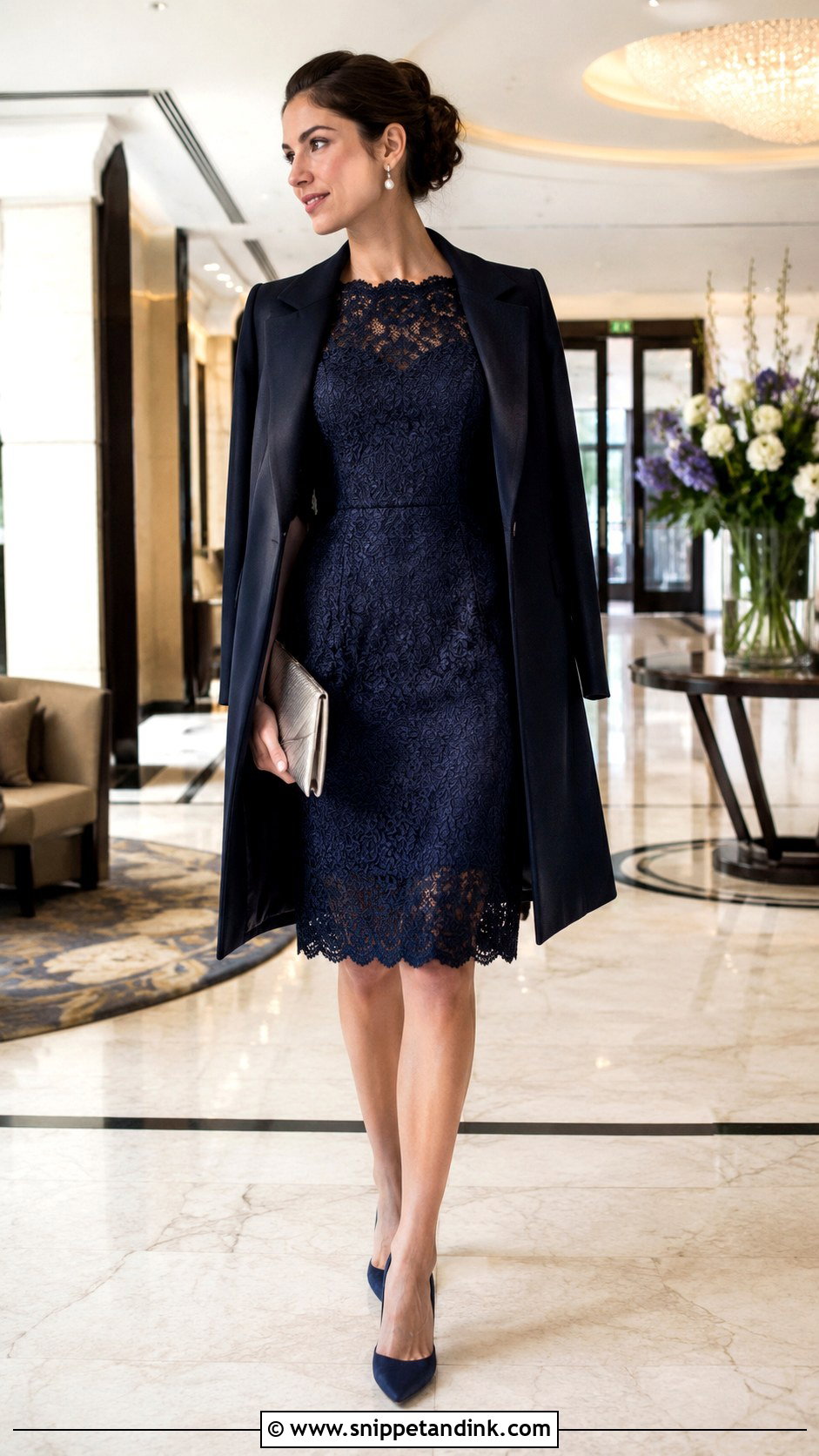
Shortening a gown into a cocktail dress keeps the bodice you loved and loses everything that made it hard to wear: the train, the extra underlayers, the heavy sleeves. Knee, midi or mini all work; I judge the length by where the bodice ends, because a long corset with a mini skirt can look top-heavy. To move it away from bridal, dye is the strongest tool, but only on natural fibres, and always on an inside scrap first. Lace, lining and thread are often different fibres and will take colour differently, so a navy test can come out navy satin with white stitching. Pointed pumps, a structured clutch, small earrings and a tailored coat finish it.
2. Wedding Gown Anniversary Mini Dress
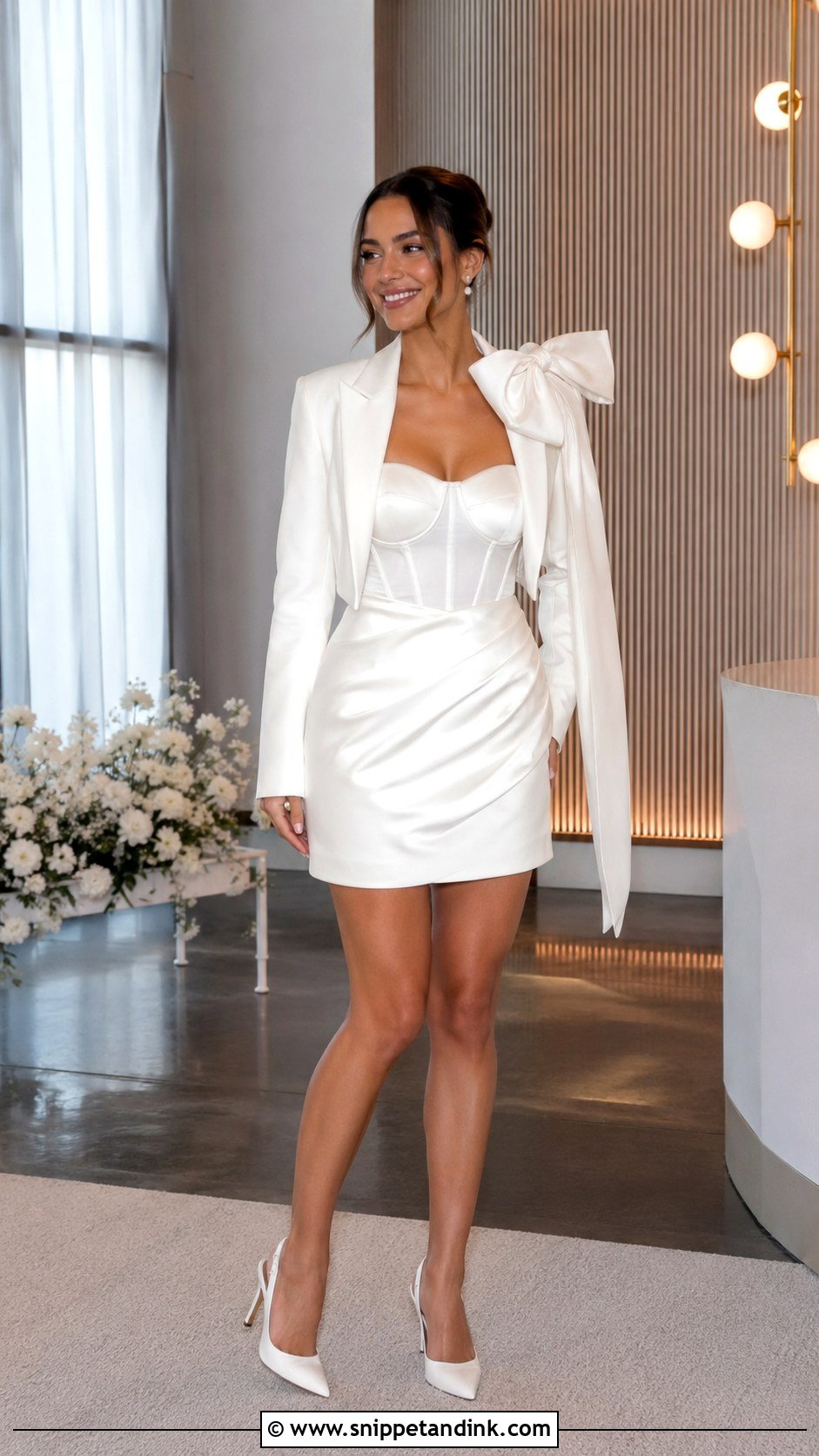
A mini works best on fitted bodices, corsets and simple satin columns. On a big ball gown, the bodice is cut to balance a huge skirt, so the tailor needs to rebalance proportions once the volume goes, or the short skirt flares out like a tutu. Leftover skirt fabric is enough for a detachable bow, puff sleeves or oversized flowers. Keep it ivory for an anniversary dinner, or add a bright bag and coloured shoes to pull it out of bridal territory. A smooth lining or built-in shorts make a short satin hem far easier to sit in. Slingback heels, pearl studs and a cropped jacket finish it.
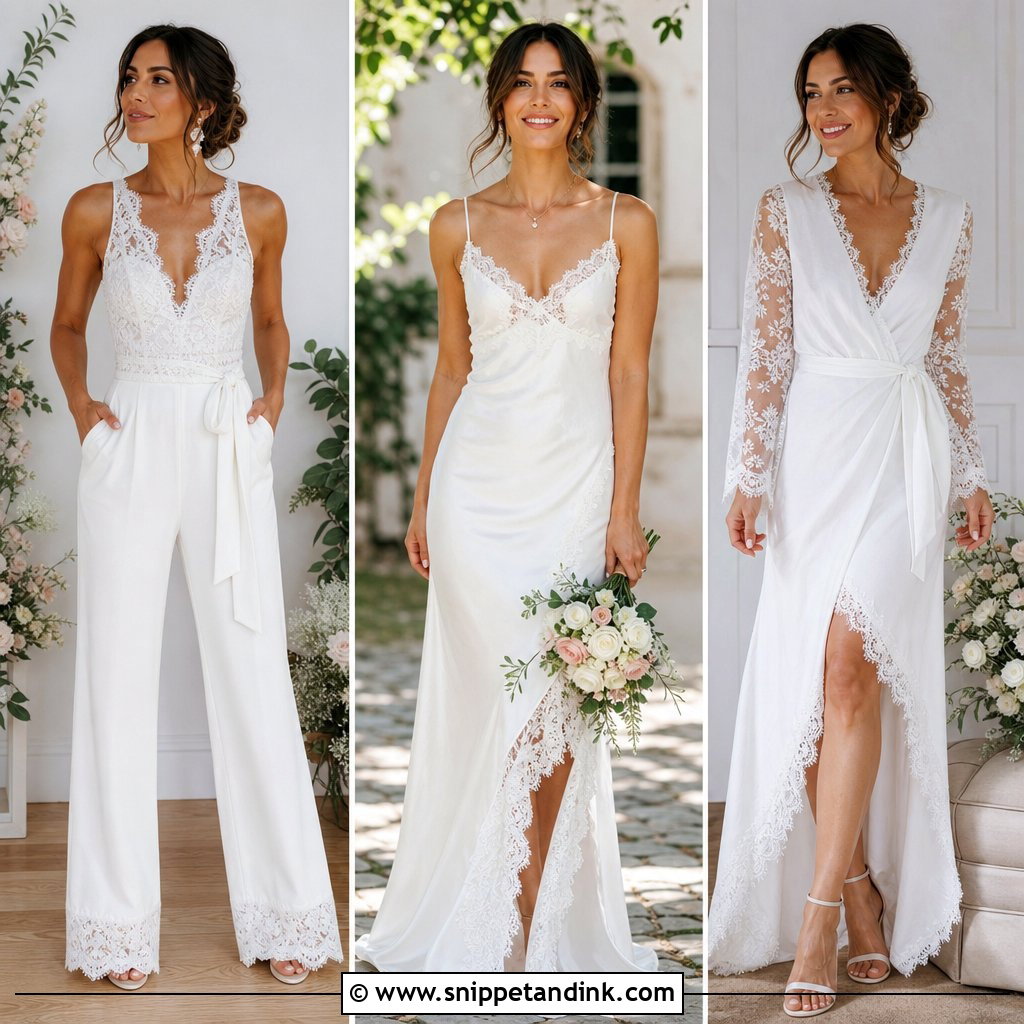
3. Wedding Gown Two-Piece Skirt Set
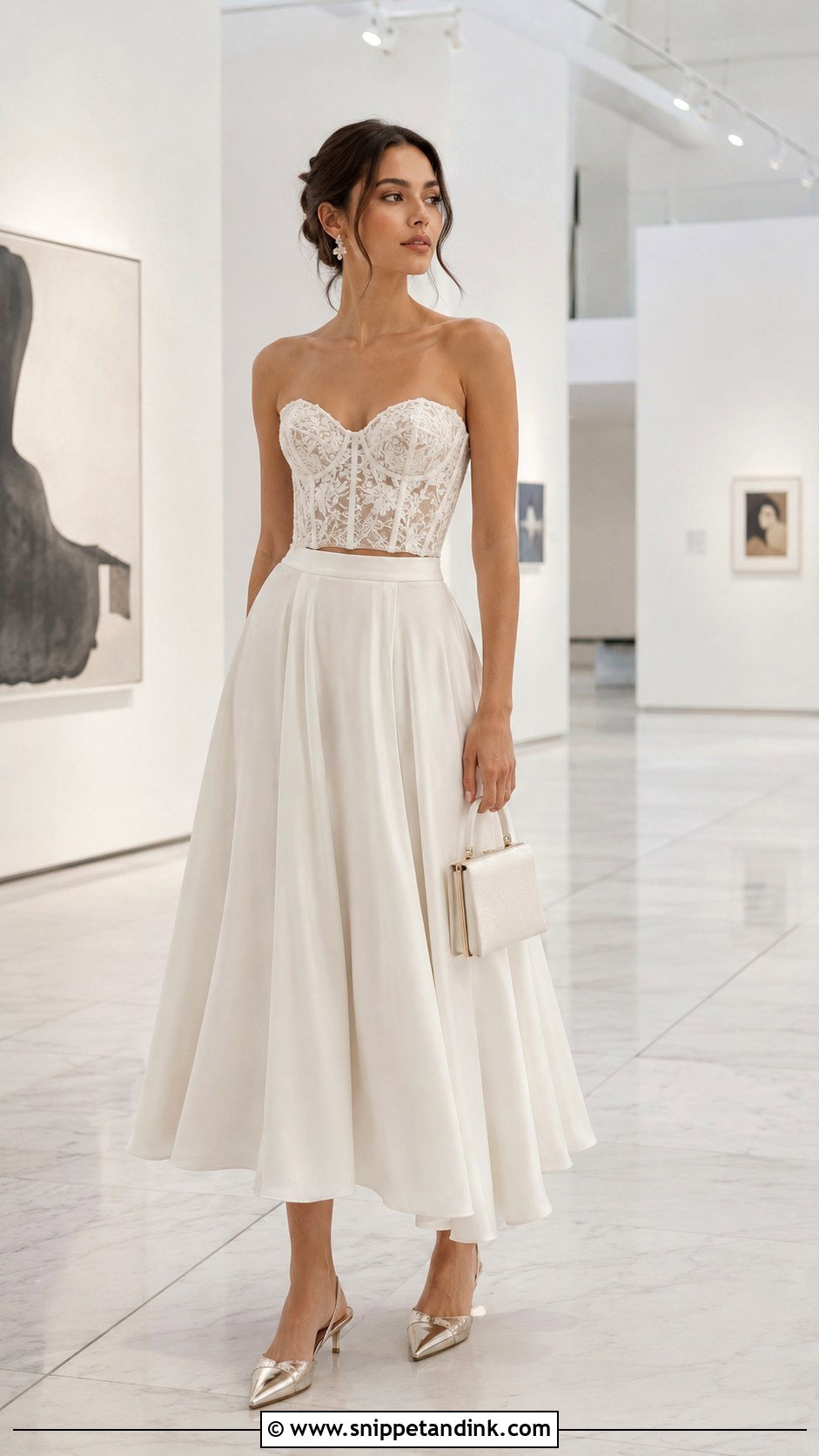
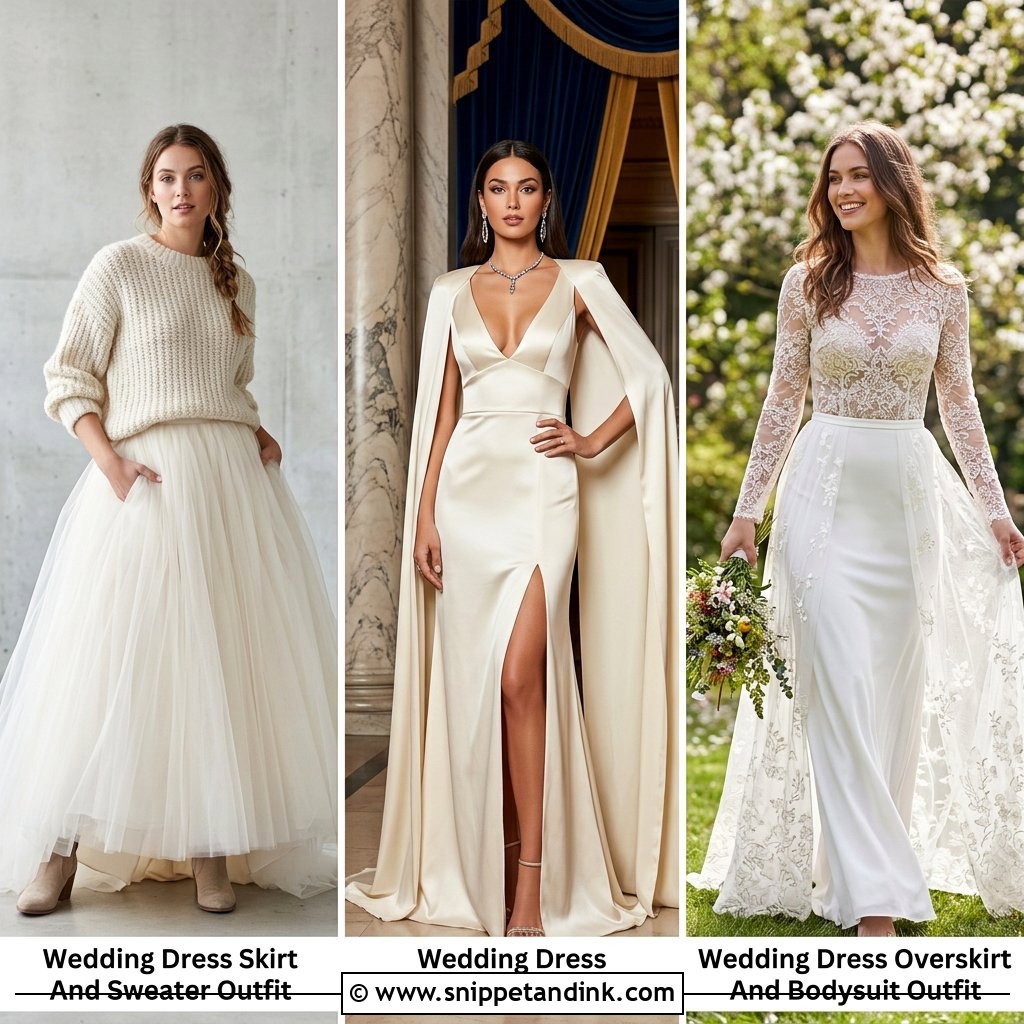
Splitting a gown into two pieces gets you the most wear for the least cutting. The top becomes a corset, a lace camisole or a sleeveless blouse; the skirt becomes a maxi, a tailored midi or a gathered tea-length. The finishing is what matters: each piece needs its own closure and a proper waistband so it doesn’t look like a dress sliced at the waist. Wear them together for a wedding guest outfit, then separately. The bridal top with high-waisted trousers, or the skirt with a cashmere sweater and flats, is the version you’ll actually reach for.
4. Wedding Gown Rehearsal Dinner Dress
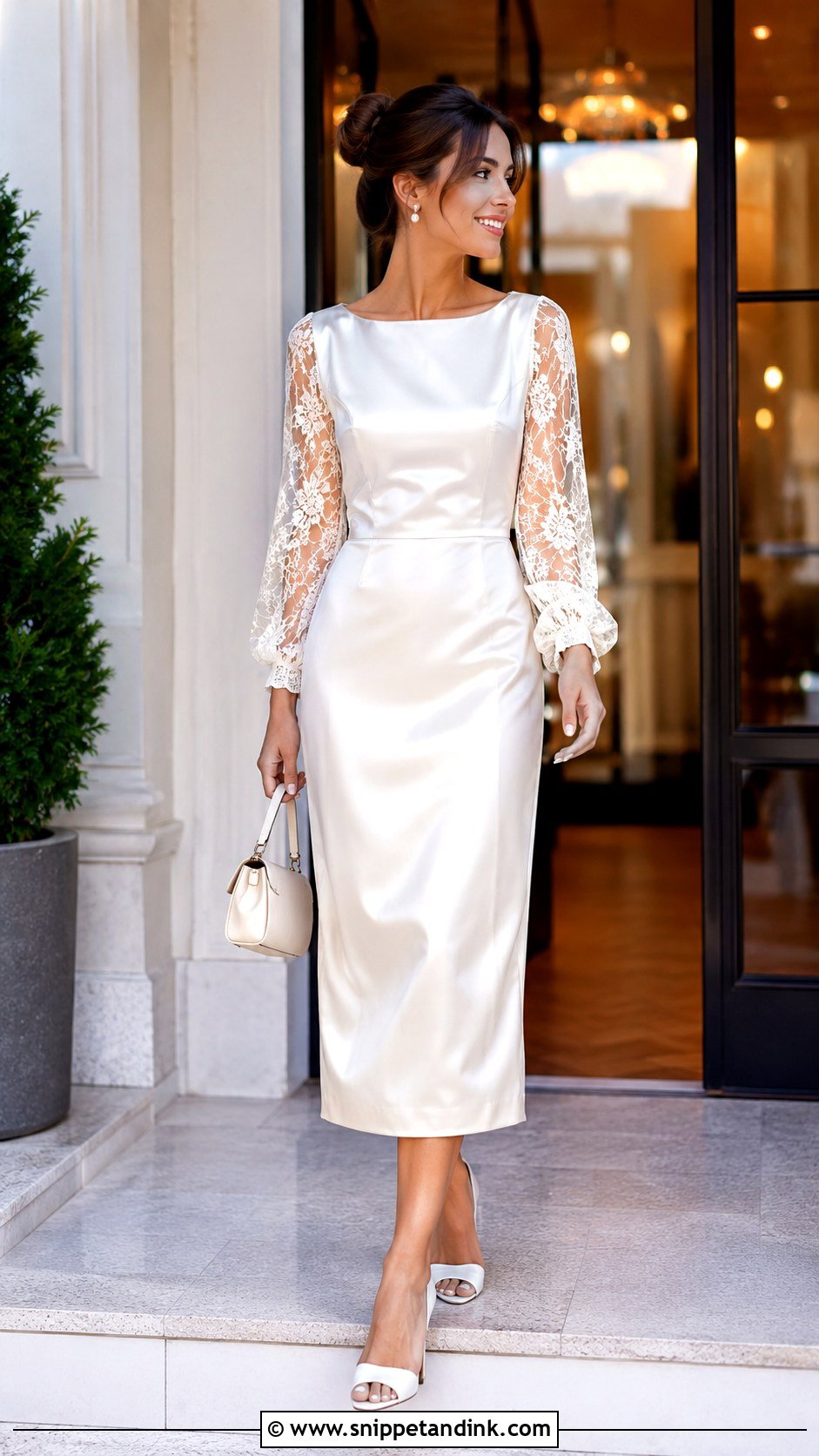
Remaking a family wedding gown for a daughter’s rehearsal dinner works best when you stop trying to copy the old silhouette. Take its strongest detail and build a modern dress around it: lace sleeves on a plain sheath, a beaded bodice over a clean midi skirt, or satin from the train cut into a slip dress. Agree on which original details must stay visible before anything is unpicked. Older fabrics can be weaker than they look, especially silk that has been stored folded, so a good dressmaker will back fragile areas and replace the lining. Block heels, a small bag, light jewellery and a polished updo complete it.
5. Wedding Gown Evening Top
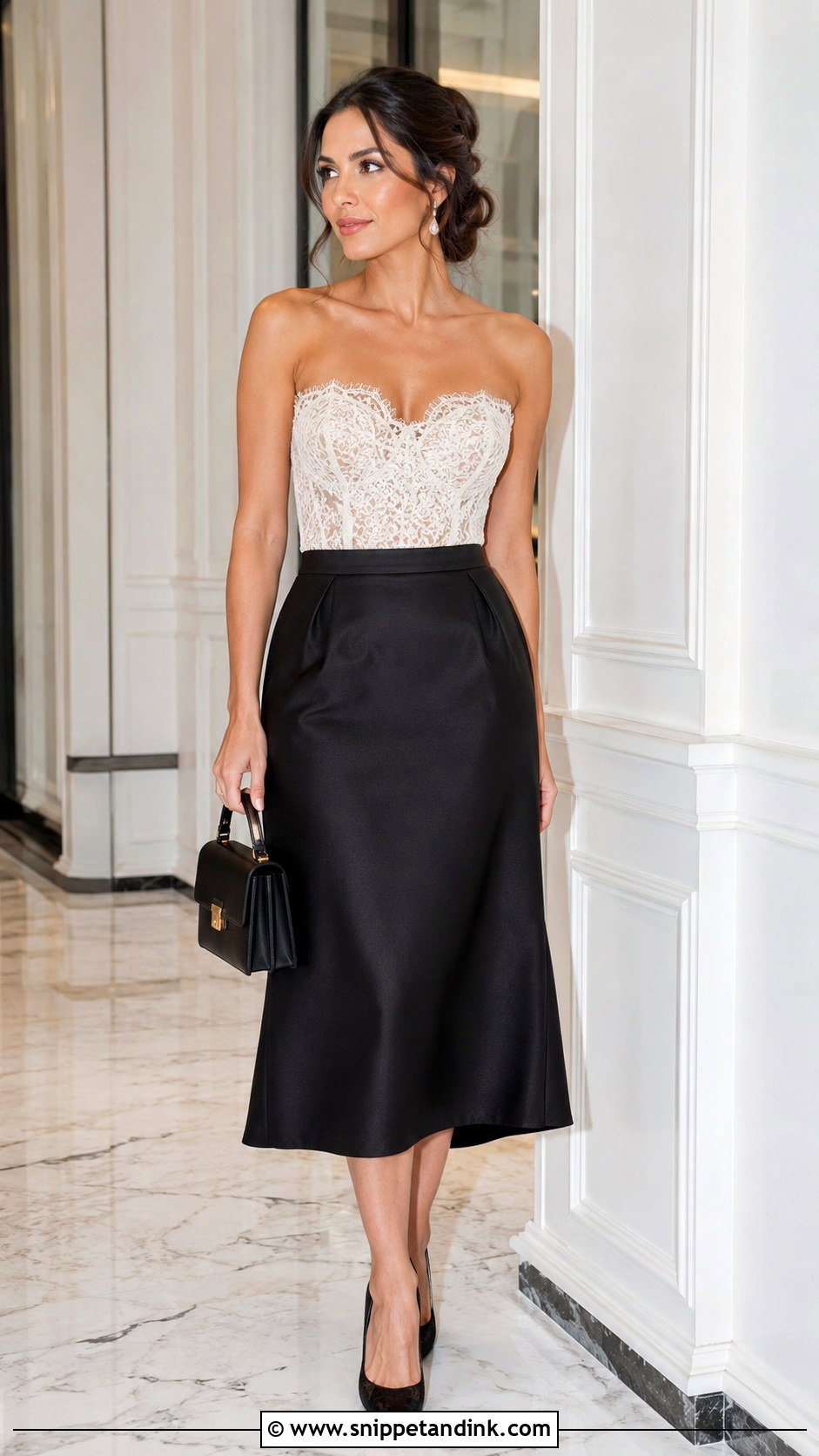
If the bodice is the best part, keep it as a top. Corsetry, lace, covered buttons and hand beading all become the focus once the skirt is gone. The seamstress removes the skirt, finishes the lower edge, may adjust the neckline and adds a secure back closure. Cropped versions sit well with high-rise trousers; a longer bodice goes over a slim skirt. I like it with a black satin midi skirt, low heels, a structured bag and plain earrings. Sheer bodices need a removable lining to be wearable outside a wedding, and boning that has bent with age can usually be replaced.
6. Wedding Gown Formal Skirt
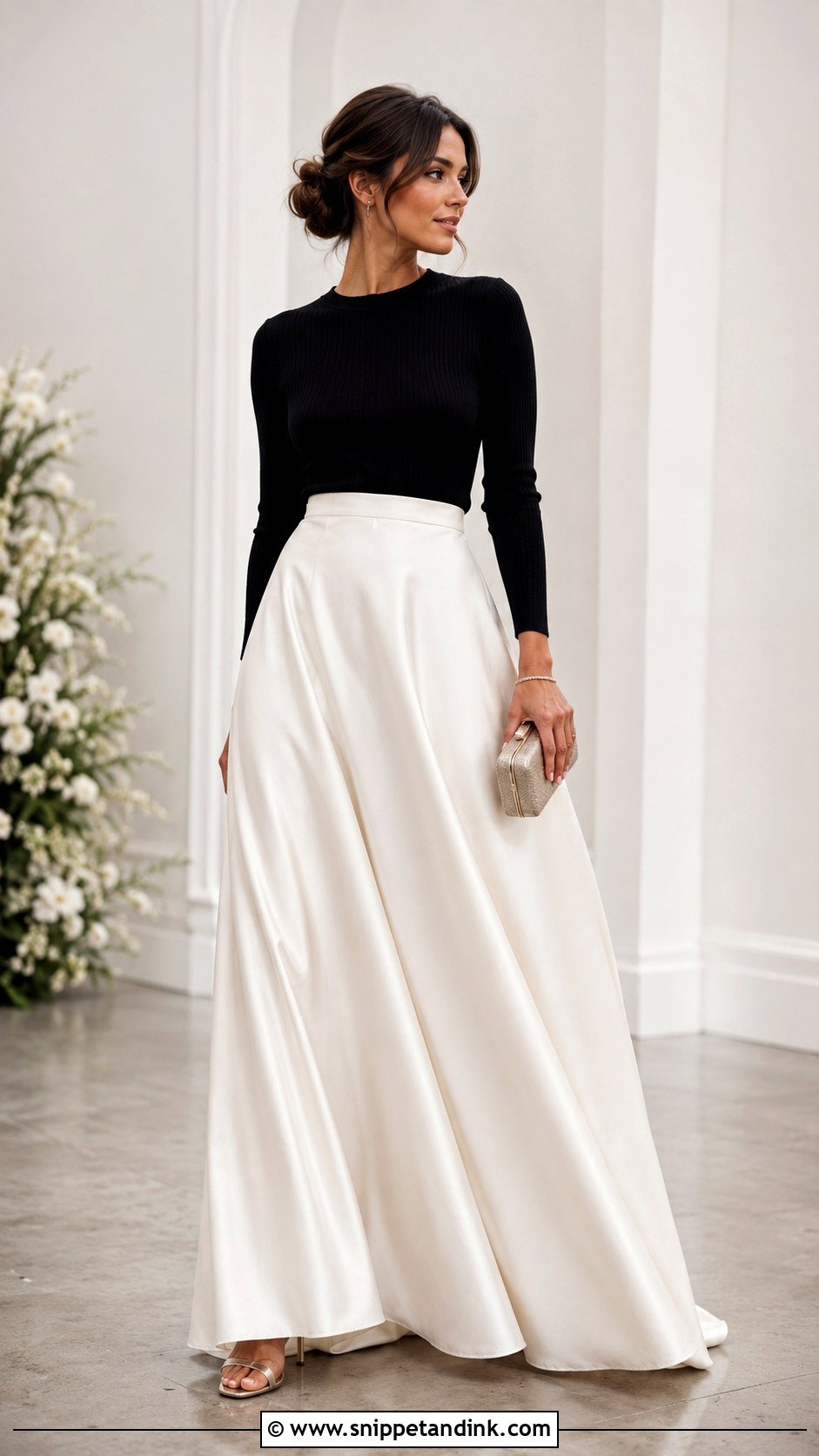
A full skirt holds enough fabric for a dramatic formal separate. Once it’s off the bodice, it can be reshaped into an A-line, a pleated or gathered skirt, or a gentle flare. Strip out most of the crinoline and shorten the train and it becomes something you can walk through a restaurant in. A fitted waistband gives a clean finish, and pockets are easy to add here. Ivory with a black knit top, metallic heels and a sleek clutch is my favourite version. For colour, ask a textile specialist whether the fibre will take dye. Keep any appliqués you remove; they can go back on at the waist or hem.
7. Wedding Gown Bridal Robe
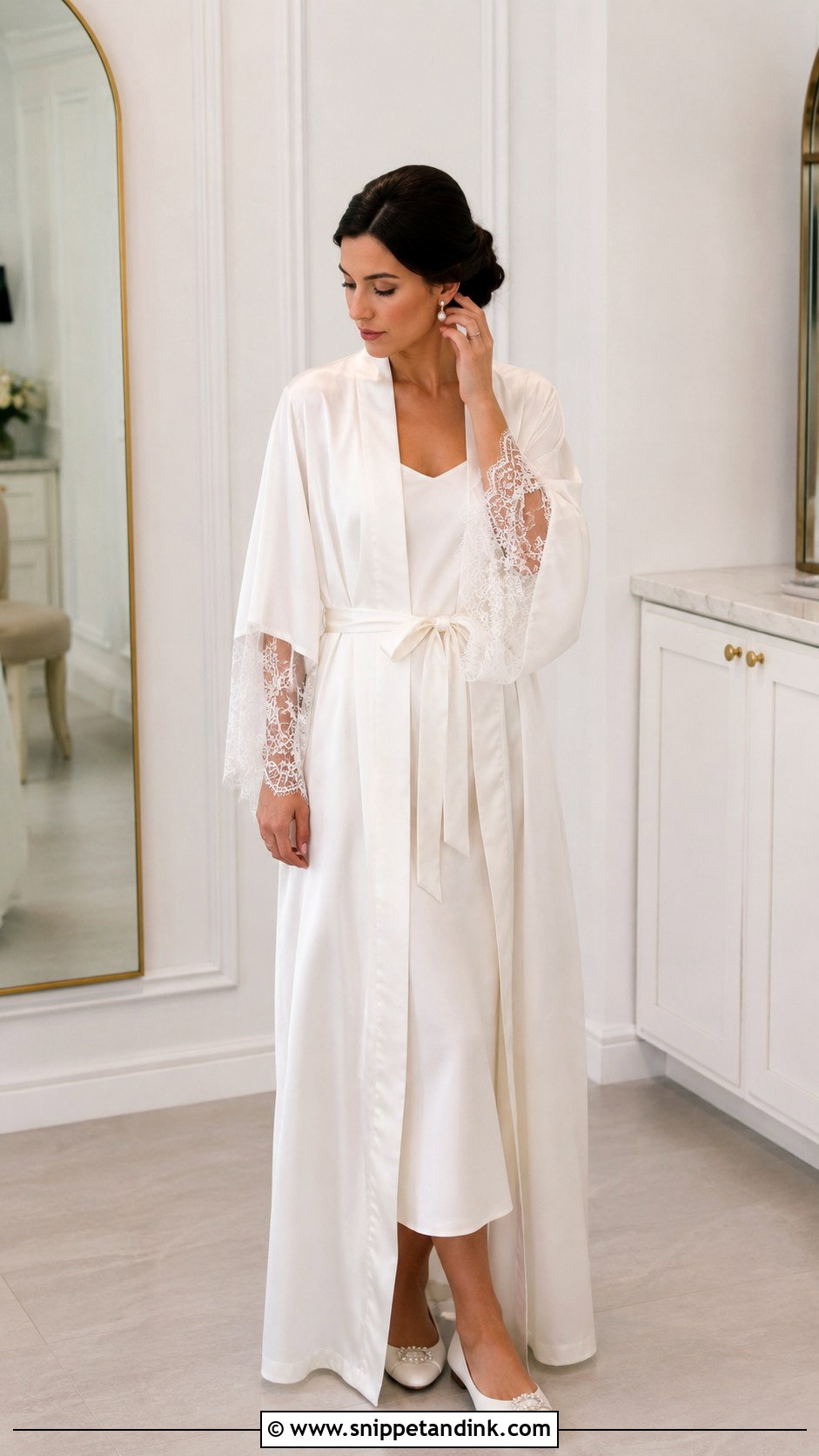
Satin, silk, chiffon and light lace make an elegant bridal robe for the next bride in the family to get ready in. The skirt gives the largest uninterrupted panels; bodice lace can trim the cuffs, neckline or belt. Knee length needs far less fabric, while a long robe keeps more of the gown’s movement. Embroider the date, initials or a short message on the inside facing, where it stays private. Robes are a common request from professional dress transformation services because they get worn on a wedding morning and are photographed. Wear it with a simple slip, comfortable flats and pearl earrings.
8. Wedding Gown Baby Heirloom Dress
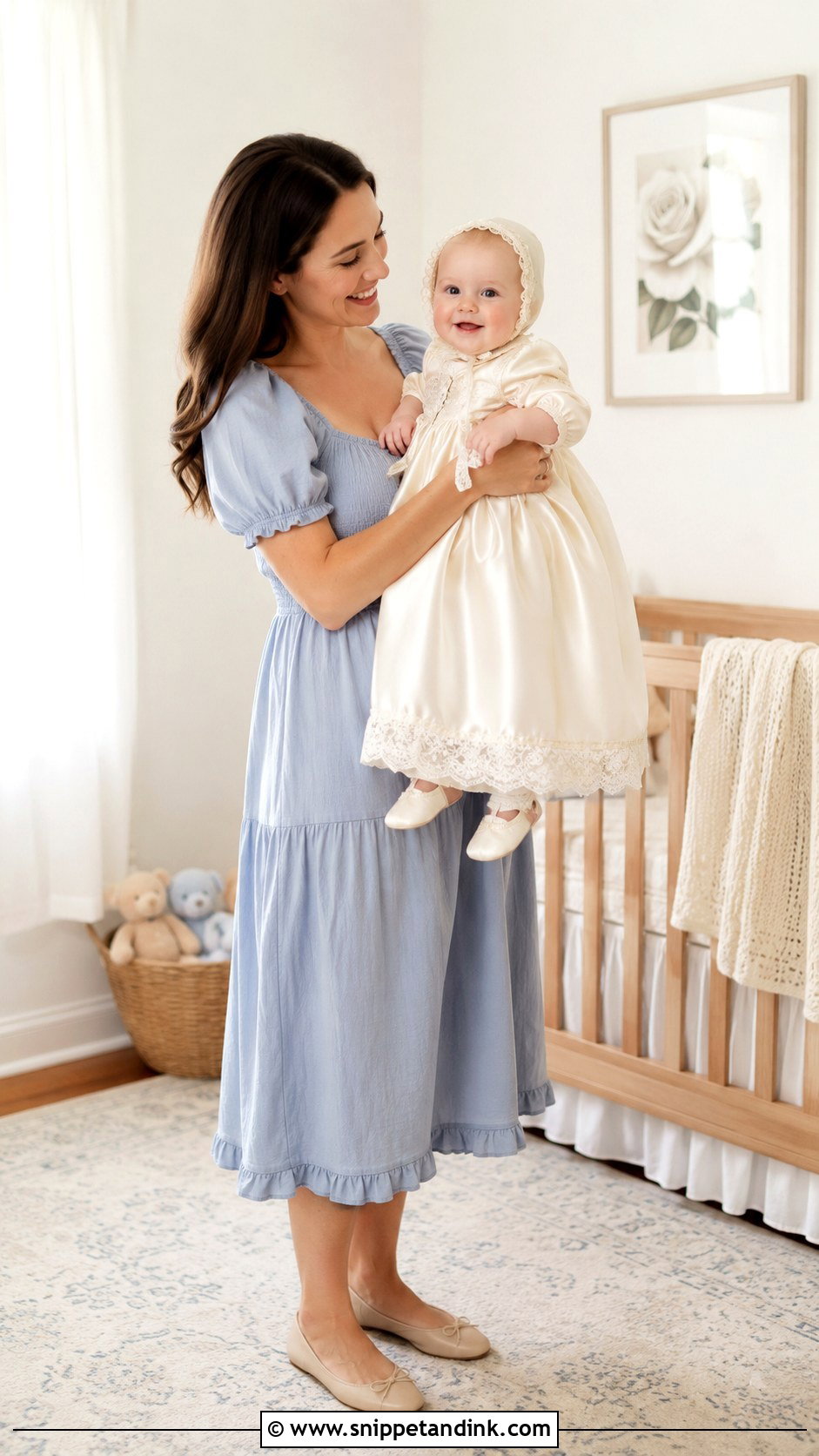
For a baby, softness comes first and detail second. Soft satin, lining or light silk make the main dress, with lace kept to the collar, sleeves or hem. Rough beading, sequins, stiff netting and anything that could come loose should stay well away from a baby’s skin and mouth. Ask for flat seams, secure fastenings and enough room to move. If fabric remains, a bonnet or tiny shoes can match. Afterward, wrap it in acid-free tissue with a photograph and a note explaining where the fabric came from.
9. Wedding Gown First Birthday Dress
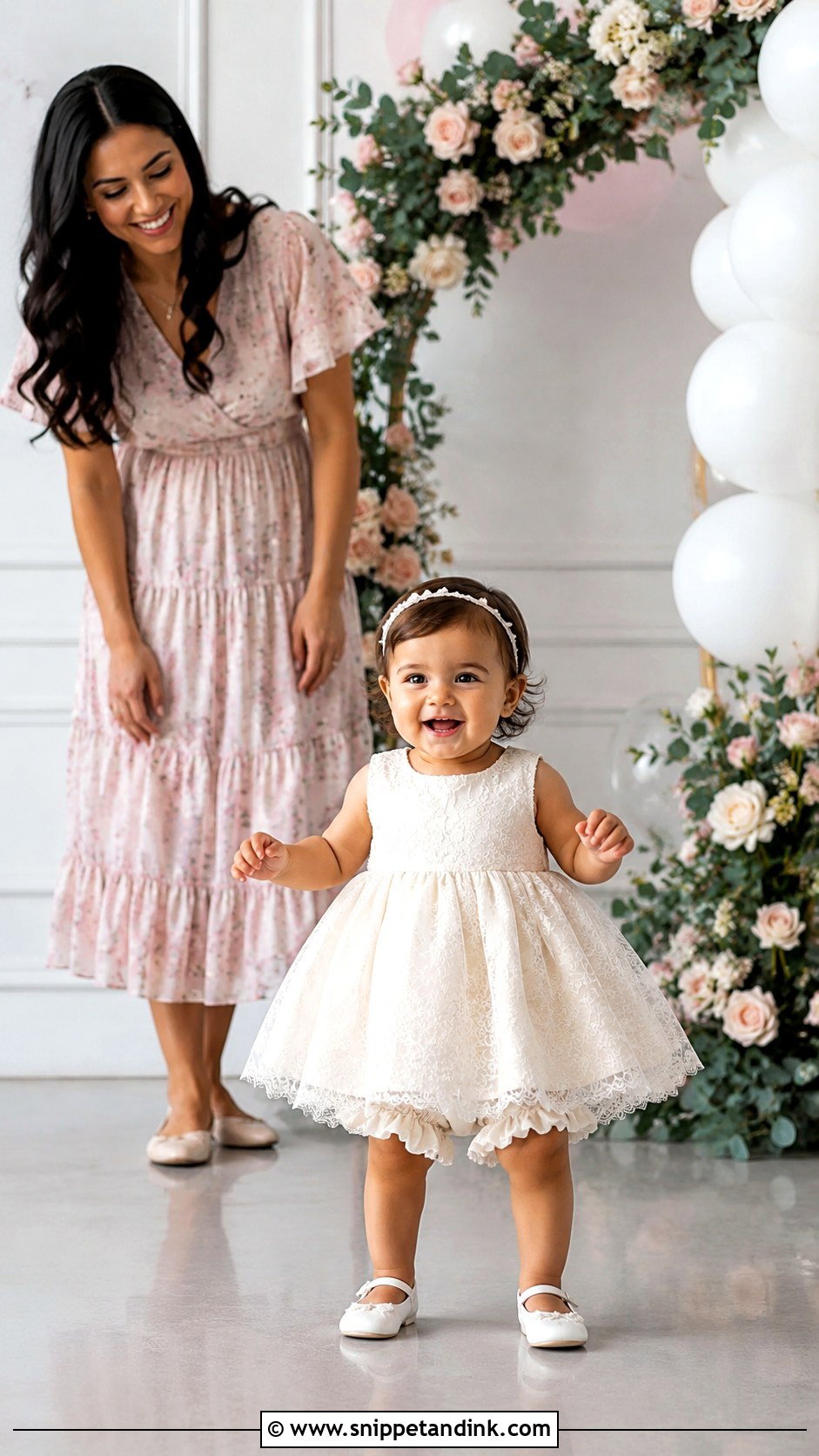
A first birthday dress gets sat in, crawled in and covered in cake, so I’d plan it as clothing, not a costume. A simple A-line or tea-length shape gives a one-year-old room to move. Put smooth lining against the skin and keep lace, embroidery or satin flowers where they won’t scratch. Beads, pearls, hooks and detachable decorations are choking hazards at this age and shouldn’t be on it. Bloomers from the lining fabric and a cardigan for cooler weather are easy additions. Secure soft-soled shoes and a plain headband are enough. Keep the dress afterward with photos from both days.
10. Wedding Gown Memory Quilt
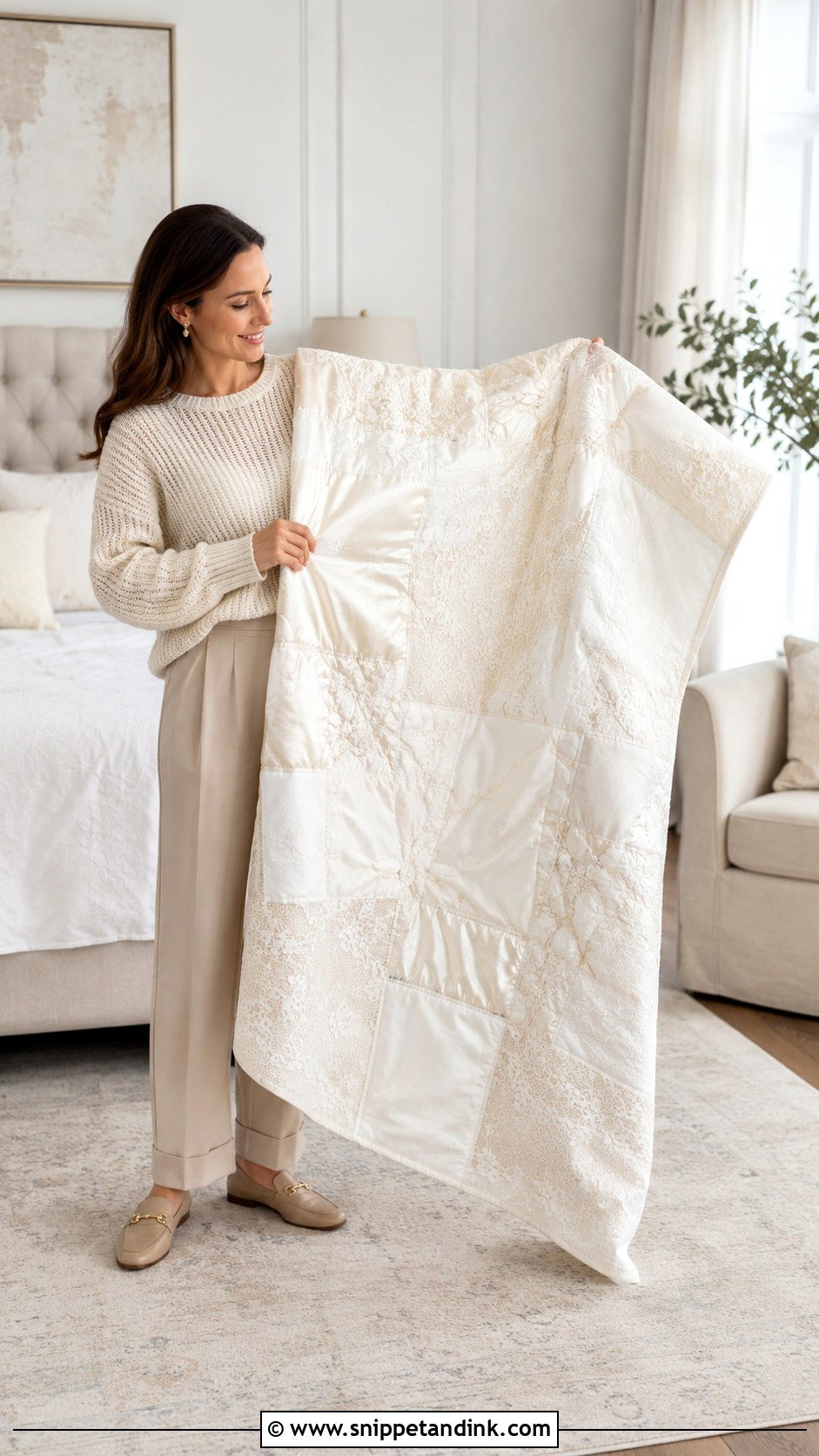
Quilts are where bridal fabrics fight each other. Satin slides, tulle stretches, lace has holes and lining is thin, so most pieces need a light fusible stabiliser before they can be sewn to each other. An experienced quilter will also keep beading away from areas that get rubbed. A throw size is manageable and displays well; a bed size needs extra plain fabric, because few gowns have enough stable material. Sew an embroidered label on the back with names and the date. Fold it over a chair or the foot of a bed, out of strong sun, and keep it away from pets and damp.
11. Wedding Gown Keepsake Pillows
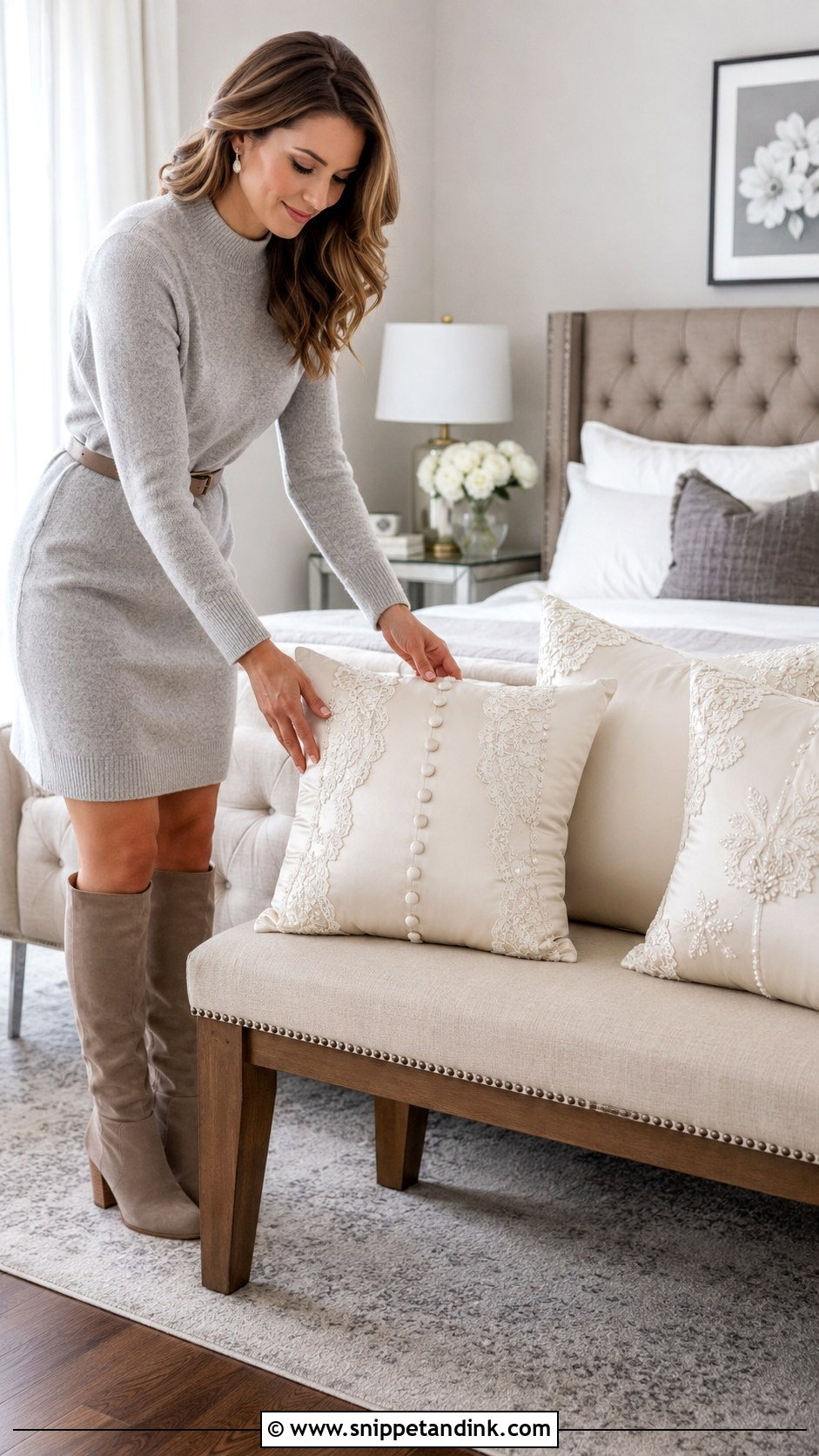
Pillows are how I’d suggest sharing one gown among several people. Satin skirt panels make the fronts; lace, buttons, bows and appliqués supply the recognisable details. Back them with sturdy new fabric if the original is fragile or scarce, and use an envelope or zip closure so the cover comes off the insert. A small inside pocket can hold a note or photo. Choose an insert slightly smaller than you would normally, so it fills the cover without straining old stitching. These are display pieces: one on a reading chair or a guest bed, not a sofa that gets leaned on every day.
12. Wedding Gown Memory Bear
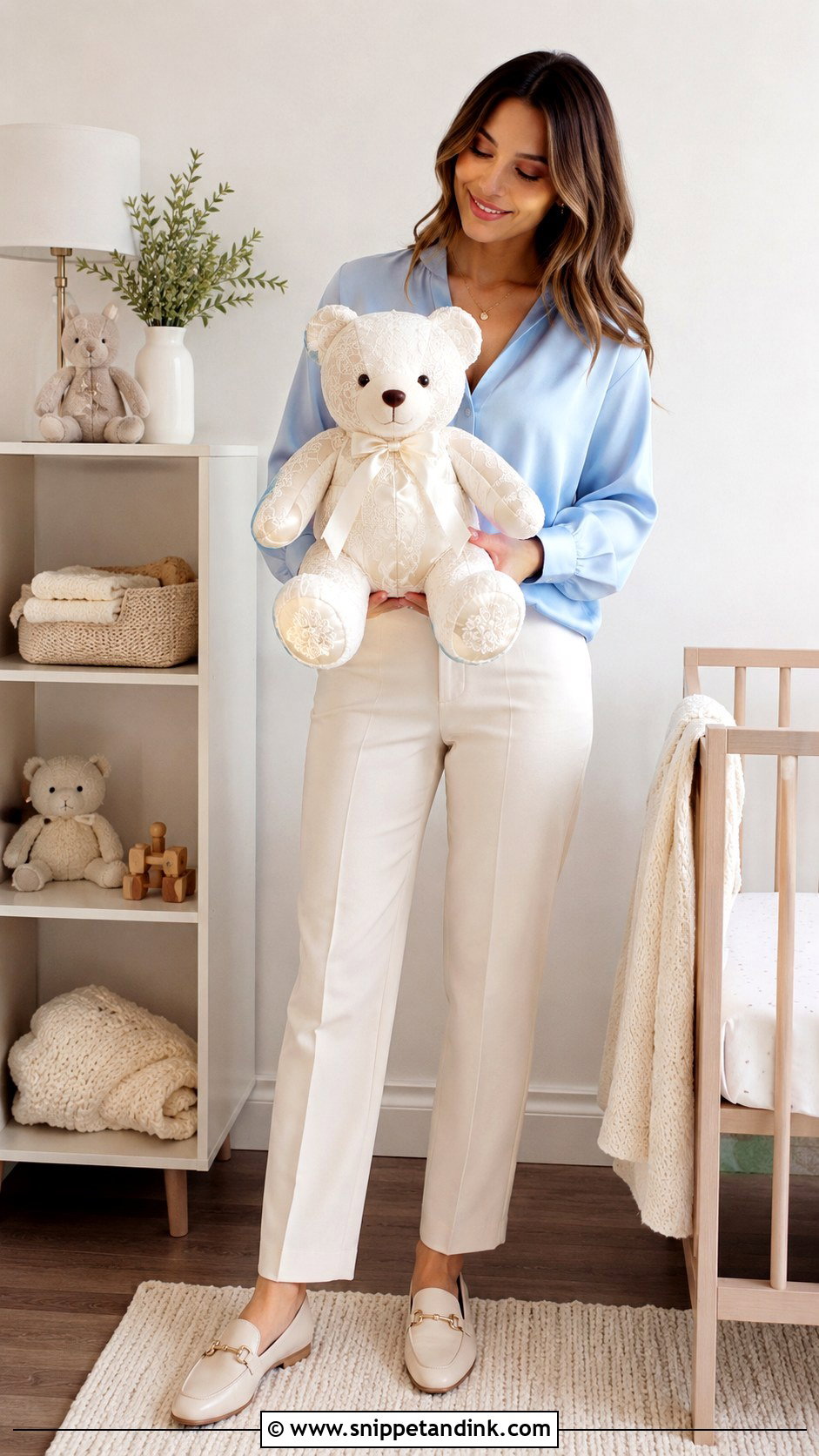
A memory bear uses very little fabric, which makes it a good use for leftover scraps from a bigger project. Satin for the body, lace on the ears or paws, covered buttons as details, and a ribbon from the waistband. Treat it as a display piece: beads, buttons, wire and loose trim make it unsafe for a baby unless it’s been built specifically as a child-safe toy. A good maker will hide stains or worn areas inside the seams. Put it on a nursery shelf or in a glass cabinet next to a framed wedding photo.
13. Wedding Gown Framed Textile Art
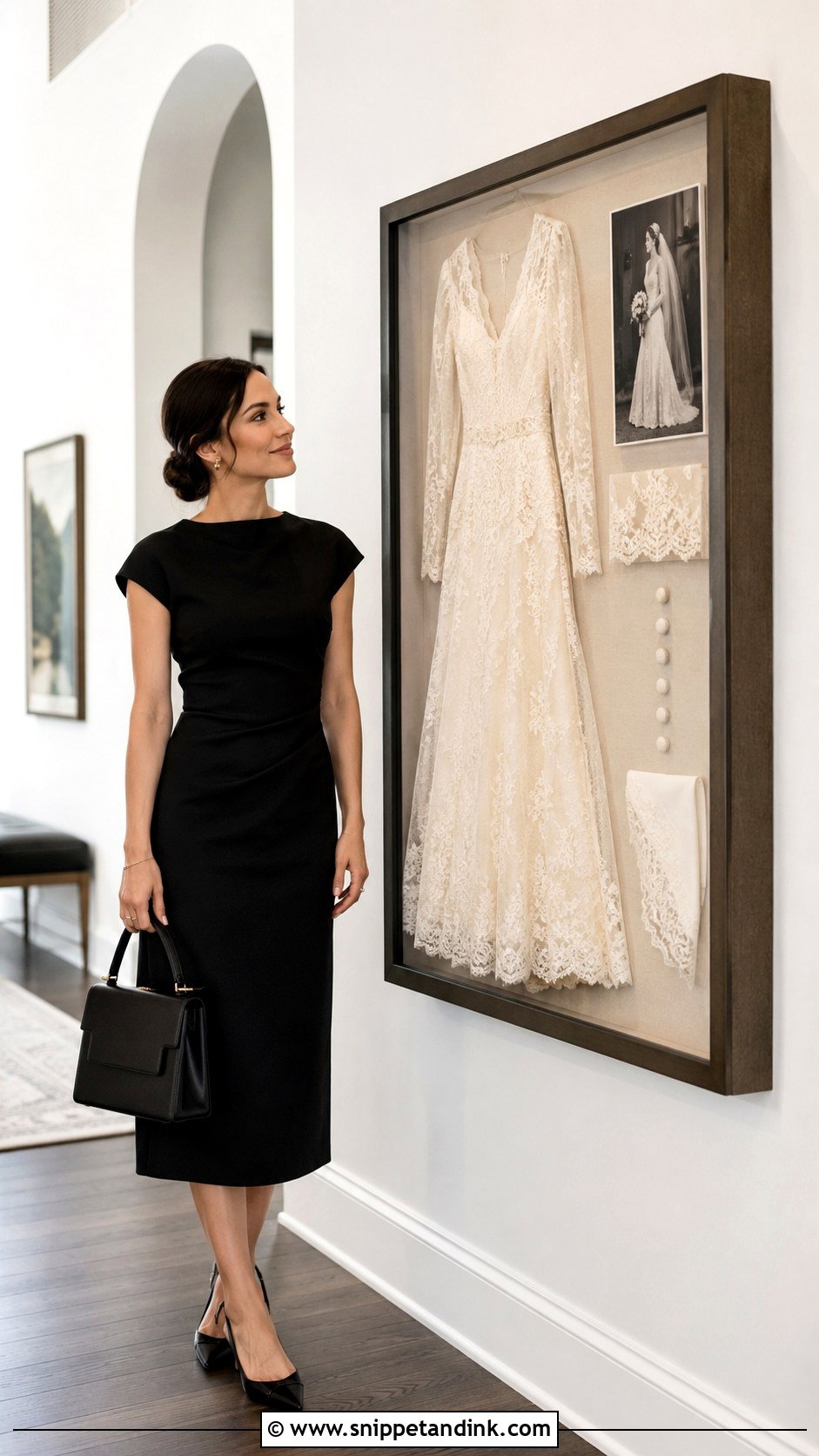
Framing suits a gown with exceptional handwork, where the best lace, embroidery or beading deserves to be seen. Pick the section that says the most about the dress: a neckline motif, a cuff, a train appliqué. Mount it on acid-free backing, and use a shadow box if the embellishment has depth. A photo, a copy of the invitation or a small engraved plaque can sit alongside. Never use household glue, tape or ordinary card, which yellow and stain fabric over time; a framer stitches textiles to the mount instead. Ask for UV-filtering glazing and hang it away from direct sun, in a bedroom or hallway.
14. Wedding Gown Clutch Bag
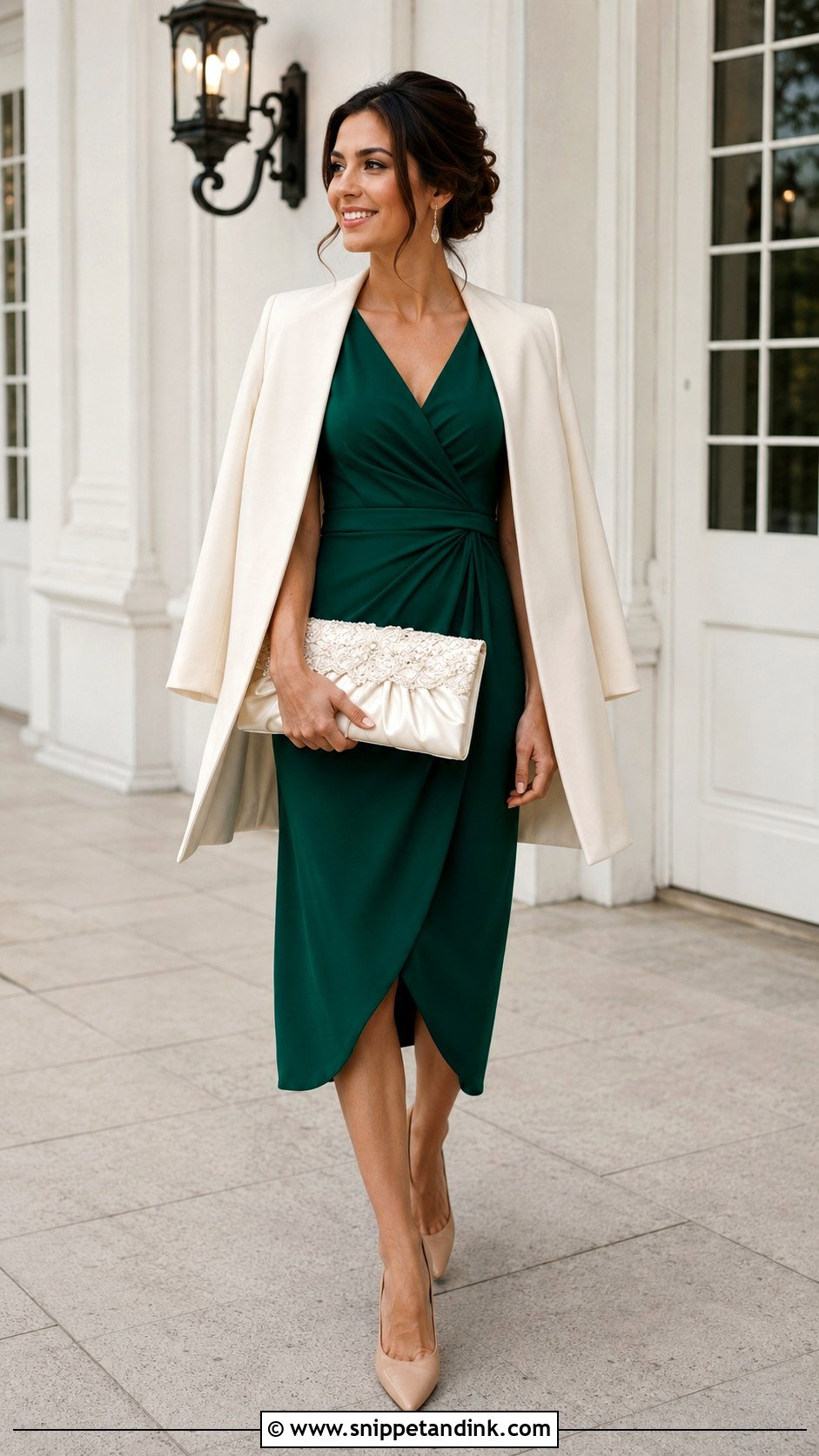
A clutch takes very little material, so it’s the project I’d pair with a bigger one. Satin covers the outside, lace can overlay it and a beaded motif can sit in the centre. Bridal satin alone is too soft to hold a bag shape, so the maker needs to fuse it to a firm base. A magnetic or frame closure, a clean lining and an optional chain strap make it practical. Carry it with a coloured midi dress, matching heels and a wrap; the contrast keeps it from looking bridal. It’s a quiet way to bring part of your dress to a sister’s or daughter’s wedding.
15. Wedding Gown Heirloom Handbag
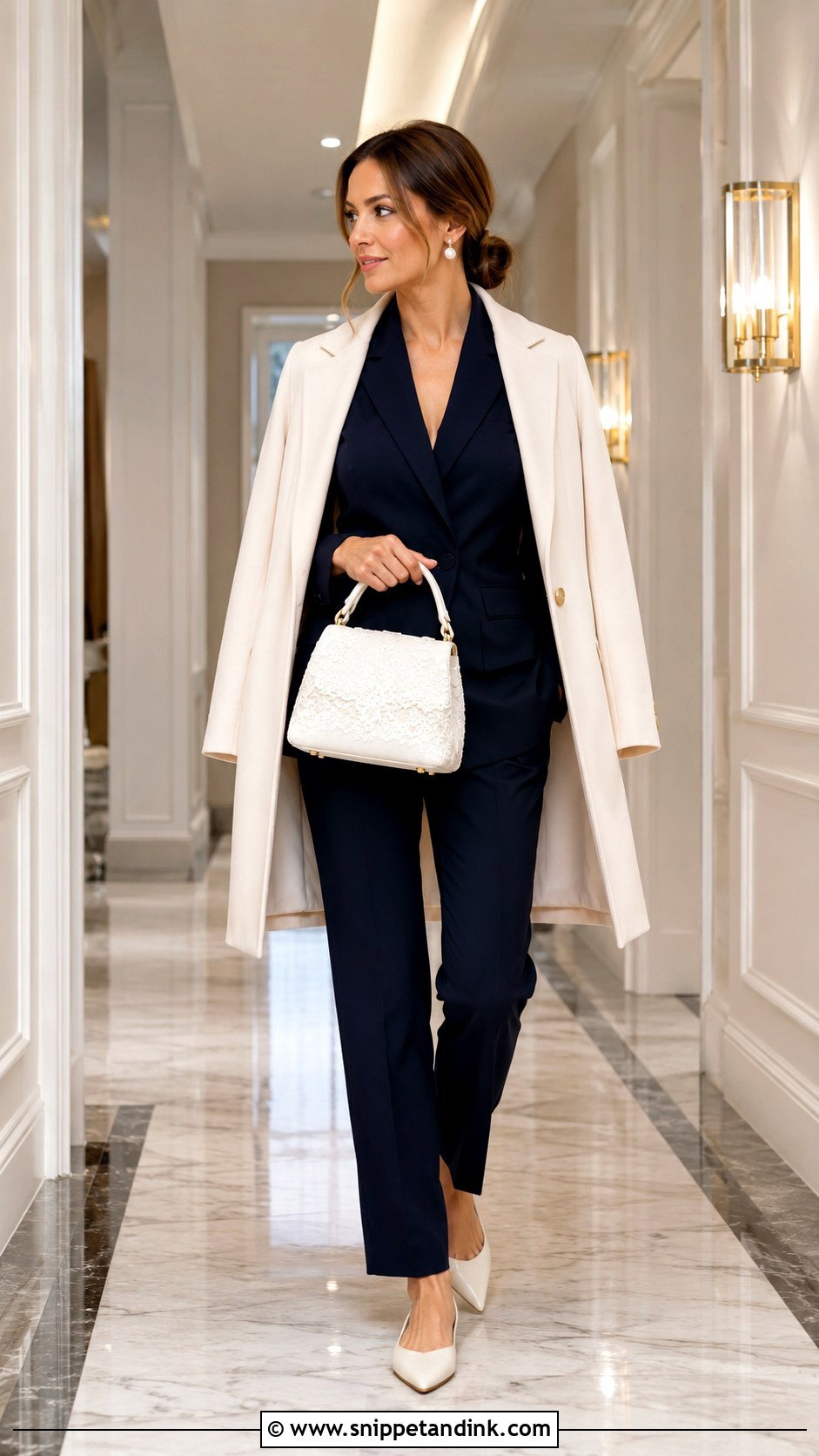
A larger bag holds more of the gown and gets more use. Top-handle, envelope and small shoulder bags all suit bridal fabric; match the shape to the weight of the material, structured for satin and lace laid over a strong neutral base. Covered buttons, a bow or a strip of embroidered trim can decorate the flap. For everyday carrying, the handle and base corners wear first, so reinforce them or use leather there. A durable lining, inner pocket and secure closure finish it. I like it with a navy suit, pointed flats and pearl earrings. Tuck a removable note inside explaining where the fabric came from.
16. Wedding Gown Hair Accessories
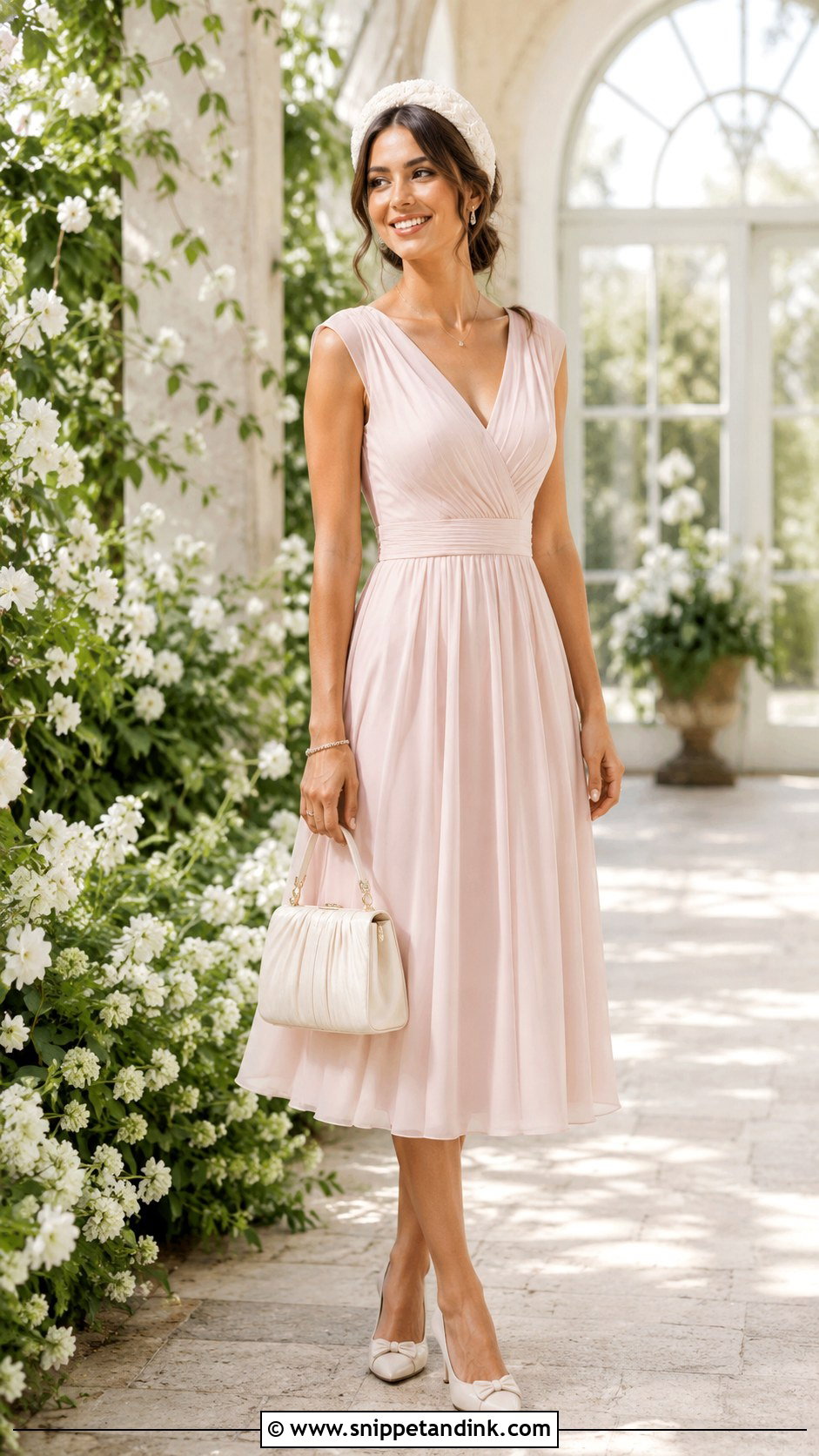
Narrow scraps that are too small for anything else make good hair accessories: padded headbands, bows, combs, flower pins, scrunchies or ribbon ties. Keep them light. Dense beading belongs on a comb, which can carry weight; soft satin suits bows and covered headbands. Wear just one at a time, with a pastel midi, low heels and a small bag, since a single recognisable piece has more impact than several. Matching sets for sisters or nieces are easy to make from the same scraps. Store each in an acid-free box with a note about the original gown.
17. Wedding Gown Bouquet Wrap
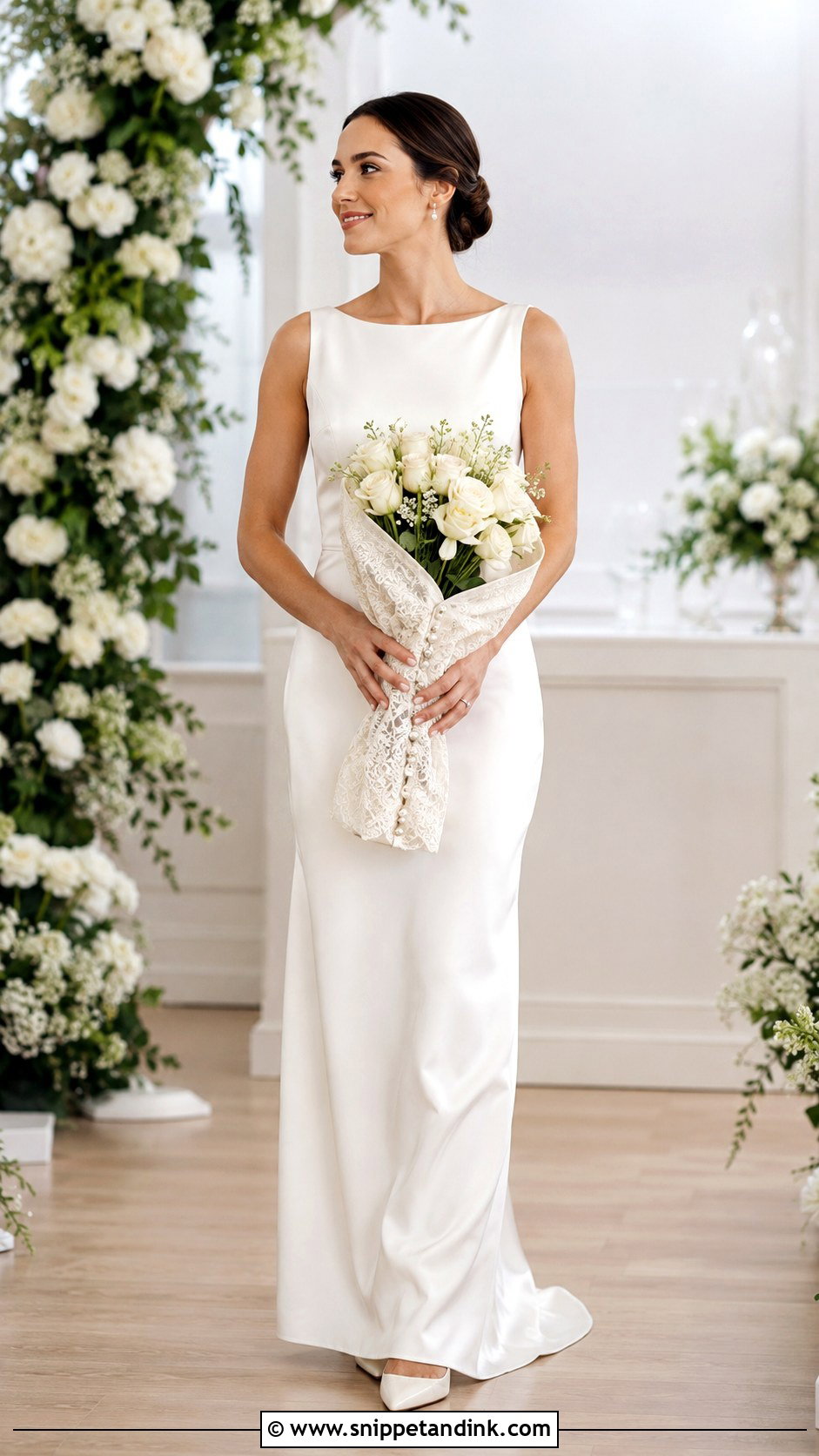
Trim from your gown wrapped around a bouquet is a subtle way to carry it into another family wedding. Sleeve lace, a satin waistband or a row of covered buttons can be shaped around the stems. Water is the danger here: bouquet stems stay wet for hours and will stain or rot old fabric, so the wrap needs a waterproof inner layer and the stems should be dried and taped first. Fasten it with stitching, snaps or pins, never glue. A small embroidered date inside is a nice touch. Take it off as soon as the day is over, let it dry fully and return it to storage.
18. Wedding Gown Table Runner
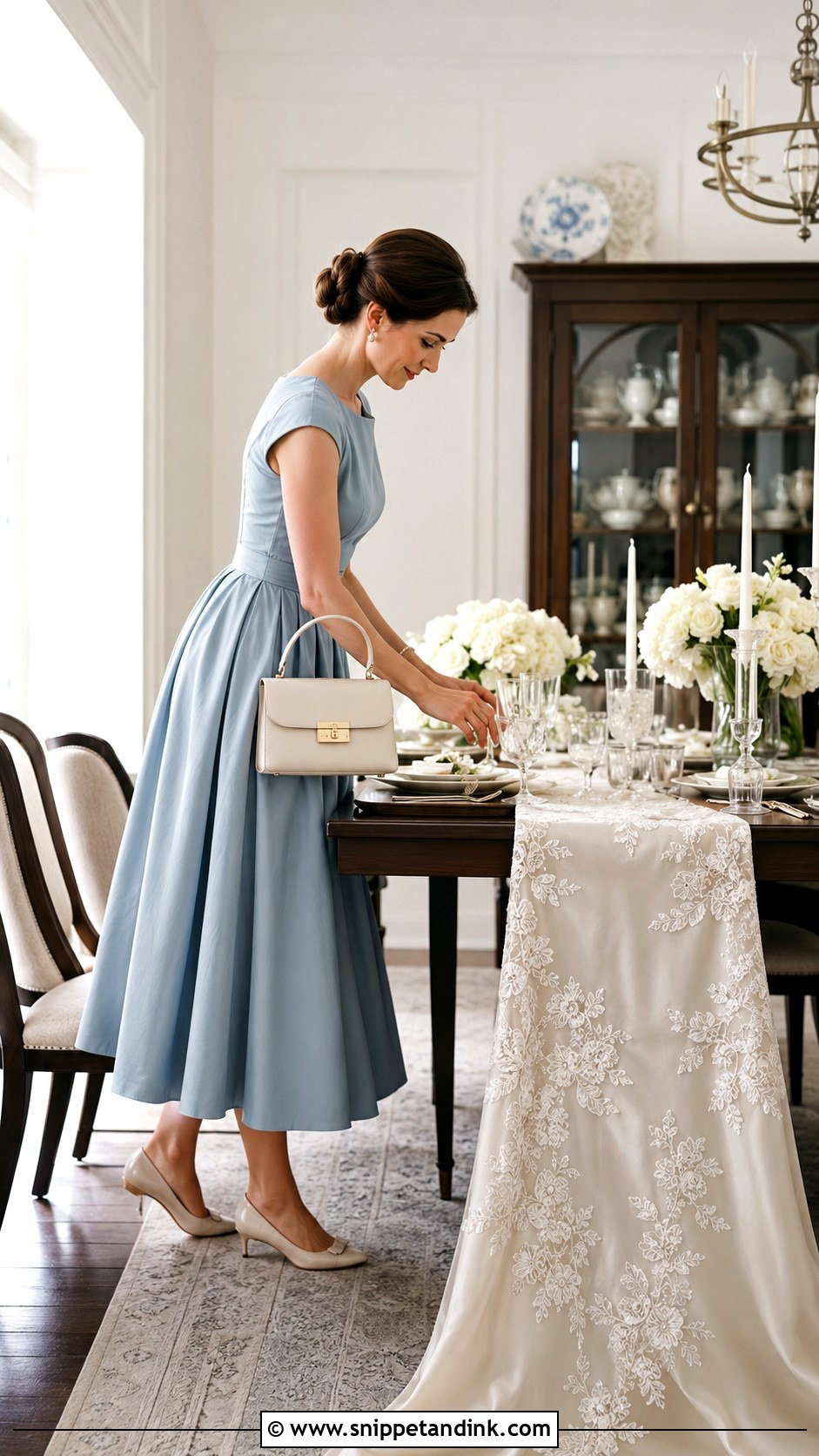
Long skirt and train panels give enough length for a table runner for anniversaries or family dinners. Satin makes a smooth base and lace overlays add texture without complicated patchwork. A lining helps it lie flat and keeps it from stretching out of shape. Scalloped hems, embroidered borders and spaced appliqués carry the gown’s details. On the table, keep candles, hot dishes, coloured food and flower water off it; wax and red wine are both very hard to remove from silk. White dishes, clear glass and pale flowers let it stand out. Clean it according to fibre, then store it flat between acid-free tissue rather than tightly folded.
19. Wedding Gown Handkerchief Set
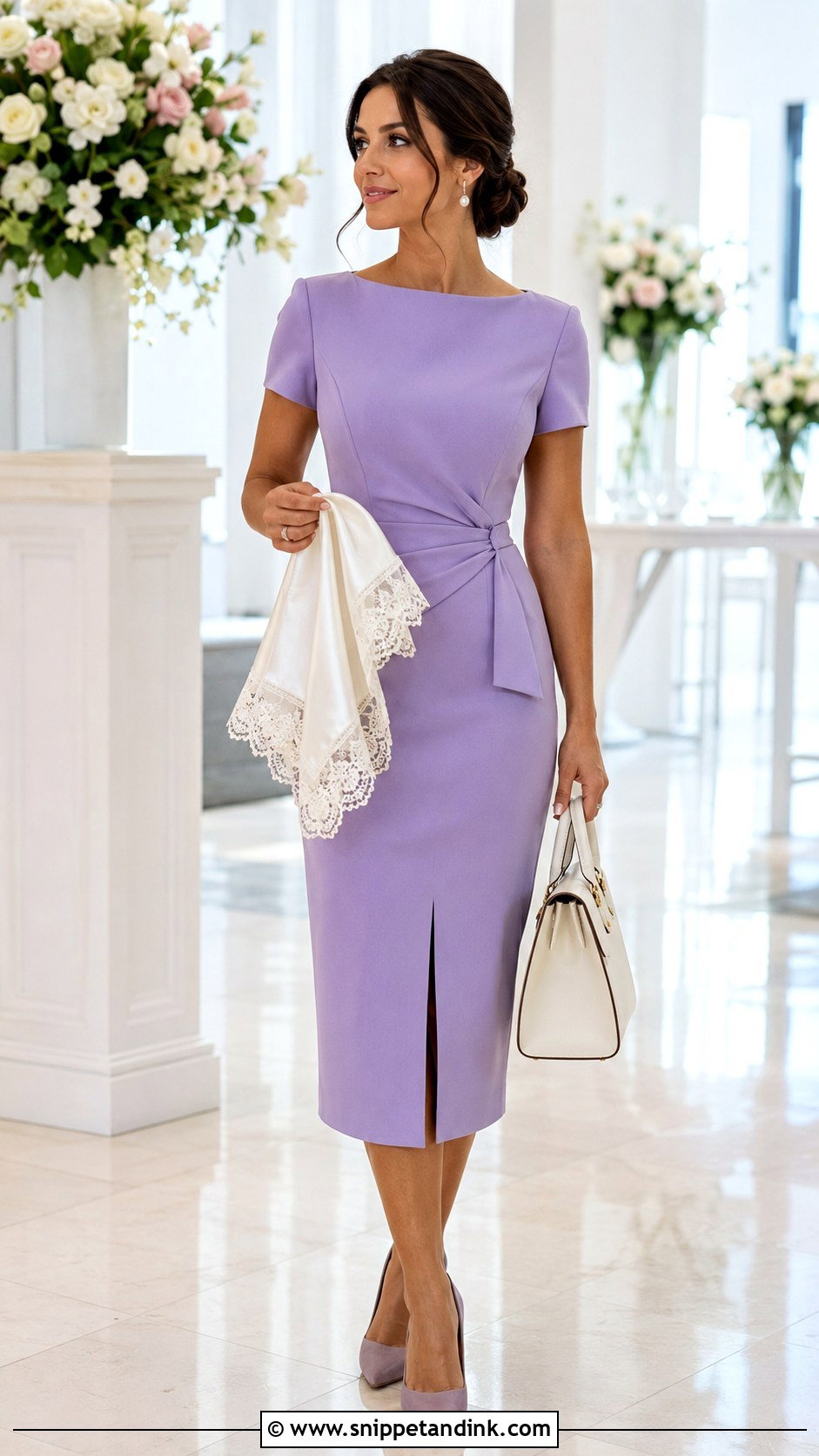
Handkerchiefs split one gown fairly among children, grandchildren, siblings or close friends. Smooth lining, silk or light satin makes the squares, and a narrow lace edge ties each one to the dress. Add initials, the date or a short line of embroidery. If the fabric is too delicate for real use, make them as keepsakes to be carried in a pocket or bag on a wedding day. Present each in a small archival box with a photo of the gown. Tucked into a suit pocket or carried with a midi dress and pumps, they travel easily and pass down well.
20. Wedding Gown Patchwork Occasion Dress
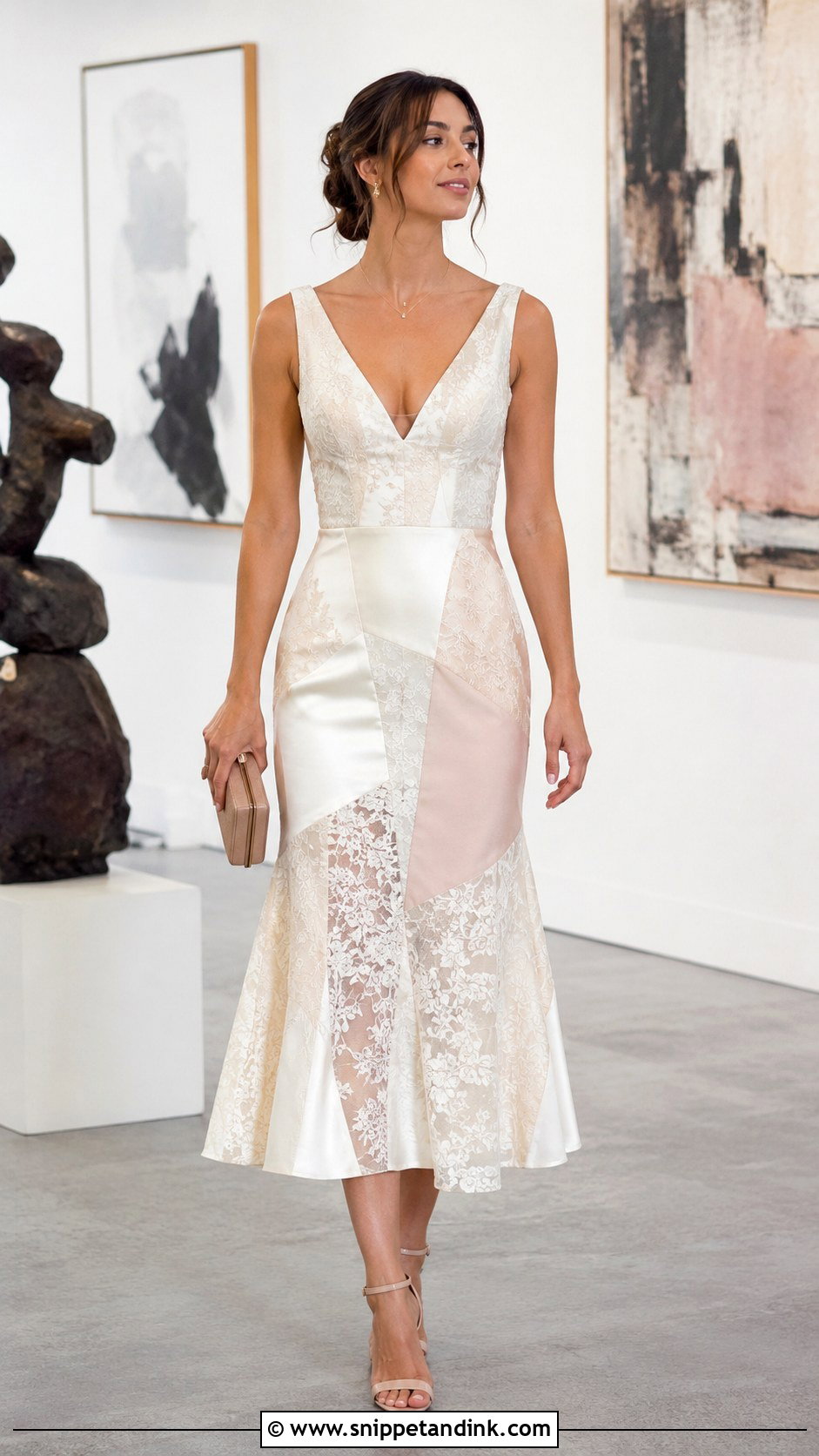
Stains, tears and yellowing don’t rule a gown out. A patchwork dress uses whatever survived: intact satin panels, lace motifs, embroidered sections, plus some new fabric to fill gaps. Keep the palette tight, two or three tones at most, or it starts to look like a craft project. A sheath, a fit-and-flare midi or a relaxed A-line has enough seams to hide joins between small pieces. Leave damaged fabric out of the stress points, the zip, shoulders and waist, where it would tear first. Simple heels, a solid clutch and minimal jewellery let the mixed textiles lead.
What an Old or Stored Dress Needs Before It Goes Under the Needle
A mother’s or grandmother’s gown that has been in a box for twenty years needs checking before it is planned around. Hold the fabric up to the light: silk that has been folded for a long time can split along the old fold lines, which means those areas can’t be used for anything that will be handled. Gently pull a seam allowance; if the fabric tears easily, it suits framing better than wearing.
Yellowing and brown spots are common. Spots are often old sugar or perspiration that oxidised in storage. A specialist cleaner can sometimes lift them, but vintage silk may not survive aggressive whitening, so ask what they recommend before you insist on bright white. Often the better plan is to cut around marks rather than treat them.
Finally, expect the project to take longer than a new garment. Unpicking an old gown carefully, without tearing lace or losing beads, is slow work, and a seamstress may quote several weeks for that alone. Give yourself a few months if the piece is meant for a specific wedding or birthday.
Start With the Detail You’d Miss Most
What a gown can become depends on its fabric, its condition, how it was built and what it means to you. Before any cutting, photograph it, list the details you’d be sad to lose and talk through realistic options with a seamstress, quilter or keepsake maker. One large project plus a few small ones from the scraps, a dress and then a clutch, handkerchiefs or a framed panel, gets the most from the fabric. Professional cleaning and careful storage protect it before the work starts and protect what you make afterward. Done well, the dress spends its second life being used rather than boxed.
You'll Like These Ideas:


Leave a Reply