
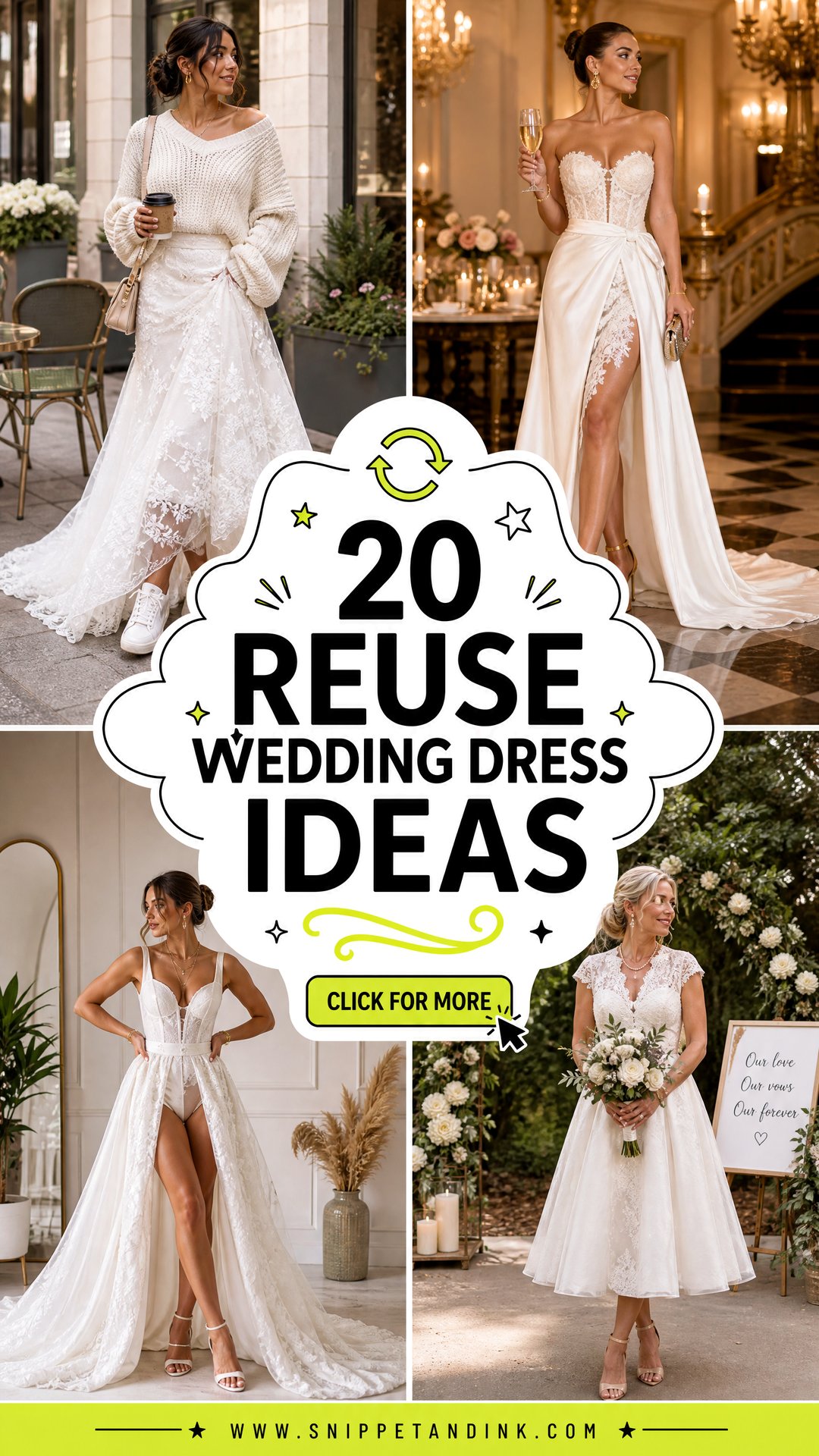
A wedding gown doesn’t have to spend the rest of its life folded in a box. With the right alterations, a bit of layering and different accessories, you can turn bridal fabric into outfits you’ll actually reach for again. The changes I’m asked about most are a shorter hem, losing the train, adding colour and splitting the bodice from the skirt. Before any of that, I send the dress for professional cleaning and sit down with a bridal tailor to work out which details can come off without the structure collapsing. Lace, buttons, beading and even the lining can be kept and reused. What follows runs from casual separates to full evening wear.
Reading a Gown’s Seams and Fabric Before Anything Gets Cut
Every conversion below depends on what is physically inside your dress, so I start with the inside, not the outside. Turn the gown inside out on a clean sheet and look at it the way a tailor will. Ten minutes of looking now saves a costly surprise at the first fitting.
- The fibre label. Silk, polyester, nylon lace and acetate lining all behave differently under a needle, an iron and a dye bath. If the label is gone, a tailor can usually tell by feel and by how the fabric creases.
- Seam allowances. Side seams on bridal gowns are often cut generously so the dress can be let out. That spare width is useful fabric for straps, a waistband or covered buttons.
- Boning and the waist stay. A strapless bodice is held up by boning and an inner grosgrain stay at the waist. Remove the skirt and the bodice may lose its anchor, so ask how it will be re-secured.
- How the lace is attached. Hand-stitched appliqués lift off cleanly and can be moved. Lace that is machine-sewn into the seams usually can’t be removed without leaving needle holes.
- How much fabric the train holds. A long train can supply a cape, sleeves or a whole jacket. A short sweep train gives you very little to work with.
Get it cleaned before anything else. Champagne, sweat and cake leave sugar marks that look invisible at first and turn brown over the following months, and once they’ve oxidised they are much harder to lift. Cleaning also shows how the fabric behaves after washing, which tells your tailor what it will tolerate.
1. Short Wedding Dress Cocktail Outfit
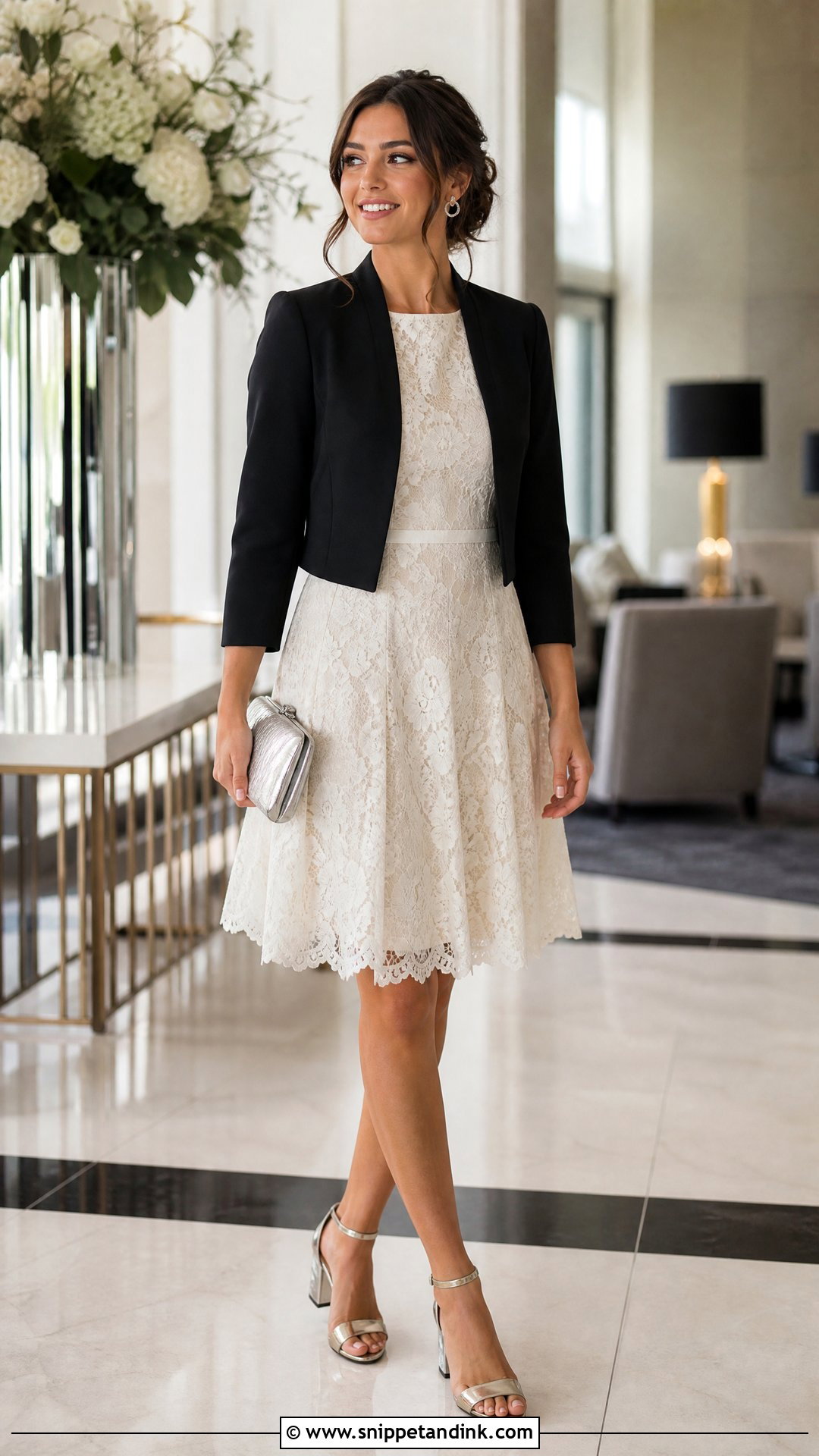
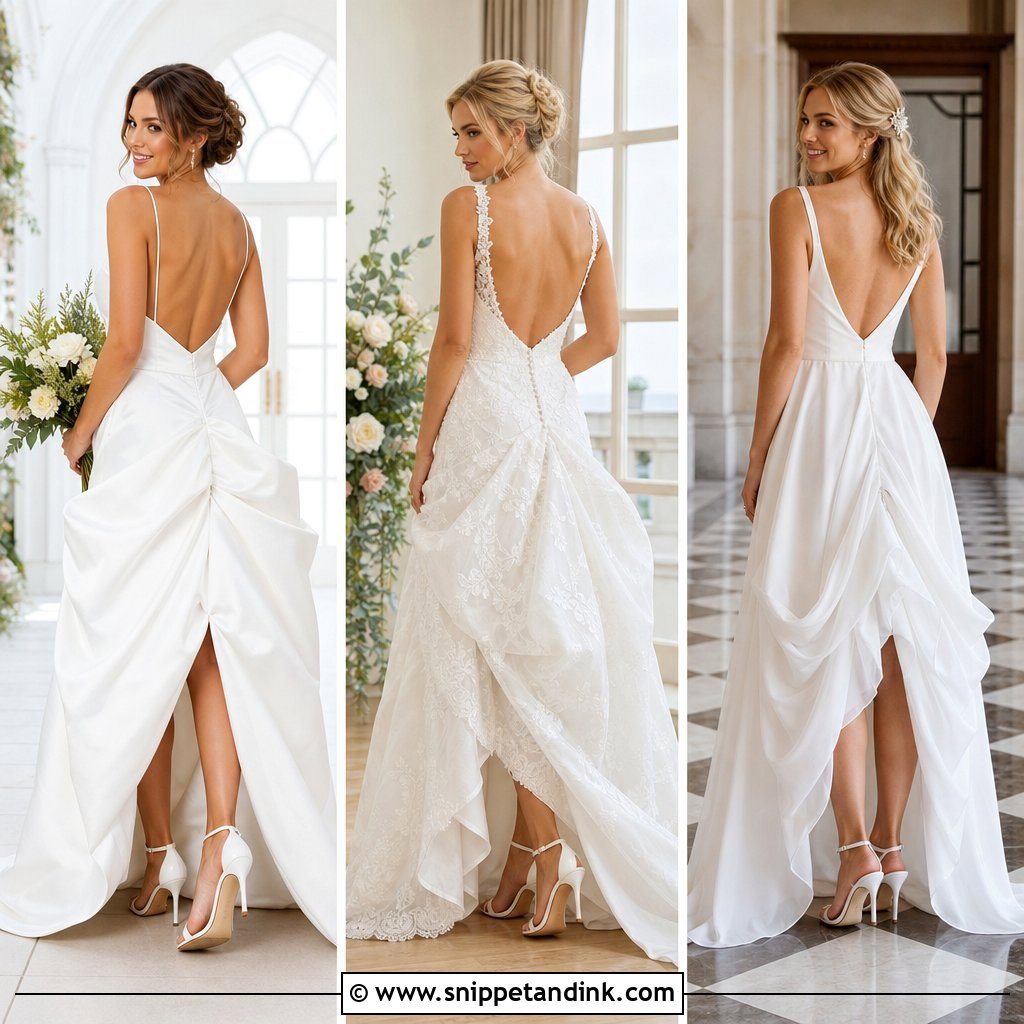
Cutting a gown down to cocktail length is the most common conversion I see, and the one that goes wrong most when the hem is chosen by guesswork. Take off the train and the extra skirt volume, then have the tailor pin a knee-length or slightly longer hem with you standing in the shoes you’ll wear. A fitted sheath suits a clean pencil line; an A-line gown keeps a soft flare. Drop the veil and the bridal belt. Metallic block heels, a compact clutch, small hoops and a cropped blazer finish it, and if the bodice is heavy lace I keep the jewellery almost invisible. It earns its keep at anniversaries, formal dinners and milestone birthdays.
2. Dyed Wedding Dress Evening Outfit
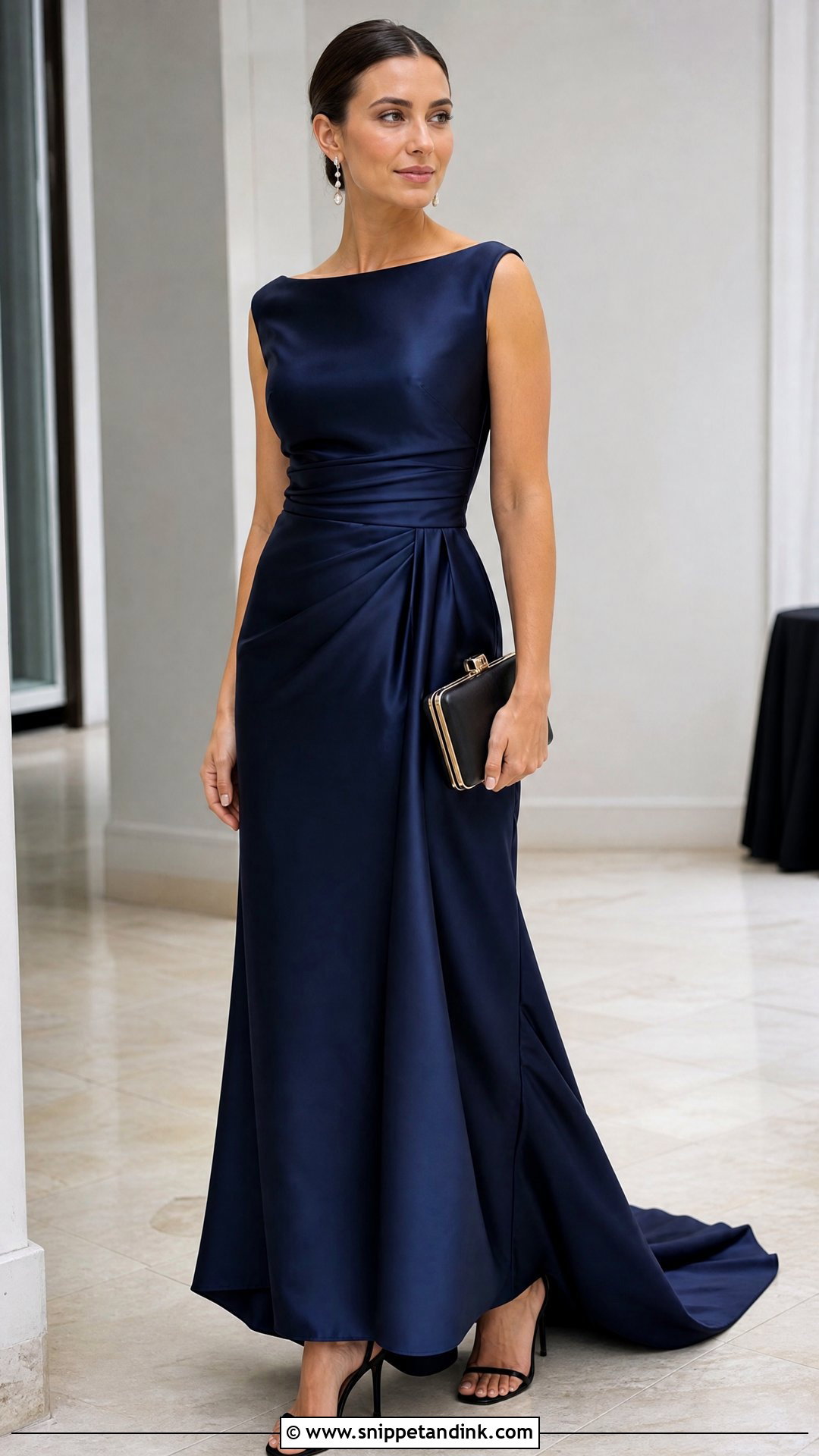
Colour changes a gown’s identity faster than any cut. Navy, forest green, burgundy or black turn it into proper evening wear, and blush or dusty blue gives a gentler result. The catch is that lace, lining, embroidery and synthetic fibres each take dye differently, so I always test a scrap from inside the seam allowance first. For an expensive or heavily beaded gown, hand it to a professional dyer rather than a washing machine. Once it’s recoloured, slim heels, a structured evening bag and quiet jewellery are enough. Shortening the hem or removing the train at the same time makes the new dress far easier to wear.
3. Wedding Dress Two Piece Set
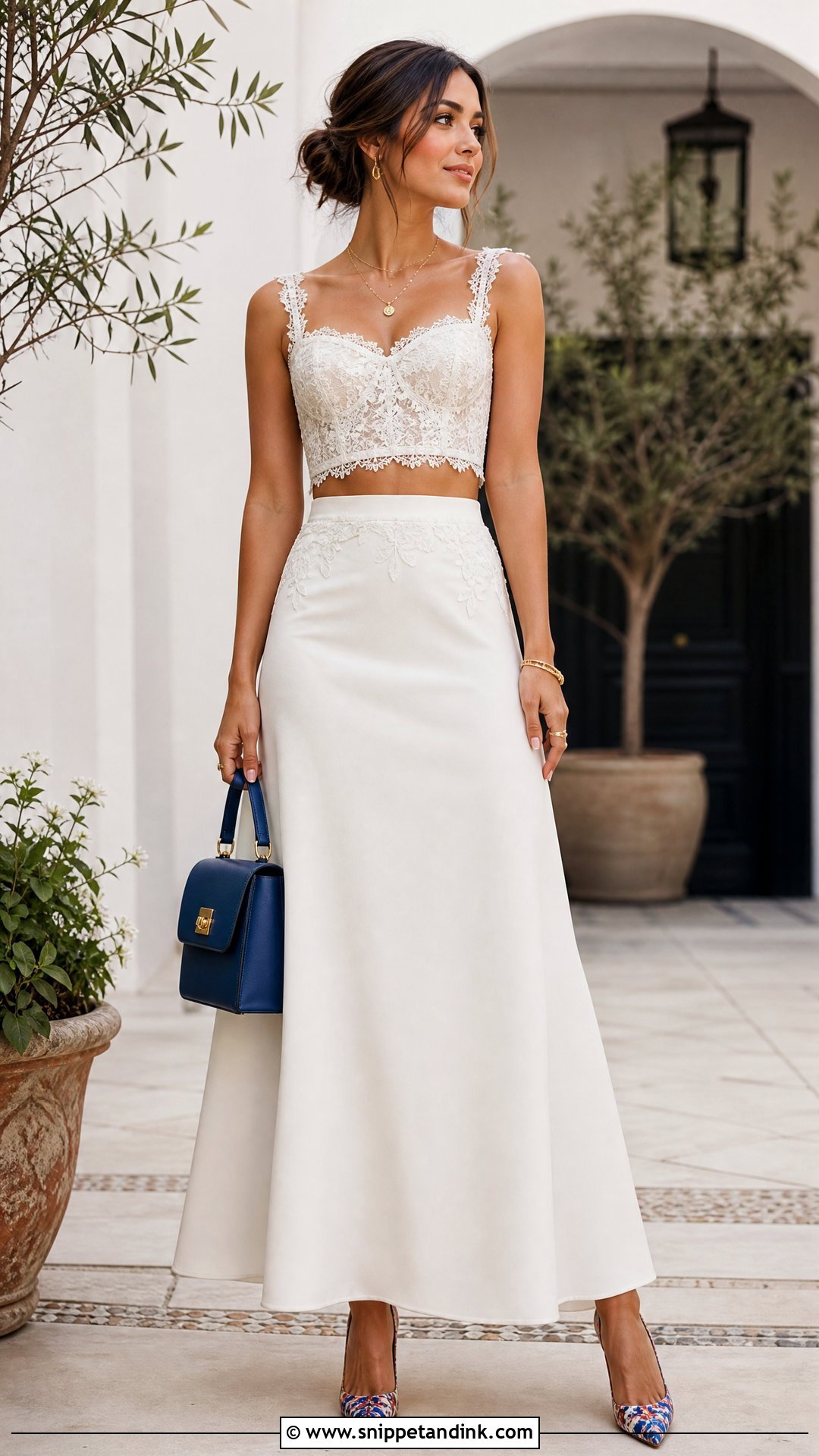
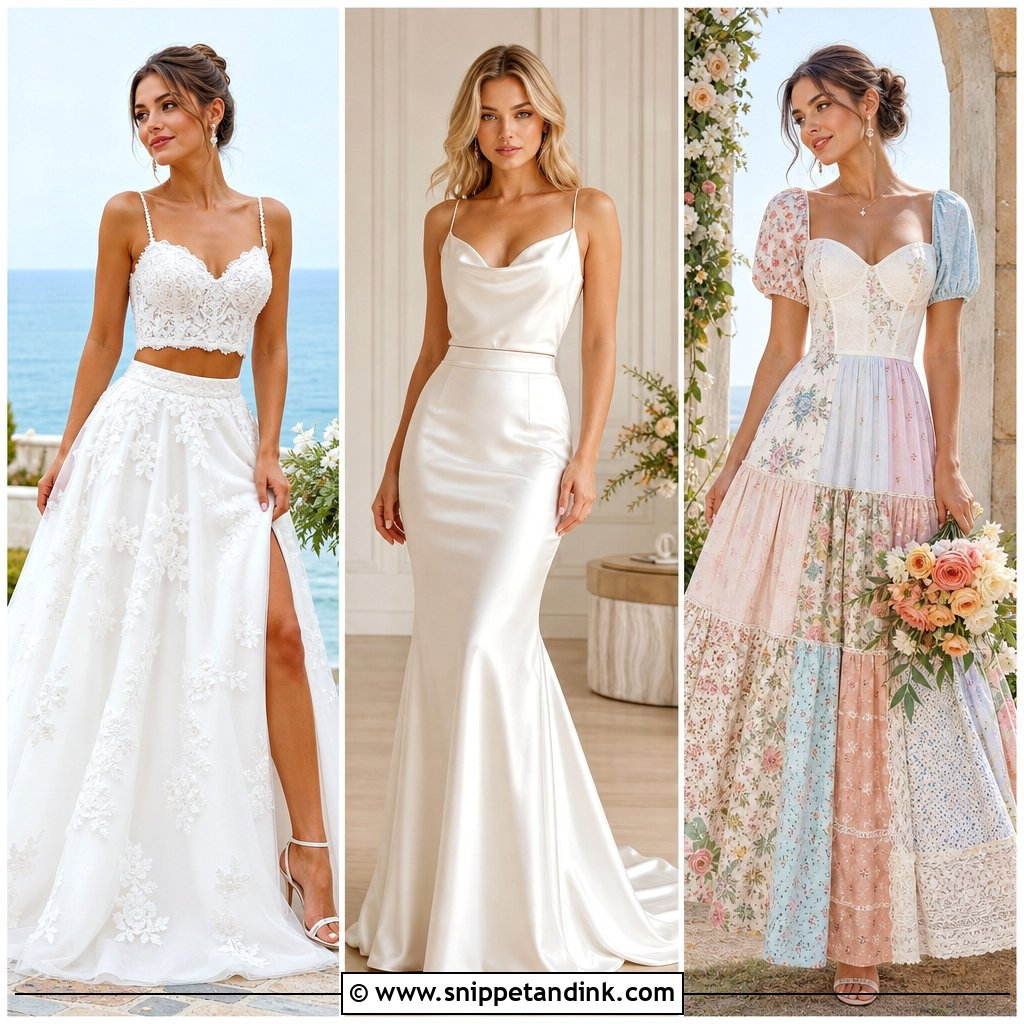
Splitting the gown into a top and a skirt gives you two pieces nobody will recognise as bridal. The fitted bodice becomes a cropped top with a neatly finished lower edge, and the skirt loses its train and a layer or two before getting a comfortable waistband. Worn together with sleek heels and a bright bag, they look like a coordinated set. Apart, the top goes with tailored trousers and the skirt with a fine knit. One thing I insist on: keep every offcut of lace and every covered button, because the tailor will want them the first time a seam needs repairing.
4. Wedding Dress Skirt And Sweater Outfit
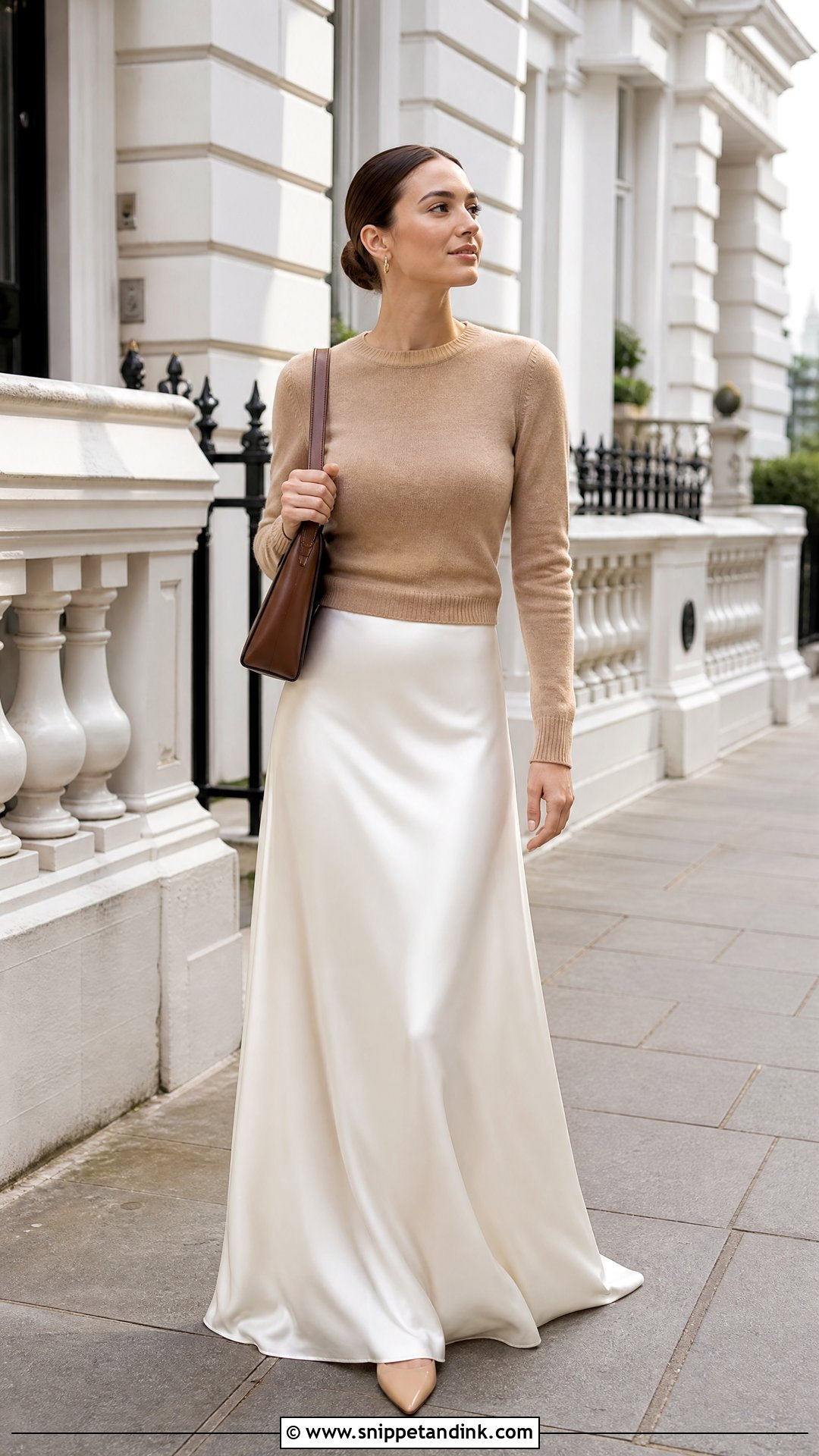
A full bridal skirt with a plain sweater is the conversion I’d recommend to anyone who lives in knitwear half the year. The bodice comes off, and the tailor finishes the skirt with a soft waistband and a hidden side zip. If the petticoats make it feel too formal, remove one. Tuck a fitted cashmere or fine knit into the waist so the skirt’s volume has a defined top. Pointed flats or low heels, a structured shoulder bag and small gold earrings are plenty. Ivory skirts sit well with camel, grey, navy and pale blue knits. Avoid chunky cable knits here; they add bulk exactly where the skirt already has it.
5. Wedding Dress Bodice And Tailored Pants Outfit
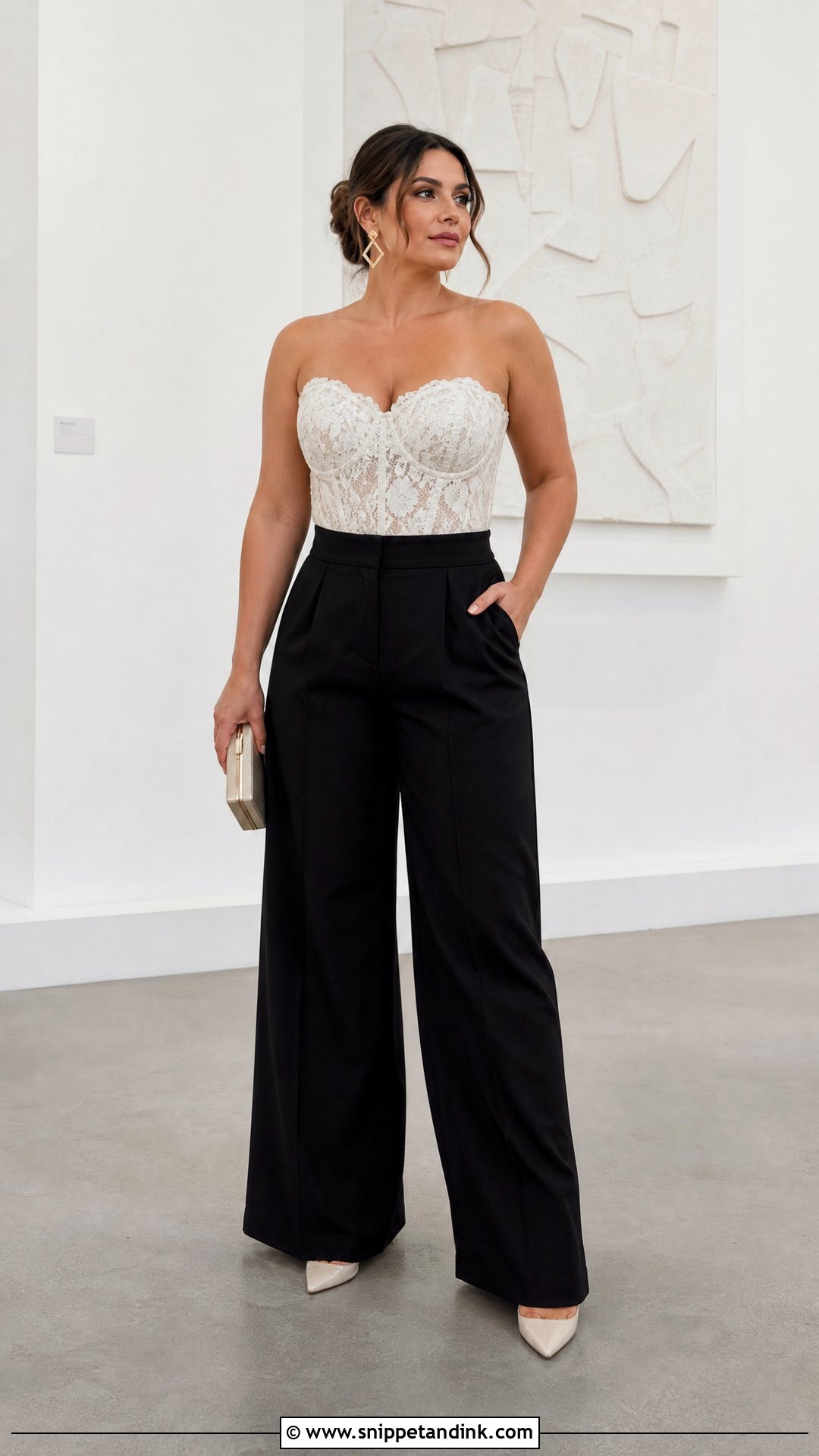
If the bodice is where all the handwork lives, build the outfit around it. The skirt is removed carefully and the lower edge finished as a corset top, a peplum or a waist-length blouse. When the neckline still looks too bridal, a tailor can thin out lace appliqués, take away illusion mesh or add slim straps. High-waisted trousers in black, navy, ivory or a jewel tone do the rest, with pointed pumps, a box clutch and geometric earrings. Wide legs balance a tight bodice; cigarette trousers give a straighter line. I’d check the boning first, because a bodice built to be held down by a heavy skirt can ride up once it’s on its own.
6. Wedding Dress Slip Dress And Blazer Outfit
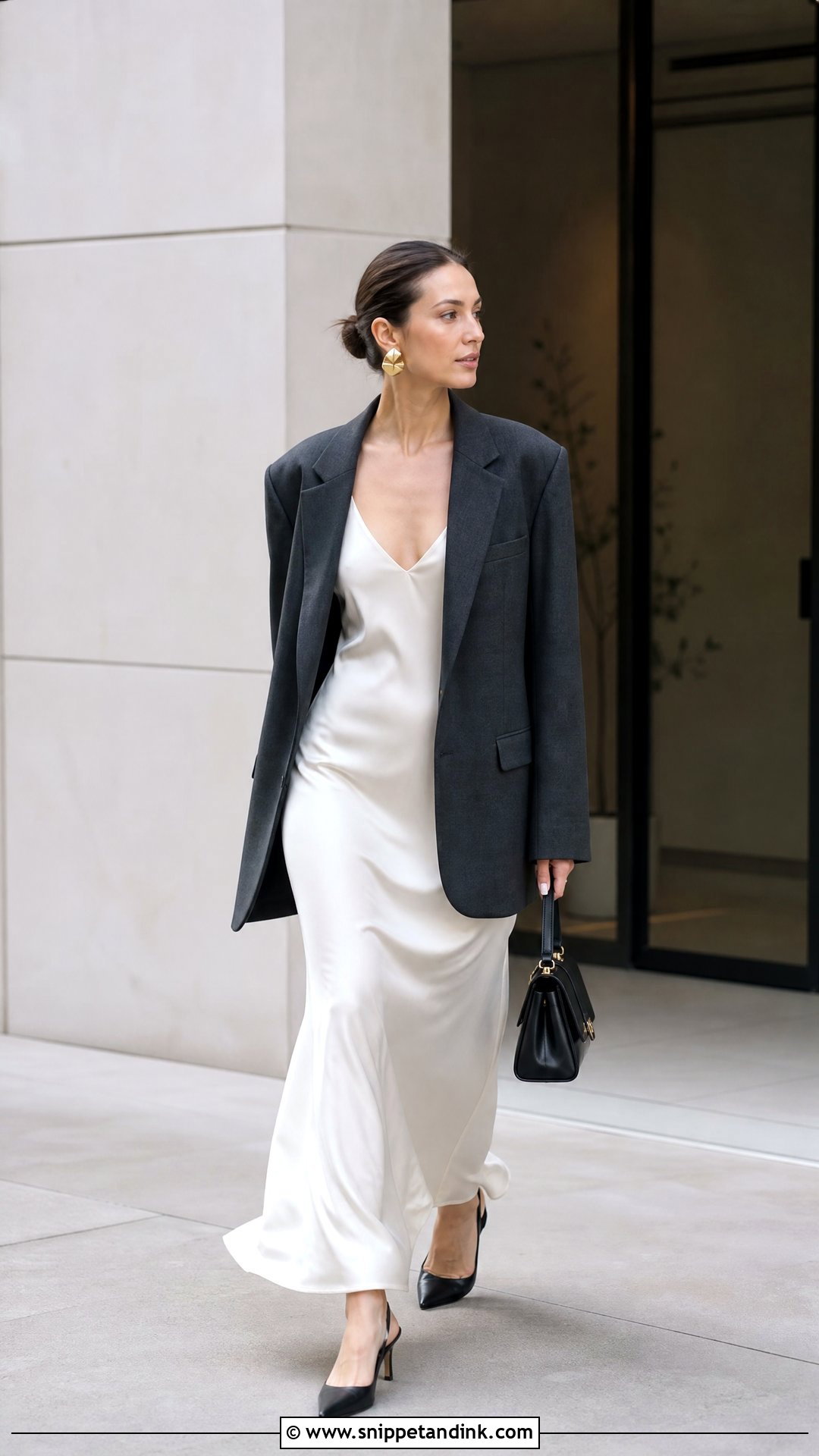
Slip dresses need the least surgery of any bridal style. Take off the train, bring the hem to ankle or midi length, and consider a side slit so you can walk properly. Then throw an oversized blazer over it in black, camel, soft grey or a muted pastel; the jacket takes the bridal edge off without hiding the dress. Slingbacks and sculptural earrings for evening, loafers and a lighter jacket for daytime. My caveat is fabric: clean satin, crepe and silk-like weaves carry this well, while heavy beading or several layers of tulle fight the relaxed shape.
7. Wedding Dress Jumpsuit Conversion
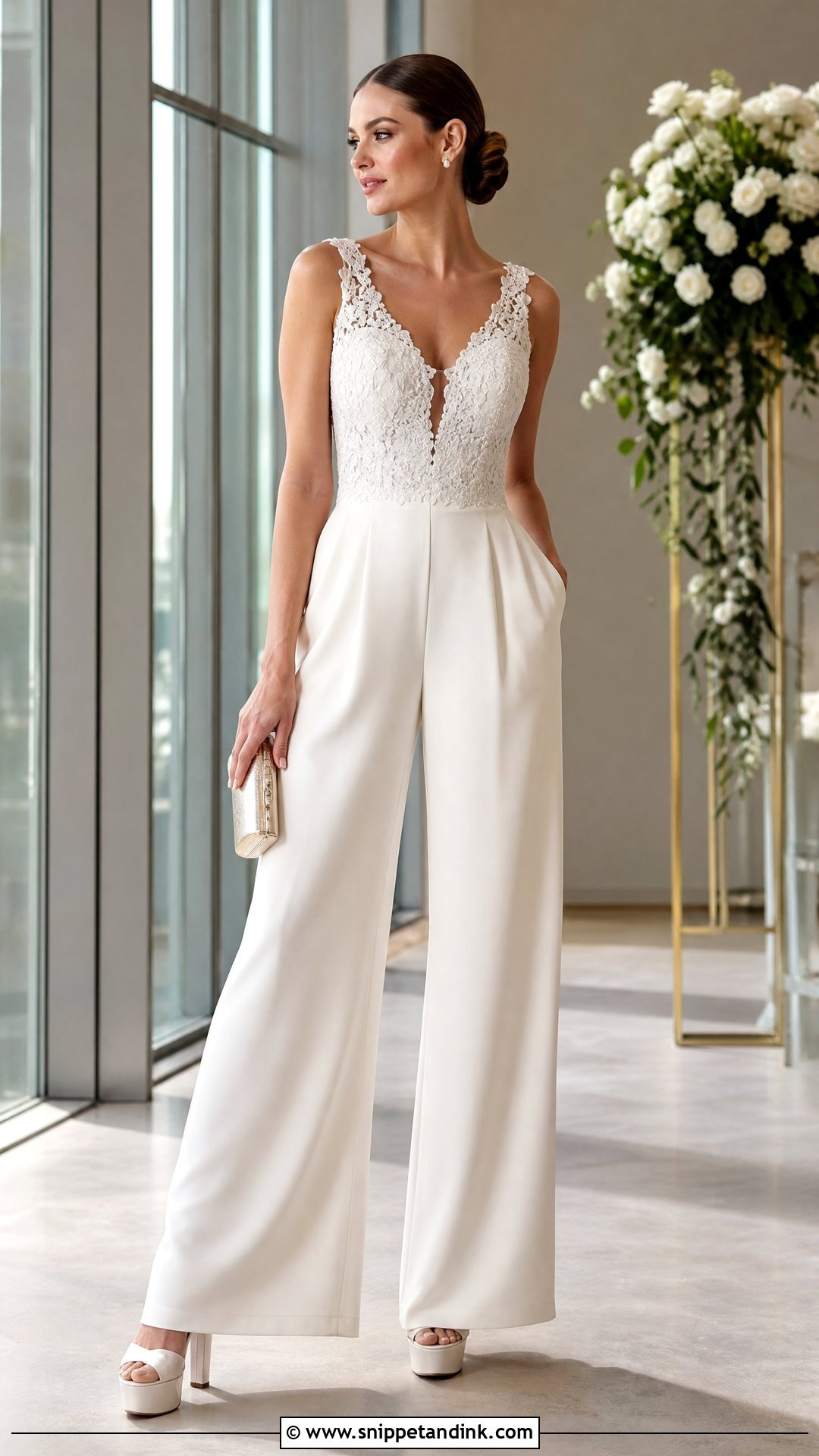
Turning a big gown into a jumpsuit is a real redesign, not an alteration, and it needs a designer who drafts patterns rather than a quick hemming service. The bodice stays, and the usable skirt fabric is recut into trousers. A fitted bridal bodice sits well over wide-leg pants, and a simpler neckline can take a narrow tapered leg. Train lace often has enough length for sleeves, shoulder panels or a removable belt. I’d decide on cropped ankle or floor-skimming length based on where you’ll wear it. Ask for sketches and a calico toile before a single cut is made; the finished piece should read as eveningwear, not a gown with the skirt missing.
8. Wedding Dress Midi Dress Brunch Outfit
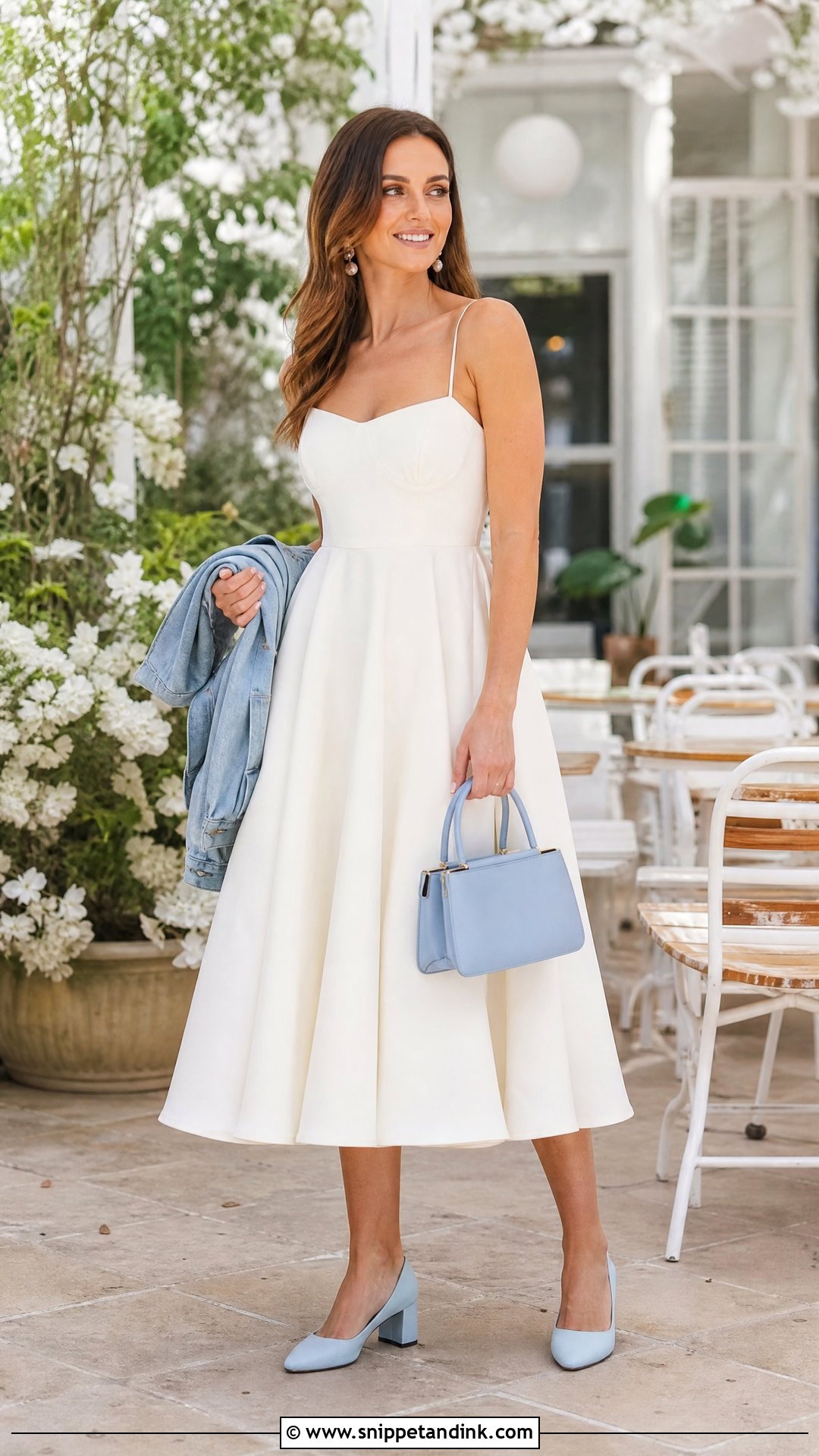
Tea length is where a formal gown starts to feel approachable. I ask for a hem between the lower calf and the ankle and take out the heavy underskirts that only exist to hold up a long skirt. A structured strapless bodice often looks better at midi length with short sleeves or wider straps, since the proportions change once the skirt shortens. Low block heels, a coloured top-handle bag and fine earrings work, and a printed silk scarf adds colour without touching the dress. A cropped denim jacket in a clean medium wash makes it brunch-ready. Showers, graduations and daytime parties suit it well.
9. Wedding Dress Mini Dress Party Outfit
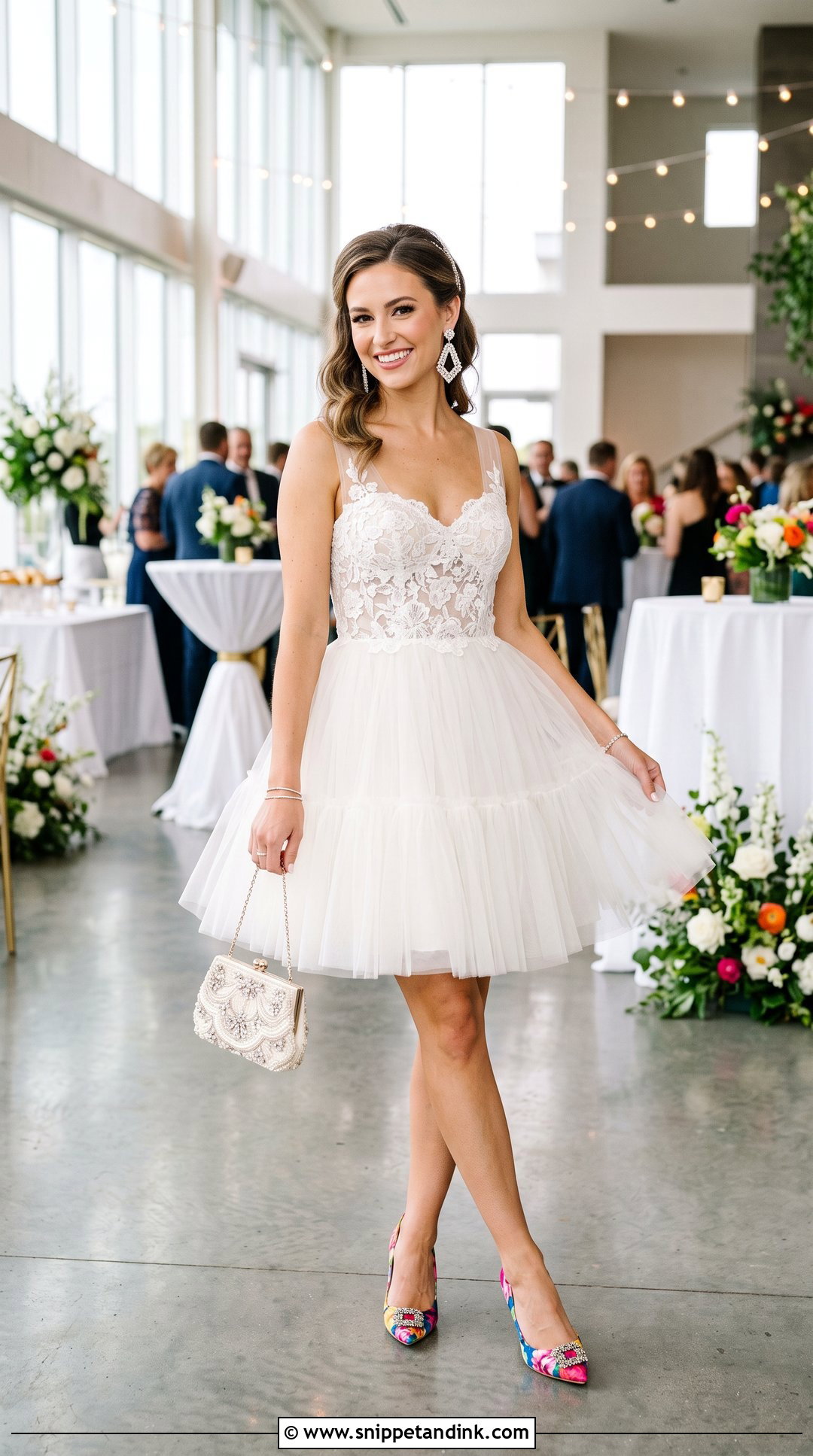
A mini conversion only looks deliberate when the original gown has a fitted bodice, a defined waist and an interesting neckline to carry it. Don’t let anyone cut as short as possible; I have the tailor pin two or three lengths and judge them in a full-length mirror while you sit down. Tulle layers make a soft A-line mini, while satin can be reshaped into a straighter line. Coloured pumps, a small embellished bag and bold earrings pull it away from the aisle, and a statement belt or a contrasting bow does the same job. Birthdays, receptions and nights out dancing are where it belongs.
10. Wedding Dress Beach Vacation Outfit
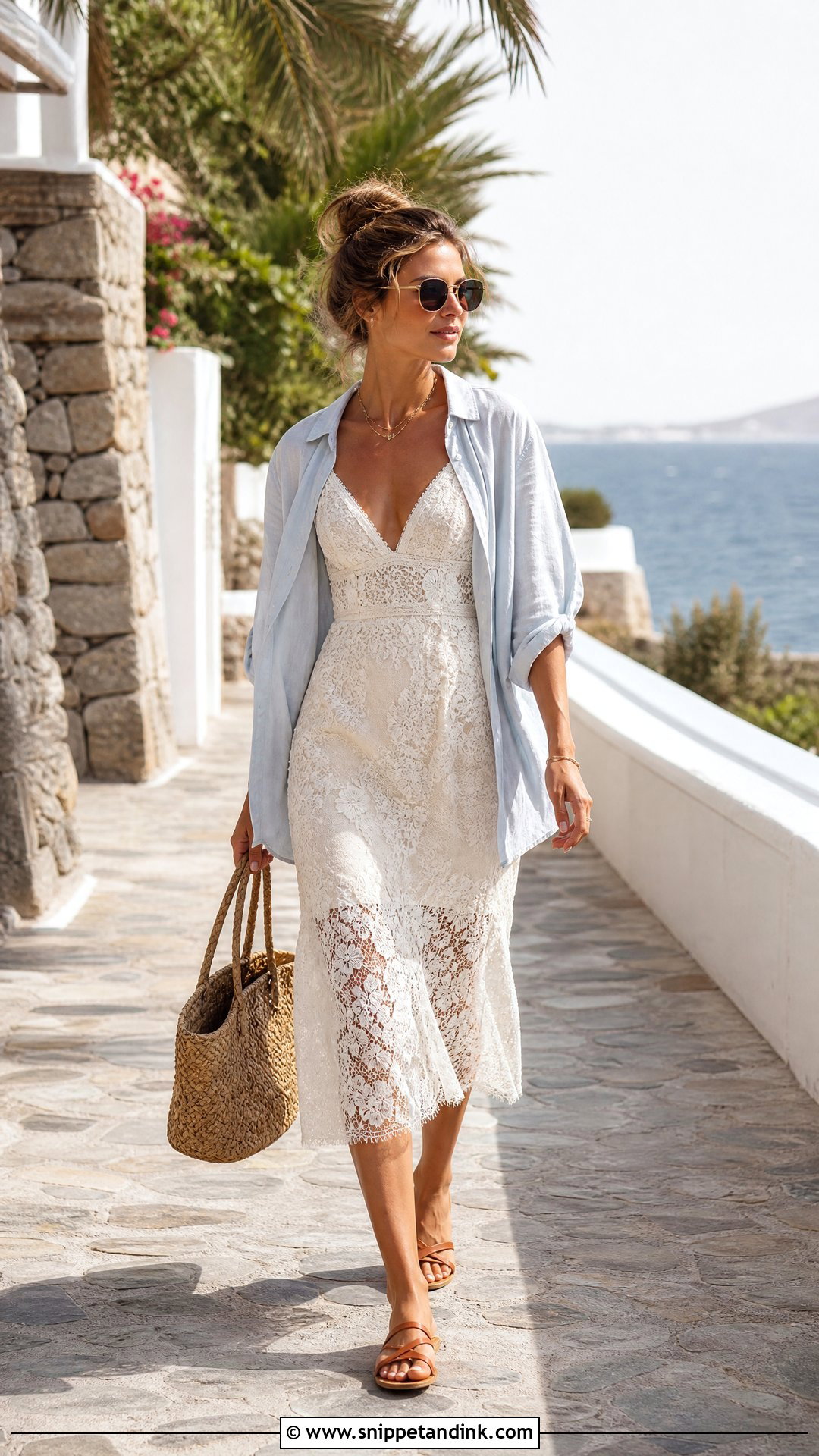
Light dresses in chiffon, cotton lace or a simple slip shape are the ones I’d pick for beautiful vacation outfits. Heavy satin and boned bodices aren’t, because they don’t pack and they trap heat. Take the hem to midi or ankle length and strip out the train, boning and stiff lining. Flat leather sandals, a woven tote, sunglasses and simple jewellery suit it, with an open linen shirt over the top for sun cover. Keep accessories in tan, ivory, pale blue or soft green. Formal bridal shoes look out of place on a boardwalk, so leave them at home.
11. Wedding Dress Anniversary Outfit
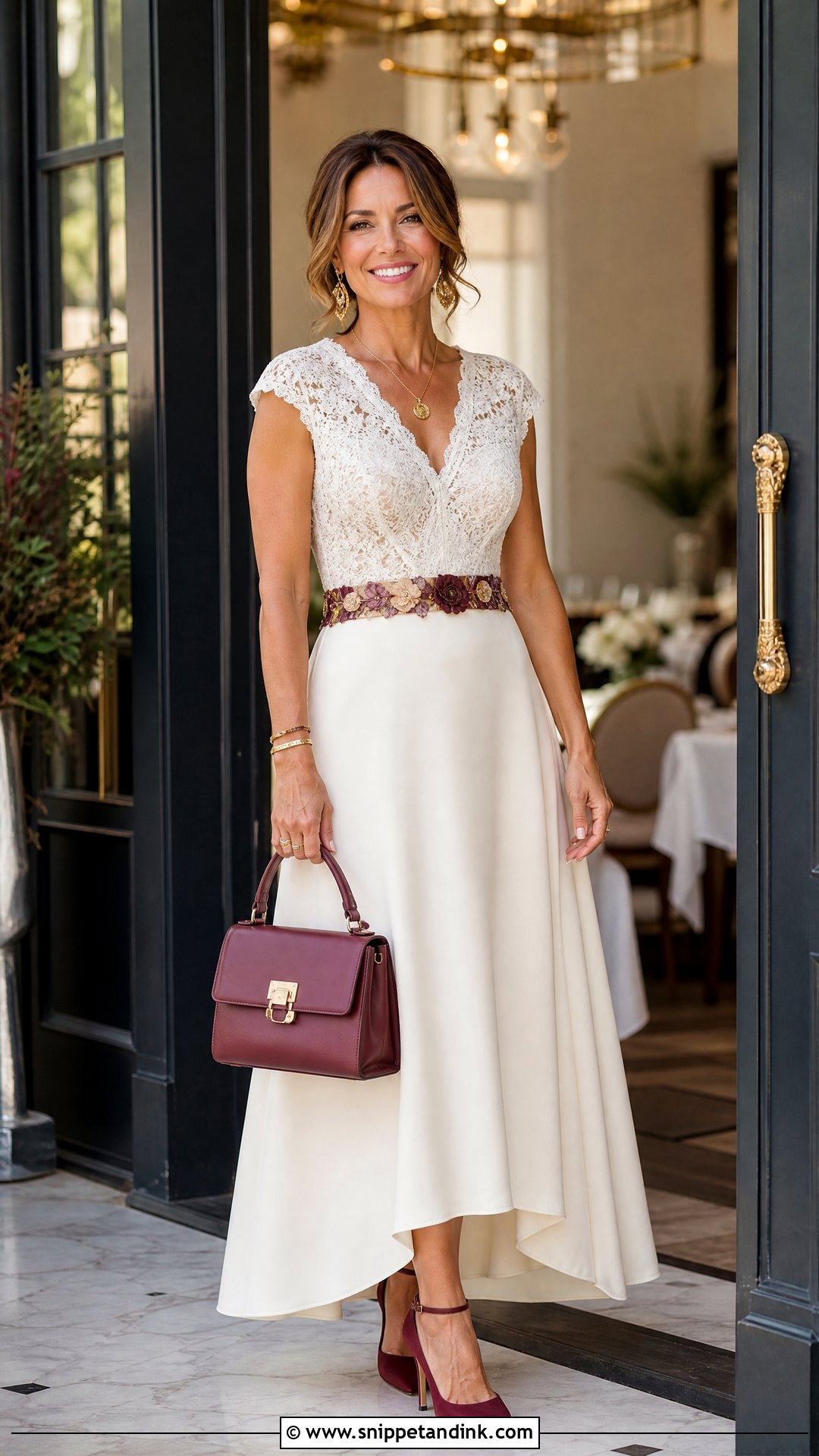
For an anniversary, I’d keep the part of the dress your partner will recognise instantly, usually the neckline or the lace bodice, and change everything else. Bring a floor-length gown up to ankle length, take off a detachable train, and the shape already feels new. A coloured belt, modern heels, a structured bag and jewellery you didn’t wear on the wedding day finish the update, and a tailored coat adds another layer of difference. Not ready to cut it? Temporary styling and removable accessories let you wear it again without committing to anything permanent.
12. Wedding Dress Gala Outfit
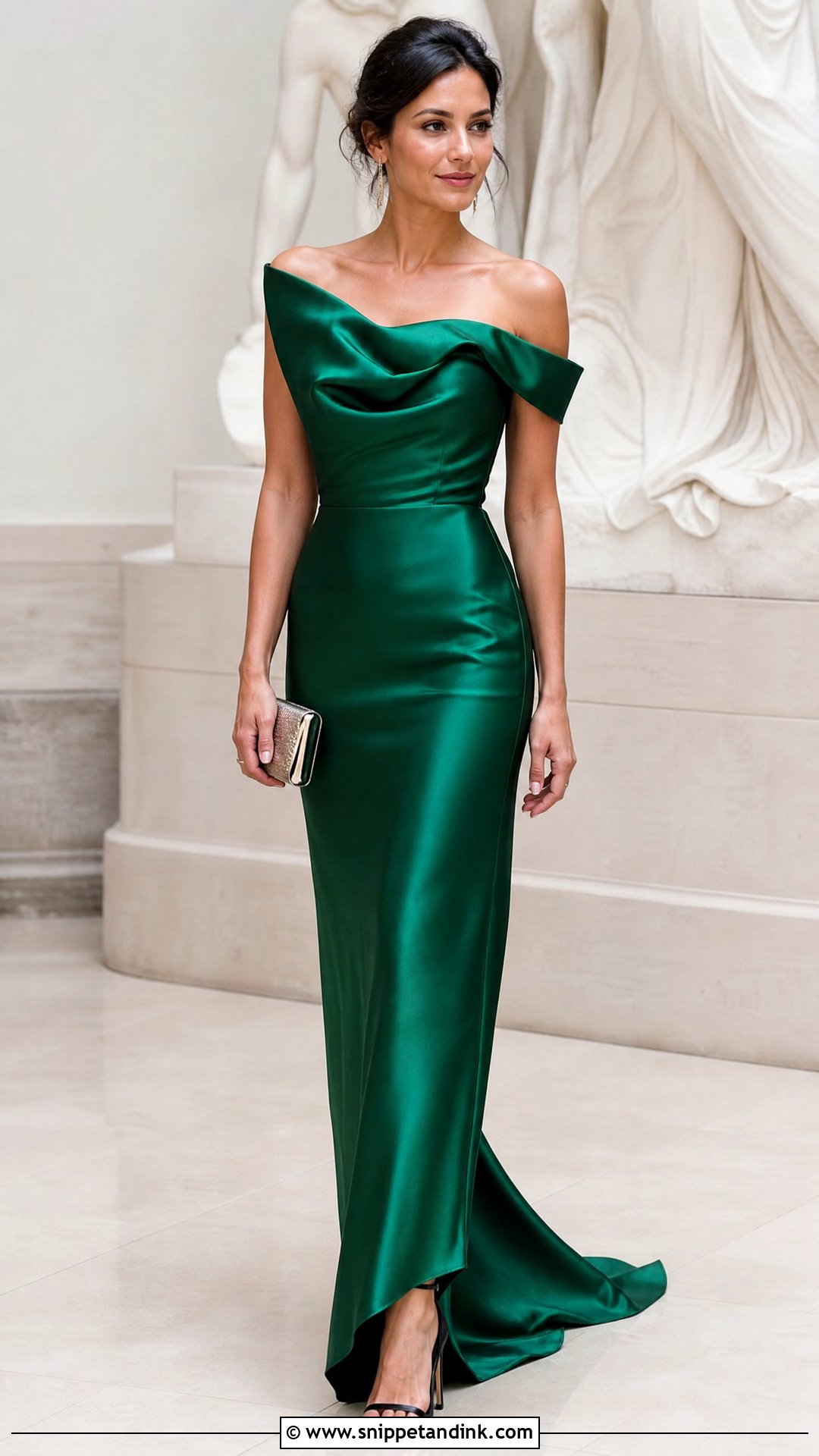
Big, dramatic gowns are wasted as casual dresses. They make much better gala wear. Keep the long skirt and the sculpted shape, and remove the obvious bridal cues: the train, the veil loop, white floral appliqués. Dyeing gives the biggest change, but only after a fabric test. Otherwise, a contrasting overskirt, a dark sash or an embellished cape all shift it toward black tie. Heels, a compact evening bag and refined drop earrings are enough if the gown is already beaded. Column dresses, satin ball gowns and fitted mermaid shapes handle this route best because the craftsmanship stays on show.
13. Wedding Dress Garden Party Outfit
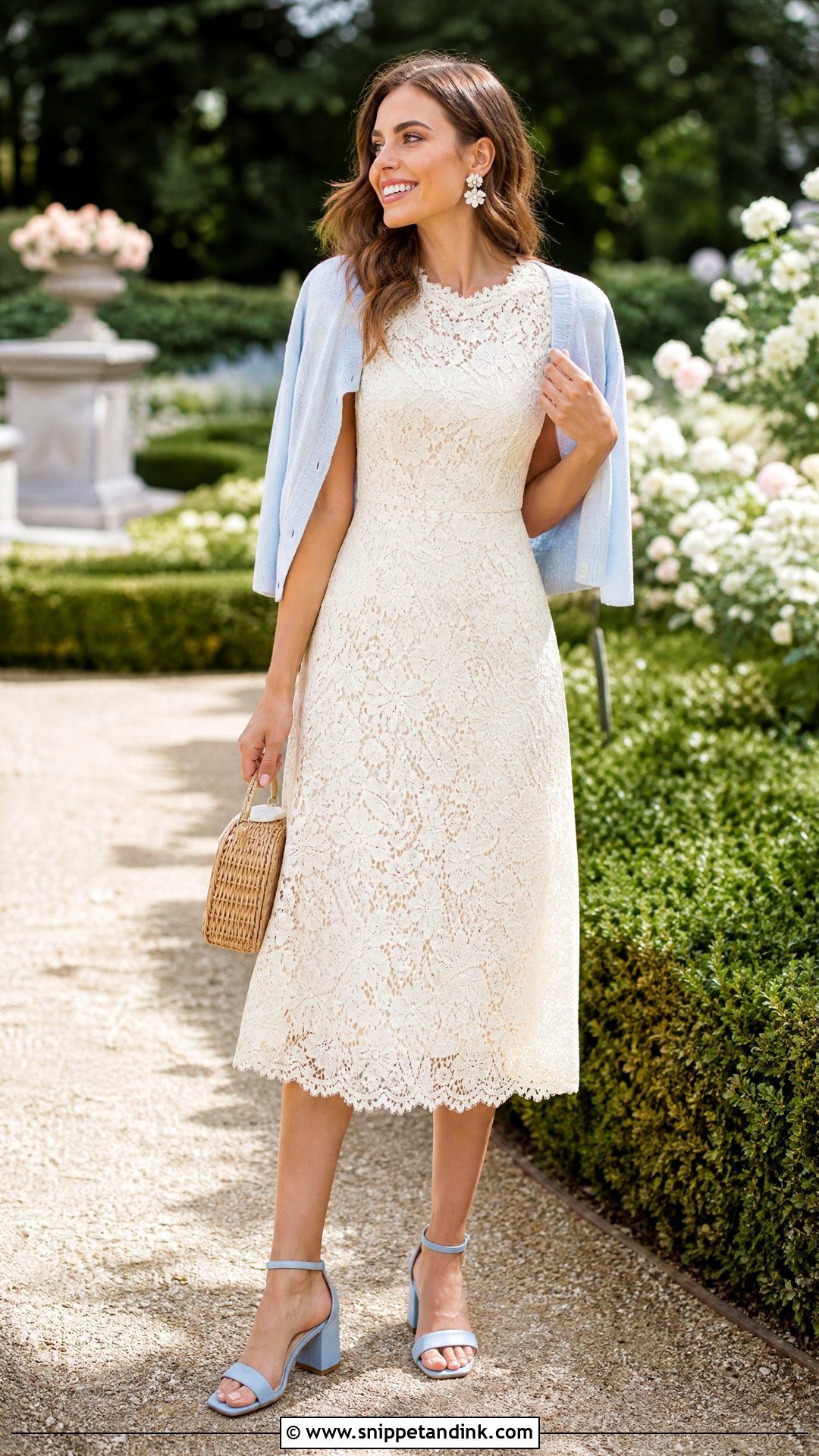
Soft lace dresses suit a garden once the bridal volume goes. Midi length, no train, no heavy petticoats and fewer formal embellishments get you most of the way. If the bodice is strapless, a good tailor can cut lace cap sleeves or wider straps from the hem you just removed, which keeps the colour match exact. Pastel block heels sink less into lawns than stilettos, and a small wicker or leather bag with floral earrings keeps it light. Bring a cardigan for the evening chill. Add colour through accessories rather than dye if you’d like to keep the original shade.
14. Wedding Dress Office Outfit
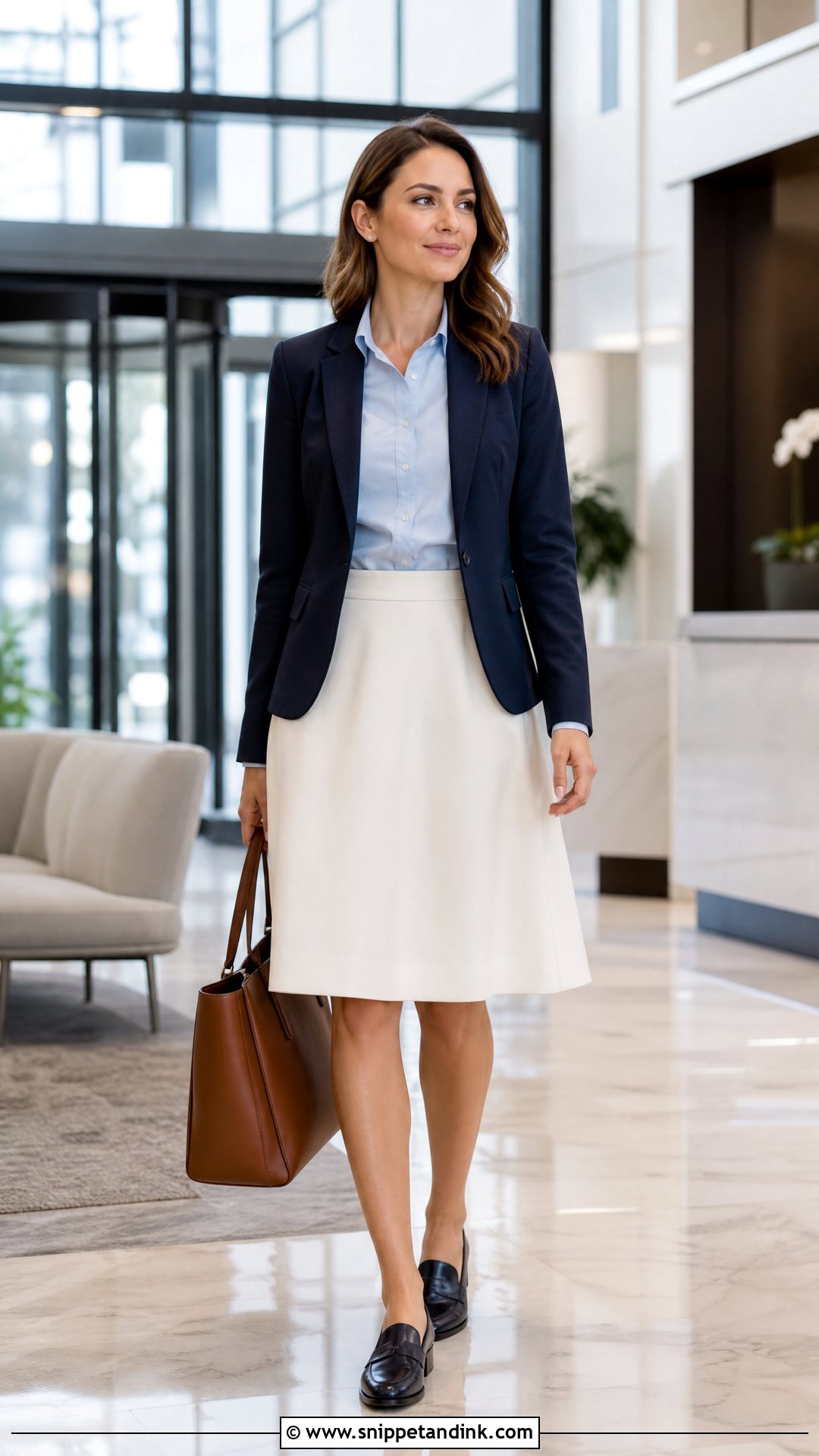
Office wear works only with structured fabric. Matte satin, crepe and mikado hold a tailored line; chiffon and soft tulle don’t, and I’d steer you to another idea if that’s what your gown is made of. The skirt can become a knee-length A-line or pencil skirt, and the bodice fabric a sleeveless shell with a higher neckline. Wear one converted piece at a time so it reads as professional: the skirt with a blue button-down, loafers, a leather tote and a navy blazer, or the shell with dark trousers and low pumps. Remove any beading that snags on a desk chair.
15. Wedding Dress Corset Top And Jeans Outfit
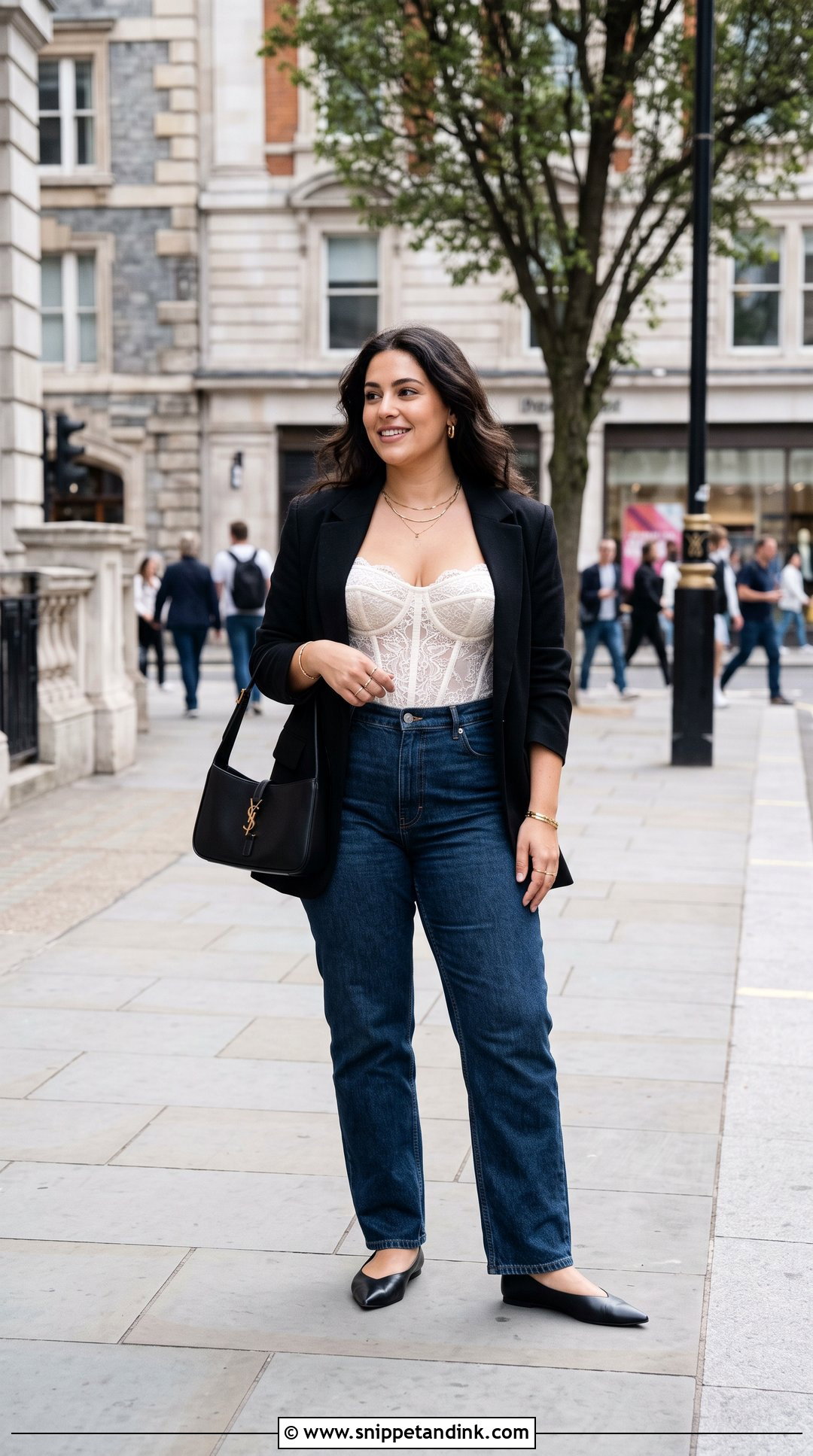
A detailed bridal corset with plain denim is one of my favourite contrasts, and it gives the most intricate part of the gown a regular place in your wardrobe. The tailor separates the dress at the waist and finishes the bodice with secure closures, supportive lining and a clean lower edge. Strip back excess appliqués if it still looks formal, but leave enough lace that it keeps its character. High-waisted straight-leg jeans in a medium or dark wash, pointed flats or heeled sandals, a blazer and a shoulder bag finish it. Keep jewellery minimal so the corset leads. Check the length while seated, as a corset cut to the natural waist can gap above low-rise jeans.
16. Wedding Dress Lace Top And Satin Pants Outfit
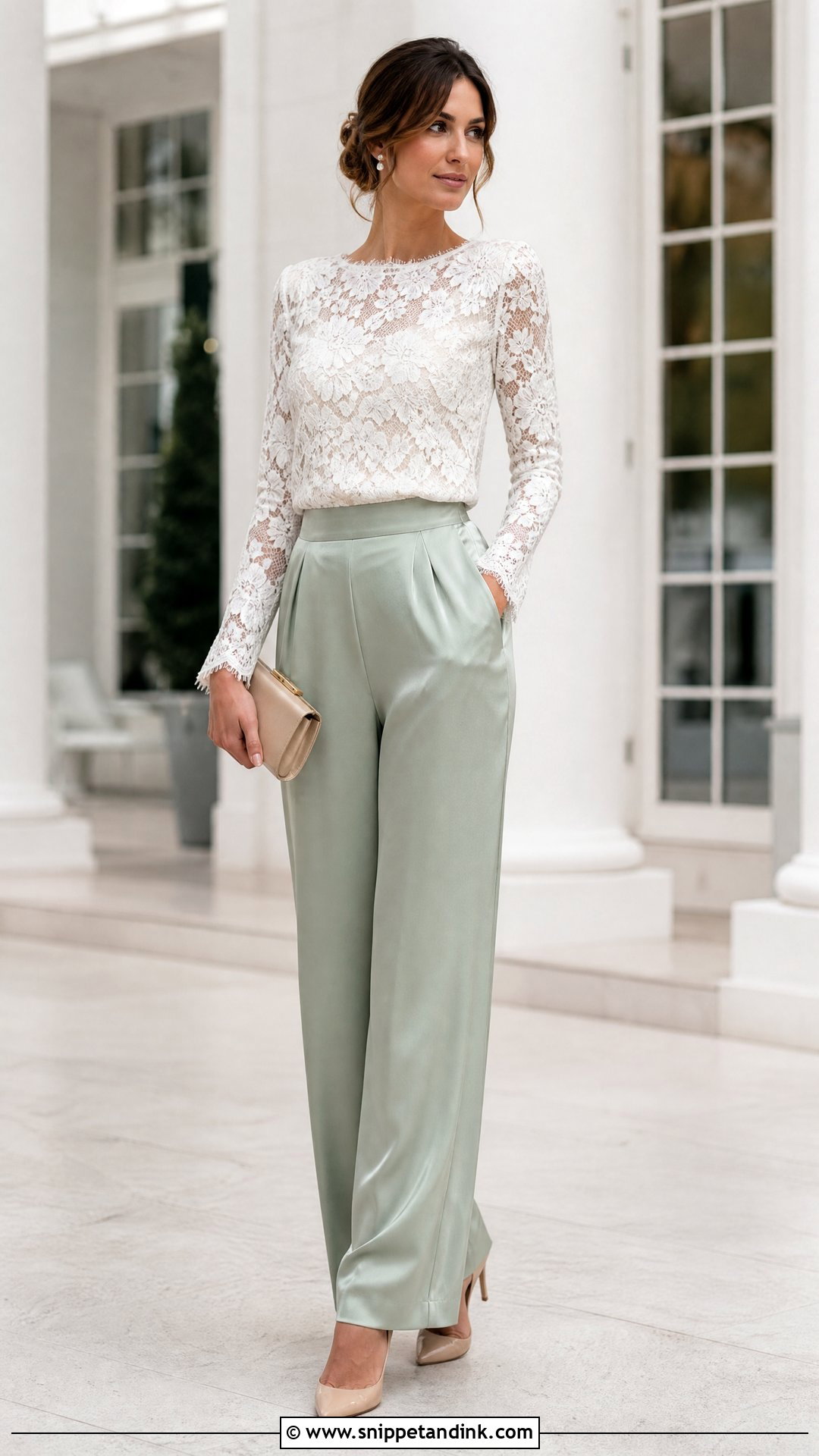
Lace bodices and lace sleeves can be recut into a fitted blouse. I’d always add an opaque lining, since bridal lace is often worn over a built-in slip that won’t come with it. A higher neckline, a scalloped hem and wrist-length sleeves take it out of bridal territory. Pair it with fluid satin trousers in black, champagne, navy or soft sage, plus sleek pumps, a small clutch and pearl or crystal studs. A contrasting trouser colour makes each piece look intentional rather than leftover. If enough fabric remains, the original covered buttons can go on the cuffs or the back closure.
17. Wedding Dress Overskirt And Bodysuit Outfit
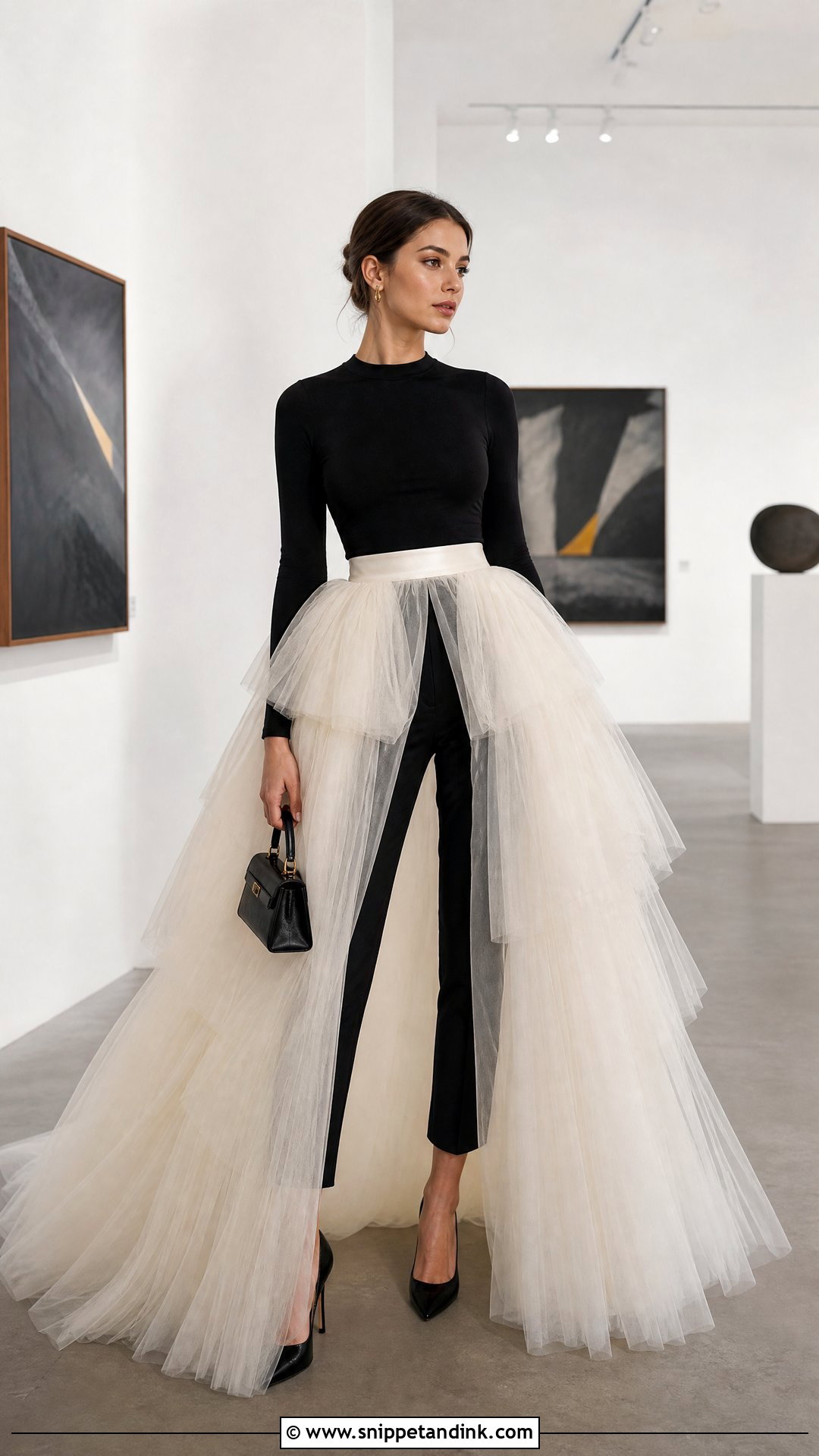
A detachable overskirt is the easiest bridal piece to reuse, because nothing about the gown needs cutting. Have the waistband adjusted so it sits firmly over a bodysuit, jumpsuit or narrow column dress. Removing the train helps movement, though keeping some volume preserves the drama. An ivory tulle overskirt over a black long-sleeve bodysuit and ankle trousers with pointed heels is a striking monochrome look; over a coloured slip dress it turns softer. Keep the bag and earrings small. Since it stays removable, you change the base pieces, colours and accessories for each event while the overskirt does the heavy lifting.
18. Wedding Dress Cape And Column Dress Outfit
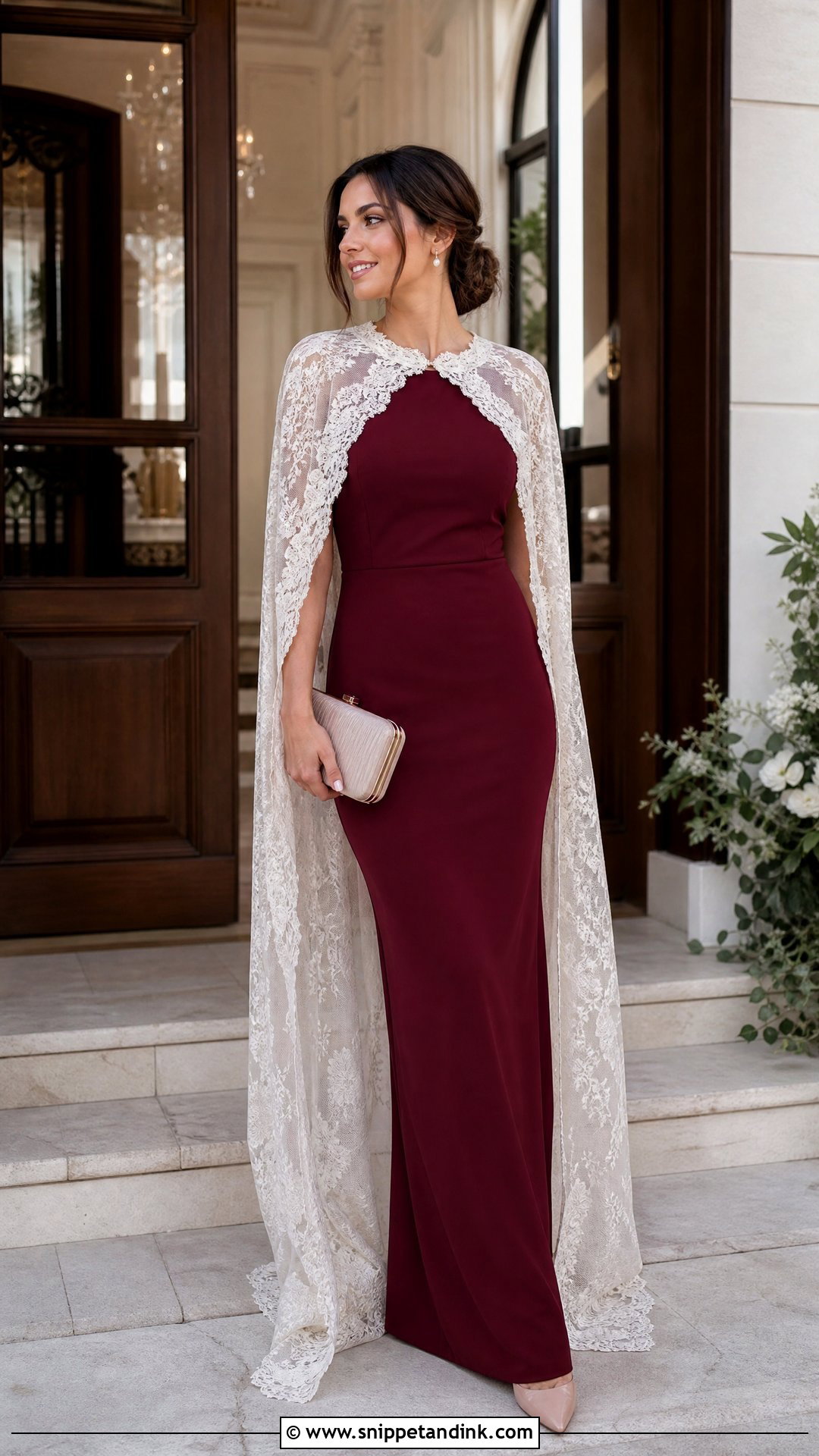
Trains often hold the best fabric on the whole dress and get the least wear. Recut into a cape over a simple column dress, they finally get seen. Lace, chiffon and soft tulle drape well enough for this; heavy satin turns stiff and tent-like. Ask the designer to keep decorative edging, appliqués or covered buttons around the neck and front closure. A navy, black, emerald or burgundy floor-length base stops the outfit reading as bridal, with streamlined heels, a clutch and small earrings. I’d suggest this route whenever the main gown is too complex to alter safely but the train is generous and well finished.
19. Wedding Dress Vow Renewal Outfit
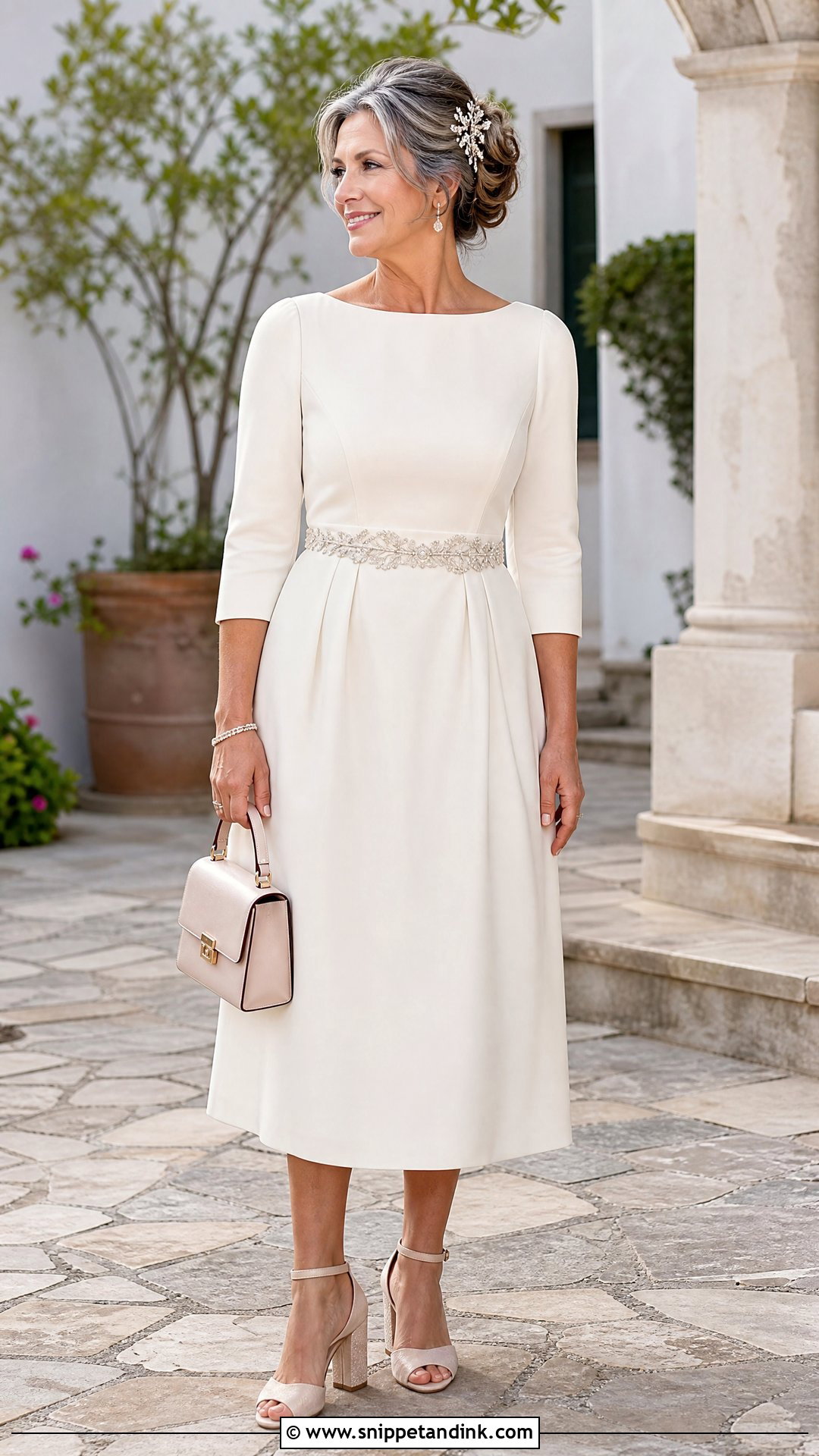
A vow renewal is the one occasion where wearing the wedding dress again feels natural rather than nostalgic. You can leave it nearly as it was or adapt it to the new venue and season: lose the train for a small gathering, shorten it for a daytime party, add sleeves for cooler weather. Swap in different shoes, a coloured clutch and modern jewellery, and replace the veil with a headband, a hair comb or simply a sleek style. A cape, cropped jacket or embroidered belt gives another layer of change. I’d keep it special without recreating the first day, so the photos show how you’ve changed as well.
20. Wedding Dress Heirloom Bridal Outfit
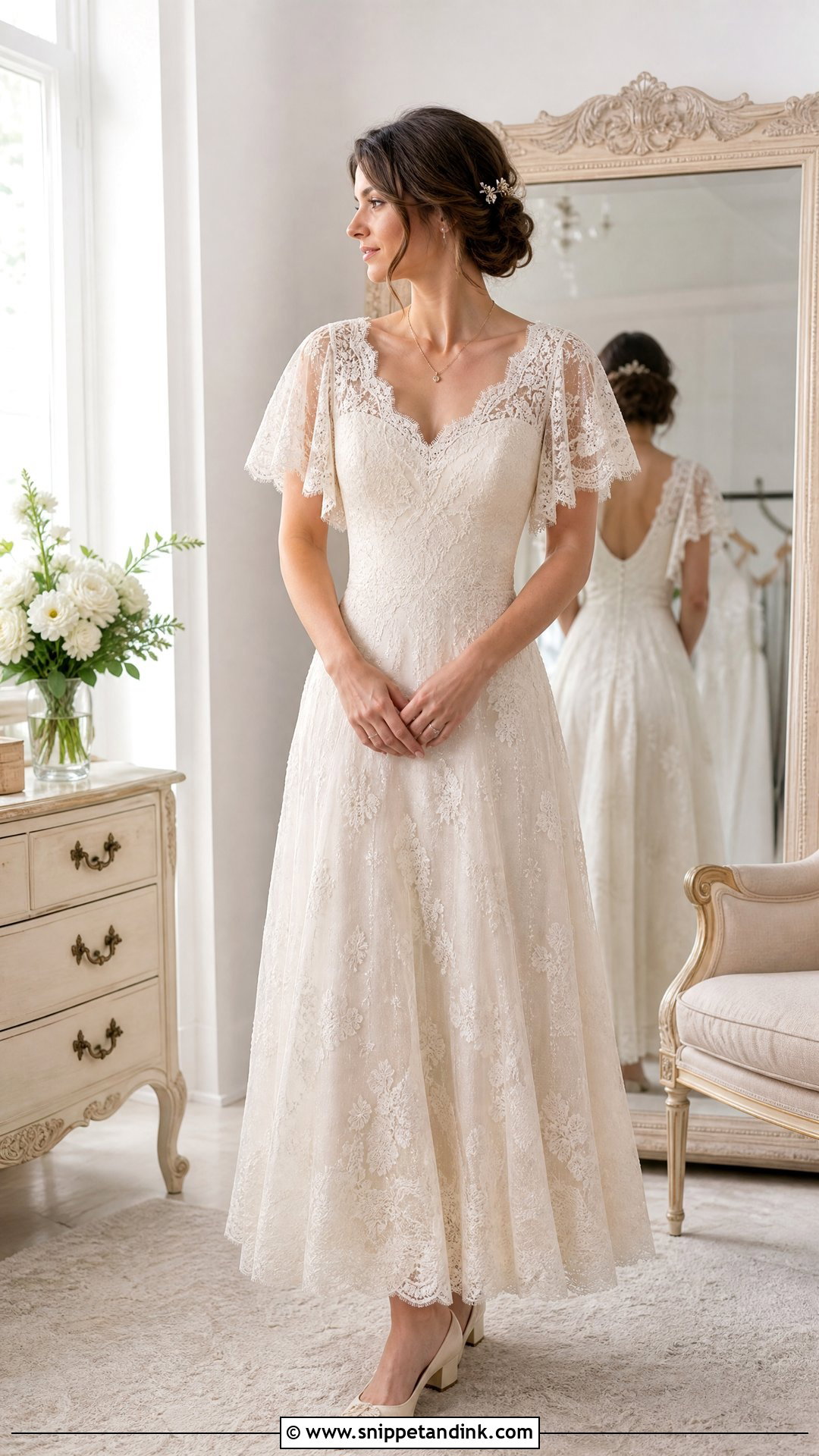
Handing a gown down works best when the next bride is free to change it. Bodies, comfort and taste differ, so expect the bodice to be reshaped, sleeves added or removed and the skirt simplified. Original lace can become a neckline panel, a detachable jacket or a waistband on a newly made dress. She should choose her own shoes, jewellery and accessories. Any removed pieces go into an archival box so the history isn’t lost. I’d avoid treating the old design as untouchable; a faithful copy of a dress from another generation tends to look like a costume on a different person.
Why Polyester Satin Fights Dye and the Stitching Stays White
Dyeing is the conversion I’m most cautious about, because the results depend on chemistry rather than skill. Silk and nylon take acid dyes well and usually colour evenly. Cotton and rayon linings take a different family of dye. Polyester, which makes up most modern bridal satin, ignores ordinary household dye almost entirely and needs special dyes at very high heat that can distort the weave.
Most gowns mix fibres, which is where trouble starts. Nylon lace stitched onto a polyester base can come out as dark lace on a pale background. Sewing thread is usually polyester, so seams and hems often stay bright white against the new colour. Some people like that outline; most don’t expect it. I always ask for a test on a scrap cut from the seam allowance, with a piece of lace and a seam included, before the whole gown goes in.
Storing the pieces you cut away
The leftovers matter as much as the new outfit. Wrap offcuts, buttons and loose appliqués in acid-free tissue and keep them in a breathable cotton bag or an archival box, never sealed plastic, which traps moisture and can yellow fabric. A cupboard inside the house is better than an attic or basement, where temperature and humidity swing. Label what each piece came from so a future repair or a second project starts with the right lace.
Giving the Gown a Second Life Without Losing the First
Reusing a wedding dress well is a balance of sentiment and practicality. You can keep the whole gown intact, rework one meaningful part, or remake the fabric into modern separates that sit alongside the rest of your wardrobe. My order of work never changes: professional cleaning, photographs of the dress as it was, then a proper conversation with a bridal tailor about every proposed cut. Test spare fabric before any dye bath and save every scrap of lace, button and beading that comes off. Done carefully, the new piece shouldn’t feel like a compromise. It should let you wear the craftsmanship and the memories on an ordinary Saturday.
You'll Like These Ideas:


Leave a Reply