
Shopping for a bridal gown on sale is where I see the best bargains and the most regret, often in the same afternoon. A reduced price tells you nothing about how a dress is built, so I always look at the silhouette, the fabric content and the condition before the number on the tag. The styles below run from structured ball gowns to light beach chiffon, and for each one I’ve noted what I check on the rail and what tends to go wrong after you take it home. Before paying, read the size chart, the return terms and the delivery date, and set aside money for alterations. Bring the shoes and the bra you plan to wear, because a hem pinned over trainers will be wrong on the day.
Sample, Off-the-Rack or Discontinued: What a Sale Tag Really Means
Bridal discounts come from a few different places, and each one changes what you’re buying. A sample gown is the dress the shop has used for try-ons, sometimes for a season or more. An off-the-rack dress is new stock you take home that day. A discontinued style is new but won’t be made again, so there’s no reordering if it’s damaged in transit.
Samples are where the biggest savings sit, and also where I look hardest. I check the inside of the neckline for foundation and lipstick, the hem for grey dirt, and the zip area for stretched fabric where it’s been forced closed over many bodies. Most sample gowns are cut in a standard shop size, so if yours is several sizes away, you’re paying for alterations that may cost more than the discount.
- Ask whether the sale is final. Many bridal sales are, and a return policy changes how much risk is sensible.
- Ask how long the gown has been on the floor and whether it has been professionally cleaned.
- Get the alteration estimate before you pay, not after.
- Photograph every mark or loose bead in the shop so there’s no argument later.
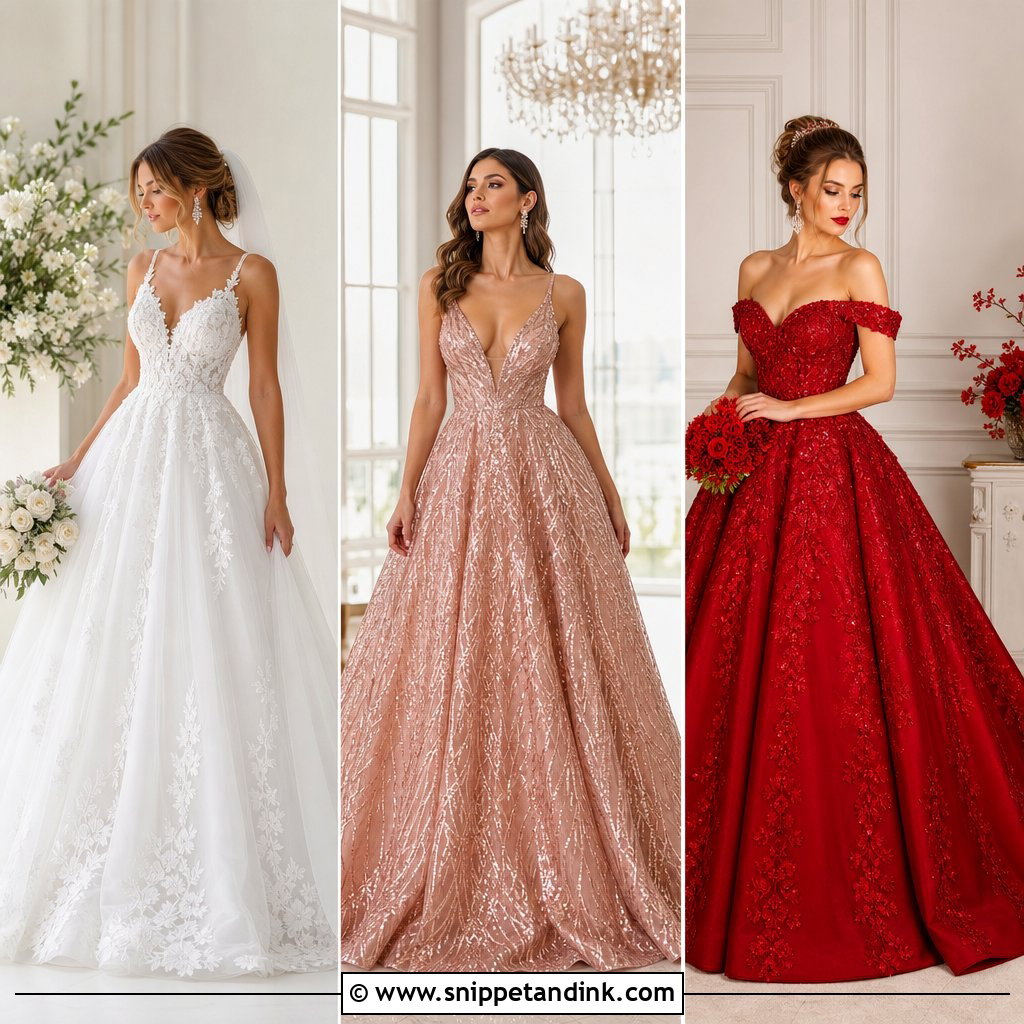
1. A-Line Wedding Dress
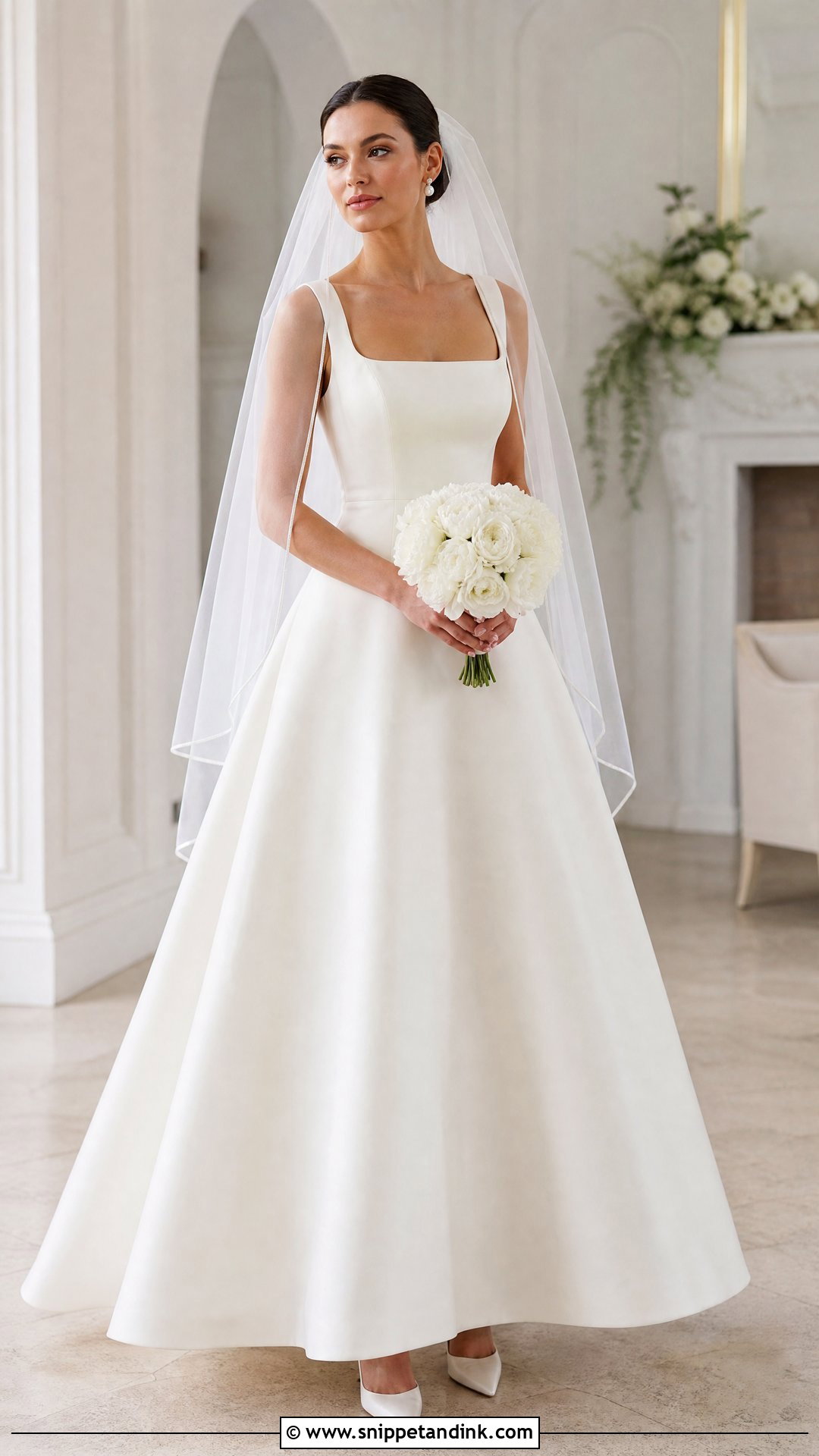
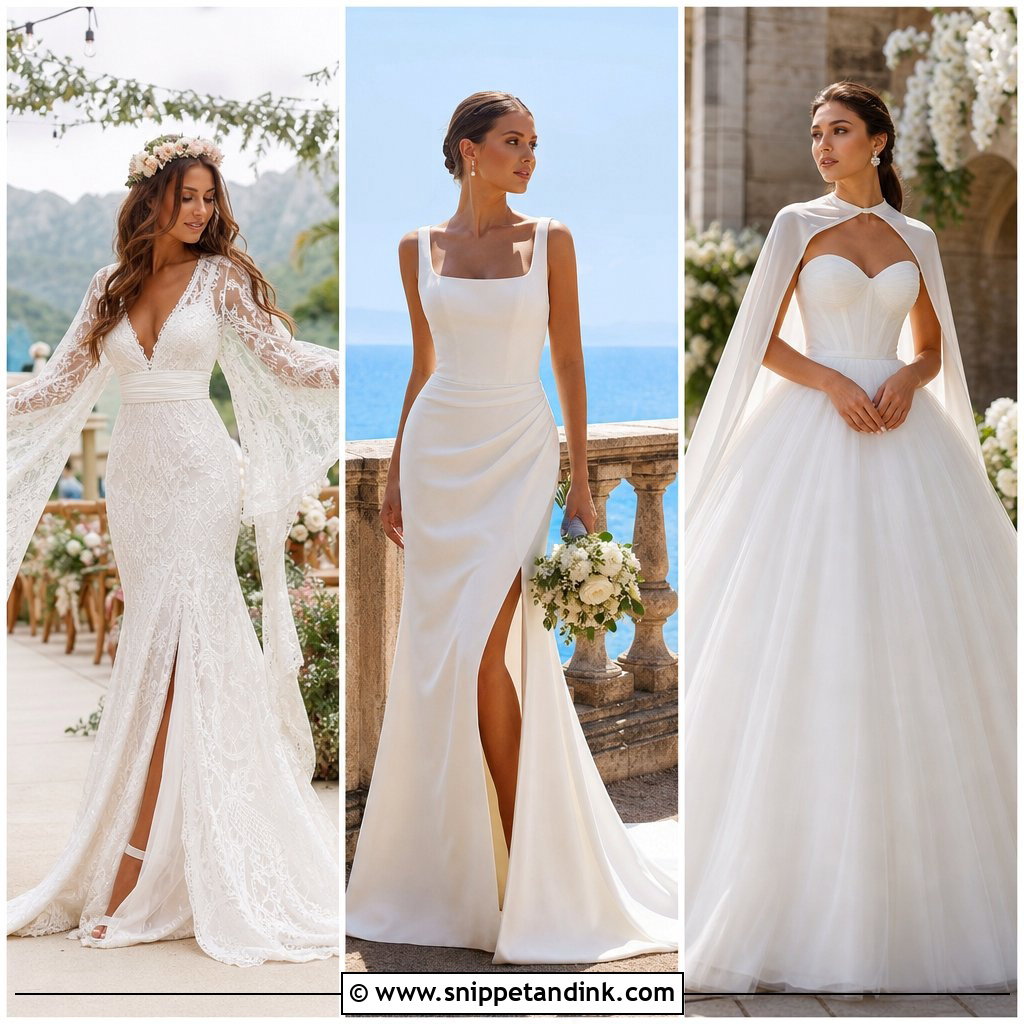
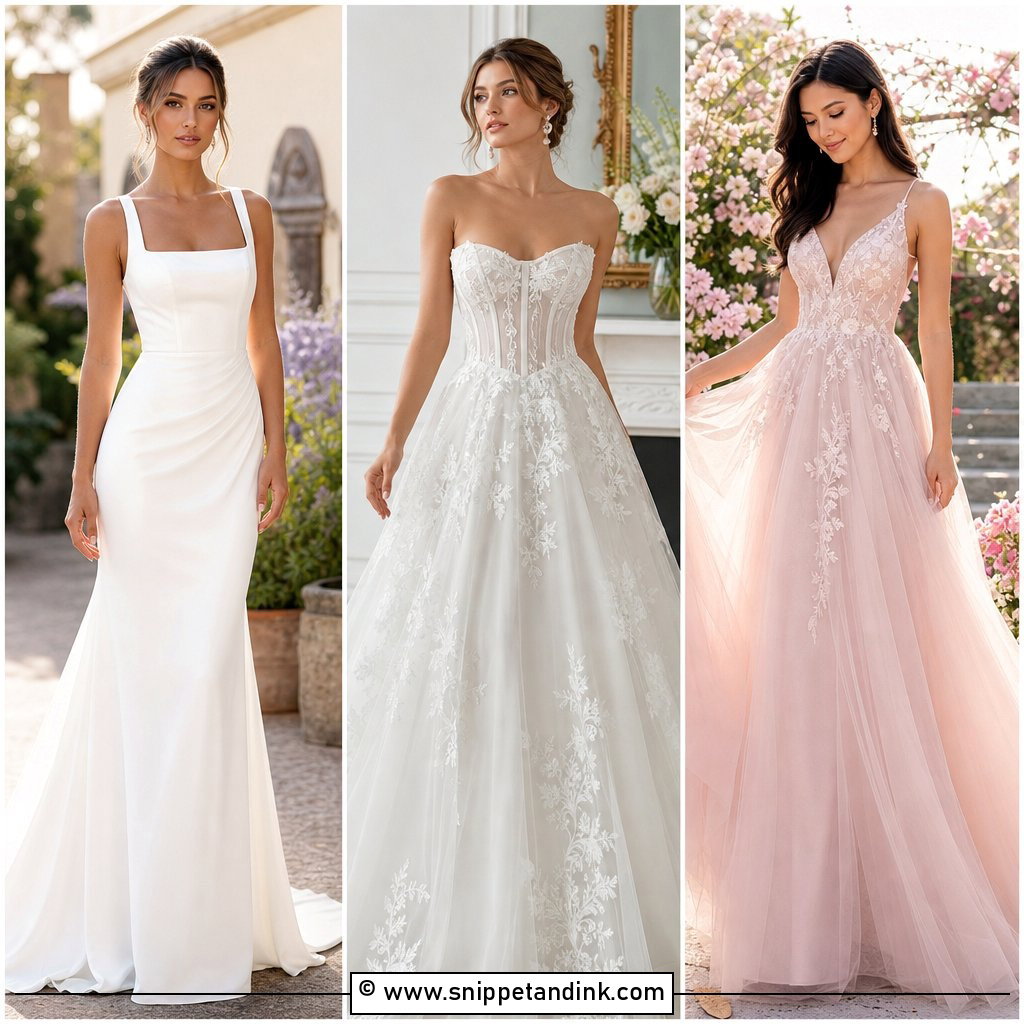
The A-line is the shape I pull first for almost anyone who walks in unsure, because the skirt skims the hips instead of gripping them and it forgives a lot. Chiffon or soft tulle suits a garden; satin or Mikado holds up better in a formal room. I’d keep the train to chapel length unless you have someone to bustle it. With a discounted A-line, turn the skirt inside out and look at the lining: a skirt with only one thin layer under the tulle will show your legs against a bright window. Clean bodice seams are what make the gown hang straight in photos.
2. Satin Ball Gown Wedding Dress
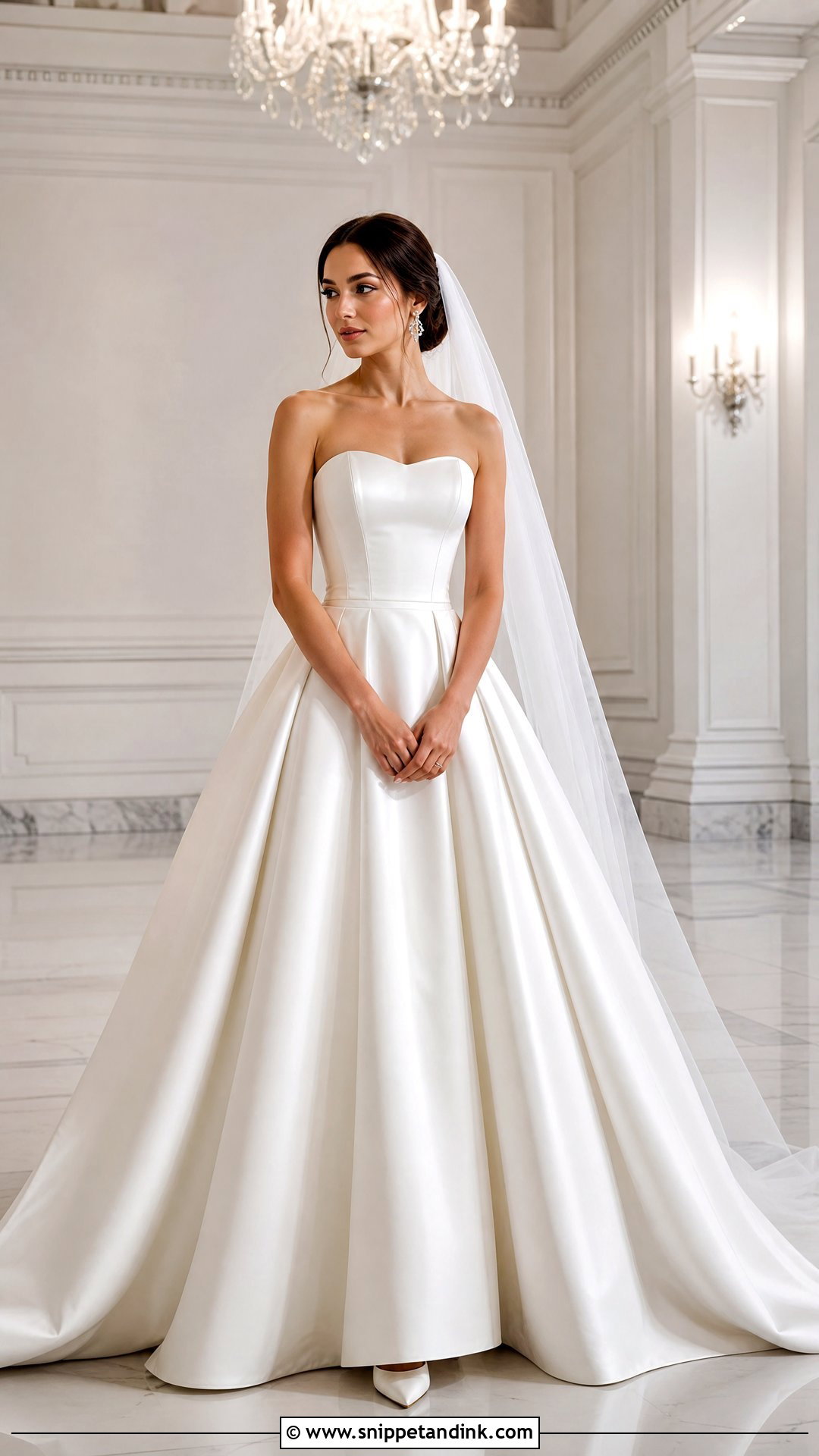
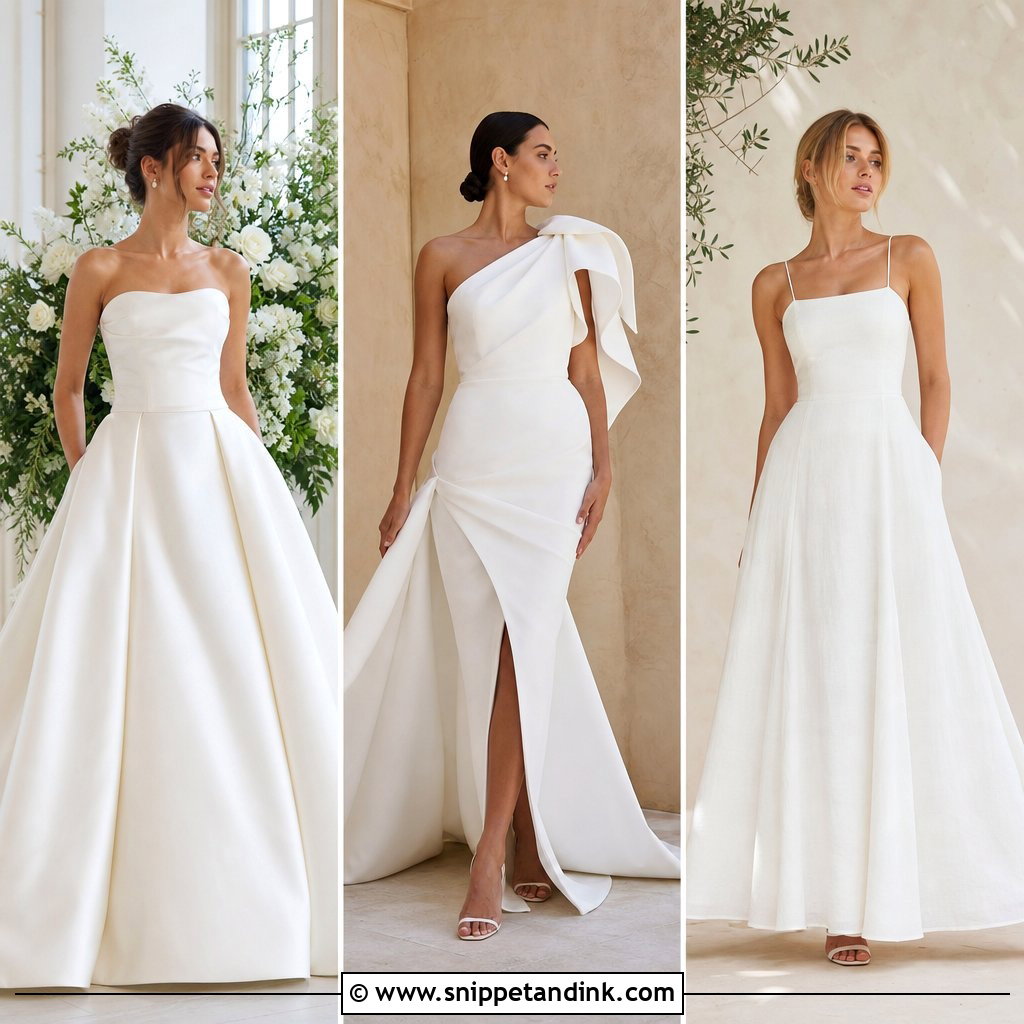
A satin ball gown is heavy, and that weight is exactly why it looks so grand in a ballroom or hotel. Structured satin and Mikado hold the skirt out on their own, so you need fewer petticoats. Strapless is the classic cut; a square or scoop neck gives a bit more coverage if you’d rather not hitch the bodice up all night. Keep jewelry small, because the skirt already takes up the frame. On a sale gown I check three things before anything else: whether there are built-in cups, whether the boning is still straight rather than bent from hanger storage, and whether a bustle can be added. Satin also shows every water mark, so look along the hem for faint tide lines.
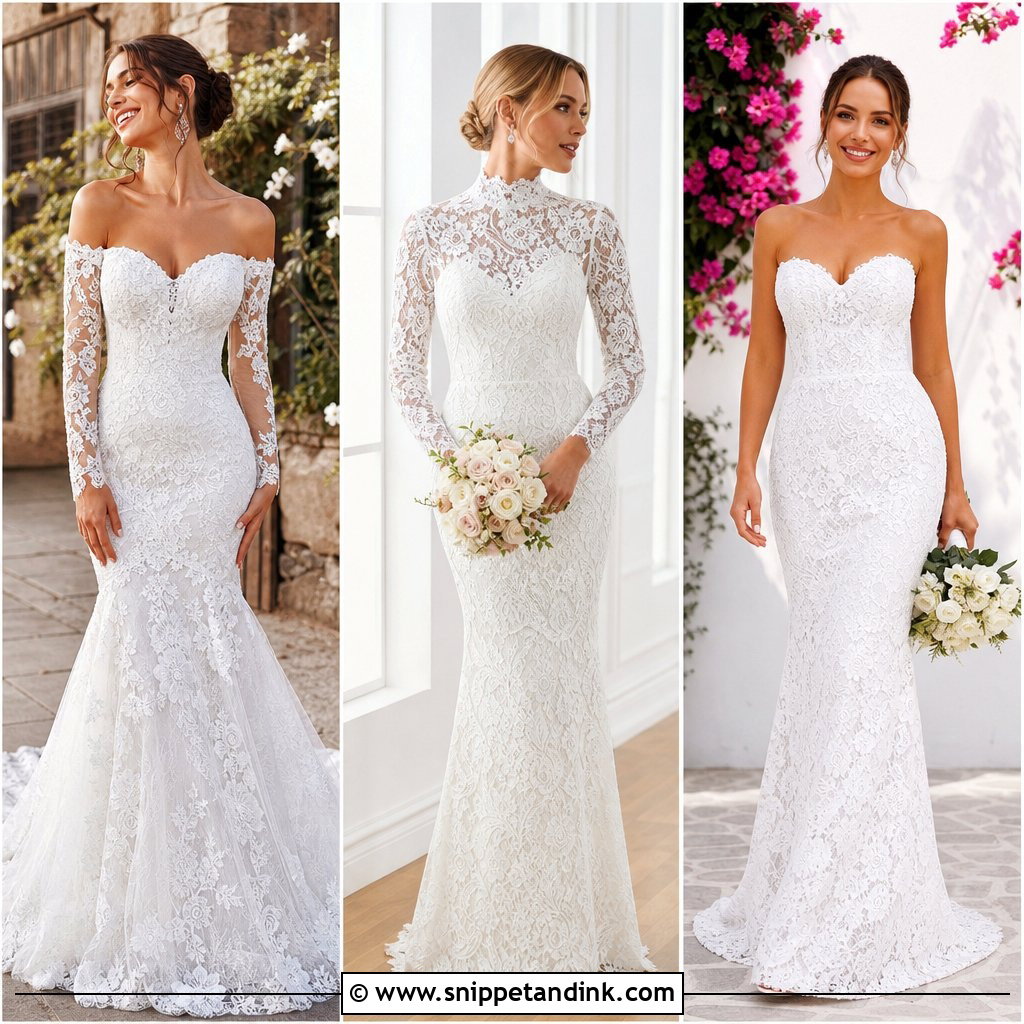
3. Lace Mermaid Wedding Dress
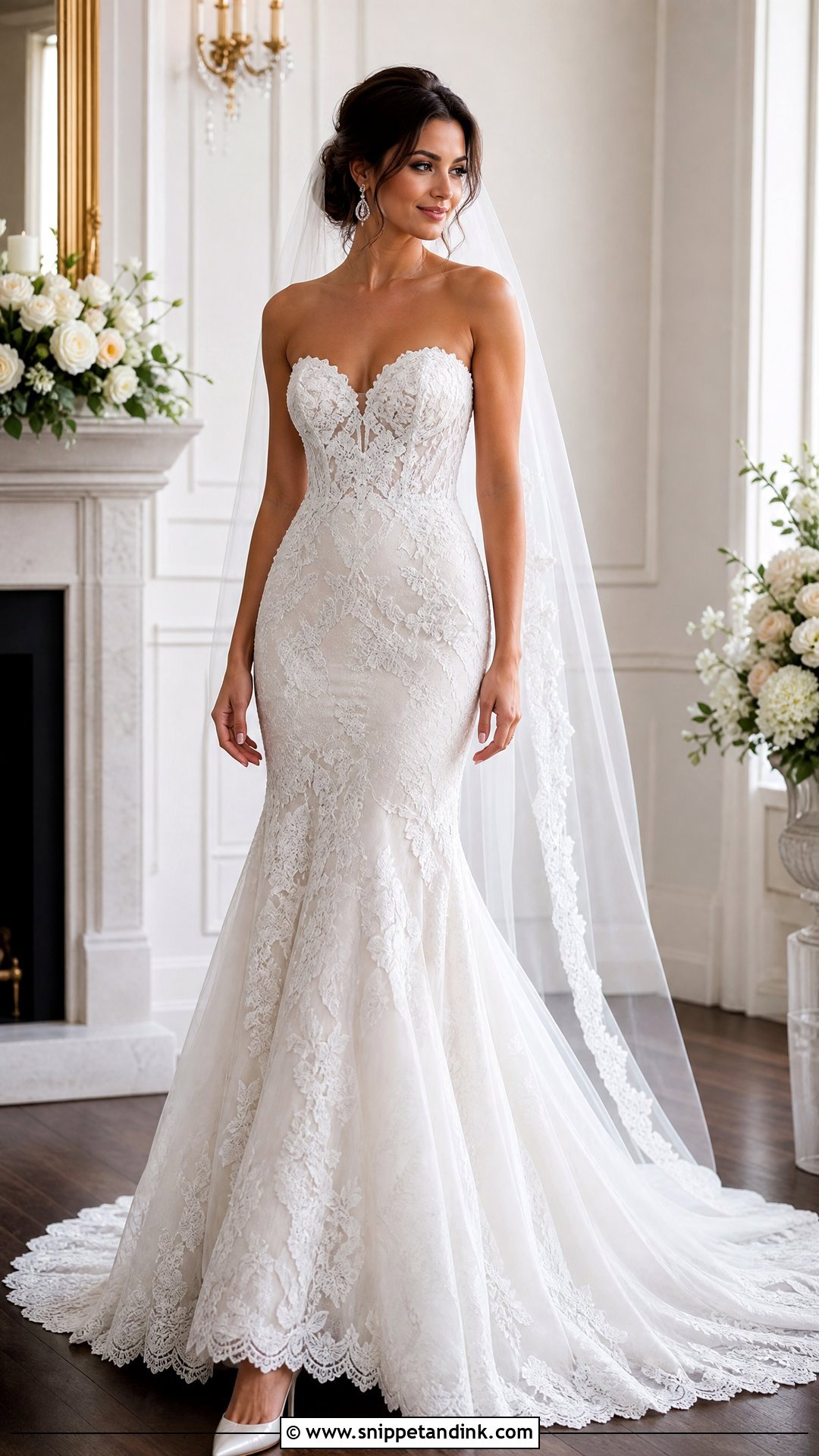
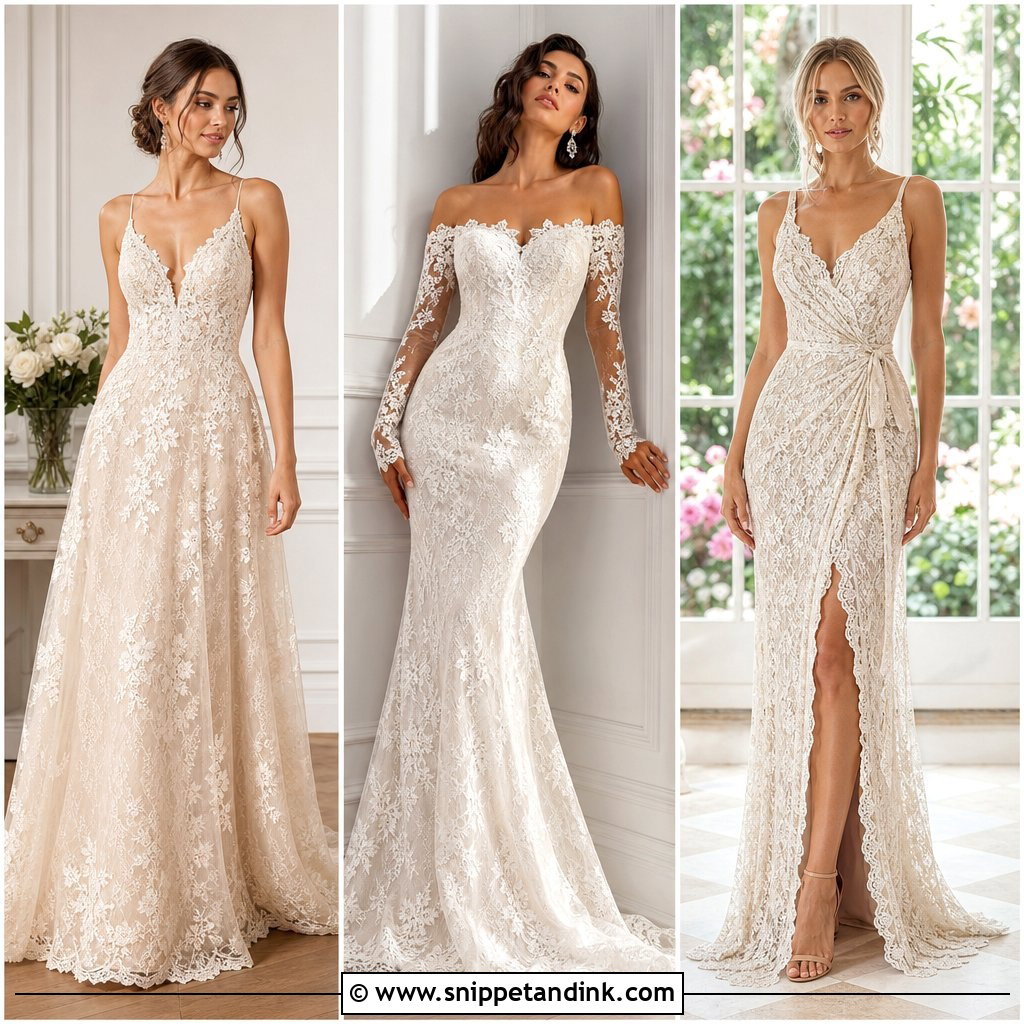
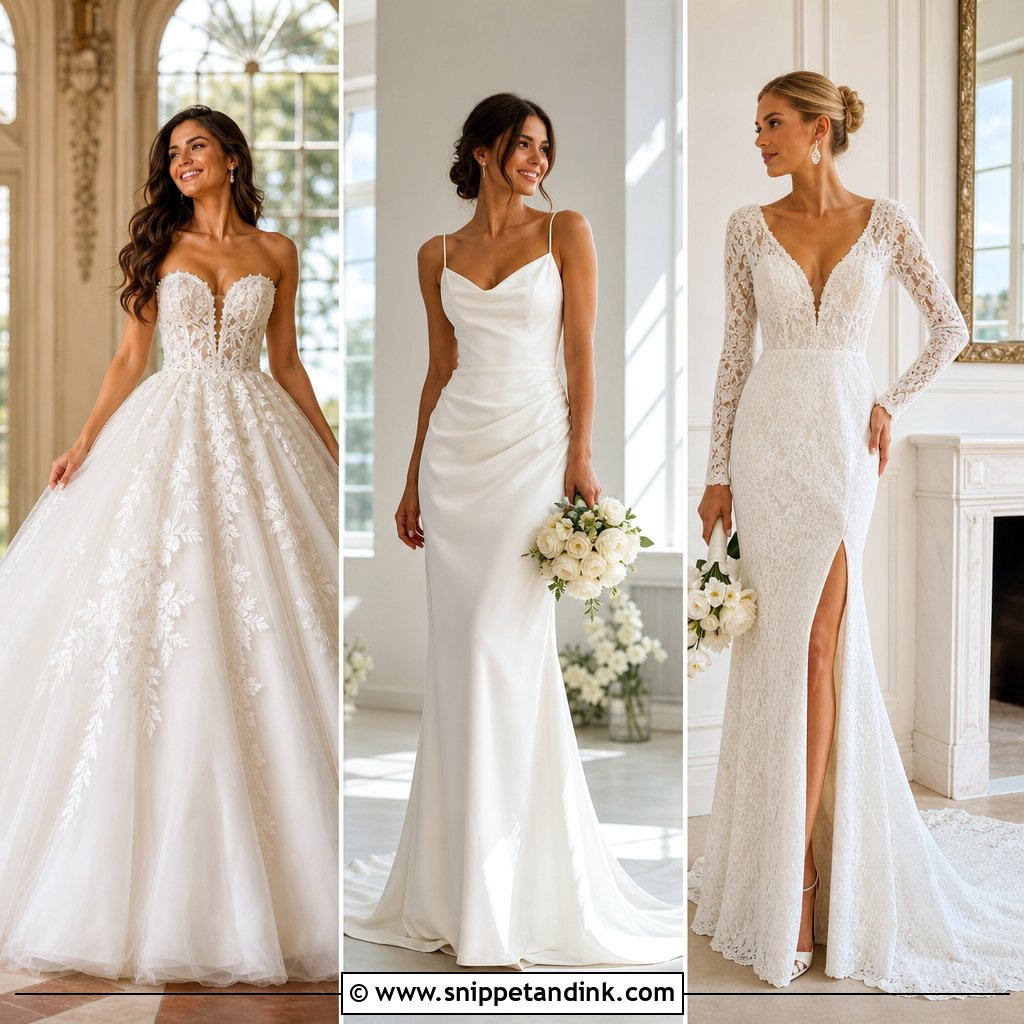
Mermaid gowns follow the body to the knee and then flare, and that tight lower section is where the trouble lives. I make every bride sit on a low chair, walk down a step and turn around before I’ll let her buy one, because some cuts simply won’t let you climb into a car. Look for lace motifs that are stitched down at the edges rather than lifting off the tulle. A sweetheart or off-the-shoulder neckline balances the flare, and a chapel train is plenty. If shopping online, compare your hip measurement with the finished garment chart, not the body chart, since a mermaid has almost no ease below the waist.
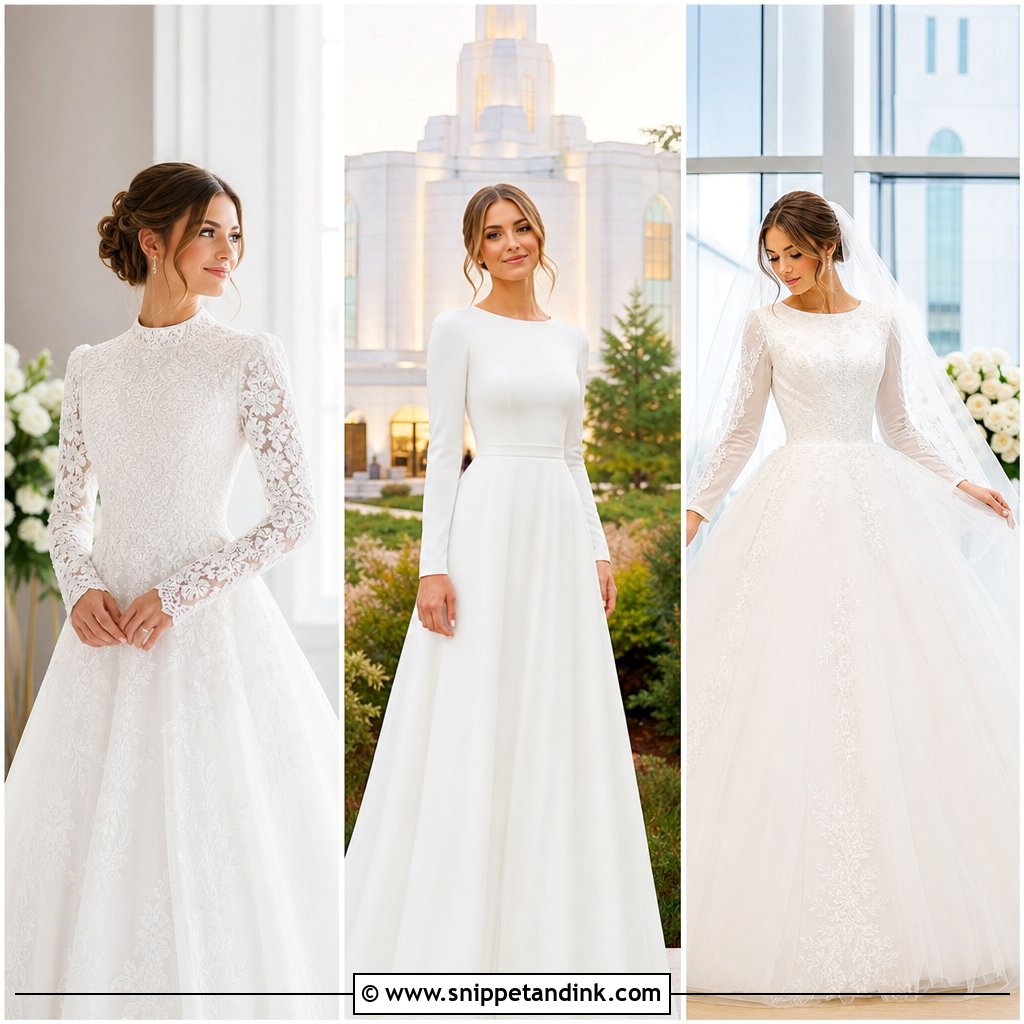
4. Long Sleeve Lace Wedding Dress
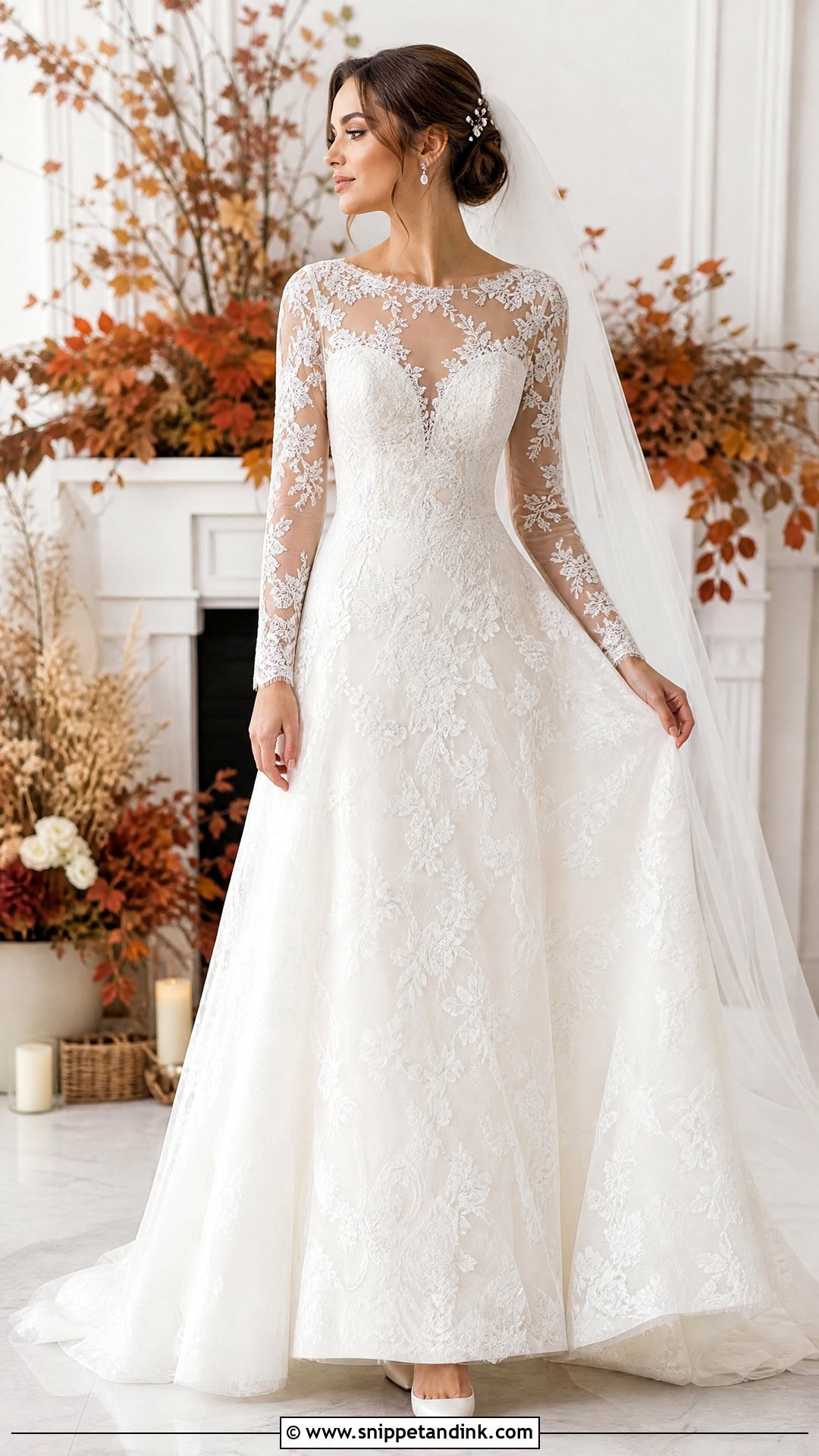
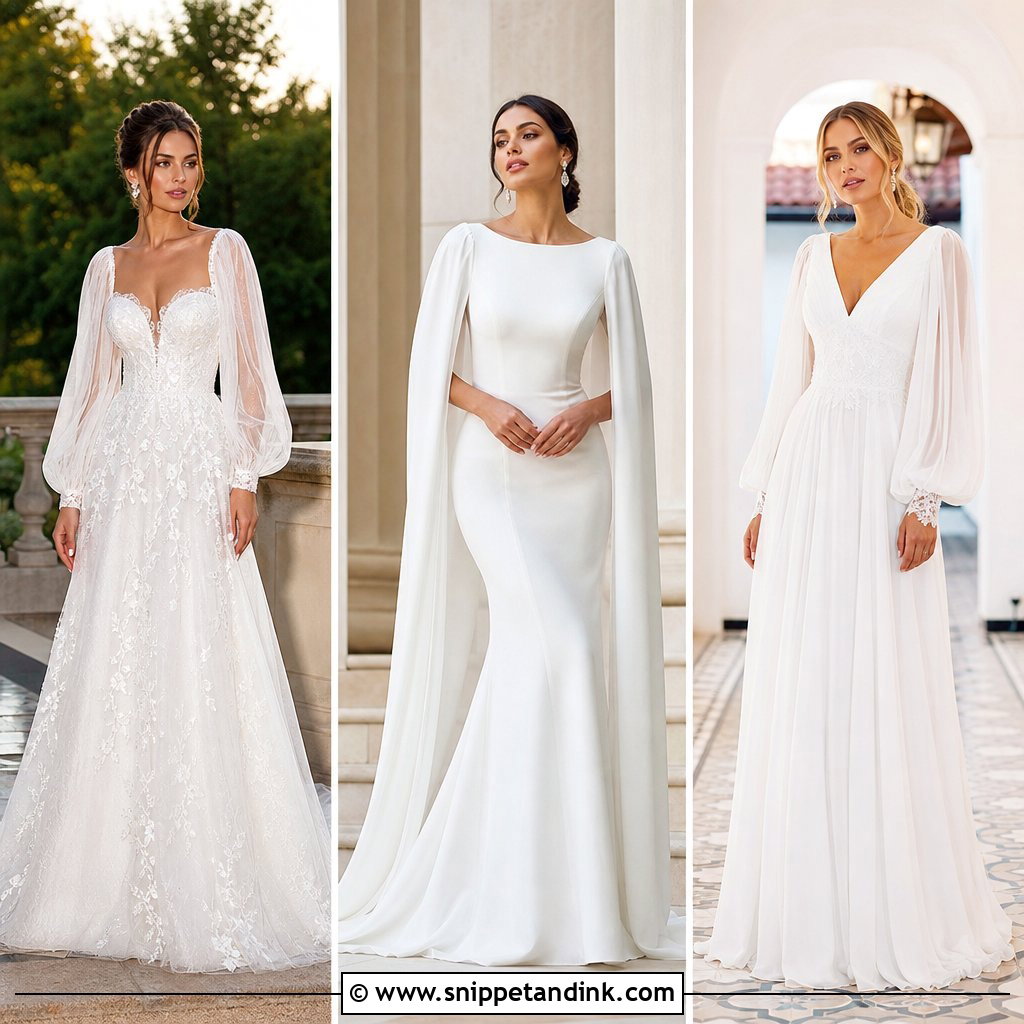
Long lace sleeves suit autumn and winter weddings, and they’re a relief in a church or hotel where the air conditioning runs cold. The illusion mesh under the lace should be close to your skin tone, or it reads as a grey film in daylight photos. Before you buy, raise both arms above your head and then hug yourself. If the shoulder seam pulls tight or the lace rides up your wrist, a seamstress can only add a little room there, so I’d keep looking. Check whether the cuff buttons are real or decorative over a hidden zip, since that changes how fast you can push sleeves up for dinner. A plain-edged veil keeps the lace from competing.
5. Strapless Corset Wedding Dress
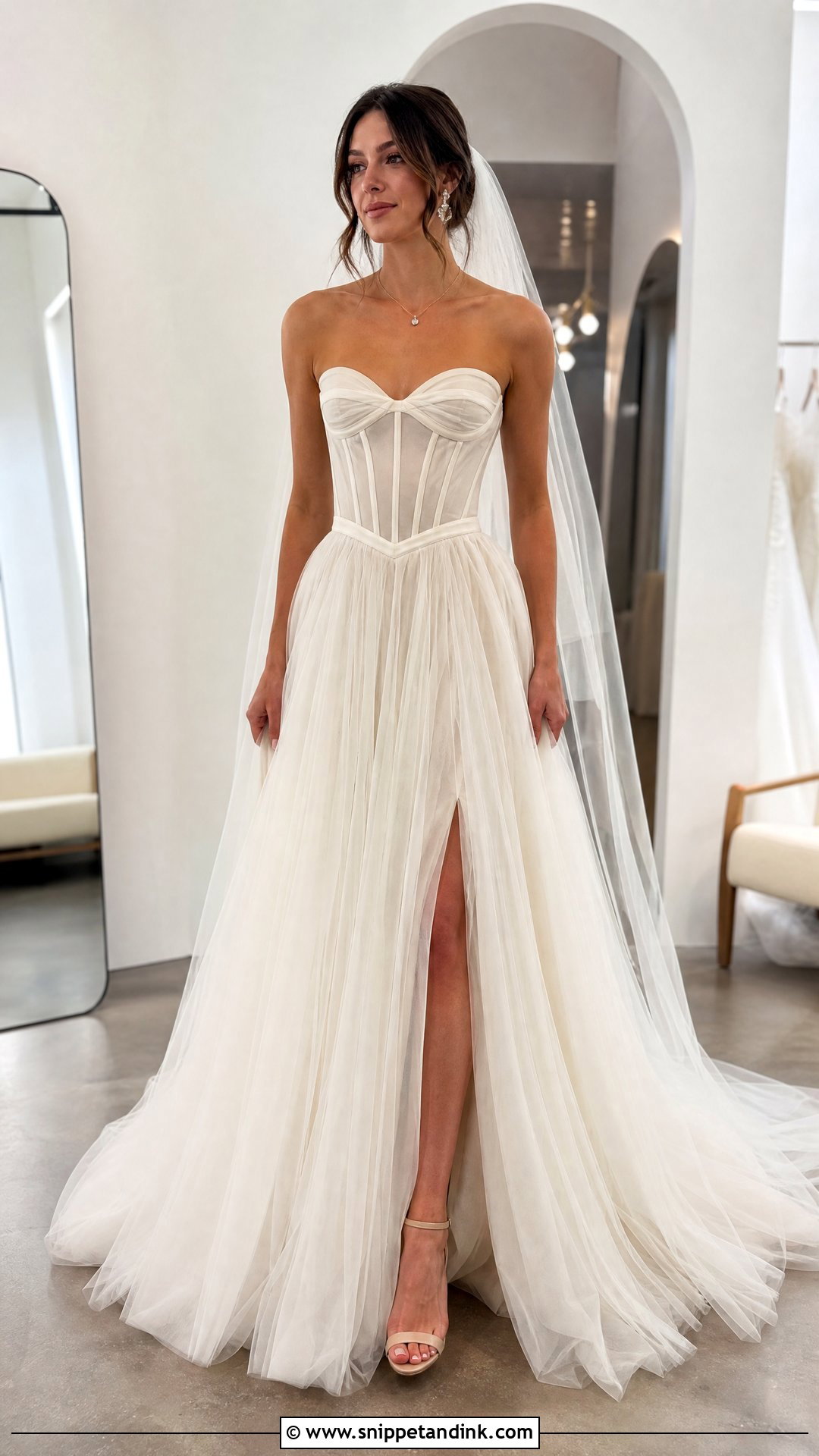
I never judge a strapless corset bodice while the bride is standing still. The boning and internal waist stay should hold the dress up, not your hands, so I ask her to lean forward as if picking up a dropped earring and watch whether the neckline gapes. Pair the corset with an A-line skirt for balance, or a drop-waist skirt for something more fashion-led. It should feel firm, like a good hug, never like you can’t take a full breath through the vows. Ask whether cups, a modesty panel or a slightly higher neckline can be added; on sale stock those changes are often cheaper than buying a new size.
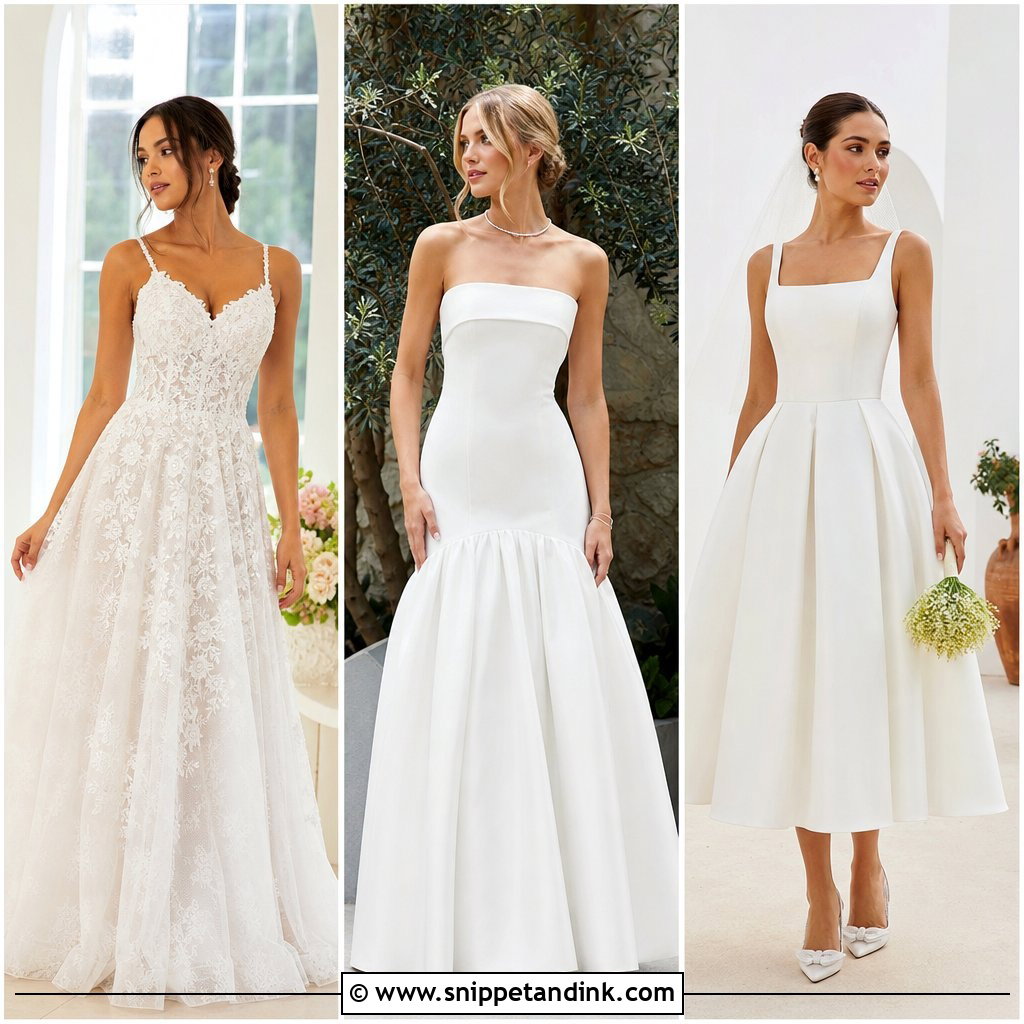
6. Square Neck Wedding Dress
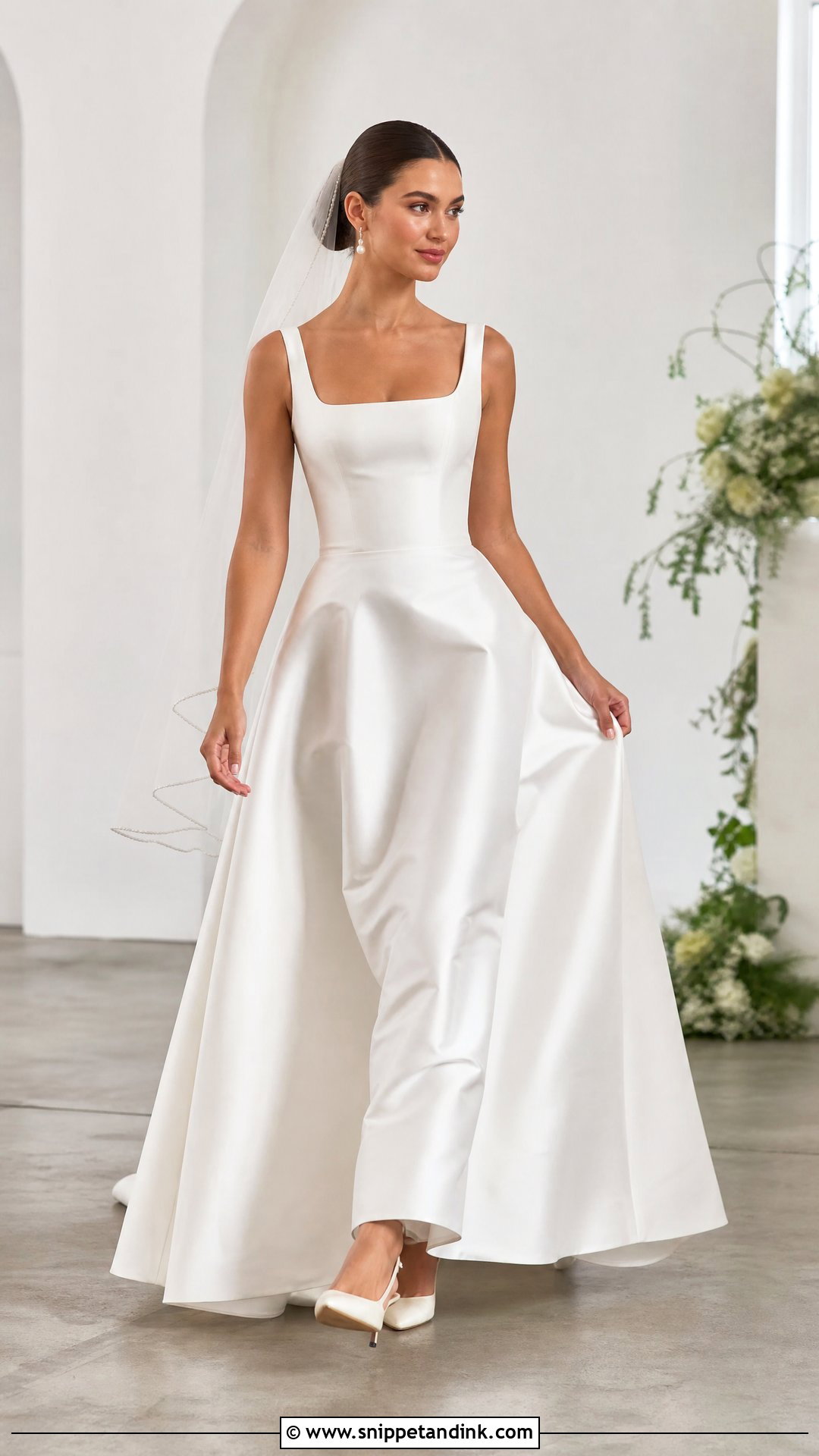
A square neckline frames the collarbones with straight lines, so any gaping at the corners is obvious from across the room. That’s the first thing I look at when someone tries one on: the space between the strap and the underarm. Wide straps, cap sleeves and full sleeves all pair well with it; a column skirt keeps it minimal, a structured A-line keeps it classic. Smooth crepe or satin looks cleanest. Shortening the straps by a centimetre is a small, inexpensive fix that solves most gaping. Many of these gowns already carry enough internal structure to go braless, so try that before buying a longline bra.
7. Off-the-Shoulder Wedding Dress
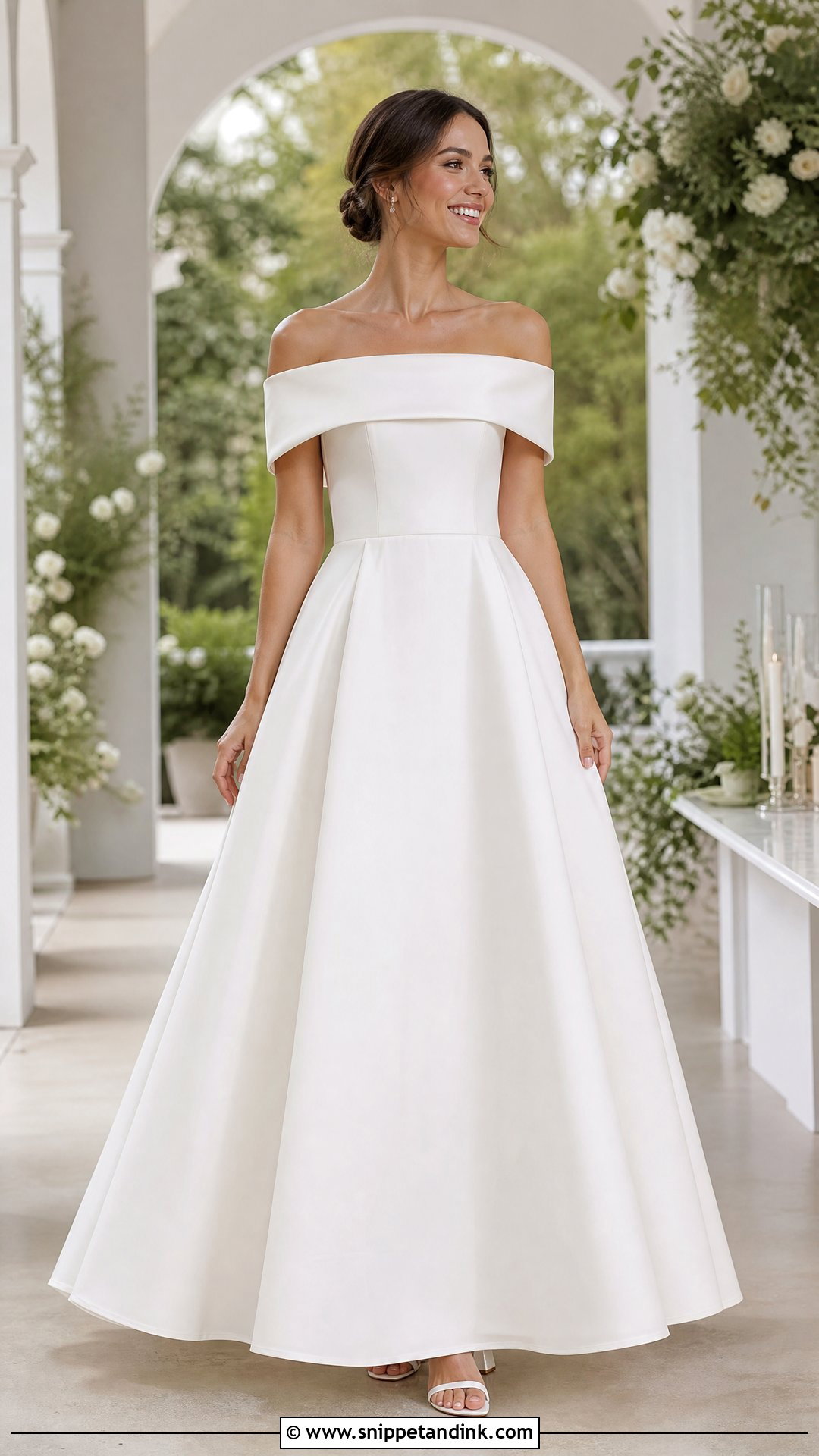
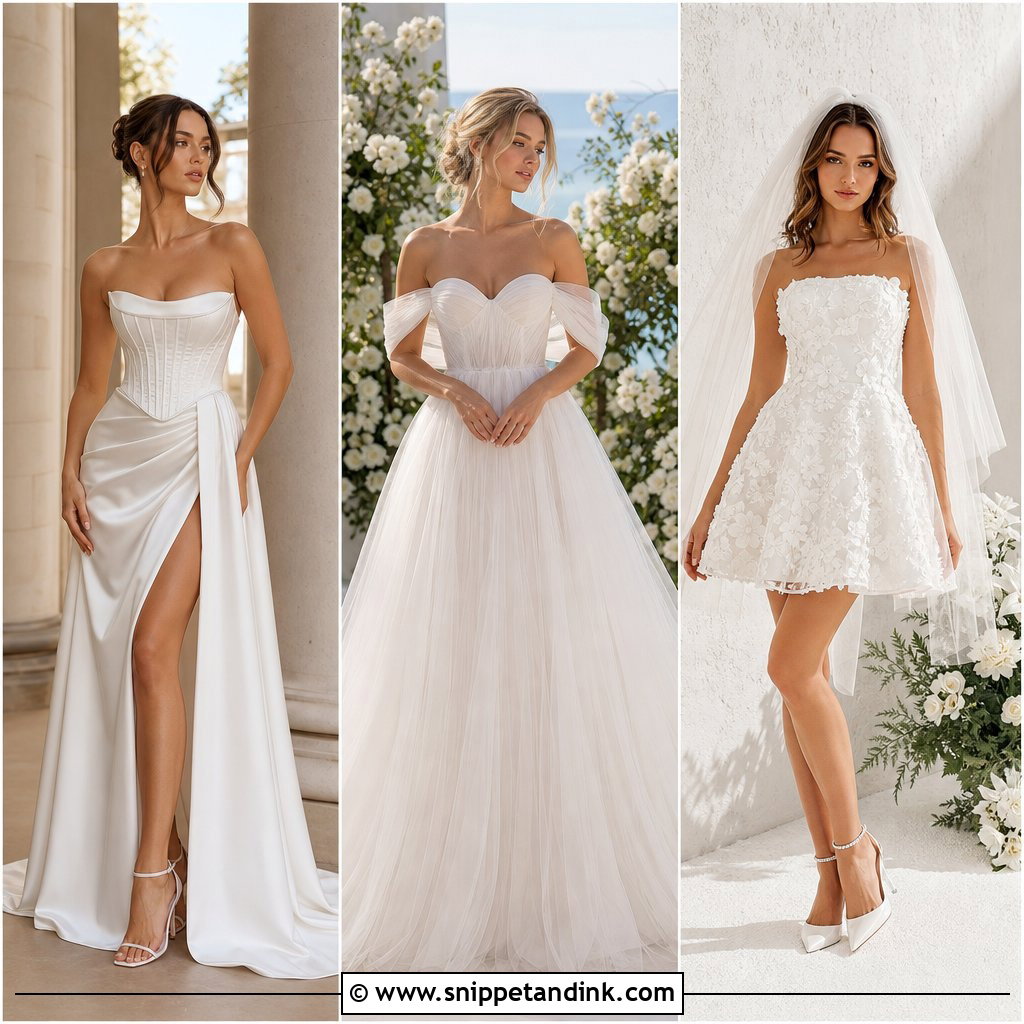
An off-the-shoulder neckline sits across the upper arm, which means it restricts how high you can lift your arms. That isn’t a reason to avoid it, but you need to know before the first dance. In fittings I ask brides to raise a glass, hug me and sit down, all with the dress fully fastened. Draped satin, folded cuffs and lace sleeves each move differently; elastic in the sleeve gives the most freedom without changing how it looks. Leave the neck bare or wear a short necklace, and a low chignon keeps the shoulder line clear.
8. Minimalist Crepe Wedding Dress
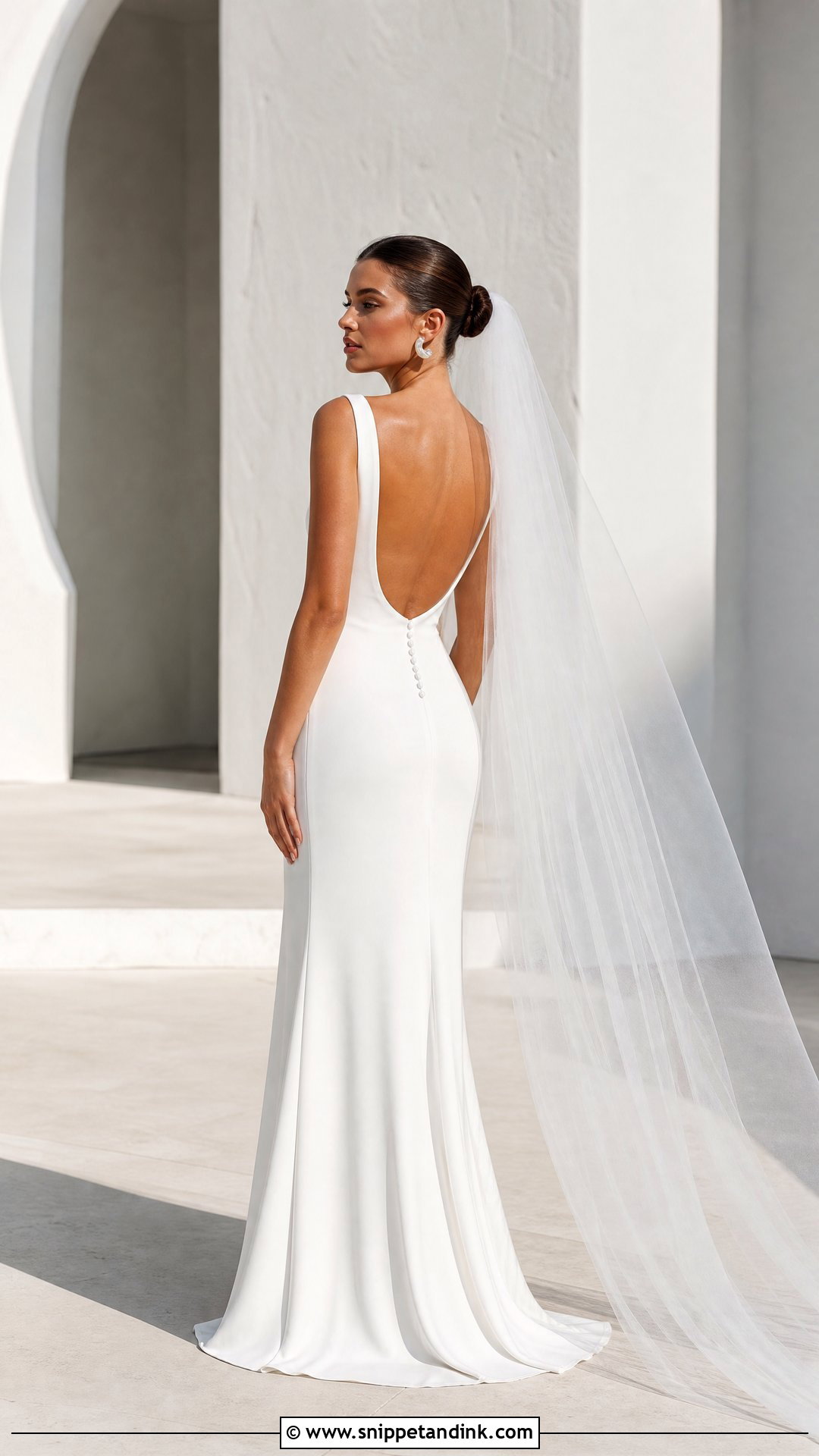
Plain crepe is unforgiving in a way lace never is. With no pattern to hide behind, a puckered zip or a wavy hem shows from the back row, so this is the cut where I check construction most closely: the zip should lie flat, the lining should not peek at the hem and the bodice seams should run straight. A bateau neckline, a low back or one piece of draping gives interest without any sparkle. Smooth, no-line underwear matters here more than in any other gown. Online, zoom into the close-up photos. Good crepe looks dense and matte; thin crepe looks shiny and clings at the hips.
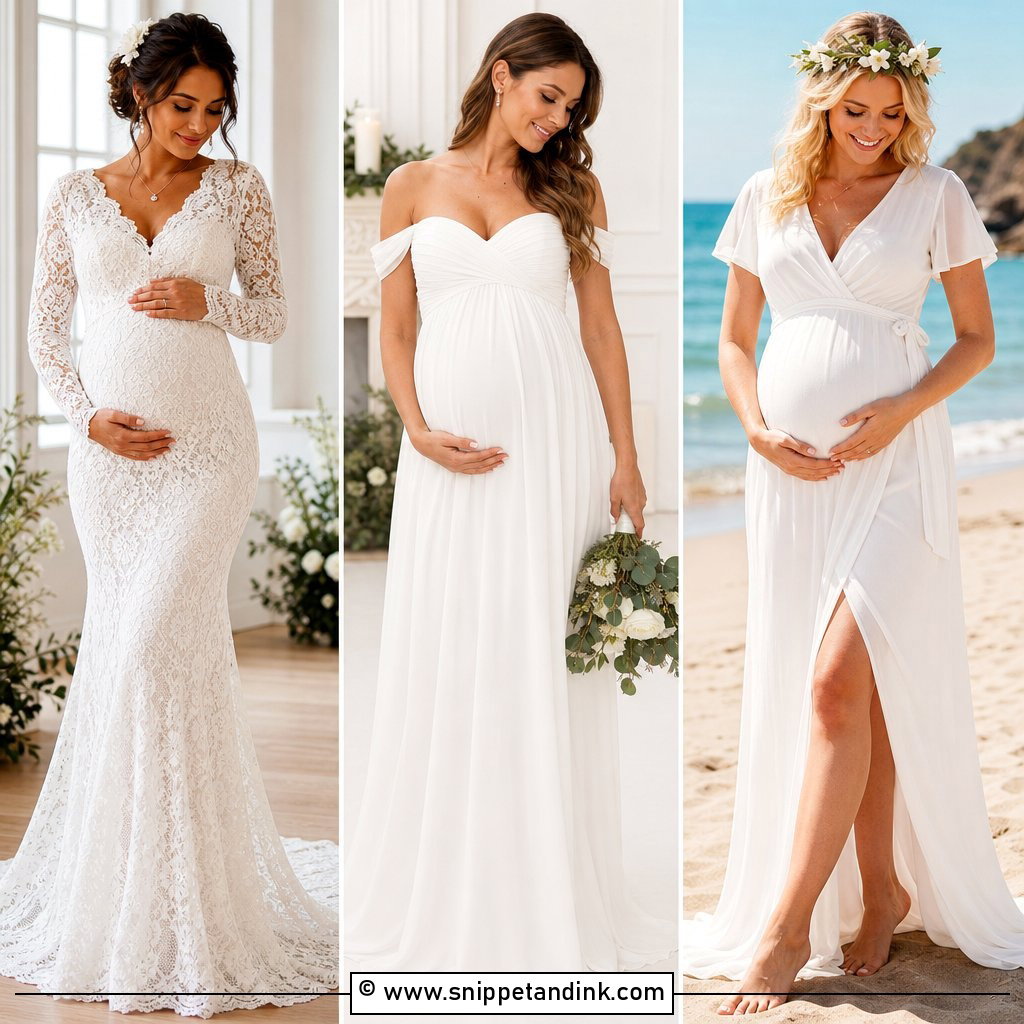
9. Chiffon Beach Wedding Dress
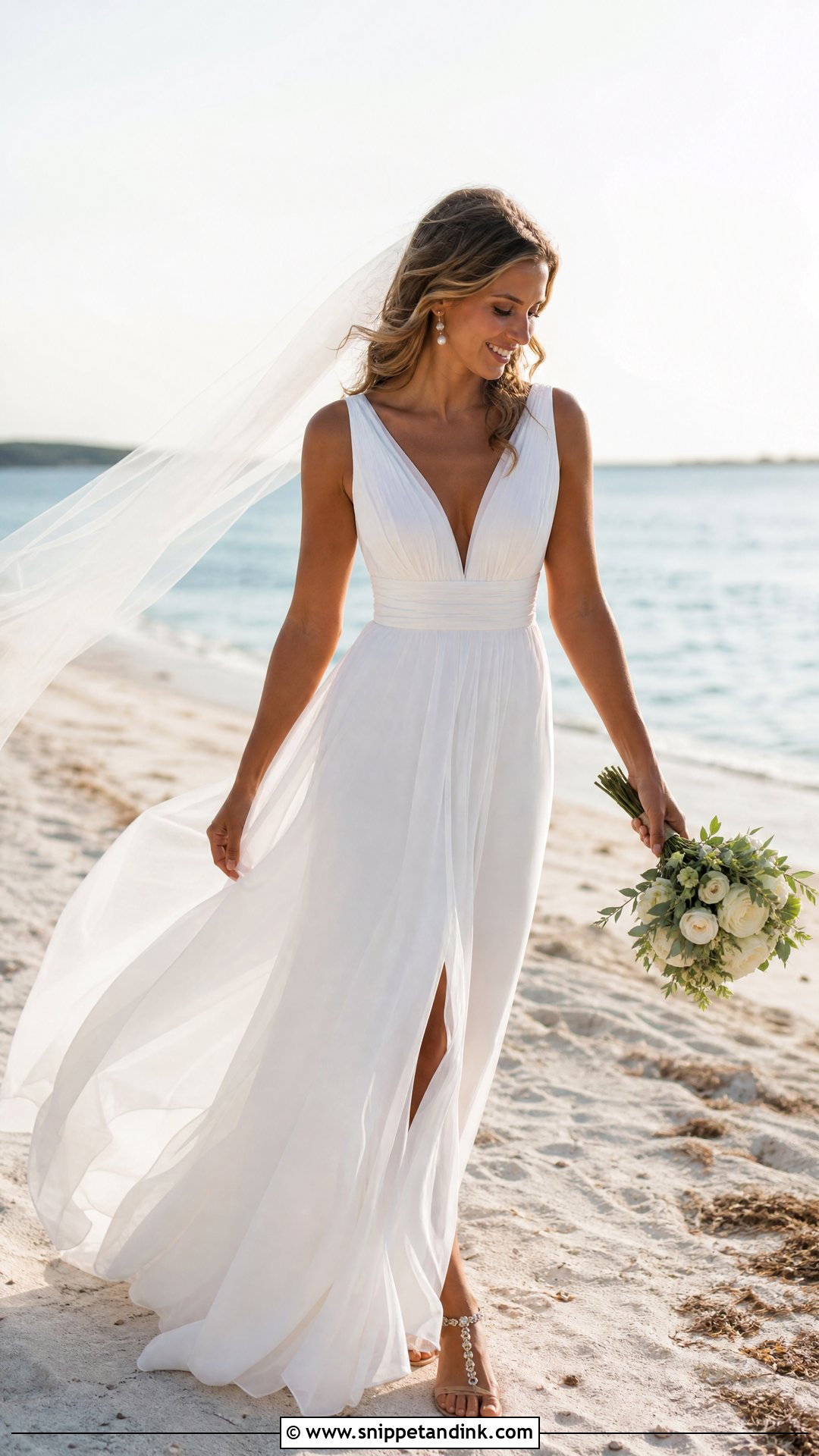
Sand, wind and heat decide what works on a beach, not the photos on a hanger. A chiffon beach wedding dress in an empire or loose A-line shape lets air move, and a short train collects far less sand than a long one. I check sheerness by holding the skirt up to a window: chiffon that looks opaque in the shop can turn see-through against bright sea light. A halter or soft V-neck suits the easy shape. Flat sandals beat heels on uneven ground, and I’d leave heavy beading for an indoor wedding.
10. Boho Lace Wedding Dress
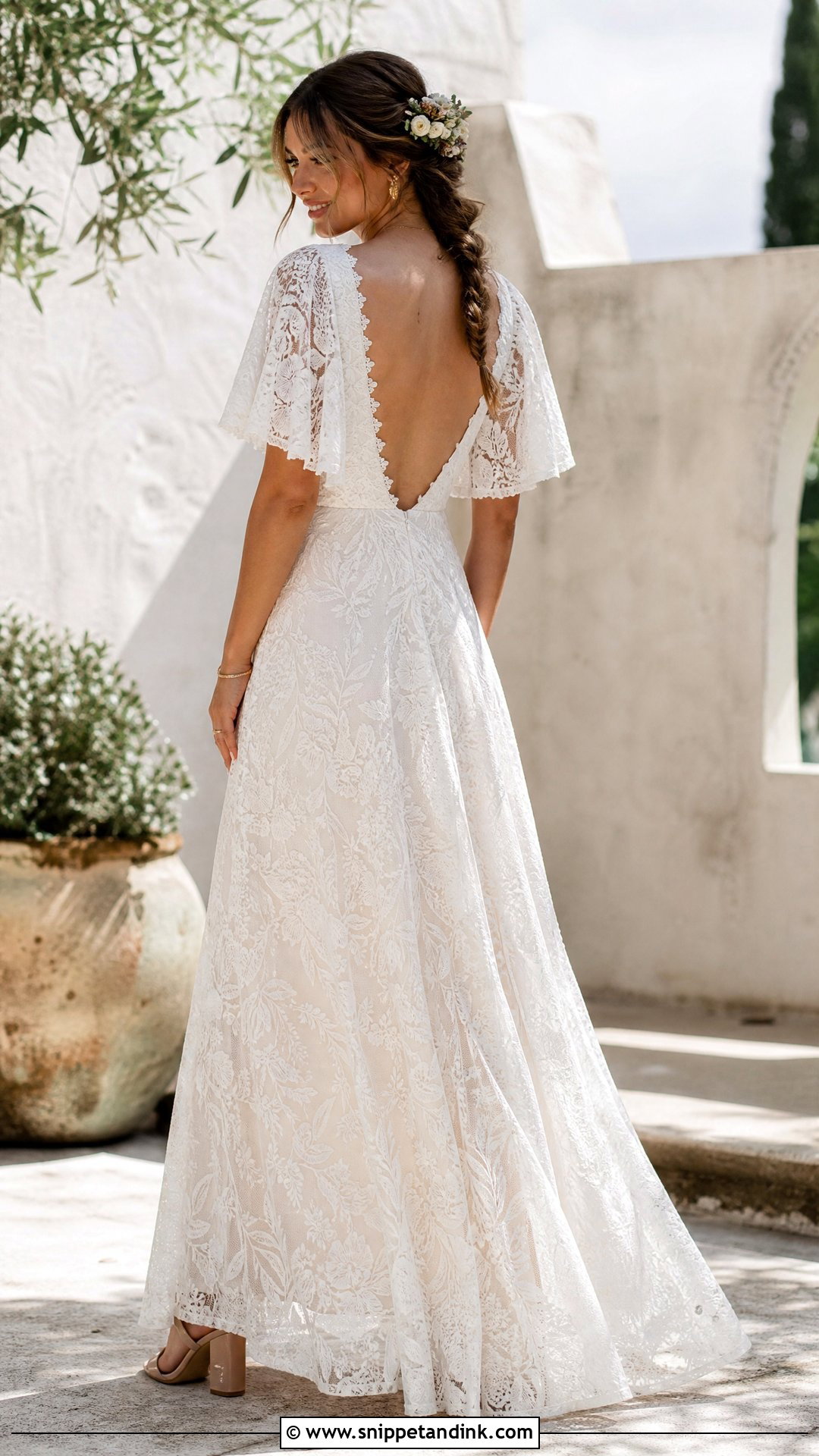
Boho lace gowns are built to move, so I steer people away from the stiffer versions with heavy boning; they lose the whole point. Look for botanical or crochet-style lace, flutter sleeves and an easy A-line skirt. A nude or ivory lining shows the lace pattern best. The detail I examine most on these is where the lace meets at the side seams and the zip, because careful pattern matching is what makes an affordable gown look expensive. Rub the lace against the inside of your arm, too. Some cotton-look laces are scratchy after a few hours.
11. Tea-Length Wedding Dress
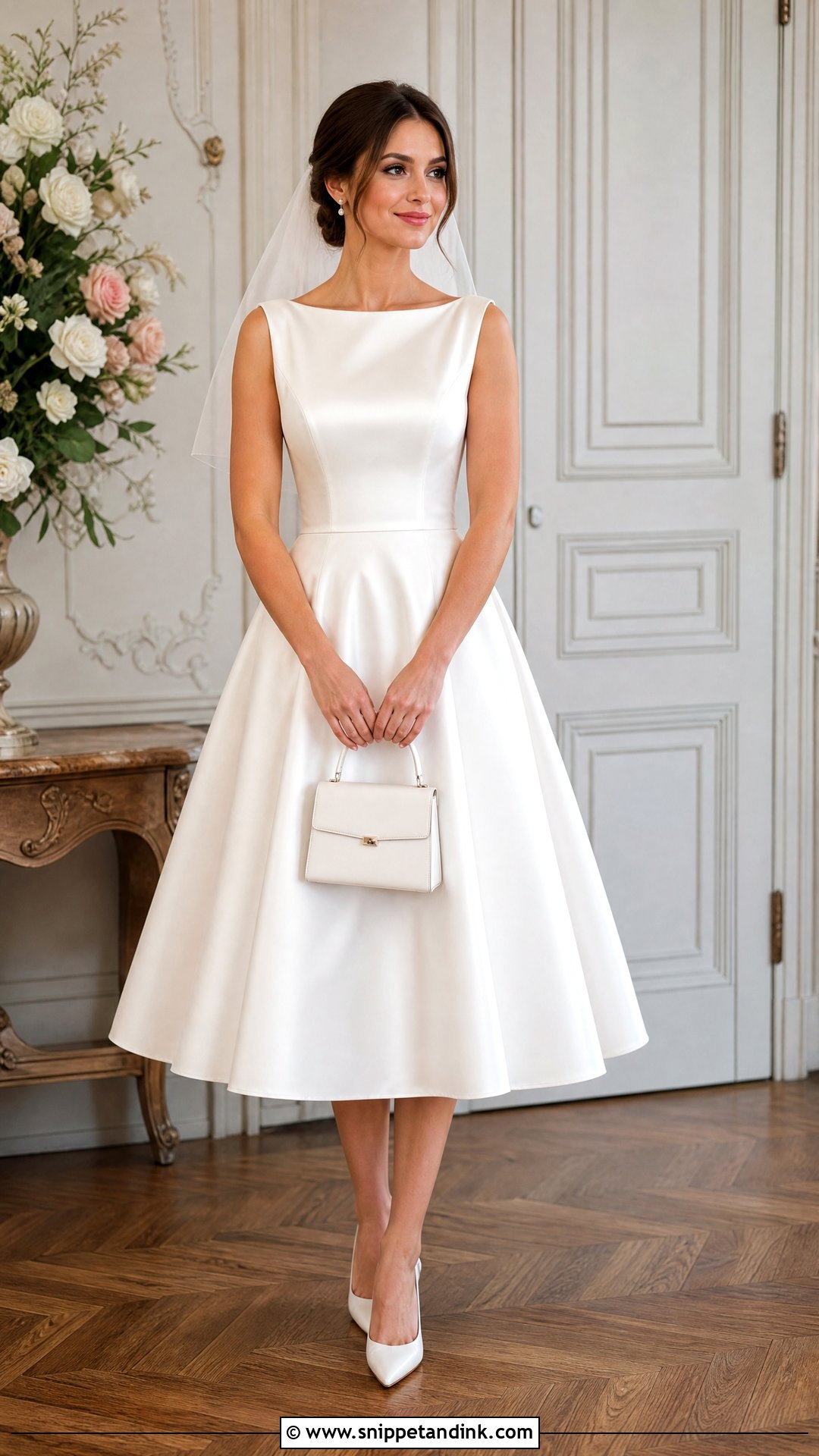
With a tea-length dress, the hem is the whole design. It usually falls somewhere between the knee and the ankle, and moving it two centimetres changes how long your legs look, so I always budget for a hem adjustment. It suits a courthouse ceremony or a daytime reception, and satin or organza gives the skirt a nice vintage lift. Since the shoes are on show, choose them before the alteration appointment. Check the finished length against your own height rather than the model’s; a dress that hits mid-calf on a tall model can land at your ankle.
12. Short Wedding Dress
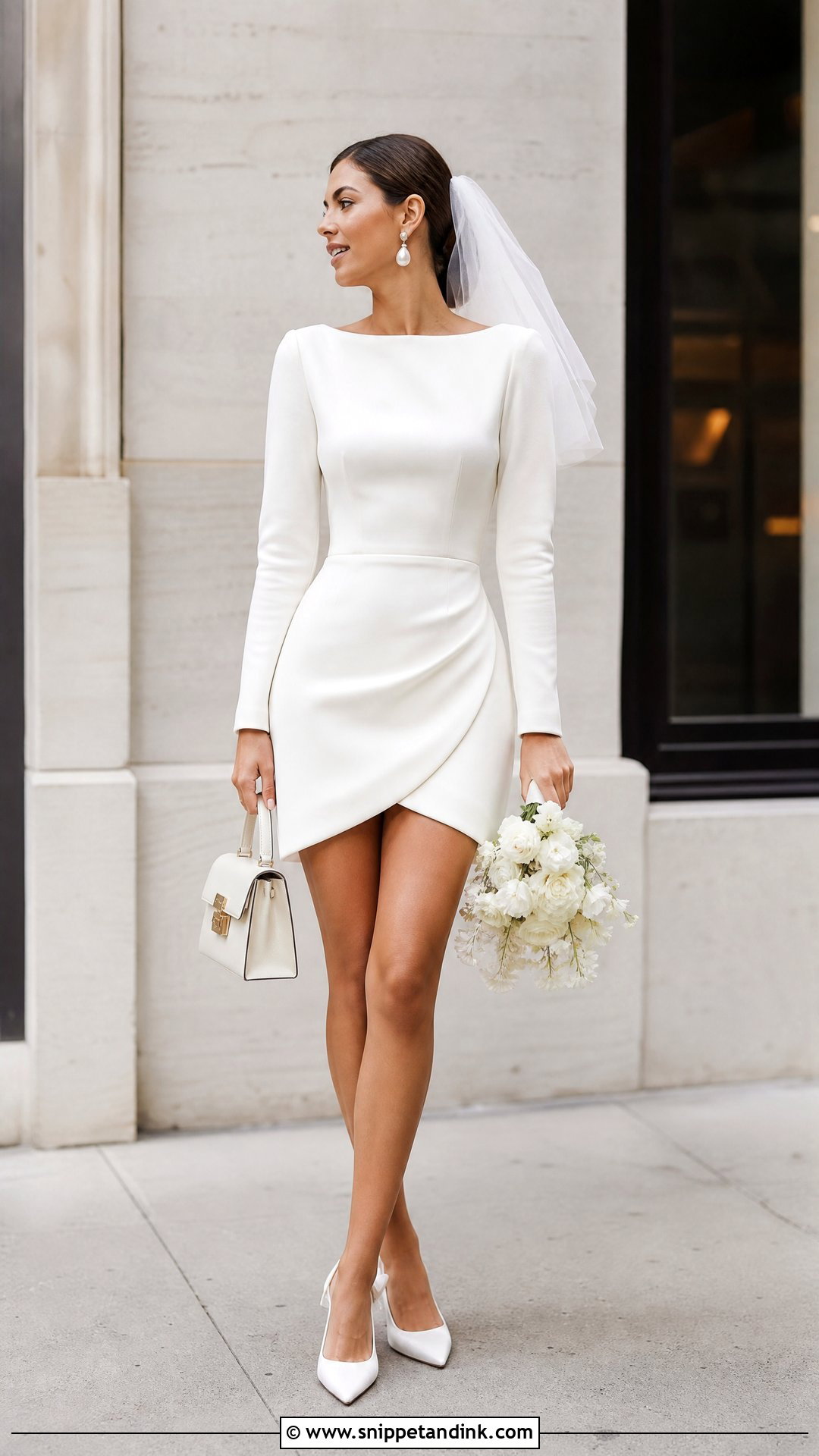
Short dresses look intentional when the fit is sharp and slightly casual when it isn’t. A tailored long-sleeve mini reads modern; a fit-and-flare reads softer. Because the hem is so visible, I ask the bride to sit, cross her legs and dance a few steps in the fitting room. If she tugs the hem down once, it will be a hundred times over the evening. Good lining stops the skirt from riding up on tights. Slingback heels, a short veil or a bow and one strong pair of earrings finish it. They also make a sensible reception change after a longer ceremony gown.
13. High Neck Wedding Dress
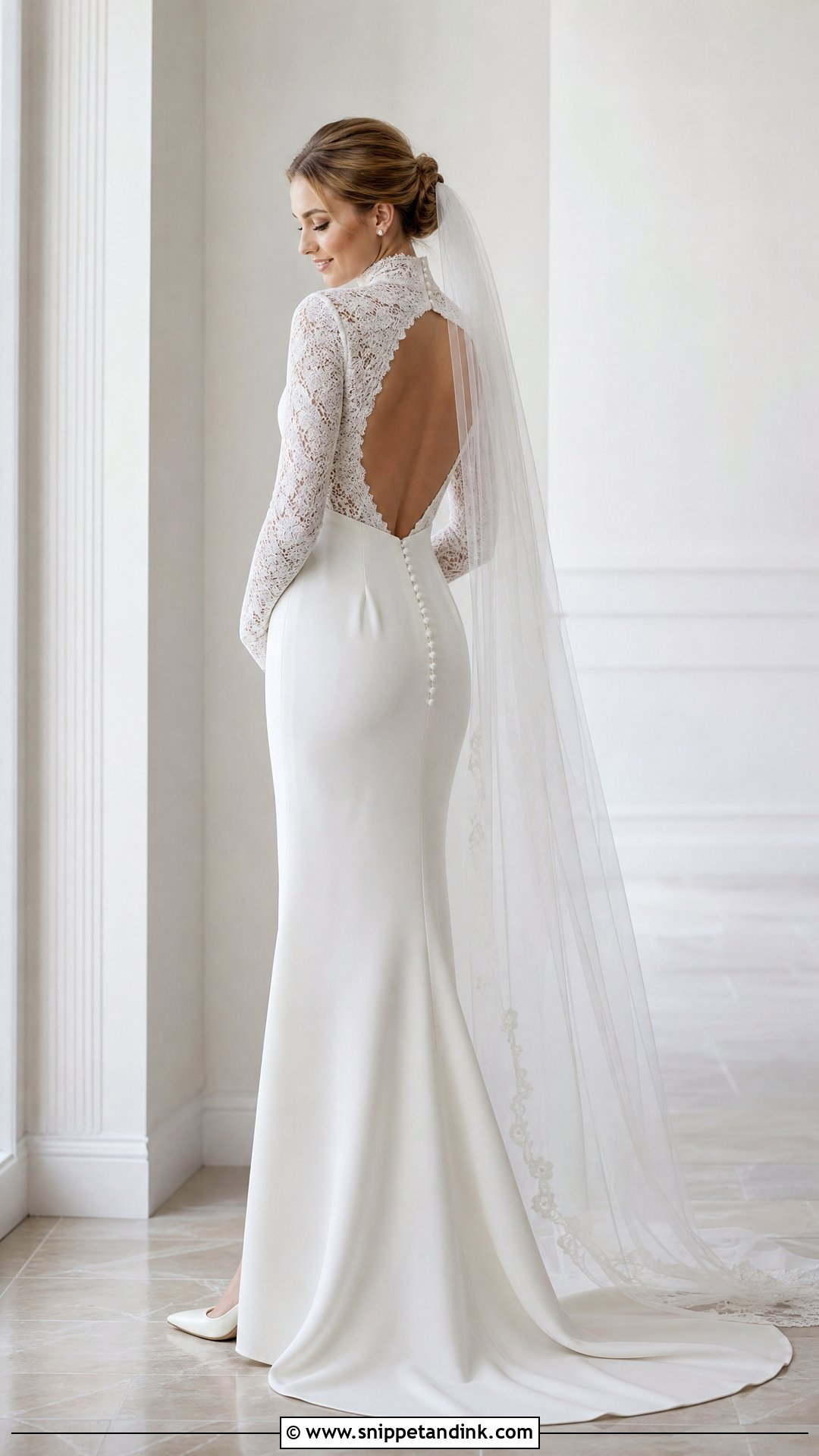
A high neck pulls attention straight to the face, which is why I skip the necklace entirely with this style. Lace, satin, gathered chiffon and a clean mock neck all work; pairing the neckline with an open back stops it feeling buttoned-up. The collar is what I test hardest. Turn your head fully both ways and look down at your shoes. If the edge folds over or scratches your jaw, it will bother you by the speeches. A soft lining inside the collar and a smooth hook closure make long hours bearable. Wear your veil below the bun so it doesn’t fight the collar.
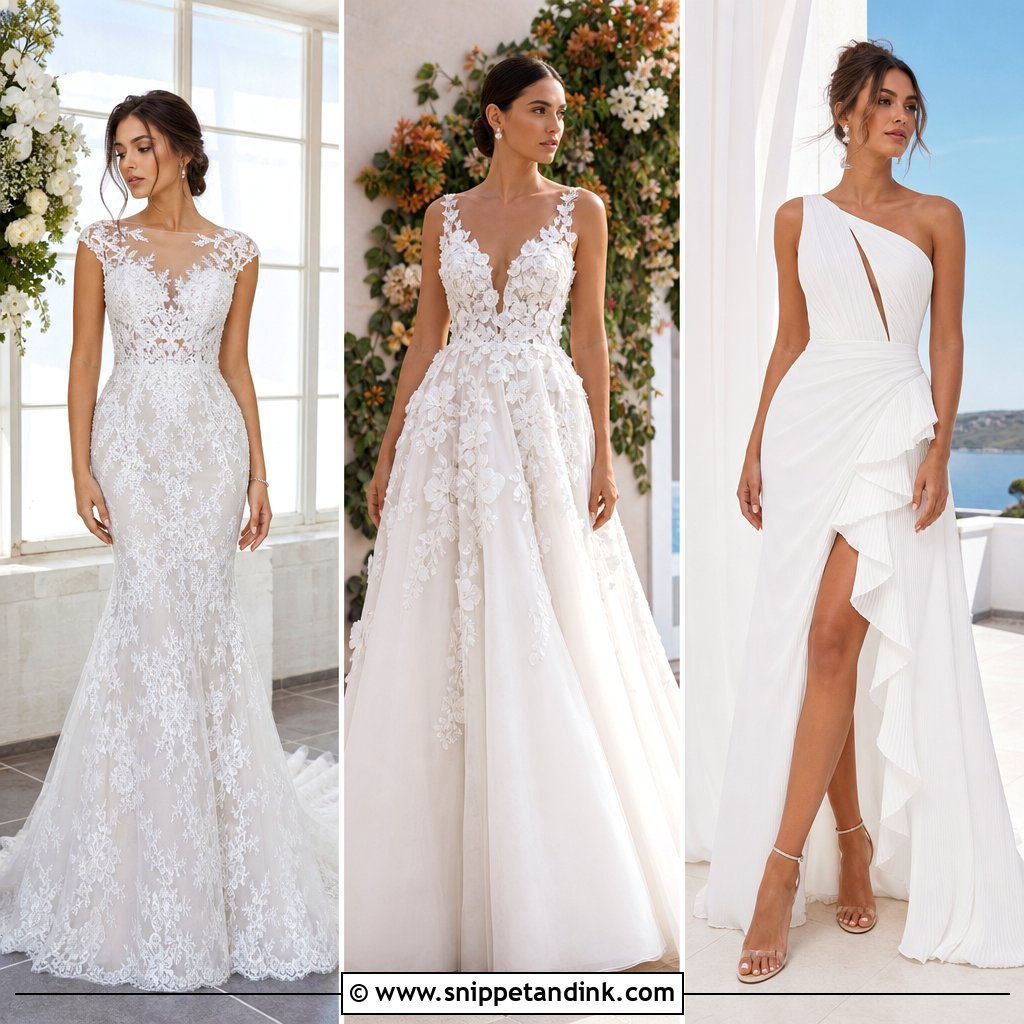
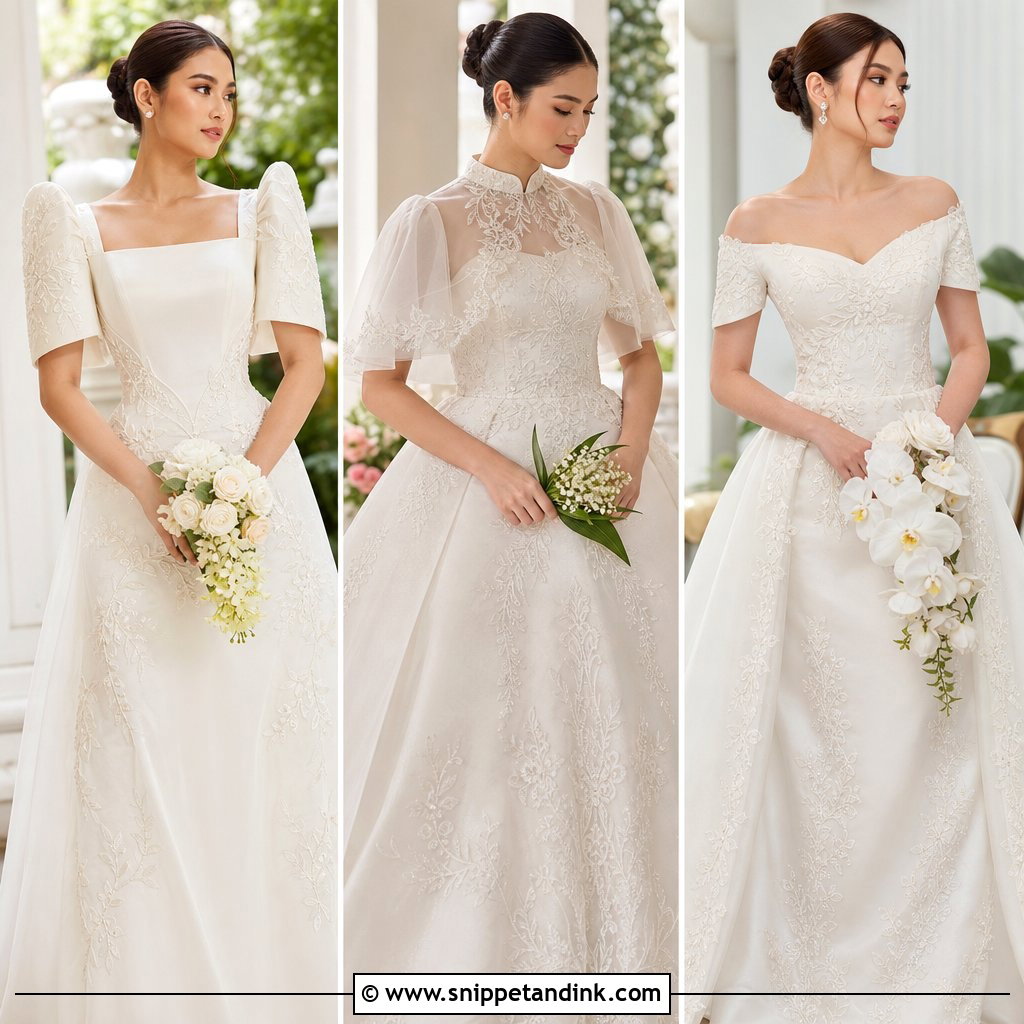
14. Floral Appliqué Wedding Dress
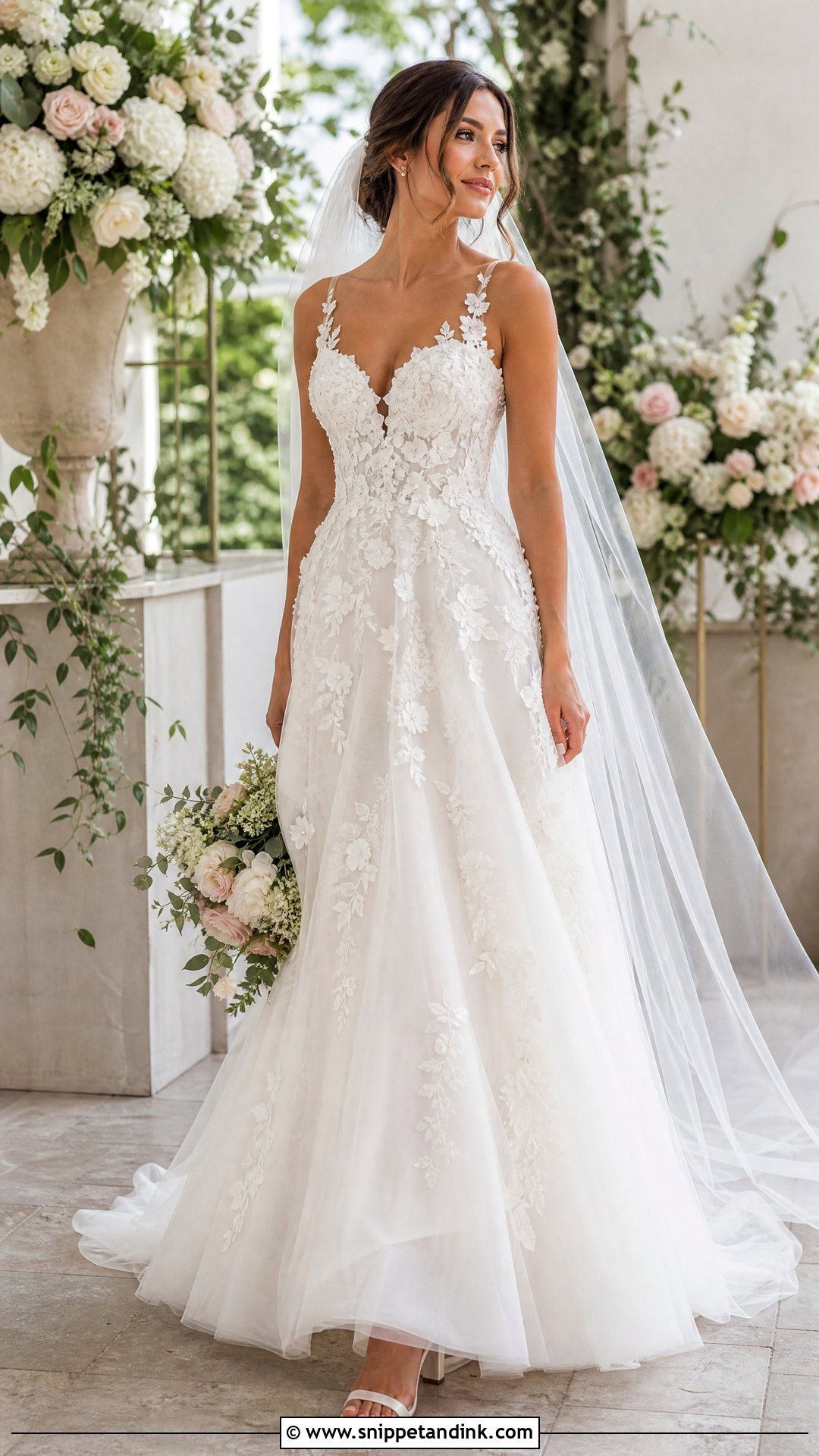
Floral appliqués can be scattered lightly over a tulle bodice or run all the way down a skirt. Ivory on ivory looks classic; faint pastel embroidery adds a little colour. On a sale or sample gown, appliqués are the first thing I inspect, especially around the zip, underarms and hem where arms and shoes rub. Glued flowers lift at the edges; stitched ones stay put. Also sit down in it, because raised petals and beads can snag the opposite sleeve or a lace overlay. Keep shoes and veil plain so the texture carries the look.
15. Basque Waist Wedding Dress
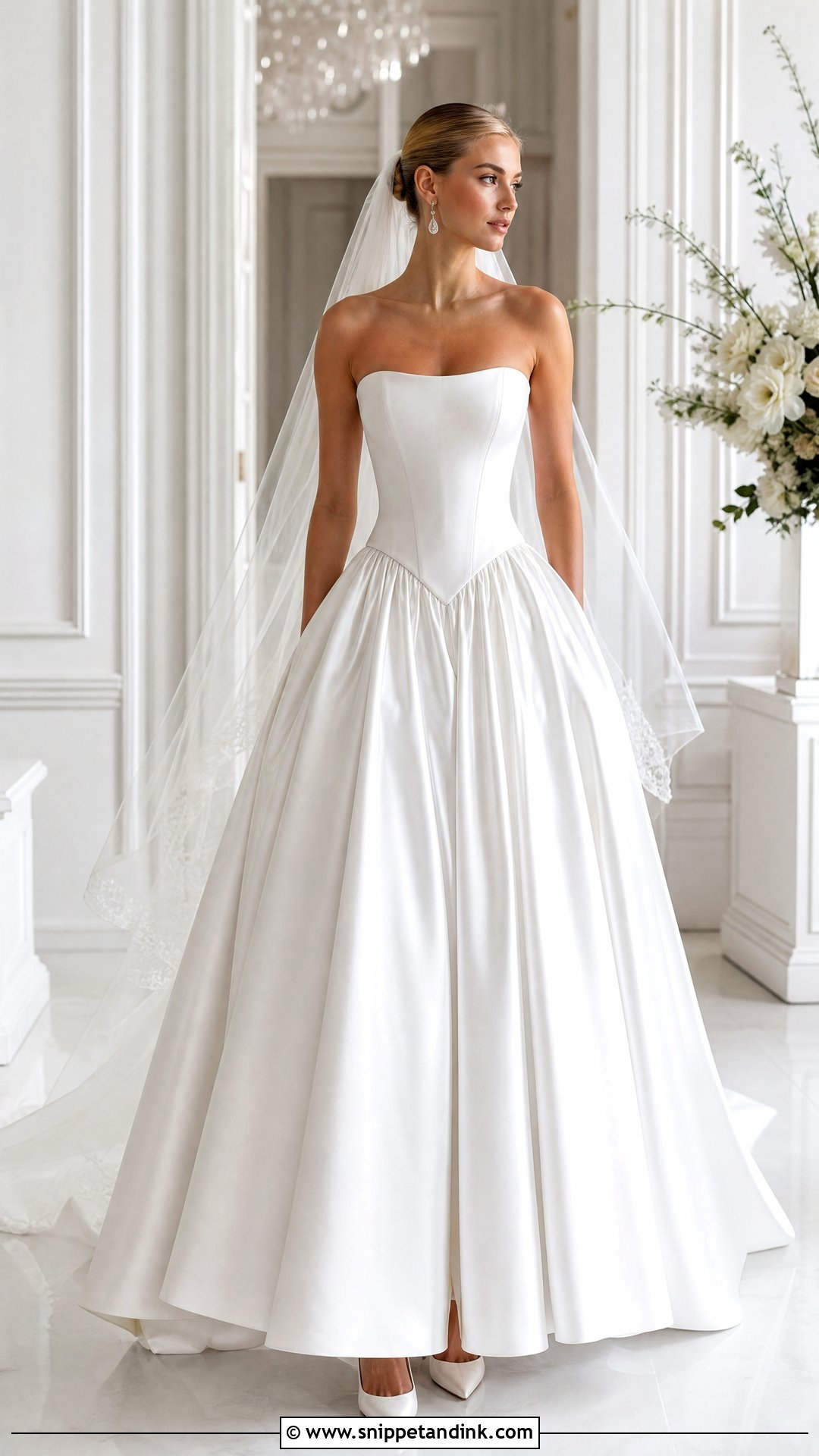
A basque waist dips into a point or a curve below the natural waist and then opens into a full skirt. When the torso length is right, it lengthens the body; when it’s wrong, the point buckles every time you sit. That’s why I compare shoulder-to-waist length on the product chart before anything else. Structured satin with boning shows the shape best. Strapless is bold, off-the-shoulder sleeves soften it. A good seamstress can refine small fit issues, but moving the waist point on a boned basque bodice is major work, and I wouldn’t buy a sale gown counting on that.
16. Drop Waist Wedding Dress
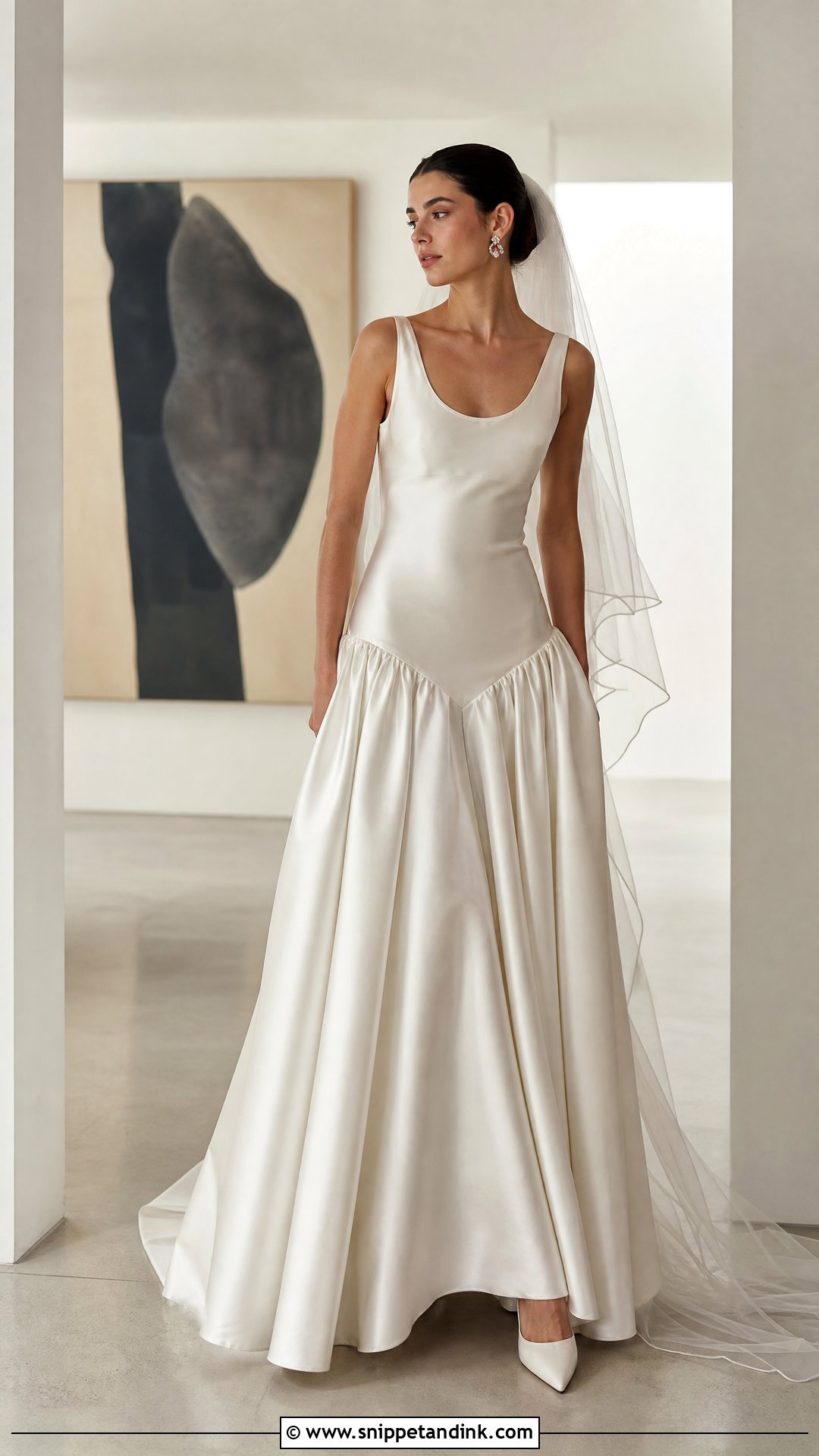
A drop waist keeps the bodice fitted down past the natural waist, so the seam sits on the hips. That’s the spot to test: sit, stand and walk, and watch whether the seam digs in or wrinkles across the front. Satin and Mikado give it an architectural line; tulle makes it gentler. A scoop, square or strapless neckline all sit well above it. Petite brides usually need the bodice shortened so the seam doesn’t land too low, and taller brides should confirm the seam reaches the intended point before ordering online.
17. Plus Size A-Line Wedding Dress
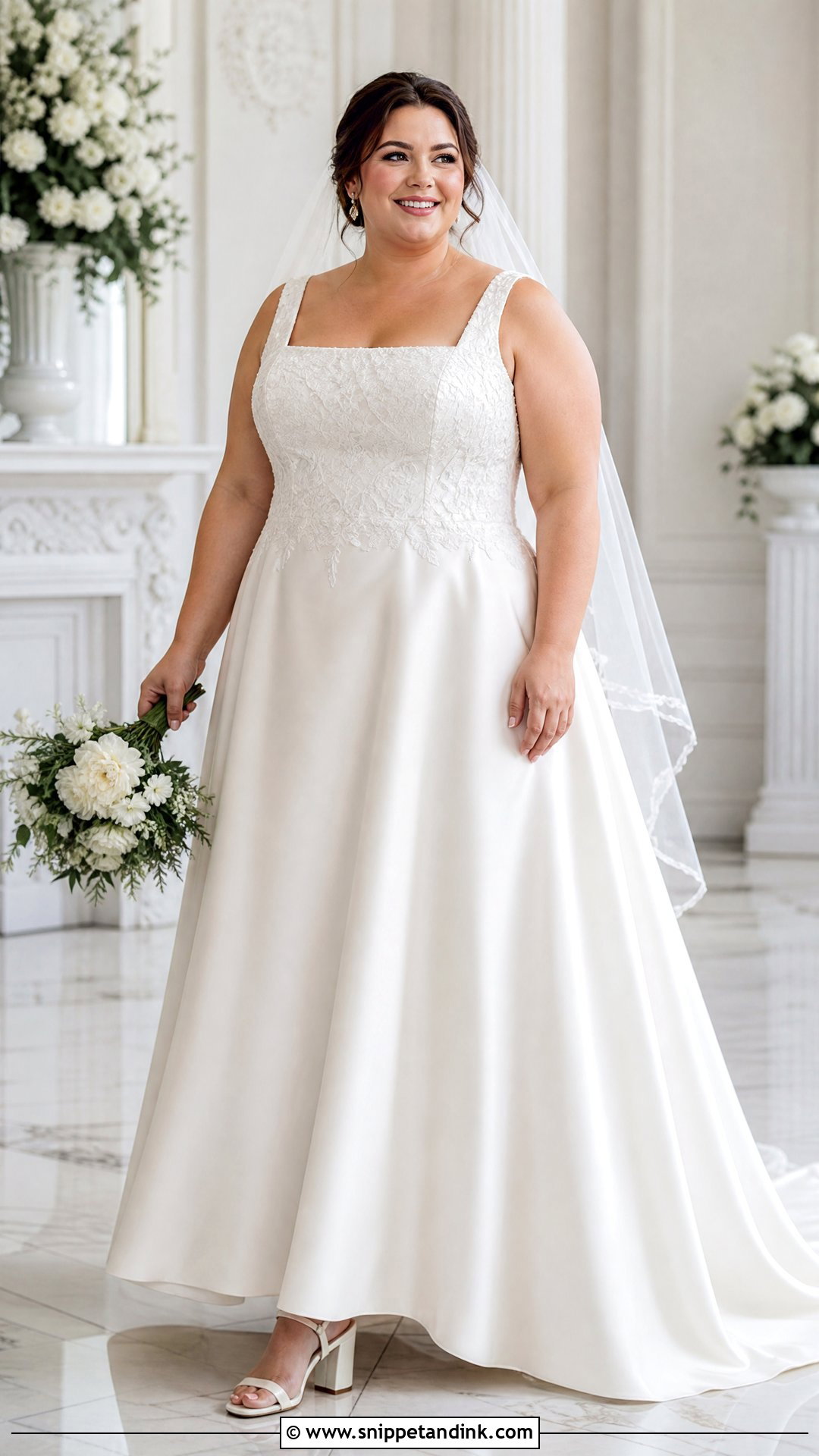
In plus sizes, I care more about what’s inside the bodice than the outside. Look for real boning, wide or well-anchored straps, and a waist seam that sits where you’re comfortable, not where the brand assumed. A V-neck or square neckline frames the upper body, and a chiffon, tulle or satin skirt moves easily over the hips. Ignore the label number; bridal sizing runs small and varies widely between brands. Order by your largest measurement, because a seamstress can take a dress in far more easily than she can let it out.
18. Empire Waist Wedding Dress
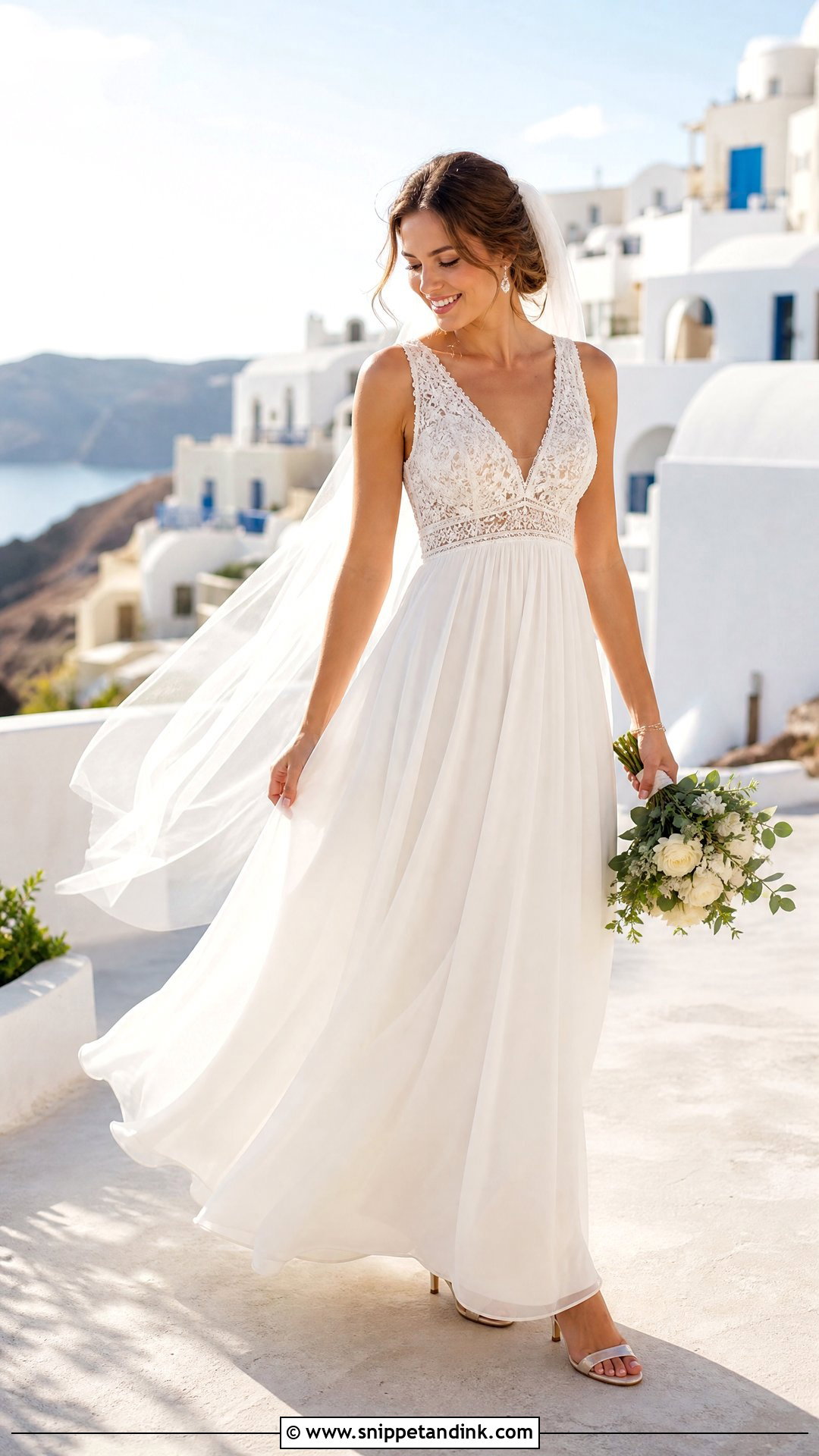
The empire seam sits just under the bust, which leaves the waist and hips free. I like it for hot weather and destination ceremonies, and for anyone who simply hates a fitted waist. Chiffon or light crepe drapes best from that high seam. The detail to watch is the seam itself: it should run level all the way round, and if it rises at the centre front, the bodice is too short for you. With thin straps or a deep neckline, check the support before anything else, because there’s no waist to hold the dress in place. Lining should be full enough that sunlight doesn’t show your silhouette.
19. Convertible Wedding Dress
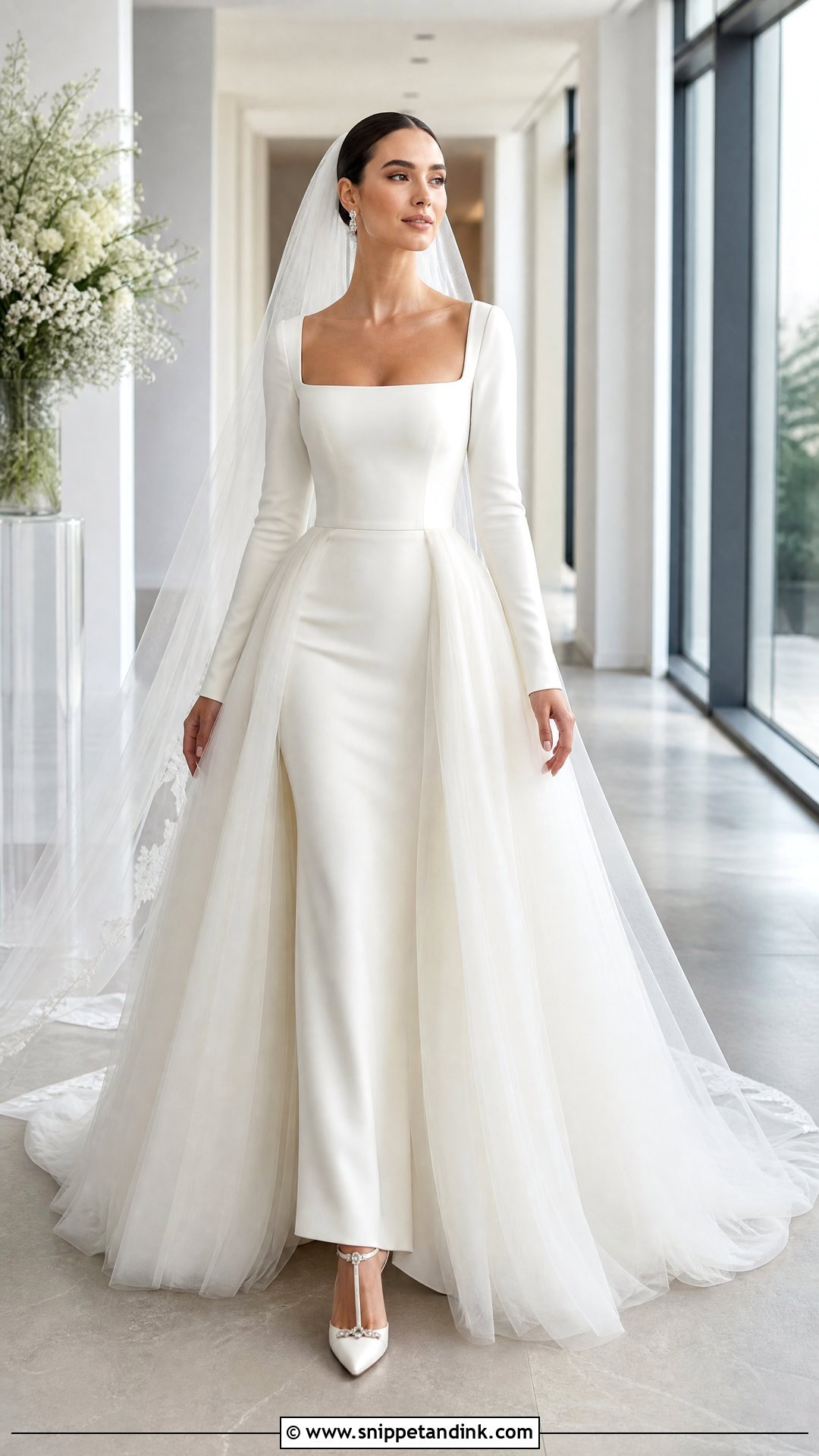
A convertible wedding dress gives you two looks from one purchase. Detachable overskirts, sleeves, capes, trains and neckline panels are the usual options. My favourite pairing is a fitted crepe or lace base with a full tulle overskirt for the ceremony, removed later for dancing. Practise taking every piece off and on yourself, then teach whoever will help you, because a stuck hook in a bathroom is a common reception-hour panic. On sale listings, check whether the detachable pieces are included; they’re sometimes sold separately. Bag each component on its own hanger so snaps and hooks don’t go missing.
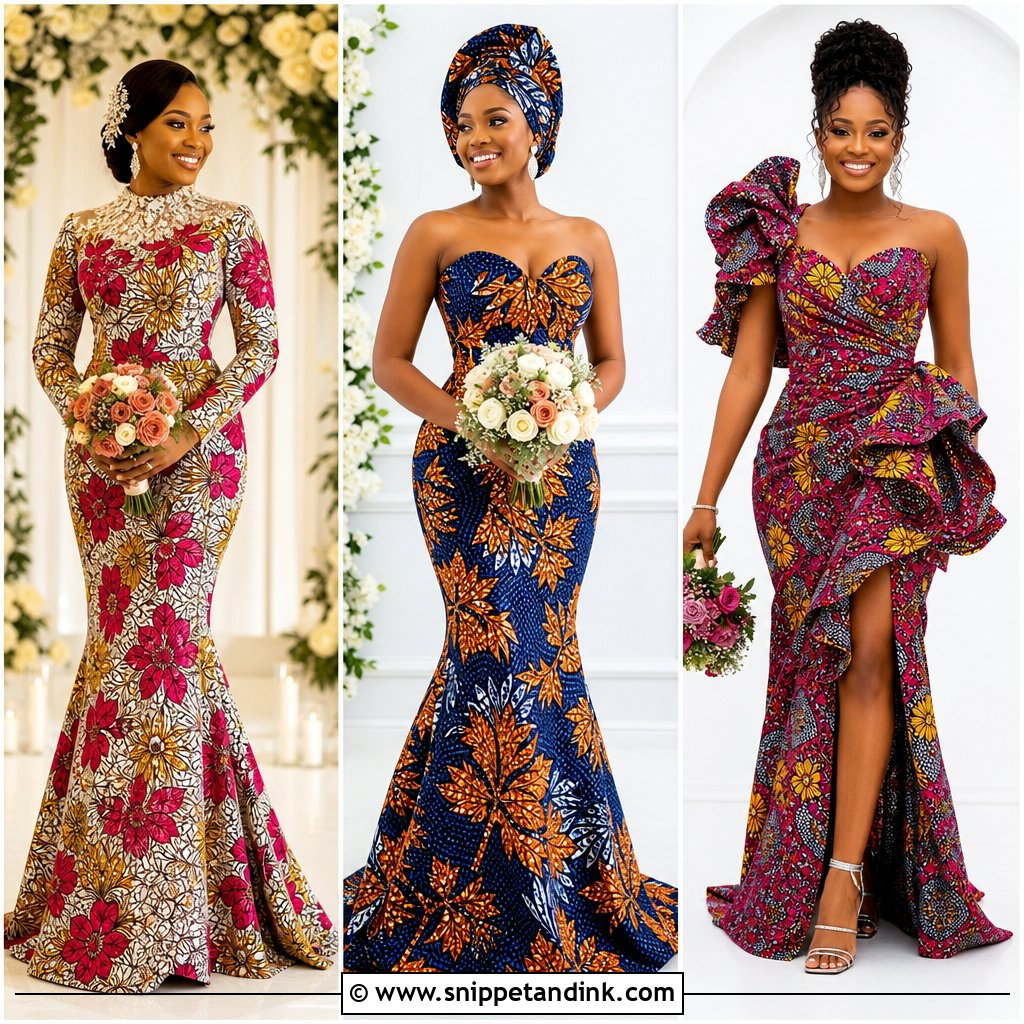
20. Pearl Beaded Wedding Dress
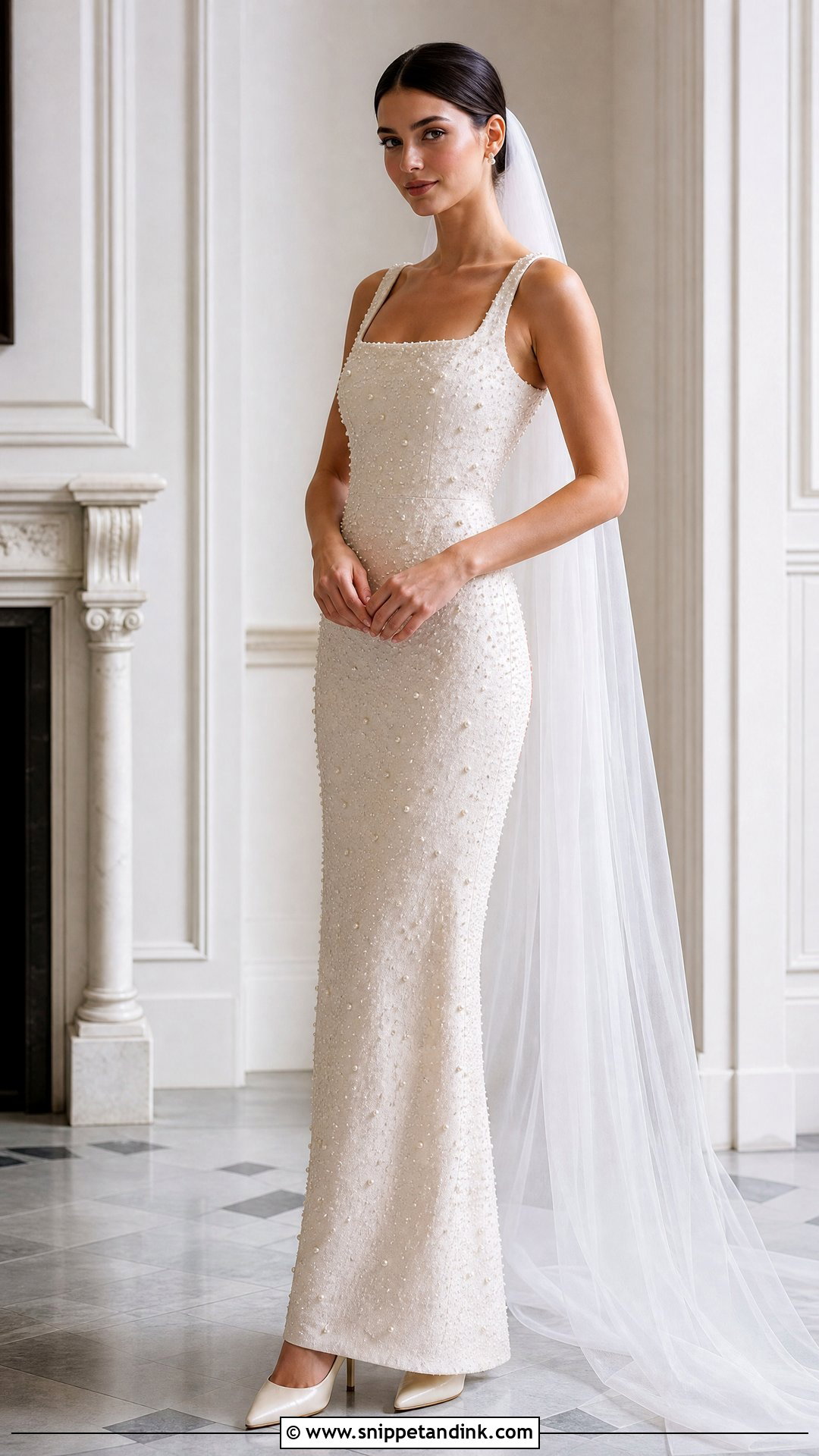
Pearl beading catches light softly rather than flashing like crystal. It might cover the bodice, trace the neckline or scatter across tulle and lace. A column shape reads modern, an embellished A-line more traditional. Heavy beading adds real weight, which matters on a strapless bodice, so ask for the garment weight if you can. I always run a hand over the beaded areas looking for loose threads, since one pulled strand can drop a whole row. If spare beads come in a small bag inside the dress, keep them with your emergency kit for the day.
Flaws I’d Happily Fix on a Discounted Gown, and the Ones I Wouldn’t
Not every mark on a sale dress is a problem. Some are a twenty-minute job for a seamstress or a cleaner, and some will follow you down the aisle. This is roughly how I sort them when I’m standing in a sample room with a bride.
Usually worth buying
- Makeup on the inside of the neckline, which a bridal cleaner normally lifts.
- A dirty hem, especially if you’re taking the length up anyway.
- A few missing beads or one loose appliqué, which can be restitched.
- A bodice that’s one size too big. Taking in is routine work.
Usually a pass
- Yellowed or discoloured satin, which rarely cleans back to its original shade.
- Torn tulle or lace in the middle of the skirt, where a repair will show.
- Bent or snapped boning that has already lost its shape.
- A gown that’s too small, unless the seams have generous allowance you can see with your own eyes.
Leaving Enough Time Between Purchase and Alterations
The pleasure of a sale gown is that it’s in your hands straight away, but alterations still need time. Most brides need two or three fittings, spaced a few weeks apart, and a busy seamstress in wedding season may book out well ahead. I’d aim to have the dress with her roughly two to three months before the wedding, and earlier if you need a bustle added, sleeves altered or a bodice rebuilt.
Bring your actual shoes, bra and any shapewear to the first fitting, because the hem is cut to those. If you’re expecting your weight to change before the wedding, tell her early; she’ll leave the final take-in for the last appointment. Once it’s finished, hang the gown in a breathable cotton bag, not plastic, and keep it out of direct light so ivory doesn’t yellow before the day.
A Lower Price Still Has to Pass the Sit-Down Test
A gown on sale only counts as a good buy if it fits your body, your venue and the way you’ll actually spend the day. Shape and construction matter more than any trend on this list. Measure yourself honestly, read the whole product description and keep money aside for alterations. Check delivery dates and return rules before you pay, especially for final-sale and made-to-order styles. Then sit, walk and raise your arms in it one last time. If you can do all three without fussing, you’ve found it, whatever the price tag says.
You'll Like These Ideas:




Leave a Reply