

Slipping Away for the Change Without Losing Your Evening
The dress is the fun part. The change itself is where things go wrong, usually because nobody planned it. A second look needs a time, a room and a helper, and I sort out all three with the bride before we even shop.
Picking the moment
Most brides change after dinner and before the first dance or the party opens, so the main gown gets its formal photos and the second look gets the dance floor. Others change right before the reception entrance for a big reveal. Either way, tell your photographer and planner the time, so the photographer is ready when you come back out.
How long it really takes
Allow twenty to thirty minutes, not five. Unlacing a corset, removing pins from a veil, switching undergarments and touching up makeup all add up. A gown with many buttons takes longest; I suggest having the buttons loosened by someone who knows the dress before the bride even reaches the changing room.
- Choose a private room close to the reception, with a mirror and good light.
- Take one helper who has practised the fastenings, not the whole bridal party.
- Put a soft scarf or pillowcase over your face as the new dress goes on, so foundation and lipstick don’t mark the neckline.
1. White Satin Mini Dress For Bride
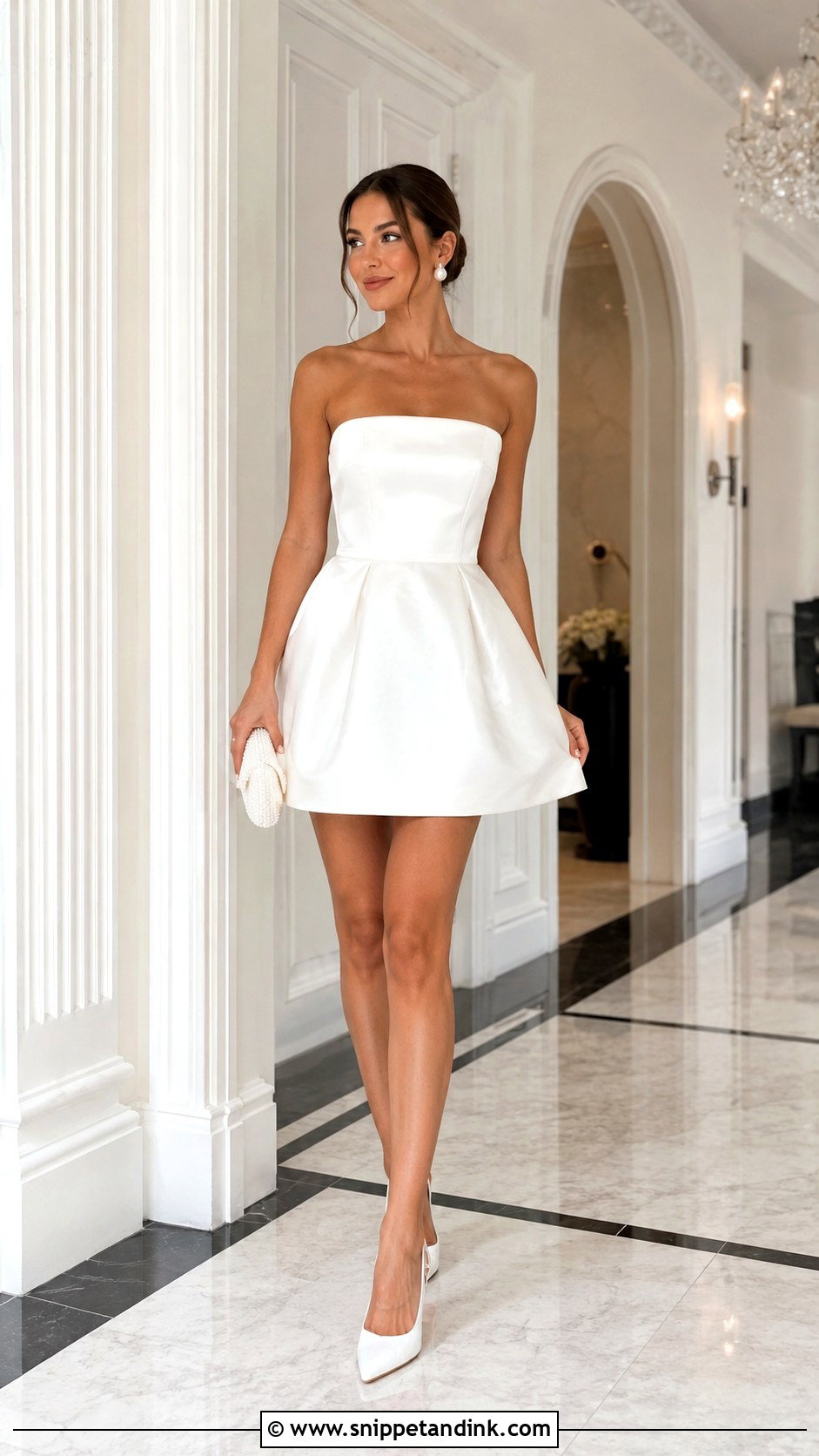
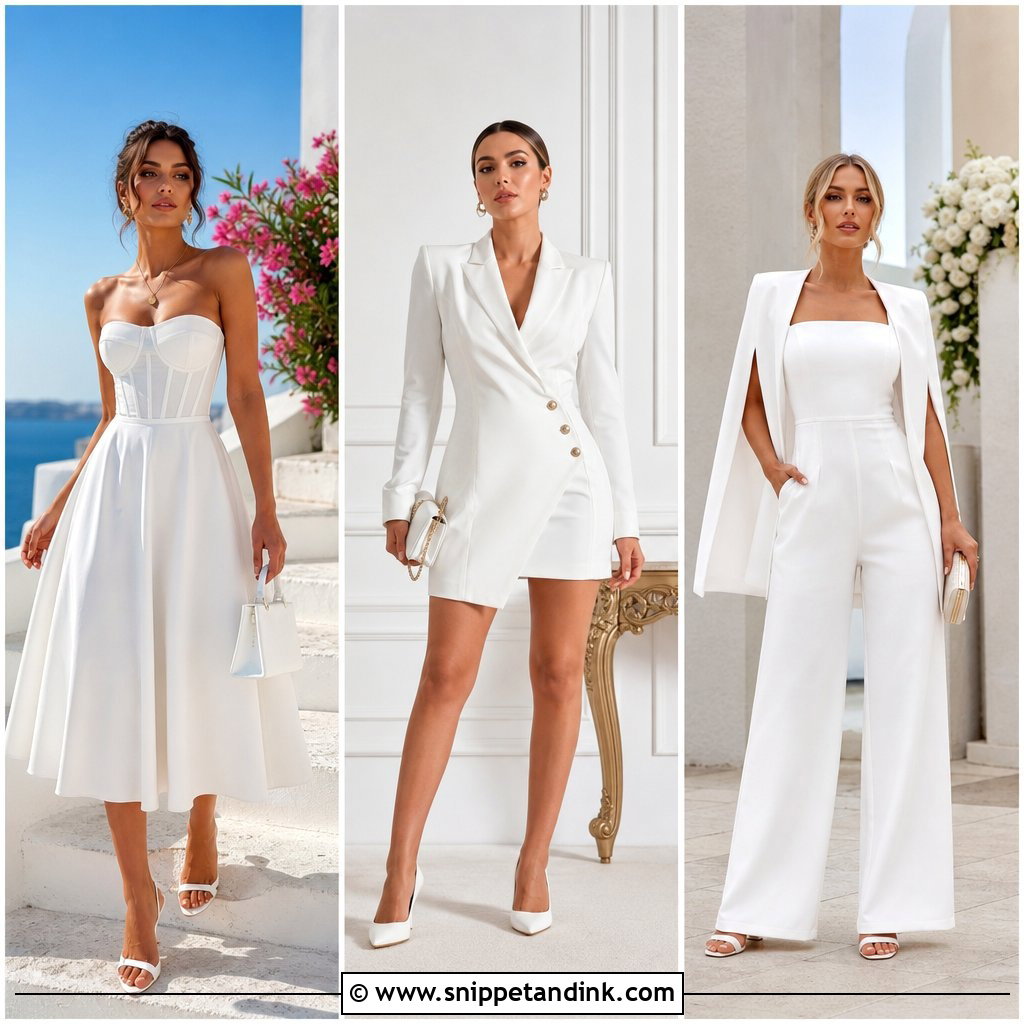
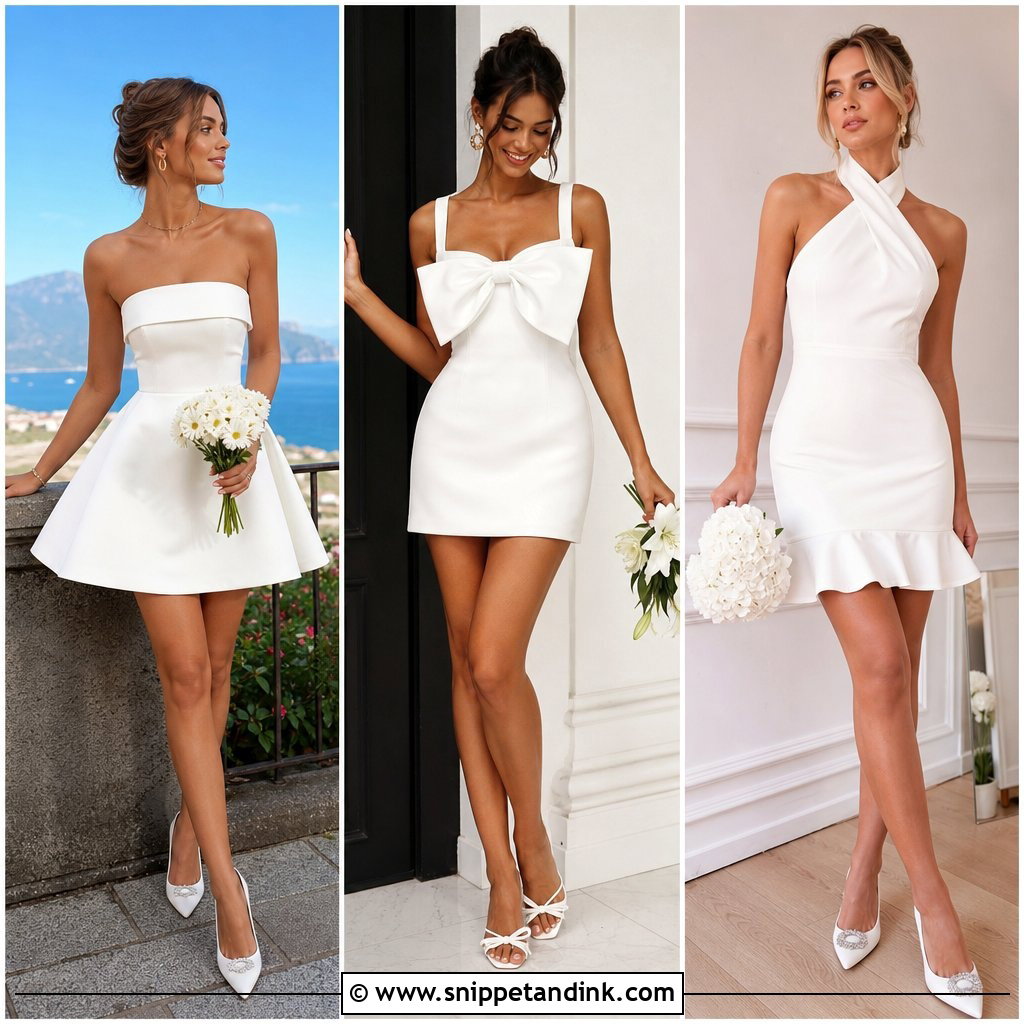
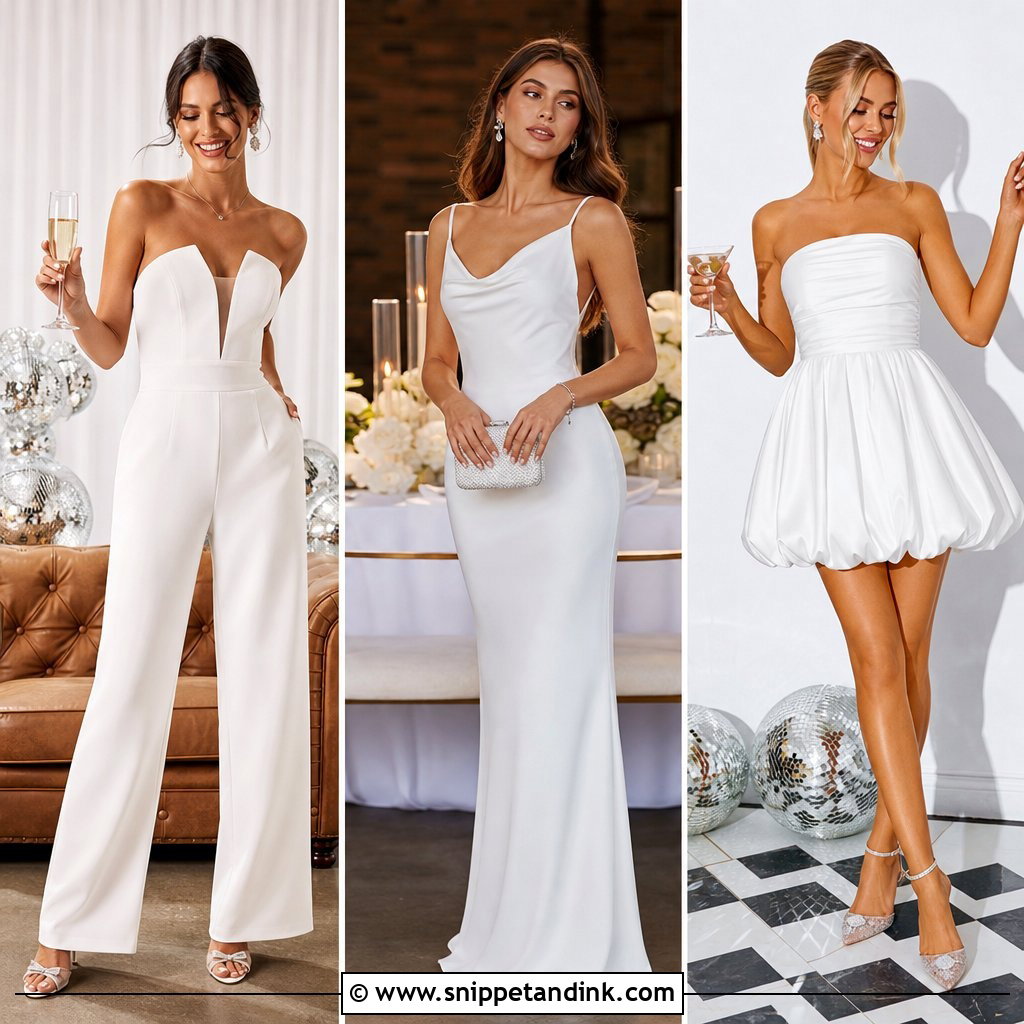
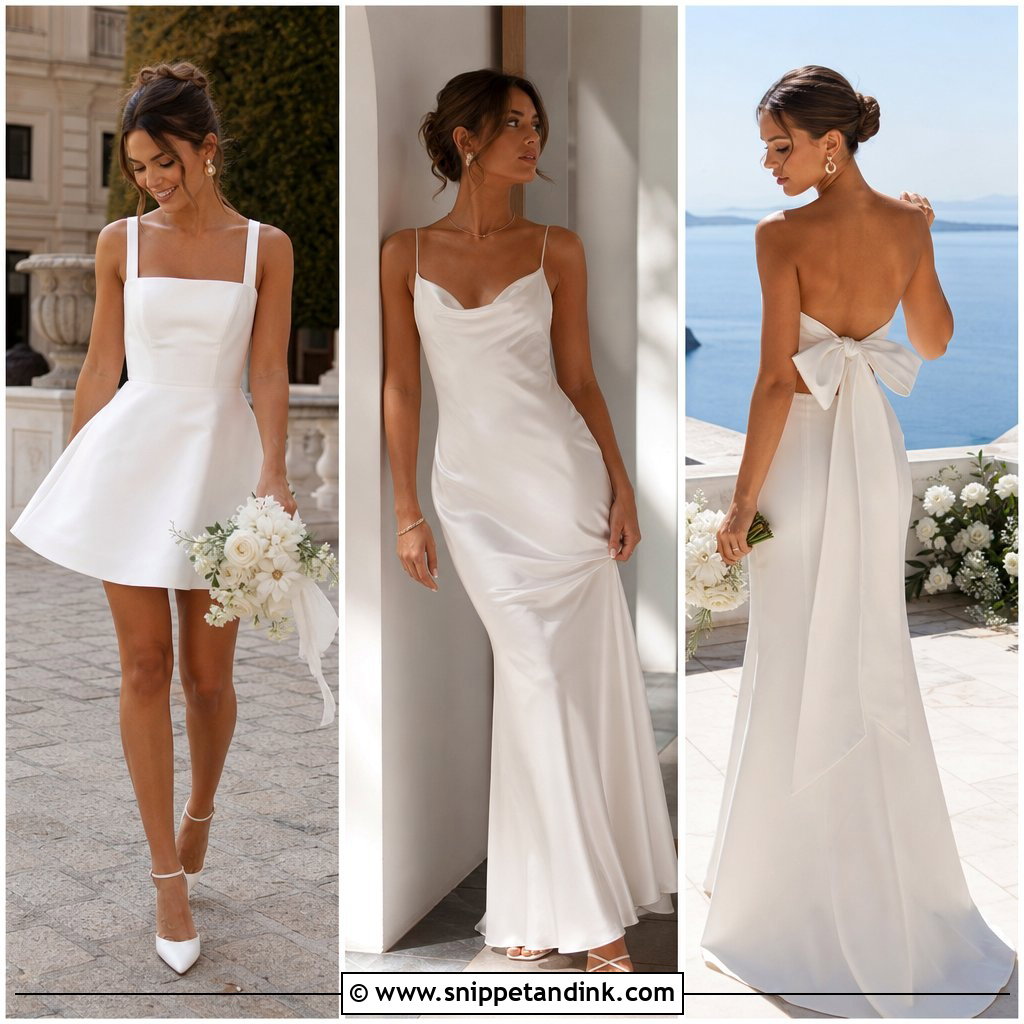
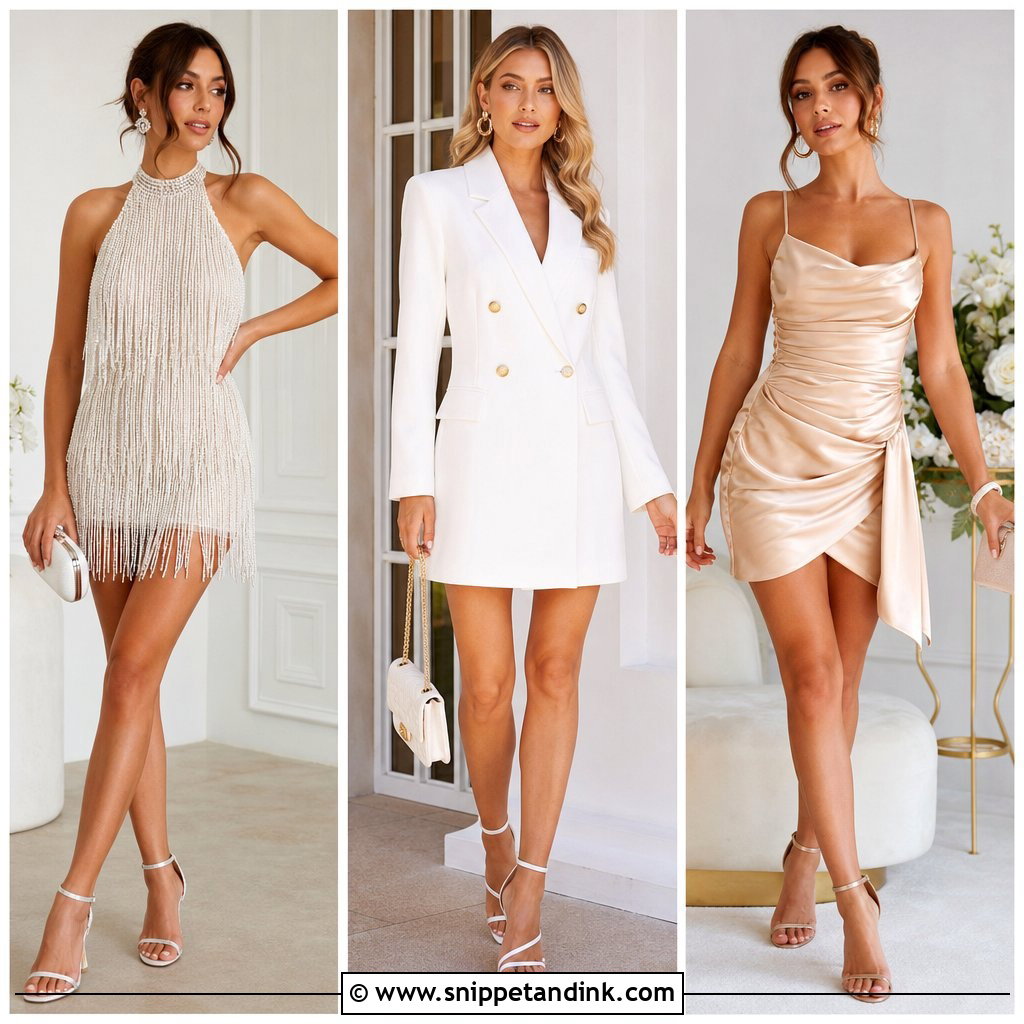
A white satin mini dress is the change I suggest most, because it’s the clearest switch from ceremony to party while still being obviously bridal. You lose the weight and the train, and suddenly you can dance, walk across a lawn and hug a grandparent without anyone holding your skirt. A structured bodice gives support; a soft cowl neckline feels more relaxed but needs a smaller bust or good tape. Satin creases in a garment bag, so I have it steamed and hung at the venue before the day starts. Pearl earrings, slingback heels and a small white clutch complete it, and after a formal gown the contrast in photos is striking.
2. Bridal Reception Slip Dress
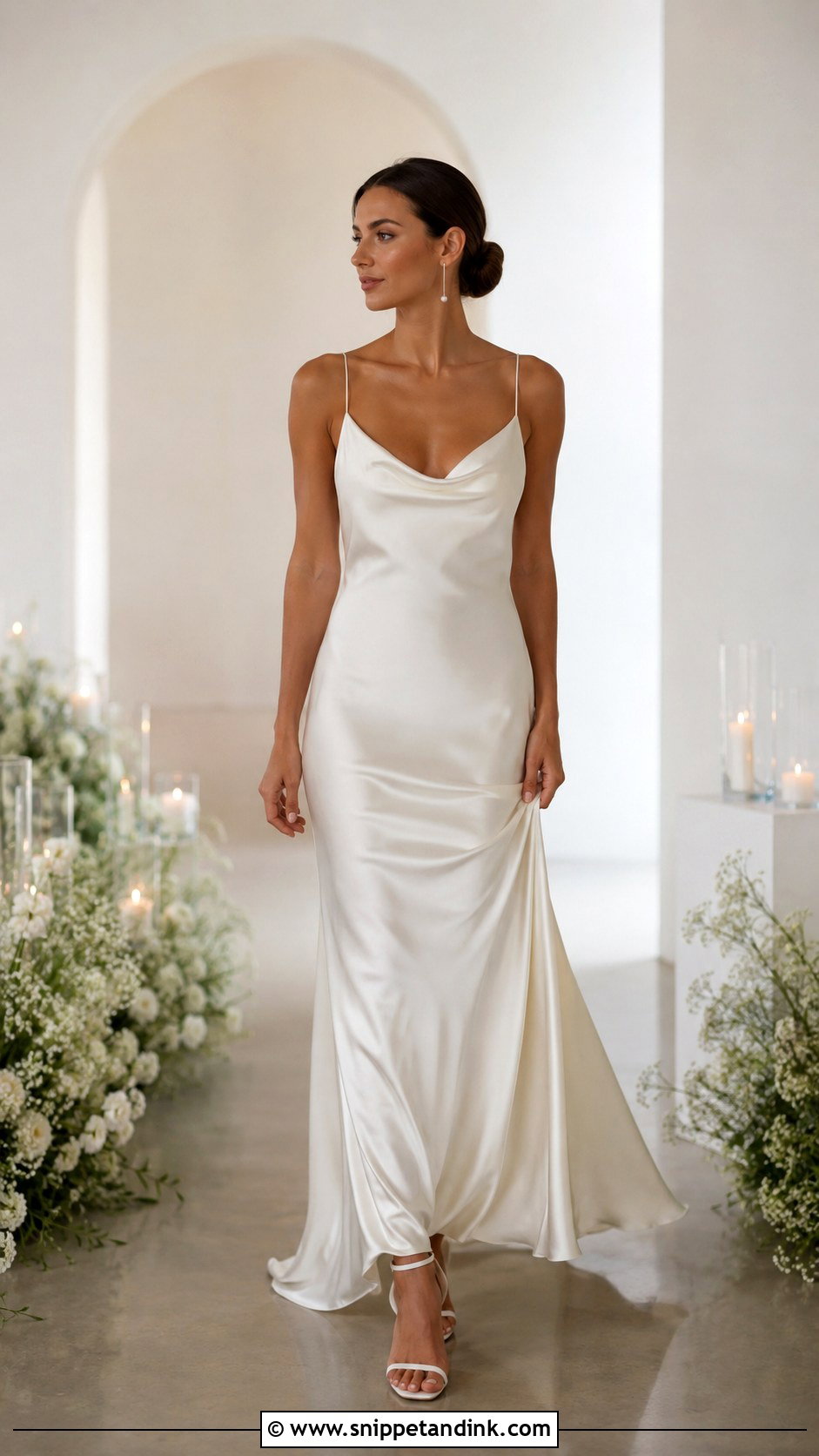
Slip dresses are cut on the bias, and that’s why they skim the body so well after a structured ceremony gown. They also cling and show every line underneath, which is the one thing I prepare for: the bra and underwear from your first look almost never work under a slip. Silk, satin or crepe move nicely and catch reception light softly. Strappy heels, delicate drop earrings and a sleek bun keep it minimal. If the dress is very plain, a pearl hair pin or a crystal bag gives it a finish so it doesn’t look like a nightdress in photos.
3. Beaded Mini Dress For Bride
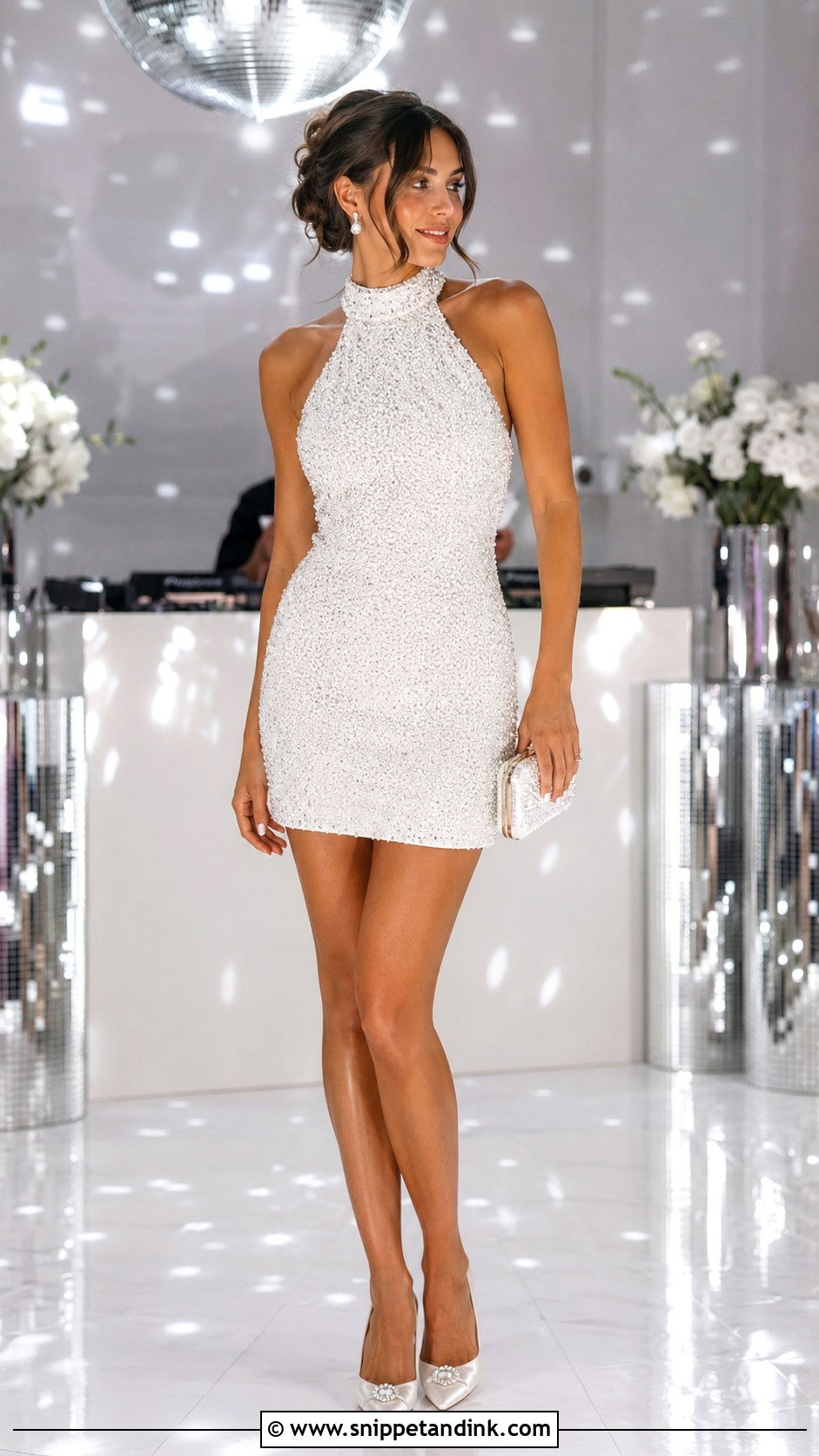
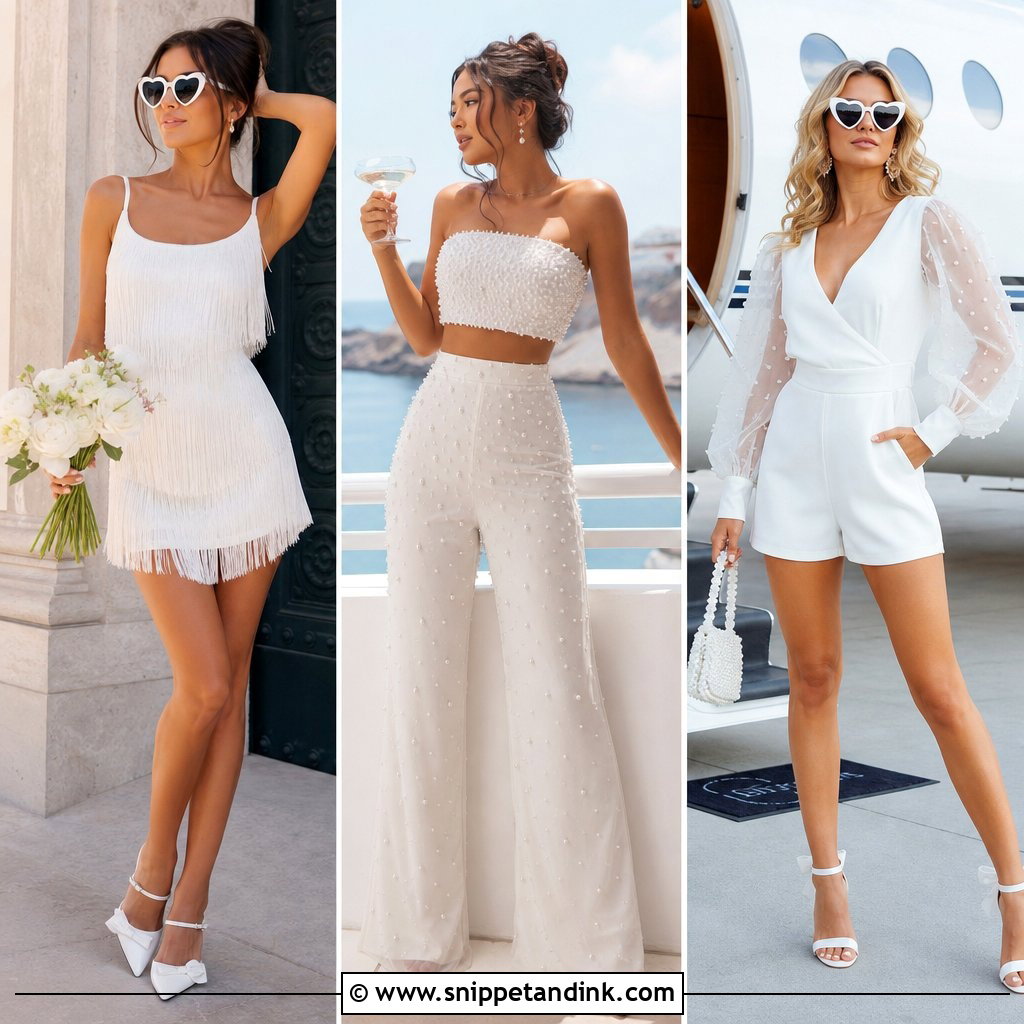
Beads and crystals turn the outfit change into a moment. A beaded mini catches every light on the dance floor, and it’s far lighter to wear than a beaded gown. I look for balanced embellishment, like pearl beading or clear crystals, and I always check the inside seams, since raw beading on the underarm scratches when you dance with your arms up. Keep the accessories sharp and small: pointed heels, little earrings, a clean clutch. A late entrance or after-party reveal is where this one shines.
4. Tea Length Wedding Reception Dress
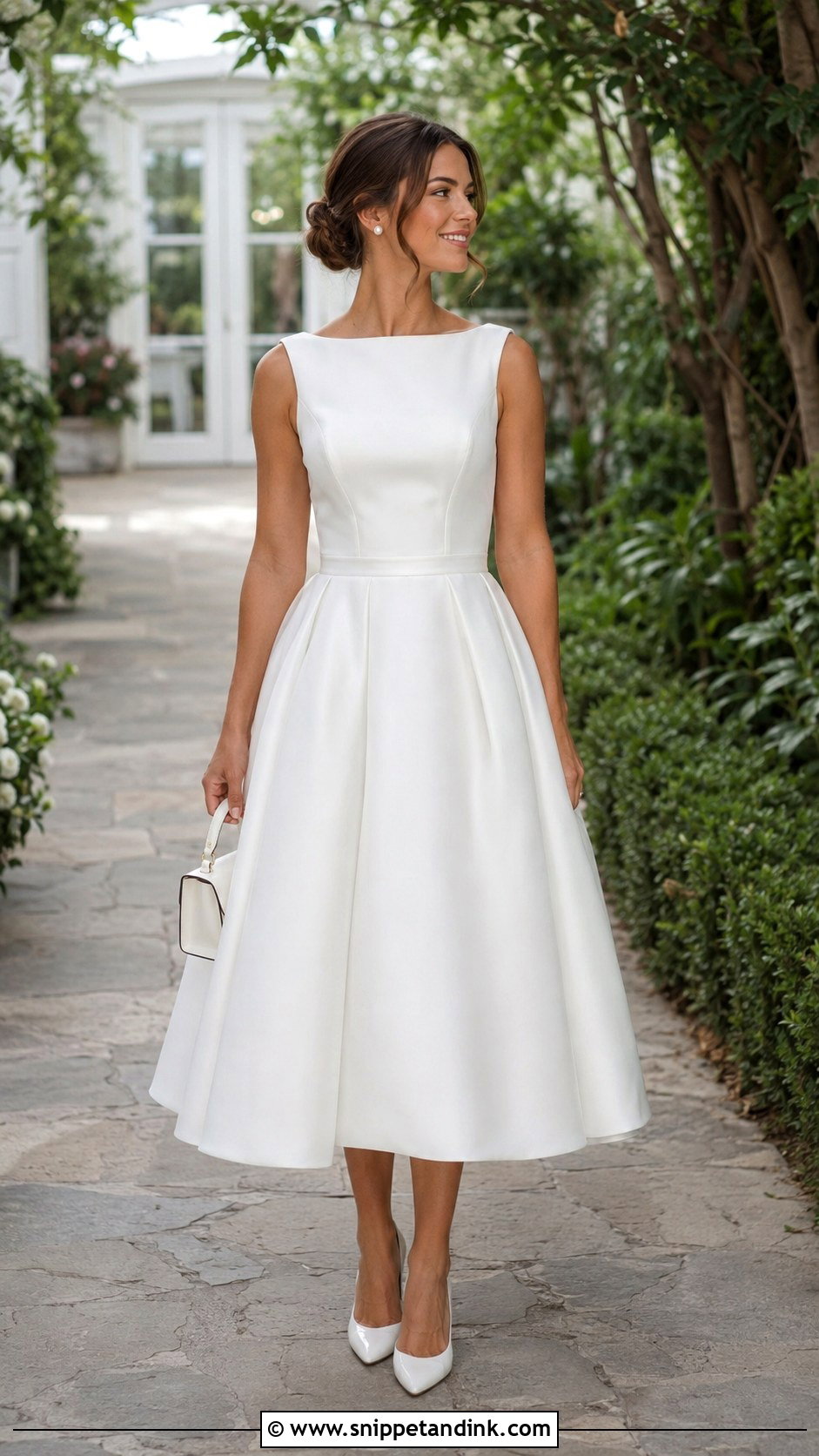
Tea length falls below the knee to about mid-calf, which keeps a vintage or romantic mood going after the ceremony while freeing your legs. A fitted bodice with a flared skirt is my favorite version because it has shape and still lets you sit and dance. Watch the hem point: tea length cuts the leg at a visible spot, so I pin it while the bride stands in the actual reception shoes. Pointed pumps, a short veil, pearl studs and a structured handbag finish the outfit.
5. Feather Trim Bridal Mini Dress
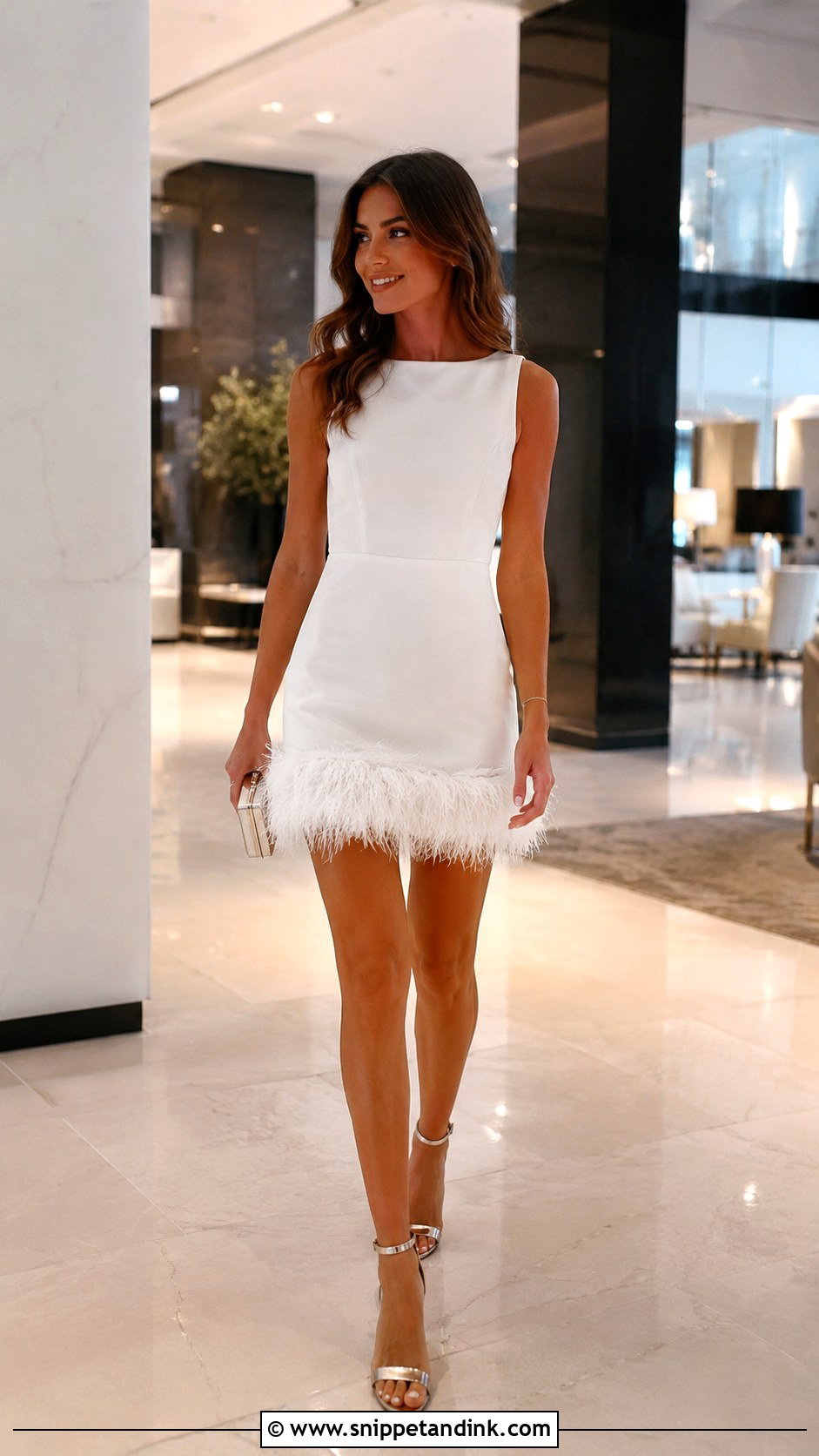
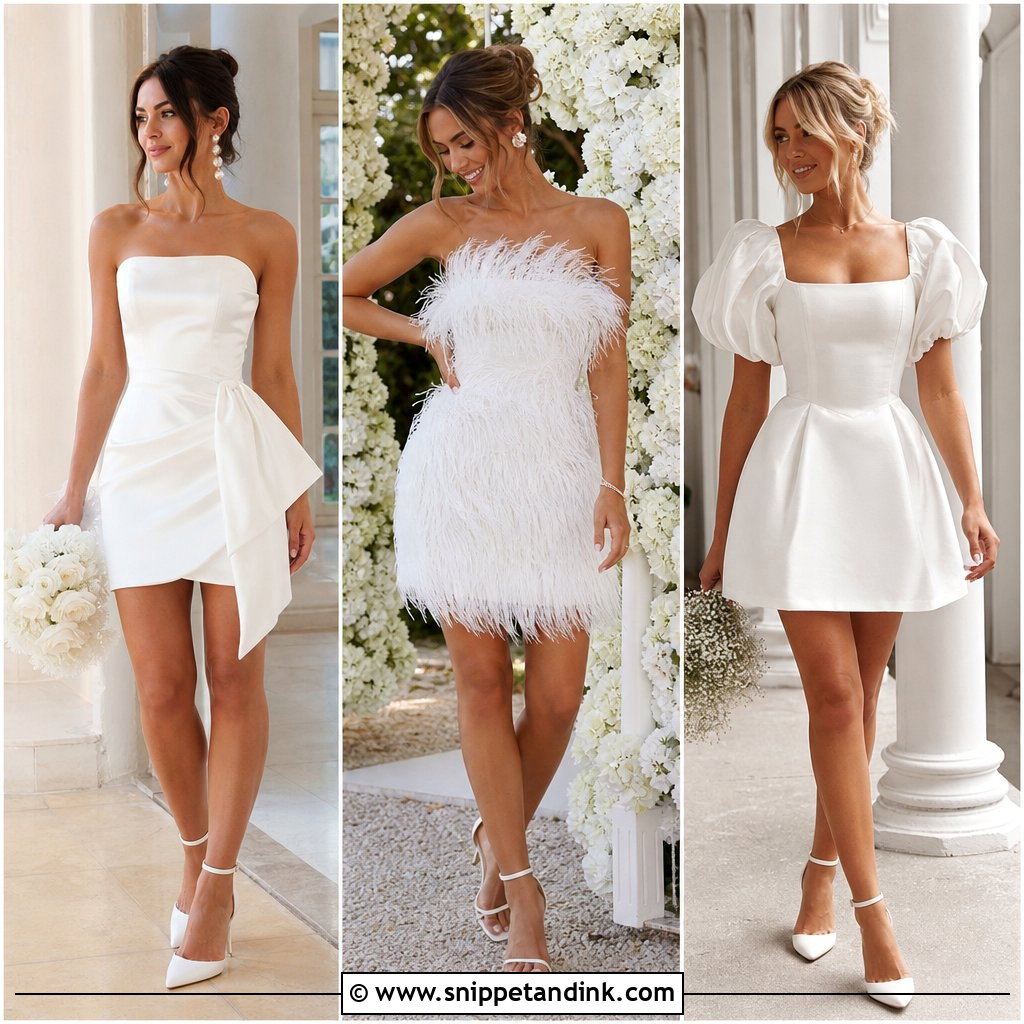
Feathers move every time you do, so a feather trim at the hem, sleeves or neckline makes a simple mini feel animated. The dress underneath should stay plain, such as a white crepe mini, a satin shift or a strapless shape. Feathers do shed and flatten. I keep them in a breathable bag rather than plastic, carry a few spare hand-sewing stitches in the emergency kit, and steer them away from candles. Metallic heels, soft waves and a box clutch suit it. Keep jewelry minimal and let the feathers do the talking.
6. Bridal Jumpsuit For Reception
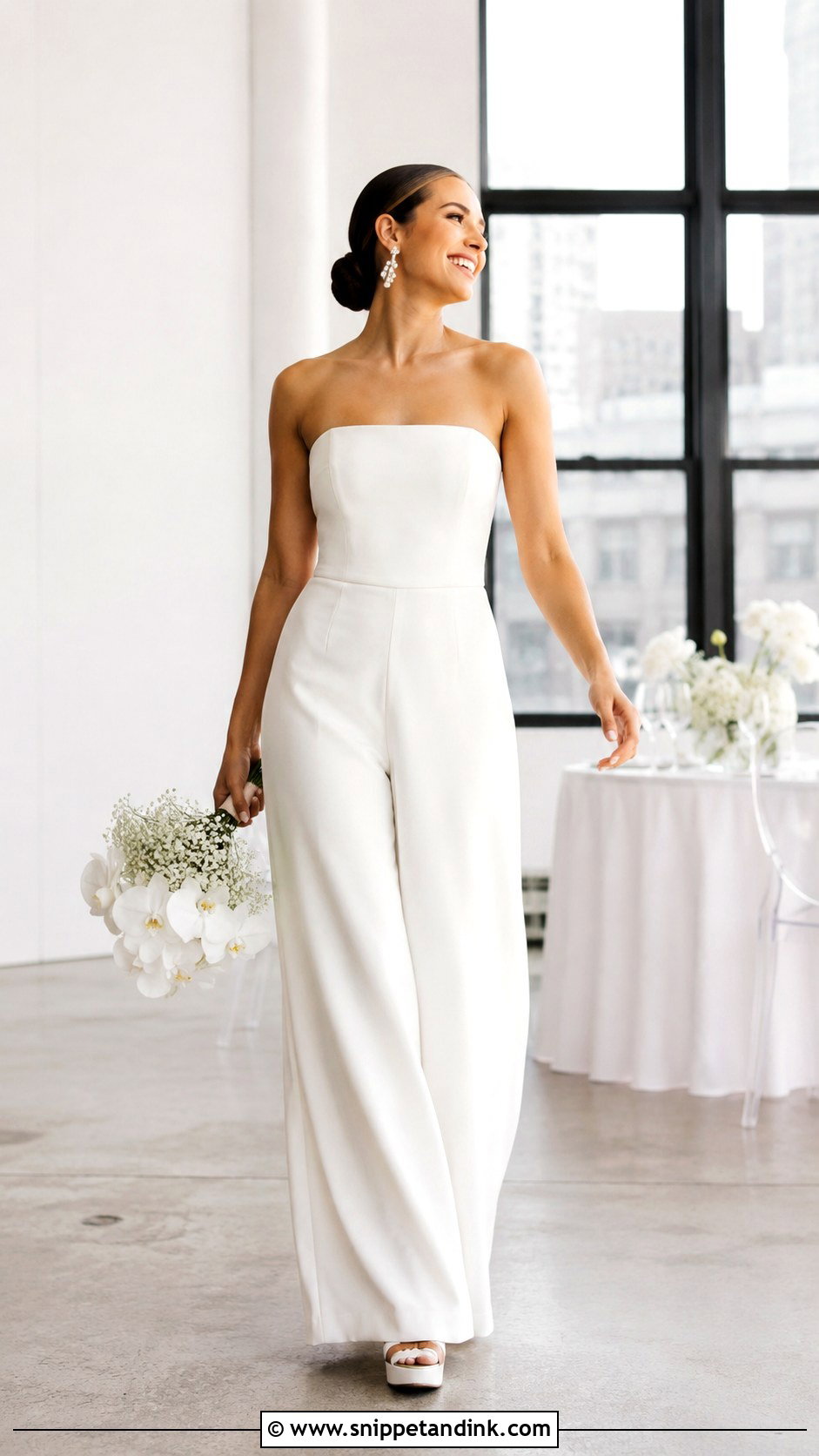
A jumpsuit solves the problem of yet another skirt to manage on a crowded dance floor. Wide-leg jumpsuits feel formal and swing as you move; tailored cigarette legs look sleek and city-ready. White crepe holds its shape best and hides creases from sitting. Honest drawback: bathroom trips. Ask for a long back zip or a separate top and trouser that only looks like one piece. Platform heels keep wide legs off the floor, and statement earrings with a low bun finish it.
7. Two Piece Bridal Skirt Set
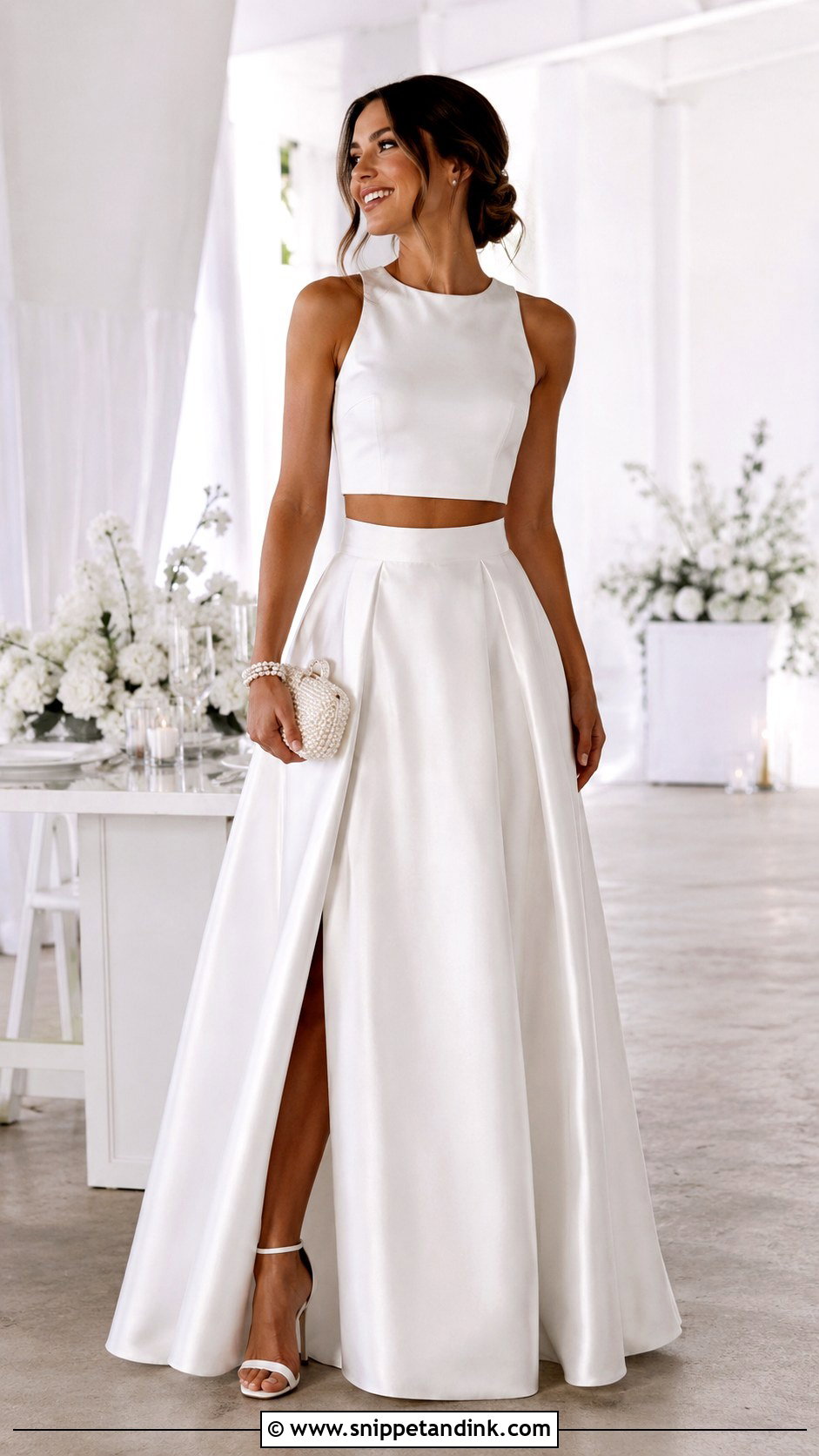
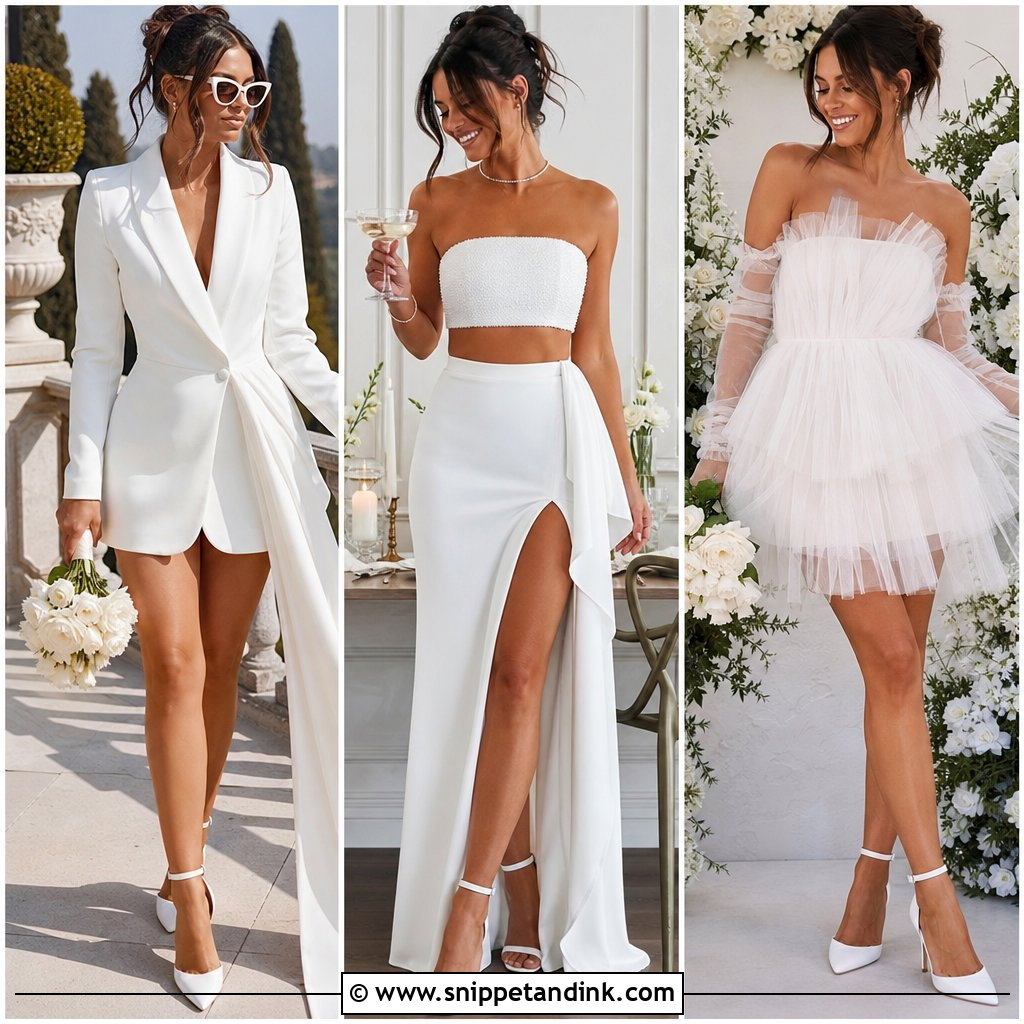
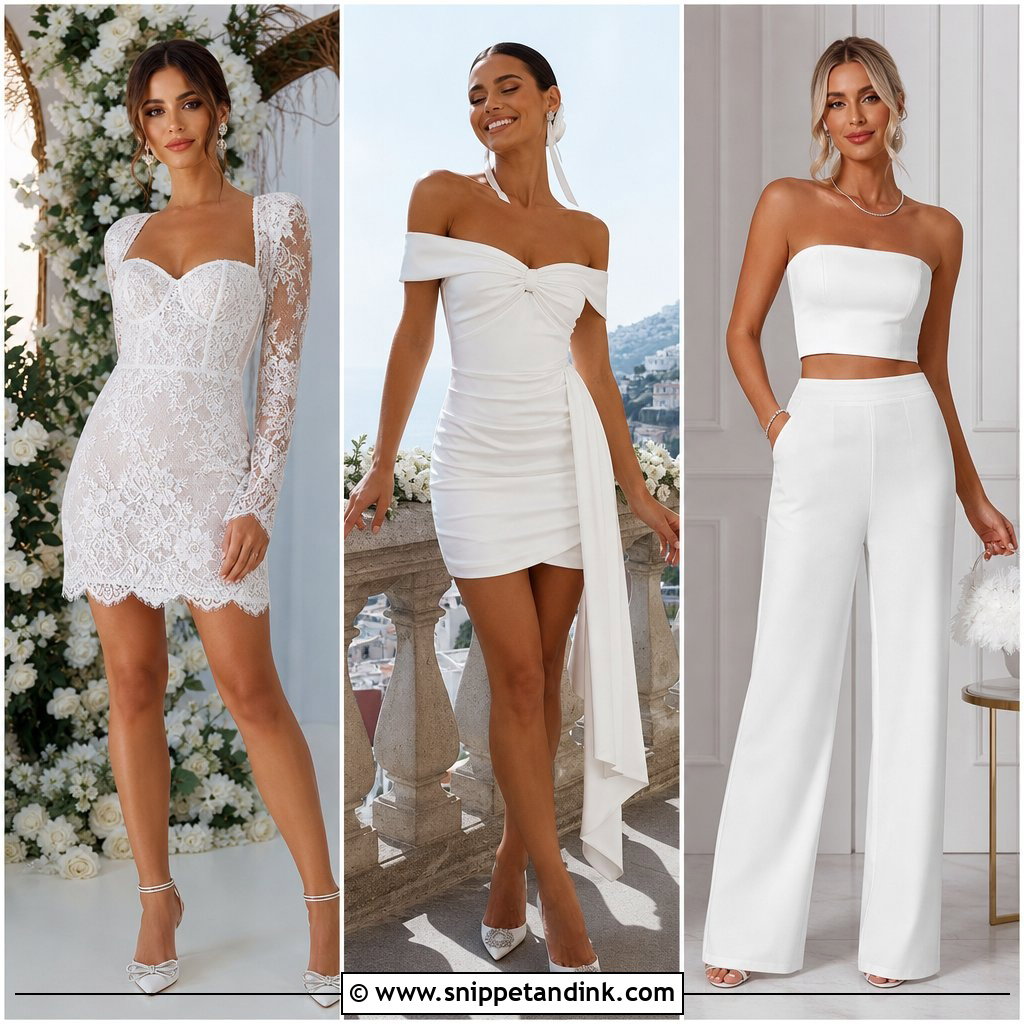
A cropped top with a high-waisted skirt gives you shape and far more movement than a gown. Lace, satin or organza keeps it romantic; a structured bandeau with a column skirt looks cleaner. Two pieces are also the easiest outfit to tailor, since the top and skirt can be fitted separately, which helps if your measurements differ top and bottom. I’d keep the gap between the two pieces narrow if you’re unsure about showing skin. Heeled sandals, a pearl bracelet and a simple clutch complete it.
8. White Blazer Dress For Bride
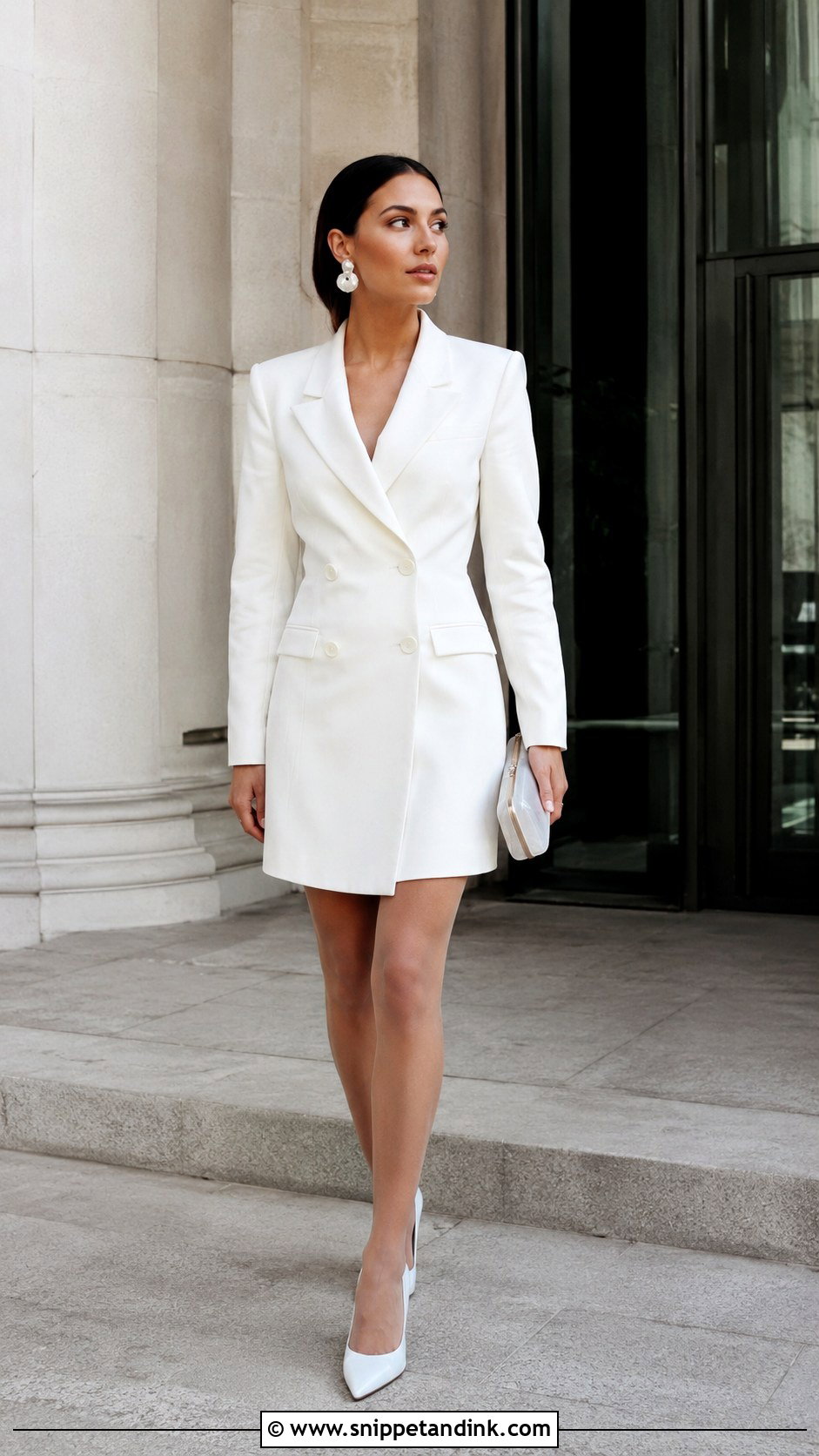
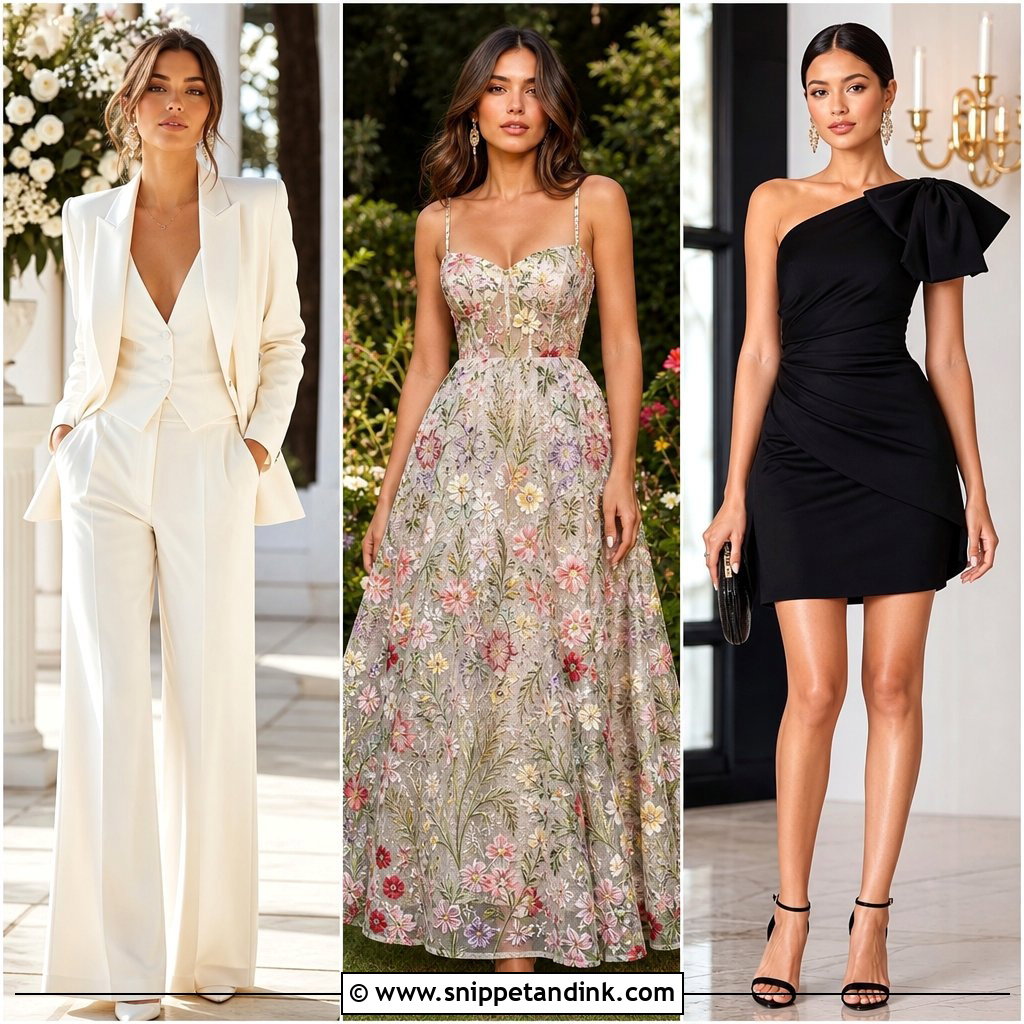
Sharp tailoring makes a blazer dress feel powerful, and the white keeps it unmistakably bridal. It suits courthouse weddings, city receptions and after-parties. A double-breasted blazer dress gives the most structure; a softer wrap version moves more easily. The fitting point I care about is the lapel: it should lie flat when you sit and lift your arms, not gape open. Sheer tights in cold weather, pointed heels, a sleek clutch and sculptural earrings finish it.
9. Lace Mini Dress For Bride
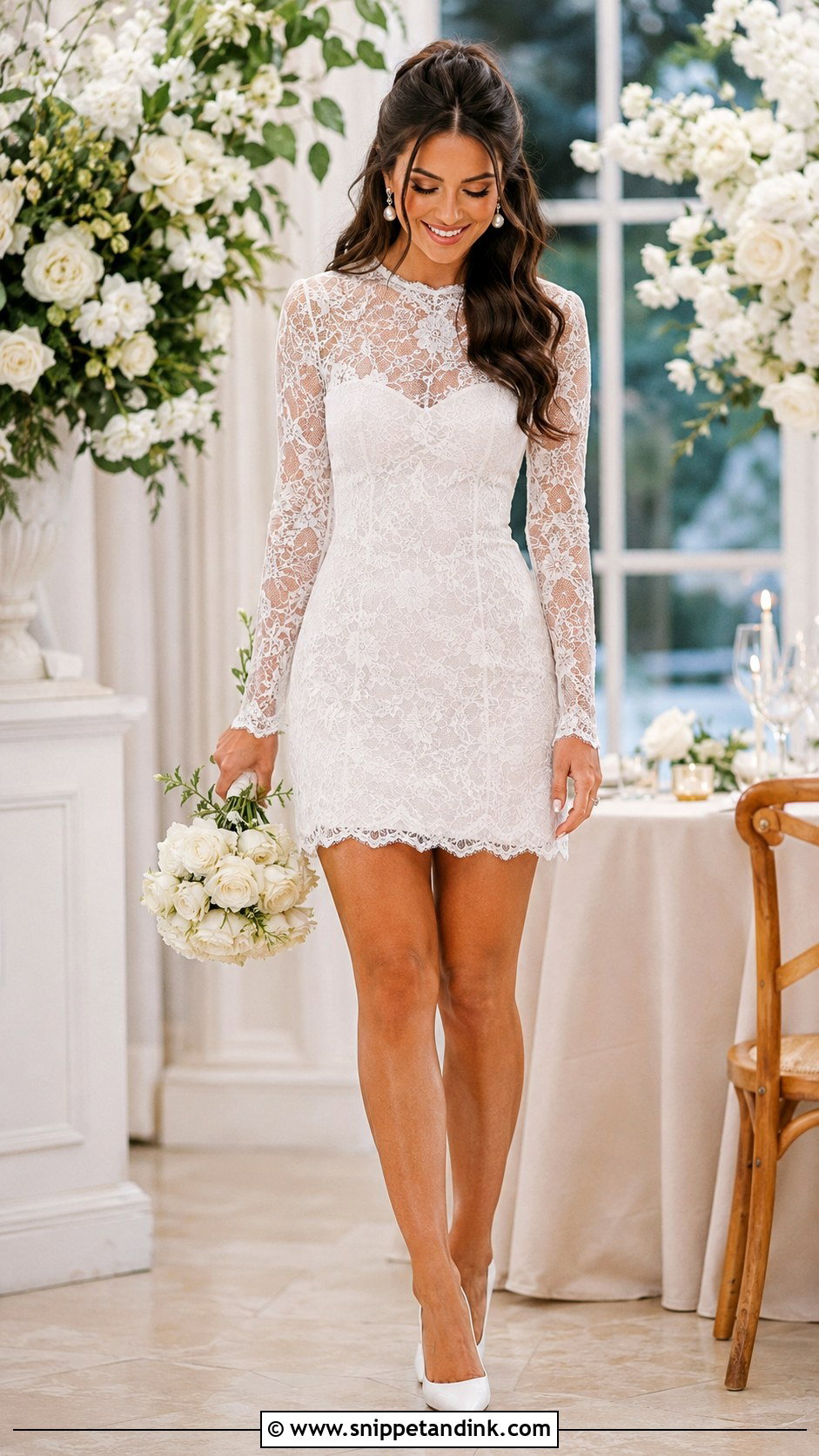
If your ceremony gown was lace, a lace mini picks up the same texture in a lighter, shorter form. If your ceremony dress was plain, the lace brings in detail that wasn’t there before. Modern patterns, long sleeves or a square neckline keep it current. Lace is the fabric I’d test most for comfort, since some lace edges scratch bare legs when you sit. Satin pumps, pearl earrings and a soft half-up style suit it. If the ceremony gown was ornate, I’d go for a simpler lace so the evening feels calmer.
10. Off Shoulder Bridal Reception Dress
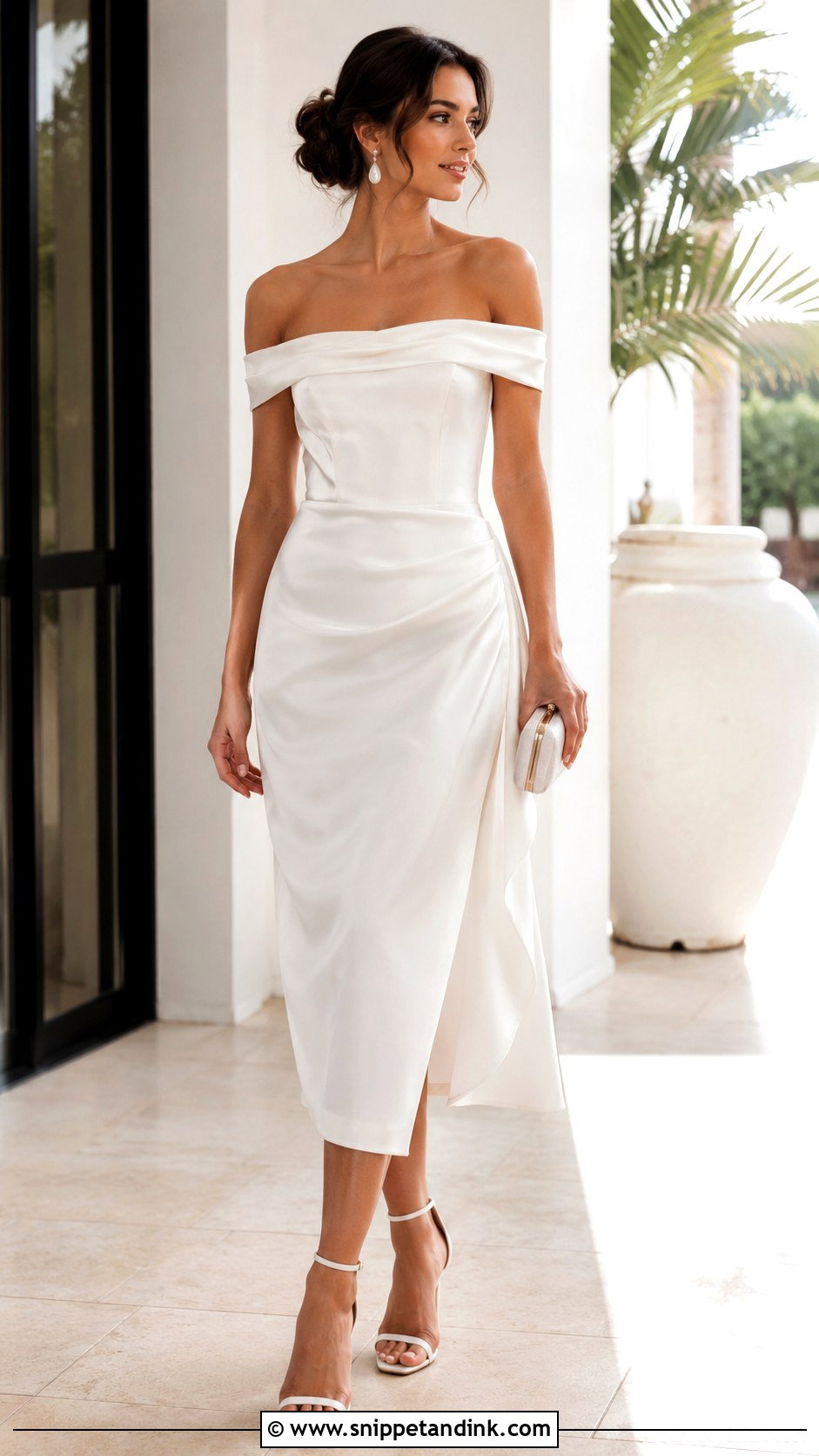
Off-shoulder necklines frame the collarbone and feel lighter than most ceremony gowns, which is why they suit warm-weather receptions. A fitted midi, a satin mini or a simple A-line all work. The dancing test matters here: lift your arms above your head in the fitting room. If the band slides down or the bodice rides up, it needs firmer structure before the day. Drop earrings, a delicate necklace and heeled sandals complete the look.
11. Sequin Dress For Bride After Party
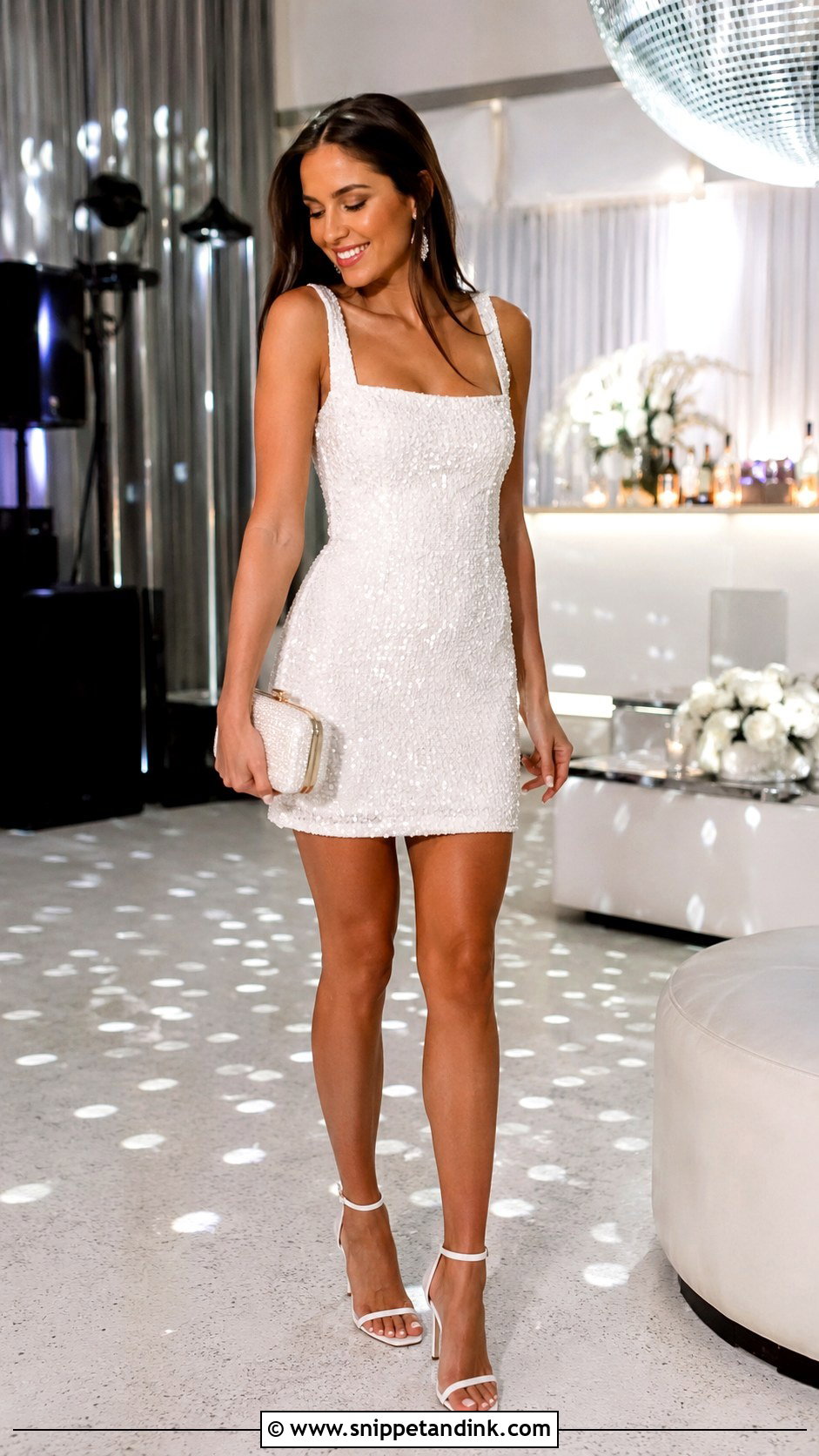
Nothing gets a dance floor going like a bride in sequins. White, ivory, silver or champagne sequins all work depending on the wedding palette; a mini feels playful, a midi a little more refined. Sequins are heavy and scratchy on the inner arms, so check that the lining covers every seam. With that much shine, the rest stays simple: plain heels, a small clutch and smooth hair. Too many accessories on top of sequins makes the outfit look busy rather than festive.
12. Strapless Reception Dress For Bride
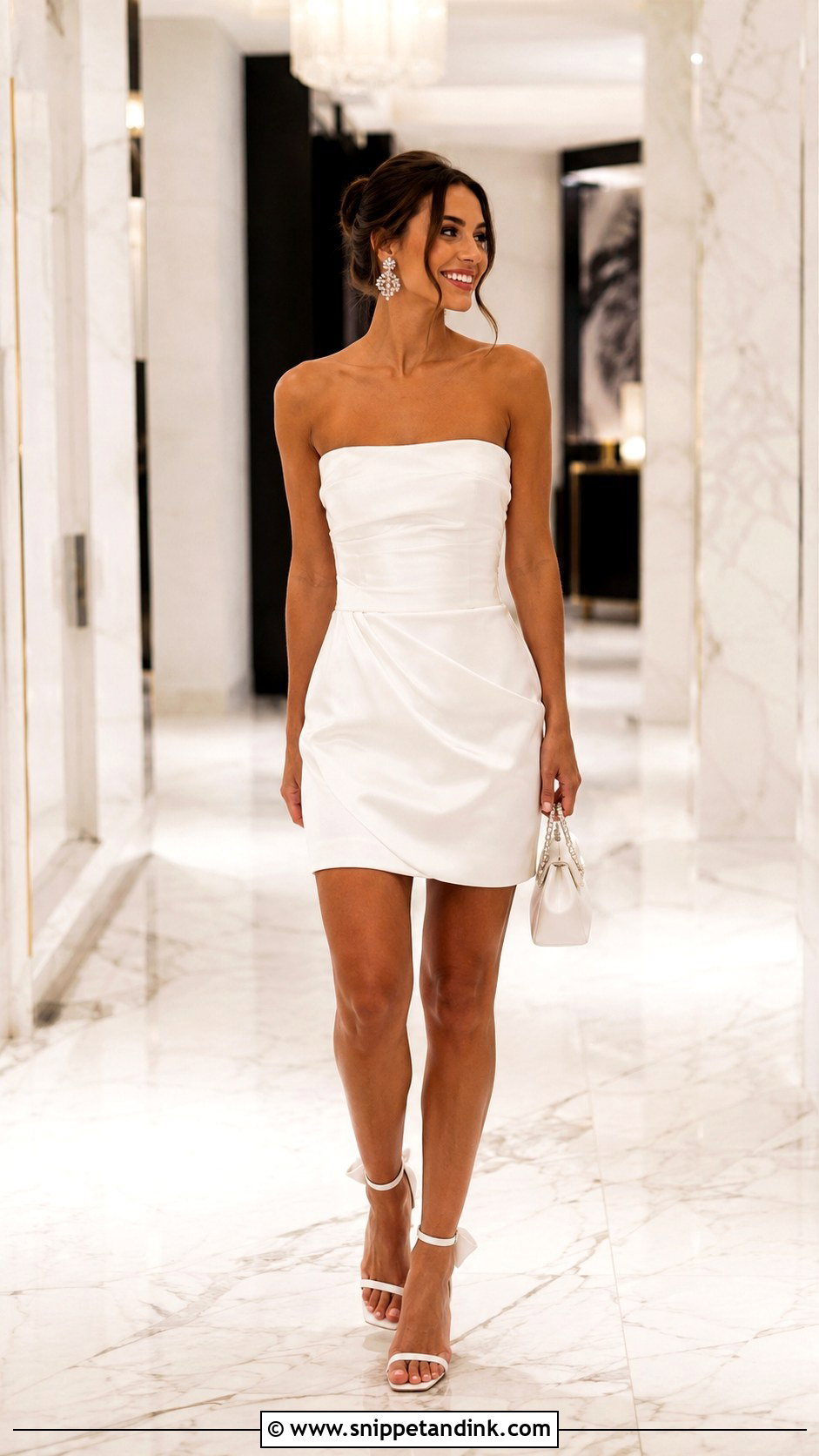
A strapless reception dress contrasts well with a ceremony gown that had sleeves, high lace or heavy detail. A fitted satin mini feels modern; a strapless midi or column feels formal. The bodice must hold you up without straps through hours of dancing, so I check for boning and a grip strip at the top edge. The bare neckline leaves room for statement earrings, a choker or a soft updo. Ankle-strap heels and a small bridal bag complete it.
13. Bow Detail Bridal Mini Dress
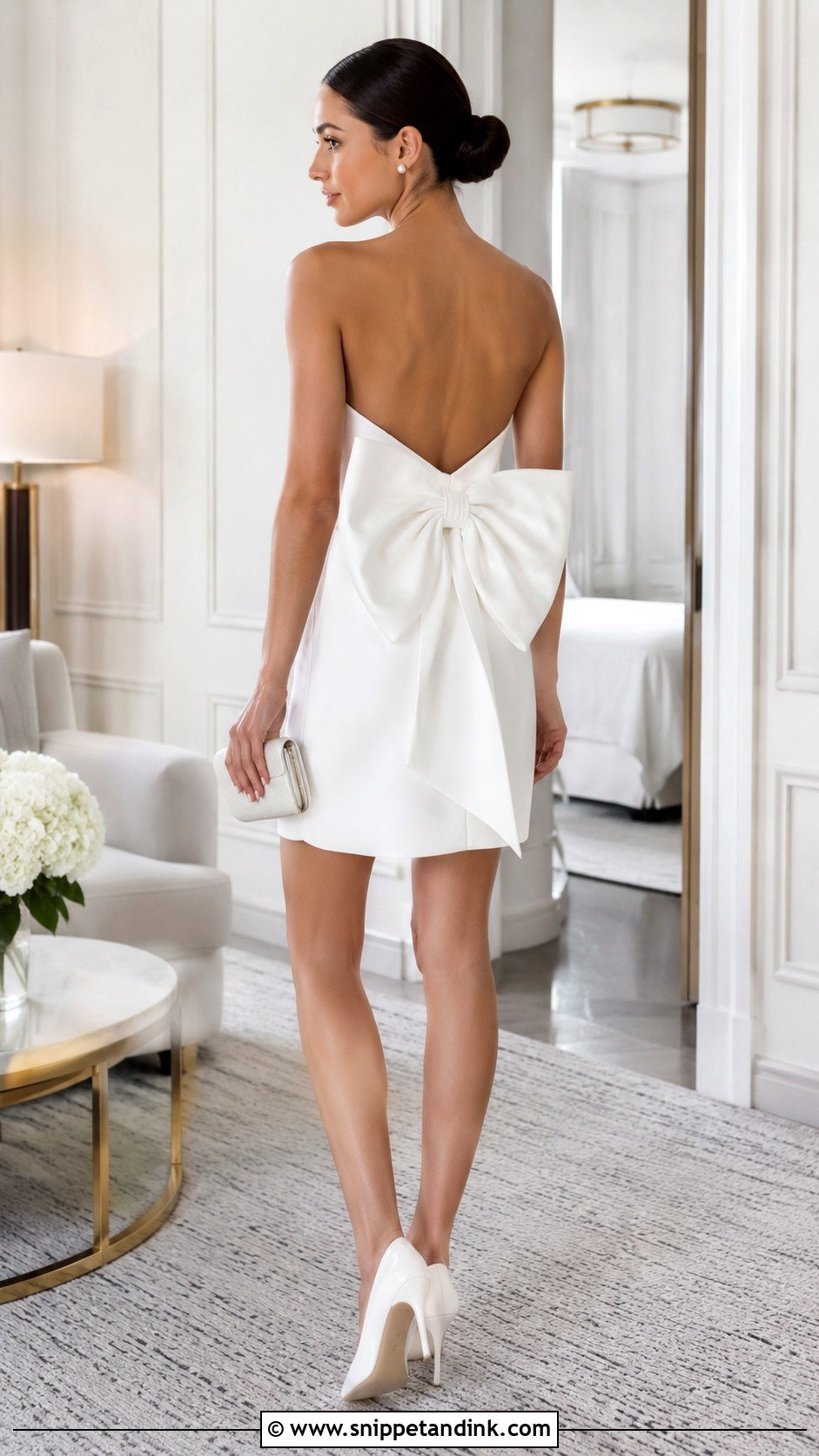
Where the bow sits changes the whole mood. At the back it’s dramatic and photographs best during exits and dances; at the shoulder or waist it’s quieter. I check how a large back bow behaves when you sit, because a big stiff bow can crush against the chair and look limp by the end of dinner. Simple pumps, pearl studs and a sleek clutch let the bow stay the main detail. It gives a sweet, feminine second look with no sparkle at all.
14. Tulle Mini Dress For Bride
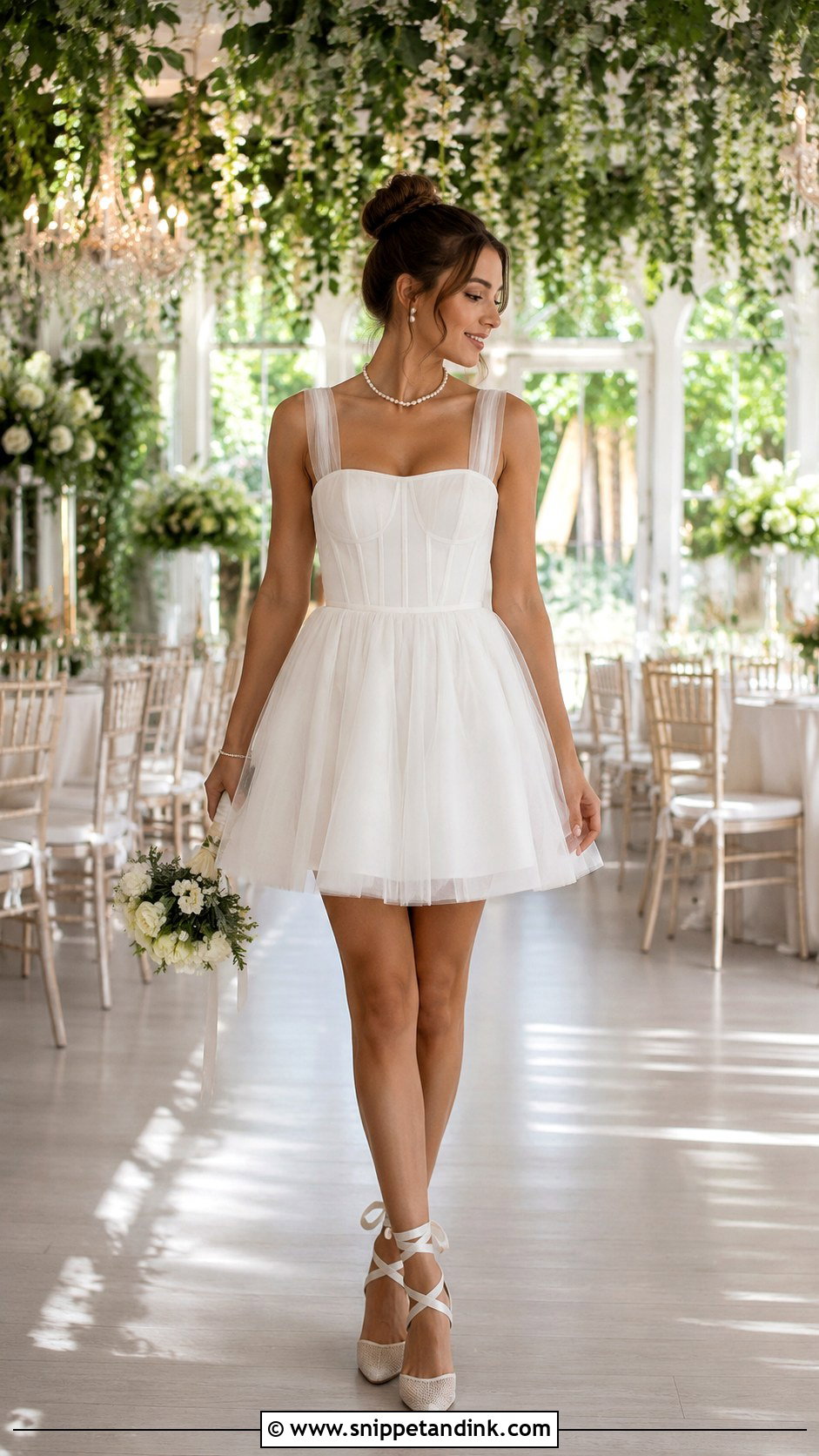
A short tulle skirt keeps some of the princess feeling of a ceremony gown without its weight. Layers of soft tulle create volume, and a fitted bodice, corset top or simple square neckline balances them. Tulle crushes in a garment bag, so hang it as early as possible and fluff the layers by hand. Ballet-inspired heels, pearl accessories and a soft bun keep it romantic. It’s the obvious next step for a bride who loved her full skirt but wants to dance freely.
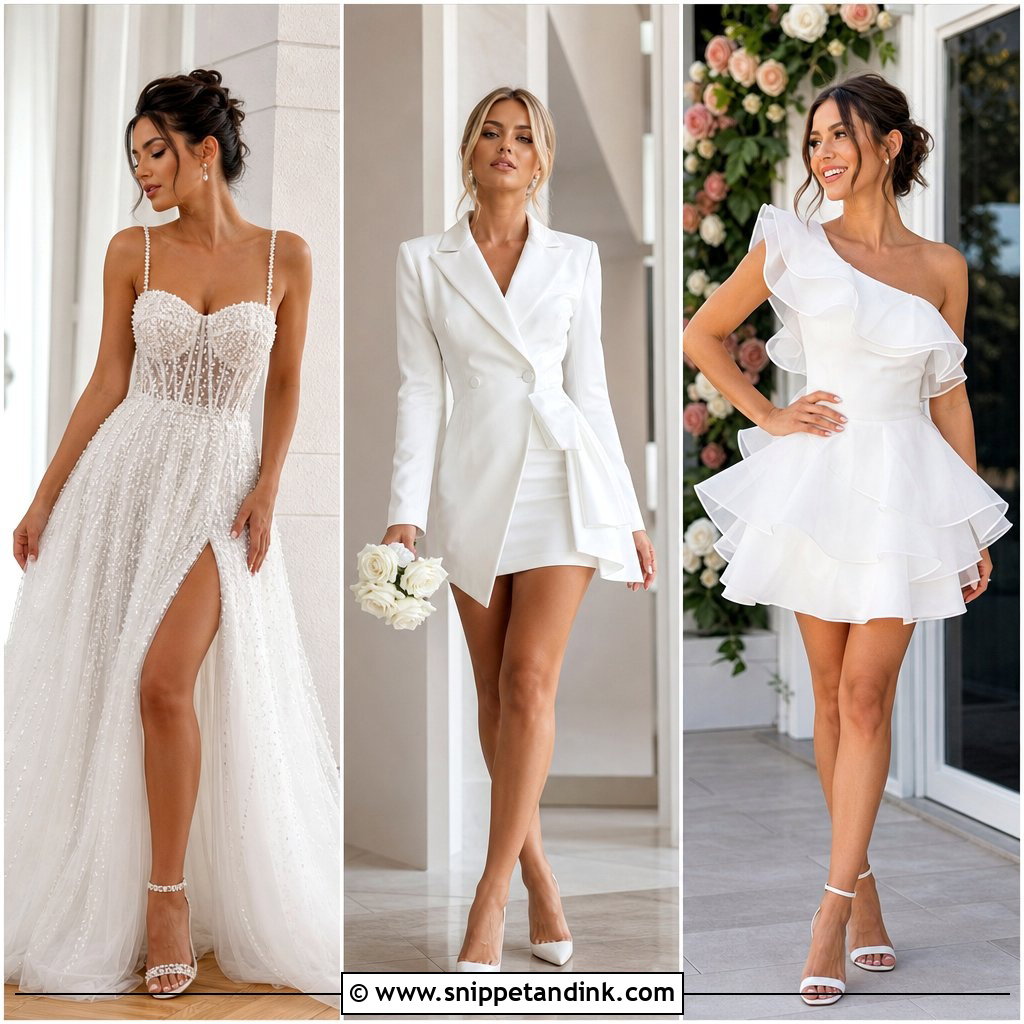
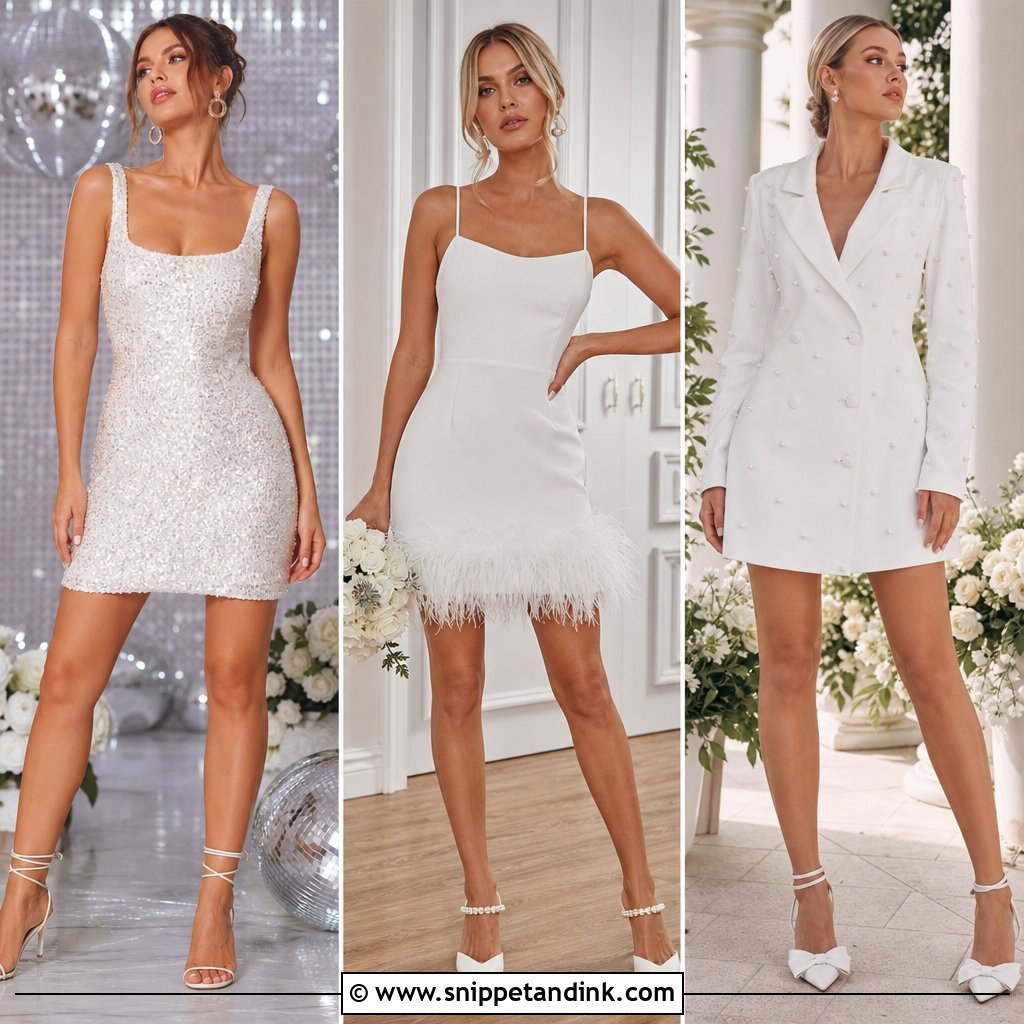
15. Corset Bridal Reception Dress
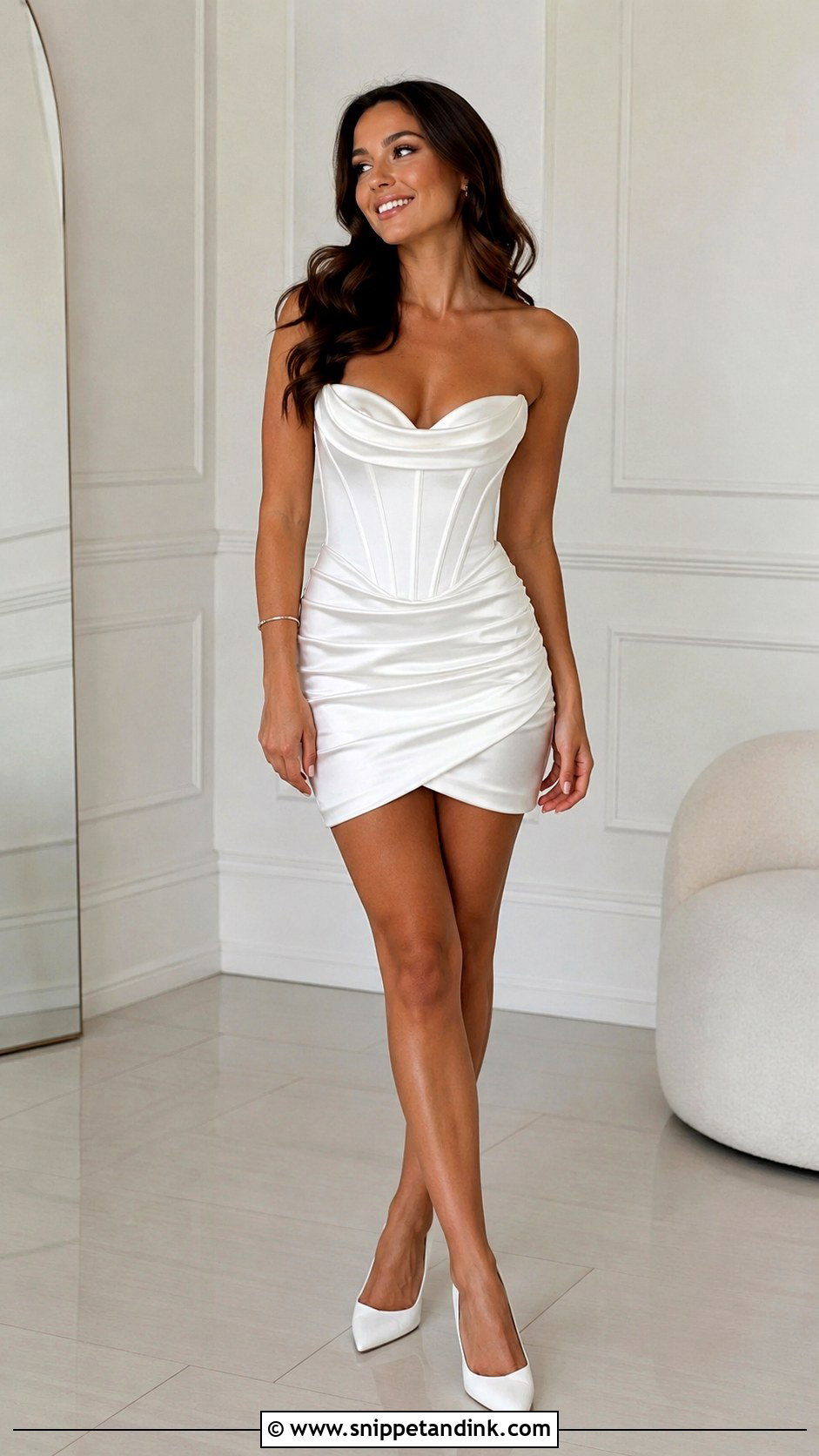
A corset bodice gives shape and real support, and it makes even a short dress look dressier. Satin, lace, crepe or tulle all work. Very tight traditional corsets can be hard work through dinner and dancing, so I usually suggest a corset-inspired bodice with flexible boning that holds you without restricting your breathing. Pointed heels, a delicate bracelet and soft waves complete it. It feels secure through dinner, photos and the last song.
16. Pearl Dress For Bride
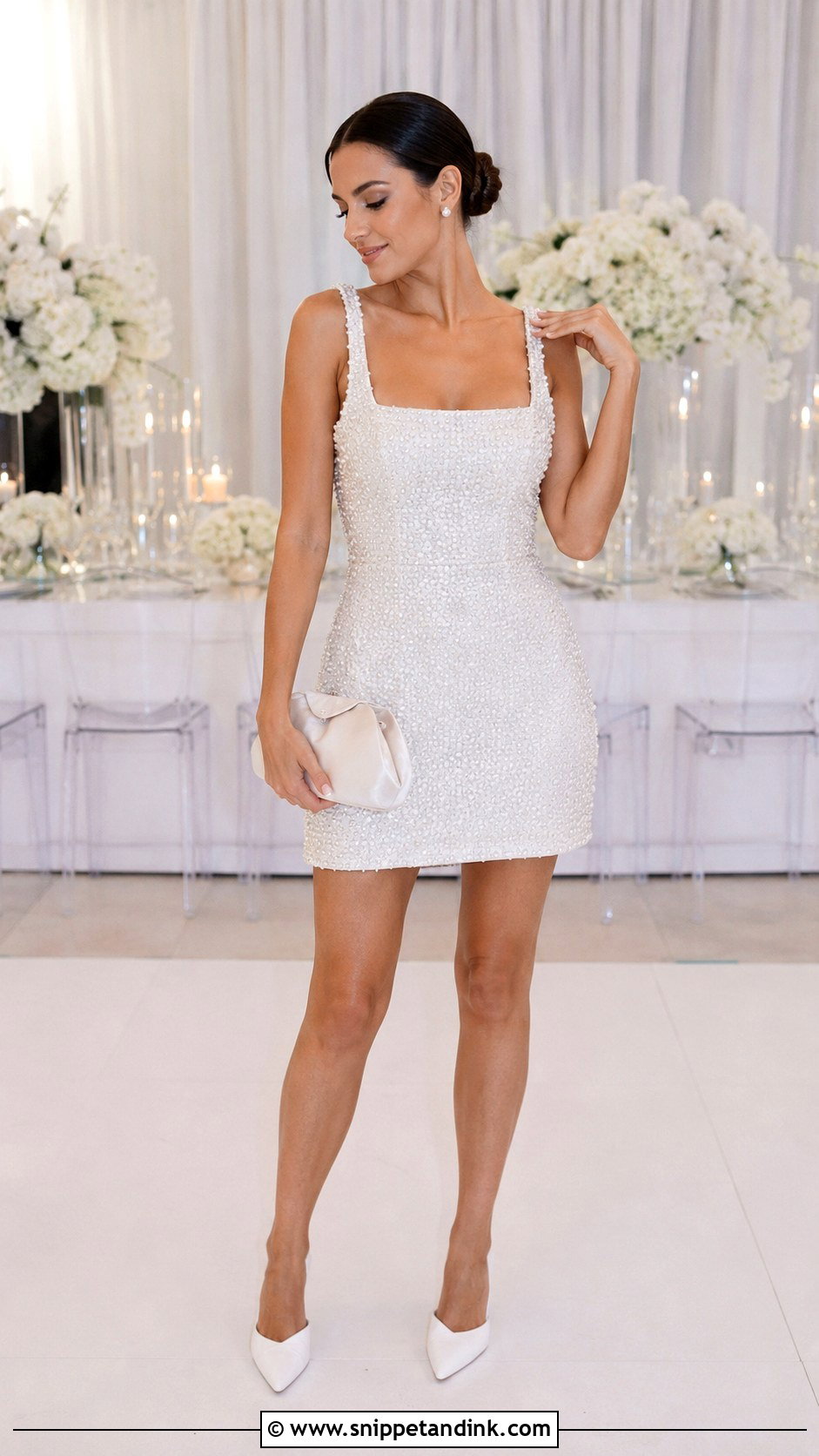
Pearls give a soft shine instead of sparkle, and an all-pearl mini, midi or shift feels quietly expensive. Keep the rest of the outfit clean with white heels, pearl studs and a satin clutch. If the dress is heavily covered, choose a simple hairstyle so the look doesn’t get crowded. Check the stitching before the day: sewn pearls can come loose with dancing, and a trail of beads on the floor is easy to avoid with a quick inspection and a few extra stitches.
17. High Low Bridal Reception Dress
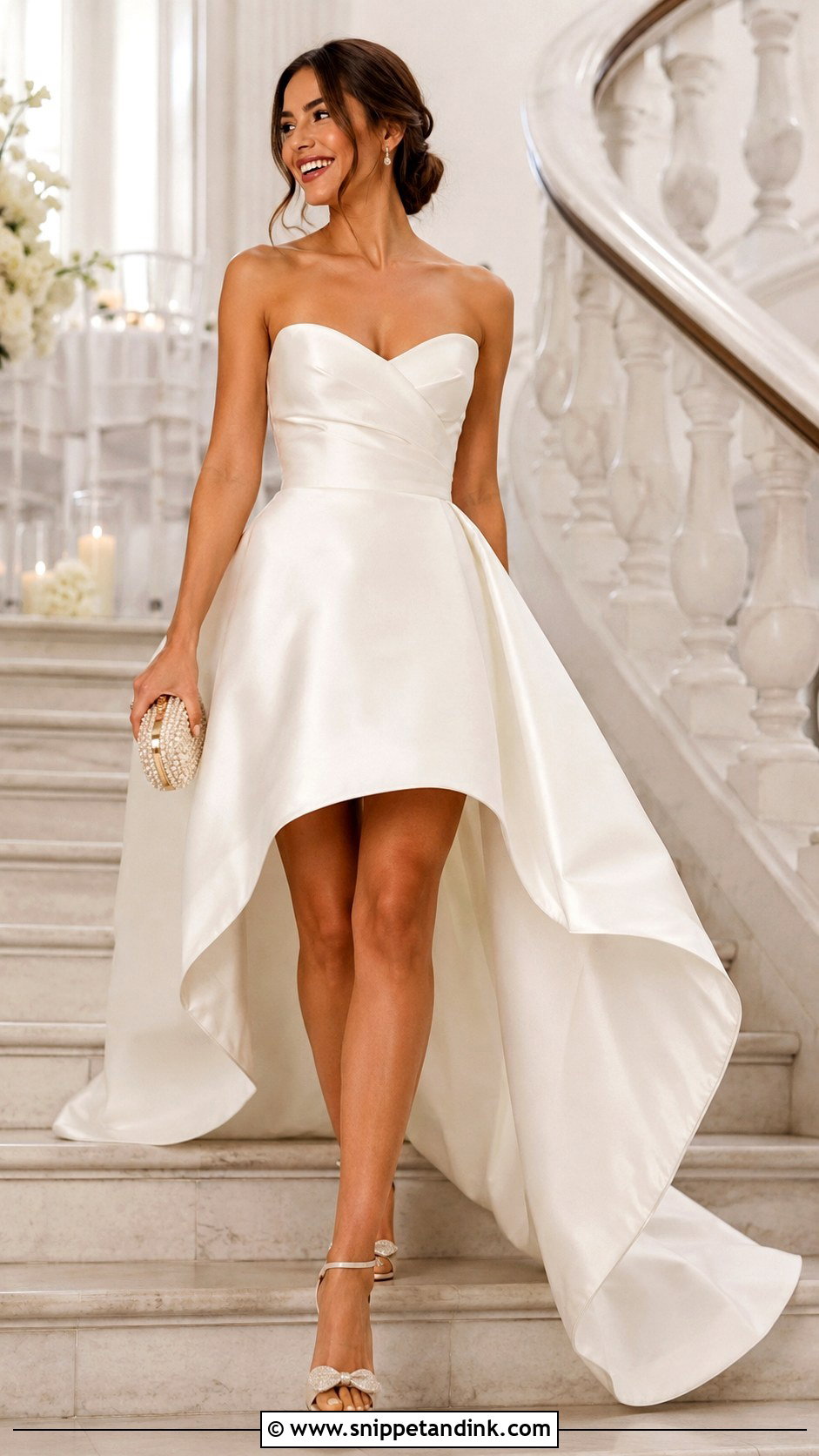
Not ready for a mini? A high-low hem is the compromise. The front is short enough to walk and dance in; the back keeps some drama. Satin, organza, mikado and soft tulle all hold the shape. Your shoes will be fully on display, so they need to be both striking and comfortable for hours. Simple earrings and a small clutch complete it. Mikado and structured satin keep the hem’s line crisp; softer tulle lets it float.
18. Long Sleeve Bridal Mini Dress
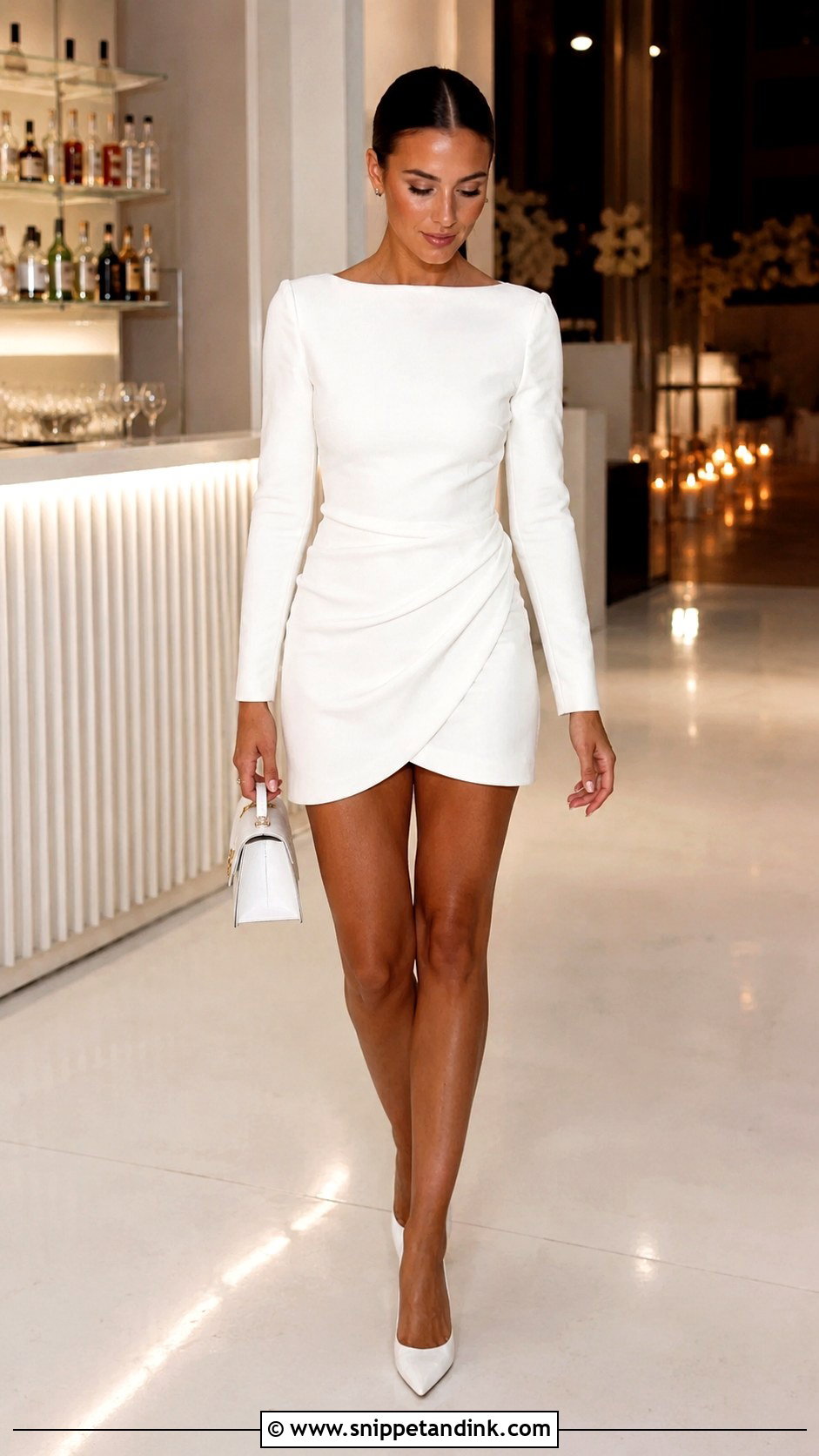
Long sleeves with a short hem balance coverage and leg. They suit fall, winter and evening weddings, and city venues where the night gets cold. Lace sleeves feel romantic, satin shines, and crepe looks clean. Make sure the sleeves are cut long enough when your arms are bent, because they ride up when you dance. Pointed heels, a sleek hairstyle and a small structured bag finish it. With a high neckline, skip the necklace and let the earrings carry it.
19. Halter Neck Bridal Dress
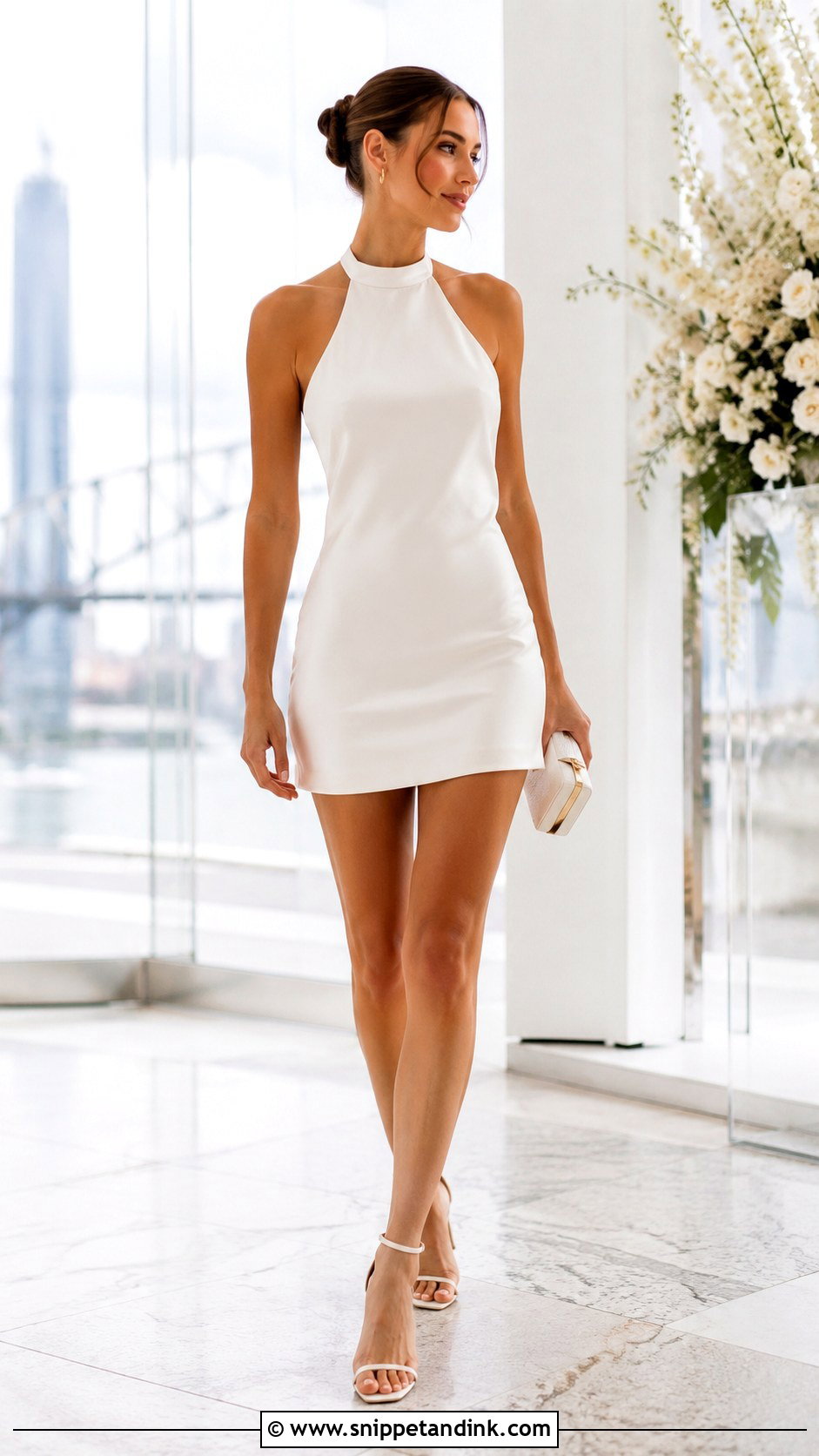
A halter neckline shows off the shoulders and holds the bodice up from the neck, which is useful support without sleeves. A sleek bun or ponytail keeps the neckline clear. A halter mini is playful; a halter slip dress is minimal. Satin or crepe gives the cleanest finish. The weight hangs from the neck, so check the tie or clasp is comfortable after an hour, not just after a minute. Strappy heels, small hoops and a clutch finish the outfit.
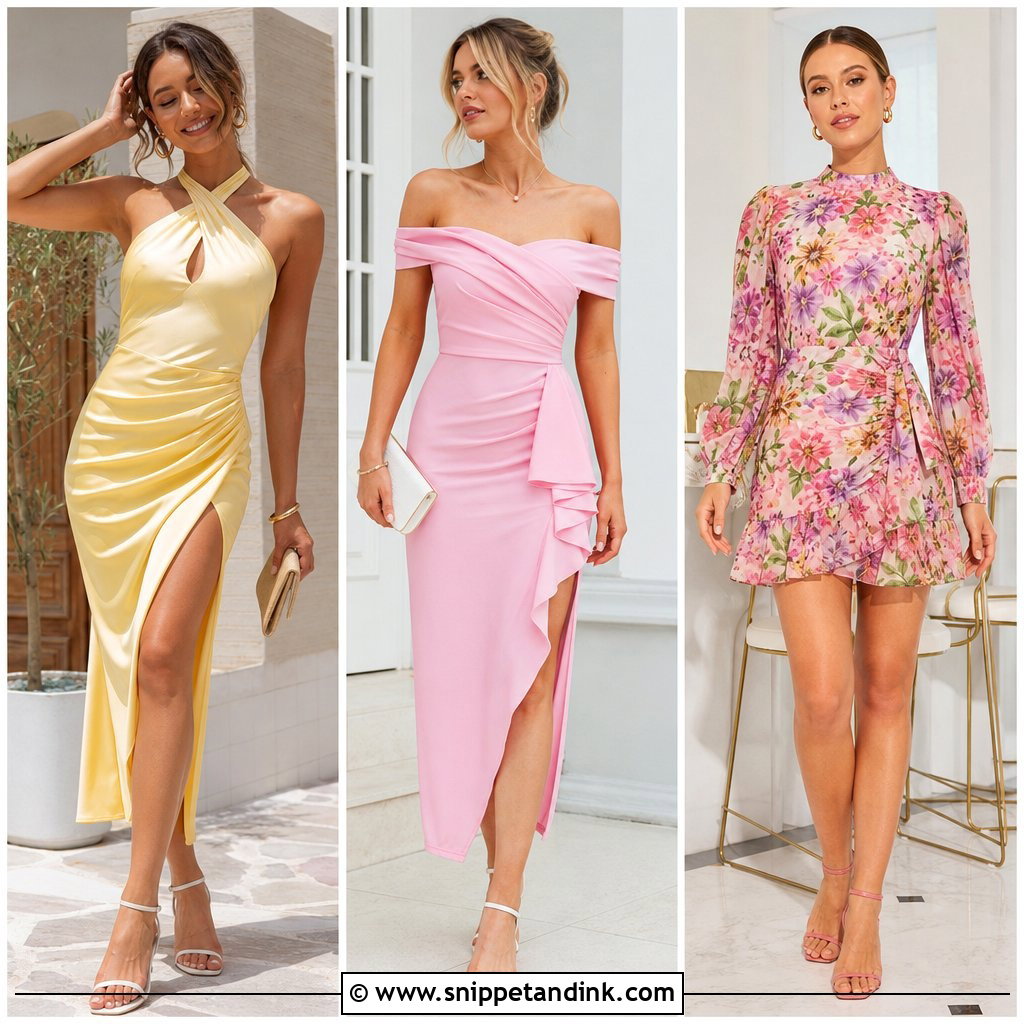
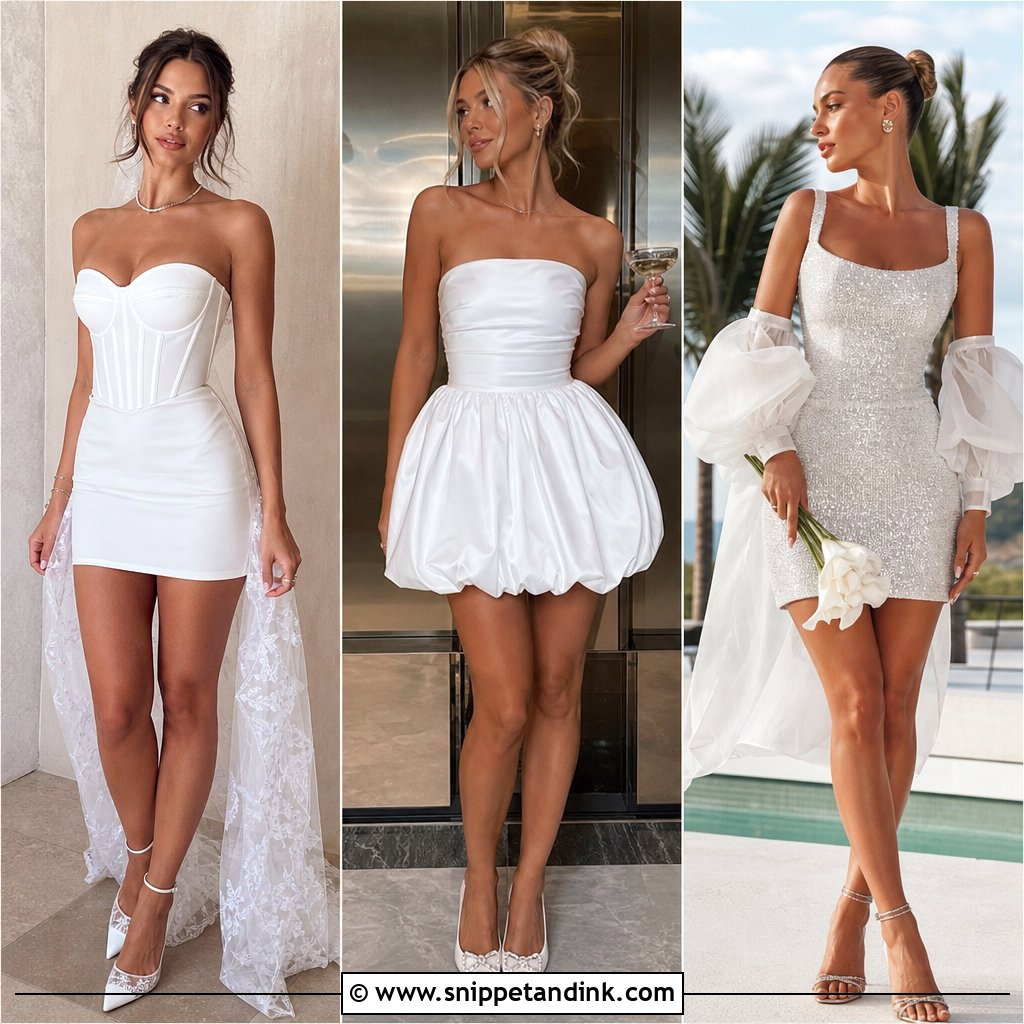
20. Short Sleeve Bridal Midi Dress
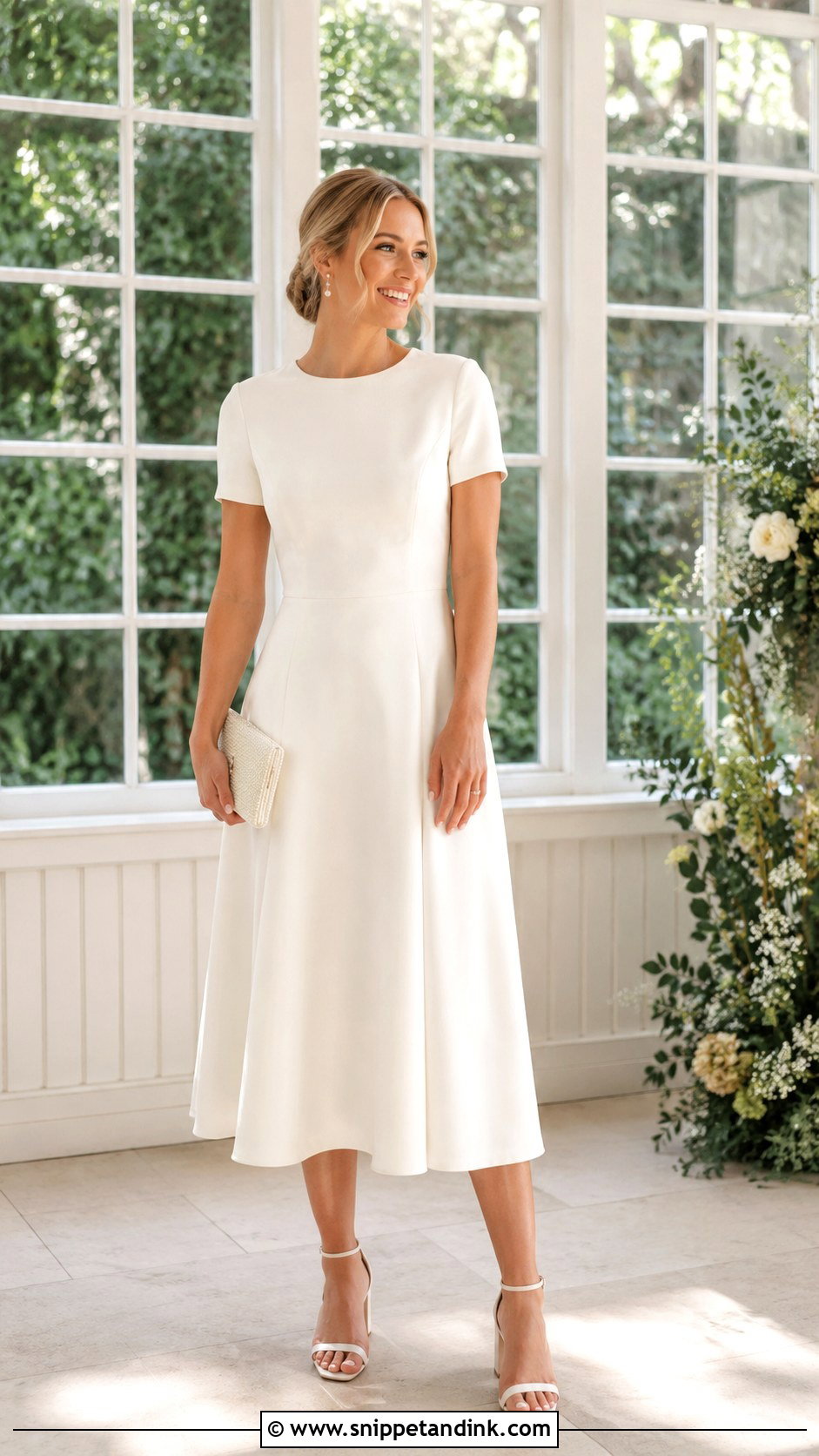
Short sleeves and a midi length give comfort and coverage at once, and they’re my first suggestion for brides who prefer modest outfits. Crepe, satin, lace or textured jacquard all work. If you plan to be on your feet for hours, block heels; for a dressier finish, pointed pumps. Pearl earrings and a soft clutch complete it. A midi also suits receptions with older relatives, where a very short dress may not feel right to you.
21. Square Neck Bridal Mini Dress
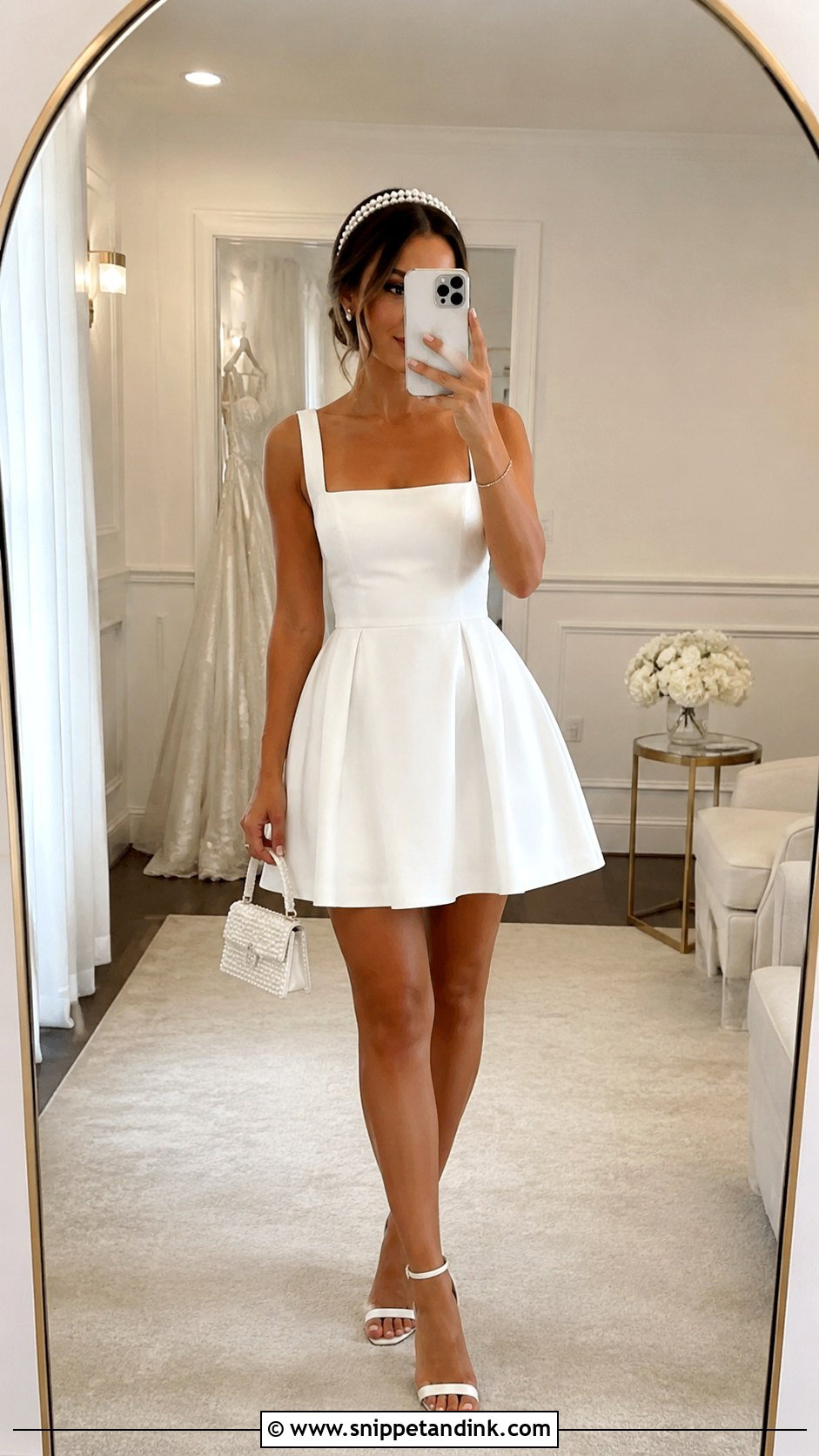
The square neckline adds structure without harshness and suits a wide range of body shapes. A fitted mini looks sleek; an A-line skirt moves more. Because the neckline is clean, it can carry bold earrings, soft curls or a short veil. Ankle-strap heels, a pearl headband and a mini top-handle bag complete it. Square necks can gape at the corners when you lean forward, so check that in a mirror before the final fitting.
22. Champagne Reception Dress For Bride
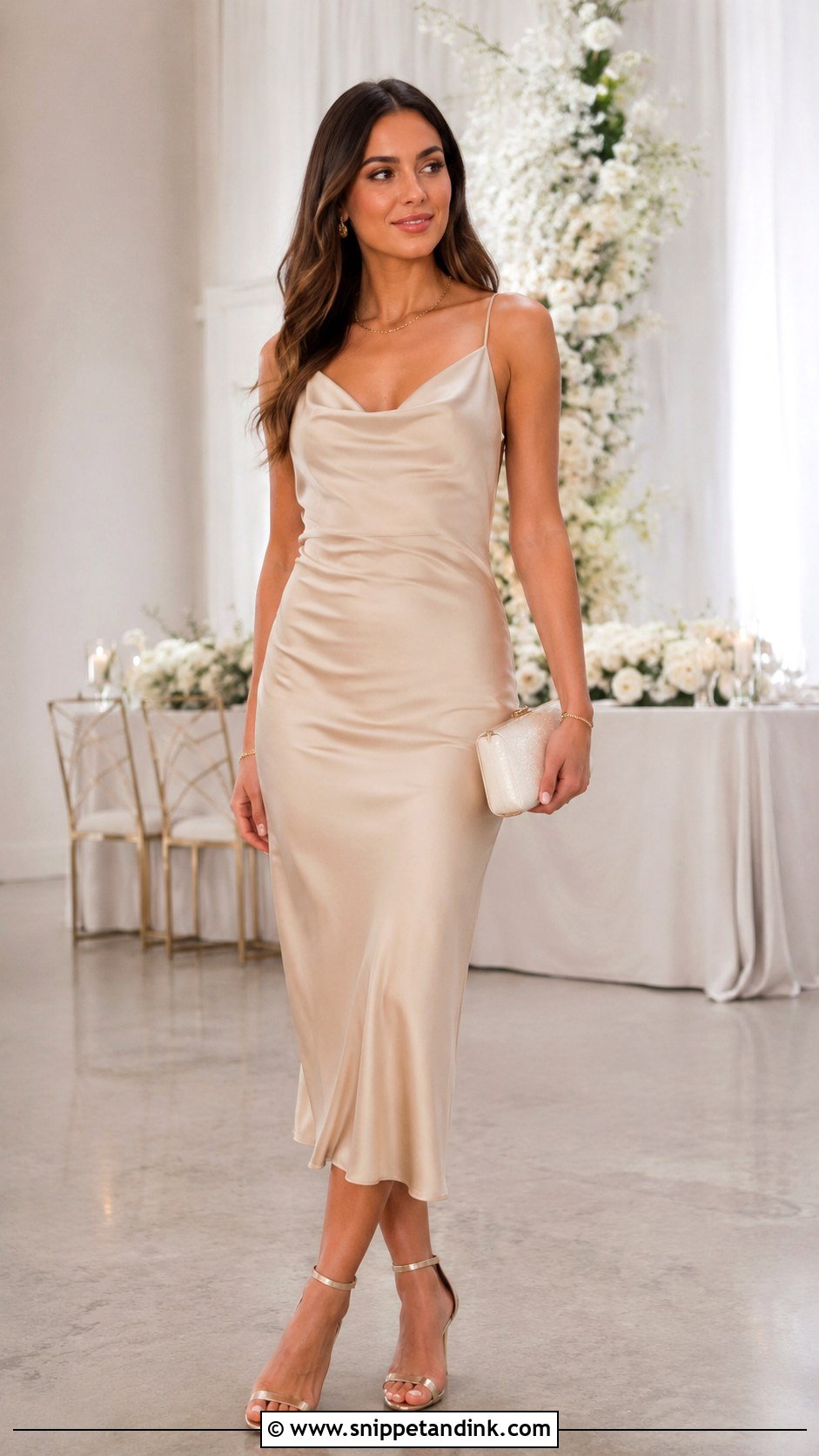
Champagne gives a second dress warmth and looks rich in evening photos while still reading bridal. Satin, sequins and beading all suit the shade. Nude or metallic heels, gold jewelry and a creamy clutch complete it. It works best if your palette already includes ivory, beige, gold or soft neutrals. If your first gown was bright white, the champagne change gives the evening photos a clearly different mood, a little more glamorous than the ceremony.
23. Sheer Sleeve Bridal Dress
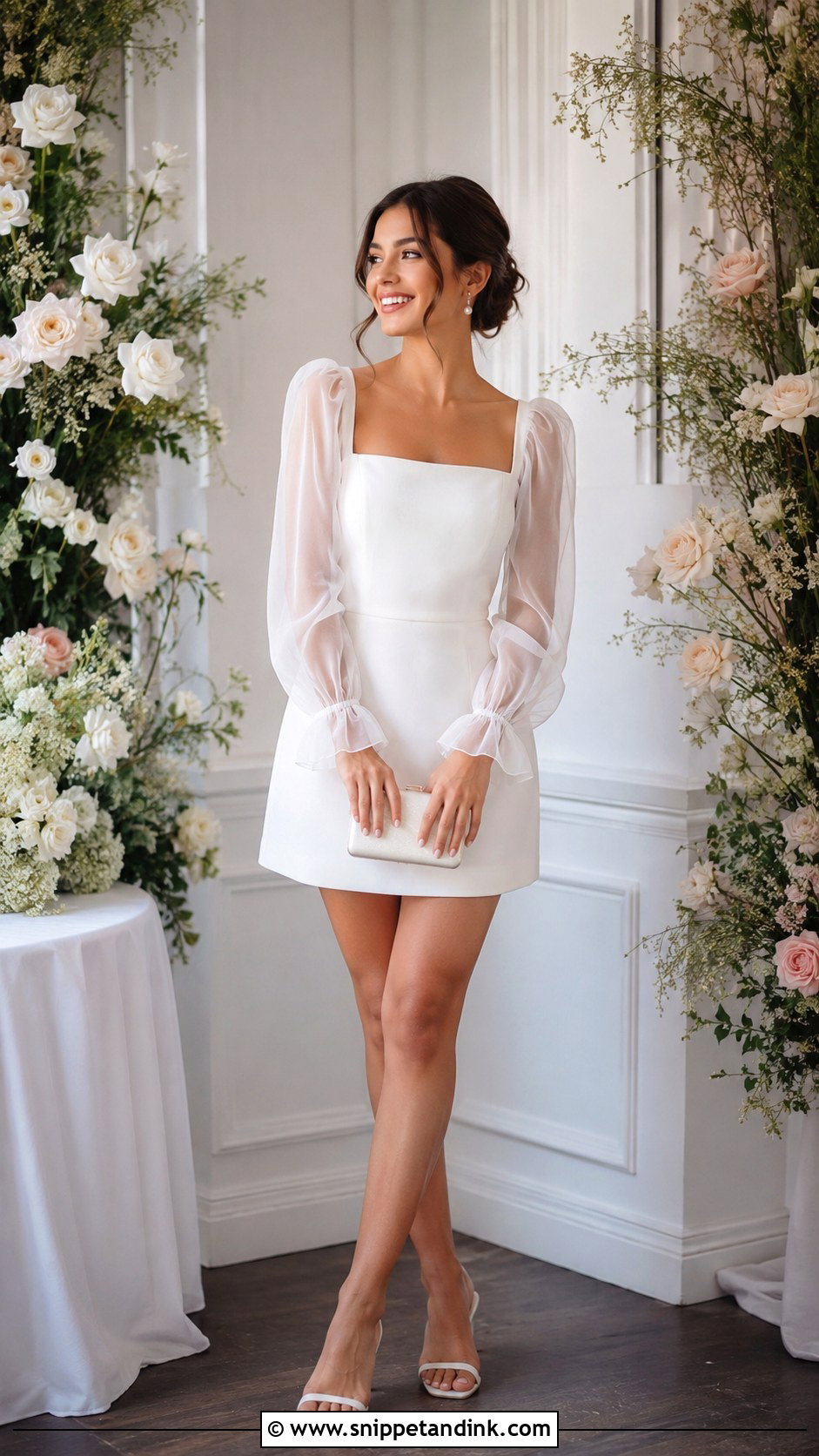
Sheer sleeves add texture and cover the arms without adding weight. A mini, midi or fitted column with organza, tulle or lace sleeves all work. Organza holds a puff shape; tulle and lace lie closer to the arm. Simple heels, pearl earrings and a clean clutch are enough. I like this when a bride wants her arms covered but doesn’t want to overheat on a busy dance floor, since sheer fabric breathes far better than lined sleeves.
24. Bridal Romper With Overskirt
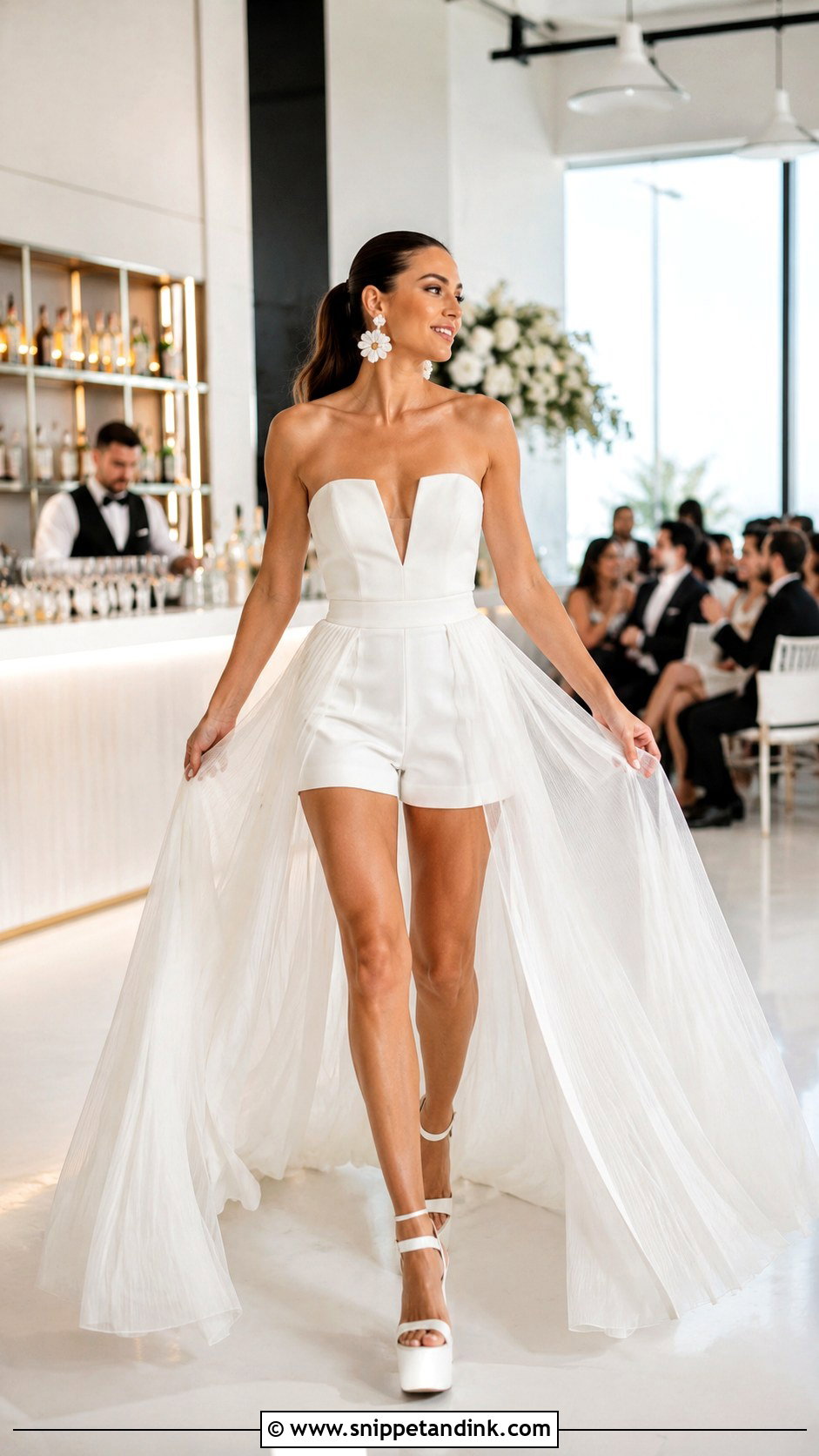
A bridal romper with an overskirt gives you two moods with one outfit. The overskirt makes the entrance; the romper underneath makes dancing simple. A detachable organza, tulle or satin skirt should fasten with hidden hooks or snaps at the waist so it comes off quickly. Practise removing it once with whoever will help you. Platform heels, statement earrings and a sleek ponytail finish it. You get the impact of a dress and the freedom of shorts, without packing a third outfit.
25. Convertible Wedding Dress For Bride
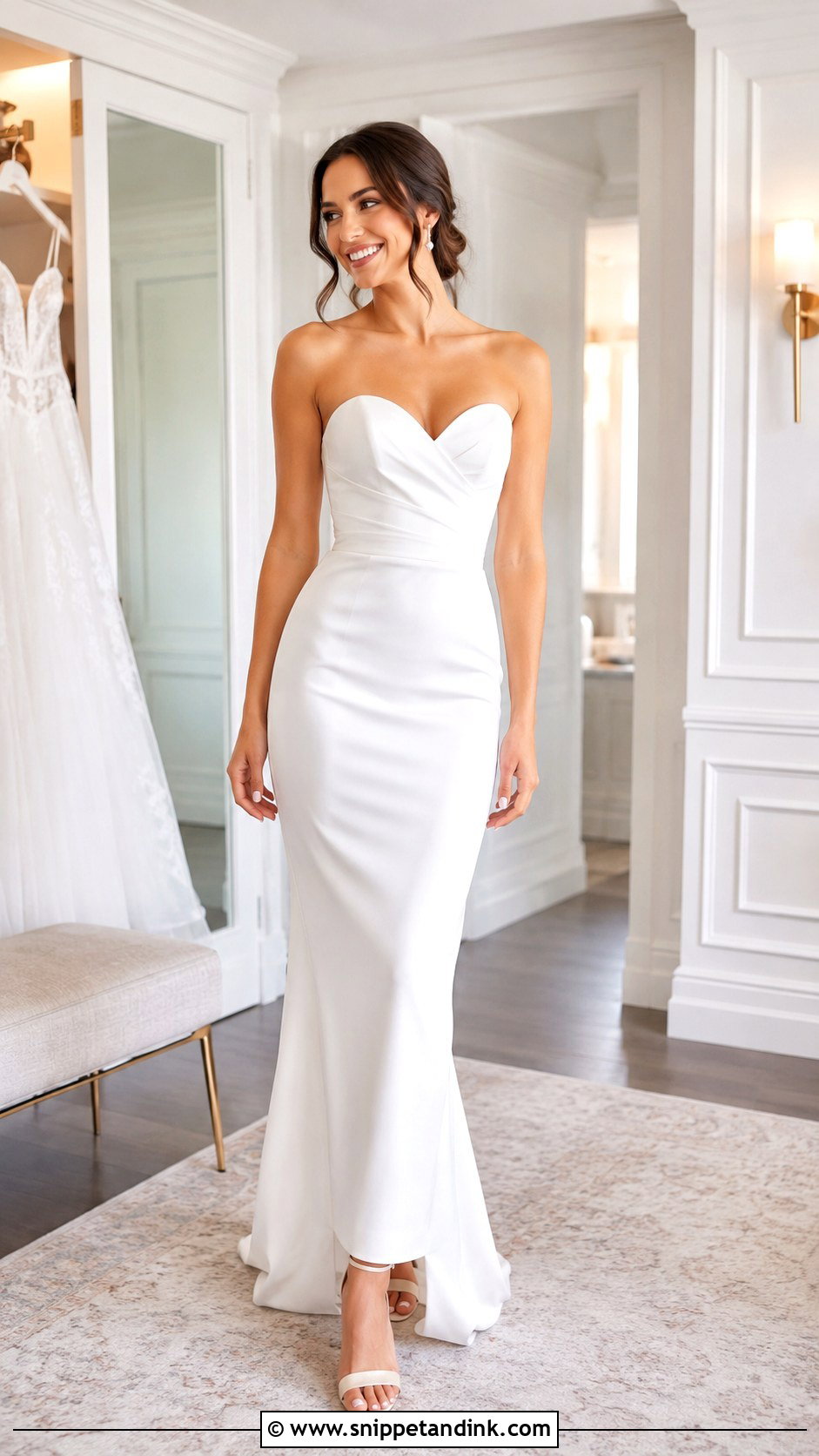
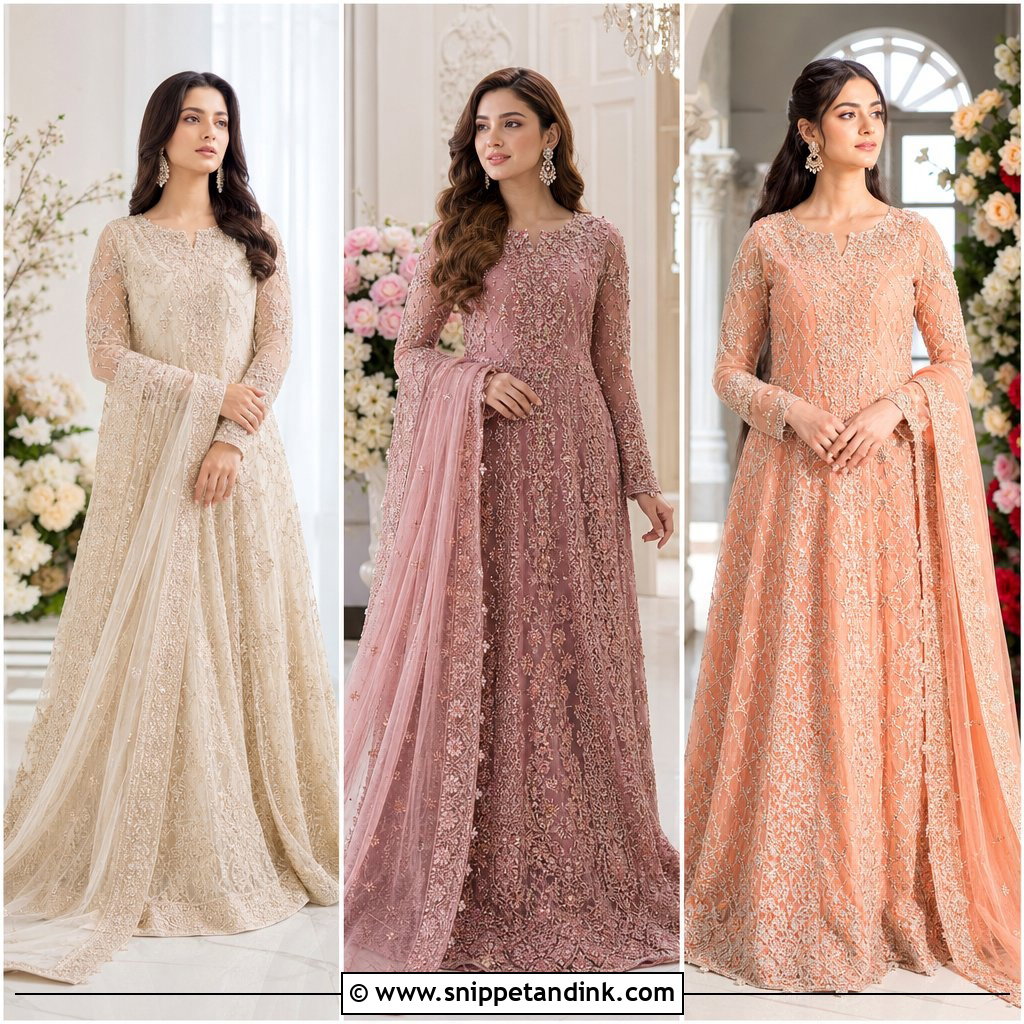
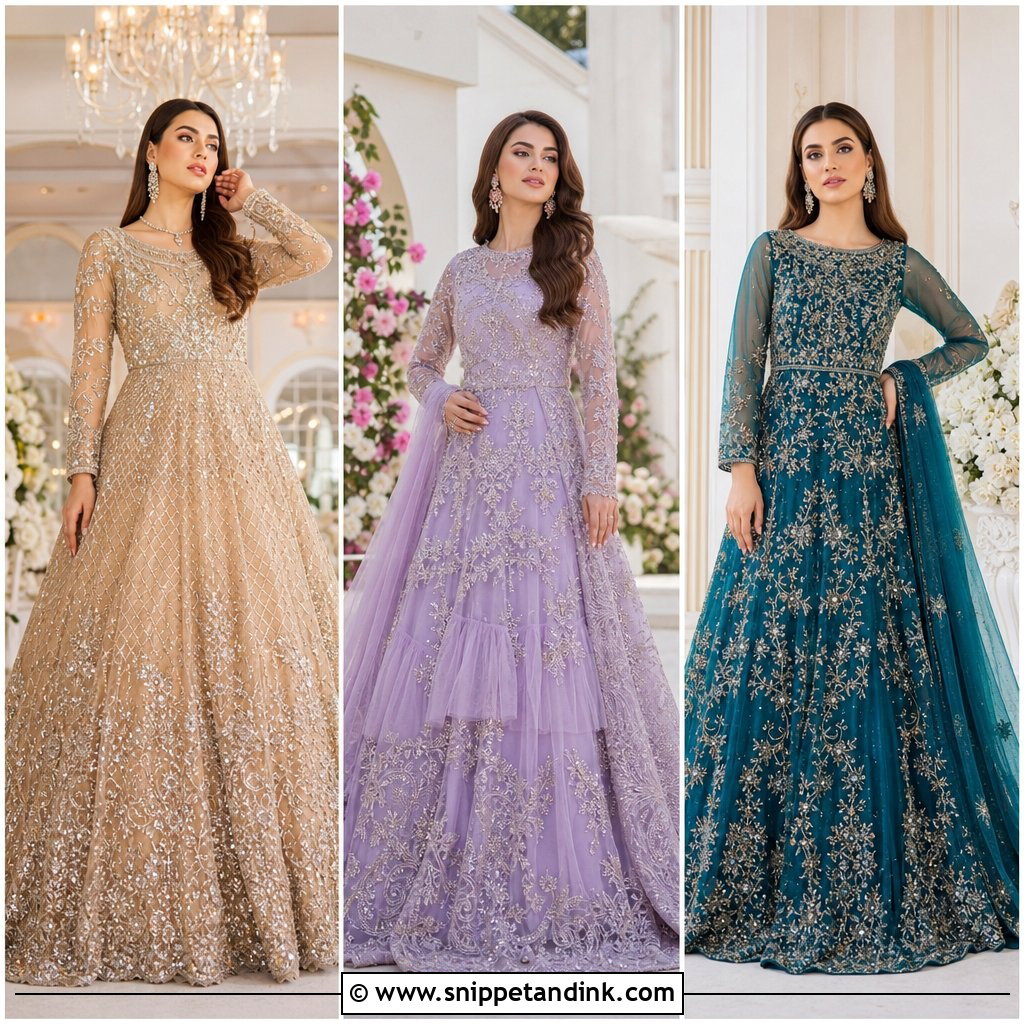
A convertible gown builds the change into the dress itself. Detachable sleeves, removable overskirts, capes, trains or boleros turn the ceremony look into a reception look in minutes. It keeps the style consistent and means fewer fittings and less to pack. The best versions look intentional in both forms, so try the dress in its reception state at every fitting, not just the ceremony state. Swap in different earrings, lighter shoes or a new hairstyle for the evening.
Packing the Second Look: Bra, Shoes and a Home for the Gown
The outfit change bag gets packed the week before and handed to one named person. I check it against this list every time.
- The right underwear for the second dress. A slip, halter or low-back dress usually needs a different bra or adhesive cups from the ceremony gown.
- Reception shoes already broken in, plus blister plasters.
- A few pins and grips to rework the hair once the veil comes out, and a small comb.
- Lipstick, blotting papers and the jewelry for the second look in a small pouch.
- A padded hanger and a breathable garment bag for the main gown.
The ceremony gown needs care too. Never leave it heaped on a chair or folded in a car. Hang it straight away by its inner loops, zip it into its bag, and make sure the person in charge knows where it’s going overnight. If something spilled on it during the day, note where, so the cleaner can treat it before it sets.
Finally, think about your hair. An elaborate updo built around a veil may look odd without it. I often plan the ceremony hair so a couple of pins come out and it drops into a softer style for the party, without needing the stylist to stay all night.
A Second Outfit That Lasts Until the Last Song
A second dress gives you more freedom to enjoy the whole day. It makes dancing easier, protects the main gown, and adds a fresh set of photos after the ceremony. Venue, season and comfort will guide you, and satin minis, slip dresses, jumpsuits, pearl details, lace and convertible gowns each set a different mood. Pick something that feels bridal and secure enough to wear for hours. Most of all, choose a changing dress that lets you relax and stay present with your guests.
You'll Like These Ideas:


Leave a Reply