
A jacket is the one piece that can change how your gown reads without touching the gown itself. It can add sleeves to a strapless bodice, keep you warm through outdoor portraits, or turn the ceremony dress into something sharper for the evening. The catch is that it has to look planned, and that comes down to how its neckline, shoulder line and length sit against what you’re already wearing. Below are 25 jacket styles I’d put in front of a bride, from lace boleros and pearl crops to blazers, capes, faux fur and long tailored coats, with notes on what each one needs from the dress underneath.
Fitting a Jacket Around a Gown You’ve Already Altered
Order of operations matters more than people expect. I don’t fit a jacket until the dress alterations are finished, because taking in a bodice changes where the shoulder and waist actually sit, and a jacket fitted to the old dress will gape or pull at the new one.
At the jacket fitting, wear the gown, the real shoulder-weight undergarments and the shoes. Then put it through the moves you’ll make on the day:
- Raise both arms as if hugging someone taller. If the jacket rides up past the waist or pulls at the armholes, the armholes need cutting higher, not the body widening.
- Sit on a hard chair. Cropped jackets should still clear the waistband; longer ones shouldn’t bunch into folds across the lap.
- Hold your bouquet at the height you’ll carry it. Long sleeves often look perfect with arms down and too short with elbows bent.
- Turn your back to a mirror. Most photographers take plenty of back views, and a jacket that sags between the shoulder blades shows there first.
Bring a piece of the gown’s fabric or a scrap from the hem if you have one. Matching shades by memory almost never works.
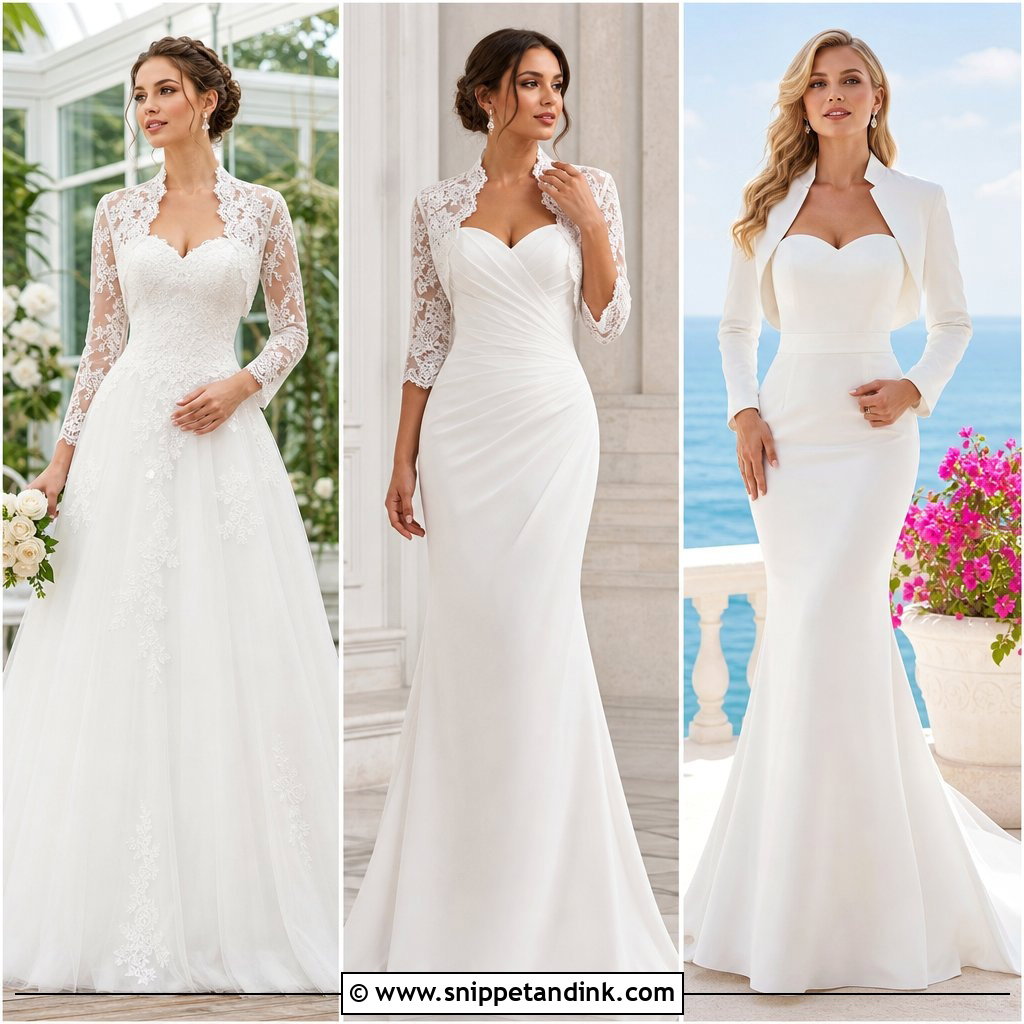
1. Lace Bolero Wedding Dress Jacket
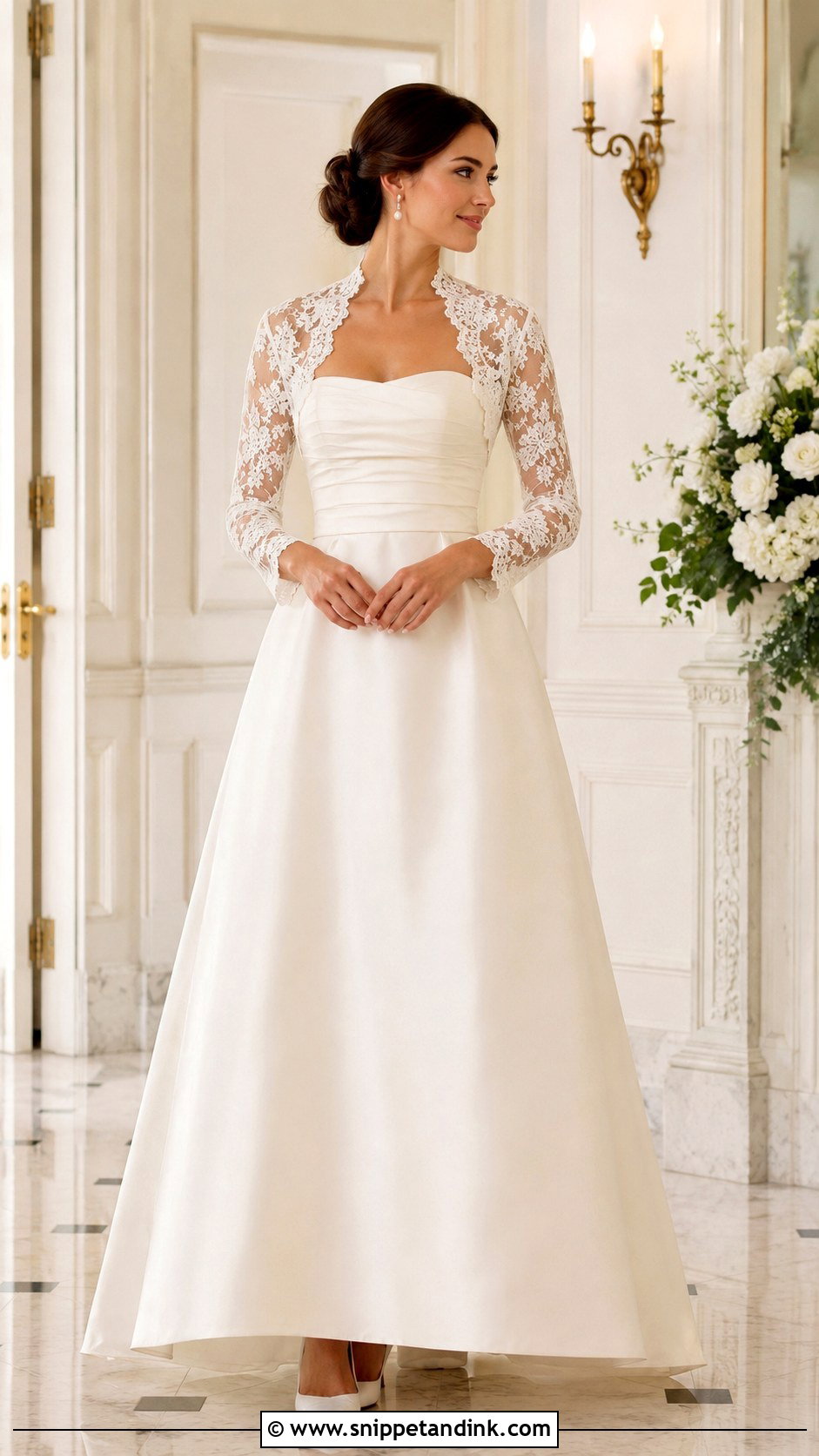
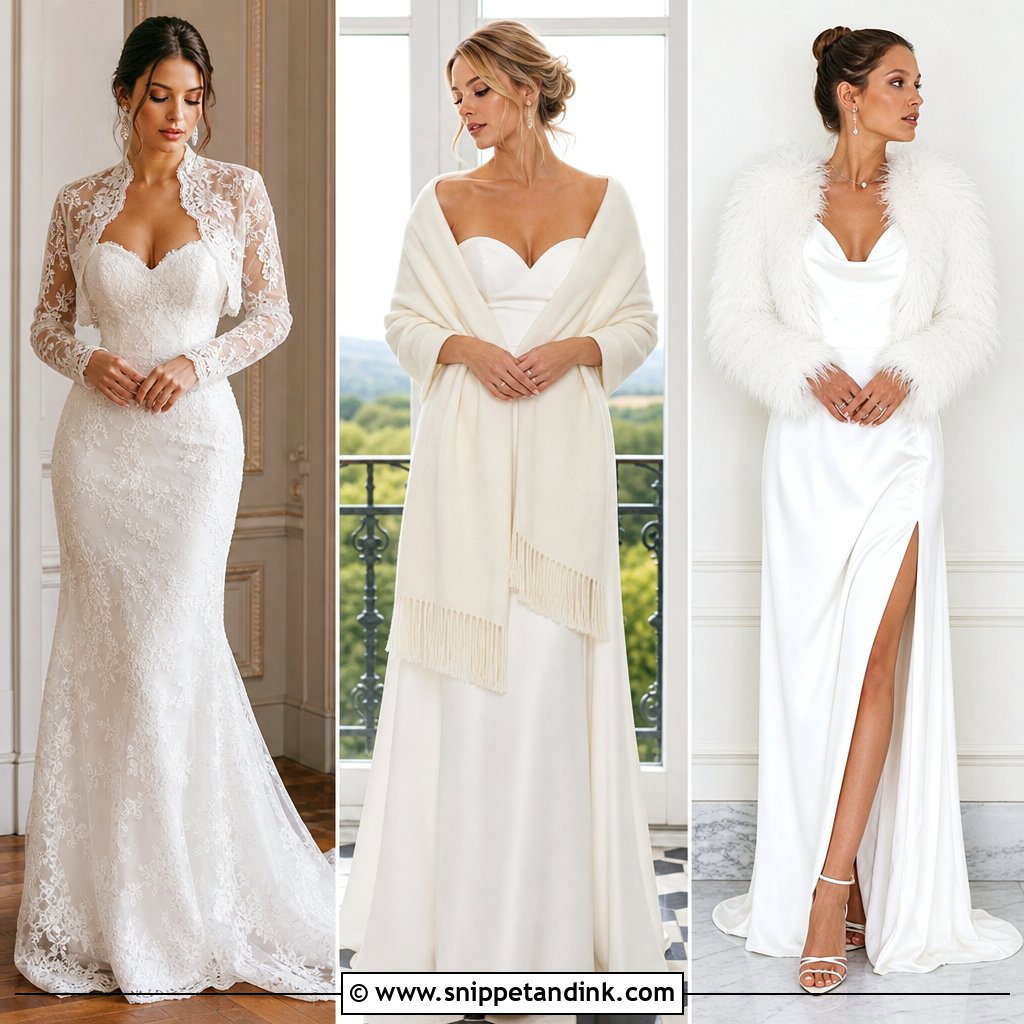
Delicate sleeves over a strapless, sweetheart or square neckline are the classic reason brides reach for a lace bolero wedding dress jacket. The thing I check first is the lace edge at the front: a scalloped eyelash border that stops just above the bust line looks finished, while a raw cut edge tends to curl after an hour of wear. Matching your gown’s lace exactly is rarely possible, so I usually go for a deliberately different motif in the same ivory rather than a near miss. Waist length keeps an A-line skirt in proportion. Keep the earrings small and let the lace do the talking.
2. Satin Cropped Wedding Dress Jacket
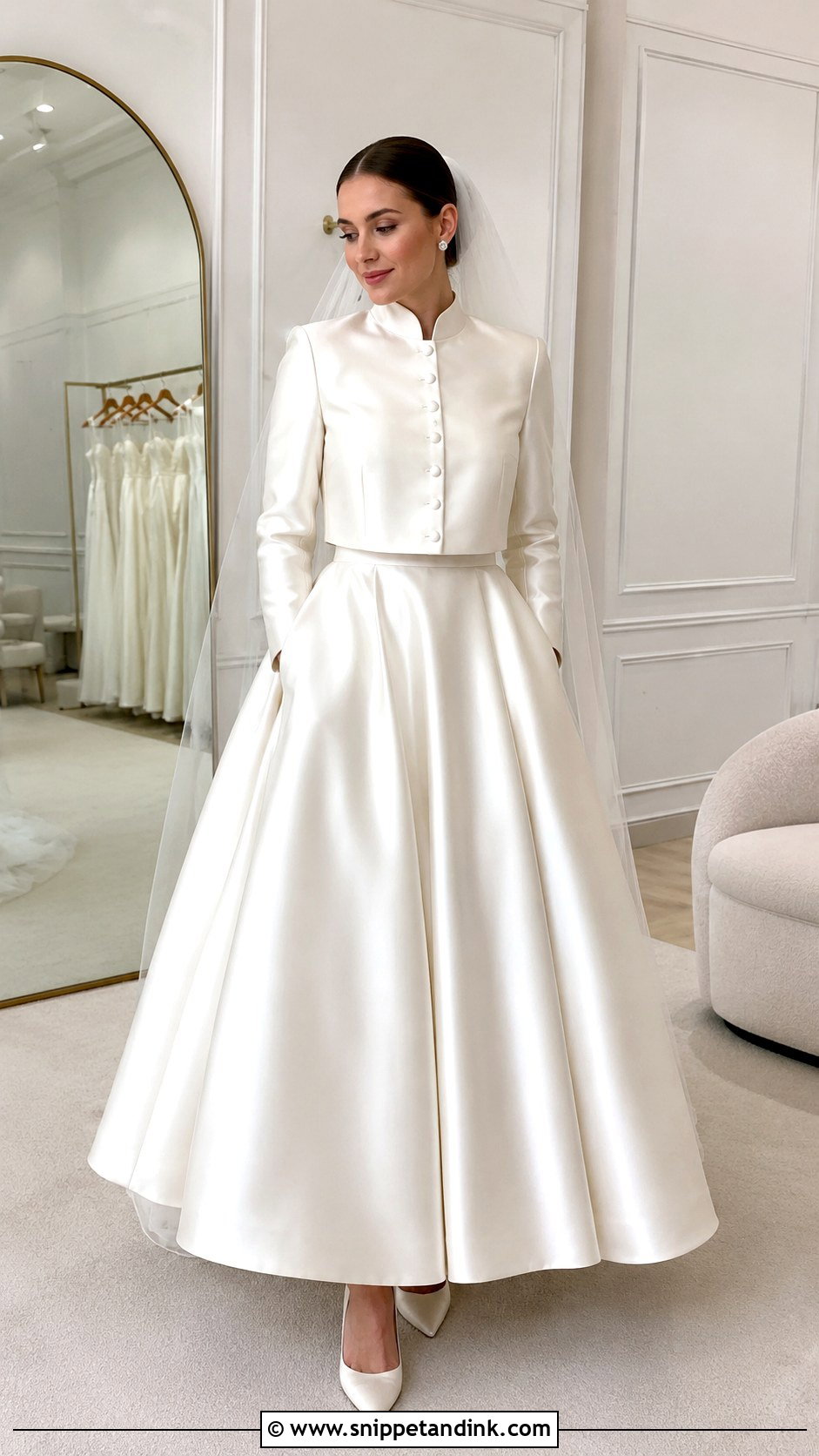
Satin cropped jackets end right at the natural waist, which is why they flatter ball gowns and fit-and-flare shapes so well: the skirt starts exactly where the jacket stops. Satin is unforgiving about fit, though. Any pulling across the back shows as diagonal creases, so I always ask the bride to hug someone during the fitting and watch what happens between the shoulder blades. Covered buttons or a little soft pleating give a plain bodice something to look at. It slips off in seconds when the dancing starts.
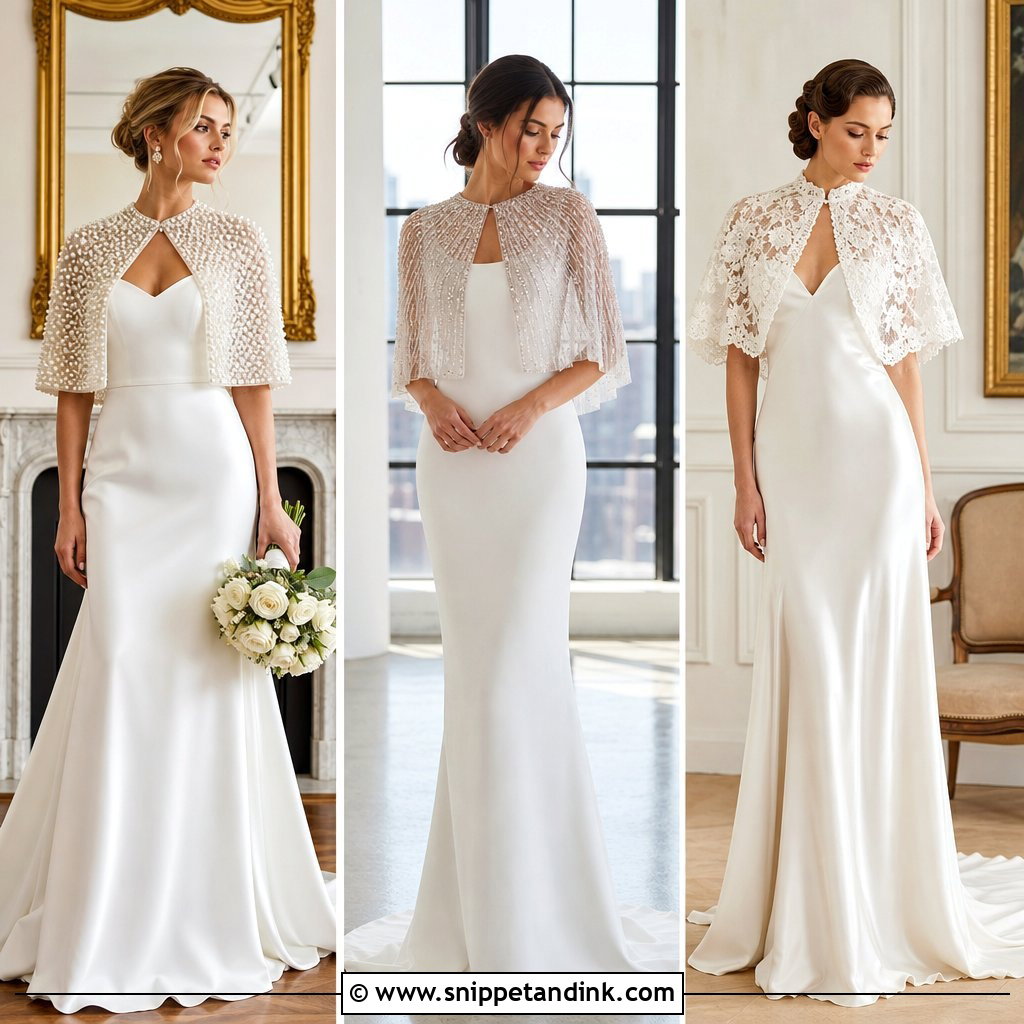
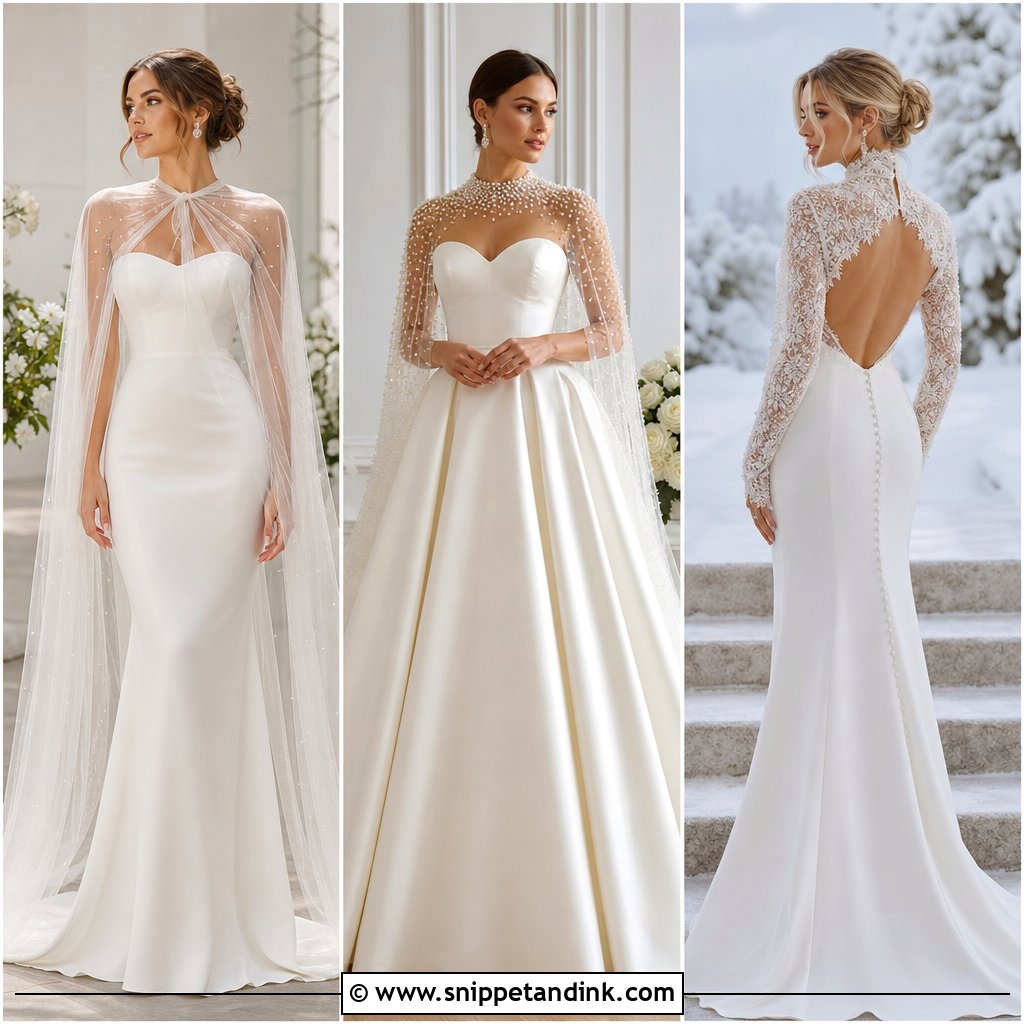
3. Pearl Wedding Dress Jacket
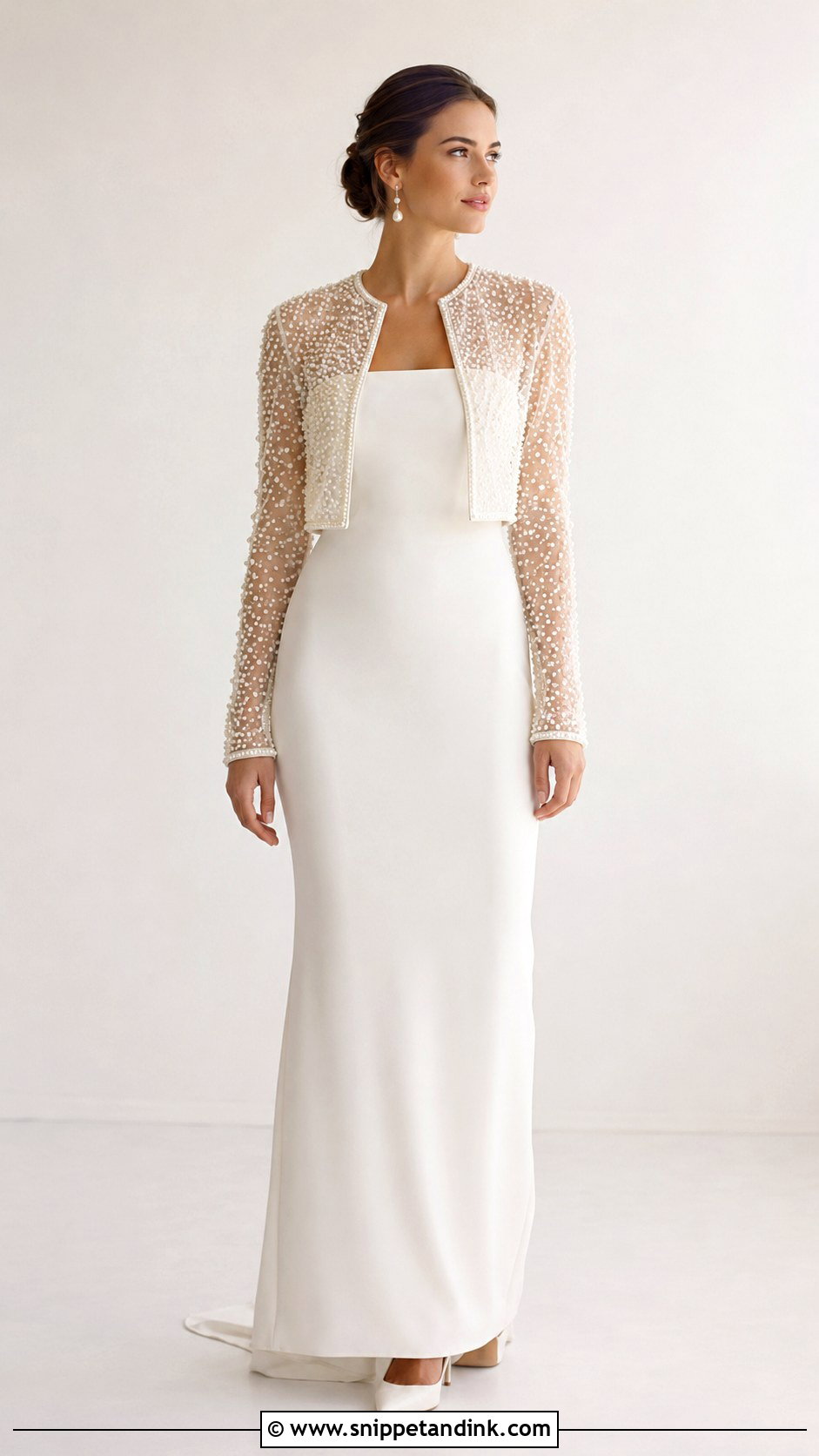
Pearls give texture without the hard flash of crystal, so this is the jacket I suggest when someone wants interest but finds sequins too loud. It works best over plain crepe, satin or silk. Sew-on pearls add real weight, and a densely pearled crop can drag the shoulders back by mid-afternoon, so I hold the jacket up by its collar at the fitting and check that it sits square. If your gown already carries beading, choose a scattered pearl pattern so the two layers aren’t fighting. A sleek updo keeps the collar line clear.
4. Sheer Tulle Wedding Dress Jacket
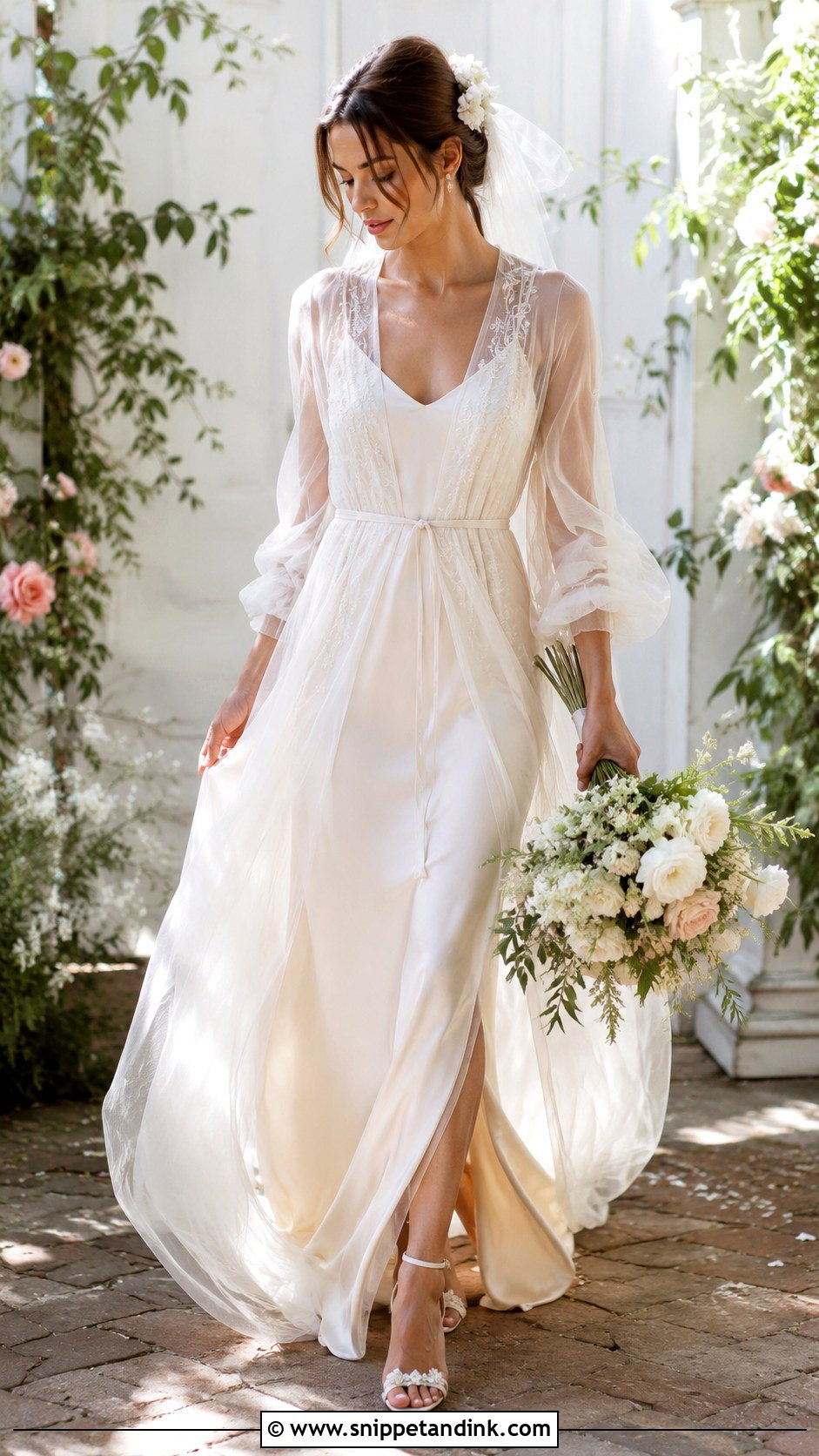
Tulle gives you the suggestion of sleeves while barely adding any weight, which makes it the easiest topper for a warm spring or summer day. Soft tulle does snag on rough nails, bracelets and bouquet wire, and a pulled thread shows up clearly in close-ups, so I tell brides to take off chunky bracelets before putting it on. Gathered sleeves, tiny buttons or a little appliqué near the wrist give it a finished edge. It suits corset bodices and slip dresses that already have a clean shape. Pair it with barely-there sandals and a floral pin rather than heavy jewelry.
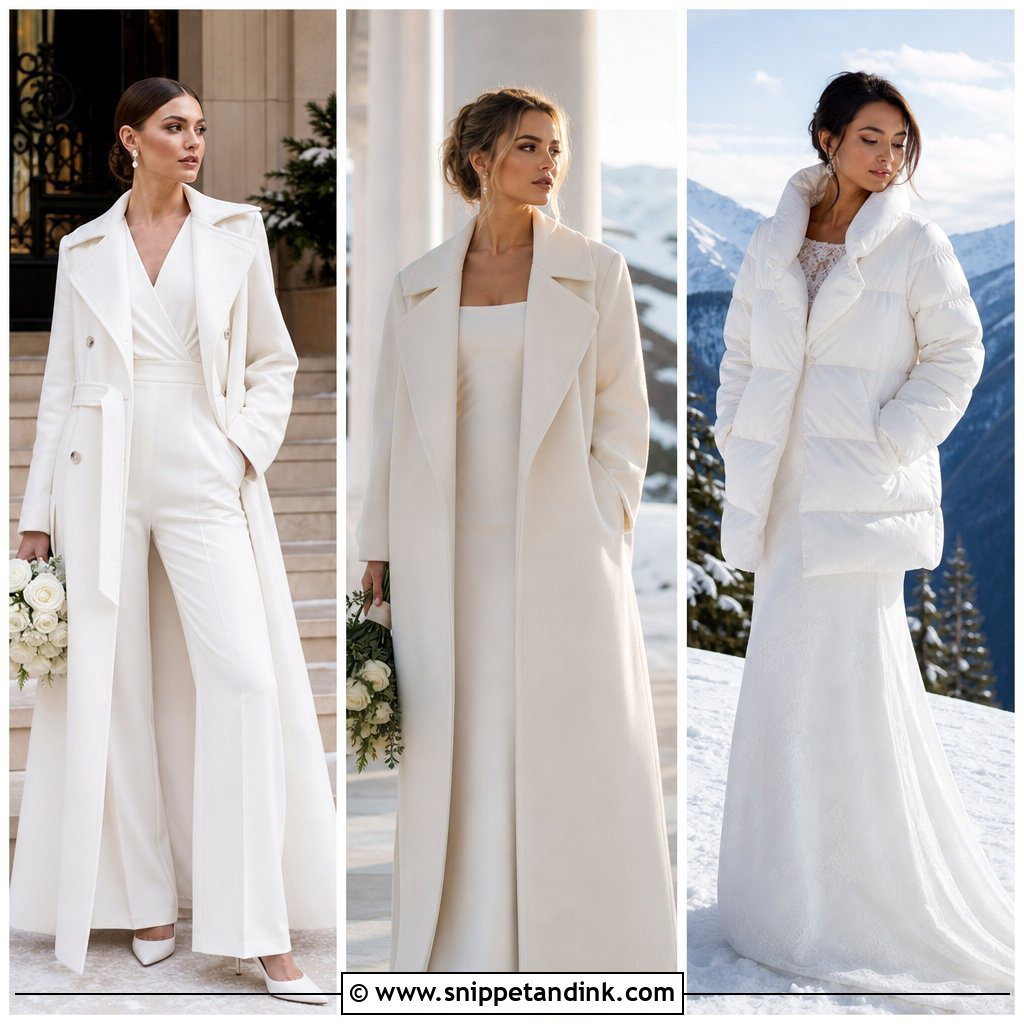
5. Faux Fur Wedding Dress Jacket
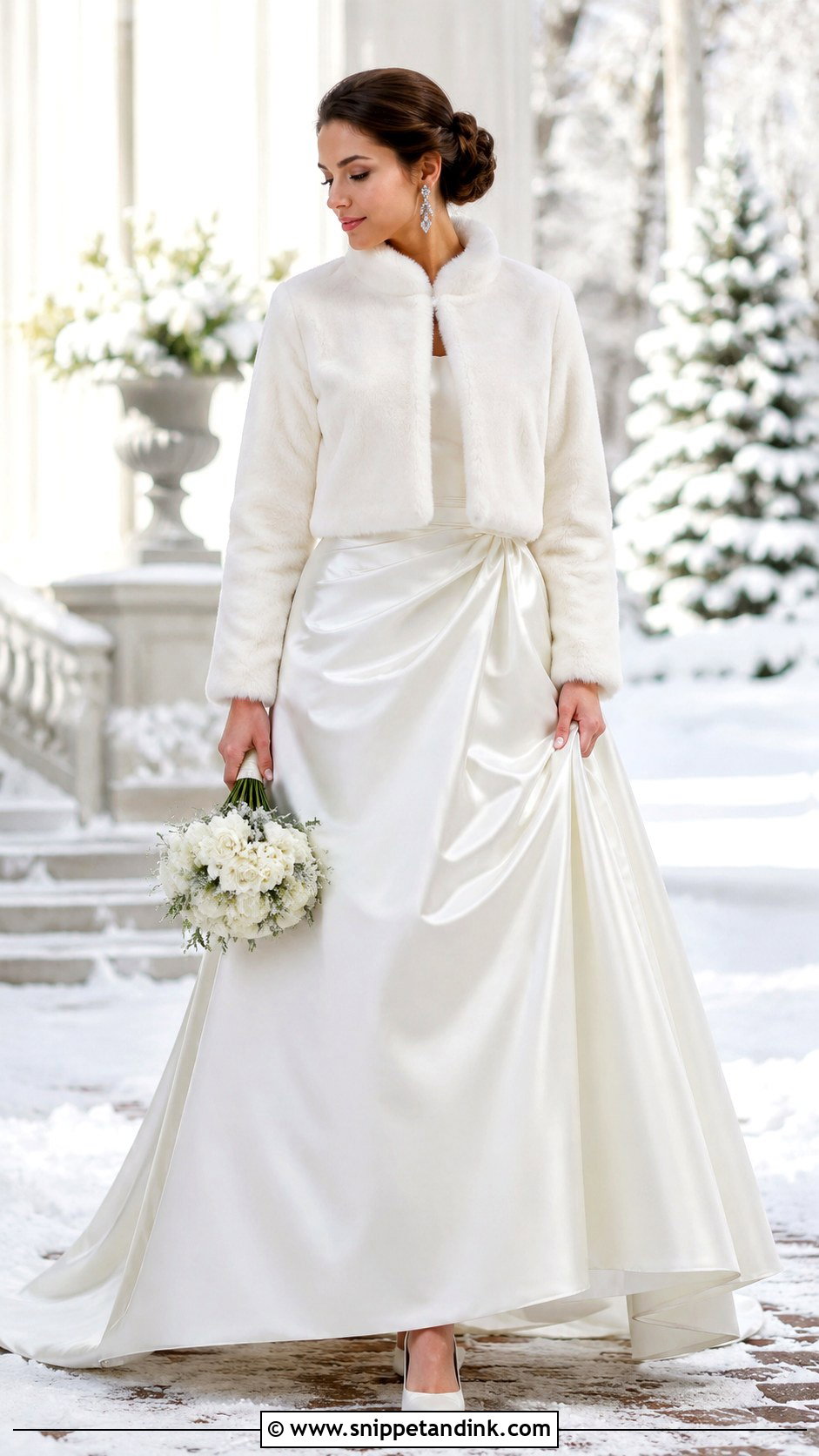
For a winter wedding with outdoor photos, faux fur is the jacket that actually keeps you warm. I steer brides toward cream or champagne rather than bright white, since stark white fur next to an ivory gown makes the dress look yellowed in daylight. Keep it cropped or hip-length; anything longer swallows the skirt. Faux fur sheds a little on dark suits and onto bouquet ribbons, so give it a firm shake outdoors before the day and keep a lint roller in the kit. Closed-toe satin heels and a smooth chignon finish it off.
6. White Blazer Wedding Dress Jacket
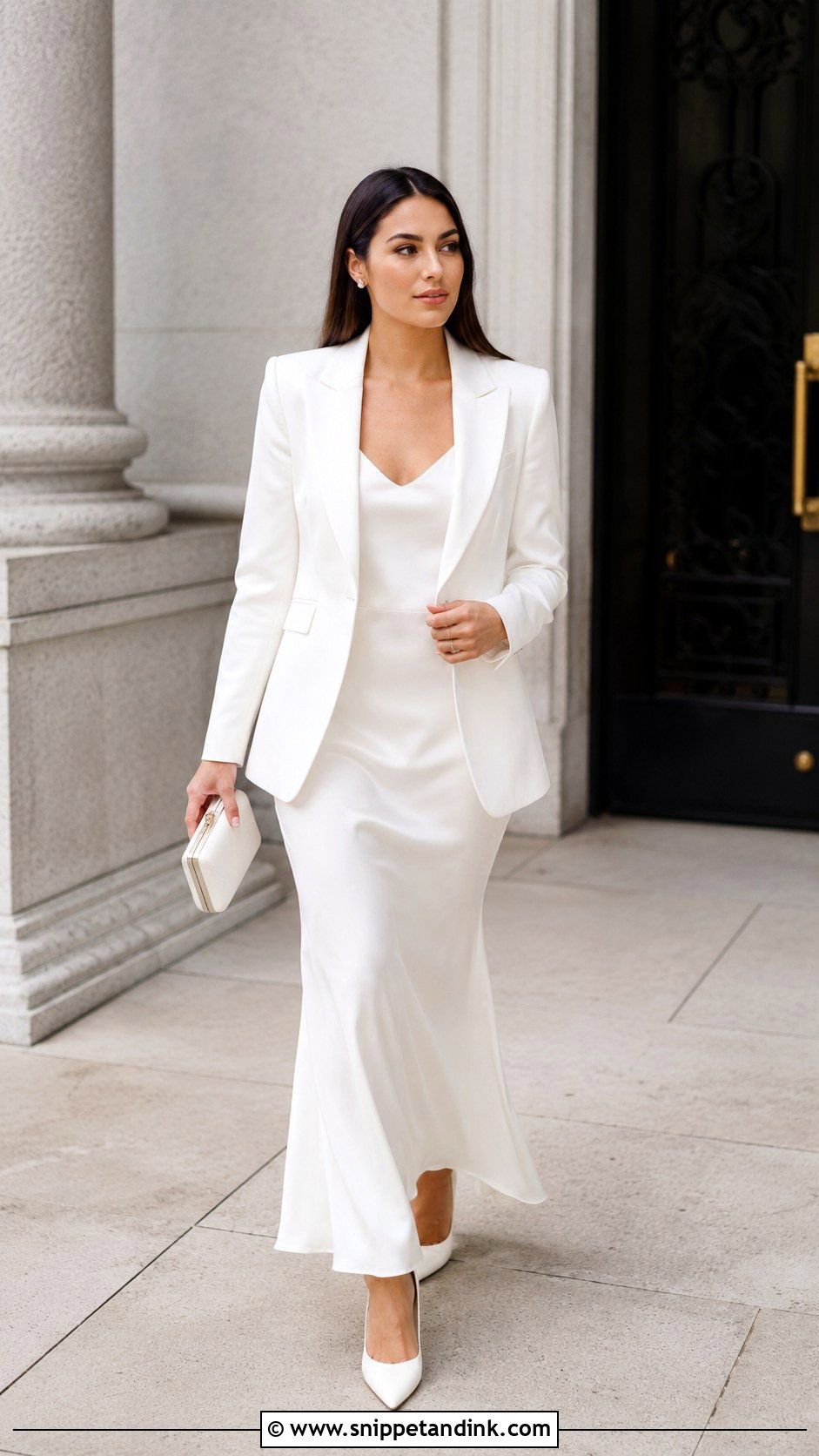
A white blazer is how I get a modern edge onto a slip dress, a column gown, a jumpsuit or a courthouse mini. Tailoring decides everything here. The shoulder seam must end at your shoulder bone, and the blazer should close without the lapels gaping. On a full-length gown, a slightly nipped waist keeps the dress visible underneath. On a mini or a bridal suit, I’ll happily go oversized, because the proportion then looks chosen. Pointed pumps and sleek hair suit its clean lines.
7. Cropped Blazer Wedding Dress Jacket
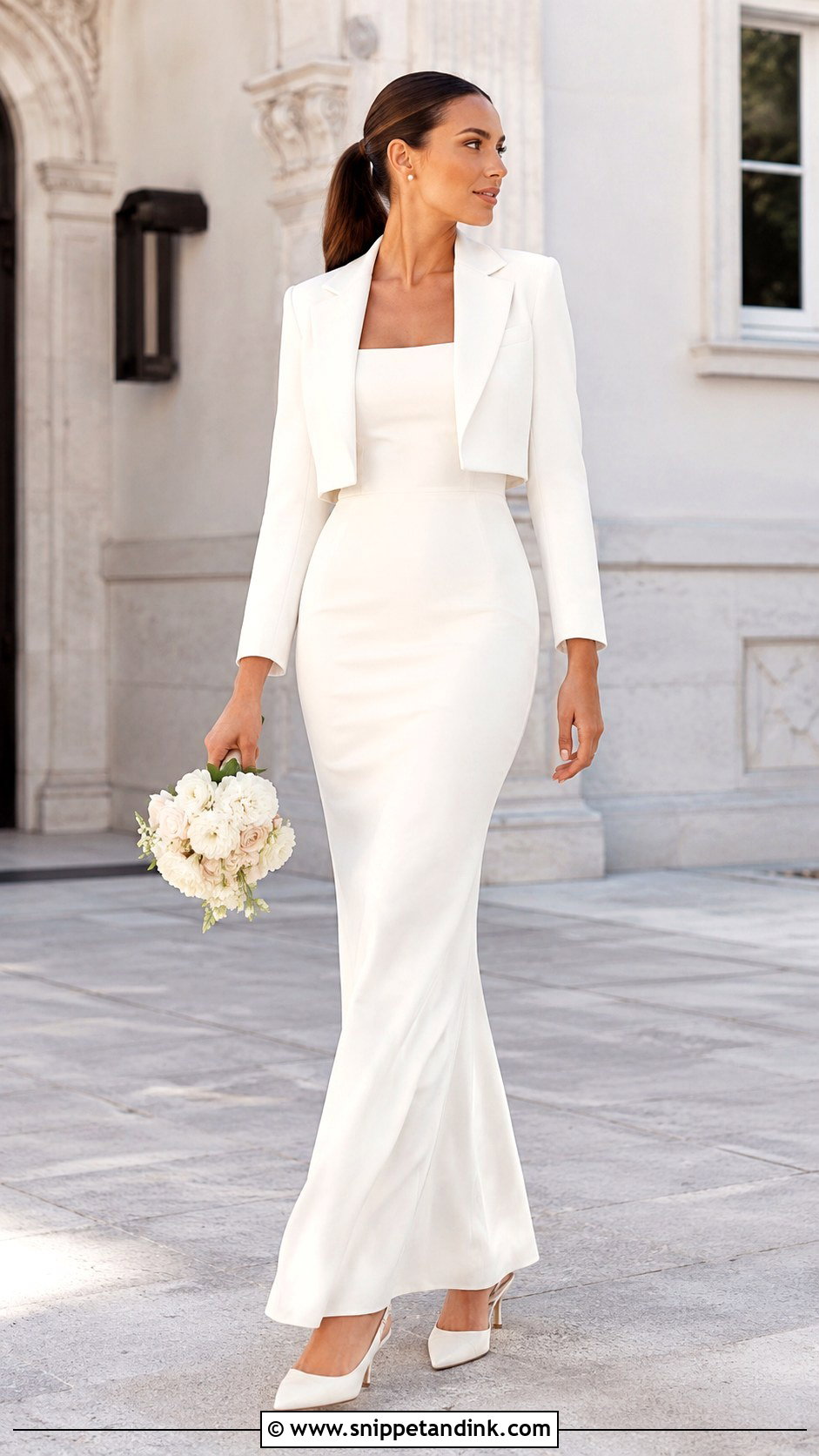
Plenty of brides like the idea of a blazer but hate how a hip-length one hides a mermaid flare or a defined waist. The cropped version solves that. I fit it so the hem lands at or just above the natural waist, never halfway between, because that in-between length makes the torso look shorter in photos. Crepe pairs with matte gowns, satin with shinier ones. A curved hem or covered buttons soften it for a simple dress. Slingbacks and a sleek ponytail keep it polished.
8. Long Coat Wedding Dress Jacket
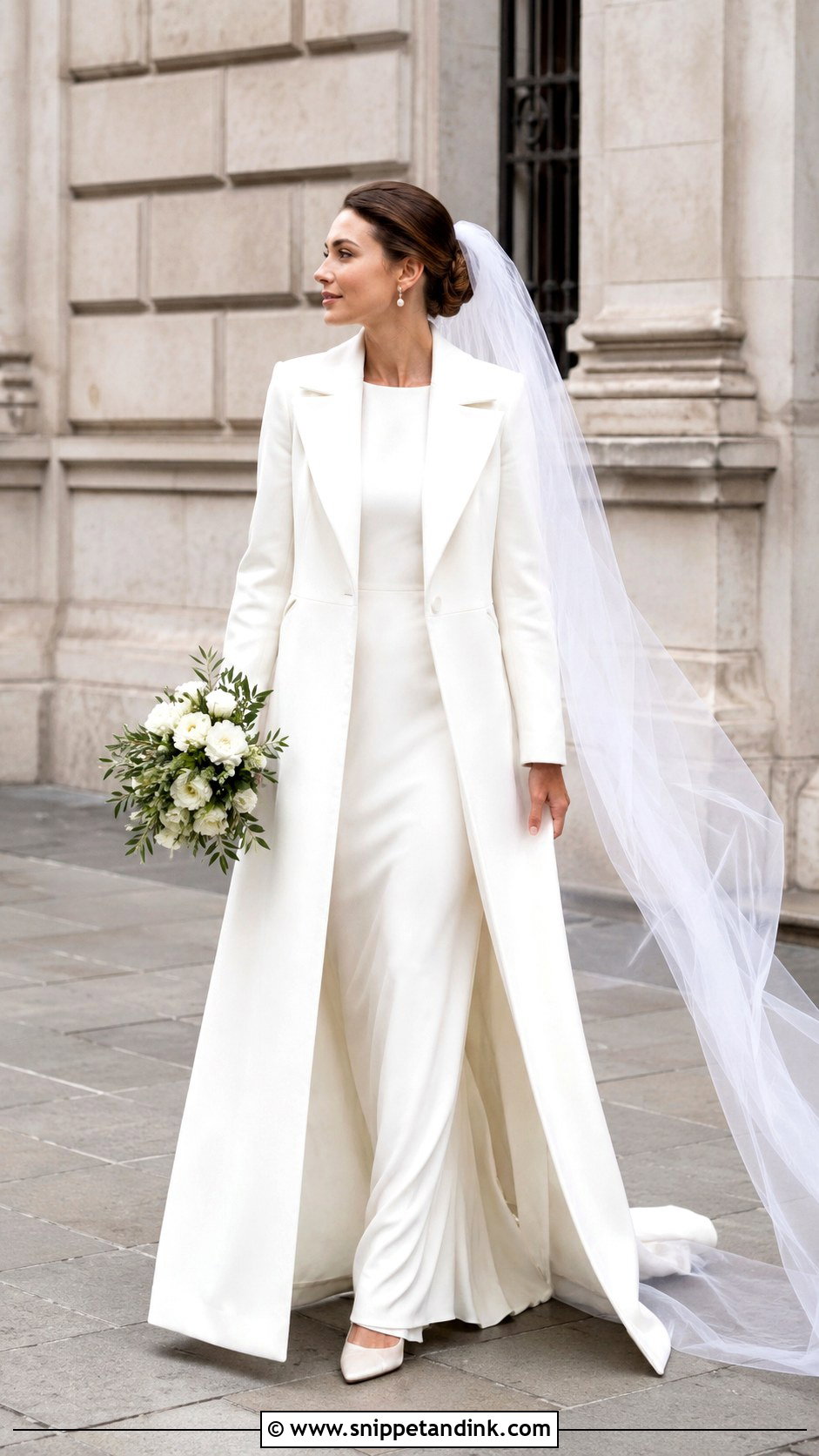
Ceremonies outdoors from October onward are where a long coat wedding dress jacket earns its place. Length is the detail I fuss over: the coat should either stop a clear hand’s width above the hem or skim the floor, because a coat ending just short of the dress looks borrowed. Wool and heavy crepe hold a clean line; satin creases where you sit in the car. Belted coats define the waist, open fronts show more gown. Choose closed-toe shoes, a long veil worn over the coat, and very little jewelry.
9. Cape Wedding Dress Jacket
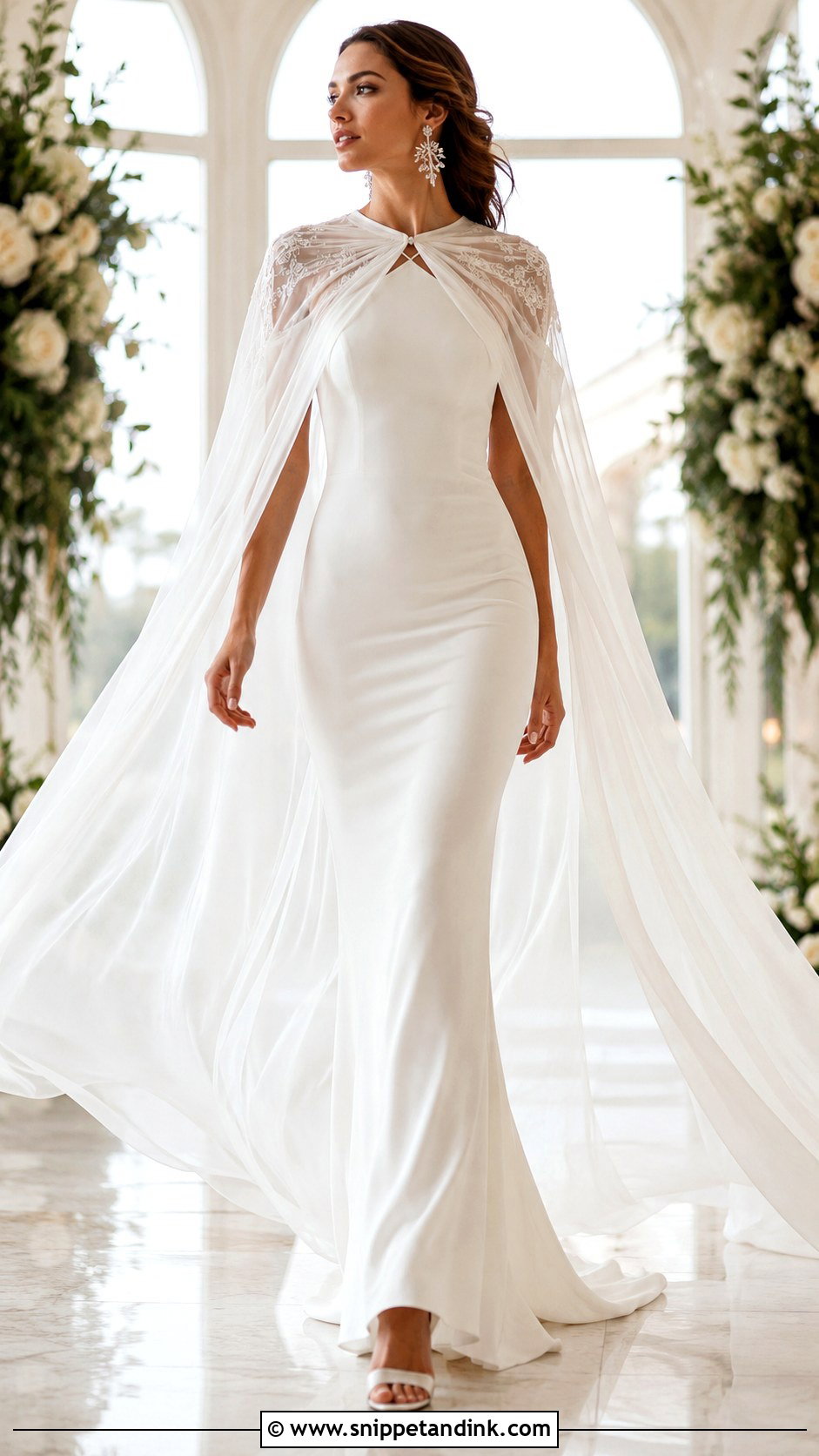
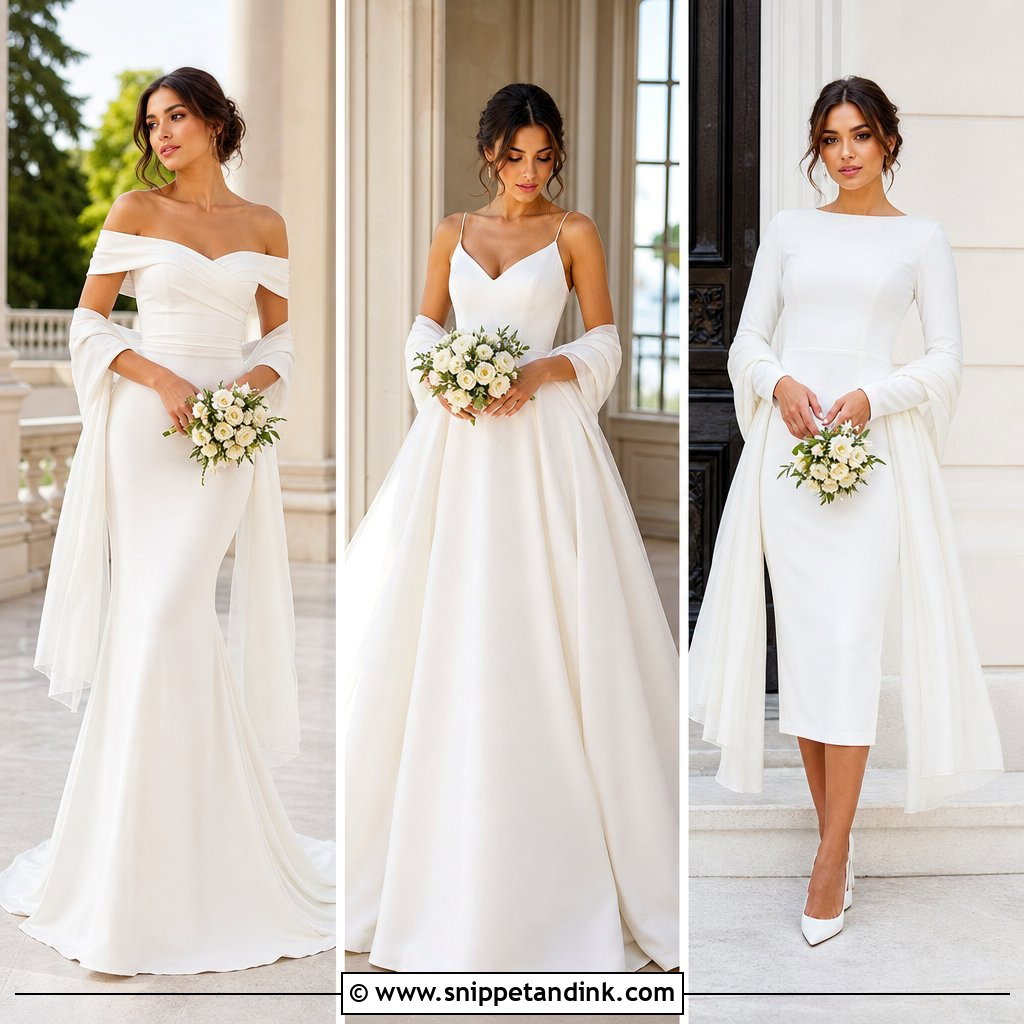
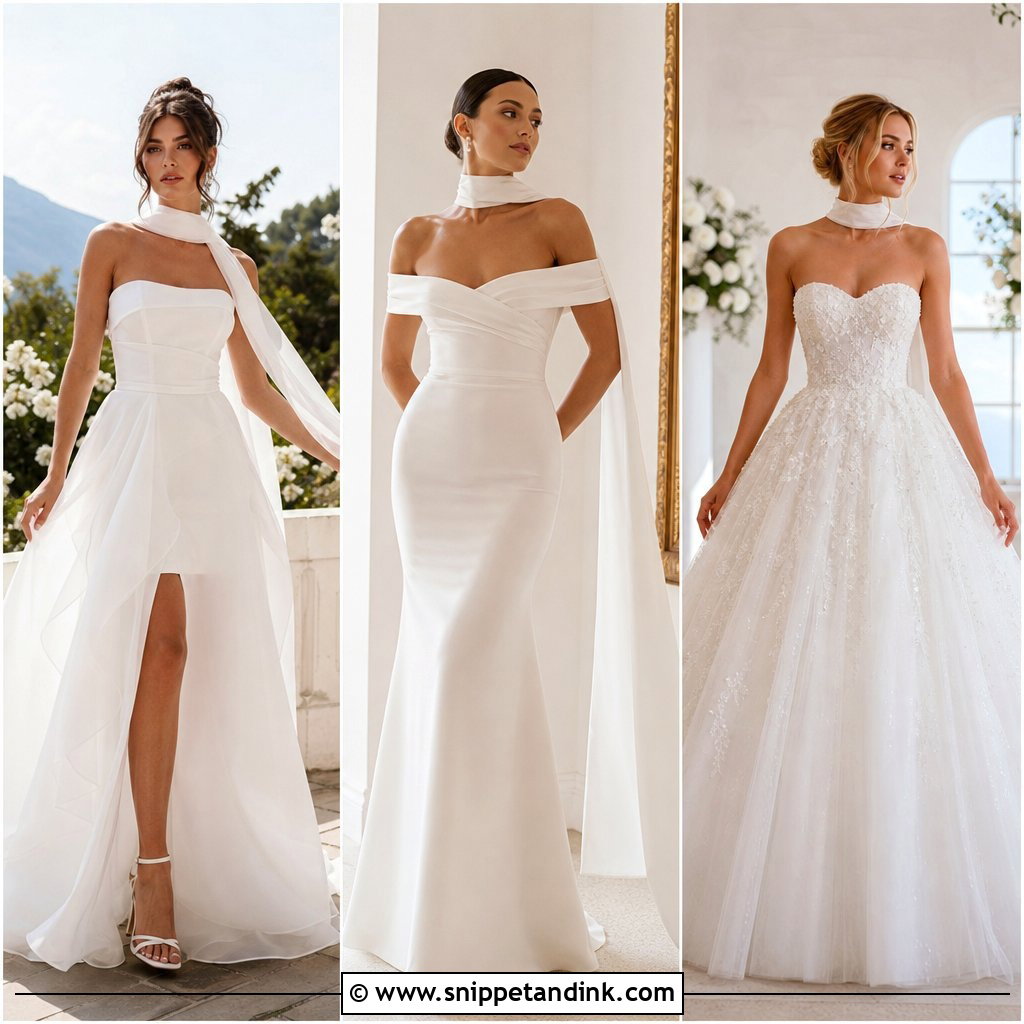
A cape moves when you walk, and that’s what makes it worth considering. Short capes behave like a capelet, while long ones trail like a second train and can replace the veil entirely. If your dress has a detailed back, choose sheer so the buttons and lace still show through. Long capes catch on chair legs and get stepped on by flower girls, so I always attach a discreet wrist loop or show the bride how to gather it before she sits. Satin or crepe suits a minimalist gown best. Statement earrings work because the neckline stays open.
10. Capelet Wedding Dress Jacket
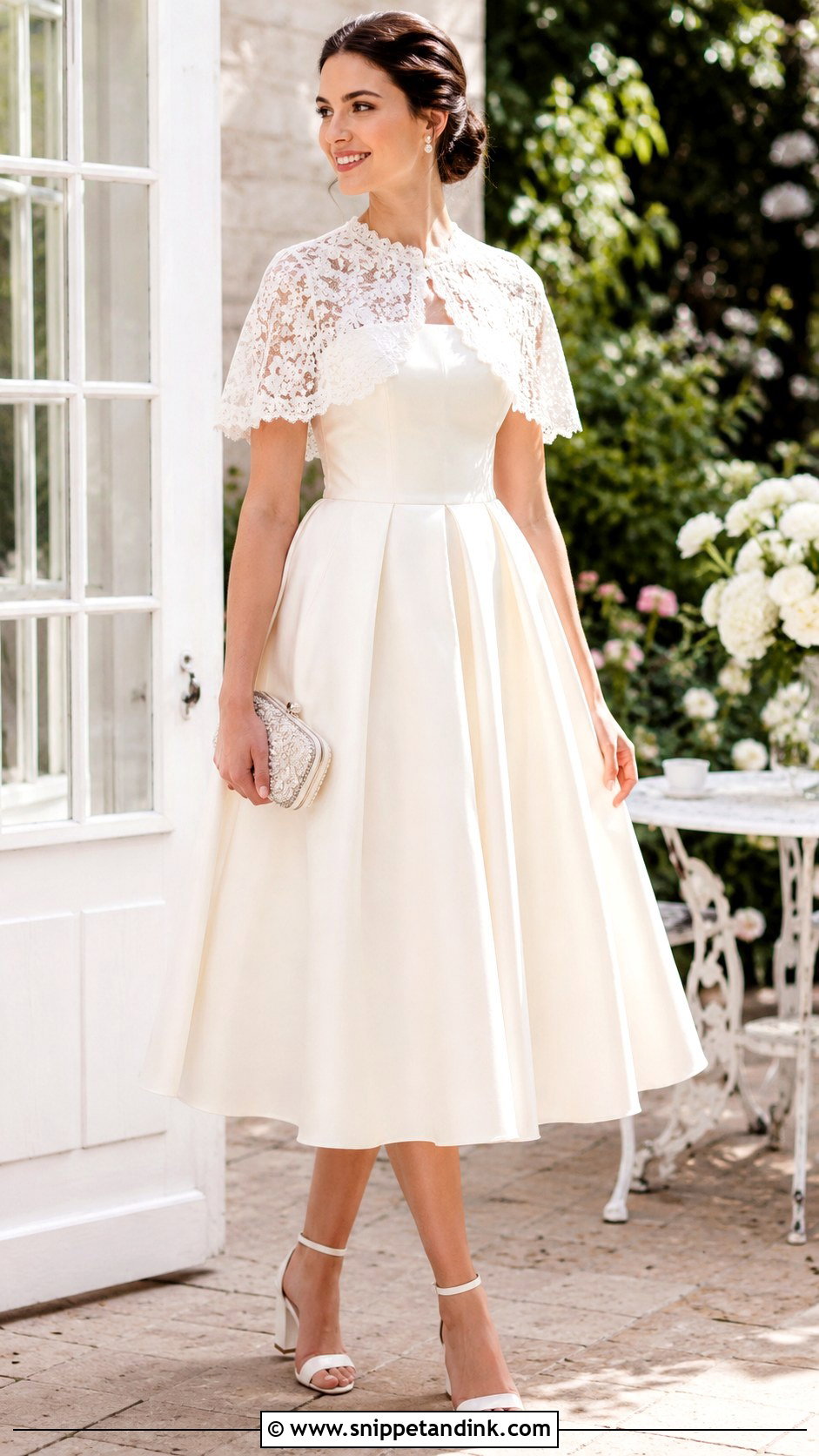
Capelets give shoulder coverage while keeping your arms completely free, which brides appreciate when they’re hugging guests or holding a bouquet for hours. They frame the neckline of a strapless or sleeveless gown and sit well with a tea-length dress. Lace reads romantic, crepe reads modern. The fastening is where capelets fail: a single hook at the throat lets them swivel sideways, so I prefer two small snaps hidden under the collar. Block heels and pearl earrings keep the whole outfit grounded.
11. Feather Trim Wedding Dress Jacket
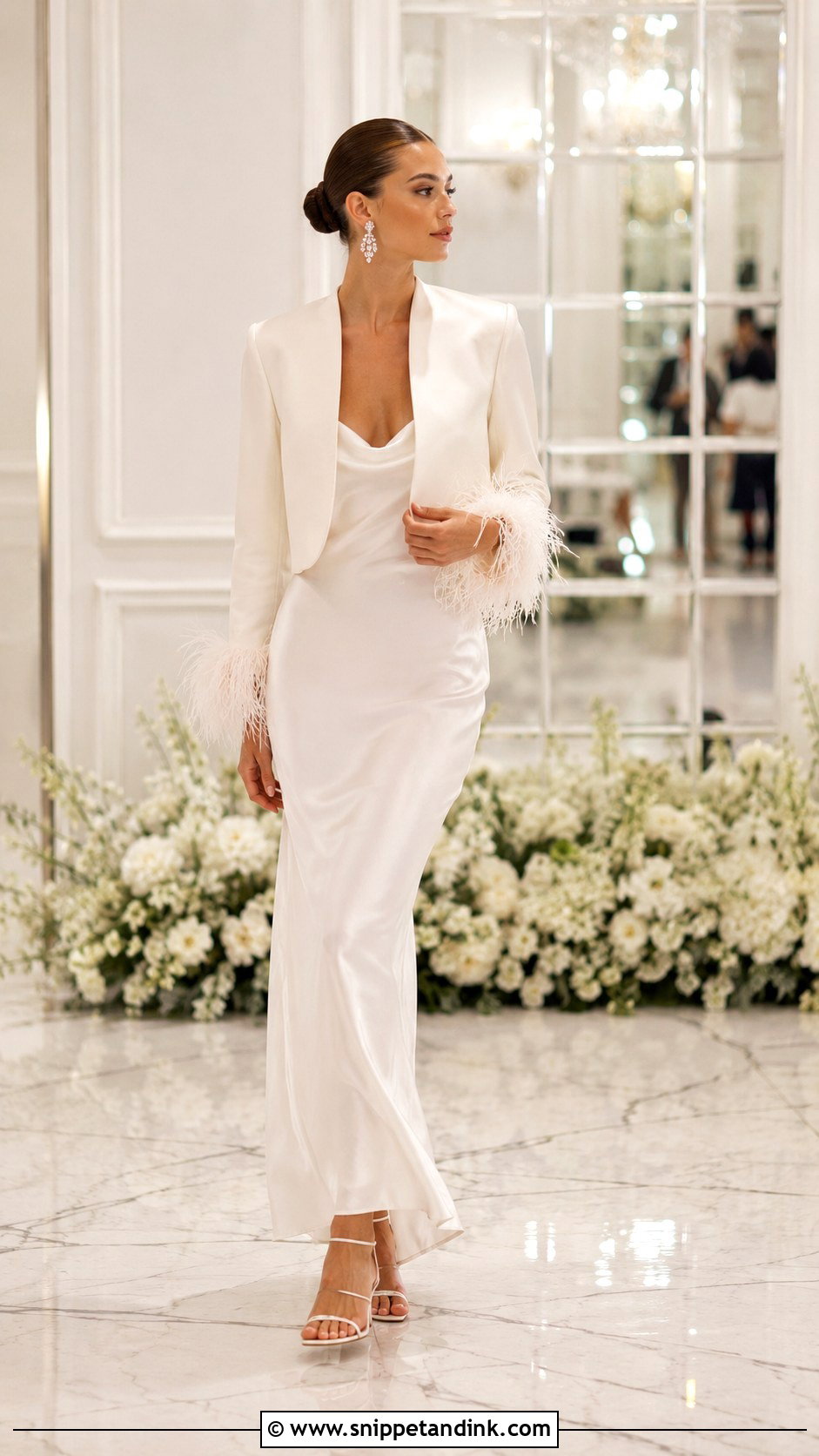
Feathers can tip into costume fast, so I keep them to the cuffs, the hem or a narrow band at the neckline and pair them with a very plain satin slip. Real and faux feather trims both flatten if they get crushed in a garment bag, so I hang the jacket on its own and fluff the trim with cool air from a hairdryer before dressing. Keep the bouquet small; feathers and big florals compete. It makes a fun change for the reception without a full outfit swap.
12. Beaded Wedding Dress Jacket
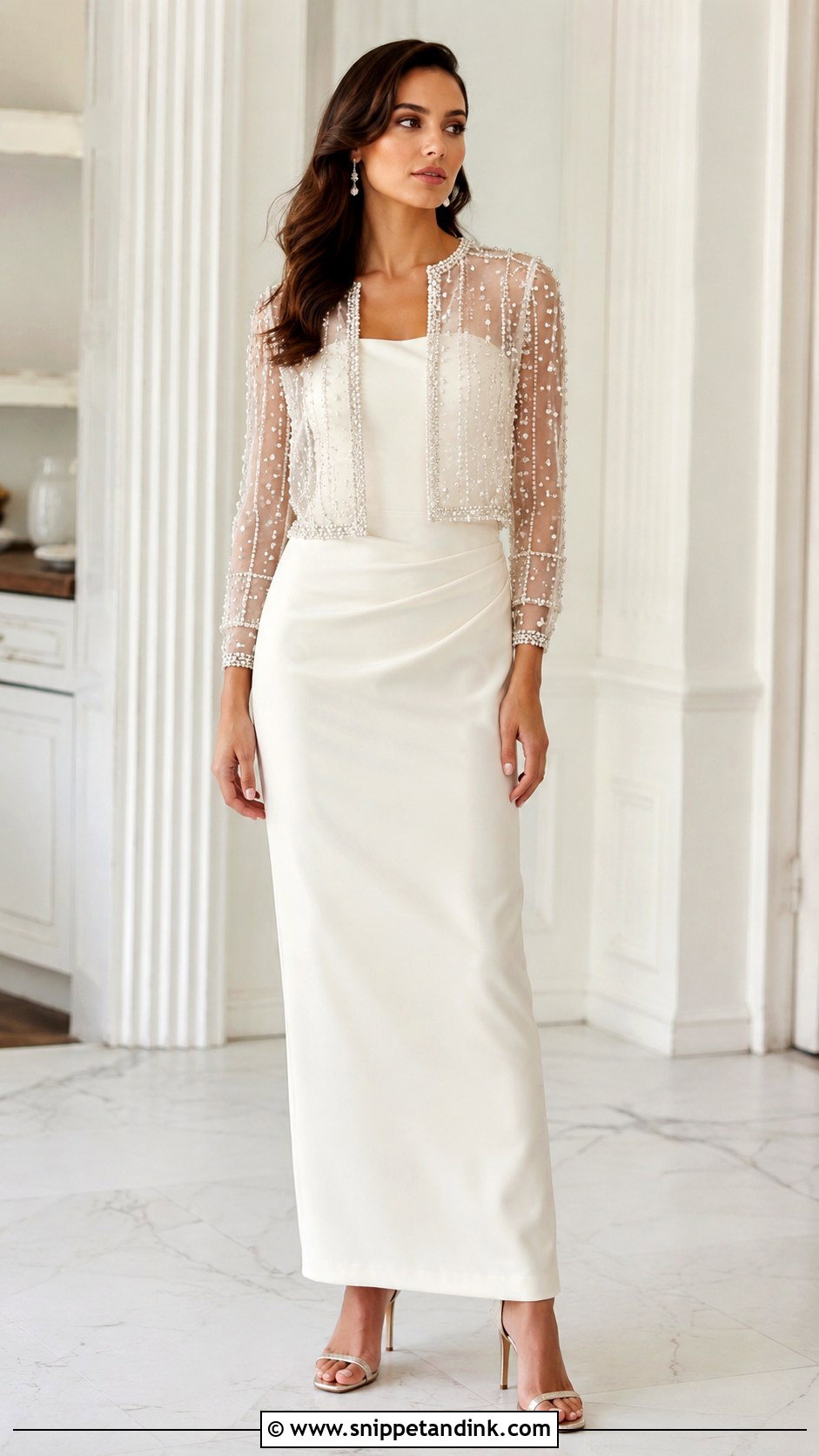
Beading adds sparkle that shows up in ceremony photos, so it suits a gown made from clean, unembellished fabric. Match the undertone of the beads to the dress: silver over a cool white, champagne or gold over ivory. Heavy beadwork has real weight, and a jacket that fits snugly at the shoulders will still slide back if it’s front-heavy, so I sit the bride down and have her reach forward at the fitting. Cropped cuts pair with full skirts, sheer beaded toppers with sheath dresses. Soft waves suit it.
13. Embroidered Wedding Dress Jacket
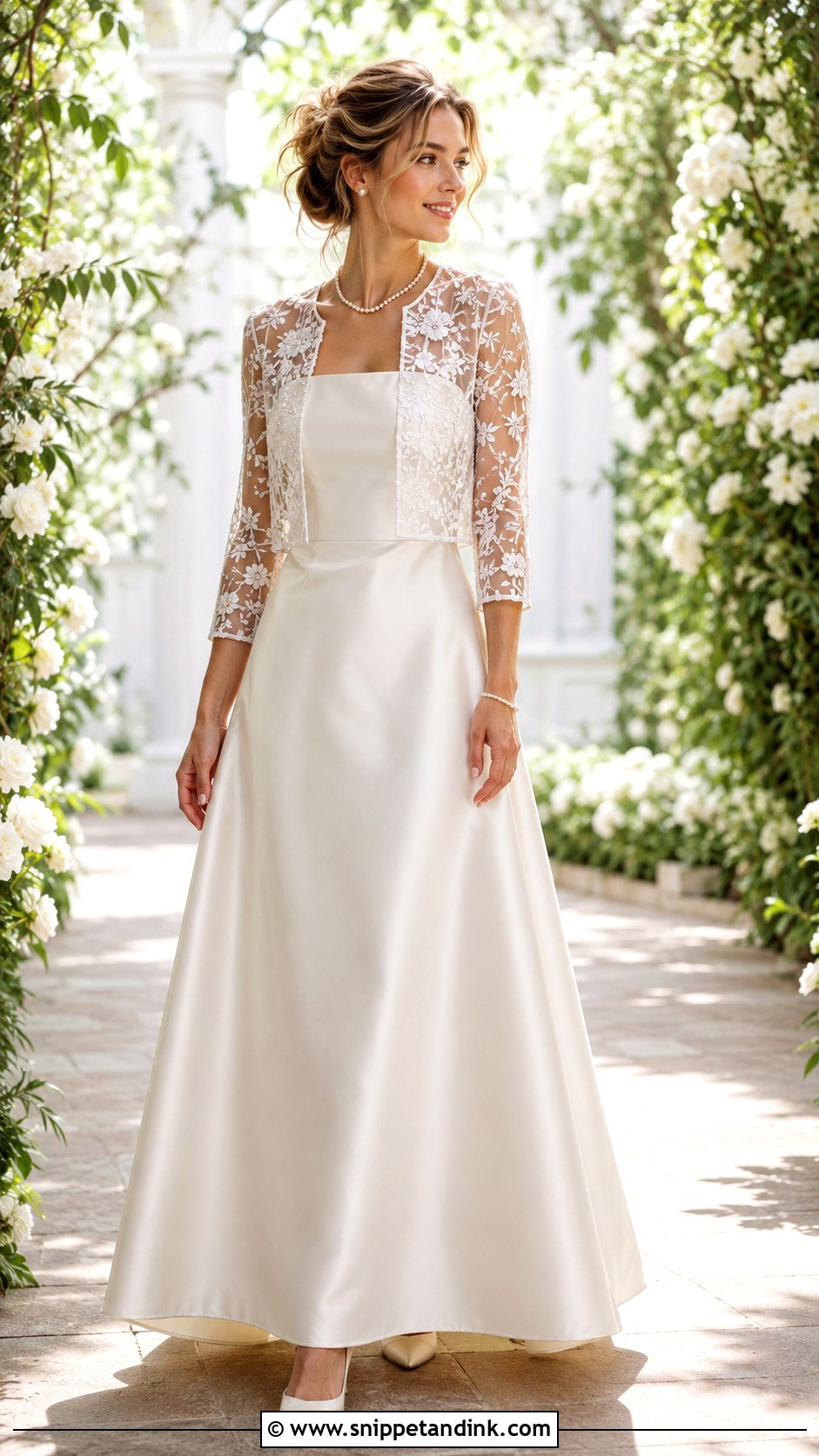
Embroidery is where a jacket starts to feel personal. Floral thread work leans romantic, while tonal ivory-on-ivory stitching stays quiet enough for a formal church. Plain satin, crepe or tulle gowns let the embroidery become the main detail. I ask brides to bring a petal or ribbon from the bouquet to the fitting, because embroidery thread colors range from cool white to yellow cream and a mismatch shows clearly next to fresh flowers. Ivory pumps and a relaxed updo keep it gentle.
14. Denim Wedding Dress Jacket
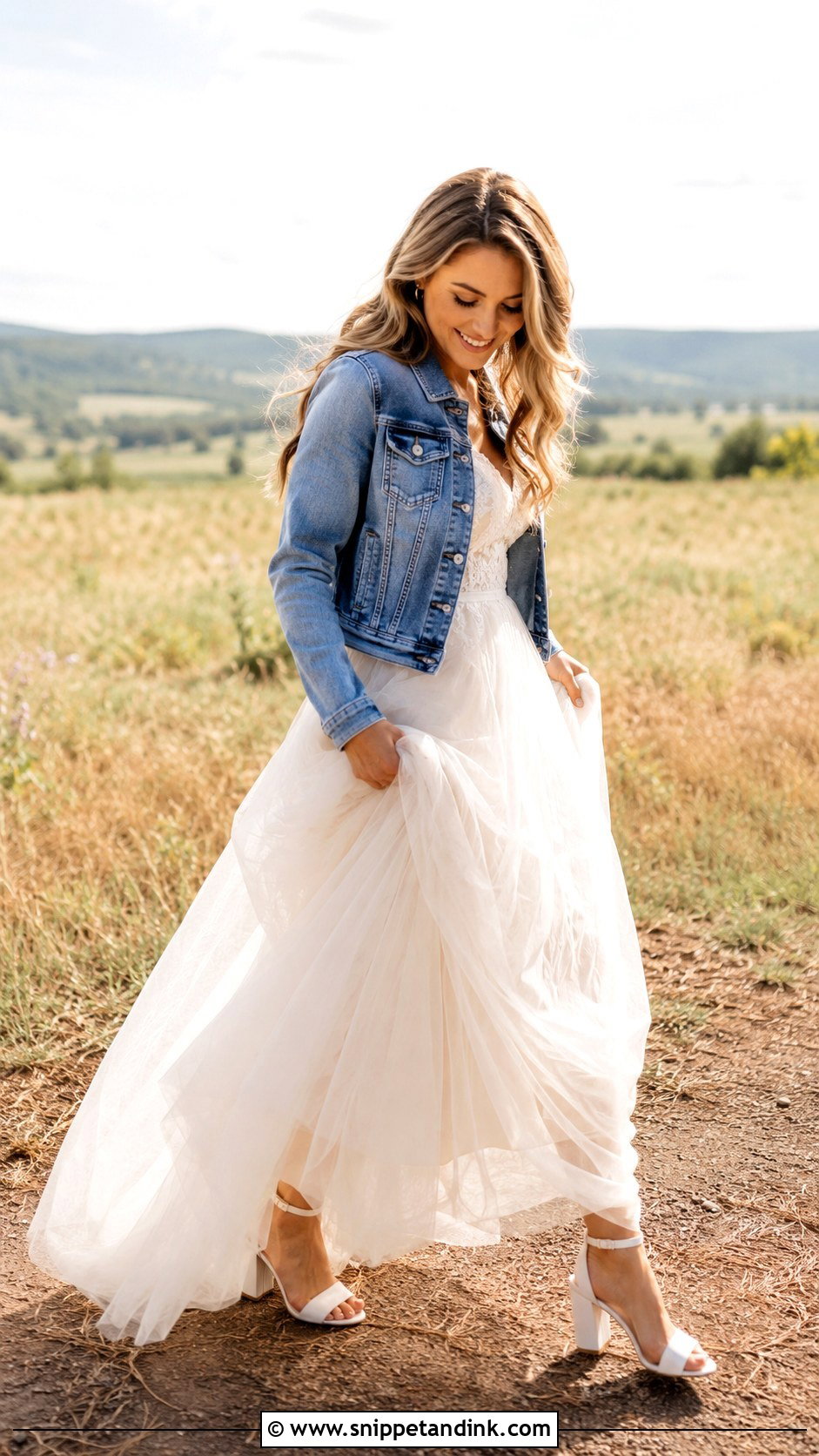
Denim is the jacket for the after-party, the barn reception or the outdoor portraits where you want to look like yourself. A denim wedding dress jacket in white reads softer next to a gown; light blue gives a playful contrast. Wash it at least twice before the wedding, because new indigo denim can transfer blue onto ivory tulle and lace, and that stain does not come out easily. Cropped fits keep the waist visible. Sneakers or block heels suit the mood, and custom back embroidery makes a great photo.
15. Leather Wedding Dress Jacket
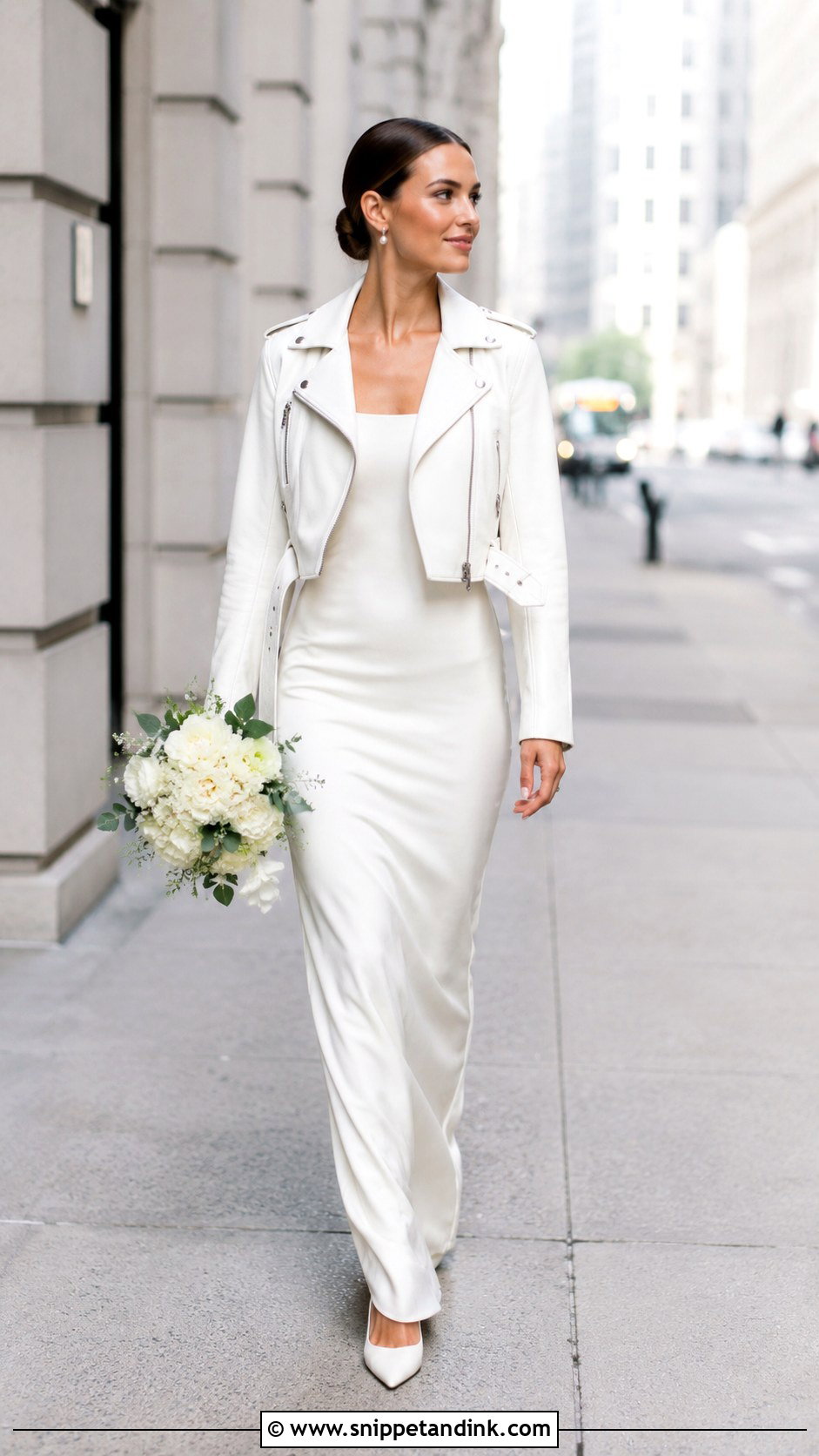
Leather brings contrast, and I like a leather wedding dress jacket over a slip dress, a fitted lace gown or a column dress for a city wedding. White or ivory keeps it bridal; pale blush or beige feels more wearable afterward. Leather doesn’t breathe, so on a warm day it becomes a photo-only layer. Keep it cropped and skip the extra hardware, since zips and studs already do a lot. Sleek hair and pointed heels suit its edge.
16. Knit Wedding Dress Jacket
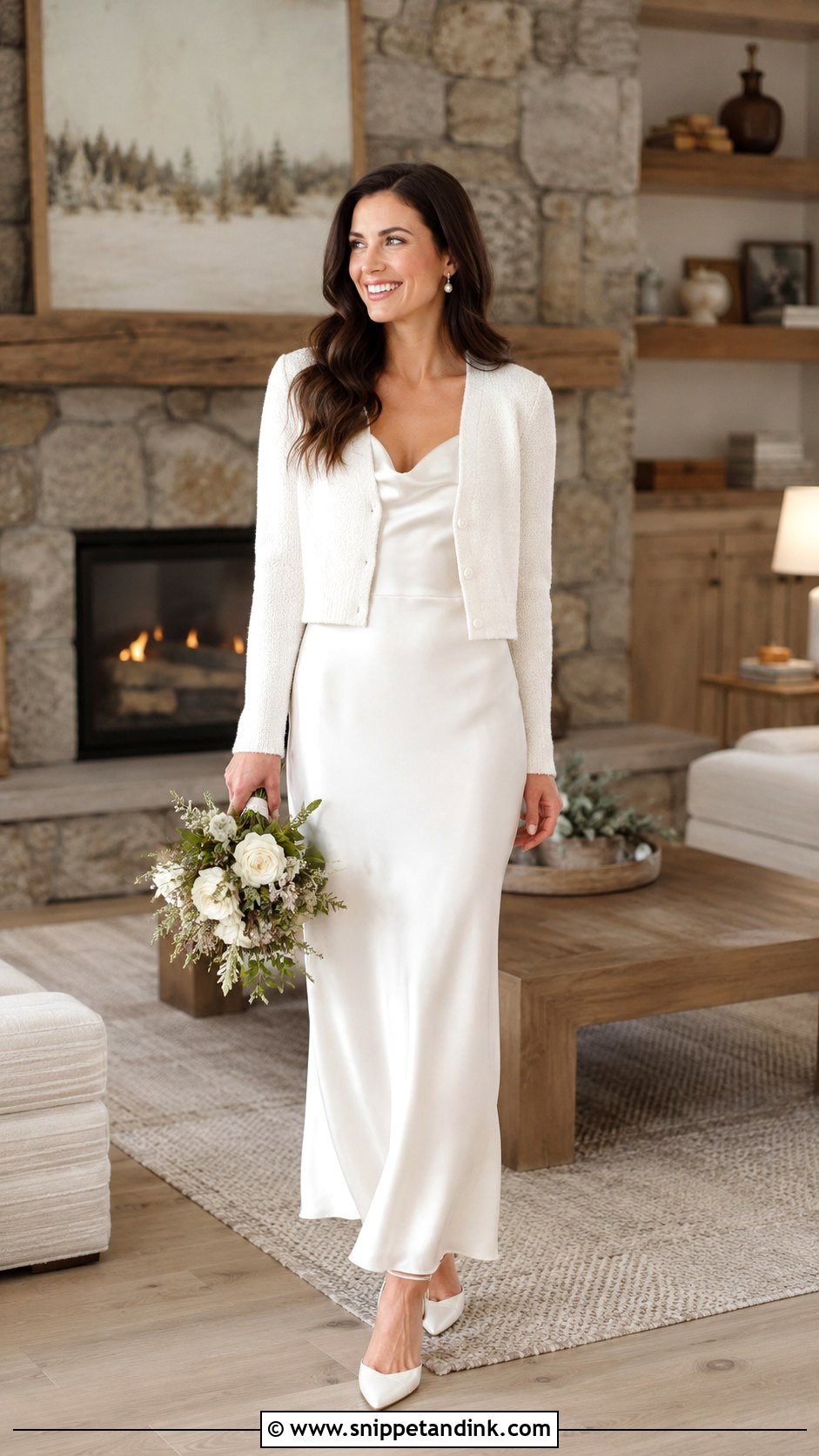
Cool mountain venues and relaxed receptions are where knitwear makes sense, as long as it’s fine-gauge. Bulky knits look like a borrowed sweater against silk. A fine ivory knit, a cropped cardigan jacket, or a wrap style all sit flat enough for a slip dress. Knit stretches as you wear it, so I size it snug at the fitting knowing it will relax by evening. Loose waves and pearl earrings suit the texture. It’s the most comfortable layer on this list for moving around.
17. Sequin Wedding Dress Jacket
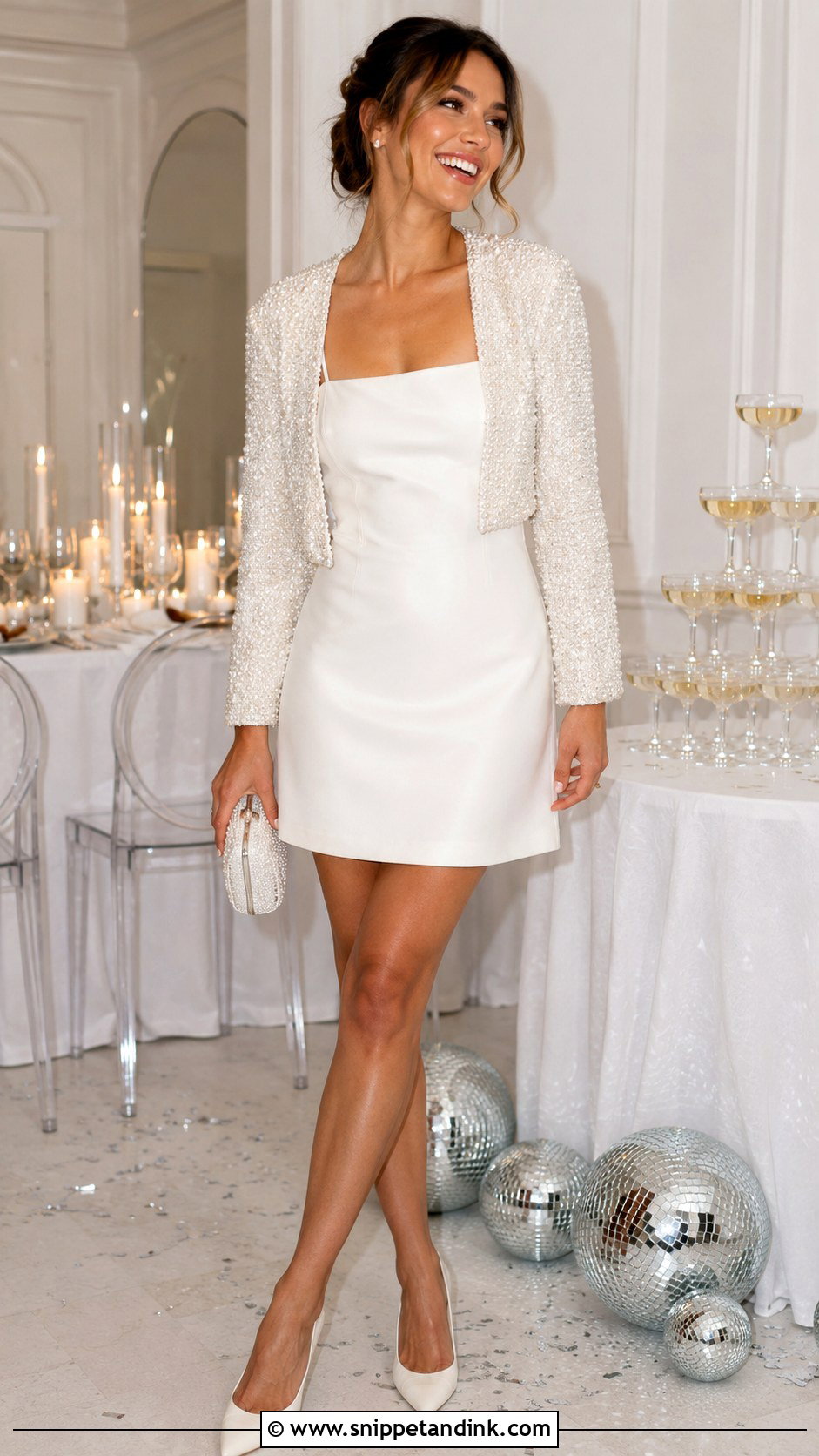
Sequins make sense once the formal part is over. A cropped sequin jacket feels playful, while a tailored sequin blazer is sharper. Choose ivory, silver or champagne, and wear it over a plain gown, a mini or a jumpsuit, since sequin on lace looks busy. Sequins scratch the inner arm when sewn onto a stiff base, so I always ask whether the sleeves are lined before a bride commits. Keep the jewelry minimal and you’ll be ready for the dance floor.
18. Organza Wedding Dress Jacket
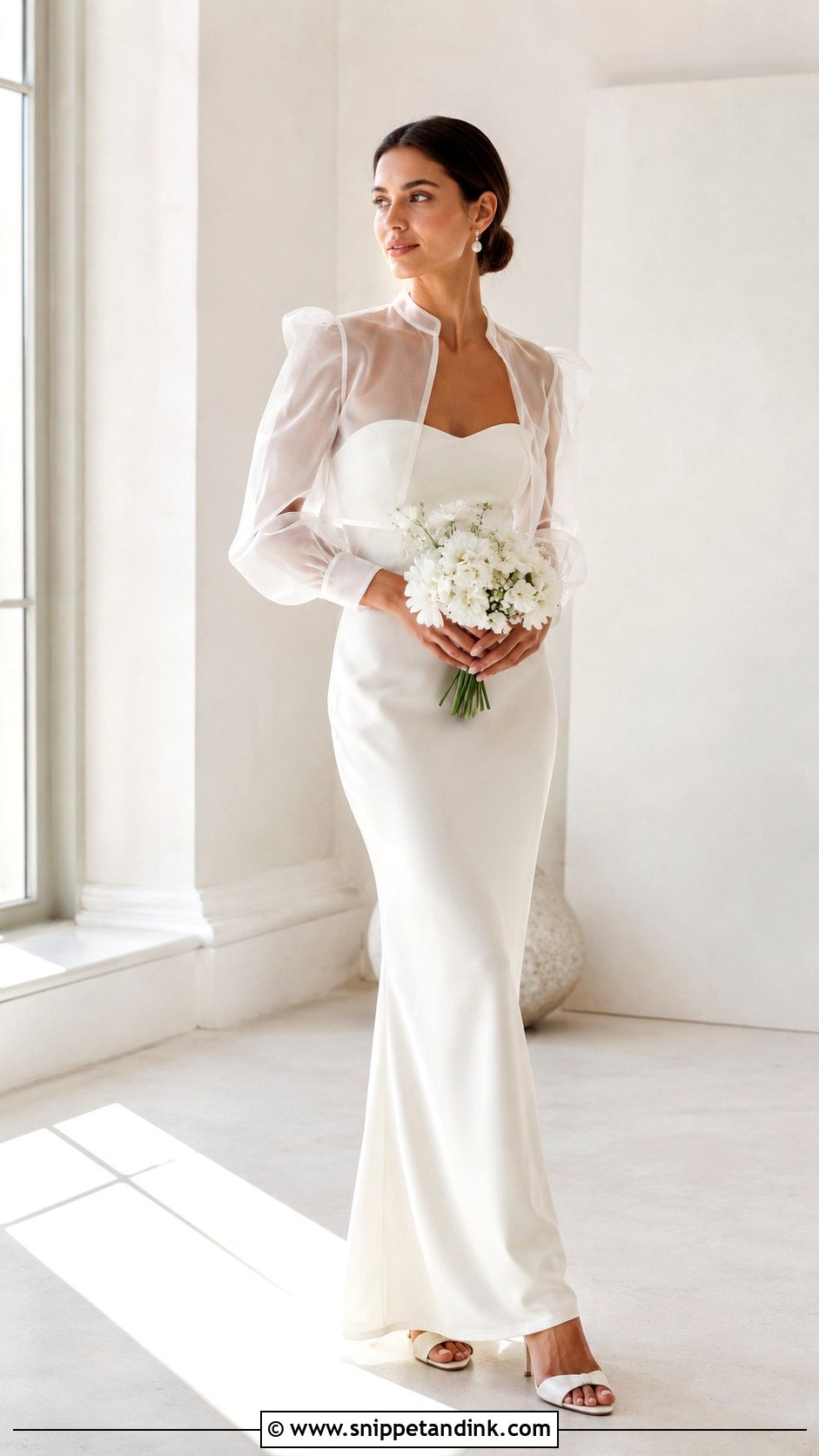
Organza holds its shape, so puff sleeves stay puffed and a topper floats away from the body instead of clinging. That body is also its weak point: organza crushes in a garment bag and shows sharp crease lines, so I steam it on the morning, never the night before. A cropped puff-sleeve version gives a plain column gown some fashion interest. Keep the rest streamlined, with satin heels and a low bun. It catches daylight softly, which makes it pretty for outdoor portraits.
19. Velvet Wedding Dress Jacket
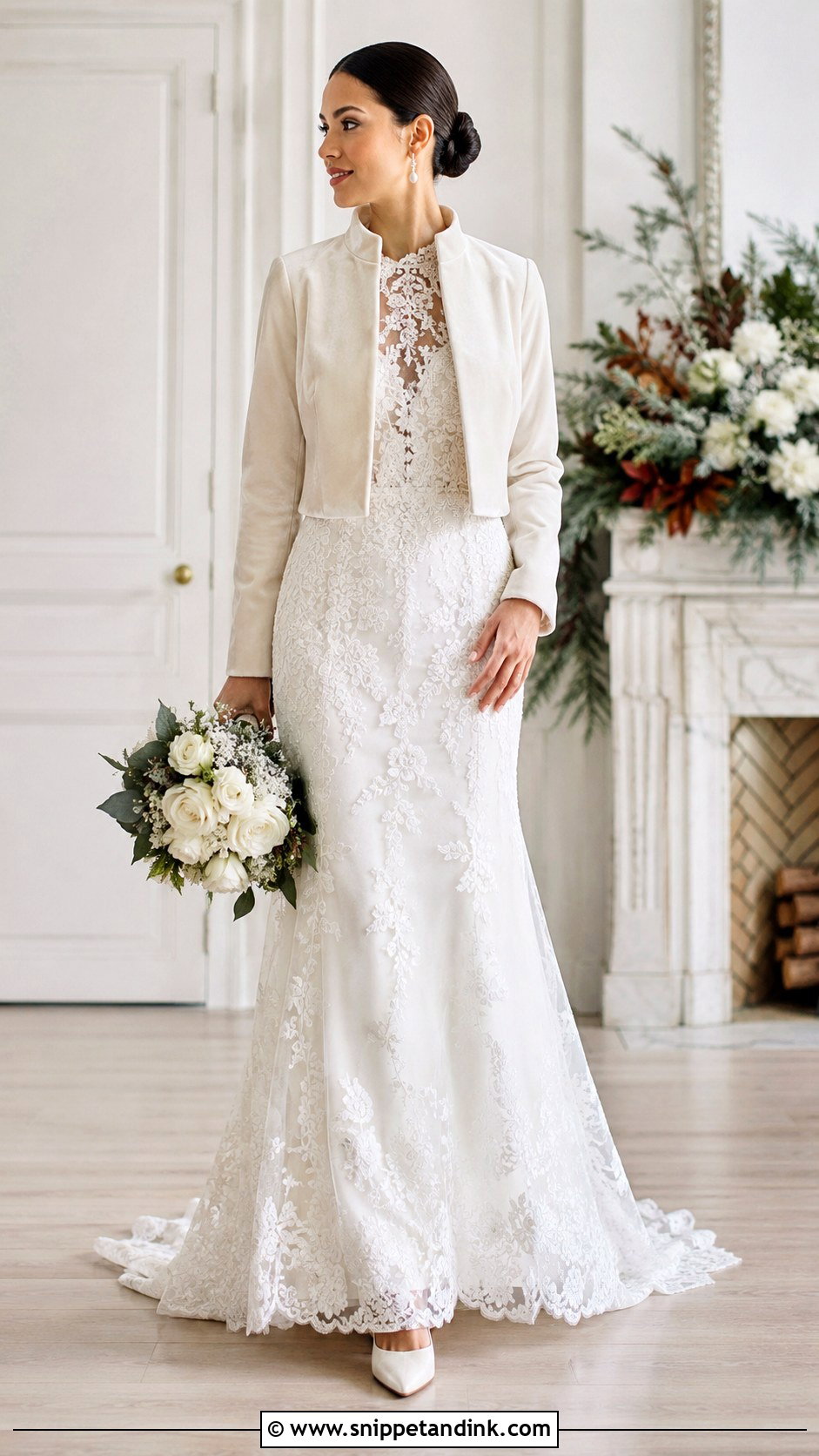
Velvet belongs in late autumn and winter. Ivory velvet is classic; champagne or pale blush adds warmth. The pile has a direction, so it looks lighter or darker depending on how the light hits it, and a jacket cut with mismatched panels shows patchy in photos. I look at it under a window before I approve it. Cropped velvet pairs with satin, lace or plain crepe, though not all three at once. A smooth low bun and closed-toe heels keep it refined.
20. Brocade Wedding Dress Jacket
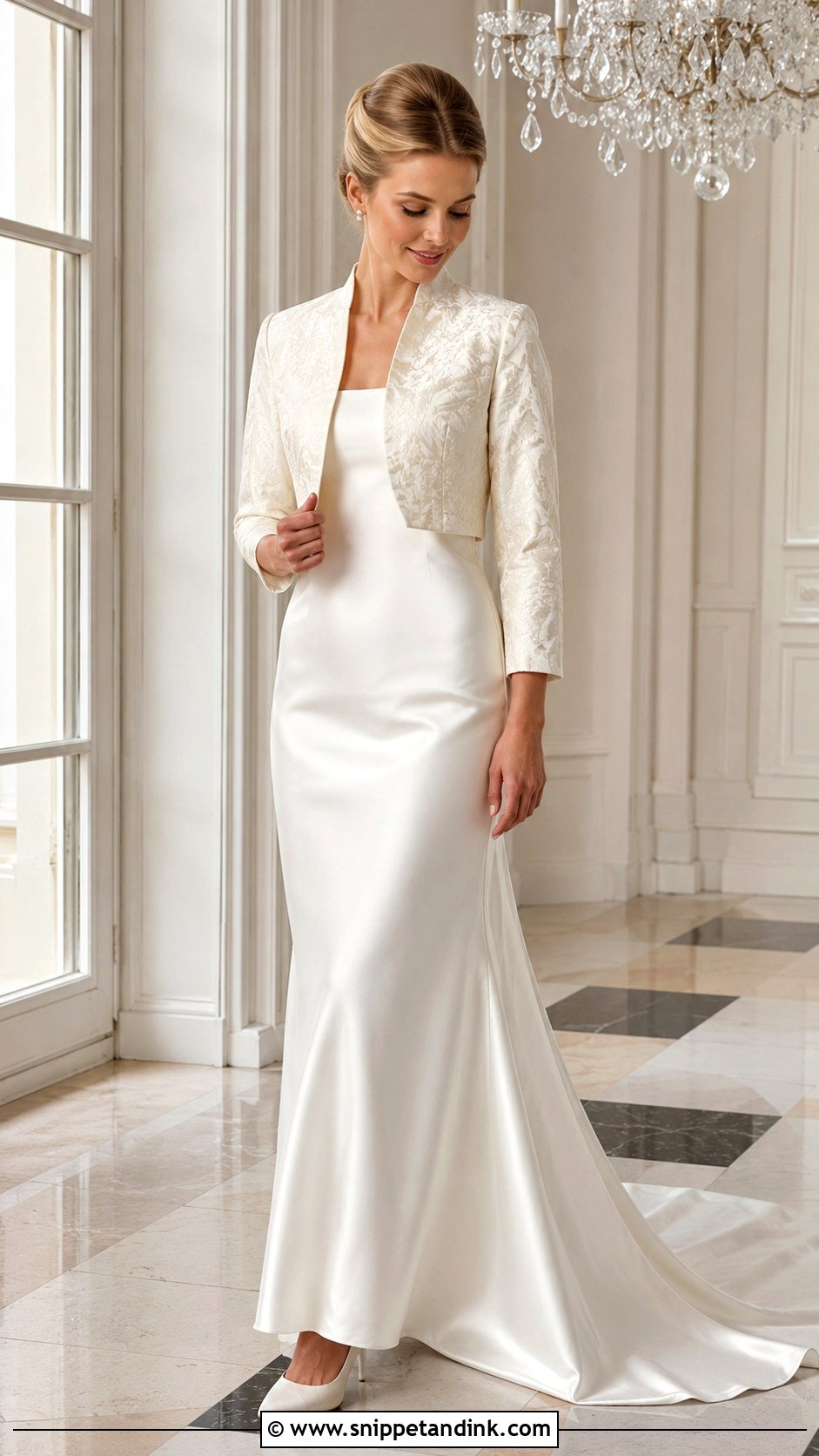
Brocade has the woven pattern built into the fabric, so you get depth without any beading or sparkle at all. It suits plain satin and crepe gowns, and bridal separates especially. A cropped brocade jacket defines the waist, while a longer cut over a slim dress looks regal. Brocade frays quickly at cut edges, so check that the seams inside are bound or overlocked before you buy. Tonal ivory is the classic choice; a little metallic thread adds sheen without glitter. Pair it with satin pumps and a structured hairstyle.
21. Ruffle Wedding Dress Jacket
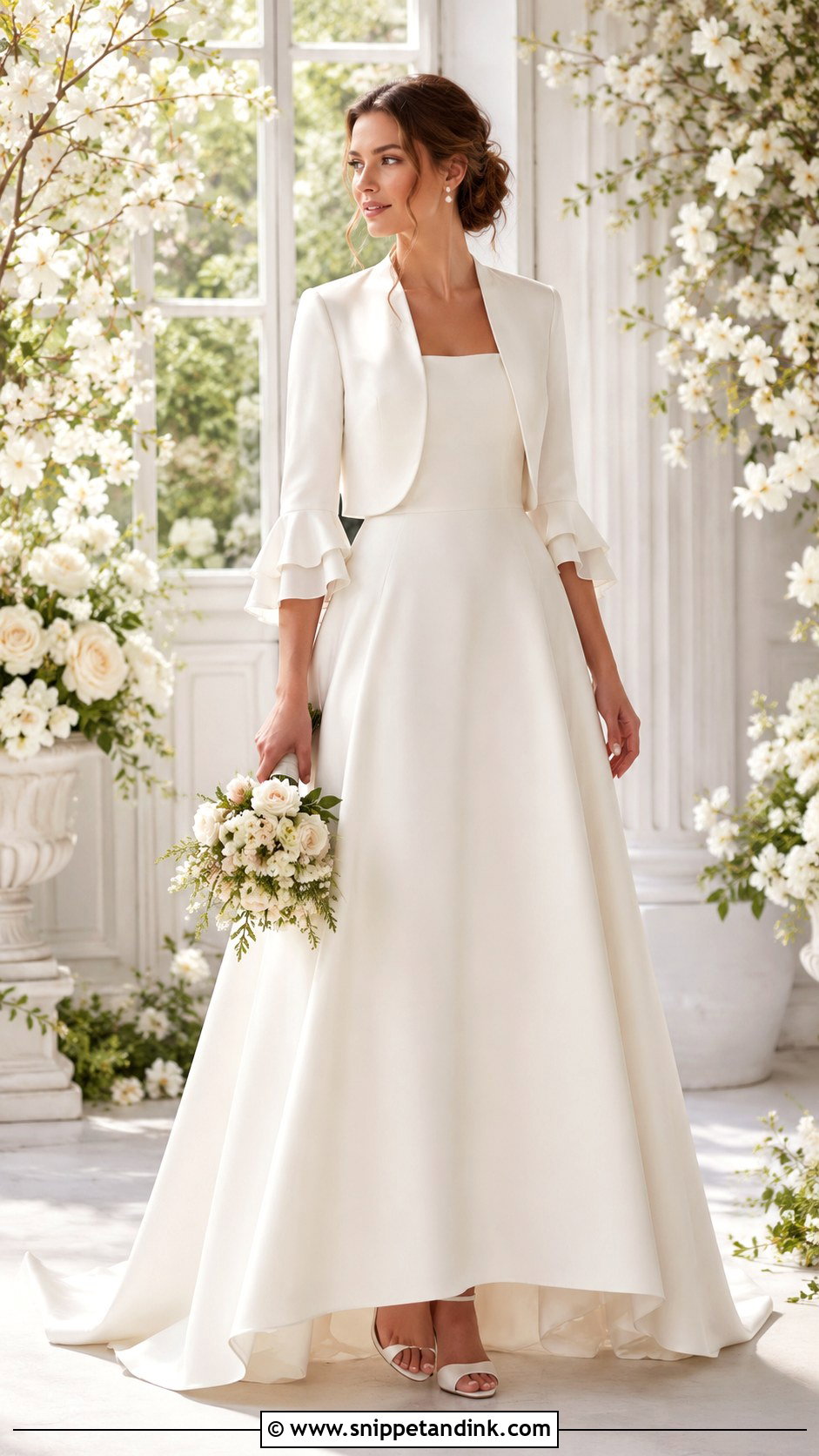
Ruffles add movement, but placement matters more than quantity. A ruffle along the sleeve or the hem gives softness, while one around the neckline frames the face. Over a full gown, keep the ruffles small or the outfit gets wide very quickly. A fitted column or a simple A-line gives them room. Large ruffles in soft chiffon wilt in humidity, so I’d choose organza or taffeta ruffles for a summer garden wedding. A loose updo and pearl earrings keep the look soft.
22. Bow Wedding Dress Jacket
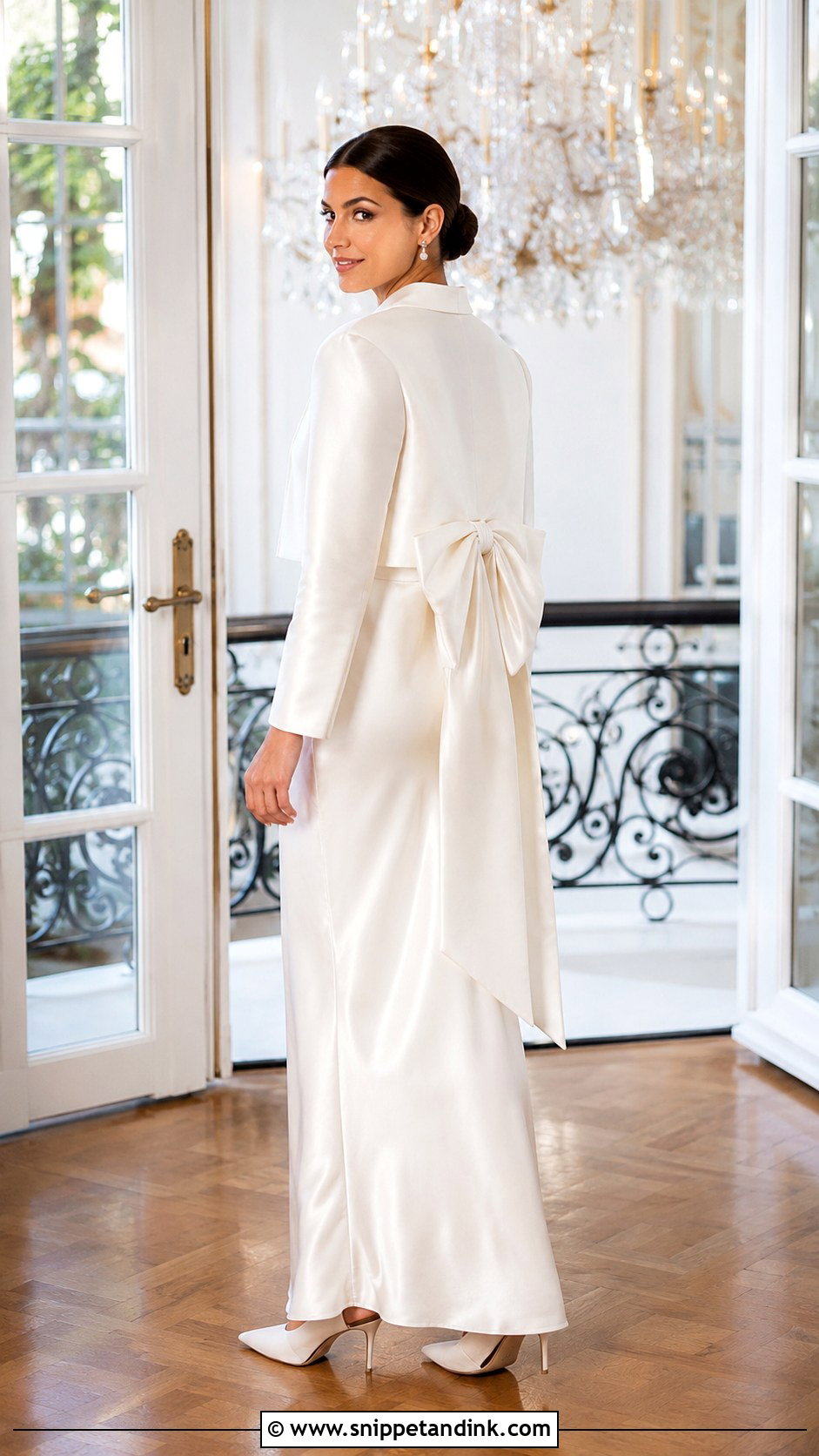
Bows are sweet, and their position changes the whole effect: a small bow at the neck feels classic, while a large back bow is a planned photo moment for the walk back up the aisle. A big back bow gets crushed when you sit, so I attach it with a hidden snap so it can come off for dinner and go back on for the exit. It pairs with strapless gowns, minis and sleek satin. If your dress already has bows, repeat the detail once, small. A neat bun keeps it tidy.
23. High Neck Wedding Dress Jacket
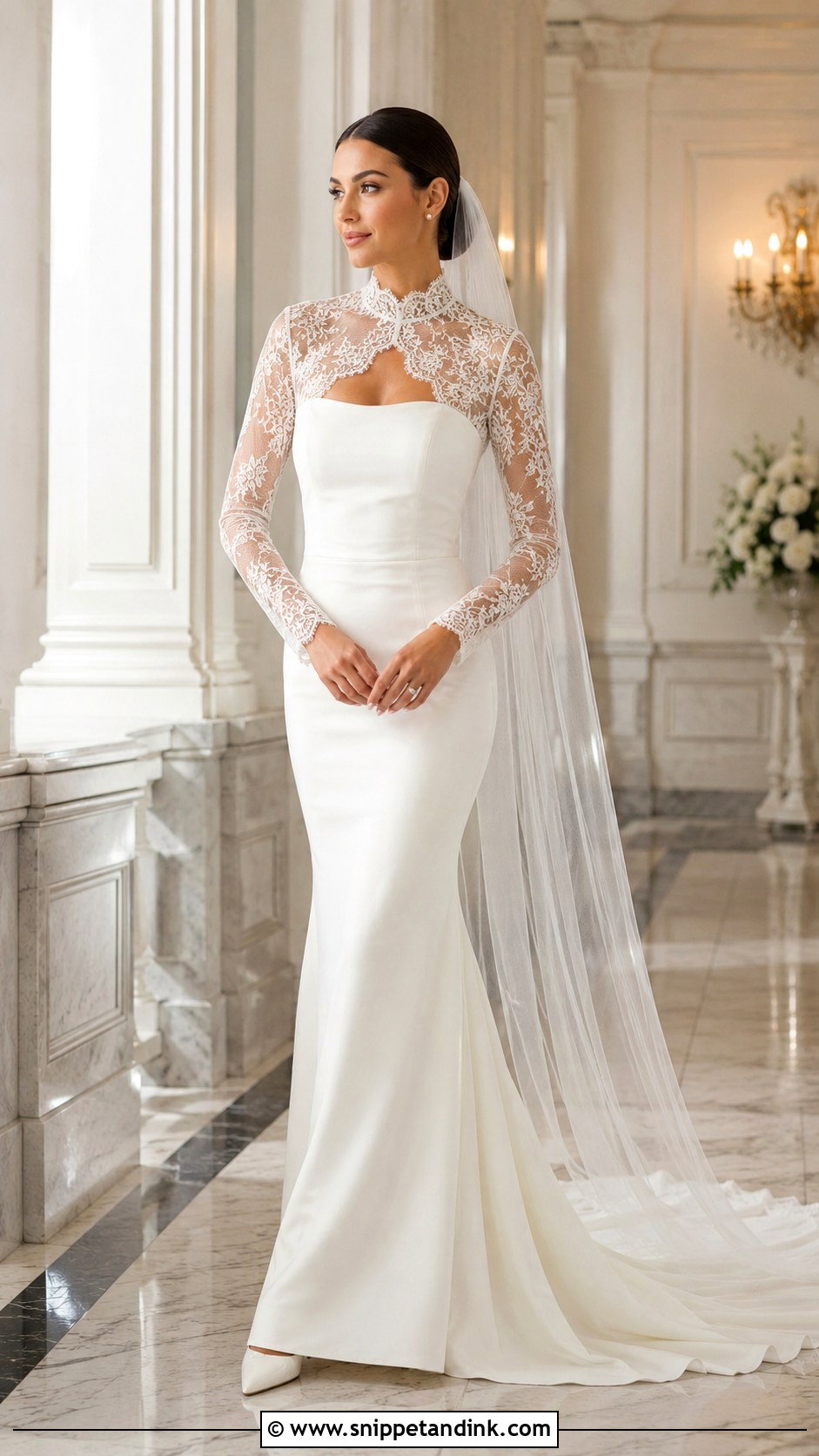
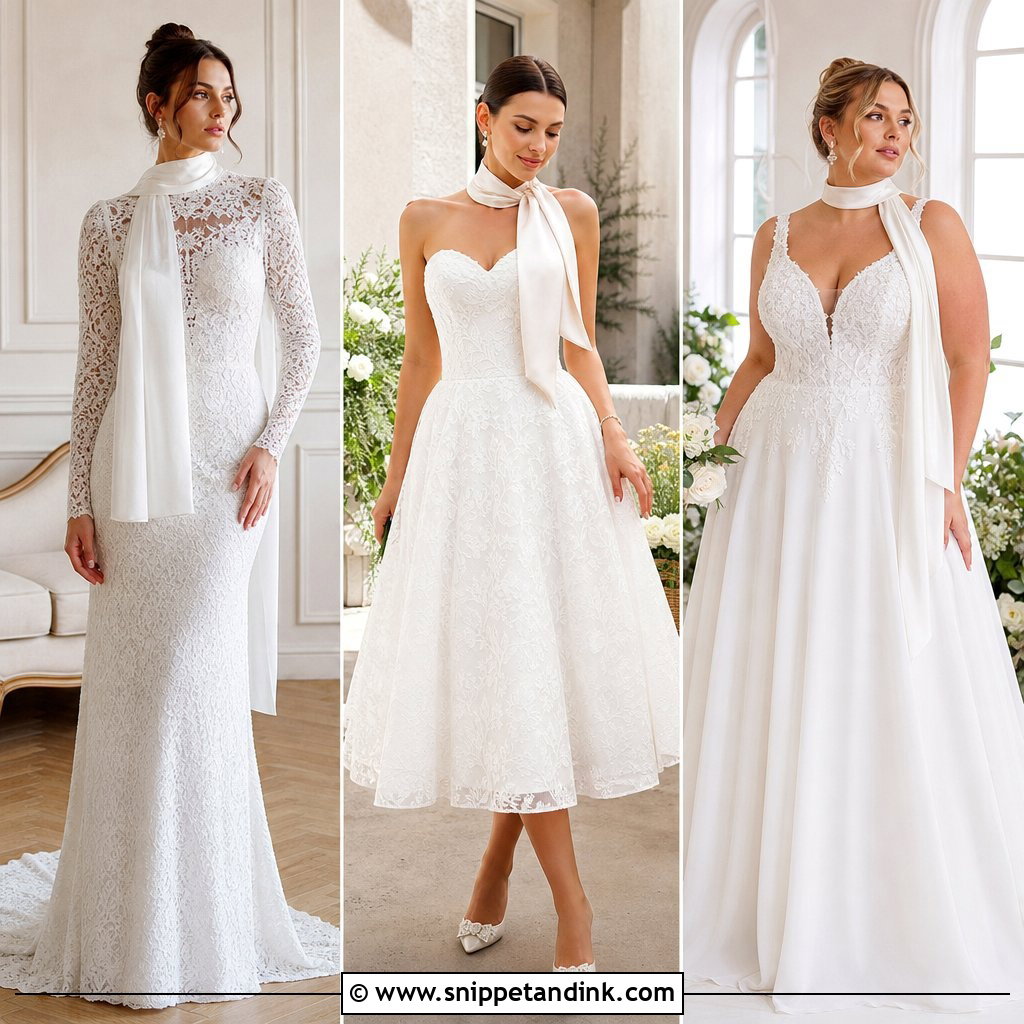
High necklines change the gown entirely, which is why I suggest one when a bride wants a modest ceremony and a strapless reception without buying two dresses. Sheer lace, tulle or beaded mesh keep it light. The collar needs a little ease: if it presses on the throat when you look down at your bouquet, it’ll be uncomfortable within an hour. It also balances an open back or a fitted skirt. A sleek veil and pearl studs suit the clean collar.
24. Off Shoulder Wedding Dress Jacket
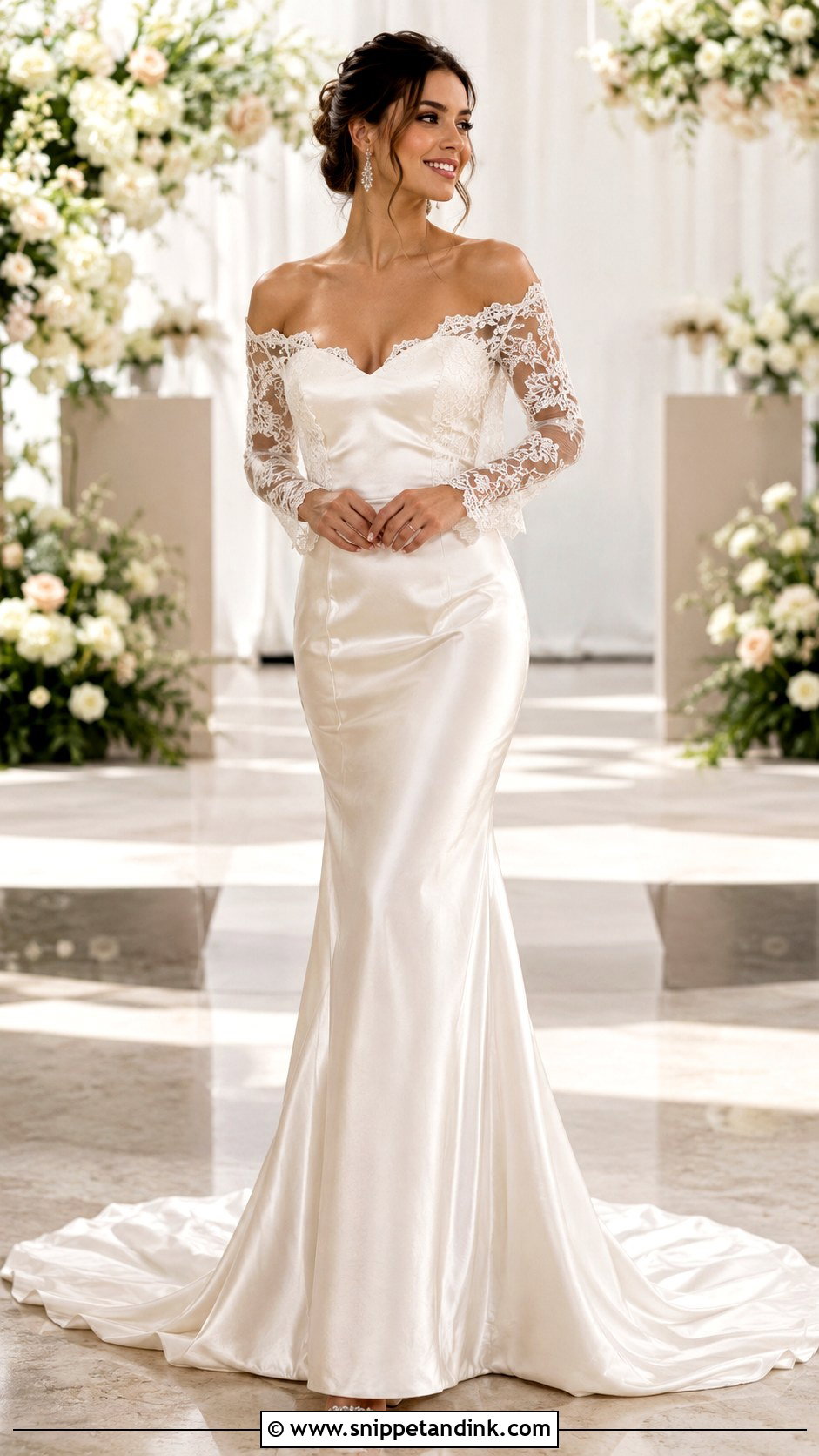
An off-shoulder jacket softens the neckline and covers the upper arms without a full sleeve. It suits fitted gowns, mermaid shapes and plain satin. Lace, organza or crepe each work, so I choose the one closest to the gown’s own fabric. This style relies on a band that grips the upper arm, and if it’s loose it creeps up onto the shoulders; too tight and you can’t lift your arms to hug anyone. Swept-back hair and drop earrings keep attention on the shoulder line.
25. Custom Wedding Dress Jacket
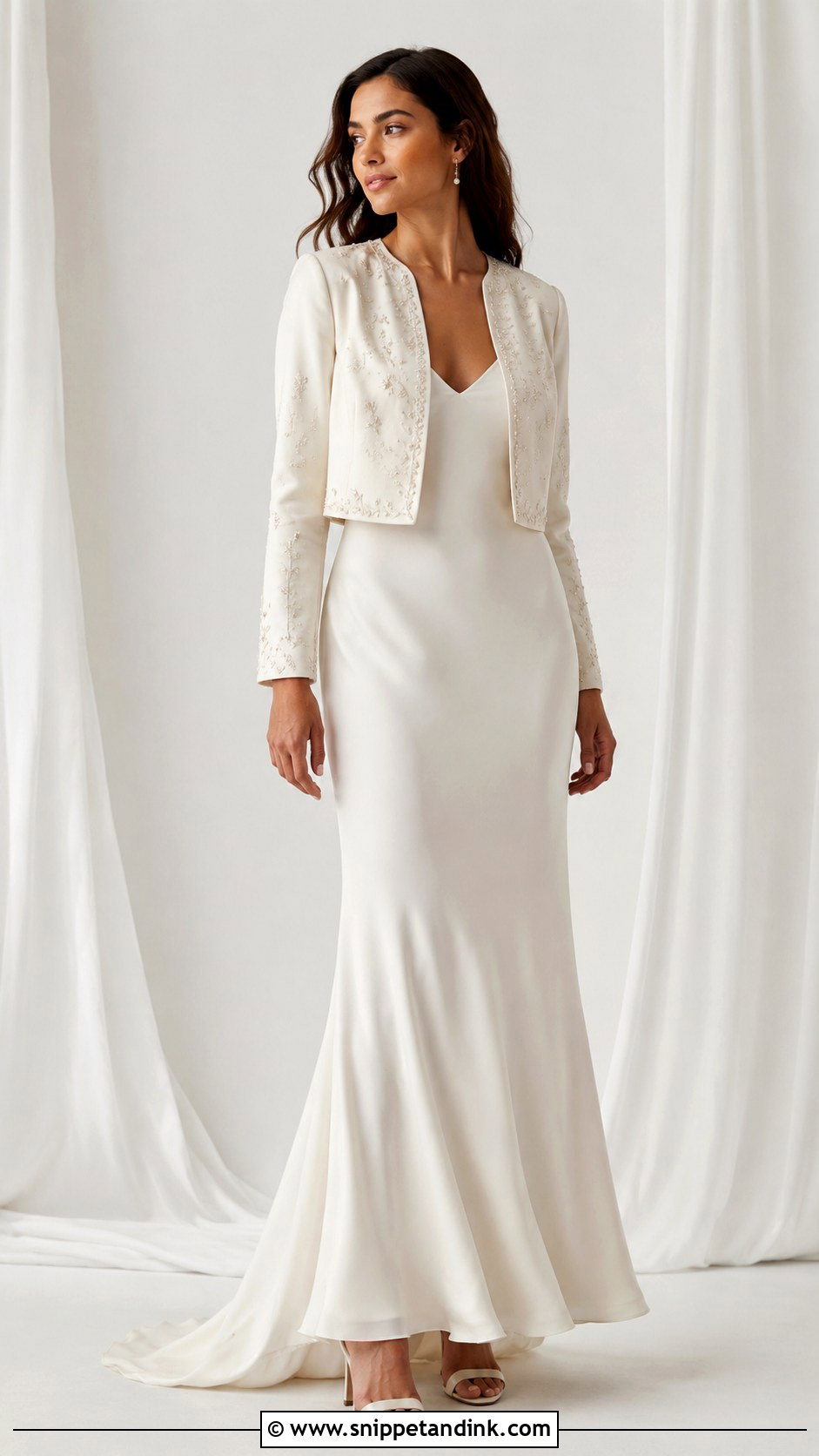
Commissioning a jacket makes sense when your gown has an unusual neckline, an odd fabric or an undertone that nothing off the rack matches. A maker can work in your initials, the date, hand embroidery or pearls, or offcuts of lace saved from your alterations. Allow real time; hand embroidery and fittings take weeks, and the jacket can only be fitted properly once the dress alterations are done. Keep the gown and shoes simple so the jacket stays the focus. It can also become a keepsake after the wedding, worn over evening dresses for years.
Ivory Rarely Matches Ivory, So Test Both Layers in Daylight
Bridal whites cover a wide range, from optic white through diamond white and ivory to champagne, and fabrics of the same named shade can still read differently because of their sheen. Satin bounces light and looks paler; crepe and wool absorb it and look warmer. Shop lighting flatters everything, so take the jacket to a window or step outside with the dress on before you buy.
If the match is close but not quite right, go further apart on purpose. A clearly warmer jacket over a white gown looks styled; one that’s a shade off looks like a mistake.
Where the Jacket Goes When You Take It Off
Almost every bride removes her jacket at some point, usually after the formal portraits or before the first dance. Plan that moment so it doesn’t end up on a chair back for four hours. Give it to one named person with a padded hanger and a garment bag, and tell your photographer when you plan to change so the jacket shots happen first.
Foundation transfers onto collars and lapels the moment you hug people, so ask your makeup artist to set the neck and jawline well, and keep a stain wipe meant for delicate fabrics in the emergency kit. After the wedding, have the jacket cleaned alongside the gown so both are treated the same way before storage.
A Jacket That Feels Like Part of the Dress
Start from the job the jacket has to do. A lace bolero gives classic coverage, a blazer modernizes, a cape gives you movement and a long coat keeps you warm. Then try it with the actual dress, shoes, hair accessories and bouquet, and have someone photograph you standing, sitting and hugging. Look at sleeve length, fabric color in daylight and how the shoulders sit when you move. If it feels like part of the dress rather than something worn over it, you’ve found it.
You'll Like These Ideas:


Leave a Reply