
White is the color I’m asked for most at bridal appointments, and it’s also the one that shows every shortcut. It sits next to an ivory gown, a platinum band or a blush bouquet without arguing with any of them, but only when the shade is right: a flat, chalky white can make a warm ivory dress look yellow beside it. Current bridal nail trends have moved toward milky finishes, micro French lines, pearl accents and quiet shine rather than heavy art. I think that’s good news, because those are also the finishes that survive a long day of hugging and holding glasses. Below are twenty white sets I’d happily put on a bride, a bridesmaid or a mother of the bride, with notes on where each one tends to go wrong.
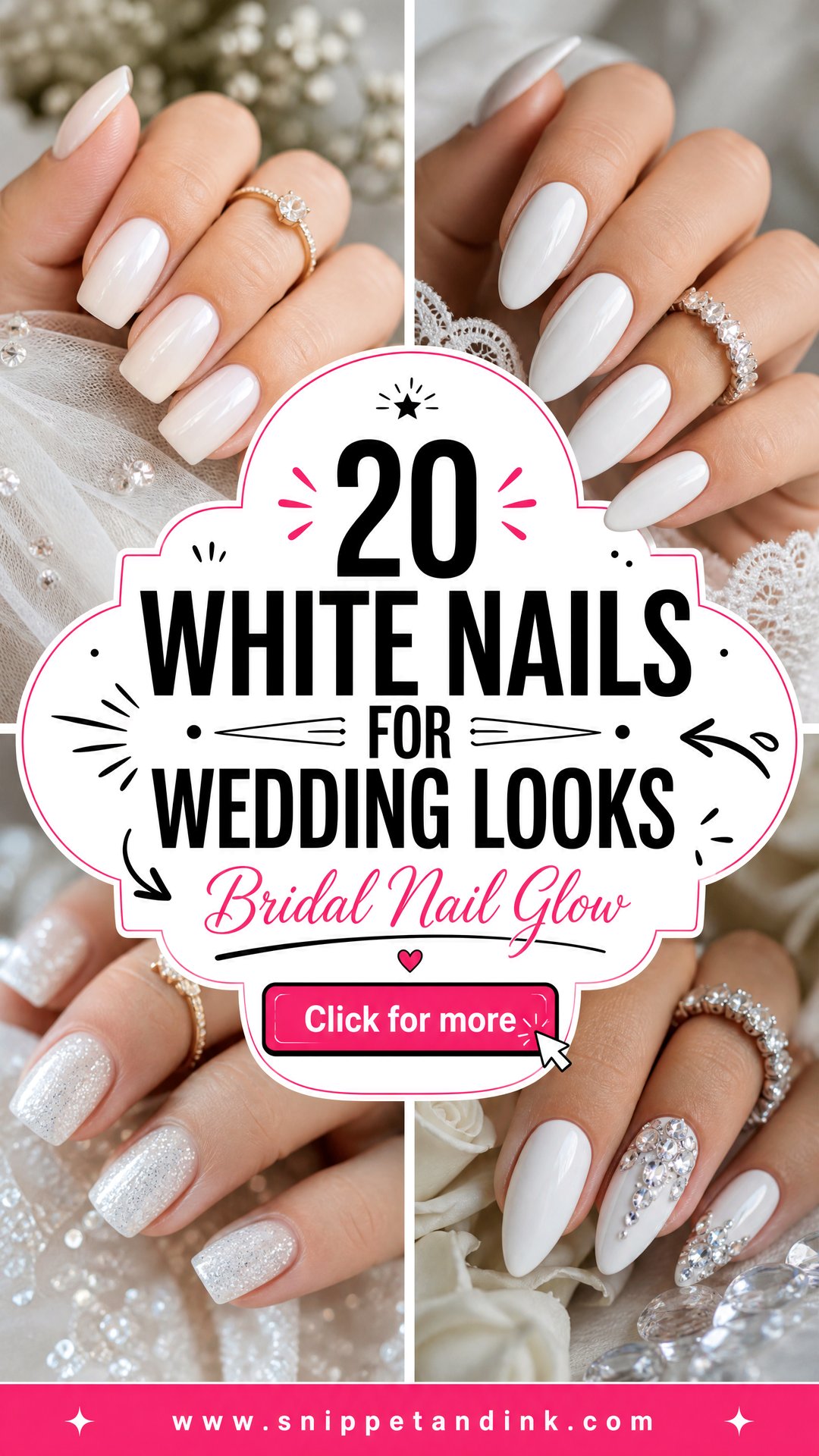
Hold a Polish Swatch Against the Dress Before You Commit
Wedding whites vary far more than nail whites do. A gown might be optic white, soft white, ivory or champagne, and a nail white that looks clean in the bottle can make any of them look dingy beside it. My rule is that the nail should match the temperature of the fabric, or sit a little softer than it.
- Optic or bright white gown: a crisp white or milky white works, while ivory polish will look yellow next to it.
- Ivory or champagne gown: go milky, sheer or ivory. A stark white nail makes the dress look off-color in photos.
- Lace over a blush or nude lining: a sheer pink base with white detail picks up the lining instead of fighting it.
Your skin changes the answer too
On very fair, cool skin, bright white can wash the hands out, so I warm the base with a touch of pink. On deeper skin tones, opaque and milky whites both look striking, while a very sheer white can turn ashy over the nail bed; a slightly more opaque milky shade usually fixes that. Bring a fabric swatch, or a photo of the dress taken by a window. Indoor phone photos lie about white.
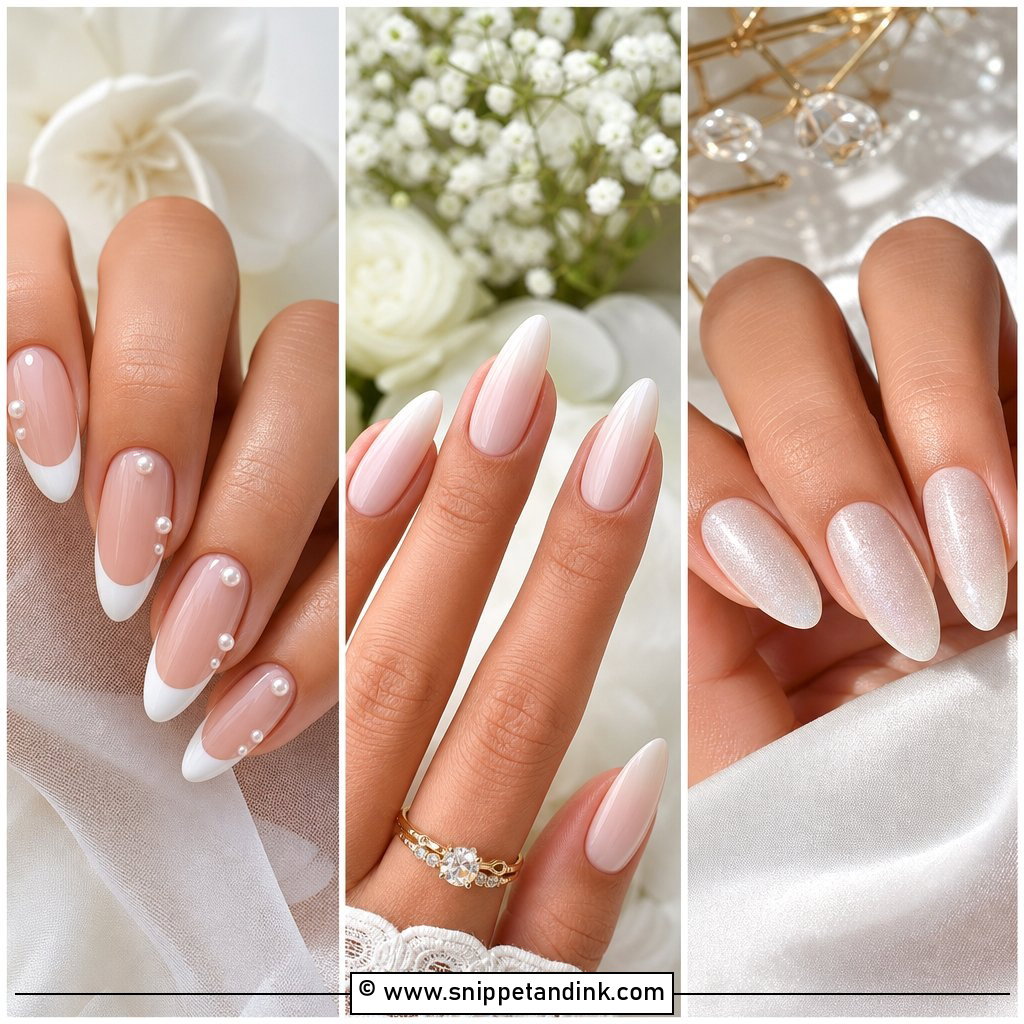
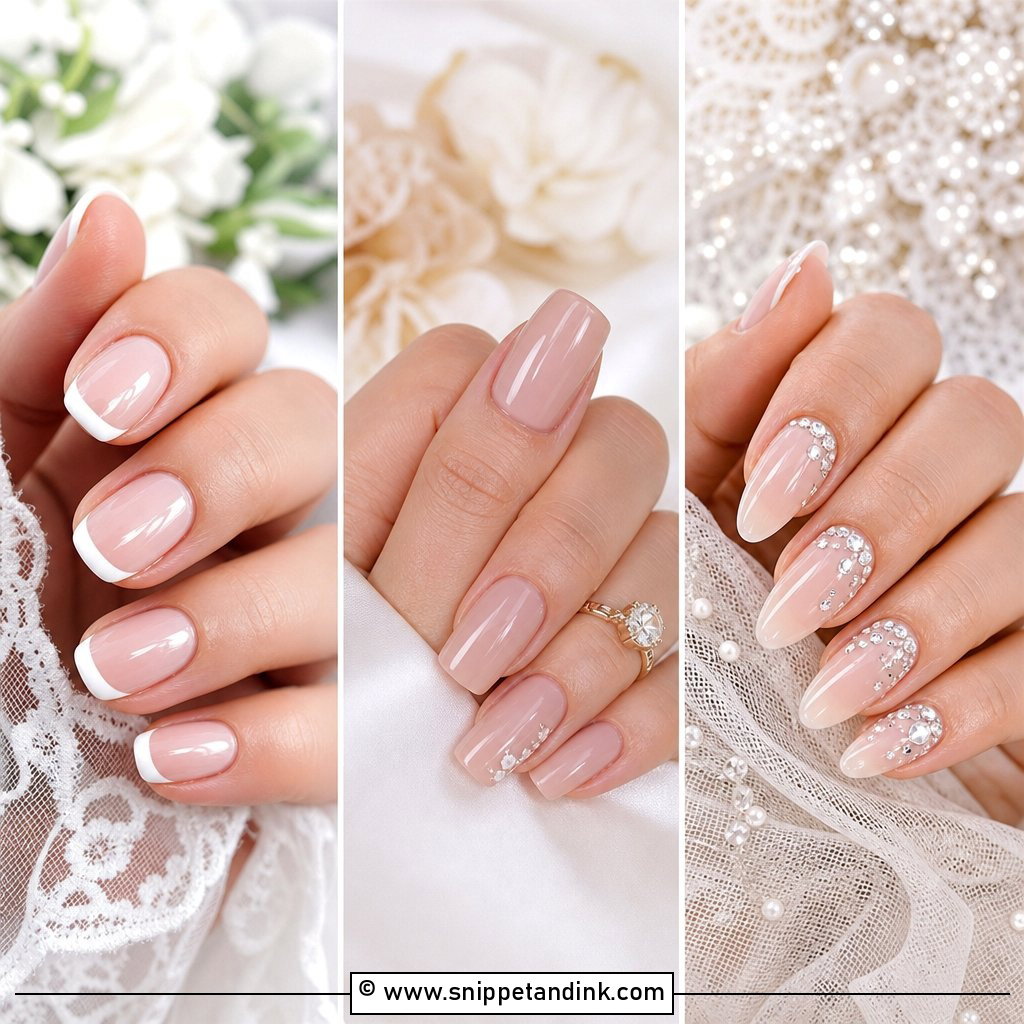
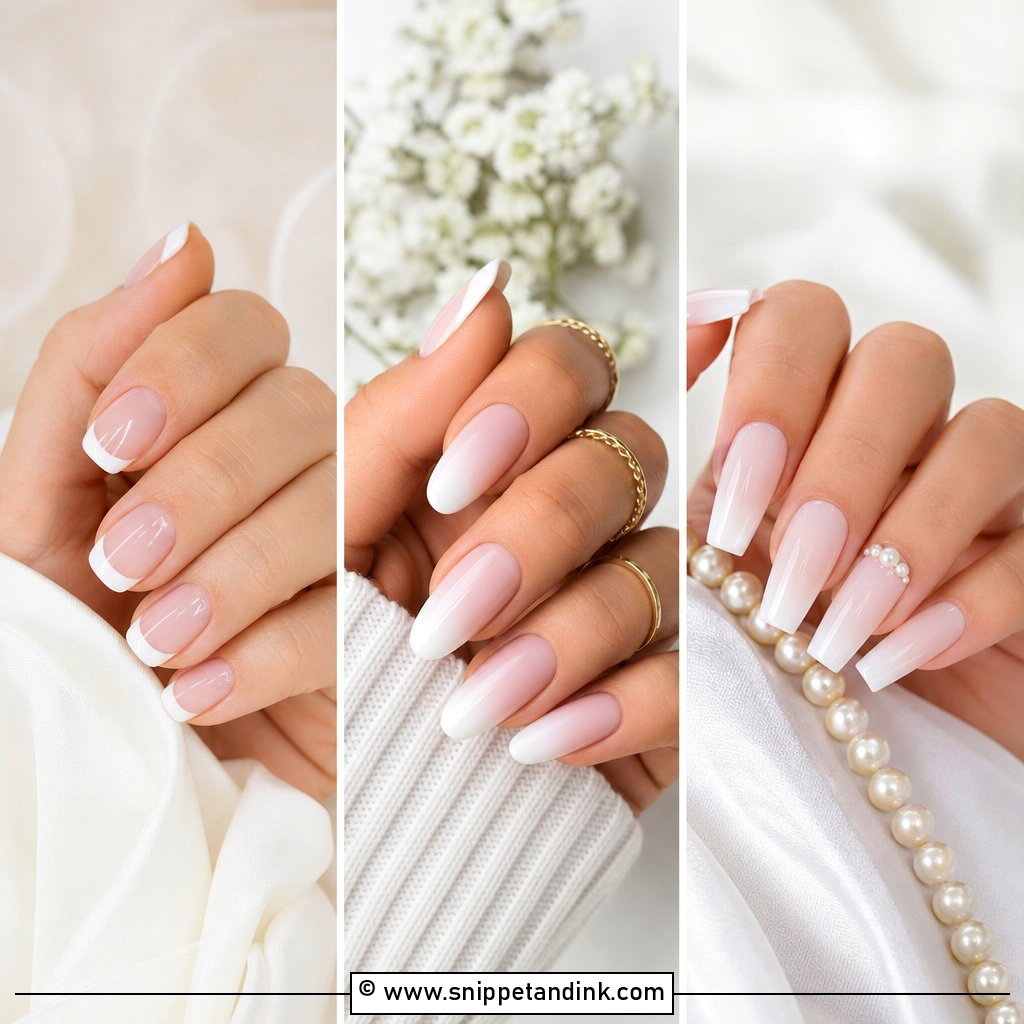
1. White French Tip Wedding Nails
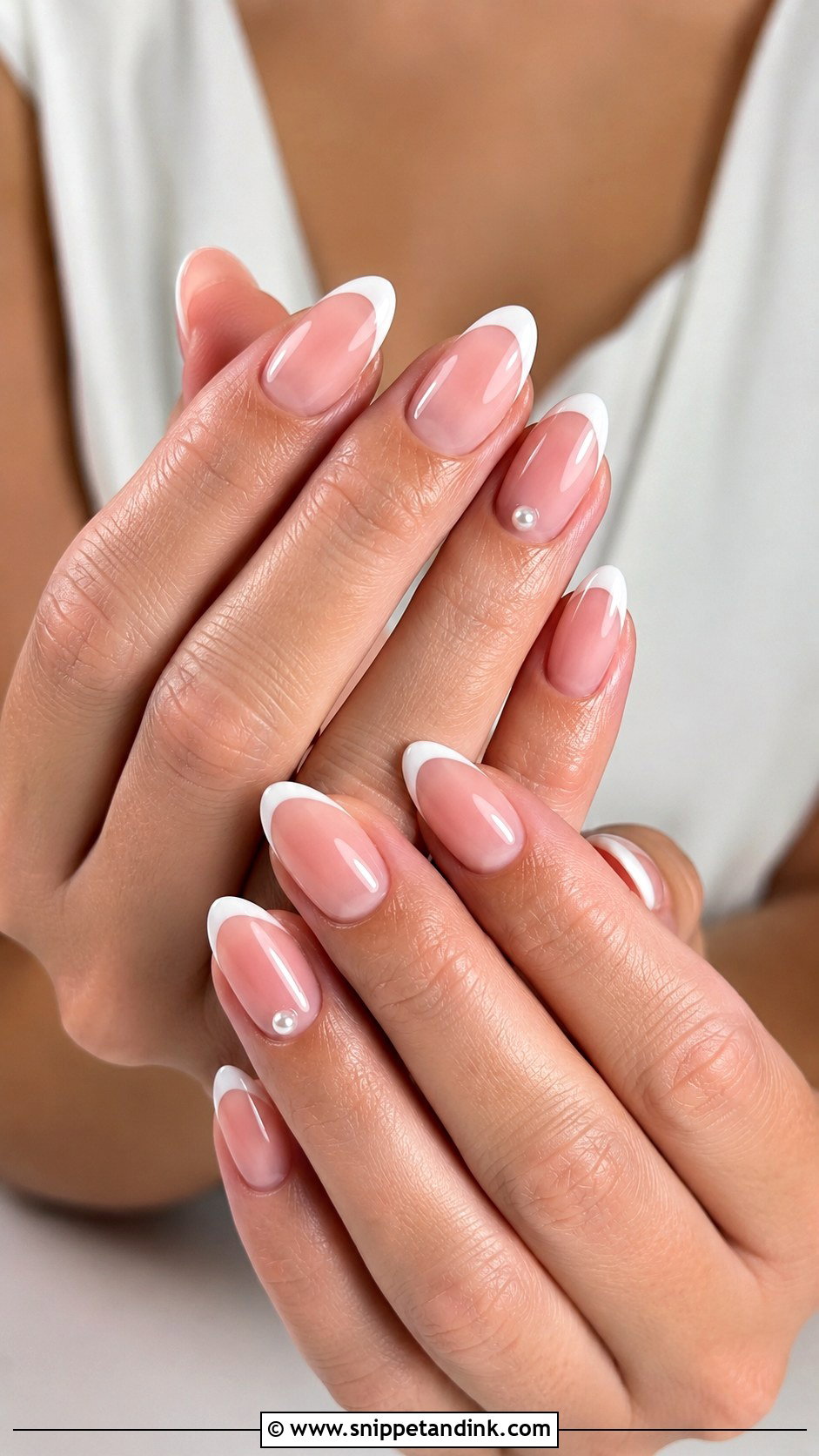
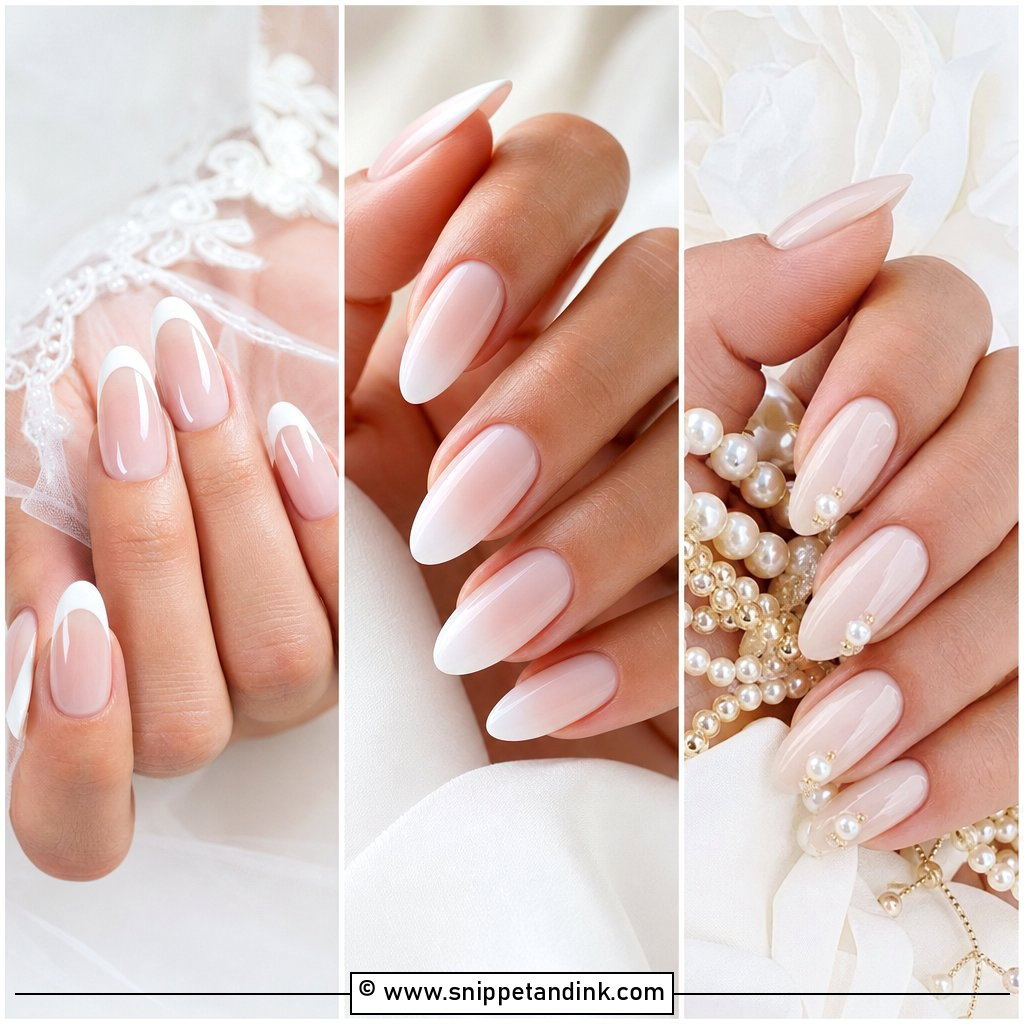
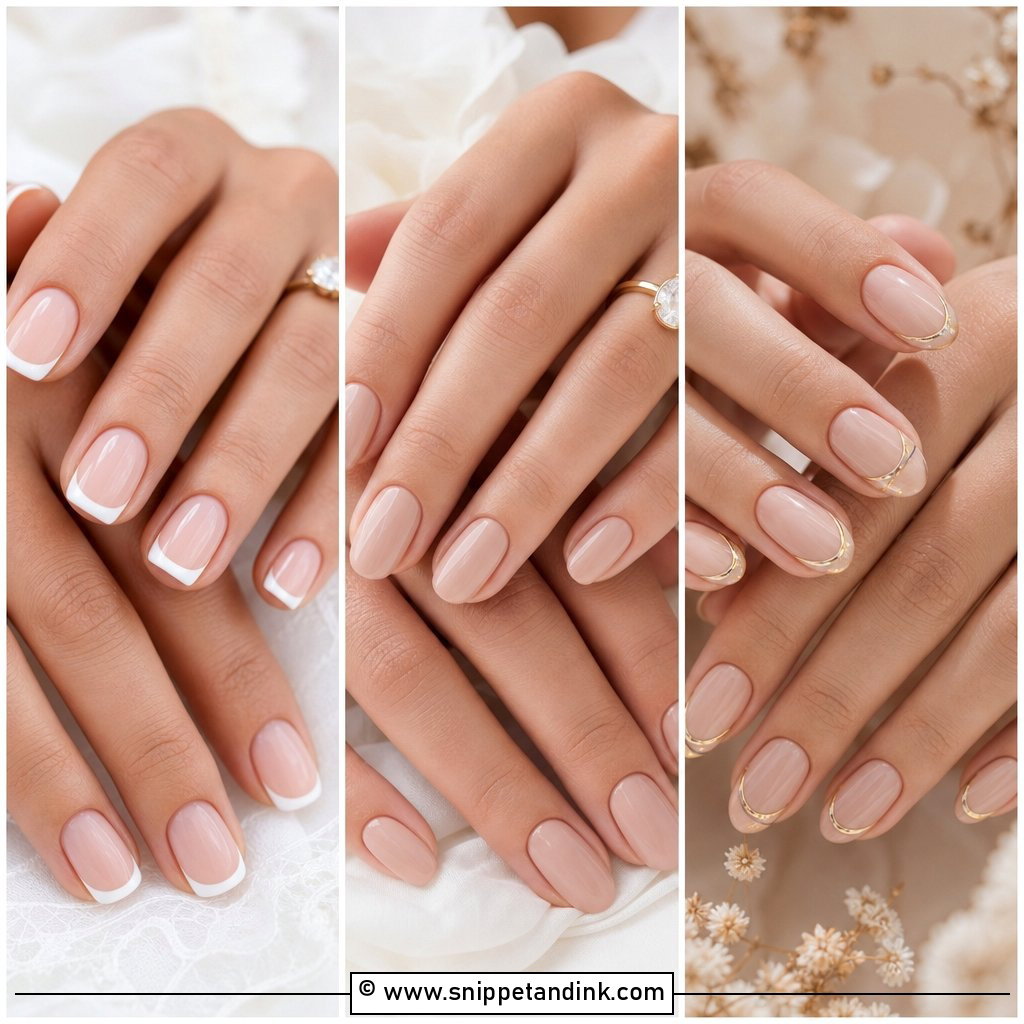
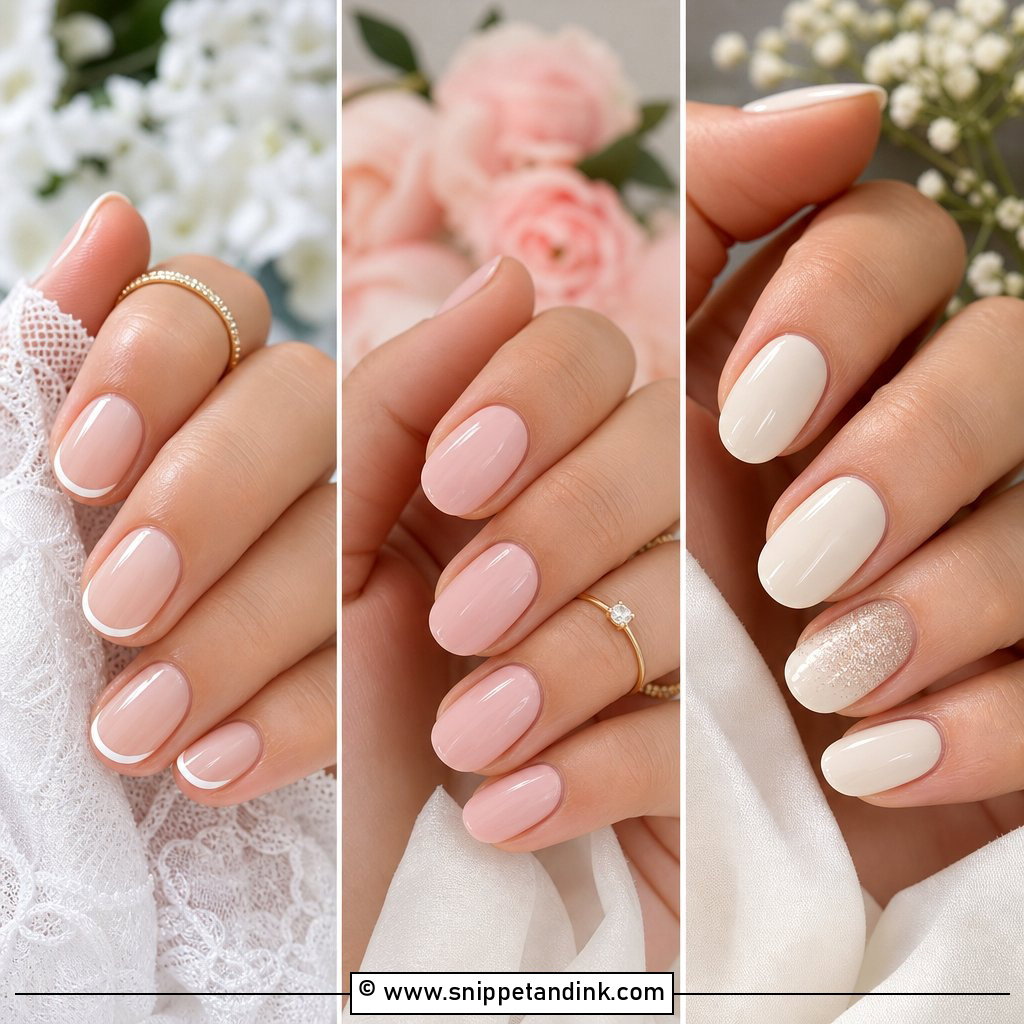
A sheer pink or nude base with a slim white tip is still the set I recommend to a bride who has never worn nail art. The mistake I see most is a smile line that’s too thick. On a short nail it chops the finger in half, so I keep the white to a narrow band that follows the free edge. One tiny pearl at the cuticle of the ring finger is all the extra detail it needs, and your bridesmaids can wear the same set without competing with you.
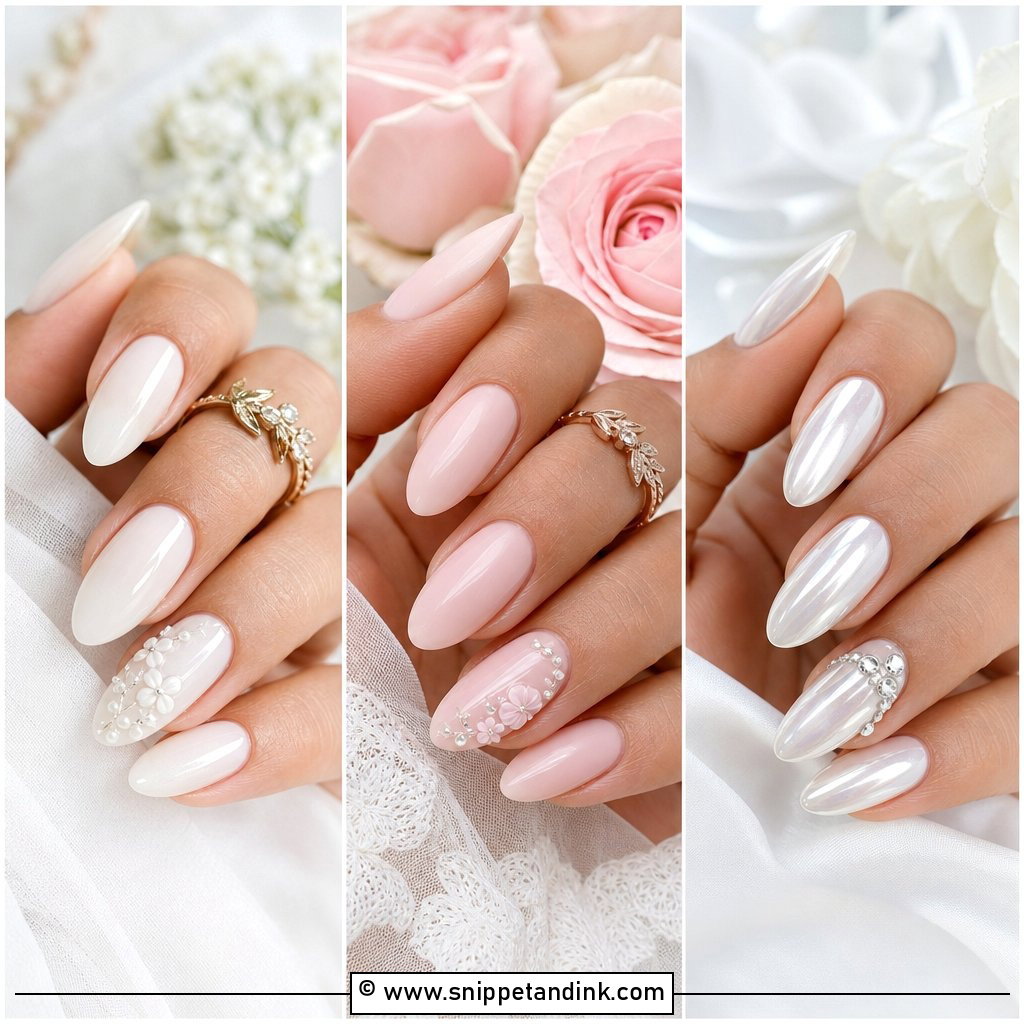
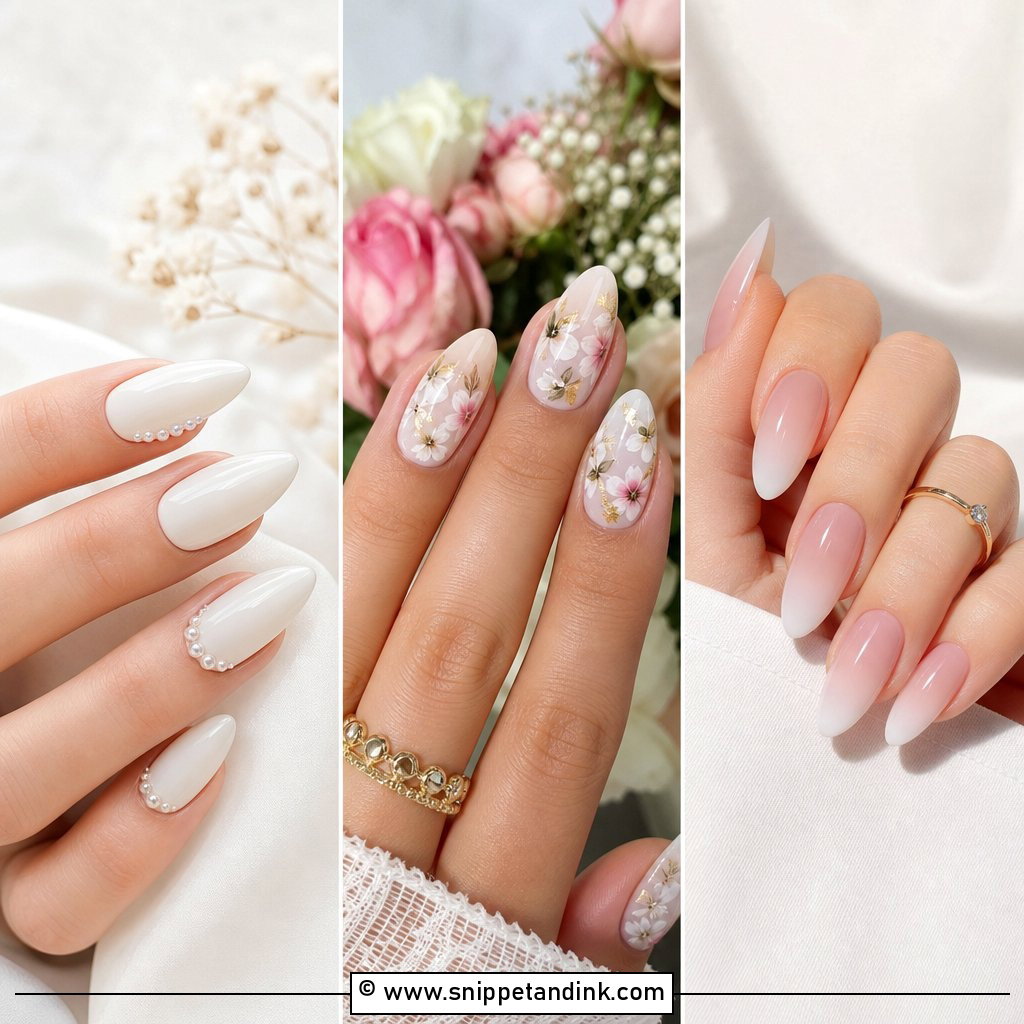
2. Milky White Wedding Nails
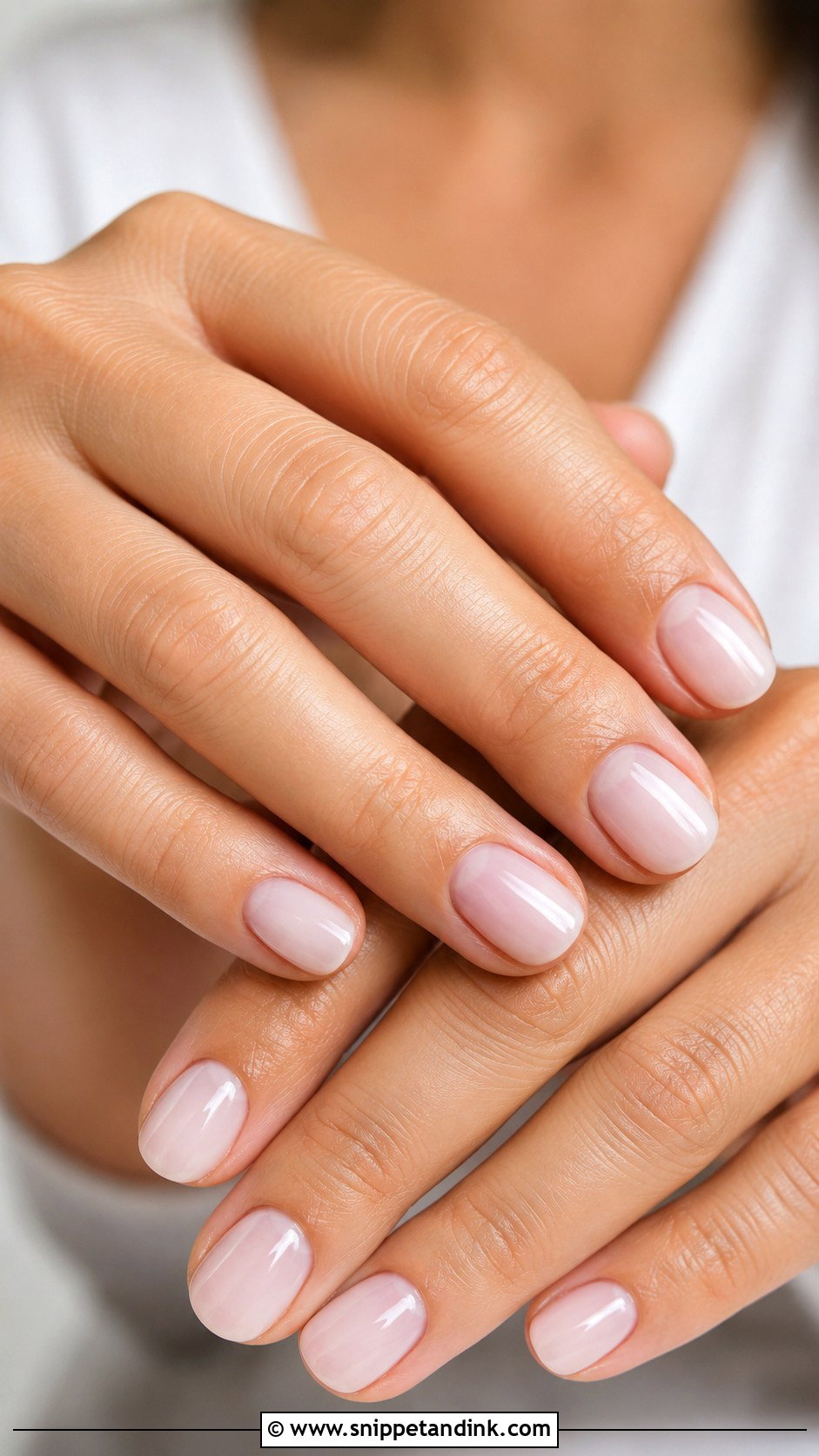
Milky white is the shade I reach for when a bride tells me pure white feels like too much. It’s a translucent, slightly cloudy gel, so a hint of the natural nail shows through, and that softness reads well in daylight. On short nails it’s forgiving because there’s no hard edge to grow out. The catch is building it: two coats can look streaky while a third can tip into opaque, so I layer slowly and check the hand under a window before curing the last coat. With satin and pearl earrings, it needs nothing else.
3. White Chrome Wedding Nails
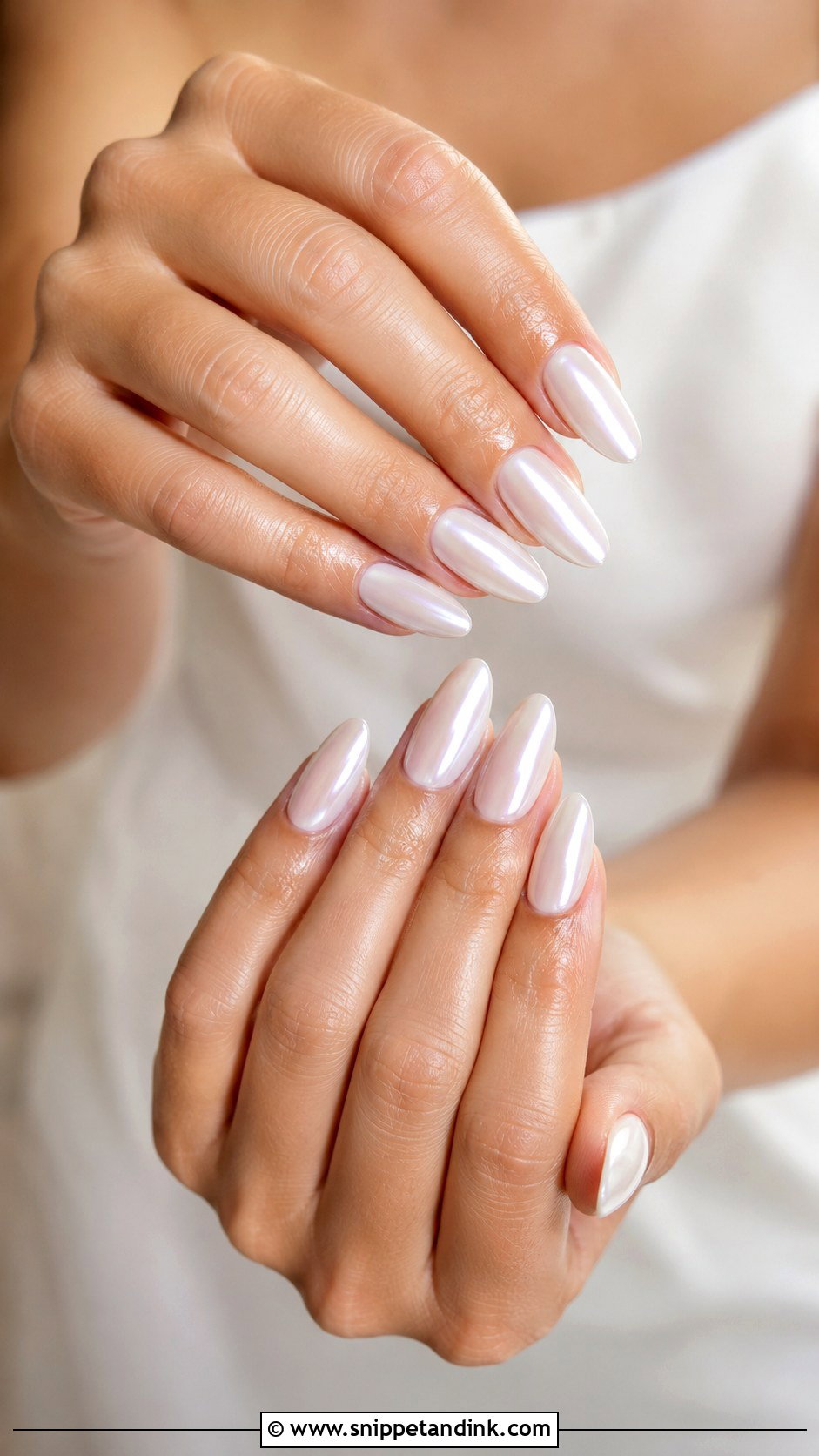
The shine here comes from a pearl chrome powder buffed over a white or milky base, not from color. I steer brides away from mirror silver chrome, which looks metallic and hard next to a gown. Chrome powder only grips a cured no-wipe top coat and then has to be sealed with another layer. If that seal doesn’t wrap the free edge, the tips start to wear within a few days. Almond, coffin and squoval shapes give the glaze a smooth runway, which is why it catches light so softly in close ring shots.
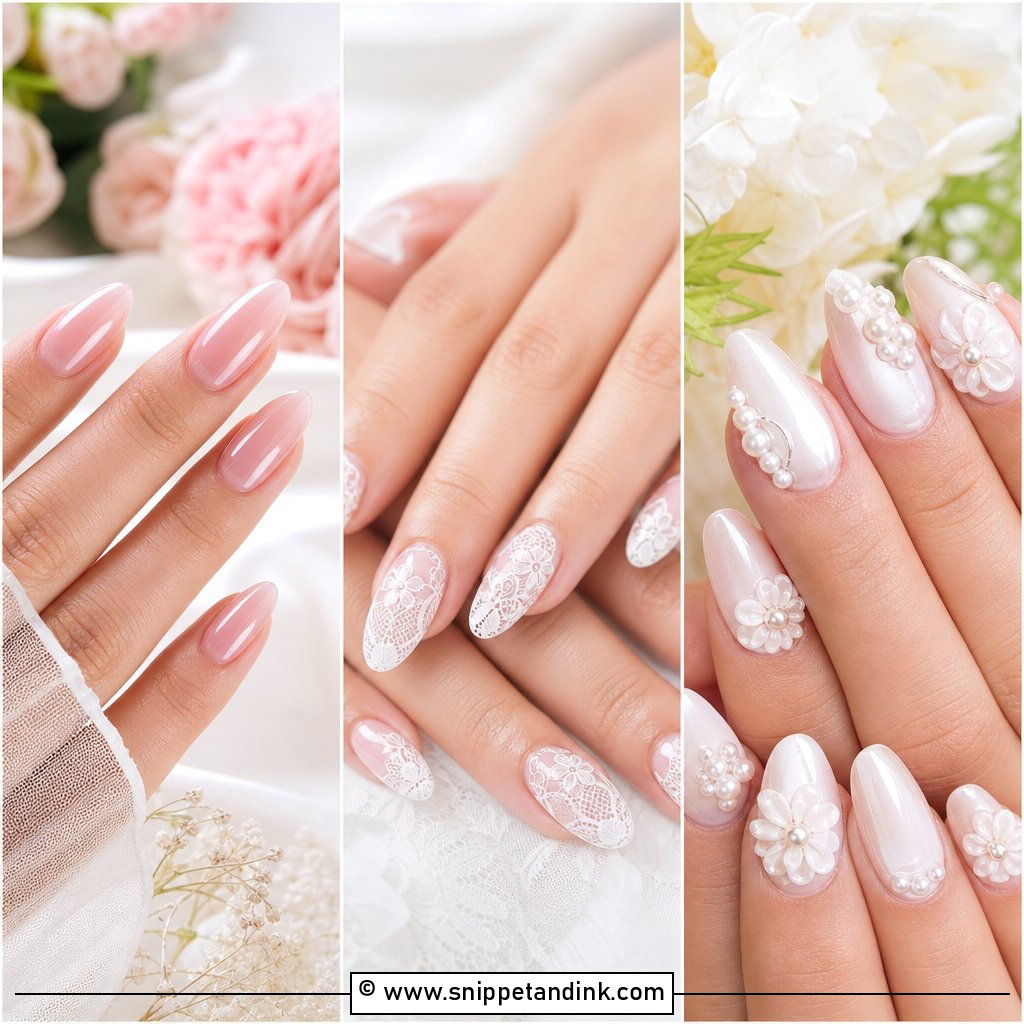
4. White Pearl Wedding Nails
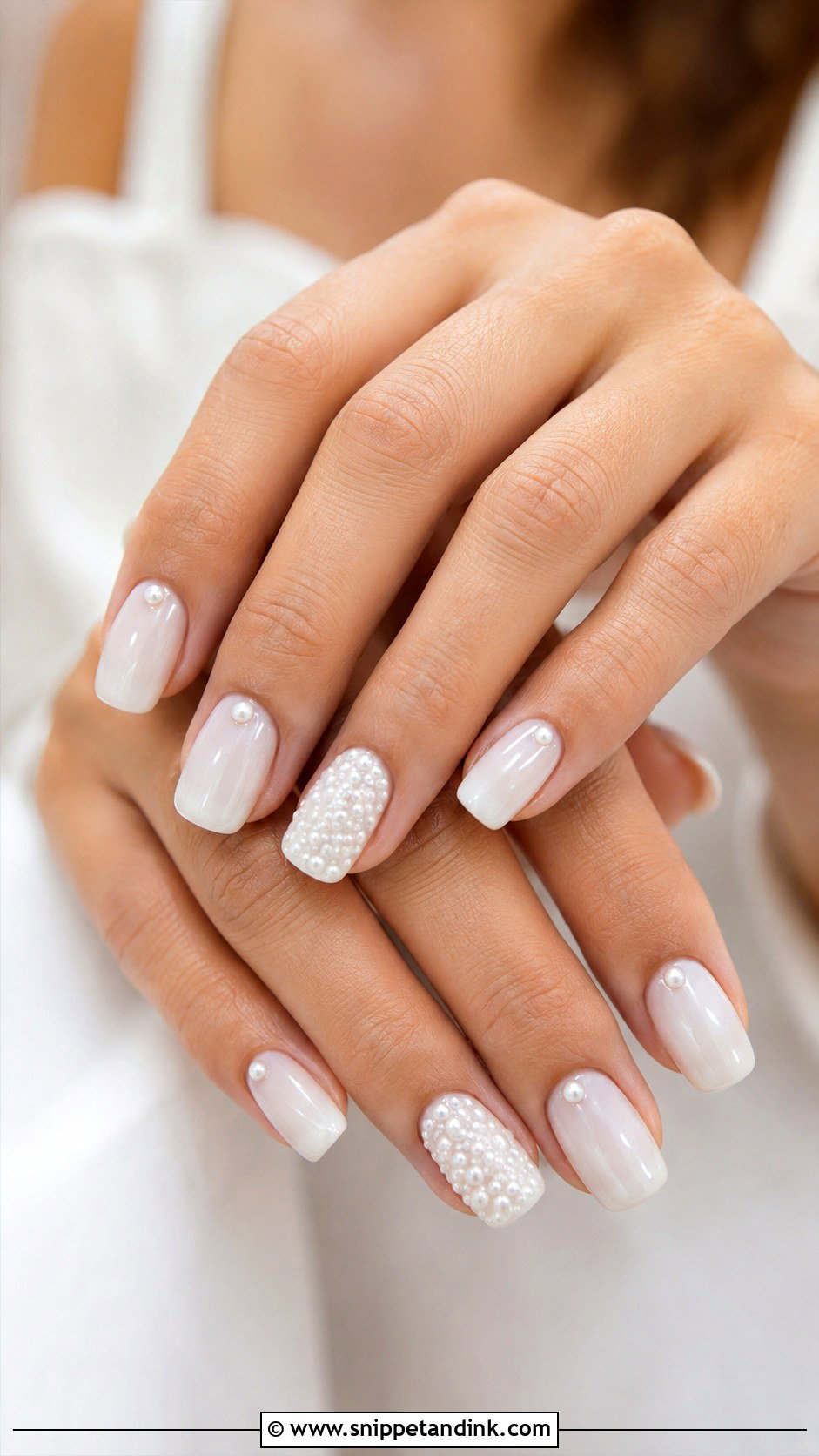
Pearls earn their place when there are pearls elsewhere: earrings, a pearl-edged veil, beading on the bodice. I use small flat-back pearls set into gel, then run top coat around the base rather than over the dome so they keep their sheen. Large round pearls on every finger look costume-like and catch on hair and lace. One or two accent nails with a little cluster near the cuticle is where I usually stop.
5. White Ombre Wedding Nails
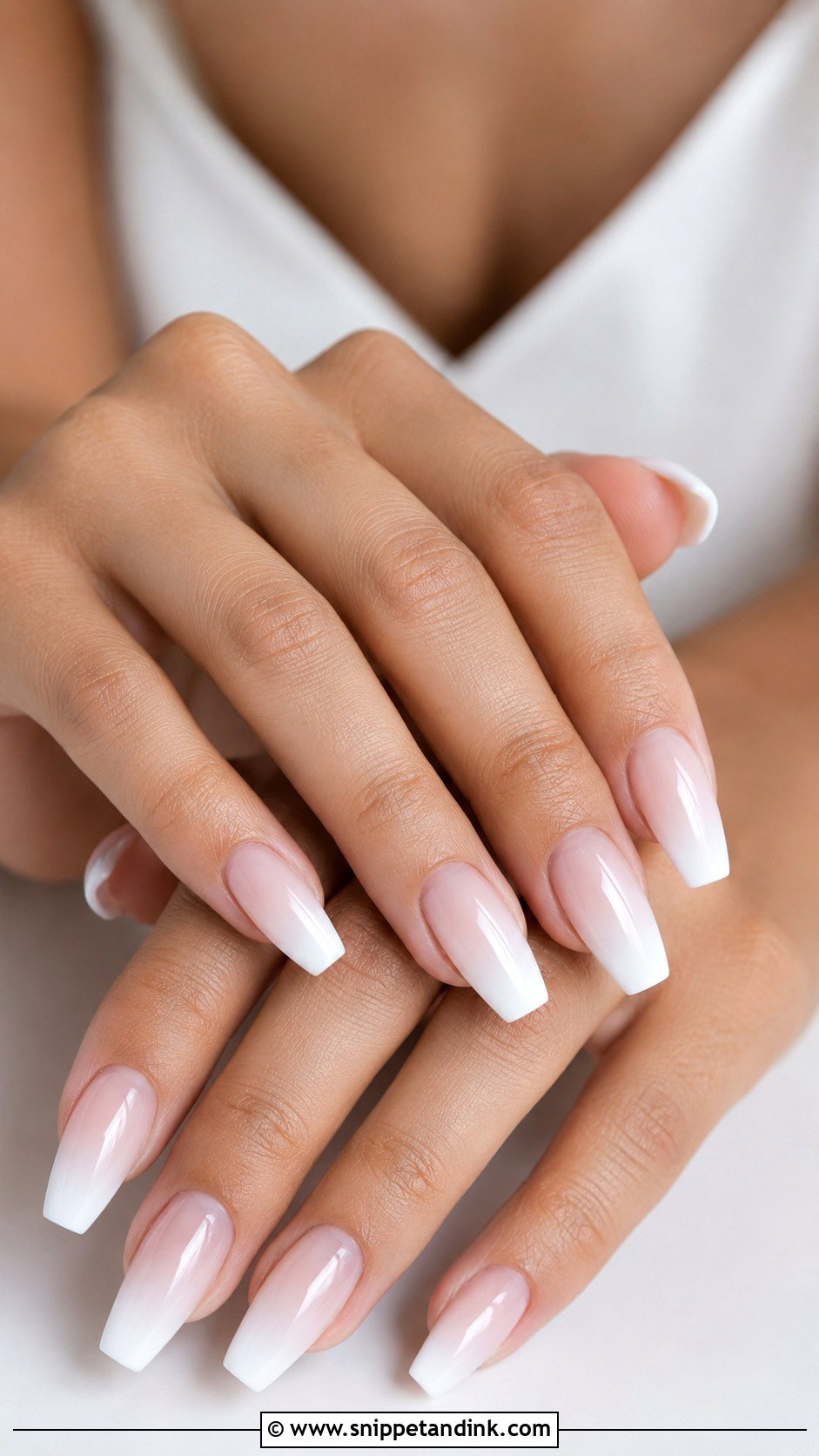
Also called baby boomer nails, this fade blends a sheer nude or pink base into soft white tips with no visible line. I sponge or brush the white in thin passes, and the result depends on patience; rush it and you get a stripe halfway down the nail. White ombre wedding nails also grow out more kindly than a French set, because the blur hides new growth at the cuticle if your appointment falls a few days before the wedding. Medium almond or coffin lengths give the fade enough room to look gradual, and it sits quietly beside a gown with clean lines.
6. White Lace Wedding Nails
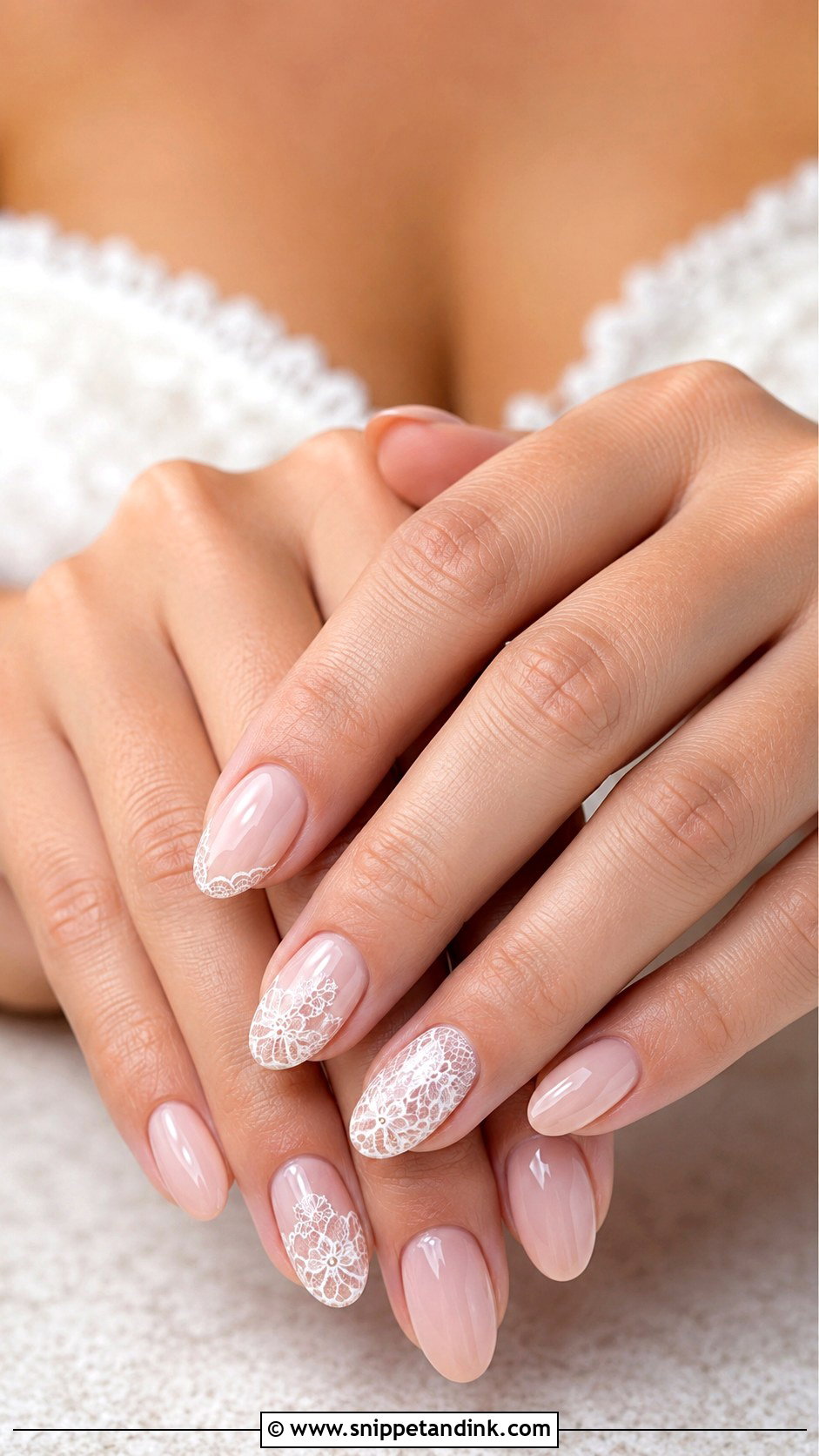
Lace art makes the most sense when the gown has lace, because I can copy a motif from the actual fabric instead of inventing a generic pattern. Bring a photo of the bodice or a swatch to the appointment. The lines are hand-painted with a very fine liner brush in white gel, and they have to stay thin; thick lace reads as smudges in photographs. I keep it to one or two accent nails over a sheer blush or milky base. Lace on all ten fingers usually looks busy next to an already detailed dress.
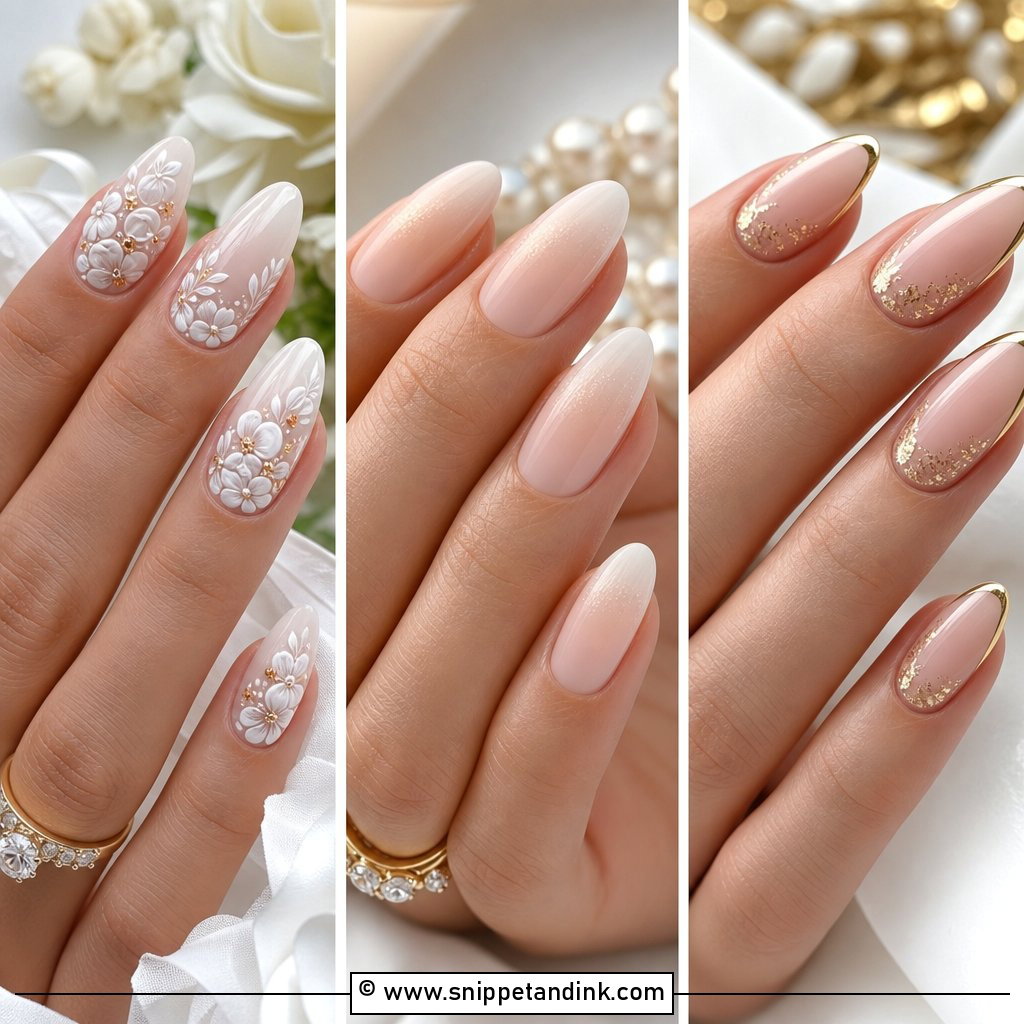
7. White Floral Wedding Nails
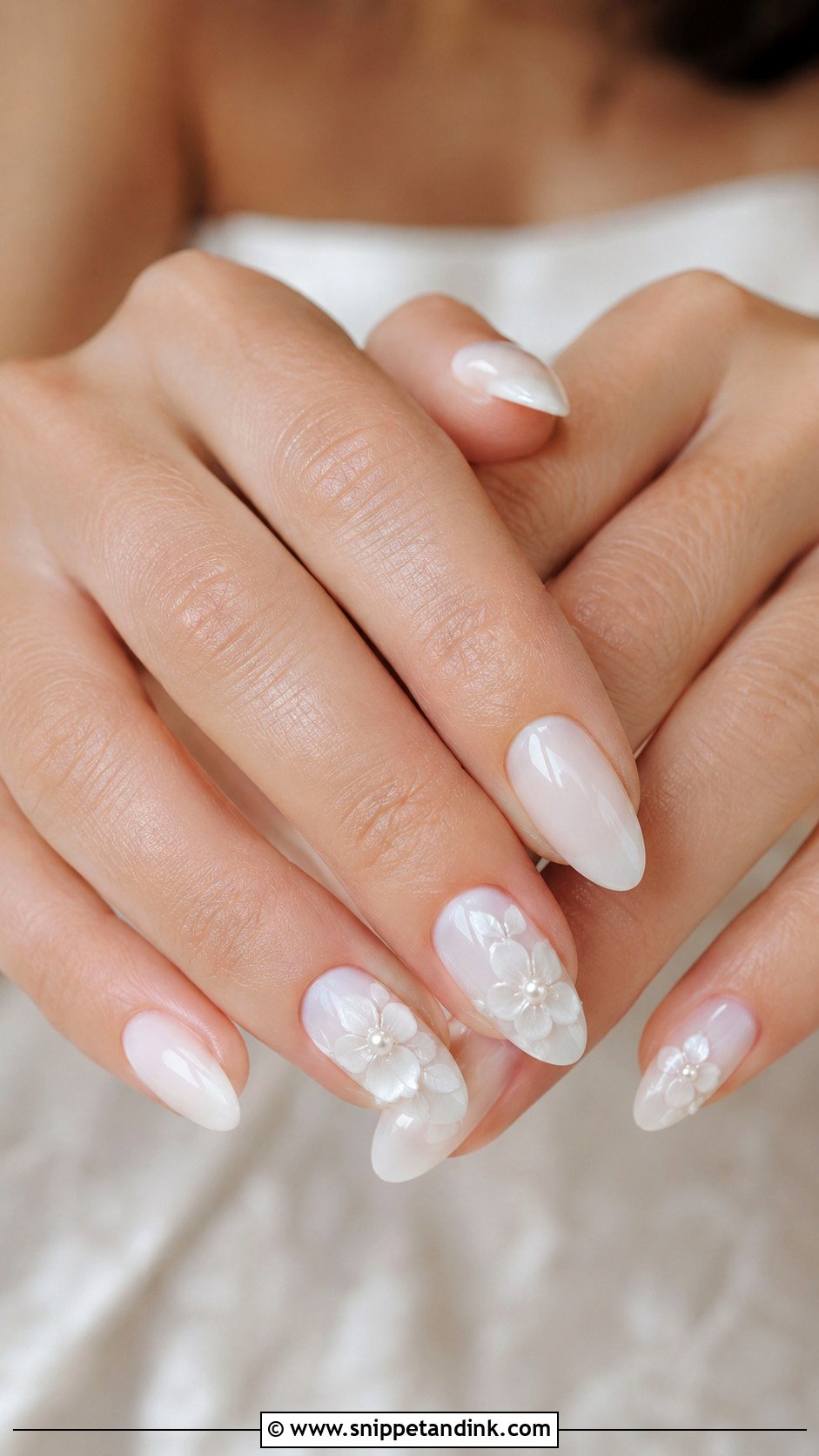
Painted blossoms over a sheer base are the friendliest nail art for spring and garden weddings. I can paint them flat or build them up in gel for a raised look. Flat flowers wear better through a long day, while raised ones can lift at the edges if they aren’t sealed properly. Two accent nails with small flowers and plenty of empty space around them looks considered rather than crowded. A tiny pearl or crystal center is optional, and I’d skip it if the rest of your outfit already sparkles.
8. Short White Wedding Nails
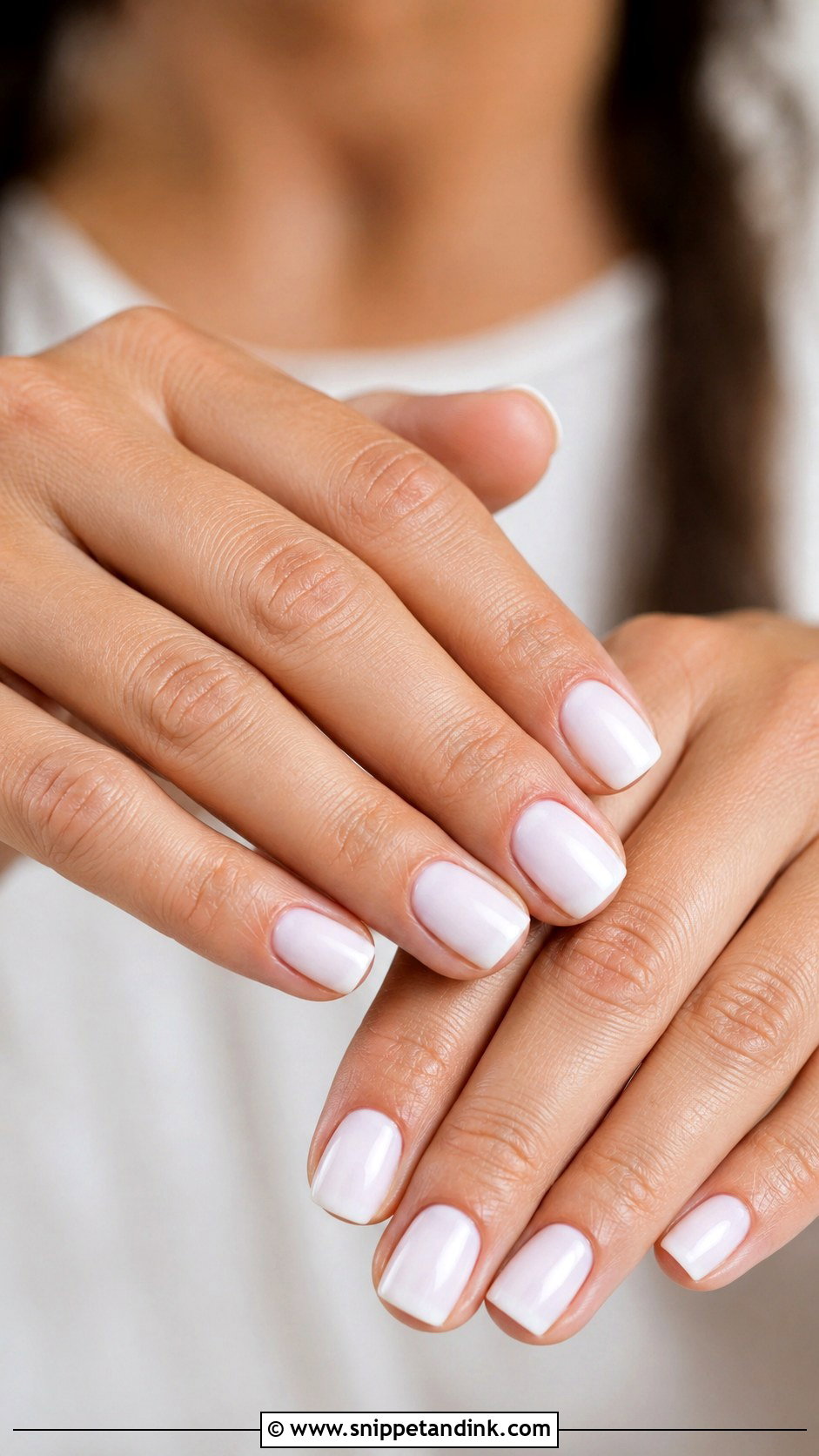
Honestly, short nails are what I’d put on most brides. They don’t snag a veil, they don’t make you nervous while you fasten earrings, and they stay neat while you pin someone’s boutonniere. Soft square or squoval suits a short free edge. What I avoid is a flat, opaque white on a short nail, which can look like correction fluid; milky or sheer ivory flatters far more. A thin French tip or a whisper of chrome is enough detail, and your ring stays the main event.
9. Almond White Wedding Nails
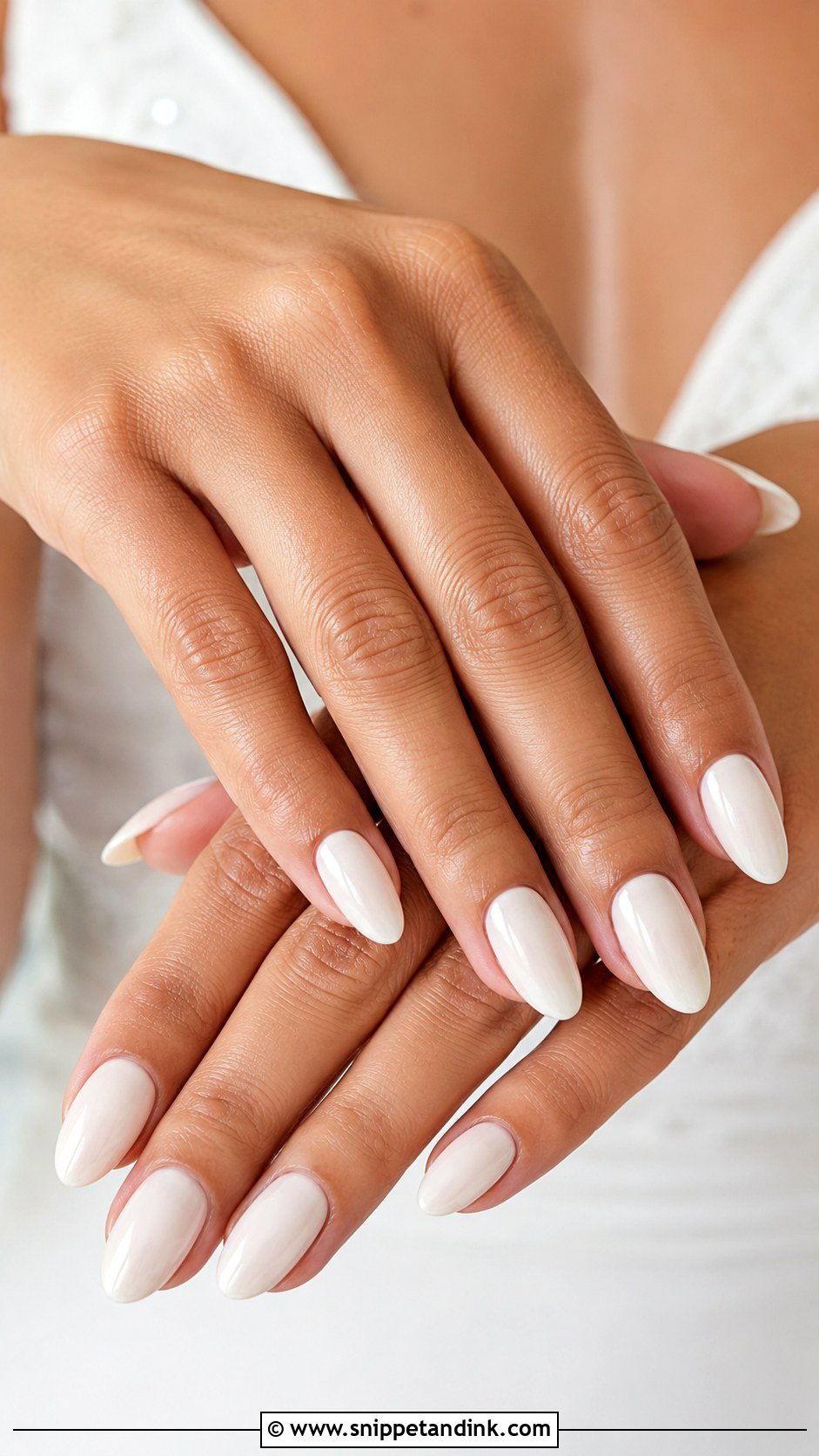
The tapered tip of an almond shape pulls the eye to the end of the finger, so hands look longer in ring photos. Almond white wedding nails suit a milky or slightly pearly shade best, since very opaque white on a pointed tip can look sharp. I keep the length medium. The narrow point of a long almond is the part most likely to snap when it’s built on a thin natural nail. Nearly every design in this list sits well on this shape, which is why I suggest it to brides who can’t decide.
10. Square White Wedding Nails
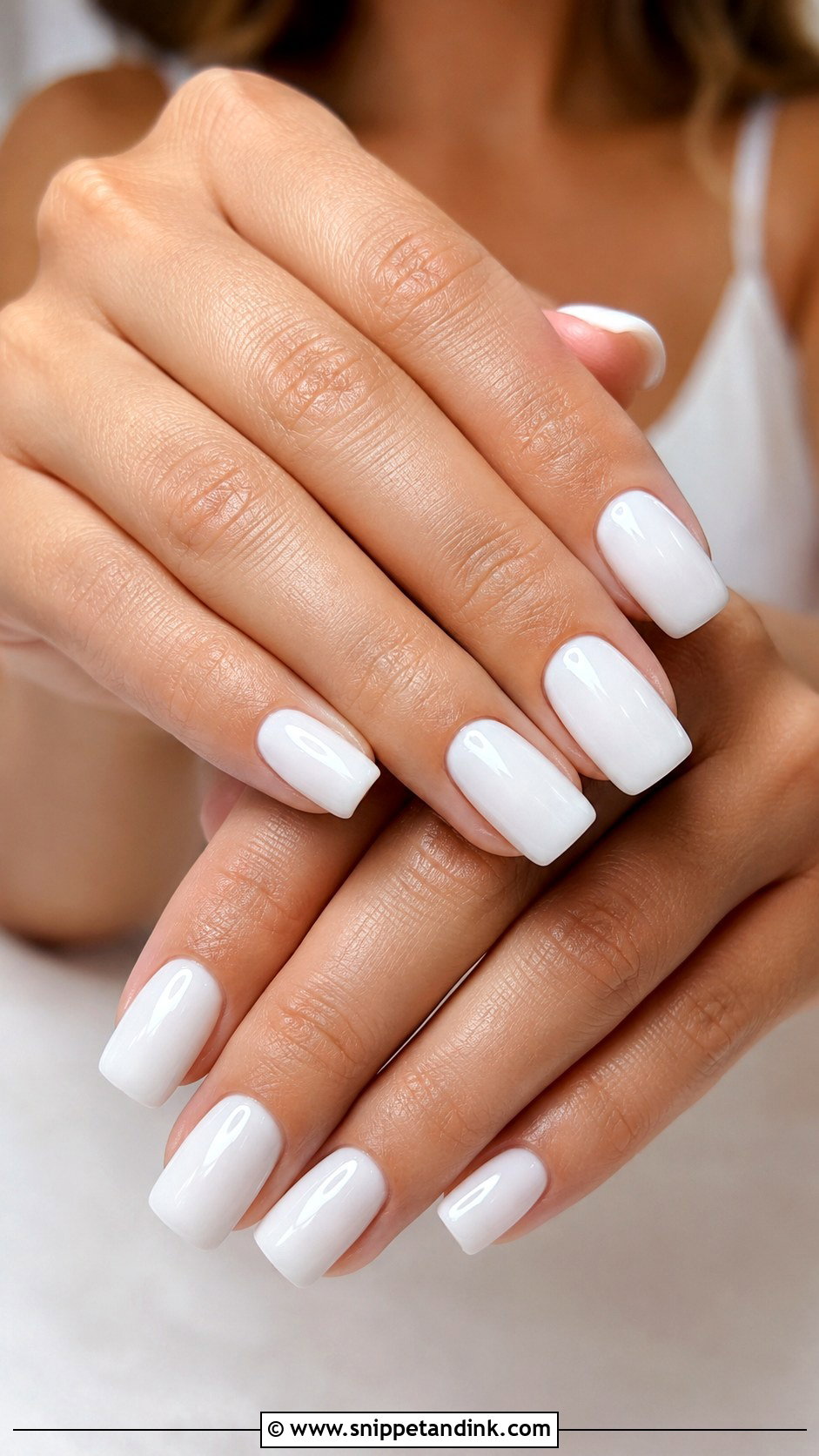
A square edge looks crisp and architectural, and I match it to sleek crepe gowns and minimal jewelry. Bright opaque white on a hard square corner can look harsh, so a softer white or a French tip is usually kinder. Keep it short to medium: long square corners catch on tulle and chip first. Ask me to round the corners just slightly and you get a squoval, which keeps the clean line with far less snagging. Gloss reads classic; pearl chrome reads more current.
11. Coffin White Wedding Nails
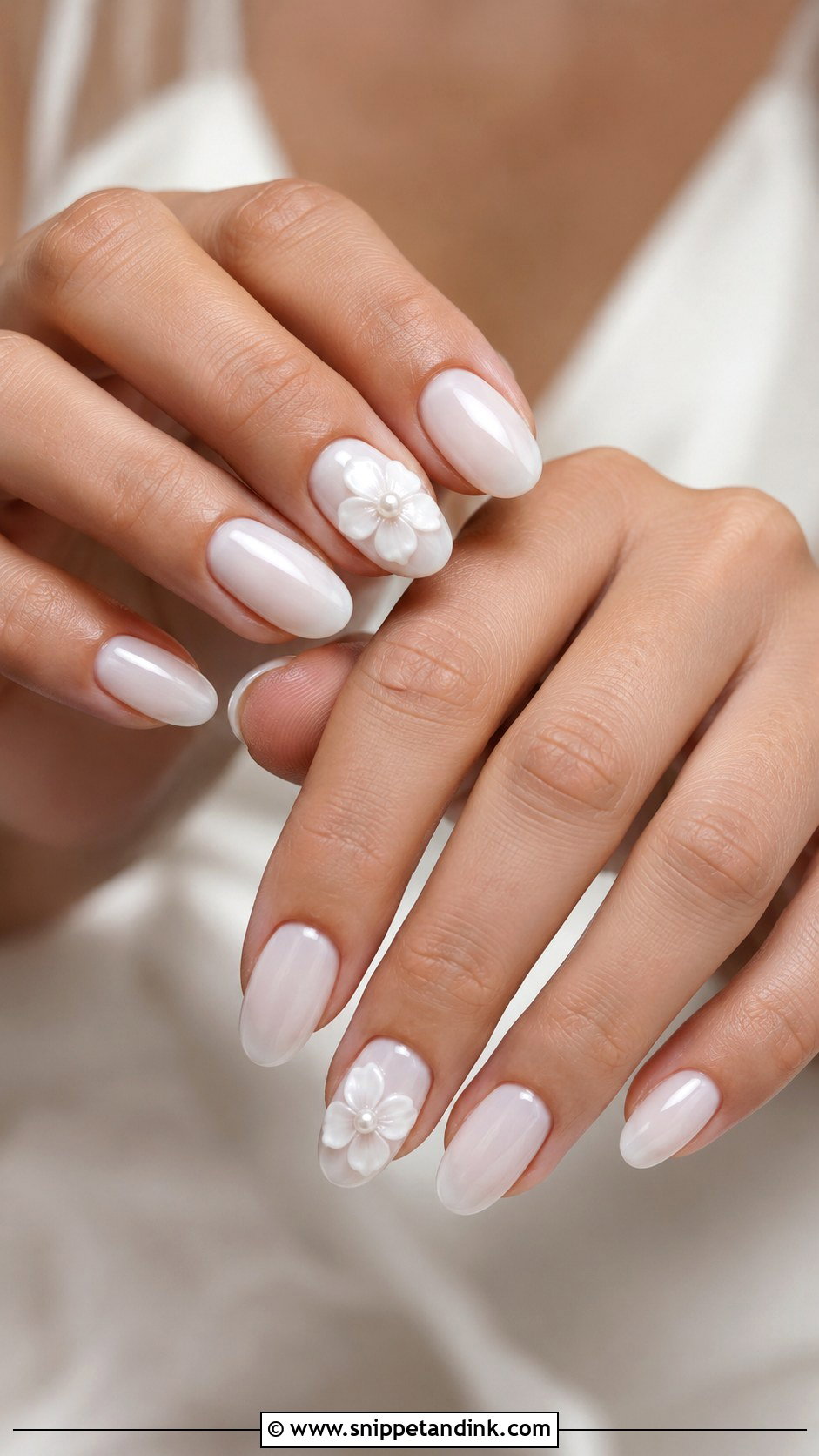
The flat tip and tapered sides already do a lot, so on Coffin white wedding nails I keep the color plain, usually a smooth white ombre or milky white with a single crystal accent. Coffin needs length to look right, which normally means extensions, and that brings a trade-off. If you’ve never worn long nails, a medium coffin is much easier to live with when you’re doing up buttons or gripping a bouquet stem. I’d do a test set a few weeks ahead to find out.
12. White Glitter Wedding Nails
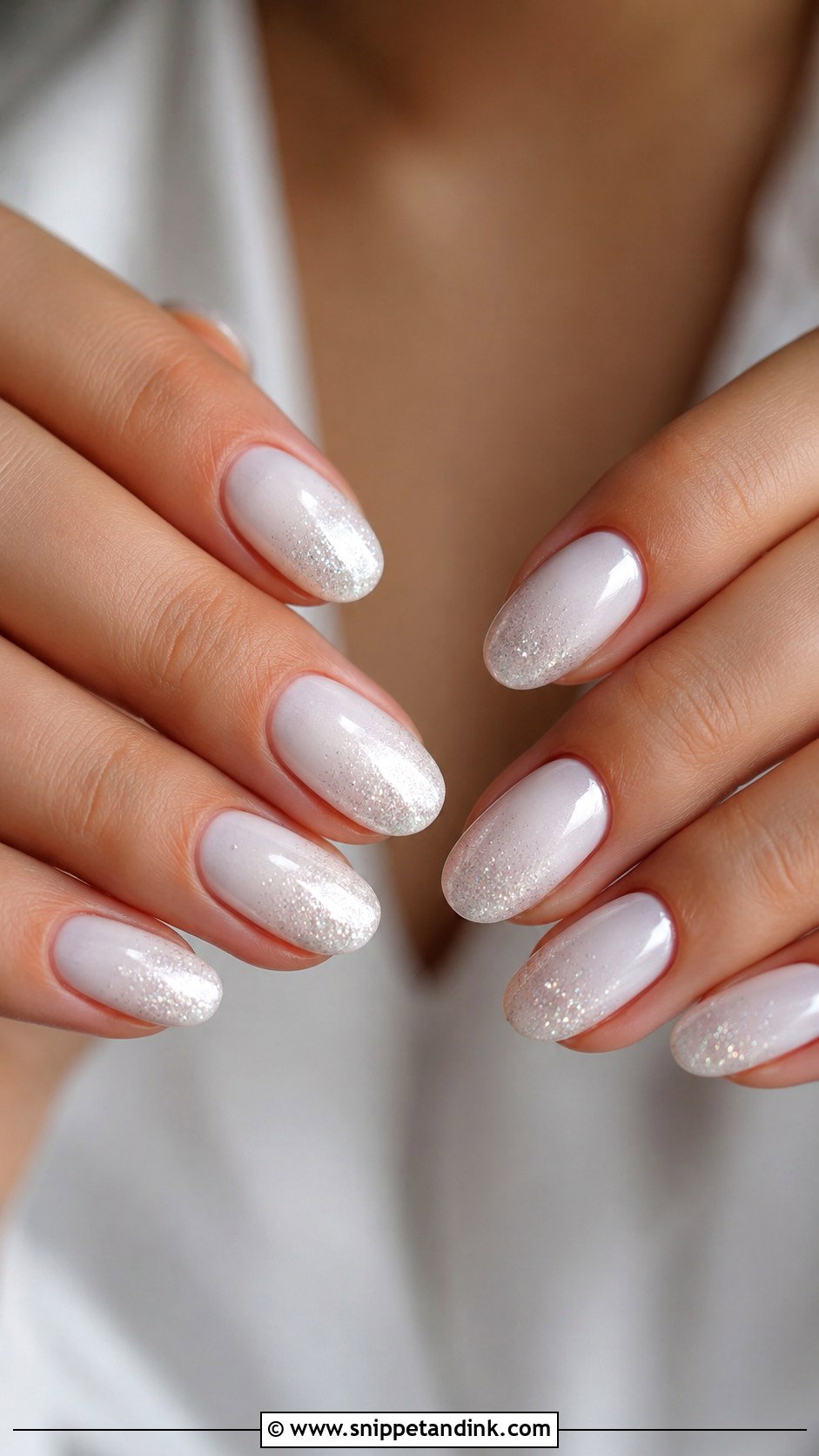
Fine shimmer is what you want here, not chunky pieces. Larger hex glitter sits up off the nail and needs extra top coat to bury it, which makes the set thick and removal slow. A milky base with pearl or fine silver glitter faded in from the tip gives a glow under evening lighting without tipping into party nails. I like it most for winter and night receptions. Keep the shape simple so the shimmer is the only detail.
13. White Marble Wedding Nails
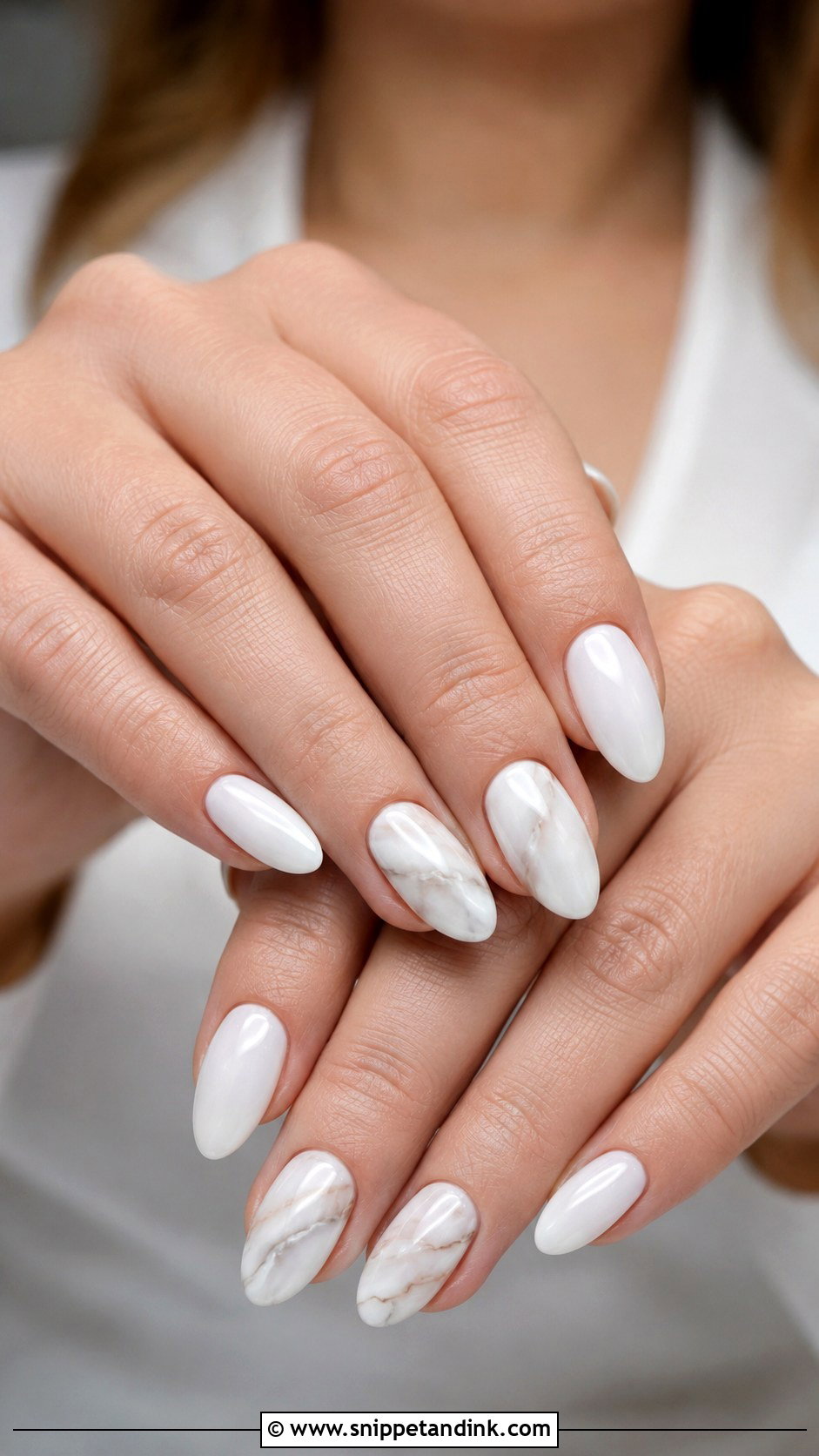
Marble only looks expensive when the veining is faint. Over a white or milky base I drag fine lines of soft gray or pearl through wet gel so they diffuse, and I stop well before they get heavy. White marble wedding nails can go on every finger, but two accent nails against plain white look cleaner in ring photos. It’s a good middle ground for a bride who finds a French tip too plain and full nail art too much.
14. White And Gold Wedding Nails
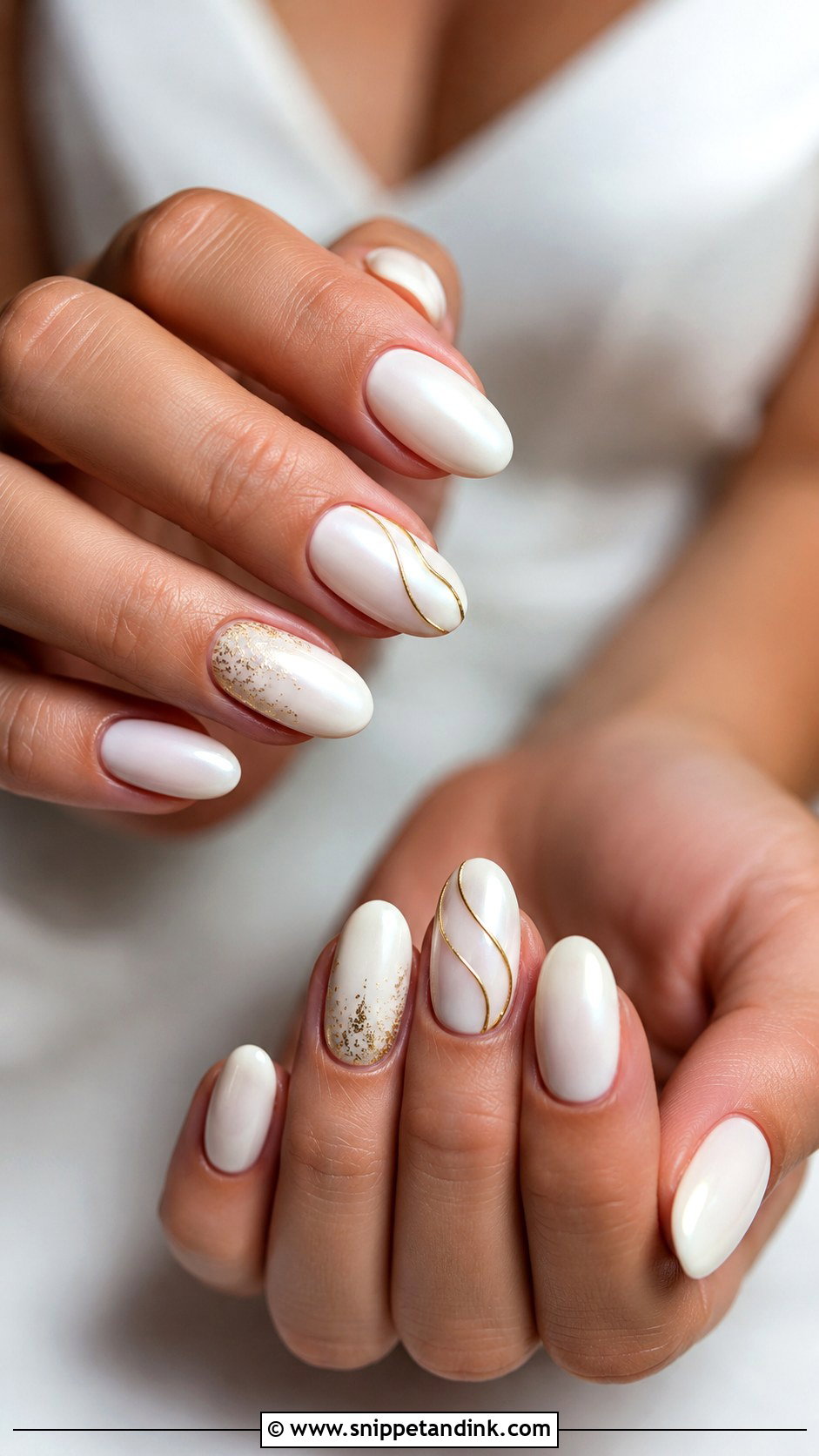
Gold detail makes sense if your engagement ring or jewelry is yellow gold, because white next to warm metal looks intentional. I use either gold foil pressed into tacky gel or a thin metallic line, on one or two nails over milky white or soft ivory. Foil has to be fully sealed, since exposed edges wear and dull quickly. Heavy gold coverage starts to look festive rather than bridal, so keep it small.
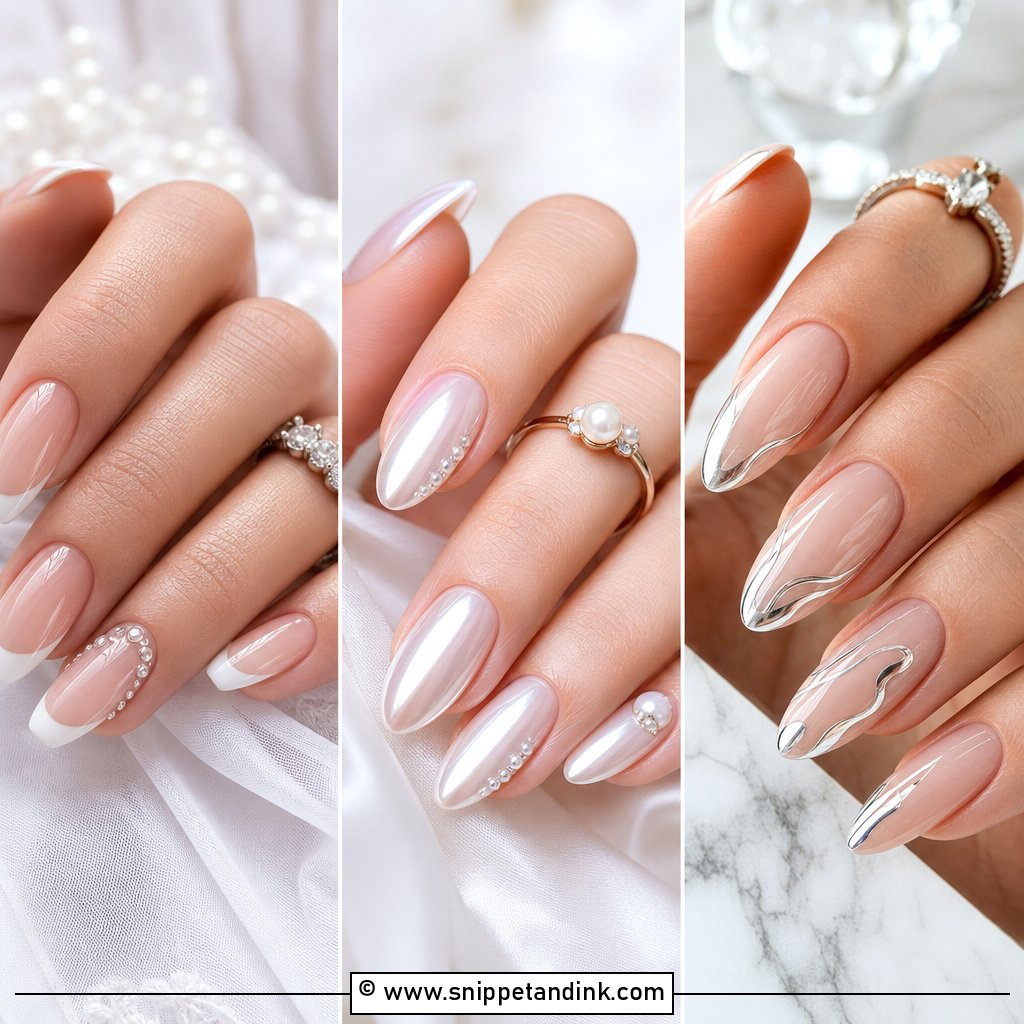
15. White And Silver Wedding Nails
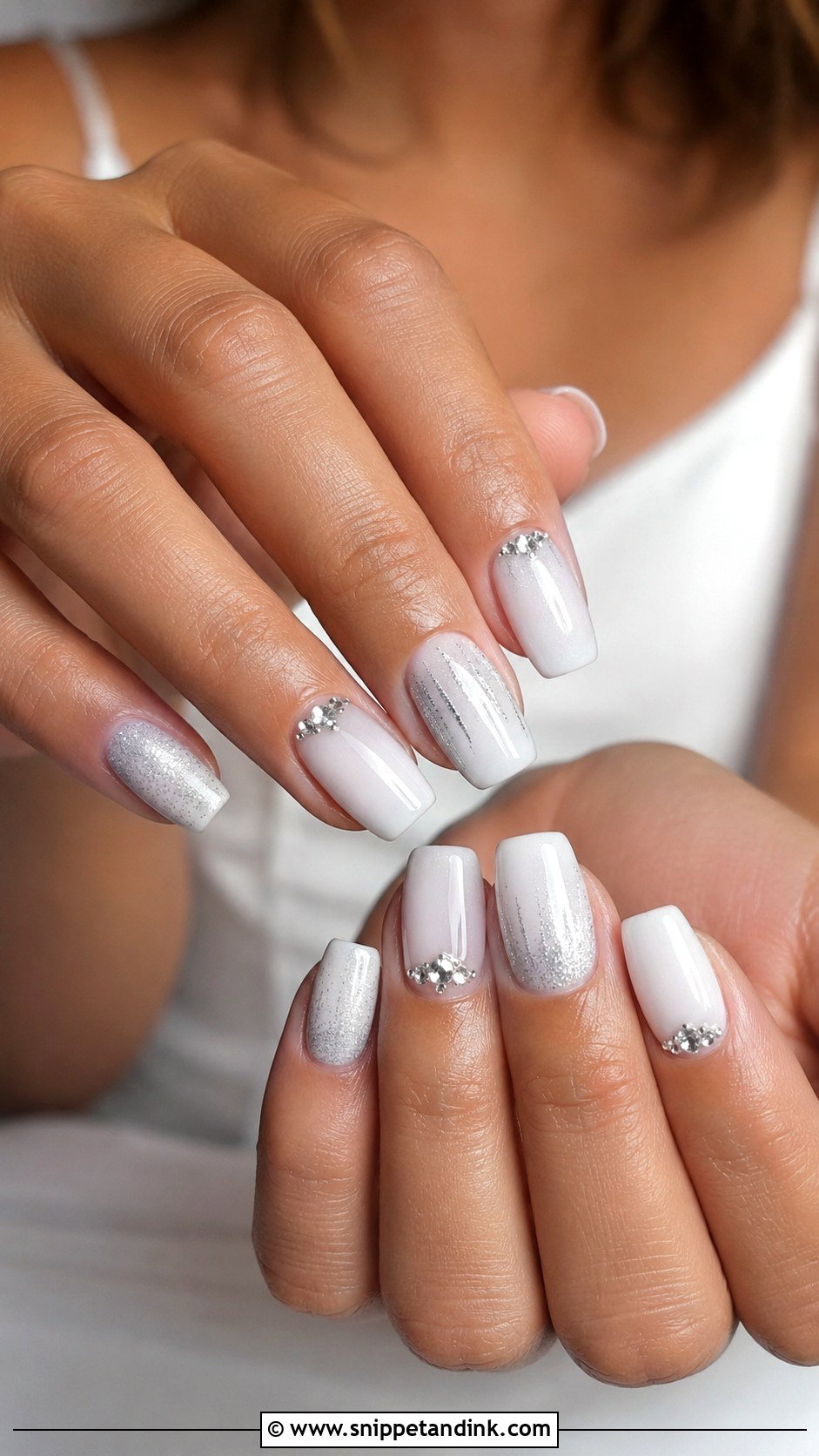
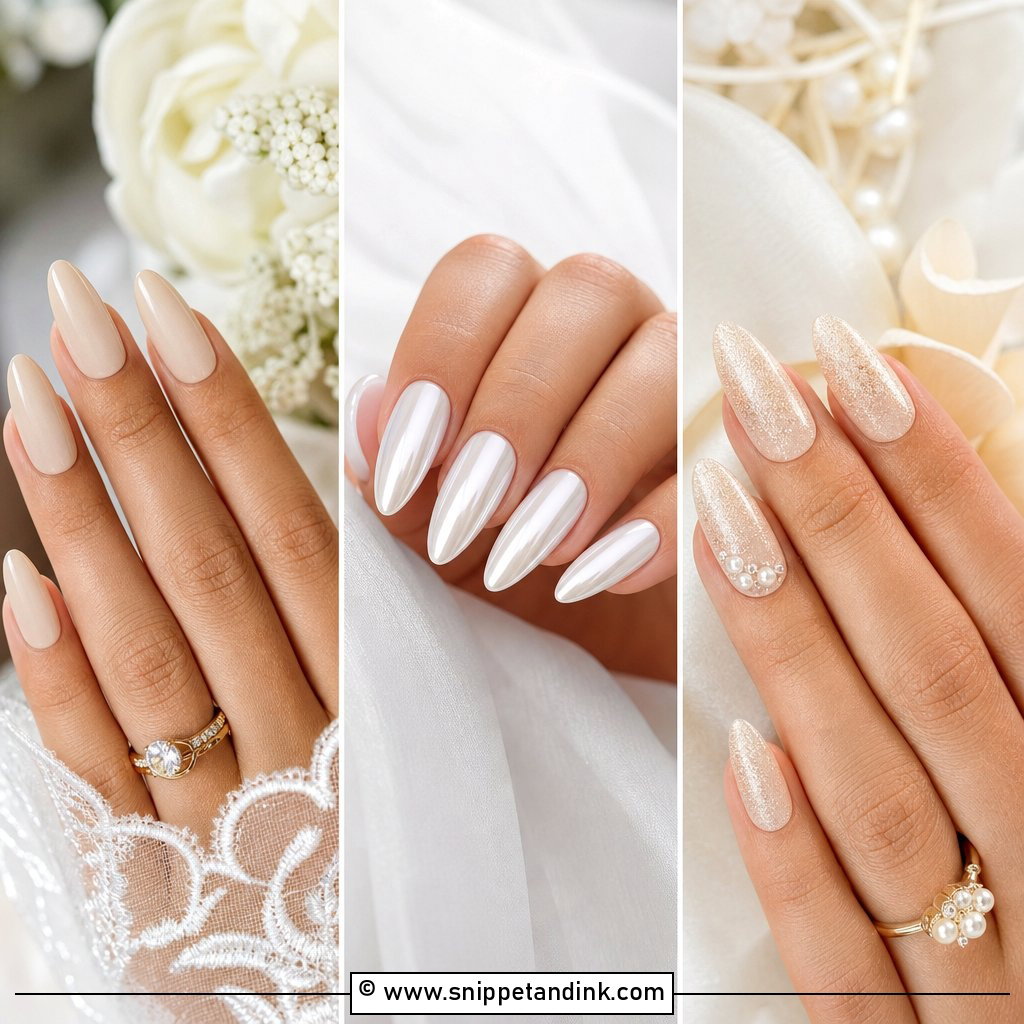
Silver is the cooler partner to gold, and it belongs with platinum, white gold or silver jewelry. A slim silver outline or a few fine flecks of glitter at the cuticle keeps it delicate. Under bright reception lighting and camera flash, silver reflects more than you’d expect, so restraint matters even more here. Medium almond or squoval keeps the proportions balanced.
16. White Crystal Wedding Nails
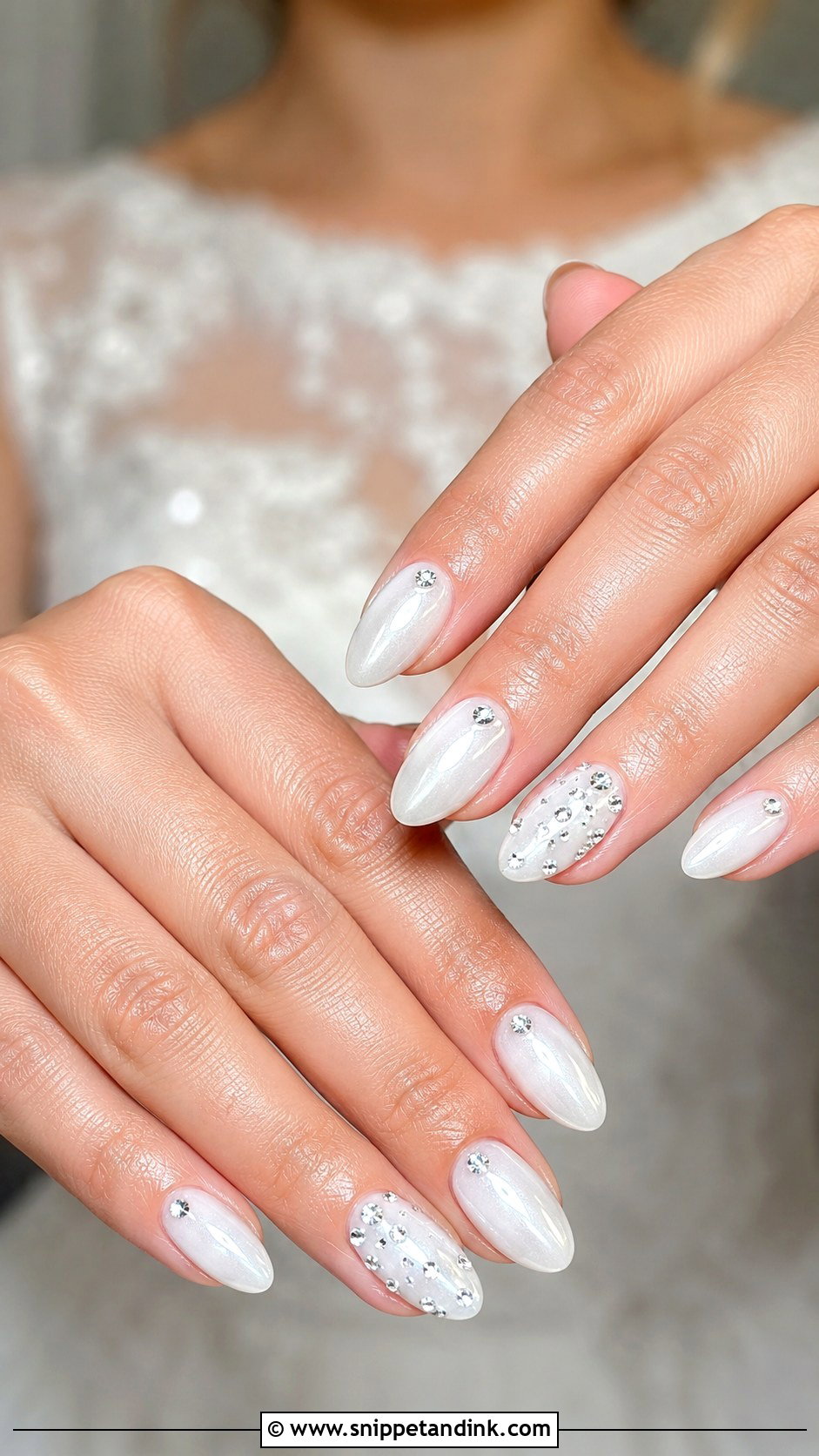
Crystals are where I’m most careful about wear. Each stone goes into a small bead of thick gel adhesive and is cured, then I run top coat around its base so no edge is left to catch on a veil or a knit. Placed low and flat near the cuticle, or on one accent nail, they stay put for days. A handful of well-set stones on a milky base looks more expensive than a fully covered nail, and it’s far kinder to your hair during a day of hugs.
17. Matte White Wedding Nails
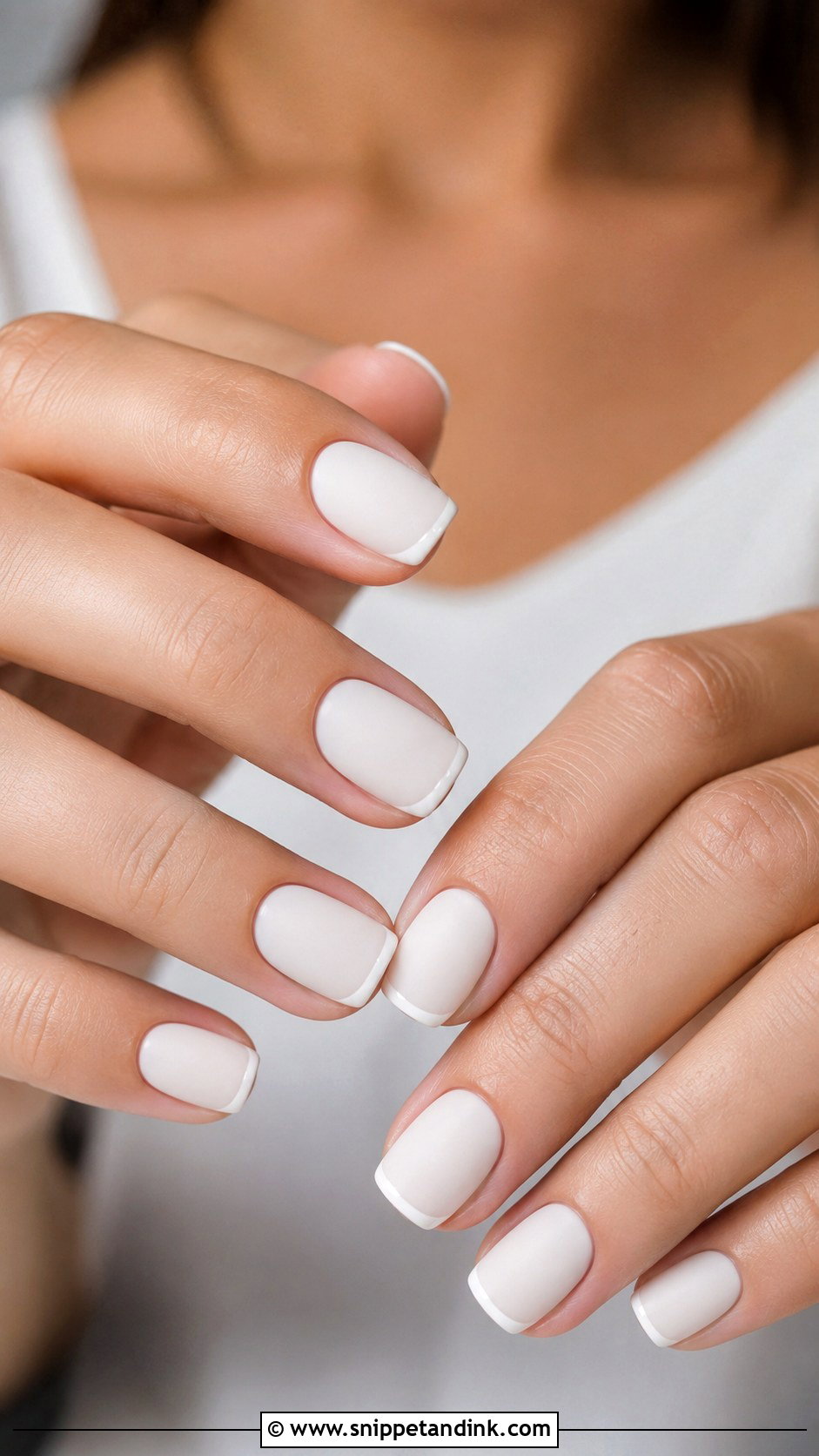
Matte top coat gives white a velvety look, but it’s the most demanding finish in this list. It shows every bump and uneven cuticle line, so the base work has to be perfect before the matte goes on. It also picks up stains more readily than gloss, which means self-tanner and foundation can mark it. I’d use a soft white or ivory rather than bright white, and glossy French tips over the matte base give a quiet contrast. It suits minimalist gowns in satin or crepe.
18. White Swirl Wedding Nails
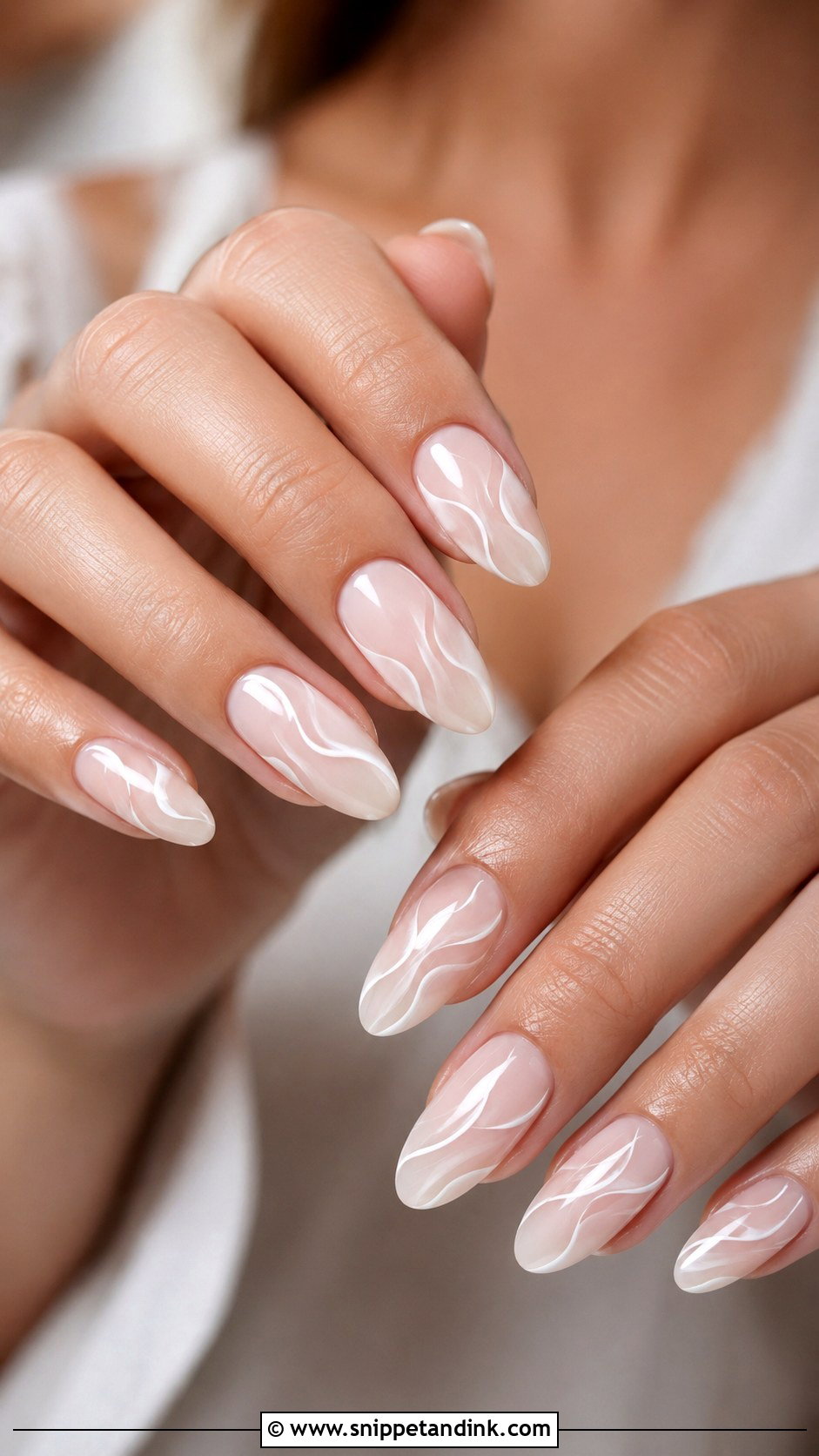
Thin white curves over a sheer nude or milky base add movement without any color. Spacing is the whole trick: swirls painted too close together or too thick turn into a blur from a few feet away. I follow the natural curve of the nail with a long liner brush, which is why almond and oval shapes carry them best. If you like abstract nail art but need it to read as bridal, this is the compromise I’d suggest. A pearl chrome top coat over the finished design adds a soft glow.
19. White 3D Flower Wedding Nails
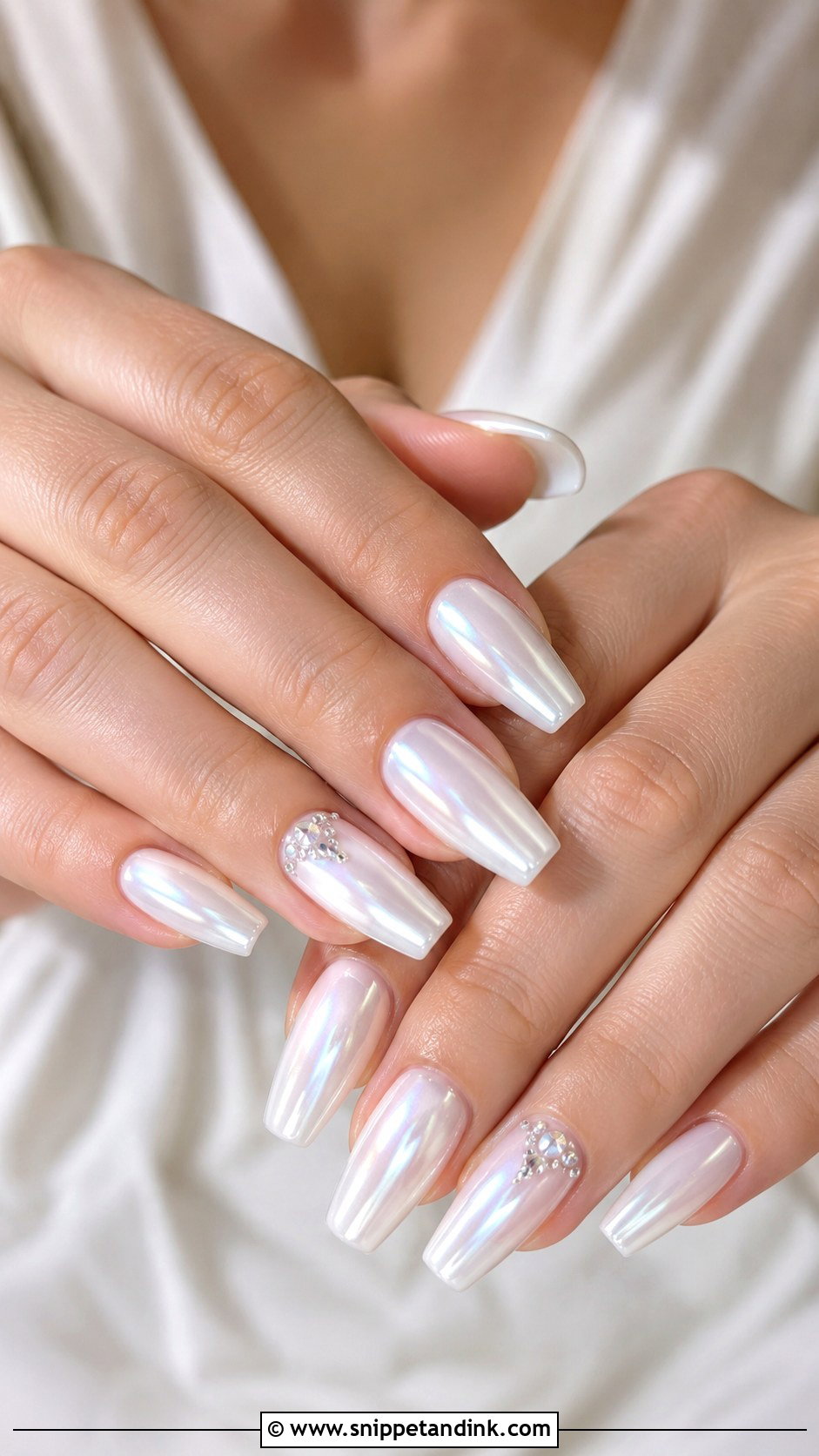
Raised gel or acrylic flowers add texture, so I pair them with a dress that has floral lace or appliqué. They must stay small. A large 3D flower stands proud of the nail, catches on fabric and feels clumsy when you’re putting in earrings. I keep them to accent nails on a sheer white base and seal around every petal edge. A tiny pearl in the center finishes them neatly.
20. White Minimal Wedding Nails
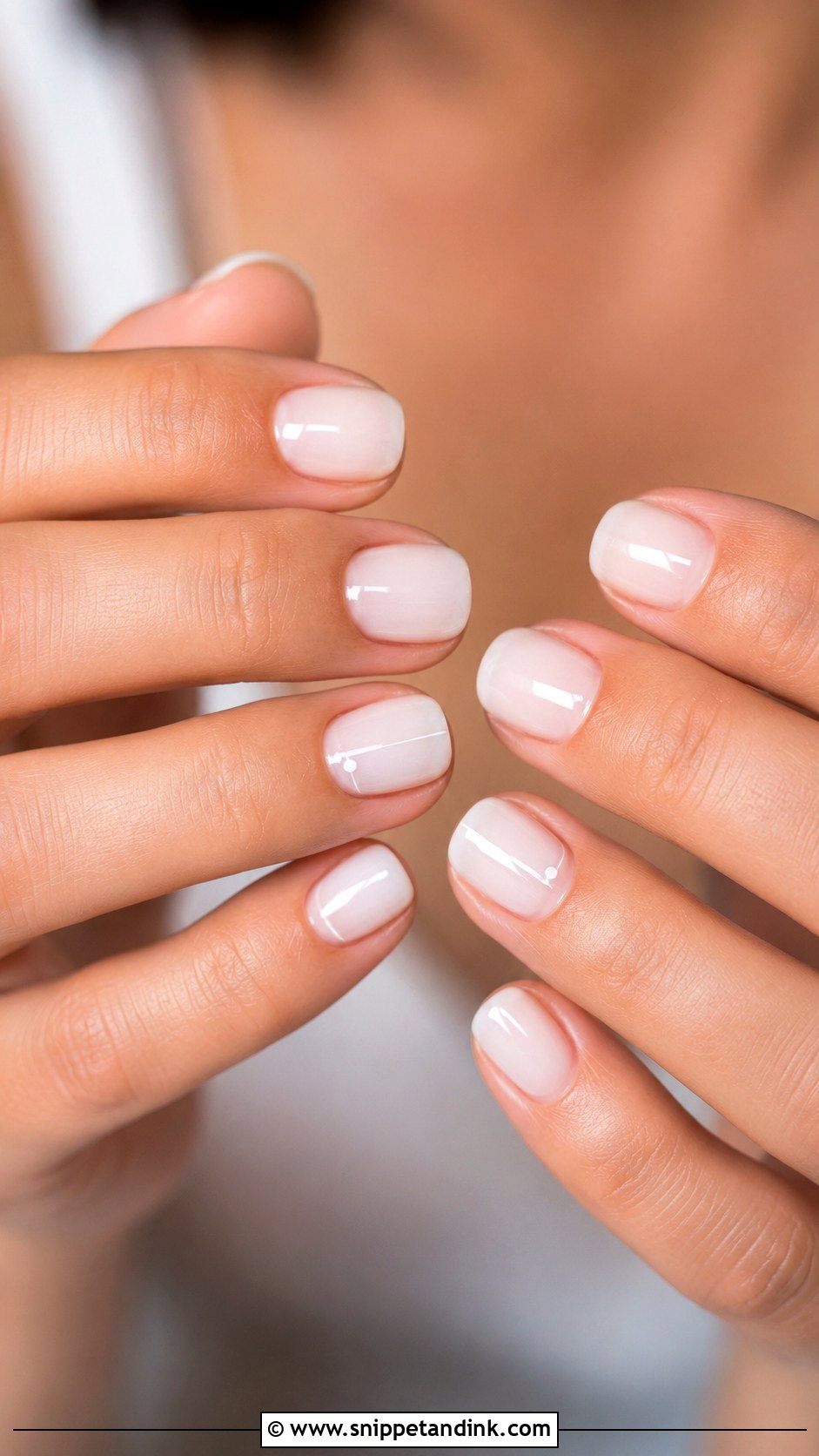
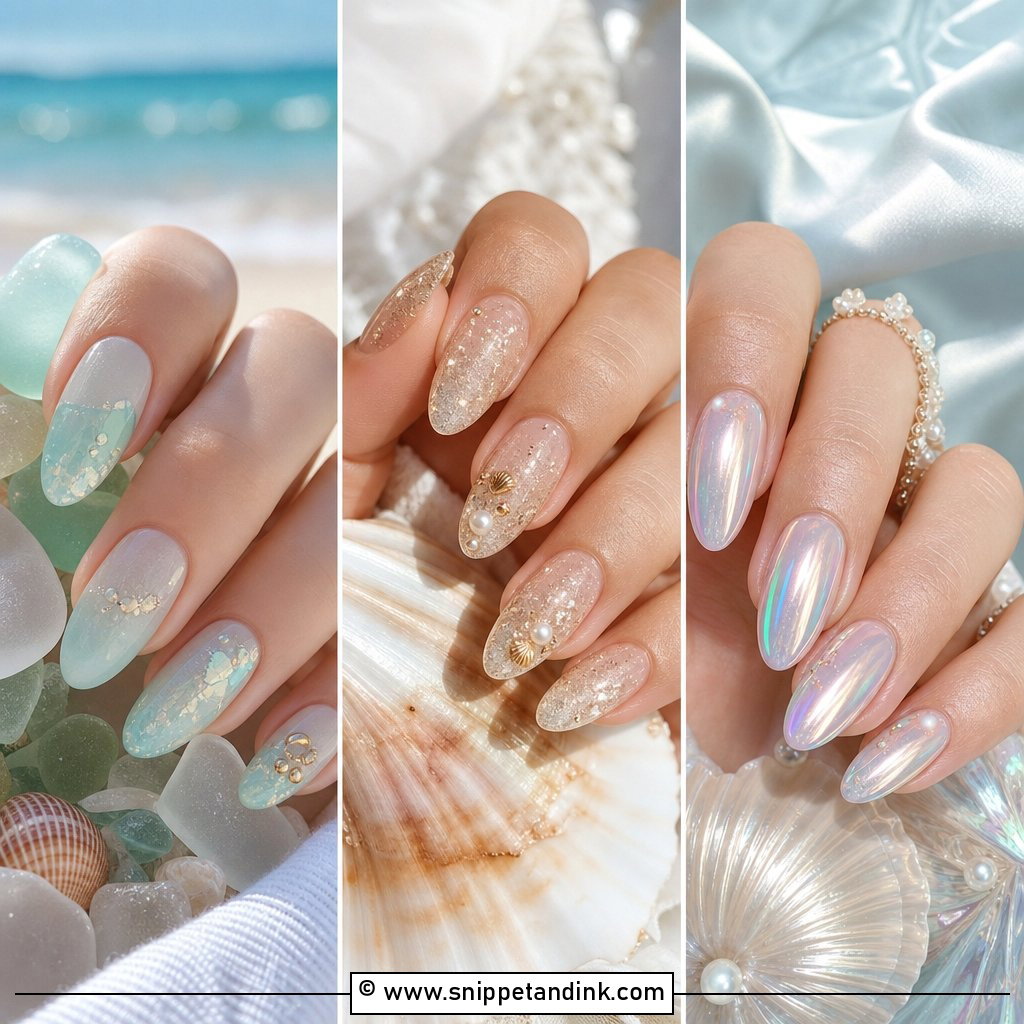
One clean base and a single small detail, such as a dot, a micro French line or one seed pearl. I suggest this for courthouse ceremonies and for brides who rarely wear polish, because it looks finished without feeling like a costume. Short oval or squoval is the natural fit. Go glossy with satin and a softer satin-finish top coat with crepe. It still looks fresh in honeymoon photos a week later.
White Gel Shows Every Stain, So Plan the Week Around It
White is the least forgiving color I apply. Top coat isn’t completely sealed against dyes, and white shows anything that sinks in. The usual culprits in a wedding week are self-tanner, new dark denim, hair dye, turmeric in food and some liquid foundations.
Put the tan and the hair color first
Have a spray tan or self-tan done before your nails, not after, and wipe your nails straight away if you top up at home. Hair color should also come first. I like to book a white manicure one or two days before the wedding, so there’s no visible regrowth and less time for a stain to appear.
Why a white set sometimes peels early
Opaque white gel is packed with pigment, so the lamp’s light struggles to reach the bottom of a thick layer. Applied too heavily, it can stay soft underneath, wrinkle, or lift within days. Thin coats, each fully cured, take longer but hold. If a corner does start lifting, don’t pick at it. A quick repair at the salon is far better than tearing your natural nail the night before.
For the day itself, I tuck a fine nail file, a clear top coat pen and a cuticle oil pen into the bride’s clutch. That covers almost anything a white set can throw at you between the ceremony and the last dance.
The Shade Comes First, the Art Second
Every set above starts with the same decision: which white. Get that right against your actual dress and skin, and French lines, chrome or pearls all settle on top of it. If you’re unsure, a milky white in a shape you already wear is the safest place to start. Book a trial if you’re planning extensions, chrome or raised art, so we can both see how it wears for a week before it matters.
You'll Like These Ideas:


Leave a Reply