
A bridal manicure gets looked at closer than almost anything else you wear. Guests ask to see the ring, the photographer shoots your hands against the bouquet, and every cuticle shows. So the designs I suggest to brides are the ones that survive that scrutiny: sheer milky bases, slim French lines, a little pearl or chrome, lace work kept to an accent. Below are thirty I’d happily put on a bride, with notes on which nail lengths and shapes each one actually suits, and where each tends to go wrong.
A Countdown From Bare Nails to Your Bridal Set
The design matters less than the timing. Most of the sets below look their best on healthy, evenly grown nails, and that takes a few weeks of quiet preparation.
- Six to eight weeks out: stop picking, biting or peeling gel off at home, and massage cuticle oil into each nail every night. Peeled gel takes layers of nail with it, and damaged nails need weeks to grow out.
- Three to four weeks out: book a trial with the actual design. This is when we test shape, length and color against a photo of your dress and ring, and find out whether extensions feel comfortable.
- One to two days before: the final appointment. Gel or builder gel done then looks fresh in photos with no regrowth gap at the cuticle, and leaves a day to fix anything.
- The morning of: hands only need a wash and a drop of oil. Apply self-tanner or hand cream before the nail appointment, never after, since both can stain or dull the finish.
If your nails are weak, thin or very short, ask about a builder gel overlay rather than plain gel polish. It adds a little strength so a short almond or oval holds its shape through the week of the wedding.
1. Milky White Wedding Nails
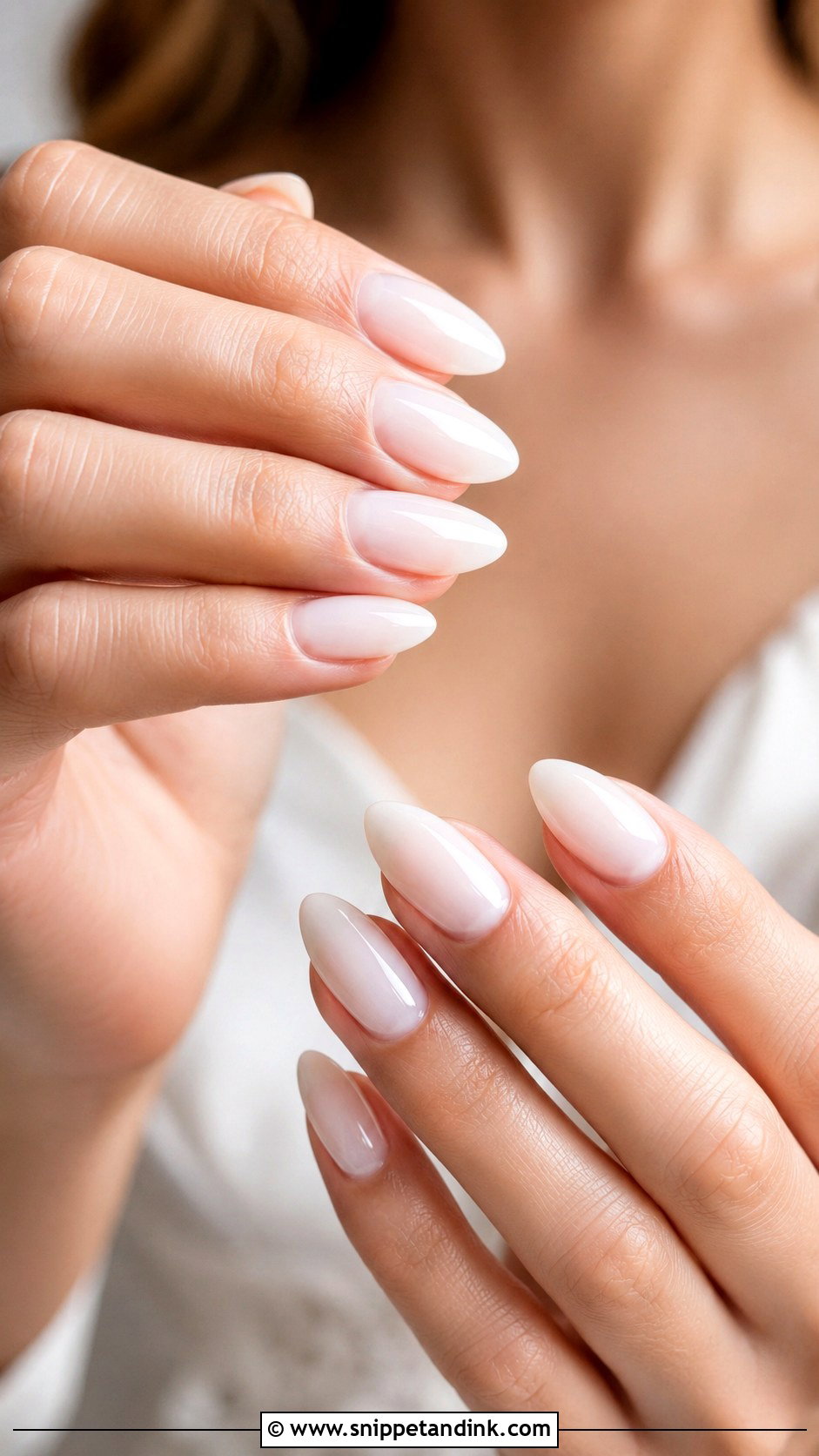
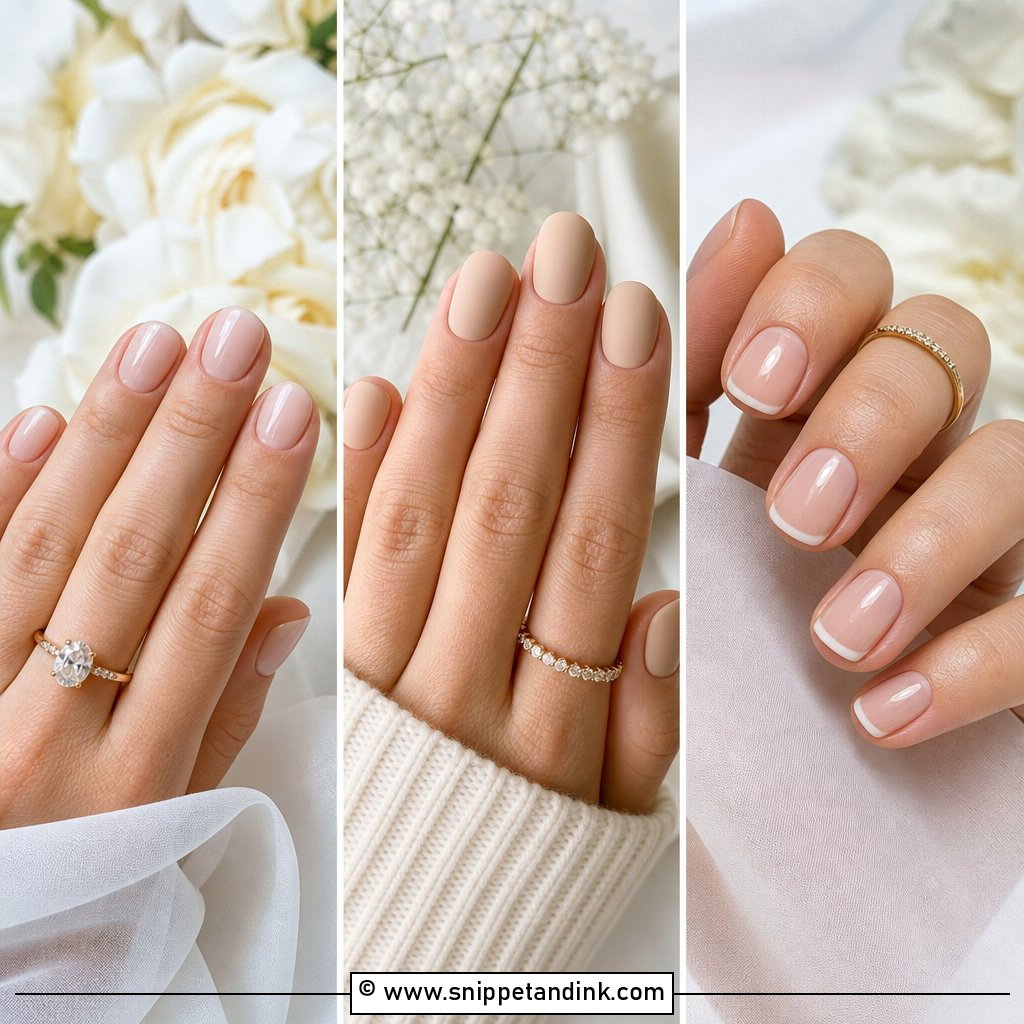
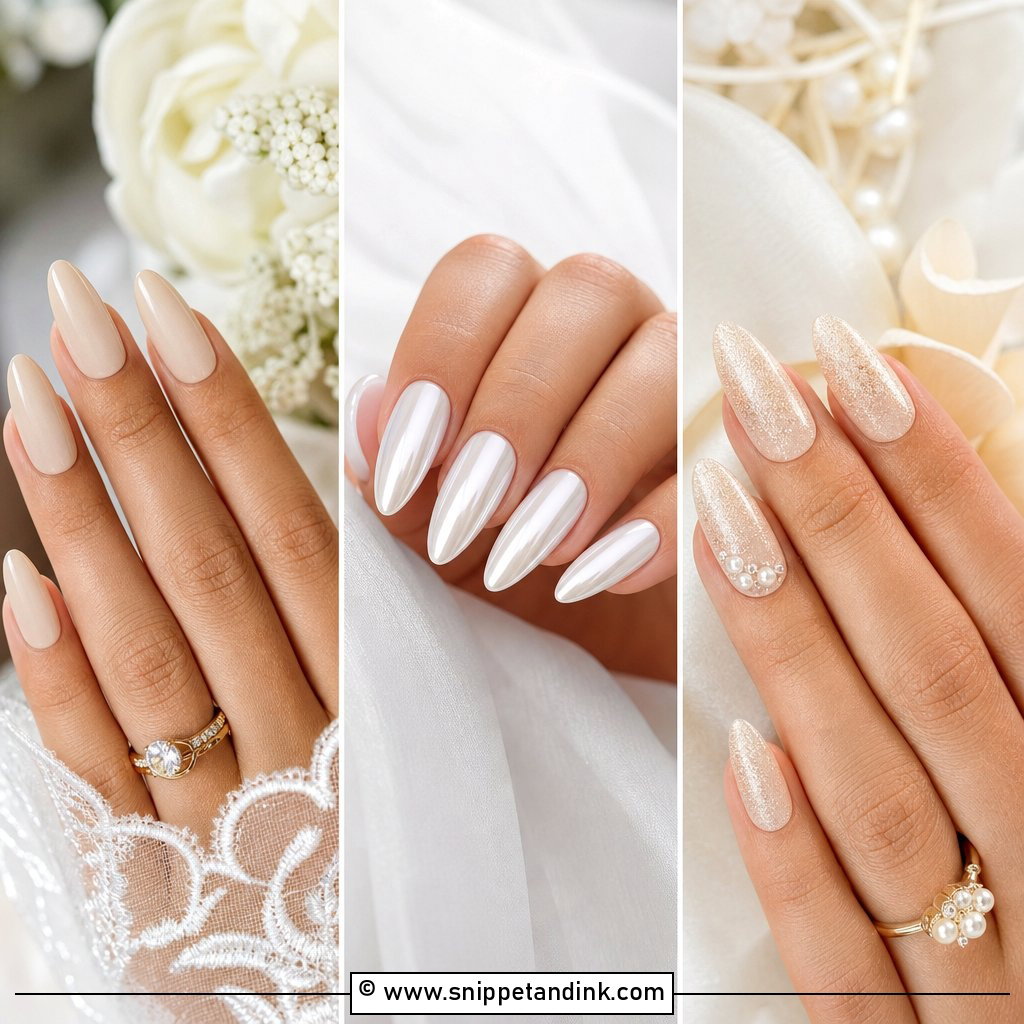
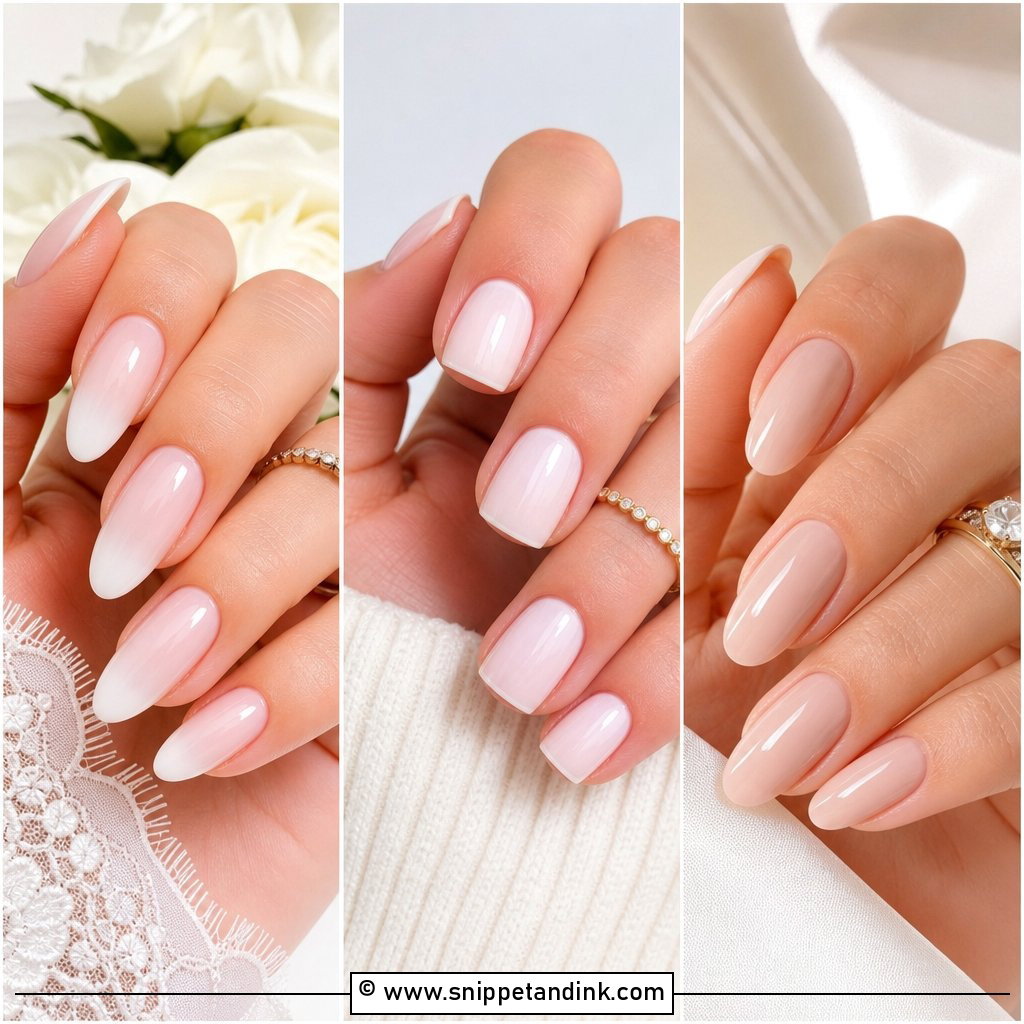
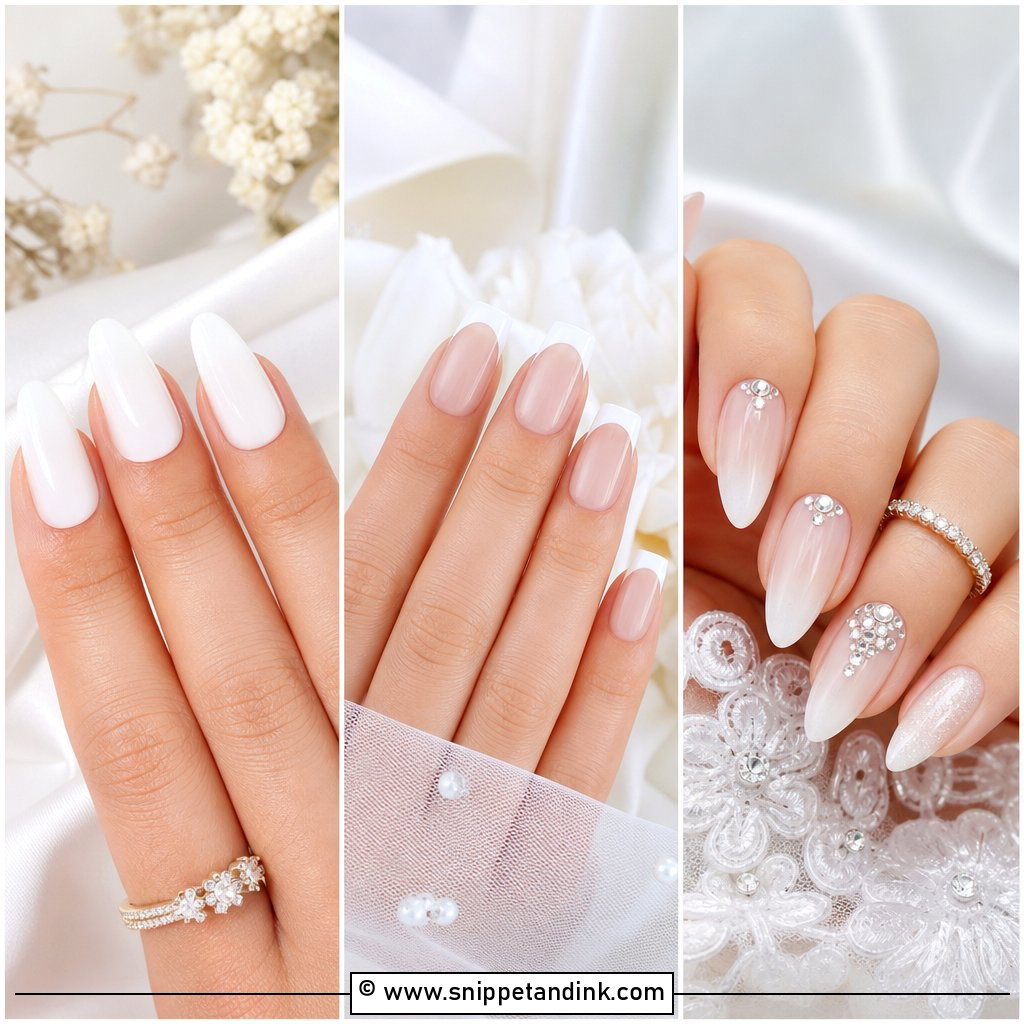
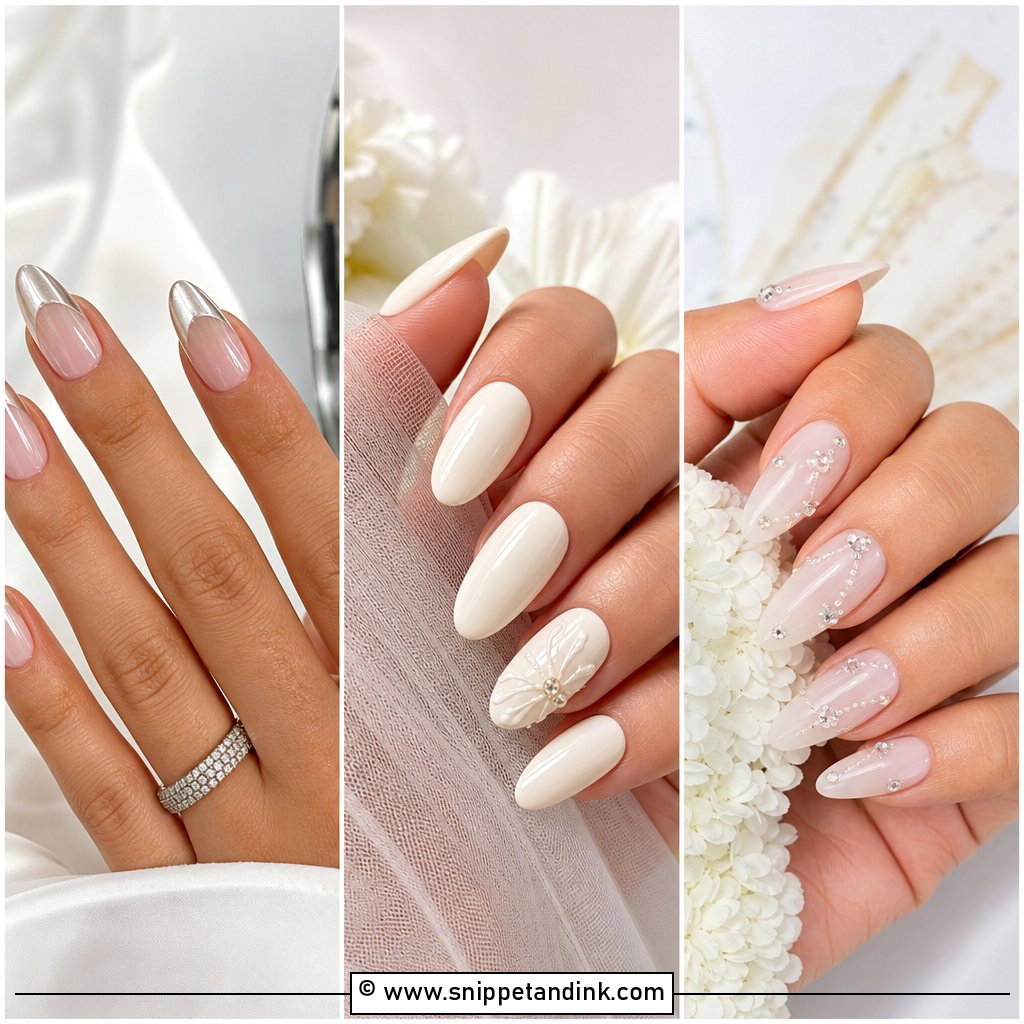
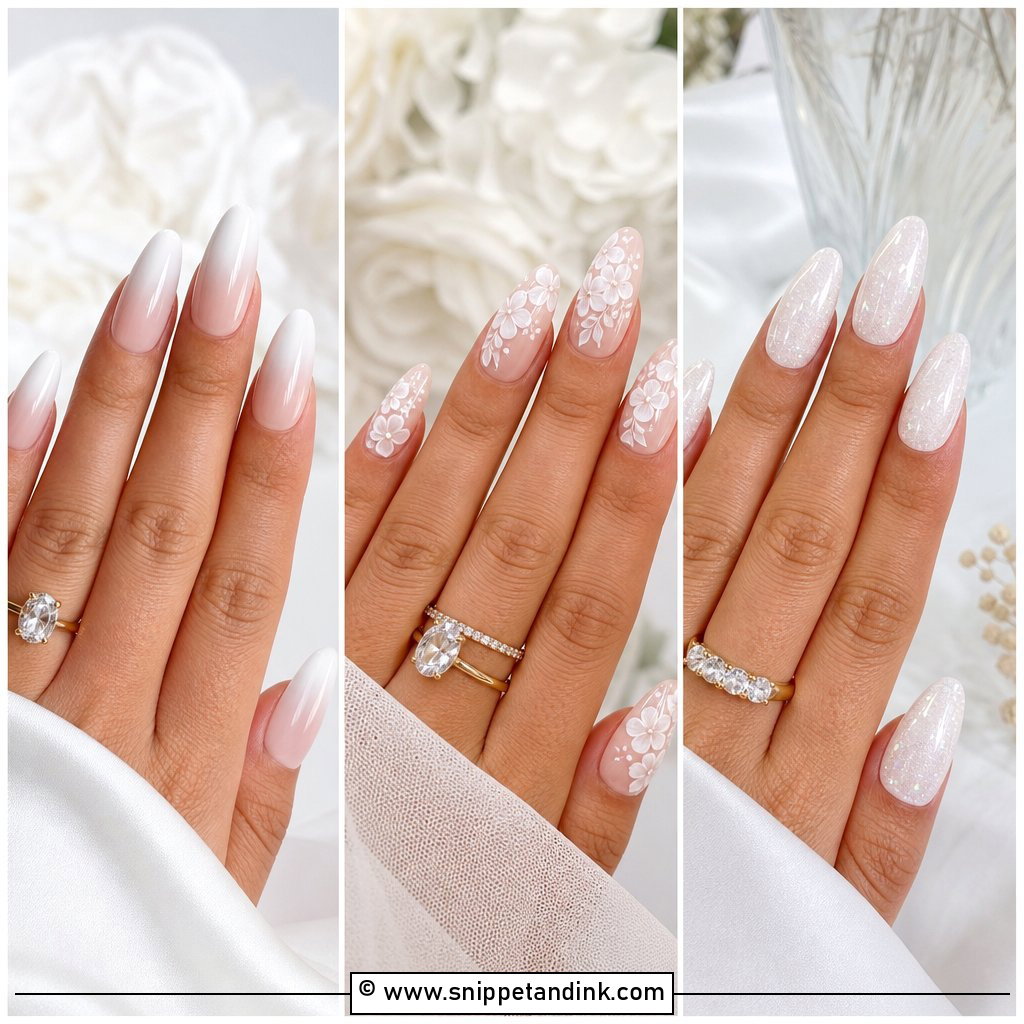
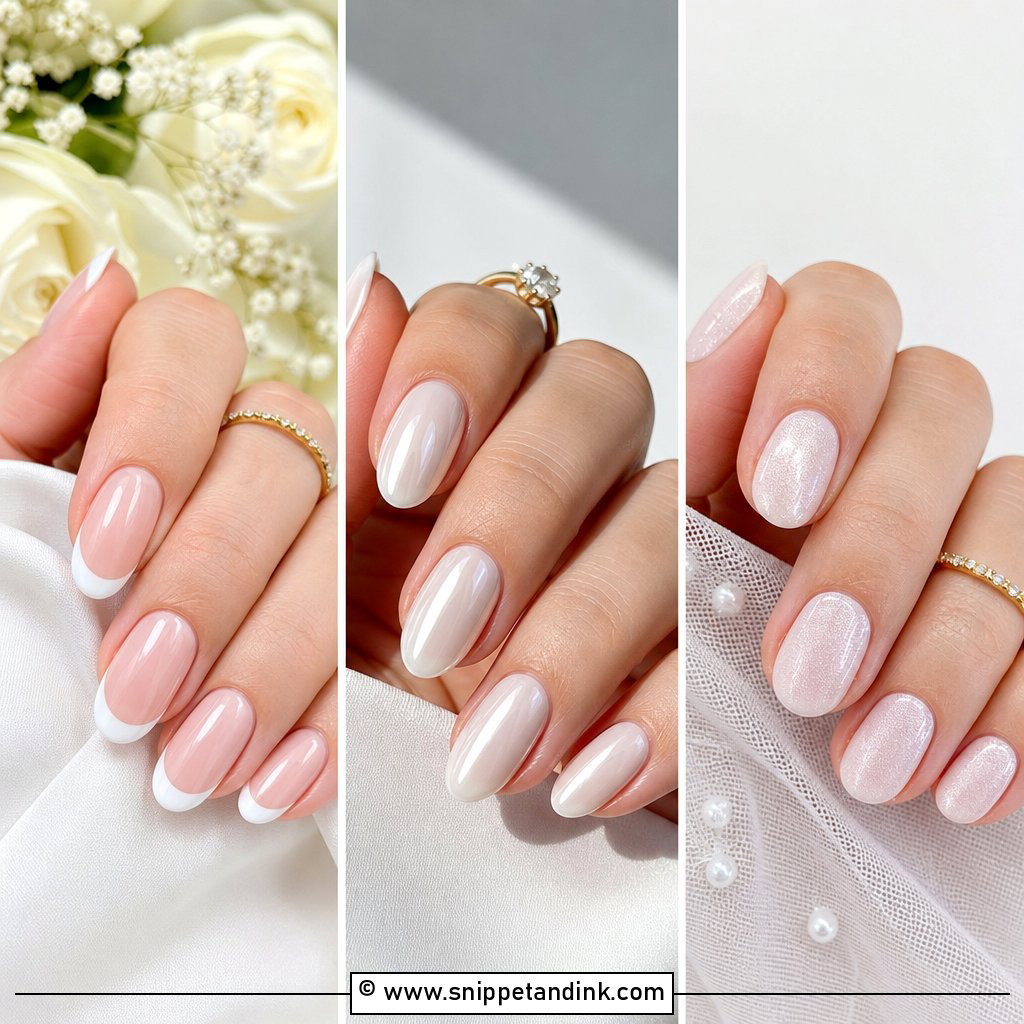
Milky white is the set I’m asked for most, and it’s harder to get right than it looks. Milky gels are semi-sheer, so one thick coat pools and streaks while two thin coats build an even, cloudy veil with a hint of natural nail underneath. A high-gloss top coat finishes it. It suits almond, oval, square and short rounded nails alike, and it sits comfortably next to lace, satin and pearl jewelry without pulling focus from the ring.
2. Classic French Wedding Nails
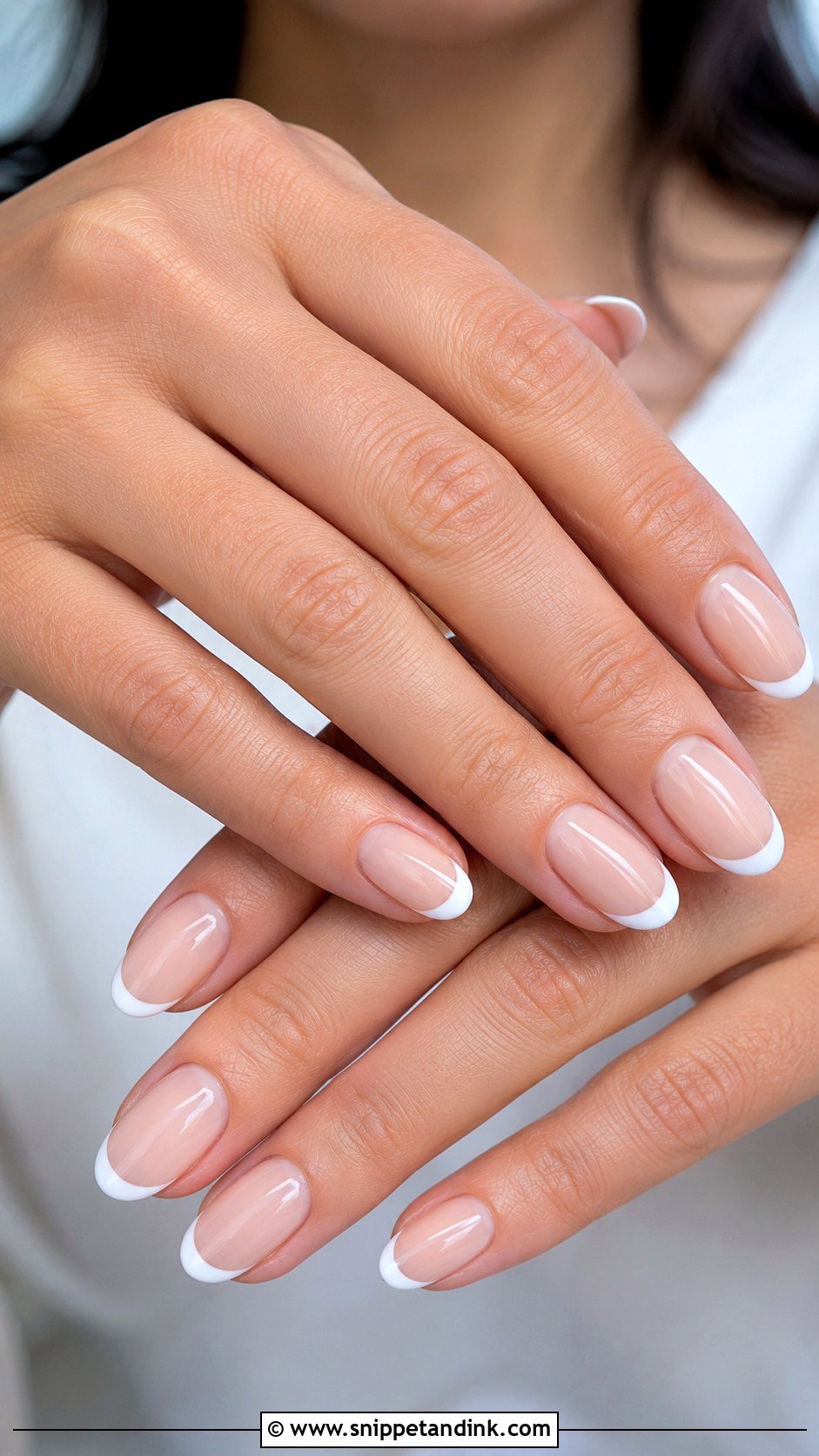
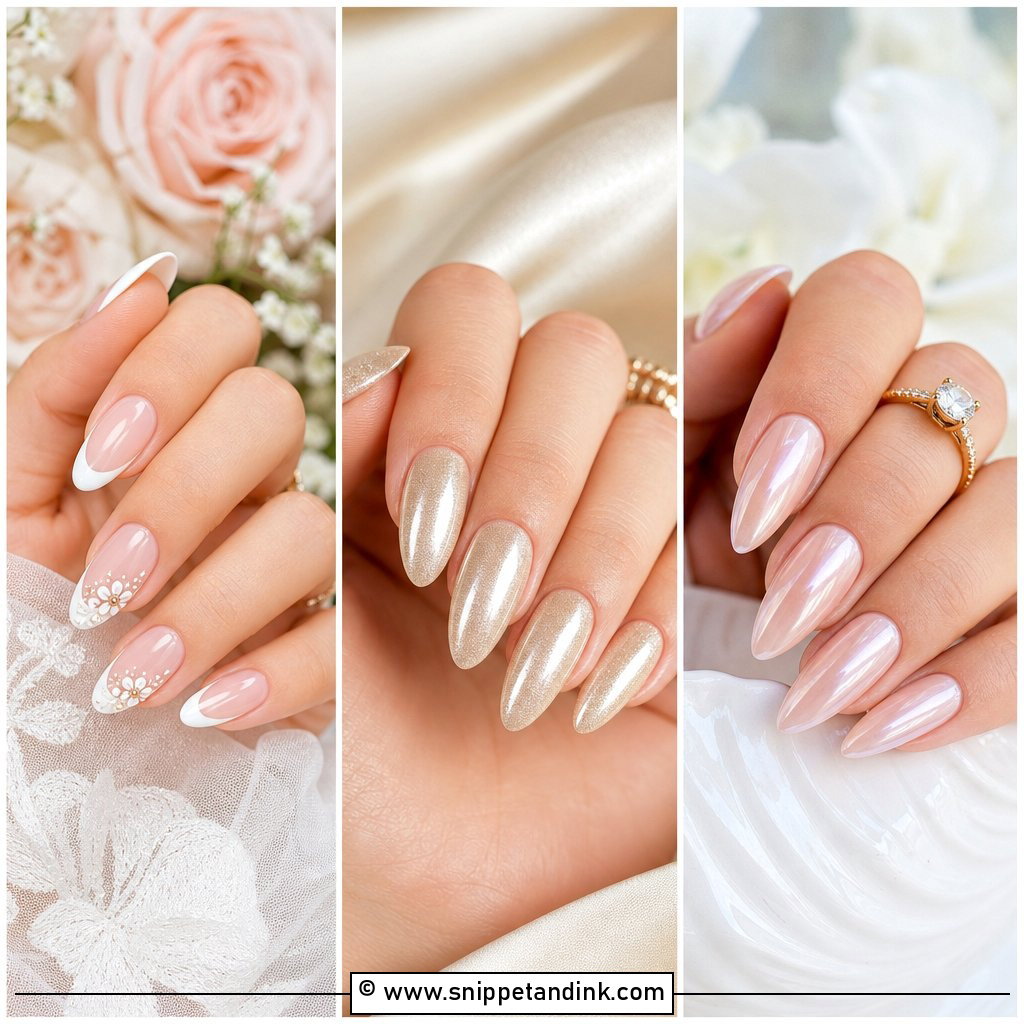
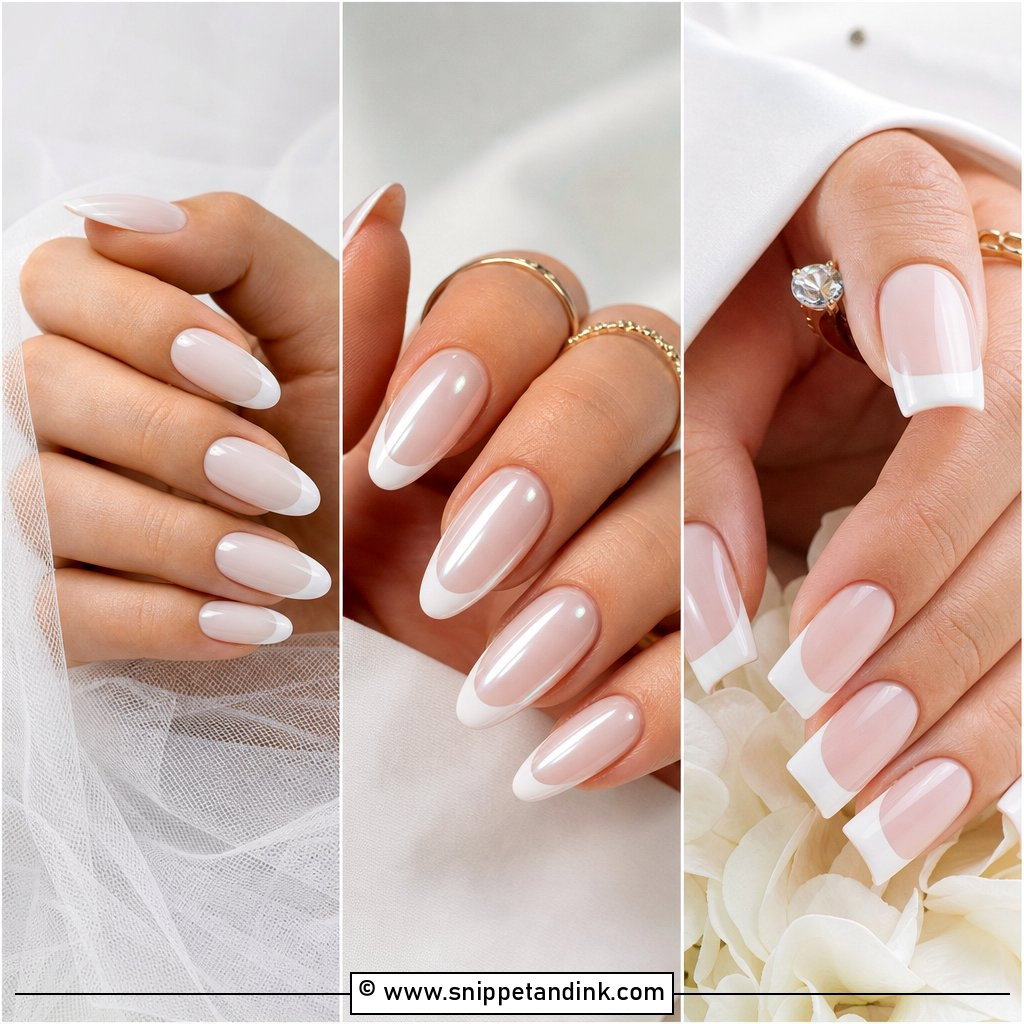
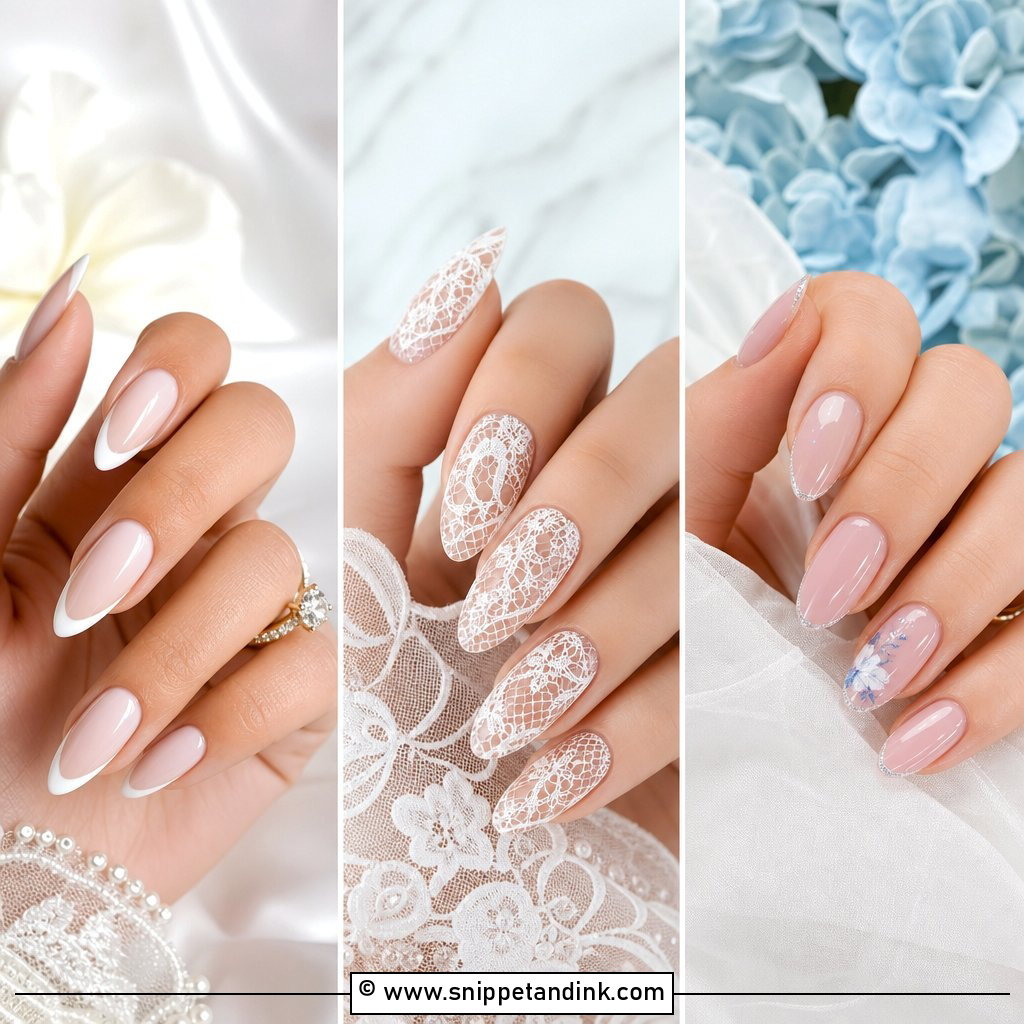
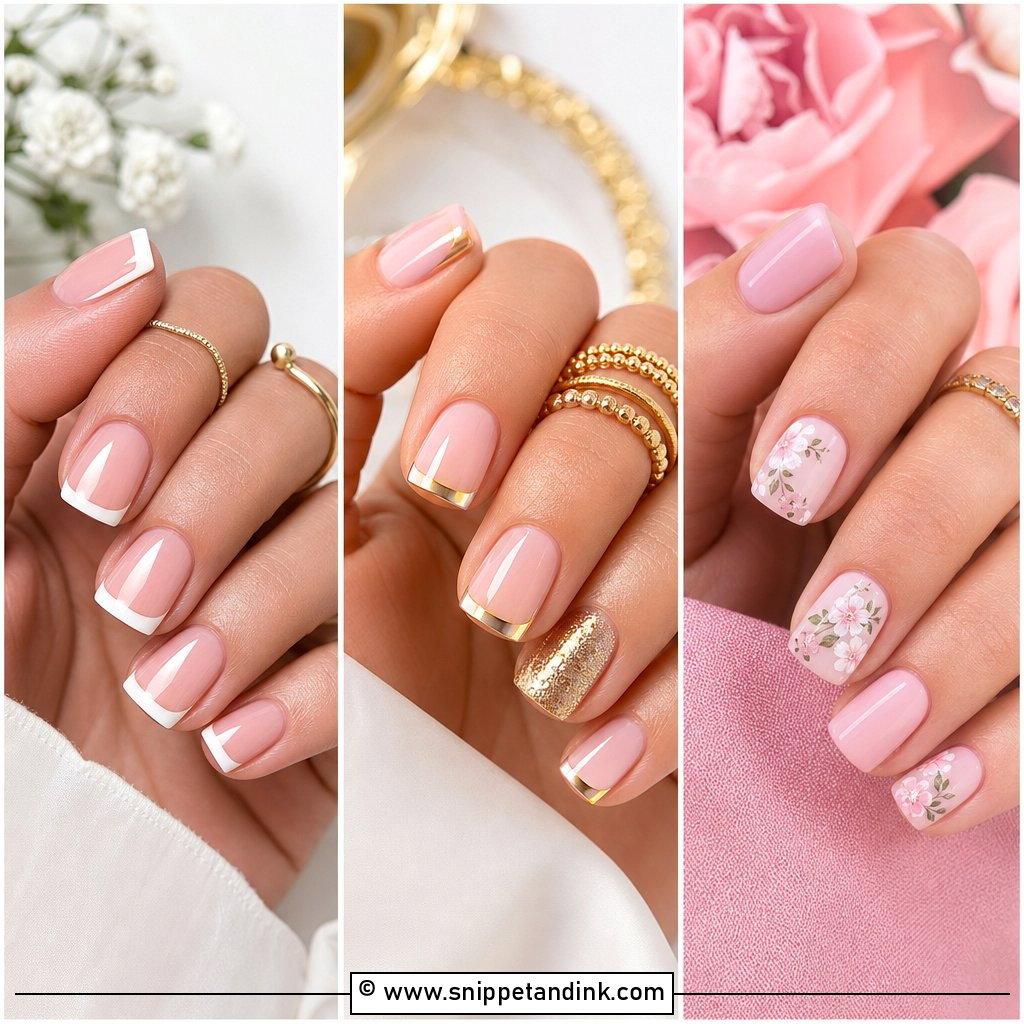
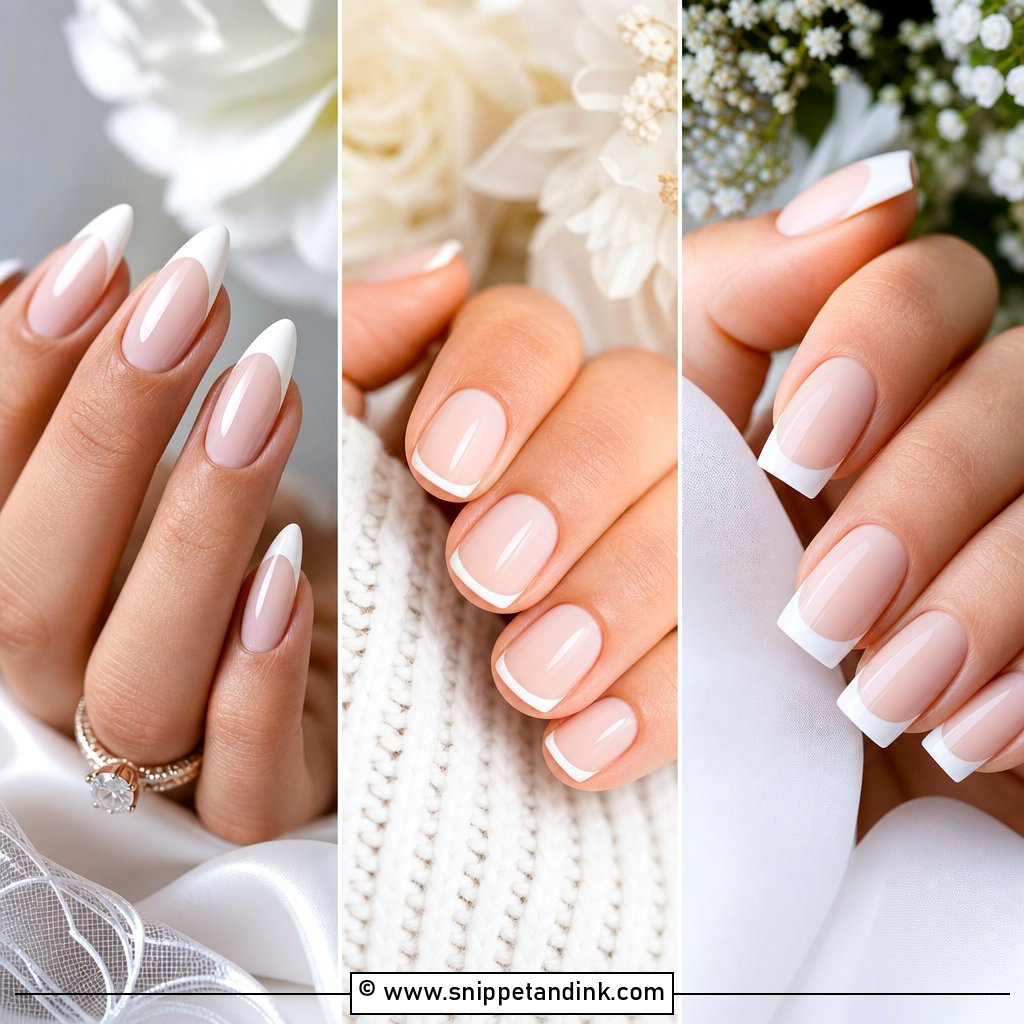
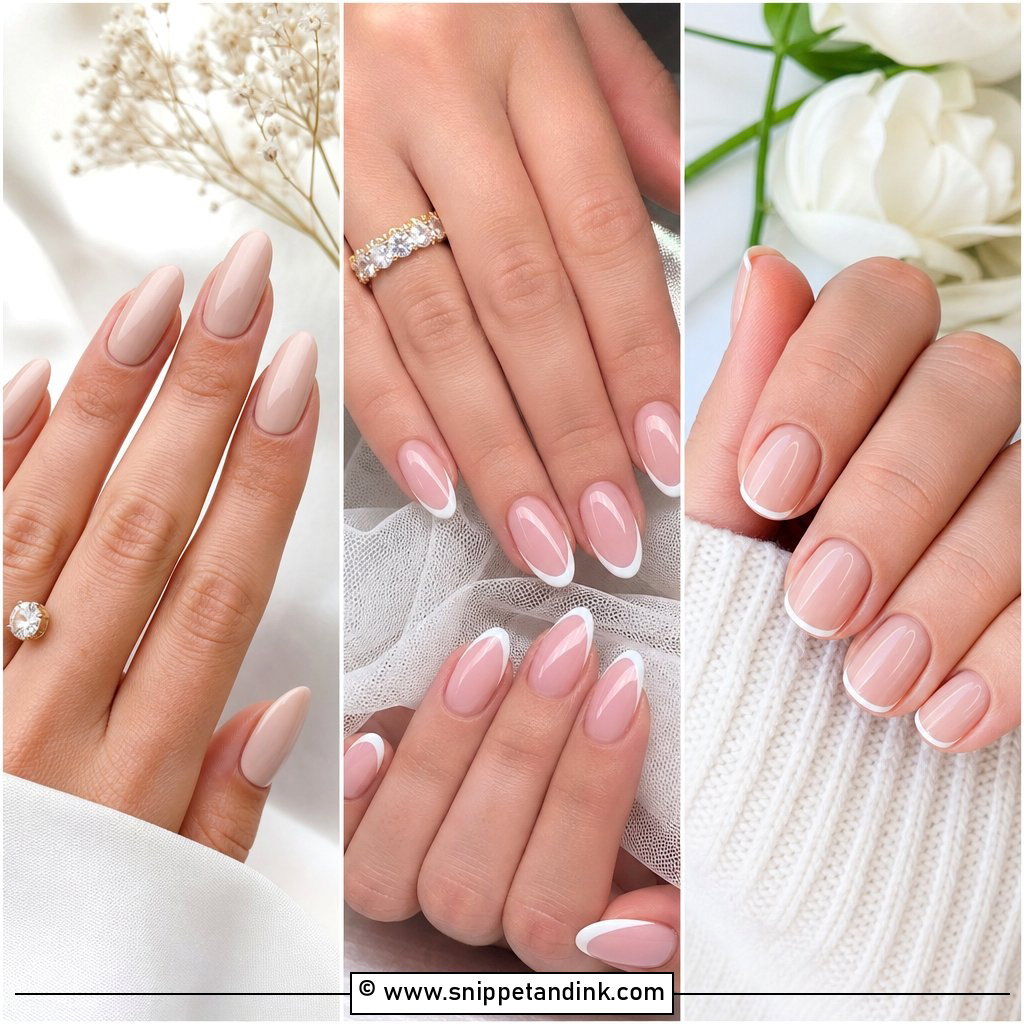
A French set frames the nail better than any other design, which is why it has outlasted every trend. For a wedding I keep the smile line slim and curved, because a thick straight tip looks heavy in a close-up and shortens the nail bed. The base matters more than people think: a sheer pink that matches your nail bed hides the free edge, while a pale nude can look grey on some hands. Almond, oval and squoval show the curve best, though short nails carry it too. If your dress has clean, traditional lines, it simply fits.
3. Soft Pink Wedding Nails
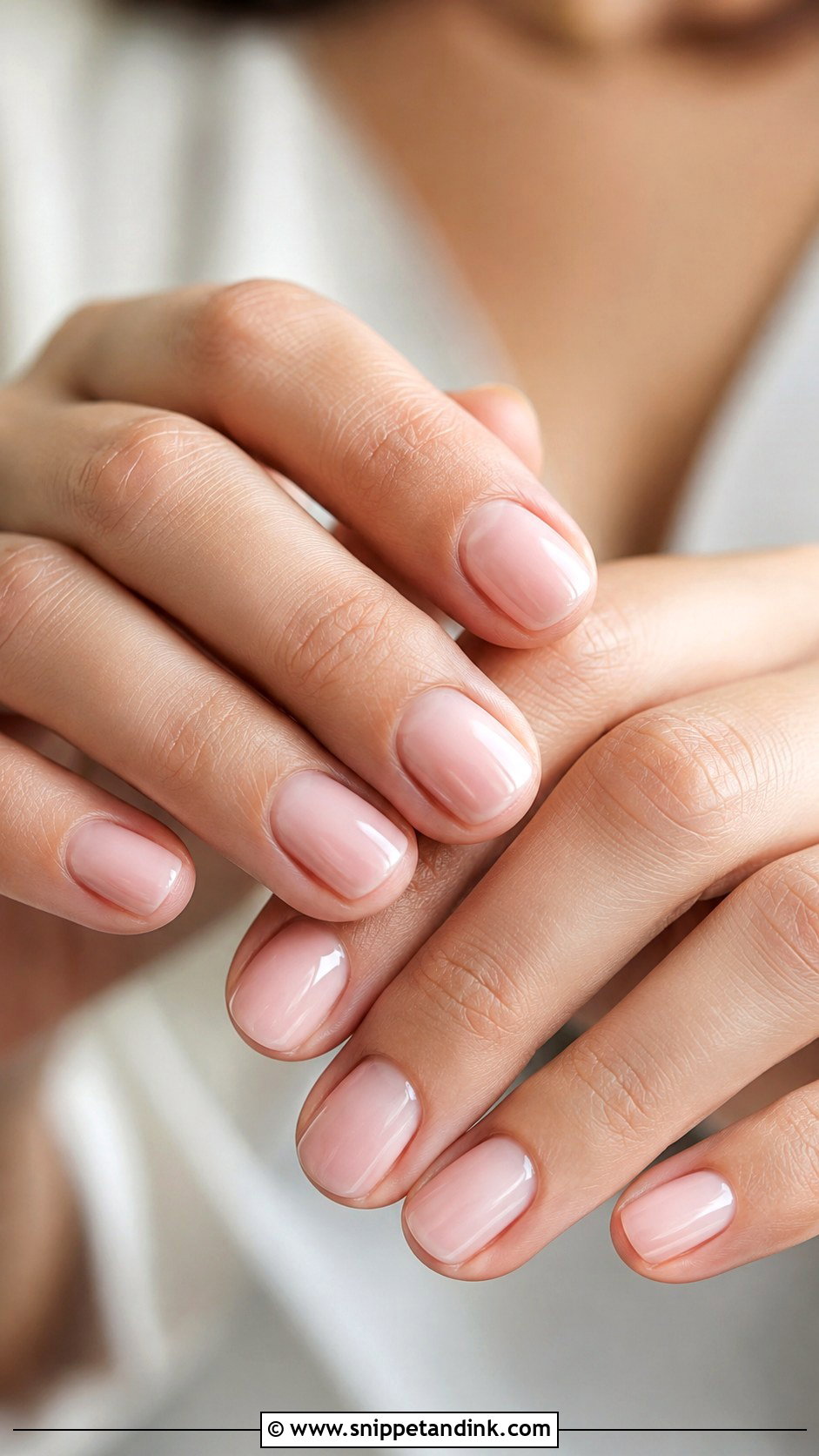
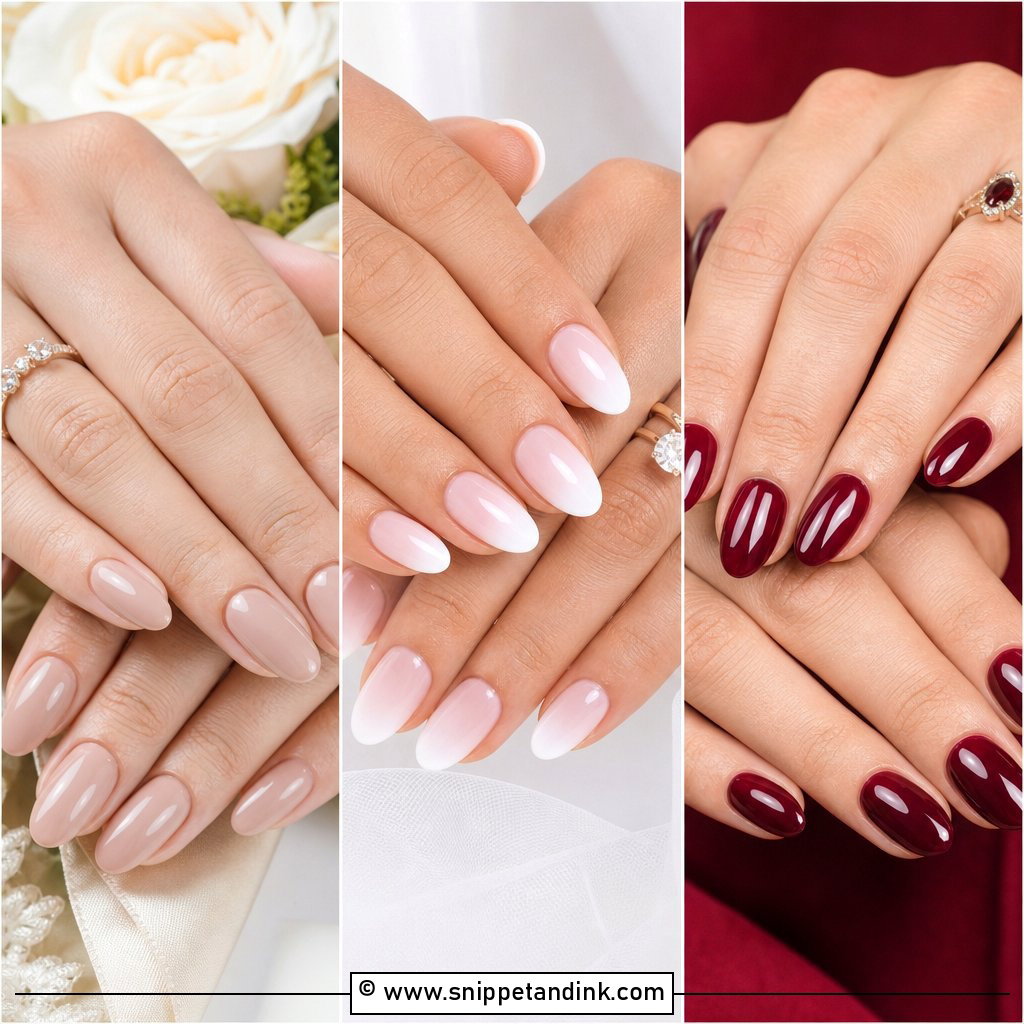
Pink is where undertone decides everything. I hold two or three bottles against the back of your hand in daylight before choosing, because the same baby pink can look fresh on cool fair skin and chalky on warm olive skin. Fair skin usually suits cooler pinks, while medium and deep skin tones tend to glow in warmer rose or peachy pinks. Keep it sheer and glossy. This is my go-to when a bride wants no nail art at all but still wants the set to read as bridal.
4. Nude Wedding Nails
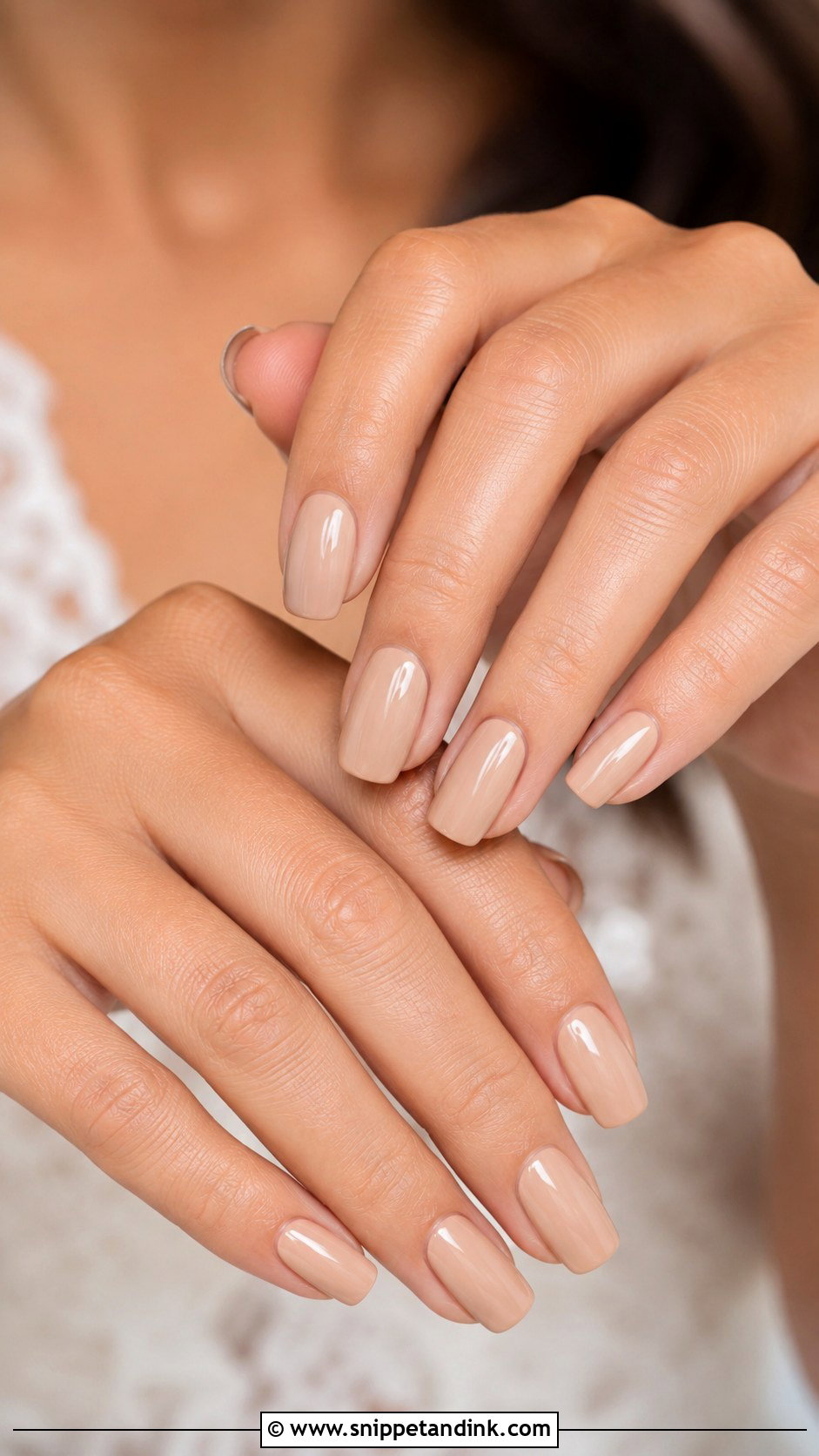
The wrong nude disappears into your skin and makes fingers look washed out. I look for a shade a step lighter or a step warmer than the hand itself, so there’s still a visible line between nail and finger. Beige, pink, caramel and soft mocha nudes can all work once matched to the undertone. Nudes also grow out quietly, which matters if you fly off on honeymoon the next day and won’t see a salon for two weeks. Keep the shape smooth and the length comfortable.
5. Pearl Wedding Nails
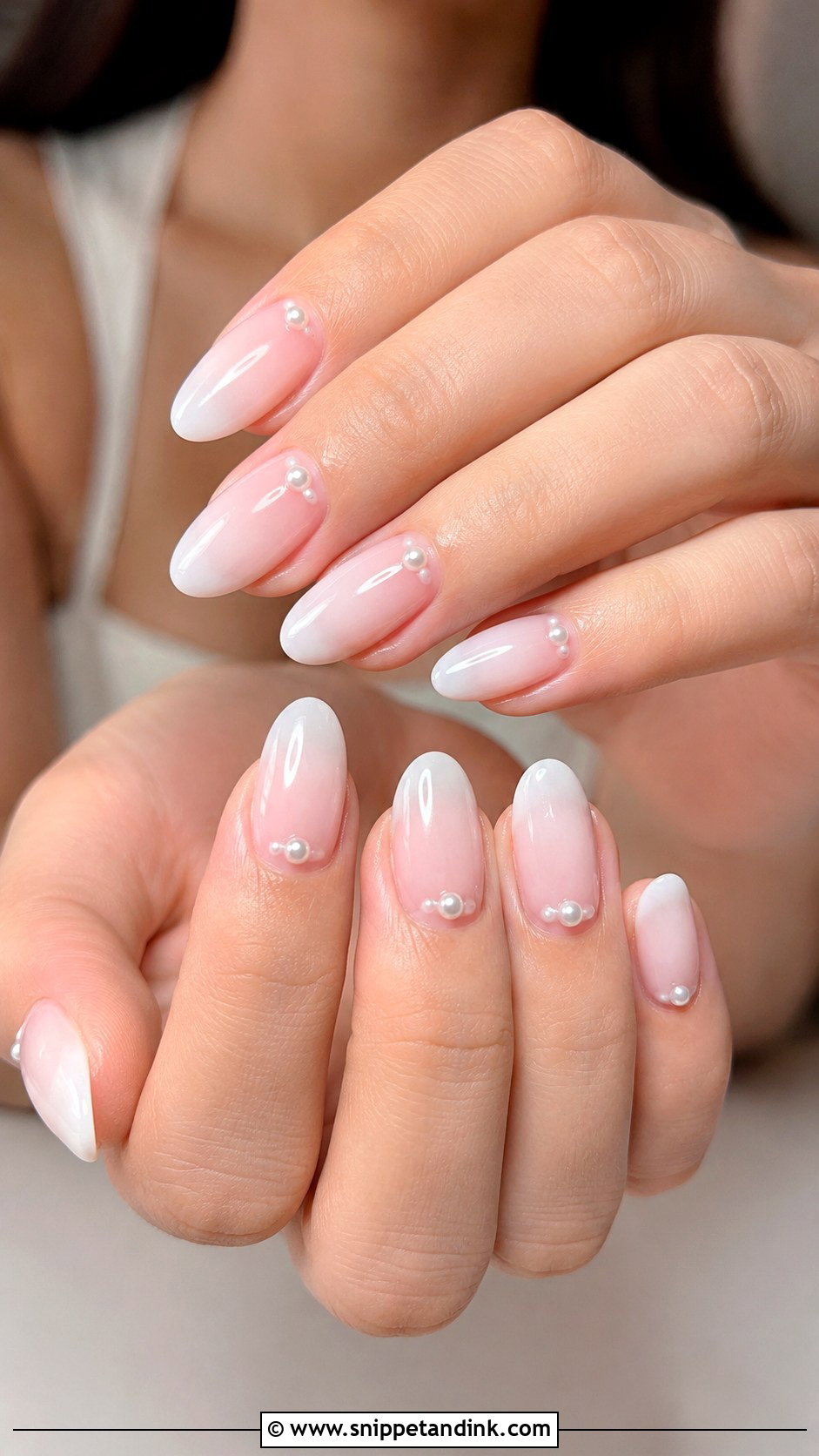
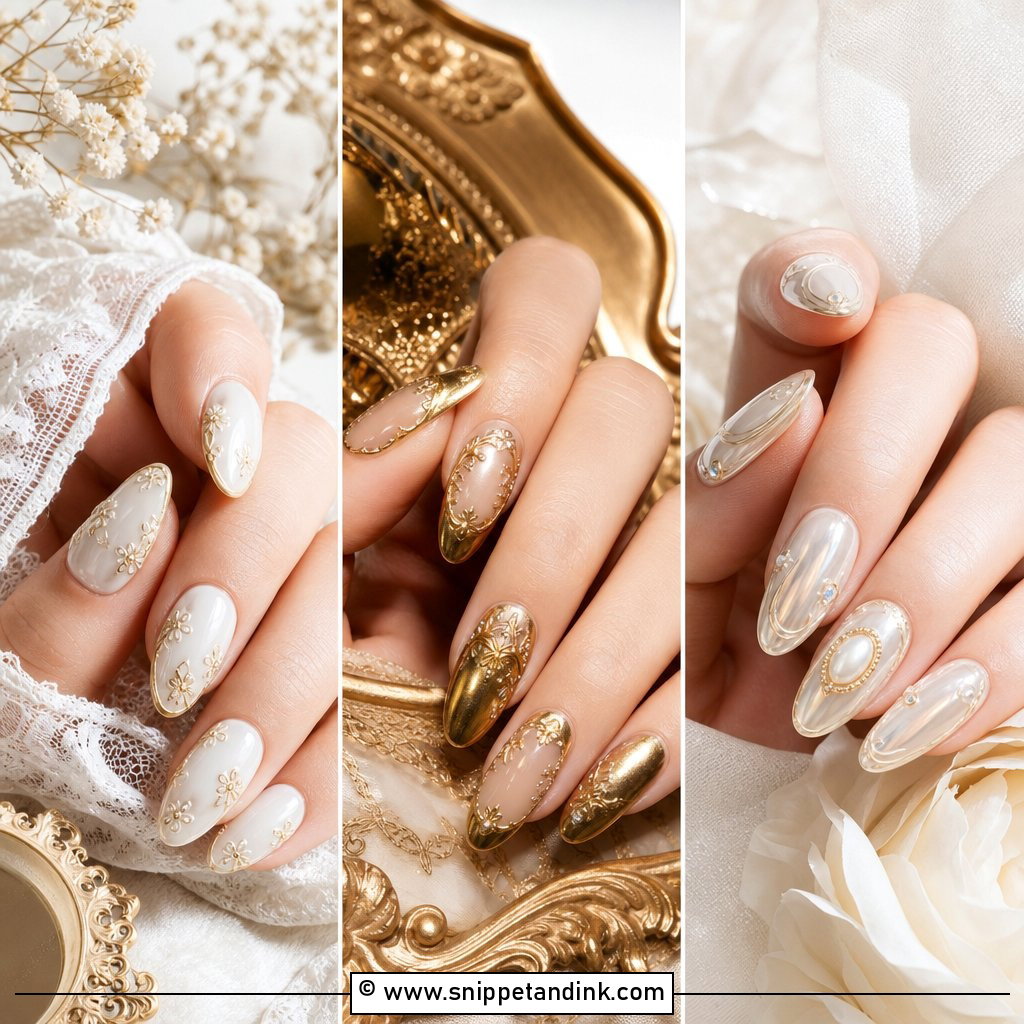
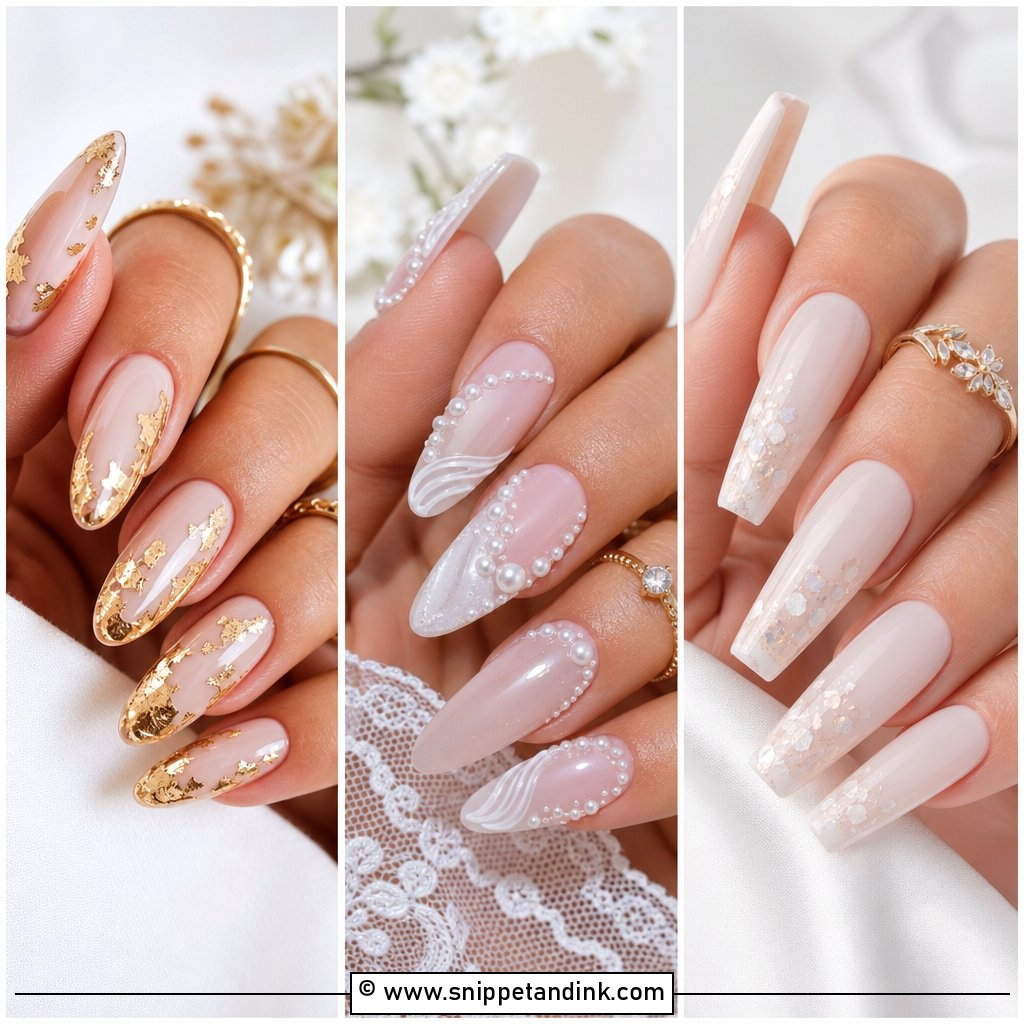
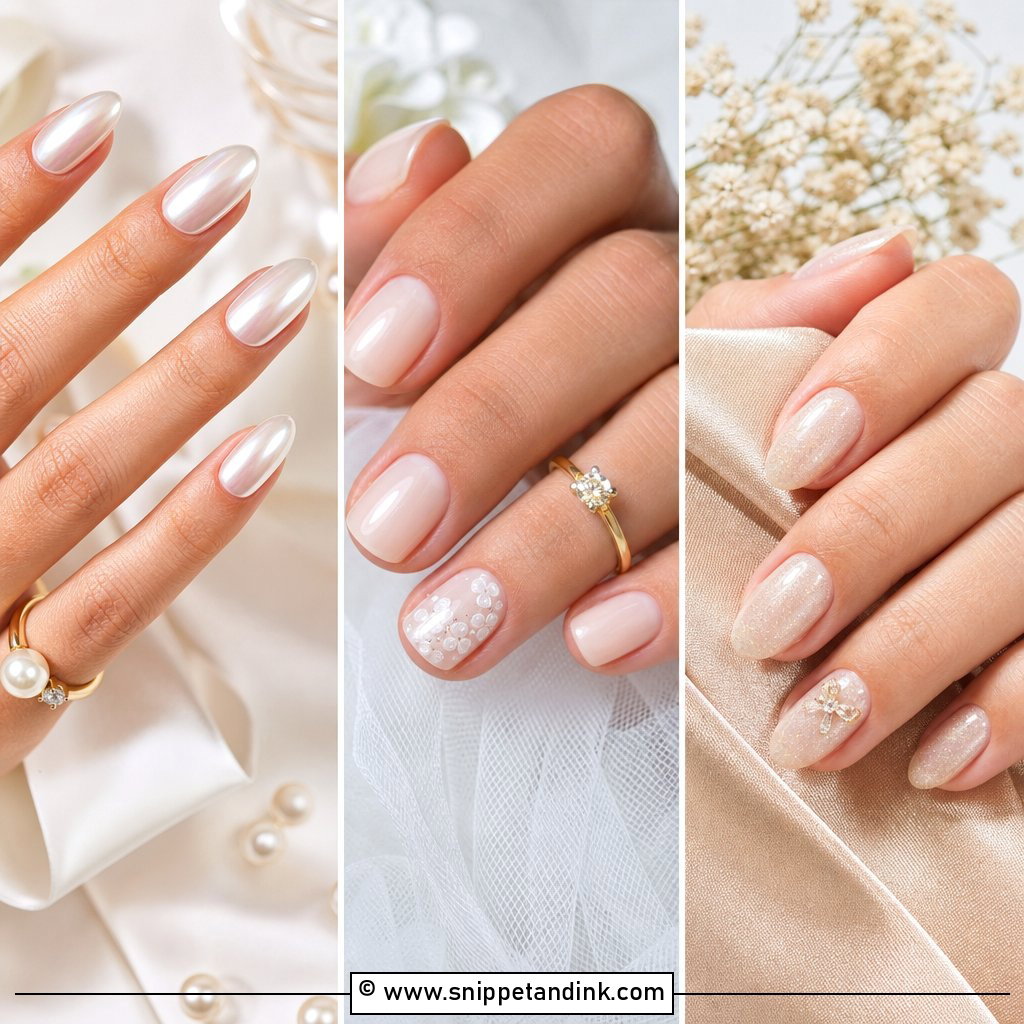
Pearl can mean three very different things, so I ask which one you mean. There’s pearly gel polish with a satin glow, pearl chrome powder buffed over a sheer base, and actual tiny 3D pearls set into gel. The 3D pearls look like jewelry near the cuticle, but they catch on hair, tulle veils and knitwear, so I keep them to one or two nails and sink them well into builder gel. A sheer pink or milky base keeps it soft, and a medium almond shape gives the pearls room to sit.
6. Chrome Wedding Nails
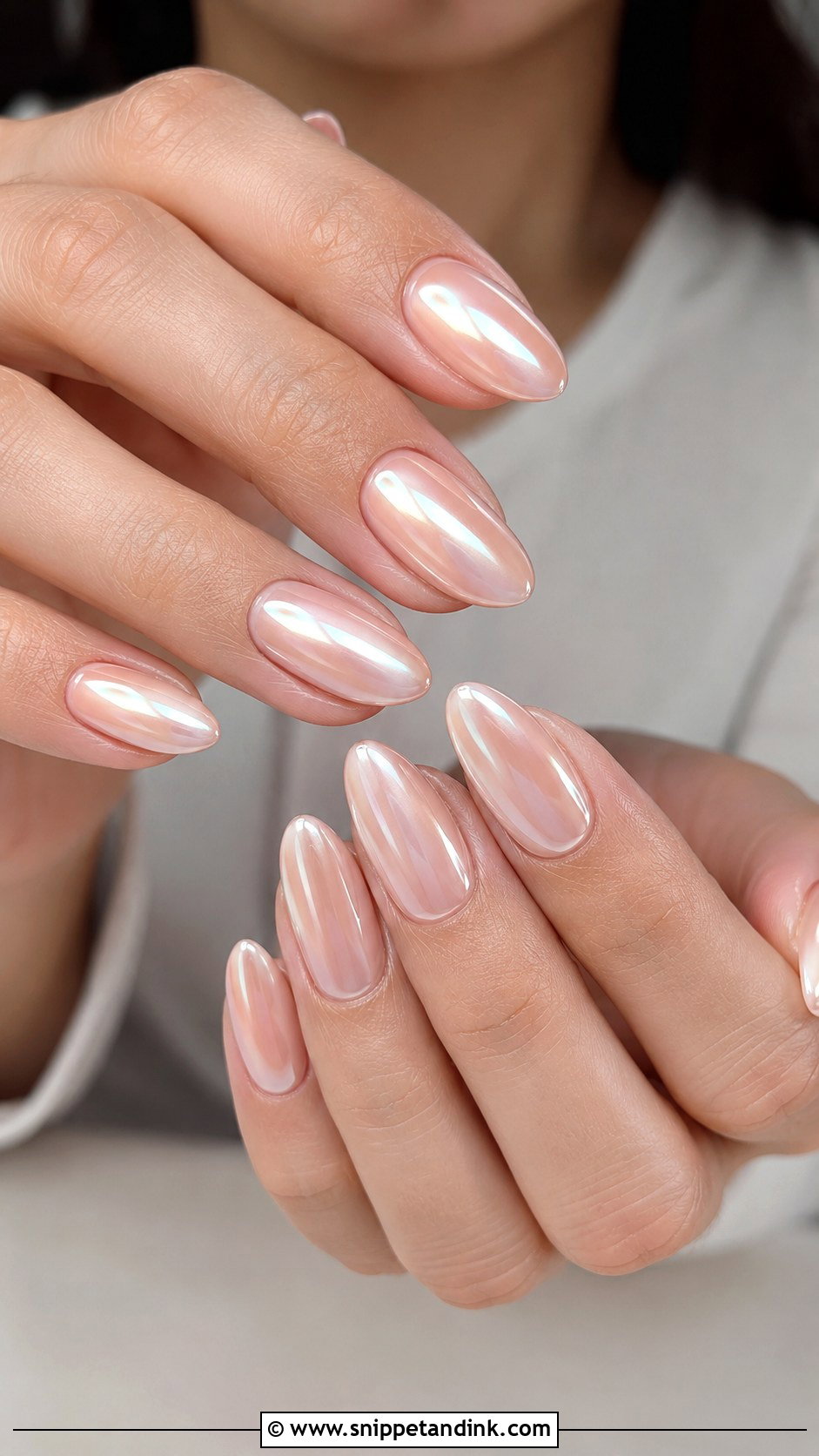
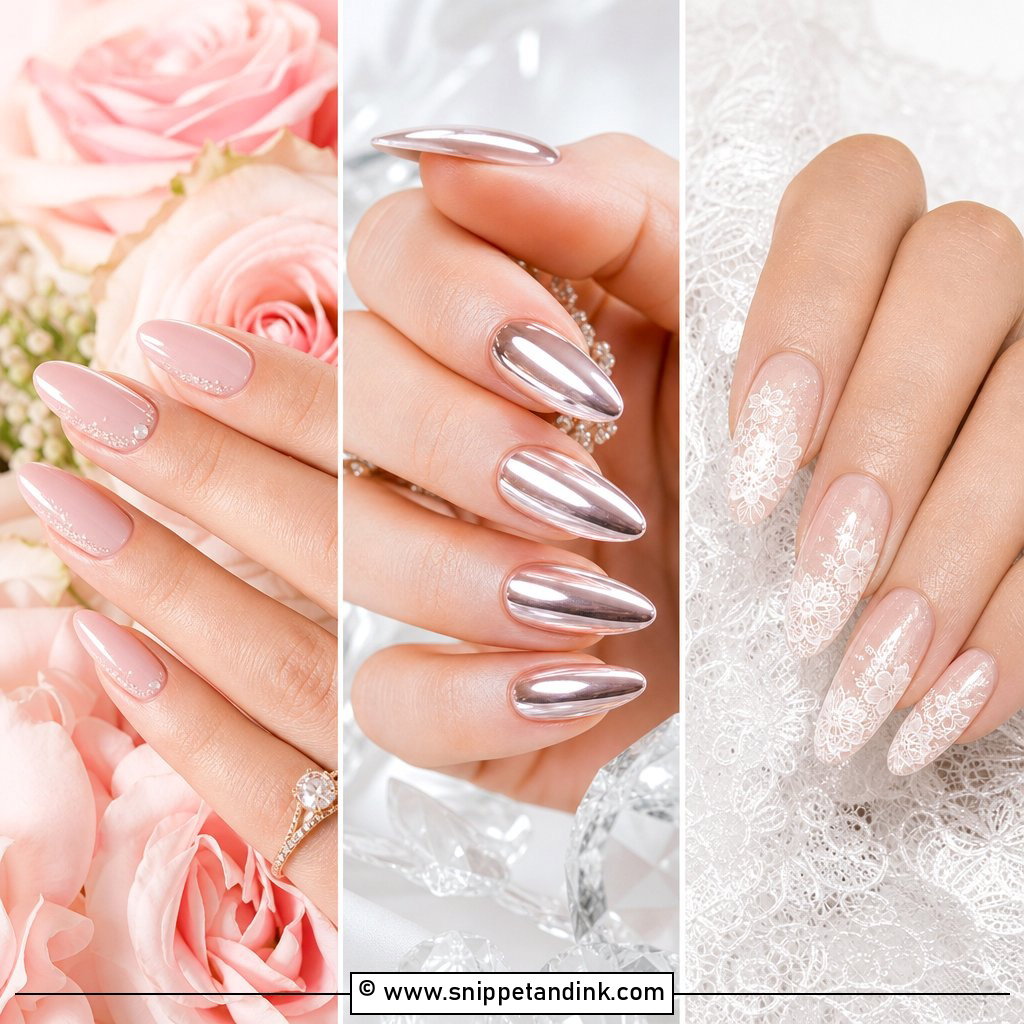
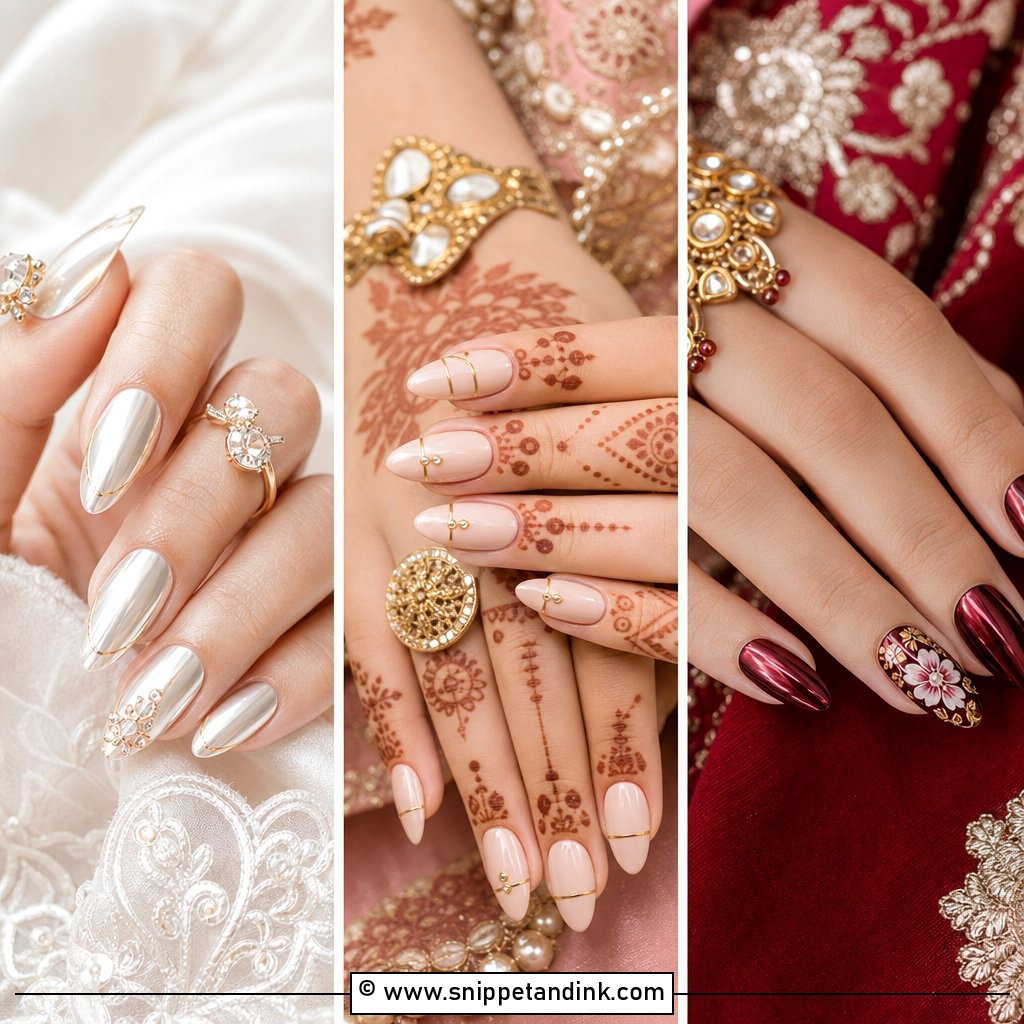
Bridal chrome should look like a glaze, not a mirror. The Chrome wedding nails I do for weddings are a pearlescent powder rubbed onto a cured no-wipe top coat over milky white, blush, champagne or nude gel, which gives a soft sheen that lights up in close-ups without competing with the dress. True silver mirror chrome is a different look entirely and can feel cold next to ivory. Almond, oval and coffin shapes carry it well, and it suits evening ceremonies and sleek satin gowns.
7. Glazed Donut Wedding Nails
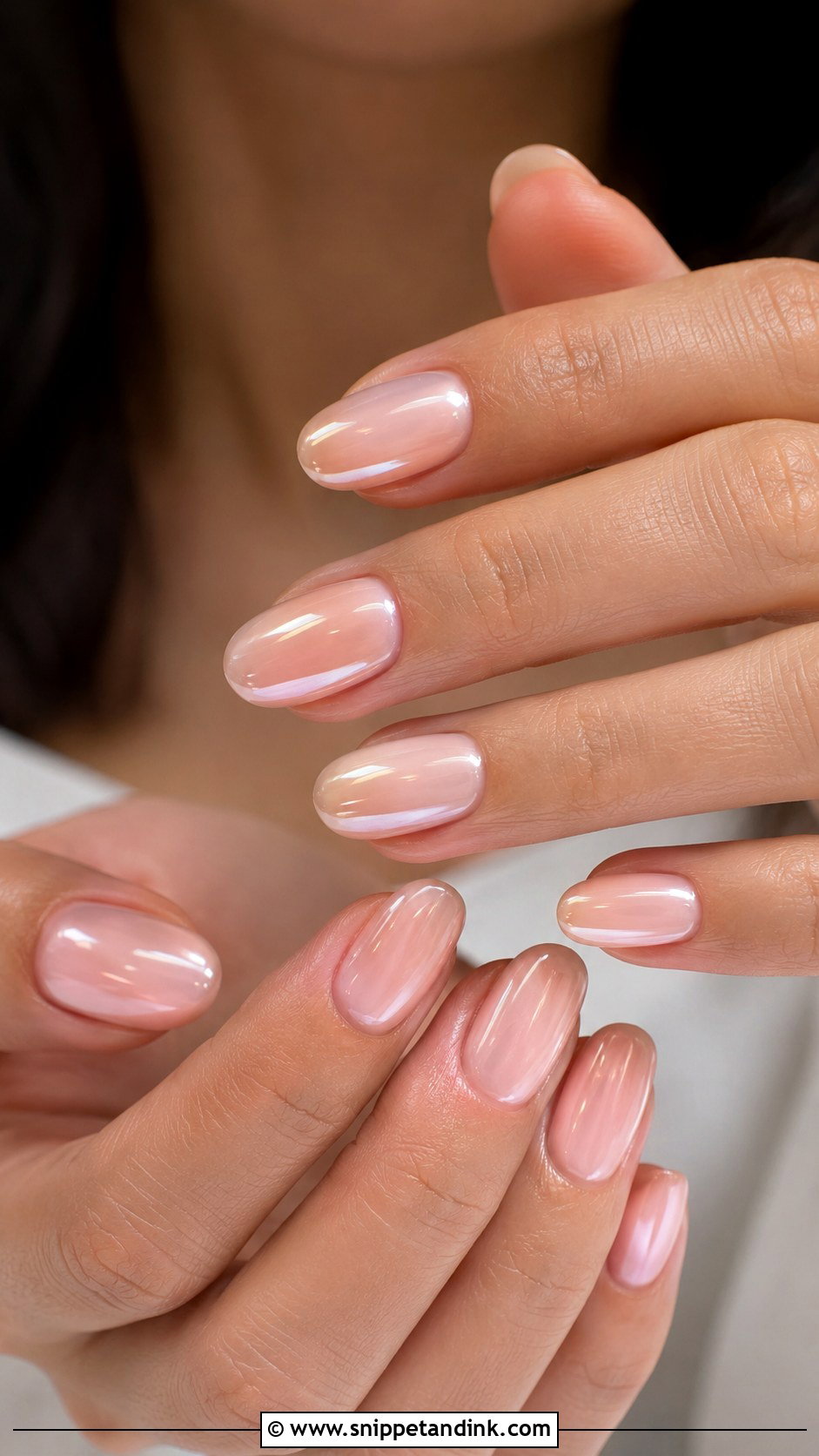
The glazed look is really just chrome used gently. Glazed donut wedding nails start with a sheer pink, milky or nude gel, then a fine white pearl powder is buffed in with a sponge tip until the surface looks wet. From across the room it reads as clean polish; up close it glows. The curve of almond and oval nails shows the sheen best, while a flat square tip can make the shine look patchy. It suits slip dresses, minimal gowns and soft glam makeup.
8. White Ombre Wedding Nails
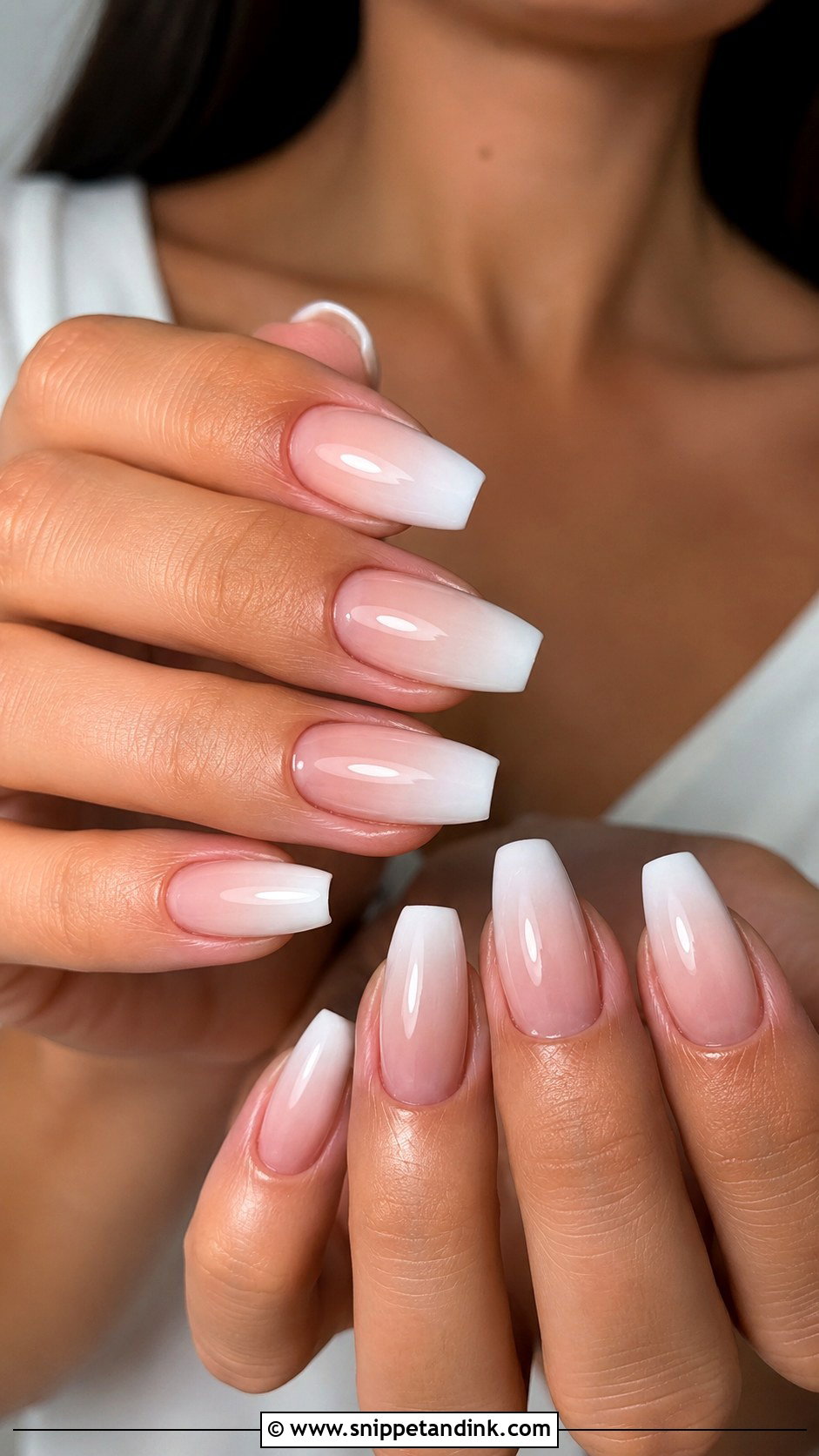
White ombre, which you’ll also see called baby boomer nails, fades a nude or pink base into soft white at the tip. I build the fade in gel with a sponge or a fan brush, and the skill is in the middle third, where any visible band ruins the effect. Ask for the white to stay soft rather than opaque. The vertical fade lengthens fingers, so it’s kind to shorter nail beds on almond, coffin, oval or square shapes, and it sits well with tulle and lace gowns.
9. Lace Wedding Nails
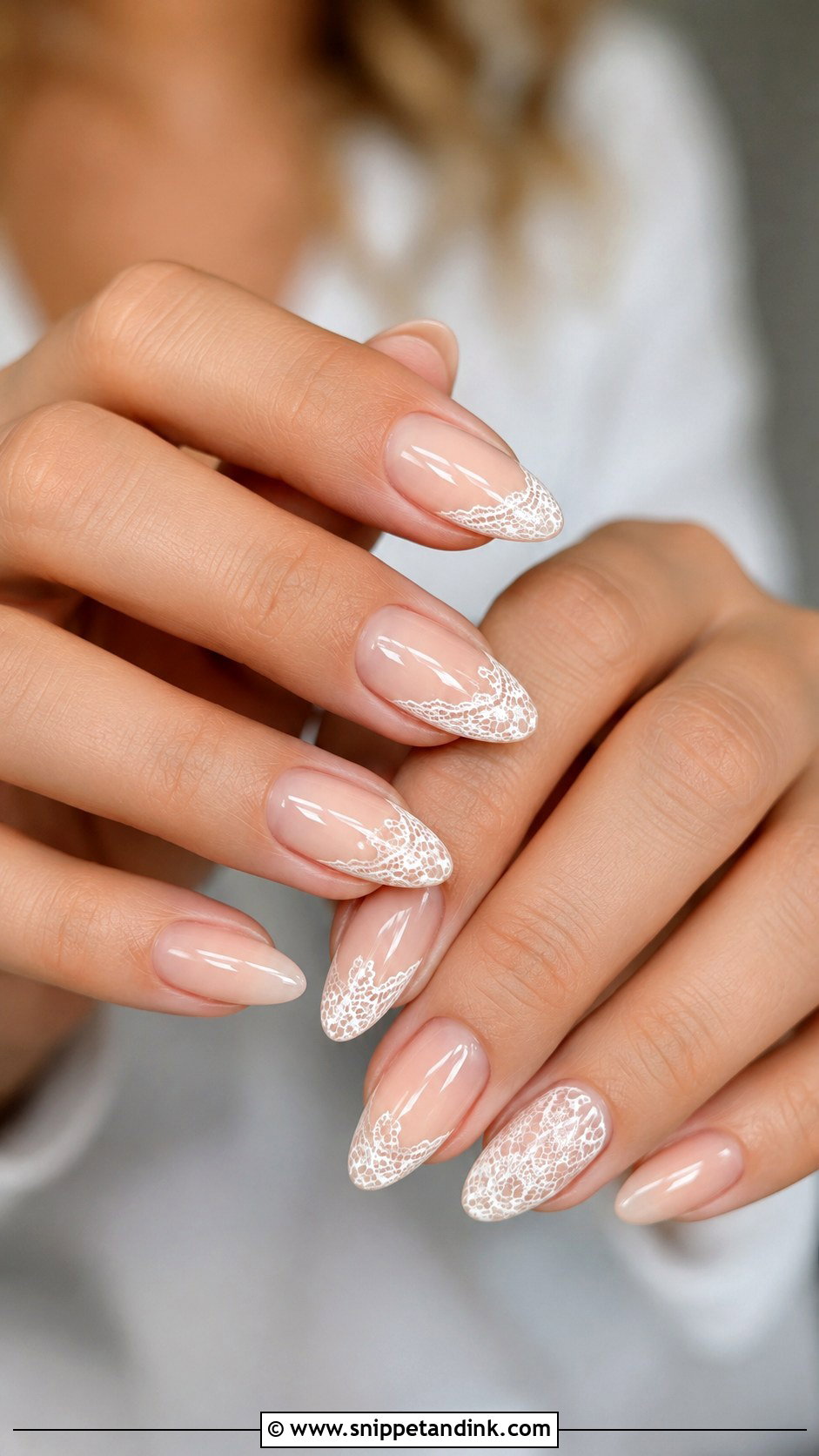
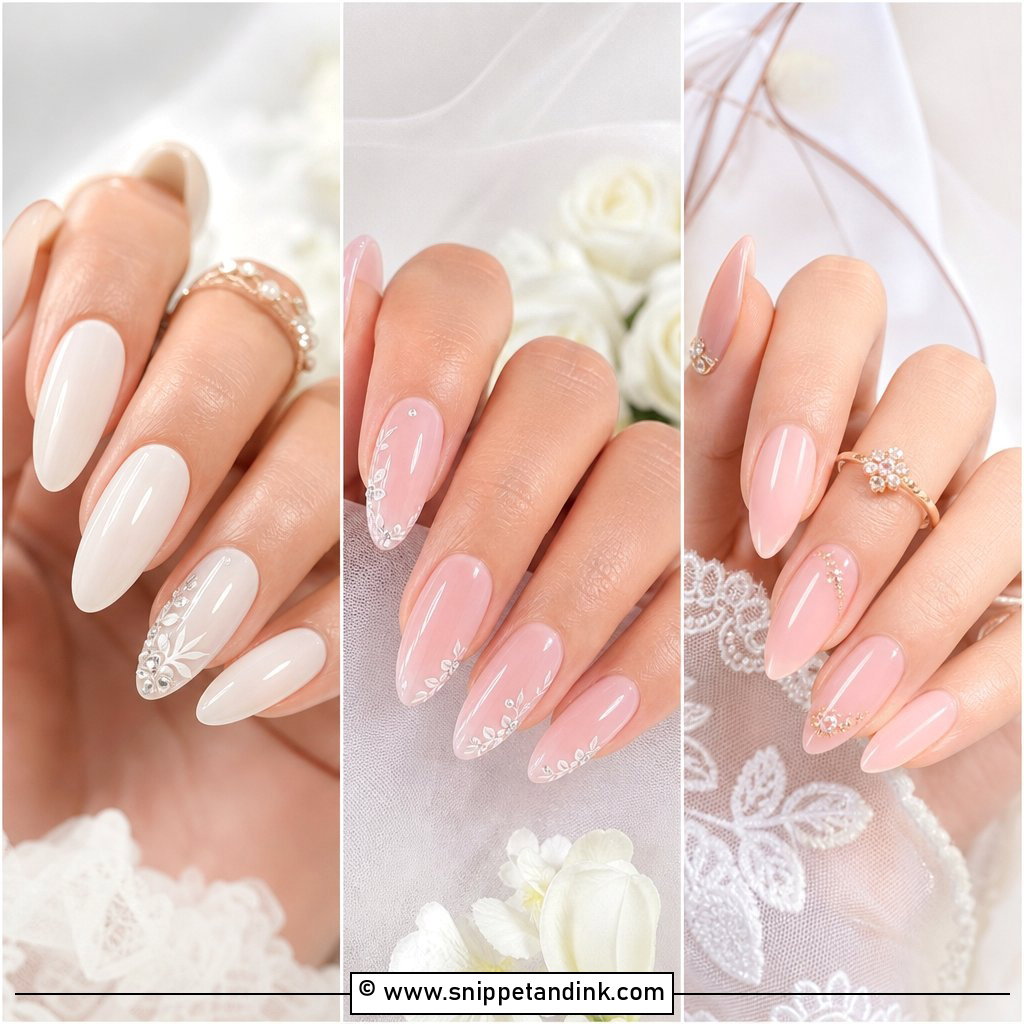
Lace on nails is either stamped from an etched plate or painted freehand with a long, very thin liner brush. Stamping gives crisp, repeatable patterns; hand-painting lets me copy the actual motif from your sleeve or veil, which is the version I’d choose if you can bring a fabric swatch to the trial. Keep it to one or two nails on a sheer nude, blush or milky base and skip the rhinestones, because lace plus crystals gets busy fast. Matte or glossy both work, depending on the fabric.
10. Floral Wedding Nails
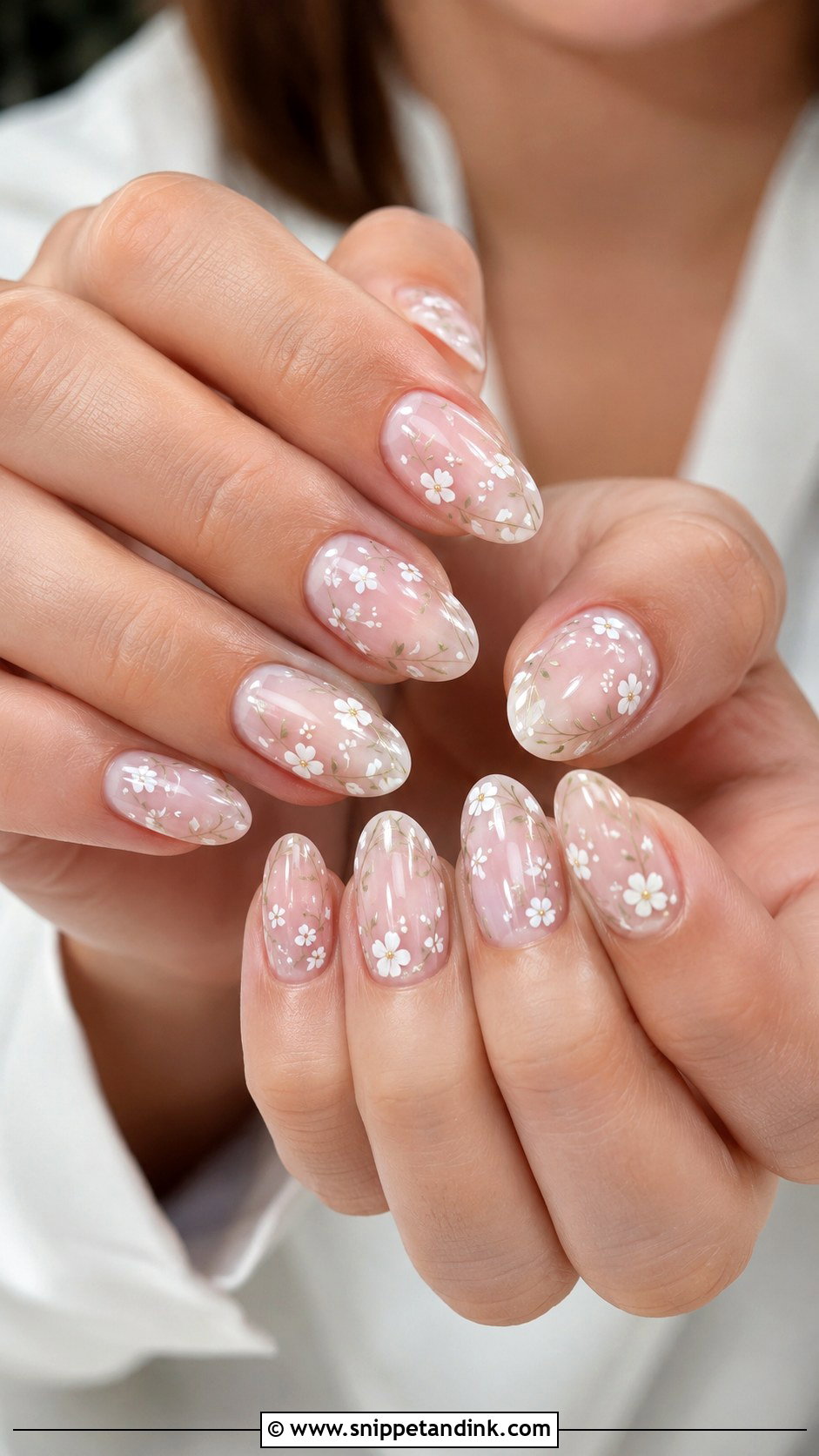
Tiny flowers read better than big ones on a nail. I paint them with a detail brush in white, blush or muted neutrals over a sheer base, or embed real dried petals in gel for a pressed look. On short rounded nails I keep the art to a sprig near the cuticle, since a full bloom crowds a small canvas. Accent nails only, or very fine flowers across the set, both work. It’s a natural match for garden venues, spring and summer bouquets and embroidered dresses.
11. Gold Foil Wedding Nails
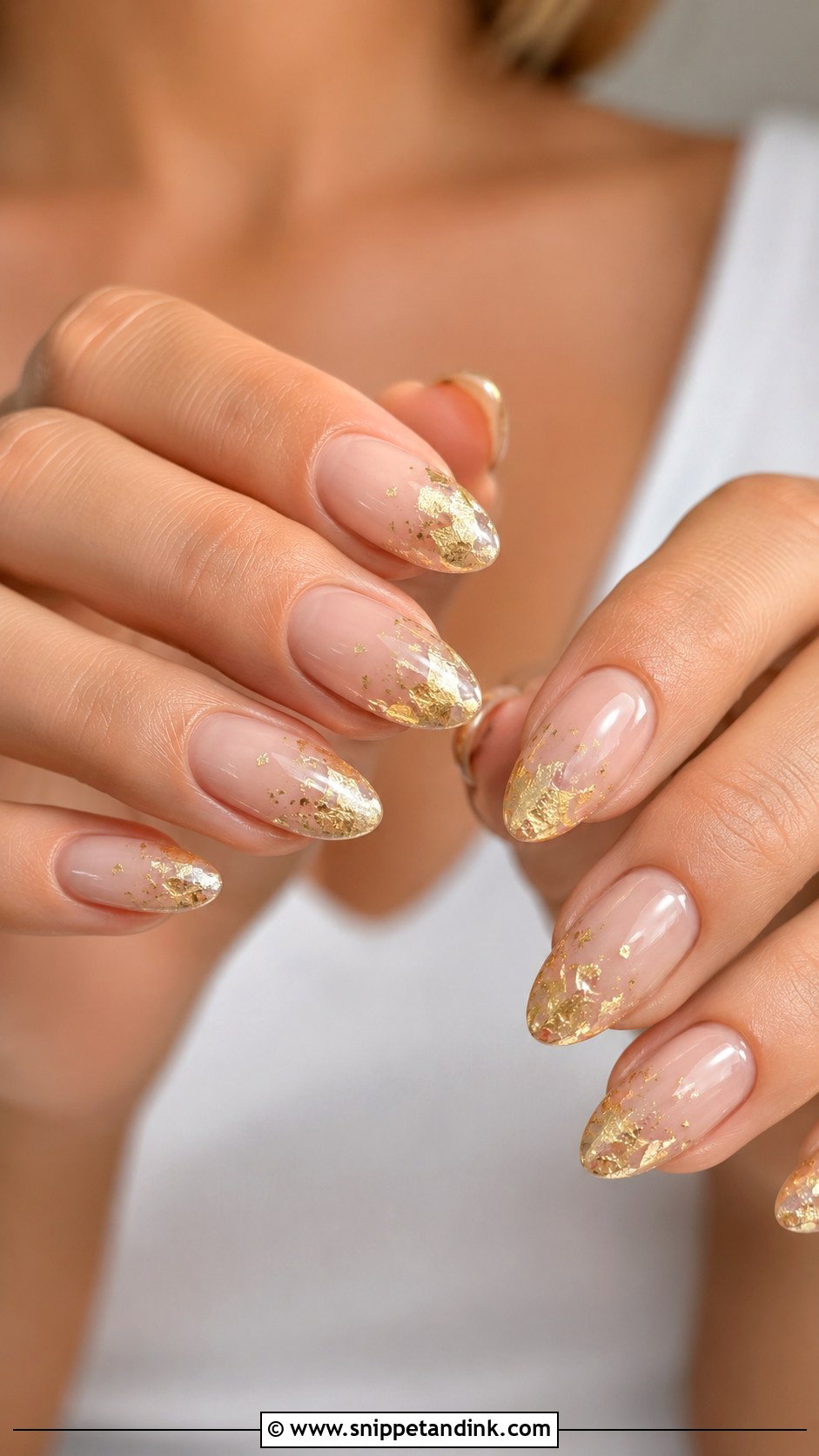
Foil goes on in small torn flakes pressed into tacky gel, and its uneven edges are what make it look like gilding rather than glitter. With Gold foil wedding nails the risk is lifting: any flake that isn’t fully sealed under top coat can catch and peel by evening, so I cap the free edge carefully. Keep the foil light near the tips or cuticle over nude, ivory or milky gel. It flatters warm-toned makeup, gold jewelry and champagne gowns, on short or long almond nails.
12. Silver Glitter Wedding Nails
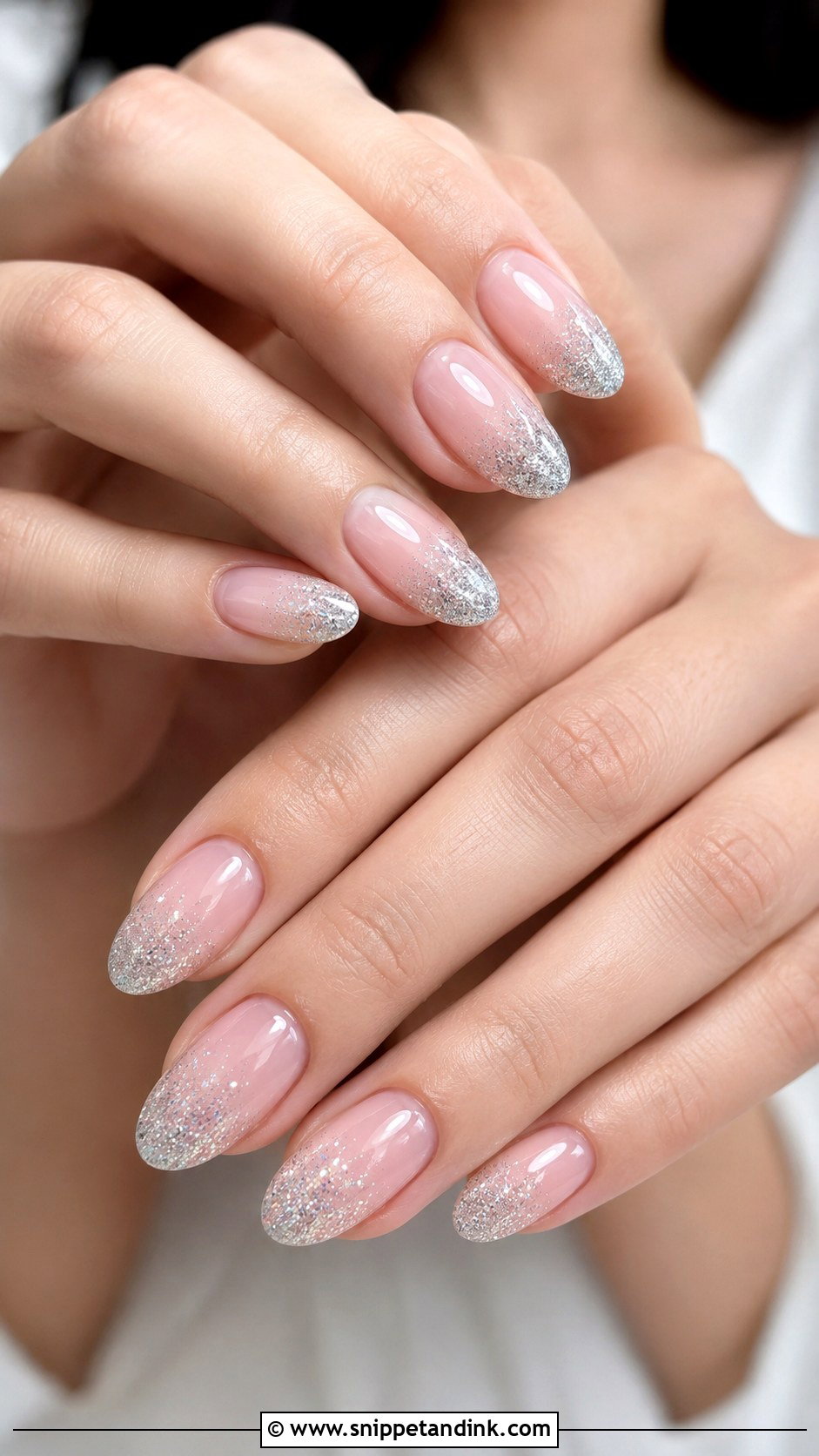
Fine silver glitter faded up from the tip looks polished; chunky glitter across the whole nail looks like a party. That’s the line I draw for brides. Micro-glitter over a sheer pink or nude base catches the light in ring photos and under reception lighting, which makes it a strong pick for evening and winter weddings or gowns with crystal beading. One honest warning: glitter gel takes longer to soak off afterwards. Silver sits best with cool-toned jewelry and white gowns.
13. Champagne Wedding Nails
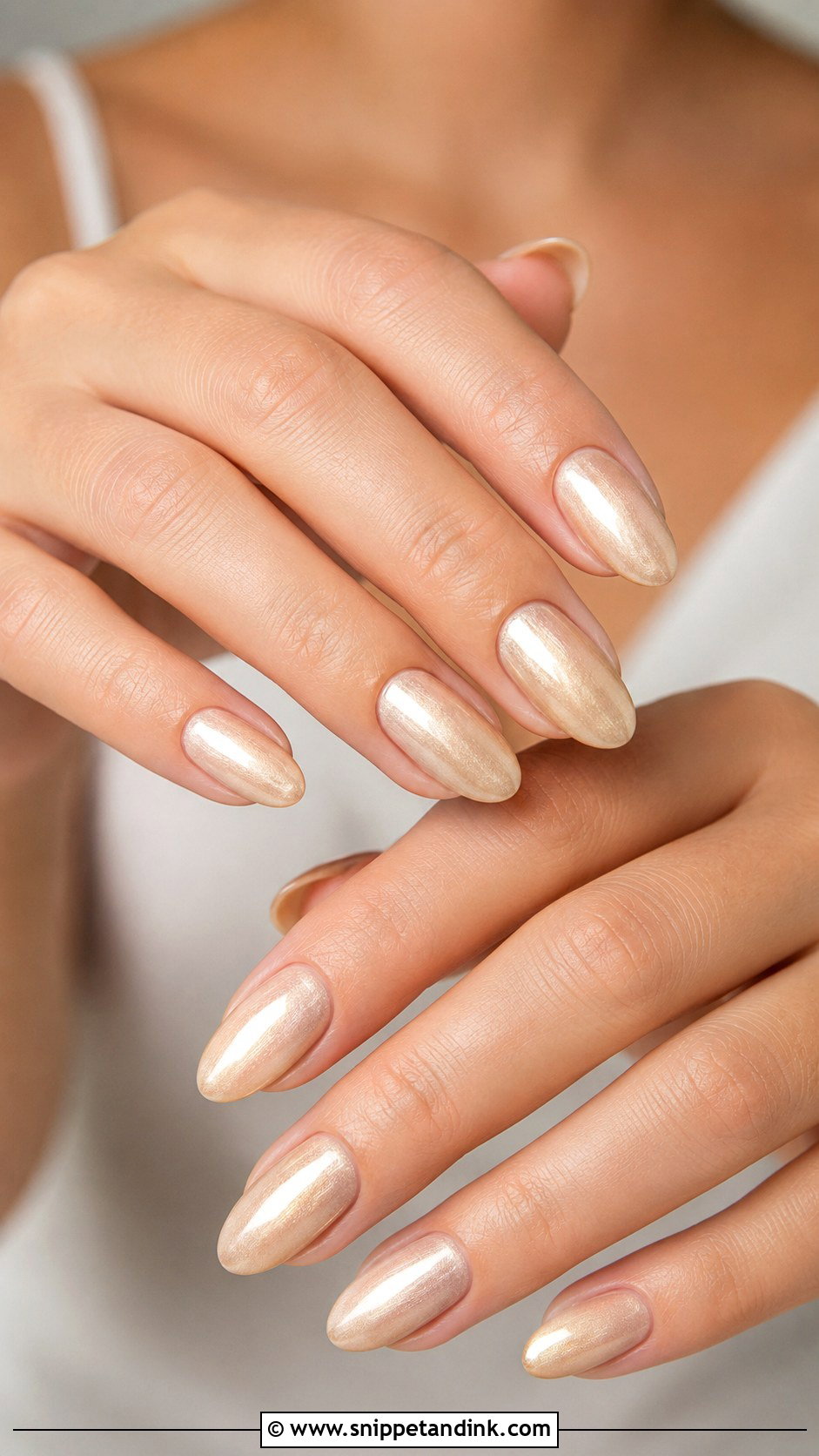
Champagne sits between nude and gold, and it’s the shade I reach for when a bride finds nude too plain and pink too sweet. A soft beige or pale gold with a satin pearl finish glows without sparkling. It’s especially flattering on medium, tan, olive and deep skin tones, though a lighter champagne works on fair hands too. Avoid heavy glitter versions; the elegance comes from the fine shimmer. Ivory dresses, gold jewelry and warm bouquets all sit well beside it, on almond, oval or squoval nails.
14. Blush Wedding Nails
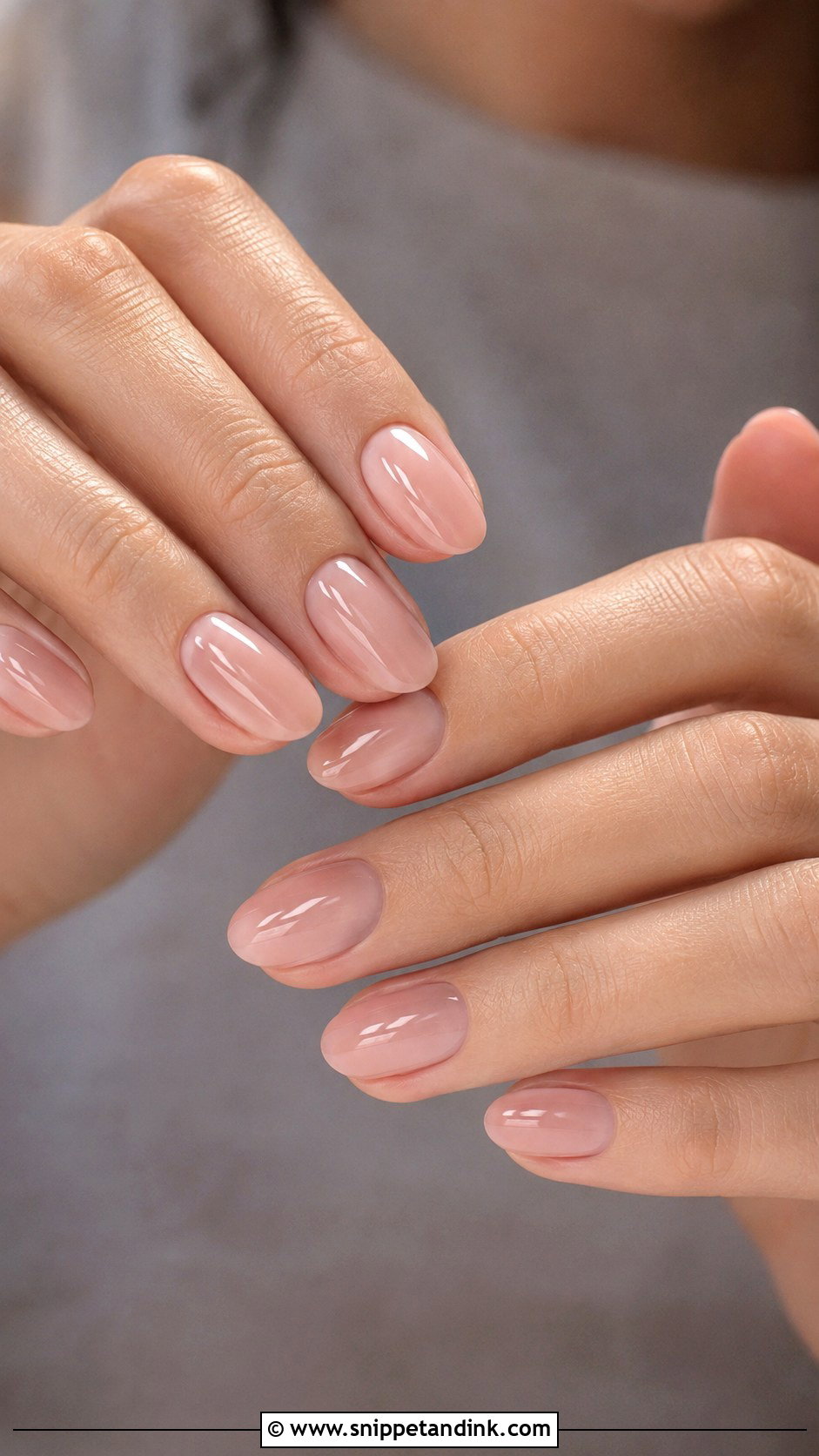
Blush is a touch warmer than baby pink and mimics a natural flush, which is why it often flatters more hands. I like it alone with a glossy top coat, under a micro French tip or with a whisper of pearl sheen. Brides who want some color but still love a neutral set tend to settle here. It suits every length, and short oval or medium almond nails look healthiest in it.
15. French Tip Wedding Nails With Pearls
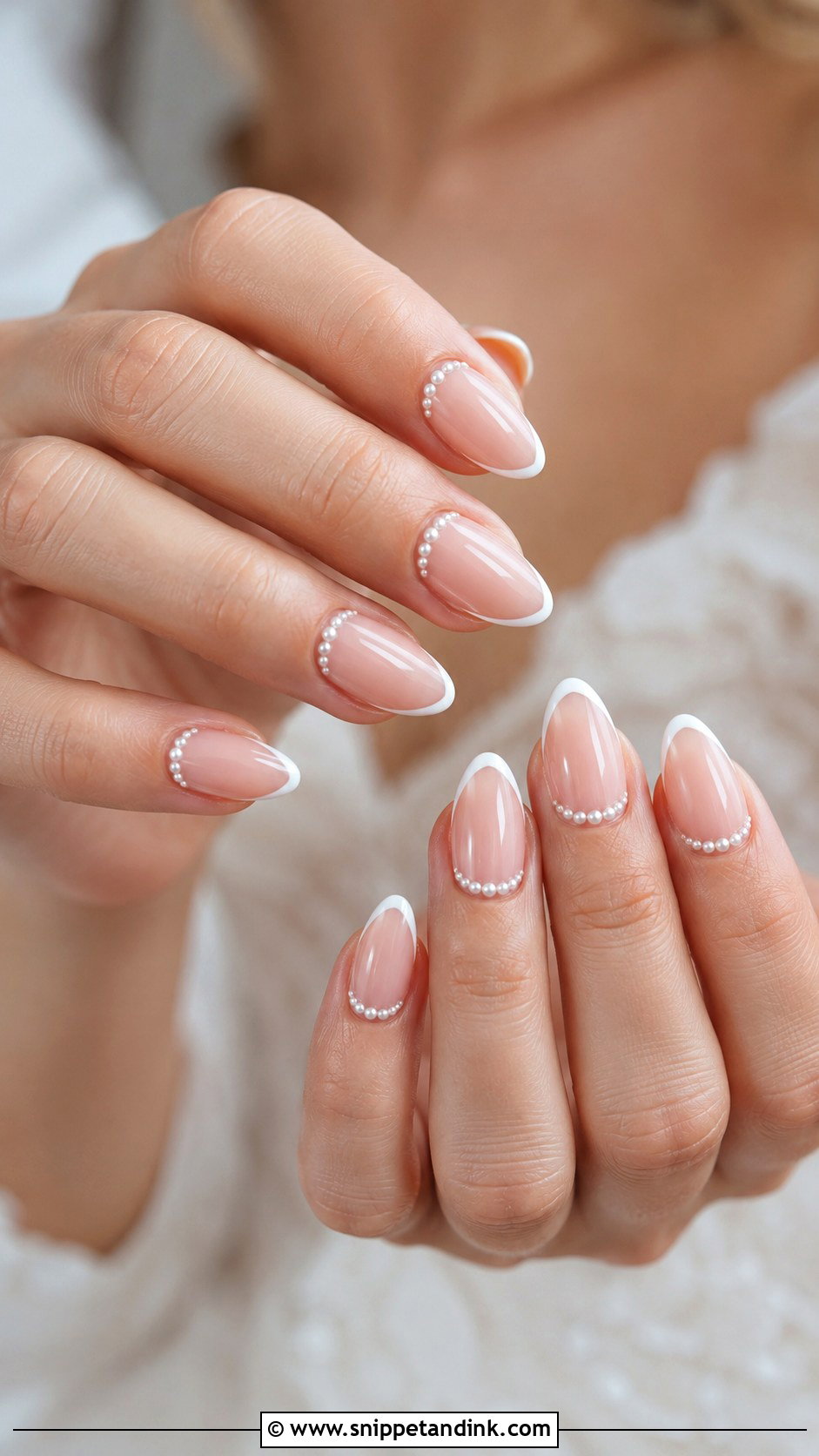
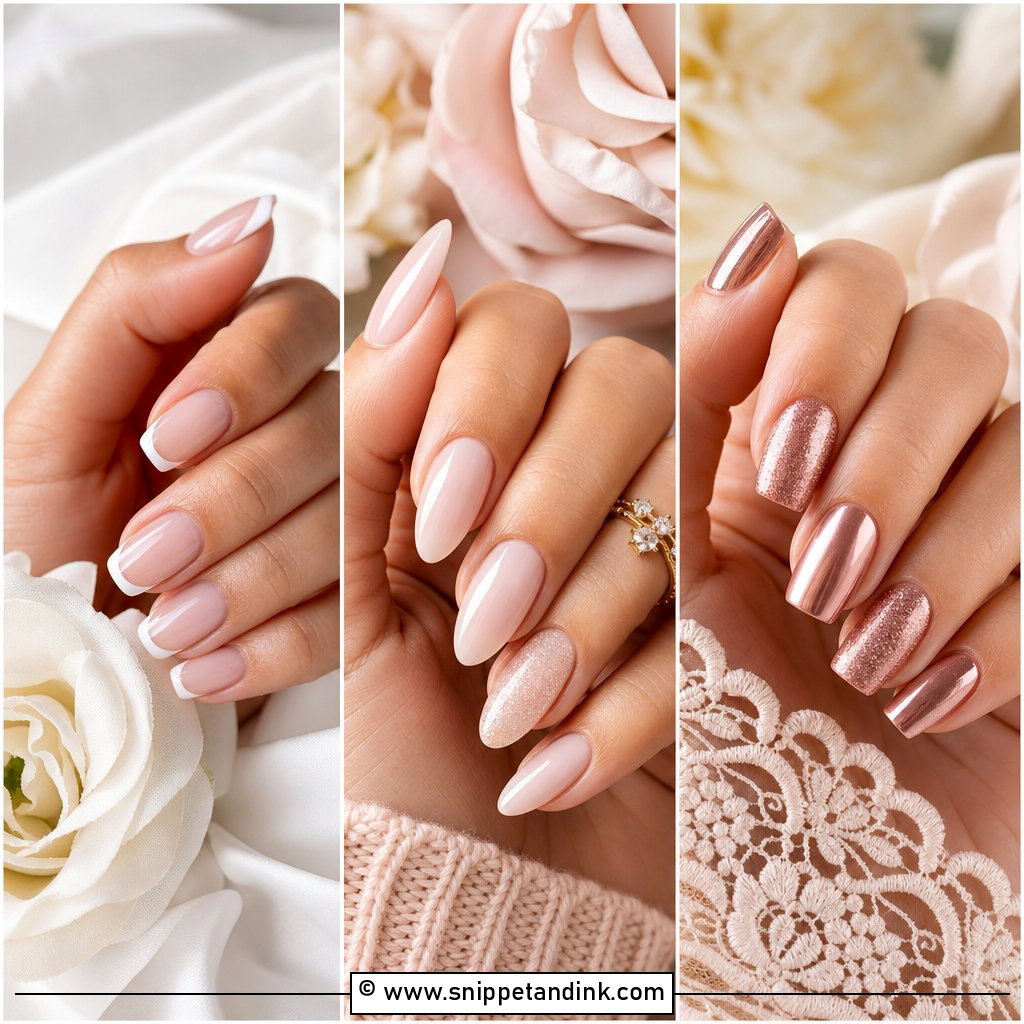
Start with a sheer nude or pink base and slim white tips, then set a few tiny pearls along the cuticle line or on one accent nail. Spacing is the whole job: pearls bunched together look heavy, while evenly spaced ones look like a fine bracelet. I sink each pearl into builder gel so it can’t pop off when you grip the bouquet. This pairing echoes pearl earrings, pearl-edged veils and beaded dresses, and it photographs neatly because the French line keeps everything tidy. Medium almond or oval is the right canvas.
16. Almond Wedding Nails
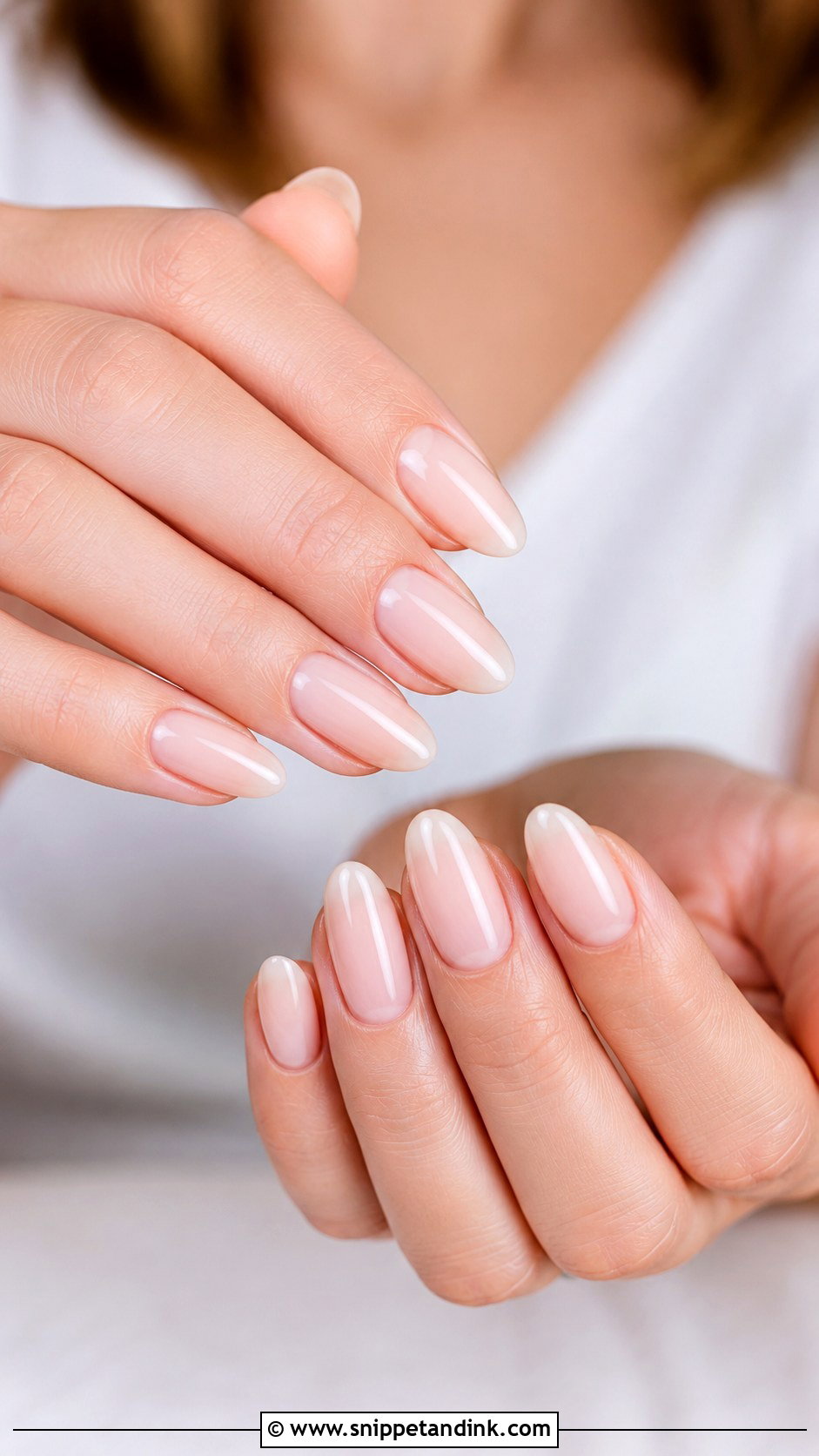
Almond is the shape I suggest when a bride is undecided, because the gentle taper lengthens fingers without looking sharp. Almost every design on this list sits well on it, from milky gel to chrome to florals. It does need a little free edge to taper properly; on very short or flat nail beds a short almond can come out looking pointed and thin, and an oval may be kinder. A sheer pink base with a glossy finish is the simplest version I’d ever suggest.
17. Short Wedding Nails
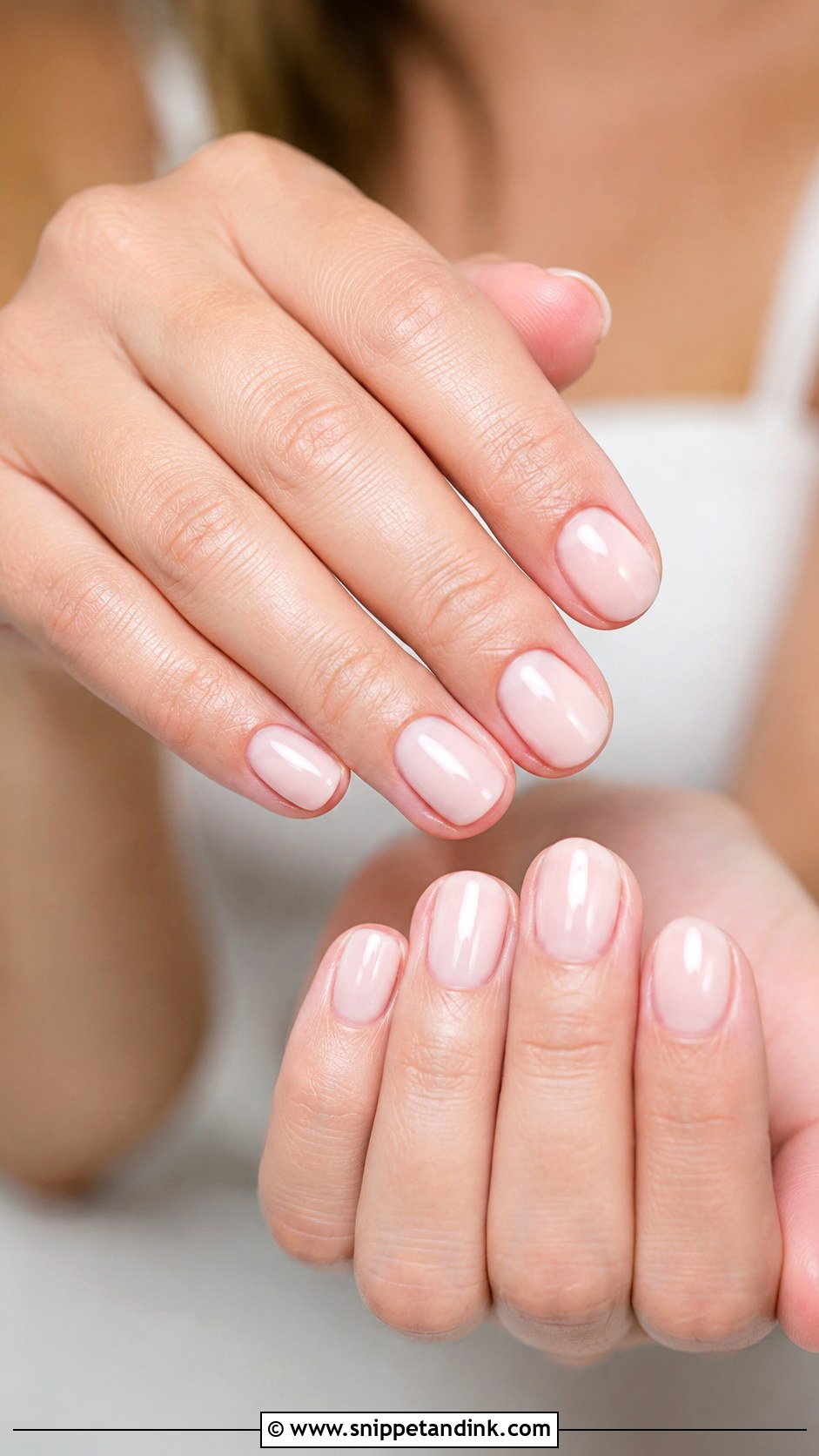
Short nails look elegant when the prep is immaculate. That means pushed-back cuticles, even lengths across all ten fingers and a shape that follows your fingertip. Soft pink, milky white, nude and blush all look intentional at this length. Keep details small: a micro French tip, one pearl or a fine shimmer, never large artwork. Short sets are also practical if you’ve never worn extensions and don’t want to learn to button a dress with them on the morning of the wedding. They let the ring take the spotlight in close-ups.
18. Oval Wedding Nails
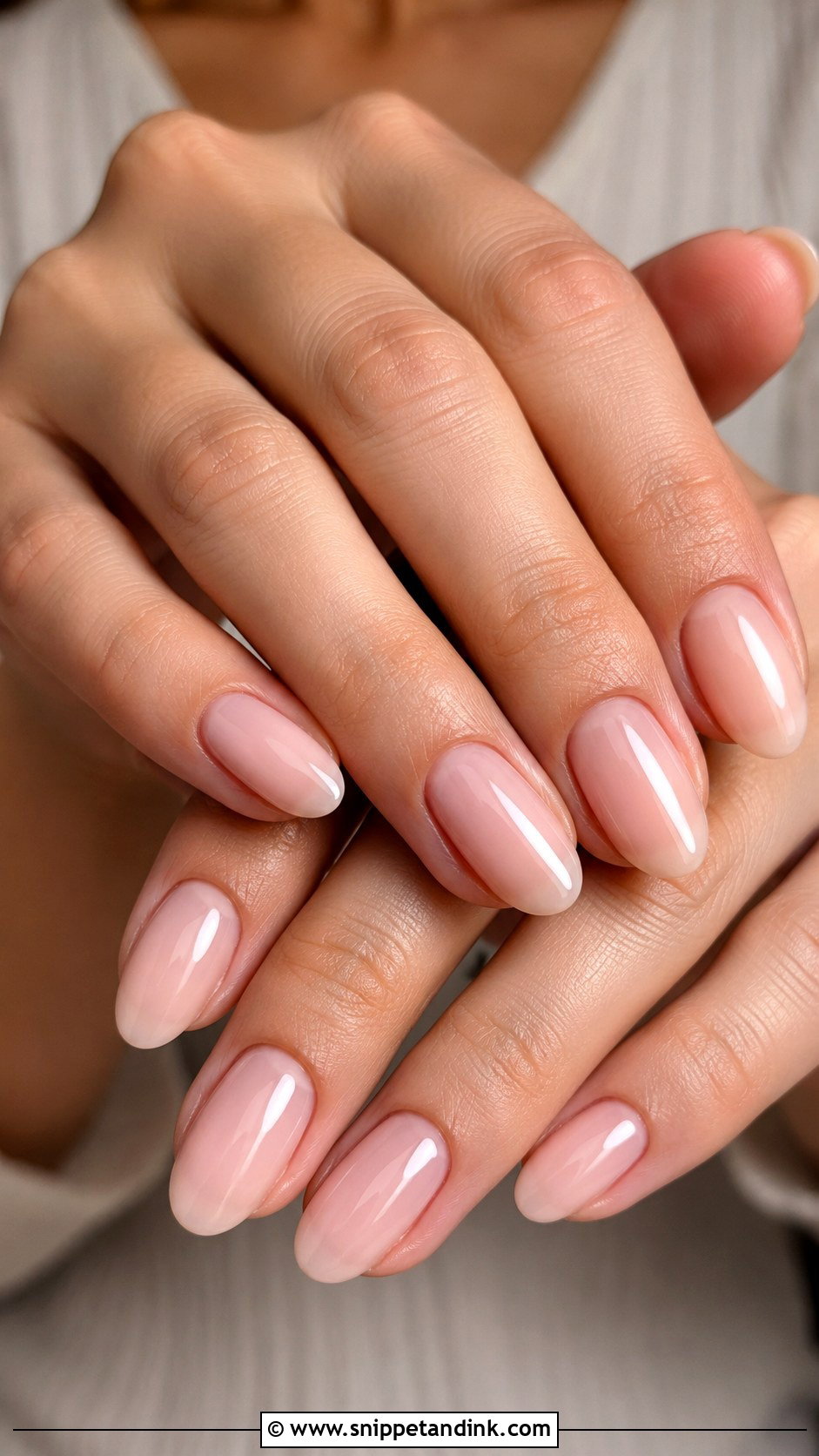
An oval follows the curve of the fingertip, so it’s the most natural-looking shape I file and one of the most comfortable to live in during a long day of hugging, hand-holding and eating. Sheer pink, milky white, white ombre and fine florals all suit it. Short to medium length keeps it classic; a little longer gives a more graceful line. If you’re wearing a romantic gown and soft makeup, it blends right in.
19. Square Wedding Nails
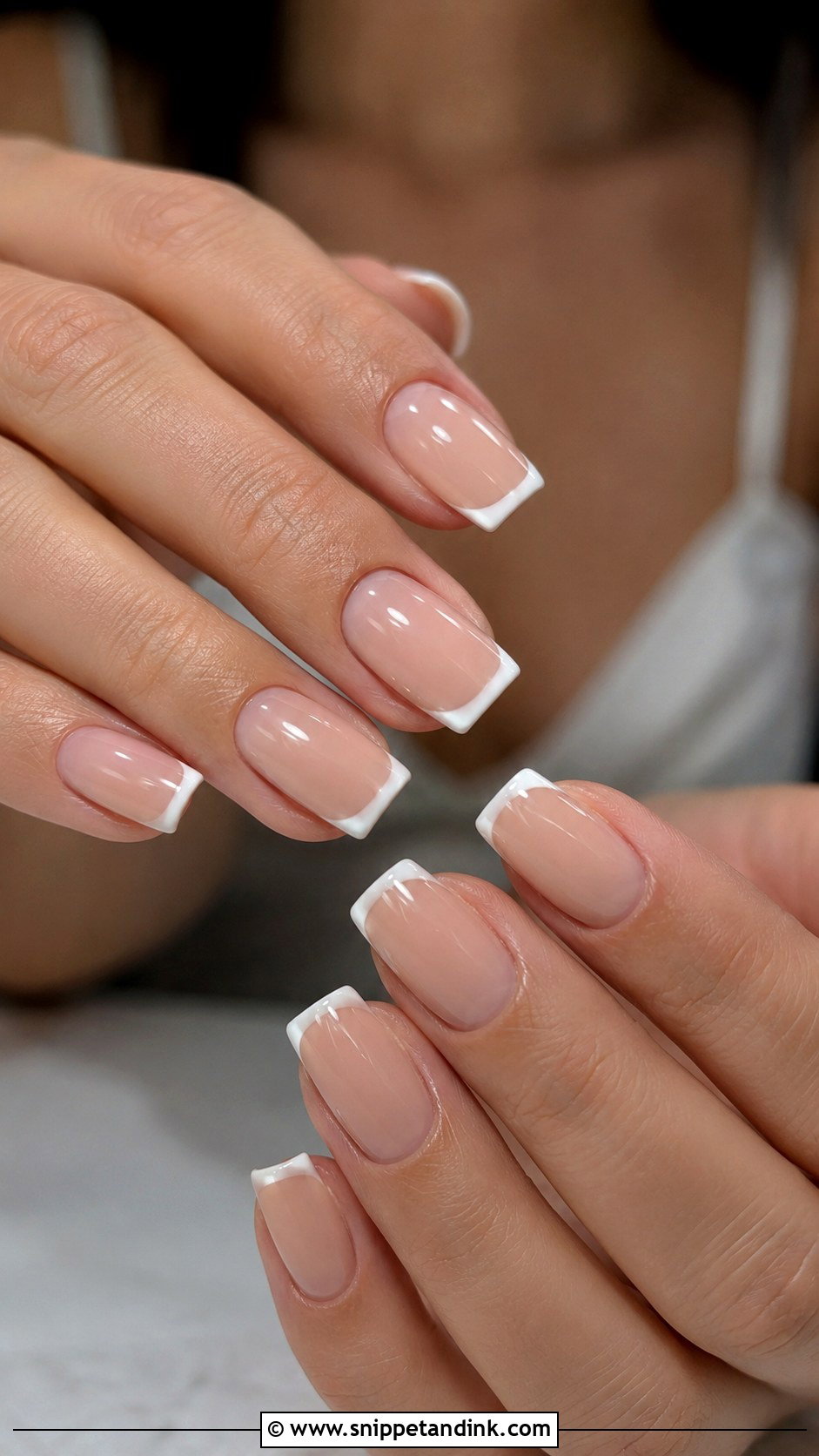
A sharp square edge chips at the corners and can look blunt in photos, so for brides I almost always soften it into a squoval. That keeps the tailored line people like while removing the weak points. Square shapes suit nude bases, classic French tips, milky polish or a quiet chrome. They’re great on short nails, where they look tidy and strong, and they go naturally with minimalist dresses and sleek buns. Keep the color soft so the shape reads as neat rather than bold.
20. Coffin Wedding Nails
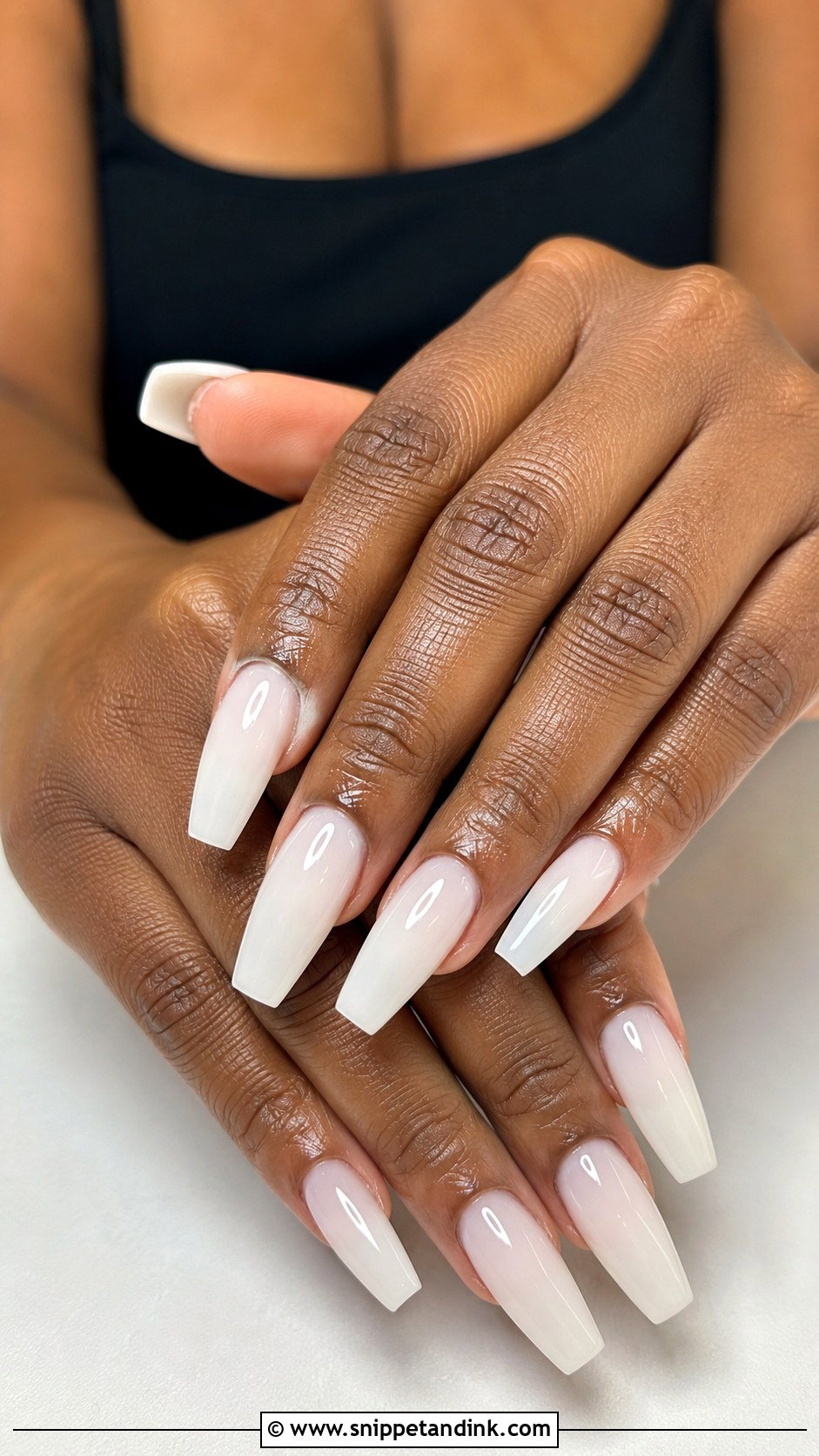
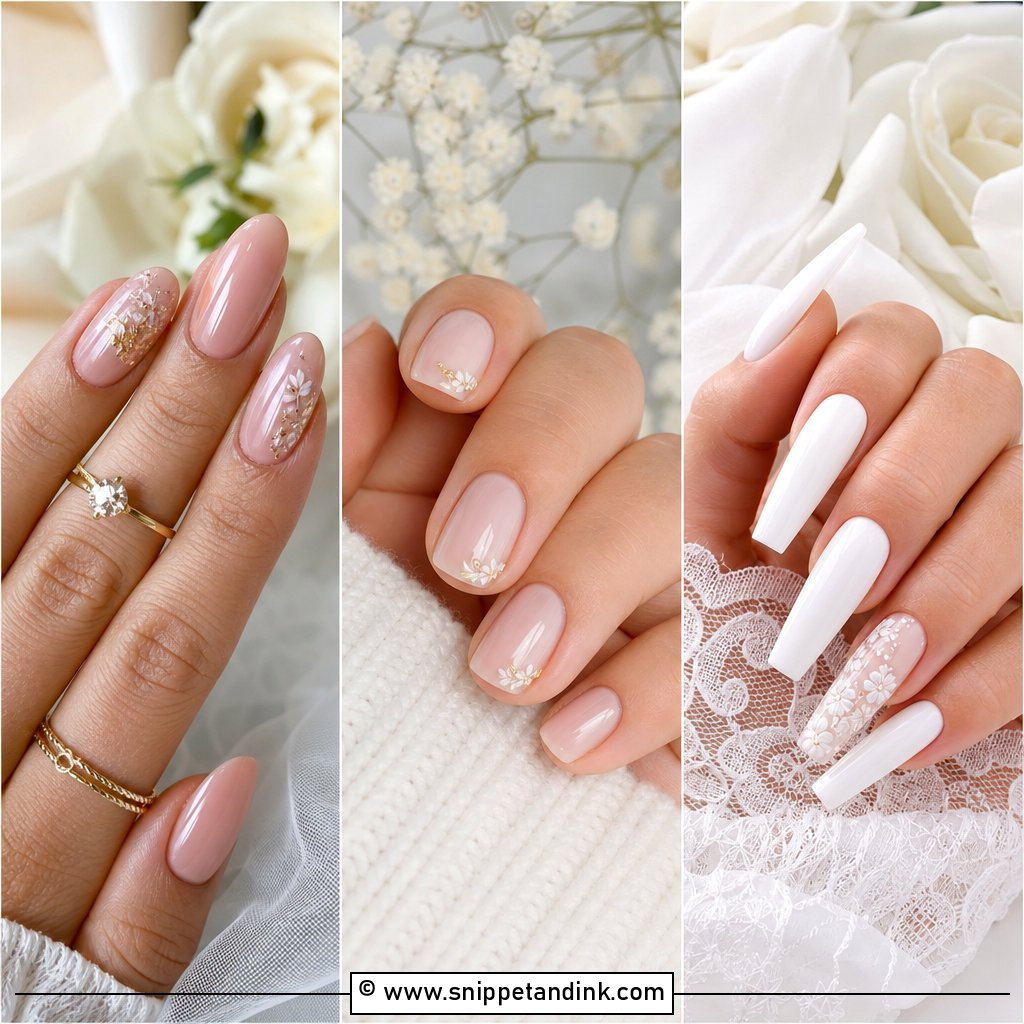
Coffin nails need length to taper, which means extensions for most people, and long tips catch on lace, zips and veil tulle. That’s my honest caution. A medium coffin gives the fashionable flat tip without the snagging, and it looks more graceful in photos than an extra-long set. Milky white, nude, blush, white ombre or pearl chrome keep it bridal. It suits fitted silhouettes, modern gowns and statement jewelry.
21. Simple Wedding Nails
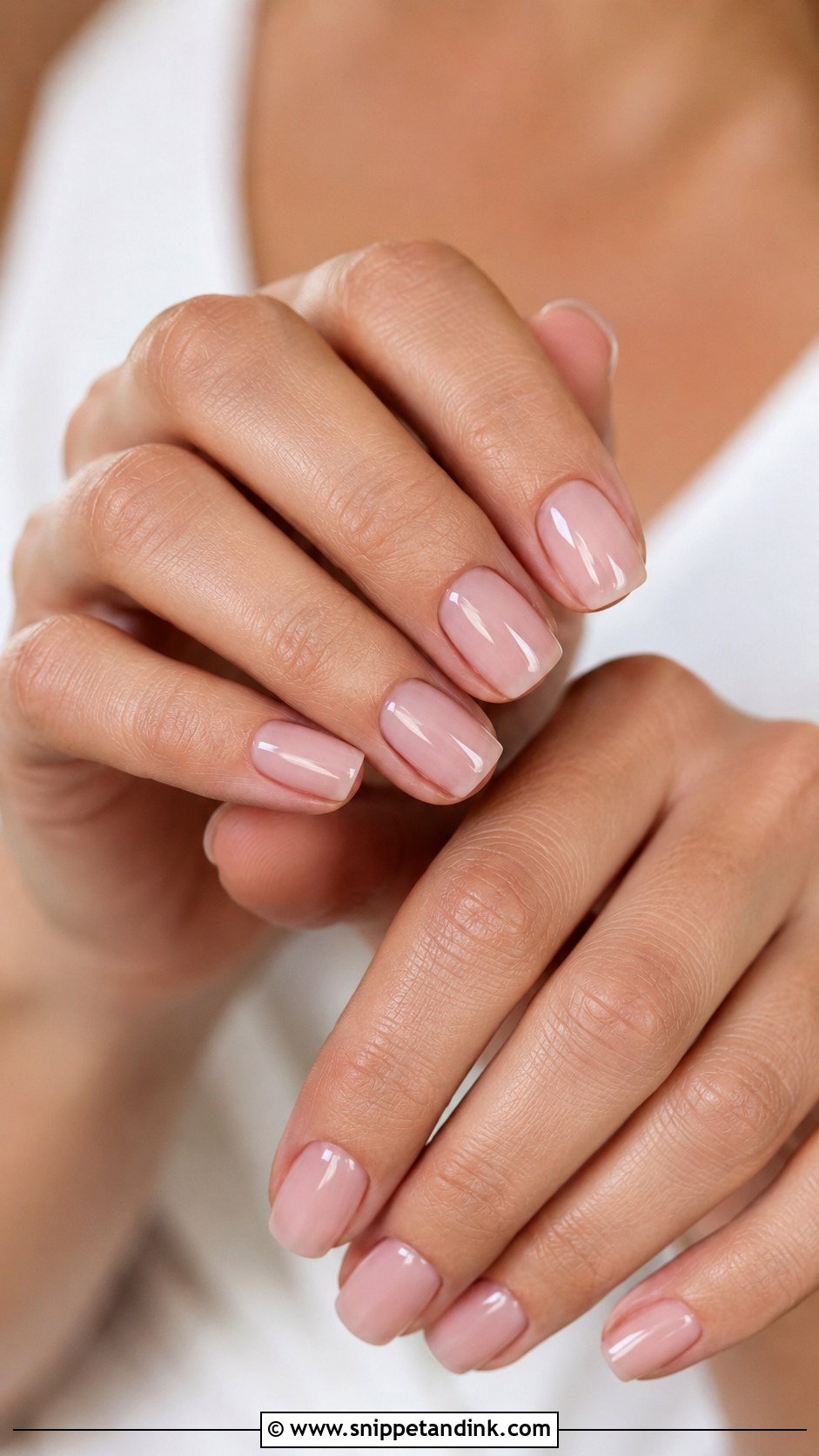
A plain manicure only looks expensive when the prep underneath is perfect, because there’s no art to distract from a ragged cuticle or an uneven edge. I spend most of a simple set on shaping and cuticle work, then lay a sheer nude, pale pink, ivory or soft white and a glossy top coat. It’s the least likely design to date your photos. Choose the shade that brightens your hands rather than the trendiest bottle, and it’ll work on any length or shape.
22. Minimalist Wedding Nails
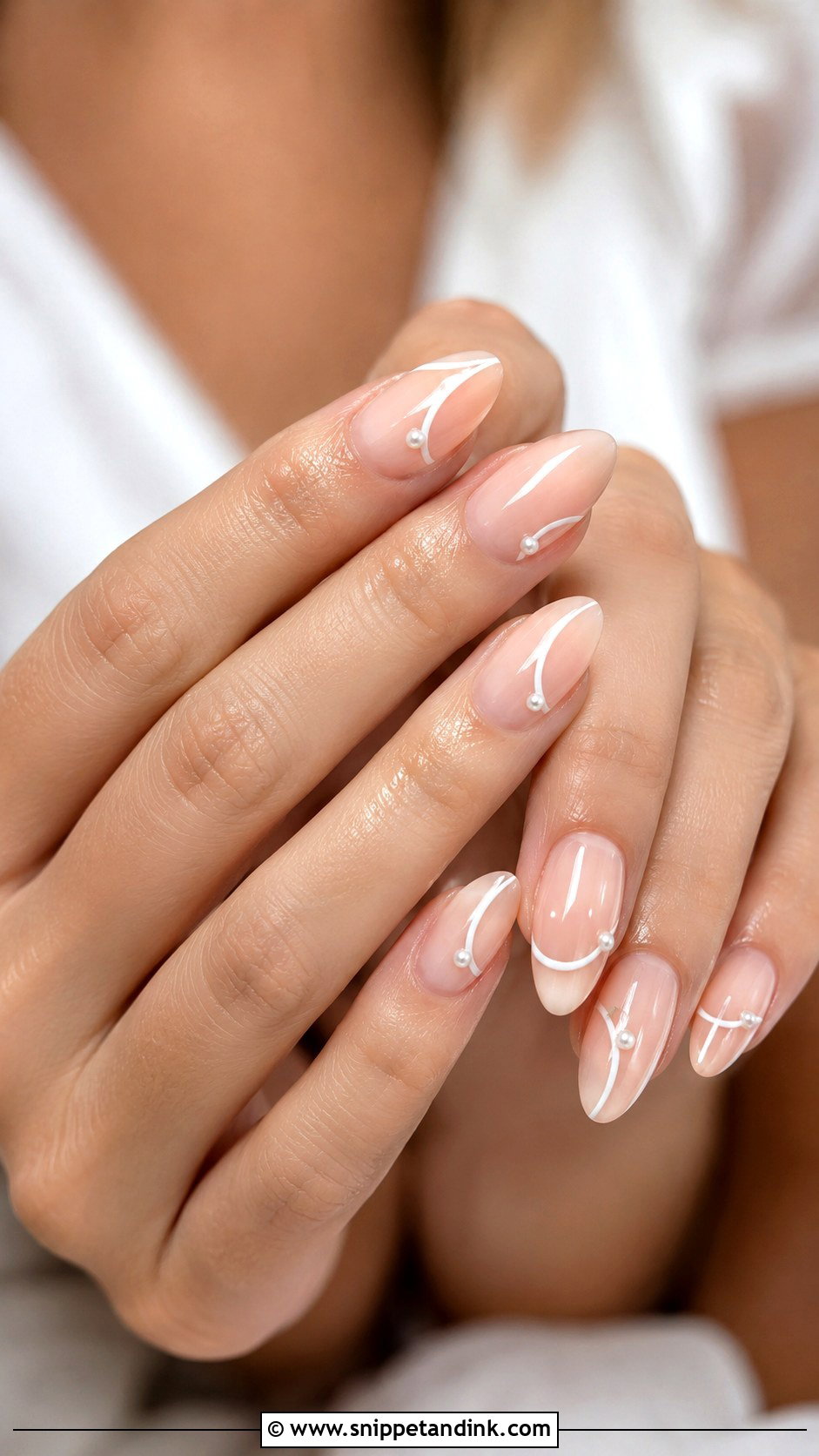
Minimalist sets live on one tiny detail per nail or per hand: a single fine white line, a pearl dot, a slim French tip or one fleck of sparkle near the cuticle. The test I use is distance. From across a room it should look like clean polish; at arm’s length the detail appears. Because the art is small, short nails carry it easily. Keep the palette neutral and it suits simple, architectural gowns and low-key makeup.
23. Matte Wedding Nails
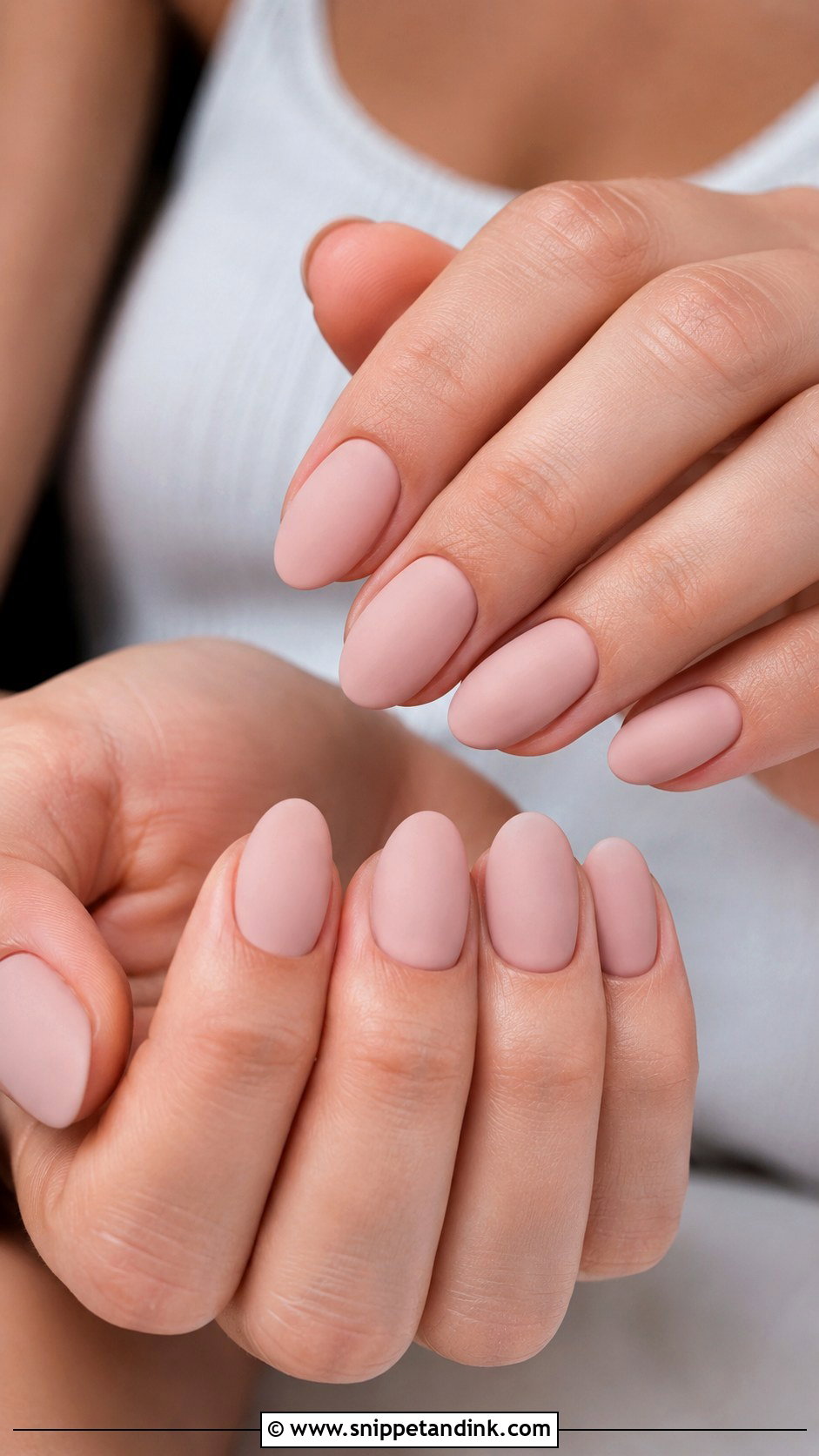
Matte top coat shows every bump in the surface, so the gel underneath has to be built perfectly smooth. It also picks up stains from makeup, self-tanner and hand cream more readily than gloss, which is worth thinking about if you’re getting your makeup done after your nails. Over nude, blush or milky white it gives a velvety, quiet finish that suits crepe and satin gowns. Wearing one glossy accent nail adds dimension. Short oval, almond and squoval all work; keep the color light.
24. Shimmer Wedding Nails
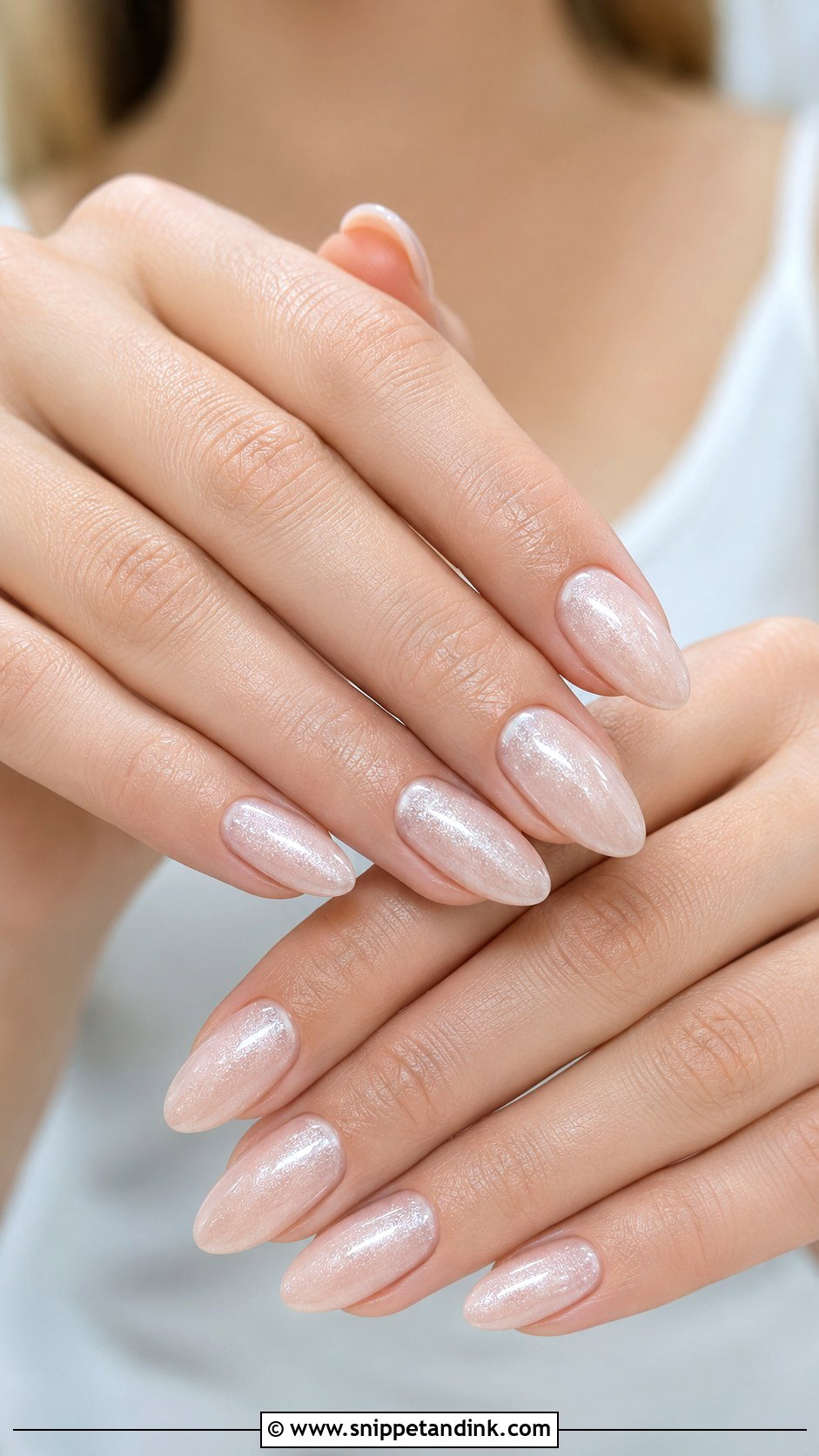
Shimmer is finer than glitter, more like a satin sheen than visible specks, and it looks most expensive in daylight. Pearl, champagne, blush or soft ivory shimmer suits a bride who wants a little more than plain polish. I either wear it across the set or float a thin layer over a sheer base so it glows without looking metallic. It goes well with beaded gowns and soft waves, and almond or oval nails show it best because the light rolls across the curve.
25. Rhinestone Wedding Nails
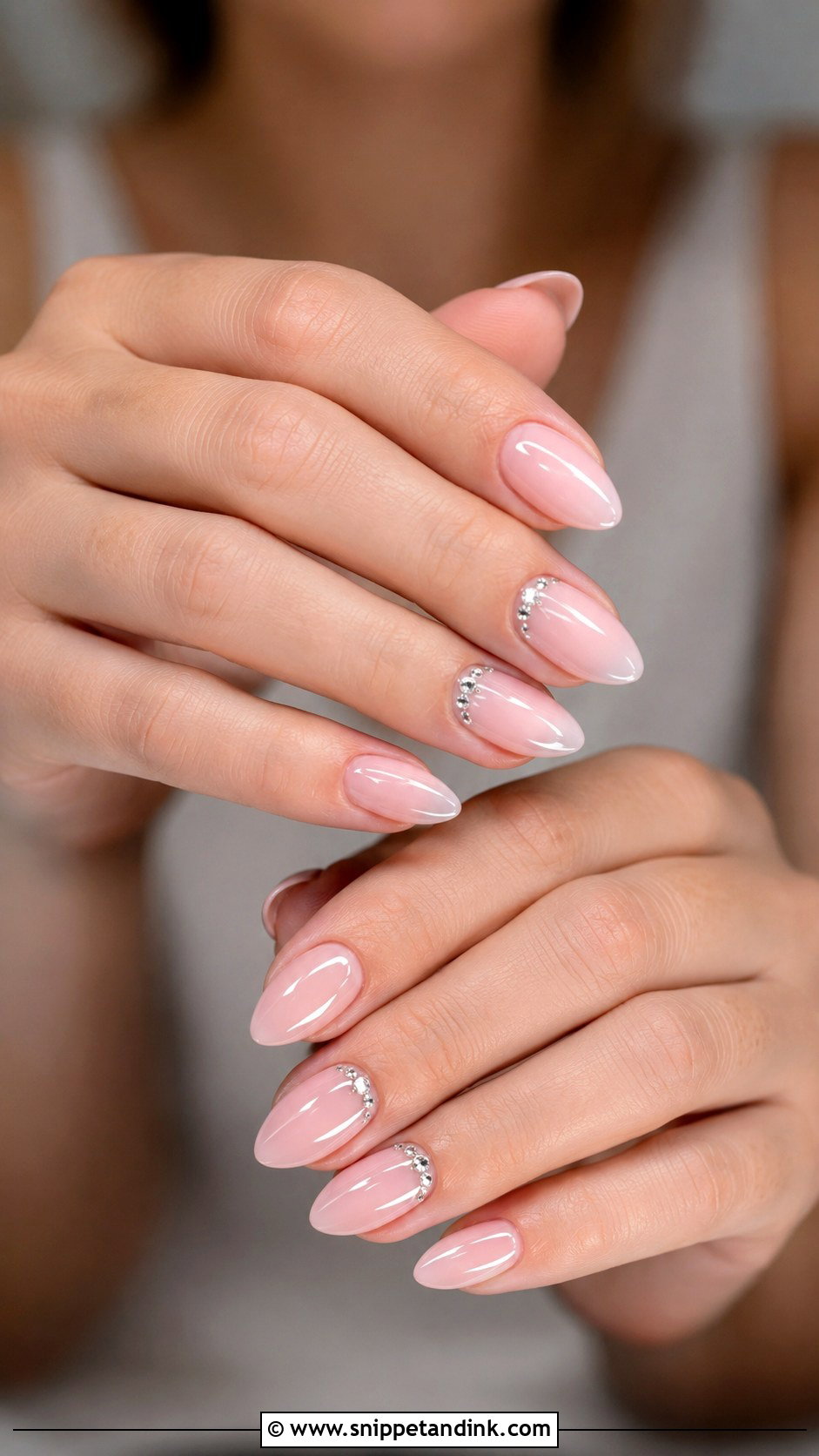
Crystals look refined when they’re small and few. I’d place Rhinestone wedding nails on one accent nail or as a fine line of tiny stones at the cuticle, rather than covering a whole set. Stones set in gel with a thin cap of top coat around, not over, the facets keep their sparkle and stay put through a full celebration. Raised stones can snag lace and delicate veils, so I keep them low and smooth at the edges. A sheer pink, nude or milky base works, on medium almond, oval or coffin.
26. Ivory Wedding Nails
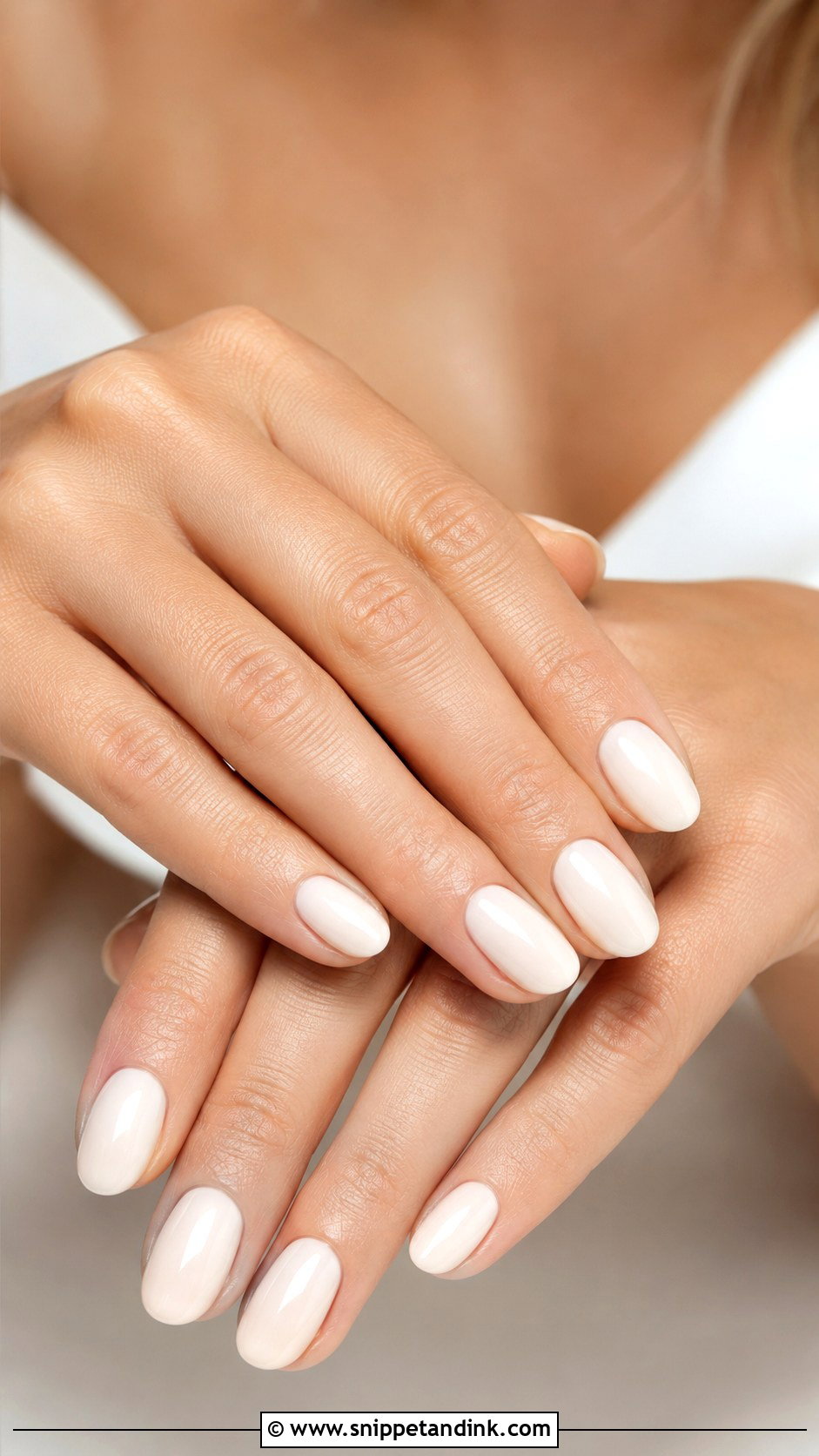
Bright white can look stark next to an off-white dress, which is exactly why I steer many brides to ivory. It’s warmer and sits naturally beside ivory, cream, champagne or off-white gowns. Sheer ivory reads natural; opaque ivory reads polished, almost porcelain under a glossy top coat. Opaque pale shades streak if rushed, so I build them in thin layers. It works on any shape, especially short oval, almond and squoval, and a tiny pearl or soft shimmer adds detail if you want it.
27. Rose Gold Wedding Nails
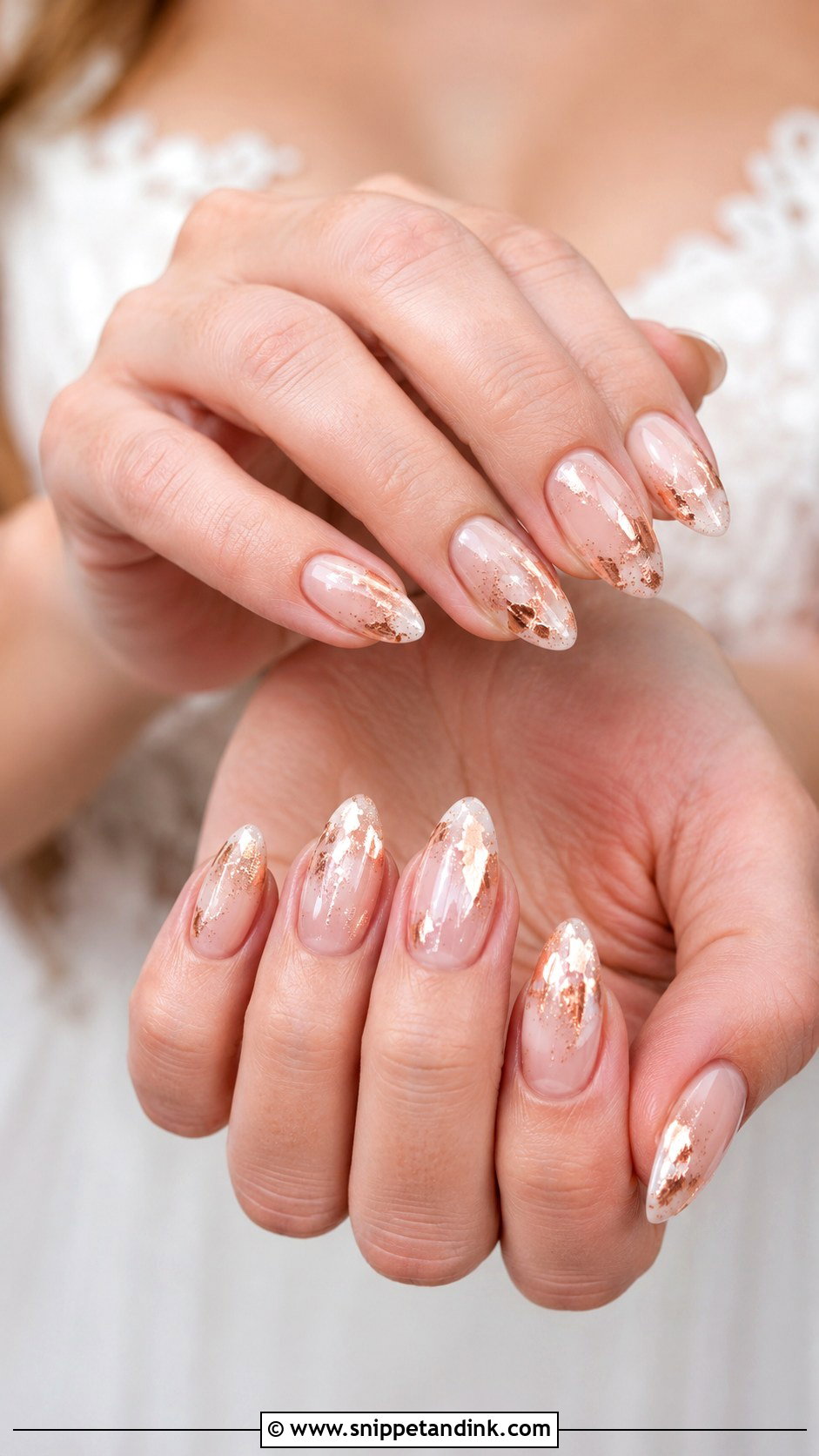
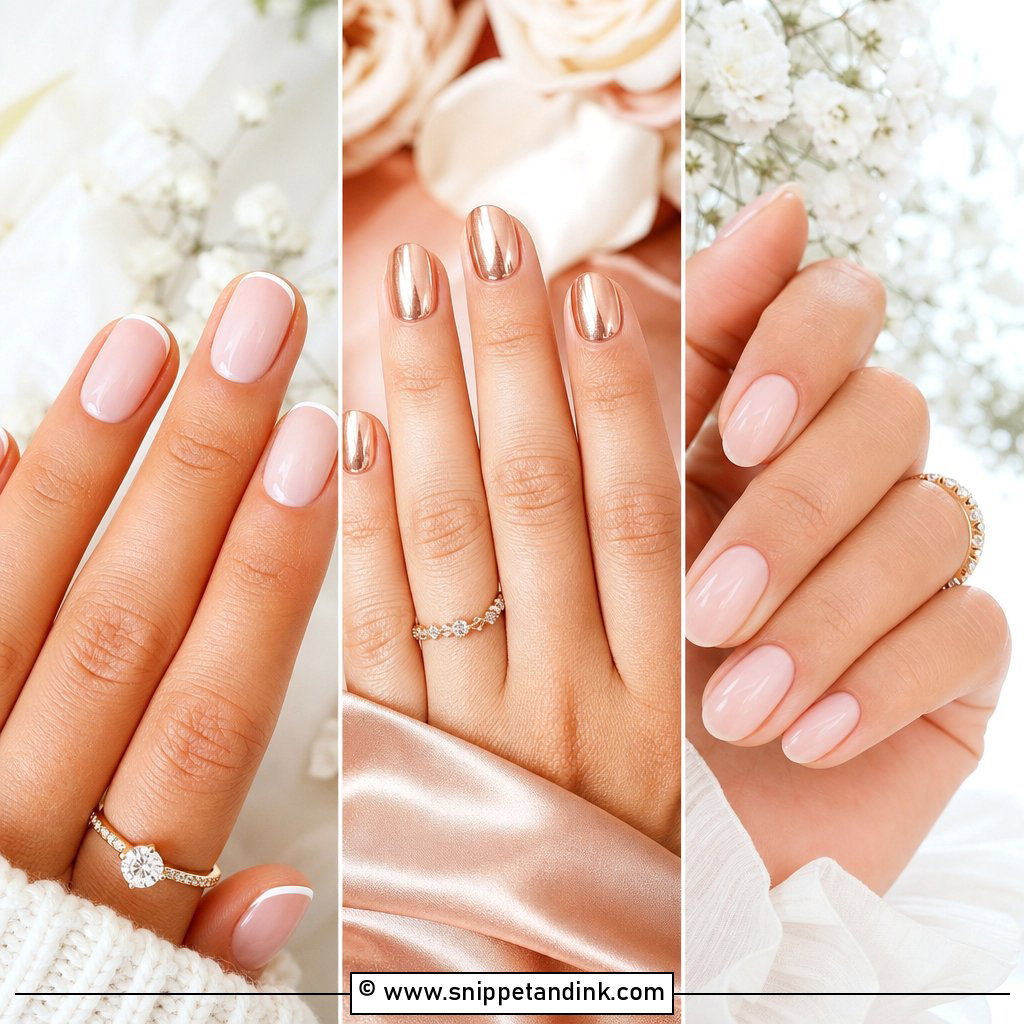
If your ring or jewelry is rose gold, this is the set that ties the hands together. I use rose gold foil, a fine shimmer or a light chrome powder over a nude or blush base, and I keep the metallic to two nails so it stays warm rather than flashy. A blush base with foil on the ring finger and one other nail is the balance I suggest most. Almond and oval shapes suit it best.
28. Sheer Wedding Nails
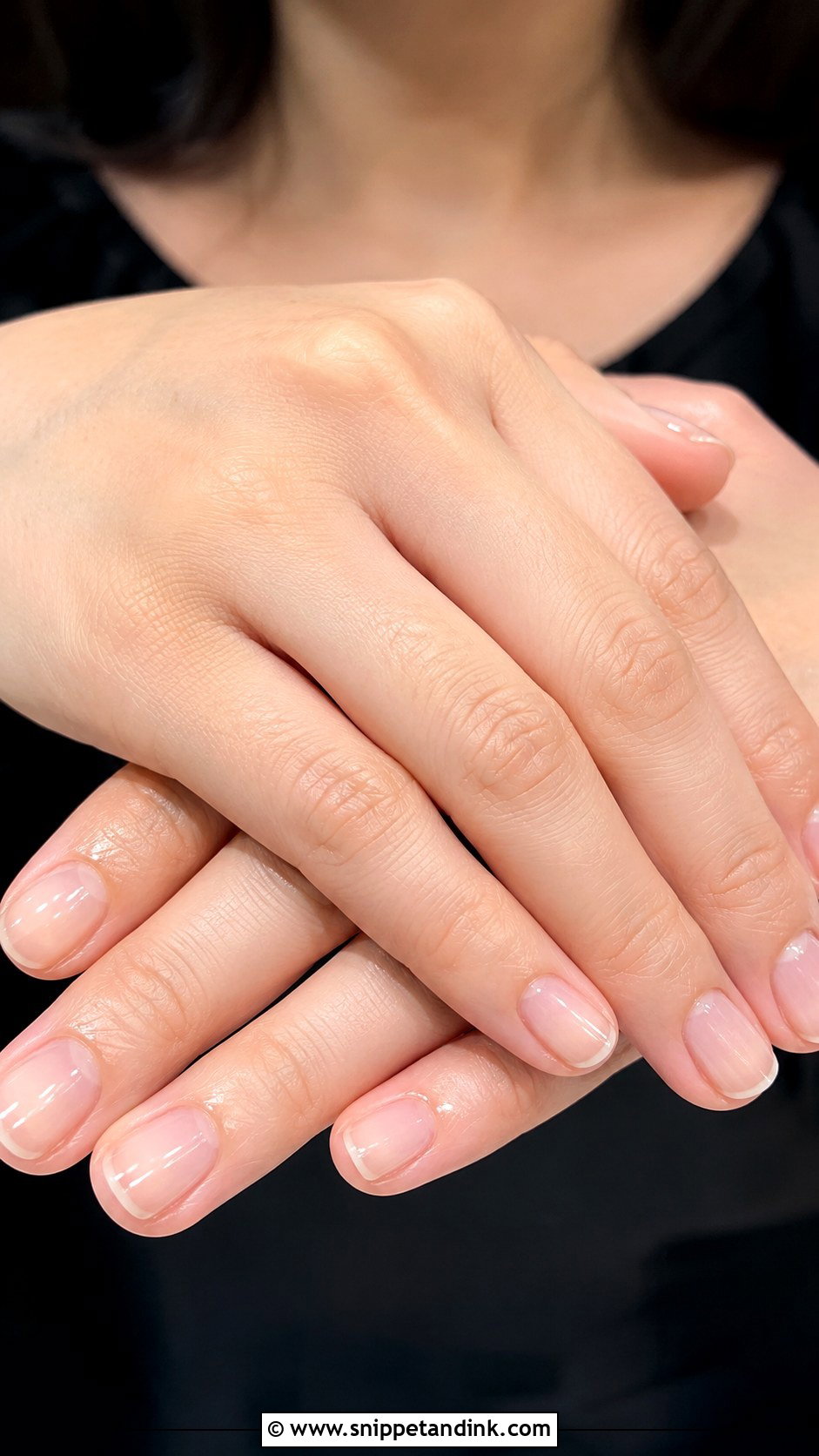
Sheer polish enhances the nail bed rather than hiding it, which means it also shows everything underneath: ridges, white spots and the line of the free edge. That’s why I buff lightly and sometimes use a ridge-filling base before a translucent pink, beige, milky or tinted clear coat. Done well, it grows out so gently that it still looks fine on honeymoon. Very short natural nails wear it easily, and a high-gloss top coat or barely-there shimmer makes it feel bridal. Minimalist brides and outdoor ceremonies suit it well.
29. White Chrome Wedding Nails
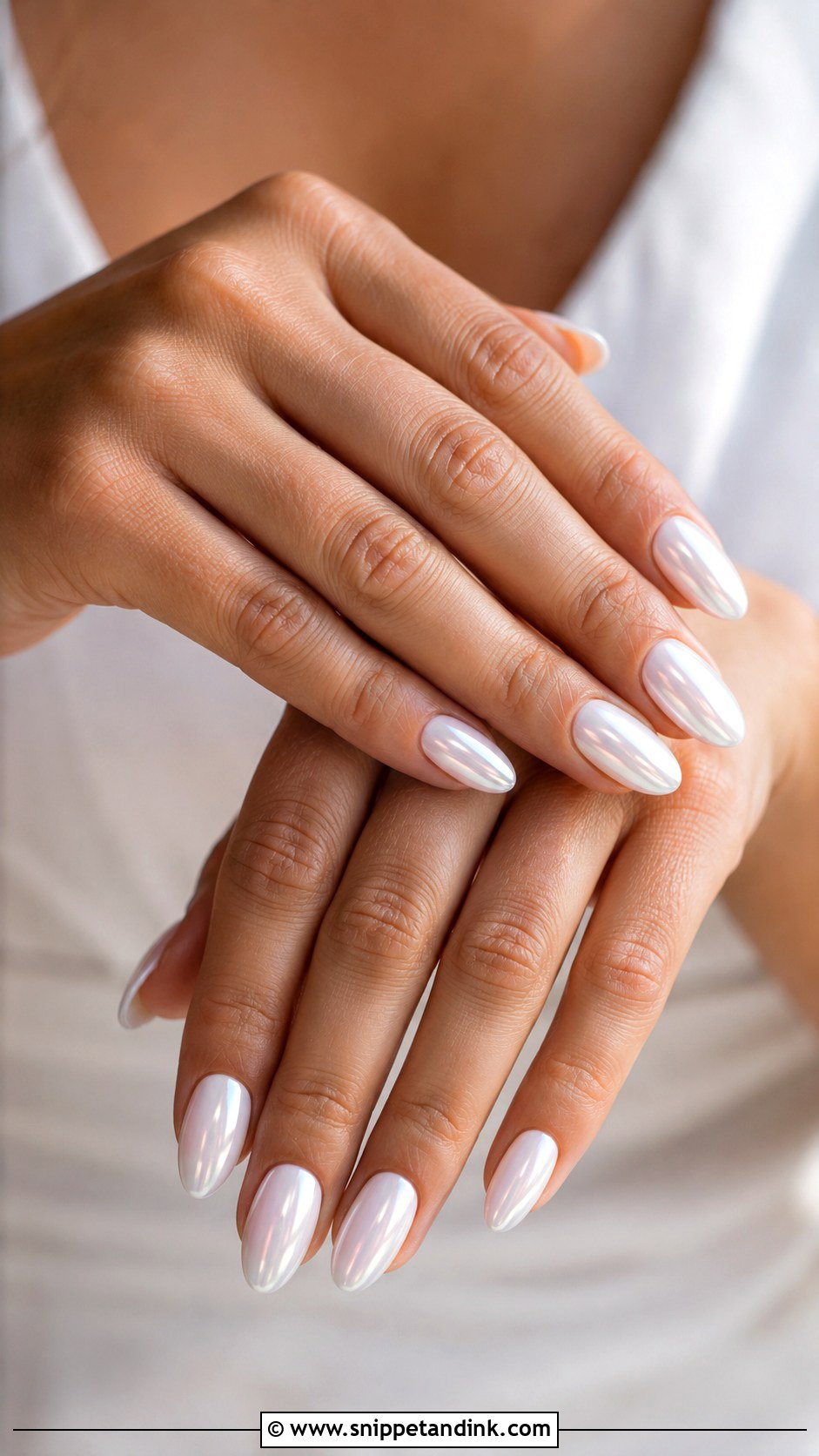
Layering chrome powder over milky white, soft ivory or sheer pearl gel gives a brighter result than the glazed look but stays softer than metallic silver. I ask brides to choose the pearly version of white chrome rather than a mirror finish, since mirror white can look plasticky in flash photos. It pairs well with white gowns, sleek hair, crystal accessories and modern venues. Almond, coffin and oval shapes show the glow best.
30. Micro French Wedding Nails
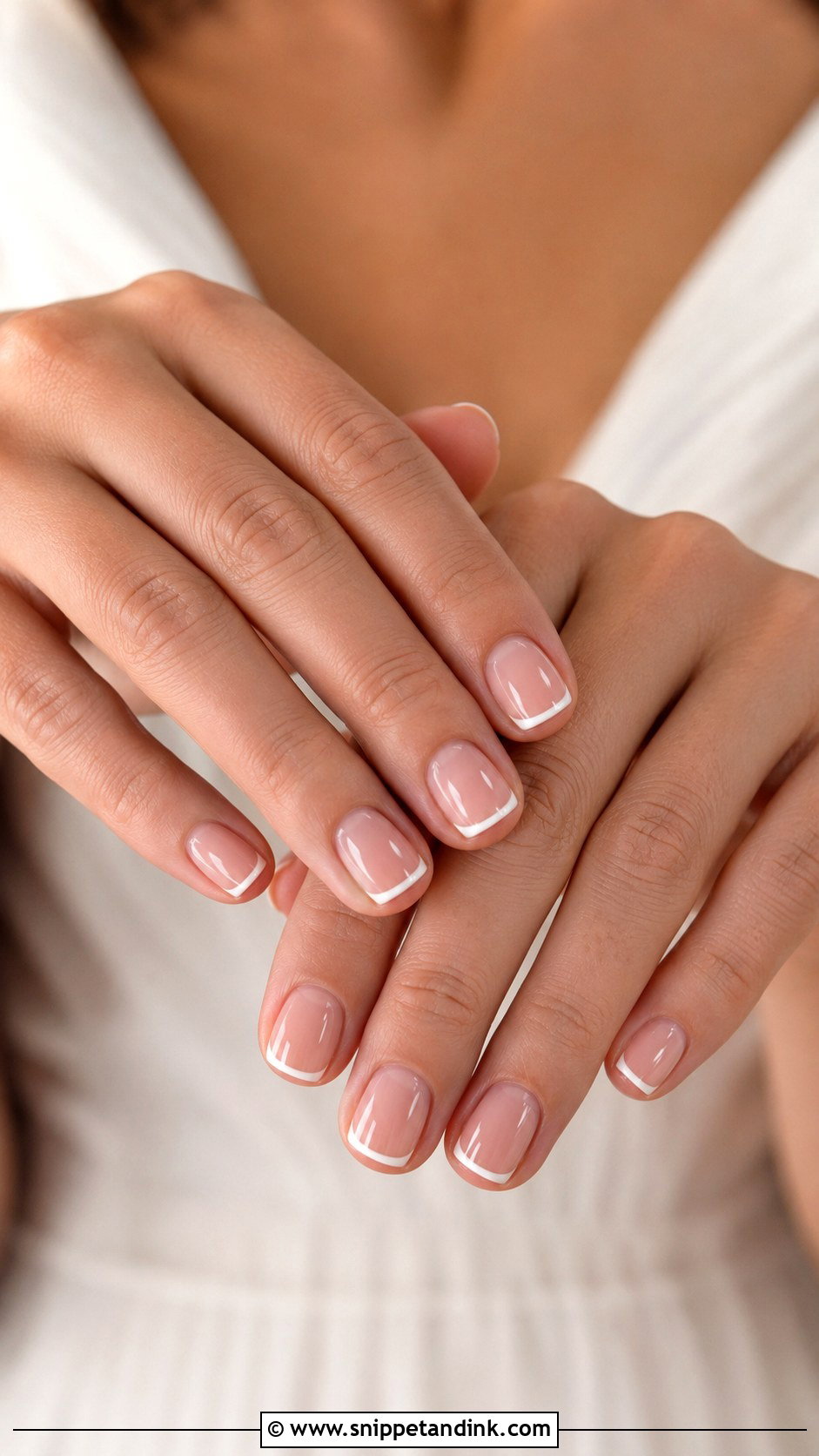
Shrinking the classic tip to a hairline gives you the cleanest modern version of the French set. Micro French wedding nails need a very steady liner brush, because at that thickness any wobble shows. They’re the best French option for short nails, since they don’t need much free edge to look polished, and they’re also crisp on almond, oval and square shapes. Keep the base sheer pink, nude or milky and the top coat glossy.
What the Camera Picks Up That Your Mirror Misses
Ring close-ups are shot with macro lenses, sometimes with flash, so they magnify things you’d never notice in person. Dry cuticles look white and ragged, a gap of regrowth looks like a stripe, and a tiny chip on the ring finger becomes the focus of the frame. Chrome and shimmer bounce flash brightly, which most brides love, while matte finishes can look flat under it.
Two quick habits help. Oil your cuticles about an hour before the photographer arrives, then wipe the nail surface clean so the top coat stays glossy. And hold the bouquet stems lightly, since a tight grip shows white knuckles and pressed nail beds.
A Lifted Corner at the Reception
Gel rarely fails on the day, but a stone can pop or a tip can catch on a dress zip. Tuck a small pouch into your bag or with a bridesmaid: a fine file, a tiny bottle of clear top coat and a nail glue. File a snag smooth rather than letting it catch fabric, and glue a loose stone back with a dot of glue under it. Leave proper repairs for a salon after the honeymoon instead of peeling anything off.
Your Ring Should Set the Brief
Start with what your hands will be photographed next to: the ring, the bouquet and the dress fabric. Milky white, sheer pinks, nudes, French tips, pearls and soft chrome all suit a bride. French, ivory or blush lean classic; glazed, white chrome or micro French feel more modern; lace, floral or pearl accents add romance. Then weigh your skin tone, your natural length and your venue. Whatever you pick, careful prep and a comfortable shape matter more than the design itself.
You'll Like These Ideas:


Leave a Reply