
Bridal nails get looked at more closely than almost anything else you wear. Every ring shot is a macro photo of your fingertips, so a slightly flooded cuticle or a tip that’s a shade too stark shows up in a way it never would at the office. The sets below are the ones I actually recommend at bridal consultations: milky whites, sheer pinks, fine French lines, pearl chrome and a few detailed accents. Under each one I’ve noted how it wears, who it suits and what I’d change before your appointment, because the right set depends on your nail length, your skin undertone, your ring metal and how much you use your hands.
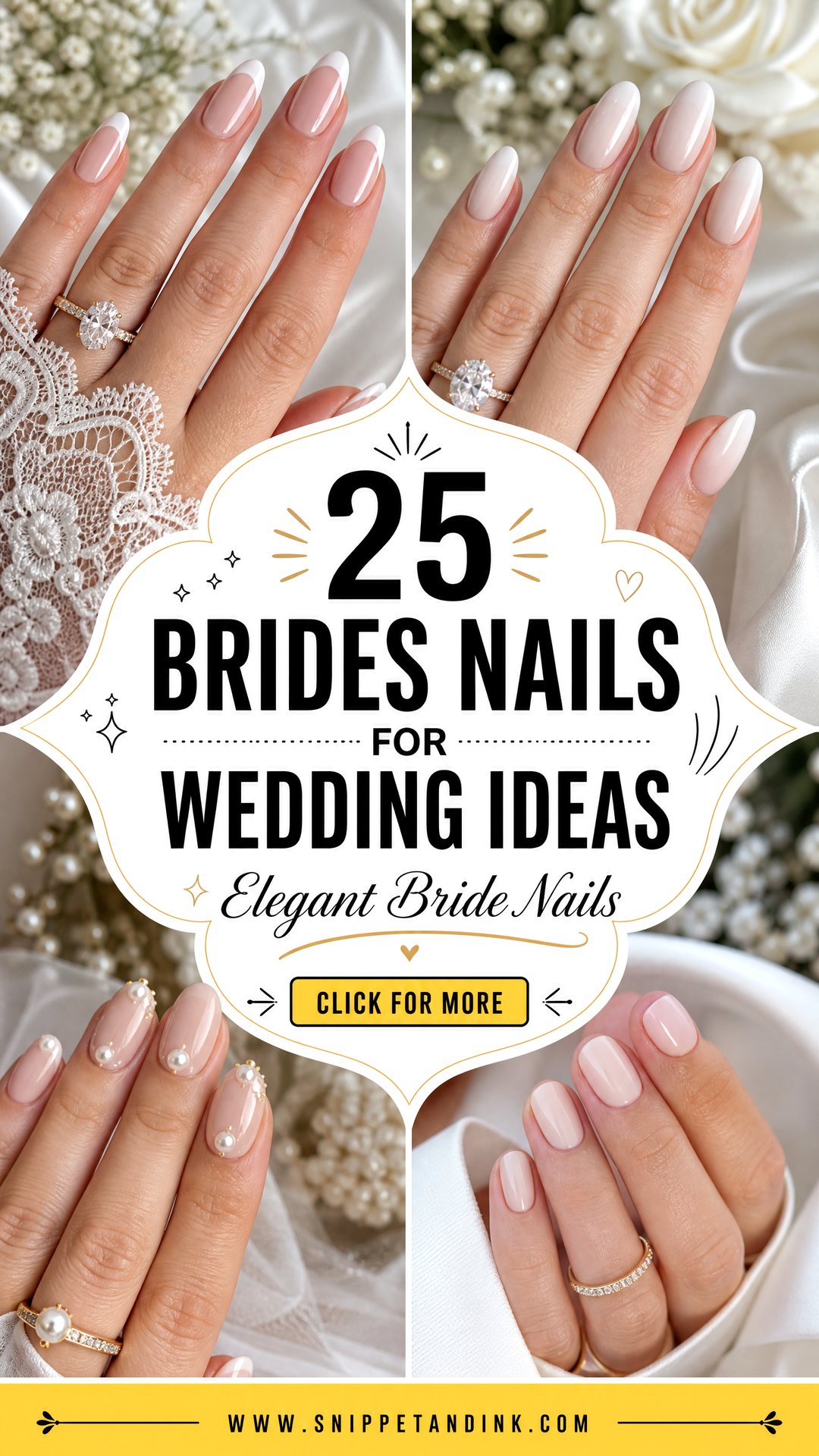
Timing the Appointment So Nails Look Fresh in Ring Shots
Nails grow roughly three millimetres a month, and the first thing a camera picks up is the gap of bare nail that opens at the cuticle. That’s why I book bridal gel or builder sets one to three days before the wedding, never a week out. Any earlier and the regrowth line shows in close-ups; any later and you’re rushing on a day when you should be resting.
A trial four to six weeks ahead is worth it if you’re trying a new shape, extensions or a design with art. It tells you how the length feels when you’re typing, putting in contact lenses or doing up a zip, and whether the shade works against your skin in daylight.
- Gel polish over natural nails usually lasts two to three weeks, which comfortably covers a honeymoon.
- Builder gel adds strength to thin or bendy nails and is the better choice if yours peel or snap.
- Regular polish can chip within a day or two of hand-washing and packing, so I’d only use it the morning of.
- Spray tan before the manicure, not after; tanning solution stains white tips and cuticles.
Use cuticle oil every day for the two weeks before. Dry cuticles crack and look ragged in macro shots, and oil is the cheapest fix there is.
1. Classic French Bride Nails
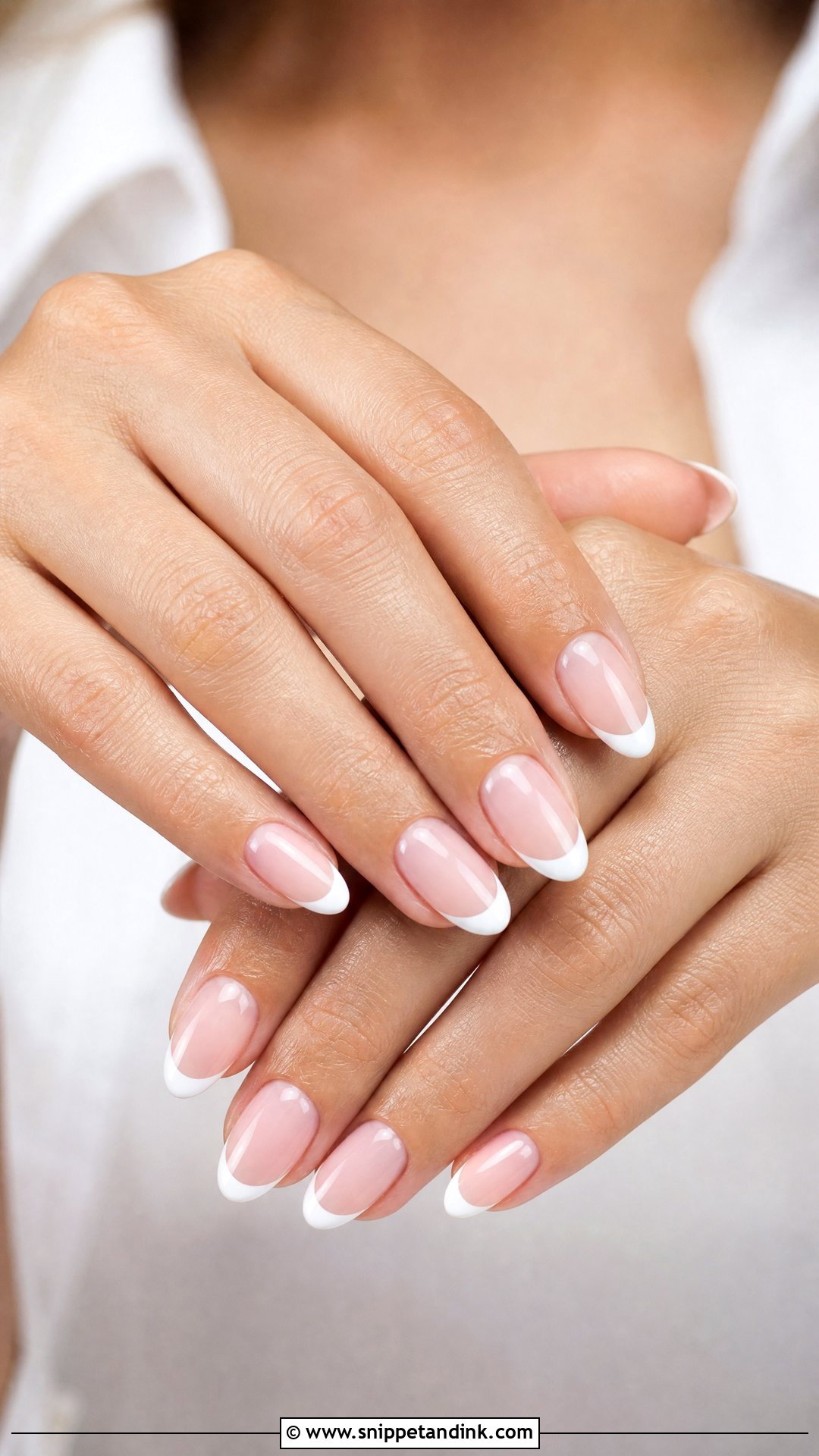
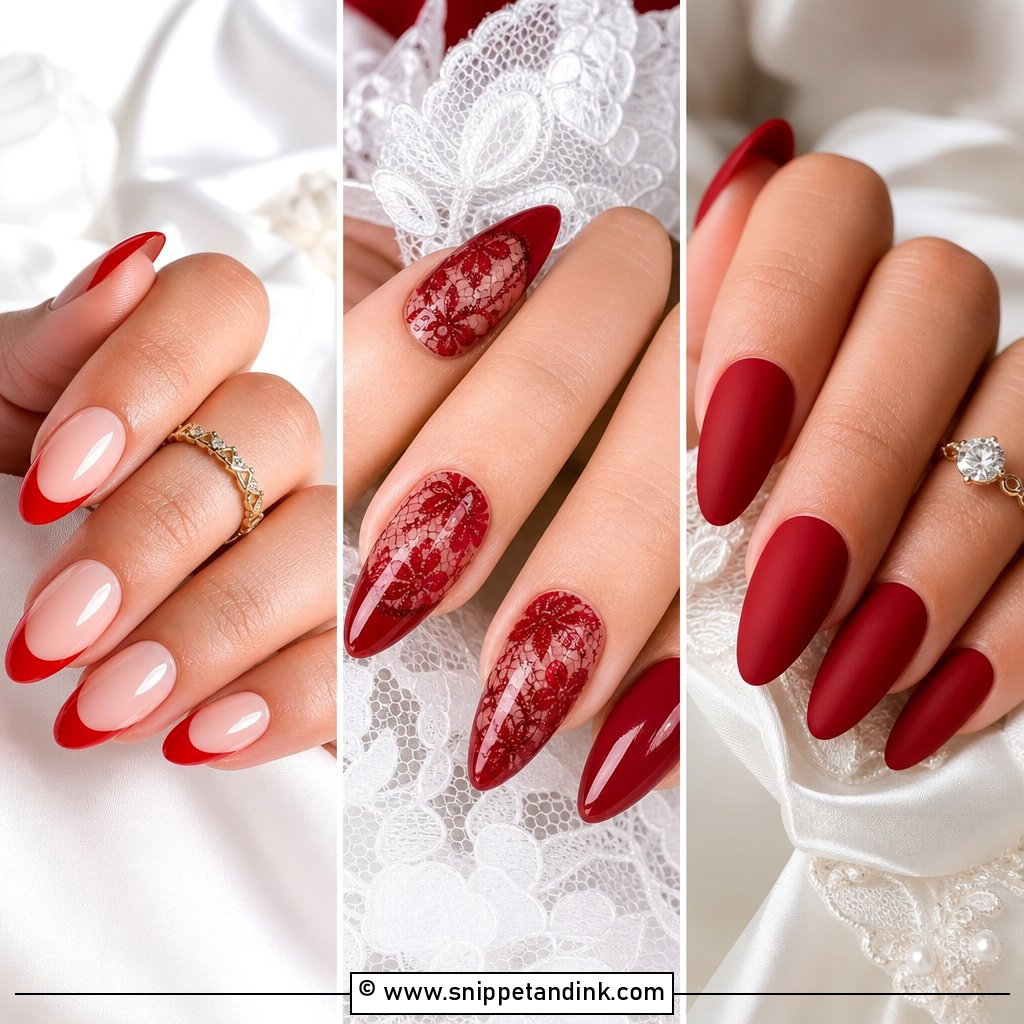
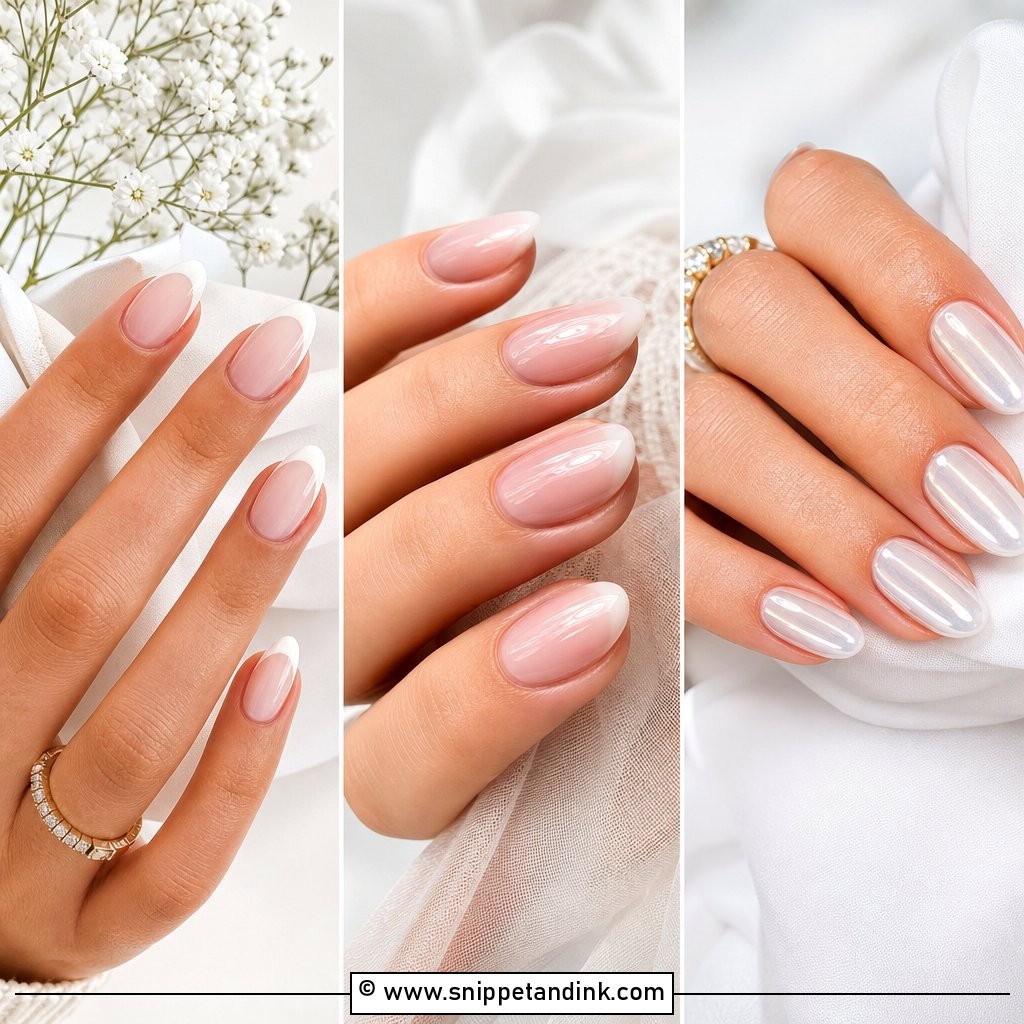
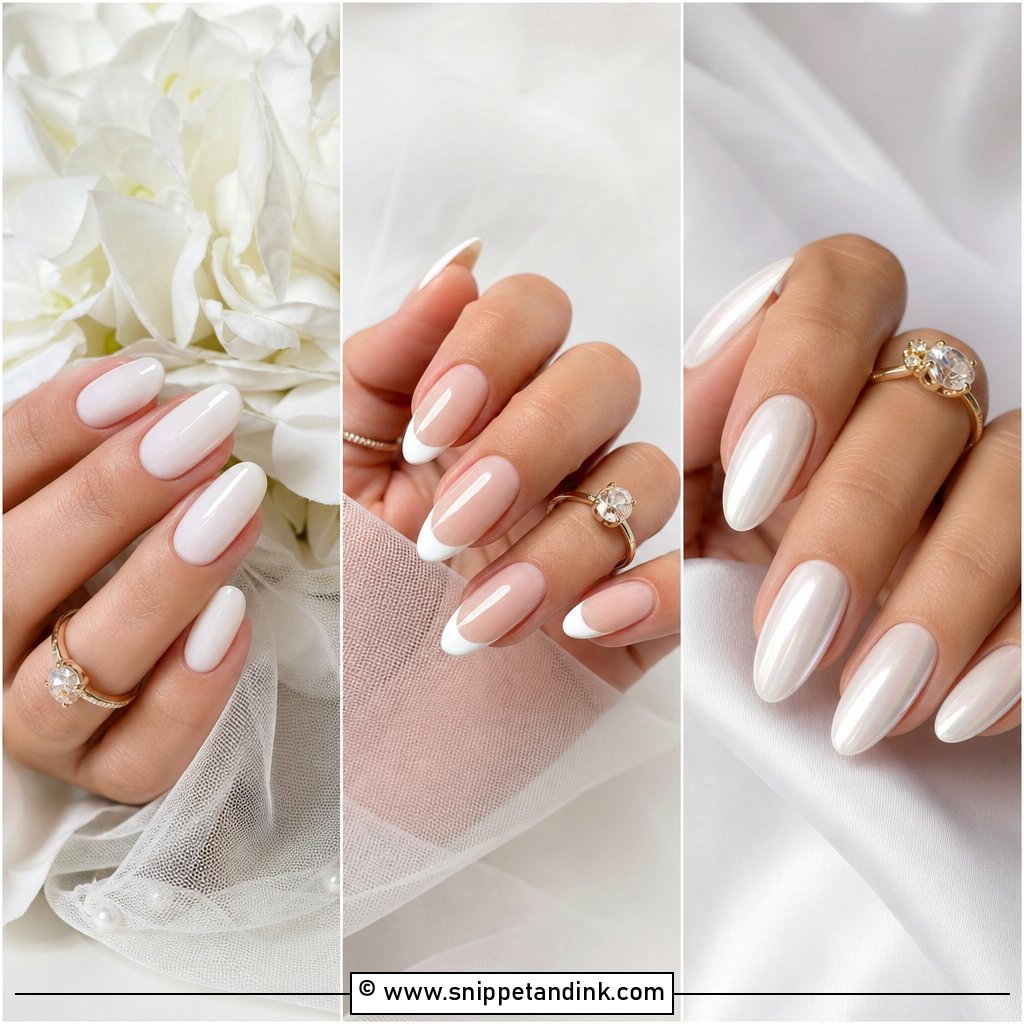
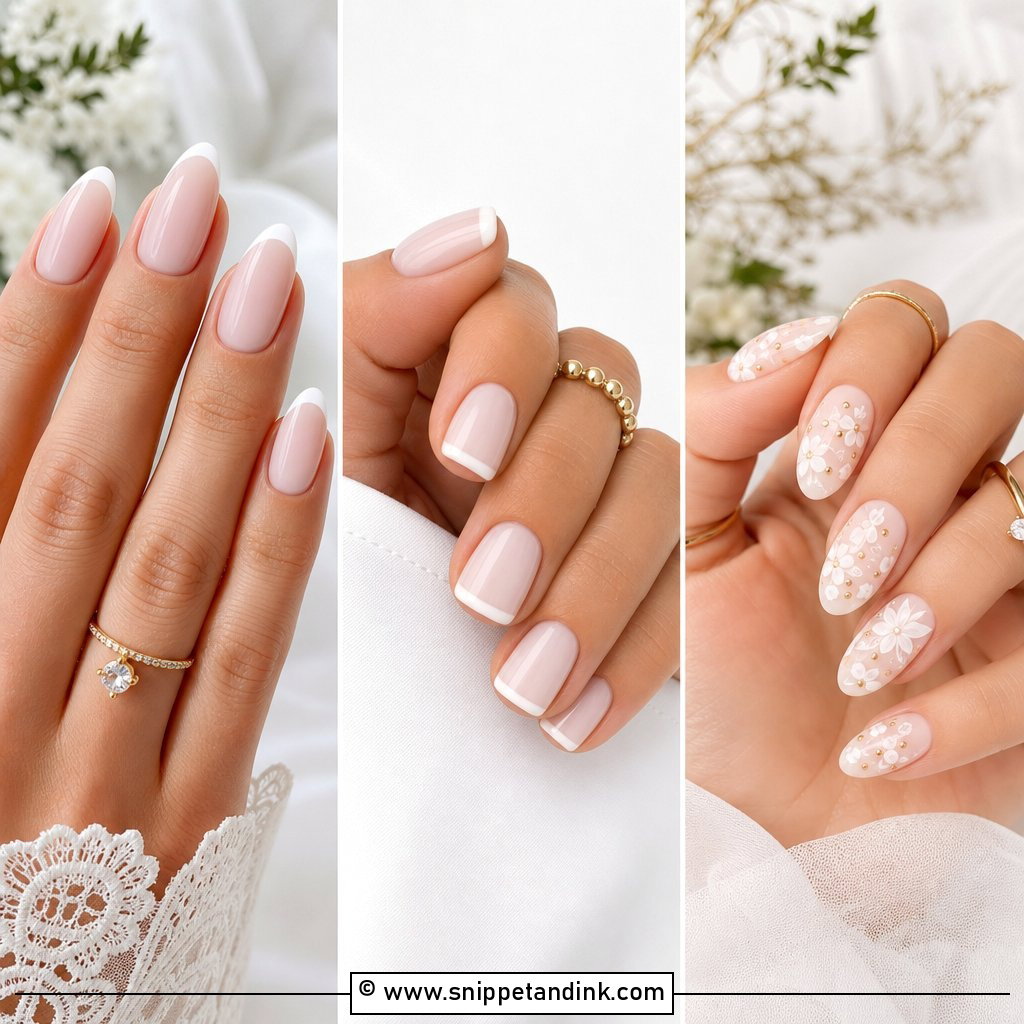
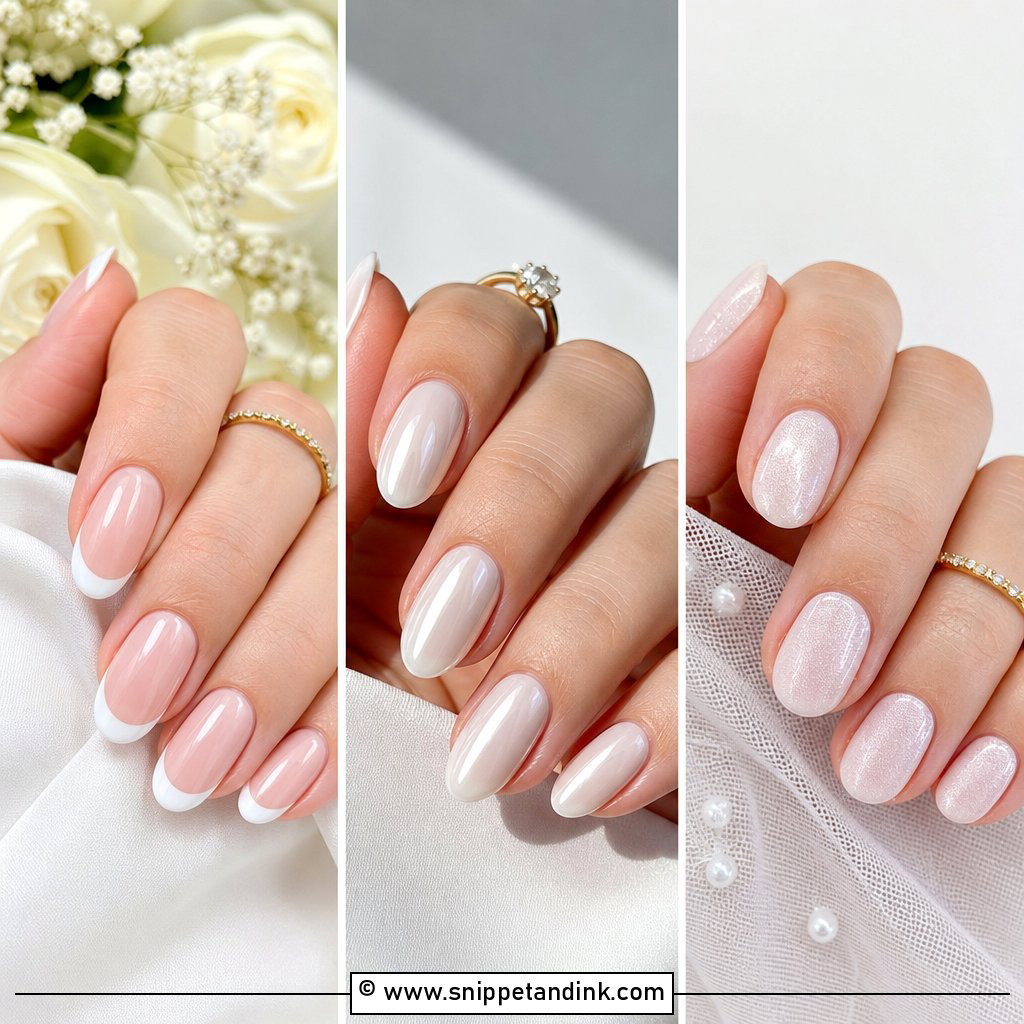
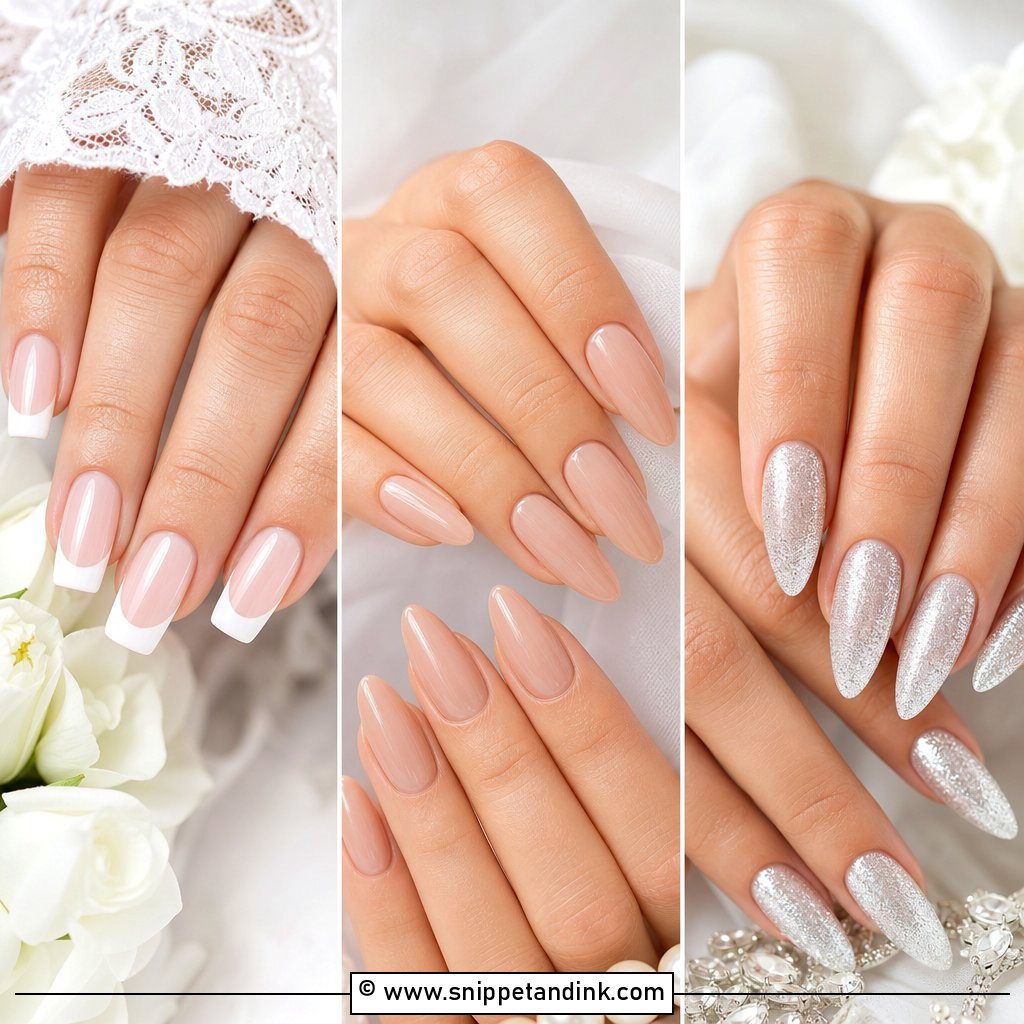
I still do more classic French sets for weddings than any other design, and the reason is practical: it hides the free edge growing out and reads as clean from across a room. The detail that makes or breaks it is tip thickness. A thick, straight band shortens the nail visually, so I ask most brides to let me paint a slimmer curved smile line that follows their own nail. It works on almond, oval, square and squoval nails. Pick a base sheer enough that your natural nail bed shows through, or the whole set starts to look like plastic.
2. Milky White Bride Nails
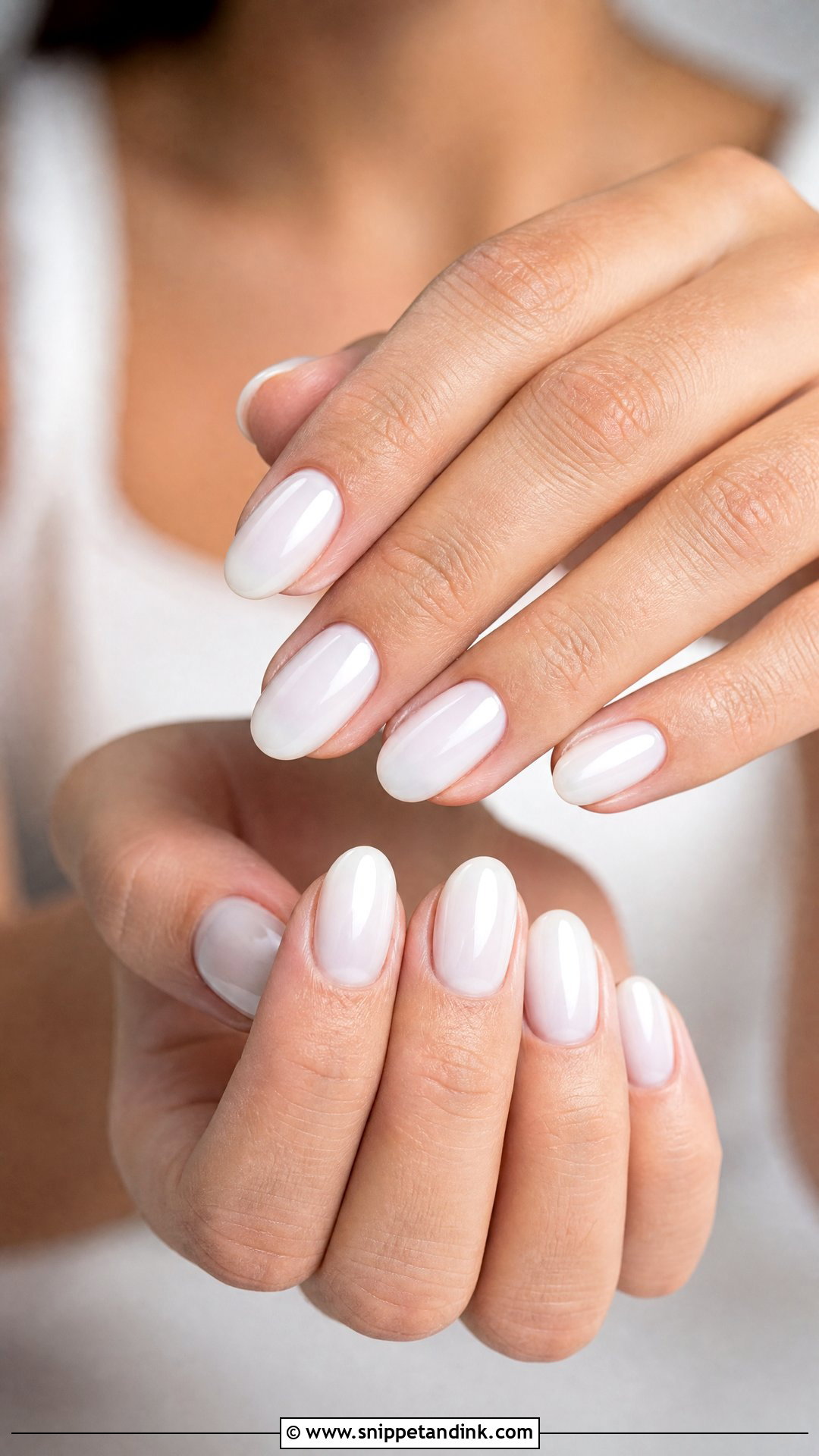
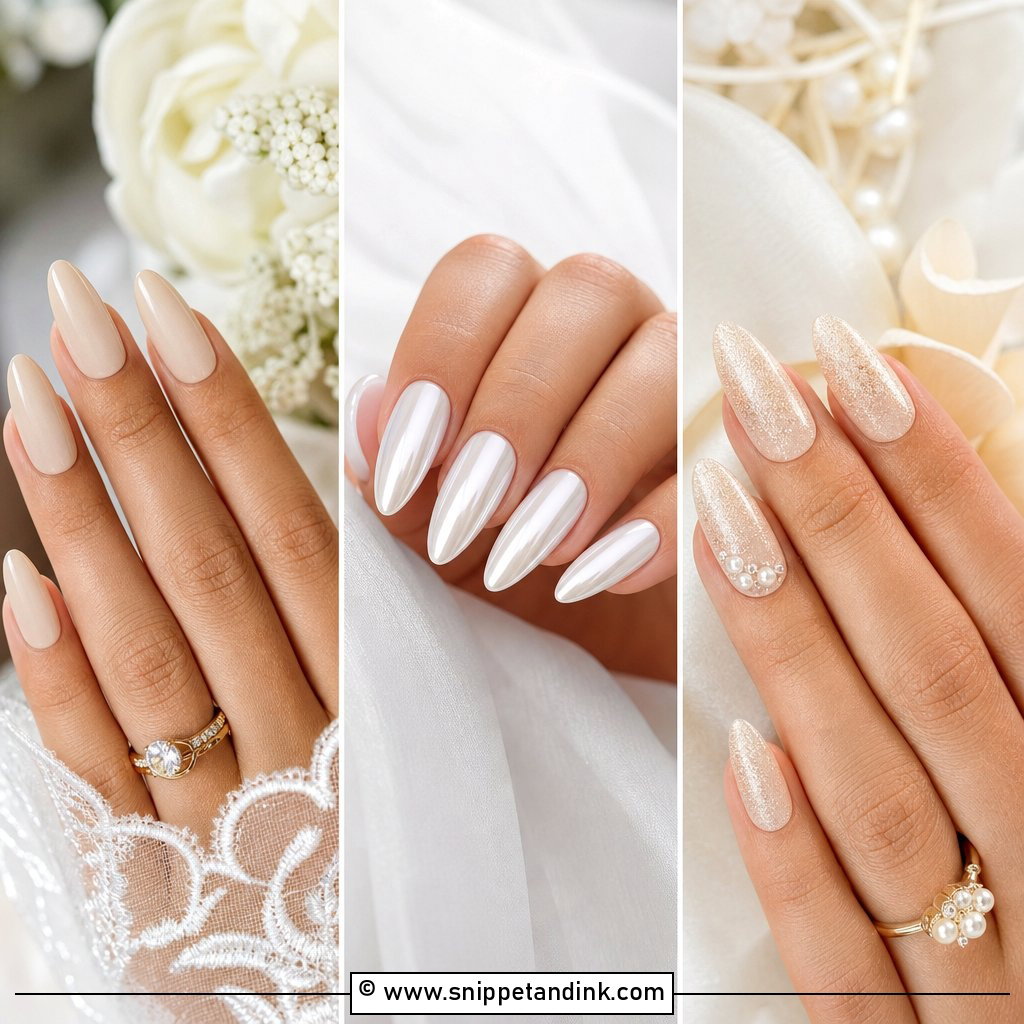
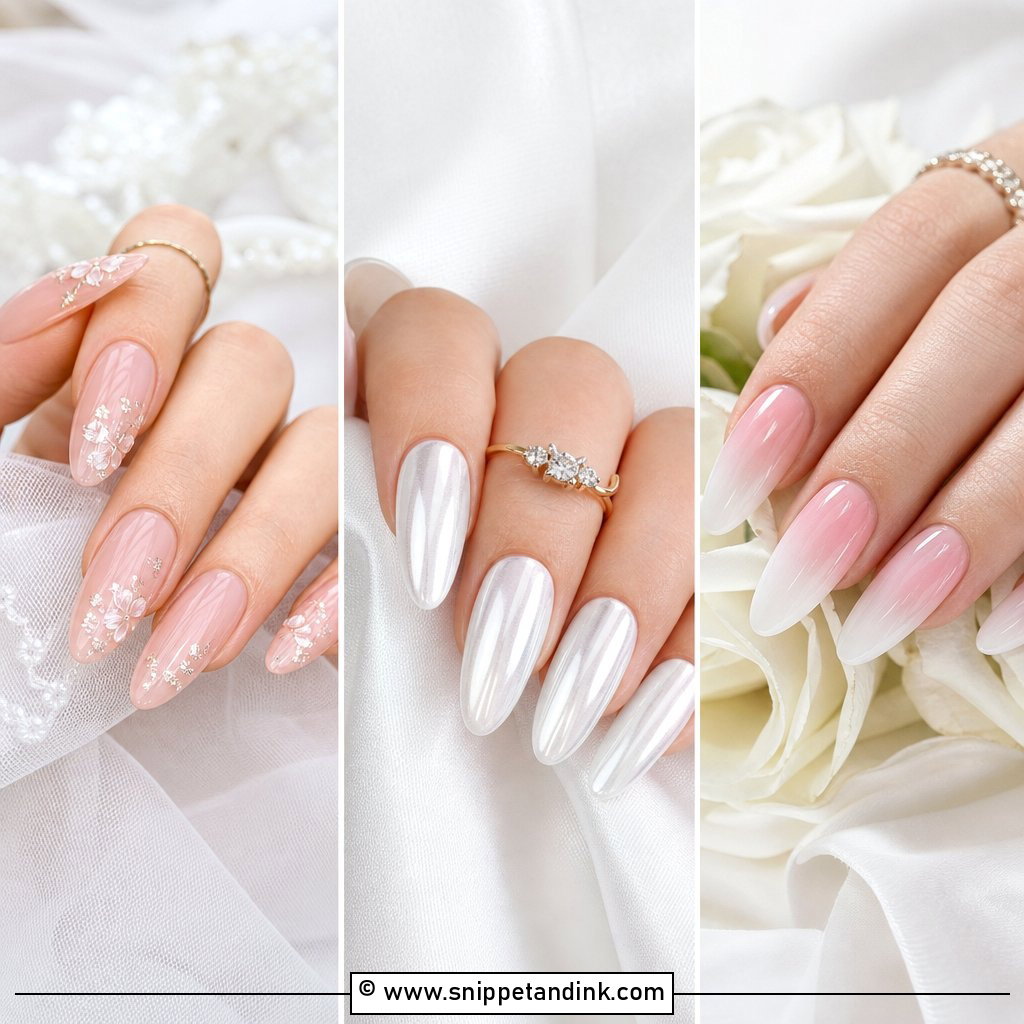
Milky white is semi-sheer on purpose. One coat looks streaky, two looks soft and diffused, three starts to go flat and chalky, so I build it slowly and check it in daylight between coats. That translucency is why it flatters short oval and longer coffin shapes equally: the natural nail warmth under it stops it looking like correction fluid. It sits quietly next to satin, tulle and chiffon. A pearl topcoat over it adds glow without changing the colour.
3. Pearl Chrome Bride Nails
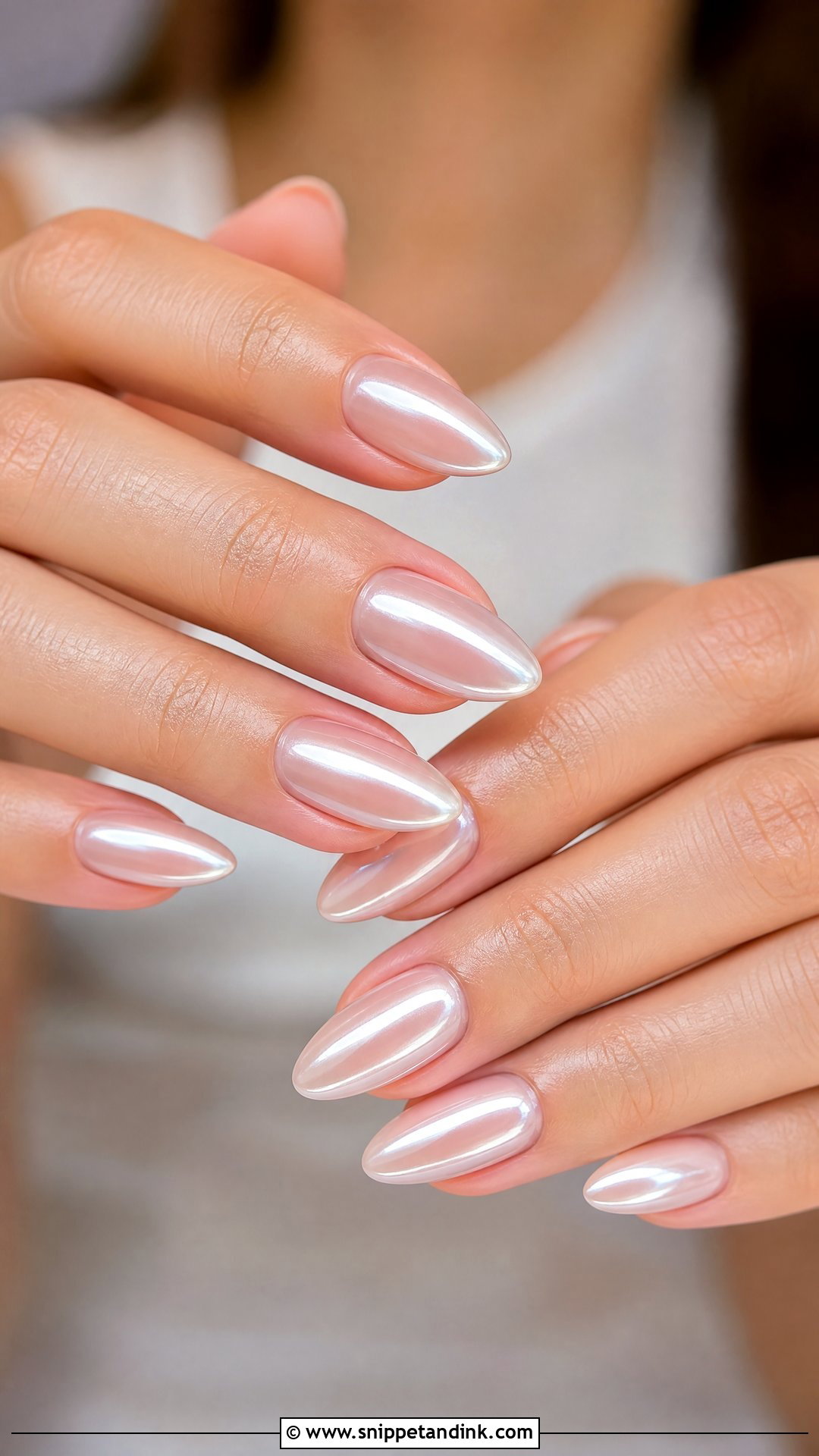
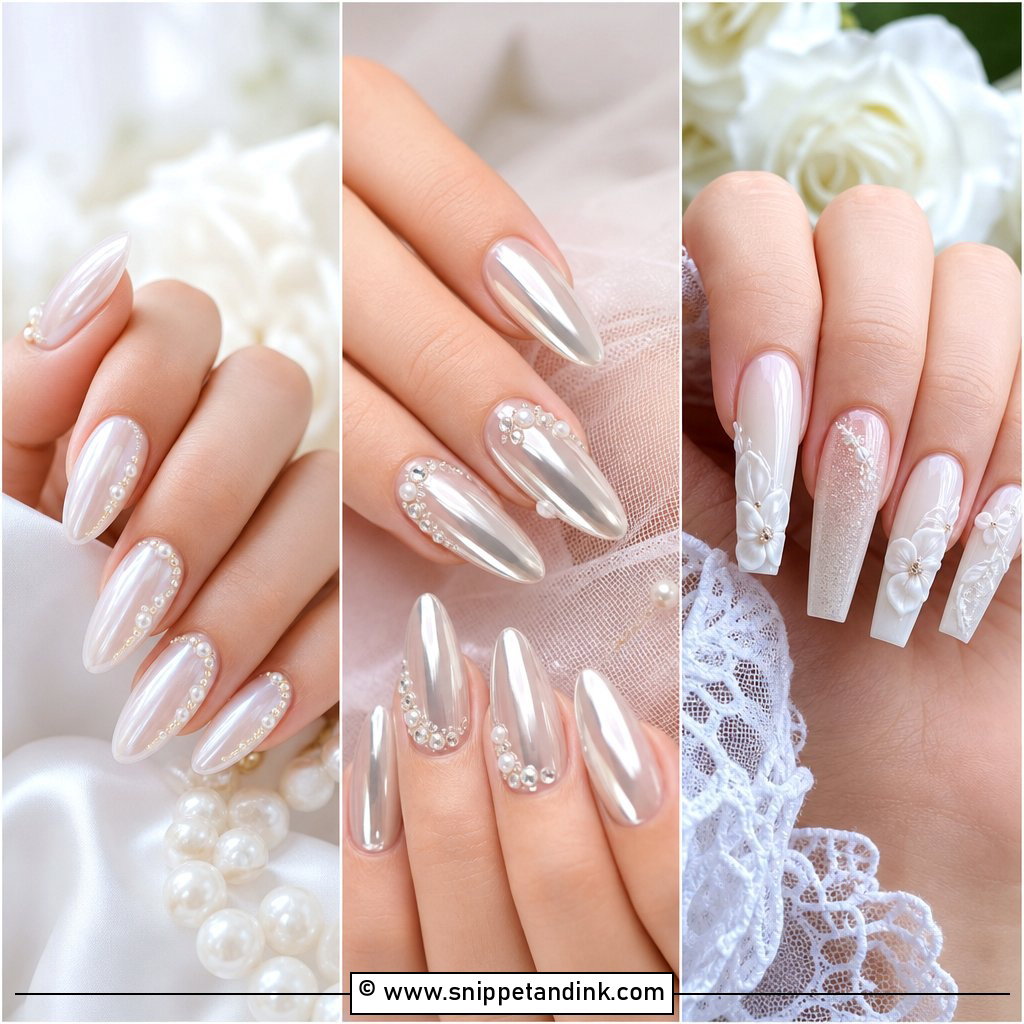
Pearl chrome is a powder rubbed over a cured no-wipe top coat, then sealed. The base underneath decides the result, so milky white gives a frosted glow and a sheer pink gives a warmer, almost opal sheen. Ask for a glazed pearl, not a mirror chrome; the difference is how much powder goes on and how hard it’s buffed. I like it on almond or oval tips with pearl, silver or white gold jewellery. One honest warning: chrome highlights every ridge, so if your nails are textured, I’ll need a smoothing layer of builder underneath.
4. Sheer Pink Bride Nails
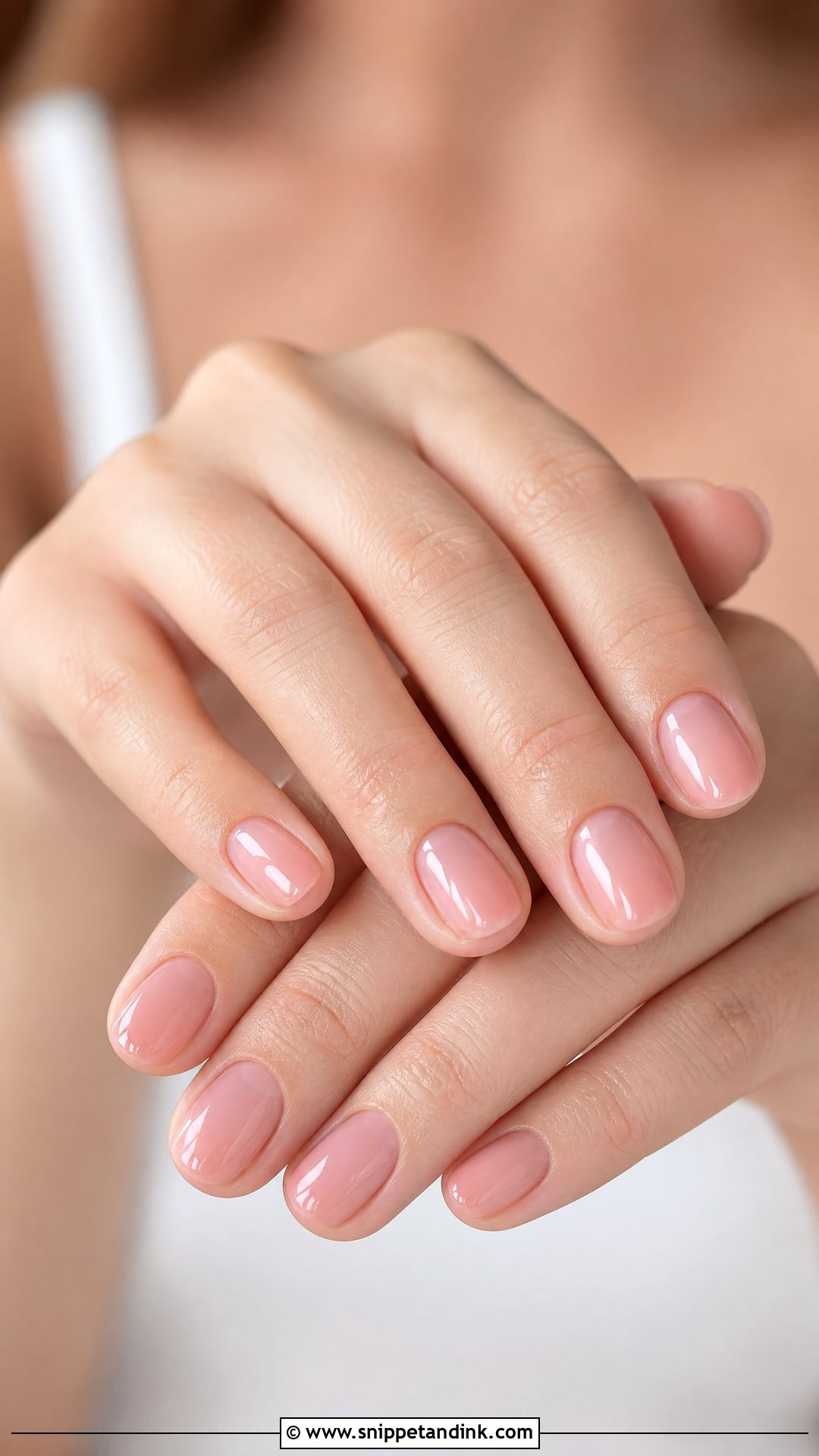
A sheer pink manicure is the set I suggest to brides who never wear polish and don’t want to stare at their hands all day feeling decorated. It evens out the nail bed and makes short natural nails look healthy rather than painted. The mistake I see most is a pink that’s too blue for the skin, which turns fingertips slightly grey in photos. On warmer skin I reach for a peachier pink; on cool, fair skin a rosier one. Swatch it against your fingers, not on a nail wheel.
5. Nude Bride Nails
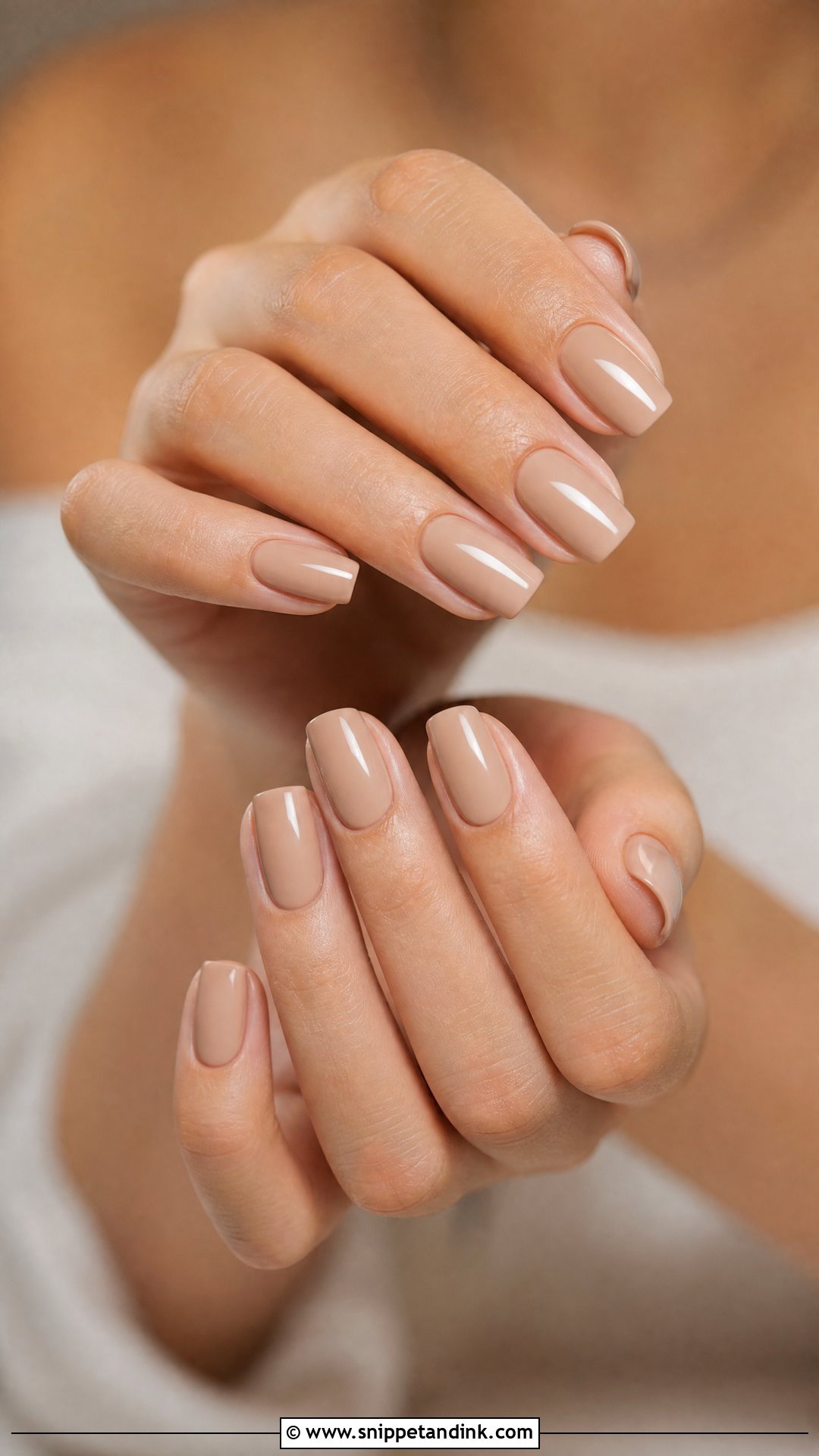
Nude is the hardest shade to get right because it has to match you, not the dress. My starting points: beige-pink or soft peach for fair skin, rosy beige or warm taupe for medium skin, and cocoa, mocha or cinnamon for deep skin. A nude that’s lighter than your skin makes fingers look washed out and stubby. Gloss matters here more than with any other colour, since a matte nude reads as bare nails in a photo. A soft almond or squoval shape keeps the set looking deliberate.
6. Blush Pink Bride Nails
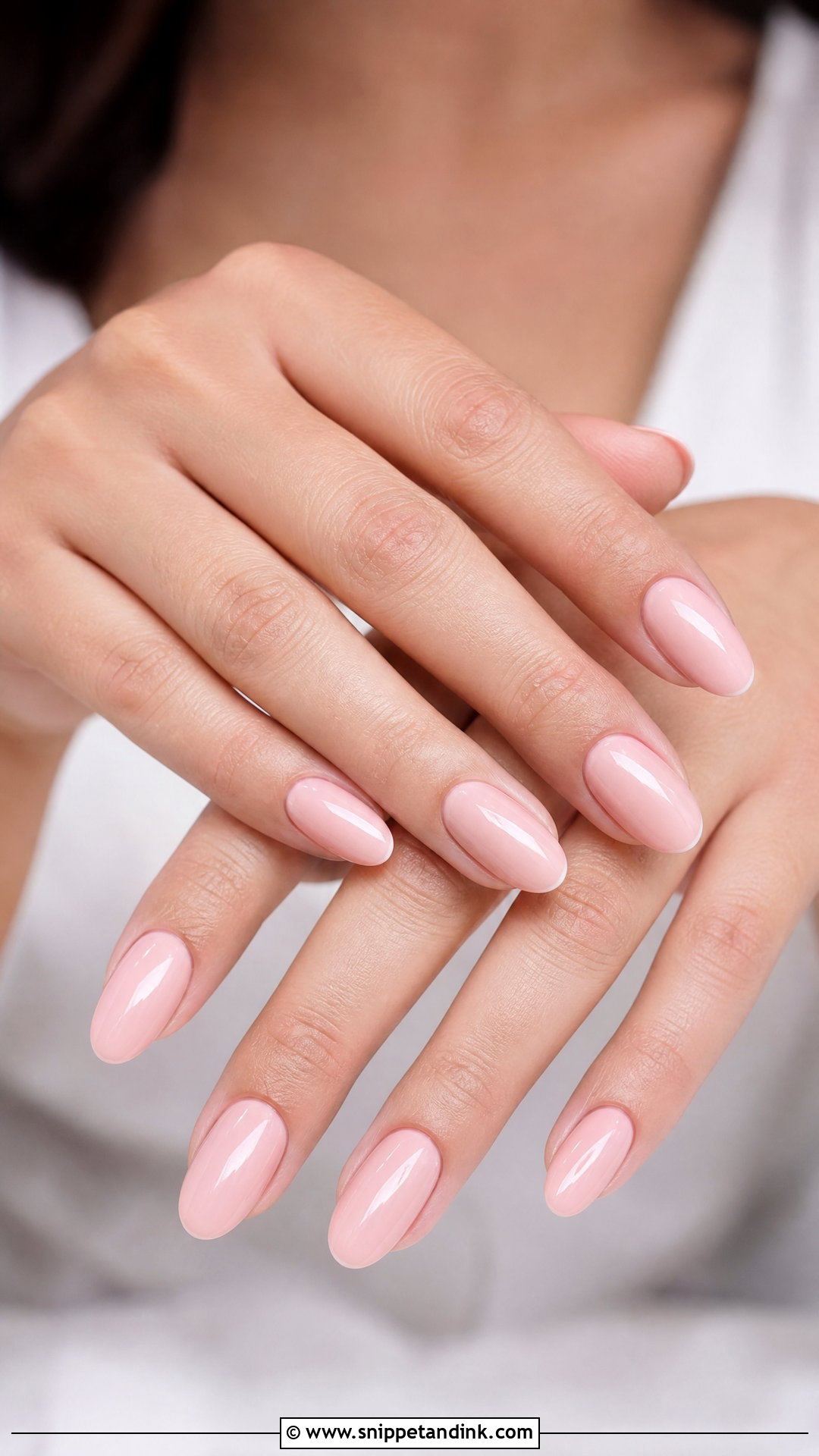
Blush sits one step warmer than sheer pink, so it reads as colour without tipping into sweet. It’s strong next to ivory and champagne gowns, and it holds its tone in natural light at outdoor ceremonies where a paler pink can disappear. You can wear it plain and glossy, or add one shimmer accent. Keep the shape soft; a long stiletto in blush stops looking bridal very quickly.
7. Baby Boomer Bride Nails
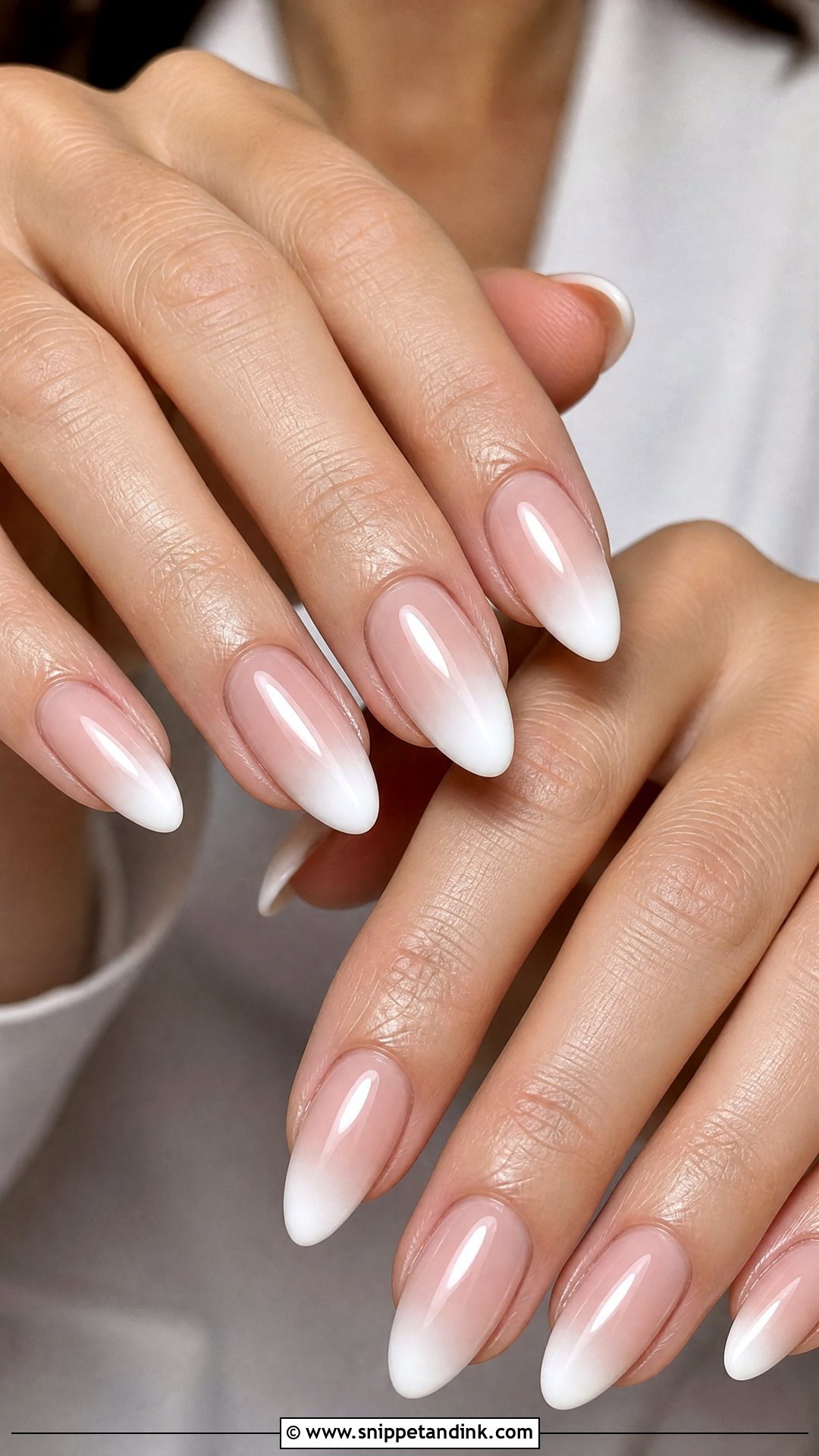
Baby boomer nails, also known as French ombré nails, fade a pink or nude base into a soft white tip with no hard line. I build the gradient with a sponge or a dry brush, and the white has to stay sheer at the blend point or it looks cloudy rather than airy. The fade lengthens fingers, which is why it suits almond, coffin and oval shapes. It’s also forgiving on the day: a small chip at the tip disappears into the gradient instead of breaking a crisp line.
8. Micro French Bride Nails
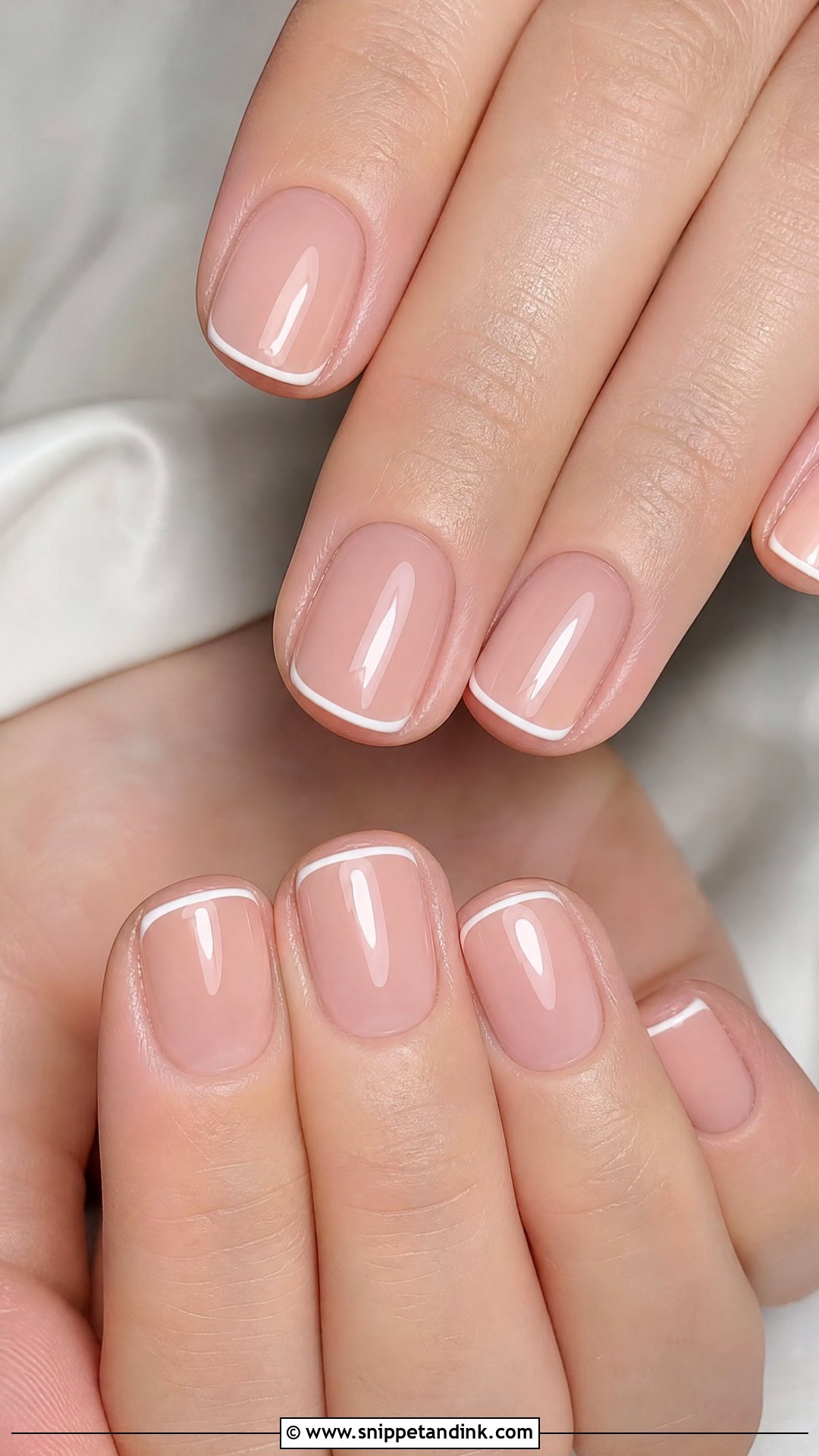
Micro French bride nails use a tip so thin it’s almost a highlight on the edge. On short nails this is the version I prefer, because a standard French band would eat half the visible nail. The line has to be painted with a fine liner brush and steady hands, so ask to see your tech’s micro French work before booking. A clear or milky base keeps it fresh. Ivory instead of white is a good swap if your dress is warm-toned.
9. White Chrome Bride Nails
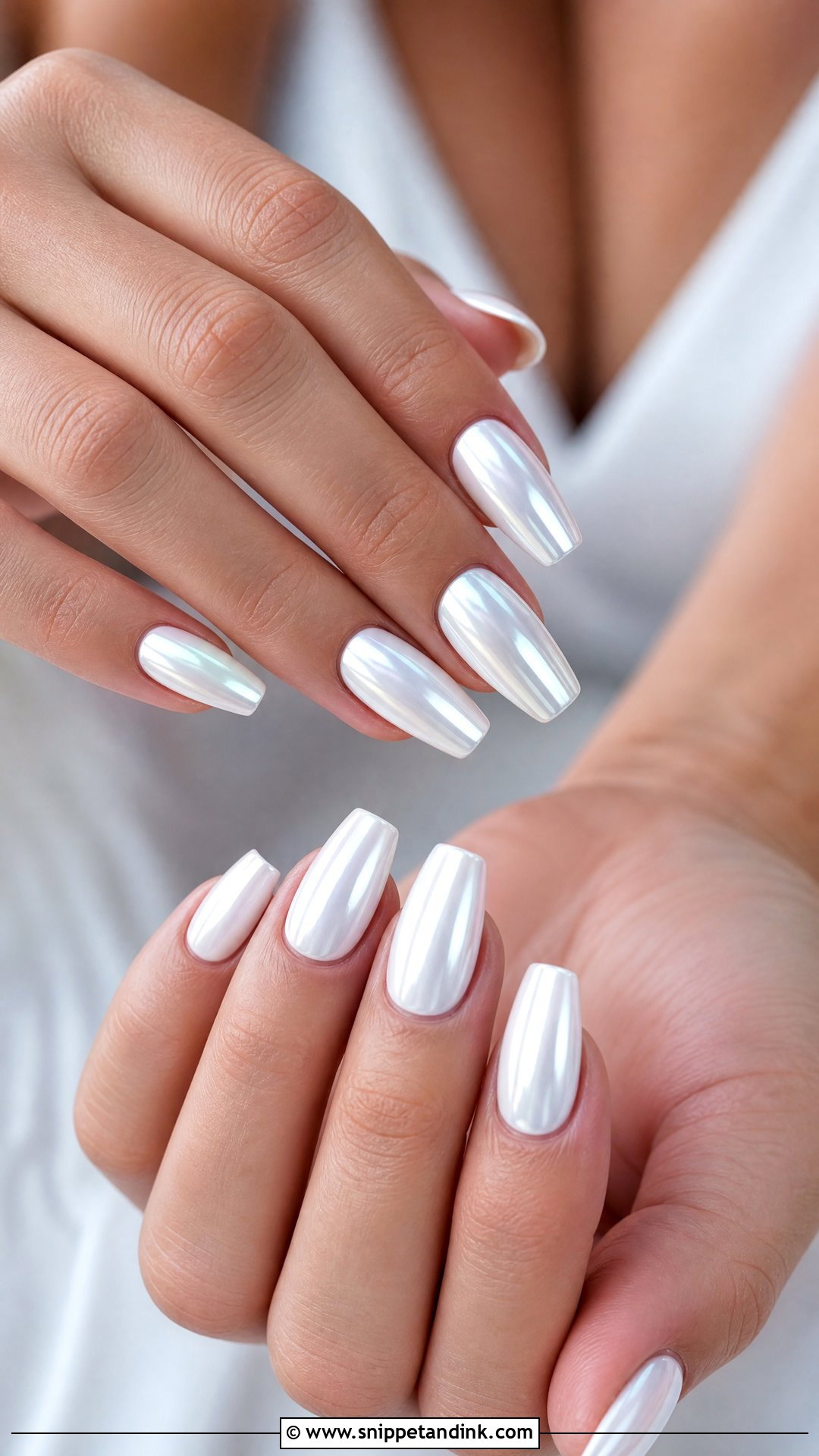
White chrome is milky white with a light layer of chrome powder, which gives a smooth sheen rather than a metallic mirror. I keep the powder light for brides; overloaded, it turns silver and harsh under flash. It sits well with structured gowns and satin. Almond and ballerina shapes carry it best because the curved surface reflects light evenly; a flat square nail can show a hard glare stripe across the middle.
10. Lace Bride Nails
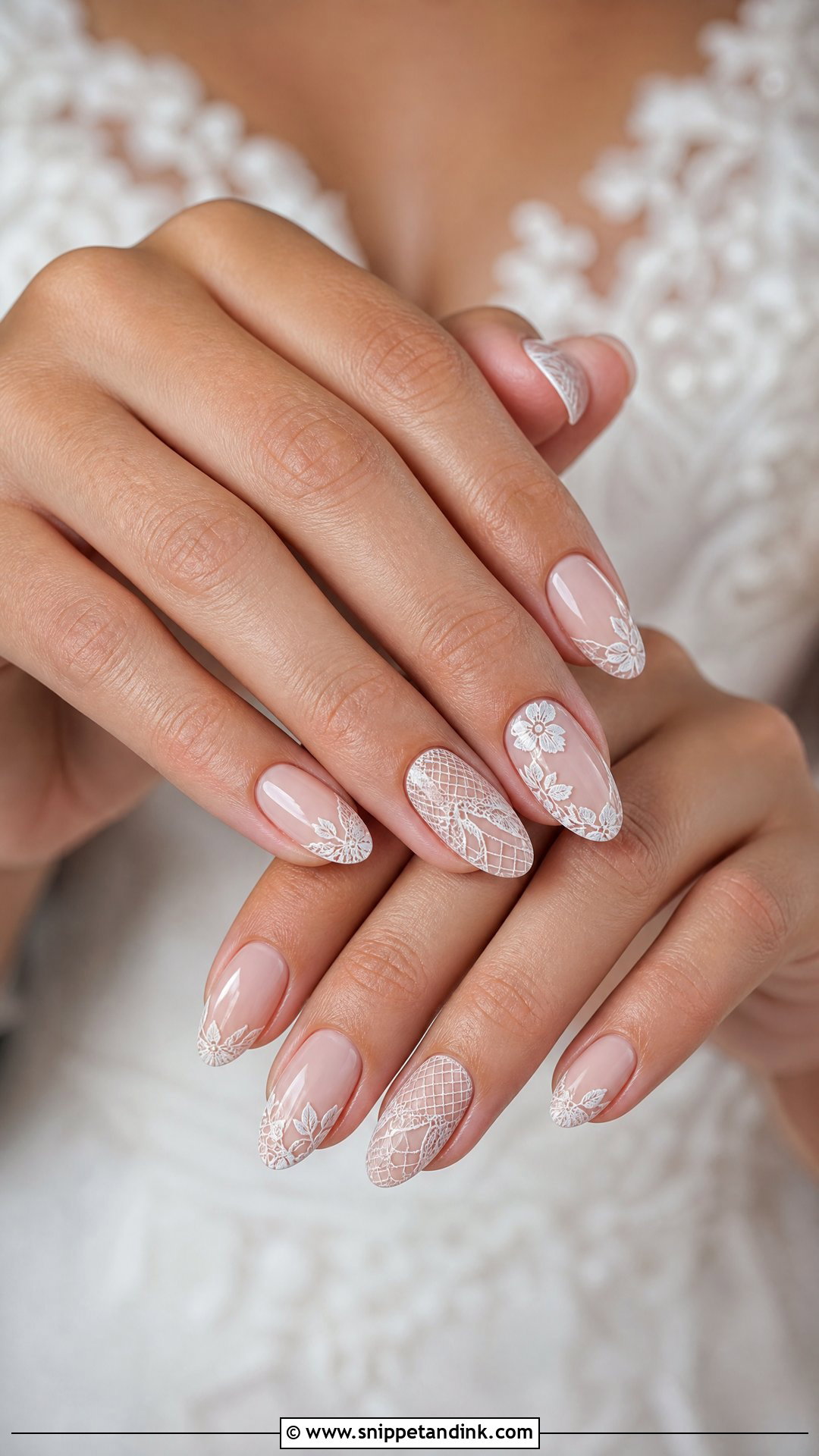
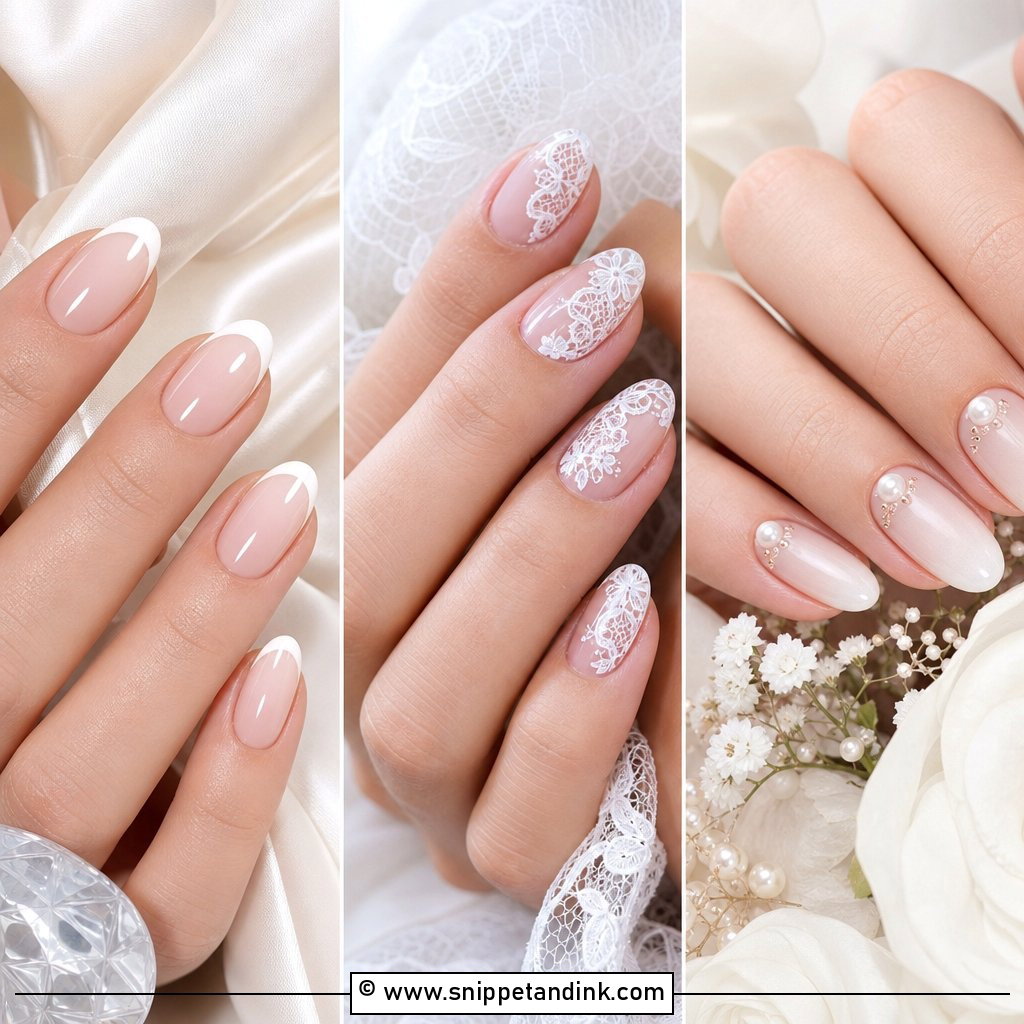
Lace nails are hand-painted with a fine liner brush or applied with lace-effect decals, and I’ll be honest that the hand-painted version takes time, so book a longer slot. The idea is to echo the pattern of your sleeves or embroidery, not copy it stitch for stitch. Bring a photo of the lace itself. Keep it to one or two accent nails over a sheer base; ten fingers of lace looks busy next to an actual lace dress.
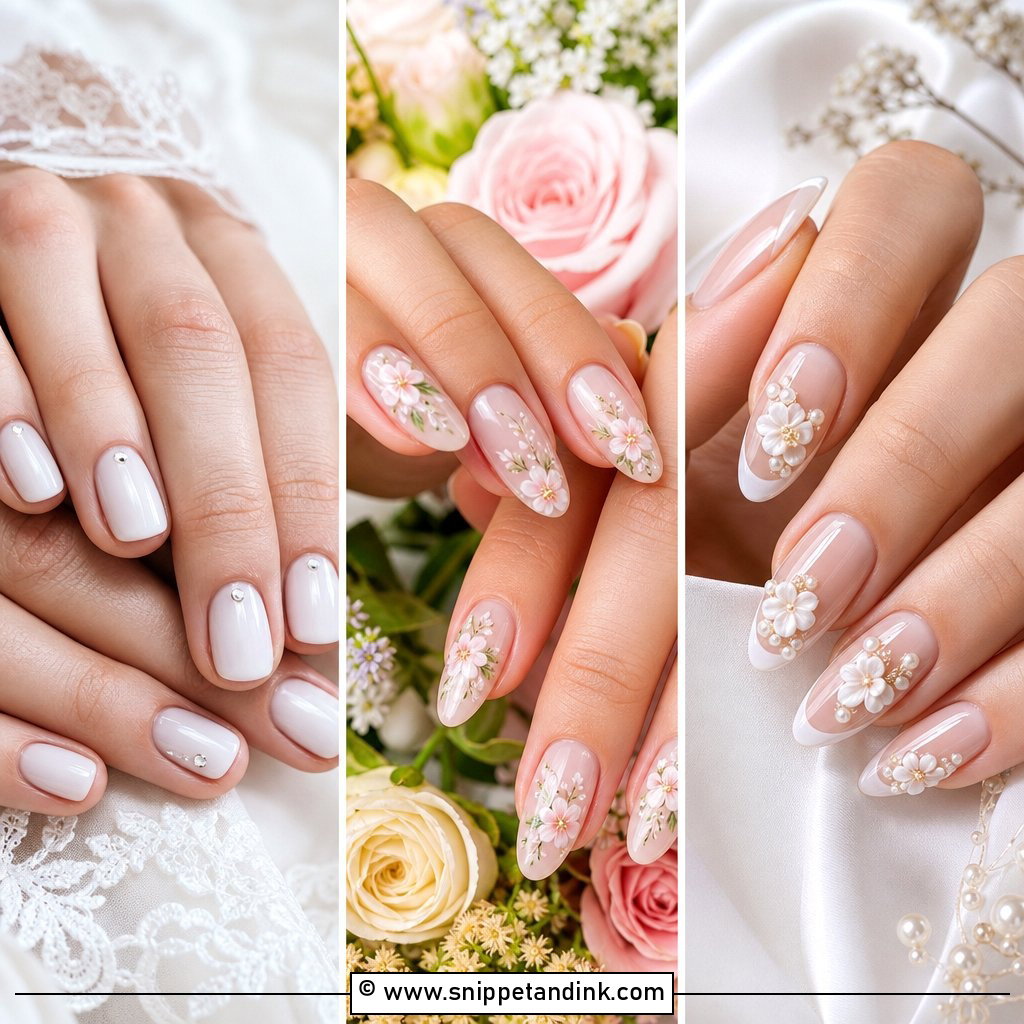
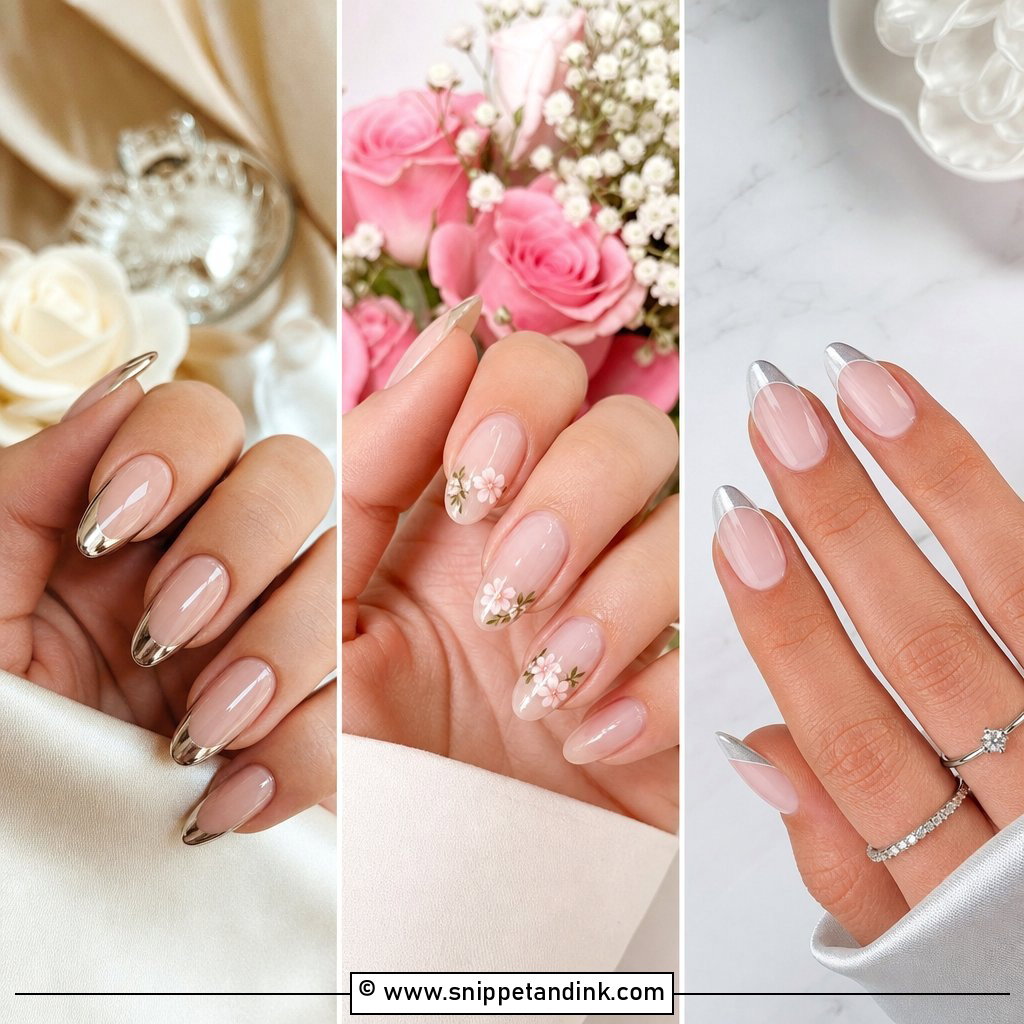
11. Floral Bride Nails
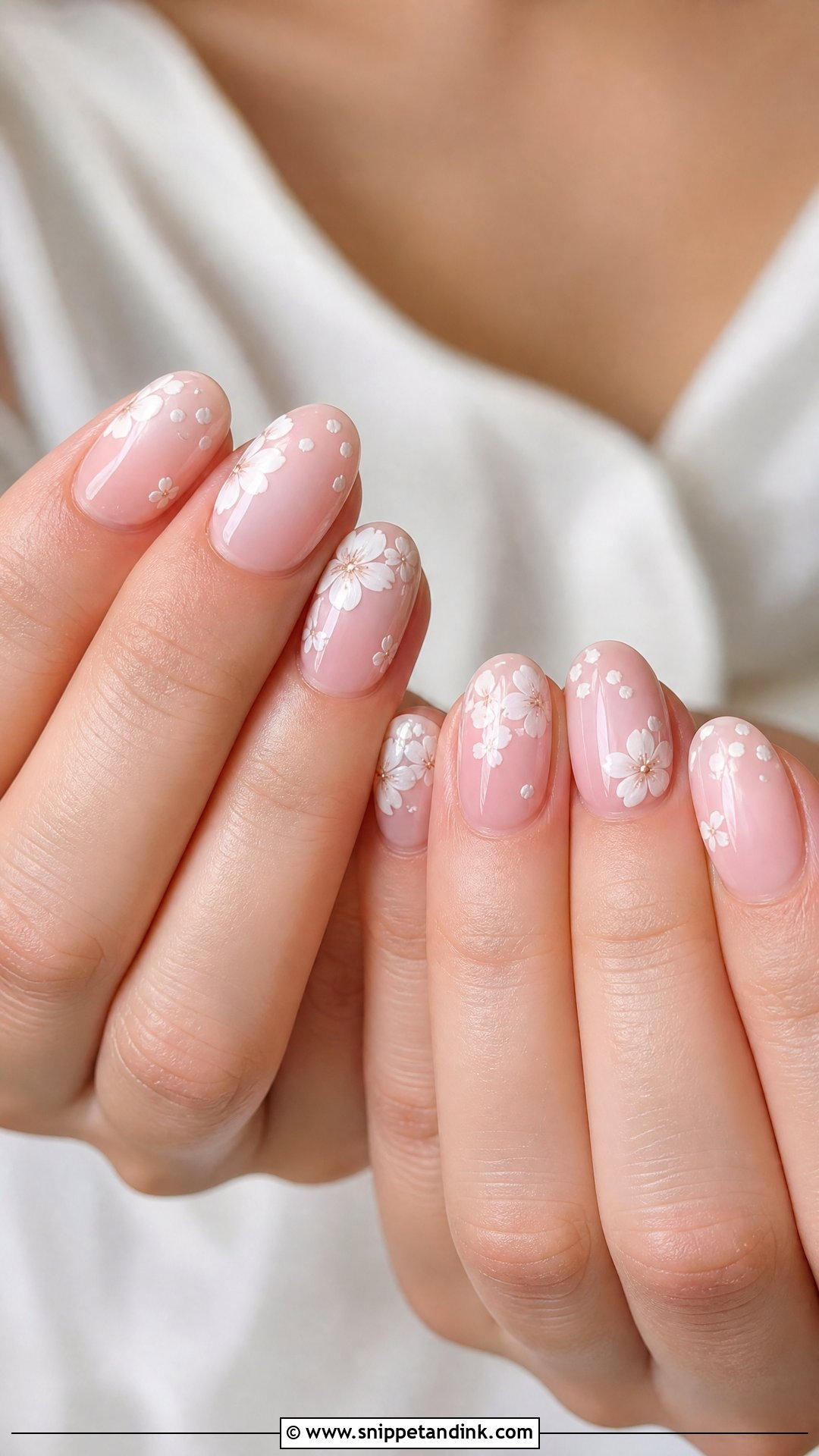
Small hand-painted blossoms, pressed dried flowers set in gel, or a few dotted petals all sit happily on a sheer pink, nude or milky base. Pressed flowers need a thick enough layer of gel over them to stay flat, so expect those nails to be slightly raised. I keep blooms tiny and leave space around them, otherwise the set competes with your bouquet. Two accent nails is plenty for most brides; scattered micro florals across all ten suit garden weddings with a looser feel.
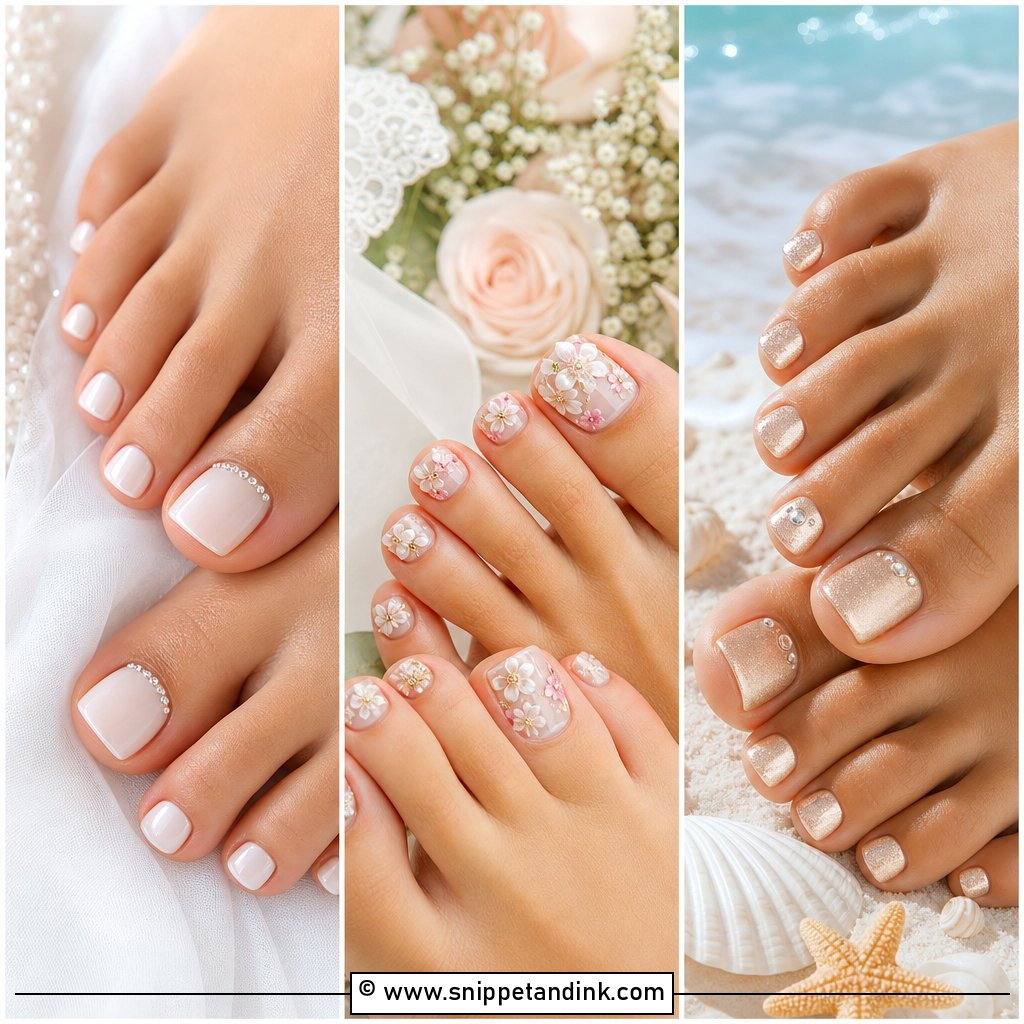
12. Pearl Accent Bride Nails
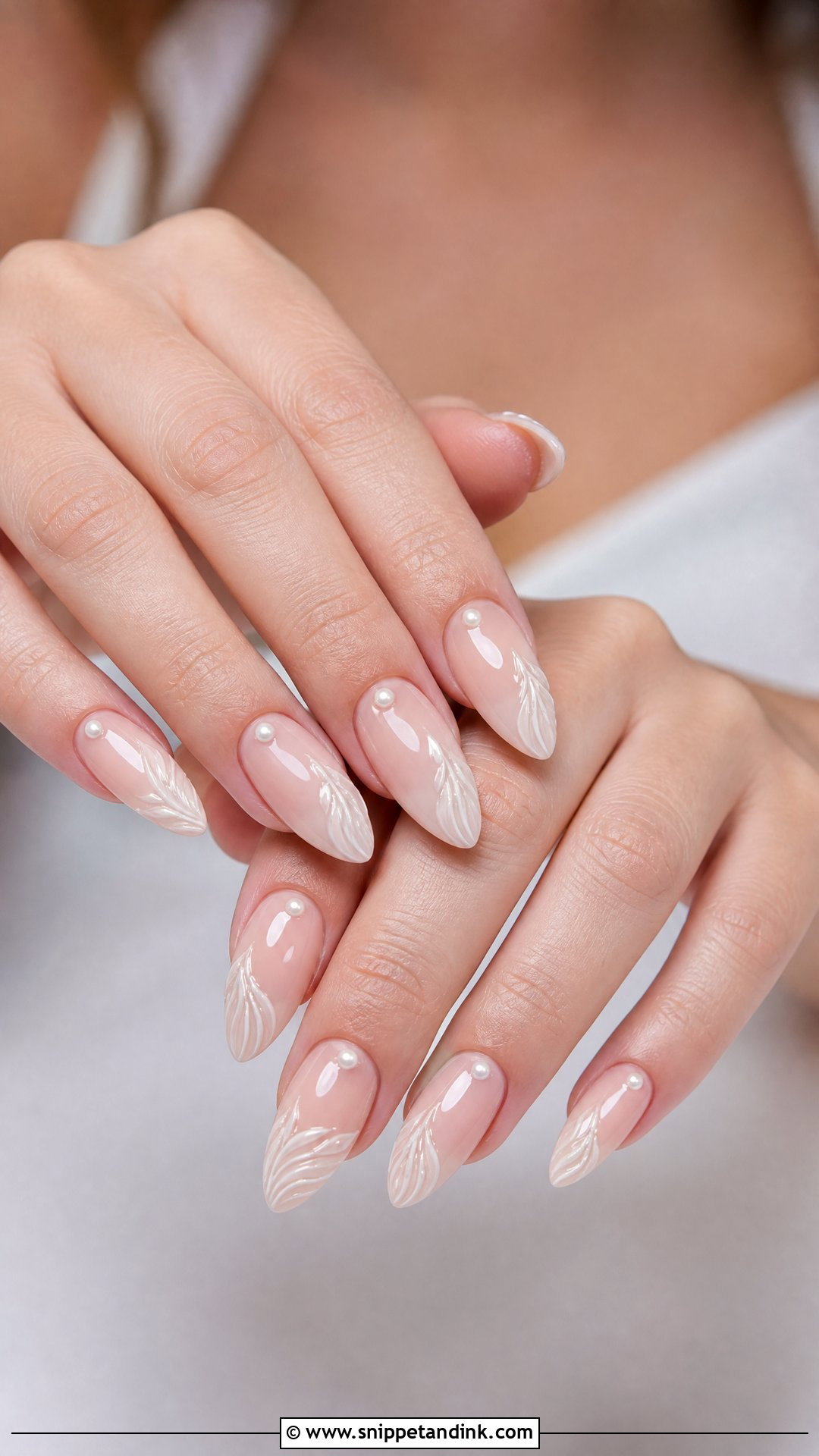
Pearl accents are tiny half-pearls pressed into wet gel near the cuticle or along a French line, then cured and sealed around the edges. The trap with them is size: anything bigger than a few millimetres catches on tulle and lace and feels bulky when you hold hands. I place them where they won’t snag, usually close to the cuticle on the ring finger. They make the most sense when you’re already wearing pearl earrings or a pearl-edged veil.
13. Glitter Ombré Bride Nails
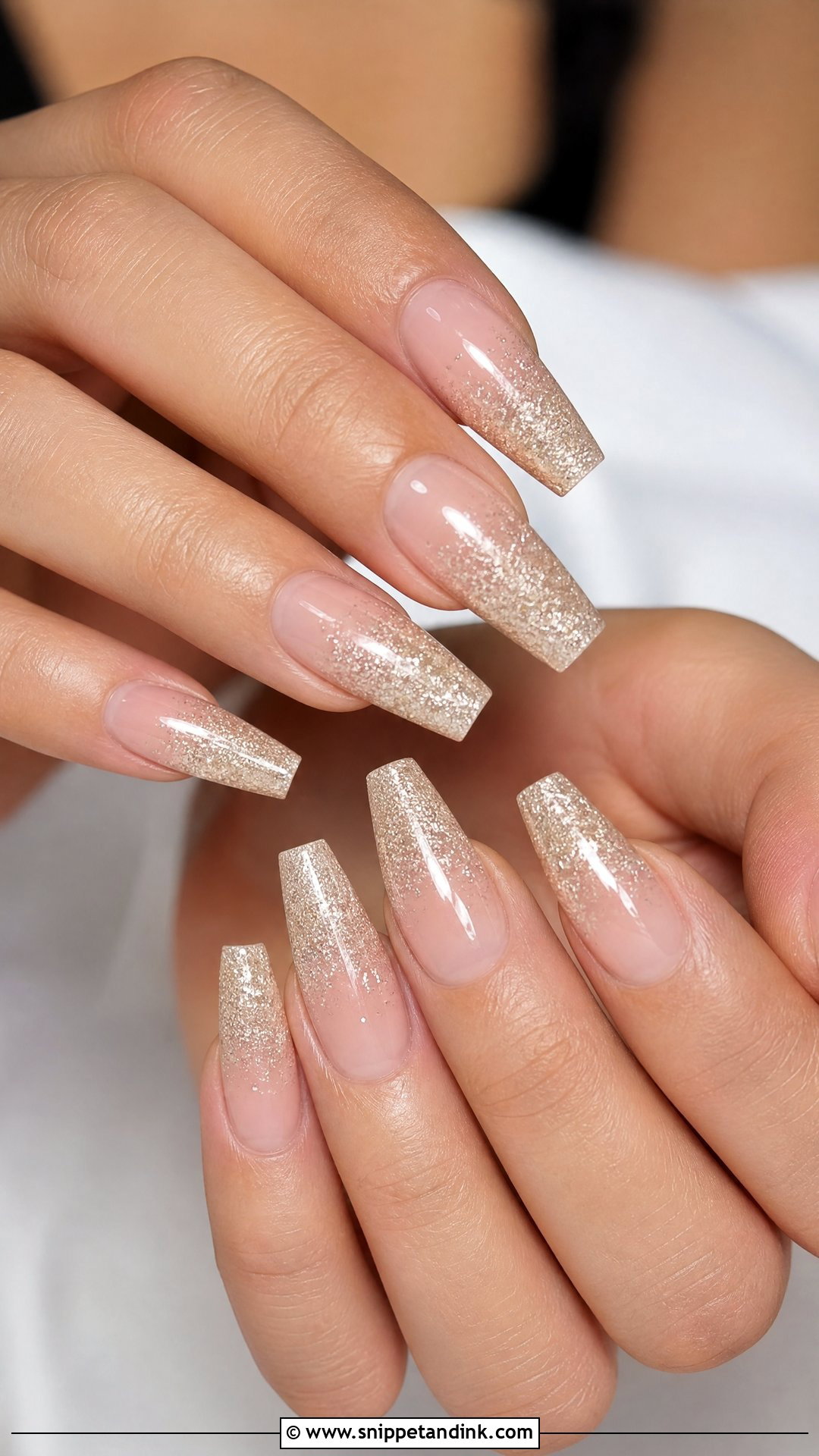
Glitter ombré bride nails fade fine shimmer from the tip or cuticle into a sheer base, so you get sparkle in photos without a full glitter nail. Choose fine or micro glitter; chunky pieces leave a gritty surface and are harder to remove after. Silver, champagne, pearl and rose gold all read as bridal. It needs some nail length for the fade to look gradual, so medium almond, oval or coffin works better than very short nails.
14. Gold Accent Bride Nails
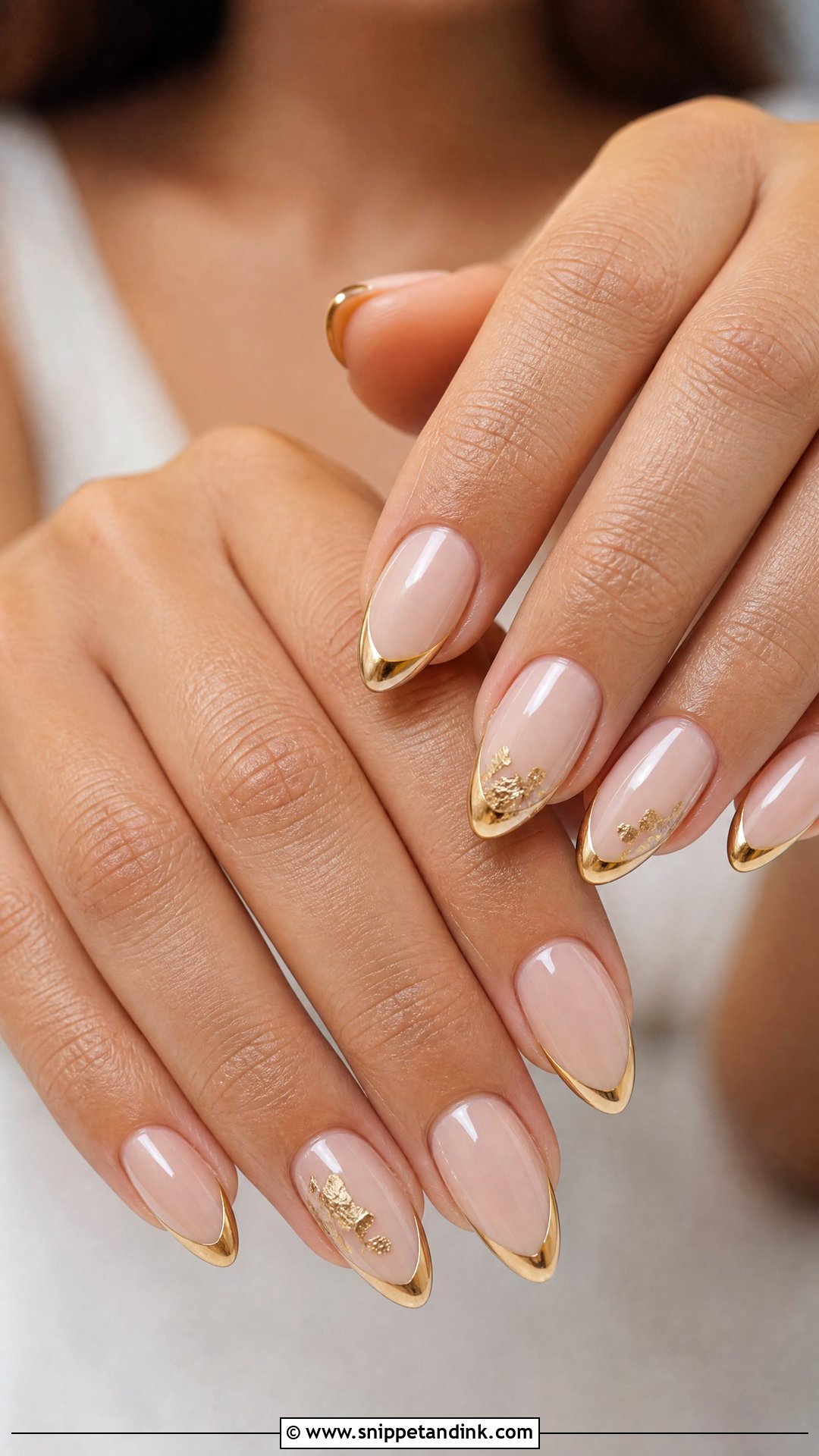
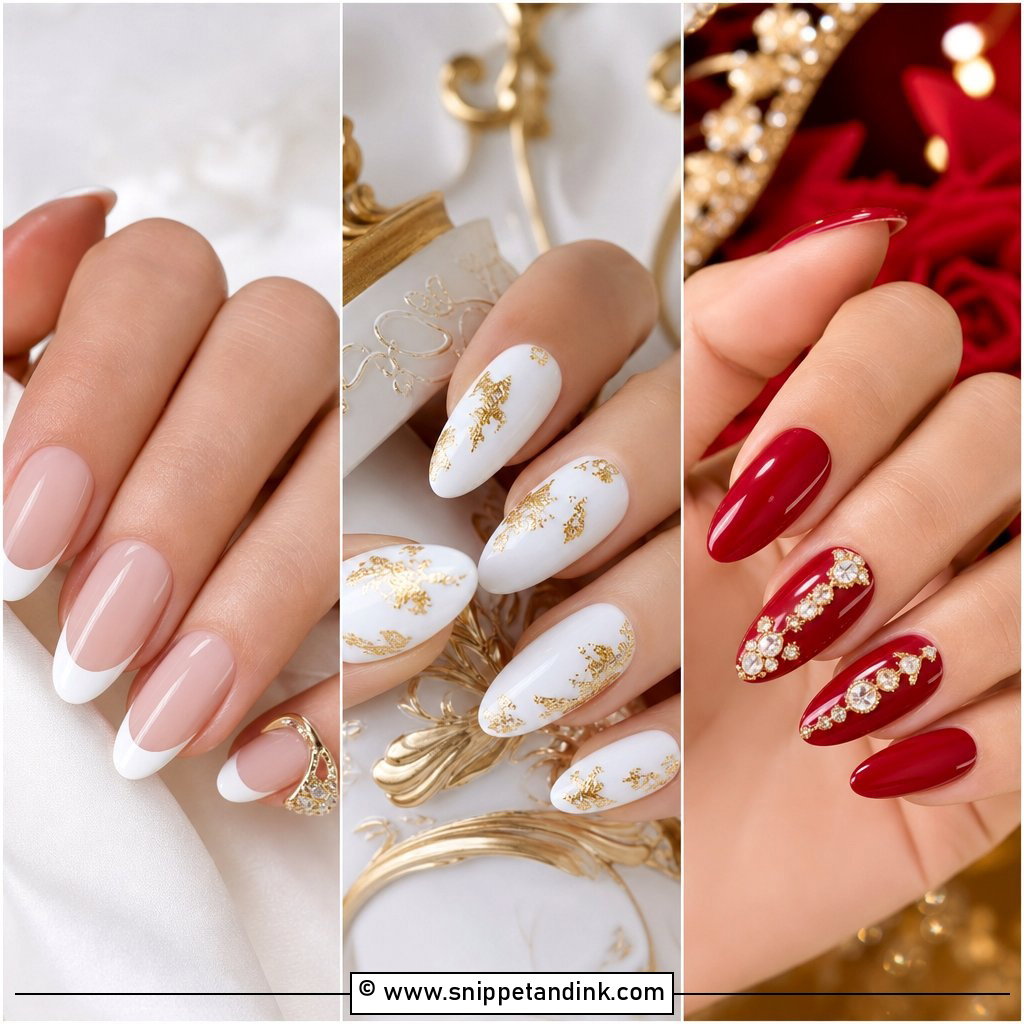
Gold accents look richest next to yellow gold rings and champagne or warm ivory gowns. Options range from a fine gold French line to a few foil flakes or a thin cuticle stripe. Foil is the one I’d watch: if it isn’t fully encapsulated in top coat, the edges lift and catch hair. I keep the gold to a thin line or a few flakes on accent nails over nude or milky white, which is enough to tie the set to your ring without turning it into party nails.
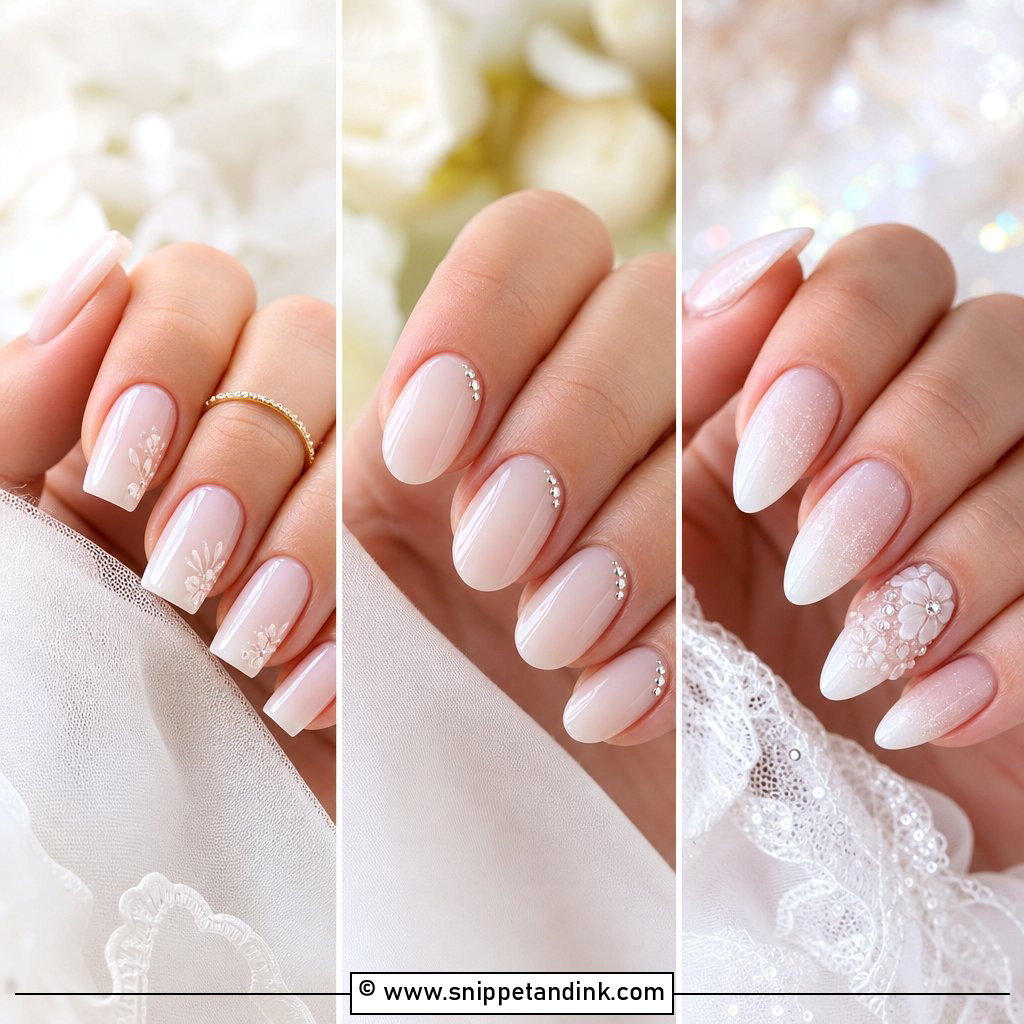
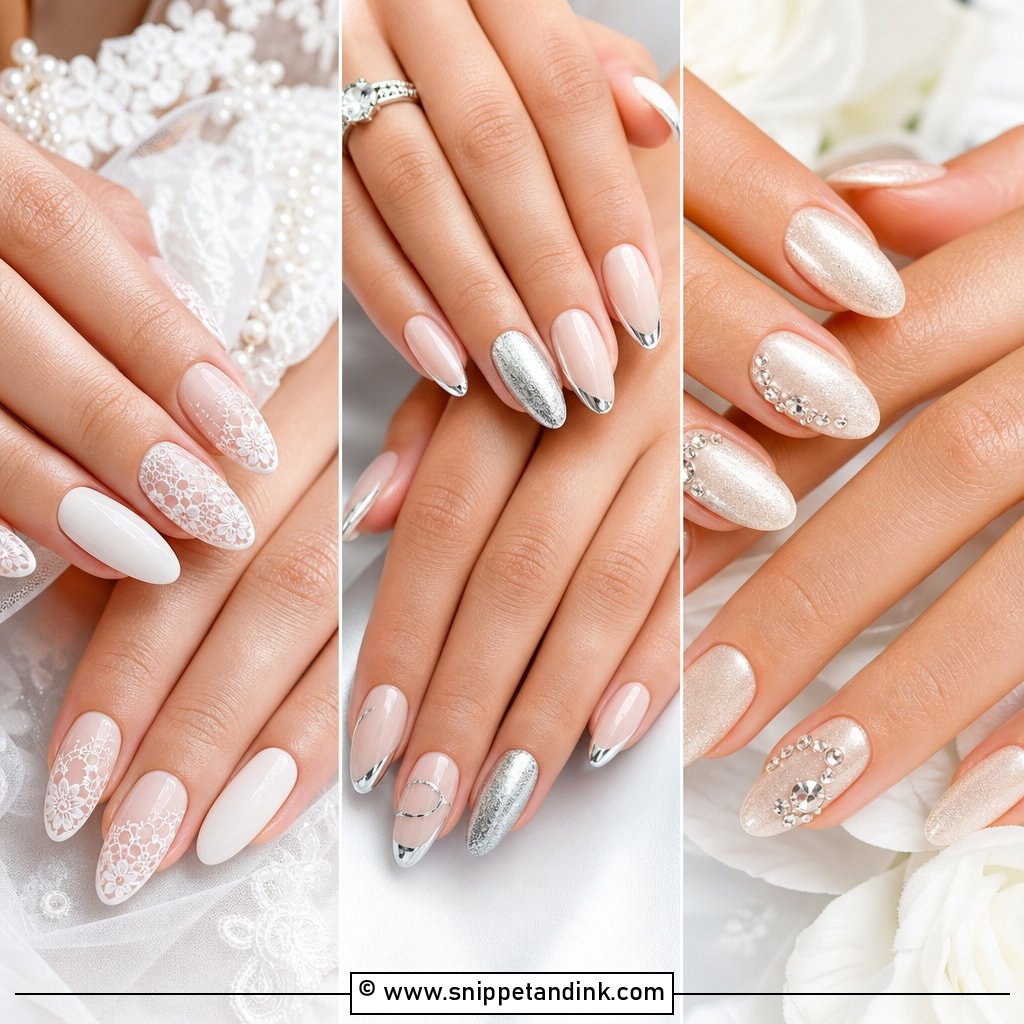
15. Silver Accent Bride Nails
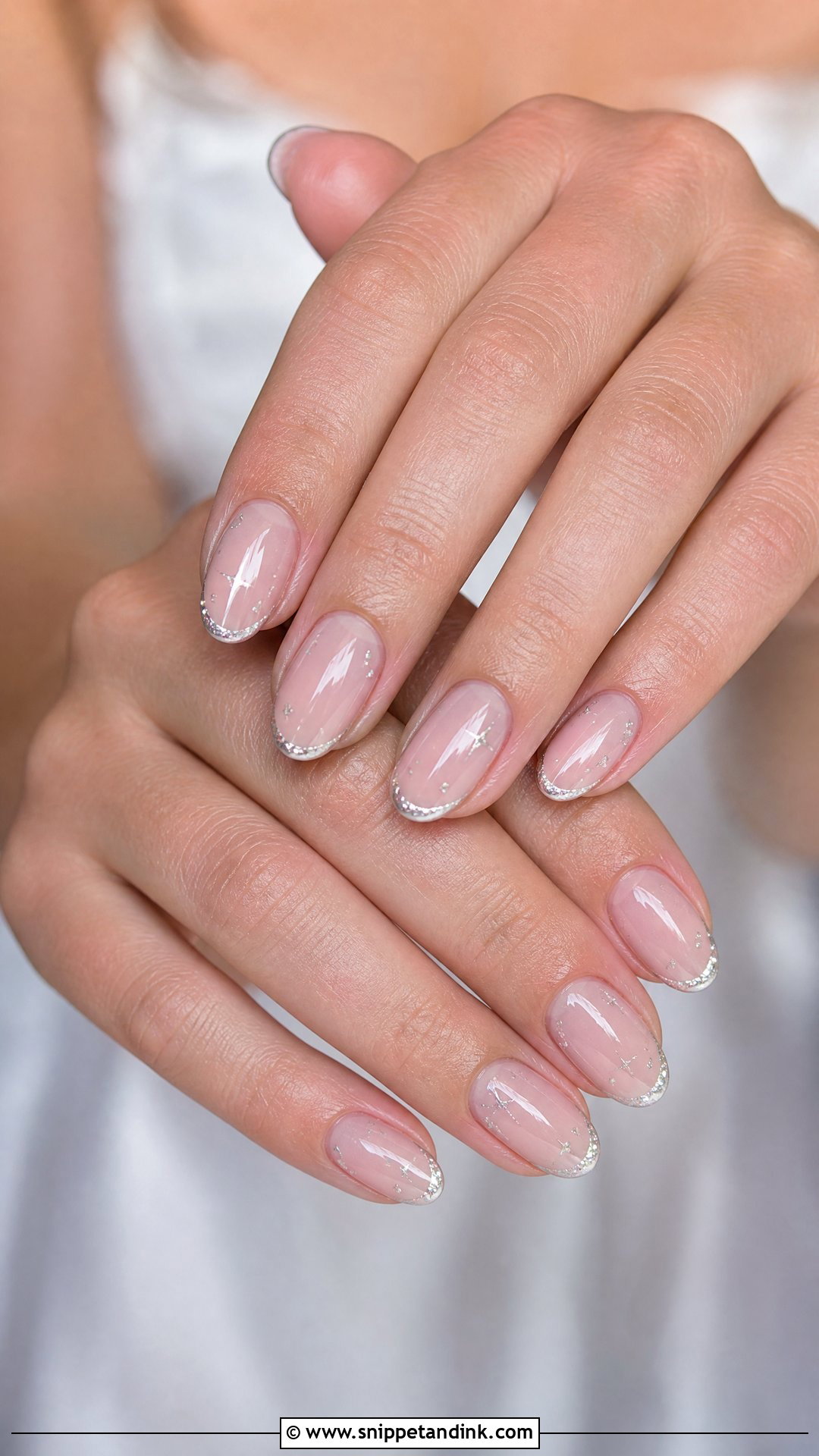
Silver suits platinum, white gold and diamonds, and it’s brighter under winter light and in modern, cool-toned venues. A silver micro French tip or a single chrome line over sheer pink keeps it soft. Thick silver blocks look dated fast. If your dress has crystal beading, a few silver accents pick that up nicely in close-ups.
16. Almond Bride Nails
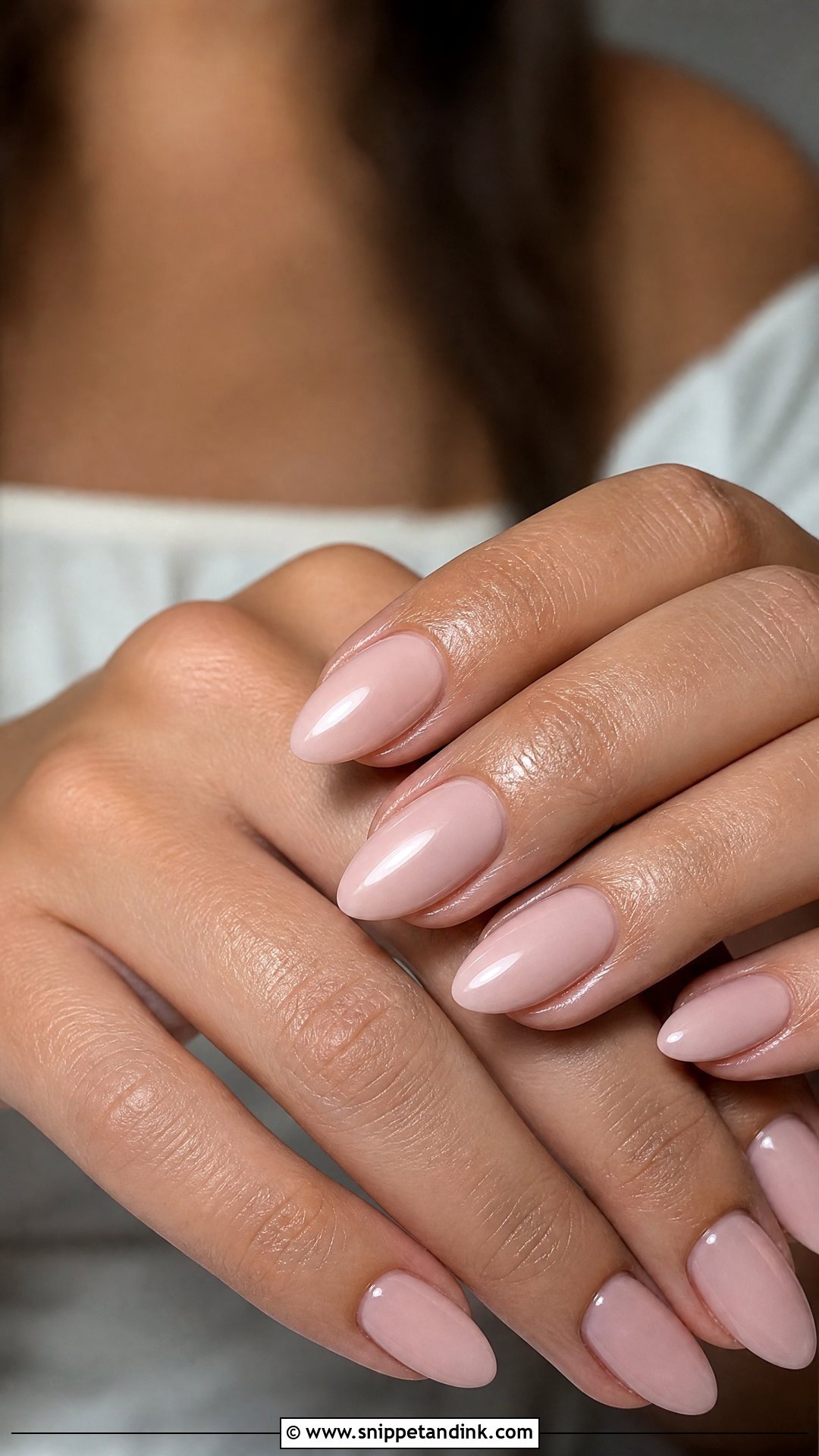
Almond bride nails taper gently to a rounded point, which lengthens fingers without the risk of a sharp tip snagging a veil. It’s the shape I suggest most often for first-time extension wearers because it’s sturdier than stiletto and easier to live with than a long coffin. Medium length is the safe choice if you’ve never worn extensions: you’ll still be able to do up earrings and buttons. Almond takes French, chrome, florals and ombré equally well.
17. Short Bride Nails
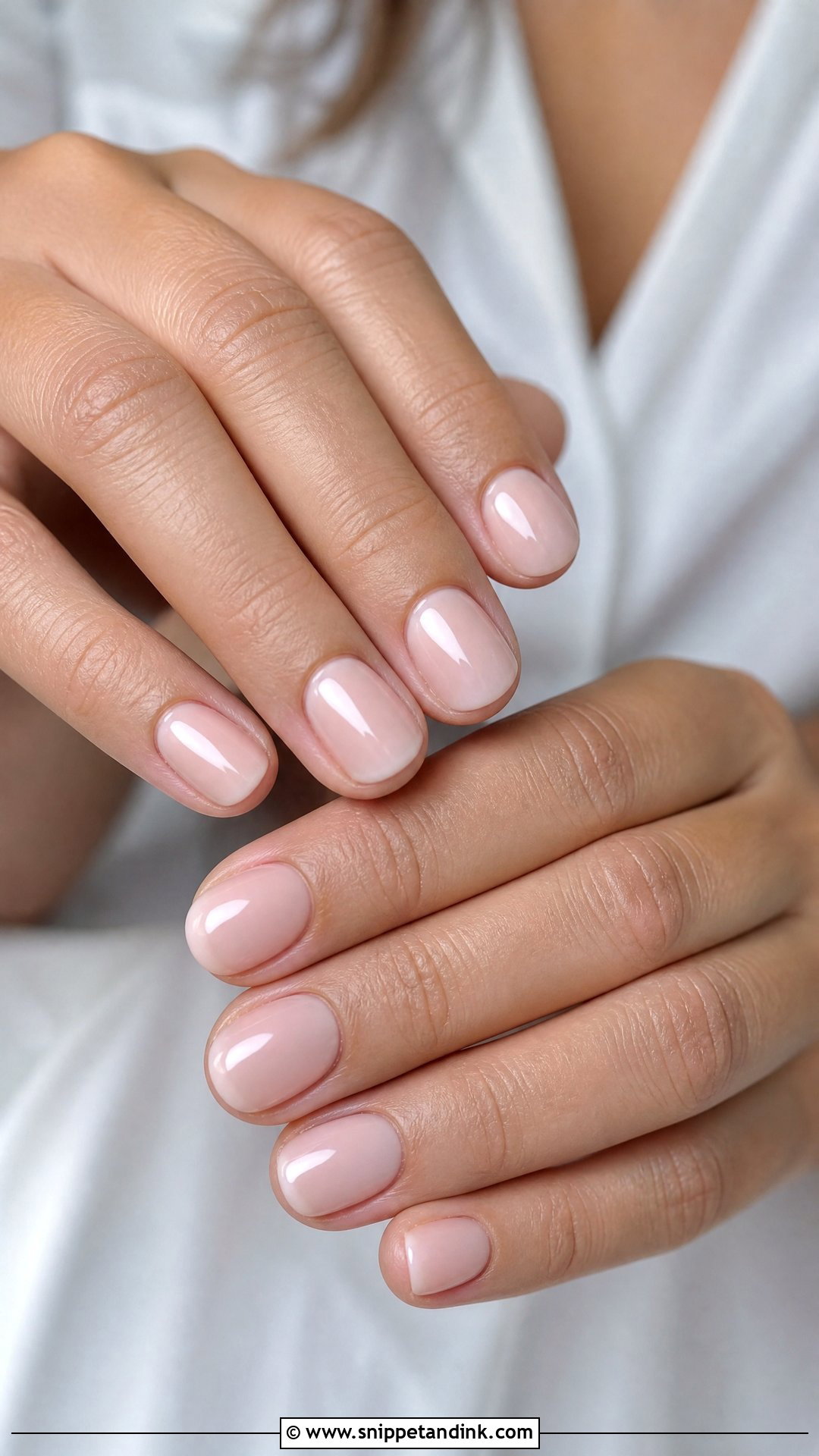
Short nails can look every bit as finished as extensions; what matters is cuticle work and shape. Soft square, round and squoval suit short lengths, and so do sheer pink, milky white, nude and micro French. I’d spend the appointment time on a careful cuticle clean-up instead of length, since ring shots show the skin around the nail as much as the nail itself. Short sets are also the easiest for getting dressed and pinning on jewellery.
18. Square Bride Nails
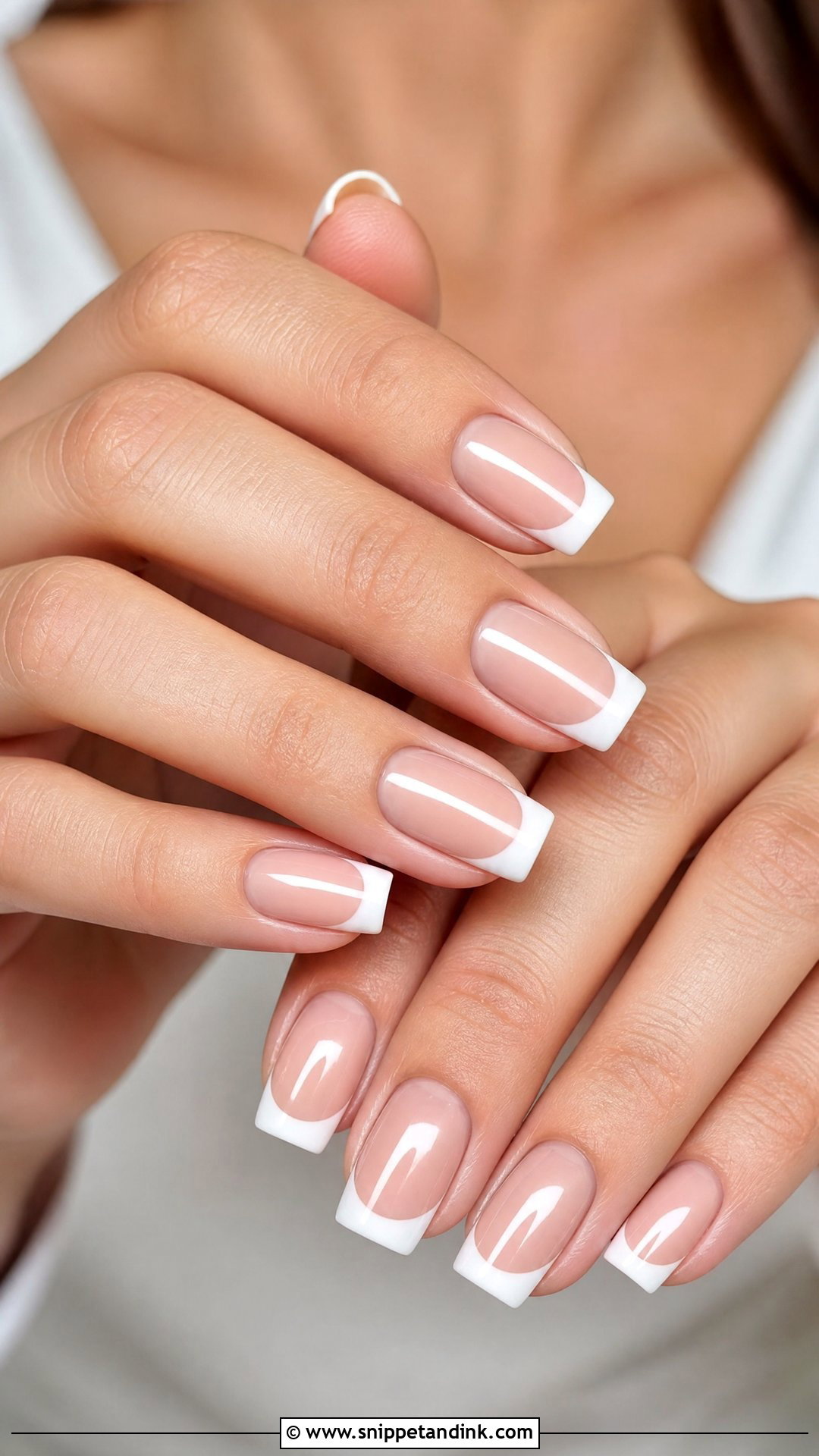
A square shape makes polish lines look crisp, which is why it pairs so well with French tips and solid nudes. The corners are where it fails: sharp square edges catch on lace and chip on a long day. I always soften them slightly, and if you have narrow nail beds I’d steer you towards squoval, because a hard square can make slim fingers look wider at the tip.
19. Coffin Bride Nails
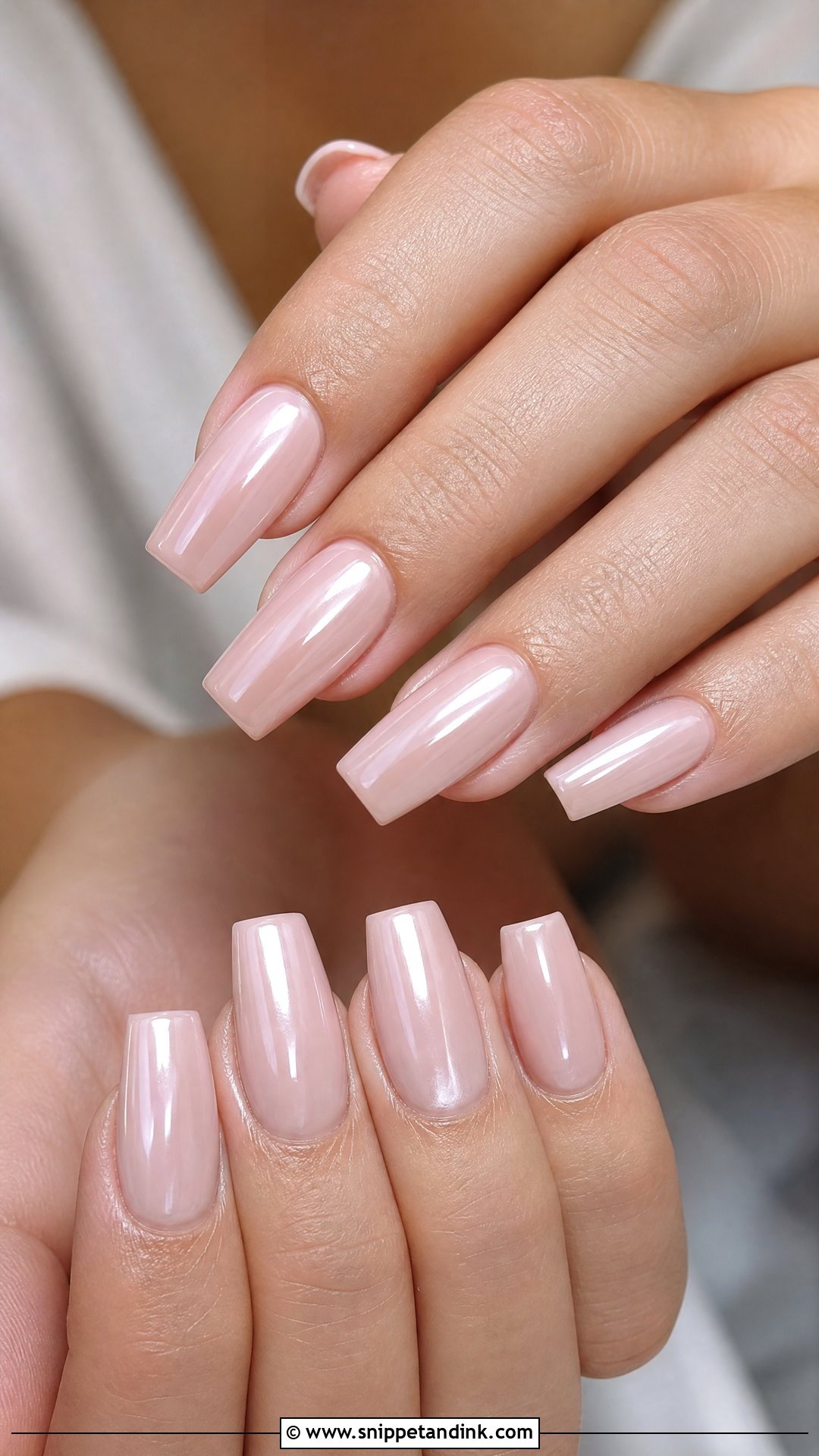
Coffin nails give you a longer, flatter canvas for ombré, chrome, pearls or lace. They are also the shape most likely to snap at the corners if the length runs too long, since the flat tip takes every knock. I’d keep them medium, use builder gel or a well-fitted extension, and stick to soft tones like milky white, blush or champagne shimmer so the length reads as polished, not clubby. They sit well with sleek updos and modern gowns.
20. Oval Bride Nails
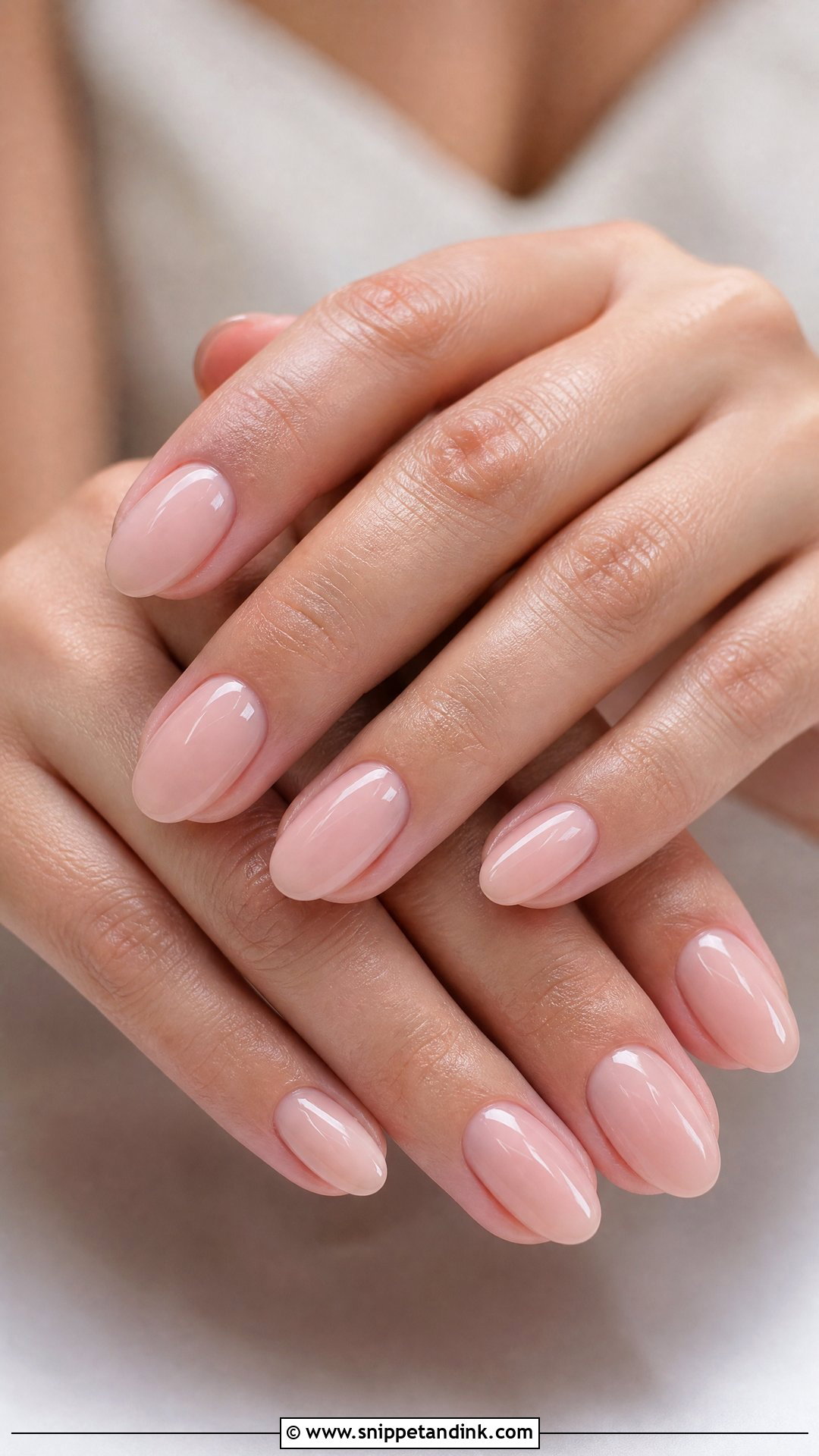
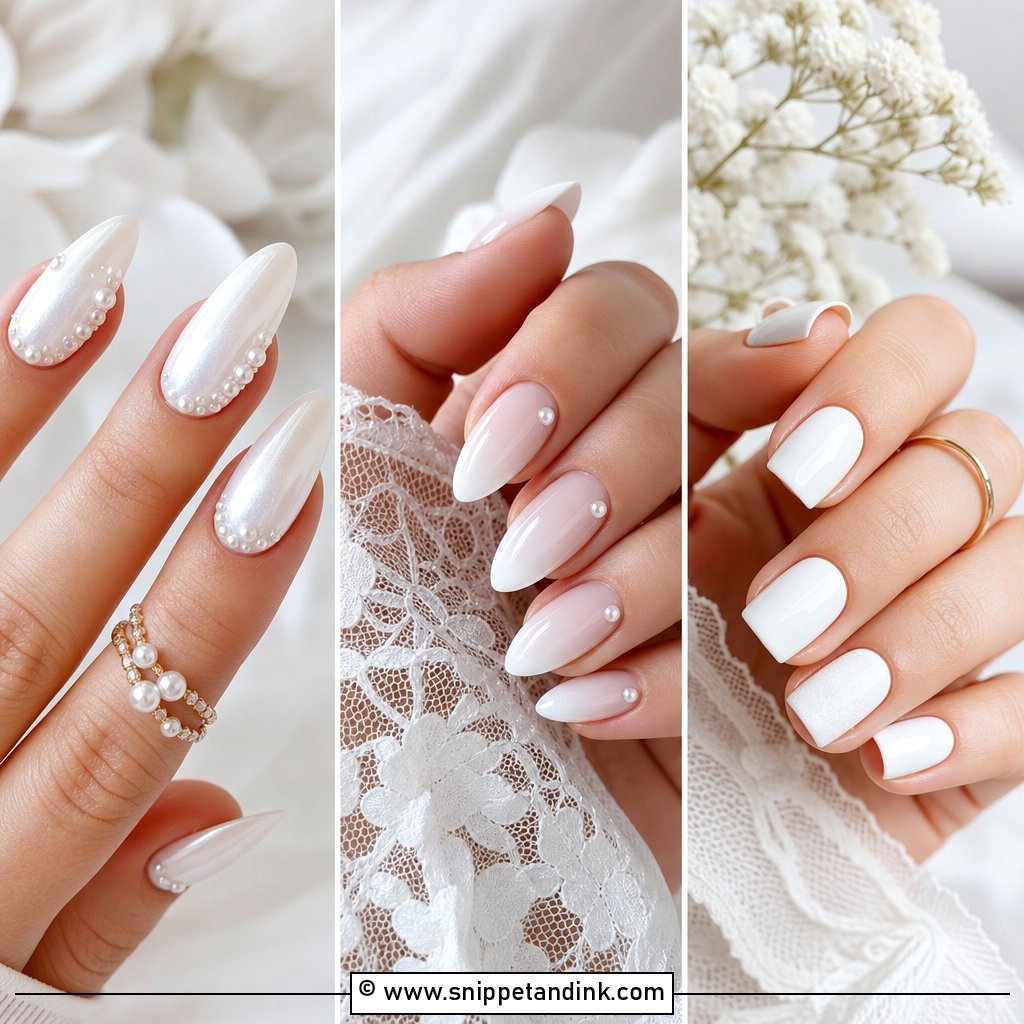
Oval follows the natural curve of the fingertip, so it suits almost every hand and won’t date in the photos. It’s also the strongest shape for natural nails: with no corners there’s less to catch on fabric or break. Sheer pink, milky white, nude, French tips, pearl chrome and small florals all work on it. Short to medium length with a high gloss is where I’d keep it.
21. Minimal Bride Nails
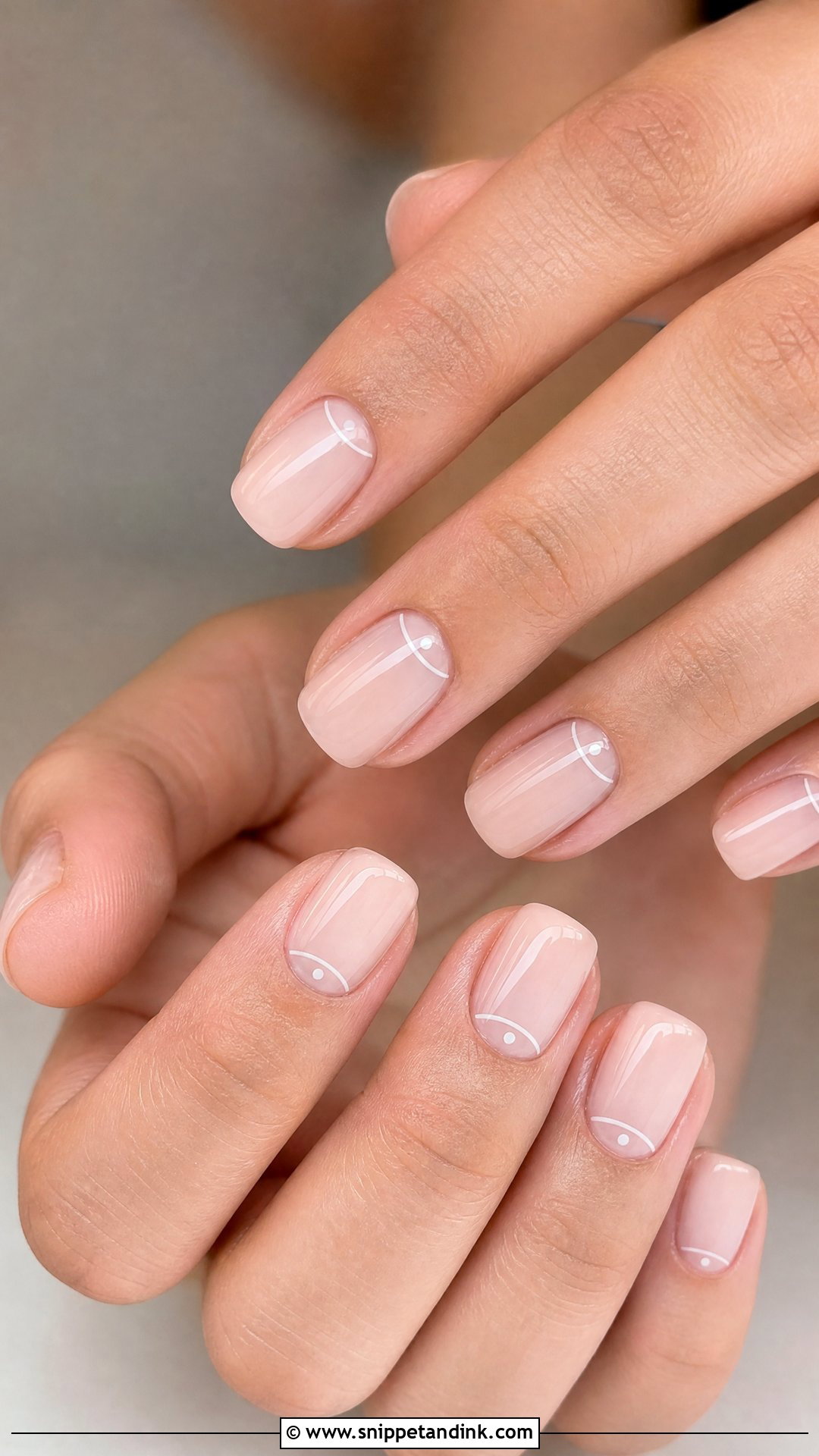
Minimal sets look simple but leave nowhere to hide. With a sheer base and one tiny dot or line, every bump in the polish and every lifted cuticle shows, so I spend most of the appointment on prep and a perfectly level surface. That restraint pays off with heavily beaded or lace gowns, where an ornate manicure would fight the dress. Start with a shade close to your natural nail tone, then add a single detail if you’d like.
22. Rhinestone Bride Nails
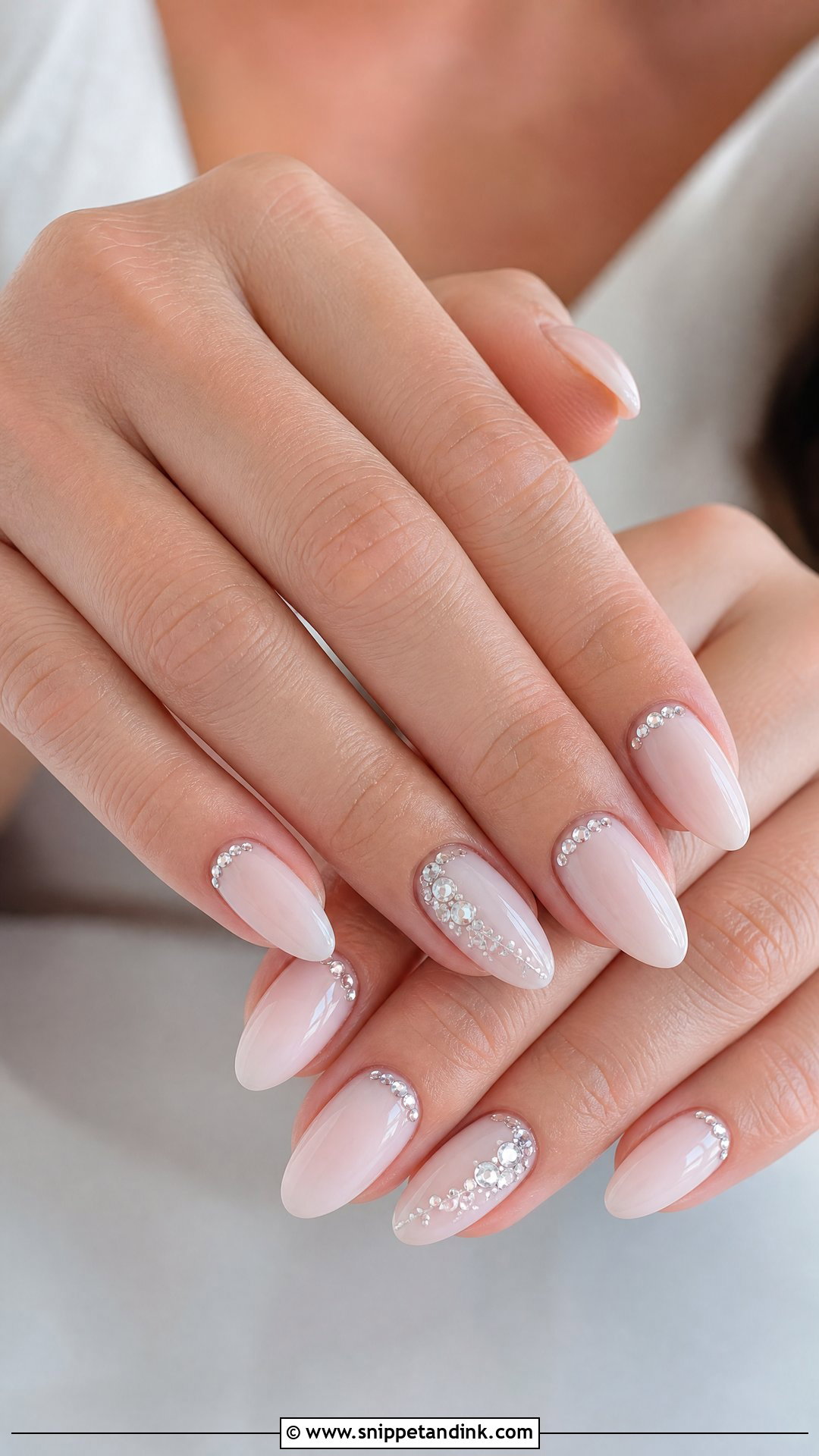
Rhinestone bride nails stay tasteful when the stones are small and placed with intent: near the cuticle, along one accent nail or on a French line. I use flat-back crystals set into a thick gel and seal around the base so they don’t pop off in the first hour of hugging guests. Larger stones pull on veils and fine knits, so keep them tiny. Over a sheer pink, nude or milky base they catch light in ring shots without looking flashy in full portraits.
23. Ivory Bride Nails
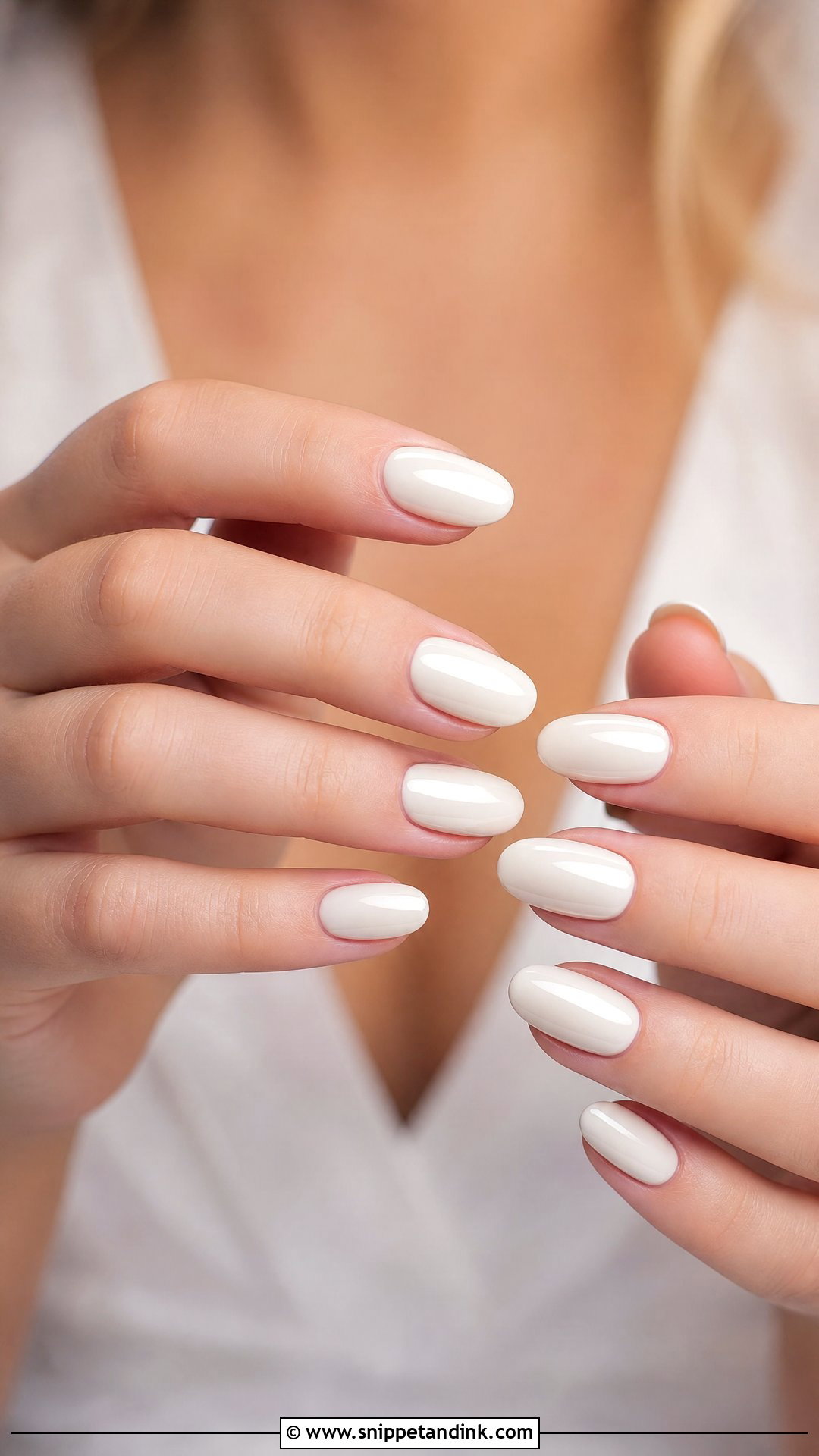
Ivory is my answer for brides who find bright white too stark against their skin, especially warm or olive undertones. Its creamy tone matches ivory, champagne and off-white dresses more closely than pure white, which can make a warm gown look yellow beside it. Wear it solid, as a French tip colour or under pearl chrome. It sits naturally with gold accents and warm bouquets.
24. Cat Eye Bride Nails
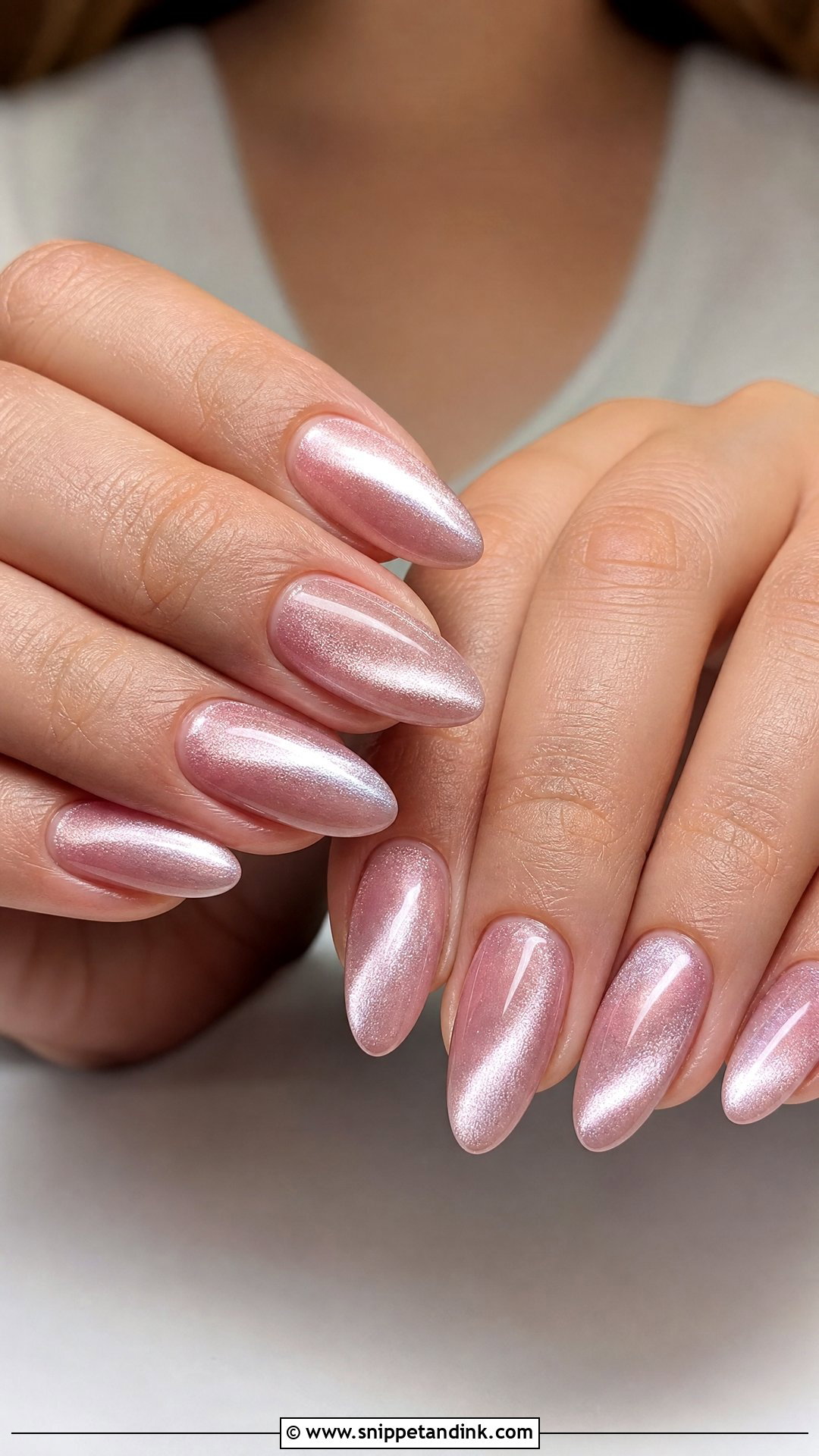
Cat eye nails use magnetic polish: I hold a magnet over the uncured layer to pull the metallic particles into a soft line of light that shifts as your hand moves. For a wedding, choose a pale base like sheer pink, champagne, pearl or ivory and ask for a soft diagonal or centred glow rather than a high-contrast stripe. It’s at its best in candlelit receptions. Almond and oval shapes let the light follow the curve of the nail smoothly.
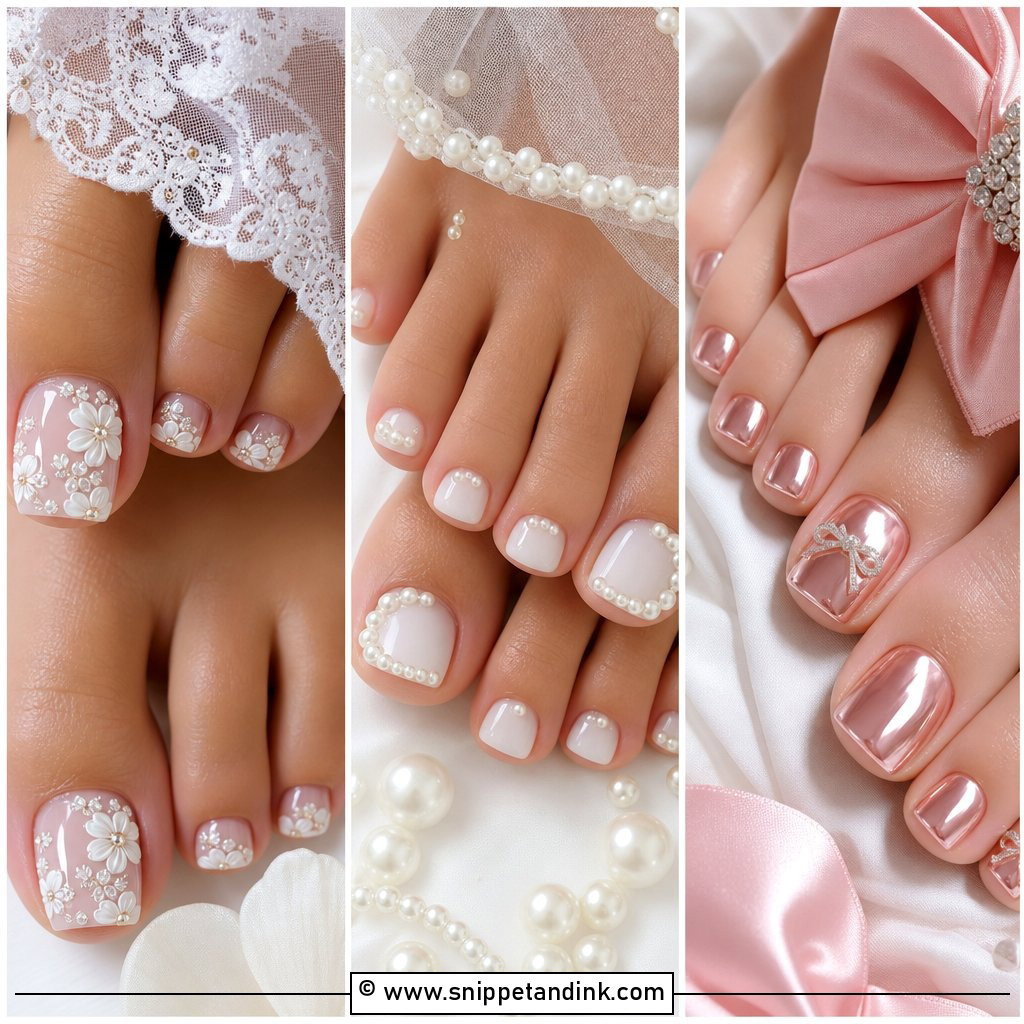
25. Something Blue Bride Nails
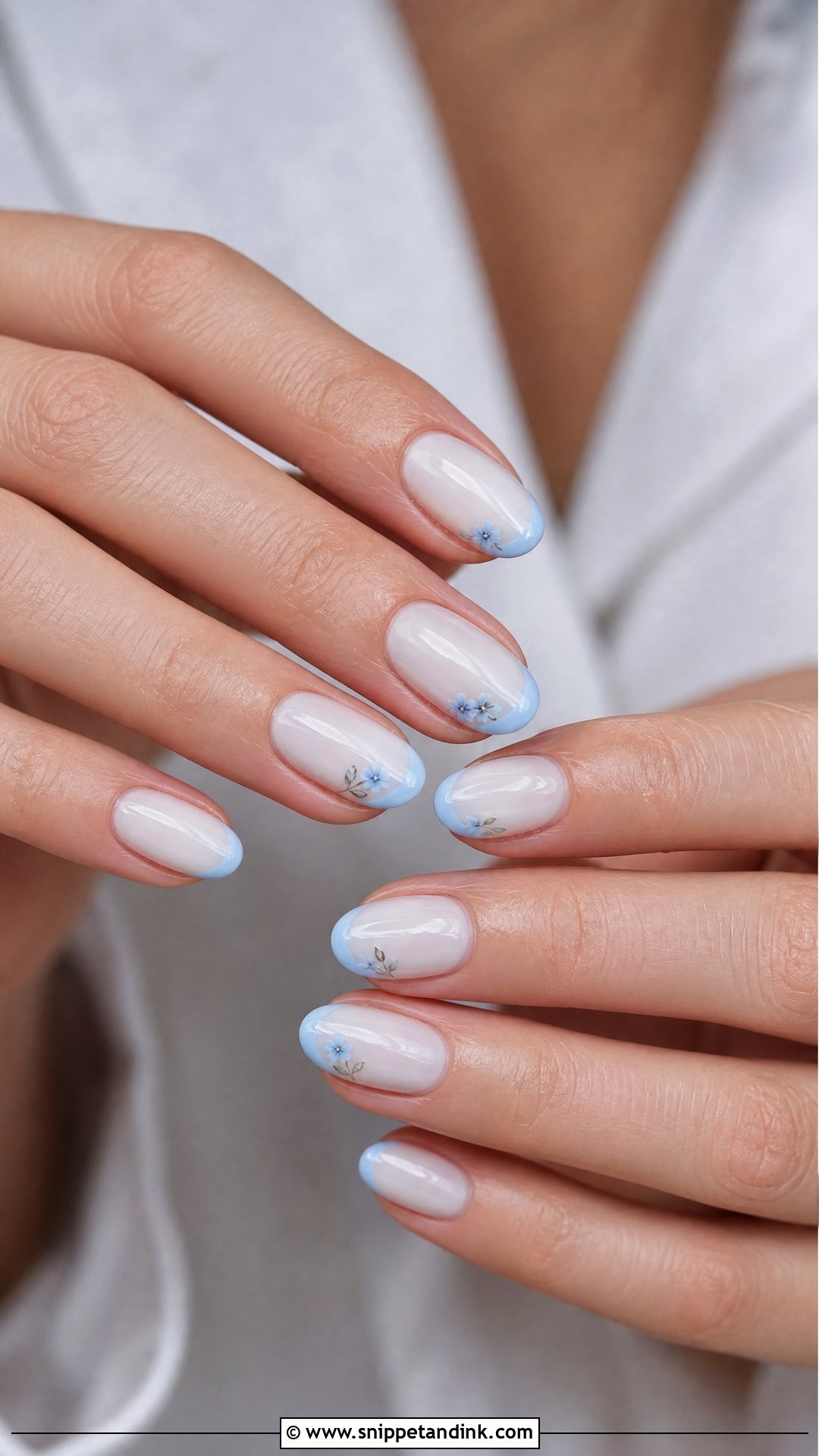
A something-blue detail is the most personal design here, and it can be as small as you like: powder blue tips, a pale blue flower, a few tiny blue dots, or a single blue accent only you know about. On a sheer pink or milky white base the blue stays delicate. I usually suggest the ring finger or the thumb, which shows up in ring photos without changing the overall look. It fits spring, beach and garden weddings especially well.
How a Bridal Manicure Holds Up From Dressing to the Last Dance
The hardest hour for your nails is the one before the ceremony: fastening buttons, pinning earrings, clutching bouquet stems wrapped in ribbon. That’s when tips chip and rhinestones catch. Let someone else do the hooks and the jewellery clasps if your set has any raised detail.
A small repair kit for the bridal bag
- A fine glass file for smoothing a chipped corner before it snags lace.
- A clear quick-dry top coat to seal a small crack on regular polish.
- Cuticle oil pen for hands that dry out after a day of handshakes and sanitiser.
- Nail glue only if you’re wearing press-ons, with one or two spare nails in your size.
On gel, don’t pick at a lifted edge. Once air gets under it, the lift spreads, so smooth it with the file and leave it until you can get it repaired. And remove gel properly after the honeymoon by soaking or filing, not peeling, because peeling takes layers of your nail plate with it and leaves them thin for months.
Matching Polish to Ring Metal and Skin Undertone
I always ask brides to wear their engagement ring to the appointment. A yellow gold band next to a cool, blue-pink nail can look slightly off, while warm nudes, ivory and gold accents sit with it naturally. Platinum and white gold are easier: they pair with milky white, sheer pink, silver details and pearl chrome.
For undertone, look at the veins on your inner wrist in daylight. Greenish veins usually mean warm skin that suits peach, caramel and ivory; bluish veins lean cool and suit rosy pinks and brighter whites. If you can’t tell, you’re probably neutral, and most of the sets above will work for you.
Bring Your Ring to the Nail Appointment
You’ll look at your hands more on your wedding day than on any other, so the set should feel like yours and survive the day. If you’re torn, start with sheer pink, milky white or a micro French, then add one detail you love, like pearls, a floral or a blue accent. Book a trial if you can, bring your ring and a photo of your dress fabric, and pick a length you can actually live with through dressing, hugging and dancing.
You'll Like These Ideas:


Leave a Reply