
Winter is the season I most enjoy styling brides, and the reason is practical: dry air. Curls set in December hold their shape far longer than the same curls in a humid July, so a detailed updo or a full set of waves has a real chance of lasting to the last song. The trade-off is static, flattened crowns from hoods and hats, and the frizz that appears when you step from a freezing car into a heated hall. The 20 winter wedding hair ideas below run from sculpted waves to braided crowns, and for each one I’ve noted how it actually behaves in the cold and who it suits.
How Cold Air, Coats and Heated Rooms Change a Bridal Set
Winter doesn’t just change the mood of a wedding; it changes how hair behaves through the day. I plan every winter style around three things that summer brides never have to think about.
Static from dry air and wool
Low humidity is the reason curls hold, and it is also the reason fine hair lifts and clings to a wool coat. I prep with a leave-in conditioner rather than relying on spray alone, and I keep an anti-static sheet in my kit to smooth stray strands without disturbing the set. If you have very fine hair, an updo is often the calmer choice in January.
The cold-to-warm step
Walking from snow into a heated venue can leave a fine mist on the hair, and that moisture is what puffs a smooth finish. It passes in a few minutes. I ask brides to wait a moment inside the door before any touch-ups, then smooth with a soft brush instead of adding more product.
Hats, hoods and fur collars
A hood pressed onto a crown style will flatten it. If you plan to wear a cape, hood or faux fur stole, tell your stylist at the trial and bring the piece. A low bun or chignon sits below the collar line; a high ponytail or volume at the crown does not.
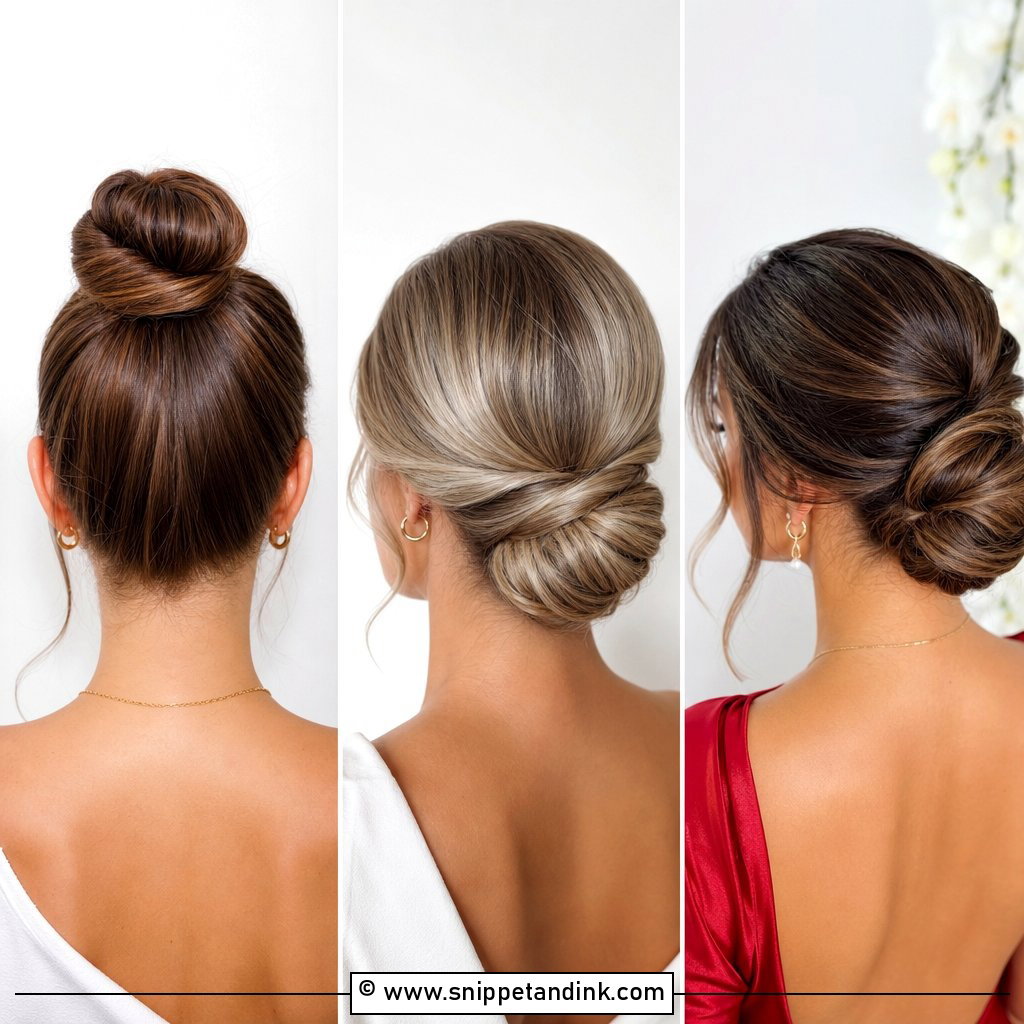
1. Classic Low Chignon
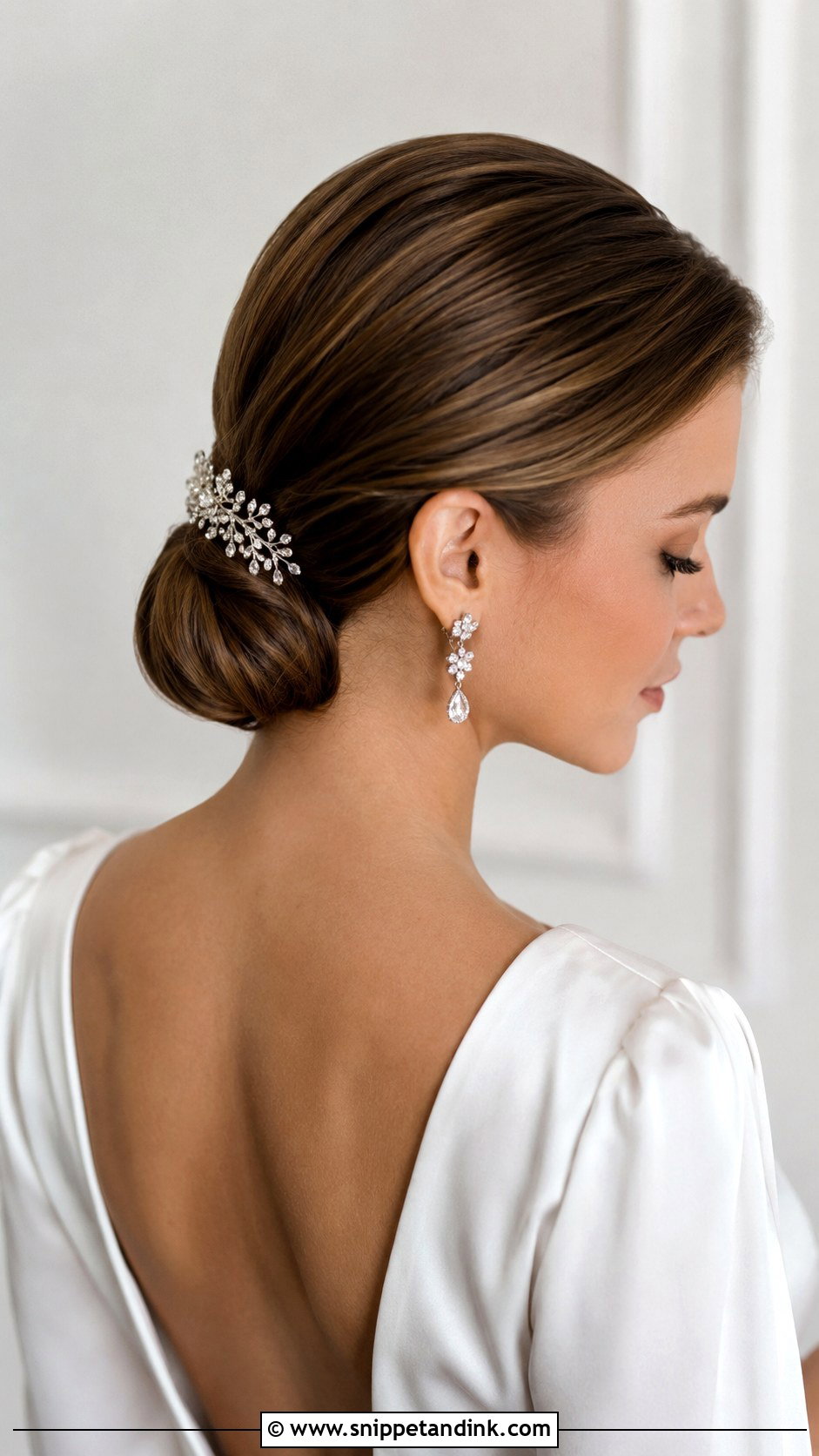
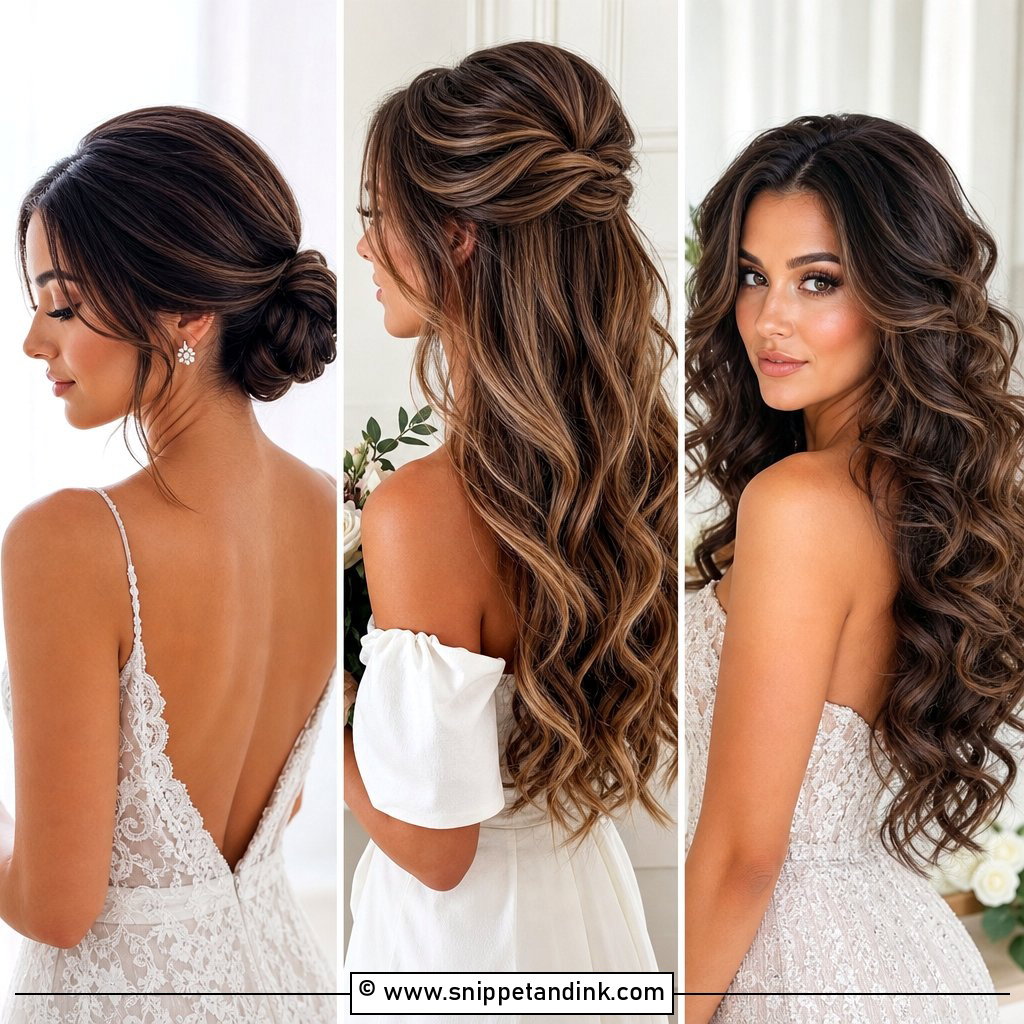
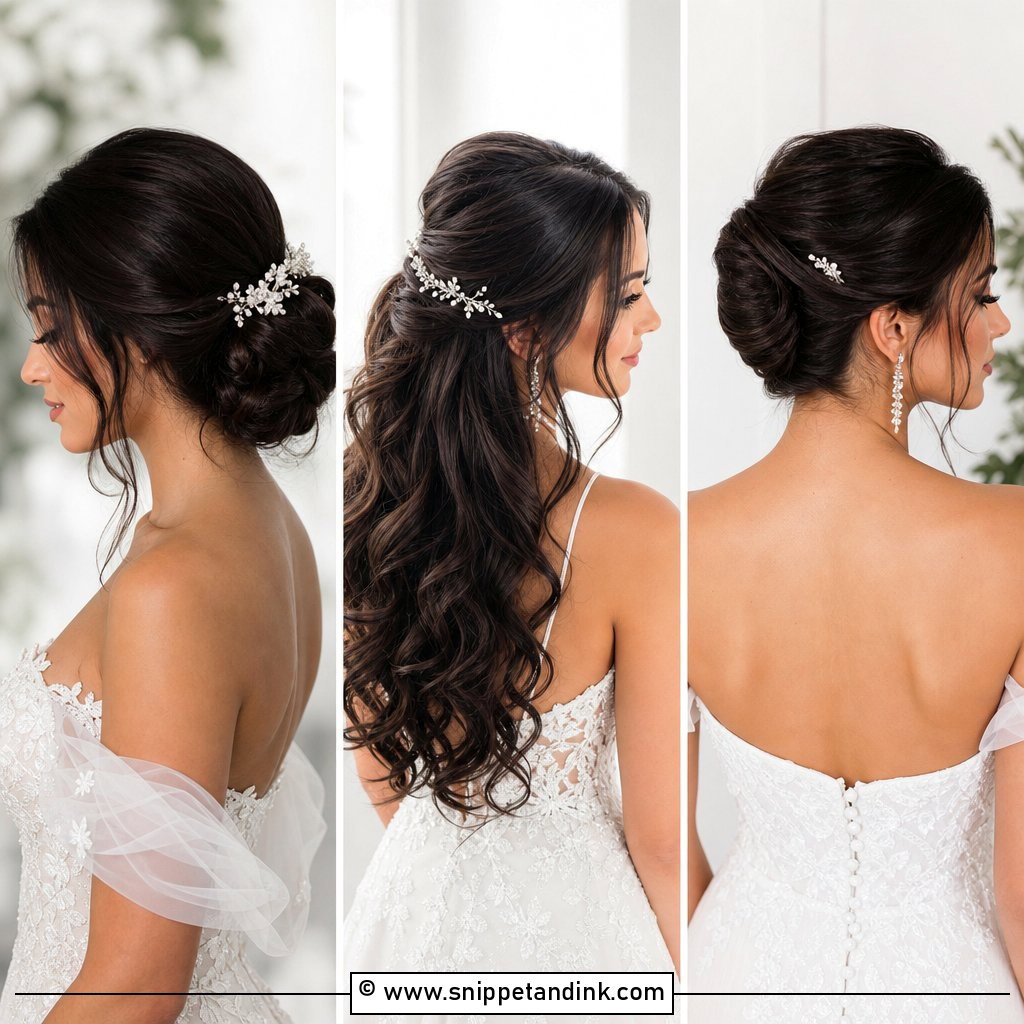
If I could only offer one style for a snowy ceremony, it would be the low chignon. It sits below the crown, so a coat collar or a faux fur stole can’t knock it, and it is the reason I call it a winter bride’s best friend. I build it on a lightly backcombed base and lock it with U-pins crossed into the base rather than straight in, which keeps it firm without a helmet of spray. A small crystal comb tucked into one side is plenty of sparkle. Any veil length works, because the comb has a solid knot to grip.
2. Hollywood Glamour Waves
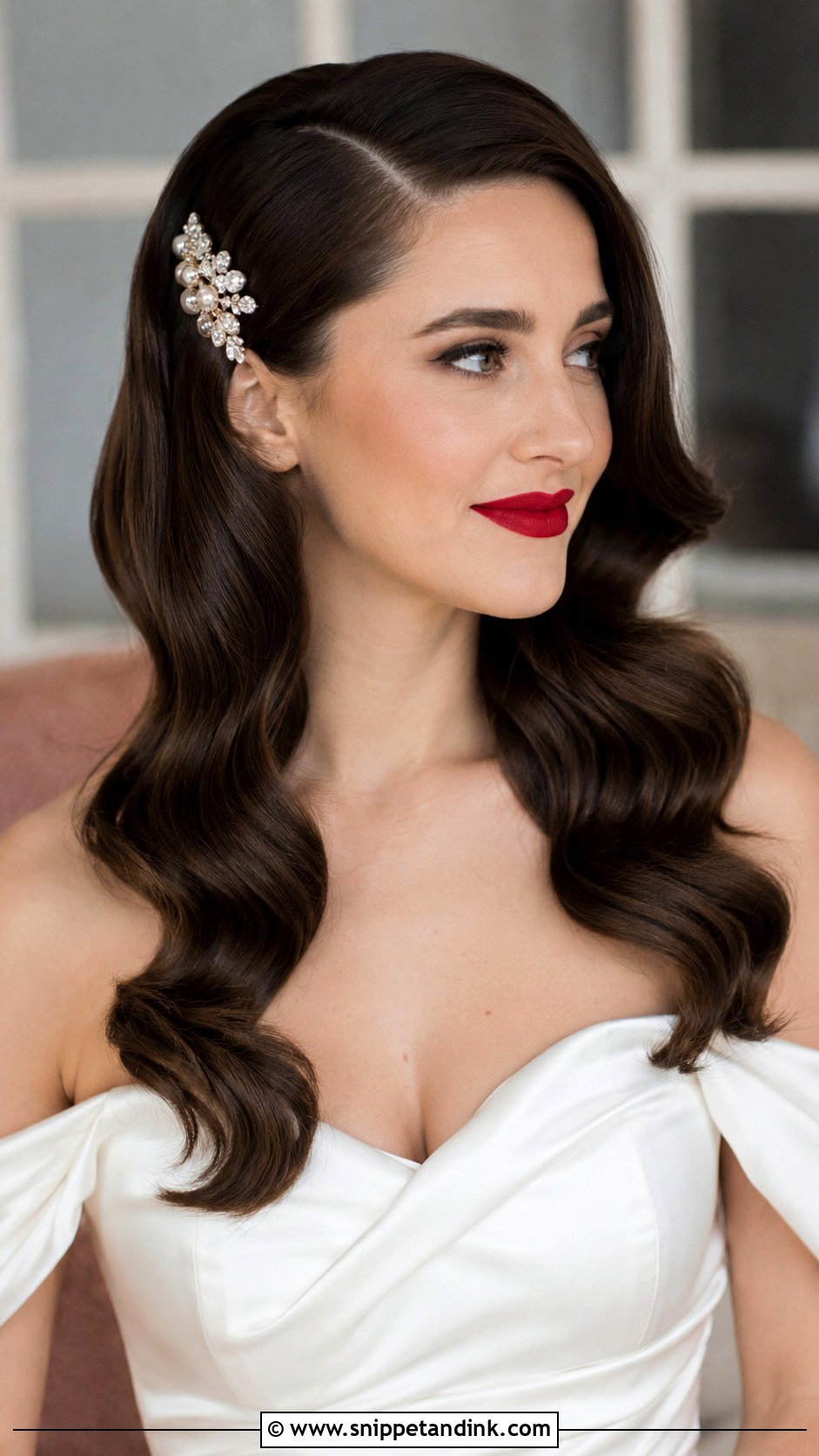
Old Hollywood waves are where winter really helps. The set is a hot-roller or pin-curl job that gets brushed out into one continuous ripple, and humidity is what usually loosens that ripple by the cocktail hour. On a dry winter day it stays sharp. A deep side part is non-negotiable for the shape, so check that your part naturally falls that way before you commit. Pair the waves with a satin gown and a bold red lip, and keep any jeweled pin near the part small; one big piece breaks the line of the wave.
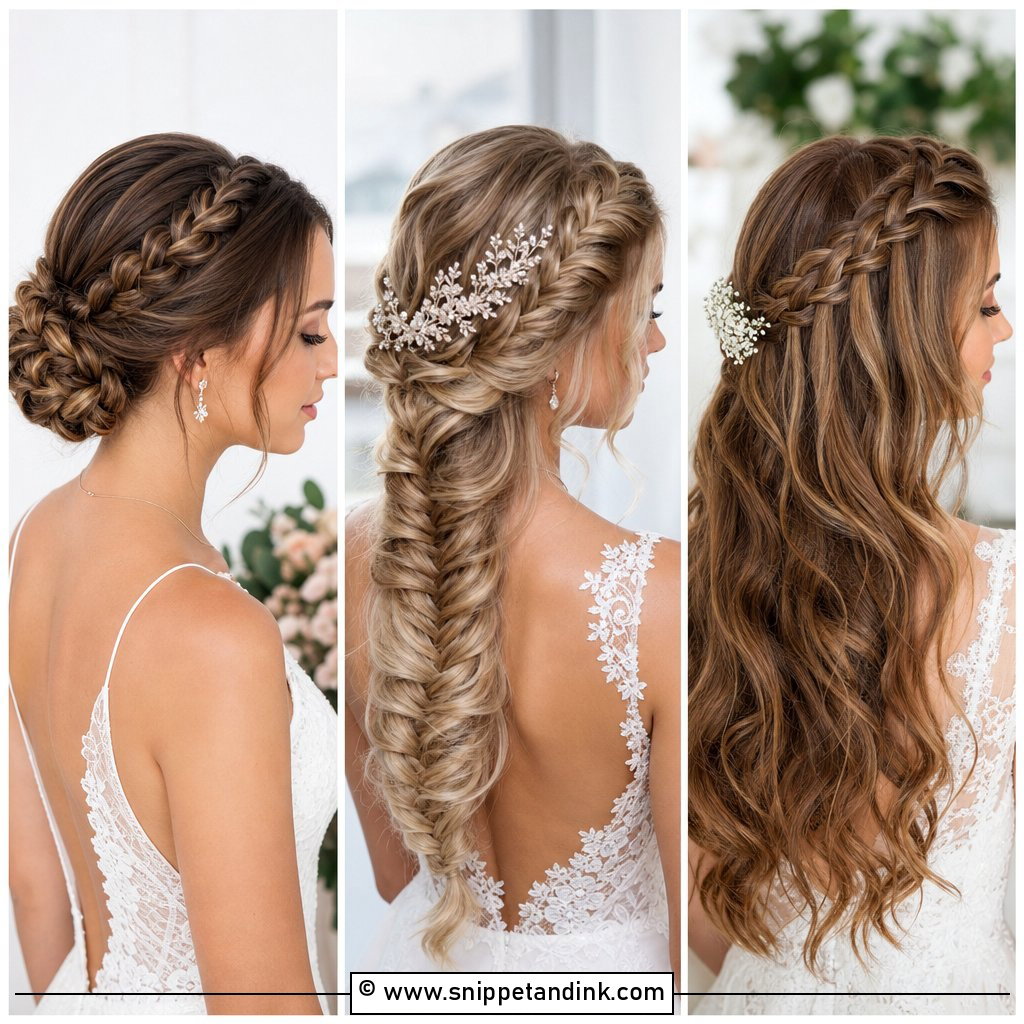
3. Braided Crown Updo
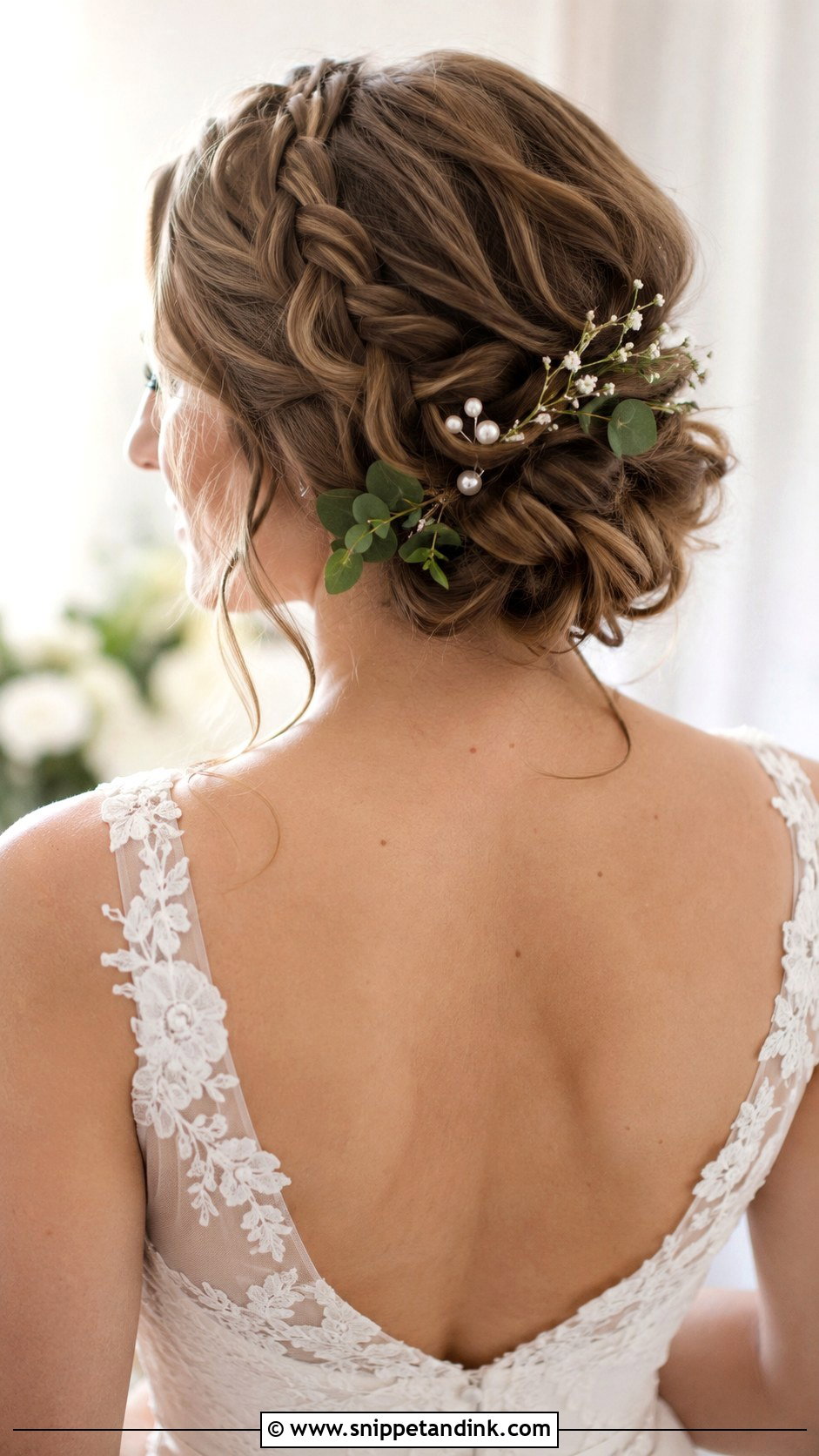
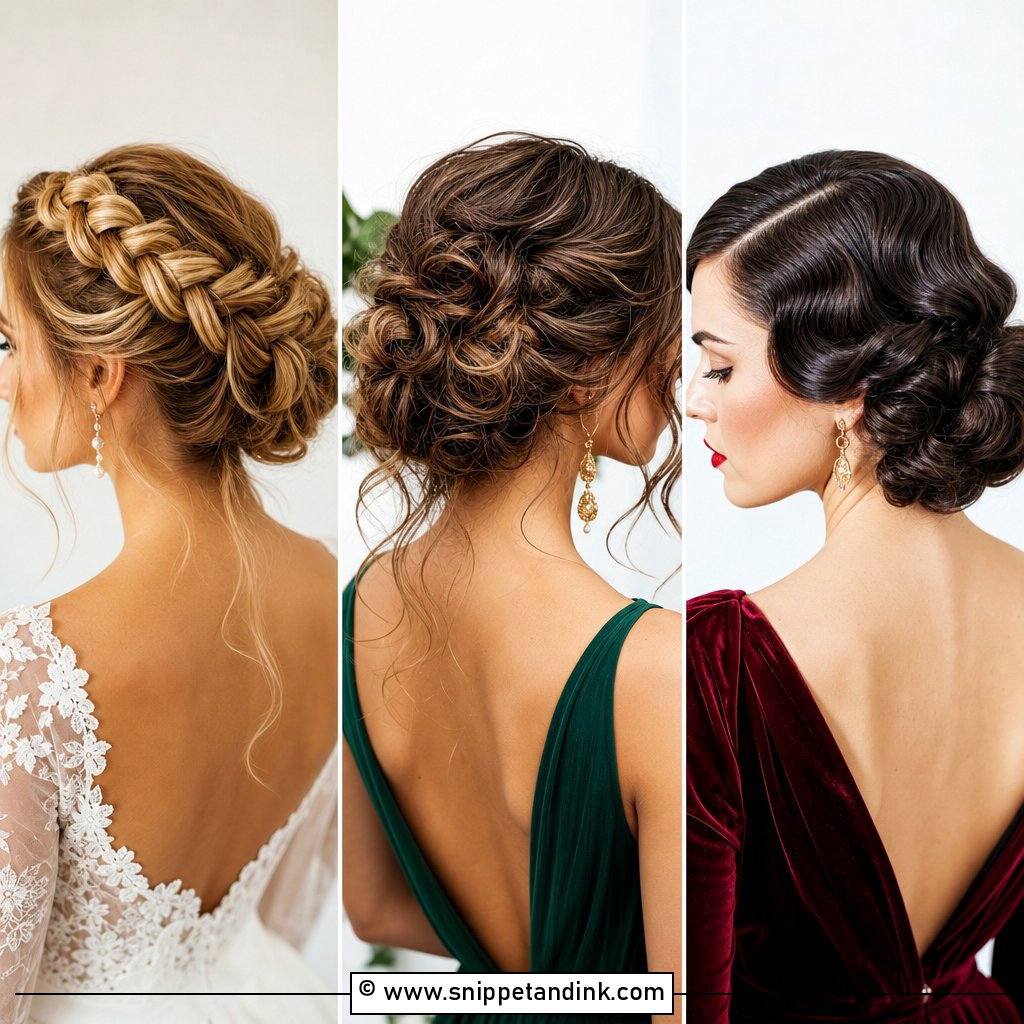
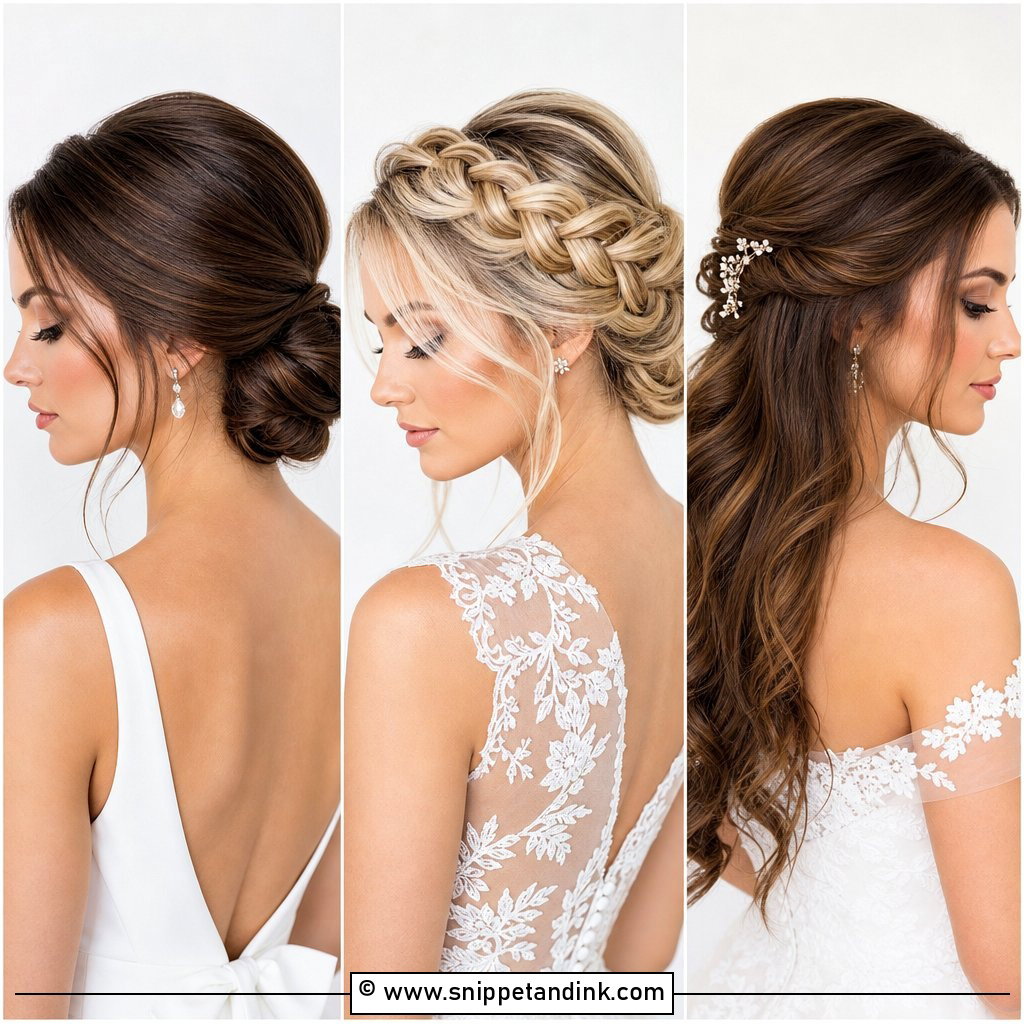
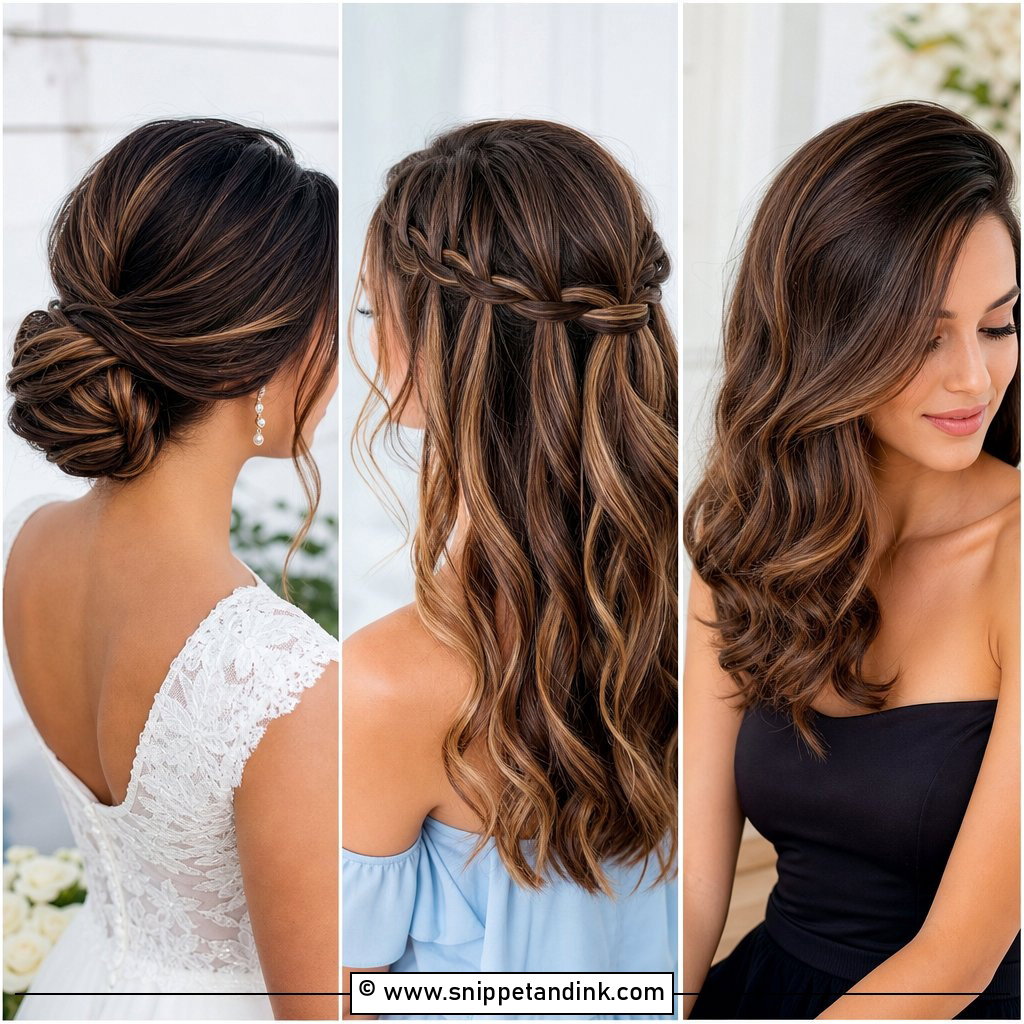
A braided crown is one of the sturdiest styles I do in wind, since the braid is pinned flat to the head all the way round and has nothing loose to catch. It needs hair at least past the shoulders to wrap fully; shorter lengths can still manage a half crown that ends in a tucked twist. Sprigs of greenery or pearl pins slide neatly into the braid’s outer loops. I pancake the braid gently after pinning so it reads wider in photos.
4. Sleek Low Bun
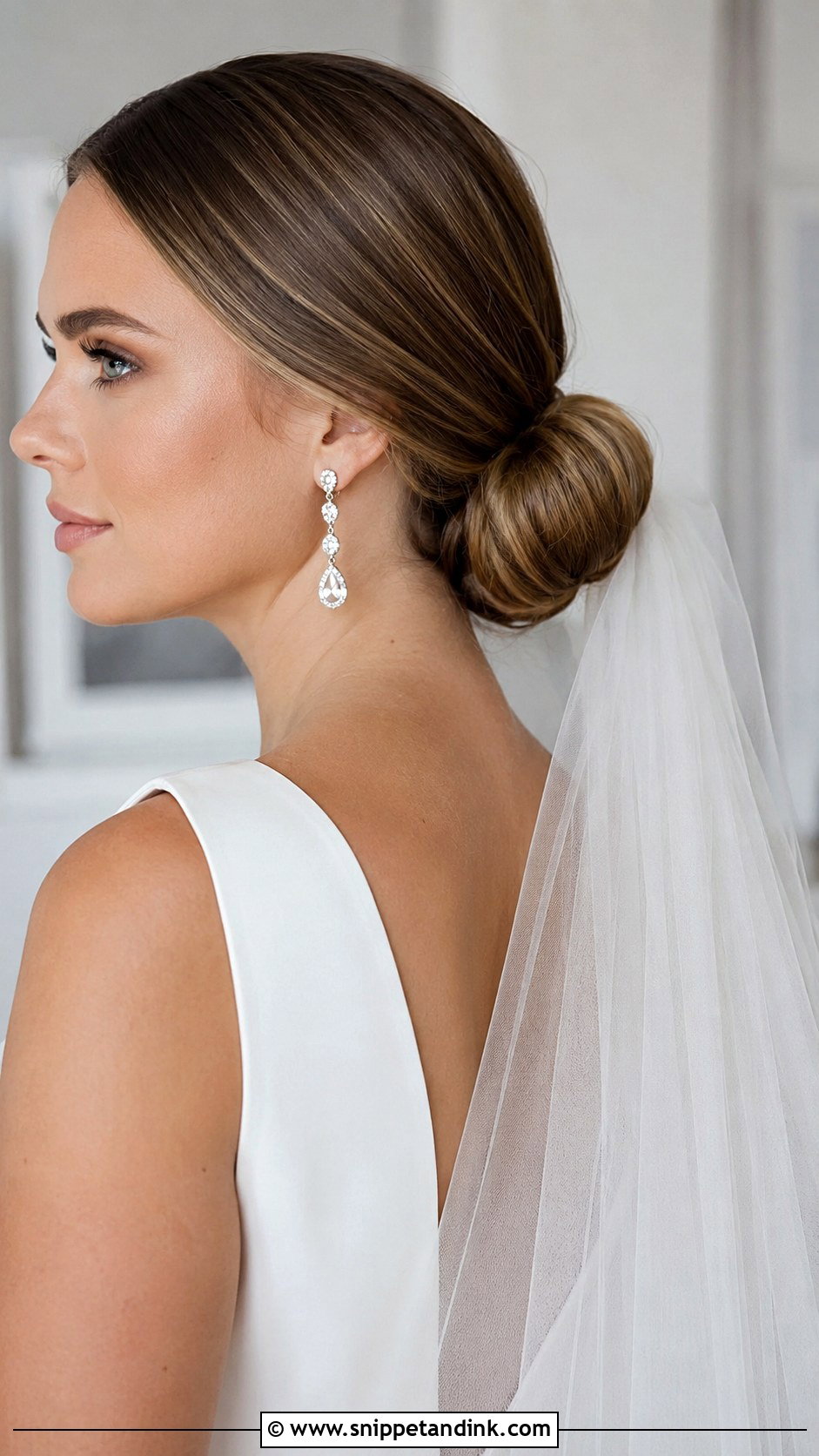
Sleek styles show every flyaway, and winter static produces plenty. For a smooth low bun I start with a smoothing cream on damp hair, blow-dry with a paddle brush, then finish with a light shine spray and a soft boar-bristle brush rather than a fine comb. It’s a clean, modern shape that leaves your earrings and neckline to do the talking, and it pairs well with a dramatic cathedral veil or architectural accessories. On very thick hair, I split the bun into two smaller knots so it doesn’t drag on the pins by evening.
5. Half-Up Half-Down With Curls
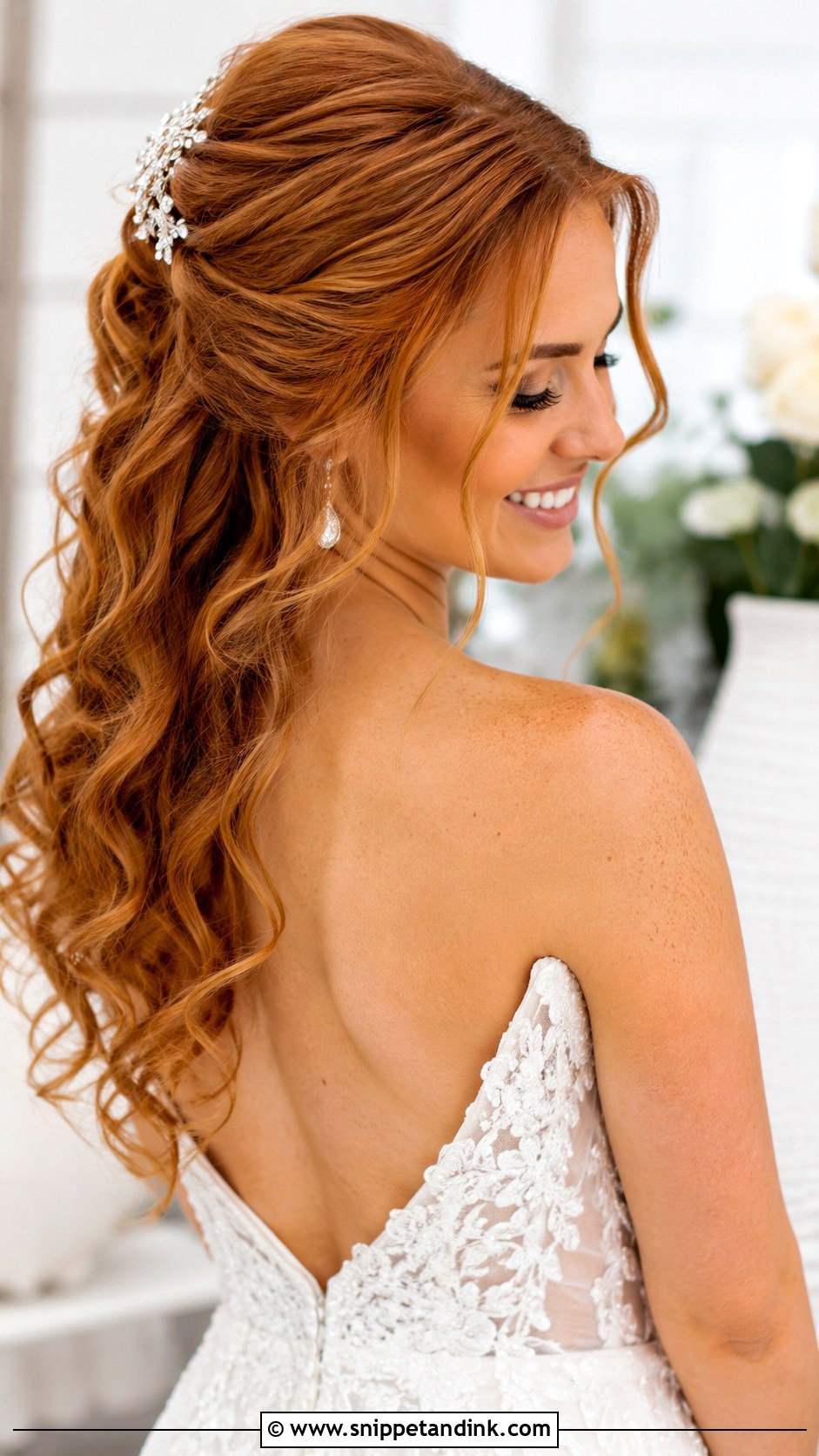
Half-up, half-down is the answer I give to brides who can’t choose, and in winter the curls on the down section stay defined much longer than they would in summer. The top section gets twisted or pinned at the back of the crown, which is a natural spot for a small clip or tiara. The one caution is a wool or bouclé coat: the friction against the loose lengths will fuzz curls quickly, so I suggest a satin-lined wrap for the outdoor moments.
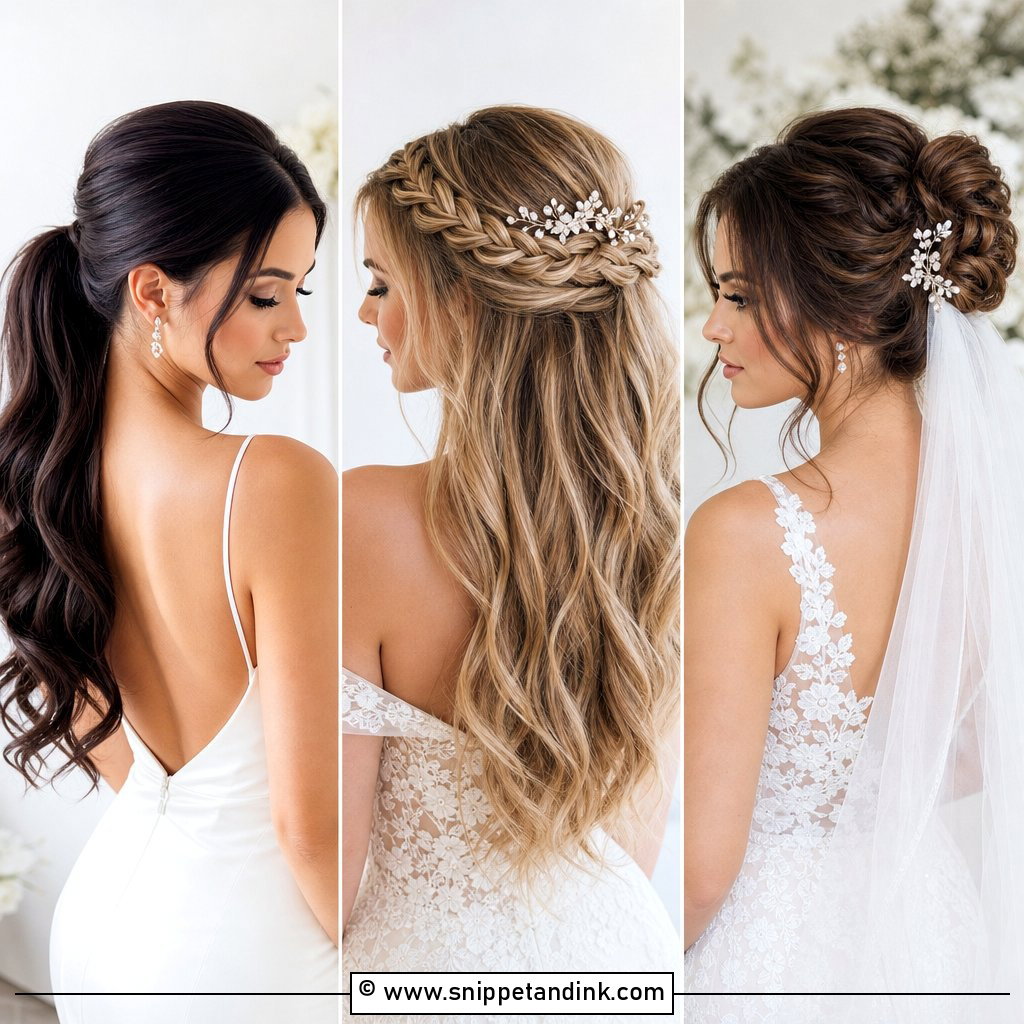
6. Fishtail Braid
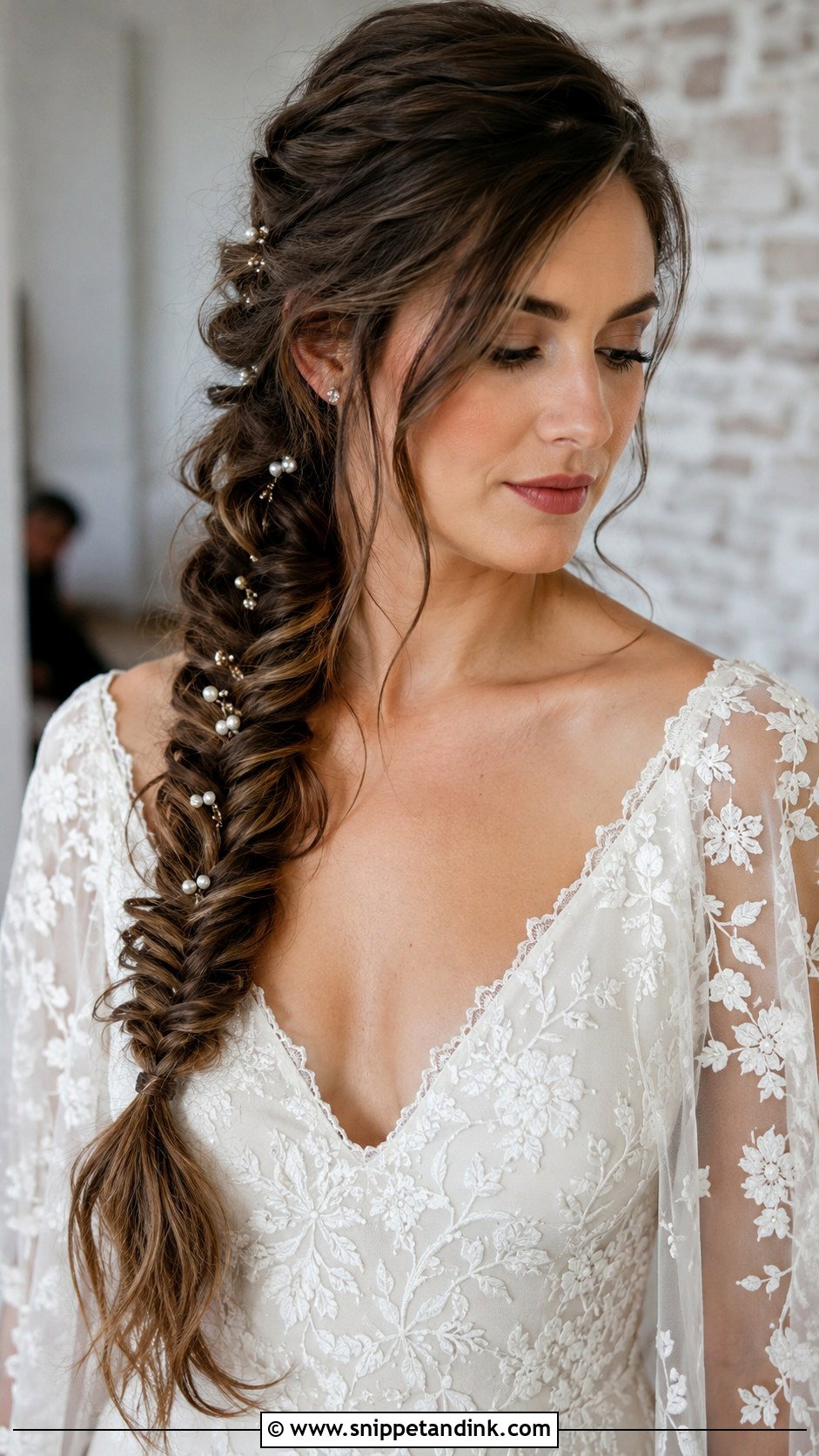
A loose fishtail over one shoulder suits barn and lodge venues and leaves the opposite ear free for a statement earring. It needs long, fairly thick hair, because fine hair makes a skinny fishtail that disappears in photos. I braid it tight first, then pull the edges loose by hand, and weave in tiny pearls or a thin ribbon after the braid is finished so nothing slips out. A clear elastic plus a wrapped strand of hair at the end hides the tie.
7. Sleek High Ponytail
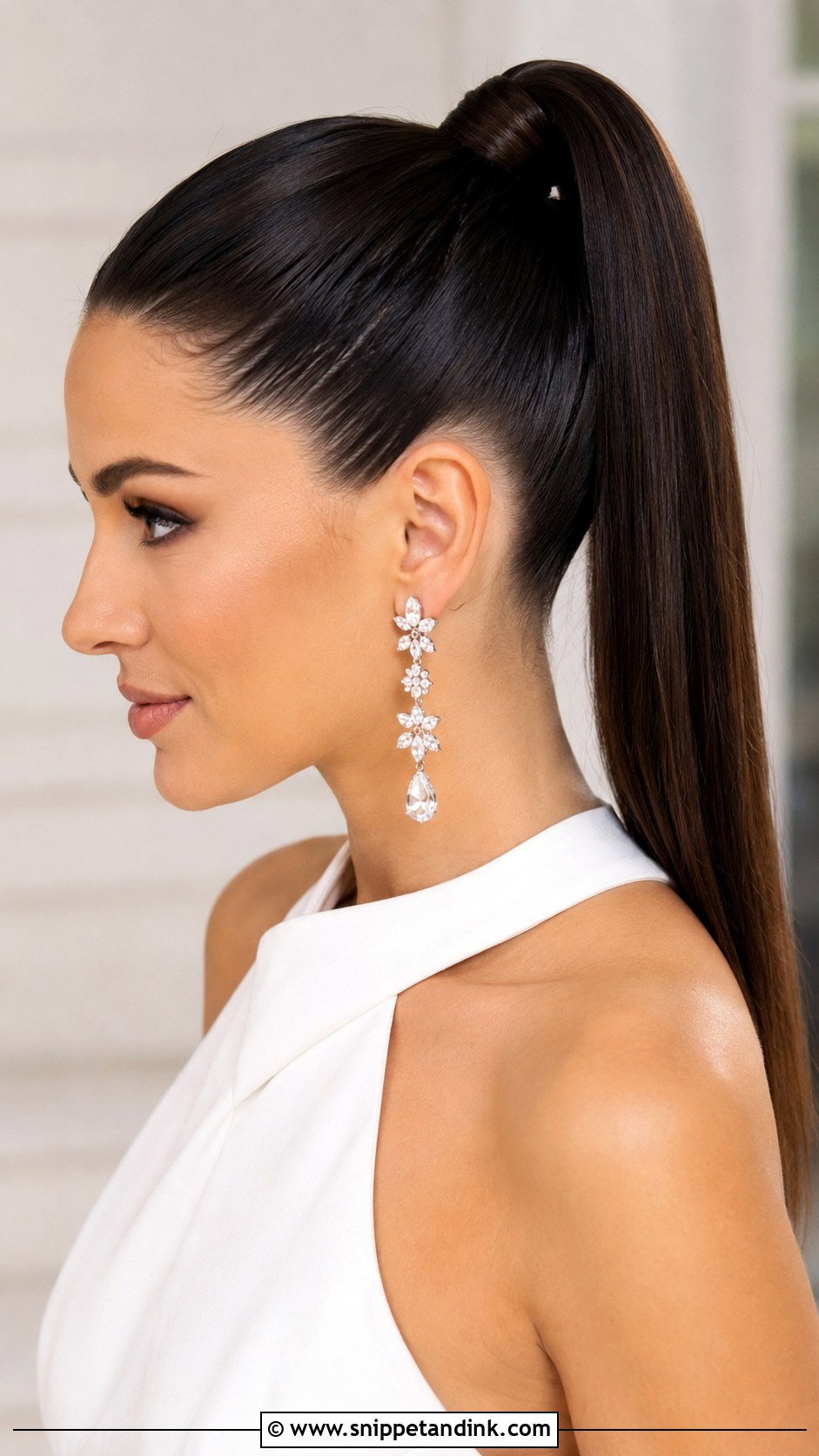
The high ponytail is a strong, fashion-led choice, and it lifts the eye to lengthen your neck. The base is everything. I secure it with two bungee elastics rather than one standard band so it doesn’t sag after a few hours, then wrap a section of hair around the base to hide them. Keep the tail sleek or add a couple of face-framing pieces; either way, chandelier earrings and a structured gown suit it. I’d steer you away from it with a heavy veil, since there’s no low anchor point to hold the comb.
8. Romantic Loose Updo
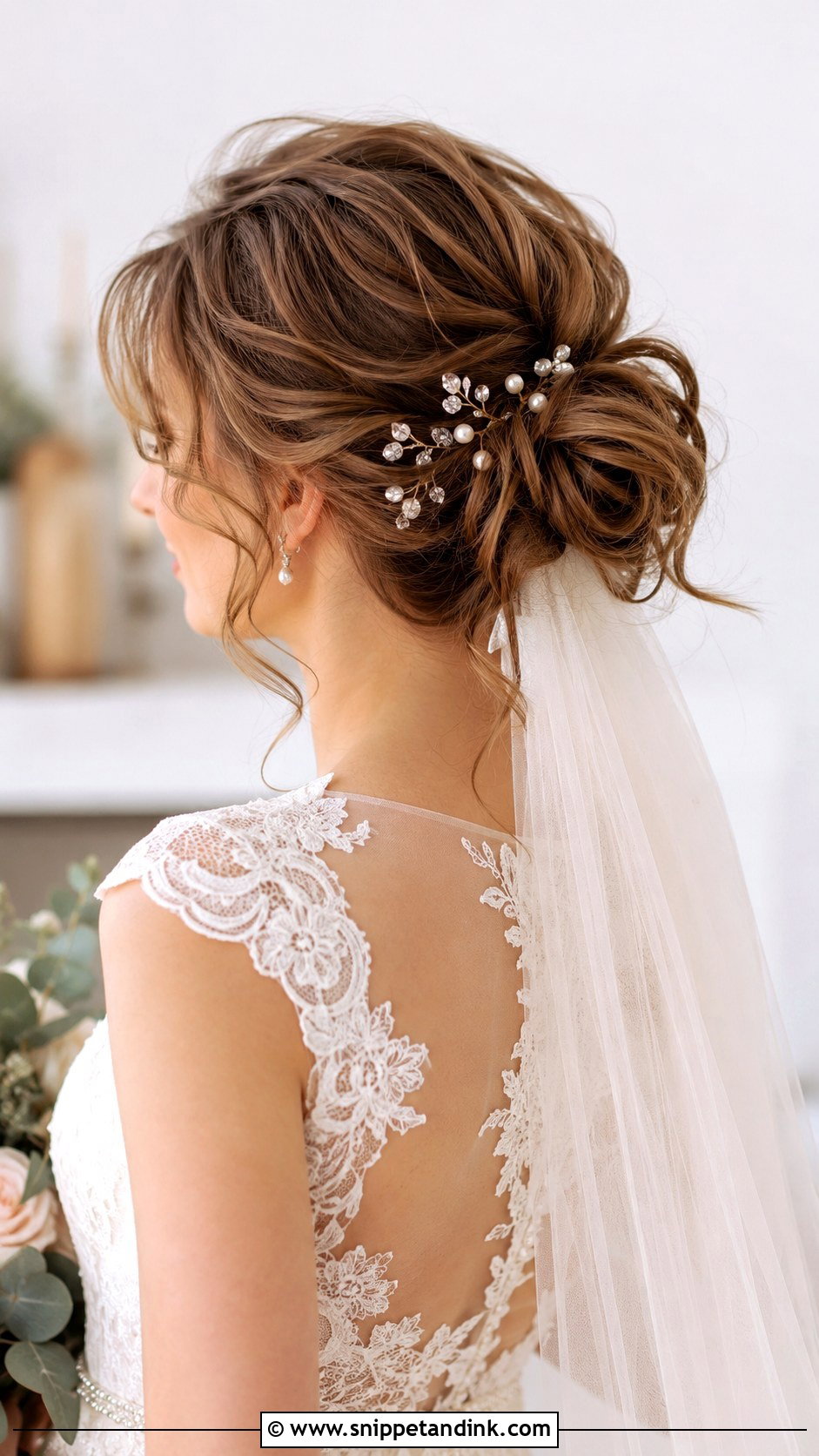
A loose, textured updo is harder to make than it looks, because pieces that seem to fall freely have each been placed. I build it on curled, dry-shampooed hair so it has grip, then pull strands out after the shape is secure. Florals, berries or pearl pins tuck into it easily, and lace gowns with soft veils sit comfortably beside it. Very silky, straight hair struggles here; it tends to slide out of the pins unless we add texture spray at the root first.
9. Crystal Pin Accessorized Style
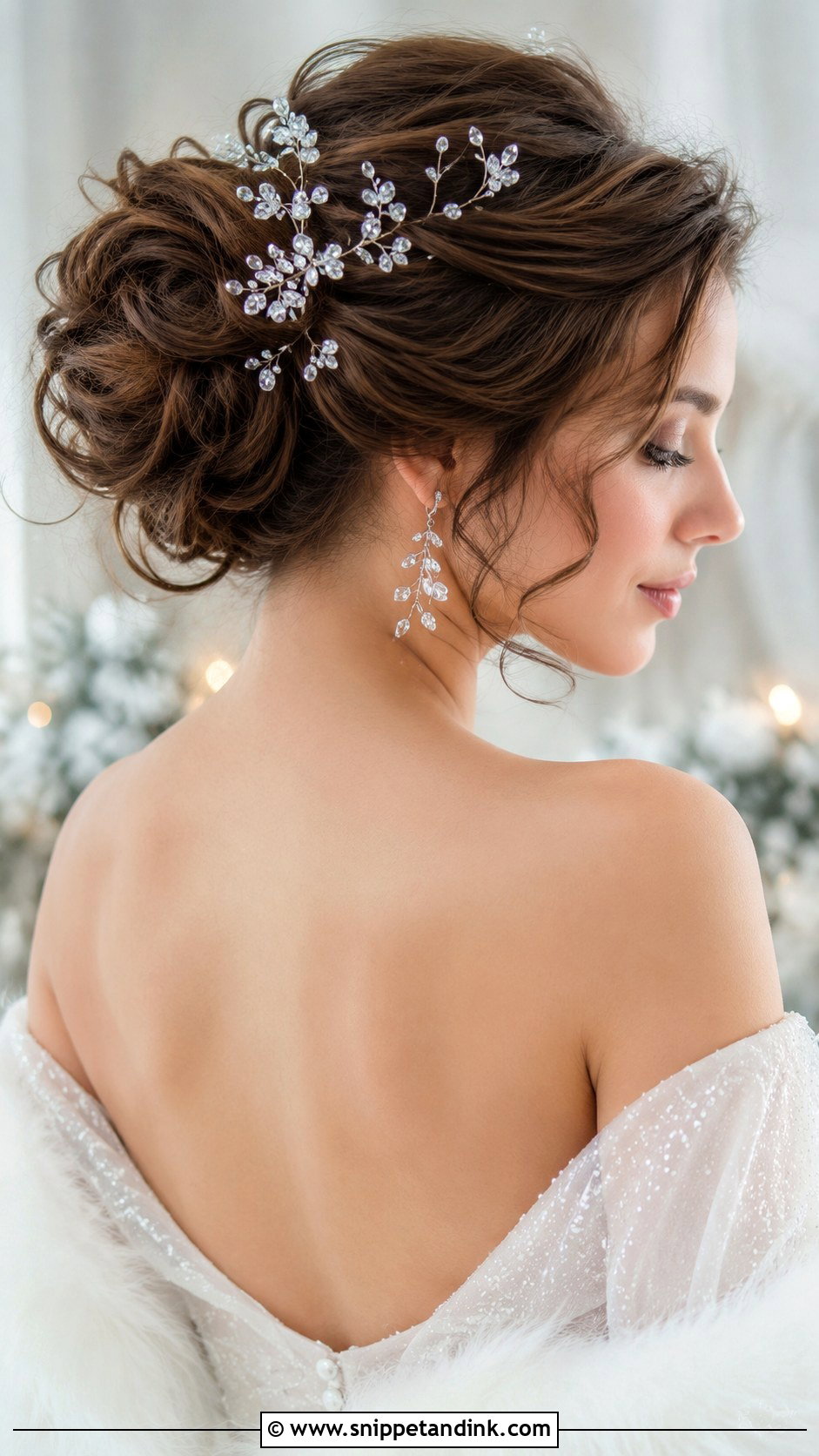
Crystal accessories catch winter’s icy sparkle better than almost anything else, and they lift almost any base style from waves to a chignon. When I place crystal pins, I hold them up to the room’s lighting before committing, because a cluster that looks right under a vanity bulb can disappear in candlelight. Scatter them through an updo, or line a few along a sleek part. Silver-toned crystals read cool and frosty; pearls give warmth against ivory. Any hair length works, as long as each pin has a small section of hair to grip.
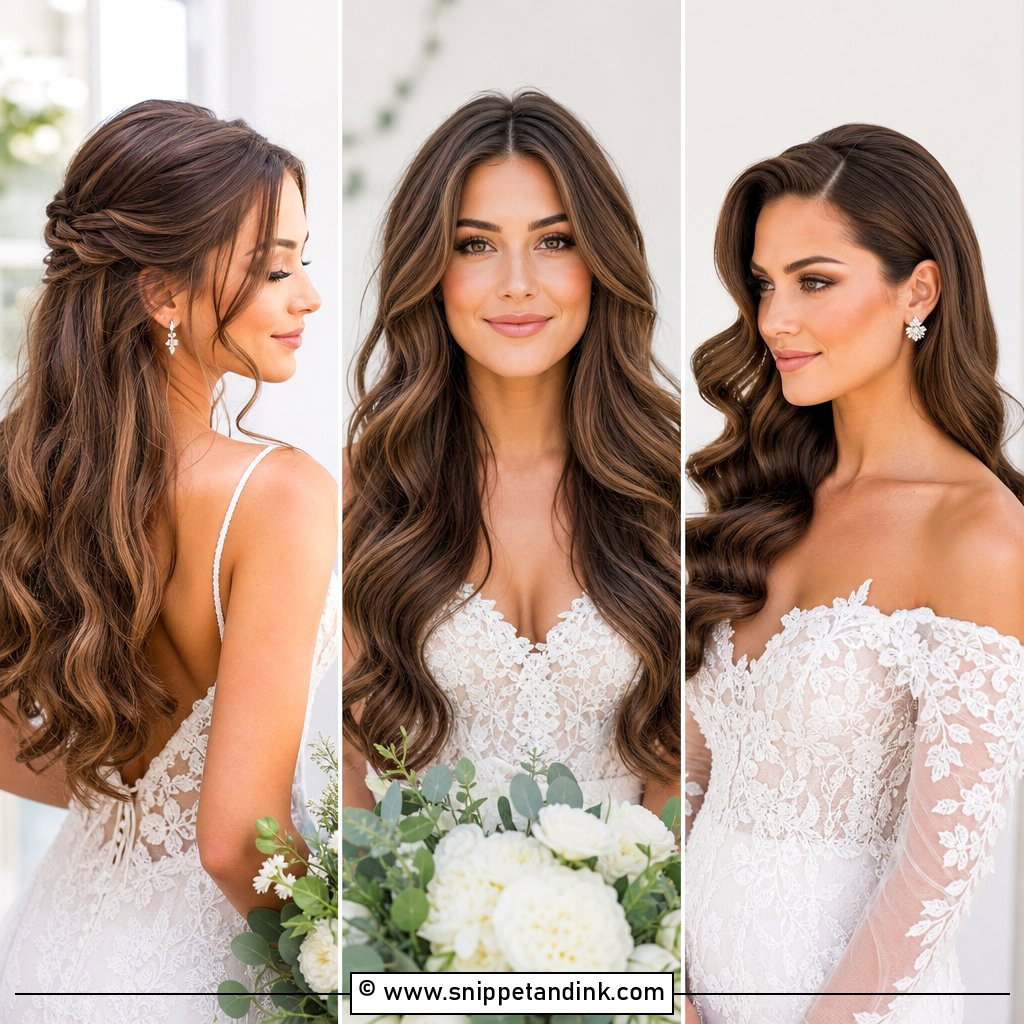
10. Soft Curls With Side Part
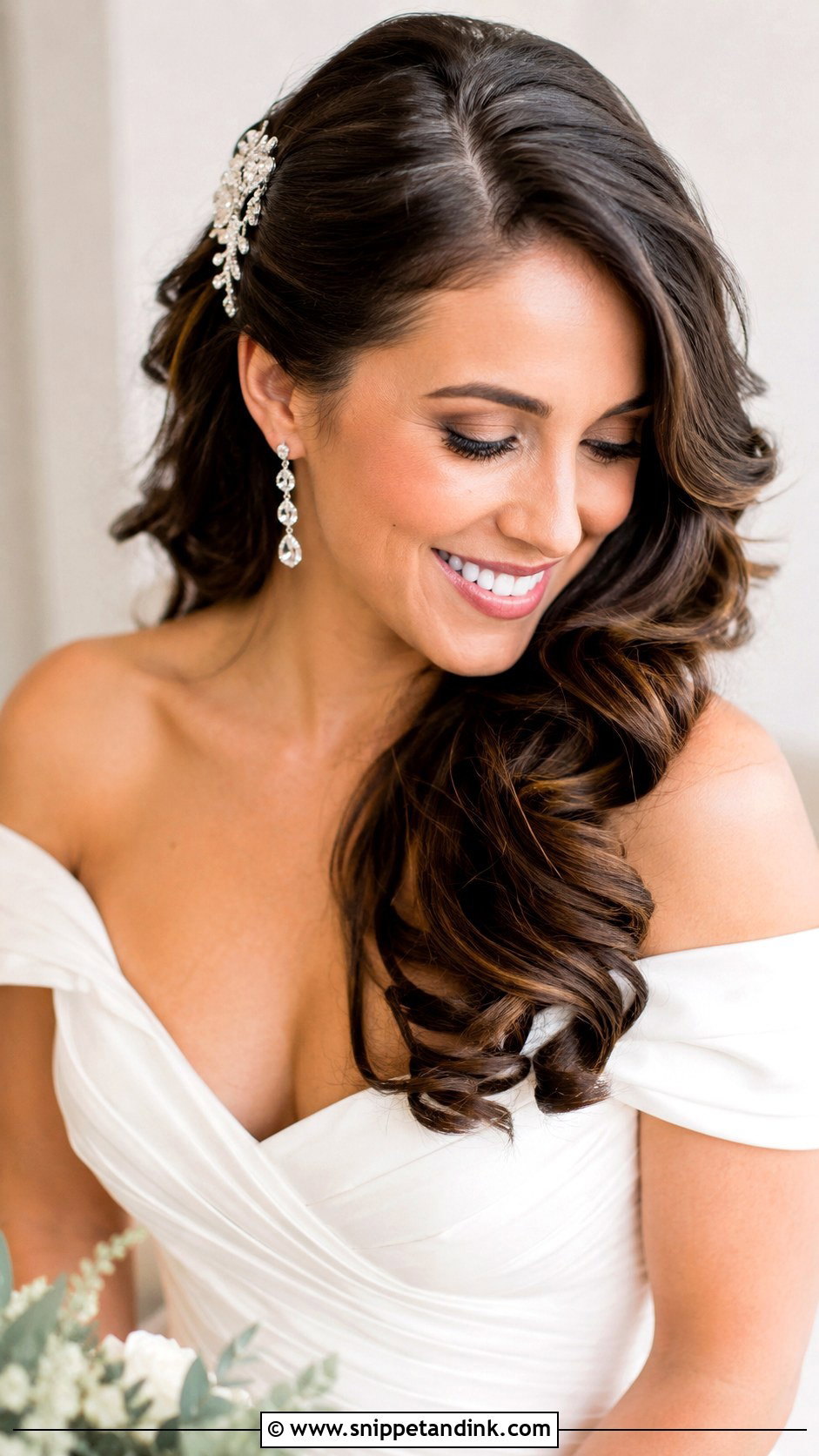
Curls swept from a deep side part frame the face well, and the asymmetry flatters most face shapes. Winter is kind to this one: the curls keep their spring rather than dropping into straight lengths by the first dance. I set each curl in a pin while it cools, which is the step that makes them last. A jeweled comb behind one ear holds the swept side in place, and off-the-shoulder gowns with dangling earrings complete the picture without competing.
11. Twisted Updo With Tendrils
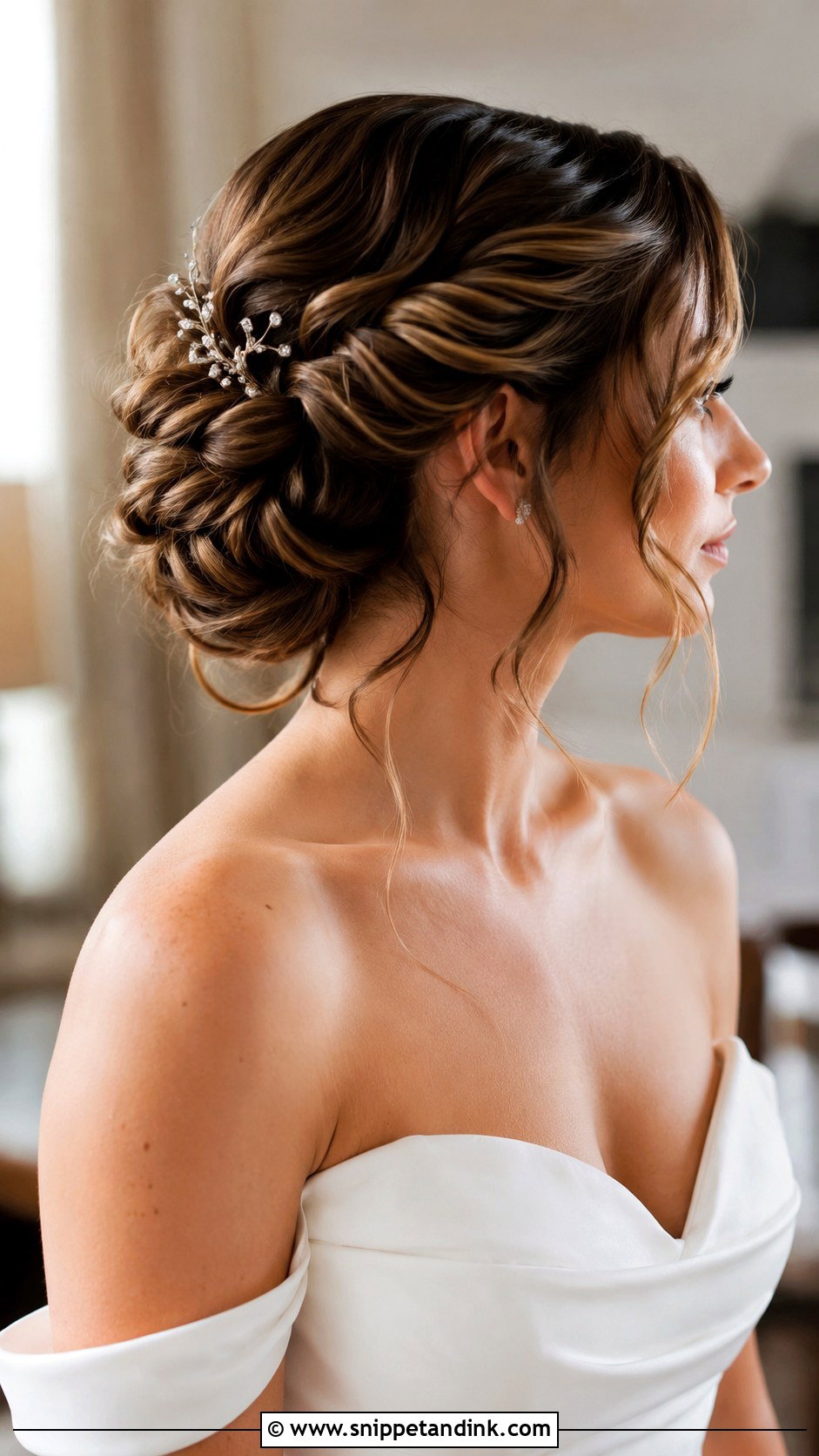
Twisted updos look intricate because they are; the hair is rolled into several separate sections and pinned into a sculpted shape low at the nape or up at the crown. Highlighted or balayage hair shows the twists off especially well, since the color shifts mark each turn. A few tendrils soften the front. For a long ceremony-to-reception day, this is one of the most durable styles I offer, and a sparkling hairpiece or a sprig of greenery sits neatly in the gaps between twists.
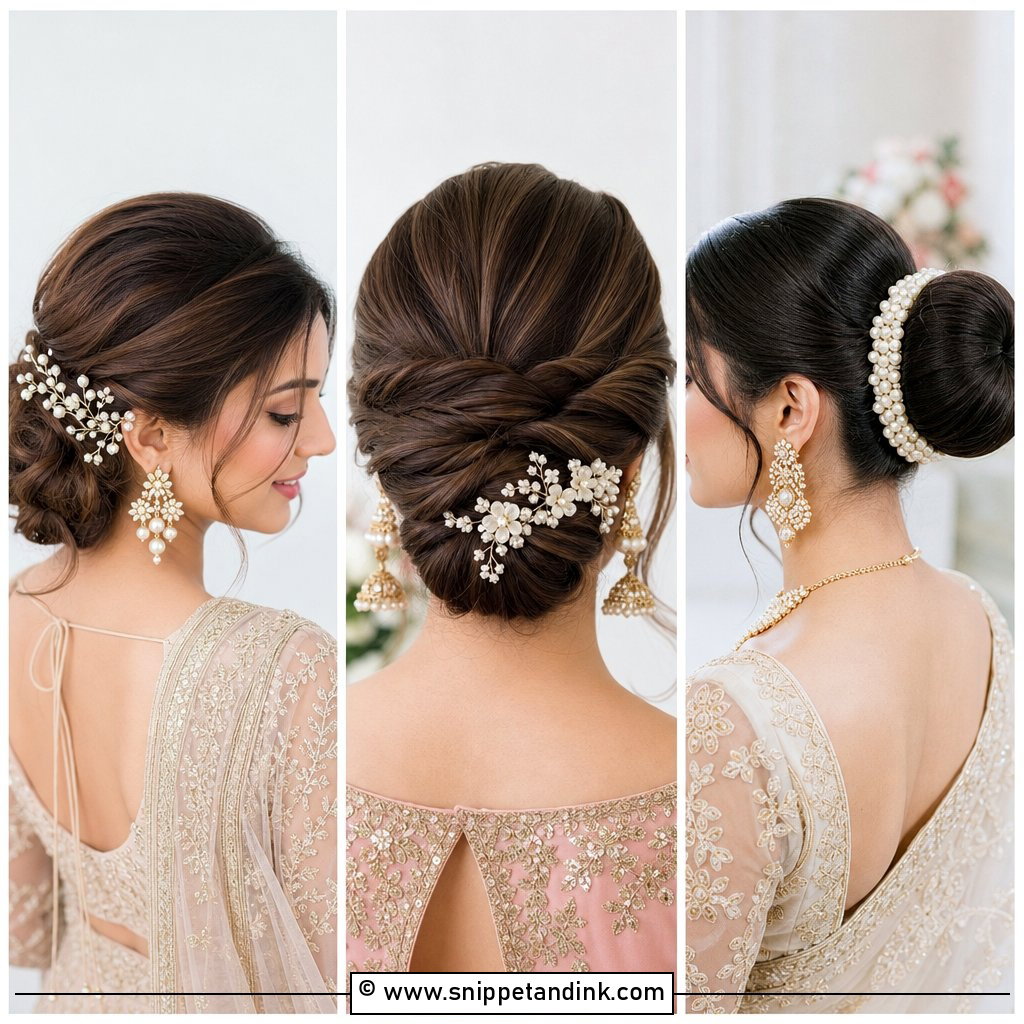
12. Pearl Embellished Updo
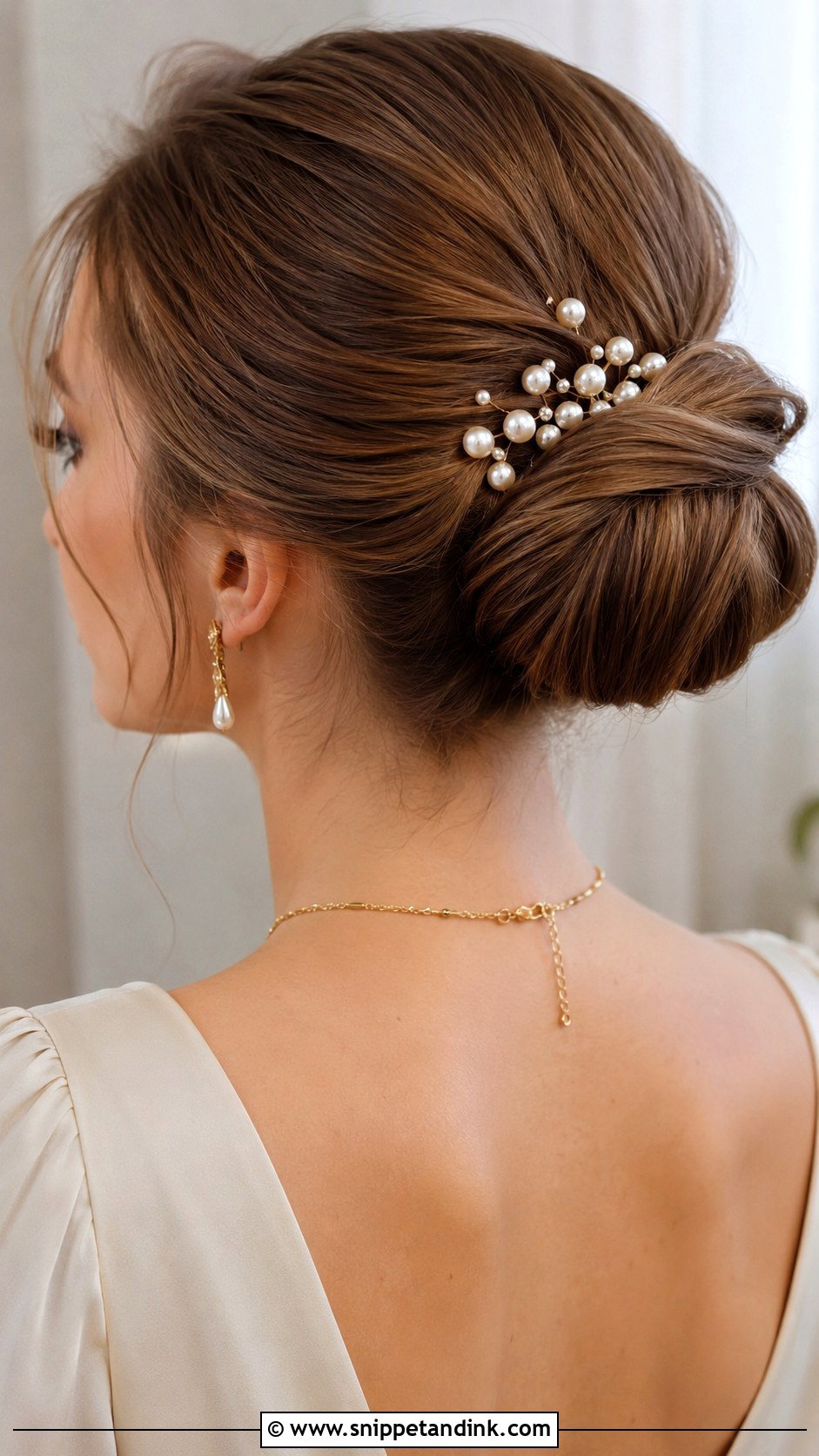
Pearls give a warmer glow than crystals, which is why I reach for them with creamy gowns and gold jewelry. Dot them through a bun or cluster them along one side. The practical detail most brides don’t expect: pearl pins are heavier than they look, so on fine hair I anchor each one through a tiny hidden bobby pin first. The result is quiet and heirloom-feeling, never overdone.
13. Curtain Bangs With Updo
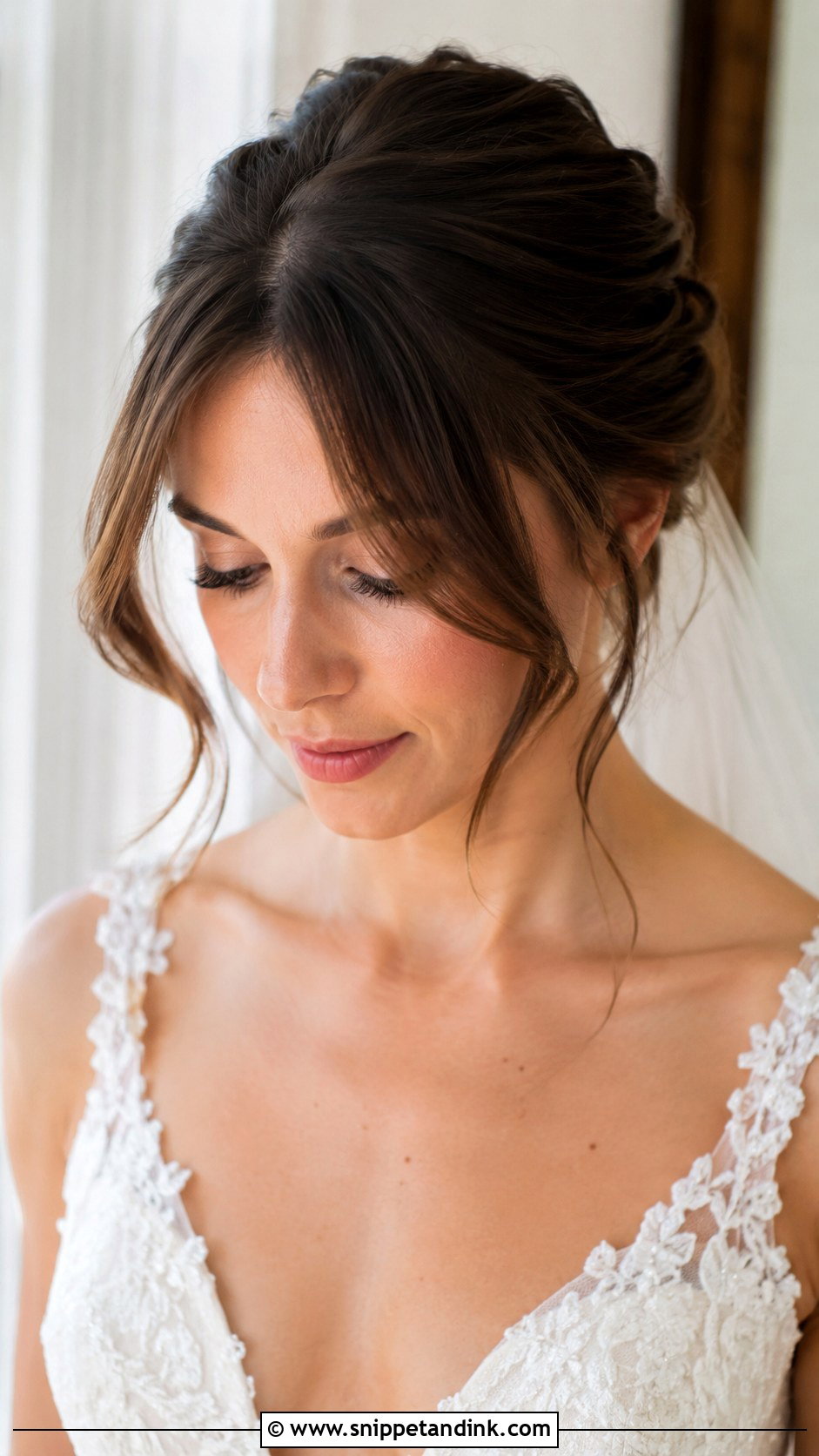
Curtain bangs soften a formal updo and keep a bride looking like herself, which matters most to those who already wear bangs every day. Please don’t cut new curtain bangs for the wedding; give them at least six weeks to settle so you know how they fall. On the day, I set them with a large round brush and a little wave so they part in the middle and sweep outward without separating. They pair with a sleek bun or a looser twist equally well.
14. Low Bun With Face-Framing Pieces
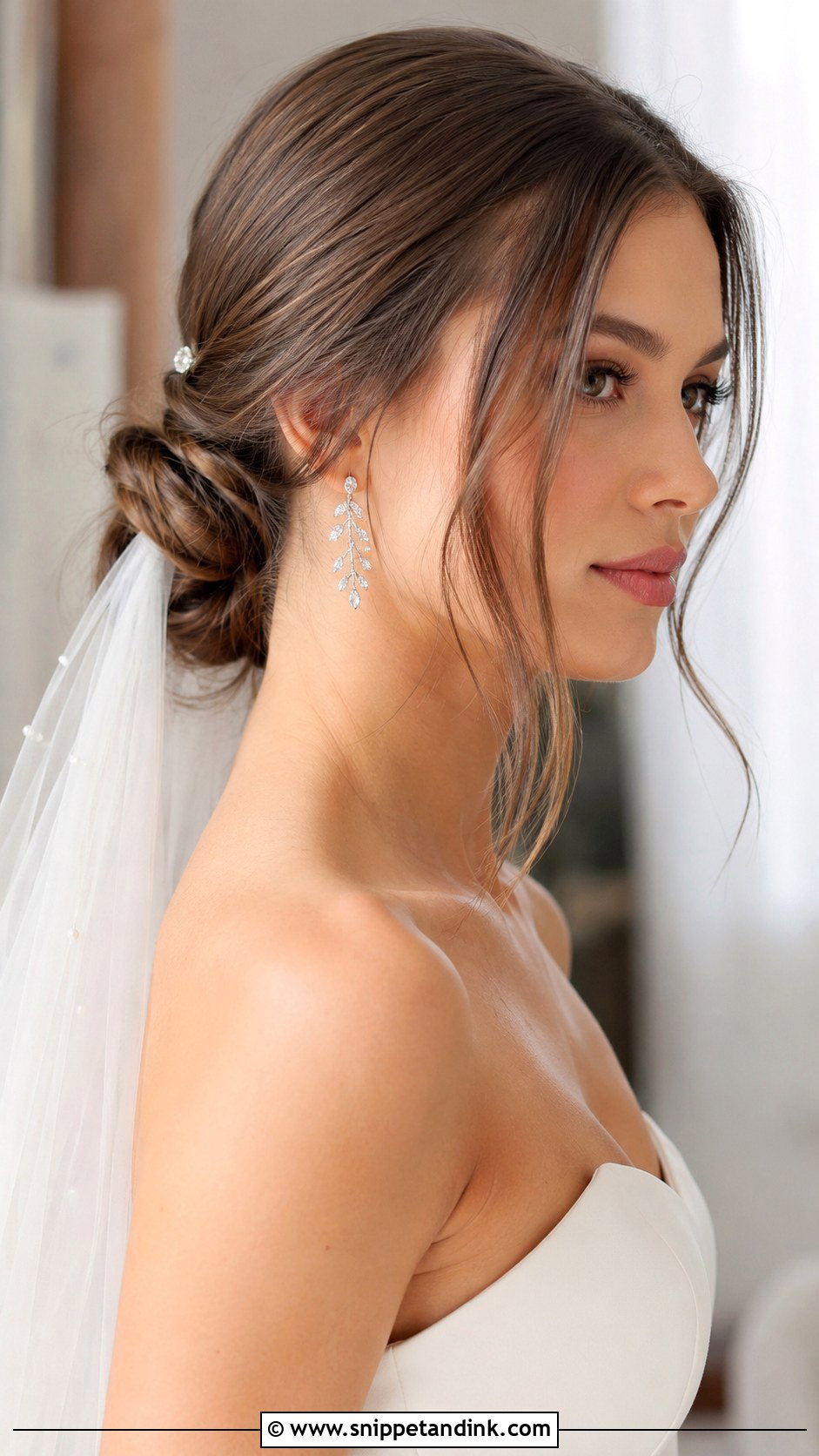
Most of my brides end up somewhere near this style: a smooth low knot at the nape with a few strands left out around the face. The trick is choosing which strands. I pull pieces from just in front of the ear and at the temple, never from the hairline itself, because hairline pieces look stringy by evening. The loose pieces soften the jaw and cheekbones, veils sit easily above the bun, and a tiny crystal pin near the knot adds a little seasonal sparkle.
15. Vintage Finger Waves
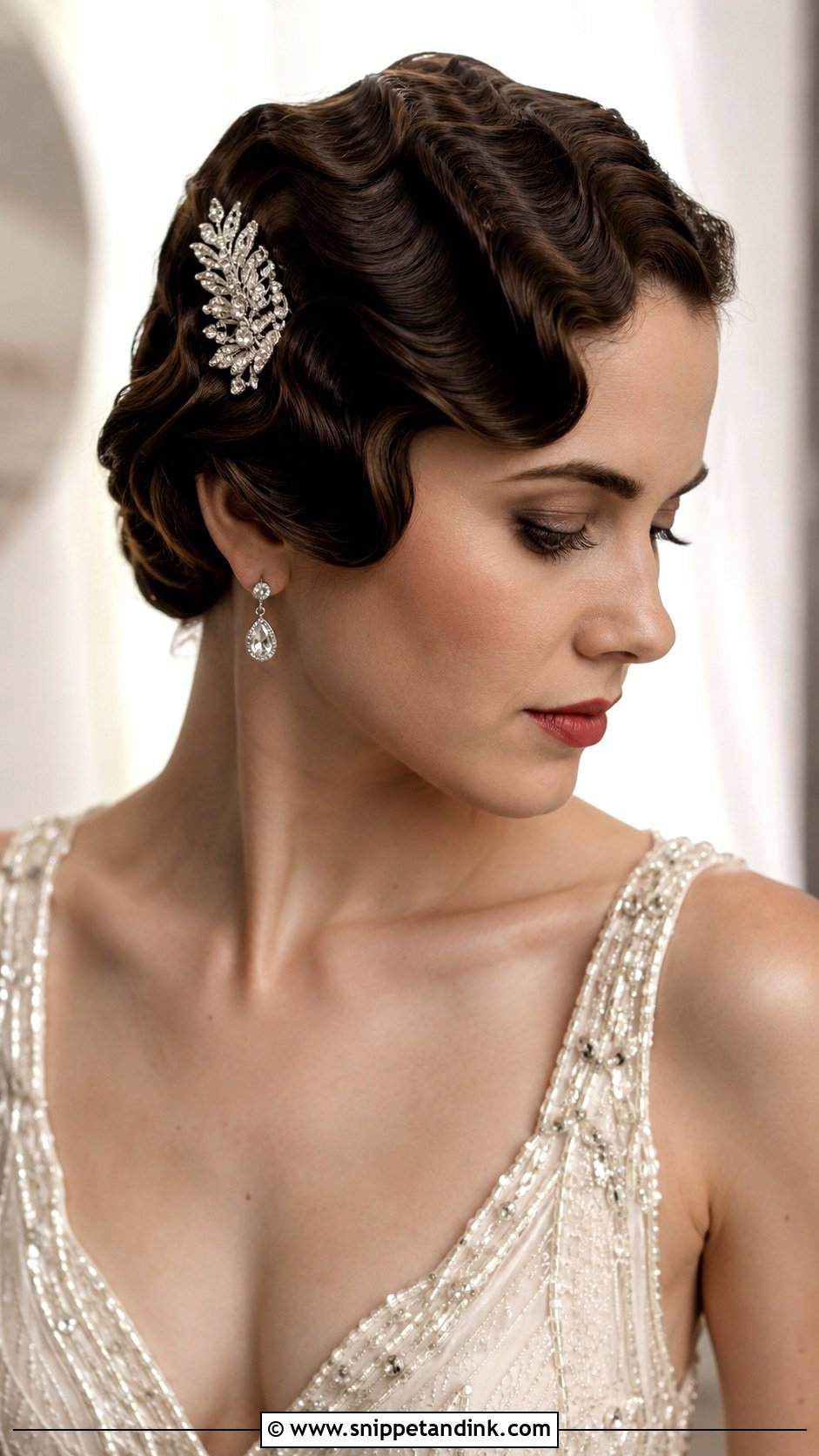
Finger waves are a true Art Deco technique: wet-set hair is pressed into S-shaped ridges with fingers and a comb, then left to dry completely. They suit shorter hair best, or longer hair whose lengths go into a low bun at the back. Winter’s dry air keeps the ridges crisp, but this style needs a stylist who has done it many times, so ask to see her own finger-wave work before booking. A jeweled clip or deco comb at the side finishes it.
16. Boho Braided Half-Up
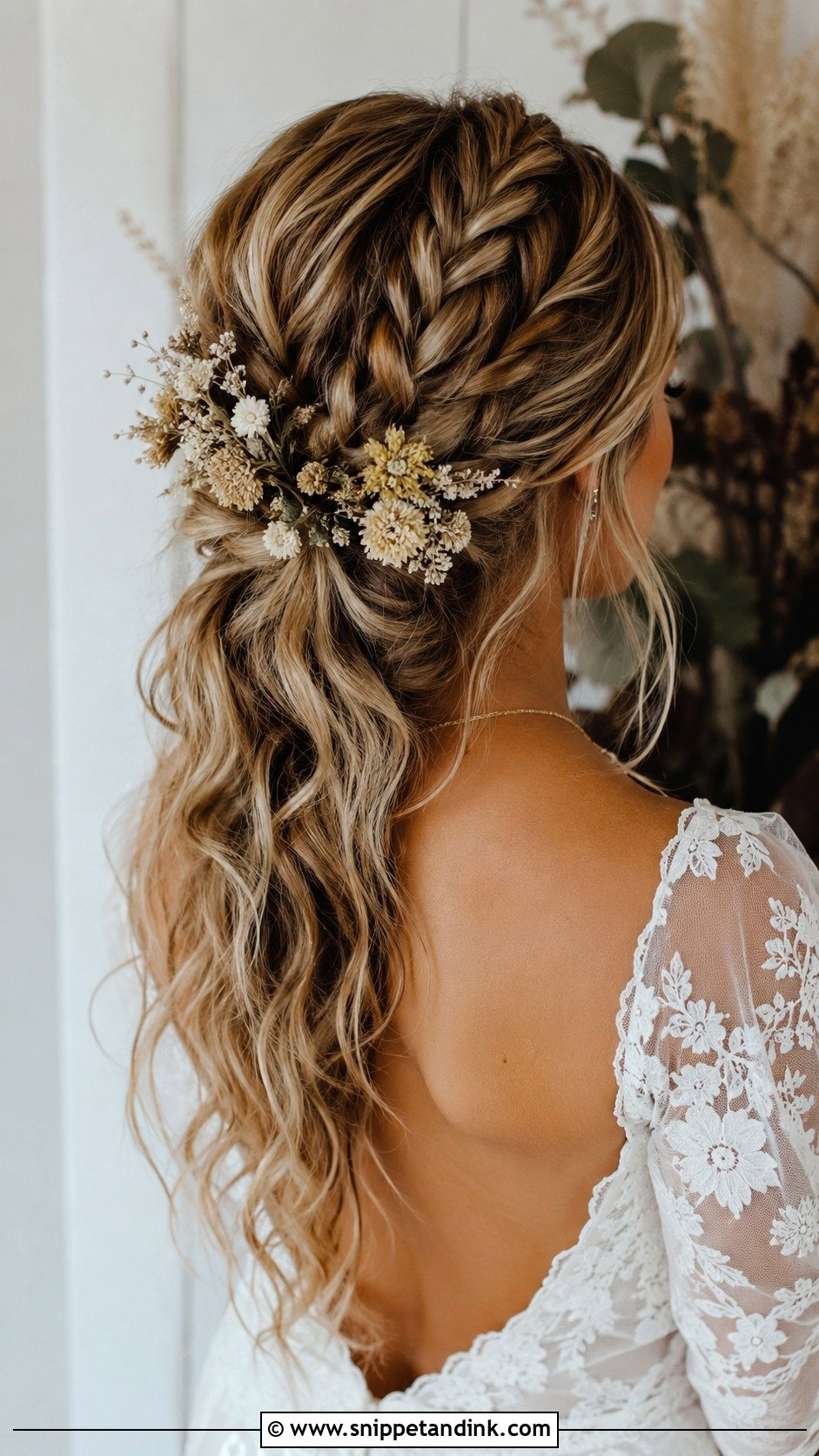
Free-spirited brides tend to love this boho half-up: loose braids gathered at the back of the head while the rest of the hair falls in soft waves. It belongs at woodland and barn weddings, and dried flowers, berries or pearl pins tuck into the braids easily. Long, wavy hair suits it best because the waves blend with the braids instead of contrasting sharply. The weak point is the braids loosening over the evening, so I pin each one at two points rather than one.
17. Sleek Middle Part Bun
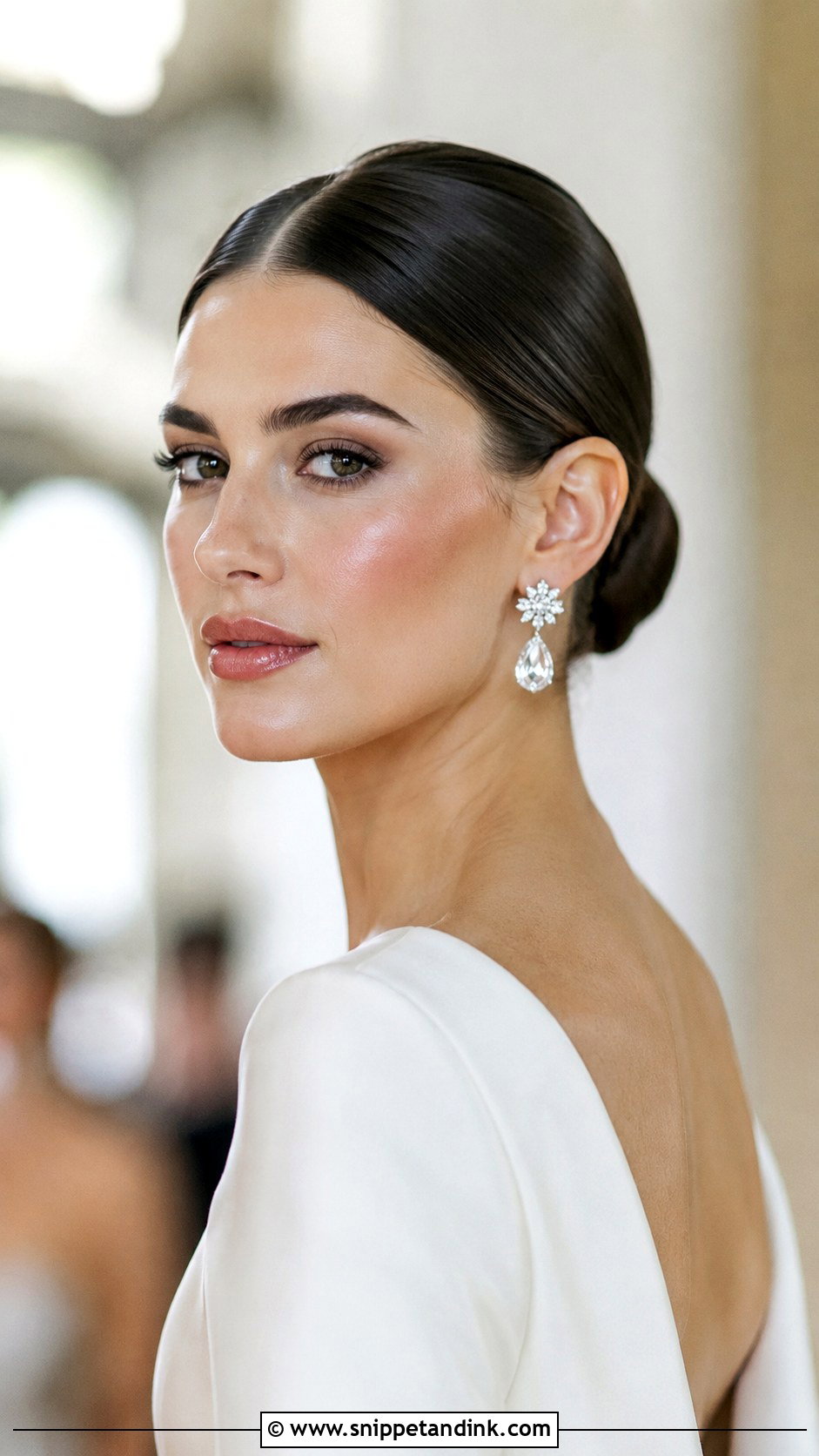
A center part and a smooth low bun make a minimalist, high-fashion shape that rewards symmetrical features. It’s simple to describe and unforgiving to execute, because a part even slightly off-center will be obvious in every front-on photo. I draw the part with a tail comb from the bridge of the nose upward. Bold earrings and a structured gown fit it; so do modern, pared-back venues.
18. Voluminous Blowout
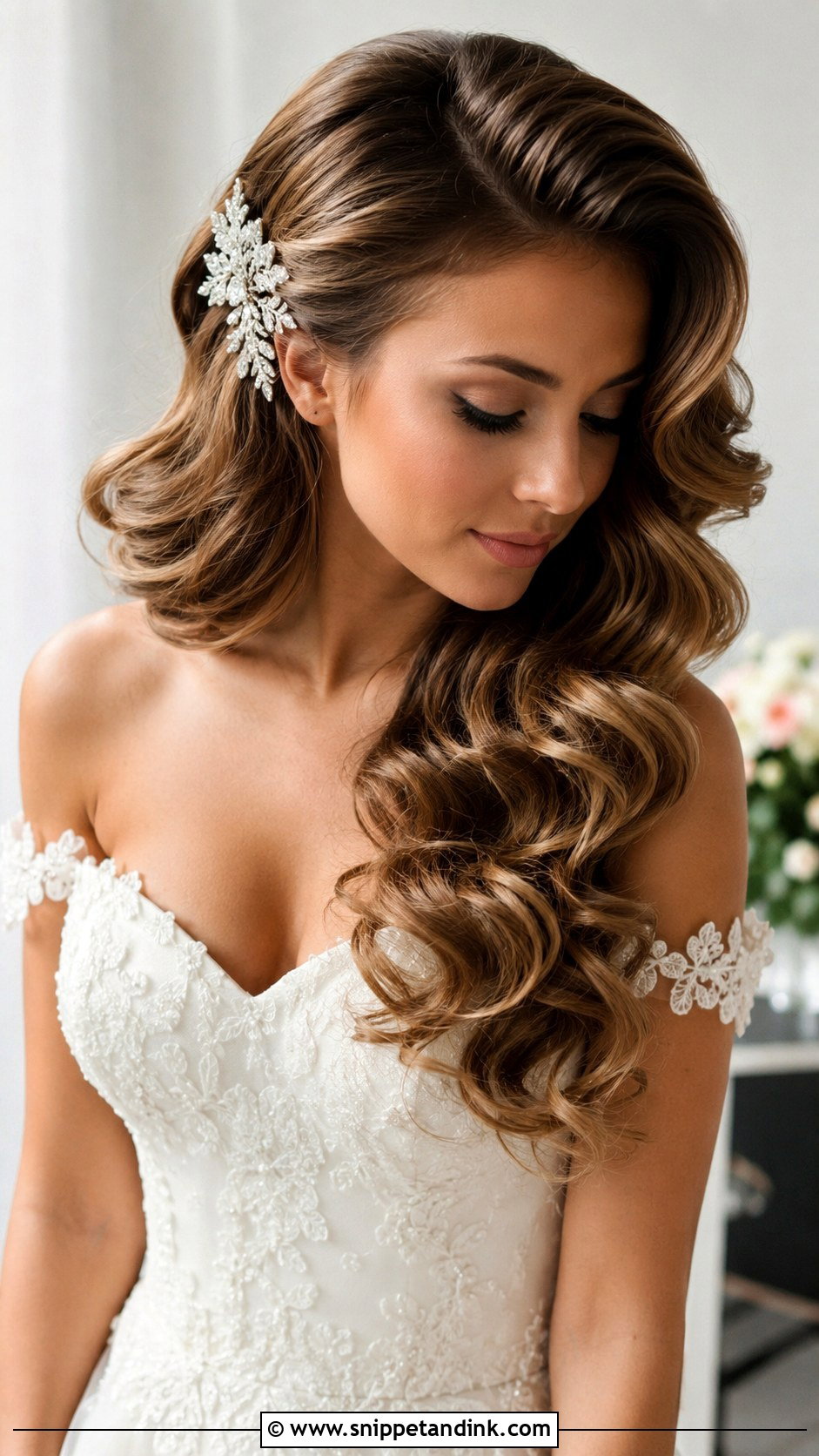
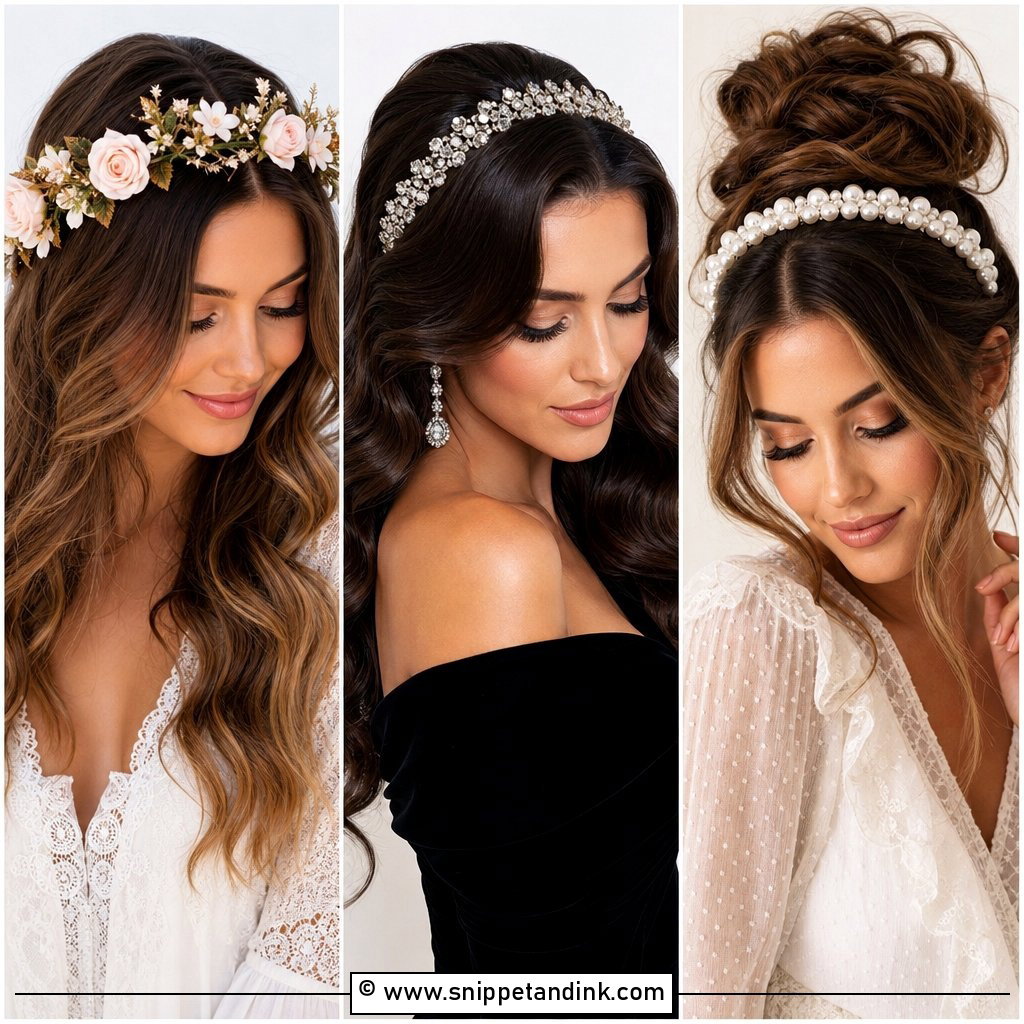
Brides who prefer their hair down usually ask me for a voluminous blowout, which gives full body, gentle bends and plenty of shine. The winter catch is static. I finish with a light anti-static spray and avoid over-brushing once the blowout is done. The low humidity then keeps the volume up from ceremony through reception. Add a sparkling clip, or wear it with a sweep to one side and a pin behind the ear for a dressier finish.
19. Accessorized Veil Updo
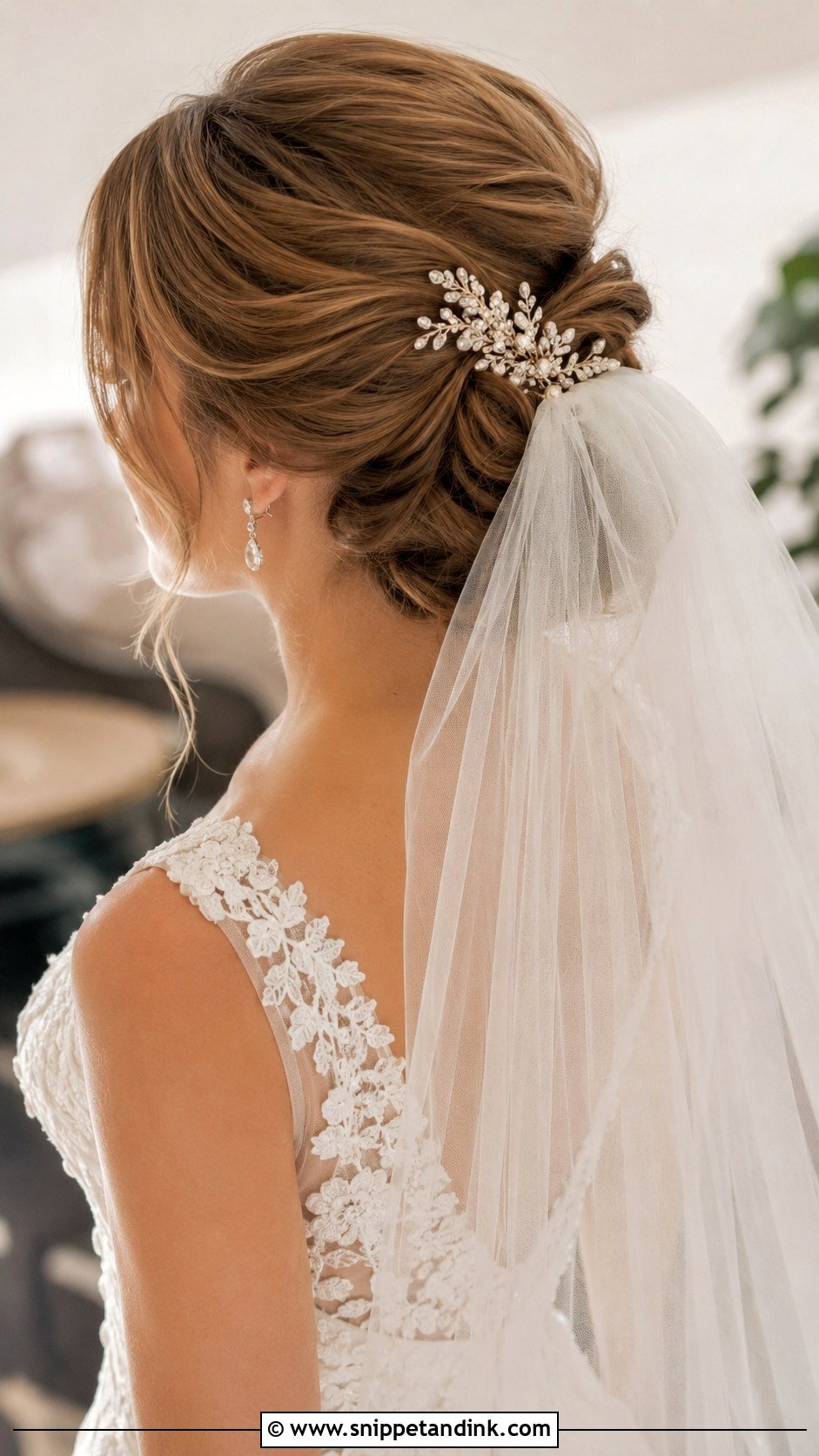
Where the veil sits changes the whole style. Tucked under a bun, it reads classic and keeps the shape of the updo visible; placed above, it falls with more drama. I always attach the comb into a backcombed section of the base, never into smooth hair alone, and then add a crystal comb or pearl pins at the join to hide it. This combination suits formal venues and traditional ceremonies, and it’s the one I recommend practicing at your trial with the actual veil.
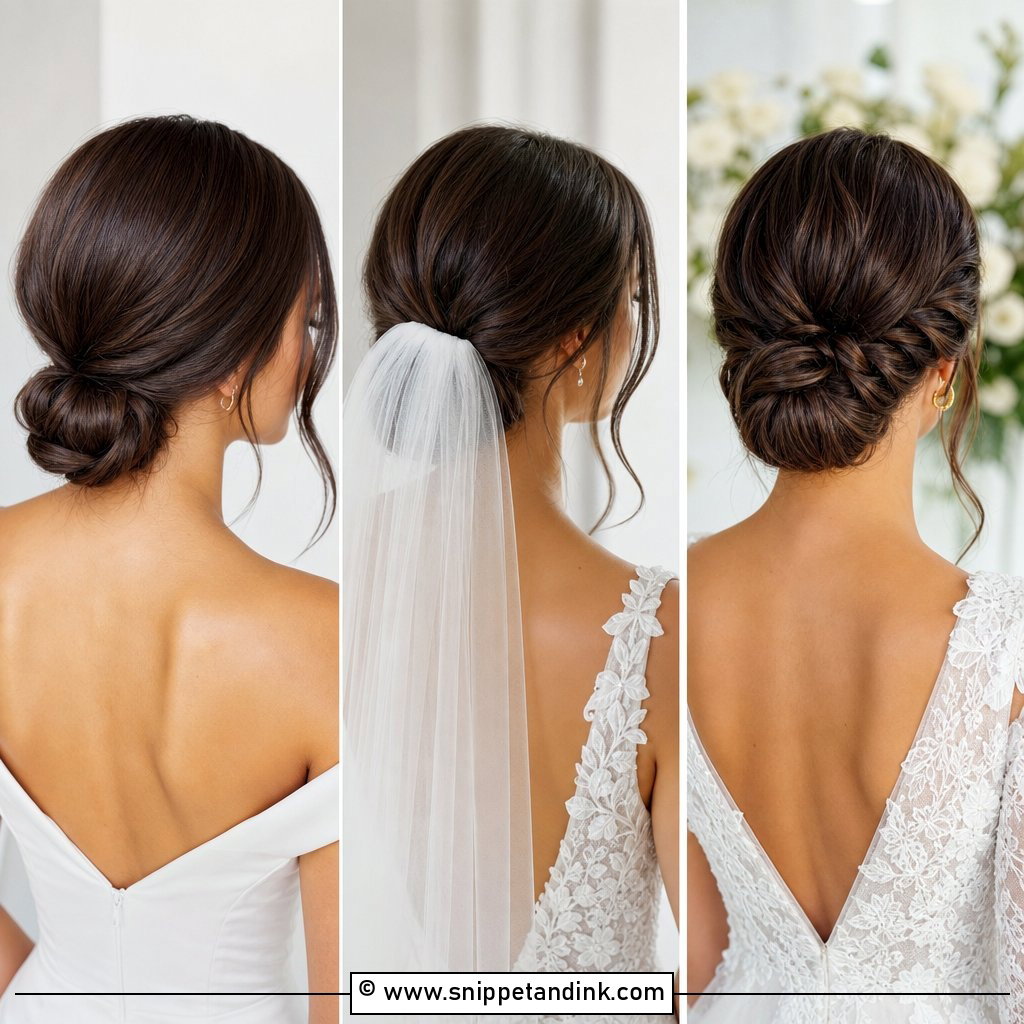
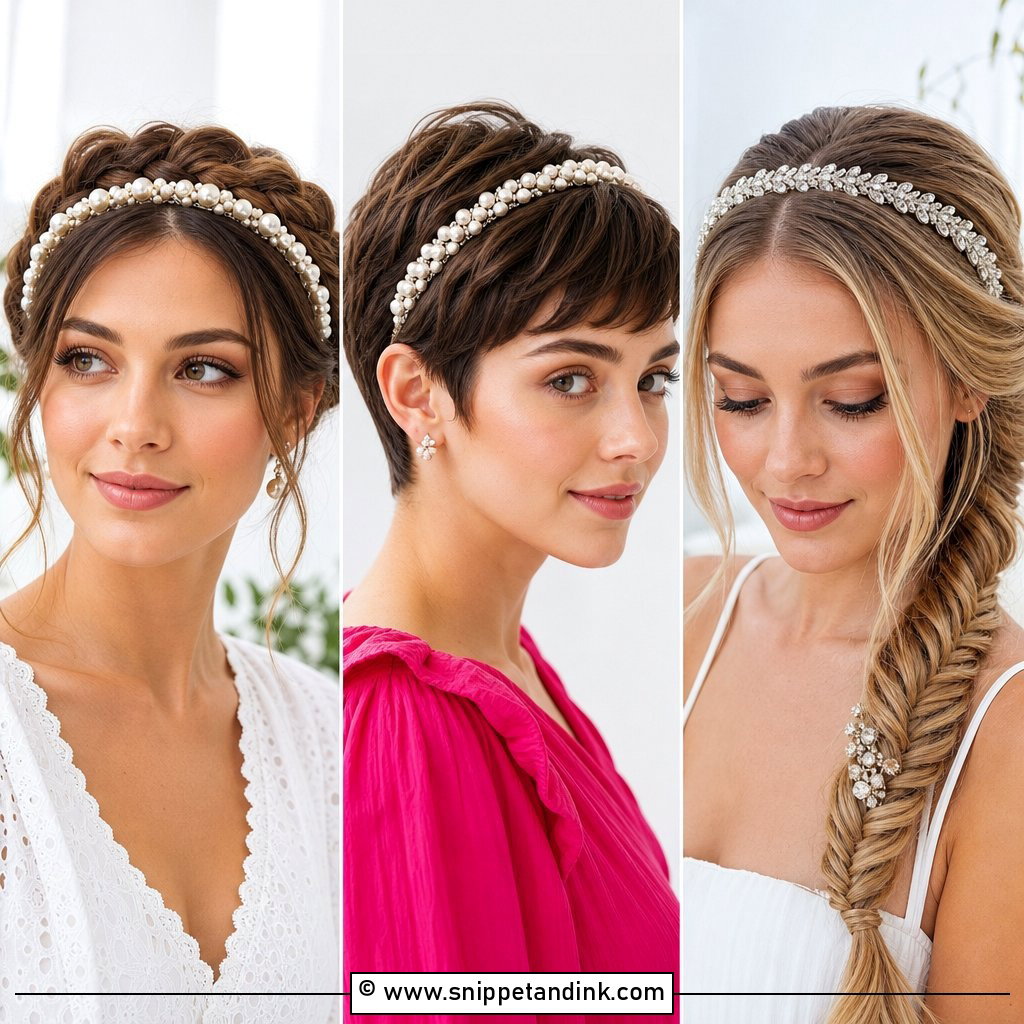
20. Loose Waves With Crystal Headband
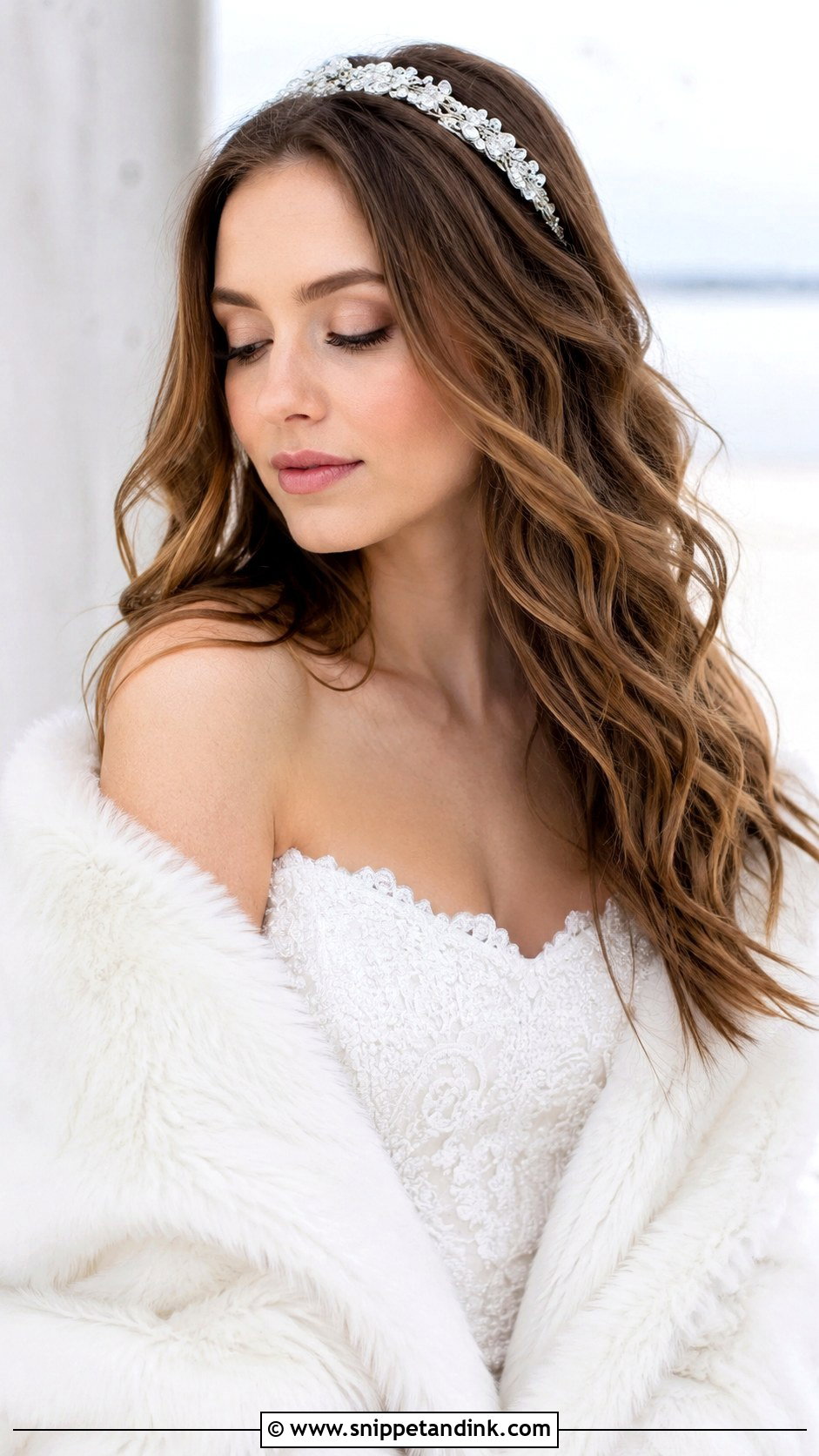
A crystal headband over loose waves gives frosty sparkle with almost no structure, so the hair moves freely all evening. The headband needs a little support: I backcomb a thin section directly behind it and slide two bobby pins under each end so it doesn’t creep forward when you dance. It works with or without a veil. Choose silver crystals for a cool palette, pearls for warmth.
Outdoor Snow Portraits Without Losing the Style
Many winter couples step outside for twenty minutes of snowy portraits, and that short stretch does more damage than the whole ceremony. Wind lifts loose pieces, snowflakes melt into the hair, and cold fingers fiddle with pins. A little planning keeps the set intact.
- Schedule outdoor photos before the reception, while the style is freshest and still has all its hold.
- Hand a bridesmaid or your photographer a small pouch: five bobby pins, a travel spray, a soft brush and a few blotting papers.
- Let falling snow sit on the hair rather than brushing it off; it melts cleanly, while brushing drags water into the curls.
- Ask the photographer to shoot with your back to the wind so loose waves blow away from your face, not across it.
- Once inside, give the hair a minute in the warmth before any touch-up, so the mist settles first.
If you’re set on long loose waves and an outdoor session in snow, I usually suggest a half-up version instead. The pinned top section keeps the face clear in wind, and the lengths still move in the photos.
What I’d Tell a Winter Bride Before Her Trial
The cold season gives you a rare advantage: dry air that keeps curls, waves and detailed updos holding far longer than summer does. Use it. Pick the style that suits your hair’s real length and texture, then bring your two or three favorite photos to the trial so your stylist can test them against your dress, veil and coat. Leave room for static and hats in the plan, and the style you leave the house with will still be standing at the final dance.
You'll Like These Ideas:


Leave a Reply