
Japanese bridal hair splits into two worlds, and the first question I ask is which one your day lives in. The traditional side means structured shapes built for a kimono: kanzashi ornaments, the wataboshi hood or tsunokakushi headpieces. The modern side covers buns, chignons, half-up waves and short cuts worn with a white gown or a colorful iro uchikake. Many weddings use both, one for the ceremony and another after the outfit change. The fifteen ideas below cover each, with notes on what the shape needs from your hair and how it behaves over a long day.
Wig or Your Own Hair Under a Traditional Headpiece
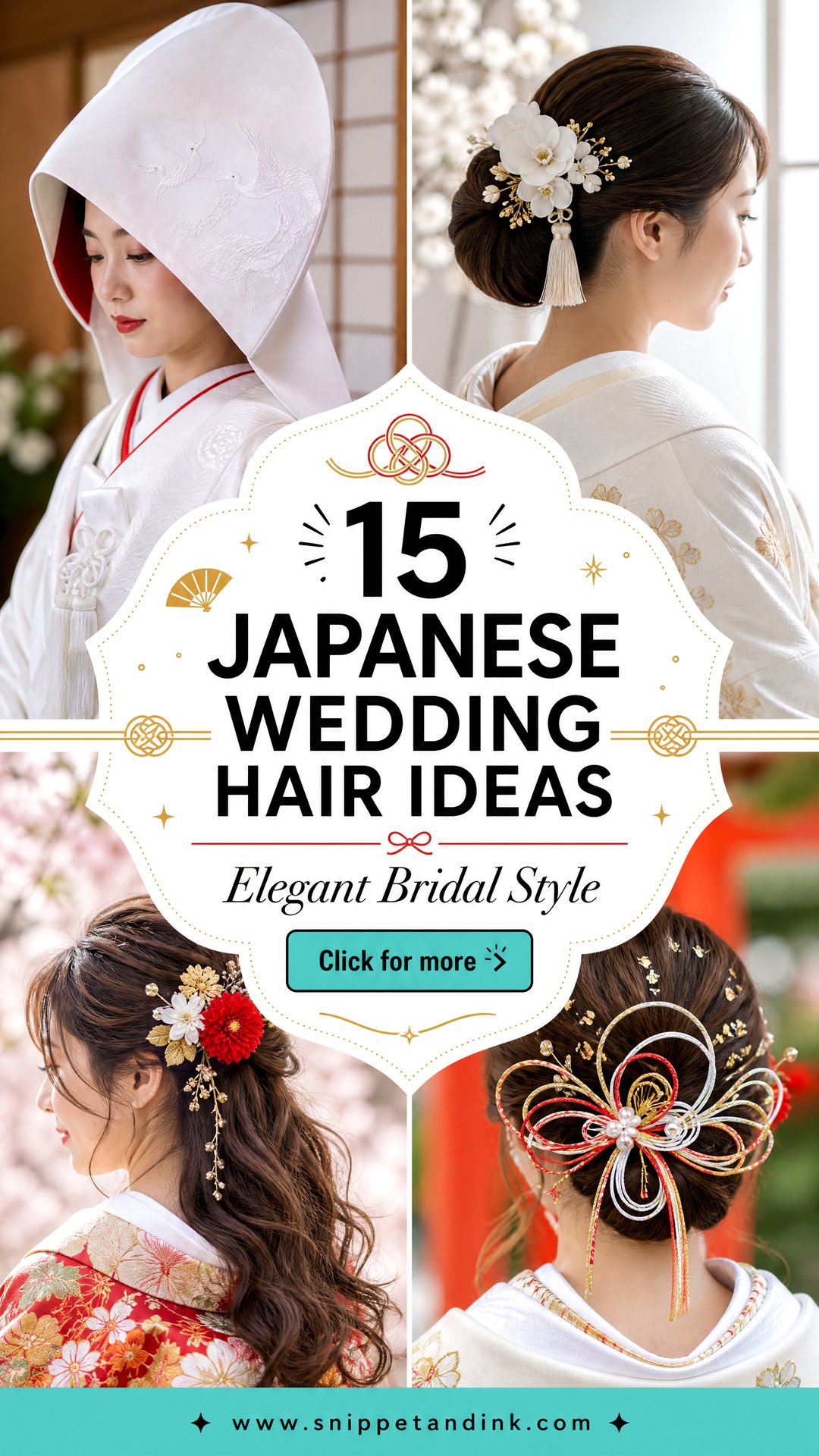
Most brides wearing the classic Takashimada shape today wear a fitted wig rather than building it from their own hair. It isn’t a shortcut. The traditional shape needs enough length to wrap and pad, a lot of styling time, and a stylist who specifically trains in it. A wig gives a precise outline every time.
If you go with a wig, expect a fitting appointment weeks ahead so it can be sized to your head. On the day, your own hair is flattened into small pin curls or flat wraps under a net cap. I always tell brides the wig is heavier than they imagine, so practice sitting and bowing in it at the fitting and say if anything presses on your temples. A small adjustment then saves a headache through the ceremony.
Natural-hair versions are possible with long, thick hair, and some brides love wearing their own hair for the meaning of it. It takes padding, firm pinning and more chair time, and fine hair usually can’t carry the shape. That’s a conversation for the trial, not the morning of.
1. Bunkin Takashimada Wedding Hair
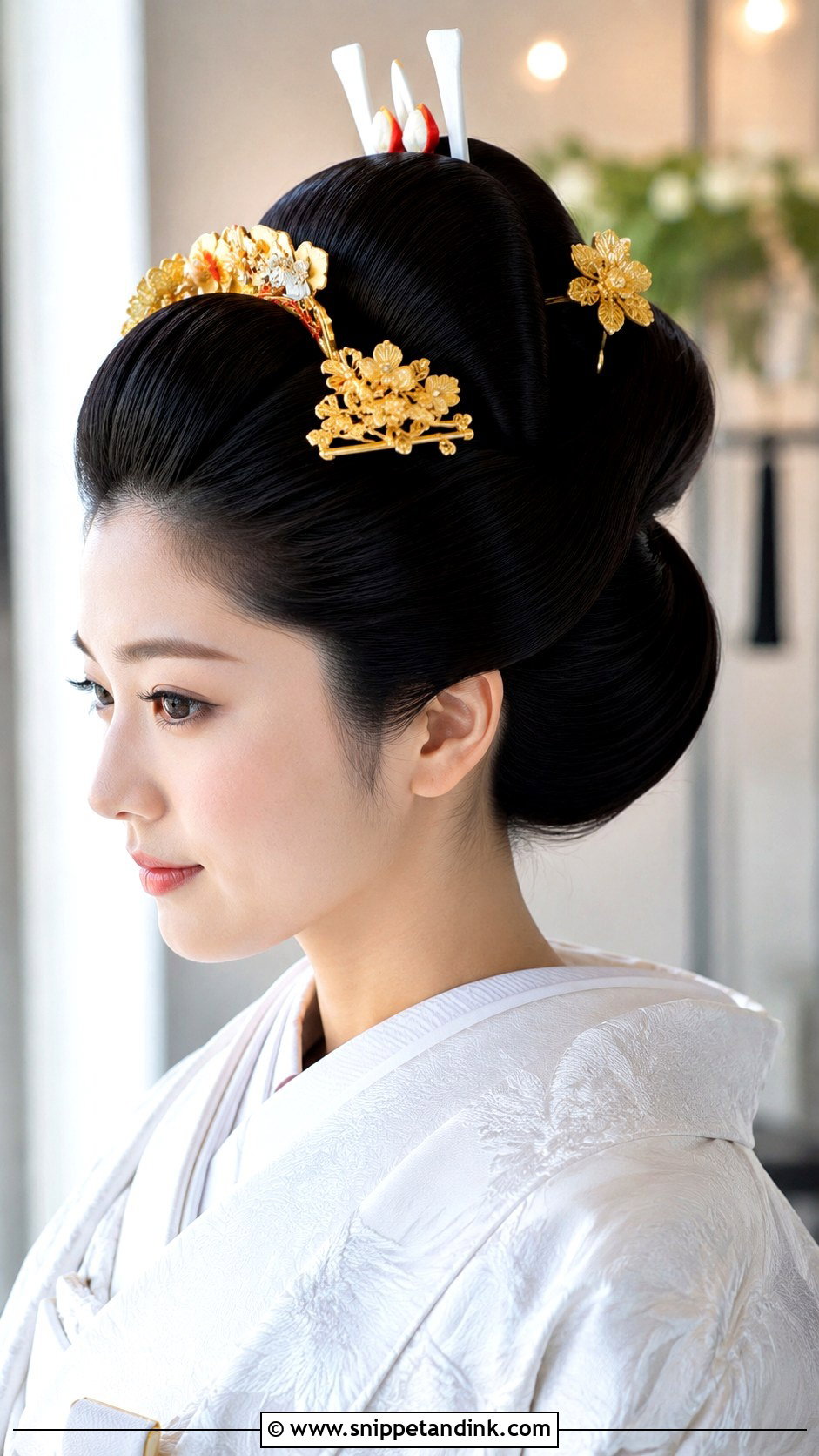
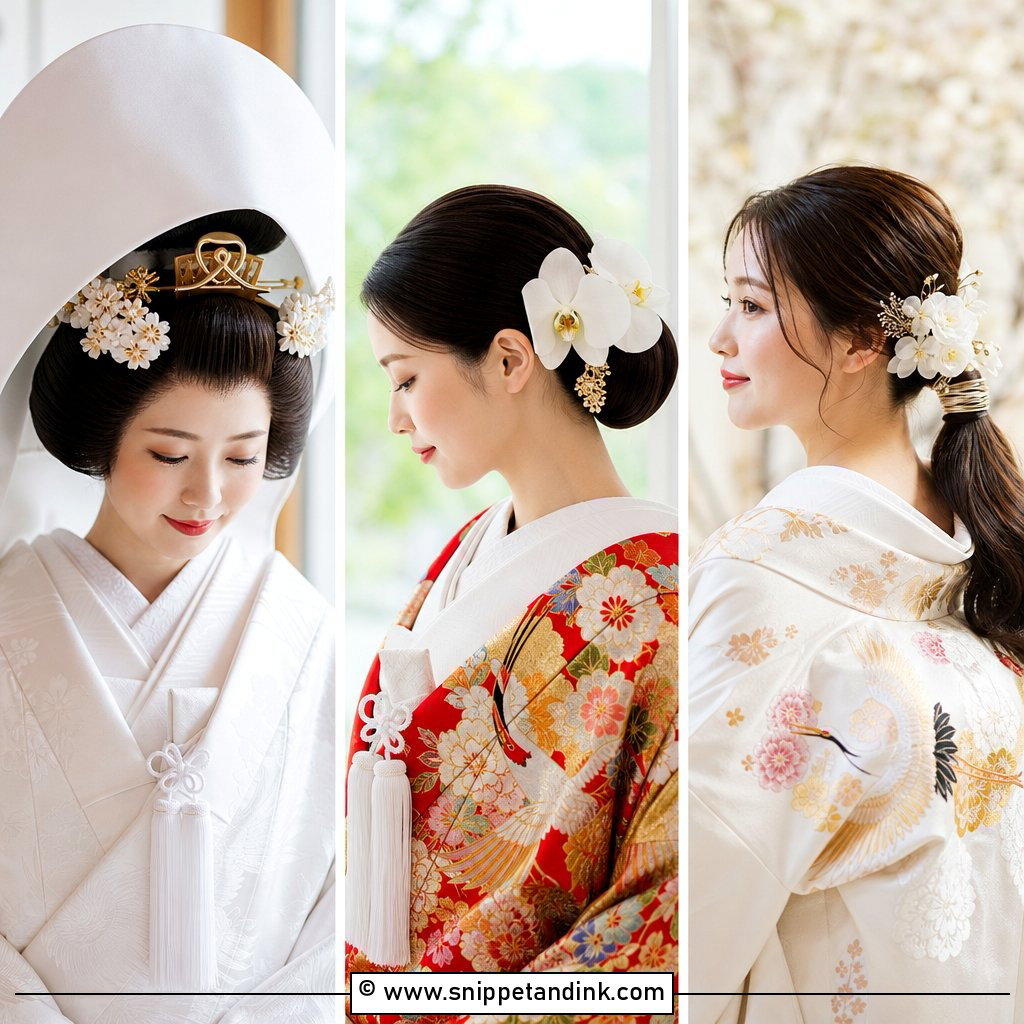
Bunkin Takashimada wedding hair is the most formal traditional bridal shape: high, rounded, with smooth lacquered sections and the side wings set in balance. It’s worn with a shiromuku or iro uchikake, with kanzashi placed to frame it. Today most brides wear it as a fitted wig, because building it from natural hair needs a lot of length, padding and hours in the chair. If you want a classic Shinto ceremony feel, this is the look. Ask your photographer for profile shots; the height and ornament placement only really read from the side.
2. Wataboshi Wedding Hair
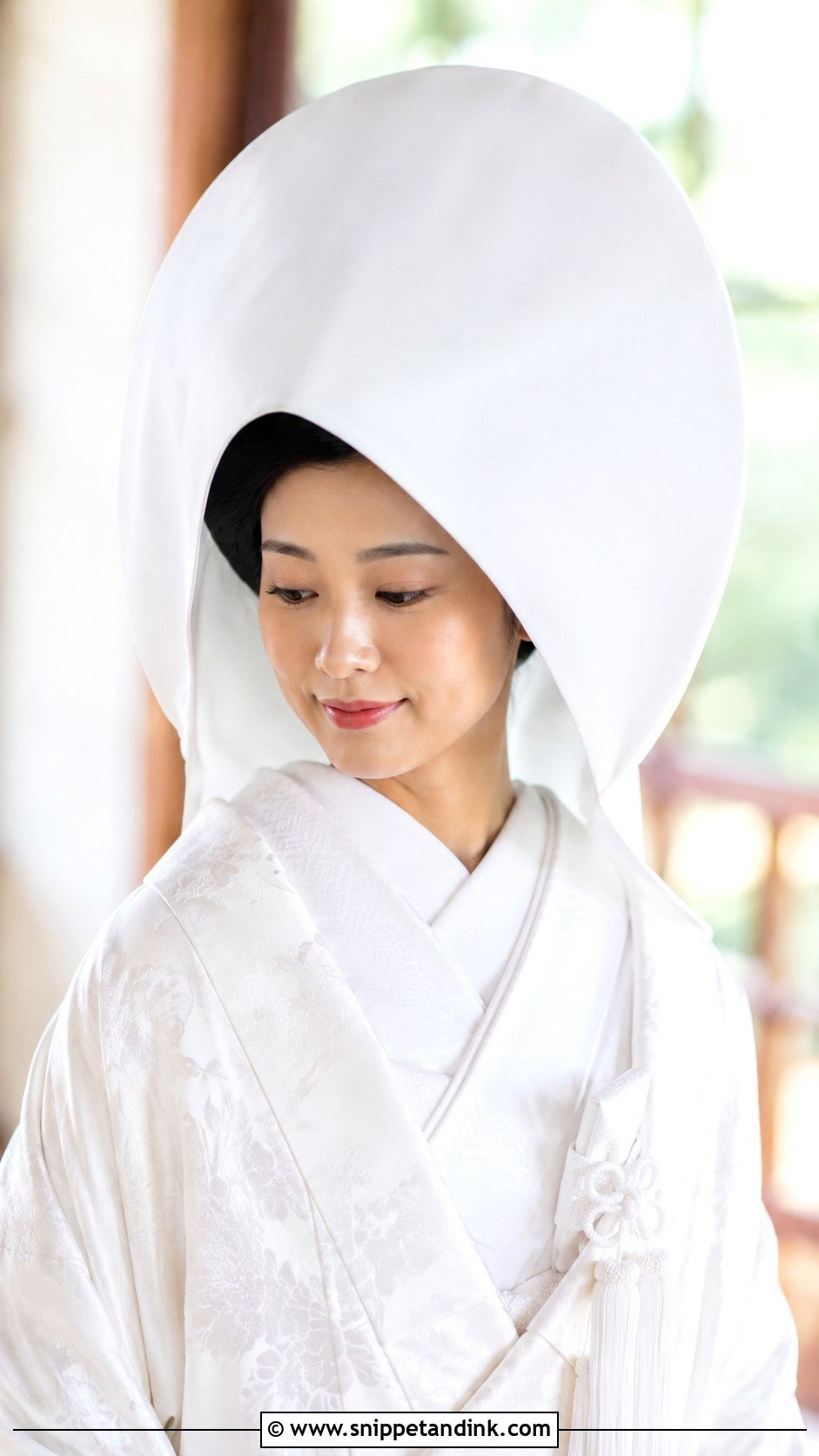
The wataboshi is a rounded white hood that sits over a traditional updo or wig, and it’s worn with the pure white shiromuku. It frames the face like a veil without being one, which gives the bride a very still, quiet presence at a shrine ceremony. Underneath, the hair still has to be shaped properly, because the hood takes its outline from the style below. A flat or lopsided base shows straight through the fabric. I’d also warn brides that the hood hides most of the face from the side, so plan a few portraits with it lifted or removed.
3. Tsunokakushi Wedding Hair
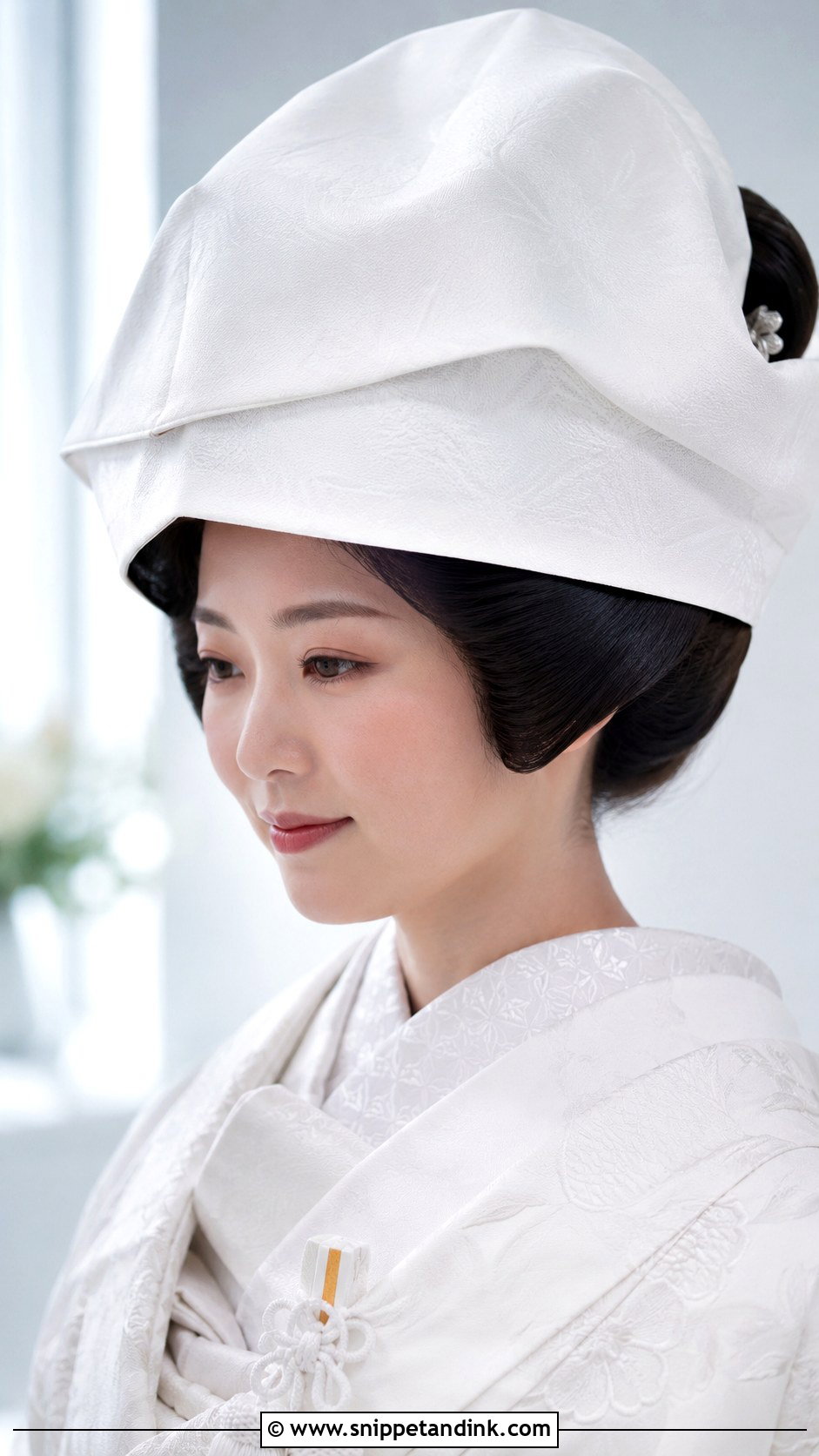
The tsunokakushi is a band of white silk wrapped across the top of a formal updo, leaving far more of the face open than a wataboshi. Makeup and features stay visible in portraits, which is why I see more brides choosing it. It pairs with shiromuku and colorful uchikake outfits, so it can stay on through more of the day. Its name is usually explained as hiding the horns of jealousy and ego, a nice detail to share with guests. The band needs a firm, full shape beneath it to sit level, so the updo or wig matters as much as the silk.
4. Kanzashi Wedding Updo
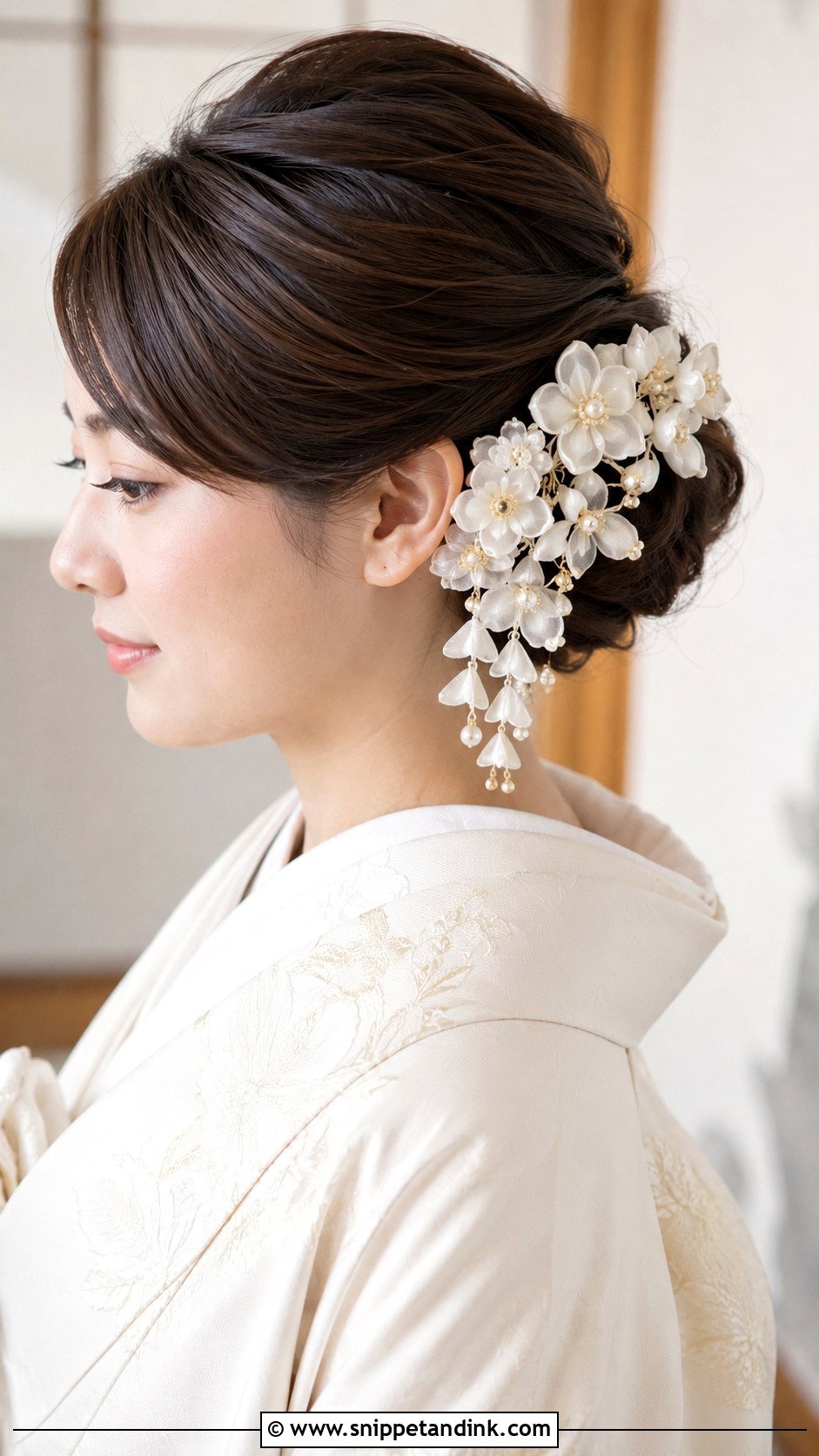
Kanzashi turn a clean updo into something unmistakably Japanese bridal. I sweep the hair up smoothly first, then place the ornaments: floral kanzashi, combs, pins or pieces with dangling strands. Whether it reads traditional or modern depends on the shape of the updo and the style of ornament. It works with kimono, reception dresses and fusion bridal outfits. Heavier kanzashi need a solid base, so I build a small padded section where they’ll go. Restraint matters here: one or two good pieces beat a crown of them.
5. Shiromuku Low Bun Wedding Hair
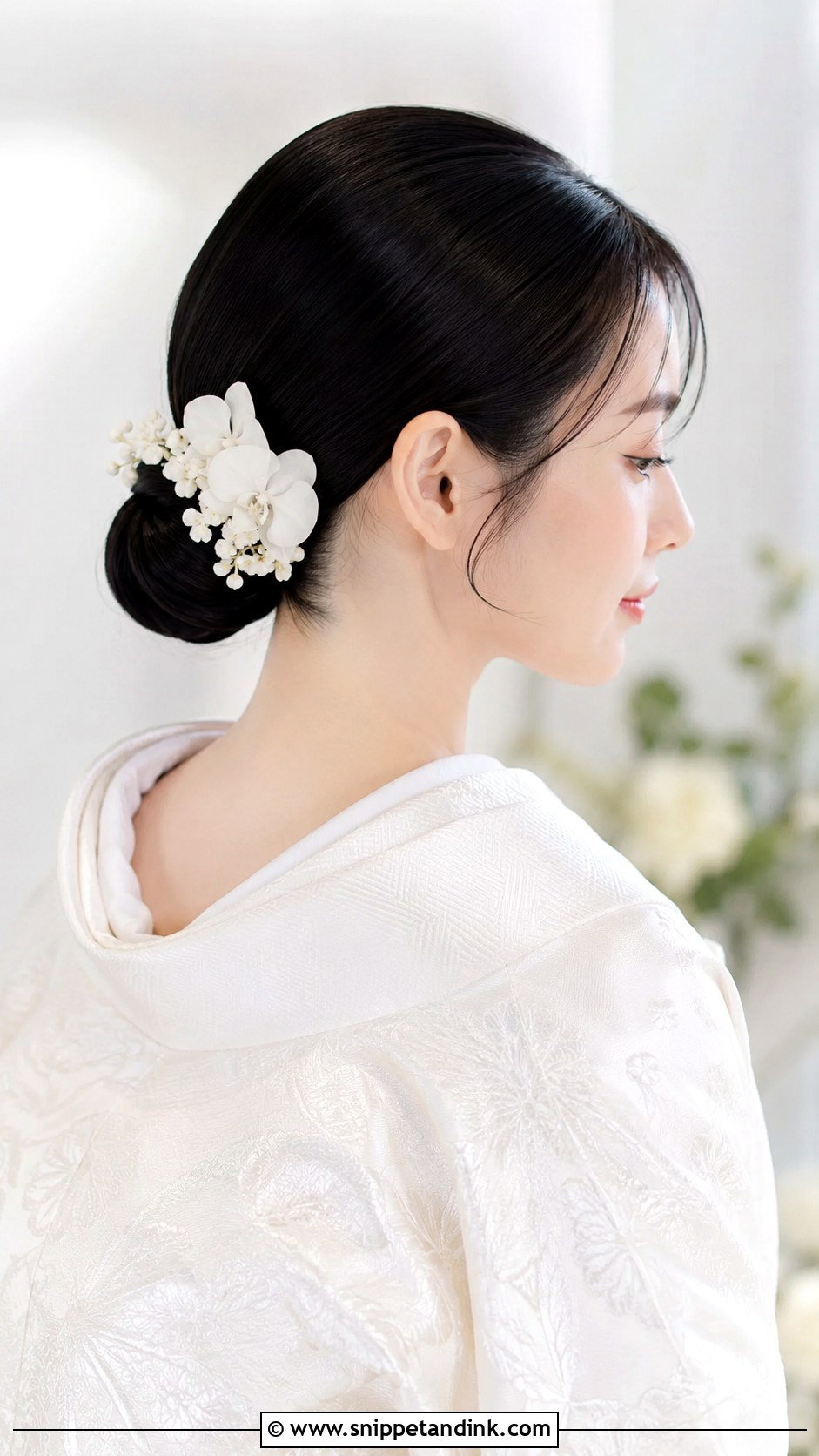
A low bun under a shiromuku is understated, comfortable and kind to a long ceremony. The nape and collar line matter enormously in kimono dressing, since the back collar is pulled away from the neck on purpose, so I set the bun just above the collar rather than resting on it. A bun that sits on the fabric pushes the collar forward and leaves product marks on white silk. White flowers, pearl pins or a single small kanzashi finish it. It’s polished enough for formal portraits without any height at all.
6. Iro Uchikake Wedding Updo
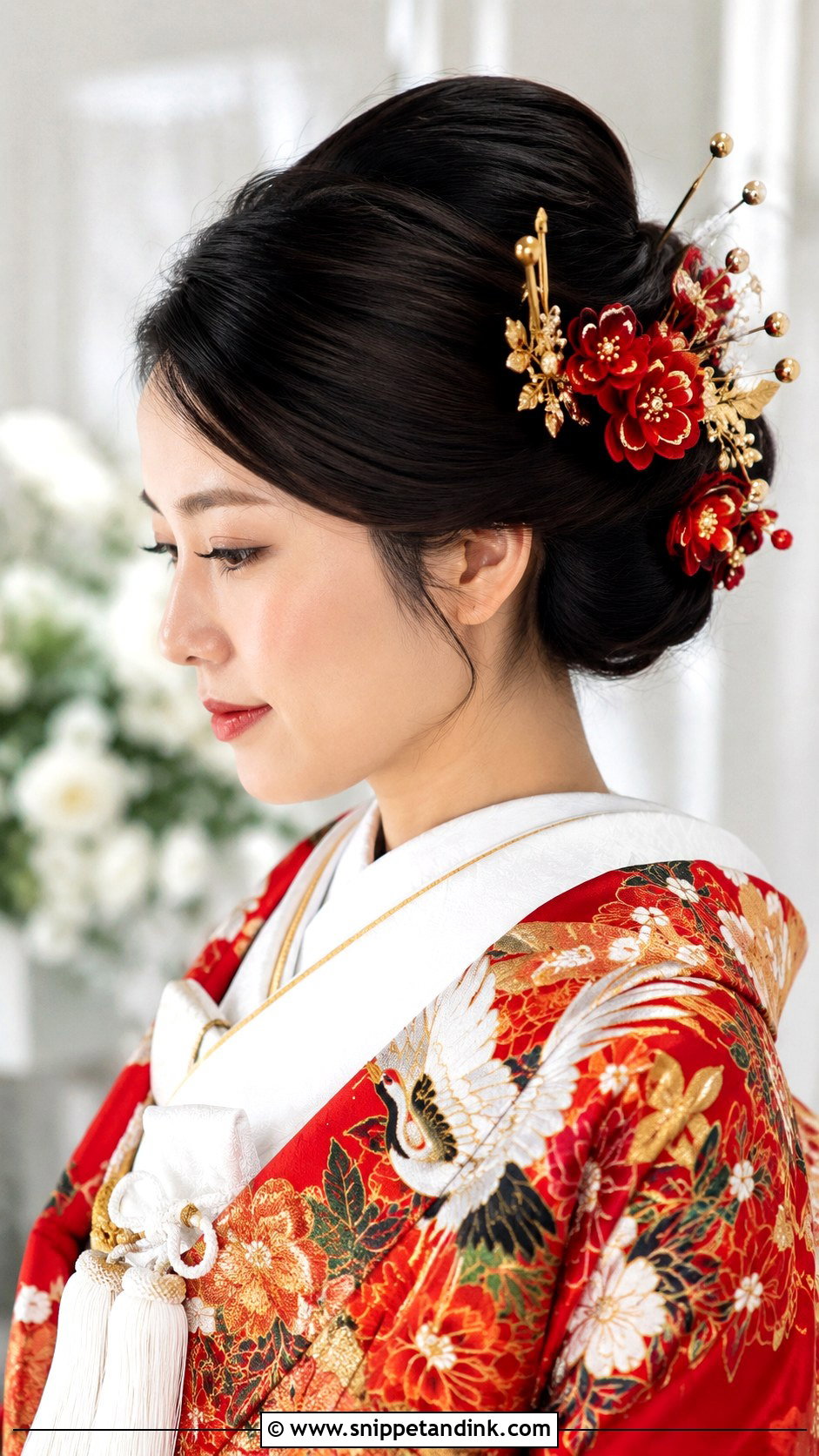
An iro uchikake is loud by design, with bold embroidery, gold thread, cranes, flowers and deep reds, so the hair underneath has to be calm. A colorful bridal kimono like this pairs best with a structured updo and moderate height. I pick up one color from the kimono in the kanzashi or gold pins rather than adding new ones. This is often the look brides change into after the ceremony, so it’s worth planning both styles together; I’ll explain why below.
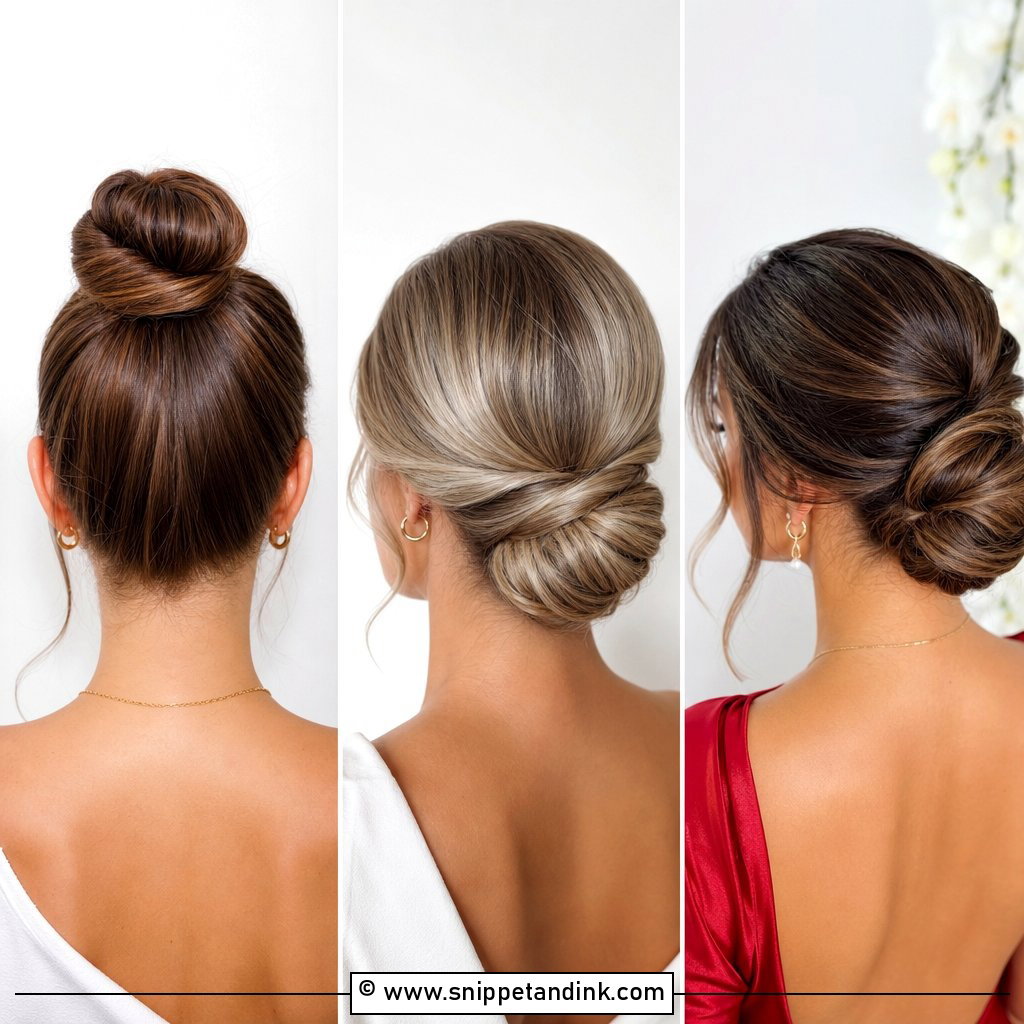
7. Modern Japanese Bridal Bun
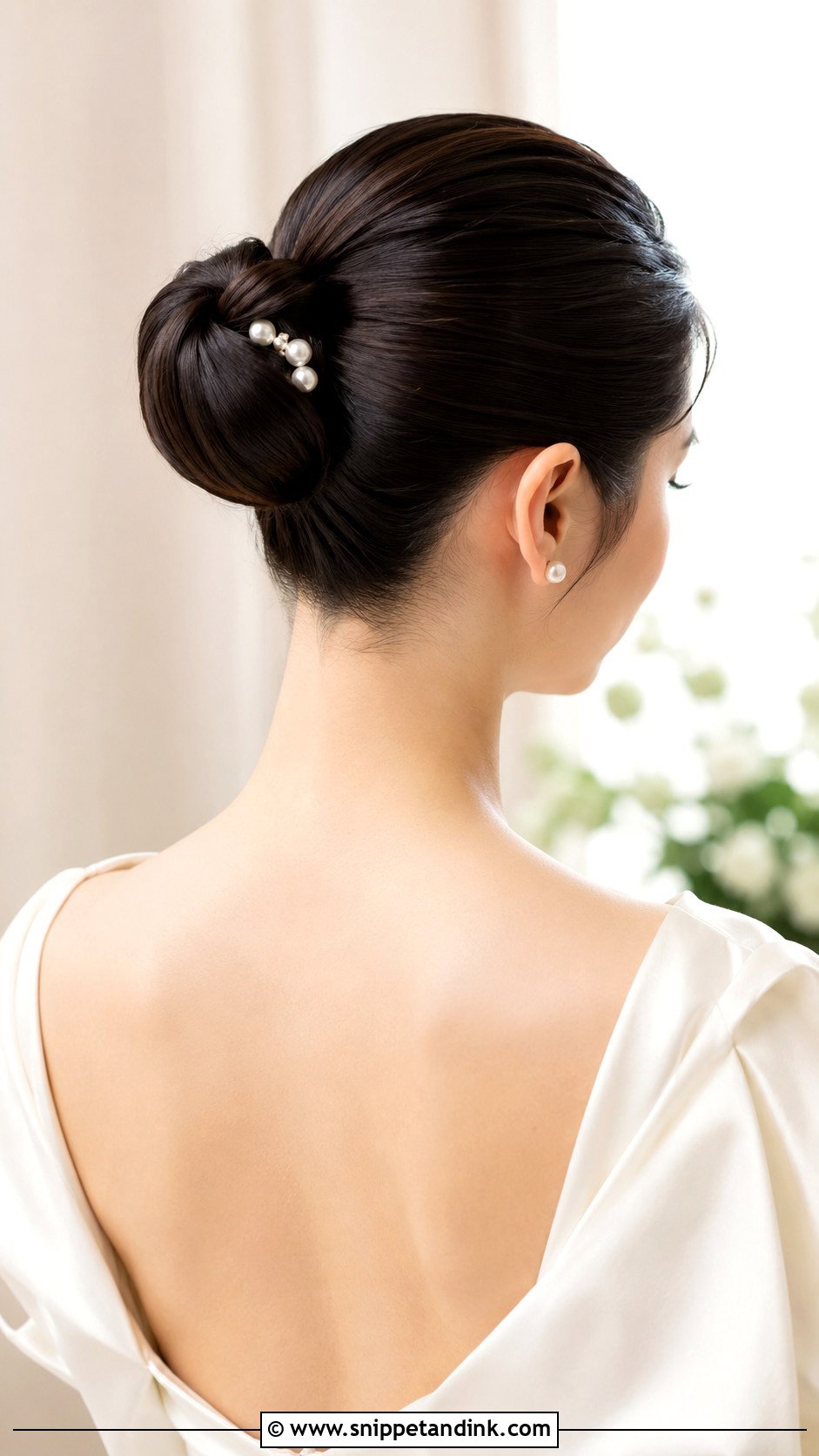
This modern bun suits a kimono and a Western dress equally well. The base is smooth, volume controlled, and the bun sits at the back of the head or slightly lower. It can be sleek or softly textured. It’s formal without being heavy, keeps the face open and lets your makeup show. One floral pin, a pearl detail or a simple kanzashi adds a Japanese accent. For all-day wear, I build it on a small elastic base with crossed pins so it can’t loosen during bowing and kneeling.
8. Japanese Bridal Chignon
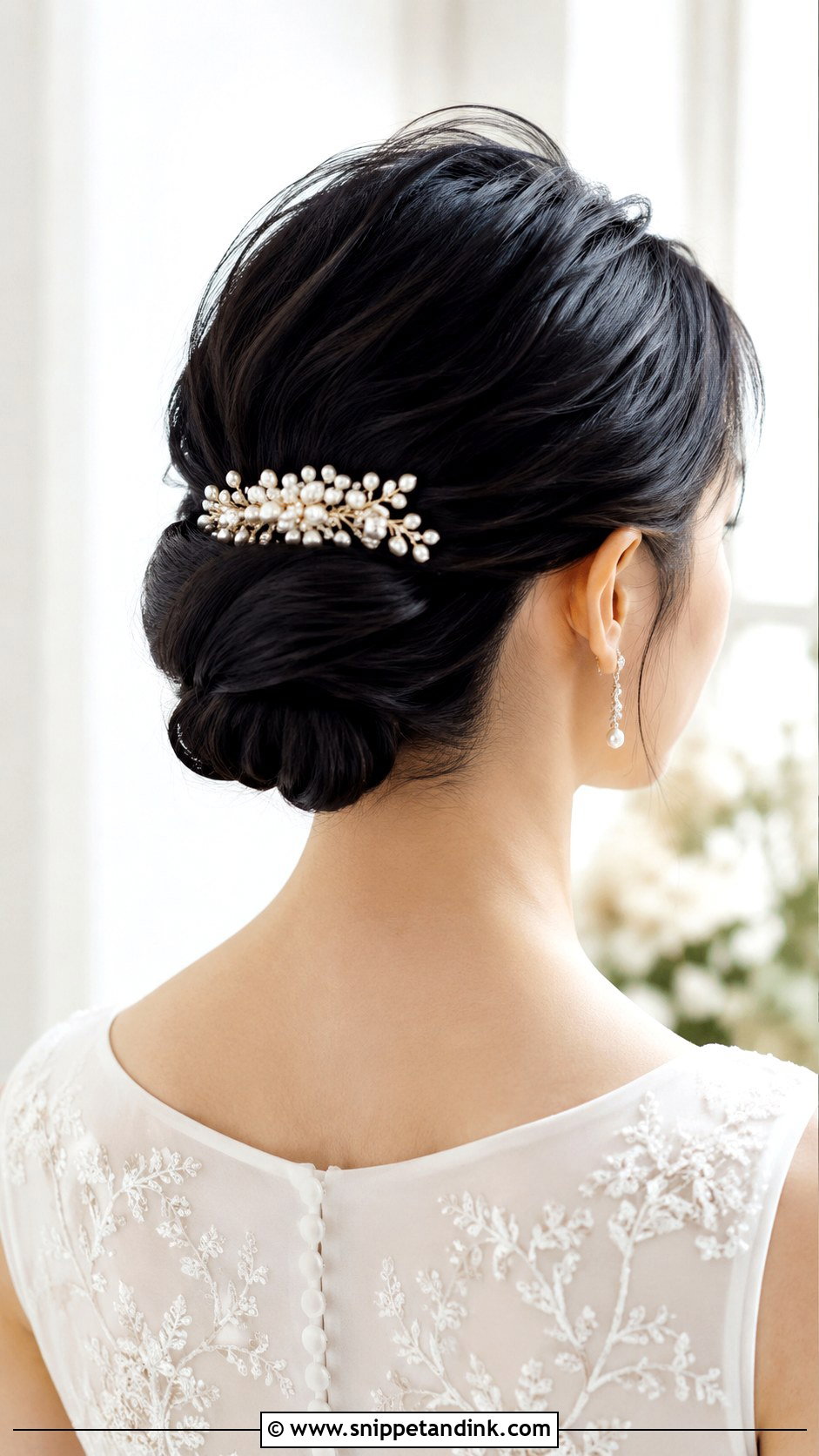
A chignon gives softness with structure: the hair gathered low and shaped into a neat twist or tucked bun with smooth sides. It keeps the kimono collar clear and looks just as right with a white dress. I’d style it sleek for a formal shrine ceremony and a little airier for garden photos. The airy version is the one that loosens, so I set the loose pieces with a light spray before they’re pulled out, not after. A small comb, flowers or pearl pins add the bridal detail.
9. Kimono Wedding Half Up Hair
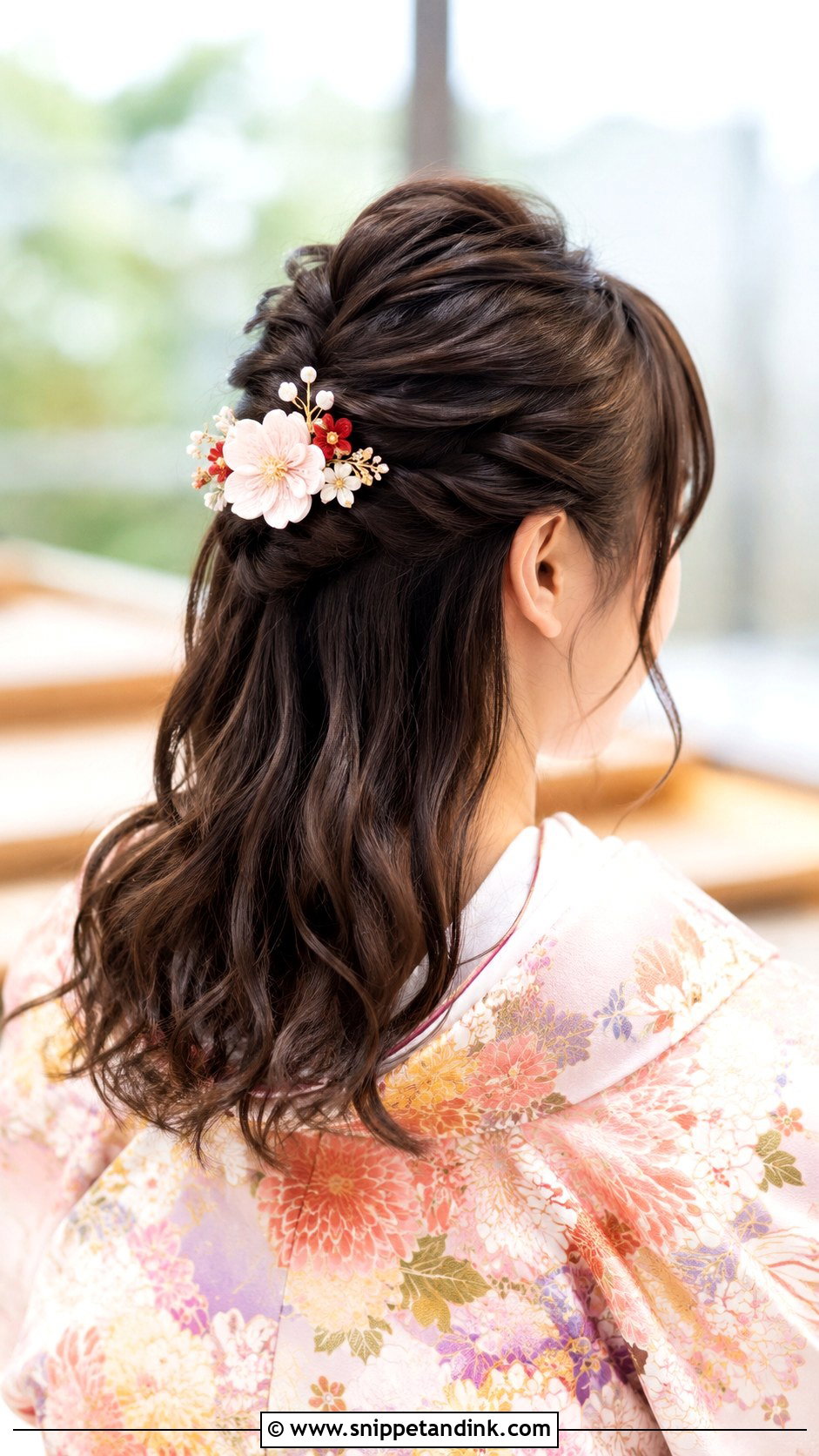
Half-up hair is what I suggest when a bride wants some length down, but I’m honest that it’s not a match for a formal traditional kimono, where all the hair is expected to be up. It fits pre-wedding shoots, receptions and modern kimono styling. The top section is lifted and pinned while the lengths stay smooth, curled or waved. To give it a Japanese bridal feel, place a small kanzashi, silk flower or mizuhiki knot at the pinned section.
10. Japanese Wedding Ponytail
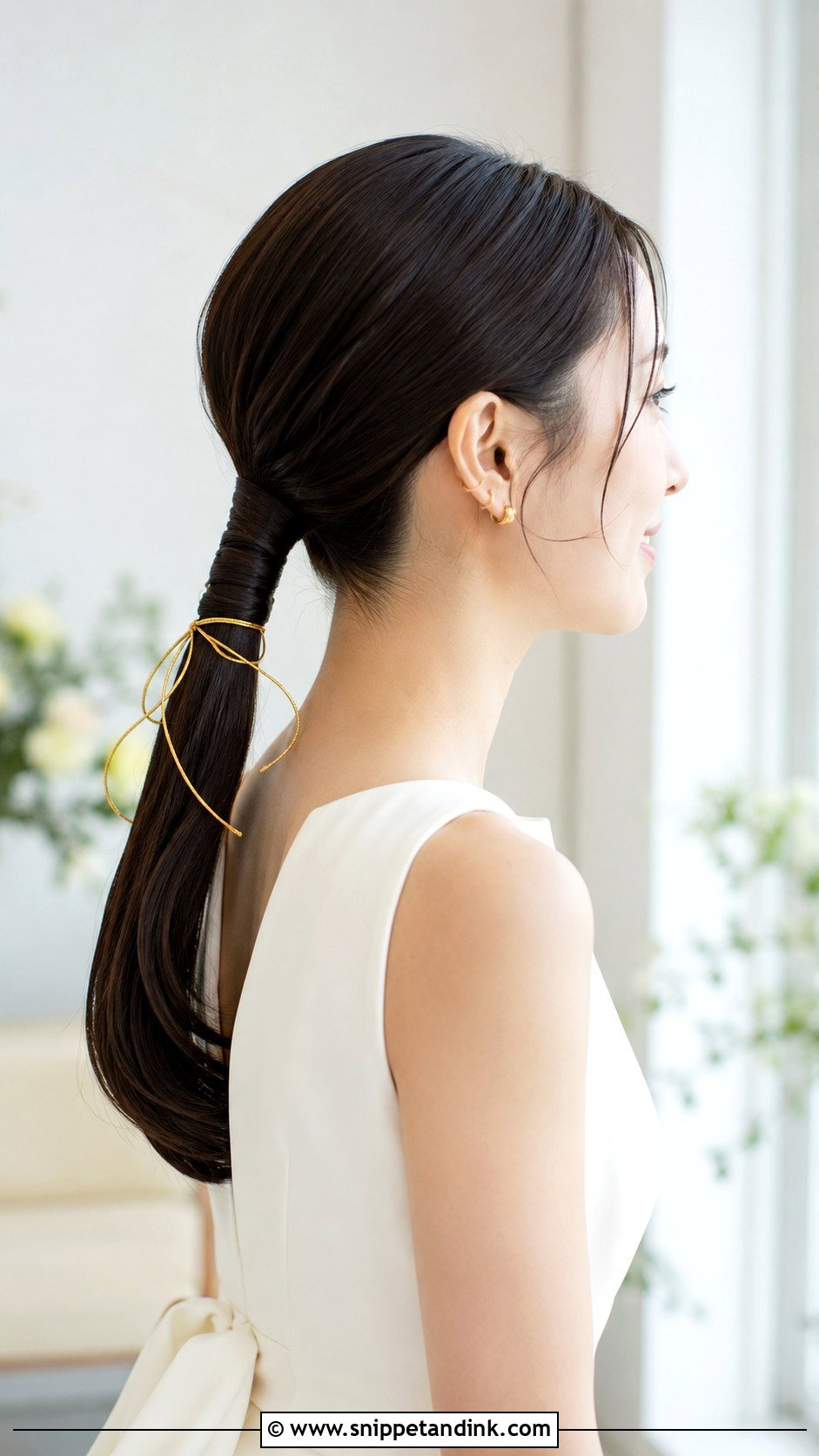
A ponytail can be bridal when it’s done with care: sleek and low, softly waved, or wrapped at the base so no elastic shows. I’d save it for reception dresses, minimal gowns and modern kimono outfits. A delicate cord, pearl pins, a gold hairpiece or a small floral ornament brings in the Japanese touch. Low ponytails do something useful here, too: they let long hair be part of the outfit instead of being packed away. Just keep it off a silk collar for the same reason as the low bun.
11. Japanese Wedding Bob Hair
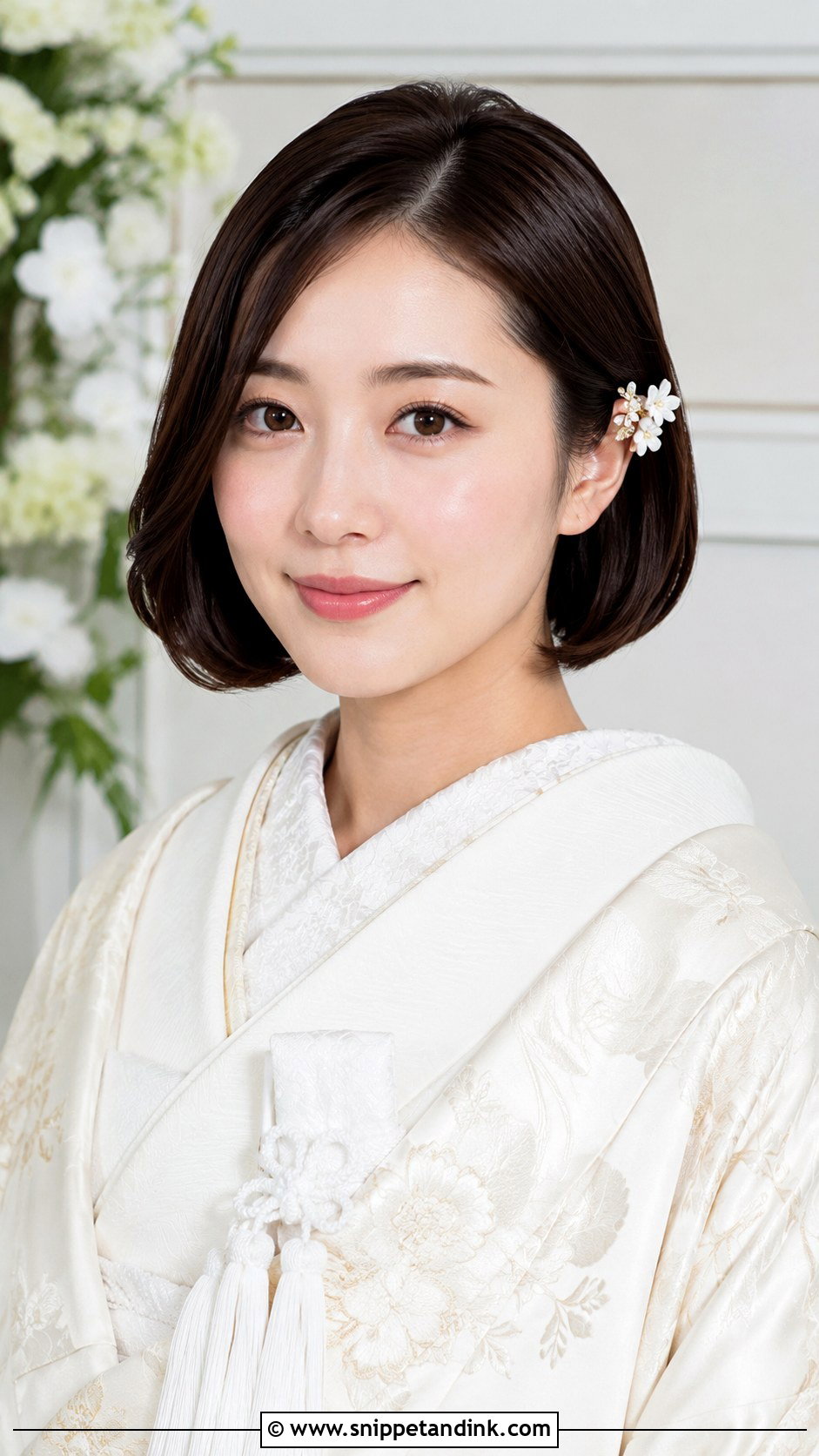
Short to medium hair doesn’t need extensions to look bridal. A sleek bob with the ends turned under and a glossy surface sits very well against a kimono collar, while a softly waved bob suits a Western dress or reception outfit. A side pin, small kanzashi or fresh flower gives the bridal finish. Precision is everything with a bob, so I’d book a trim about two weeks before the wedding, enough time for the cut to settle without growing out of shape.
12. Japanese Wedding Short Hair
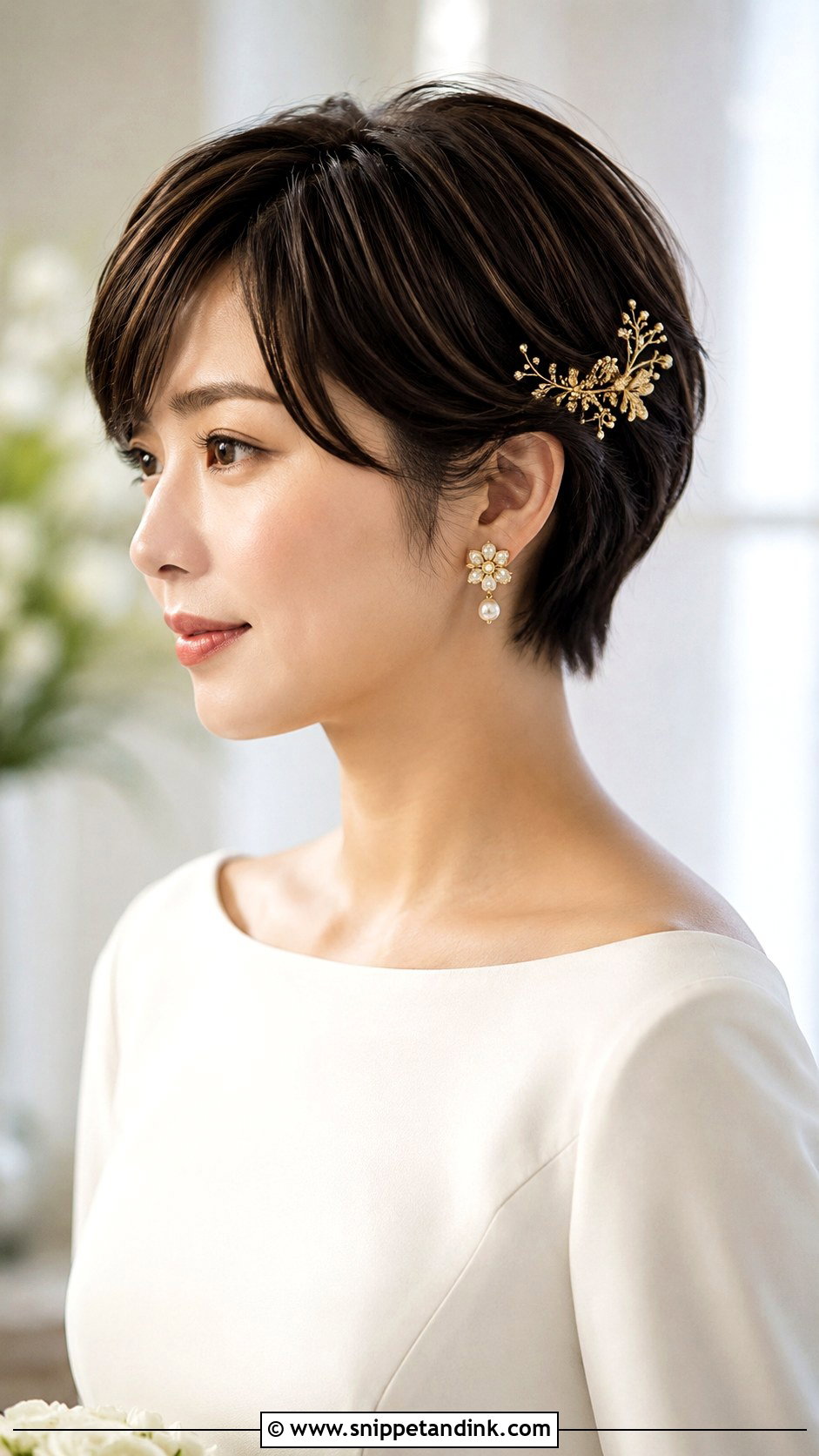
Short hair can look refined and fully bridal. A pixie, cropped bob or short layered cut can be worn smooth, softly waved or tucked behind one ear with an ornament. It’s comfortable, and it works with statement earrings, clean makeup and structured kimono collars. The challenge is anchoring: there’s little hair to grip, so I use small clips with a rubber grip or slide pins in under a tiny pin curl. If you plan a traditional headpiece, short hair usually means a wig for that part of the day.
13. Japanese Floral Wedding Updo
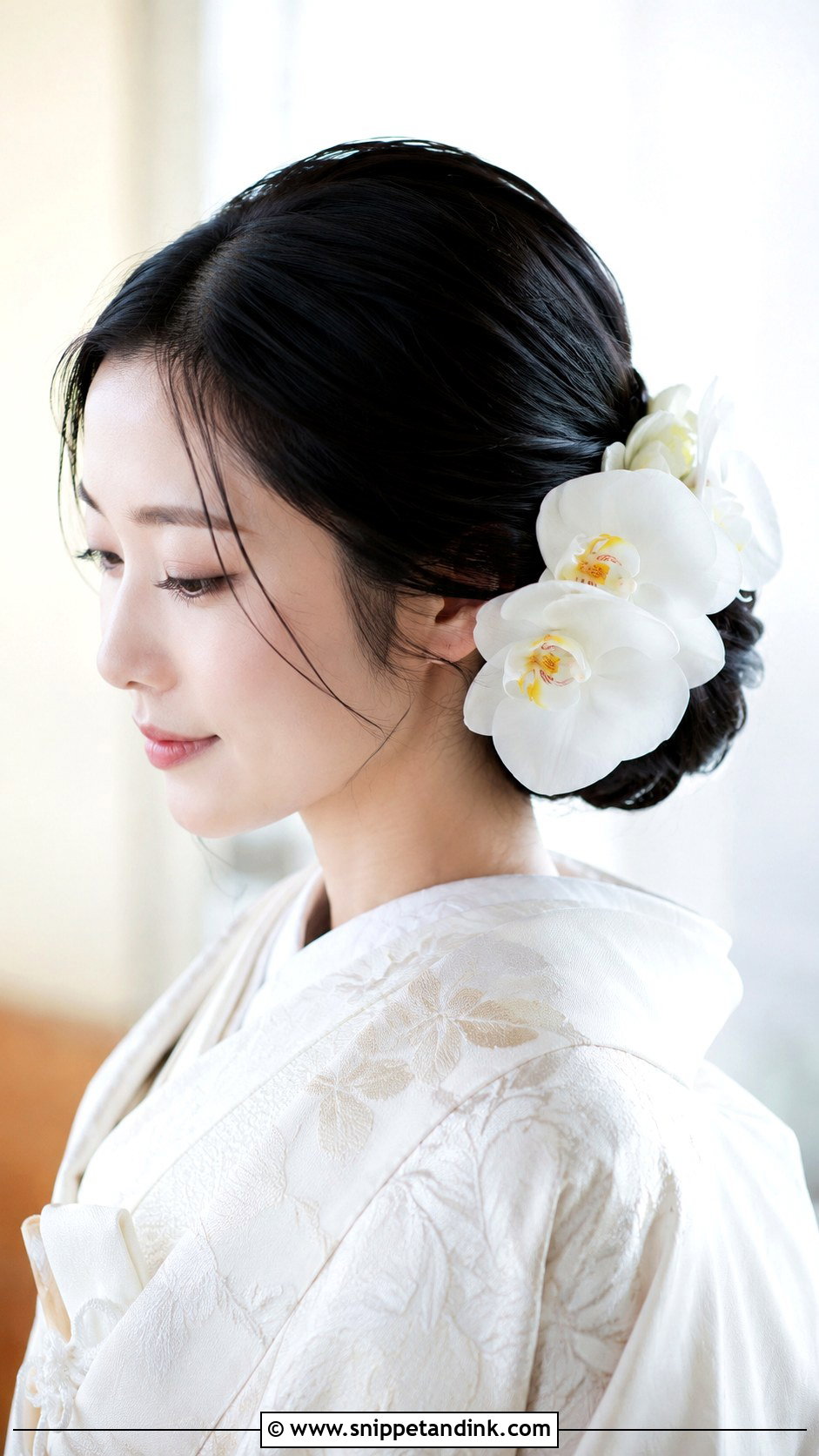
Flowers become the main ornament in this updo: a bun, twist or textured style decorated with blooms that echo the outfit. White orchids, small blossoms or soft pink flowers set a gentle mood, and the style suits traditional and modern looks alike, particularly outdoor portraits, spring weddings and colorful kimono. I place flowers to one side or around the bun only. Fresh flowers wilt under hot lights, so for a long day I’d consider good silk ones for the main placement and keep fresh blooms for a few accents.
14. Mizuhiki Wedding Hair
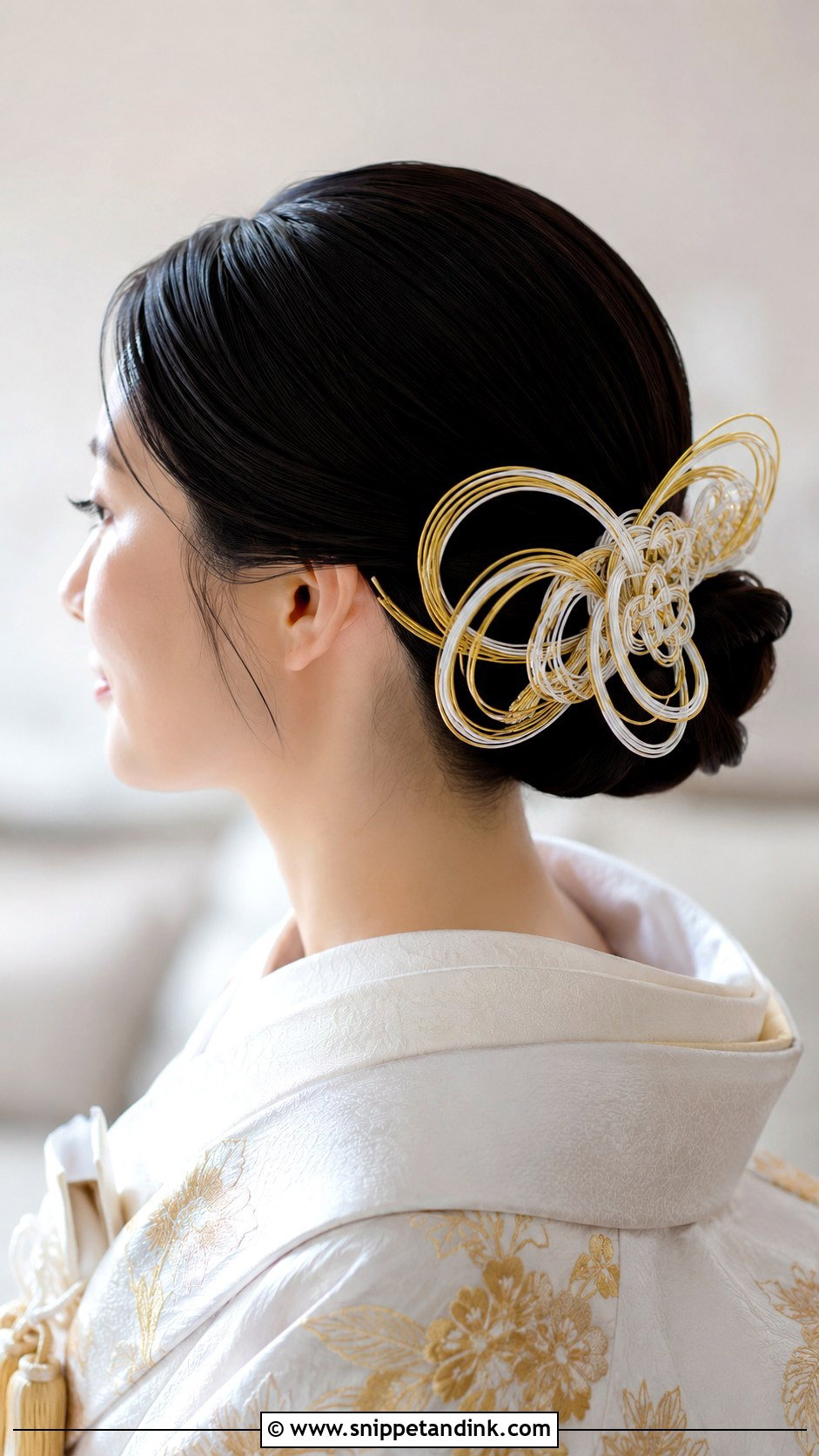
Mizuhiki cords are twisted paper cords tied into knots, loops and decorative shapes, and they turn up across Japanese celebration gifts and envelopes. Placed in an updo, ponytail or half-up style, they add texture and meaning without the bulk of flowers. Gold, white, red and soft metallics suit bridal looks best. They’re light, so they won’t drag a style down. I’d use them sparingly with a modern gown, perhaps one knot at the side, and more freely with a kimono.
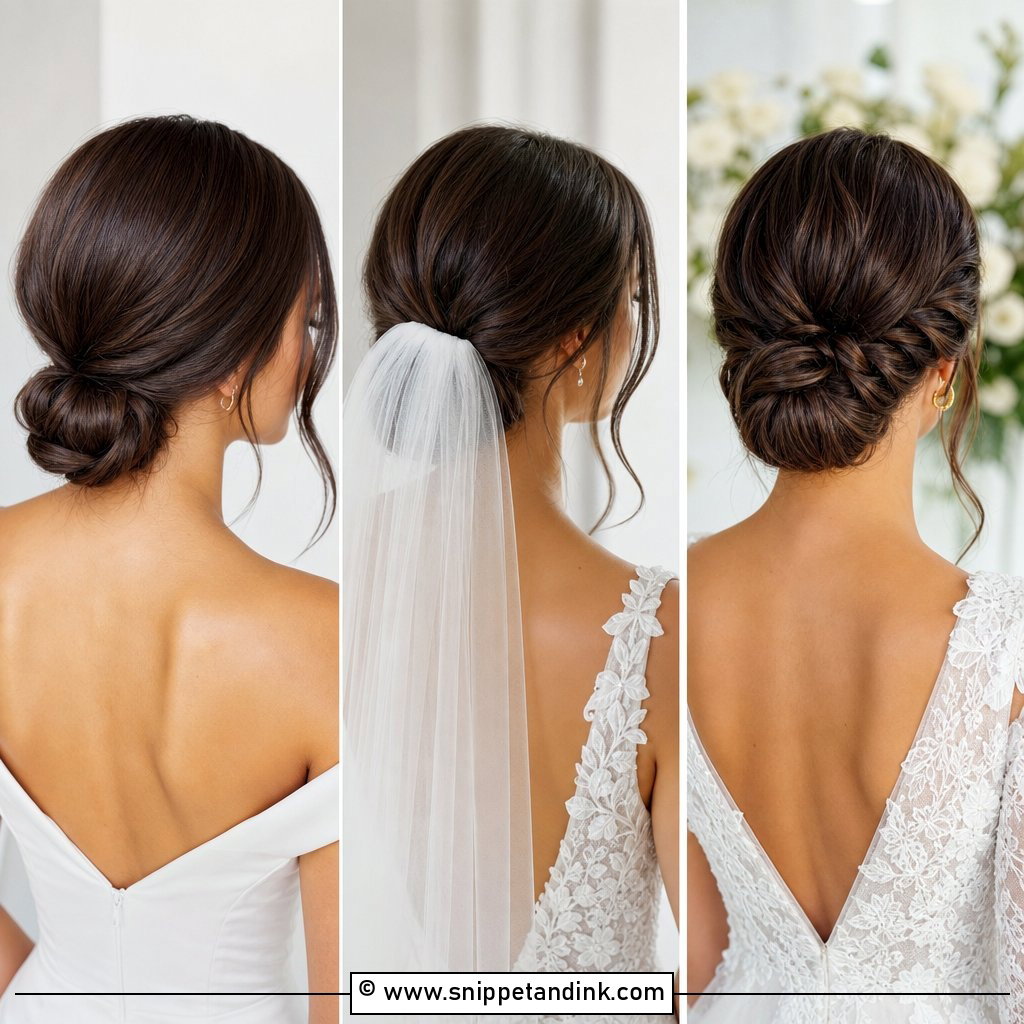
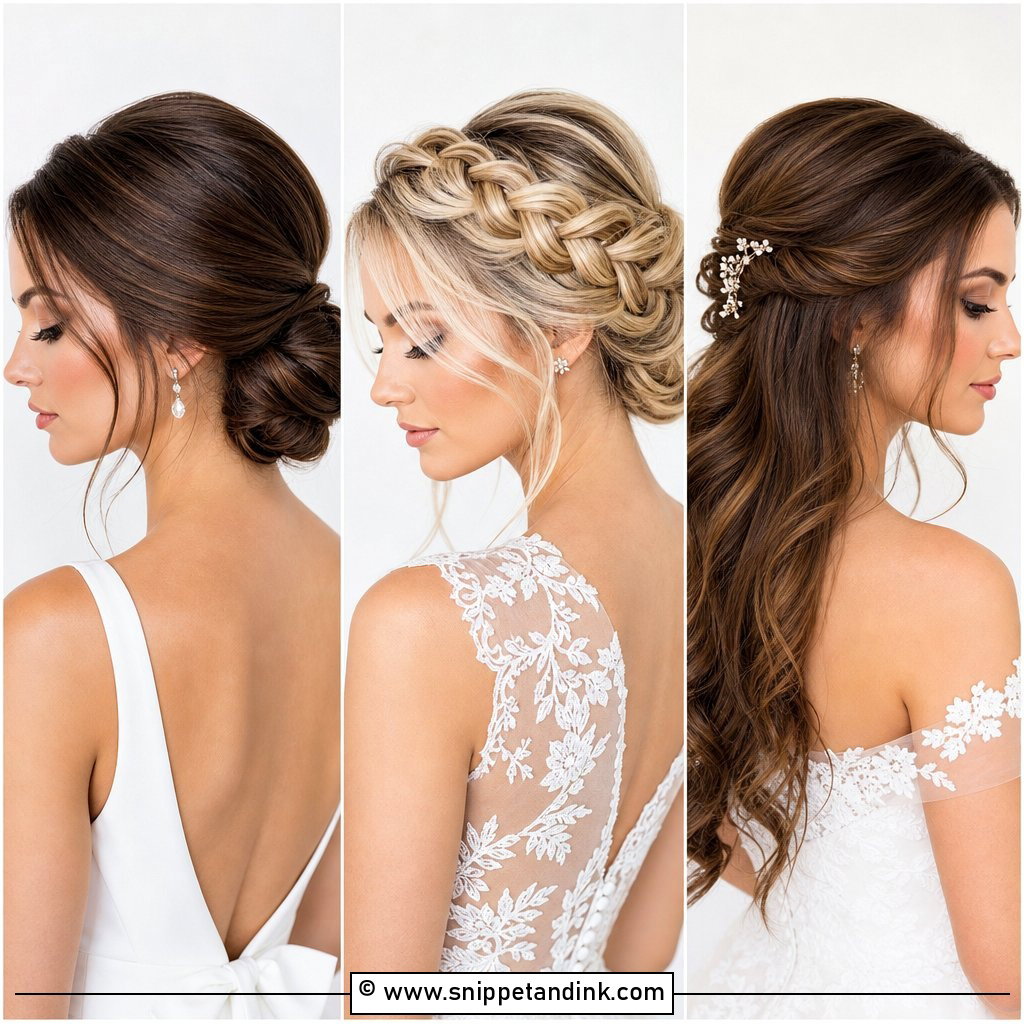
15. Western Dress Japanese Bridal Hair
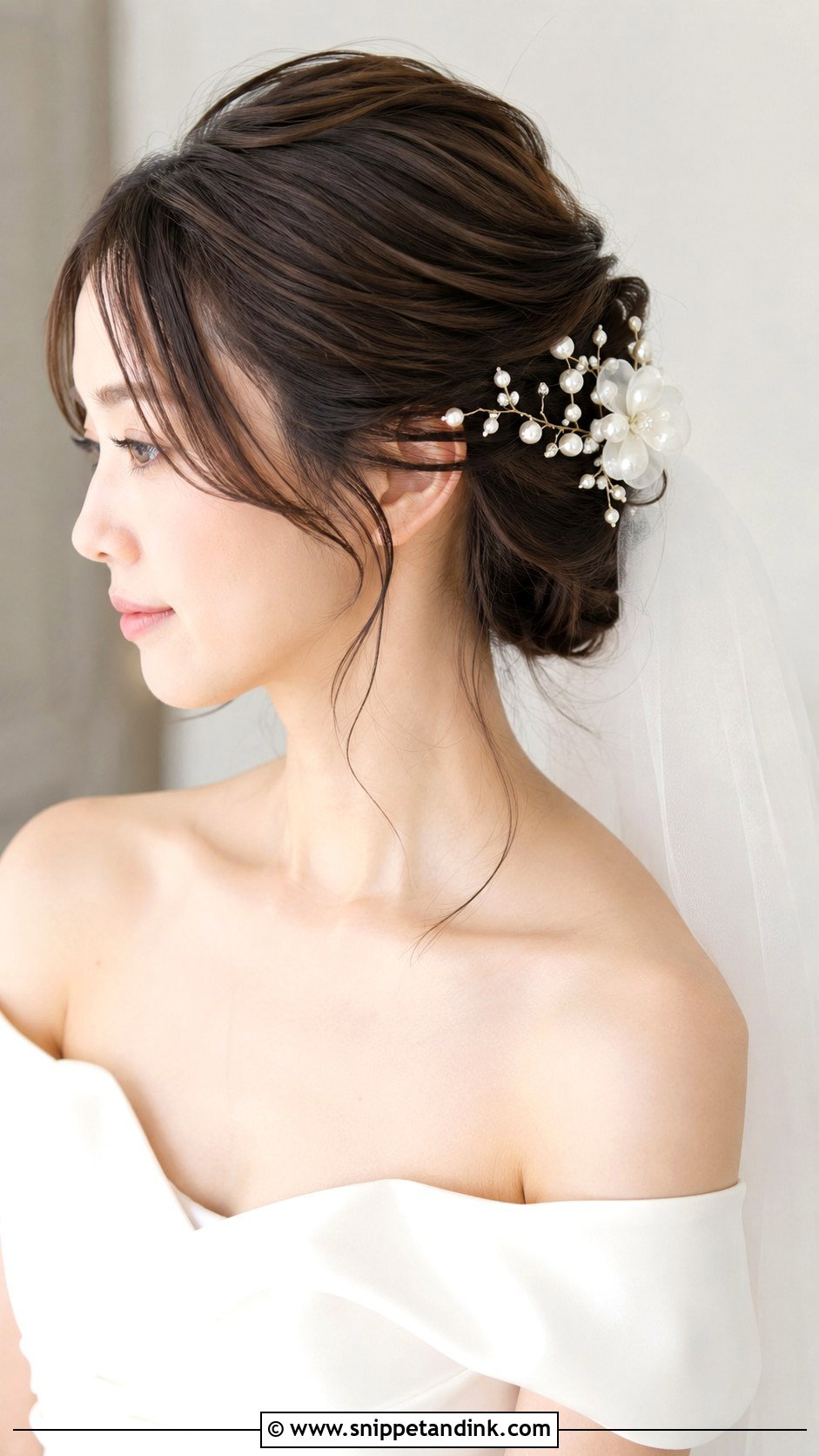
Wearing a white gown doesn’t mean losing the Japanese details. A low bun, airy chignon, sleek ponytail or half-up wave can carry kanzashi, pearls, orchids or mizuhiki accents. The aim isn’t to copy a ceremonial shape but to let one or two Japanese elements sit comfortably in a Western style. It’s a good fit for destination weddings, receptions and multicultural celebrations. Show your stylist the dress neckline before deciding; a high neck suits a higher bun, while an open back looks better with hair low and swept to one side.
Hair Through the Outfit Change, From Shiromuku to Reception
Many Japanese weddings include an outfit change, and the hair has to change with it, usually in very little time. If you wear a wig or a heavy headpiece for the ceremony, your own hair underneath has been pinned flat for hours. Taken down cold, it comes out with dents and a flat crown.
- I set the hair under the wig in flat pin curls or loose braids, so when it comes down it already has a wave you can brush out.
- Plan a reception style that starts from that wave: a soft low bun, a half-up style or a chignon. A sleek blow-dry from scratch rarely fits the window.
- Ask the venue how long the change actually takes, and make sure your stylist stays for it. Dressing comes first, hair second, and it’s the hair that gets squeezed.
Seasonal Ornaments and the Kanzashi You Pick
Kimono dressing follows the seasons, and kanzashi do too. Plum and cherry blossom suit spring, while chrysanthemum and maple read as autumn. Wearing a motif out of season won’t ruin anything, but anyone who knows kimono will notice. When I’m choosing ornaments, I match one motif to the season and keep the colors tied to the uchikake, rather than picking whatever looks prettiest on the shelf.
Bring a Photo of the Kimono, Not Just the Hair
From the formal Bunkin Takashimada and wataboshi to a sleek bob with a single kanzashi, these styles all depend on the outfit and the ceremony they’re worn with. If you want cultural formality, the traditional shapes and headpieces carry it. If you’d like something lighter, a low bun, chignon, ponytail or half-up style still feels meaningful with the right ornament. Take pictures of your kimono or dress, not only hair references, to a stylist who has worked with kimono before, and plan your ceremony and reception looks at the same trial.
You'll Like These Ideas:


Leave a Reply