
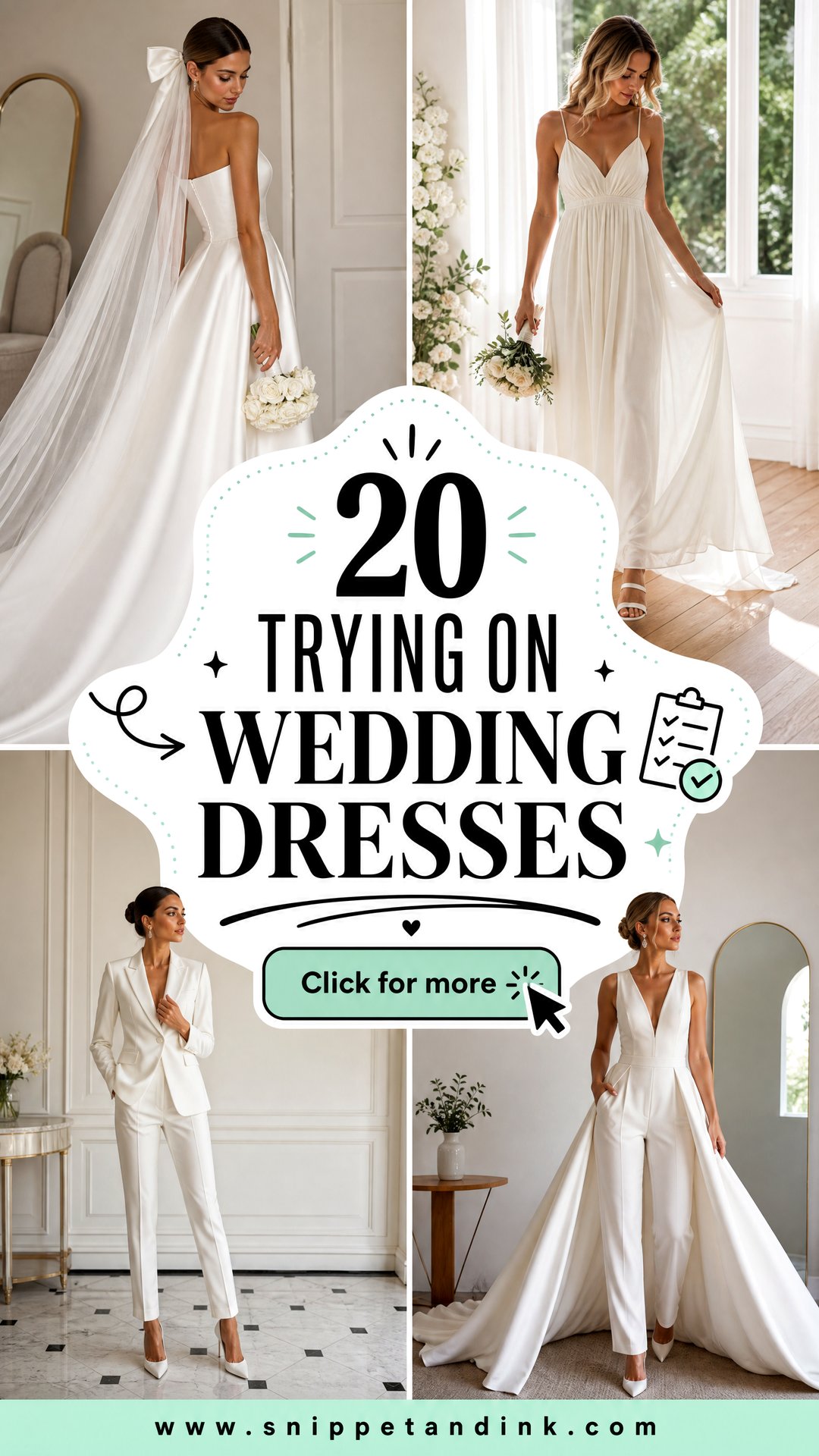
Most brides walk into their first appointment with a screenshot and leave having fallen for something else entirely. That’s normal. A gown that looks perfect online was photographed on a model standing still, pinned at the back and lit from the front; on you, it has to sit, walk and survive a hug. I always ask brides to try at least one shape they’re sure they’ll hate, because it teaches me as much as the ones they love. Wear smooth nude underwear, bring shoes close to your wedding heel, and have someone photograph you from the front, side and back. Below are twenty complete looks, from ball gowns to minis, with what I actually check in each one.
Reading a Sample Gown That Isn’t Your Size
Bridal shops usually carry one sample of each style, in one size, and you’ll rarely be that size. When a sample is too big, the consultant clips the back with large clamps; when it’s too small, it stays partly unzipped with a band or a jacket over the gap. Neither tells you much about fit, so it helps to know what to look past.
- Judge the line from the front. Where the waist seam falls, where a mermaid flares and how the skirt drops are what you’re really buying; the back gets adjusted later.
- Ignore wrinkles near the clips. Fabric bunched by a clamp isn’t a flaw in the gown.
- Forgive tired samples. A dress tried on by dozens of brides will have softened lace and a greyed hem, and yours arrives new.
- Ask which alterations the style allows. Boned bodices, beaded edges and horsehair hems all limit what a seamstress can change.
When a bride falls between sizes, I’d rather she ordered for the larger measurement. Taking a gown in is routine work; letting it out depends on seam allowance the dress may not have.
Splitting the Search Into Two Calmer Appointments
Most of the stress comes from trying to decide everything in one ninety-minute slot with six people offering opinions. I split it in two.
The first visit is for shapes
Bring one or two people whose taste you trust, not a crowd. Try one of each silhouette, even the ones you think you’ve ruled out, and photograph every look from three sides. Weekday appointments are often quieter, so the consultant has more time and nobody is rushing you out of the fitting room. Don’t buy yet unless it’s genuinely obvious.
The second visit is for details
Come back with two or three styles. Now you’re comparing necklines, fabrics, sleeves and backs on a shape you already know works, and you can bring your wedding shoes and the underwear you plan to wear. Ask about delivery time and the alteration schedule before you sign anything.
1. A-Line Wedding Dress With Cathedral Veil
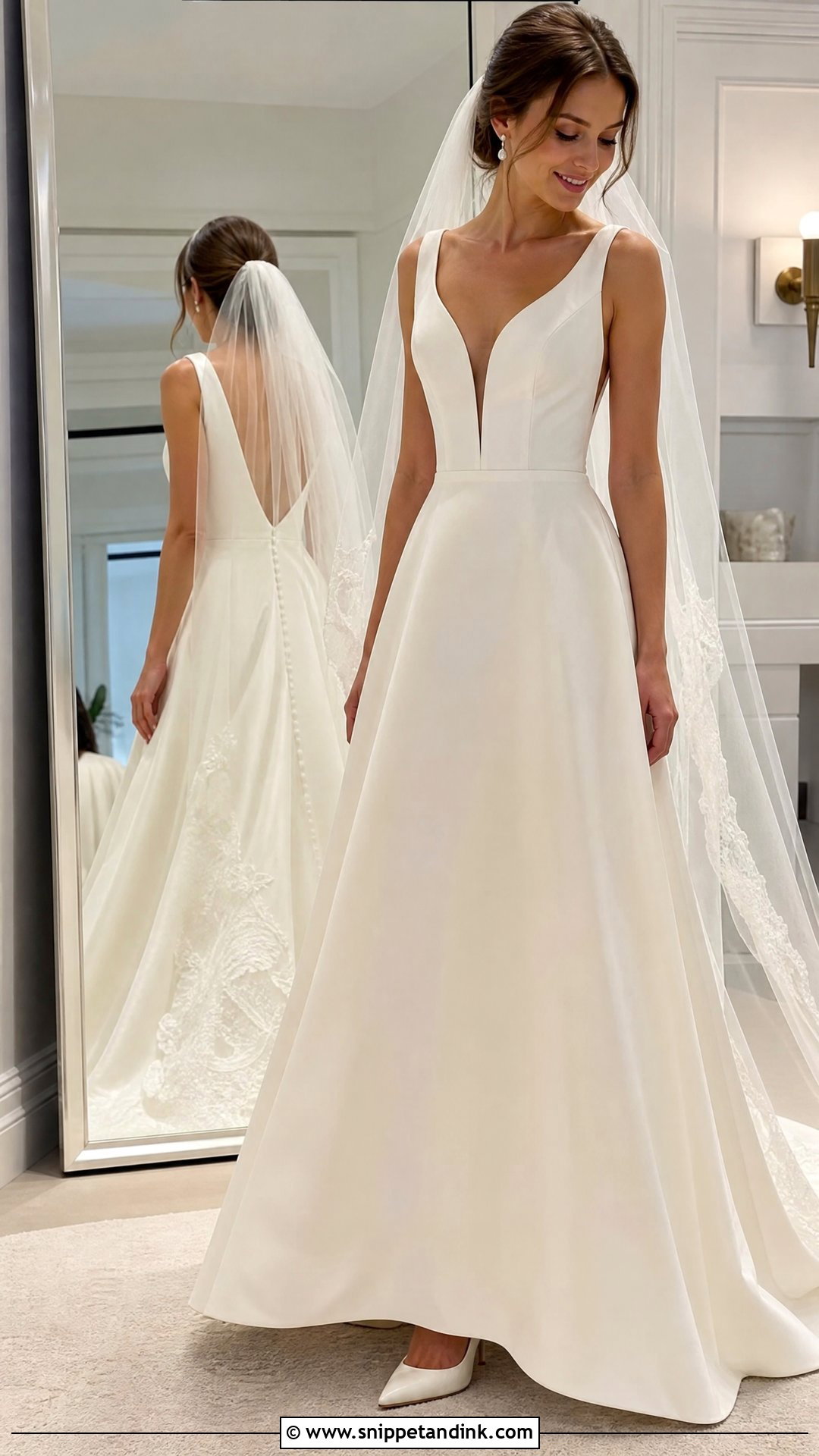
I start most first appointments here. An A-line is the neutral baseline: it shows me how much skirt a bride is comfortable carrying before we push toward a ball gown or pull back toward a sheath. Try one with a fitted bodice and a natural waist in satin, chiffon or light tulle, with pointed pumps, pearl earrings and a cathedral veil that runs out past the train. Then watch the waist seam. If it lands an inch above or below your own waist, the whole proportion shifts, and that’s a routine alteration rather than a reason to rule the dress out. Sit down once, too. A waistband that bites when you’re seated will keep biting all evening.
2. Satin Ball Gown With Pearl Accessories
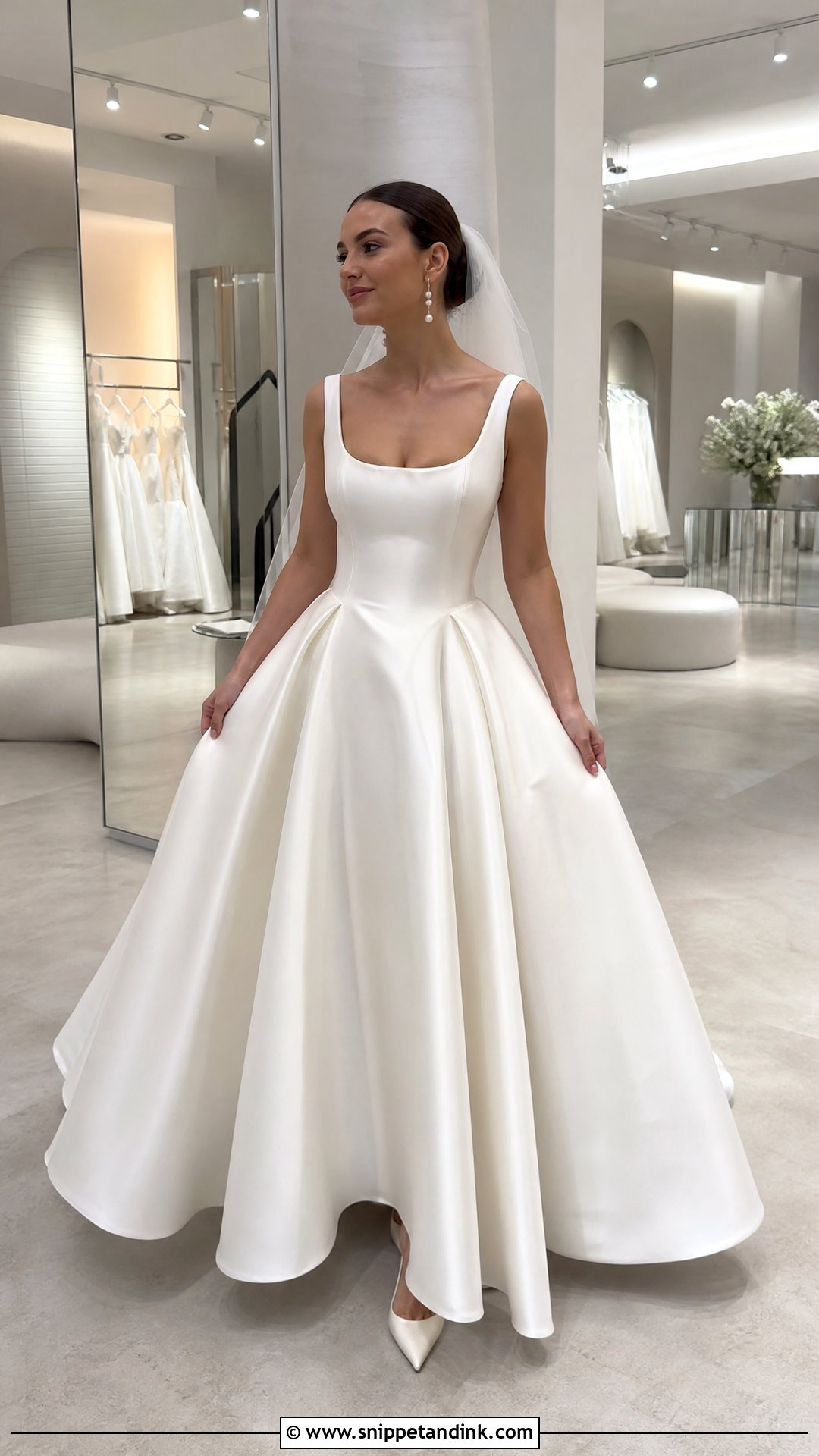
Volume is thrilling for about ten minutes, and then you notice the weight. A satin ball gown with a fitted bodice and a full skirt sits heavy on the hips, so I have brides stand in it for a while before deciding anything. Keep the neckline clean (scoop, square or sweetheart) so you’re judging structure, and add pearl drops, pointed satin heels and a fingertip veil. Walk through the fitting-room doorway and turn around in the tightest space you can find; if your reception room is compact, you’ll be doing that all night. Satin also creases where you sit, so look at it from the side under bright light. If the shape is right but the weight isn’t, ask to see the same cut in organza or layered tulle.
3. Lace Mermaid Wedding Dress With Long Veil
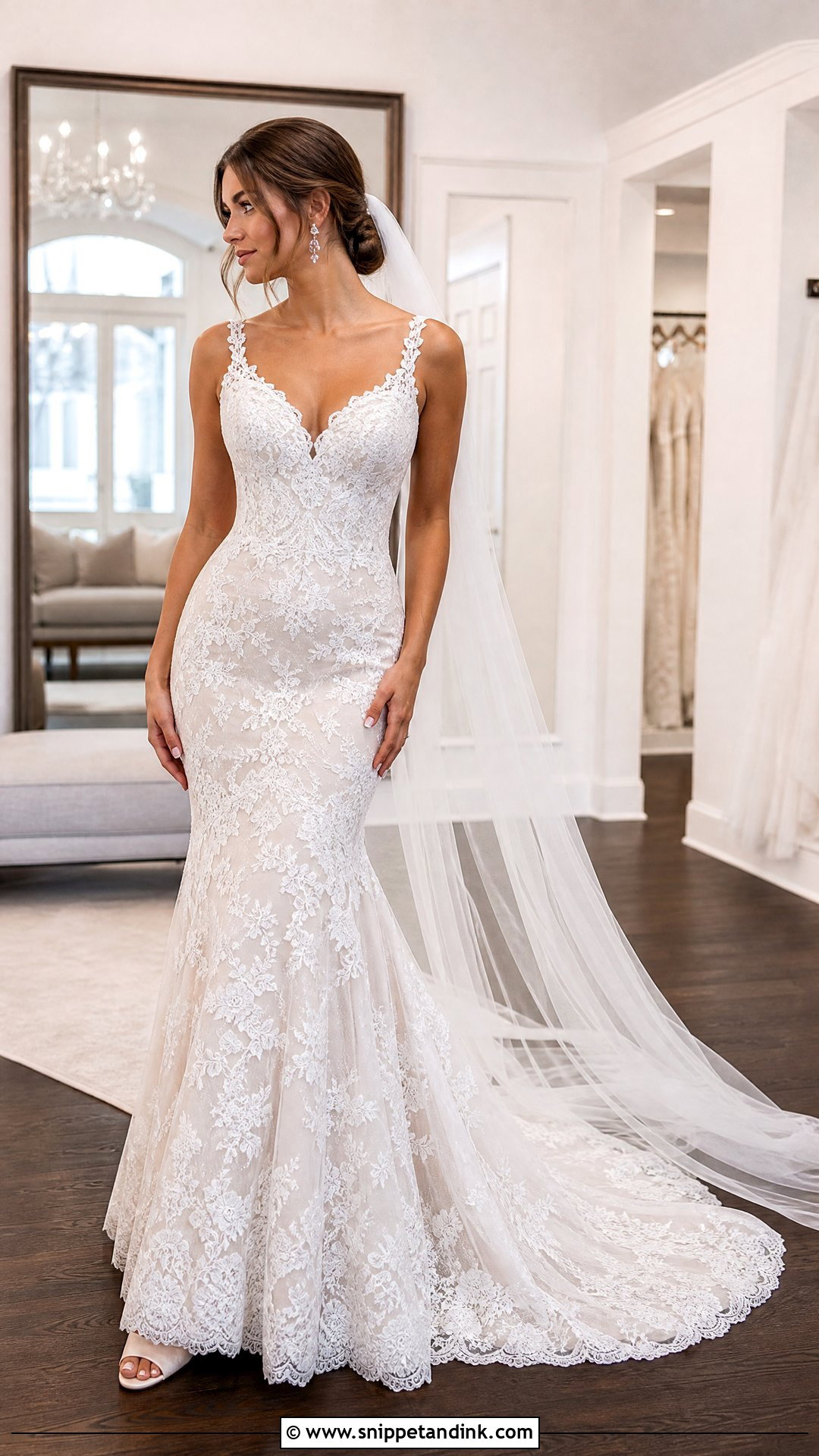
A mermaid is the silhouette where the sample size matters most, because the whole effect depends on where the flare kicks out. It fits through the bodice, waist, hips and thighs and opens near the knee. Don’t worry if the zip won’t close. I’ll clamp the back, and we judge the flare line and how the lace seams follow your shape. A flare set too low turns your stride into a shuffle, so take real steps and perch on the edge of a chair. Floral lace hides alteration seams better than geometric lace, which is worth knowing before you commit, and a lightly boned bodice gives more support than a soft lining. Pair it with sleek heels, small earrings, a low bun and a plain long veil that leaves the lace alone.
4. Crepe Sheath Wedding Dress With Cape Veil
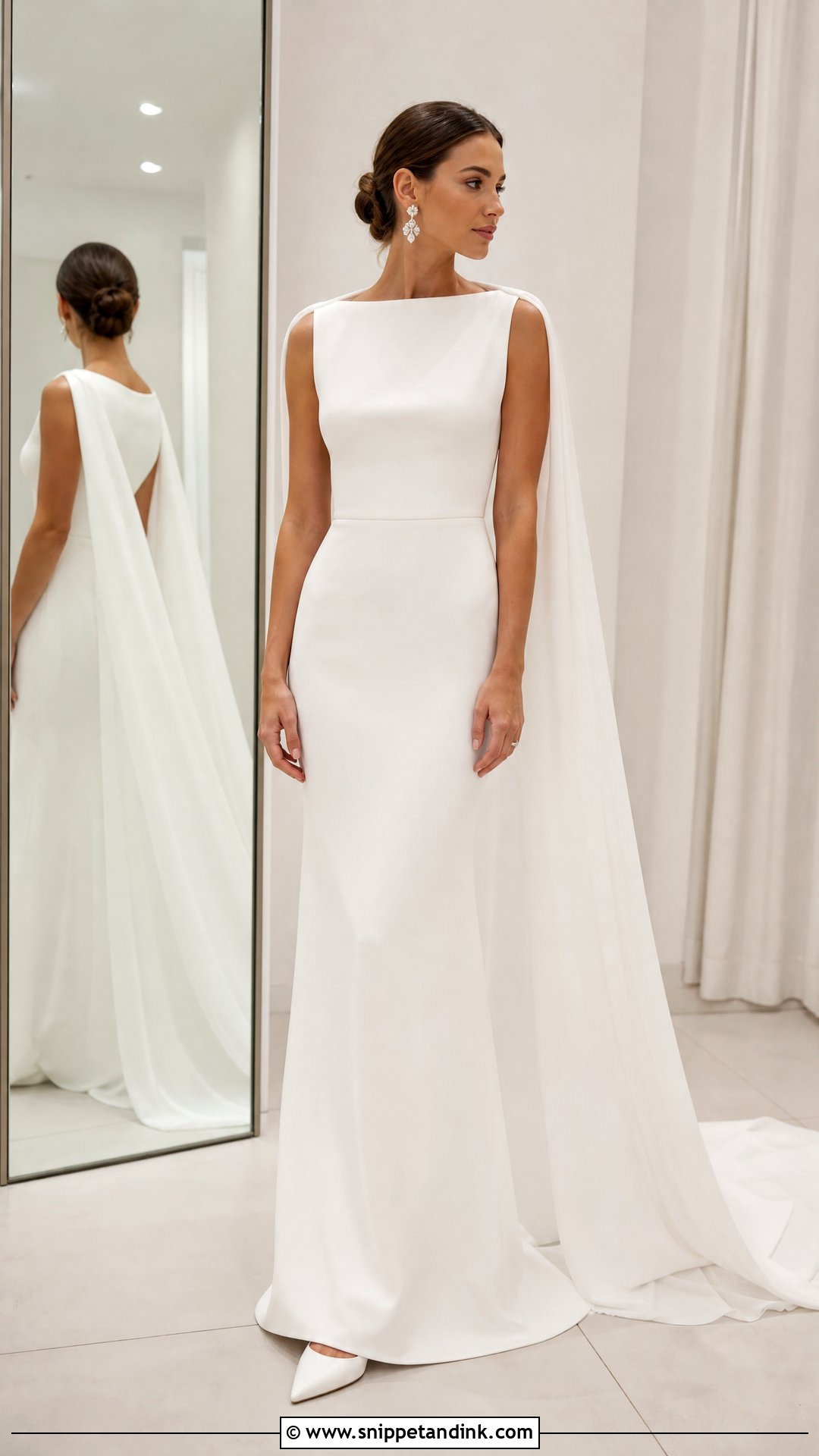
Crepe is honest fabric. It shows the edge of an underwire and every line of a seam, so this is the gown where your underwear really matters. A crepe sheath follows the body without a mermaid’s flare; try it with a bateau or square neckline and a defined waist seam, then add minimal pumps, sculptural earrings, a smooth low bun and a removable cape veil for movement. Look at it by a window as well as under salon spotlights, since crepe can read flat in daylight. Lift your arms and sit. If it feels too plain, I’d add one detail, such as covered buttons down the back or a detachable train, rather than piling on jewelry.
5. Strapless Wedding Dress With Detachable Sleeves
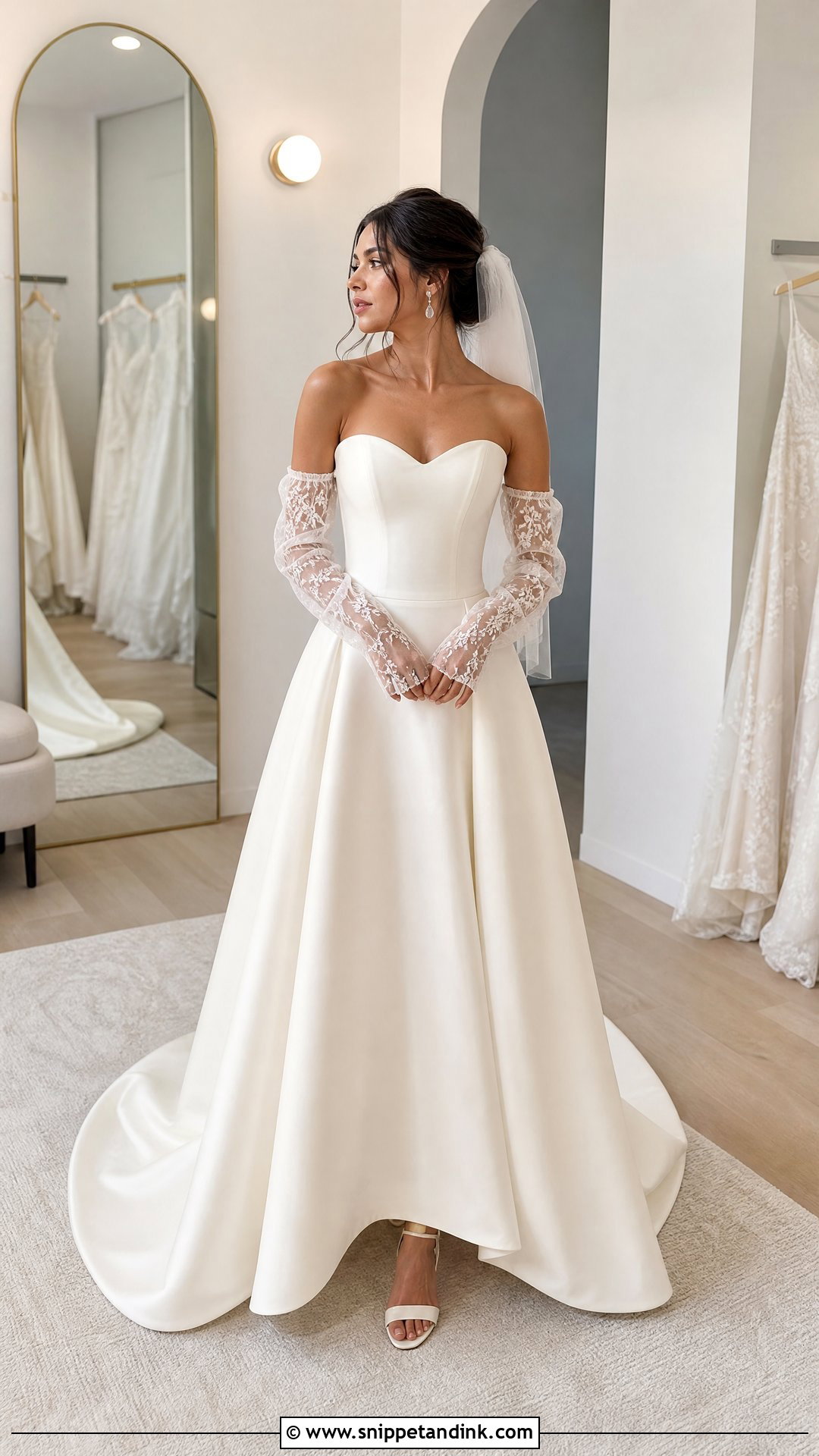
This one gives you two dresses in one appointment, which helps when you can’t decide how much coverage you want. Start with a structured A-line or fit-and-flare with a properly boned bodice, then add sheer lace, satin or puff sleeves and watch the mood change. Strapless only works when the bodice holds itself up, so raise both arms above your head and bend forward as if you’d dropped an earring. If it slips, it needs taking in at the side seams or more internal structure, and I’d ask the consultant which before ordering. Check how the sleeves attach, because elastic loops and snaps can show in close photographs. Drop earrings, a short veil and slingbacks finish it, and the sleeves come off for dancing.
6. Long Sleeve Lace Wedding Dress With Low Bun
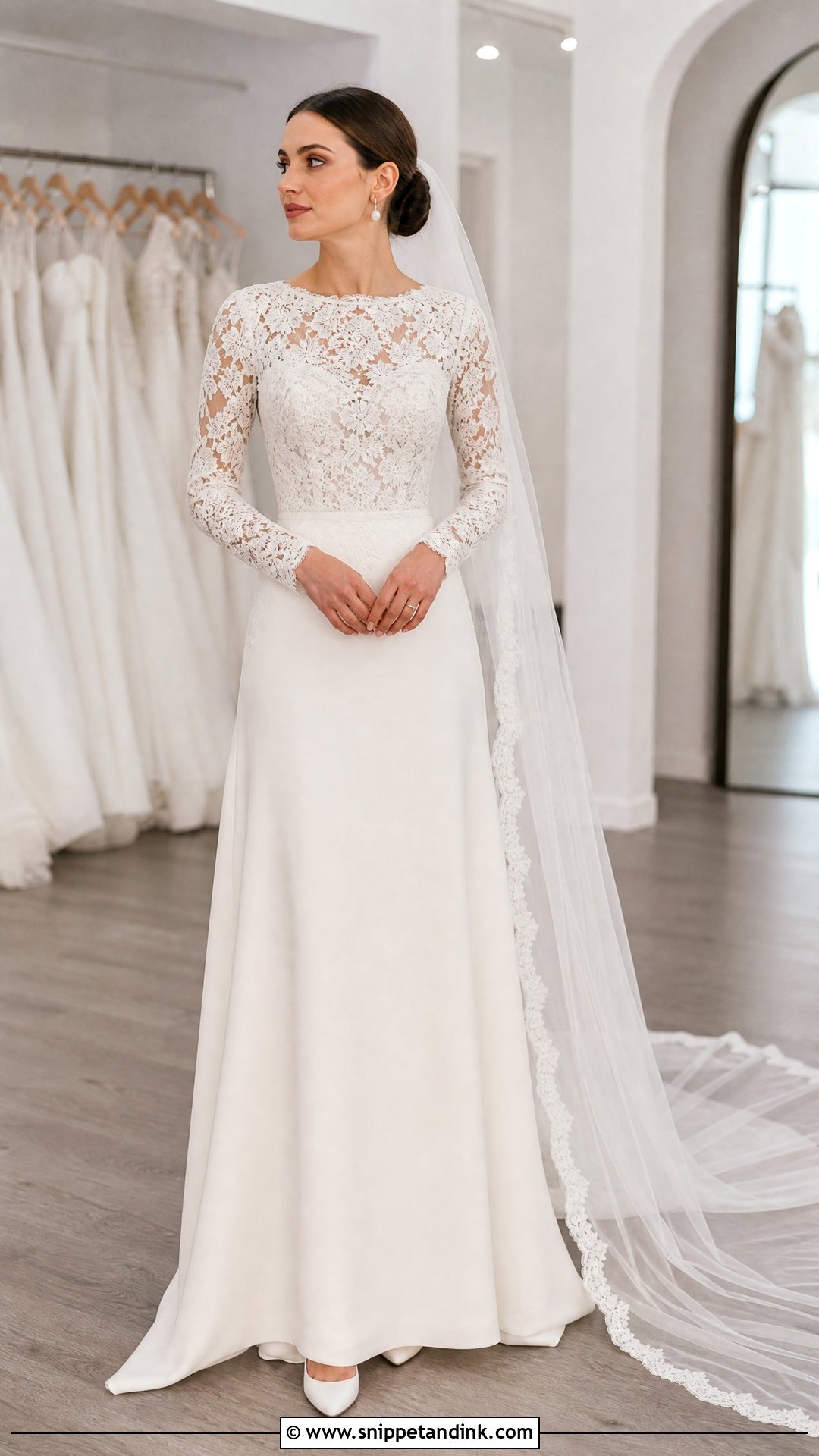
Sleeves cause the most regret I see, usually because the bride never reached for anything in the fitting room. Lace sleeves give coverage and texture, but a sleeve set tightly into the armhole stops you hugging anyone above shoulder height. Bend your elbows, reach forward as if for a glass, and lift your arms out to the sides while someone watches the lace across the back of your shoulders. Sheer sleeves usually have more give than lined ones, and the cuffs should feel secure without leaving marks. I’d pair it with closed-toe pumps, small pearls, a low bun and a veil edged in matching lace. When the bodice is heavily textured, a plain skirt keeps the whole gown from looking busy.
7. Square Neck Wedding Dress With Satin Gloves
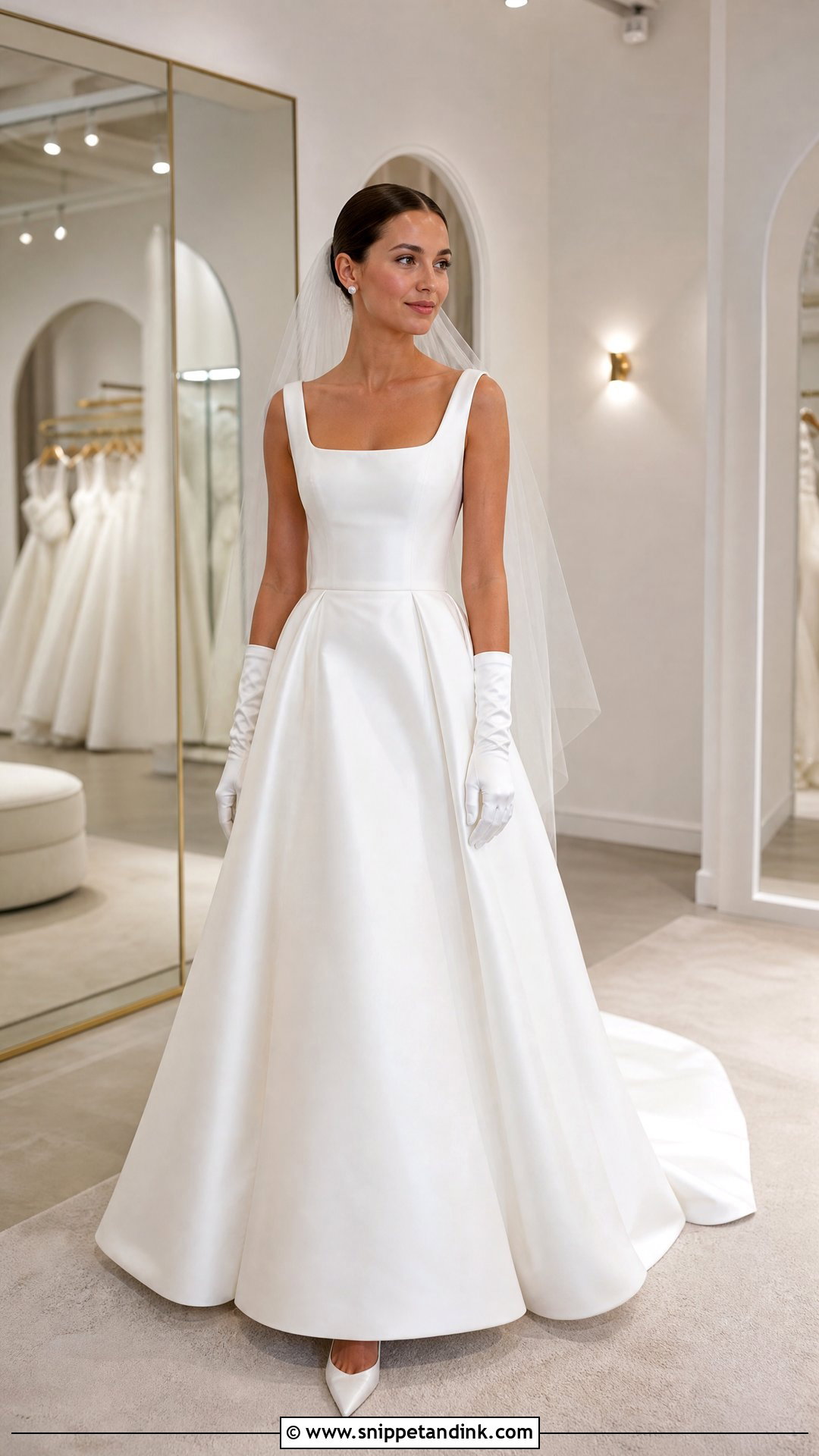
A square neckline lives or dies on its width. Too narrow and it looks boxy; too wide and the straps slide toward your arms, which is why I always have brides try two versions. Put it on an A-line, a column and a full satin skirt to see which proportion reads as yours. Wrist-length satin gloves, pearl studs, pointed pumps and a clean fingertip veil keep it graphic, and I’d skip the necklace so the corners stay visible. As you move, check that the straps lie flat and the corners don’t buckle. Buckling there usually means the bodice is loose through the chest, and it’s worth asking about the alteration on the spot.
8. Sweetheart Wedding Dress With Off-Shoulder Straps
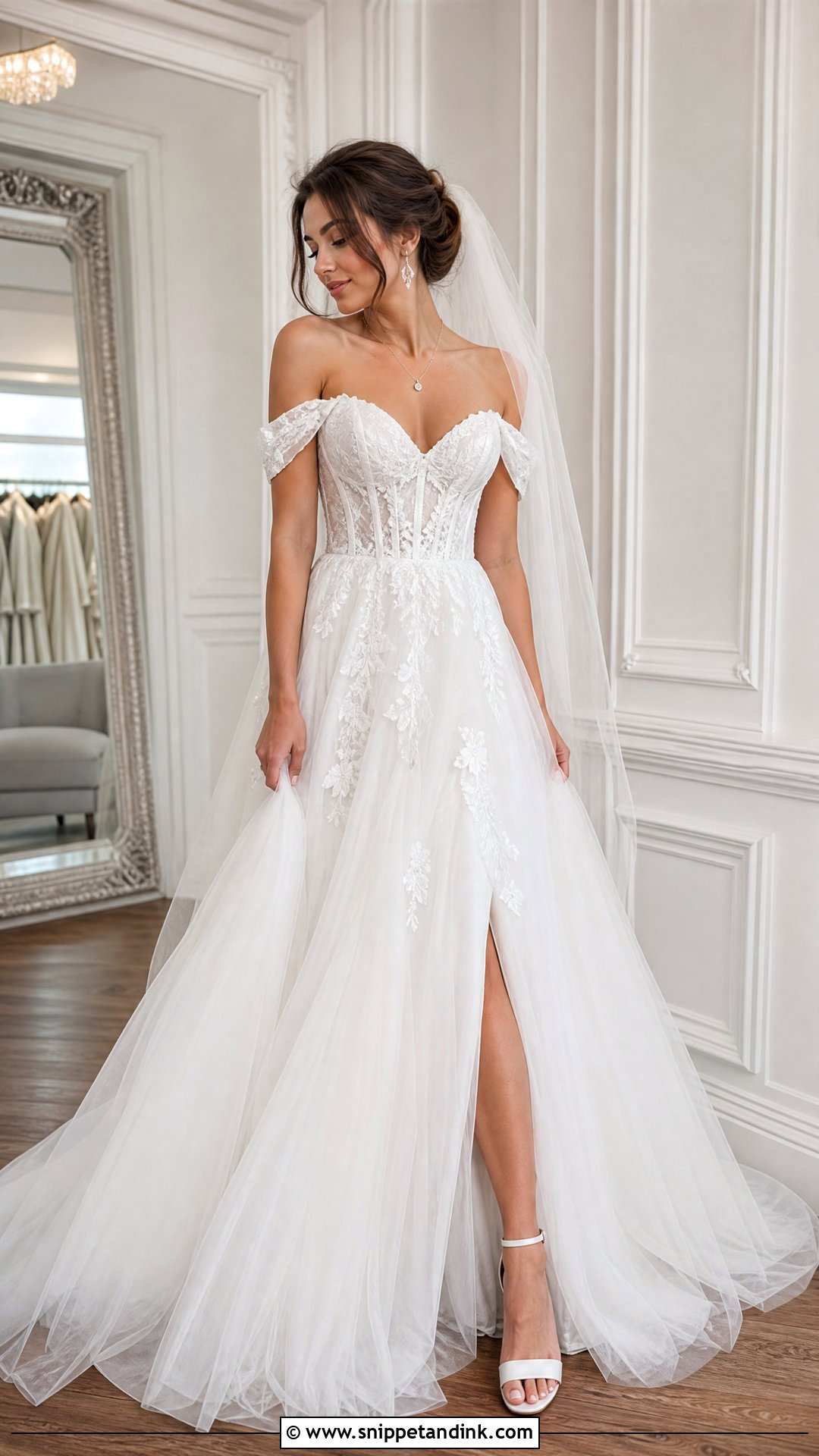
Plenty of off-shoulder straps are decoration, not support. They look soft in the mirror and then pin your arms to your sides, so lift your arms to shoulder height before you get attached. The corset-style bodice underneath does the real work, whether it sits on an A-line, a ball gown or a fit-and-flare skirt. Sit and lean forward slightly; if the sweetheart dip gapes, it needs taking in at the sides. A good seamstress can usually raise or soften a dramatic centre point too. Style it with a fine pendant, small drops, comfortable block heels and a veil tucked under a loose updo. The shape takes satin, mikado, tulle and floral appliqués equally well.
9. Basque Waist Wedding Dress With Drop Earrings
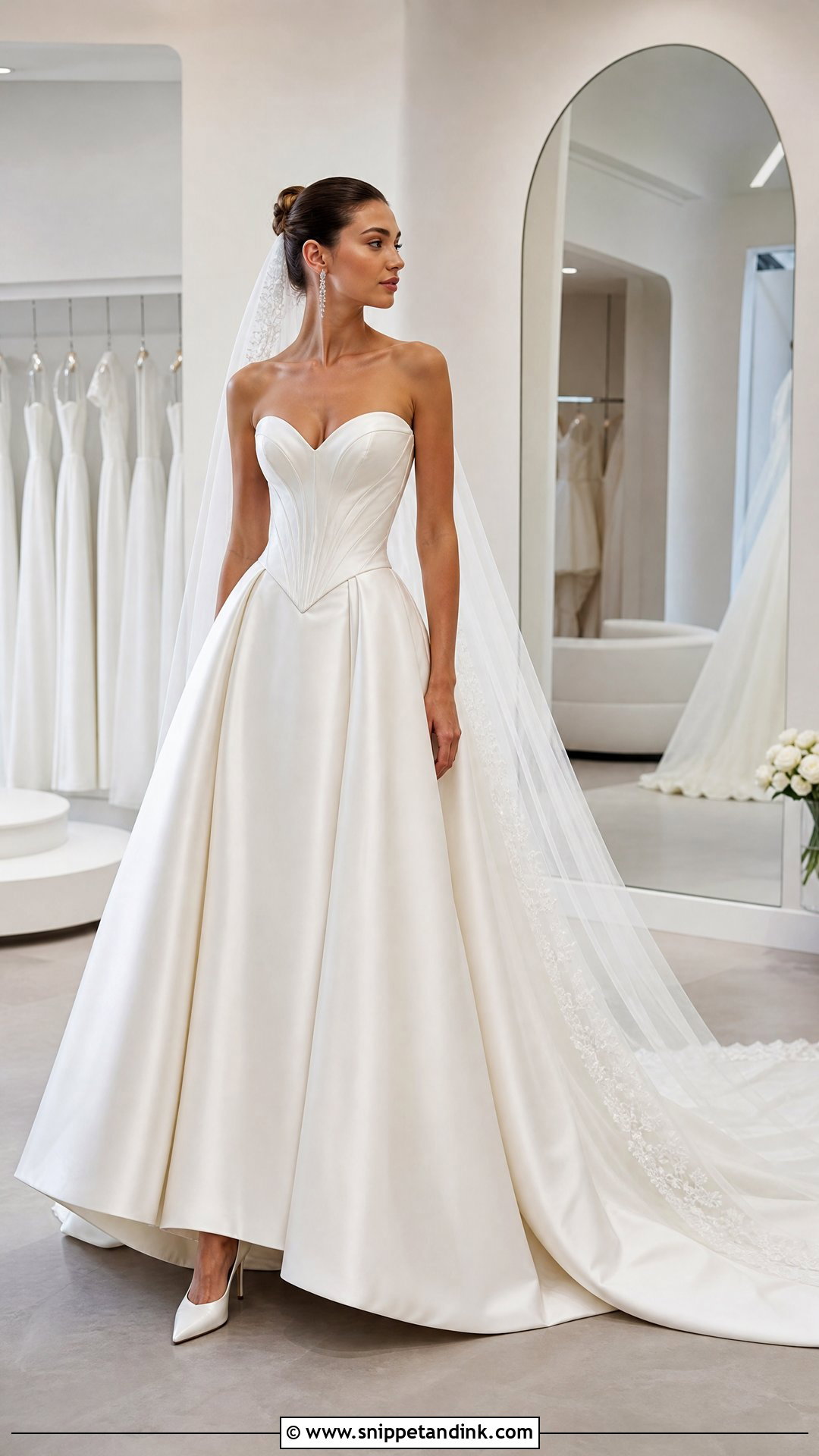
A basque waist dips into a point or a soft U below your natural waist, and it changes how long your torso looks more than almost any other detail. It usually sits on a satin or mikado ball gown, with the skirt starting under the point. Sit down in it. A sharply pointed basque can press into your hips when seated, while a gently curved one is kinder over a long reception. Check the centre front for folding, which tends to happen when the bodice is too long for your torso. Crystal drops, sleek pumps, a neat bun and a cathedral veil are plenty. I keep everything else quiet so the construction carries the look, and the clean line reads strongly in full-length photographs.
10. Drop Waist Wedding Dress With Statement Veil
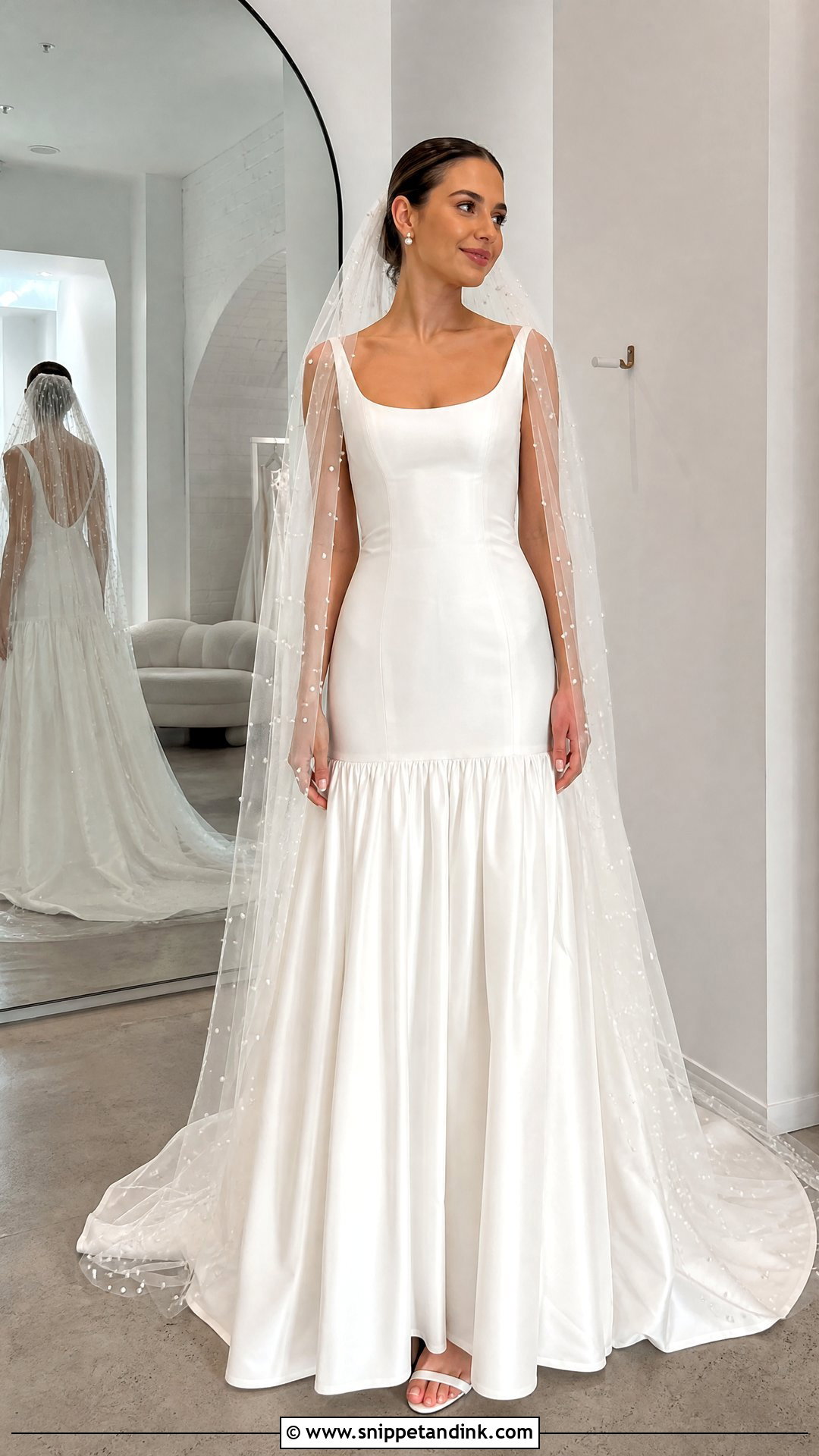
The drop waist is the most divisive shape I put on brides, and the reason is nearly always placement. The fitted bodice runs below your natural waist before opening into a fuller skirt, so where that seam meets your hip bone decides whether it looks long and lean or cuts you in half. Try it in satin with a scoop neck and a gathered or pleated skirt, finished with delicate studs, simple heels and a statement veil scattered with pearls. Walk and sit, because a long bodice can ride up when you’re seated. If a sharp drop feels severe, compare it with a gently curved version. You get real structure without relying on beading or heavy lace.
11. Floral Appliqué Wedding Dress With Tulle Veil
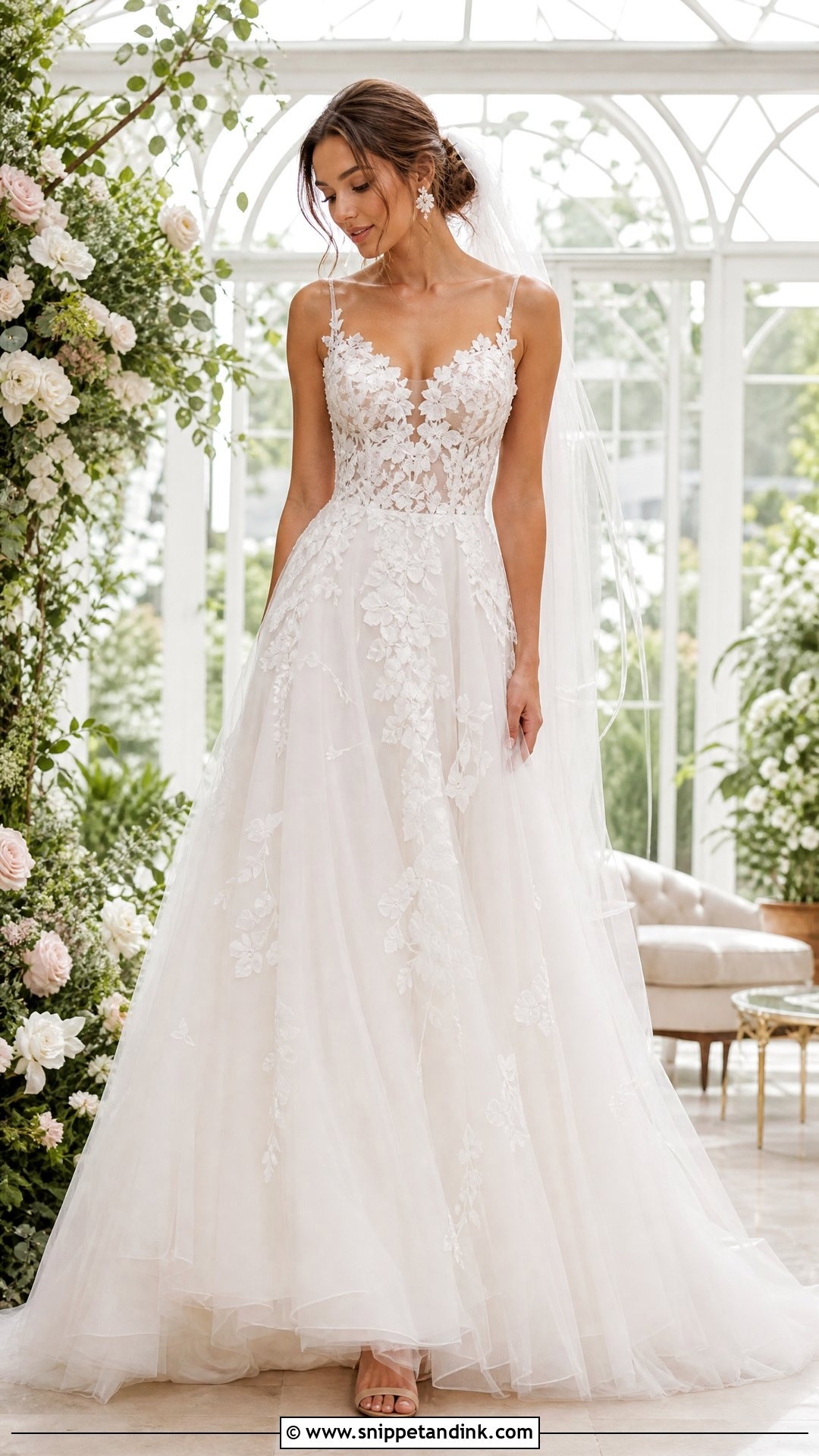
Step back from the mirror. Appliqués that look delicate at arm’s length can blur into blobs from six feet away, and that’s the distance your guests and photographer see you from. Try them on a soft A-line with a layered tulle skirt and an illusion neckline, and notice where the flowers are concentrated: bodice-heavy placement draws the eye up, while flowers scattered over the skirt add movement as you walk. Check the stitching as well, since loose petal edges catch on lace veils. Floral studs, pale heels, a sheer tulle veil and a loose low bun are enough. With this much texture in the gown, I keep the shoes and jewelry plain, and it sits naturally in gardens and bright, airy rooms.
12. Minimalist Satin Wedding Dress With Bow Veil
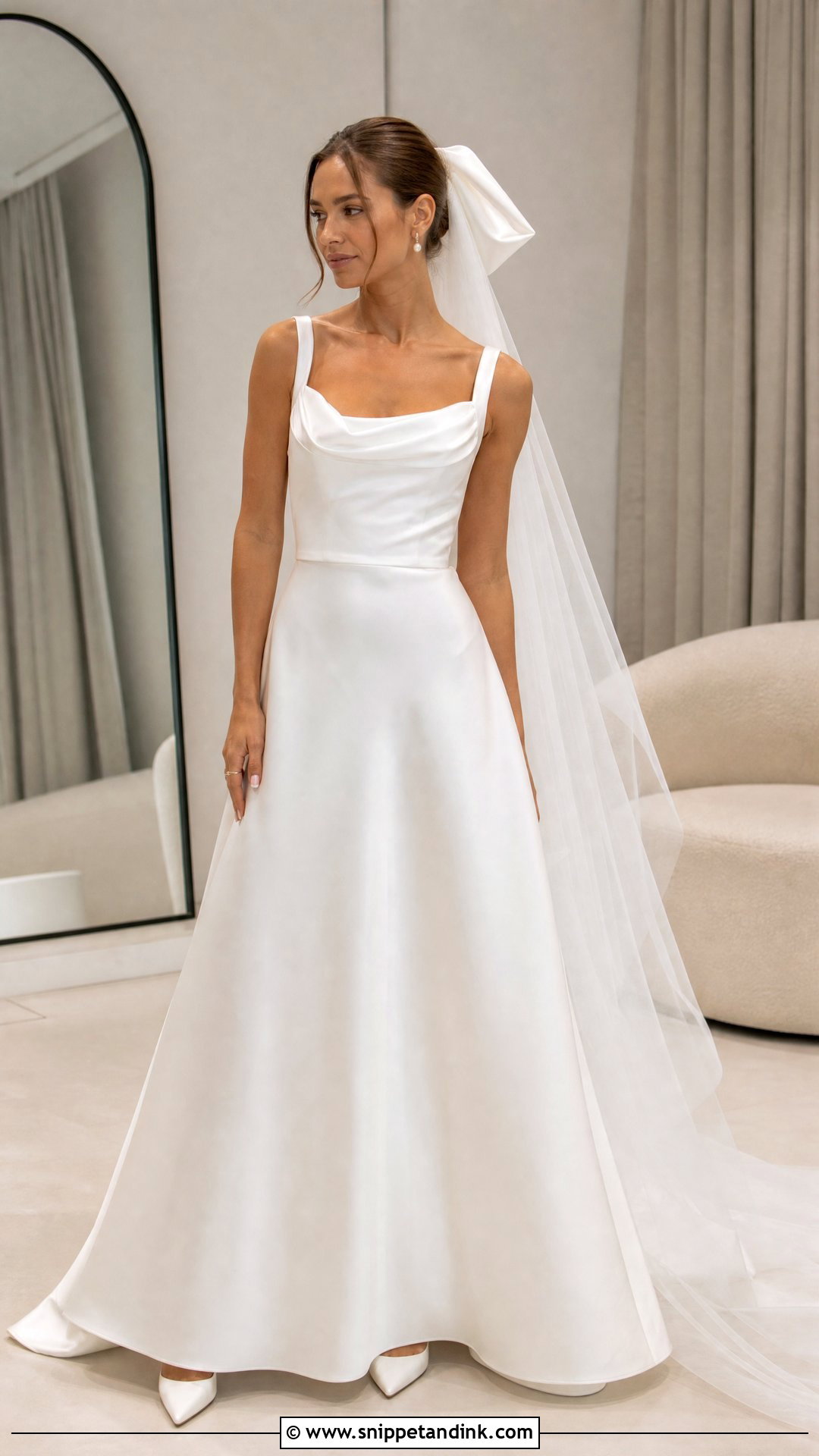
Plain satin hides nothing. With no lace or beading to distract, the cut and fit carry the whole dress, so a slightly loose bodice or a pulled seam shows immediately. Try a column or A-line with wide straps, a draped neckline and minimal seaming, then add a bow veil or a structured hair bow, pearl earrings, pointed heels and a small clutch. I photograph satin gowns from every side under bright light, because the camera picks up drag lines the mirror softens. Check that the skirt skims rather than clings at the hip. If you want more impact later, covered buttons, a low back or a removable overskirt will do more for it than embellishment.
13. Chiffon Empire Waist Wedding Dress With Sandals
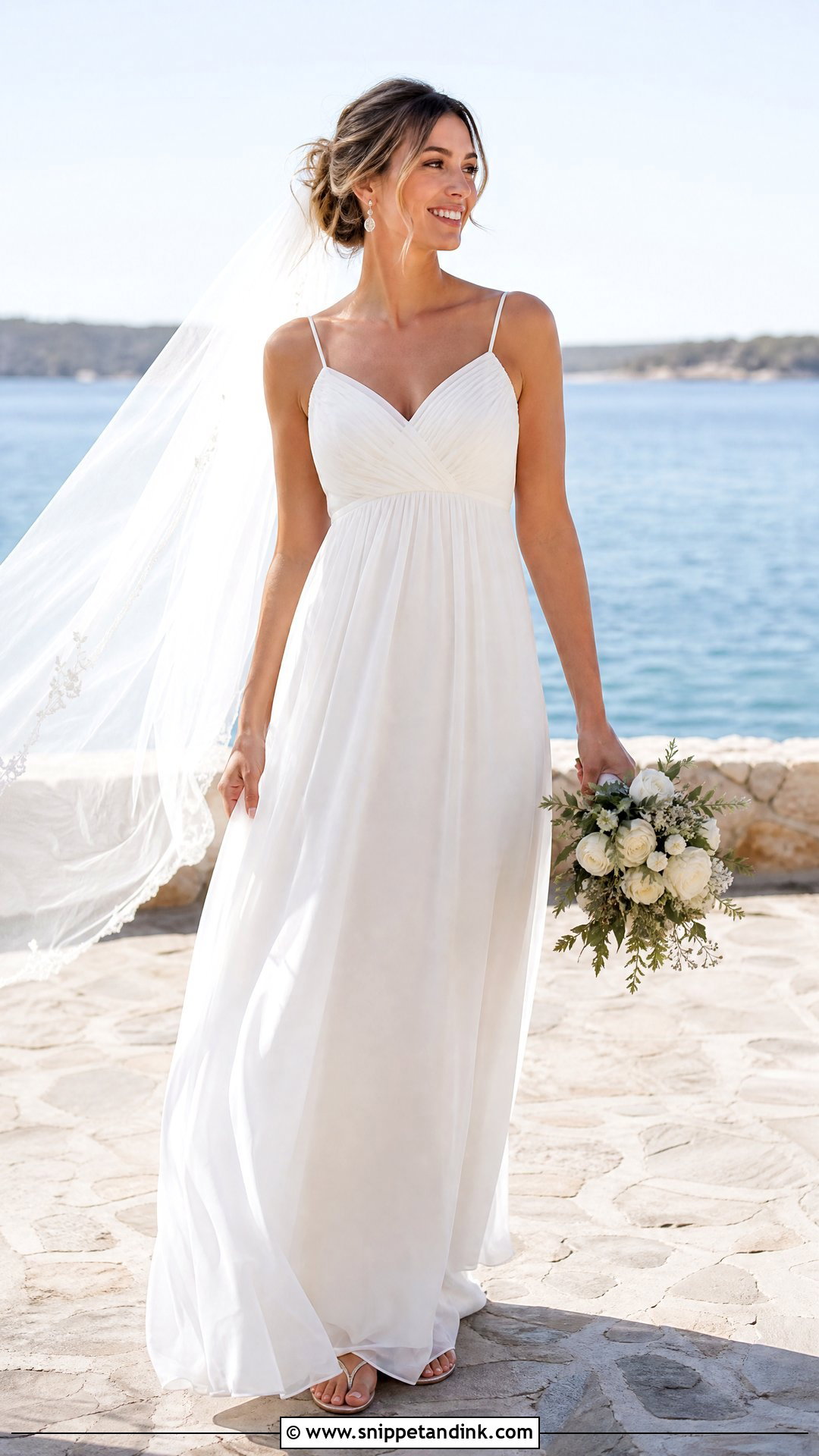
Chiffon is the lightest fabric in the shop, and an empire waist lets it fall straight from just under the bust, so this is the gown brides forget they’re wearing. Walk quickly and then slowly to see how the skirt moves, and check that the lining doesn’t cling to your legs. The raised seam should rest on your ribcage without squeezing it, since you’ll be breathing, eating and laughing in it. A V-neck or gathered bodice adds a little shape. Flat sandals, fine drops, a soft updo and a chapel-length veil keep it relaxed for warm weather, gardens and waterfront settings. I’d suggest it to anyone who dislikes fabric close at the waist and hips. One caution: chiffon catches every gust, so ask about weighting the hem for a windy ceremony.
14. High Neck Wedding Dress With Sleek Ponytail
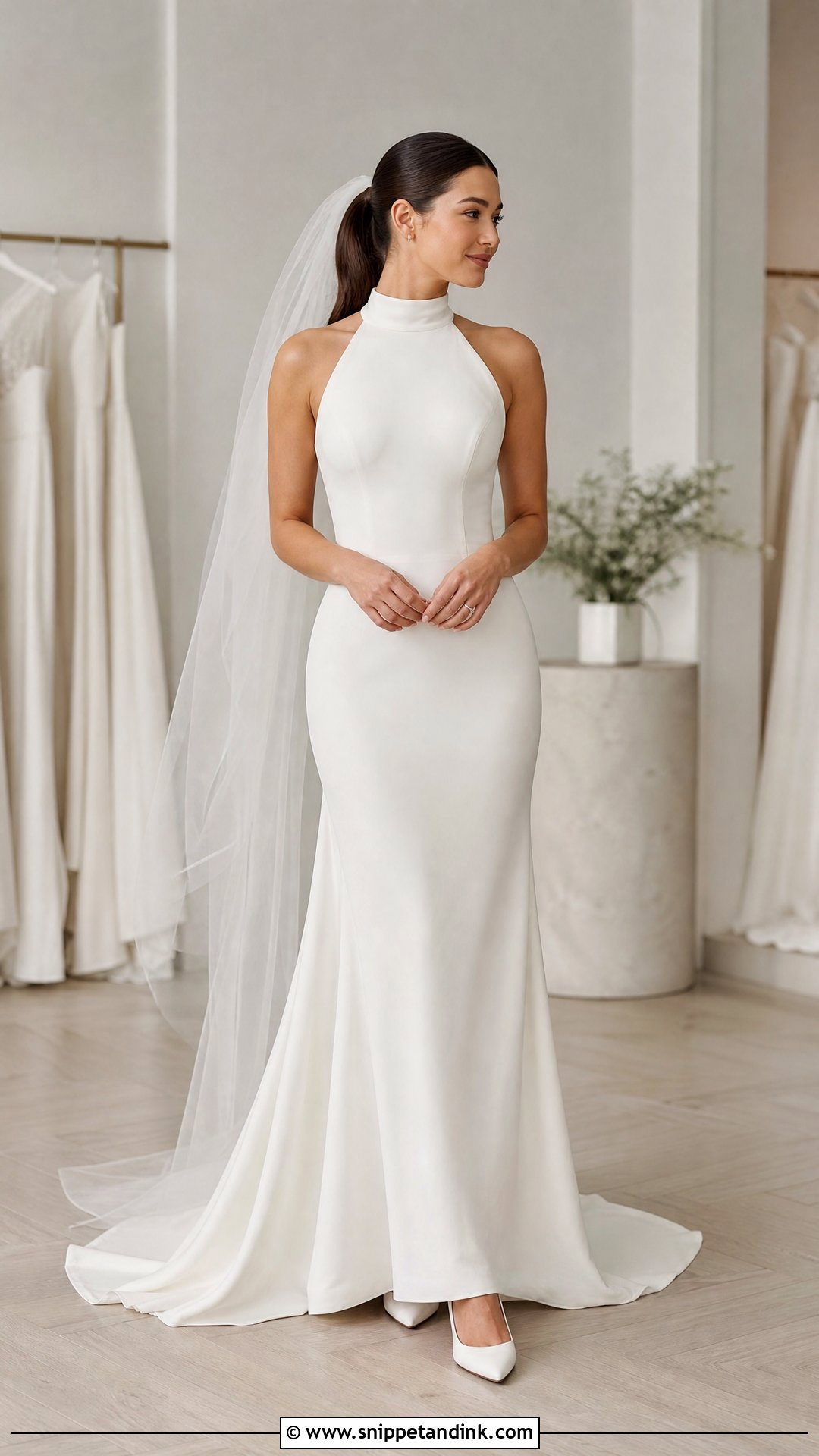
Turn your head. It sounds obvious, but a high neck that looks clean while you face the mirror can pull or crease the moment you look at your partner during the vows. Try one with a crepe bodice, a lace yoke or a halter-style neckline on a sheath or a softly flared skirt, then sit and lift your arms to check the shoulders. The collar should lie flat with a finger’s width of room. Turn around too, because most high-neck gowns put their drama in the back with buttons or an open panel. I’d pair it with a sleek ponytail or polished bun, small earrings, pointed pumps and a simple veil set beneath the hair, and leave the necklace at home.
15. Tea Length Wedding Dress With Block Heels
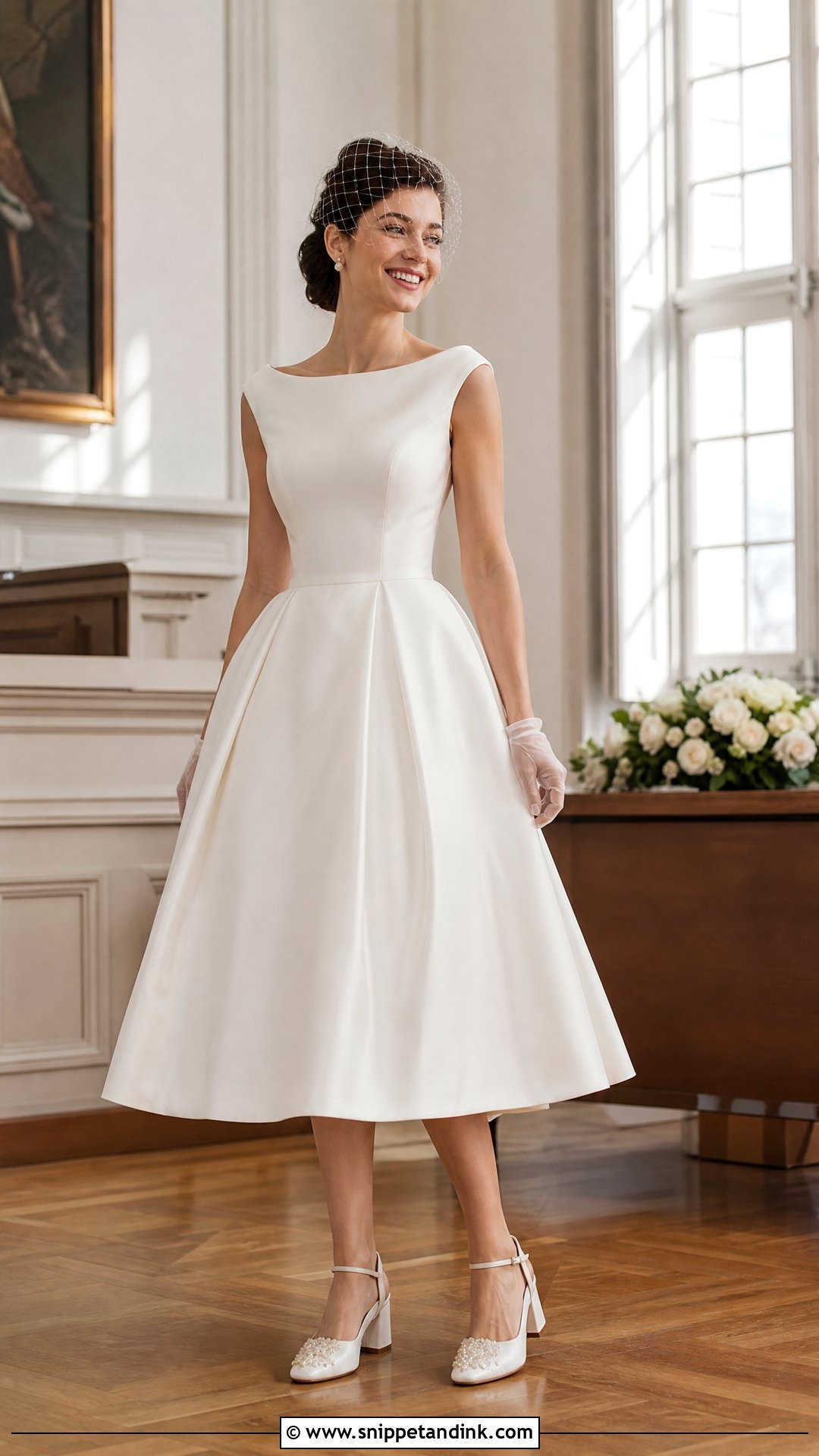
On a tea-length dress, the hem is a fraction-of-an-inch decision, and it’s the one I fuss over most. The full skirt falls somewhere between knee and ankle, and the right point depends on your height and where your calf narrows. Ask whether the hem can be adjusted before you order, since a horsehair or scalloped edge is hard to shorten. Walk and turn so you can see the swing. Pearl-trimmed block heels, small earrings, a birdcage face veil and short gloves push it toward vintage. It handles courthouse ceremonies and dance-heavy receptions well, and it makes a sensible second look after a longer ceremony gown.
16. Wedding Dress With Detachable Overskirt
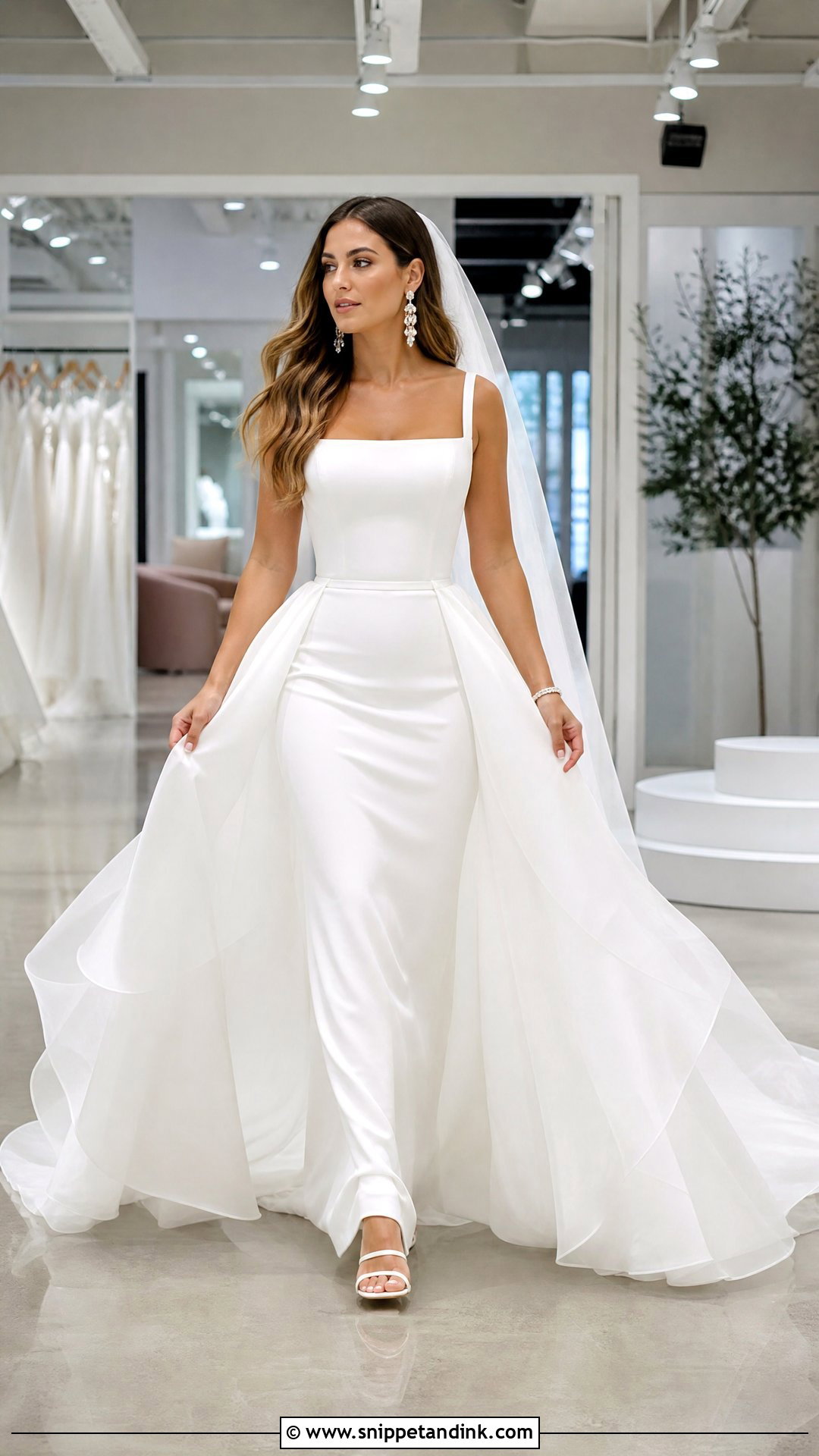
The test here is the base gown, not the overskirt. Once the extra layer comes off, you’re left in a fitted column, sheath or mermaid, and if that doesn’t feel finished on its own, you’ll spend the reception missing the skirt. Have the consultant take the satin, organza or tulle overskirt off and put it back on so you can time it; most fasten with hooks or buttons at the waist and need a second pair of hands. Look in profile for bulk at the waistband. Photograph both versions from every angle. Crystal earrings, heeled sandals and a long veil that answers the added train complete the ceremony look.
17. Wedding Dress With Bridal Cape
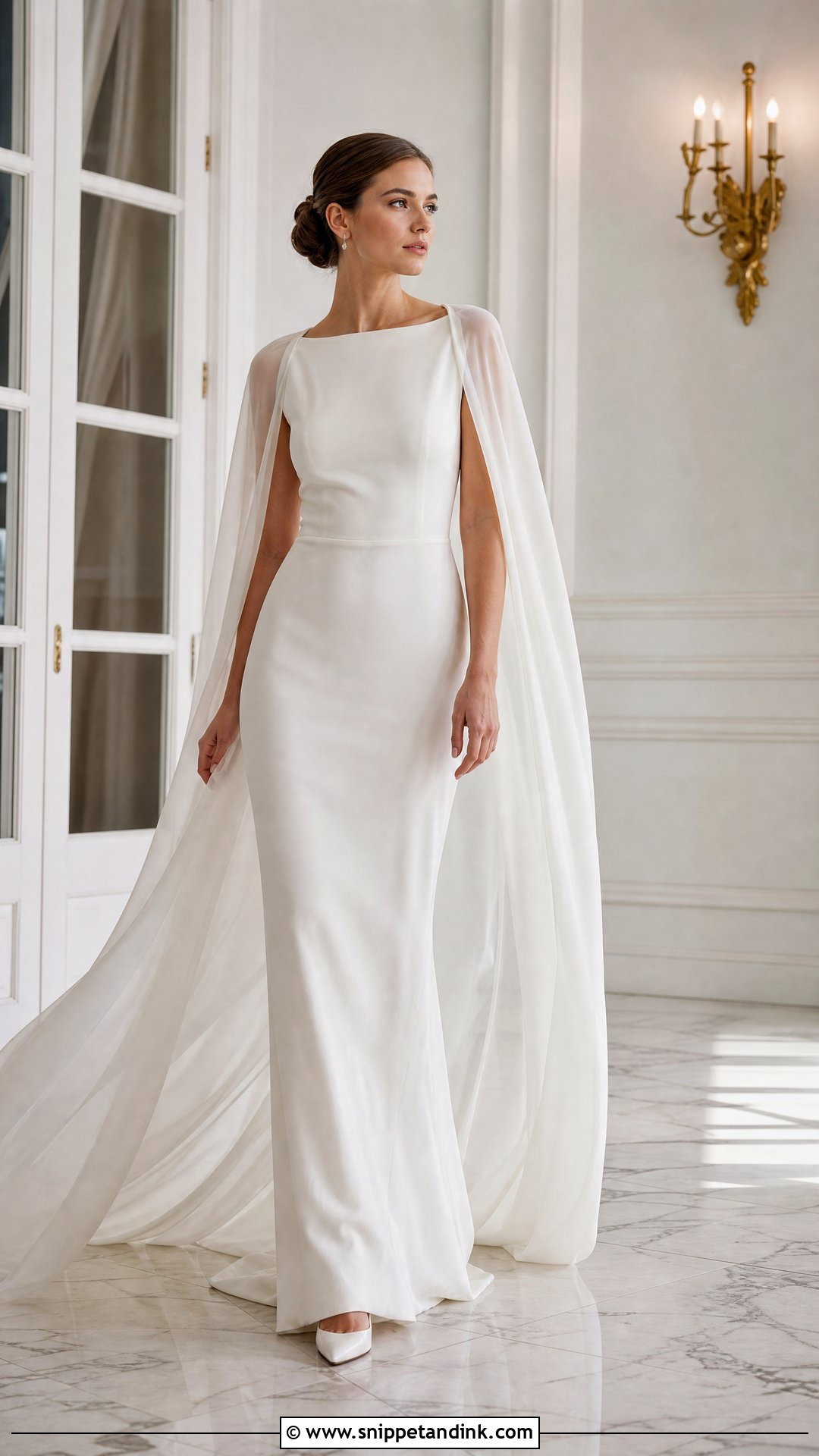
A cape stands in for a veil, and it moves more than people expect. Walk in it, ideally near an open door, and feel how it pulls at your shoulders. Try it over a clean crepe sheath, a satin A-line or a lightly embellished column, with understated earrings, pointed pumps and a polished low bun. Then check how it fastens: a hook at the shoulder can fight a high neckline, and a cape tied at the throat tends to drag forward. Floor-length gives you an entrance, while a shorter cape is far easier when you’re hugging guests. Take it off before you decide. The dress underneath has to stand up by itself at the reception.
18. Wedding Suit With Pointed Heels
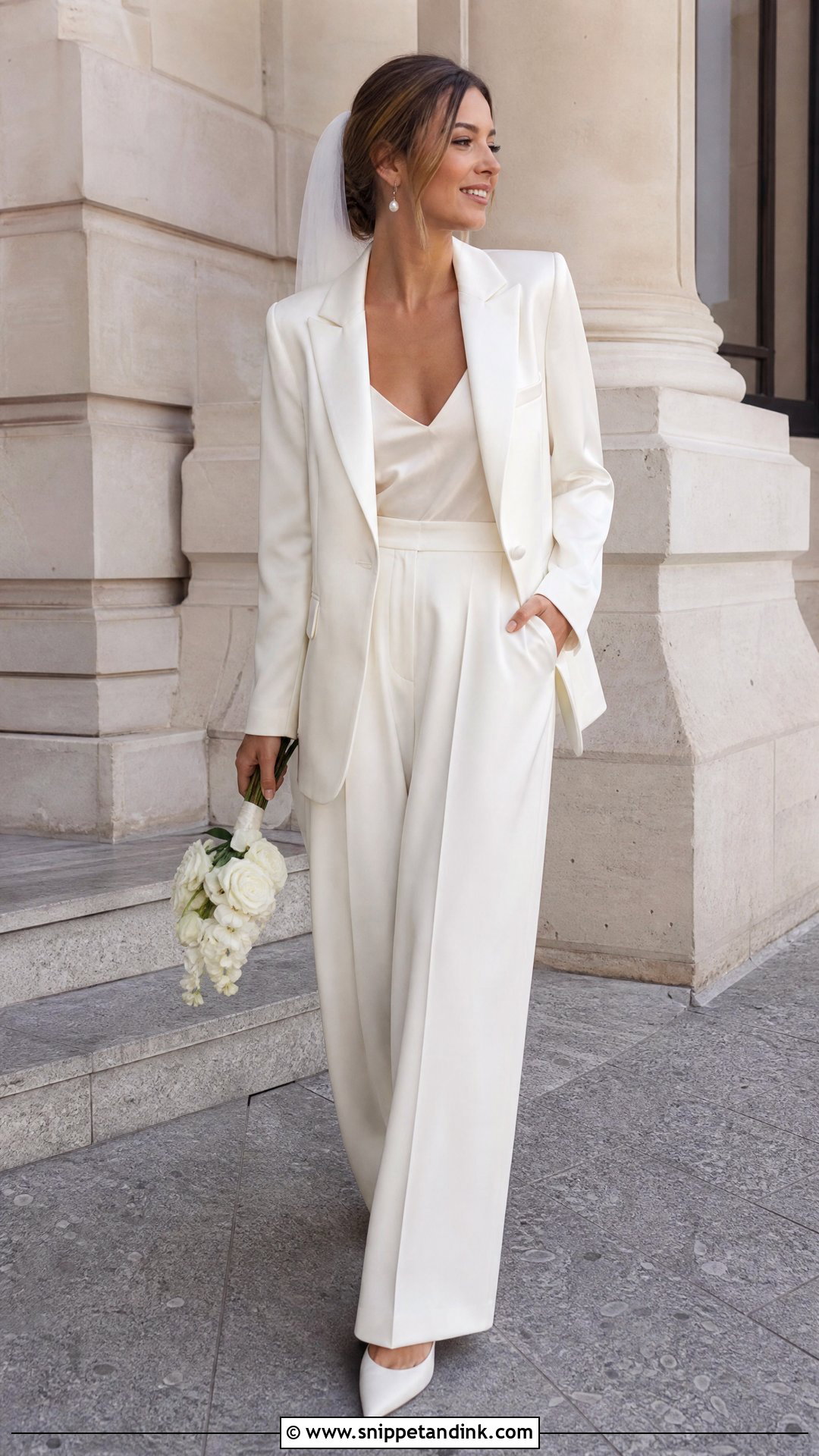
Not every appointment has to be about gowns, and sometimes a suit is the look a bride didn’t know she wanted. Try an ivory blazer with matching high-waisted trousers over a silk camisole or a corset-style top. The shoulder seam is the one part that can’t really be altered, so make sure it ends at your shoulder bone; sleeves and trouser hems are easy changes by comparison. Sit, walk and raise your arms. The trousers should fall cleanly onto the shoe, which means fitting them in your actual heels. Compare a single-breasted jacket with a longer double-breasted cut, then add pointed heels, pearl earrings, a compact bouquet and a short veil or hair accessory. It suits courthouse weddings, rehearsal events and anyone who feels more like herself in separates.
19. Bridal Jumpsuit With Removable Train
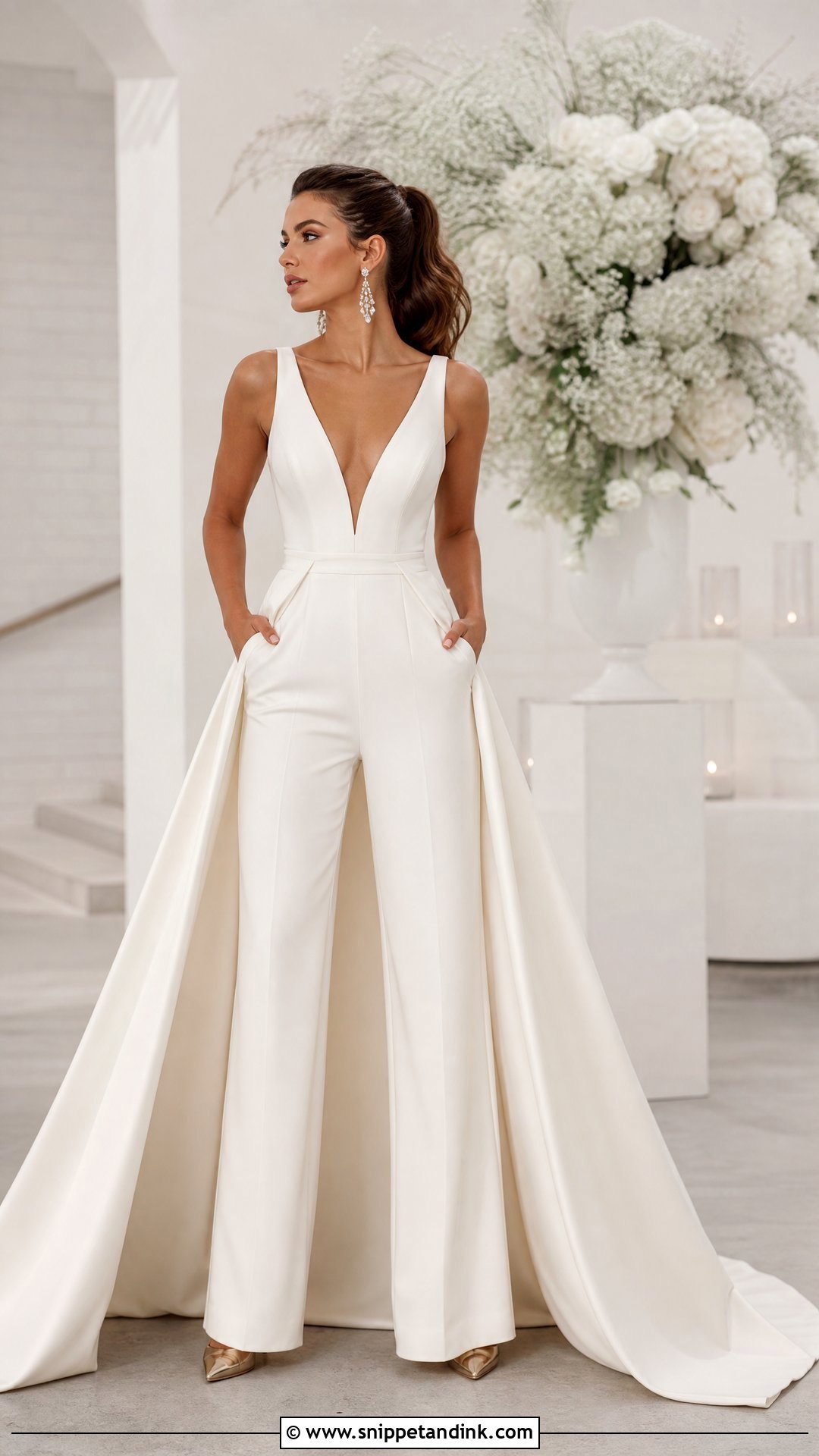
Torso length makes or breaks a jumpsuit. If the body is short for you, it pulls at the shoulders and crotch every time you sit, and that’s harder to fix than a dress, so sit and bend before you look at anything else. Look for a defined waist, wide or straight legs and a structured neckline. A removable train, overskirt or cape brings ceremony drama and comes off for dancing. Hem the trousers in shoes close to your wedding heel, add statement earrings and a sleek ponytail, then check the zip. Bathroom trips in a back-zip jumpsuit need a helper, which is worth knowing before the day.
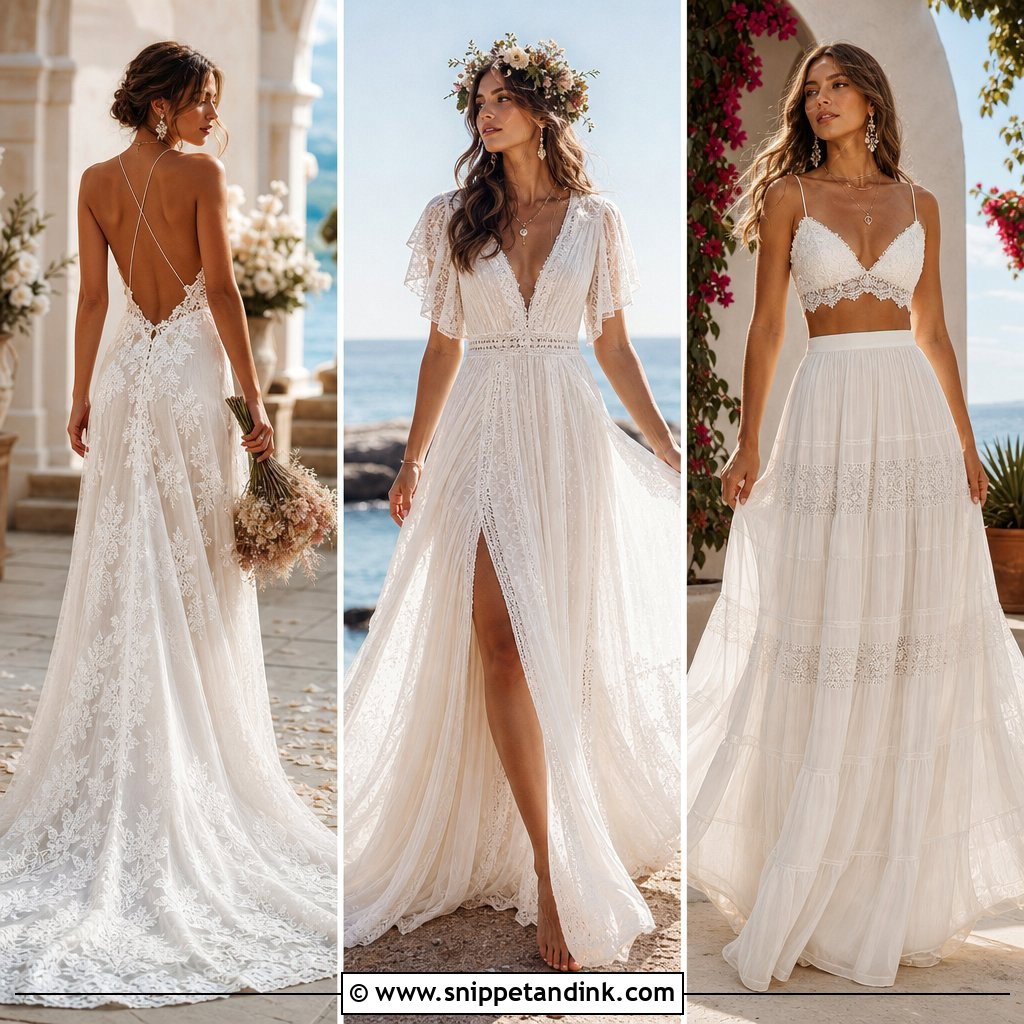
20. Short Wedding Dress With Bow Heels
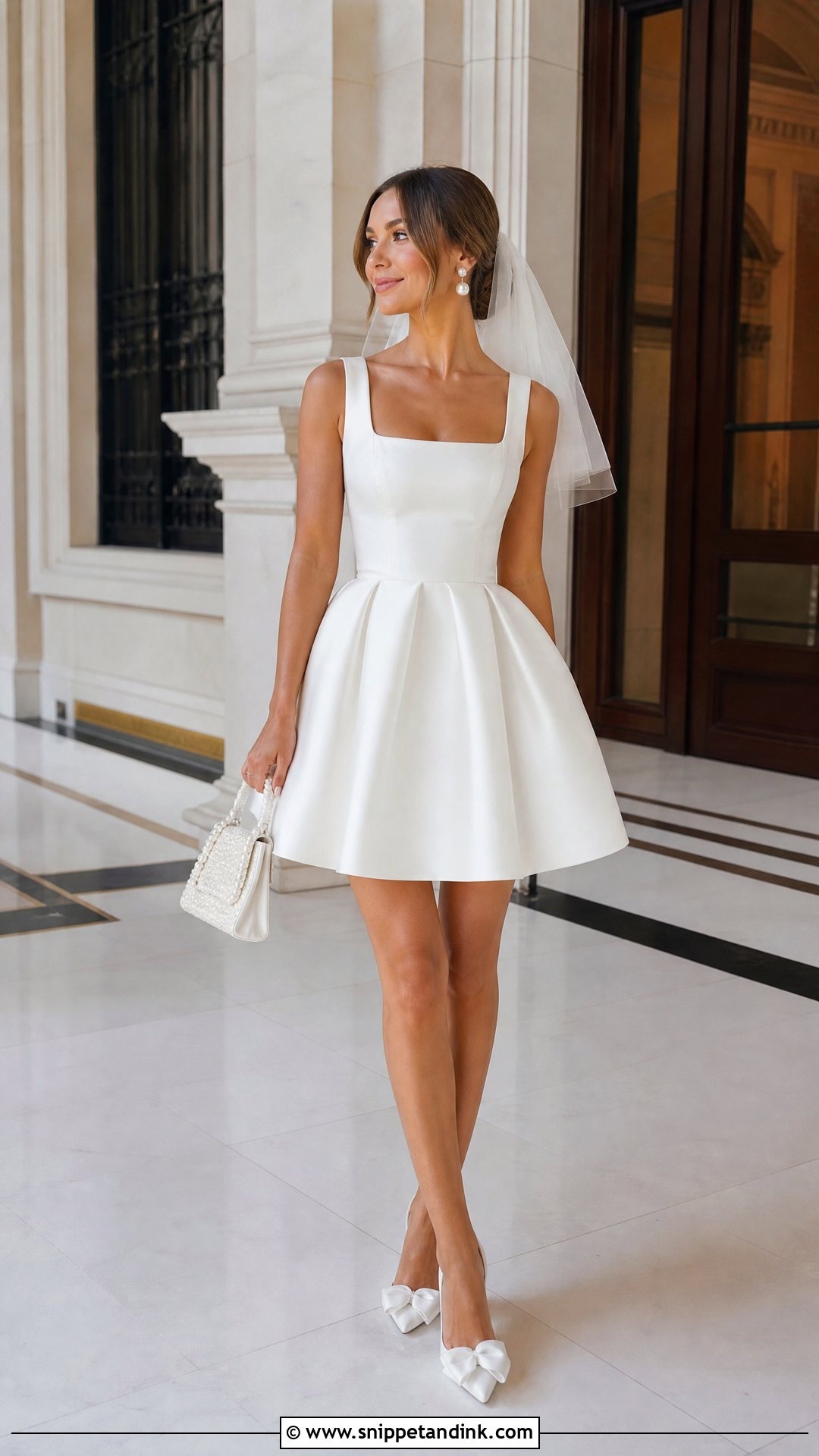
With a short dress, your legs and shoes become part of the outfit, so I check the hem from front, side and back, standing and seated. A structured mini or knee-length dress with a square neck, fitted waist and flared or tailored skirt works for a civil ceremony, a reception or a second look. Sit on a low chair in the fitting room; a hem that’s fine standing can ride up a long way. Fabric is what stops it looking like a white party dress, so compare smooth satin with textured jacquard, floral appliqués or subtle beading. Bow-detail heels, pearl earrings, a small bag and a short veil or headband make it read as bridal, and a removable overskirt can add coverage for the ceremony.
From Saying Yes to the Last Fitting
Made-to-order gowns often take somewhere between four and eight months to arrive, depending on the designer and the time of year, and rush orders usually cost extra. Alterations come after delivery, so I plan backward from the wedding date:
- Start trying on roughly nine to twelve months out if you want a made-to-order gown, which leaves room for delays.
- Book the first alteration fitting about two to three months before the wedding.
- Expect two or three fittings in total; a complicated bustle or a lace hem can need more.
- Hold the final fitting a week or two before the day in your shoes and underwear, and bring whoever will bustle your train so they can practise.
If your date is much closer than that, look at off-the-rack gowns and sample sales. A dress you can take home the same day often needs only a professional clean and a round of alterations, and that can be done in a few weeks.
Leaving the Salon With Answers, Not Just a Dress
Very few brides find their dress in the first ten minutes, and you don’t need to. A good appointment teaches you which shapes, fabrics and necklines make you look like yourself. Try contrasting silhouettes, move in every one, and take photos wherever the salon allows. Notice weight, support and how each gown would cope with your venue. Accessories help you picture the whole look, but take them off before you decide, because the gown has to work without them. Then go with the one you keep thinking about on the drive home, not the one somebody else in the room liked best.
You'll Like These Ideas:


Leave a Reply