
The free-spirited glamour of the 1970s is the decade I get asked about most by brides who find modern corseted gowns too stiff. The appeal is easy to understand: bell and bishop sleeves, empire waists, crochet, high prairie necks, halters and a bit of disco shine, all cut to move. The challenge is keeping it from looking like a costume. In fittings, I usually steer clients toward one or two clear period details and let the rest of the outfit stay current. Each idea below comes with what I’d check before you buy it.
Wearing a Real 1970s Gown
Some brides want the genuine thing rather than a modern dress inspired by it. I love working with true vintage, but it needs a closer inspection than a new gown. Here’s what I check before anyone buys:
- Yellowing and spots, especially at the underarms, neckline and hem. Some marks can be cleaned; deep yellowing often can’t.
- Seams and zips. Old thread can be brittle, and zips from the era sometimes break under strain.
- Seam allowances. Generous allowances mean the dress can be let out a little; narrow ones mean it can only be taken in.
- Sizing. Vintage sizes run differently from modern ones, so go by measurements, not the label.
- Fabric. Many dresses from the decade were made in polyester blends, which are durable but warmer than they look.
Take the dress to a cleaner experienced with vintage before any alterations. Cleaning can shrink or change some fabrics, and you want to fit the dress in its final state.
1. Bell Sleeve Lace Wedding Dress
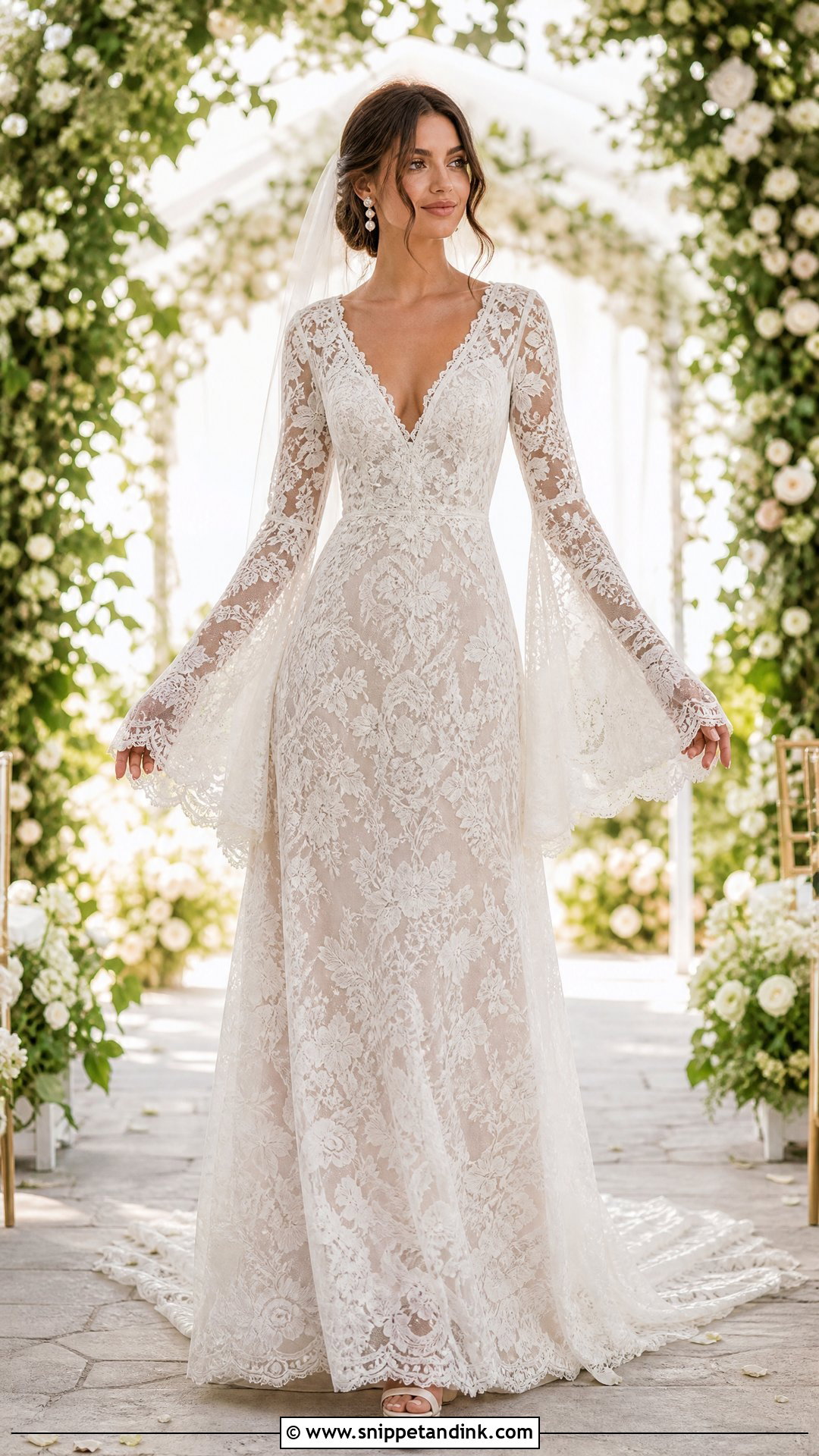
Bell sleeves are the quickest way to say seventies, and also the quickest to overwhelm a small frame. I’d have a petite bride try a narrower flare first. Botanical or geometric lace reads more period-correct than fine modern Chantilly. Bells also have a habit of dipping into the cake and catching on chair backs, so practise eating in them. Ivory platforms, a fingertip veil and a daisy-and-greenery bouquet finish it; small gold hoops are all the jewelry it needs.
2. Empire Waist Chiffon Wedding Dress
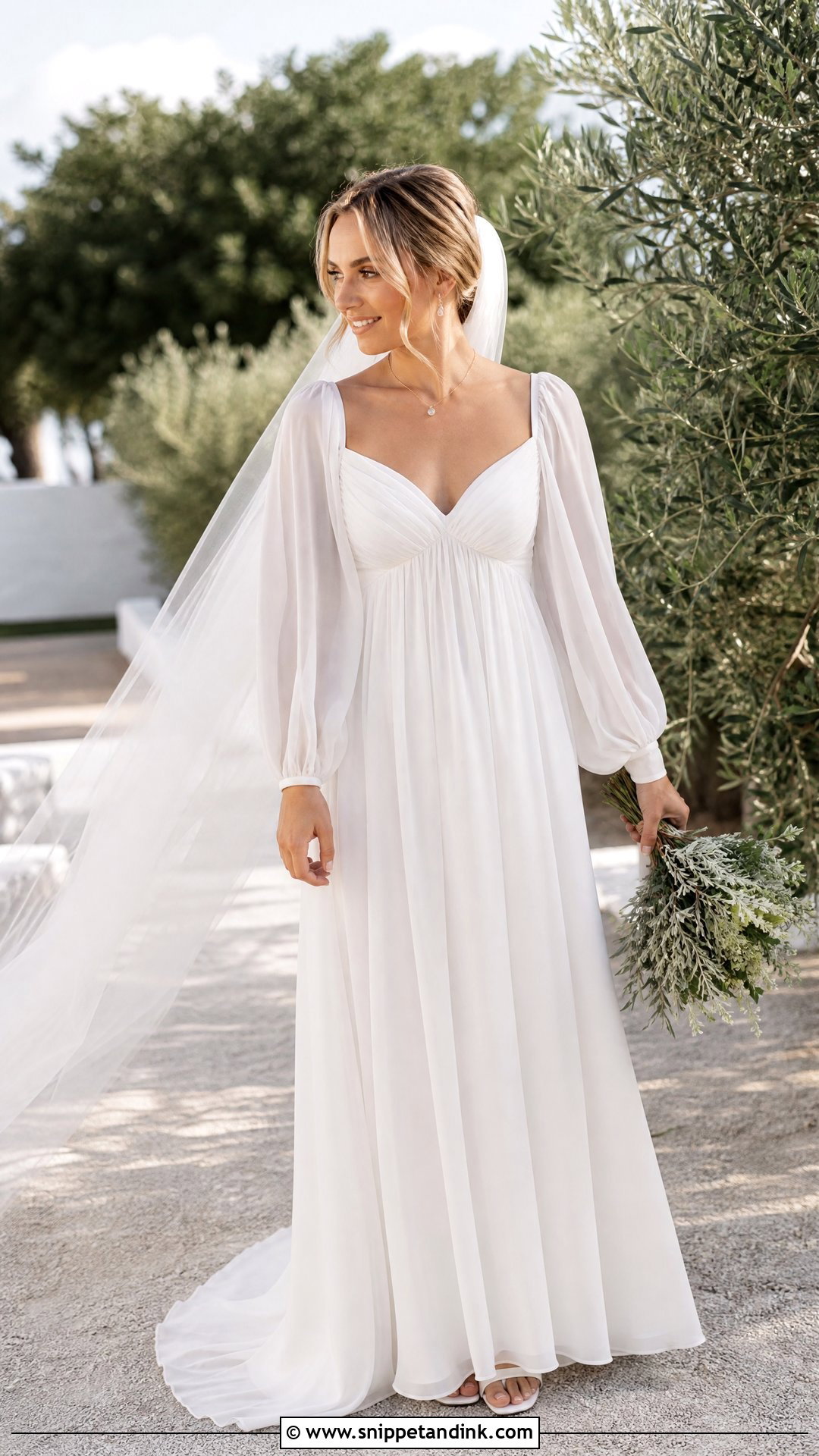
An empire waist floats from just under the bust, so the skirt never clings to the stomach or hips. That’s why I suggest it to brides who want comfort for a long outdoor day. The weakness is support. Light chiffon gathered under the bust won’t hold a fuller chest on its own, and I’d always ask for internal cups or a sewn-in bra. Sheer bishop or flutter sleeves keep it light; block-heel sandals and a loose braid suit a garden.
3. Crochet Lace A-Line Wedding Dress
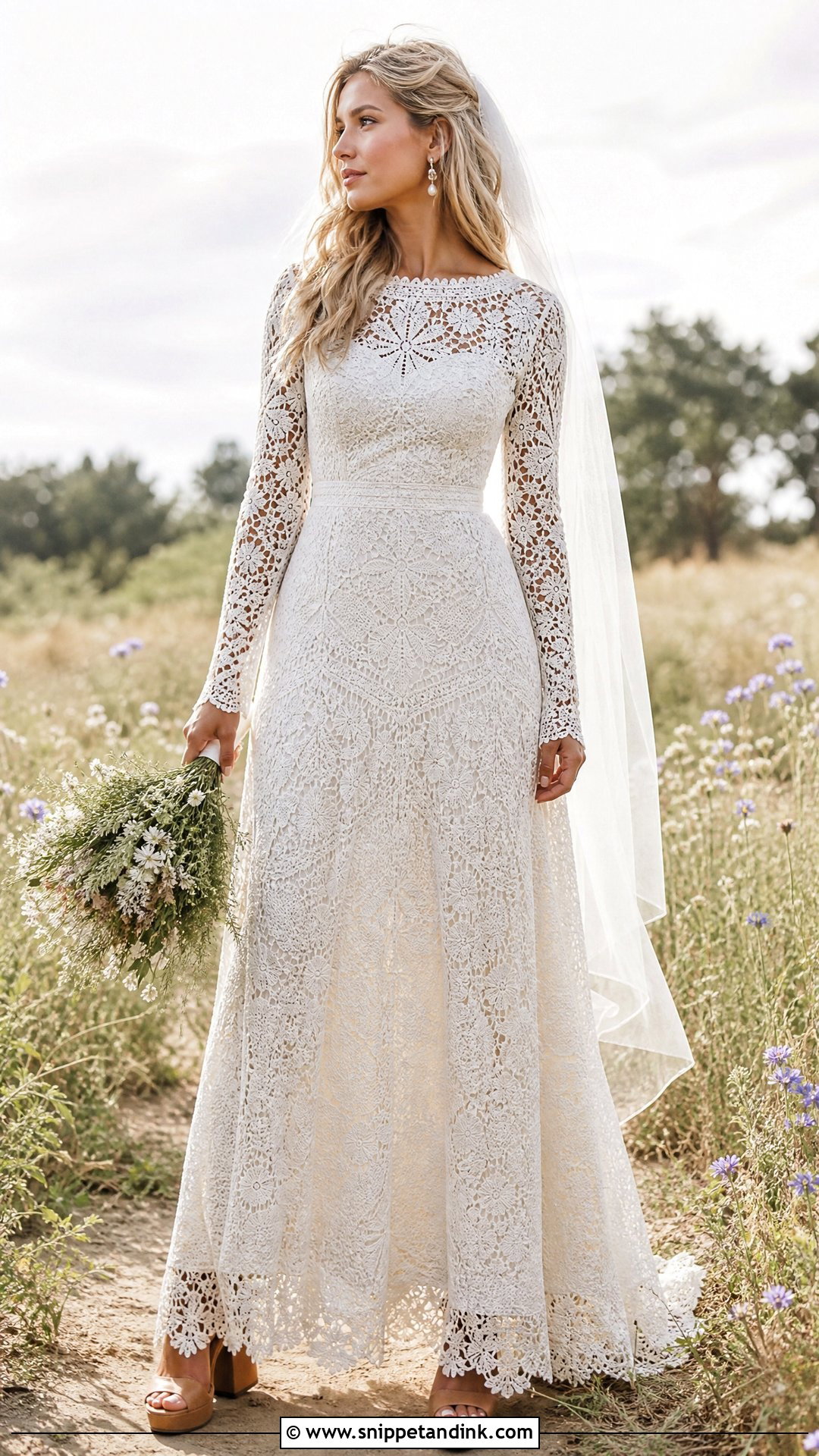
Crochet lace looks handmade, and it ties the dress straight back to 1970s bohemian fashion while still feeling current. The first thing I check is the lining, because open crochet can be far more see-through in sunlight than it looks under shop lights. Stand by a window in it. A defined natural waist balances the heavier texture. For a hot day, cotton-blend crochet breathes better than synthetic. Leather platforms, pearl drops and a plain tulle veil keep the texture as the star.
4. High Neck Prairie Wedding Dress
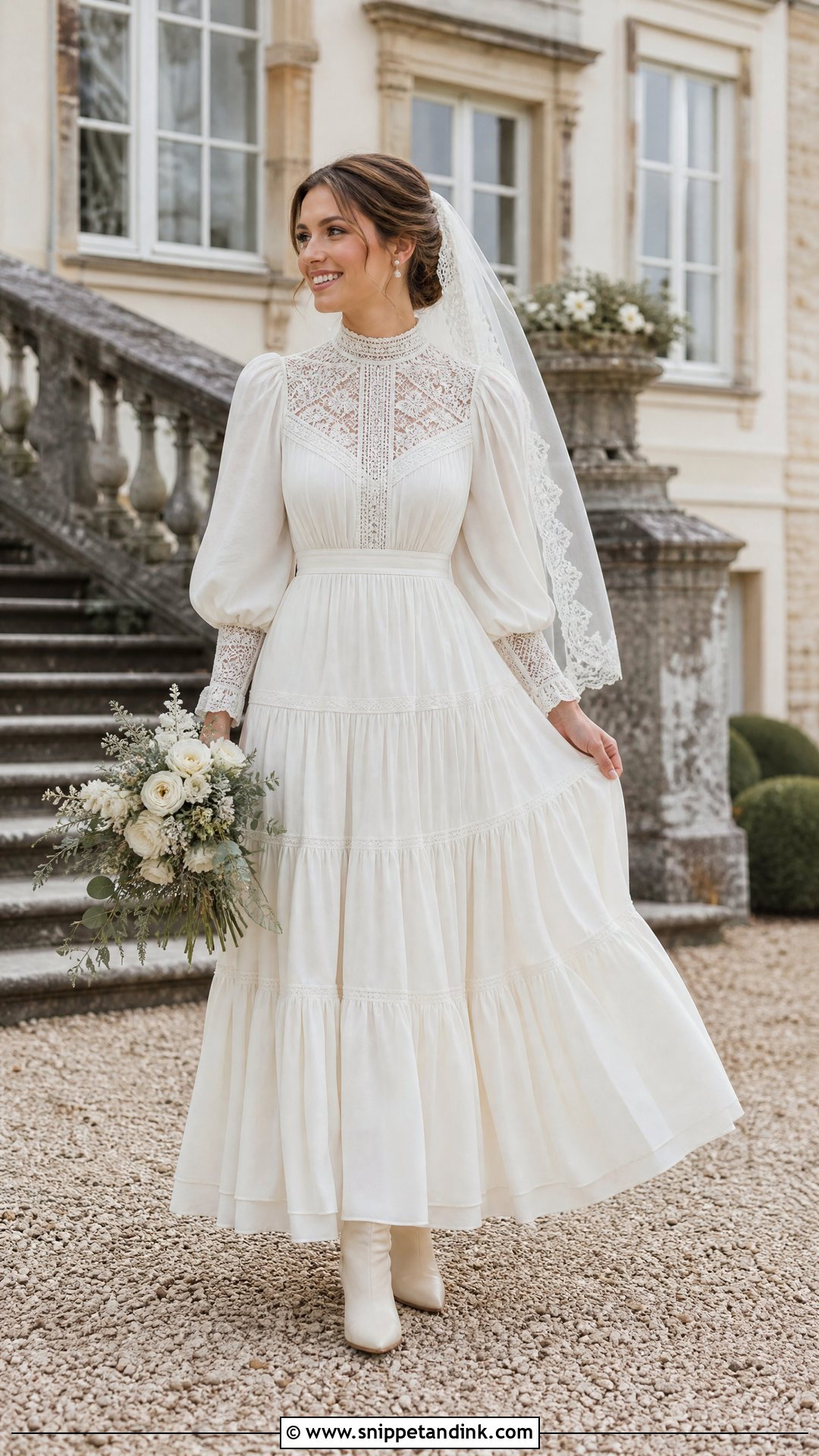
A prairie dress, with its high lace yoke and soft tiers, works best when one or two details carry the period. Narrow ribbon trim or covered buttons are enough; adding puffed sleeves, tiers and ruffles all at once tips it into costume. The collar should allow you to turn your head without the lace scratching your jaw. A low braided bun keeps the neckline clear. Cream ankle boots suit a countryside or woodland venue; a chapel veil or lace mantilla sits behind the bun.
5. Satin Halter Wedding Dress
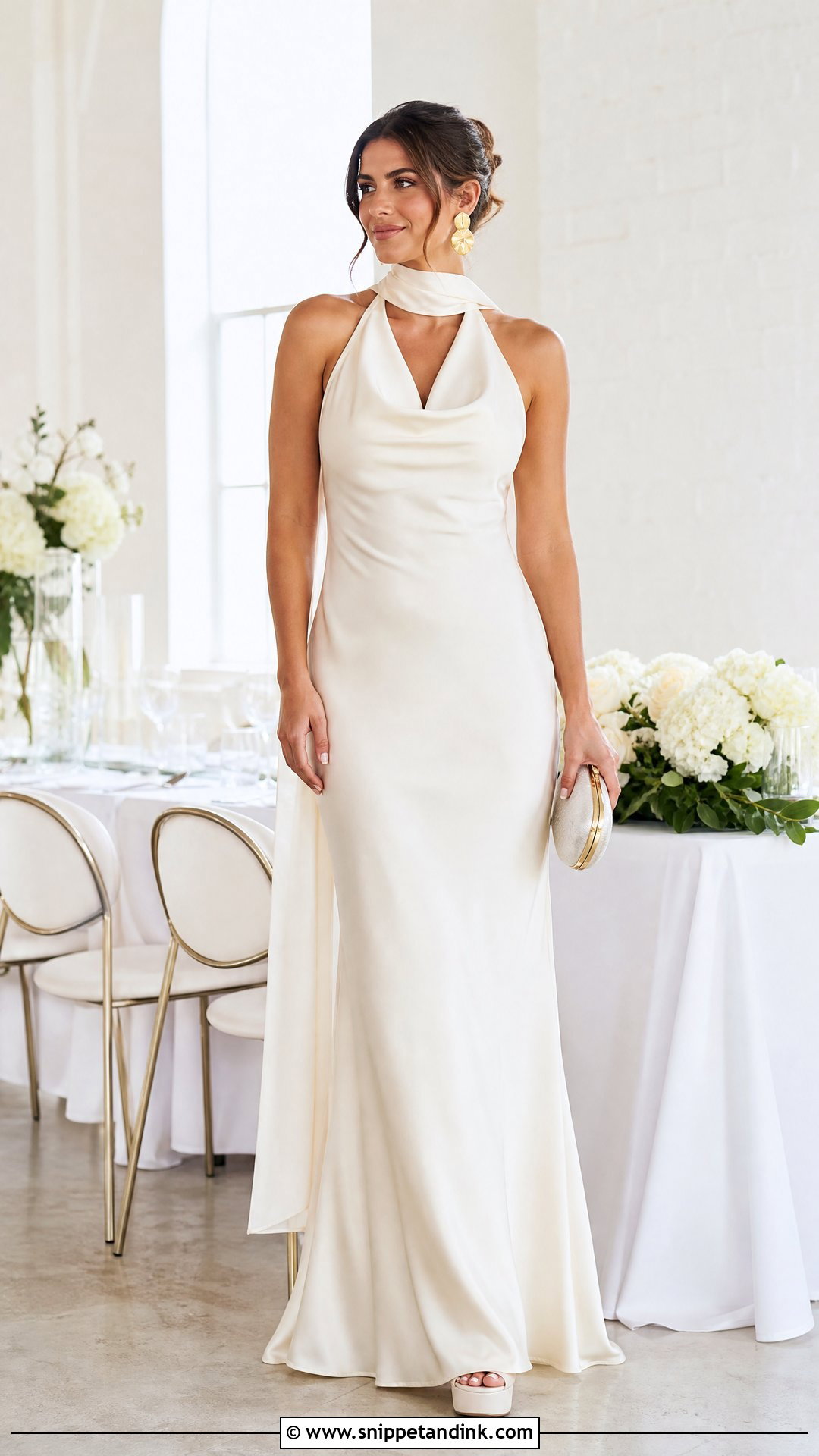
A satin halter is the glamorous, nightclub side of the decade. Matte satin or silk charmeuse looks quieter; shiny satin looks more disco. I’m very careful with underwear for halters, because the open back and shoulders rule out most bras, and satin shows every line beneath it. A smooth adhesive bra or built-in cups usually solves it. A smooth low bun keeps the neck clear. A long chiffon neck scarf trailing down the back can replace a veil.
6. Off-Shoulder Boho Wedding Dress
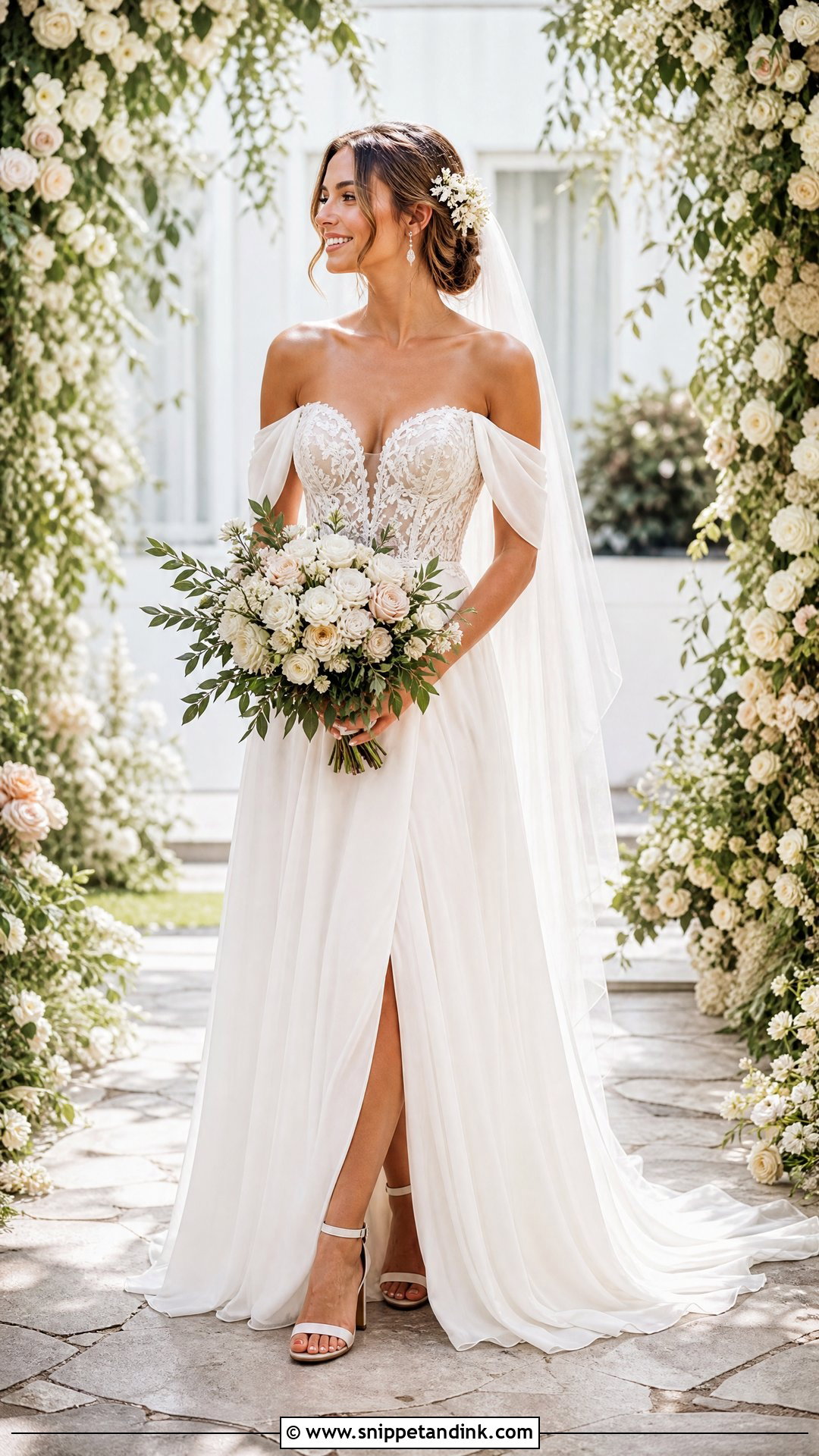
Off-the-shoulder boho dresses depend on the bodice staying put, which in my fittings comes down to boning and a grip strip at the neckline. Sit, lift your arms, walk; if the sleeves slide, it needs adjusting. A flowing A-line keeps the look balanced. Detachable off-shoulder sleeves give you the vintage effect for the ceremony and more freedom for dancing. A floral comb and long veil below soft waves keep the neckline visible.
7. Bishop Sleeve Floral Lace Wedding Dress
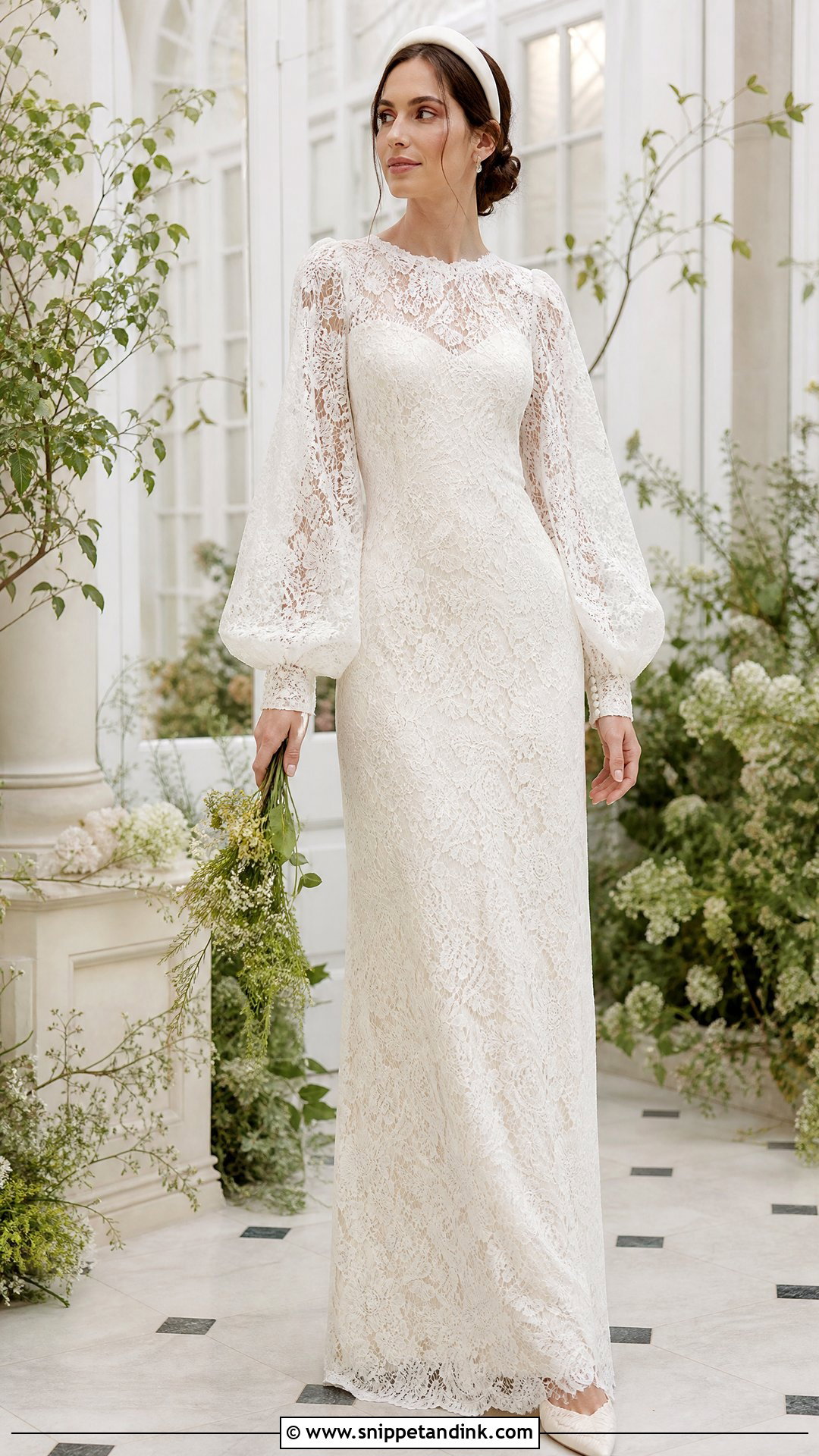
Bishop sleeves gather into a fitted cuff, so they give volume through the arm while keeping your hands free, which is more practical than a bell. The cuff fit is what I check first: too tight and it marks the wrist, too loose and the sleeve slides down over the hand. A simple bodice and streamlined skirt keep the sleeves as the main feature. An ivory lining under white lace shows off the floral pattern. A narrow velvet headband and centre-parted bun add a period touch.
8. Tiered Ruffle Wedding Dress
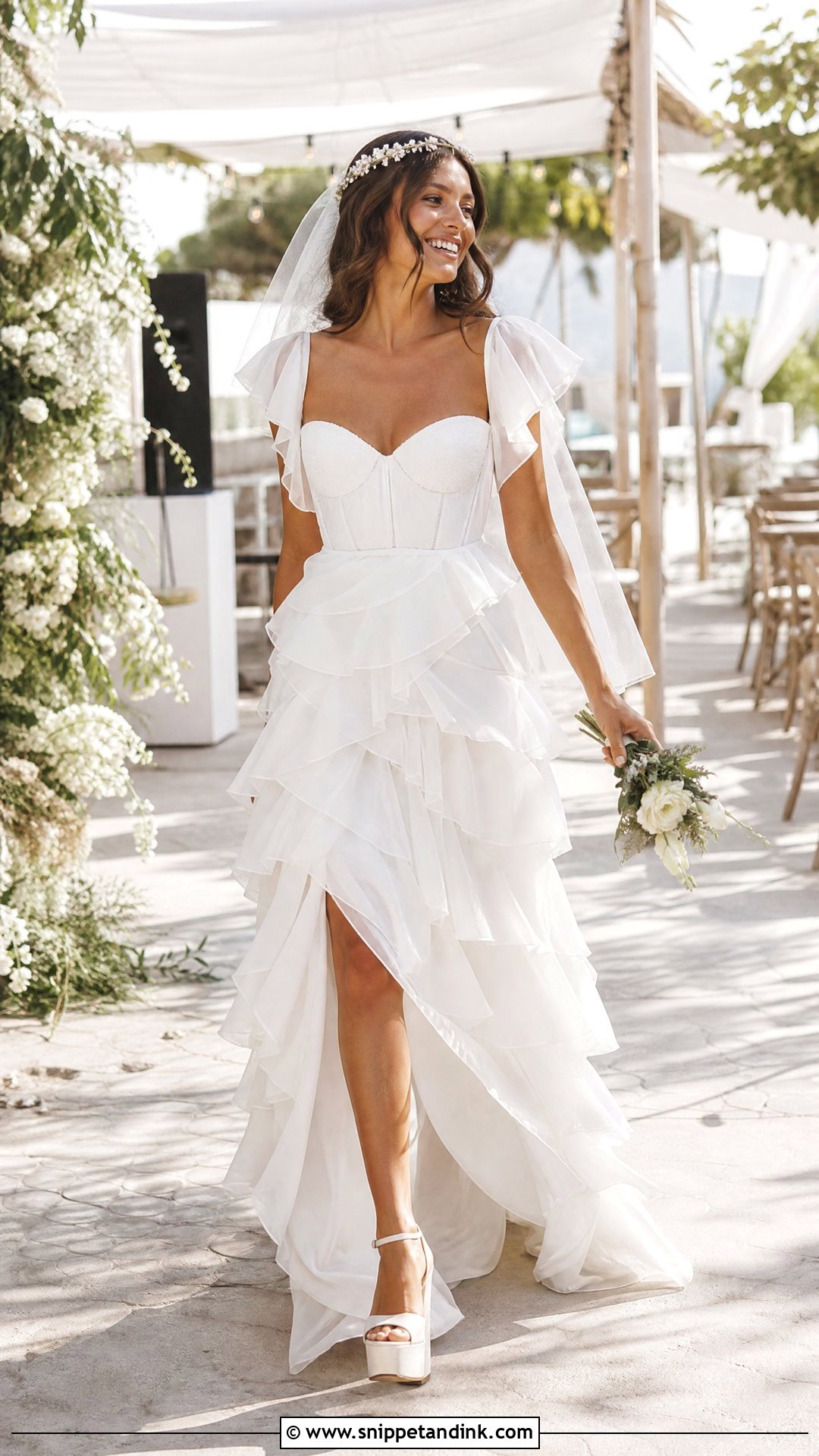
A tiered ruffle wedding dress moves beautifully, and the number of tiers is the detail that decides how it suits you. Shorter frames carry fewer, longer tiers better; taller brides can wear more layers. Chiffon, organza and dotted tulle create fullness without weight. If the sleeves are ruffled too, keep the skirt tiers smaller. Have the hem set while you’re wearing the exact platforms you’ll wear, since tiers show an uneven hem quickly.
9. Cape Sleeve Lace Wedding Dress
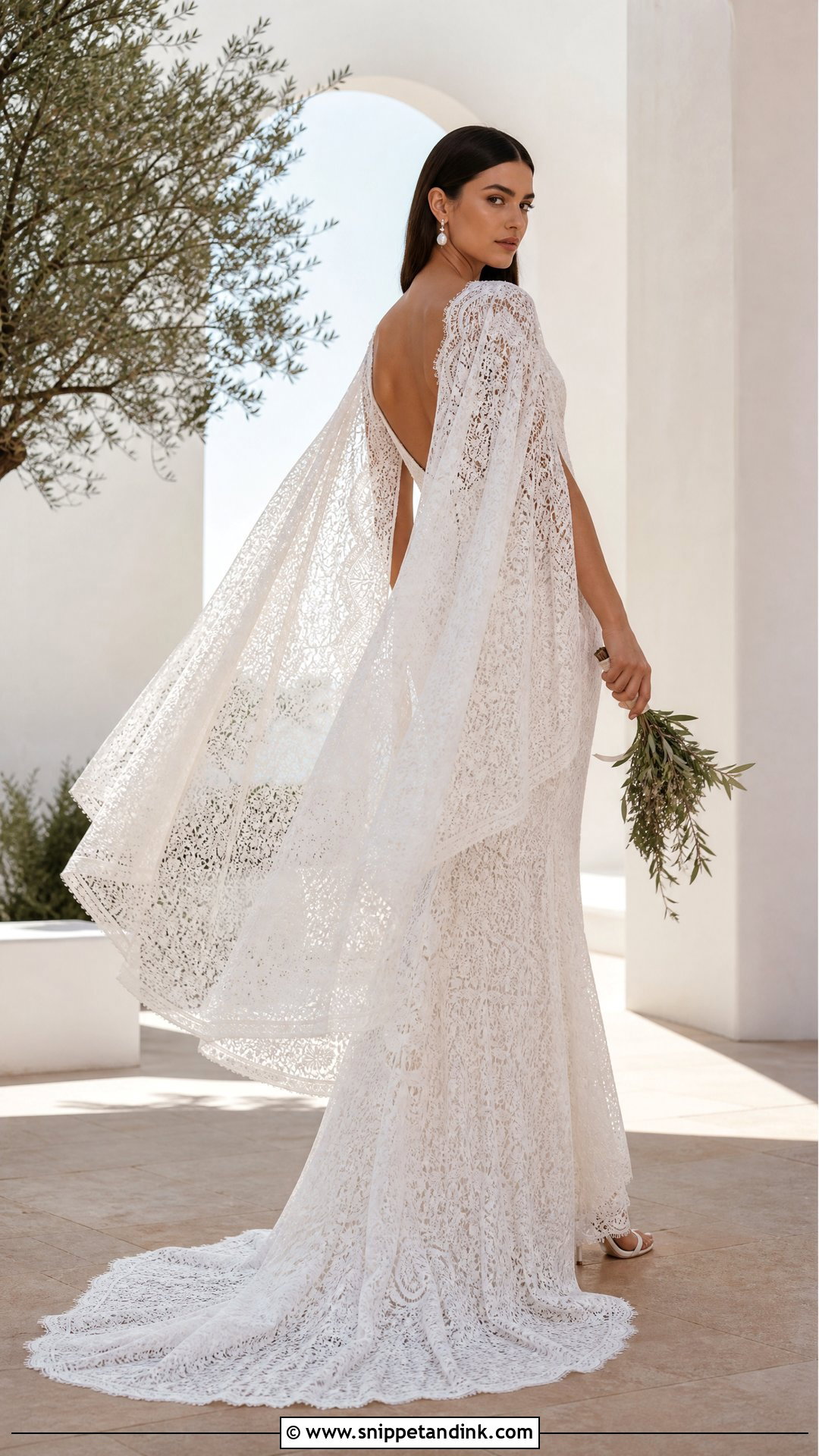
A cape sleeve falls from the shoulder or neckline and gives you all the drama of a long sleeve with more freedom of movement. Graphic lace looks bold and boho; chiffon is cleaner. The risk is tripping. Long capes catch under shoes when you turn, so I always have clients practise turning and walking backwards in the fitting room. A veil is optional; the cape already frames you. A narrow, loose bouquet keeps the front visible.
10. Fringe Wedding Dress
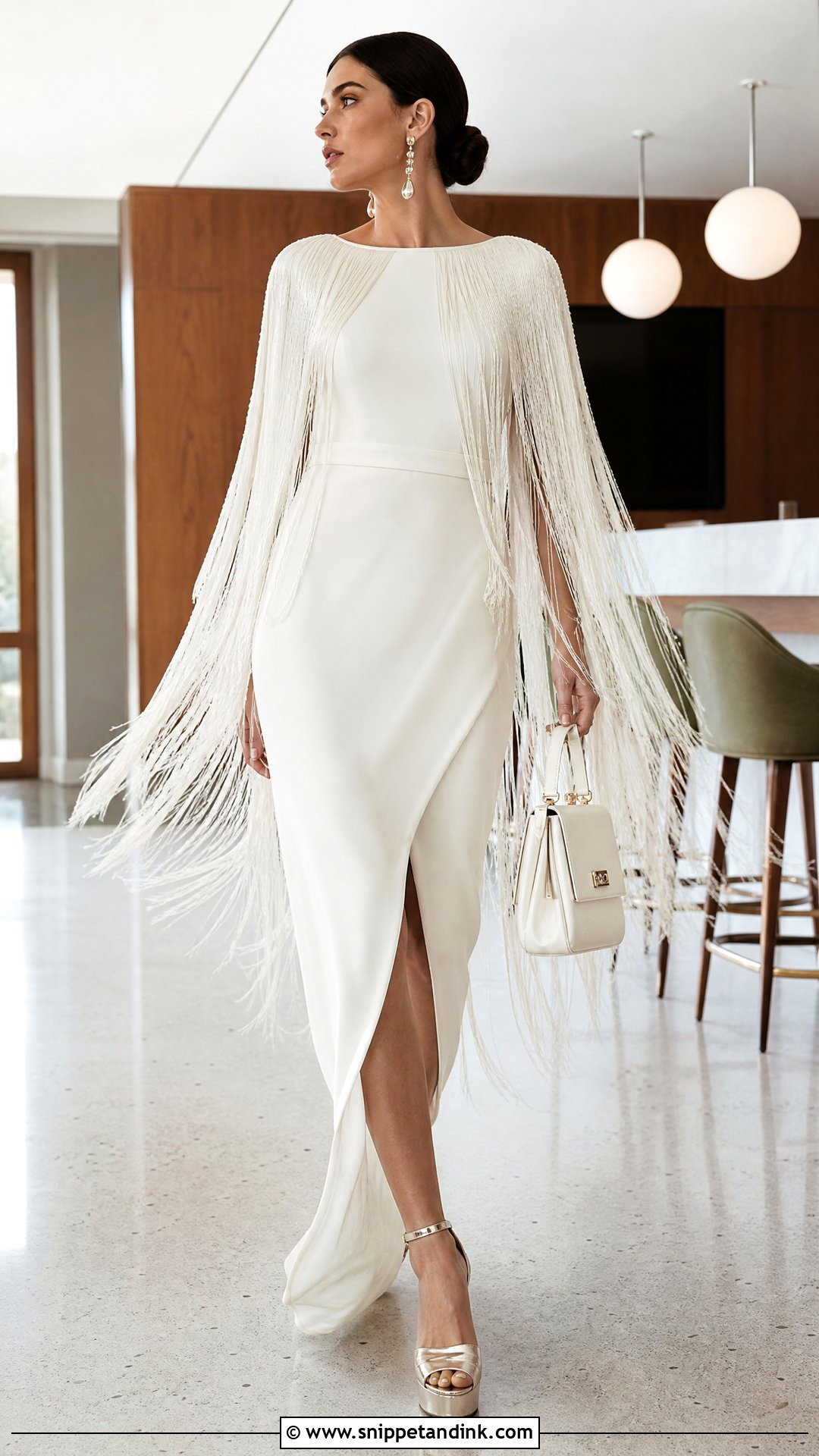
Fringe is all about movement, which is exactly why it needs restraint. On a slim crepe or satin base, fringe placed on the sleeves, a cape or the lower skirt looks deliberate; fringe everywhere looks like a costume. I always test fringe against bracelets and rings, since it tangles easily. A smooth ponytail or shoulder-length waves and metallic platforms finish it. Plain tulle or a short blusher is better than an embellished veil.
11. Peasant Sleeve Wedding Dress
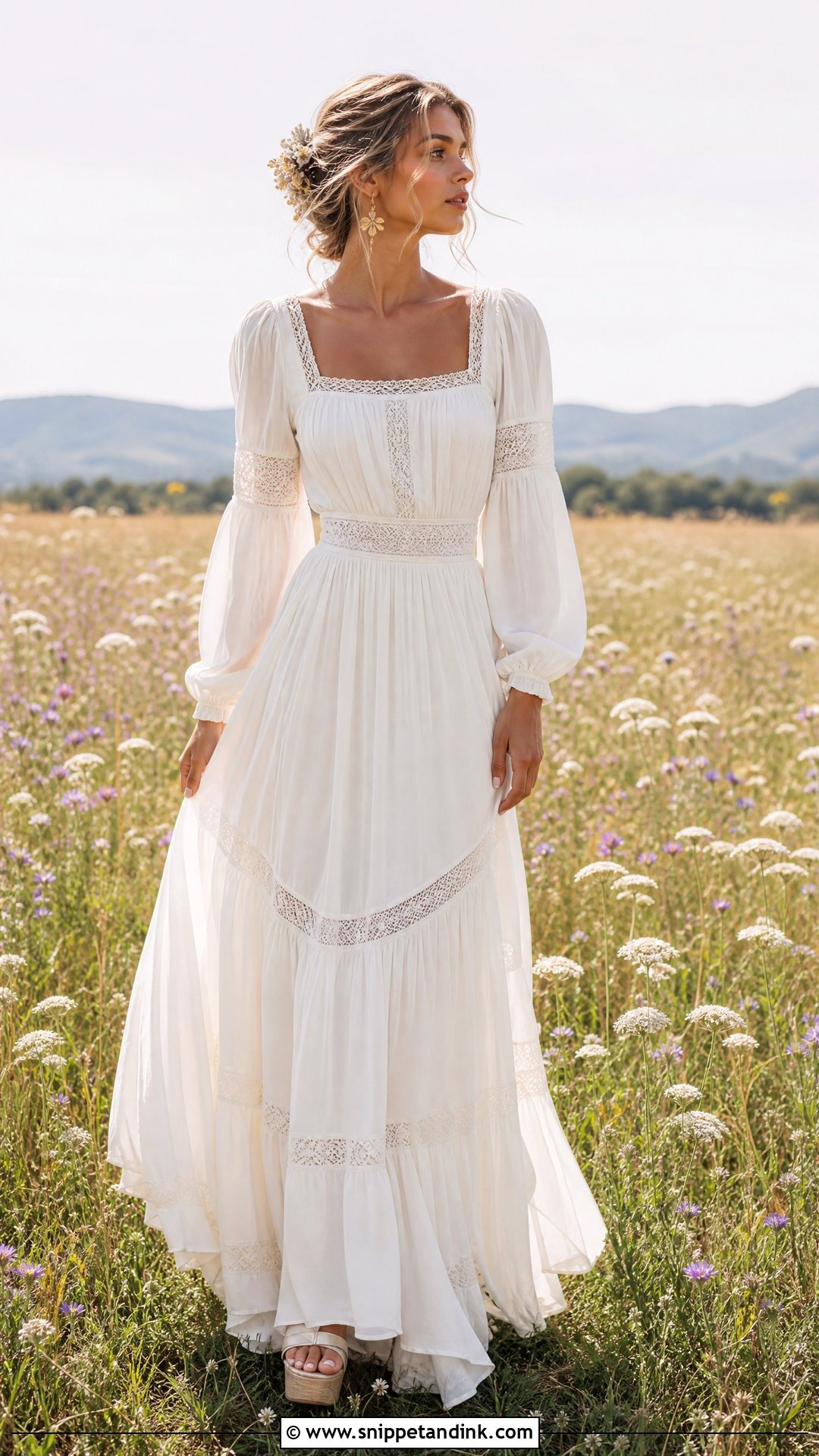
A peasant sleeve wedding dress leans into the softer, folk side of the decade, with gathered sleeves and a rounded neckline. Gathered fabric can look shapeless if there’s no structure underneath, so I’d look for a bodice with some internal support and a defined waistband. Lace inserts or covered buttons add character. Low platforms, a woven floral hairpiece and a loose half-up style suit meadows, barns and backyard ceremonies.
12. Open Back Lace Wedding Dress
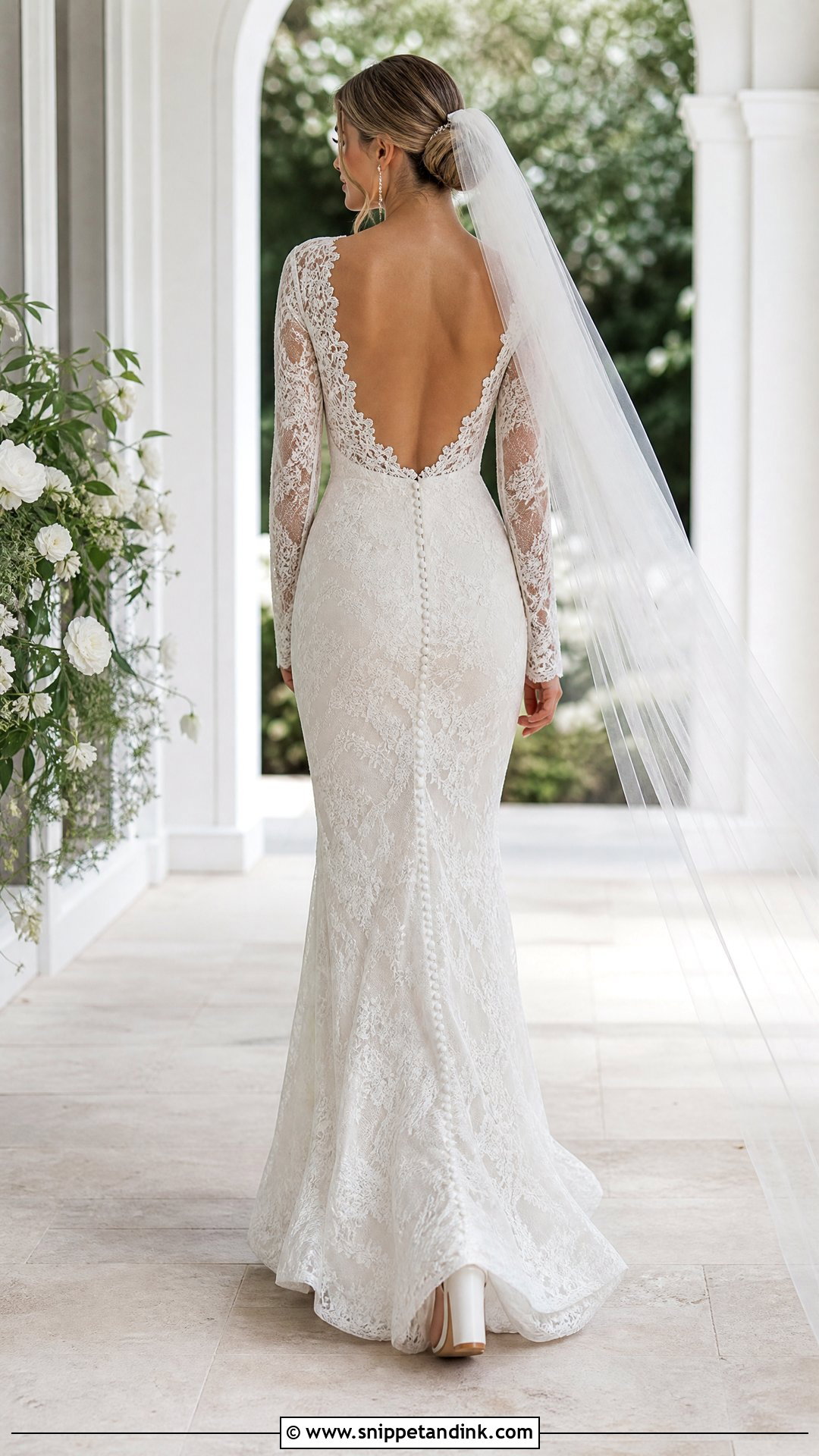
An open back lightens a long-sleeve lace dress and gives you a surprising view as you walk away. Keyhole, round or deep V openings all work; covered buttons or narrow ties secure them. The front can stay modest. Support is the question to raise early with your tailor, because standard bras won’t work. Transparent mesh, internal cups or carefully placed boning all help. Long earrings echo the vertical line; keep any back jewelry minimal.
13. Puff Sleeve A-Line Wedding Dress
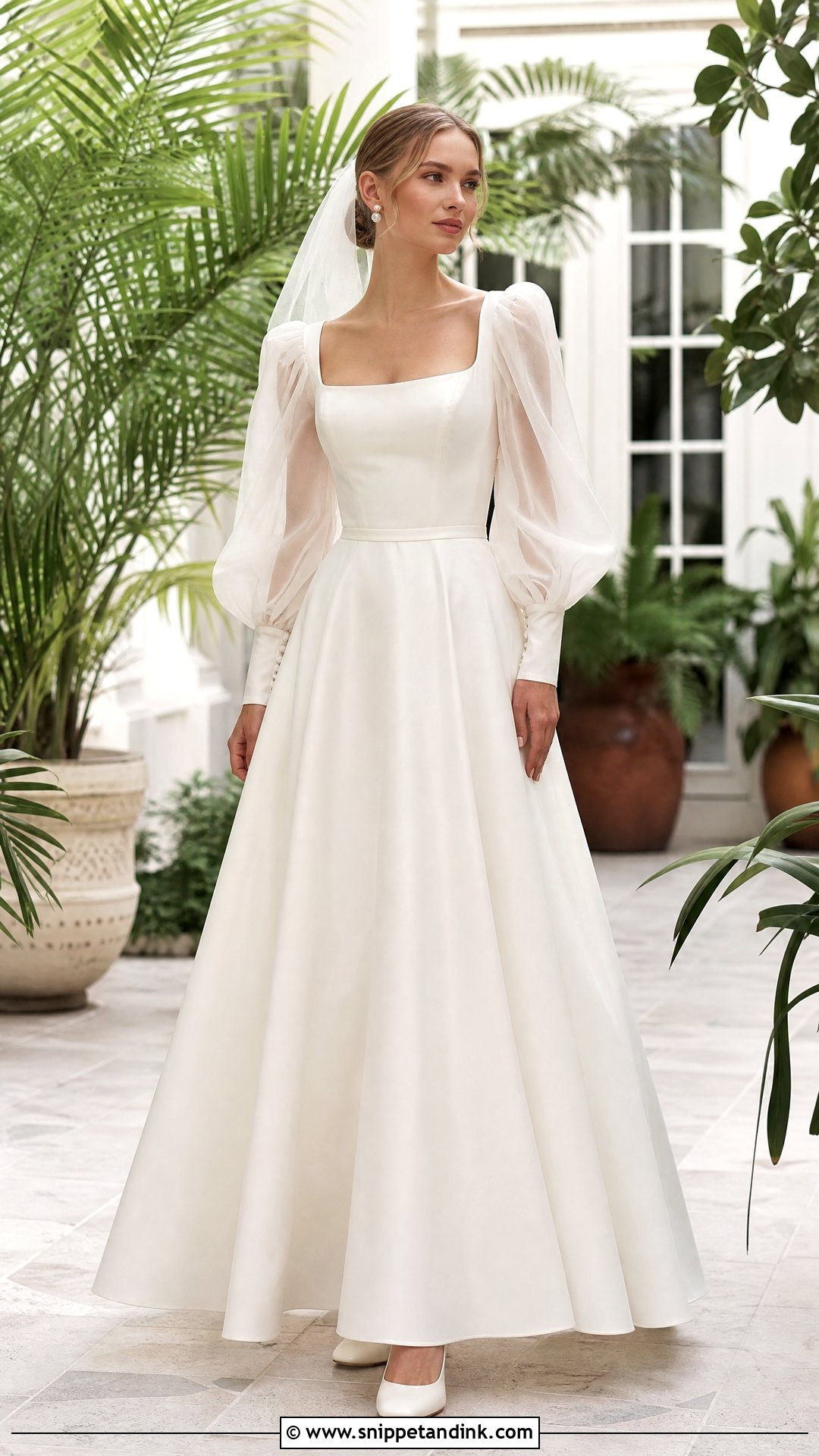
Puff sleeves are playful, and the scale decides whether they look seventies or eighties. Gentle volume at the shoulder with a narrow cuff or elbow finish is the seventies version; huge puffs belong to a later decade. Broad shoulders suit sheer sleeves with moderate volume; narrow shoulders can carry structured organza or dotted tulle. A square neck, fitted waist and fluid skirt keep the balance. Round-toe heels and a short veil finish it.
14. Slip Wedding Dress With Crochet Cape
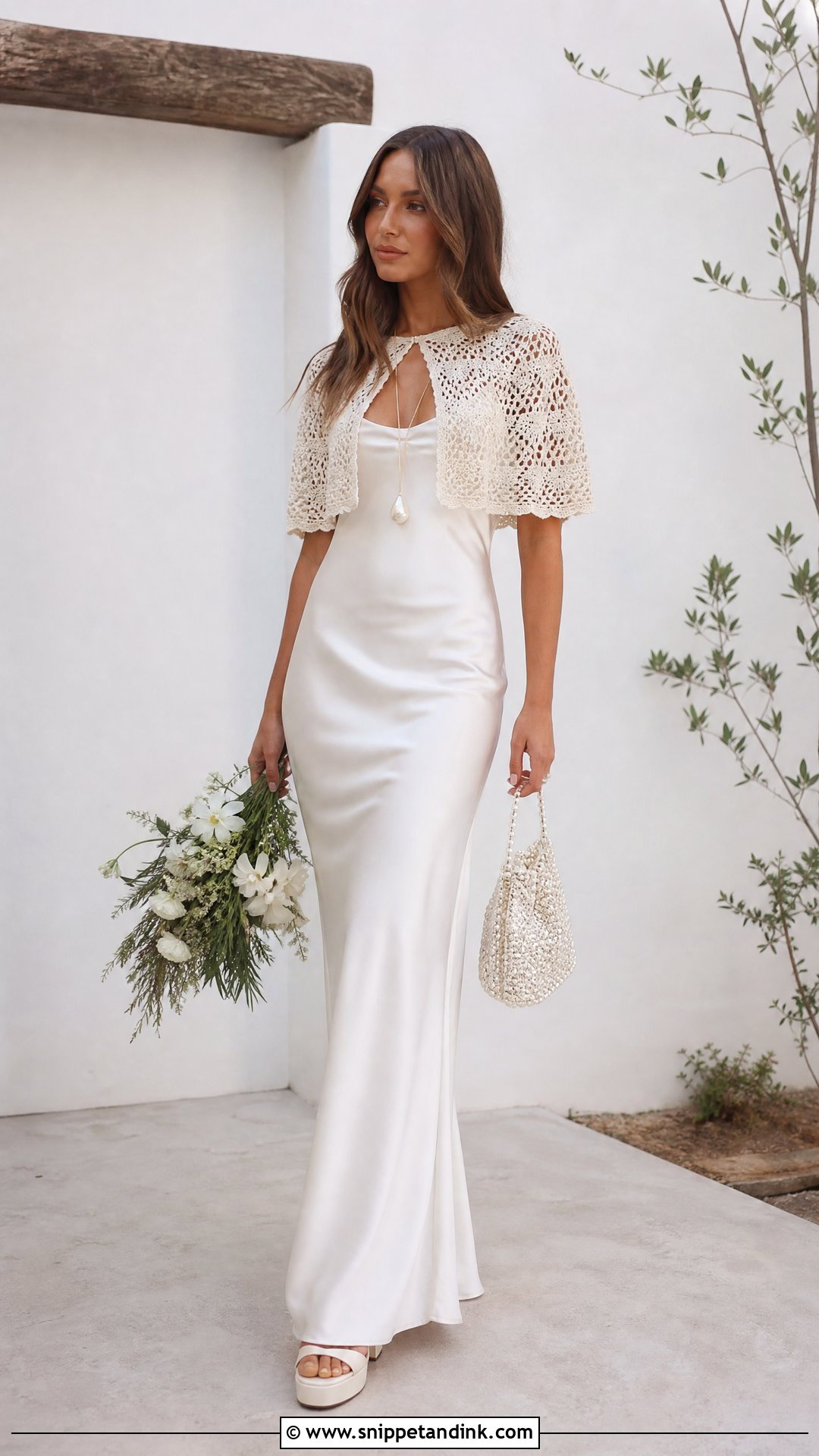
A slip dress with a crochet cape is a smart two-in-one. The slip is clean and modern; the cape adds the period texture for the ceremony, then comes off for the reception. Keep both pieces in the same ivory family, since a cooler slip next to a warmer crochet looks mismatched. I’d end the cape above the fullest part of the hips so it doesn’t add bulk. Platforms, a long pendant and loose waves suit it well.

15. Long Sleeve Mini Wedding Dress
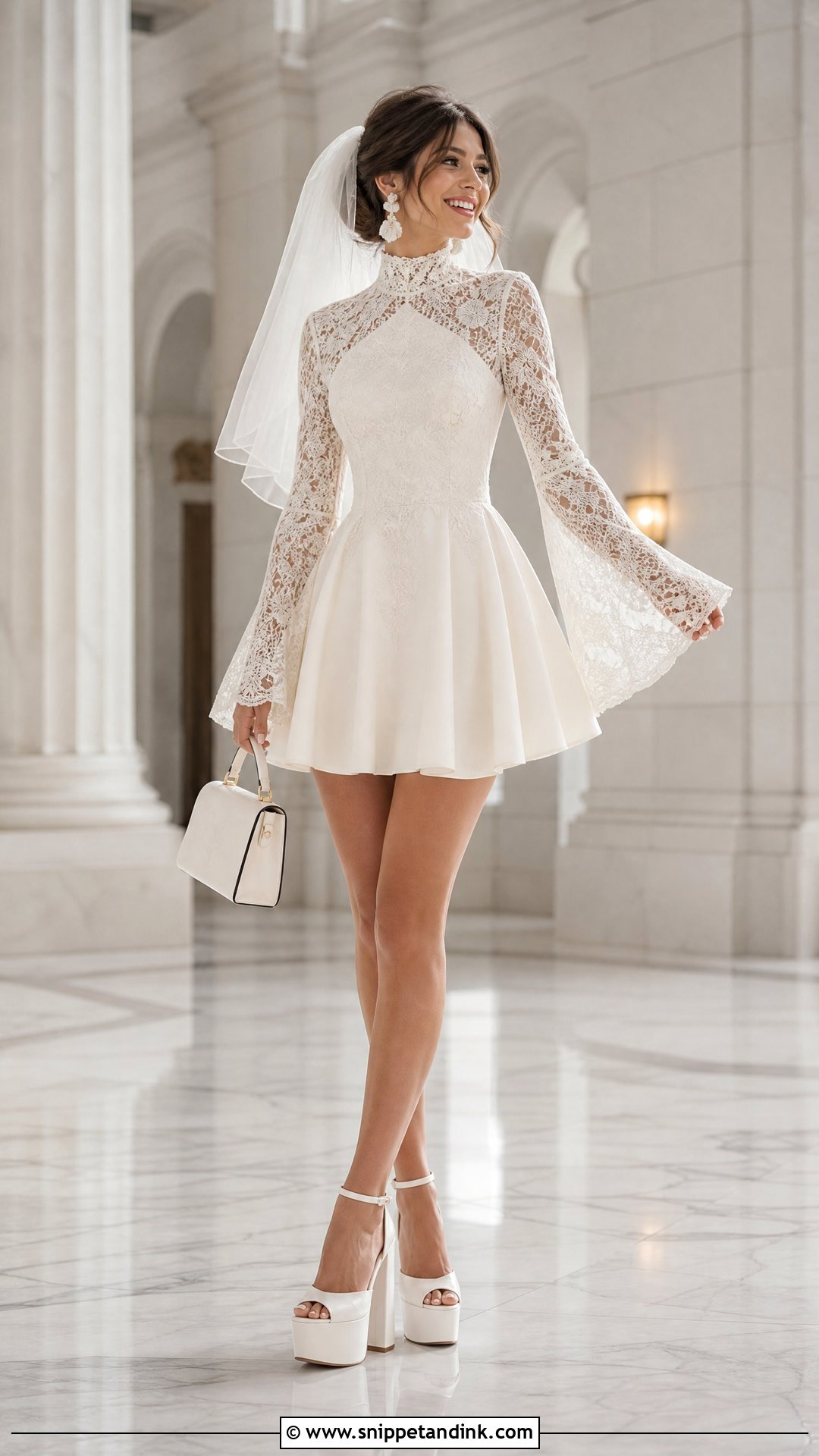
A long-sleeve mini is lively and fun, especially for a courthouse ceremony or an evening change. Lace bell sleeves, a high neck or floral embroidery all bring in the seventies. The short hem puts your shoes on show, so platforms, metallic sandals or ankle boots become part of the outfit. A fitted mini can ride up when you sit, so test it. A detachable overskirt adds formality for the ceremony.
16. Sequin Disco Wedding Dress
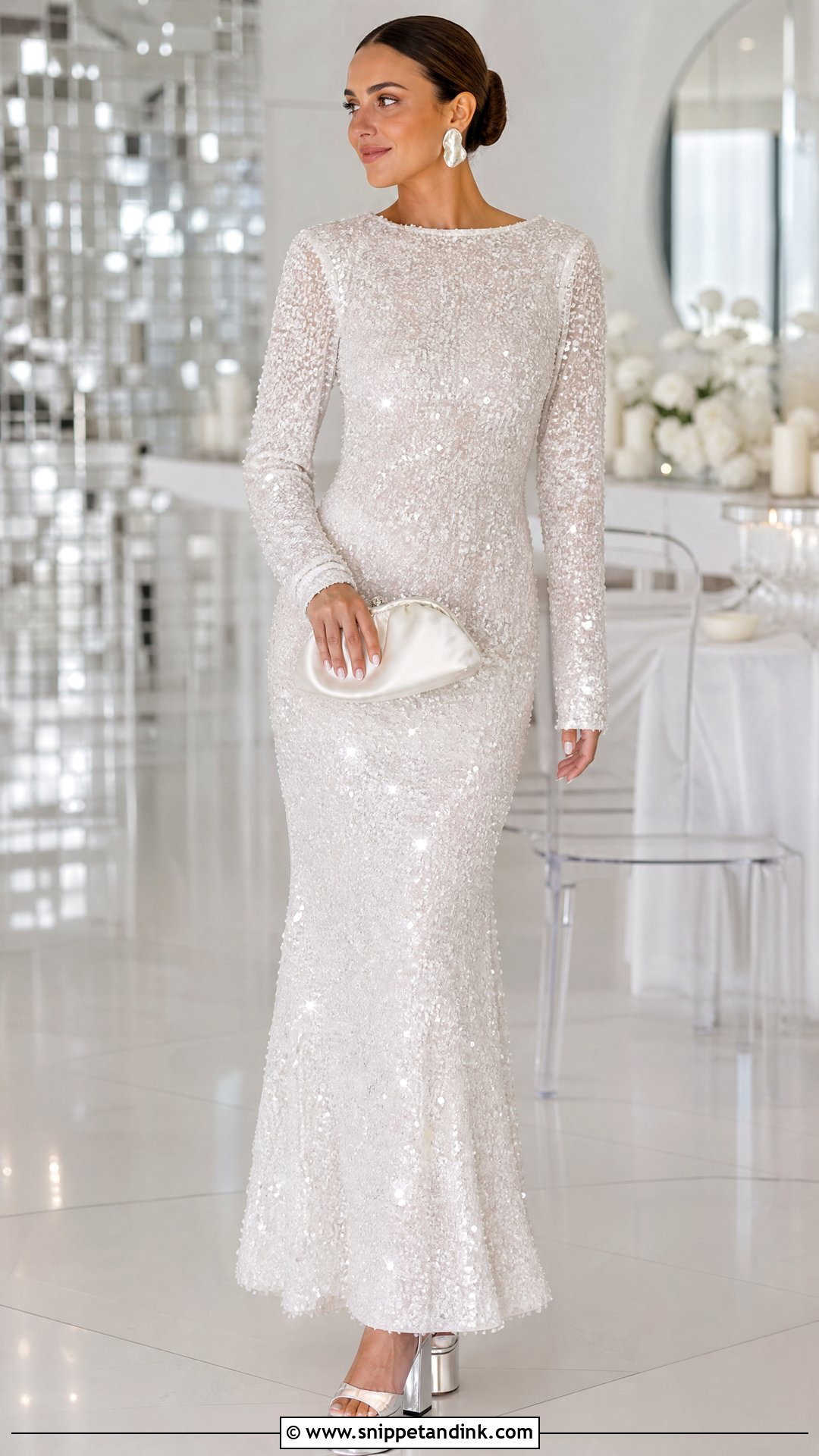
A sequin disco wedding dress channels the decade’s nightlife. Smaller sequins give an elegant shimmer; larger paillettes are bolder and louder. The inside of the sleeves and underarms is where sequins scratch, so I’d always check the lining there and ask for soft fabric to be added if needed. Metallic platforms and sculptural earrings suit it; skip any necklace. A plain tulle veil with a cut edge keeps it clean.
17. White Velvet Winter Wedding Dress
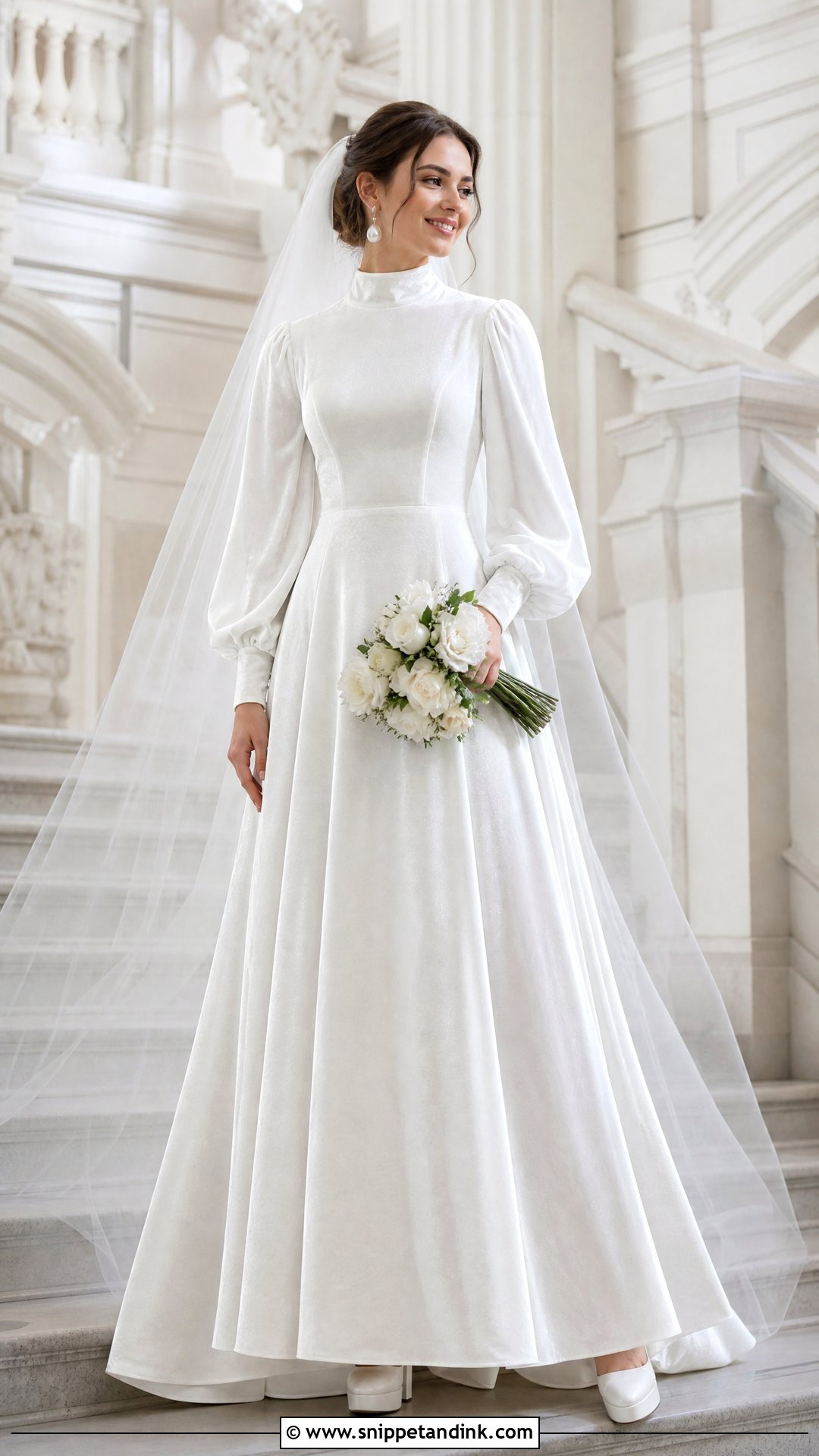
Velvet has a nap, meaning the fibres lie in one direction, and that changes how it looks from different angles. Inspect it under bright light before buying, and use a tailor who knows to cut and press it carefully. Ivory velvet photographs softer than bright white indoors. A slim A-line or column with long bell or bishop sleeves and a high neck feels very seventies in winter. A long plain veil and low bun finish it.
18. Cotton Eyelet Wedding Dress
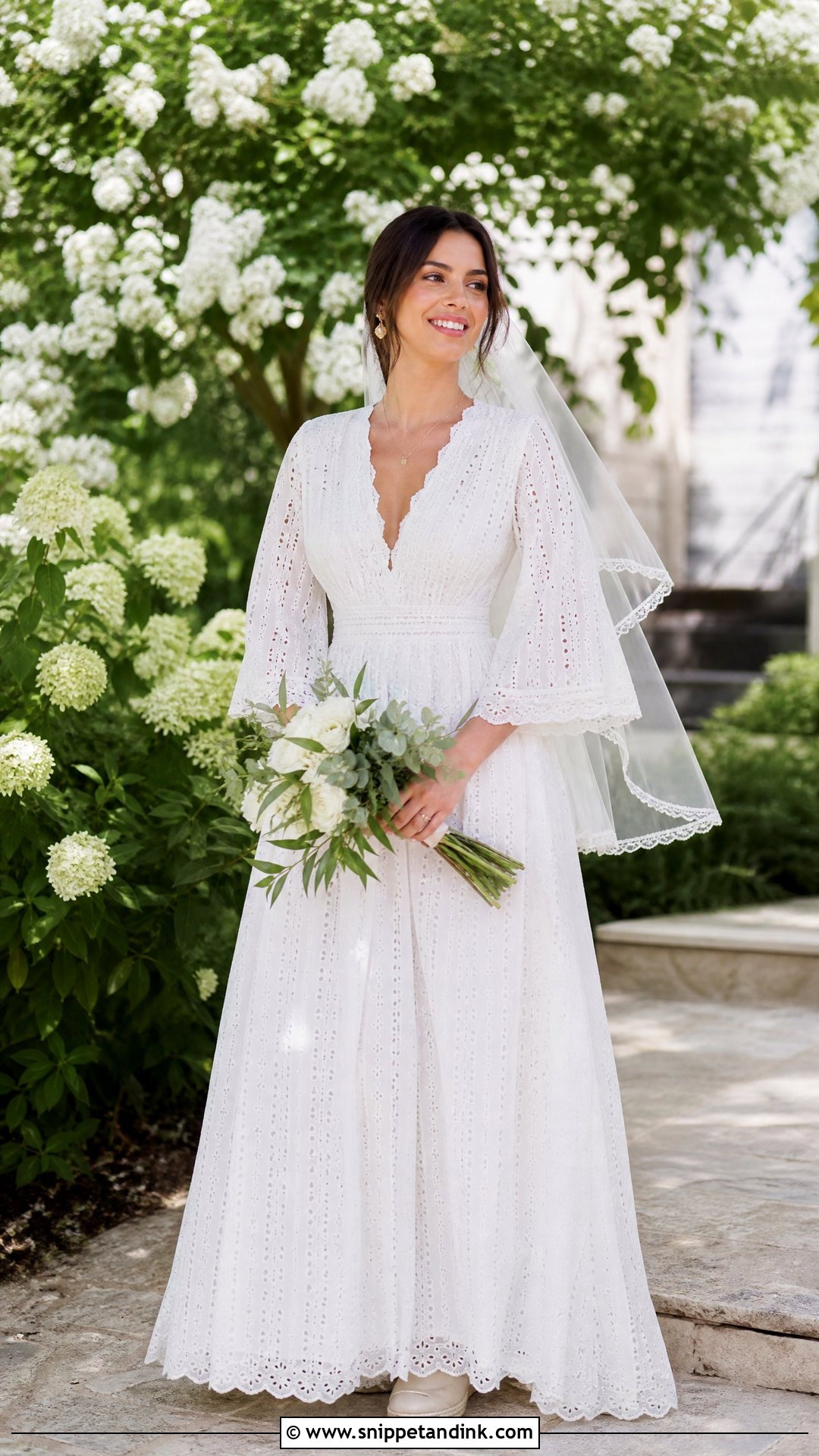
Cotton eyelet is fresh and comfortable in heat, and it’s one of the most relaxed fabrics on this list. It does crease, and cotton creases don’t fall out on their own, so arrange steaming close to the ceremony and transport it in a roomy garment bag. Check that the lining sits behind every open part of the pattern. Espadrille platforms, small gold earrings and a light fingertip veil suit a summer celebration.
19. Macramé Beach Wedding Dress
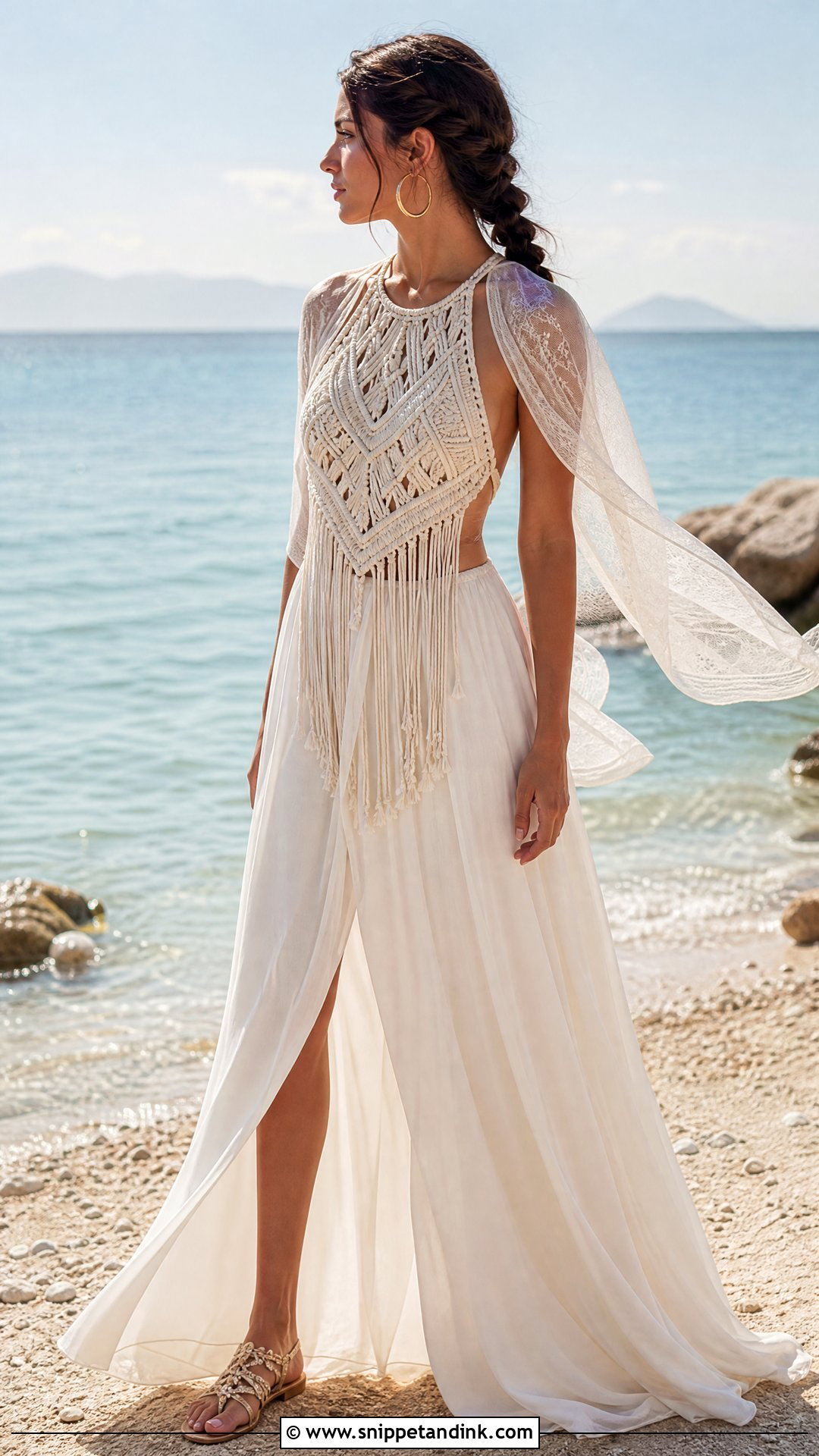
Macramé suits a beach ceremony, and the open knots photograph best when the lining is placed strategically behind them. A macramé bodice with a light chiffon, crepe or gauze skirt keeps the dress cool. I’d avoid a long train; sand catches in textured fabric and is hard to shake out. Set the hem to float just above the ground in flat sandals. A sheer shoulder cape replaces a veil on a windy beach.
20. Floral Embroidered Wedding Dress
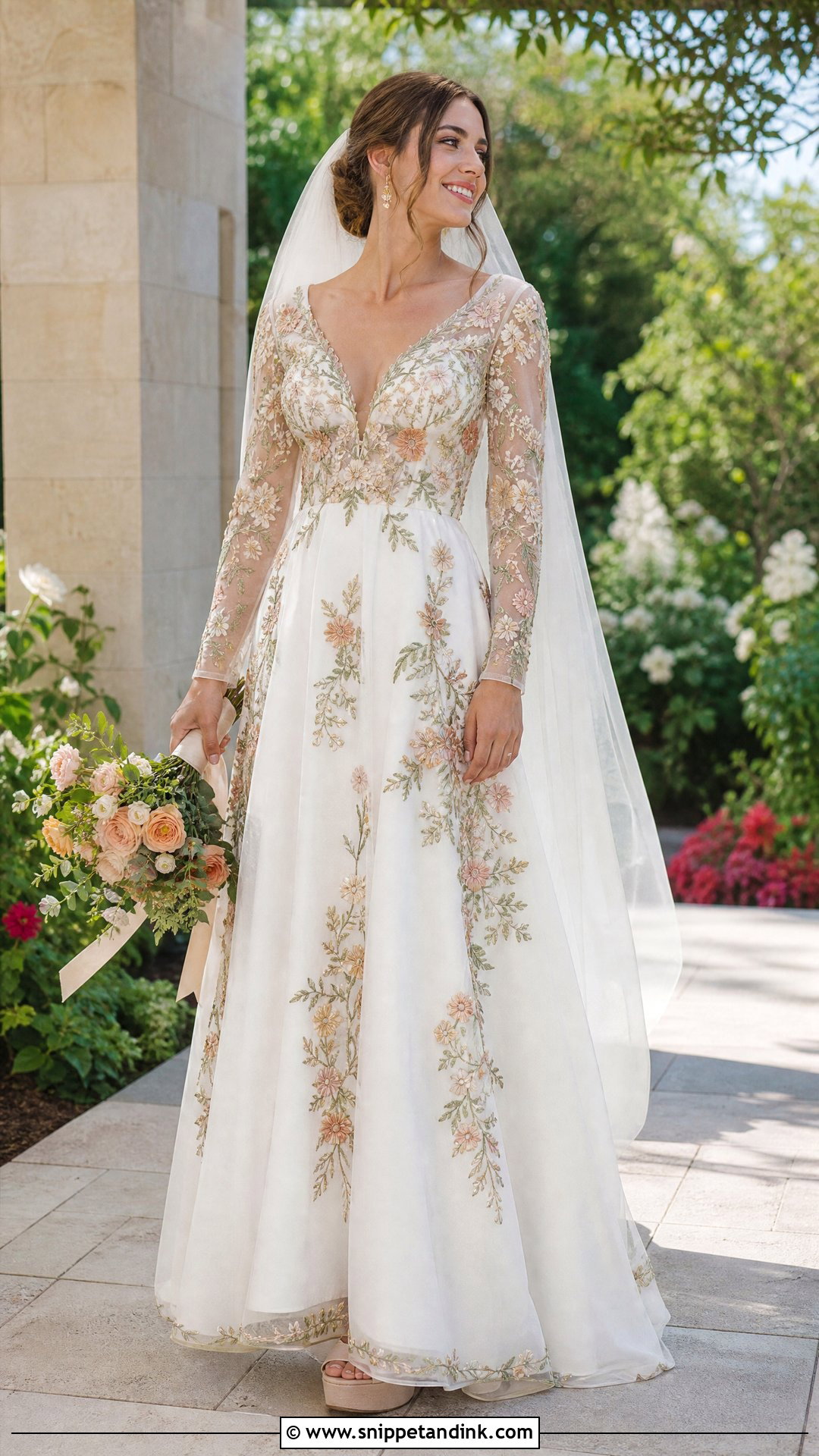
Coloured embroidery on a white dress brings out the more expressive side of the decade while keeping it bridal. Muted peach, gold, sage, dusty blue or soft pink stay subtle. Before alterations, check where the embroidery falls along seams and the hem, because cutting through a motif shows. A bouquet in one or two of the embroidery colours ties it together without over-matching. Neutral platforms and minimal gold jewelry are enough.
21. Square Neck Lace Wedding Dress
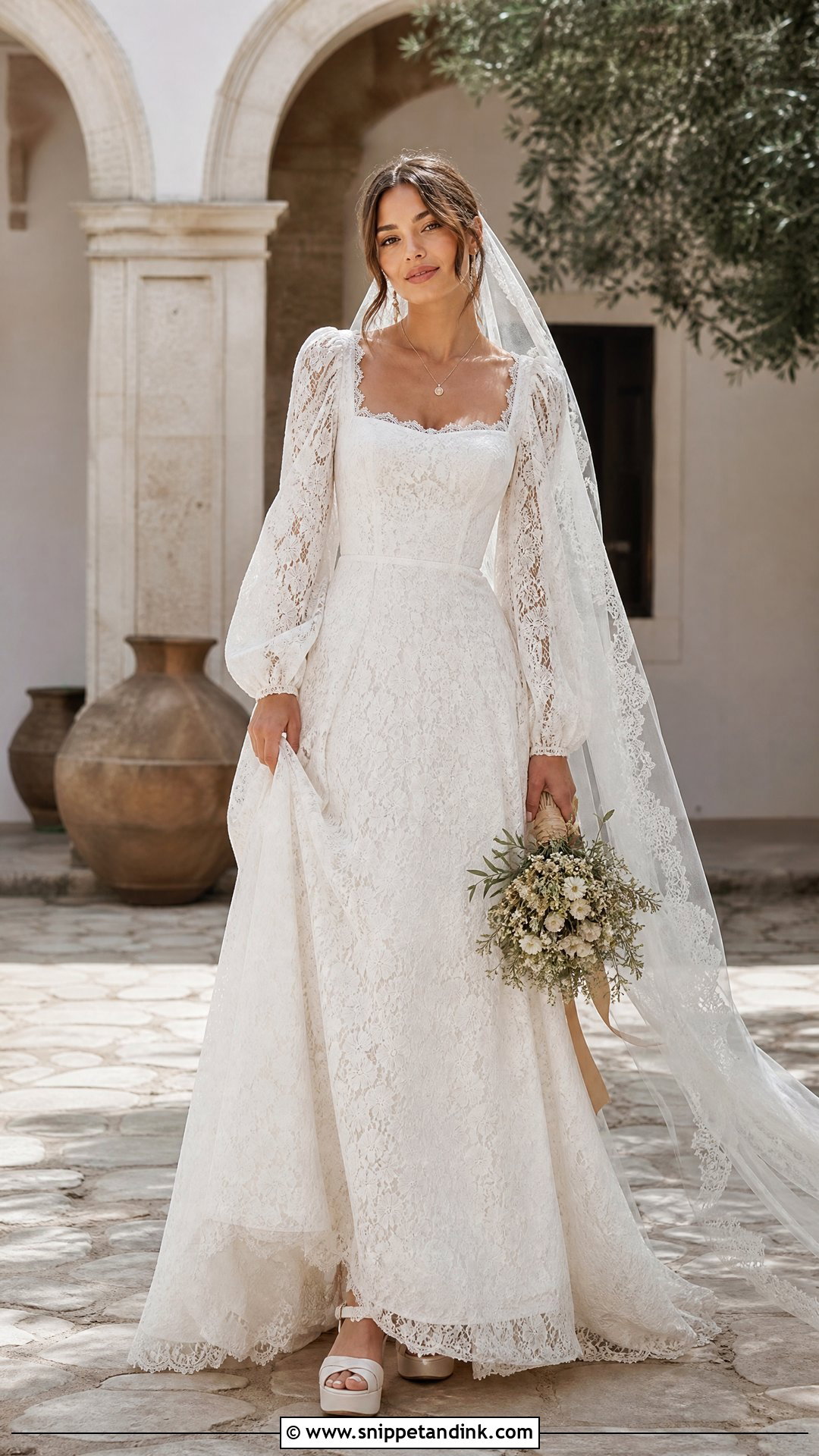
A square neck frames the face and collarbone, and the corners need to sit flat. If they gape, the shoulder seams need adjusting. With gathered long sleeves and a soft skirt, it becomes very seventies. Floral cotton lace looks relaxed; finer lace is more formal. A short pendant sits nicely inside the square. A low textured bun keeps the neckline open; a mesh insert adds coverage without losing the shape.
22. Mock Neck Column Wedding Dress
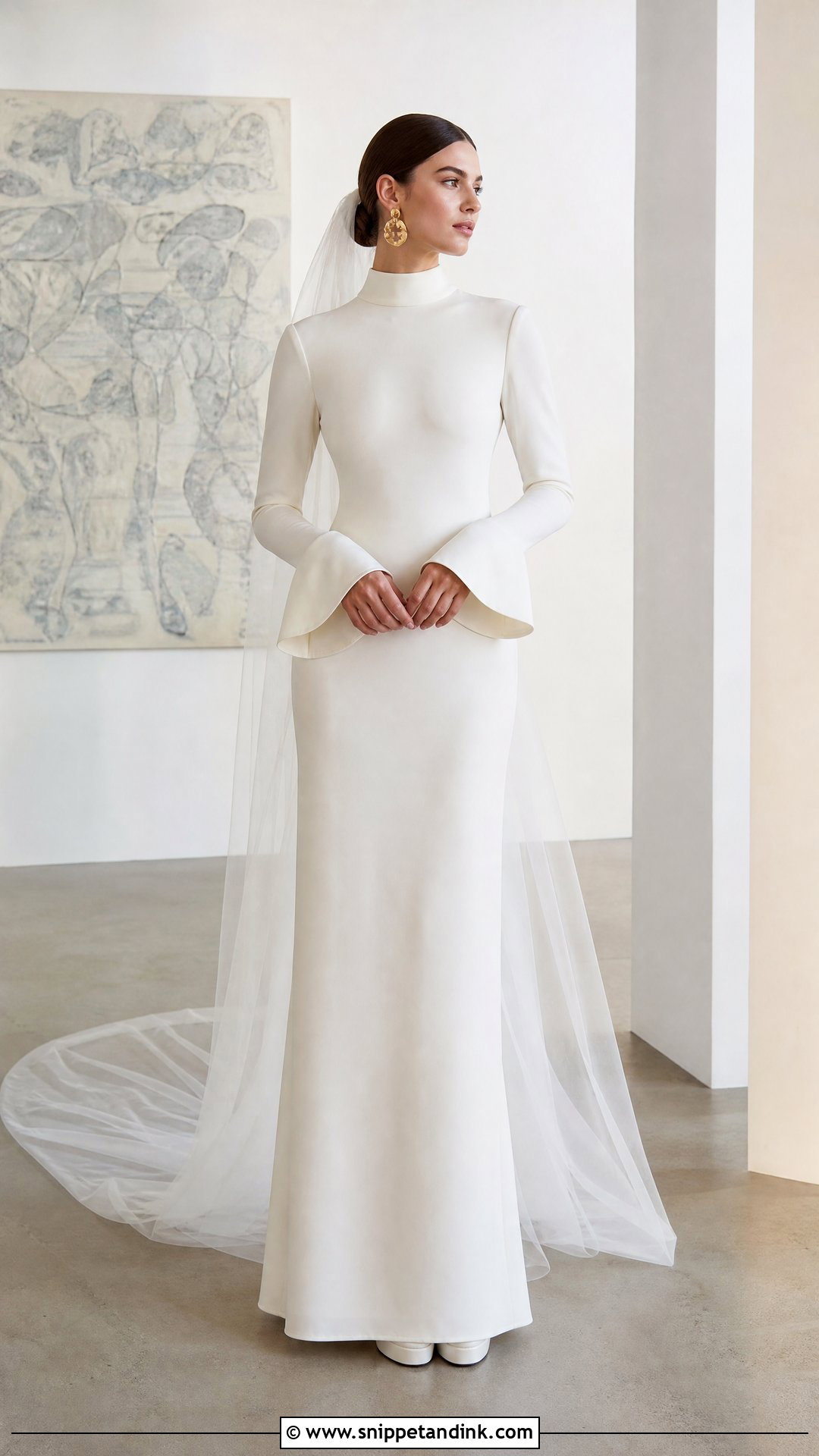
A mock neck column is the clean, minimal side of the decade’s high-neck gowns. Soft crepe, satin or lace work well. The neckline should be close but comfortable; turn your head and raise your arms in the fitting to make sure nothing pulls. Long fitted sleeves look sleek; flared cuffs bring in a more obvious seventies note. Skip the necklace, and consider a back slit or detachable overskirt for movement.
23. Wedding Dress With Bell Sleeve Bolero
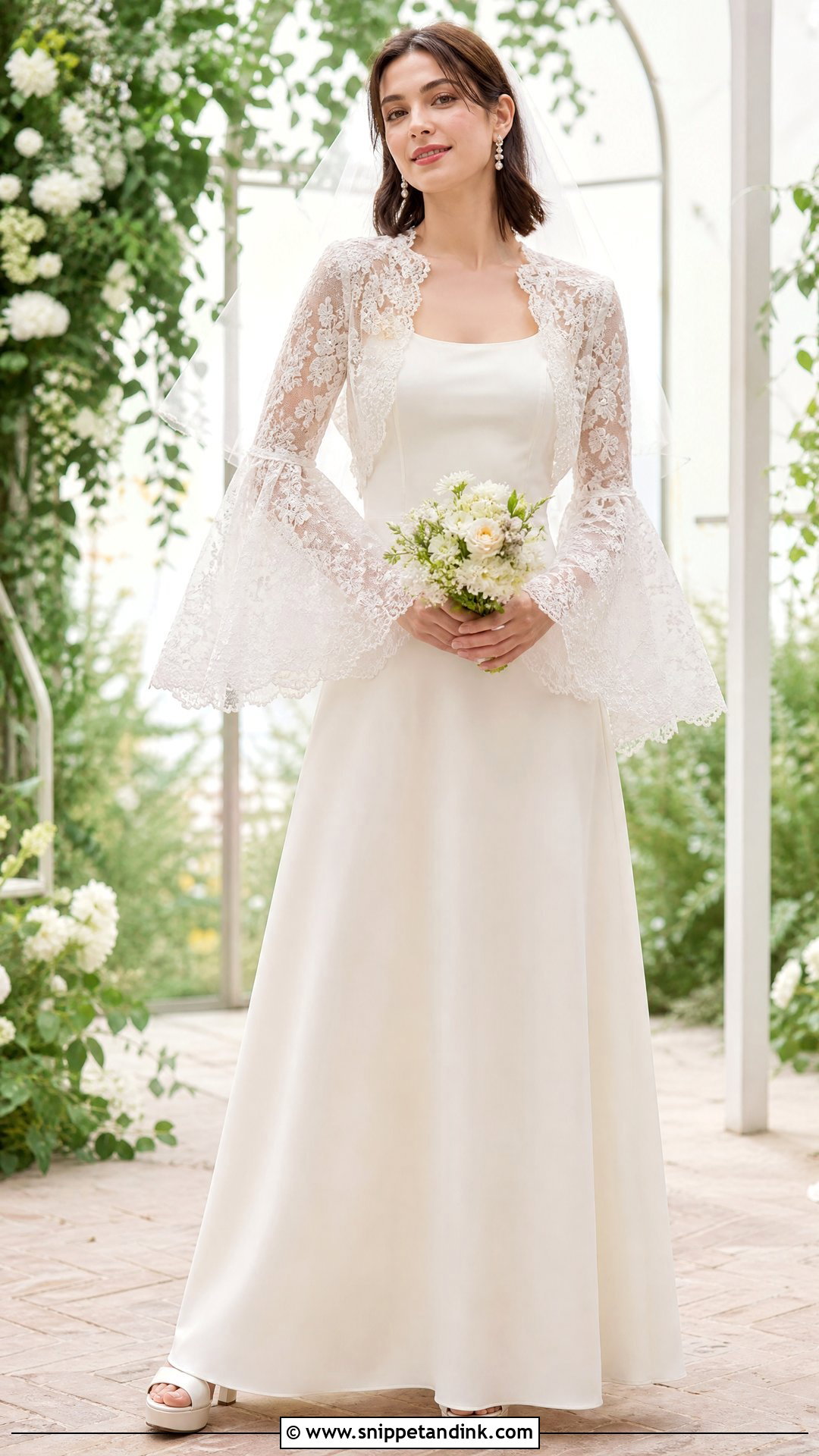
A bell sleeve bolero turns a simple sleeveless dress into a seventies look for the ceremony and portraits, then comes off to reveal the base dress. The lace doesn’t need to match exactly, but the ivory undertones do. I always have both pieces altered together, so the bolero lies smoothly over the neckline and armholes. Keep the bouquet small so the sleeves show. Platforms and gold drop earrings complete it.
24. Plus Size Bell Sleeve Wedding Dress
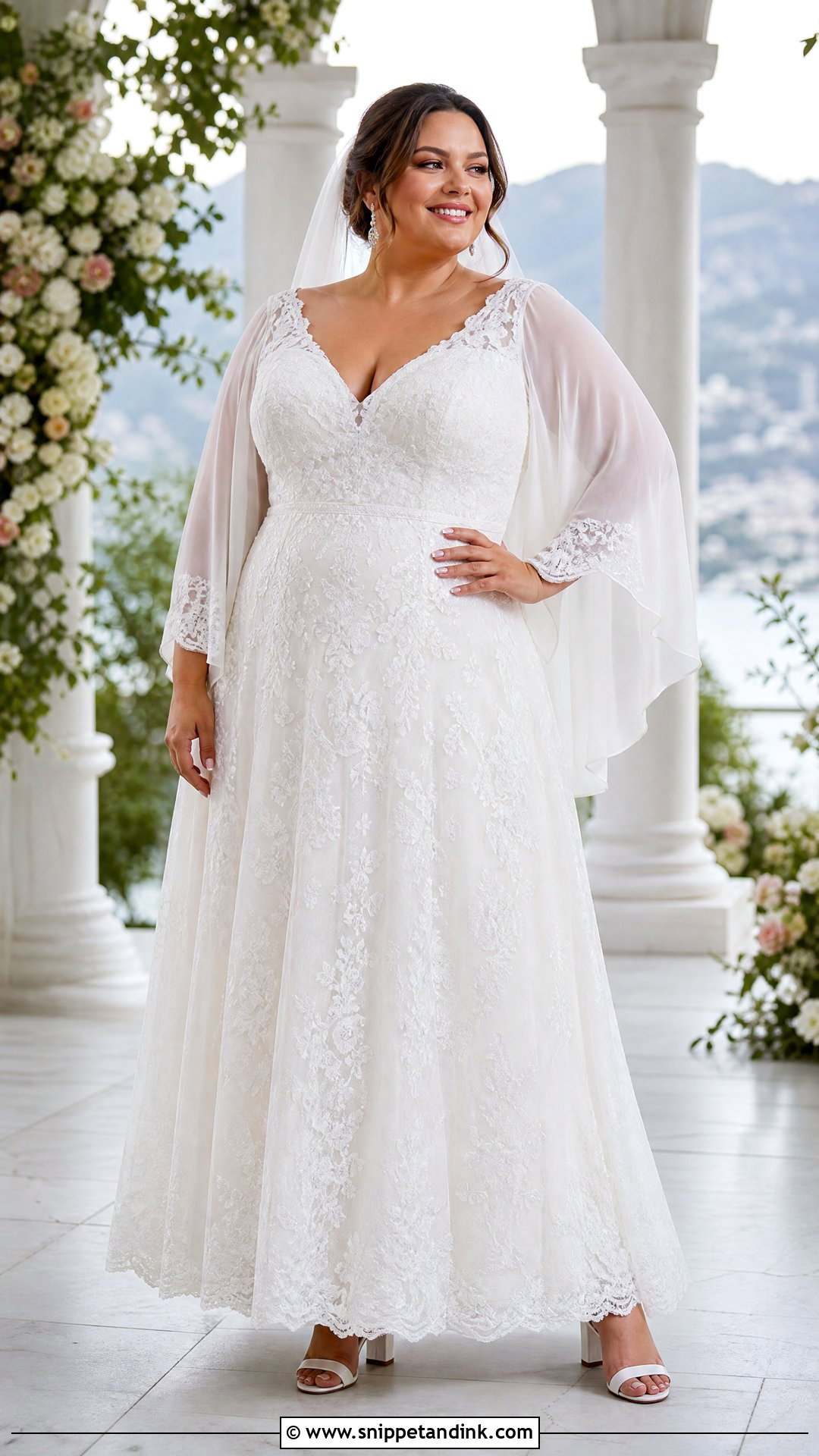
Bell sleeves work very well on a plus size frame when the rest of the dress is built properly. A supportive bodice, a clearly placed waist seam and an A-line or fit-and-flare skirt that moves without clinging are what I look for. Soft lace or chiffon sleeves stay light. Choose your foundation garments before the final fitting, and ask the tailor to check bust support, sleeve mobility and hem length. Stable block heels beat thin platforms for a long day.

25. Champagne Floral Lace Wedding Dress
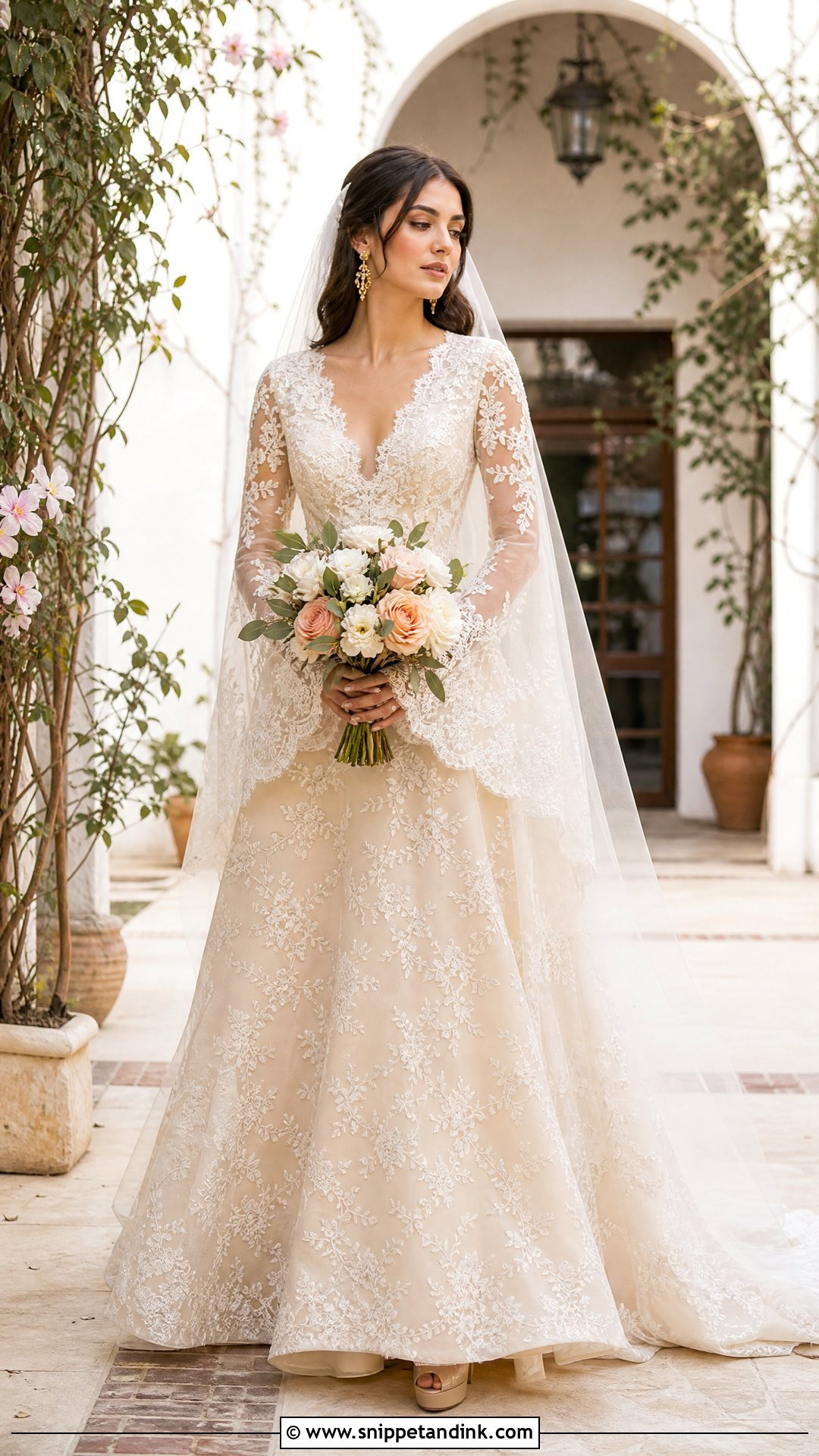
Champagne lining under ivory lace gives the pattern depth and warmth, and it’s an easy alternative to bright white. A long-sleeve A-line with flared cuffs feels very seventies. Champagne shades can photograph differently indoors and outdoors, so I’d look at it in both. Bring a fabric swatch when choosing shoes and the veil. Cream, peach and pale green flowers sit well against the warm undertones.
Platforms Are Easier Than They Look, Mostly
Platforms appear all through this list, and they are genuinely more stable than stilettos because the sole raises the front of the foot as well as the heel. That said, they feel heavy and stiff if you’re not used to them. I ask brides to wear them around the house for an hour or two in the weeks before the wedding, including on stairs.
Rigid platforms don’t bend, so dancing can feel clumsy. A flatter second pair for the reception is sensible. On grass, a wide block platform sinks less than a thin heel. Make sure the hem is set to the platforms you’ll actually wear, since a few centimetres of sole changes the length noticeably.
A Centre Parting Does Half the Work
Hair and makeup can make a modern dress feel seventies without changing the dress at all. A centre parting with long, loose or softly feathered waves is the clearest signal. Glowing, sun-warmed skin, soft bronze tones and a natural lip suit the decade better than a heavy, matte, contoured finish.
Talk to your hairstylist about how long your style needs to hold, because loose waves drop in humidity. A low bun or braid is a sensible backup for a beach or a hot garden. Flower crowns, daisies tucked into braids and velvet headbands all add a period touch without going overboard.
Two Seventies References Are Plenty
The best 1970s-inspired bridal outfits pair one or two strong vintage details with a modern fit. Bell sleeves, empire waists, crochet, prairie collars, halters, fringe and floral embroidery each say seventies in a different way. Combining all of them rarely works. Choose the detail you love most, make sure the dress supports you and lets you move, and keep the accessories in scale. That’s how a seventies look feels personal rather than themed.
You'll Like These Ideas:






Leave a Reply