
A jumpsuit with a train gives you the aisle moment of a gown and the freedom of trousers for the rest of the night. In fittings, the brides who love this look are usually the ones who already know they’ll be dancing, travelling between venues or simply hate wrestling a skirt in and out of a car. Lace, satin, crepe, tulle, pearls, capes and overskirts all change how it reads, and the train itself can be fixed or removable. Below are twenty-five versions, each with what I’d check at a fitting, plus notes on how trains attach and the practical realities of wearing one all day.
How a Jumpsuit Train Attaches, and Why It Matters
With a jumpsuit, the train is almost always the part that causes trouble on the day. It’s worth asking exactly how it fastens before you fall for one.
- Hidden hooks or snaps at the waistband are the most common. They’re quick to release, but a single row can pull open under the weight of a long train, so I like two staggered rows.
- Buttons and loops hold more securely and look neat, but they take longer and usually need someone else’s hands.
- Ribbon ties or a separate belt let you adjust the position and remove the train in seconds. They do add a visible line at the waist.
- Shoulder or back attachments (capes and Watteau trains) put the weight on your shoulders rather than your hips. They feel lighter to walk in but can pull backward over a long ceremony.
At the final fitting, practise removing and reattaching the train with the person who’ll help you on the day, usually a bridesmaid or your mother. Doing it once in the fitting room means it takes a minute later, not a stressful quarter of an hour in a corridor.
1. Strapless Bridal Jumpsuit With Detachable Train
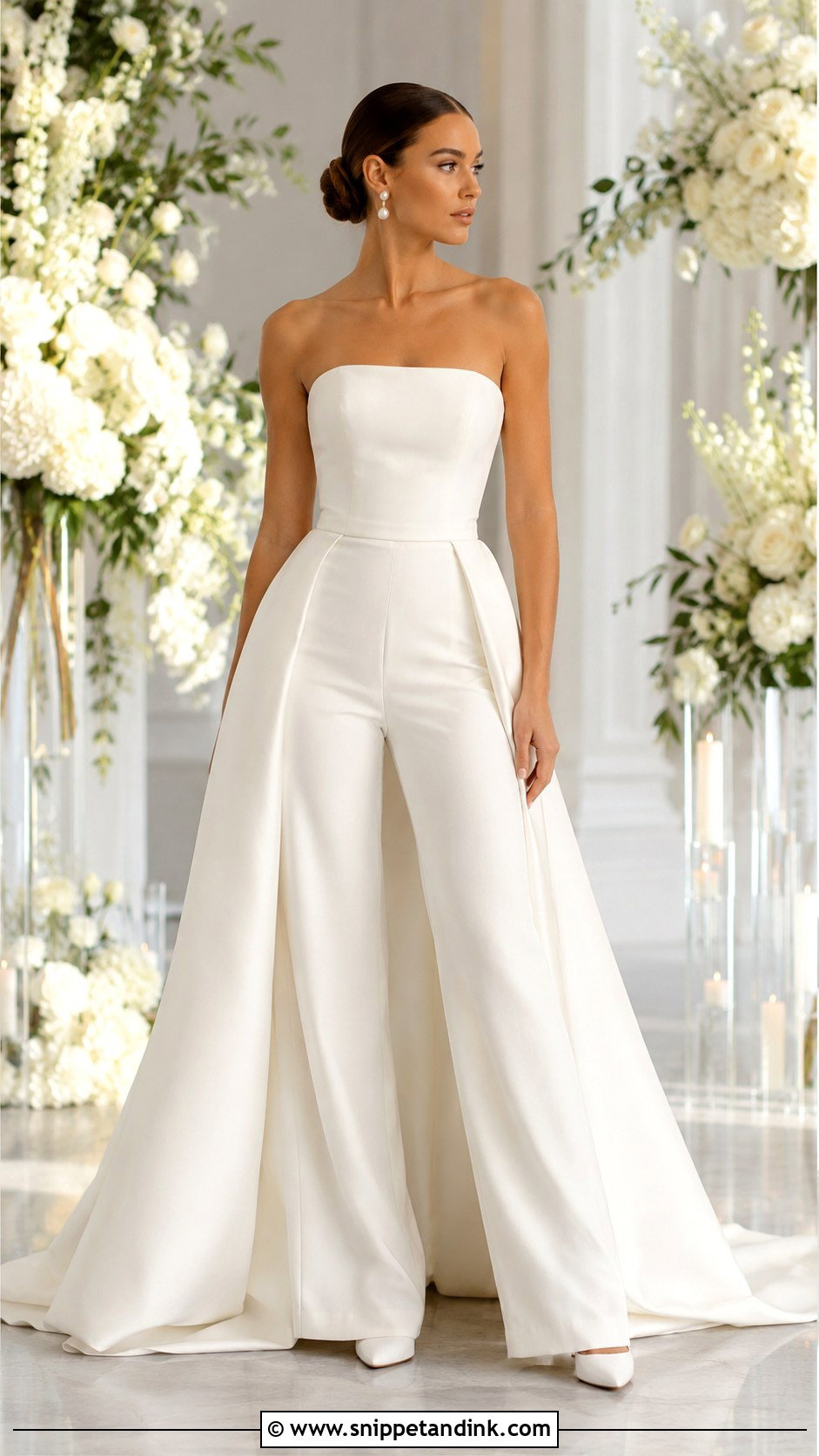
Strapless with a detachable train is the version I see most, because it gives two clear looks from one outfit. The bodice has to be built properly: internal boning and a waist stay keep a strapless top from sliding when you raise your arms to hug people. Structured crepe or mikado holds a crisp line; wide legs balance the bare shoulders. Pointed heels, pearl studs and a low bun finish it, and once the train comes off you’re ready for the dance floor without a change.
2. Lace Bridal Jumpsuit With Train
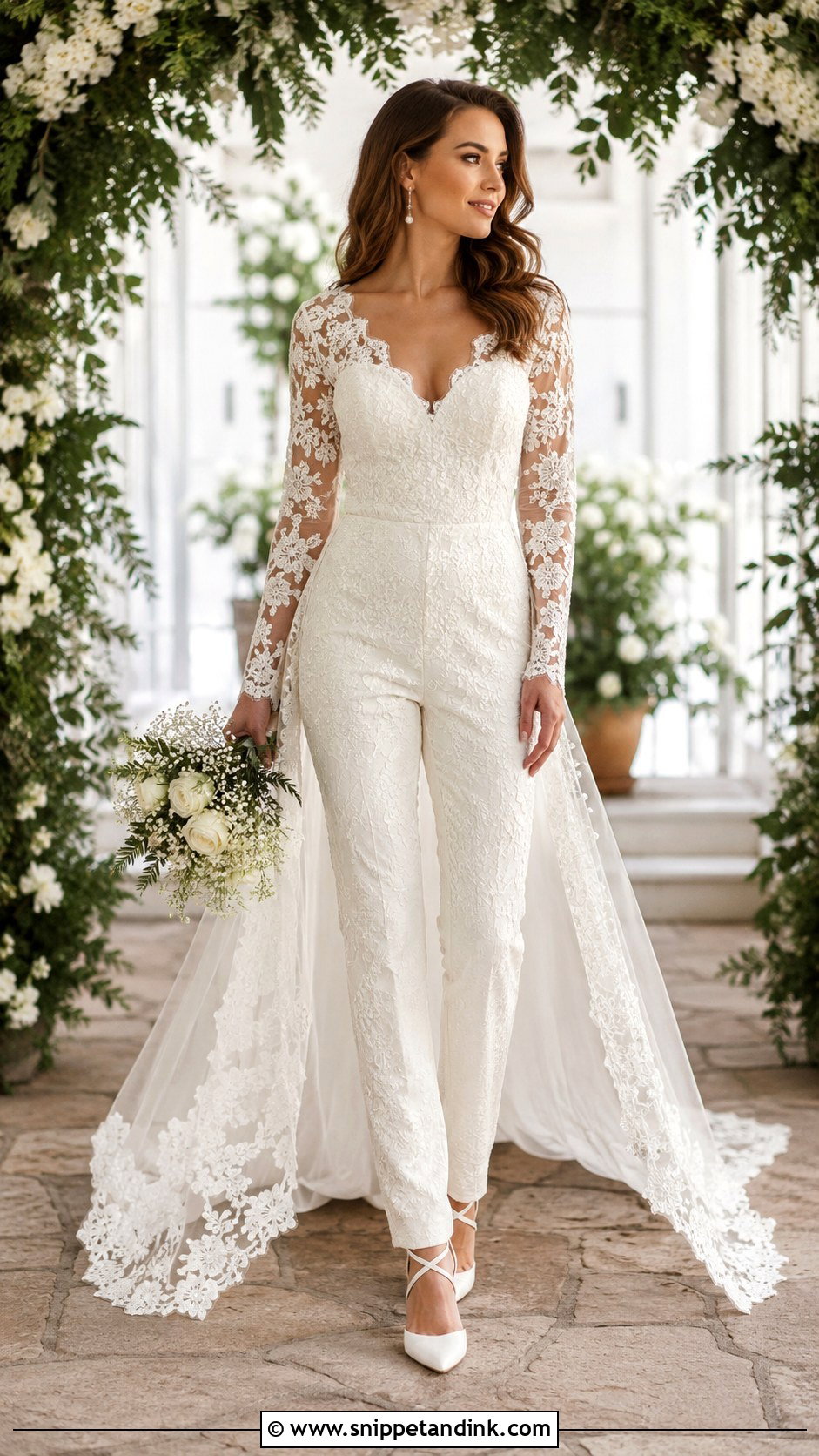
Lace softens the tailored shape, and it suits brides who love gown detailing but want the ease of pants. Decide how much lace you want: bodice only, sleeves, or the whole piece. Full lace trousers can look heavy, so I often suggest lace above the waist and a plain crepe leg below, with a sheer lace train tying the two together. Ivory heels, small pearls and a soft veil are enough. It sits naturally at garden and estate venues.
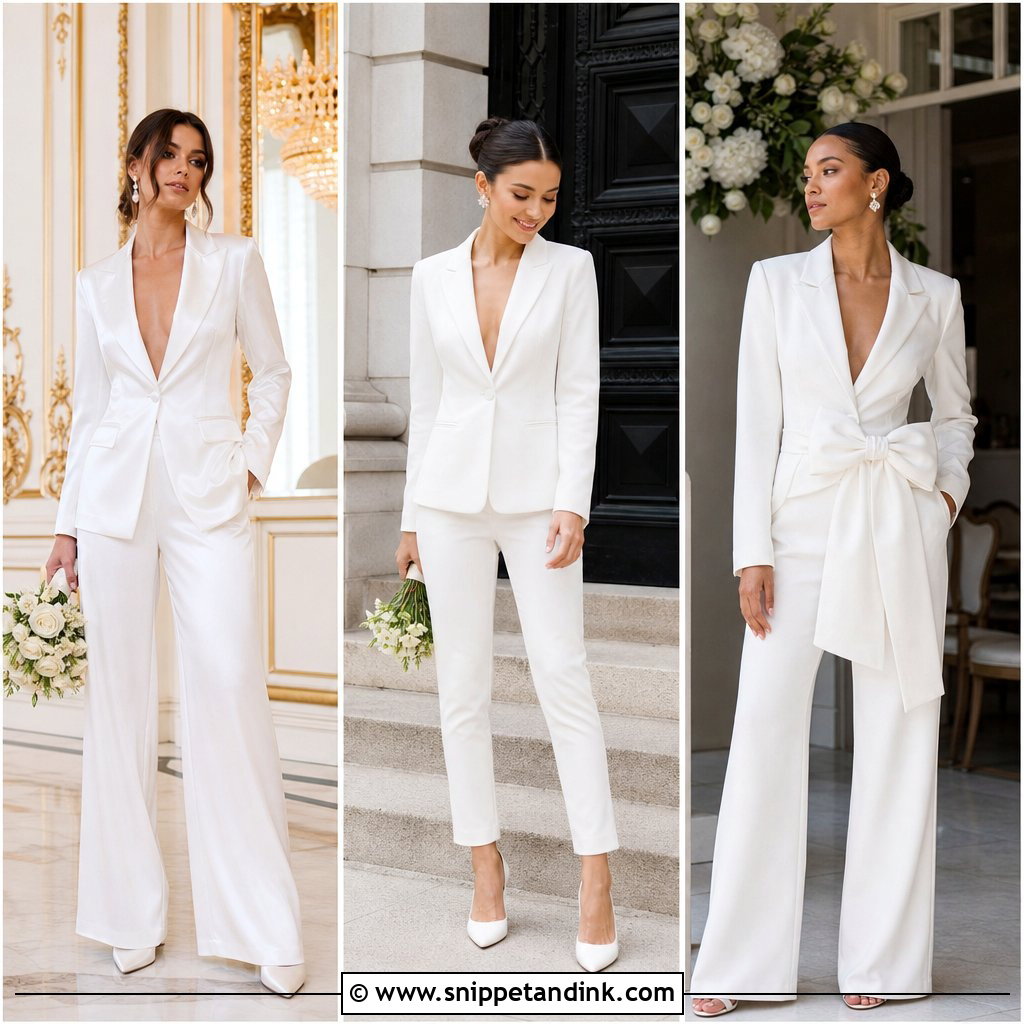
3. Satin Bridal Jumpsuit With Train
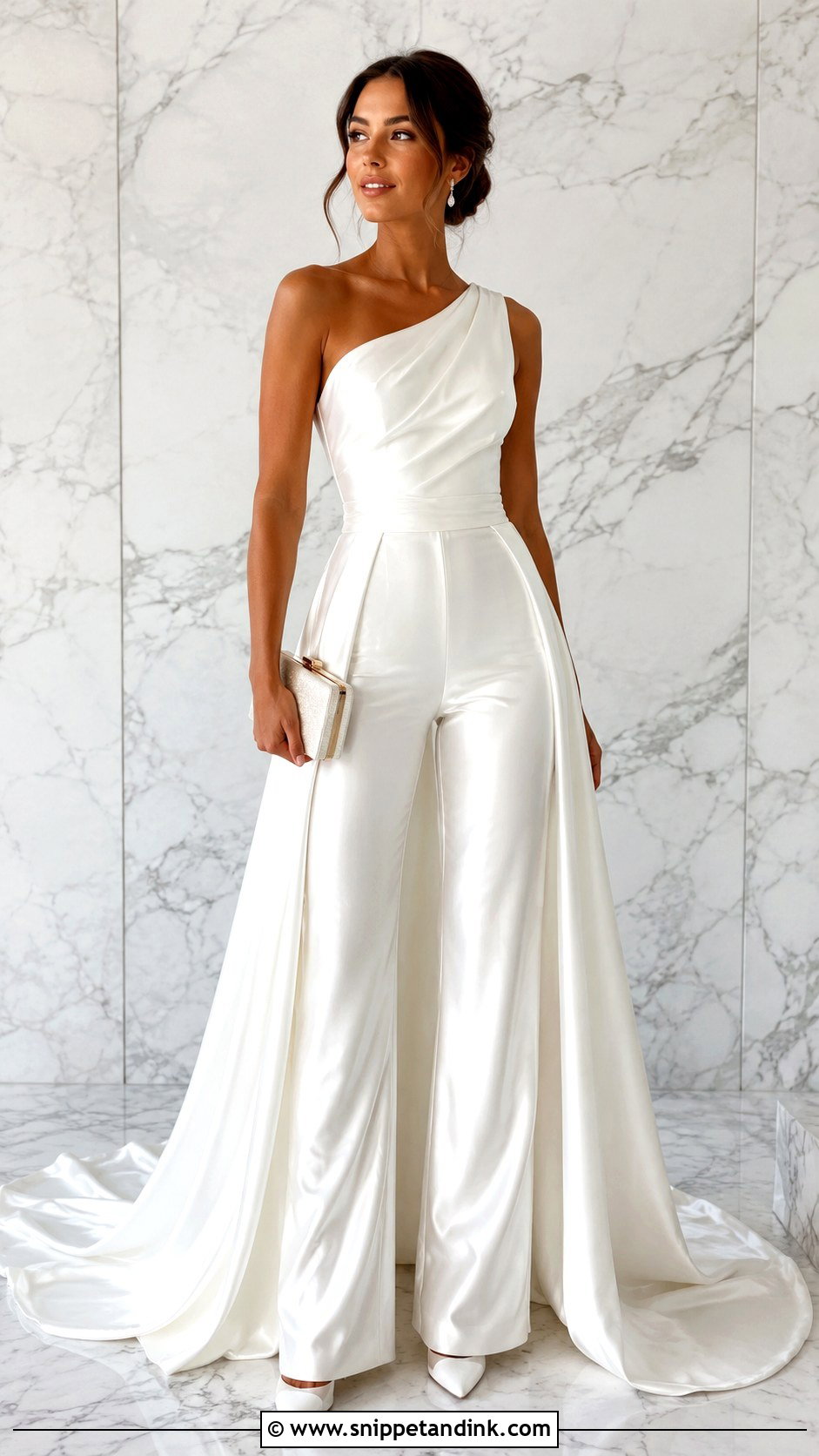
Satin reflects light, so it needs very little decoration and suits evening, hotel and city weddings. It also shows everything. Pocket bags, seam allowances and underwear lines appear through satin trousers in flash photography, so I always do a fitting with the final undergarments and a phone flash photo. A straight or wide leg looks sharp, and a satin train makes one long fluid line down the back. White pointed pumps and slim drop earrings keep the shapes clean.
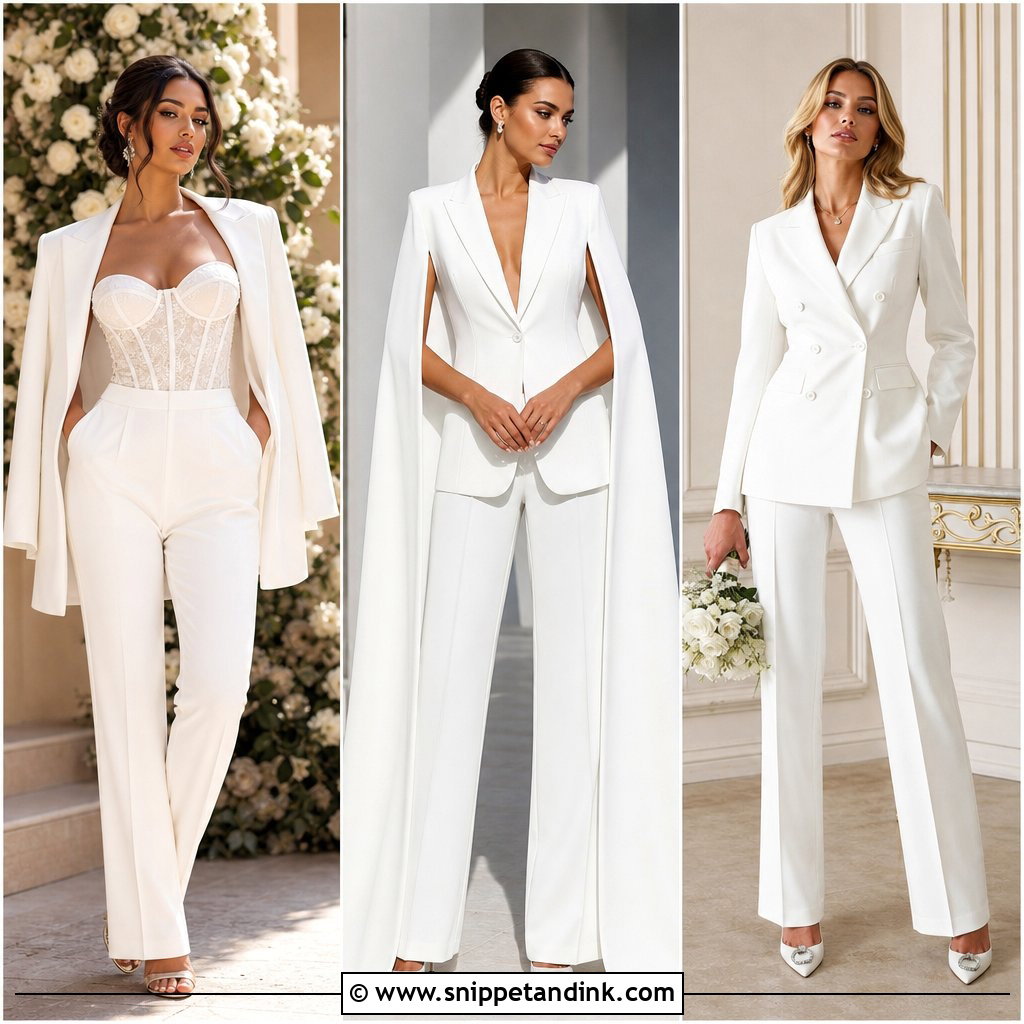
4. Crepe Bridal Jumpsuit With Train
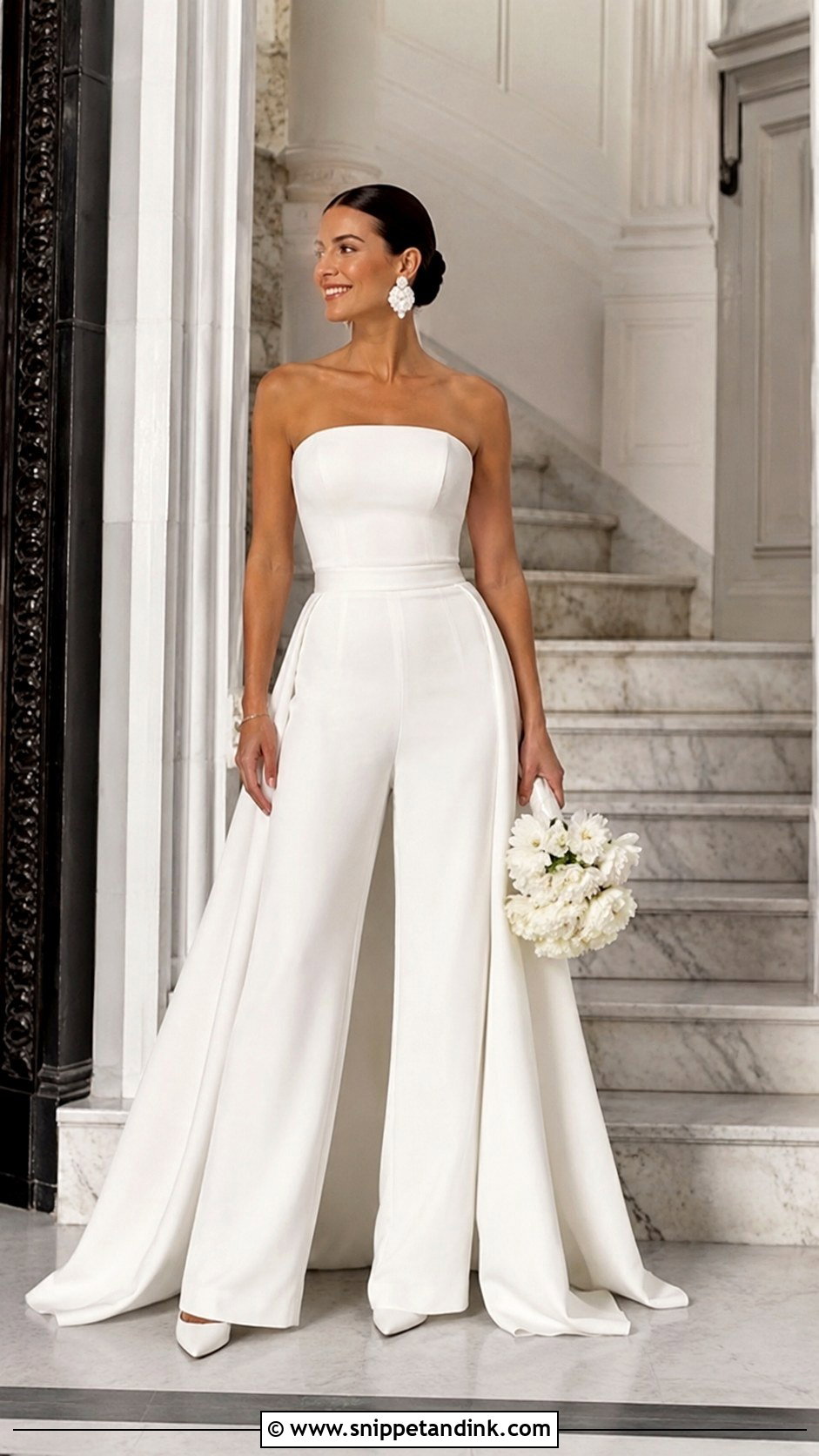
Crepe is the fabric I suggest most for jumpsuits. Its matte finish hides creases, it drapes without clinging and it forgives small fit differences, which makes it kind to a wide range of body shapes. A fitted bodice with wide trousers gives a strong silhouette, and the train adds just enough ceremony. Sculptural earrings, a plain veil and simple heels suit its minimal mood. For understated brides who want to be comfortable all day, I’d start here.
5. Wide Leg Bridal Jumpsuit With Train
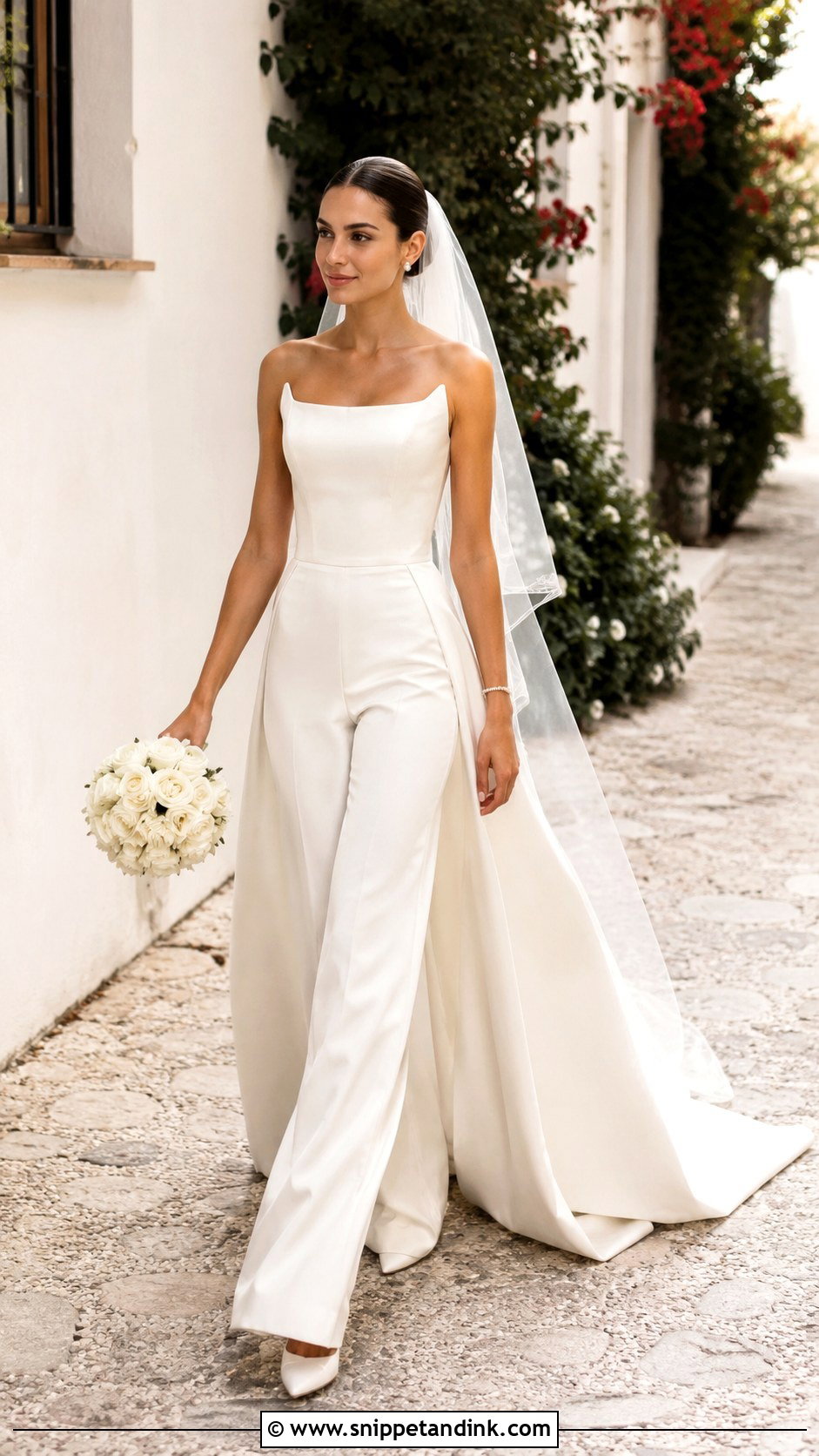
A wide leg bridal jumpsuit with train moves almost like a skirt as you walk, particularly in light crepe, chiffon or satin. The wide leg balances a fitted, strapless or corset top. Trains here can attach at the waist, shoulders or back, and each changes the walk; a waist train swings with your hips, a shoulder train floats. Pointed ivory or nude heels lengthen the leg. Hem the trousers to just skim the floor in those exact shoes, or the fabric will catch under the heel.
6. Long Sleeve Bridal Jumpsuit With Train
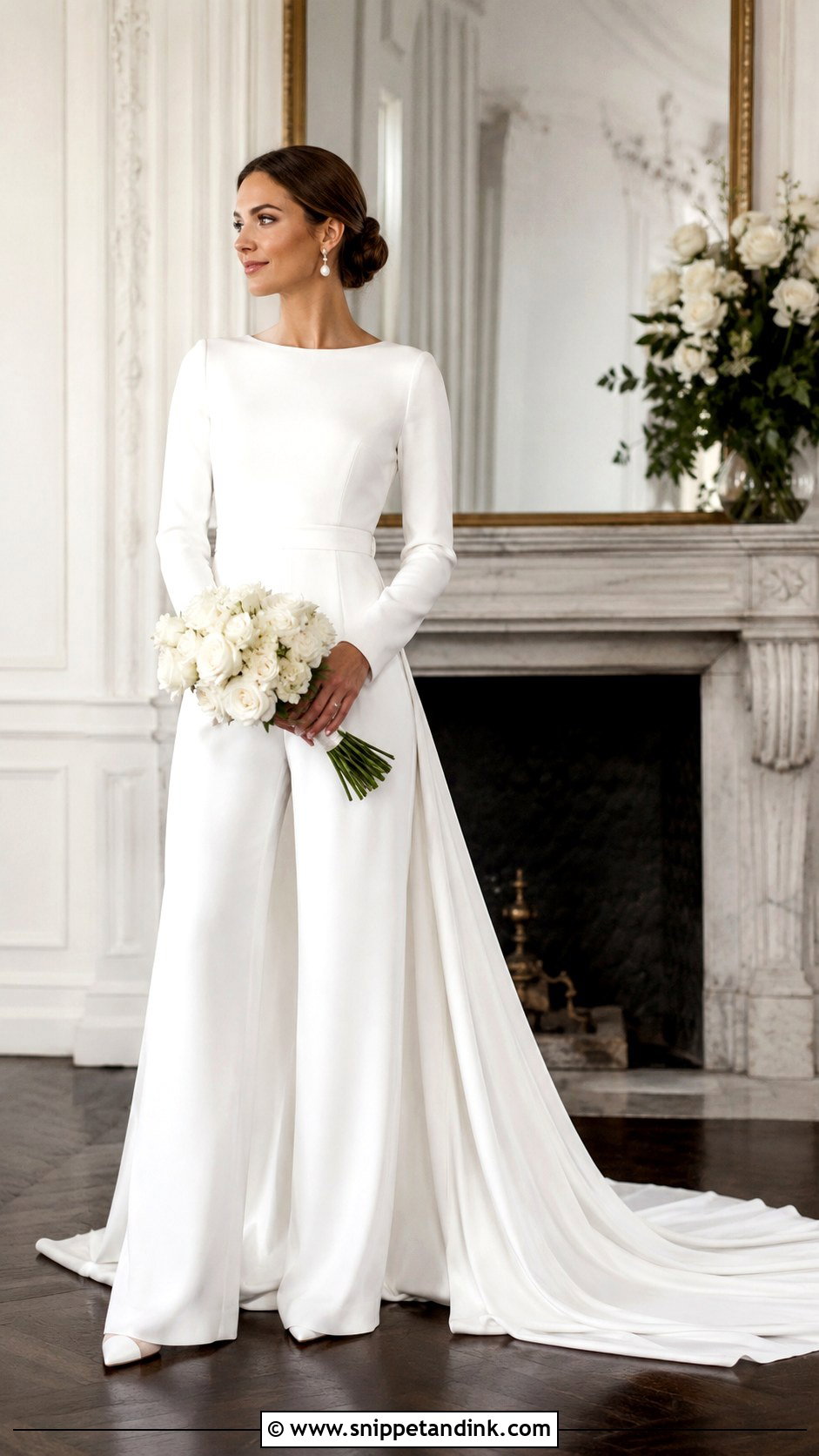
Long sleeves make a jumpsuit feel formal and covered, which suits winter and grand venues. Sheer lace, smooth crepe, satin or pearl-scattered sleeves each change the mood. Because so much of the body is covered, the waist needs defining, or the outfit can look like an office suit. A long train restores the bridal proportion. At the fitting, I have the bride raise both arms above her head; tight sleeves pull the whole bodice up if the armhole is cut too low. Closed-toe heels and a neat updo complete it.
7. Off Shoulder Bridal Jumpsuit With Train
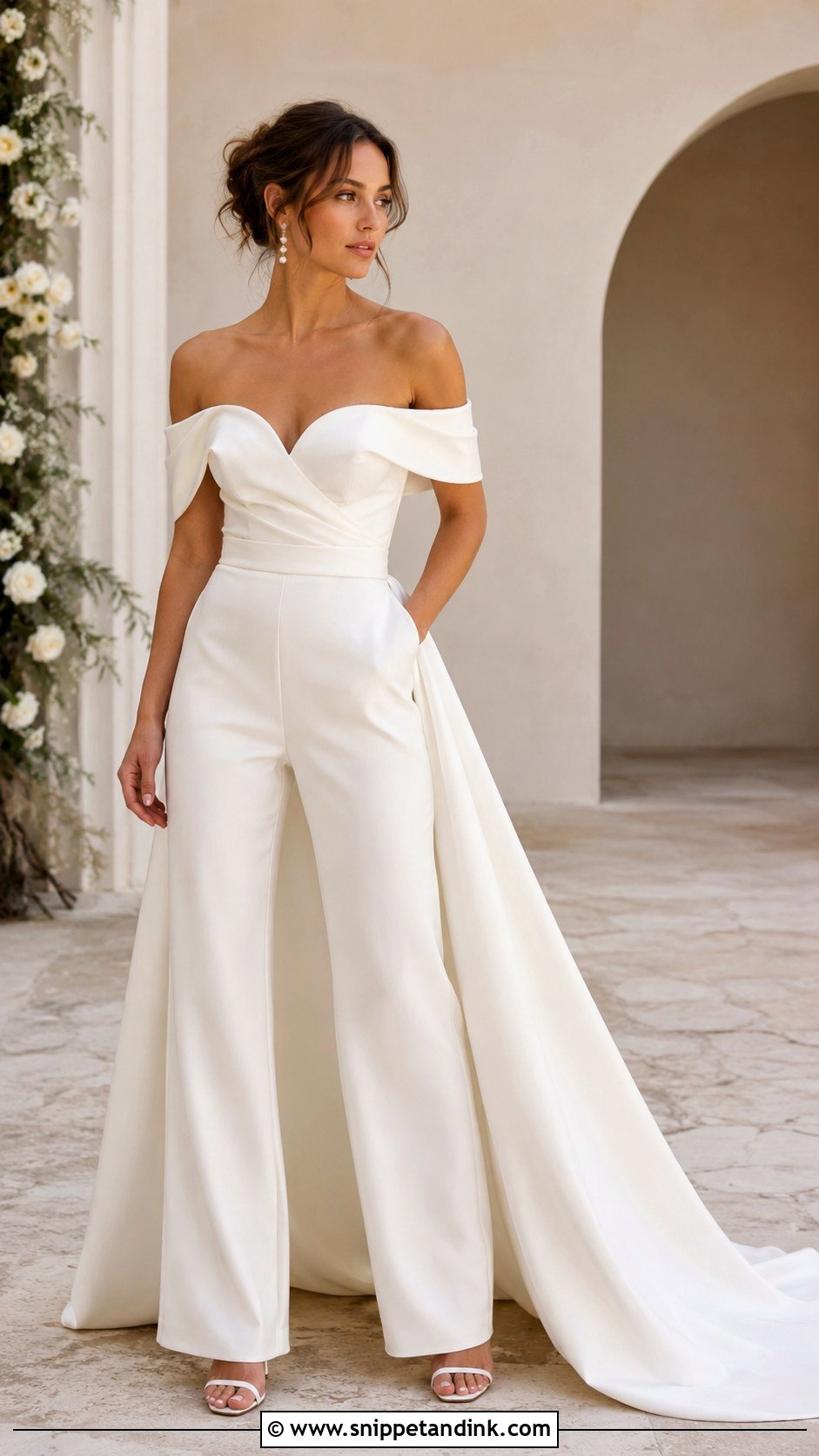
Off-shoulder necklines show the collarbones and keep a softness that suits romantic brides. The practical issue is stability: without straps, the band around the arms needs elastic or silicone grip so it doesn’t creep up every time you move your arms. A detachable train or flowing back panel adds the bridal movement. Satin, crepe or tulle over a structured base all work. Small earrings, no necklace, heeled sandals and a soft bun, with a light veil if you want one.
8. One Shoulder Bridal Jumpsuit With Train
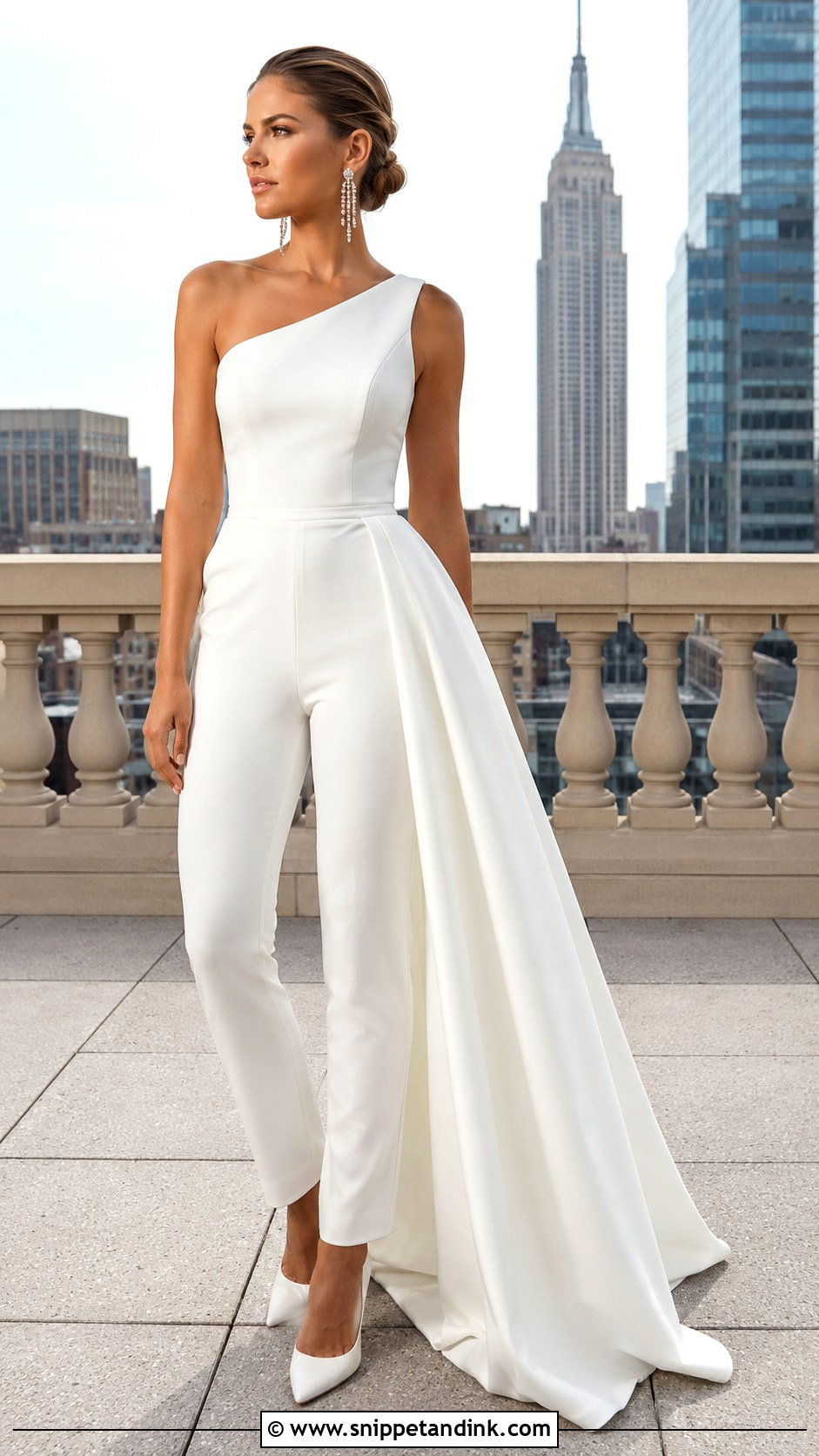
One-shoulder jumpsuits look editorial with almost no decoration, because the asymmetry is the detail. A side drape, a shoulder cape or a train starting from the strap side creates drama. This cut needs a fabric with body (structured crepe, satin or mikado) so the single strap doesn’t drag the neckline down. Sweep your hair to the bare side and put a statement earring there too. Slim heels and a plain clutch keep it sharp.
9. Halter Bridal Jumpsuit With Train
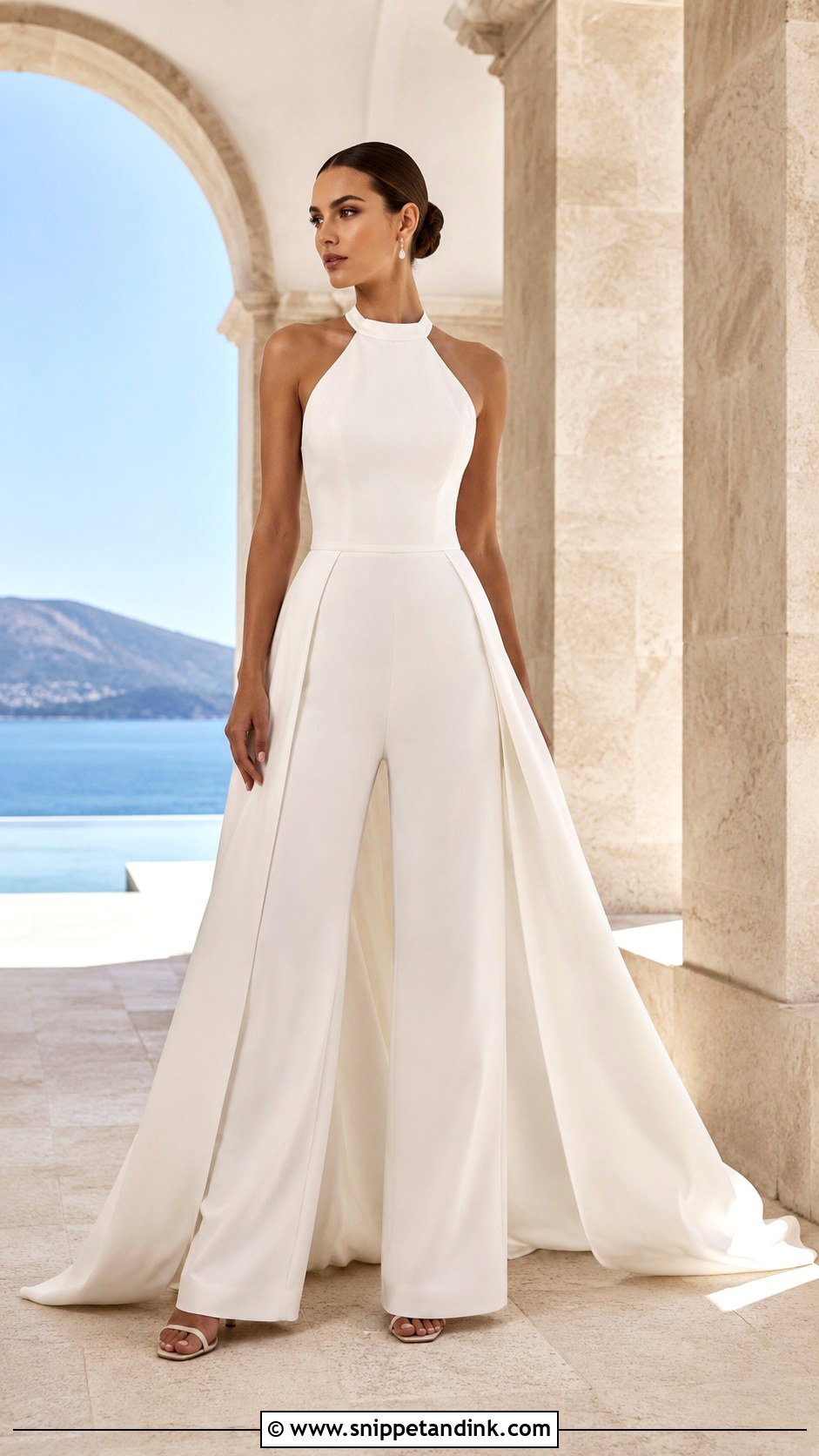
Halters hold the bust securely and pull the eye up toward the face, which makes them kind to brides who want support without straps across the back. A high-neck halter reads polished; a plunging one reads more fashion. A train can clip at the waist or the back neckline. I’d skip the necklace entirely and choose earrings. It suits destination weddings and outdoor venues, though a halter strap can rub the back of the neck by evening, so ask for a soft lining there.
10. Corset Bridal Jumpsuit With Train
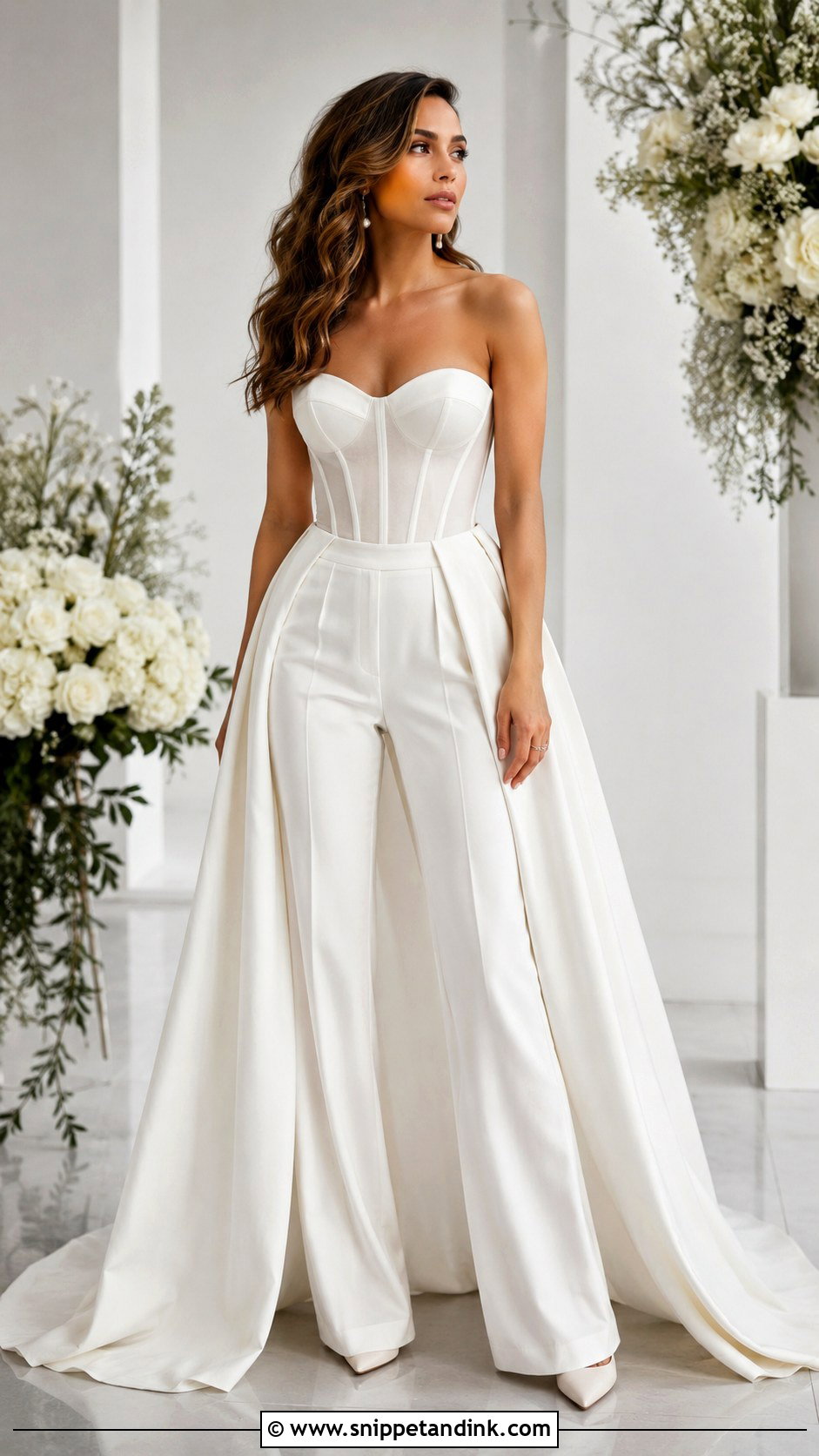
A corset bodice gives a jumpsuit real structure: defined waist, supported bust and a gown-like silhouette above the trousers. Visible boning looks fashion-led; hidden boning gives a smoother line. Sitting is the test. A corset that’s comfortable standing can dig in at the hips when you sit for dinner, so sit for several minutes at the fitting. A detachable overskirt train pairs well with it, giving a gown entrance before revealing the jumpsuit later. Sleek heels, soft waves and pearl or crystal earrings finish it.
11. Pearl Bridal Jumpsuit With Train
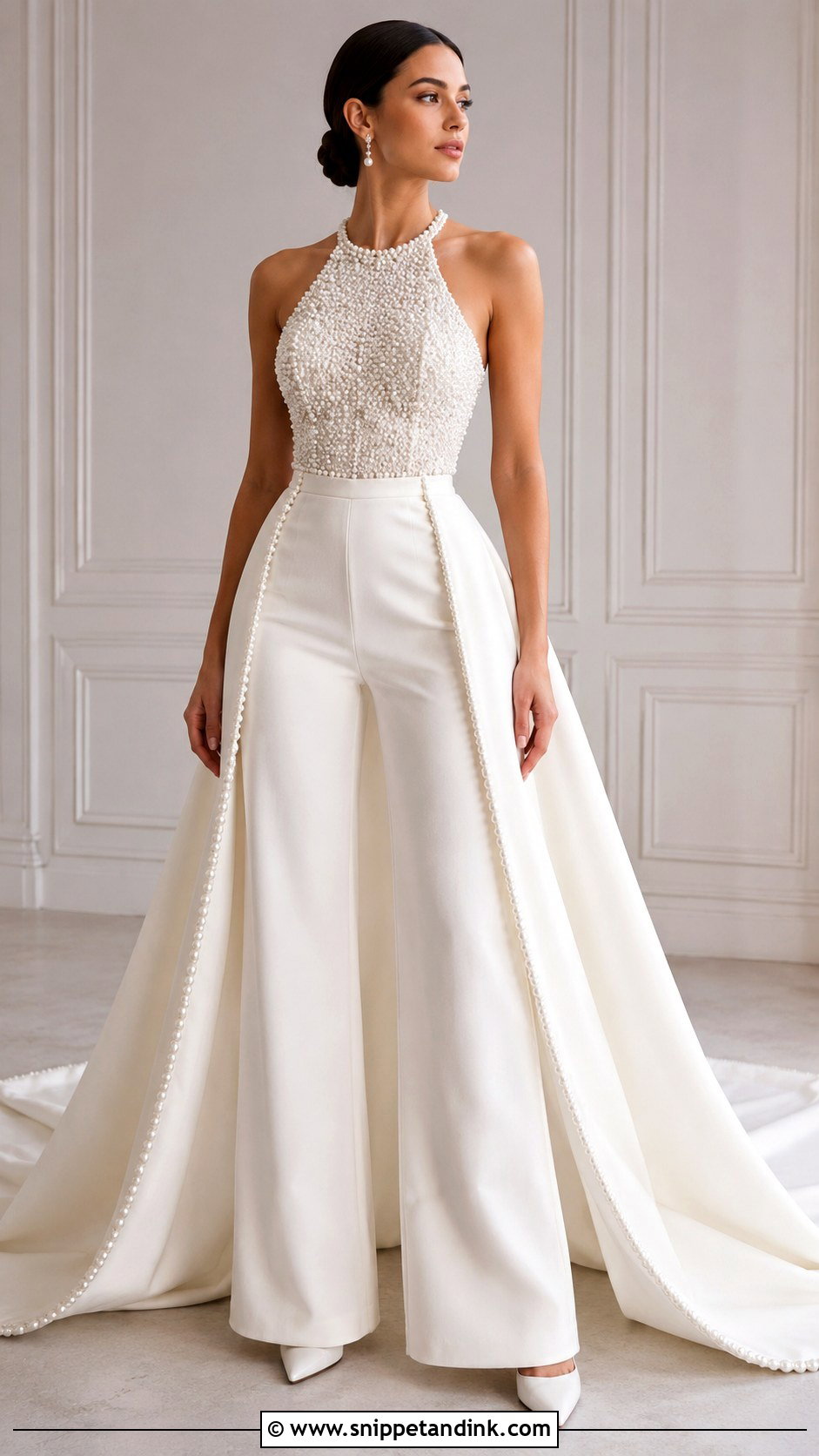
Pearls on the bodice, sleeves, waist or train edge add texture without sparkle. The trick is restraint; scatter them on one zone and keep the jumpsuit shape simple. Crepe and satin make good bases because they let the pearls stand out. Check that pearls aren’t sewn where your arms brush the body, since they’ll catch on the sleeves or rub. Pearl earrings, ivory heels and a smooth hairstyle tie it together, a classic detail sitting on a modern shape.
12. Beaded Bridal Jumpsuit With Train
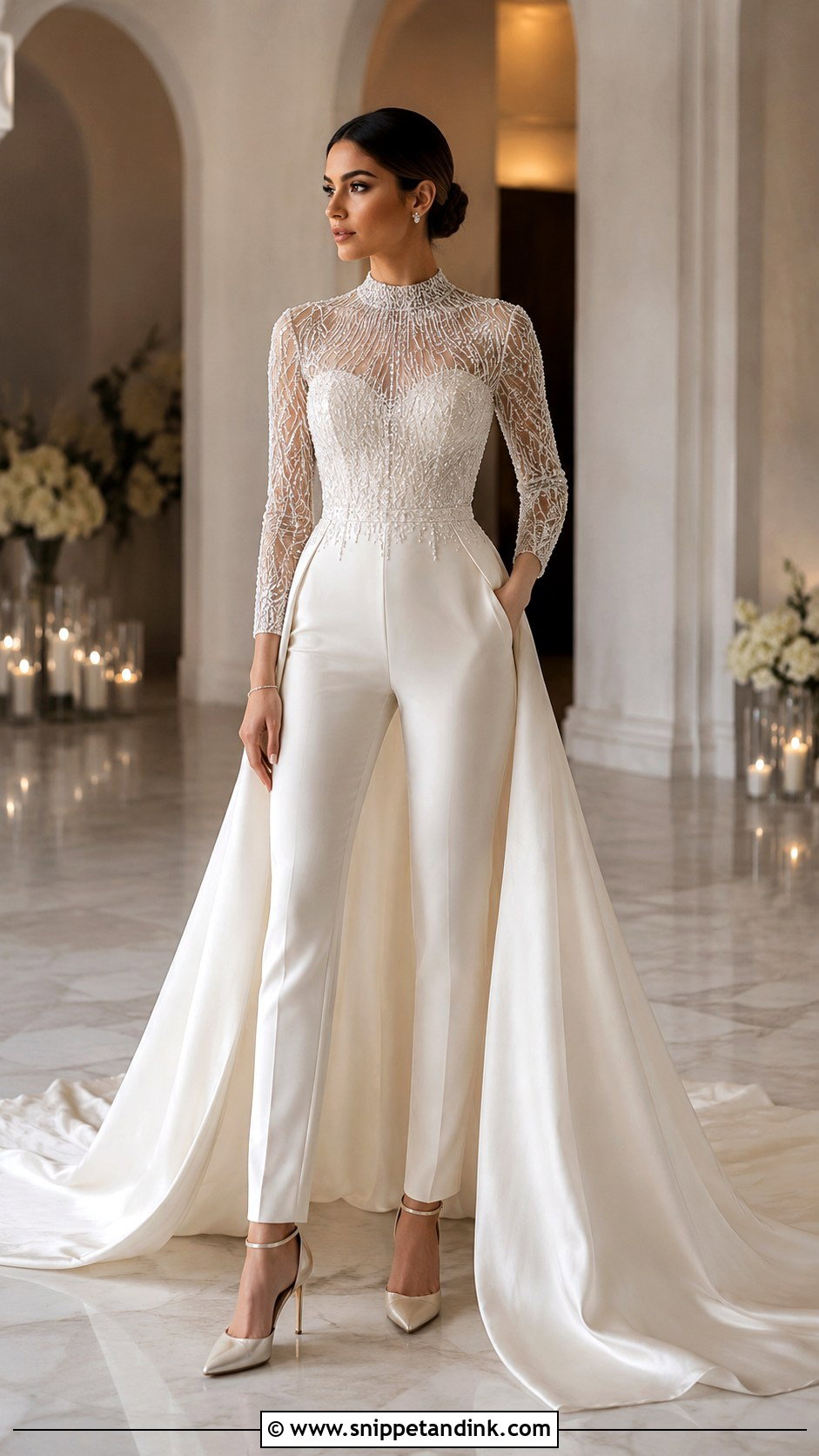
Beading belongs on one area: the bodice, waist, sleeves or train edge, not head to toe. Heavy beading on trousers adds weight that pulls the fabric down and makes sitting uncomfortable, and beads on the inner leg rub against each other when you walk. A streamlined jumpsuit with focused sparkle stays comfortable at an evening reception. Metallic or ivory heels, delicate earrings and a simple veil keep the shine where you want it.
13. Tulle Overskirt Bridal Jumpsuit With Train
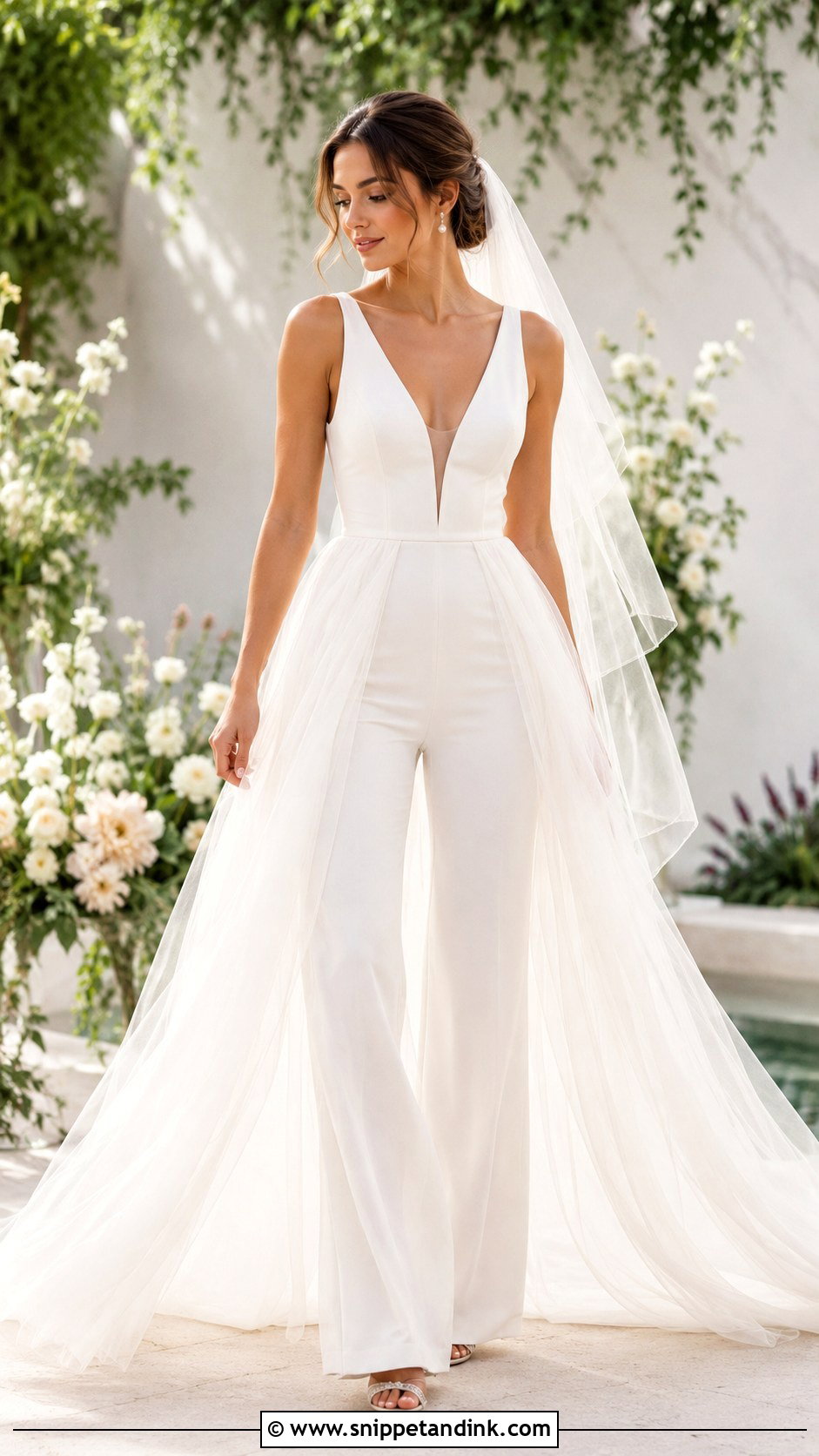
A tulle overskirt is the answer when you can’t decide between a gown and a jumpsuit. For the ceremony it gives volume and softness; for the reception it comes off and leaves a sleek outfit. Open-front tulle shows the trousers through; a full skirt hides them until the reveal. The jumpsuit underneath should be fitted, or the layers look bulky. Simple heels and delicate jewellery. Plan who unhooks the skirt and where, because it usually takes two people and a quiet room.
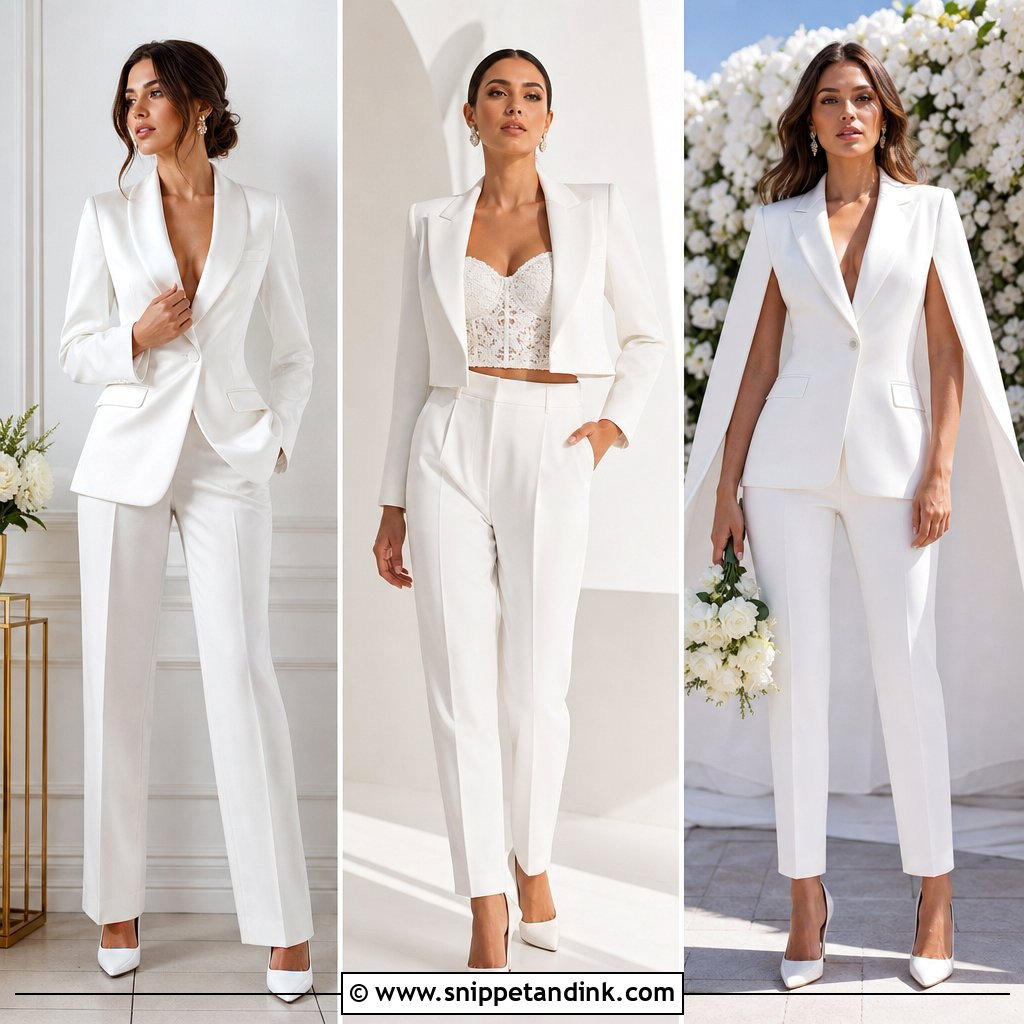
14. Cape Bridal Jumpsuit With Train
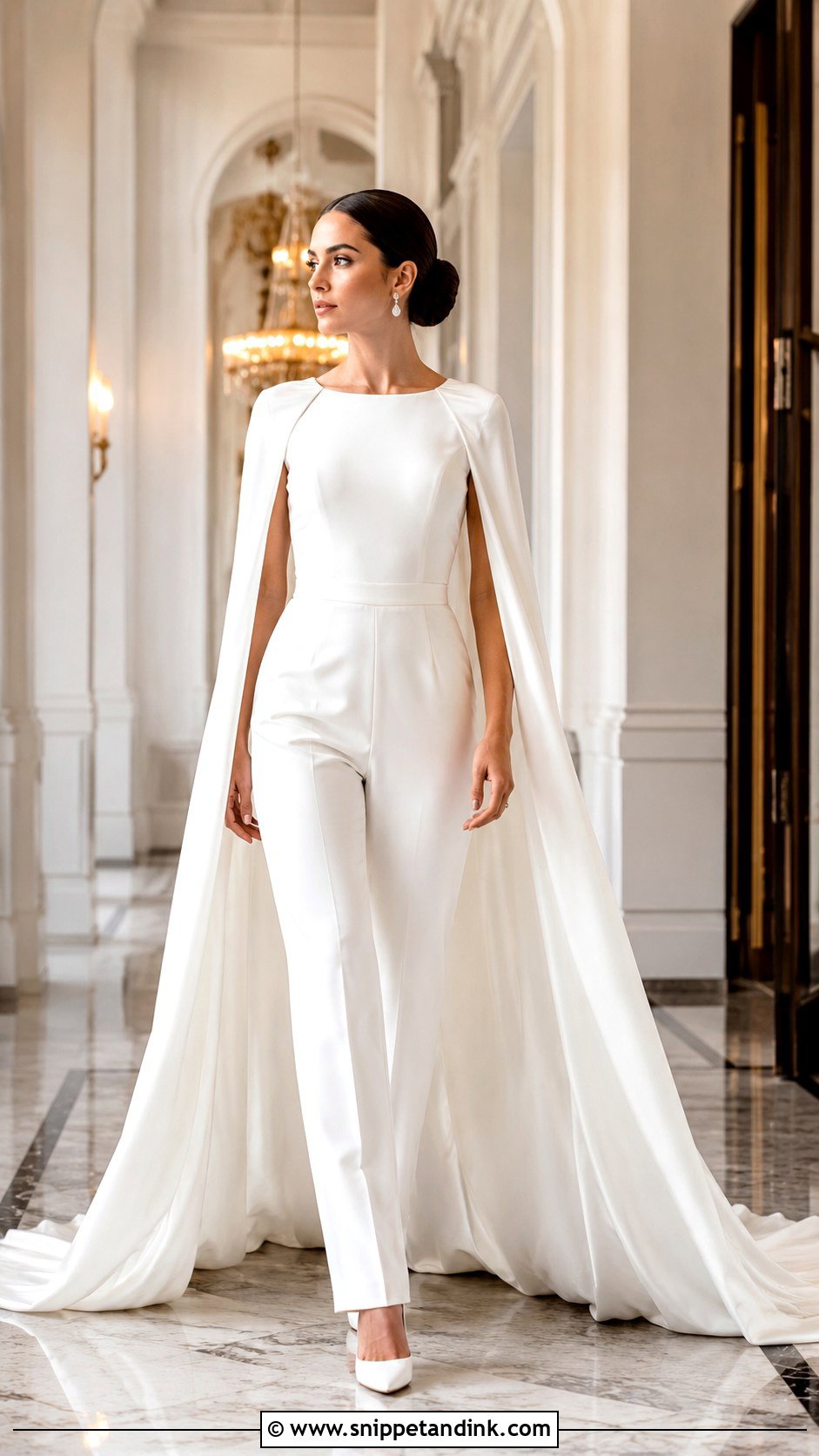
A cape train flows from the shoulders, not the waist, so the trousers stay fully visible as you walk. Sheer capes read soft; crepe or satin capes read strong. Capes are heavier than they look, and a long one pulls backwards on the shoulders, so I make sure it’s anchored with secure hooks or buttons rather than a single snap. Keep the jumpsuit underneath simple, with sleek heels, clean earrings and neat hair, so the cape gets the attention.
15. Bow Back Bridal Jumpsuit With Train
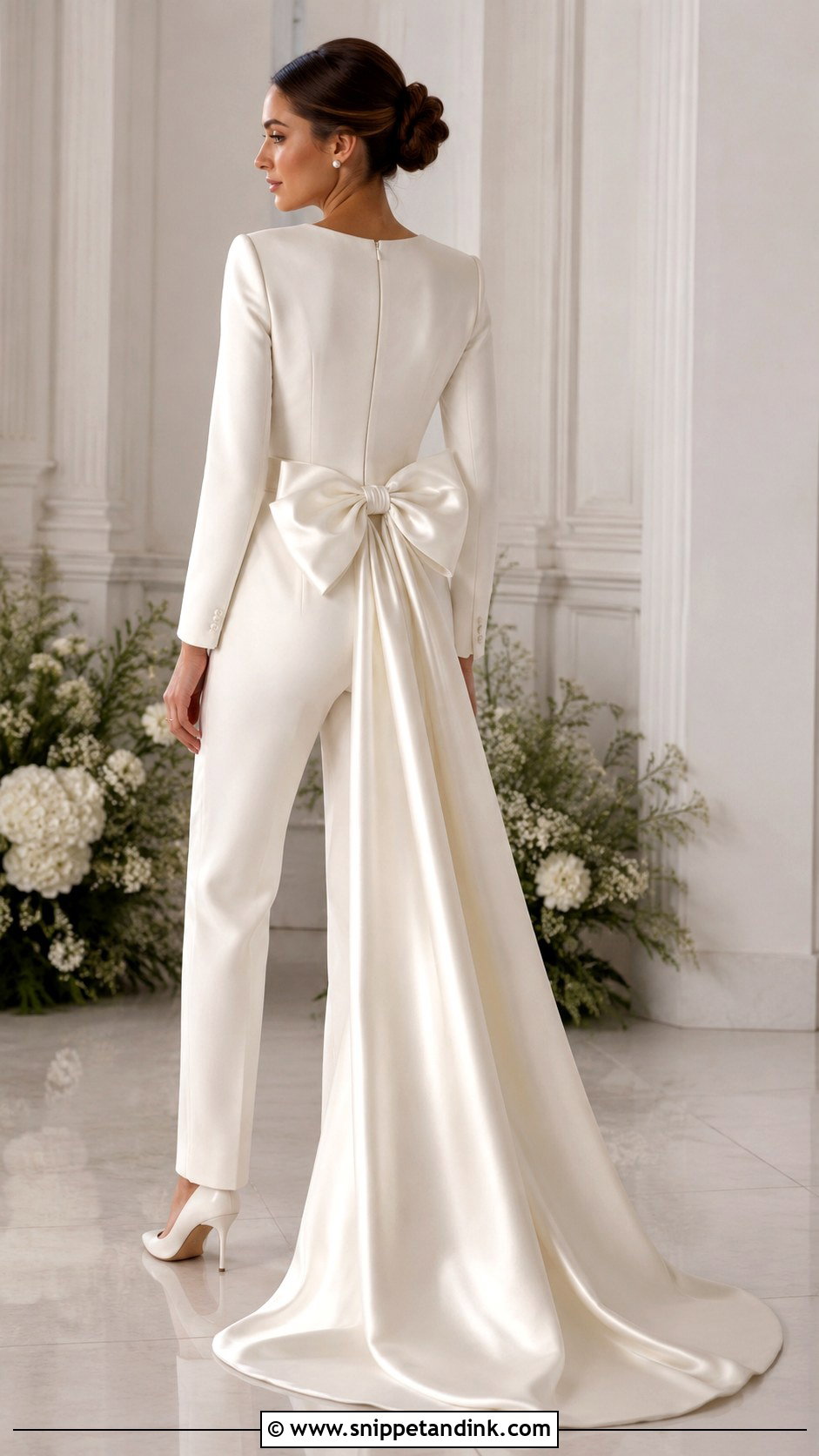
A bow at the back makes the walk away from the altar the strongest moment. It can sit at the waist, mid-back or shoulder line, with the train falling from under it. Satin bows look classic; organza bows look lighter. A large bow at the waist gets squashed every time you sit back in a chair, so for long dinners, a bow placed higher on the back holds its shape better. Pointed heels, small earrings and a clean bun keep the back visible.
16. Plunge Neck Bridal Jumpsuit With Train
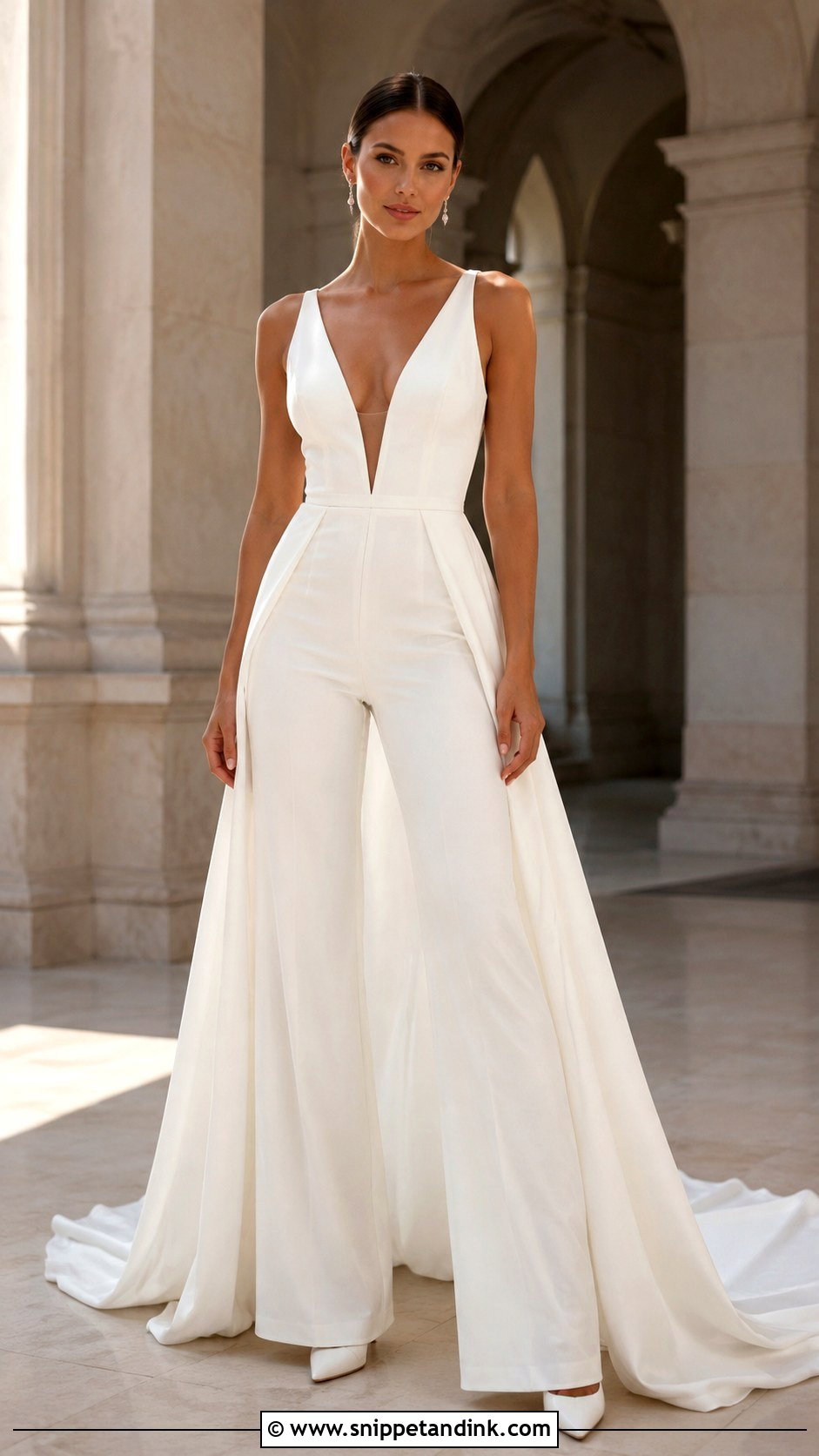
A plunging neckline needs balance and engineering. Balance comes from a wider trouser leg, structured fabric or a long train; engineering comes from a sheer mesh inset or fashion tape holding the edges flat. I always have a bride lean forward and bend at the fitting to check the neckline stays in place. Minimal jewellery, small drops or a slim bracelet, and pointed heels lengthen the line. The train softens what could otherwise read as evening wear.
17. Square Neck Bridal Jumpsuit With Train
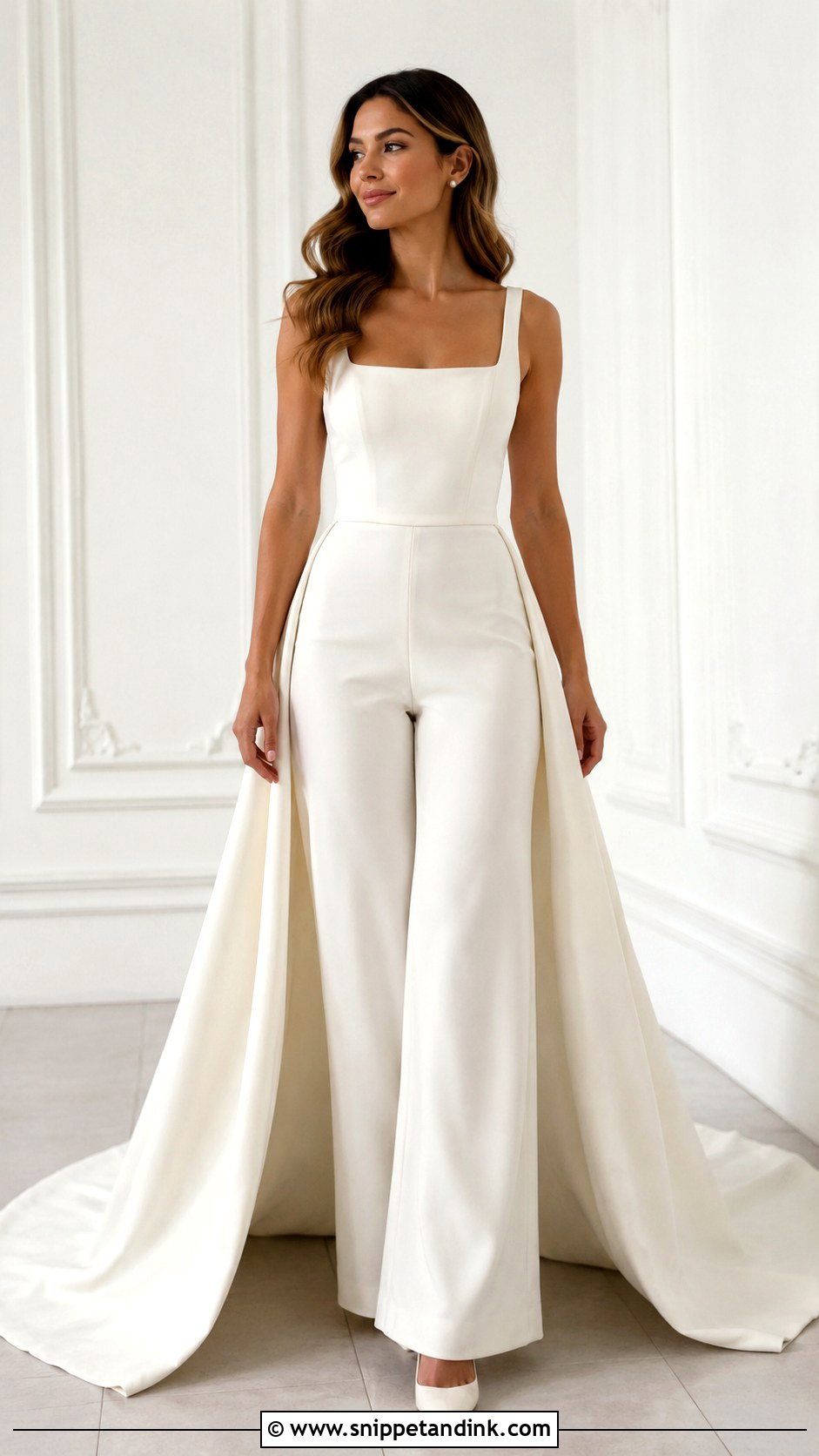
Square necks flatter many body types and give more coverage than strapless or plunge cuts, while still showing the collarbones. A fitted bodice, defined waist and wide trousers make a balanced shape, and a train attached at the back waist adds ceremony grace. Crepe, satin or matte mikado all hold the straight neckline well; softer fabrics can let it bow. Pearl studs, soft waves and ivory heels keep it simple and classic.
18. High Neck Bridal Jumpsuit With Train
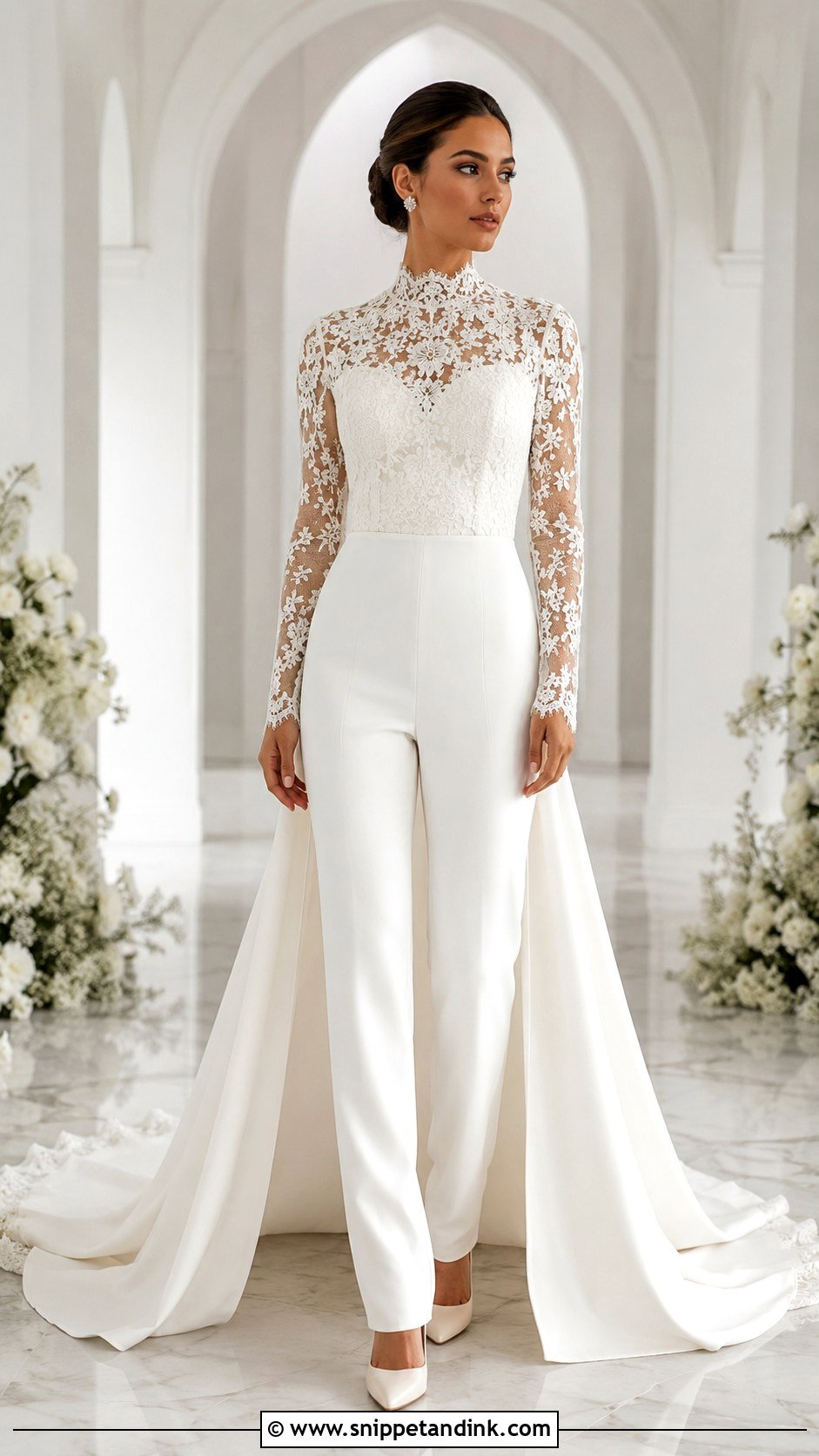
A high neck covers more but still looks modern when the rest is sharp. Lace, crepe, satin or embroidered sheer fabric can all form the neckline. Define the waist, or the outfit can look too covered. Wear your hair up or tucked back so it doesn’t fight the collar, and choose clean earrings rather than a necklace. A long train softens the formality. Check the collar fastening, as a high neck with a tight hook can feel restrictive by the evening.
19. Minimal Bridal Jumpsuit With Train
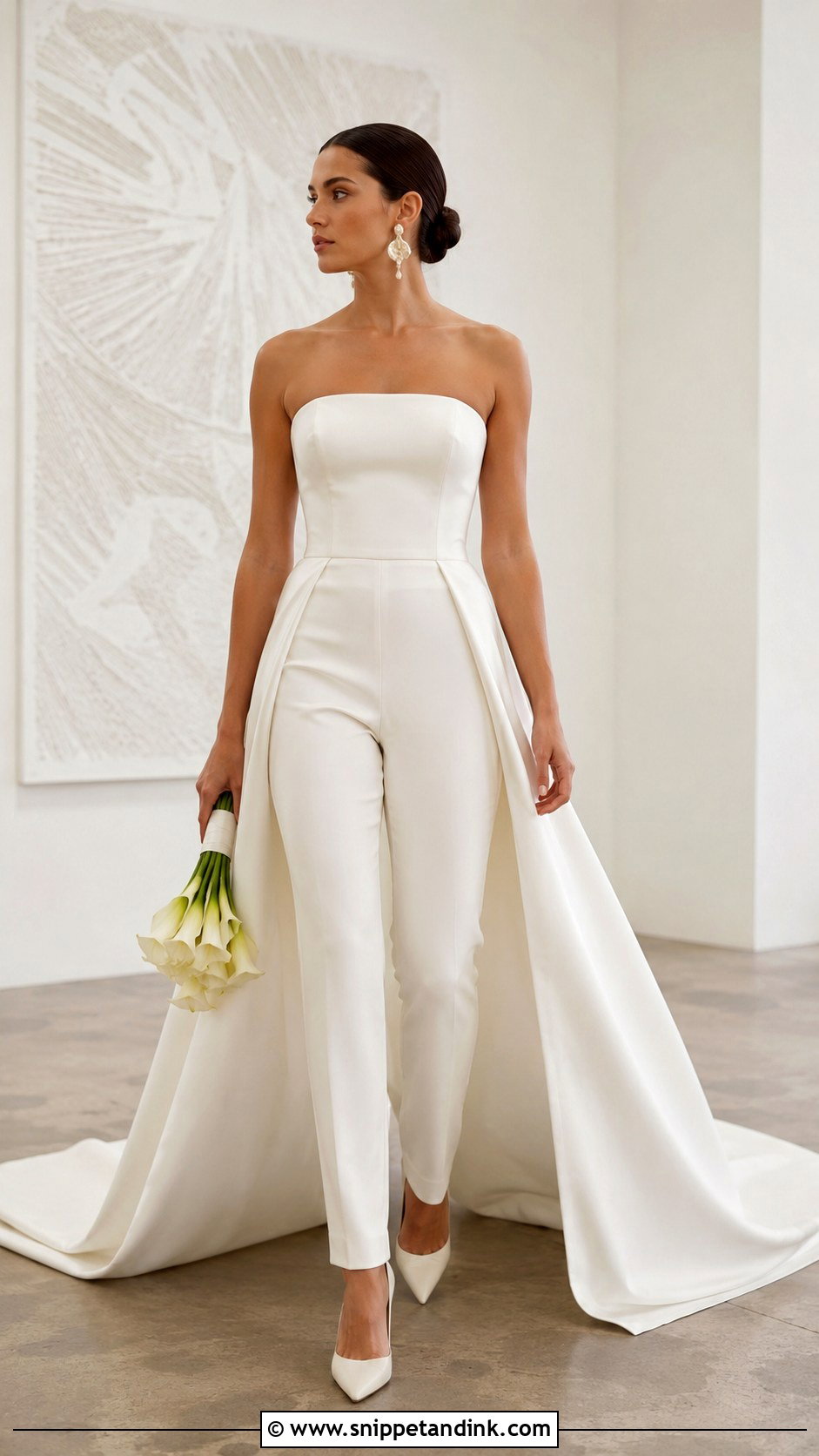
Minimal jumpsuits are the least forgiving, because tailoring is all there is to look at. Crepe, satin or mikado with almost no embellishment, and a train as the only detail. Every measurement has to be precise: trouser length, waist, bodice and the line where the train meets the jumpsuit. I’d budget more time for alterations here than for a lace version. Sculptural earrings, pointed heels and smooth hair suit city weddings, courthouse ceremonies and gallery venues.
20. Floral Applique Bridal Jumpsuit With Train
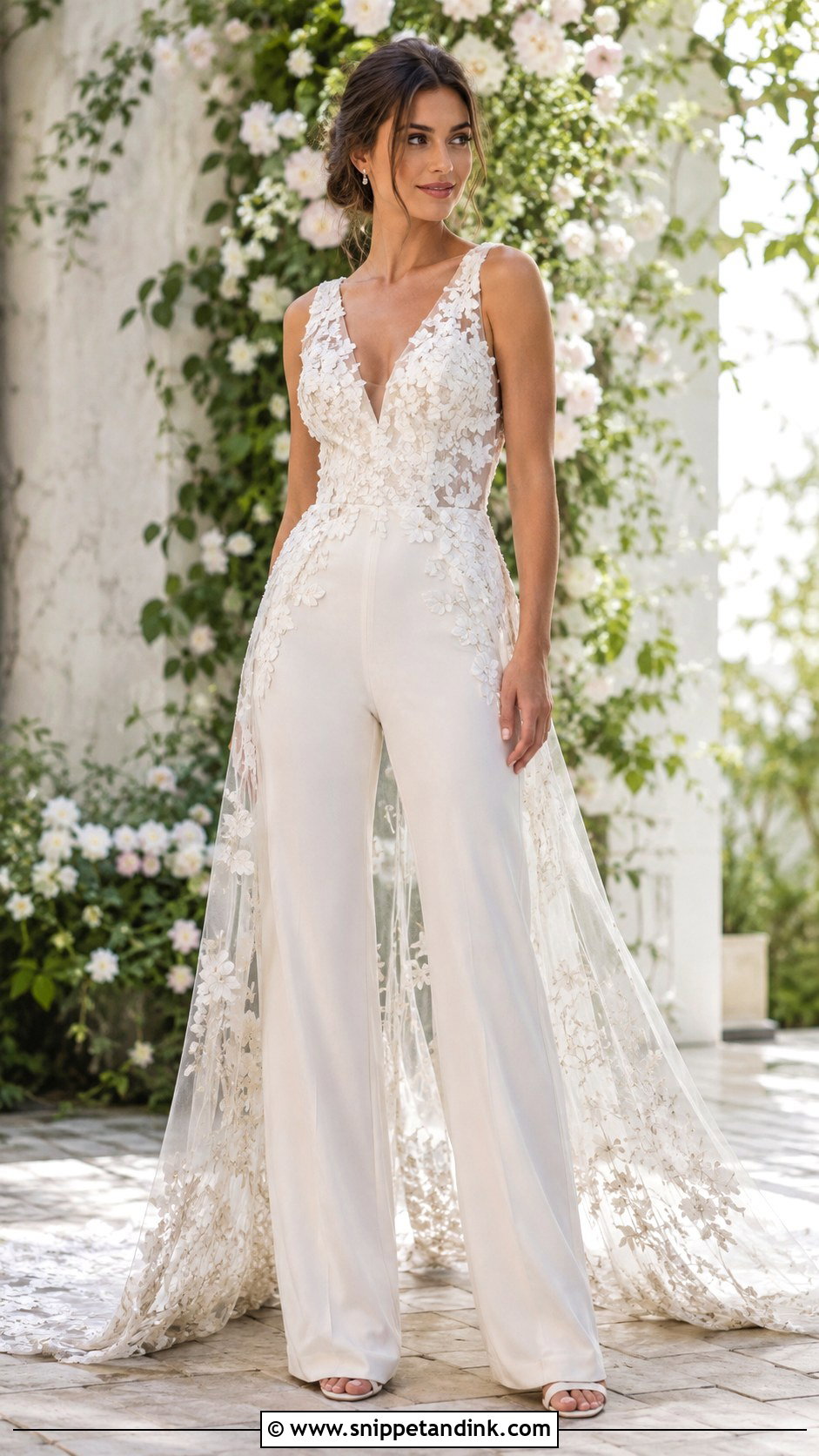
Floral appliques add raised, three-dimensional texture along the bodice, sleeves, waist or train. They look most deliberate on a clean, fitted base, scattered upward from the hem of the train or clustered at the shoulder. A sheer tulle train makes the flowers look as though they’re floating. Appliques can snag on lace veils and bracelets, so keep jewellery smooth. Delicate heels, soft earrings and natural makeup suit spring and garden weddings.
21. Short Sleeve Bridal Jumpsuit With Train
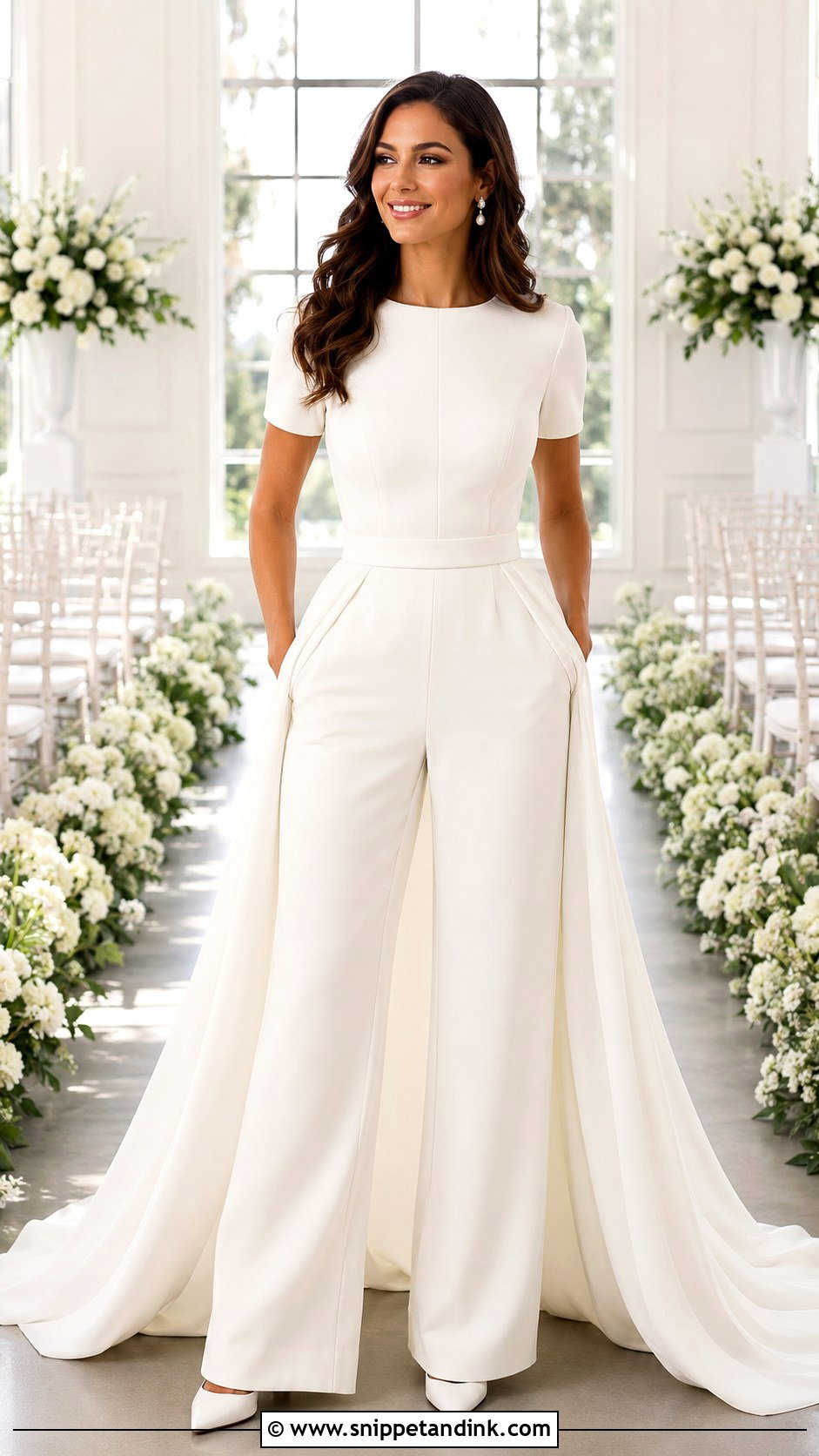
Short sleeves give more coverage than strapless and stay cool in warm weather. Plain crepe, lace, puffed or draped sleeves all work. A back train keeps it formal enough for a ceremony. Since sleeves frame the arms, I check that they don’t cut into the upper arm when you bend your elbow to hold a bouquet. Closed-toe heels, pearl earrings and a soft updo or loose waves suit daytime weddings, civil ceremonies and relaxed venues.
22. Bridal Jumpsuit With Watteau Train
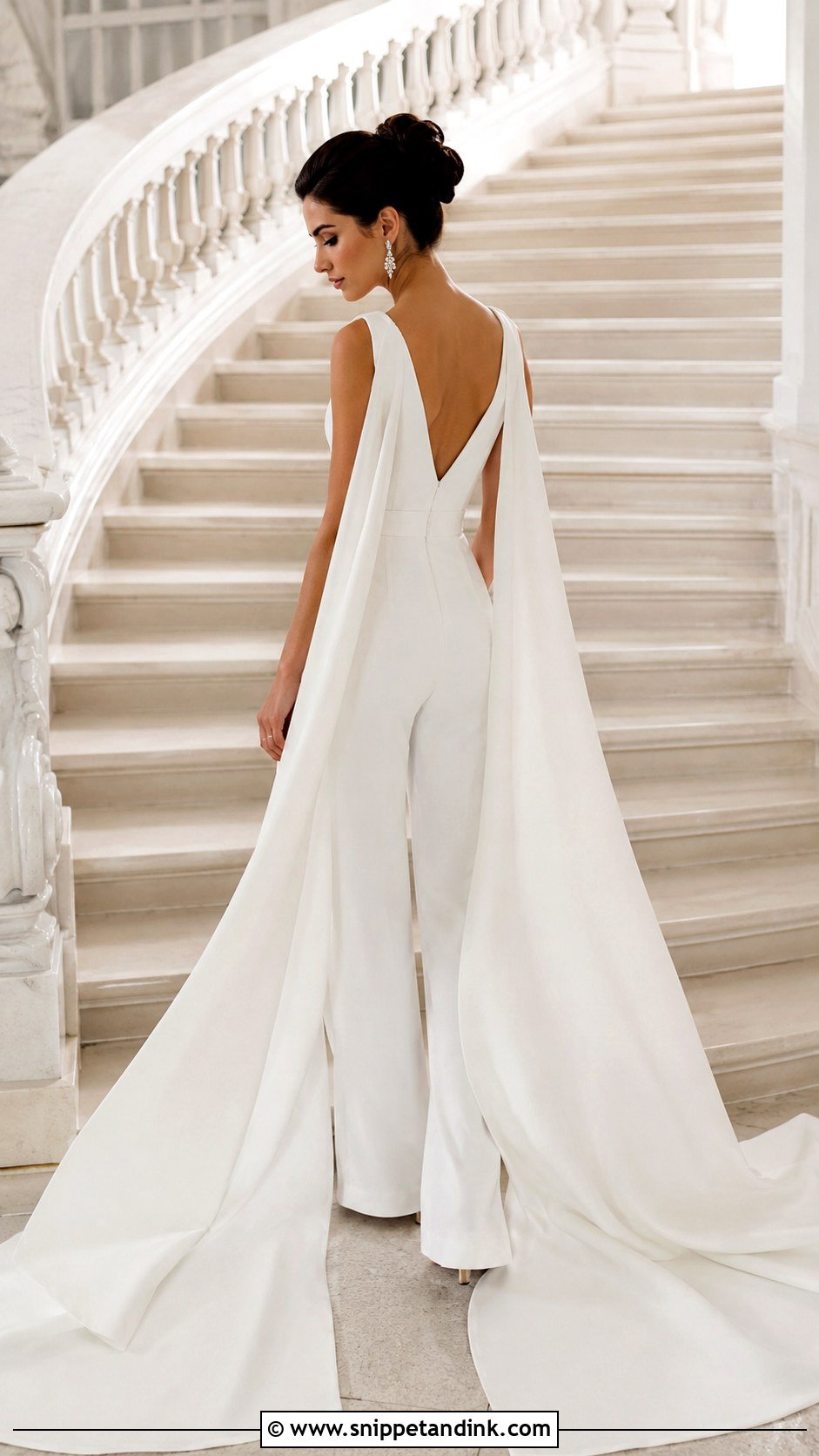
A Watteau train falls from the shoulders or upper back like a soft cape, rather than from the waist. It moves behind you as you walk and weighs less than most overskirts. The jumpsuit underneath can be very simple, strapless, square or high neck, since the train provides the bridal impact. Sheer tulle feels soft; satin feels formal. Simple heels and earrings keep attention on the back, where this style does its best work.
23. Bridal Jumpsuit With Cathedral Train
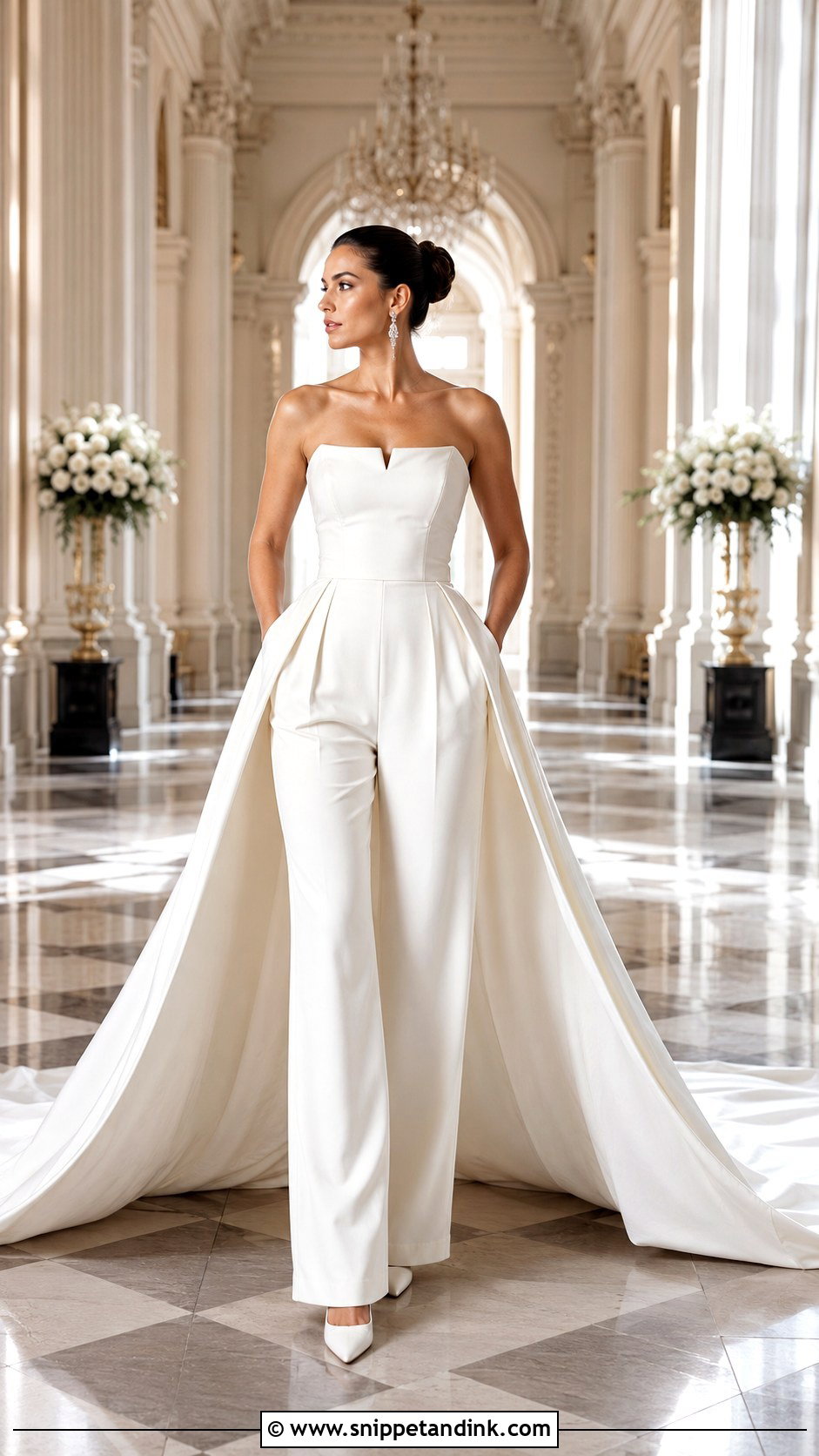
A cathedral train is the longest common train length, and it changes how you move. You can’t turn quickly, someone has to arrange it at every stop, and it collects grass, gravel and petals outdoors. A detachable version makes sense here, so you can drop it after the ceremony. Structured crepe, satin or mikado helps the jumpsuit support the weight, and the attachment points need reinforcing. Crystal earrings and sleek heels are enough, since the train is the statement.
24. Bridal Jumpsuit With Chapel Train
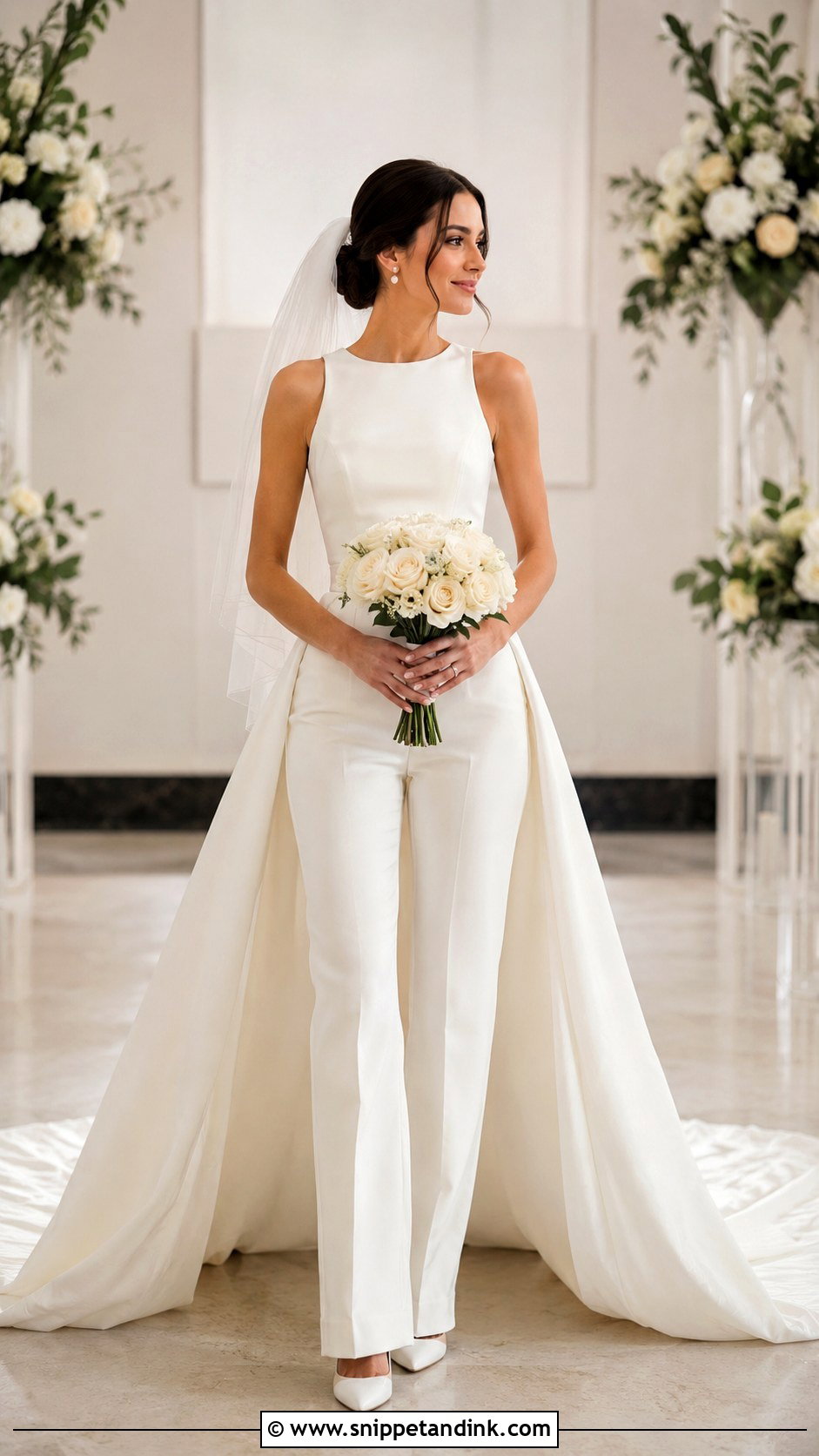
A chapel train is shorter than a cathedral, enough for ceremony photos but far easier to manage on your own. It can attach at the waist, back or shoulders, depending on the jumpsuit. A tailored bodice with straight or wide trousers keeps everything balanced. Add a veil for a traditional touch or leave it off for a cleaner look. If the venue has stairs, aisles with carpet runners or a garden path, it’s the train length I’d steer you toward.
25. Bridal Jumpsuit With Removable Skirt Train
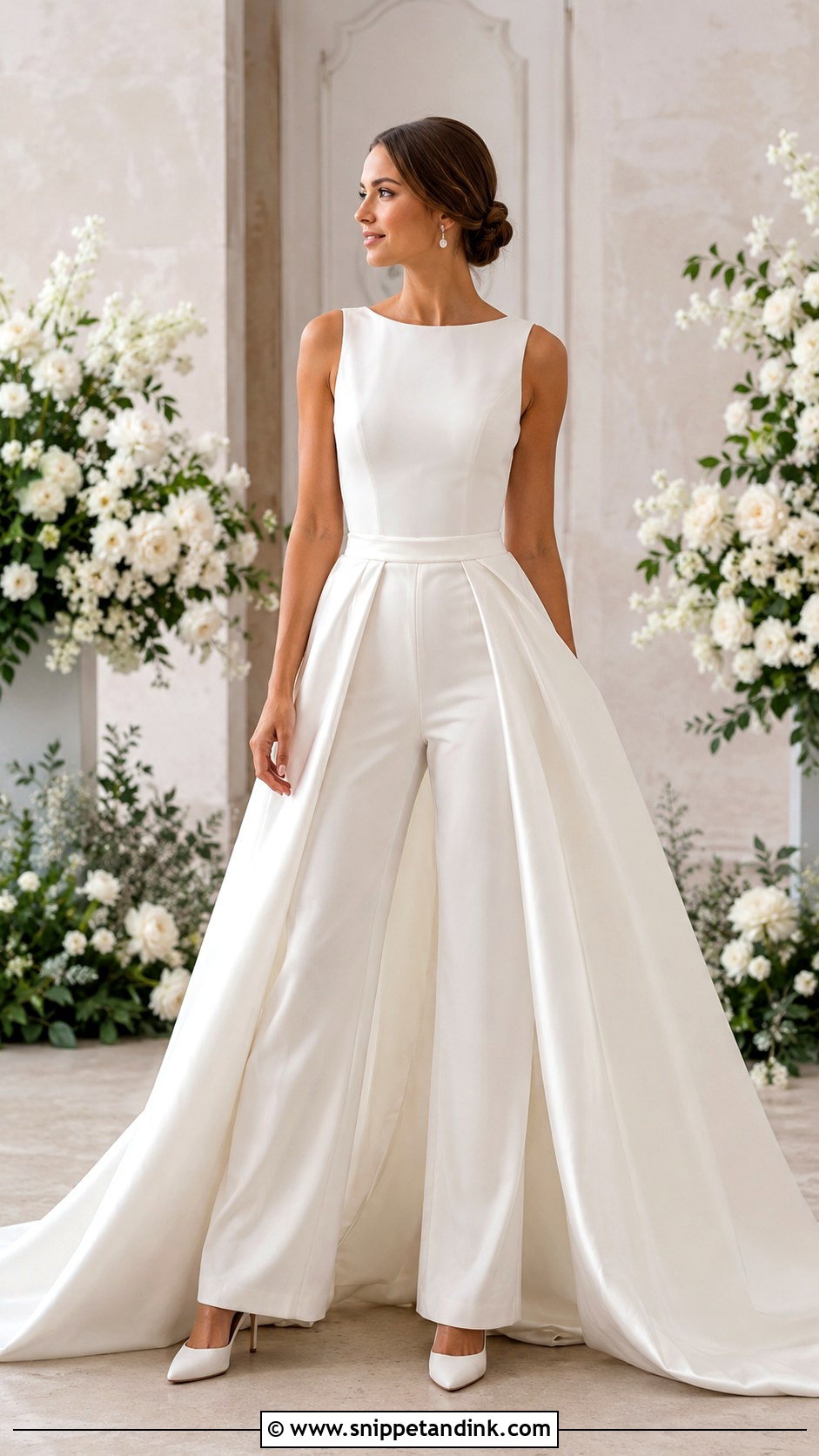
A removable skirt gives you a gown for the ceremony and a jumpsuit for the reception without buying two outfits. Full tulle, satin, organza, lace or mikado all work, and an open front lets the trousers show while a closed skirt hides them until the reveal. Practise taking it off before the day, and choose a hairstyle that suits both versions. Comfortable heels and simple jewellery make the transition easy.
Hemming, Bathroom Trips and Other Jumpsuit Realities
Hem for the shoes you’ll actually wear
Trousers are hemmed to one heel height. If you plan to switch to flats for dancing, a hem set for heels will drag on the floor and get stepped on. I’d either choose a mid-height heel for the whole day or have the trouser hemmed slightly shorter as a compromise. Bring both pairs of shoes to the last fitting.
Plan the bathroom
A jumpsuit has to come down, often from a back zip, every time you use the bathroom. It’s the question brides tend to ask me at the very end of a fitting. A long side zip, a back zip you can reach, or a designated helper all make it manageable. Take the train off first if you can, or gather it over one arm.
Book alterations early
Jumpsuits usually need more alteration than dresses, since both the bodice and the trouser length and rise have to fit. I’d plan the first alteration fitting about two to three months before the wedding and the last one a couple of weeks before, with the final shoes and undergarments.
One Outfit, Two Halves of the Day
A jumpsuit with a train gives you comfort, a ceremony moment and freedom later in the evening. Crepe reads sleek, lace romantic, a cape bold, satin and pearls classic. Which suits you depends on the venue, how much you’ll move and how you want the reception to feel. If you like the idea of shifting from formal to practical without changing, look closely at detachable trains and overskirts. A well-fitted jumpsuit is every bit as bridal as a gown; it just lets you sit, walk and dance more easily.
You'll Like These Ideas:


Leave a Reply