
A train is the part of a gown guests see for the longest stretch of the ceremony, because for most of it you’re standing with your back to them. That’s why I take train length as seriously as the neckline. The ideas below run from practical sweep trains to dramatic cathedral and royal-length designs, across satin, lace, crepe, detachable and softly colored gowns, each with shoes, jewelry, veil and hair to match. As you read, keep three things in mind: how long your aisle is, what you’ll be walking on, and who’ll be bustling the train when the dancing starts.
Matching Train Length to the Aisle You’ll Walk
Train names describe roughly how far the fabric extends past your heels, though every designer cuts them a little differently. A useful way to choose is to start from the room. A long cathedral train in a short registry office aisle looks cramped, and a sweep train in a cathedral can look underdressed.
- Sweep: just brushes the floor. Courthouses, restaurants, beaches and anywhere you’ll be walking a lot.
- Court: around a foot past the heel. Gardens, city venues and small chapels.
- Chapel: roughly three to four feet. The usual choice for church weddings and hotel ballrooms.
- Cathedral: around six to seven feet. Long aisles, grand staircases and formal evening ceremonies.
- Monarch or royal: ten feet or more. Only with a wide aisle and attendants to manage it.
Consider the ground too. Polished stone and carpet let a train glide; gravel, grass and sand drag at it and mark the hem. If the ceremony is outside on a lawn, I’d usually suggest the next length down from what you’d wear indoors, or a detachable train that comes off for the walk across the grass.
1. Satin Ball Gown Wedding Dress With Cathedral Train
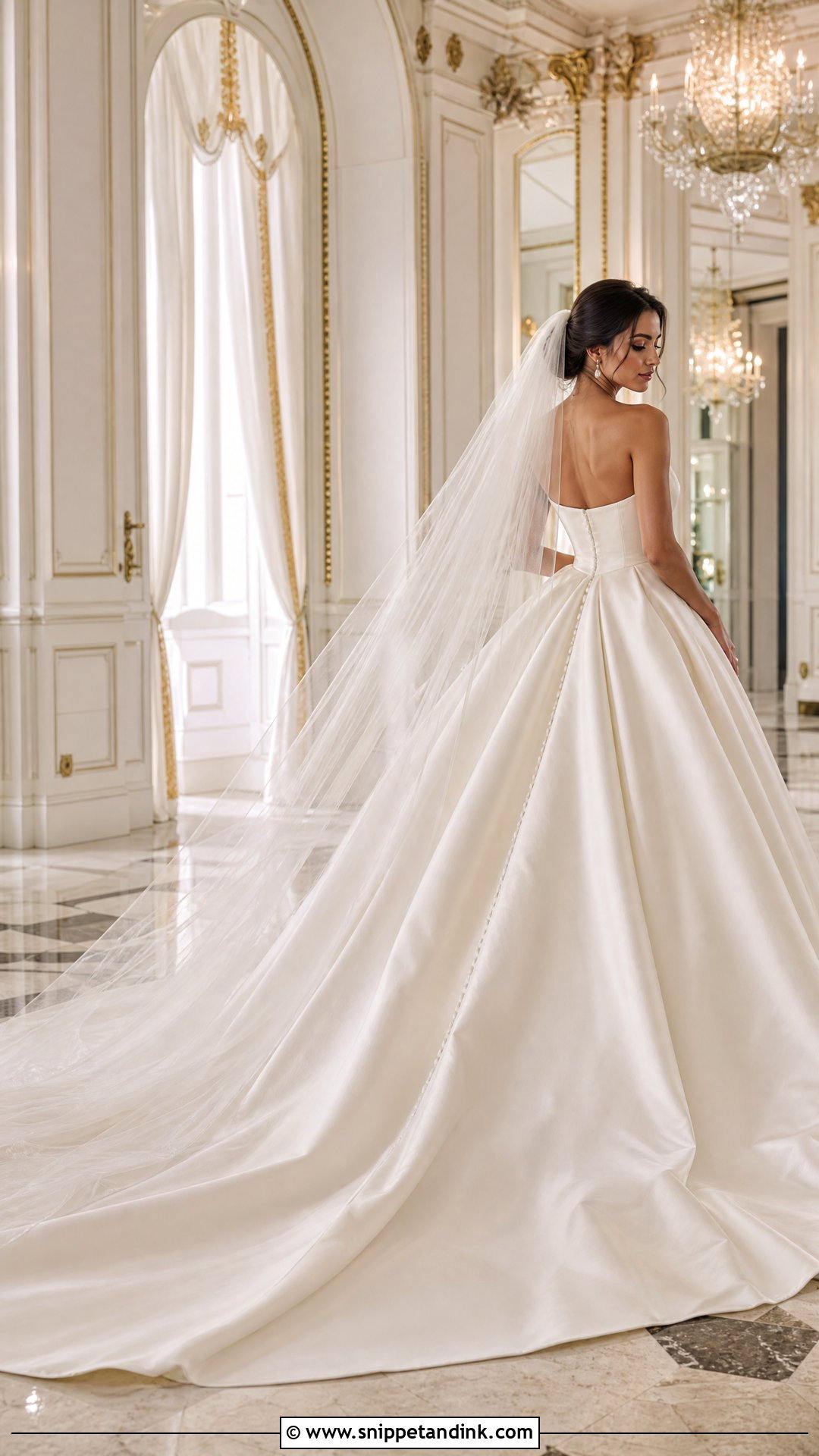
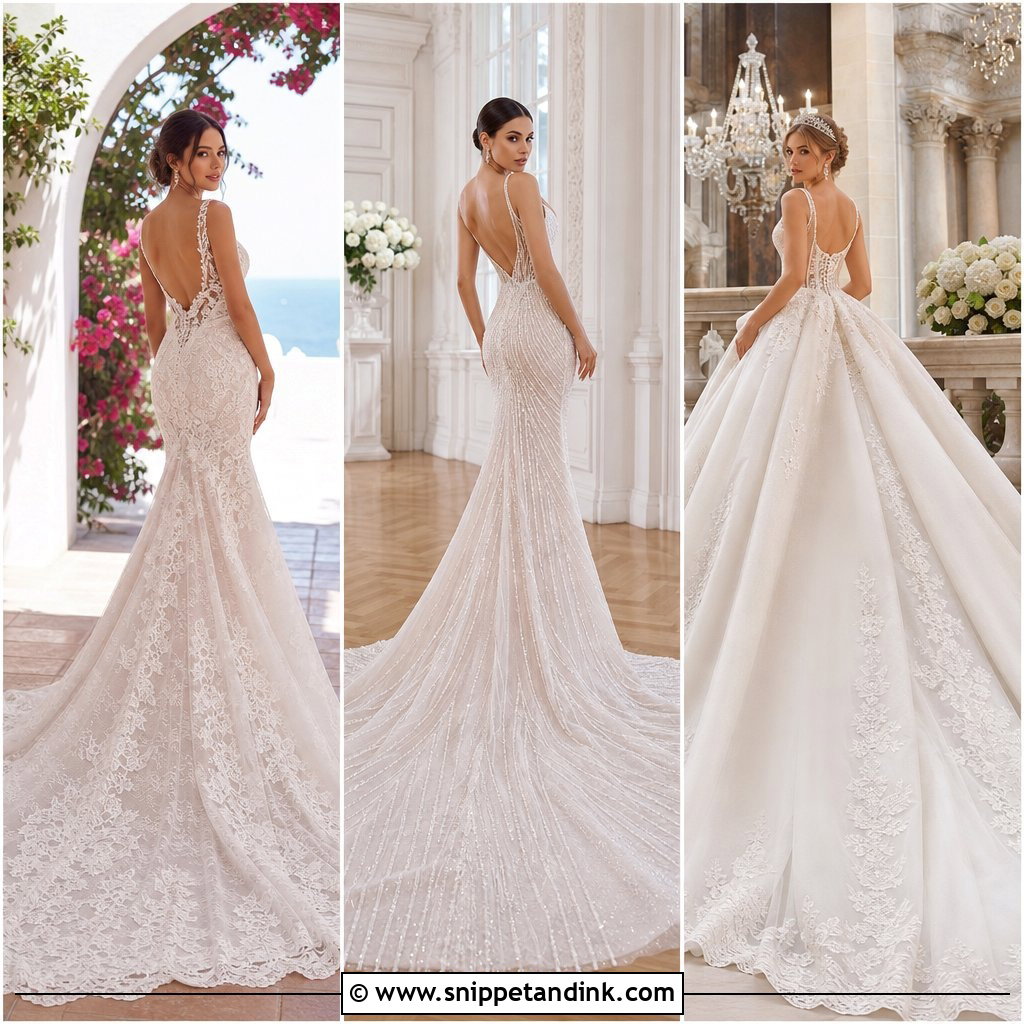
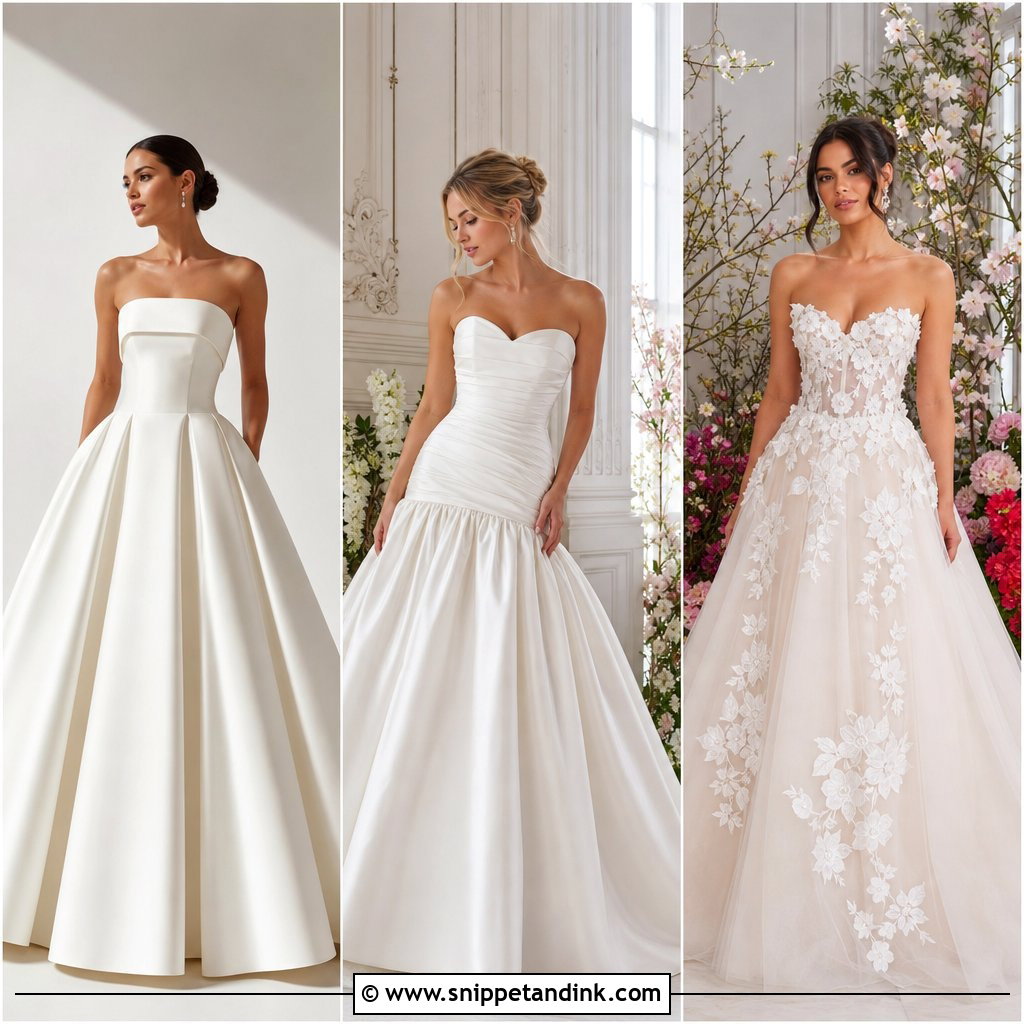
Satin holds a cathedral train flat and smooth on the floor, which is exactly why this pairing looks so formal in a ballroom. The ball gown skirt needs enough width to carry that length; on a narrow skirt a cathedral train looks like it belongs to a different dress. Strapless keeps the upper half clean, and a little draping gives the satin some shadow. Choose a sheer veil a few inches longer than the train so it lies on top rather than stopping short. Satin is heavy, so I’d ask for a multi-point bustle, since a single hook will drag the skirt out of shape by mid-evening.
2. Lace Mermaid Wedding Dress With Chapel Train
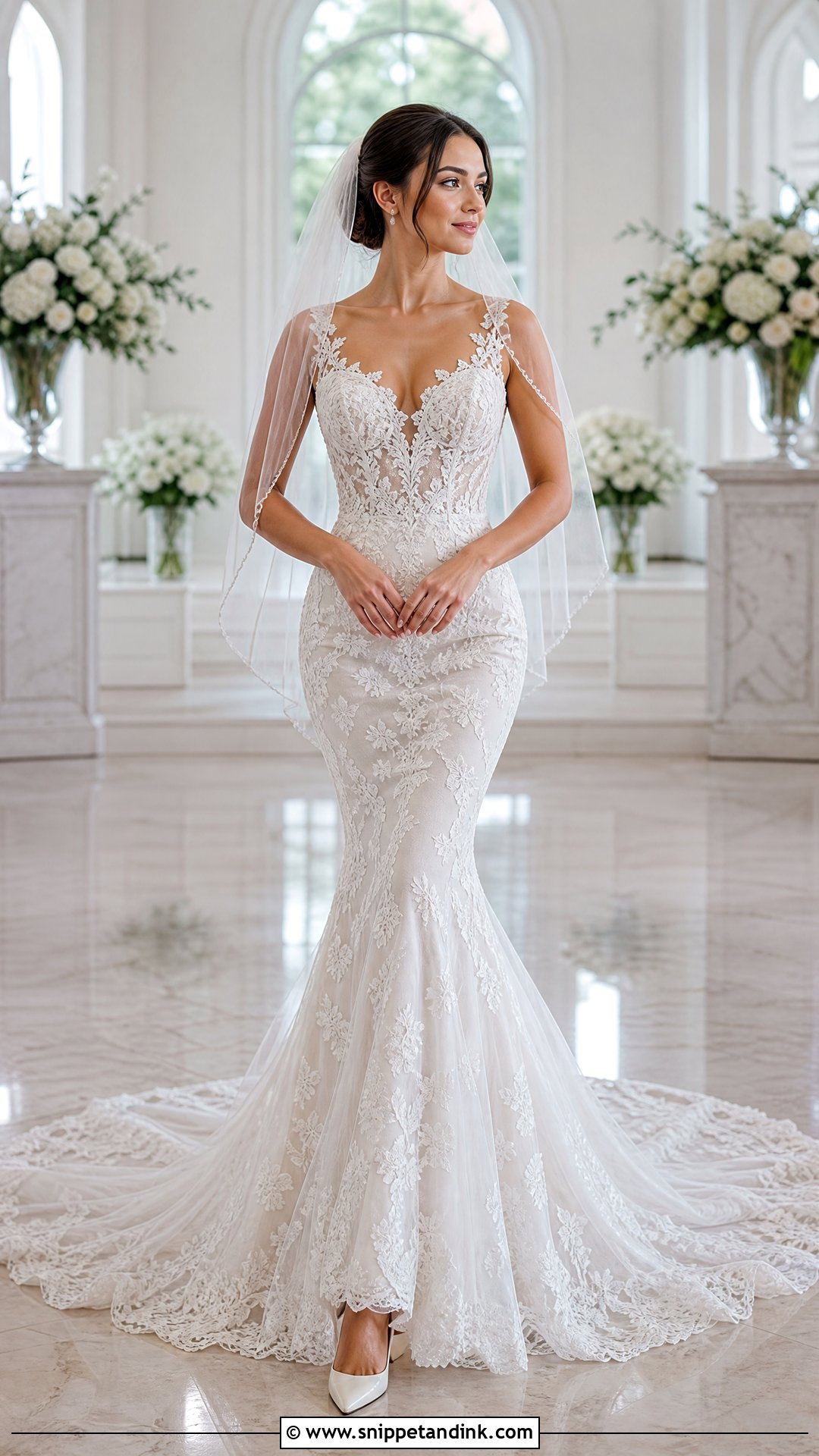
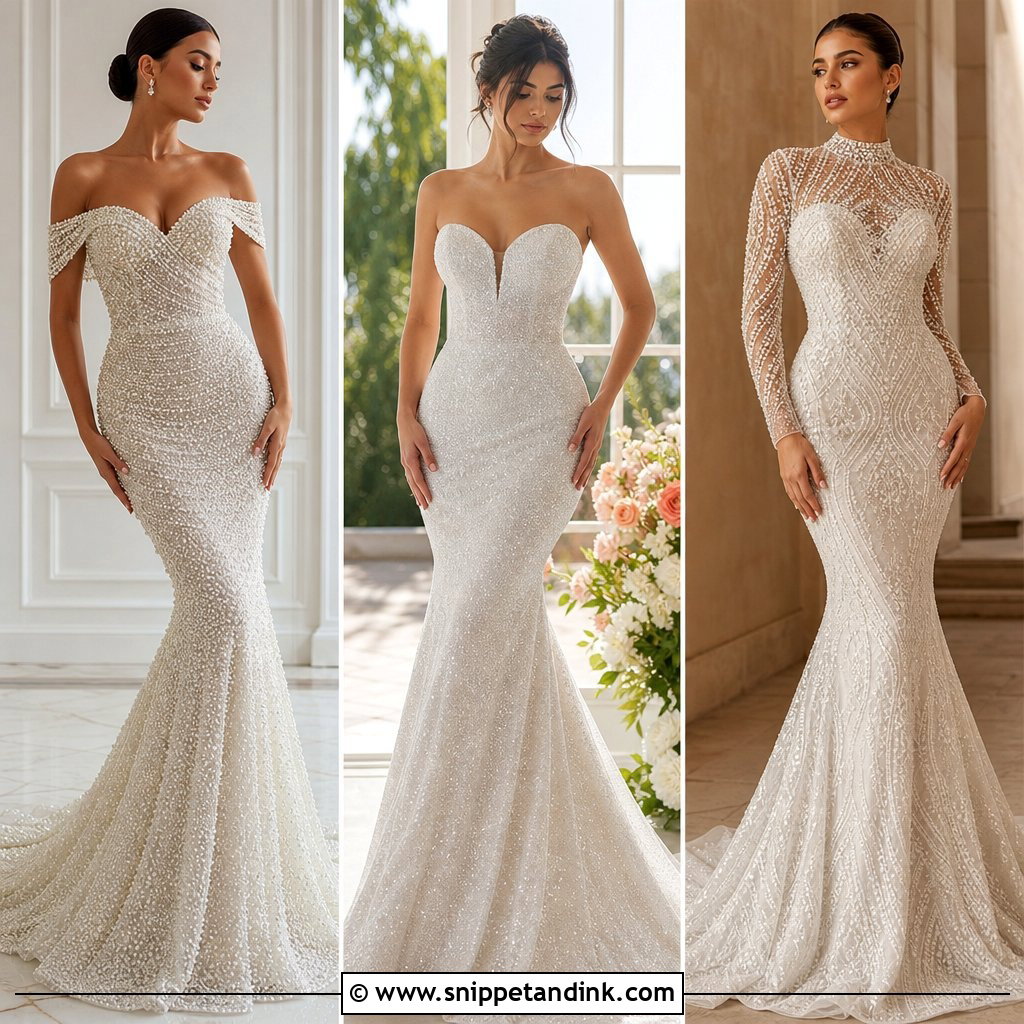
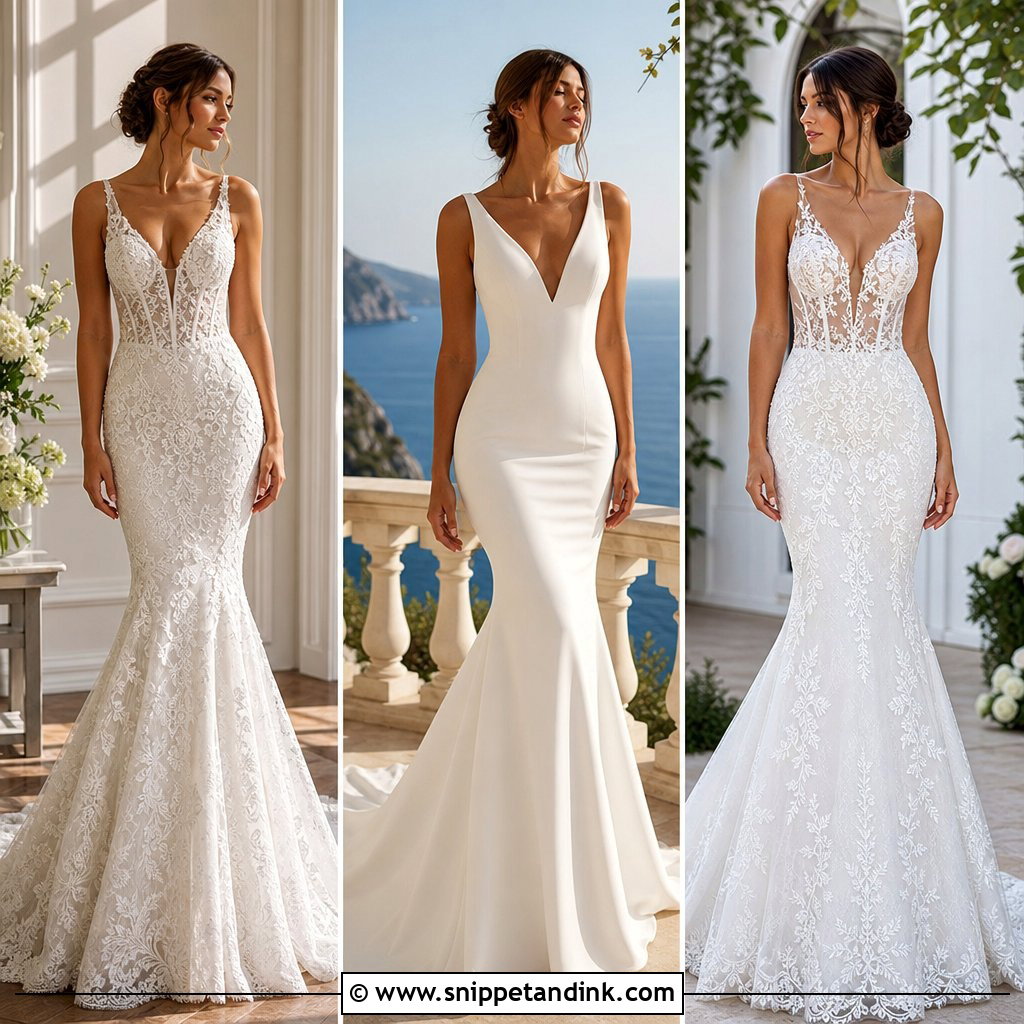
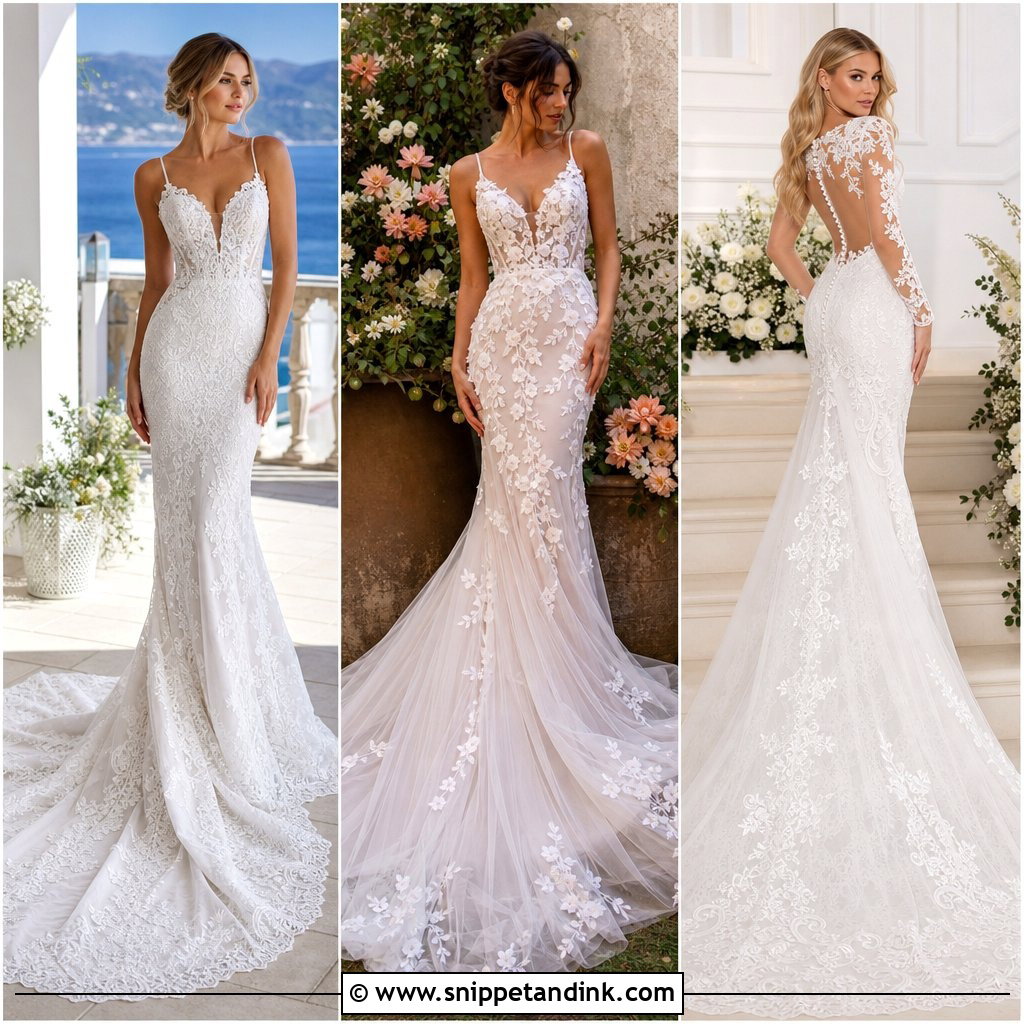
A chapel train balances a mermaid nicely, because the length starts where the flare starts and continues the line rather than adding bulk. The gown should follow you closely through bodice, waist and hips before opening near the knee. When lace appliqués continue onto the train, the back view looks finished without needing extra length. Mermaids restrict your stride, and a train behind a mermaid restricts it more, so practise walking in heels you’ll actually wear. Pointed pumps, small studs and a clean-edged fingertip veil keep it uncluttered.
3. Minimalist Crepe Wedding Dress With Sweep Train
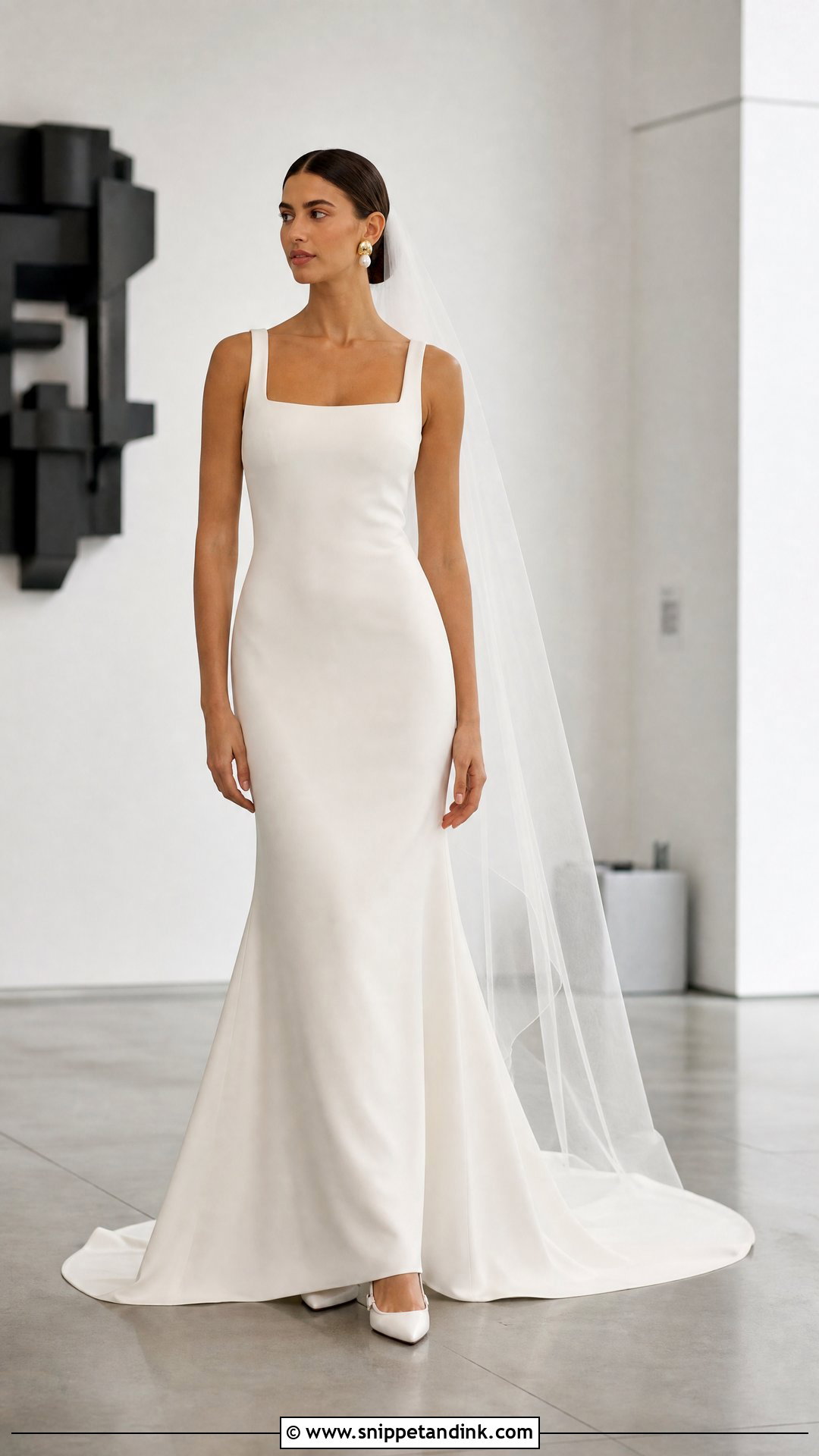
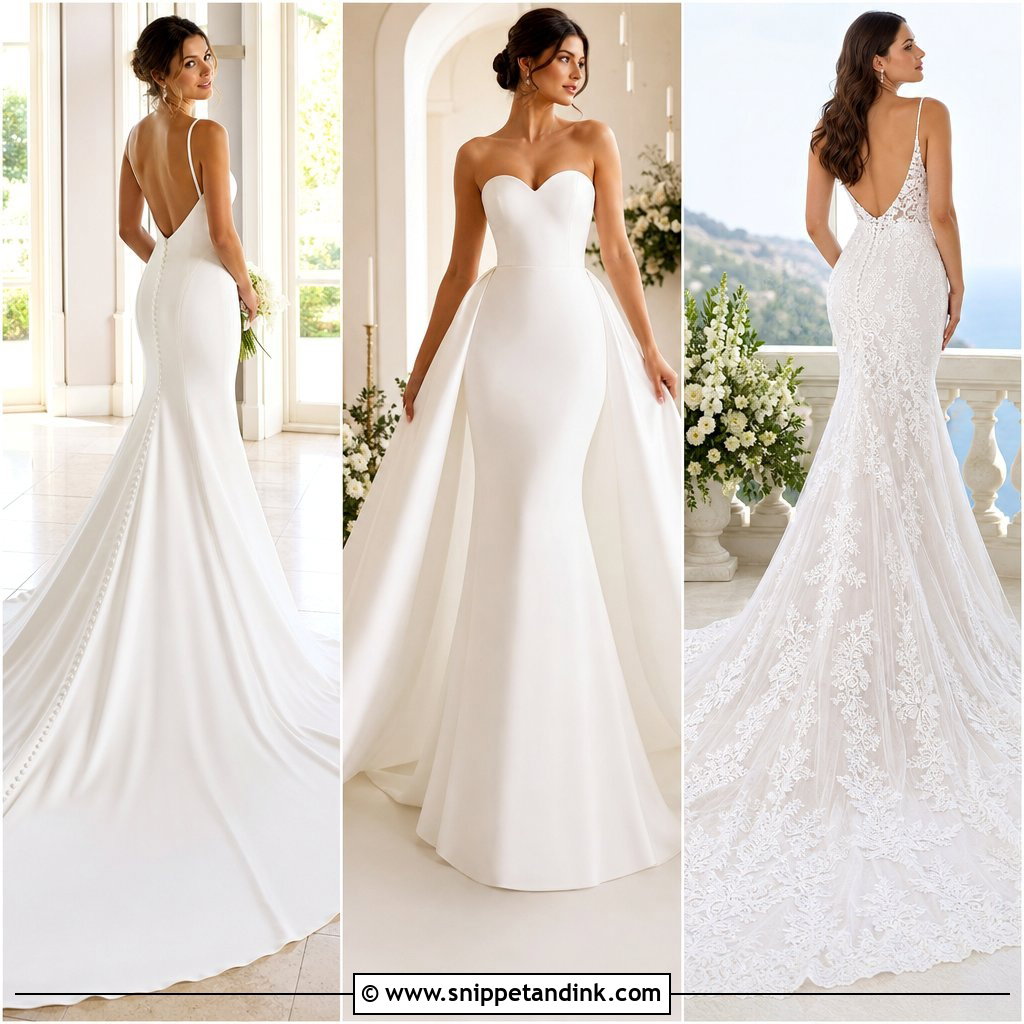
Crepe with a sweep train is the dress I suggest for courthouses and small venues, where a long train would spend the day being stepped on. The sweep only brushes the floor, so the fabric falls smoothly behind a column or slim A-line. A square neckline and covered buttons give quiet detail. White slingbacks and sculptural earrings suit the clean line, as does a sheer fingertip or chapel veil rather than anything heavily trimmed. Lightweight crepe can cling and show undergarment lines, so check the fit from the side in daylight.
4. Detachable Train Wedding Dress With Fitted Gown
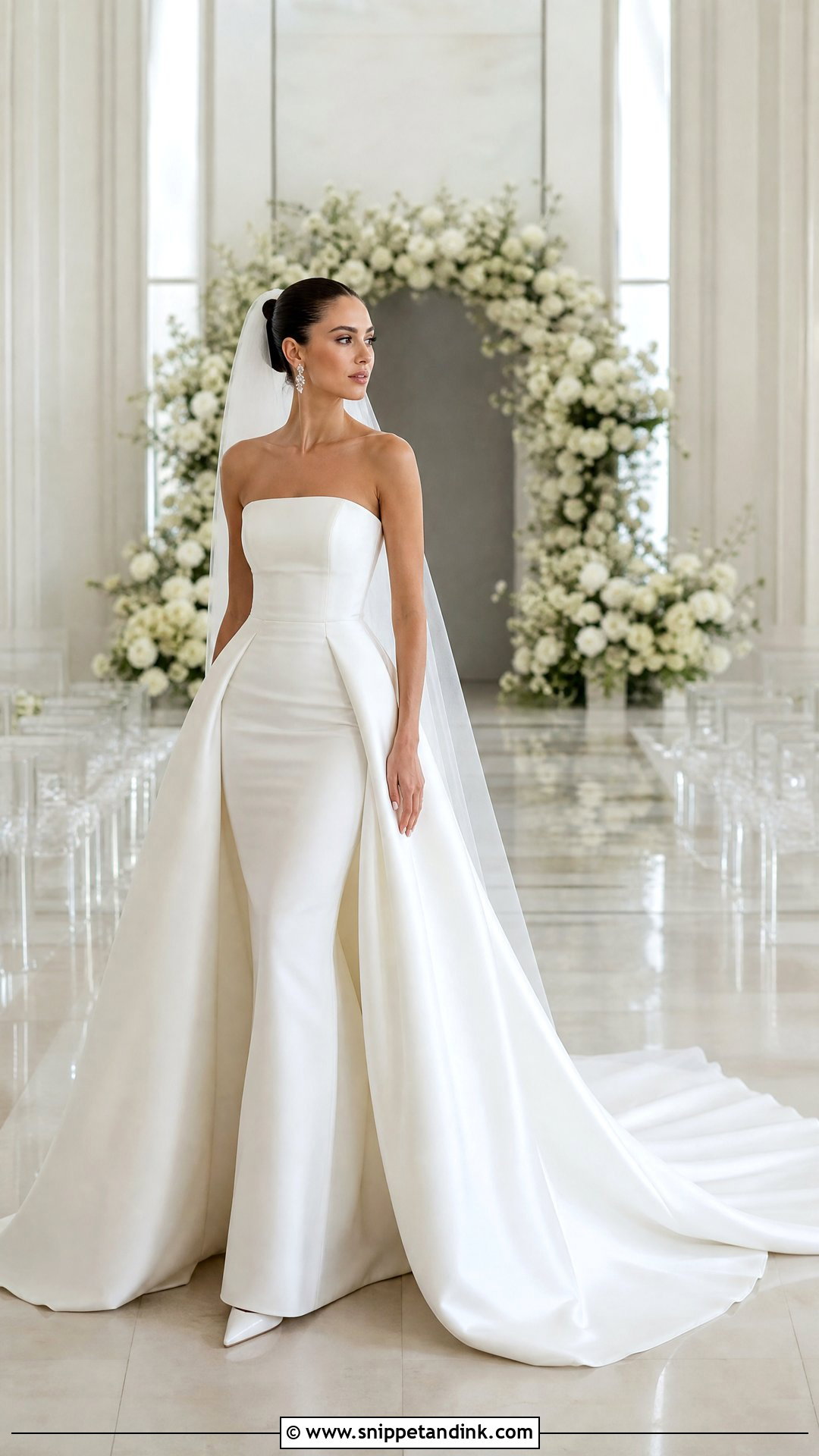
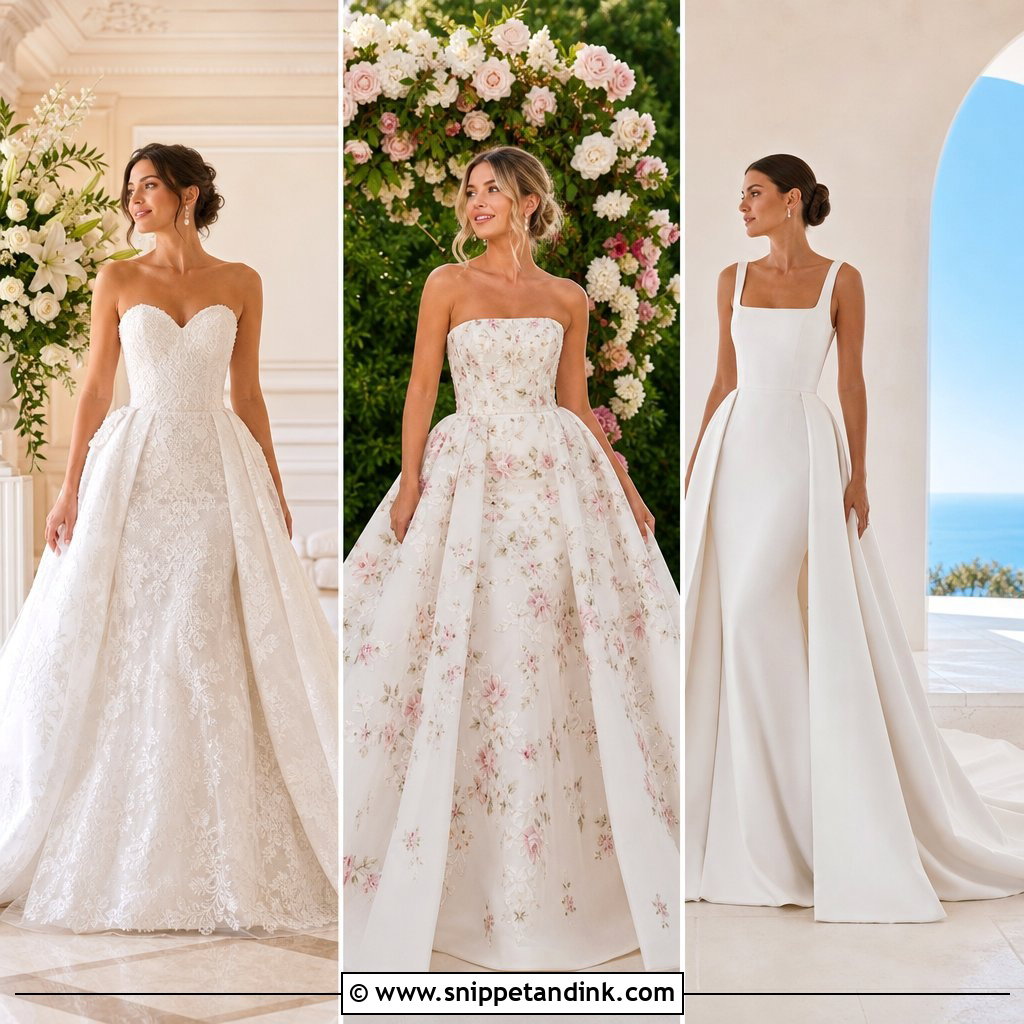
A detachable train gives you two looks without a full outfit change. Start with a fitted crepe, satin or lace gown you’d be happy wearing all night, then add a dramatic overskirt or removable train at the waist for the ceremony. Strapless or off-shoulder necklines balance the layered look. The detail I check closest is the attachment: hooks or snaps should sit flat under the train and be invisible once it’s removed, or you’ll see little bumps along the waist in every reception photo. Swap the veil for a hair comb when the train comes off.
5. Watteau Train Wedding Dress With Square Neckline
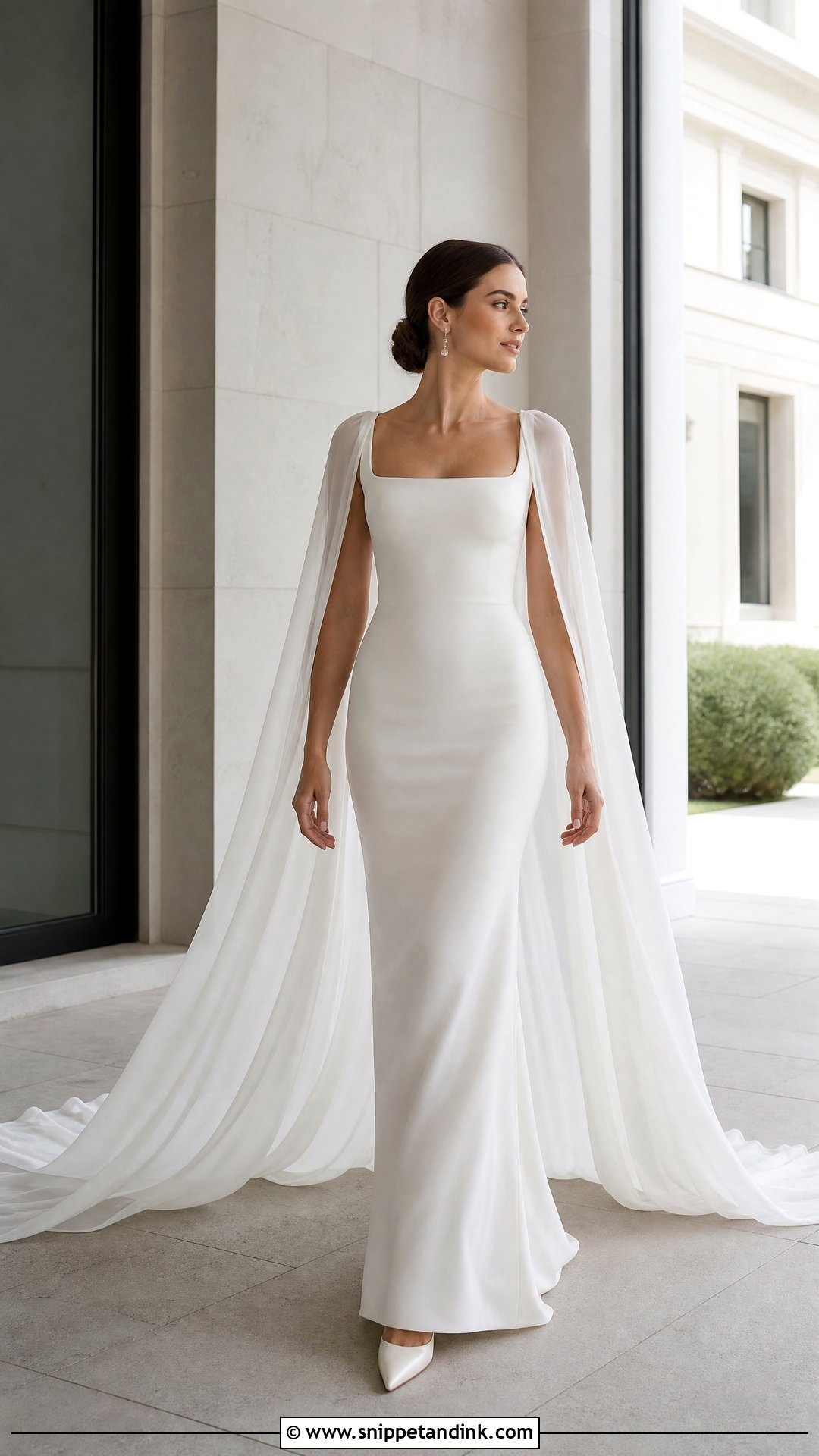
A Watteau train hangs from the shoulders or upper back, so its weight is carried by the neckline rather than the waist. That’s worth knowing: in heavy fabric it pulls the front of the dress backward. Lightweight organza, chiffon or soft tulle moves well without dragging. A square-neck column keeps the front simple so the back gets the attention. A veil is optional, since the Watteau already frames the shoulders, and a detachable version can come off after portraits for an easier evening. It photographs best against clean architecture.
6. Basque Waist Wedding Dress With Long Train
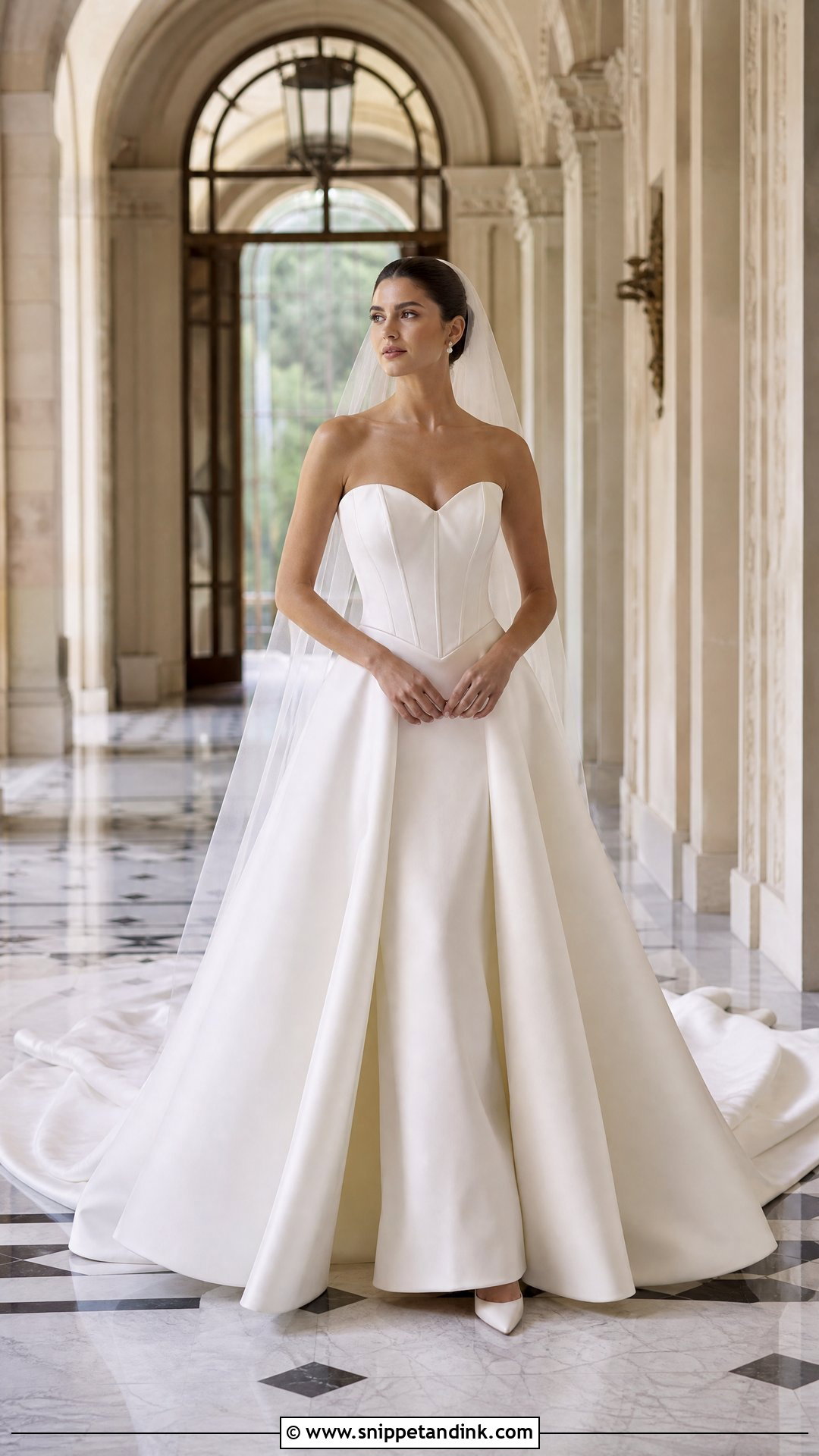
A basque waist dips into a point below the natural waist, which lengthens the torso and gives a full skirt a sculpted start. With satin, mikado or layered tulle running into a chapel or cathedral train, the result looks regal. Keep accessories small, such as pearl studs and satin pumps, because the waistline is the focus. A shorter veil keeps attention on the point; a cathedral veil pushes the formality further. These skirts are heavy, so practise sitting and walking, and plan a reliable multi-point bustle early.
7. Off Shoulder Wedding Dress With Lace Train
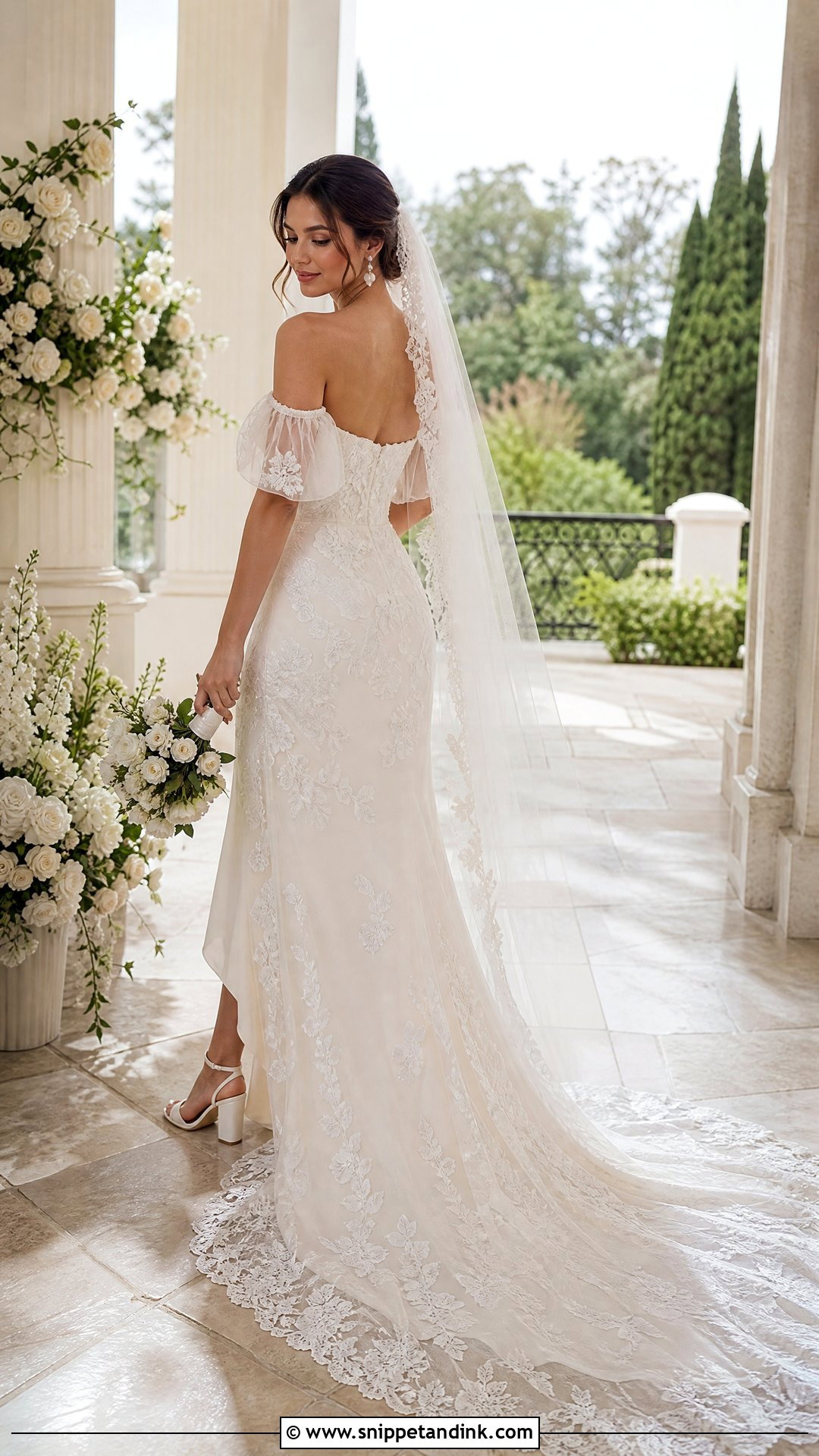
The off-shoulder bodice is where I spend the most time with this dress. The sleeves need to sit low enough to frame the shoulders while still letting you lift your arms to hug and dance. An A-line or fit-and-flare both work. Let floral appliqués grow denser toward the hem and continue onto the chapel train so the back view looks complete. Pearl earrings, ivory block heels and a sheer veil with scattered lace motifs suit it. In the fitting, raise your arms, sit and walk several steps; if the neckline rides up, it needs a stronger internal band.
8. Long Sleeve Wedding Dress With Cathedral Train
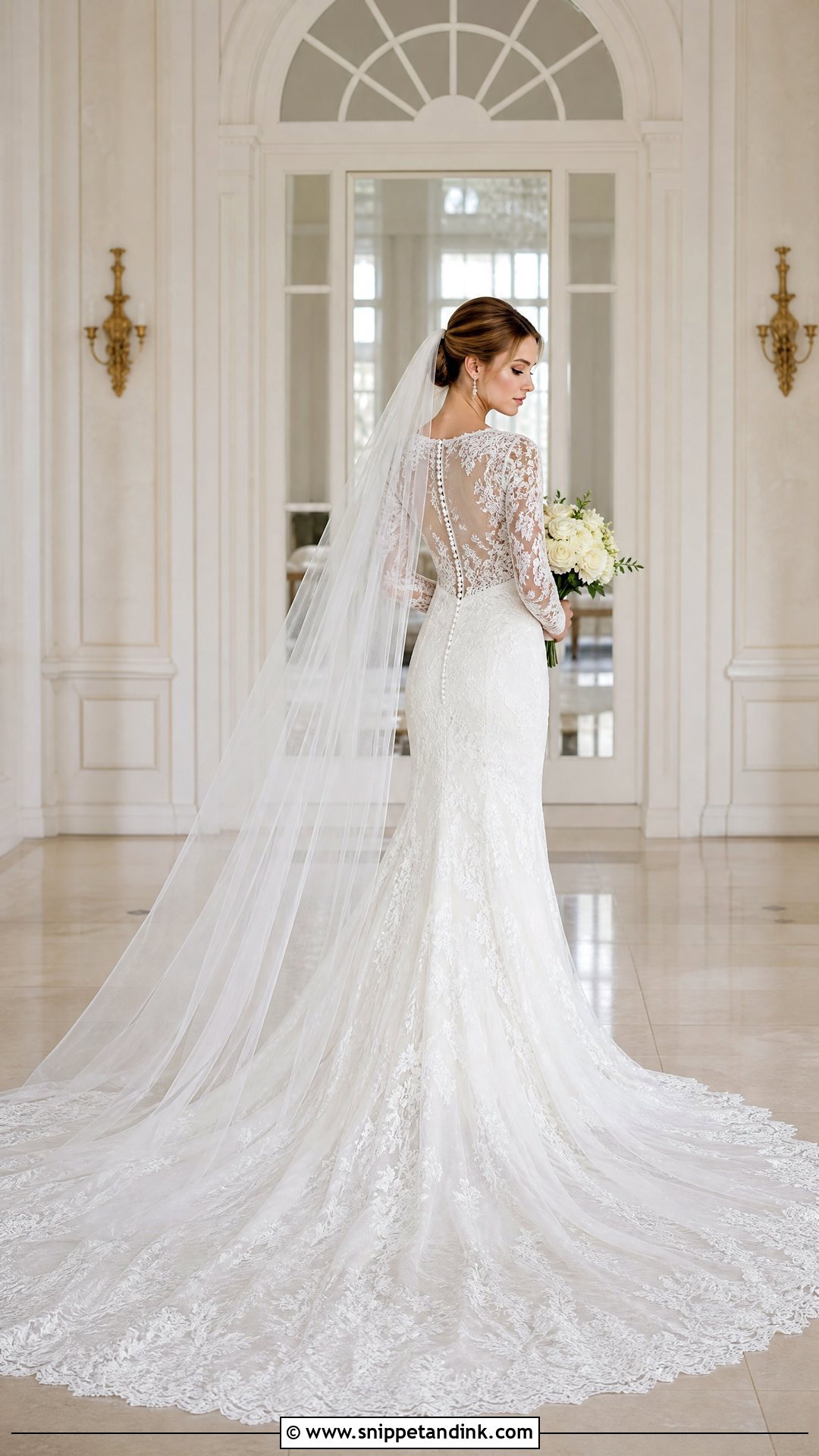
Long sleeves with a cathedral train is a lot of gown, and it suits a cold-weather church or a formal indoor room far better than a summer garden. Illusion lace sleeves stay light; fitted crepe sleeves look cleaner. A defined waist stops all that fabric looking heavy, and an open or buttoned back adds interest from behind. Bend your elbows fully in the fitting, because tight sleeves restrict more than you’d expect when holding a bouquet. A bustle lined with fabric stops lace or buttons on the train from rubbing during the reception.
9. Strapless Wedding Dress With Bow Train
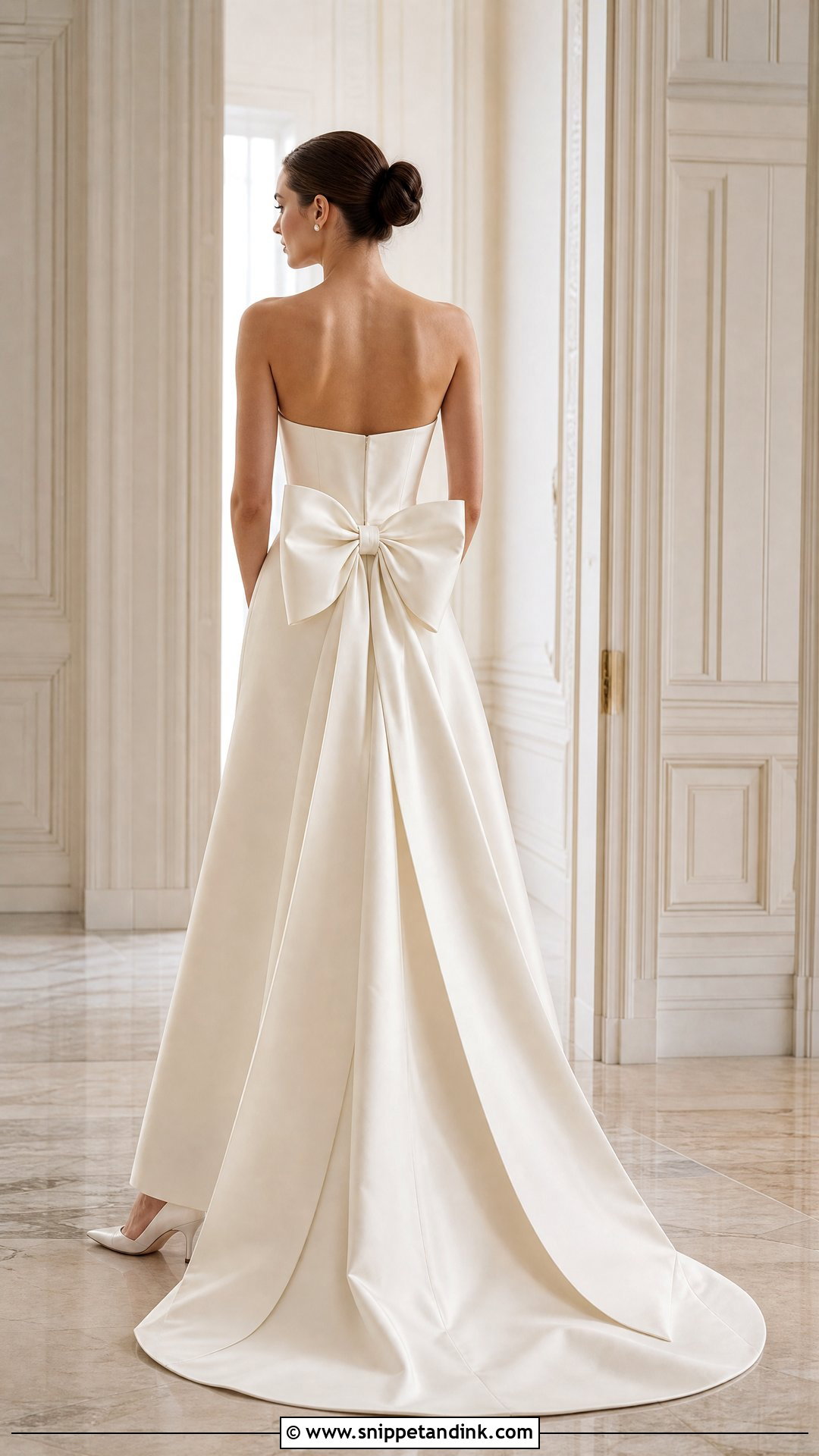
A big back bow is a strong focal point, and it needs a plain satin or mikado gown so it looks deliberate rather than excessive. Long ribbon tails running down a chapel train move nicely in aisle photos. Check the weight and the placement: a heavy bow set too low pulls the waist down, and a soft fabric bow droops within hours. Satin and mikado hold their loops. A neat bun shows off the back, and a short veil won’t compete. A detachable bow gives you a cleaner look for dancing.
10. Corset Wedding Dress With Tulle Train
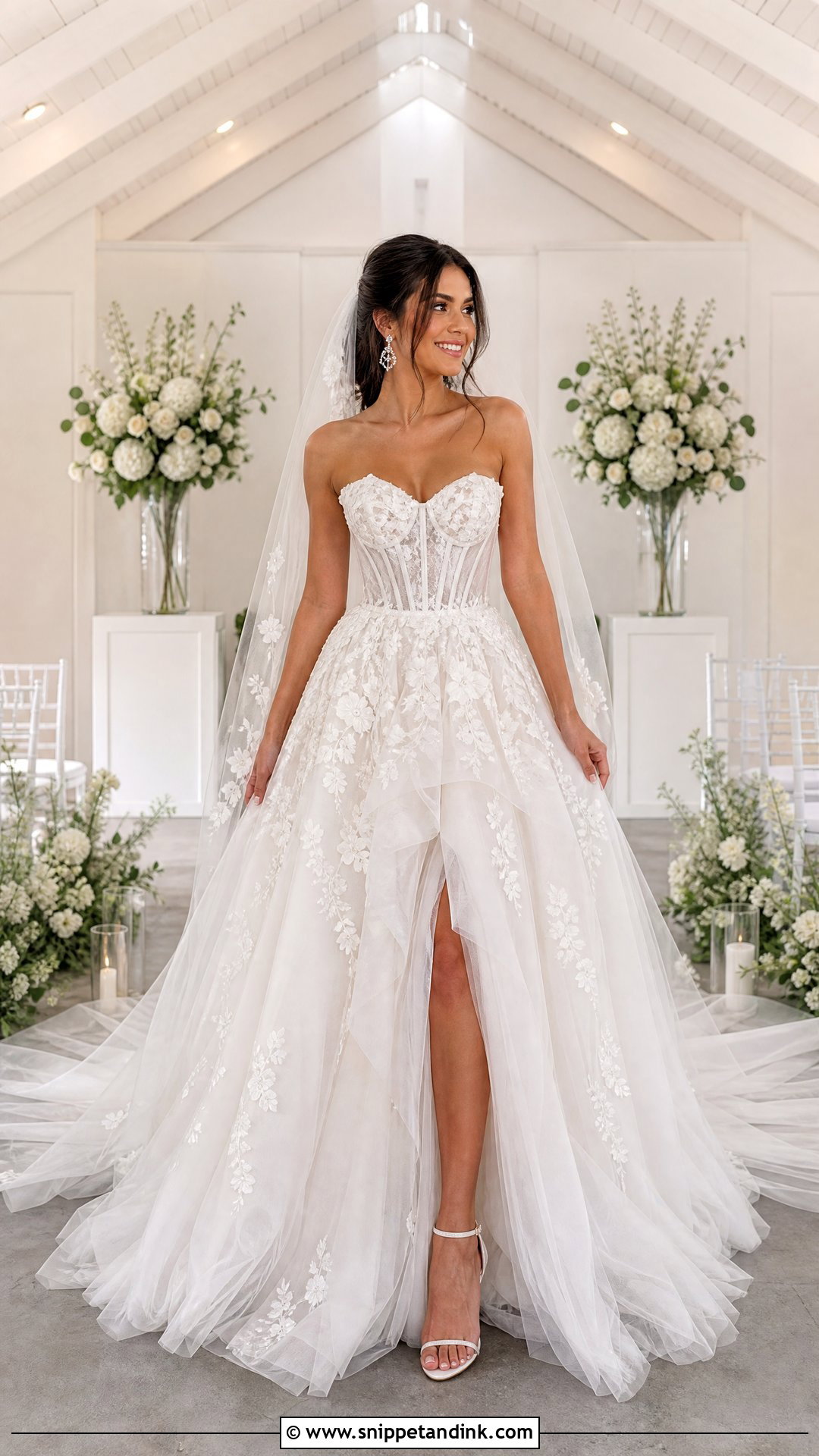
Tulle softens a corset’s structure, and a layered tulle train adds dimension without the weight of satin. Look for proper boning and well-placed cups, with opaque lining or subtle sheer panels. A full A-line skirt gives volume without ball-gown weight. Scattered appliqués that travel from bodice to train tie the two together. I’d always check the corset seated, as boned bodices that feel fine standing can dig in at dinner. The bustle needs to lift every tulle layer evenly, or the lower layers drag while the top one stays up.
11. Pearl Wedding Dress With Chapel Train
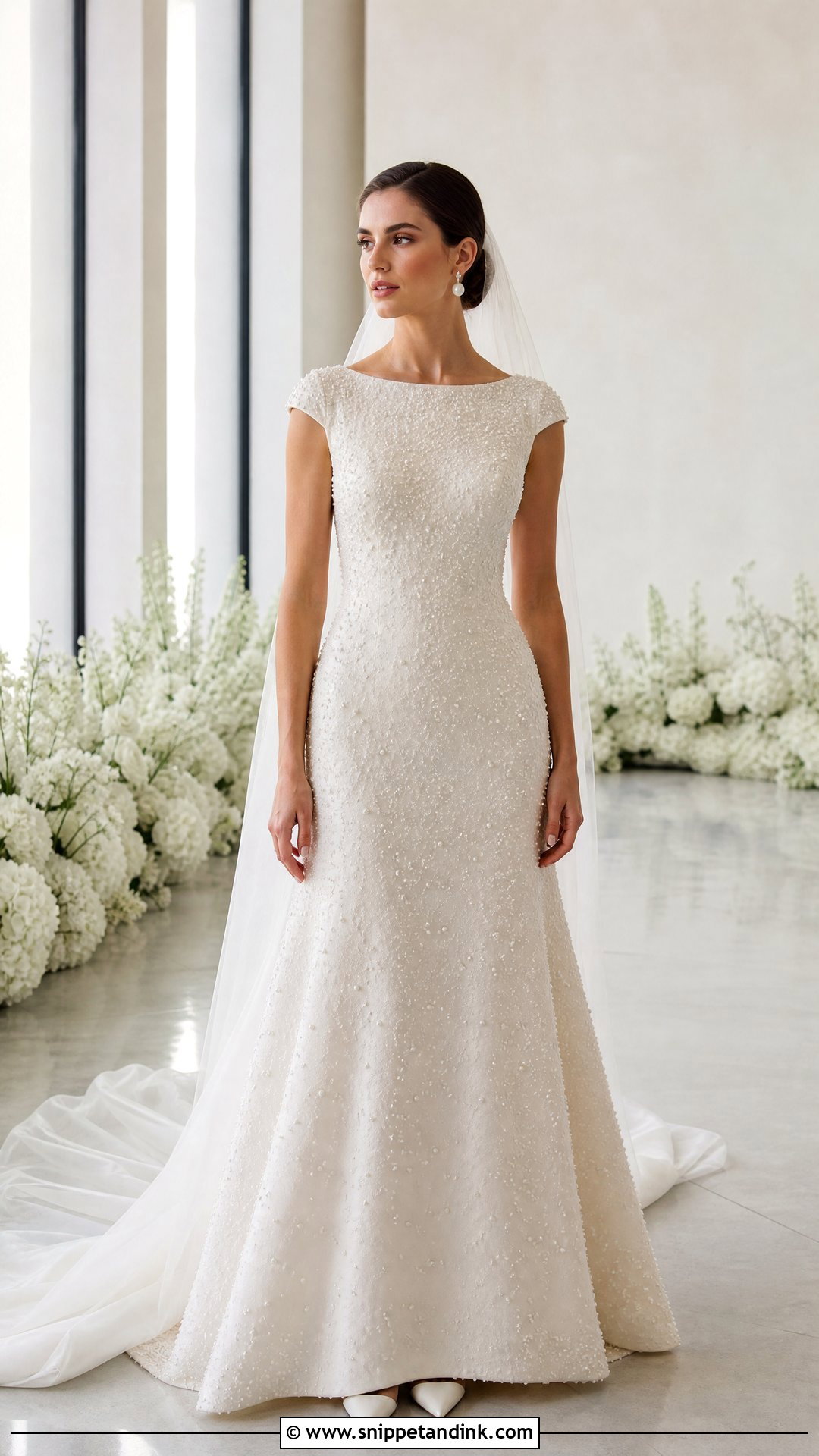
Pearls give a soft gleam rather than sparkle, and spreading them gradually from bodice to skirt keeps a pearl gown from looking busy. A fitted A-line or column with a chapel train suits it. Pearl drop earrings and plain white pumps are enough; leave out a heavy necklace if the neckline is already detailed. The hem and train take the most friction from floors and steps, so check pearls there are stitched securely, not glued. A fabric-lined bustle protects them once the ceremony and portraits are done.
12. Sequined Wedding Dress With Dramatic Train
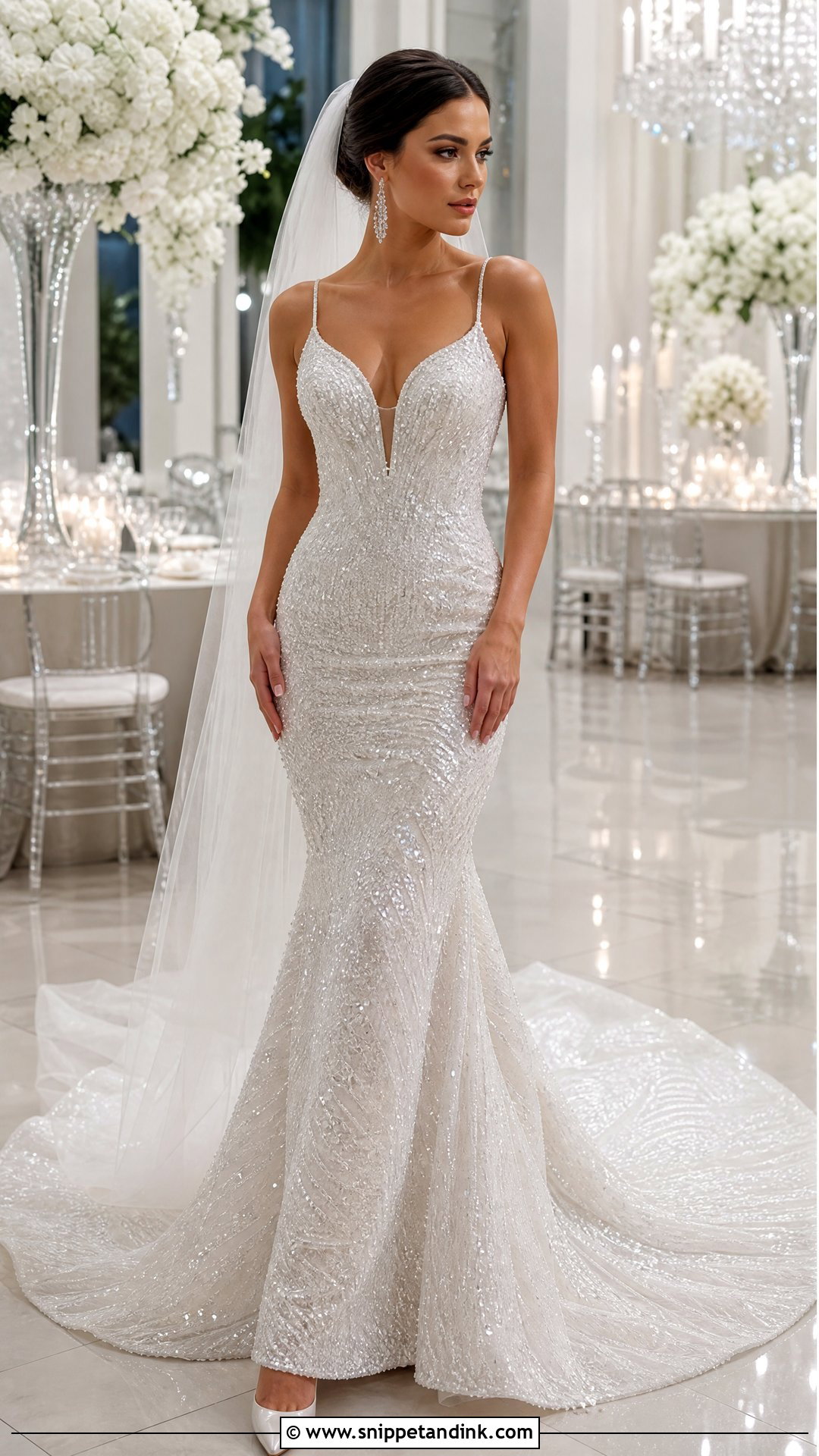
Sequins catch light with every move, so I keep the silhouette simple, a fitted trumpet or slim A-line, and let the train carry the drama. Clear sequins, silver beading or tonal embroidery add shine without changing the color. Before you buy, rub the inside of your arm against the bodice and lift the train: sequins can scratch and add real weight. The bustle has to spread that weight over several points rather than hanging it from one. A smooth low ponytail or bun balances the reflective fabric.
13. Square Neck Wedding Dress With Court Train
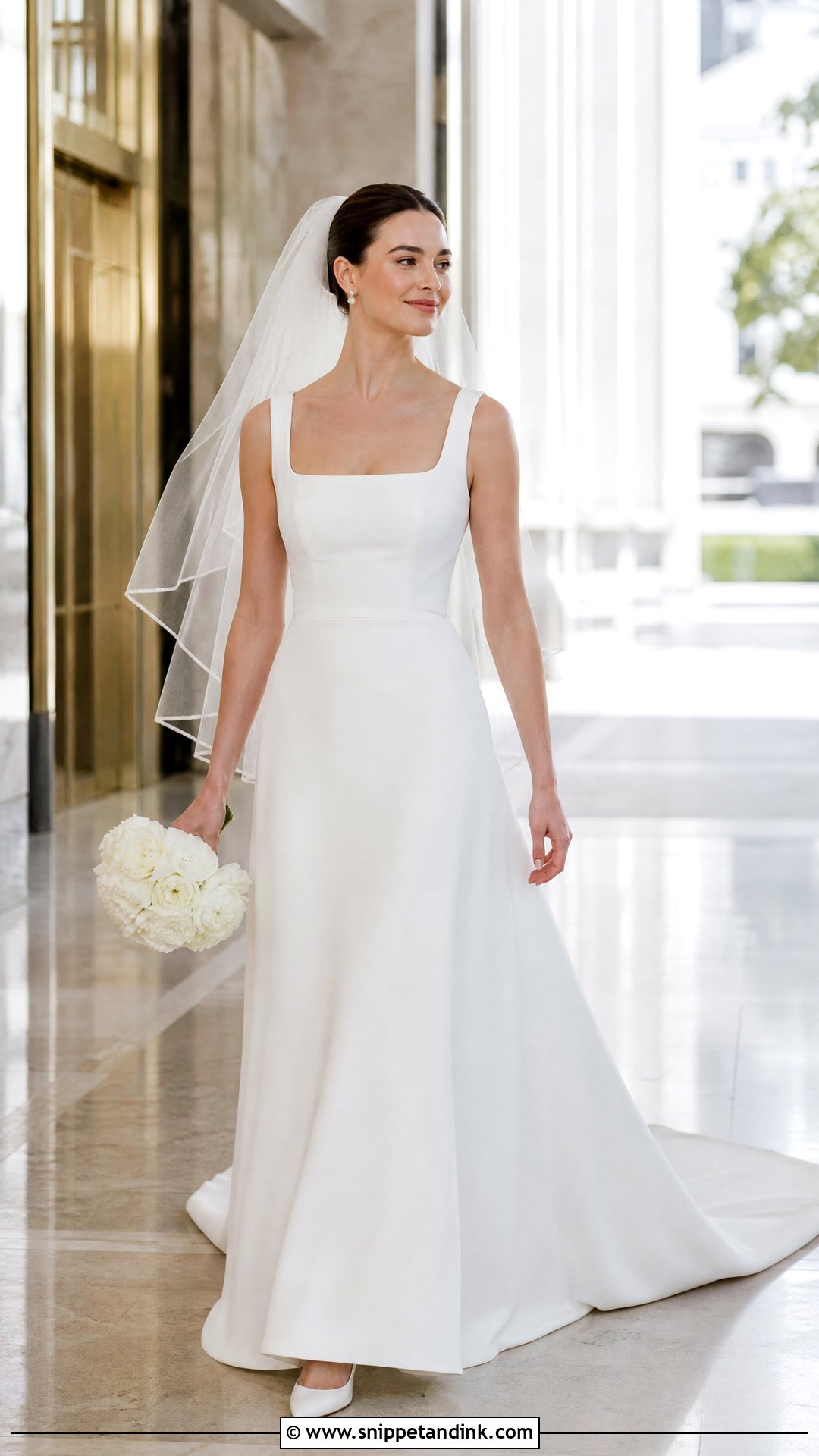
A court train extends roughly a foot behind you, enough movement to feel bridal without the logistics of a long train, so I reach for it at restaurants, city venues and gardens. A fitted crepe gown or structured satin A-line with wide straps gives comfortable support. Covered buttons running down the back draw the eye straight down to the train. Pointed pumps and a fingertip veil suit it, with a low bun or half-up style framing the square neckline. Many court trains are short enough not to need a bustle at all, which is a real advantage.
14. Halter Wedding Dress With Sweep Train
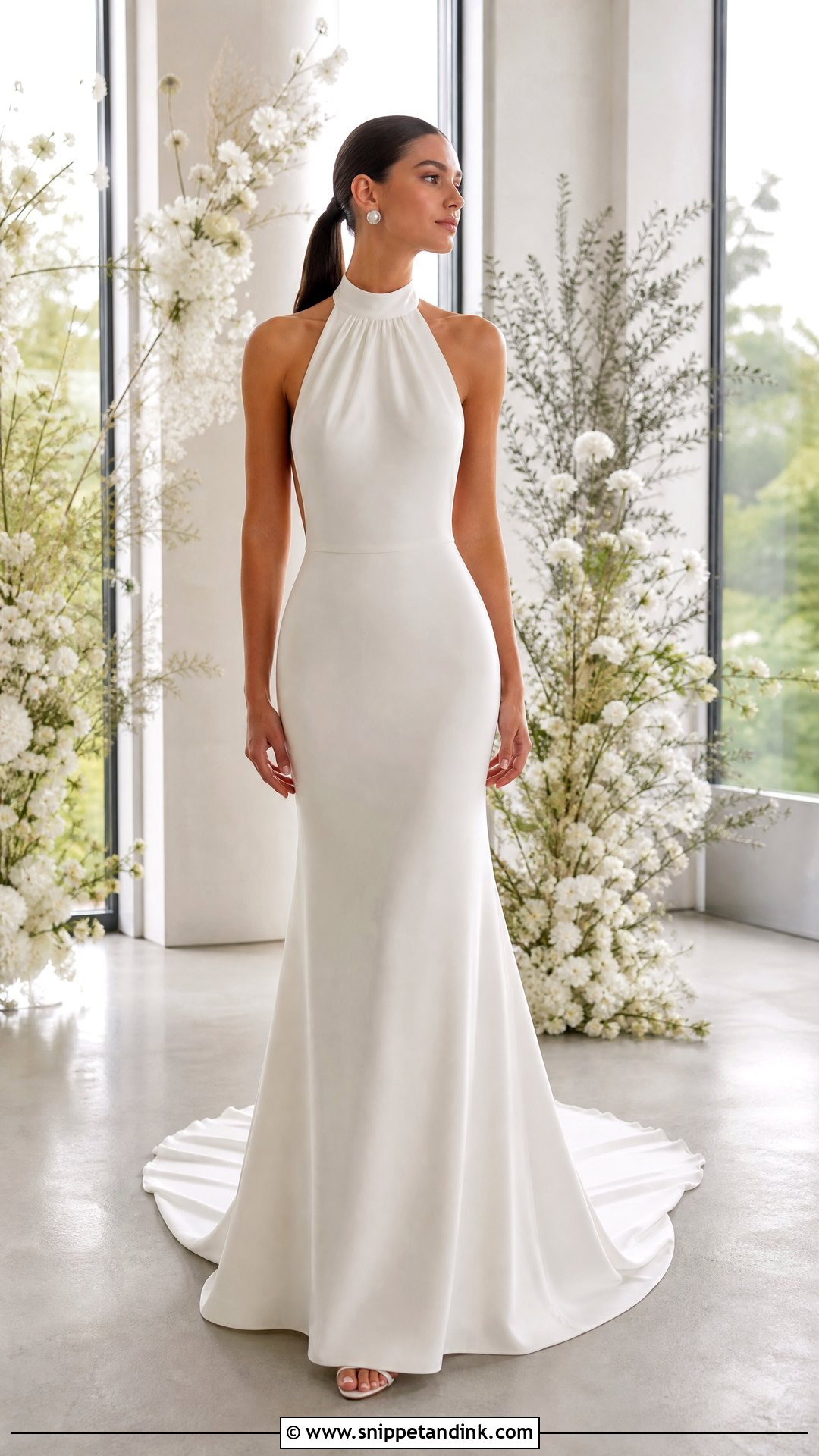
A halter wedding dress with a sweep train suits fluid fabrics like crepe, satin or charmeuse that follow the body without a heavy skirt. A high halter can be balanced with an open back. The neck strap is the weak point: after several hours it can press on the back of the neck, so ask for a covered hook rather than a tie and wear it for an hour at home before the wedding. A low knot or smooth ponytail keeps the neckline clear. The short train makes it easy for an intimate ceremony.
15. One Shoulder Wedding Dress With Chapel Train
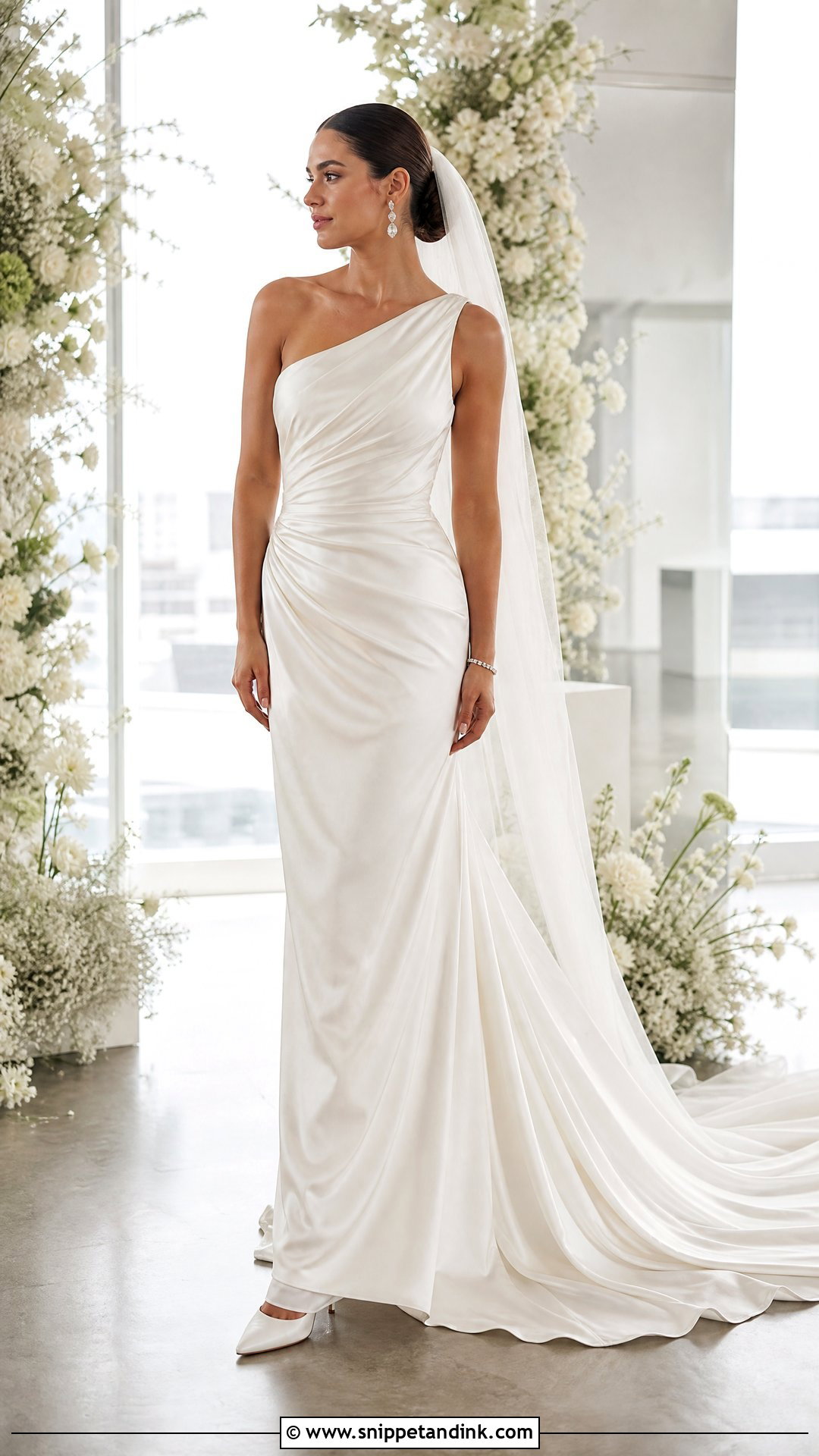
One-shoulder necklines can twist as you walk, especially with a train pulling behind, so fit is the first thing I check, front, side and back. A fitted column looks modern; a soft A-line moves more. Draped satin, crepe and lightweight mikado all hold the asymmetric line well. Skip the necklace; statement earrings and a delicate bracelet do the work. If the shoulder carries a bow or flower, I’d drop the veil altogether, since the two compete. Otherwise, a plain chapel veil tucked under a sleek bun works.
16. High Neck Wedding Dress With Lace Train
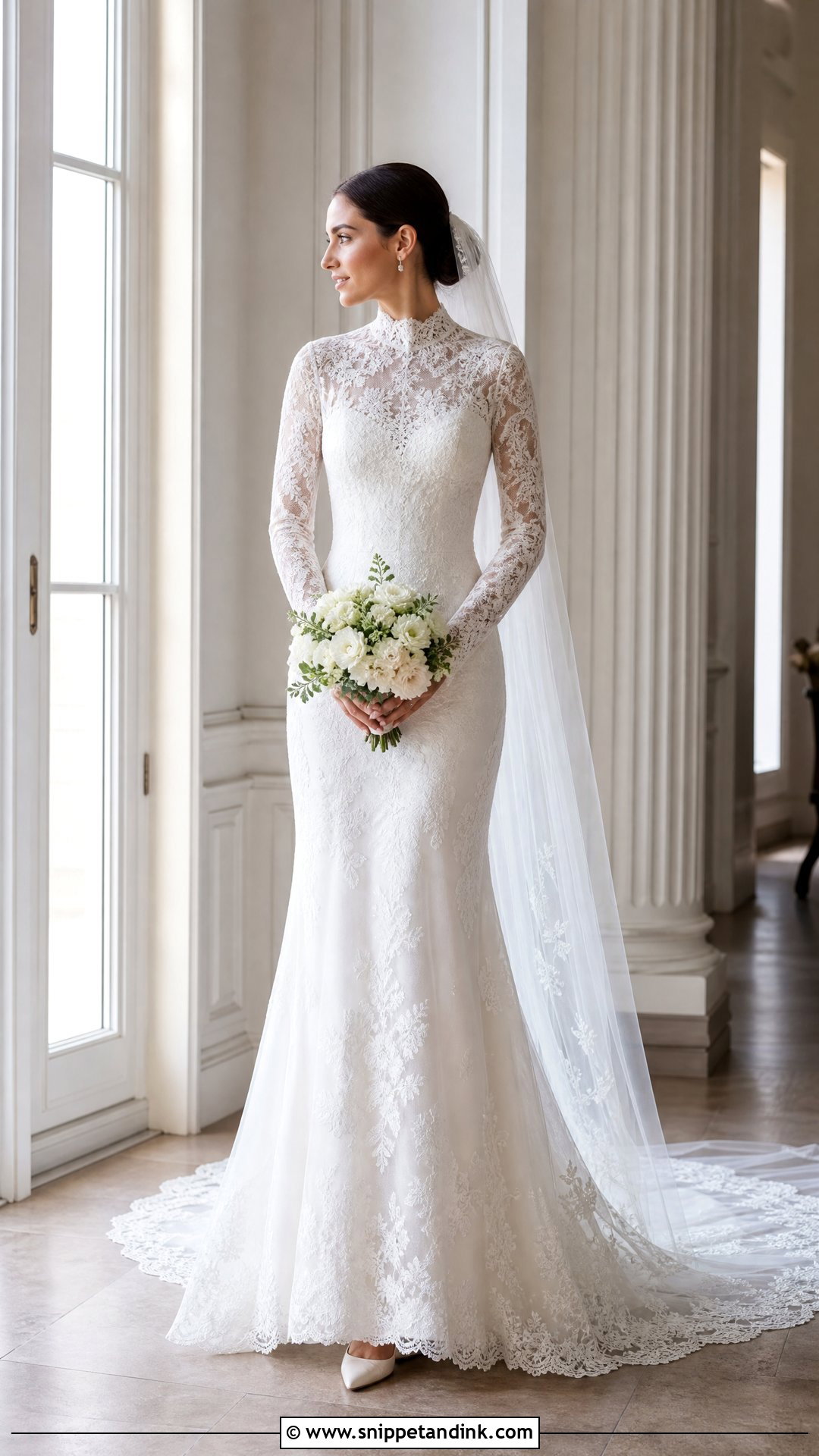
A high neck with a lace train gives coverage and a romantic finish. A fitted lace bodice, defined waist and softly flared skirt keep it balanced, and sheer detailing at the collarbone stops the neckline feeling heavy. When the lace pattern runs down the skirt and across a chapel train, it reads as one continuous design. Lace can scratch where it touches skin, so check armholes and inner seams are soft. Skip the necklace and set the veil under the hairstyle to avoid crowding the collar. The bustle should lift the train while keeping its lace border visible.
17. Plus Size A Line Wedding Dress With Train
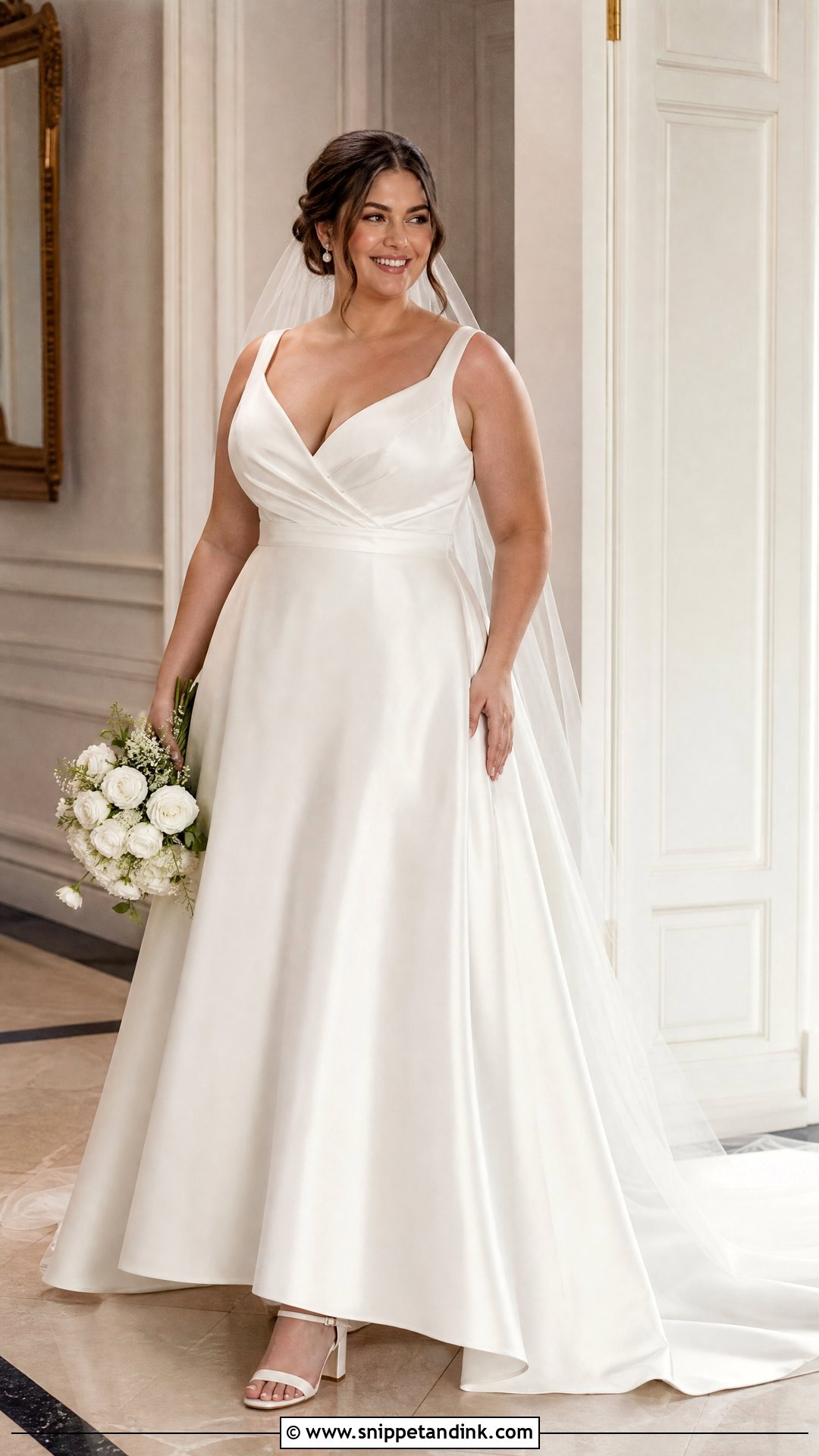
Support comes first. A structured bodice with internal boning, wide straps or supportive off-shoulder sleeves holds everything in place so you can forget about it. A defined natural or basque waist lets the A-line skirt fall without clinging. Satin looks polished, while tulle and lace are softer. A chapel train gives visible drama and is easier to bustle than an extra-long one. Fit matters more than the size on the label, so work with a specialist who listens. Sit, walk, lift your arms and turn at every fitting.
18. Petite Wedding Dress With Sweep Train
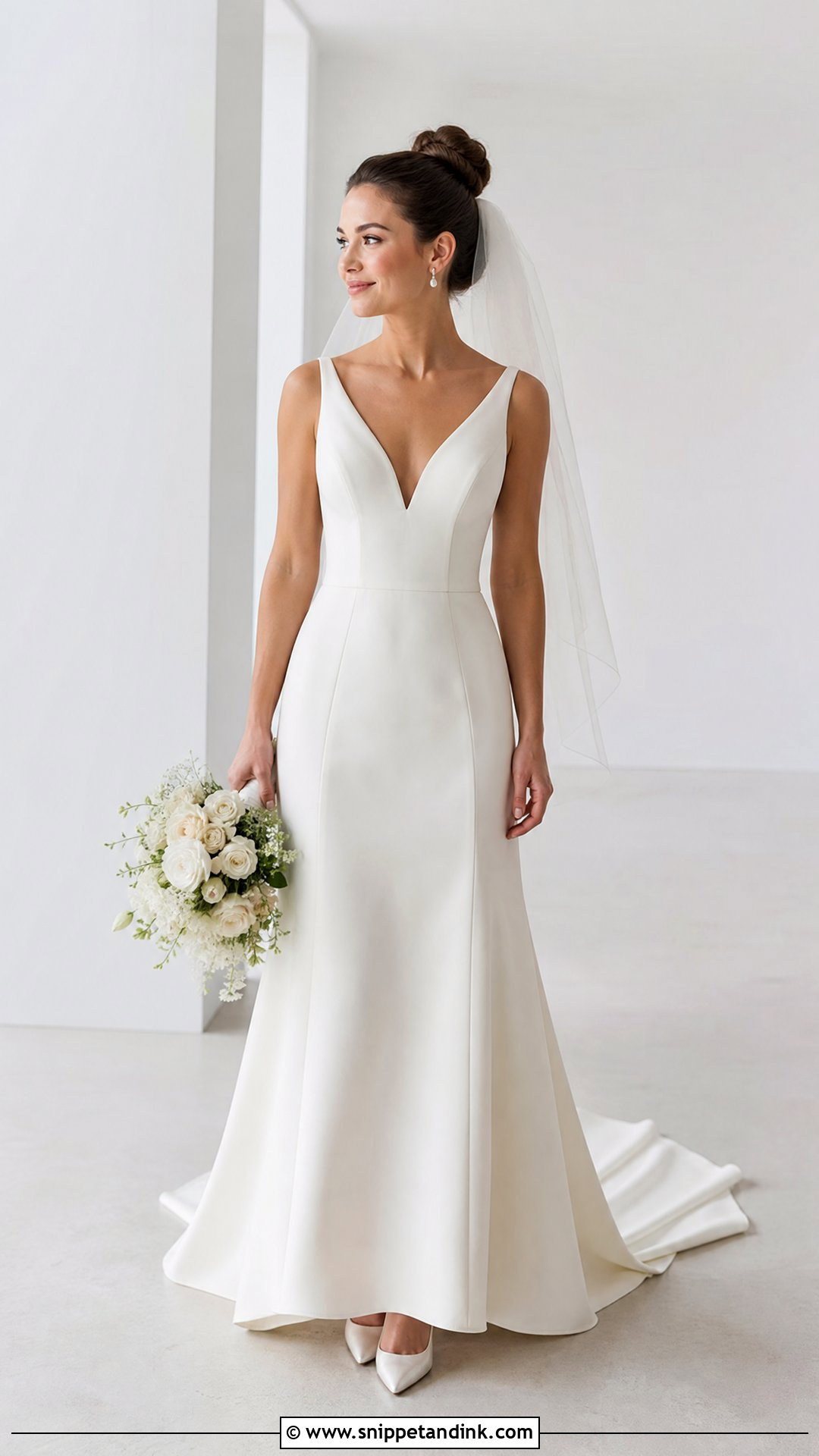
For a petite bride, too much train can swamp the frame, which is why I keep it to a sweep and keep it narrow. A column, sheath or narrow A-line with a raised or natural waist gives length, and vertical seams or a V-neck add to that. A lightly structured train follows the body rather than spreading wide. Pointed-toe heels and small drop earrings stay in proportion. Petite doesn’t mean plain, though: lace, beading and appliqués all work when they’re scaled down. Precise hemming does most of the work here.
19. Chiffon Beach Wedding Dress With Train
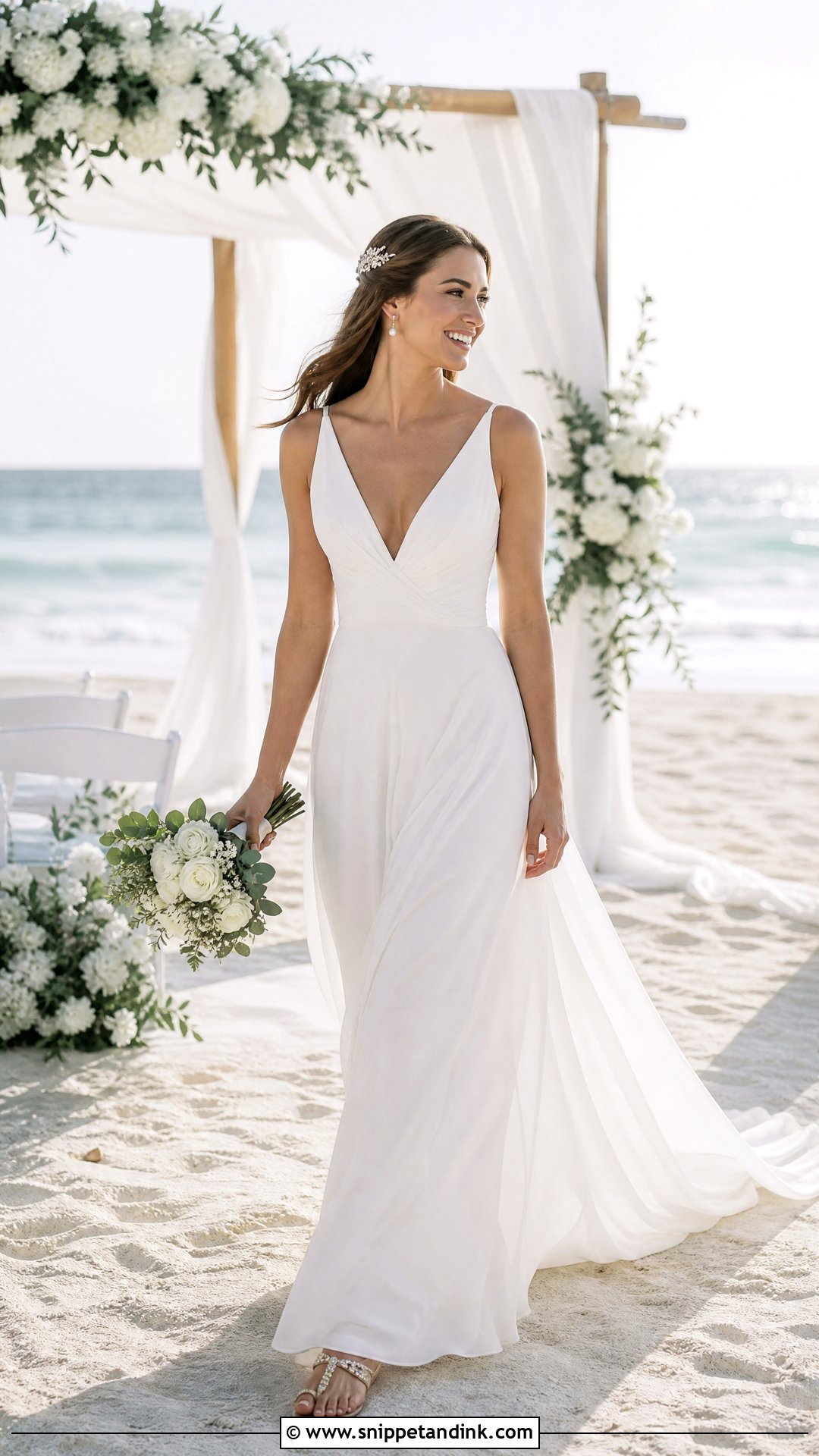
Chiffon is the right fabric for a beach because it moves with the wind instead of fighting it. Pick a sweep or court train; anything longer collects wet sand and doubles in weight. An A-line or empire waist flows without a stiff underskirt. Flat embellished sandals and a secure loose updo suit the setting, and a short veil or hair comb is easier than a long one. Avoid a beaded hem. A wrist loop on the train lets you lift it as you walk from the shoreline to the reception.
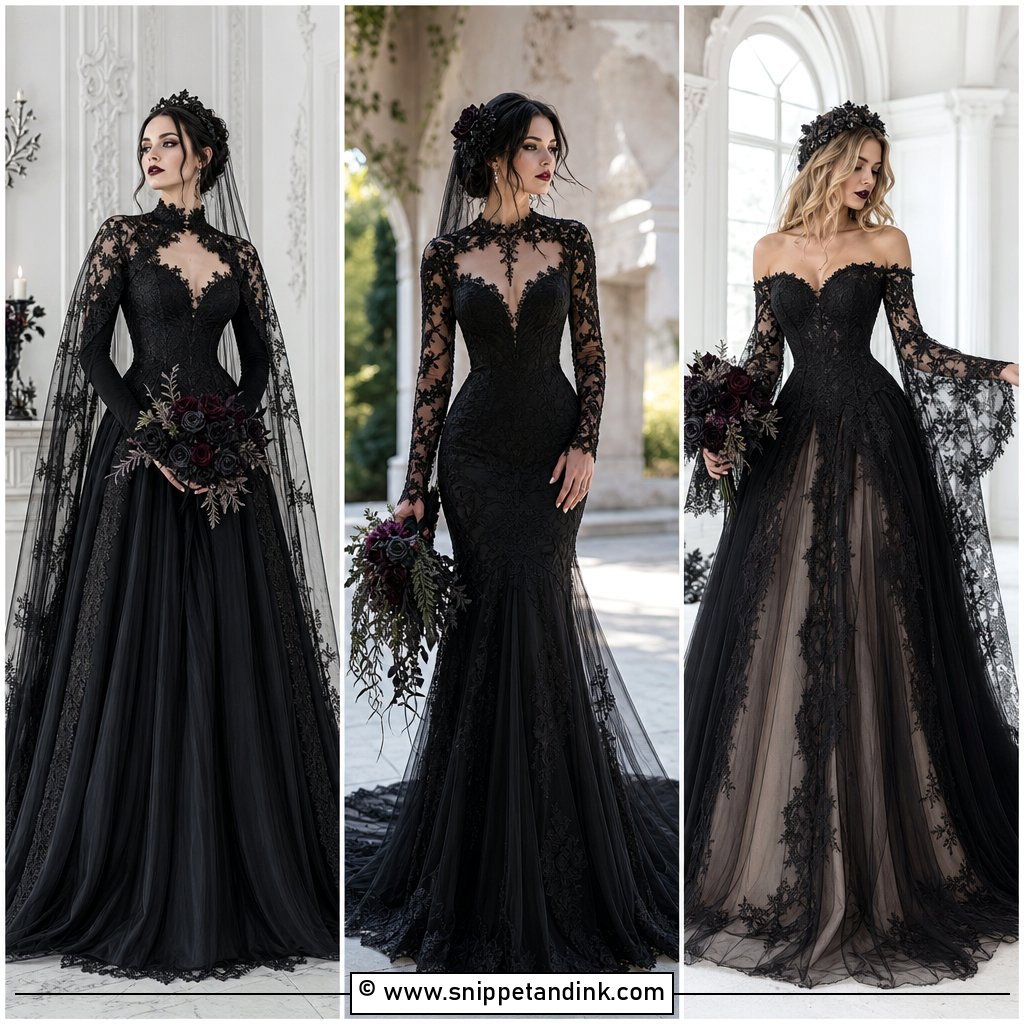
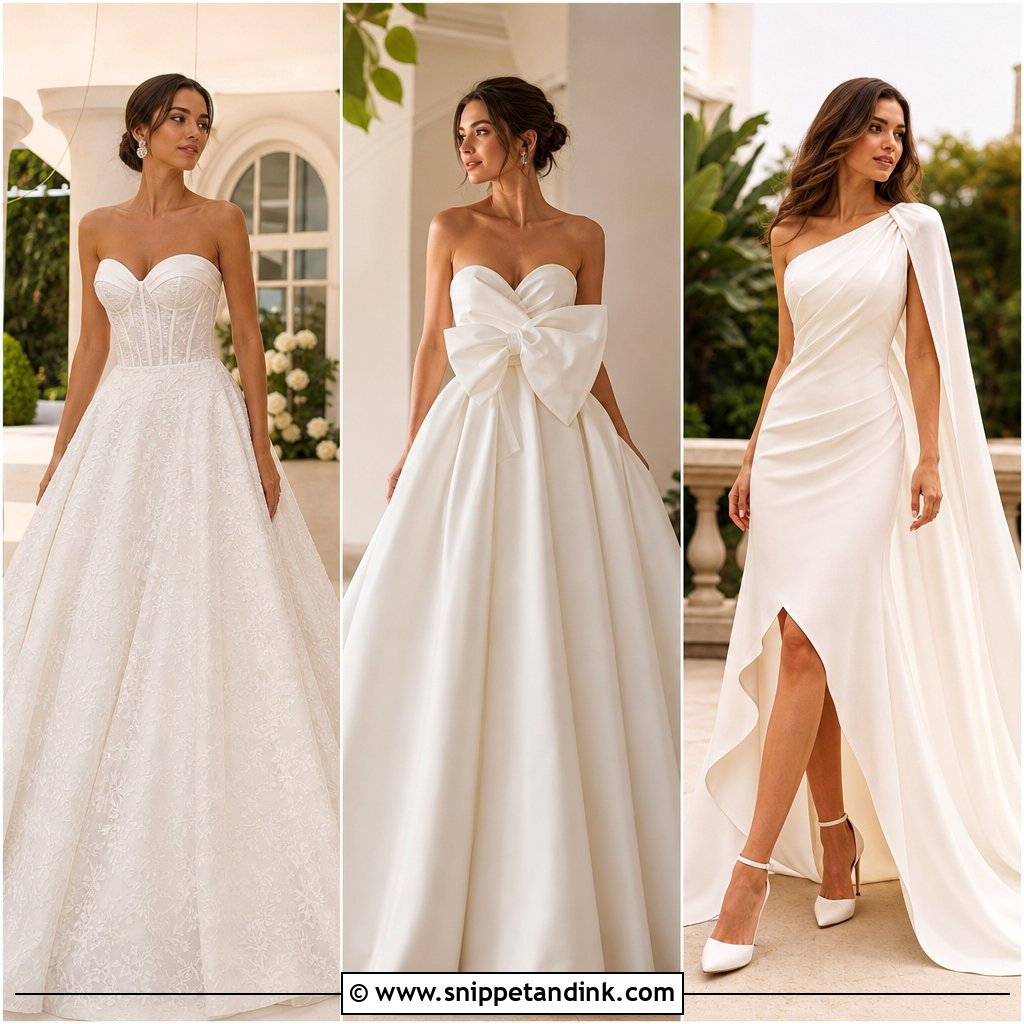

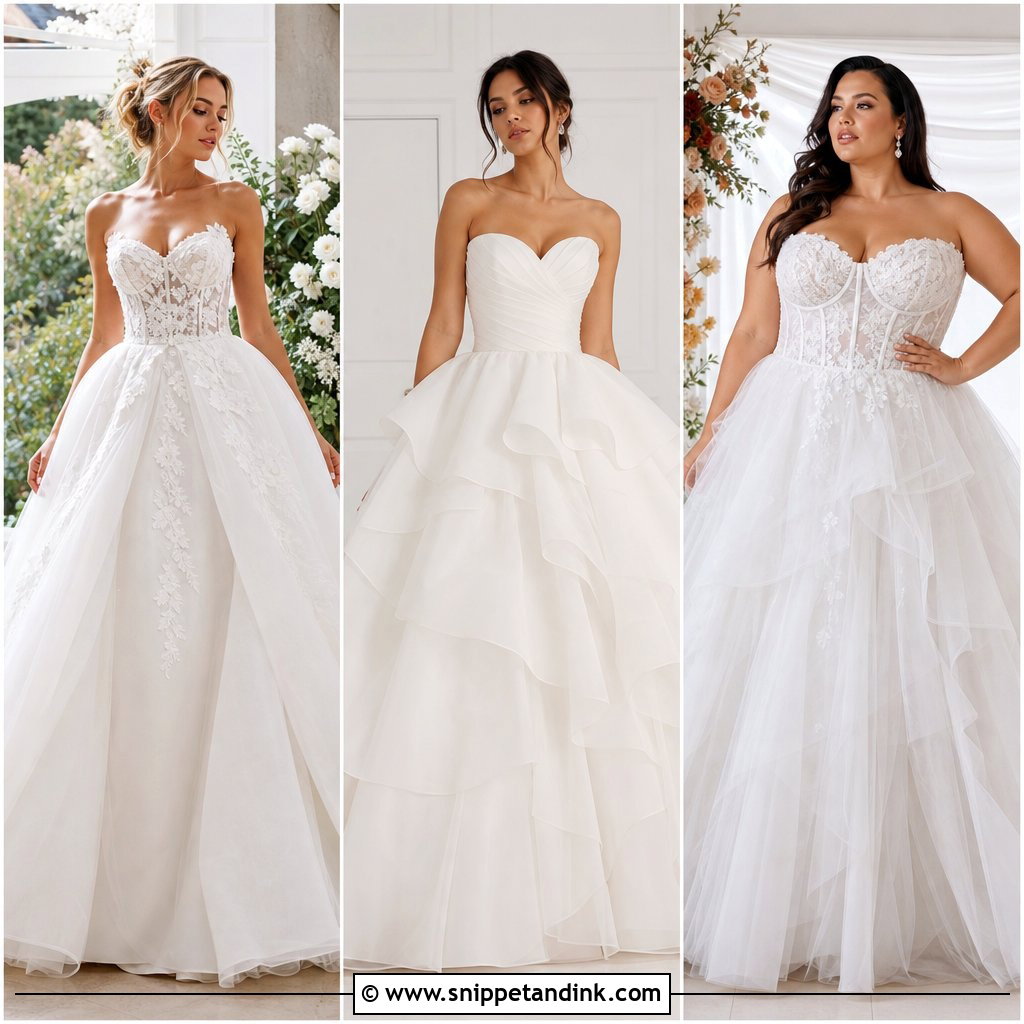

20. Floral Wedding Dress With Garden Train
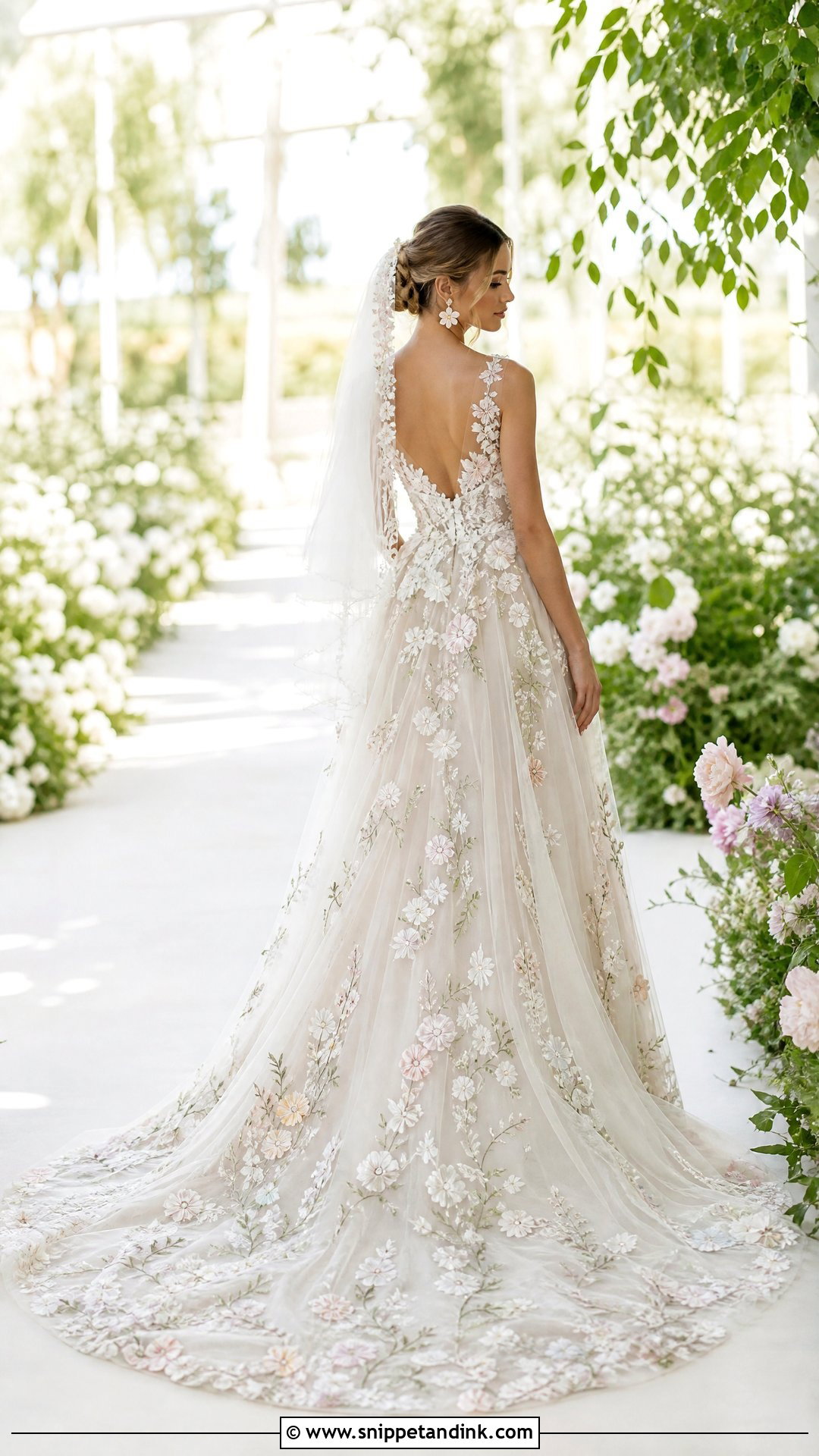
Three-dimensional flowers connect a gown to a garden, but they catch on everything: rough steps, boxwood and hay bales. A tulle A-line with botanical detail across bodice, skirt and chapel train looks romantic, with ivory-on-ivory for a classic look or faint blush, blue or green for a hint of color. I’d always ask for an aisle runner and have an attendant arrange the train before the ceremony and portraits. Block heels keep you steady on grass, and keeping the bouquet simpler than the gown stops the two competing.
21. Blush Wedding Dress With Cathedral Train
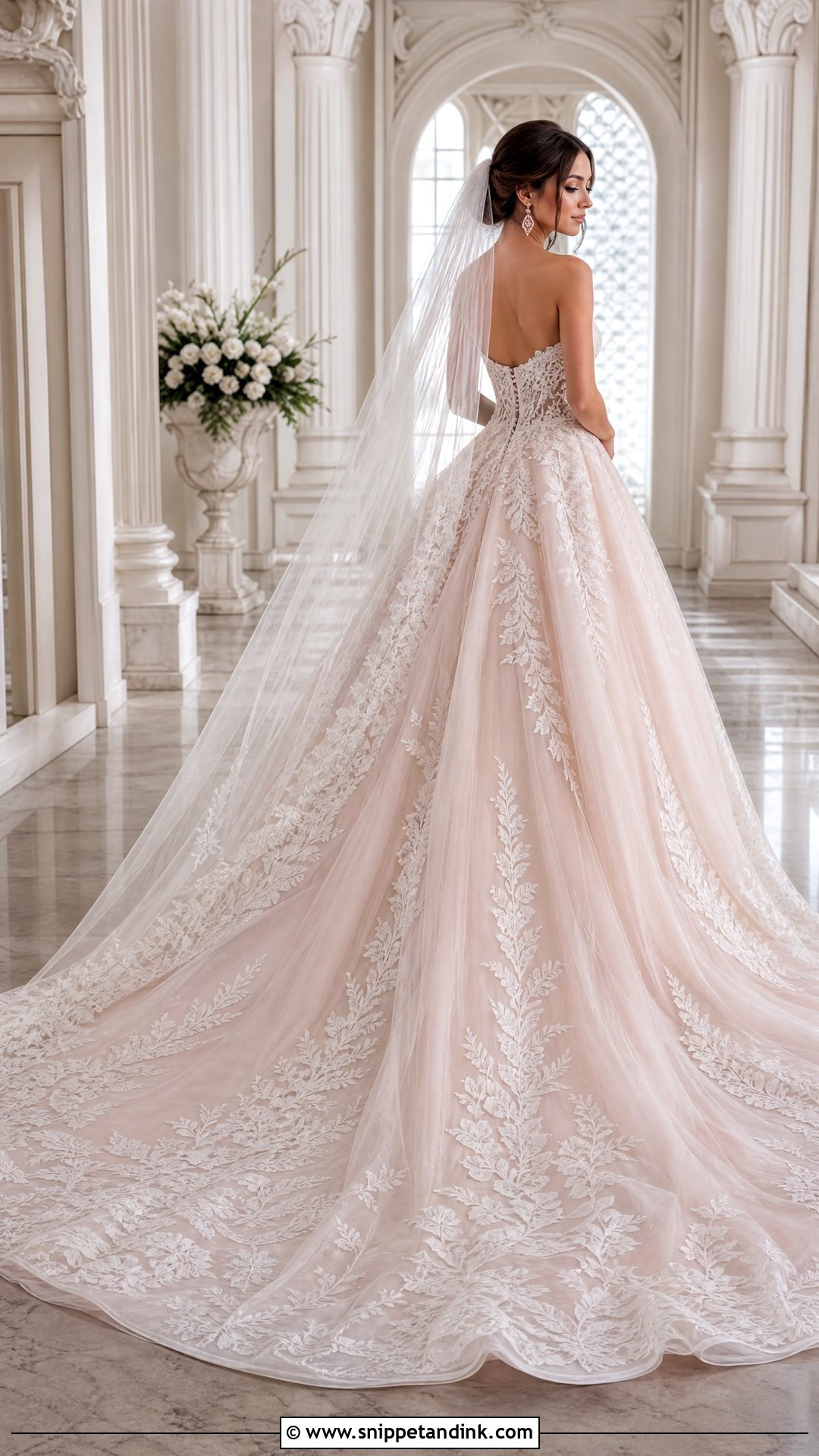
Blush can be subtle or obvious, and lighting changes it. Layers of pale pink, nude or soft rose tulle under ivory lace give depth without saturating the color. A fitted bodice and full A-line skirt give the cathedral train enough structure to spread. Neutral satin pumps, rose-gold earrings and a sheer ivory veil let the blush show. Look at the dress in daylight and under warm indoor light before you decide; some blushes go peach indoors. The train’s multiple layers need a strong bustle after the ceremony.
22. Blue Wedding Dress With Long Train
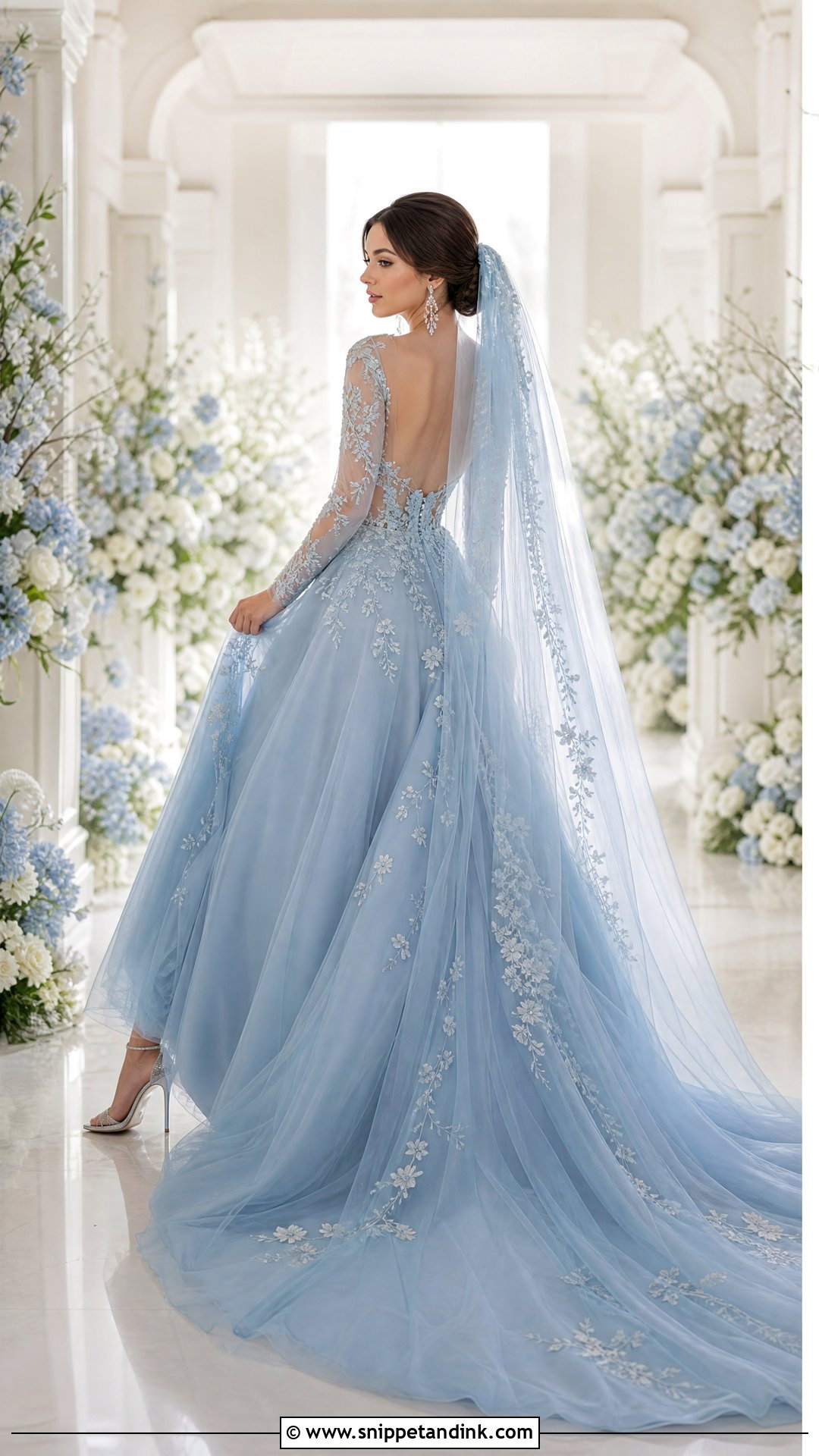
Pale blue is a gentle step away from white without losing formality. Misty blue tulle, grey-blue satin or an ivory gown with blue floral embroidery all work. A structured A-line supports a chapel or cathedral train and gives the color a grounded shape. Silver heels and crystal earrings suit it, with an ivory or matching blue sheer veil. Request swatches before choosing accessories, as blue shifts a lot between daylight, venue lighting and camera sensors. Keep the bouquet mostly neutral so the dress stays the color statement.
23. High Low Wedding Dress With Back Train
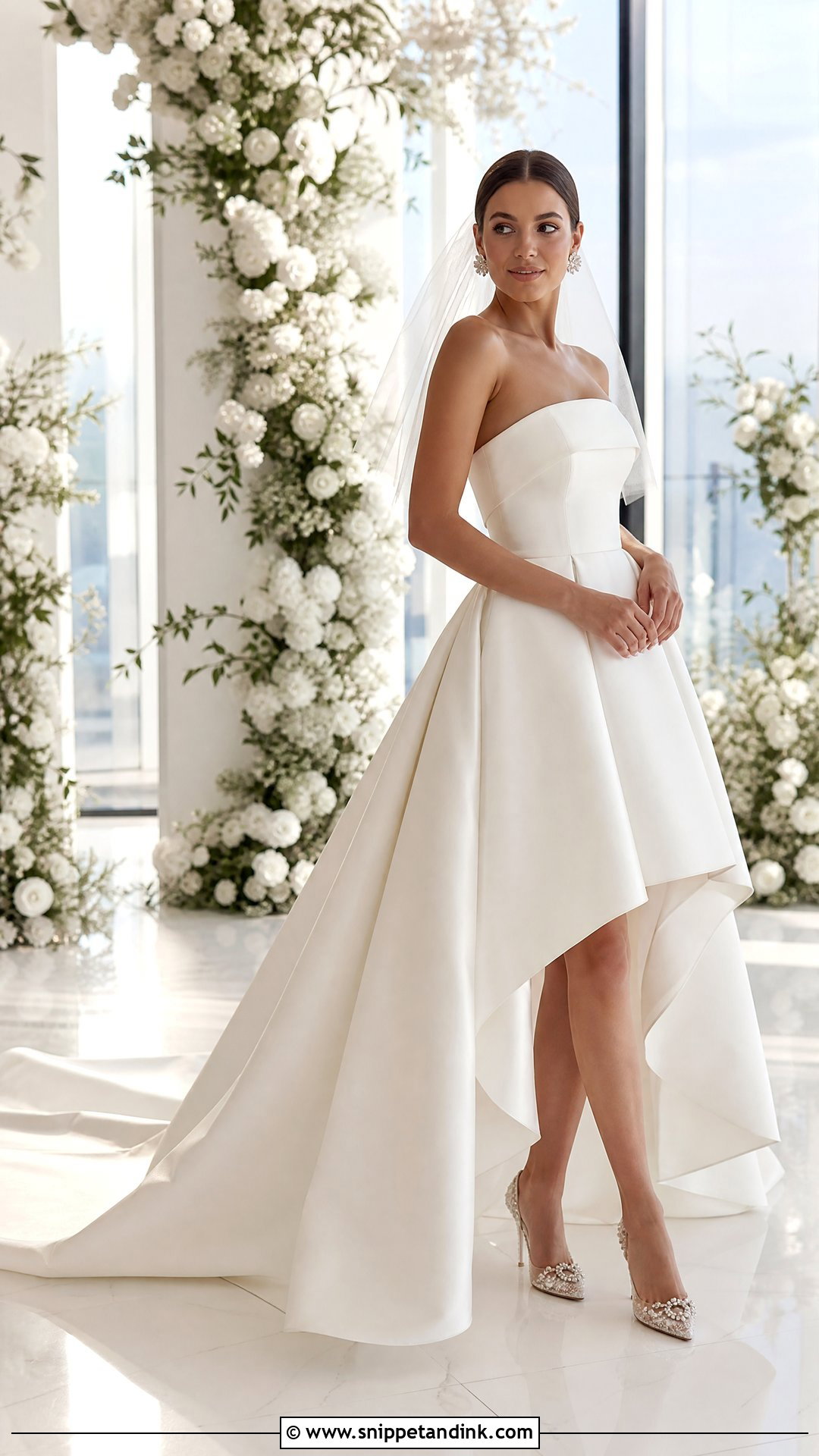
The short front of a high-low dress shows your shoes, so they become part of the outfit. A structured satin or mikado holds the shaped hem cleanly, whereas a soft fabric droops at the dip. Embellished pumps, ankle-strap heels or bridal boots all work depending on the season. Sit down in the fitting: the front hem rises when seated and can show more than you’d like. A short veil won’t compete with the uneven hemline. The back train can be detachable or bustled once portraits are done.
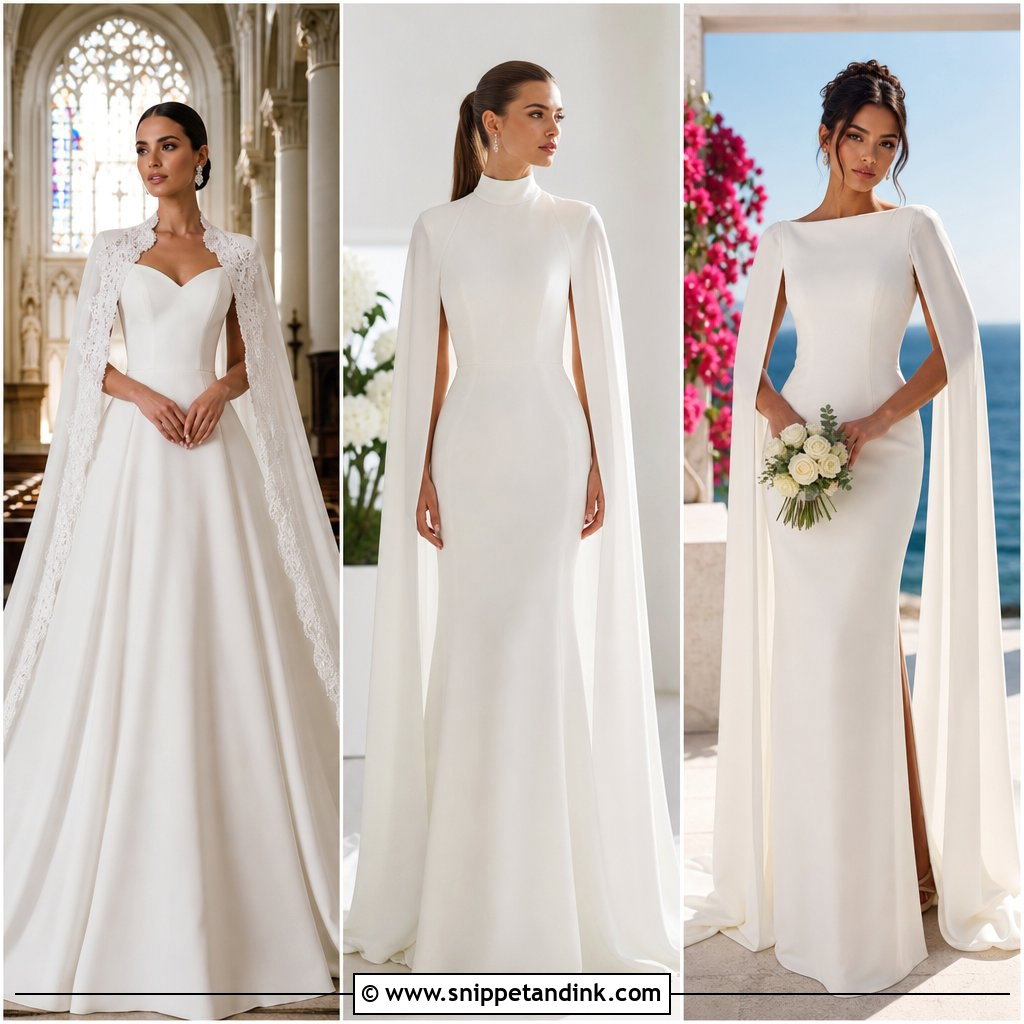
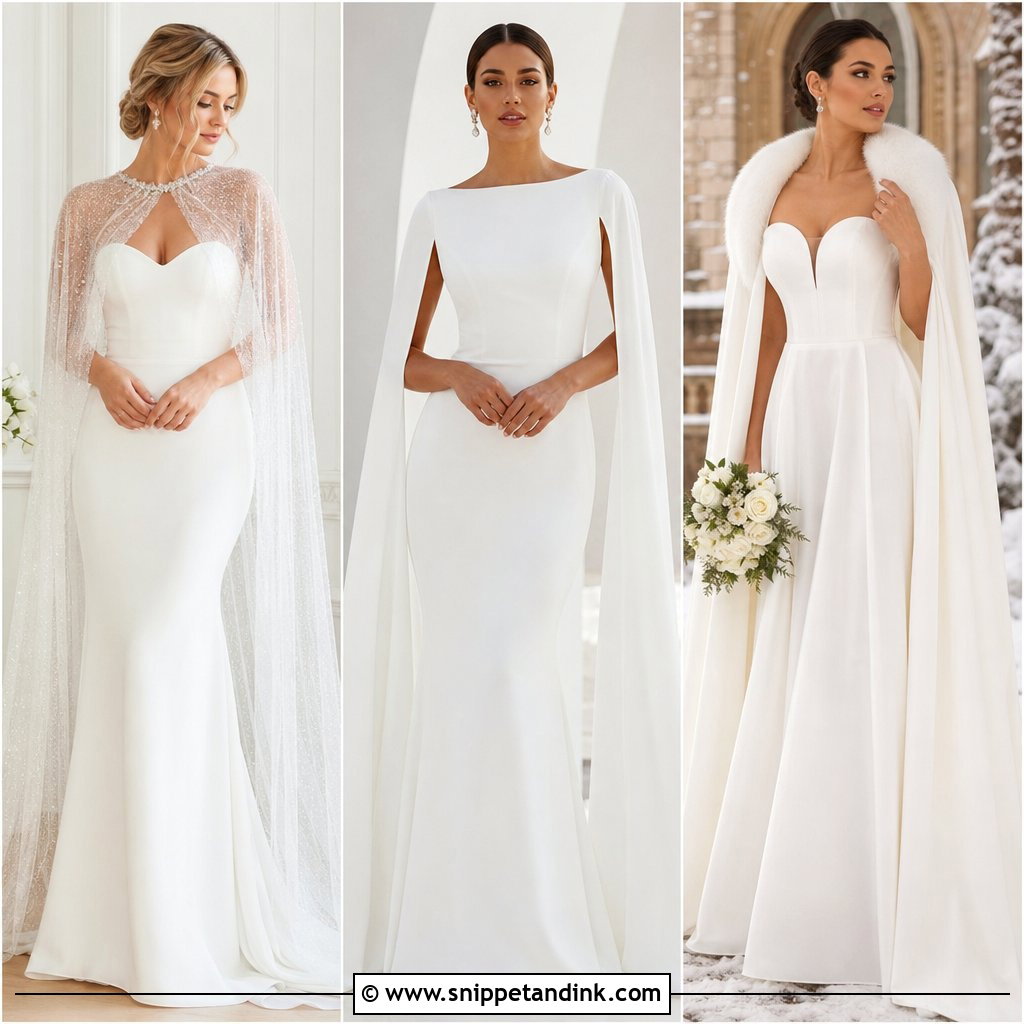
24. Cape Train Wedding Dress With Column Gown
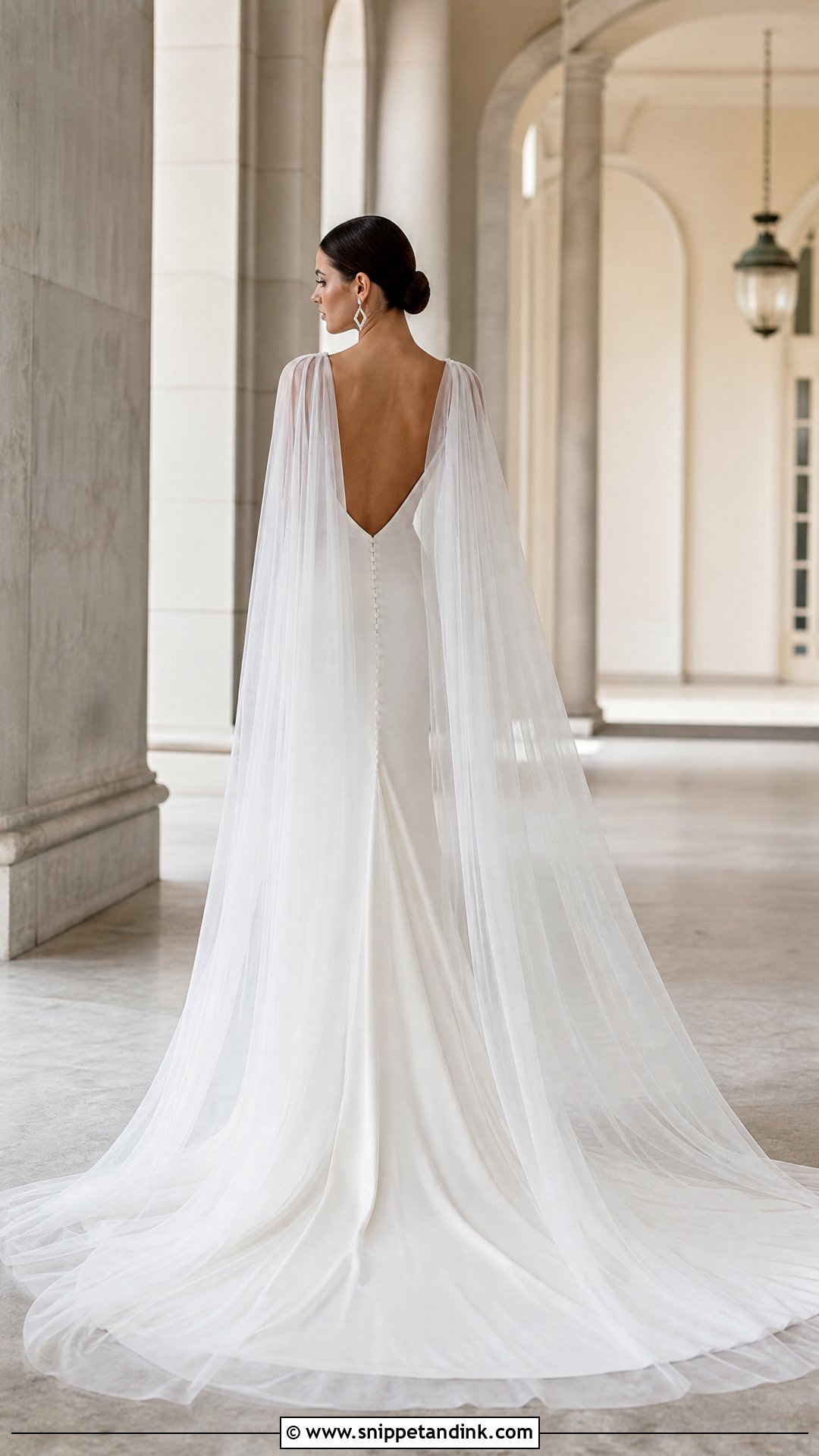
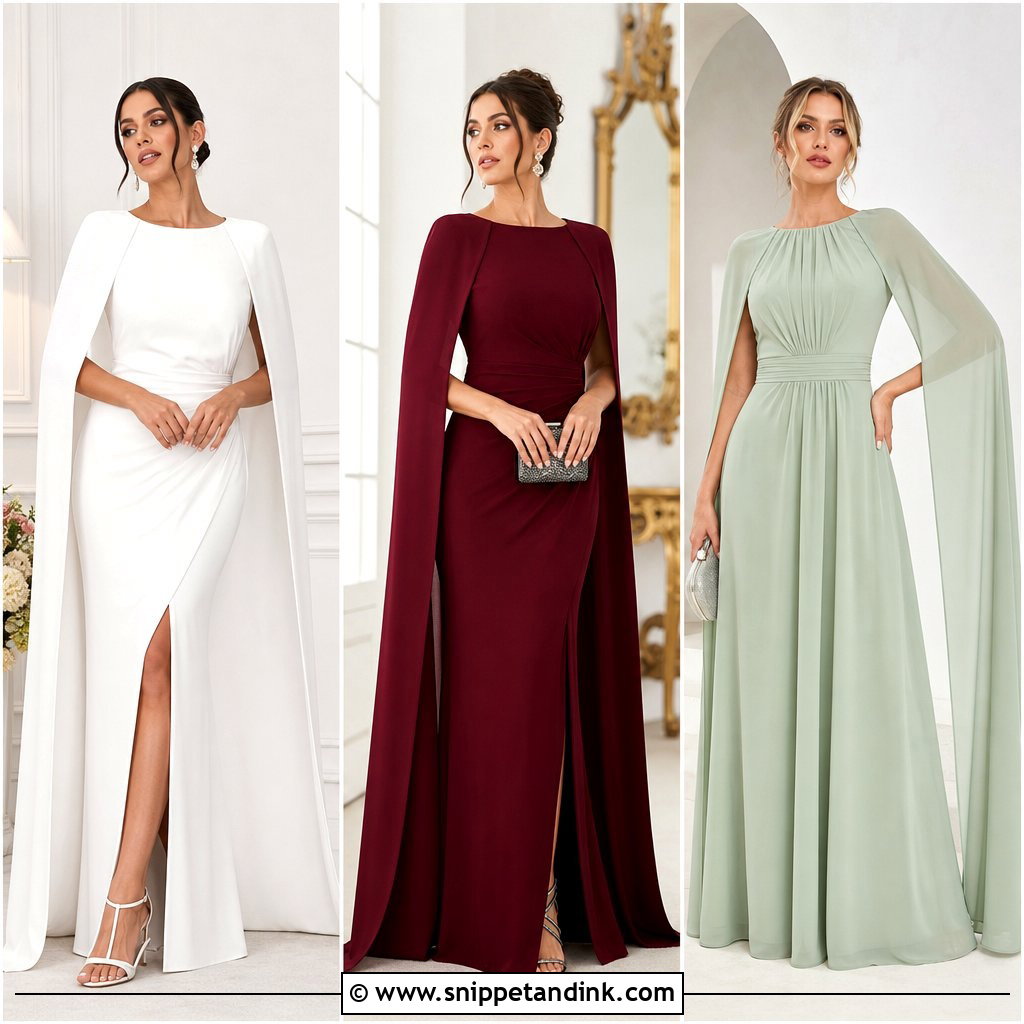
A cape train gives a column gown ceremonial weight while keeping the dress underneath streamlined. Start with a fitted crepe or satin gown with minimal decoration and add a sheer tulle, chiffon or lace cape fastened at the shoulders that falls into a chapel or cathedral length. Skip the veil, since the cape already frames head and back. At the fittings, I check that the shoulder fastenings lie flat and that the cape’s weight doesn’t pull the neckline backward as you walk. A detachable cape makes the reception transition easy.
25. Royal Wedding Dress With Monarch Train
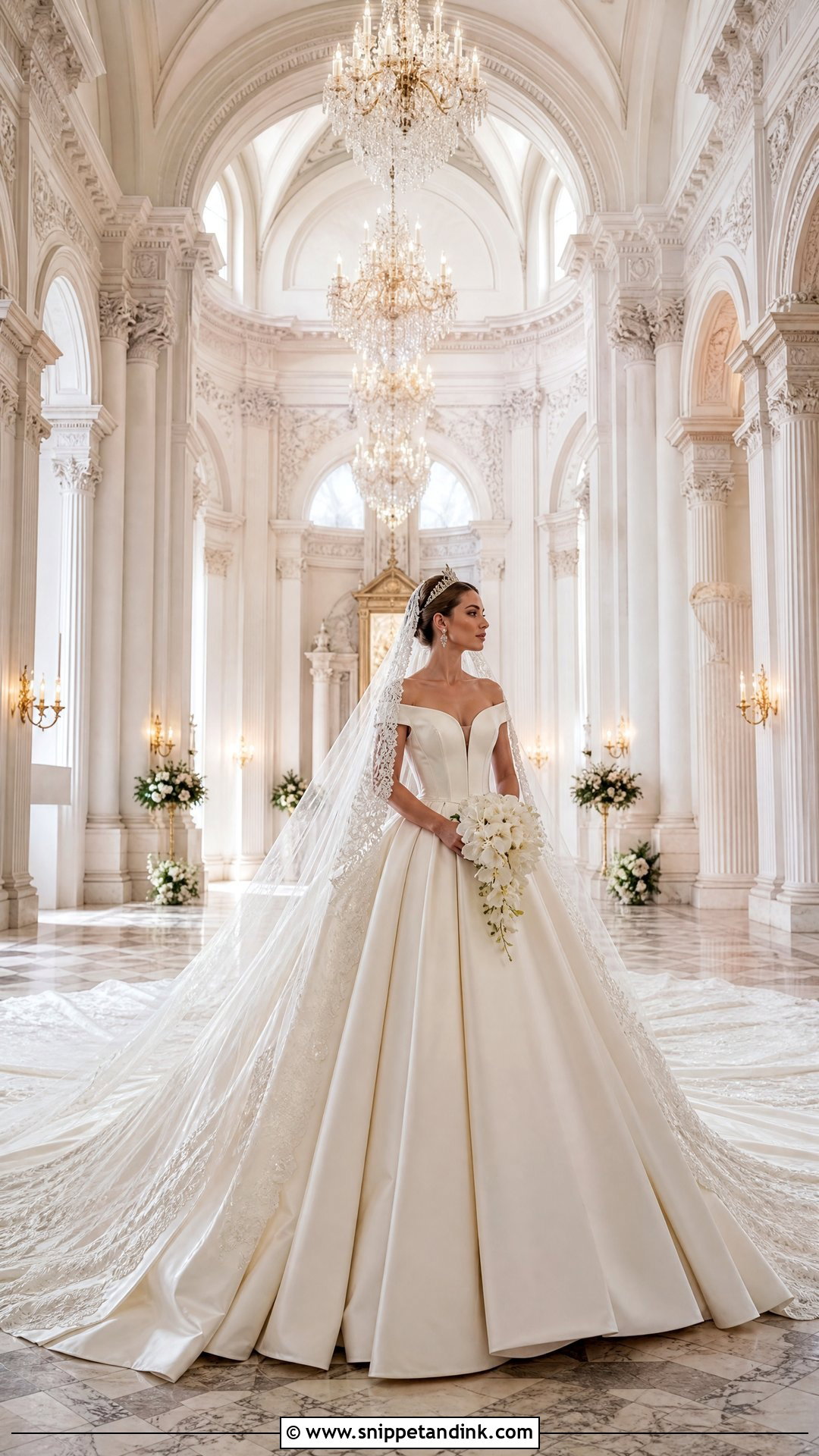
A monarch train, sometimes called royal length, is the most dramatic option and the most logistically demanding. It needs a structured ball gown in satin, mikado or embroidered tulle so the skirt visually supports that much fabric. A corset bodice, long sleeves or an off-shoulder neckline suit the scale. Plan for a wide aisle, a large dressing room and at least two attendants who know how to lay the train. A secure updo keeps the head steady under a long veil. Settle the multi-point bustle, wrist loop and reception plan well before the wedding.
Someone Has to Learn Your Bustle
A bustle is the system of hooks, buttons or ribbons that lifts the train off the floor for the reception. Most brides can’t do it themselves because the fastenings sit behind them, often under the skirt. Choose one person, a bridesmaid or your mother, and bring them to the final fitting. Have the seamstress show them, then let them do it twice on their own. Ask for the ties to be color-coded or numbered if there are several.
Walking, turning and sitting with fabric behind you
Walk forward normally; the train follows. Never step backward, since you’ll tread on it. To turn around, walk a small half-circle rather than pivoting on the spot, so the train swings around with you instead of wrapping your ankles. Before you sit, gather the train to one side or have it spread behind the chair. At the altar, an attendant should fluff the train out once you’ve stopped, because it settles crookedly after the walk.
Practise all of this at home in a bedsheet pinned to your waist if the dress isn’t ready yet. It sounds silly, and it makes the day noticeably calmer.
How Much Fabric Should Follow You Down the Aisle?
A sweep or court train moves easily, while chapel, cathedral, and monarch lengths add more drama with each step up. Detachable overskirts, Watteau trains, capes and removable bows give you a second look. Fabric decides how the train behaves: satin holds its shape, crepe gives a clean line, and tulle and chiffon move softly. In fittings, walk, sit, turn and bustle the dress, wearing your real shoes and accessories. The right train fits your aisle, your venue’s floor and the way you want to move once the music starts.
You'll Like These Ideas:







Leave a Reply