
No bride should spend her wedding counting the minutes until she can get out of her dress. Comfort in a gown comes from a handful of construction details more than from the style name: support built into the bodice, soft fabric against the skin, a lining that breathes, waist seams that flex and a skirt that lets you take a full stride. Bridal shops now carry plenty of relaxed drapes, light lace, shorter hems, separates and clean shapes, so comfortable no longer means casual. In every fitting I ask brides to sit, lift their arms and dance a few steps, and I’d ask you to do the same. Below are twenty dresses for formal ballrooms, beaches, backyards and city hall, each with the comfort checks I’d make before saying yes.
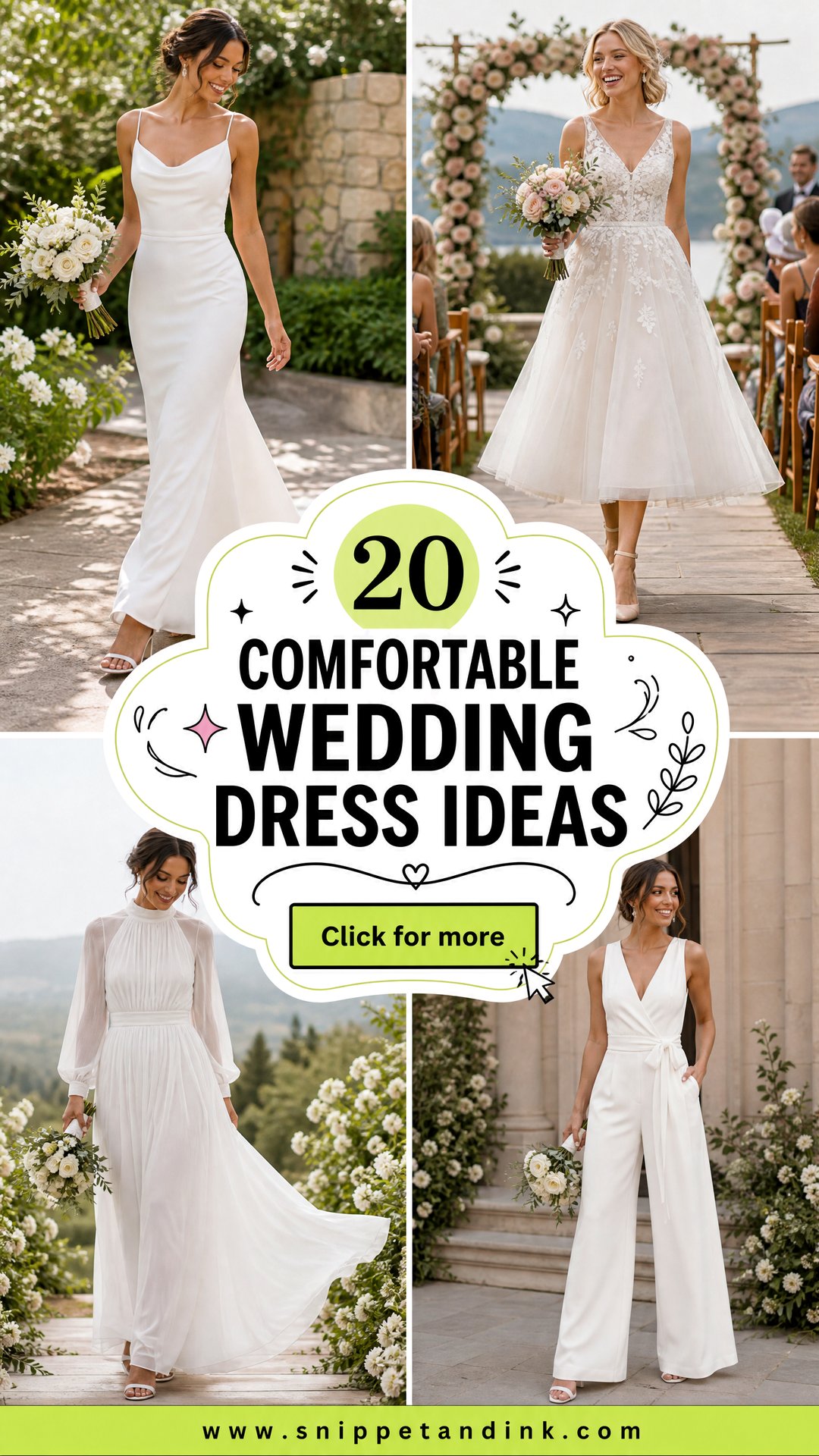
What Actually Makes a Gown Heavy, Hot or Itchy
When a bride tells me a dress felt wrong, it’s almost always one of four things, and knowing them helps you spot the problem on the hanger.
- Weight comes from layers and decoration. Several layers of tulle, a petticoat and dense beading add up fast, and all of that weight hangs from your waist and shoulders.
- Heat comes mostly from the lining. Polyester linings and multiple layers trap warmth; silk, cotton or a light stretch lining breathes better.
- Itch comes from cut lace edges, metallic thread and the back of beading. Feel the inside of the bodice, not just the outside.
- Pressure comes from boning and tight waist seams. Some structure is good support; too much means you can’t breathe after dinner.
None of these rule a dress out. They just tell you where to focus during alterations.
1. Chiffon A-Line Wedding Dress
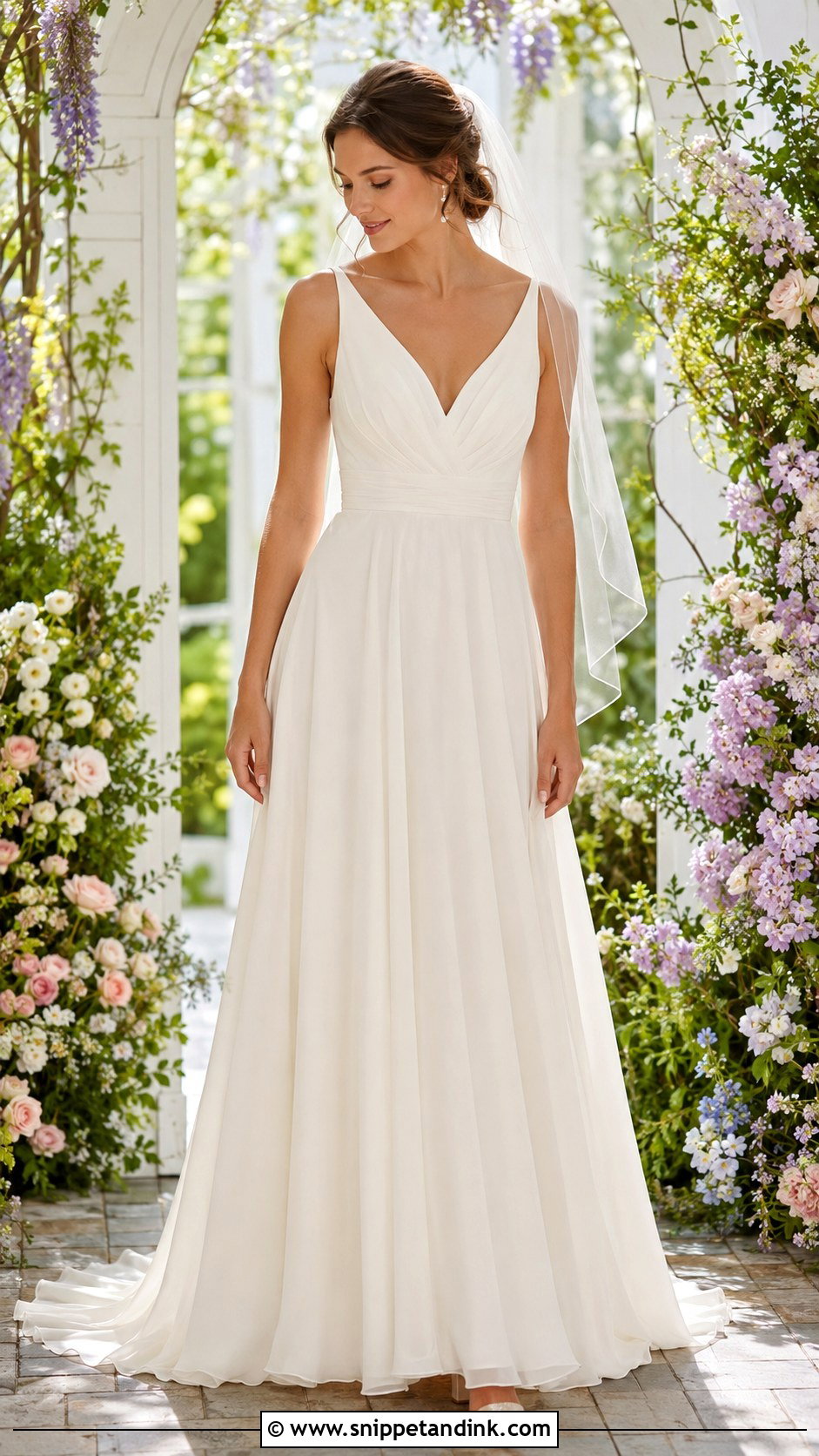
Chiffon A-lines are the dress I’d point most brides toward if comfort is their first priority. The gathered skirt floats off the legs, and a V-neck bodice with wide straps can hold real support inside it. Chiffon itself is thin and slightly rough on bare skin, so the lining makes all the difference; a smooth jersey or satin lining feels far nicer than a stiff polyester one. A short train or none at all keeps walking simple. Low block-heel sandals, pearl drops and a light fingertip veil finish it. Before alterations are signed off, sit for a few minutes and check the armholes and waist seam don’t dig in.
2. Stretch Crepe Sheath Wedding Dress
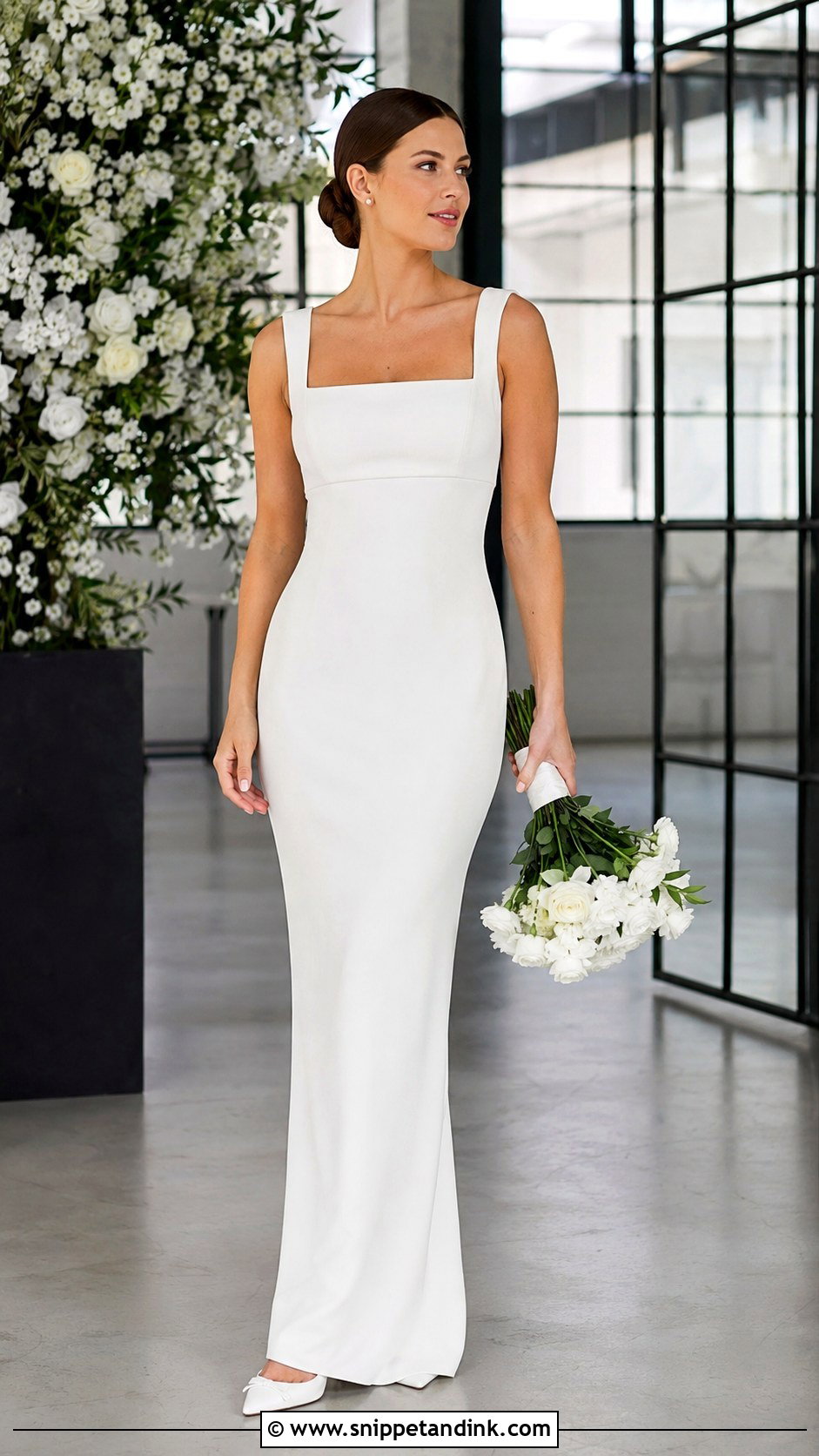
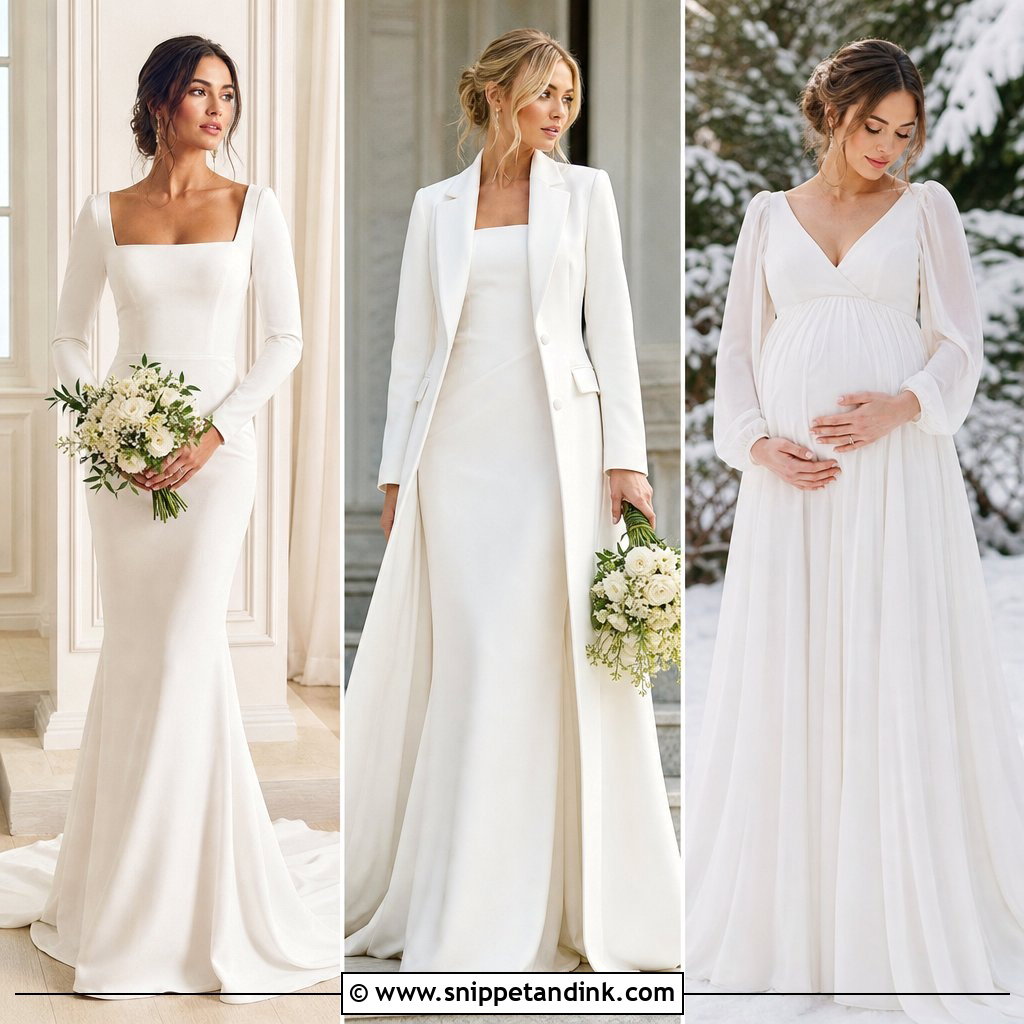
Stretch crepe looks sharp and sleek, but a sheath only stays comfortable if it skims rather than squeezes. The trouble spot is almost always the hem: a narrow skirt shortens your stride to a shuffle, so I always have brides climb a step or two in the fitting room. A square neck with substantial straps supports well, and a soft stretch lining moves with you. Skip heavy shapewear under crepe; it traps heat and the dress rarely needs it. Pointed flats, a structured mini bag, studs and a low bun suit a hotel, loft or city wedding.
3. Empire Waist Wedding Dress
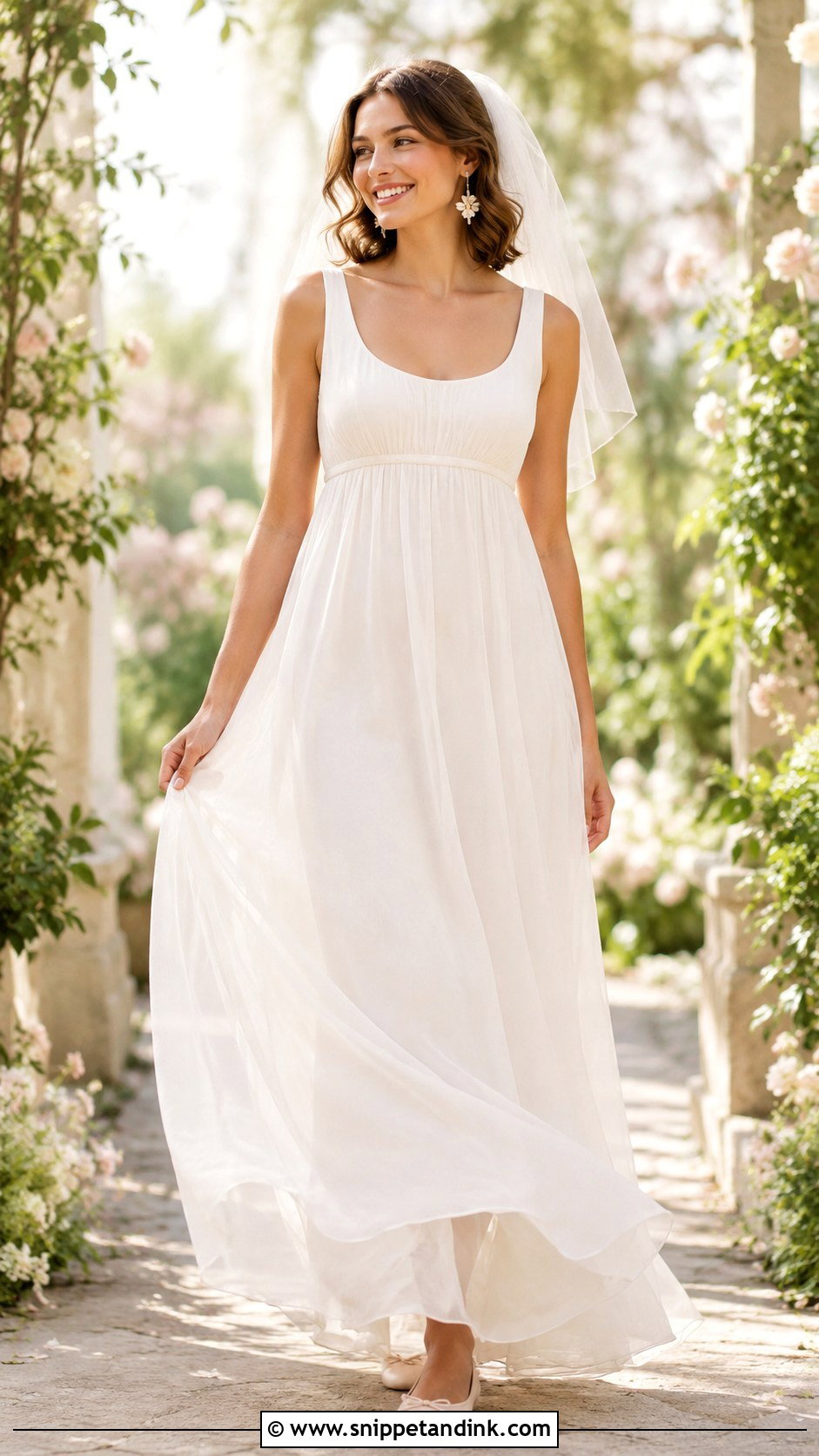
With the seam just under the bust, an empire waist lets the skirt fall free over the stomach and hips, so nothing presses after a big dinner. Soft chiffon or light crepe with wide straps and a modest scoop neck keeps it supportive. It’s especially useful for pregnant brides, since the bodice can be let out late in the process, but plenty of brides simply like the ease. Avoid stiff boning or heavy beading under the bust, which digs in when you sit. Cushioned ballet flats, small floral earrings and a shoulder-length veil complete it. Check that the lining doesn’t cling to your legs when you walk.
4. Tea-Length Wedding Dress
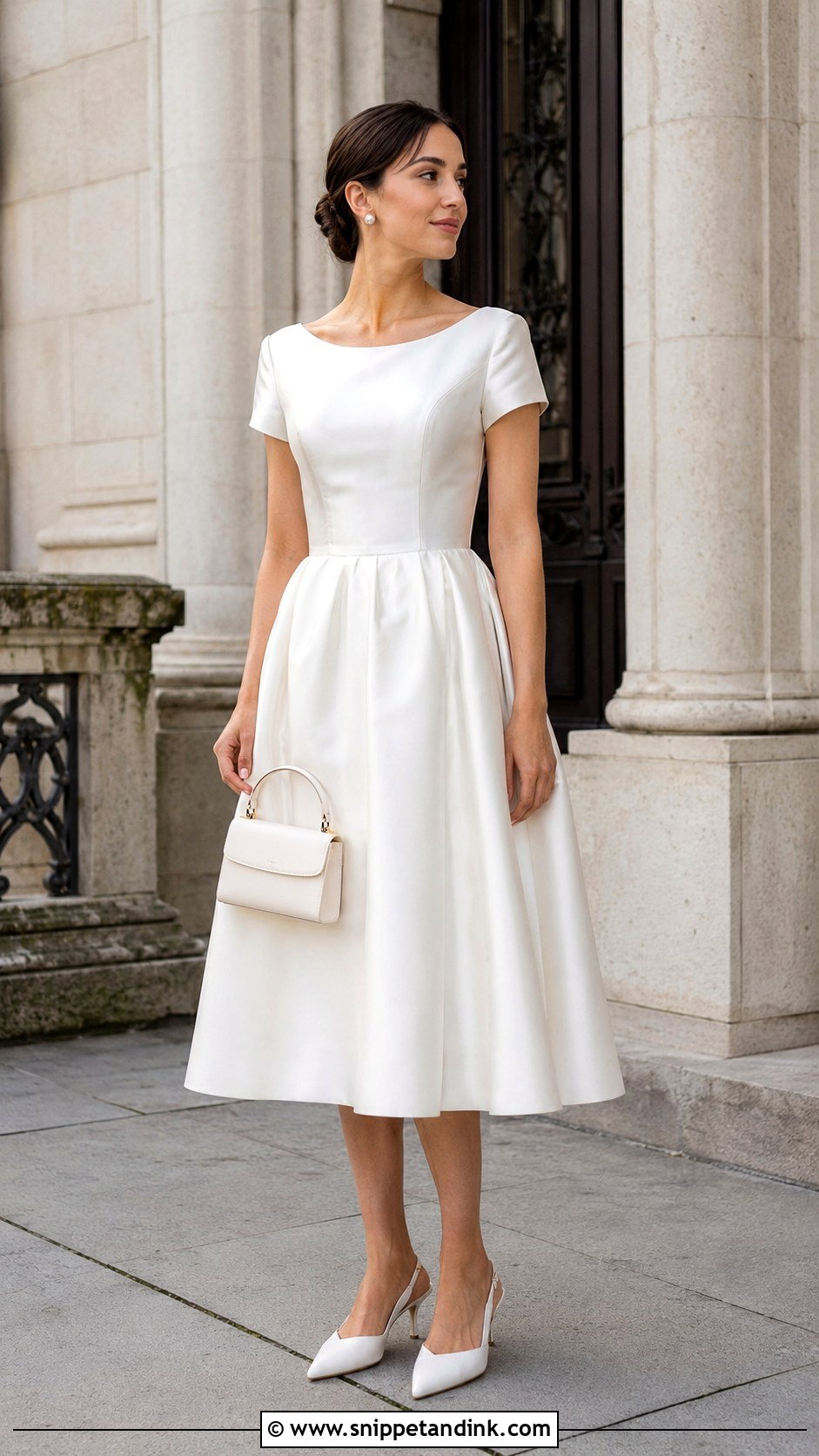
Tea length is the shape I recommend to brides who are anxious about stepping on their hem. Ending between knee and ankle, the skirt stays clear of steps, grass and dance floors. Soft satin or mikado in an A-line with a fitted but flexible bodice works well, with a scoop neck and short sleeves. The thing to watch is skirt fullness: a very full tea-length skirt with a petticoat gets heavy at the waist. Low slingbacks, pearl studs and a small structured bag suit courthouse ceremonies and restaurant receptions. Pockets and a breathable lining are welcome extras.
5. Jersey Wrap Wedding Dress
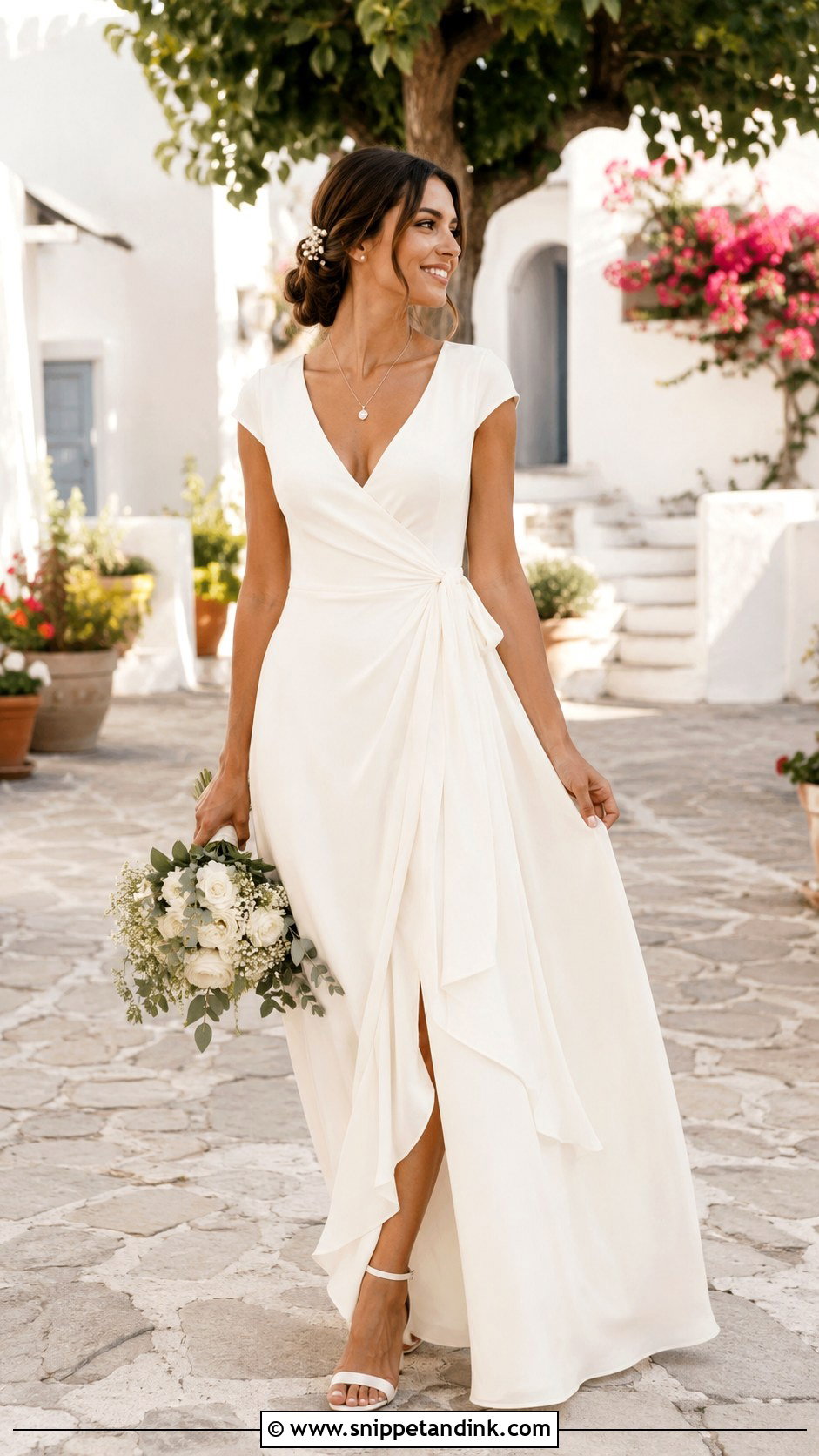
Jersey is the most comfortable bridal fabric there is, and also the least forgiving if it’s thin. I’d only choose a heavy, fully lined jersey; light ones cling and show every line underneath. A true wrap or a fixed wrap bodice with an inner closure lets you adjust the fit across the day. Jersey also packs into a suitcase without much creasing, which makes it a strong choice for a destination wedding. Cushioned block heels, a fine pendant and an updo with pearl pins, at knee or floor length. Fashion tape should only be a backup; the neckline ought to stay put on its own.
6. Satin Slip Wedding Dress
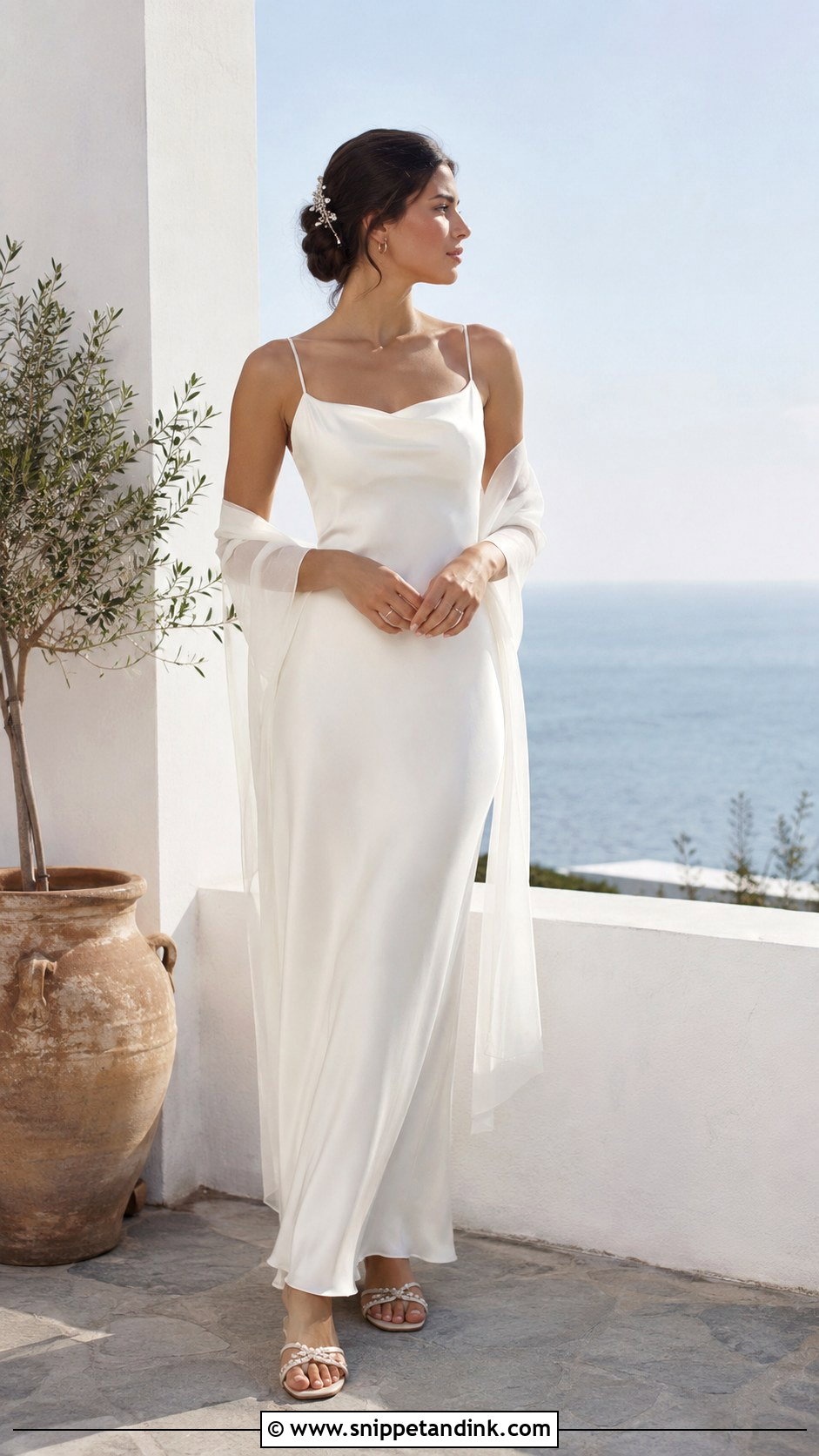
Slip dresses have very little inside them, which makes them light and cool. The comfort hinges on the cut. Bias-cut satin follows the body gently and stretches slightly; a straight-cut slip in non-stretch satin pulls across the hips when you sit. Adjustable straps and a full lining help coverage. Silk satin breathes best, stretch satin is easier to fit and a satin blend is gentler on the budget. Wear your actual underwear to every fitting and look at the dress by a window, since thin satin can turn see-through in sunlight. Flat sandals, a light wrap and a simple comb finish it.
7. Soft Lace A-Line Wedding Dress
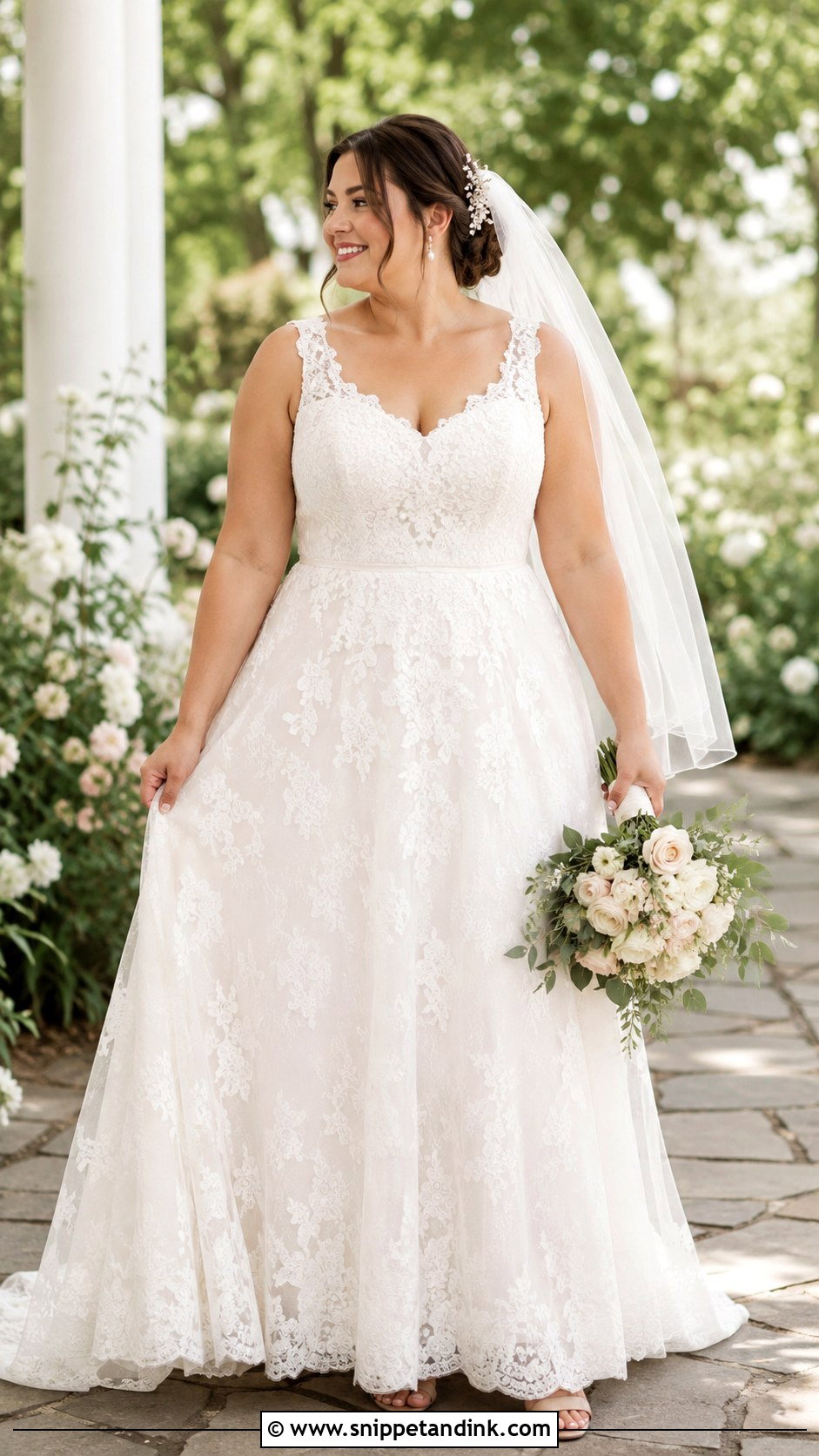
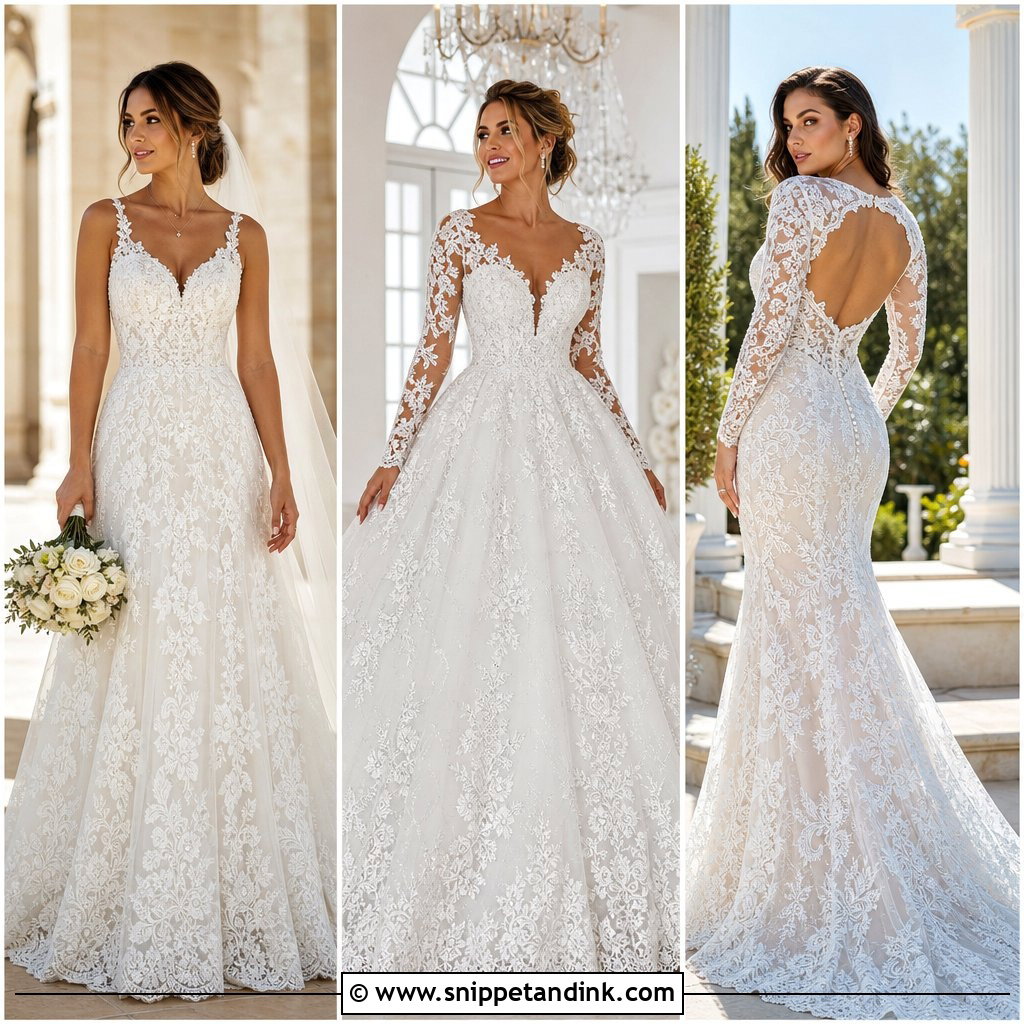
Lace can be romantic without the weight of beading, as long as it’s a soft lace over a smooth stretch lining. Corded or heavily re-embroidered lace is stiffer and scratchier. An A-line with wide straps, a lightly structured bodice and a natural waist leaves room to walk. The places I check first are the neckline, armholes and waist, where cut lace edges sit against skin; a good seamstress can bind them or back them with lining. Low nude heels, a floral comb, pearls and a plain tulle veil let the lace lead. Fewer appliqués also make the bustle lighter.
8. Off-Shoulder A-Line Wedding Dress
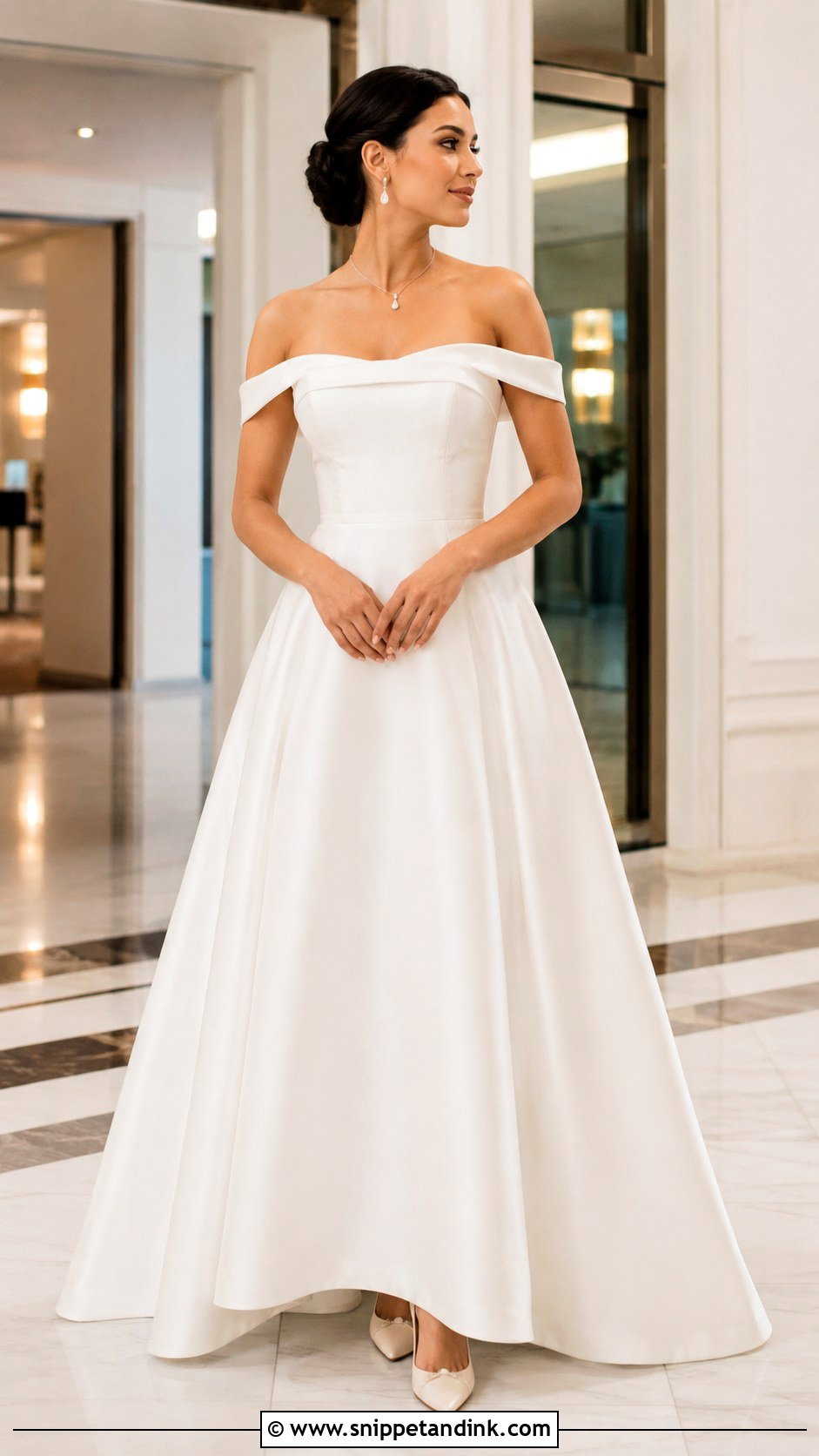
Off-the-shoulder gowns have a reputation for being uncomfortable, and it’s usually deserved when the sleeves are holding the dress up. The comfortable versions have an internal structure that supports the bodice on its own, so the bands just rest on the arms. Hug someone, reach forward and raise your arms at the fitting; if the neckline slips, ask for alterations or detachable straps. A light satin or crepe skirt keeps bulk down. Kitten heels, a short pendant, drop earrings and a low chignon suit the open neck. You shouldn’t have to hold your shoulders stiffly to keep it in place.
9. Square-Neck Wedding Dress With Straps
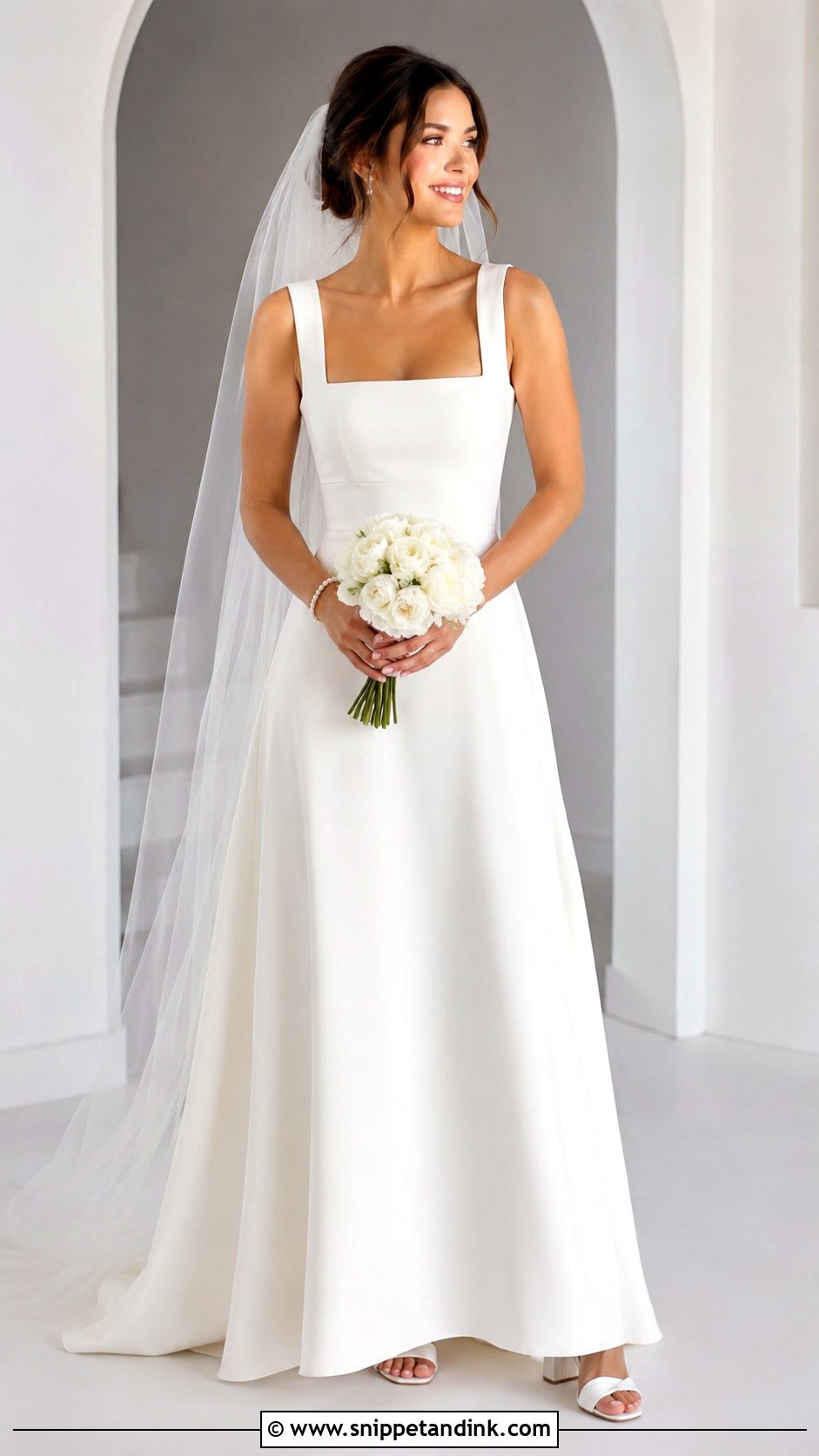
Straps you can trust are the reason this is such a calm choice. A square neck with substantial straps on a lined crepe A-line or soft sheath can hold a proper bra or built-in cups, which matters to anyone with a fuller bust. The straps should help support the bodice, not carry its whole weight, or they’ll dig in by evening. Ask your tailor to check they lie flat when you sit, and that the neckline and underarm seams are finished softly. Low block heels, a pearl bracelet, a simple veil and a compact bouquet suit almost any setting.
10. Wedding Dress With Flutter Sleeves
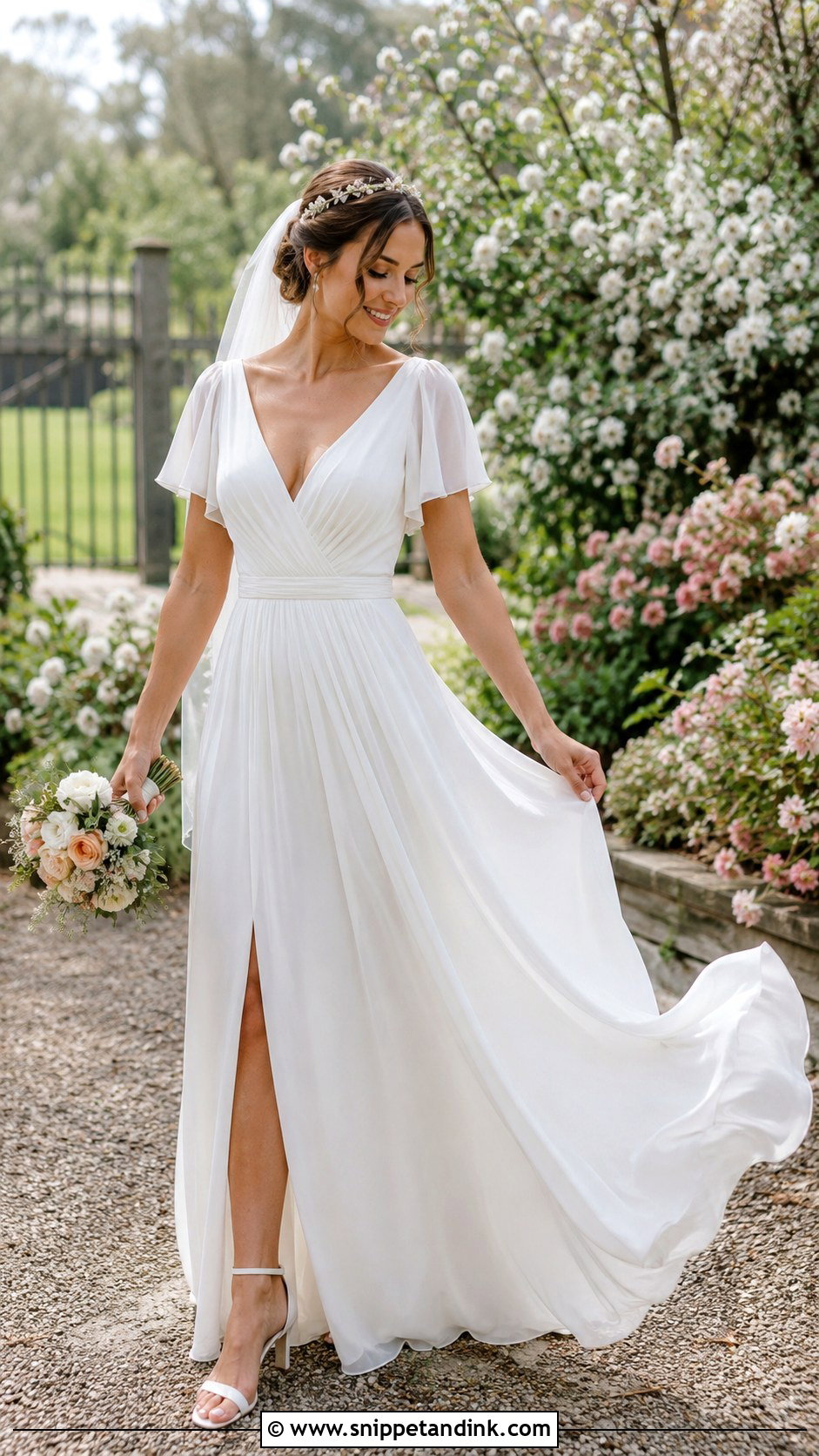
Flutter sleeves give a little arm coverage and still let air in. On a chiffon or light lace V-neck with a defined waist and A-line skirt, they suit a spring garden or estate. The sleeves should fall loose. Elastic or stiff trim at the edge cuts into the arm after a few hours, and that’s the detail I’d look at first. Make sure the sleeve fabric doesn’t bunch under the arm against the bodice. If the chiffon is sheer, add lining only where you need it; more layers means less air. Low open-toe heels, a hair vine and a veil tucked under a soft updo.
11. Wedding Dress With Pockets
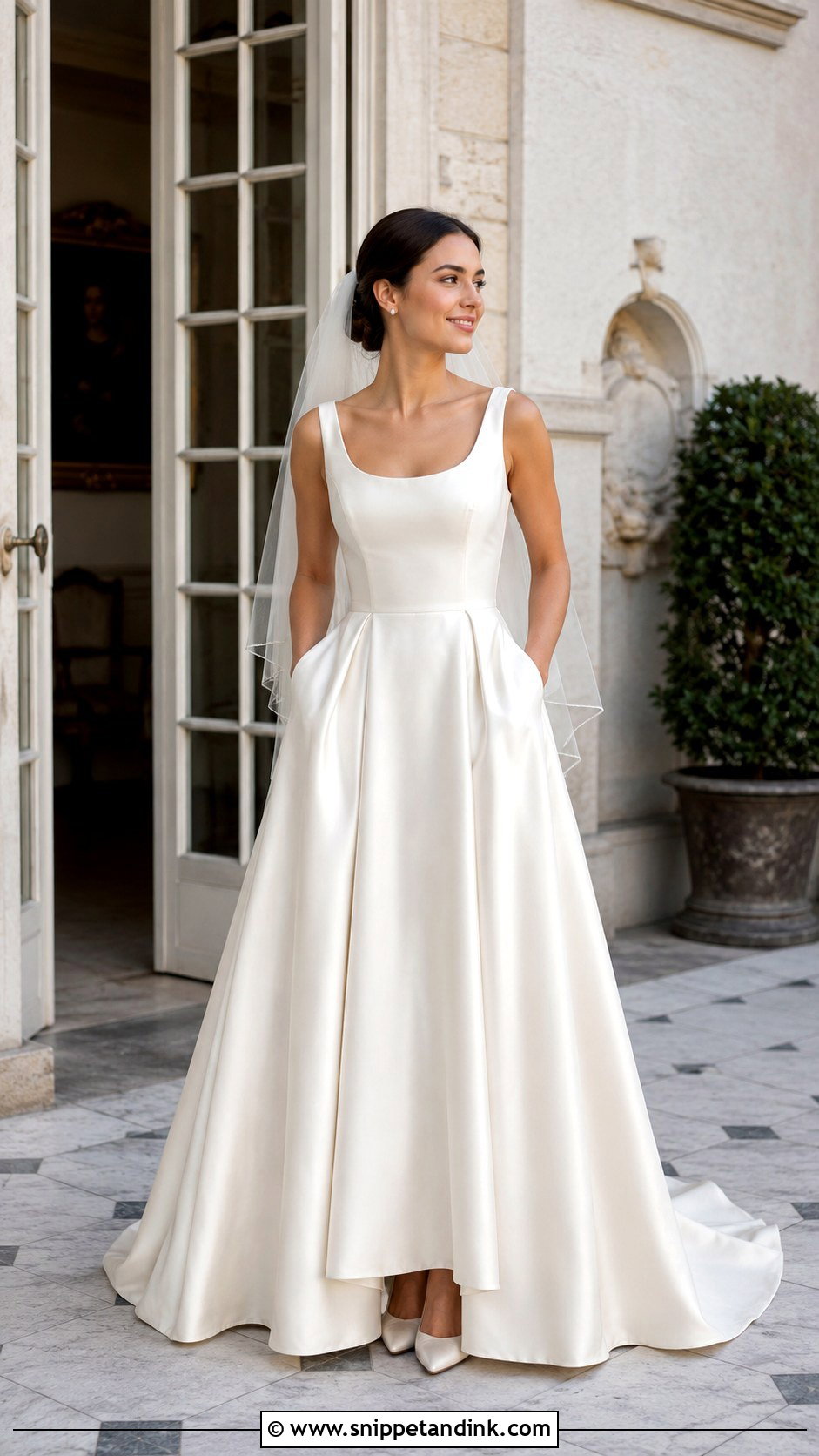
Pockets are the feature brides thank me for most often, mostly because they give your hands somewhere to go in photos. A wedding dress with pockets in satin or crepe should have them set into the side seams, lying flat and low enough that your hands rest naturally. Ask for the pocket bags to be cut in lining fabric so they don’t show through lighter satin. Keep them to a tissue and a lip color; a phone pulls the skirt sideways in every picture. Cushioned pumps, pearl earrings and a fingertip or cathedral veil finish a sleeveless scoop-neck A-line.
12. Wedding Dress With Detachable Overskirt
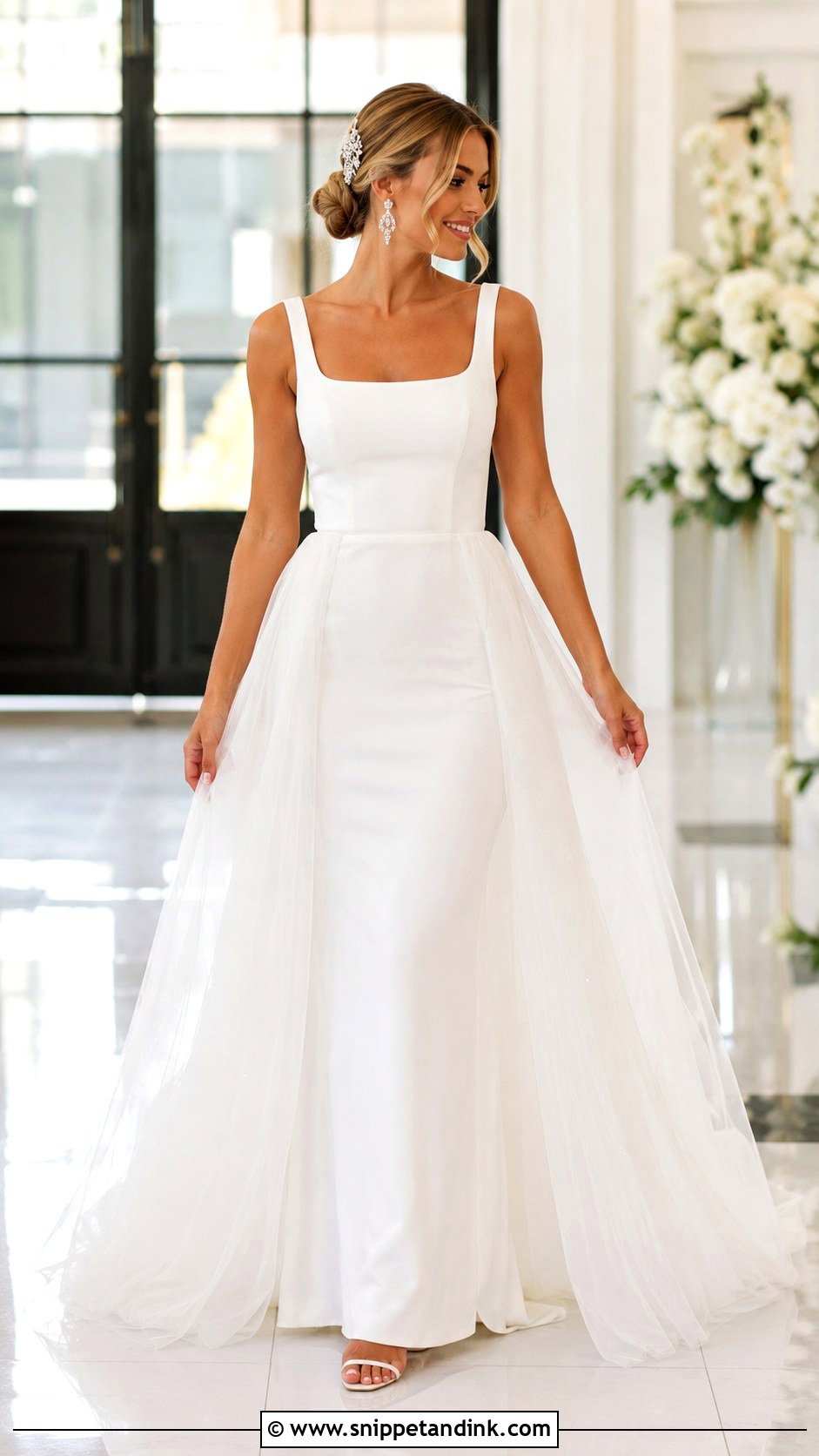
A detachable overskirt gives you a dramatic aisle and a much lighter reception dress, which is why it’s become such a popular way to get two looks from one outfit. Start with a comfortable stretch-crepe column or tea-length base with supportive straps, and add a light tulle or organza overskirt for the ceremony. The fastening decides whether it’s comfortable: a wide, flat waistband with hidden hooks sits well, while a bulky buckle or a band of snaps presses into your back when you lean against a chair. Practice taking it off with whoever will help you. Block heels, small crystal earrings and a simple comb finish it.
13. Long-Sleeve Crepe Wedding Dress
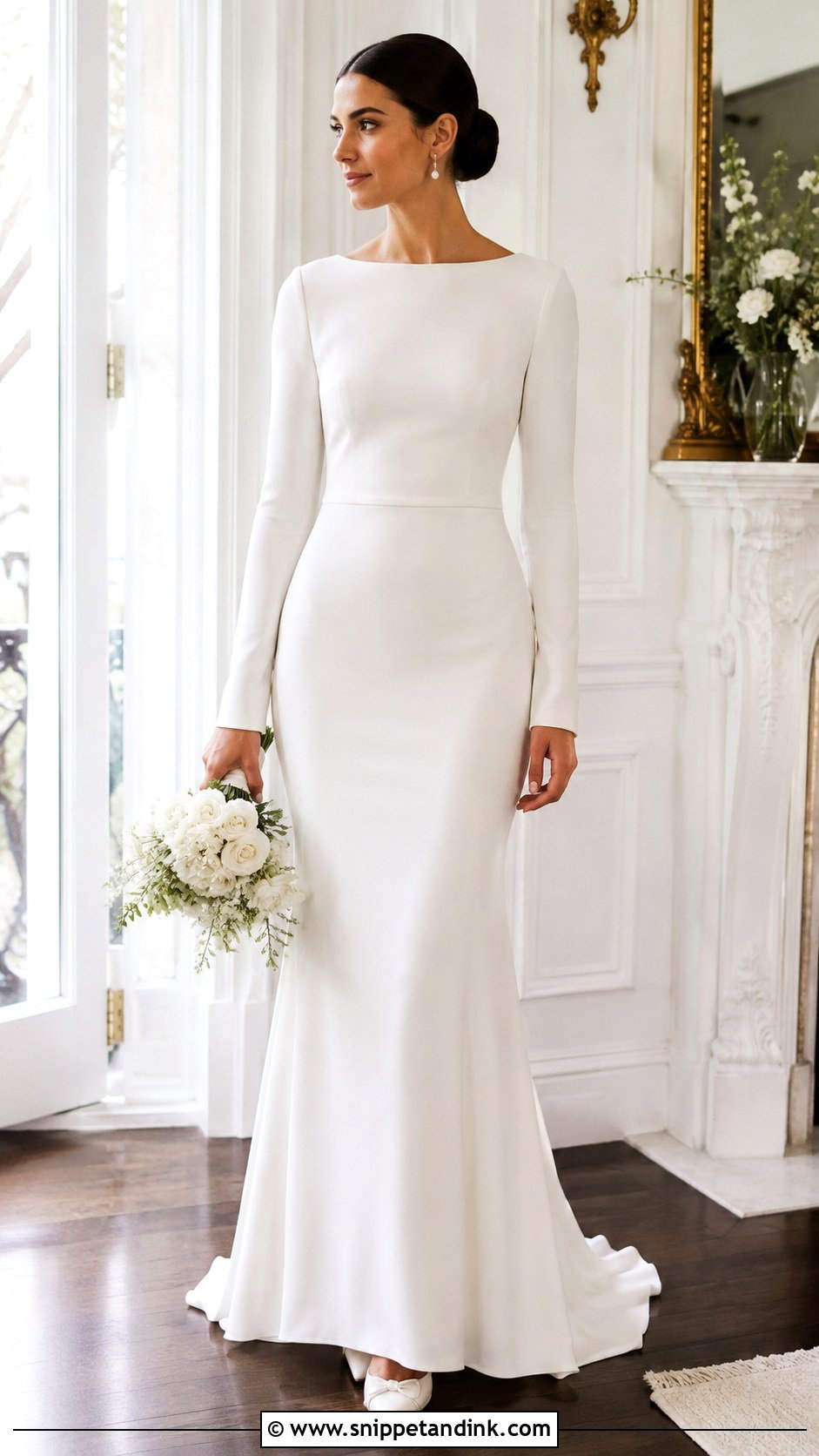
Long sleeves don’t have to mean overheating. Light stretch crepe with slim sleeves, a soft lining and a little give at the shoulders and elbows moves well. A bateau or modest V-neck with a gently flared skirt keeps the line clean. Sleeves are where fittings go wrong most often, because brides stand still with arms at their sides. Hug, reach and bend your elbows; the wrist should not feel tight and the shoulder seam shouldn’t creep. Pointed flats, pearl drops and a sleek low bun suit cooler weather and formal venues, and a hairpin can replace a heavy veil indoors.
14. Boho Wedding Dress With Bell Sleeves
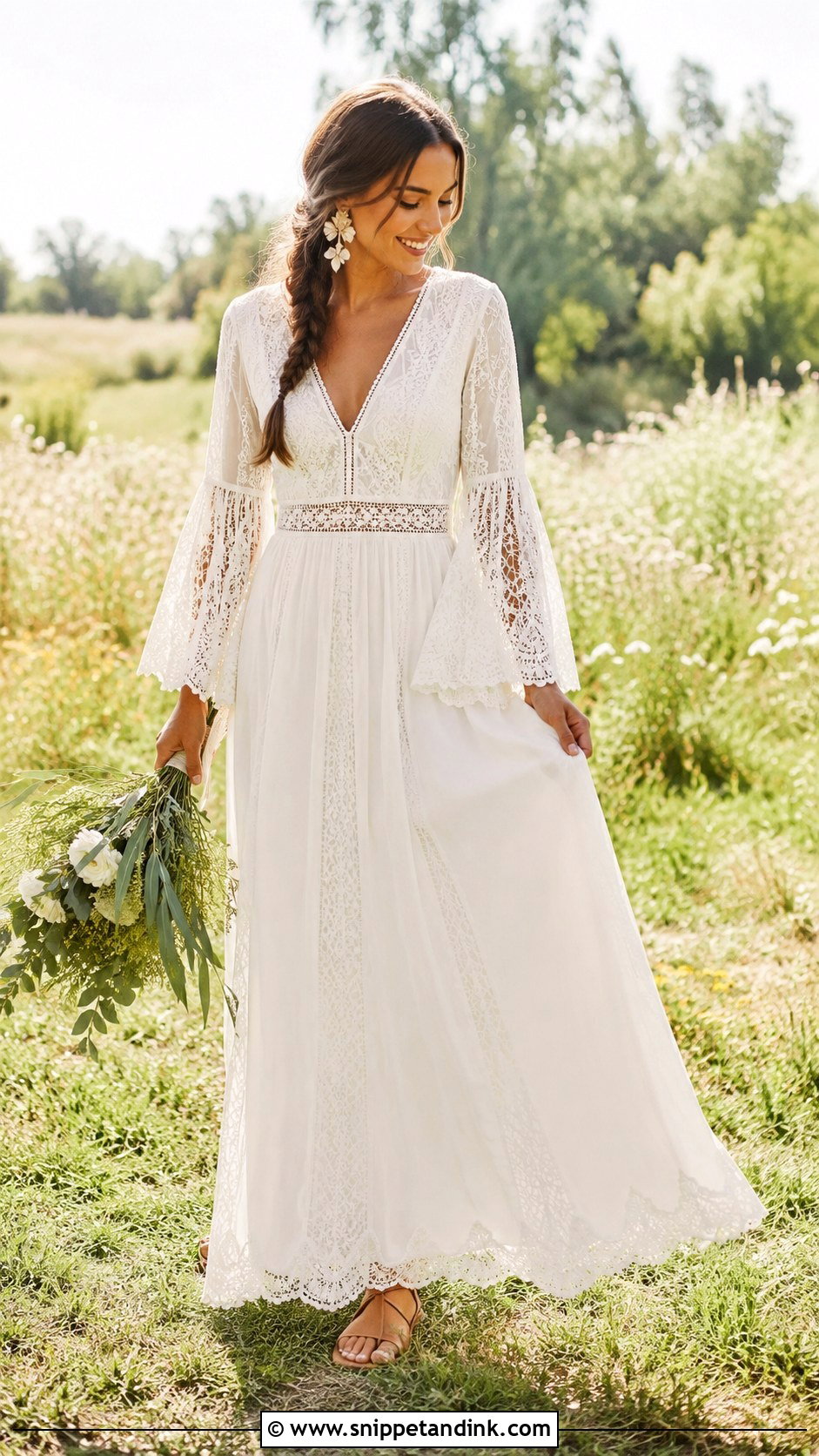
Boho gowns feel relaxed by nature, but some are surprisingly impractical. A soft crochet-inspired lace or embroidered tulle with a comfortable lining, gently defined waist and bell sleeves moves well on grass or sand. The bell sleeves are the catch: long ones trail through food and hide the bouquet. A wrist loop or a slightly shorter sleeve keeps the look and solves it. Skip rigid lace, heavy fringe and tight cuffs. Flat leather sandals, floral earrings and a loose braid with small pins finish it.
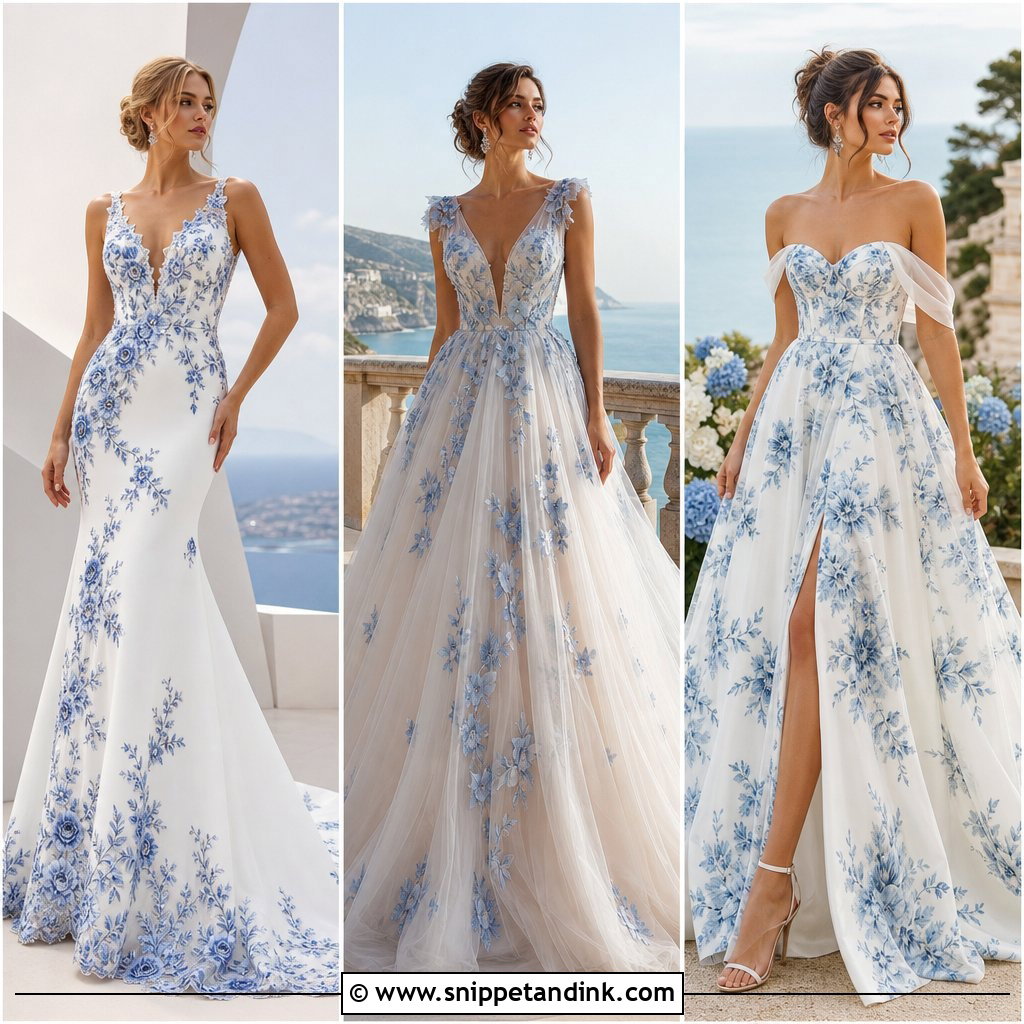

15. Minimalist Column Wedding Dress
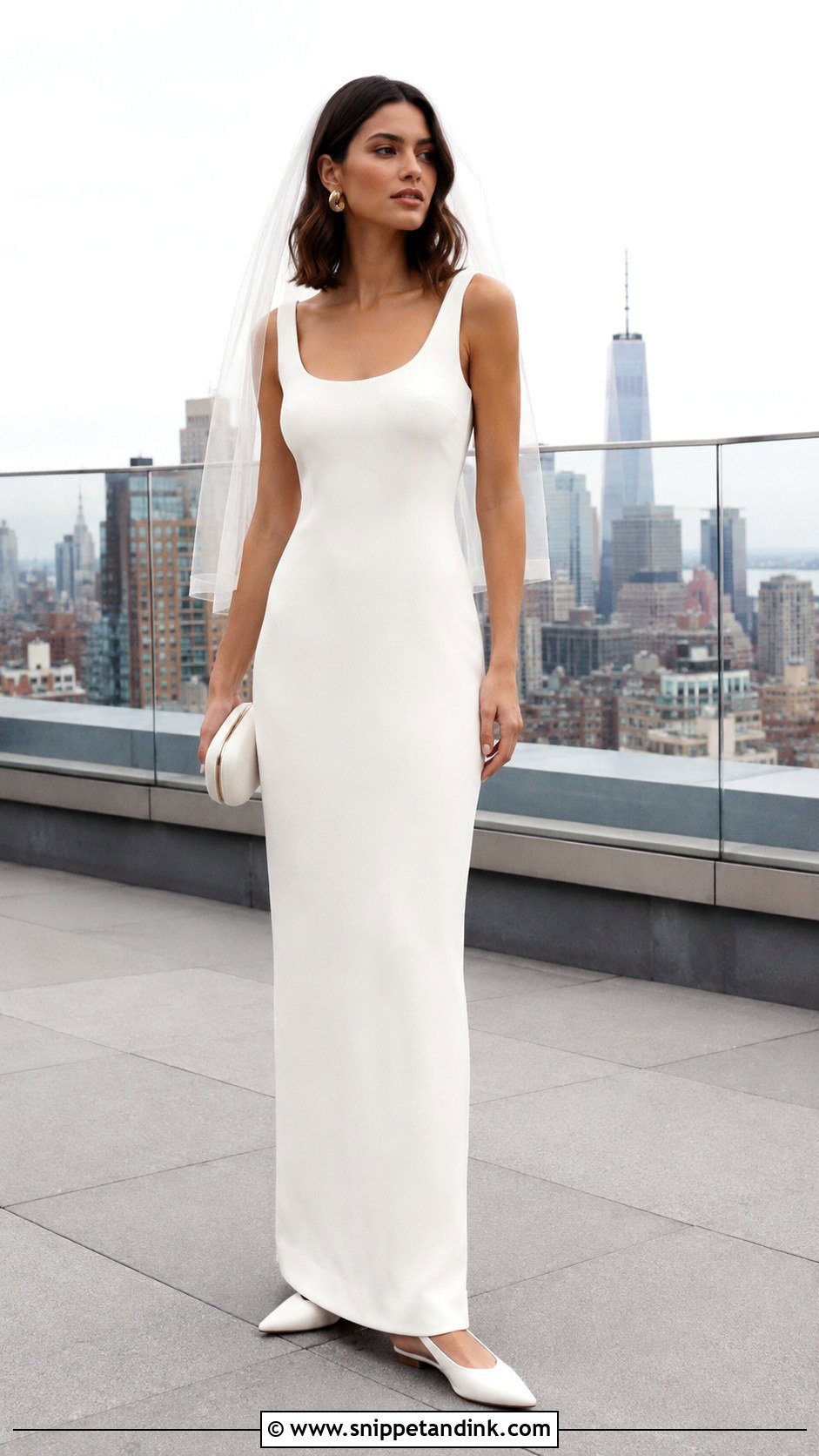
A column looks formal with no embellishment at all, and in substantial stretch crepe or draped satin it can be very easy to wear. Wide straps, a scoop neck and a straight skirt with a back slit let you walk; the slit should be high enough to move without needing to be watched all night. Ask for hidden support through the bust rather than tight tailoring at the waist, because a column that’s pinched at the middle feels stiff the moment you sit. It should skim the hips and release toward the knee. Padded slingback flats, sculptural earrings and a short train or none keep it light for rooftops and galleries.
16. High-Neck Chiffon Wedding Dress
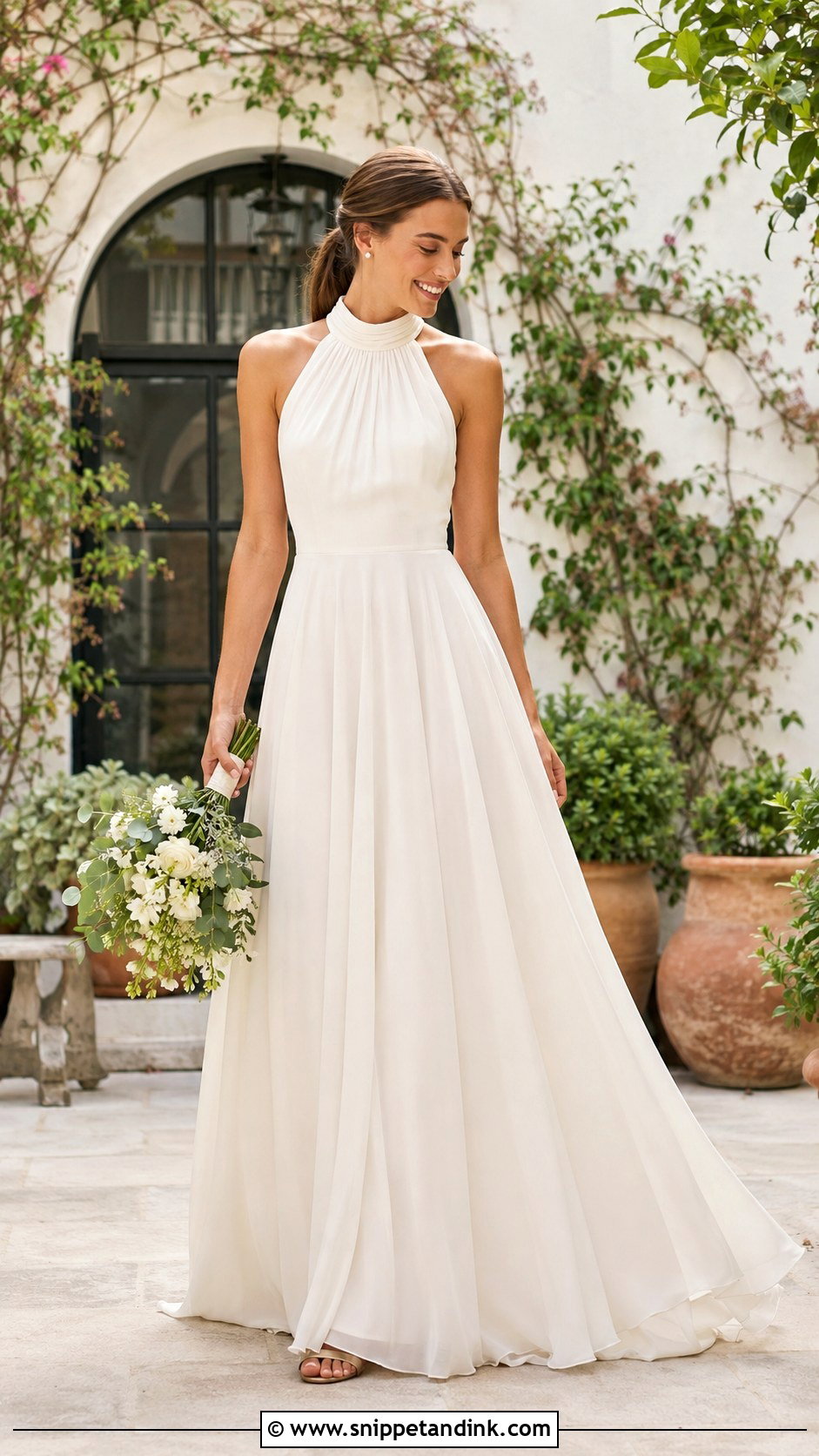
High necks feel secure, but a collar that sits against the throat is miserable within an hour. The comfortable version stands slightly away from the neck so you can turn your head and swallow without feeling it. Gathered chiffon with a light lining and a relaxed A-line skirt keeps it airy; sleeveless shoulders or loose flutter sleeves help balance the coverage. Avoid rigid beading, tight buttons or scratchy lace at the collar. Low metallic sandals, studs and a low bun or ponytail show off the neckline, and a small keyhole back adds interest.
17. Short-Sleeve Midi Wedding Dress
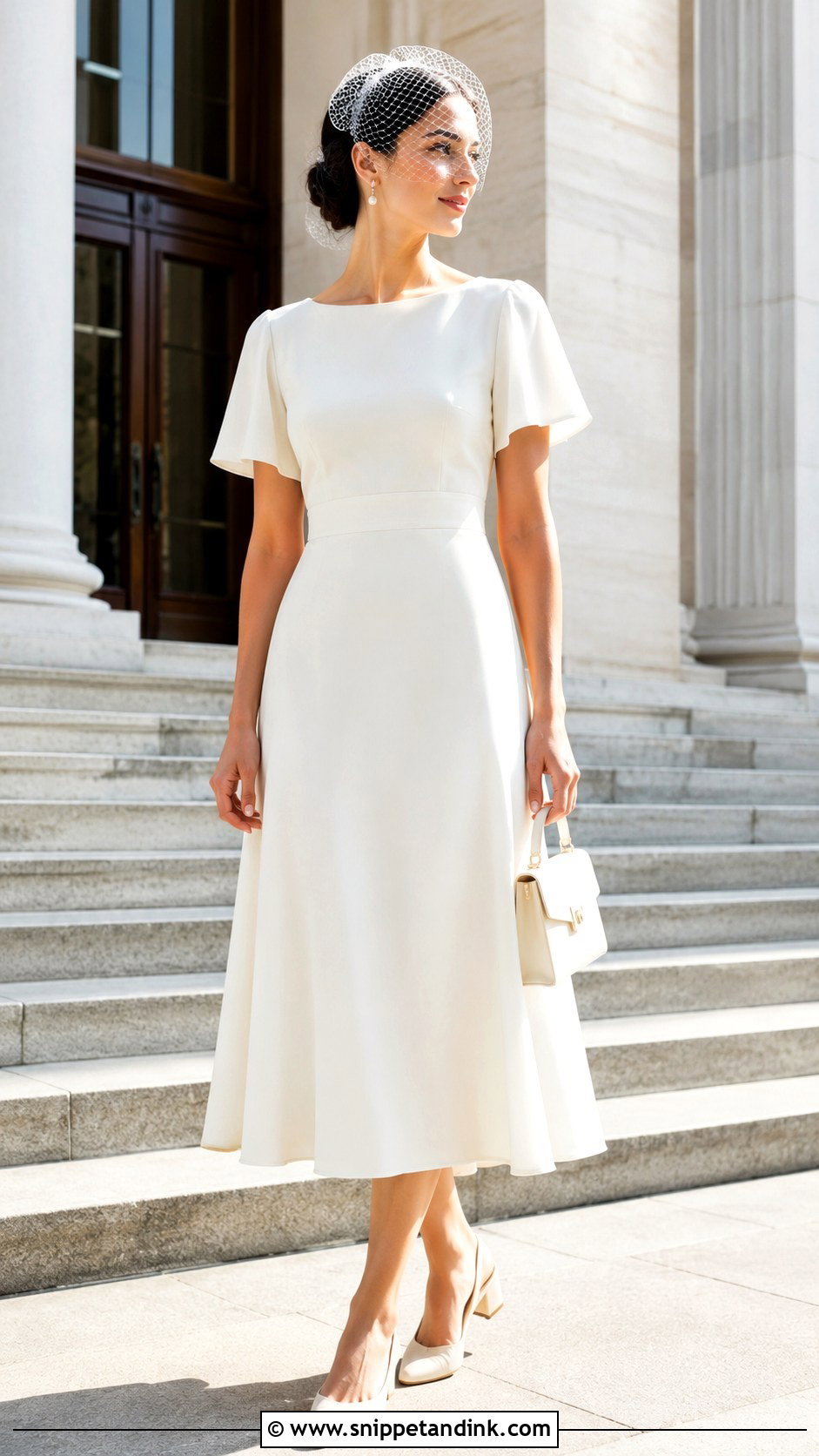
Short bridal dresses and alternative hemlines feel completely at home at a smaller wedding or civil ceremony, and a short-sleeve midi is one of the easiest to move in. Soft crepe or satin in an A-line with a fitted waist and sleeves ending loosely above the elbow works well. Where the hem falls matters: I like it just below the widest part of the calf, which tends to be the most flattering spot and still lets you take stairs freely. Low block heels, a top-handle bag, pearls and a birdcage veil or a hair bow. No train means nothing to manage on the dance floor.
18. Wedding Dress With Bridal Cape
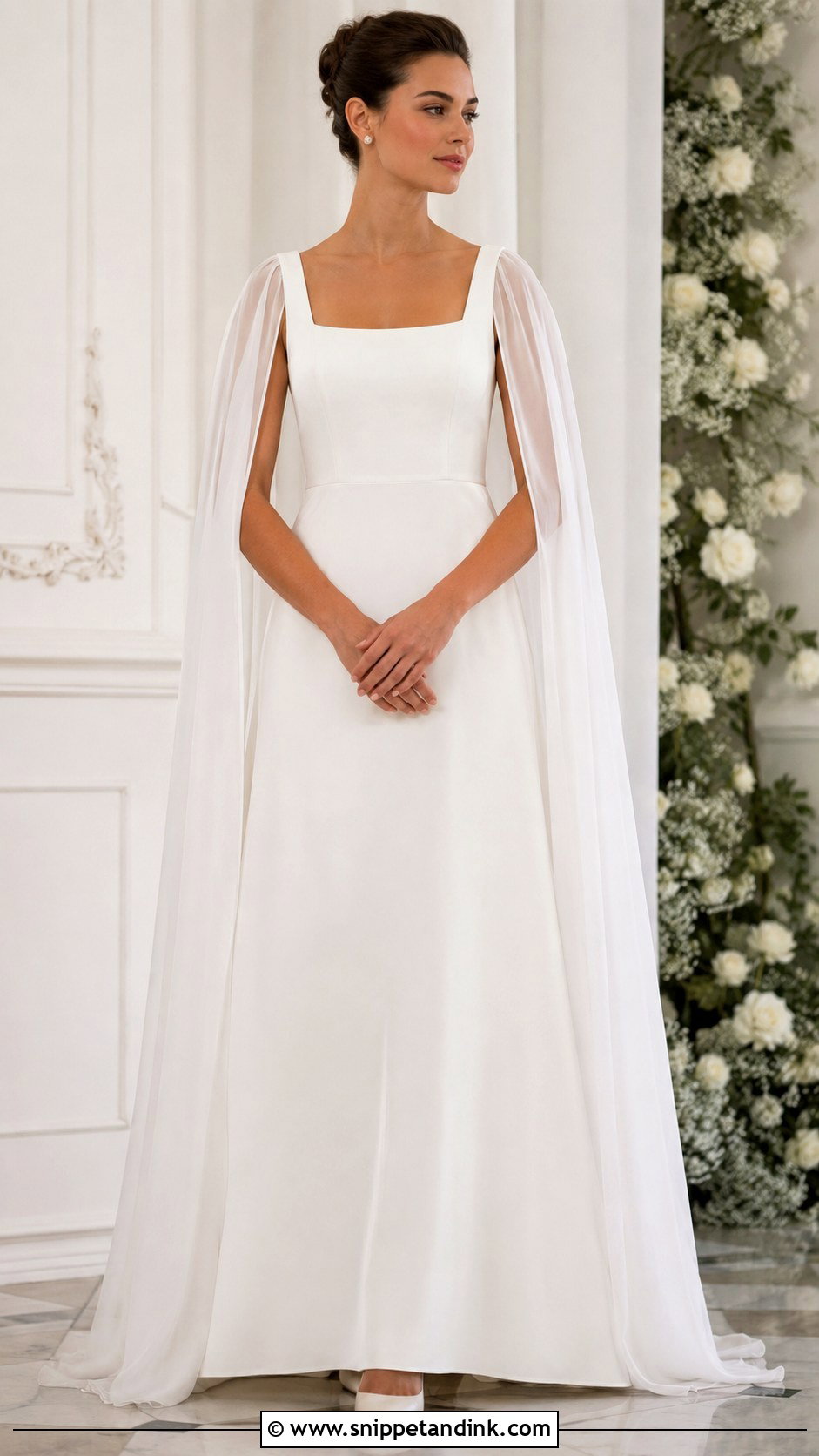
A cape gives you coverage without the arm restriction of fitted sleeves, which is why I suggest it to brides who want a covered look but hate sleeves. Start with a sleeveless crepe or chiffon A-line with wide straps and a softly structured bodice. The cape should be sheer and light, fastened securely at the shoulders, and no longer than the hem so it doesn’t get trodden on. Heavily beaded capes pull backward on the neck, so choose soft tulle or chiffon. An updo stops it catching in loose hair. It can replace the veil at the ceremony and come off for dinner.
19. Bridal Jumpsuit With Wide-Leg Pants
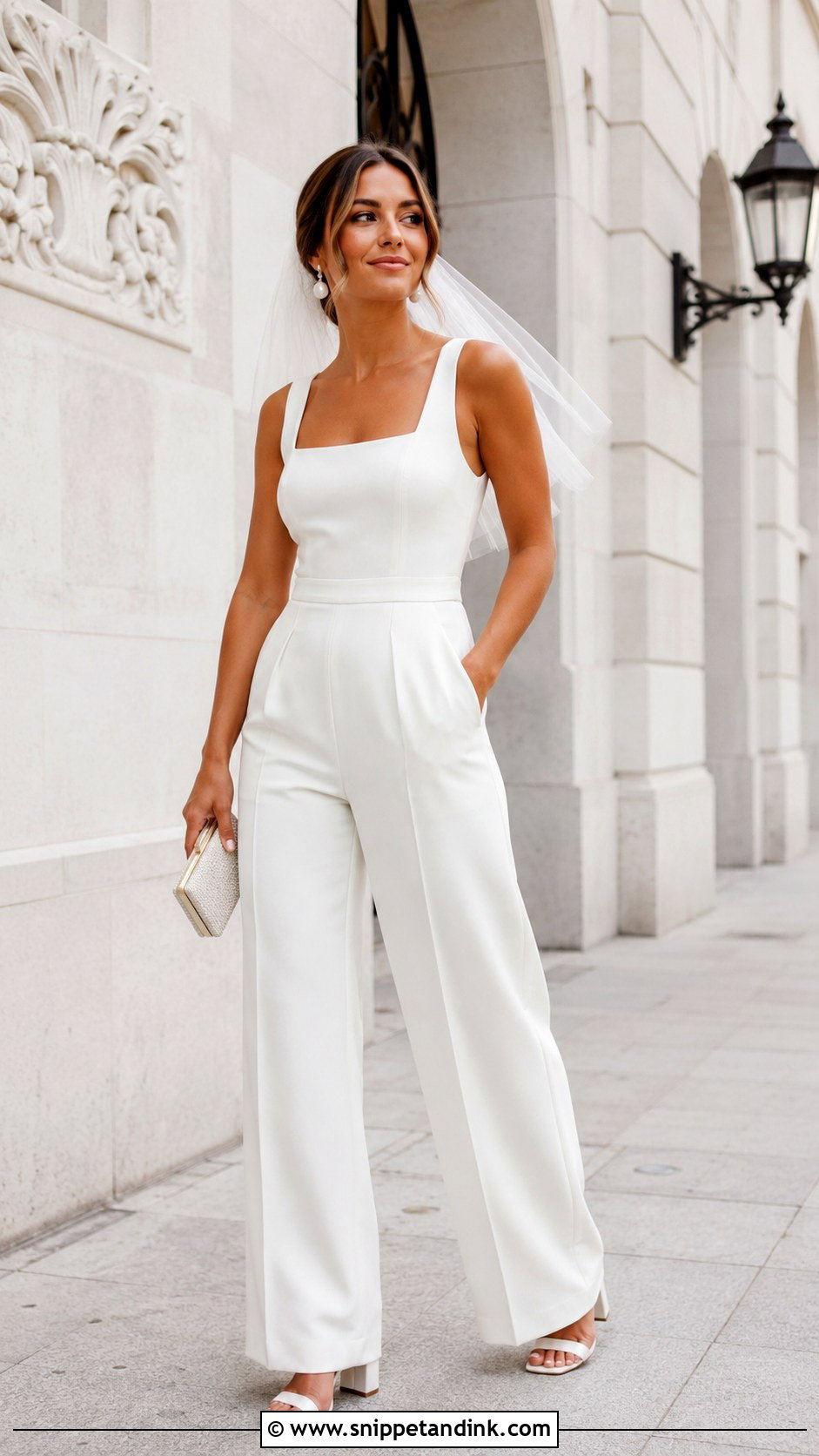
For brides who feel more themselves in trousers, a jumpsuit is a real alternative, and bridal pants and sets have become a regular part of what shops carry. A wide-leg crepe jumpsuit with a fitted but flexible bodice, supportive straps or sleeves and a waist that doesn’t pinch is the shape I’d look for. Two checks before you buy: how quickly you can get in and out of it for the bathroom, and whether the zip runs smoothly under pressure. Hem the legs for your exact shoes so they fall cleanly over low block heels without pooling. A short veil, pearl earrings and a structured clutch make it bridal.

20. Two-Piece Bridal Skirt Set
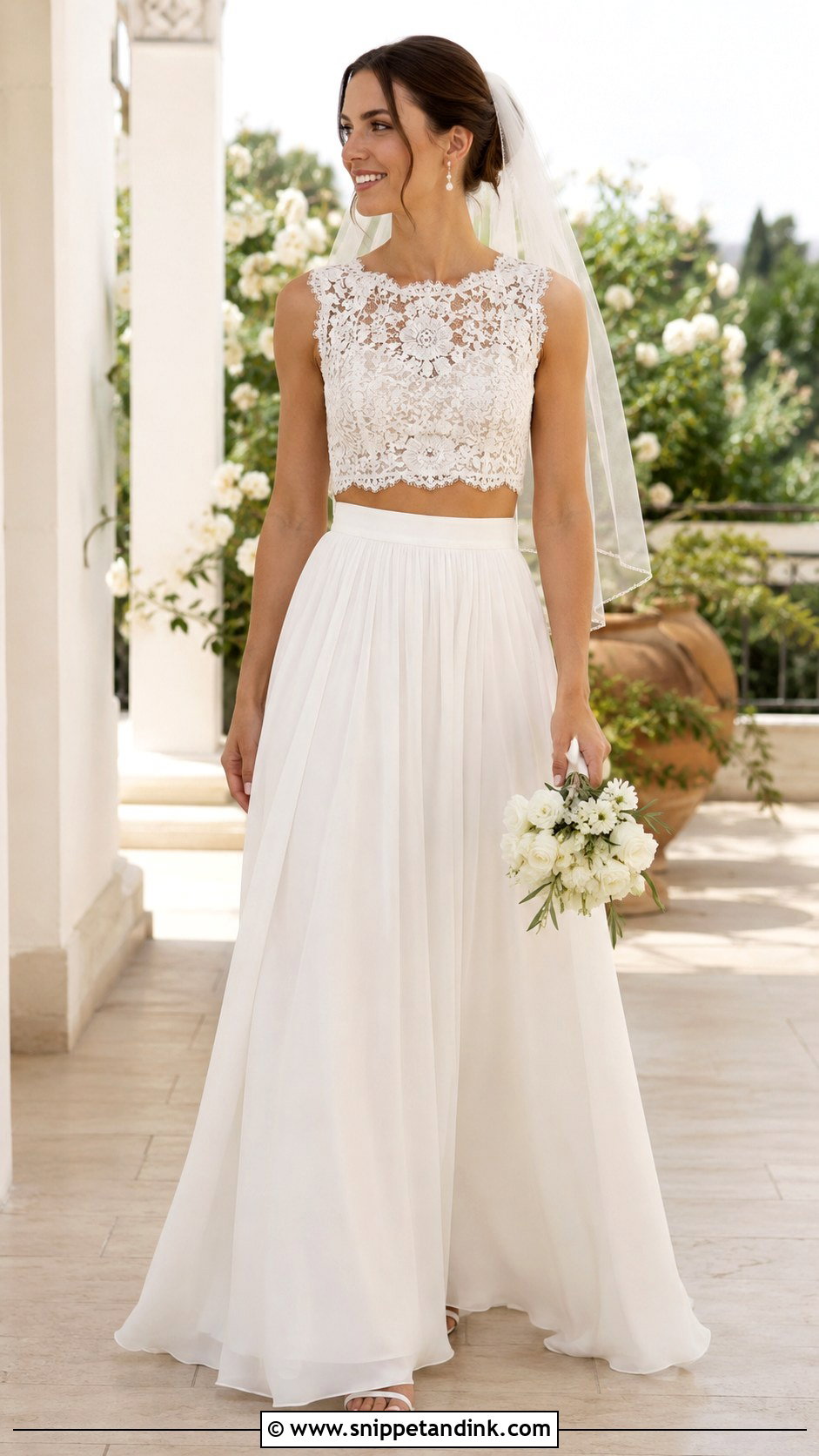
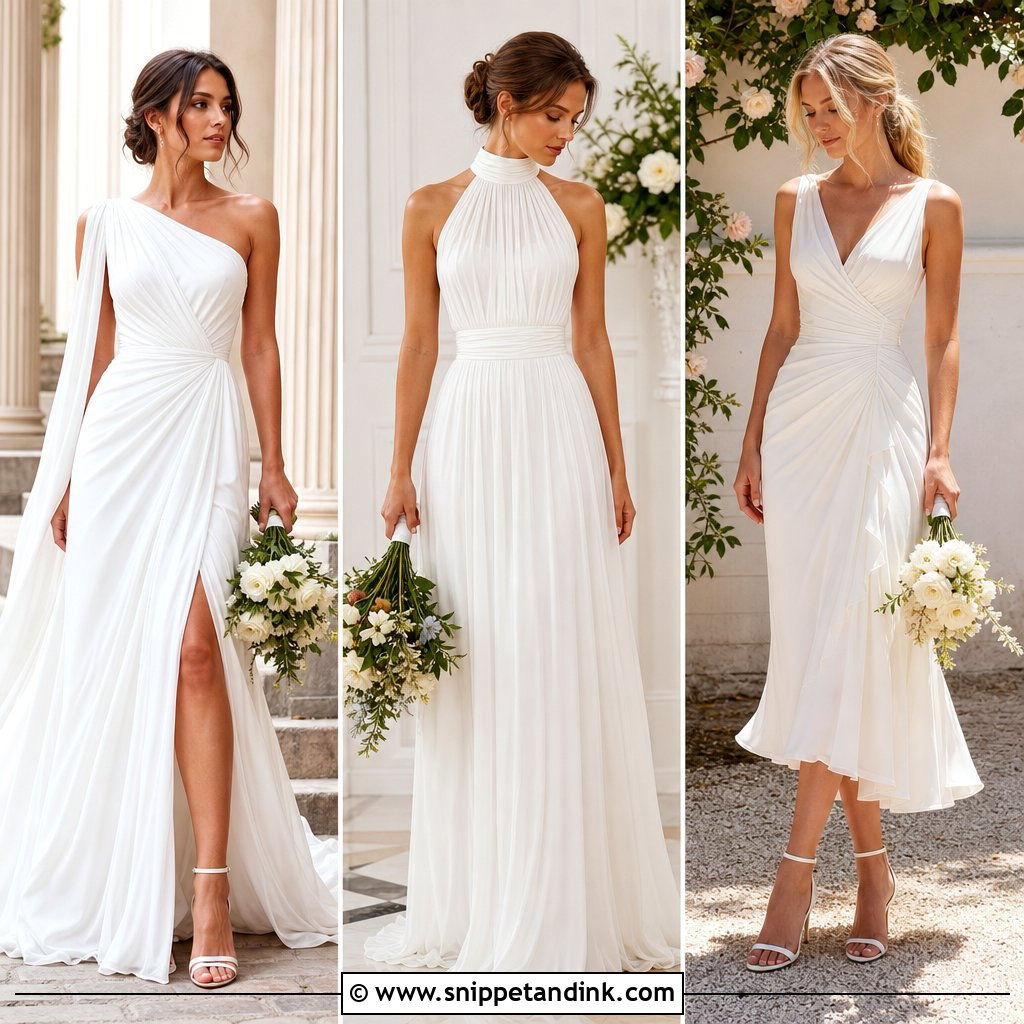
Separates can be the most comfortable option of all, because a seamstress can fit the top and skirt to different sizes. A lined lace or satin top with a high-waisted chiffon or soft crepe A-line skirt works well. The top should meet the waistband when you move unless you want a sliver of midriff. Raise your arms and sit in the fitting; if the top rides up or the waistband rolls, ask for a hook, a small hidden elastic panel or a slightly flexible band. Low sandals, a fingertip veil and pearl drops finish it, and you can swap the top for the reception.
Alterations That Add Comfort Without Changing the Look
Plenty of brides don’t realize how much a good seamstress can do beyond taking a dress in. If you love a gown that isn’t quite comfortable, ask about these before giving up on it.
- Sewing in bra cups or a light inner corset so straps and tape aren’t doing all the work.
- Binding or lining scratchy lace edges at the neckline and underarms.
- Adding bustle points so the train lifts off the floor for the reception.
- Hemming for the flat or low shoe you’ll actually wear, not the heel you tried it on with.
- Adding small elastic or hook adjustments at the waist of separates and overskirts.
Shapewear, Shoes and the Bathroom Question
Shapewear that rolls or pinches will ruin a comfortable dress, so wear it for a full afternoon before the wedding, not just at the fitting. Break in your shoes at home and keep a cushioned flat in someone’s bag.
For the bathroom, practice once at your final fitting with the person who’ll help you. With a full skirt, many brides find it easiest to face the cistern and gather the skirt in front of them. It’s a slightly silly rehearsal, and everyone who’s done it is glad they did.
Comfort Is Built In at the Fitting, Not Wished For on the Day
A gown can look bridal without heavy fabric, tight corsetry or a train you have to fight. Chiffon A-lines, stretch crepe, tea lengths, soft lace, jumpsuits and separates can all carry a wedding look from head to toe. What makes them comfortable is breathable lining, real support, seams that flex and shoes you can stand in for hours. Test every dress by walking, sitting, reaching and dancing, and remember that alterations should shape the dress to you, not squeeze you into the dress. When it fits that way, you stop thinking about it, and you get to enjoy your own wedding.
You'll Like These Ideas:










Leave a Reply