
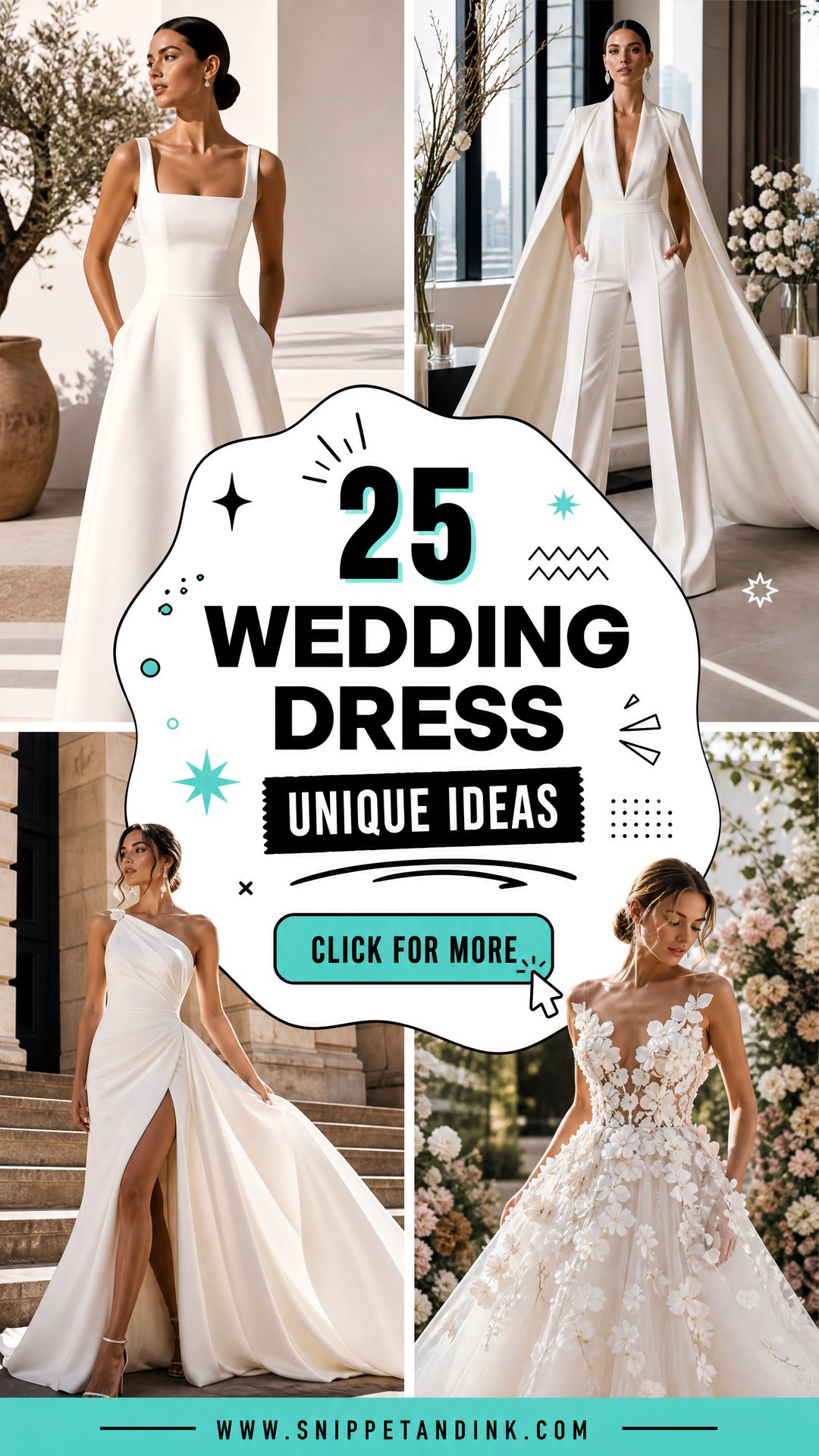
The brides who come to me asking for something different usually already know what they don’t want: a strapless ivory A-line that looks like everyone else’s. What they want is harder to name. Color, texture, sleeves, capes, minis, separates, vintage pieces and sharp modern shapes are all fair game now, and they can still read as bridal when the styling is right. So each idea below comes as a whole outfit, with the gown, shoes, accessories and the kind of setting it suits. Some are gentle twists on tradition. A few are for brides who are happy to surprise the room.
Shopping Outside the Bridal Salon
Many of the dresses below don’t come from traditional bridal lines. Blue tulle, gold beading, jumpsuits and sequin columns often turn up in eveningwear, ready-to-wear and independent design studios instead. That widens your choice, but the buying works differently, and brides get caught out by it.
- Return policies: ready-to-wear shops often accept returns, bridal salons almost never do. Read the terms before ordering anything final.
- Colors: shades shift between dye batches and screens. Ask for a fabric swatch and look at it outdoors and under warm indoor light.
- Alterations: eveningwear isn’t built with the generous seam allowances many bridal gowns have, so there’s less room to let it out. Take it to a seamstress before the return window closes.
- Custom work: a dressmaker can make something truly one-off, but expect several fittings and leave months, not weeks.
Bring a photo of the venue to every appointment. An unusual dress that looks bold in a white-walled boutique can look perfectly at home in a dark ballroom, and the reverse happens just as often.
1. Floral Embroidered Wedding Dress
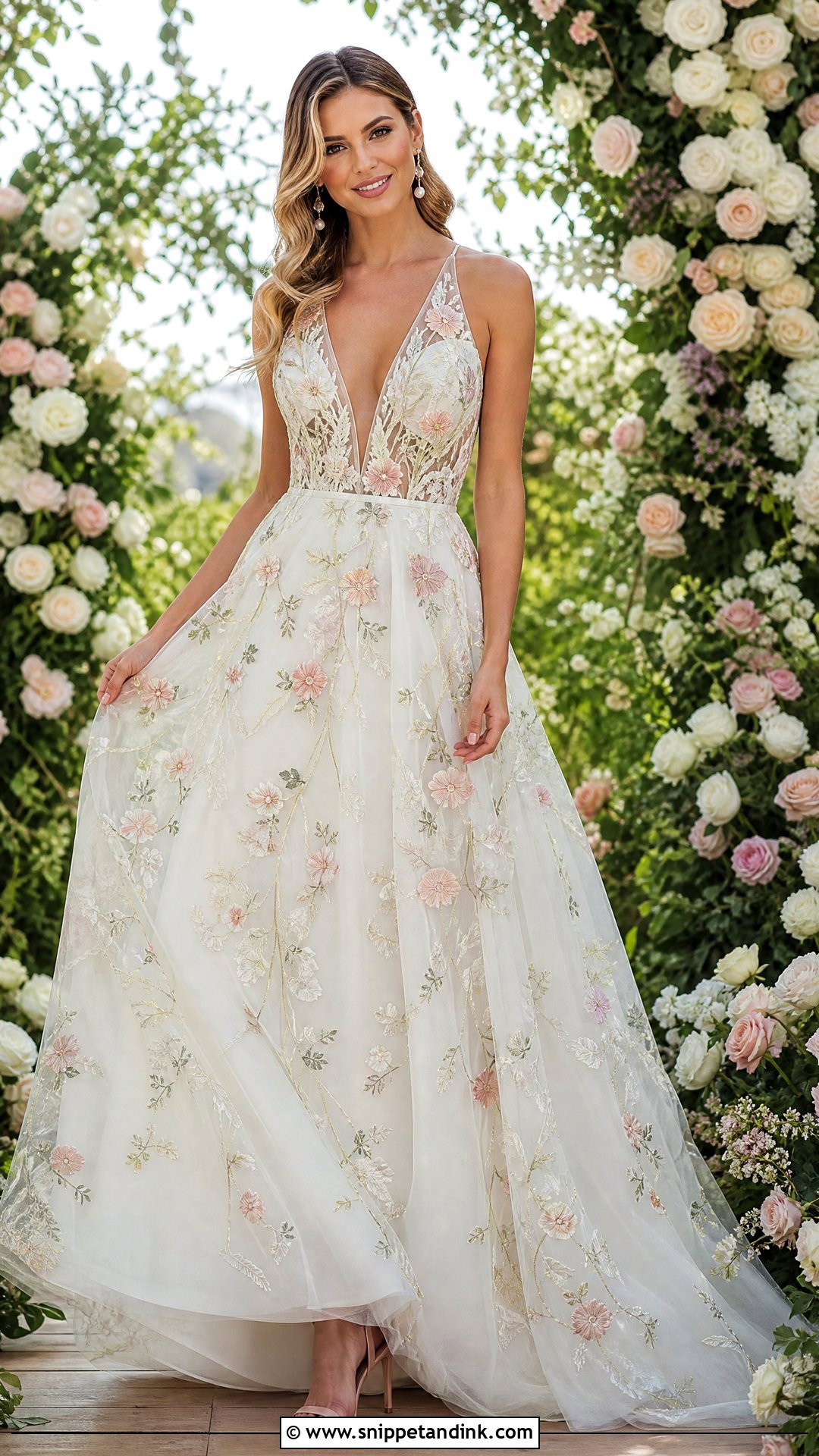
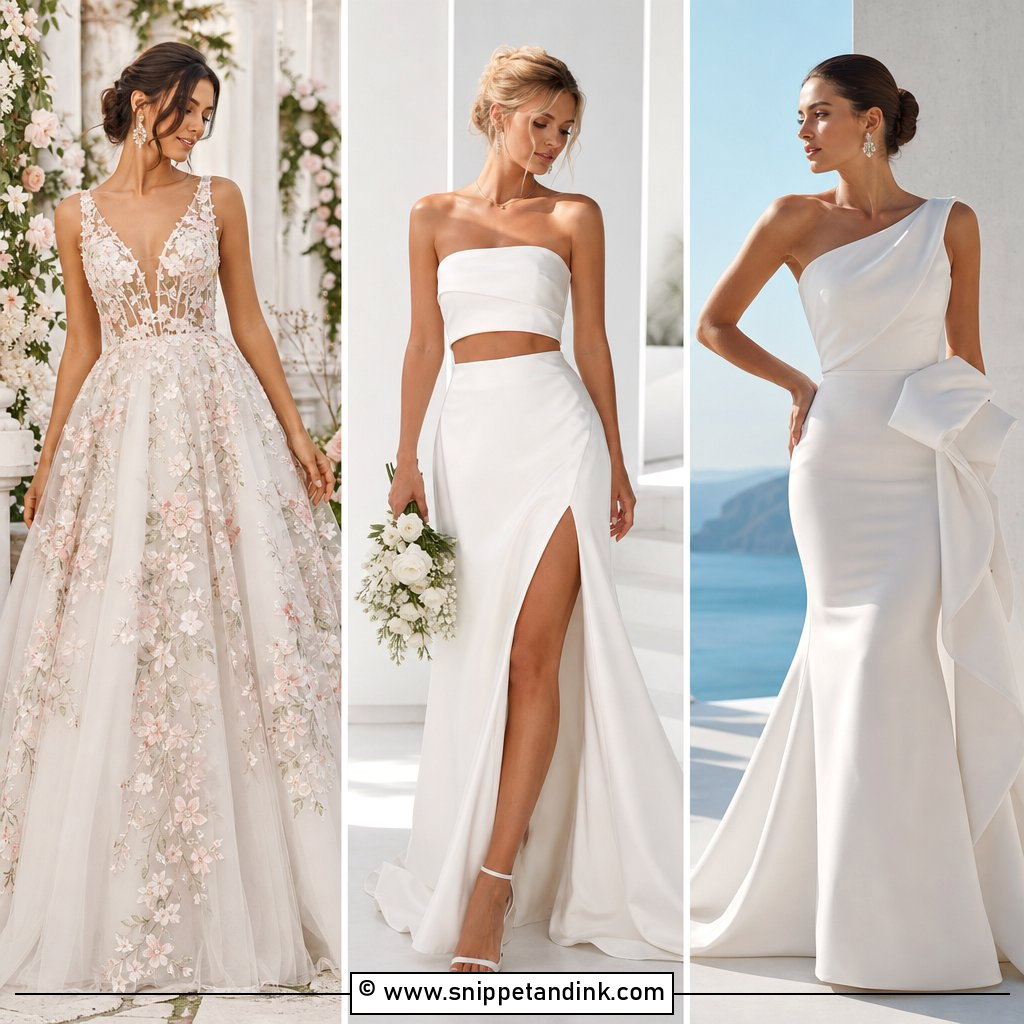
Embroidery gives you color and detail without leaving the bridal palette. I’d look for a sheer ivory or champagne gown with flowers stitched across the bodice, sleeves or skirt. Pastel threadwork suits a garden; bolder blooms feel more like art. Pearl earrings, soft waves and barely-there heels in ivory or blush keep the focus on the stitching, and the veil should stay plain. Check the back of the embroidery at your fitting. Thick knots and loose threads behind a sheer panel can scratch, so good gowns are lined or backed with soft tulle there.
2. Short Wedding Dress With Bow Heels
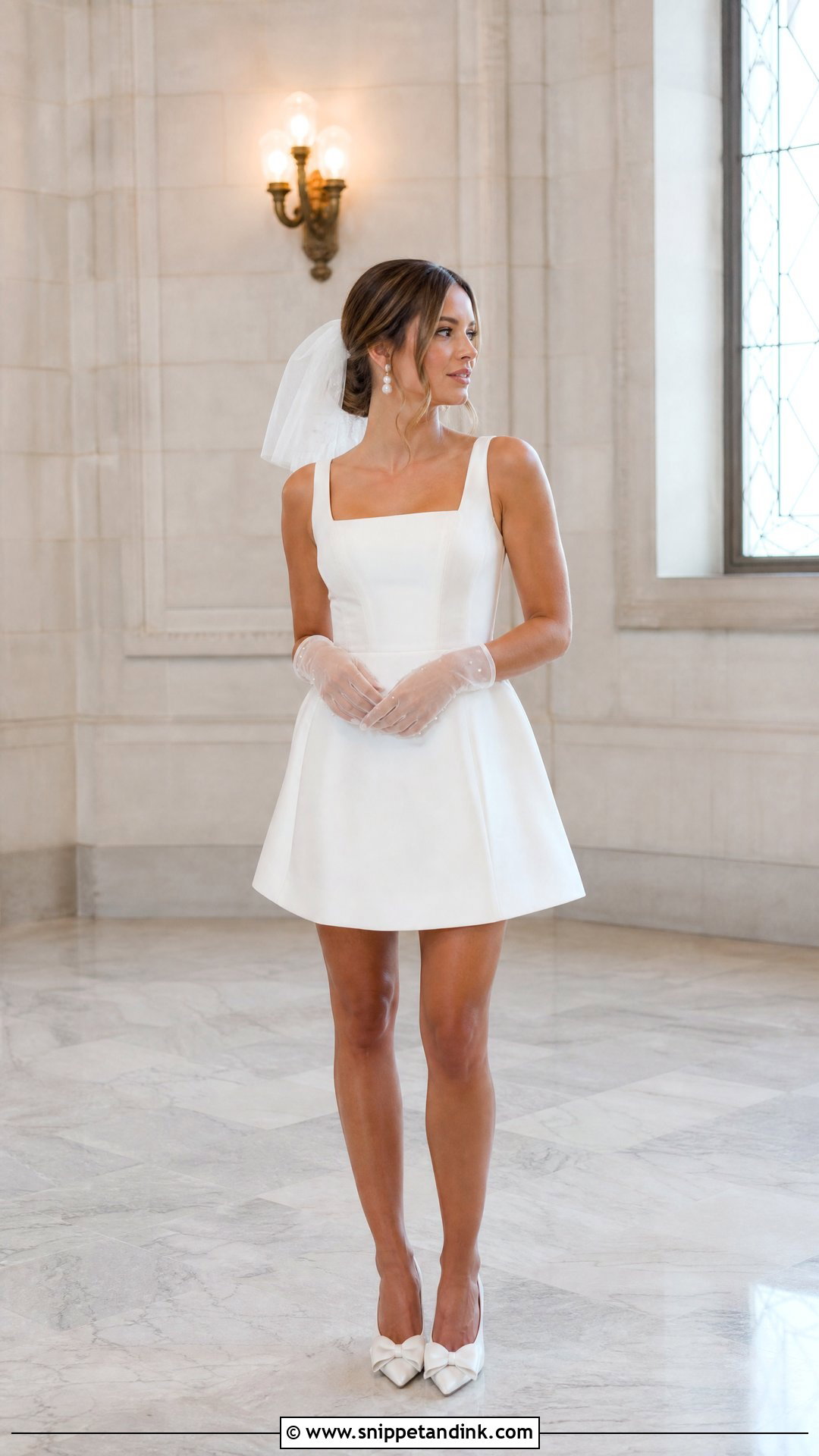
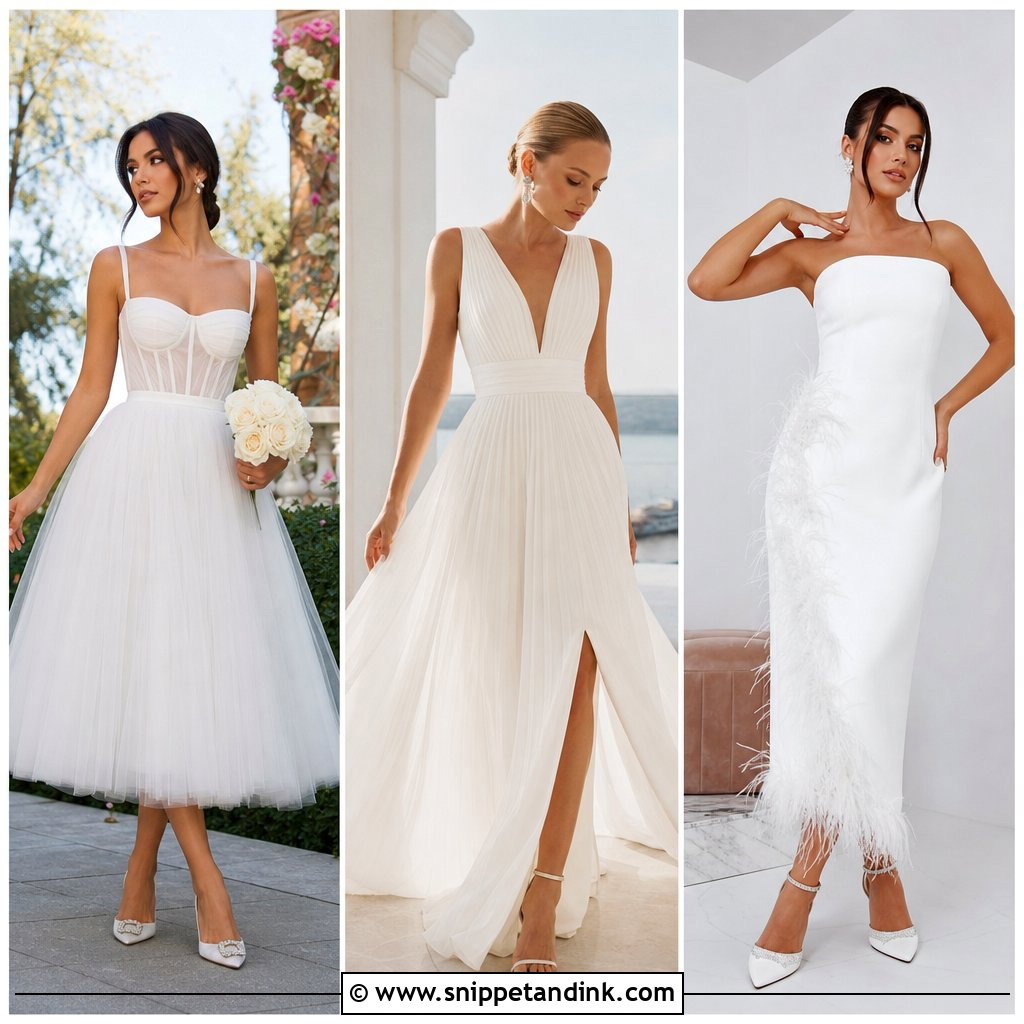
A short hem turns your shoes into part of the outfit, so this is the time for bow heels, pearl sandals or crystal pumps. I’d pick a structured mini or knee-length dress with clean lines, a square neckline or soft puff sleeves. Sheer gloves or a small veil add a vintage note; pearl studs and a top-handle bag keep it neat. It suits courthouse ceremonies, city weddings and second looks. Thicker fabrics like mikado or heavy crepe hold a short shape far better than thin satin, which tends to look like a slip once you’ve sat down a few times.
3. Champagne Satin Wedding Dress
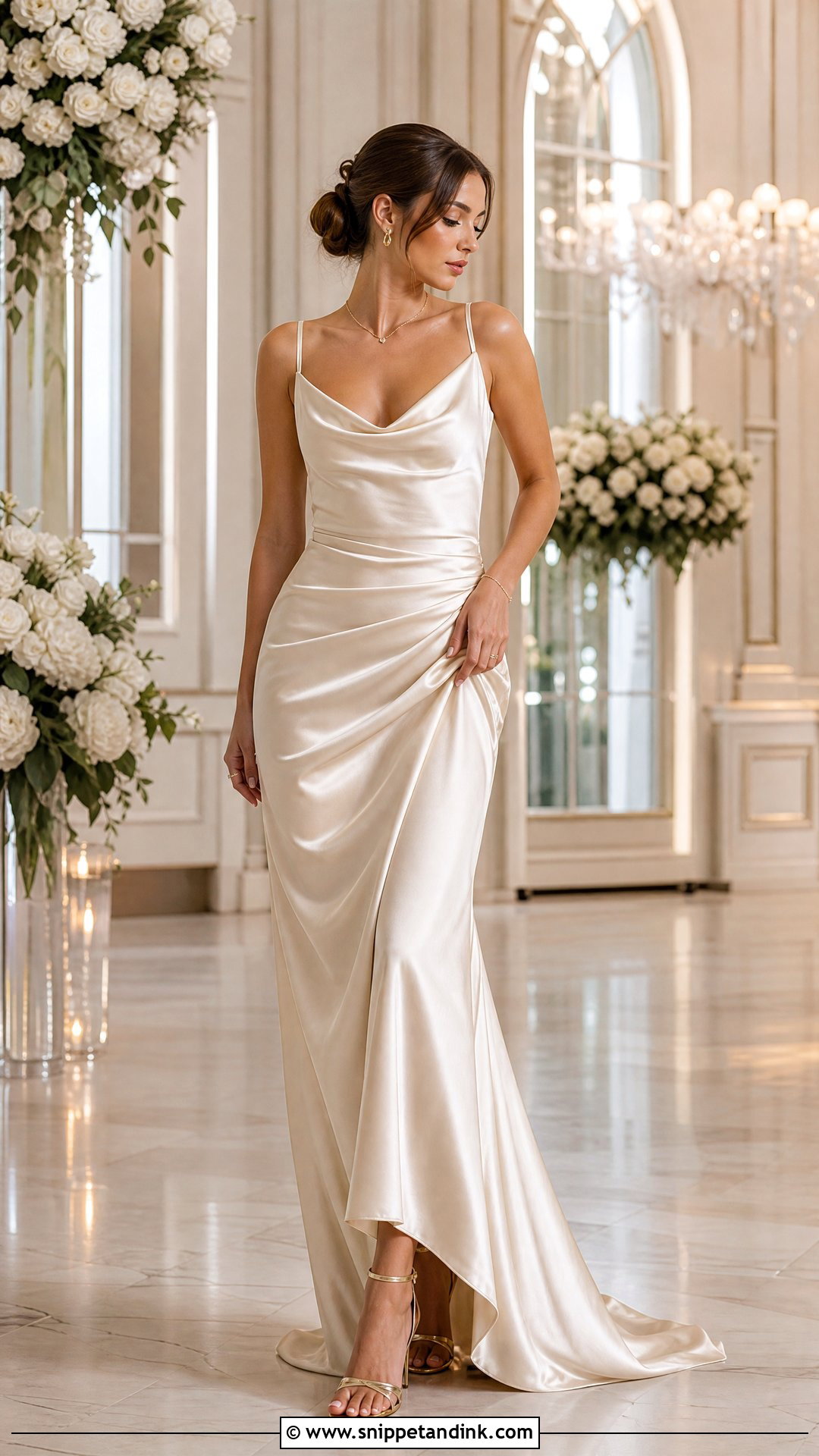
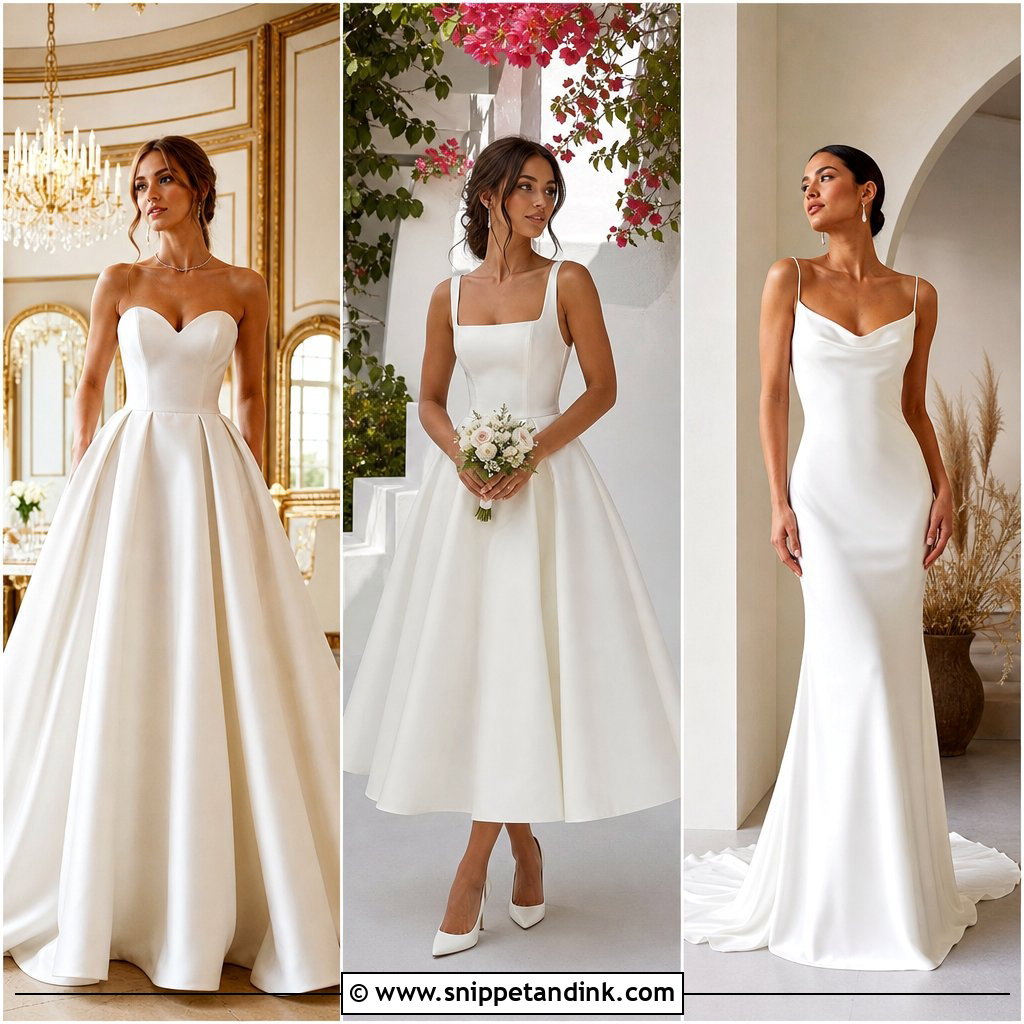
Champagne is the alternative to white I recommend most, because the warm undertone flatters more skin tones than bright white does. A bias-cut slip, a draped cowl neck or a structured satin ball gown all work in it. I’d style it with metallic heels, soft gold jewelry and a sleek low bun, and add a sheer ivory veil for a bit of contrast. Evening weddings and hotel venues suit it best. Look at the fabric next to your face in daylight before ordering: some champagnes lean pink, some lean grey, and the difference only shows outdoors.
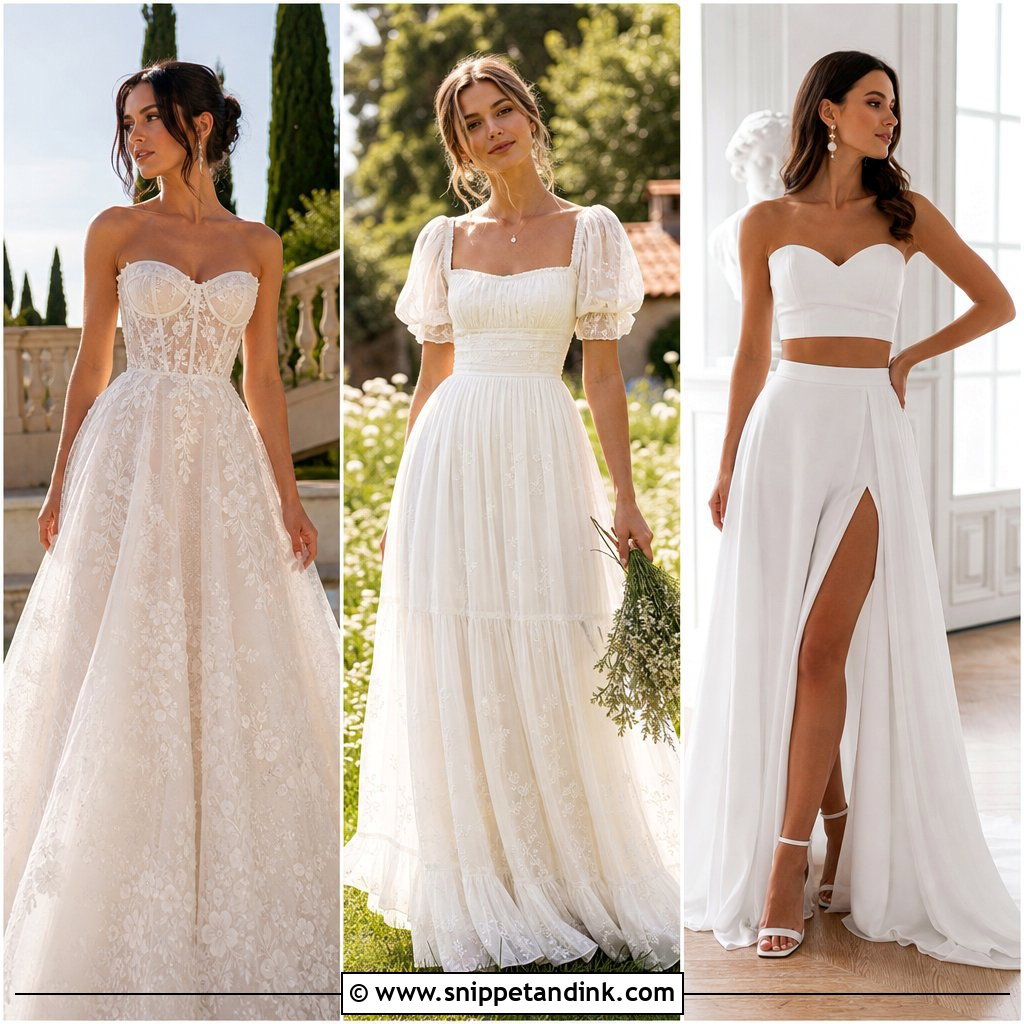
4. Two Piece Wedding Dress
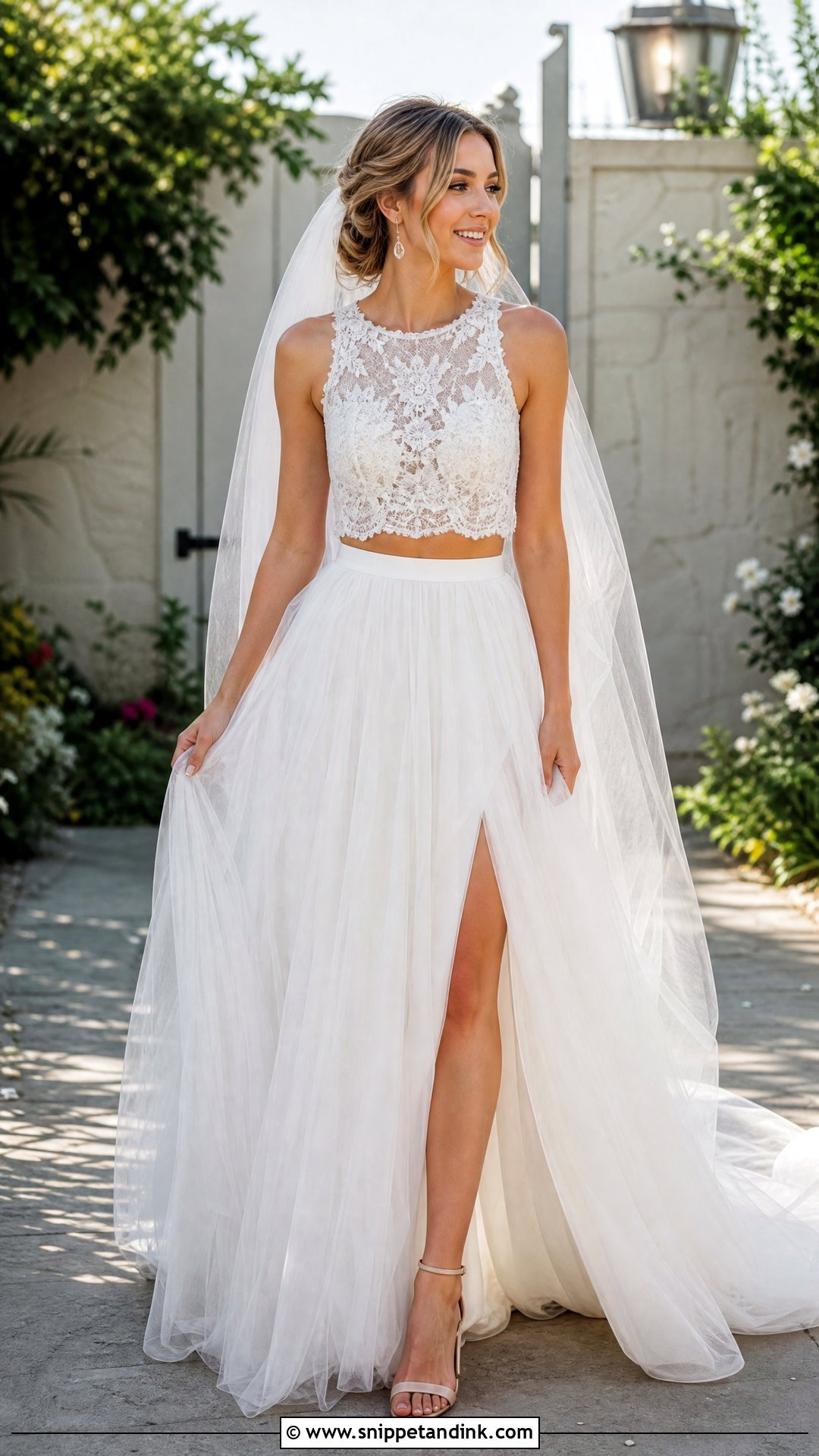
Separates let you mix proportions a single dress can’t. A fitted lace crop top over a high-waisted tulle skirt reads romantic; a sleek satin top with a column skirt reads minimal. Keep one half detailed and the other plain. Strappy heels, drop earrings and a smooth veil or bow finish it. It suits beaches, rooftops and gardens, and you can swap one piece for the reception. The practical catch is the waistband. Ask for a hook-and-bar closure and a grip strip inside the skirt waist, so the top doesn’t ride up when you lift your arms.
5. Blue Wedding Dress
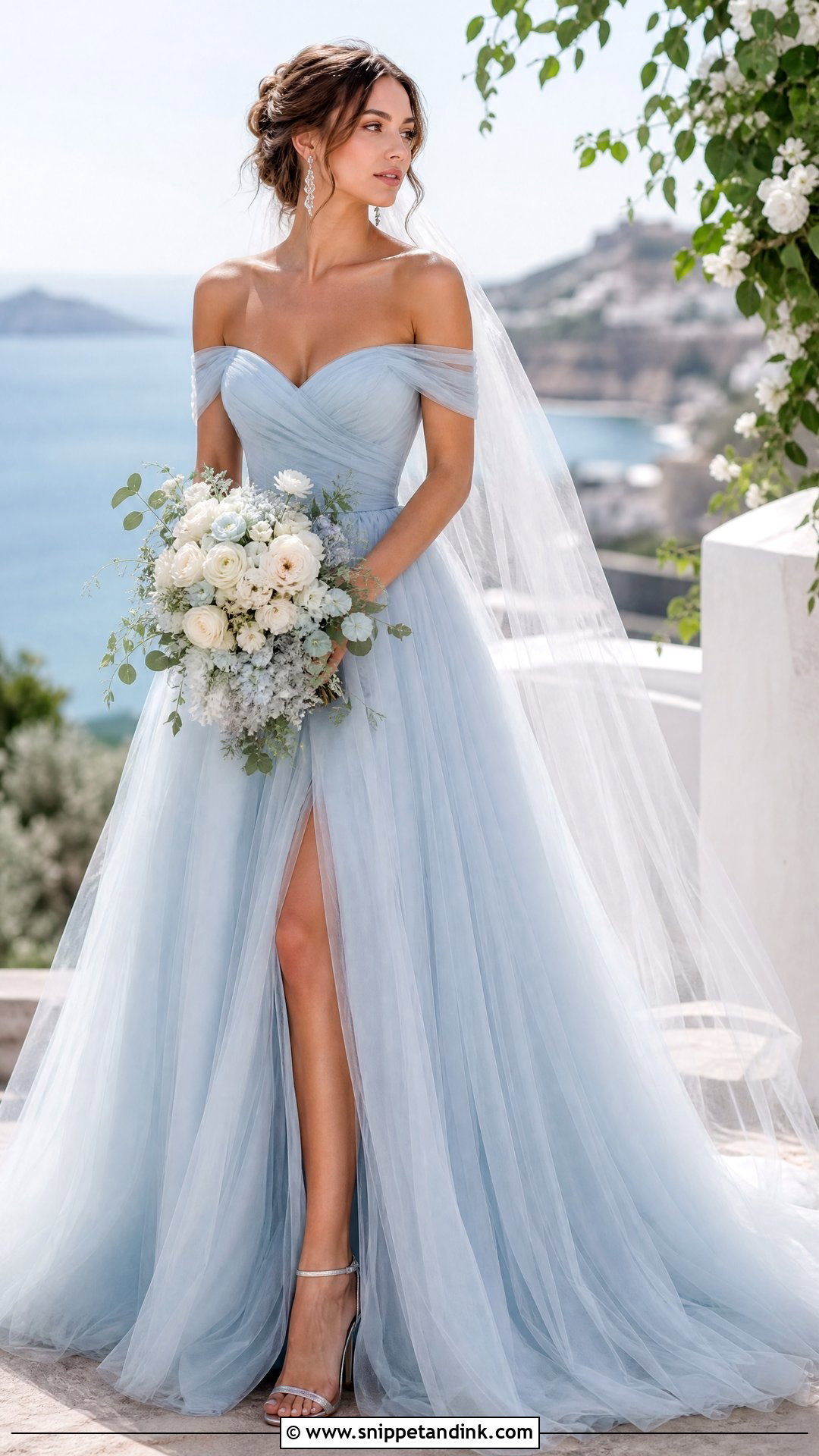
Pale blue is the easiest color for a bride who wants to step away from white without feeling like a guest. powder blue, misty grey-blue and ice blue all keep the dress bridal. I like it in flowing tulle, off-shoulder shapes or a corset bodice over a full skirt, with silver heels, crystal earrings and a sheer veil. White flowers or pearls add contrast. Winter, coastal and outdoor weddings flatter it. Blue tulle shows dirt at the hem faster than ivory, so a hemline a little off the ground pays off outside.
6. Feather Trim Wedding Dress
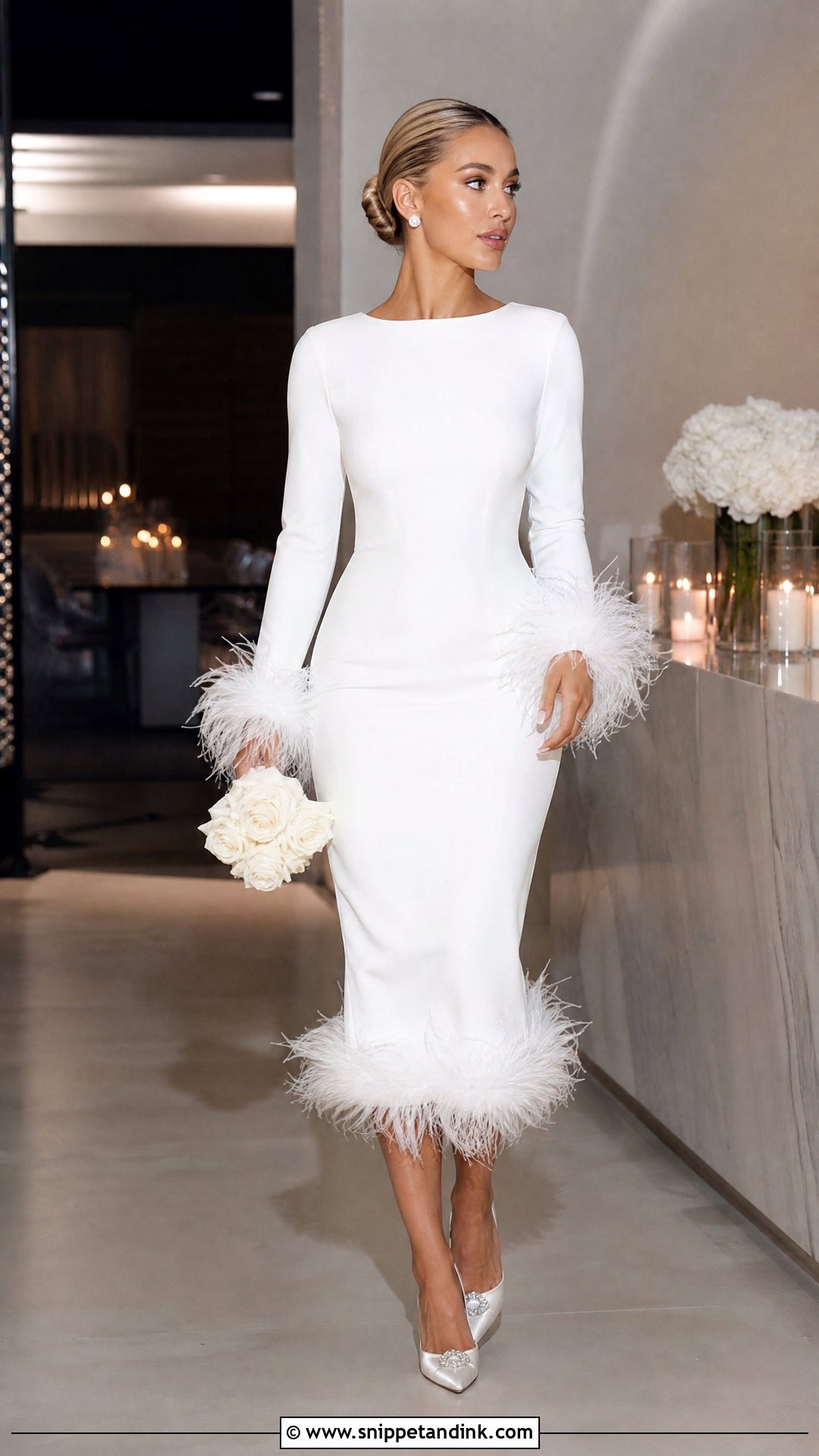
Feathers move with you, which is their whole appeal. Keep them to cuffs, a hem or a neckline trim, or save a fully feathered mini for the reception. A fitted shape keeps it modern rather than theatrical. Pointed satin pumps, diamond studs and a sleek bun are all the styling it needs. City weddings, hotel ballrooms and fashion-led receptions suit it. Know that ostrich feathers droop in rain and humidity, and they shed a little on everything they touch, including your partner’s jacket.
7. Black And White Wedding Dress
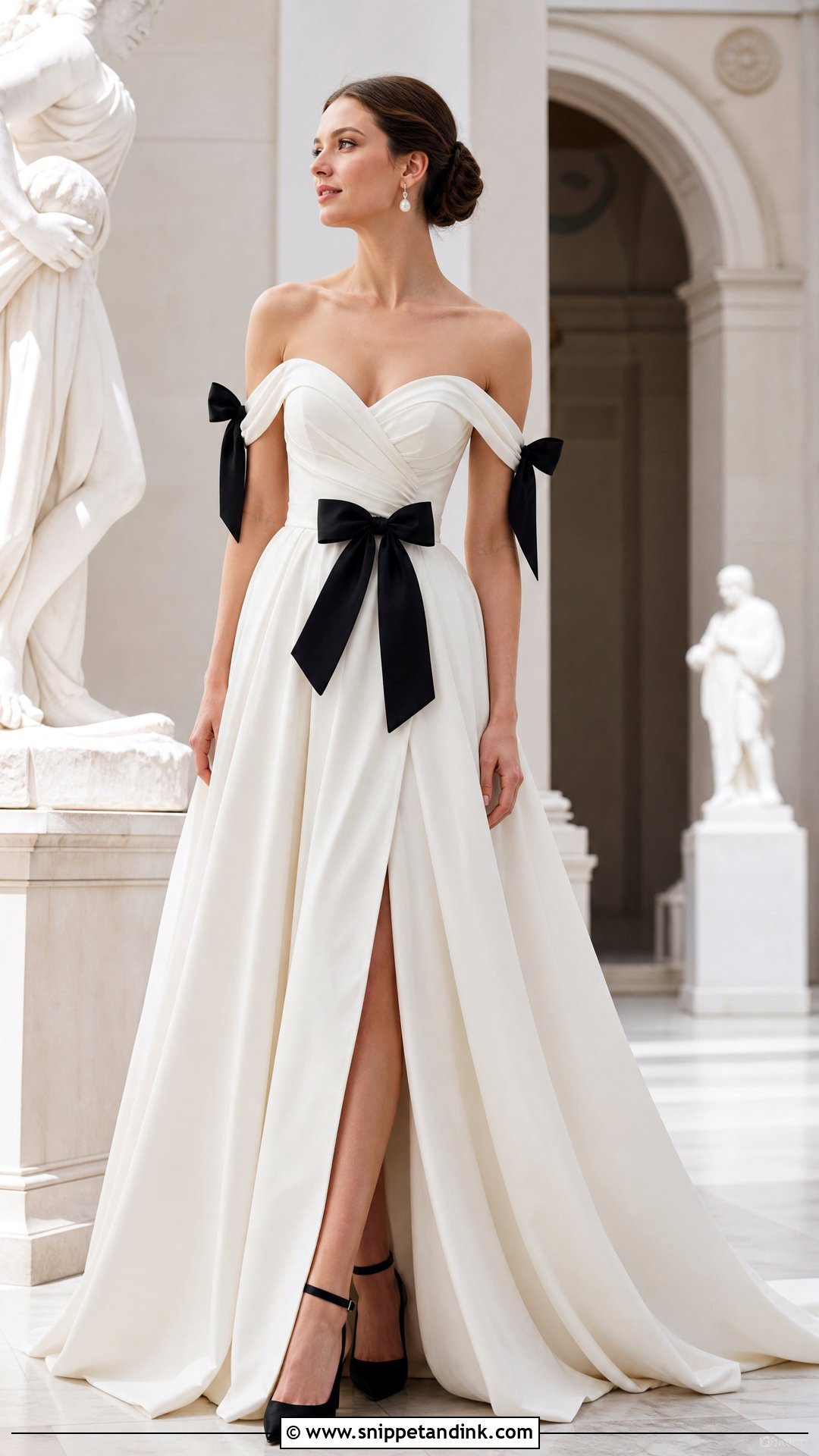
Black accents on an ivory gown look graphic and deliberate: a black bow, black appliqué, black piping or a black sash. I’d keep the rest clean with black satin heels, pearl earrings and a smooth updo. A big black bow at the back usually means a short veil or a clip instead of a long veil. Museums, modern hotels and formal evening weddings suit it. Check the dye on any black trim before you wear it near ivory in hot weather; a cheap ribbon can bleed onto the fabric if it gets damp.
8. Pearl Wedding Dress
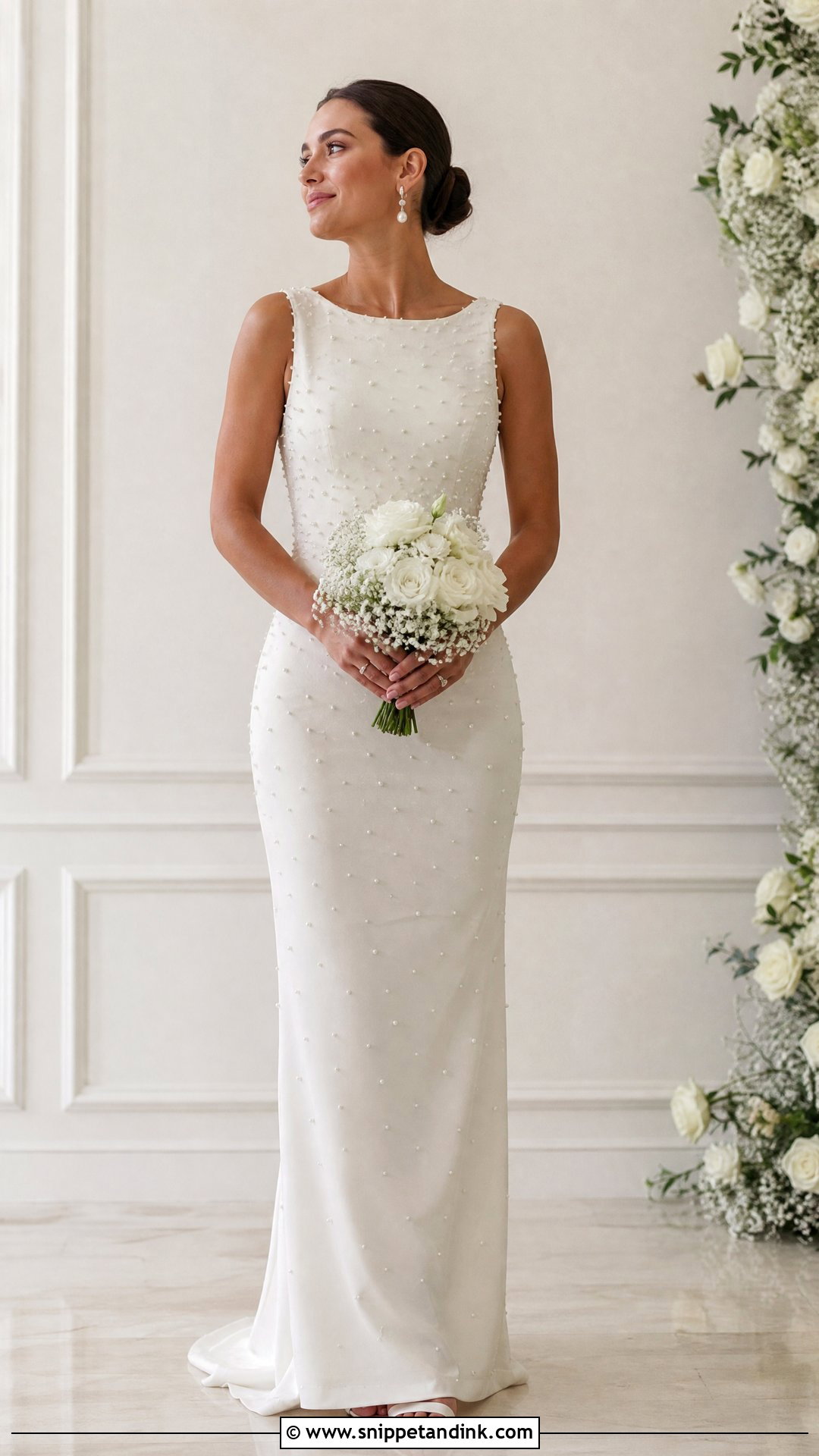
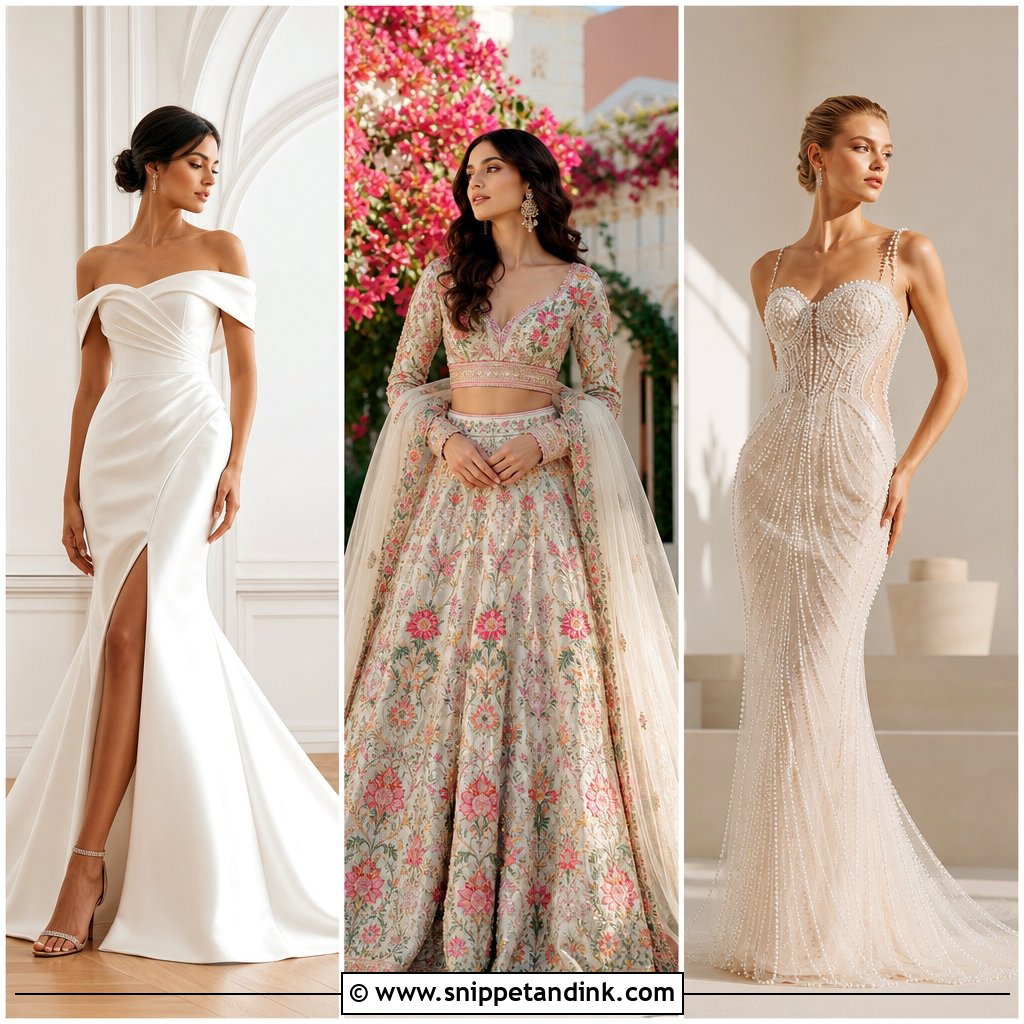
Pearls give texture that glows rather than glitters. Scattered across sheer sleeves, edging a neckline or covering a simple silhouette, they suit a fitted sheath, an A-line or a long-sleeve gown. Pearl drop earrings, satin heels and a clean low bun tie it together. Don’t layer in many extra crystals, because the two finishes compete. Allover pearl beading is heavy, so try it on for at least ten minutes and see how your shoulders feel before deciding.
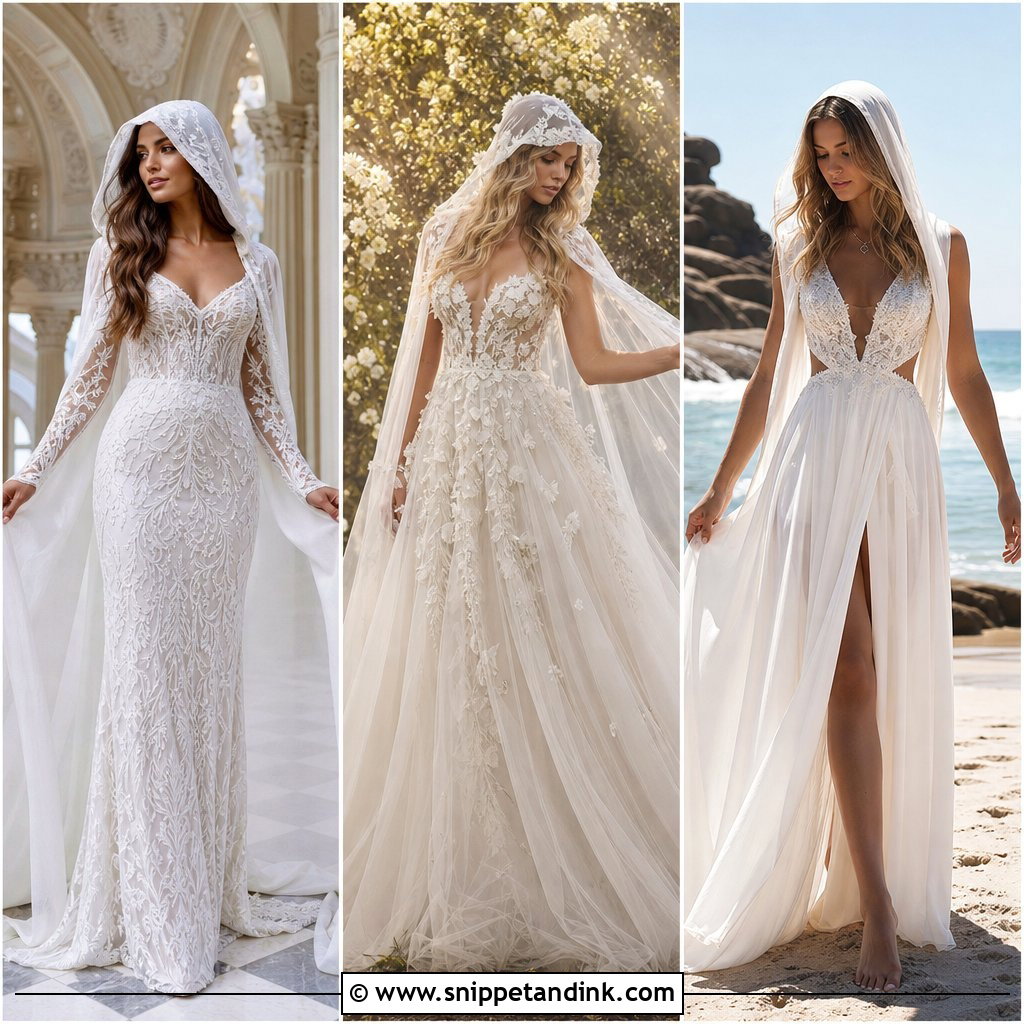
9. Cape Wedding Dress
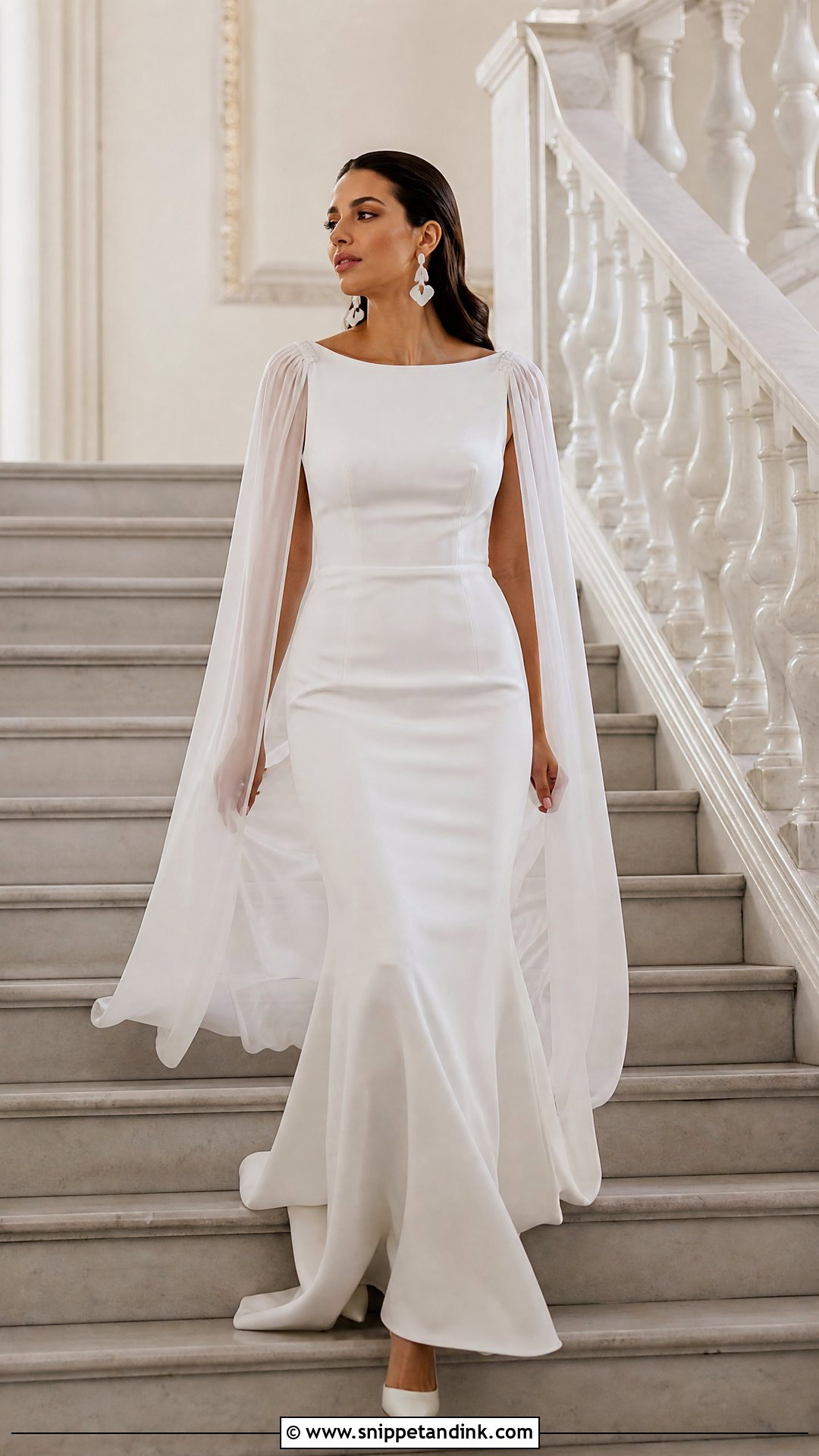
A cape does what a veil does, with a cleaner line. A sleek crepe gown with a sheer cape, a lace capelet or a long detachable cape all work, and the plainer the gown, the more the cape stands out. I’d pair it with pointed heels, sculptural earrings and hair tucked behind the ears. It adds coverage without hiding the dress, which helps in cool weather or for modest styling. Make sure it fastens with a hidden hook or snap, not just a ribbon, so it doesn’t slip off one shoulder as you walk.
10. Tea Length Wedding Dress
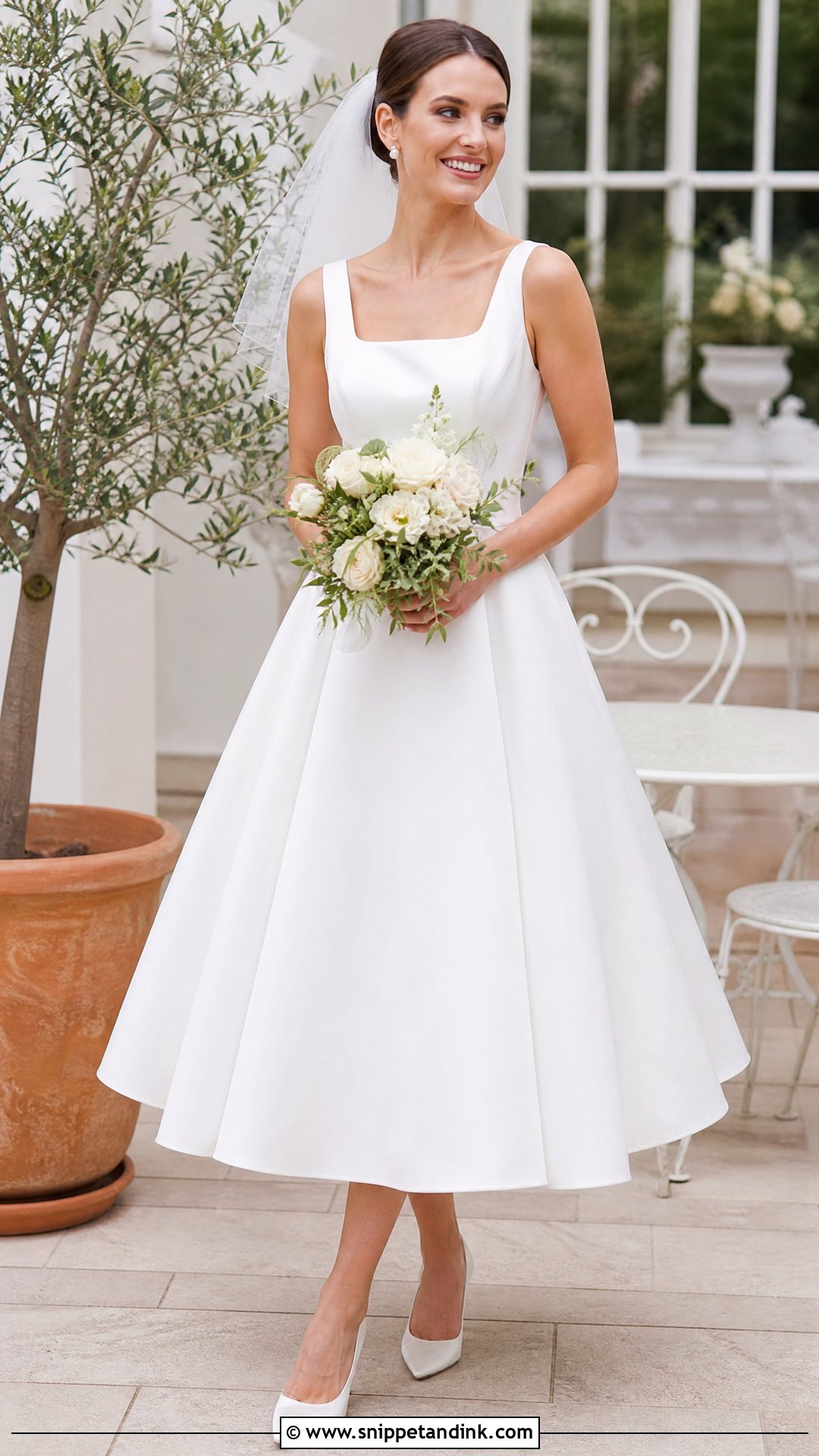
Tea length lands between knee and ankle, so the shoes are on show and the dancing is easy. A full skirt with a fitted bodice gives a classic 1950s line; a sleek satin tea-length feels newer. Pointed pumps, pearl earrings and a short veil or headband finish it. It suits courthouse ceremonies, brunch weddings, gardens and small parties. Petite brides should try a hem just below the calf rather than mid-shin, because a mid-shin hem can cut the leg at its widest point.
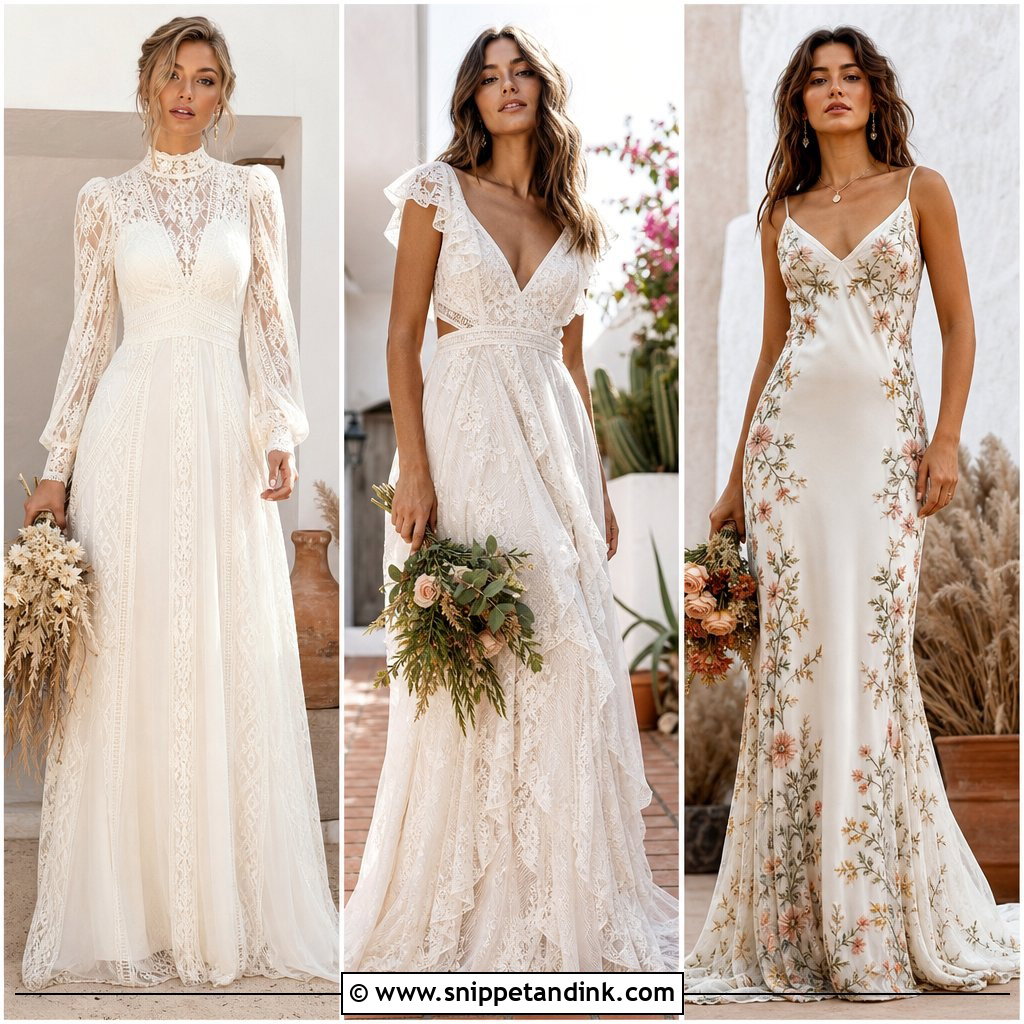
11. Colorful Floral Wedding Dress
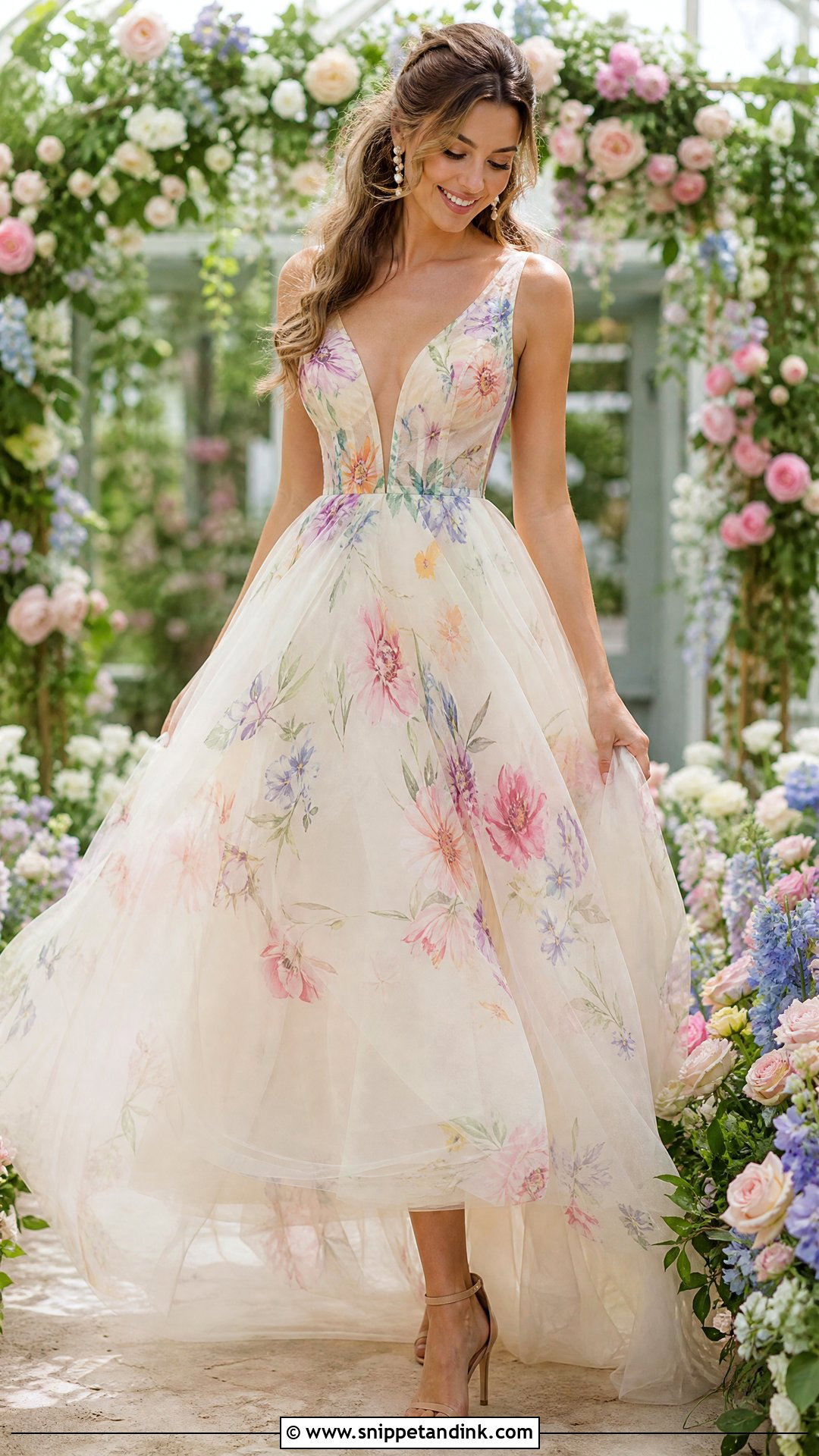
For a joyful, artistic look, swap white-on-white detail for painted flowers, printed blooms or colorful appliqués on a light base. Pink, lavender, sage and yellow feel soft; brighter shades feel expressive. Nude or ivory heels and fine jewelry let the print lead, and a loose updo or soft curls keep it relaxed. It suits outdoor ceremonies and spring weddings. Talk to your florist early, since the bouquet needs to work with the print rather than repeat it.
12. Wedding Dress With Detachable Overskirt
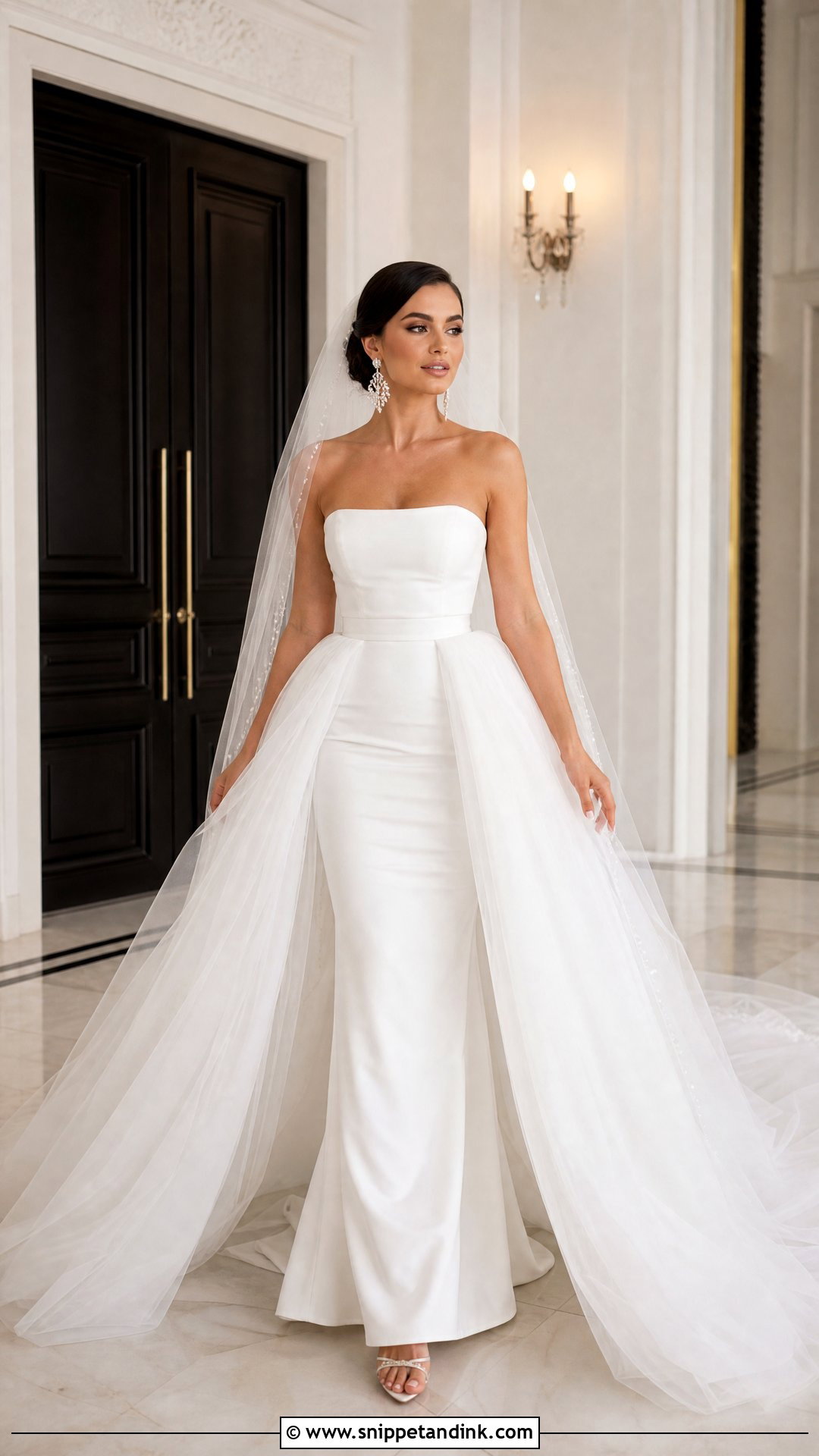
The detachable overskirt gives you a full ceremony skirt that comes off to reveal a fitted reception dress, usually a column, mermaid or mini, under tulle or satin. Elegant heels, statement earrings and a veil sized to the ceremony skirt complete it. You get drama for the aisle and comfort for the dance floor without a full change. Practice taking it off at your last fitting. Ten seconds in a quiet room becomes three minutes in a crowded hallway if nobody knows where the hooks are.
13. Ruffle Wedding Dress
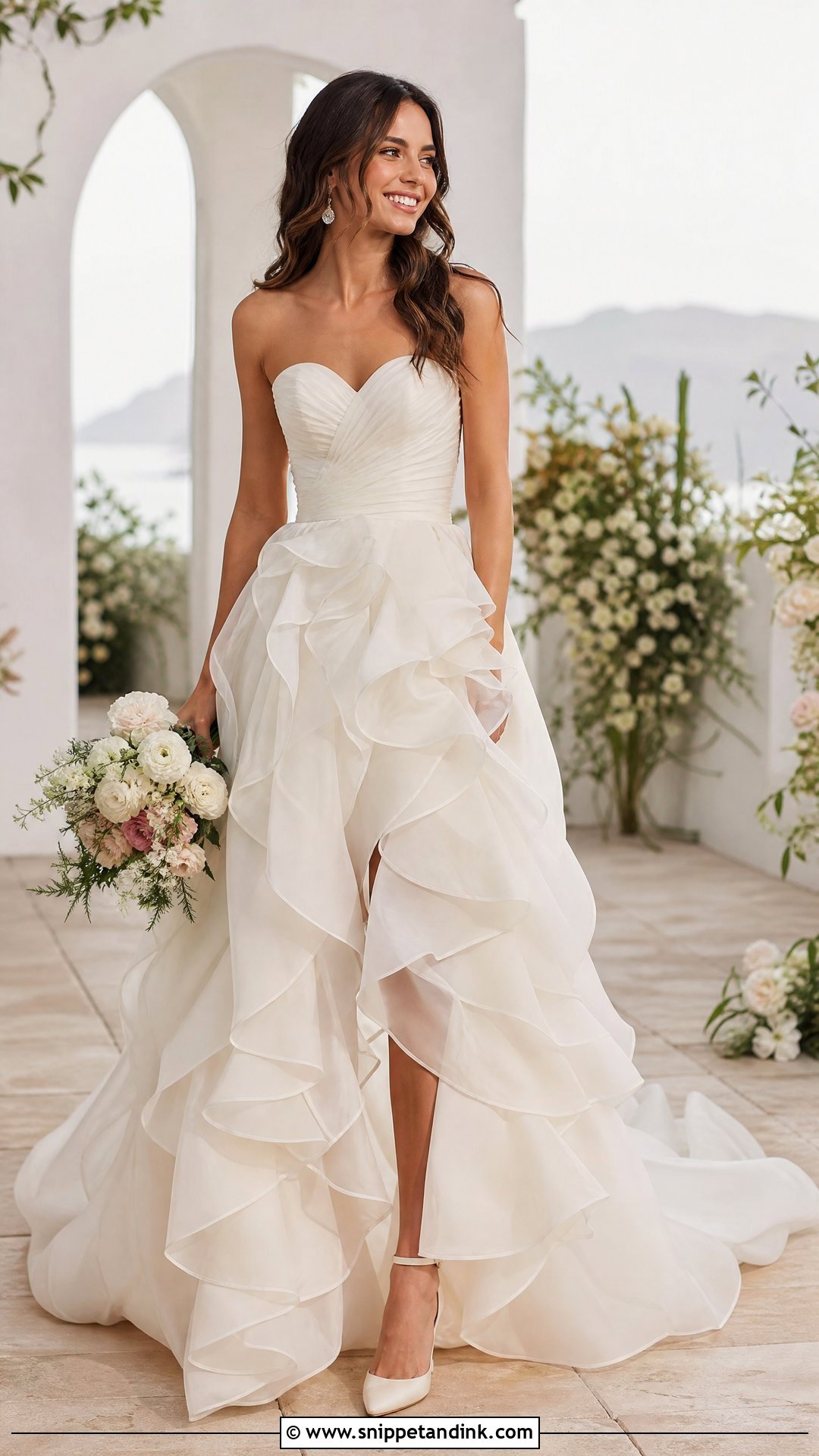
Ruffles add volume and movement, whether that’s cascading tiers on the skirt, soft organza layers or one dramatic ruffle at the neckline. Keep the bodice fitted and let the skirt carry the shape. Simple heels, fine earrings and clean hair stop it feeling fussy. Outdoor venues, staircases and breezy ceremonies suit it because the layers lift in the air. Organza ruffles crush when you sit for a long dinner, so a quick fluff from a bridesmaid before the first dance makes a visible difference.
14. Gold Wedding Dress
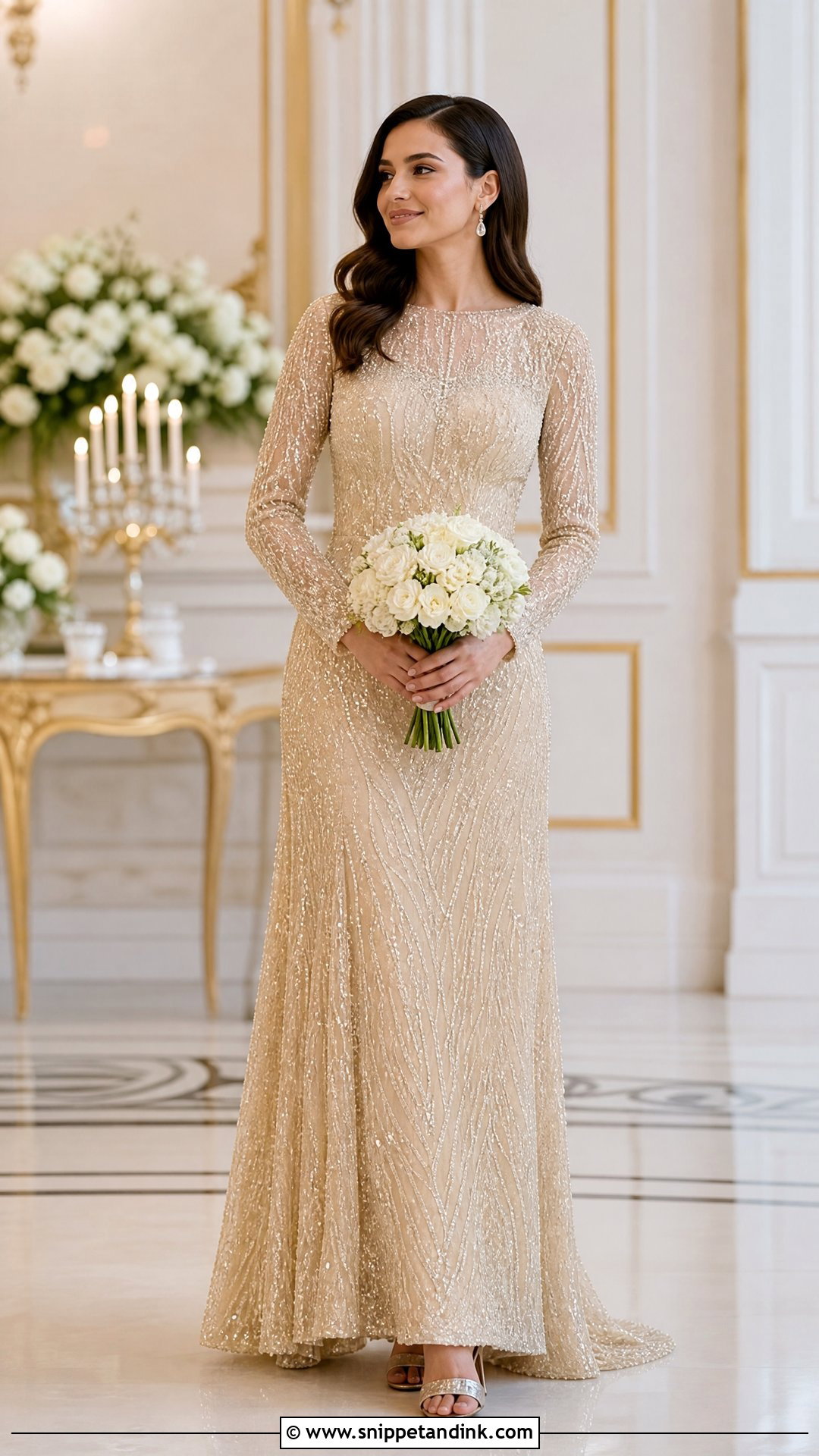
Gold feels warm and celebratory, and soft gold, pale metallic and antique champagne are the most wearable versions. Choose a beaded gown, a satin with golden sheen or tulle with gold embroidery. Matching metallic heels, simple drop earrings and smooth hair keep it elegant. If the dress is heavily worked, skip the necklace. It suits evening weddings, grand rooms and glamorous receptions. Ask your makeup artist about the gold too; very warm foundation next to a gold neckline can make the whole look feel too orange in photos.

15. Wedding Dress With Statement Sleeves
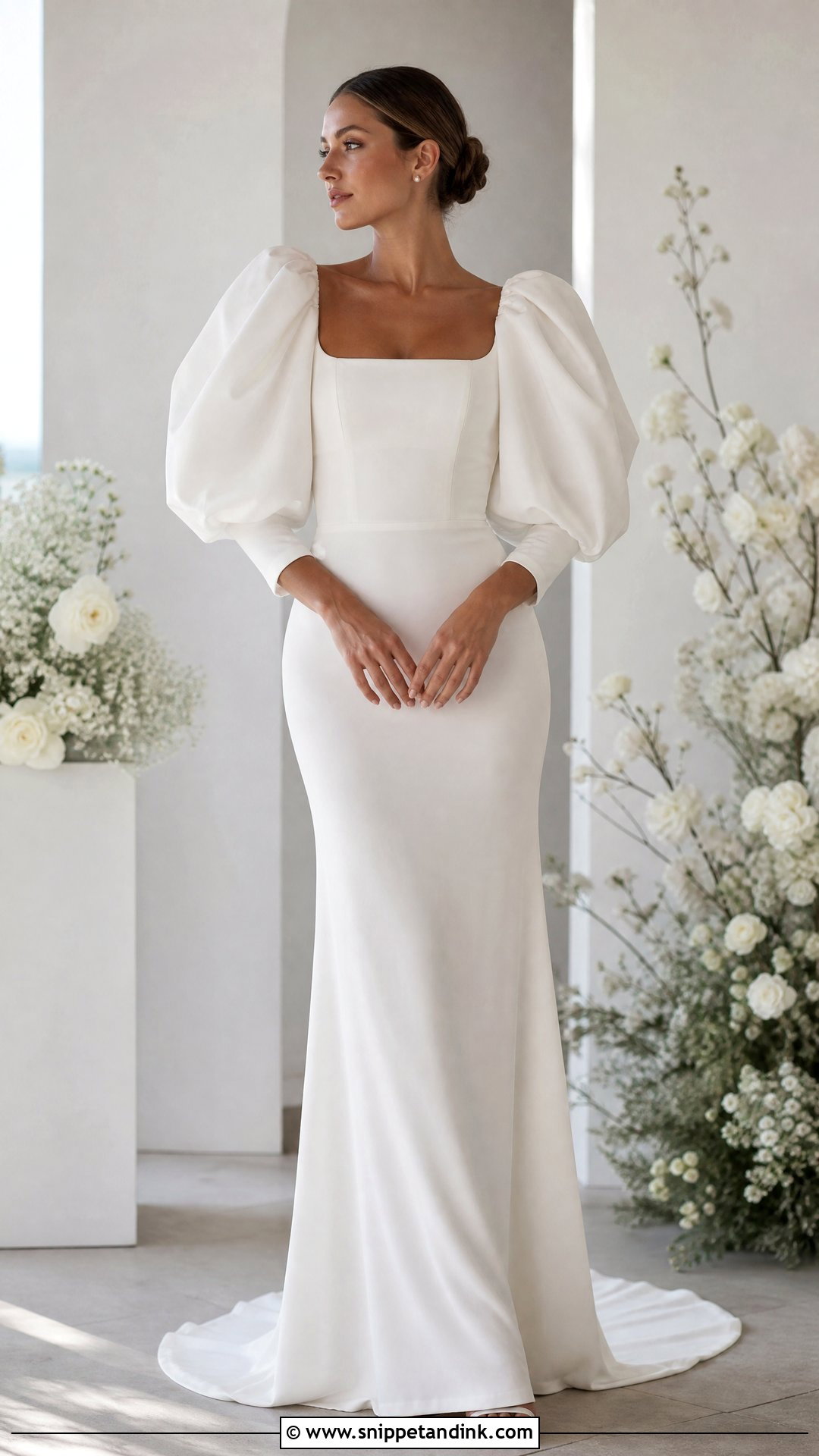
Sleeves can carry a whole gown. Puff, bishop, bell and detachable sleeves each change the silhouette, so I’d keep the bodice and skirt plain to let them lead. Simple heels, small earrings and hair pulled back show off the shape. Detachable sleeves can come off for dancing. The fitting point to watch is the armhole: a big sleeve set into a tight armhole looks great standing still and pulls badly the moment you hug someone.
16. Blush Pink Wedding Dress
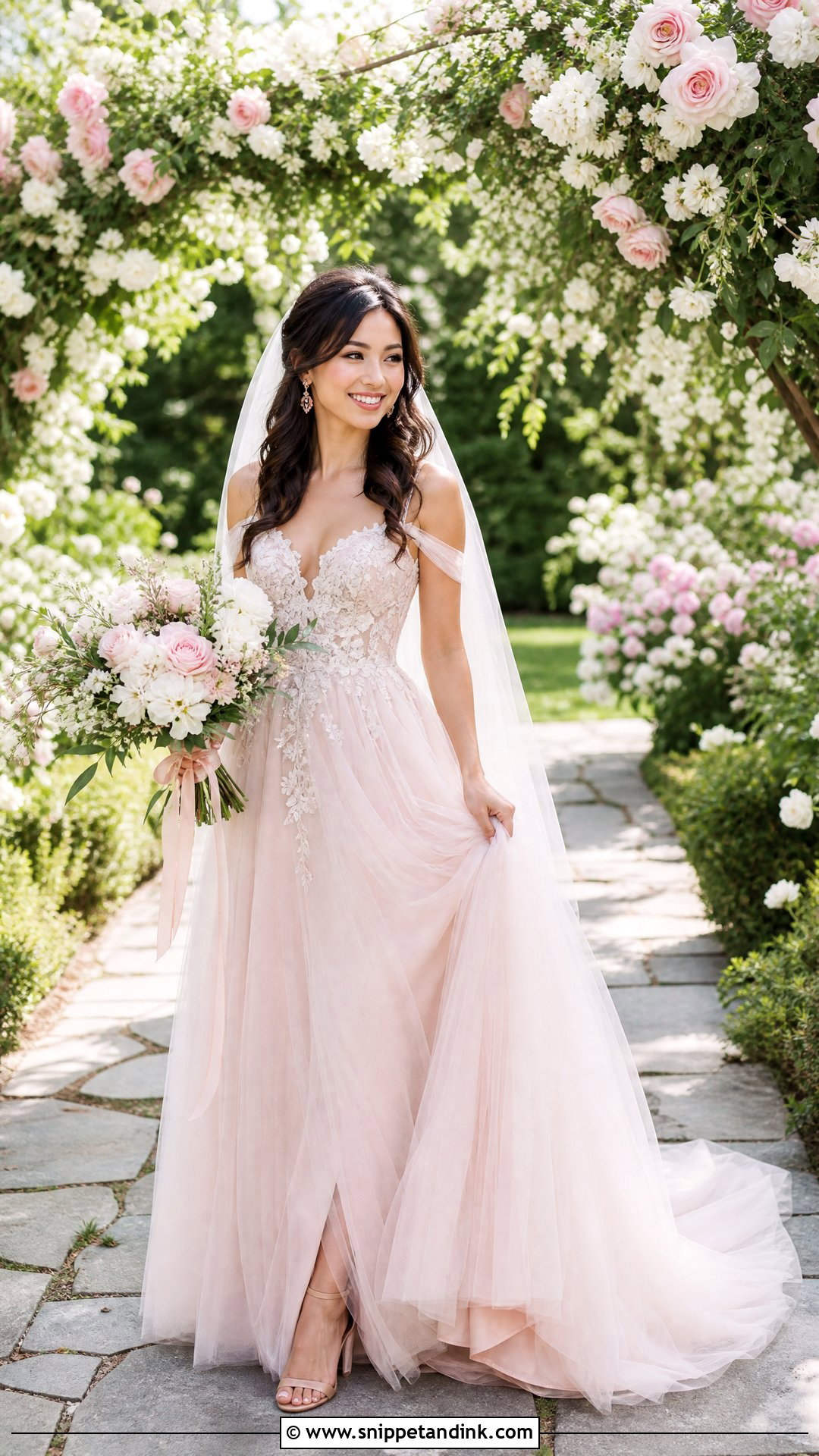
Blush is soft color for a bride who doesn’t want to stray far from tradition. Look for pale pink tulle, rose-toned satin or an ivory gown over a blush underlay. It warms up beautifully in outdoor photos. Nude heels, rose gold jewelry and a soft veil keep the tones together; pearls or white flowers add contrast. It works from ball gowns to fitted lace. An underlay is the safest way in, since you can see how much pink shows through before committing to a fully colored fabric.
17. Minimalist Square Neck Wedding Dress
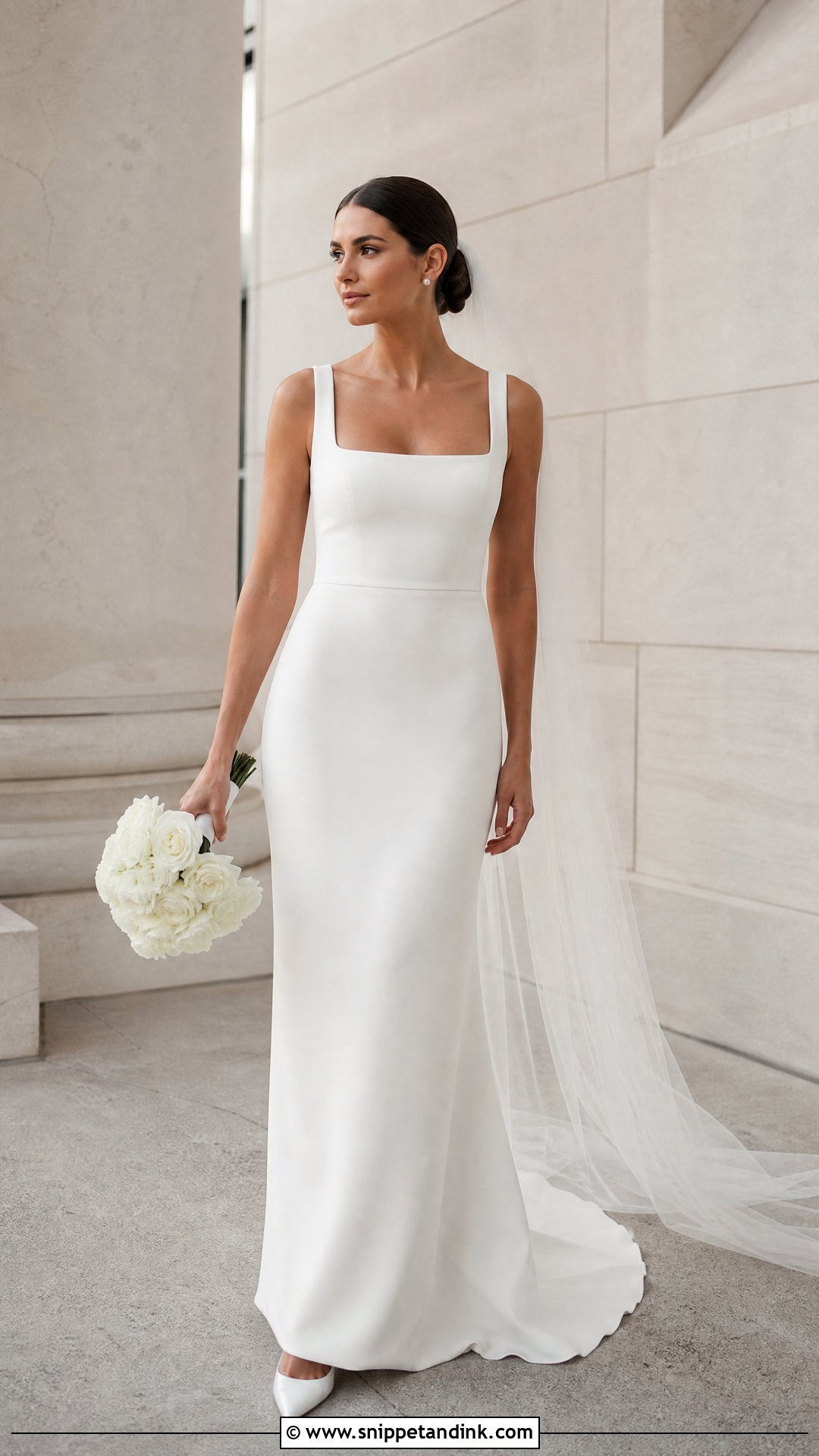
A minimal square-neck gown is unusual precisely because it has nothing to hide behind. The straight neckline frames the collarbone and gives structure. Heavy crepe, smooth satin or matte silk all suit it. Pointed heels, a sleek bun, pearl studs and a long plain veil finish it. Tailoring is everything here, and the fit should skim without pulling. City weddings, courthouse ceremonies and modern venues suit it, as do brides who dislike embellishment.
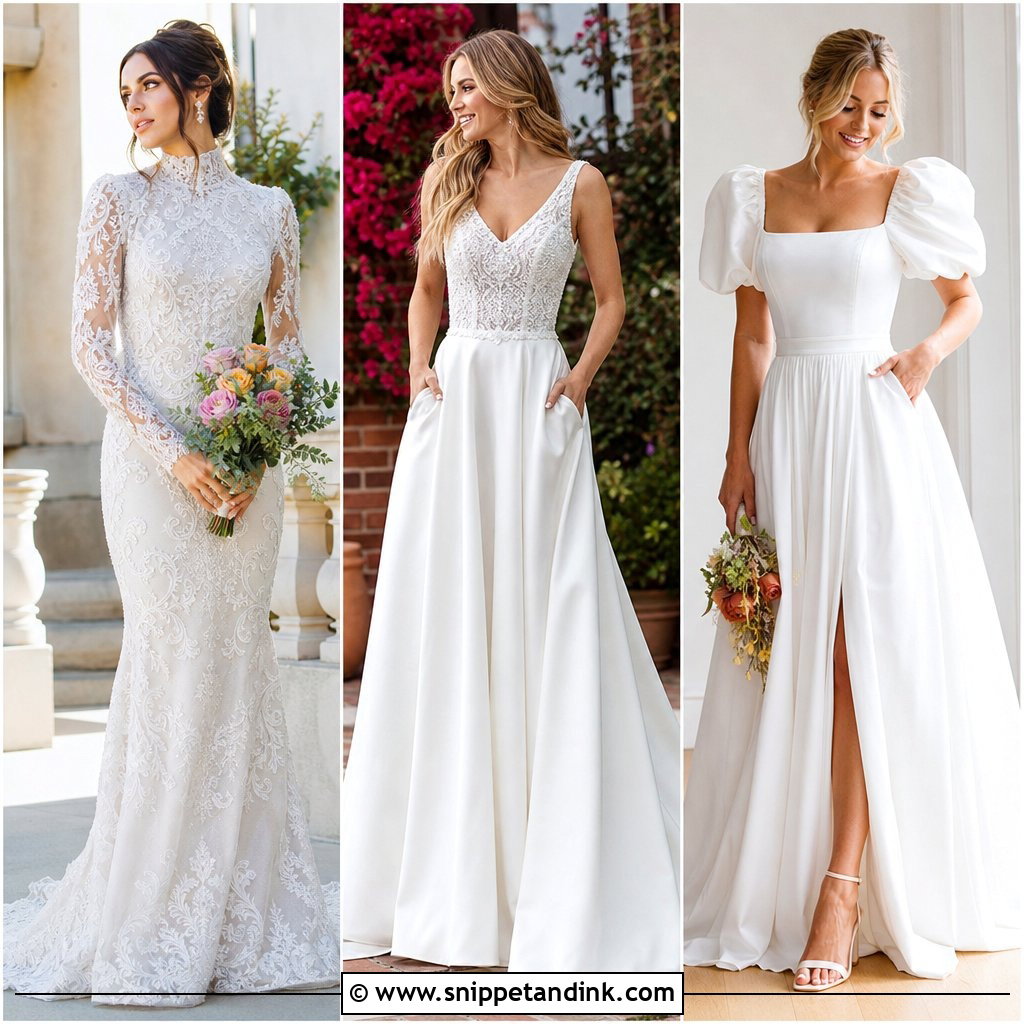
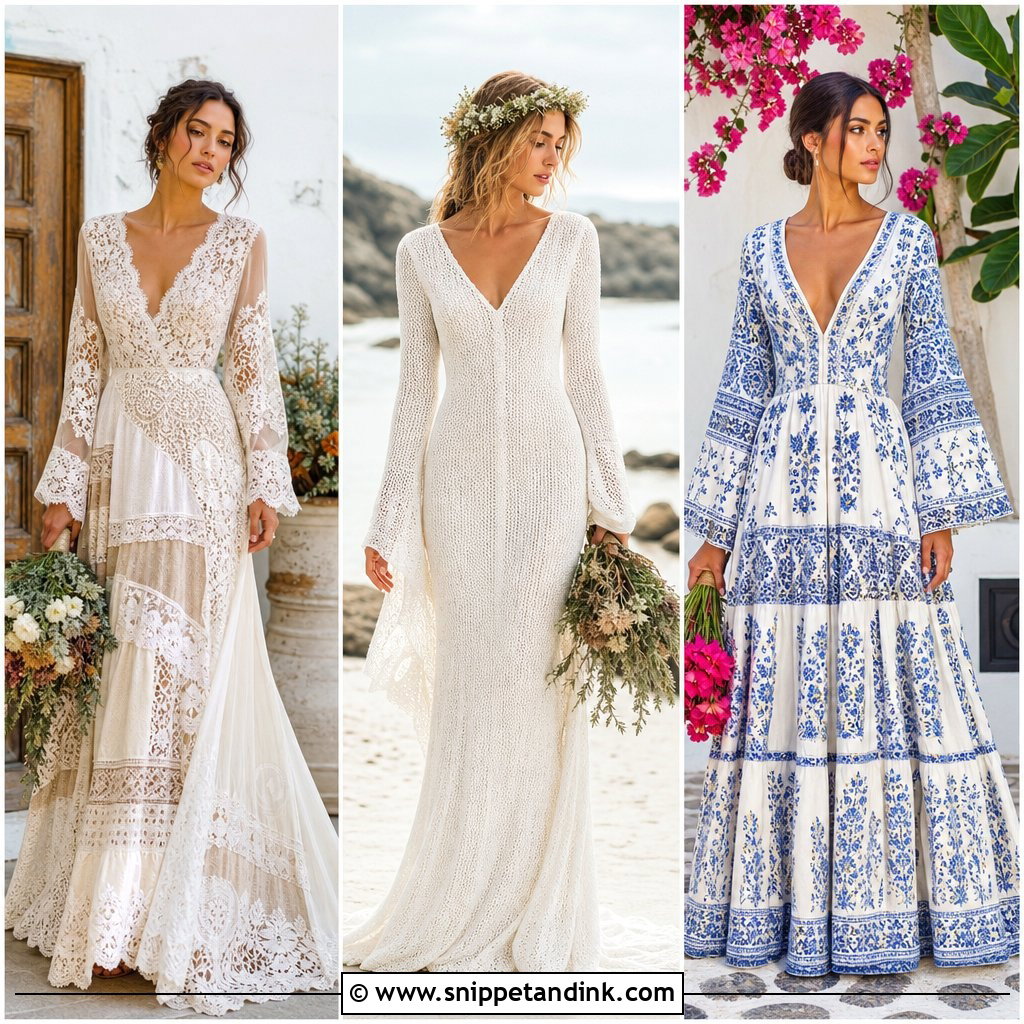
18. Vintage Lace Wedding Dress
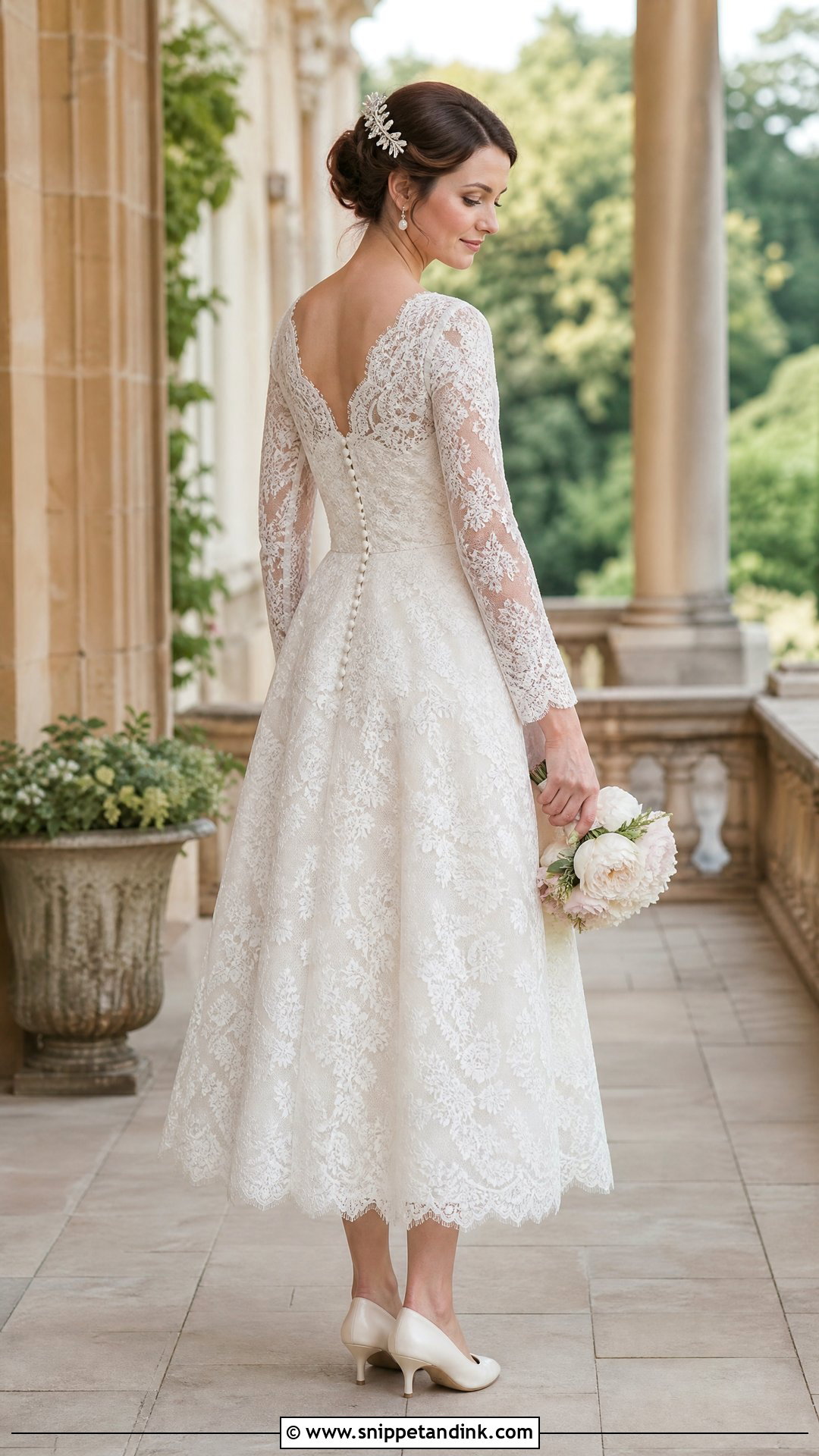
Vintage lace brings character you can’t fake. Look for high necklines, long sleeves, scalloped edges, covered buttons or soft cotton lace, either in a true vintage gown or a modern one cut the old way. Low heels, pearl earrings and a delicate veil or comb keep it honest. Soft makeup stops it tipping into fancy dress. It suits gardens, historic venues and small ceremonies, and it’s a meaningful pick for brides who care about reuse. Old cotton lace yellows over time; a specialist cleaner can often lift it, but ask before any alterations start.
19. Jumpsuit Wedding Dress
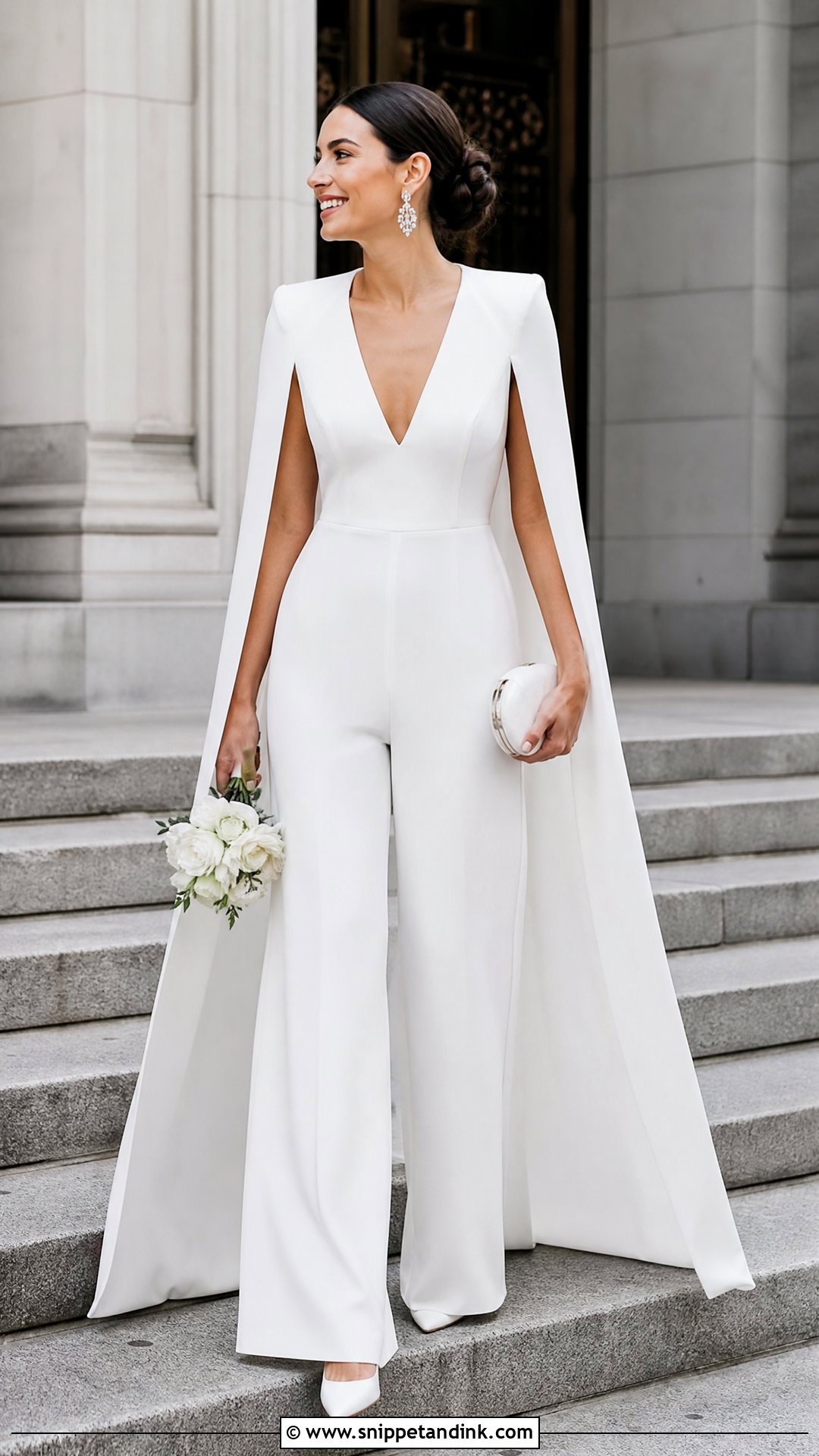
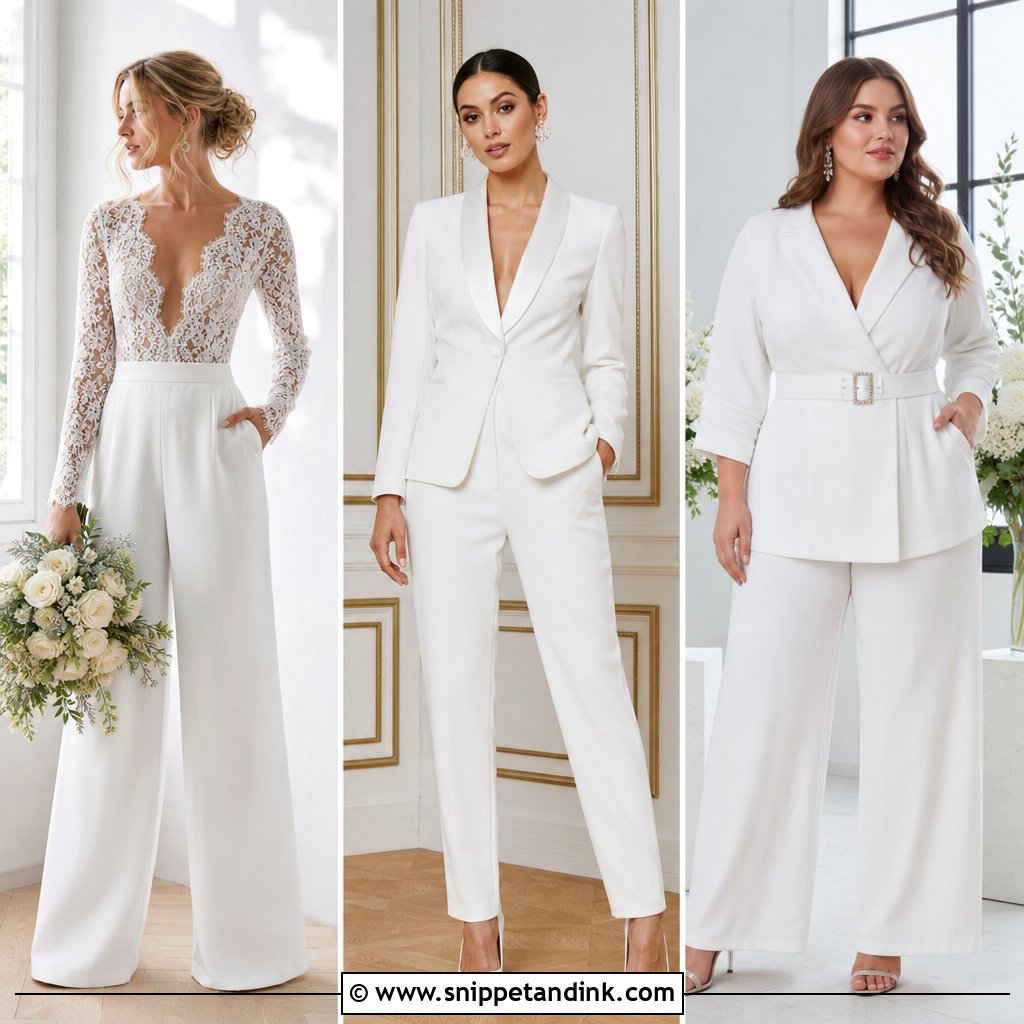
A jumpsuit gives you pockets, freedom and a sharp outline. I’d choose a white tailored jumpsuit with wide legs and a defined waist, or add a cape overlay for ceremony drama. Pointed heels or platform sandals lengthen the leg. Statement earrings, a sleek clutch and a short veil or bow keep it bridal. It suits courthouses, city ceremonies and second looks. The thing nobody mentions is the bathroom: a back zip on a one-piece needs a helper, so look for a side zip or a style with separate top and trousers.


20. High Low Wedding Dress
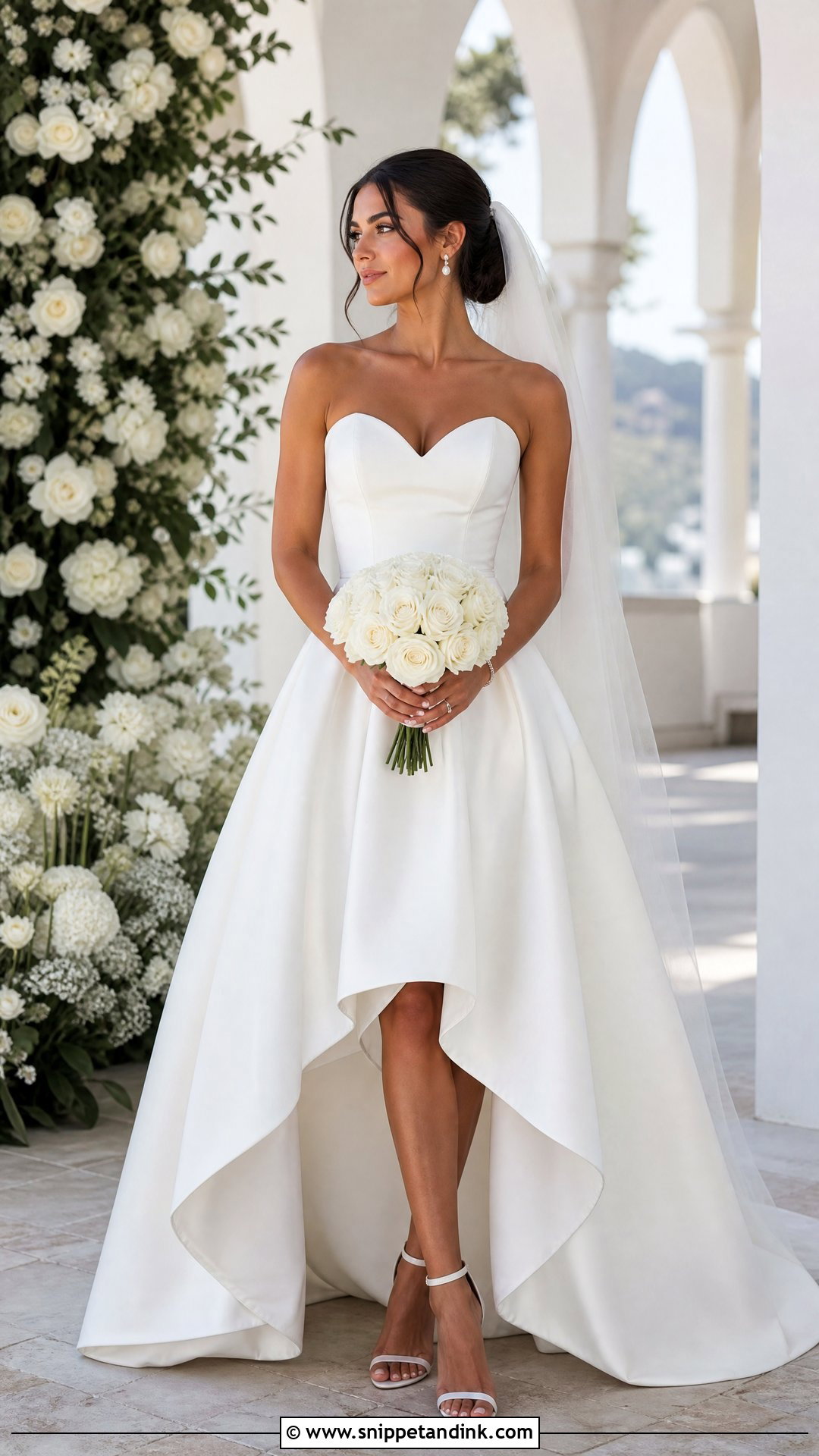
Short at the front, flowing at the back, the high-low hem shows your shoes and still gives you movement behind. Structured satin feels modern; layered tulle feels romantic. Pair it with standout heels, simple jewelry and a veil that doesn’t fight the uneven hem. It moves well in walking shots and suits outdoor ceremonies and destination weddings. The front hem should be set with your shoes on, standing naturally, so it doesn’t look accidentally short.
21. Sheer Overlay Wedding Dress
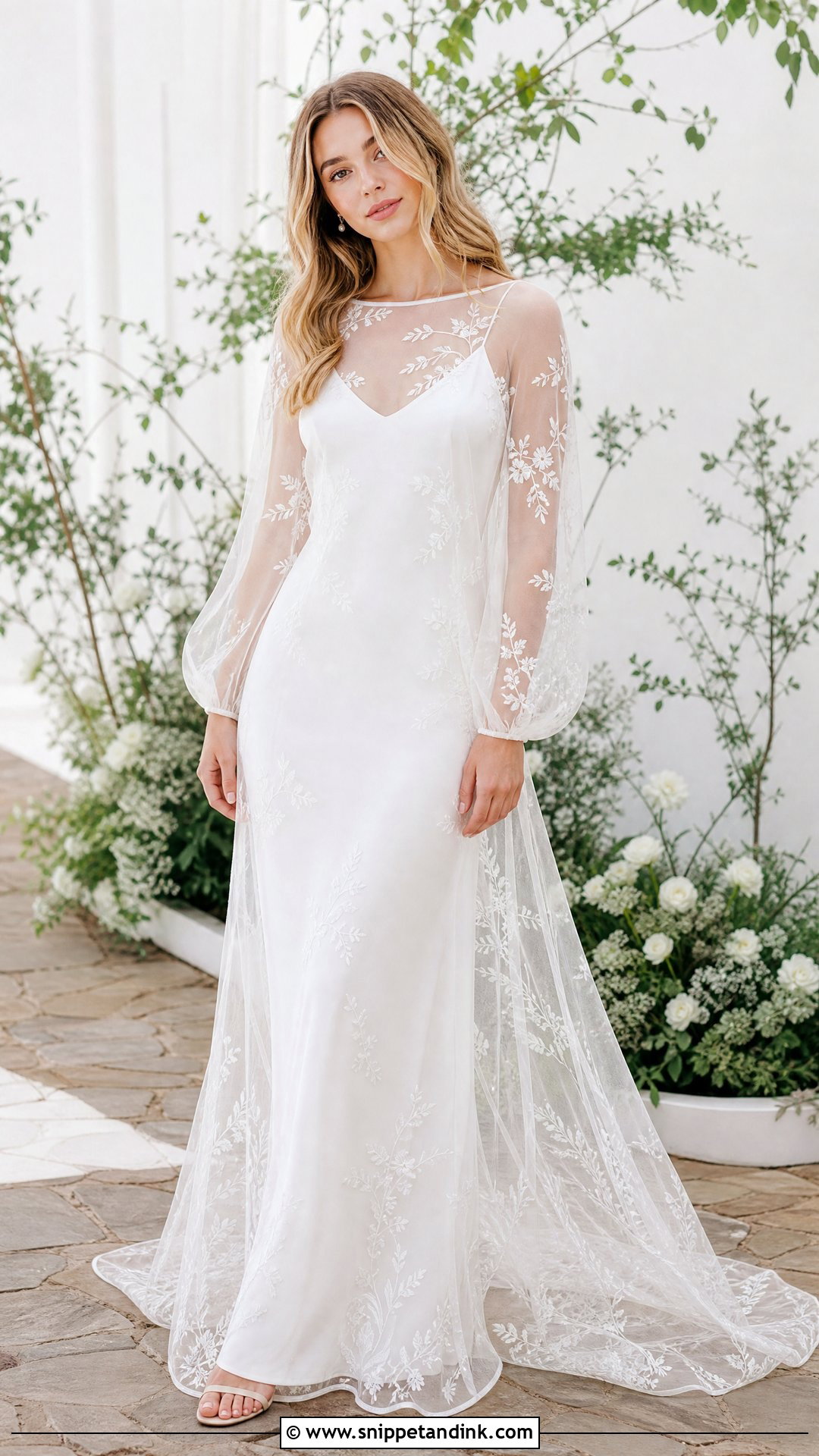
A sheer overlay wedding dress gets its depth from layers rather than decoration. The base can be a slip, a fitted mini or a sleek column, with tulle, organza, lace or a faint sparkle over the top. Floral appliqués or fine embroidery on the overlay look especially pretty. Minimal heels, dainty earrings and soft hair keep it light. It also gives coverage while still showing the shape underneath. Check the overlay and base colors match in daylight; two whites layered together can look slightly muddy if their undertones differ.
22. Polka Dot Tulle Wedding Dress
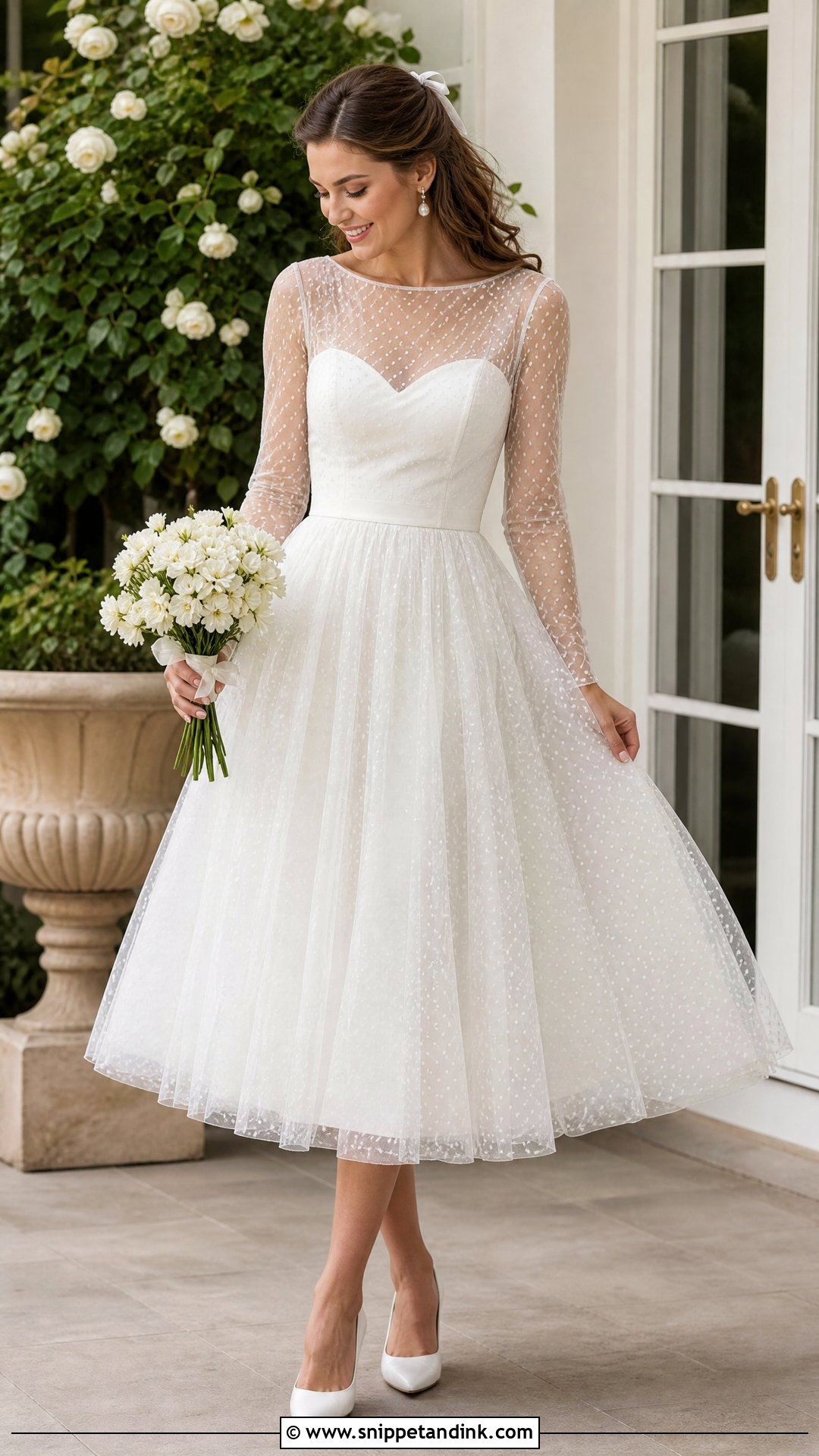
Dots sound playful, and they are, but on tulle they read surprisingly refined. Tiny flocked dots on sheer sleeves, a dotted skirt or a full dotted overlay all work on a simple gown. Satin pumps, pearl earrings and a plain veil or ribbon in the hair are enough. It suits gardens, courthouses and small receptions, especially in a clean A-line or fitted midi. Keep the dots small; larger ones start to look like a print from across the room.
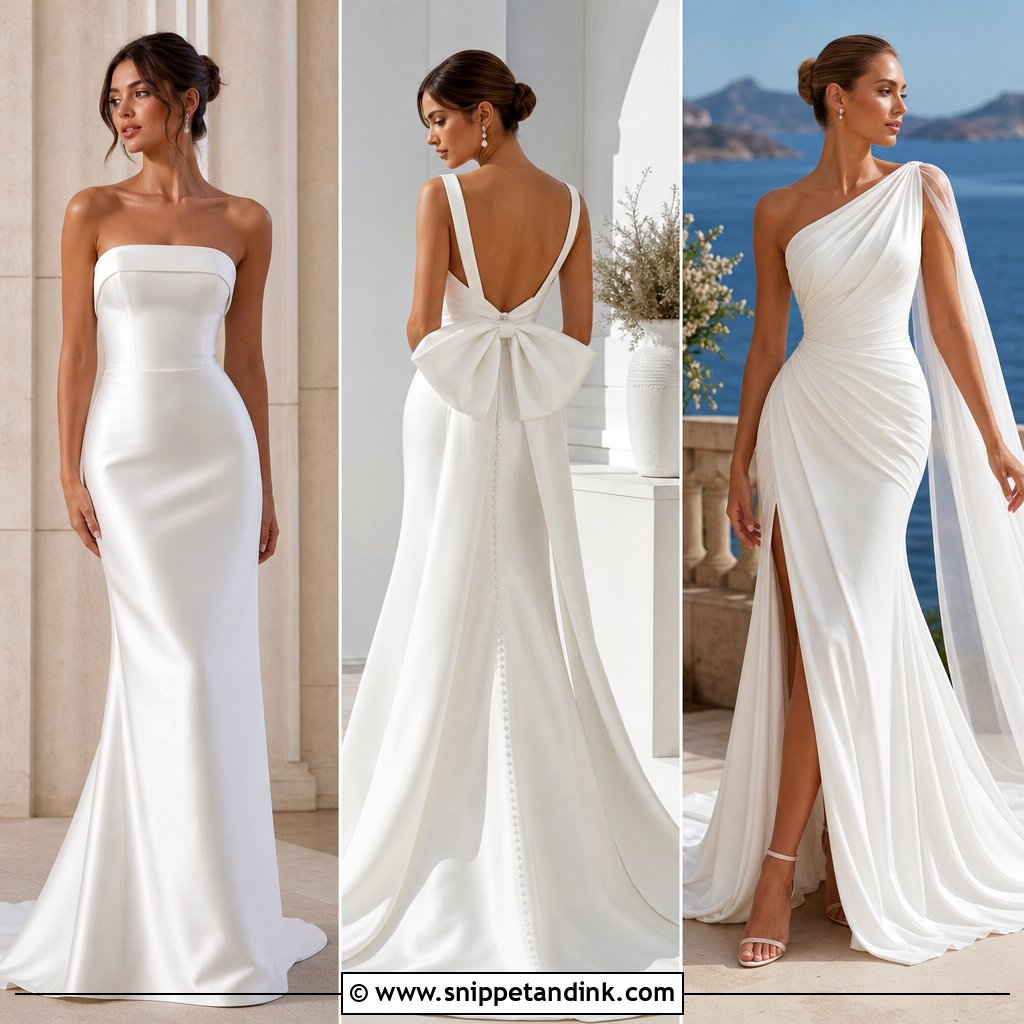
23. Asymmetrical Wedding Dress
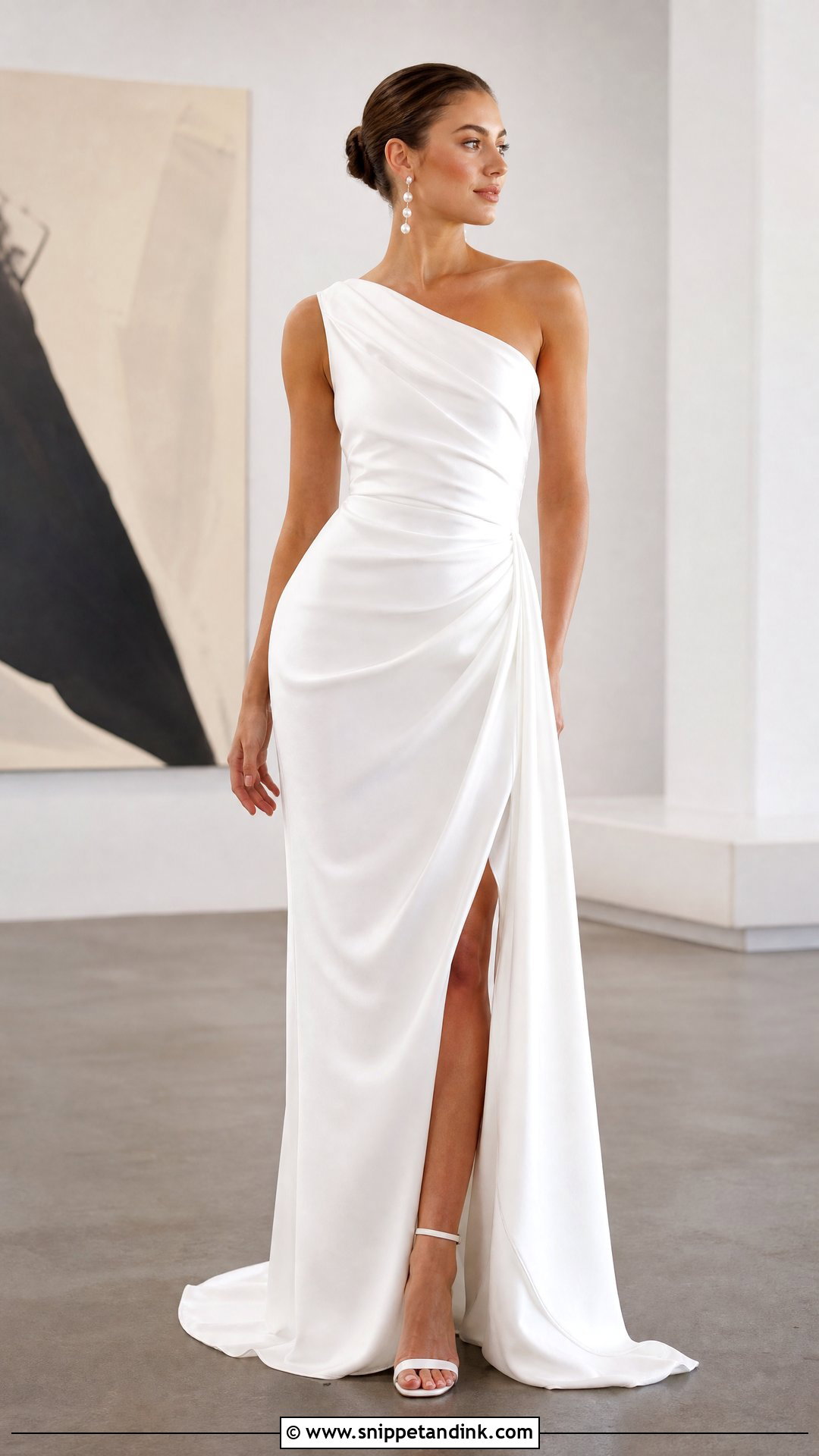
An asymmetrical wedding dress gets its interest from line, not sparkle: one-shoulder necklines, diagonal draping, angled hems and sculpted bodices. Crepe or satin lets the shape stand out. Style it with sleek heels, one statement earring or a balanced pair, and hair swept away from the neckline. Modern venues and art spaces suit it. On a one-shoulder gown, wear the earring on the bare side and keep the hair on the strap side, so the line runs cleanly across the body.
24. Wedding Dress With 3D Flowers
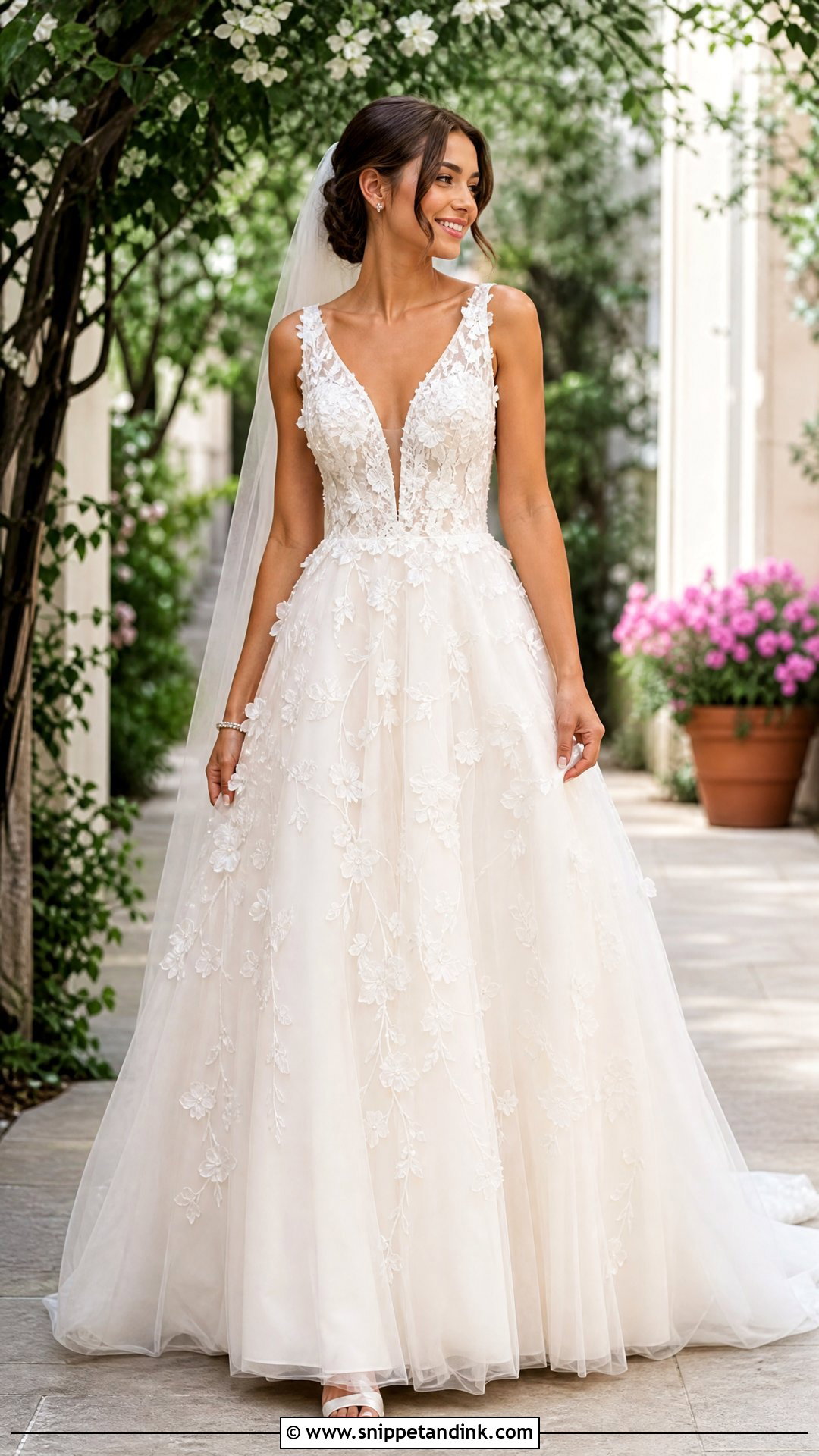
Three-dimensional flowers lift off the fabric and catch shadow, so they look rich up close. Scattered on tulle they feel soft; oversized along a neckline or skirt they feel dramatic. Simple heels, small earrings and a clean veil let them lead. It suits gardens and spring weddings, and it can look fairytale without feeling childish. Ask how firmly they’re stitched. Petals at the hip and seat take the most wear, and they flatten if you sit through a long dinner.


25. Silver Sequin Wedding Dress
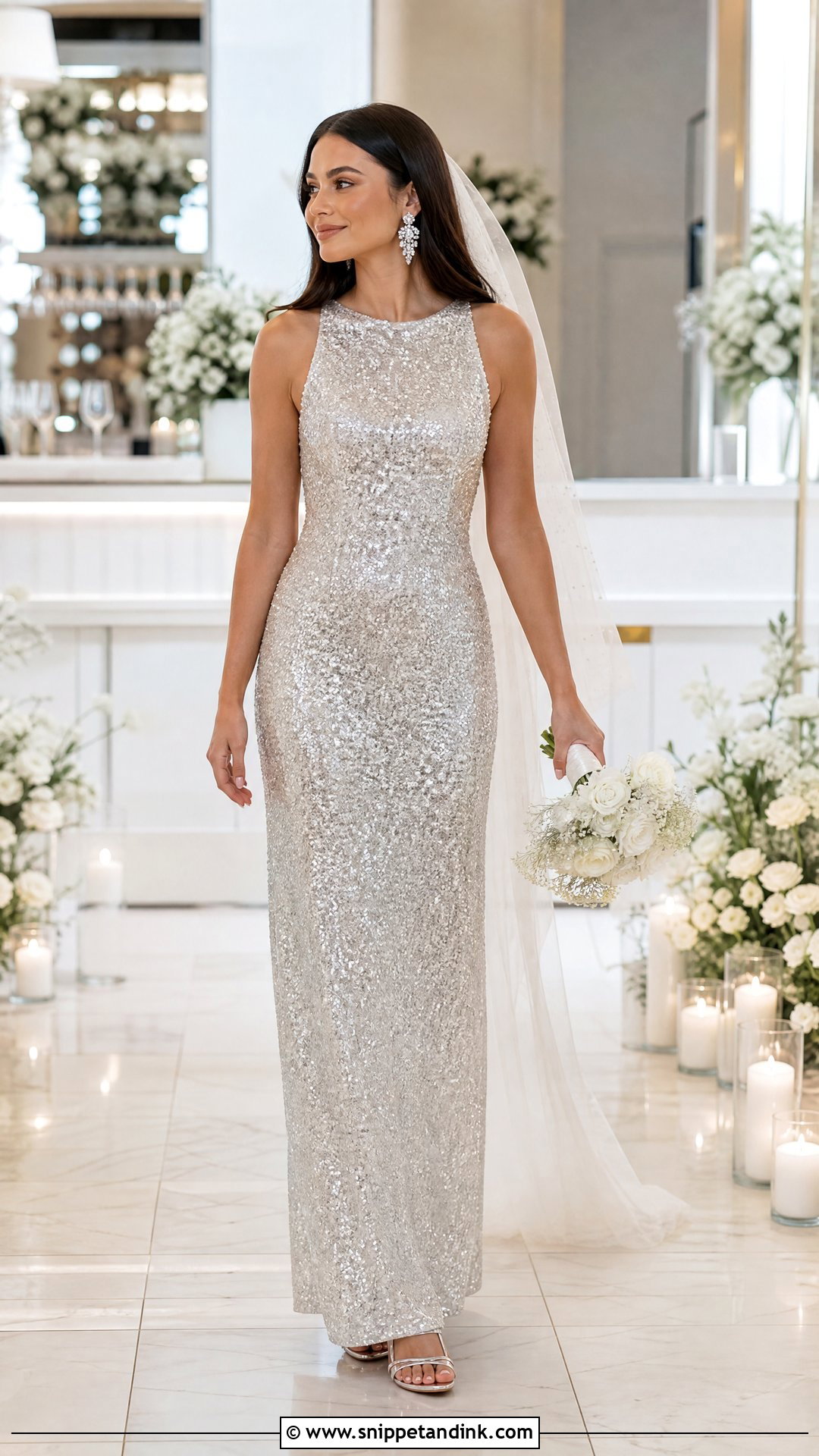
Silver sequins are for a bride who wants to shine, literally. I’d keep the cut simple, a fitted column, a long-sleeve sequin dress or a silver-white slip with fine shimmer, so the sparkle looks expensive rather than busy. Metallic heels, crystal earrings and smooth hair finish it. A simple veil softens it for the ceremony, and taking it off gives you a sharp reception look. Evening and winter weddings suit it. Ask for lining at the underarms, since sequin edges rub skin raw after a few hours of hugging.
Feathers Shed and Sequins Scratch
Unusual materials behave differently over a long wedding day, and most brides only discover this at hour six. Here’s what I warn people about before they buy.
Texture that reacts to weather
Feathers droop and clump in rain or heavy humidity. Organza ruffles soften and lose lift. If your wedding is outdoors in a damp climate, keep feathers to the reception look, where you’re indoors, and pack a handheld steamer for ruffles.
Embellishment that rubs
Sequins and heavy beading wear against the inner arm and the side of the ribs, and they snag knitwear and lace on the guests you hug. A soft lining or a strip of fine mesh at the underarms solves most of it, and any decent seamstress can add one.
Color that changes in different light
Blush, champagne and gold all shift between daylight, candlelight and camera flash. Send your photographer a picture of the dress in daylight before the wedding, so they can plan their white balance, and do your trial makeup in the dress shade, not against a white robe.
Would You Still Choose It Without the Trend?
A dress can be bold and still feel like a wedding dress. Color, minis, capes, jumpsuits and feathers all work when the fit, fabric, accessories and setting pull in the same direction. Think about your venue, the season, how much you’ll move and what the photos need, then ask whether the unusual detail is something you love or just something new. If you’d still choose it with no trend attached, it’s yours. The day goes by quickly; the dress should feel like you for every minute of it.
You'll Like These Ideas:






Leave a Reply