
The train is the part of a gown you’ll think least about at the first appointment and handle most on the day. It’s what people see as you walk away down the aisle, and what you’ll be lifting, bustling or unhooking for the next eight hours. The 25 ideas below run from practical sweep trains to cathedral lengths, plus detachable layers, bows, embroidery and capes. Short trains suit gardens and small rooms; long ones need space and help. For each, I’ve added what it’s like to actually wear, and what to ask at the fitting.
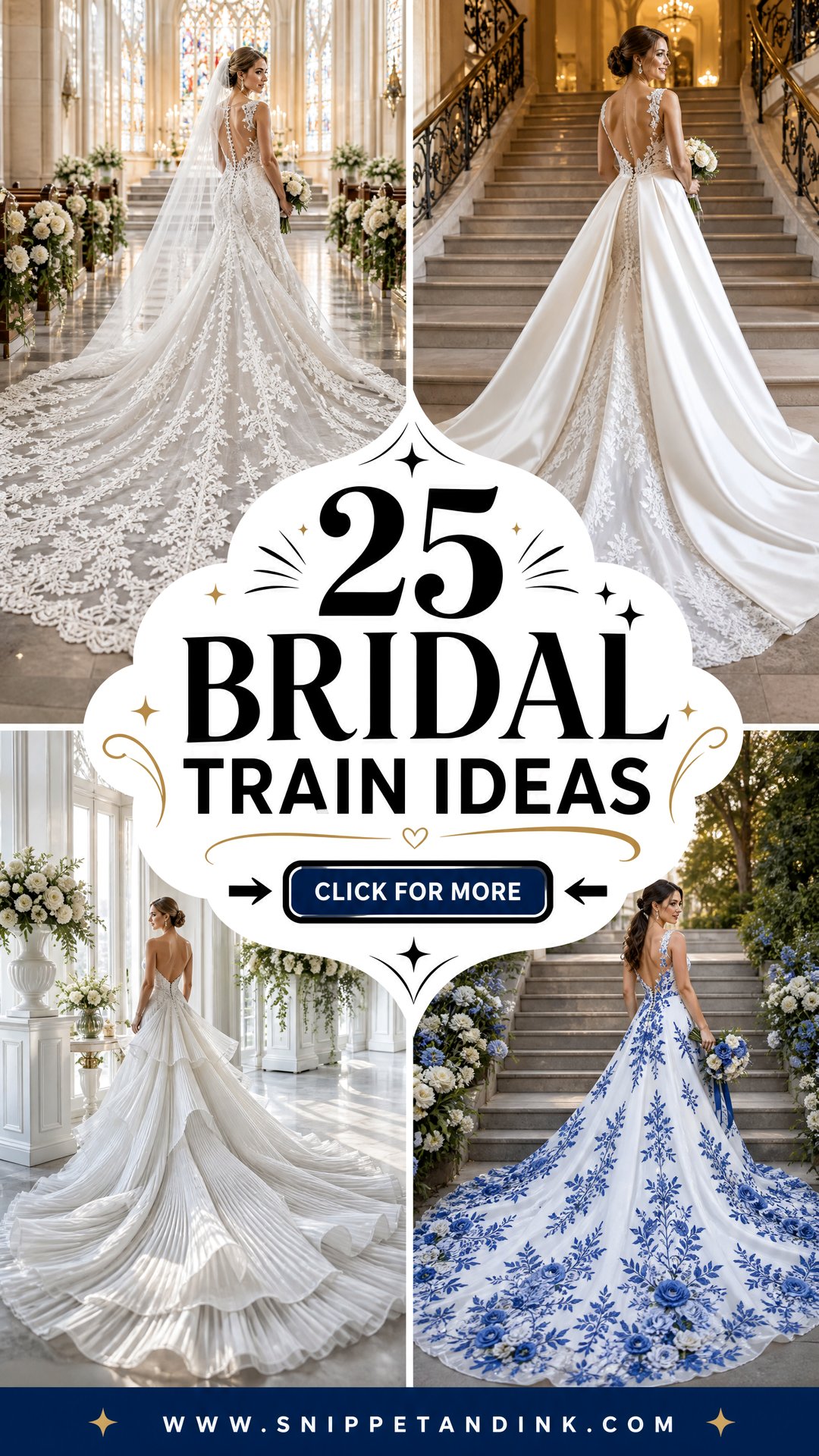
Sweep to Monarch: Roughly How Long Each Train Runs
Train names aren’t standardised between designers, so always ask for the actual measurement. As a general guide, measured behind you:
- Sweep or brush: just touches the floor, a few inches behind the hem.
- Court: around a foot past the hem.
- Chapel: about three to four feet from the waist, the most common bridal length.
- Cathedral: roughly six to eight feet from the waist, for long aisles and big rooms.
- Monarch or royal: ten feet or more, needing several helpers.
I measure the aisle before I advise on length. A long train needs space to lie flat behind you as you reach the front; if the aisle is short, the fabric bunches at the start and you lose the effect you paid for. In a small room, chapel length often looks grander than cathedral.
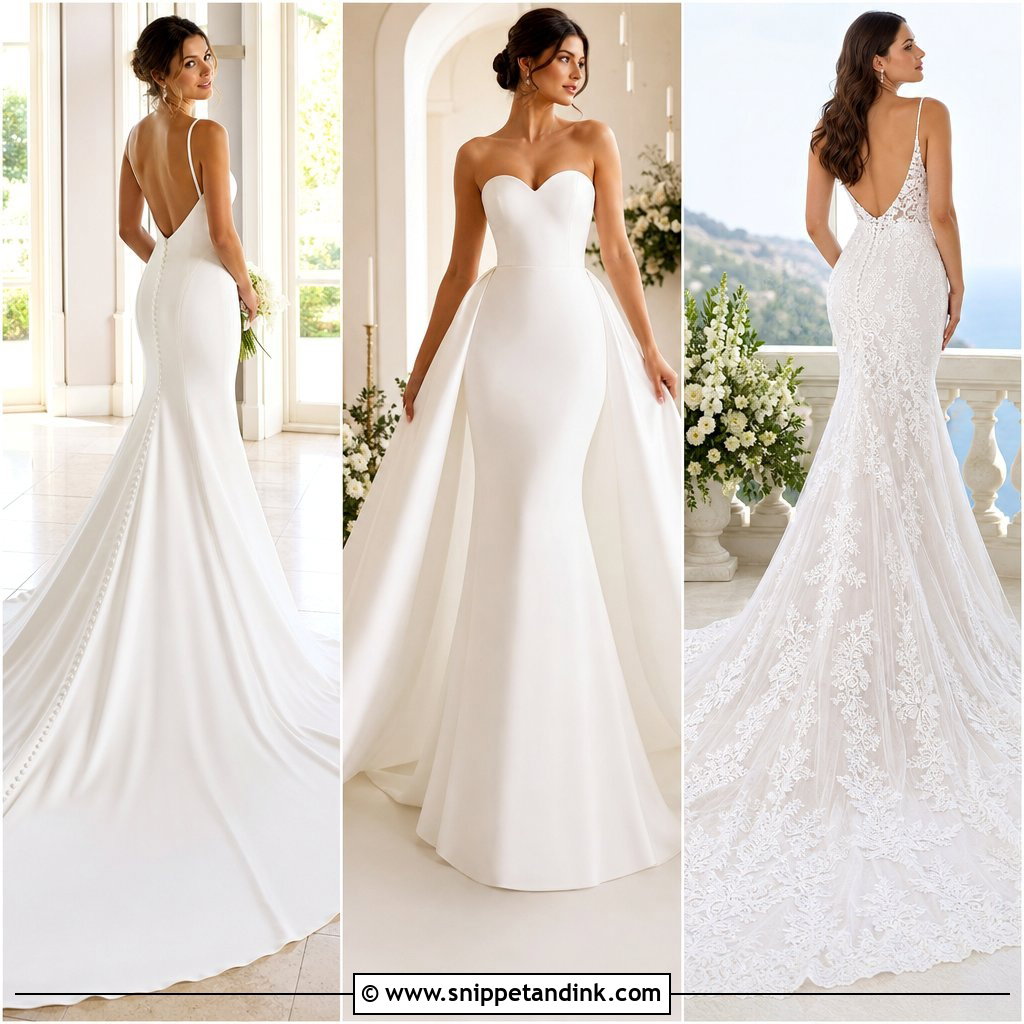
1. Sweep Train Slip Wedding Dress
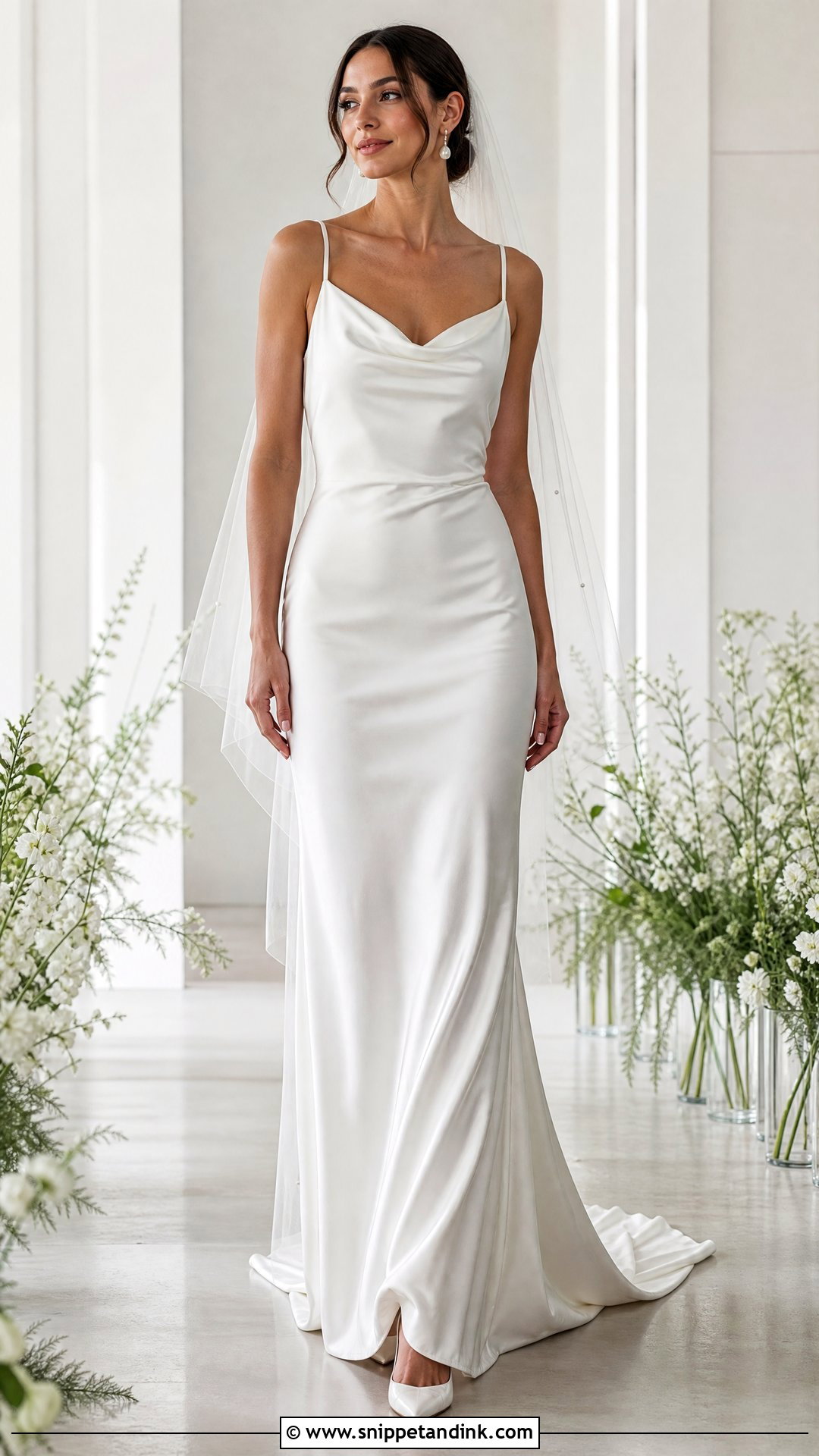
A slip dress with a sweep train is the easiest train there is. The fabric just brushes the floor behind you, enough to look finished without anything to manage. Satin, silk or fluid crepe all suit it. A sweep is the one train you rarely need to bustle, so it’s my usual suggestion for a small venue, a garden or a bride who’ll be on her feet greeting guests all evening. Pointed pumps, small drop earrings and a low bun or soft waves keep it clean. A fingertip veil or a pearl headband finishes it.
2. Court Train A-Line Wedding Dress
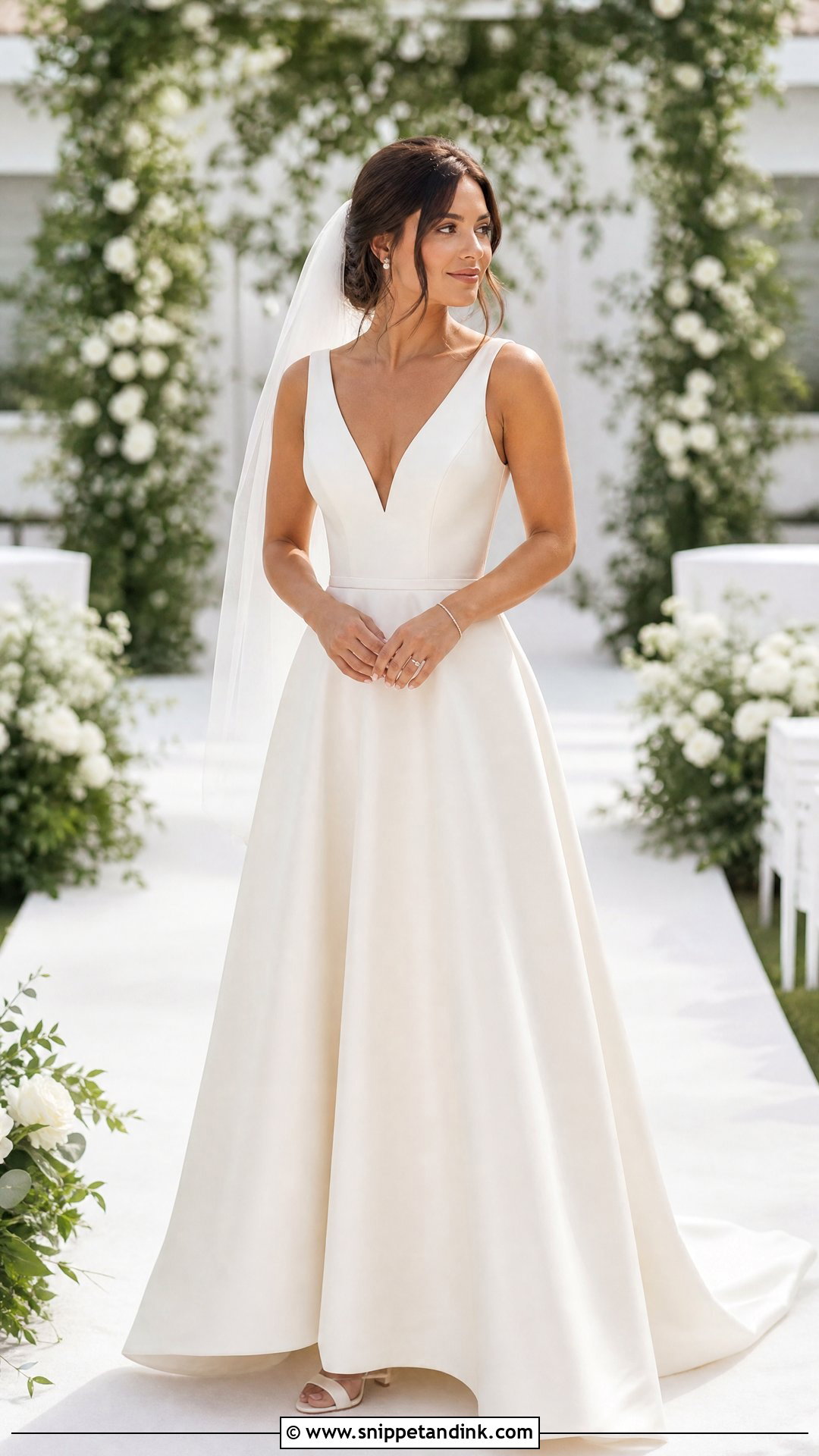
A court train extends a little further than a sweep, usually around a foot behind the hem, which gives an A-line some presence without a lot of weight. A fitted bodice with wide straps, a soft V or off-shoulder sleeves suits it. If you’re walking on grass or gravel, wear block heels; stilettos sink and the train catches on your heel as you lift your foot. I’d still ask for a simple one- or two-point bustle, since even a short train gets trodden on in a busy reception.
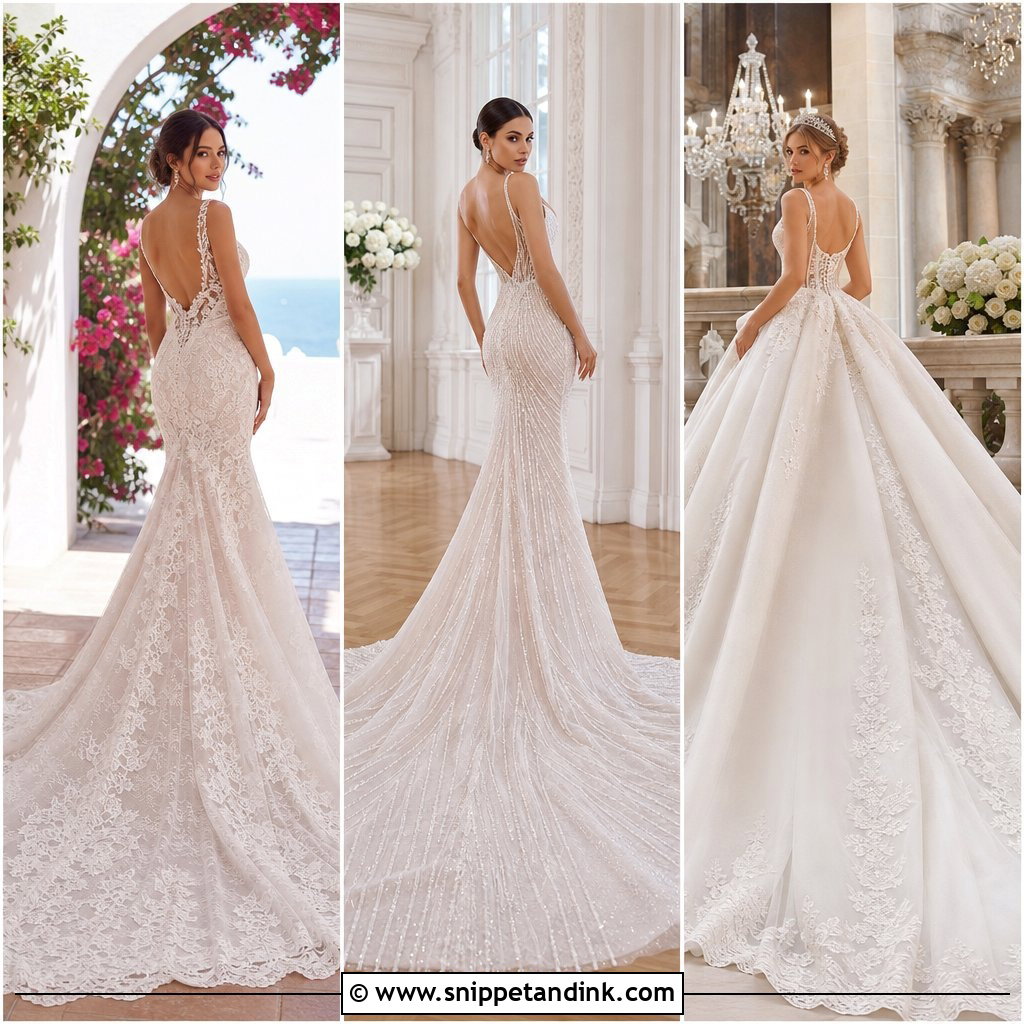
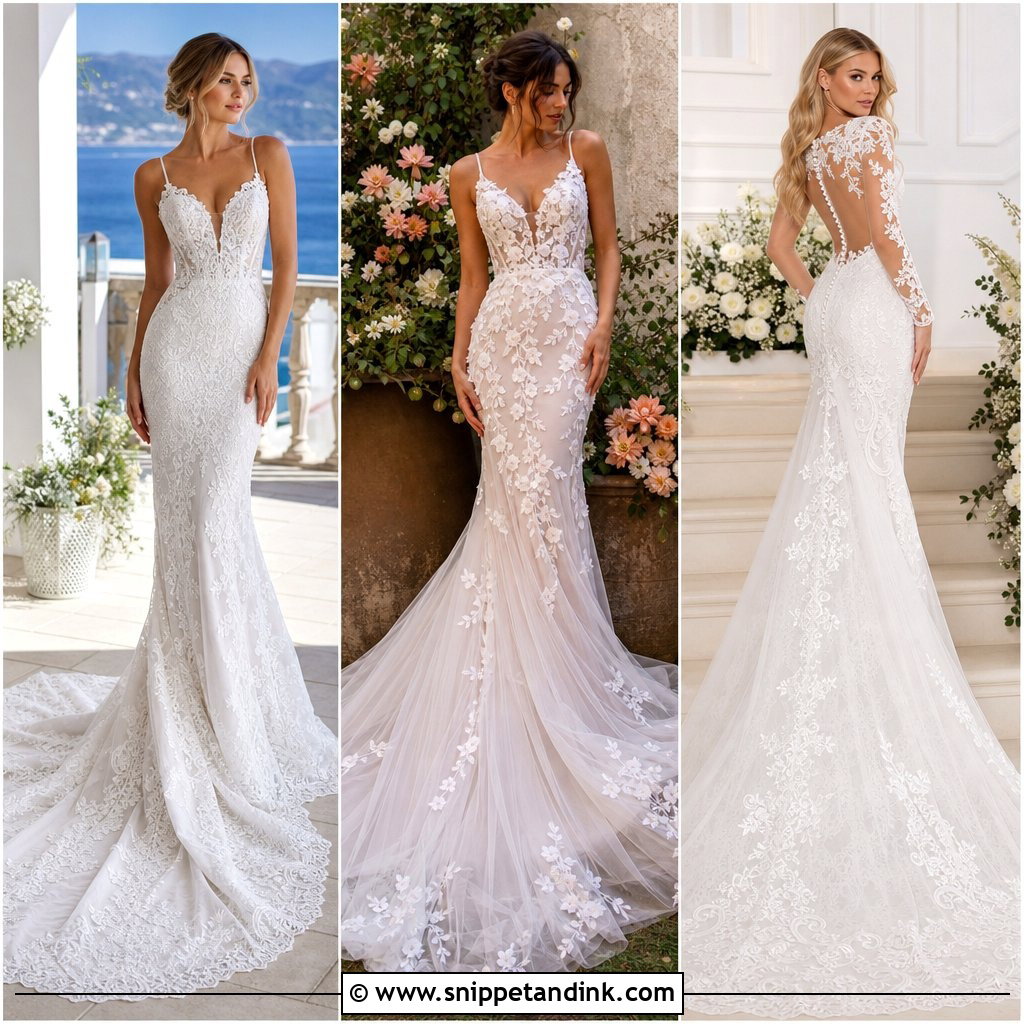
3. Chapel Train Lace Wedding Dress
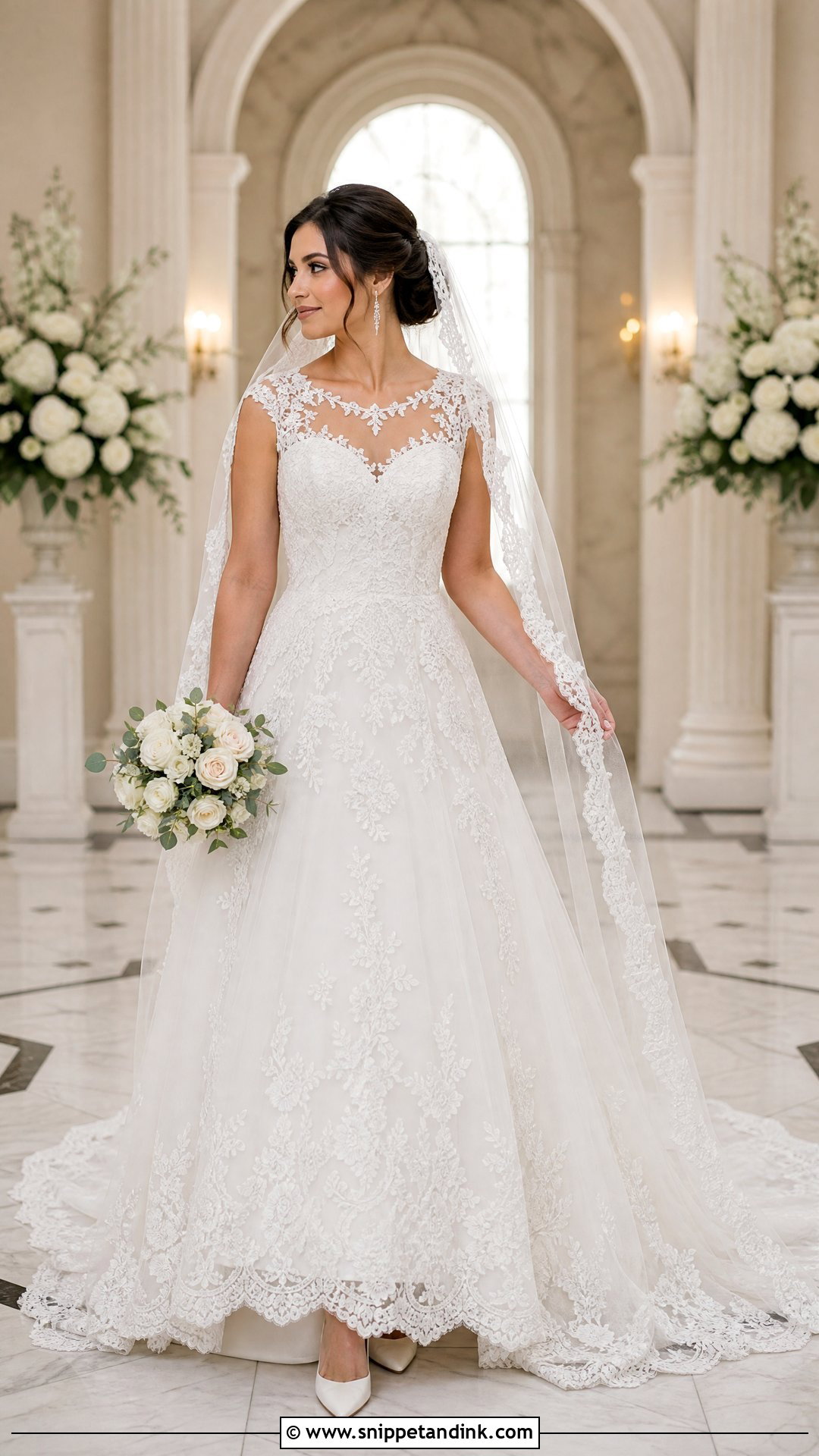
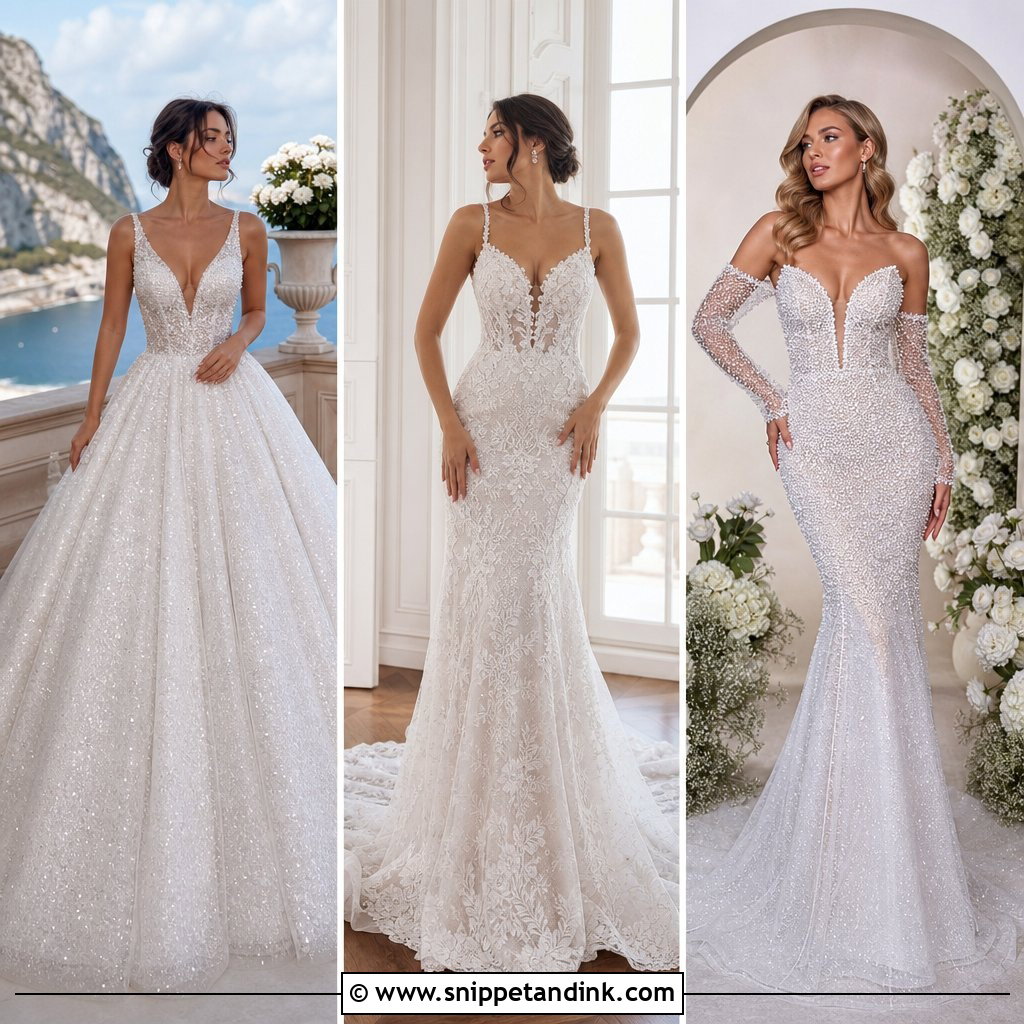
Lace that grows denser toward the hem and flows into a rounded chapel train looks lovely from behind. Choose an A-line or fit-and-flare with appliques that build downward, and an illusion neckline if you want coverage. Chapel is the length I recommend most: it gives real drama on an aisle but stays manageable compared with cathedral and monarch trains. Lace is heavy at that length, so the bustle needs several points. At the final fitting, walk, turn and sit, and watch whether the lace drapes evenly or pulls at one hook.
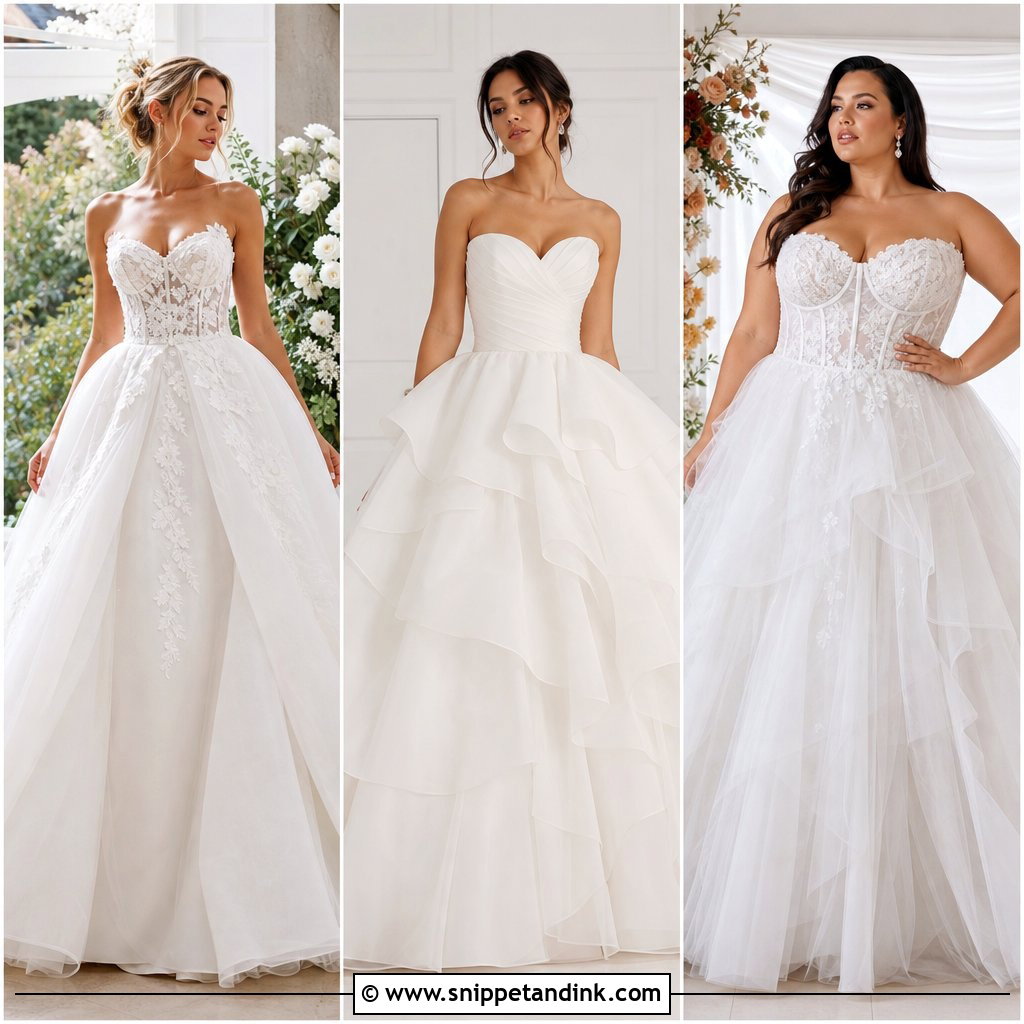
4. Cathedral Train Ball Gown
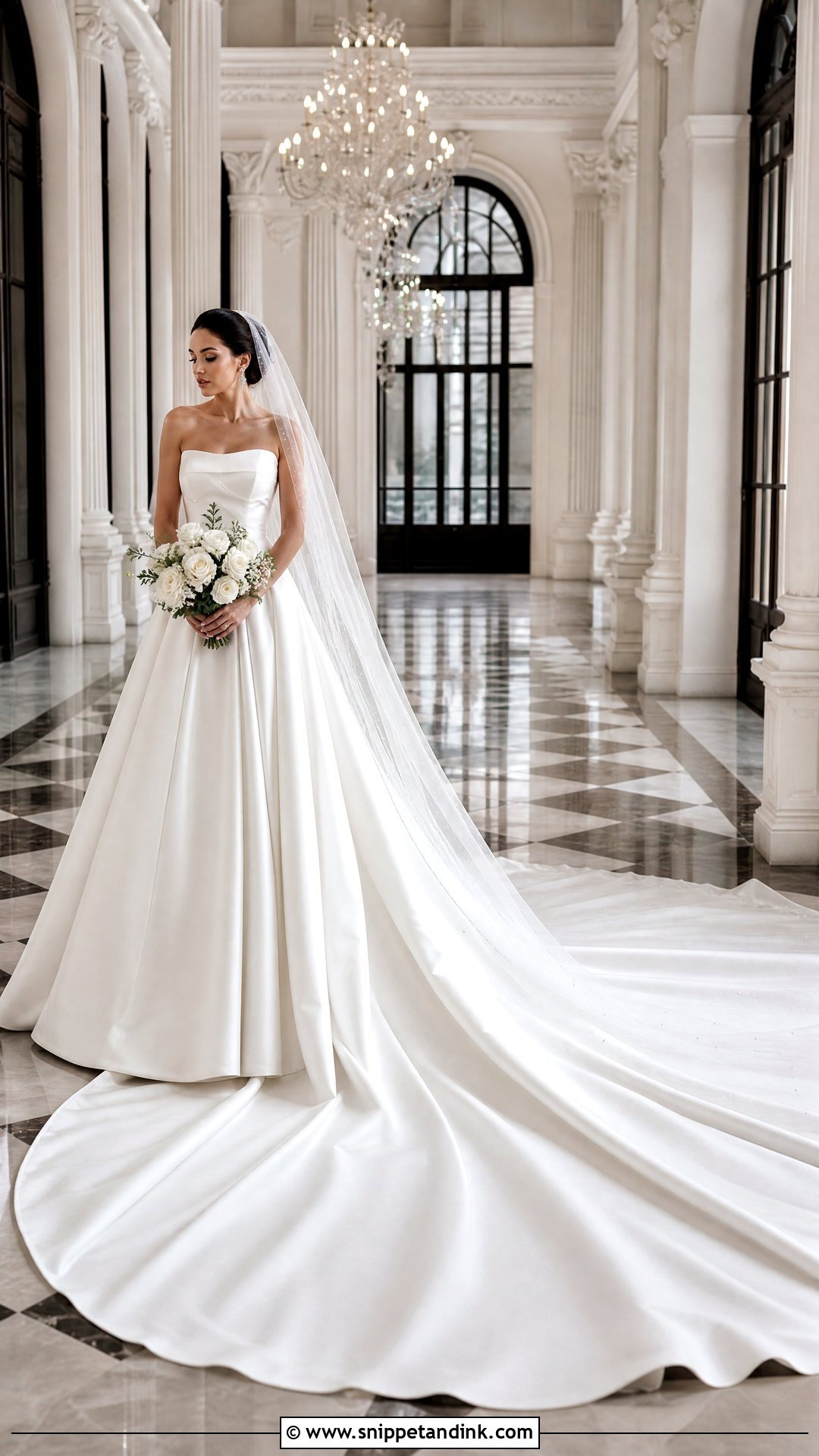
A cathedral train behind a ball gown needs a long aisle to be worth it; in a short room it just piles up. Satin, mikado, organza or layered tulle all hold the shape. Strapless shows off the shoulders, while sheer long sleeves give coverage. Platform pumps add height under the skirt. Choose a medium bouquet, since a tiny one looks lost against all that fabric. Assign one person to spread the train before the processional and before portraits; a train that’s flipped under at one corner is the commonest flaw I see in cathedral photos.
5. Monarch Train Royal Wedding Dress
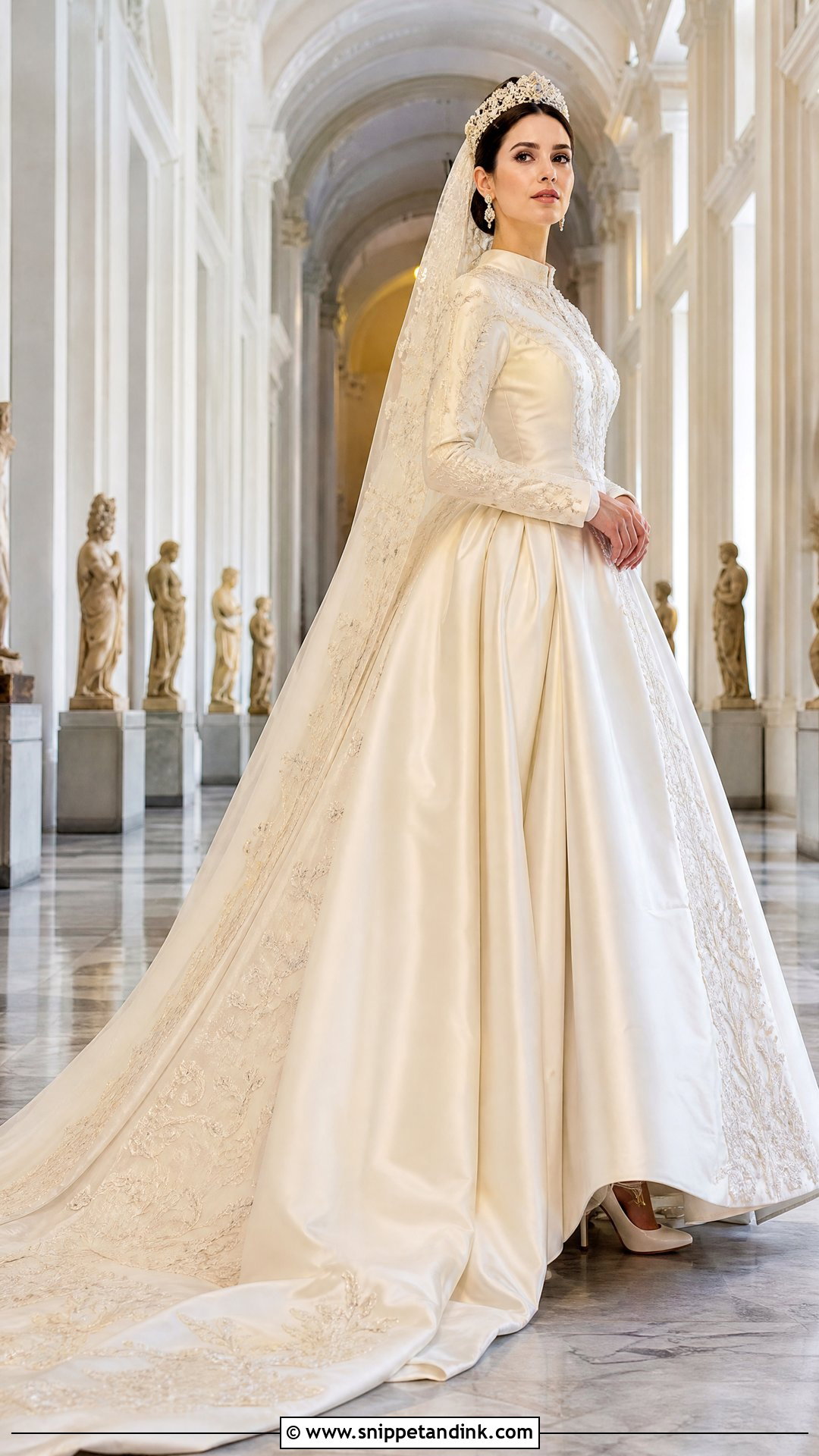
A monarch train is the longest of all, often ten feet or more of fabric behind you, and an exceptionally long train like this only works with a structured gown, a formal venue and a wide aisle. Lustrous mikado, silk satin or embroidered organza keeps a sculptural shape. Practise walking slowly and evenly at the fitting; you’ll feel the drag through your hips. A long veil adds to the effect but needs secure pins, since a train and veil both pulling backward is hard on your hair. Plan for more than one helper to carry, spread and bustle it.
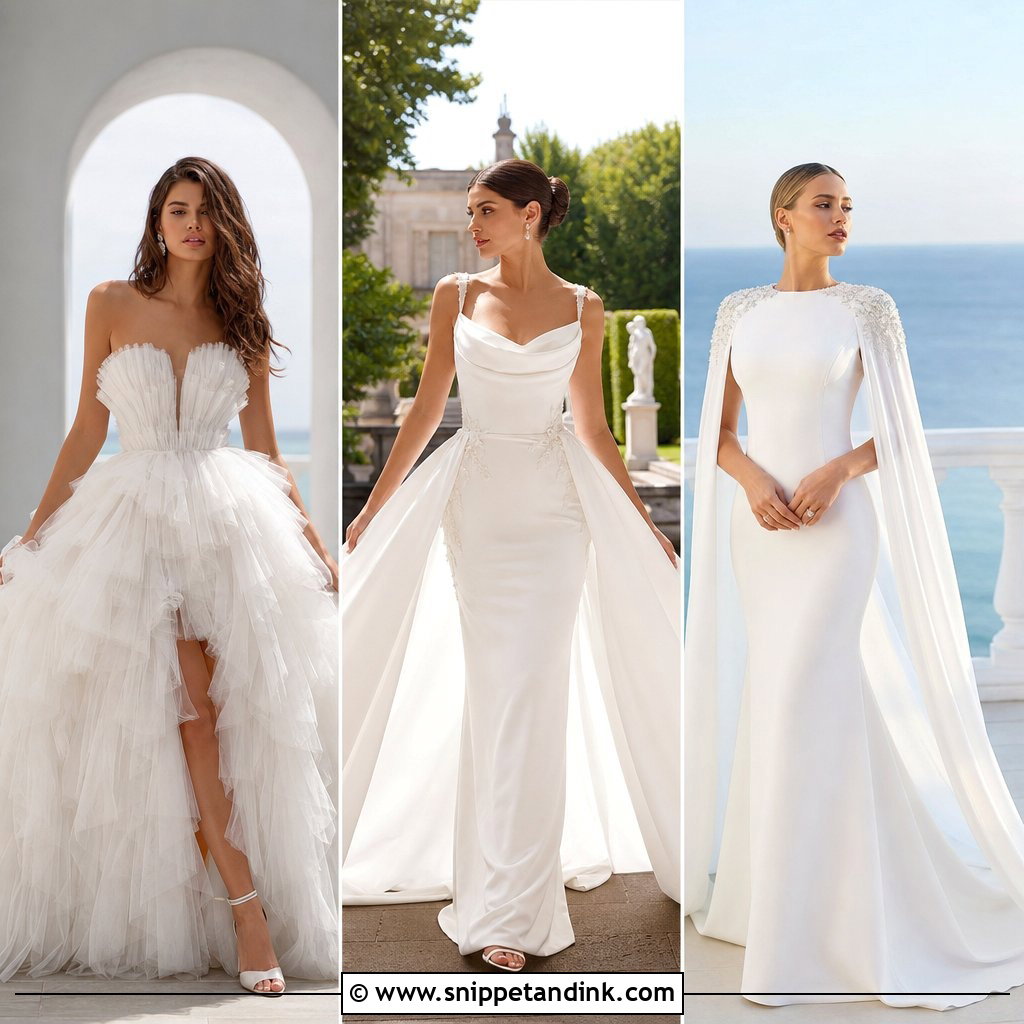
6. Watteau Train Column Wedding Dress
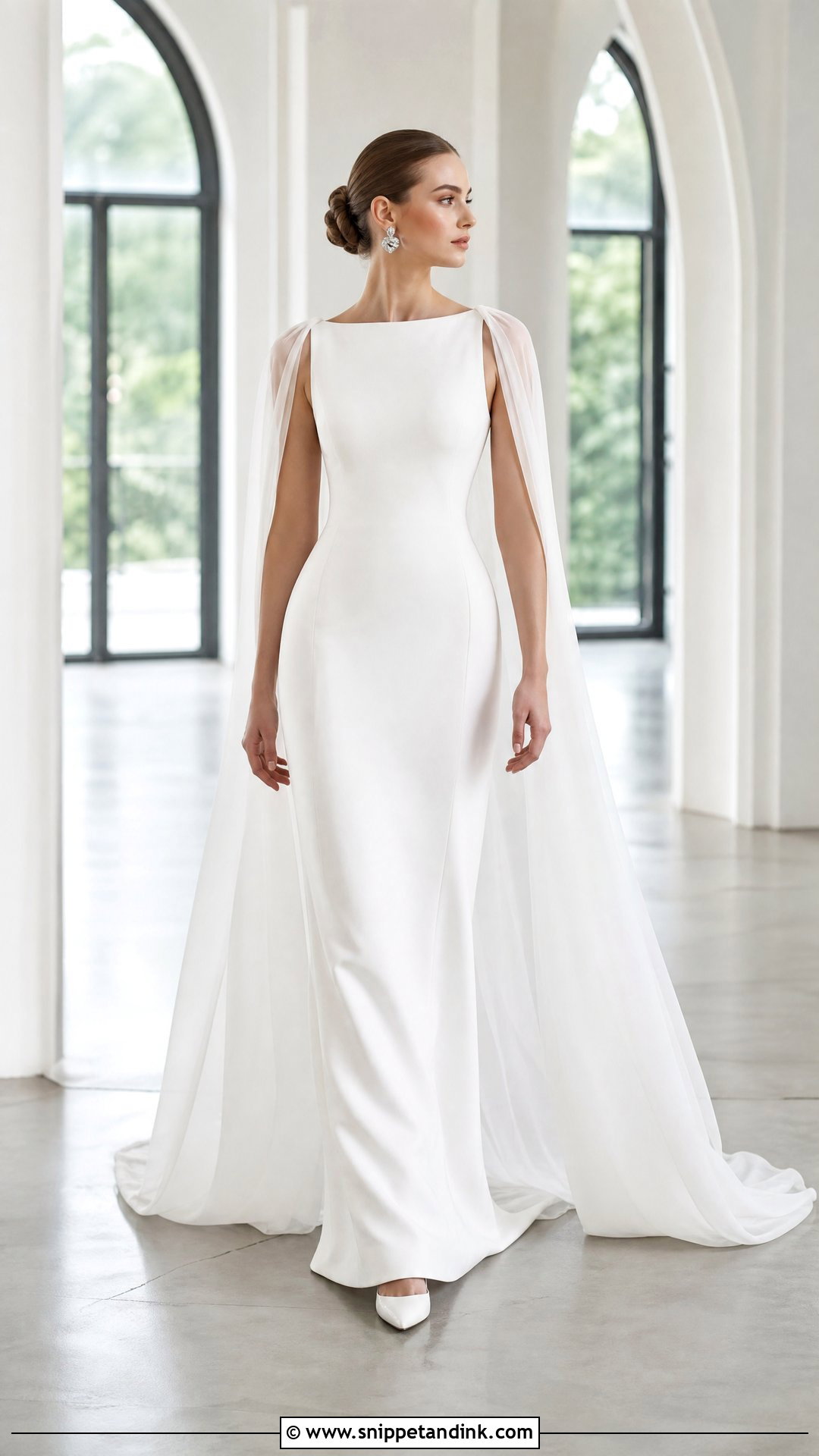
A Watteau train falls from the shoulders or upper back rather than the waist, and it can be anything from floor to cathedral length. On a plain crepe column it turns a minimal dress into a ceremony look. Choose a bateau, halter or strapless neck so the attachment point stays visible. Sheer tulle floats; satin gives a firmer, architectural line. Shoulder-hung trains pull backward as you walk, so I check the fastening at the shoulder doesn’t drag the neckline toward your throat. A detachable Watteau can come off before dinner.
7. Detachable Train Crepe Wedding Dress
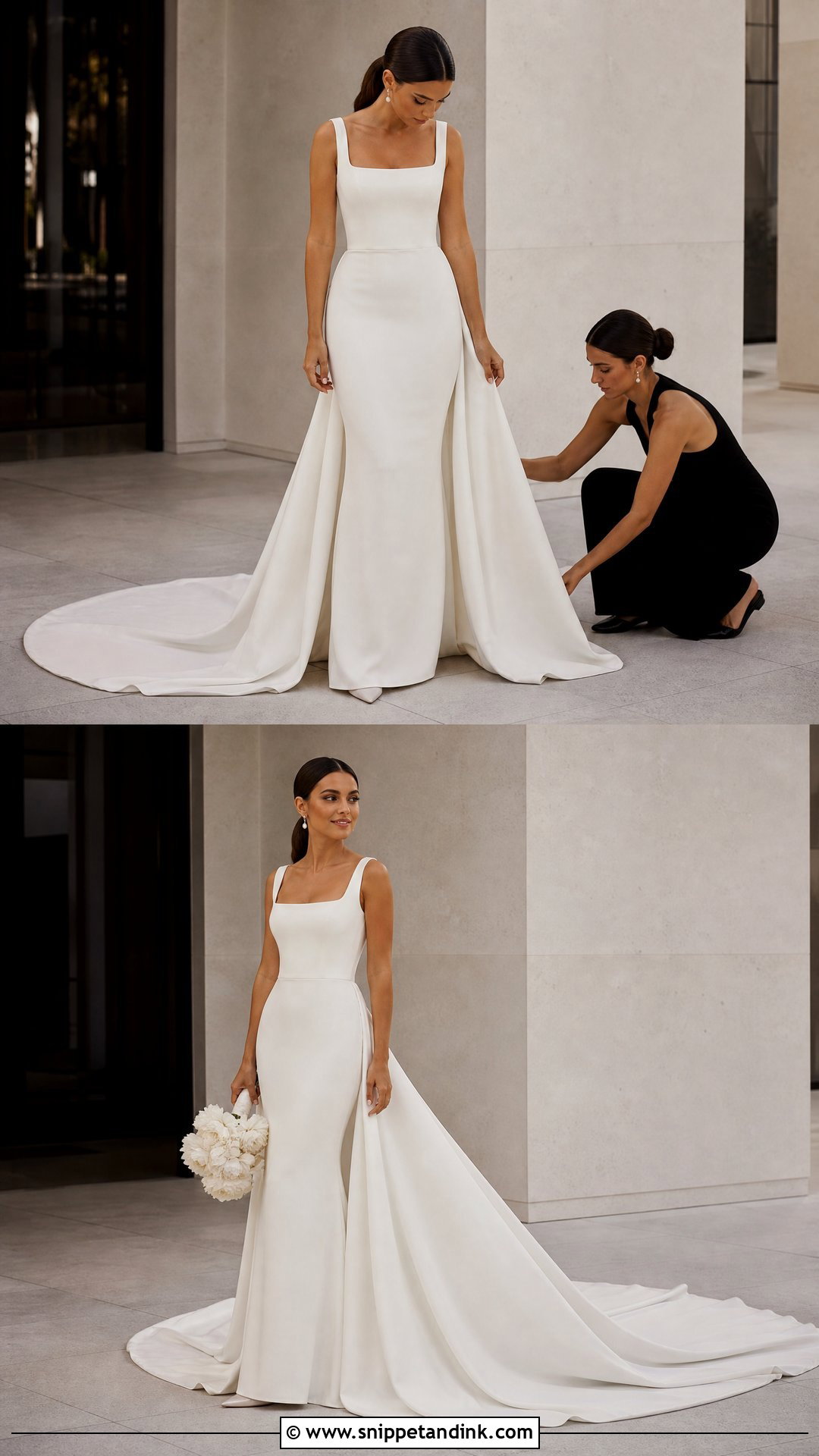
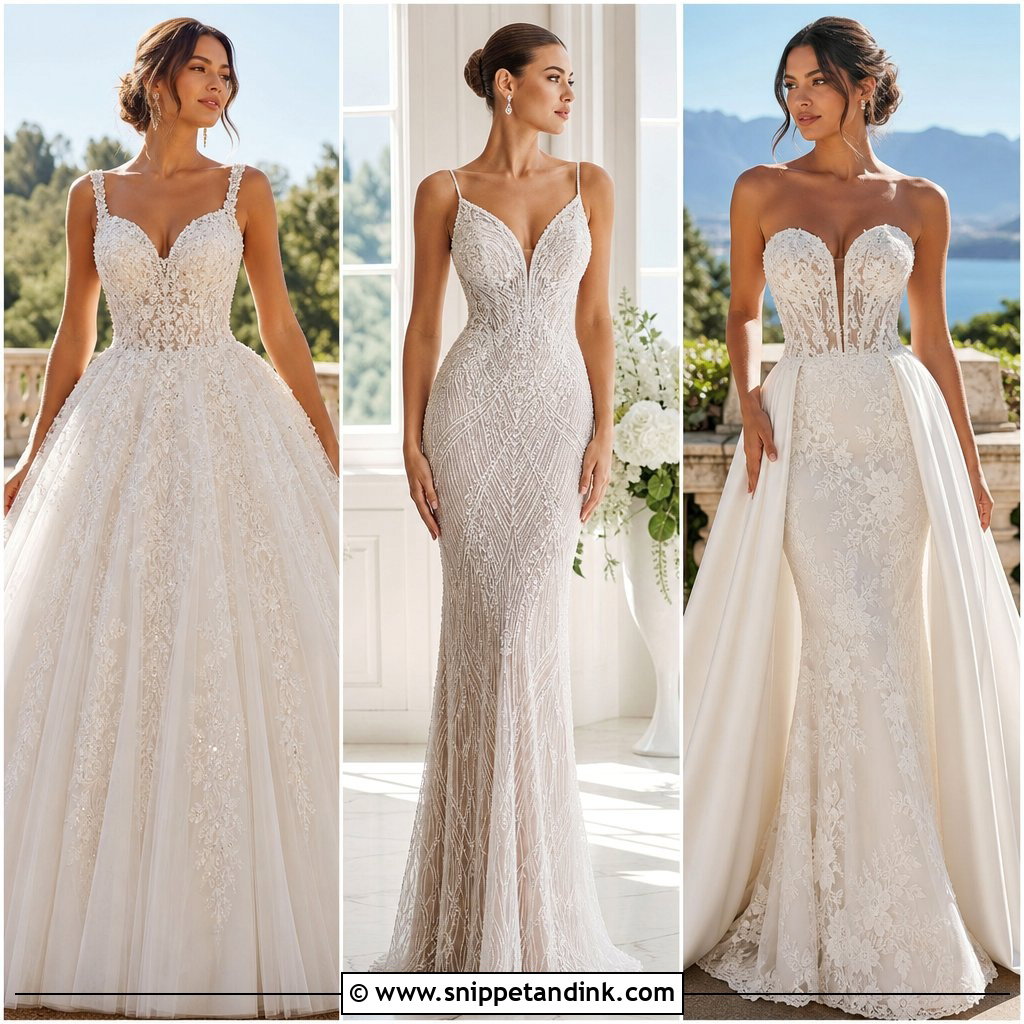
A fitted crepe gown with a detachable train gives you two looks: the train for the ceremony and portraits, then a clean dress for the party. Removable trains, capes and overskirts are now common, usually held with hidden hooks, snaps or covered buttons. Use matching crepe for a continuous line, or organza for a softer contrast. Ask the salon to show you how it attaches and comes off, and have your helper do it themselves at the final fitting. Snaps are fastest to release but least secure; hooks hold best.
8. Detachable Overskirt Train Wedding Dress
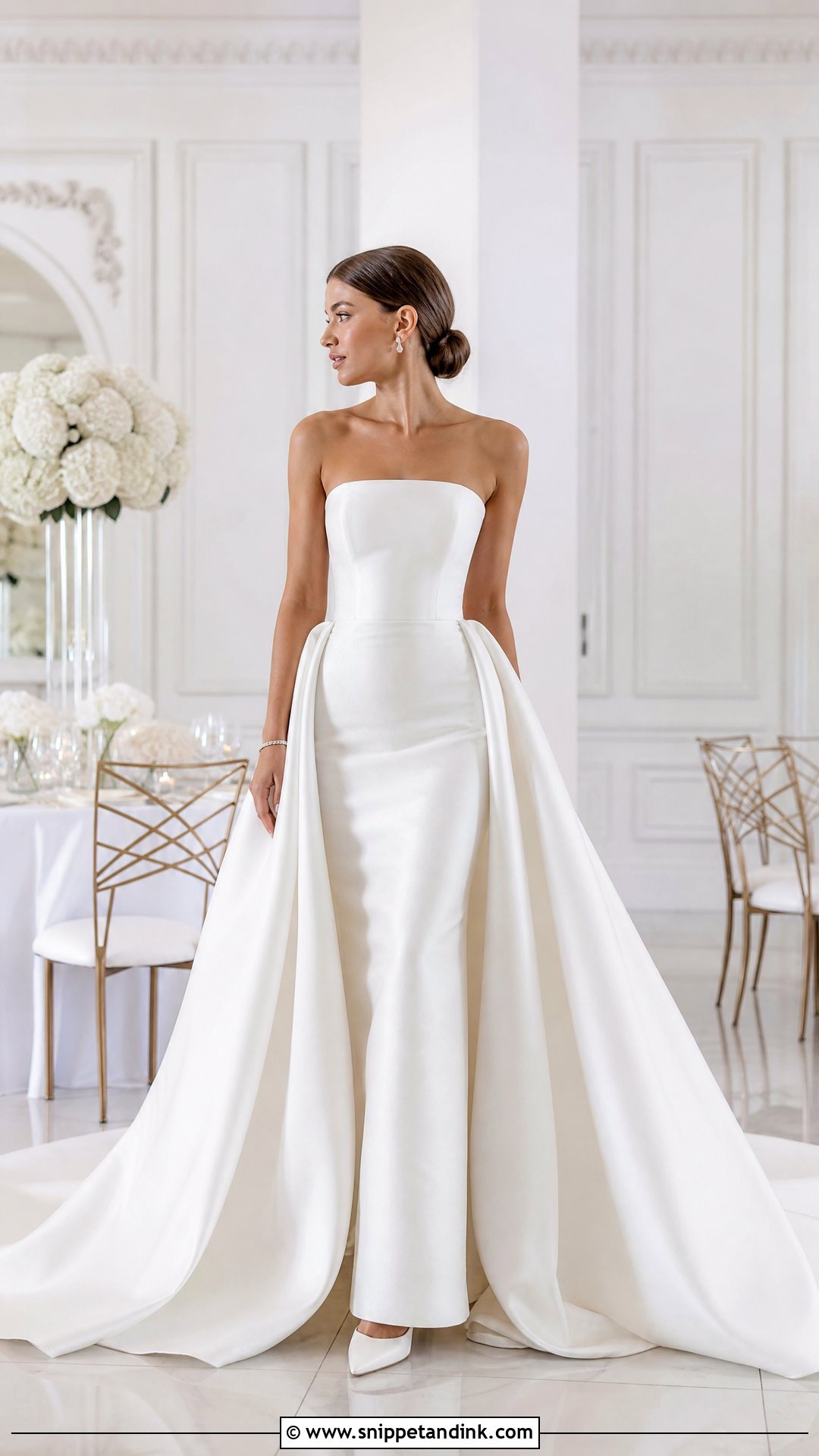
The ceremony starts with a full ball gown, and the reception reveals a sleek dress underneath. A detachable overskirt does this without a full change. Pair a strapless column or mermaid gown with a tulle, satin or organza overskirt that closes at the waist. Undertone matters most: ivory tulle over an ivory satin base can still look like two colours. Look at the waistband from the side and back before ordering, because that’s where overskirts tend to look bulky. Choose jewellery that suits both silhouettes.
9. Bow Train Strapless Wedding Dress
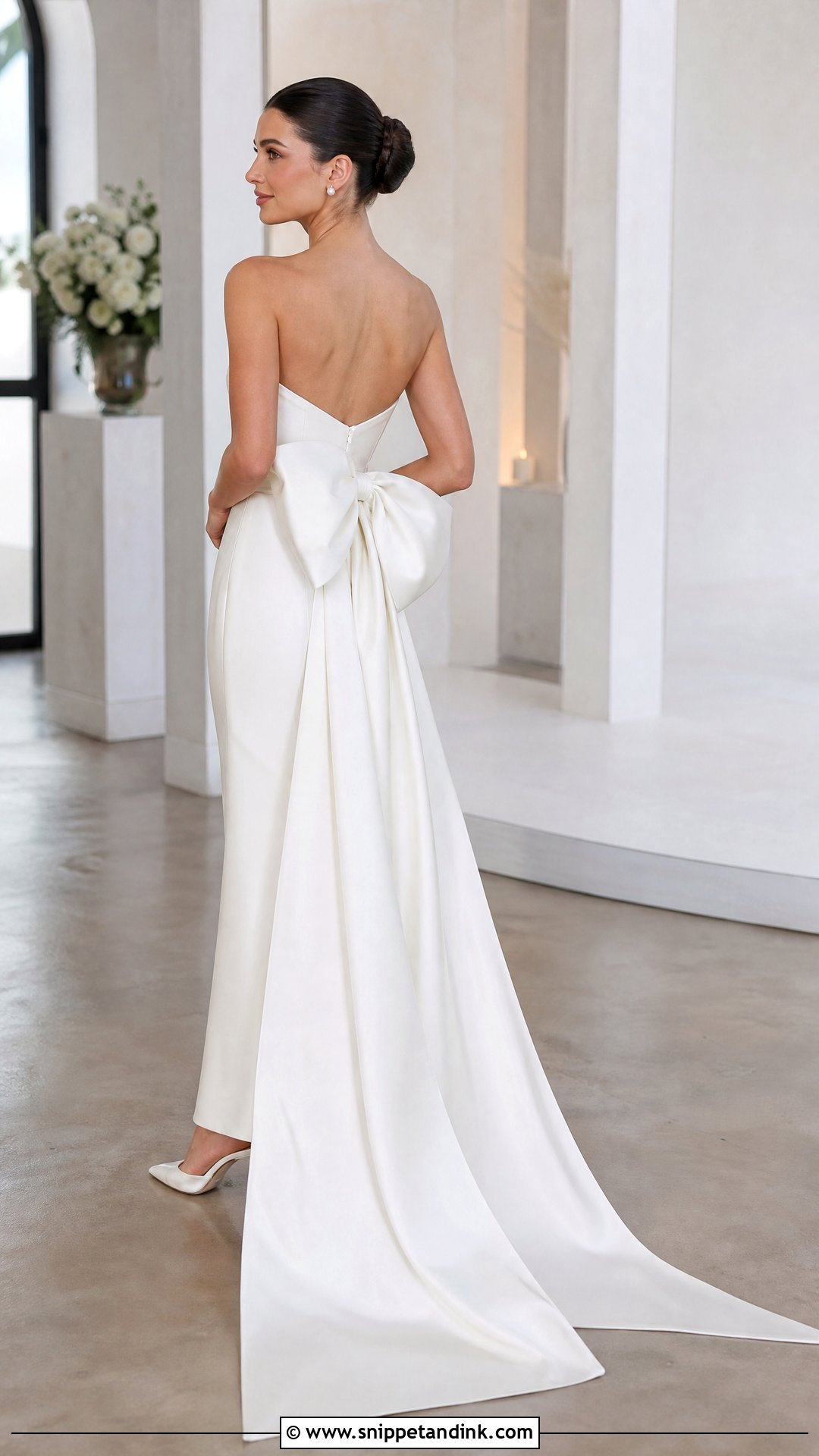
A sculpted bow train turns a plain strapless satin or mikado gown into something playful. The bow can sit at the waist, lower back or top of a detachable train. Keep the veil short or choose a delicate blusher so it doesn’t cover the bow on your entrance. Large bows collapse if they’re under-structured, so I ask what’s inside the loops; horsehair braid or a light interfacing keeps them full without making them stiff. If the train is removable, a smaller back bow can replace it for the reception.
10. Lace Appliqué Train Mermaid Wedding Dress
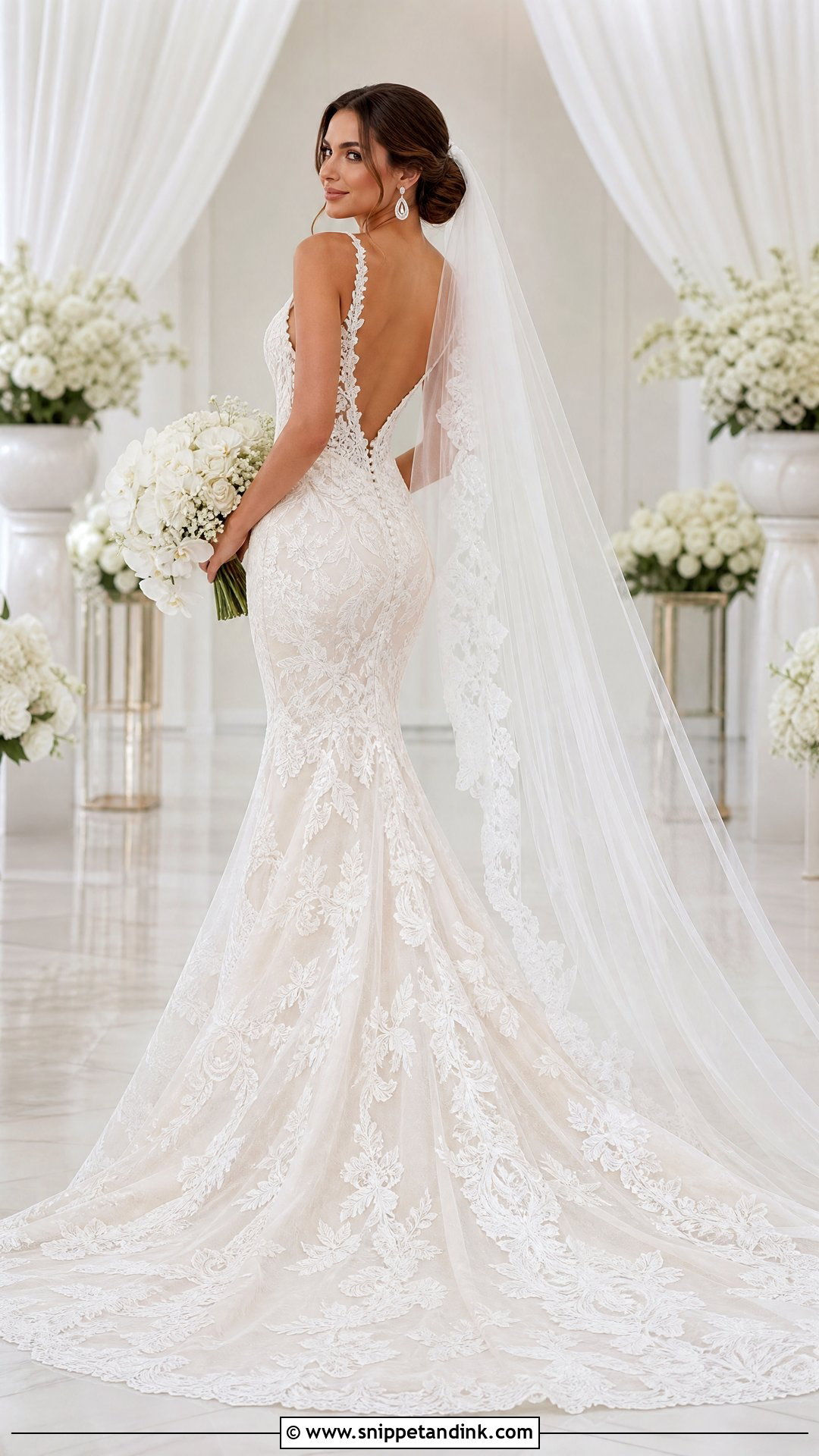
A mermaid gown with a lace train combines a close fit through the hips with a soft finish. The lace should flow from the skirt into the train, not start abruptly at the knee flare. Mermaids restrict your step, so practise shorter steps at the fitting, and choose heels you can walk in steadily. A cathedral veil can echo the lace; plain tulle is lighter. Because the flare starts low, the train weight hangs from a narrow point, so a single hook would strain. A multi-point bustle spreads the lace evenly once it’s lifted.
11. Scalloped Lace Train A-Line Wedding Dress
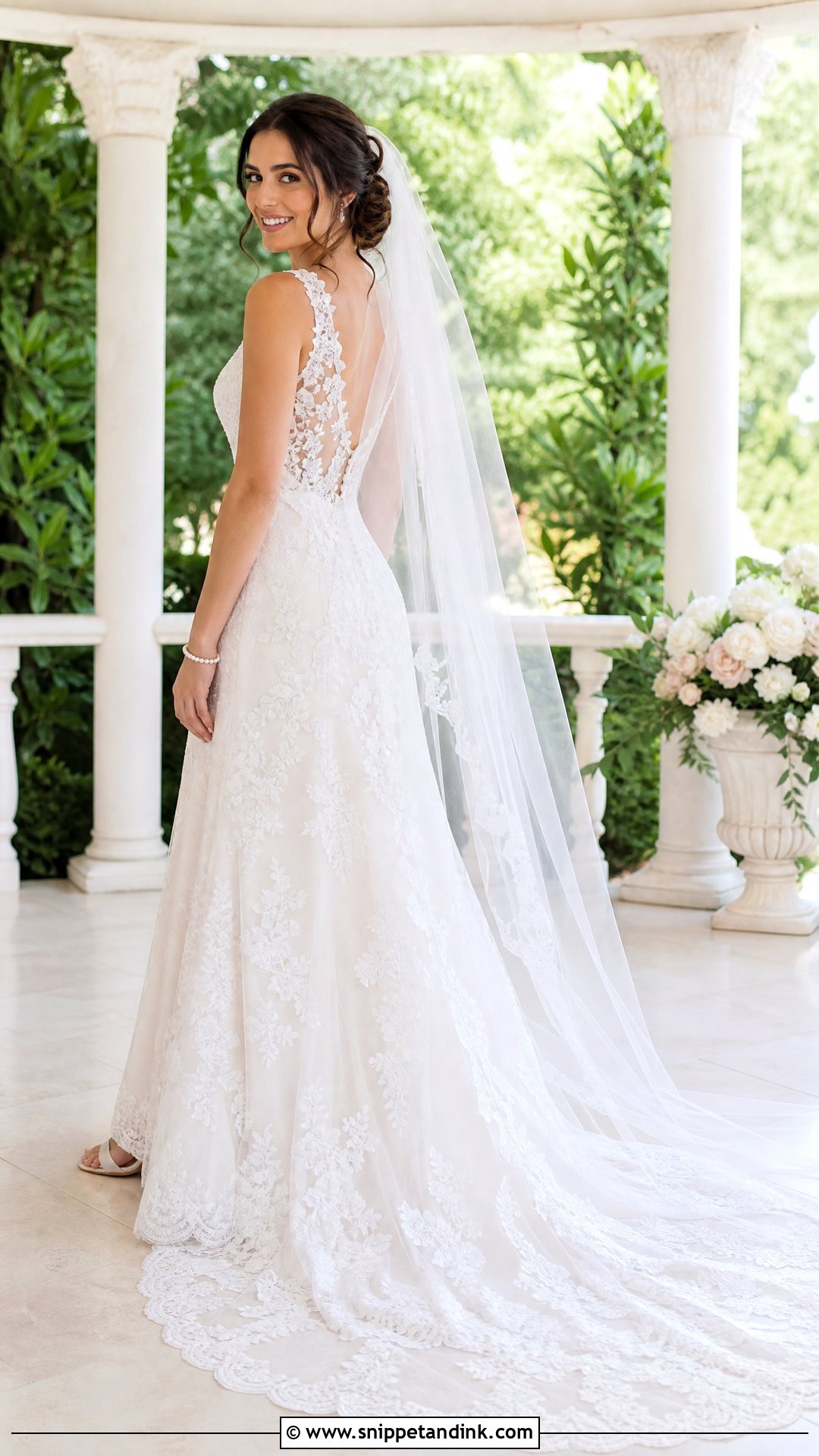
A scalloped lace edge gives an A-line train a clear outline in back-view photos. Lace sleeves, an illusion back or a V-neck links the border to the bodice. Nude lining makes the lace pattern pop; ivory lining softens it. Scallops are fragile, so ask your alterations specialist to set the bustle points into the denser parts of the lace rather than the thin edges, which tear under the weight of a lifted train. Low block heels and a loose updo suit the softer feel.
12. Pearl Train Satin Wedding Dress
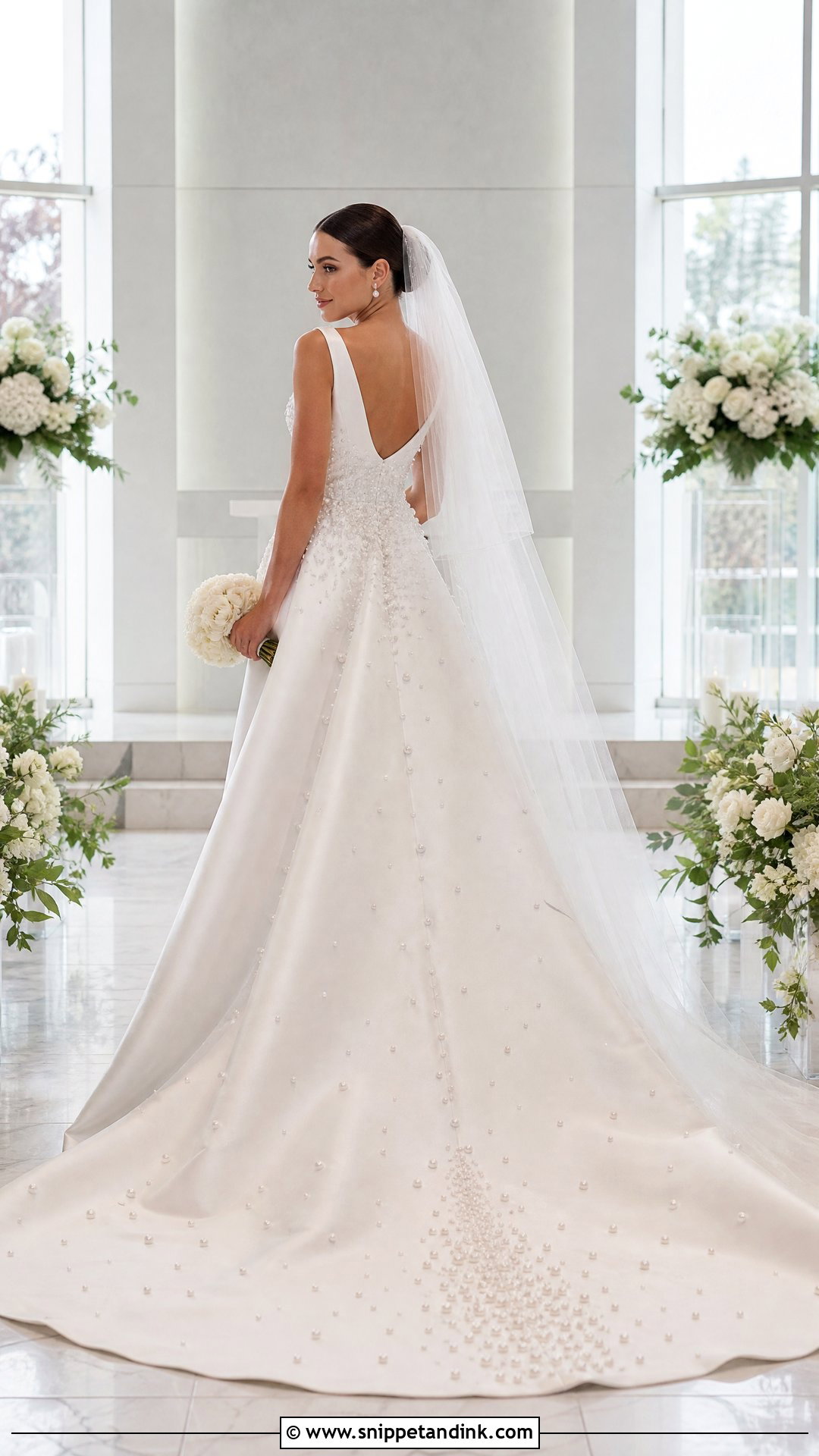
Pearls scattered across a satin train give a quiet shine. Concentrating them near the hem adds texture without covering the whole gown. Keep jewellery to pearl earrings; more jewels compete with the train. A plain tulle veil lets the pearls show, while a pearl-edged veil ties the ceremony layer together. Before the day, I run a hand over the train to check for loose pearls, since they snag on carpet and come off when the train is dragged. Lift it gently when bustling.
13. Floral Embroidered Train Wedding Dress
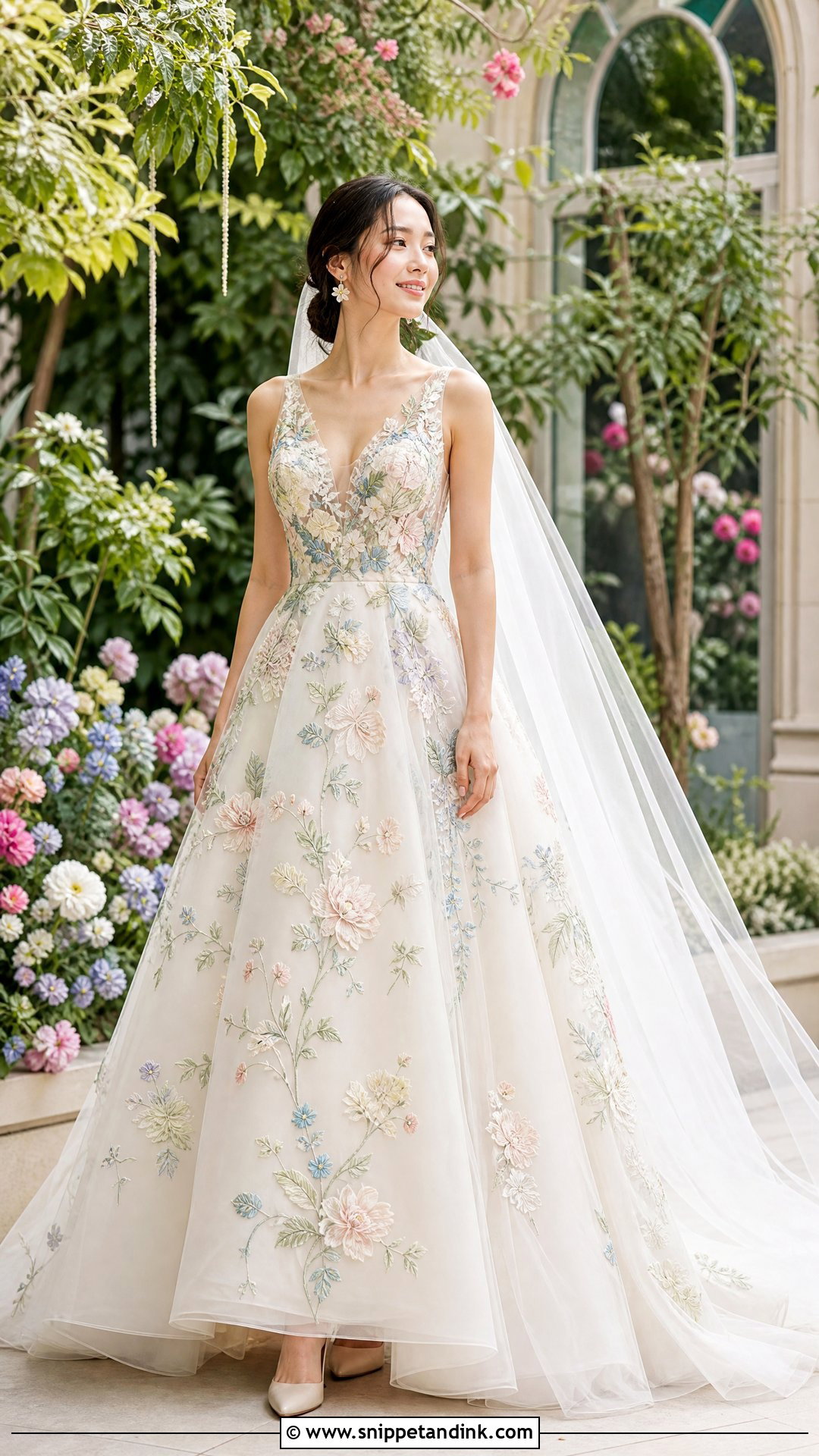
Floral embroidery can make a train feel personal. A light tulle or organza A-line base lets the stitching show. Ivory-on-ivory gives subtle texture; blush, pale blue or soft green threads feel like a garden. Keep the bodice fairly clean. Pull one or two shades from the train into the bouquet rather than matching everything. Outdoors, embroidery snags on gravel and twigs, so ask for a protective underlayer, or plan an aisle runner.
14. 3D Floral Train Tulle Wedding Dress
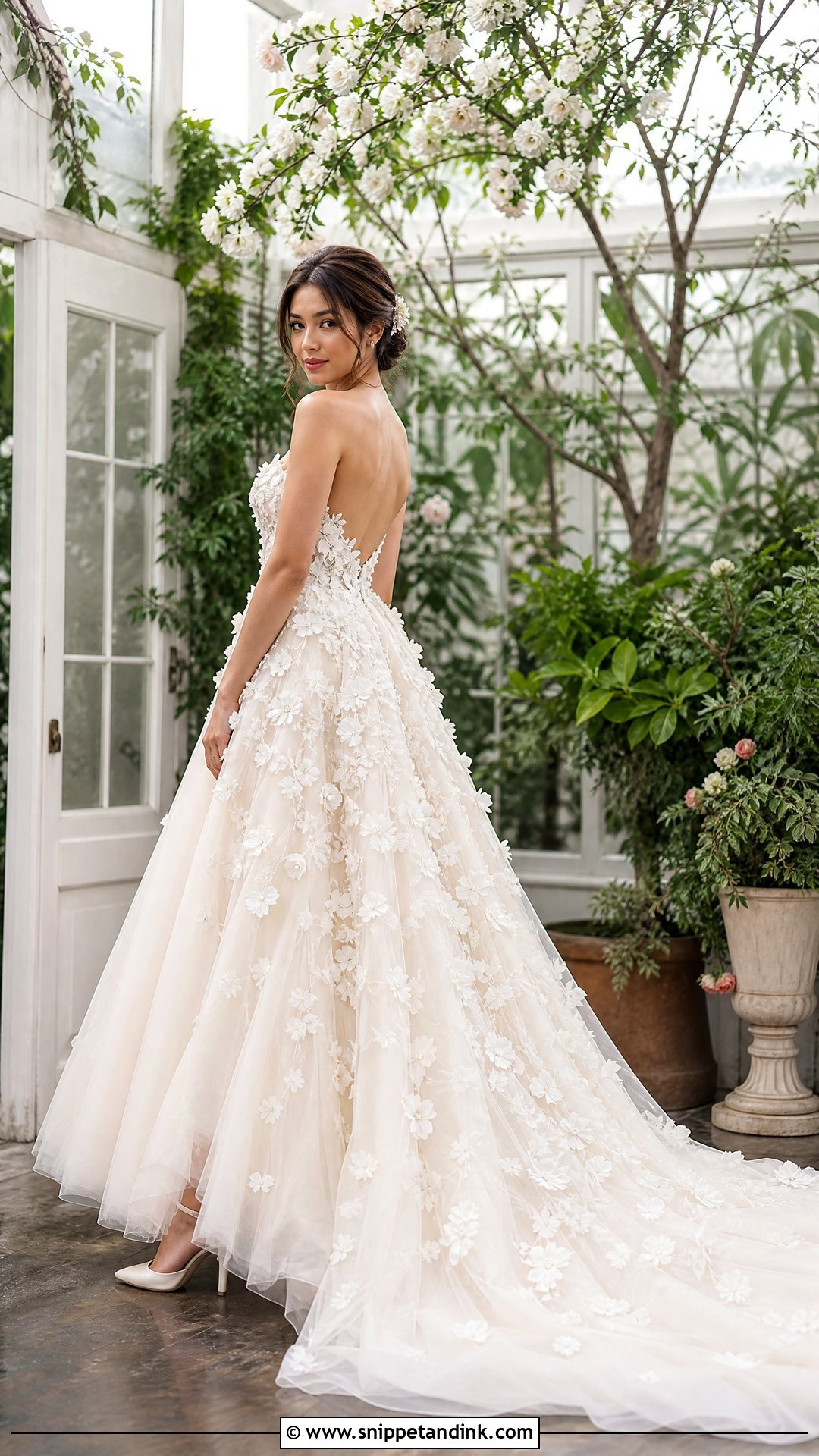
Three-dimensional petals across a tulle train look as though they’re floating behind you. A fitted bodice over a full A-line or ball gown skirt carries the volume. The flowers can spread from the waist or cluster at the border. Keep the veil plain so the petals stay visible. When you or your helper handle the train, lift it from underneath, never by the flowers, because individual petals are only tacked on. Raised florals add weight, so a bustle with several points is worth the extra alteration time.
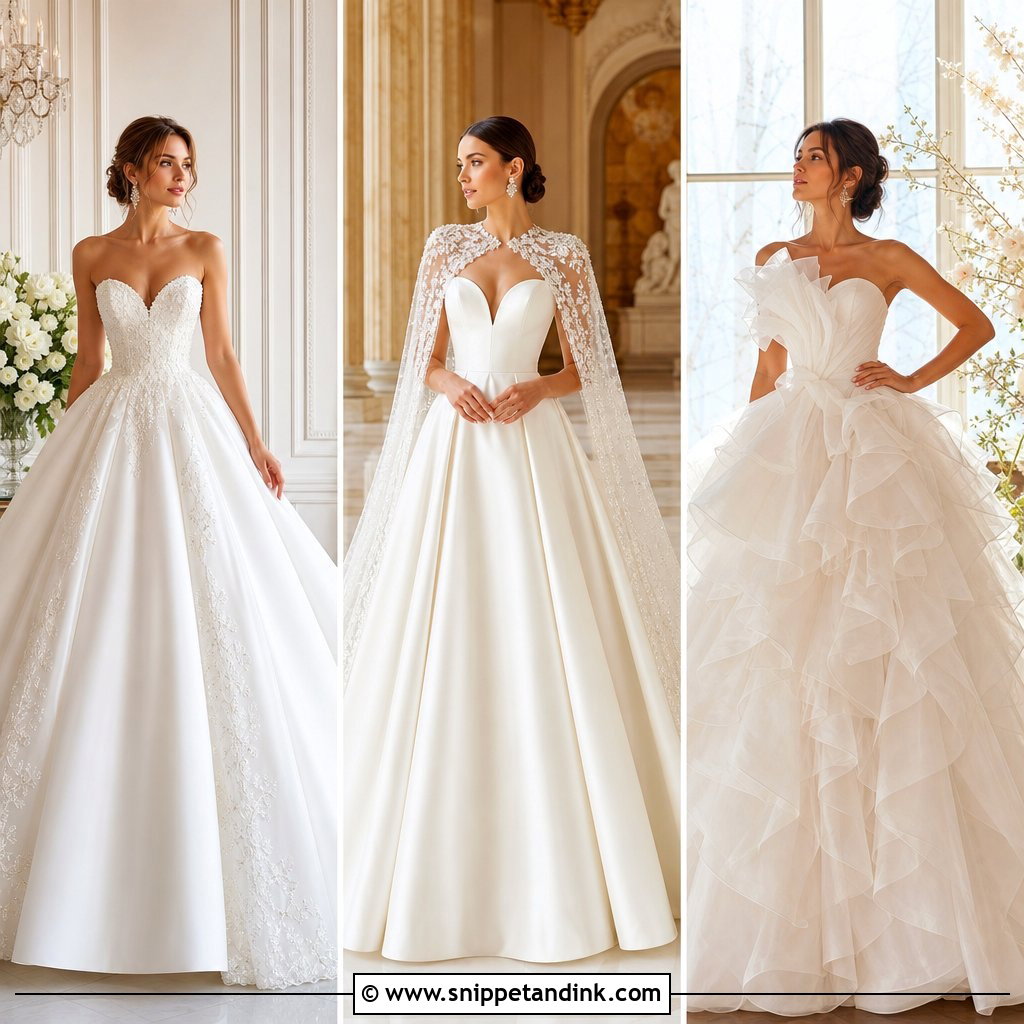
15. Beaded Train Fit-And-Flare Wedding Dress
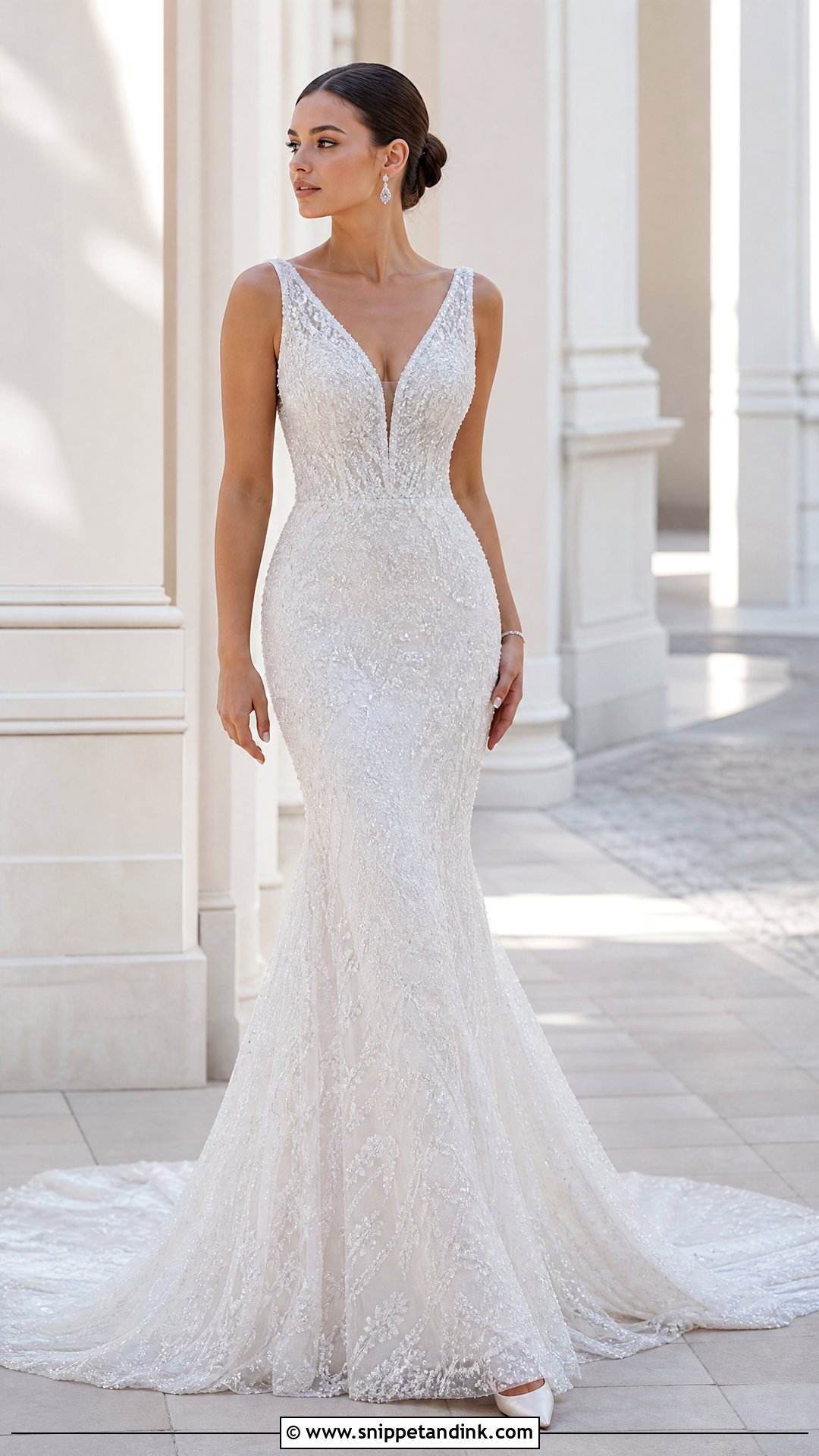
Tonal beads, crystals or sequins on a fit-and-flare train shimmer as you move. A V-neck or narrow straps lengthen the line. Beading adds real weight, so do one fitting wearing the full dress for at least half an hour; you’ll feel whether the train pulls at the hips. The bustle has to be strong enough to hold it without dragging the skirt down. Choose a soft, plain tulle veil, because loosely woven veils catch on raised beads.
16. Ruffled Tulle Train Ball Gown
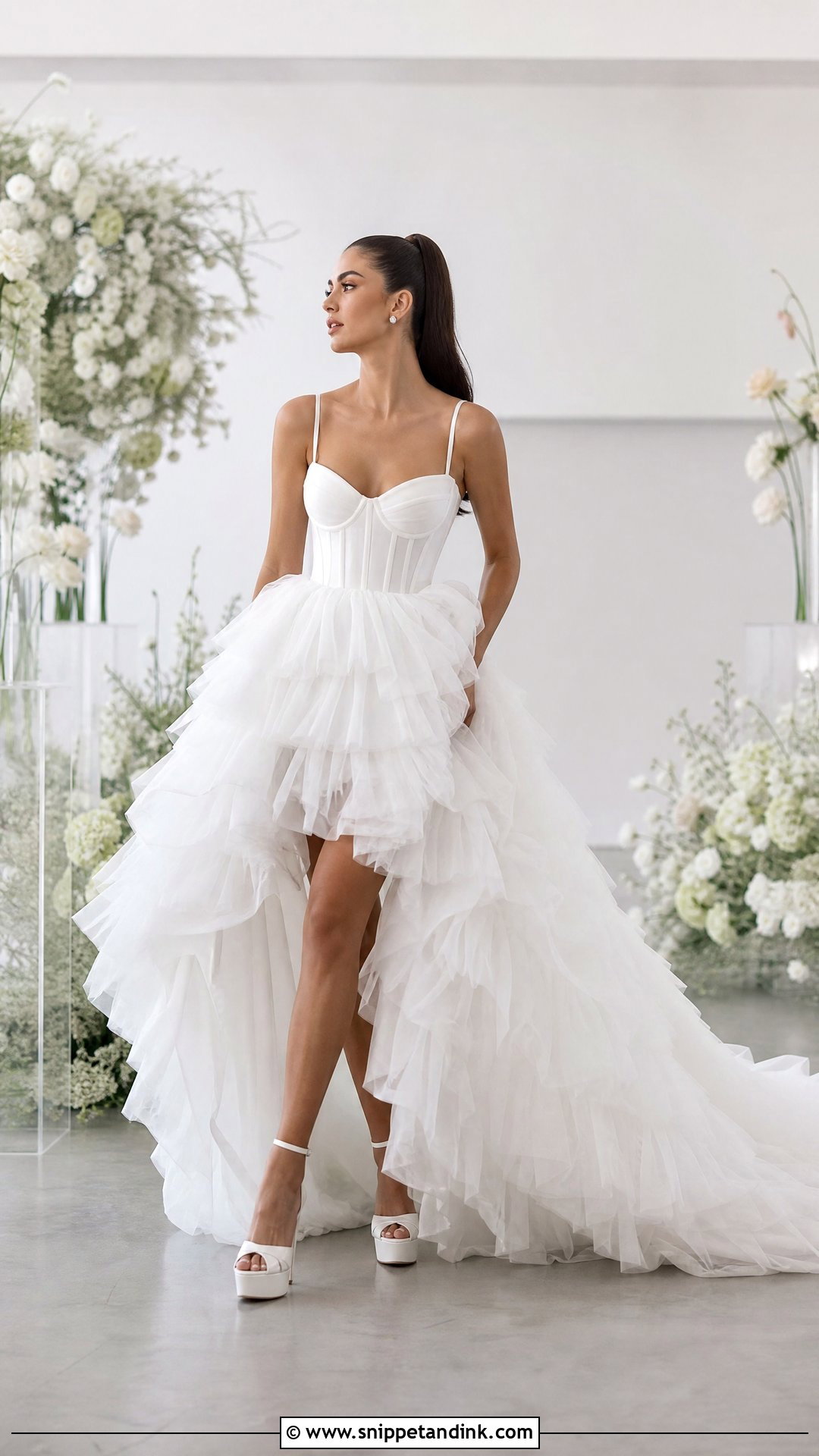
Ruffled tulle tiers build a lot of volume and movement. Pair them with a fitted corset-style bodice. Soft irregular ruffles look romantic; structured waves look editorial. Keep accessories small and the veil short, since a long one gets lost in the layers. When trying on, walk across carpet, wood and stone if you can; on carpet especially, ruffled trains can fold under themselves instead of flowing. Ask whether the bottom layers can be reinforced if you’ll be outdoors.
17. Pleated Organza Train Wedding Dress
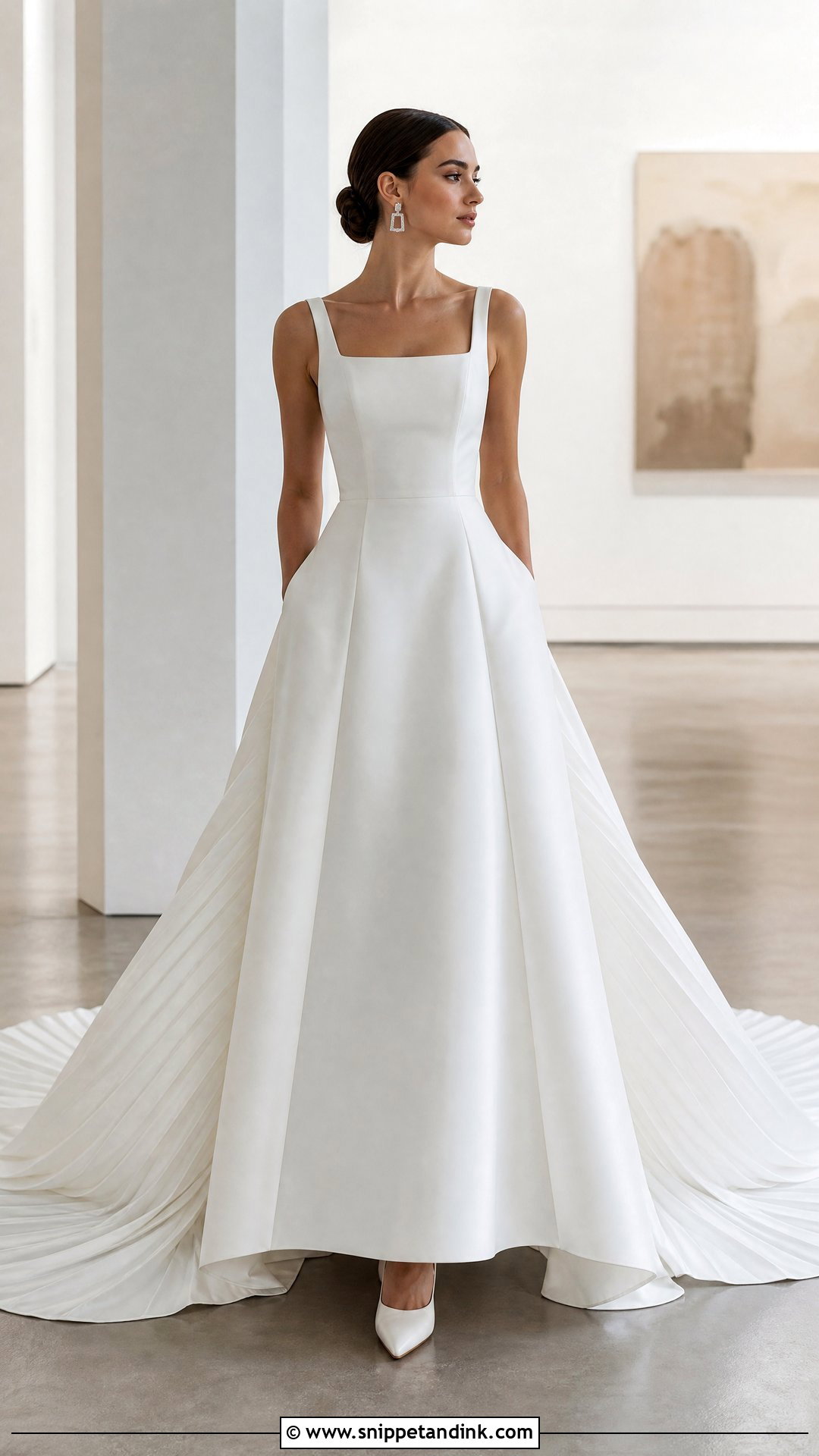
Pleated organza gives volume without the heaviness of thick satin. A clean bodice with a square, bateau or folded strapless neckline suits the crisp fabric. Organza creases when crushed, so the dress needs room in the car and a steamer at the venue. Arrange that ahead with whoever is helping you dress. The bustle should lift the train in line with the pleats, not across them, or they bunch. Practise it at the final fitting.
18. Minimalist Satin Train Wedding Dress
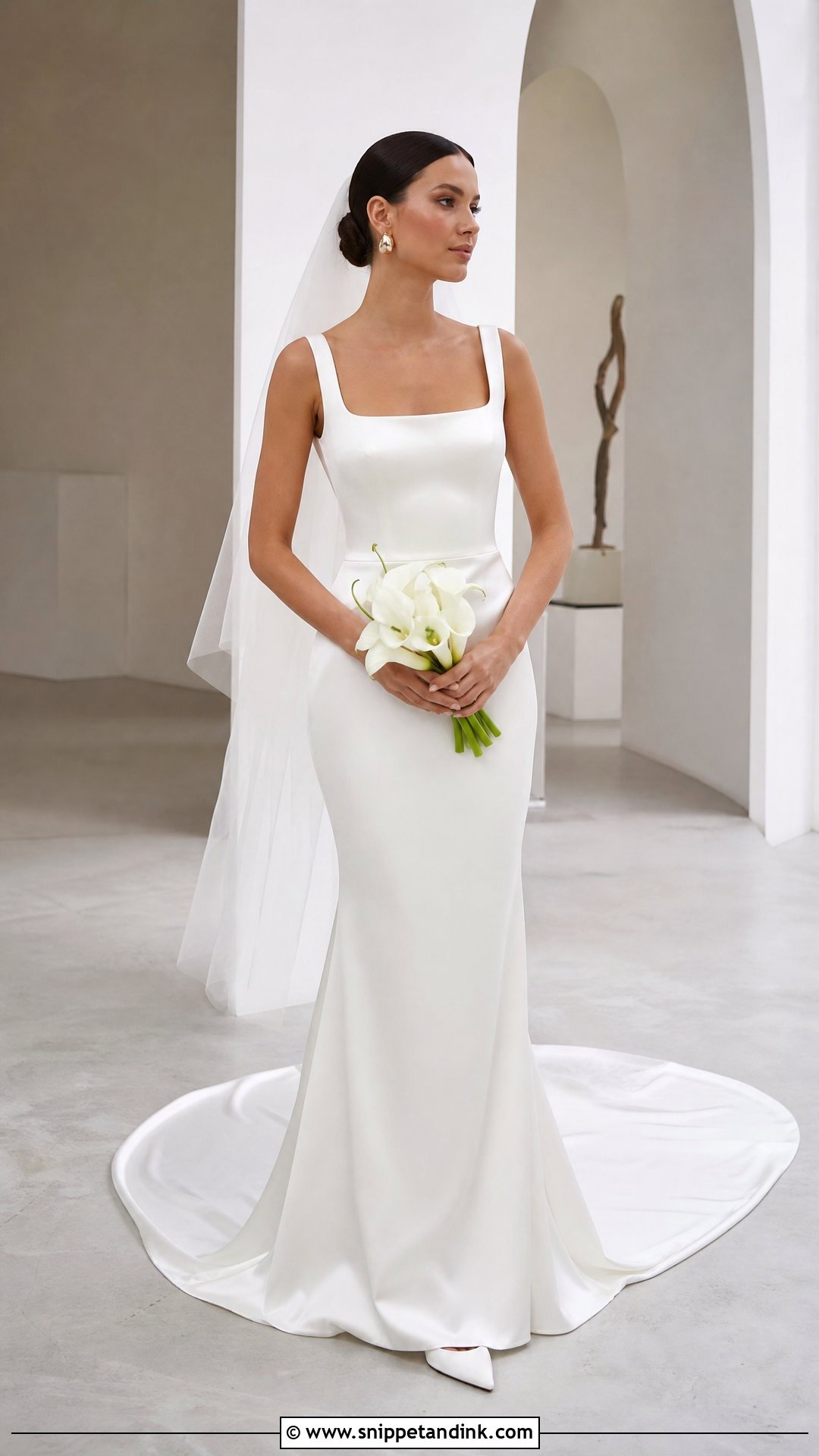
Plain satin needs no decoration to look special, but it hides nothing. A square-neck column, structured A-line or strapless ball gown with long uninterrupted panels suits it, at chapel or cathedral length. Smooth satin shows every seam underneath, so fit it over your wedding-day underwear. During alterations I check the train under bright light to make sure the hem hangs evenly; any dip is obvious on a plain surface. A simple bustle following the original seams keeps it neat into the evening.
19. Chiffon Train Beach Wedding Dress
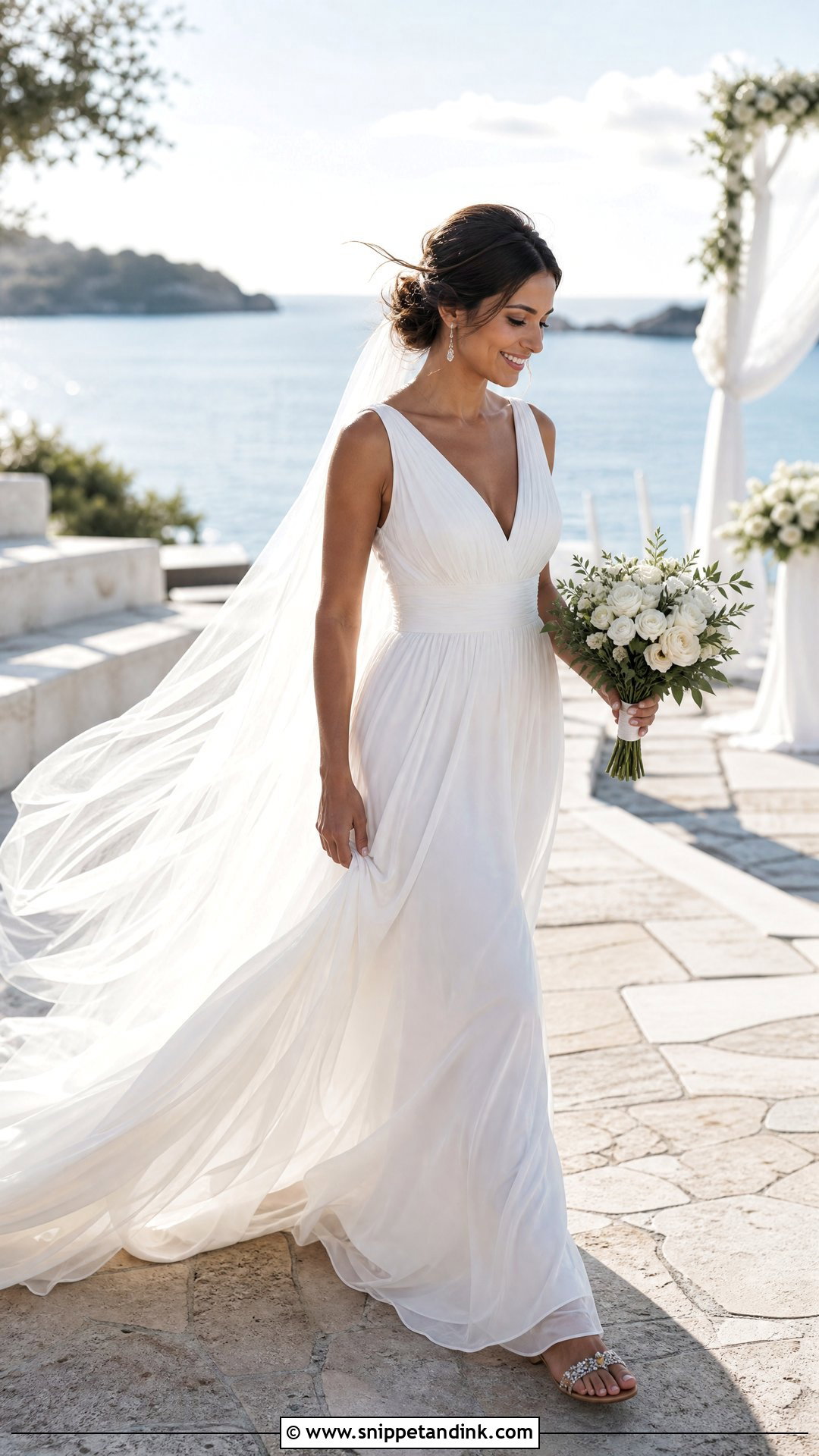
Chiffon catches the breeze at a beach or waterfront ceremony. Choose an empire, sheath or soft A-line with a light lining and a sweep or court train. On sand, a longer train drags wet sand and seaweed with it, so keep it short. Flat sandals, low wedges or block heels work better than stilettos. Pin a lightweight veil firmly. Ask the venue about typical wind at the ceremony hour; if it’s often gusty, a detachable chiffon train that comes off after photos saves a lot of wrestling.
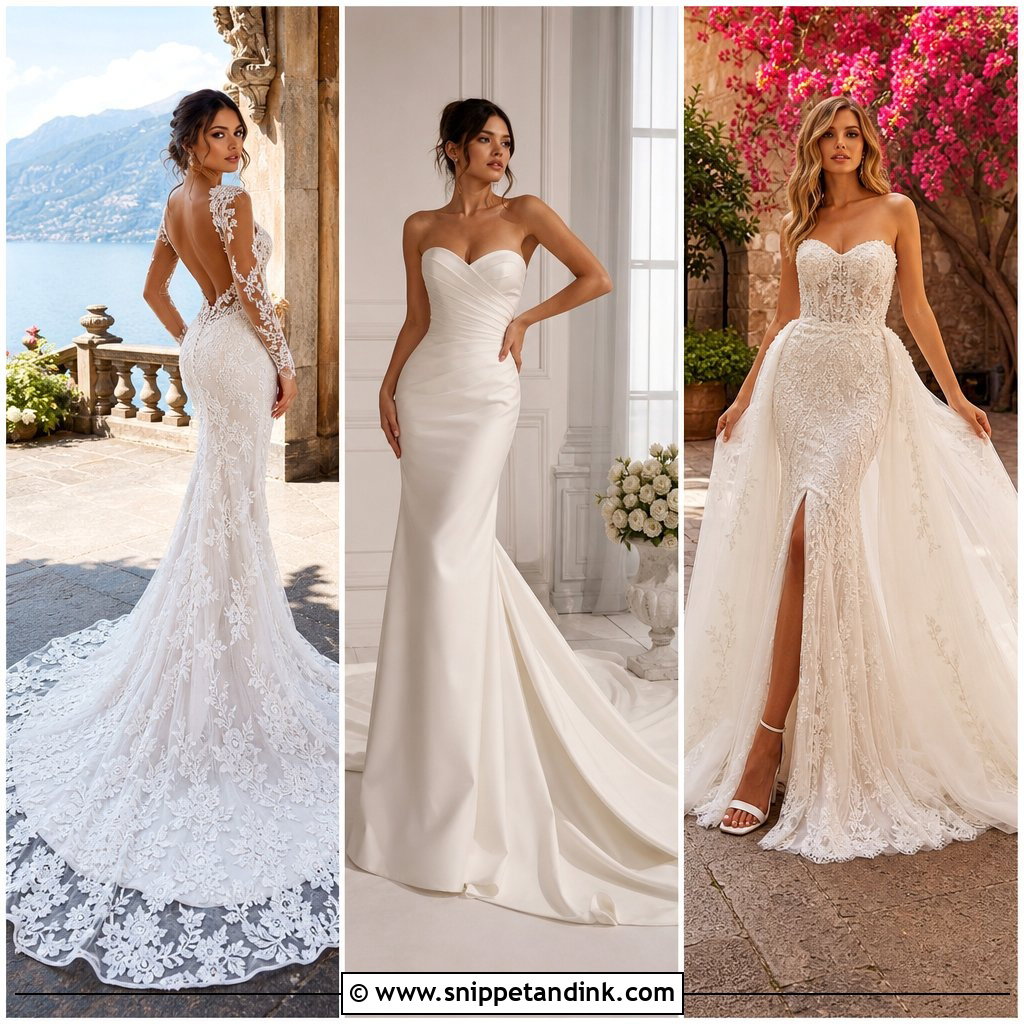
20. Asymmetrical Train One-Shoulder Wedding Dress
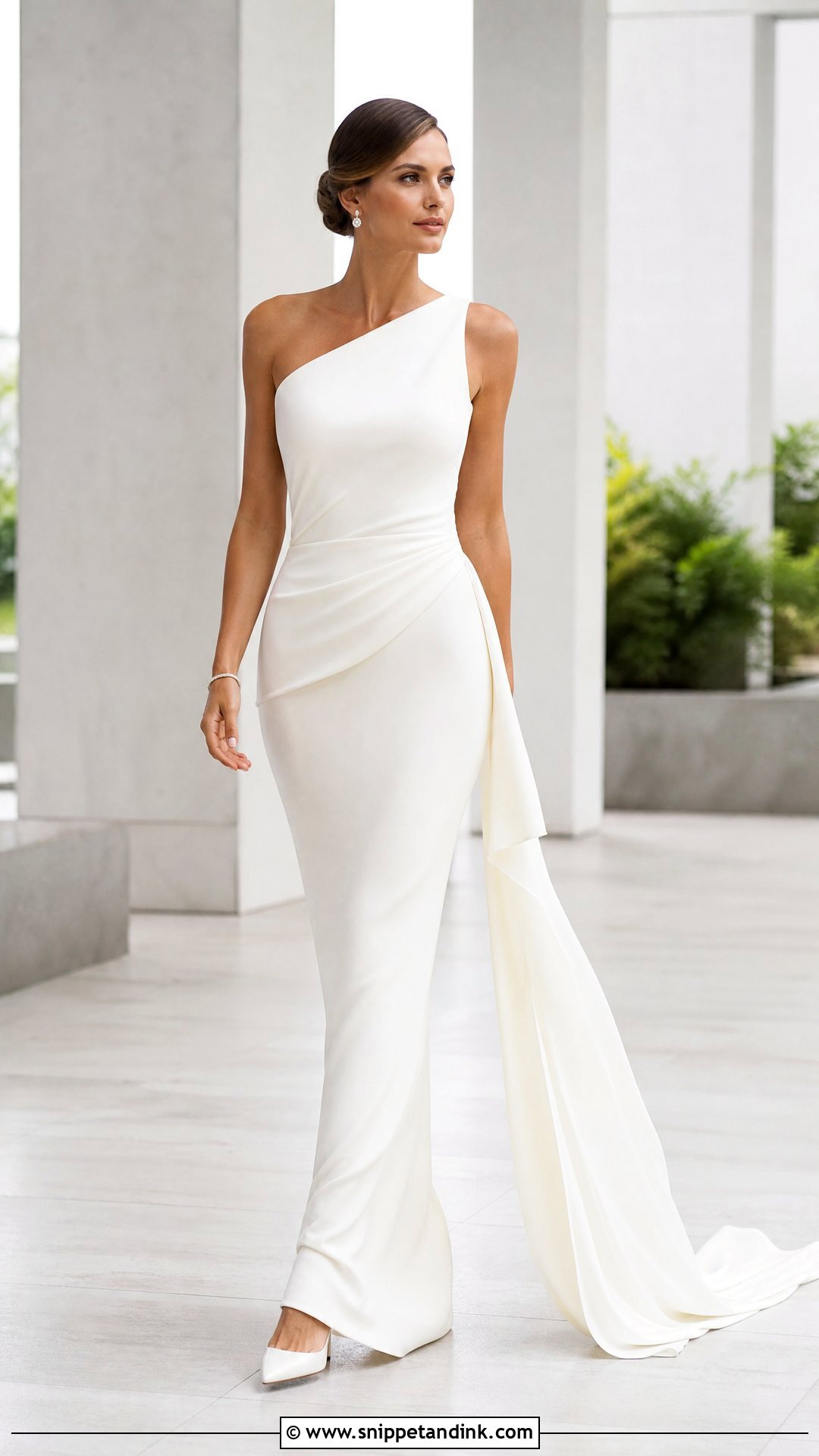
An asymmetric train draping from one hip makes a one-shoulder crepe or satin gown look like it’s moving. Skip the large necklace and keep a slim bracelet and small earrings. A sleek ponytail or side bun follows the line. The risk with side trains is twisting: as you walk, the longest part can swing toward the front. Small hem weights or careful lining help it fall correctly. If the train is light, a discreet wrist loop lets you carry it while dancing.
21. Detachable Train Bridal Jumpsuit
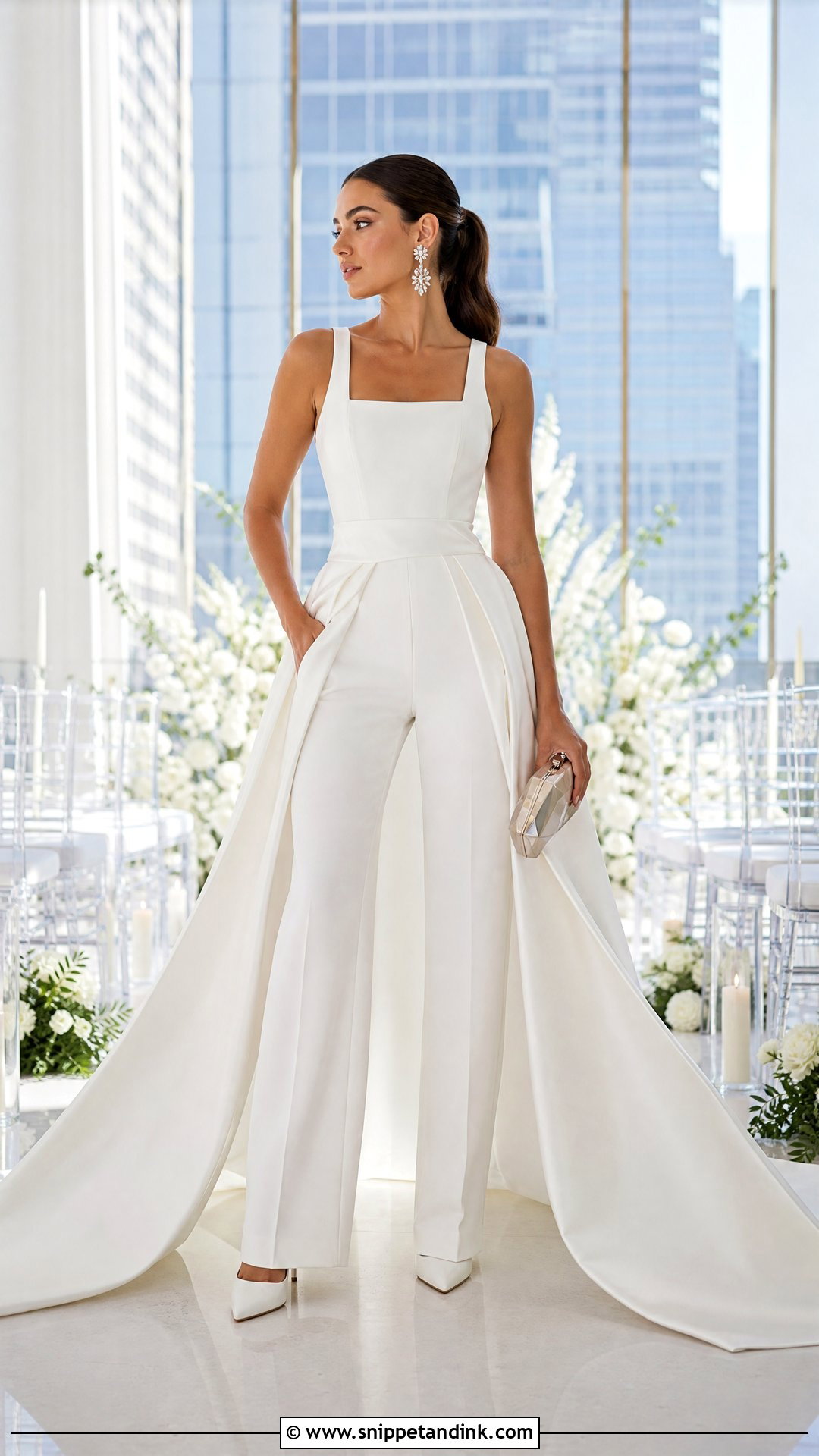
A tailored bridal jumpsuit with a detachable train gives a ceremony entrance and complete freedom later. Wide or straight legs with a fitted bodice and defined waist work best. A satin overskirt train feels formal; a sheer Watteau-style layer is lighter. Hem the trousers in the exact ceremony shoes, since the train shouldn’t be hiding trousers that are the wrong length. When the train comes off, any hardware left on the jumpsuit should be flat and hidden.
22. Detachable Train Wedding Mini Dress
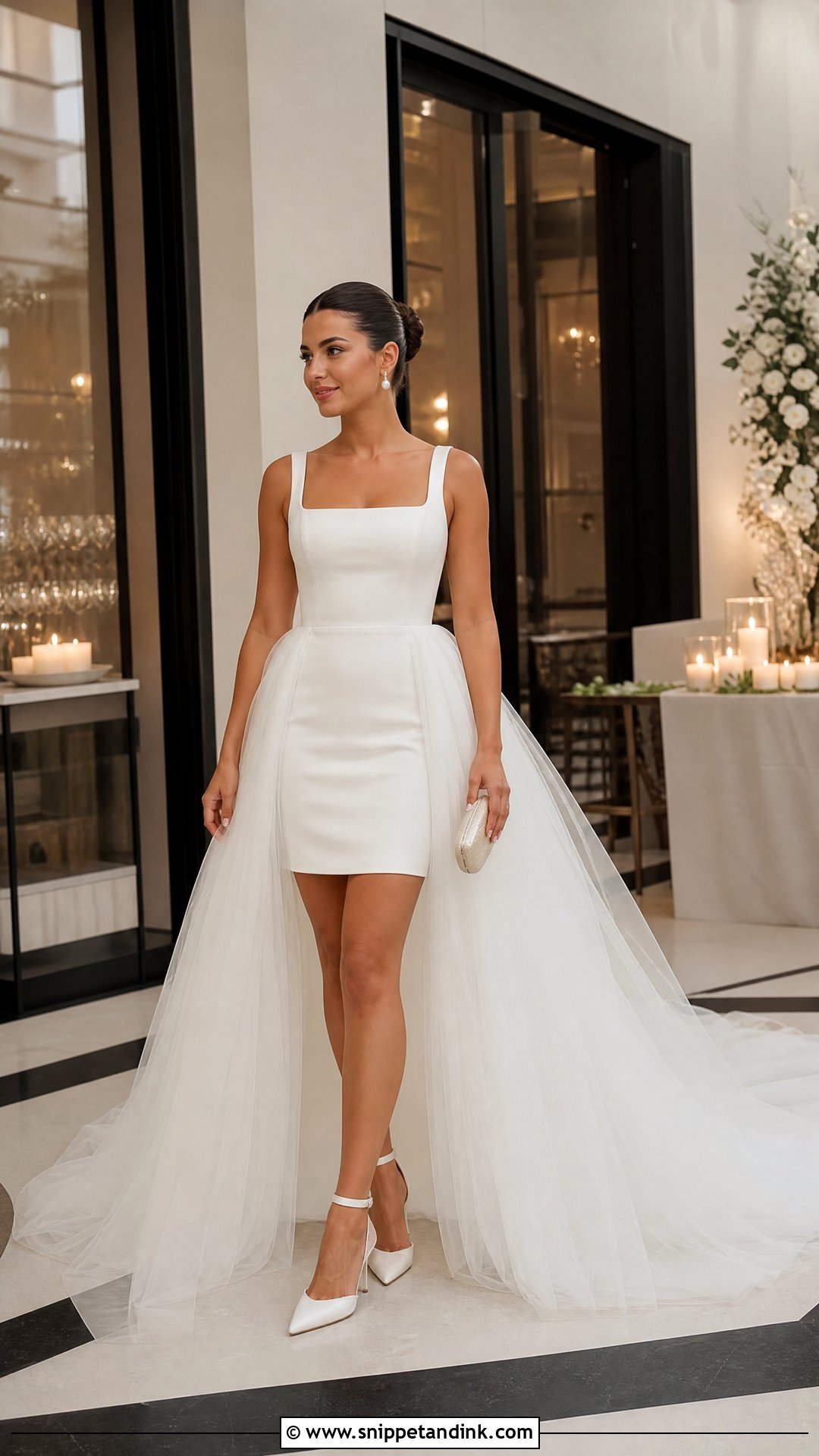
A mini dress under a full overskirt train is the most playful option here. Choose a structured strapless, long-sleeve or square-neck mini and add tulle or satin for the ceremony. The overskirt waistband must grip without sliding over the short dress; I often add a hook at the side seam to anchor it. Pick shoes that look right with the short hem, since they’ll be fully on show at the reception. A lining or fitted shorts under the mini make sitting and dancing easier.
23. Blush Train Wedding Dress
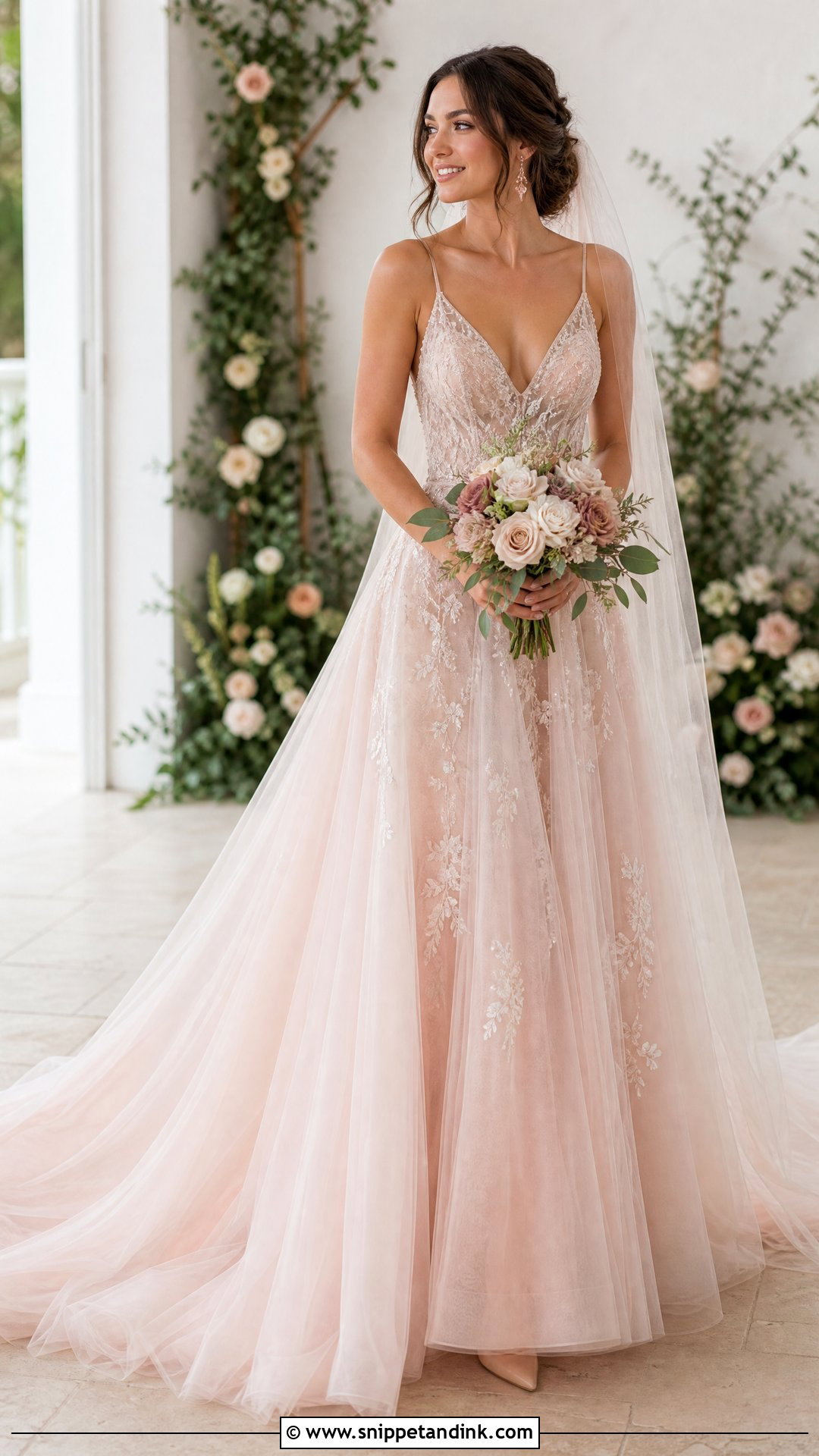
Blush brings soft colour to a traditional train. Choose an A-line tulle, fitted lace or structured satin gown in a shade that suits your skin; some blushes turn grey on very fair skin and others go peach on olive skin. Champagne lining under blush tulle adds warmth, while ivory keeps it subtle. Keep makeup neutral rather than matching the dress. Look at the fabric in daylight and indoor light, and ask for test photos at a fitting if you can, because coloured trains photograph unpredictably.
24. Blue Floral Train Wedding Dress
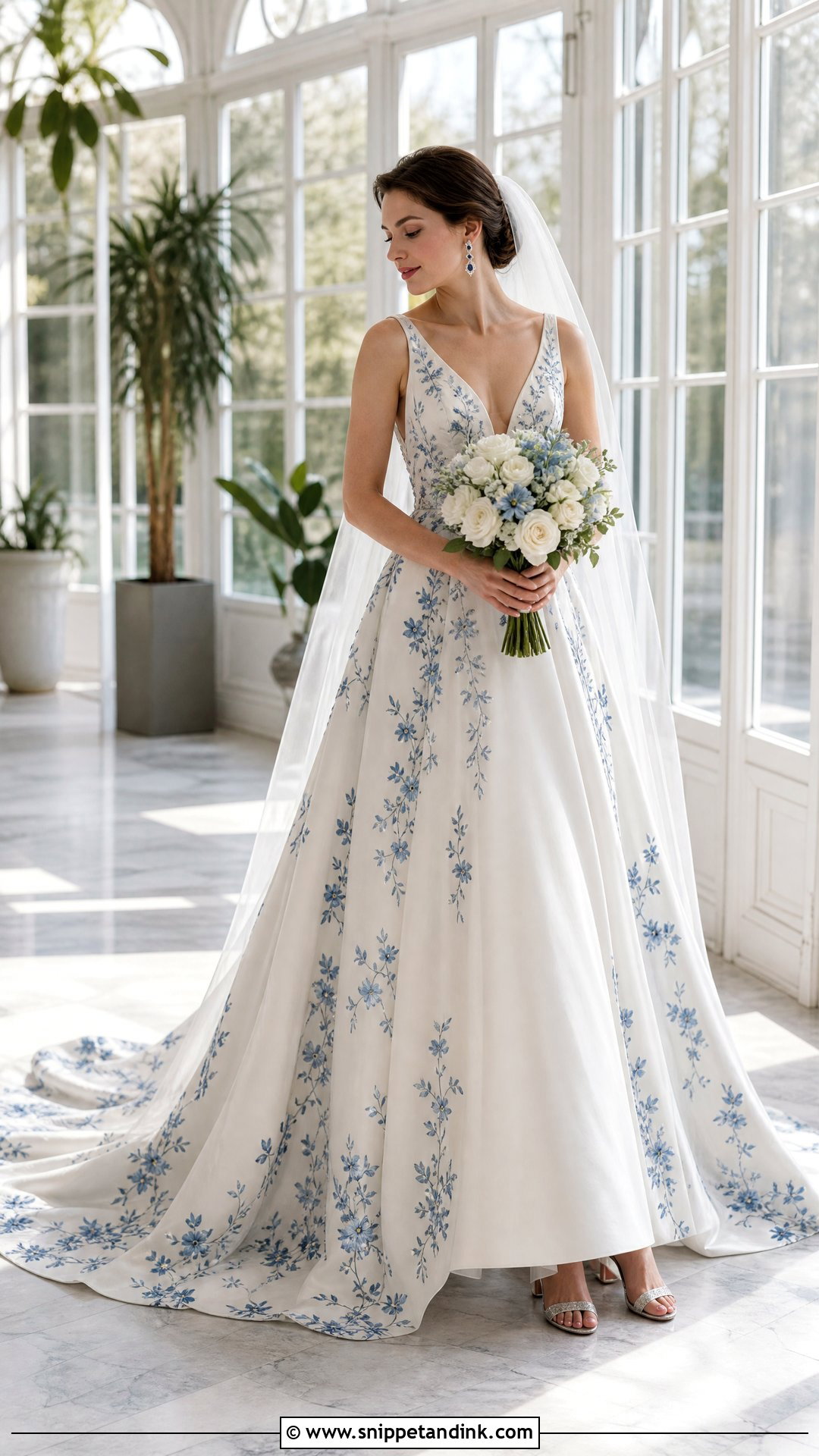
A pale blue floral train looks distinctive but still soft. Start with an ivory or powder-blue A-line with embroidered flowers spreading across the skirt and hem. Keep the bodice simple. A plain ivory veil gives contrast and keeps the pattern visible. Concentrating embroidery at the border and centre of the train gives it a clear shape in photos. Ask the tailor to hide the bustle loops among the motifs, so the lifted train still looks clean at the reception.

25. Sheer Cape Train Long-Sleeve Wedding Dress
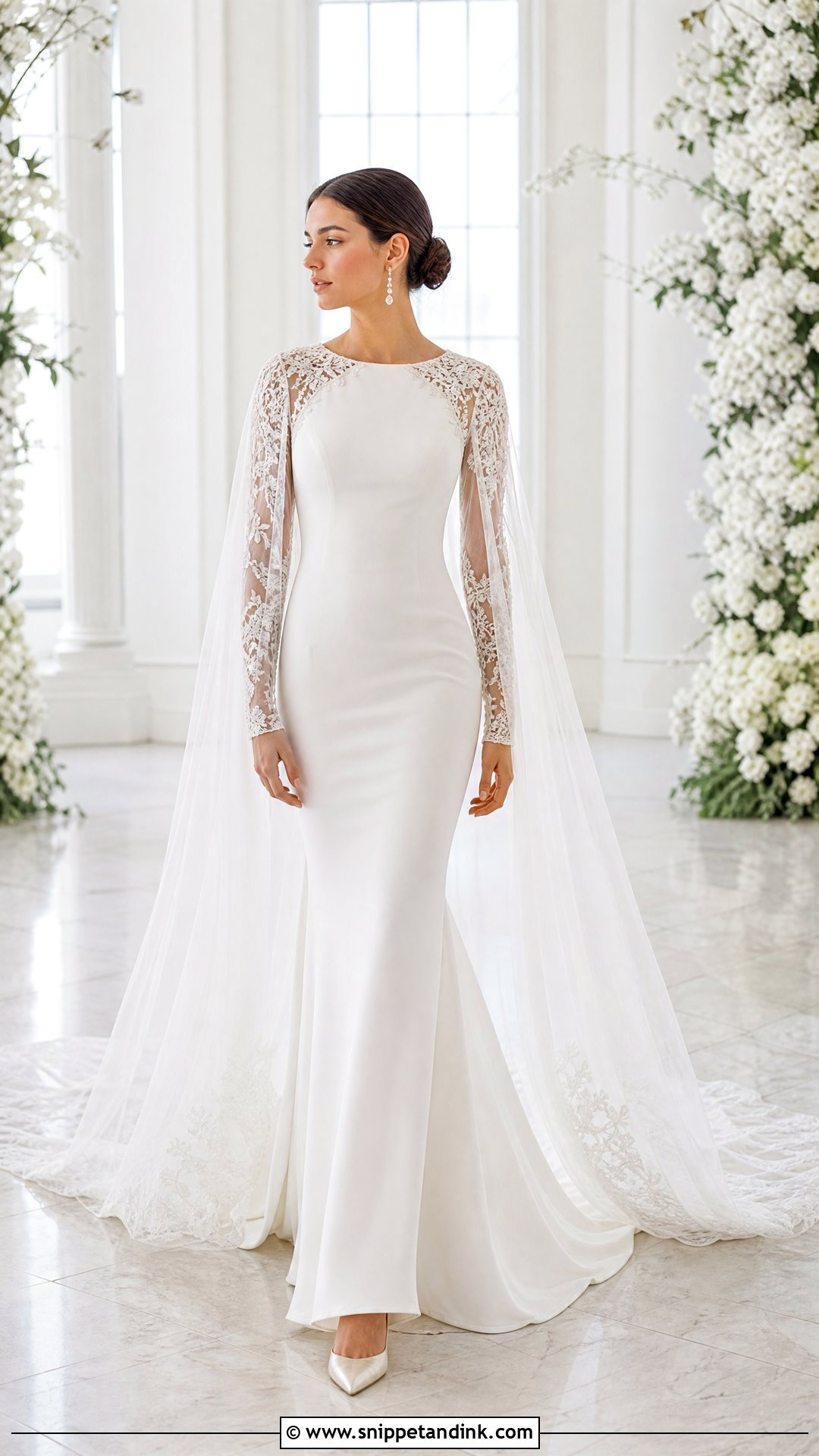
A sheer cape train over a long-sleeve gown gives coverage without bulk. A fitted crepe or lace dress with a tulle cape from the shoulders, falling to chapel or cathedral length, is the classic form. Embroidered edges, small pearls or lace motifs connect cape and gown. Skip a traditional veil or wear a simple blusher. The closures need testing: a long cape’s weight pulls backward on the shoulders, and if they’re not strong enough, the neckline rides up and your arm movement is restricted.
Over, Under or Ballroom: The Bustle Conversation
A bustle is how the train is lifted after the ceremony so you can walk, eat and dance. It’s done by your seamstress at alterations, and the style depends on the fabric.
Over bustle
The train is hooked up onto the outside of the skirt at one or more points, making soft swags. It’s quick and suits satin, crepe and light trains.
Under or French bustle
The train is folded under and tied with ribbons inside the skirt. It creates a layered look at the back and suits heavier or lace trains. The ties are usually colour-coded or numbered, and I’d label them clearly with a marker on the ribbon ends.
Ballroom bustle
The train is tucked under all round so the dress looks floor length with no visible train. It takes longest and needs the most points, but it’s the neatest for a ball gown.
Whichever style you choose, the person doing it on the day should practise at your final fitting and take a short video on their phone. In a dim room after a few drinks, a numbered ribbon is much easier to find when someone has done it once before.
Turning Around Without Treading on It
The most awkward moment with any train longer than a sweep is turning to face your partner or to walk back up the aisle. Don’t pivot on the spot. Take a few small steps in a gentle arc, so the train follows you round rather than wrapping across your feet. Ask whoever stands with you to straighten it once you’ve stopped. On steps, lift the front of the skirt, not the train, and go up slowly; the train will follow.
How Much Train Can Your Day Actually Carry?
A train should add to the gown without slowing you down. Sweep and court trains are the most comfortable; chapel, cathedral and monarch lengths bring more drama, and more work. Watteau capes, bows, overskirts and detachable layers give you other ways to make an entrance. Think about the venue, aisle width, fabric weight, how far you’ll walk and what you’ll do after the ceremony. Bring your shoes to every fitting, and make sure one person has learned the bustle or removal before the day. Then pick the one that looks like you, not the longest one in the salon.
You'll Like These Ideas:








Leave a Reply