
More of my Indian brides now ask for a ponytail instead of a full bun, and I understand why. It carries a maang tikka, a passa and a pinned dupatta without the weight of a heavy jooda pulling on the nape for eight hours, and it still moves when you dance at the sangeet. The catch is that a bridal ponytail is not the one you tie on a Sunday morning. It needs a hidden base, the right height for the outfit and curls that are set to last. A sleek high version suits a reception, a jasmine-wrapped low ponytail sits comfortably through the pheras, and a braided one carries a South Indian look. Below are the fifteen I build most often, with what each one asks of your hair.
Ponytail Height Against Tikka, Passa and Dupatta
Before I curl anything at a trial, I ask to see the jewelry and the dupatta. The height of the ponytail decides almost everything else, and it is the hardest thing to change on the morning.
- High at the crown: best for receptions and cocktail looks with no dupatta on the head. It leaves very little room to pin fabric over the top.
- Mid height, just behind the crown: the most versatile. A tikka sits in front, a passa fits on one side, and a light dupatta can pin just below the base.
- Low at the nape: the right call for pheras with a heavy dupatta. Pins anchor easily and nothing presses against a chair back during long rituals.
- To one side: only if the dupatta drapes from the opposite shoulder. Otherwise fabric and hair fight for the same space.
I also ask how many functions you want one style to cover. Changing from a high reception ponytail to a low ceremony one in a twenty-minute outfit change rarely works cleanly, because the crease from the first elastic shows. If the timeline is tight, I plan a single height and change only the accessories.
1. Sleek High Indian Bridal Ponytail
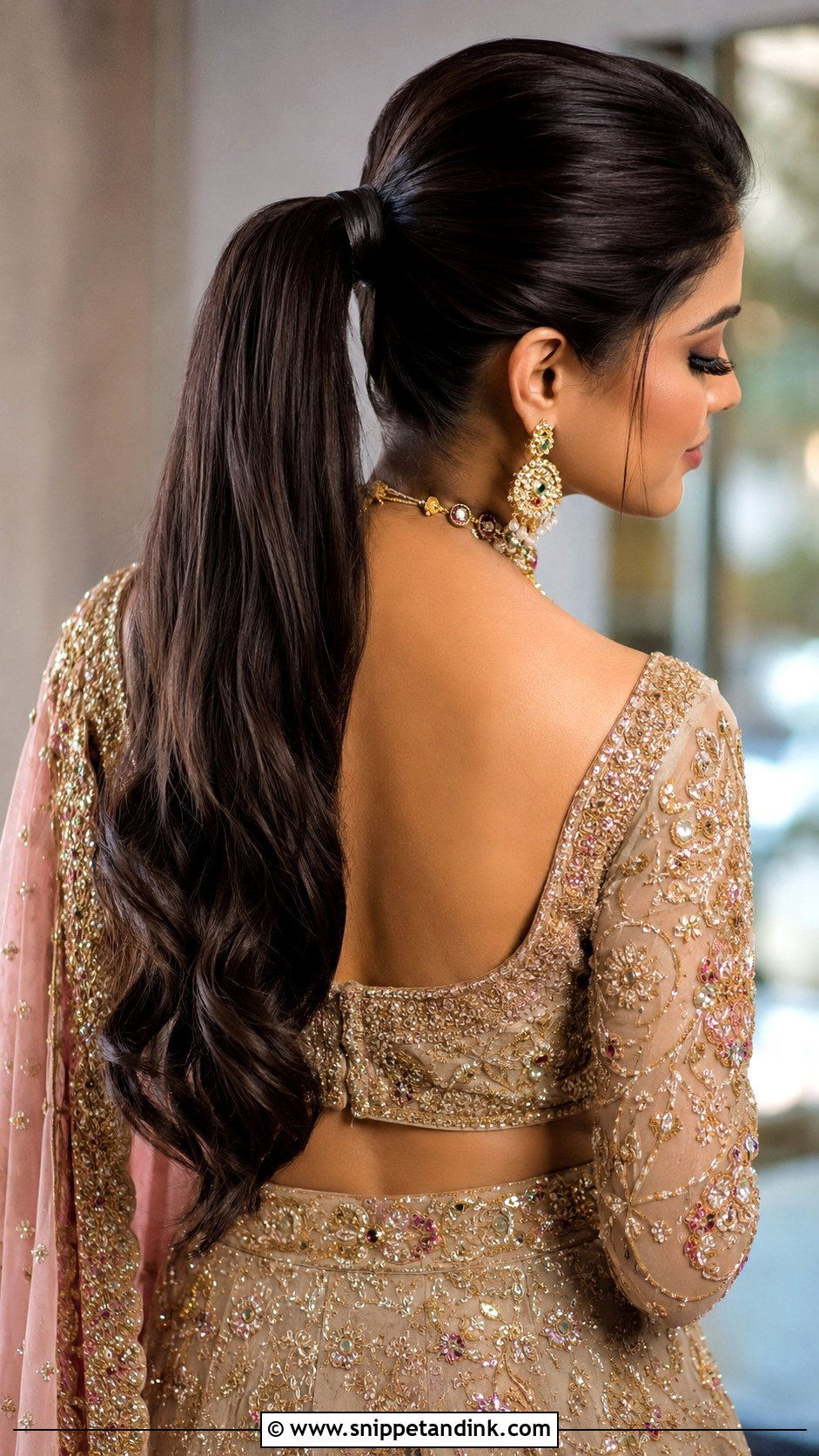
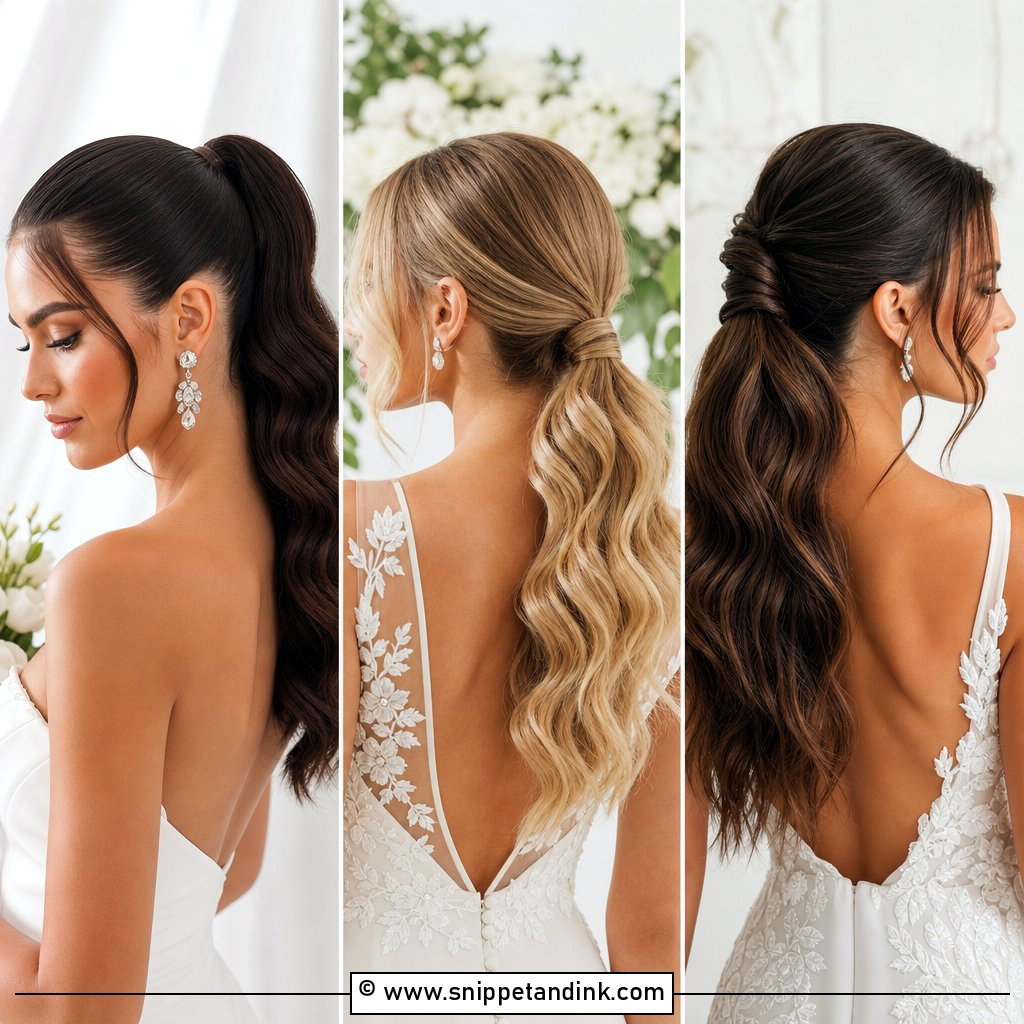
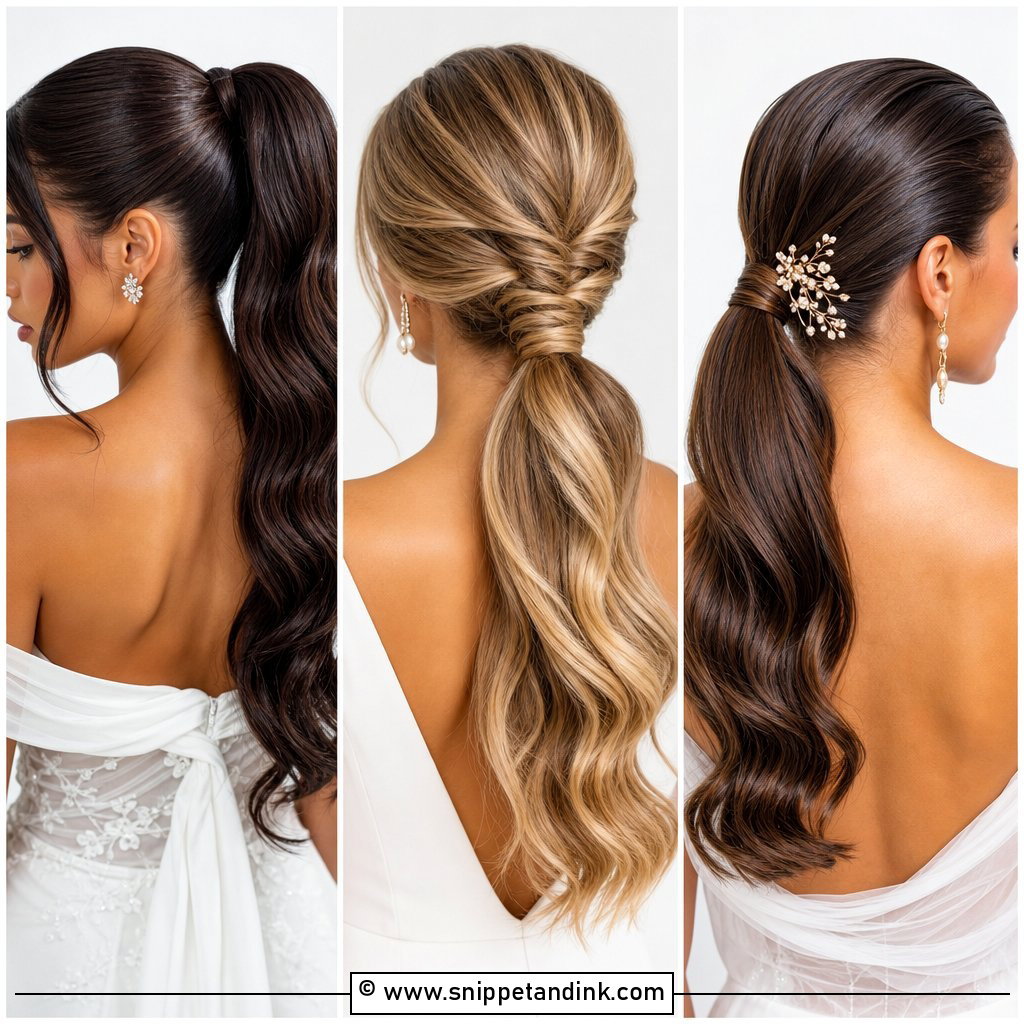
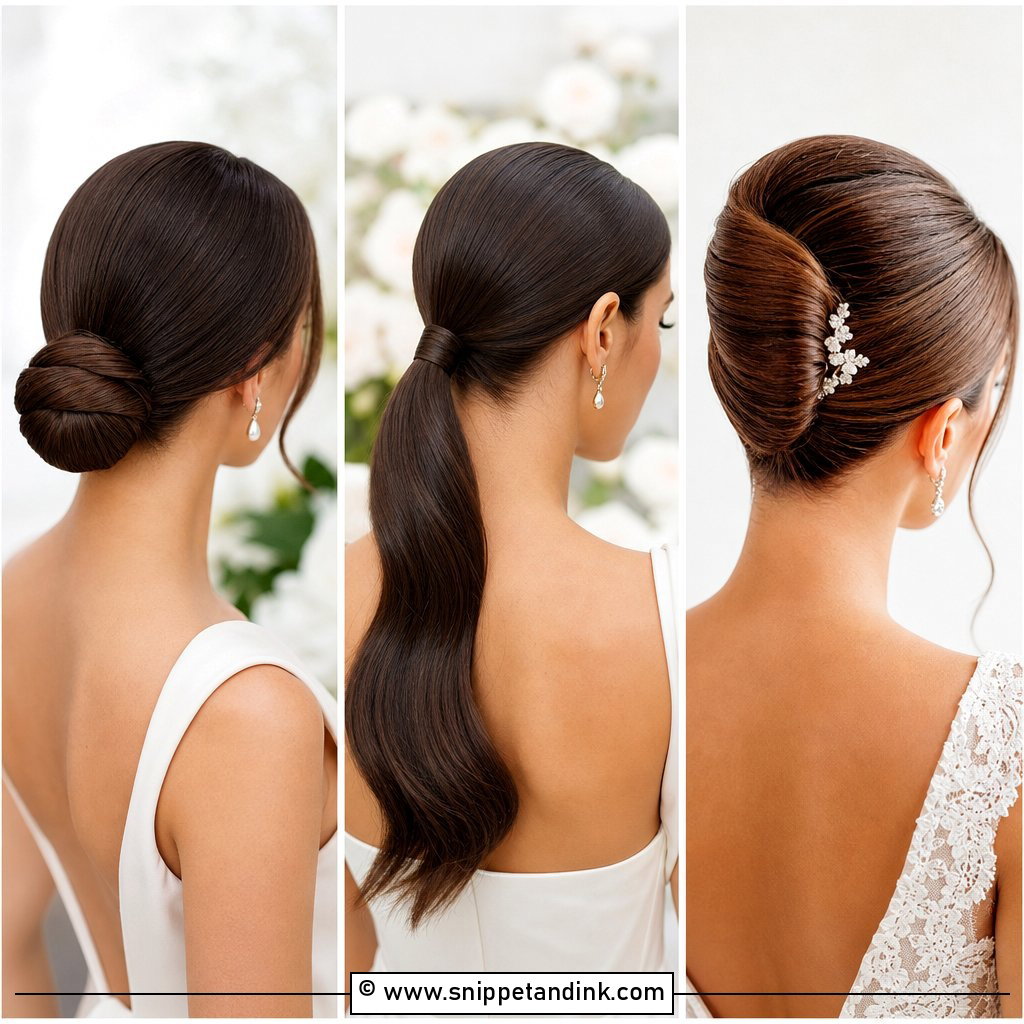
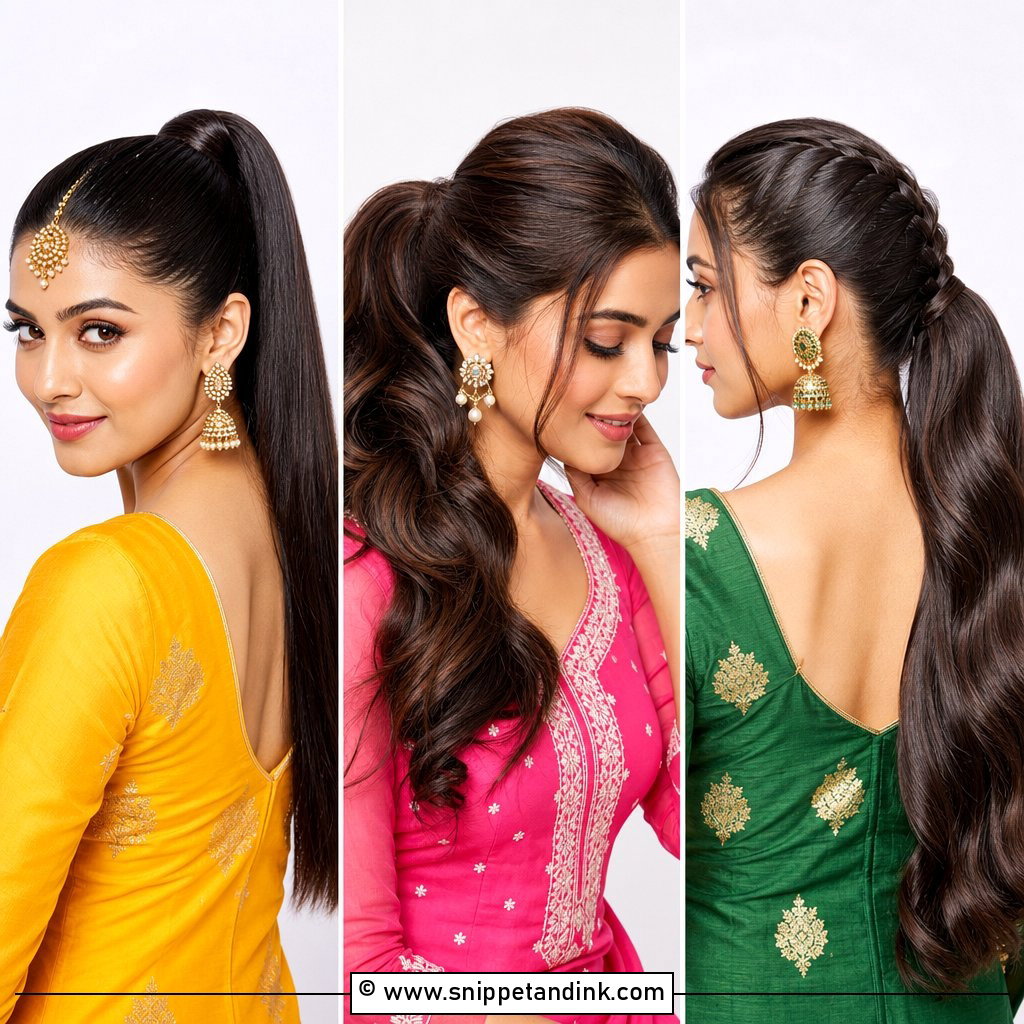
Height is what makes this one look expensive, and height is also what fails first. I brush everything up to the crown, lock it with two elastics rather than one, then wrap a strand around the base and pin it underneath so no band shows. If your hairline is fine at the temples, I’d keep the pull firm but not tight, because a stretched hairline shows in close-ups and gives you a headache by dinner. The tikka or matha patti sits on top of the smooth crown, and the length is curled with a large barrel so it swings at the reception rather than hanging straight.
2. Low Indian Bridal Ponytail With Gajra
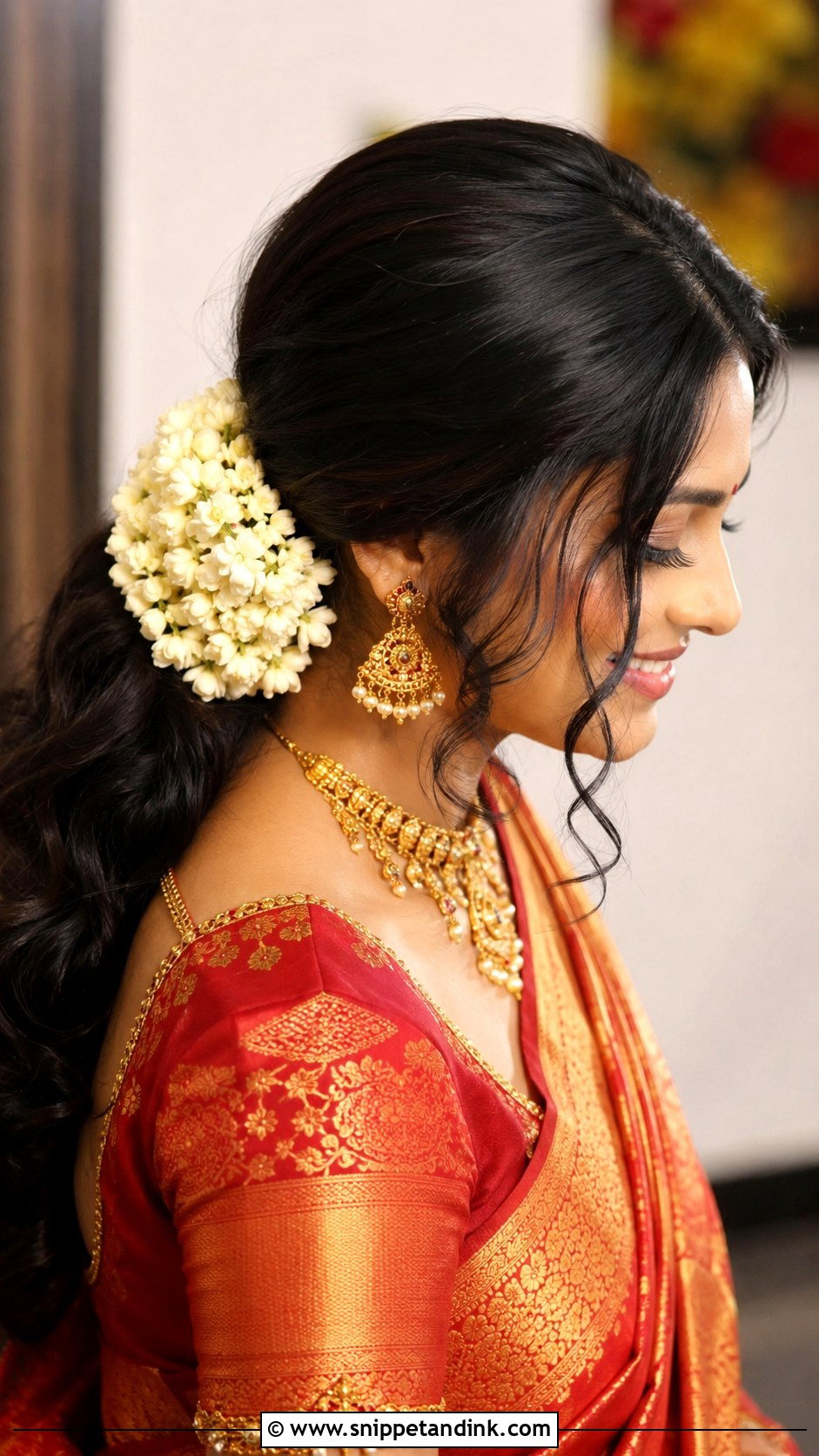
This is the ponytail I reach for when the pheras run long. Sitting at the nape, it leaves the crown free for the dupatta pins and never presses against a chair back. Fresh jasmine wrapped around the base hides the elastic; laid down the length in a strip, it turns a simple tail into something ceremonial. The one thing I watch is weight: a full gajra on fine hair can drag the tail downward, so I anchor the strings with bobby pins crossed into the base, not just tucked in. Paired with a silk saree and temple jewelry, it reads as traditional without the bulk of a bun.
3. Indian Bridal Ponytail With Maang Tikka
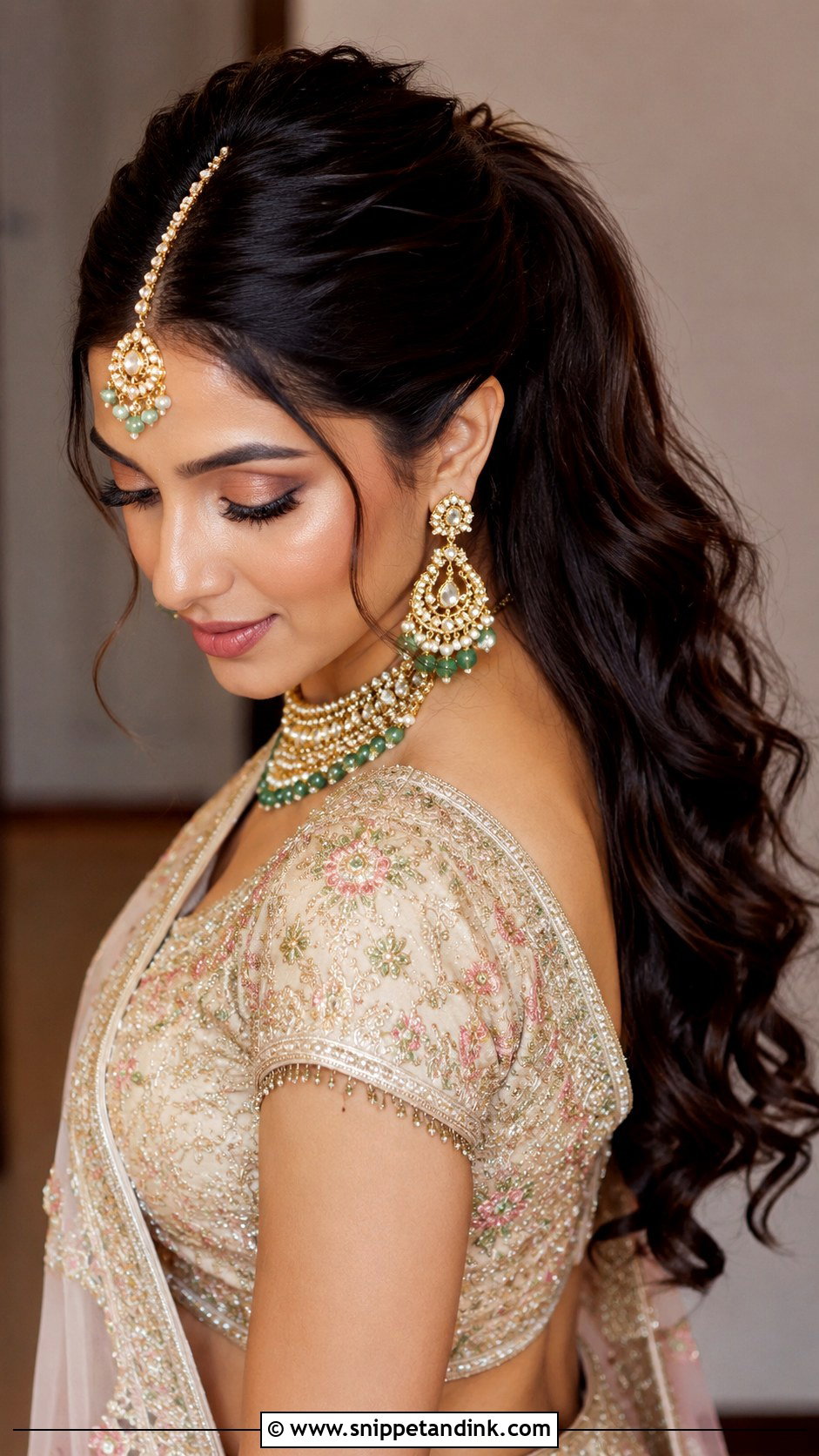
The jewelry leads here and the hair supports it. An Indian bridal ponytail with maang tikka starts with a clean centre part, and I pin the tikka chain into a small hidden anchor of backcombed hair at the crown so it cannot slide toward one eyebrow during the ceremony. Keep that crown smooth but with a little lift; scraped completely flat, it photographs like a swim cap. The tail can sit low or mid height. With heavy embroidery and a passa on one side, I usually go mid height so the side jewelry has room.
4. Curly Indian Bridal Ponytail
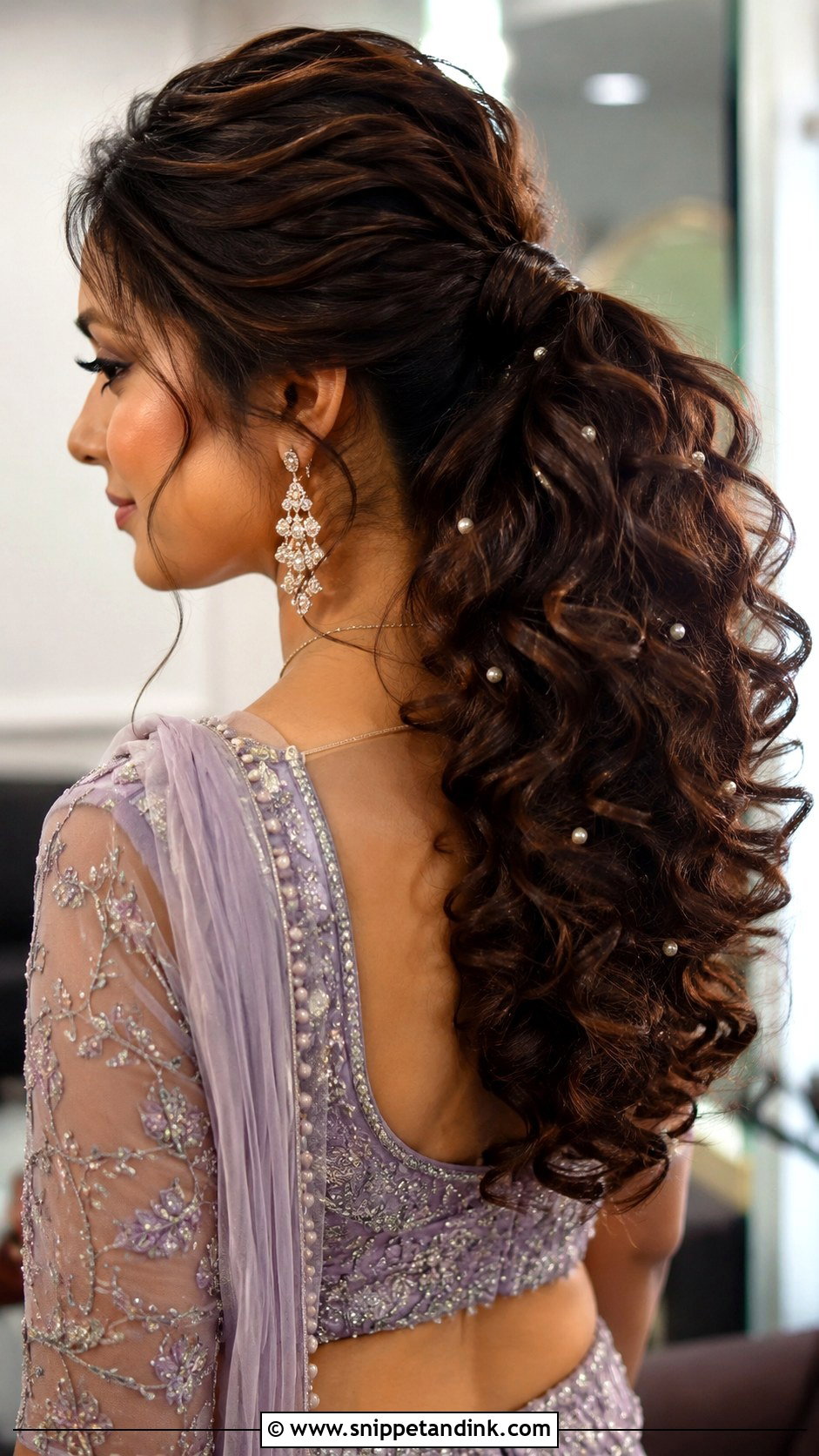
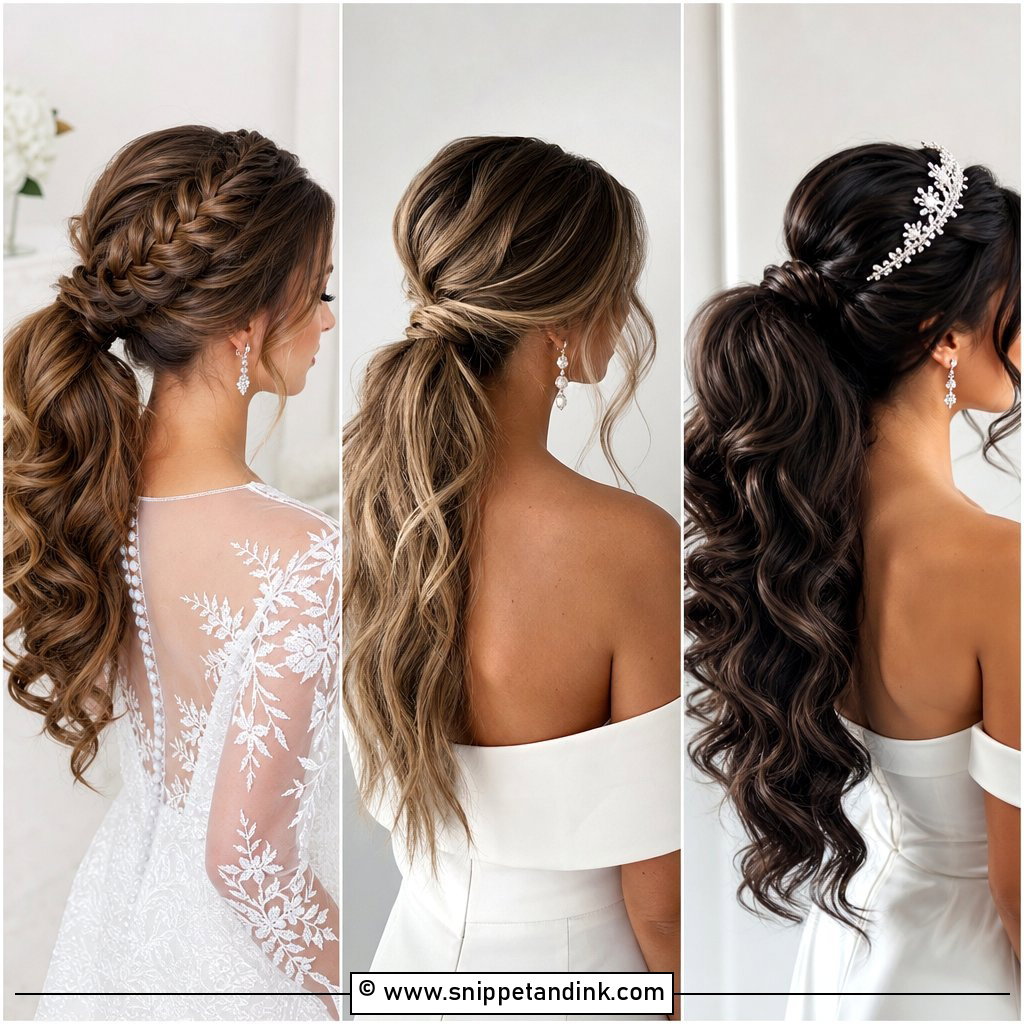
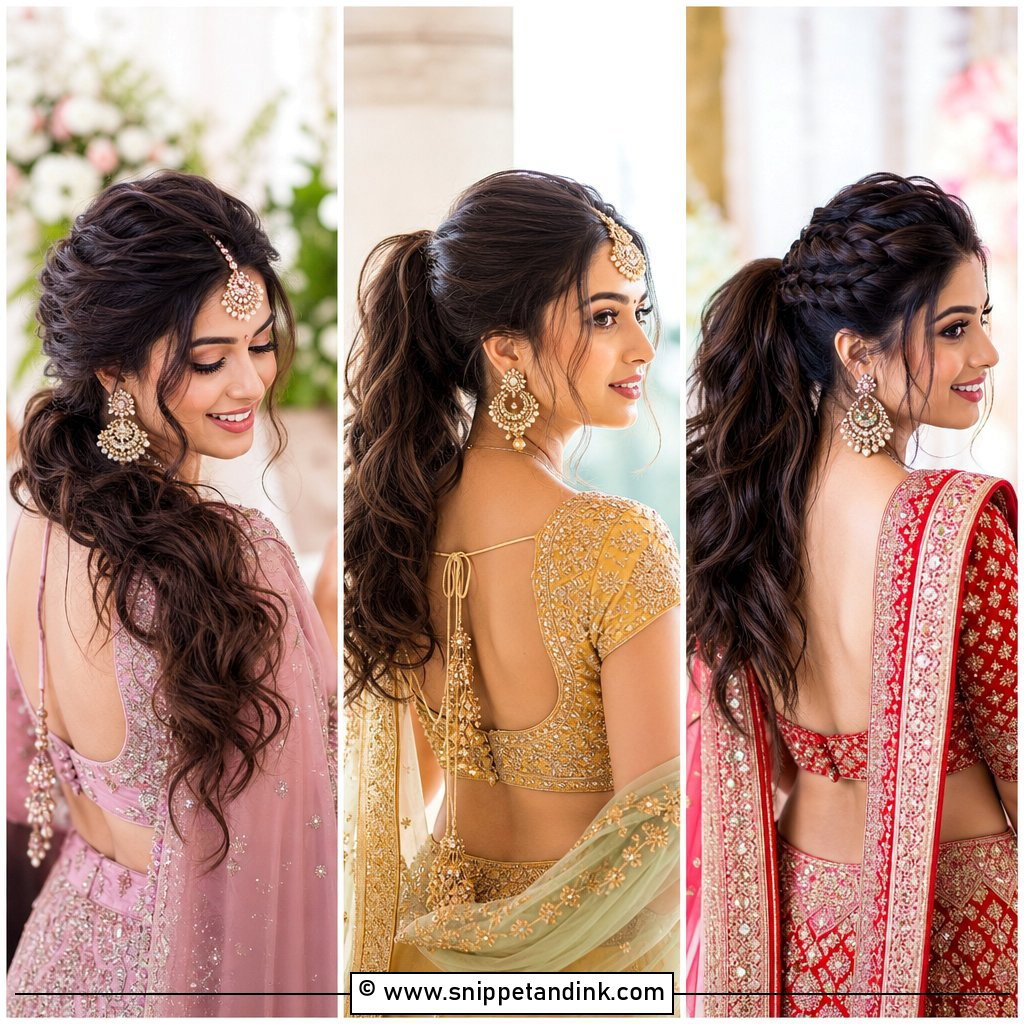
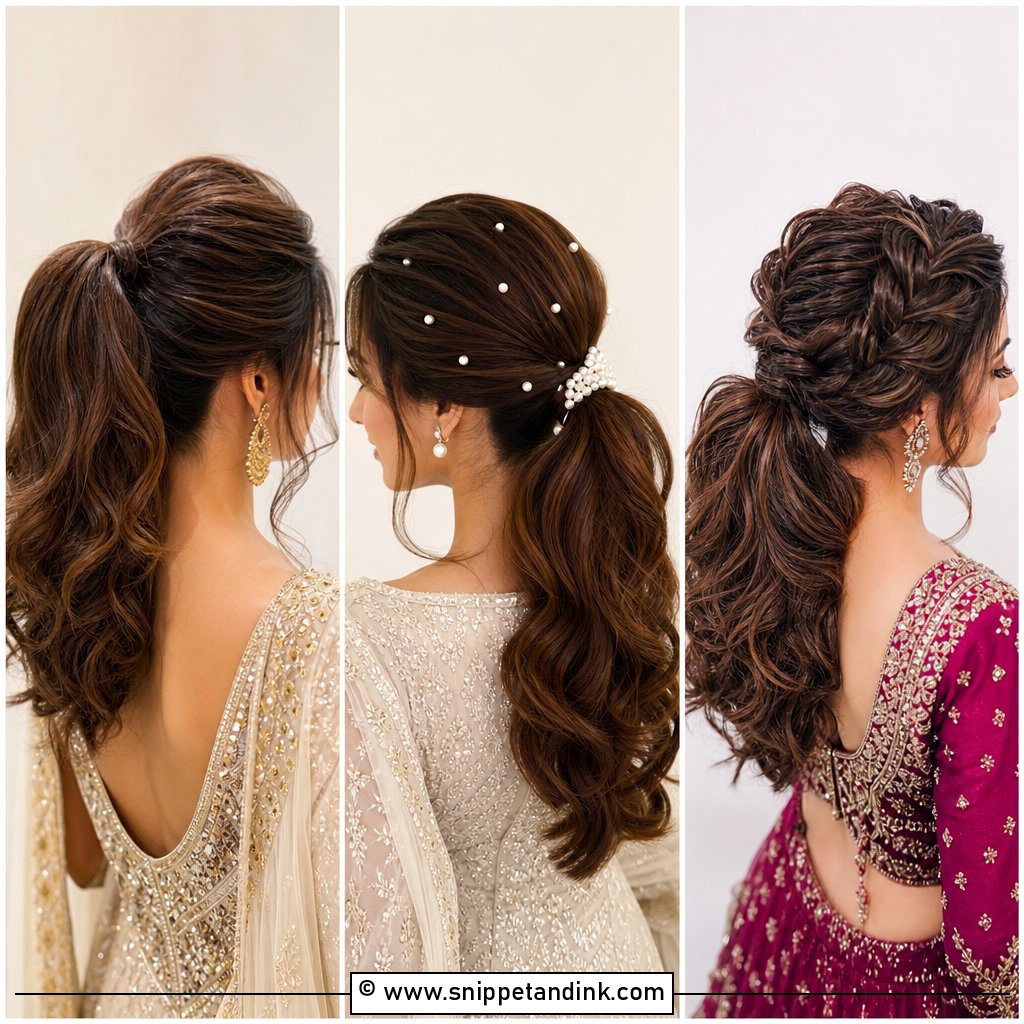
Curls give a ponytail its fullness, but they are also the first thing humidity takes. For this one I set every curl with heat, pin each one in a coil to cool, and only brush them out once the crown is finished. Fine or shoulder-length hair usually needs clip-in extensions to get the deep, rounded shape you see in portraits, and I colour-match those before the wedding week, not on the morning. A few pearl pins or a jeweled clip at the base is plenty. Expect the curls to relax by the end of the night; that softer version tends to look better on the dance floor anyway.
5. Braided Indian Bridal Ponytail
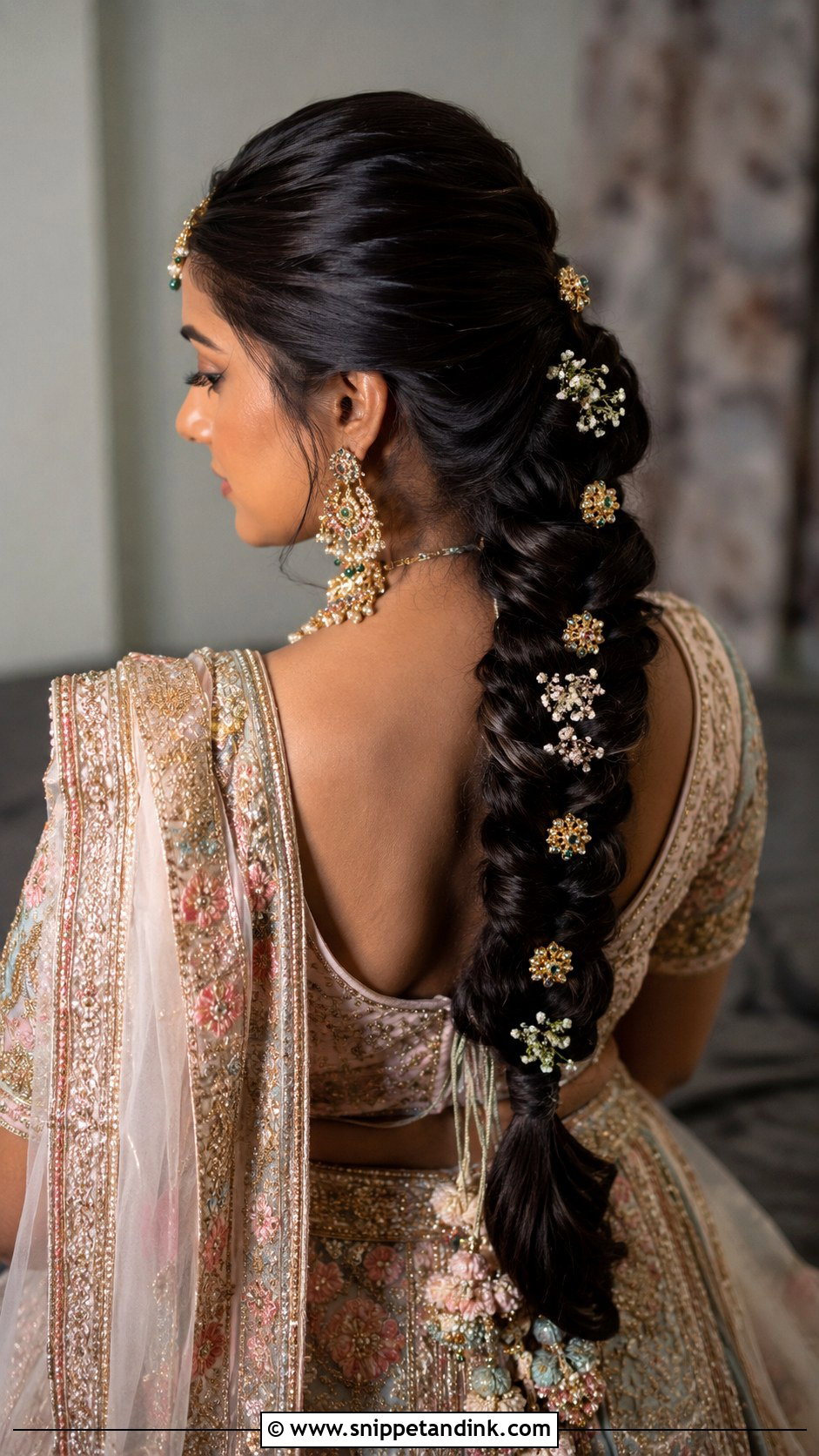
A braid is the most secure way to carry a long tail through a full day of rituals. I start with a sleek crown, tie the ponytail, then braid the length as a three-strand, fishtail or pull-through braid depending on how much texture the outfit can take. Pull-through braids look the fullest but need the most hair; on thinner lengths, a loose three-strand pancaked wide gives a similar width. Gold accessories and floral clips slide straight into the braid and stay put. With a South Indian saree and traditional gold jewelry, this is the version I’d pick for a bride who is nervous about her hair coming down.
6. Side Indian Bridal Ponytail
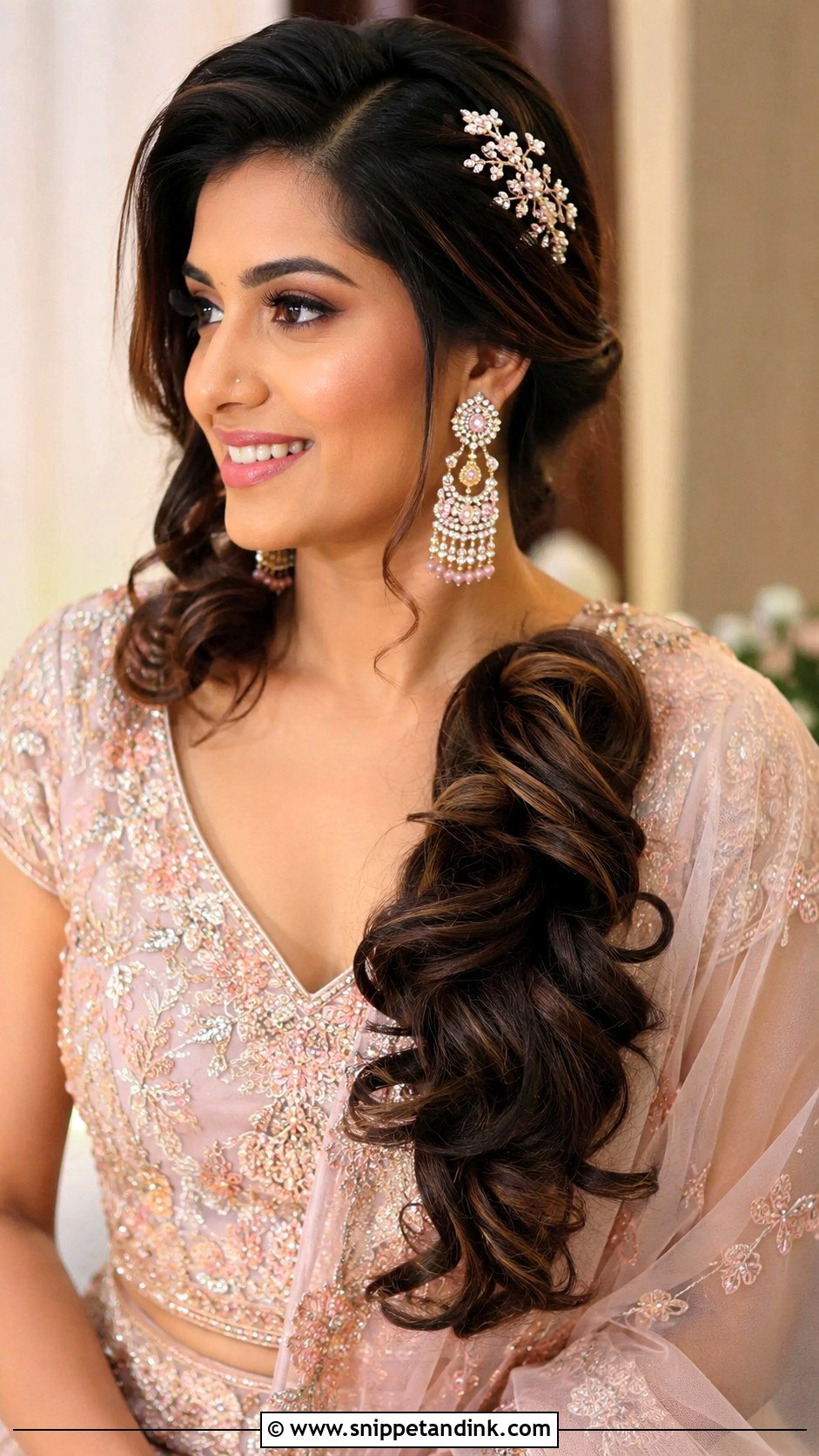
Sweeping everything to one side opens the back of the blouse, which matters when the designer put the heaviest work there. I gather the hair just below the ear so the curls fall forward over the shoulder, then pin the opposite side flat with criss-crossed pins hidden under a floral cluster or passa. The risk is a lopsided feel once a dupatta goes on, so I always check it with the dupatta draped before finishing. A side part and a little crown volume keep it from looking like a quick fix.
7. Indian Bridal Ponytail With Puff
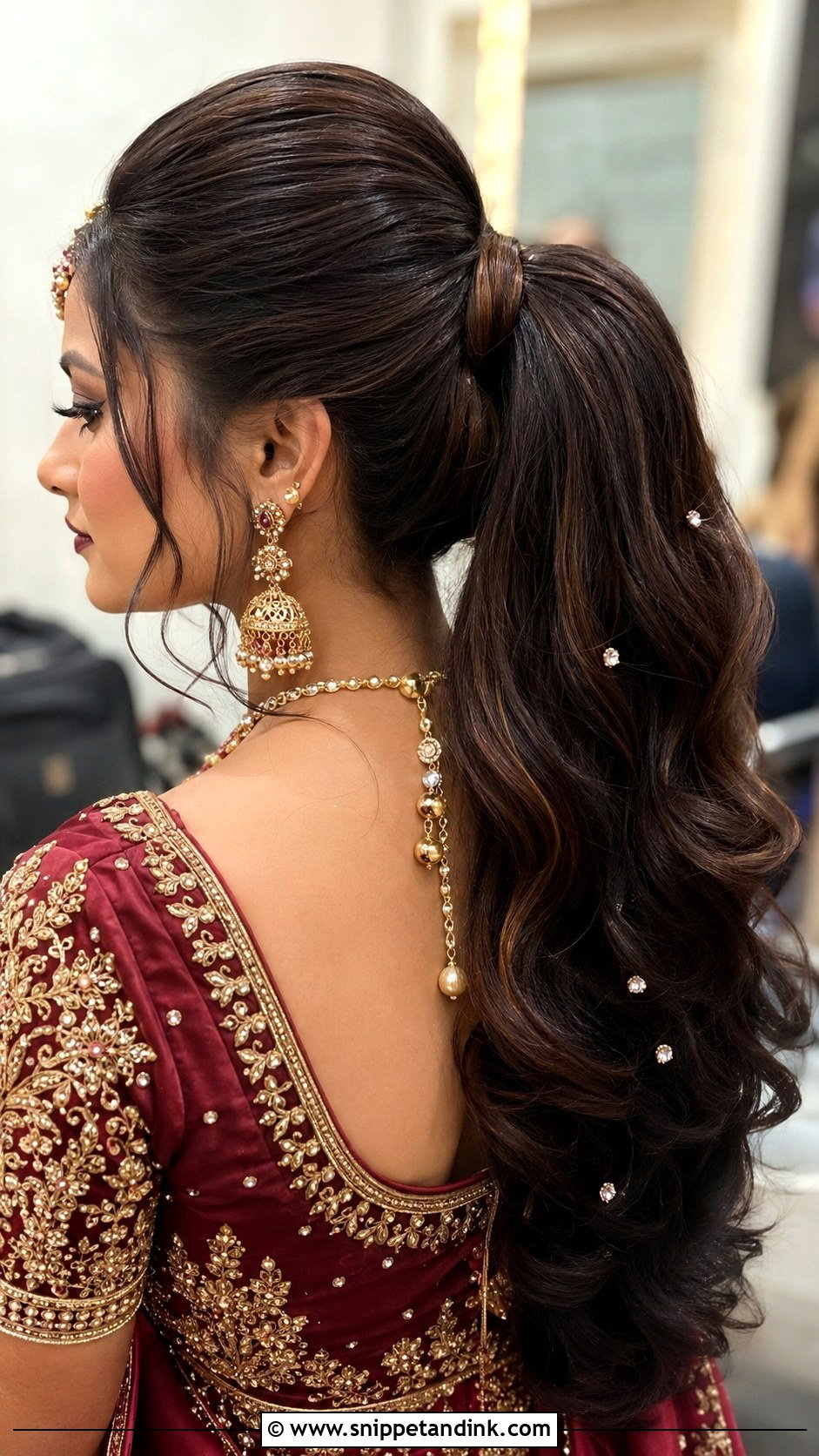
The puff gives height above the forehead, and that height balances a heavy necklace and a broad dupatta drape better than a flat crown can. I build it with a small section of backcombing smoothed over, never a stiff pouf, and pin it from underneath so the top surface stays clean. It flatters round and heart-shaped faces because it lengthens the line from chin to crown. On a very long face, I’d keep the puff low or skip it. The tail behind can be waved, curled or braided, finished with crystal pins at the base.
8. Indian Bridal Ponytail With Flowers
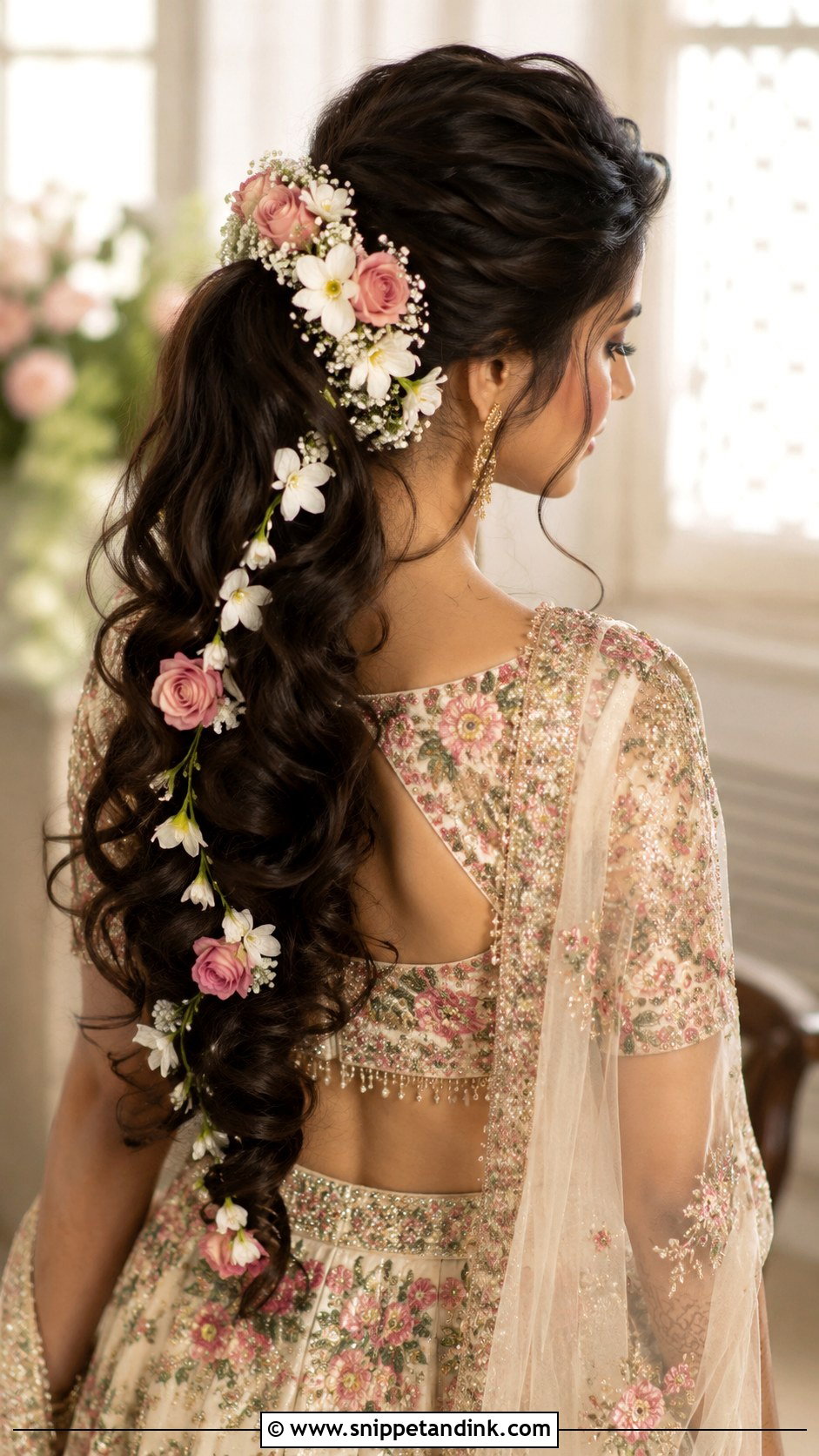
Flowers change the mood of a ponytail more than anything else I add. Jasmine reads traditional, roses feel romantic, orchids feel modern, and marigold accents belong to daytime functions. I place them around the base, scattered through the length or cascading down one side, and I match them to the outfit palette rather than to a photo. For haldi, mehndi, pheras and outdoor events, fresh flowers look right, but they wilt in heat, so I keep a spare string in a damp cloth for touch-ups. The hair under them should stay soft and full, or the blooms look stuck onto a thin rope of hair.
9. Textured Low Indian Bridal Ponytail
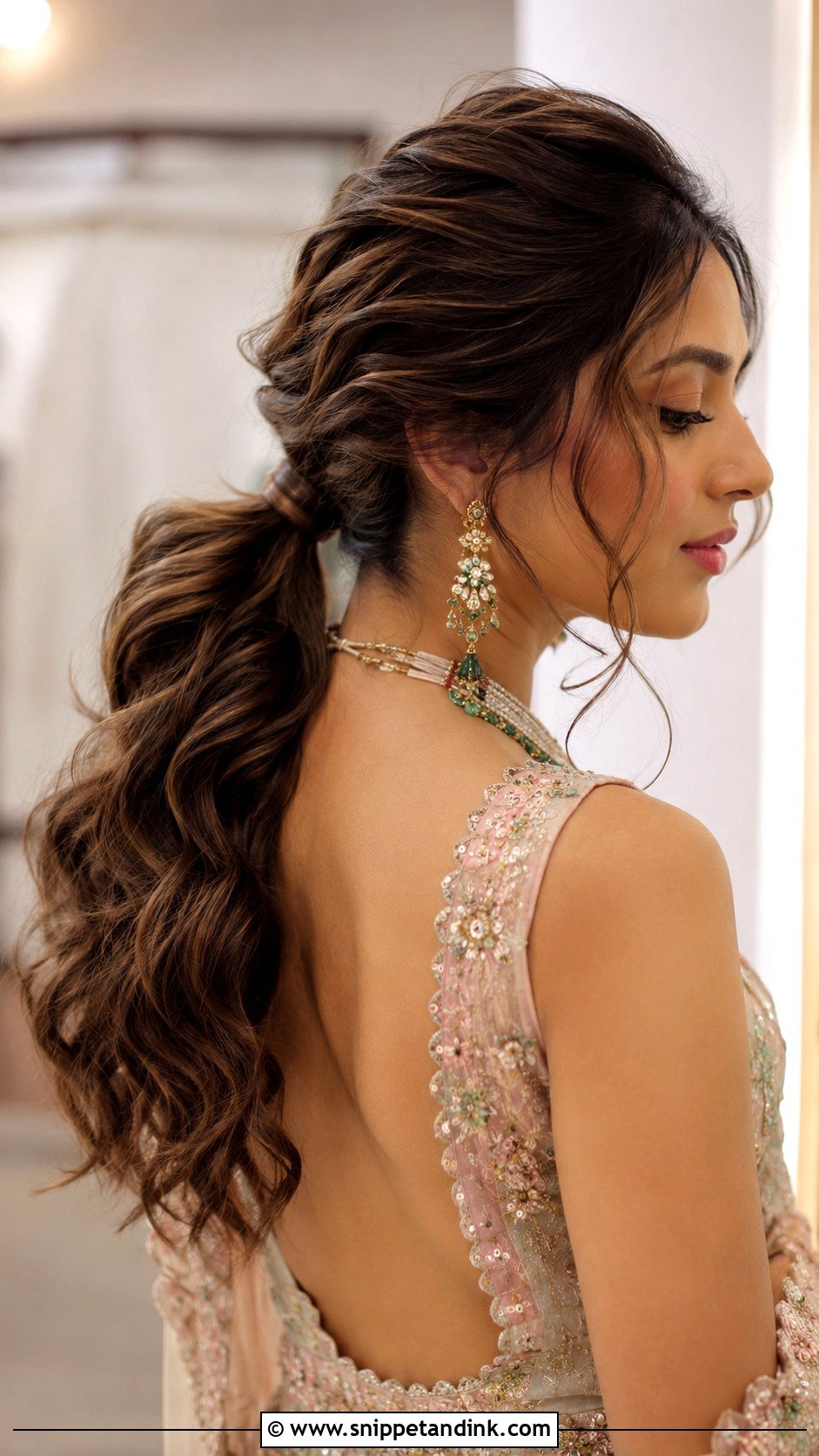
Not every function needs a polished finish. A textured low ponytail has soft volume at the crown, loosely pulled sides and an undone wave through the tail, which suits mehndi, an engagement or a small family ceremony. The line between relaxed and messy is thin, though. I use a curl cream on the lengths and a flexible spray rather than a strong hold, so the texture can move without frizzing. With pastel lehengas and floral jewelry, it feels lighter than a sleek ponytail and is much easier to sleep on if the function runs late.
10. Indian Bridal Ponytail With Pearl Accessories
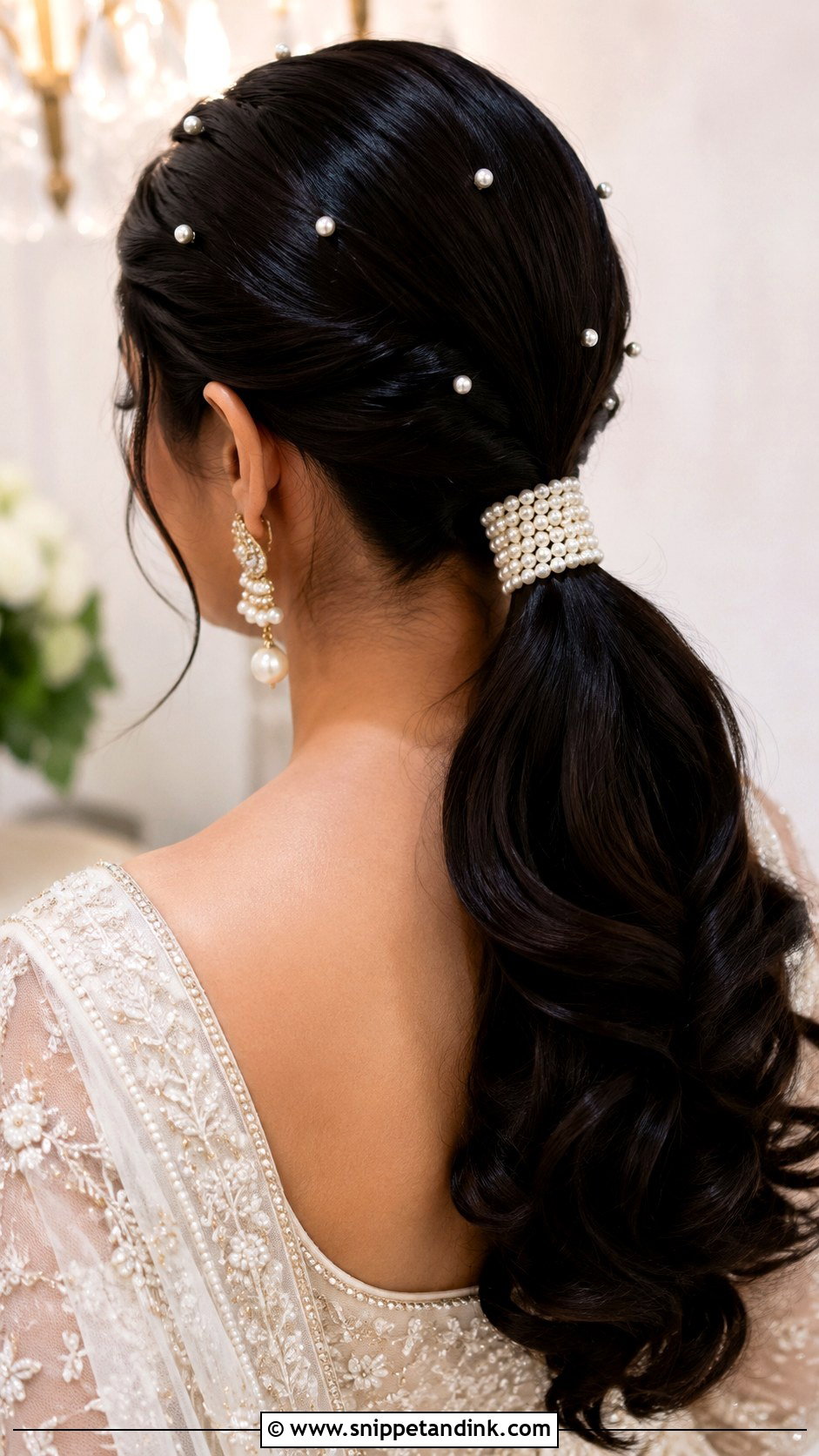
Pearls are my answer for brides who find heavy floral hairpieces too much. I place them as pins along the crown, as a wrap around the ponytail base or scattered through curled lengths, and they show up clearly against a smooth background. They sit best with ivory, champagne, blush, pastel and gold outfits. The mistake I see most is too many: past about seven or eight pins, the pearls start to look like a pattern instead of a detail. Keep the placement uneven and sparse so each one catches light on its own.
11. Indian Bridal Ponytail With Dupatta
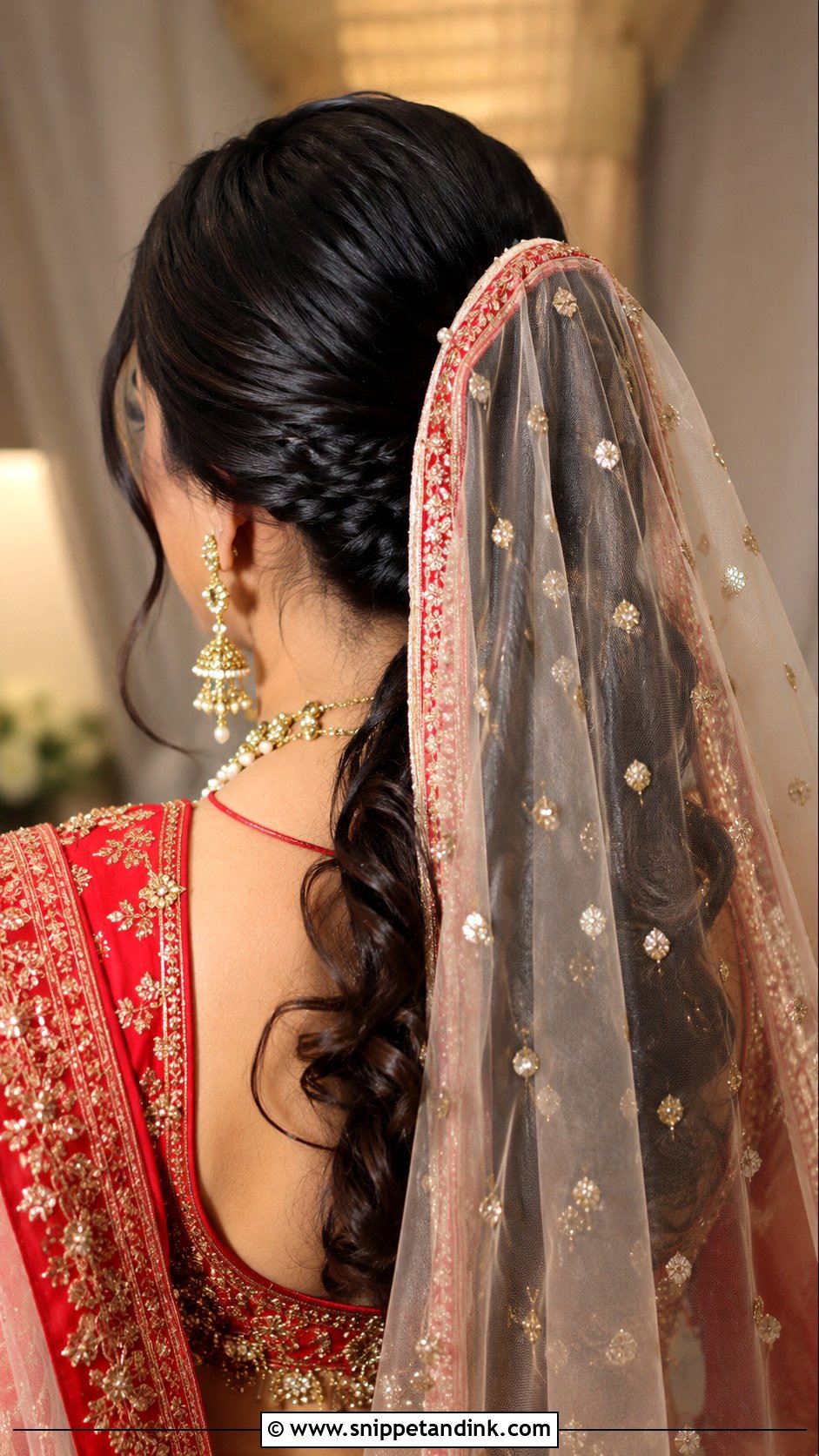
A ponytail that has to carry a dupatta needs more structure than any other style on this list. I prefer a low or mid-height tail because it gives a stable base for the pins without pressing a hard knot into the scalp. Before the dupatta goes on, I build a hidden pin line: a row of crossed bobby pins under the crown and two more around the ponytail base, which the dupatta pins then catch into. Set the curls firmly if the dupatta is heavy, since the fabric brushes against them all day. It stays neat through pheras, religious rituals and long portrait sessions.
12. South Indian Bridal Ponytail
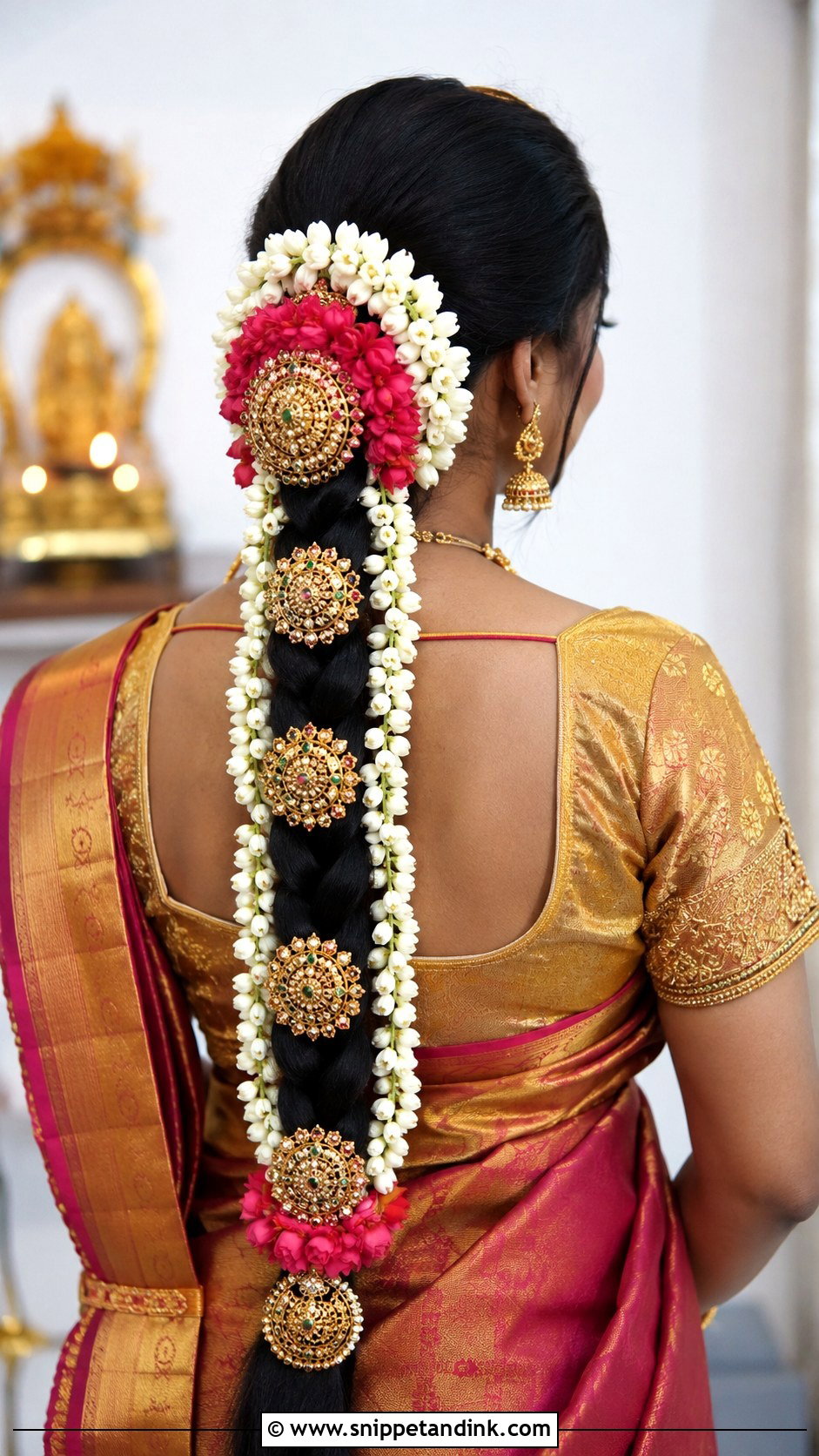
A South Indian bridal ponytail borrows from the traditional long bridal braid but keeps the finish lighter. I either braid through the length or leave it as a thick curled tail, then add jasmine, temple jewelry, a jada-style ornament or rose details. The jada pieces are heavy, so I secure them to the hair itself with thread or hidden pins, not only to the elastic. With a Kanjivaram saree and gold necklaces, keep the front smooth with a centre part so the maang tikka or netti chutti sits flat and centred. Built properly, it lasts through a long muhurtham.
13. Indian Bridal Bubble Ponytail
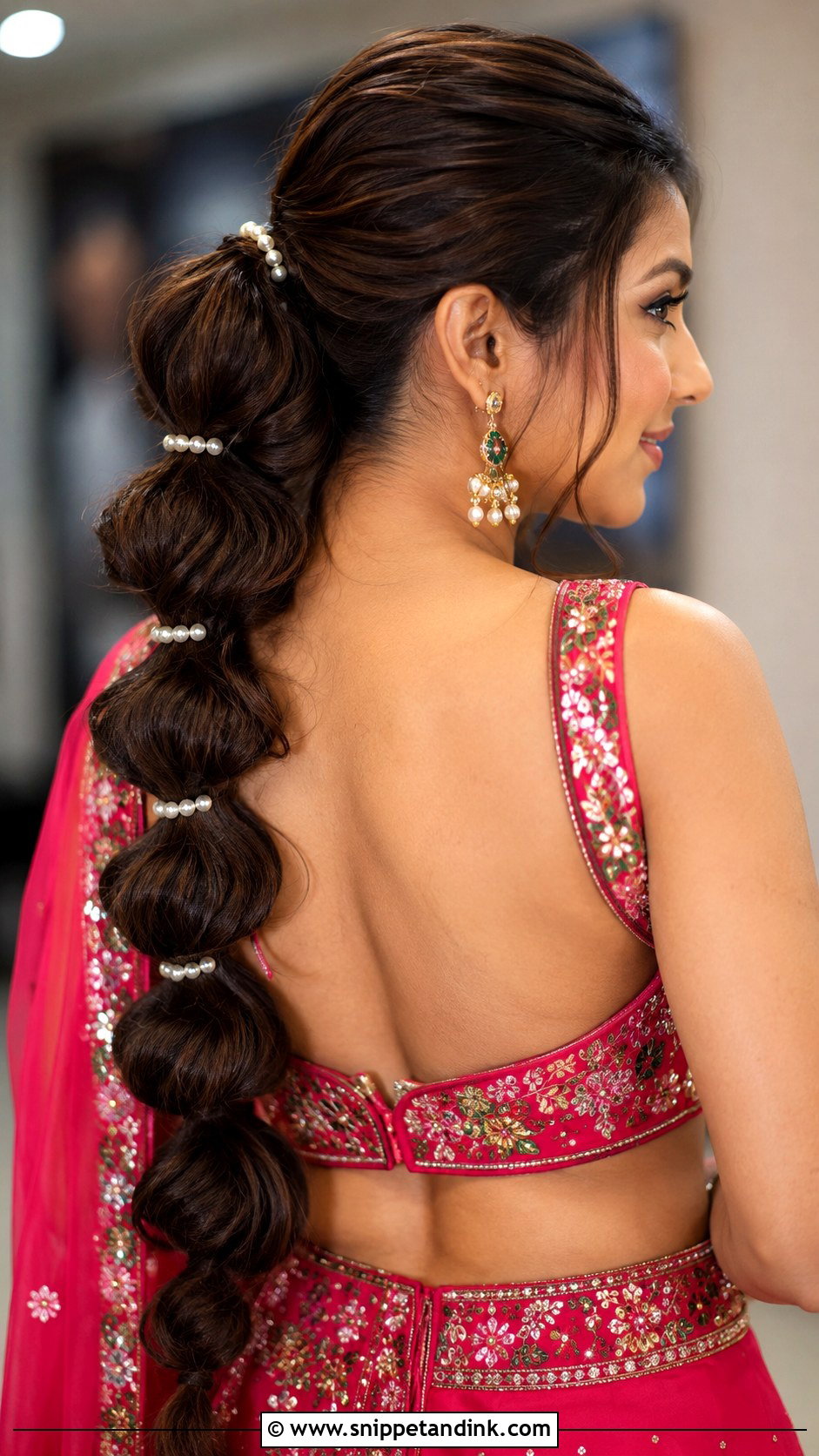
The bubble ponytail is the playful one. I tie the base, then add clear elastics every few inches down the length and gently pull each section into a rounded bubble. Pearls, mini flowers, gold thread or crystal pins can sit at each band to hide the elastic. It needs length to work: on hair above the shoulder blades, you only get two or three bubbles, so extensions help. For sangeet, mehndi, and reception looks it has shape and movement, and keeping the crown sleek makes the bubbles the focus.
14. Indian Bridal Ponytail With Loose Waves
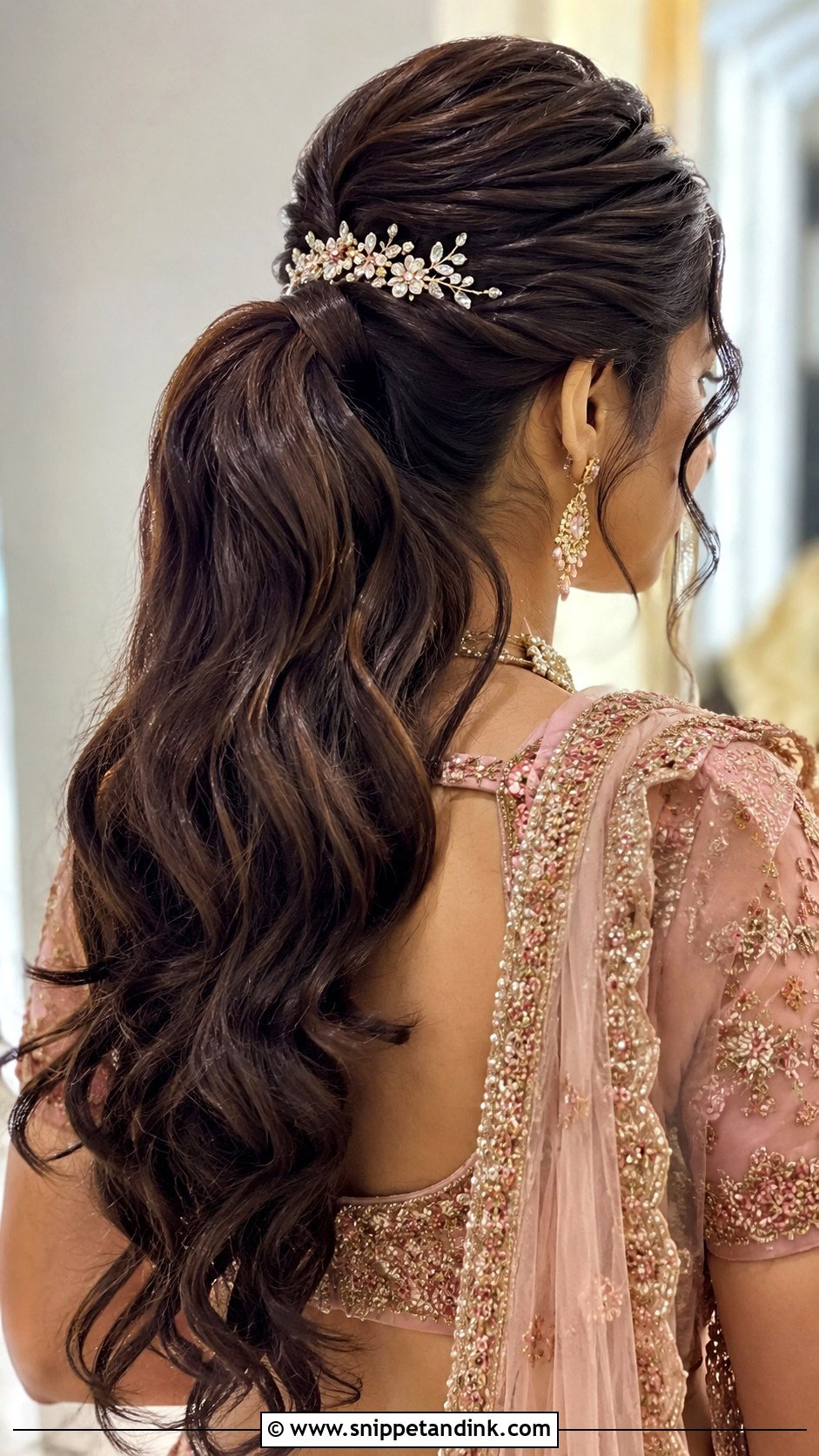
Loose waves are the most forgiving finish here because they look right in both close-ups and full-length shots. The ponytail can sit high for glamour or low for a softer mood. I set the waves with a large barrel and brush them out so they read as flowing, not curled. If you have very straight, slippery hair, I’d ask for a texture spray before curling, otherwise the waves can drop flat within a couple of hours. A jeweled comb, pearl pins or a small gajra at the base finishes it, and it suits lehengas, sarees, gowns and fusion outfits alike.
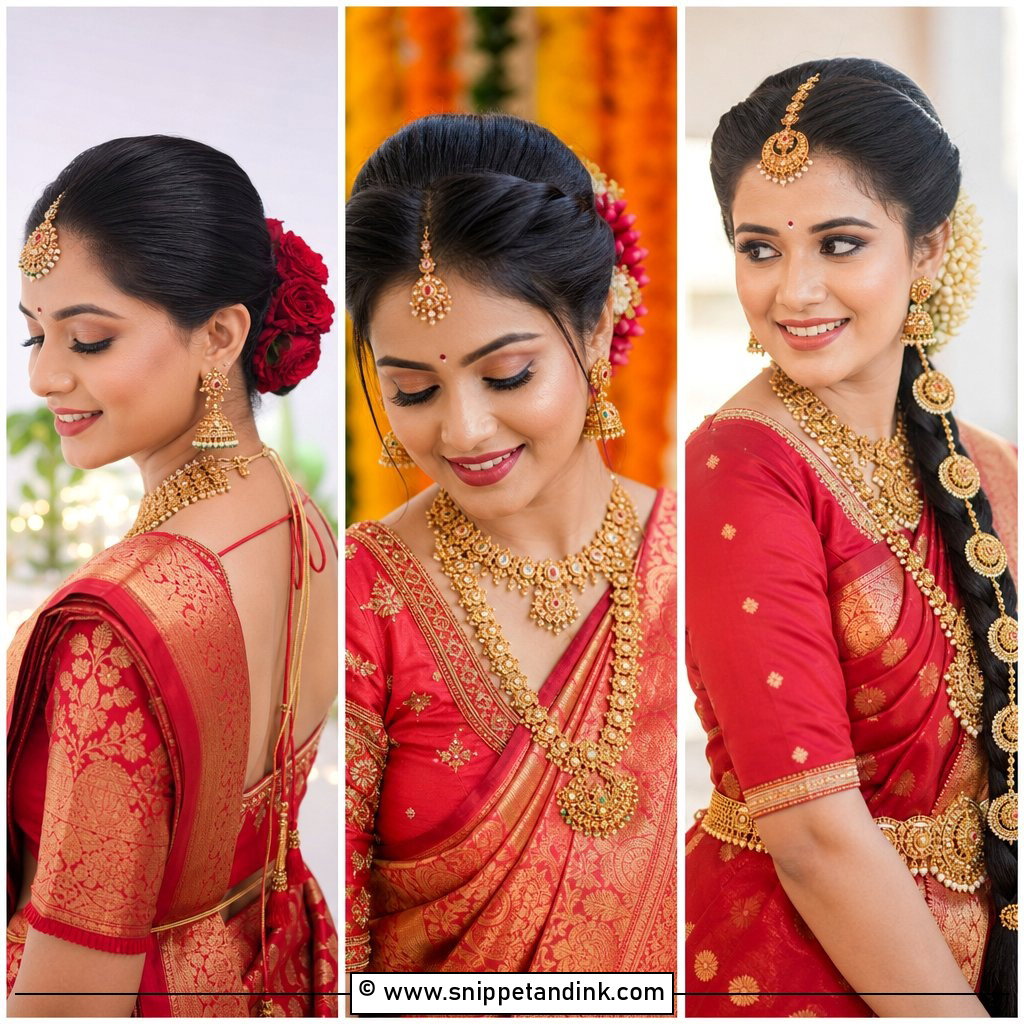
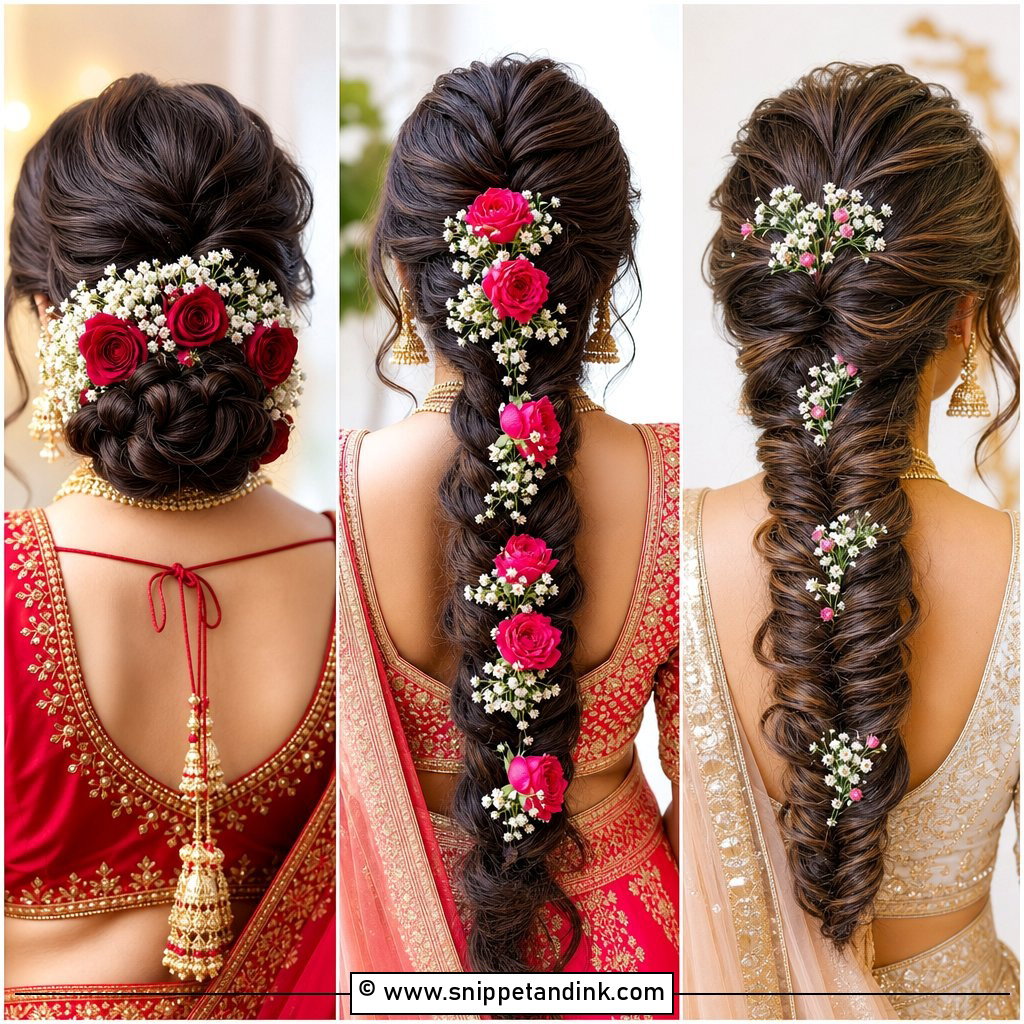
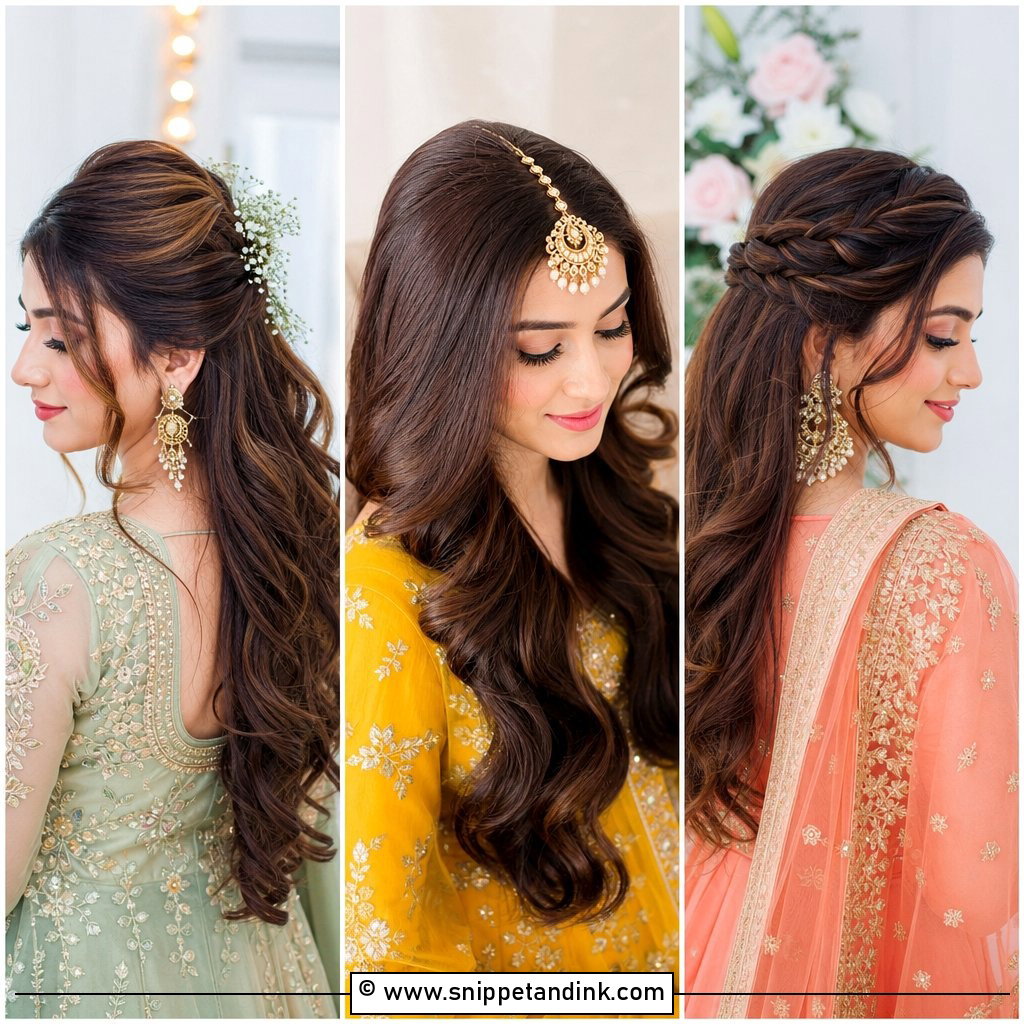
15. Indian Bridal Ponytail With Fishtail Braid
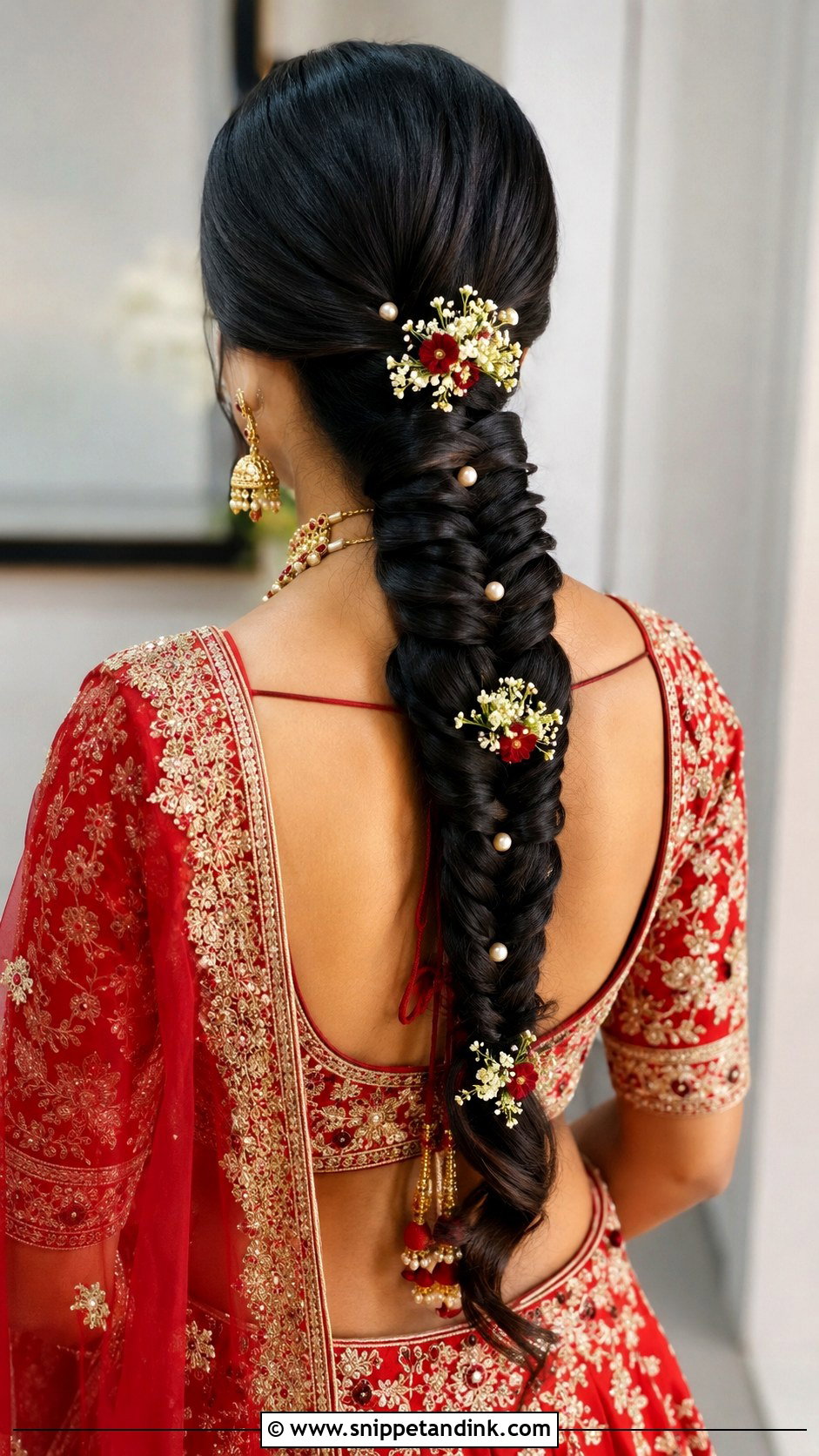
A fishtail through the tail gives more surface texture than any other braid, and it is strong enough to survive dancing. I start the ponytail at the crown or nape, braid it tight, then pancake the edges to widen it once it is tied off. That last step is where fine hair needs care, because pulling too hard opens gaps. Floral accents, gold pins or pearls tuck neatly between the plaits. With a sleek centre part, it feels traditional; with a few loose tendrils at the face, it softens for a reception.
Extensions, Weight and the Tension Headache Nobody Mentions
Most of the full ponytails in wedding photos include extra hair. That is fine, but it changes how the style has to be built. Clip-ins add weight to the base, and a heavy tail tied tightly at the crown can give you a dull headache by mid-afternoon. When a bride is adding a lot of length, I lower the ponytail slightly and spread the anchor across two elastics and a pin grid so the load is not sitting on one small patch of scalp.
Getting the match right
Indian hair is often a deep, cool brown that reads almost black, and cheap wefts in jet black can look flat beside it in daylight. Bring your extensions to the trial so I can blend them, curl them with your own hair and see whether the texture holds the same way. Human-hair wefts take heat like your own hair; synthetic ones can melt or frizz under a curling iron.
If It Starts to Slip Between the Pheras and the Reception
A ponytail rarely falls out completely. What usually happens is the base loosens and the tail drops a centimetre or two, or a gajra slides. Ask whoever is helping you to carry a small kit: a clear elastic, a dozen bobby pins, a mini hairspray and a few spare flowers. Retying the base takes two minutes if you leave the curls alone and only tighten the elastic underneath the wrap. Avoid brushing curled lengths between events; finger through them instead, or they turn into frizz before the reception photos.
Does One Ponytail Last the Whole Wedding Week?
A bridal ponytail stopped being a backup plan a while ago. The same shape can feel traditional, modern or dramatic depending on where it sits, how the lengths are textured and what jewelry goes on top. A sleek high tail suits a reception, a low gajra ponytail sits quietly through sacred rituals, and braided, bubble, curly and floral versions cover everything between. If I had to give one test, it would be this: stand up, sit down, turn your head and drape the dupatta at your trial. If the ponytail stays put and the jewelry stays centred, you have the right one.
You'll Like These Ideas:


Leave a Reply