
Before every wedding service I do a quick line-up with the team, and hair is one of the first things I look at. Servers bend over tables, carry trays through crowds and stand near hot chafing dishes for eight hours or more, and hair still has to look tidy when a guest catches their eye. Above all it has to stay away from the food. The styles that survive are neat, firmly secured and fixable in a two-minute break, and they sit comfortably with an apron, a collar, a cap or whatever the event dress codes call for. Long hair, a bob, curls, braids and locs all have a version that looks professional without looking stern.
What Food Safety Rules Actually Ask of Your Hair
Most food codes say the same thing in different words: anyone handling exposed food needs an effective hair restraint, such as a net, cap or covering that stops hair touching food, clean dishes or linens. Details vary by country, region and caterer, so the event manager’s briefing always wins. These are the points I go over with new staff.
- Prep and kitchen roles almost always need a net or cap on top of the hairstyle, not instead of one. A compact bun or braid fits under a net far better than a ponytail.
- Front-of-house servers can often skip the net, but hair must still be tied back and off the shoulders. Many teams expect anything longer than the collar to go up.
- Anything that can fall is a risk near food. Decorative clips, beads and loose bobby pins turn up on platters. Fewer, matte, firmly pushed pins are safer.
- Staff handling only drinks or wrapped items sometimes have relaxed rules. Ask rather than assume.
On a new team, notice how the senior staff wear their hair on your first shift. It tells you more about the house standard than any written policy.
1. Sleek Low Bun For Catering
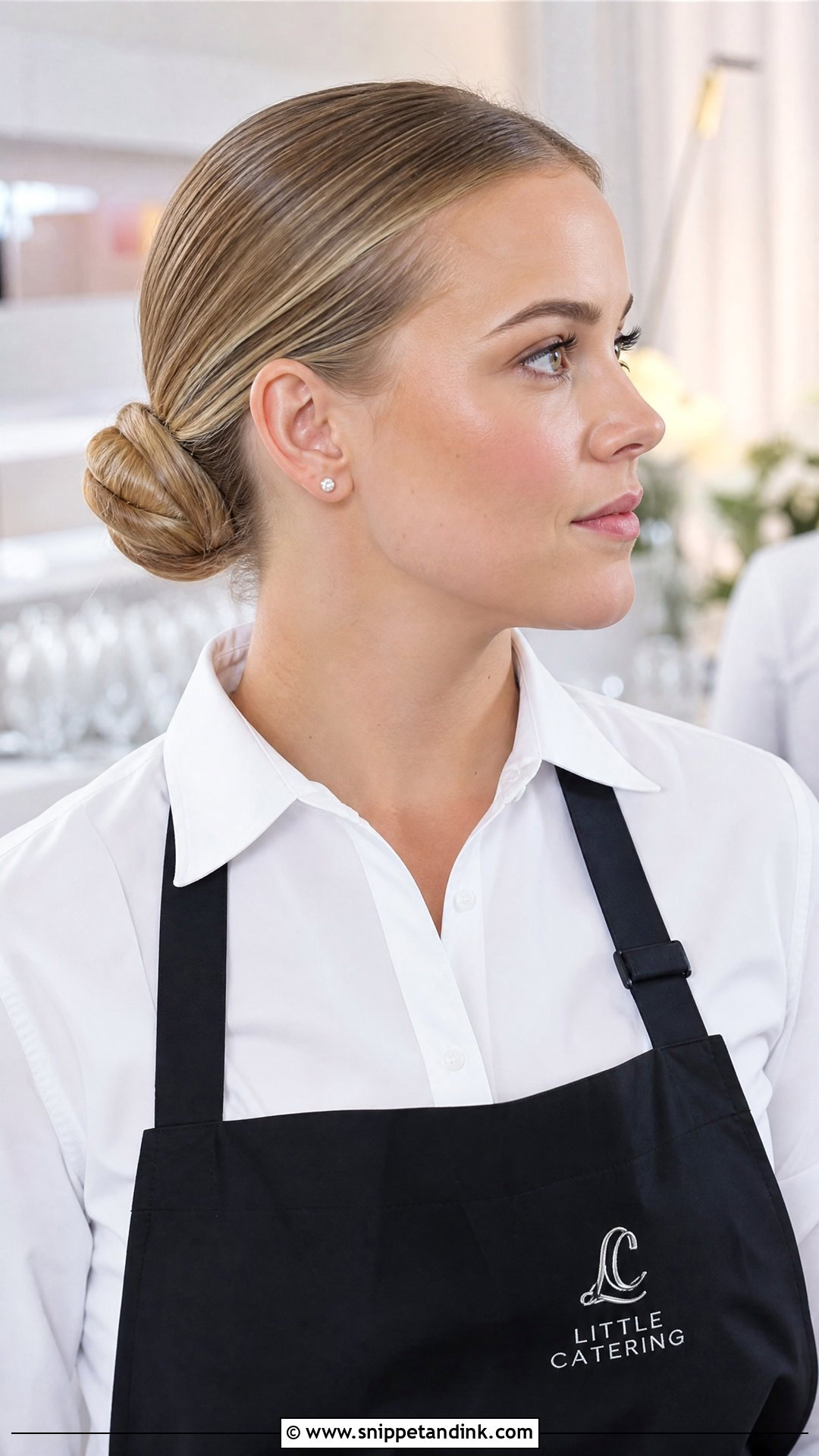
This is the style I’d hand to any new server on day one. A sleek low bun holds the full length at the nape, so nothing swings forward when you lean in to set a plate, and it looks right with a button-up, a waistcoat, an apron or a chef coat. Smooth the crown with a light cream, tie a low ponytail first, then wrap it and pin the ends flat. Ponytail first matters: a bun twisted from loose hair works itself loose by the main course. Flexible spray on top keeps the crown from fluffing up in kitchen steam.
2. Braided Low Bun For Catering
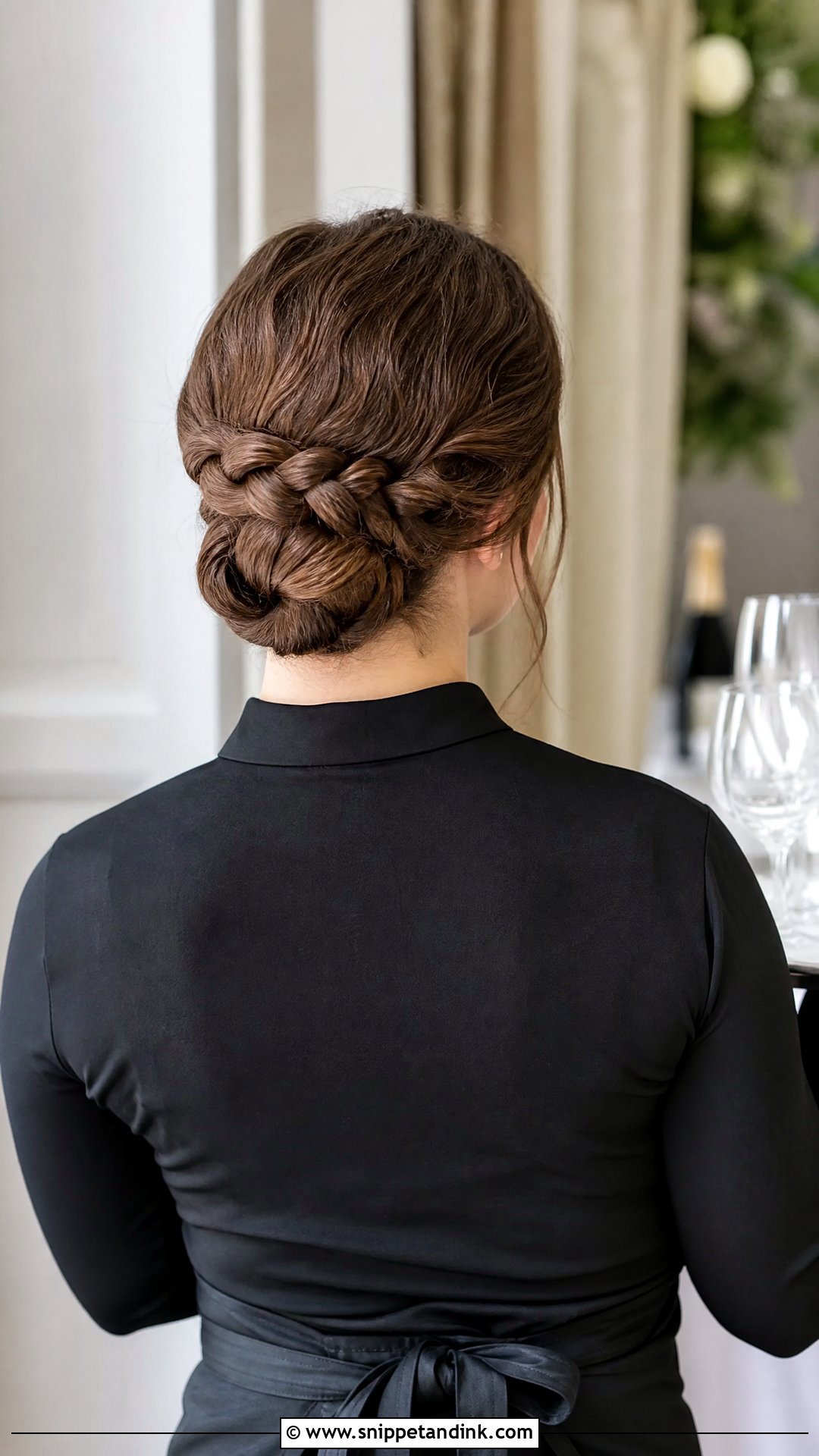
Thick or slippery hair that escapes a normal bun usually stays put once it’s braided first. The braid locks the length together before it’s coiled and pinned, so you don’t need to scrape the scalp tight to hold it. I see this on banquet and hotel teams a lot because it looks formal and still fits under a hairnet. Keep the braid smooth, coil it flat against the head, tuck the tail under and use strong pins rather than many weak ones.
3. High Bun For Catering
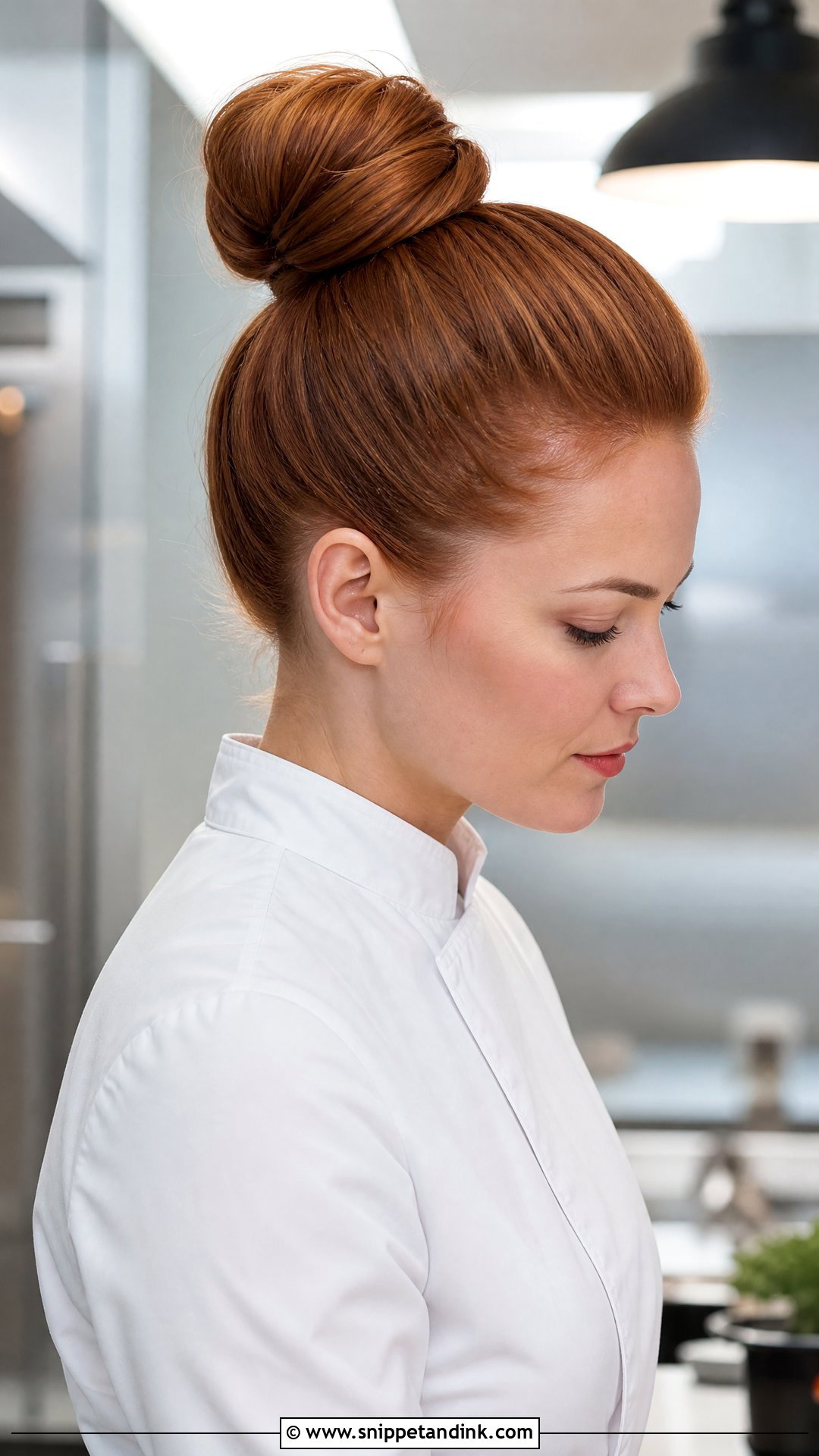
Lifting everything off the neck makes a high bun the cooler choice on a summer marquee job, and it clears collars, scarves and jacket lapels. Gather at the crown, smooth the flyaways and twist the length into a compact round bun. Compact is the important word. A big loose top bun bumps into hanging decor, wobbles when you bend to clear a table and won’t fit under a cap. If your role switches between guest-facing service and prep, check that it sits under a net before the shift, not during it.
4. French Twist For Catering
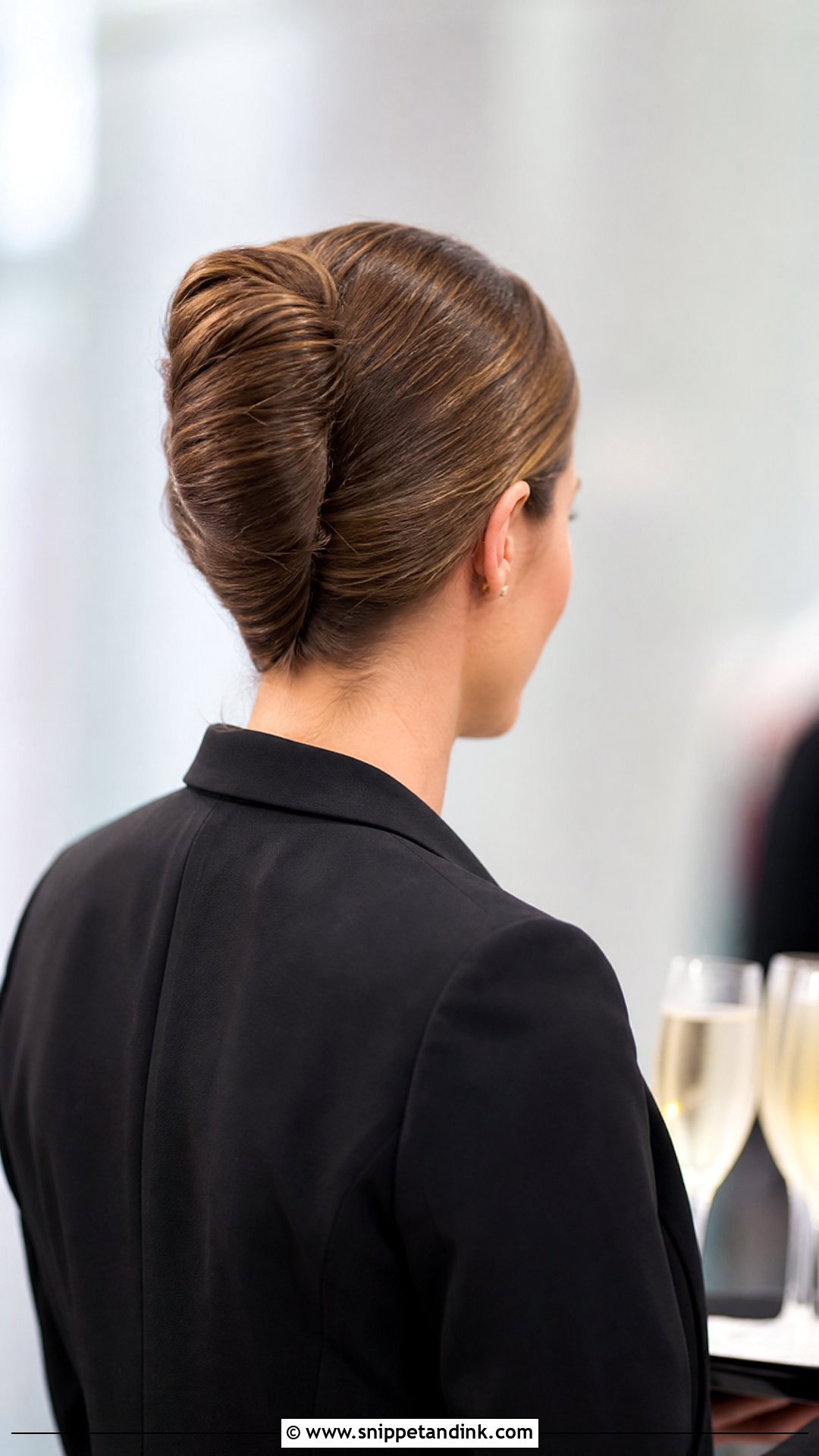
For upscale dinners and formal serving teams, the French twist gives the most refined line on the list. Hair is gathered low, twisted up and pinned along the fold, so nothing sits around the face or shoulders. It needs medium to long hair. Silky hair slides out of the seam, so put a little texture spray in before twisting. I’d test it on a quiet shift first, because a twist that hasn’t been practised tends to loosen at the top under the weight of a full service.
5. Low Ponytail For Catering
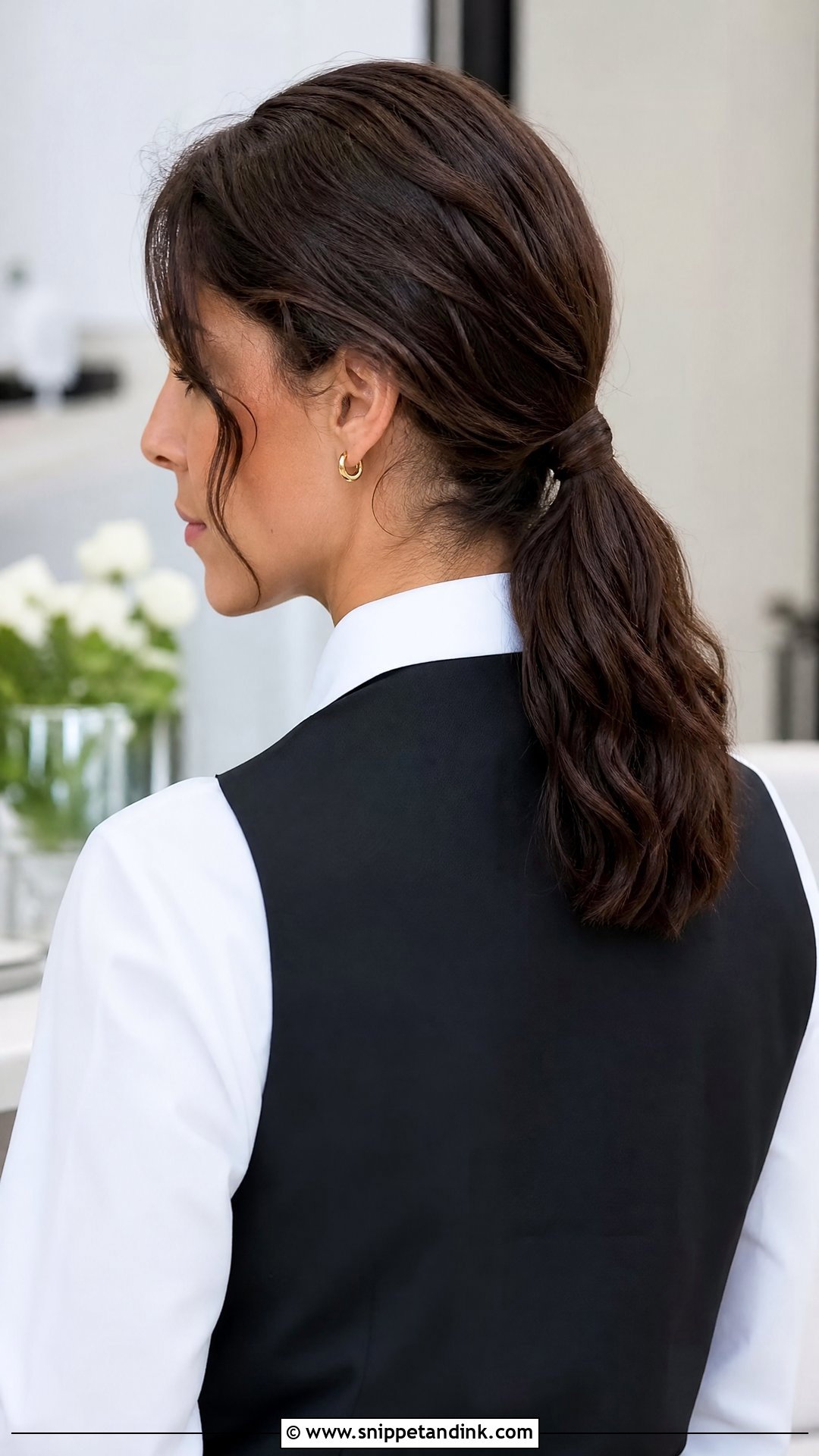
Low ponytails are acceptable on many front-of-house teams, but only when sleek and short enough to stay clear of plates and service stations. Shoulder length or a little longer is the limit I’d set. Smooth the hair back, tie it at the nape and wrap a strand around the elastic. Anything longer should be braided or turned into a bun, because a long ponytail swings over a guest’s shoulder every time you lean in to pour. It’s fast for early call times and keeps the face open.
6. Bubble Ponytail For Catering
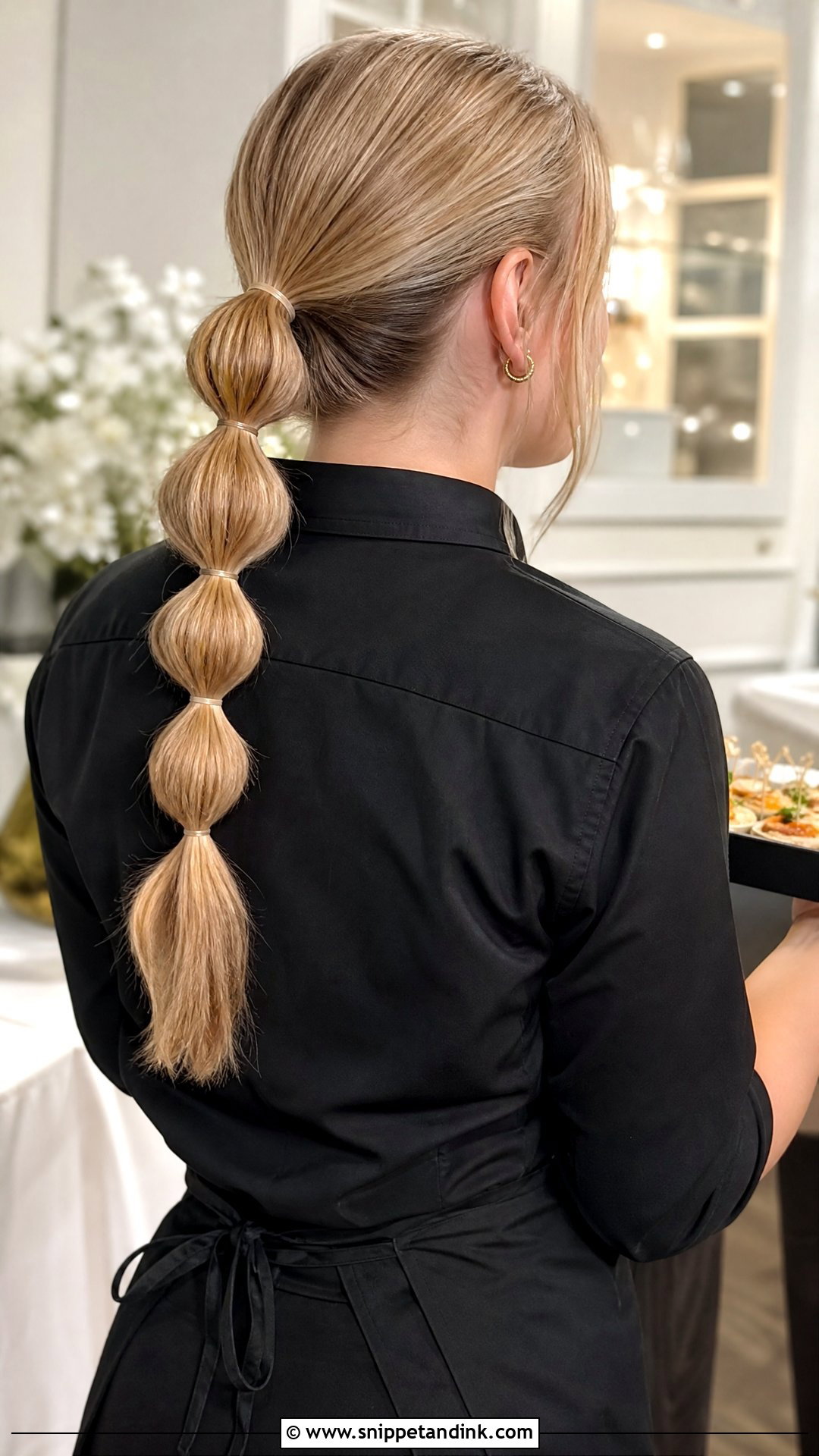
A bubble ponytail contains long hair in sections down the length, so it swings far less than a plain ponytail. Gather low or mid-height and add elastics every few inches. For service, keep the bubbles small and tight; the fluffy, pulled-out version sheds strands and catches on apron straps. It’s a sensible option for long hair that gives you a headache in a bun. In a kitchen it still needs a net.
7. French Braid For Catering
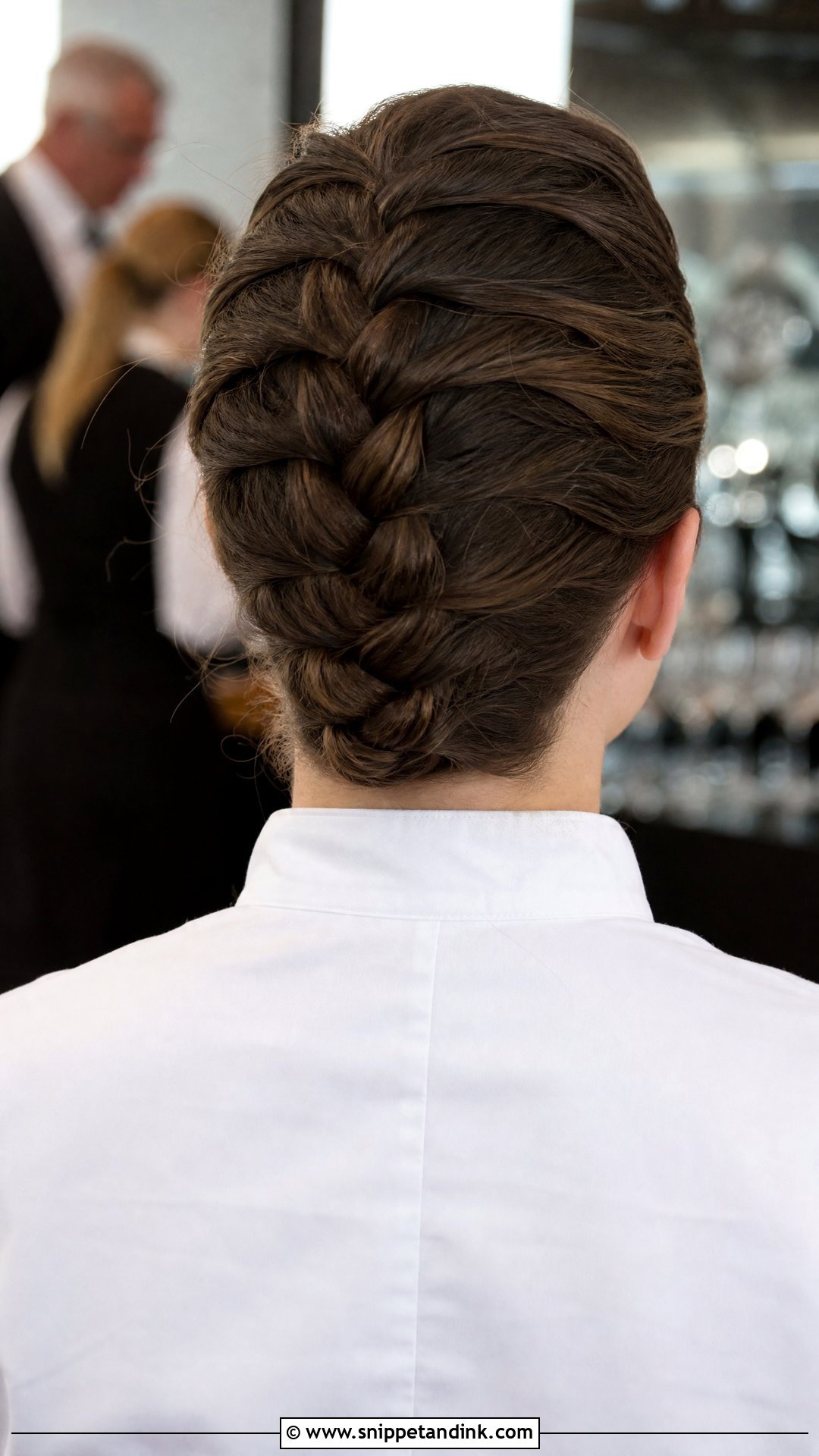
Starting at the hairline, a French braid catches layers and short pieces as it goes, which is exactly what a hairnet or cap needs underneath. Braid firmly from the crown to the nape, adding hair evenly from both sides, and secure the end tightly. If the house rules say hair off the shoulders, fold the tail under and pin it. Because it stays put, people wearing it are less tempted to touch their hair mid-service, and that’s a hygiene win.
8. Dutch Braid Bun For Catering
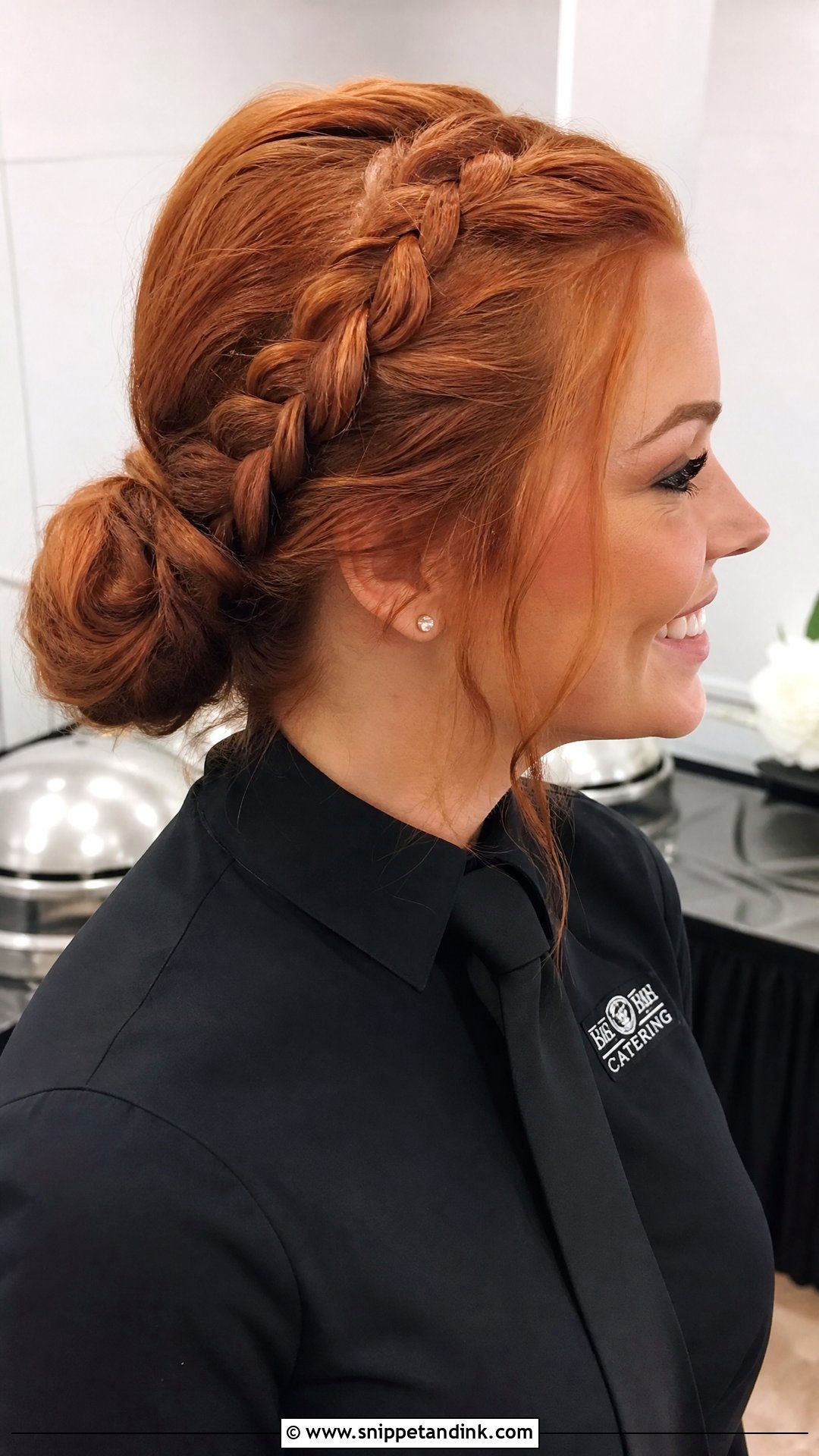
A Dutch braid bun sits slightly raised, so it has some texture while still looking work-ready, and the braid holds hair that usually loosens during busy shifts. Braid from the front or crown toward the nape and wrap the rest into a low bun pinned close to the head. Keep the bun flat; a bulky one gets knocked by tray stands and doorframes in crowded rooms. Thick and layered hair benefit most.
9. Double Braids For Catering
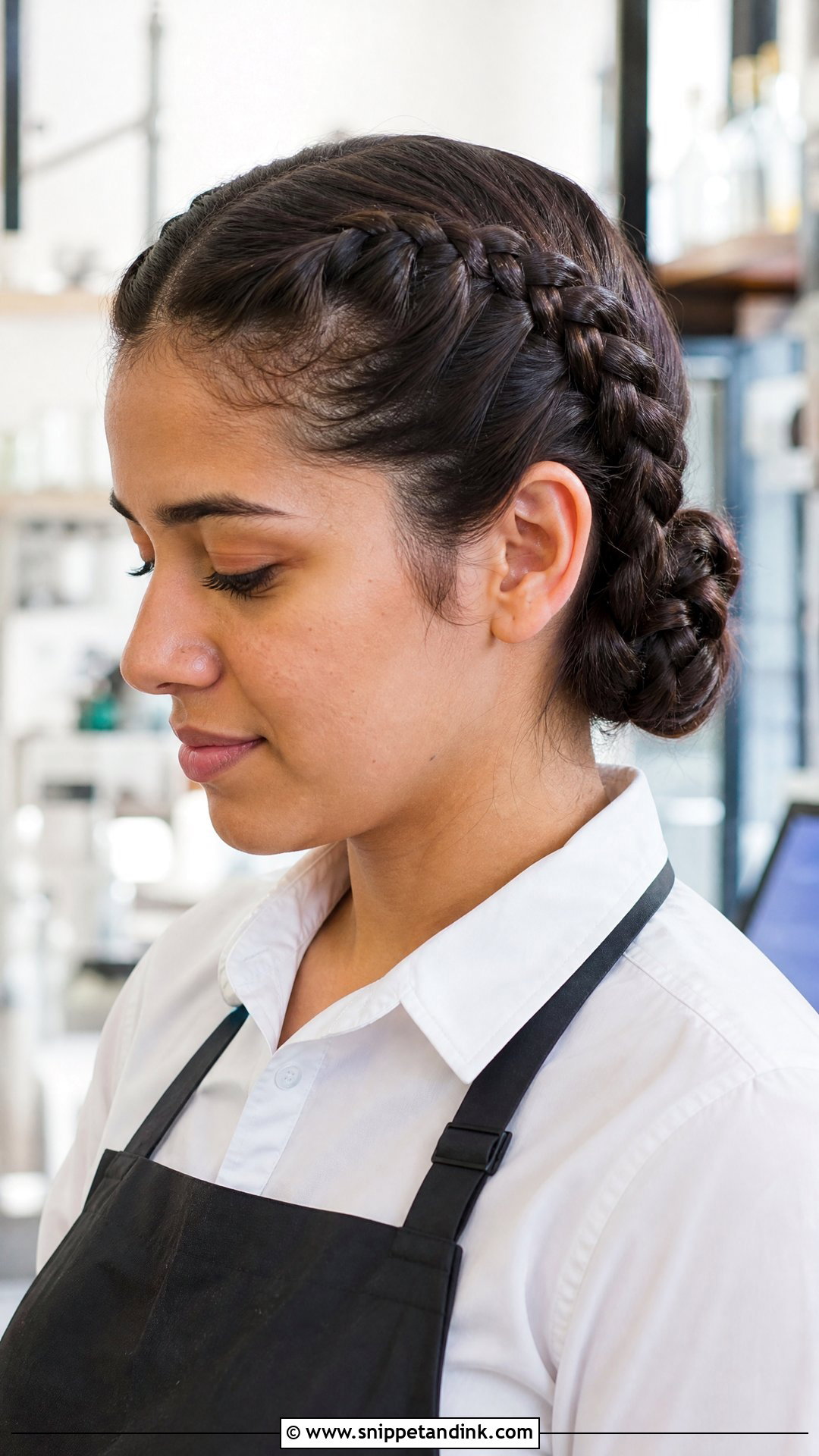
Splitting hair into two braids spreads the weight across the scalp instead of hanging it from one point, and on a double shift that difference is real. Keep them smooth, close to the head and tied off firmly at the ends. Long braids should cross at the nape and pin into a compact shape, or they’ll swing into food as you lean. Layered hair stays in better here than in a single ponytail, because each braid catches the shorter pieces nearer the face.
10. Claw Clip Twist For Catering
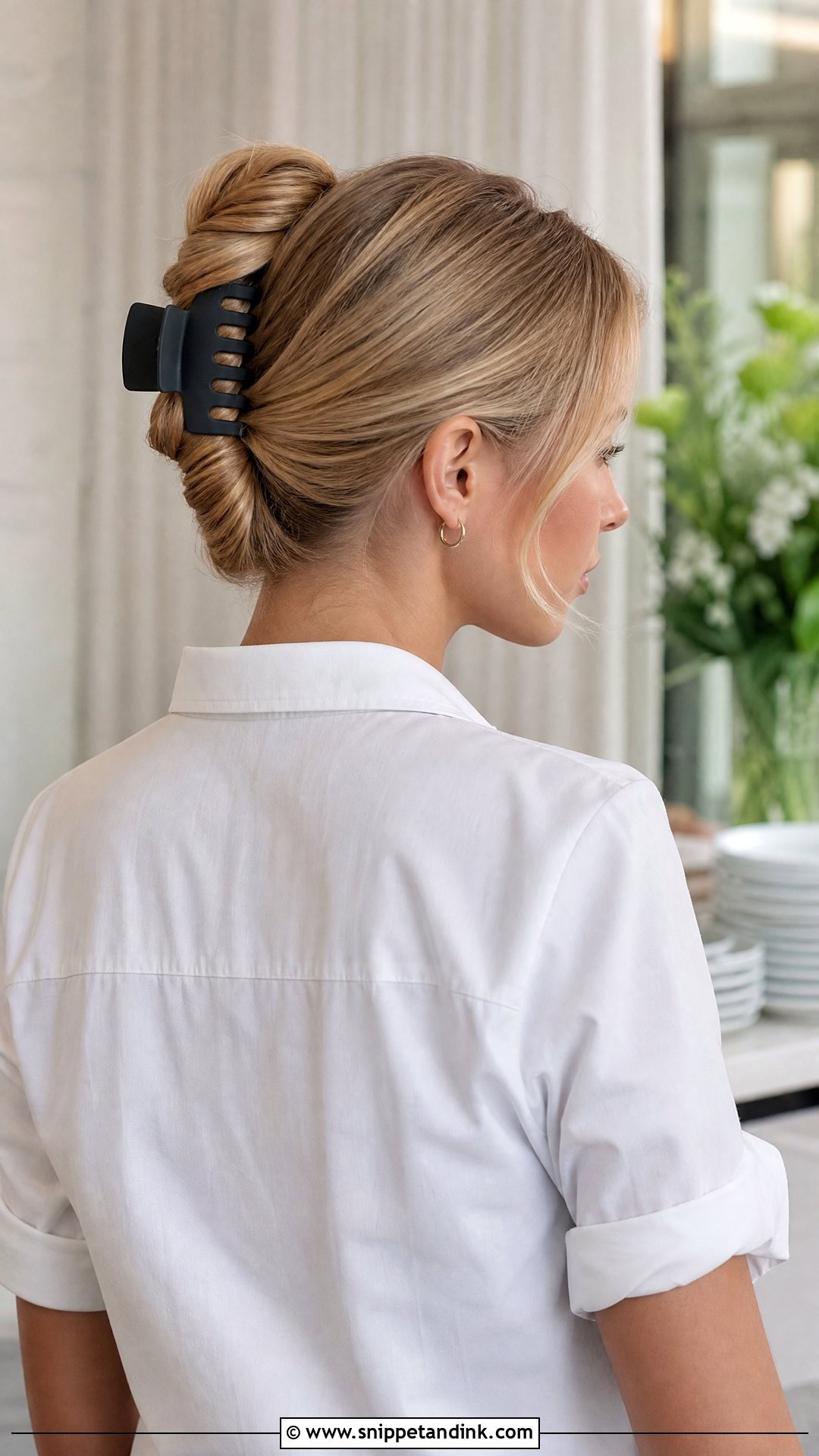
A claw clip twist is fine for setup or light service where the dress code allows it, but not for plating. The clip has to be sturdy with a plain finish; a decorative one slides out and can end up on a buffet. Twist the hair up, tuck the ends in and clamp close to the head so no ends hang near the shoulders. It suits medium-length hair and is kind to sore scalps. I wouldn’t use it on very thick hair, since one clip rarely holds that weight for a full evening.
11. Short Bob Tucked Behind Ears For Catering
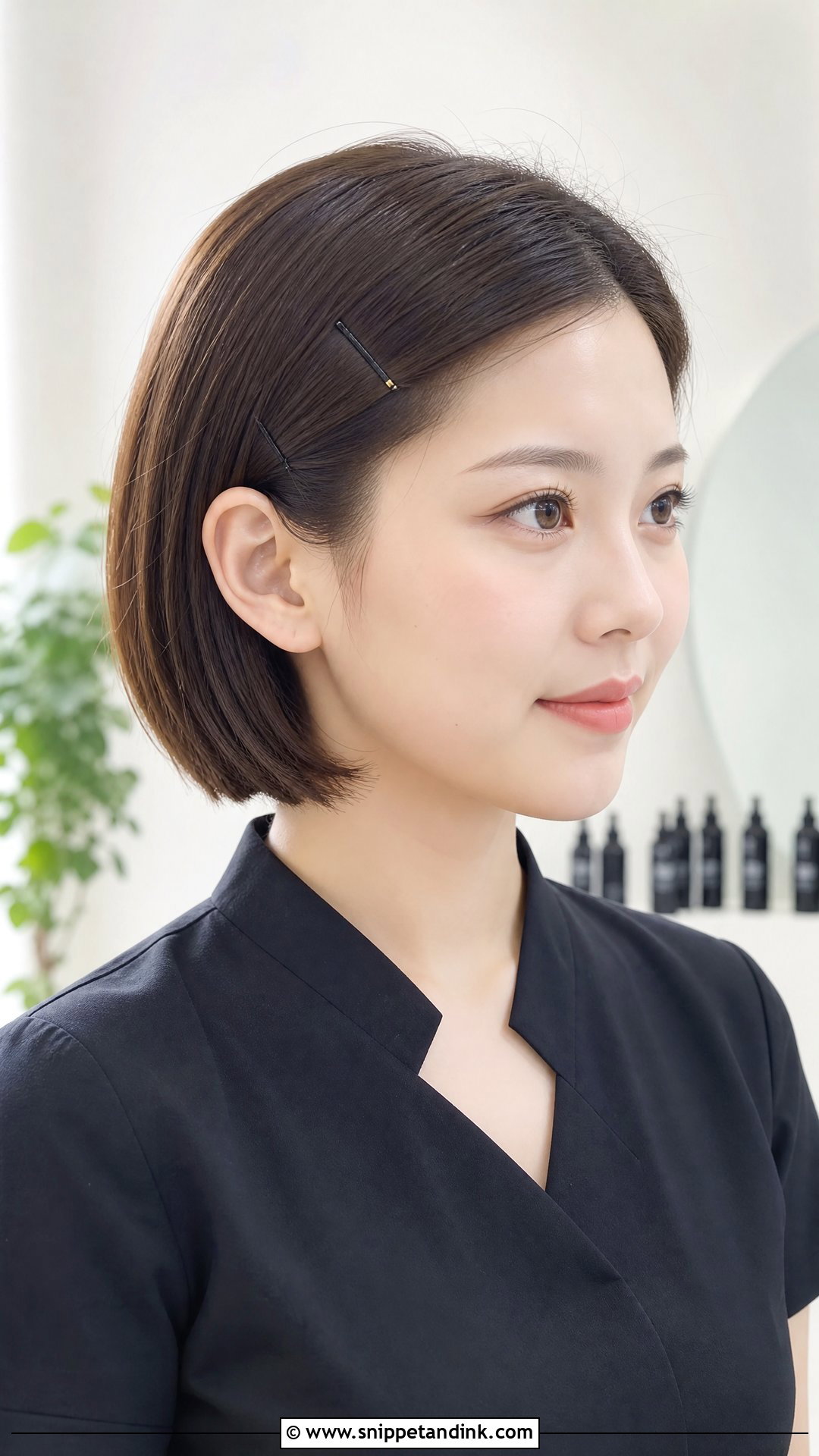
Bobs look polished on service staff as long as the front stays off the face. The moment you lean over a buffet, chin-length pieces fall forward. Smooth with a little cream, make a clean part and tuck both sides behind the ears, then pin them with matte pins if the layers keep escaping. Where the venue requires full restraint, add a headband, cap or net. This is the go-to for jaw-length hair that won’t make a bun.
12. Pixie Cut For Catering
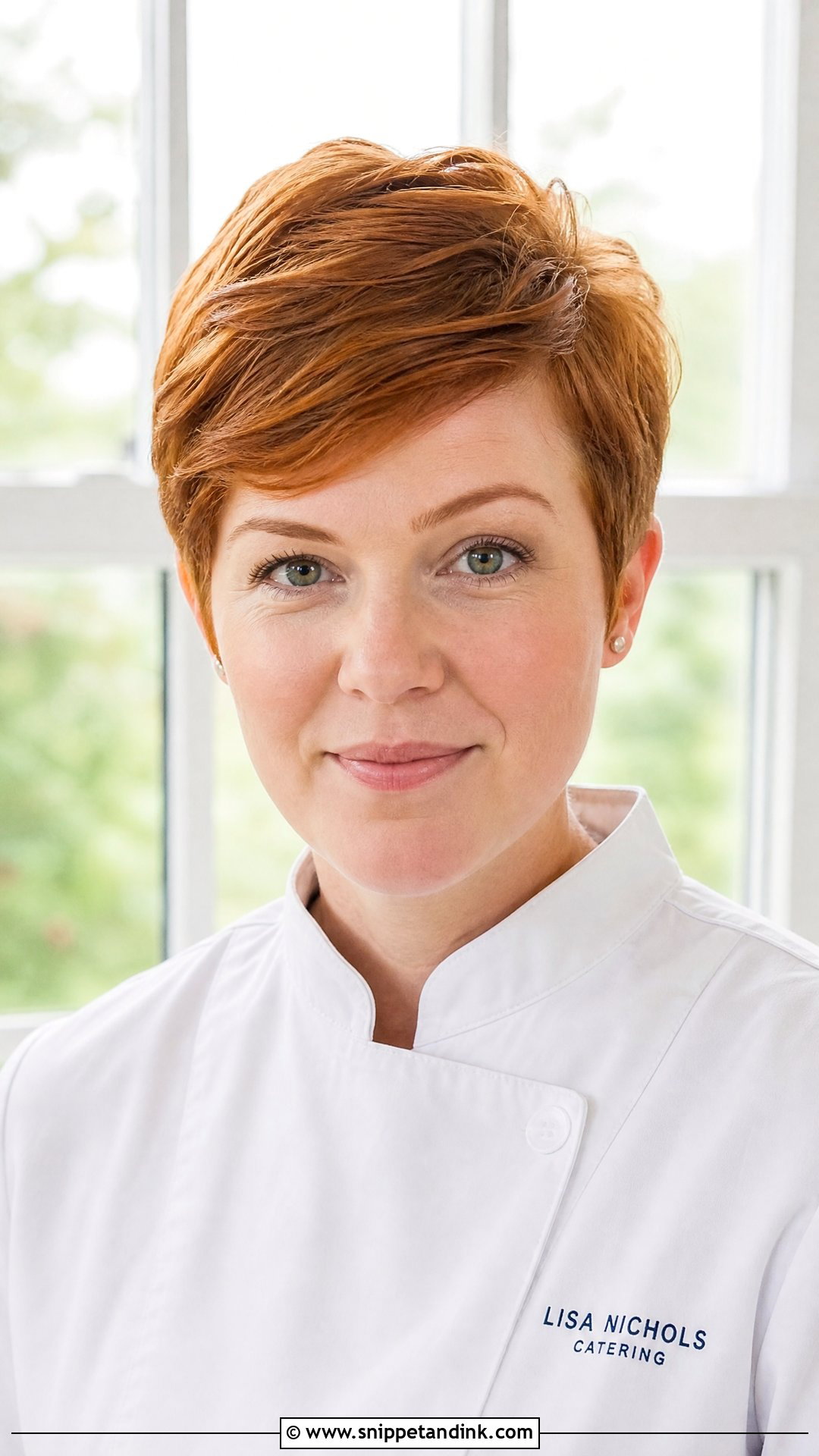
Pixie cuts are the easiest length to manage on a service floor, yet they still need a tidy finish. A small amount of paste shapes the top without looking wet or greasy under event lighting. The fringe is the problem area; it has to stay out of the eyes when you’re carrying a full tray and can’t free a hand. Side-swept reads clean for formal service. In the kitchen, keep it close to the head and follow the covering rules like everyone else.
13. Curly Puff For Catering
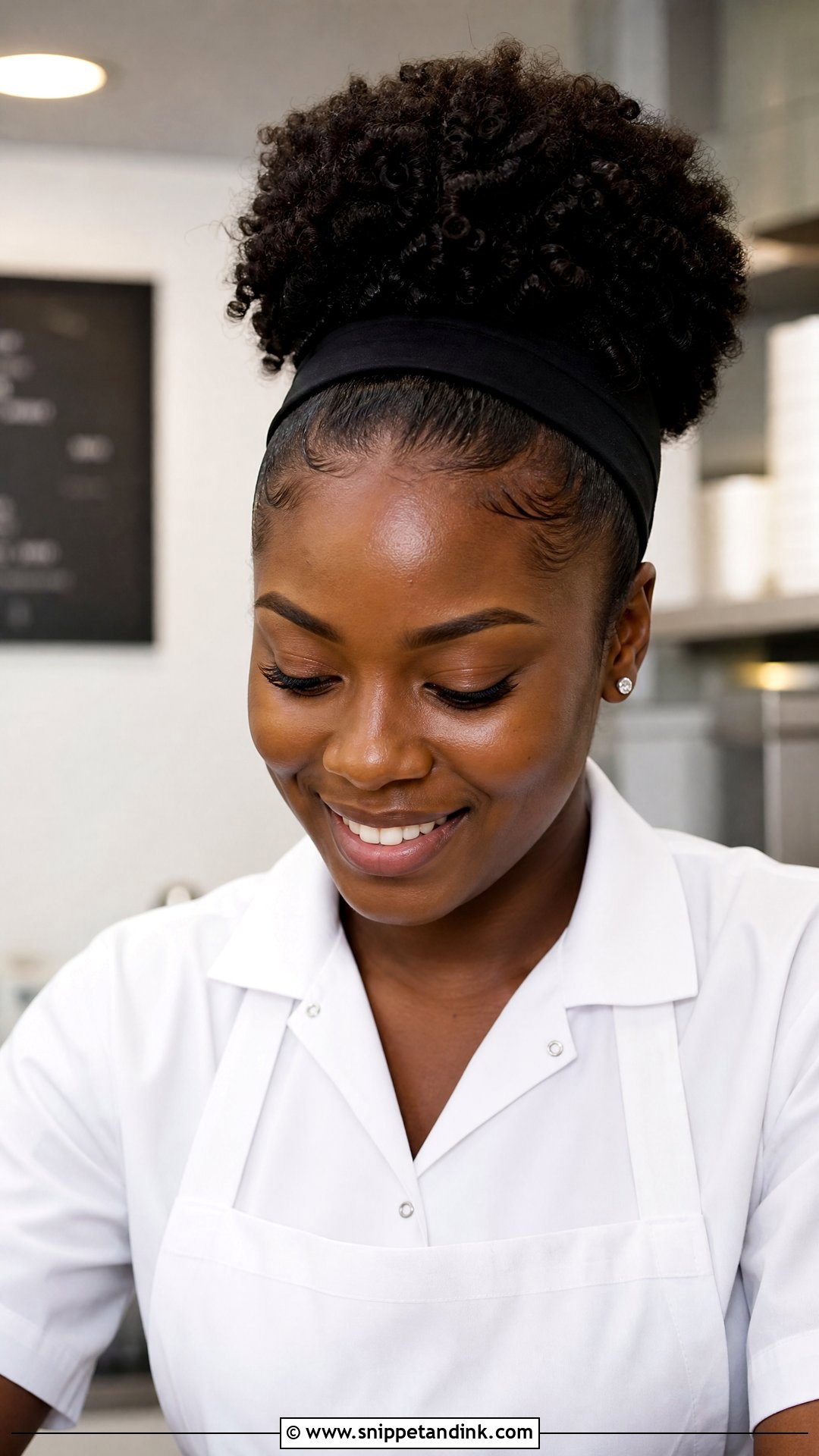
A compact puff keeps natural curls and coils gathered securely away from the face without straightening or scraping them. Lift the hair up with a soft brush or your hands and secure it with a gentle band or puff cuff. Lay the edges lightly if you like, but avoid pulling tight, because traction along the hairline adds up across many shifts. Keep the puff smaller than you’d wear off duty when you’re near open trays. A scarf, headband, or hairnet adds security, and a large net fits over a puff more easily than people expect.
14. Loc Bun For Catering
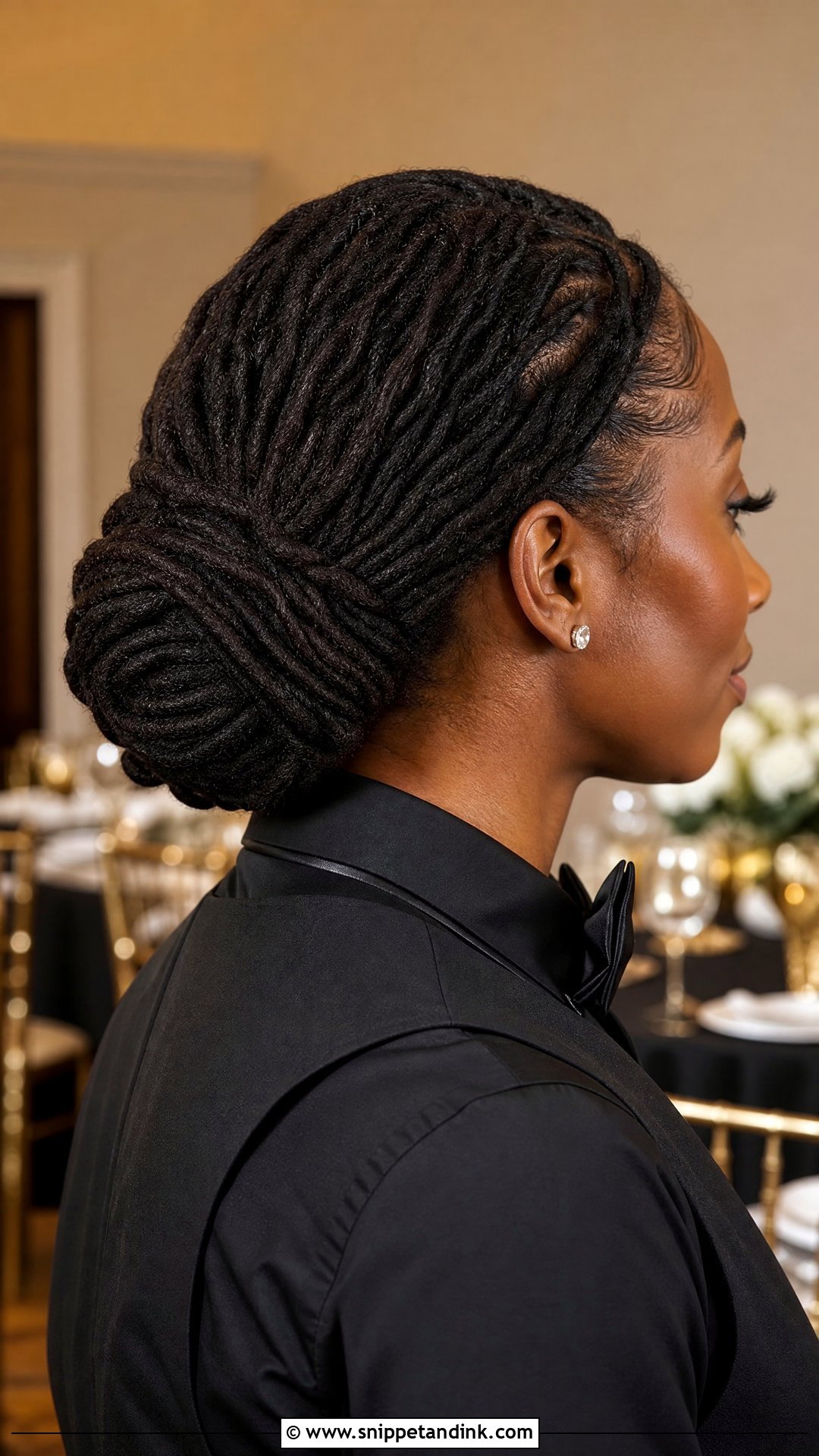
Locs gather well into one controlled bun, whether they are short, medium or long. For long locs, make a ponytail first, wrap the locs around the base and secure with pins or a large elastic. Balance matters: a bun pulled to one side drags on the scalp by the end of a long shift. Mature locs are heavy, so I’d suggest a lower placement rather than a high one for comfort. It looks polished at formal events and fits under a larger hairnet when required.
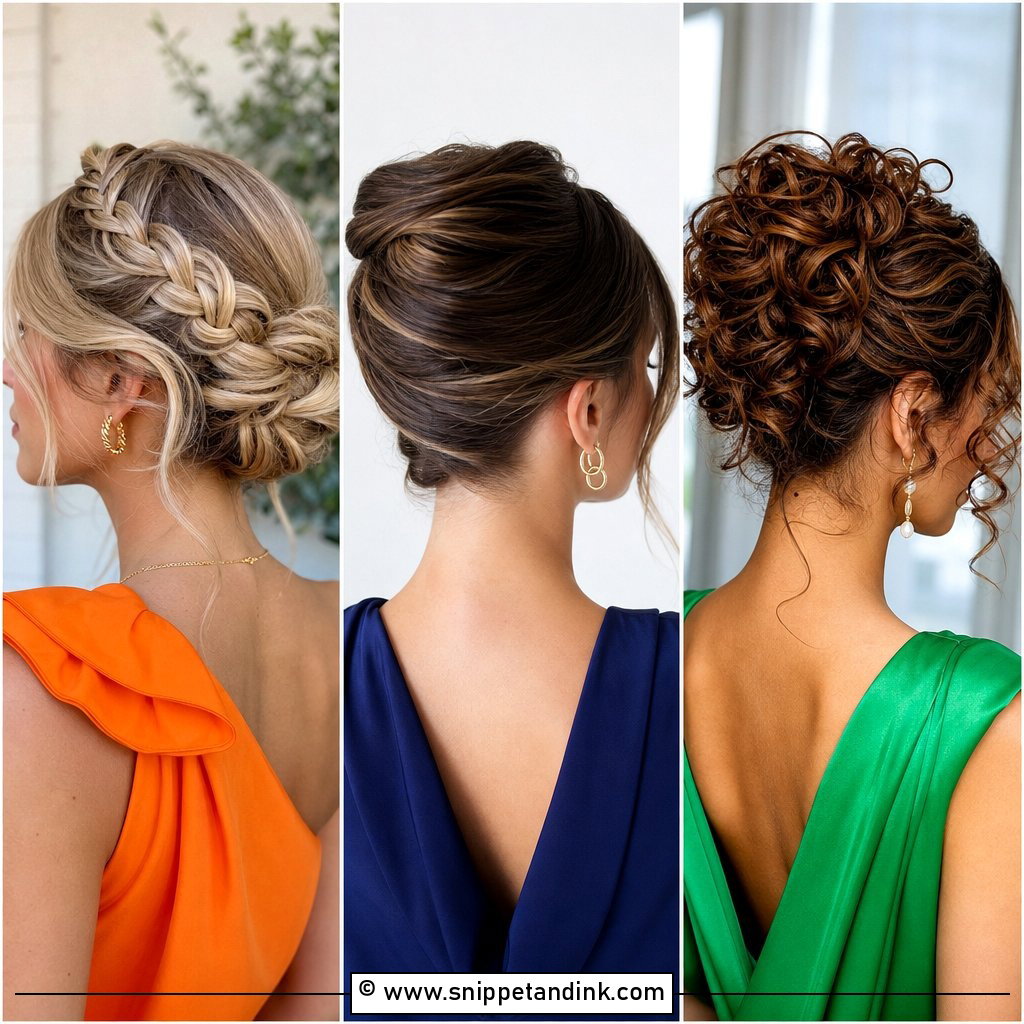
15. Headband Updo For Catering
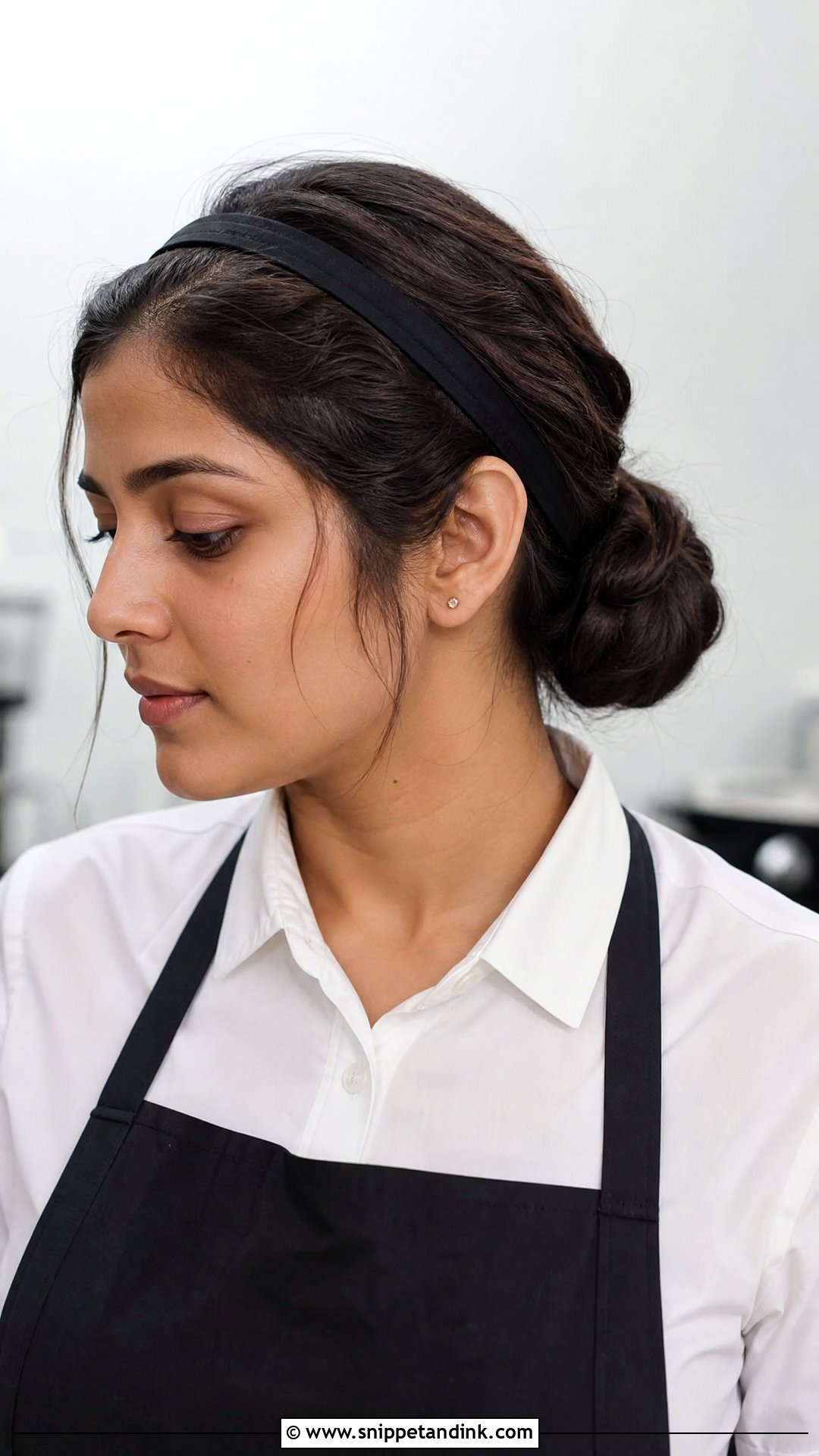
Bangs, curls and short front layers are the pieces that escape first, and a headband pins them back without adding more pins. Choose a plain, washable band that matches the uniform or your hair colour, then put the rest into a low bun, twist or tucked ponytail. Wash the headband after each event; it sits against a sweaty hairline all night. It’s quick on early calls, and fixing it mid-shift takes seconds.
Twelve Hours on Your Feet Without a Sore Scalp
The slickest bun looks great at setup, but by the speeches it can feel like a clamp. Tension headaches, sore spots at the hairline and breakage around the elastic are common among staff who wear the same tight style every shift.
Move the Pull Around
Don’t put the elastic in exactly the same spot every day. Rotate a low bun with a French twist or double braids so the pull lands on different parts of the scalp. Fabric-covered elastics and spiral coils grip without biting, and a braided base lets a bun hold without being scraped back hard.
The Apron-Pocket Refresh
- An edge brush with a dab of styling cream for the hairline
- Two spare elastics and a few pins in your hair colour
- A spare net, because they tear more often than you’d think
- A travel hairspray, used away from food and prep areas
Fix your hair off the floor, away from food, and wash your hands straight afterwards. I’d rather lose a server for three minutes than find a hair on a plate.
Neat at Setup, Still Neat at Breakdown
A good catering hairstyle is one you only think about twice: once in the morning and once when you take it down. Buns, braids, twists, puffs, loc buns and controlled short cuts all earn their place on a service team as long as they keep hair off the face, off the shoulders and nowhere near the plates. Your length, texture, role and the venue’s rules will tell you which to try. Moving all night calls for stronger hold; a sore scalp calls for braids and low, gentle shapes. Get that right and you’ll look as fresh at breakdown as at the first canapé.
You'll Like These Ideas:


Leave a Reply