
Most of the wedding sets I’m booking for 2025 are quieter than people expect: milky whites, sheer pinks, a thin glazed chrome, the odd pearl or lace detail. The reason is practical. Your hands sit next to your ring, your bouquet and your dress fabric in nearly every close-up, so the manicure has to agree with all three instead of competing. I also plan a bridal set to survive about sixteen hours of hugging, champagne flutes and bouquet stems, which rules out some designs that look great on a phone screen. Below are the 25 looks I’d actually put on a bride this year, with what each one needs at the desk to work.
Plain Polish, Gel or Extensions for a Wedding Week
Before we talk color, decide what the color sits on, because that controls how long the set lasts and what it can carry. Regular polish is the cheapest and easiest to change, but on most nails it starts chipping at the tips within two or three days. If you choose it, I’d paint it the day before the wedding, not earlier.
Soft gel is what I use for most brides. It cures under a lamp, stays glossy for around two weeks on healthy nails and comes off with a soak. For thin or bendy nails, I add a layer of builder gel underneath, which gives structure so the free edge doesn’t flex and crack the color. Extensions, either soft gel tips or sculpted gel, only make sense if you want length you can’t grow in time.
- Sheer finishes (milky white, sheer pink, glazed chrome): gel or builder gel, since thin regular polish streaks.
- 3D details like pearls and rhinestones: gel only, they need something hard to sit in.
- Long almond or coffin shapes: extensions, worn for at least a week before the day.
- Matte finishes: gel with a matte gel top coat, which wears better than a matte polish.
One honest warning: if you’ve never worn gel, don’t try it for the first time at your final appointment. Some people react to gel products, usually as redness or itching around the cuticle, and a trial weeks ahead is where you want to find that out.
1. Milky White Bridal Nails
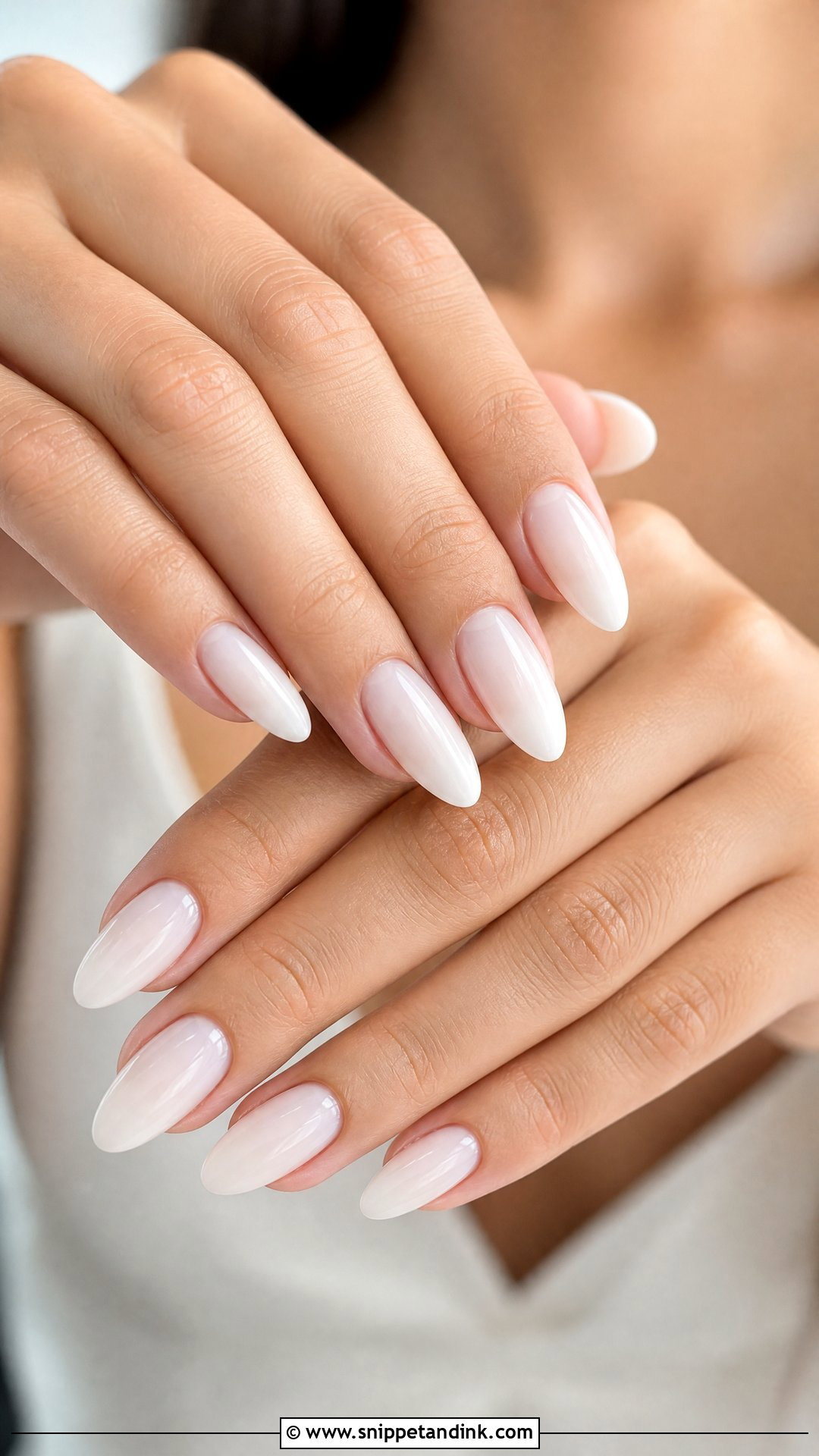
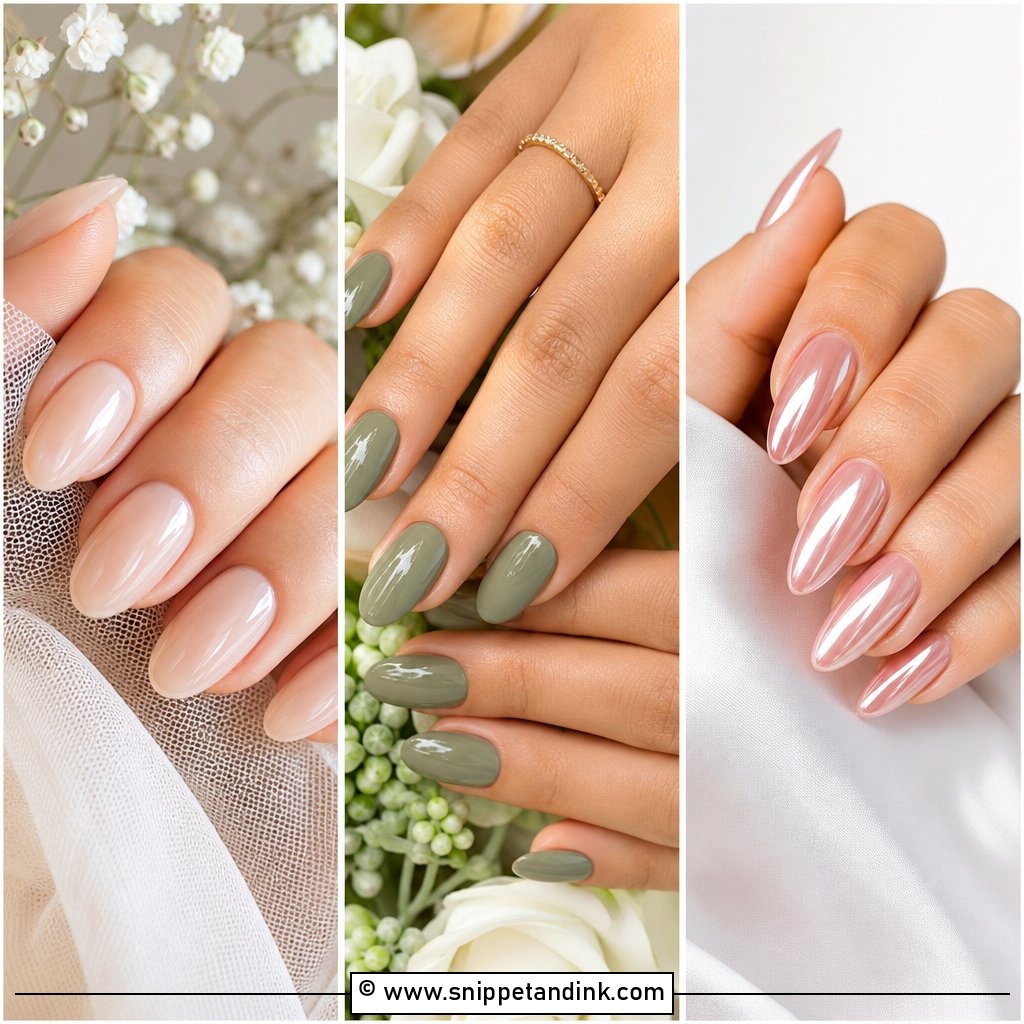
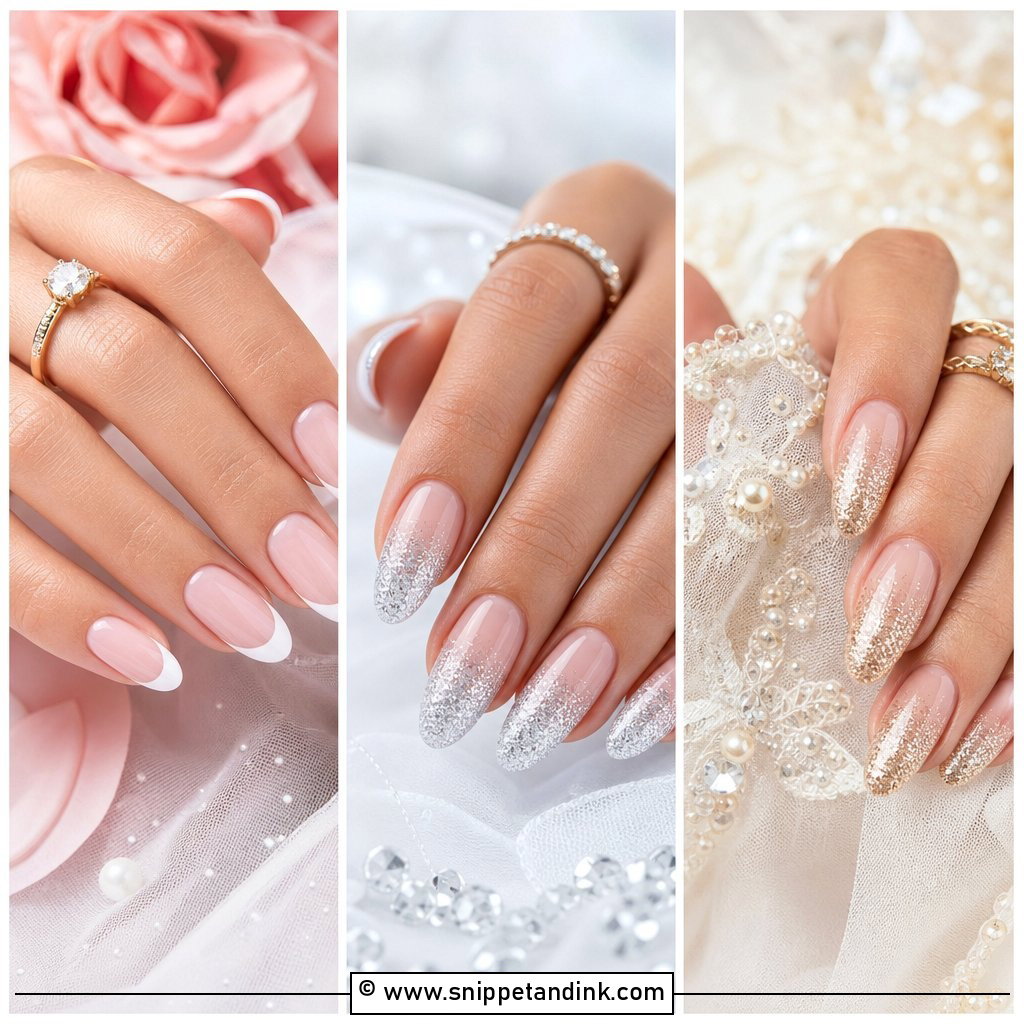
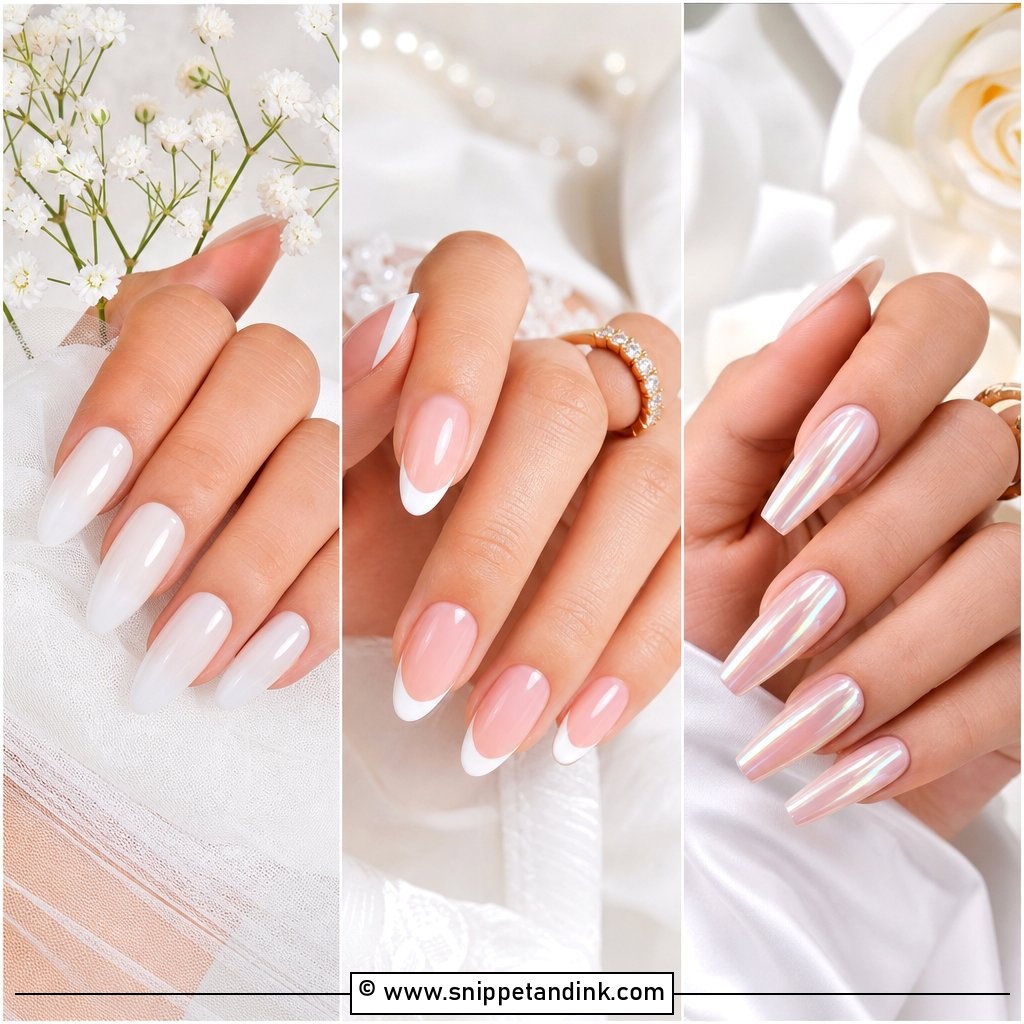
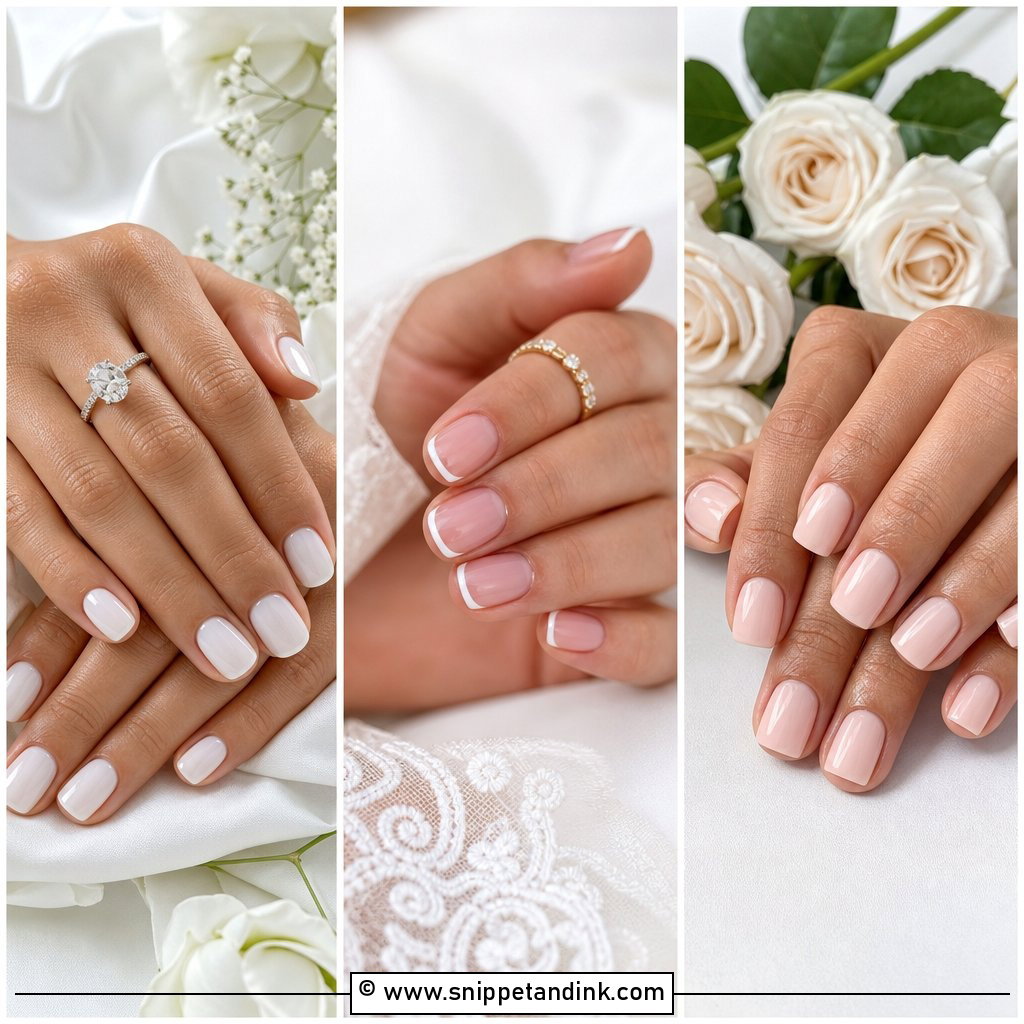
Milky white is the shade I reach for most, and the whole trick is translucency. Two thin coats of a semi-sheer white let a little of the nail bed show through, which reads soft in daylight and doesn’t bounce flash back into the lens. One thick opaque coat looks chalky and flat. I always check the free edge under the lamp first, because a milky white shows every uneven bit of tip and you can see the line where it grows out after about ten days. It suits short squares as well as long coffins, and it sits quietly beside lace, satin or a plain band.
2. Sheer Pink Bridal Nails
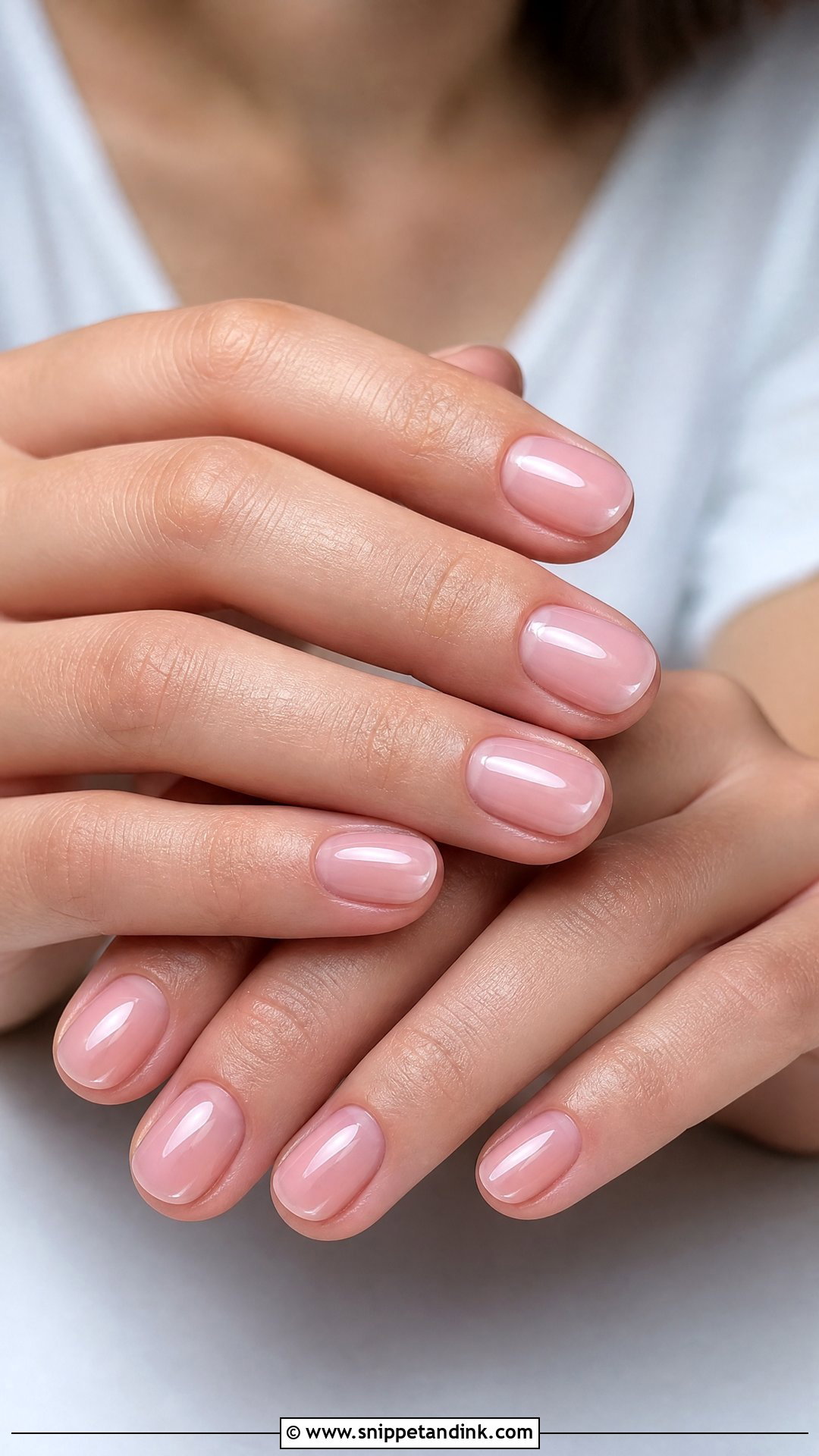
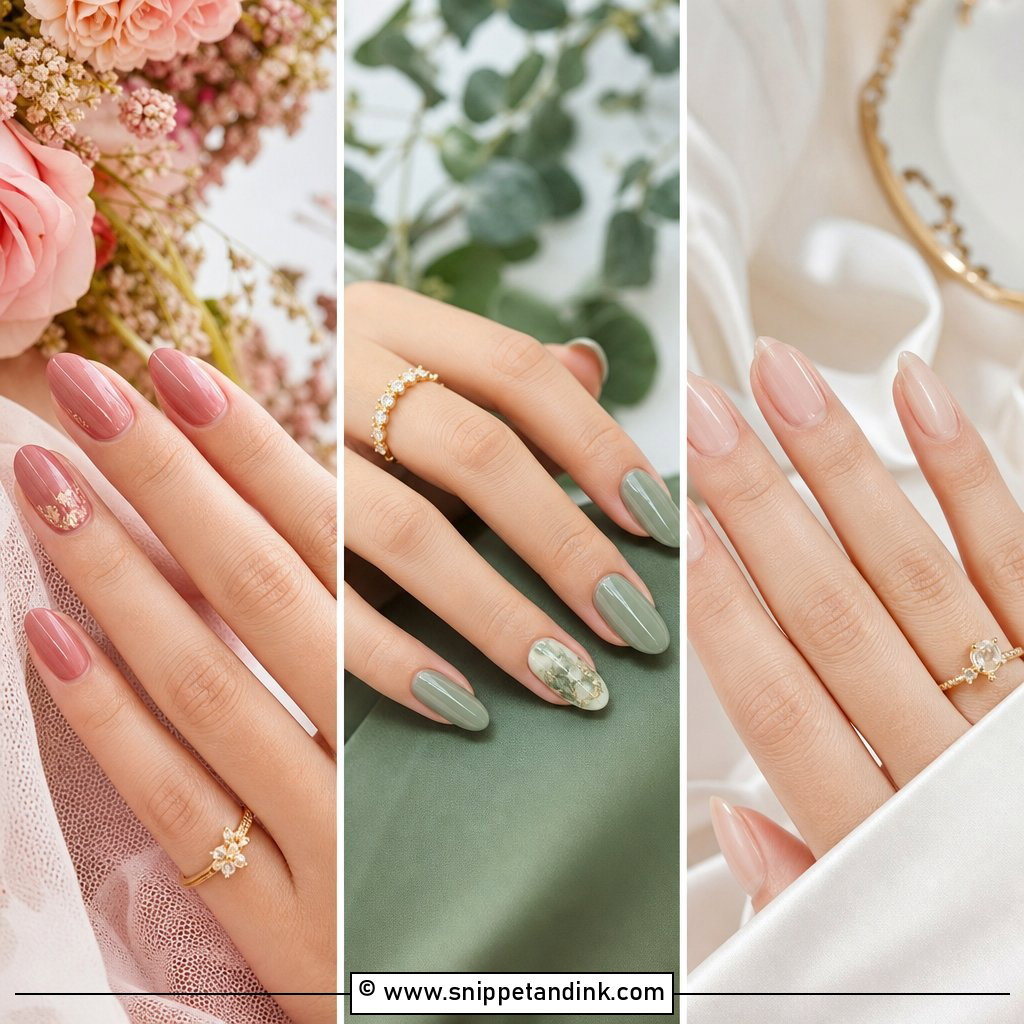
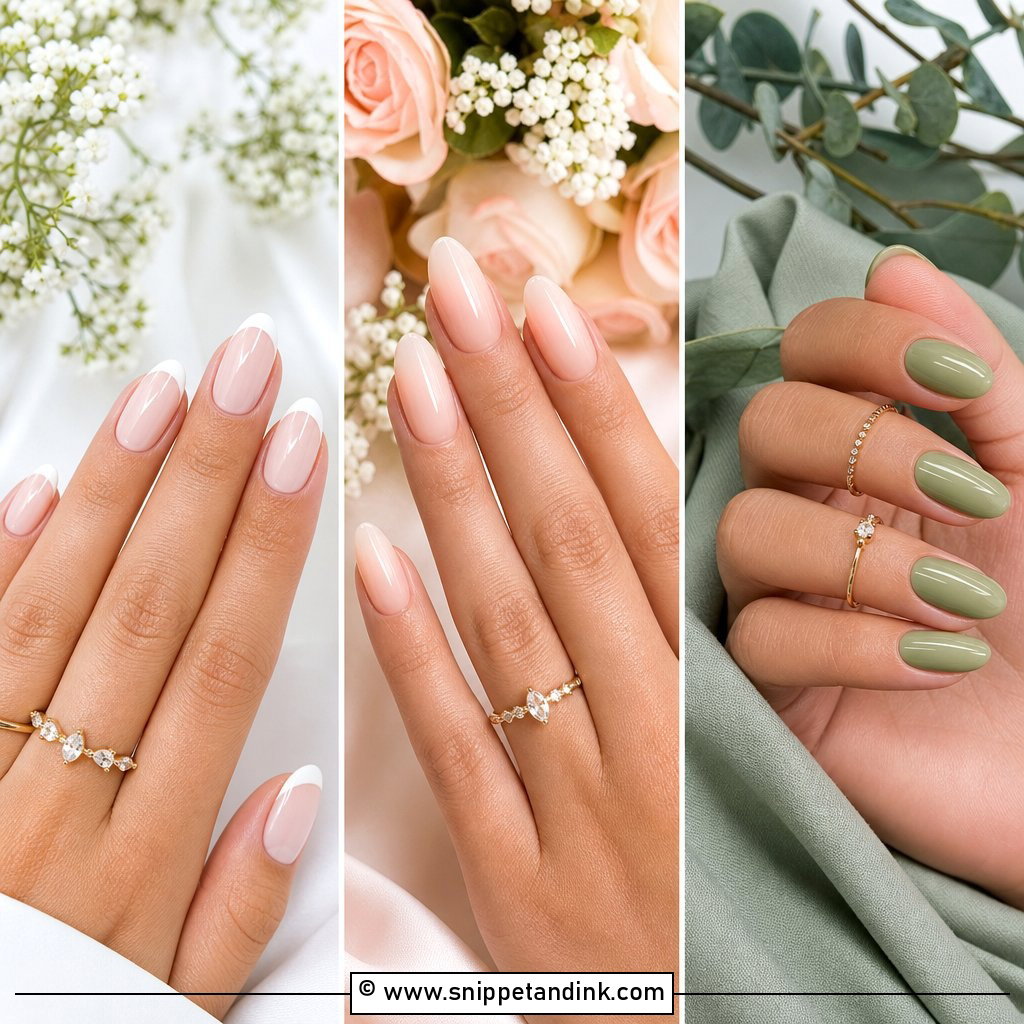
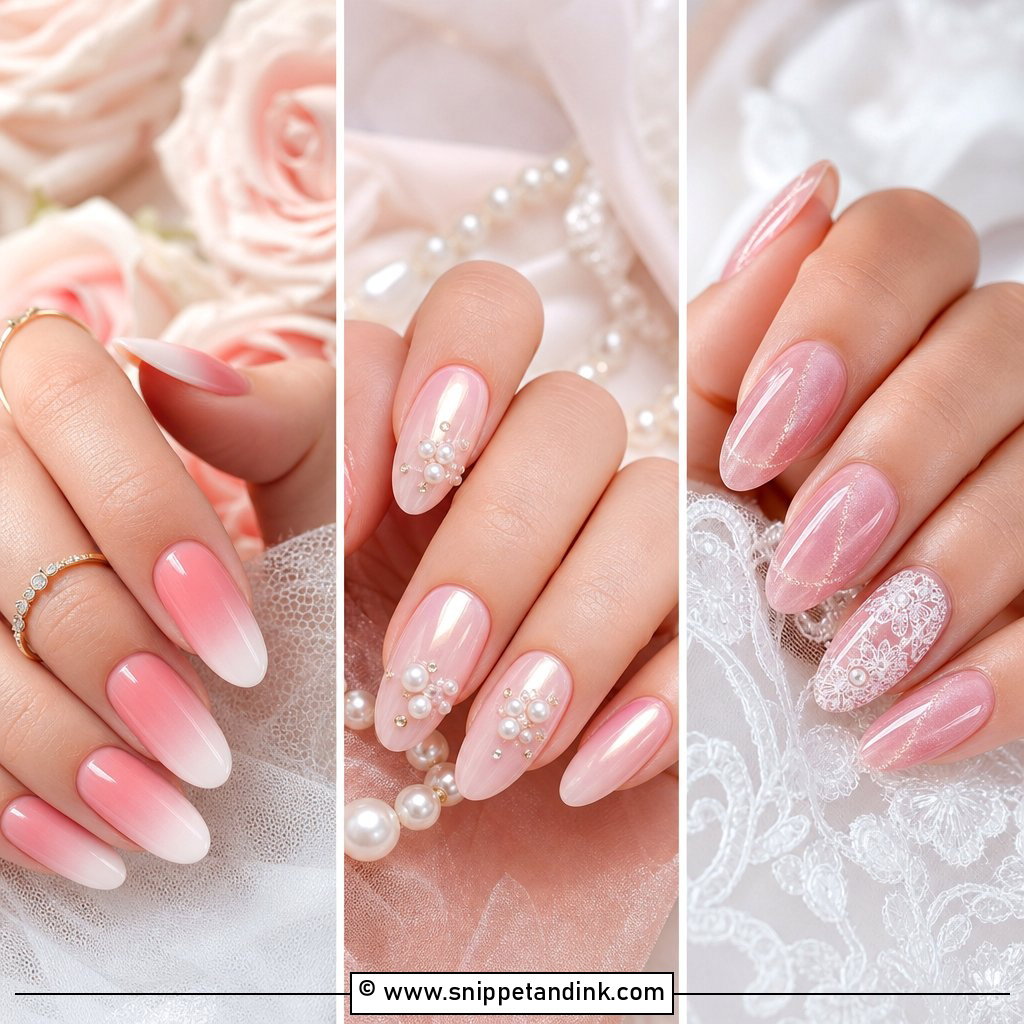
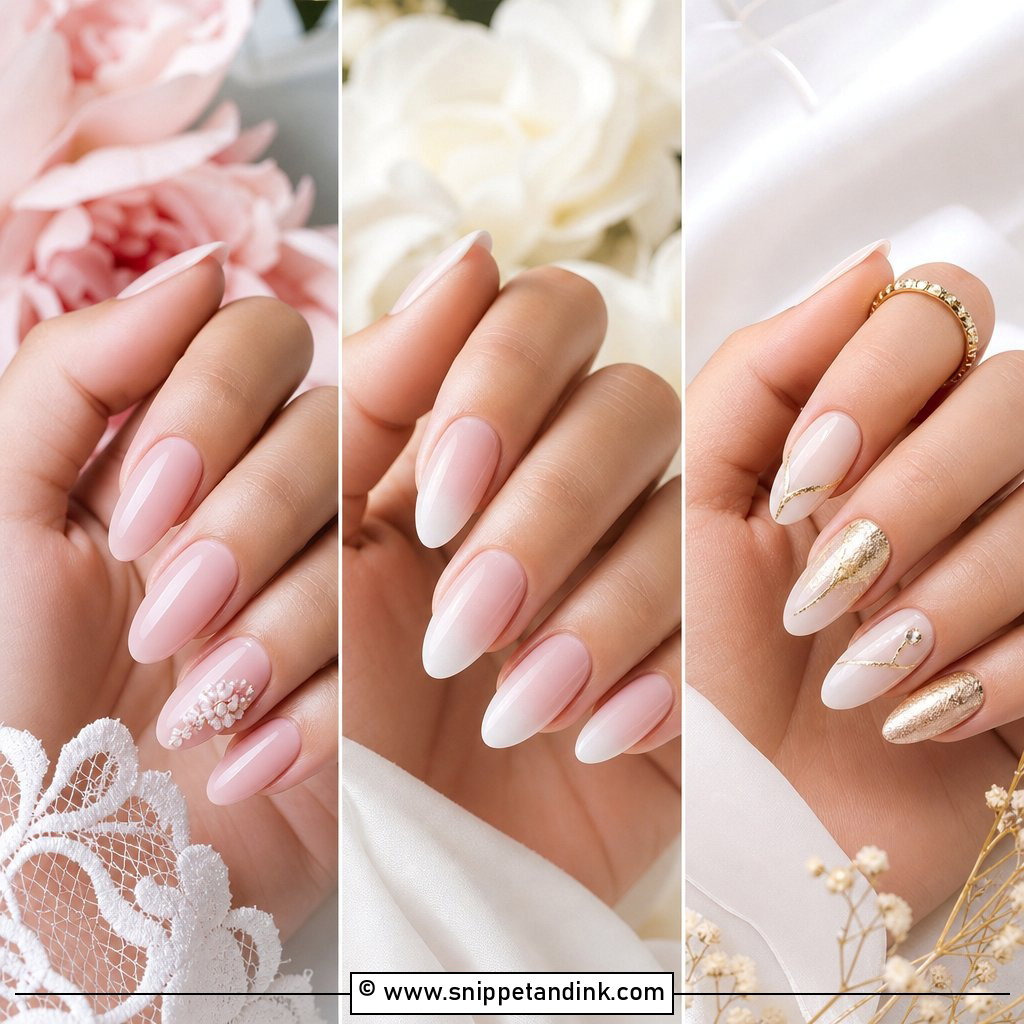
Sheer pink is my answer when a bride says she wants her hands to look healthy rather than done. A pale blush layer evens out the nail bed and hides small white spots without reading as color. The shade has to follow your undertone, though: cool baby pink on fair, pink-leaning skin, rosy nude on medium tones, and a warmer peach-pink on olive or deep skin, where a cool pink can sit grey. I build it in sheer gel layers so there’s no visible edge at the cuticle, and it works at any length.
3. Classic French Bridal Nails
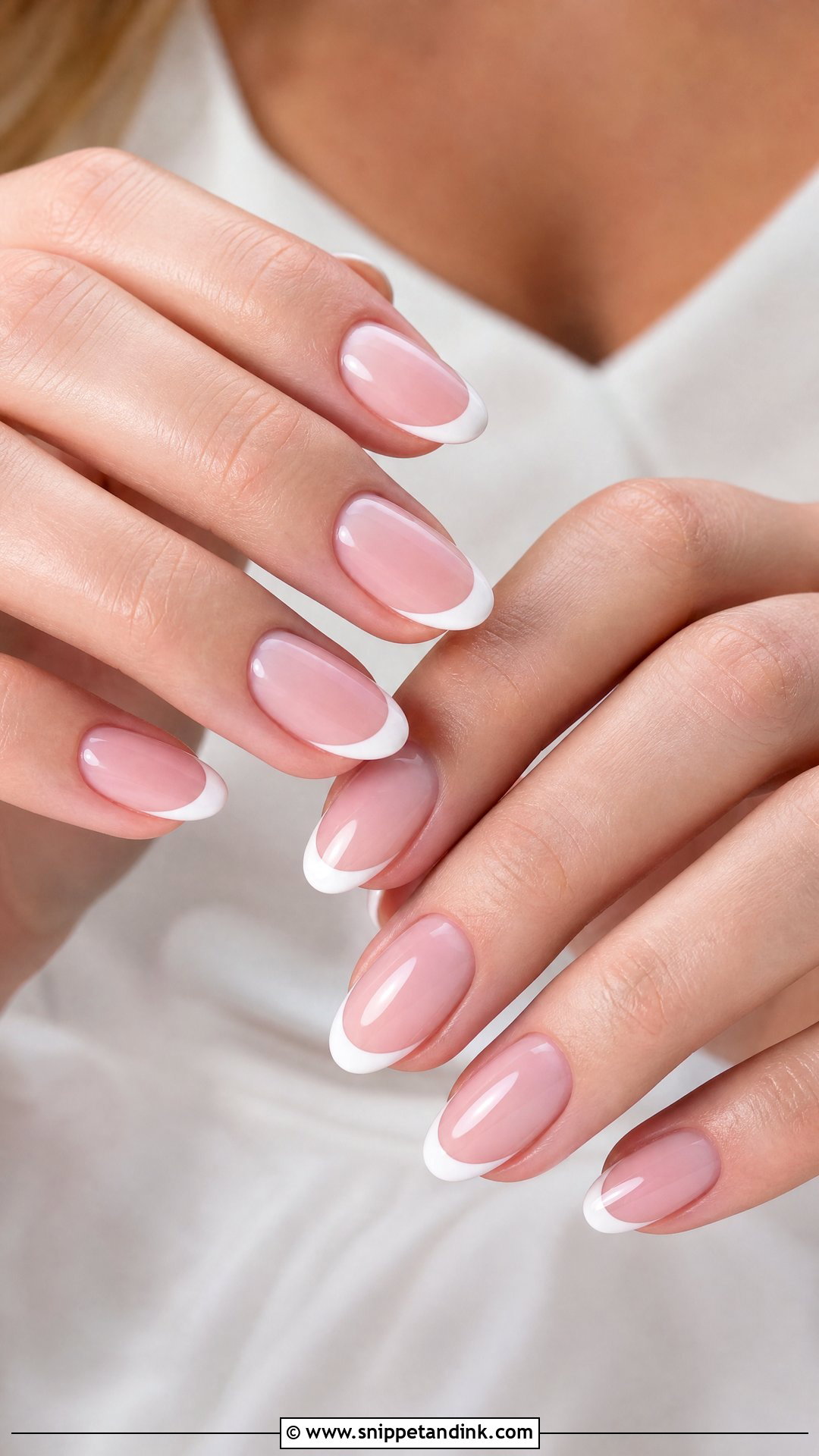
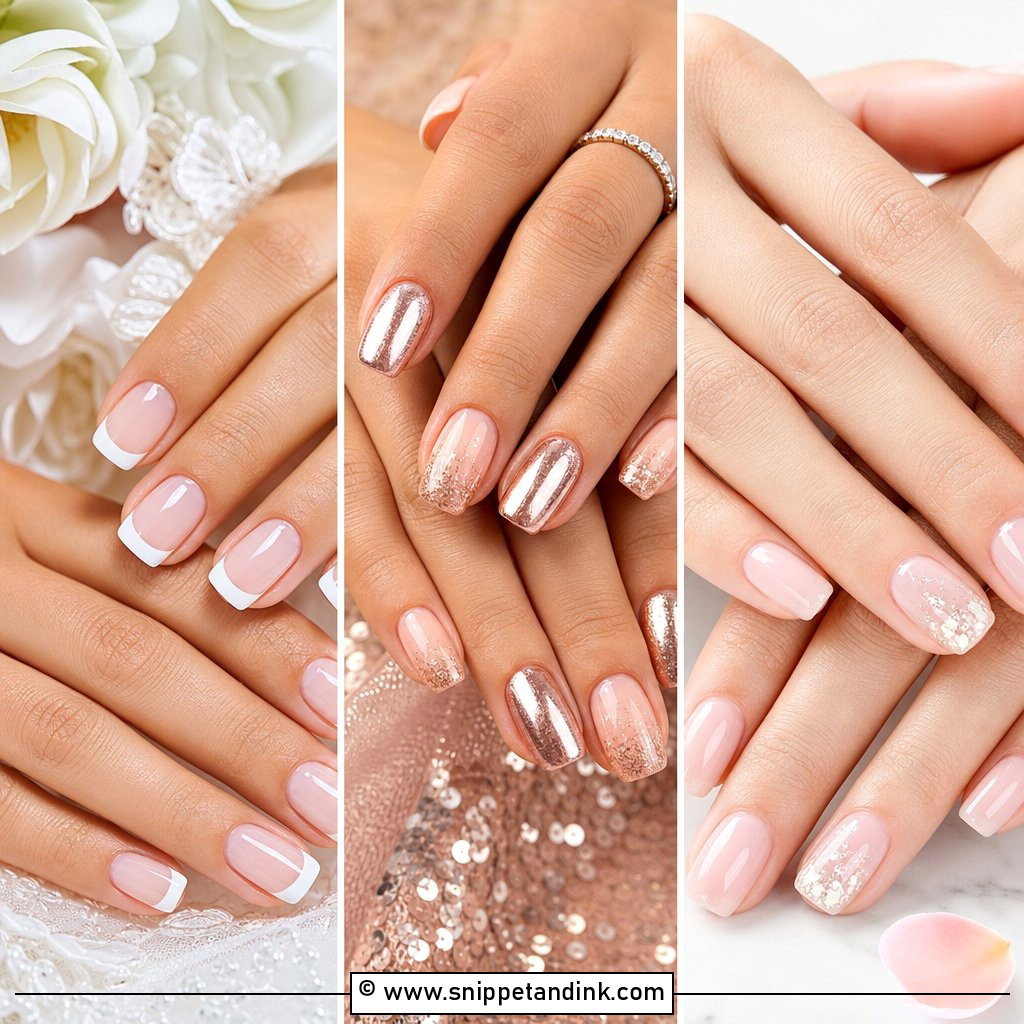
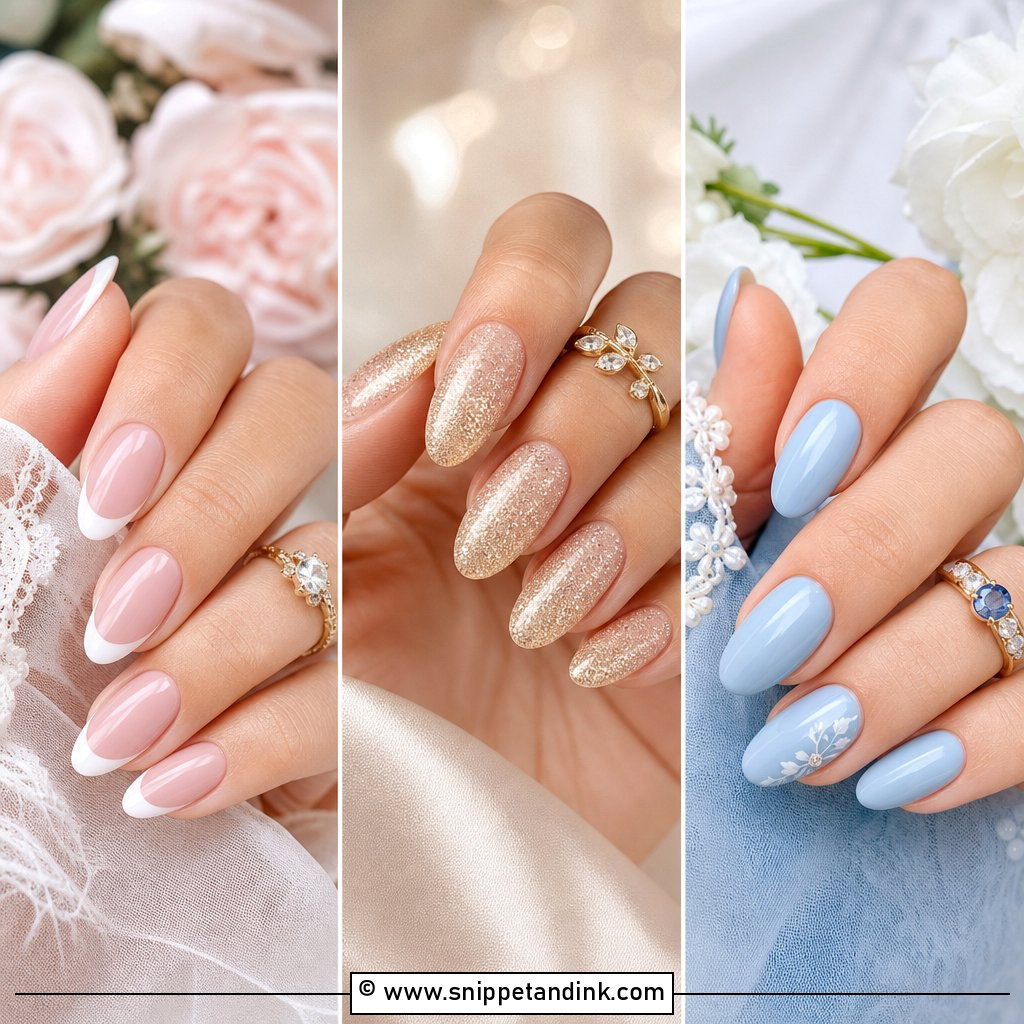
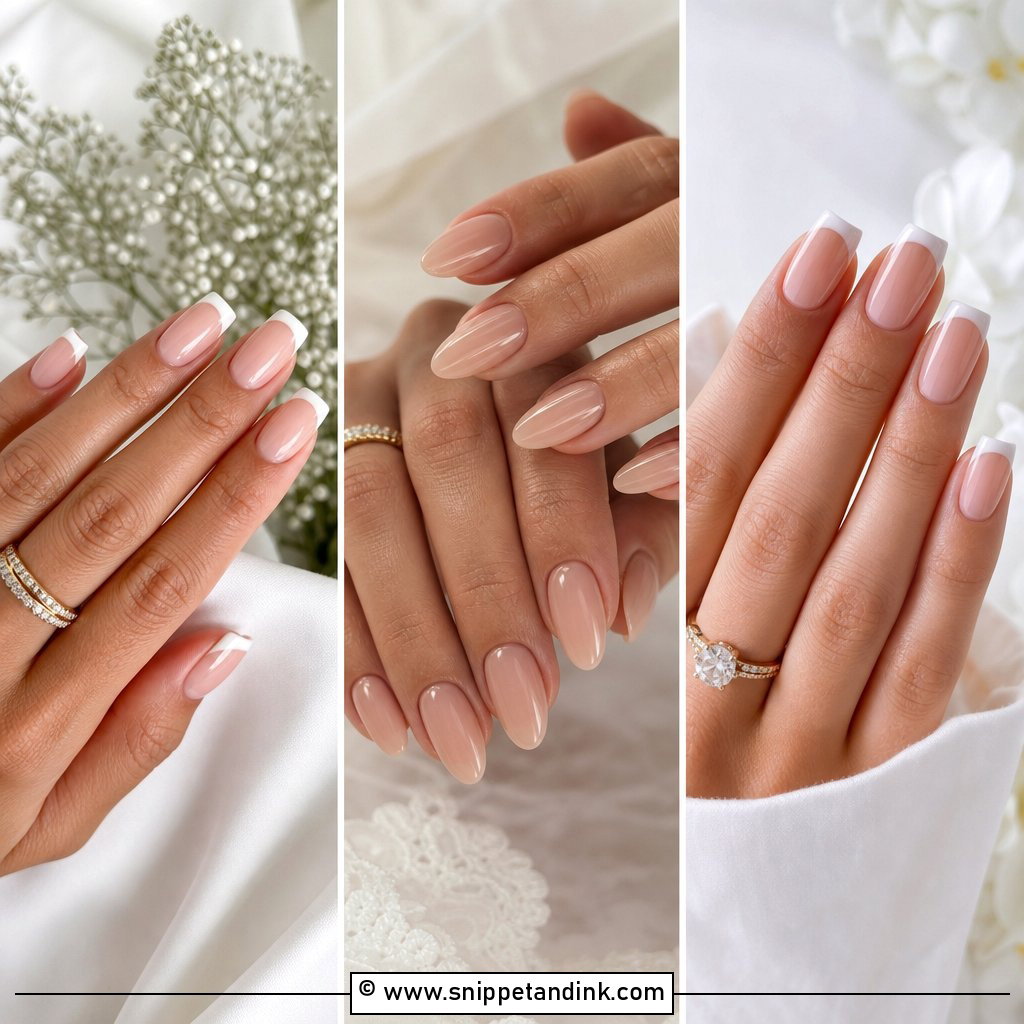
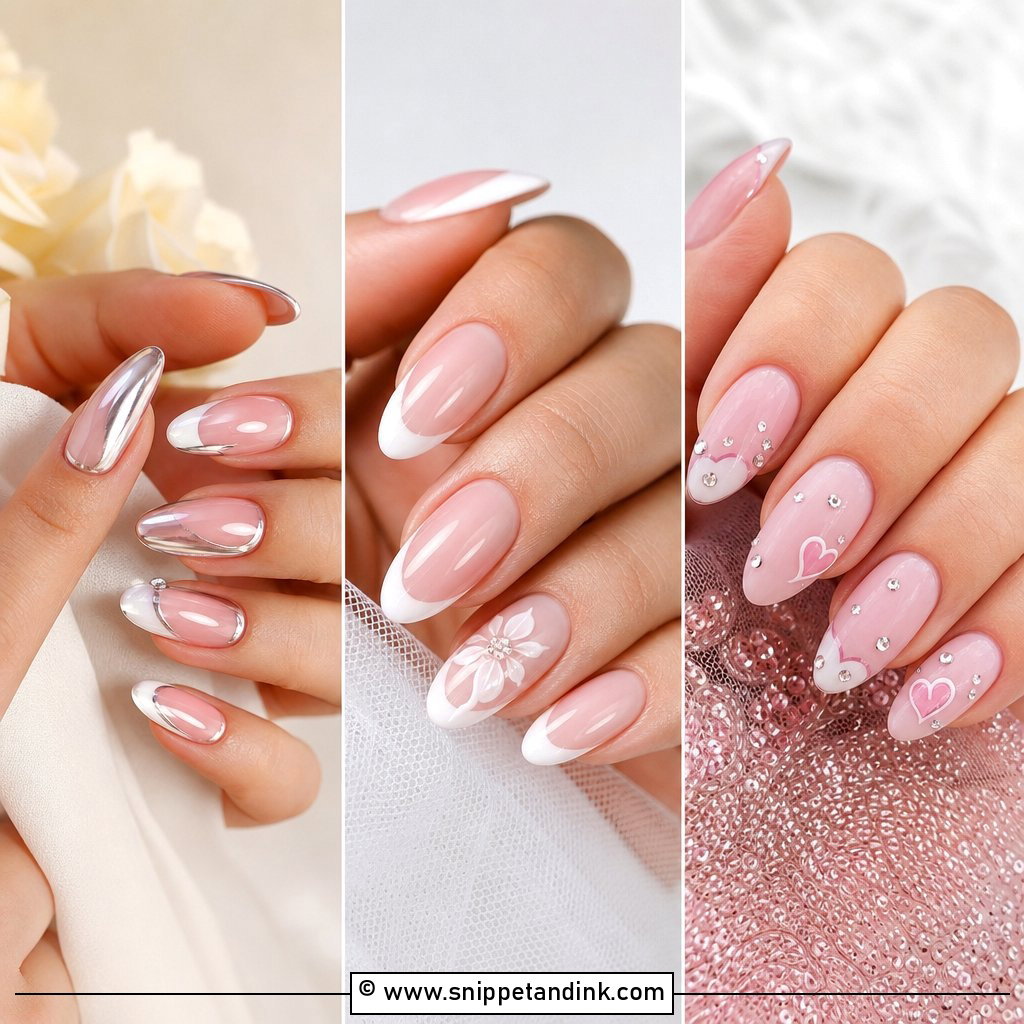
Classic French bridal nails haven’t gone anywhere, but the tip has slimmed right down. I paint a fine smile line over a sheer nude or pink, and I follow the curve of your own nail instead of a stencil line, because a tip that fights your natural smile line looks off the second your hand turns. Thick, bright tips are what dates old wedding photos. Almond, oval and squoval give the line room to curve; on a very short square nail I’ll often suggest a micro French instead, since there’s barely any free edge to work with.
4. Pearl Chrome Bridal Nails
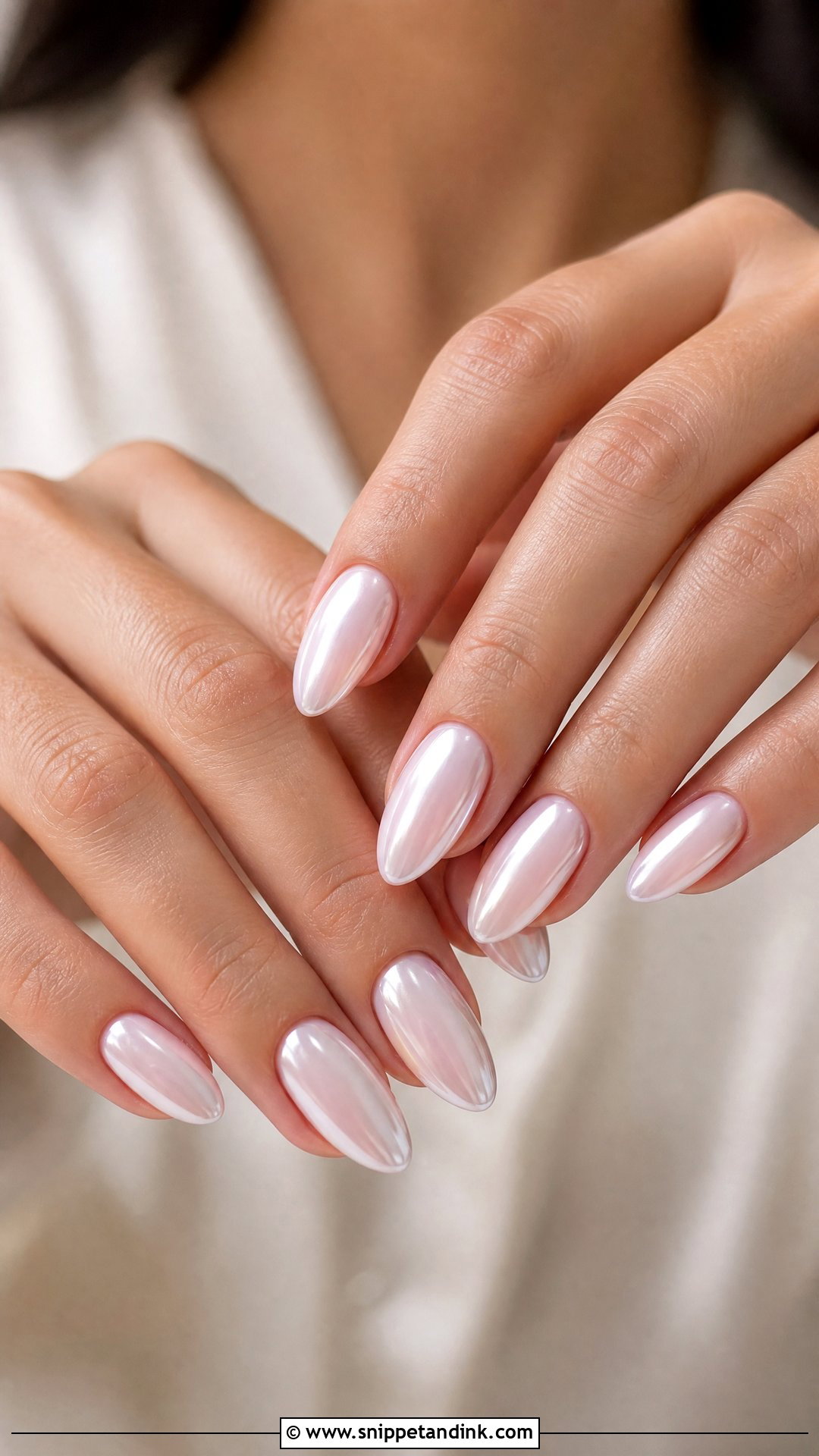
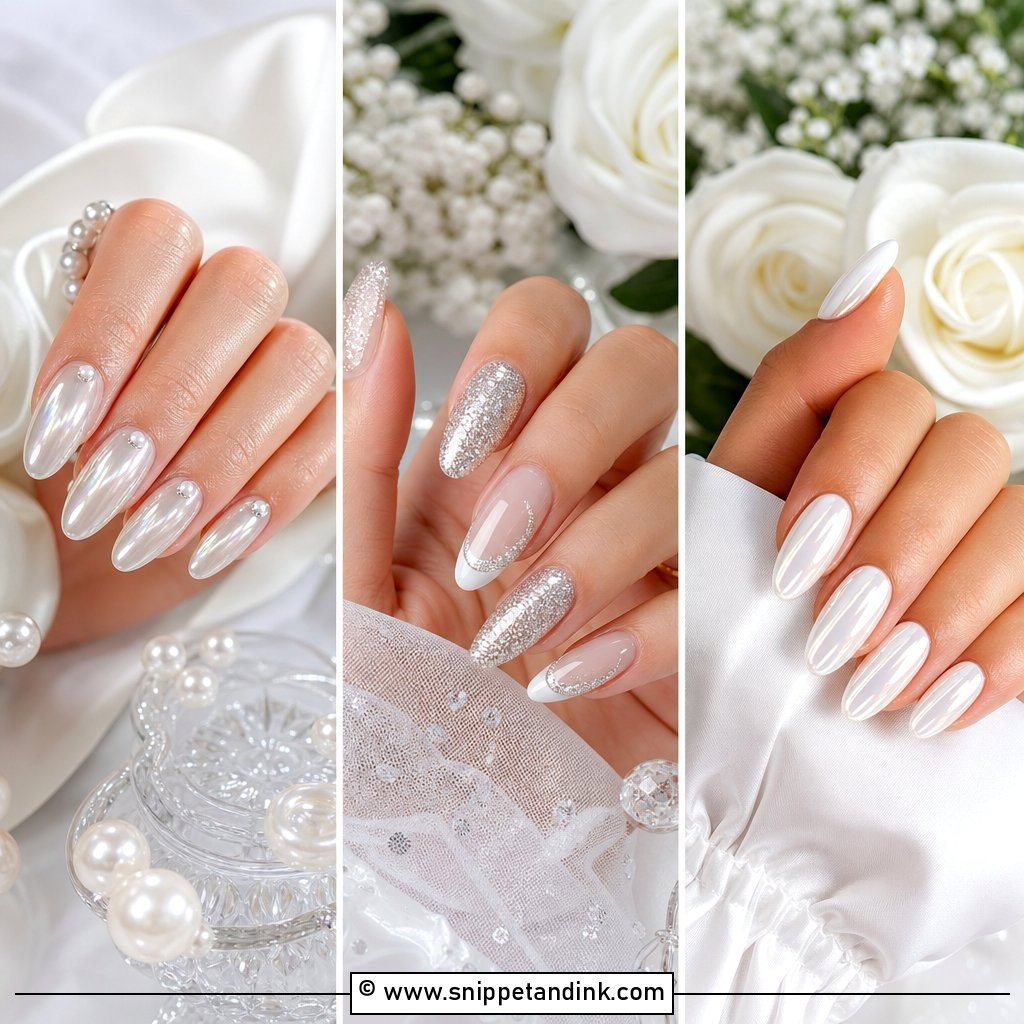
Pearl chrome starts with a sheer white, nude or pale pink base, and the chrome powder is buffed over a no-wipe top coat with a silicone tool or a fingertip. The amount is everything. One light pass gives that soft glow; two or three passes move it toward silver mirror, which is not what most brides want next to pearls. I seal the free edge carefully, because chrome is the first finish to chip at the tips on day three. Medium almond shows it off, short oval keeps it quiet, and it pairs naturally with satin or silk.
5. Nude Almond Bridal Nails
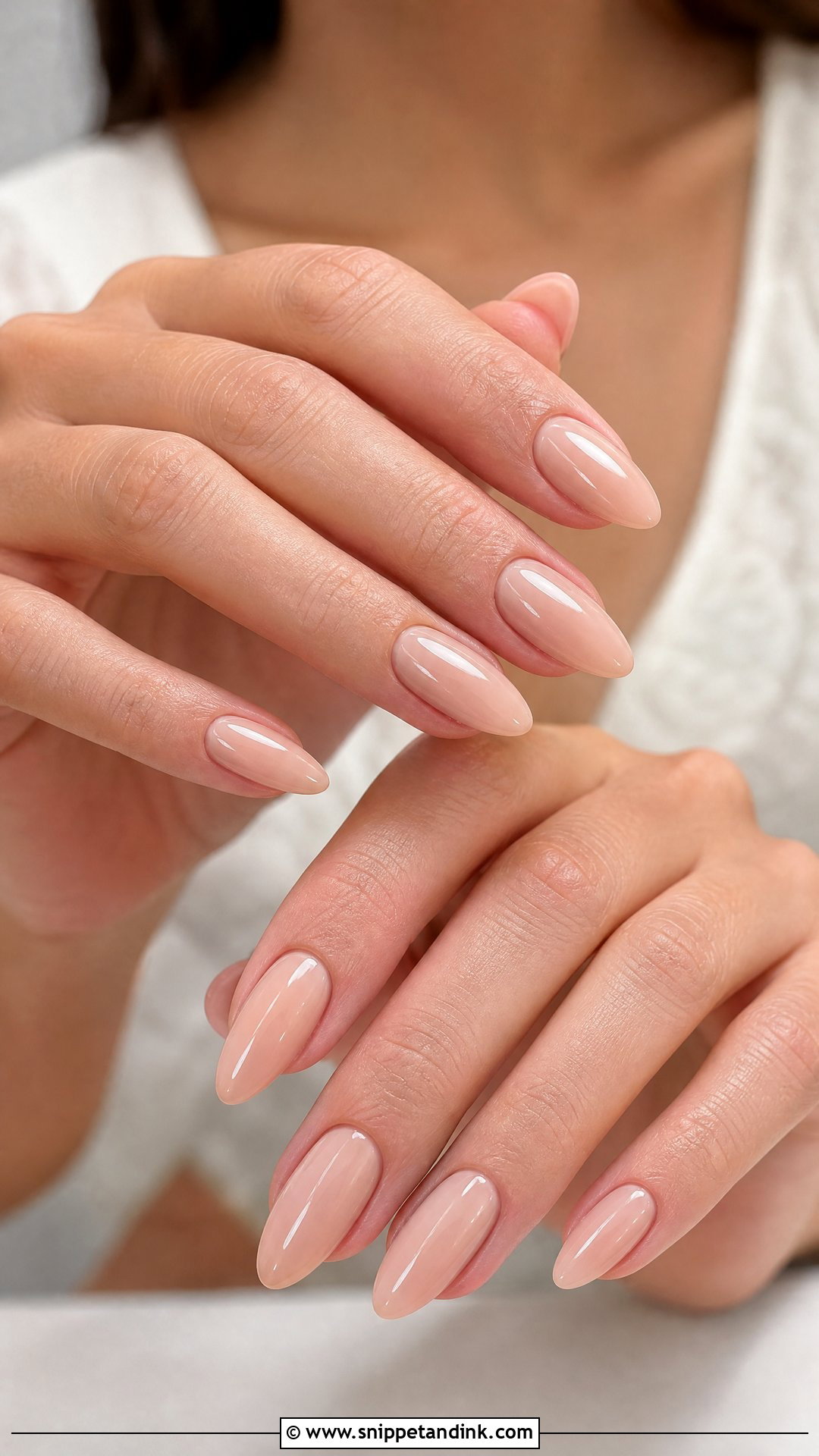
A nude almond set depends on one decision: picking a nude a shade or two lighter or deeper than your skin, never an exact match, or your fingers read as one long block with no nail. On fair skin I swatch pink-beiges. Medium and olive skin usually take caramel or warm beige, and deep skin glows in cocoa, mocha or rose-brown. I test two or three shades on the nail itself at the trial rather than trusting the bottle. The almond shape lengthens the fingers, and a glossy finish with clean cuticles does the rest.
6. Baby Boomer Bridal Nails
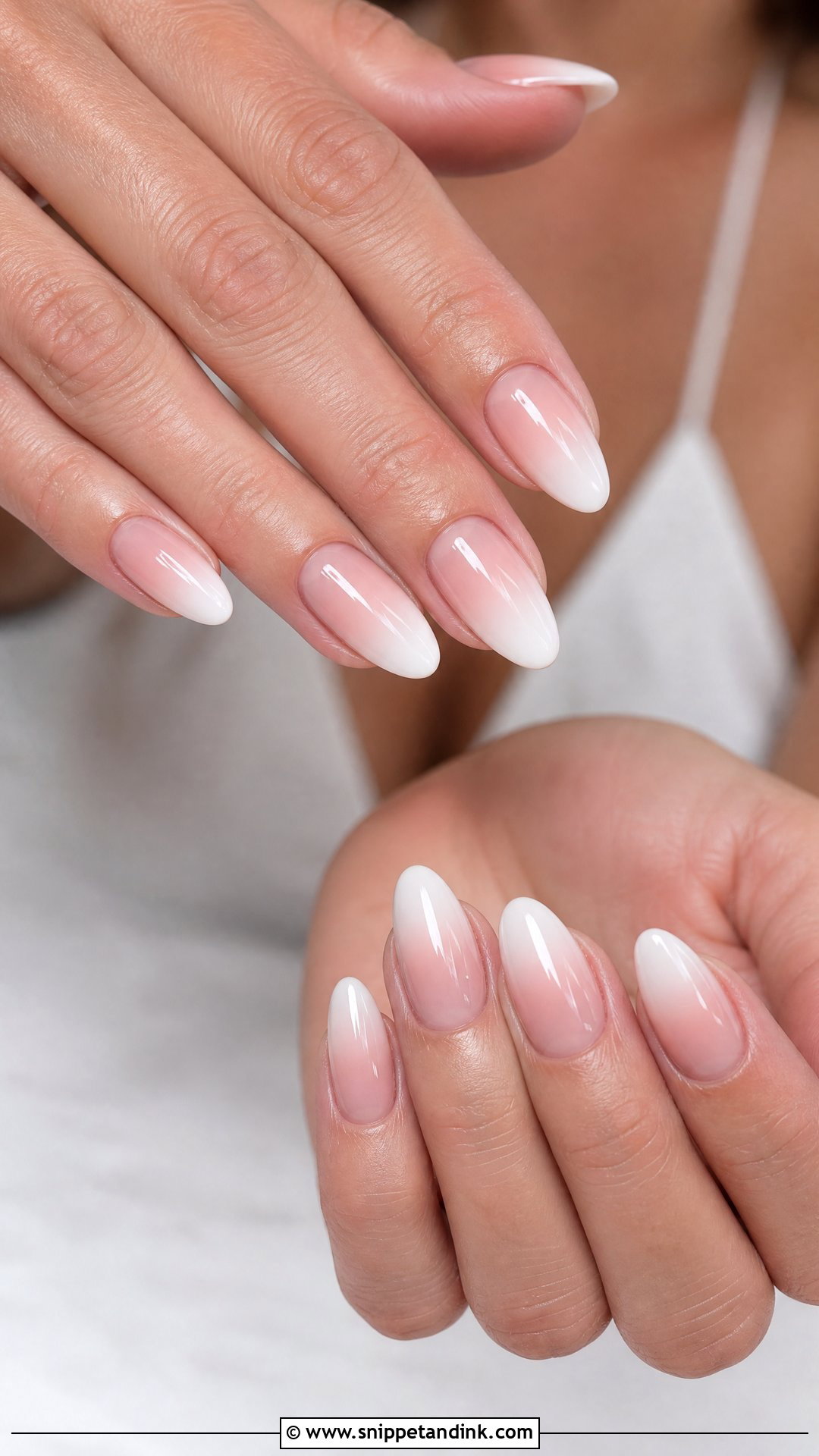
Baby boomer bridal nails are a French manicure with the line blurred out: nude or pink at the cuticle fading into creamy white at the tip. I do the fade with a makeup sponge or a gel blending brush, and the common mistake is too much white, which turns the whole nail milky and loses the gradient. Ask for an airy version where the white only covers the top third. Because there’s no hard line, small grow-out at the cuticle barely shows, which matters if your set goes on a few days early. A faint pearl shimmer on top is optional.
7. Glazed Donut Bridal Nails
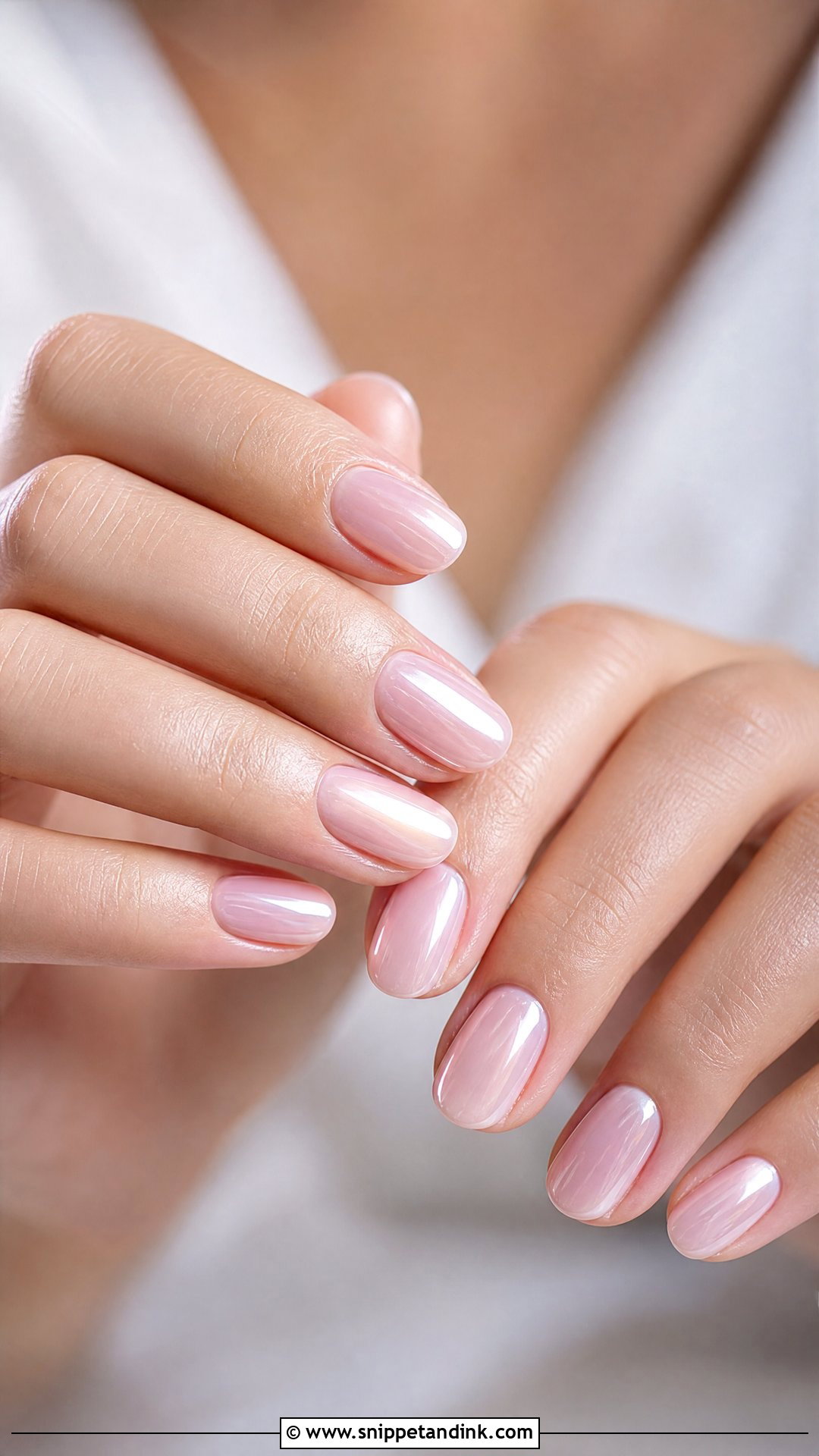
Glazed donut nails are a sheer base, usually pink, milky white or nude, with a thin pearly chrome rubbed over the top. Where it differs from pearl chrome is the base: I keep it almost see-through, so the effect is a sheen rather than a color. It’s quieter than full metallic chrome, which is why it still works for a bride. If the shimmer looks gritty under the lamp, the powder wasn’t buffed in enough and it will look textured in close-ups. Short oval and medium almond suit it best, alongside sleek hair and dewy skin.
8. Soft White French Bridal Nails
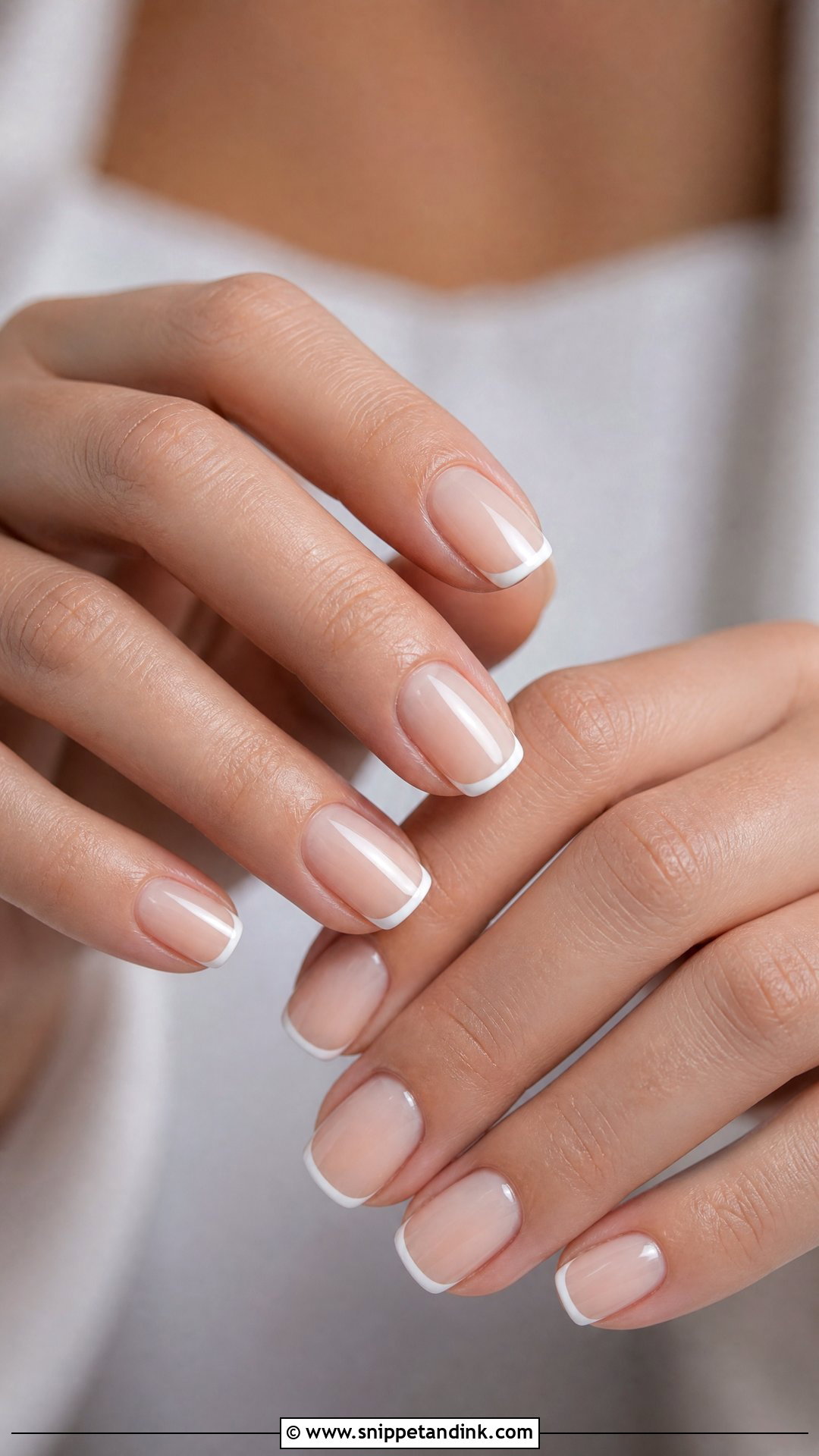
Soft white French uses a creamy or milky edge instead of a bright salon white. I recommend it to anyone who’s had a stark French before and felt it looked too sharp. The softer tip is kinder to short nails, too, because a bright white band visually chops the nail bed and makes the nail look stubbier. Keep the tip slim and gently rounded, and finish with a high-gloss top coat so the transition stays smooth.
9. Lace Bridal Nails
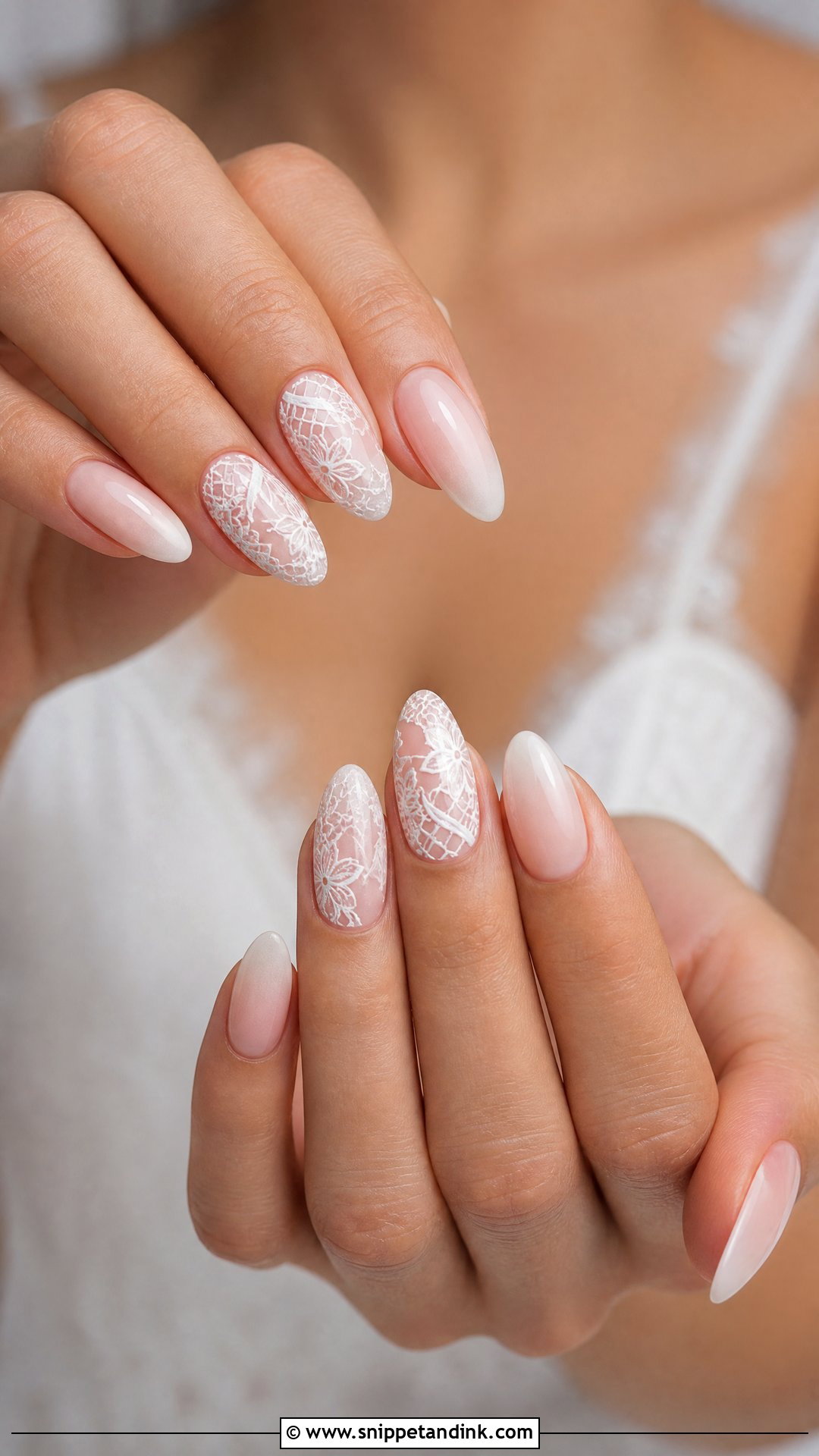
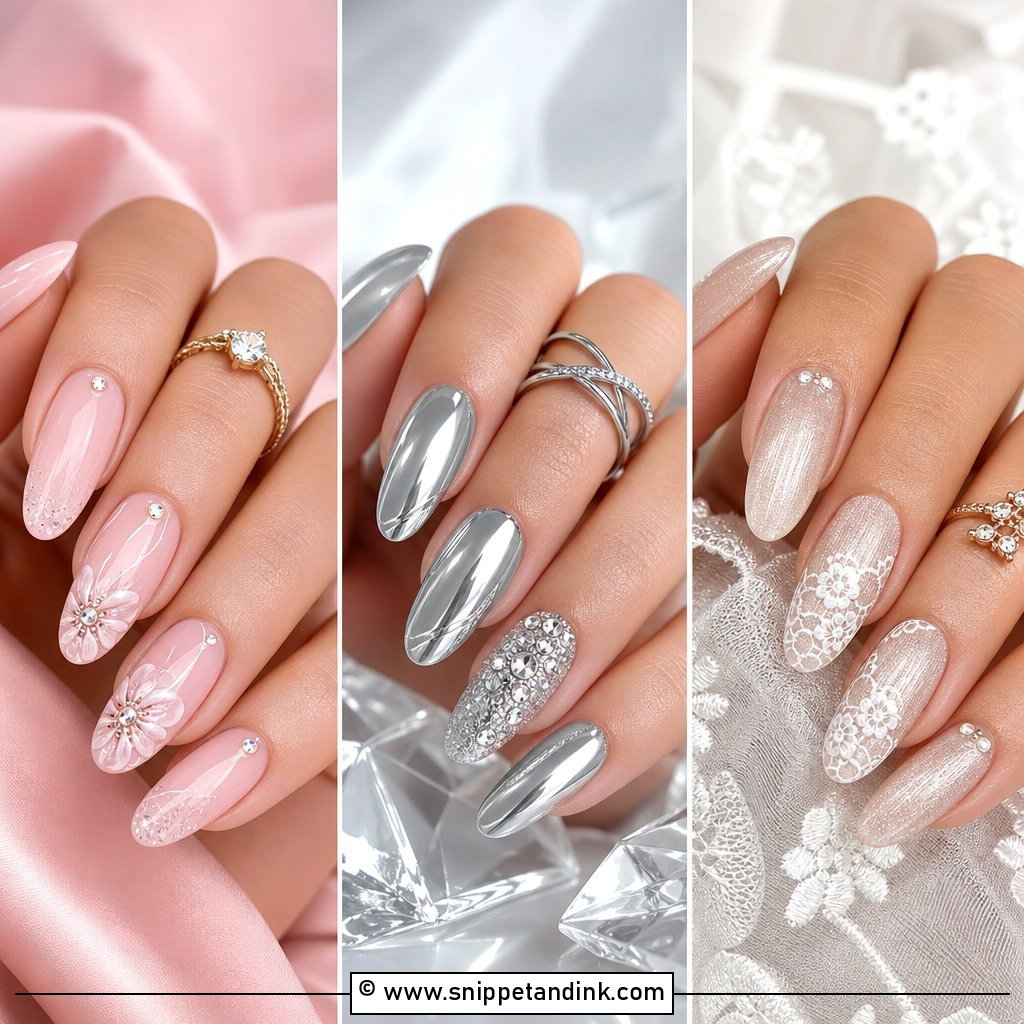
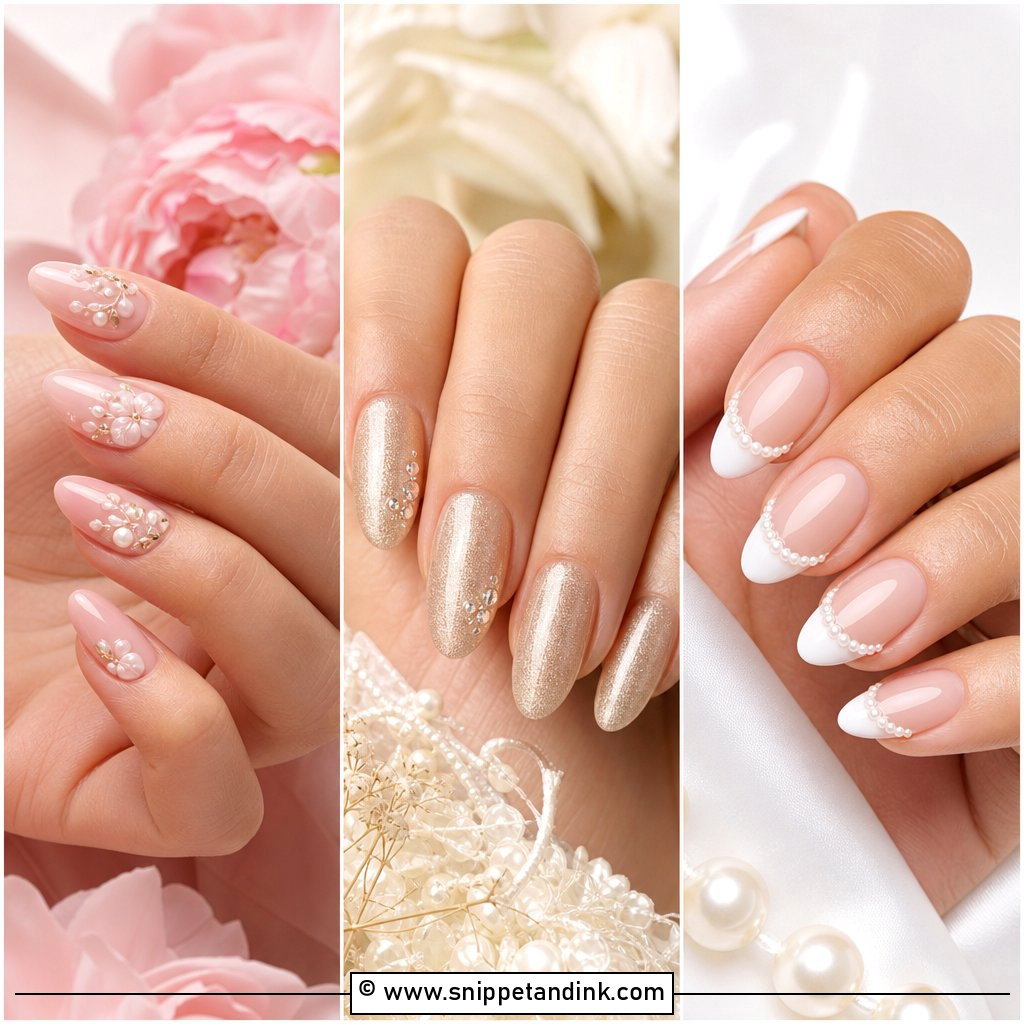
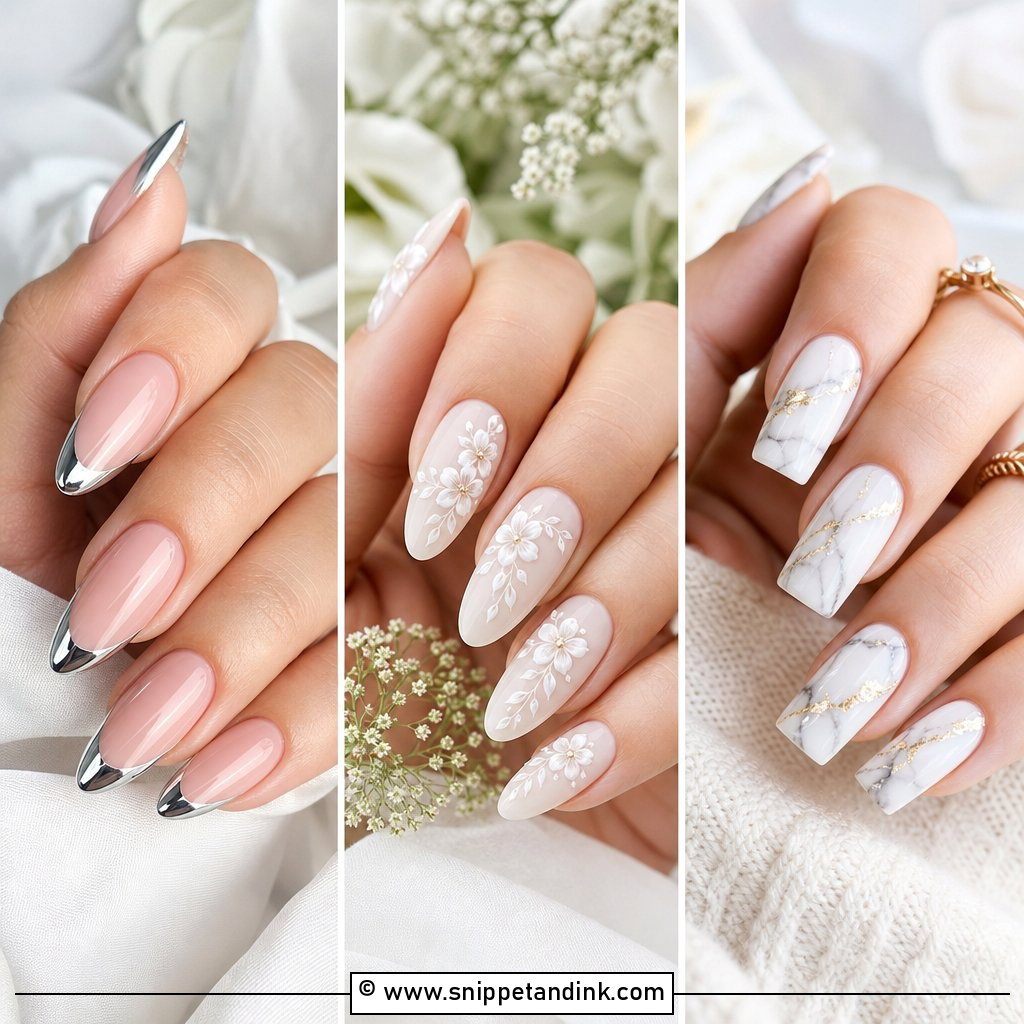
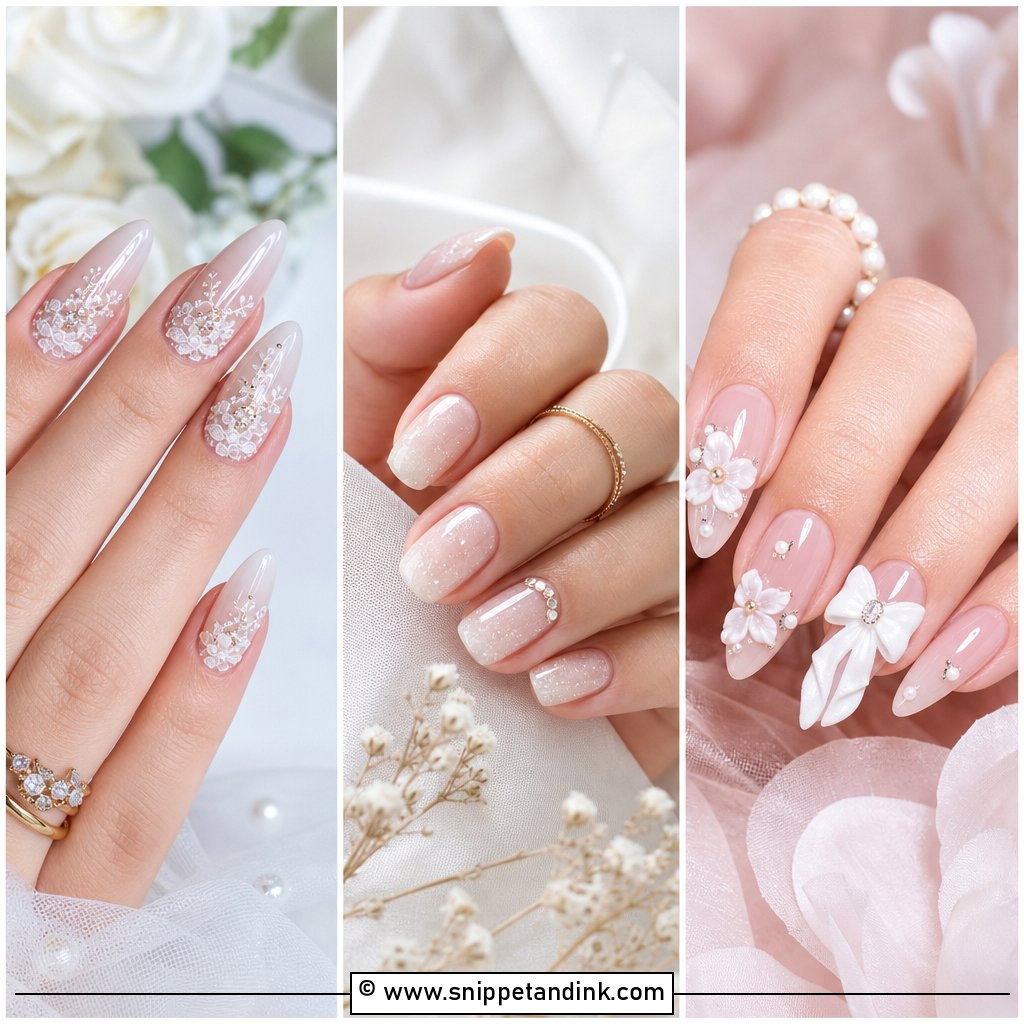
Lace nails can echo your dress without turning busy, but only if there’s plenty of bare base showing. I paint fine floral curves, tiny dots or a soft net pattern over a sheer nude, blush or milky base, either on a couple of accent nails or across the set. Hand painting gives thinner lines than most stamping plates; stamping is faster and more even. If your gown has a specific lace motif, bring a close photo of it, because I’d rather echo the actual pattern than invent a generic one. Almond and oval suit the curves best, and a transparent base reads more modern than an opaque one.
10. Pearl Accent Bridal Nails
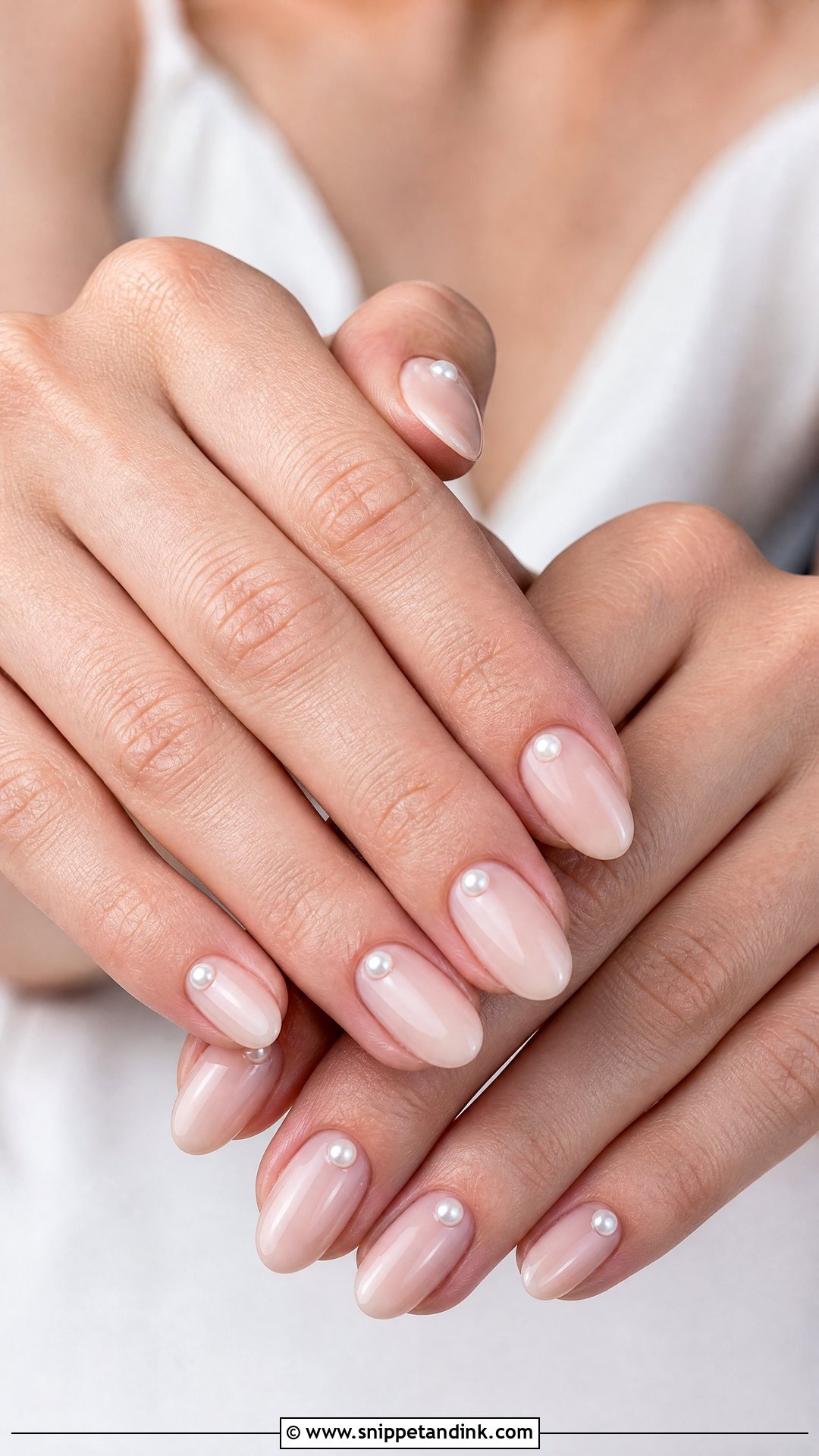
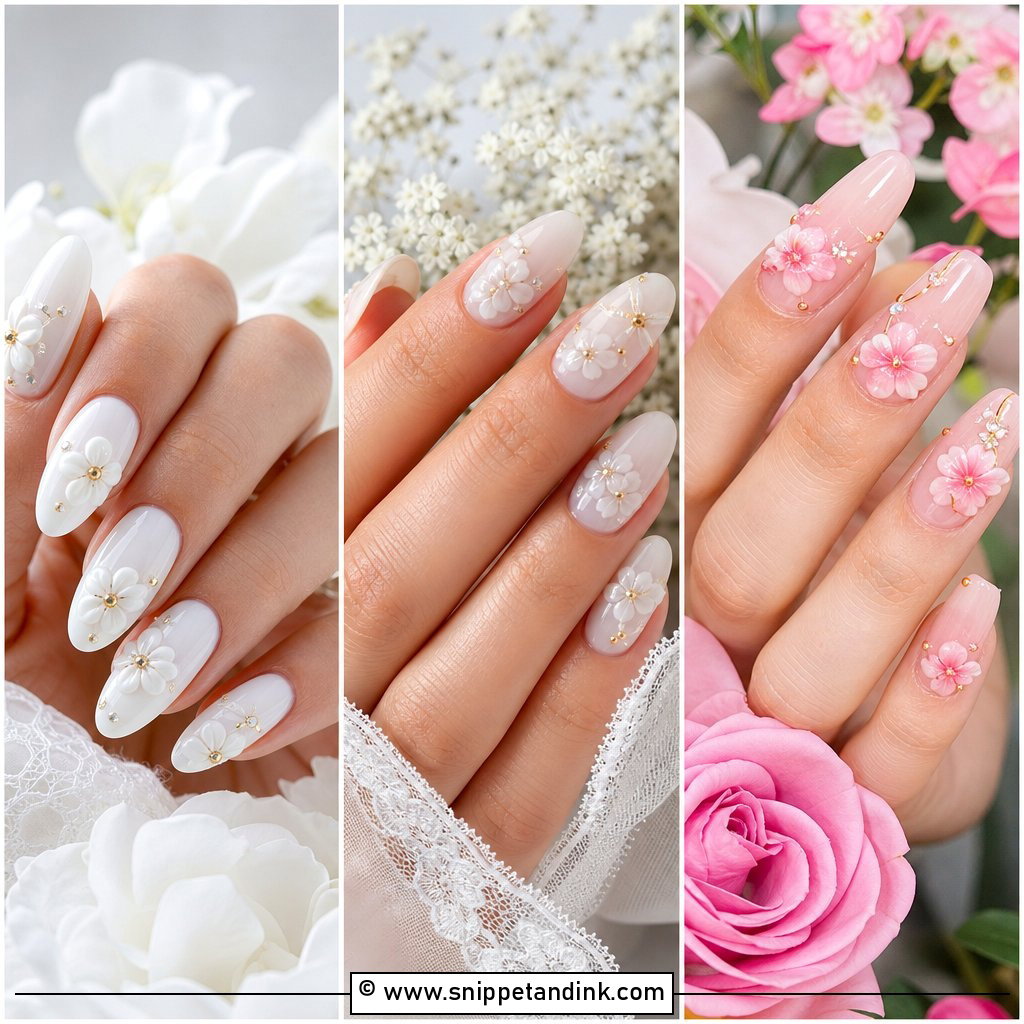
Pearl accents can sit near the cuticle or along a single accent nail over sheer pink, nude, milky white or a French base. My rule is small and flat-backed. Half pearls set into builder gel near the cuticle stay put; anything set near the free edge snags on veils, hair and knit wraps and tends to pop off by the evening. I’d skip big 3D pearls entirely if you’ll be pinning your own hair or handling a lot of fabric. This one makes the most sense when pearls already appear in your dress, veil, shoes or jewelry.
11. Short Bridal Nails
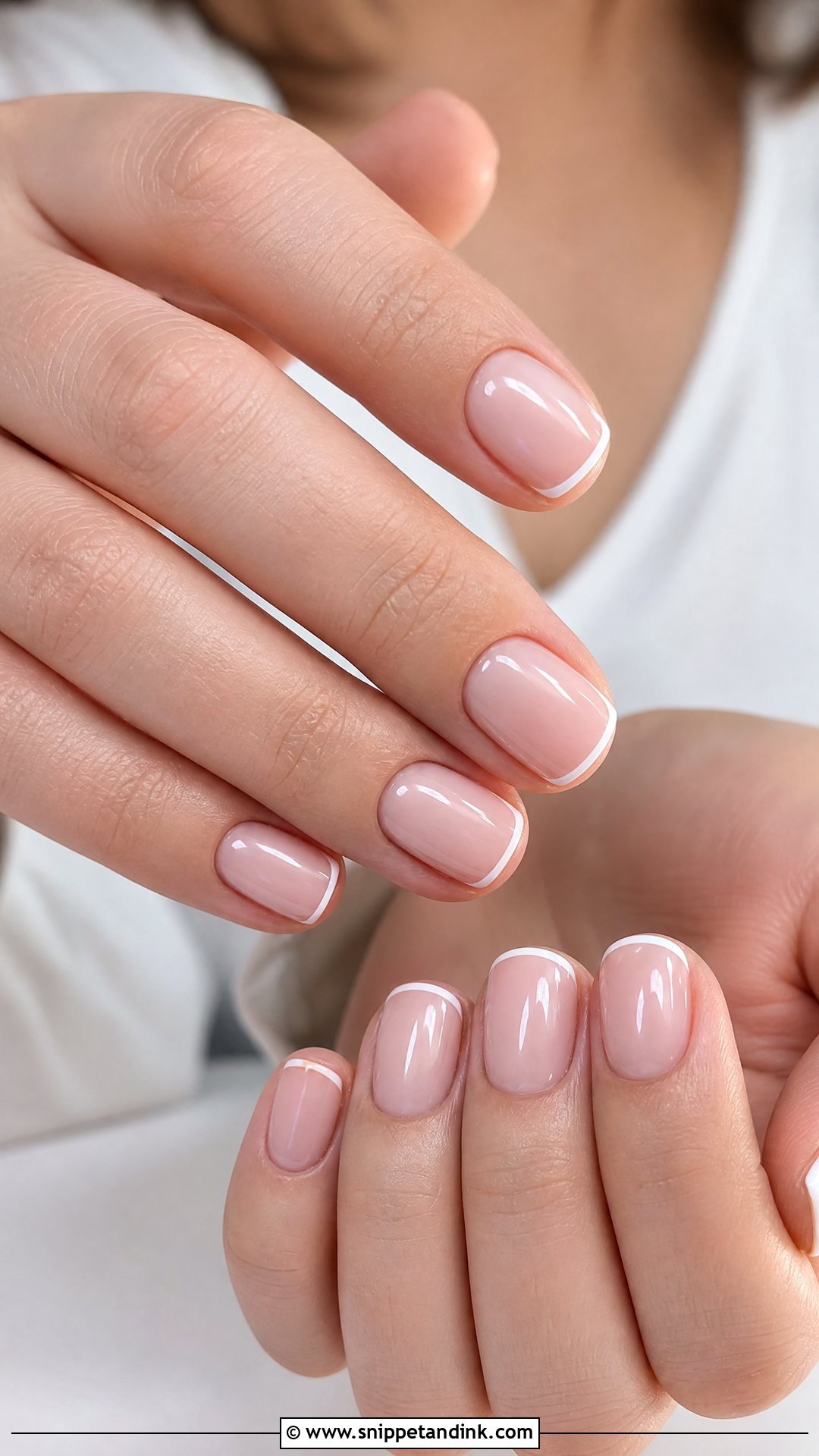
Short bridal nails look every bit as finished as long ones once the shape is even and the cuticles are clean. A short oval, squoval or soft square is what I suggest to anyone who doesn’t normally wear extensions, since a sudden jump in length on the wedding day makes typing, earrings and zips feel awkward. Sheer pink, milky white, micro French, pearl chrome and nude gloss all suit short lengths. What short nails can’t hide is prep, so I spend more time on the cuticle and the side walls than on the polish itself.
12. Almond Bridal Nails
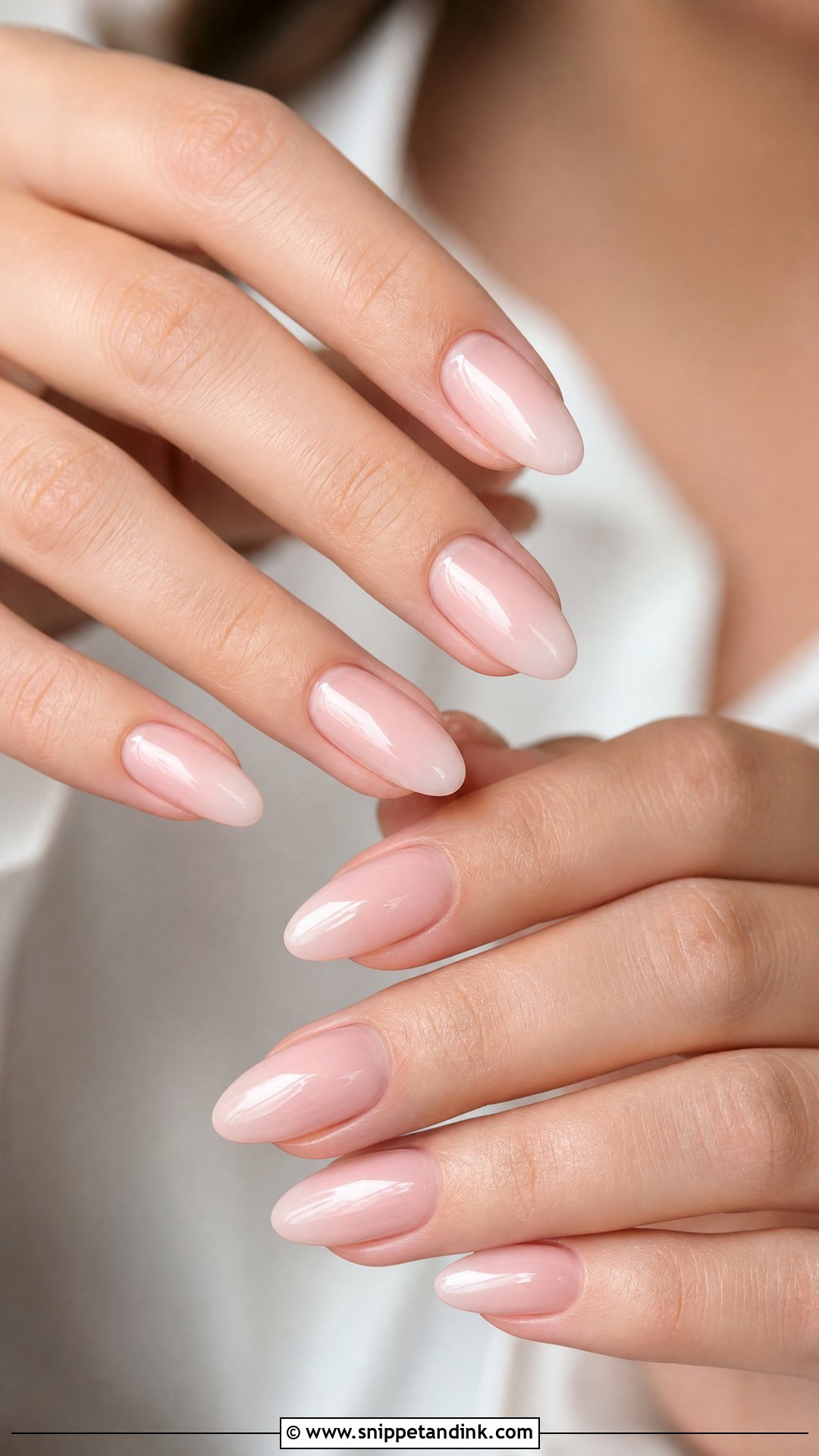
Almond is the shape I file most for weddings. The tapered sides and rounded tip lengthen the fingers without the sharpness of a stiletto, and a medium length is easy to live with for a day of hugging and hairpins. It takes French tips, chrome, nude, lace and pearls equally well. My one caution: on a very wide nail bed, a narrow almond can look pinched, so I’ll keep the taper softer and closer to an oval. Holding a bouquet stem, the shape reads graceful in profile.
13. Square Bridal Nails
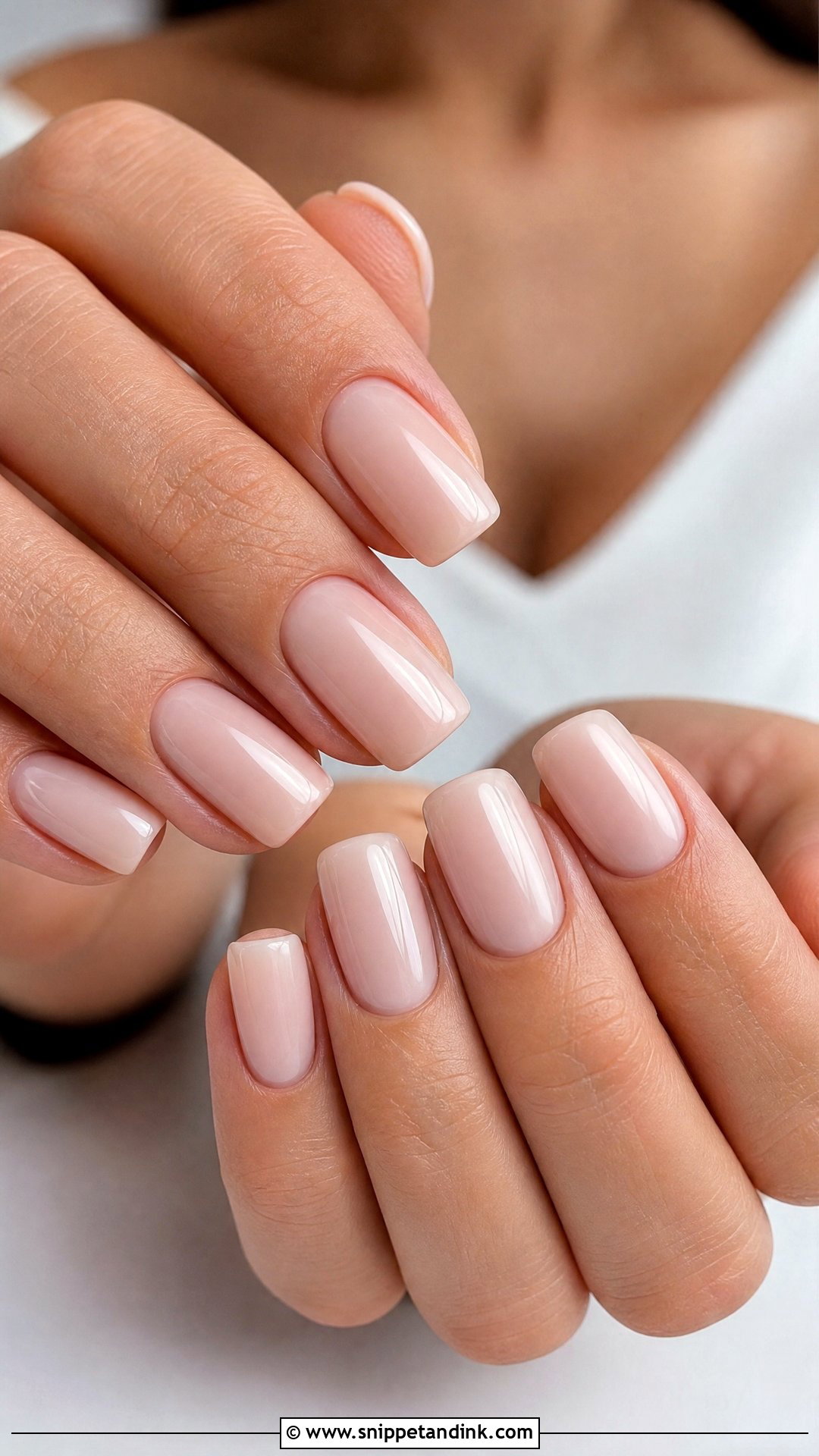
Square is the crispest shape on this list, and it suits brides who like structure in their clothes, too. Milky nude, soft white French, sheer pink gel or a light chrome glaze keep it bridal. I almost always soften the corners slightly, into a squoval, because sharp square corners catch on lace and chip first at those exact points. Short to medium length is where square looks smartest; longer squares can start to look blunt.
14. Coffin Bridal Nails
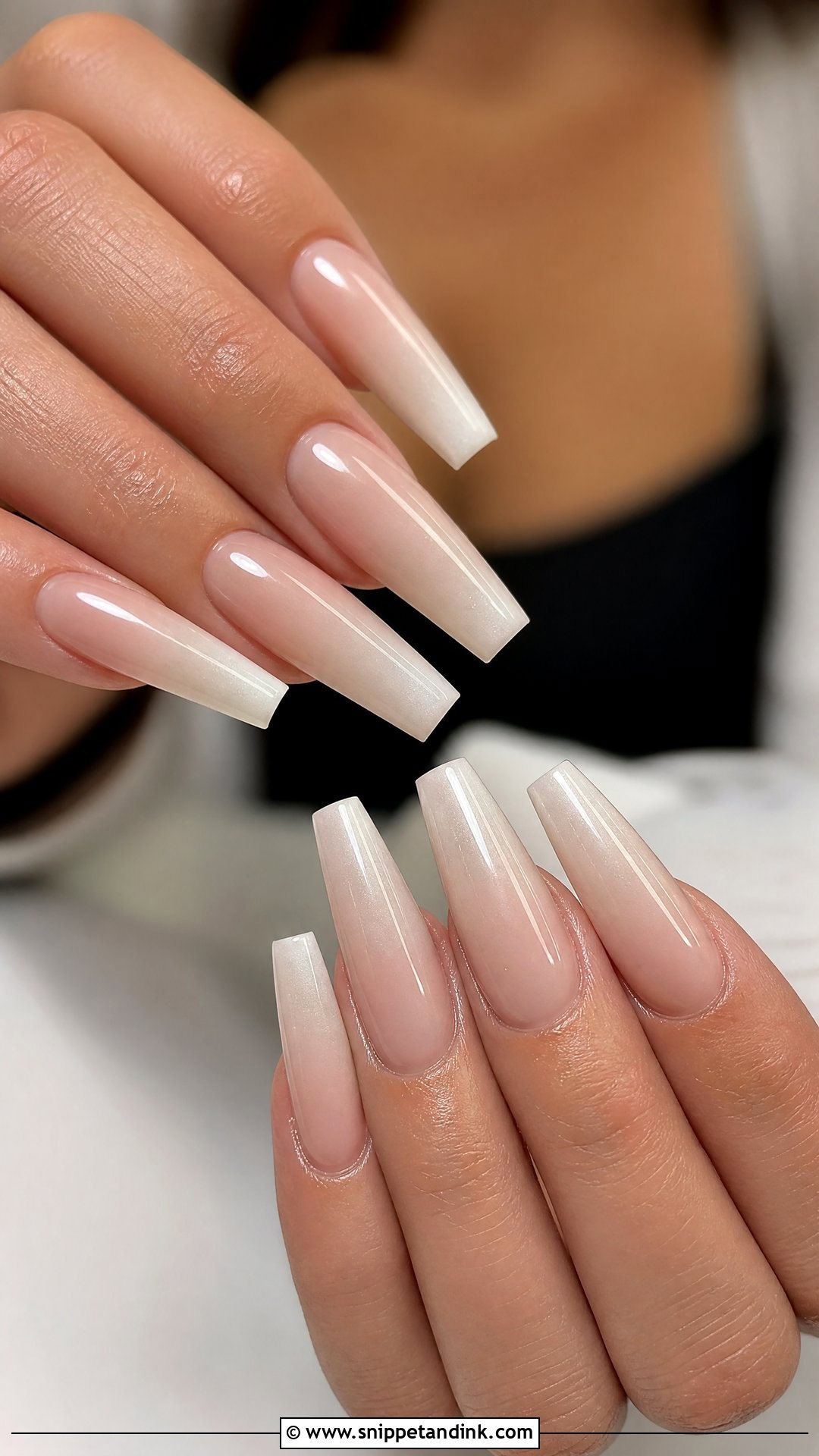
Coffin bridal nails bring a bit more drama, and the soft colors are what keep them bridal. Sheer nude, blush pink, milky white, baby boomer ombré or pearl chrome all work, and the extra length gives room for lace, tiny pearls or a fine glitter fade. Most coffins I do are extensions, either soft gel tips or sculpted gel, so book them early enough to get used to the length. A medium coffin is the one I’d recommend; long coffins are hard to work with when you’re fastening jewelry or managing a train.
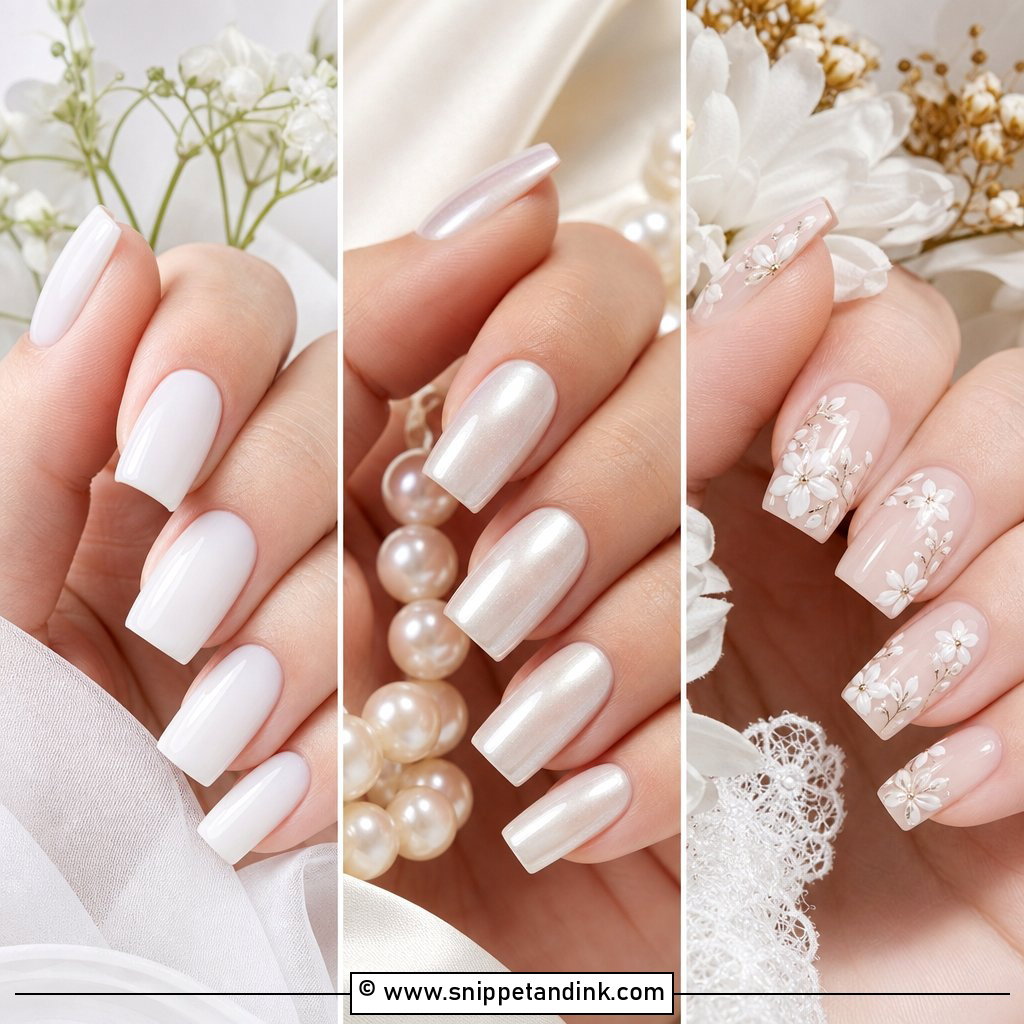
15. Oval Bridal Nails
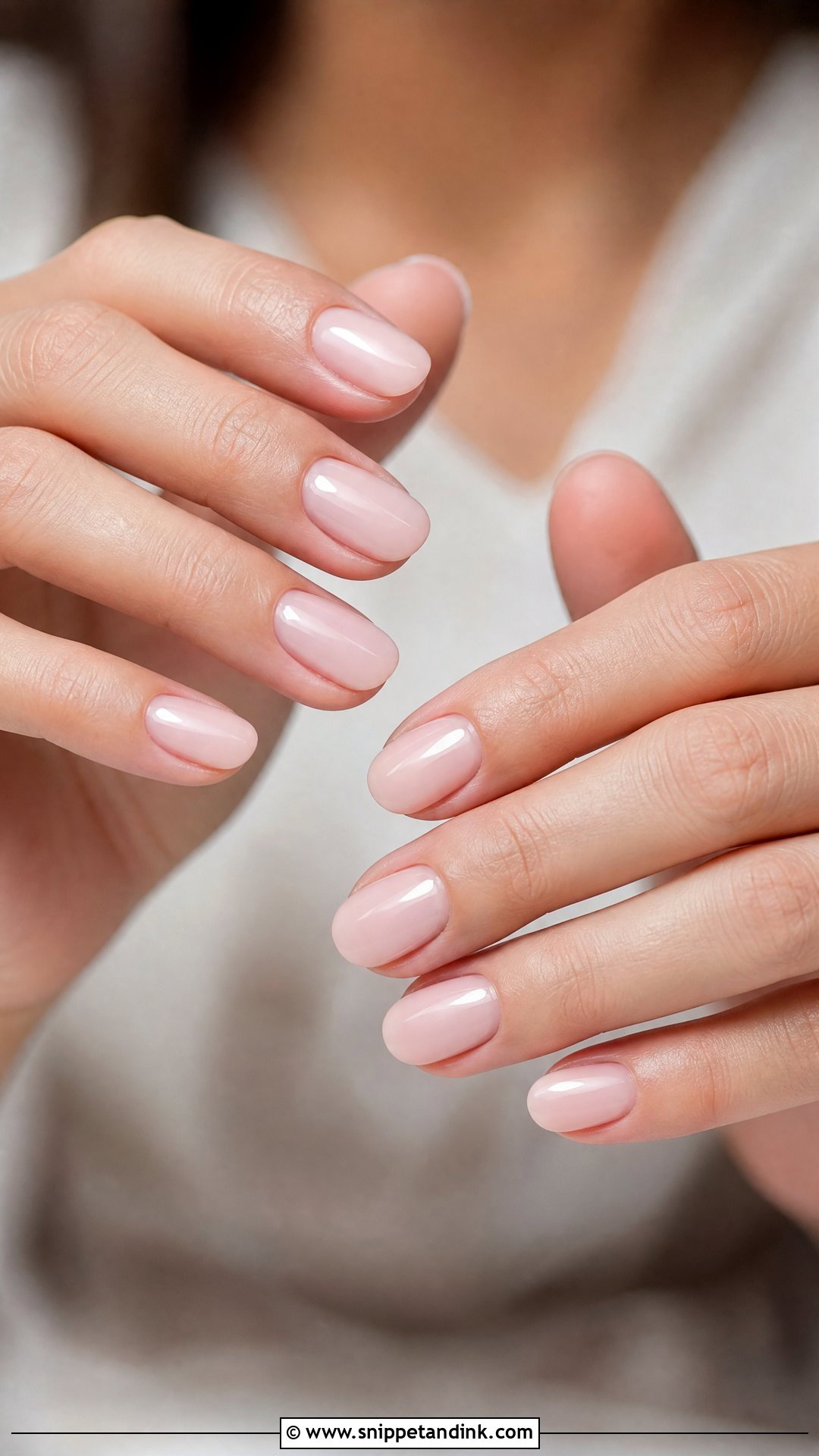
Oval follows the curve of your fingertip, which is why it’s comfortable and suits almost every hand. You don’t need extensions for it, either: most natural nails can be filed into a neat oval with only a few millimeters of free edge. It takes sheer pink, milky white gel, classic French tips or soft pearl chrome without any fuss. I check that both sides of each oval are symmetrical from above, because a lopsided oval is the one thing that shows in a ring shot.
16. Something Blue Bridal Nails
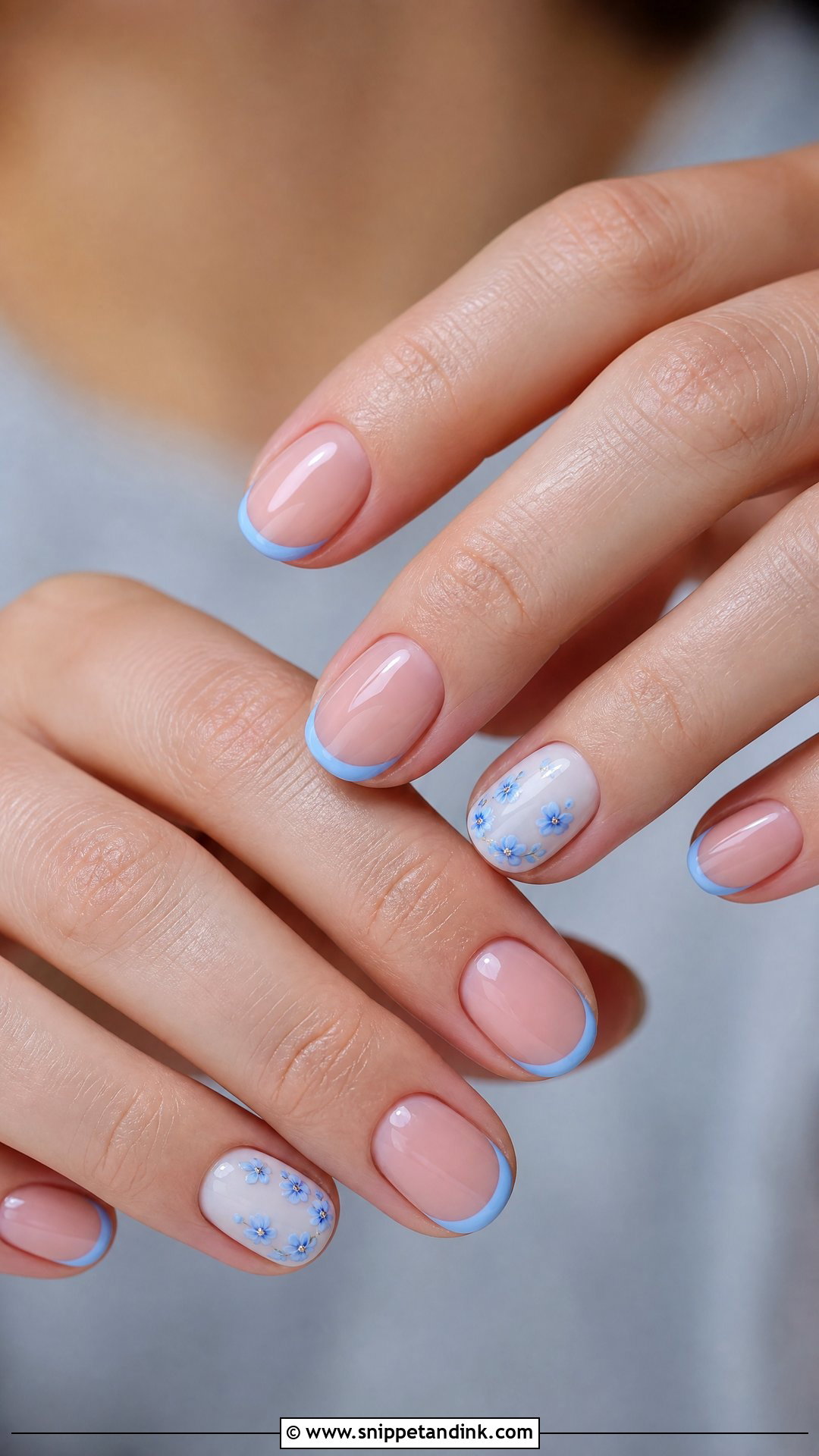
Something blue works best when the blue is a detail rather than the manicure. Pale blue French tips, a few blue micro accents, tiny blue florals or a sheer baby blue glaze over the whole nail are the versions I’d do. If you’re unsure, keep the blue to one ring finger or the tips only. Pastel blues can look grey under warm reception lighting, so I swatch the shade under a warm bulb at the trial before committing. Short oval and almond both work, with silver or pearl details around it.
17. Blush Pink Chrome Bridal Nails
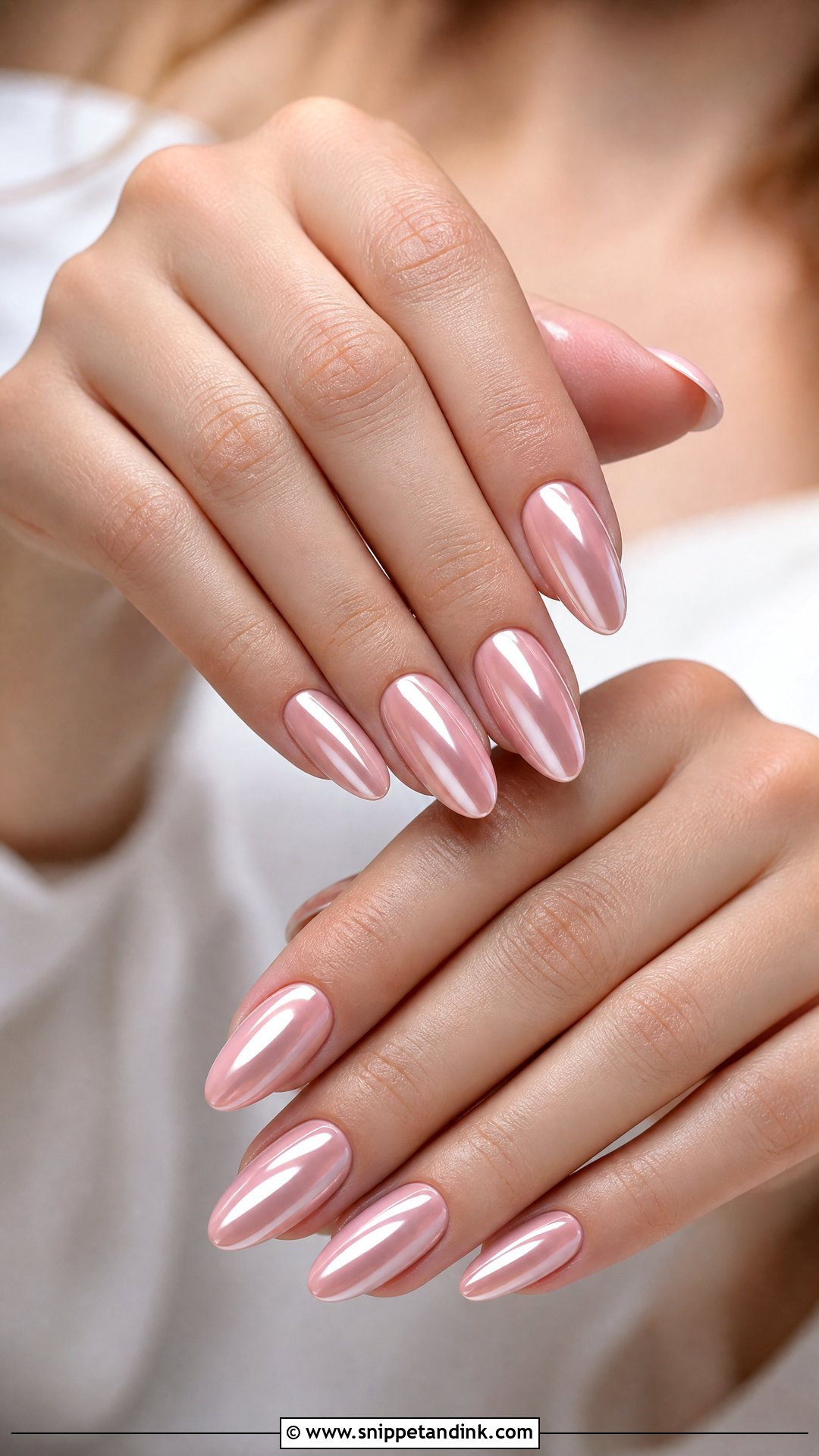
Blush pink chrome is a pale pink or rosy nude base with a thin layer of chrome on top. It warms the hands more than milky white and suits rose gold jewelry and champagne fabrics. The current version is a sheen, not a metallic pink, so I use a fine pearl powder rather than a strong pink chrome. Natural window light shows it off; under flash it reads softer. Almond, oval and squoval keep it refined.
18. Gold French Bridal Nails
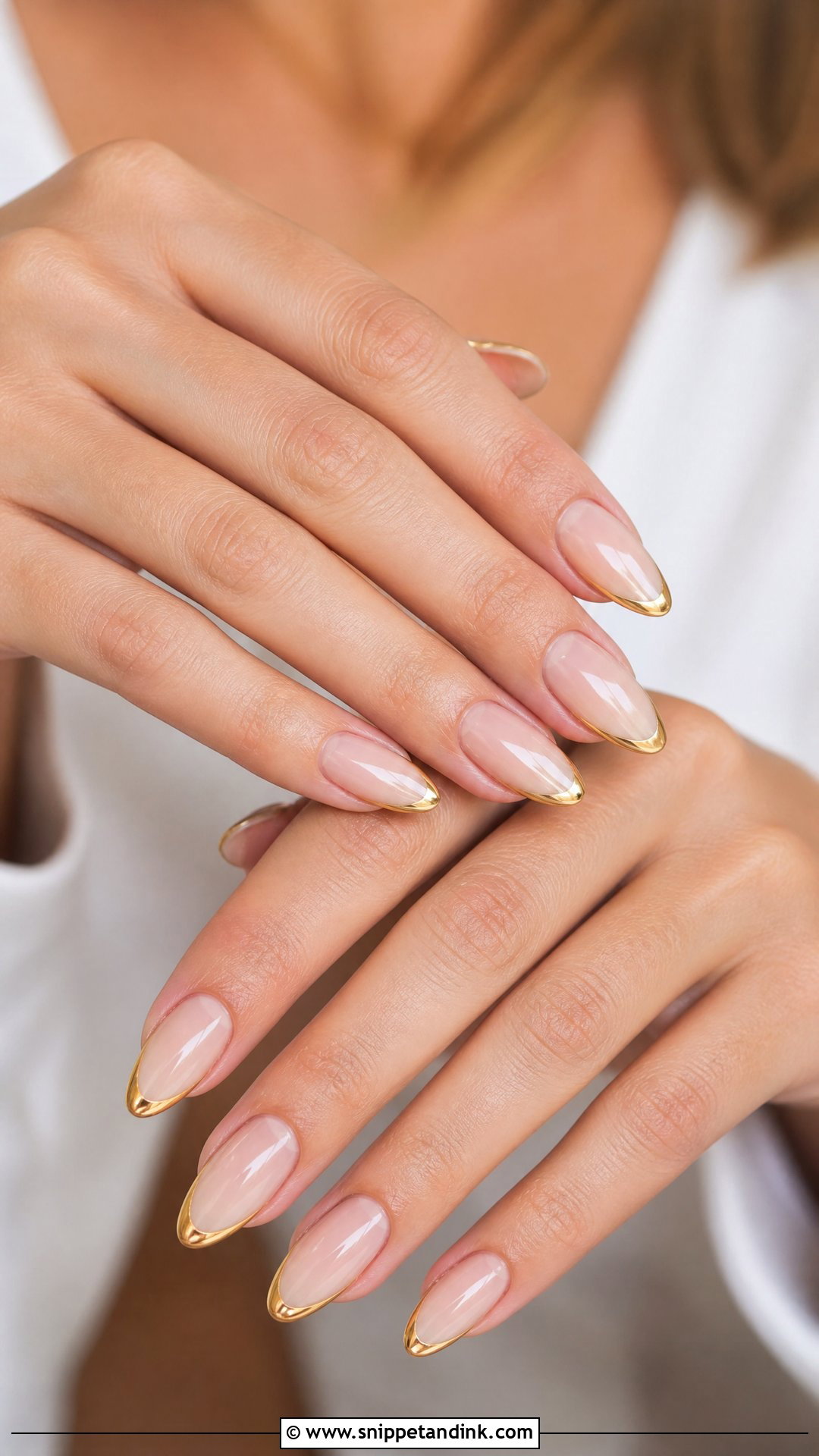
Gold French swaps the white tip for a fine gold edge over a sheer nude, blush or milky base. It ties in gold jewelry, warm-toned gowns and champagne details neatly. I paint the line very thin, because a wide metallic band looks like a costume nail. Shimmer gold gel is subtle; gold foil or a chrome powder tip is bolder and more mirror-like, and foil can lift at the edge if it isn’t sealed with a full top coat. Almond and square both carry it, as long as the rest of the nail stays plain.
19. Silver Glitter Bridal Nails
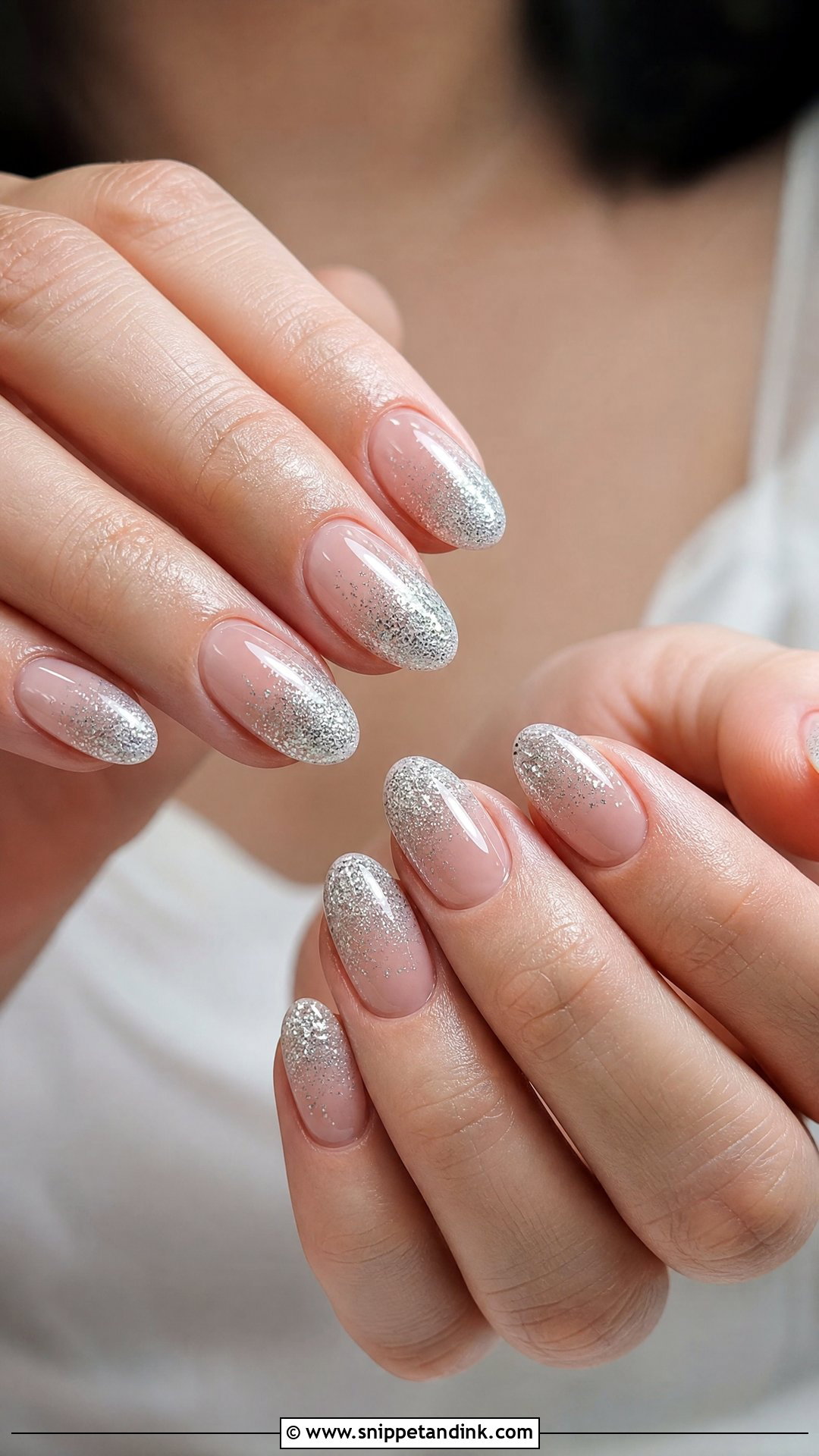
Silver glitter is how I add sparkle without losing the bridal feel, and the size of the glitter decides it. Fine glitter reads as light; chunky flakes read as party nails and leave texture you can feel. Over a sheer nude, blush or milky base, I fade it from the tip, sit it near the cuticle or cover one accent nail. Glitter gel is also the hardest finish to remove, so if you want a different manicure for a honeymoon a week later, plan for a soak-off appointment. It’s at home next to silver jewelry, crystal hair pieces and beaded gowns.
20. Floral Bridal Nails
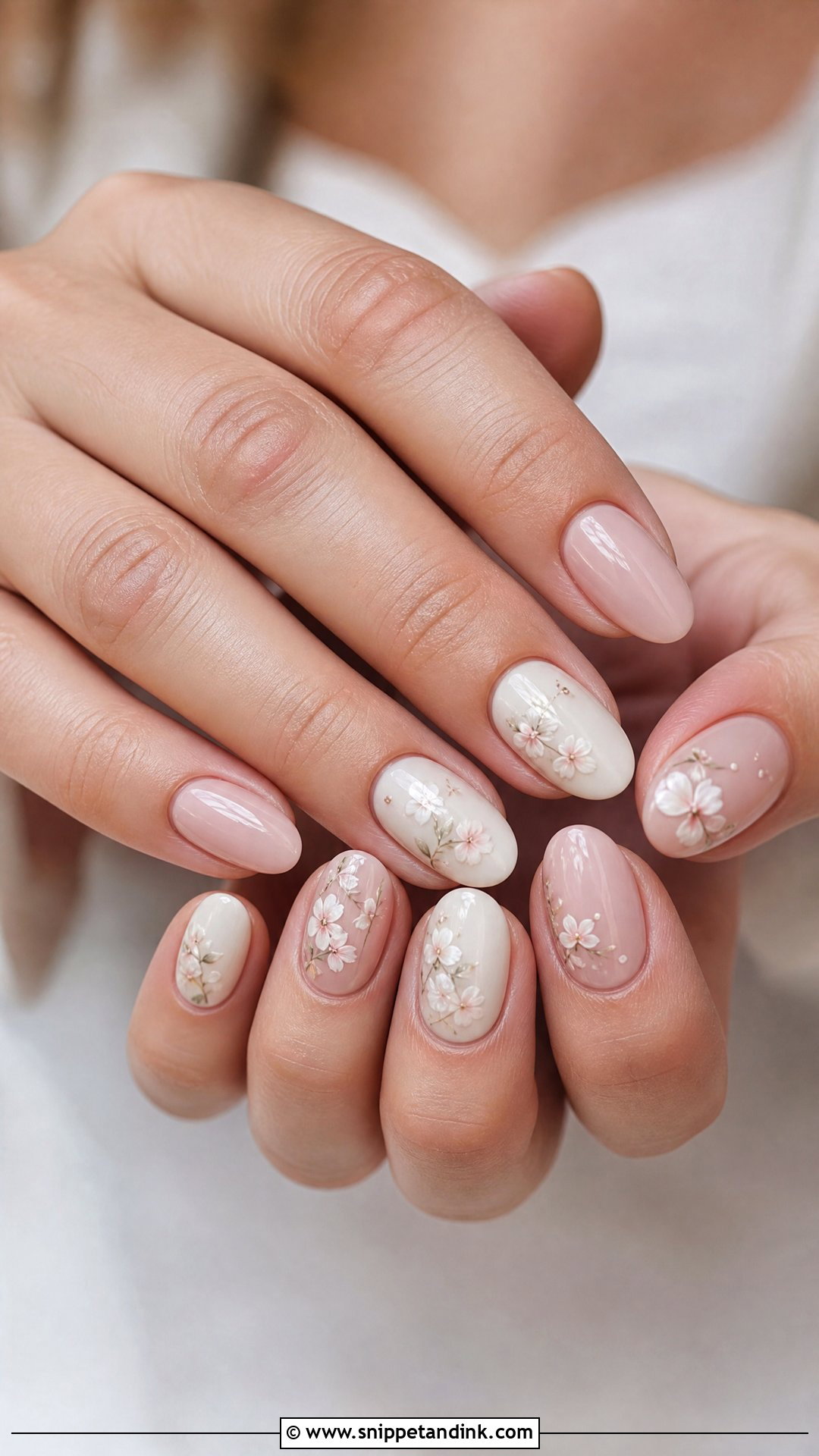
Floral nails need small motifs, otherwise they start to look like a summer pedicure. I paint tiny white flowers, soft blush petals or fine botanical linework over a sheer nude or milky base, or lay in a pressed-flower effect with real dried petals sealed under gel. Pressed flowers need several layers of top coat to sit flat, so the nail ends up thicker. One or two accent nails is plenty for most hands; a scattered pattern across all ten suits a garden or spring wedding. Bring a photo of your bouquet or embroidery so the petals relate to something.
21. Matte Nude Bridal Nails
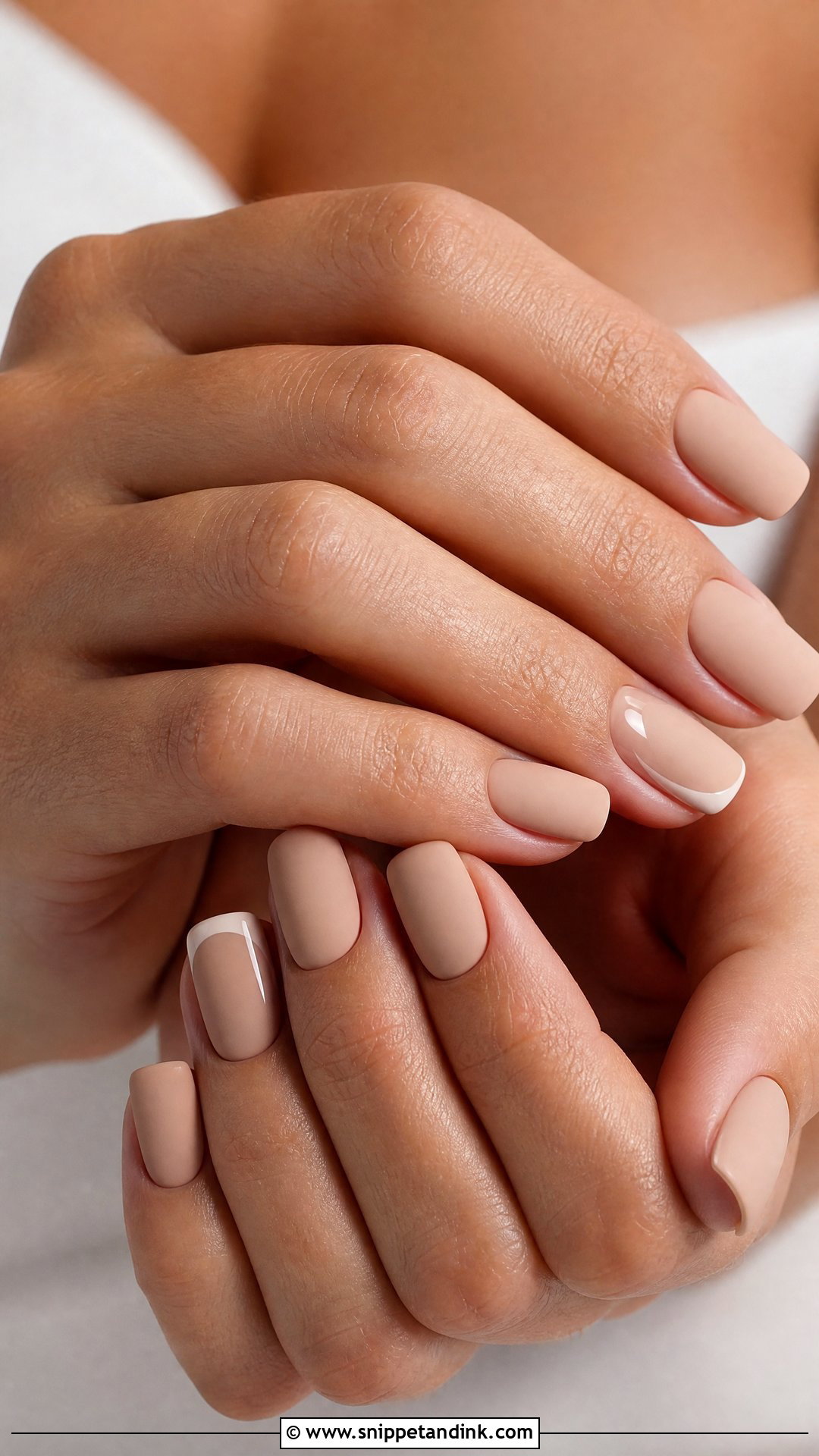
Matte nude is the most minimalist finish here, and the least forgiving. A matte top coat shows every ridge and every bump in the base, so I spend extra time buffing and leveling before color goes on. Warm beige, soft taupe, rosy nude and creamy pink all suit it. The other thing brides don’t expect: matte picks up oils from lotion and food and can turn slightly shiny in patches by the end of the night. A glossy French tip over the matte base adds contrast and hides that wear at the edge.
22. White Swirl Bridal Nails
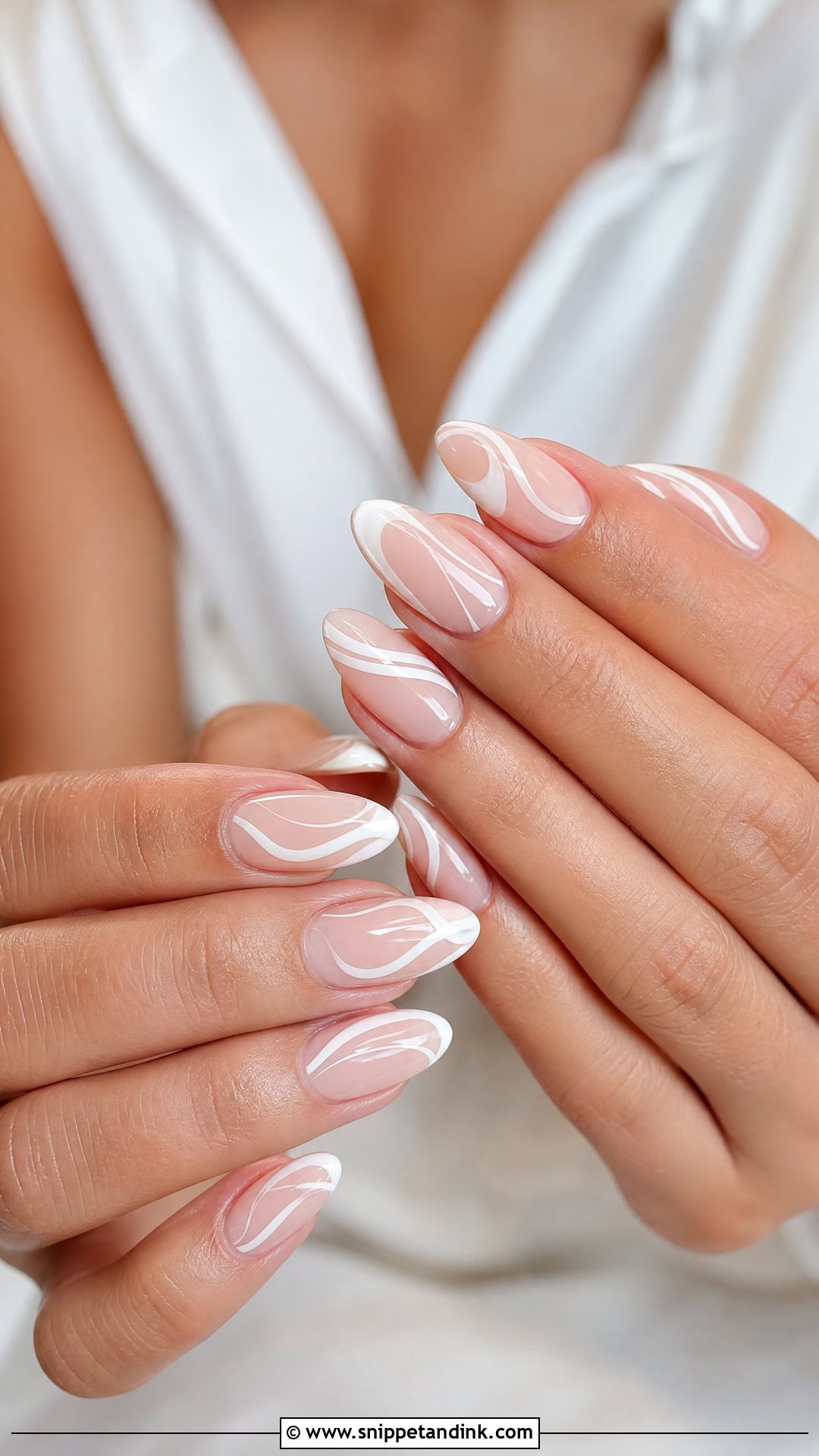
White swirls give movement without heavy art. I pull thin white lines across a sheer nude or pink base, like ribbon or abstract lace, and leave a lot of bare nail between them. Longer almond, oval or coffin shapes give the line room to travel; on very short nails swirls can feel crowded, so I’d do just one curve per nail. It suits draped fabrics and modern gowns.
23. Clear Bridal Nails With Rhinestones
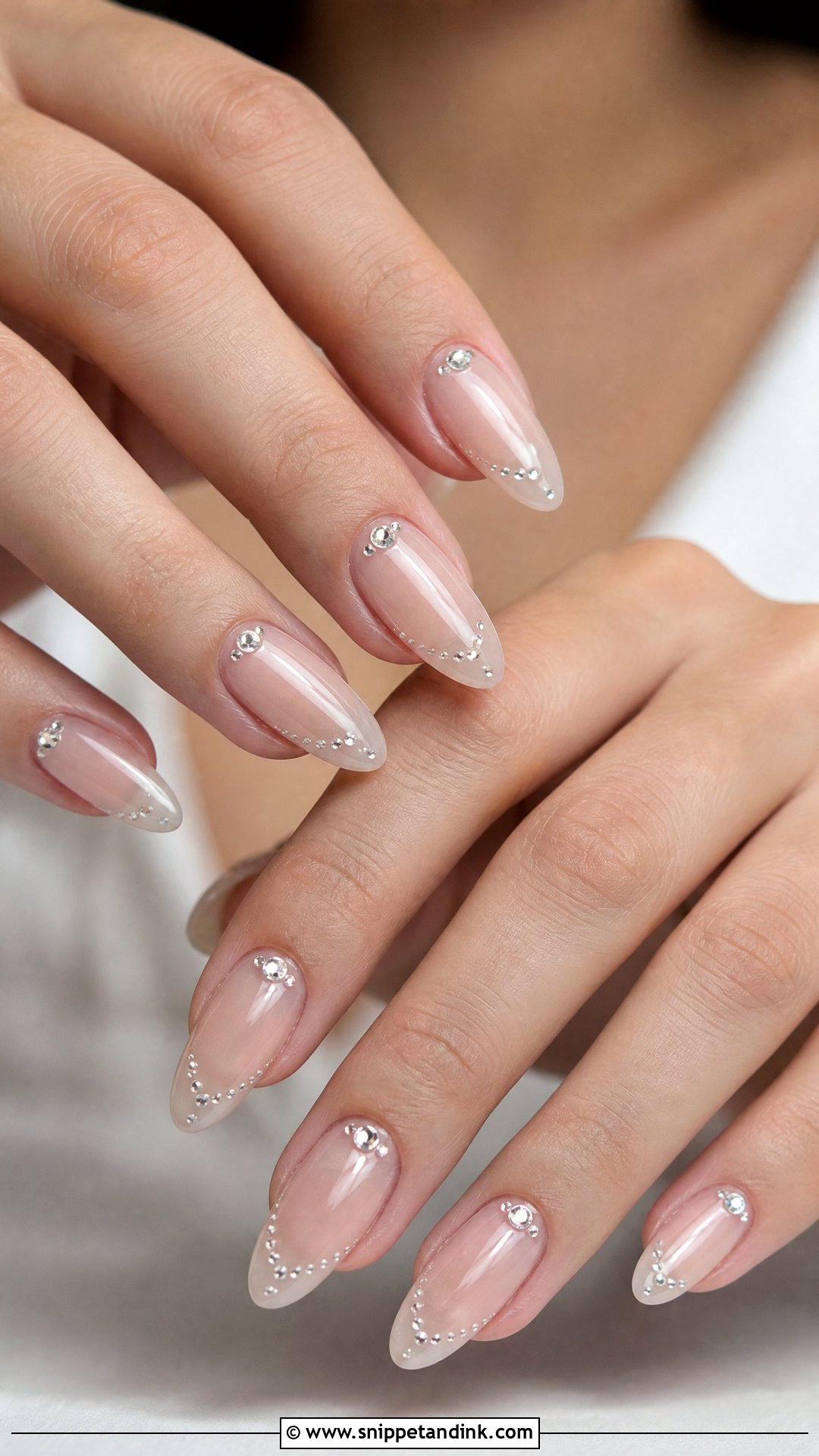
Clear nails with rhinestones are about as light as a manicure gets: transparent nude, sheer pink or clear builder gel with a few small stones near the cuticle, along a French line or on one accent nail. Clear builder gel shows any bubble or debris trapped underneath, so prep has to be spotless. I set each stone into gel and wrap the top coat around its base, but I don’t drown it, because a stone buried under too much gel loses its sparkle. Keep stones small and well spaced and you’ll stop noticing them on your hands, which is the point.
24. Champagne Shimmer Bridal Nails
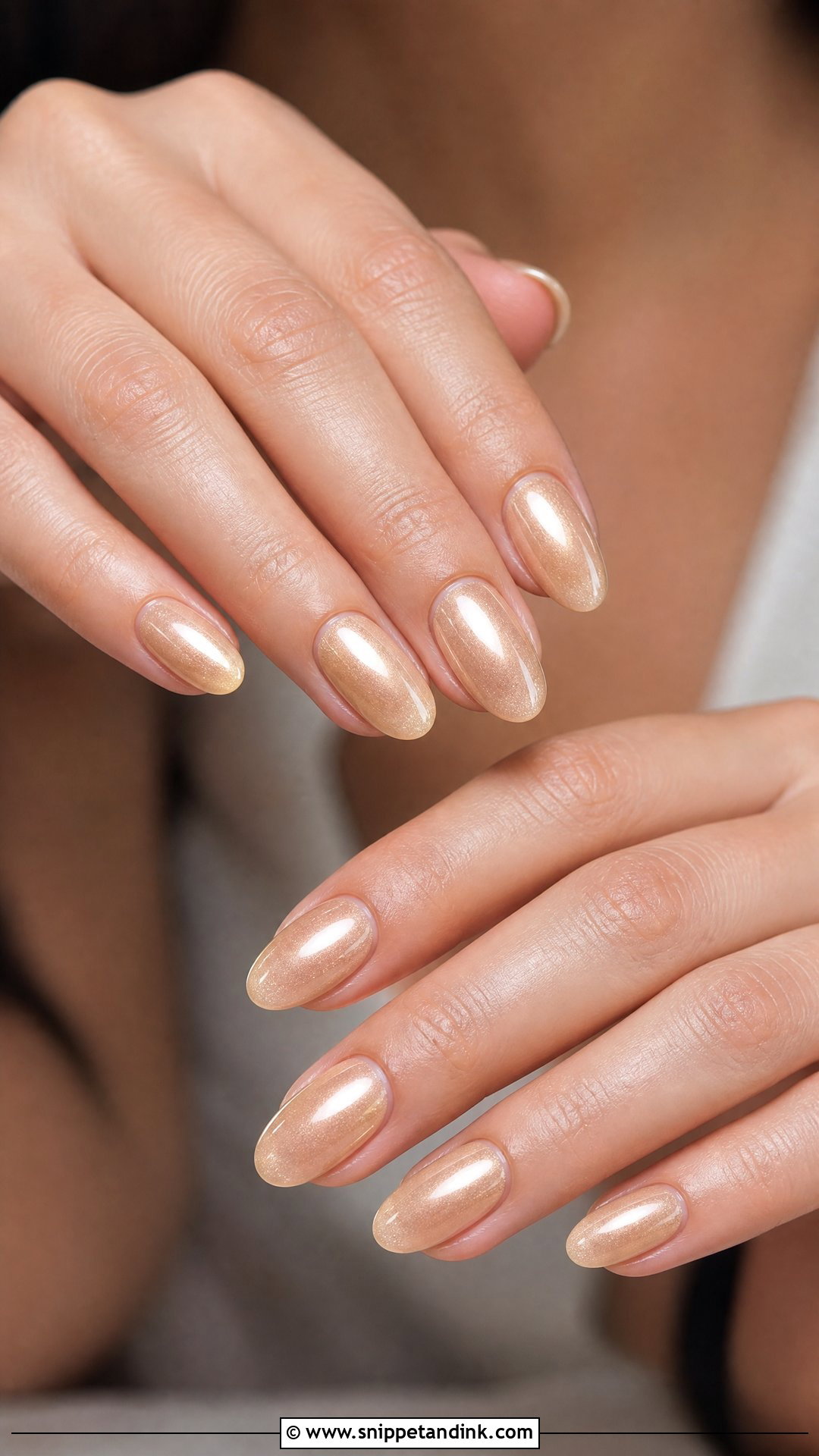
Champagne shimmer layers a fine warm sparkle through a beige, nude or pale gold base. It flatters a wide range of skin tones because the shimmer is warm rather than icy. Brides in ivory, cream or champagne dresses tend to like it, since it relates to the fabric without matching it. I keep the shimmer fine enough to read like satin. Short oval keeps it simple; almond or coffin push it toward glamour. Choose it if nude feels too plain.
25. Minimal Bridal Nails
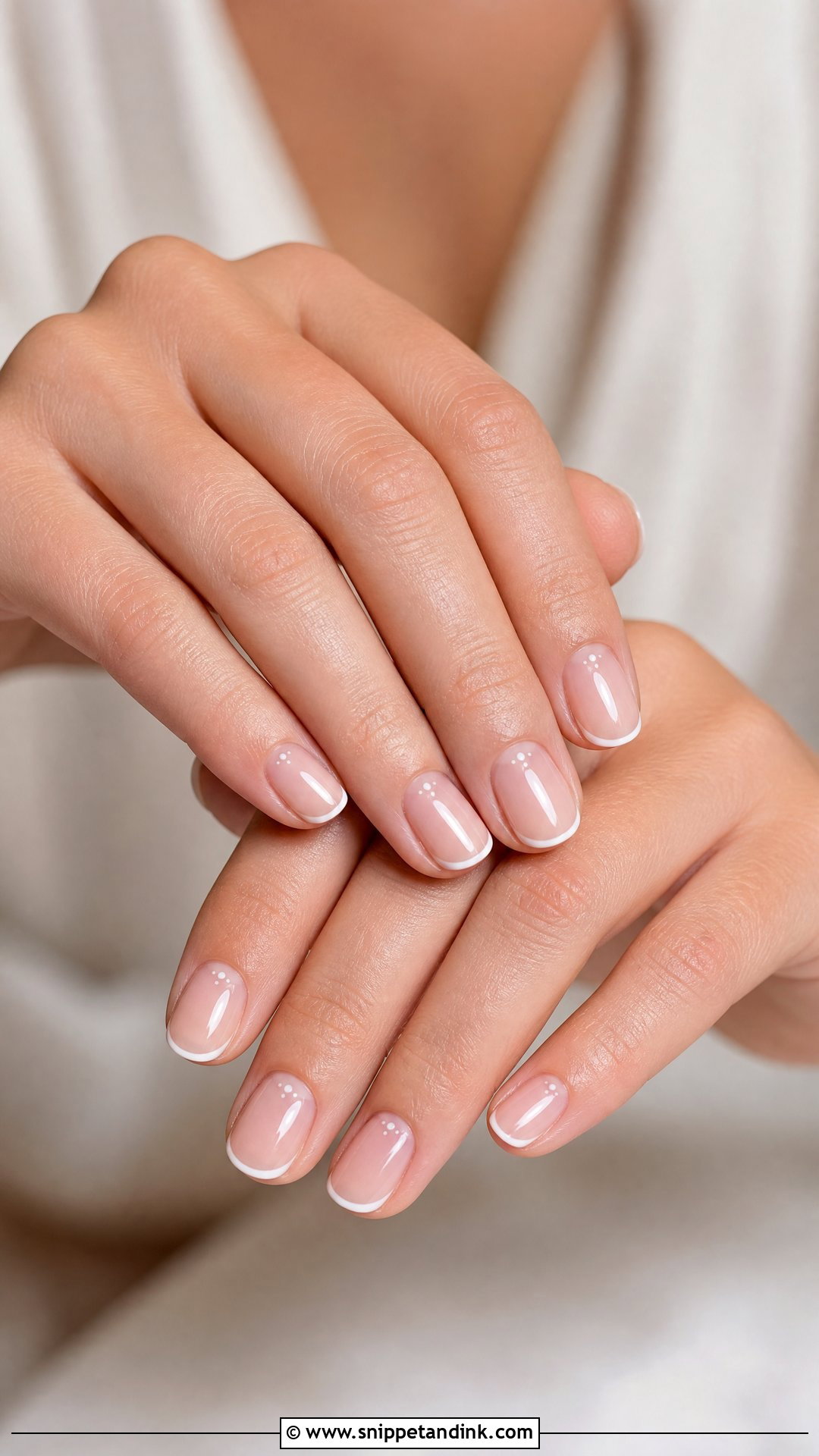
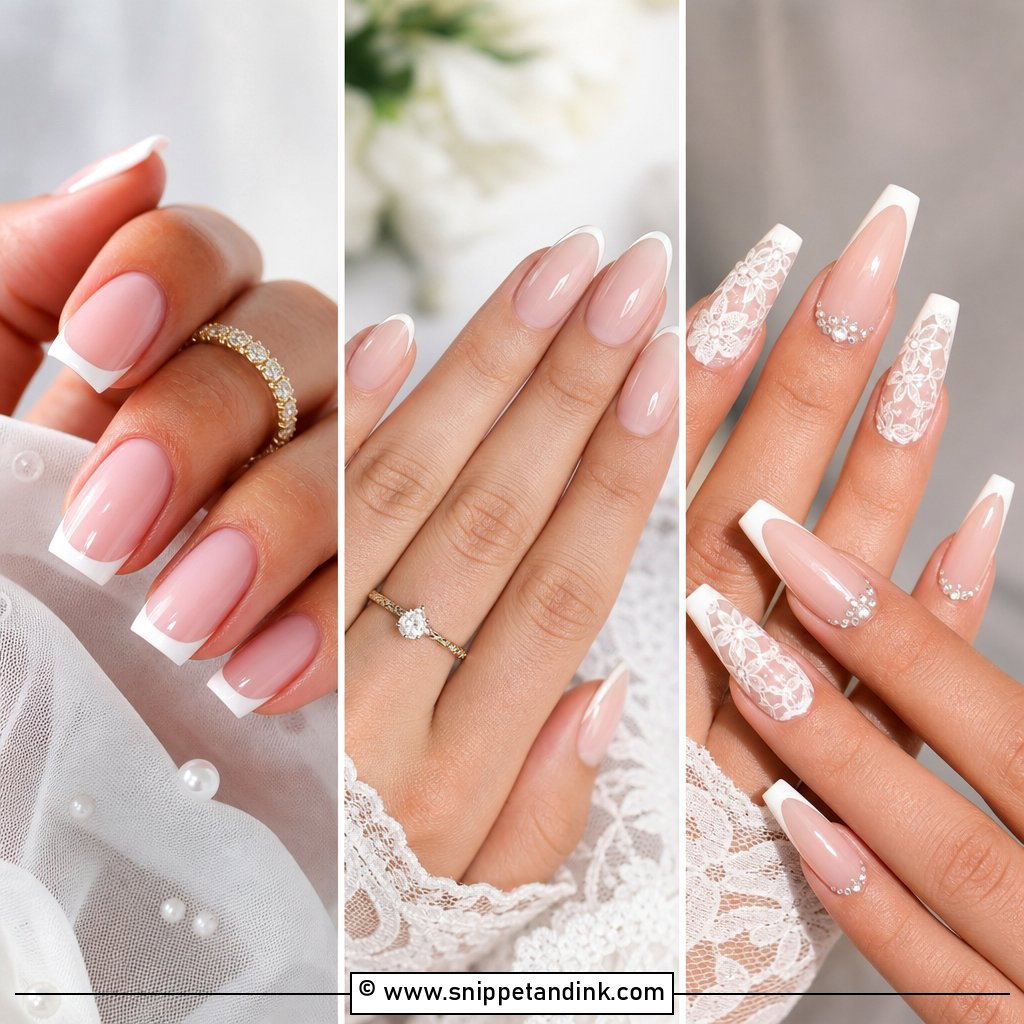
Minimal bridal nails come down to one detail and nothing else: a tiny dot, a thin line, a micro French tip, a small pearl or a touch of shimmer over sheer pink, soft nude, milky white or clear gloss. Restraint is harder than it sounds, because a single dot that’s slightly off-center shows more than a full set of art. I place the detail at the trial and photograph it before the final appointment. This is what I’d suggest to anyone who rarely wears nail art and wants to recognise her own hands in the photos.
Timing the Set Around Your Rehearsal Dinner
I like a trial four to six weeks out. That leaves time to change the shade or shape, and if you’re growing your own nails, it shows how much length you’ll realistically have. Bring the things your hands will sit next to: a photo of the ring, a fabric swatch, your bouquet palette.
The final gel set goes on one to three days before the wedding. Any earlier and you get a visible gap at the cuticle in ring shots; any later and you’re squeezing an appointment into the busiest day of the week. Regular polish is the exception and should be done the day before. Avoid self-tanner after the manicure, because it settles into the cuticles and stains a sheer base.
What Chips First, and the Little Kit That Fixes It
Free edges chip first, especially on chrome and glitter, and the right ring finger takes a beating from the band rubbing against it. 3D pearls or stones near the tips are the next to go. On a wedding morning, the usual damage comes from zips, earring backs and hairpins rather than anything dramatic.
- A small bottle of the exact top coat or clear polish, to seal a lifted edge.
- A fine glass file for a snag, which is gentler than an emery board.
- Cuticle oil, applied after the getting-ready photos so it doesn’t grease the ring.
- A tube of nail glue if you’re wearing extensions or stones.
If a whole tip breaks, file it smooth and leave it. A slightly shorter nail is invisible in photos; a hurried glue-on that doesn’t match is not.
A Clean Cuticle Matters More Than the Trend
Every look on this list comes back to the same prep: clean cuticles, even shaping and a top coat sealed over the free edge. Bring your dress fabric swatch, a photo of your ring and your bouquet colors to the trial, and wear the result for a few days before you decide. Chrome, pearls, lace and rhinestones in particular are worth testing first, since they behave differently on every nail. If a design still feels right after a week of typing and dishes, it will hold up on the day.
You'll Like These Ideas:


Leave a Reply