
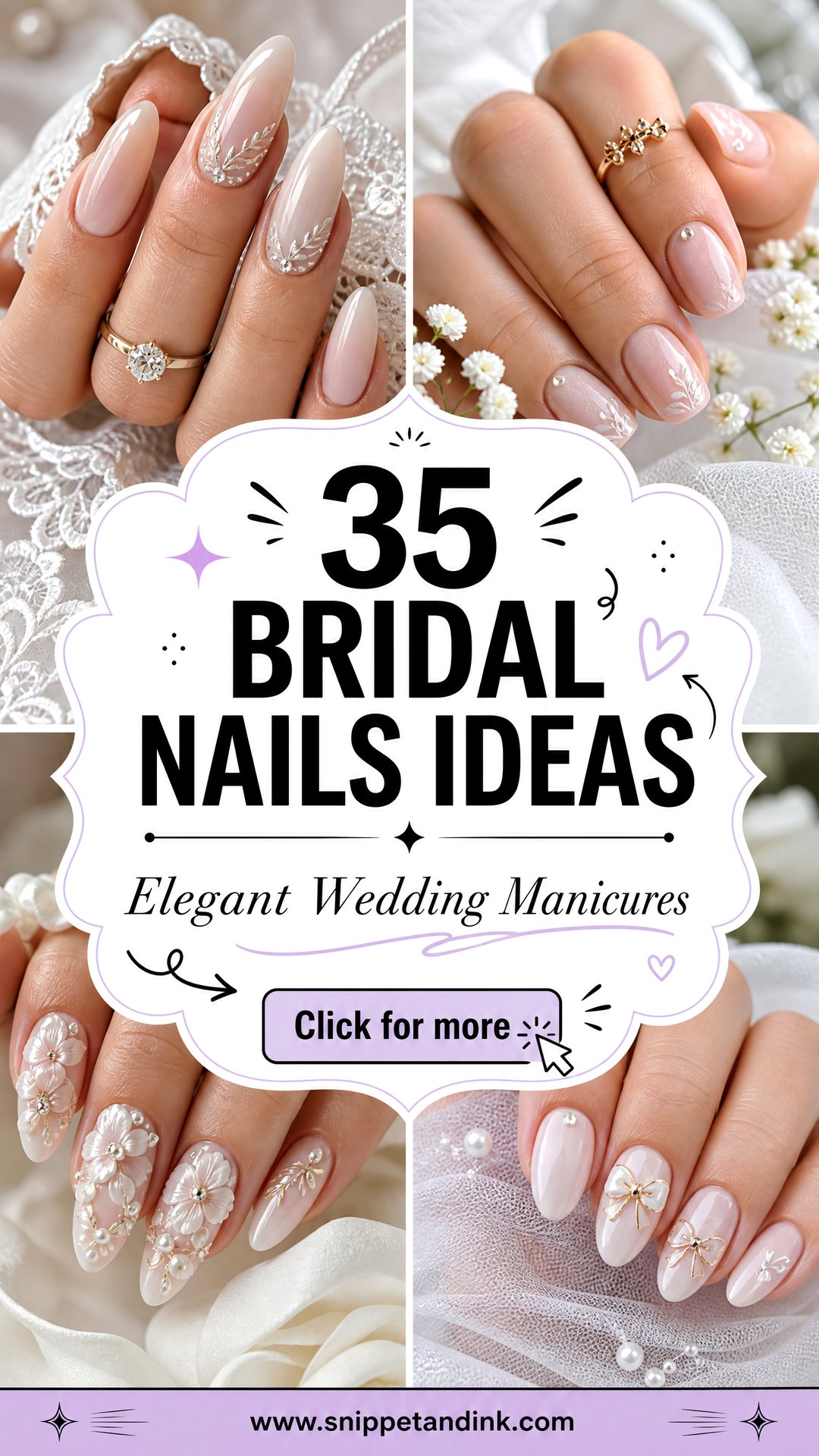
A wedding manicure has a harder job than most sets I paint. It has to hold up in close-up ring shots, survive hours of hugging and bouquet holding, and still sit right next to the dress. The direction I see brides asking for in 2026 is restraint: clean shapes, sheer bases, thin tips, a little shimmer and details small enough to reward someone looking closely. Below are 35 sets I’d happily put on a bride, from a classic French to a deep burgundy, with notes on what each one needs from your nail shape, your skin tone and your nail tech.
Settle the Shape Before You Fall for a Color
I sort out shape and length before we ever talk about color, because shape is what you live with all day. Watch your hands doing ordinary things this week: typing, doing up buttons, putting in earrings. If longer nails would get in the way there, they’ll get in the way when you’re pinning a veil or opening cards at the reception.
Three questions I ask at every bridal consultation
- How long is your natural nail bed? Short, wide beds look longest in an oval or soft almond, while long beds can carry square or coffin.
- What metal is your ring? Yellow gold pulls toward ivory, champagne and peachy bases; platinum and white gold sit better with pinks and cooler milky whites.
- Are you on natural nails, builder gel or extensions? Natural nails hold a short to medium shape well, but anything long with corners usually needs a builder layer or tips to survive the day.
If you’ve never worn extensions, the wedding week isn’t the time to try them for the first time. A test set a month or two ahead tells you whether you can sleep, type and fasten jewelry with them, and whether your nail tech’s work lasts.
1. Classic French Bridal Nails
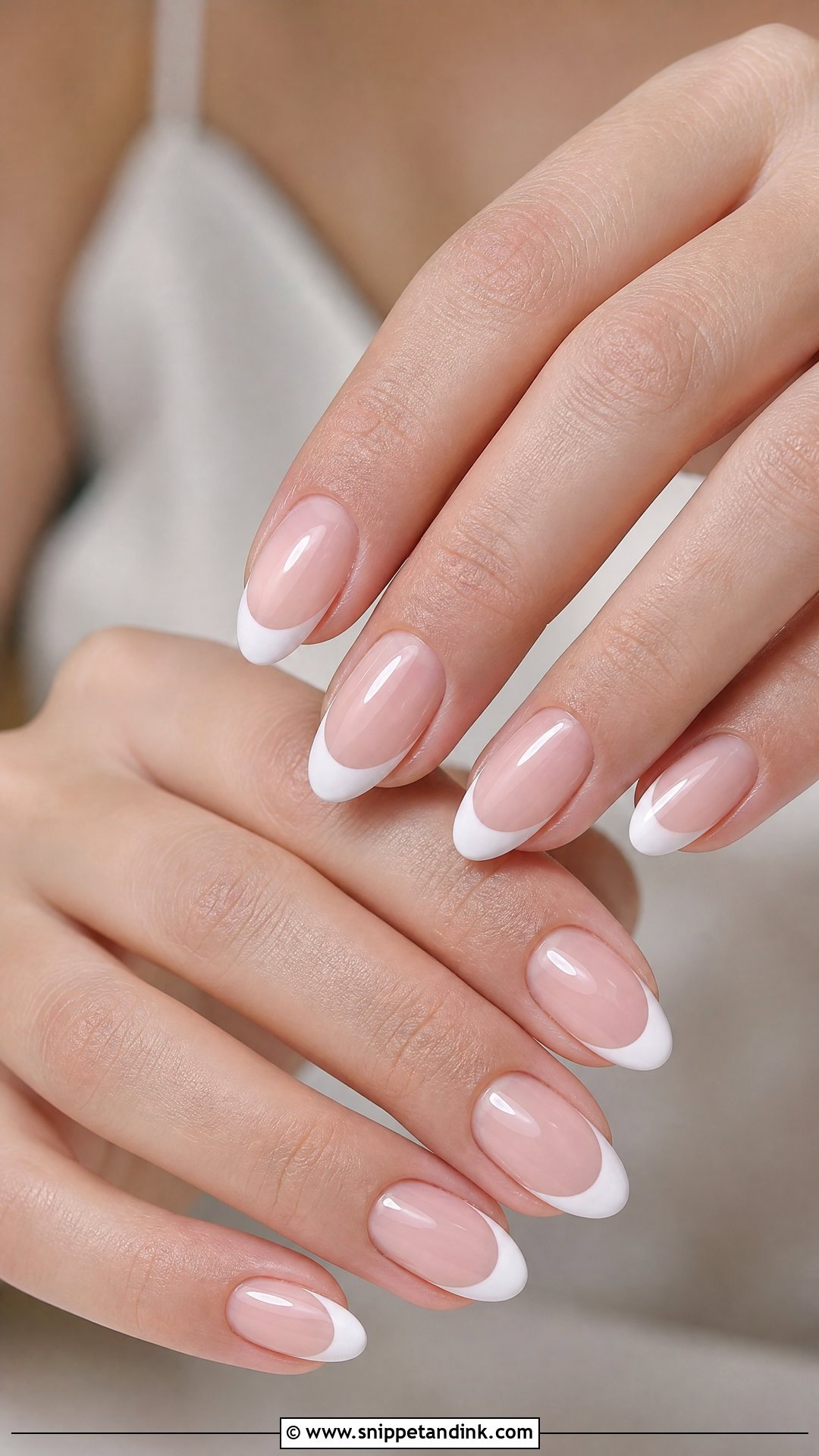
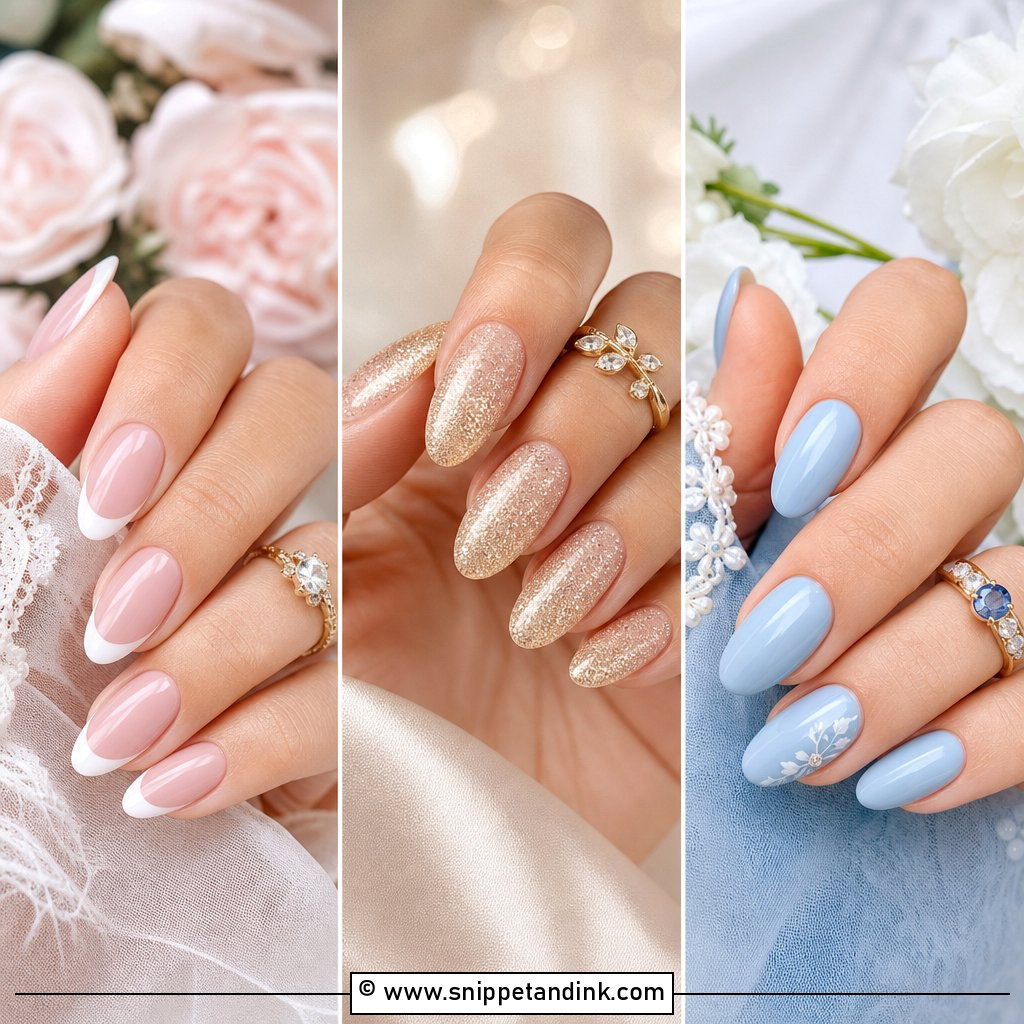
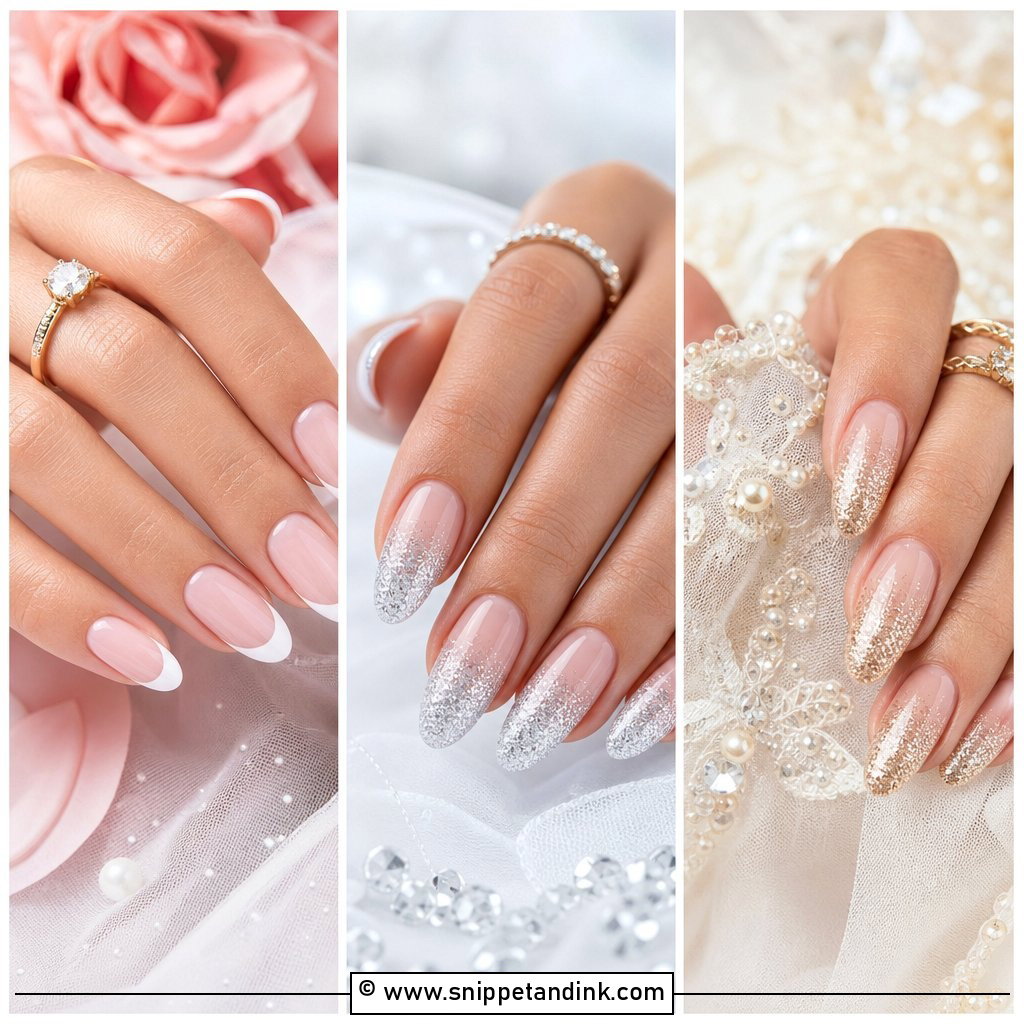
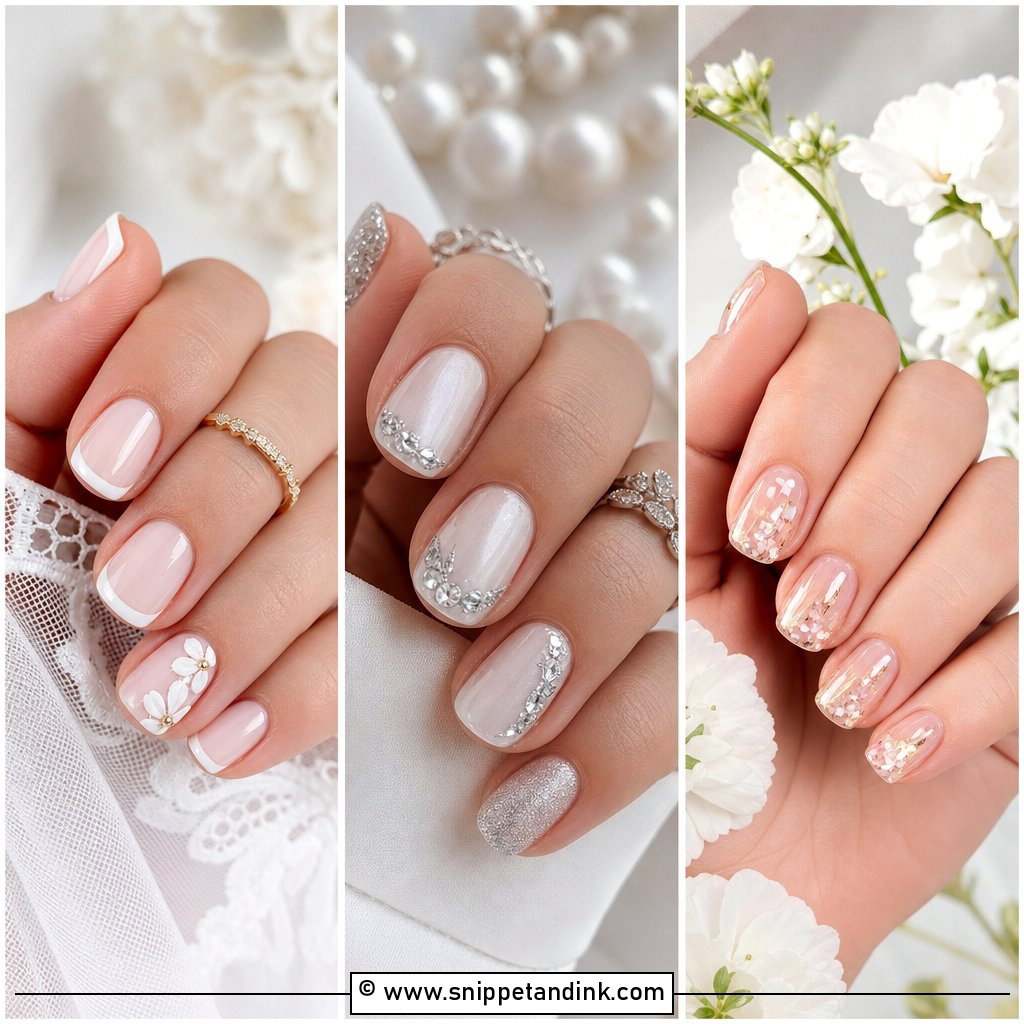
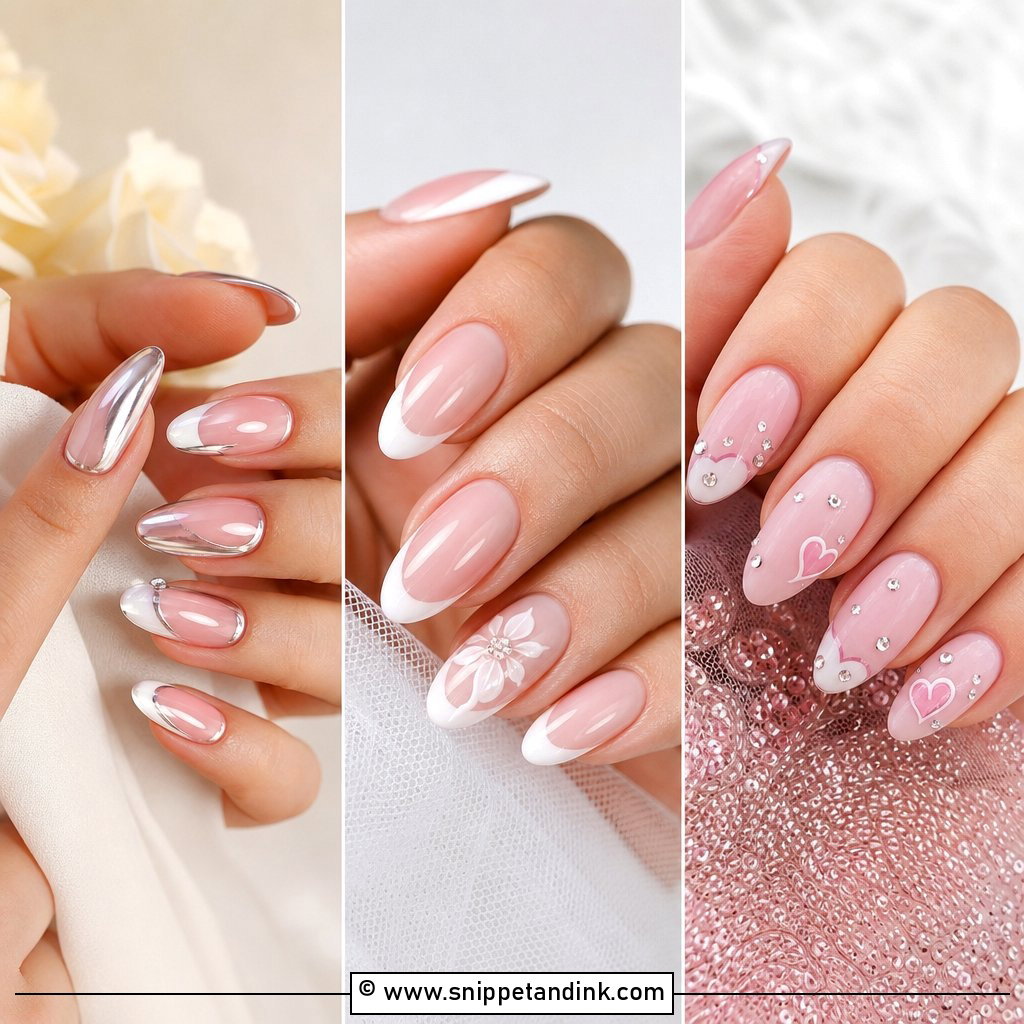
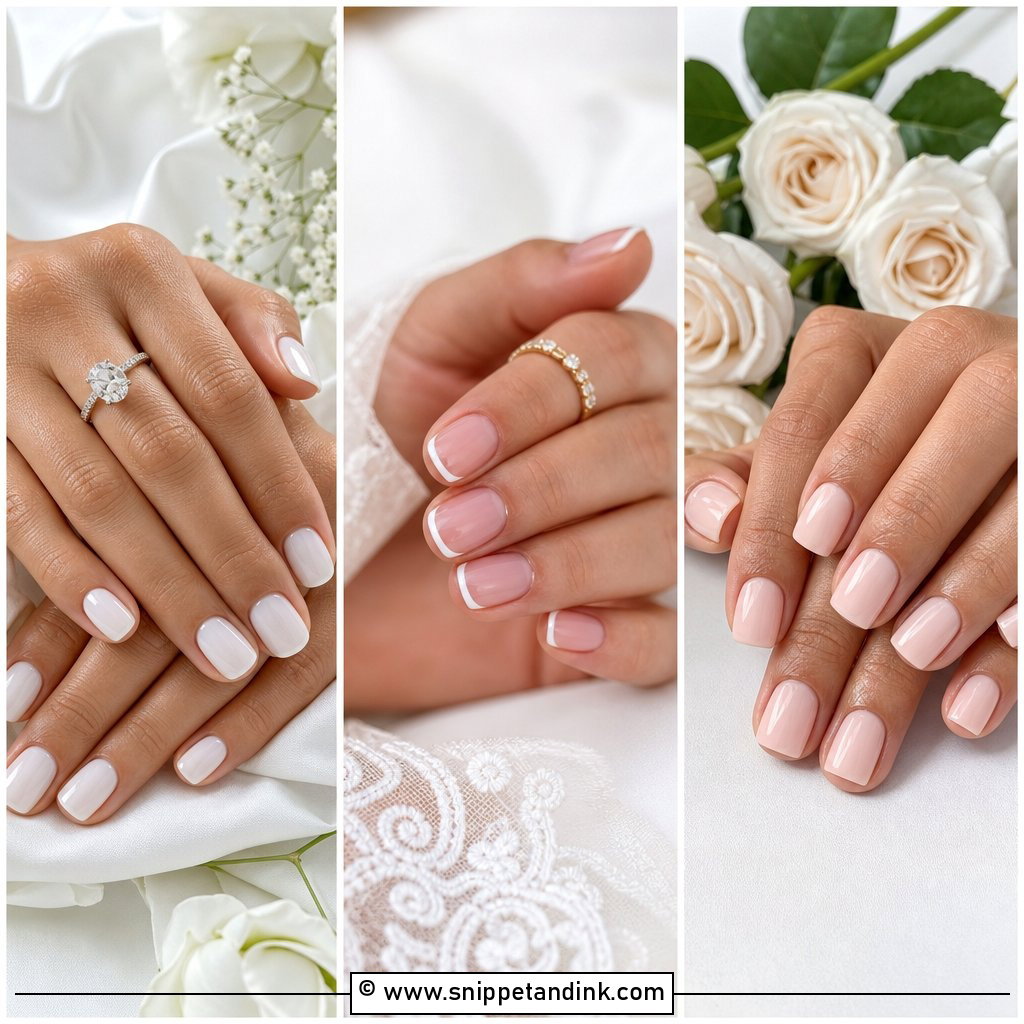
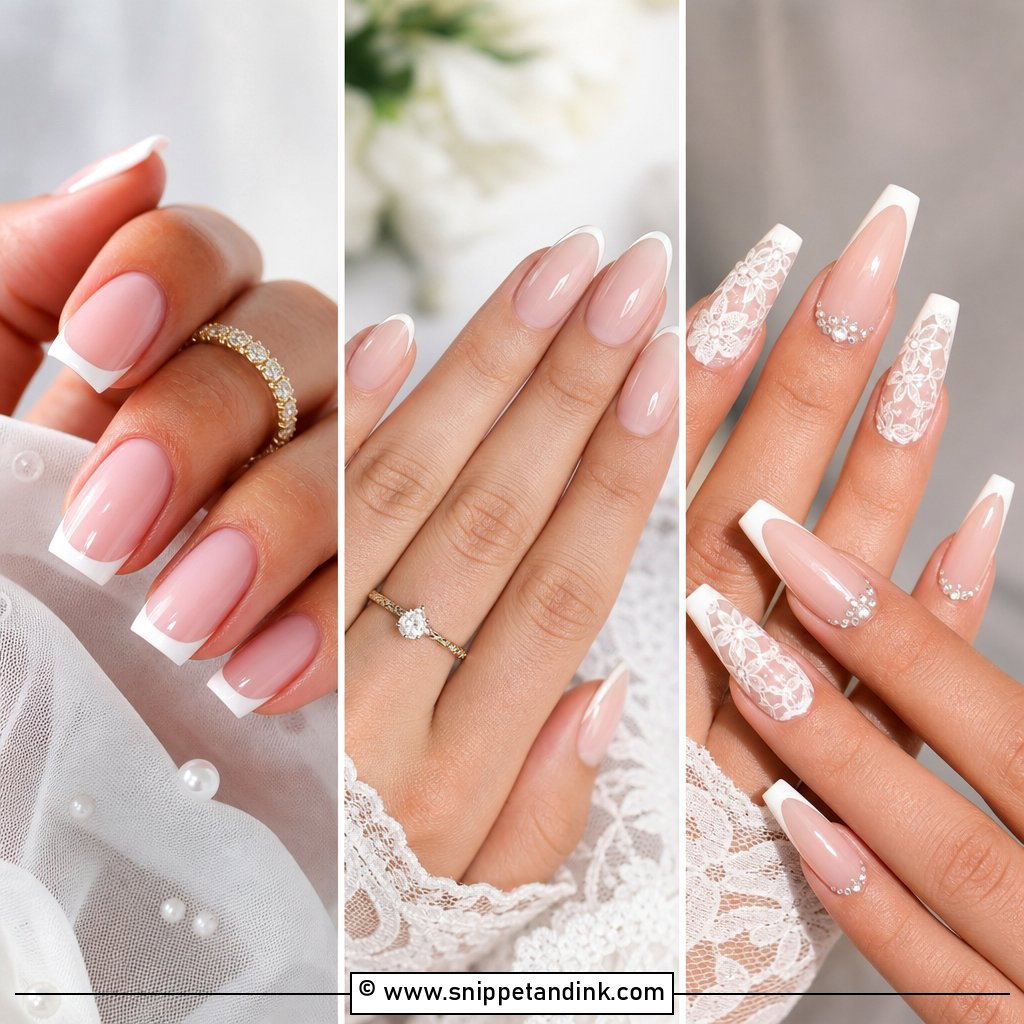
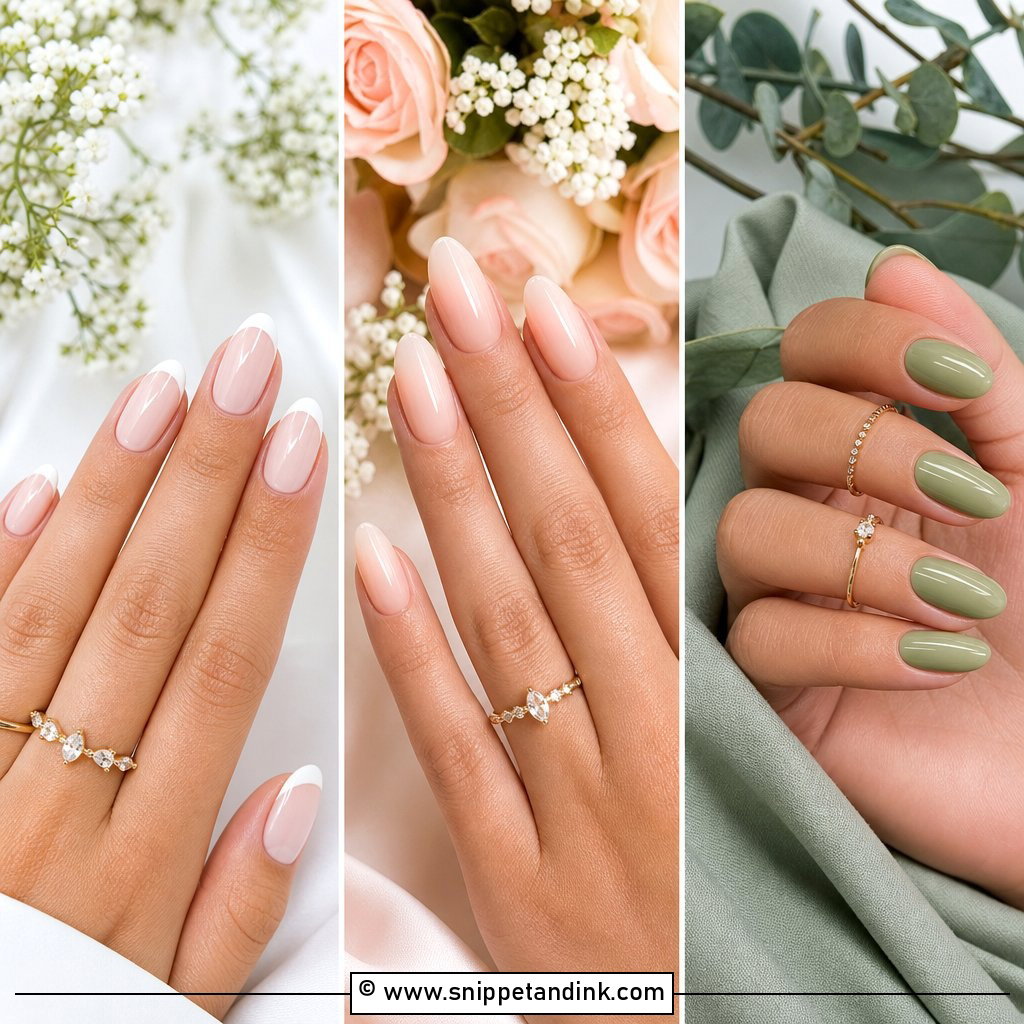
The French is still the set I’m asked for most, and it earns that by reading clean from across a room and in a macro ring shot. A sheer pink or nude base keeps it soft, and a crisp white tip gives it structure. What dates a French is tip thickness, so I paint the smile line thinner than people expect and follow the curve of the natural free edge rather than laying a straight band. Ask for a glossy gel finish if you want the shine to last through the honeymoon. It grows out more gracefully than most bold sets, because the base is close to your own nail color.
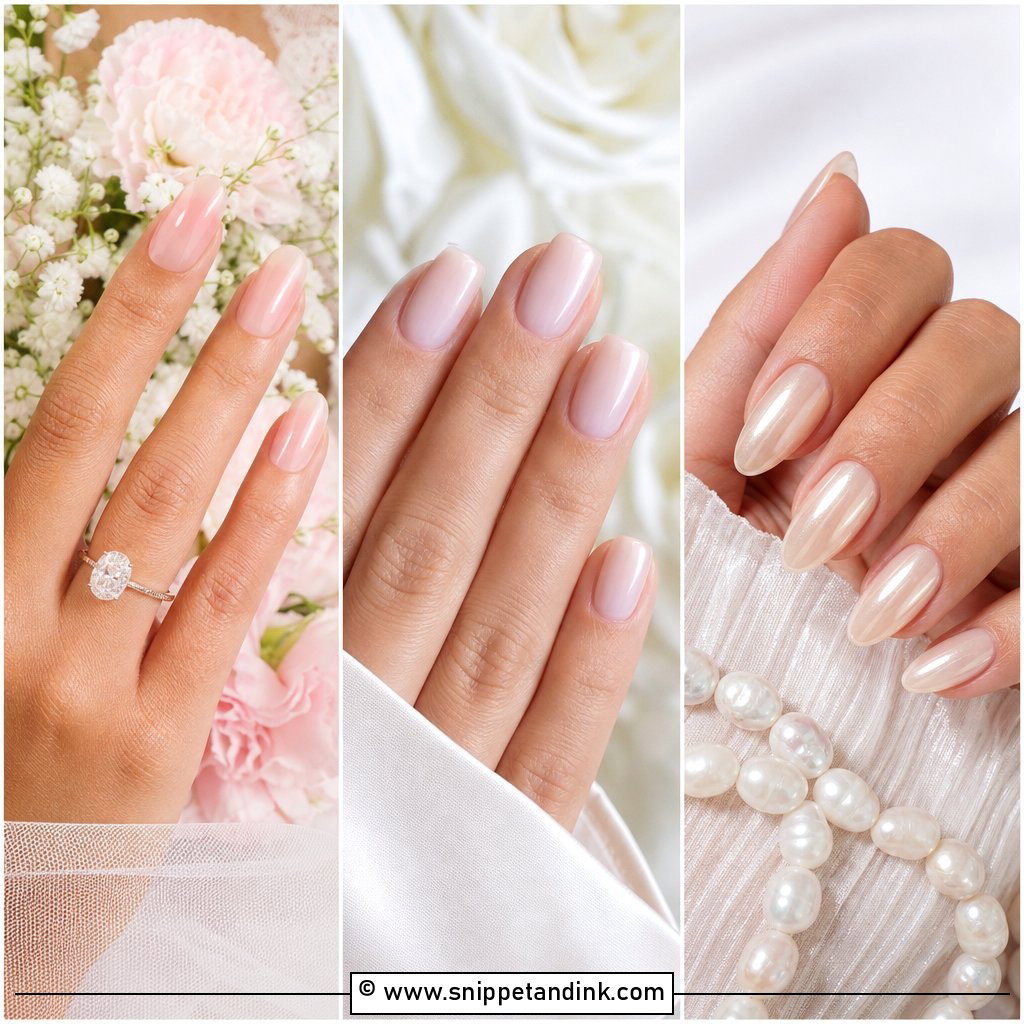
2. Milky White Bridal Nails
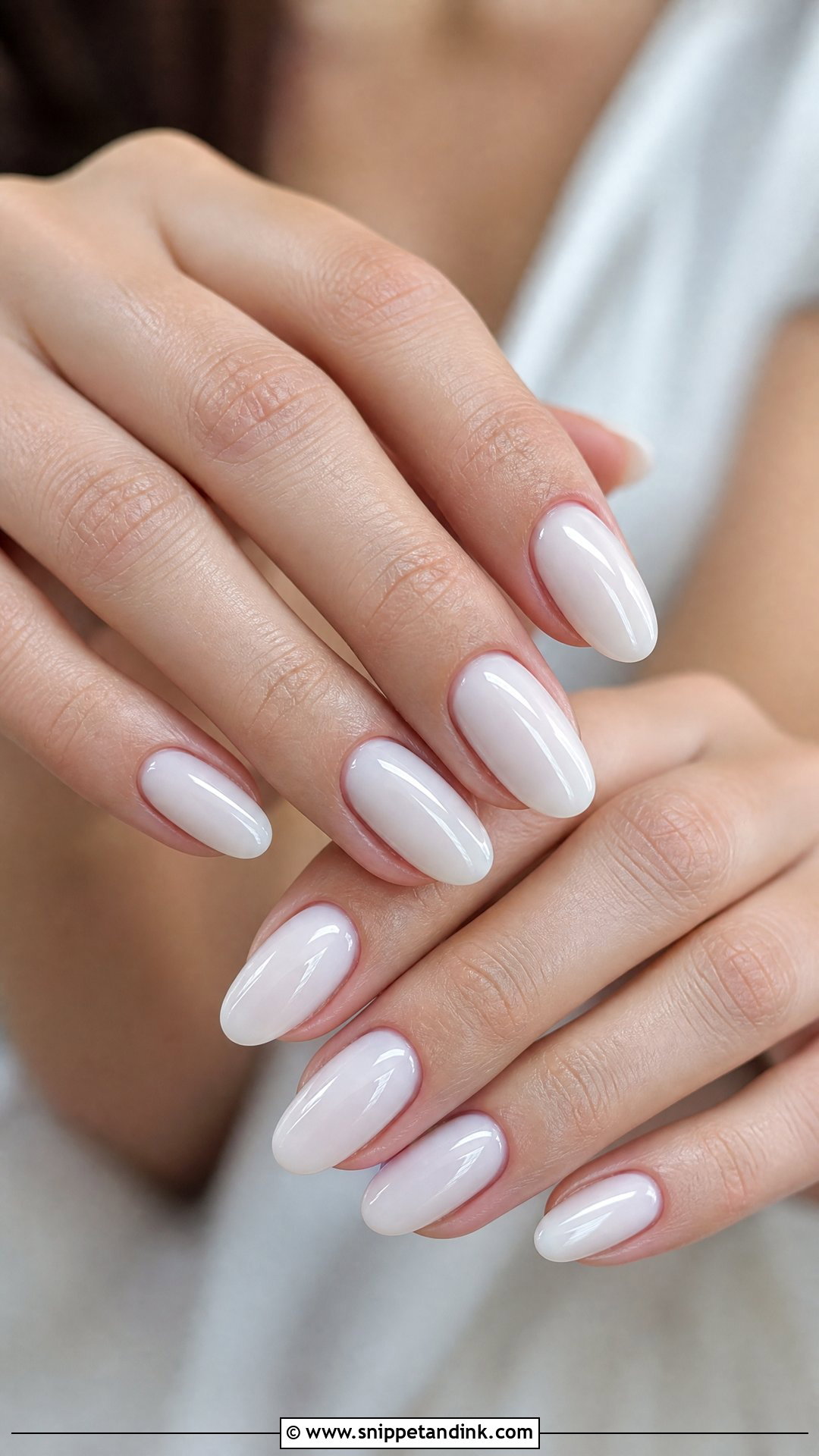
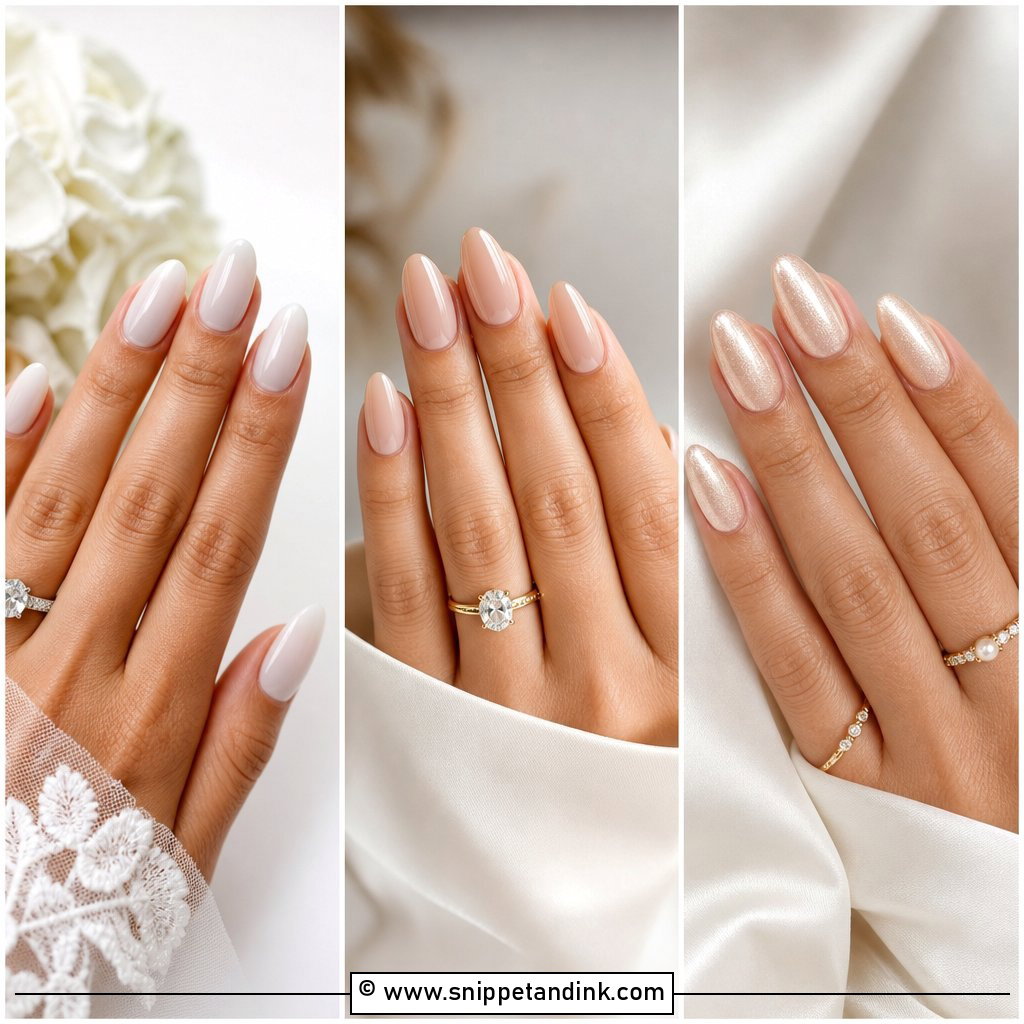
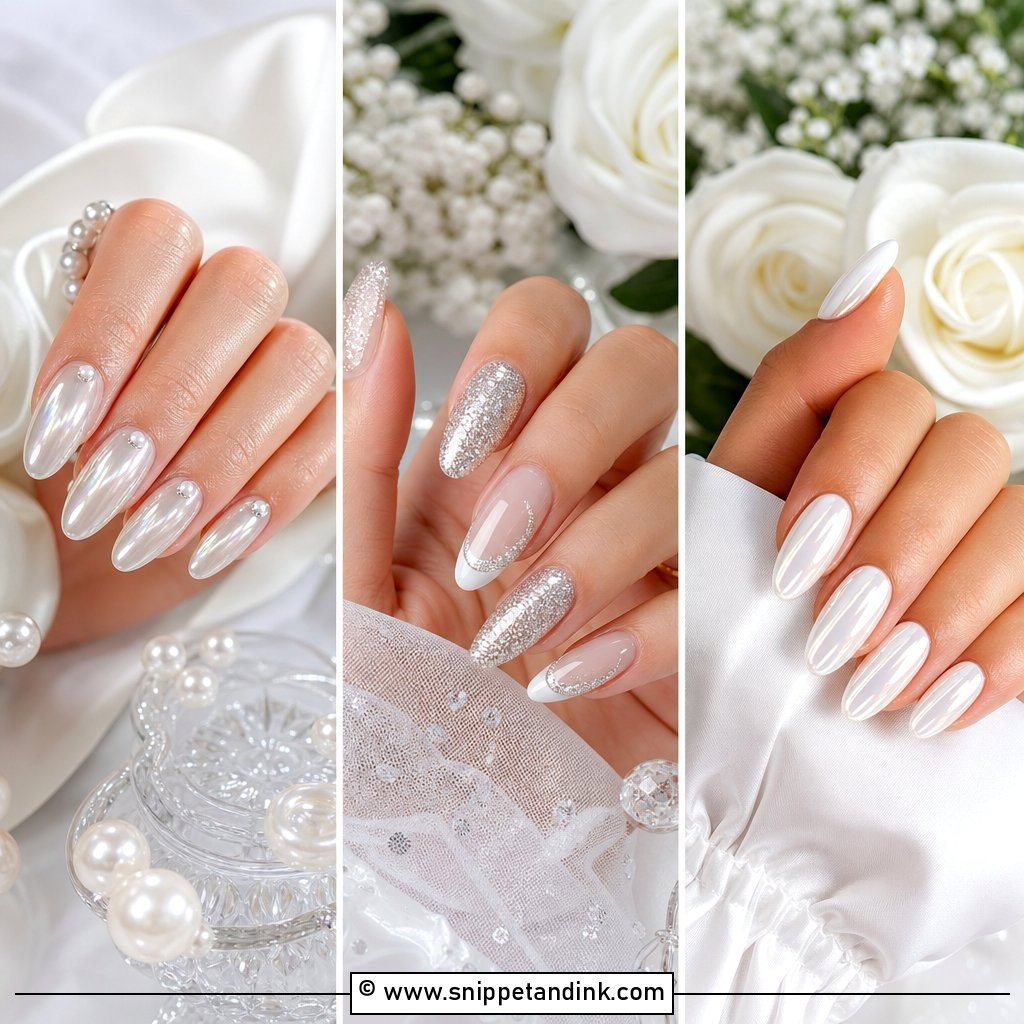
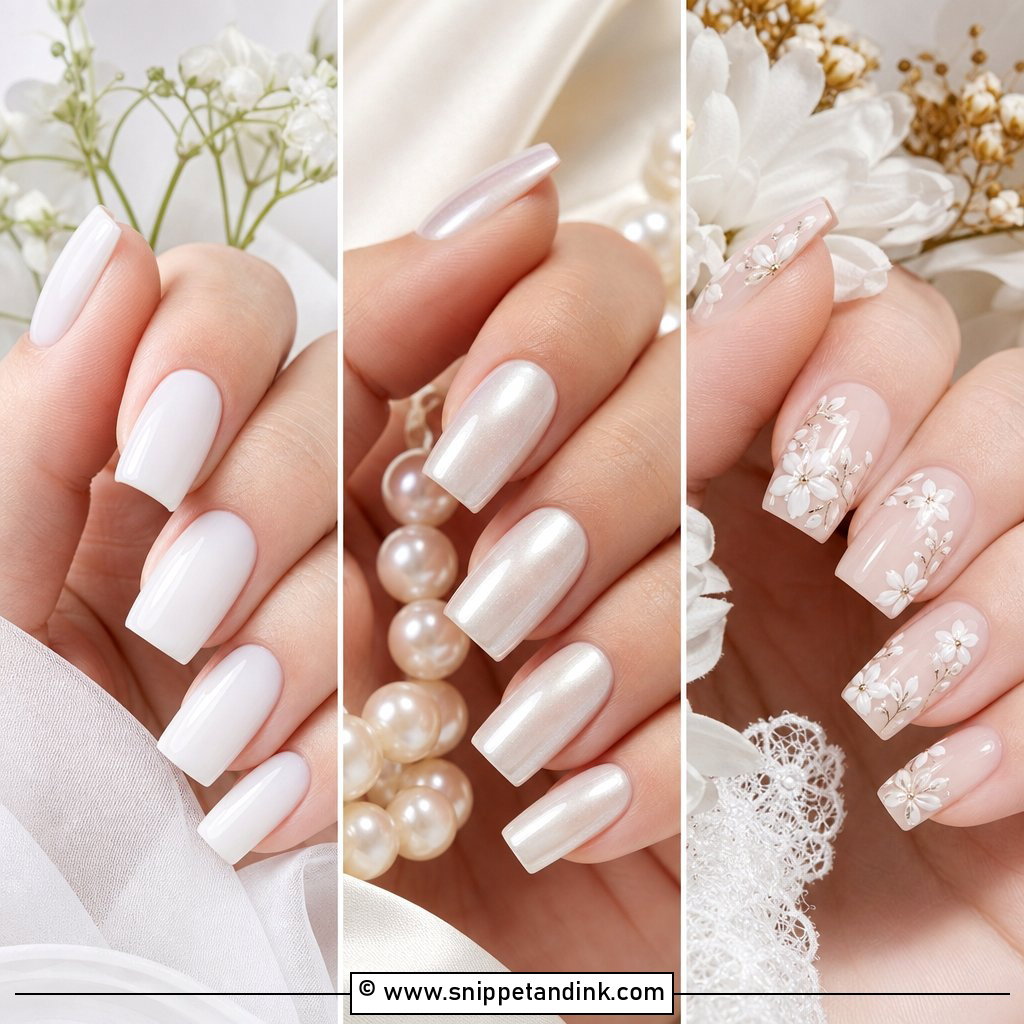
Milky white is a sheer, slightly cloudy white, not an opaque one, and that difference shows on camera. Solid white can look chalky under flash, while a milky layer lets a little warmth from the nail bed come through. I build it in two or three thin coats instead of one thick one, because thick white gel tends to pool at the cuticle. If your nail beds are very pink, one fewer coat stops it turning peachy.
3. Pearl Chrome Bridal Nails
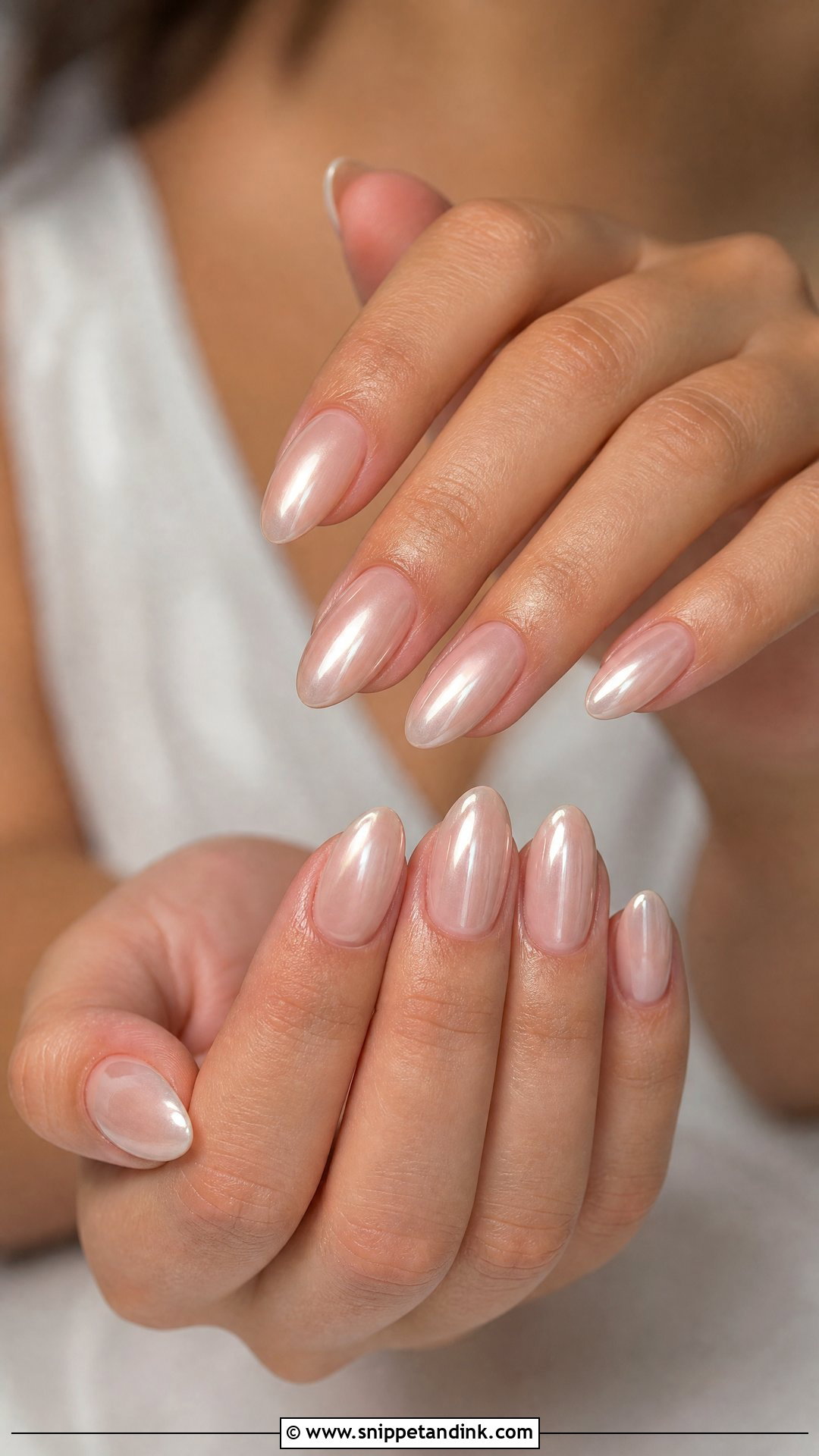
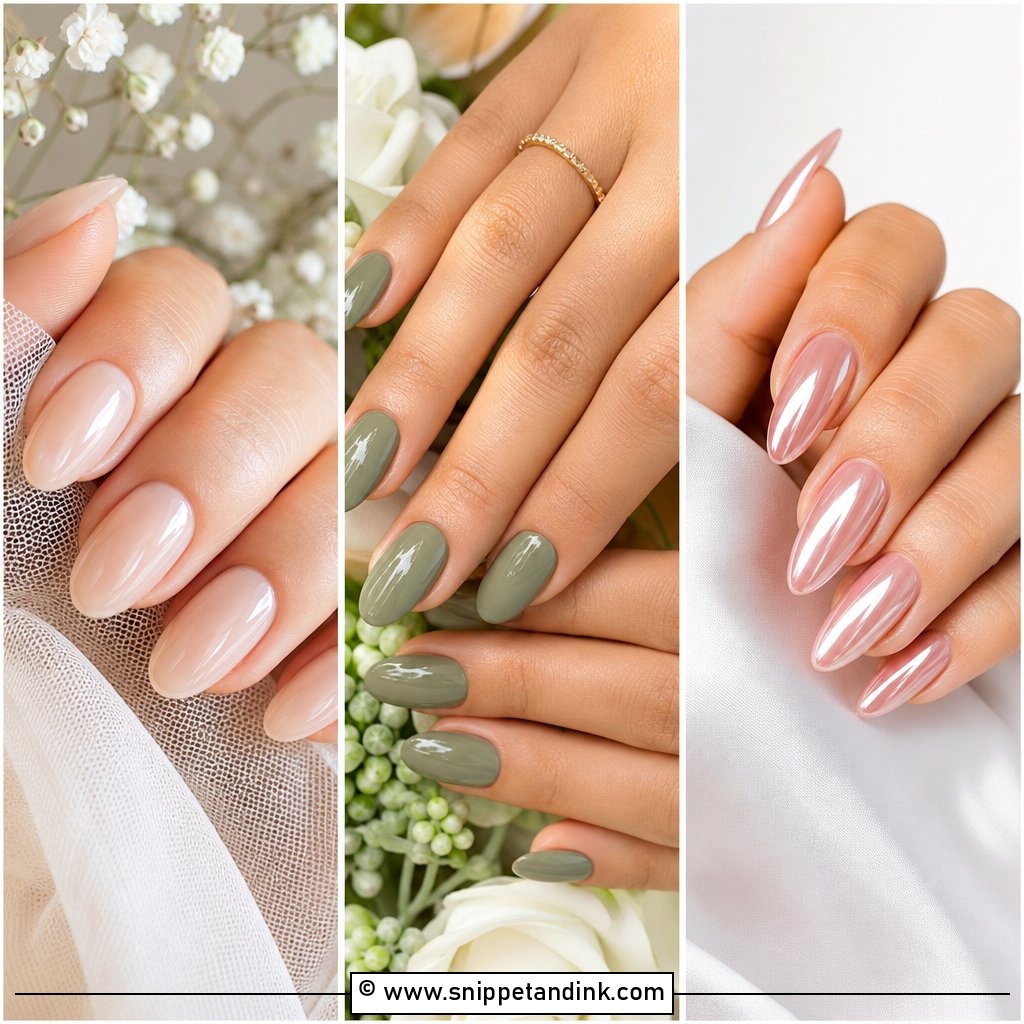
Pearl chrome bridal nails give you shimmer with no glitter at all. The powder is buffed onto a cured no-wipe top coat over a sheer base, and it leaves an opalescent sheen that shifts as your hand moves. The thing I watch is coverage. Too much powder goes metallic and starts to look like foil, so for brides I use one light pass and seal it twice. Because the sheen is neutral, it sits happily next to silver or gold jewelry.
4. Micro French Bridal Nails
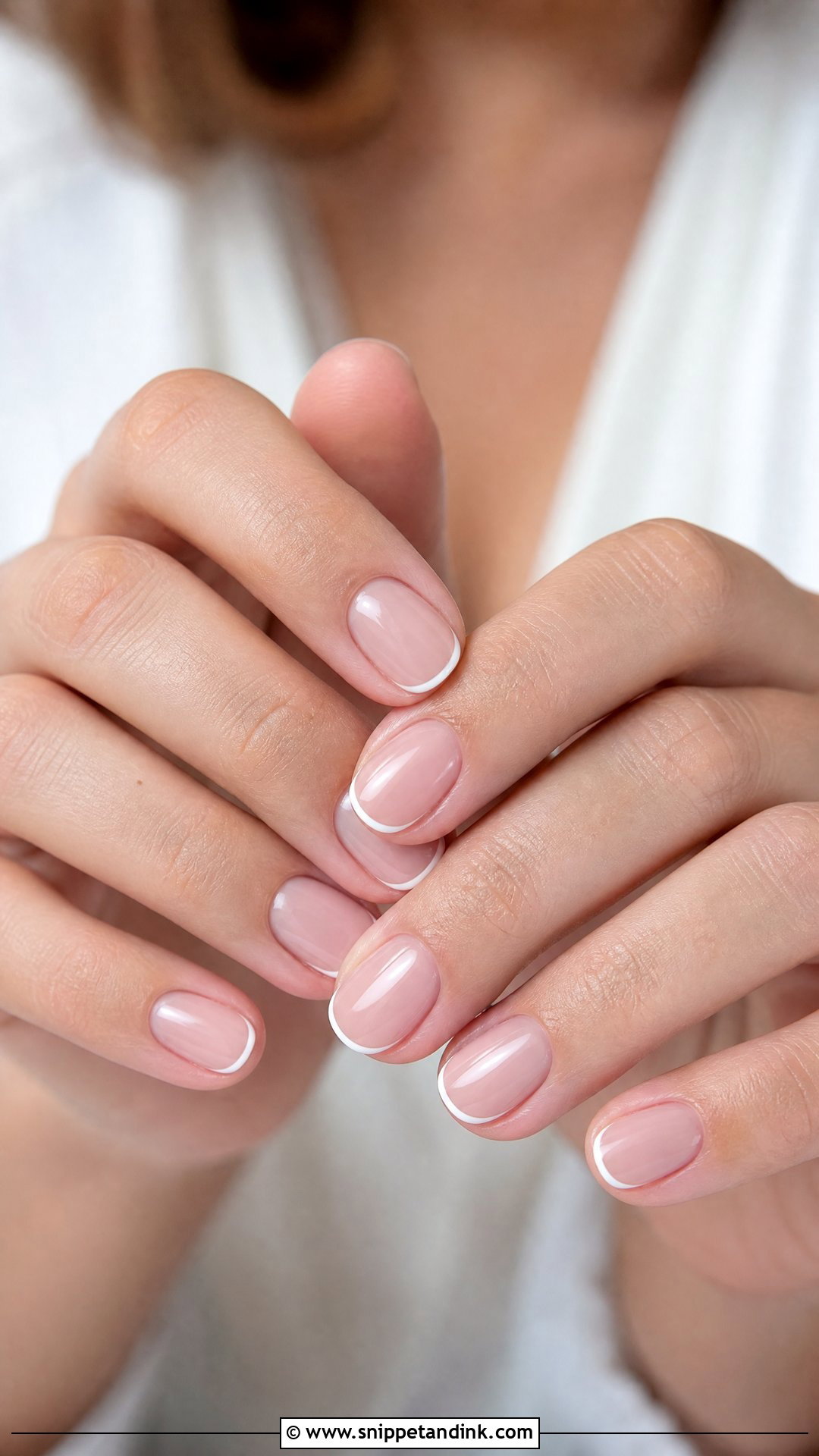
On short nails, this is usually my first suggestion. The tip is a hairline of white, ivory or cream over a sheer base, so it neatens the free edge without cutting the nail bed in half the way a deep French can. It’s harder to paint than it looks: a line that thin shows every wobble, so I’d ask to see a nail tech’s own micro French work before booking. The upside is that it still looks fine at the office two weeks later.
5. Baby Pink Bridal Nails
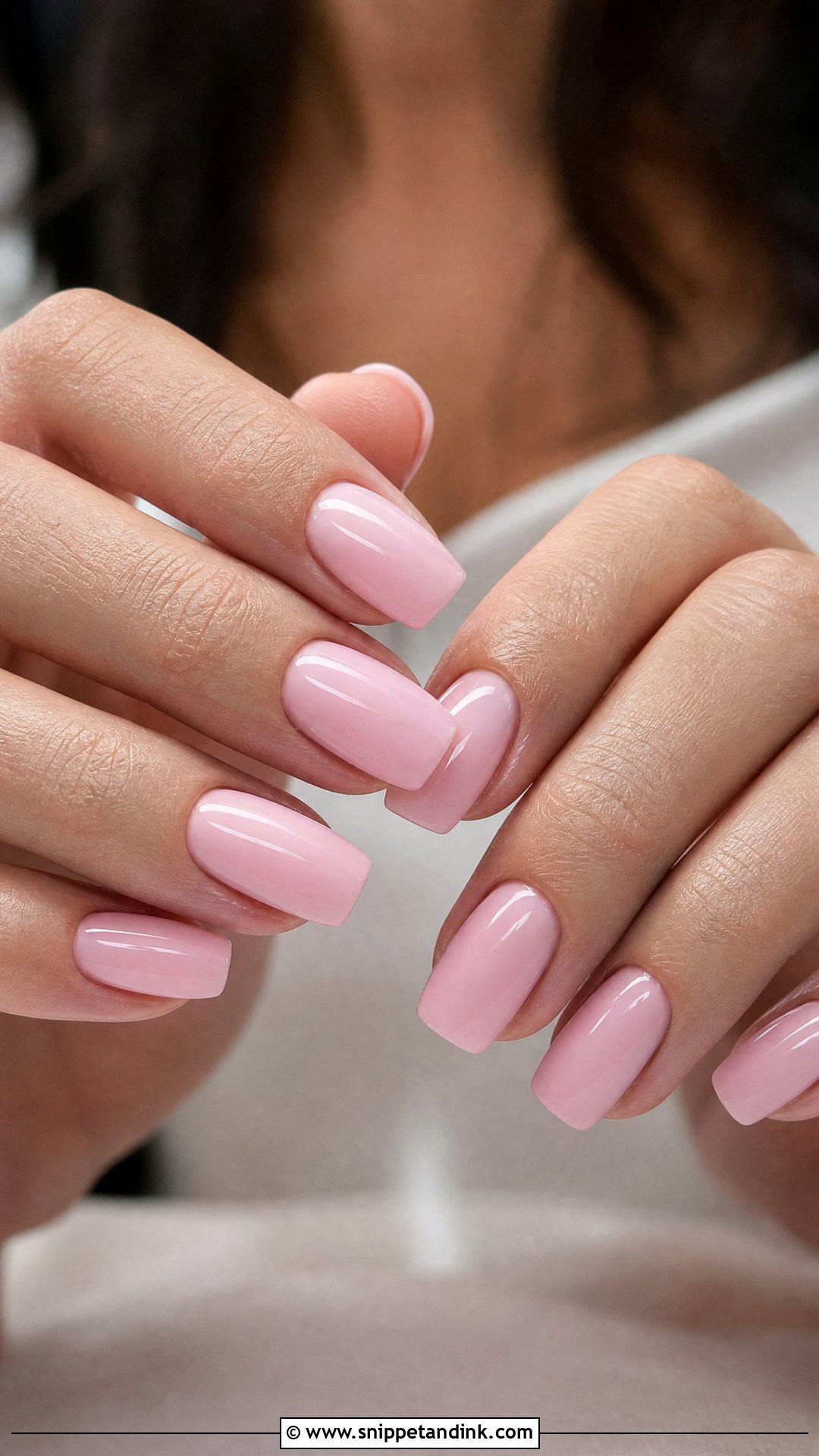
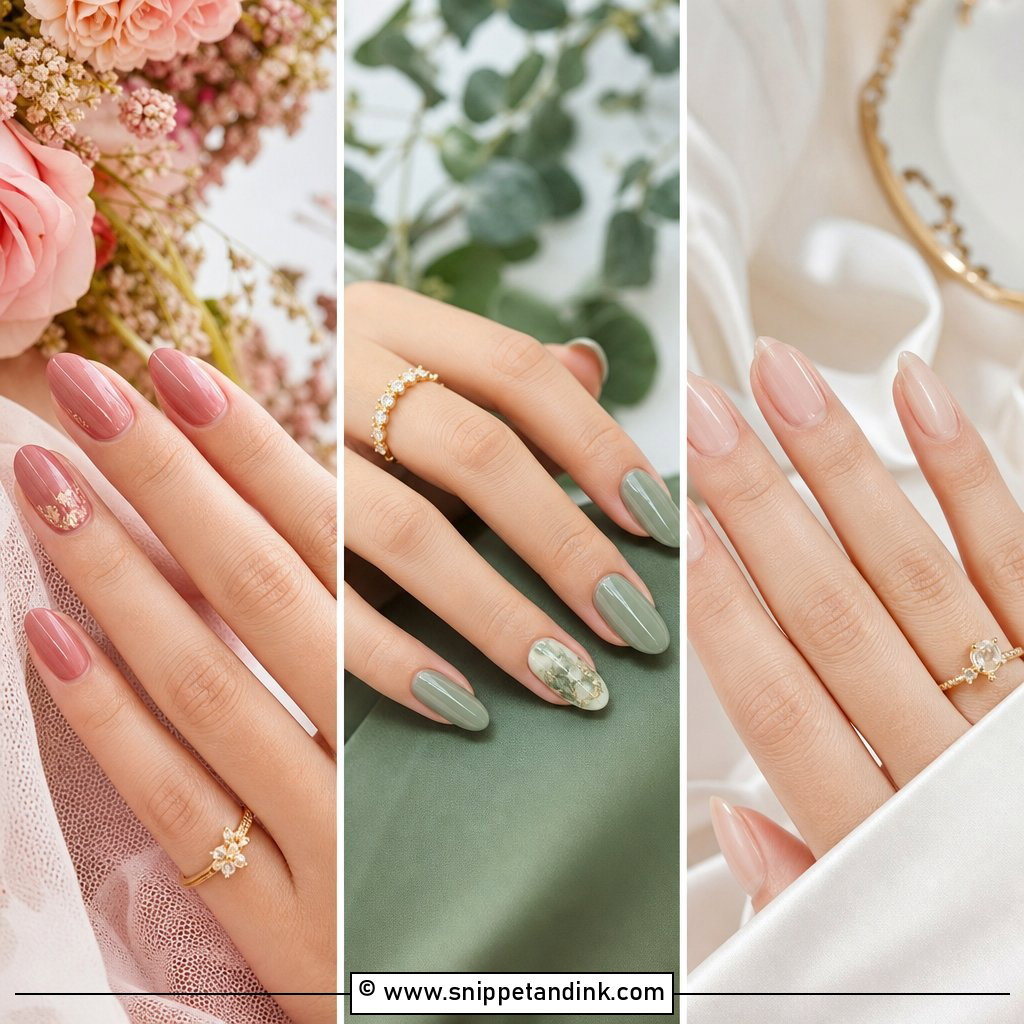
Brides who find white too stark usually land here. A soft pink warms the hands and hides a slightly uneven nail bed better than a sheer nude does. The risk is going too opaque, which tips it toward bubblegum, so I keep it semi-sheer and finish with gloss or a faint shimmer top coat. Almond or oval gives it the most grown-up shape, and it sits well next to blush flowers and rose gold.
6. Nude Bridal Nails
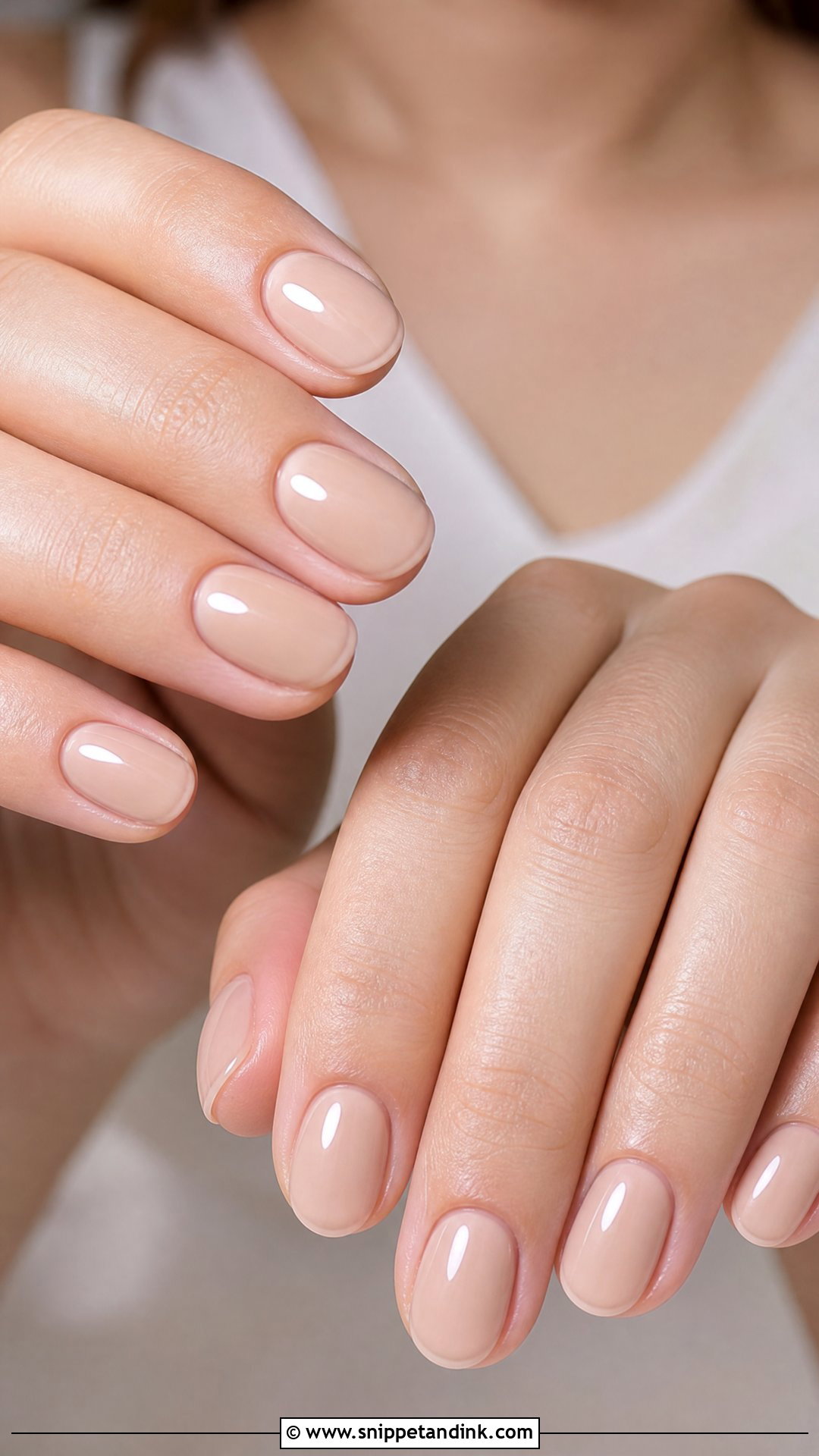
A nude has to match your undertone, not a generic beige, or your fingers end up looking grey or orange in photos. Peachy nudes suit warm skin, rosy ones lift cool skin, and a neutral beige works if you sit somewhere between. I swatch three shades on the actual nail and check them in daylight by a window before committing. A sheer formula also makes regrowth at the cuticle far less obvious, which helps if the wedding runs straight into a trip.
7. Blush Ombre Bridal Nails
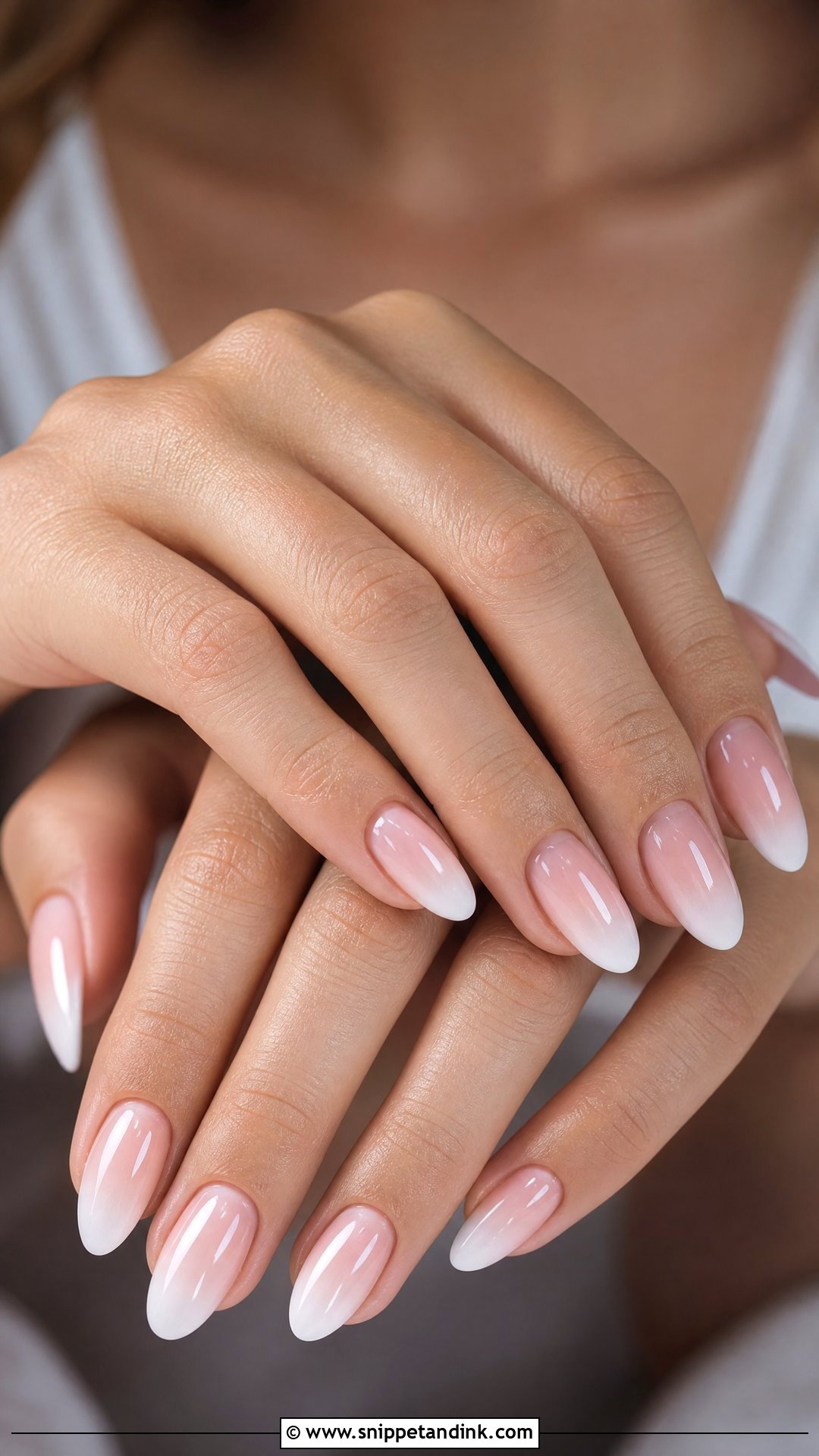
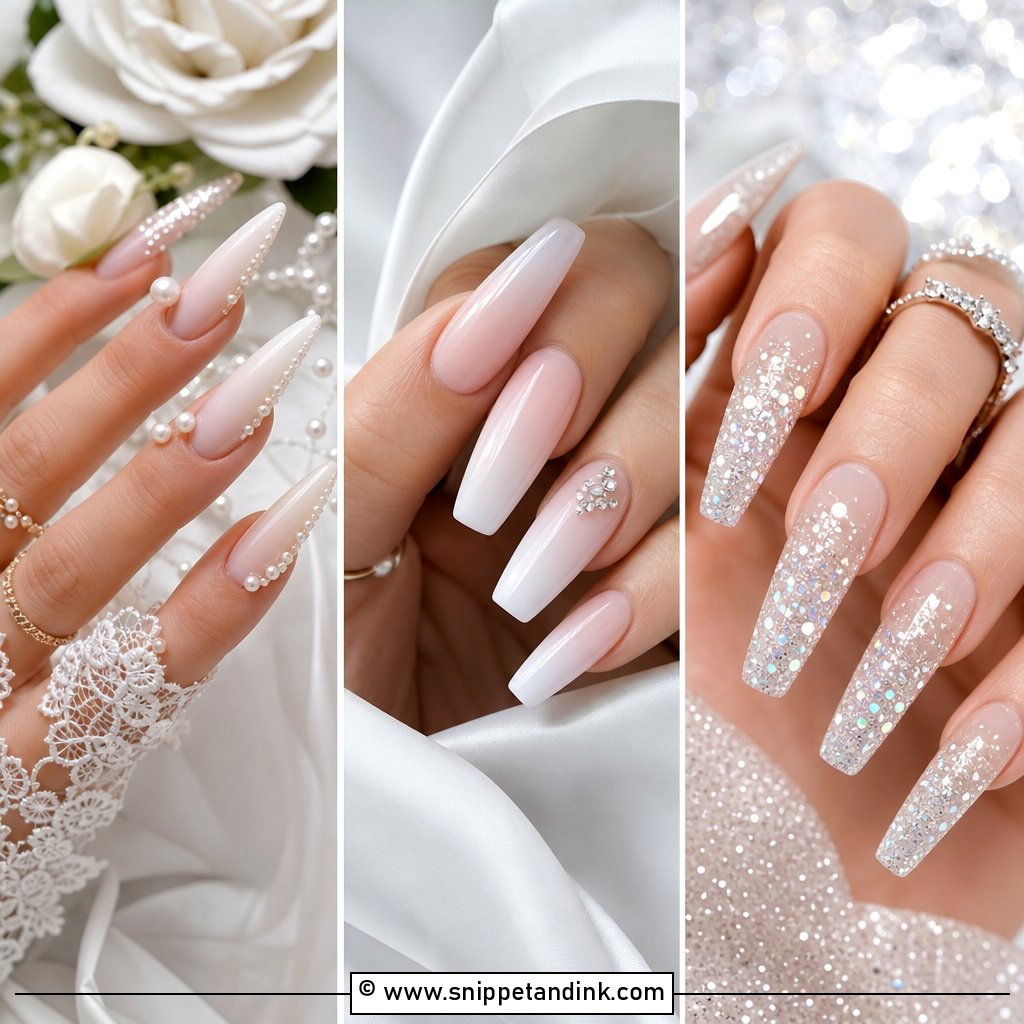
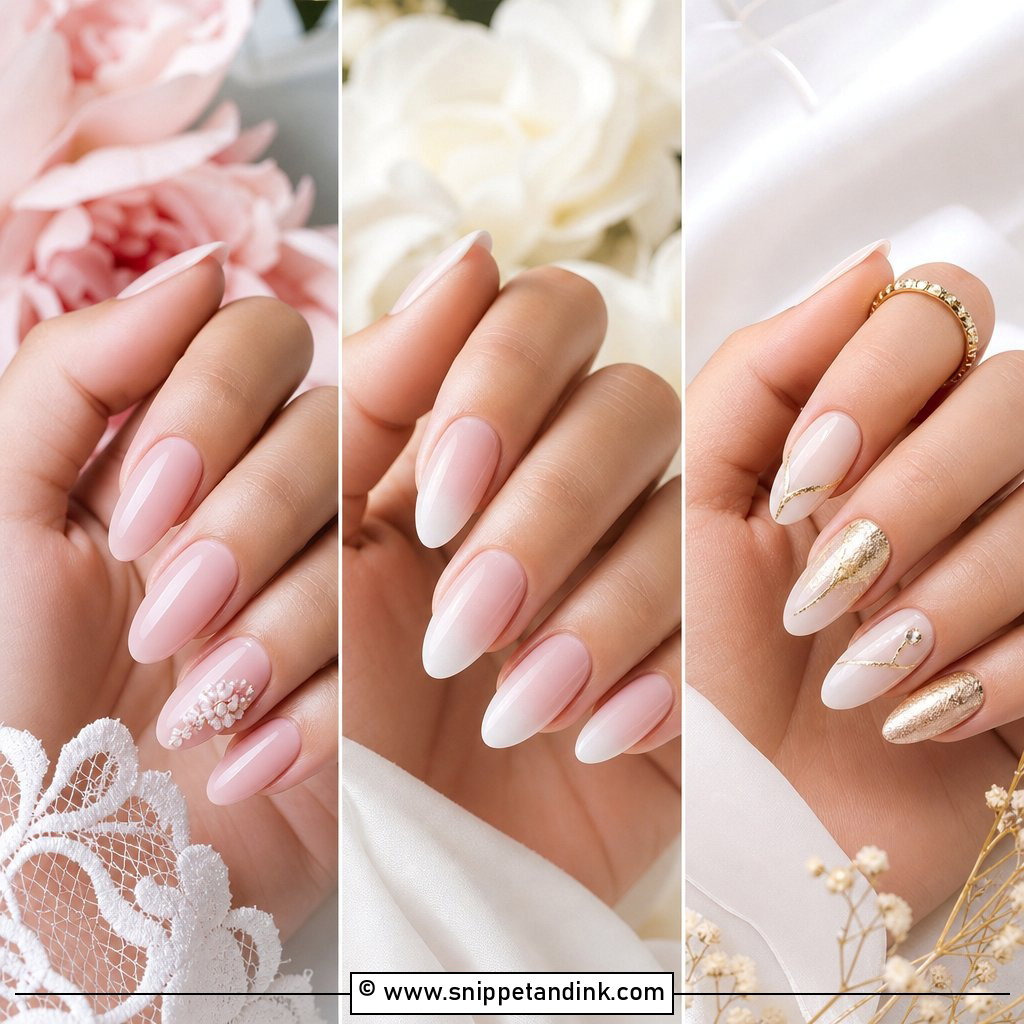
This is a soft fade from a natural pink at the cuticle to a paler tip, often called baby boomer nails. With no hard line, it forgives a nail that isn’t perfectly symmetrical, and the gradient makes short nails look a touch longer. I blend it with a sponge or an airbrush so there’s no visible band halfway up. Keep the top shade truly sheer for a wedding; a bright white tip pushes it toward a salon set rather than a bridal one.
8. White Ombre Bridal Nails
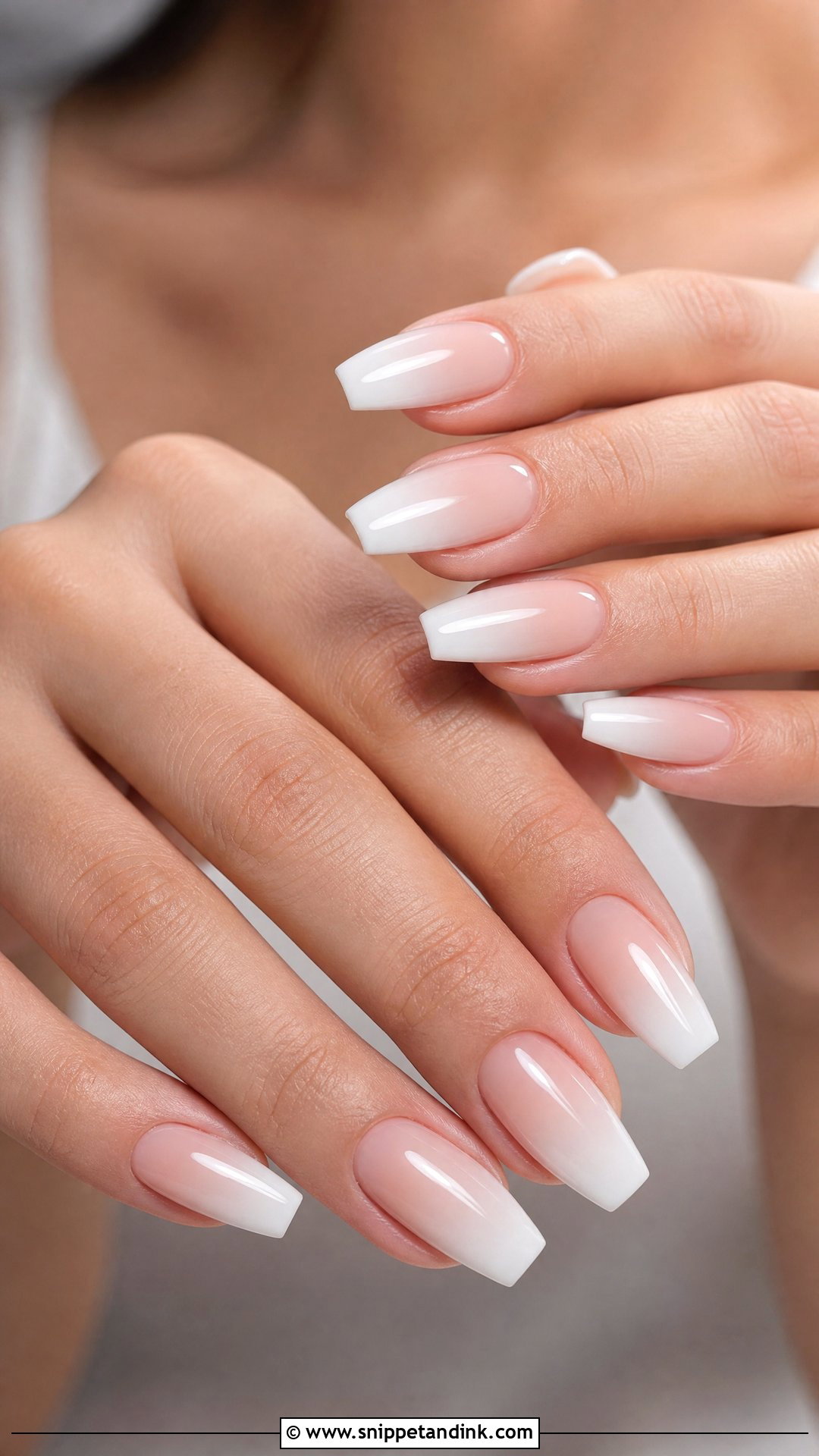
White ombre fades a soft white into a sheer pink or nude, giving you white nails without the stark tip line. It needs some length, because the fade wants room to travel. On very short nails it can look smudged rather than blended, so almond, coffin and ballerina shapes suit it best. I keep the white slightly translucent at the top so it never becomes a thick cap.
9. Glazed Donut Bridal Nails
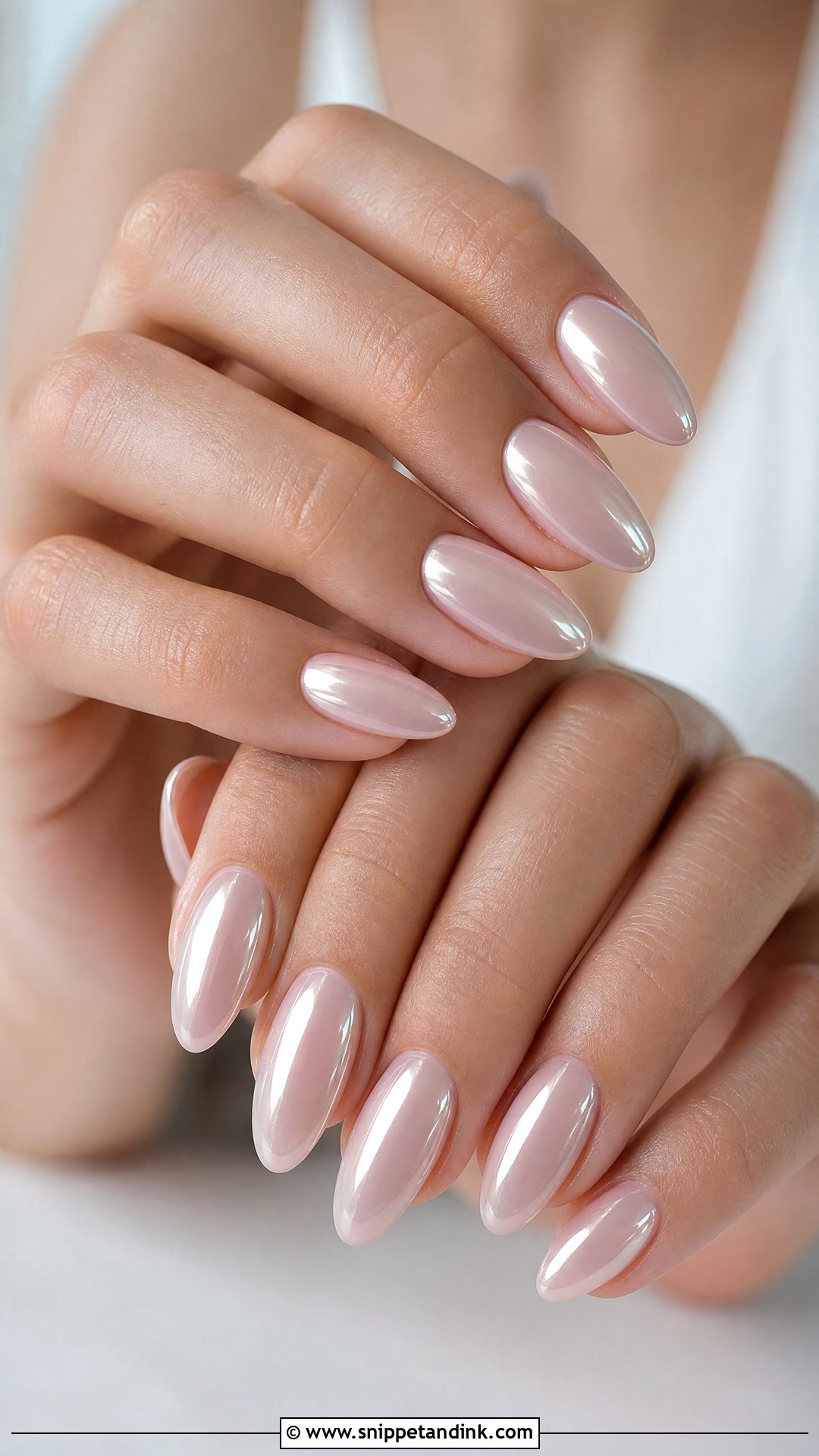
The glazed finish is a fine chrome powder over a pale nude, pink or milky base, and it reads as light sitting on the nail rather than sparkle. It works on natural nails and extensions alike, so length isn’t the deciding factor. Where it goes wrong is overly metallic powder; for a wedding I ask for a pearly, sheer glow and stop well short of mirror shine. One honest caveat: chrome exaggerates ridges and dents, so the base has to be built smooth first.
10. Almond Bridal Nails
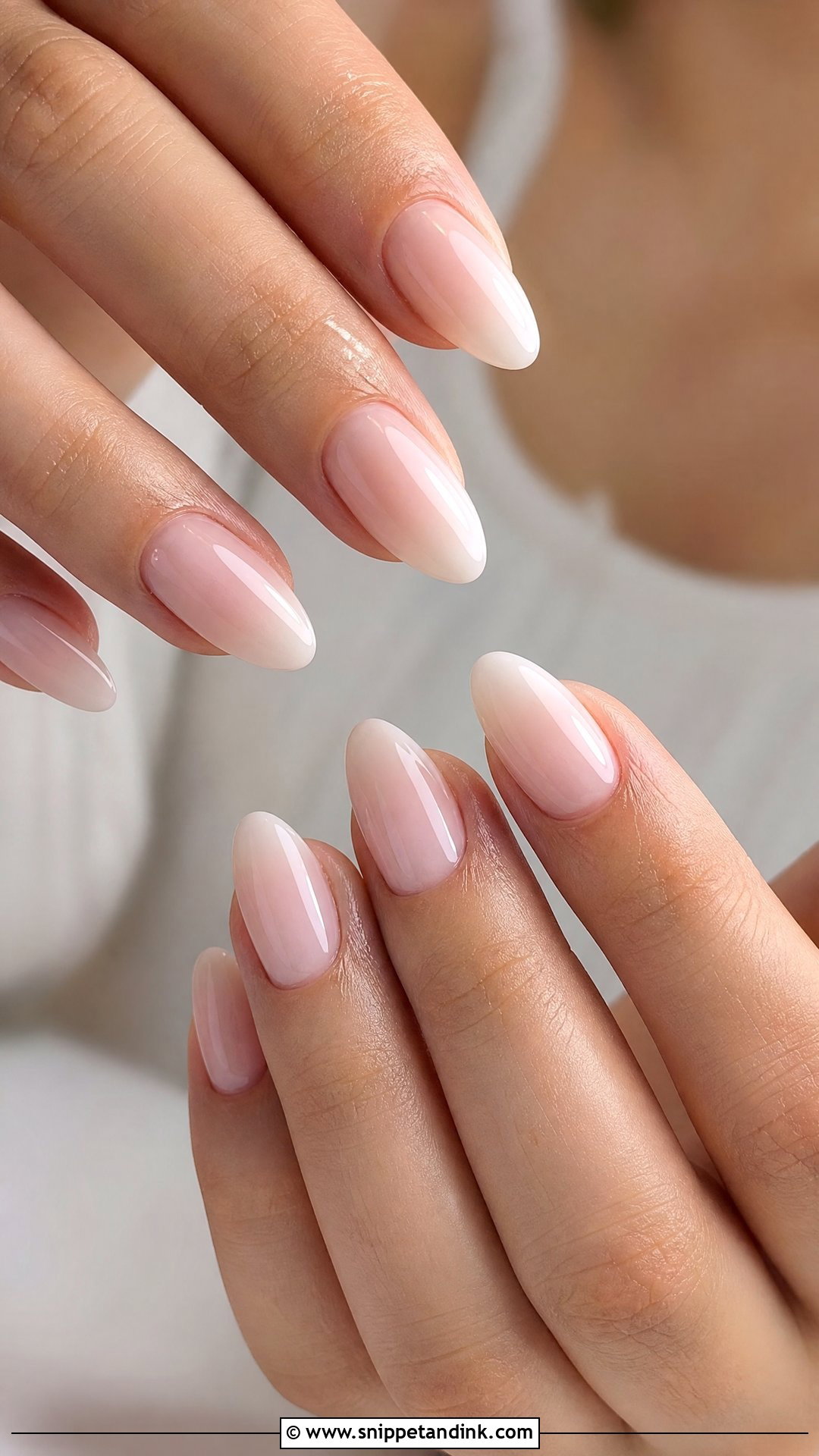
Almond lengthens the fingers, and its tapered tip is soft enough not to feel aggressive. Almost any design in this list sits well on it, from milky white to tiny crystals. Keep it medium if you’re not used to length, since you’ll be holding a bouquet, hugging people and fiddling with a new ring all day. If you truly can’t decide, this is the shape I’d default to. The exception is a very wide, flat nail bed, where the taper can look pinched and a softer oval works better.
11. Short Bridal Nails
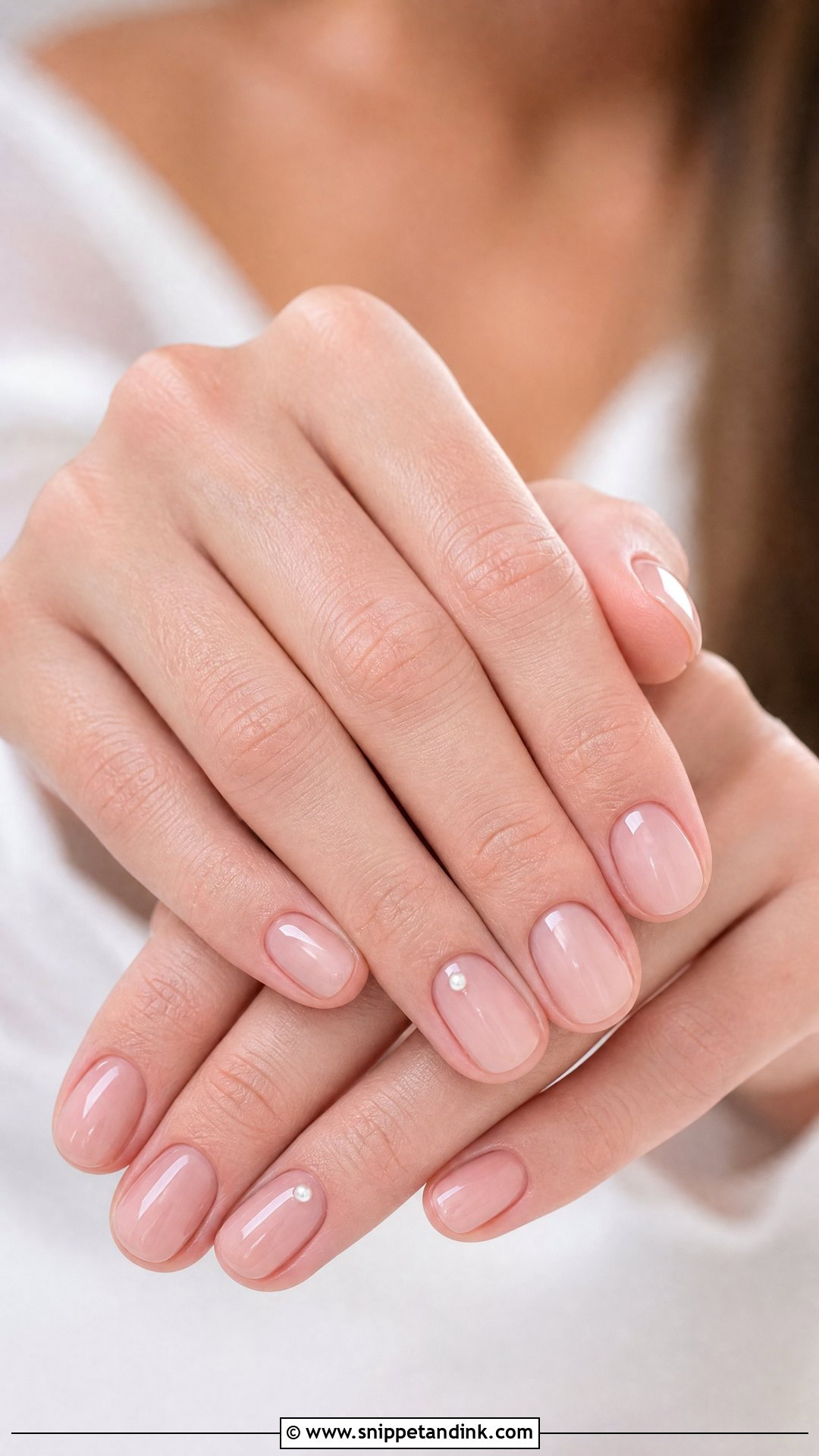
Short nails look every bit as polished as extensions when the prep is right, and the prep is where my time goes. I tidy the cuticles, file a short squoval or rounded edge, and make sure the color wraps the free edge so it doesn’t chip the first time you open a bottle of champagne. Sheer pink, nude, milky white and micro French all suit this length. One tiny pearl or a fine chrome line is about as much detail as a short nail carries before it looks crowded.
12. Square Bridal Nails
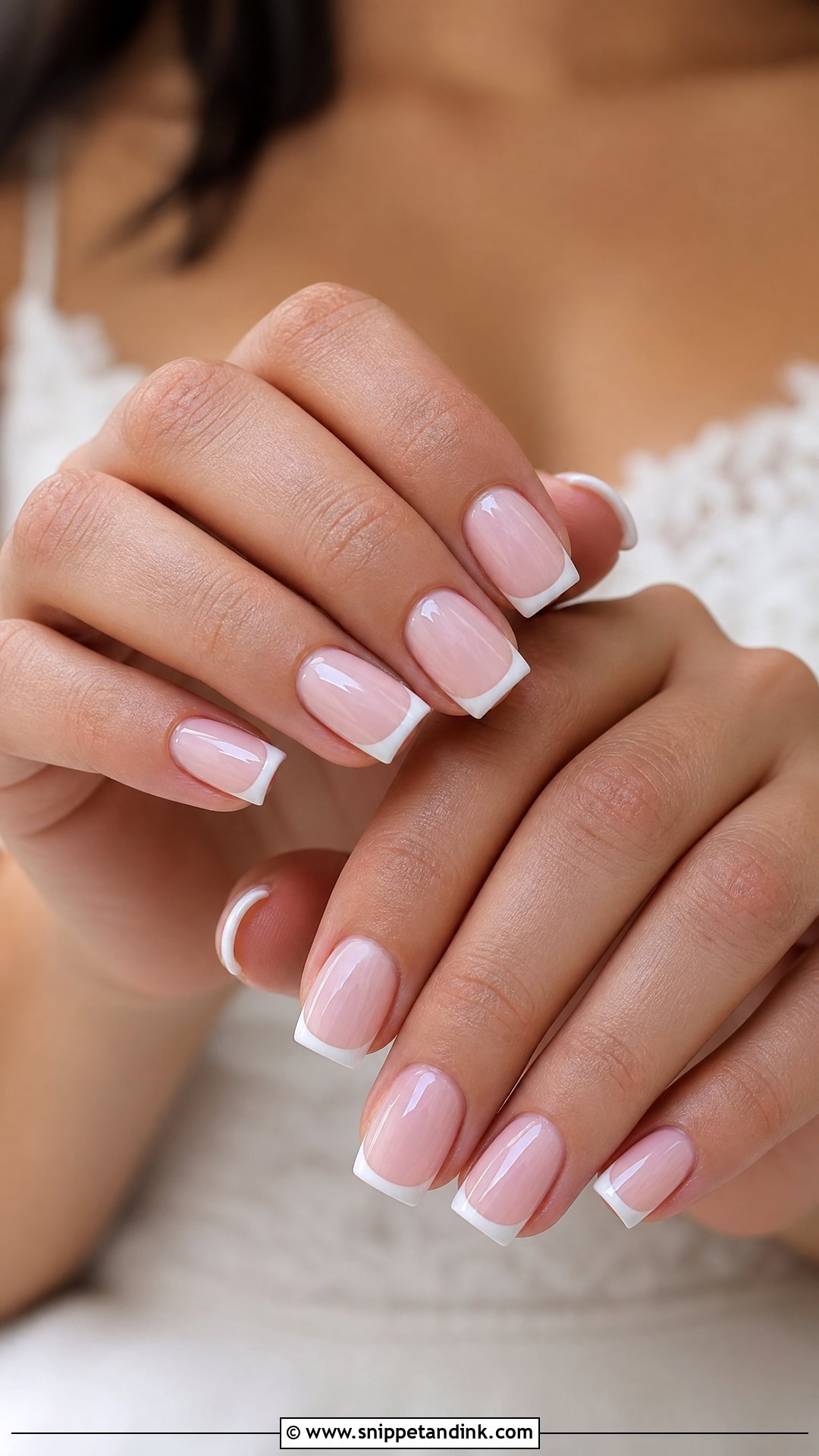
Square gives a crisp, structured edge that works with French tips, milky white and nudes. For a wedding I’d nearly always soften the corners into a squoval, because sharp corners catch on lace and tulle and chip faster. It suits long nail beds best. On a short, wide bed, a hard square edge makes the hand look broader, and a thin tip keeps the shape light either way.
13. Coffin Bridal Nails
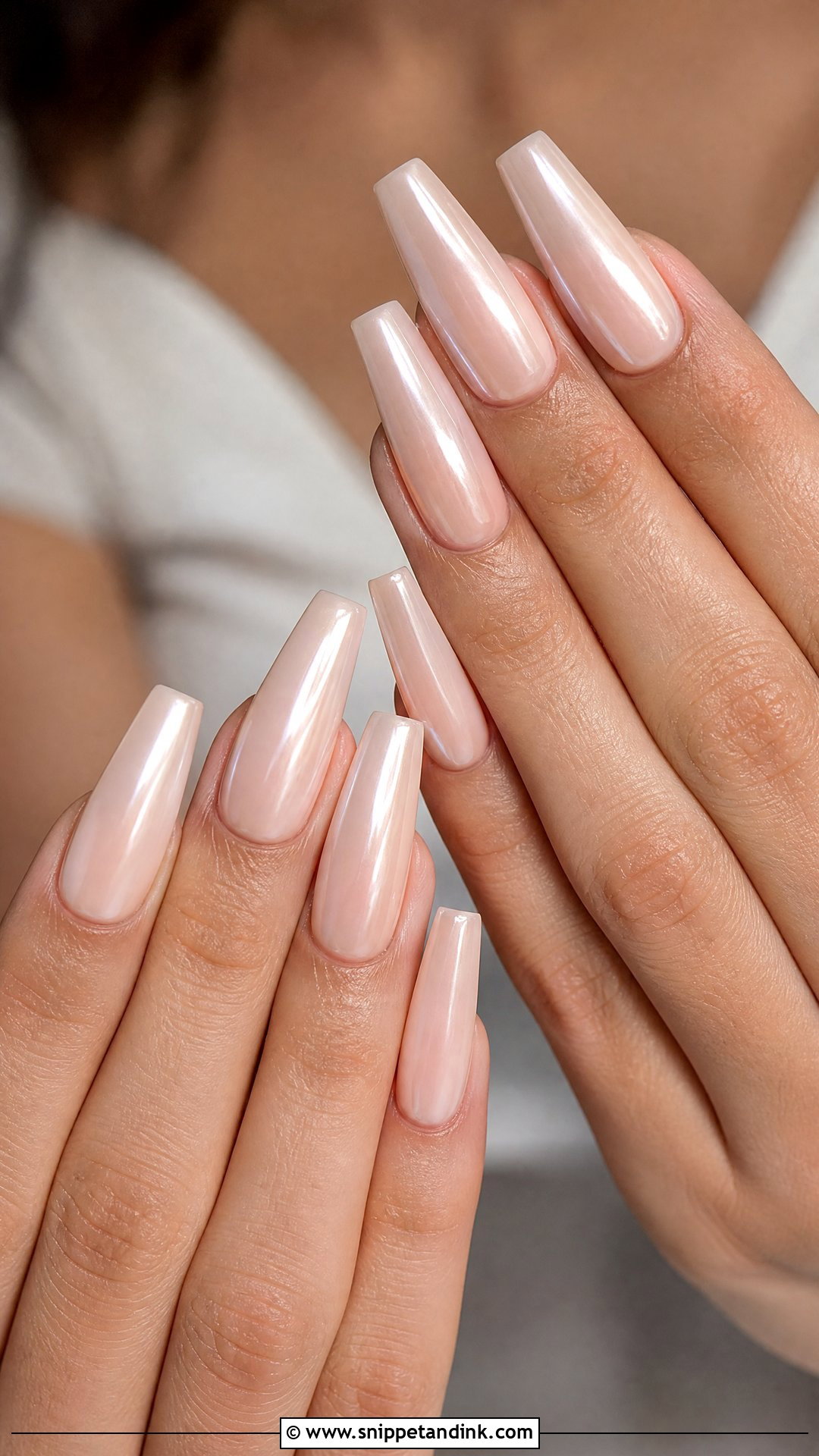
Coffin bridal nails taper to a flat tip and need medium to long length to look intentional. Add a heavy design and they turn dramatic quickly, so I pair the shape with something quiet: sheer pink, milky white or a thin French. The flat tip frames a ring well in close-ups. It is a structural shape, though. On natural nails those corners are weak points, so I usually recommend a builder base or gel extensions for anyone who wants coffin on her own nails.
14. Oval Bridal Nails
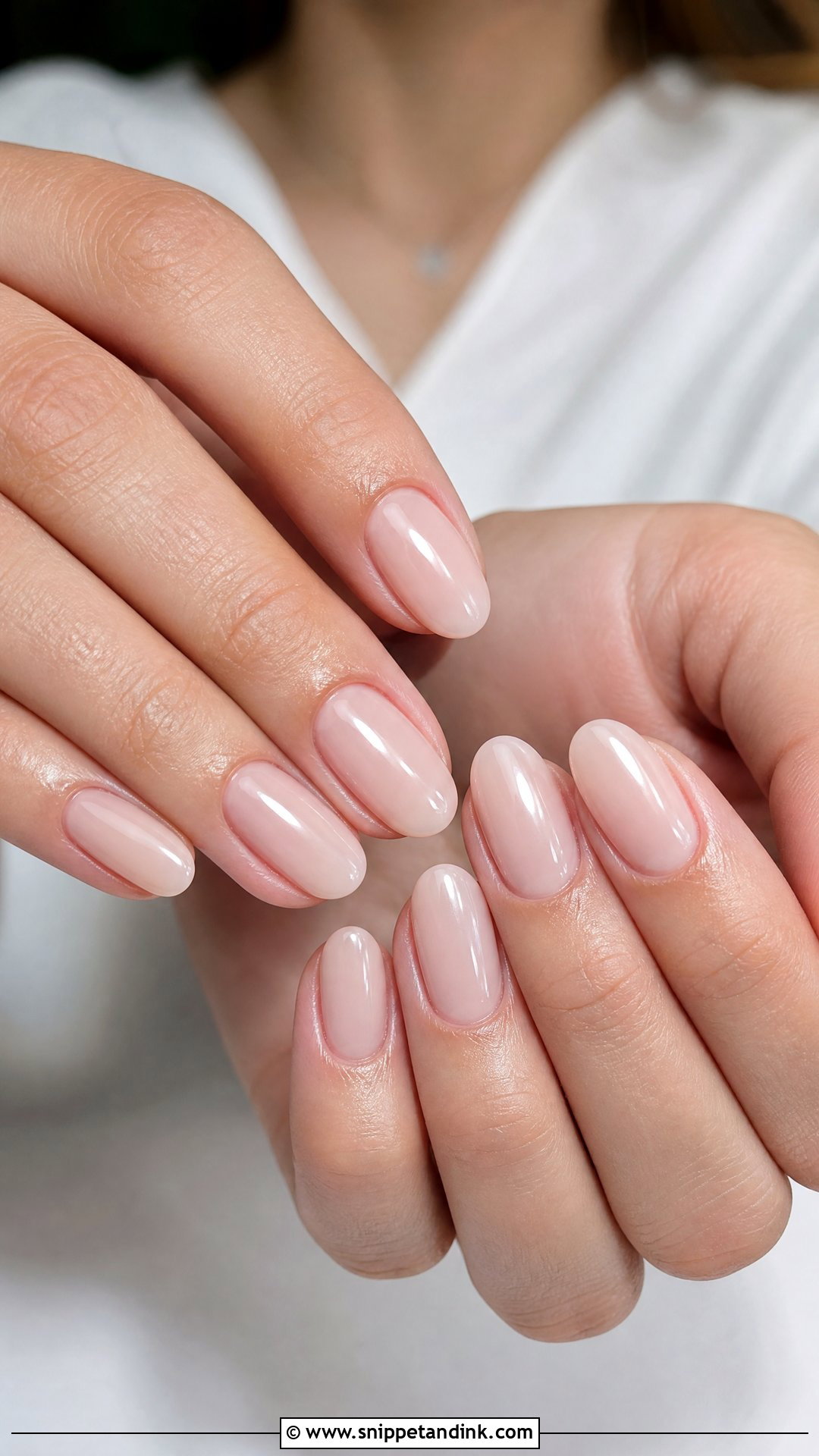
Oval follows the natural curve of the fingertip, which is why it suits almost everyone. It’s the shape I suggest to brides who have rarely had a manicure, since it’s comfortable and less likely than anything with corners to snag on fabric. It works at any length with nearly every finish in this list. For an understated wedding, oval keeps the hands looking groomed without pulling attention away from the ring, and it still looks right in the second week.
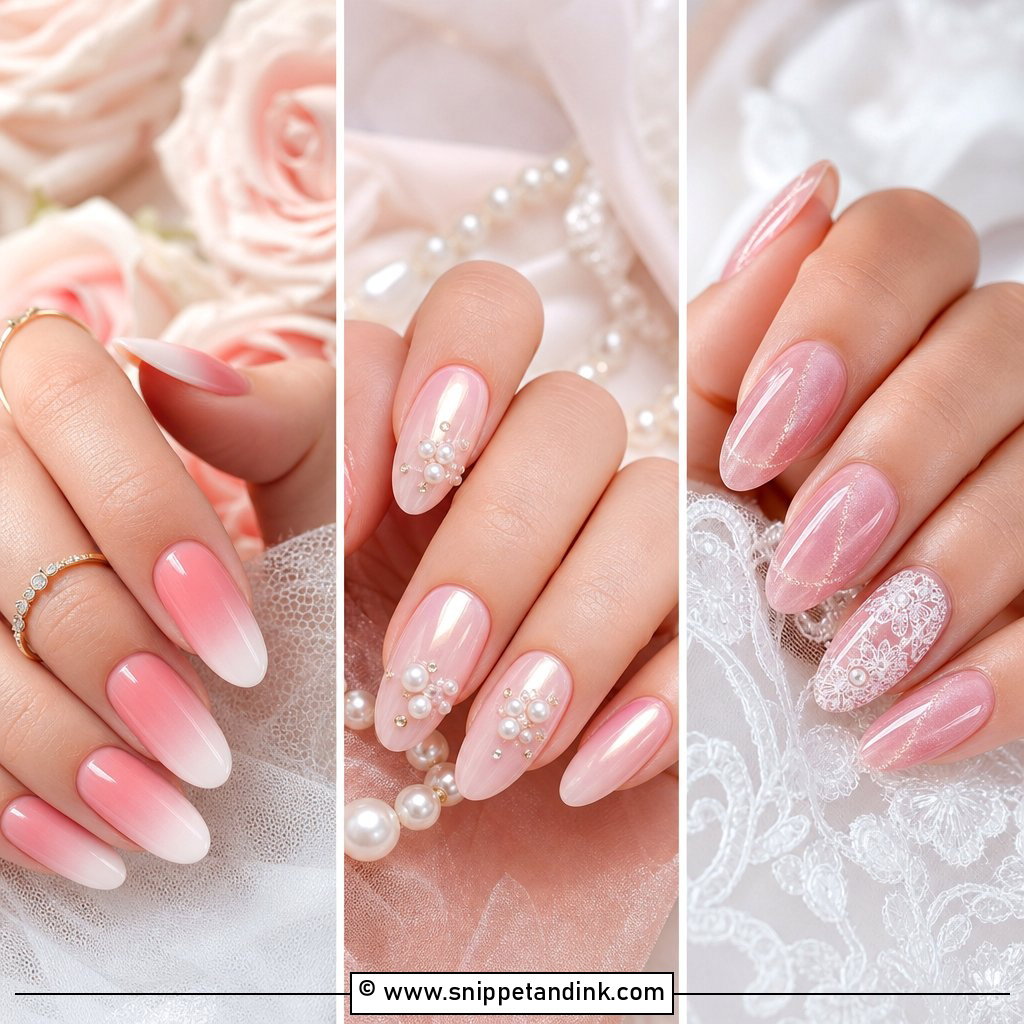
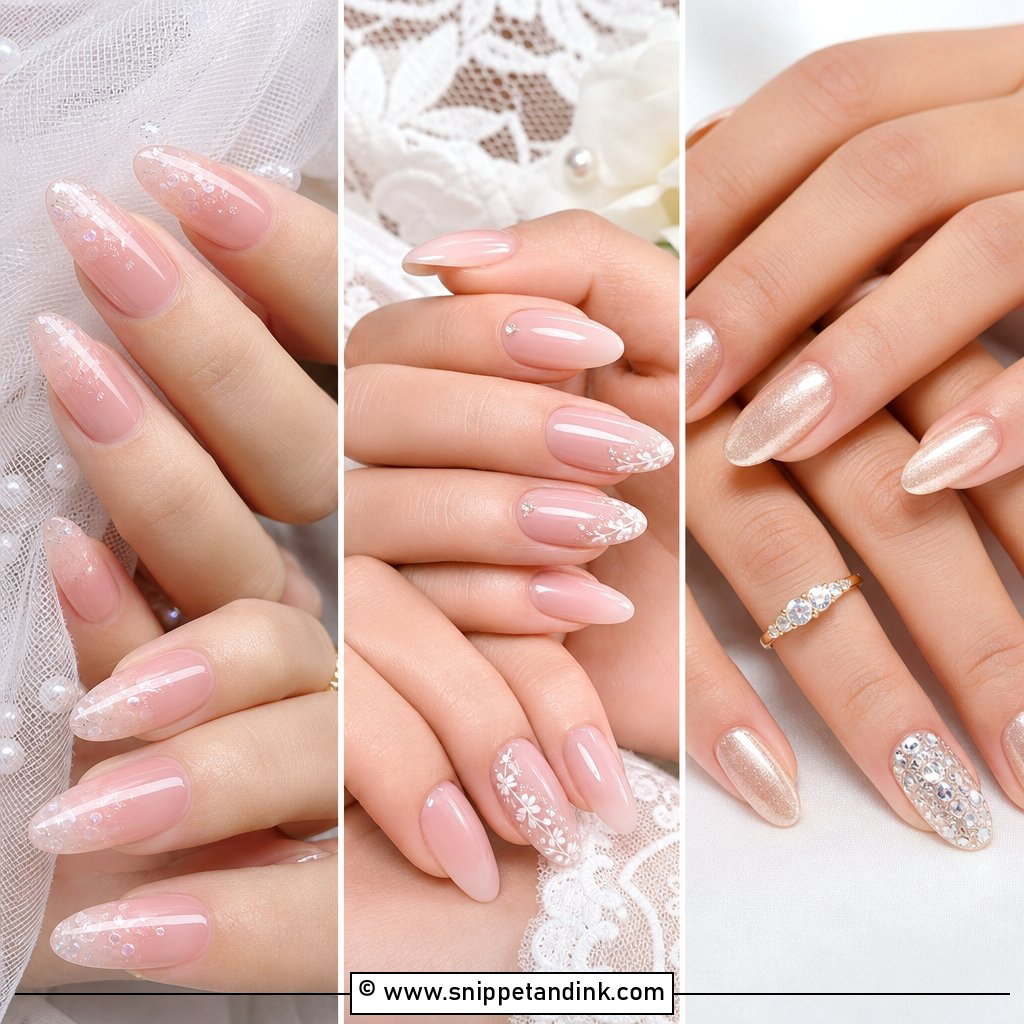
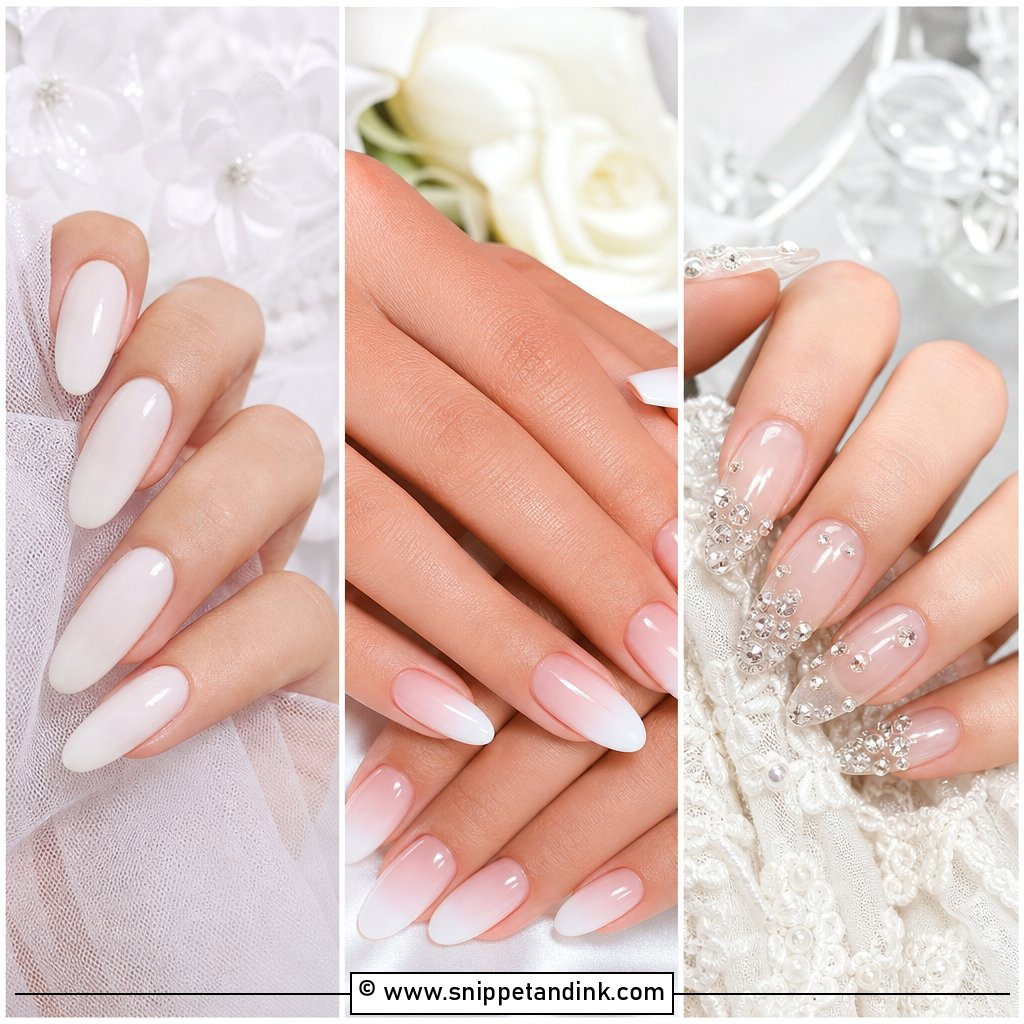
15. Lace Bridal Nails
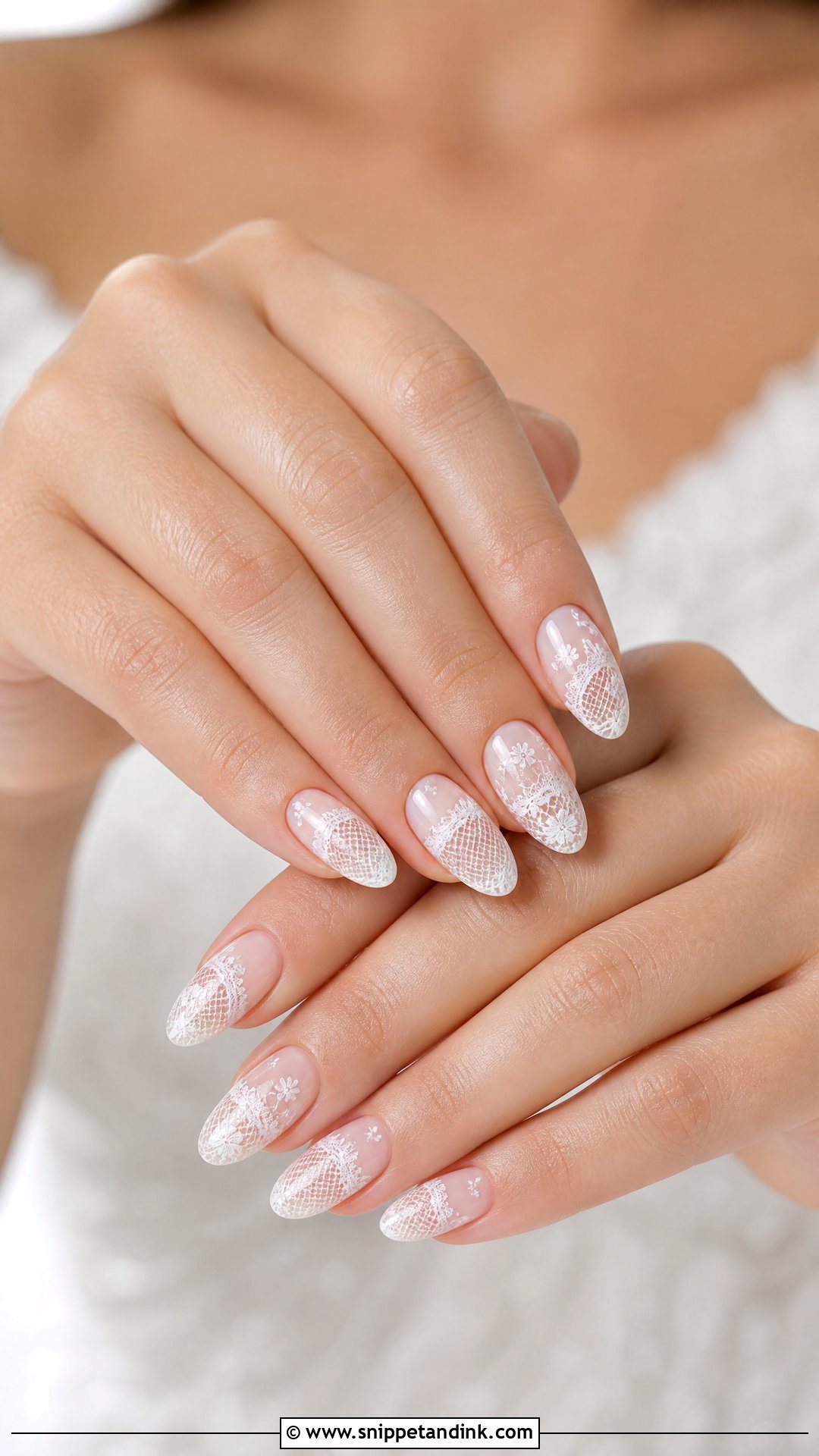
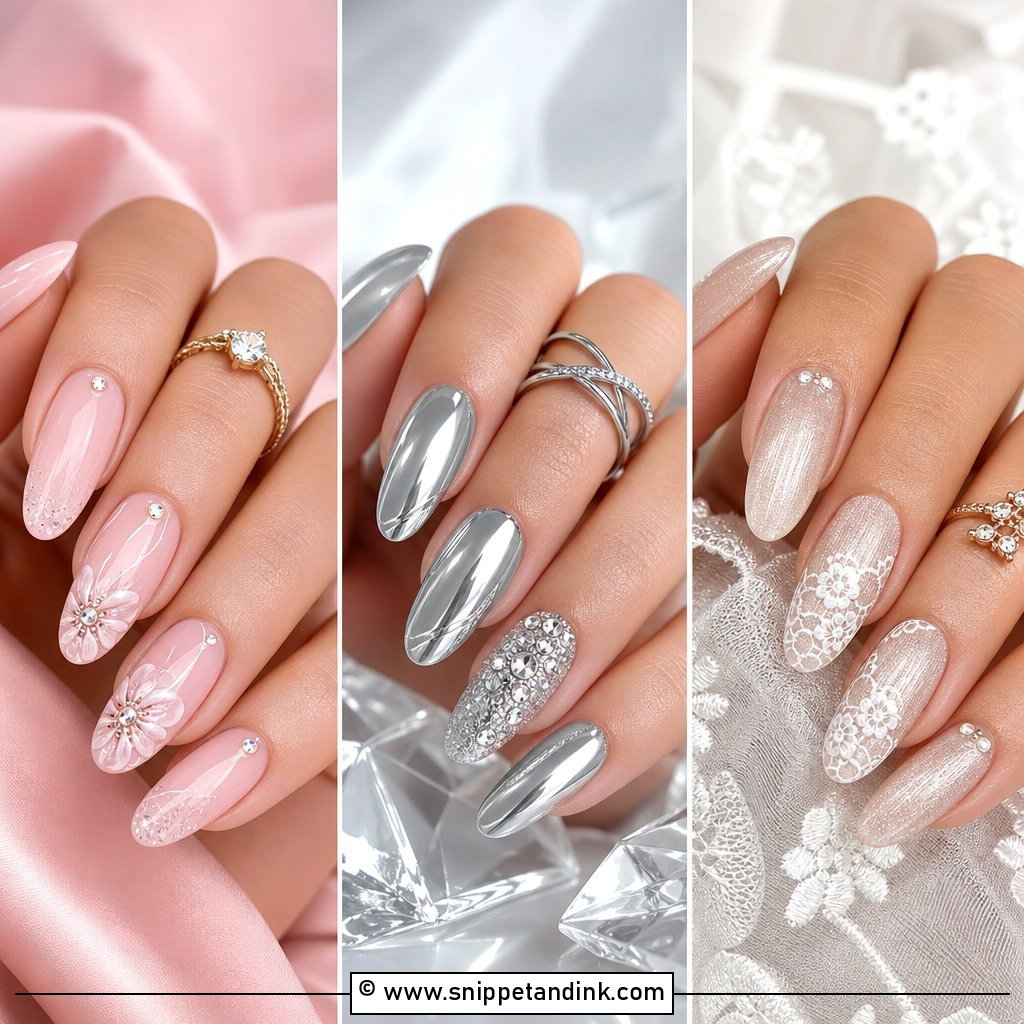
Lace nails echo the texture of a dress, so I always ask a bride to bring a photo or a scrap of her actual lace. Chantilly is fine and airy, while corded or guipure lace is chunkier, and the nail art should copy whichever one you have. The pattern goes on in fine white lines over a sheer nude or pale pink base. Across all ten nails it gets busy fast, so I often put lace on two accent nails and plain milky polish on the rest.
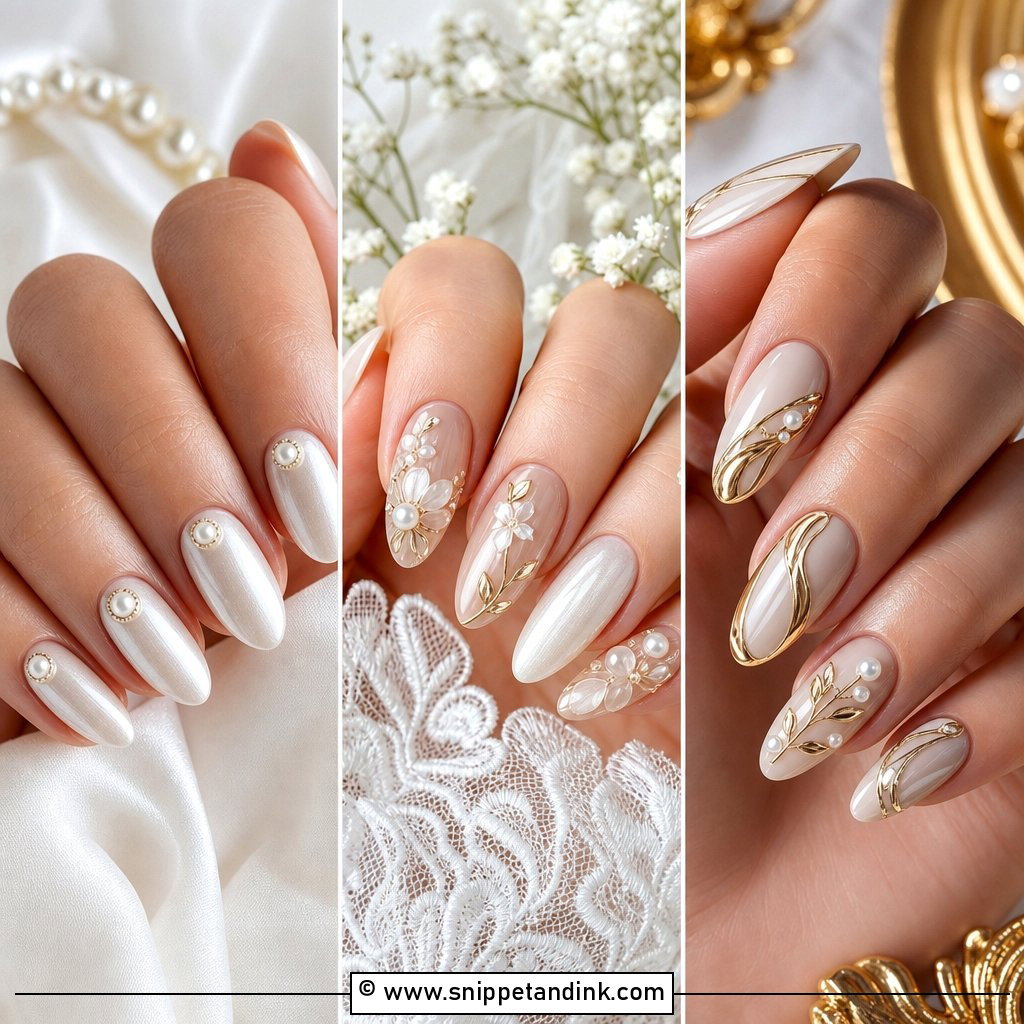
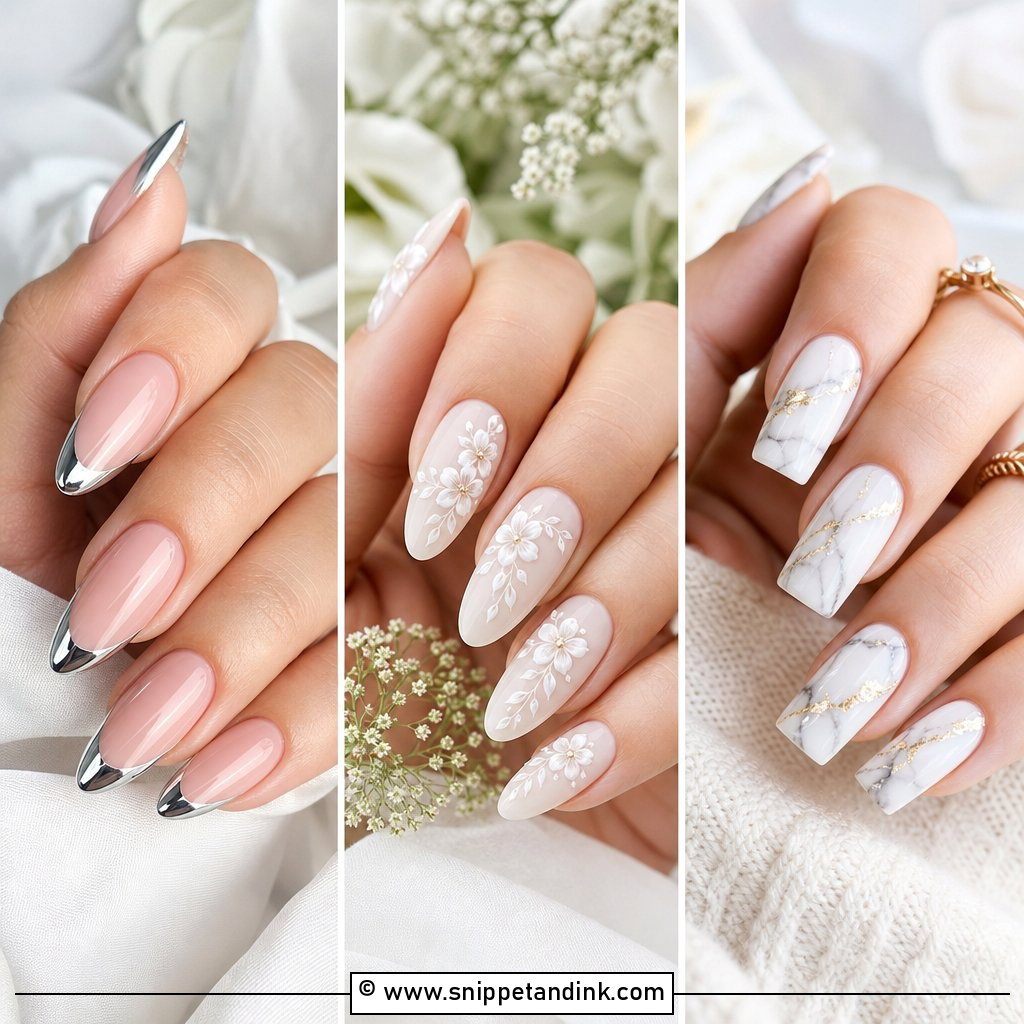
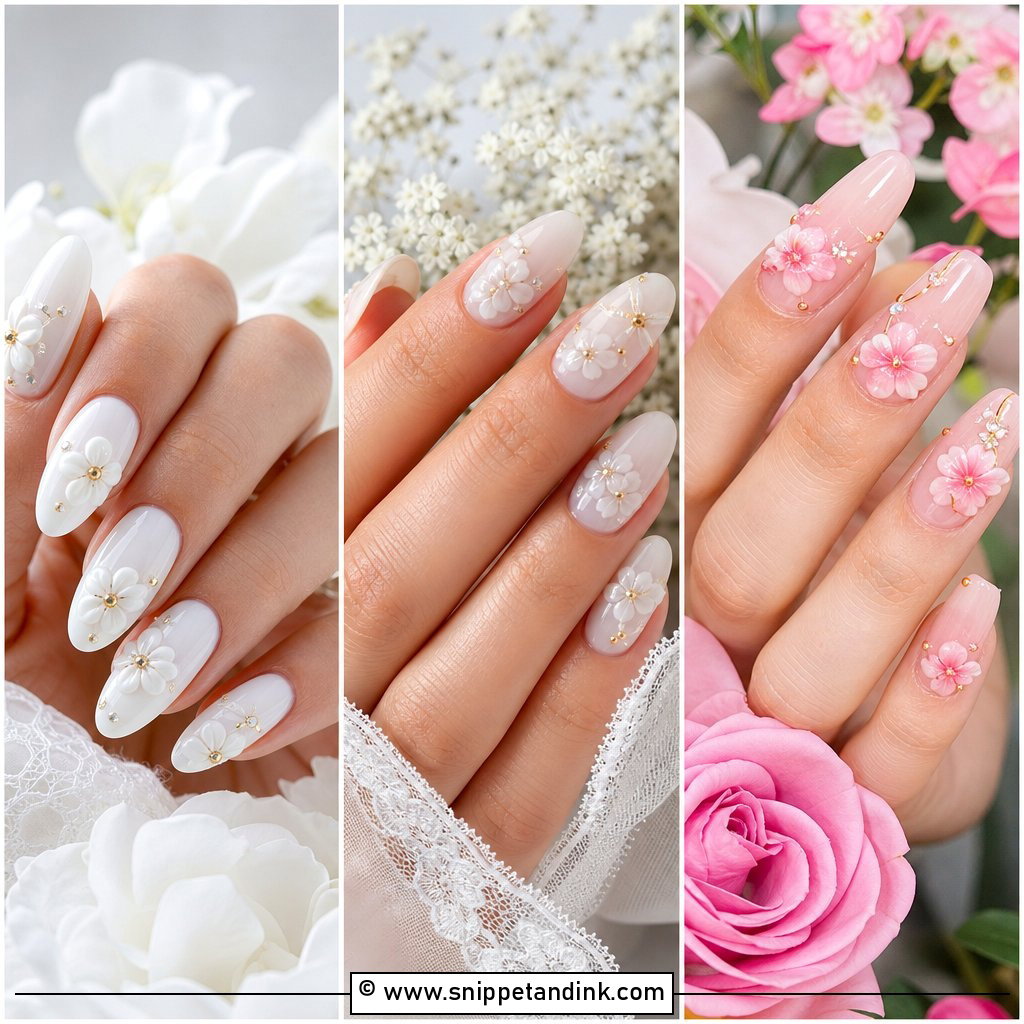
16. Floral Bridal Nails
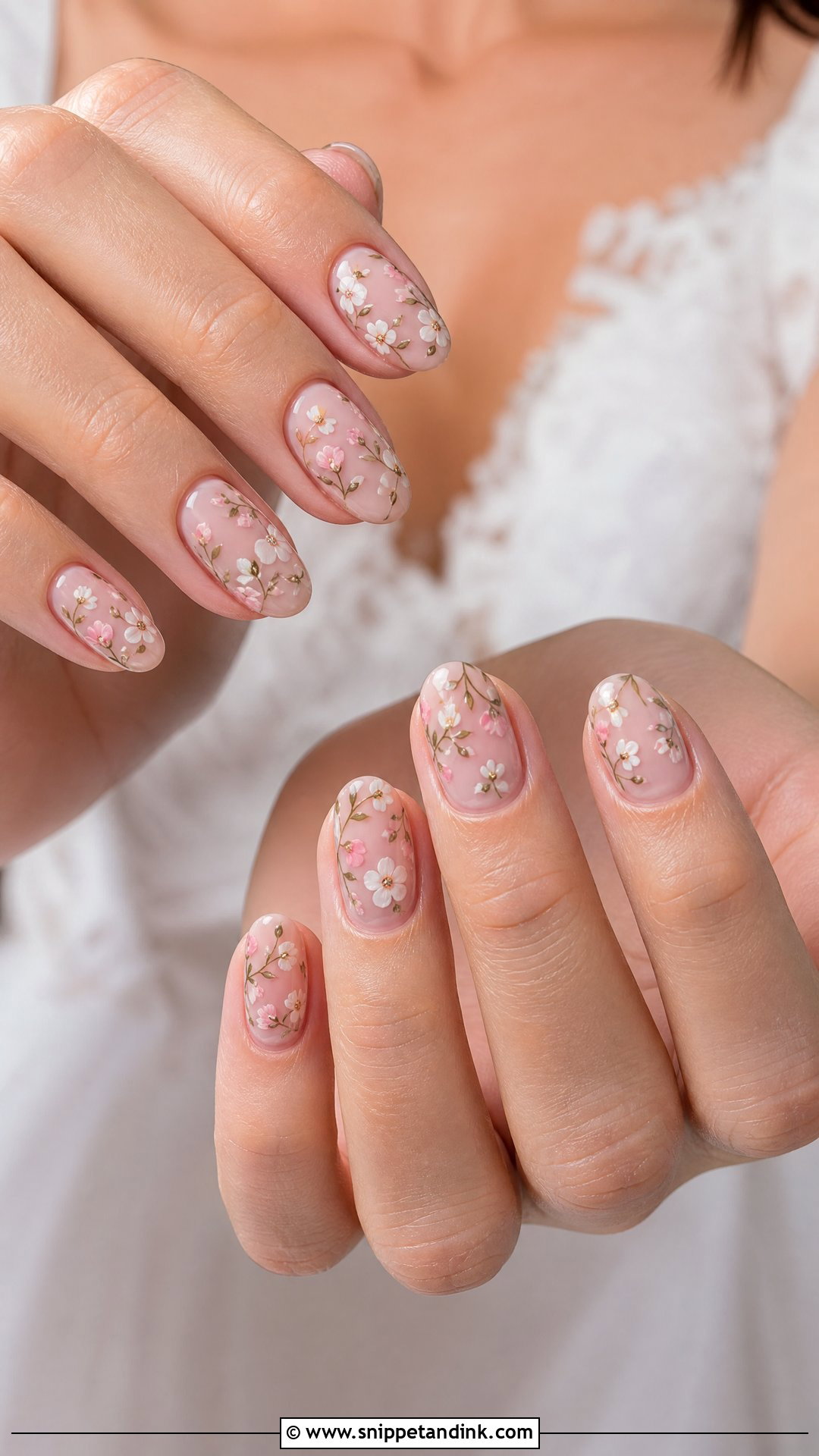
Small is the rule with florals. Tiny white flowers or blush petals over a sheer base keep the set clean, and they read better in a ring shot than a big painted rose. Hand painting looks the most natural; decals are a sensible fallback if your nail tech isn’t confident with a fine liner brush. Raised gel petals add texture but bring the snagging issue covered further down. I’d match the petal color to something real in your bouquet, and save this one for spring or garden weddings.
17. Pearl Accent Bridal Nails
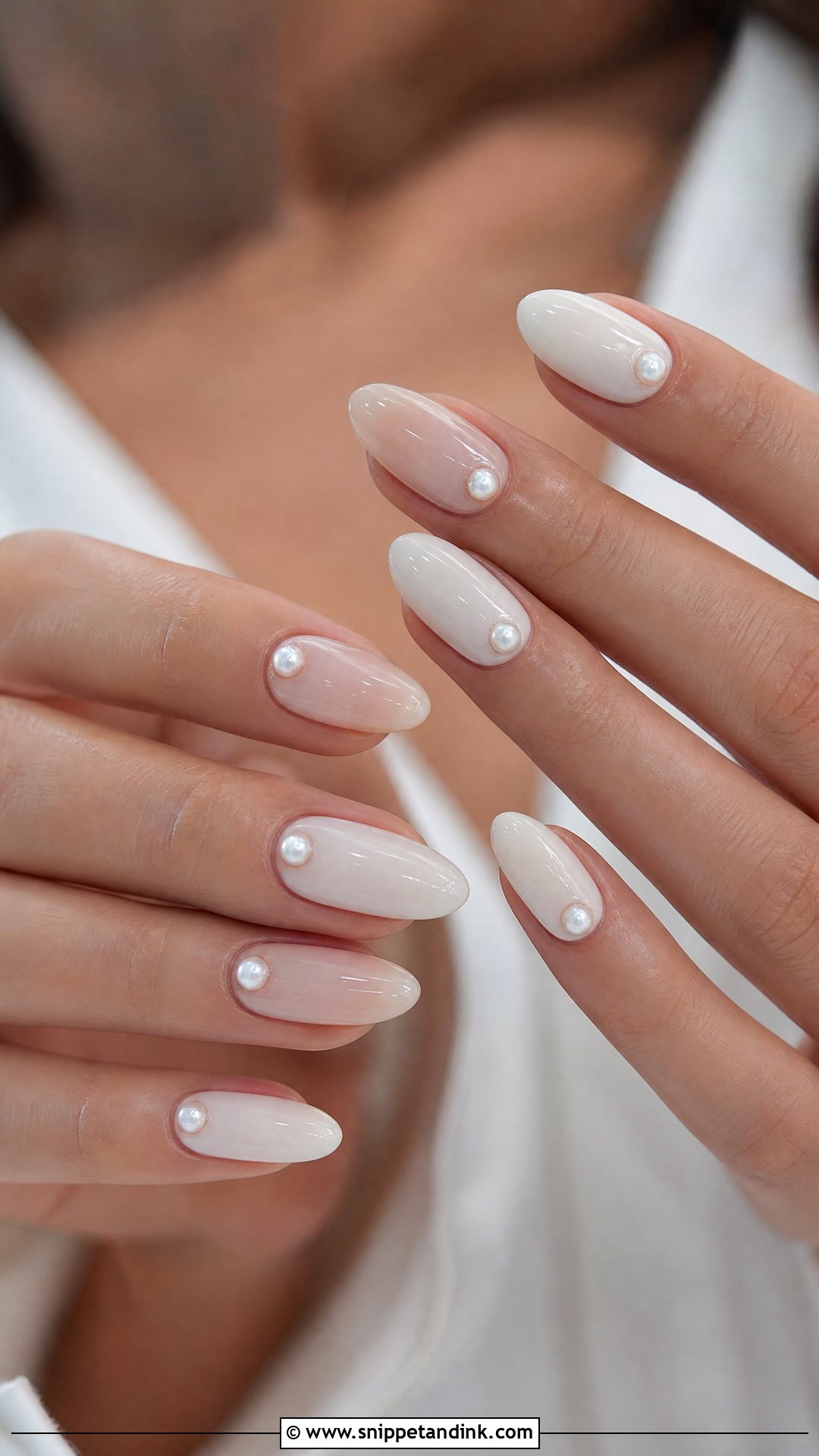
Flat-back pearls near the cuticle, along a French line or on one or two nails add texture without a busy design. The practical problem with any 3D element is snagging, especially on tulle and loose hair. I set small pearls into a thick builder layer and seal around their base so there’s no lip for fabric to catch. If you’re wearing pearl earrings or a pearl-edged veil, this ties everything together. Spacing matters more than quantity: three well-placed pearls look more deliberate than ten.
18. Crystal Bridal Nails
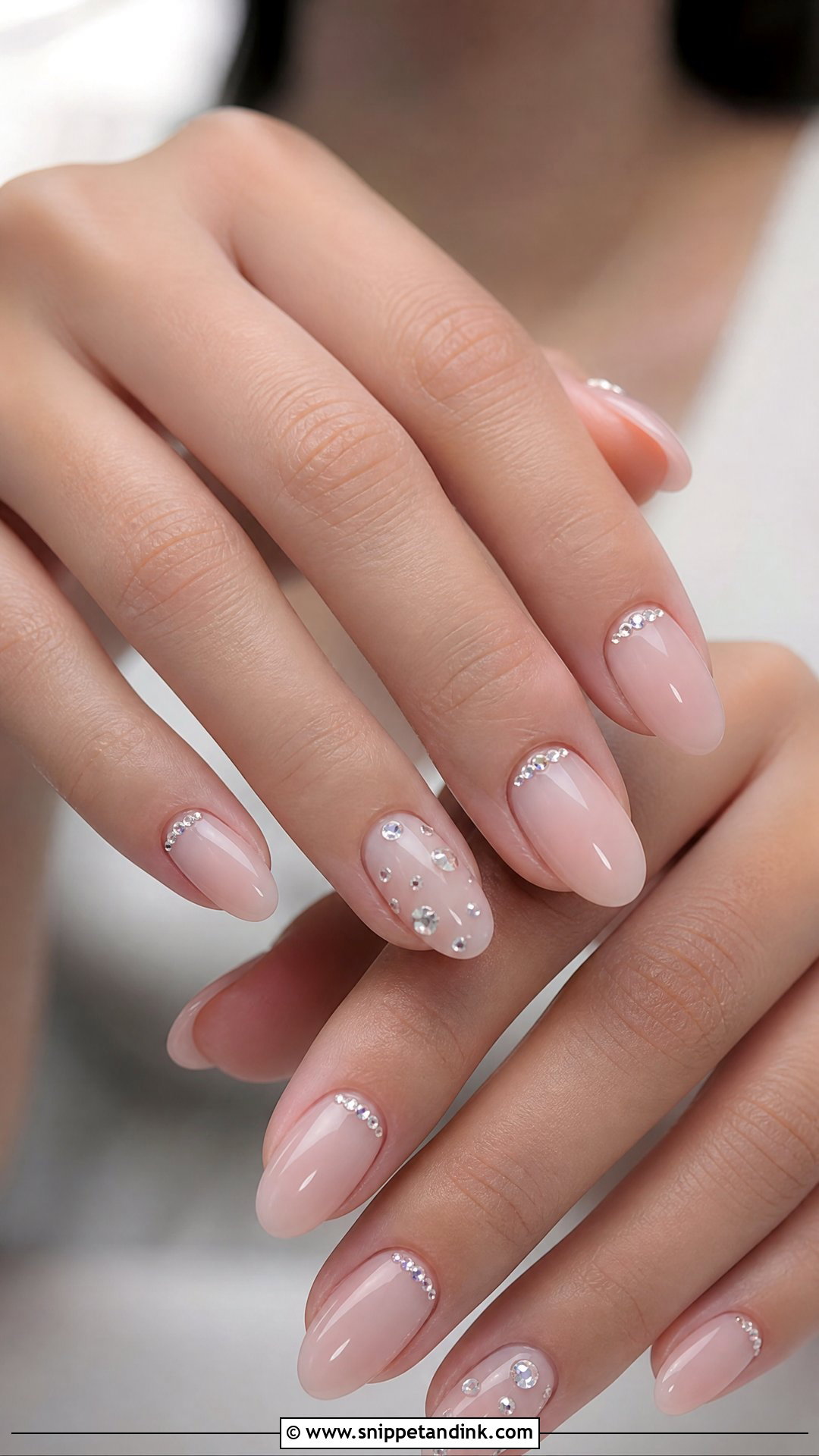
Crystals catch light in ring photos and under reception lighting, but bigger stones on every nail start competing with the ring itself. I keep it to a few tiny clear crystals near the cuticle or on one accent nail. Placement is a comfort question too. Stones near the free edge snag tights, hair and veils, so I keep them low on the nail. A beaded gown or crystal hair pieces give this set a reason to be there.
19. Gold French Bridal Nails
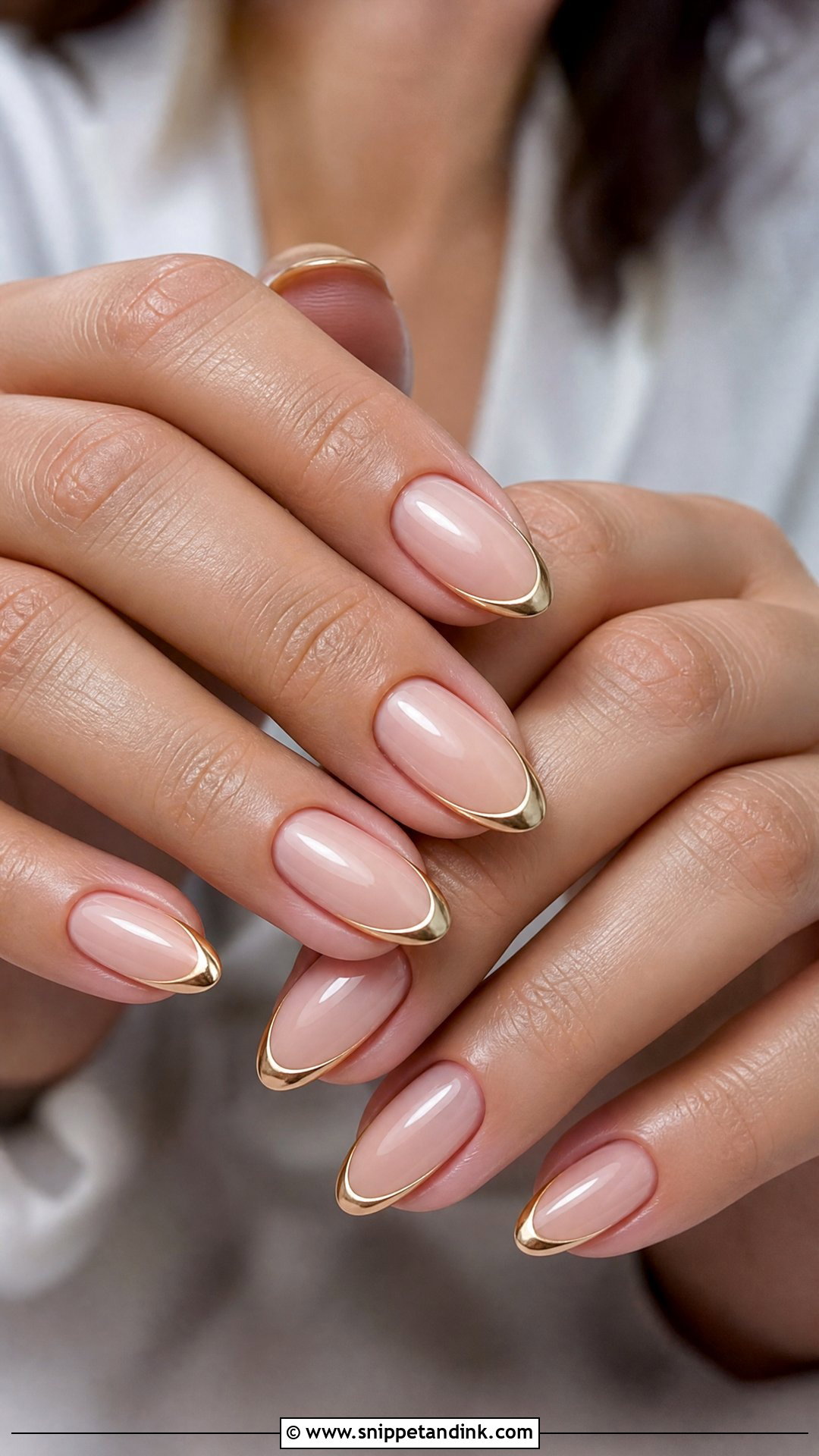
Swap white tips for a thin gold line and the French suddenly matches yellow-gold jewelry. Bright yellow gold can look brassy against cool skin, so I usually mix toward champagne gold for brides. A sheer nude or blush base keeps the shine from taking over. Metallic gel is less forgiving than white, and the line needs to be one confident stroke, because patched gold shows. A tiny gold dot near the cuticle is plenty of extra detail.
20. Silver French Bridal Nails
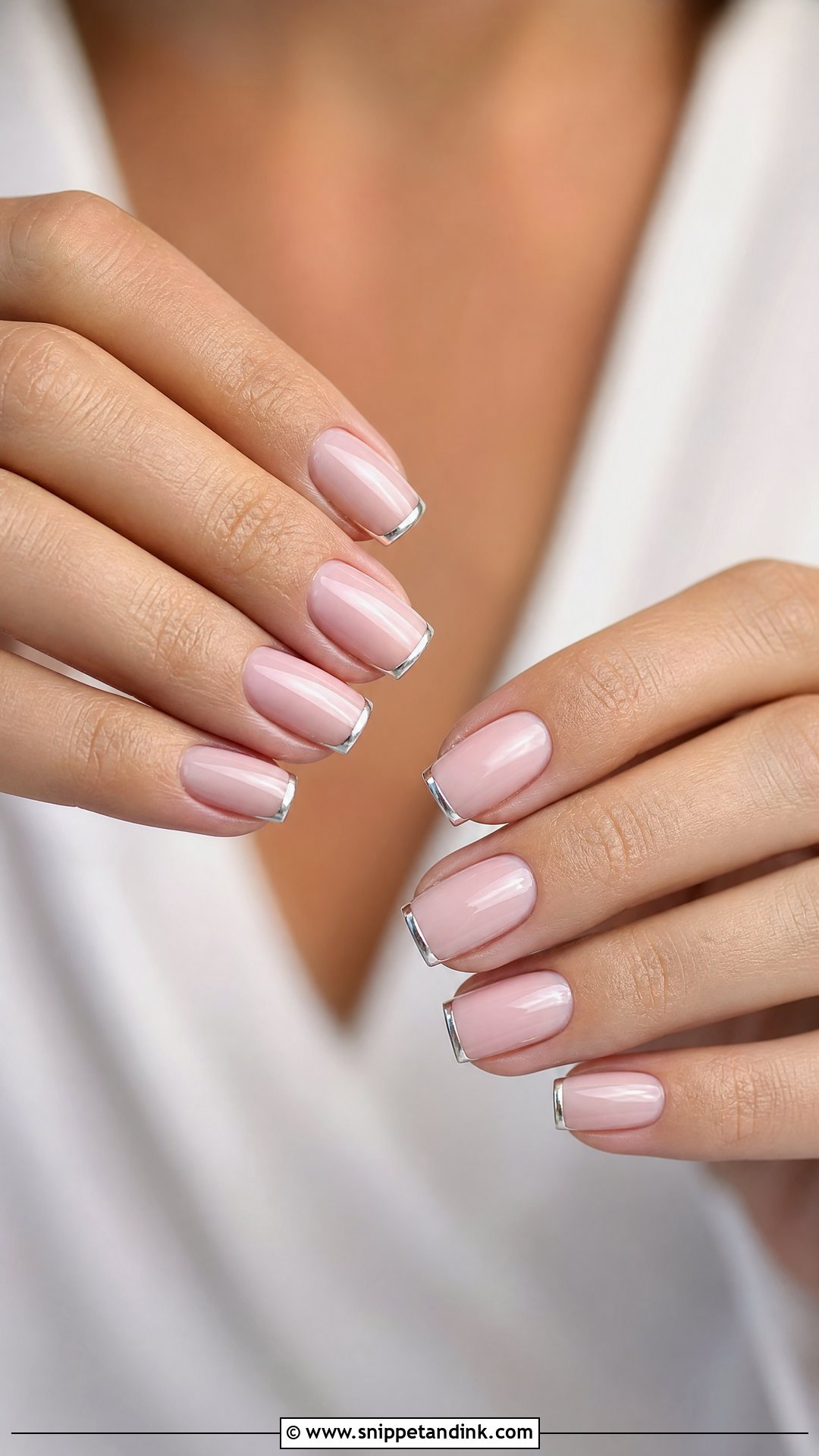
Silver tips belong with platinum, white gold or silver jewelry. Over a sheer pink or nude base, the cool metal looks bright rather than hard. A thin micro tip is the subtle version, and a faint chrome film over the whole nail is the bolder one. Winter weddings and satin gowns suit it well. Shape the line carefully, because a thick silver band looks heavy in a close-up much sooner than a thick white one does.
21. Rose Gold Bridal Nails
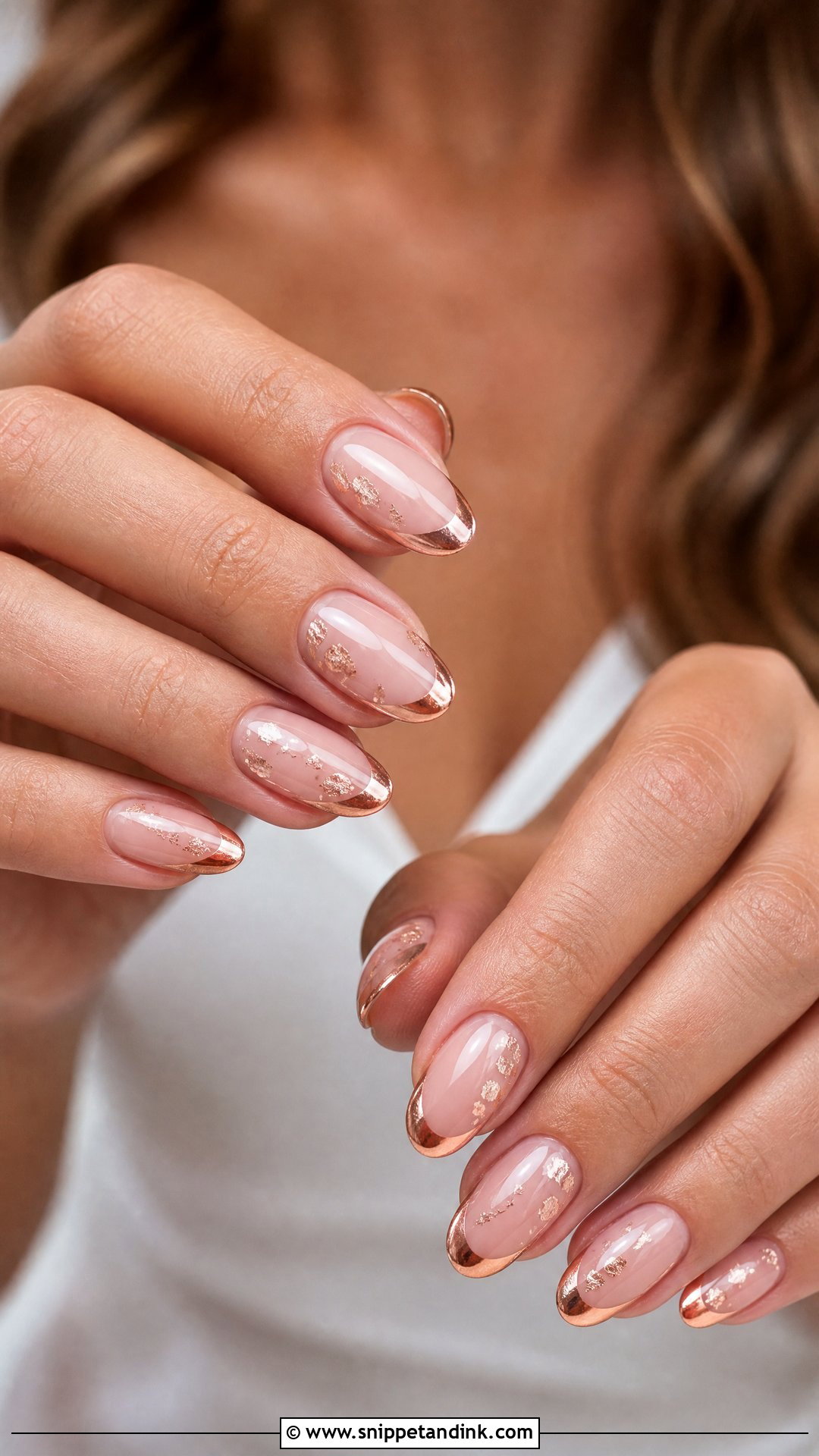
Rose gold sits between pink and gold, which makes it flattering on many skin tones and easy beside blush dresses and rose gold rings. It can be a thin French, a chrome accent, a glitter fade or a few flecks of foil over nude. For a wedding, I keep the metal light. Rose gold chrome in particular can lean toward copper under warm reception lights, so I hold a swatch against the bride’s actual ring before the day.
22. Something Blue Bridal Nails
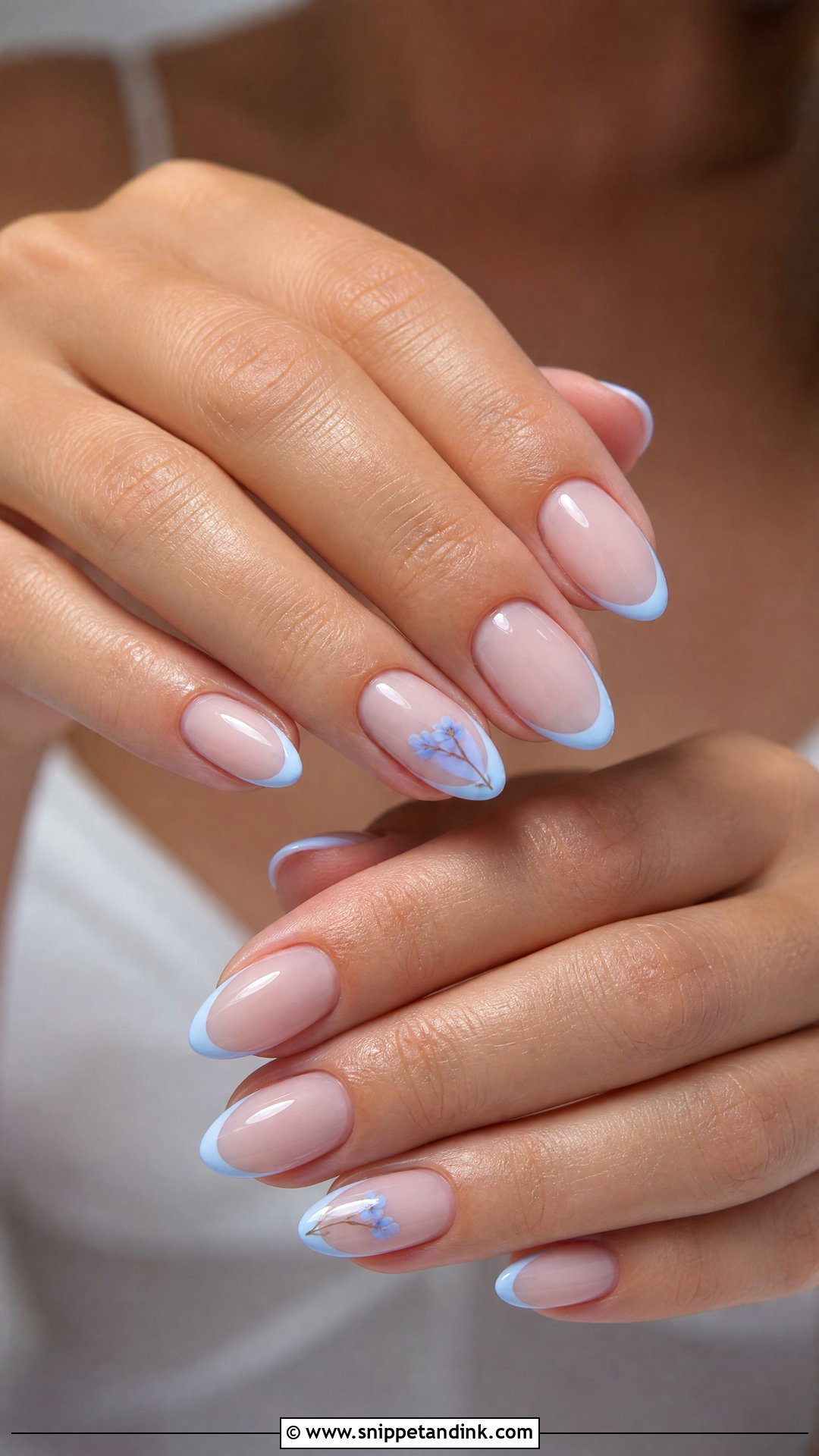
This is a quiet way into an old tradition. Rather than a full blue set, try a pale blue French tip, one tiny blue flower or a single accent nail. Blue pigments are punchier than most bridal shades, so I thin the color with clear gel to get a soft powder blue. If you’d rather keep it private, put the blue on your thumb, where it barely shows in ring photos. Coastal and spring weddings suit it, as do bouquets with blue flowers in them.
23. Sheer Pink Bridal Nails
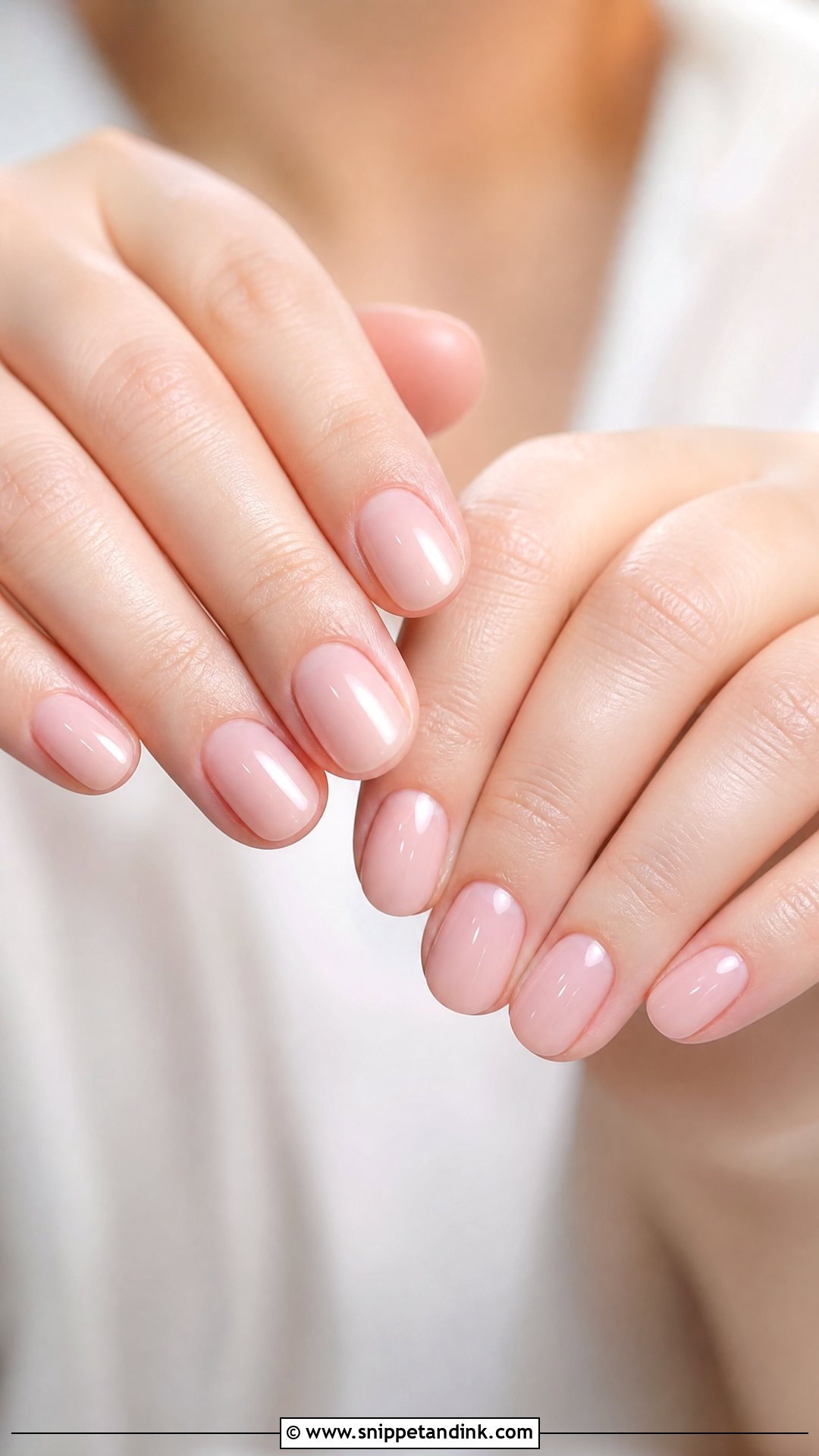
Sheer pink lets the natural nail show through with a healthy flush, and it’s the lowest-risk finish here. It hides nothing, though. Ridges, white spots and old stains all show through, so I buff gently and use a ridge-filling base first. A glossy top coat keeps it fresh, or a whisper of shimmer adds glow. If you’re nervous about committing to anything, start here.
24. Ivory Bridal Nails
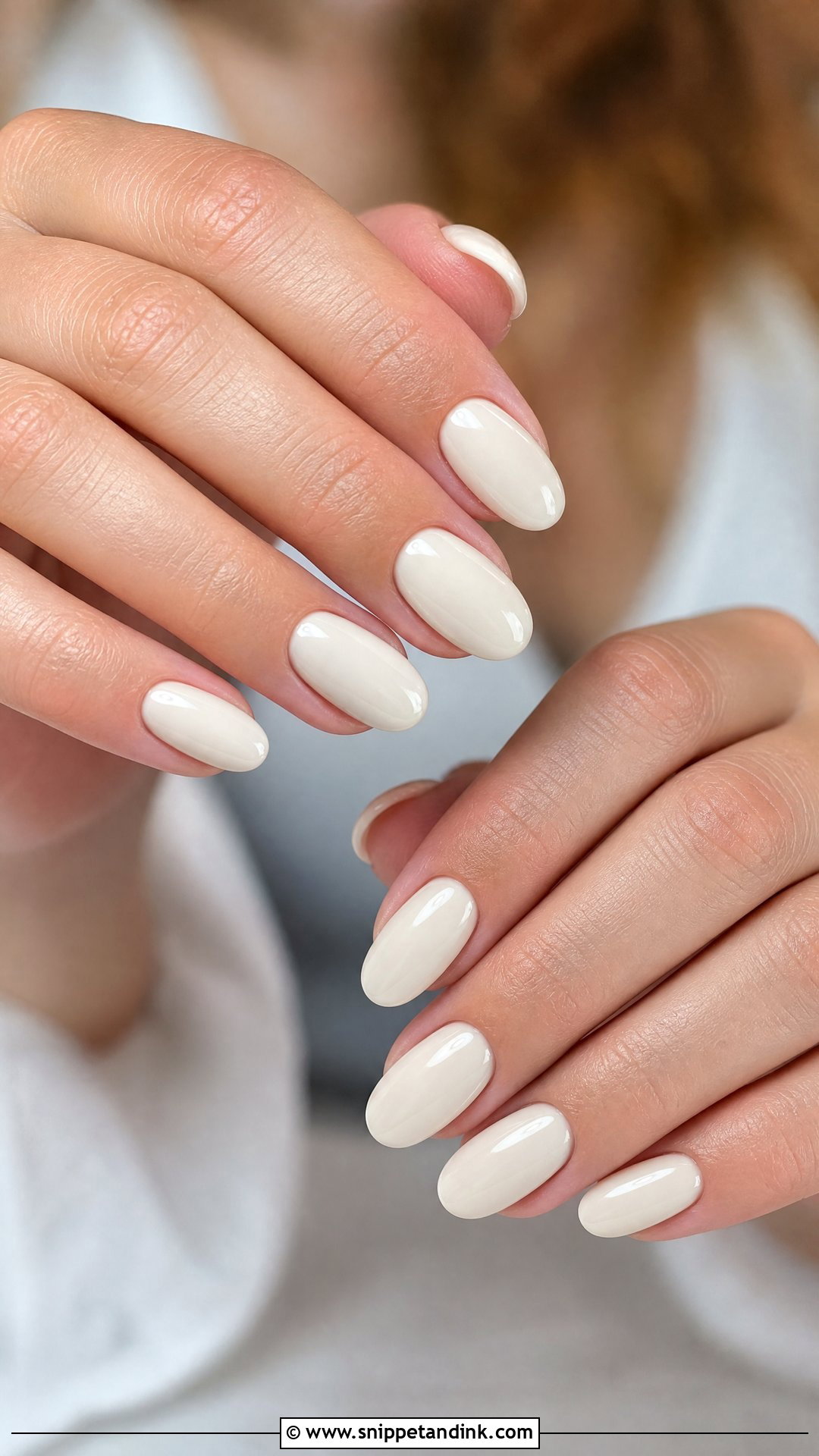
Ivory is the answer for brides whose gowns aren’t pure white. Stark white polish next to an ivory or champagne dress can make the dress look yellowed in photos, while a creamy ivory matches it. I hold the polish bottle against a fabric swatch to check. Glossy feels classic; a sheer ivory feels a touch more modern. Pearl chrome or tiny gold details suit it if you want a little more.
25. Minimal Bridal Nails
Minimal sets come down to one detail placed on purpose: a tiny pearl, a fine white line, a micro dot or a very thin tip on a sheer nude. With so little going on, the prep has to be flawless, because ragged cuticles or a lumpy base are the only things anyone will see. This is the set I’d suggest to a bride who never normally wears nail art. It sits naturally with modern gowns and sleek hair.
26. Matte Bridal Nails
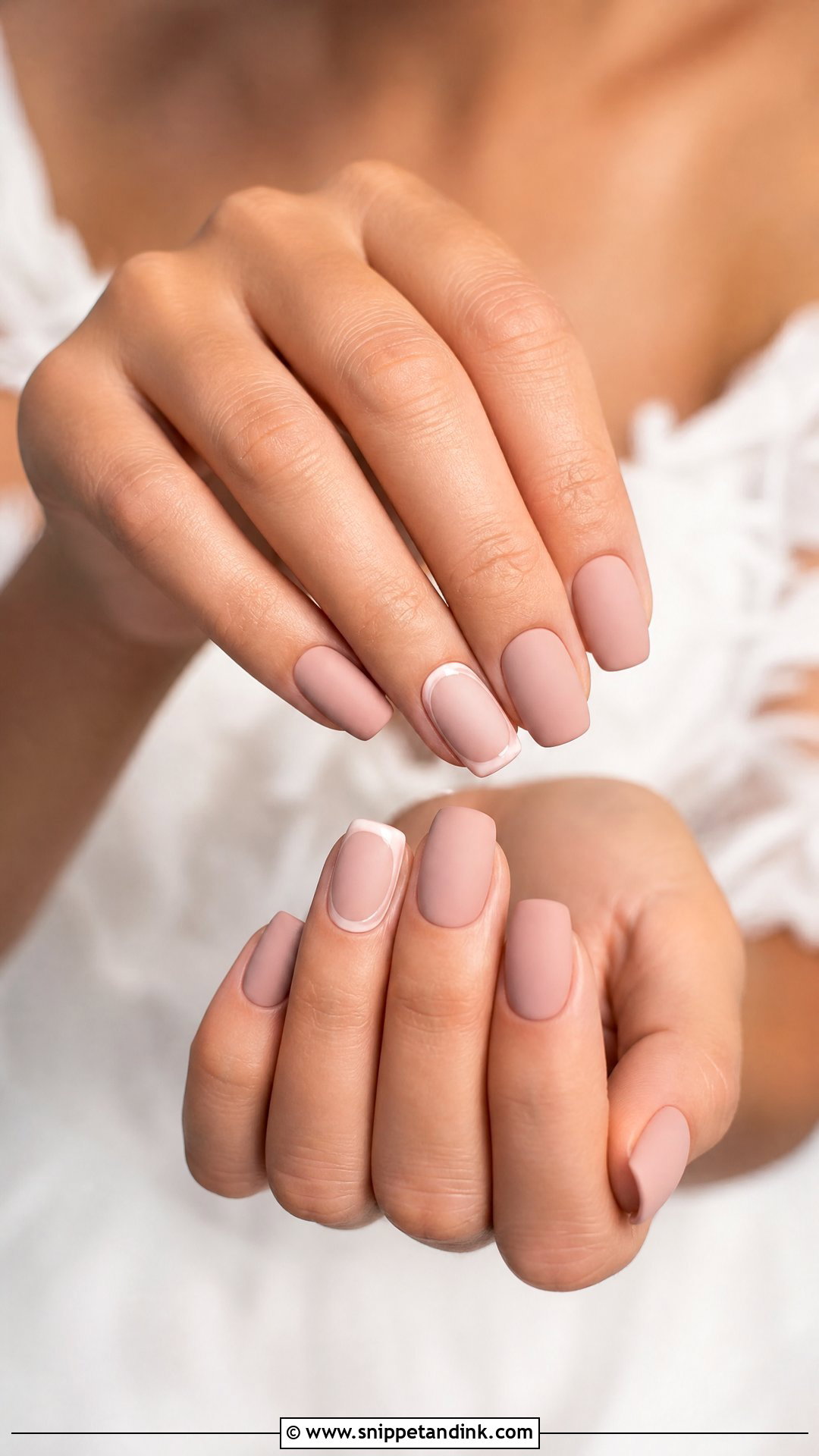
A matte top coat gives a velvety finish that feels quieter than gloss, and matte nude, blush, ivory or milky white keep it bridal. Two cautions from my own table. Matte top coats pick up stains from fake tan, makeup and hair products much more readily than gloss, and they can look flat in photos. I’d add a glossy French tip for contrast, and skip matte altogether if you’re doing self-tan in the days before the wedding.
27. Chrome French Bridal Nails
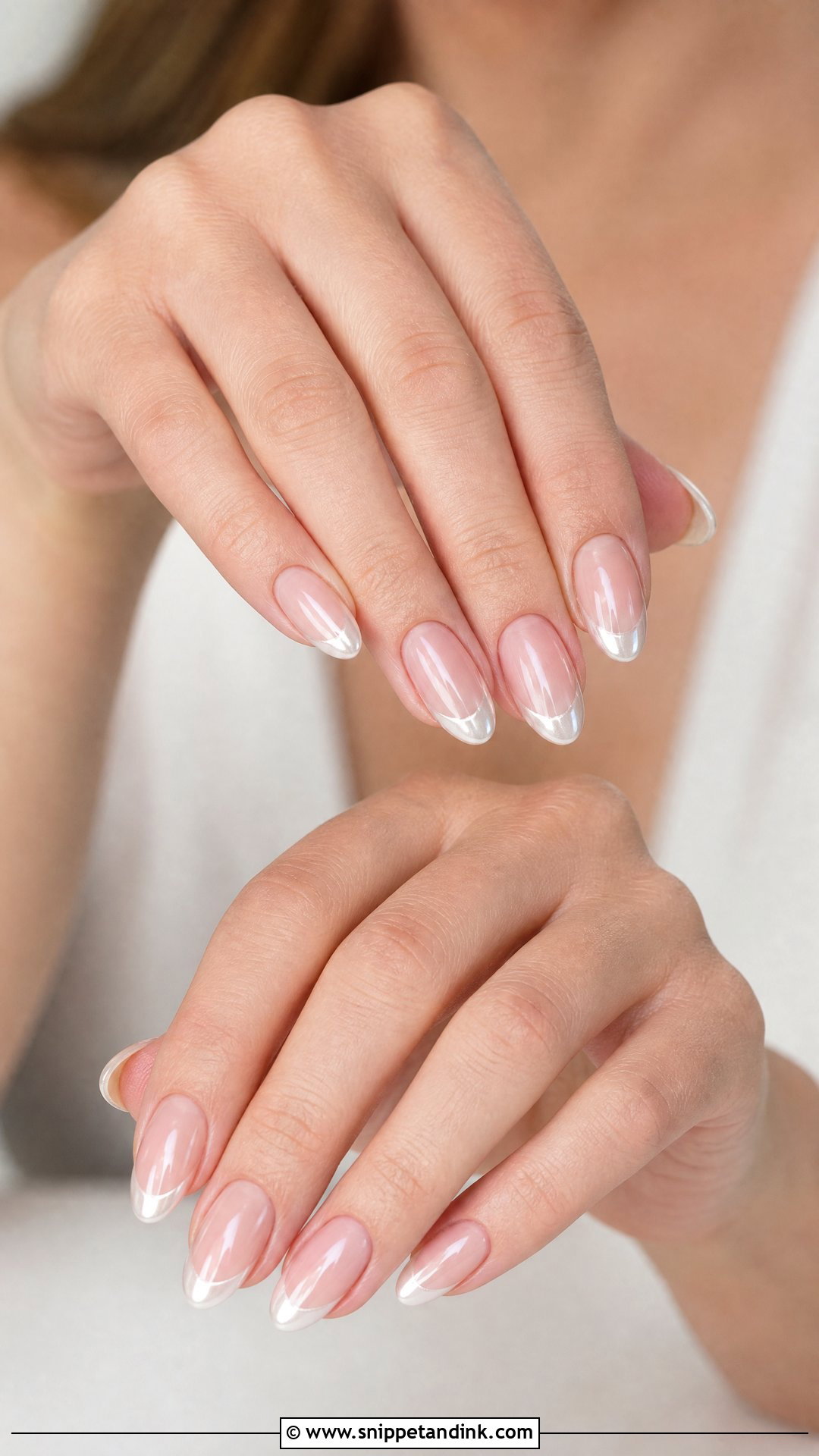
This puts a pearly chrome on the tips over a sheer pink or nude base, so a French gets more dimension. For a bride I’d use pearl or champagne chrome rather than mirror silver, which can look cold. Chrome only grips a cured no-wipe layer, so I paint the tip shape in gel first, rub the powder just there and clean the edges before sealing. From across the room it reads as a classic French; up close it glows.
28. White Swirl Bridal Nails
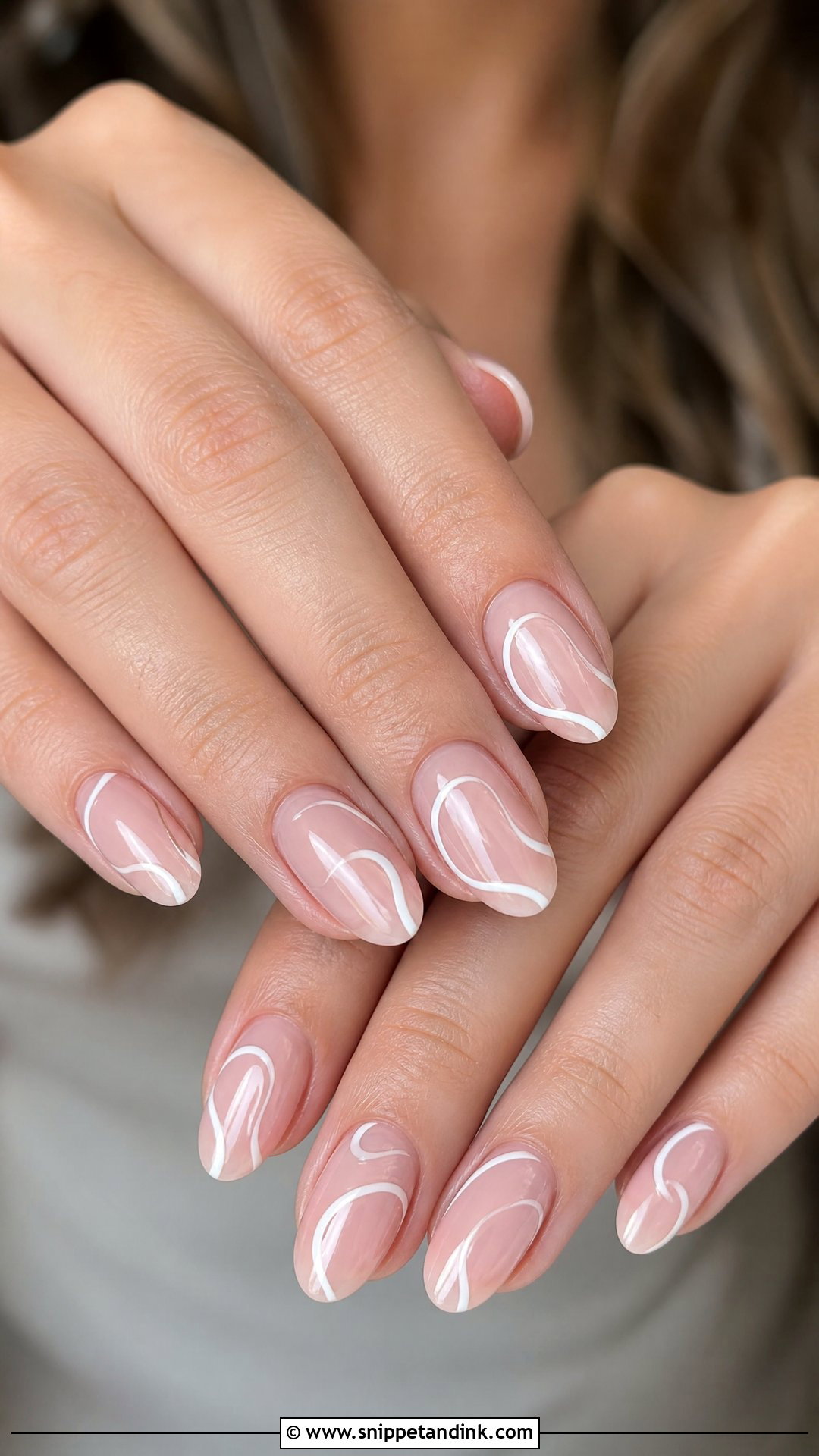
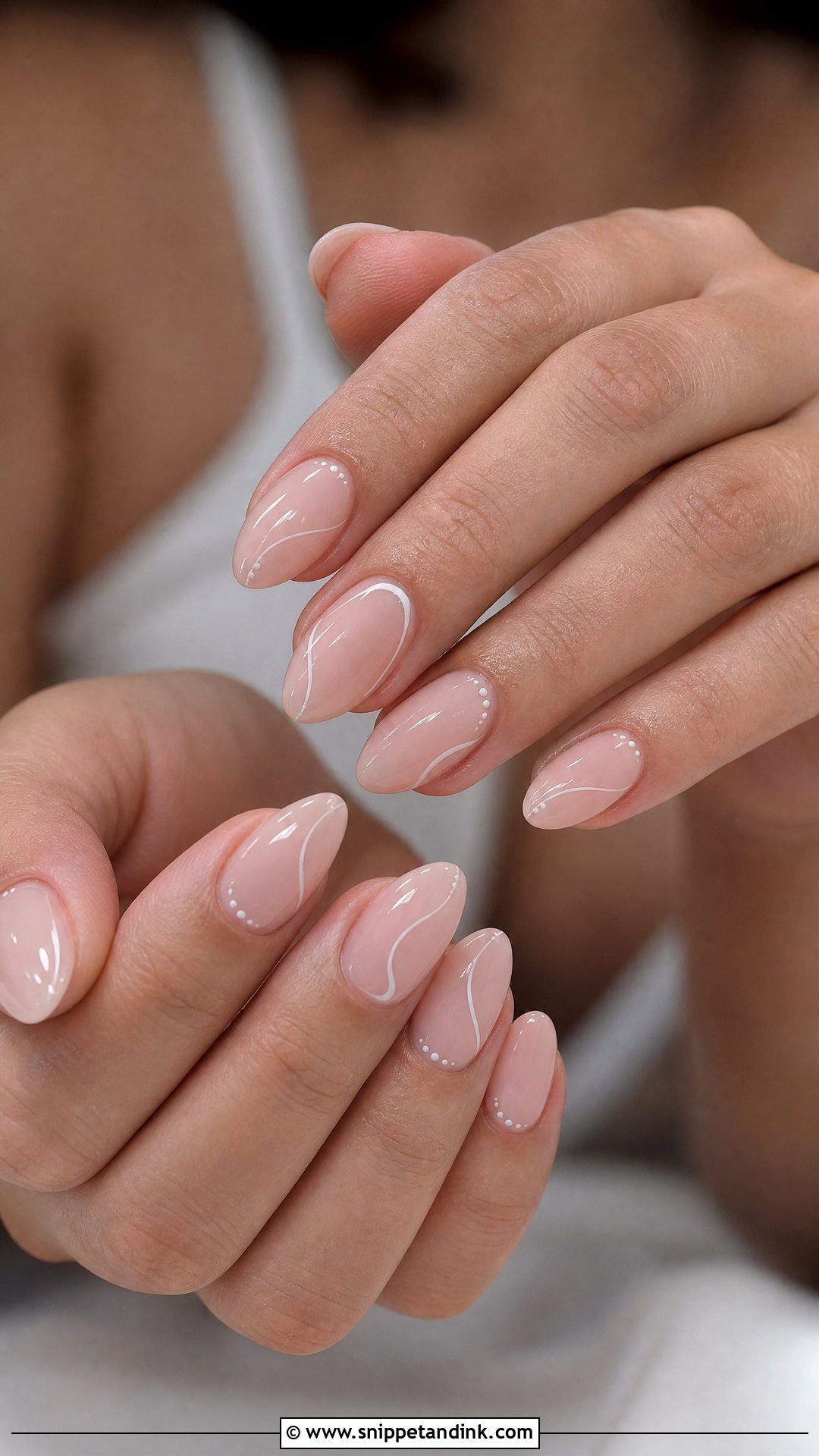
Thin white curves over a nude, pink or milky base give the manicure some movement. When the lines run along the length of the nail, they make the fingers look longer too. Almond and oval are the natural fit, because the curves echo the shape. Leave plenty of bare nail between lines; a swirl set gets crowded the moment the lines double up. It’s a good middle ground if plain polish feels too plain but florals feel too sweet.
29. 3D Flower Bridal Nails
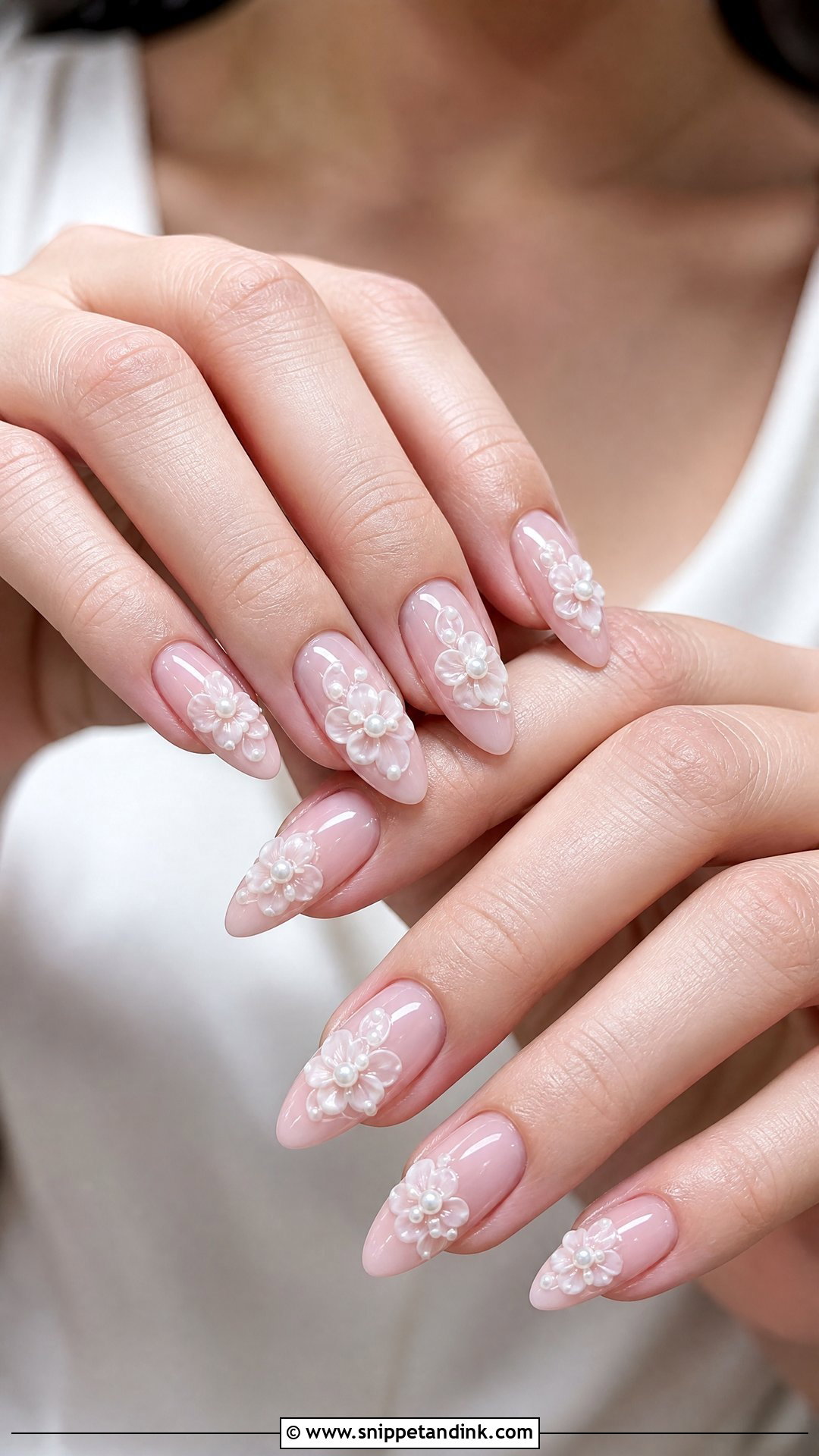
Raised gel flowers look sculptural, and their height is exactly the problem. Anything tall catches on lace, knits and hair, and you’ll be pushing a veil off your face more than once. I build petals low and wide rather than tall and keep them to two or three accent nails, with plain glossy nails between. Spring weddings and floral lace gowns suit it, and close-ups of the hands show the texture well.
30. Bow Bridal Nails
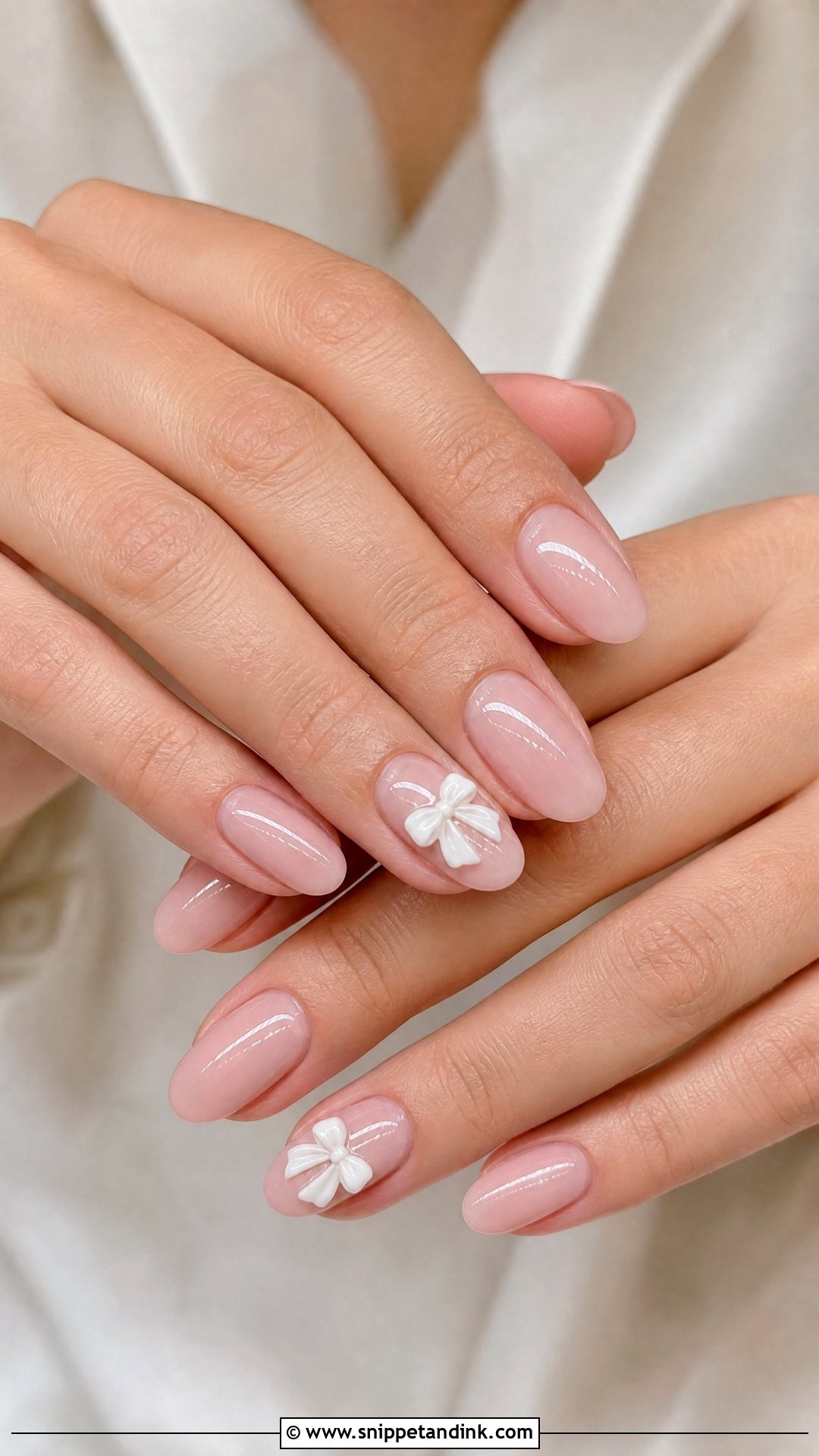
Bows can tip from sweet to childish quickly, and size decides which way they fall. Tiny white or pearl bows, or a flat painted bow, stay grown up; a big 3D bow rarely does. I’d put one on each ring finger or scatter a few over a sheer pink or nude base, leaving the other nails plain. They sit naturally with ribbon details, ballet-style gowns and soft veils.
31. Cat Eye Bridal Nails
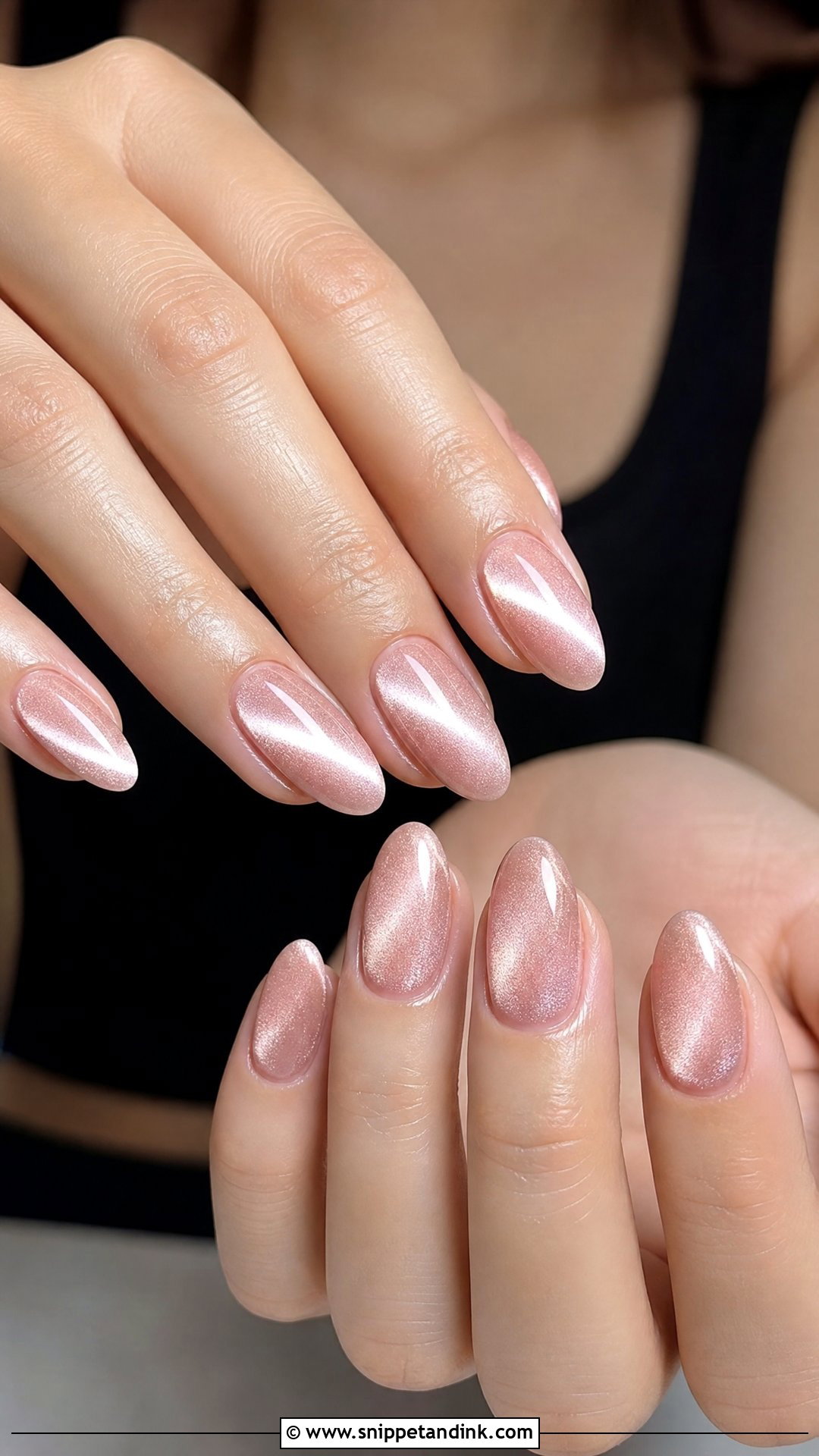
Cat eye uses magnetic polish: a magnet held over the uncured gel pulls the metallic particles into a band of light that shifts as you move. For weddings, champagne, pearl, blush, taupe and milky pink look softer than the dark versions. Evening receptions suit it best, since candlelight and video show off the movement. Make sure the band sits at the same angle on every nail, because an uneven pull is obvious when all ten fingers are in one shot.
32. Glitter Ombre Bridal Nails
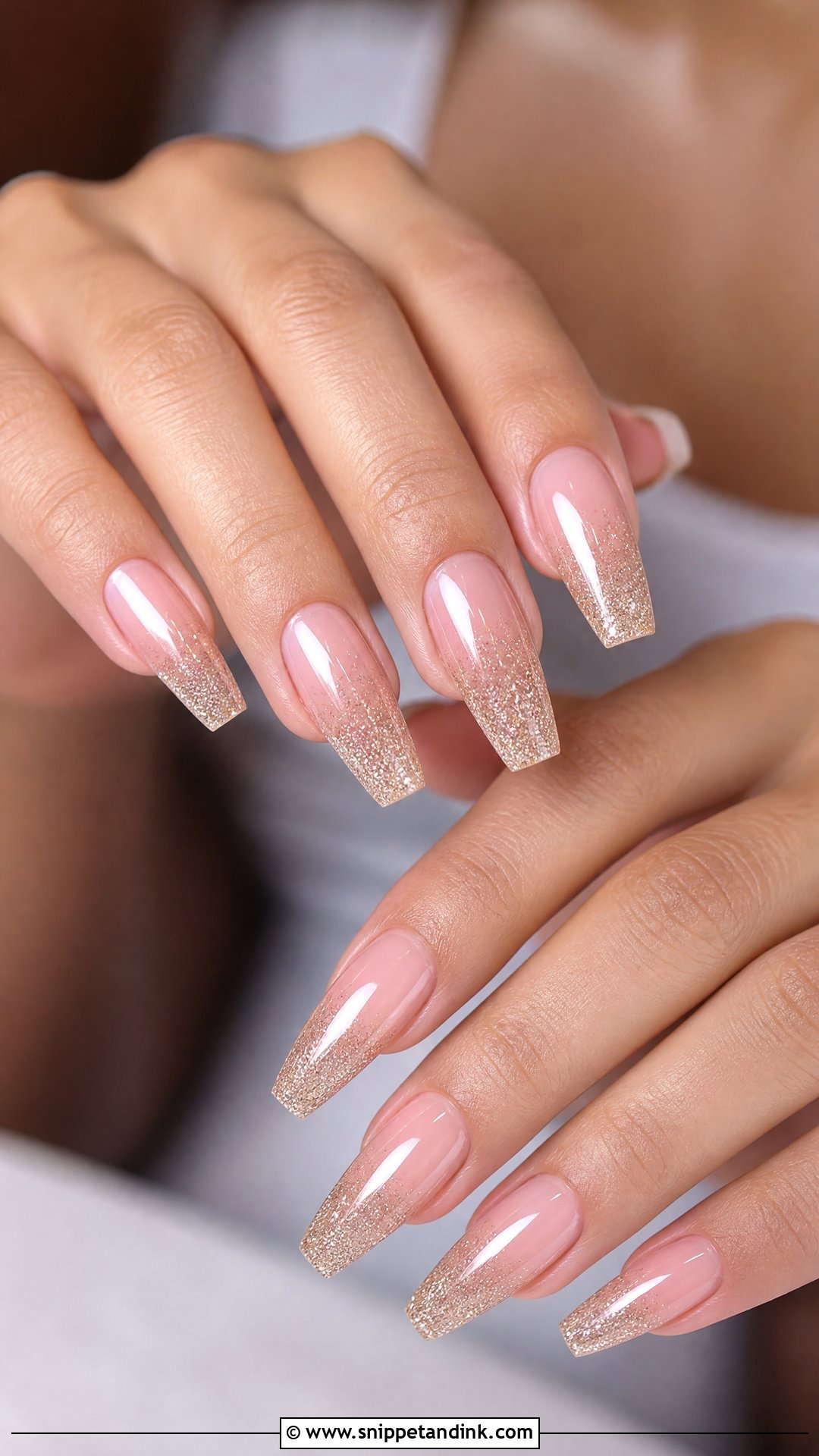
Glitter ombre concentrates sparkle at the tip or the cuticle and fades it into a sheer base. Fine glitter is the only kind I’d use on a bride; chunky glitter makes the surface lumpy and removal miserable. Silver, champagne, pearl and rose gold all work. Longer almond and coffin shapes show the fade best, though it works short too. It’s also forgiving if you chip, since a little sparkle hides wear at the tip.
33. Red Bridal Nails
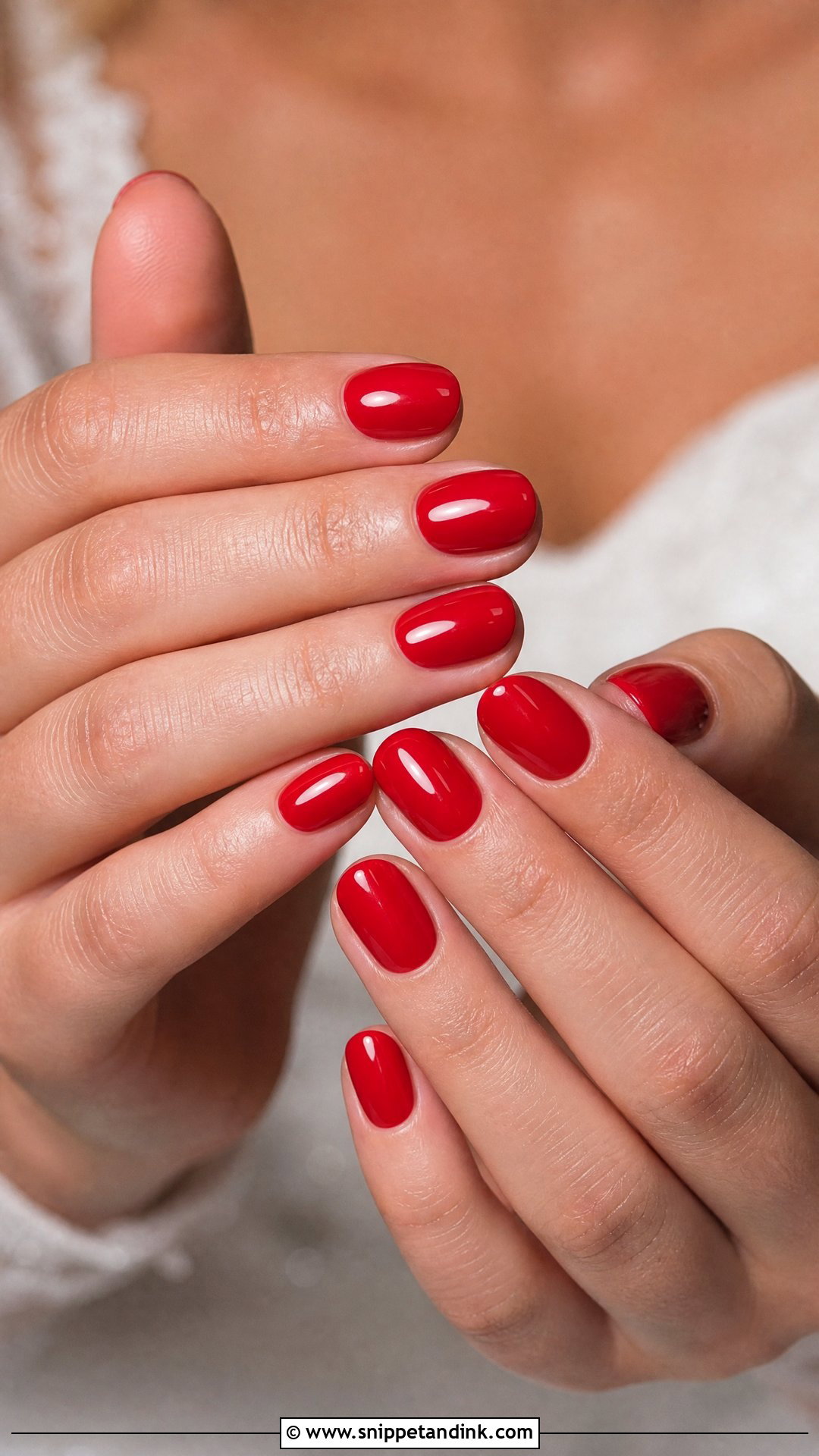
Red is the confident choice, and done well it’s very classic. A true red, a cherry or a deep wine red sits well with a simple gown, red lipstick or vintage styling. Because red shows every flaw, the shape and the gloss have to be exact. I watch the cuticle line closely, as red flooding onto the skin is the one mistake that shows in every photo. If a bright red feels like too much, a sheer red jelly or a berry tone is gentler.
34. Burgundy Bridal Nails
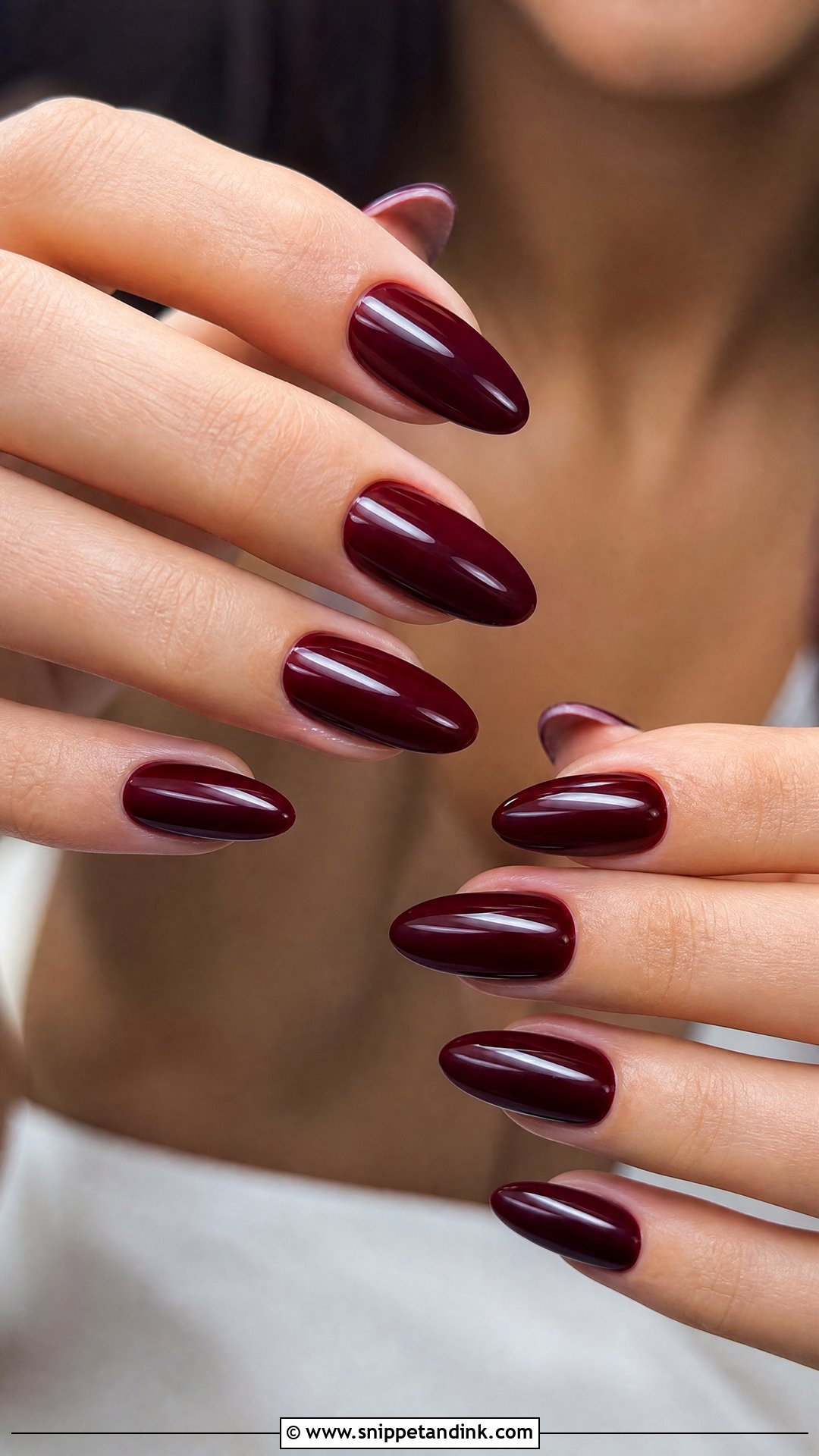
Burgundy is deeper and quieter than red, which is why it suits fall and winter weddings so well. It sits nicely with ivory dresses, gold jewelry, dark flowers and velvet. Keep the design plain, because a dark shade already does a lot of work. One sheer accent nail with a tiny burgundy flower softens it if a full dark set feels heavy. Dark polish also shows chips faster than nude, so pack the bottle.
35. Black And White Bridal Nails
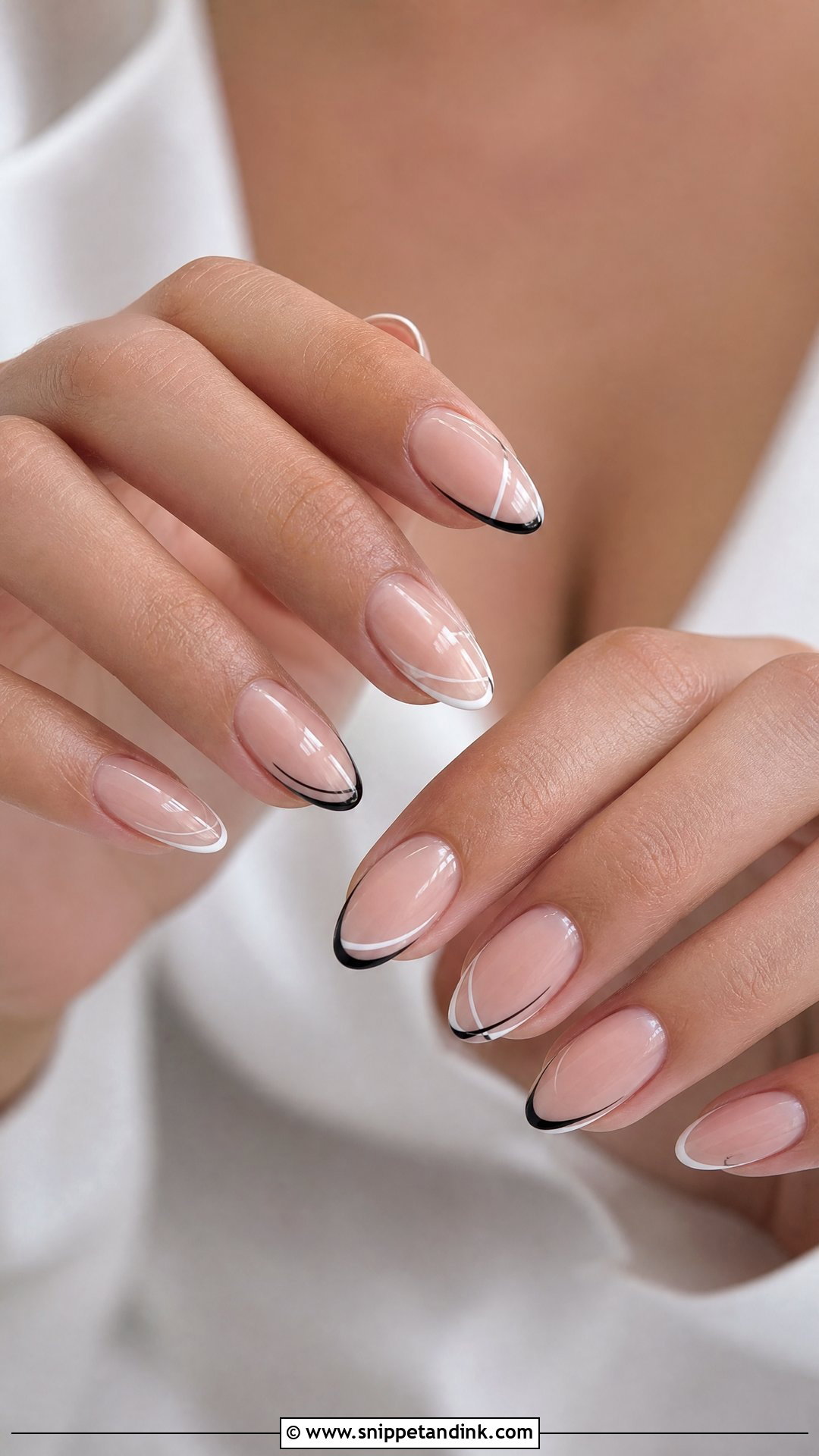
Black and white can work at a wedding, provided black stays the accent. I use a sheer nude or milky base with fine details in both colors, such as micro French tips, thin lines or small dots. Push the black much further and the set looks like an editorial shoot rather than a bridal manicure. It fits black-tie weddings, monochrome accessories and black bows, on almond or square nails.
The Wedding Countdown, Counted on Your Fingers
Gel and builder sets look sharpest in their first few days, so I book the final appointment one to three days before the wedding. Any closer and a small problem has no time to be fixed. Any earlier and regrowth starts to show at the cuticle in ring close-ups.
- Six to eight weeks out: a trial set, worn for at least a week so you see how it chips and grows.
- Two weeks out: stop picking at cuticles and oil them twice a day. Healthy skin around the nail photographs better than any polish.
- Wedding week: no fresh self-tan on the hands after the manicure, and gloves for washing up.
- One to three days out: the final set. Ask for the shade name so any touch-up matches.
In your bag on the day, pack a fine file, cuticle oil and a small bottle of the nearest regular polish. A file fixes a snag in seconds, and a dot of matching color hides a chip far better than a mismatched shade would.
When a Nail Breaks on the Morning Itself
It happens, usually with a car door or a stubborn dress zip. If the break sits above the free edge, file all ten nails a little shorter so they match; a slightly shorter, even set looks deliberate, and one short nail looks like an accident. If it’s torn down into the skin, clean it, cover it with a small plaster and ask your photographer to favor the other hand for detail shots. Please don’t reach for household superglue. It can irritate the skin and makes proper removal harder later.
After the honeymoon, have the set soaked or filed off properly rather than peeling it. Peeling gel lifts layers of nail plate with it, and that is what leaves nails thin and bendy for months after a wedding.
Your Ring Finger Gets the Last Word
Most brides end up happiest with the set that looks like their own hands, only better kept. A French, milky white, sheer pink, pearl chrome or a good nude covers most weddings, and florals, pearls, crystals, bows or something blue add a personal note. Bring your ring, a photo of the dress and a photo of the bouquet to the appointment. If you’re still unsure, book a trial: one test set tells you more about shade, length and wear than any picture can.
You'll Like These Ideas:


Leave a Reply