
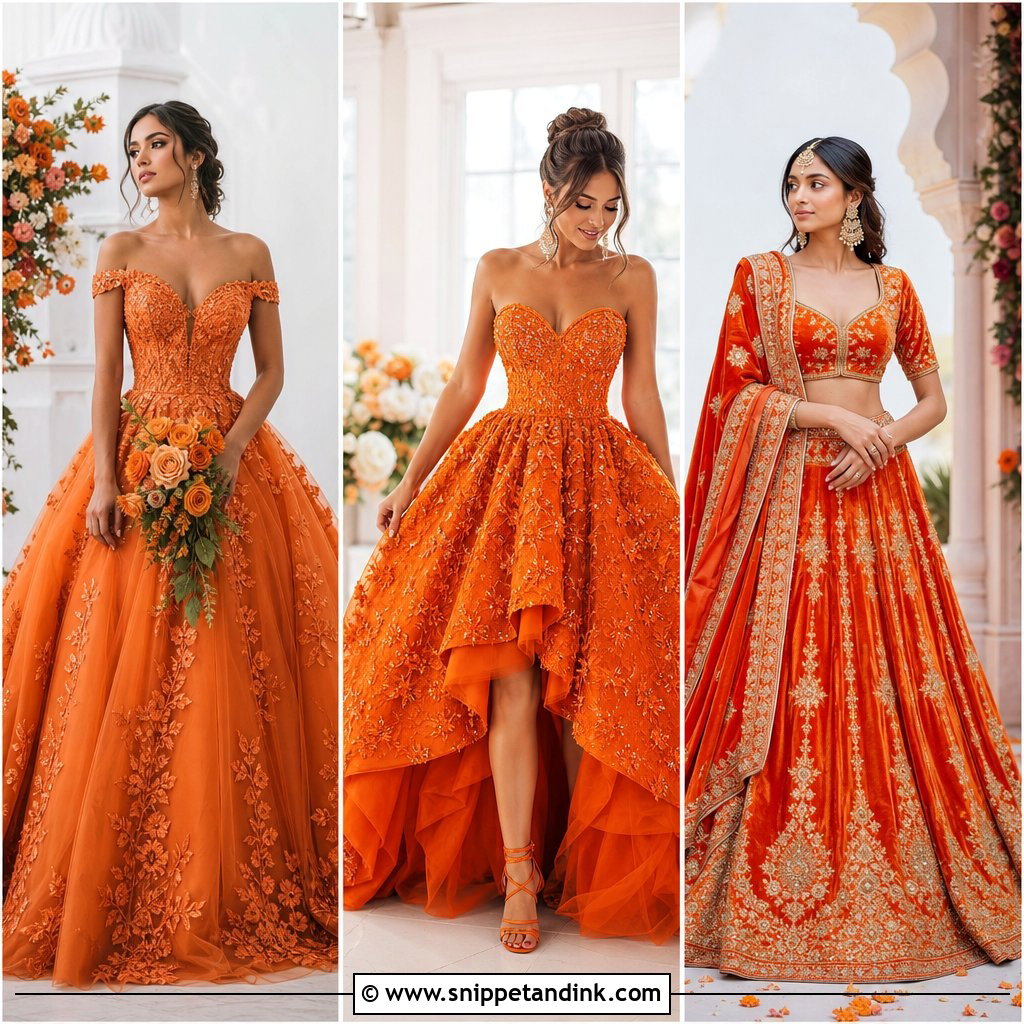
Burnt orange is one of the few colors I’d happily put an autumn bride in instead of white, because it still reads as bridal when the cut is right. The shade runs from soft terracotta to deep rust, and that range lets it work at an outdoor ceremony, a formal reception, a destination trip or a quick courthouse vow. It sits naturally beside cream, brown, gold, sage and dried florals, which is why burnt orange fashion slots so easily into fall palettes. Fabric changes the mood more than people expect: satin goes polished, chiffon airy, velvet rich and lace delicate. I plan shoes, jewelry and flowers around the gown from the start rather than treating the color as the whole idea. Here are the twenty-five dresses I’d put on a shortlist, with the notes I’d give at a fitting.
Where a Colored Gown Actually Comes From
Most bridal shops stock white and ivory, so a burnt orange gown usually arrives by one of three routes, and each one changes how early you need to start.
- Ordered in color from a bridal designer. Many bridal gowns are made to order and take several months before alterations even begin, so I’d start earlier than you would for white.
- Bought as an eveningwear or bridesmaid style. It’s faster and often cheaper, but check the fabric weight and lining, since some feel thin next to bridal construction.
- Made by a dressmaker. You pick the exact shade from a swatch, which is the surest way to land on the right rust or terracotta.
What I steer brides away from is dyeing a white gown. Most bridal satin and tulle is polyester, which ordinary household dyes won’t take evenly, and lace, thread and lining often absorb color differently from the main fabric. You end up with a patchy dress and no way back.
Matching the shade to your skin
Warm, golden and olive skin tends to glow against rust and copper. Very cool, pink-toned skin can look ruddy beside a bright orange, and a browner terracotta or cinnamon is usually kinder. I hold swatches under the chin by a window before anything is ordered, because shop lighting flatters almost every shade.
1. Burnt Orange Satin A-Line Wedding Dress
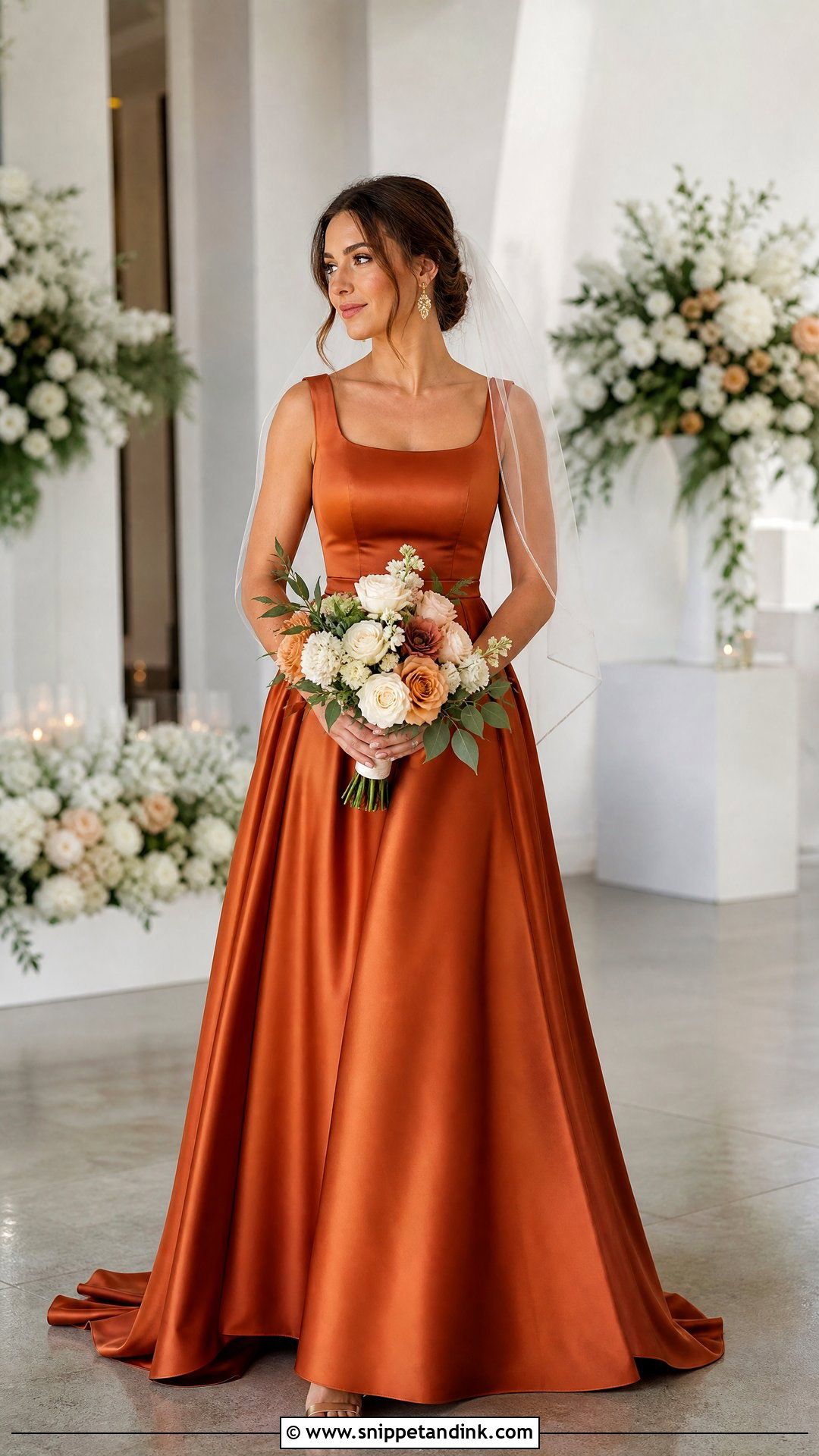
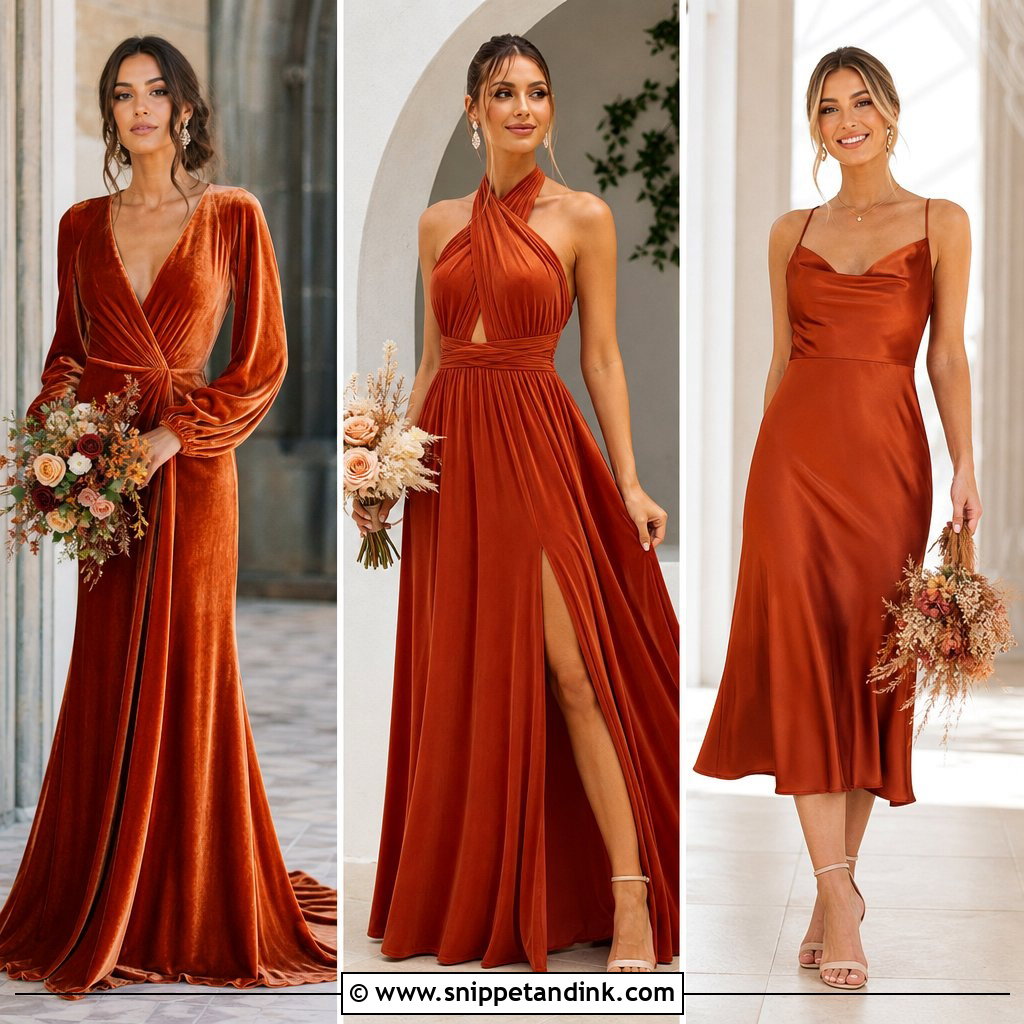
Satin A-lines are where I send brides who want color but a familiar bridal outline: fitted bodice, defined waist, and a skirt that flares softly without turning into a ball gown. Champagne heels and small gold earrings suit the warm shade, and a bouquet of ivory roses, peach ranunculus and greenery gives contrast. Finish with a sleek low bun and a fingertip veil. What nobody warns you about with colored satin is that creases show darker than they do on white, because each fold holds a line of shadow. Steam it on the morning itself and take a test photo in the venue’s light. Hotels, modern spaces and tidy outdoor settings suit it.
2. Burnt Orange Velvet Long-Sleeve Wedding Dress
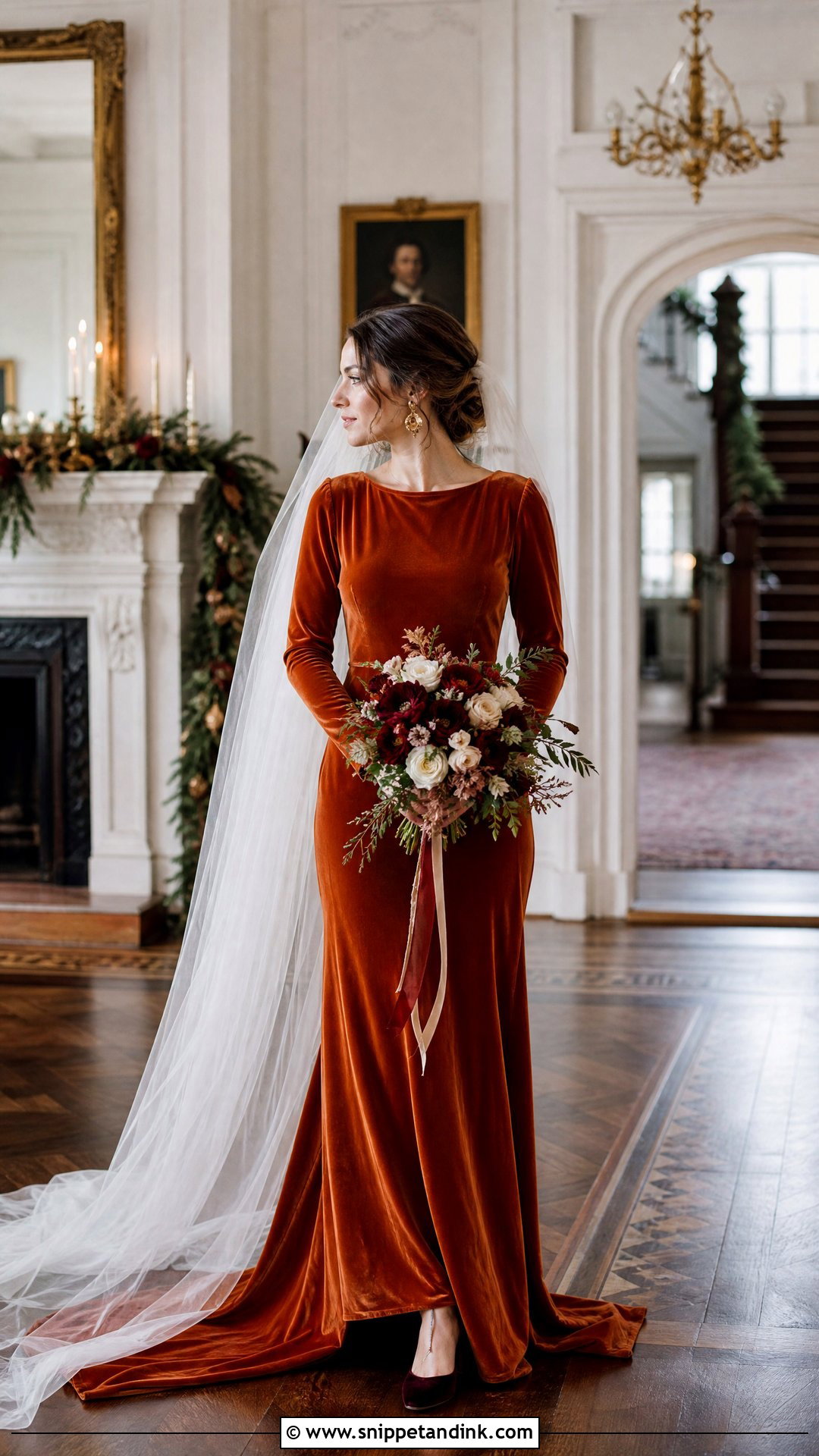
Velvet is my pick for a late fall or winter bride, and burnt orange velvet has a depth no flat fabric comes near. It is heavy, though. A fitted waist and softly flowing skirt stop it looking bulky, and a V-neck or scoop keeps the long sleeves from feeling buttoned up. Antique-gold earrings, brown velvet pumps and a cream clutch for the reception round it out. I’d build the bouquet from ivory, burgundy and eucalyptus rather than orange, since flowers that match the dress simply vanish against it. A soft updo keeps the neckline in view. Don’t book this for a warm afternoon. Velvet traps heat, and you’ll feel it by the first dance. Barns, estates and historic houses are where it belongs.
3. Burnt Orange Boho Lace Wedding Dress
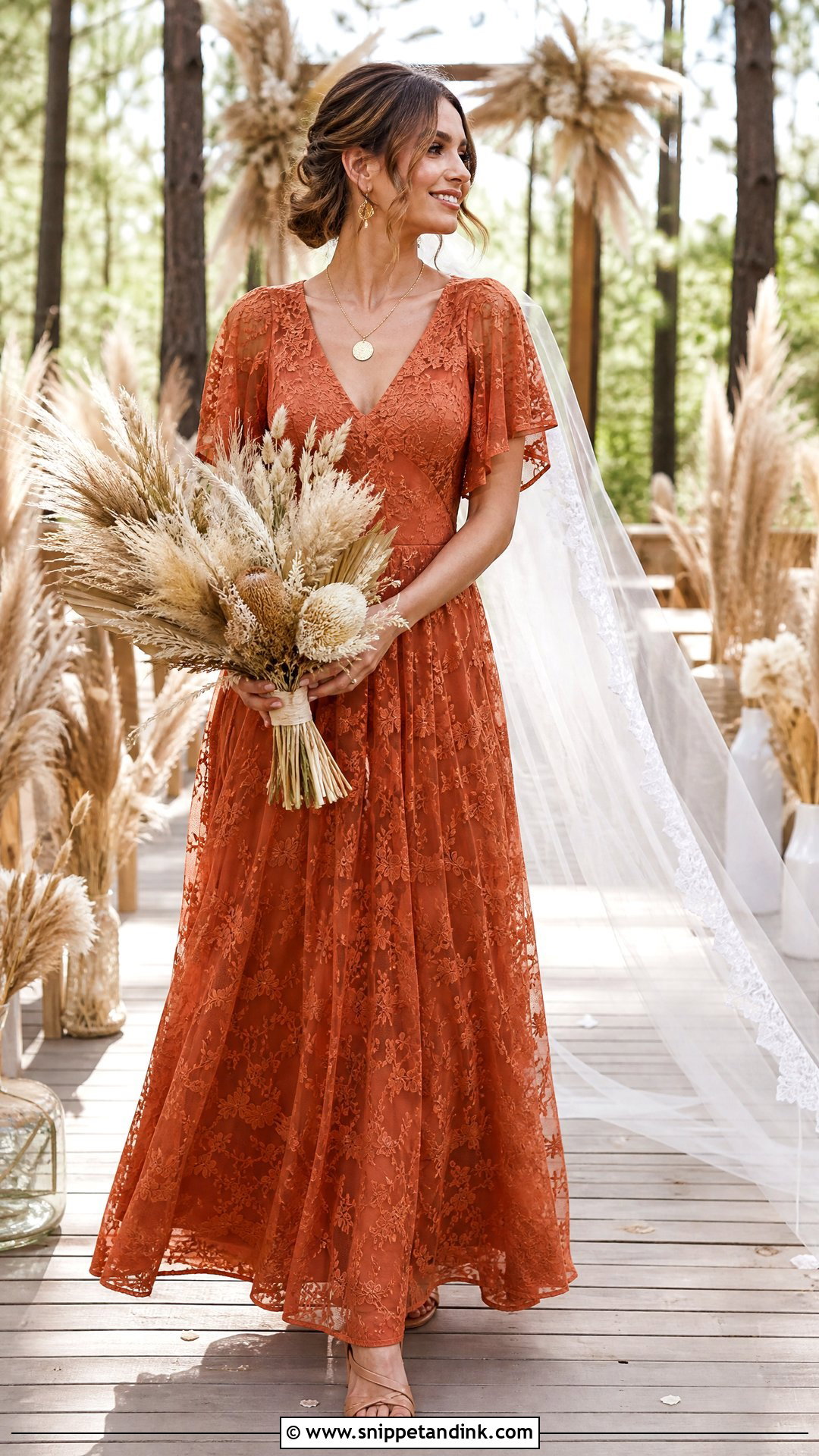
Lace gives a burnt orange wedding dress a looser, bohemian feel that suits outdoor days. Look for floral lace over a proper lining, flutter sleeves and a skirt with enough room to cross grass. On soft ground I always swap stilettos for tan block-heel sandals, because narrow heels sink into a lawn mid-vow. Hammered gold jewelry, a loose braid and a bouquet of cream flowers, dried grasses and terracotta foliage complete it, and a plain lace-edged veil is plenty. Check the lining color too. A nude lining under orange lace warms the whole dress, while an ivory one makes the lace look paler and busier.
4. Burnt Orange Strapless Ball Gown Wedding Dress
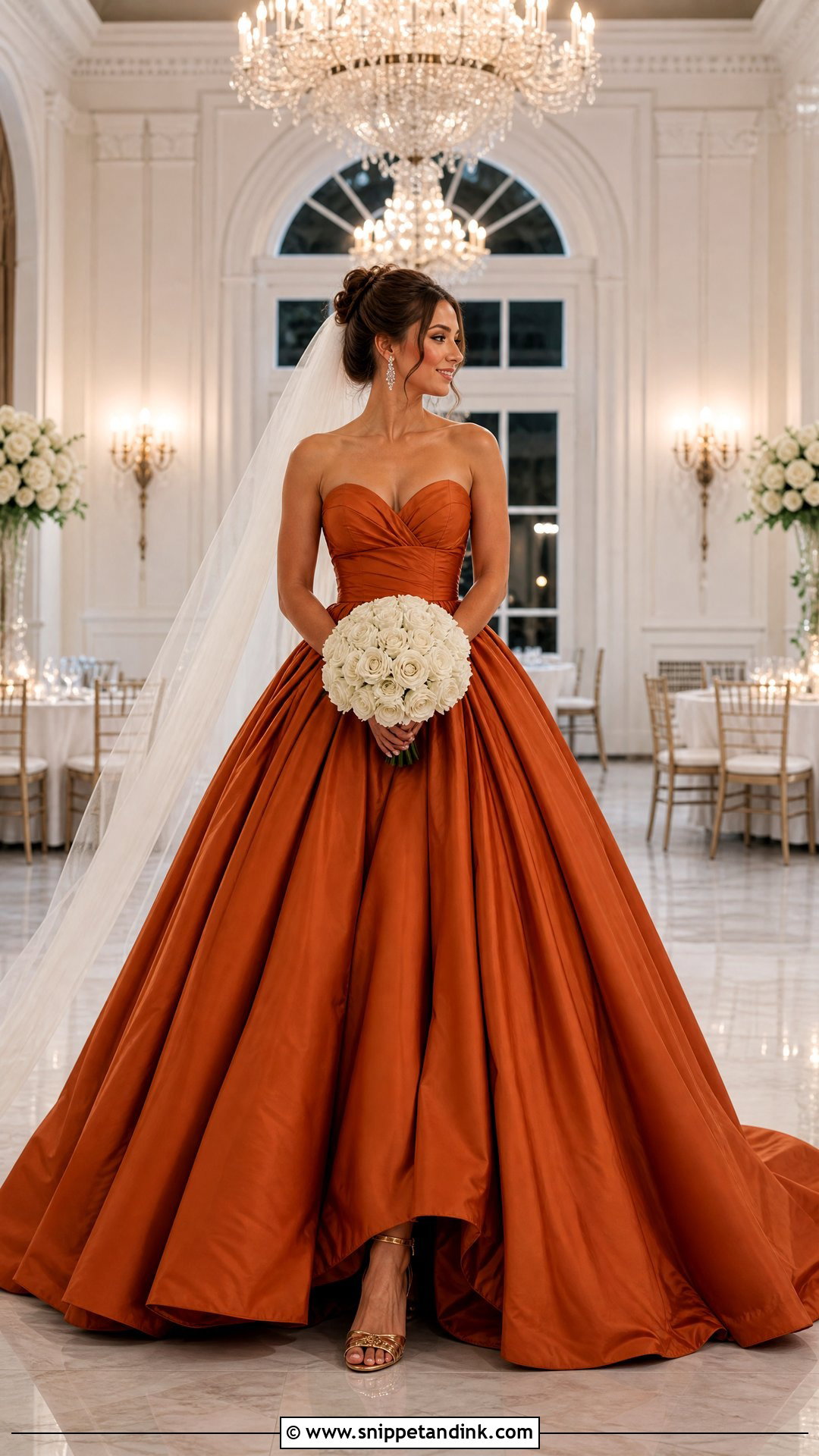
This is the entrance gown. A structured strapless bodice with a sweetheart or straight neckline keeps all that color formal, and the full skirt does the rest. Metallic-gold heels, fine drop earrings and a slim bracelet work better than a necklace, which only fights the neckline. An ivory cathedral veil is what makes it unmistakably bridal, since the contrast against orange is enormous. Carry a rounded bouquet of cream roses with a little peach and rust. At your final fitting, ask the seamstress to show you the bustle working, because a skirt this full is unmanageable at a reception without one. It needs space: ballrooms, estates, museums.
5. Burnt Orange Off-Shoulder Mermaid Wedding Dress
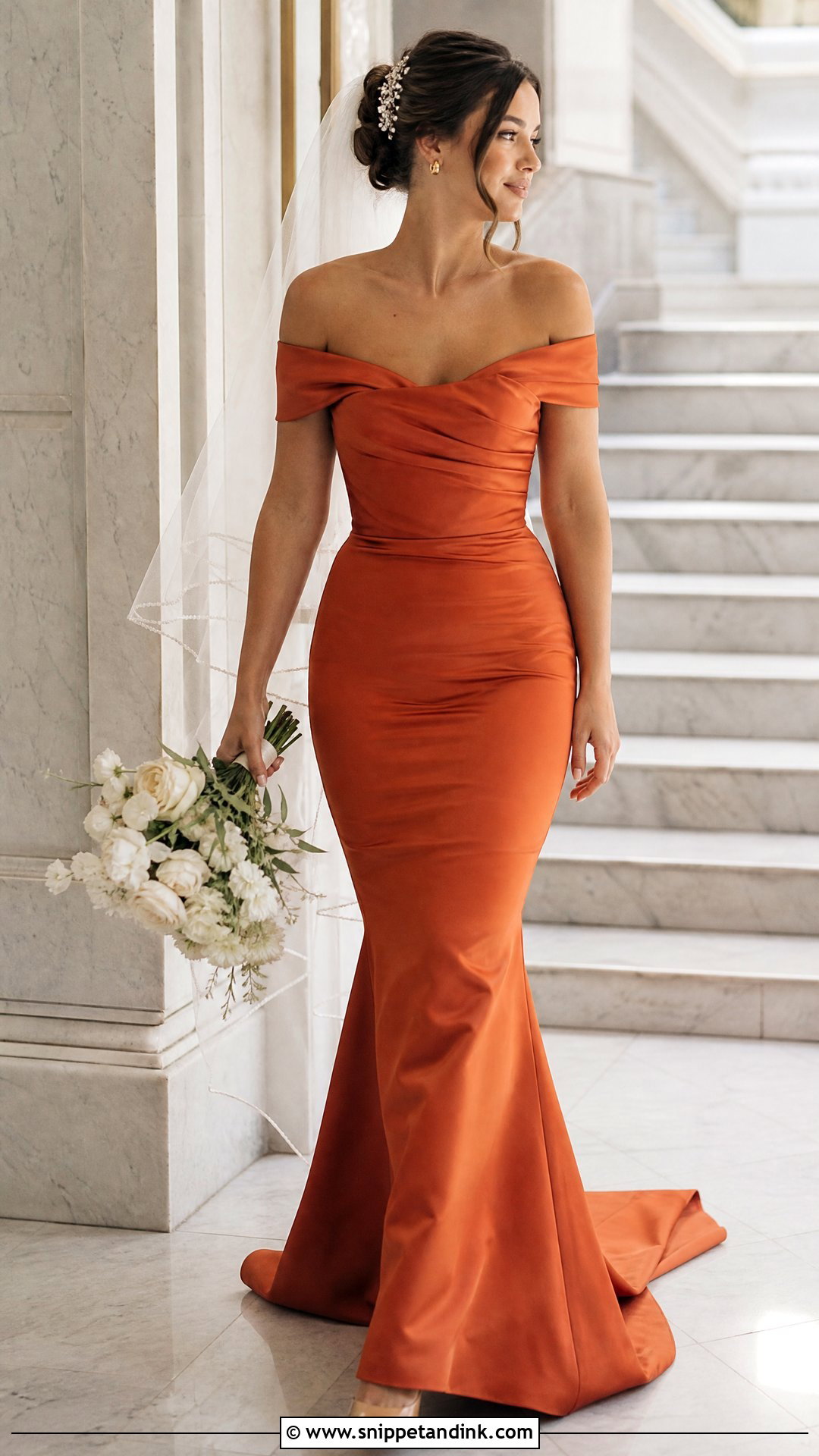
Mermaid gowns fit closely through the bodice and hips before flaring near the knee, so fit is everything. I look for stretch in the fabric or proper internal structure; without either, you won’t be able to sit. Nude pointed-toe heels lengthen the line, and a crystal hair comb, gold studs and a compact ivory bouquet keep the rest clean. A low chignon shows off the off-shoulder neckline, and a fingertip veil won’t hide the flare. Before I sign off on a mermaid, the bride sits down, climbs a few stairs and dances a couple of steps in it. If she can’t do all three comfortably, the dress needs adjusting. Formal evenings and city venues suit it.
6. Burnt Orange Chiffon Empire-Waist Wedding Dress
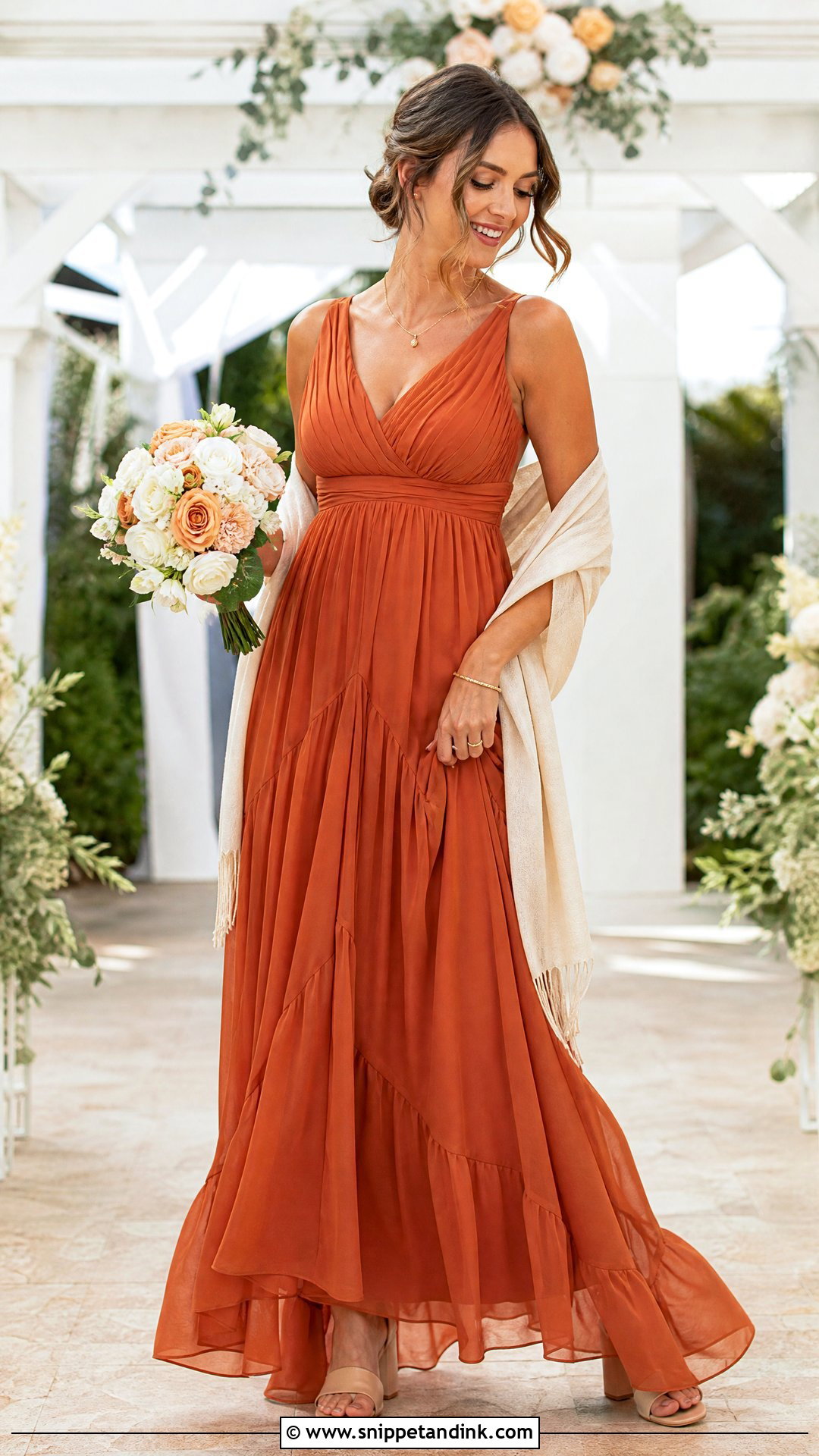
Chiffon keeps an empire waist light, so the deep color never feels heavy. A gathered bodice, raised waistline and layered skirt move gently and stay comfortable all day. Champagne block heels, fine gold jewelry and a cream wrap for cooler moments suit it, as does a loose half-up style, with flowers in ivory, blush and pale apricot to soften the orange. Hold the dress up to a sunny window before you buy. Single-layer chiffon can go see-through in strong backlight, so a full lining matters for outdoor photos. A narrow ribbon or beaded band adds shape at the waist if you need it. Gardens and breezy destinations are its natural home.
7. Burnt Orange Square-Neck Column Wedding Dress
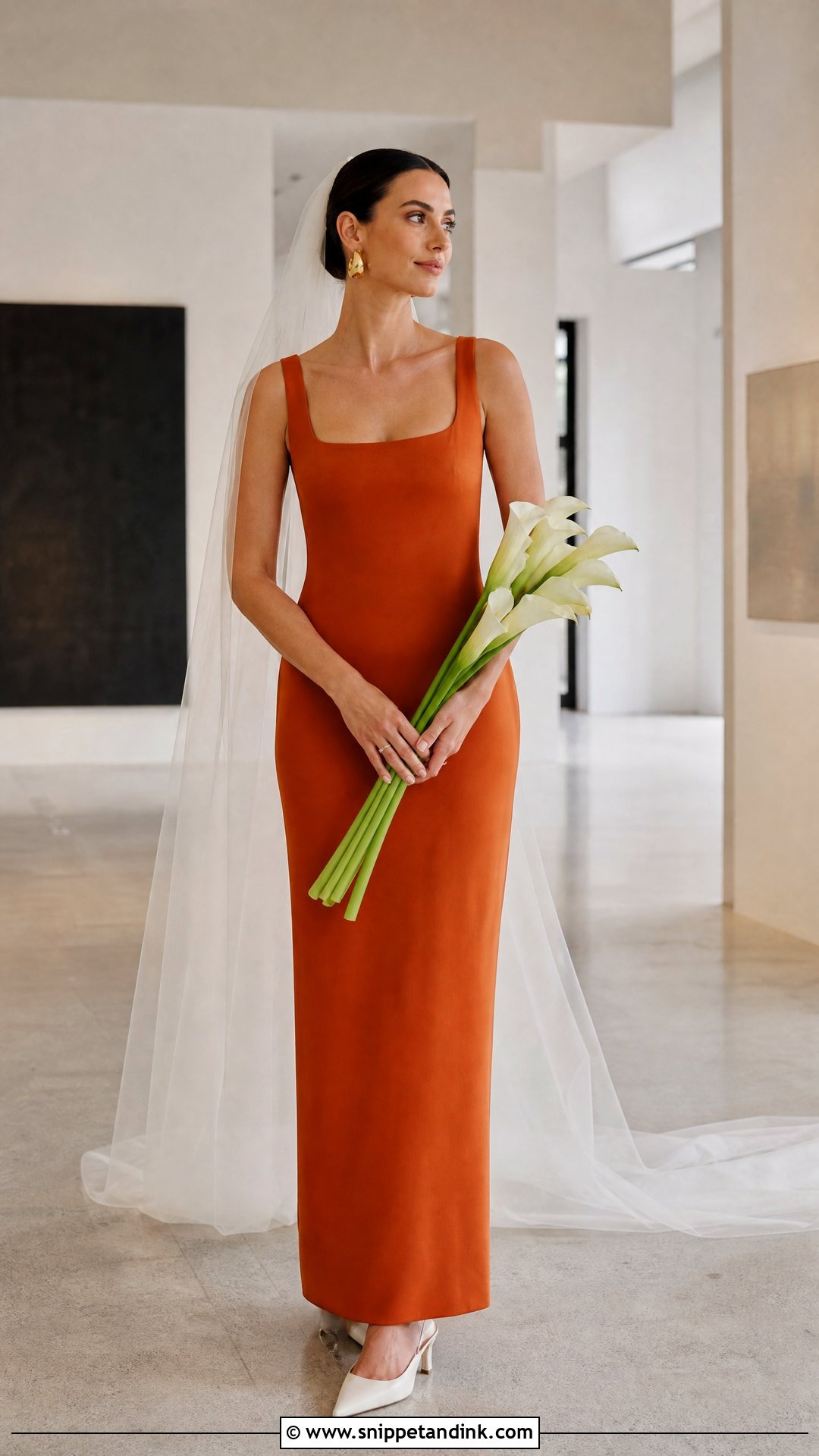
A square neck on a column dress is about as modern as bridalwear gets. The difficulty is fit. A column should skim rather than cling, or every seam underneath shows in photographs and walking turns into a shuffle. I’d pair it with ivory slingbacks, sculptural gold earrings and a structured mini bag, plus a sleek bun or polished bob so the neckline stays the focus. Long-stemmed calla lilies keep the minimal mood. If you want a veil, choose a plain chapel or cathedral length that falls straight down the back. Galleries, rooftops and architectural courthouses suit it.
8. Burnt Orange One-Shoulder Draped Wedding Dress
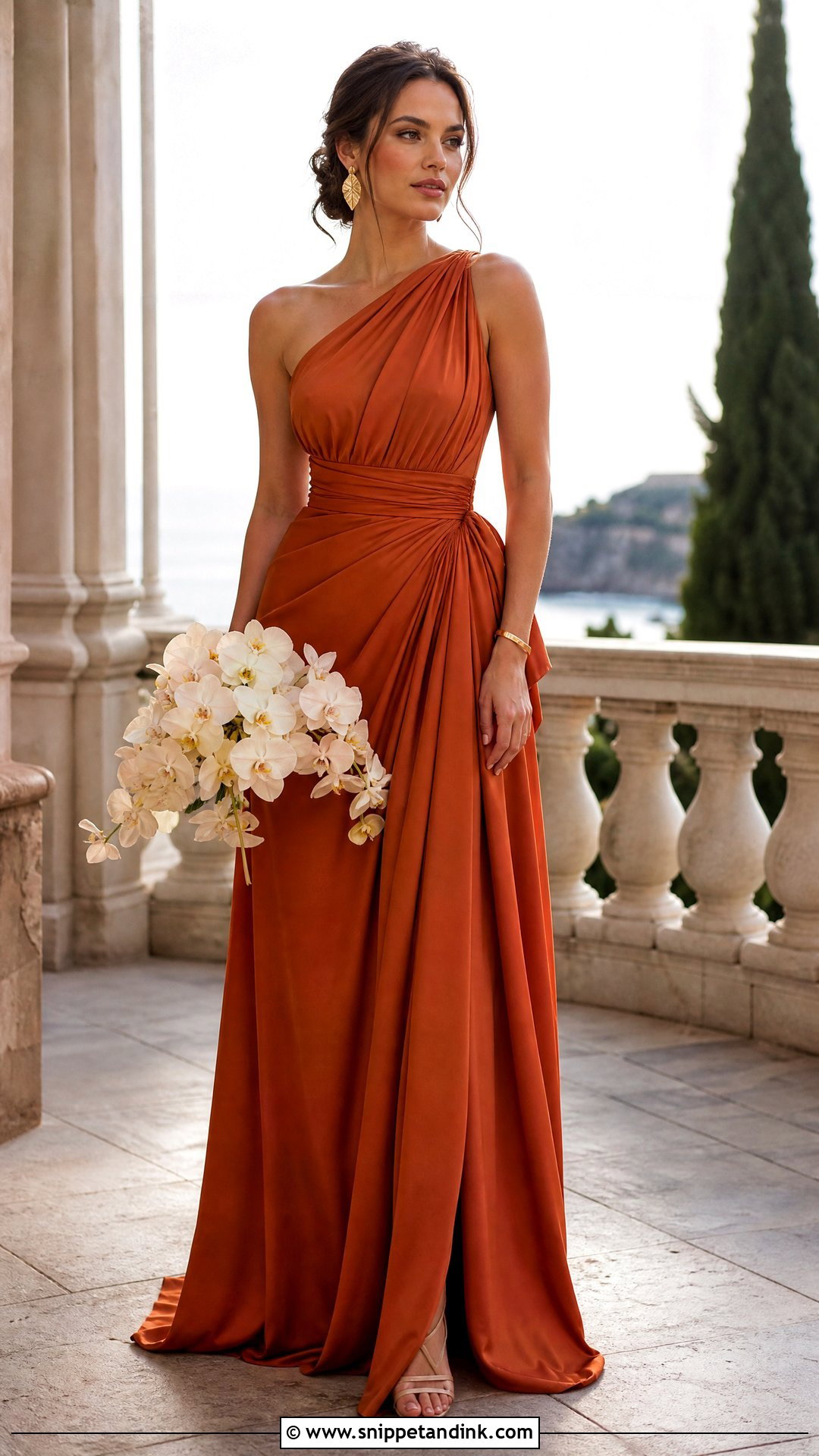
Asymmetry does the decorating on a one-shoulder gown, so it needs very little added. I look for soft draping across the bodice, a defined waist and a floor-length skirt with room to move. The most common fitting problem is the strap creeping off the shoulder, so I ask for a silicone grip strip or a discreet anchor sewn inside it. Gold cuff earrings, a slim bracelet and neutral strappy heels finish it; skip the necklace. A side-swept style or low ponytail echoes the angle, and cream orchids with greenery give contrast. A short veil, a detachable drape or no veil at all can work, depending on how the gown is built. Destination terraces and city venues suit it.
9. Burnt Orange High-Neck Pleated Wedding Dress
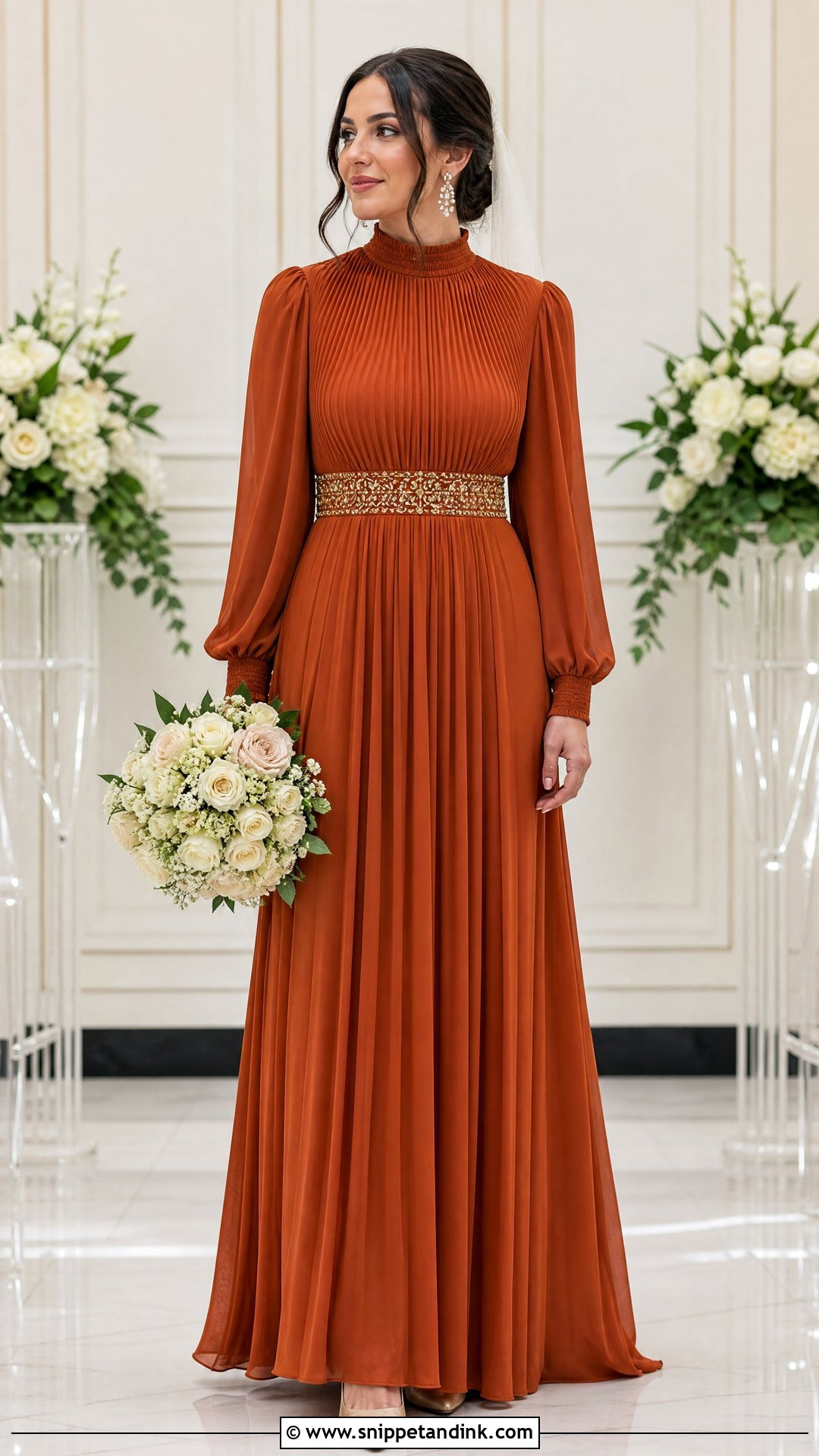
A high neck with fine pleats is my go-to for a bride who wants coverage without looking stiff. The pleats should be narrow enough to move; wide pleats add bulk at the hip. A defined waistband, perhaps with subtle gold beading, stops the shape going tent-like. Champagne closed-toe pumps, pearl-and-gold earrings and a neat updo leave the neckline clear, and ivory roses, pale peach blooms and olive greenery suit the bouquet. I attach a light veil beneath the bun rather than on top, so it falls behind the neckline instead of over it. One question to ask: what’s the fabric? Heat-set pleats in polyester hold almost indefinitely, while pleated silk can relax in humid weather.
10. Burnt Orange Corset Tulle Wedding Dress
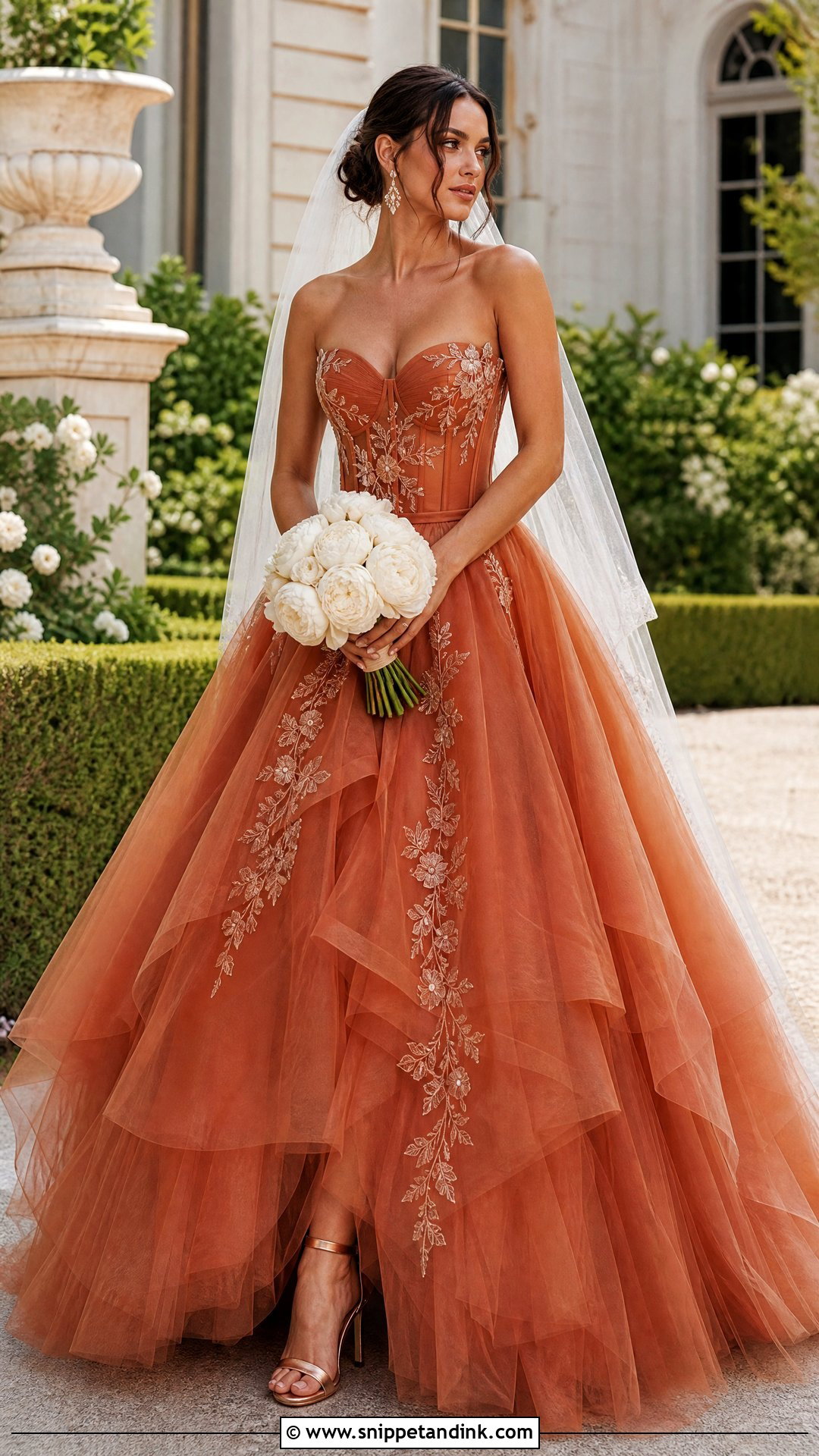
A corset bodice gives the support that lets a big tulle skirt look intentional rather than theatrical. Look for visible seaming, flexible boning and layered tulle that feels airy. A burnt orange lining under softer tulle gives depth, and ivory embroidery brightens it. Metallic sandals, crystal earrings and a narrow bracelet are enough jewelry, with a high bun and fingertip veil to keep the bodice on show and a bouquet of ivory peonies or garden roses touched with rust. My test at fittings is simple: take a full, deep breath, then sit for a few minutes. If either feels like a struggle, it’s too tight, and you’ll be wearing it for ten hours or more.
11. Burnt Orange And Ivory Ombre Wedding Dress
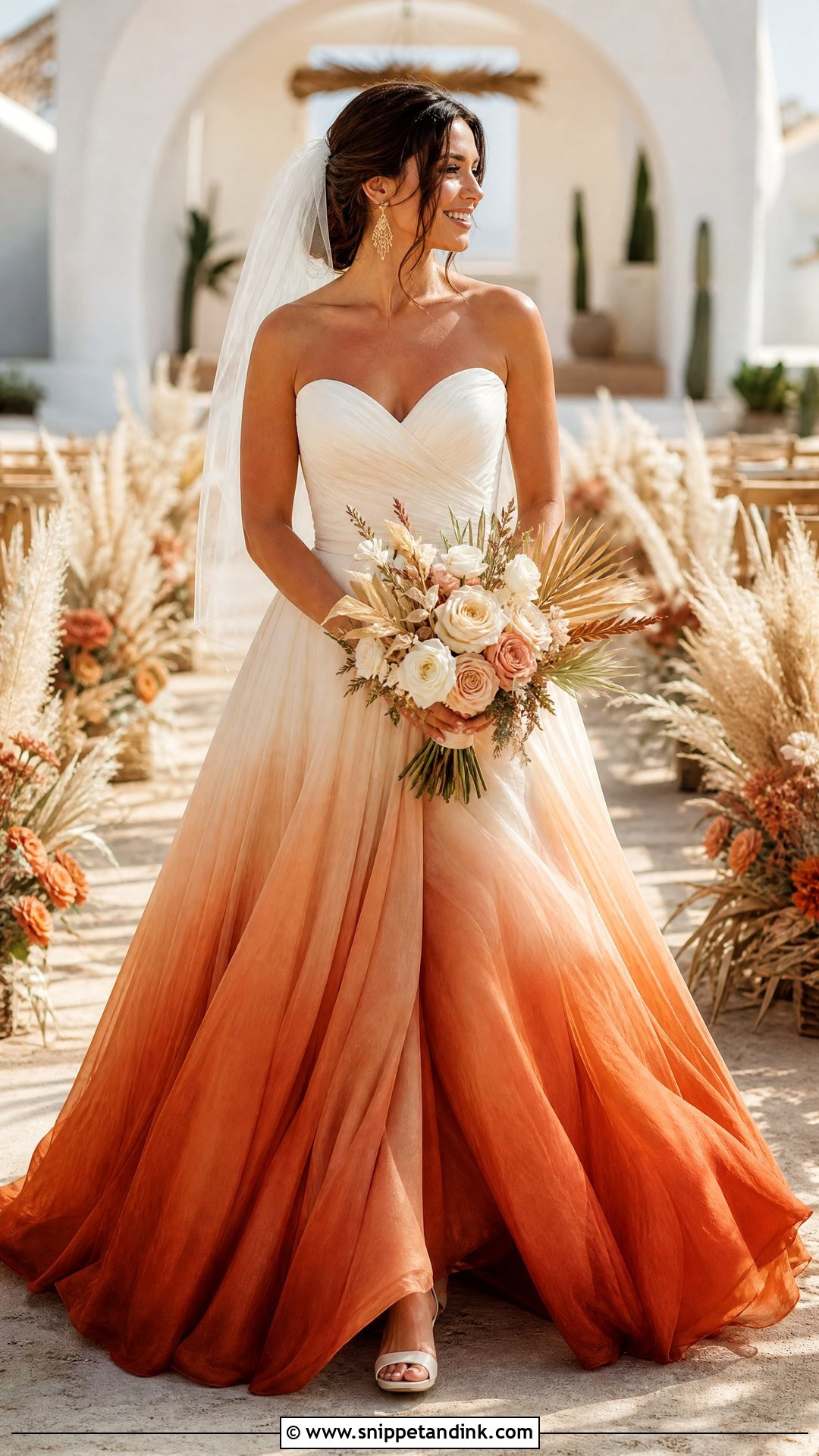
An ombre gown suits a bride who loves burnt orange but still wants some ivory. The best ones start cream at the bodice and deepen through terracotta to orange at the hem. An A-line skirt shows the gradient more clearly than heavy gathers, which bunch the color into stripes. Ivory heels, gold drop earrings and a plain veil keep attention on the color shift, while cream, peach and muted orange flowers link the tones. Because the effect is dyed, inspect the transition in daylight; a good one fades gradually, and a poor one shows a visible line. It looks lovely in light-filled venues, deserts and gardens.
12. Burnt Orange Floral Embroidered Wedding Dress
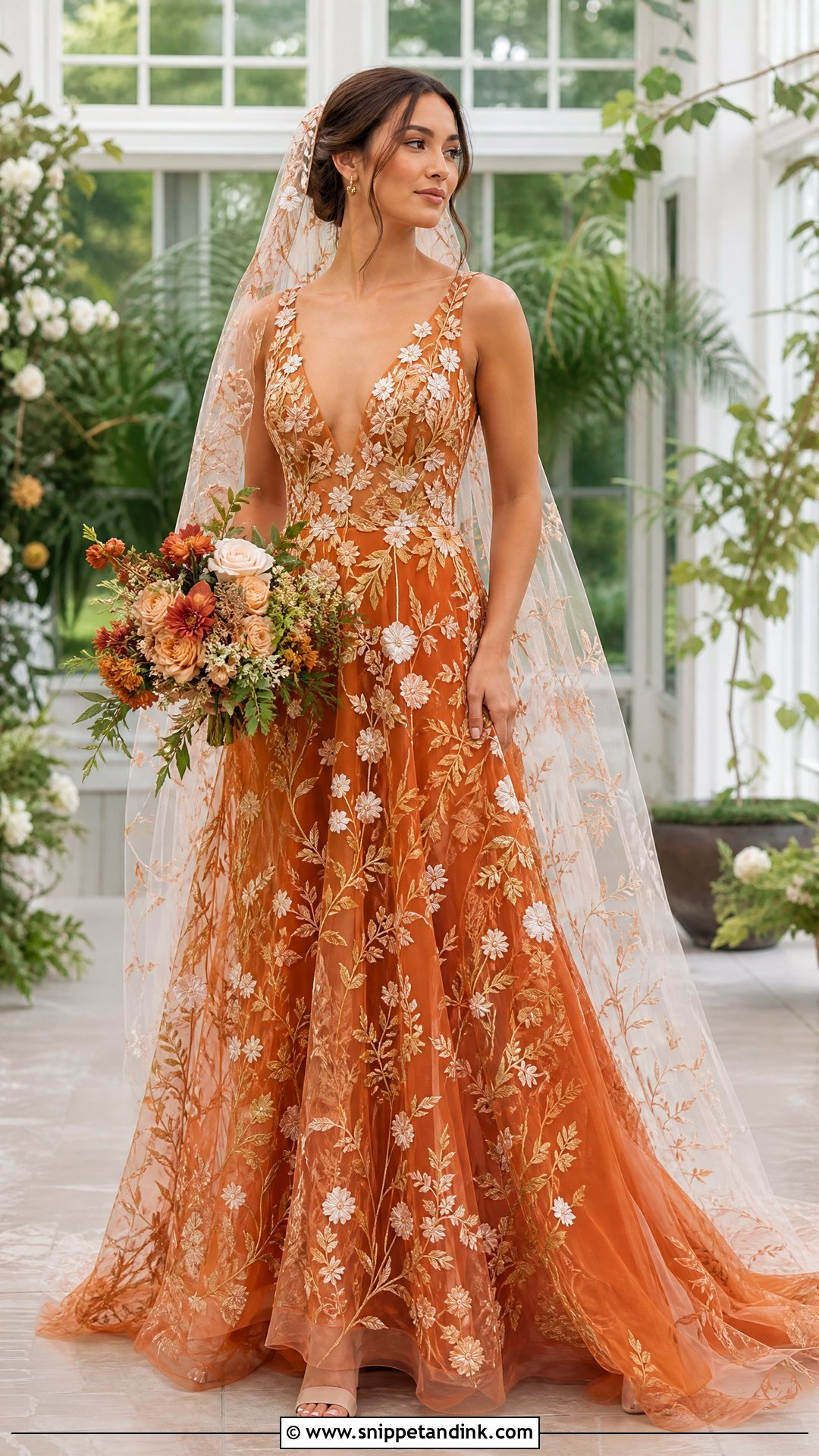
Embroidery turns a colored gown into the centerpiece. Tonal rust stitching gives a subtle finish, while ivory, blush or gold flowers add more contrast, and an A-line or softly fitted shape gives the motifs room. Neutral heels, small gold earrings and a sheer veil with a few matching motifs at the edge are enough. When I put the bouquet together, I pull in only two of the embroidery colors; any more and the flowers start arguing with the dress. A low bun or soft waves suit the mood. Heavy embroidery adds weight at the hem, so have the length taken up while you’re wearing the actual wedding shoes. Gardens, conservatories and woodland venues fit best.
13. Burnt Orange Sequin Wedding Dress
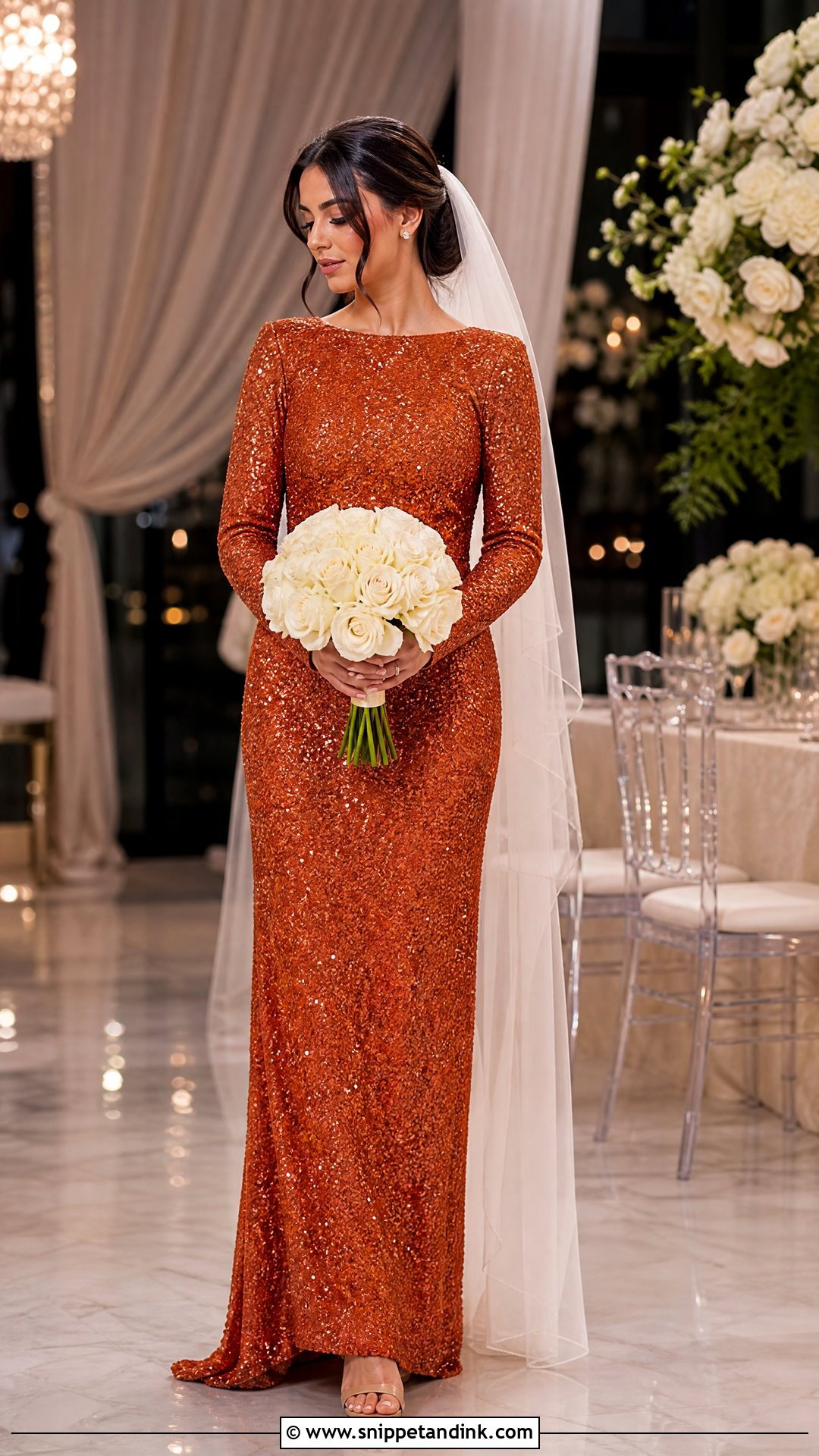
Sequins on an earthy color look grown-up rather than showy, provided they’re fine and tonal. Oversized reflective paillettes bounce a photographer’s flash straight back and can wash the orange out. A long-sleeve column or fitted A-line keeps it elegant. Nude heels, tiny gold studs and a smooth ivory clutch finish it, and hair can go sleek or into soft side waves depending on the neckline. Cream roses with dark foliage calm the shimmer, and plain tulle beats an ornate veil. From fittings I’ve learned to check the lining under the arm, because sequins on long sleeves can scratch the inner arm raw by the end of the night. Evening ceremonies are its place.
14. Burnt Orange Minimalist Slip Wedding Dress
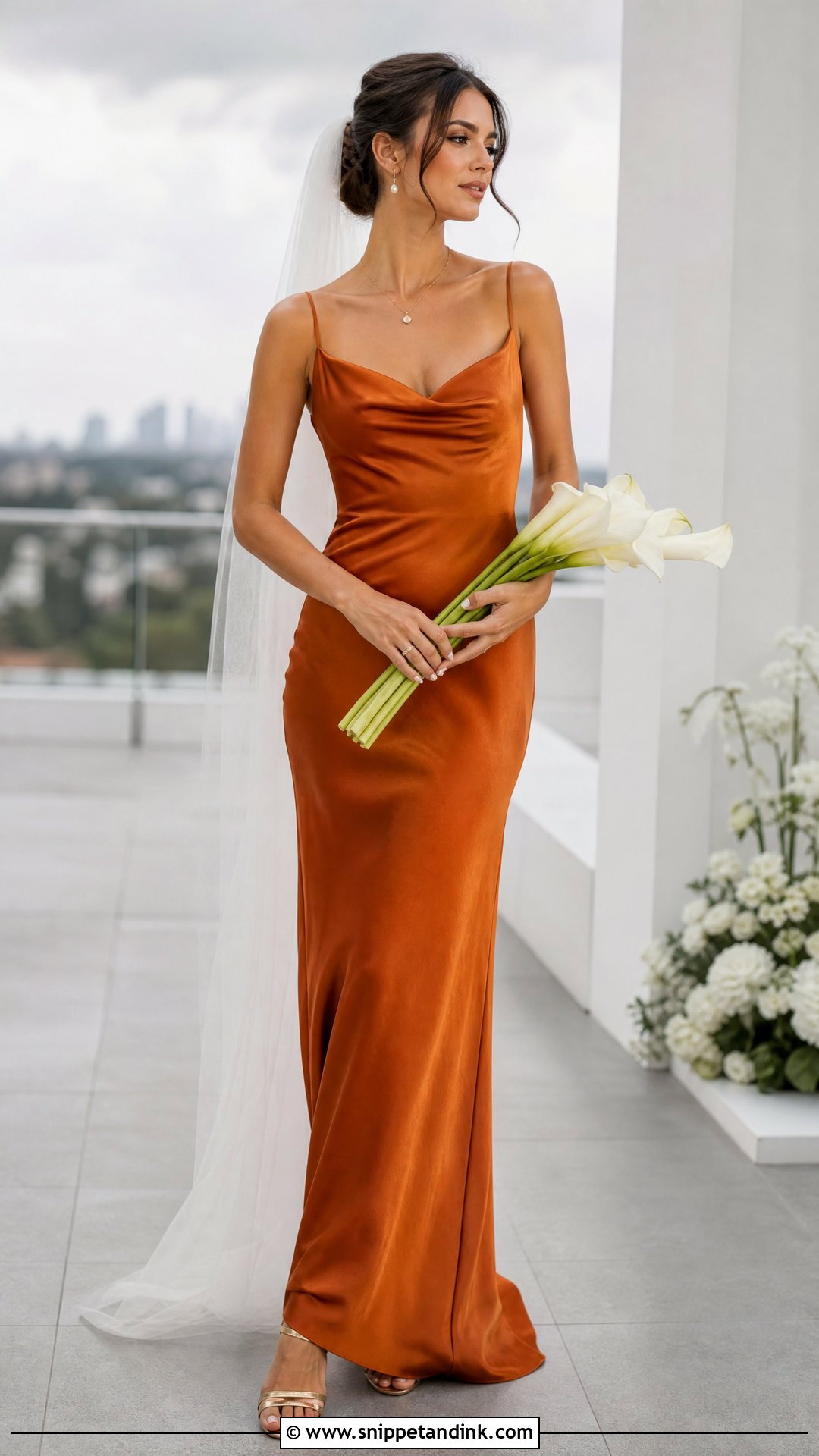
Slips look simple, and that’s exactly why they’re the hardest dress to get right. Bias-cut satin shows every line beneath it and every inch of poor fit, so I budget for smooth, line-free underwear and a skilled seamstress before anything else. Look for substantial fabric that drapes rather than clings, and a neckline that stays put. Barely there champagne sandals, a delicate pendant and small pearl earrings suit it, along with a low bun and a plain chapel veil. One flower in the bouquet, calla lilies or white roses, keeps the mood. Intimate ceremonies, rooftops, destinations and courthouses all work.

15. Burnt Orange Tea-Length Wedding Dress
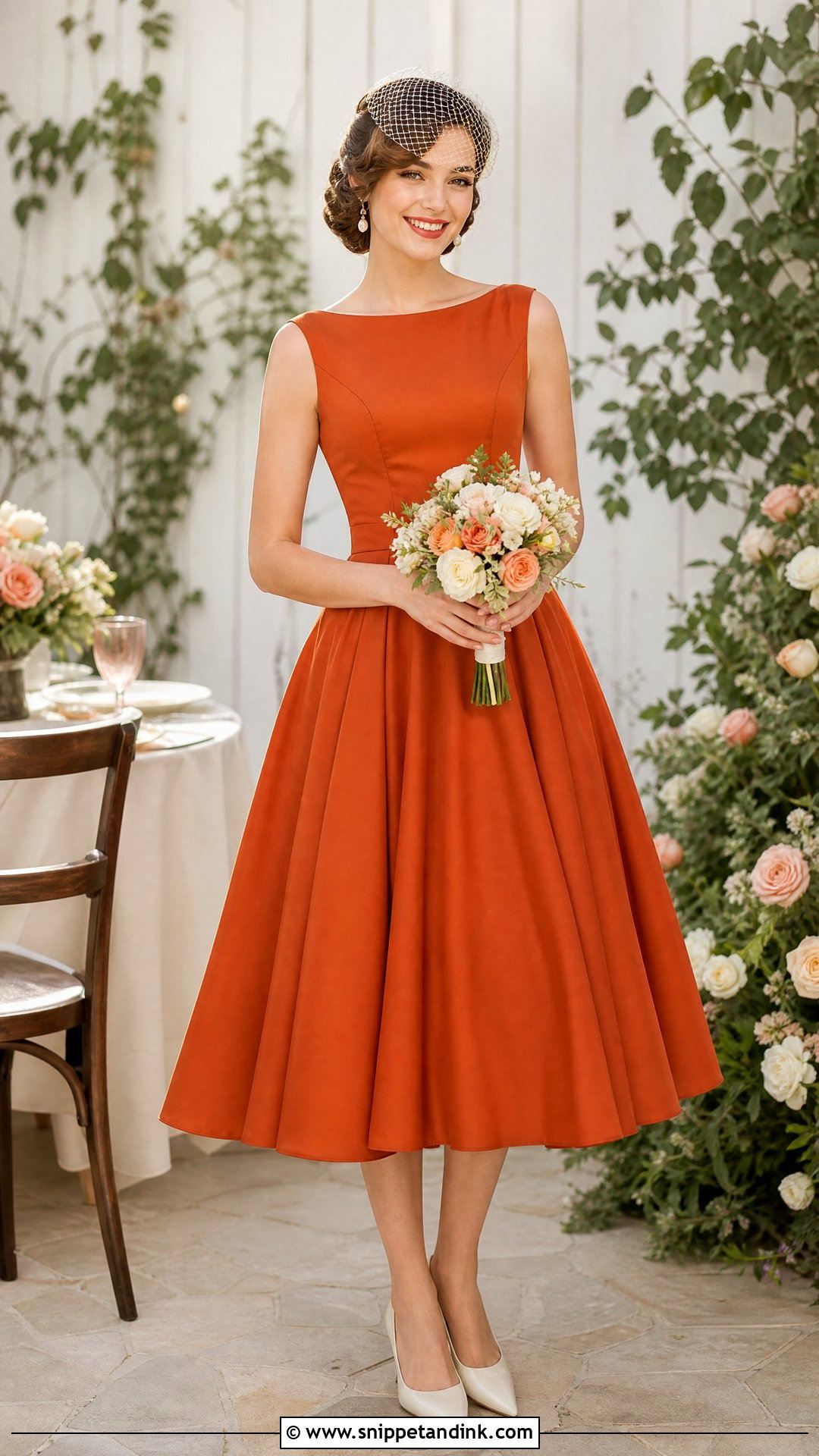
Tea length ends between knee and ankle and puts your shoes on display, so this is the dress to spend on footwear. A fitted bodice, ivory pointed-toe pumps, a short birdcage veil and pearl earrings give it a vintage note without tipping into fancy dress, and a slim belt helps if the waist needs definition. Keep the bouquet compact, since a big arrangement overwhelms a short skirt. A smooth updo or shoulder-length waves both work. I like this hem for small days: you can walk, dance and get into a car without anyone managing a train. Courthouses, brunch receptions and gardens suit it.
16. Burnt Orange Plus-Size Wrap Wedding Dress
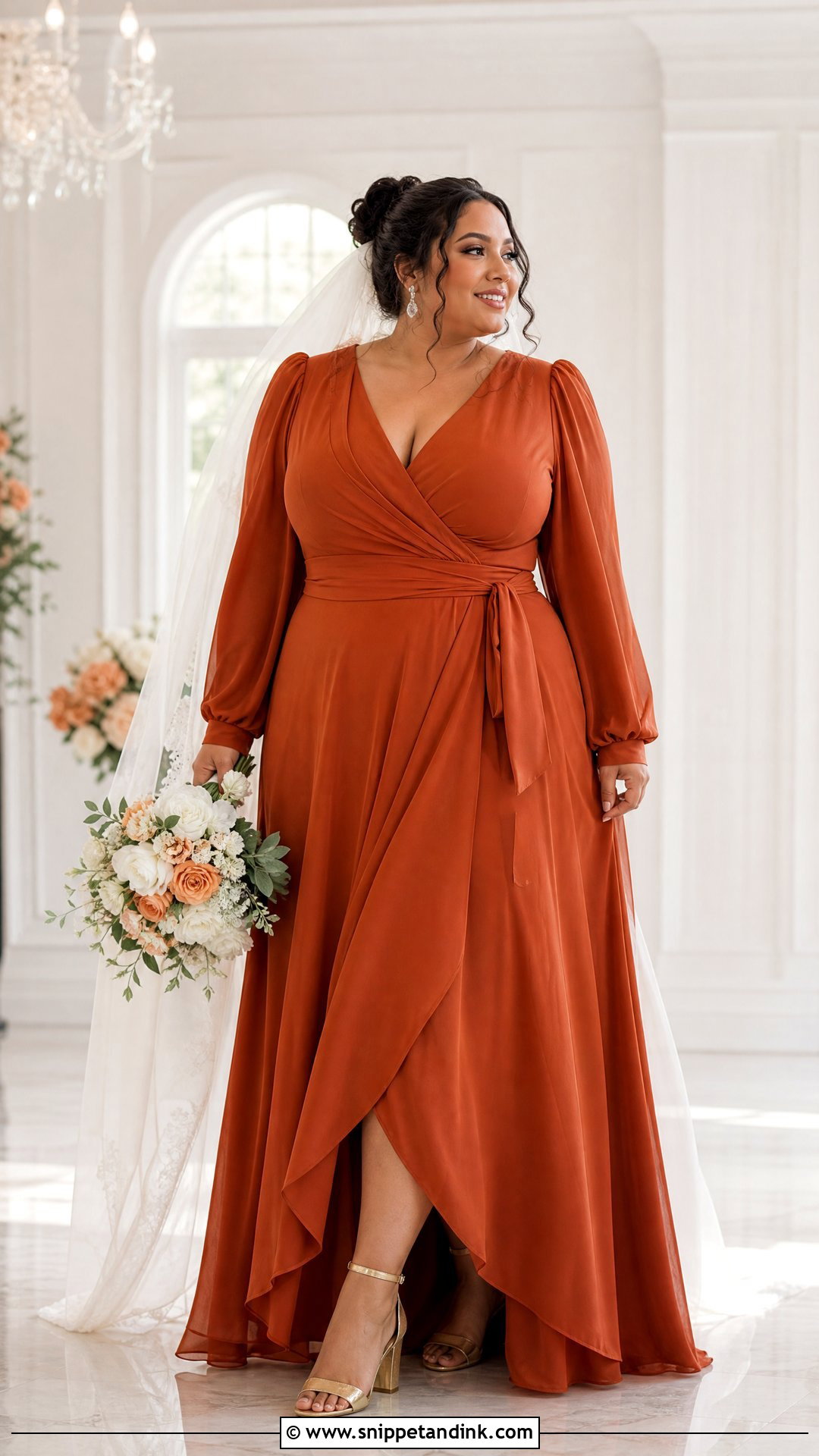
Wrap gowns are adjustable, which genuinely helps when your shape shifts slightly between fittings. I prefer a true wrap or a securely stitched faux-wrap bodice with a supportive lining, because a loosely tied wrap can open when you sit or hug. A flowing A-line skirt balances the fitted top. Wide-fit gold block heels, medium drop earrings and a soft cream clutch suit it, with a half-up style and a chapel veil for height, plus ivory flowers, peach roses and eucalyptus. Even an adjustable dress needs alterations. Sleeve length and the point where the neckline crosses make the biggest difference to fit. It works at formal and relaxed weddings alike.
17. Burnt Orange Petite Sheath Wedding Dress
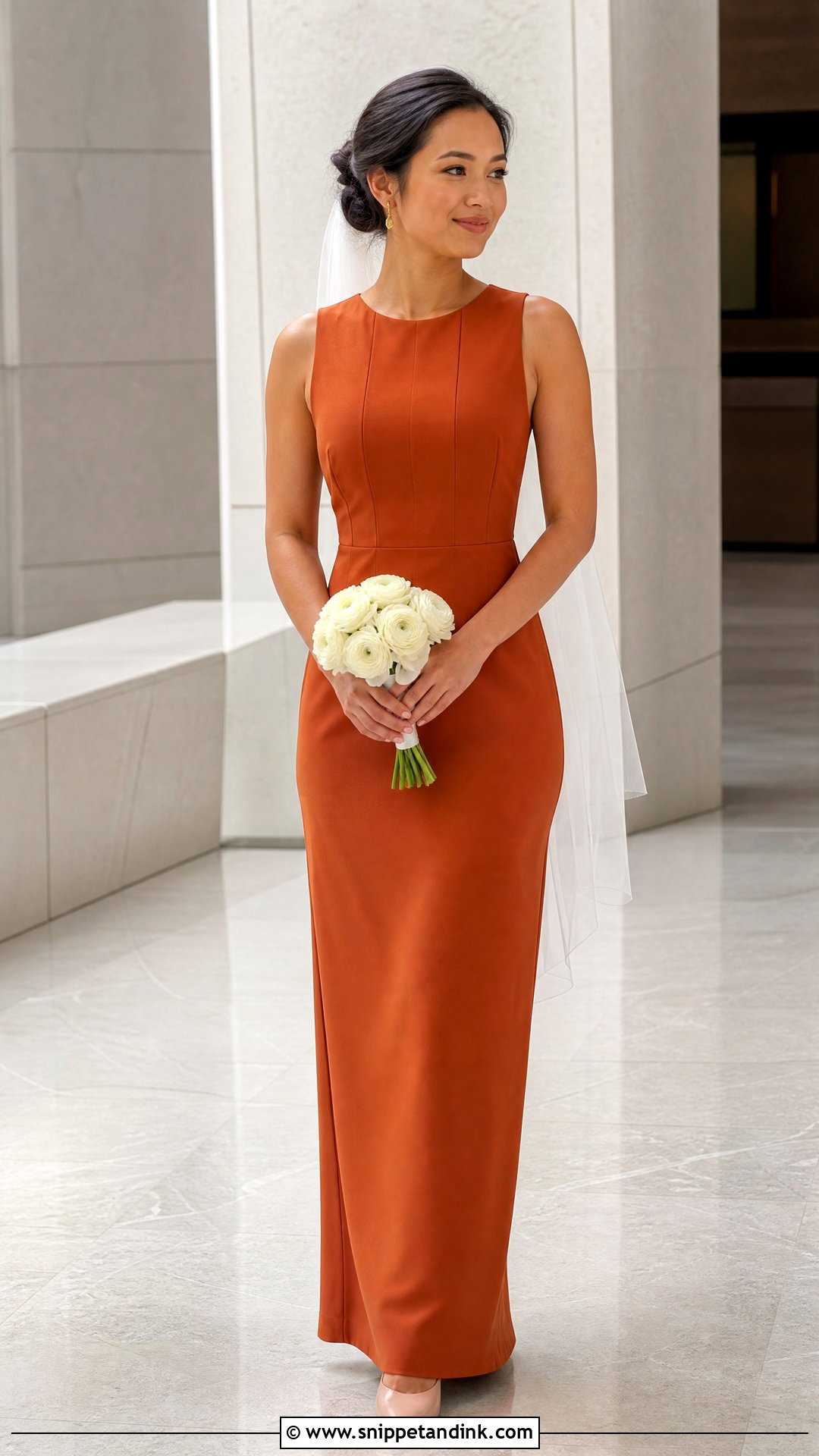
For a petite bride, a sheath draws one long vertical line. Vertical seams, a natural waist and minimal skirt fabric help, while big ruffles or oversized embellishment swamp a smaller frame, so keep the detail at the neckline or back. Nude pointed-toe heels extend the leg, and fine gold earrings add shine without weight. A high or mid bun with a narrow veil adds height, and a small bouquet of cream ranunculus keeps the proportions right. I tell every petite bride that petite sizing is a starting point, not a fit; the hem and bodice still need tailoring to you. Modern venues, courthouses and small ceremonies suit it.
18. Burnt Orange Maternity Empire Wedding Dress
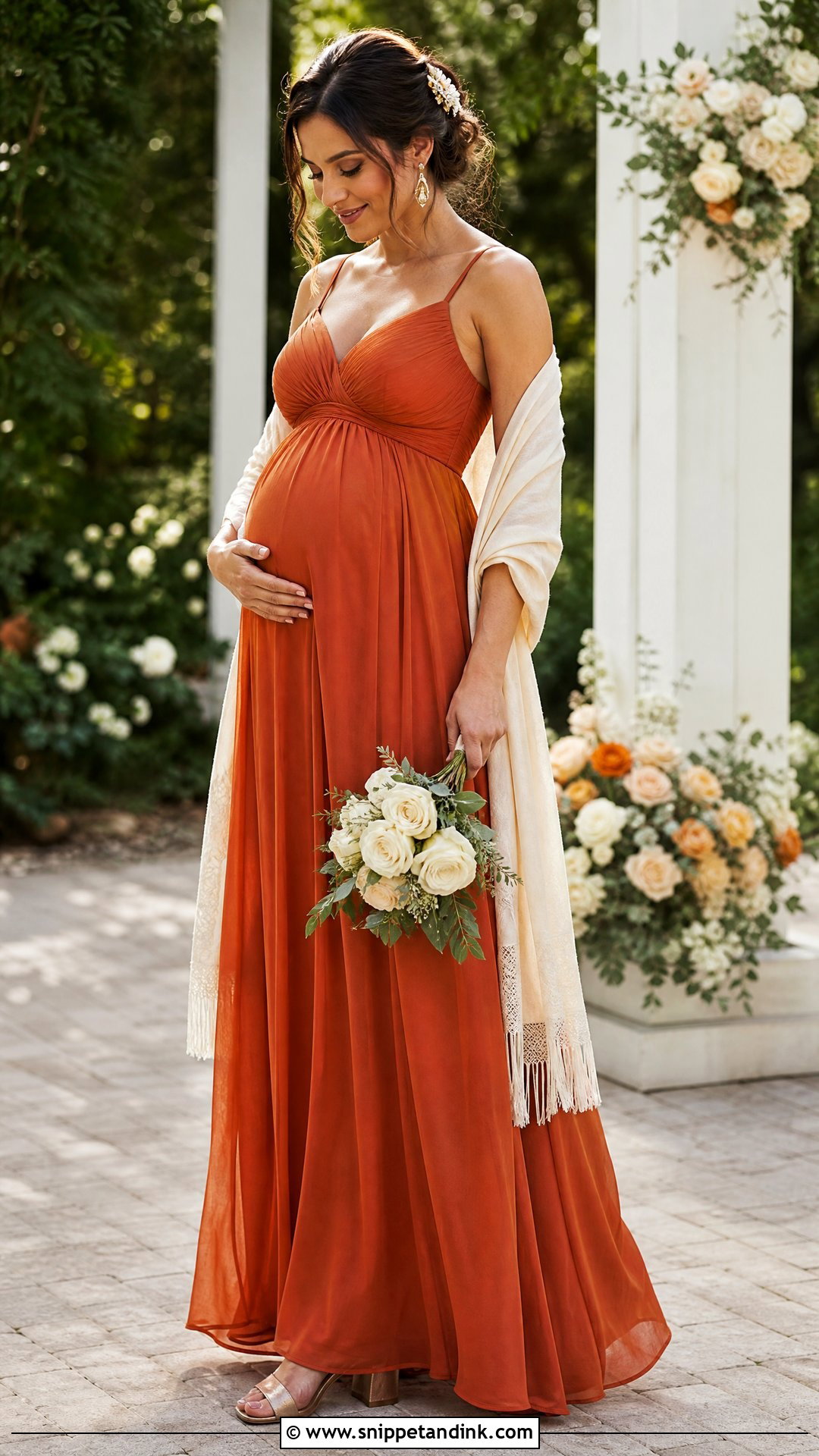
Comfort comes first in a maternity gown, and an empire waist gives the bump space without losing the bridal look. Choose a supportive bodice, a raised waistline, soft stretch and a flowing chiffon or jersey skirt, and avoid rigid boning or narrow waistbands. Low champagne block heels, delicate gold earrings and a light cream shawl complete it, and a flower comb with soft waves replaces a heavy veil. Keep the bouquet modest so it’s easy to hold. Book the final fitting as close to the date as your seamstress allows, because your shape will keep changing right up to it. Indoor weddings, gardens and destinations all suit.
19. Burnt Orange Modest Long-Sleeve Wedding Dress
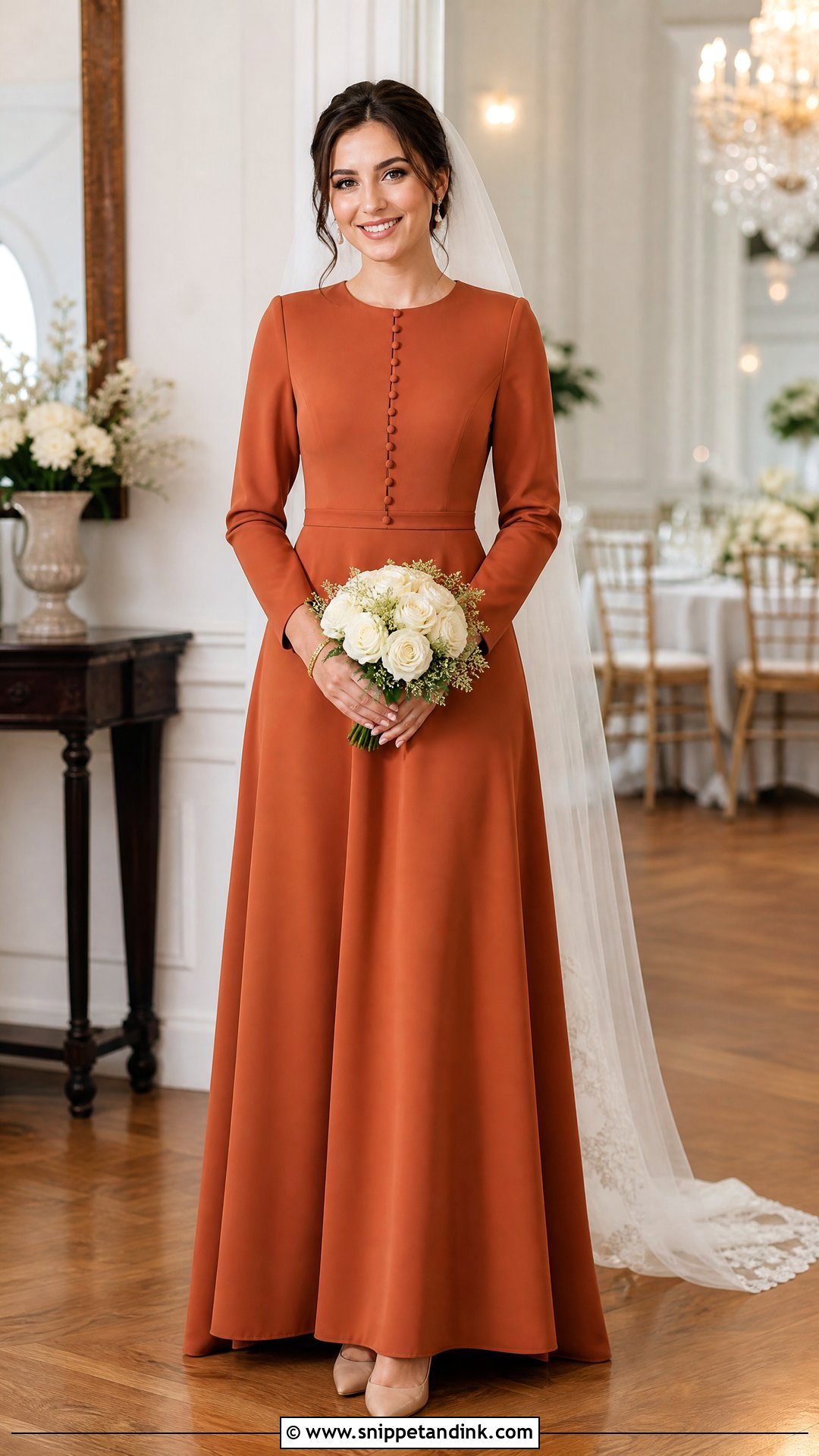
Modest gowns in a strong color look fresh rather than old-fashioned. I look for full-length sleeves, a high or softly rounded neckline, an opaque lined bodice and a floor-length skirt; covered buttons, narrow cuffs or tonal lace add interest without showing skin. Nude closed-toe pumps, pearl drop earrings and a gold bracelet suit it, with a neat bun or low chignon and a plain ivory veil, plus cream roses and eucalyptus. The check I never skip is coverage under flash. Some fabrics that look opaque in a shop go faintly sheer in photographs, so test it with a phone flash before the final fitting. Formal, family-centered and cooler-season ceremonies suit it.


20. Burnt Orange Halter Beach Wedding Dress
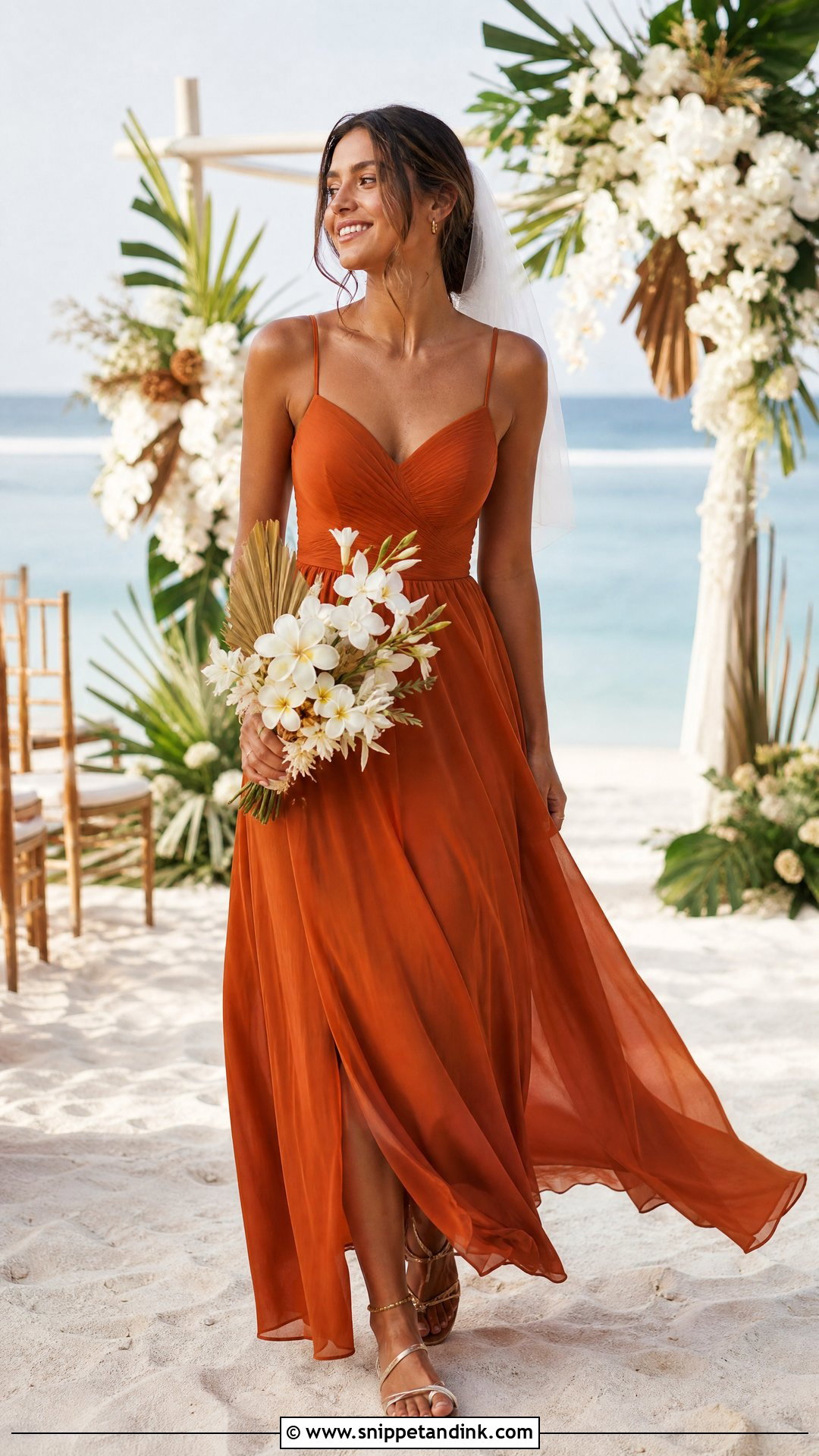
Halters suit a beach because the open shoulders stay cool and the color holds its own against bright sand and sea. Lightweight chiffon, crepe or soft satin moves with the breeze. Flat metallic sandals or low block heels are the only shoes I trust on sand. Add small gold hoops, a delicate anklet and a low ponytail anchored against the wind, with cream tropical flowers and fresh greenery for crisp contrast. Long cathedral veils become a wrestling match in sea wind, so a detachable cape or short veil is easier. Choose a breathable lining and few layers. Strong sun can also fade saturated dyes, so don’t leave the dress hanging in a bright hotel window the day before.
21. Burnt Orange Puff-Sleeve Wedding Dress
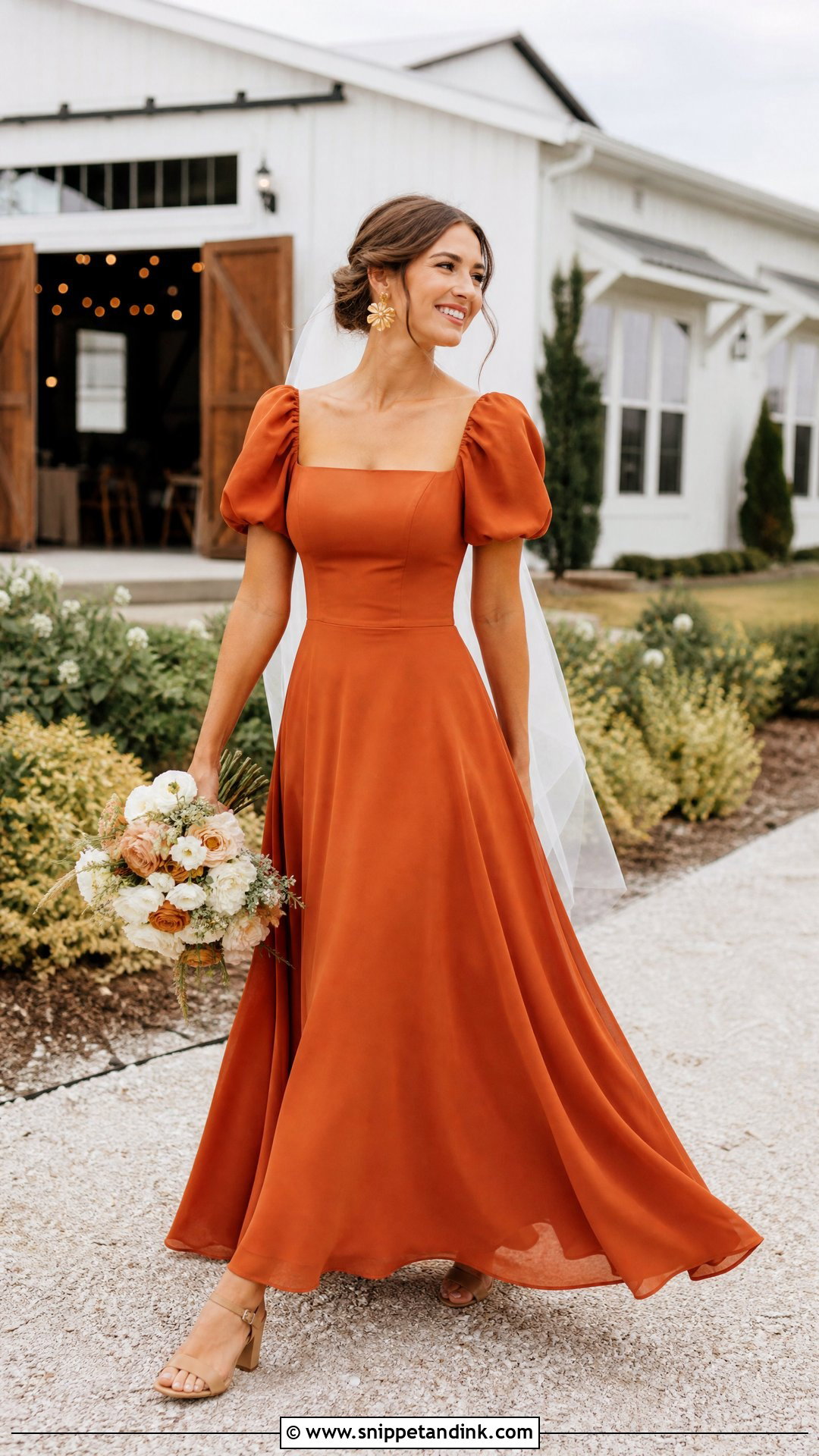
Puff sleeves add soft volume and a countryside feel. A fitted bodice with sheer or lightly structured sleeves balances against a flowing A-line skirt. The sleeves must let you lift your arms for a hug or a bouquet toss without the cuffs cutting in, so I always have brides raise both arms at the fitting. Tan block heels, gold floral earrings and a loose braided updo suit it, and cream flowers with muted peach and wispy greenery finish it. A narrow fingertip veil adds definition without flattening the sleeves. Keep other embellishment restrained. Barns, orchards, vineyards and rustic estate wedding settings make a natural backdrop.
22. Burnt Orange Courthouse Midi Wedding Dress
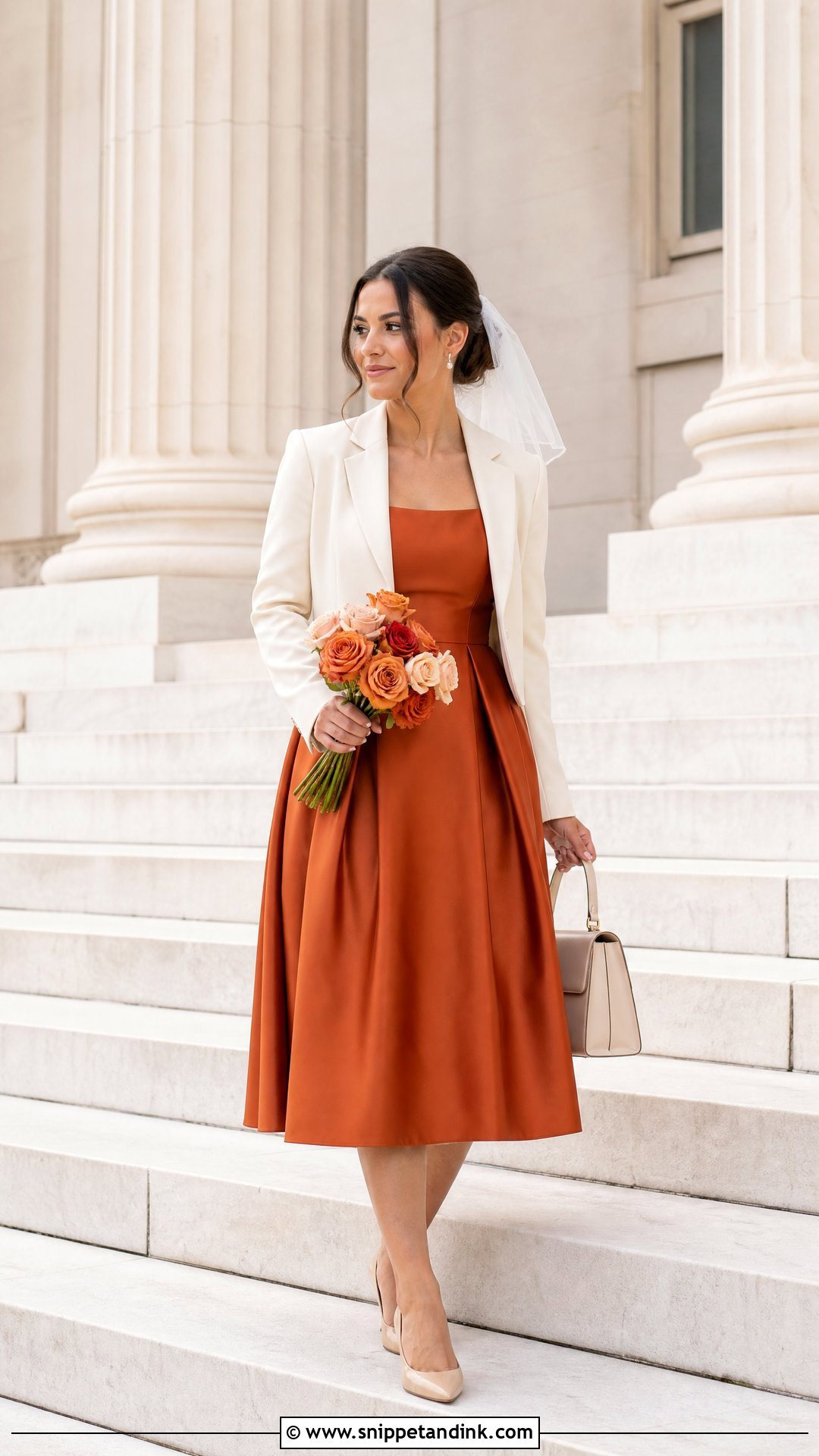
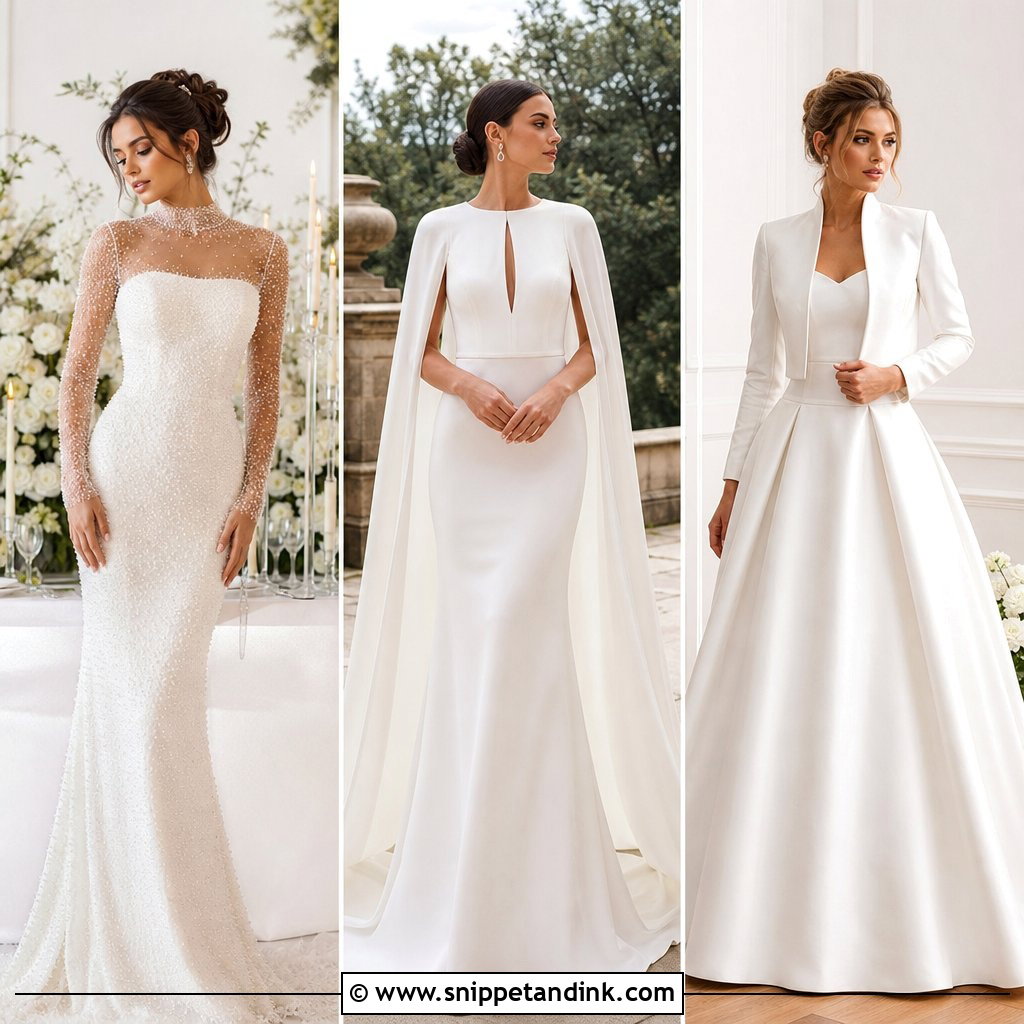
A burnt orange midi wedding dress makes a courthouse outfit that still feels special in photos and at dinner afterward. Choose a tailored shape with a square neckline, defined waist and a hem below the knee. An ivory cropped blazer is practical in chilly air-conditioned public buildings, and it comes off later to show the full dress. Pointed champagne pumps, pearl earrings and a structured cream bag finish it. A small hair comb or short veil marks you as the bride without snagging in a crowded corridor. Wrap a compact bouquet of ivory roses in burnt orange ribbon. It moves easily on to a restaurant, rooftop or family dinner.
23. Burnt Orange Two-Piece Wedding Dress
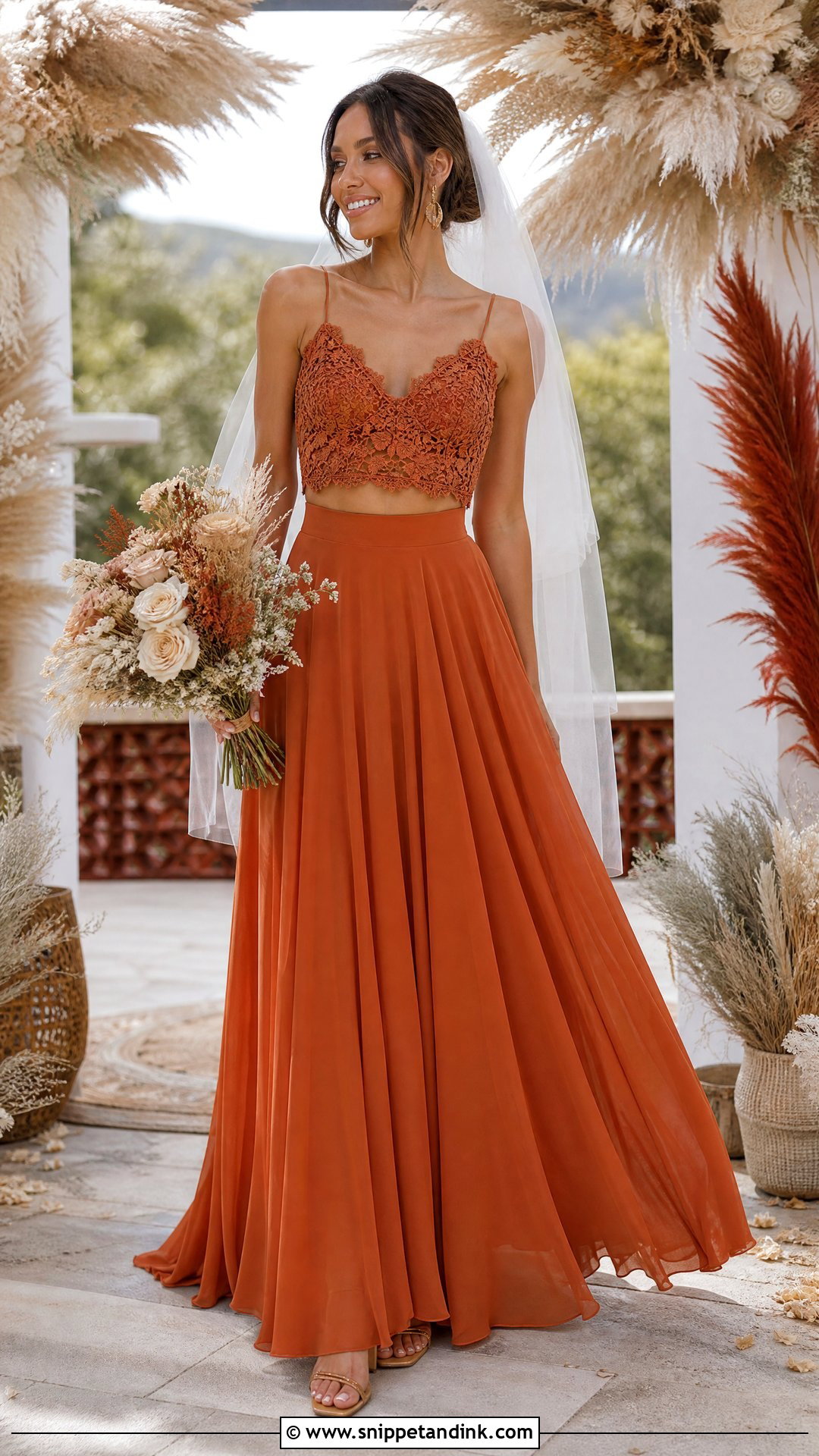
Separates let you mix textures within one color story, and they’re easier to fit because the top and skirt are altered independently. A fitted lace or satin crop top with a high-waisted flowing skirt can show a narrow band of skin, or the pieces can meet so the outfit reads as a gown. The one risk is color. If the top and skirt come from different fabrics or dye batches, the oranges may not quite match, so view them together in daylight before buying. Gold sandals, fine drop earrings, a cream clutch, a low textured bun and a plain fingertip veil suit it, with ivory flowers touched by rust and peach. Both pieces can be worn again separately.
24. Burnt Orange Cape Wedding Dress
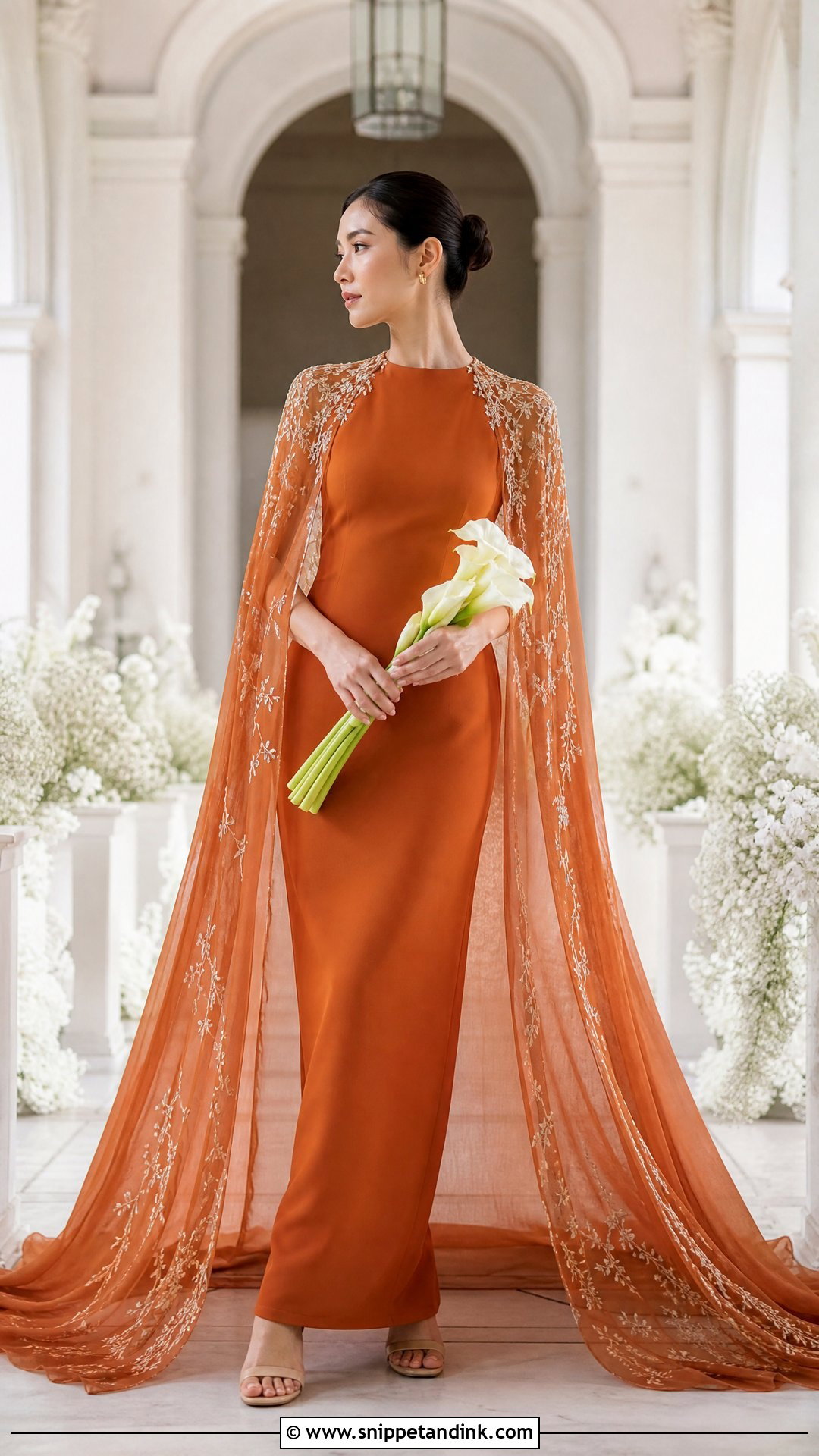
A cape turns a plain gown into something dramatic. Start with a fitted column or understated A-line and attach a sheer floor-length cape at the shoulders or neckline; ivory embroidery, tiny pearls or tonal edging add detail. Neutral heels, small gold earrings and a sleek low bun keep the rest quiet, and the cape replaces a veil. A narrow bouquet of calla lilies or orchids suits the long line. Insist on hooks or snaps so the cape comes off before dancing, because a floor-length cape on a dance floor gets stepped on within minutes. Formal halls, estates and galleries suit it.

25. Burnt Orange Reception Mini Wedding Dress
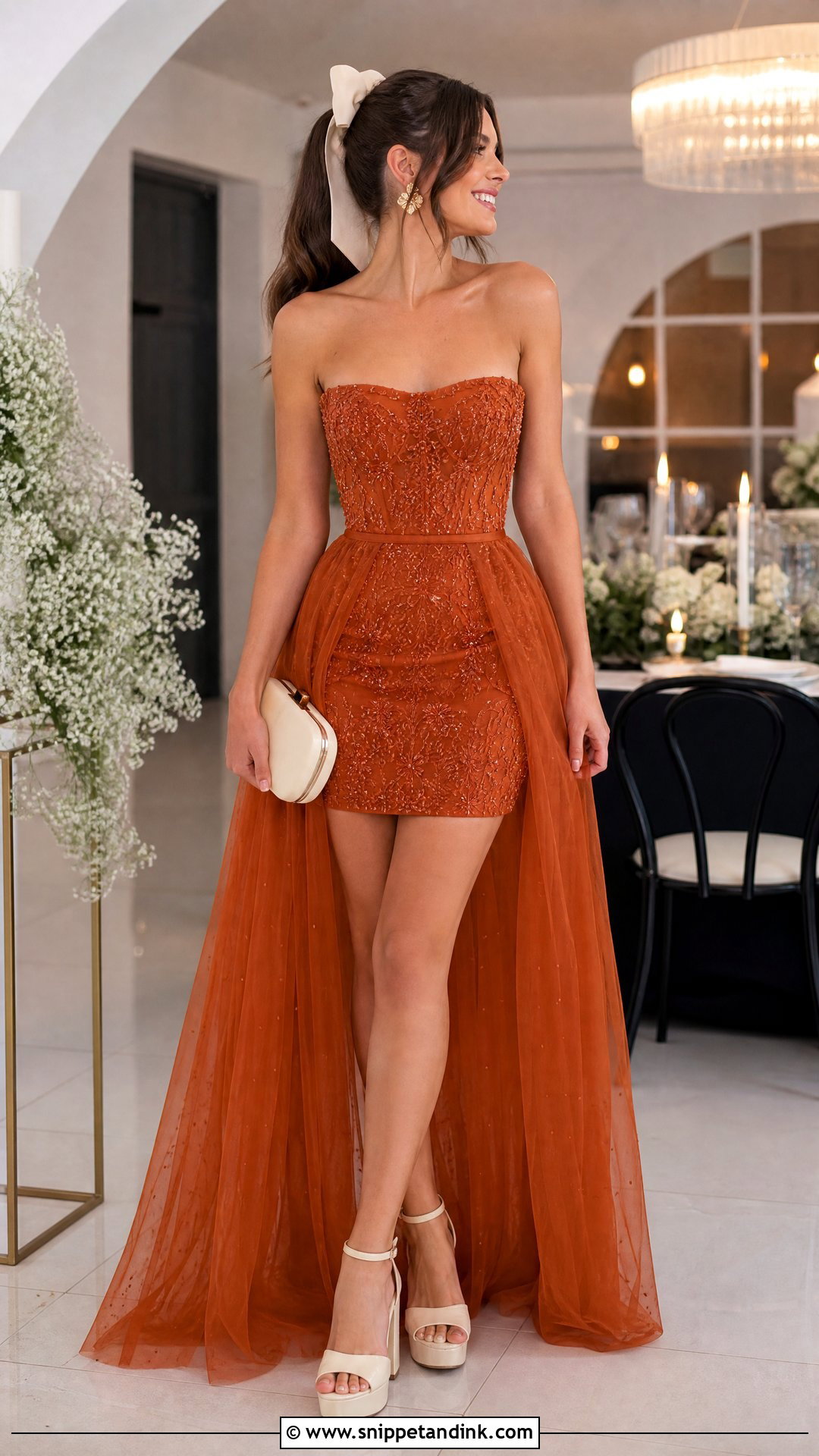
A mini is the second look I suggest when a bride wants to dance properly. Choose a structured mini with a secure neckline, a defined waist and restrained detail such as tonal beading, feathers or a removable overskirt. Ivory block heels or metallic sandals keep you dancing, statement earrings and a small hair bow finish it, and a cream clutch replaces the bouquet. If the hem is fitted, test sitting down before final alterations; short fitted skirts ride up more than you’d expect. Plan where the change happens and who will help with the fastenings, since a quick change always takes longer than the timeline allows.
Light Is the Enemy of Orange Dye After the Wedding
Saturated dyes fade, and light is what does it. A burnt orange gown left near a bright window for weeks can develop a paler band along whichever folds faced outward. Clean it before you store it, too. Sugar from cake or champagne can be invisible on the night and then oxidize into a brown mark months later.
- Have it professionally cleaned soon after the wedding, and tell the cleaner what the fabric is and that keeping the color matters.
- Store it in acid-free tissue inside a breathable cotton bag or box, never sealed in plastic, which traps moisture.
- Keep it somewhere dark, cool and dry, so not an attic, a garage or a wardrobe that catches afternoon sun.
- Hang velvet on a padded hanger, since folding crushes the pile, but lay heavily beaded or sequined gowns flat so their weight doesn’t stretch the shoulders.
A colored gown also has a life after the wedding, which a white one rarely does. A slip, midi, two-piece or mini can be shortened or simply worn to an anniversary dinner. Ask your seamstress which alterations can be undone before anything is cut.
Which Fabric Should Carry Your Orange?
Burnt orange works across romantic, modern, formal, bohemian and relaxed weddings, which surprises a lot of brides. I start with the silhouette that suits your body and venue, then decide on fabric, since satin, lace, chiffon, velvet and tulle each shift the mood. Gold, champagne, cream, tan and ivory accessories usually balance the color best, and flowers can either repeat the orange or go neutral for contrast. Above everything, book proper alterations and test the whole outfit walking, sitting and dancing. A ball gown, a modest long-sleeve design or a reception mini will all feel like yours once the fit is right.
You'll Like These Ideas:



Leave a Reply