
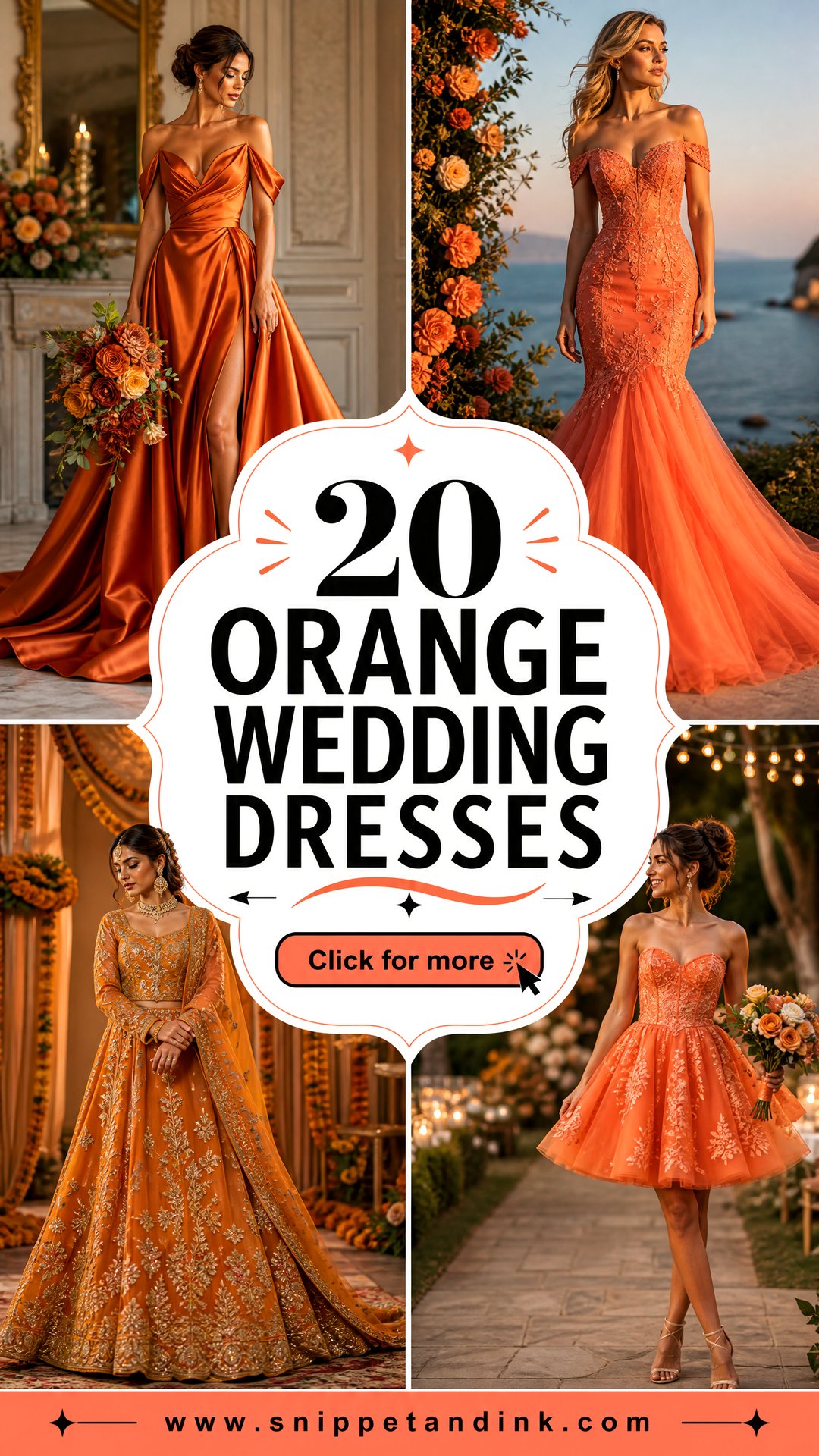
An orange wedding dress is a real alternative to white, not a novelty, and the brides who wear one well usually know exactly why they want it. The colour runs from soft peach and coral through vivid tangerine to terracotta and deep burnt orange, so there’s a version for a sunny garden, a ballroom, a rustic autumn barn or a beach abroad. Fabric changes the mood as much as the shade does. Satin reads formal, chiffon moves, velvet looks rich, and tulle gives volume. Accessories should support the colour, which usually means gold jewellery, neutral shoes, warm-toned flowers and a plain veil. The twenty looks below run from full ball gowns to a reception mini, each styled from shoes to veil.
Most Orange Gowns Are Ordered From an Ivory Sample
Here is the part nobody warns you about. Very few bridal shops keep orange samples on the rail. Usually you try the ivory version, the consultant hands you a small fabric swatch, and you’re asked to imagine the whole dress in a colour you’ve only seen in a square the size of your palm. Then the gown is made to order.
That changes how I approach the appointment:
- Ask whether the designer offers the dress in a custom colour, and whether the swatch is cut from the actual production fabric or from a colour card.
- Hold the swatch at your face and at your hip. Colour reads differently near skin and against the skirt’s volume.
- Ask to see a photo of a finished gown in that colour, worn by a real person. A swatch can’t show how a full skirt of it looks.
- Confirm the production time in writing. Made-to-order gowns commonly take several months before the first fitting, and a custom colour can add more, so leave a margin.
If you can’t picture it, buy a metre of similar fabric from a fabric shop and drape it round yourself in front of a long mirror. It costs little and answers more than any amount of looking at screens.
1. Burnt Orange Satin Wedding Dress
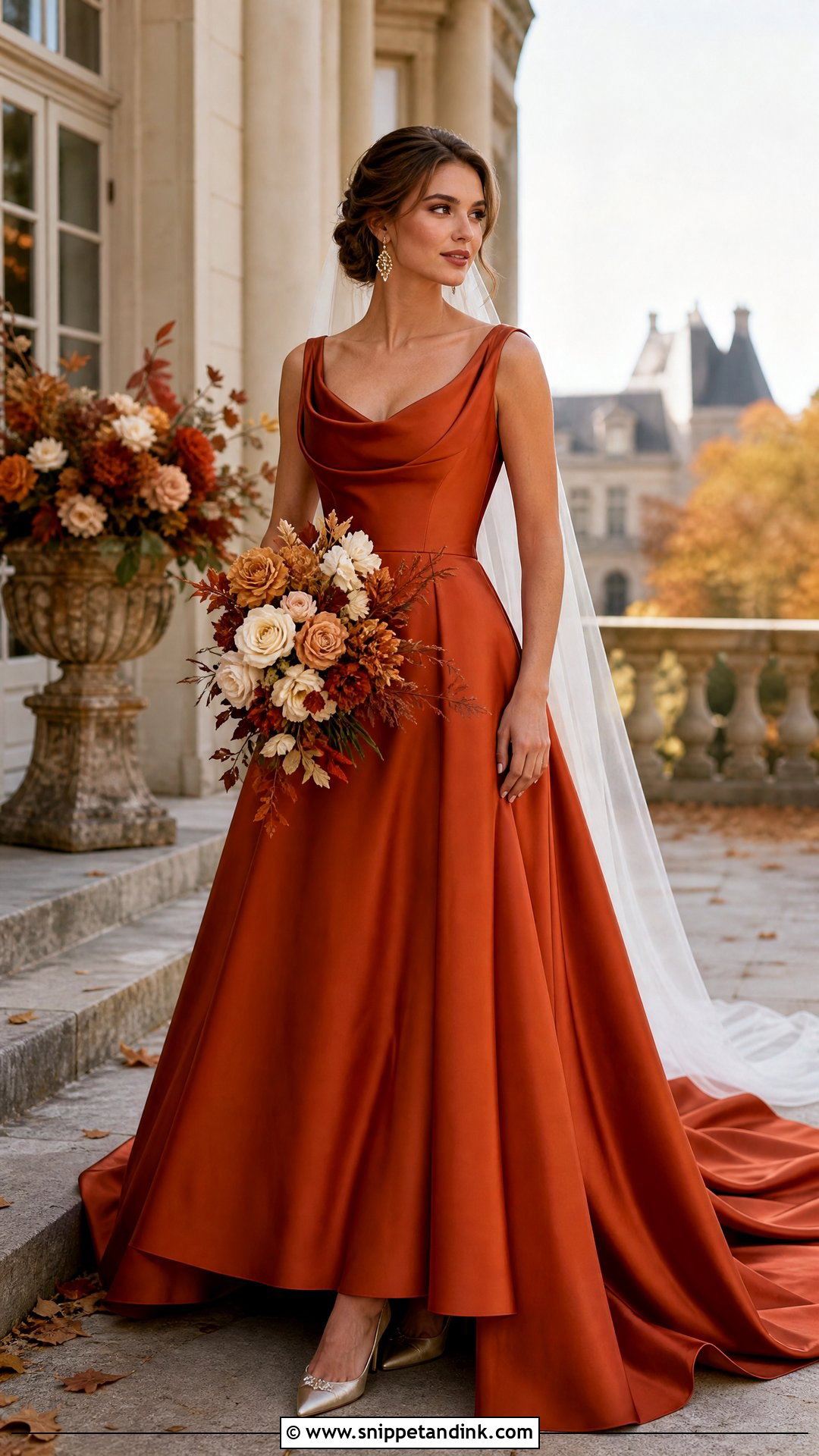
A burnt orange satin wedding dress is my first suggestion for an autumn wedding. The brown in the shade keeps satin from looking shiny and cheap, which brighter oranges sometimes do. A structured A-line with a softly draped neckline, a defined waist and a sweeping train is the shape I’d start with. Champagne pointed heels, small gold drops and an ivory fingertip veil keep the styling quiet. Cream roses, rust flowers and eucalyptus pull the palette together, and a low bun or soft Hollywood waves suits the polish of the satin. Historic houses, lofts and outdoor venues with turning leaves all work.
2. Tangerine Orange Ball Gown Wedding Dress
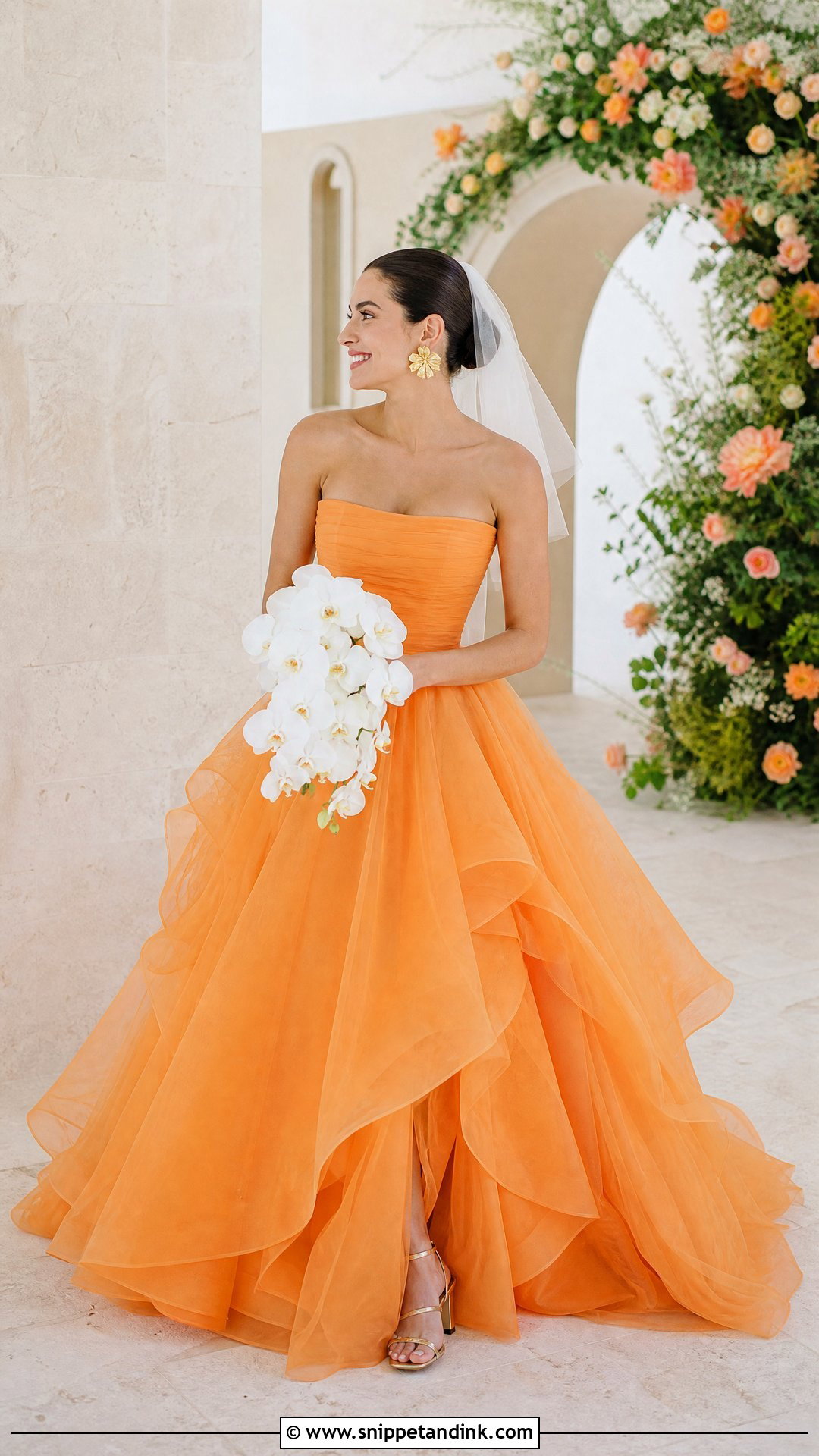
Tangerine is the most confident orange you can put in a ball gown, and volume amplifies it. That’s why I keep the bodice clean: strapless or square-neck, with no extra embellishment, so the colour and the skirt carry the look. Metallic gold sandals, a thin tennis bracelet and sculptural earrings are all it needs. A short sheer veil adds a bridal note without covering the colour. White orchids and pale peach roses calm it down. Tangerine wants natural light, so a summer garden, a bright destination or an indoor room with big windows and neutral decor; under dim amber lighting it loses its brightness.
3. Terracotta Chiffon Wedding Dress
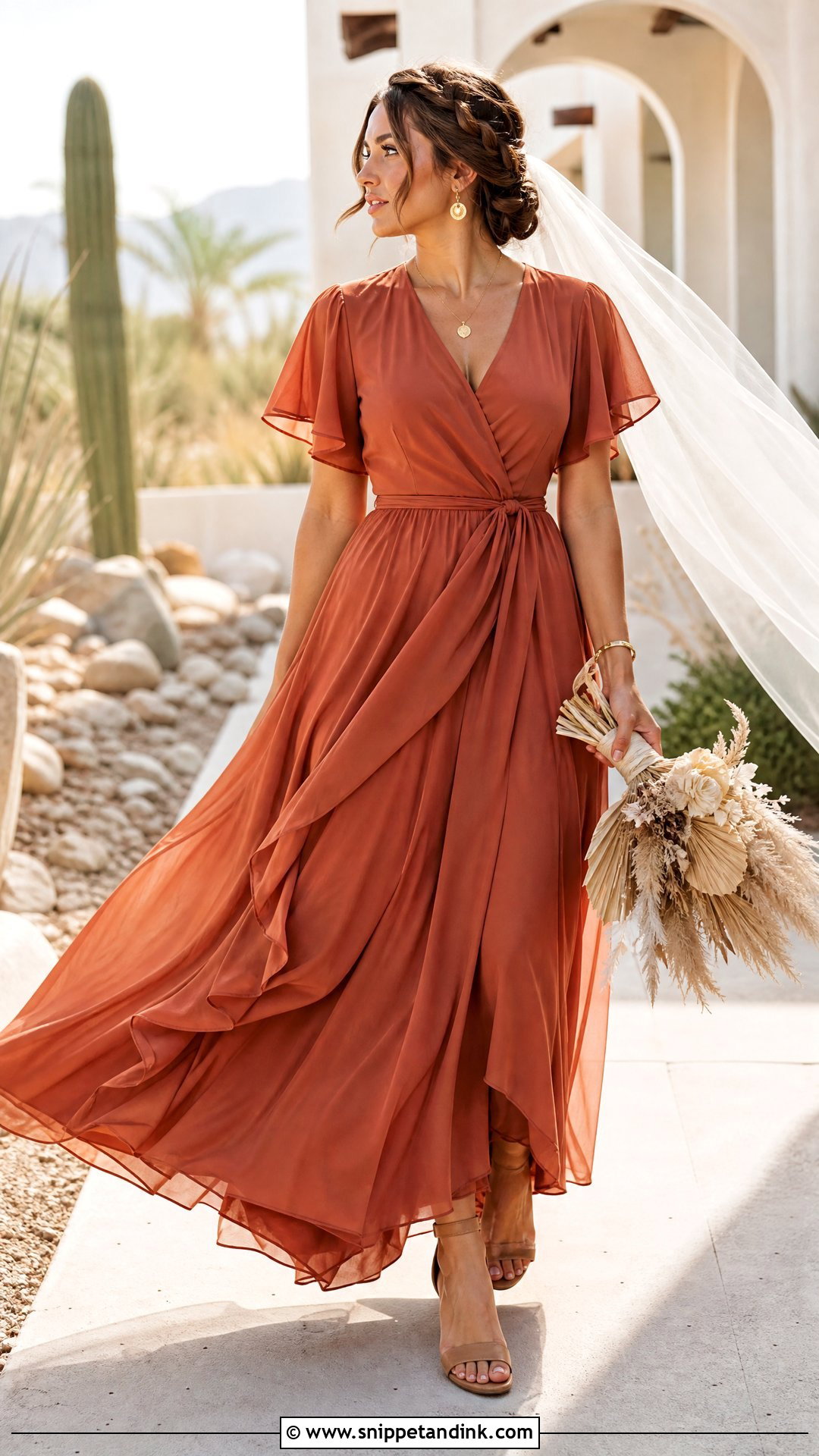
Chiffon in terracotta is the relaxed end of this list. A flowing A-line with a wrapped bodice, flutter sleeves and a layered skirt moves easily and doesn’t feel casual. The earthy shade belongs outdoors: deserts, vineyards, gardens, rustic estates. Tan block-heel sandals cope with grass and gravel. Hammered gold earrings and a slim bracelet are enough shine. A loose braided updo and a light cathedral veil finish it, and a bouquet with ivory flowers, dried grasses and muted greenery suits the colour. One caution: layered chiffon catches on anything rough, so walk the aisle route before the day if it’s stony or edged with brambles.
4. Rust Orange Velvet Wedding Dress
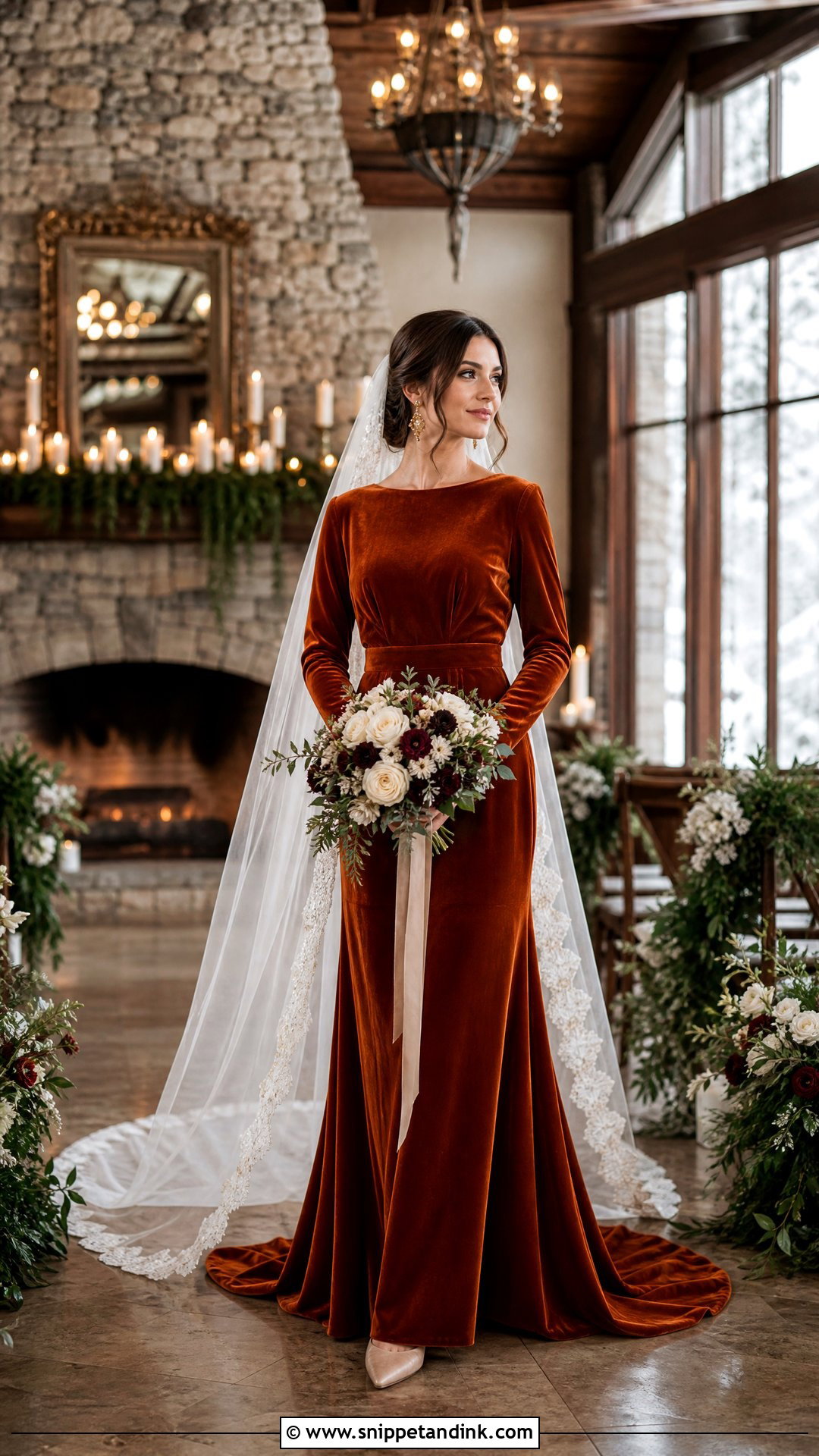
Velvet is a cold-weather fabric, and rust is the orange it suits best. A fitted column or a soft flare, long sleeves, a modest V-neck and light ruching at the waist is a shape that looks rich without bulk. The pile deepens the colour in candlelight and evening photos. Closed-toe champagne heels, antique-style gold earrings and a cream clutch finish it. A sleek low chignon keeps the neckline clear and a chapel veil adds ceremony. Carry cream garden roses, burgundy flowers and trailing greenery. Velvet is warm, so it works for a fall ceremony, a mountain lodge or a winter ballroom, and is miserable in a heated room in July.
5. Peach Orange Lace Wedding Dress
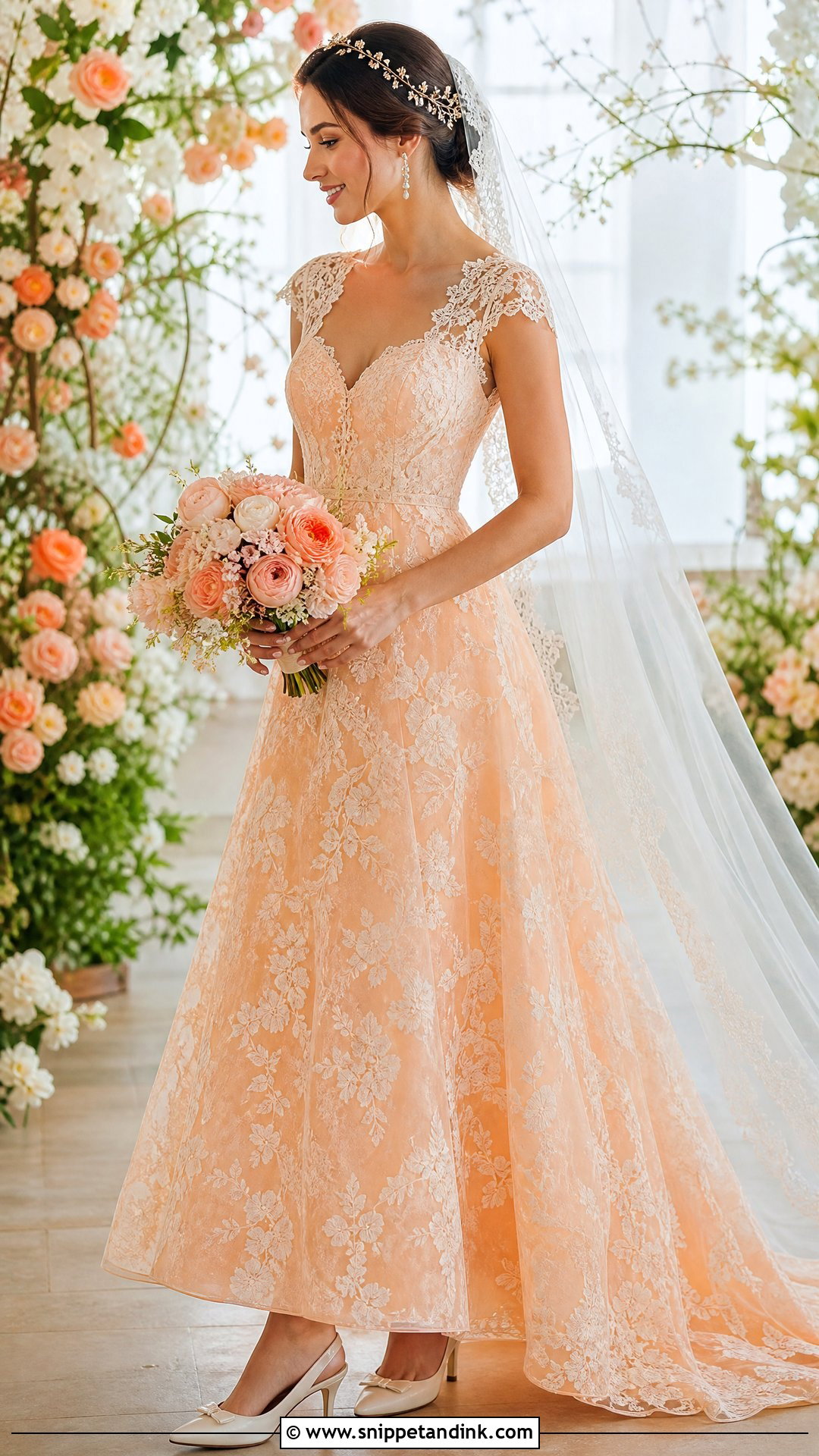
Peach lace is how most brides first try colour, because it still reads as bridal from across a room. A fitted bodice over a nude lining with floral lace continuing into an airy A-line skirt keeps it light. Cap sleeves or an illusion neckline add coverage. Ivory slingbacks, pearl drops and a thin gold hair vine finish it, with a sheer ivory veil edged in lace to link back to the dress. Blush roses, white ranunculus and pale apricot flowers suit spring gardens. Check the lining shade against your skin, not the lace; the lining does most of the colouring here.
6. Coral Orange Mermaid Wedding Dress
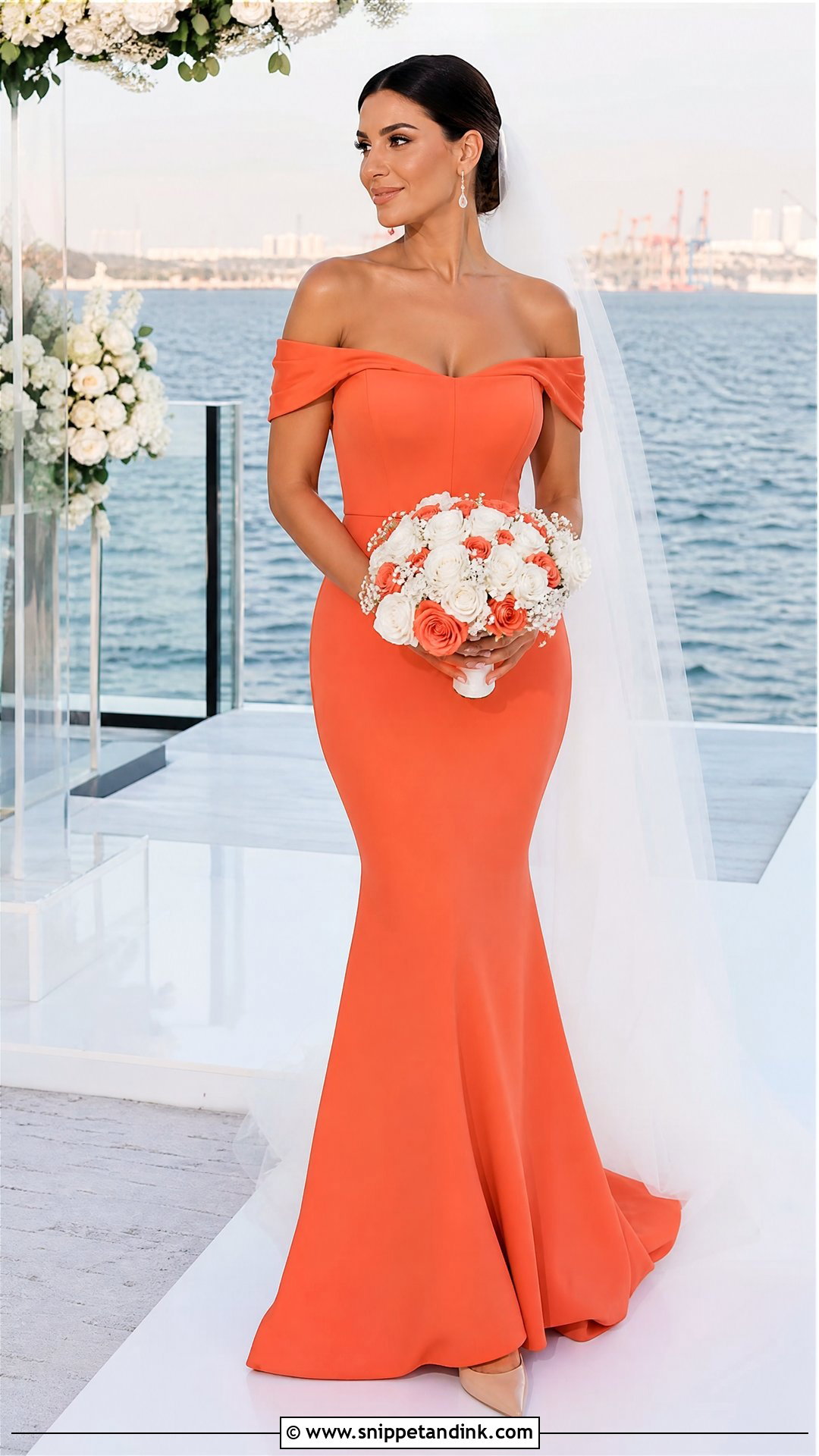
Coral in a mermaid cut is a strong combination, and it only works if the fit through the hips is exact. Stretch crepe or satin follows the body; the flare should start at or just above the knee, otherwise walking becomes a shuffle. An off-the-shoulder neckline balances the lower volume. Nude pumps, rose-gold earrings and a matching cuff go with the warm pink in coral better than yellow gold. A long plain veil keeps it refined, and a compact bouquet of white roses and coral peonies echoes the gown without matching it exactly. It suits a formal waterfront, resort or ballroom setting. Sit down at every fitting, because mermaid gowns pull hardest across the thighs when seated.
7. Orange Ombre Tulle Wedding Dress
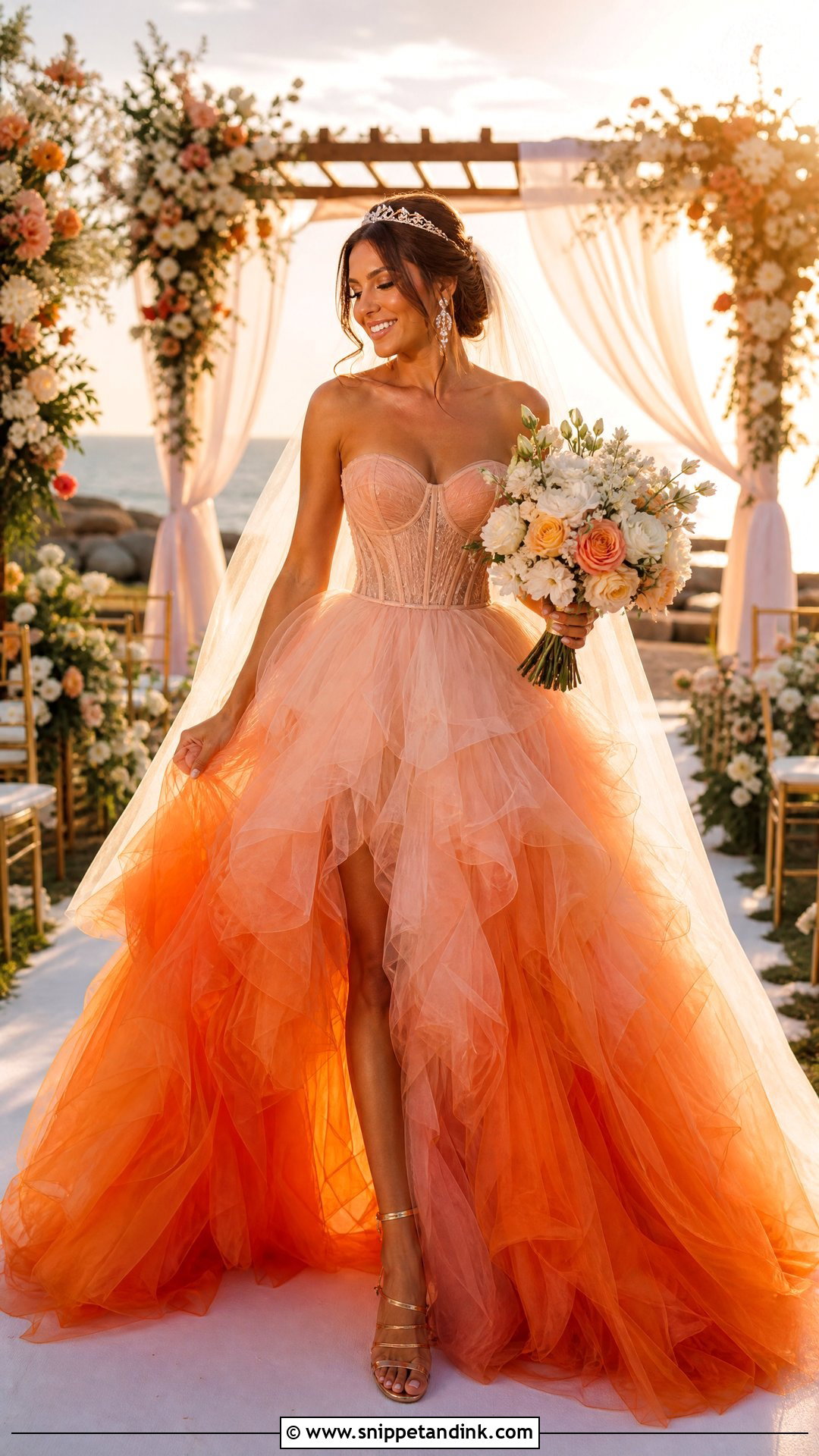
An orange ombre tulle wedding dress keeps the classic bridal volume and turns the skirt into a gradient. The good ones start pale peach at the bodice and deepen to tangerine or burnt orange at the hem, with no visible band where one dye stops. A corset-style top gives the colour change room to develop down a long skirt. Simple gold strappy heels, crystal studs and a narrow metallic headband are enough; heavy jewellery fights the gradient. An ivory veil blends into the palest part, and white and peach flowers support it. Sunset ceremonies suit this dress, since low golden light warms the dark hem further.
8. Copper Orange Silk Wedding Dress
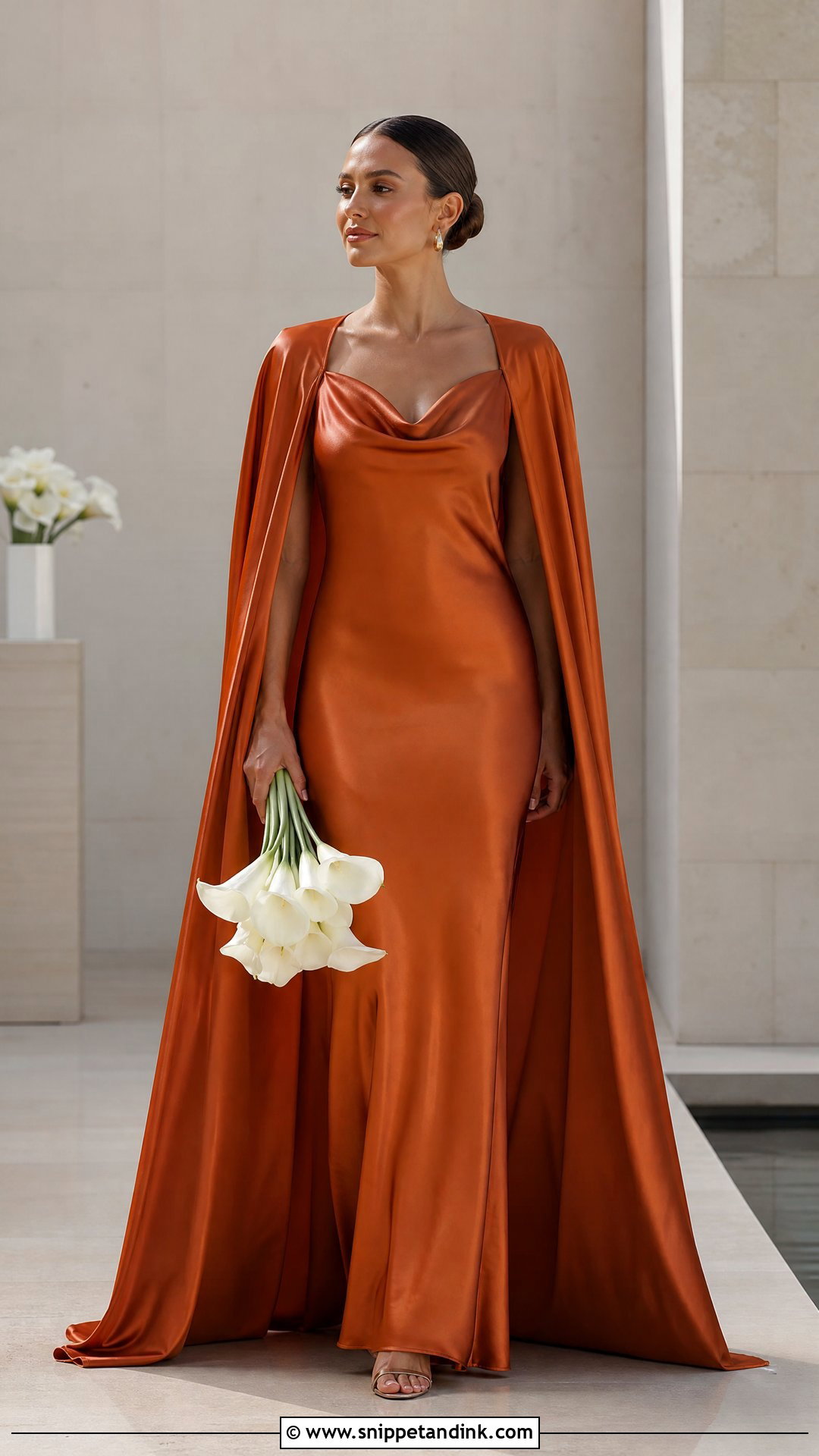
Copper silk has a soft metallic glow that holds up in daylight and under indoor lights equally well, which is rare for orange. A bias-cut slip with a draped neckline and a fluid floor-length skirt lets the silk move with you. Bias cuts are unforgiving, though: they show every line underneath and cling where you’d rather they didn’t. A detachable silk cape or long sheer veil covers more for the ceremony, then comes off for the reception. Bronze sandals, minimal gold hoops and a slim bracelet, a smooth bun or side-parted waves, and white calla lilies or cream orchids complete it. For a minimalist who wants a nontraditional color, this is the quietest way to do it.
9. Saffron Orange Embroidered Wedding Dress
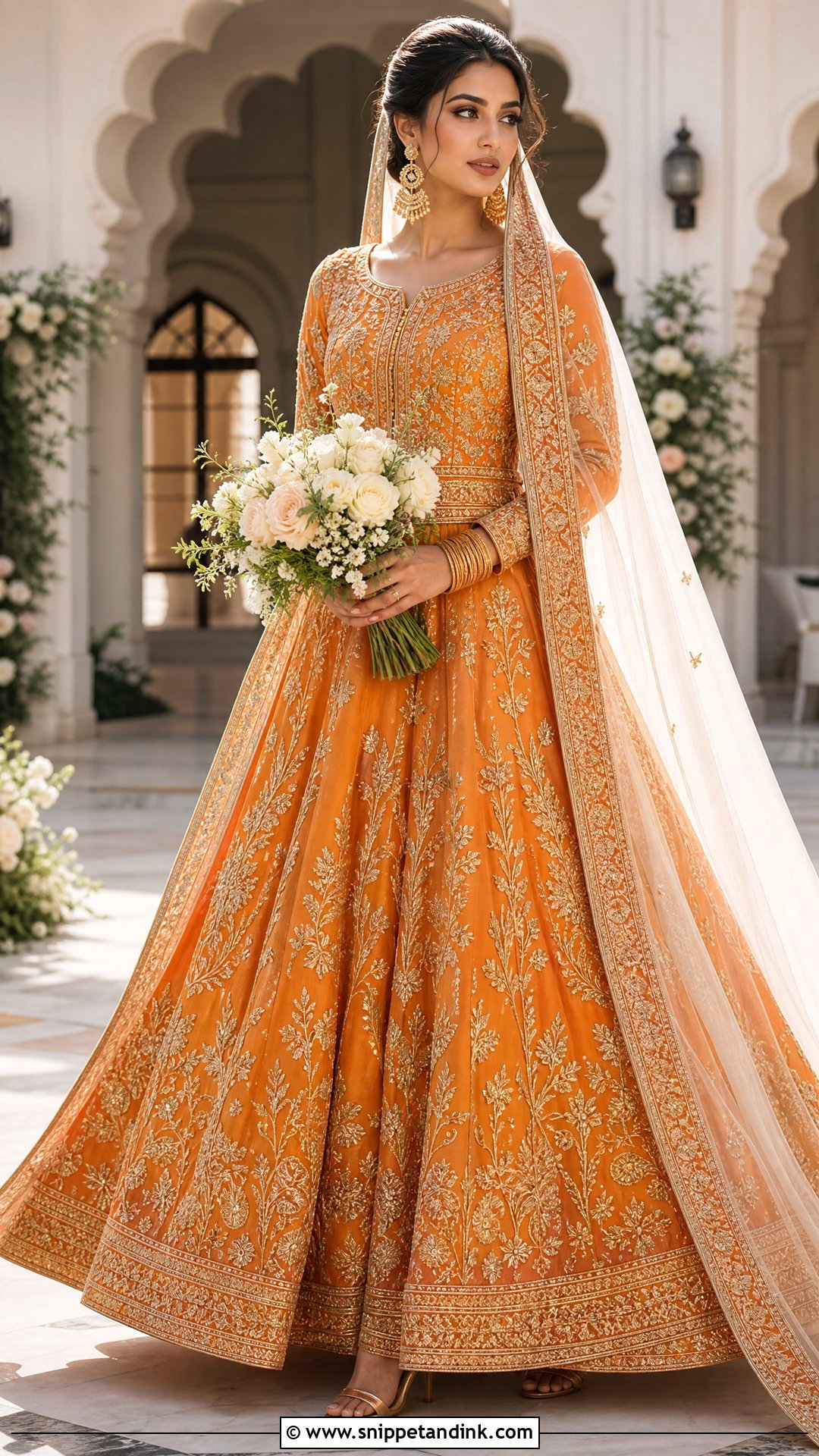
Saffron with gold embroidery is the most celebratory dress here and carries real cultural weight for many families. Gold threadwork, beading or botanical embroidery spread across bodice and skirt needs a defined waist and a gentle flare, or the decoration overwhelms the shape. Coordinate gold heels, statement earrings and a handful of bangles; with this much embroidery, fewer pieces look better. A sheer saffron or ivory veil with a narrow embroidered border ties the ceremony look together. Jasmine, cream roses or marigolds finish it. Heavy embroidery adds weight fast, so lift the dress at the fitting and ask for a waist stay if it drags at the shoulders.
10. Paprika Orange Long Sleeve Wedding Dress
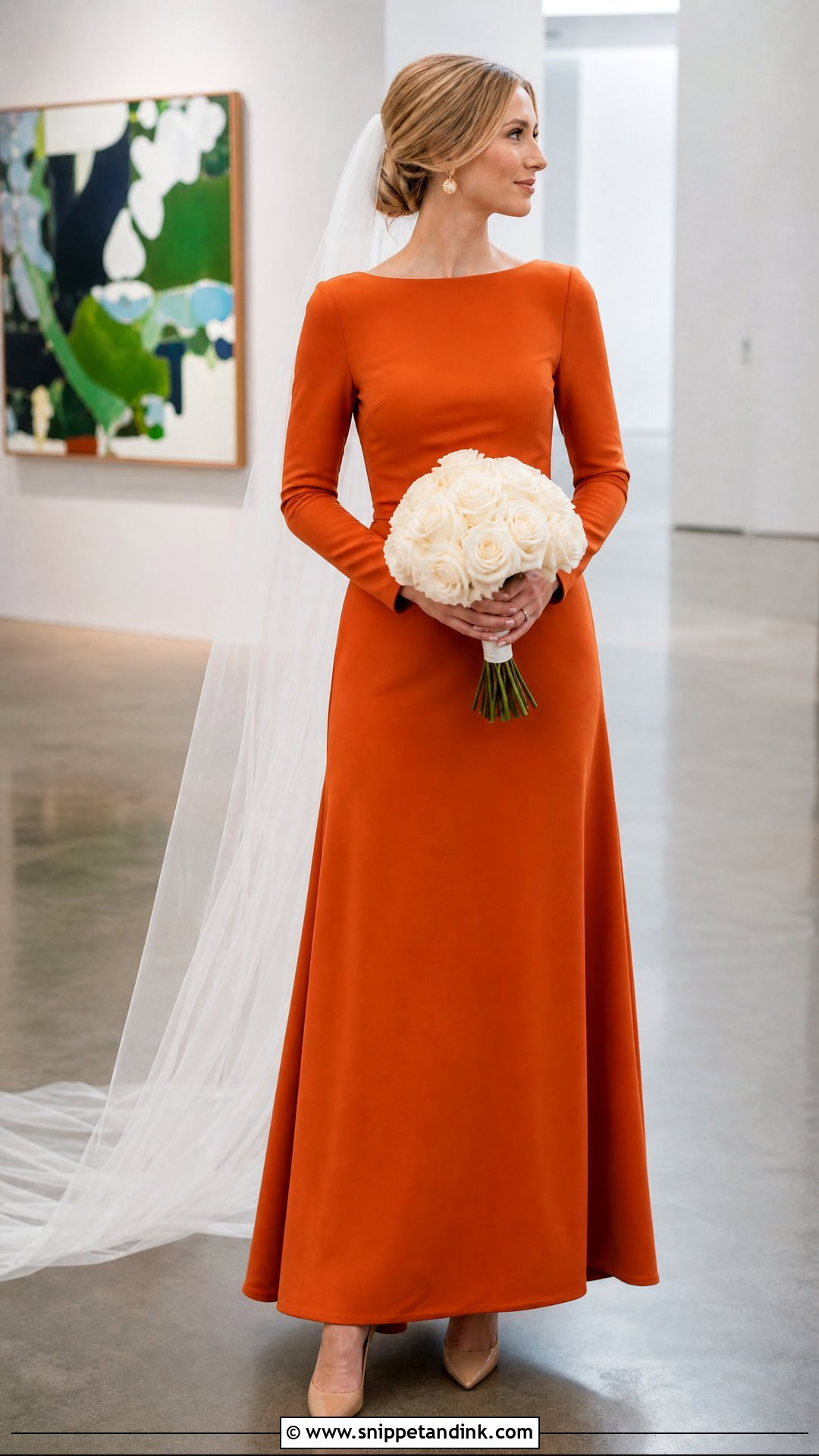
Paprika sits between bright orange and rust, and it’s one of the easier shades to wear. A long-sleeve crepe gown with a bateau neckline, shaped waist and gentle flare suits it. Covered buttons down the back add a traditional detail; just allow extra time on the morning, because a long row of loops takes someone several minutes to fasten. Beige pointed heels, brushed-gold earrings and an ivory cathedral veil complete it. A structured bouquet of cream roses, dark greenery and muted orange flowers keeps the colour story tight. Fresh skin and a neutral lip are all the makeup needs. Fall ceremonies, museums and architectural venues with clean lines suit it.
11. Orange Floral Applique Wedding Dress
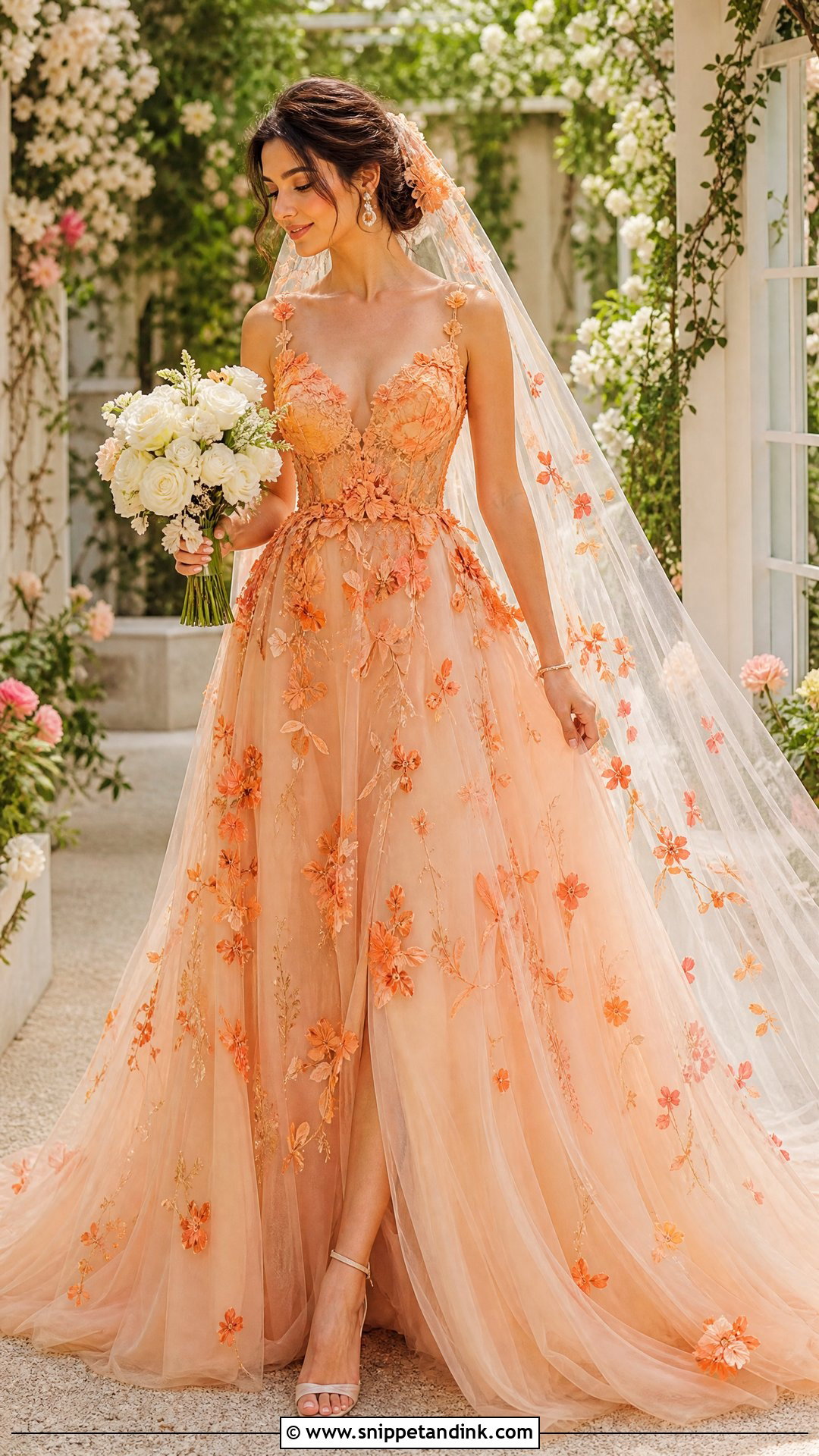
Appliqué flowers give an orange gown depth you can see from the front row. The usual version is soft peach or apricot tulle with deeper orange flowers across the bodice, waist and skirt. A fitted top with supportive straps is essential, because three-dimensional appliqués are heavy and drag on a strapless bodice. Ivory ankle-strap heels, pearl and gold earrings and a sheer veil with a few matching flowers finish it. Keep the bouquet simple with white roses, pale greenery and small apricot blooms. Loose waves or a half-up style suit the garden mood, and botanical venues, greenhouses and spring estates are its natural setting. Appliqués catch on lace veils and on each other, so test the veil against the dress.
12. One Shoulder Orange Wedding Dress
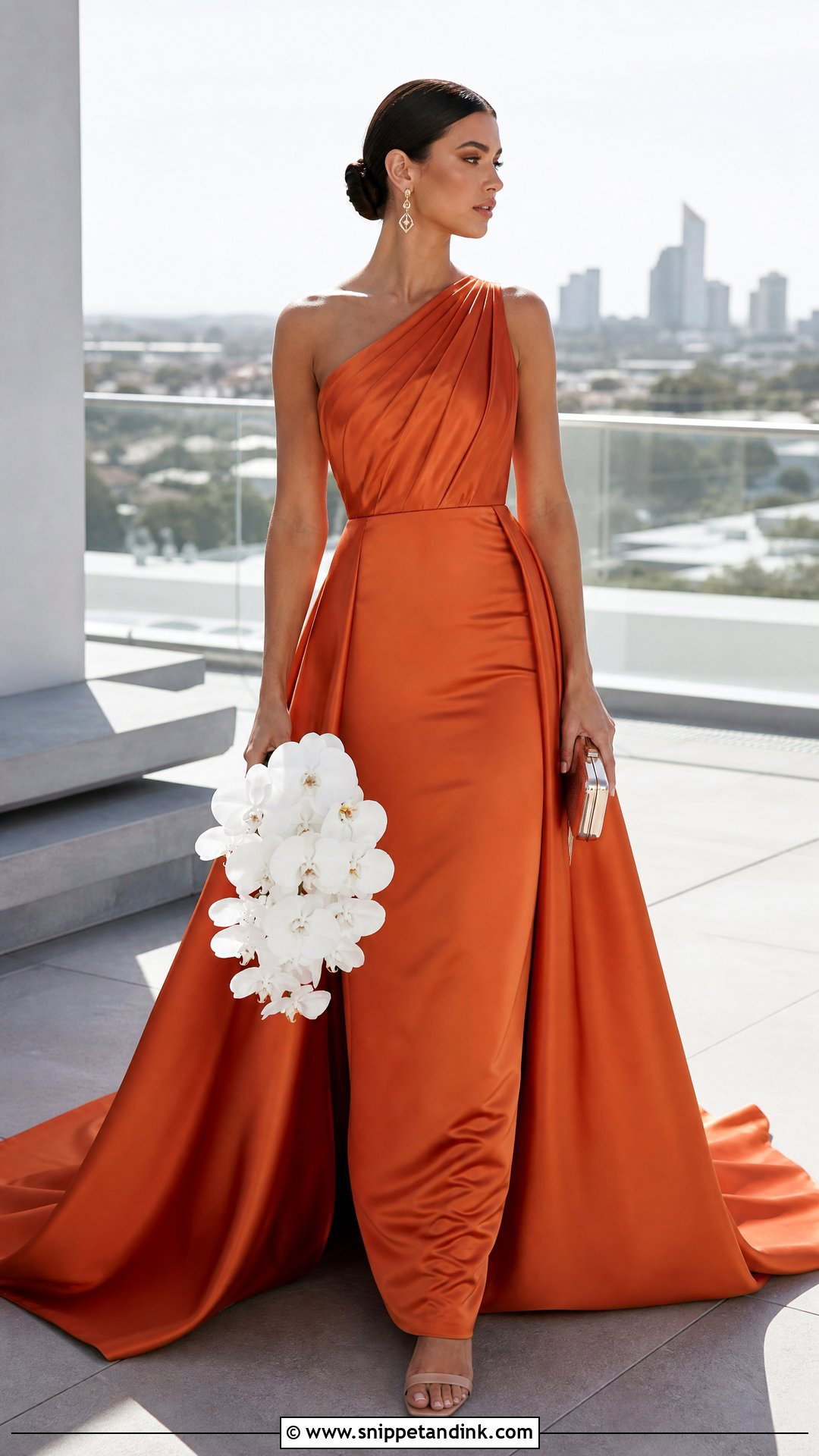
One shoulder gives a clean, modern neckline and asks almost nothing else of you. Saturated mandarin in satin or crepe, with light pleating across the bodice and a long column skirt, is the version I’d go for. Add a detachable train for the ceremony. Style the bare side with one statement earring, or a pair of slim gold drops, and leave the neck empty. Nude sandals and a slim gold clutch finish it. Put the hair in a low bun on the side away from the strap, so the asymmetry isn’t fighting itself. White anthuriums and orchids suit galleries, rooftops and city venues. Check that the single strap doesn’t slip when you raise your arms to hug people.
13. Orange Halter Neck Wedding Dress
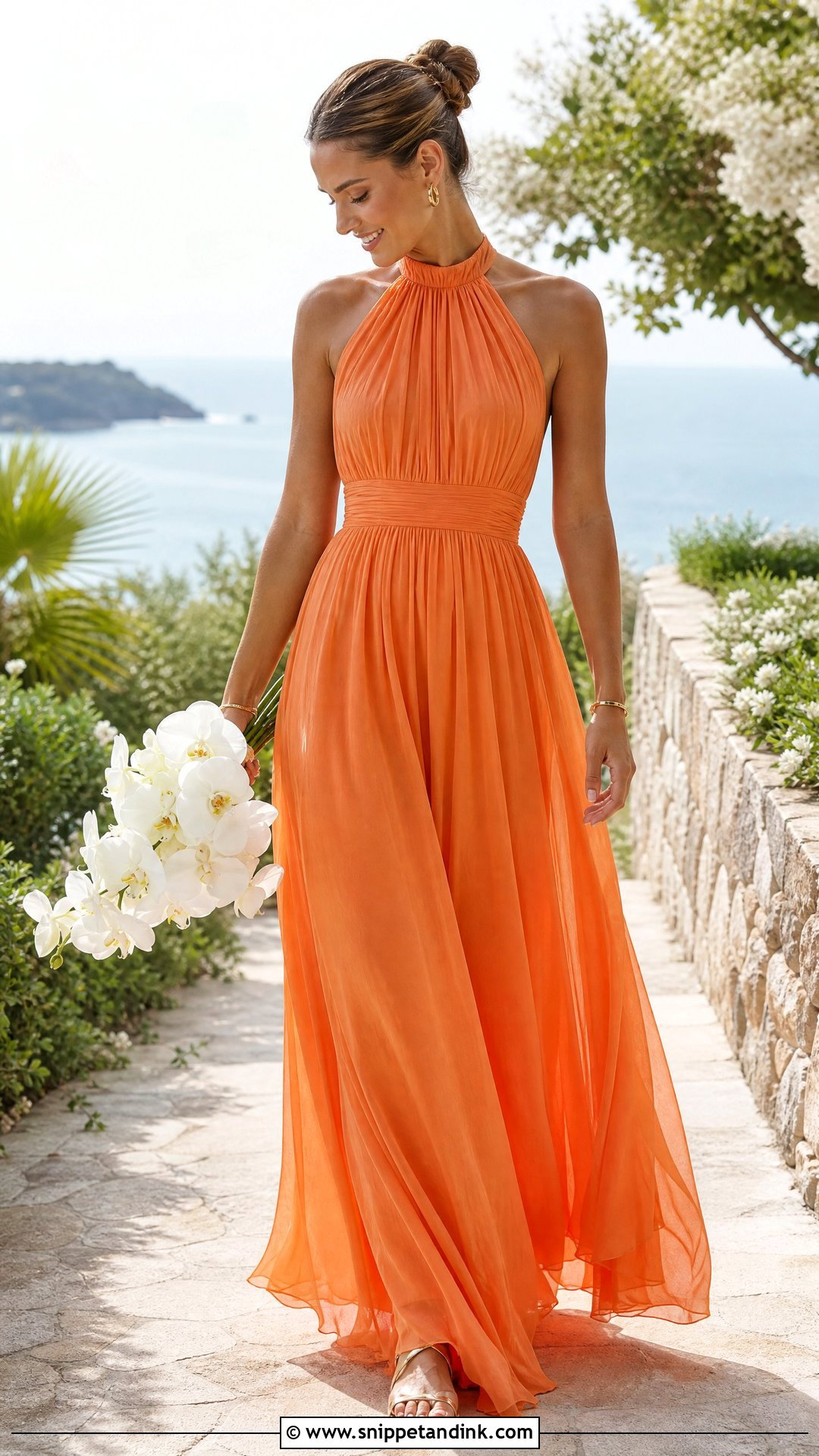
Halter necks suit warm weather and brides with strong shoulders. A flowing chiffon or silk gown in papaya, gathered high at the neck with a defined waist and an open back, keeps the bright colour looking grown-up. Gold flats or low block heels make sense on sand or grass. Skip the necklace; small hoops, a fine bracelet and a hair comb are enough. A soft ponytail or bun shows off the neckline and back. White orchids with tropical greenery finish it. A halter strap pulls on the back of the neck all day, so ask for a hook or a wide band rather than a thin tie that digs in.
14. High Low Orange Wedding Dress
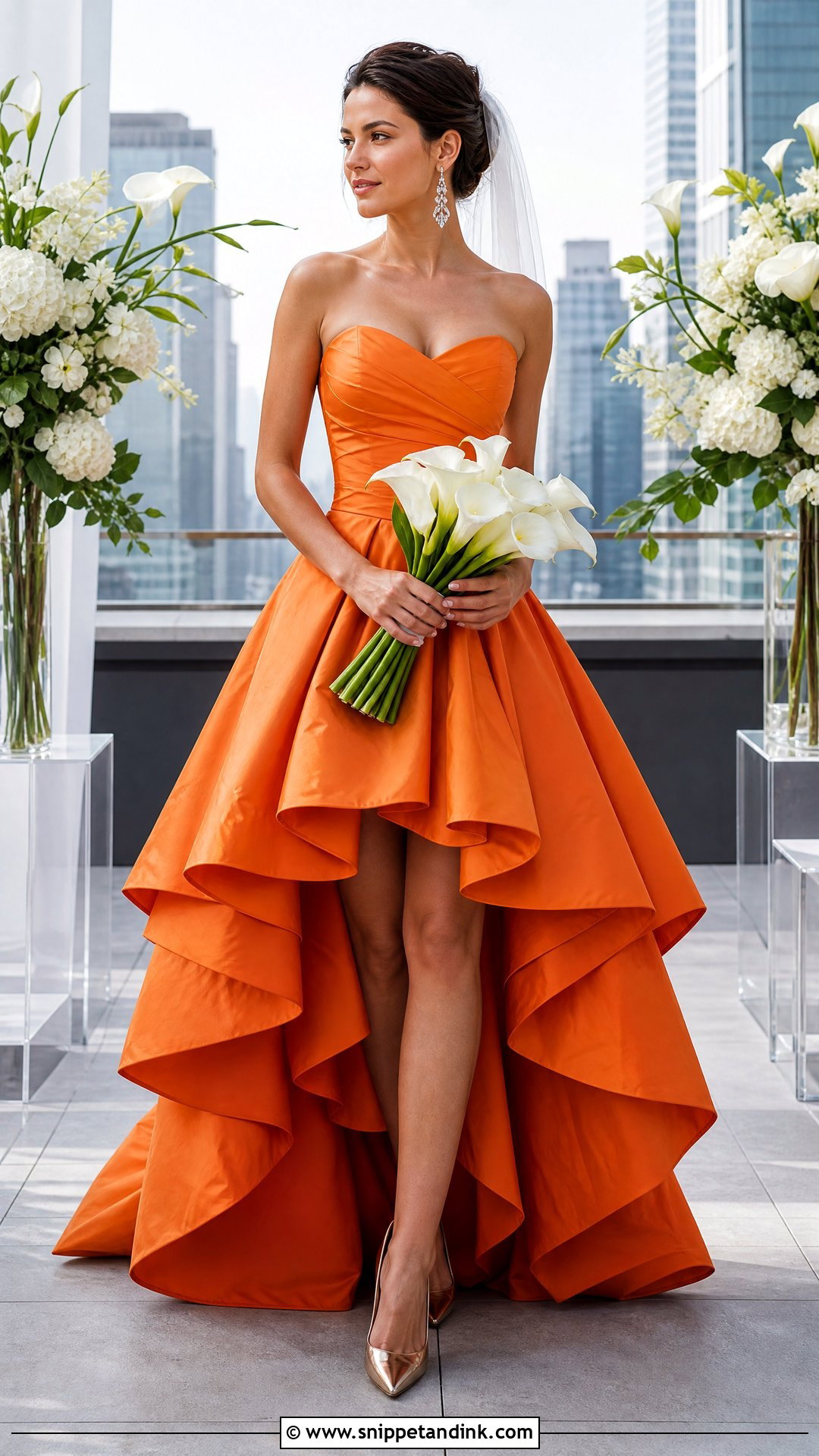
A high-low hem puts your shoes on display, so this is the dress for someone who has already found the shoes. Structured taffeta in vivid orange with a fitted bodice, a short front and a floor-length back holds the shape. Metallic gold pumps or embellished sandals become part of the outfit, so pick a pair you can stand in for hours. Small crystal earrings, a narrow bracelet and a birdcage or shoulder-length veil keep the top simple. White tulips or calla lilies balance the energy. It suits courthouses, rooftops, brunch receptions and second weddings, and lets you dance without bustling a train. Taffeta creases sharply when you sit, so steam it again before the evening.
15. Tea Length Orange Wedding Dress
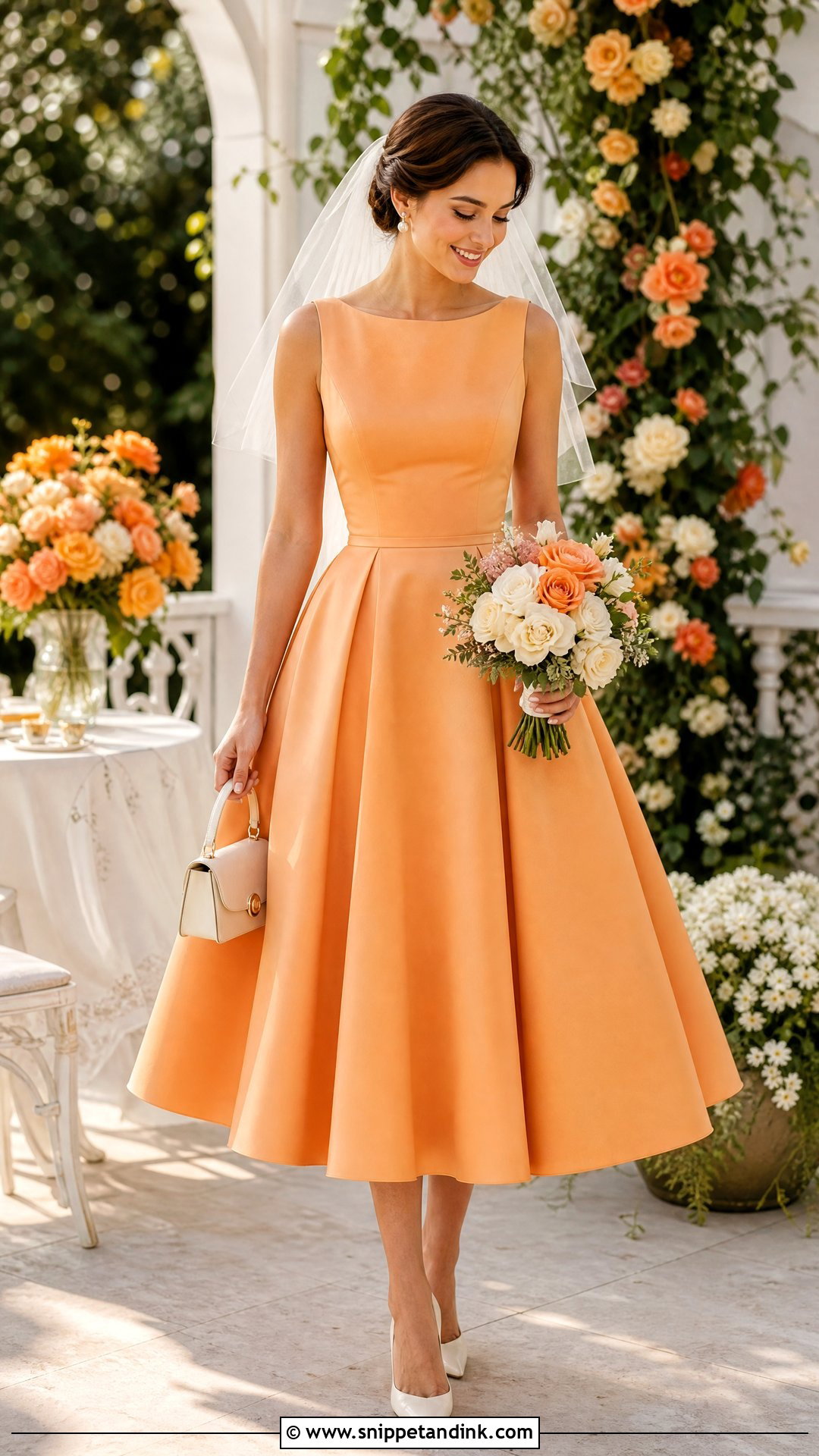
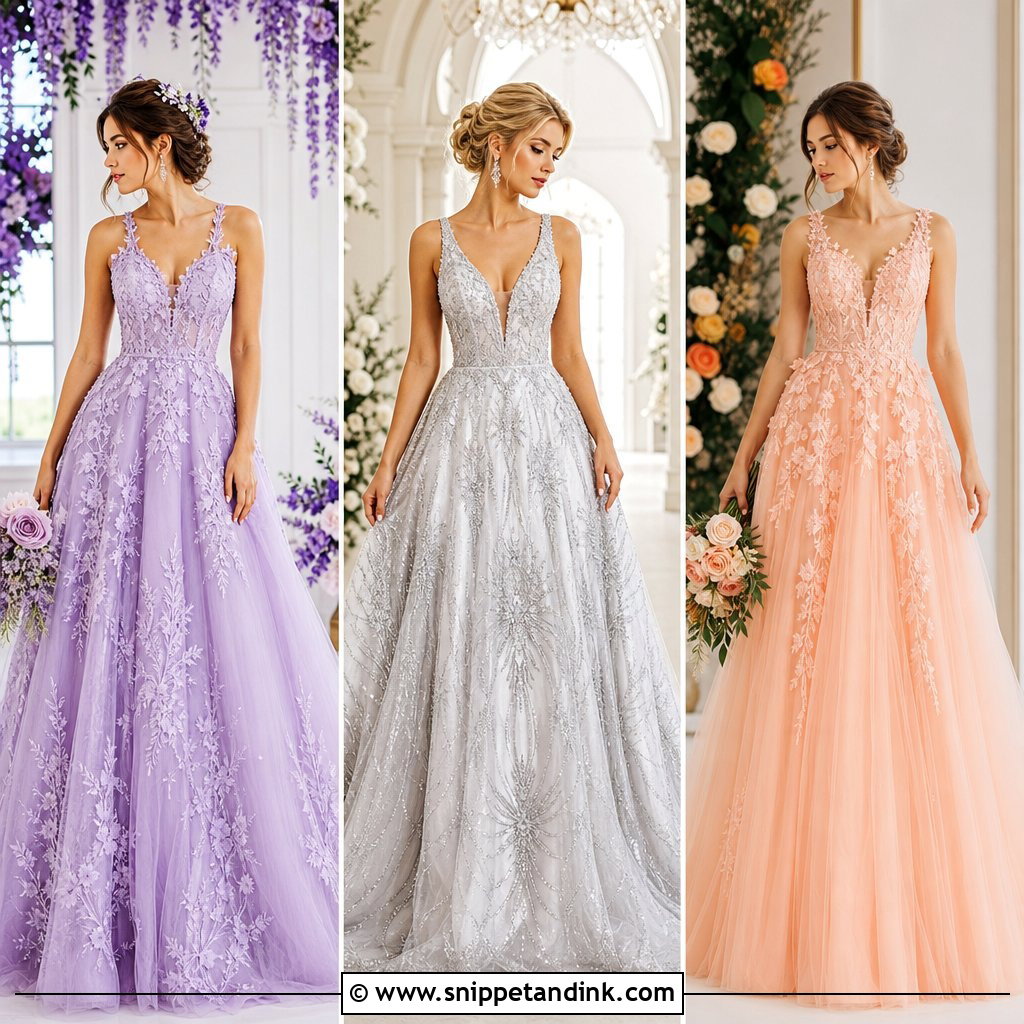
A tea-length orange wedding dress has a vintage feel and a hem you’ll never trip on. Warm apricot or burnt orange with a fitted waist, a supportive bodice and a full skirt ending between knee and ankle is the shape. Pointed ivory pumps, pearl earrings and a structured mini bag lean into the retro feel. A short veil, a netted headpiece or a simple bow above a low bun completes it. A small bouquet of cream roses and orange ranunculus keeps the proportions right. It’s useful for courthouse weddings, daytime ceremonies, garden parties and evening changes. Get a petticoat for the skirt; tea-length skirts without one go limp and lose their 1950s shape.
16. Orange Mini Wedding Dress
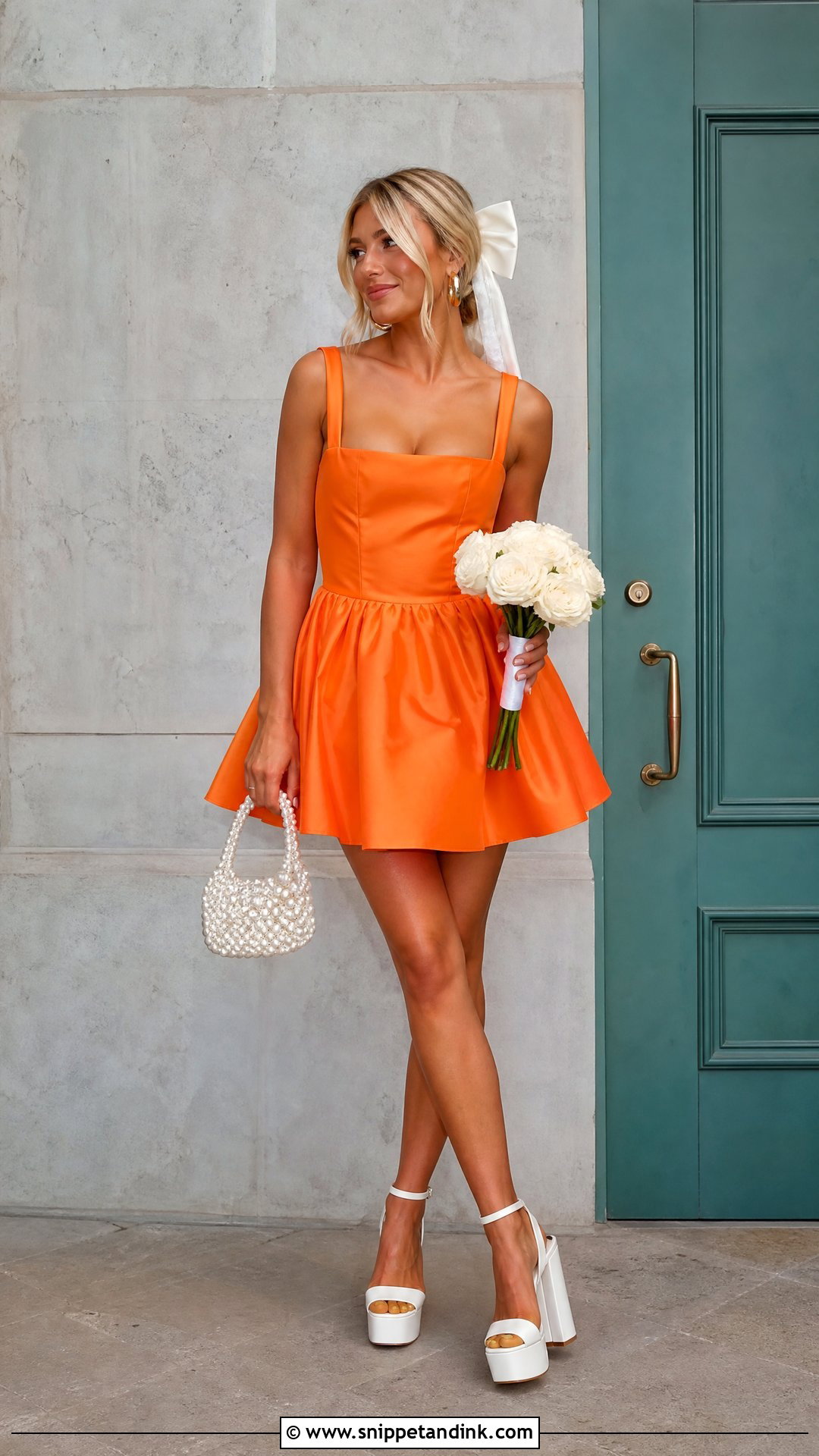
An orange mini is for an elopement, a civil ceremony or the reception. A tailored tangerine design with a square neckline, a defined waist and a structured skirt is the cleanest version. A detachable overskirt gives you a long ceremony silhouette, then comes off for dancing. Ivory platforms, gold hoops and a small pearl-trimmed bag finish it, and a short veil or a big ivory bow makes it read as bridal. White roses with bright orange poppies give a cheerful bouquet, though poppies wilt quickly out of water, so ask the florist to condition them. City venues and colourful reception rooms suit it best.
17. Off Shoulder Orange Wedding Dress
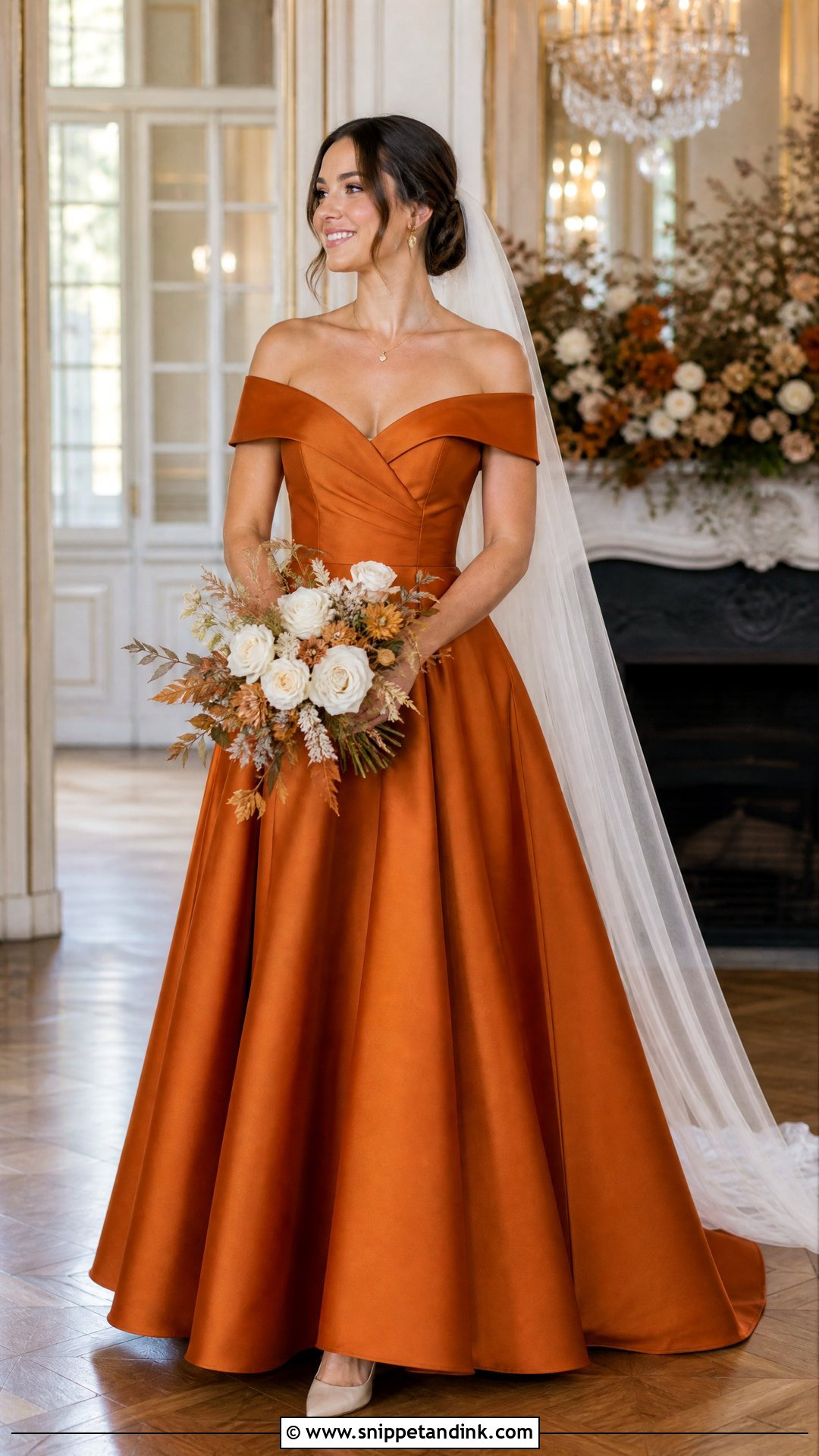
Off-the-shoulder necklines suit burnt orange satin well because the folded band gives the colour a frame. A fitted waist and a full A-line skirt keep the shape classic. Champagne pumps, a fine gold necklace and matching drops are enough. A long ivory veil under a low chignon softens the orange and moves well as you walk. Carry cream roses, bronze foliage and a little burgundy for a seasonal bouquet. It’s at home at a fall estate wedding or in a ballroom. The thing to check is the band: it needs internal elastic or boning to stay put, otherwise you’ll be hitching it up in every photo where your arms are raised.
18. Orange Cape Sleeve Wedding Dress
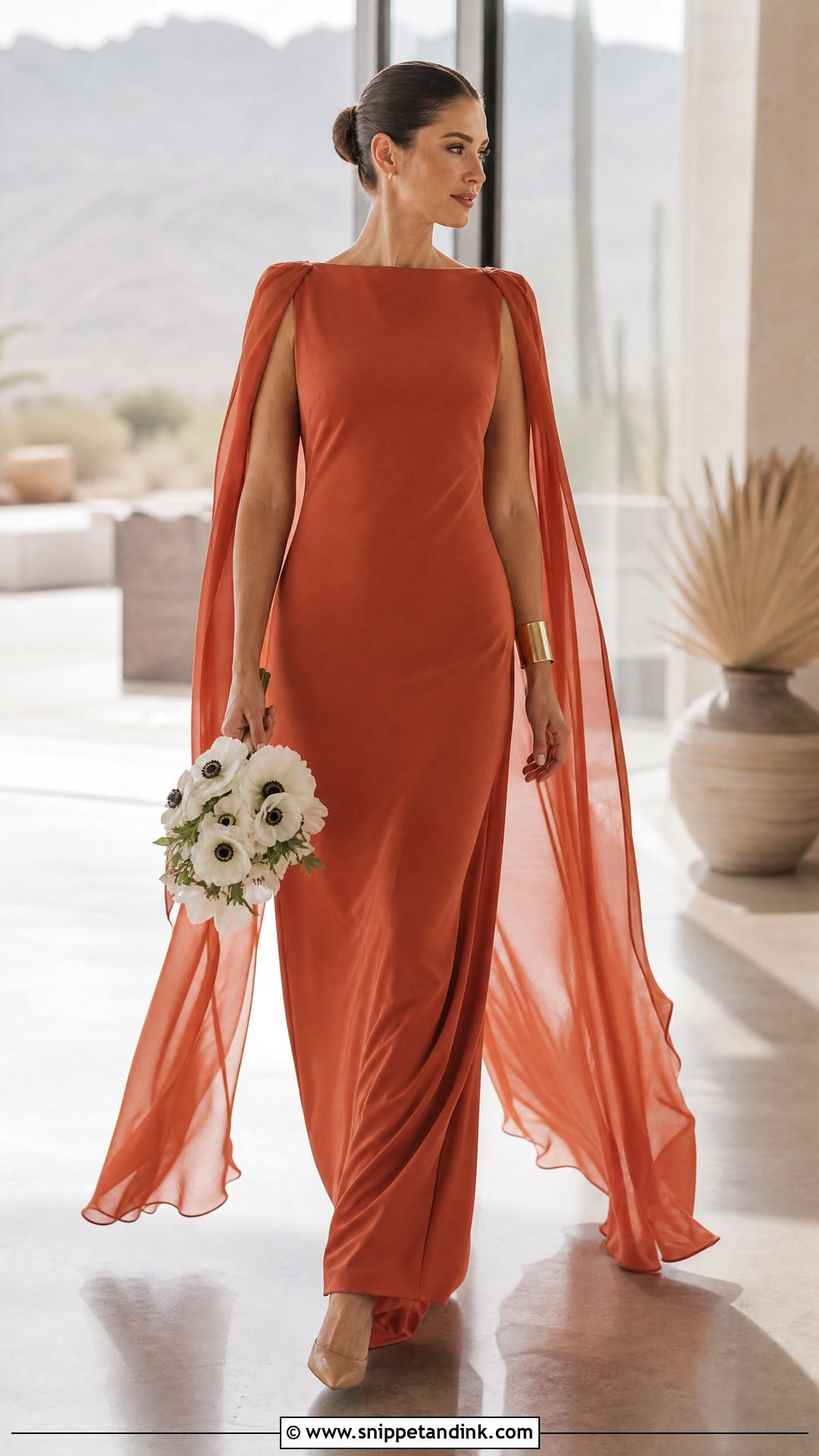
Cape sleeves give coverage without sleeves and move as you walk. A terracotta crepe column dress with sheer chiffon panels falling from shoulder to floor is the look. The capes do the job of a veil, so you can skip one. Neutral pointed heels, brushed-gold studs and a metallic cuff are enough, with a sleek bun so the shoulder construction shows. White anemones, ivory roses and eucalyptus give a light contrast against the earthy fabric. Modern ceremonies, desert venues and city interiors suit it. Have the panels hemmed an inch off the floor; people standing behind you at the reception will tread on them otherwise.
19. Plus Size Orange Ruched Wedding Dress
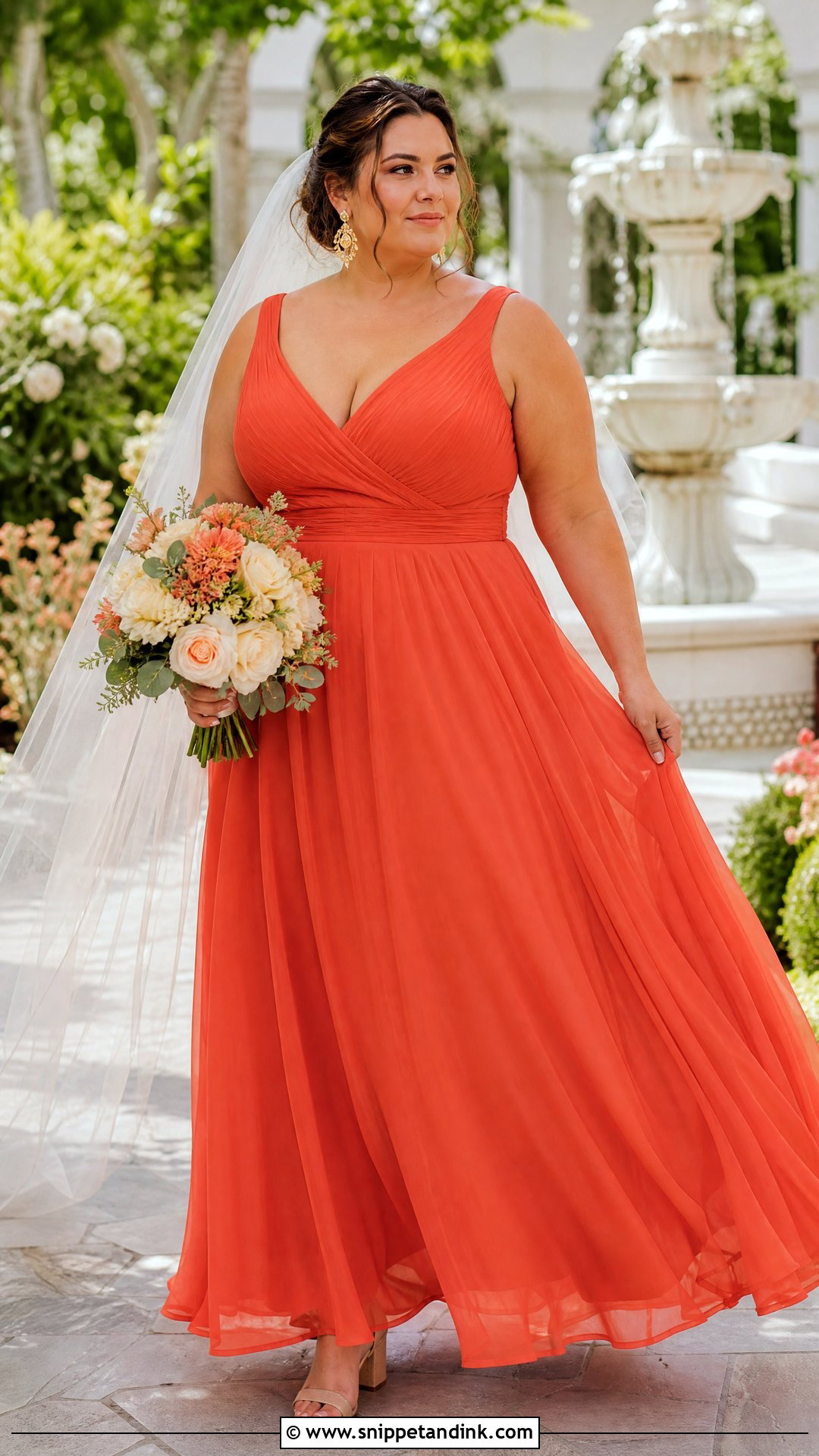
Ruching does real work in a plus-size gown: diagonal gathers across the waist smooth and support without squeezing. A deep coral A-line with a wrapped bodice and wide shoulder straps is the version I’d steer toward, with a chiffon skirt that moves without clinging. Champagne block heels, gold teardrop earrings and an ivory veil under a soft updo finish it. Supportive underwear chosen with the dress on and good alterations matter more than anything else here; they keep the gathers lying flat and the hem at the right length for your shoes. A full bouquet of cream roses, coral flowers and greenery balances the gown, and nothing else needs to be oversized.



20. Modest Orange High Neck Wedding Dress
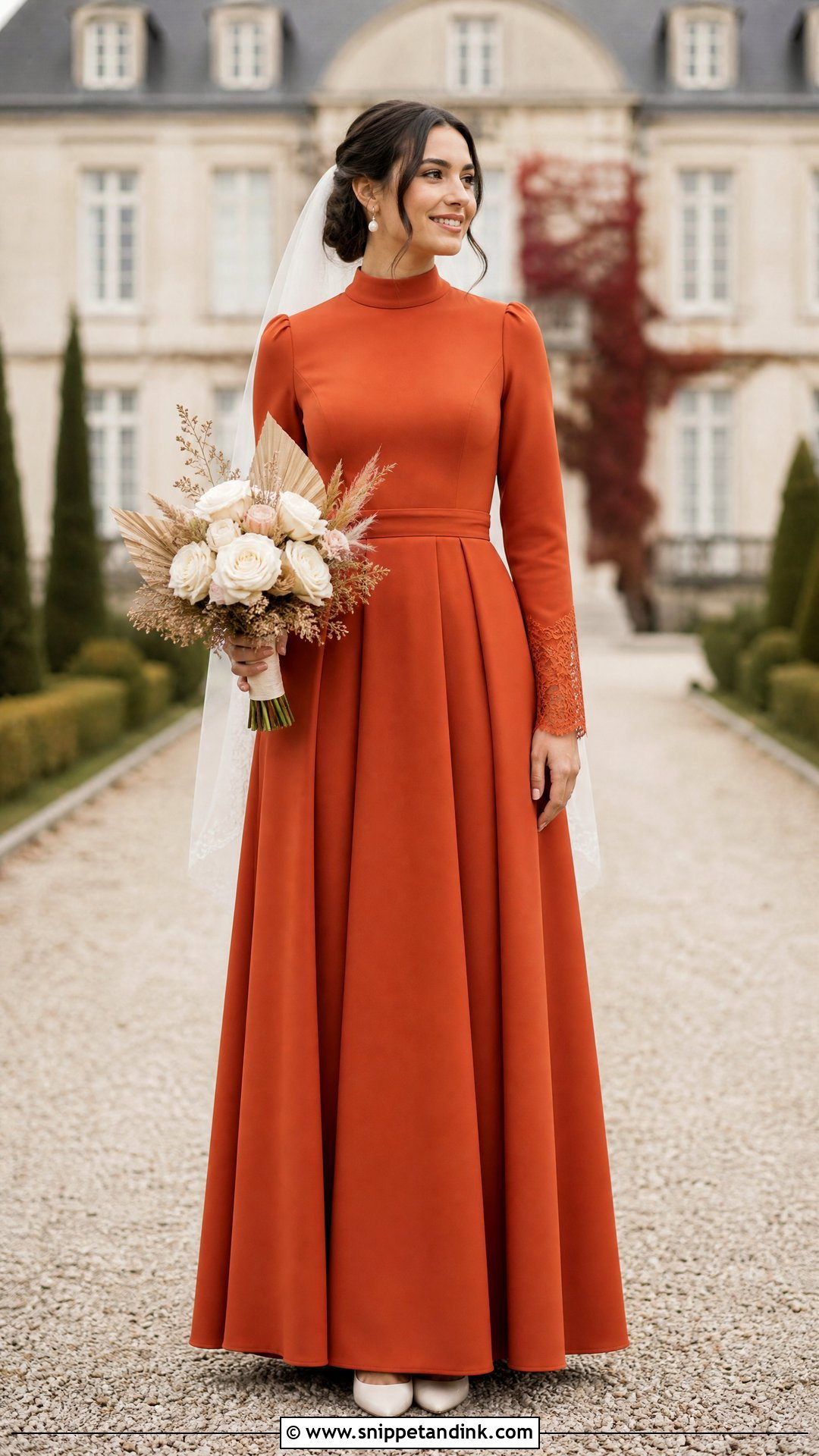
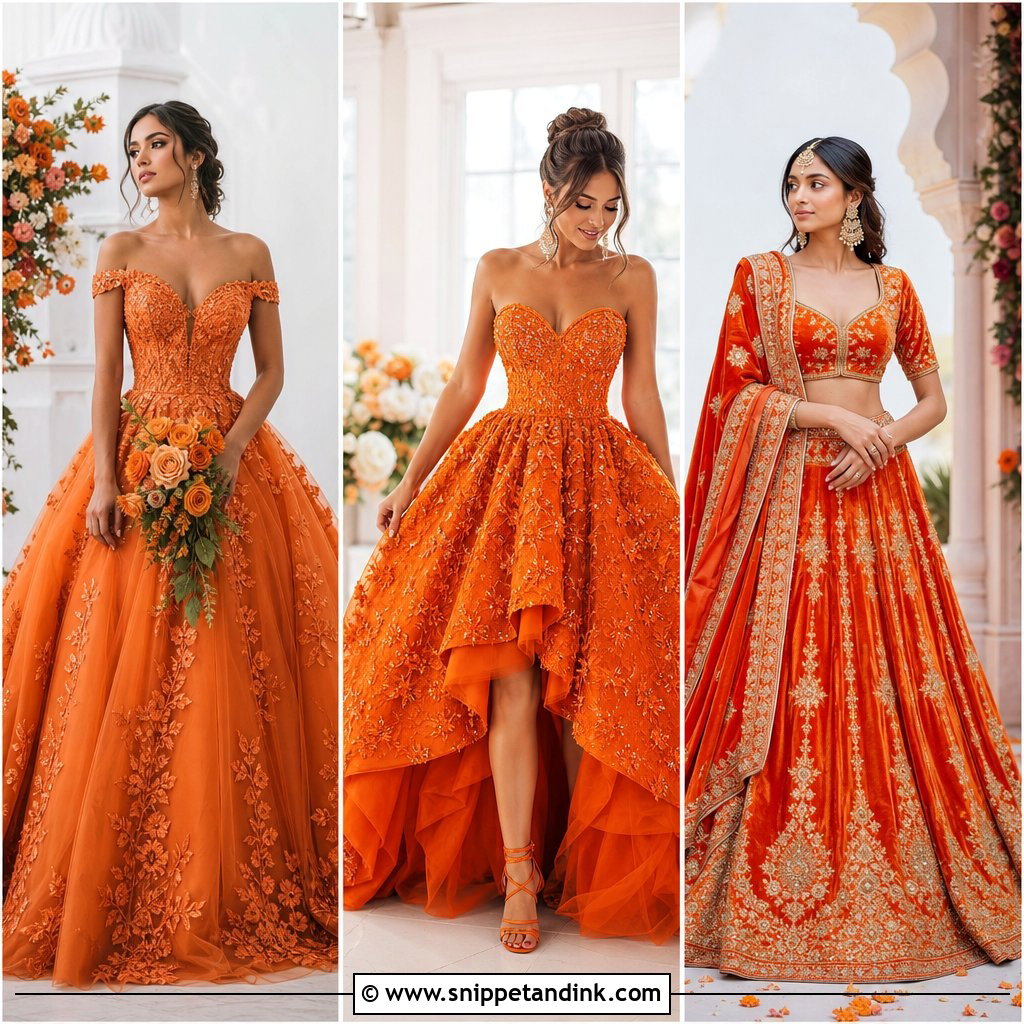
Modest doesn’t mean plain. A muted rust gown with a high neck, long fitted sleeves, a defined waist and an opaque floor-length skirt can still look very bridal. Lace at the cuffs or upper bodice adds texture without opening anything up. Closed-toe ivory heels, small pearls and a long light veil at the back of a low bun finish it. White roses, dried palms and soft greenery keep it from going heavy. Autumn ceremonies, outdoor estates and family-centred weddings all suit it. Tailoring through the shoulders, sleeves and waist decides whether a covered dress looks polished or shapeless, so budget for at least two fittings.
Dressing the People Who Stand Beside an Orange Bride
In a white dress, almost anything works next to you. In orange, your bridesmaids, partner and family become part of the colour story in every group photo, so it pays to plan them in.
- Bridesmaids: cream, sage, dusty blue and deep green sit well next to orange. Avoid a second orange or a red that’s almost the same depth as your dress; it makes yours look accidental.
- Your partner: navy, charcoal, tan and olive suits all work. A tie or pocket square in a muted rust links you without matching.
- Mothers and close family: a quiet word that you’re wearing orange helps, so nobody arrives in a near match.
- Guests: you don’t need to restrict them, but if you’d like neutral colours in photos, say so gently on the website rather than the invitation.
Underwear and Linings Beneath Coloured Fabric
White bridal underwear is wrong under most orange dresses. Under chiffon, lace and thin satin, white shows through as pale patches, especially in flash photos. Choose underwear close to your own skin tone and bring it to every fitting, so the seamstress fits the dress over what you’ll actually wear. If the gown has a light lining, ask whether it can be swapped for one closer to the shell colour, which keeps the orange looking even all the way through.
Which Orange Is Yours?
Orange can be romantic in peach lace, playful in tangerine taffeta or rich and seasonal in burnt orange velvet. Start from your venue, the weather, how formal the day is and how much you want to move, and let those narrow down the fabric and shape. Then build the rest of the look so it supports the dress: neutral shoes, gold jewellery, warm flowers, a simple veil. Most of all, pick the shade that looks like you when you see yourself in it, not the one that looked best on a model. That’s the one you’ll still be glad about when you look back at the pictures.
You'll Like These Ideas:








Leave a Reply