
Most of the discomfort I see in brides on the day comes from three places: a bodice that grips the ribs once they sit, a hem that catches on every step, and fabric that traps heat. None of it shows in a fitting-room mirror. The dresses below were picked because each one solves at least one of those problems through cut or fabric, and I’ve noted what I check on each so you know what to ask your consultant and your seamstress. Shoes, undergarments and venue matter just as much as the gown, so they’re part of every look.
Ten Minutes in the Fitting Room That Reveal More Than the Mirror
Standing still in front of a three-way mirror is the least useful thing you can do in a bridal shop. A dress that feels fine for thirty seconds upright can pinch badly after an hour of sitting. Before I let a bride fall for a gown, I ask her to put it through the day she’s actually going to have.
- Sit on a hard chair for five full minutes. Watch the waist seam and the top of the bodice; if either digs in, it will feel twice as bad after dinner.
- Climb a flight of stairs, or step up onto the fitting box several times, holding nothing. If you instinctively grab the skirt, the length or volume is going to rule your evening.
- Hug someone with both arms around their shoulders, then reach for something on a high shelf. Straps, sleeves and necklines show their faults here.
- Bend down as if to pick up a dropped earring. Strapless and off-shoulder bodices that gape now will gape in candid photos.
- Walk briskly for a minute and notice heat. Polyester satin, heavy beading and multiple linings get warm long before natural fibres do.
Shop samples are rarely your size and are often clipped at the back, so treat every result as a clue rather than a verdict. A tight bodice can be let out; a scratchy lace or a hot fabric usually can’t be fixed.
1. Chiffon A-Line Wedding Dress
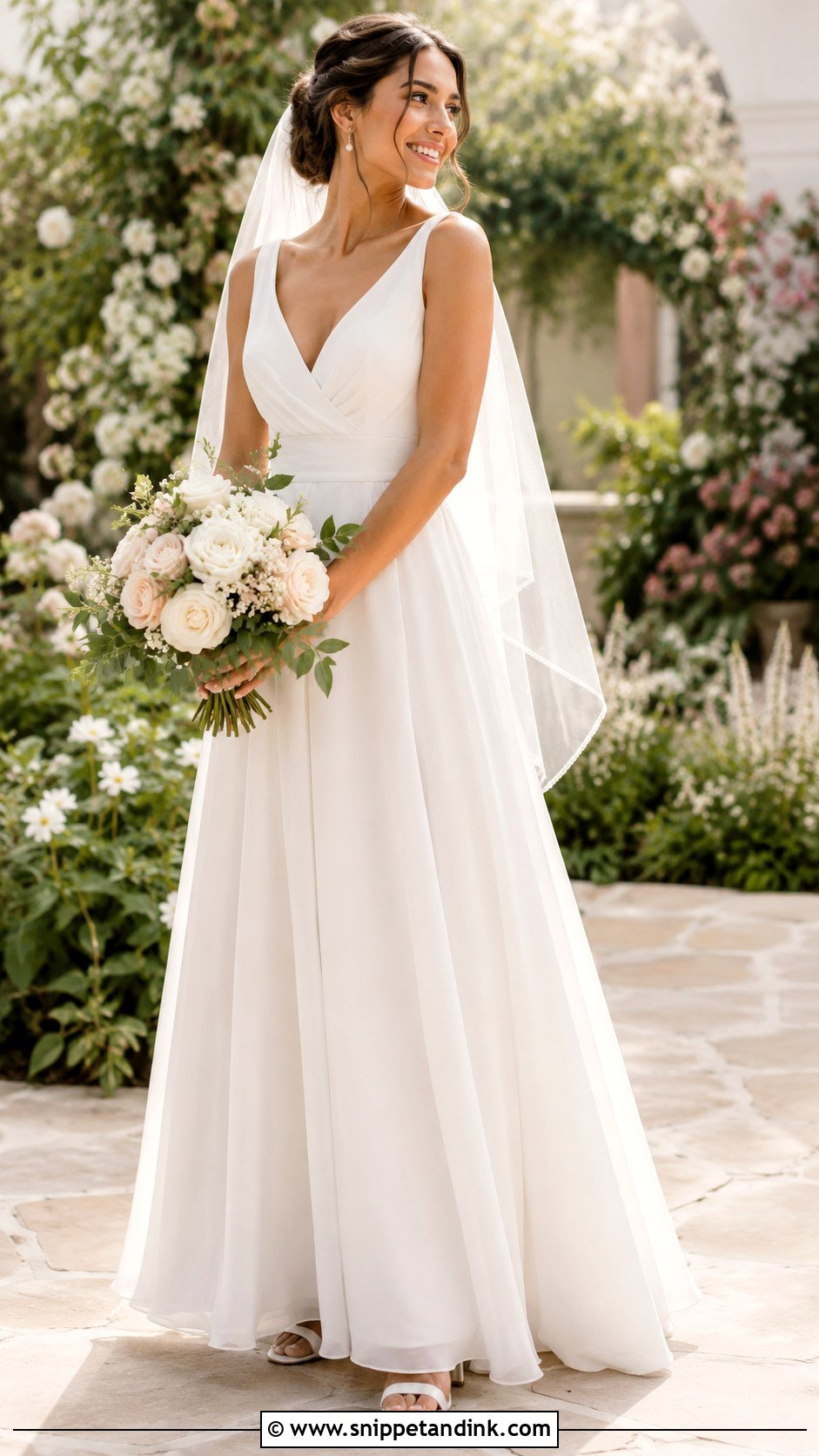
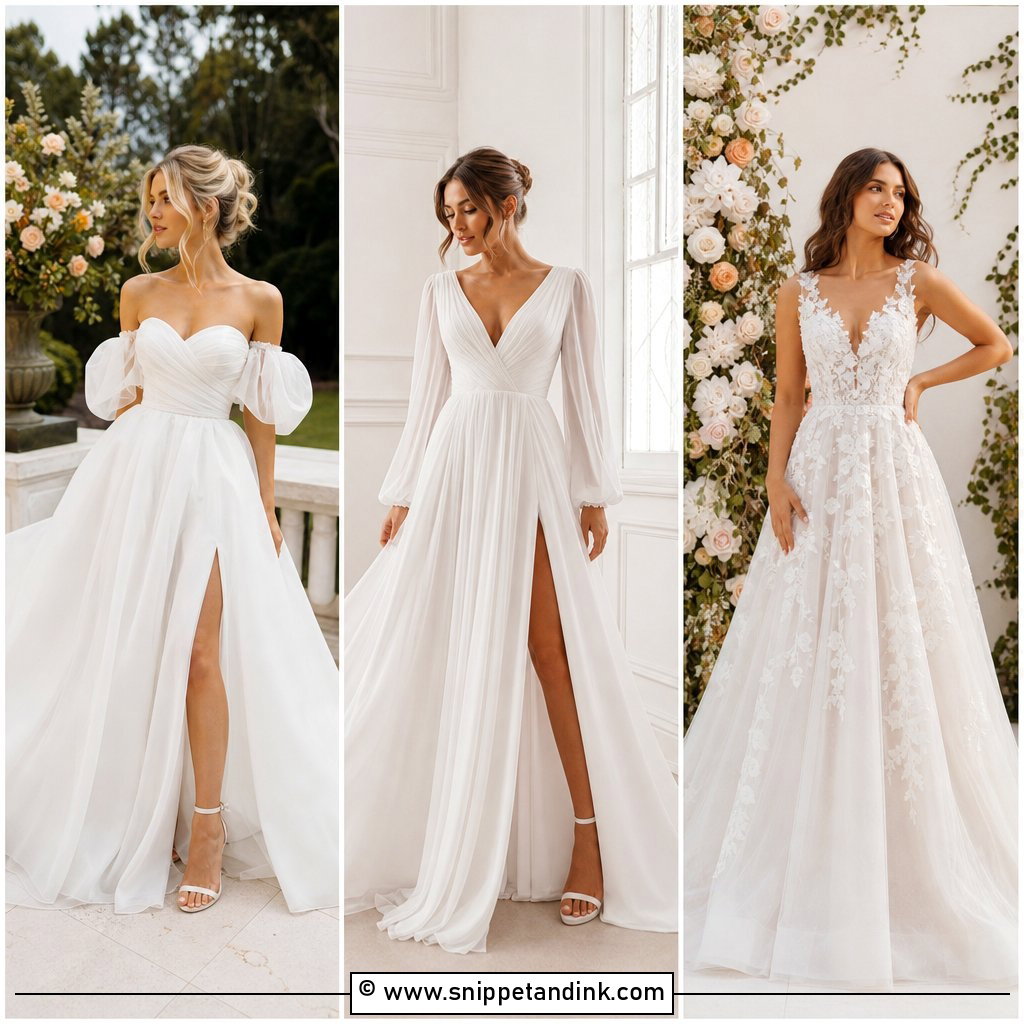
Chiffon is the fabric I reach for first when a bride tells me she runs hot. It’s open-weave and almost weightless, so air moves through the skirt instead of pooling under it. The catch is that a single layer looks thin in daylight, which is why a smooth lining underneath matters more here than with heavier fabrics. Look for wide straps and a bodice that’s fitted rather than boned, add low block heels and a fingertip veil that won’t drag on your hair, and have the hem set to the exact shoes. Floor-skimming is the length I aim for: long enough to look finished, short enough that you never tread on it.
2. Stretch Crepe Sheath Wedding Dress
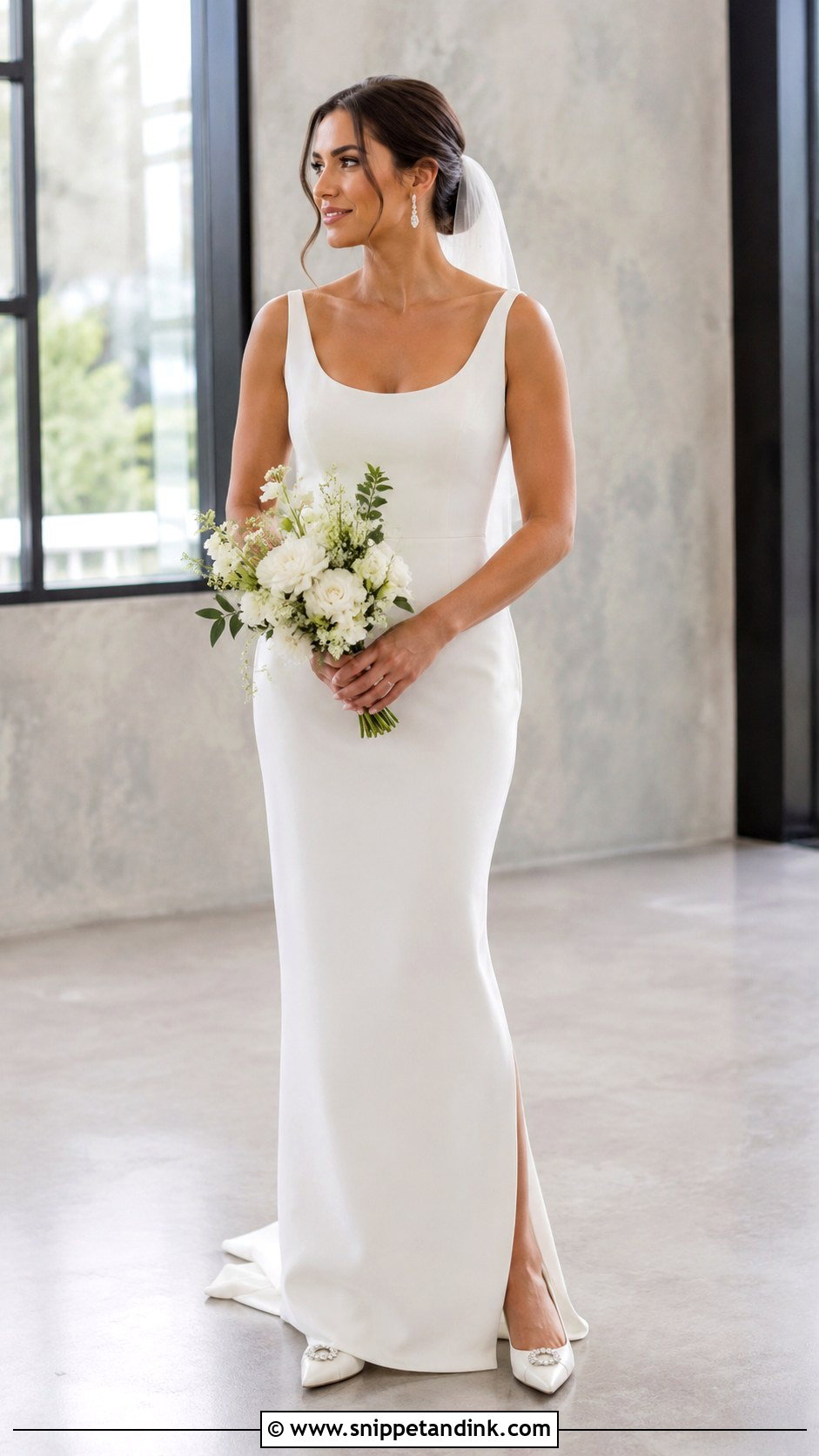
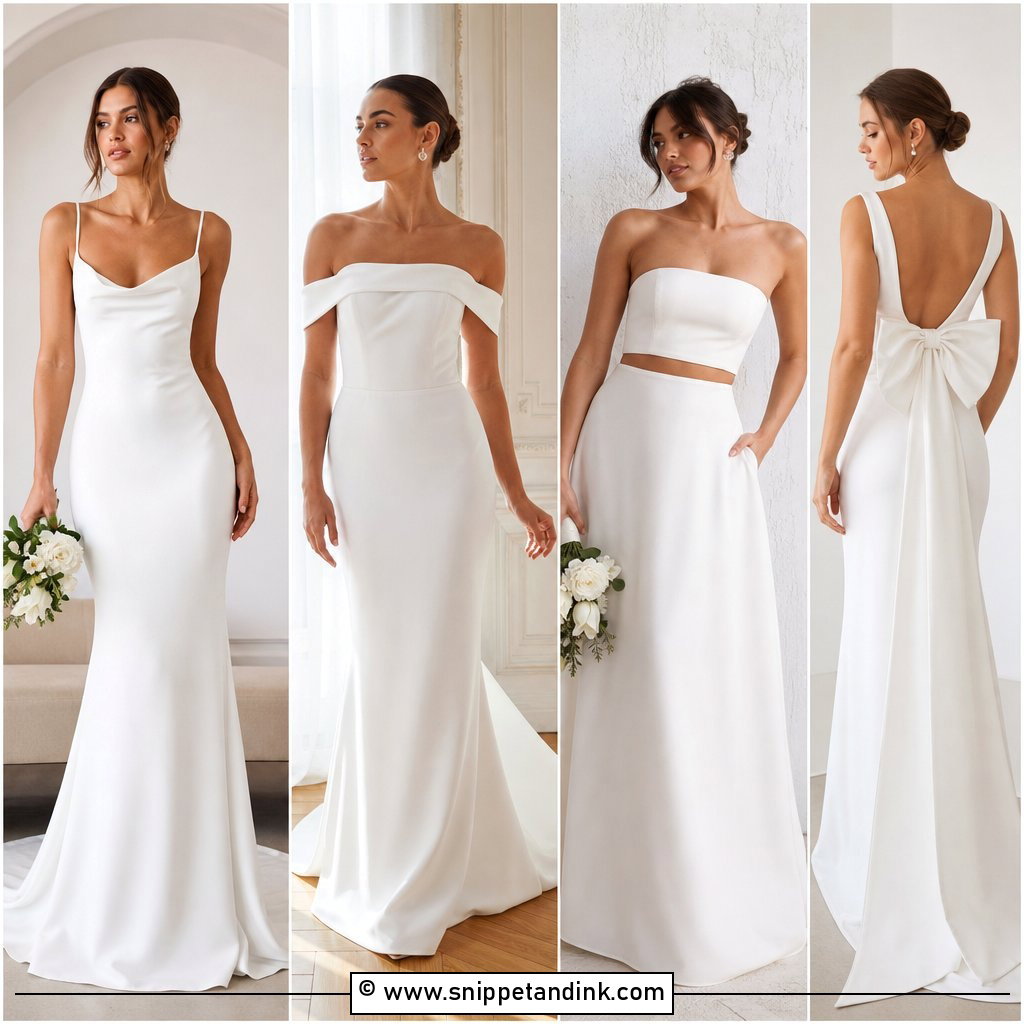
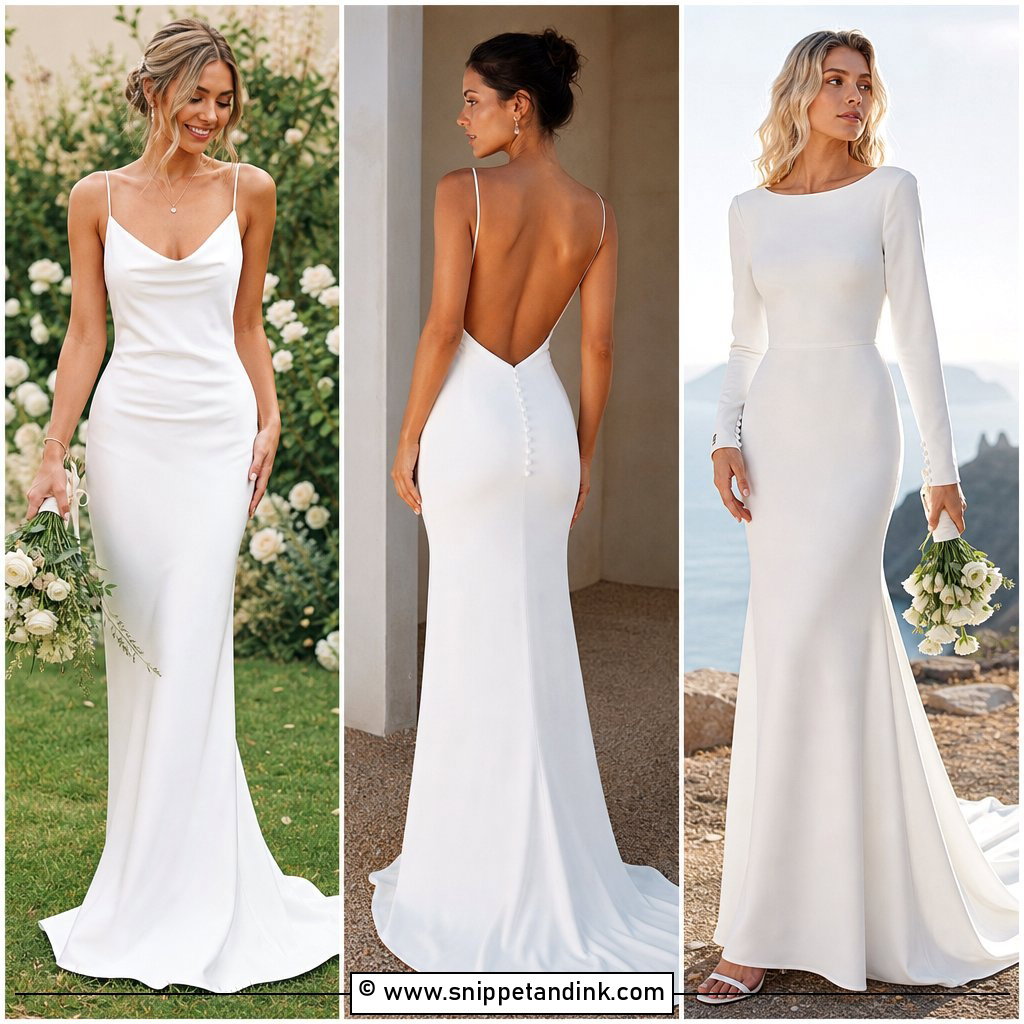
Stretch crepe is the quiet workhorse of comfortable bridal. It has enough weight to hang cleanly and enough give that you can sit through dinner without the waist seam biting. A sheath wedding dress in crepe needs no boning or underskirts, but it does show every ridge underneath, so I always ask brides to bring the exact underwear to the first fitting. A back slit gives you a full stride. Pointed flats, a small clutch and a short veil or comb keep it clean, which suits a courthouse or a minimal city venue. One fitting note: a sheath should skim the hip. If you can see pull lines when you sit, ask for the side seams to be let out rather than reaching for firmer shapewear.
3. Satin Slip Wedding Dress
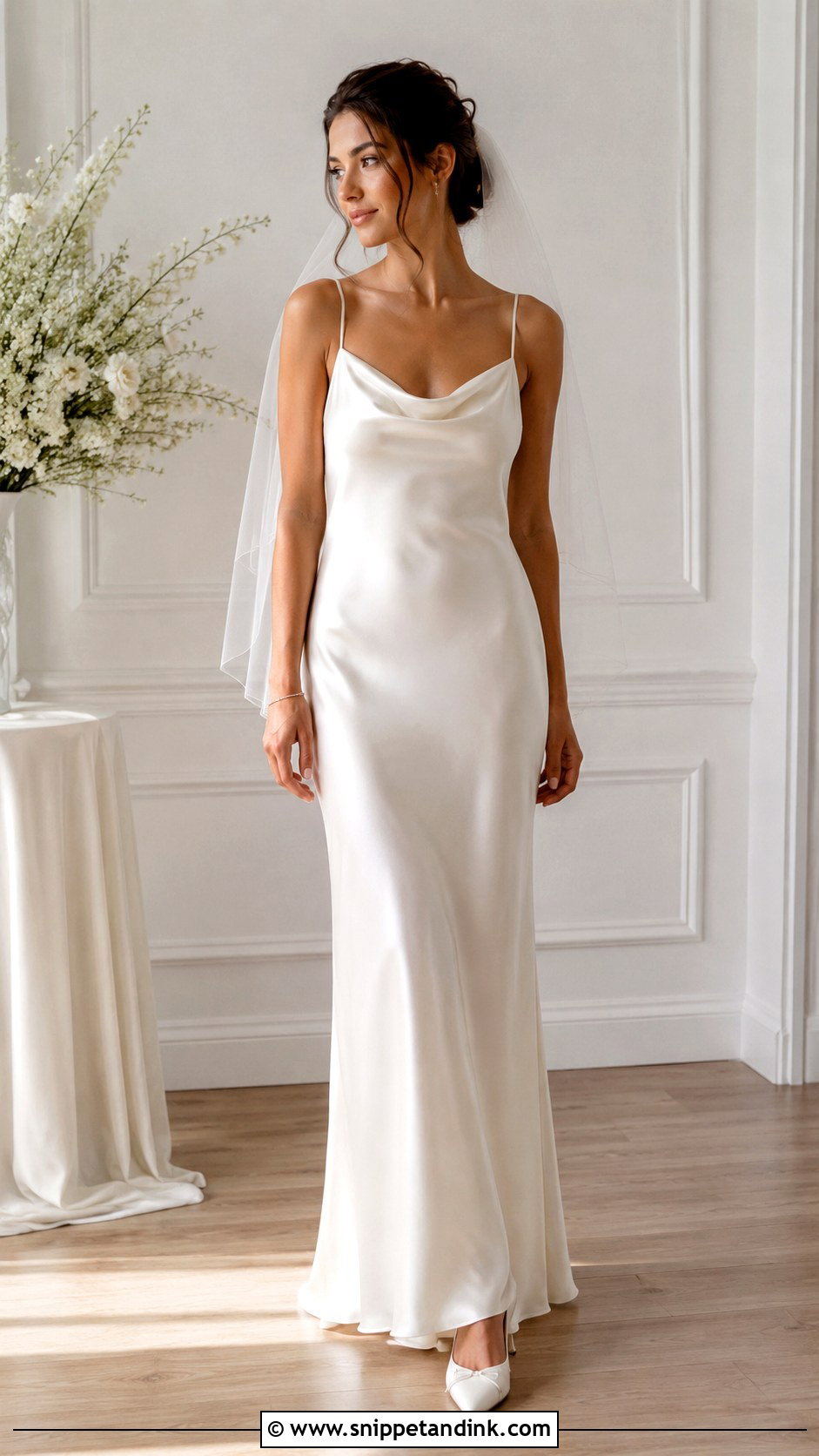
A bias-cut slip is the lightest dress on this list, and the most honest one. Because the fabric is cut on the diagonal, it stretches and settles over the body, which is lovely to wear but means it reveals everything beneath it. I steer brides toward silk-blend or stretch-backed satin rather than pure polyester satin, which creases sharply across the lap after a seated ceremony. Adjustable straps are worth insisting on, since a bias dress can shift a little as it warms up. Cushioned kitten heels, a shoulder-length veil and a slim bracelet are enough. Bring a soft wrap for the evening, and keep the train short or leave it off so dancing never involves a bustle.
4. Tea-Length Wedding Dress
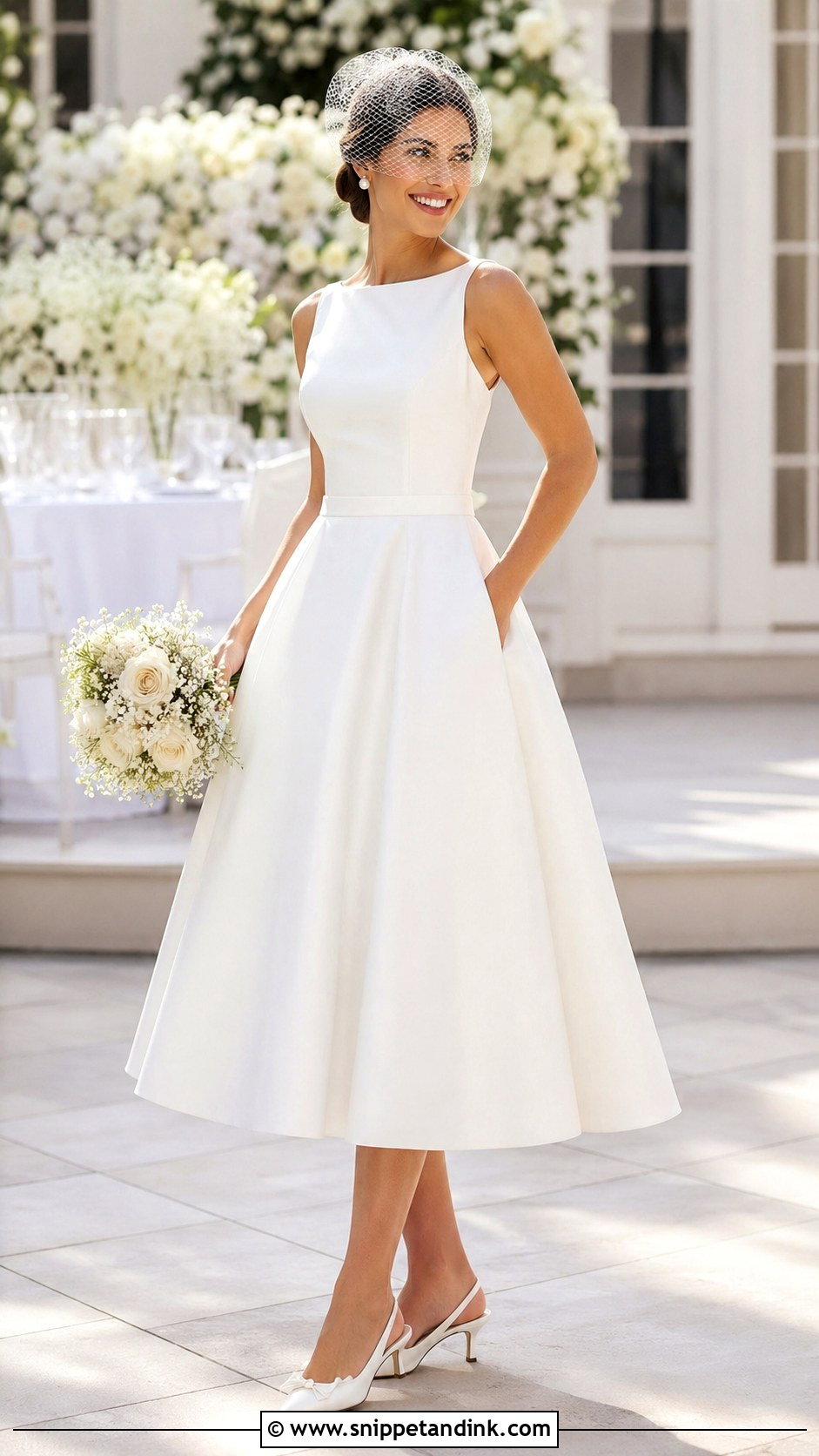
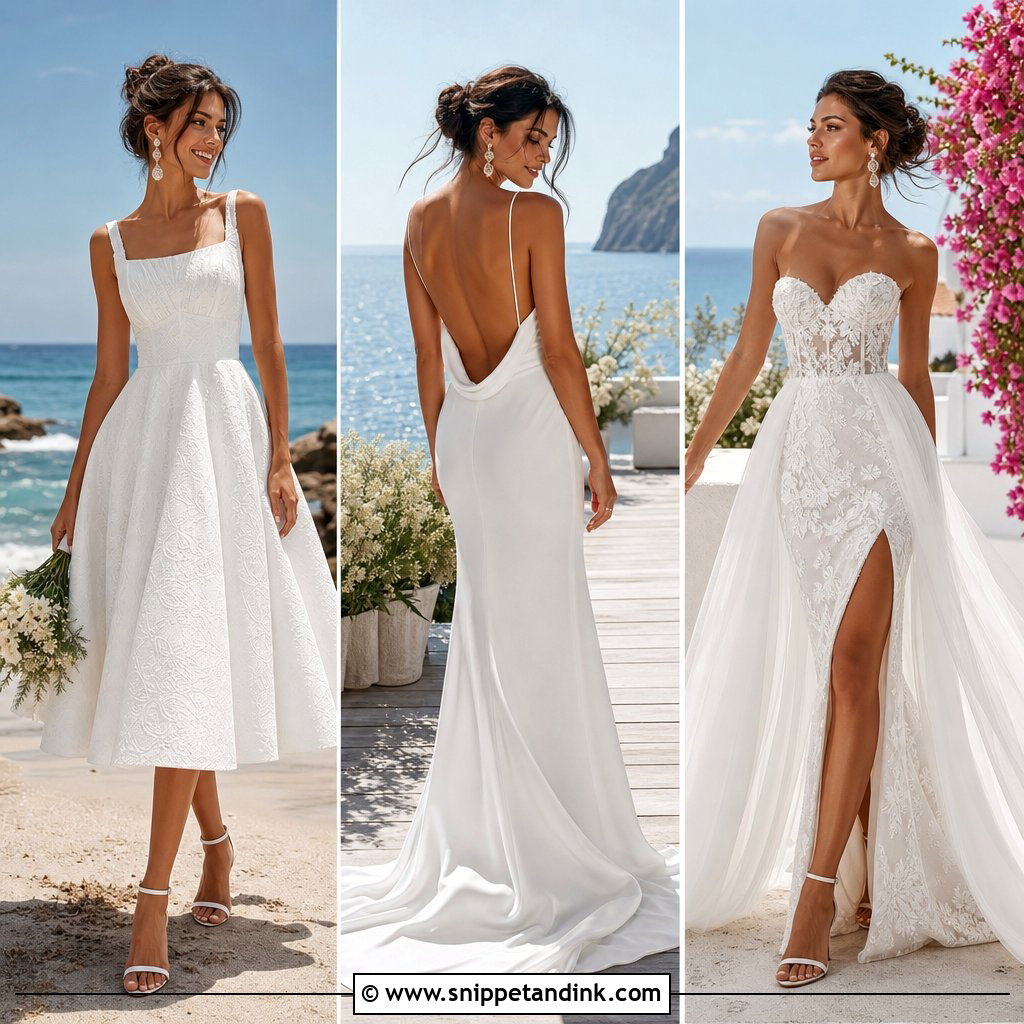
Tea length solves the single most common complaint I hear after a wedding: spending the night holding a skirt off the floor. The hem lands somewhere between the knee and ankle, so stairs, lawns and the dance floor stop being obstacles. A soft A-line skirt over a fitted bodice with wide straps keeps the shape balanced. Your shoes become part of the outfit here, so I’d pick a cushioned slingback you’ve already broken in over anything new. A birdcage veil or simple headband suits the vintage feel. If you want some lift in the skirt, choose a soft petticoat; stiff crinoline pokes out at the back of the knees when you sit.
5. Jersey Wrap Wedding Dress
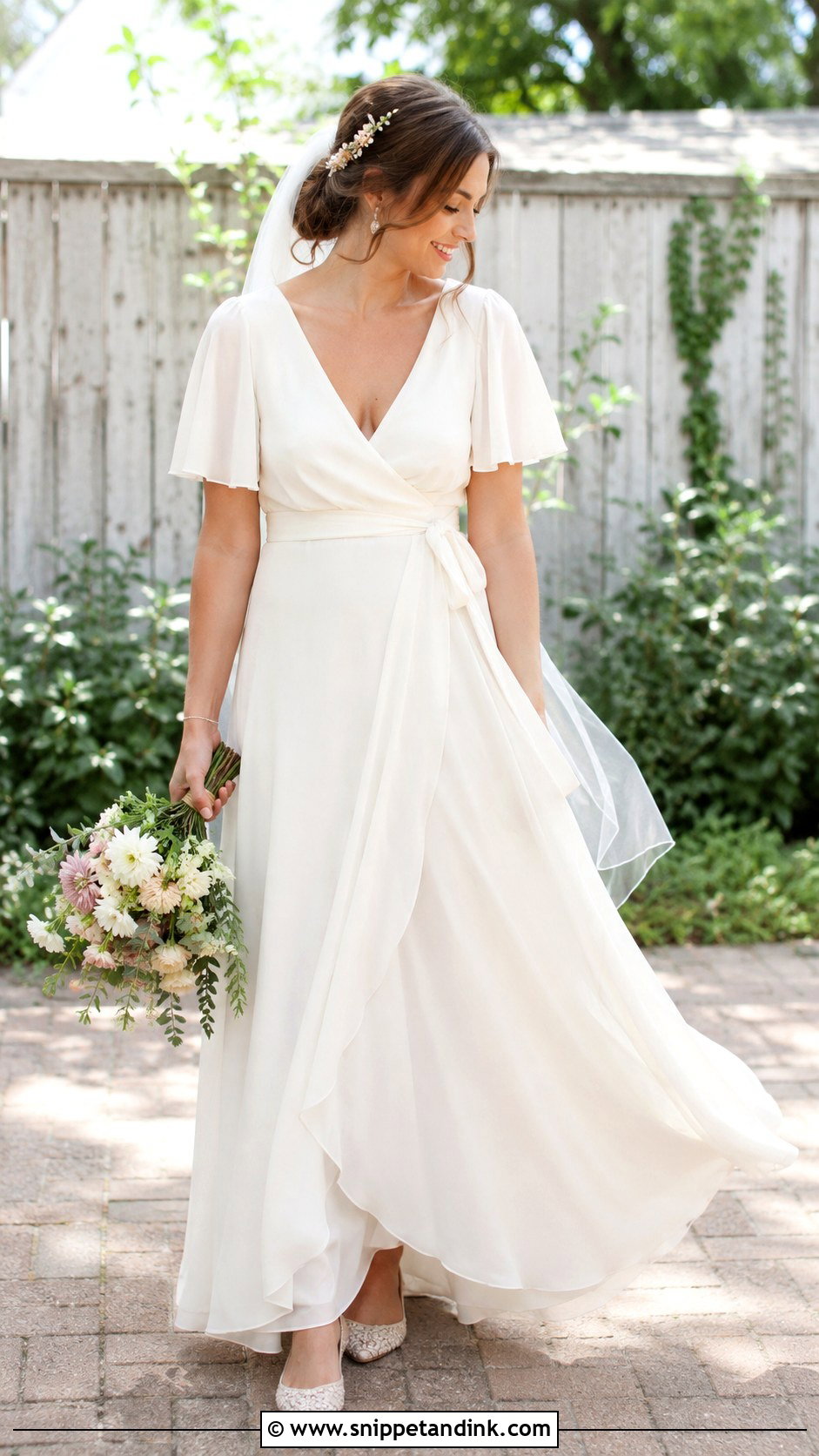
Jersey moves with you in a way woven fabrics simply can’t, which is why it suits a relaxed backyard or casual destination wedding. The wrap front lets the waist adjust as you eat and dance. My one firm rule with wrap gowns: the overlap has to be stitched down or fixed with hidden snaps, because an unsecured wrap gapes the moment you lean forward to hug someone. Choose a heavier, lined jersey, since thin jersey clings and shows every seam. Pair the V-neck and flutter sleeves with embellished flats, a floral pin and a light drop veil. Jersey also grows a little in length as it hangs, so let the dress hang for a day before the final hem is marked.
6. Empire Waist Wedding Dress
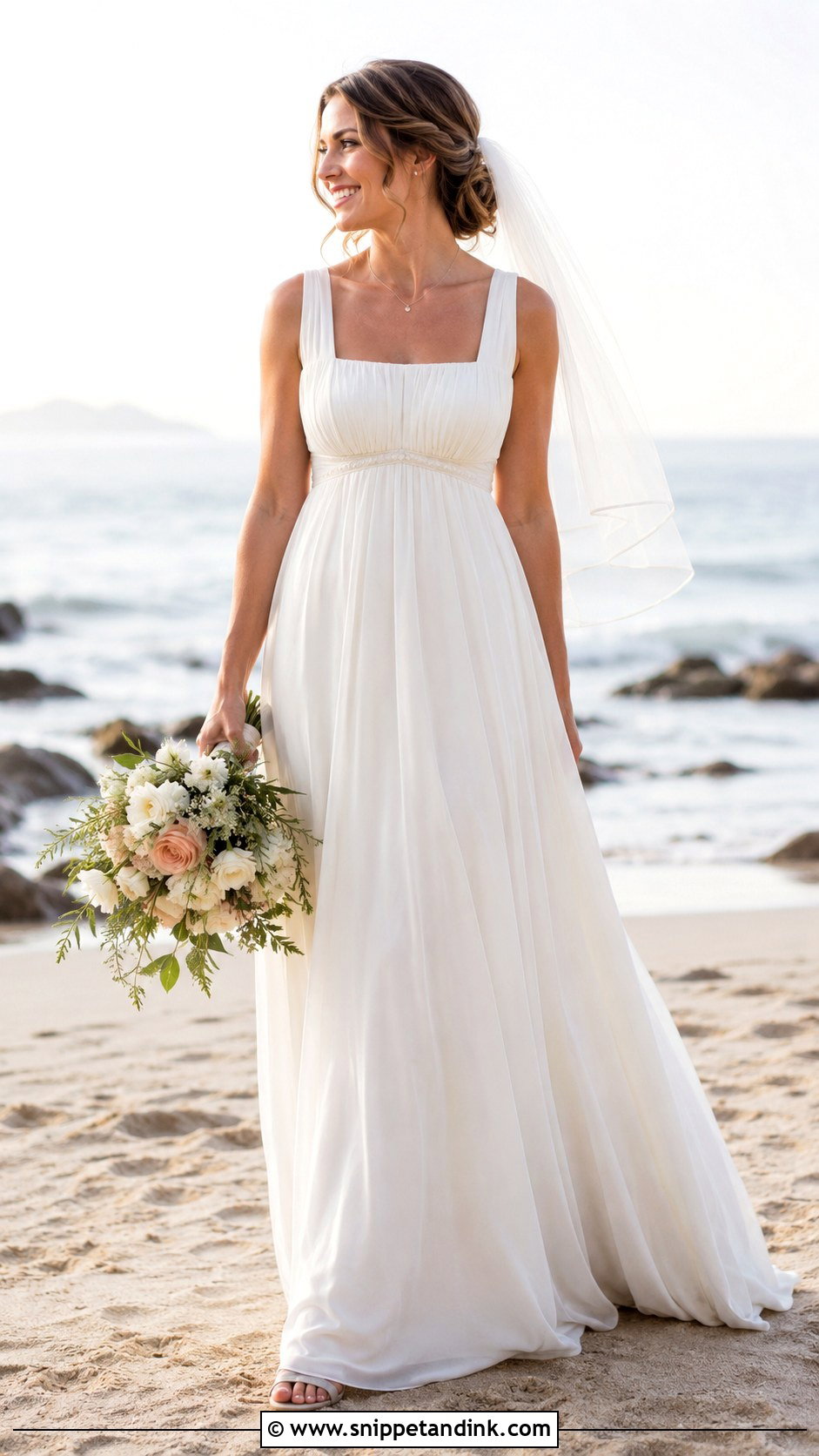
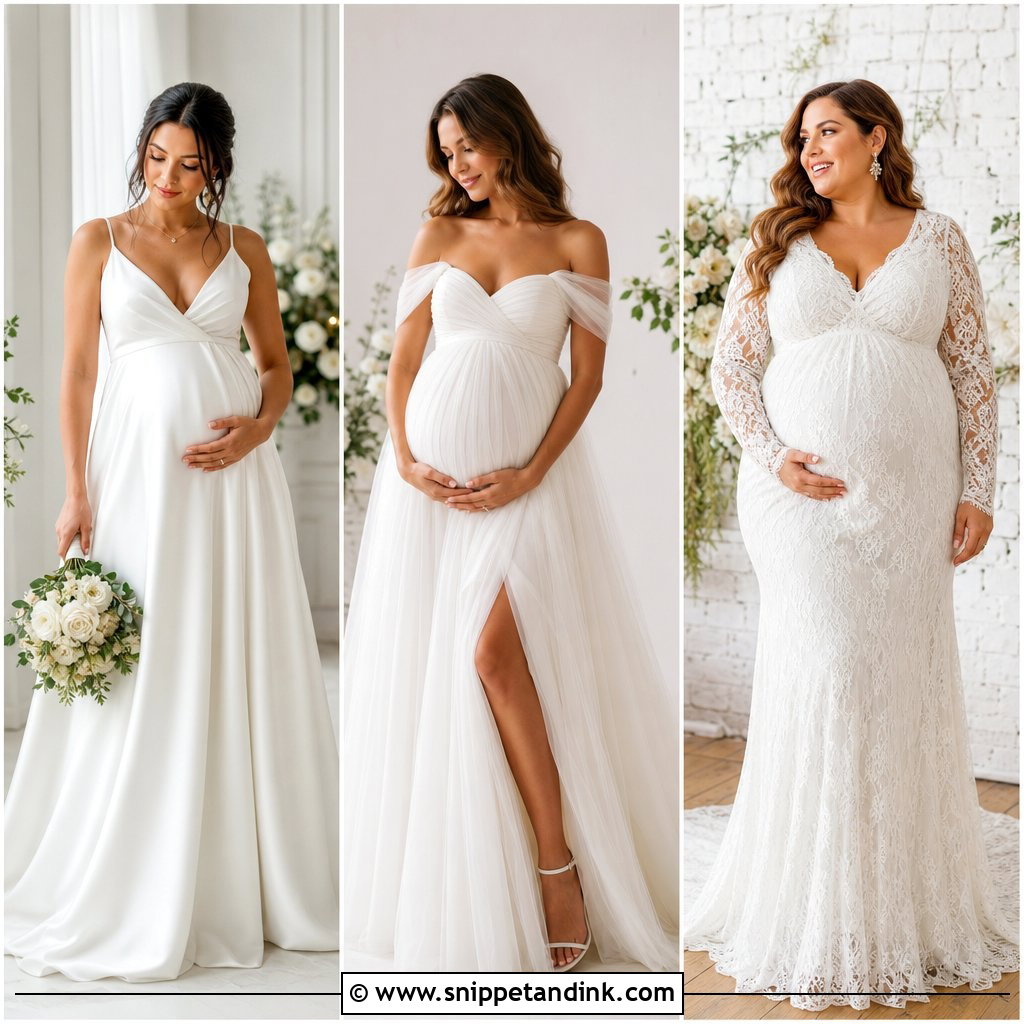
An empire line sits just under the bust and falls away from the waist, so nothing presses on the stomach through a long meal. That makes it a natural fit for warm outdoor ceremonies and for maternity bridal looks. Lightweight chiffon or soft crepe over a fully lined bodice keeps it airy. What I watch for is gathering: too much fabric bunched under the bust adds volume where nobody wants it, so look for smooth draping and a clean seam instead. Low heels, a fine pendant and an elbow-length veil finish it. Have the hem float just above your shoes so you aren’t lifting the skirt with every step.
7. Soft Tulle Ball Gown Wedding Dress
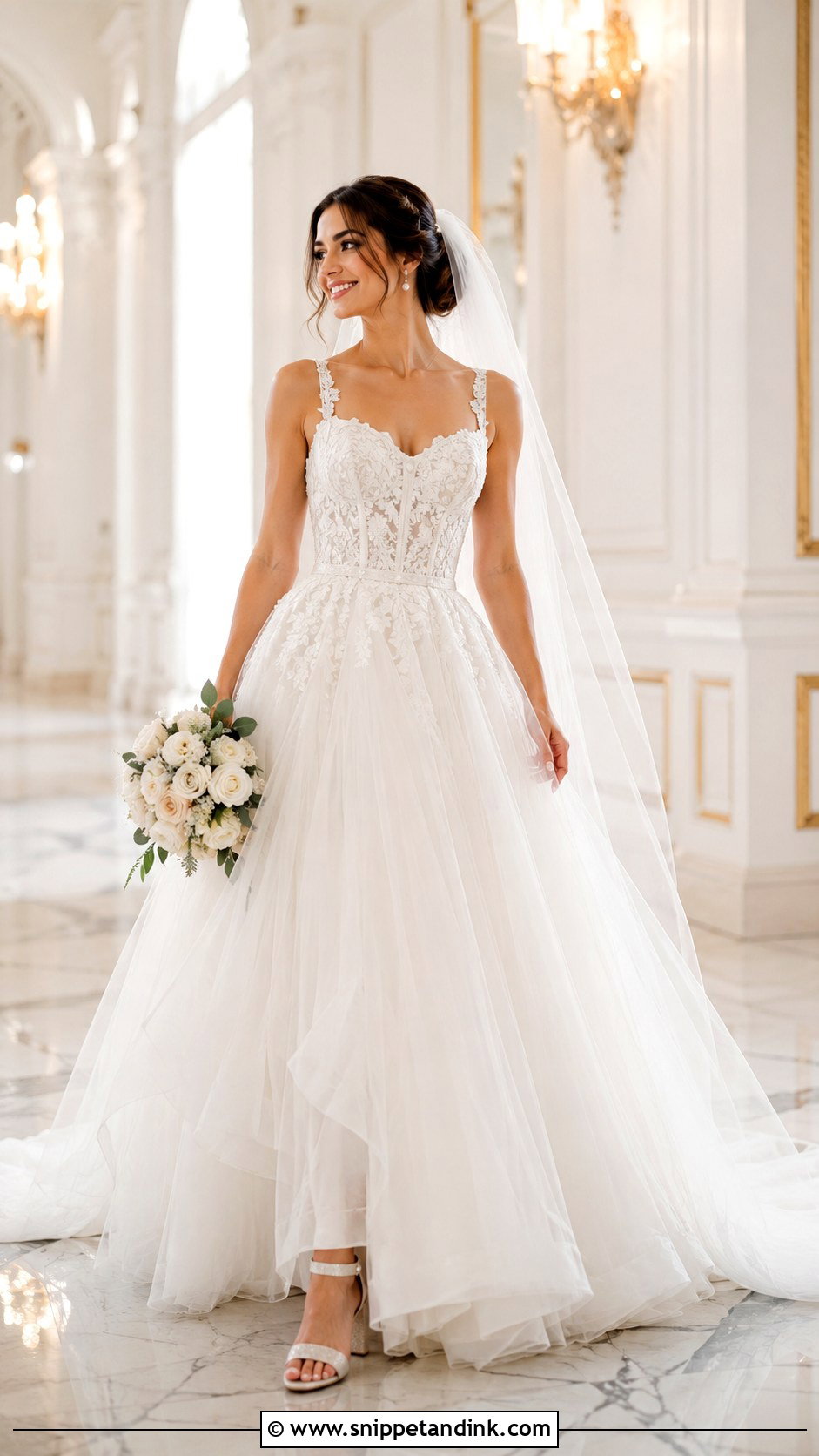
Brides often assume a ball gown means discomfort, and with heavy satin over three petticoats, it usually does. Soft tulle changes that. It holds volume with far less weight, and a smooth lining stops it scratching your legs. A natural waist is much kinder for sitting than a long, tightly boned basque, and supportive straps take strain off the bodice. During alterations, I’d ask whether one or two skirt layers can come out; it’s a common request, and the fullness barely changes while the skirt gets cooler and lighter. Cushioned block heels and a cathedral veil you take off after the ceremony make this workable for a formal ballroom evening.
8. Lace A-Line Wedding Dress
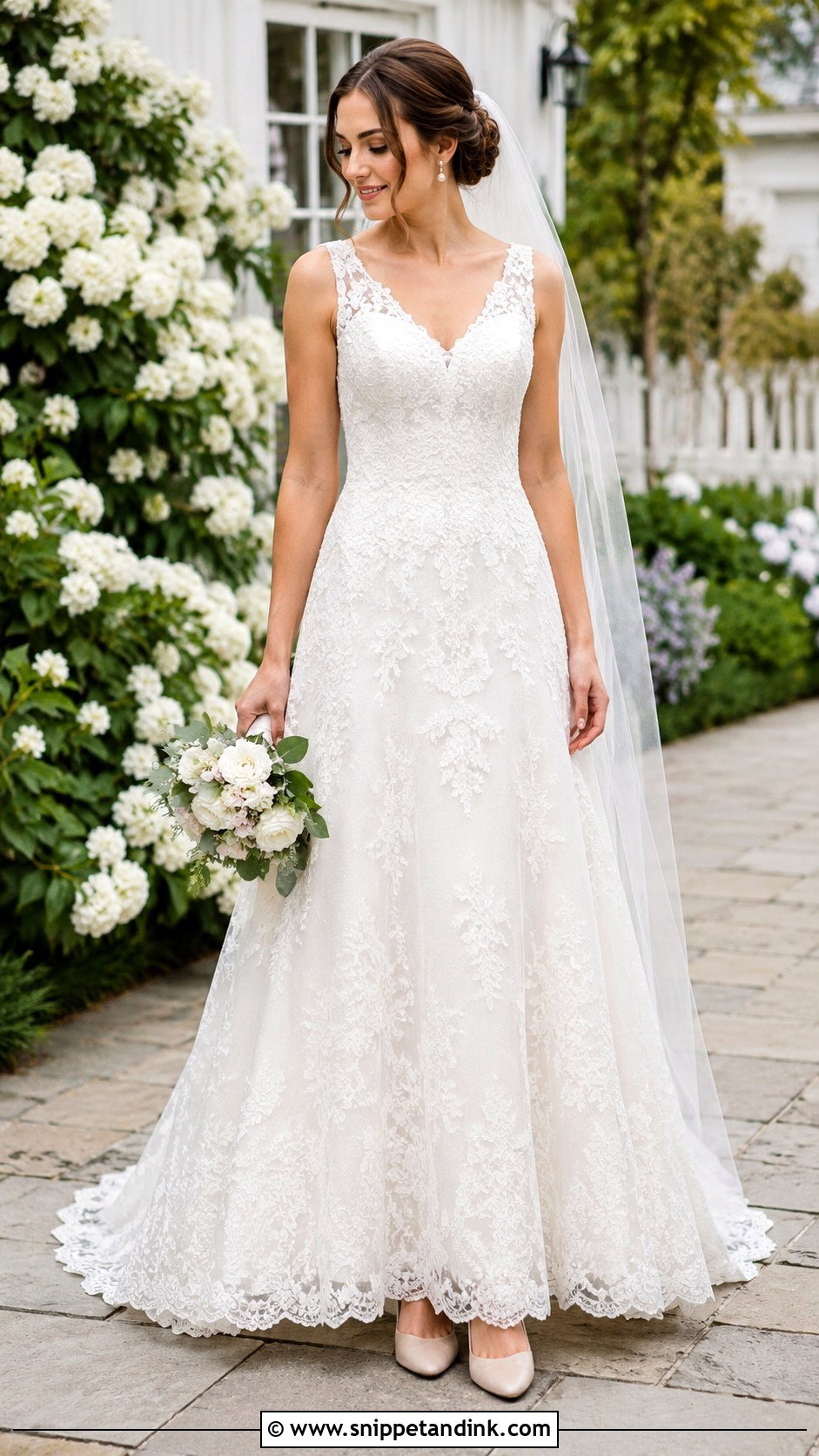
Lace on an A-line is a classic, but the comfort depends on what’s under the lace. Soft lace over a smooth stretch lining means no scalloped edge touches bare skin. The spot I always check is the underarm, because stiff lace edges rub there after a few hours of hugging and waving. If it scratches in the fitting room, it will be raw by the speeches, so ask for soft binding or an extra lining layer around the armholes. A V-neck with wide straps supports well, and a plain tulle veil keeps the lace pattern from looking busy. Low closed-toe heels and pearl earrings are all it needs for a garden or country venue.
9. Halter Neck Column Wedding Dress
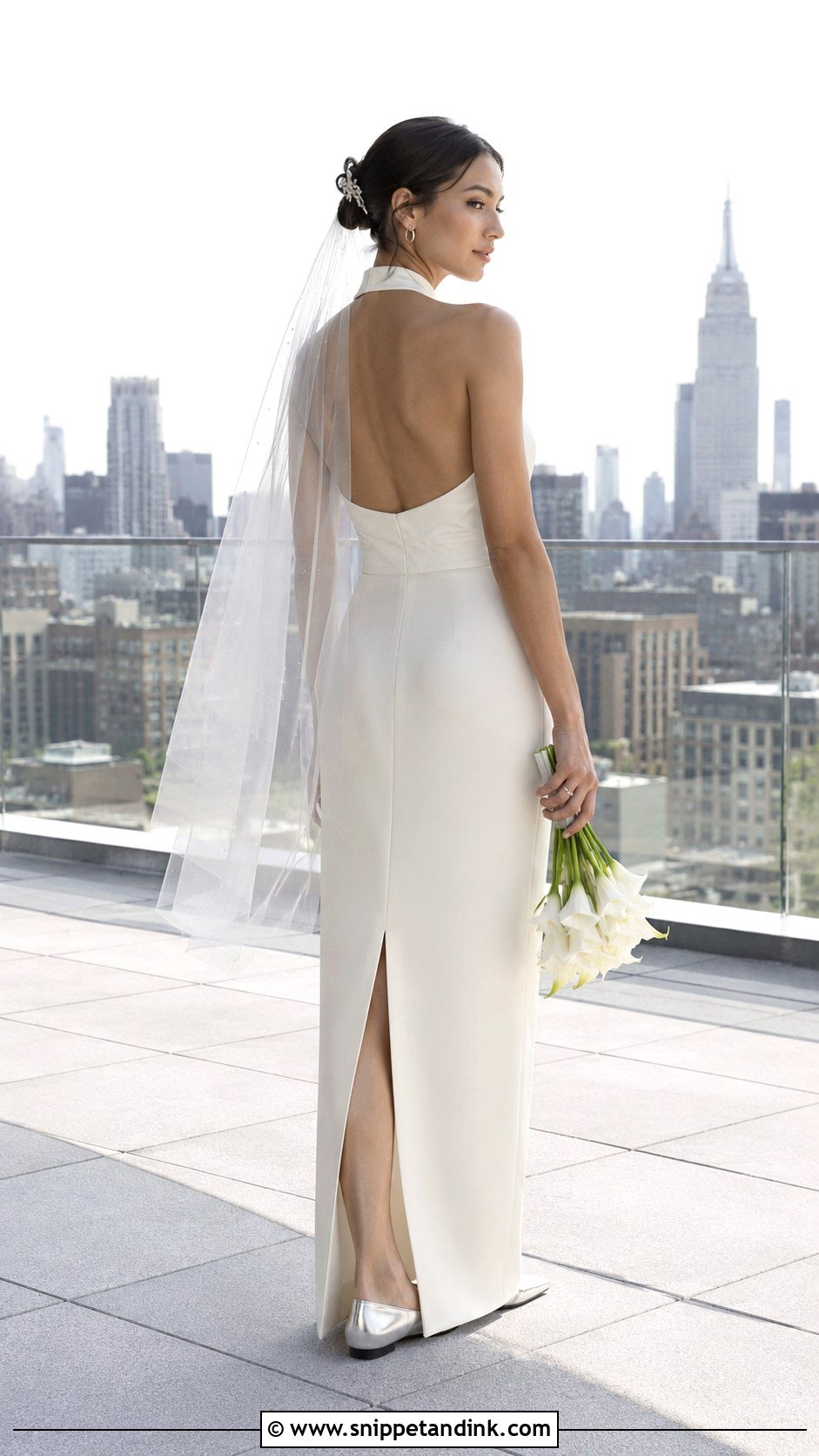
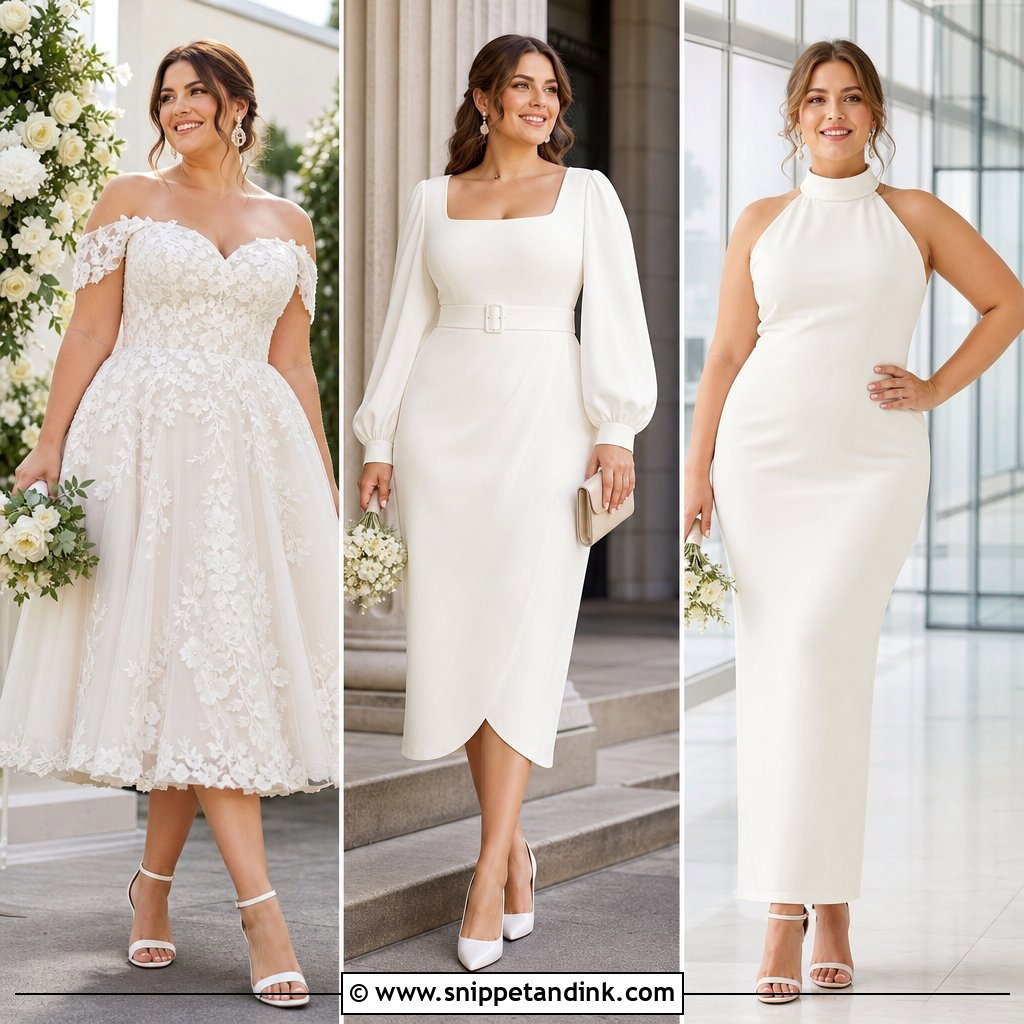
A halter carries the weight of the bodice from the neck, which gives real upper-body support without a strapless corset. That’s also its weak point. If the neck closure is tight, you’ll feel it by mid-afternoon as a dull ache across the shoulders. At the fitting, turn your head side to side and lift your arms several times; the neckline should stay put without dragging on your neck. A column skirt needs room through the hips for sitting, plus a modest back slit for walking. Metallic flats, small hoops and a low bun with a minimal comb suit a rooftop or hotel, and a light fingertip veil can come off after portraits.
10. Off-Shoulder Stretch Satin Wedding Dress
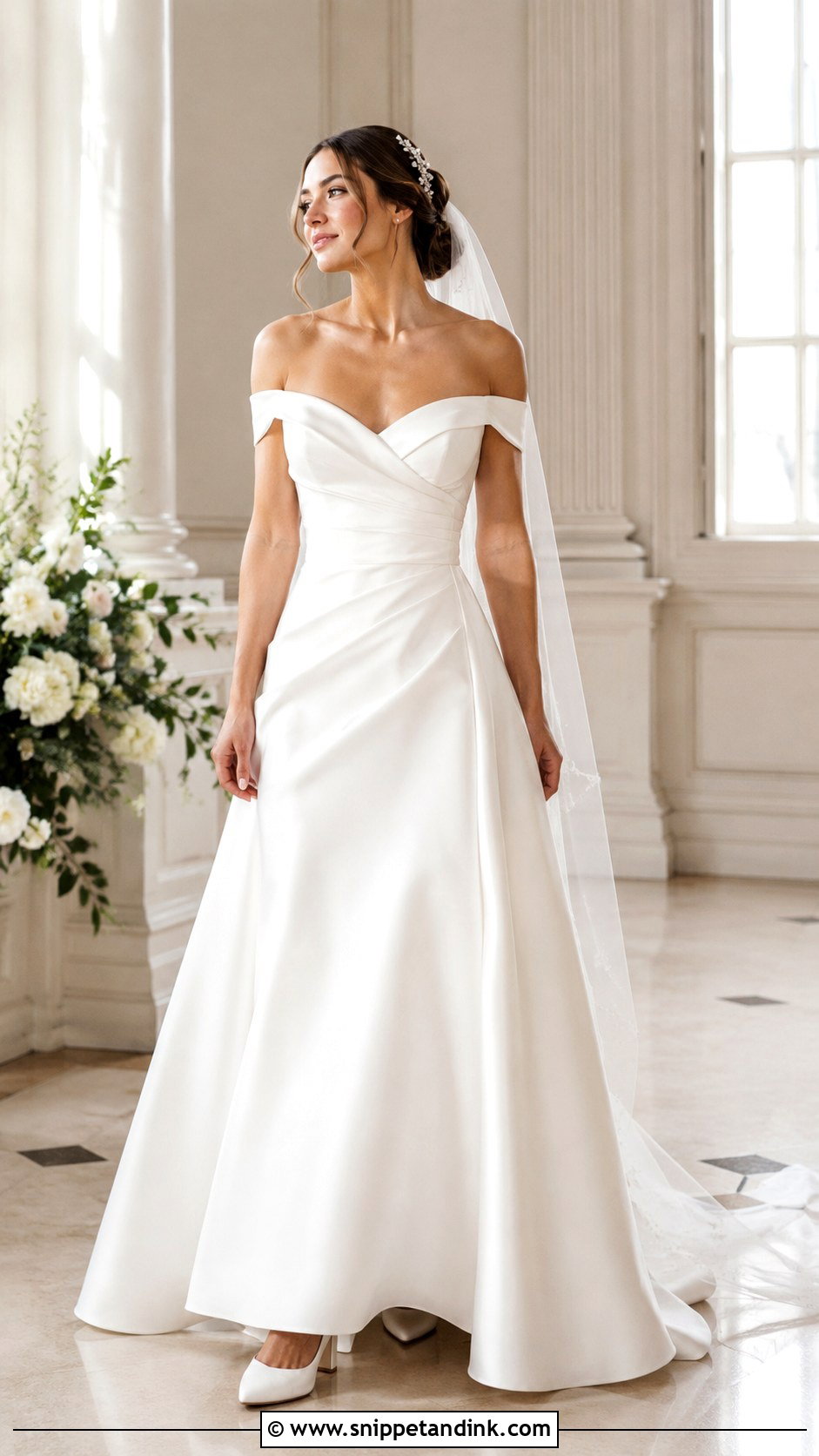
Off-shoulder necklines are where I see the most fidgeting at weddings, and it’s almost always a fit problem rather than a style problem. The sleeves should rest on the upper arm and be held by an internal support band, so lifting your arms doesn’t drag the whole bodice down. Soft stretch satin forgives more than a rigid fabric. In the fitting, raise your arms, sit, and hug your consultant: the sleeves shouldn’t slide or dig. Fashion tape is fine as backup, but if the dress needs tape to stay up, it needs alteration. A gentle A-line or fit-and-flare skirt, low block heels and a crystal pin under a soft updo suit an evening reception.
11. Puff Sleeve Wedding Dress
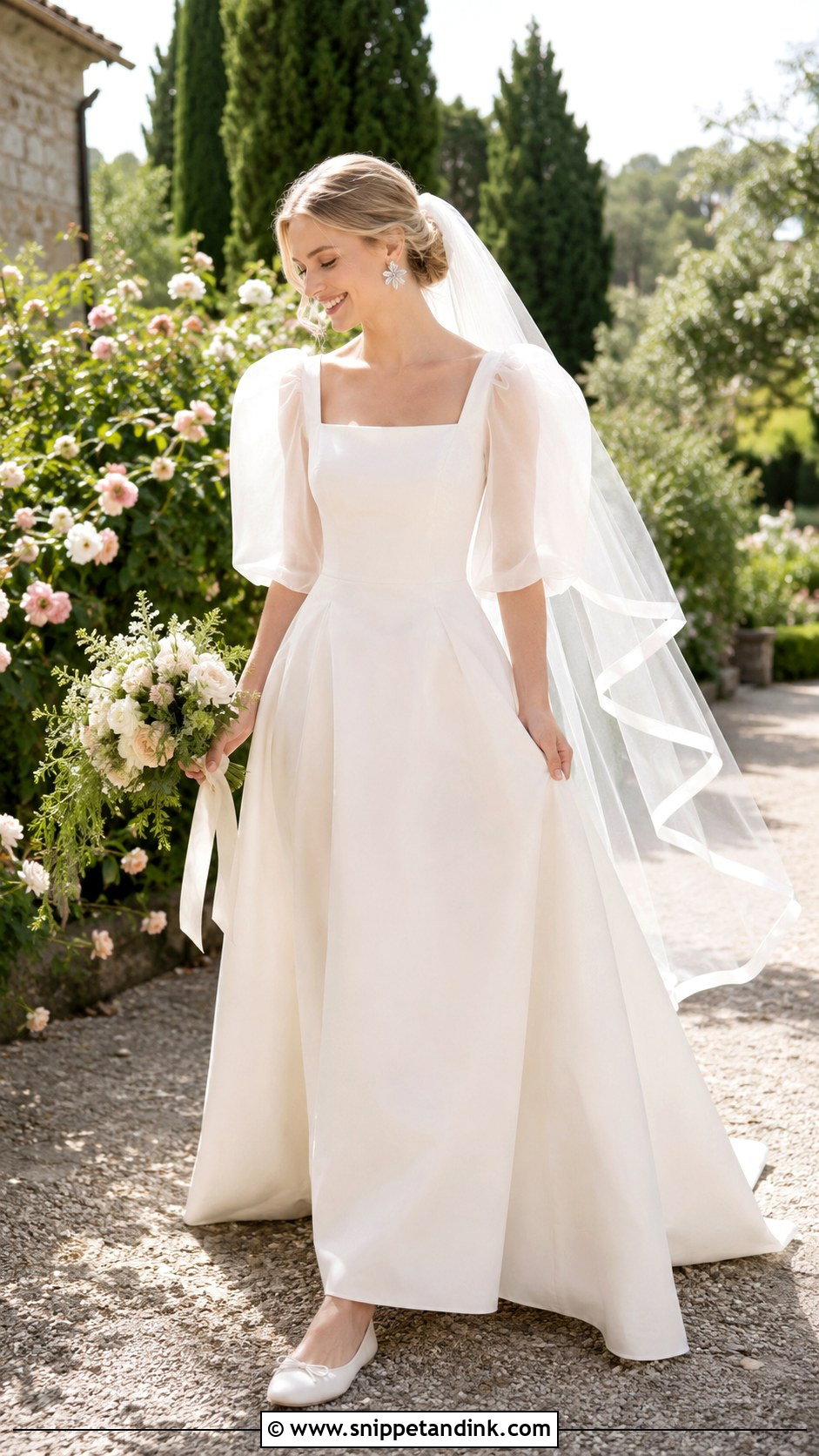
A puff sleeve wedding dress gives you arm coverage without a jacket, which is handy in spring when the morning is cool and the reception isn’t. The sleeves need to be organza, chiffon or soft tulle, and the cuffs should be elastic or loose; a tight band above the elbow leaves marks and limits movement. Run a finger along the inside sleeve seam before you buy, as organza seams can be sharp. A simple A-line skirt balances the volume. If you tend to get warm, removable sleeves give you a second look for the reception without a dress change. Keep the rest delicate: ivory flats, small floral earrings and a ribbon-trimmed veil.
12. Square Neck A-Line Wedding Dress
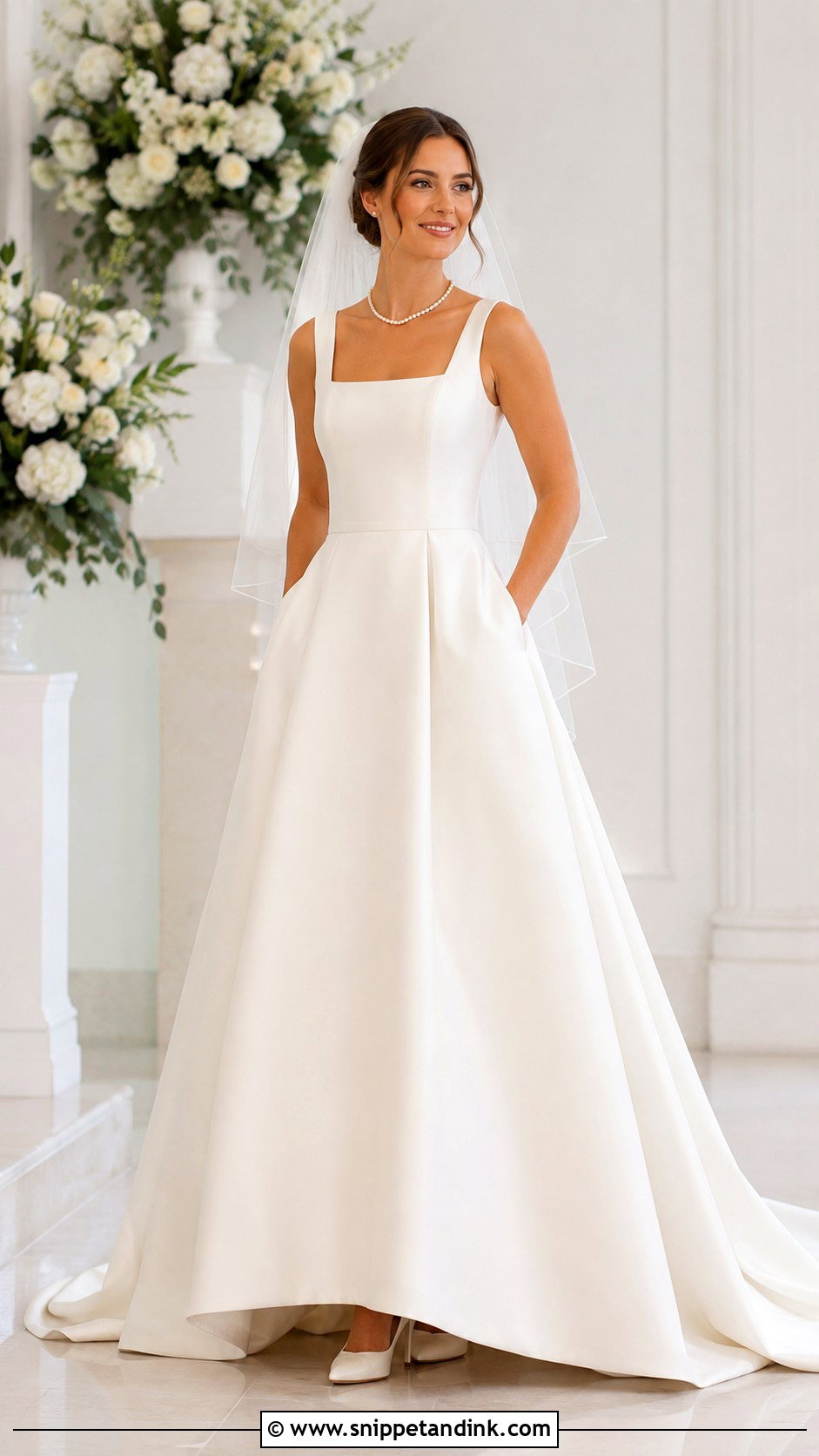
The square neck is one of the most comfortable bodices I fit, mostly because of the wide straps that come with it. They spread the weight of the gown across the shoulders and hide a proper supportive bra. A square neck A-line wedding dress in soft mikado, crepe or lined chiffon needs little boning. The fit check here is the neckline edge: lean forward and sit down, and if the corners gape, the straps need shortening rather than taking in the waist. Cushioned pumps, a short pearl necklace and a clean fingertip veil are classic partners. Ask about adding skirt pockets; most seamstresses can set them into an A-line side seam.
13. Scoop Neck Wedding Dress With Pockets
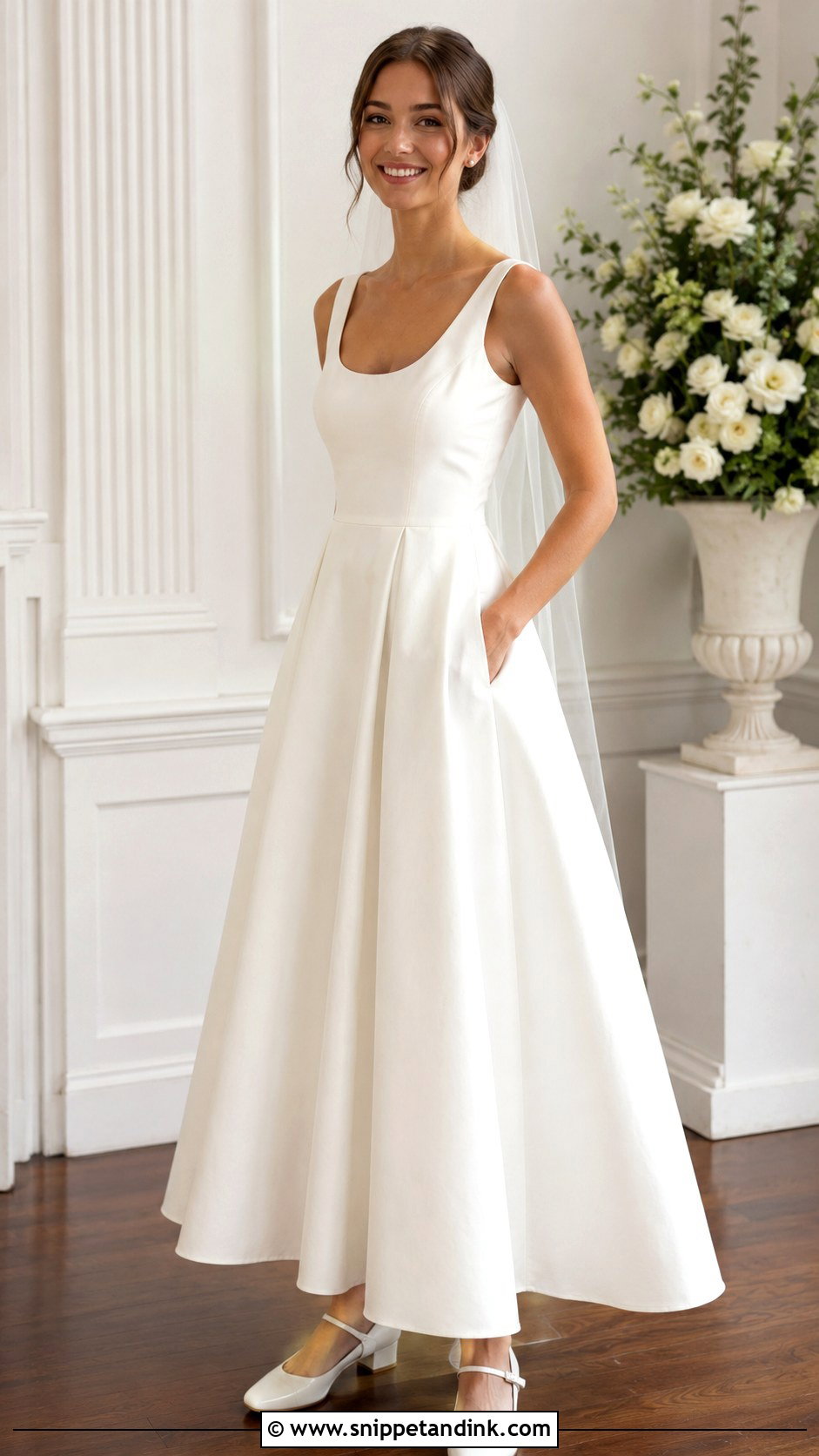
Scoop necklines feel open and unrestricted, which is why so many brides who dislike high collars or tight illusion panels end up here. Paired with a light A-line skirt and hidden pockets, it’s one of the easiest gowns to wear from ceremony to last dance. Wide straps and a supportive interior do the work so nothing has to be tight. Low-heeled Mary Janes, pearl studs and a simple veil fixed into a half-up style keep it relaxed. The pockets deserve a test of their own: put a lipstick and a tissue in each one at the fitting. If the skirt bulges at the hip, ask to move them slightly forward or lower.
14. Boho Crochet Lace Wedding Dress
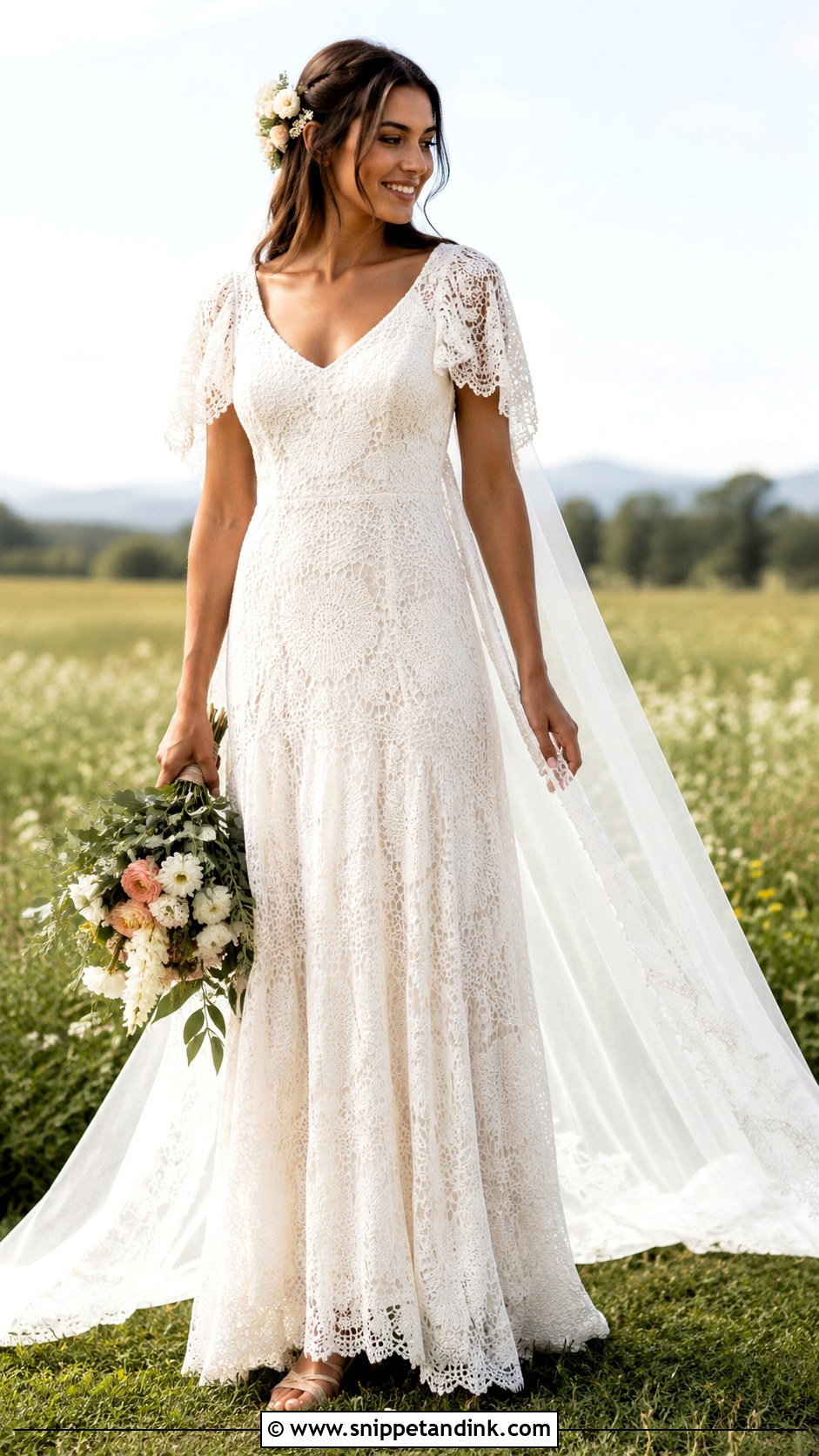
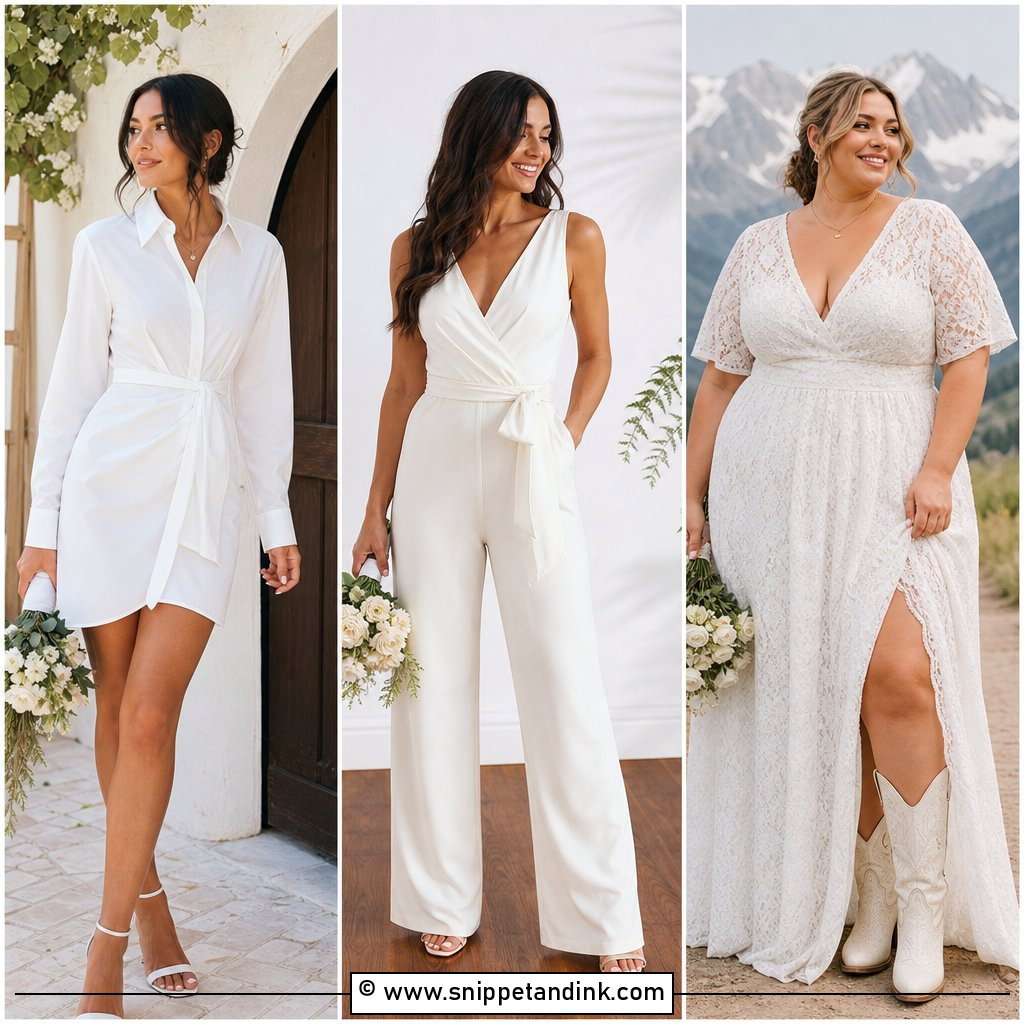
A boho crochet lace wedding dress breathes well outdoors because of all the open space in the lace. The lining is what makes or breaks it. It should be opaque and fit loosely enough that the crochet isn’t stretched as you walk, or the holes widen and the pattern distorts. Crochet trims at the neck and underarms can be rough, so feel every edge before committing. A softly defined waist with flutter sleeves keeps the shape from going baggy. I’d keep the train short for meadows or beaches, since open lace picks up grass and sand and can snag on twigs. Sandals, a floral comb and a sheer cape suit it.

15. High-Low Wedding Dress
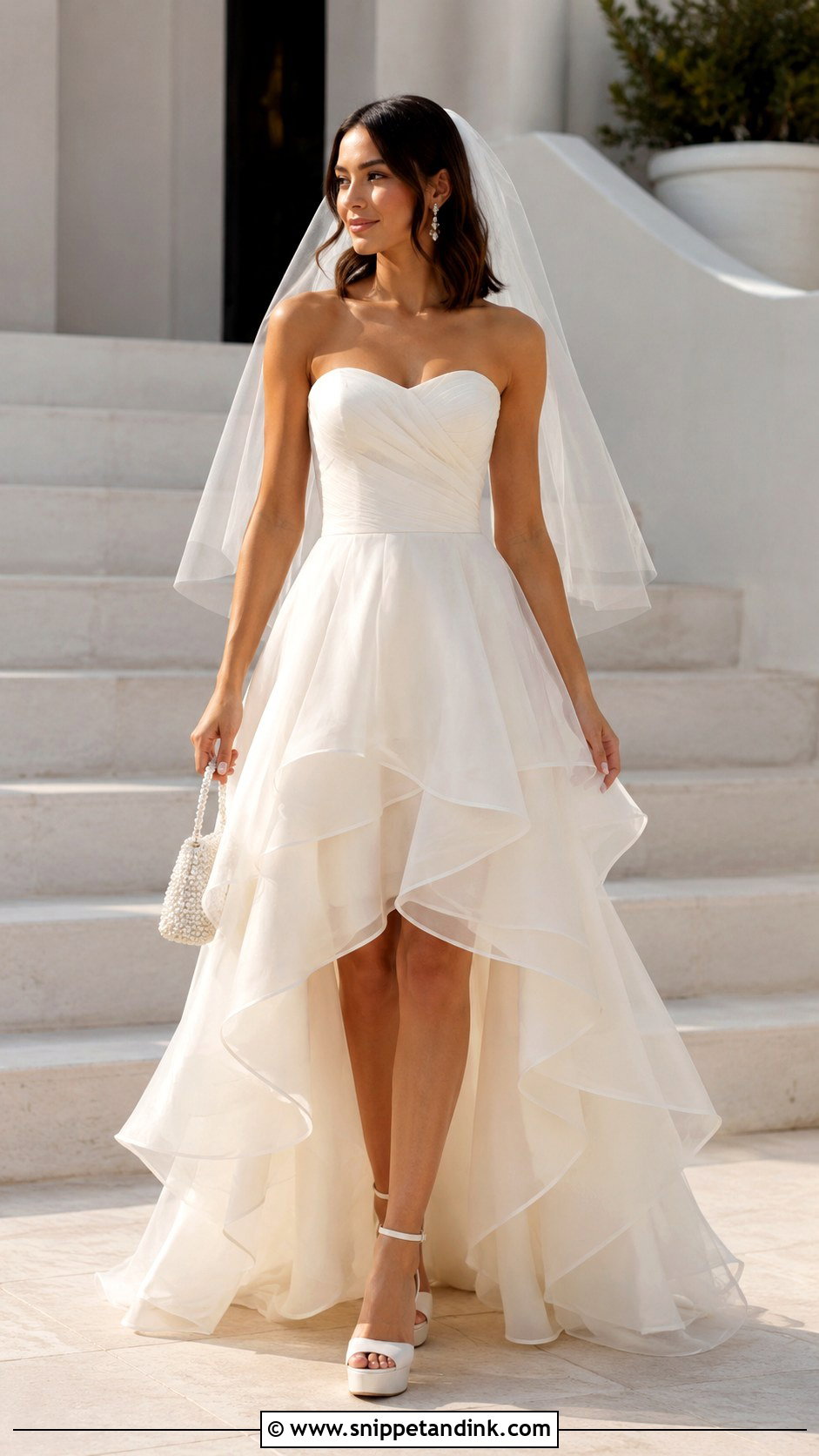
High-low hems keep the front clear of grass, sand and steps while the back still gives you some length in photos. Go for a gentle curve; a dramatic drop from knee to floor can look like two different dresses. Soft organza, chiffon or light satin moves best. Because your shoes are on show, padded ankle-strap heels you can stand in for hours are worth the effort of finding, and a shoulder-length veil stays in proportion with the shorter front. Check the back length before the final fitting: if it touches the floor when you walk, ask for a small wrist loop so you never need a full bustle.
16. One-Shoulder Draped Wedding Dress
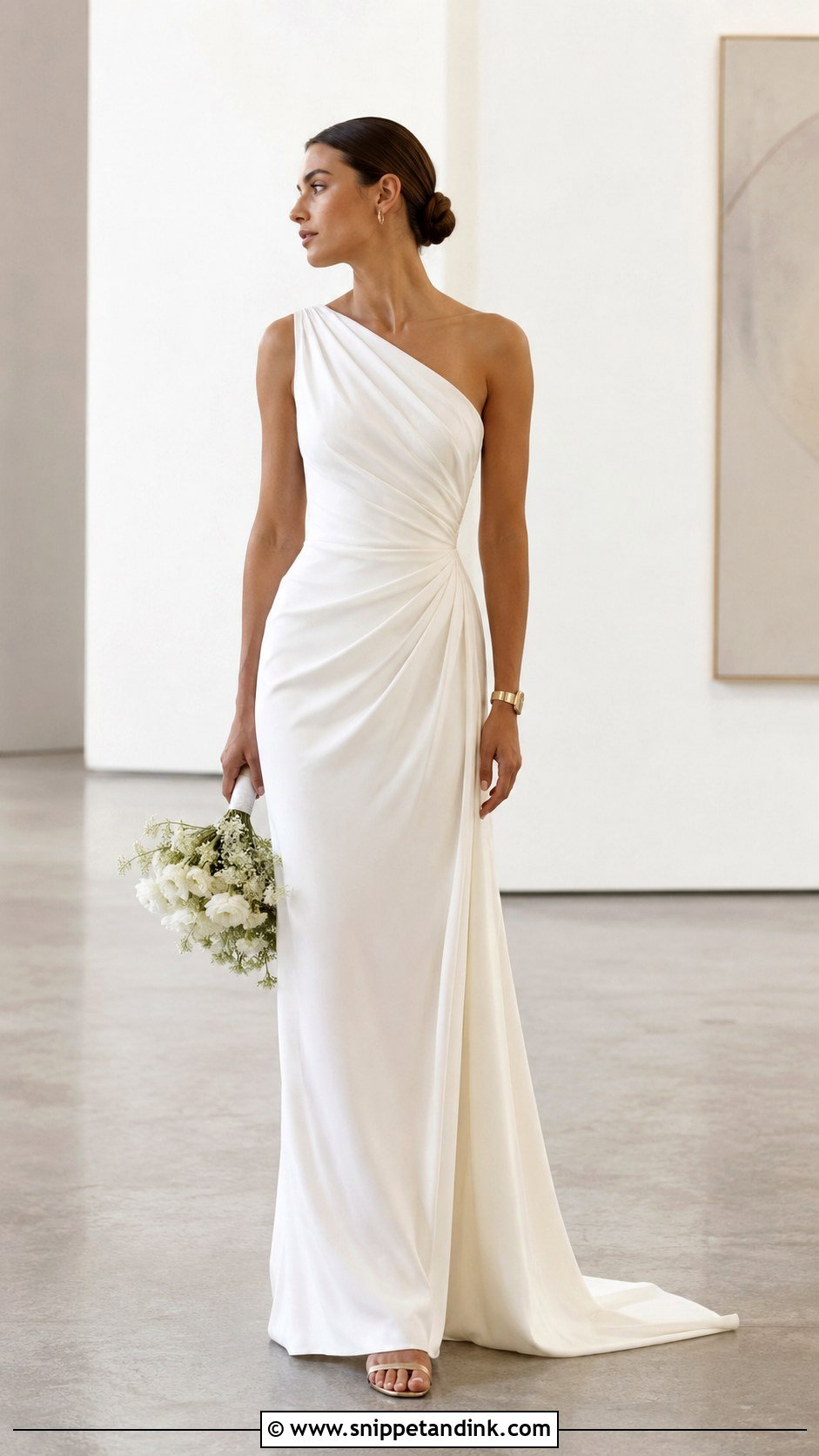
The single strap on a one-shoulder gown should look like it’s doing the work, but it shouldn’t actually be doing it. A good draped design hides internal support in the bodice, so the weight sits around the ribs instead of hanging off one shoulder. Without that, you’ll feel one side dragging by the evening. Stretch crepe or lightweight jersey drapes well and moves with you. Draping shapes the body through fabric rather than heavy structure, which is exactly why it’s comfortable. Skip a necklace, as it fights the asymmetric line, and put a cuff on the bare arm instead. Low metallic heels and a sleek bun suit a gallery or city ceremony.
17. Short Sleeve Midi Wedding Dress
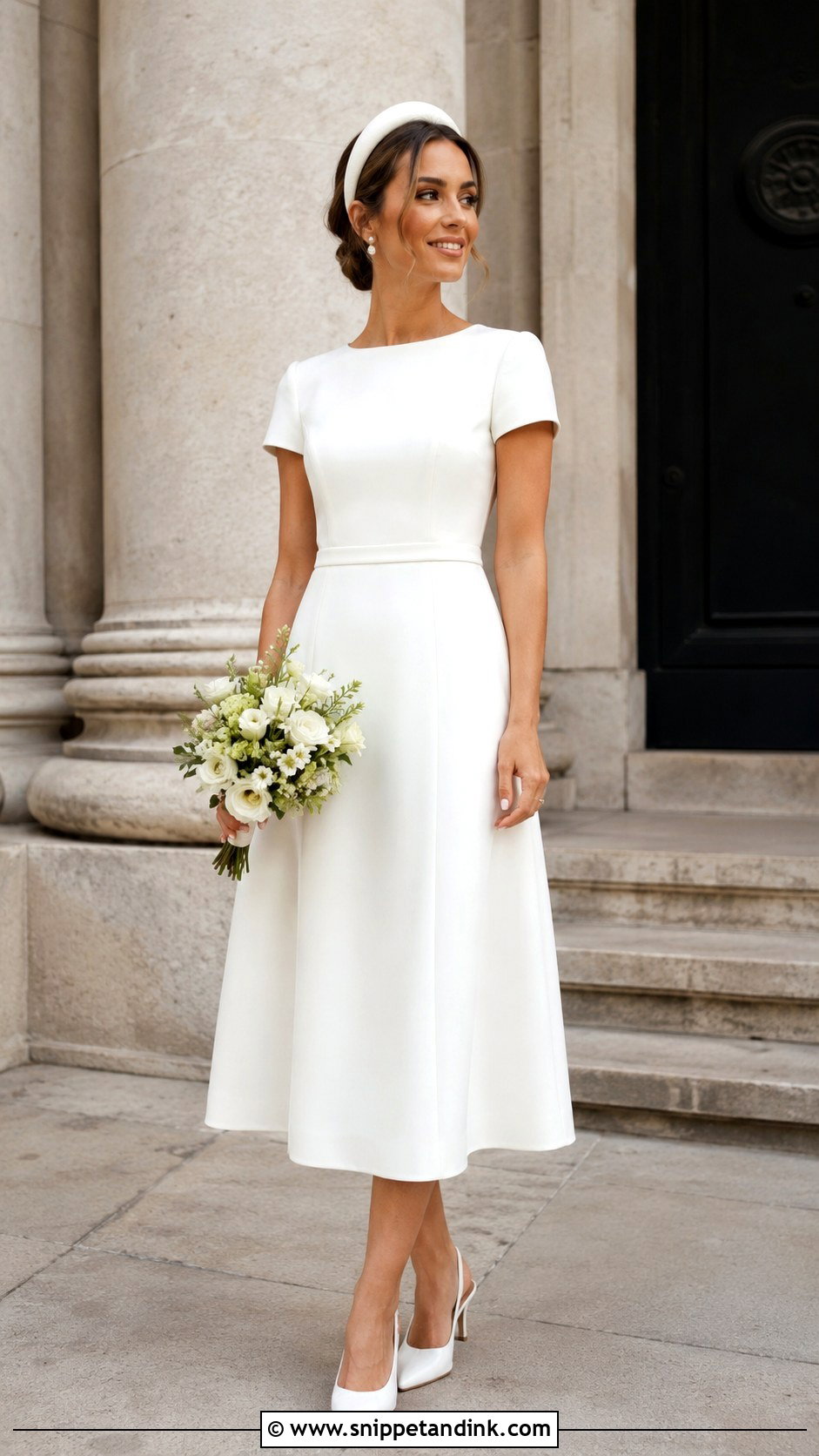
A midi with short sleeves is about as practical as bridal gets: no bustle, no lifting, no worries about steps or getting in and out of a car. Soft crepe or satin with a defined waist and an easy skirt ending mid-calf suits a courthouse ceremony or a daytime party. Short sleeves give some coverage while leaving your arms completely free. Cushioned slingbacks, a compact bouquet, pearl earrings and a small veil or padded headband are all it needs. It also makes a good second look for the reception. Hem placement matters more than length: I aim for the slimmer point between the widest part of the calf and the ankle.
18. Detachable Overskirt Wedding Dress
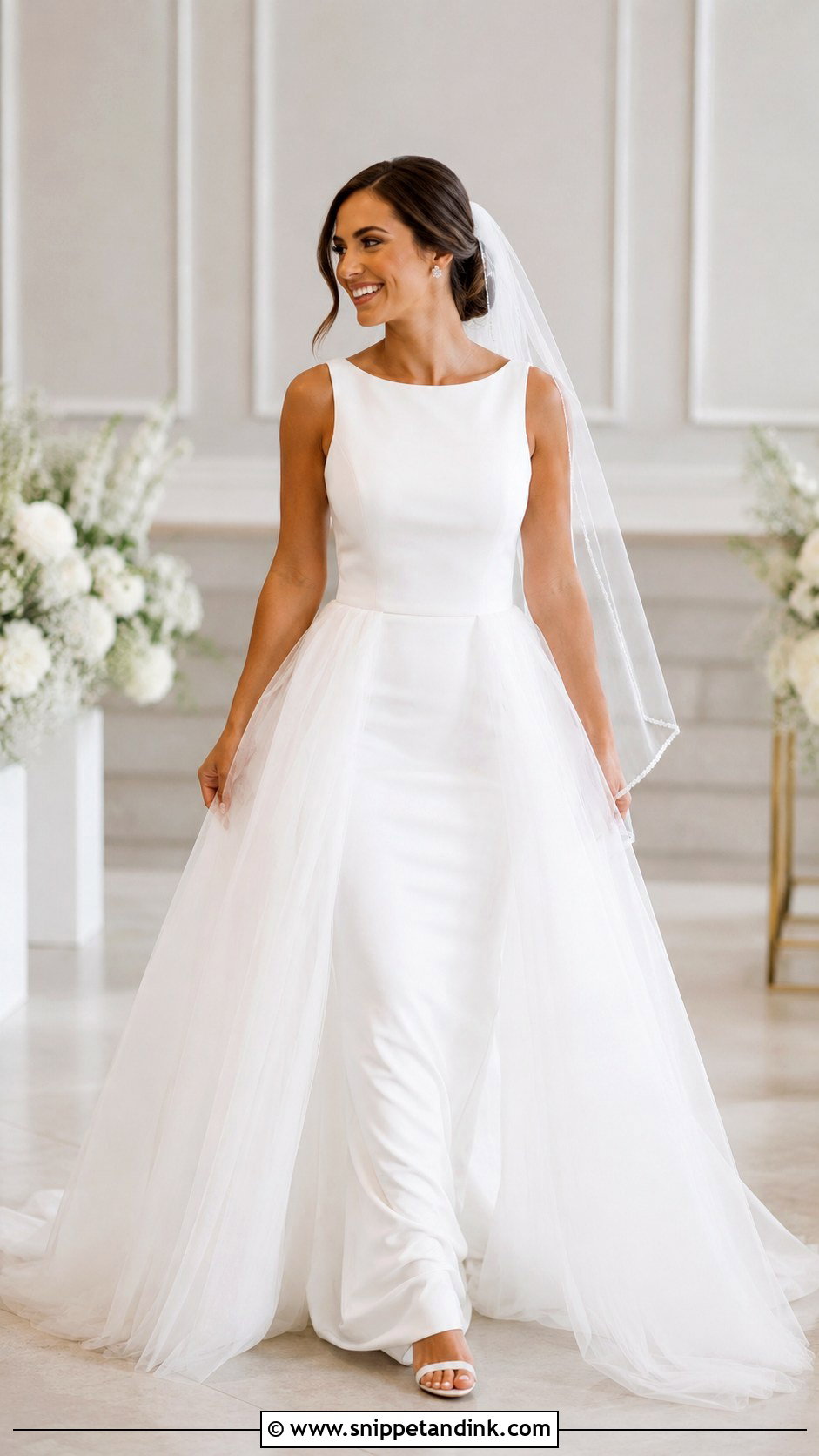
A detachable overskirt lets you have the ceremony silhouette and the reception comfort without changing dresses. Underneath, you want a base gown that feels good on its own, usually a stretch crepe column or a simple A-line. The overskirt is lightweight tulle or organza that hooks or buttons on at the waist. Two practical checks: the waistband should lie completely flat once the skirt is off, and the fastenings must come undone quickly, because you’ll want help removing it in a bathroom or quiet corner, not mid-dinner. Ask your maid of honour to practise unhooking it at the final fitting. Block-heel sandals, crystal studs and a fingertip veil complete it.
19. Long Sleeve Crepe Wedding Dress
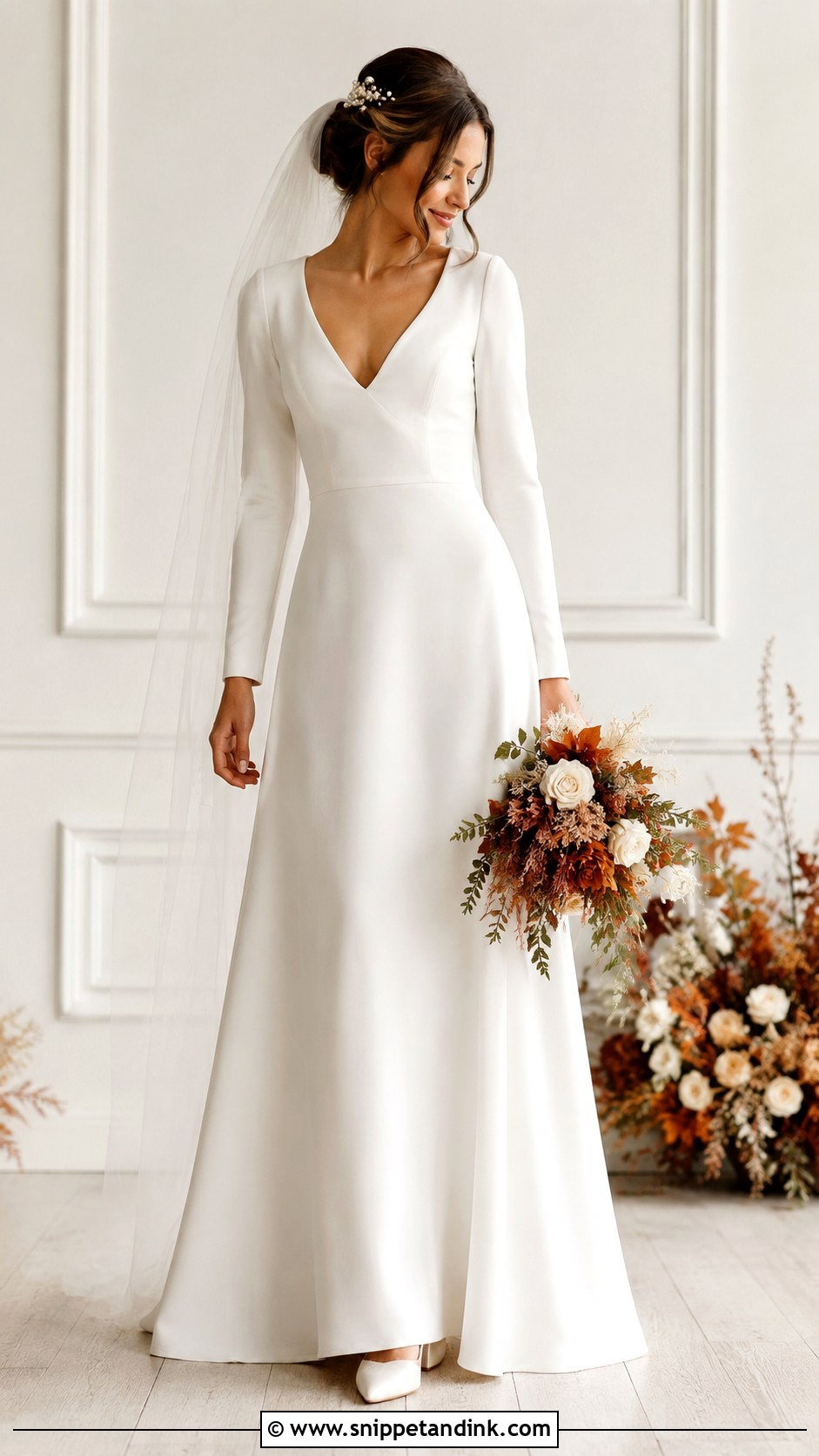
Long sleeves in crepe are far more comfortable than long sleeves in lace or beading, which tend to be stiff at the elbow and heavy at the cuff. You want a fitted but soft bodice, a modest scoop or V-neck, and sleeves cut with enough stretch to bend your arms fully. The test I ask every long-sleeve bride to do is reach forward as if to take a ring, then lift both arms above her head. If the shoulder seam pulls or the cuff feels tight, the sleeve needs adjusting. An A-line or relaxed column skirt, low pointed flats, a pearl comb and a chapel veil suit a fall wedding or a chilly air-conditioned venue.

20. Simple Wedding Dress With Sneakers
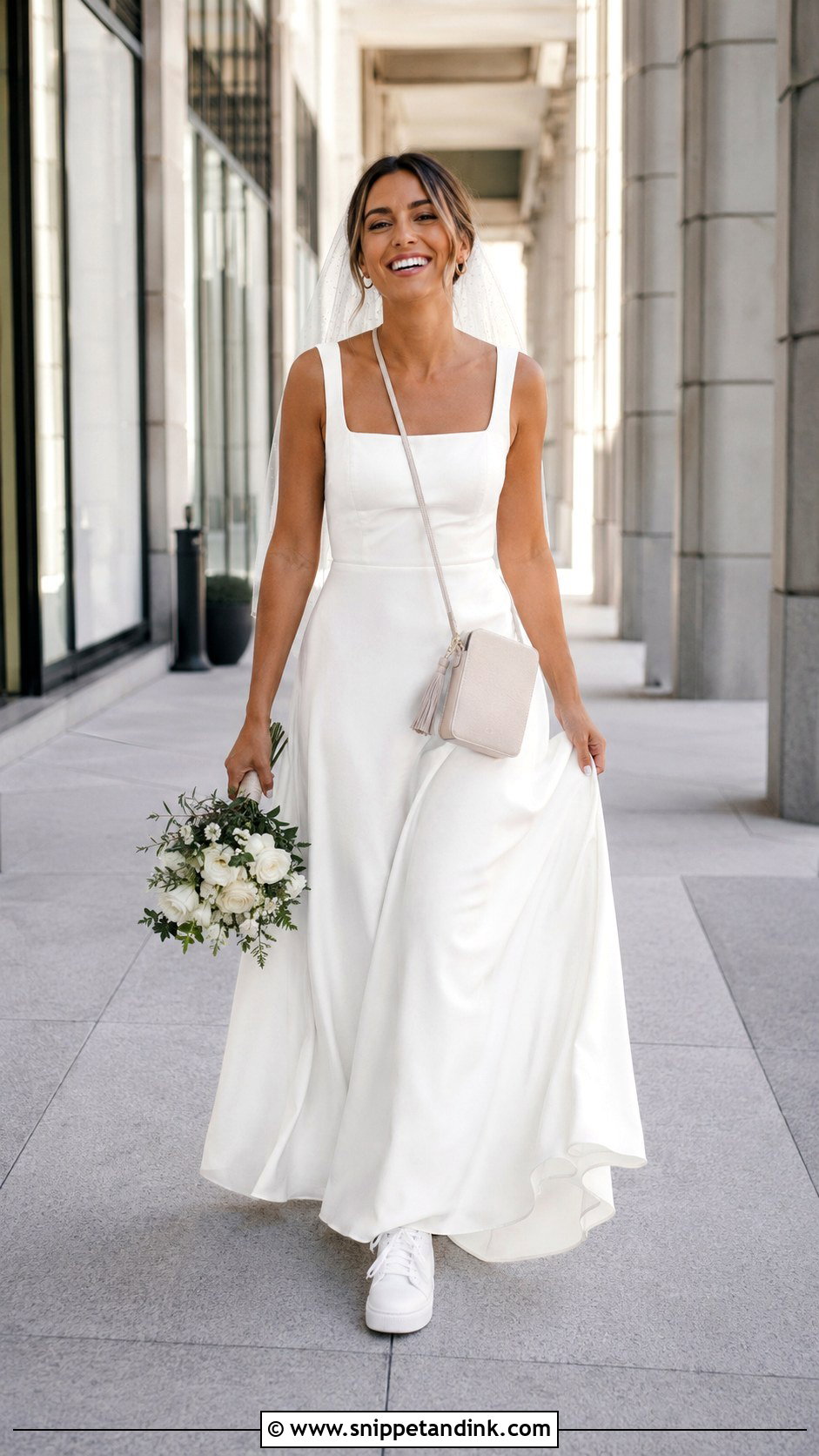
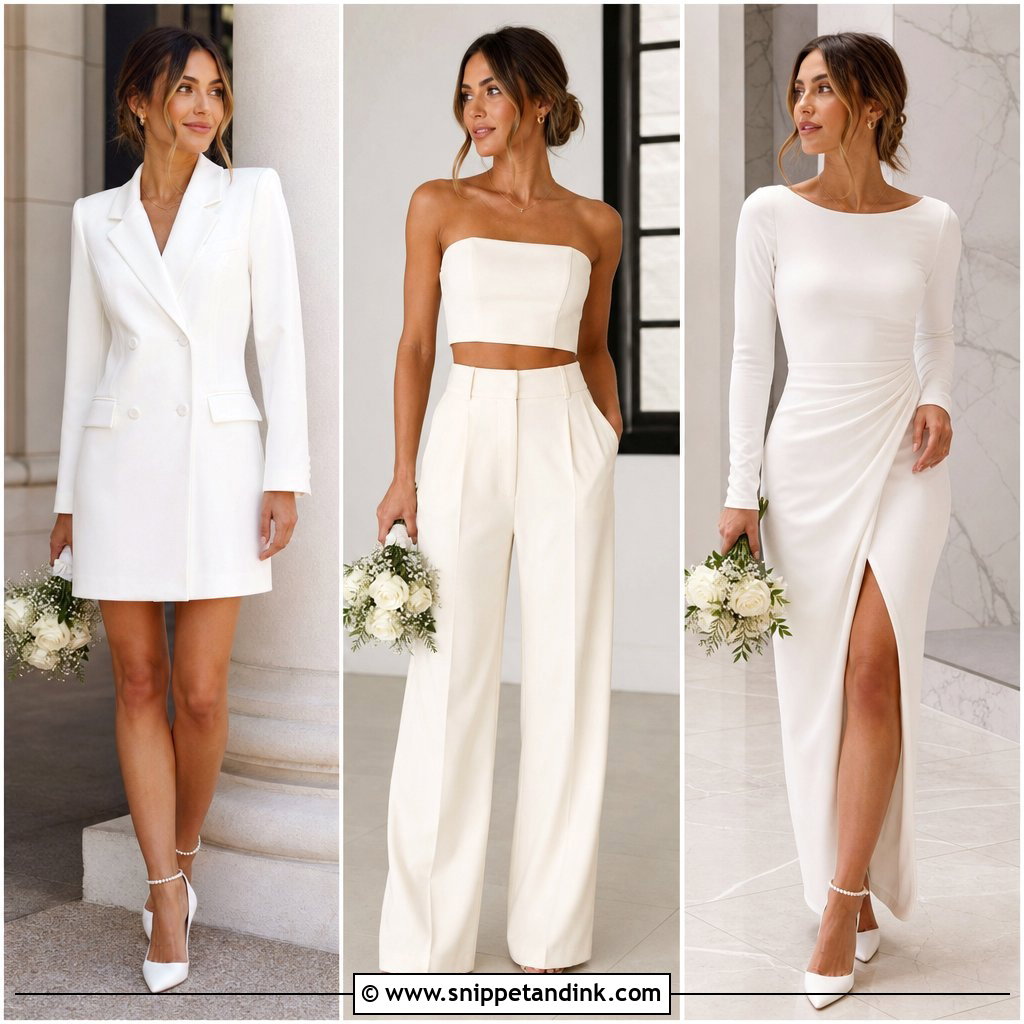
If walking and dancing are top of your list, white bridal sneakers are the most comfortable shoe you’ll find. A soft crepe A-line, tea-length dress or satin midi gives a clean base that doesn’t fight the casual shoe. Choose pairs with cushioned insoles and smooth linings; small pearl or satin details make them feel bridal. The fitting point people miss is that sneakers are often flatter than heels, so the dress must be hemmed with the exact pair on, or you’ll be stepping on it all night. If you want heels for the ceremony, pick a pair with a similar sole height so one hem works for both. Add small hoops, a fingertip veil and a crossbody bag for the reception.
Small Fixes I Pack for the Wedding Morning
Even a dress that passed every fitting can surprise you on the day, mostly because of heat, nerves and a few extra hours of wear. I’d keep a small bag with your maid of honour so problems get solved in two minutes rather than endured for six hours.
- Double-sided fashion tape for a strap that starts slipping once the fabric warms.
- Anti-chafe balm for the underarms and inner thighs, applied before you dress.
- Gel heel pads and a pair of folding flats in a matching tone.
- A few safety pins and a short length of ivory thread with a needle, in case a bustle hook gives way.
- A white chalk stick to hide a small mark on ivory fabric.
How Comfort Changes After the Final Fitting
Bodies shift in the last weeks before a wedding, usually through stress, new routines or travel. I prefer the final fitting to happen around two weeks out, close enough to catch changes and far enough that there’s time to adjust. Bring your shoes, your undergarments and the jewellery you’ll wear, since a necklace clasp or earring back can rub against a high neckline you never tested with it.
On the morning itself, put the dress on last, after hair and makeup, and give yourself a few minutes to sit and move in it before photographs start. If something is uncomfortable, say so straight away. Most fixes are quick when they’re done early and impossible once you’re standing at the altar.
A Dress You Can Sit, Dance and Breathe In
A comfortable gown is the one that supports your body, suits your venue, and lets you forget you’re wearing it. Fabric weight, hem length, strap width and the right undergarments do far more than any single silhouette. Whatever you lean toward, sit, walk, lift your arms and dance at every fitting, wearing the actual shoes and underwear you’ll have on the day. Comfort and polish aren’t opposites; a well-fitted dress looks relaxed in photographs precisely because you are. Trust what your body tells you in the fitting room more than what the mirror says.
You'll Like These Ideas:





Leave a Reply